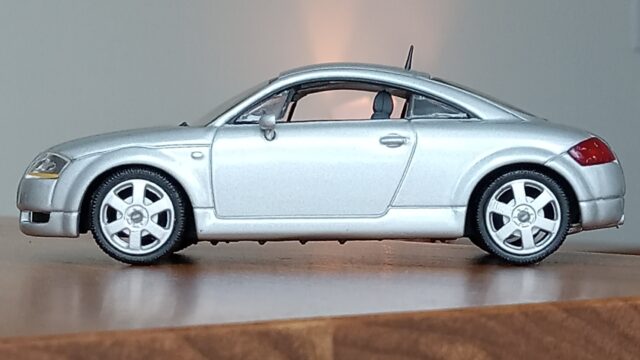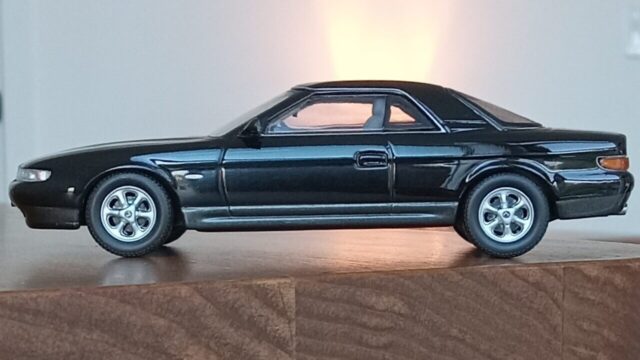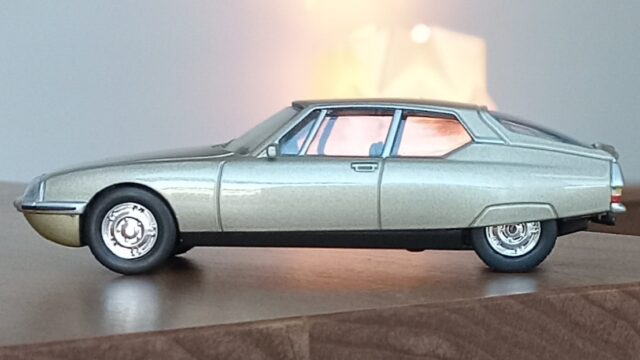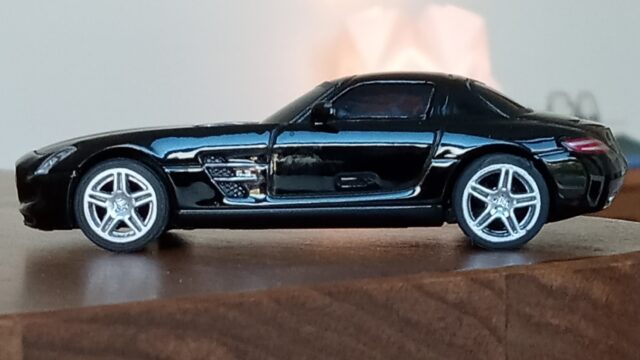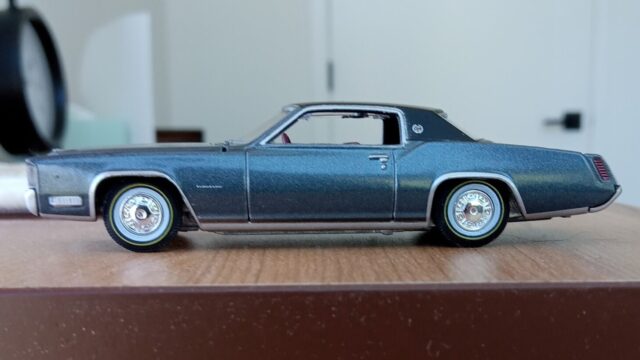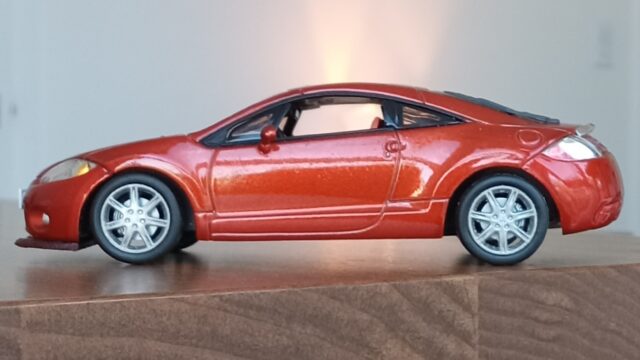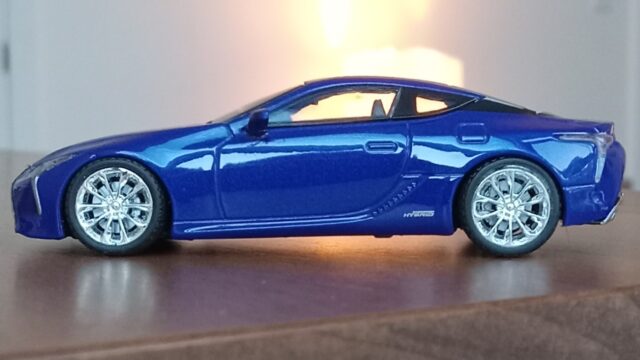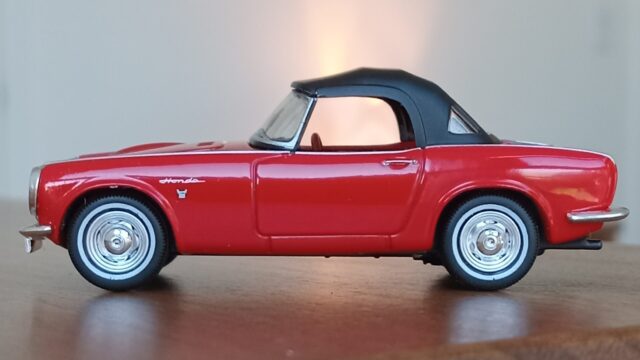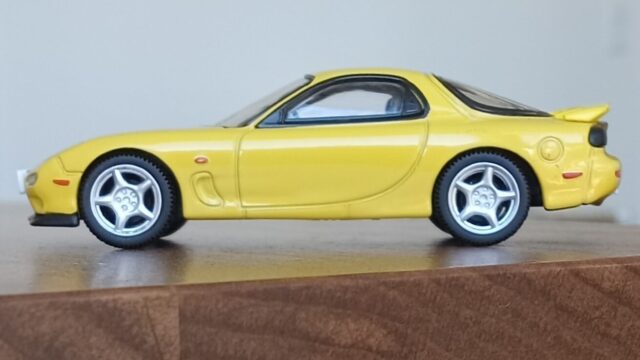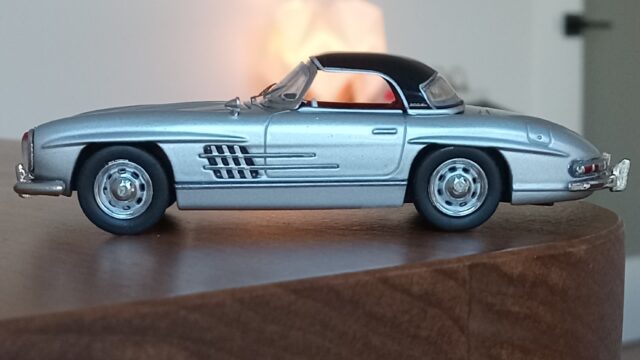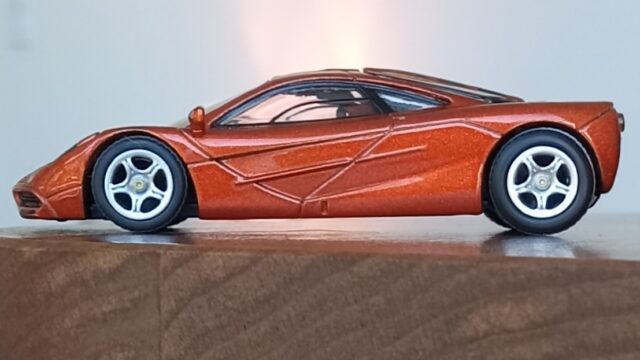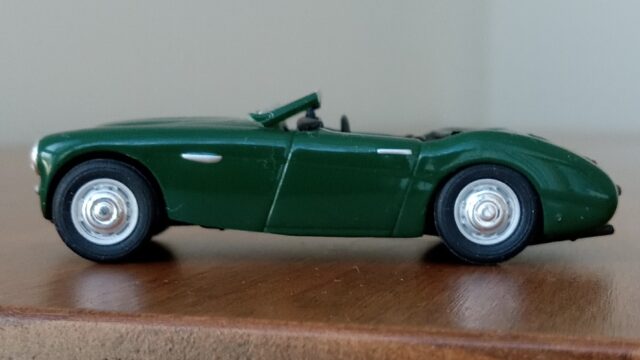
第17回:《キュートな🐞》スバル 360, 1963(外装色:サンド・ベージュ)
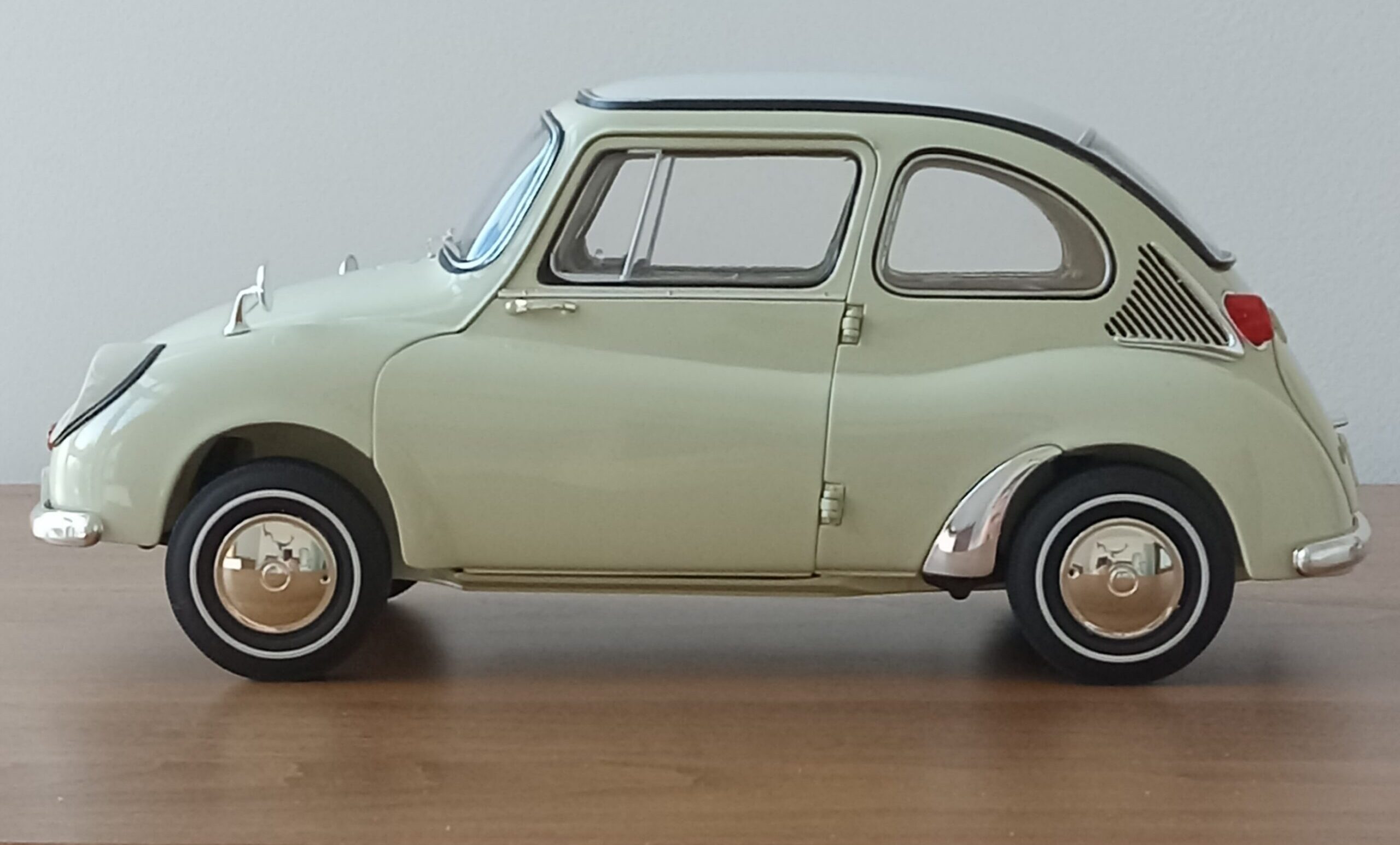
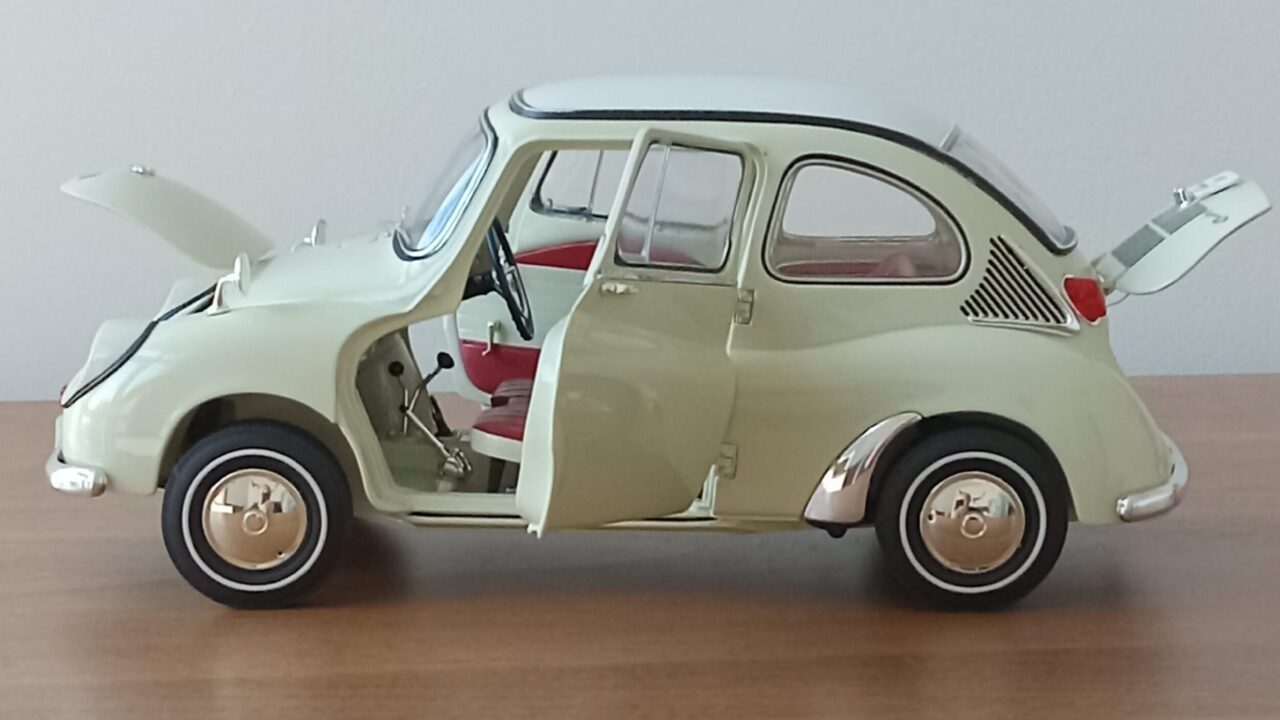
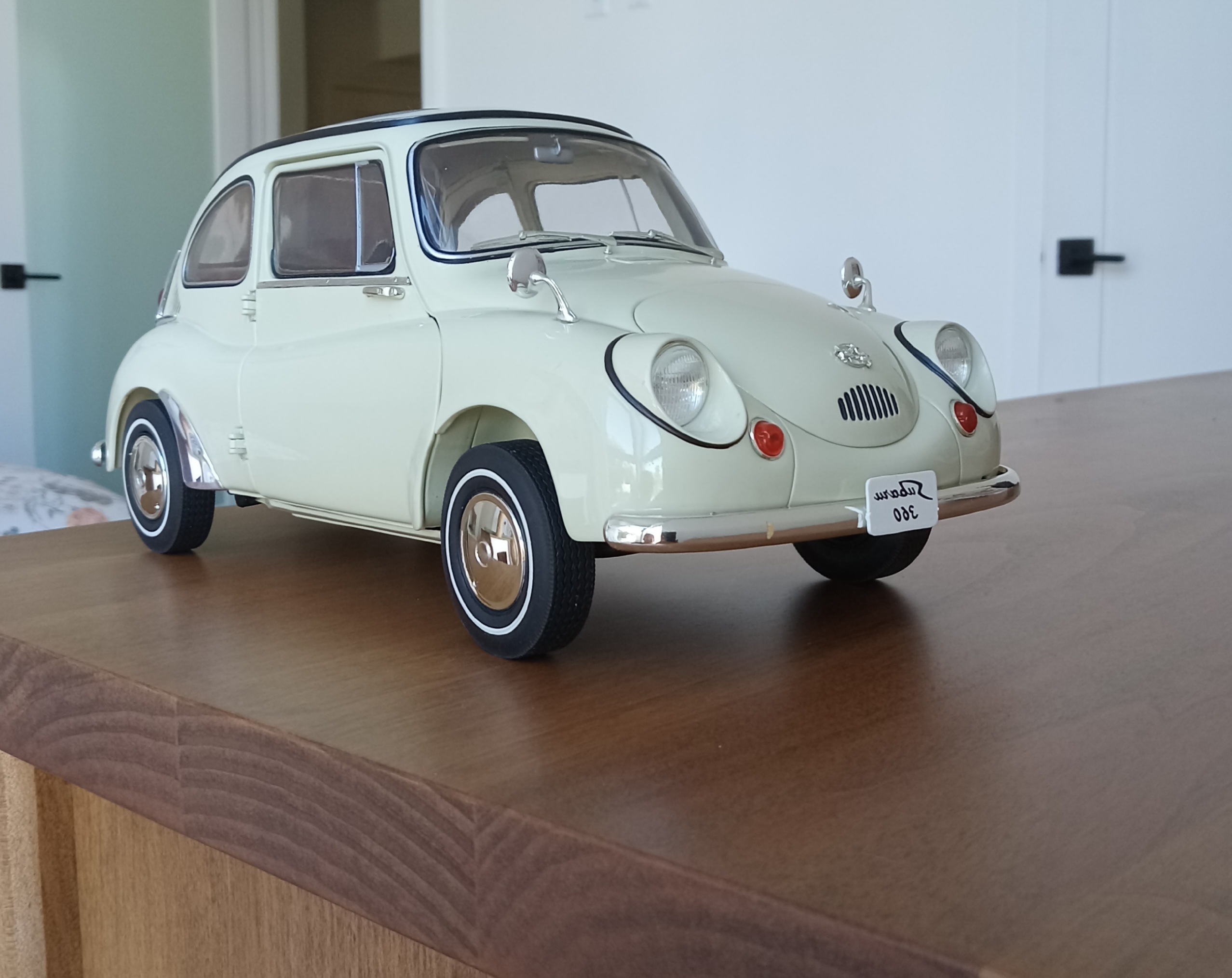
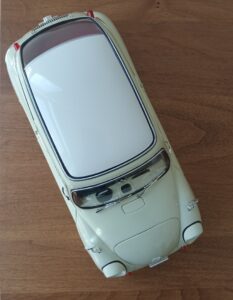
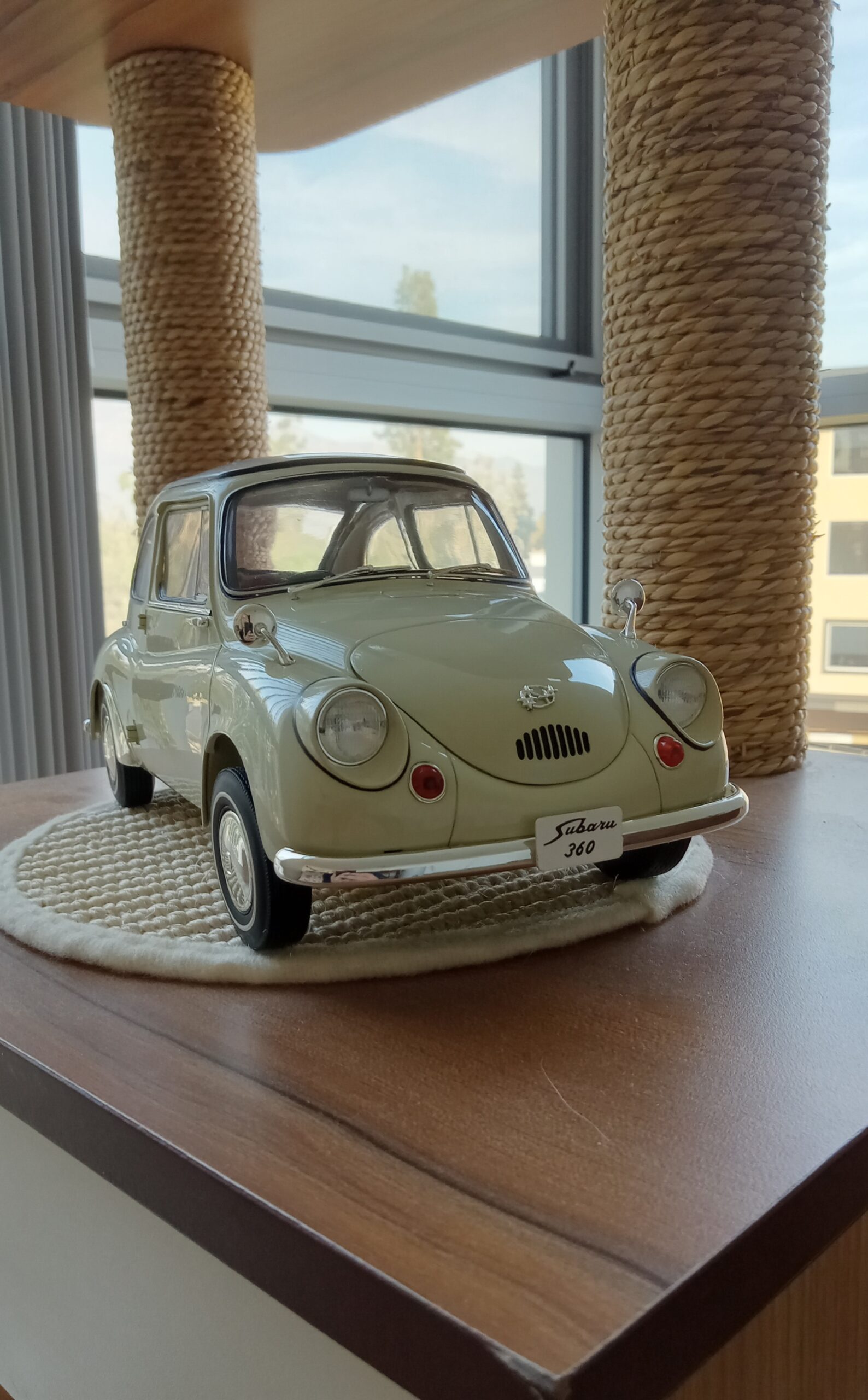
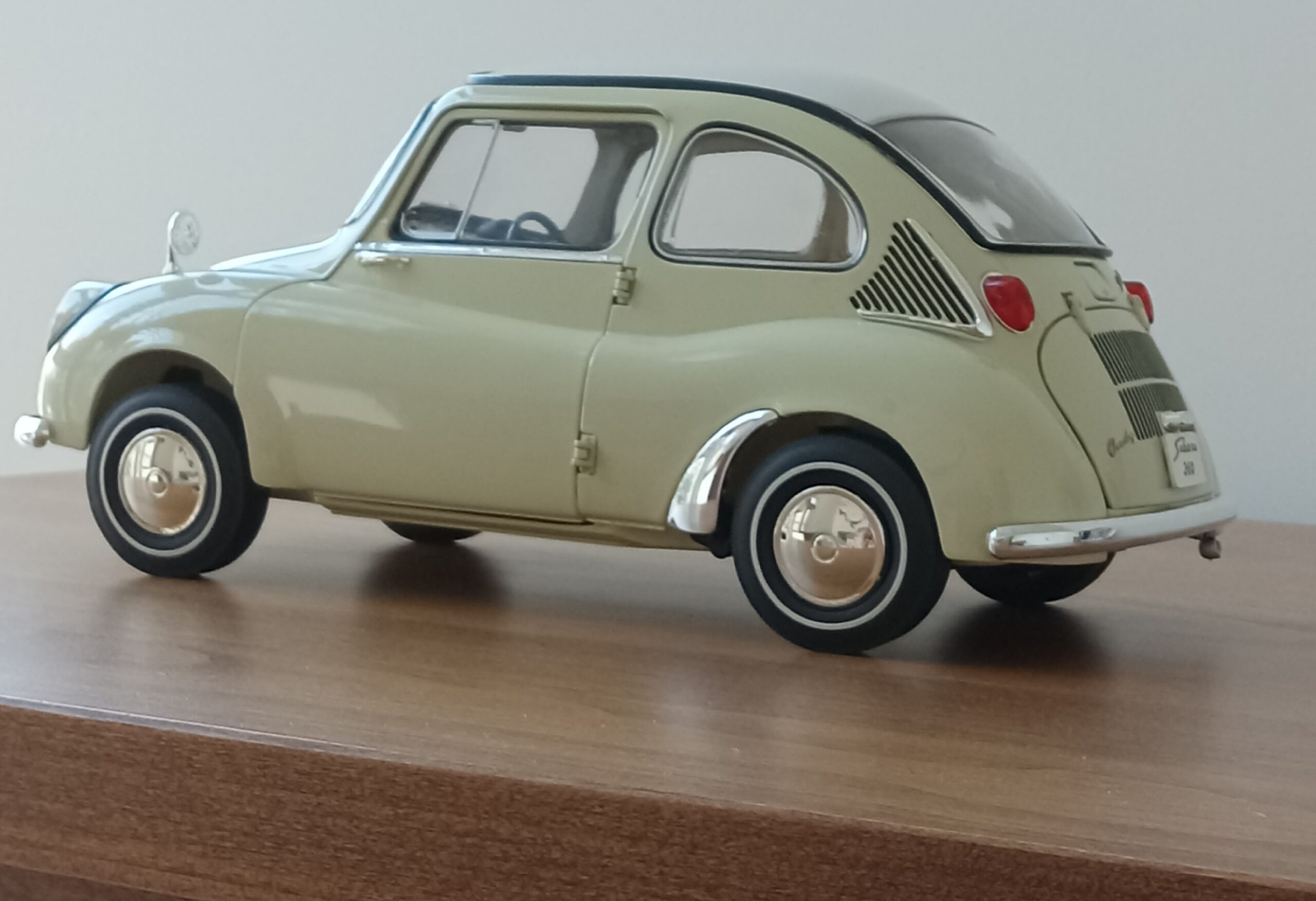
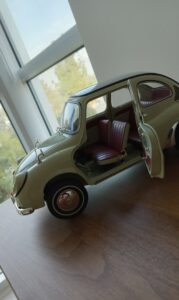
(エブロ製、1/12 ダイキャスト完成品 1963年型 スバル360(サンドベージュ))
一般的には、
ドイツから来た
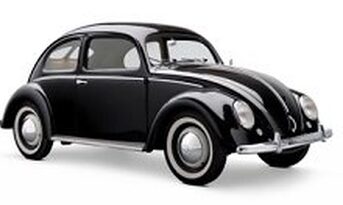
異邦のカブト虫
=『VWビートル』
日本の
てんとう虫
=『スバル360』
といった図式が有名ですが、
私的には子供のころから、今一つ納得できませんでした。
というのも、オリジナルのビートルは私的にはどうしても
カブト虫の雌または、
カナブンに見えて
しょうがありませんでした。(笑)
冒頭からどうでもいい話ですみませんでした。
私にどう見えようが、
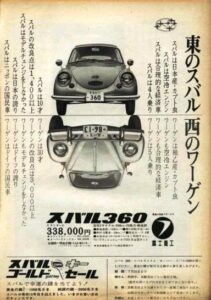 1950年代半ばにスバルの技術陣やデザイナーが、1936年に既に世に出た名車、VWビートルから影響を受けていないわけがありません。
私にとってのスバル360は、
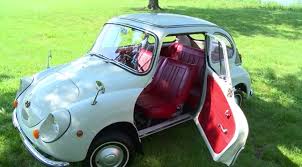
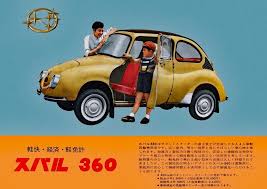
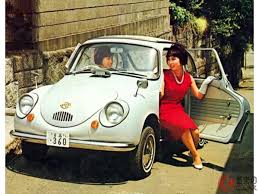
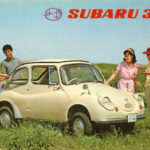
実体験できなかった思い出、ファッション雑誌なんかで見返した過去形の可愛い自動車として脳裏に焼き付いていました。


【ナナホシテントウムシ=スバル360】
この図式に疑問はわきませんでした。
能書きはこの辺にして、
*日本が誇るイノーベーティブかつ
*ユニークな外観を持つ
稀有な名車:スバル360に付いて
以下のようにお話しさせていただきます。
*実車解説:日本のモータリゼーションの出発点
*外観デザインの特徴:リアエンジン+モノコックボディー
*『私』とスバル360:すれ違いの関係?
*まとめと雑感:三題噺やってみますか?
*好みの軽自動車たち:
なお、実写解説部分では、
三栄出版刊の「モーターファン別冊:【富士重工業スバル360のすべて】≒歴代レガシーのすべて特別付録』を参照させていただいております。
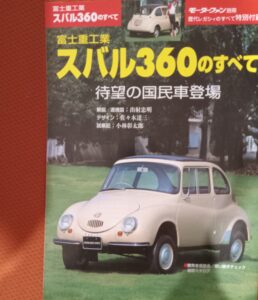
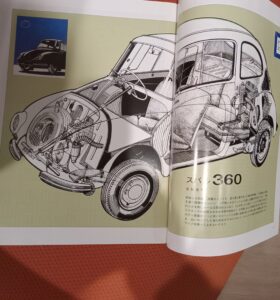
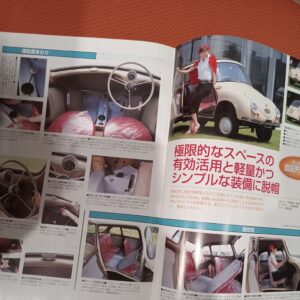
*実車解説:日本のモータリゼーションの出発点
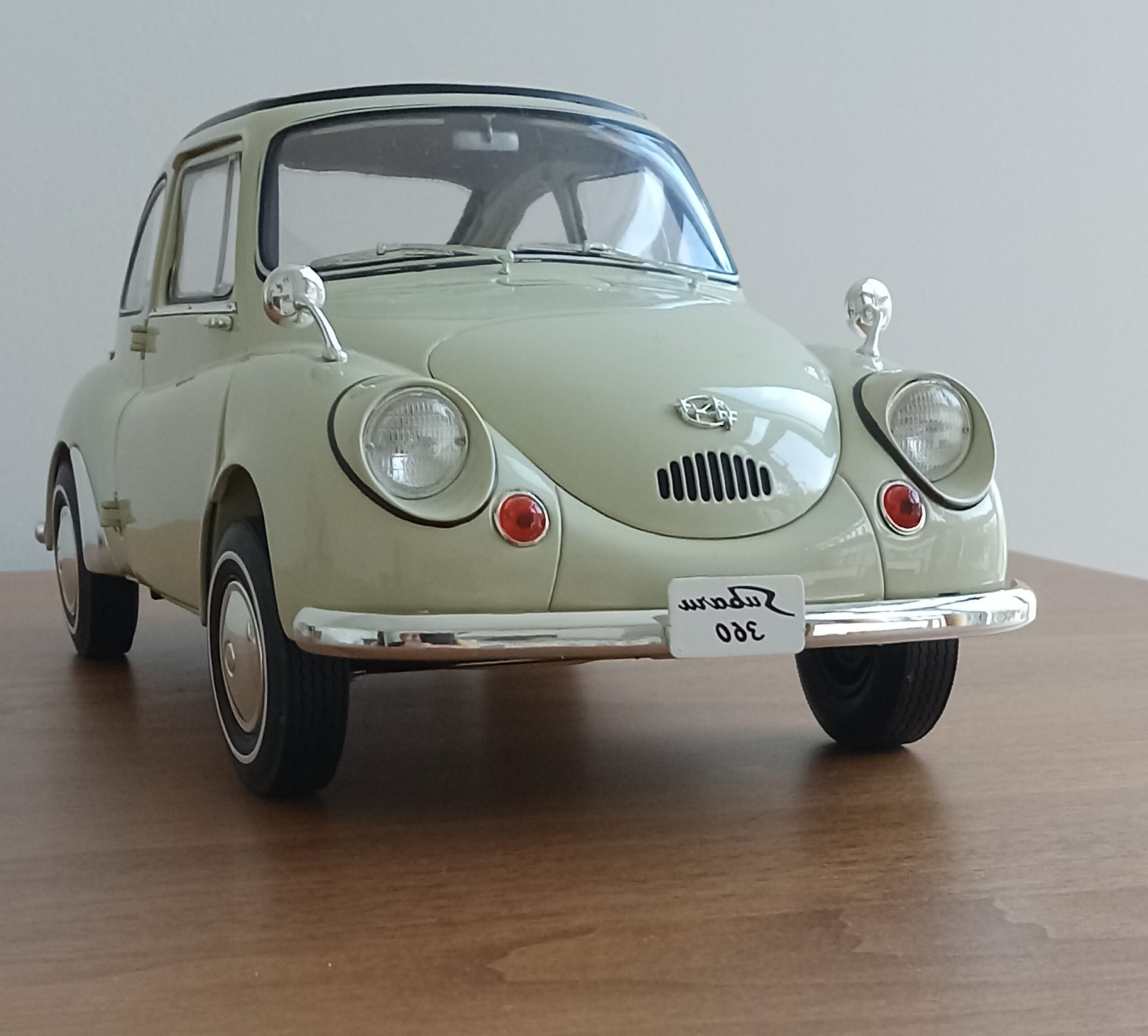
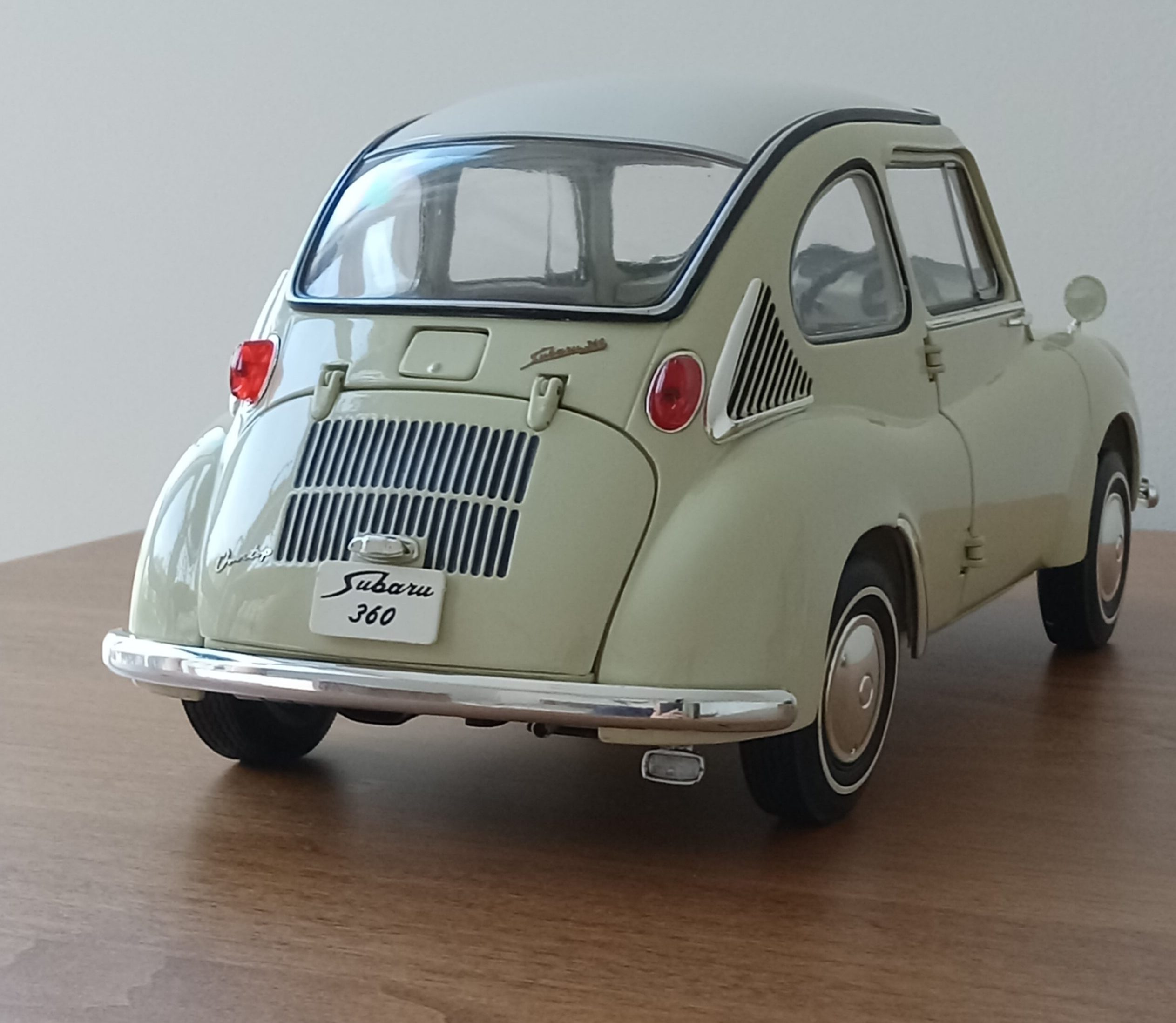
#実車解説:
スバル360(SUBARU 360)は、富士重工業(現・SUBARU)が開発した4人乗り軽自動車、1958年から1970年までのべ12年間に亘り、約39万2000台が生産された日本のモータリゼーションを発展させた立役者的存在です。
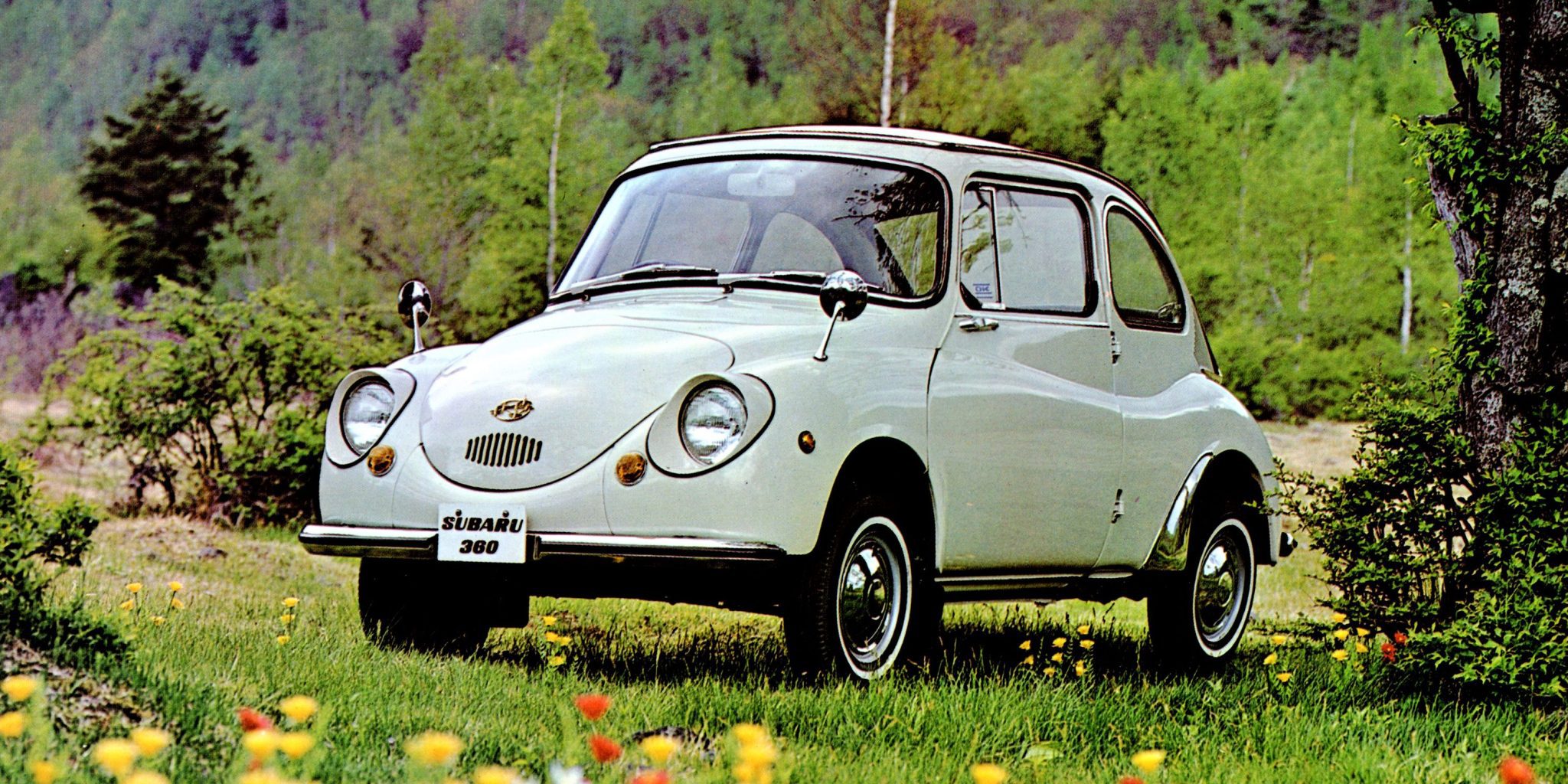
車輛概要:
会社の前身が、航空機製造会社と言うこともあり、航空機技術を応用した超軽量構造を採用し、また限られた空間で必要な居住性を確保するための新しいアイデアが数多く導入された量産型軽自動車として設計されました。
技術的特徴:
*徹底的な軽量化(385kg)による効率の追求
*航空機製造技術を応用したモノコック構造ーーー>ルーフとリアウインドウをFRP化
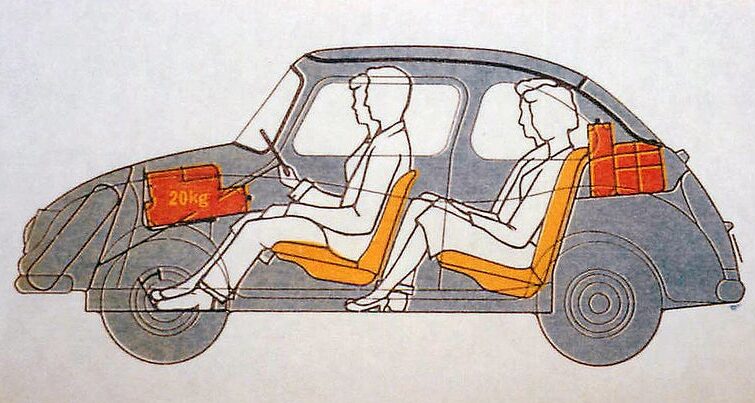
*大人4人が快適に過ごせる居住性:2気筒空冷エンジンを後部座席下に横置き
*当時の最先端の、トーションバー・サスペンションの採用
*高価な新素材(合金類やFRP)を軽量化のために採用
基本構造:
フル・モノコック構造の超軽量車体後部に空冷エンジンを横置きし、後輪を駆動するリアエンジン・リアドライブ方式を採り、サスペンションは日本で初めてトーションバー・スプリング(棒鋼のねじれによる反発を利用したバネ)を用いた極めてコンパクトな構造として、車内の客室容積確保を図った。タイヤは当時としては異例の10インチサイズを、これまた新規開発させて日本初採用、またフル・モノコック構造の採用は、軽量化対策としてスバル1500での経験を活かしたものであり、元航空技術者を多く擁する富士重工技術陣にとっては自家薬籠中の技術とも言えた。
外観スタイリング:
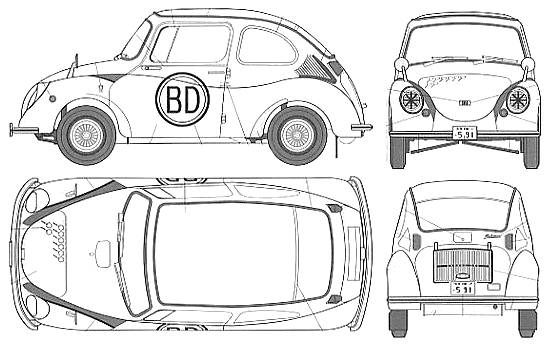
ボディ設計の担当者は室田公三、車体のデザインは、戦前からバスボディのカラーリングを通じて富士重工業と関係があった、社外の工業デザイナーである佐々木達三が1956年5月に外観デザインの依頼を受け、デザイン業務と並行して自ら自動車免許を取得、(日野自動車が愛センス生産していた当時の代表的小型車)「日野・ルノー4CV」を運転するなどして自動車の理解に努めました。VWビートル似と言われることの多いスバル360ですが、随所のディテールを見るとむしろルノー・4CVとの近似性があるのは、この辺に一因があると思われます。
n
n
n
佐々木は図面を描かず、立体模型を作るデザイナーだったため、1/5倍、粘土模型をもとに、これを拡大した等倍粘土模型を修正して石膏型をとるという方式がとられた。デザインベースとして富士重工で木型にボディ外殻の限界目安となる釘を打ったものが作られ、1956年6月はじめに佐々木に引き渡され、佐々木はこれに粘土を盛りつけることでデザインの原型作りに着手、20日ほど後の6月21日には原型模型を完成させています。
n
n
佐々木達三さんさんは、
『軽自動車は大人が子供の服を着たようなものであってはならない。ミニカー独自の姿でなければならない。重苦しくなく、軽薄でなく、小さいながらも頼もしい姿でありたい。スピード感もそれなりの流動感でまとめることとした。』と言っておられるように、(前述の、『スバル360のすべて』内のインタビューから抜粋)
n
生産開始前に、洗練の上に洗練を重ねられたデザインは、従前の軽自動車の様に『大きな自動車の滑稽なまでに強引な縮小版』ではなく、4人乗りミニカーのためのデザインという大前提のもと、機能と直結したクリーンな形態が実現されたことは画期的であり、スバル360が日本のデザインの歴史において高く評価されている理由となっています。
nn
n
n
N

一般評価:
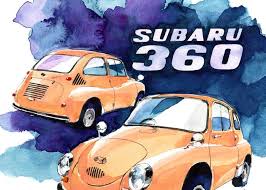
比較的廉価で、十分な実用性を備え、1960年代の日本において一般大衆に広く歓迎され、モータリゼーション推進の一翼を担い、日本最初の「国民車(大衆車)」と考えられており、模範となった『フォルクスワーゲン・タイプ1』のあだ名となっていた「カブト虫」(ビートル)との対比から、「てんとう虫」の通称で庶民に広く親しました。
生産終了後も、1960年代を象徴するノスタルジーの対象として、日本の一般大衆からも人気・知名度が高く、生産終了後半世紀以上経過しているが、後期モデルを中心に動態車および動態保存車も少なくなく、愛好者のクラブも結成されており、今なおまれに路上を走る姿を目撃することが可能です。
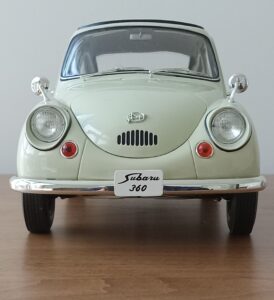
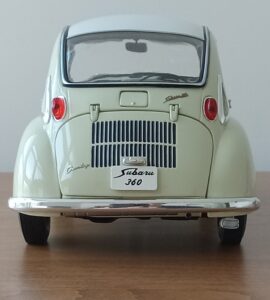
#主要諸元:
- 型式:EK32型
- 総排気量: 356㏄ /強制空冷2ストローク直列2気筒自然吸気型
- 最高出力 : 16bhp/ 4,500rpm
- 最大トルク:3kg-m/3,000rpm
- 駆動方式:RR(リアエンジン・リアドライブ)
- 定員:4名
- 車体形式:2ドア・ファストバック・セダン
- ホイールベース:1,800 mm
- 全長:2,995 mm
- 全幅:1,295 mm
- 全高:1,380 mm
- 車両重量:
385kg
*外観デザインの特徴:リア・エンジン+フル・モノコックボディー
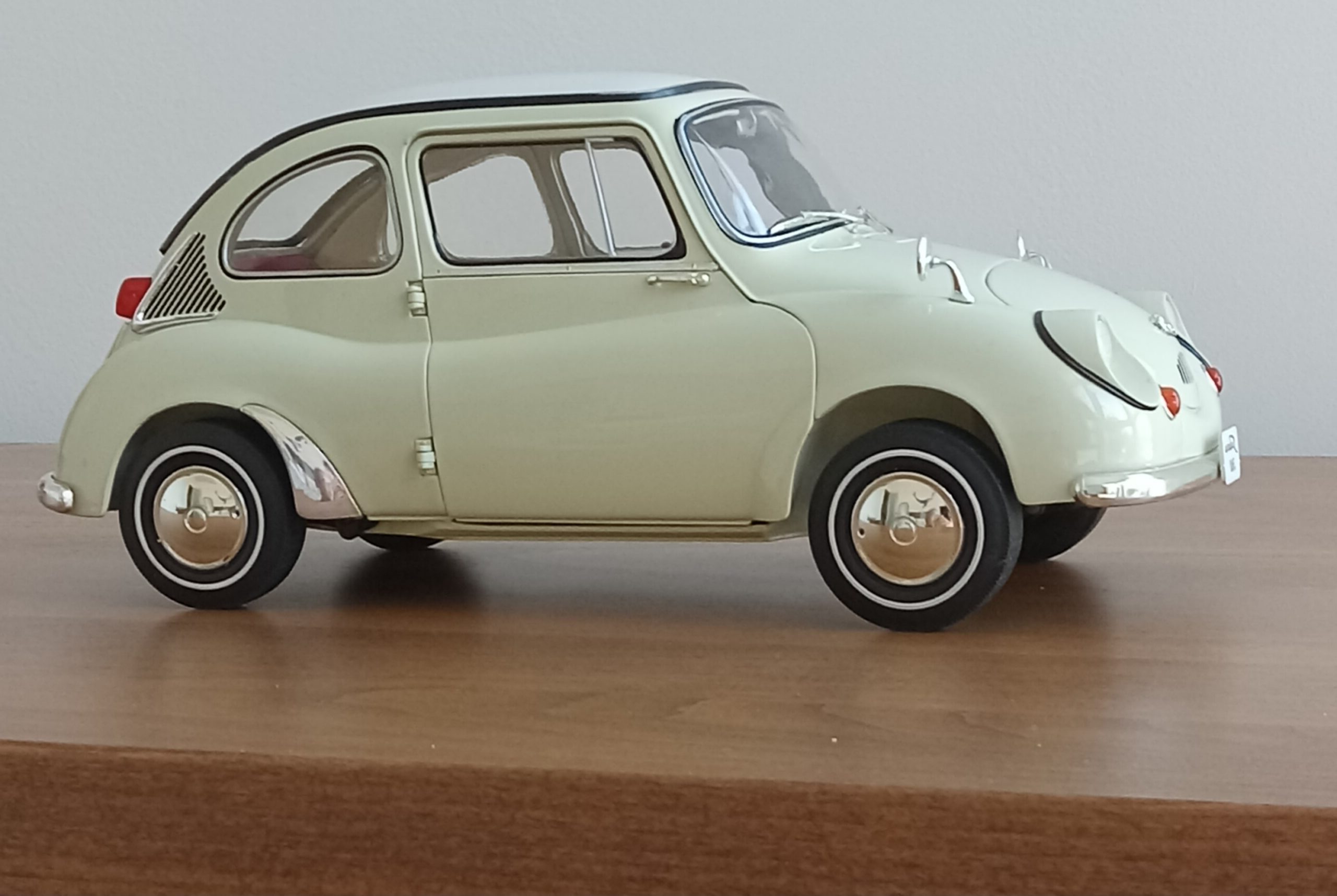
白状させていただきます。
以前(若いころ)はこの形、
ただ『可愛いだけ』だ、
と思ってました。
*別に対して魅力的でもなく、
*ノスタルジーのかなたにある、
*動物園のパンダやコアラ的な、
*マスコットとしてしか、
見てませんでした、、、、、
ごく単純な味覚芽しか持ち合わせていない、
育ち盛りの男子そのもので、
*甘辛い味+脂っこい旨味=白米大盛3杯、
といった、
単純な嗜好しか出来ませんでした。
しかしながら、60歳以上生きておりますと、
多少は、酸いも甘いもかみしめることが出来るようになり、
現在では、
*苦さや渋さ、えぐみやピリ辛、
*各種スパイス、ハーブ類の繊細なニュアンスなども
少しは理解できるようになりました。嬉
そんな感じで、
私が今現在考えます『スバル360』の外観デザインに関しての
特筆すべき特徴を5つ挙げてみます。
#『スバル360』のデザイン的特徴:
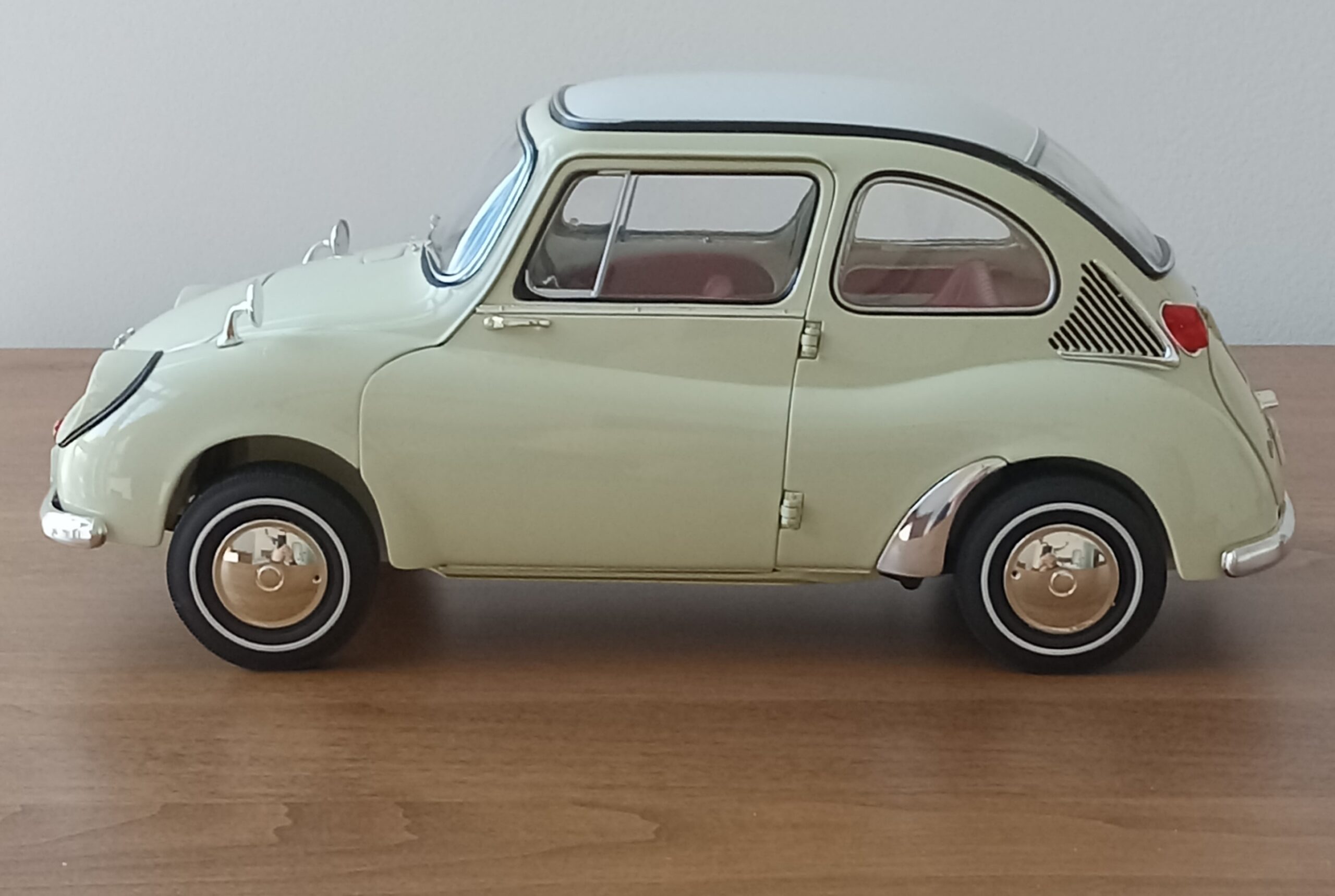
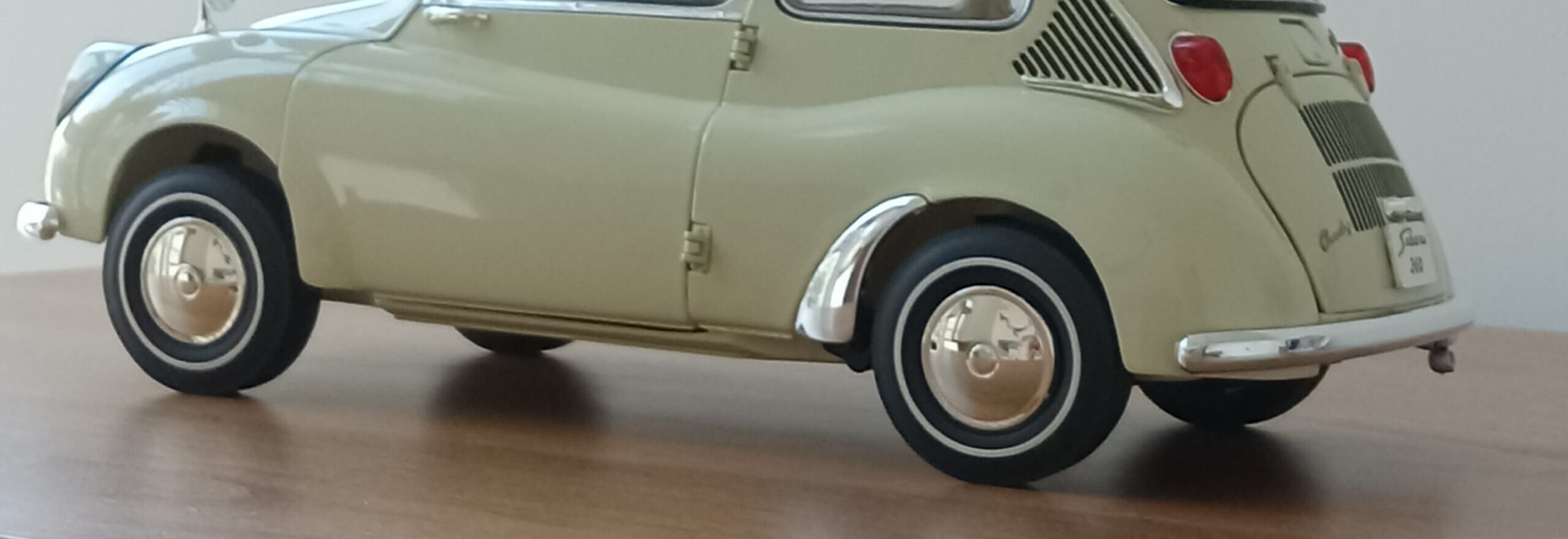
1、お椀を伏せたメインボディーを横から締め上げる、全後が繊細なカーブでつながったフェンダー造形の妙
2、軽快なリズムを奏でて、斜めに走るA, Bピラーとドアカットラインが軽量な車重を支える為に『後ろへ、つんのめり気味な姿勢』と交応し合う絶妙な味わい/バランス
3、全幅1300mmとは思えないほどに、しっかりとしたスタンス感(特に後輪)
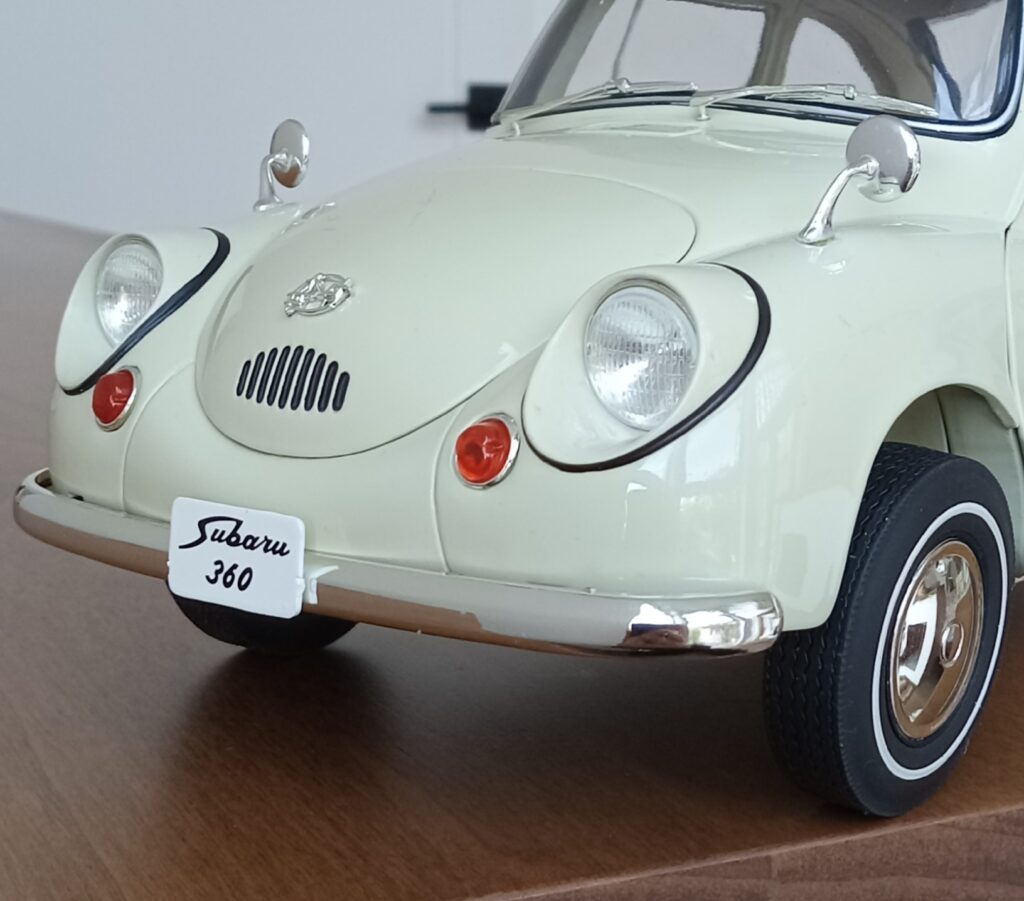
4、愛嬌があるとしか言いようがない、しかしながら味わい深さも兼ね備えた、後期型のフロント・フェイシア・デザイン(寝ぼけマナコ仕様)
5、観音開きのドアを開けた時の、優しく包み込むような、カタチ
ーーーーーーー>乗降時のエレガントなしぐさを演出します。
それでは、
1つづ見て行きましょう!
1、お椀を伏せたメインボディーを横から締め上げる、全後が繊細なカーブでつながったフェンダー造形の妙
(VWビートルはお椀のボディーにお椀のフェンダーを4個くっつけましたが、車幅が限られた360では、非常に巧妙で美しく前後フェンダーをつなげて、全体を締め上げております)
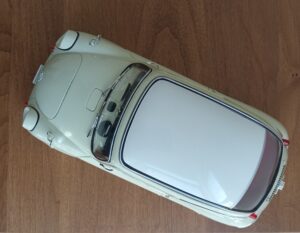
ーーーーー>真上から見ると、更に極わずかコークボトルのように中央部を絞ってあります。
2、軽快なリズムを奏でて、斜めに走るA, Bピラーとドアカットラインが軽量な車重を支える為に『後ろへ、つんのめり気味なサスペンションの姿勢』と交応し合う絶妙な味わい/バランス
(運転手が乗車することで、フロント側が沈み込むことでバランスが安定方向へ幾分移動しますが、「ゆらゆら」すると進行方向への動きが再び増します。)
ーーーーー>時代を反映した、生命力のカタマリのような国民車のデザイン完成!!
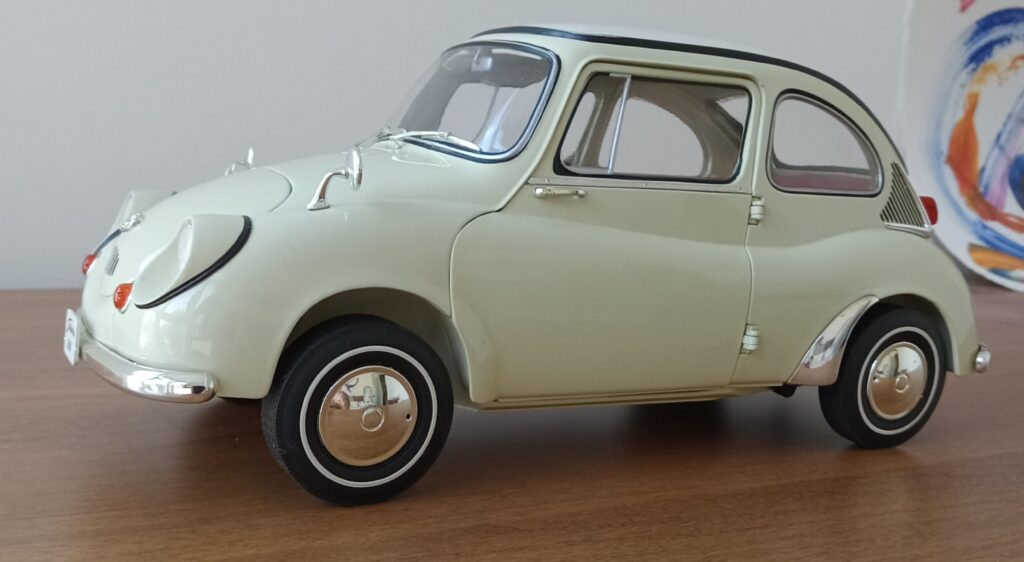
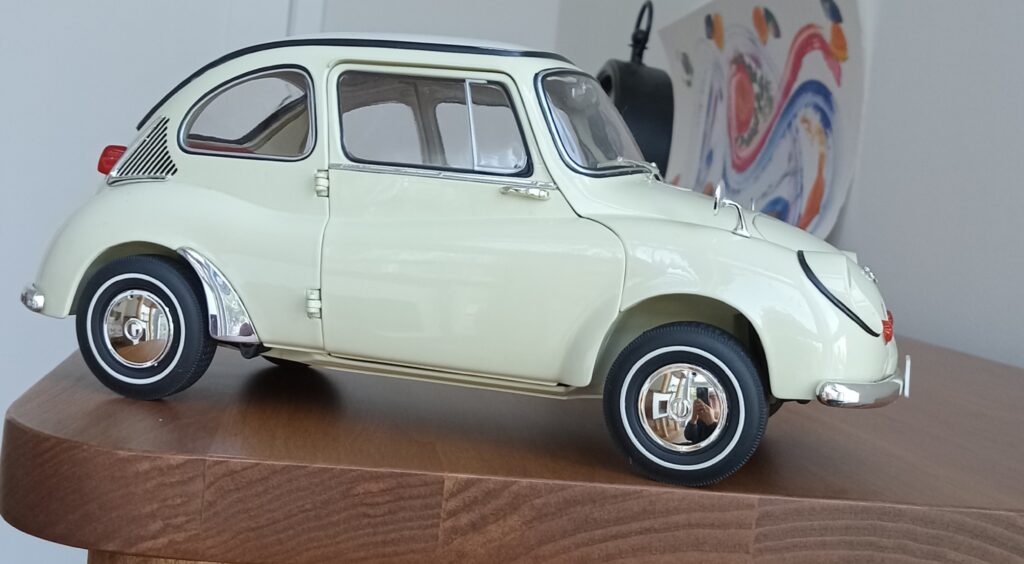
3、全幅1,300mmとは思えないほどに、しっかりとしたスタンス感(特に後輪)あふれるタイヤホイールの位置関係
ーーーーーーー>地面を踏みしめる、しっかり感が素晴らし過ぎます。
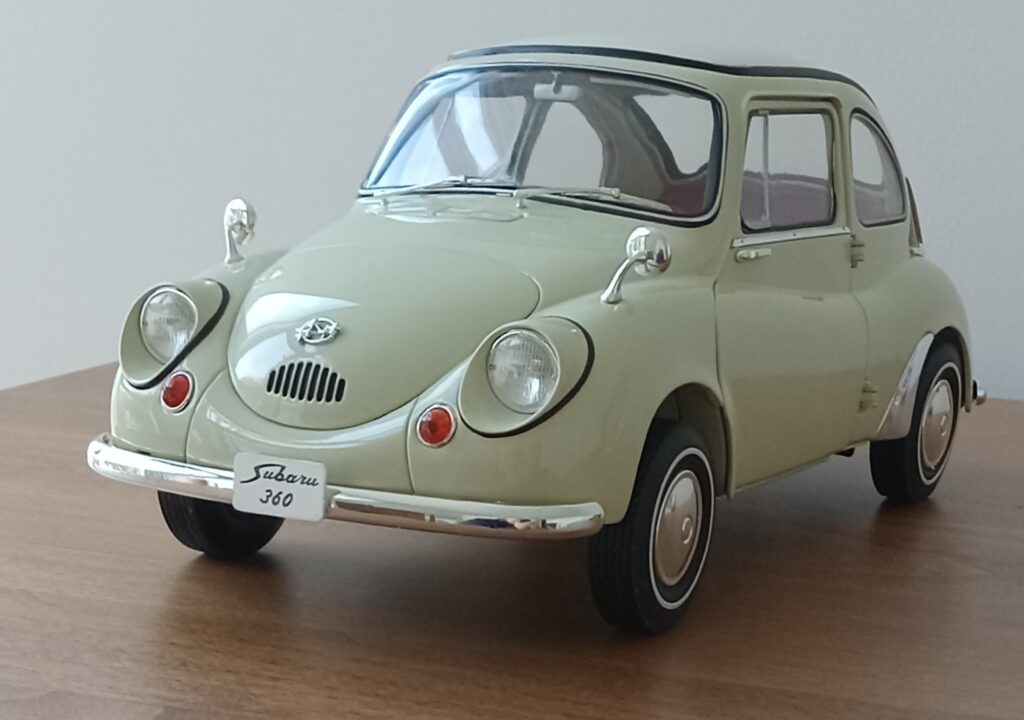
4、愛嬌があるとしか言いようがない、しかしながら味わい深さも兼ね備えた、後期型のフロント・フェイシア・デザイン(寝ぼけマナコ仕様)
(現在まで使われている、スバルの6連星のロゴはこの時にデザインされたそうです)
ーーーーーー>老若男女問わず、見る人すべてに笑顔を届けます。
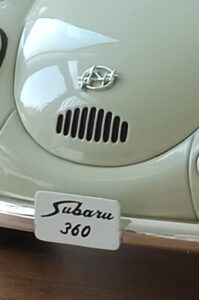
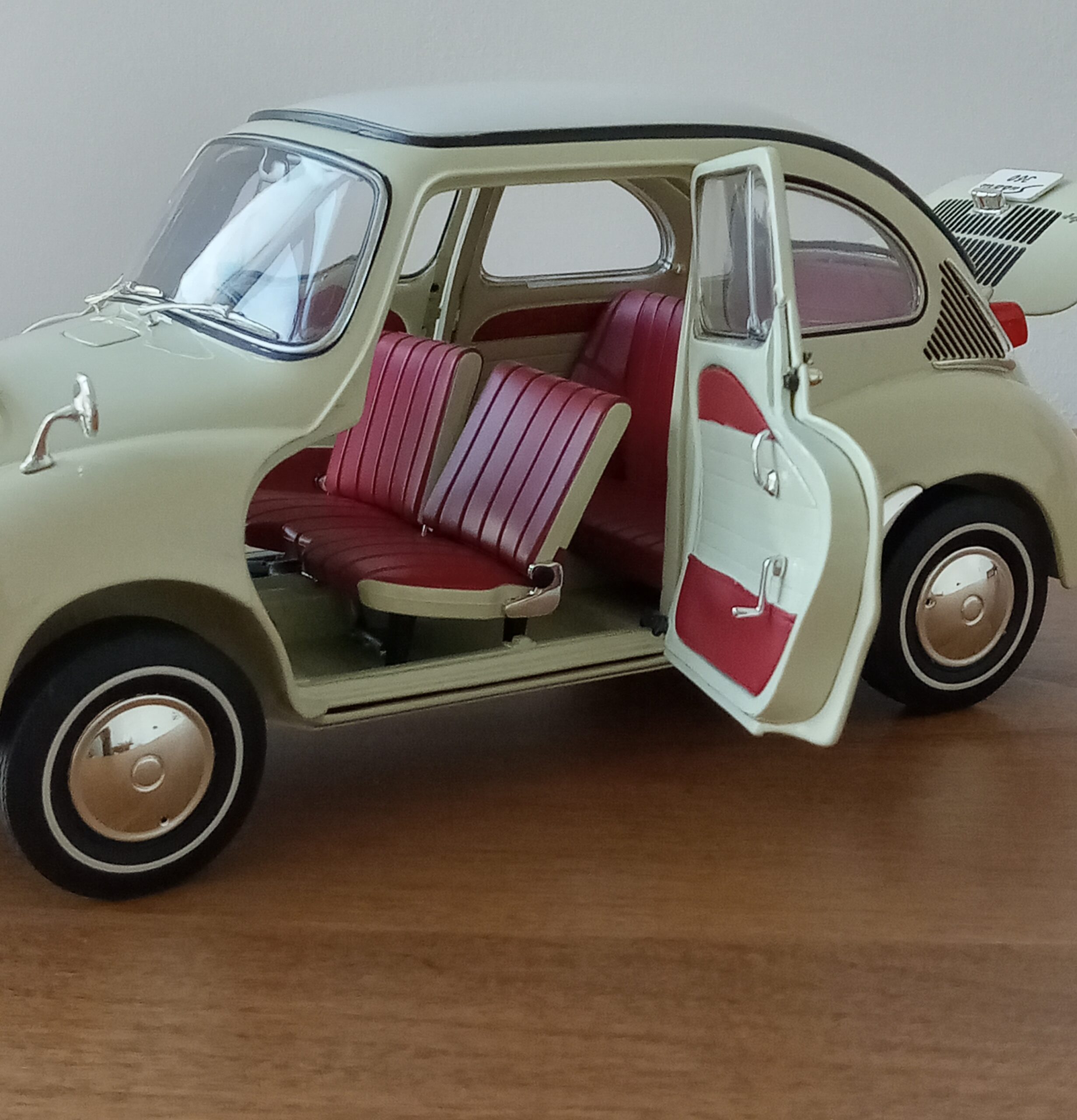
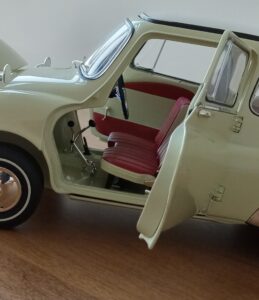
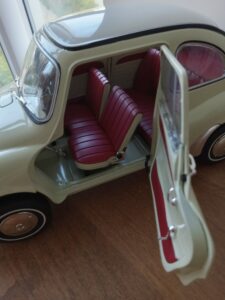
5、観音開きのドアを開けた時の、翼で優しく包み込むような、カタチ【所作】
ーーーーーーー>乗降時のエレガントなしぐさを演出します。
*『私』とスバル360:すれ違いの関係?
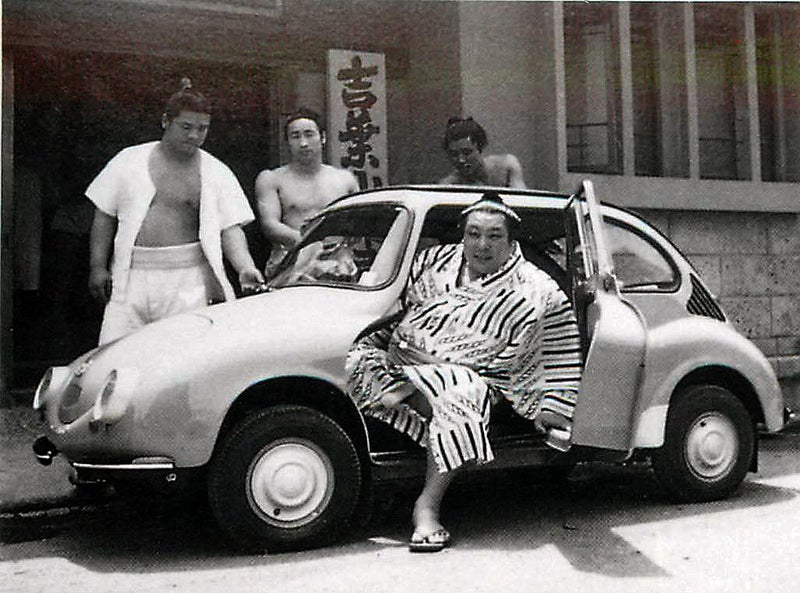
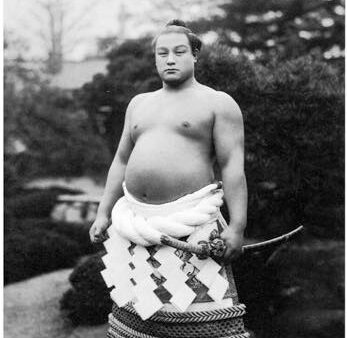
(横綱、吉葉山『てんとう虫』に乗る、の図)
私にとってつい最近まで、
スバル360は『好き』でも『嫌い』でもない、
どうでもいい存在でした。
この衝撃的な『関取の写真』を
見るまでは!!
スバル360を、
幼いころ近所でよく見た覚えはあるのですが、子供心には、大きなセダンや、スポーツ・クーペに目が行き、スバル360似は全く関心が向いていませんでした。そのまま中高生時代に突入、そのころには、車に対する興味は一時中断、折からのSF映画ブーム真っ盛りの中、スターウォーズやエイリアンなどの特撮・SFにのめり込んでました。
その後大学時代に、落語研究会に入り、寄席演芸の粋な世界を垣間見ると同時に、60年代のファッションや、その当時の風物に多少の関心を示したものの、軽く受け流して、文科系大学を卒業後は渡米して、自動車デザインの世界へ、GM系の美術学校で、アメリカ式のコントラストや、リフレクション、陰影などを強調したデザイン教育を受けた後当時のトレンドが有機的(オーガニック)デザインだったこともあり、ふくよかなイタリア車やフランス車に関心が向いていきました。
そんな中、今回の火災で自宅を焼失することとなり、ブログ記事を書くに至り、自分の興味の向くまま、もう一度自動車の外見デザインを振り返る中、この『関取の写真』に出会いました。
この写真にある『ユーモア』でもなく何か訴えかけてくる『味わい』、この写真が似合ってしまうスバル360が持っている要素が何なのか?をずーっと考えていました。
まとめてみますと、
私の自動車デザインに関する味覚芽の成長は、
こんな感じでしょうか?
*少年時代---甘辛+旨味=ご飯三杯(長く低く大きなものを好む)
*中高生時代ーーー成長を止めて、ピリ辛のSF映画に宗旨替え(ひねくれたものの見方を追加)
*大学生時代ーーー渋み+苦味=ご飯はほどほどに(ノスタルジーや骨董に目覚める?)
*渡米後 ーーーひずみや、反影、メリハリ、方向性(GM, アメリカデザインに学ぶ)
*自宅焼失後ーーーコク味、えぐ味、MSG抜きの舌を開発、糖質制限下の素材の持ち味再発見(日本車の本質的な美点や長所を再発見する旅に出た感じ)
#『えぐ味』の発見≒強力な武器

この、『えぐみ』の発見とその処理方法こそが、
今回の記事の主題であり、
一番大切な部分だと思います。
味覚的には、
たけのこ、わらび、ぜんまい、ほうれん草、ごぼう、銀杏などに含まれる、
苦味と渋味が混ざり合ったような、喉の奥が「イガイガ」する不快な刺激、あくの強い独特の味わい、ということで、普通には敬遠され、あく抜きすることで、食用に適すような味ですが、
ーーーー>比喩表現として、人や作品の個性が強すぎて、少し「毒」や「しつこさ」がある場合に「えぐみのあるキャラクター」「えぐみの強い描写」などと表現されます。
ーーーー>また現代純粋美術作品などには、その「あく」部分を純粋性として、あえて「えぐさ」を主眼に置いた作品も頻繁にみられます。
具体的には、
「えぐ味」の重要性に気付いたのち、もう一度スバル360を観察した時、
*以前は嫌いだったボディーをフロントからリアにつながる波打ったフェンダーカバー部分が【嫌いな部分≒えぐ味】からーーーー>【気になる部分】に変化、(じっくり観察してた結果、全後の車体の量感(ボリューム)を巧妙にバランスしてました)
*フロント・サスペンションの関係で、少し【ふんぞり返り気味の車体の姿勢≒えぐ味】が作る斜めの線とA,Bピラーとドアカットラインの斜め線との関係がーーーーー>(非常に微妙な味わいを醸し出しているのに気づくこととなりました)
#スバル360の立体体験:ミニカーを通して、、、、
スバル360の立体に触れたのは、
つい最近で、3年ほど前に仕事関係の友人からルパン三世のフィアット500と交換してもらったトミーテックのヴィンテージ・ネオ版のミニカーがきっかけで、(残念ながらそのミニカーは火事で焼けてしまいましたが)以下のように「付け焼き刃的」に触ってきました。
*トミーテック社製、1/64 ヴィンテージ・ネオ LV-173© スバル360(ベージュ)
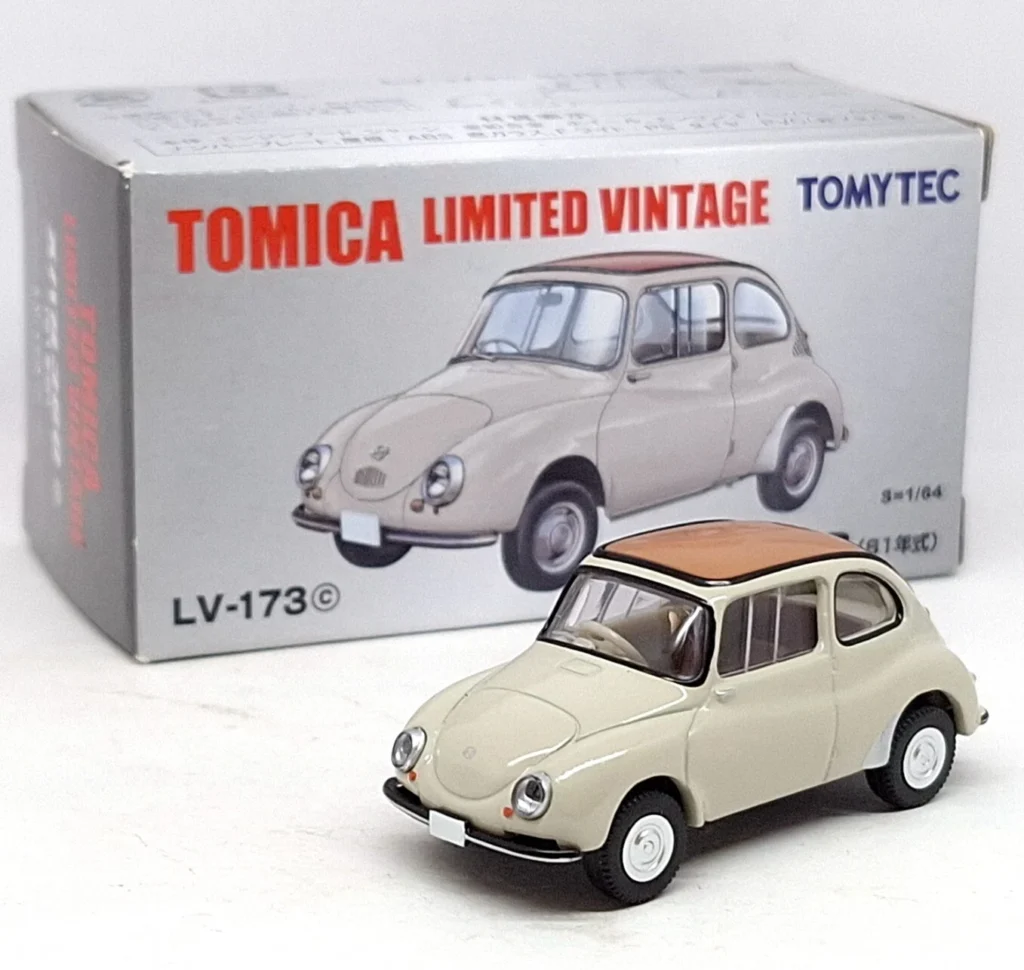
(初期型を非常に繊細に再現してあり、何とリア・ゲートが開閉可能で、美しく塗装されたエンジンを覗き見ることが出来ます)
ーーーー>小さいのにずっしりと重かったです
*トイズキャビン社製(ガチャポン)、1/64 スバル360 26R型(アイボリーホワイト)
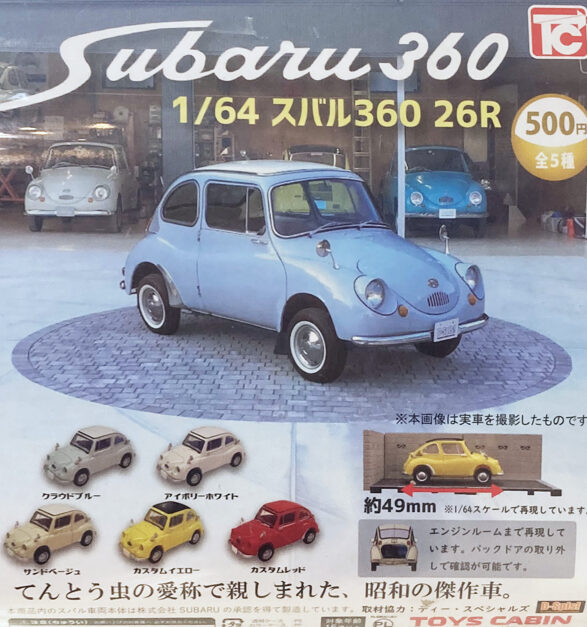
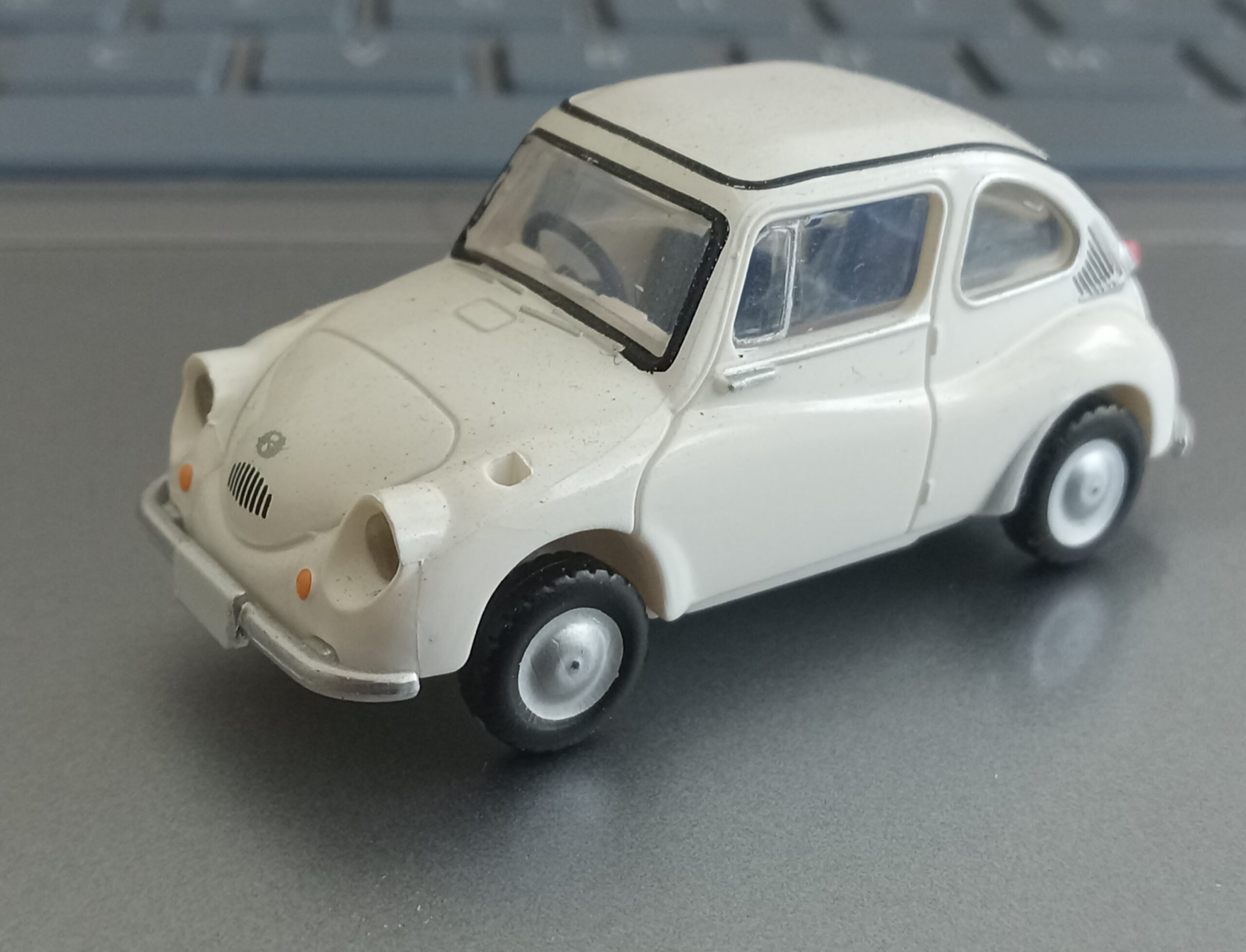 (実車スバル360専門店ディー・スペシャルズの監修ということもあってか、寝ぼけ眼版を忠実に再現してあります。)
ーーーー>リアの車高が少し高目だったので、リア側だけ、1.5mmほどシャコタン化したらいい感じで、少しつんのめった姿勢になりました。(笑)
(仕事机の、かわいらしいマスコットになってます。)
*コナミ製 絶版名車コレクション 1/64 スバル360 デラックス(K111)1967(アイボリーホワイト)
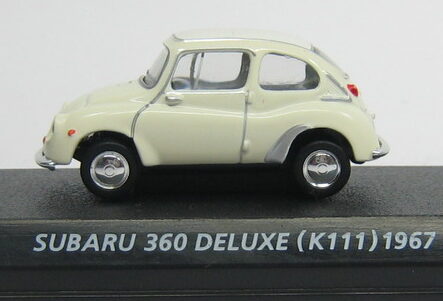
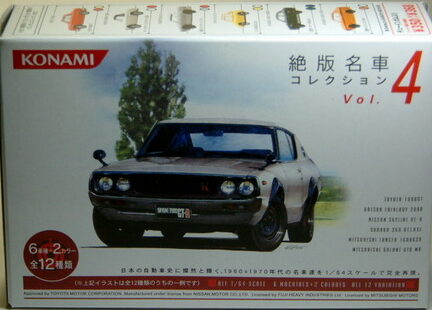
(ボディーの捉え方が味わい深く、車高を調整すれば化ける感じです。すでに入手済みなので、後程改造してみたいです。
ーーーーー>フロントの眠むたそうな顔がいい感じで再現されているもの嬉しいです。)
*アシェット社製、1/24『国産名車コレクション Vol.005』スバル 360(前期型)
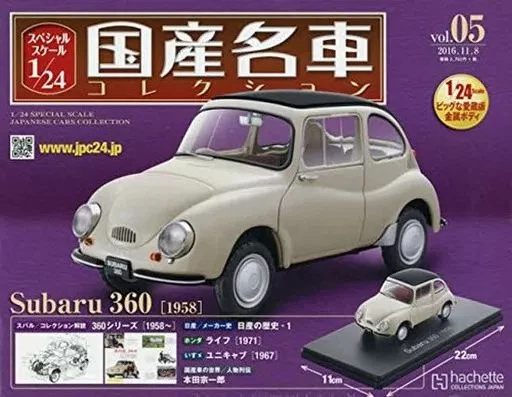
(初期型のモデル化なので、びっくり顔ですが、ドアとエンジンフッドの改変が出来て、作りも頑丈な感じで、ガシガシ動かして飾れます。)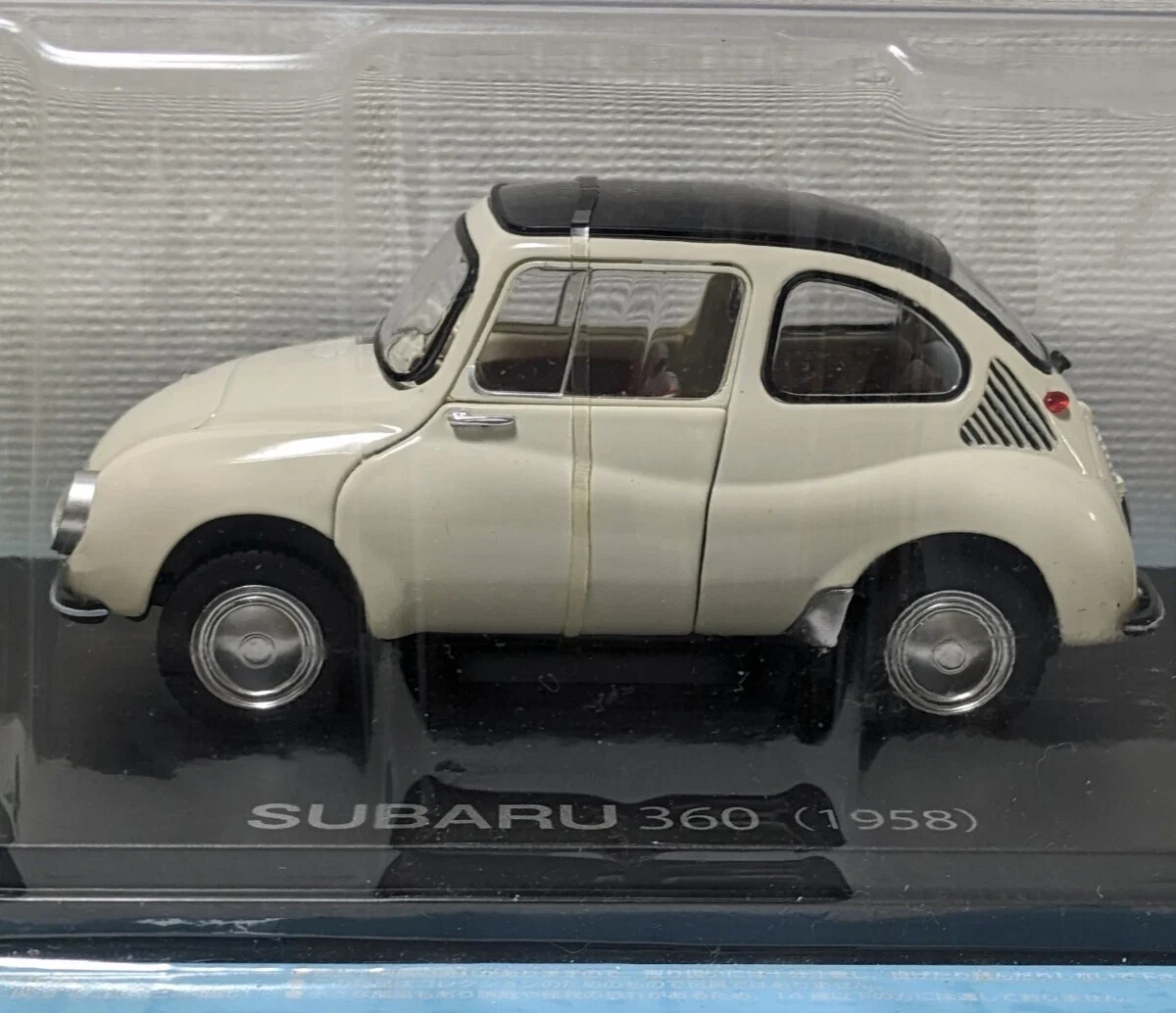
*エブロ社製、1/12 ダイキャスト完成品 スバル360(アイボリー・ホワイト)
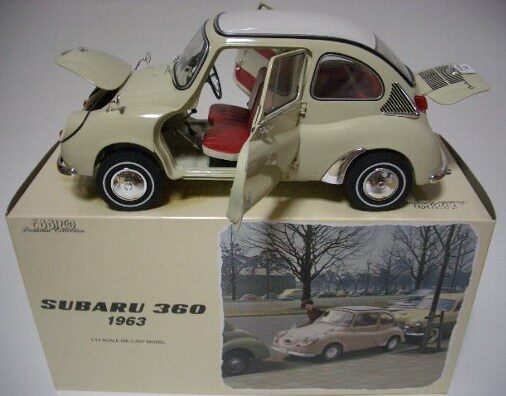
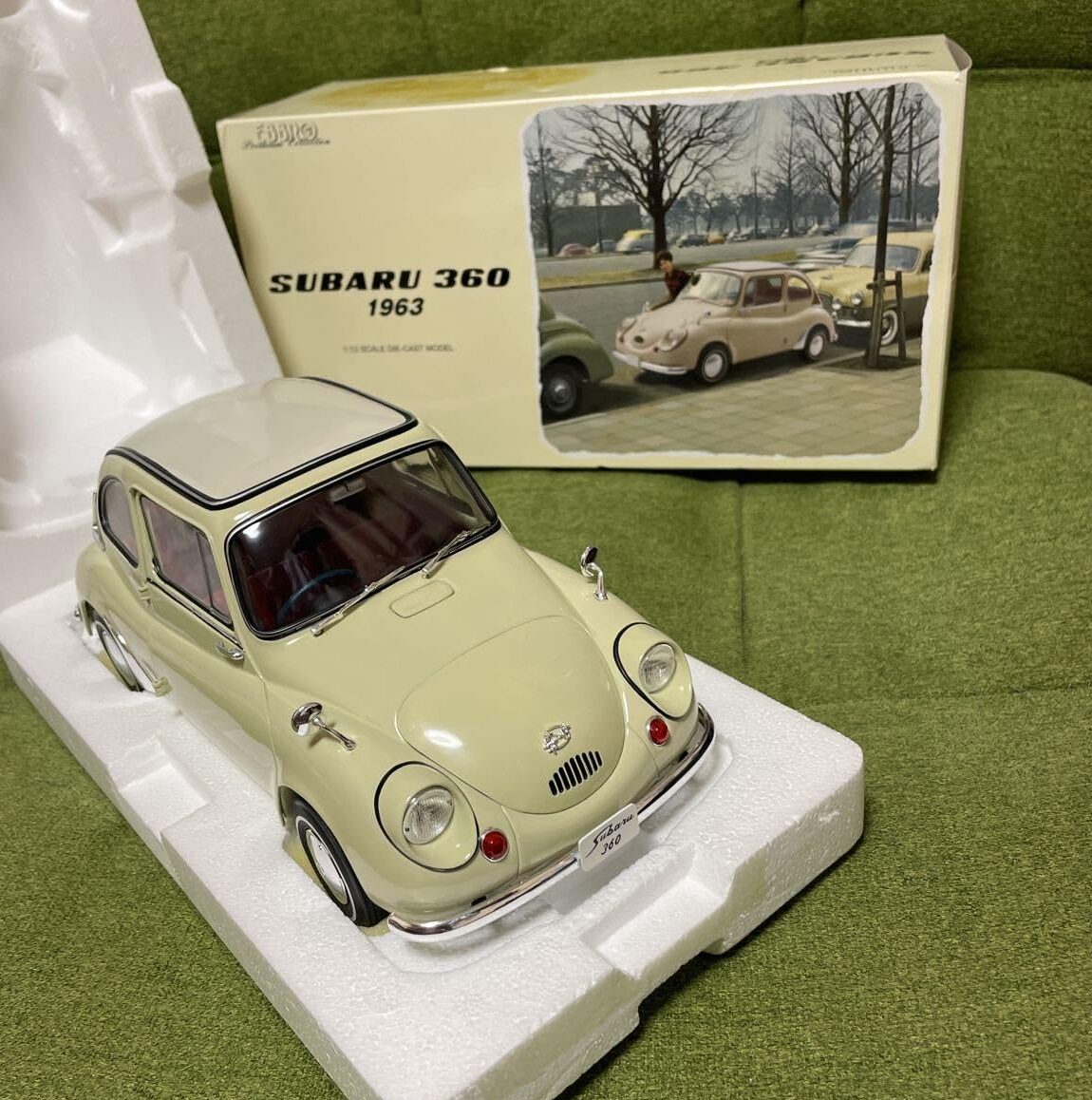
(ここ4-5年、イーベイを中心に探していましたが、希少なうえ、人気が高いためか異常なプレミア価格【$600ドル前後?】で取引されていまして、手が出せませんでした。そんな中今回の火災以降、日本から雑誌やミニカーを買うことになり、
ーーー>無事、バイイーさんを通じて、メルカリ上で適正価格にて購入できました。
出来のほうは言うまでもなく完璧です、木谷真人さん企画の傑作です。)
*まとめと雑感:『三題噺』、行ってみましょうか?

まとめと雑感を連結させまして、
『三題噺』、行ってみたいです。
*木谷真人さん
*お相撲さん
*立体模型、
この3題でいてみましょう。
エ~――一席おつきあいのほうを、願っておきますが、
私、趣味でガンダムというロボットのプラモデルを作っておりまして、
ヒーロー型の『いいもん役』のロボットを作るときいつもイメージに浮かべるのが、
あの、有名な幕内69連勝の
お相撲さん:
『第35代横綱:双葉山』なんです、、、
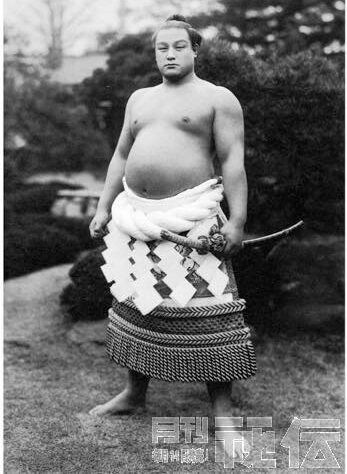
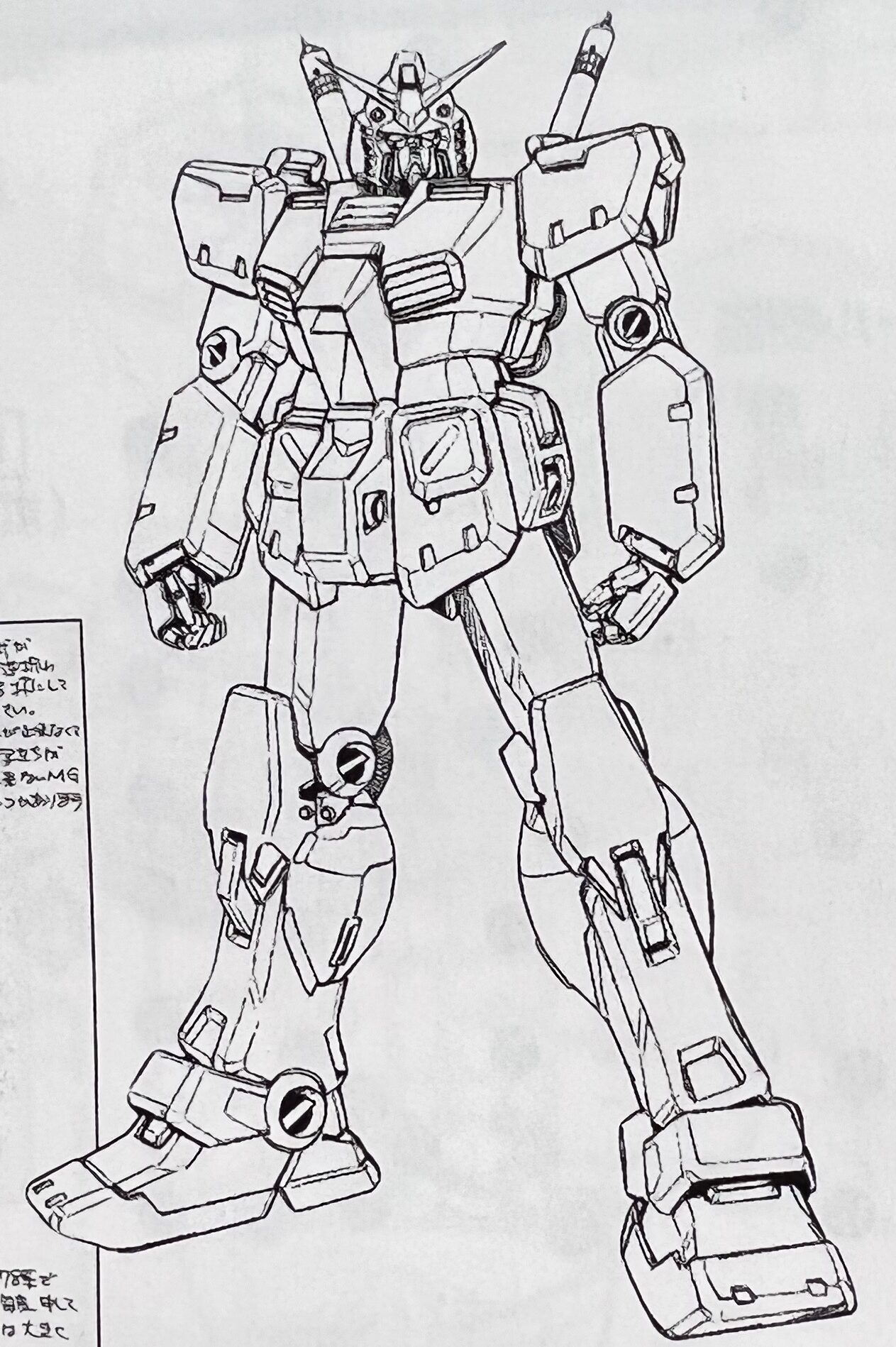
この自信満々な、
少し力を抜いた感じを、
巨大ロボットの『立ち姿』に生かしたく、
日々精進してきました。
(現在は、アパートの仕事場が手狭なうえ、汚すといけませんのでガンダム模型の制作は中断中です、、、、泣)
お話が横道にそれましたか?
そうそう、
自動車の外観デザインでしたね、、、すみません。
横綱つながりで言いますと、
今回の撮影に使用しました傑作、
1/12スバル360のダイキャスト完成品模型
を企画/製造した、
*初めはタミヤ模型で傑作(マニアックな?)自動車キットの設計をこなし、
*独立後、エブロという会社を作り、
*ダイキャストメーカーとして育て上げ、
*最終的には、お金のかかる、プラモデルに開発を支えた、
自動車模型界の横綱:木下真人さんです。
私も子供残るから学生時代を通じて、
タミヤ模型の自動車プラモにはお世話になった口でして、
*1/24スケールのミニクーパーやスーパー7
*1/12ビッグスケールの、F1シリーズやポルシェ935など
組んだもの、未組み立てなものをふくめ、
その設計の確かさ、マニアックさ、ディフォルメの感性を含め、
他社を大きく引き離した個性の匂いを思い出します!!
そのほとんどすべての個性は、
彼、木下真人さんの個性だと感じています。
(モデルグラフィック誌のインタビューや、田宮製プラモの参考写真集の中のインタビュー参照)
個性的と言いますと、いよいよ今回のお題:
スバル360につてのお話ですが、
この車のデザイナーはスバルの車内ではなく、社外へ発注されてそうですが、
その白羽の矢が当たったデザイナーは:
佐々木達三さん、
彼のデザイン方法は独特で、
立体模型を作るデザイナーと
呼ばれていまして、
図面を描かず、1/5倍、粘土模型をもとに、これを拡大した等倍粘土模型を修正して石膏型をとる、という方式でデザイン作業が進められました。
非常に個性的な制作方法がとられたんですね、、、
その結果、軽企画に縛られることなく、おおらかで、個性豊かな立体造形が出来上がりました。
ーーーー>かなりの【えぐみ】が隠された、
味わい深い名車の誕生です!!
私もこの『えぐみ』が味わえるようになり、
今回の記事執筆につながりました、、
今となっては、
押しも押されぬ、日本のマイカー市場に燦然と輝く、
「横綱」クラスの名車と
なっておりますスバル360、
かめばかむほど深まる味わいとともに、
私の自動車デザイン史にも、
えぐみと共に独自の輝きを添えてくれます。(笑)
思えばこの車の宣伝写真に、
巨漢の関取がスバル360を運転するものがございました。
関取(大葉山)がを横綱を運転したという、、、
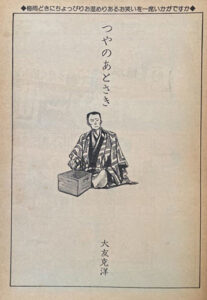
ばかばかしい一席、
お後がよろしいようで。
本ブログと記事内容につきまして:
ブログ記事を書くにあたり私の目標は、立体造形(料理も含めて)とのかかわりを通じて、私個人の特徴的(ネジ曲がり方も含めて)な評価軸を解明することで、「美しさ・美味しさ」に対する好奇心や、探求心を、どのように満足・充足させてきたのかを明記しておくことです。
従いまして、記事の中に出てくる、数字や年号、微細なデータなどには細心の注意を払っておりますが、時に大きな間違いや勘違いを犯していることも考えられます。特に自動車記事における主要諸元や、年号などには紛らわしいものも多く、あくまで参考程度に考えていただければ幸いです。
私としては、記事の中で個人的な外観デザインや味覚の評価、そこから広がる後半部分につなげるための、『流れ』を作るための客観的材料として年号やデータを挿入している感じです。あくまで重視したいのは、私個人の頭の中で起こる、記憶の錯そう的混沌から生まれる新たな『見方』や『情報の予想外のつながり』です。その勢いを作り出す、『流れ』の一環として、諸データが副次的に必要となるわけです。
話がそれますが、大好きな落語の世界に「三題噺」という、その場て会場から募った3つのお題を使って1つのお話に仕立てるといったお遊びがございますが、私はそれに近いことを立体造形の特徴や(料理のお味)をお題にして行っている感じがします。その中で頭の中に去来する数々の着想が、全く予想外で楽しく、次回からの記事内容を大幅に変えたり、新展開につながっています。
当ブロブの仕組み:
『好奇心の点と線 x 気まぐれ脳内回路=予想外の新展開』
こんな自分勝手なブログですが、今後ともよろしくお願いいたします。
追記:上記の『流れ』を作る為に必要な写真はできる限り、個人所有のミニカー・自前の料理などを使い撮影しておりますが、その他の必要最小限の図版や写真を他のブログ主様の記事や諸会社ホームページなどからお借りしております。(記事内容に合うよう加工させていただき、使用時は最小の解像度で載せております。)問題がある場合、ご連絡いただければ直ちに降ろさせていただきます。
追記2:当ブログ記事に掲載のミニカー写真等(個人撮影)は許可なしで、どのようにお使いいただいても結構です。私個人の創造性はこの世のもの、と言う認識の上で記事を製作しています。
!!!!!!!!!!!!!!!!!!!!!!!!!!!!!!!!!!! Translated in English !!!!!!!!!!!!!!!!!!!!!!!!!!!!!!!!!!!
Part 17: 《Cute 🐞》 Subaru 360, 1963 (Exterior Color: Sand Beige)
(Ebro, 1/12 scale die-cast model, 1963 Subaru 360 (Sand Beige))
Generally speaking,
the
foreign beetle
from Germany
= “VW Beetle”
and Japan’s
ladybug
= “Subaru 360”
is a well-known comparison,
but personally, I’ve never quite been convinced by it since I was a child.
The reason is that, to me, the original Beetle just
couldn’t help but look like
a female rhinoceros beetle or
a Japanese rose chafer. (lol)
Sorry for starting off with such a trivial story.
Regardless of how it looked to me,
there’s no way Subaru’s engineers and designers in the mid-1950s weren’t influenced by the legendary VW Beetle, which had already been released in 1936.
For me, the Subaru 360 was
etched in my mind as a cute car from the past—one I never got to experience firsthand but saw in fashion magazines.
[Seven-spotted ladybug = Subaru 360]
I never questioned this equation.
Enough with the preamble—
* A rare masterpiece that Japan can be proud of,
* boasting an innovative and
unique exterior:
I’d like to discuss the Subaru 360 as follows.
* Real-car commentary: The starting point of Japan’s motorization
* Exterior design features: Rear-engine + monocoque body
* “Me” and the Subaru 360: A relationship of missed connections?
* Summary and random thoughts: Shall we try a three-topic story?
* My Favorite Kei Cars:
Note: For the vehicle commentary section,
I have referred to the special supplement “Motor Fan Special Issue: [Everything About Fuji Heavy Industries’ Subaru 360] ≒ Everything About All Generations of the Legacy” published by San-ei Publishing.
* Real Car Commentary: The Starting Point of Japan’s Motorization
#Vehicle Overview:
The Subaru 360 (SUBARU 360) is a four-seater kei car developed by Fuji Heavy Industries (now SUBARU). Produced over a 12-year period from 1958 to 1970, with approximately 392,000 units manufactured, it played a pivotal role in the development of Japan’s motorization.
Vehicle Overview:
Given that the company’s predecessor was an aircraft manufacturer, the Subaru 360 was designed as a mass-produced kei car that adopted an ultra-lightweight structure utilizing aircraft technology and incorporated numerous innovative ideas to ensure the necessary interior space within a limited footprint.
Technical Features:
* Pursuit of efficiency through extreme weight reduction (385 kg)
* Monocoque structure utilizing aircraft manufacturing technology —> Roof and rear window made of FRP
* Comfortable interior space for four adults: 2-cylinder air-cooled engine mounted transversely under the rear seats
* Adoption of torsion bar suspension, the cutting-edge technology of the time
* Use of expensive new materials (alloys and FRP) to achieve weight reduction
Basic Structure:
The ultra-lightweight body features a full monocoque structure. The air-cooled engine is mounted transversely at the rear to drive the rear wheels, utilizing a rear-engine, rear-wheel-drive layout. The suspension employs a torsion bar spring—a first in Japan—which utilizes the spring force generated by the twisting of a steel bar, resulting in an extremely compact design that maximizes interior cabin space. The tires were an unusually large 10-inch size for the time, newly developed and adopted for the first time in Japan. Furthermore, the adoption of the full monocoque structure leveraged experience gained from the Subaru 1500 as a weight-reduction measure; for Fuji Heavy Industries’ engineering team, which included many former aerospace engineers, this was essentially a technology they had at their fingertips.
Exterior Styling:
Kozo Murota was in charge of body design. The exterior design was commissioned in May 1956 to Tatsuzo Sasaki, an external industrial designer who had had ties with Fuji Heavy Industries since before the war through bus body color schemes. While working on the design, Sasaki obtained his driver’s license and made efforts to deepen his understanding of automobiles by driving the “Hino Renault 4CV” (a representative small car of the era produced by Hino Motors under the “Aisense” brand). Although the Subaru 360 is often said to resemble the VW Beetle, a closer look at the details reveals a greater similarity to the Renault 4CV, and this is likely one of the reasons why.
n
n
n
Since Sasaki was a designer who created three-dimensional models rather than drawing blueprints, the process involved creating a 1/5-scale clay model, then modifying a full-scale clay model based on that to create a plaster mold. As a design base, Fuji Heavy Industries created a wooden mold with nails hammered into it to mark the outer limits of the body shell. This was handed over to Sasaki in early June 1956, and he began creating the design prototype by applying clay to it. About 20 days later, on June 21, he completed the prototype model.
n
n
As Tatsuzo Sasaki stated,
“A kei car must not be like an adult wearing children’s clothes. It must have a form unique to a mini-car. I wanted it to be neither heavy-handed nor frivolous, but rather a small yet reliable presence. I also decided to incorporate a sense of speed through a certain fluidity.” (Excerpted from the aforementioned interview in *All About the Subaru 360*)
n
Before production began, the design—refined time and again—was not, like previous kei cars, a “ridiculously forced miniature version of a large car.” Instead, based on the fundamental premise of designing a four-seater mini-car, it achieved a clean form directly linked to function. This was groundbreaking and is the reason the Subaru 360 is highly regarded in the history of Japanese design.
nn
n
n
N
General Assessment:
Relatively inexpensive and highly practical, it was widely welcomed by the general public in 1960s Japan. It played a key role in promoting motorization and is considered Japan’s first “people’s car” (mass-market car). In contrast to the “Beetle” (Kabutomushi), the nickname given to the Volkswagen Type 1 that served as its model, it became widely known among the common people by the nickname “Ladybug.”
Even after production ended, it remained highly popular and well-known among the general public in Japan as a nostalgic symbol of the 1960s. Although more than half a century has passed since production ceased, there are still a significant number of running vehicles and preserved running models, particularly later models, and enthusiast clubs have been formed. It is still possible to occasionally spot one driving on the road today.
#Key Specifications:
Model: EK32
Total Displacement: 356 cc / Forced-air-cooled, 2-stroke, inline 2-cylinder, naturally aspirated
Maximum Power: 16 bhp / 4,500 rpm
Maximum Torque: 3 kg-m / 3,000 rpm
Drivetrain: RR (Rear-engine, Rear-wheel drive)
Seating Capacity: 4
Body Type: 2-door fastback sedan
Wheelbase: 1,800 mm
Overall Length: 2,995 mm
Overall Width: 1,295 mm
Overall Height: 1,380 mm
Curb Weight:
385 kg
*Exterior Design Features: Rear-engine + full monocoque body
I have to confess.
Back in the day (when I was younger), I used to think this shape was
just “cute,”
and nothing more.
* I didn’t find it particularly attractive,
* it was beyond nostalgia,
* like a panda or koala at the zoo,
* I only saw it as
a mascot…
I was just a growing boy
with a very simple palate,
*sweet-and-salty flavors + greasy umami = three large bowls of white rice,
that sort of thing—
I had no taste for anything more complex.
However, having lived past the age of 60,
I’ve come to appreciate the full spectrum of flavors—the bitter and the sweet—
and nowadays,
* I’ve gained a bit of an appreciation for bitterness, astringency, sharpness, and spiciness,
* as well as the subtle nuances of various spices and herbs.
I’m happy about that.
With that in mind,
I’d like to list five noteworthy features
of the Subaru 360’s exterior design as I see them today.
# Design Features of the Subaru 360:
1. The ingenious fender design, where the main body—shaped like an inverted bowl—is cinched from the side, with the entire rear connected by delicate curves
2. The exquisite balance and charm created by the interplay between the A and B pillars and door cut lines—which run diagonally to create a light, rhythmic flow—and the car’s “slightly rear-leaning posture,” designed to support its lightweight frame
3. A solid, planted stance (especially at the rear wheels) that belies its 1,300 mm width
4. The late-model front fascia design (with its sleepy-eyed look) is nothing short of charming, yet it also possesses a deep sense of character.
5. The gentle, enveloping shape revealed when opening the gullwing doors
ーーーーーーー> Creates an elegant gesture when getting in and out.
Now then,
let’s take a look at each one!
1. The ingenious fender design that wraps around the main body—shaped like an inverted bowl—from the side, with the entire rear connected by delicate curves
(While the VW Beetle attached four bowl-shaped fenders to a bowl-shaped body, the 360, with its limited width, cleverly and beautifully connects the front and rear fenders to give the whole a sleek, cohesive look)
ーーーーー>Viewed from directly above, the center section is slightly tapered, resembling a Coke bottle.
2. The A- and B-pillars and door cut lines, which run diagonally and create a lively rhythm, interact with the “suspension posture that leans slightly backward” to support the lightweight body, resulting in an exquisite sense of balance.
(When the driver gets in, the front end dips slightly, shifting the balance toward stability; however, if the car “sways,” the forward motion increases again.)
ーーーーー>The design of a national car, reflecting its era and embodying a mass of vitality, is complete!!
3. The positioning of the tires and wheels exudes a solid stance (especially at the rear) that defies its 1,300mm width.
ーーーーーーー>The sense of solidity, as if it’s firmly gripping the ground, is simply superb.
4. The late-model front fascia design (with its sleepy-eyed look) is nothing short of charming, yet it also possesses a deep, distinctive character.
(It is said that Subaru’s six-star logo, still in use today, was designed at this time.)
ーーーーーー>It brings a smile to everyone who sees it, regardless of age or gender.
5. The shape and movement of the doors when opened—like being gently enveloped by wings
ーーーーーーー>It creates an elegant gesture when getting in and out.
*“Me” and the Subaru 360: A relationship of passing each other by?
(Illustration of Yokozuna Yoshiyama riding a “Ladybug”)
Until very recently,
the Subaru 360 was neither something I “liked” nor “disliked”—
it was simply irrelevant to me.
That is, until I saw
this shocking “photo of the sumo wrestler”!!
I remember seeing Subaru 360s
all the time in my neighborhood when I was a child, but as a kid, my eyes were drawn to big sedans and sports coupes, and I had absolutely no interest in the Subaru 360. I moved right into middle and high school, and by then, my interest in cars had temporarily waned; with the sci-fi movie boom in full swing, I was completely absorbed in special effects and sci-fi films like *Star Wars* and *Alien*.
Later, during my college years, I joined the Rakugo Club. While I caught a glimpse of the refined world of traditional comedy performances, I also showed some interest in 1960s fashion and the cultural trends of the time—though I took it all in stride. After graduating from a liberal arts college, I moved to the United States to enter the world of automotive design. At a GM-affiliated art school, I received design training that emphasized American-style contrasts, reflections, and shading. However, since the trends of the time leaned toward organic (organic) design, my interest shifted toward the voluptuous Italian and French cars.
Amidst all this, my home was destroyed in a fire, which led me to write this blog post. As I looked back on automotive exterior design, following my own interests, I came across this “Photo of a Sumo Wrestler.”
I found myself pondering for a long time: what is it about the Subaru 360—which somehow suits this photo so well—that possesses this “flavor” that speaks to me, rather than the “humor” found in the photo itself?
To summarize,
the development of my “taste buds” regarding automotive design
might look something like this:
* Boyhood —— Sweet & Spicy + Umami = Three bowls of rice (Preference for long, low, and large shapes)
* Junior High & High School —— Growth stalled; switched to spicy sci-fi movies (Added a twisted perspective)
* College Years —— Astringency + Bitterness = Rice in moderation (Awakening to nostalgia and antiques?)
* After moving to the U.S. —— Distortion, reflections, contrast, and direction (learning from GM and American design)
* After my house burned down —— Developed a palate for richness, astringency, and MSG-free flavors; rediscovered the inherent qualities of ingredients while on a low-carb diet (felt like embarking on a journey to rediscover the essential beauty and strengths of Japanese cars)
# The Discovery of “Astringency” ≒ A Powerful Weapon
This discovery of “astringency” and how to handle it
is the main theme of this article,
and I believe it is the most important part.
In terms of taste,
it refers to the unpleasant sensation—a mixture of bitterness and astringency that makes the back of your throat feel “scratchy”—found in ingredients like bamboo shoots, bracken, fern shoots, spinach, burdock, and ginkgo nuts. It’s a distinctive, strong, astringent flavor that people usually avoid, but by removing the astringency, it becomes suitable for consumption. However,
ーーーー>As a metaphor, when a person or a work has such a strong personality that it carries a hint of “poison” or “persistence,” it is described as a “bitter character” or “bitter depiction.”
ーーーー>Furthermore, in contemporary fine art, works that deliberately emphasize this “bitterness” as a form of purity are frequently seen.
Specifically,
after realizing the importance of “bitterness,” when I observed the Subaru 360 again,
* The bodywork I used to dislike—specifically the undulating fender covers extending from front to rear—shifted from [a disliked part ≈ bitterness] to [a part that catches my attention] (upon close observation, I realized it cleverly balanced the volume of the entire body from front to rear).
* Due to the front suspension, the relationship between the diagonal lines created by the slightly [rear-tilted body posture ≈ “edge”], and the diagonal lines of the A and B pillars and the door cut lines ————> (I came to realize that this creates a very subtle aesthetic)
#Experiencing the Subaru 360 in 3D: Through a die-cast model…
My first encounter with a 3D model of the Subaru 360 was
just recently. It all started about three years ago when a work colleague traded me a Tomytec Vintage Neo die-cast model for a Lupin III Fiat 500 (unfortunately, that model was destroyed in a fire), and I’ve since dabbled in it as follows.
* Tomytec, 1/64 Vintage Neo LV-173© Subaru 360 (Beige)
(It’s a very delicate reproduction of the early model; amazingly, the rear gate opens and closes, allowing you to peek at the beautifully painted engine.)
ーーーー>It was surprisingly heavy for its size
* Toys Cabin (Gachapon), 1/64 Subaru 360 26R (Ivory White)
(Perhaps because it was supervised by D-Specials, a specialty shop for the real Subaru 360, it faithfully reproduces the “sleepy-eyed” version.)
ーーーー>Since the rear ride height was a bit high, I lowered just the rear by about 1.5mm, which gave it a nice, slightly nose-down stance. (lol)
(It’s become a cute little mascot on my desk.)
*Konami, Out-of-Print Famous Cars Collection 1/64 Subaru 360 Deluxe (K111) 1967 (Ivory White)
(The way the body is rendered has a lot of character, and I feel like it could really come into its own with a little ride height adjustment. Since I’ve already got it, I’d like to try modifying it later.
ーーーーー>I’m really happy that the sleepy-looking front end has been recreated so well.)
* Hachette, 1/24 “Japanese Classic Car Collection Vol. 005” Subaru 360 (Early Model)
(Since it’s a model of the early version, it has a surprised look, but the doors and engine hood can be modified, and the build feels sturdy, so you can move it around freely and display it.)
* Eburo, 1/12 Scale Die-Cast Ready-to-Display Model: Subaru 360 (Ivory White)
(I’ve been searching for this mainly on eBay for the past 4–5 years, but because it’s rare and highly sought-after, it was being traded at absurdly high prices [around $600?], so I couldn’t bring myself to buy it. However, after the recent fire, I ended up buying magazines and die-cast cars from Japan,
ーーー>and I was able to purchase it safely through Buyee at a fair price on Mercari.
Needless to say, the quality is perfect—it’s a masterpiece designed by Masato Kitani. )
*Summary and Random Thoughts: “Three-Theme Story”—shall we give it a try?
Combining the summary and random thoughts,
I’d like to try a “Three-Theme Story.”
*Masato Kitani
*Sumo wrestler
*3D model,
Let’s try these three themes.
Well… I hope you’ll bear with me for a moment,
but as a hobby, I build plastic models of Gundam robots,
and whenever I build a heroic “good guy” robot, the image that always comes to mind is
that famous sumo wrestler
who achieved 69 consecutive wins in the Makuuchi division:
“The 35th Yokozuna: Futabayama”…
I’ve been working hard every day
to capture that confident,
yet slightly relaxed posture
in the “standing pose” of my giant robots.
(Currently, my apartment workshop is too cramped, and I can’t make a mess, so I’ve had to put my Gundam model building on hold… sob)
Did I get sidetracked?
Oh right,
we were talking about automotive exterior design… my apologies.
Speaking of Yokozuna connections,
the masterpiece I used for this shoot,
the 1/12 scale die-cast finished model of the Subaru 360
was planned and manufactured by
*who initially designed “masterpiece” (or perhaps “niche”?) car kits at Tamiya Models,
*founded a company called Eburo after going independent,
*built it up as a die-cast manufacturer,
*and ultimately supported the development of expensive plastic model kits,
the Yokozuna of the car model world: Mr. Masato Kinoshita.
Since I have children of my own, I too relied heavily on
Tamiya’s car plastic models throughout my student days,
*1/24 scale Mini Coopers and Super 7
*1/12 large-scale F1 series and Porsche 935, etc.
Whether assembled or unassembled,
I recall the distinctiveness that set them far apart from other companies—
their solid design, meticulous attention to detail, and unique sense of stylization!!
I feel that almost all of that distinctiveness
stems from the personality of Mr. Masato Kinoshita himself.
(See interviews in Model Graphic magazine and the reference photo book of Tamiya plastic models.)
Speaking of distinctiveness, this brings us to the topic at hand:
the Subaru 360.
It seems the designer for this car wasn’t from within Subaru, but was commissioned from outside the company,
and the designer who was chosen was:
Tatsuzo Sasaki,
His design method was unique;
he was known as a designer who created
three-dimensional models,
and his design process proceeded without drawing blueprints. Instead, he started with a 1/5-scale clay model, refined a full-scale clay model based on that, and then made a plaster mold.
It was a truly distinctive production method…
As a result, unbound by the constraints of the kei car project, a spacious and uniquely expressive three-dimensional form was created.
ーーーー>Hiding a considerable amount of [edge],
this is the birth of a profound, iconic car!!
I, too, have come to appreciate this “edge,”
which led me to write this article…
Now,
it has become an undisputed,
“Yokozuna”-class masterpiece
that shines brilliantly in Japan’s passenger car market.
With a flavor that deepens the more you savor it,
it adds a unique brilliance—along with that “edge”—
to my own history of automotive design. (lol)
Come to think of it, there was a promotional photo of this car
featuring a massive sumo wrestler driving a Subaru 360.
A sumo wrestler (Oyama) driving a Yokozuna…
A ridiculous little anecdote—
I’ll leave it at that.
Regarding this blog and its content:
My goal in writing these blog posts is to document how I have satisfied and fulfilled my curiosity and desire to explore “beauty and deliciousness” by elucidating my own unique (and somewhat quirky) criteria for evaluation, shaped through my involvement with three-dimensional forms (including cooking).
Consequently, while I pay meticulous attention to the numbers, dates, and detailed data appearing in the articles, it is possible that I may occasionally make significant errors or misunderstandings. In particular, key specifications and dates in automotive articles can often be confusing, so I would appreciate it if you could consider them merely as a reference.
Personally, I feel that I insert dates and data into the articles as objective material to create a “flow” that connects my personal evaluations of exterior design and taste to the broader discussion that follows. What I ultimately prioritize are the new “perspectives” and “unexpected connections between information” that emerge from the chaotic jumble of memories in my own mind. The various data points are needed secondarily as part of that “flow” to generate that momentum.
This is a bit of a tangent, but in the world of rakugo—a form of traditional Japanese storytelling I love—there’s a playful format called “sandaibana,” where the performer weaves a single story using three topics solicited from the audience on the spot. I feel like I’m doing something similar, using the characteristics of three-dimensional forms and (the taste of food) as my prompts. The countless ideas that flit through my mind during this process are completely unexpected and delightful, often leading me to drastically change the content of future articles or sparking new developments.
How This Blog Works:
“Spots and Lines of Curiosity x Whimsical Mental Circuits = Unexpected New Developments”
This blog may be a bit self-indulgent, but I hope you’ll continue to follow along.
Note: To create the “flow” described above, I use my own miniature cars and homemade dishes for photos whenever possible. However, I do borrow the absolute minimum necessary illustrations and photos from other bloggers’ posts and company websites. (I edit them to fit the article’s content and post them at the lowest possible resolution.) If there are any issues, please contact me and I will remove them immediately.
Note 2: You are free to use the photos of die-cast cars and other images (taken by me) featured in this blog post in any way you like without seeking permission. I create these posts with the understanding that my personal creativity belongs to the public domain.
Translated by DeepL.com

これはCTAサンプルです。
内容を編集するか削除してください。