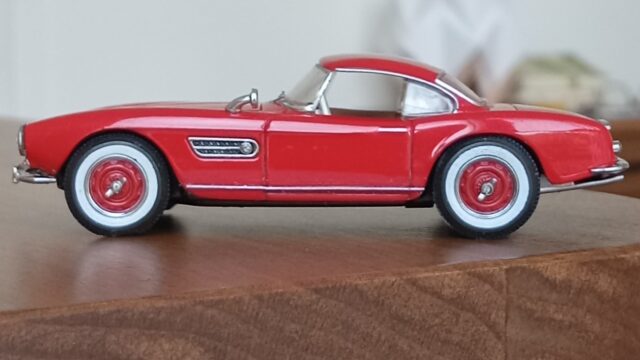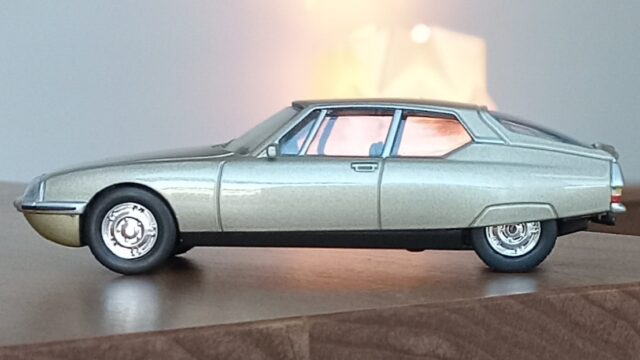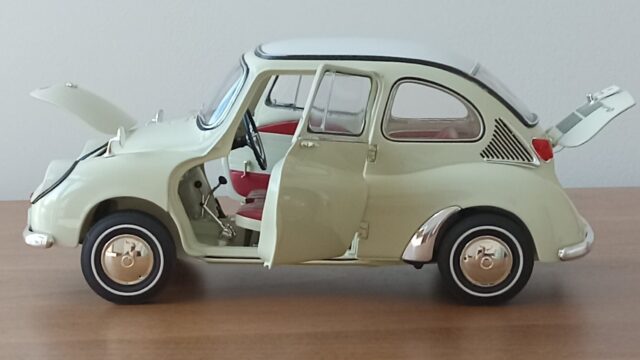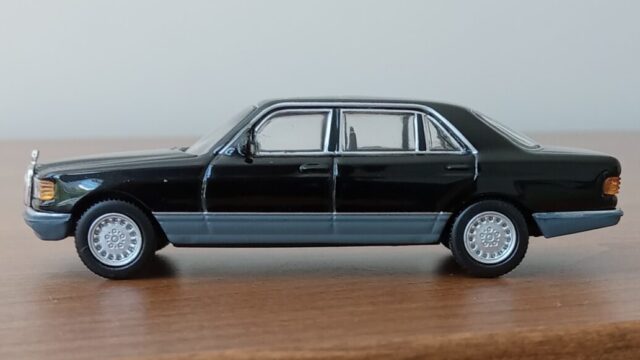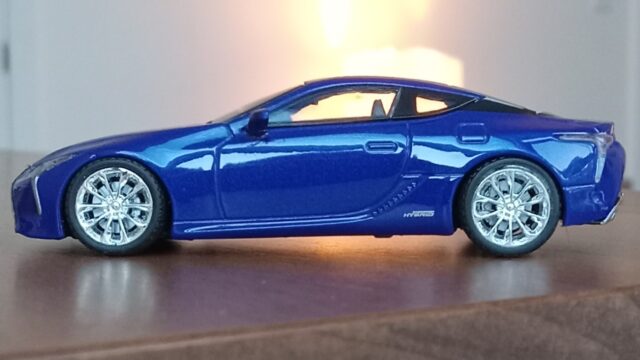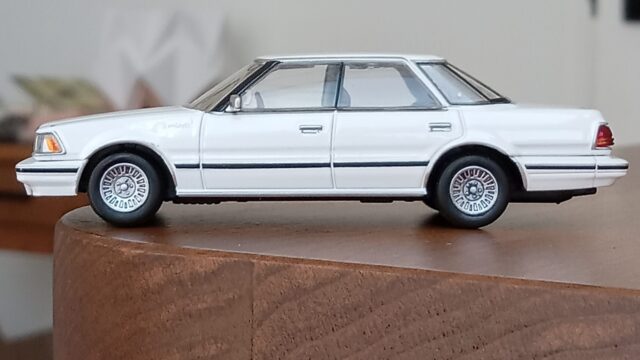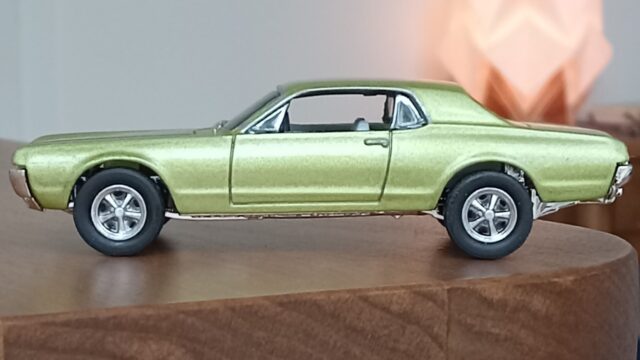
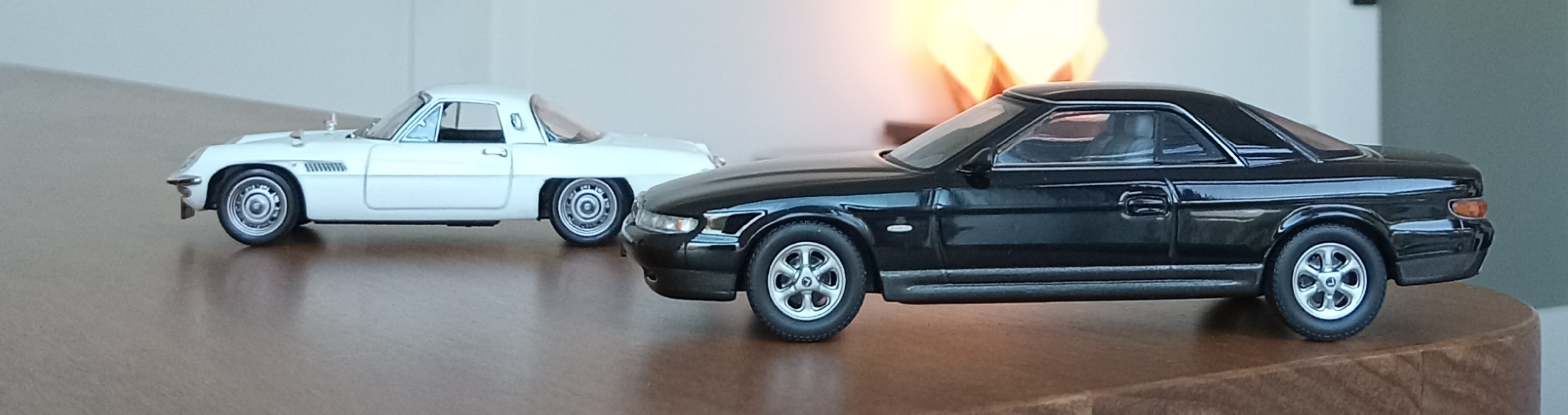
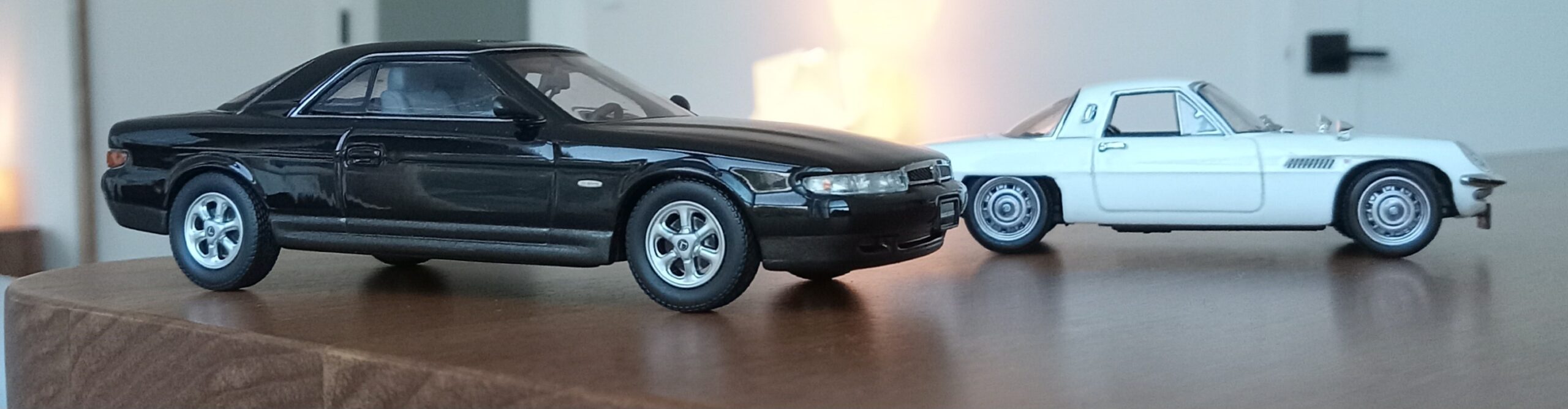
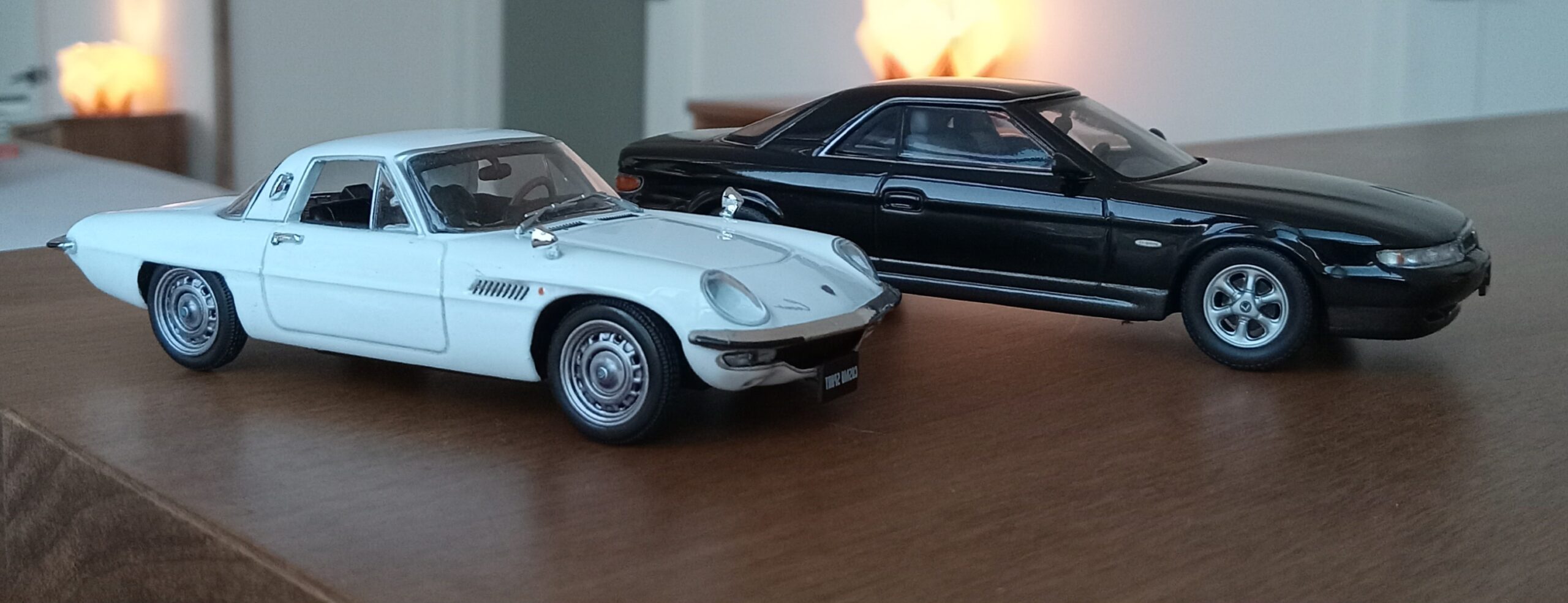
2ドア・クーペの系譜: 第16回【日本車編】 マツダ 【4代目:JC3S】 ユーノス・コスモ、1990『スーツ姿で3ローターの怪物⁈:クーペ・ダイナミズム』 Mazda Eunos・Cosmo, 1990 『Rotary Coupe Dynamism』
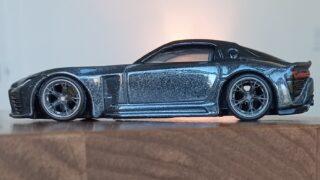
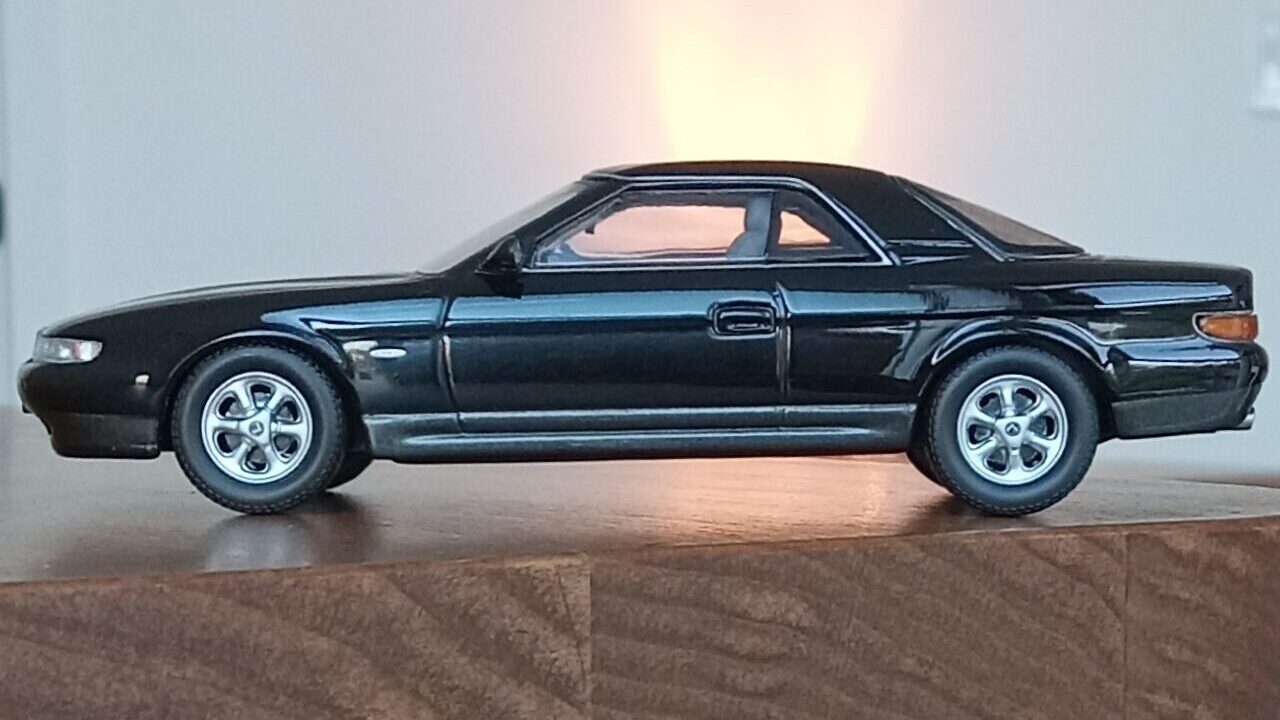
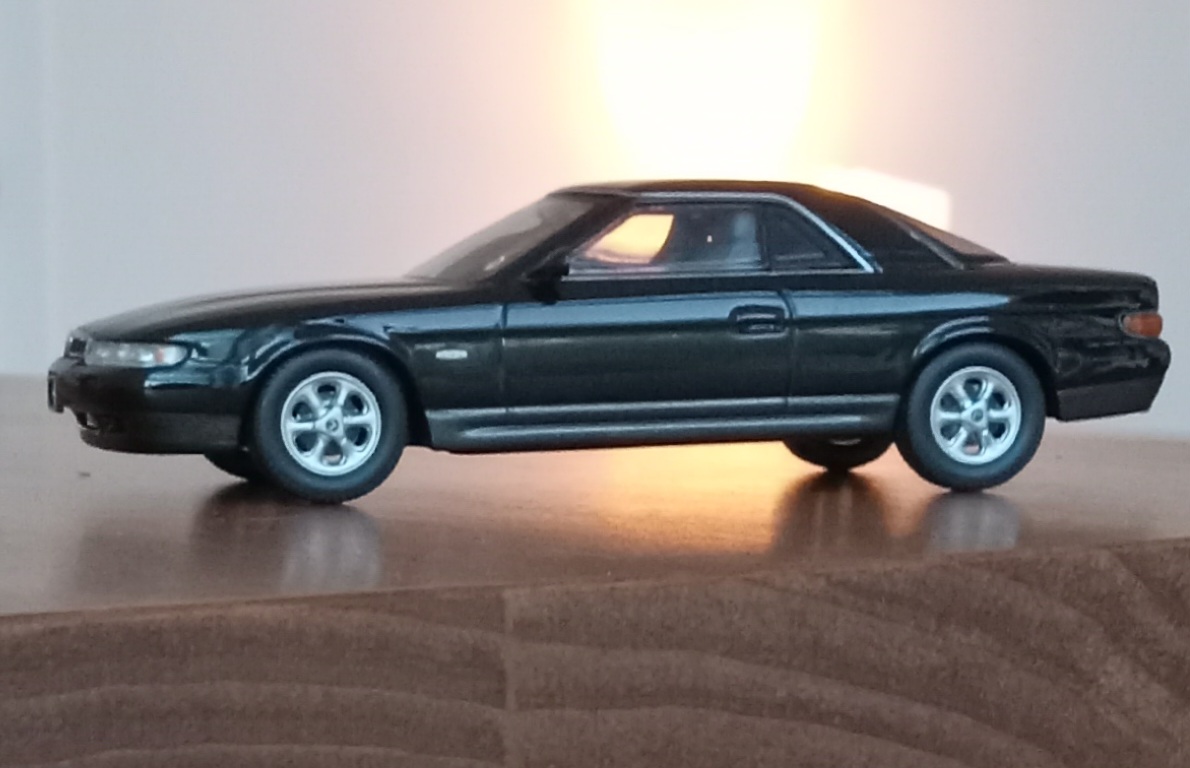
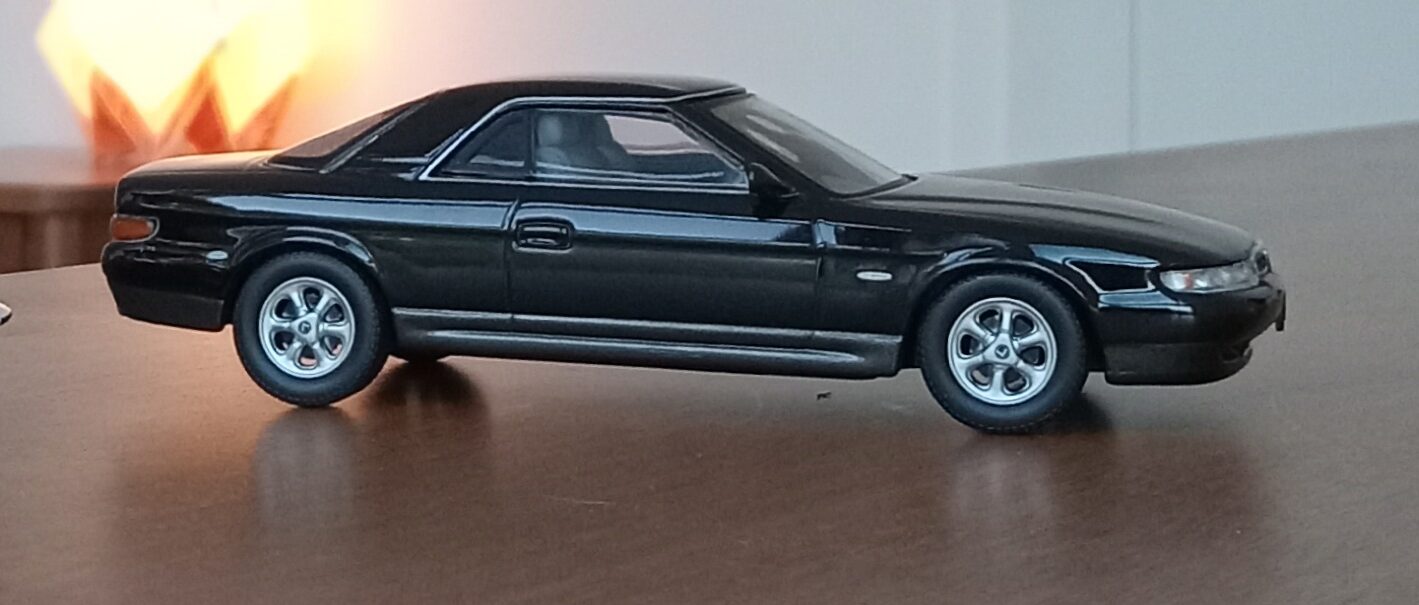
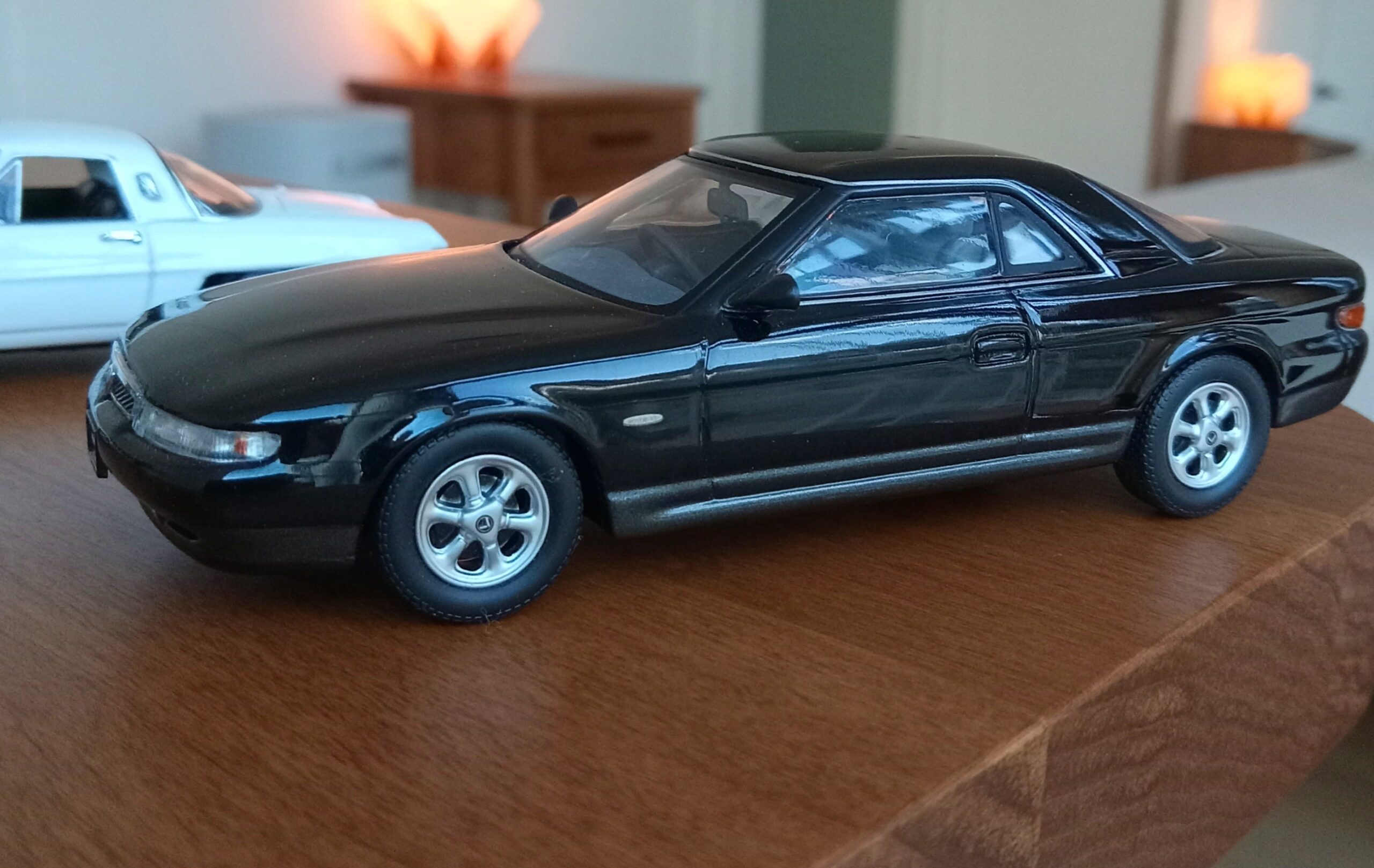
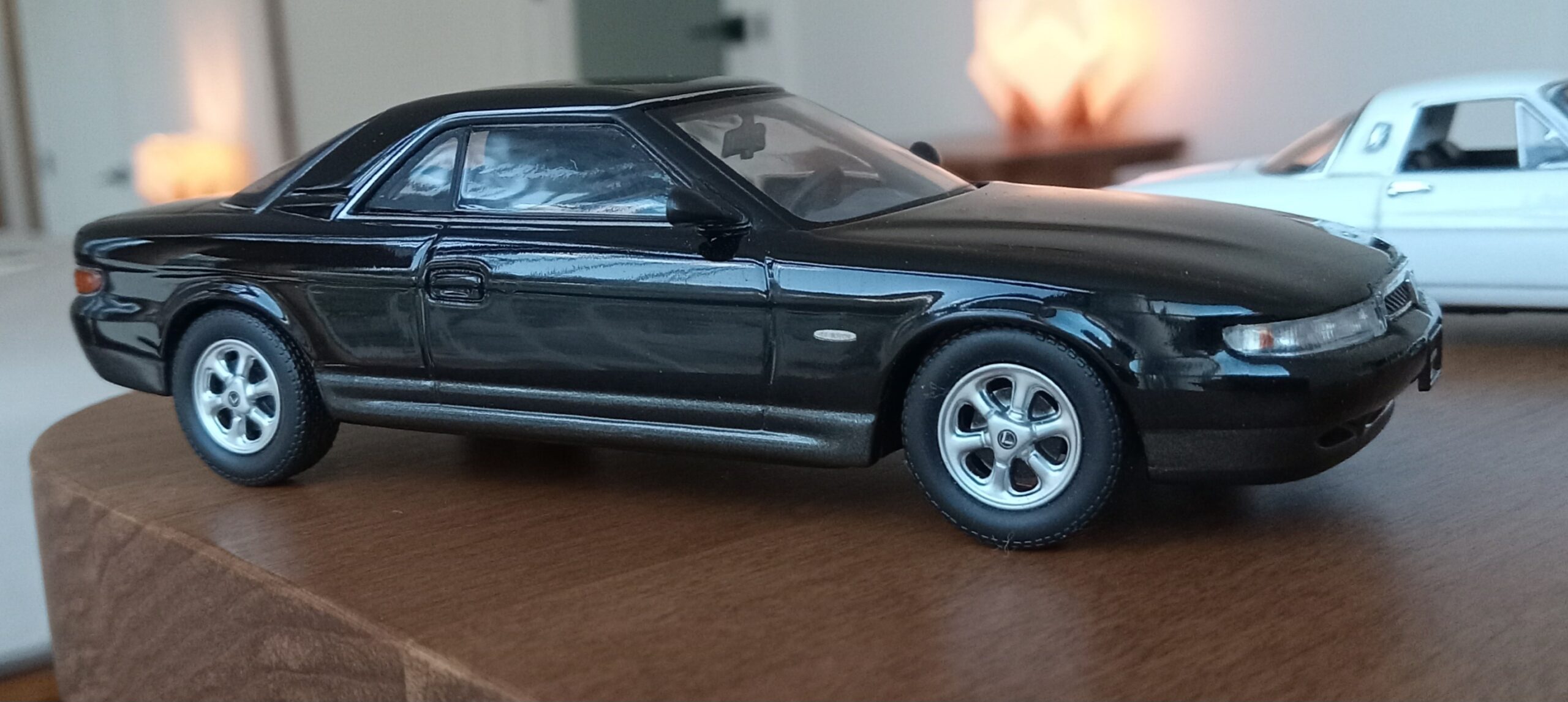
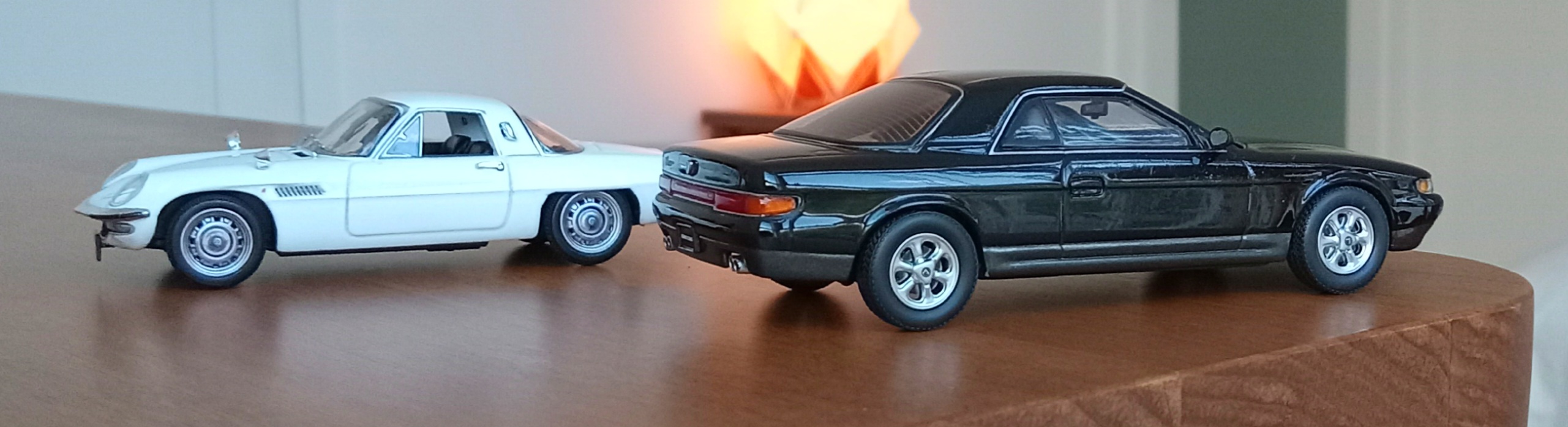
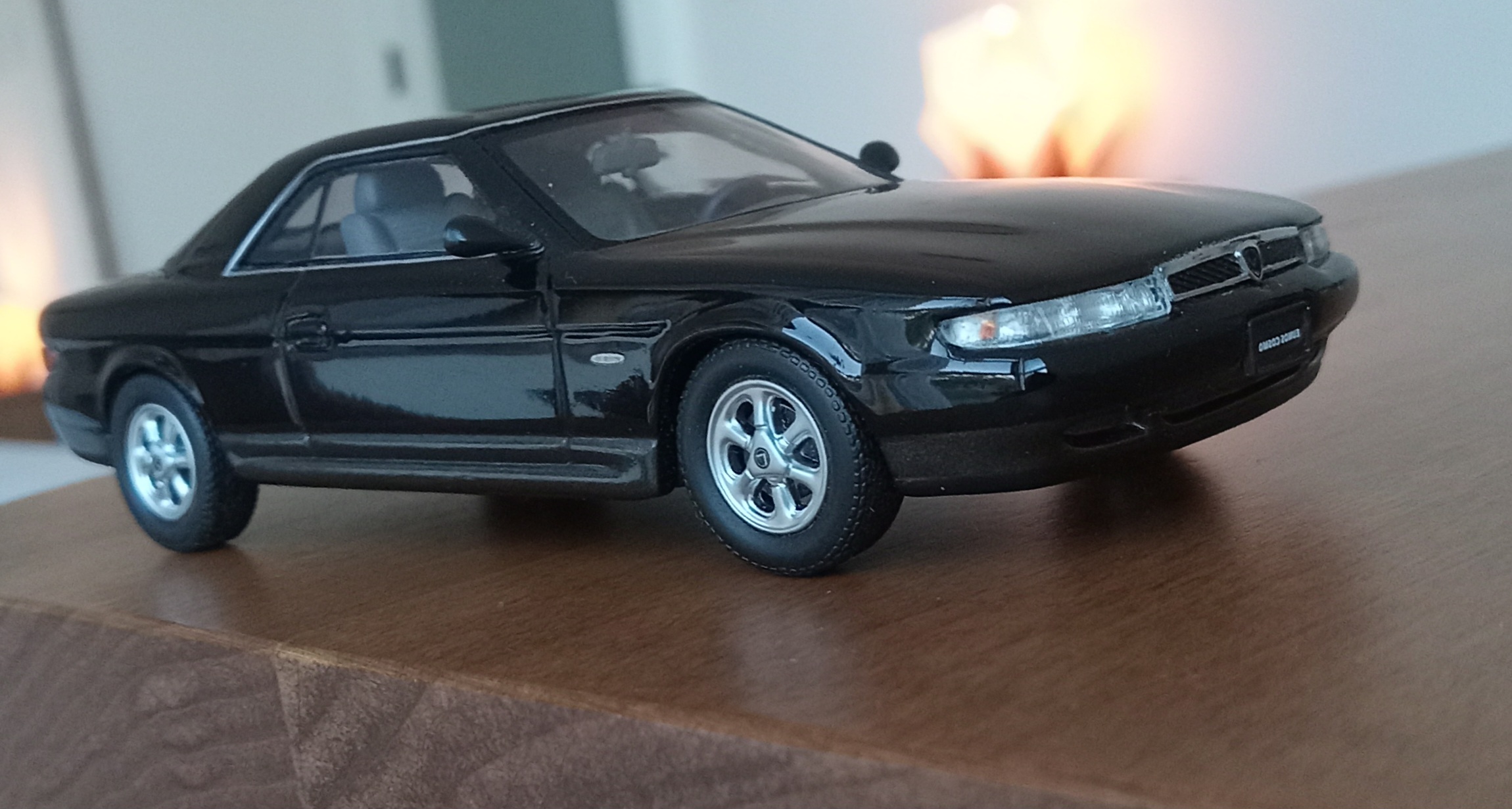
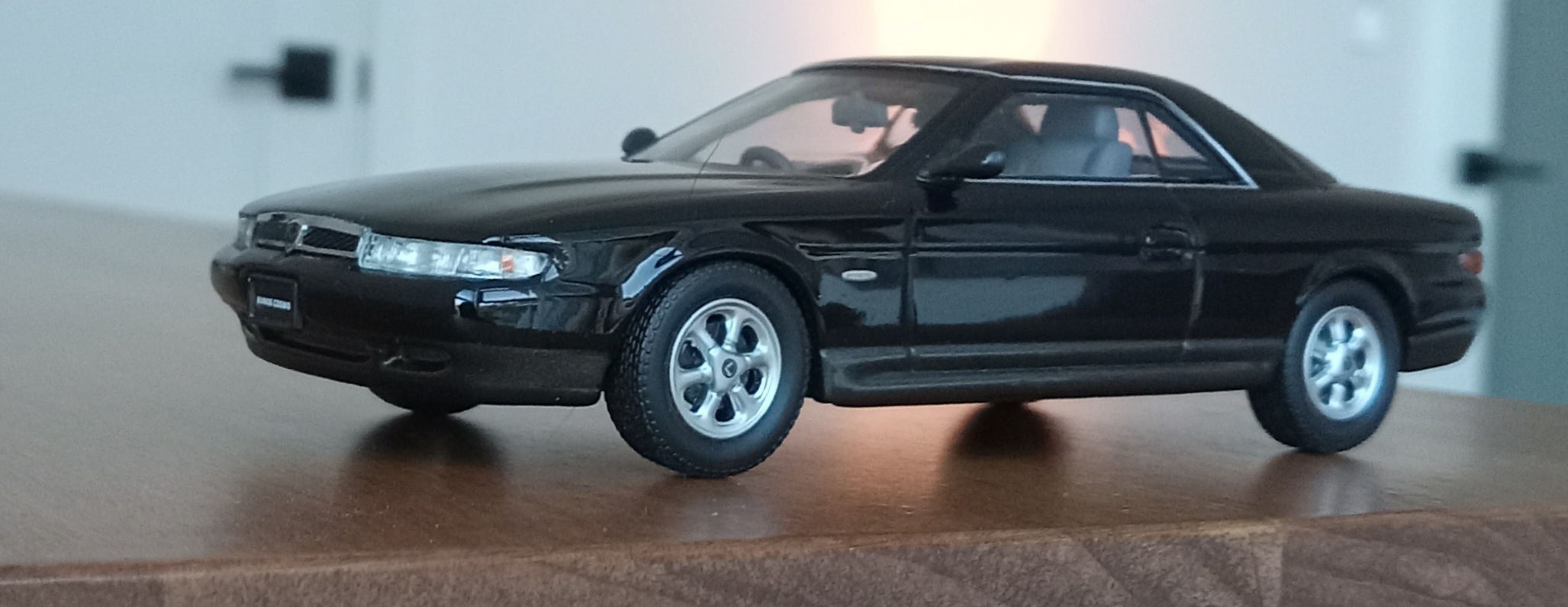
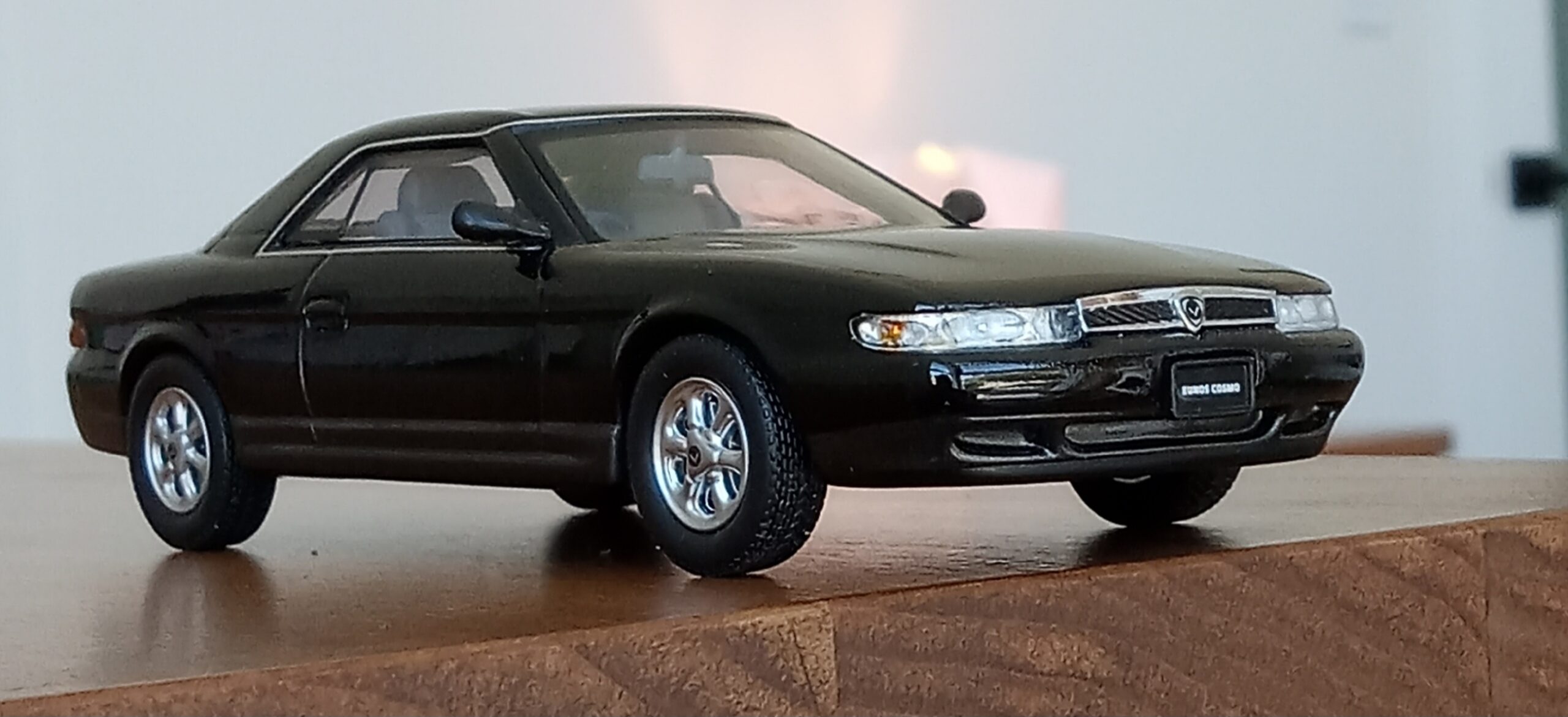
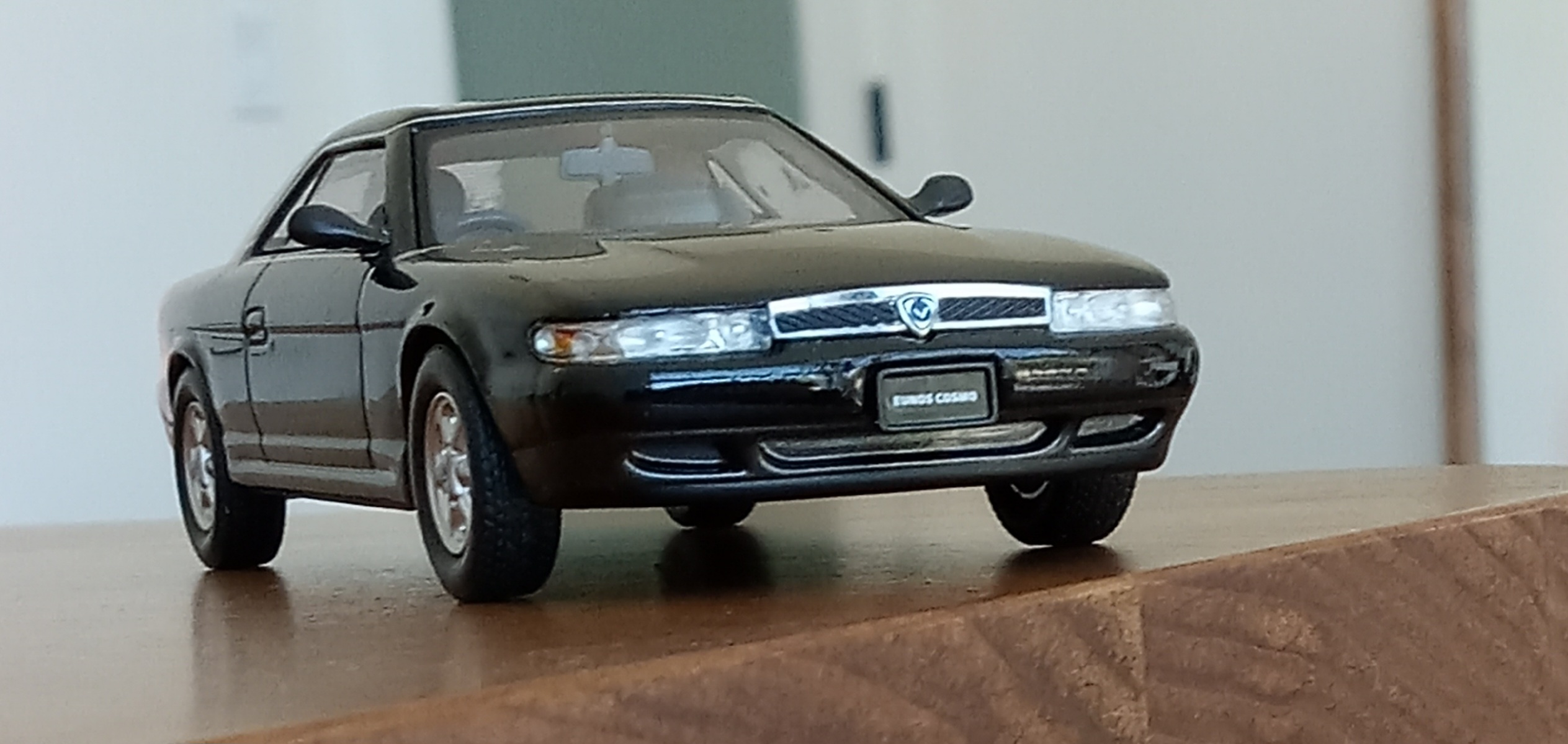
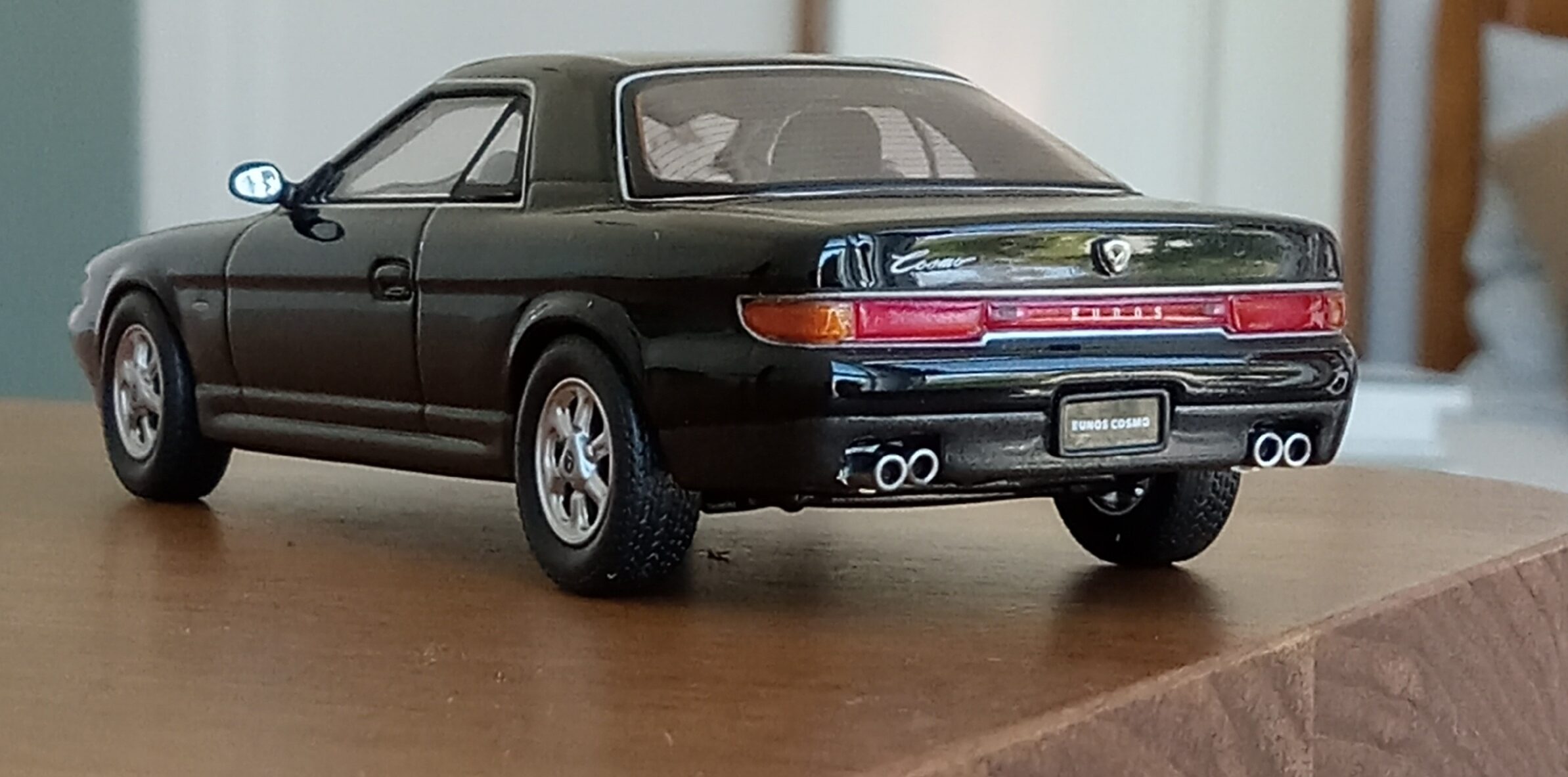
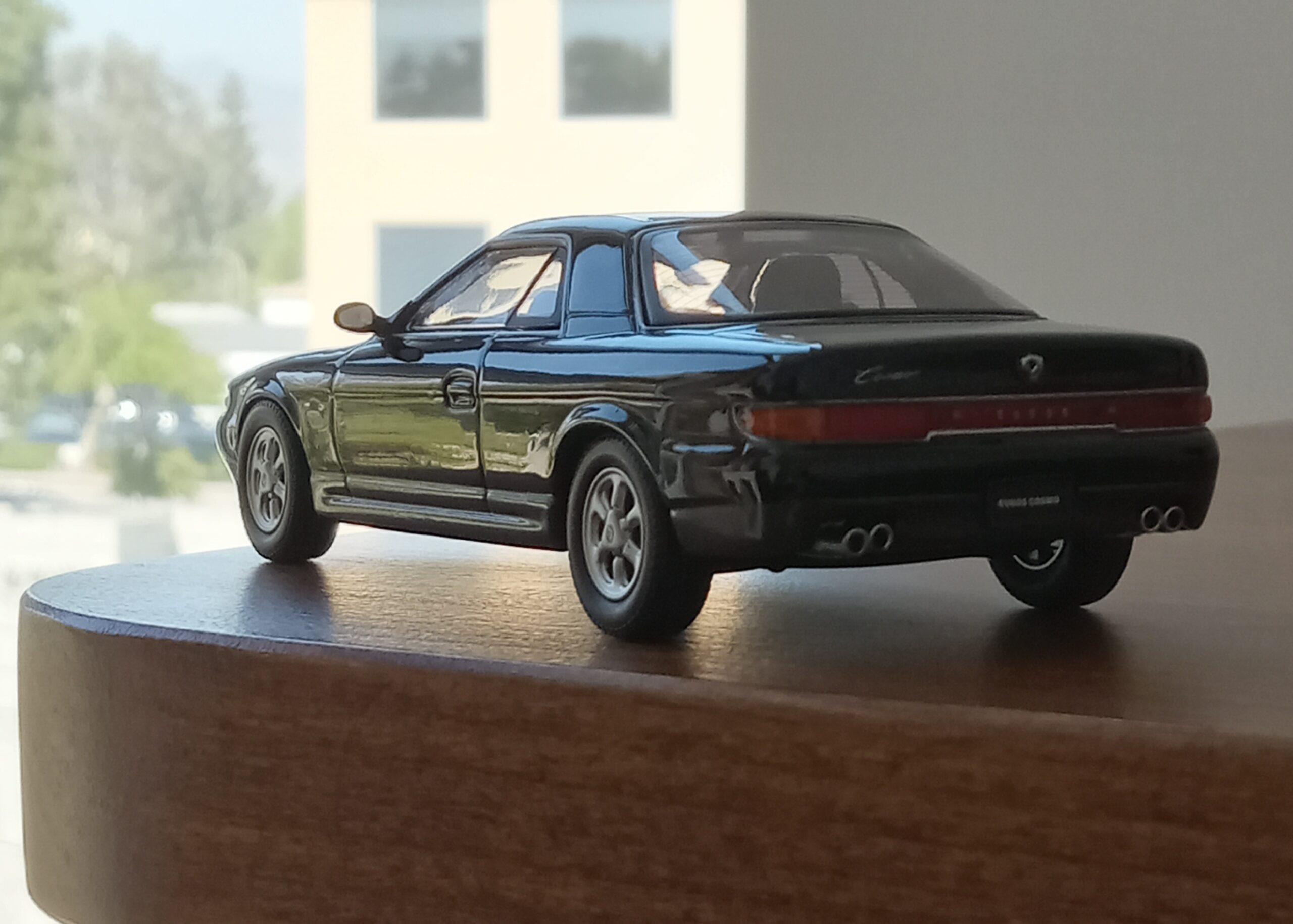
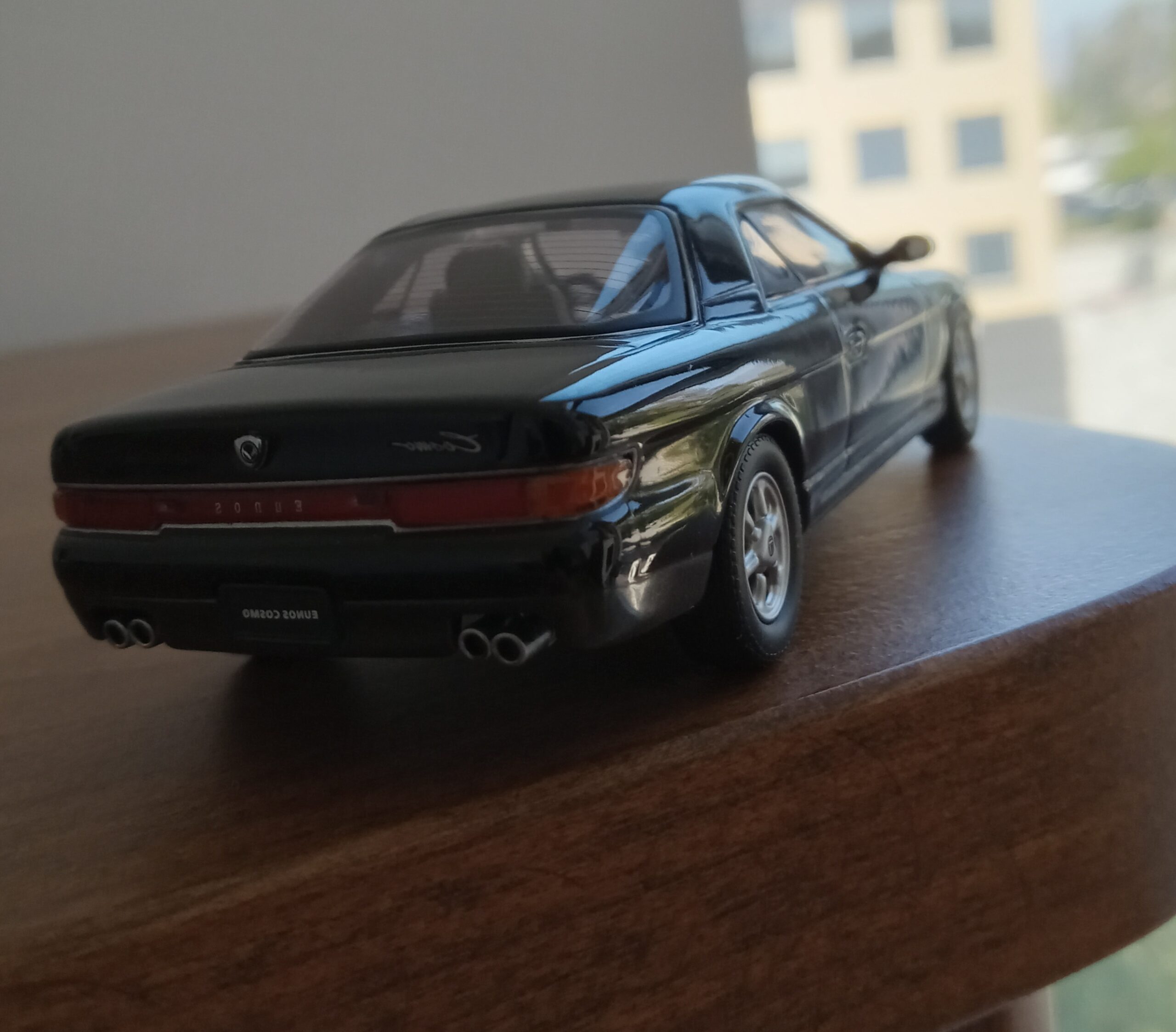
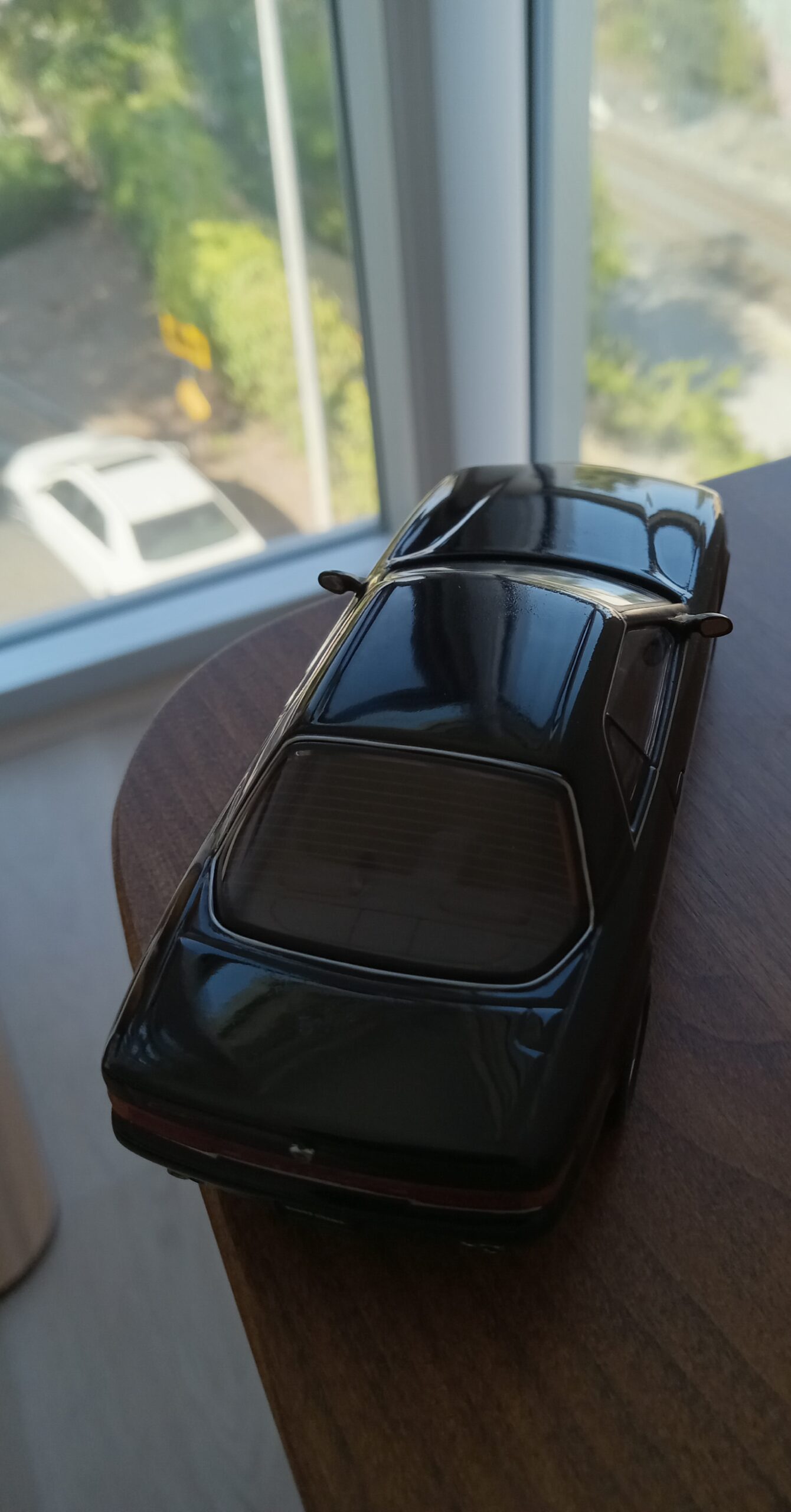
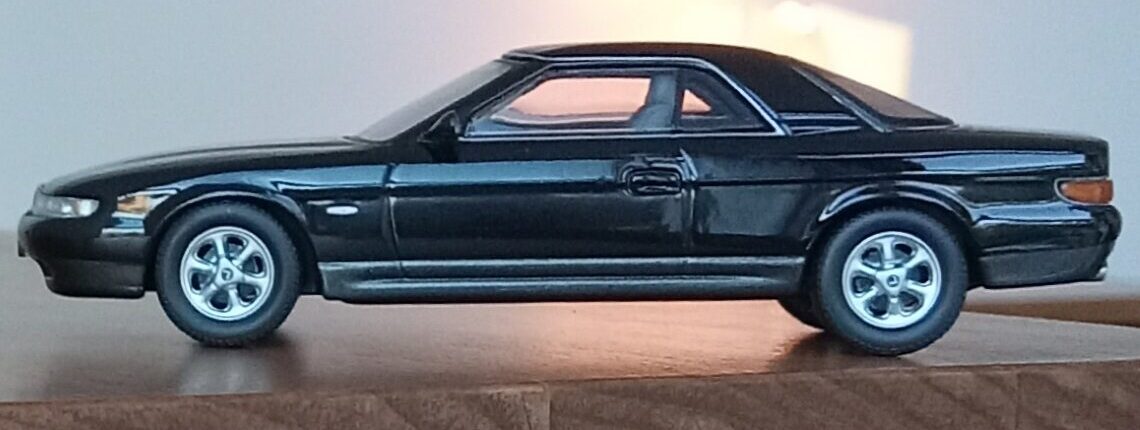
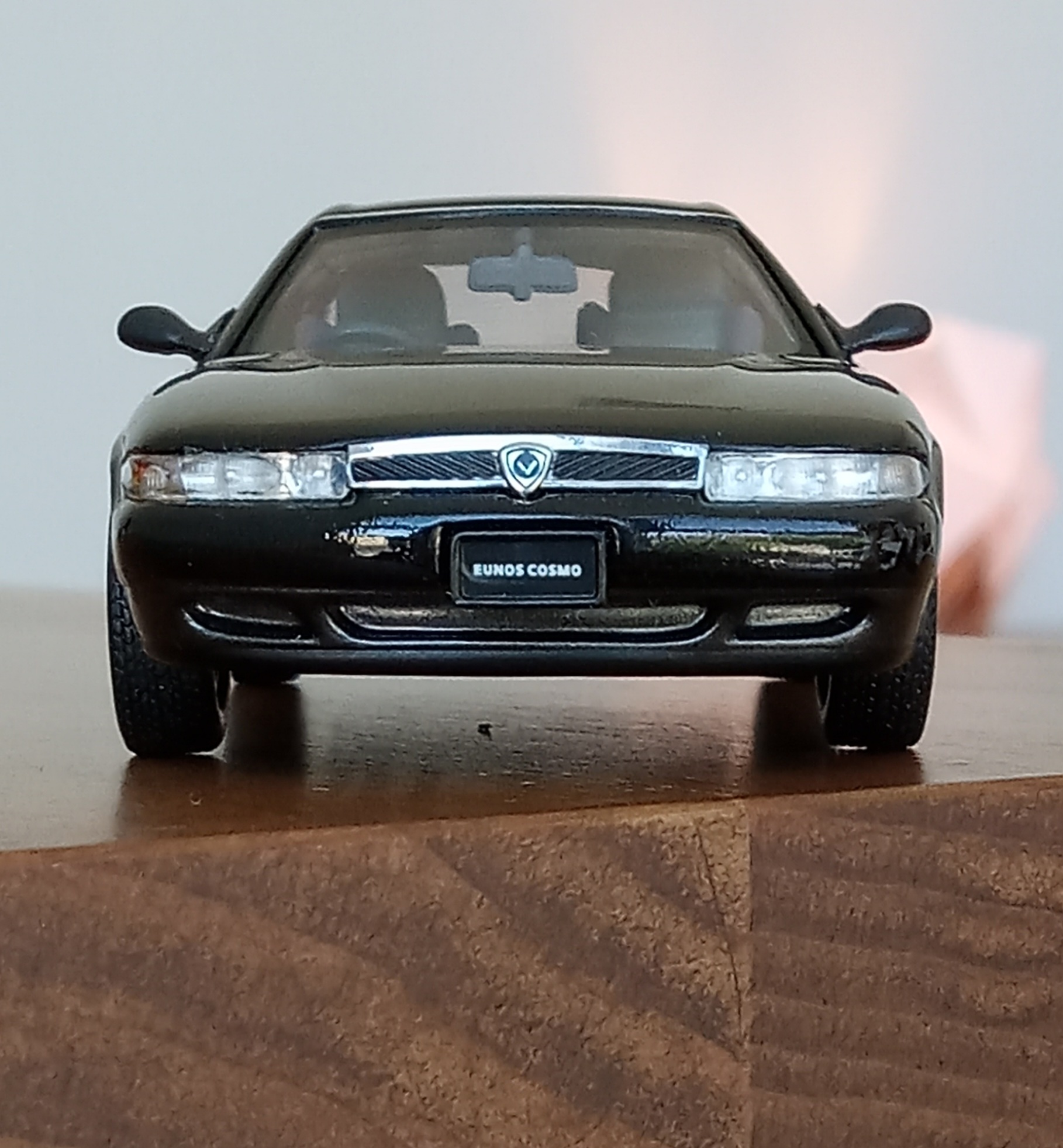
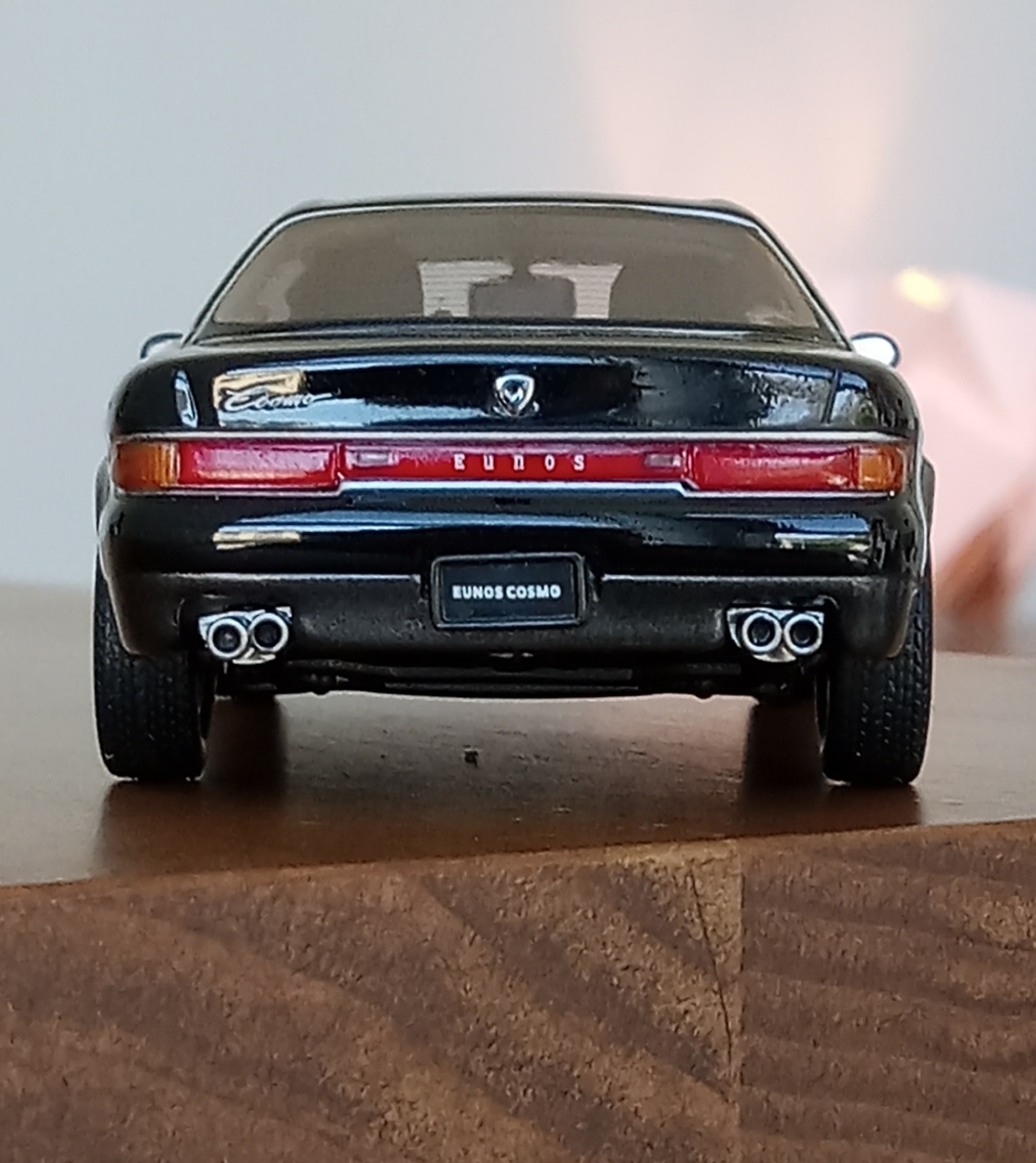
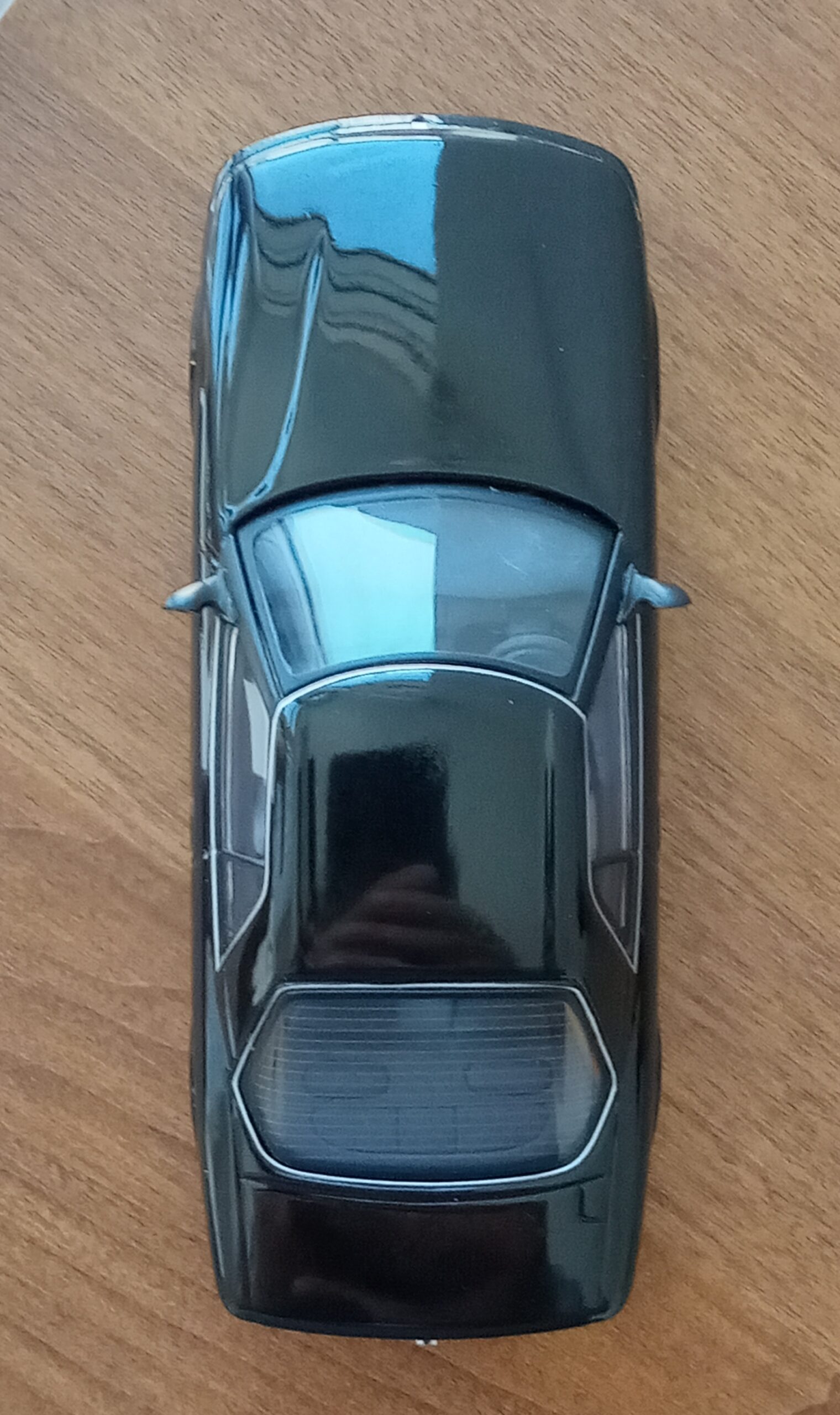
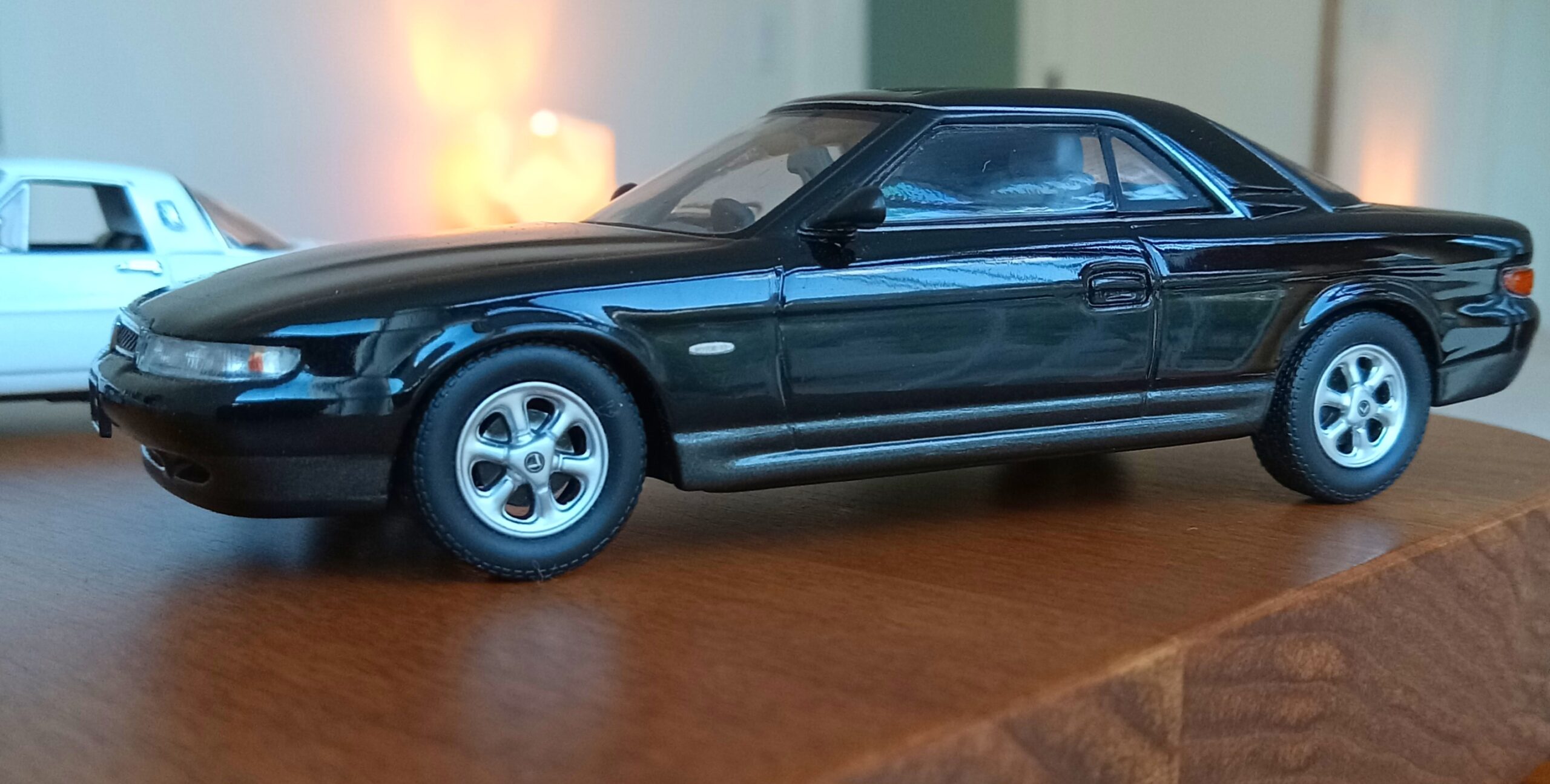
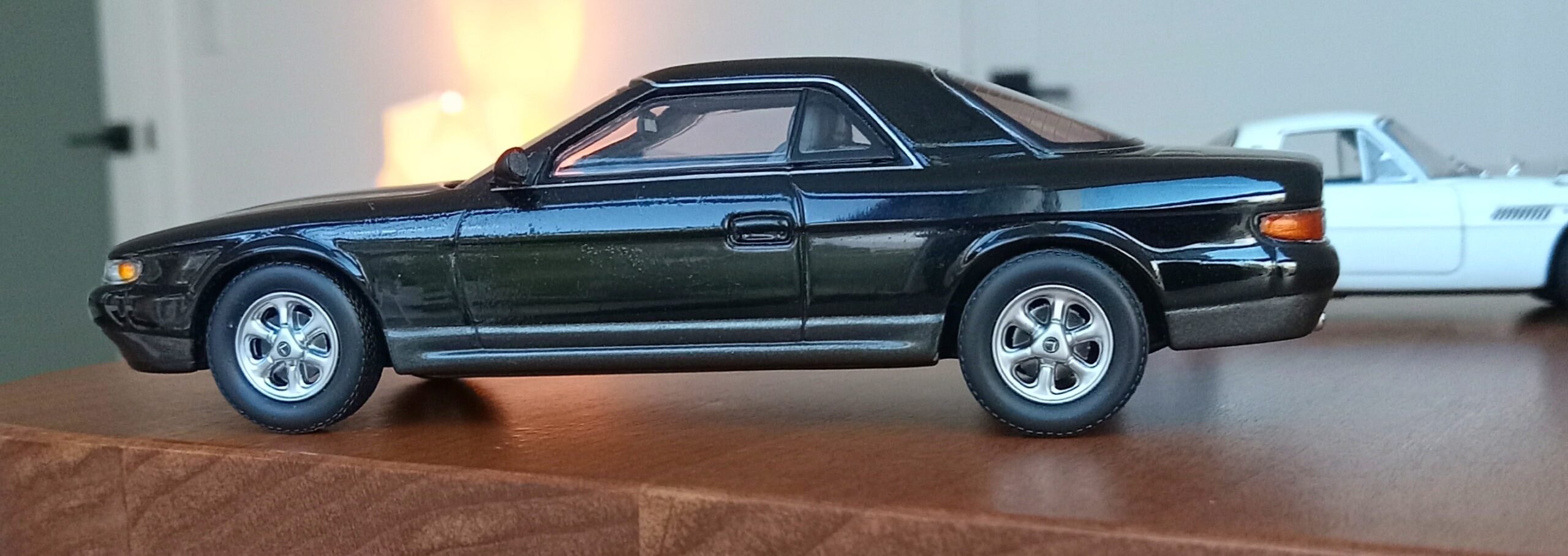
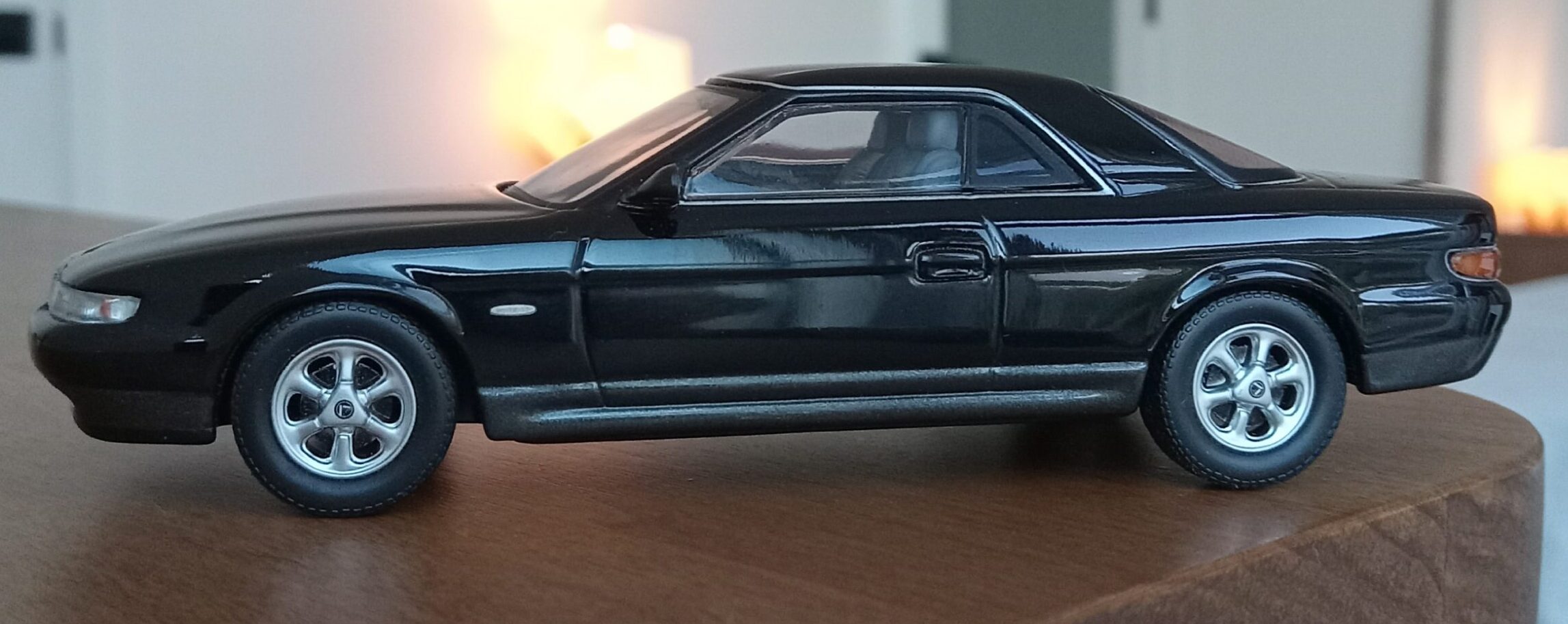
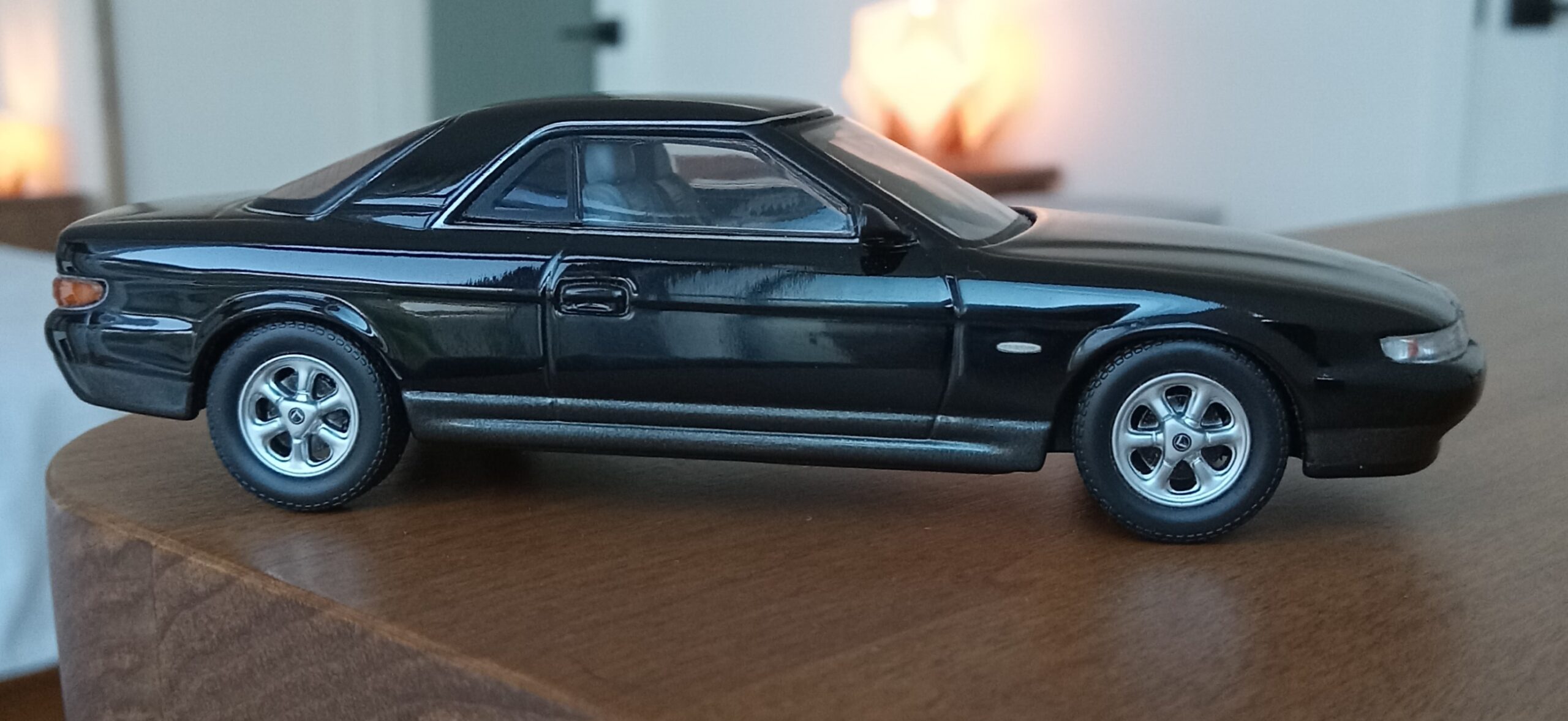
(SAPI社製、1/43 マツダ アンフィニ・コスモ タイプ・S(ブラック&グレーの2トーン)20年選手ですが、のびのび間の再現が素晴らしく、トレッドの拡大のみの改造で、撮影に臨みました。)
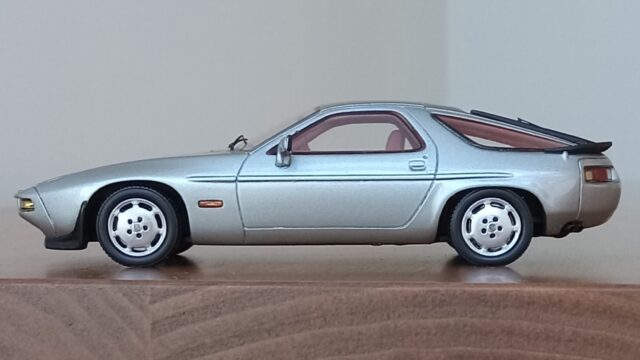
#好みの自動車デザインーー2ドアクーペの系譜:
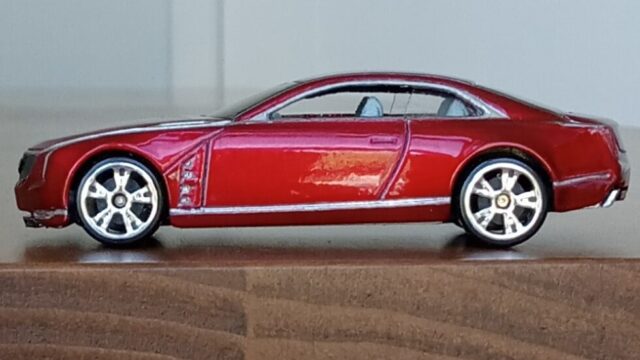
第36回目の今回は、『2ドアクーペの系譜、第16回』と題しまして、各国のお国柄や、外観デザインの個性が強く表れる、高級2ドア(GT)クーペ / ロードスターについてお話ししてみたいです。【注意:オープンカーを含む】
以下の要領で進めていきます。
第15回の今回は【日本車・マツダ編】
1990年発表の
4代目 ユーノス・コスモ(ブラック&グレイの2トーン)
についてのお話です。
【2ドア・クーペの系譜:目次】
【米国車編】
第1回:キャデラック・エルミラージュ、2013(メタリック・レッド)
第2回:リンカーン・コンチネンタル MK4、1972(ブラック)
第3回:マーキュリー・クーガー, 1967(LTメタリック・グリーン)
【ドイツ車編】
第4回:MB 500K スペシャル・ロードスター、1936(ブラック)
第5回:MB 300SL ロードスター、1957(シルバー)
第6回:MB SLS AMR ガルウイング、2010(ブラック)
【英国車編】
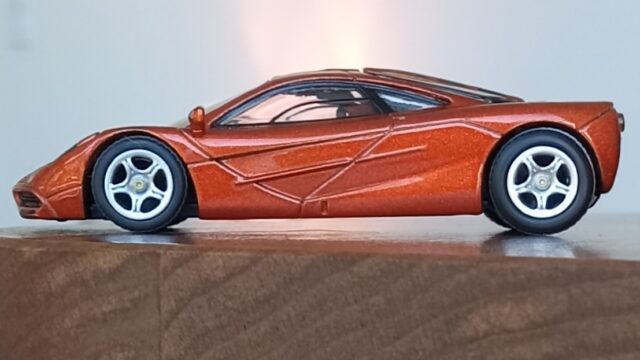
第7回:マクラーレン・F1、1992(メタリック・オレンジ)
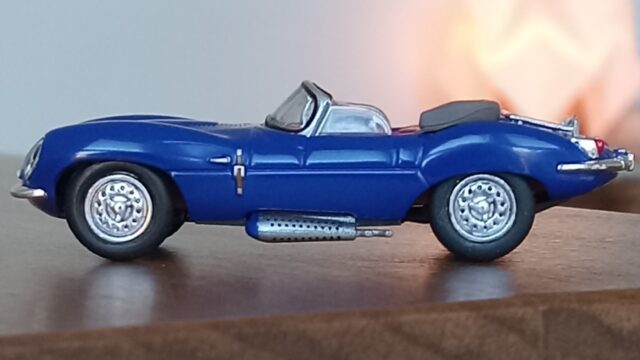
第8回:ジャガー・XKSS ロードスター、1957(ロイヤル・ブルー)
第9回:ジャガー XKR クーペ、1996(ダークメタリック・グリーン)
【日本車・ニッサン編】
第10回:ニッサン 初代シルビア、1965(シャンペン・ゴールド)
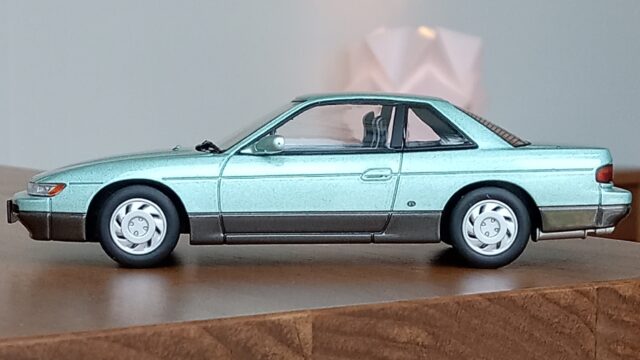
第11回:ニッサン 5代目シルビア、1988(LTメタリック・グリーン)
【イタリア車編】
第12回:フェラーリ 250TR ポンツーンフェンダー、1958(赤)
第13回:フェラーリ 250GTO、1962(イタリアン・レッド)
第14回:ランボルギーニ・コンセプトS、2005(パール・ホワイト)
【日本車・マツダ編】
第15回:マツダ コスモ・スポーツ、1968(レーシング・ホワイト)
第16回:マツダ ユーノス・コスモ、タイプ‐S(2トン:黒&グレー)
【フランス車編】
第17回:ブガッティ・タイプ59、1935(フレンチ・ブルー)
第18回:シトロエン・SM、1970(シャンペーン・ゴールド)
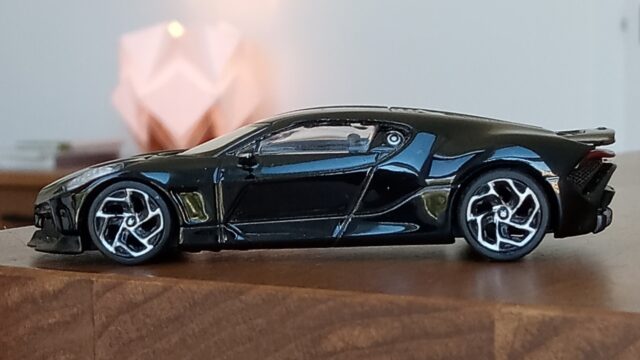
第19回:ブガッティ・ラ・ヴォワチュール・ノワール、2019(黒)
【日本車・トヨタ編】
第20回:トヨタ/ヤマハ・2000GT、1967(アイボリー・ホワイト)
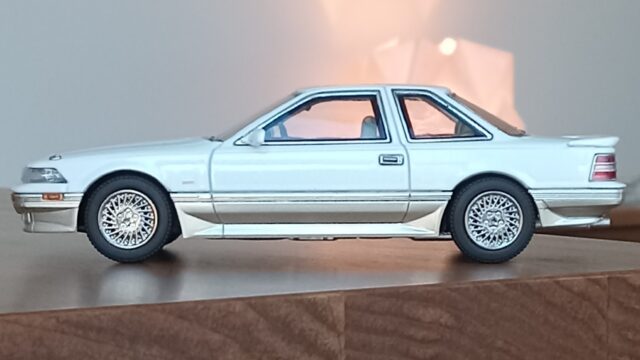
第21回:トヨタ・2代目ソアラ、1986 (2トン:黒&グレー)
第22回:レクサス LC【GWZ100型】、2017(メタリック・レッド)
【米国車編②】
第23回:ダッジ・チャレンジャー&プリムス・バラクーダ、1971
第24回:ダッジ・ヴァイパー SRT‐10 ACR、 2008(ブラック)
第25回:フォード・シェルビーGR-1 コンセプト、2004(クローム)
【日本車・ミツビシ編】
第26回:ミツビシ・ギャラン λ、1976(ブラウン・メタリック)
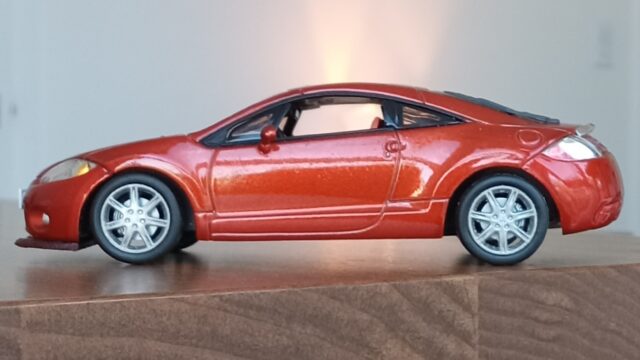
第27回:ミツビシ・エクリプス【北米仕様】、2006(オレンジ・メタ)
【ドイツ車編②】
第28回:BMW M635CSi、1984 (ダーク・メタリックブルー))
第29回:MB 560SEC AMG 6.0 ワイドボディー、1989(黒)
第30回:BMW M2 純正パフォーマンス・パーツ仕様、2025(ネオン・ライム)
【日本車・スバル編】
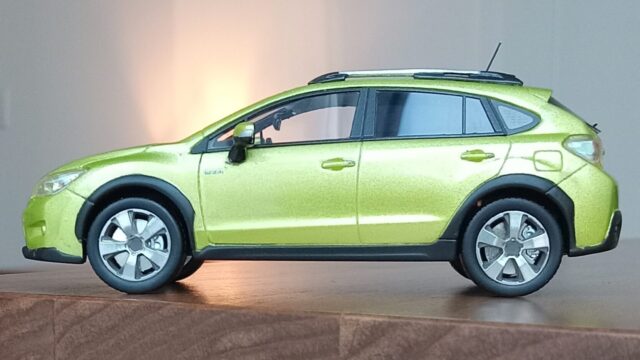
第31回:スバル・クロストレック XV, 2012(ライムグリーン・メタリック)
コルベットの系譜:(番外編)
第1回:1967年型 スティングレー【C2】コンバーチブル(ハードトップ・メタ青)
第2回:1972年型 コルベット 【C3】コンバーチブル(メタリック・ブルー)
第3回:1990年型 コルベット ZR-1【C4】クーペ(レッド)
第4回:スティングレー・コンセプト【先行開発車】、2009(プルー・メタリック)
#バブル経済が産んだ『奇跡のクーペ』
私がアメリカのロサンゼルス近郊のパサディナにある、
デザイン学校に留学したのは、
1988年、折からのバブル経済に押し上げられた形で、
日本車が「我が世の春」的な繁栄を誇っていたさなかのことでした。
夜間学校で学友から、
『日本車が最先端なのに、なぜわざわざアメリカの学校に来たのか?』と
不思議がられたり、
『1978年型のリンカーン・
コンチネンタル MK5』が好きだと言って、
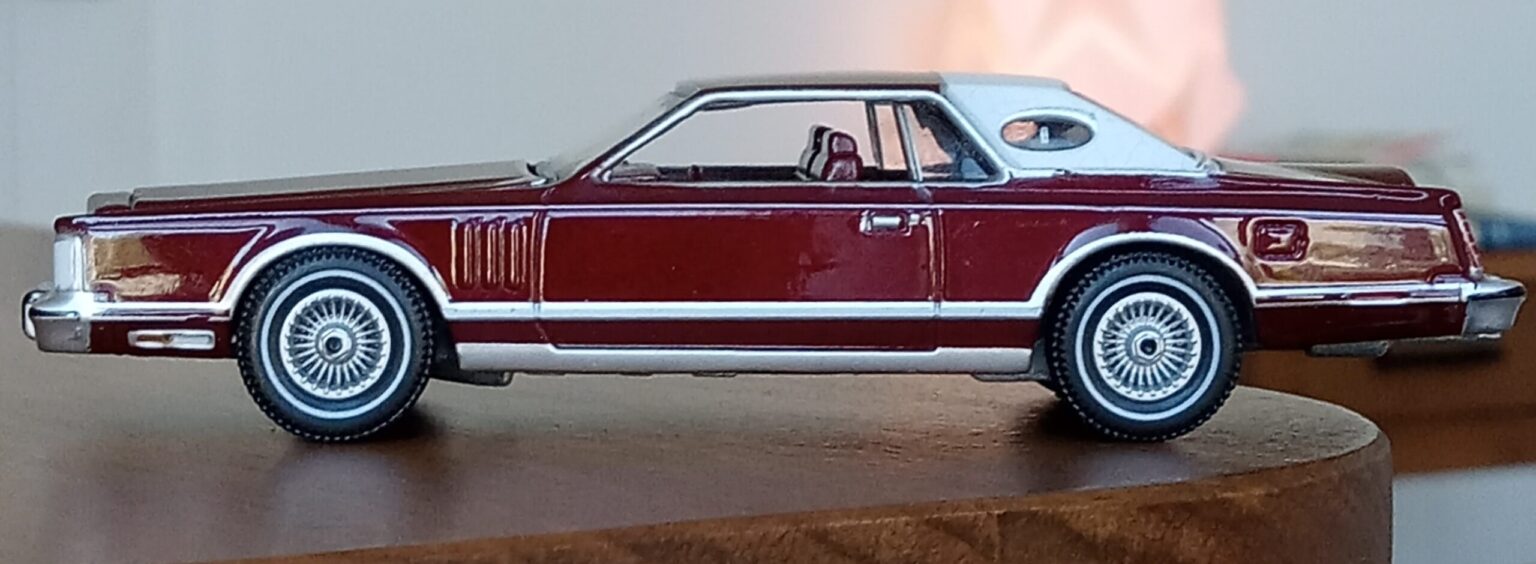
当時のホンダデザインに勤務していた講師から、
『だいじょうぶか?、こいつ』的な
まなざしが送られた時代でした。(笑)
そんな中1990年の夏、
リトル東京にある日本の本屋さんで、
*月刊自動車雑誌:『NAVI』や
*三栄出版の『ニューモデル速報:OOOOのすべてシリーズ』を
愛読していた私は、
当然のように、
*『モーターファン別冊ニューモデル速報
第84弾 ユーノスコスモのすべて』と
*CRAトップ:ニューカー速報 NO.28 EUNOS COSMO
(ユーノスコスモ)を手に取り、
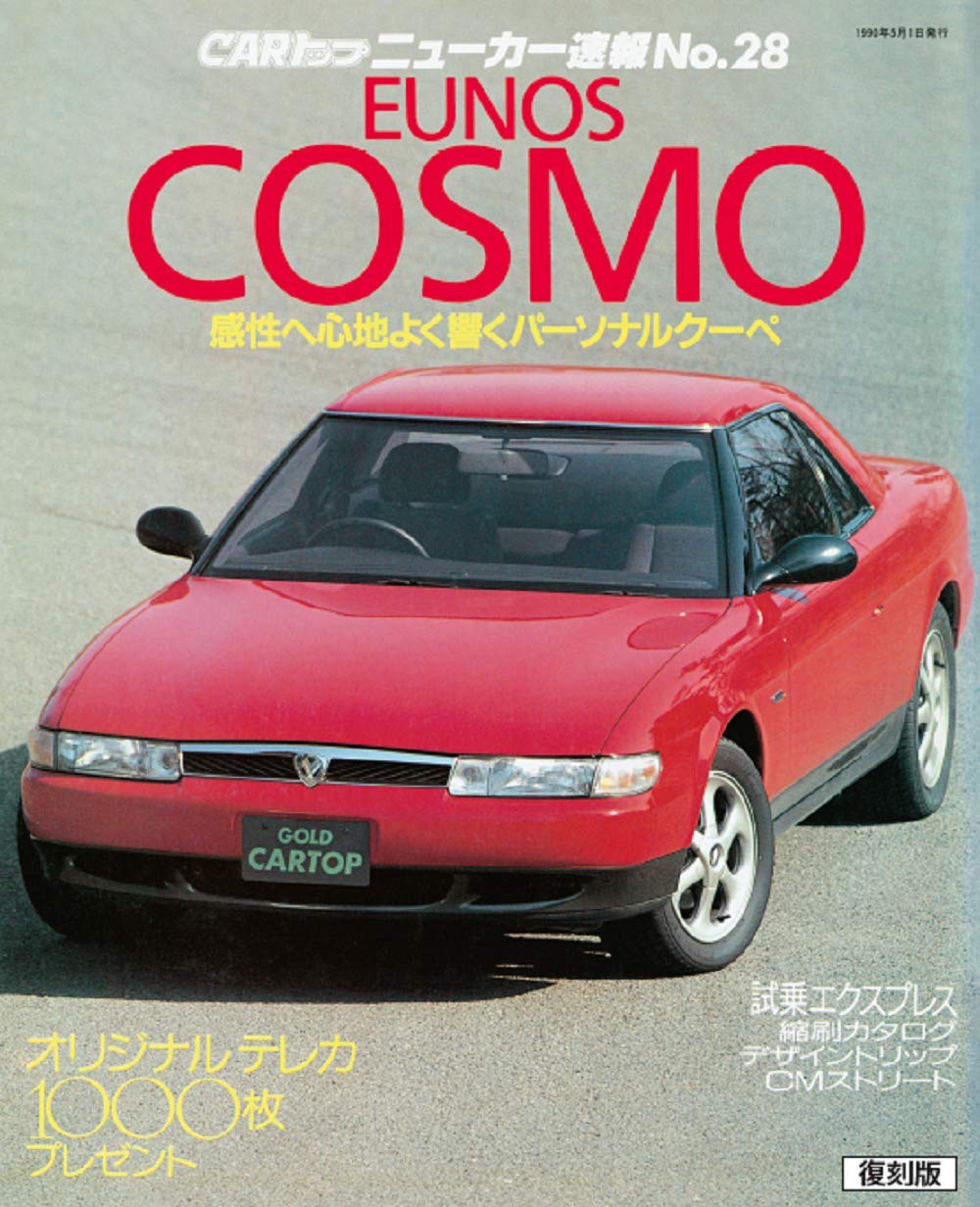
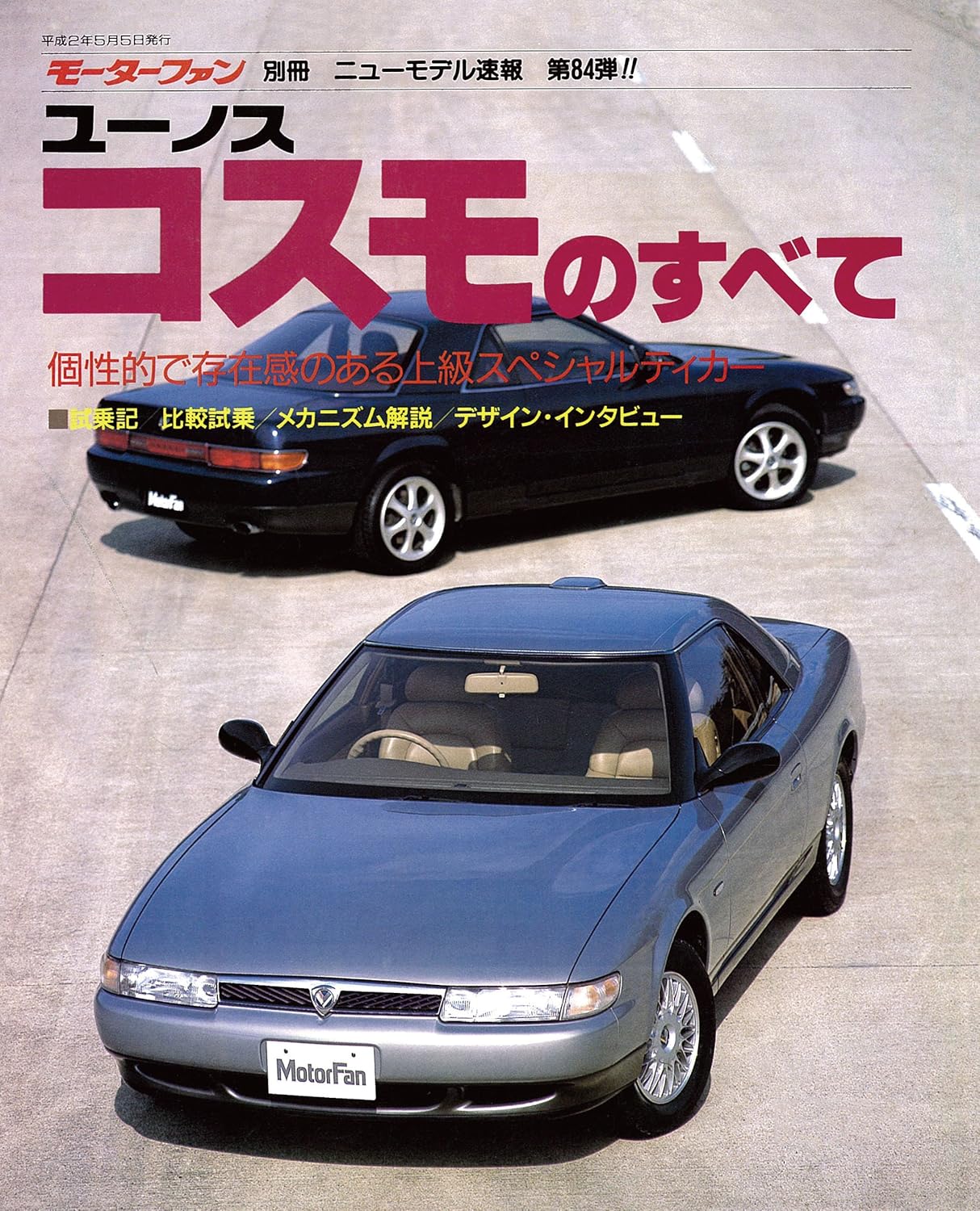
マツダの渾身の一撃=『超大型クーペ』に
一目ぼれしてしまいました!
*当時の私も含めた学生たちが大騒ぎしていた
『オーガニックデザイン』をすでに取り入れた面構成や、
*日本車離れした正統派2ドアクーペのプロポーションが
目に沁みました。
丁度そのころ、上級の4学期生たちがマツダからのスポンサード・プロジェクトでロータリーエンジンを使った高級スポーツカーをデザインしていたのも、私の興奮に拍車をかけました、、、
それでは、
そんな日本車離れしたクーペに付いて、
こんな感じで進めていきます。
*実車解説:バブルが産んだ8頭身クーペ
*外観デザインの特徴:オーガニック・デザインの蕾?
*『私』とユーノス・コスモ
*三題噺:リンカーン・コンチネンタル MK5・BOW・鼓動デザイン
*バブル期の『絶頂マツダデザイン』たち、、、
*実車解説 : バブルが産んだ8頭身クーペ
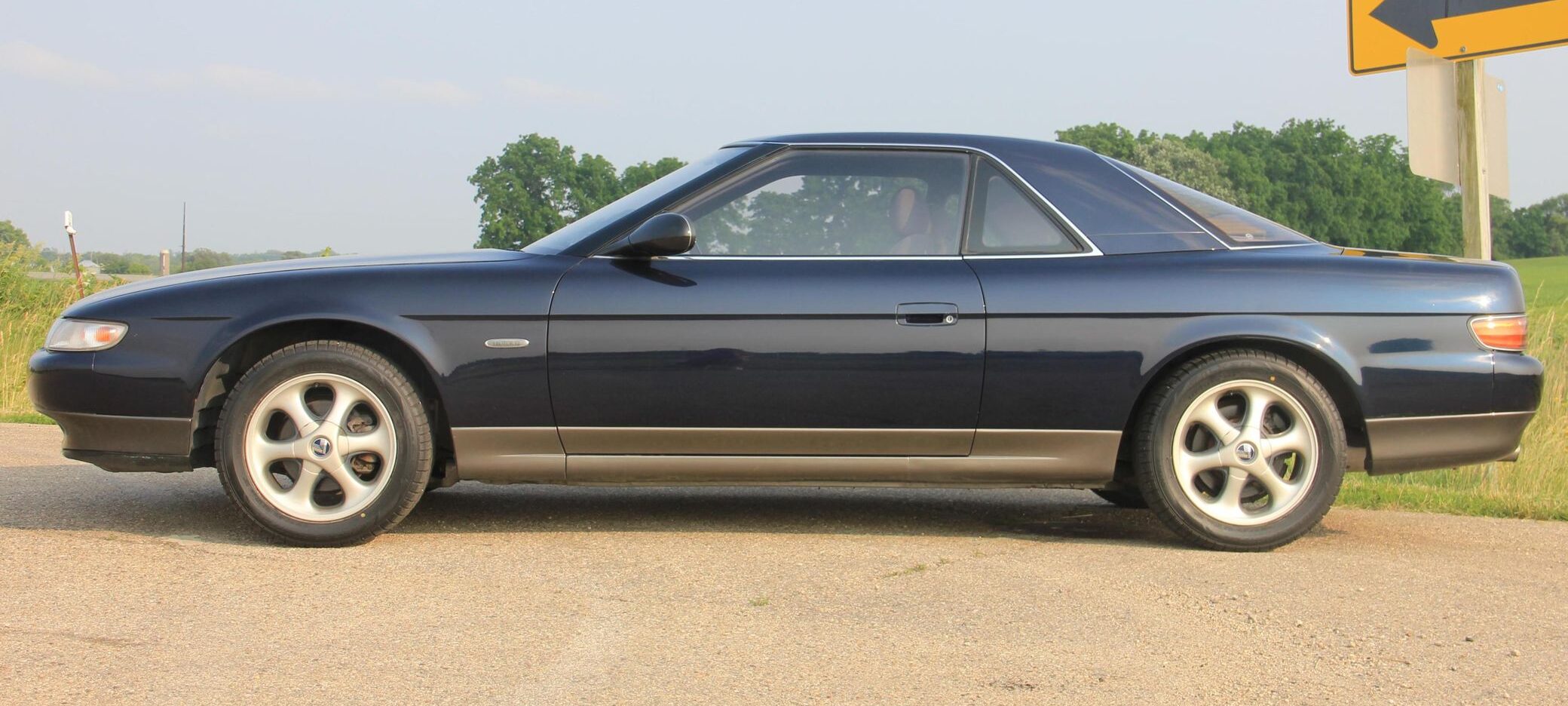
#正統派クーペデザインの到達点:
日本産クーペの流れの終着駅的な(一時的ですが、、、)
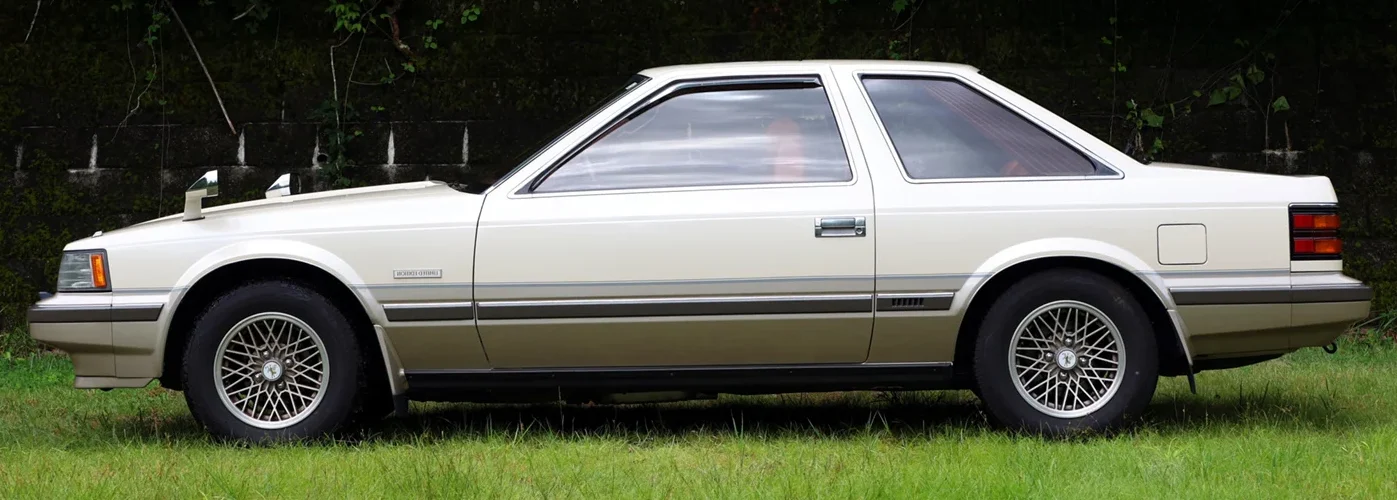
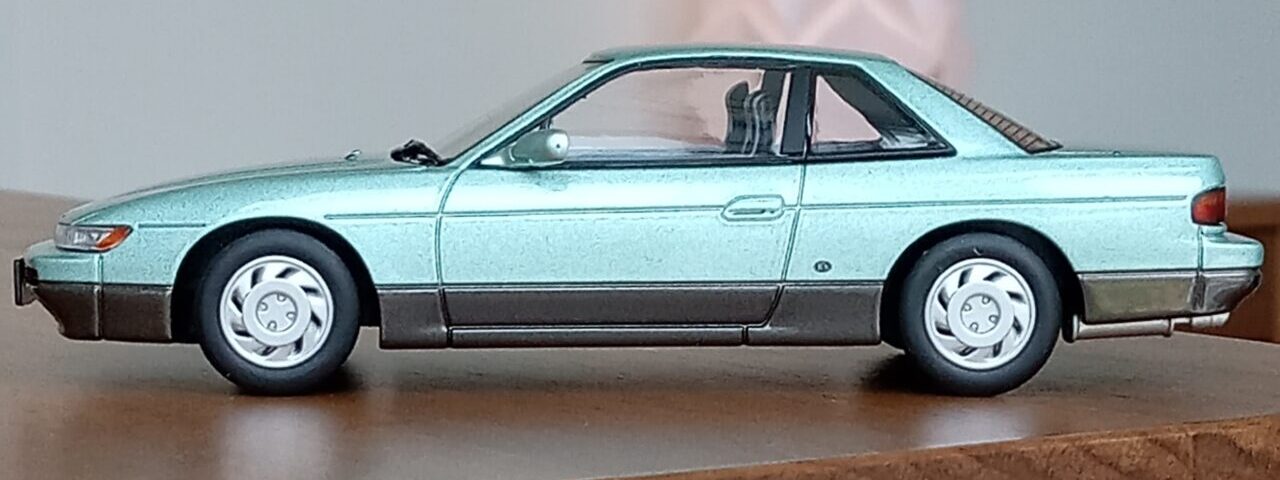
概略:
1990年に登場した4代目ユーノス・コスモ(JC型)は、
バブル景気の潤沢な資金とマツダの「ときめきのデザイン」思想が結実した、日本車史上に残る傑作ラグジュアリークーペです。チーフデザイナーの小泉巌(こいずみ いわお)氏が手掛けたそのスタイリングは、世界初となる3ローター・ロータリーエンジンの超絶的な滑らかさを視覚的に表現した、極めて艶やかでエレガントなものでした。
低く伸びやかな「クーペダイナミズム」
外観のコンセプトは「クーペダイナミズム」。当時の流行だった直線基調のオーソドックスな3ボックススタイルから脱却し、光と影の映り込み(リフレクション)で魅せるエモーショナルな曲面美を追求しています。
【 4代目ユーノス・コスモのプロポーション(サイズ感) 】
全長:4,815mm  /  全幅:1,795mm  /  全高:1,305mm  /  ホイールベース:2,750mm
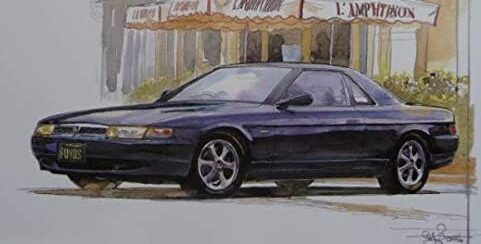
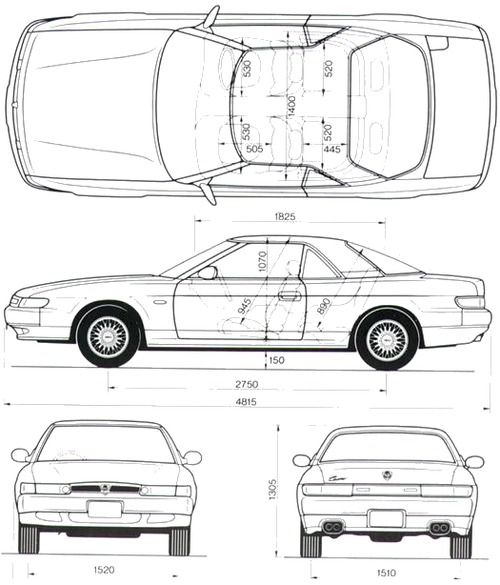
*異次元のロー&ワイドプロポーション:
全長4.8mを超える大柄なボディに対し、全高はわずか1,305mmと現代の本格スポーツカー並みに低く抑えられています。この圧倒的な低さが、日本車離れした伸びやかなサイドシルエットを生み出す最大の要素となっています。
*ロータリーならではのロングノーズ・ショートデッキ:
コンパクトなロータリーエンジンの特性を活かし、ボンネットフードを極限まで薄く、長く設計。キャビン(客室)を後ろ寄りに配置した、クラシカルかつ気品あるFRクーペの黄金比率を体現しています。
*抑揚のある造形とシームレスな一体感:
フロントグリル周辺のうねるような立体感から、リアにかけてなだらかに絞り込まれるボディラインは非常に妖艶です。ドアミラーやバンパーなどの細部もボディと完全に融合(フラッシュサーフェス化)され、塊から削り出したような一体感を持たせています。
「贅沢な大人のサロン」:
n
n
n
*連続するラップアラウンド(包み込まれ)デザイン
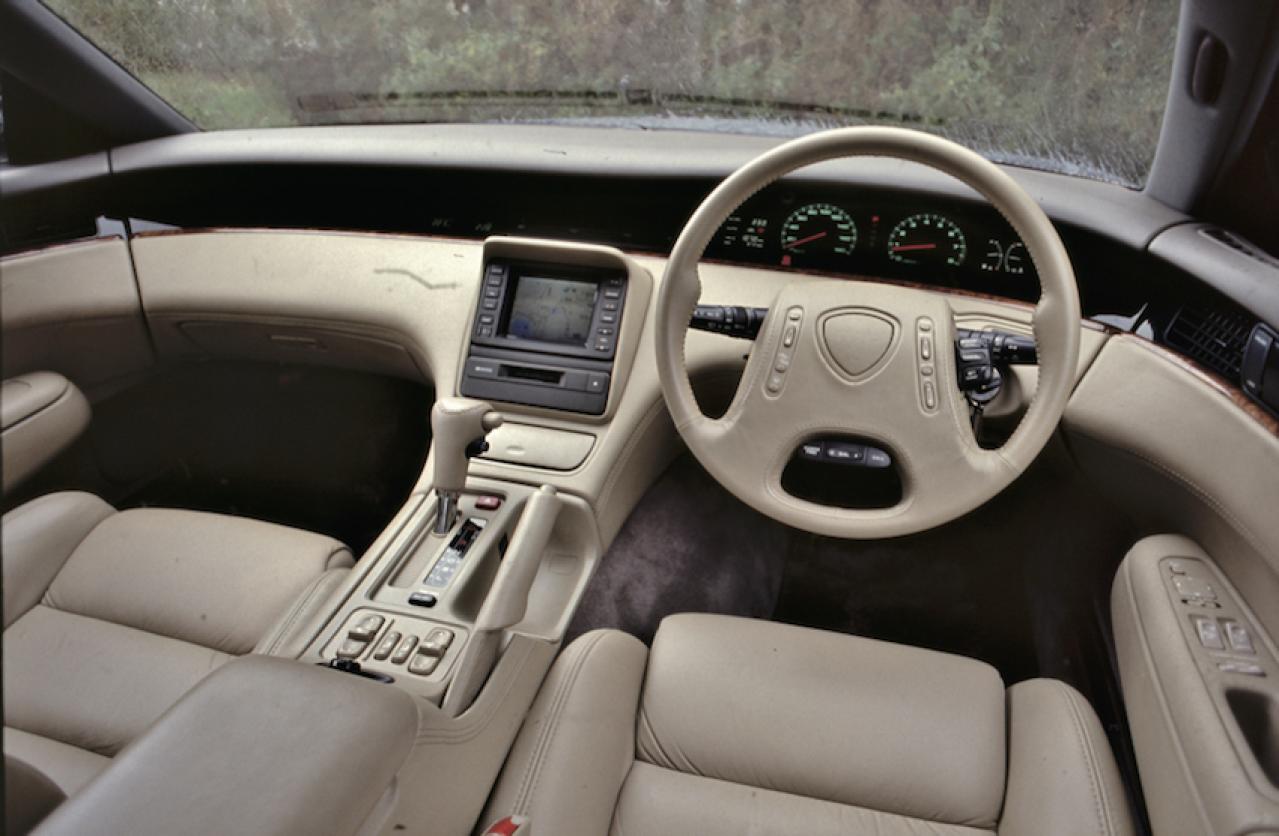
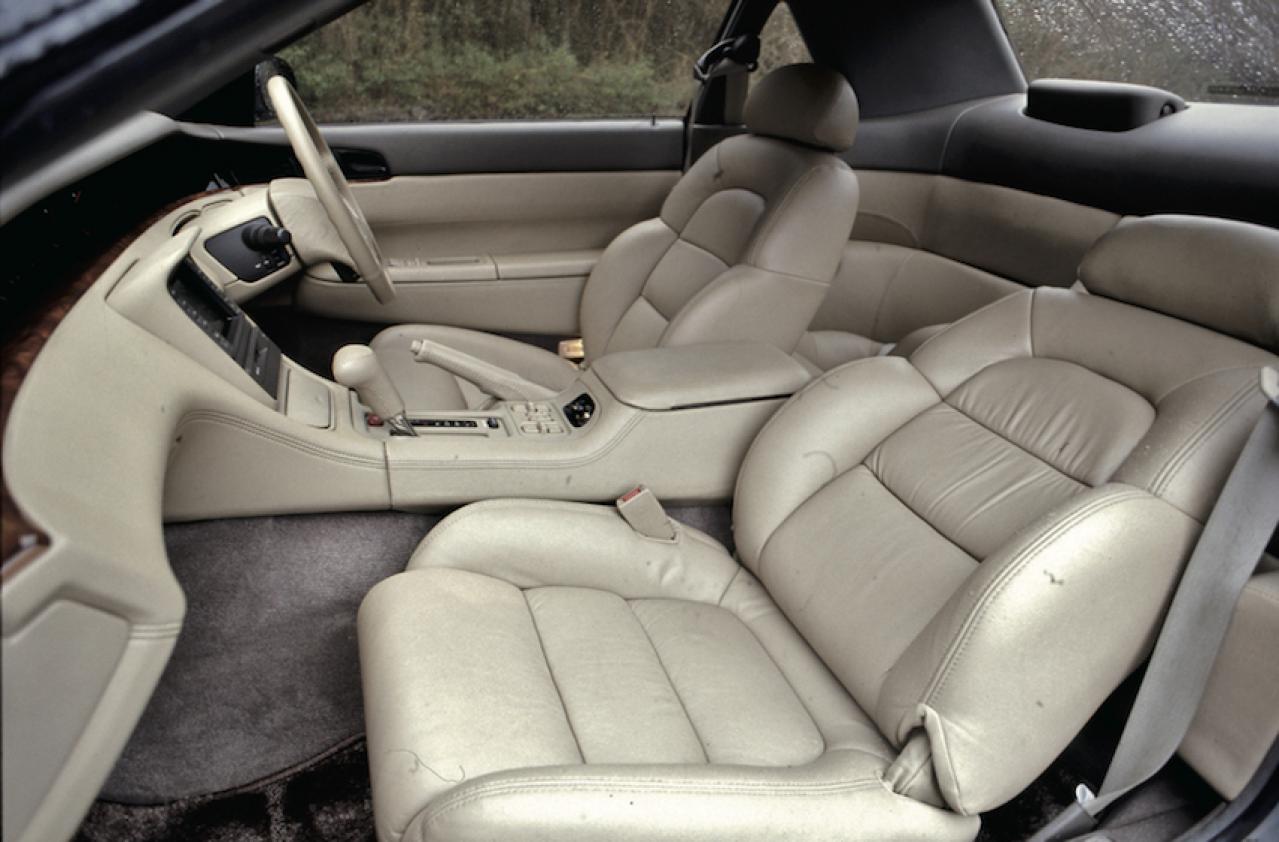
フロントのインパネから左右のドアトリム、そして後席までが途切れなく一つの曲線でつながる、斬新なデザインを採用しています。乗員全員が丸いコクピットの中に優しく包み込まれるような、極上の安心感と視覚的エレガンスを演出しました。
*本物だけを厳選した世界最高峰の素材
レザーシートには、コニサー(目利き)も納得するオーストリア製の最高級本革(ボックスカーフ)を採用。さらに、インパネを水平に貫く美しいウッドパネルには、高級家具やフランスの高級車に使われるイタリア製の天然エルム(ニレ)材を贅沢に使用しています。
*ハイテクとミニマリズムの融合
イグニッションをONにすると、ブラックアウトされたパネルから文字盤が浮かび上がる「新開発イルミネーションメーター」を採用。スイッチ類は極力隠され、視覚的なノイズを排除したモダンでシンプルな美しさを実現しています。
デザイナーの小泉巌氏は、のちにマツダの「魂動(こどう)デザイン」の基礎となる一括企画にも携わるなど、同社のデザイン黄金期を支えたチーフデザイナーです。彼がこの4代目コスモで表現したのは、単なる「サイズや価格のヒエラルキー(階層)」に縛られない「乗る人の品格と色気(妖艶さ)」でした。
n
n
n
n
n
n
n
n
n
n
n
n
n
n
n
n
n
n
n
n
n
n
n
n
n
n
m
n
n
n
n
n
n
#主要諸元:
- 型式:20B-REW(3ローター)
- 総排気量: 1,962 cc(654 cc × 3)直列3ローター・シーケンシャルツインターボ
- 最高出力 : 280 ps / 6,500 rpm(当時の自主規制値)
- 最大トルク:41.0 kg-m / 3,000 rpm
- 駆動方式:FR(フロントエンジン、リアドライブ)
- 定員:4名(2+2)
- 車体形式:2ドア・クーペ
- ホイールベース:2,590 mm
- 全長:4,815 mm
- 全幅:1,795 mm
- 全高:1,305 mm
- 車両重量:
1,590 kg 〜 1,640 kg
n
n
*外観デザインの特徴:『妖艶な8頭身モデル』
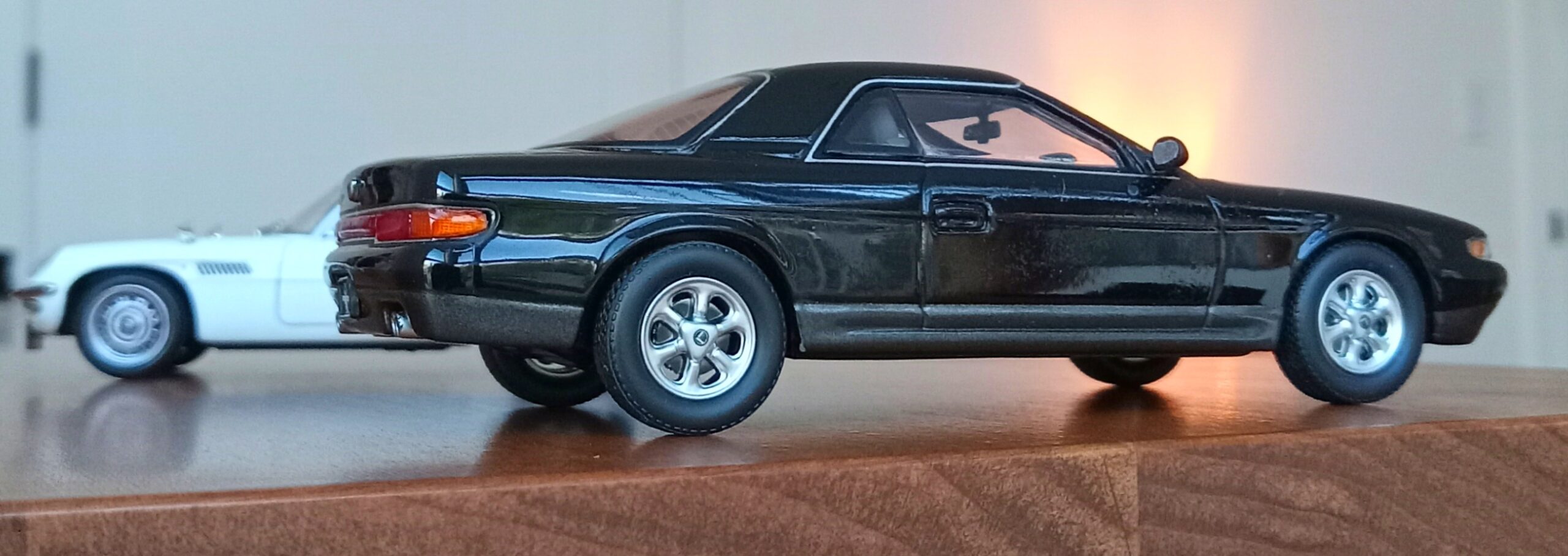
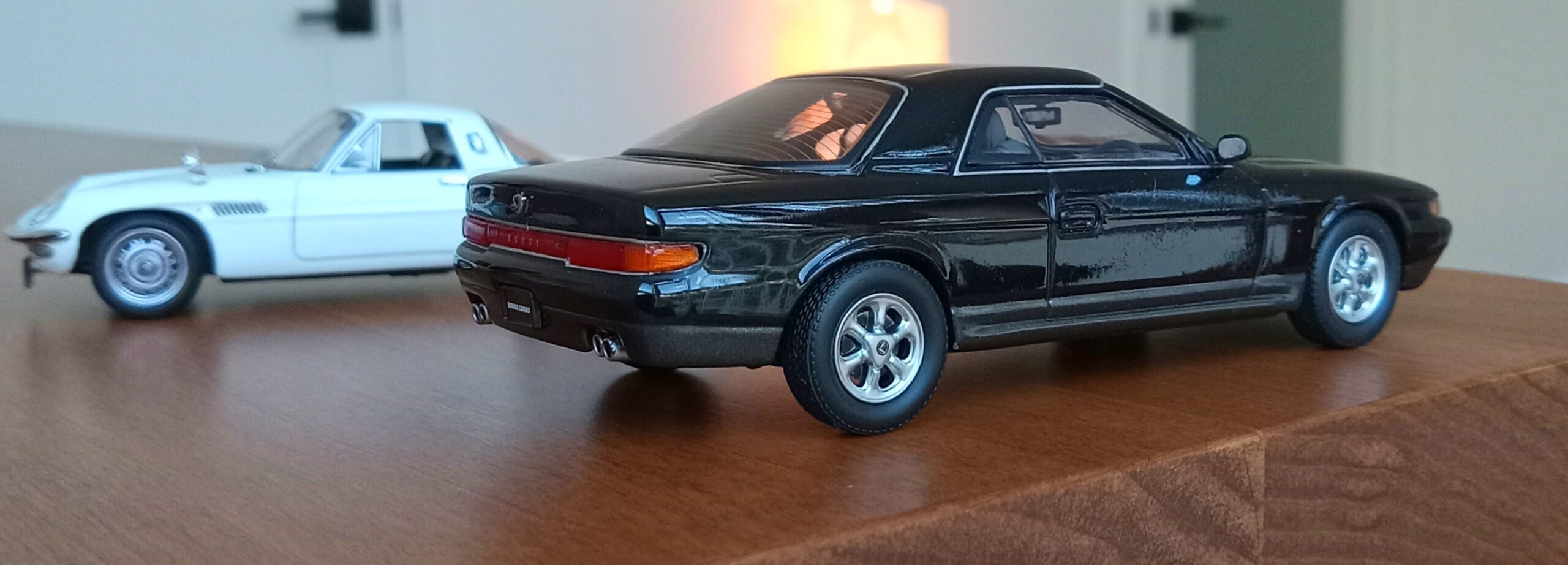
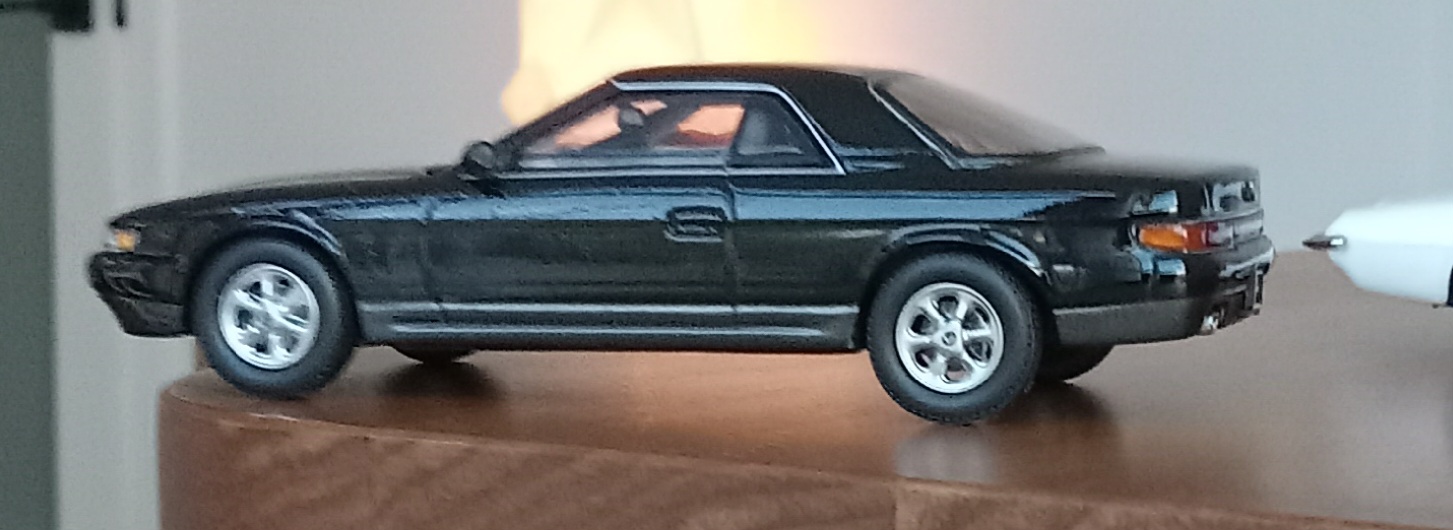
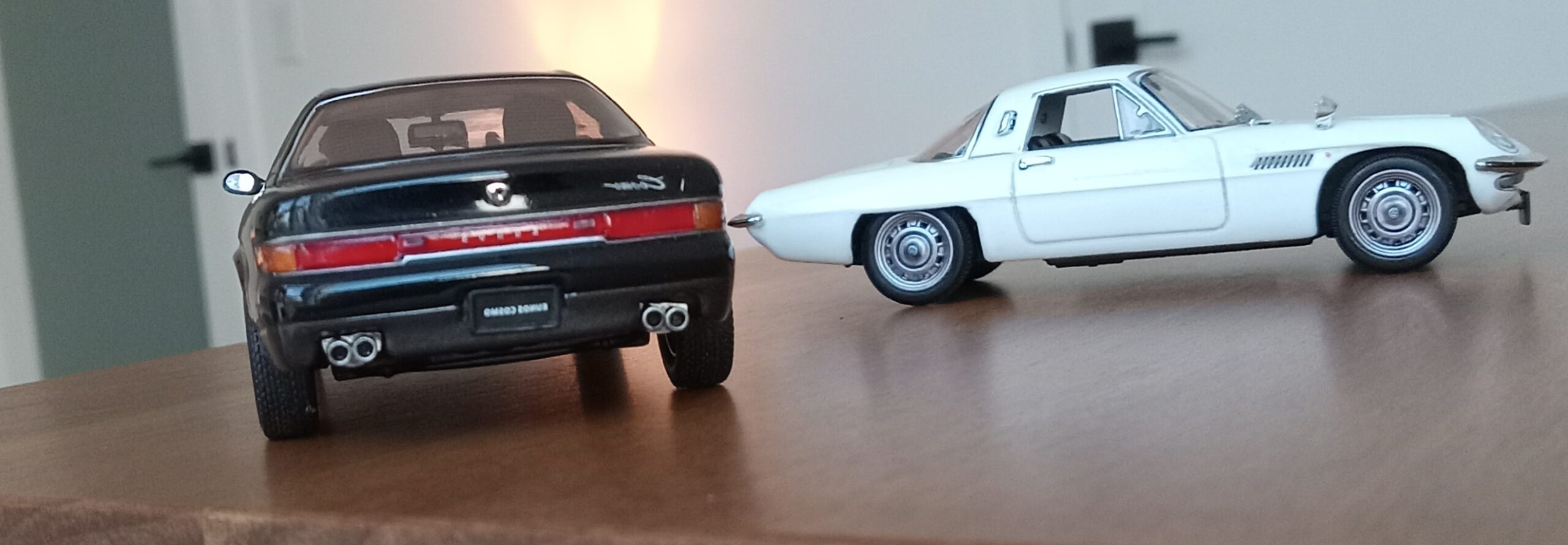
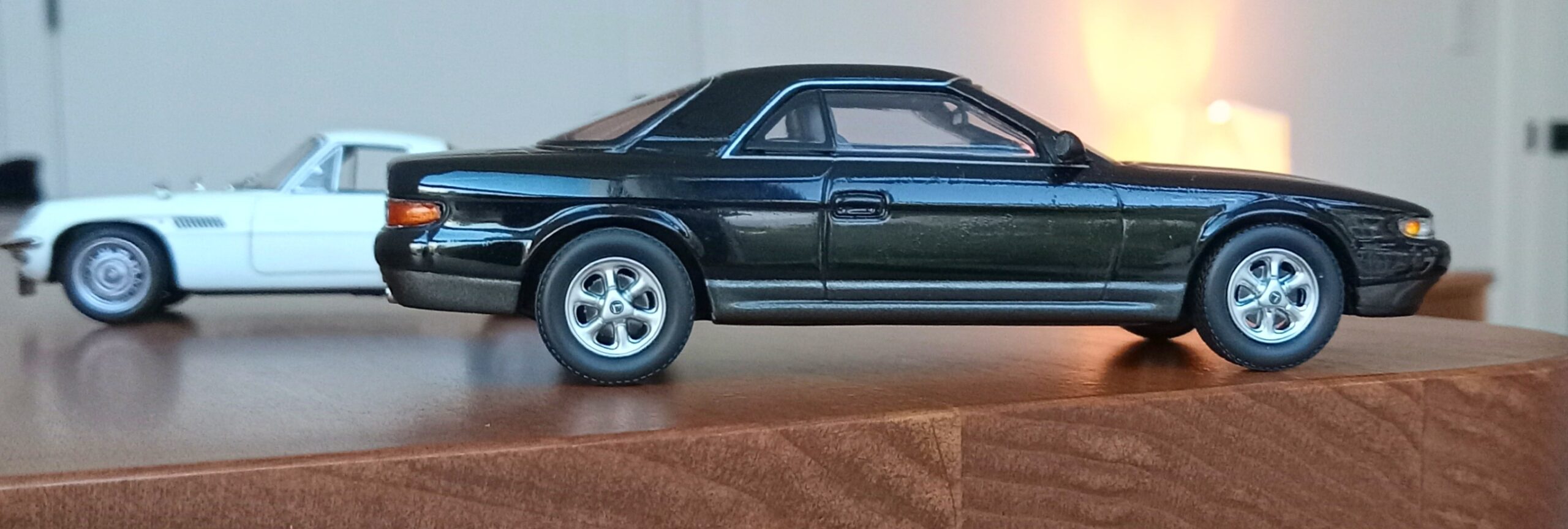
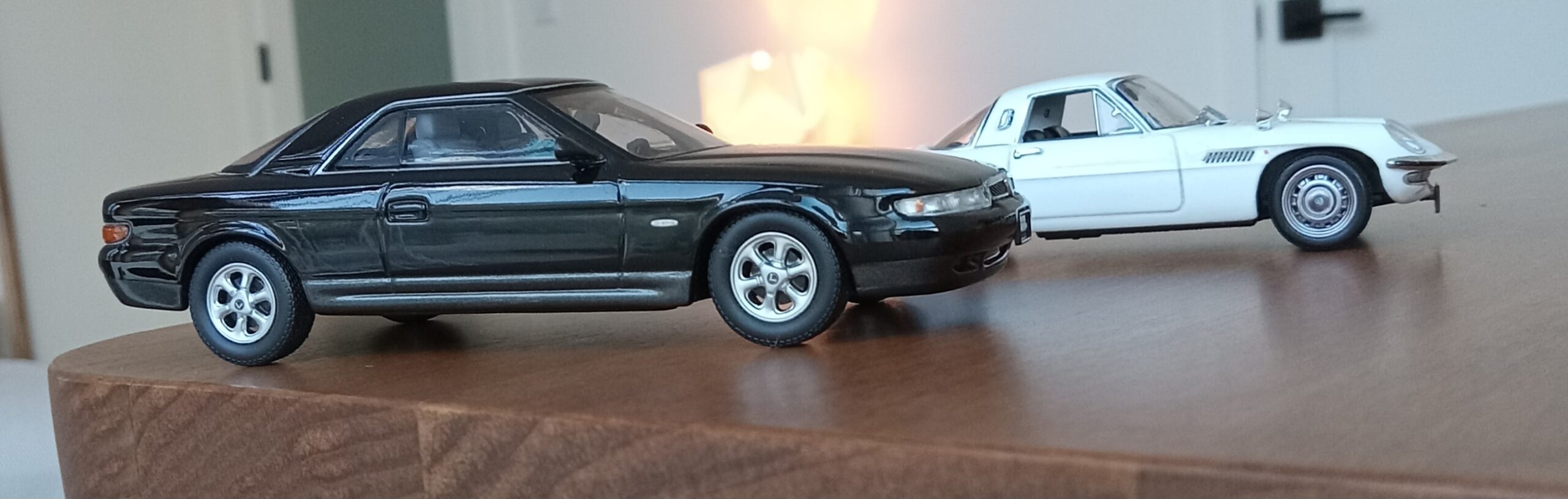
n
n
n

*当時盛り上がり始めていた、ファッション界のスパーモデルブームと、*自動車デザイン・ブームは
切っても切り離せない関係で結ばれていました。
『美しさ』を表現する分野ということもあり、
n
n
スーパーモデルの存在と結び付けずにはいられませんでした。
n
n
n
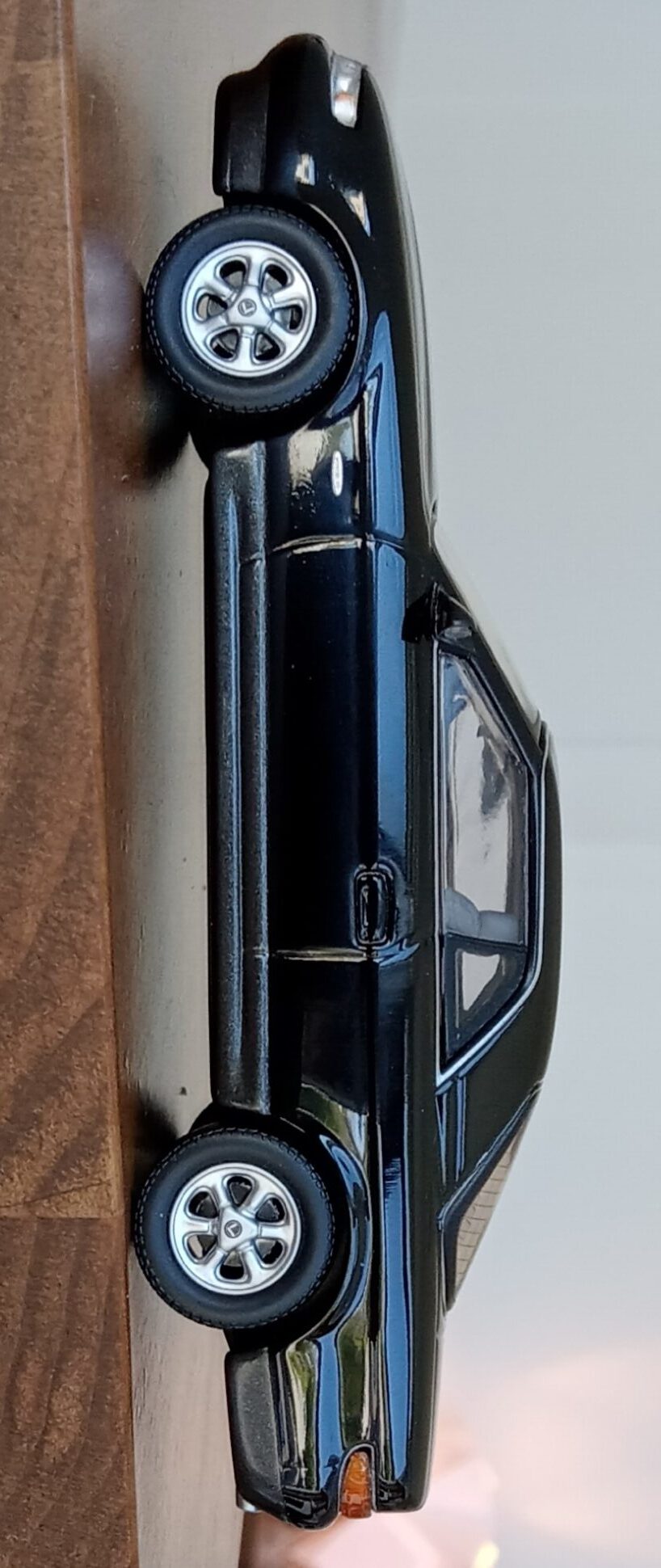

それでは、そんな『ユーノス・コスモ』の
デザイン的特徴を見て行きましょう。
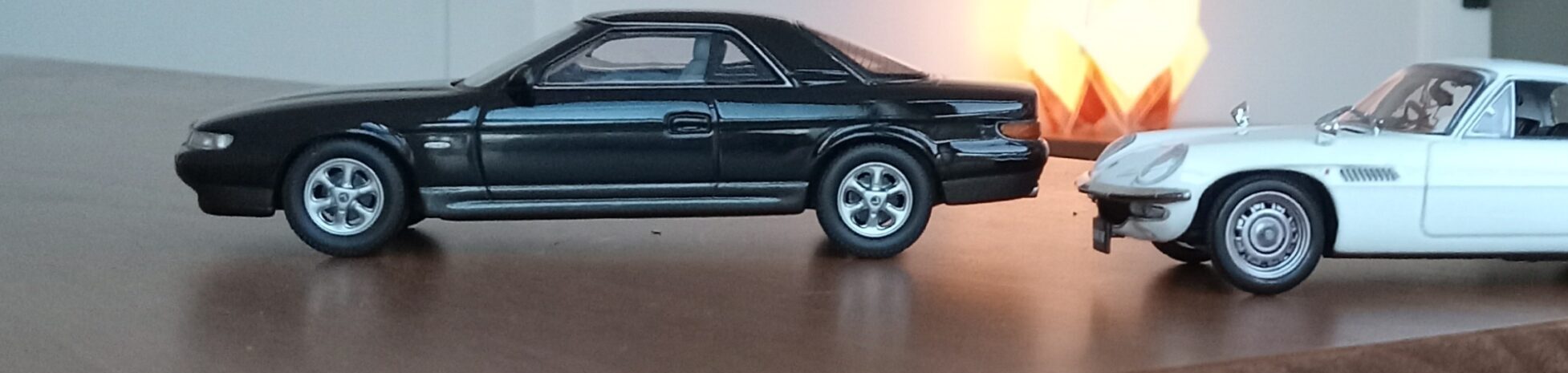
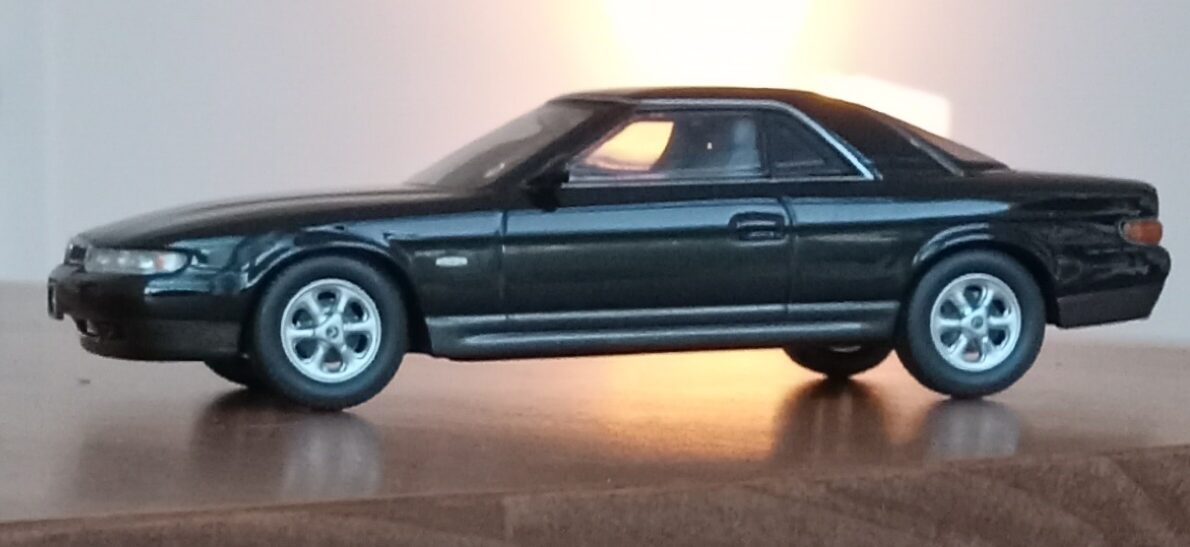
1:超低重心の3ローターエンジンが可能にした、日本車離れの『8頭身プロポーション』の美しさ。ーーーーーー>英国車の優雅さ+アメ車のワイルド感÷2の見事な融合
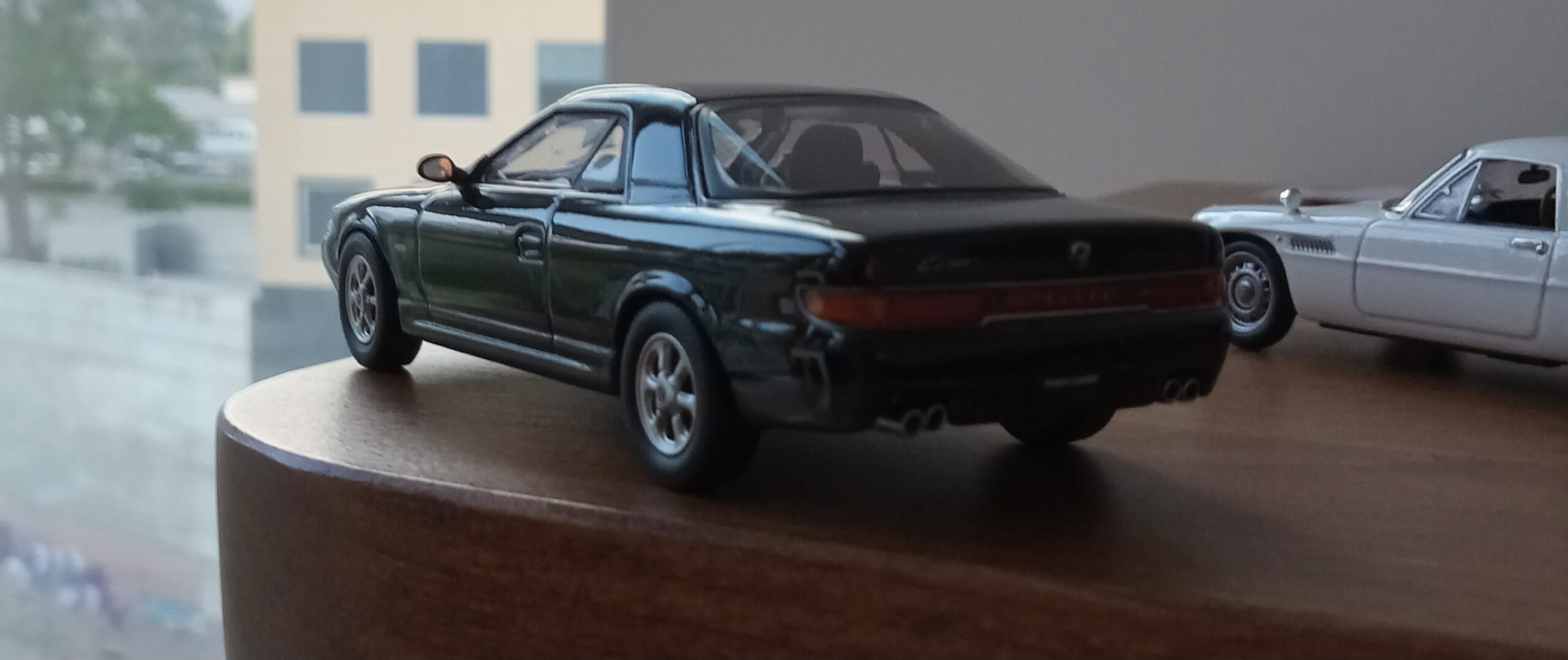
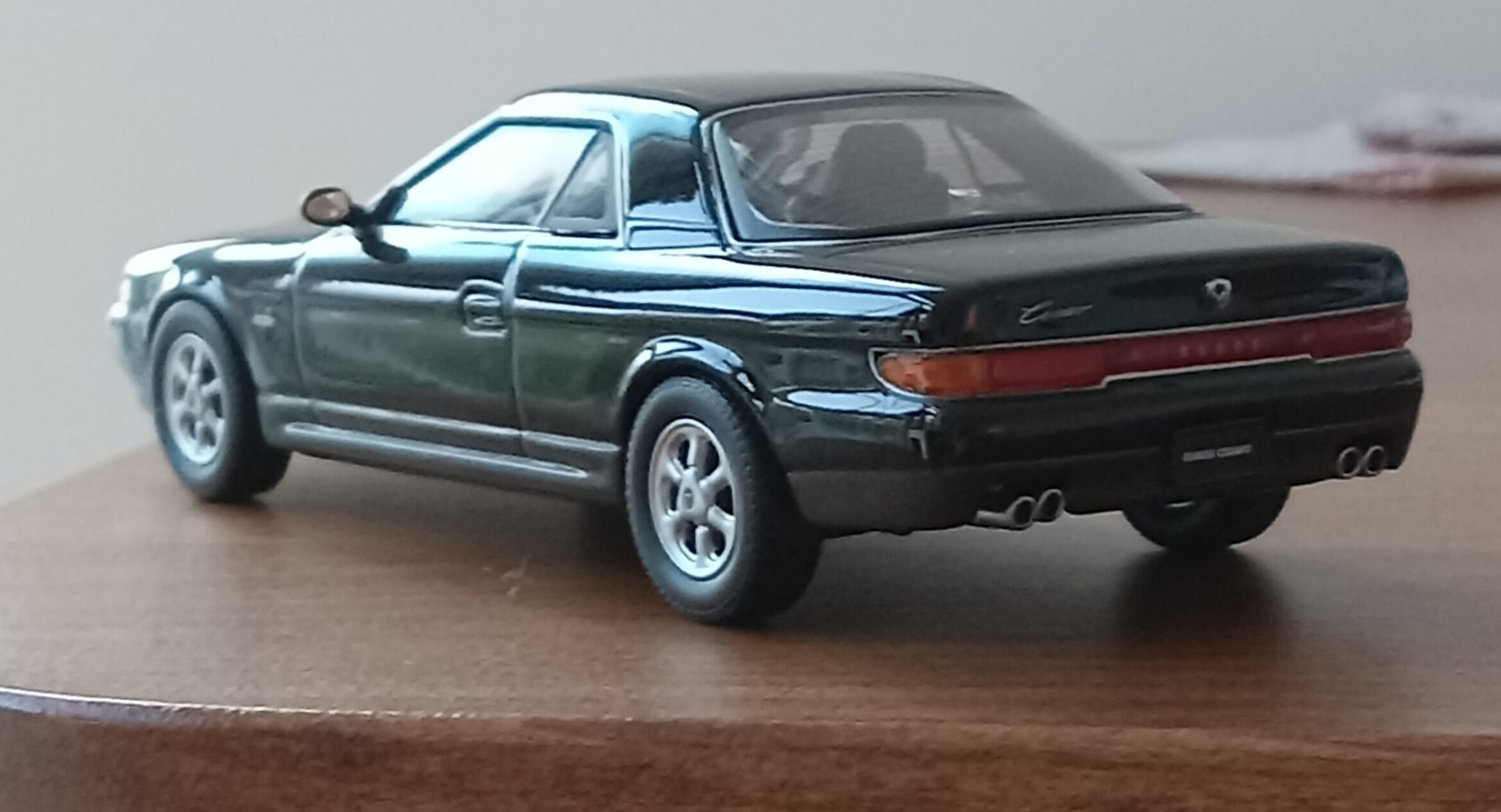
2:当時の最先端の、オーガニックフォーム【有機デザイン】を取り入れたボディー全体の成熟した造形美
3:全体の流れを妨げない『有機感』満点なフロント、リア・フェイシアのさりげない表情
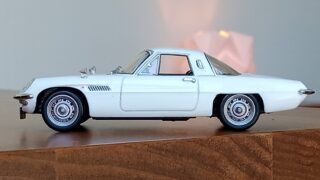
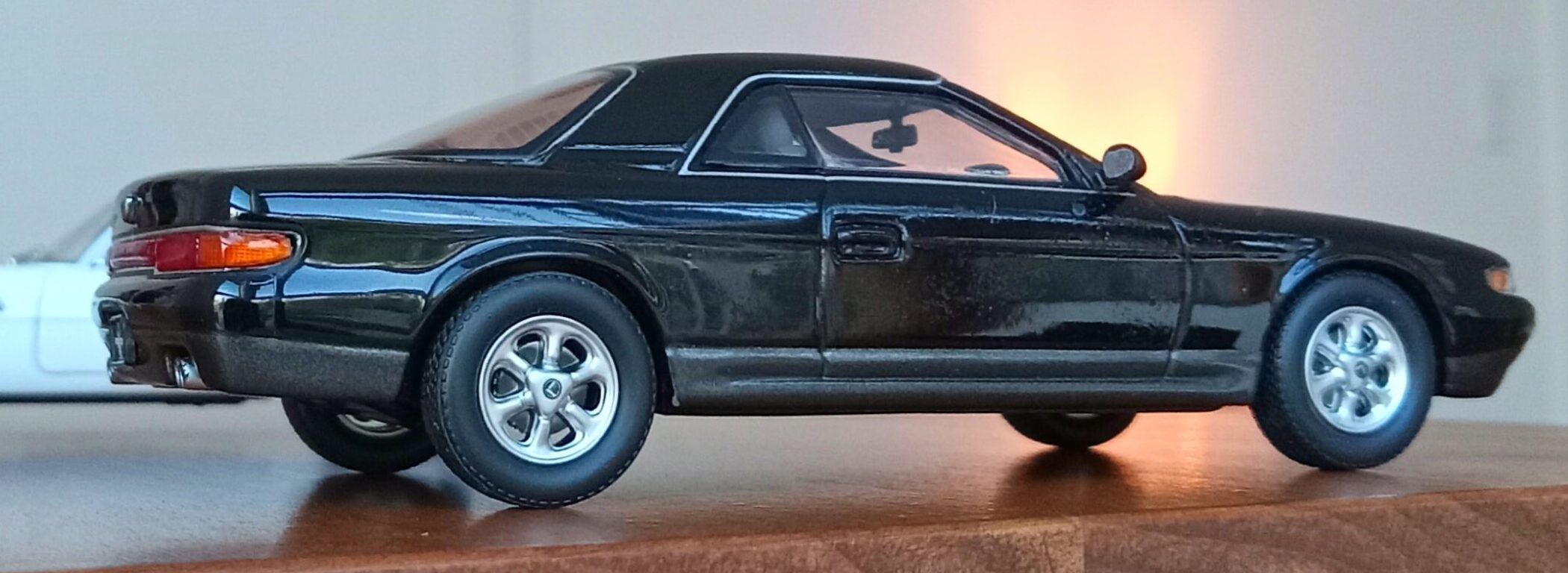
4:初代コスモ・スポーツをオマージュした、ルーフラインとラップアラウンドしたウインドウの一体感
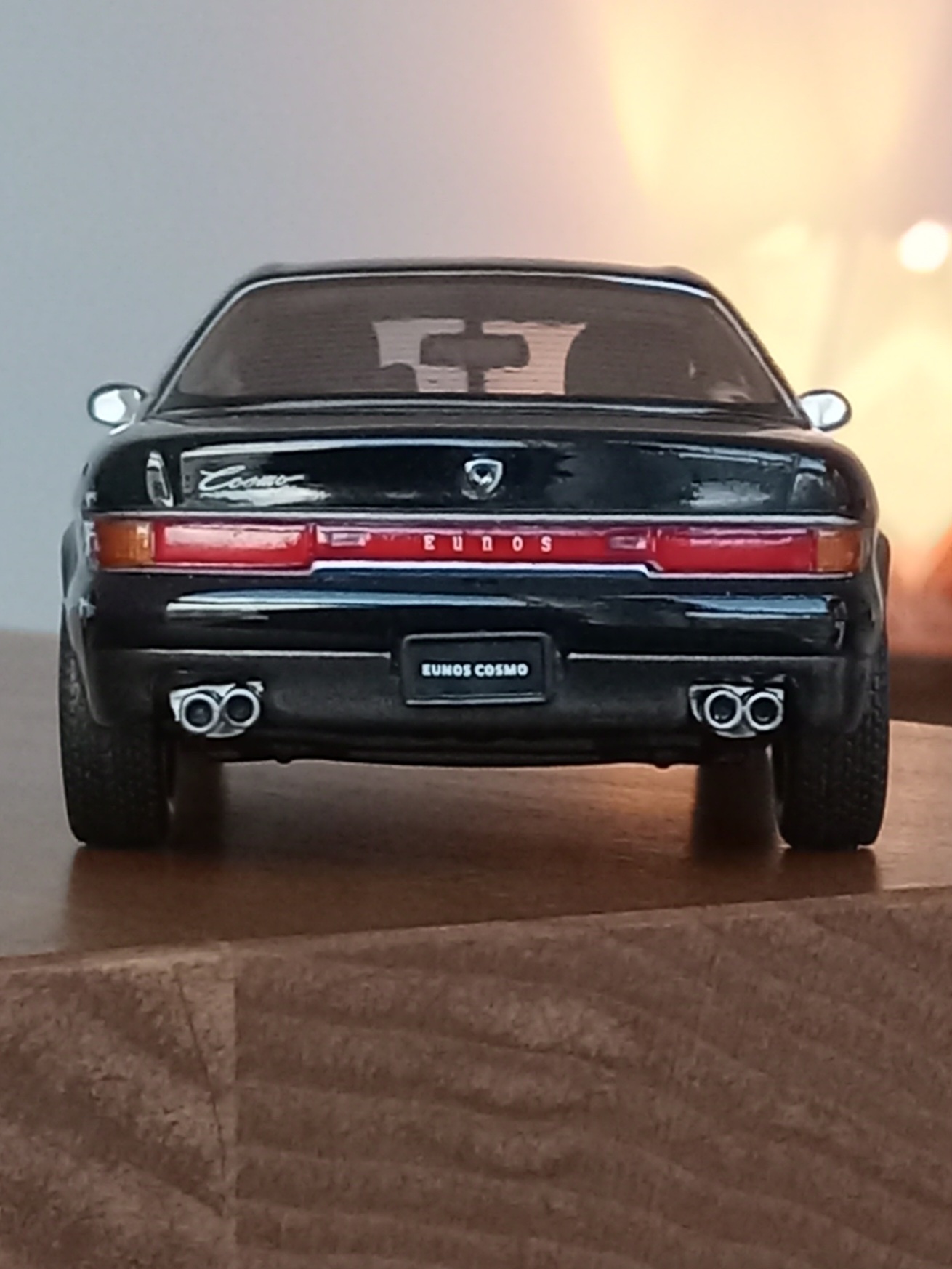
5:ボディー全体から漂う、(モール類、グレードバッジ、ロゴ類などの)立体グラフィック的な「粗と密」のコントラストが冴える高品質感
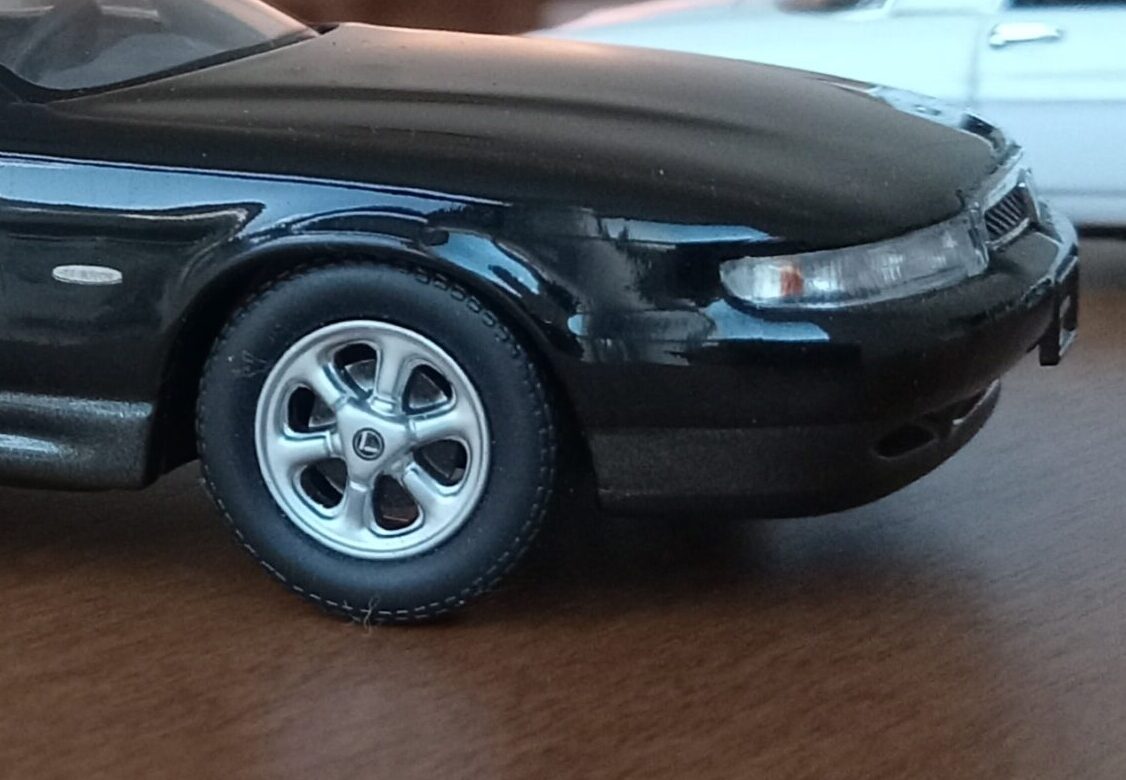
6:オーガニックデザインを力強く表現したホイールデザイン
それでは、
ひとつづつ見て行きましょう。
1:超低重心の3ローターエンジンが可能にした、日本車離れの『8頭身プロポーション』の美しさ。
(それまで、コンセプトカー以外では実現しなかった、実際以上に巨大に見える全体像は、ロータリエンジンの低い搭載位置【全高:1305㎜】とジャガーXKやXJ-S譲りのボディー寸法が決め手だと見えましたが、、、いかに?)
ーーーーーー>英国車の優雅さ+アメ車のワイルド感÷2の見事な融合
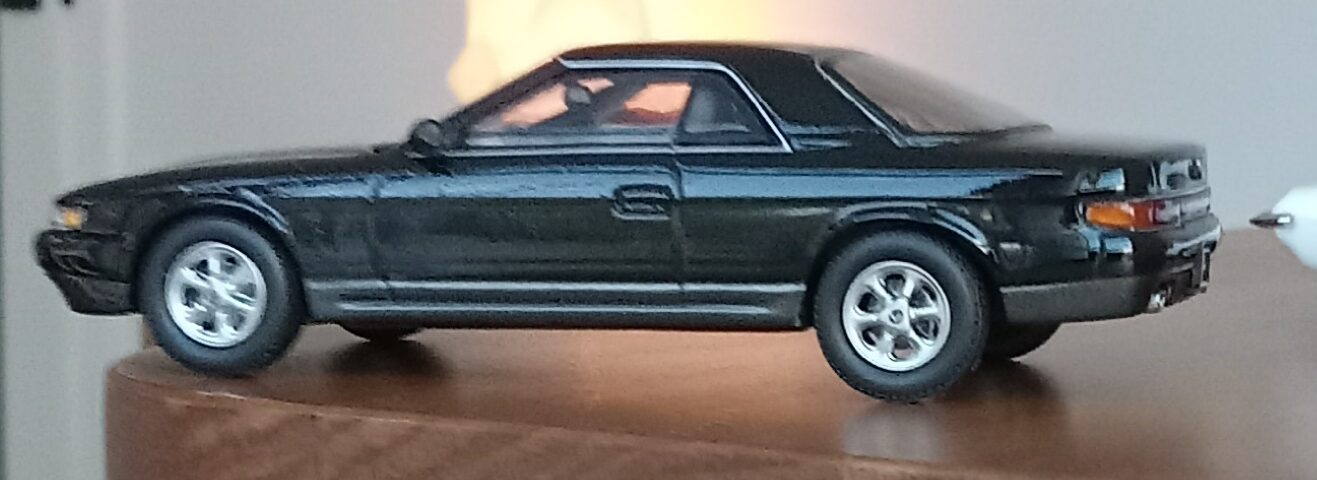
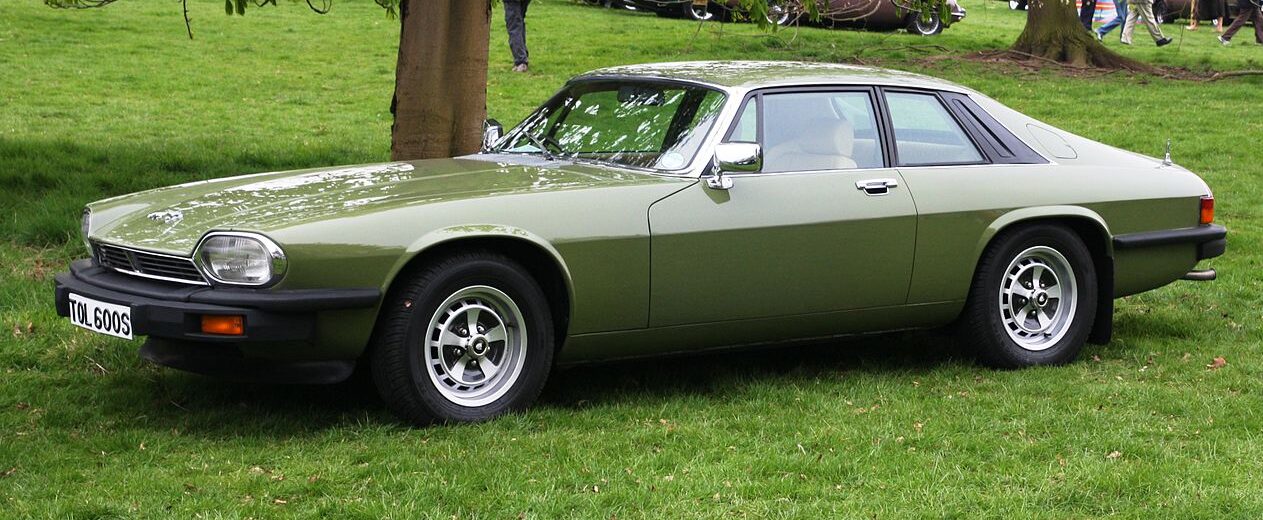
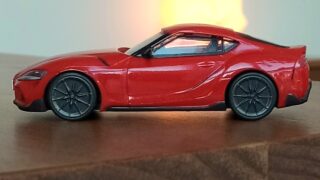
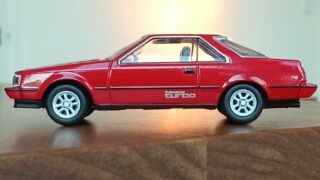
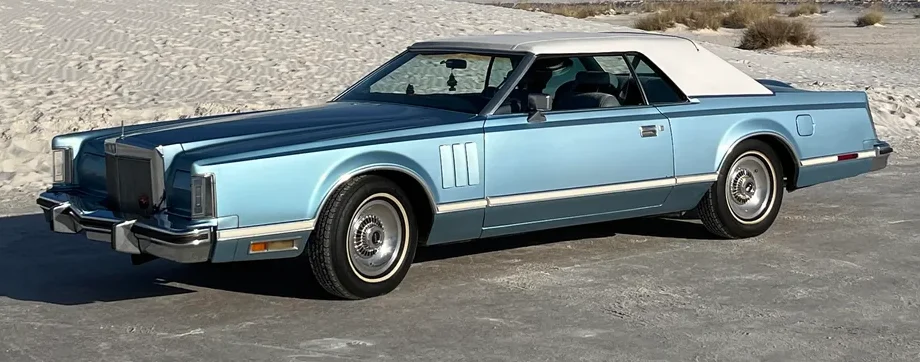 (全高:1254㎜)
(全高:1344㎜)
2:当時の最先端の、オーガニックフォーム【有機デザイン】を取り入れたボディー全体の成熟した造形美
(光の角度により刻々と変化するボディー面の『揺らぎ』を絶妙な塩梅で微調整)
――ーー>今日の『鼓動』デザインに通じる、MAZDA/DESIGN のDNA の出現
3:全体の流れを妨げない『有機感』満点なフロント、リア・フェイシアのさりげない表情
ーーーーー>単なるフラッシュサーフェース化だけでは終わらな細かいニュアンスの集積が産む『品やかな艶やかさ』
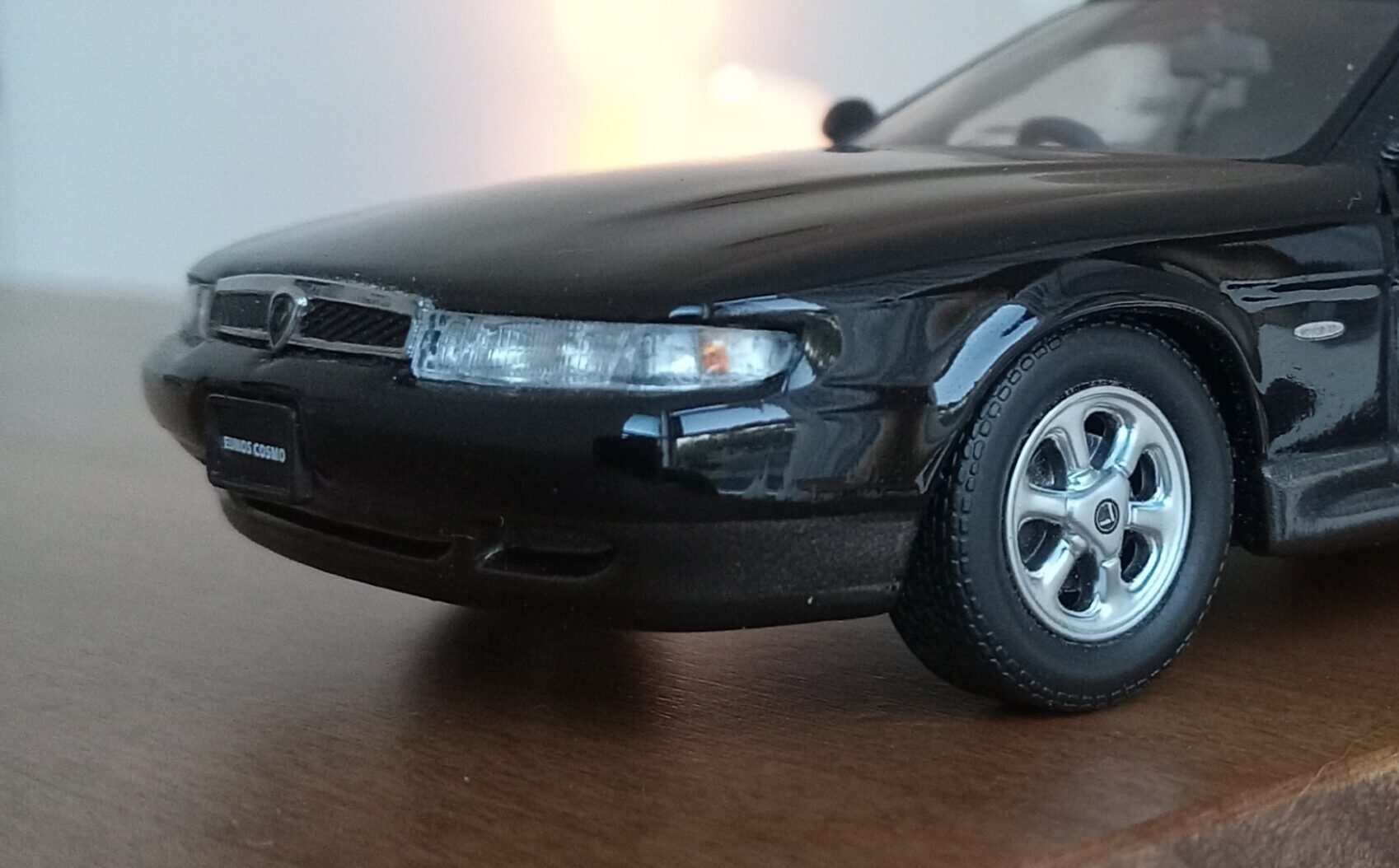
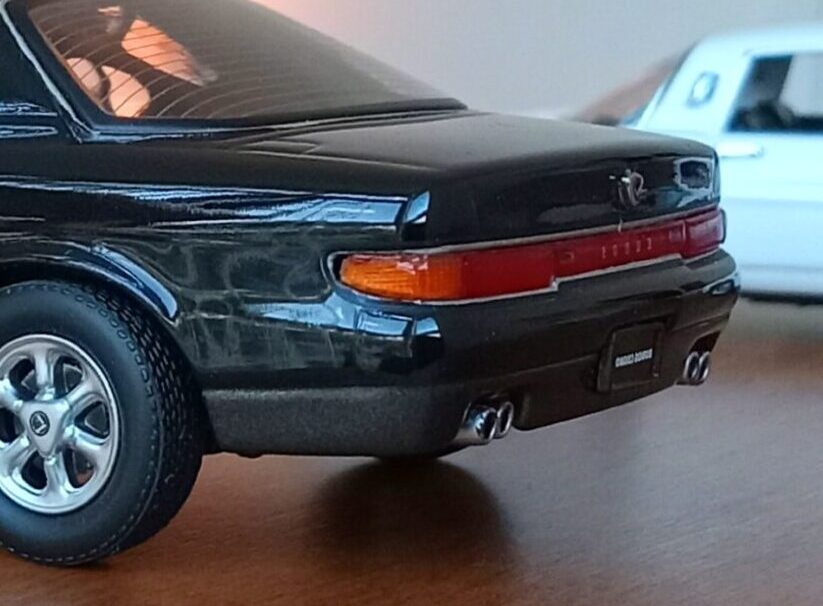
4:初代コスモ・スポーツをオマージュした、ルーフラインとラップアラウンドしたウインドウの一体感
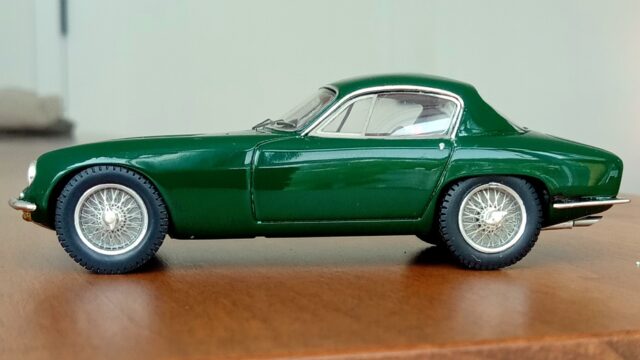
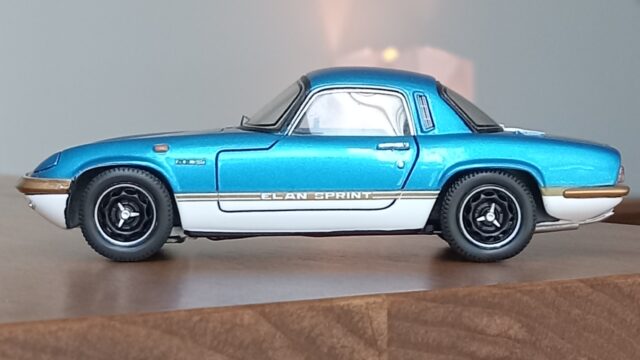
ーーーーー>ロータスエラン、C2型コルベットのハード・トップ装着型などにも通じるクラッシックなルーフラインを有機曲面で覆いました
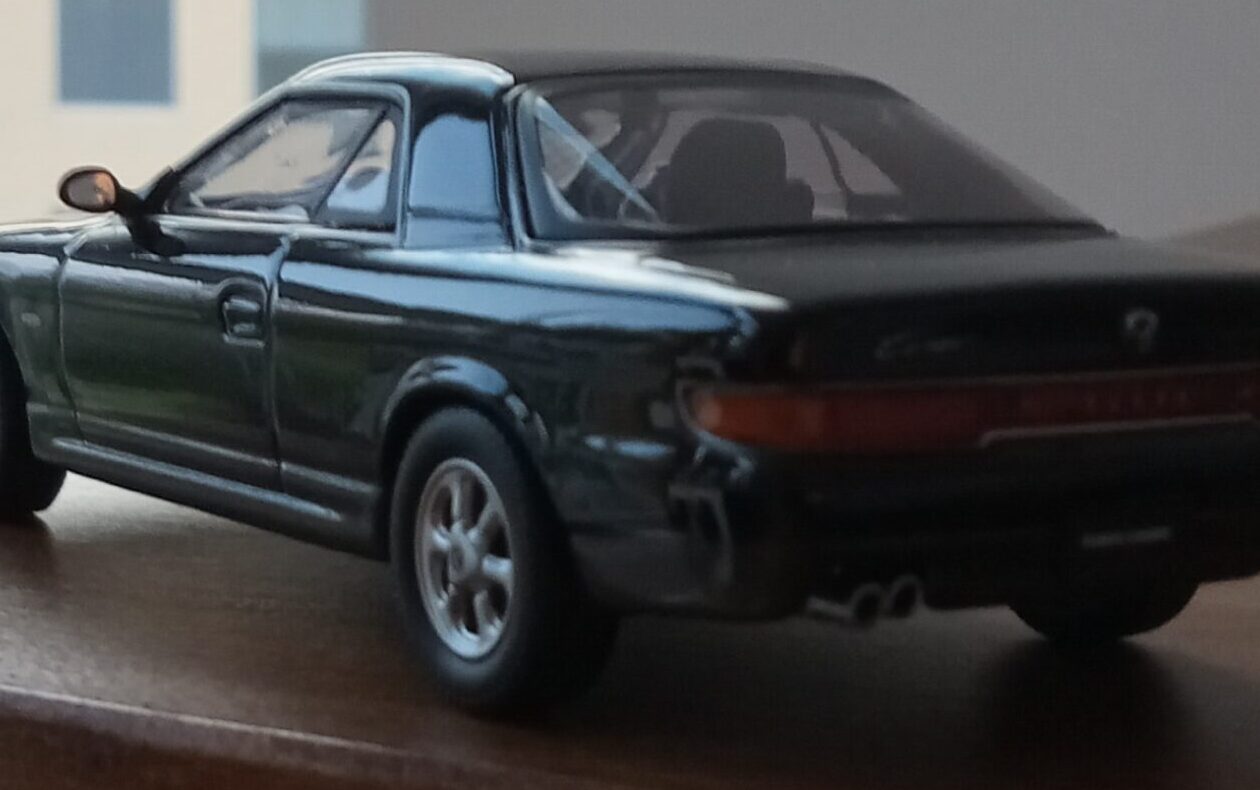
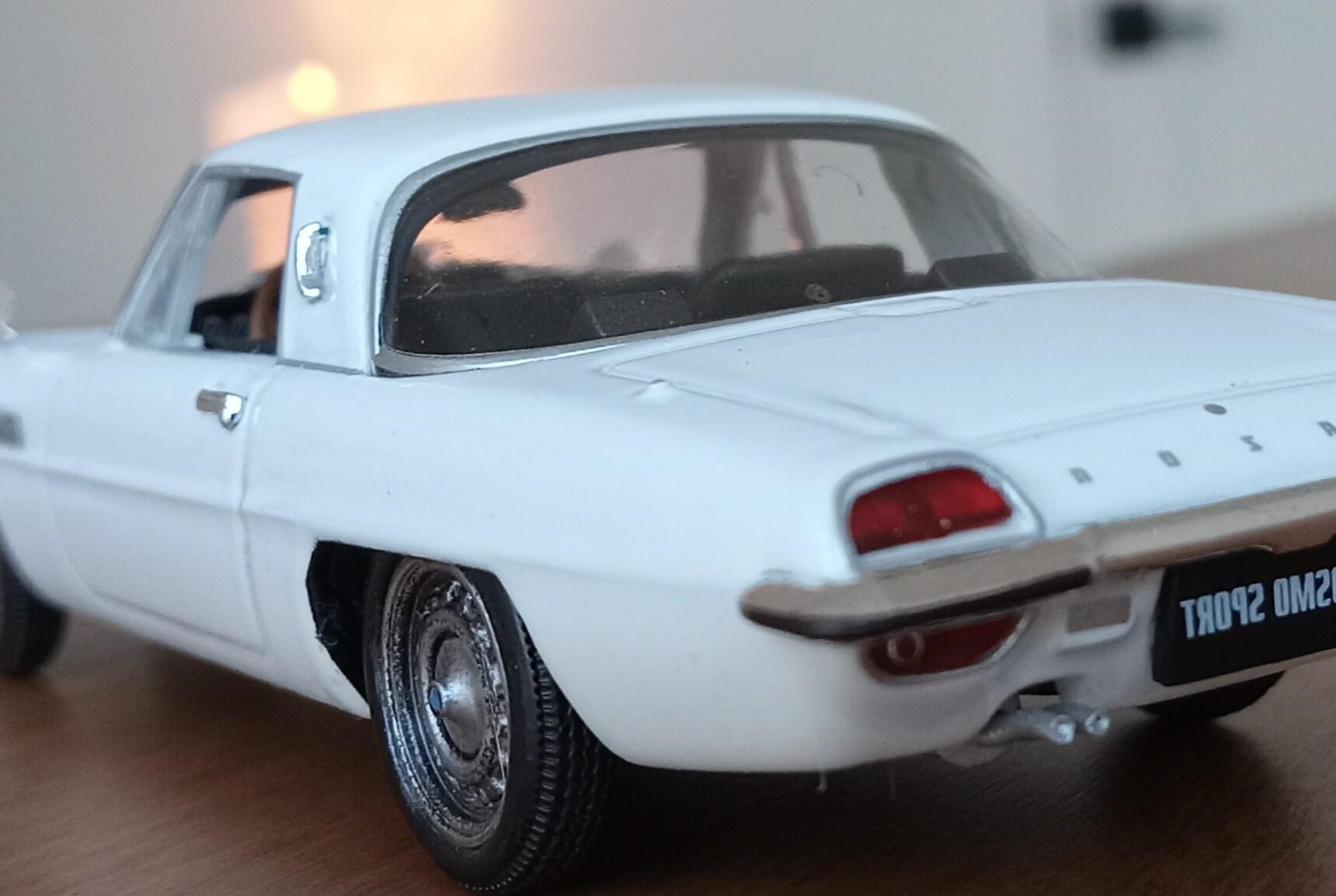
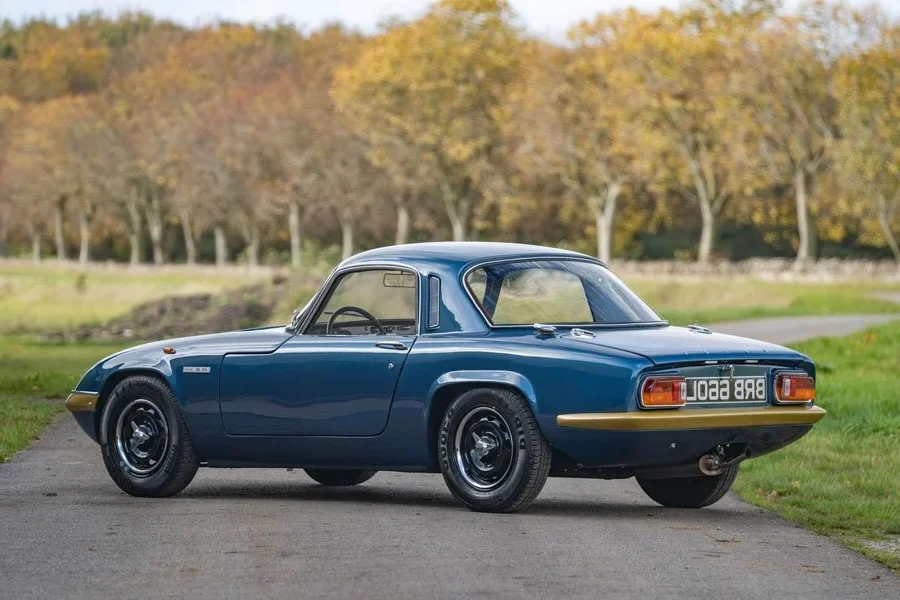
5:ボディー全体から漂う、(モール類、グレードバッジ、ロゴ類などの)立体グラフィック的な「粗と密」のコントラストが冴える高品質感
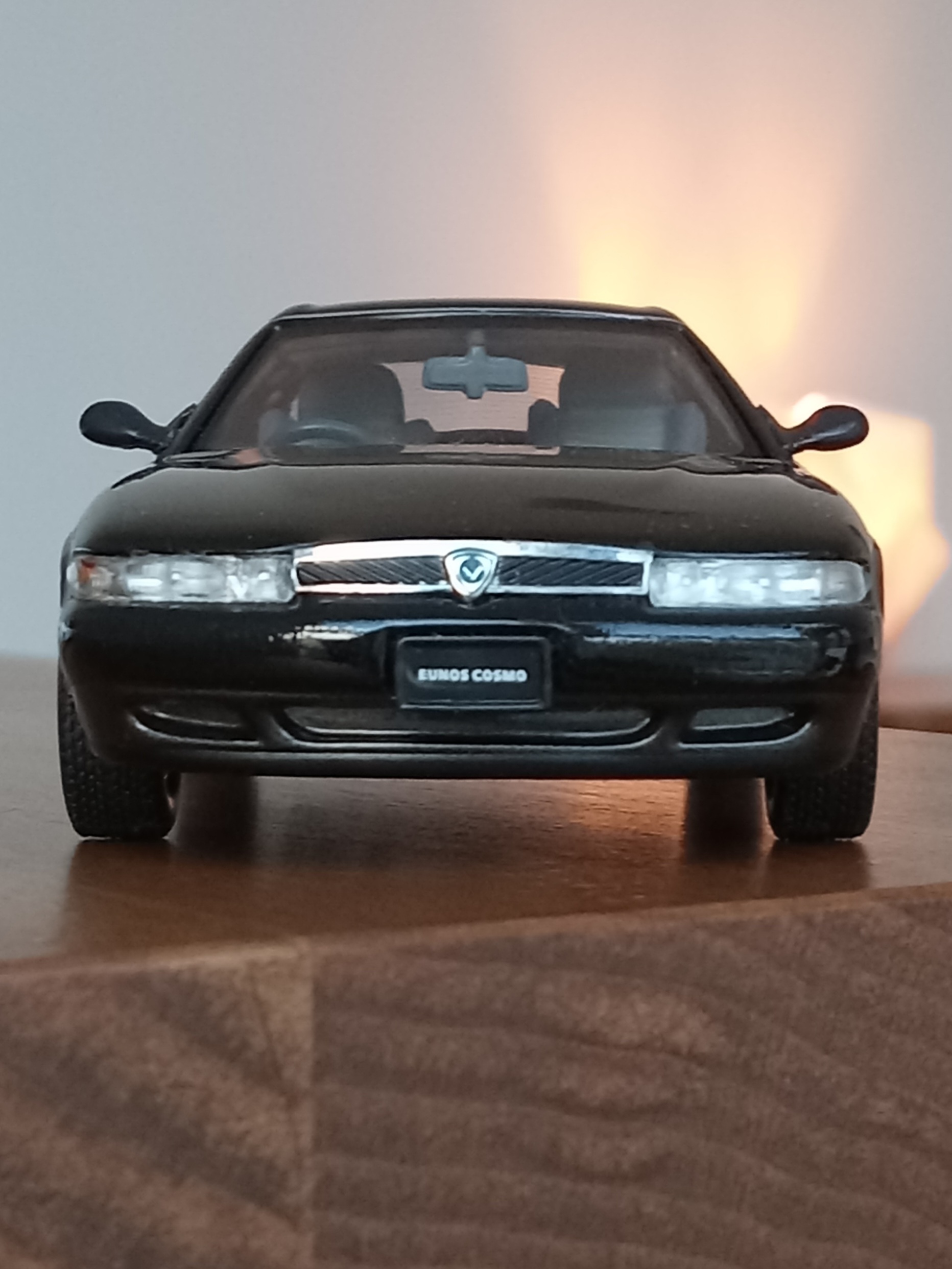
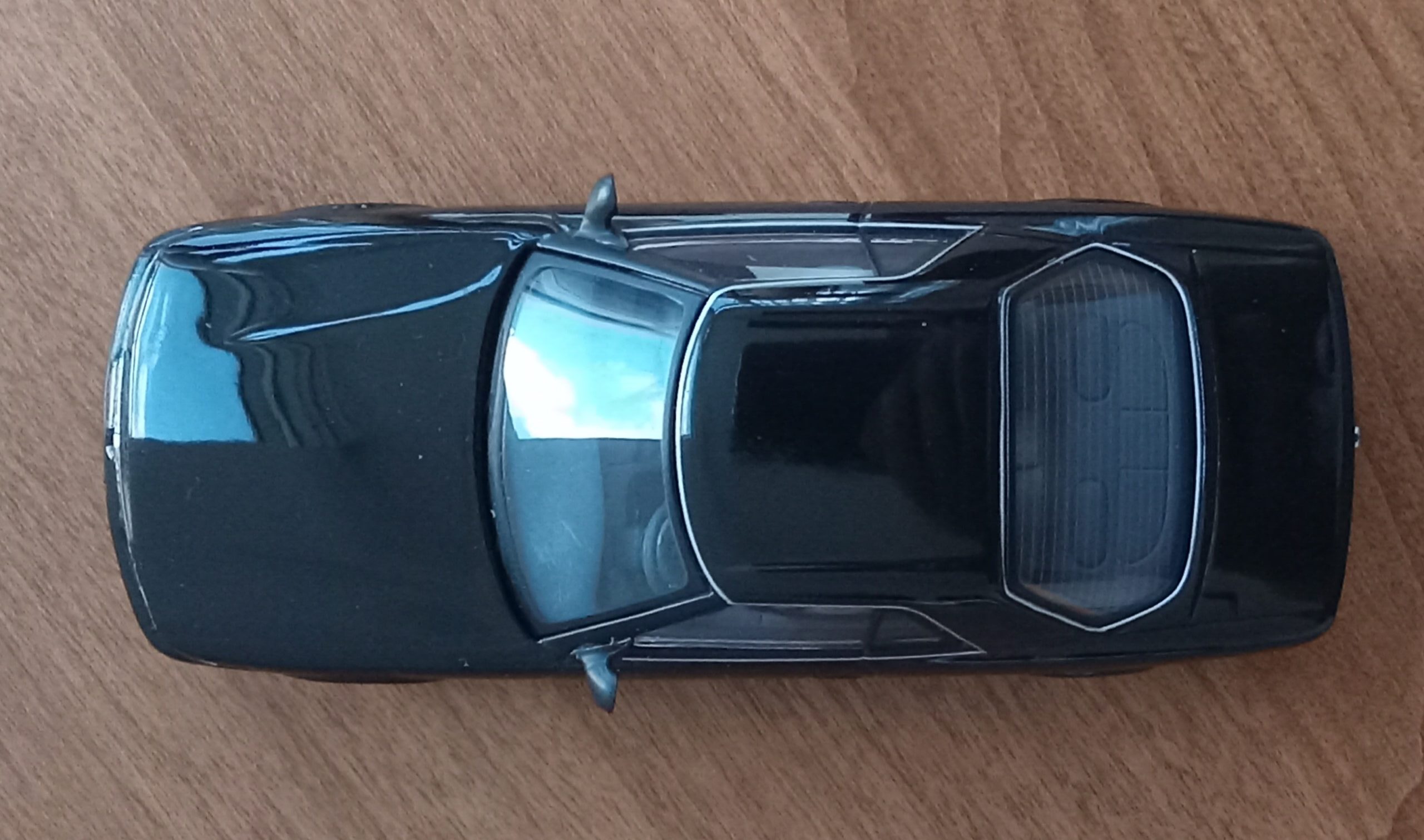
n
n
n
n
n
6:オーガニックデザインを大胆かつ華麗に表現したホイールデザイン
ーーーーー>一筆書きのような意匠が斬新です!
n
n
私の個人的な体験です。
n
n
*『私』とユーノス・コスモ:羨望と嫉妬の狭間で、、、
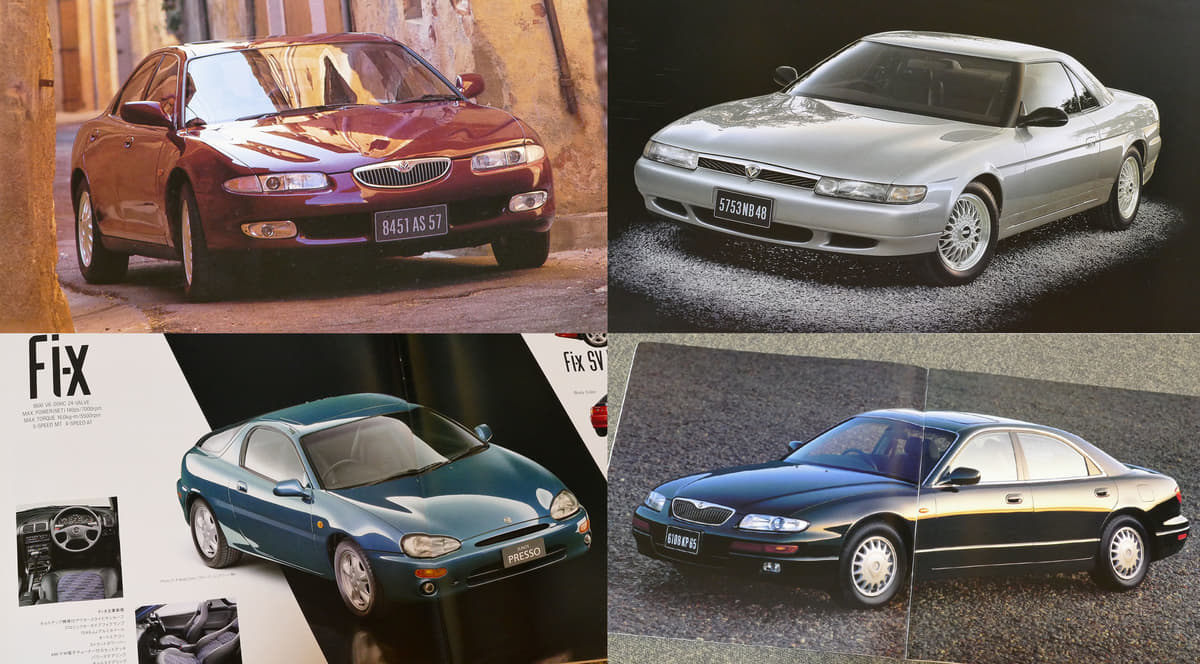
『バブル経済』がはじけた後で発売開始された、
多くのマツダ商品群の中で、
特に今回の『ユーノス・コスモ』は
『有終の美的』=最期の花火感があり、
遠くのアメリカから、
実車が見れないもどかしさ、と
*大きすぎ、
*値段が高すぎ、
*燃費が悪すぎ、な
商品内容から、
ほとんど売れそうもない、と感じていたこともあり、
私の心は、
*デザインのすばらしさと、
*売れる可能性がない、怖さ、イコール
『羨望と絶望』の狭間でうごめいていました。
私にとっては、
その当時、学生として目指していた、
『オーガニック・デザイン=有機デザイン』
を足元から否定されたように感じてしまい、
複雑な感情から、
『ユーノス・コスモ』についての思いは
脳裏から消え始めていました。
そんな中、
2020年代に入ったころから、
イギリスの自動車雑誌や、ウェブサイト、ユ―チューブ動画などで、
英国の好事家が『ユーノス・コスモ』に興味を示して、
アメリカの25年ルールが解けたことで、アメリカのコレクターが大挙して手を出したことがきっかけとなり上昇し始めた相場が、英国のマニアにも波及し、『3ローターを手に入れる最後の機会かも?』と日本から大挙して英国へ中古車輸出が始まっているという記事を目にして、私の『ユーノス・コスモ熱』に再び火がついております(笑)
そんな中、
今回日本からバイイーさんを通じて入手したのが、
『SAPI社製、の1/43ダイキャスト・ミニカー』です。
この自動車に関しての立体模型は、
このミニカー以外にあと一台があるだけです
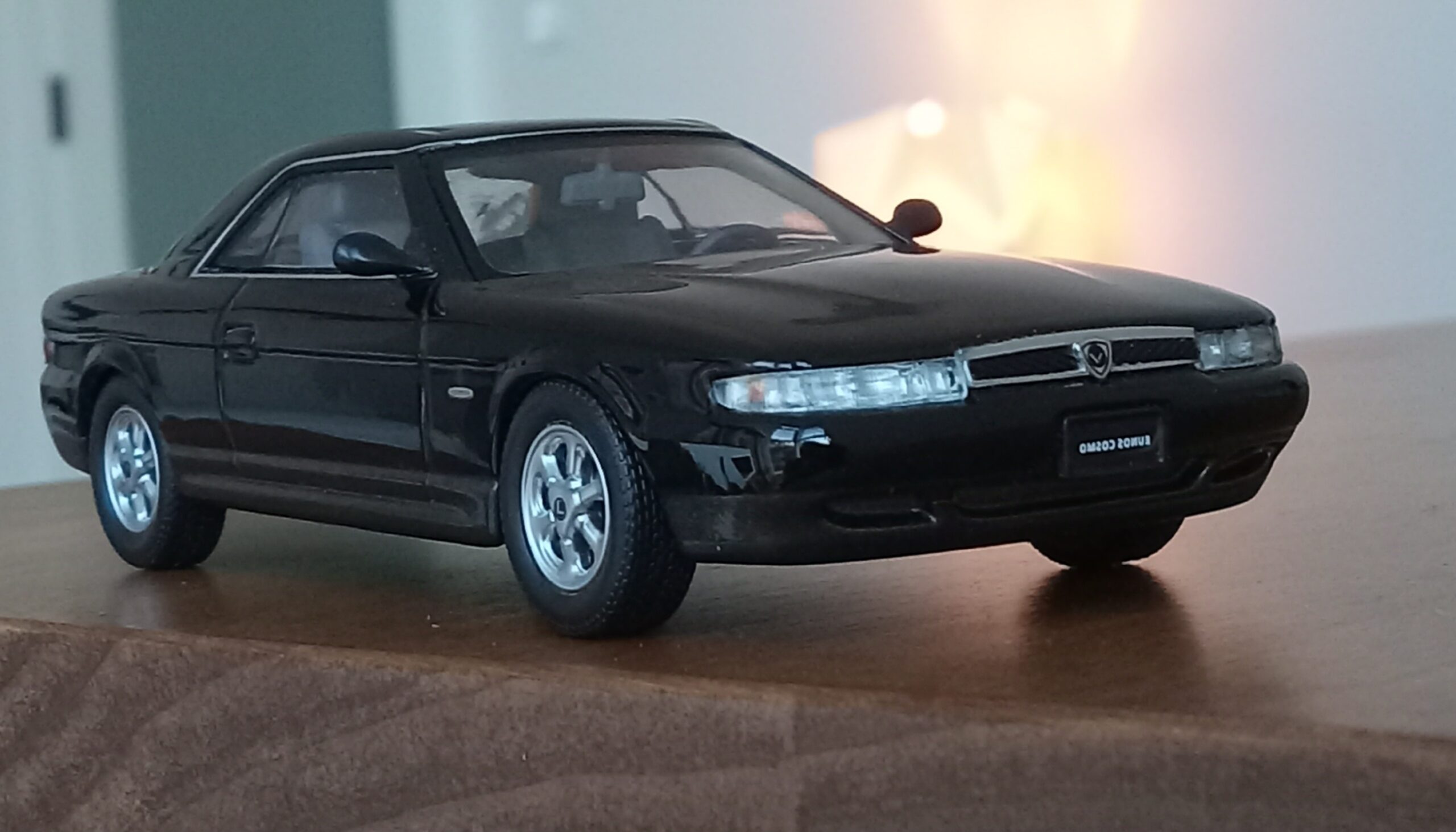
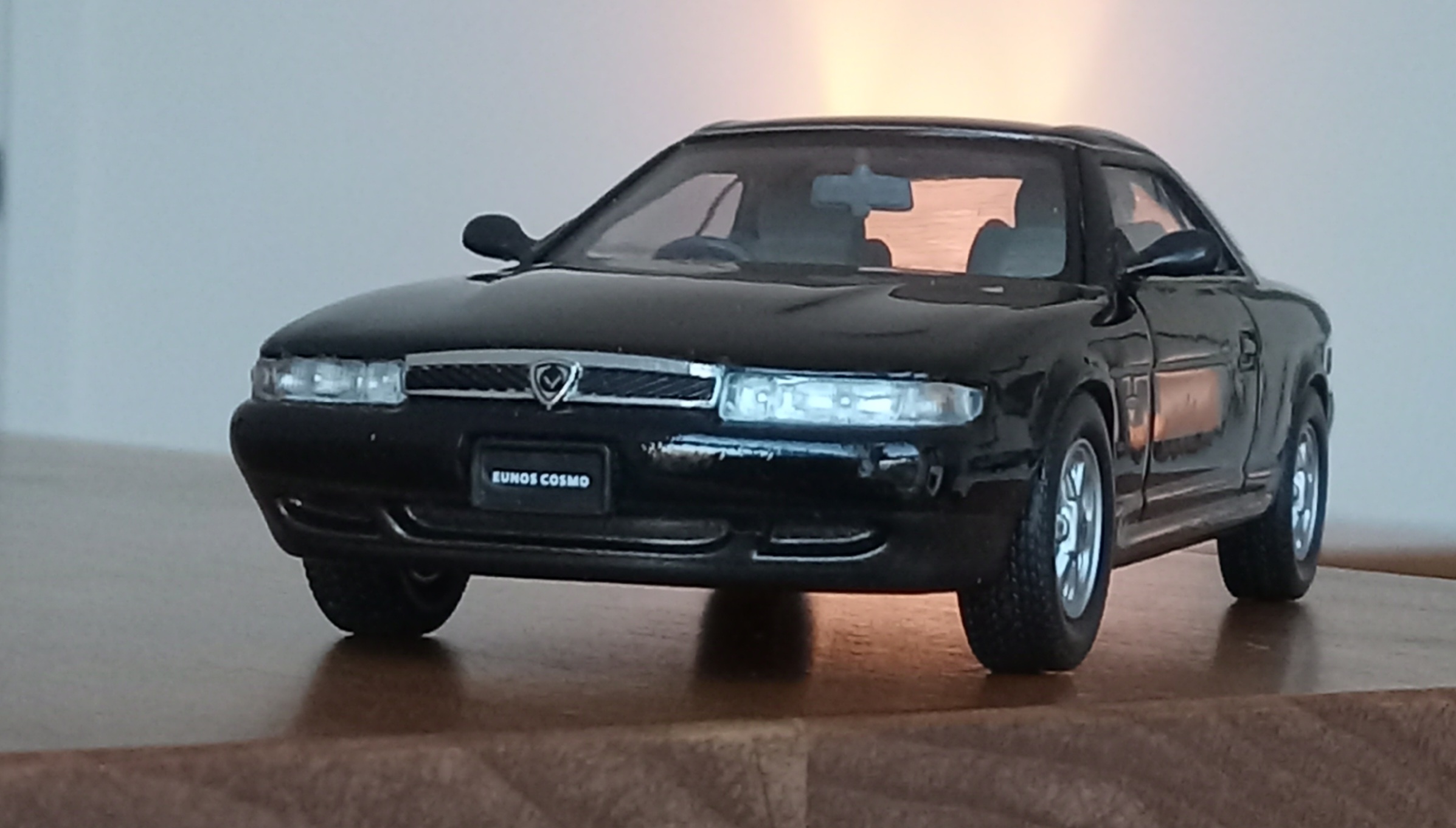
*SAPI社製、1/43 ダイキャスト完成品、マツダ ユーノス・コスモ、1992(黒とグレーの2トン)
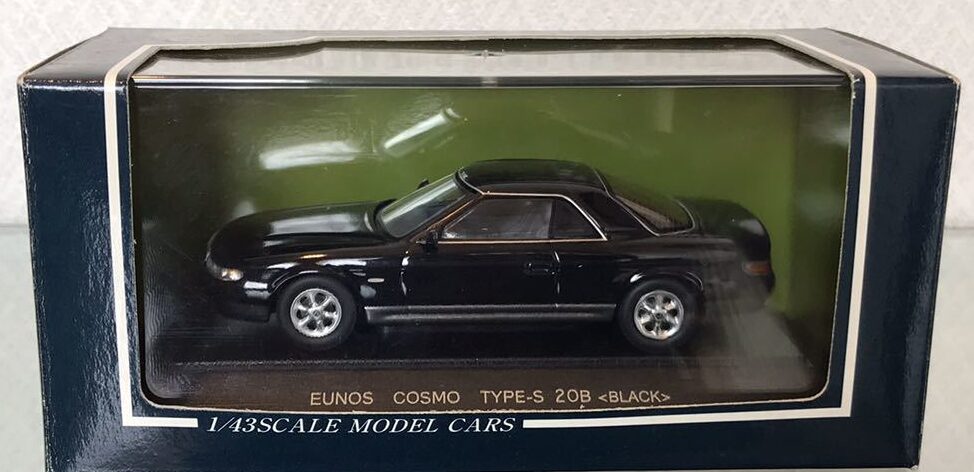
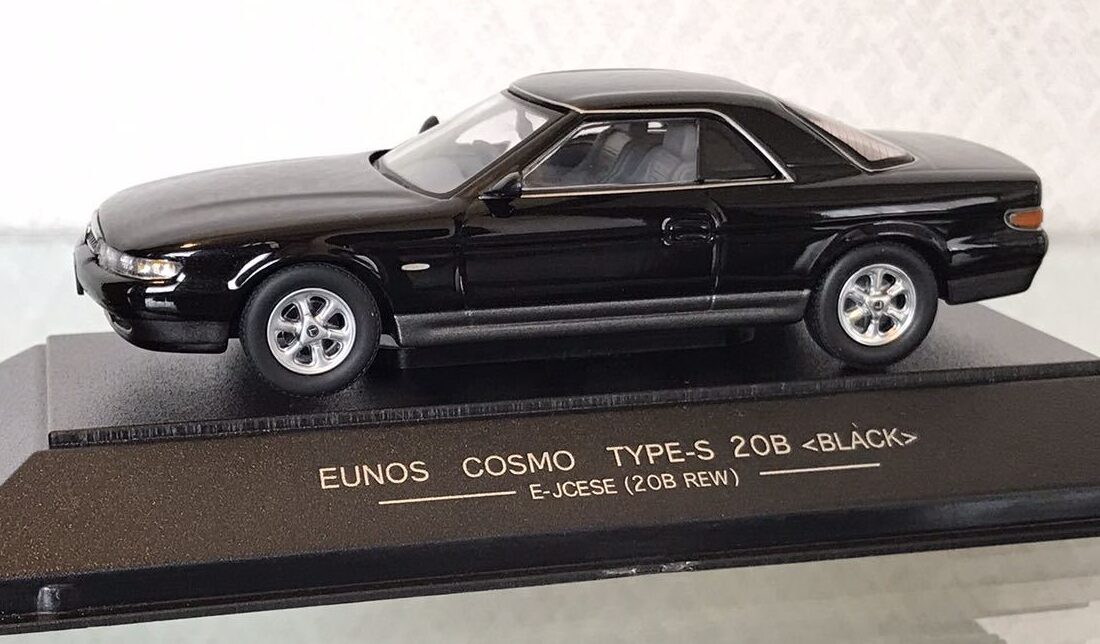
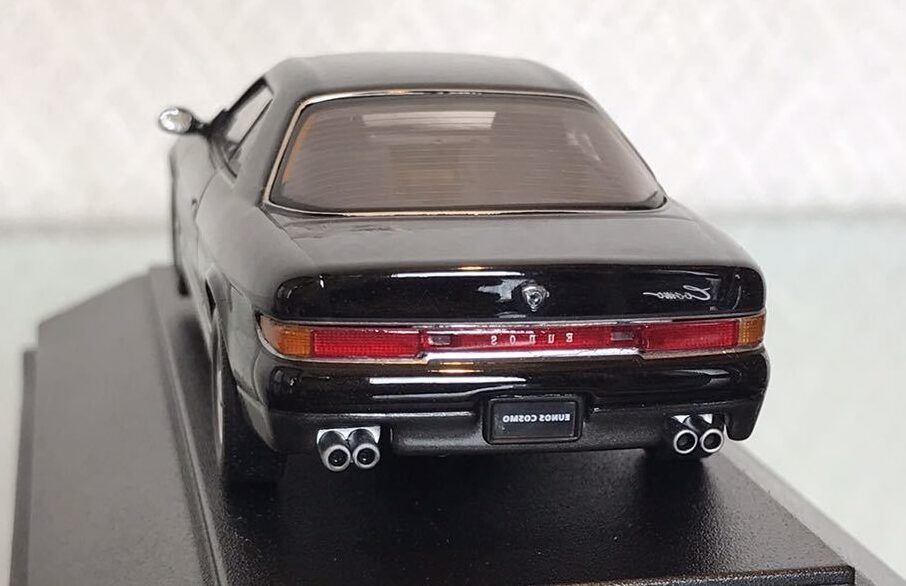 (90年台の設計されたモデルなので、キャスティングと塗装クオリティーが若干『もっさり』してますが、全体像の捉え方(デッサン)や、タイヤホイールのバランスは秀逸です。)
ーーーーー>火事で焼失後、探していましたがどれも高値でしたが、メルカリさんで適切価格で入手できました。
*アシェット社製、1/43 ダイキャスト完成品、ユーノス・コスモ(レッド)
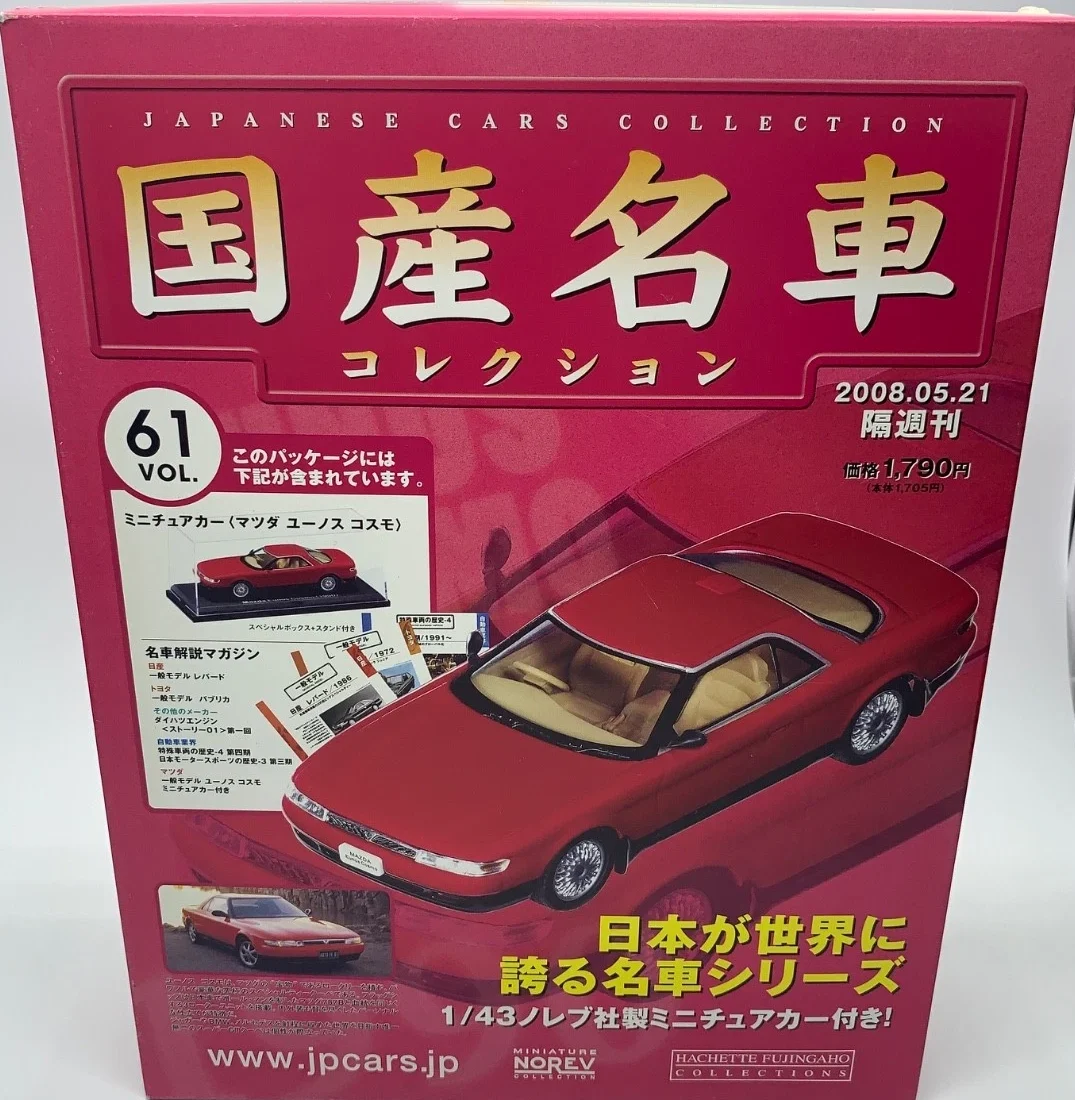
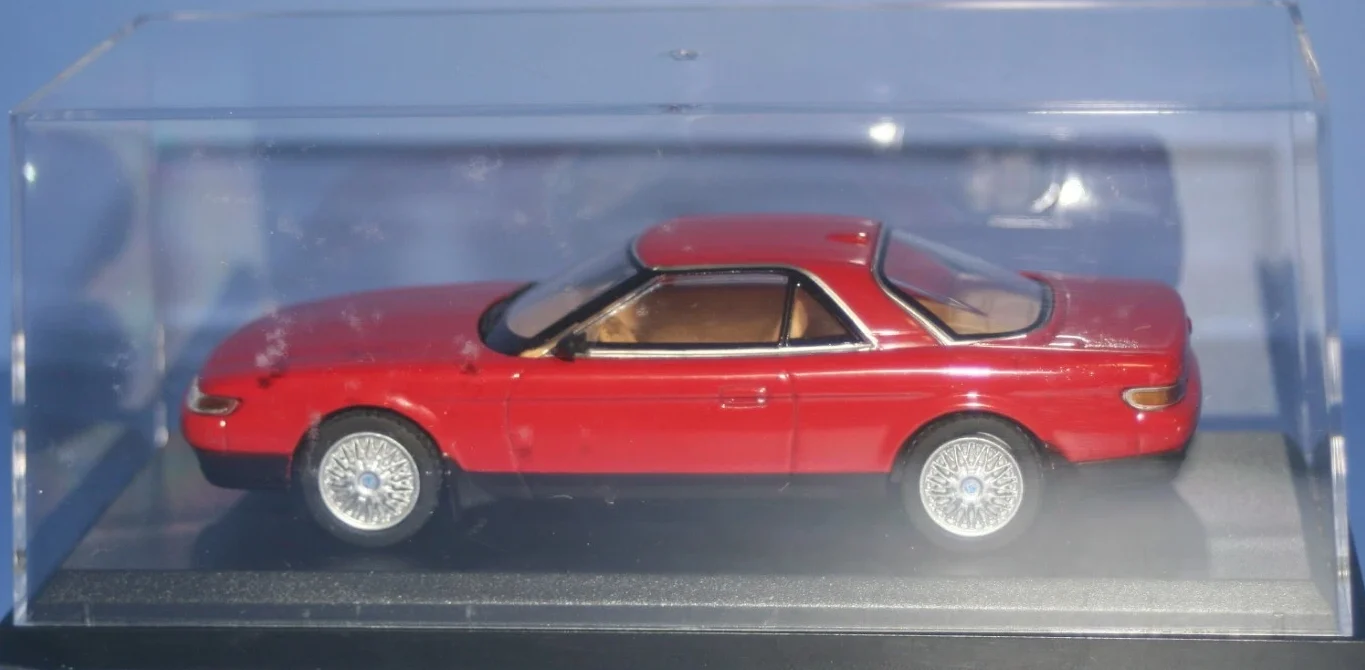
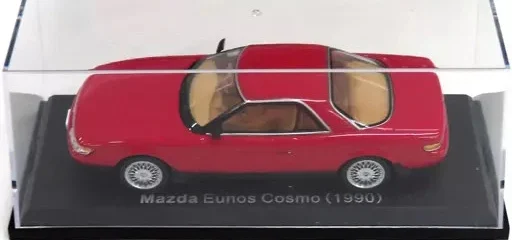 (週刊で本屋さんで買えたミニカーですが、全体像のざっとした捉え方がすべてといった感じで、SAPI社製品の劣化コピー品ぽいです。)
ーーーー>いずれ買う事になりそうですが、、、、
では続いて、
三題噺の時間です。
*三題噺:リンカーン・コンチネンタル MK5・BOW。・鼓動デザイン
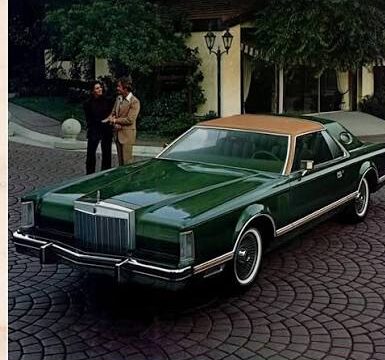
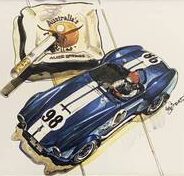
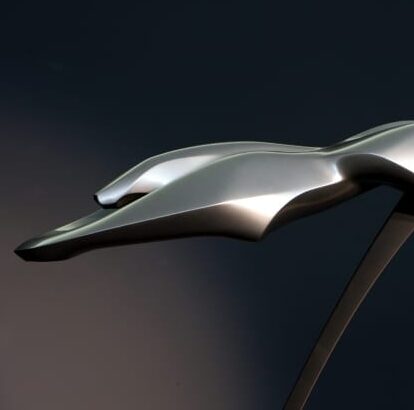
今回会場から頂きましたのは、、、
おやおや、これはまた難題ばかりですね。
楽しみです、、、
*リンカーン・コンチネンタルMK5
*BOW。(イラストレーター)
*鼓動デザイン
登場人物:
*隠居(いんきょ): 自動車の造形美とアートに造詣が深い、知的な隠居。
*八っつぁん(はっつぁん): 美しいクーペに憧れる、江戸っ子の車好き。
n
N
「隠居さん、三度目の正直だ! コスモの本当の凄さは、あのロングノーズ・ショートデッキの、伸びやかでエレガントな外観デザインだよ! それに、Bow。さんはデザイナーじゃねぇ、その美しいクルマたちを最高の一枚絵に仕上げる『自動車イラストレーター』だってことを、あっしはちゃんと思い出したぜ!」
n
「おぅ八っつぁん、その通りだ。私の不徳を許しておくれ。1990年の[ユーノス・コスモ]は、クーペの美の頂点。よし、今回は燃費や内装の雑音は一切抜きだ。その『圧倒的な美の造形』を主軸に、[リンカーン・コンチネンタル MK5]、[鼓動デザイン]、そしてイラストレーターの[Bow。]さんの三題をデザインの系譜として綺麗に定着させてみせよう」
n
「おう、今度こそ美しいサゲを頼むよ!」
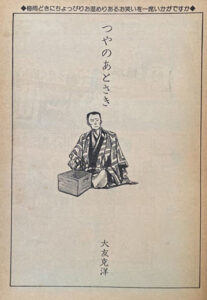
「ある男が、1990年式の[ユーノス・コスモ]の伸びやかなスタイリングに惚れ込んで乗っていた。その流麗なプロポーションは街行く人の目を奪う美しさだが、男はさらに究極の美を追求したくなった。そこで、自動車の美に詳しい仲間に相談したんだ。
『おい、このコスモの美しさを、さらに高い次元のデザインに昇華させたいんだ。どうすればいい?』
n
すると仲間が言った。
『それなら、70年代のアメ車クーペの頂点、エッジの効いた直線美を持つ[リンカーン・コンチネンタル MK5]の気品あるエッセンスを取り入れるんだ。そこに、マツダが未来へ紡ぐ生命感あふれる[鼓動デザイン]のダイナミックな曲線を融合させる。直線と曲線の奇跡の融合さ!』」
「へぇ! 直線のリンカーンMK5と、曲線の鼓動デザインを、1990年のコスモの上で融合させるのかい。そいつは歴史に残る美しいクルマの絵になるねぇ。で、誰がそれを形にするんだい?」
n
「男もそう言ったのさ。
『そんな歴史的な美の融合、凡百の絵描きじゃキャンバスに表現しきれないよ』
すると仲間は胸を張って、
『何を言ってるんだ。自動車の持つ空気感や光の反射を描かせたら右に出るものはいない、あの天才イラストレーターの[Bow。]さんに頼むんだよ。Bow。さんの筆にかかれば、その美しいデザインが完璧な“アート”として定着するさ!』」
n
N
「いや、男は静かにキャンバスを片付けて、そのまま純正のコスモを眺め続けることにしたのさ。仲間が『なんだ、せっかくBow。さんに最高のエレガンスを描いてもらうチャンスだったのに、なぜやめたんだ?』と聞くと、男はウットリとした顔でこう答えたんだ」
n
N
N
n
「いや、男は静かにキャンバスを片付けて、そのまま純正のコスモを眺め続けることにしたのさ。仲間が『なぜ、Bow。さんに絵を描いてもらうのをやめたんだ?』と聞くと、
n「ああ、やめたよ。リンカーンだの鼓動デザインだの、あれこれ外観をいじくろうと思ったが……」
N
「……って、おい!
美しすぎて車体を『擦る(コスモ)』のが嫌だから、カスタムを『追う(Bow。)』のをやめたってかい!?
さんざん高級なデザインの話をしておいて、最後はただの運転下手の言い訳かよ!
n
でも待てよ……『車体を擦る(コスモ)』と『夢を追う(Bow。)』をかけた高度な謎解き(考え落ち)でもあるってわけか。いやぁ、バカバカしいねぇ!」
n
「お後がよろしいようで」
n
n
n
n
N
B
N
n
m
m
m
m
m
*バブル期の『絶頂マツダデザイン』たち、、、
N
N
N
多チャンネル展開の野心と好景気を背景に、世界に誇るエモーショナルで美しい名車を多数生み出しました。数値やスペック以上に「乗る人の感性」を刺激する、デザインと独自技術が融合した黄金期です。
n
『折り紙キャット』的には、以前の記事で以下のように, ミツビシ『アイ』の記事の中の、最後の「オーガニックデザイン車」のコーナーで、既に語っておりまして、
n
#バブル期のマツダデザインの系譜:
*ユーノス・500、1992(メタリック・マルーン)
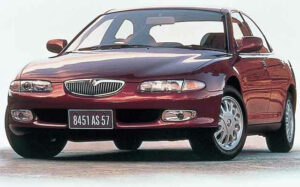 (ジウジアーロも大絶賛。デザイナー:荒川健氏のマツダ移籍直後の傑作デザイン。5ナンバー枠の中で、しっかりとした5人乗りセダンと、美しい有機デザインを両立、2020年代の街中でのなじみ方は、荒川さんの言わんとしたことを体現(止め)笑)
* ユーノス・コスモ、1990(黒とグレーのツートン)
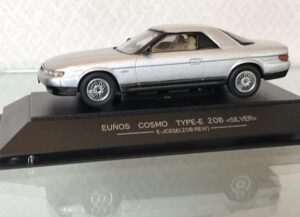 (走る不良債権、5年間の生産台数8842台の失敗作と言われがちですが、いまだにイギリスでは大人気、バブルが残した日本版キャデラック・エルドラド的な一台。ソアラと70年代アメ車を足して2で割ったような伸びやかで美しいプロポーションは涙物、、、、山口百恵に対しての木之内みどり的立ち位置、、、、笑)
* ユーノス・プレッソ、1991(メタリック・グリーン)
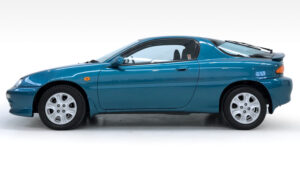 (マツダ、デザイナーの荒川健氏からの、ベルトーネ時代のジウジアーロの秀作:アルファロメオ・カングーロに対するオマージュ? ホンダ・CR-Xのお兄さん的プロ―ポーションと有機的ボディー表面のバランスが秀逸。リアウィンドウ・ガラスの曲率も特筆もの。)
*アンフィニ・RX-7、1991(外装:シルバー、内装:レッド)
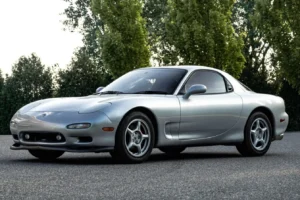
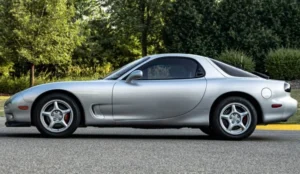
(開発中、ポルシェ924Sを真似たと云われるも、蓋を開けれければ、それを軽く超える性能と、歴史的レベルに秀麗な外装デザイン、優雅かつ力強い外観は実際以上に巨大(4m70cm 位)に見えます。12年間で、53,000台生産)
n
N
N
m
m
m
m
m
m
m
m
その時に書き漏らした『珍車』について、
付け加えておきたいです。
N
N
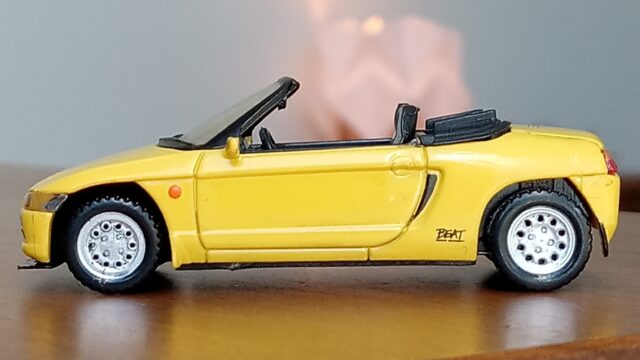
*マツダ オートザム・AZ-1, 1992(レッド)
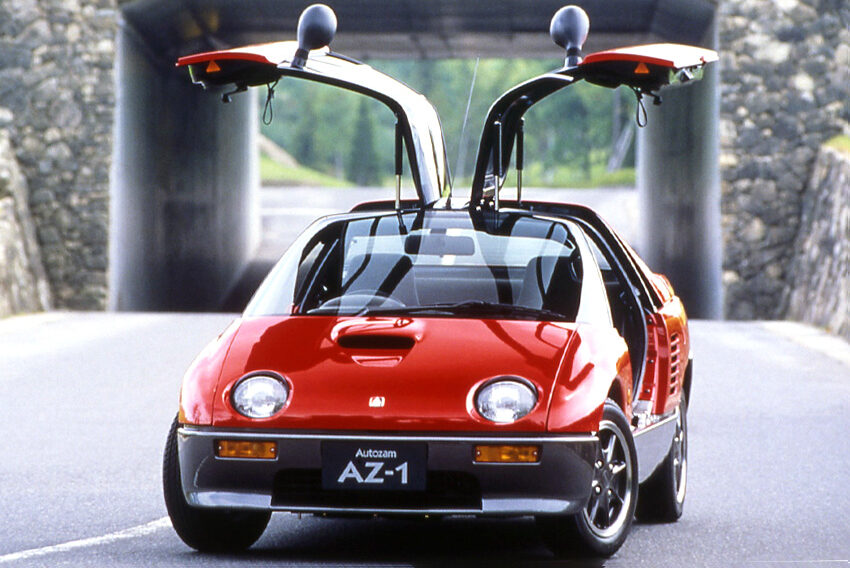
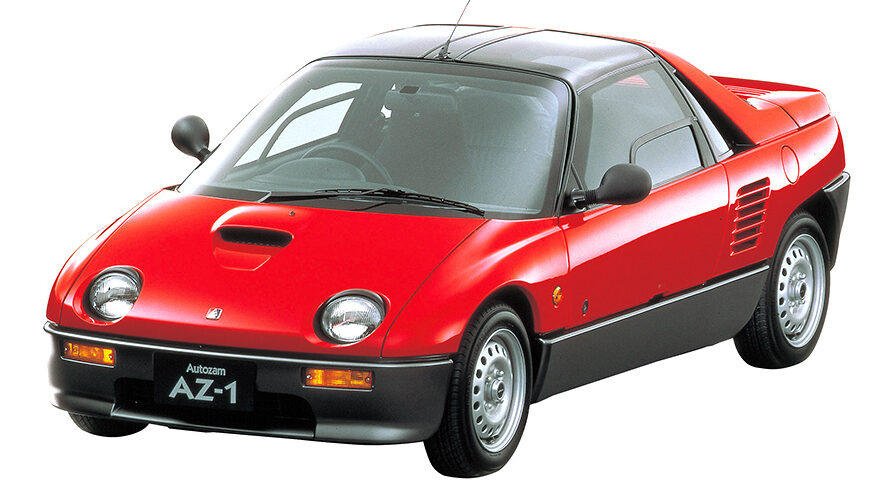 (ホンダ・ビート、 スズキ・カプチーノと並び称される、バブルが産んだ軽規格のスポーツカートリオの一台として、ミッドシップ、ガルウイングが特徴の、凄まじい『ミニカウンタック的』なコンセプト。実現したのがまさに奇跡!)
m
m
m
m
m
m
m
m
m
m
m
m
m
N
N
マツダの美しいクーペ2台を通して、
マツダデザインについて語ってきましたが、
N
値するものだと感じます。
N
N
その他の自動車デザイナーに確実に『波動』を起こし、各社の多くの最新デザインのボディーサイドには、『鼓動デザインの、波紋マーク』がクッキリと刻まれています!
m
m
m
m
m
m
m
m
一抹の不安は、本家のマツダ自身のデザインに自信の喪失が感じられる点です。
影響を与えてそれが一般化したことで、次の手を探るうちに、なぜか力が抜けて、デザインが弱くなっているように感じます。
n
n
n
n
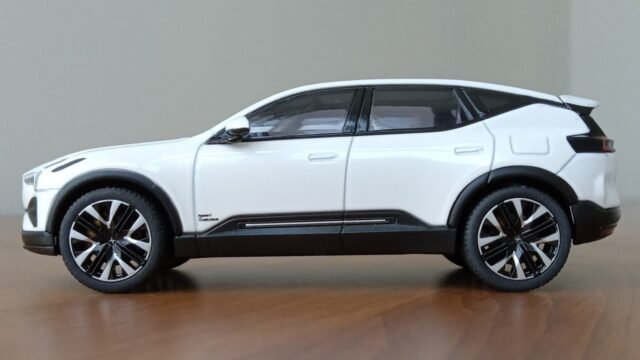
6気筒エンジンを搭載した大型SUVの
m
m
m
m
m
m
m
m
m
m
m
m
m
m
m
m
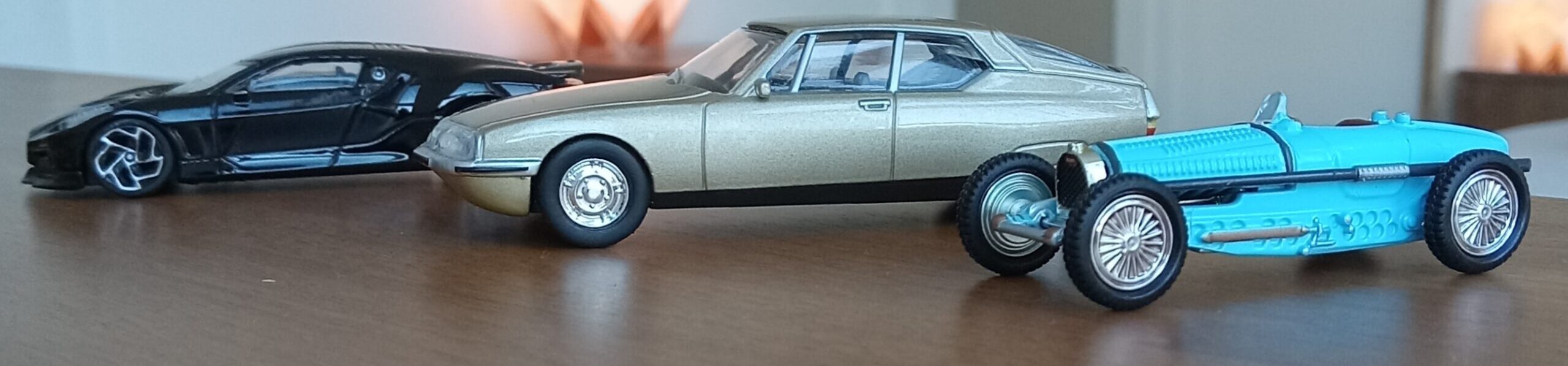
次回からの3台は、
フランス車を特集します、
m
m
m
m
本ブログと記事内容につきまして:
ブログ記事を書くにあたり私の目標は、立体造形(料理も含めて)とのかかわりを通じて、私個人の特徴的(ネジ曲がり方も含めて)な評価軸を解明することで、「美しさ・美味しさ」に対する好奇心や、探求心を、どのように満足・充足させてきたのかを明記しておくことです。
従いまして、記事の中に出てくる、数字や年号、微細なデータなどには細心の注意を払っておりますが、時に大きな間違いや勘違いを犯していることも考えられます。特に自動車記事における主要諸元や、年号などには紛らわしいものも多く、あくまで参考程度に考えていただければ幸いです。
私としては、記事の中で個人的な外観デザインや味覚の評価、そこから広がる後半部分につなげるための、『流れ』を作るための客観的材料として年号やデータを挿入している感じです。あくまで重視したいのは、私個人の頭の中で起こる、記憶の錯そう的混沌から生まれる新たな『見方』や『情報の予想外のつながり』です。その勢いを作り出す、『流れ』の一環として、諸データが副次的に必要となるわけです。
話がそれますが、大好きな落語の世界に「三題噺」という、その場て会場から募った3つのお題を使って1つのお話に仕立てるといったお遊びがございますが、私はそれに近いことを立体造形の特徴や(料理のお味)をお題にして行っている感じがします。その中で頭の中に去来する数々の着想が、全く予想外で楽しく、次回からの記事内容を大幅に変えたり、新展開につながっています。
当ブロブの仕組み:
『好奇心の点と線 x 気まぐれ脳内回路=予想外の新展開』
こんな自分勝手なブログですが、今後ともよろしくお願いいたします。
追記:上記の『流れ』を作る為に必要な写真はできる限り、個人所有のミニカー・自前の料理などを使い撮影しておりますが、その他の必要最小限の図版や写真を他のブログ主様の記事や諸会社ホームページなどからお借りしております。(記事内容に合うよう加工させていただき、使用時は最小の解像度で載せております。)問題がある場合、ご連絡いただければ直ちに降ろさせていただきます。
追記2:当ブログ記事に掲載のミニカー写真等(個人撮影)は許可なしで、どのようにお使いいただいても結構です。私個人の創造性はこの世のもの、と言う認識の上で記事を製作しています。
!!!!!!!!!!!!!!!!!!!!!!!!!!!!!!!!!! Translated in English !!!!!!!!!!!!!!!!!!!!!!!!!!!!!!!!!!
The History of 2-Door Coupes: Part 16 [Japanese Cars] Mazda [4th Generation: JC3S] Eunos Cosmo, 1990 “A Three-Rotor Monster in a Suit⁈: Coupe Dynamism” Mazda Eunos Cosmo, 1990 “Rotary Coupe Dynamism”
(Manufactured by SAPI, 1/43 scale Mazda Amphi Cosmo Type S (black and gray two-tone). Although this model is 20 years old, its reproduction of the car’s flowing lines is superb. I prepared it for the photo shoot with only a modification to widen the track.)
#Favorite Car Designs—The Lineage of 2-Door Coupes:
For this 36th installment, titled “The Lineage of 2-Door Coupes, Part 16,” I’d like to discuss luxury 2-door (GT) coupes and roadsters, which strongly reflect the national characteristics and unique exterior design styles of various countries. [Note: Includes convertibles]
I’ll proceed as follows.
For this 15th installment, we’ll focus on [Japanese Cars: Mazda Edition]
We’ll be discussing the
4th-generation Eunos Cosmo (black and gray two-tone),
released in 1990.
[The Lineage of 2-Door Coupes: Table of Contents]
[American Cars Edition]
Part 1: Cadillac El Mirage, 2013 (Metallic Red)
Episode 2: Lincoln Continental MK4, 1972 (Black)
Episode 3: Mercury Cougar, 1967 (LT Metallic Green)
[German Cars]
Episode 4: MB 500K Special Roadster, 1936 (Black)
Episode 5: Mercedes-Benz 300SL Roadster, 1957 (Silver)
Episode 6: Mercedes-Benz SLS AMR Gullwing, 2010 (Black)
[British Cars]
Episode 7: McLaren F1, 1992 (Metallic Orange)
Episode 8: Jaguar XKSS Roadster, 1957 (Royal Blue)
Episode 9: Jaguar XKR Coupe, 1996 (Dark Metallic Green)
[Japanese Cars / Nissan Edition]
Episode 10: Nissan First-Generation Silvia, 1965 (Champagne Gold)
Episode 11: Nissan Fifth-Generation Silvia, 1988 (LT Metallic Green)
[Italian Cars Edition]
Episode 12: Ferrari 250TR Pontoon Fender, 1958 (Red)
Episode 13: Ferrari 250GTO, 1962 (Italian Red)
Episode 14: Lamborghini Concept S, 2005 (Pearl White)
[Japanese Cars: Mazda Edition]
Episode 15: Mazda Cosmo Sport, 1968 (Racing White)
Episode 16: Mazda Eunos Cosmo, Type-S (Two-Tone: Black & Gray)
[French Cars]
Episode 17: Bugatti Type 59, 1935 (French Blue)
Episode 18: Citroën SM, 1970 (Champagne Gold)
Episode 19: Bugatti La Voiture Noire, 2019 (Black)
[Japanese Cars / Toyota Edition]
Episode 20: Toyota/Yamaha 2000GT, 1967 (Ivory White)
Episode 21: Toyota 2nd-generation Soarer, 1986 (Two-Tone: Black & Gray)
Episode 22: Lexus LC [GWZ100], 2017 (Metallic Red)
[American Cars Part 2]
Episode 23: Dodge Challenger & Plymouth Barracuda, 1971
Episode 24: Dodge Viper SRT-10 ACR, 2008 (Black)
Episode 25: Ford Shelby GR-1 Concept, 2004 (Chrome)
[Japanese Cars: Mitsubishi Edition]
Episode 26: Mitsubishi Galant λ, 1976 (Brown Metallic)
Episode 27: Mitsubishi Eclipse [North American Spec], 2006 (Orange Metallic)
[German Cars Part 2]
Episode 28: BMW M635CSi, 1984 (Dark Metallic Blue)
Episode 29: Mercedes-Benz 560SEC AMG 6.0 Widebody, 1989 (Black)
Episode 30: BMW M2 with Genuine Performance Parts, 2025 (Neon Lime)
[Japanese Cars: Subaru Edition]
Episode 31: Subaru Crosstrek XV, 2012 (Lime Green Metallic)
The Corvette Lineage: (Special Edition)
Episode 1: 1967 Stingray [C2] Convertible (Hardtop, Metallic Blue)
Episode 2: 1972 Corvette [C3] Convertible (Metallic Blue)
Episode 3: 1990 Corvette ZR-1 [C4] Coupe (Red)
Episode 4: Stingray Concept [Pre-production Prototype], 2009 (Metallic Blue)
#The “Miracle Coupe” Born of the Bubble Economy
I went to study abroad at a
design school in Pasadena, near Los Angeles,
in 1988—a time when, buoyed by the bubble economy,
Japanese cars were enjoying a heyday of prosperity.
At night school, my classmates would ask me,
“Japanese cars are cutting-edge—why did you go out of your way to come to a school in the U.S.?”
They were puzzled,
and when I said I liked the “1978 Lincoln
Continental MK5,”
and a lecturer who was working at Honda Design at the time
gave me a look that seemed to say,
“Is this guy okay?” (laughs)
Amidst all that, in the summer of 1990,
at a Japanese bookstore in Little Tokyo,
*Monthly automotive magazine: “NAVI” and
*San-ei Publishing’s “New Model Express: The Complete Series on OOOO”
As a devoted reader of these publications,
it was only natural that I
*picked up “Motor Fan Special Edition: New Model Express
Vol. 84: Everything About the Eunos Cosmo’ and
*CRA Top: New Car Report No. 28 EUNOS COSMO
(Eunos Cosmo),
and fell in love at first sight
with Mazda’s all-out masterpiece—the “super-large coupe”!
*The body design, which had already incorporated the “organic design”
that students—myself included—were raving about at the time, and
*the proportions of a classic two-door coupe that felt unlike any other Japanese car
really struck a chord with me.
Around that same time, the fact that senior students in their fourth semester were designing a luxury sports car powered by a rotary engine as part of a sponsored project with Mazda only added to my excitement…
So then,
regarding this coupe that was so unlike typical Japanese cars,
I’ll proceed with the discussion as follows.
* Real-Car Analysis: The 8-Head-Height Coupe Born of the Bubble Economy
* Exterior Design Features: A Bud of “Organic Design”?
* “Me” and the Eunos Cosmo
* Three-Theme Story: Lincoln Continental MK5, BOW, and Kodo Design
* The “Peak Mazda Designs” of the Bubble Era…
* Real Car Analysis: The 8-Head-Height Coupe Born of the Bubble Economy
#The Pinnacle of Orthodox Coupe Design:
The final stop (albeit temporary…) on the journey of Japanese coupes
Overview:
The fourth-generation Eunos Cosmo (JC model), introduced in 1990,
is a masterpiece luxury coupe that will go down in Japanese automotive history, the culmination of abundant funding from the bubble economy and Mazda’s “Design That Thrills” philosophy. Designed by Chief Designer Iwao Koizumi, its styling was exceptionally glamorous and elegant, visually expressing the extraordinary smoothness of the world’s first three-rotor rotary engine.
We’ll explain the appeal of this design in detail through the exterior and interior details.
1. Exterior:
Low and Sleek “Coupe Dynamism”
The exterior concept is “Coupe Dynamism.” Breaking away from the orthodox three-box style with straight lines that was popular at the time, it pursues an emotional beauty of curved surfaces that captivates through the interplay of light and shadow (reflections).
[ Proportions (Dimensions) of the 4th-Generation Eunos Cosmo ]
Overall Length: 4,815 mm / Overall Width: 1,795 mm / Overall Height: 1,305 mm / Wheelbase: 2,750 mm
* Unparalleled Low and Wide Proportions:
Despite its large body, exceeding 4.8 meters in length, the overall height is kept to a mere 1,305 mm—as low as that of a modern, full-fledged sports car. This overwhelming low stance is the key factor in creating a sleek side silhouette that stands apart from typical Japanese cars.
* Long-nose, short-deck design unique to rotary engines:
Taking advantage of the compact rotary engine’s characteristics, the hood has been designed to be as thin and long as possible. With the cabin positioned toward the rear, it embodies the golden ratio of a classic and elegant FR coupe.
* Dynamic Form and Seamless Unity:
The body lines, which start with a undulating three-dimensional effect around the front grille and taper smoothly toward the rear, are exceptionally alluring. Details such as the door mirrors and bumpers are completely integrated into the body (flush surfaces), creating a sense of unity as if carved from a single block.
2. Interior: Enveloping the Passengers
“A Luxurious Salon for Adults”:
n
The interior was developed with the aim of creating a “luxurious space that evokes a sense of high quality and richness,” targeting European luxury GT (Grand Touring) cars.
n
n
n
n
n
* Continuous Wrap-Around Design
The vehicle features an innovative design in which a single, unbroken curve extends seamlessly from the front instrument panel to the door trim on both sides and all the way to the rear seats. This creates a supreme sense of security and visual elegance, as if all occupants are gently enveloped within a rounded cockpit.
* The World’s Finest Materials, Carefully Selected for Authenticity
The leather seats feature the finest Austrian box calf leather—a quality that would satisfy even the most discerning connoisseurs. Furthermore, the beautiful wood panel running horizontally across the instrument panel is lavishly crafted from natural Italian elm wood, the same material used in high-end furniture and luxury French automobiles.
* A Fusion of High Technology and Minimalism
When the ignition is turned ON, the “newly developed illuminated instrument cluster” causes the dials to emerge from the blacked-out panel. Switches are concealed as much as possible, achieving a modern, simple beauty that eliminates visual clutter.
3. The Philosophy Behind the Design and Its Historical Significance:
Designer Iwao Koizumi was the chief designer who supported the company’s golden age of design, later contributing to the integrated planning that would form the foundation of Mazda’s “Kodo Design.” What he expressed in this fourth-generation Cosmo was not merely a “hierarchy of size and price,” but rather “the dignity and allure of the driver.”
Although it struggled commercially due to the bursting of the economic bubble and its poor fuel economy (around 3 km/L in city driving), even today—more than 30 years later—it continues to command the enthusiastic respect of car enthusiasts and designers worldwide, who say that “the dashboard design and overall presence are on par with the latest luxury cars.”
# Specifications:
Type: 20B-REW (3-rotor)
Displacement: 1,962 cc (654 cc × 3) inline 3-rotor sequential twin-turbo
Maximum output: 280 ps / 6,500 rpm (at the time’s self-imposed limit)
Maximum torque: 41.0 kg-m / 3,000 rpm
Drivetrain: FR (Front engine, Rear-wheel drive)
Seating capacity: 4 (2+2)
Body style: 2-door coupe
Wheelbase: 2,590 mm
Length: 4,815 mm
Width: 1,795 mm
Height: 1,305 mm
Curb weight:
1,590 kg – 1,640 kg
n
n
n
n
n
n
m
m
*Exterior Design Feature: “An Alluring Eight-Head Model”
In 1988, the world was focused on fashion models.
n
n
n
n
n
N
N
N
n
N
N
N
N
n
N
N
N
N
n
N
N
N
N
n
N
N
N
N
n
b
N
n
N
N
N
N
In my mind,
n
*the then-burgeoning supermodel boom in the fashion world and the *automobile design boom were inextricably linked.
n
N
N
N
Both, through design,
both being fields that express “beauty,”
n
n
n
n
especially when I saw this Mazda Eunos Cosmo,
n
I couldn’t help but connect it to the existence of an “8-head (10-head?)”
supermodel.
n
n
n
n
N
N
N
N
So, let’s take a look at the design features of the
Eunos Cosmo.
1: The beauty of its “8-head” proportions, a departure from typical Japanese cars, made possible by the ultra-low-slung 3-rotor engine. ーーーーーー> A magnificent fusion of British elegance and American wildness, divided by two.
2: The cutting-edge organic foam of its time. Mature, overall body design incorporating an “Organic Design”
3: Subtle front and rear fascia expressions, full of an “organic feel” that doesn’t disrupt the overall flow
4: The seamless integration of the roofline and wrap-around windows, an homage to the original Cosmo Sport
5: A high-quality feel enhanced by the striking contrast of the body’s three-dimensional graphic “open and dense” elements (moldings, grade badges, logos, etc.).
6: The wheel design, which powerfully expresses the organic design.
So,
let’s take a look at them one by one.
1: The beauty of an “8-head” proportion, a departure from Japanese cars, made possible by its ultra-low-slung 3-rotor engine.
(The overall look, which until then had only been achieved on concept cars and made the car appear larger than life, seemed to be the result of the rotary engine’s low mounting [1305 mm height] and body dimensions inspired by the Jaguar XK and XJ-S… but how?)
A magnificent fusion of British elegance and American wildness.
(Height: 1254 mm)
(Height: 1344mm)
2: The mature, overall body sculptural beauty, incorporating the state-of-the-art organic form [organic design] of the time
(The body surfaces that change moment by moment depending on the angle of the light “sway” is finely tuned to a perfect balance)
–>> Today’s The Emergence of the MAZDA/DESIGN DNA that links to the “Beating Heart” design
3: Subtle expressions of the front and rear fascias, full of “organicism” that doesn’t obstruct the overall flow
ーーーーー> The accumulation of fine nuances that goes beyond simple flash surfacing to create “Elegant Luster”
4: The first-generation Cosmo- A seamless integration of the roofline and wrap-around windows, paying homage to sports cars.
ーーーーー> The classic roofline, reminiscent of the Lotus Elan and the C2-type Corvette hardtop models, is enveloped in an organic surface.
5: A high-quality feel, where the contrast between the “rough and dense” of the three-dimensional graphic elements (moldings, grade badges, logos, etc.) emanating from the entire body is striking.
n
n
n
n
n
n
n
n
n
n
n
n
m
m
6: The wheel design, which boldly and elegantly expresses the organic design.
ーーーーー> The one-stroke-like pattern is innovative!
n
n
n
n
n
n
m
m
Next is my personal experience with the Eunos Cosmo.
n
n
n
n
n
n
m
m
* “Me” and the Eunos Cosmo: Between Envy and Jealousy…
Among the many Mazda product lines launched after the “Bubble Economy” burst,
this particular “Eunos Cosmo” had a “grand finale” = a last-gasp, fireworks-like feel,
and from far away in America, there was the frustration of not being able to see the actual car, and
*it was too big,
*The price was too high,
*The gas mileage was too poor,
I felt that, given the product’s features, it was unlikely to sell well.
My heart was torn between
*the brilliance of the design,
*and the fear that it would never sell—a feeling of
“Envy and Despair.”
For me,
At the time, feeling as if I had been fundamentally denied the “Organic Design” I was striving for as a student, and with my mixed emotions, my thoughts on the “Eunos Cosmo” began to fade from my mind.
Then, around the start of the 2020s, in British car magazines, on websites, and in YouTube videos,
The price, which had started to rise when British enthusiasts took an interest in the “Eunos Cosmo” and American collectors rushed in en masse after the 25-year rule was lifted, has now spread to British aficionados. I’ve seen articles about how cars are being exported from Japan to the UK in large numbers, with the sentiment, “This might be the last chance to get a 3-rotor.” This has rekindled my “Eunos Cosmo fever.” (lol)
In the meantime,
what I got from Japan this time through a buyer was,
a 1/43 scale die-cast model car made by SAPI.
Aside from this diecast, there is only one other model made of this car.
*SAPI, 1/43 scale die-cast model, Mazda Eunos Cosmo, 1992 (A two-tone black and gray)
(Since it’s a model designed in the ’90s, the casting and paint quality are a bit “sloppy,” but the overall proportions (drawing) and the balance of the tires and wheels are excellent.)
ーーーーー> After it was destroyed in a fire, I was looking for one, but they were all expensive. I was able to get one on Mercari at a reasonable price.
*Asshete, 1/43 scale die-cast model, Eunos Cosmo (Red)
(This is a diecast model that was available weekly at bookstores. The overall rough handling of the design is what it’s all about, and it feels like a poor-quality knockoff of SAPI products.)
ーーーー> I’ll probably end up buying it someday…
And now, it’s time for the Three-Topic Story.
*Three-Topic Story: Lincoln Continental MK5, BOW., Drumbeat Design
The topics we received from the audience this time are…
Oh dear, these are all such difficult topics.
I’m looking forward to it…
*Lincoln Continental MK5
*BOW. (Illustrator)
*Kodō Design
Characters:
*Inkyo: An intellectual retiree with a deep knowledge of automotive design and art.
*Hatsujyan (Hatsuyan): A car enthusiast and true Edo-man who dreams of beautiful coupes.
n
N
Hatsujyan:
“Old Man, third time’s the charm! The real greatness of the Cosmo is its long-nose, short-deck, flowing and elegant exterior design! And I remembered that Bow. isn’t a designer, but a ‘car illustrator’ who brings those beautiful cars to life as the perfect single image!”
n
n
The Old Man:
“Yes, Ettchan, that’s right. Forgive my impoliteness. The 1990 [Eunos Cosmo] is the pinnacle of coupe beauty. Alright, this time, we’re setting aside fuel economy and interior noise entirely. We’ll focus on that ‘overwhelmingly beautiful form,’ [Lincoln Continental MK5], [Kodō Design], and illustrator [Bow.] as a clean lineage of design.”
n
n
Hatch:
“Alright, I’m counting on you for a beautiful ending this time!”
n
The Hermit:
“A man fell in love with the flowing styling of the 1990 [Eunos Cosmo] and fell in love with its flowing styling. Its graceful proportions were a stunning sight that caught the eye of anyone on the street, but the man wanted to pursue an even more ultimate beauty. So, he consulted a friend who was an expert on automotive aesthetics.
“Hey, I want to elevate the beauty of this Cosmo to a higher level of design. How can I do it?”
n
Then his friend said,
“Well then, you should incorporate the dignified essence of the [Lincoln Continental MK5], the pinnacle of ’70s American coupe design with its sharp, straight lines. Then, fuse that with the dynamic curves of Mazda’s vibrant [Kodo Design], which weaves a tapestry for the future. It’s a miraculous fusion of straight lines and curves!” ”
n
N
Hatchan:
“Huh! So you’re going to fuse the straight lines of the Lincoln MK5 with the curves of the Kodo design on top of a 1990 Cosmo. That would make for a beautiful car painting for the history books. So, who’s going to bring it to life?”
n
n
The Old Man:
“That’s what the guy said, too.
“Such a historic fusion of beauty is something no ordinary painter could capture on canvas.”
Then the friend puffed out his chest and said,
“What are you talking about? You’ve got to ask that genius illustrator, [Bow.]. He’s the best there is at capturing a car’s atmosphere and the way light reflects off it. With Bow. at the helm, that beautiful design will be immortalized as the perfect work of ‘art’!”
Hachisan:
“I see. With an illustration by Bow., you can capture every last bit of that ultimate beauty! So, did the guy have Bow. draw that custom illustration for him?”
n
N
The Hermit:
“No, the guy quietly put the canvas away and decided to just keep gazing at the stock Cosmo. When his friends asked, ‘What’s the matter? You had a chance to have Bow. draw the ultimate in elegance—why did you back out?’ he replied with a dreamy look on his face.”
n
N
N
[Here comes the punchline]
n
The Hermit:
“No, the guy quietly put the canvas away and decided to just keep gazing at his stock Cosmo. When his friends asked, ‘Why’d you back out of having Bow. draw that picture for you?’
n
n
the guy replied like this:”
n“Yeah, I backed out. I thought about tinkering with the exterior—Lincoln-style, ‘Heartbeat Design,’ and all that—but…”
“I don’t want to ‘scratch’ the Cosmo, so I’ve stopped ‘chasing’ Bow. too!”
n
N
N
Hachisan:
“…Wait, hey!
You’re saying you stopped ‘chasing’ customizations (‘Bow.’) because the car is too beautiful to ‘scratch’ (‘Cosmo’)?
After going on and on about high-end designs, is this just an excuse for being a lousy driver in the end?!
n
But wait a minute… So this is some kind of sophisticated pun—a play on words between ‘scratching the car (Cosmo)’ and ‘chasing a dream (Bow.)’? Man, that’s just ridiculous!”
n
n
The Hermit:
“It seems we’ve come to the end.”
n
B
N
n
n
m
m
m
m
m
m
m
*The “Mazda Designs at Their Peak” from the Bubble Era…
n
N
N
N
Mazda during the Bubble Era:
n
Backed by ambitious multi-channel expansion and a booming economy, Mazda produced numerous emotionally resonant and beautiful cars that were the pride of the world. It was a golden age where design and proprietary technology fused to stimulate “the driver’s sensibilities” beyond mere numbers and specs.
n
n
While there is a wide variety of beautifully designed Mazda cars produced during that golden age,
from the perspective of “Origami Cat,” I’ve already discussed this in a previous article—specifically in the “Organic Design Cars” section at the end of the article on the Mitsubishi “i”:
<https://yisell7777.com/archives/1467>
n
n
#The Lineage of Mazda Design During the Bubble Era:
* Eunos 500, 1992 (Metallic Maroon)
(Giugiaro also raved about it. Designer: Ken Arakawa’s masterpiece, created shortly after he joined Mazda. It successfully combined a solid five-seater sedan within the 5-number class with beautiful organic design; the way it blends into city streets in the 2020s embodies exactly what Mr. Arakawa was trying to convey (haha).)
* Eunos Cosmo, 1990 (Black and Gray Two-Tone)
(Often dismissed as a “rolling bad debt” and a failure with only 8,842 units produced over five years, it remains hugely popular in the UK to this day—a Japanese version of the Cadillac Eldorado left over from the bubble economy. Its graceful, beautiful proportions—like a blend of the Soarer and ’70s American cars—are enough to bring a tear to your eye… It occupies a position similar to Midori Kinouchi relative to Momoe Yamaguchi… lol)
* Eunos Presso, 1991 (Metallic Green)
(From Mazda designer Ken Arakawa, this is a masterpiece in the Giugiaro style from his Bertone days: perhaps an homage to the Alfa Romeo Kanguro? The balance between its “big brother” proportions—reminiscent of the Honda CR-X—and its organic body surfaces is superb. The curvature of the rear window glass is also noteworthy. )
*Amphi RX-7, 1991 (Exterior: Silver, Interior: Red)
(Although it was said to have been modeled after the Porsche 924S during development, once unveiled, it easily surpassed that model in performance. Its historically exquisite exterior design and elegant yet powerful appearance make it look even larger than it actually is (about 4m 70cm). 53,000 units produced over 12 years)
n
N
N
m
m
m
m
m
m
m
m
m
m
m
m
Here,
I’d like to add a few notes
about the “unusual cars”
I omitted from my previous post.
n
N
N
* Mazda Autozam AZ-1, 1992 (Red)
(Alongside the Honda Beat and Suzuki Cappuccino, this was one of the trio of kei-class sports cars born of the bubble economy. Featuring a mid-engine layout and gull-wing doors, it was a stunning “mini-Countach”-style concept. It was nothing short of a miracle that it was actually brought to life!)
ーーーー>A total of 4,392 units were produced in just four years.
m
m
m
m
m
m
m
m
m
m
m
m
m
m
m
m
m
m
#The Future of Mazda Design…
n
N
N
In this two-part series,
I’ve discussed Mazda design
through the lens of two beautiful Mazda coupes,
n
N
*If we consider Mazda’s design during the Bubble Economy era
to be the “First Golden Age,”
n
N
*I feel that the “Kodo Design” trend
of the past 15 years or so
is worthy of being called
“Mazda Design’s Second Golden Age.”
n
N
N
The “craftsmanship and concepts” born of Kodo Design
have, through auto shows and other events,
undoubtedly sent “ripples” through the automotive design community, and the “ripple mark of Kodo Design” is clearly etched into the body sides of many of the latest models from various automakers!
n
n
n
In particular, on the side profiles of American cars like the Cadillac and Buick, one can see ripple-like surfaces—a simplified, American-style interpretation of the complex and delicate surfaces characteristic of Kodo Design.
m
m
m
m
m
m
m
m
m
m
m
m
However,
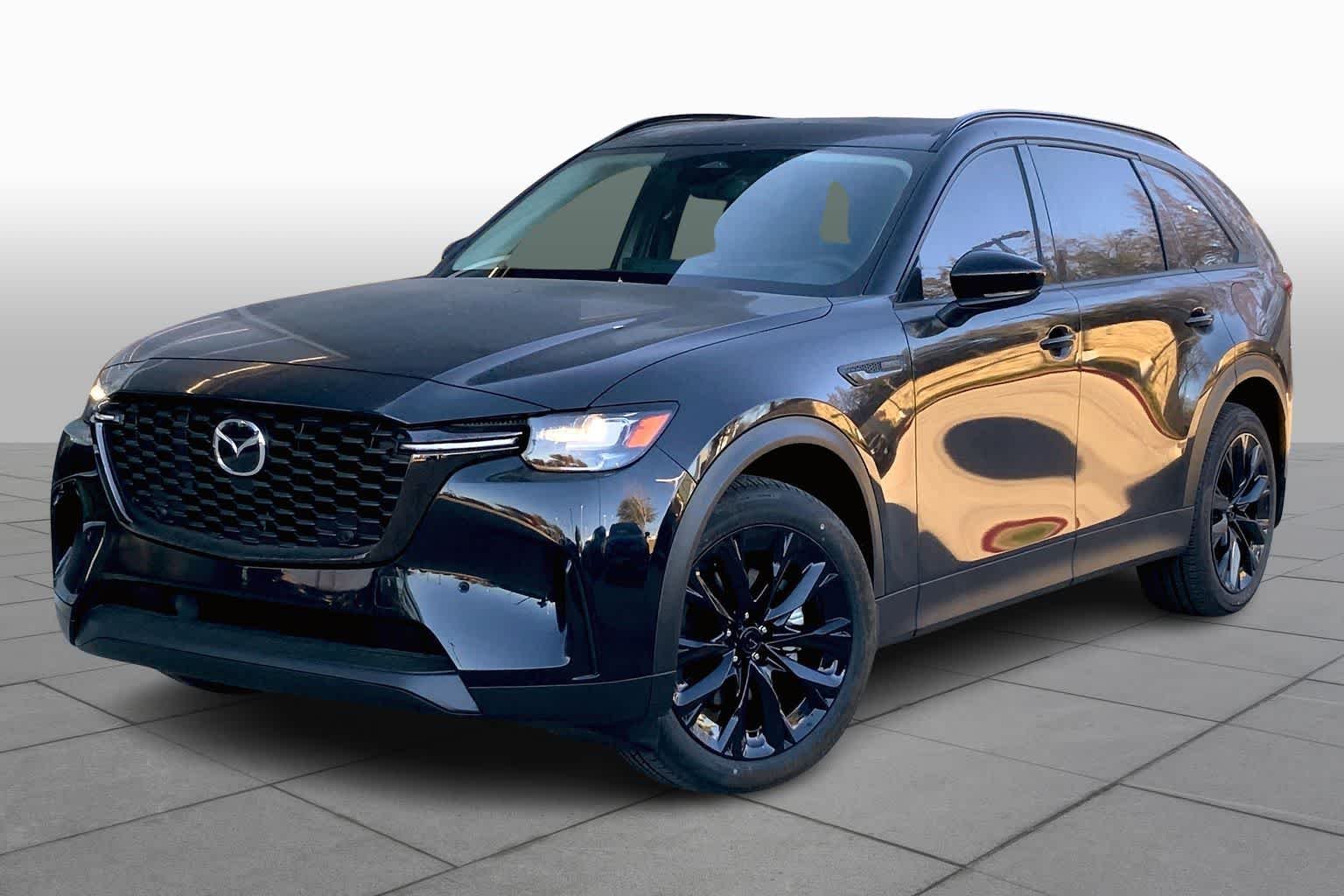
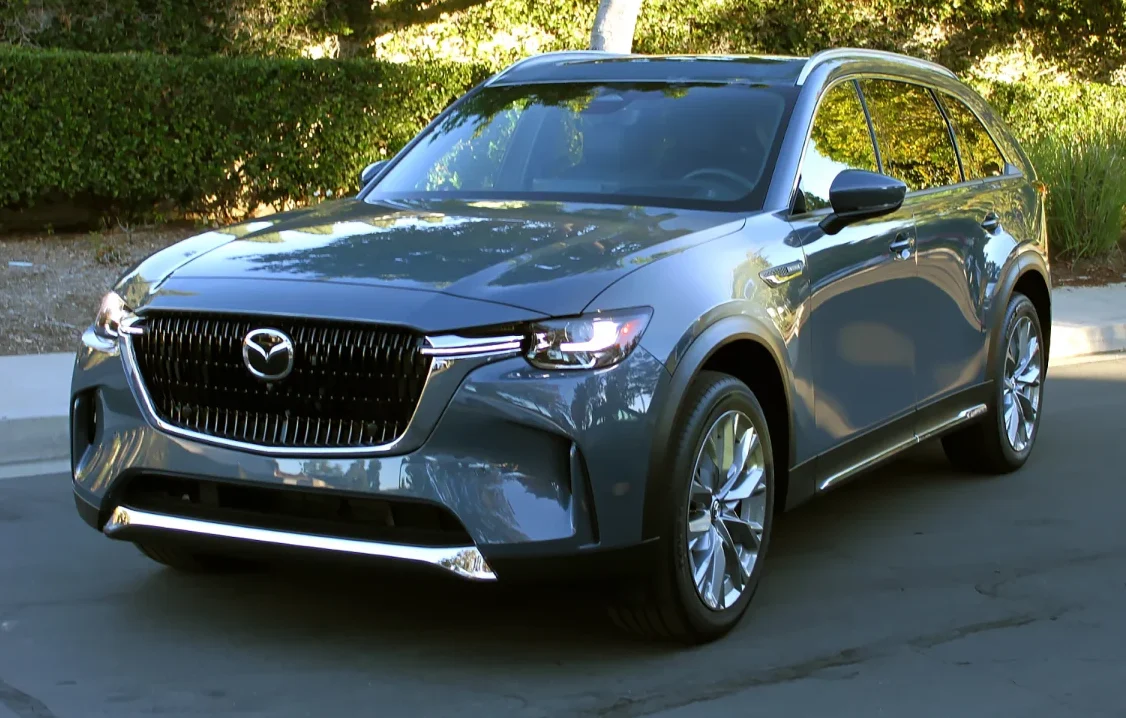
one slight concern is that Mazda itself—the originator of this style—seems to have lost some confidence in its own designs.
Having influenced the industry to the point where this style has become mainstream, it feels as though, while searching for their next move, they’ve somehow lost their drive, and their designs have grown weaker.
n
n
n
n
n
n
Especially in the U.S. market, where they are the most important segment—
large SUVs equipped with 6-cylinder engines—
n
n
The flimsiness and lack of tension in the side profile are so pitiful to look at that they remind me of an anorexic patient.
n
n
n
n
n
It looks very underwhelming here,
and sales seem to be lackluster as well,
n
n
n
I’m really worried.
m
m
m
m
m
m
m
m
m
m
m
m
m
m
m
m
m
m
m
m
m
m
m
m
Starting with the next post,
I’ll be featuring three French cars.
With their country’s unique character,
I’m really looking forward to talking about them.
m
m
m
m
m
m
Regarding this blog and its content:
My goal in writing these blog posts is to clarify my personal, distinctive criteria for evaluation—including my somewhat unconventional perspectives—through my involvement with three-dimensional art (including cooking), and to document how I have satisfied and fulfilled my curiosity and desire to explore “beauty and deliciousness.”
Consequently, while I pay the utmost attention to the numbers, years, and detailed data that appear in my articles, it is possible that I may occasionally make significant errors or misunderstandings. In particular, key specifications and model years in automotive articles can often be confusing, so I would appreciate it if you treated them as general references only.
For my part, I feel that I’m inserting dates and data into the articles as objective material to create a “flow” that connects my personal assessments of exterior design and taste to the broader themes explored in the latter half of the piece. What I ultimately prioritize are the new “perspectives” and “unexpected connections between pieces of information” that emerge from the chaotic jumble of memories in my own mind. The various data points are needed secondarily as part of that “flow” to generate that momentum.
As a slight digression, in the world of rakugo—which I love—there’s a playful format called “san-dai-banashi,” where a performer weaves a single story using three topics solicited on the spot from the audience. I feel like I’m doing something similar, using the characteristics of three-dimensional sculptures and (the flavors of dishes) as my prompts. The countless ideas that flit through my mind during this process are completely unexpected and delightful; they often drastically change the content of future articles or lead to new developments.
How This Blog Works:
“Spots and Lines of Curiosity x Whimsical Mental Circuits = Unexpected New Developments”
This blog may be a bit self-indulgent, but I hope you’ll continue to follow along.
P.S.: To create the “flow” described above, I take as many photos as possible using my own die-cast cars and home-cooked meals. However, I do borrow the bare minimum of other illustrations and photos from other bloggers’ posts and company websites. (I edit them to fit the article’s content and post them at the lowest possible resolution.) If there are any issues, please contact me and I will remove them immediately.
Update 2: You are free to use the photos of die-cast cars and other images (taken by me) featured in this blog’s posts in any way you like without permission. I create these posts with the understanding that my personal creativity belongs to me alone.

これはCTAサンプルです。
内容を編集するか削除してください。