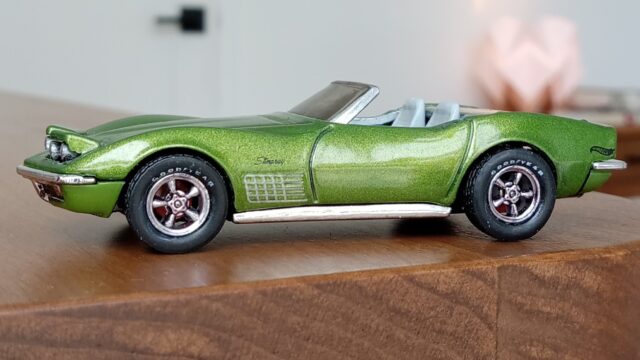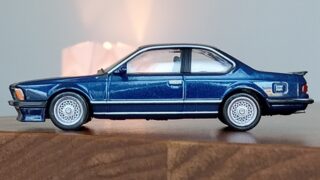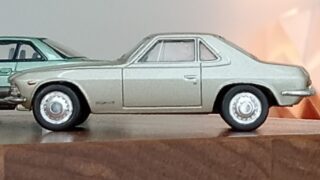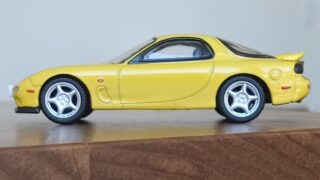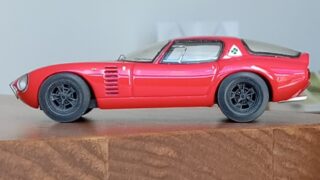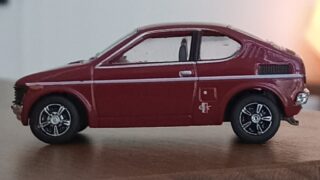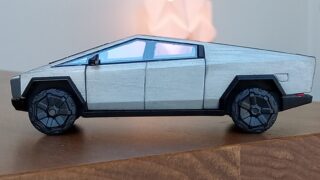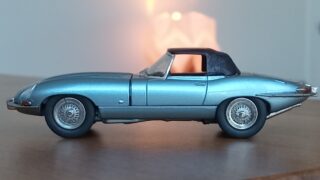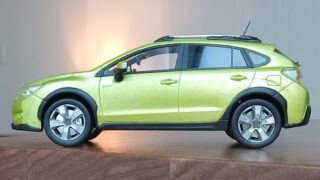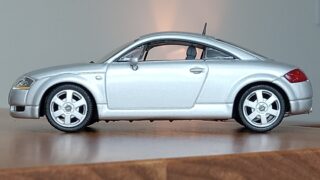
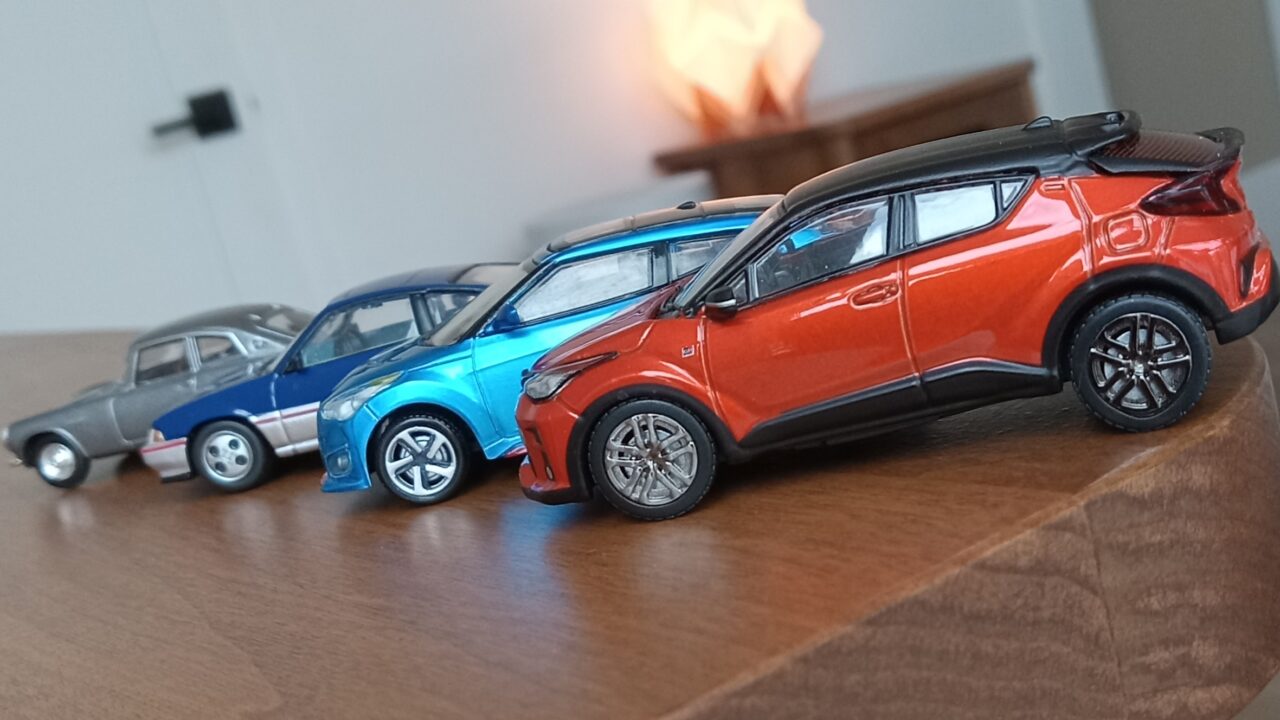
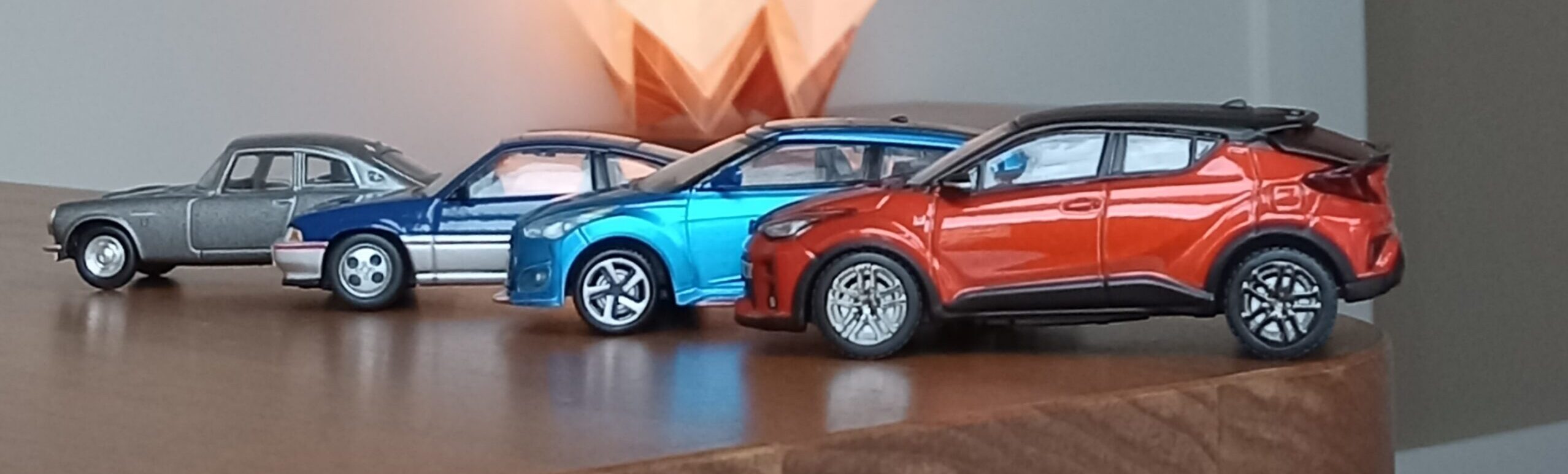
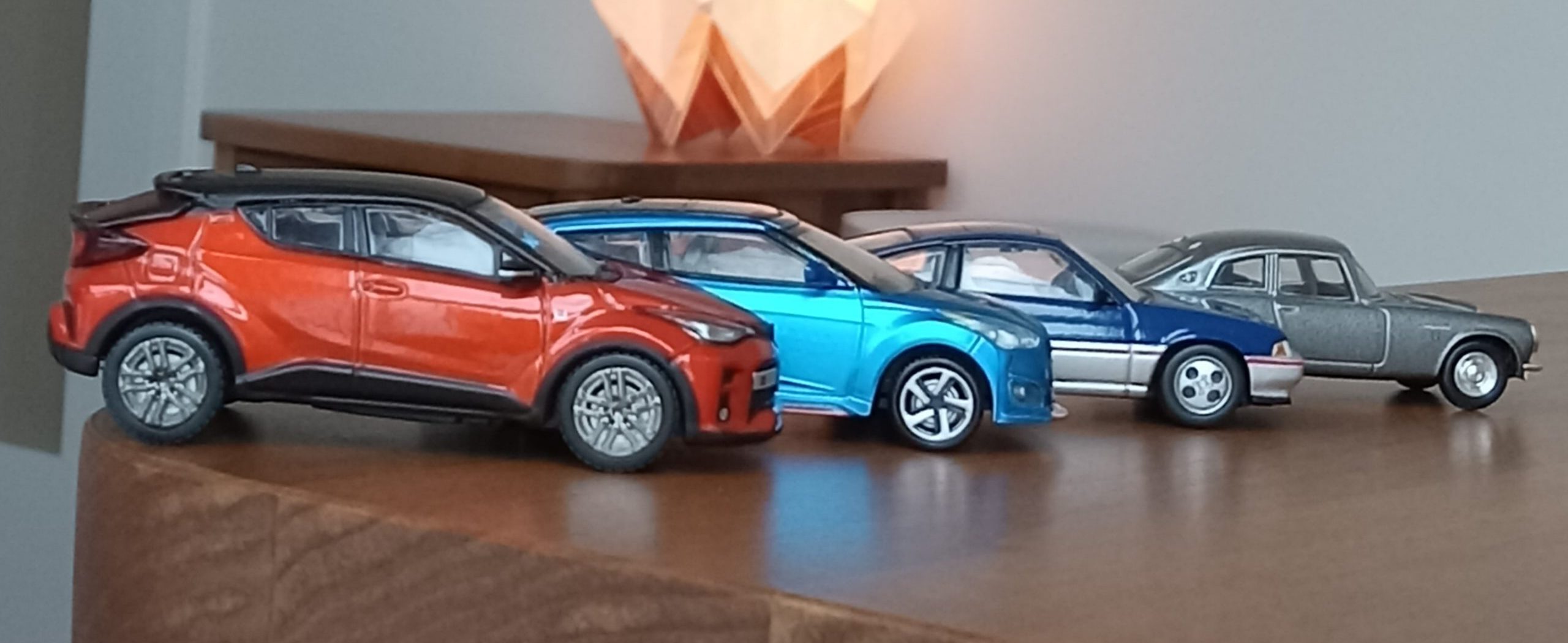
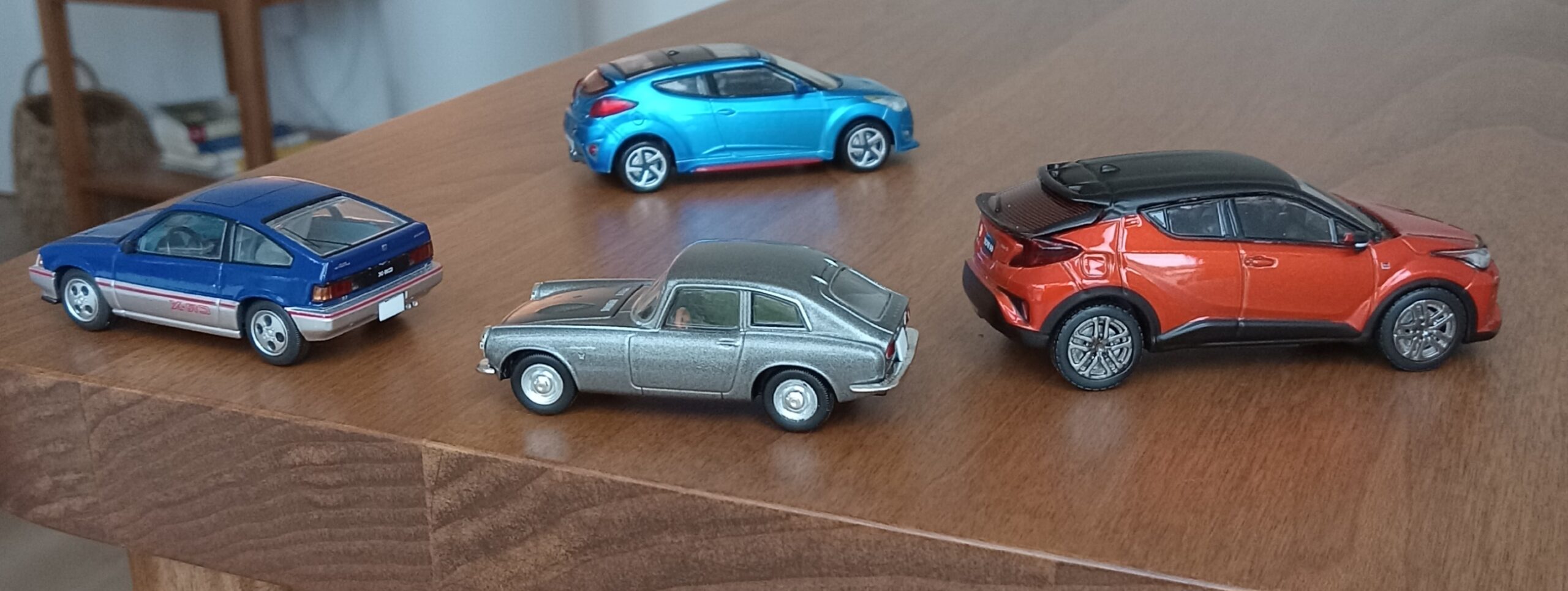
ミニカー集合噺【第1回】:『1/64 ミニ・ハッチバック:4台噺?』ホンダS800 クーペ、初代CR-X、現代ヴェロスター、トヨタC-HR GR スポーツ 【Diecast Small Hatchback Meeting】 in 1/64 : Honda S800, Honda CR-X, Hyundai Veloster, Toyota C-HR GR Sport
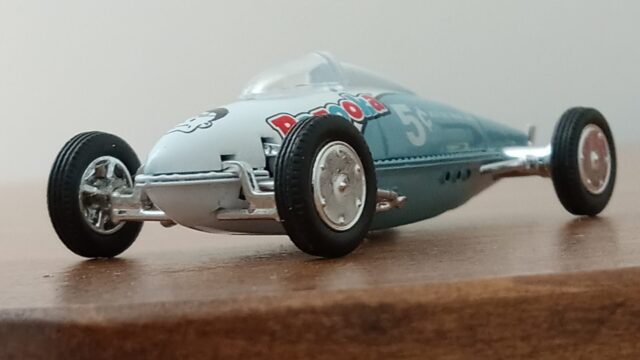
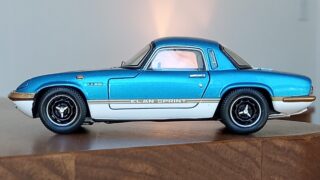
 (ホンダS800クーペ)
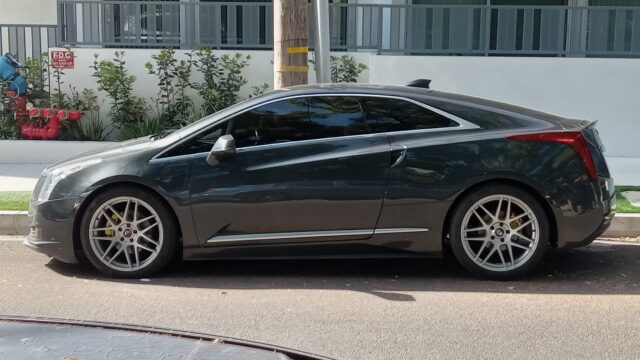
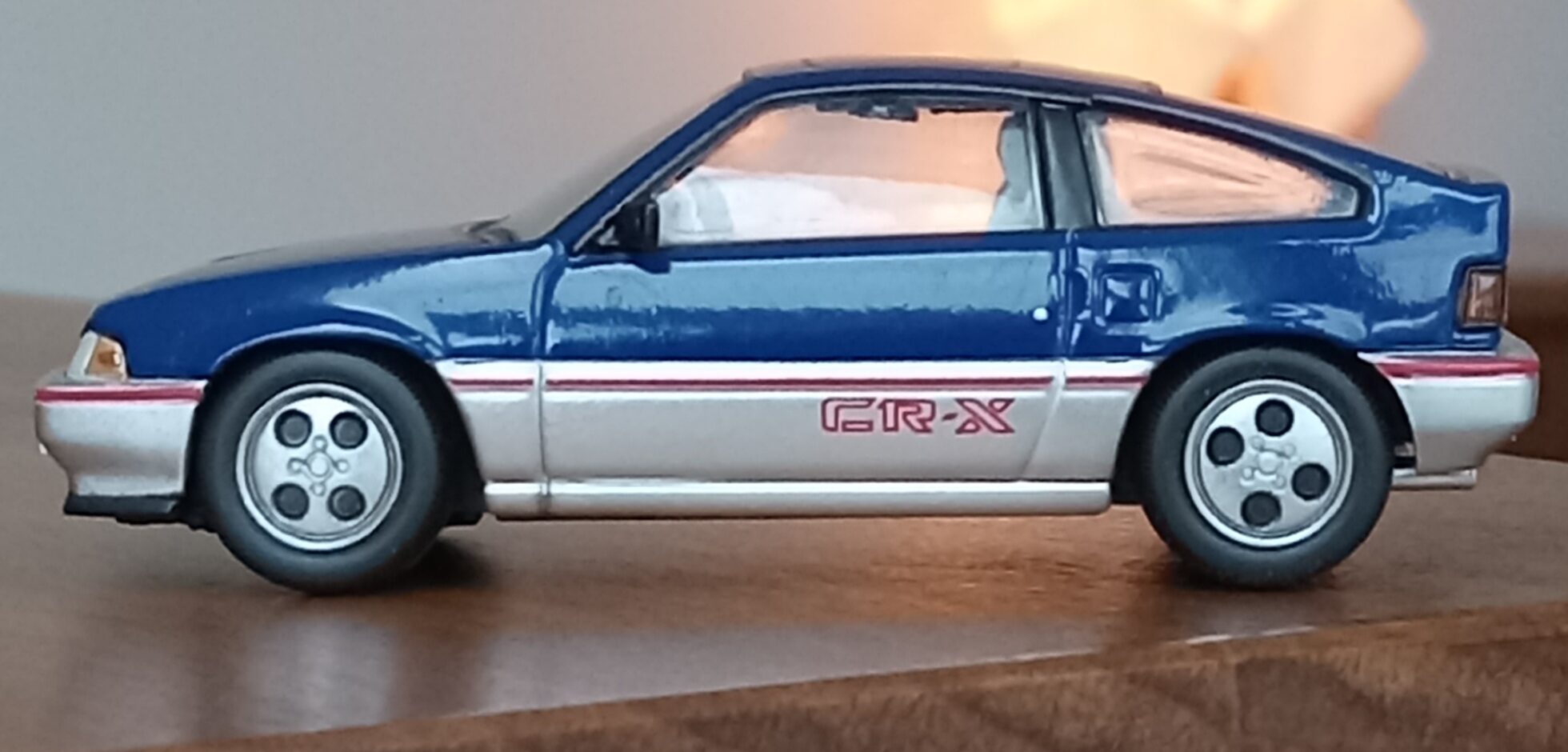
(ホンダ CR-X【初代】)
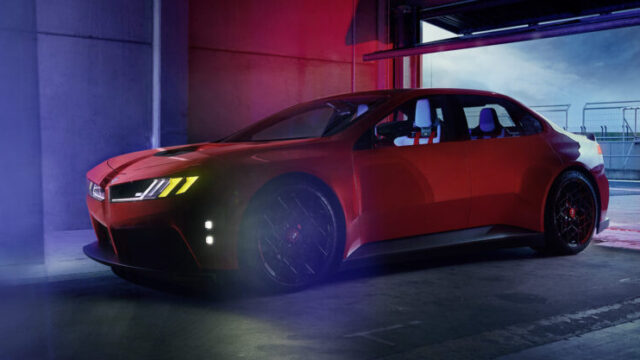
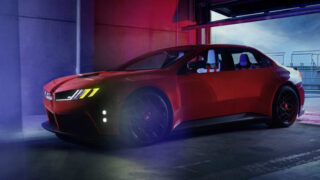
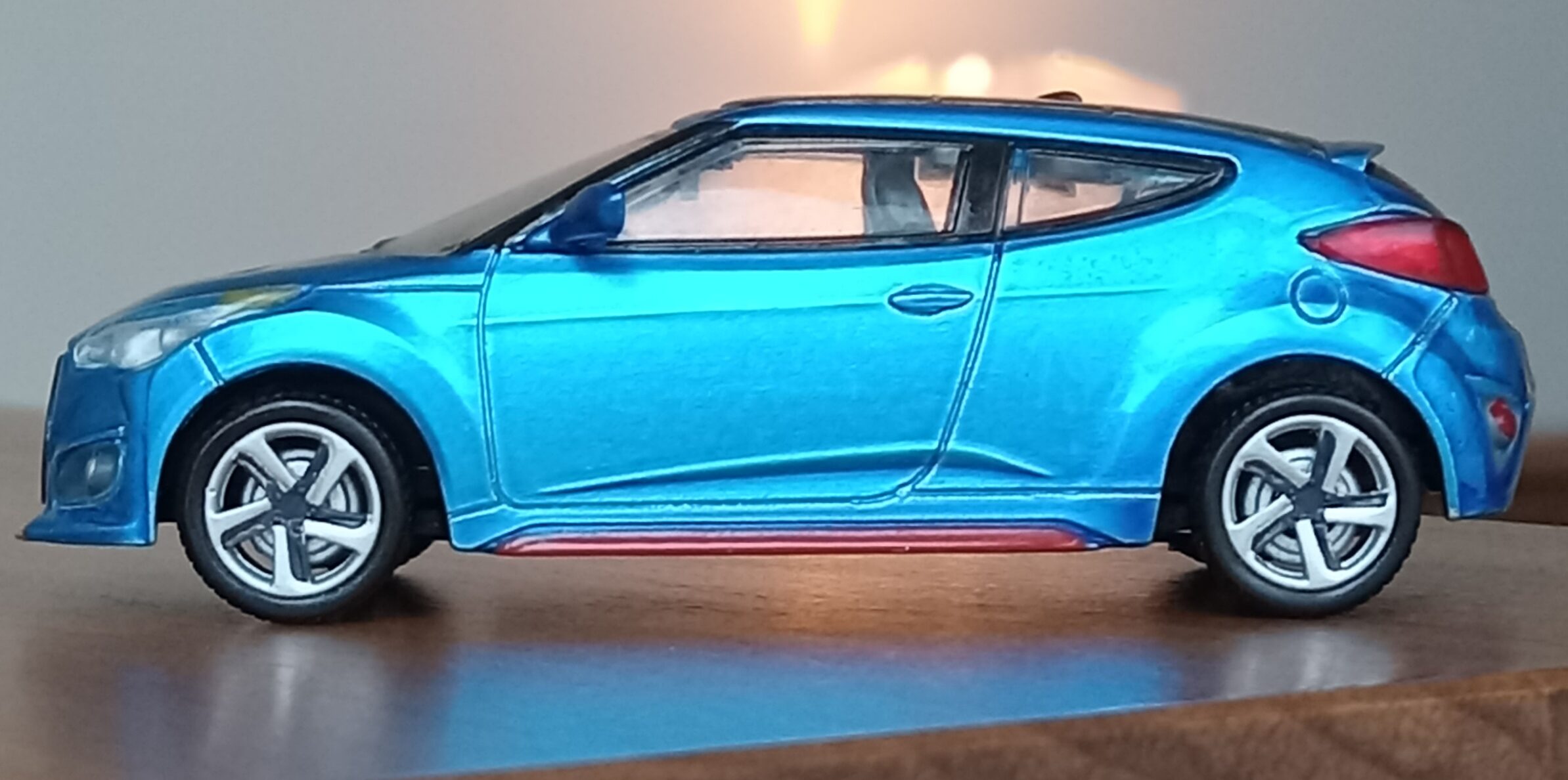
(現代ヴェロスター)
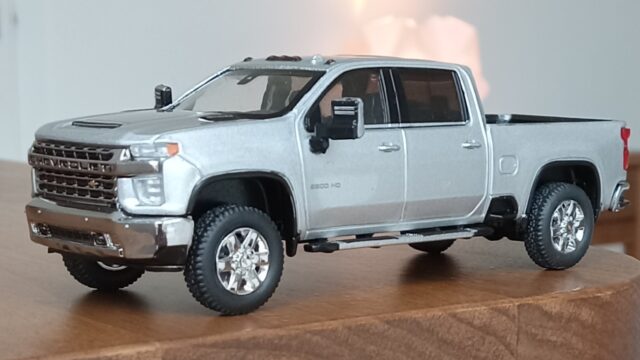
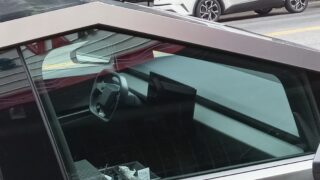
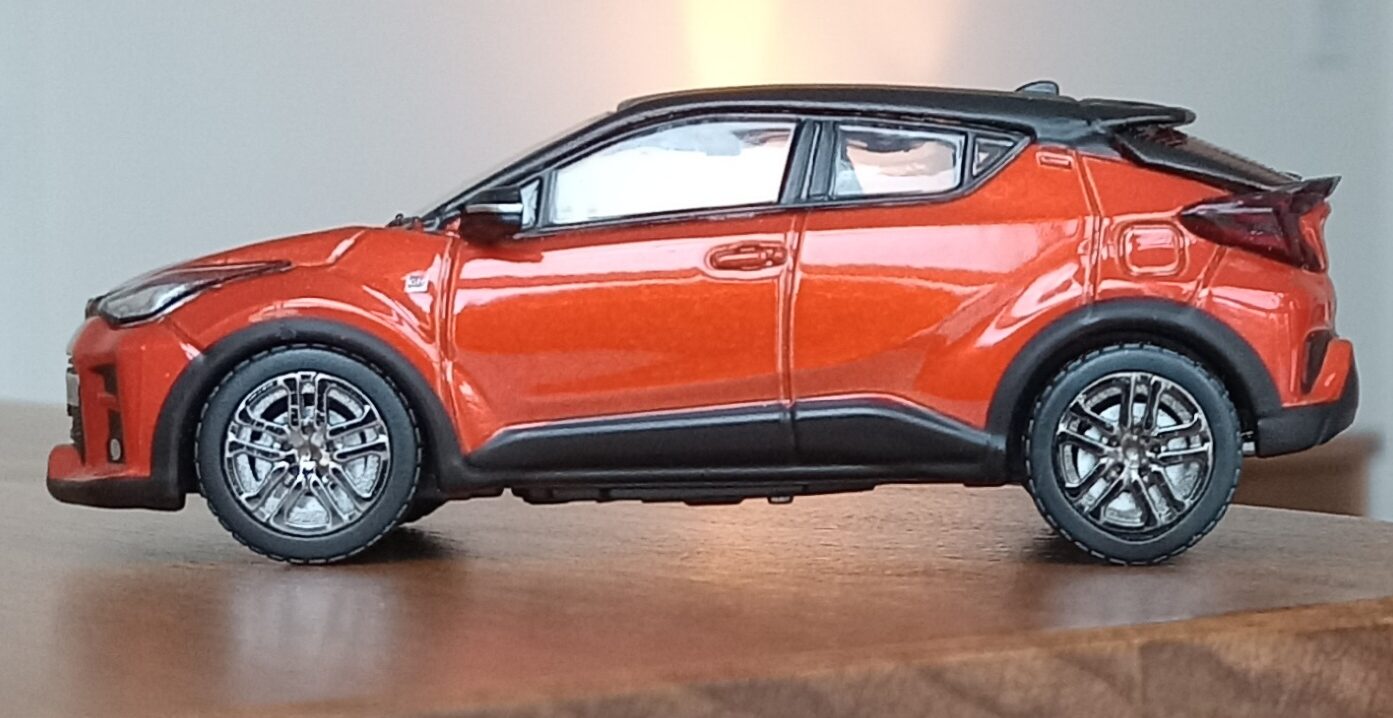
{トヨタ C-HR GRスポーツ)
今回は趣向を変えまして、
私の大好きな自動車カテゴリー:
『小さなハッチバック車』について
最近集めたミニカーと絡めつつ、
一席おつきあいを願っておきます。
自動車を運転し始めて以来、
所有した車はほとんどこのカテゴリーに入ります。
*軽量ですばしっこく、
*燃費も車両価格も経済的、
*おまけにデザインの優れたものが多く、
*更に、荷物も積みやすく実用的、
といった感じで、元来工業デザインの
豪華さや、『威厳的記号』に無頓着な私にとっては、
絶好の選択肢として、
これまで、
*CR-Xを3台、
*プリウスを2台
*MGミジェットなど、
小型の実用車のお世話になってきました。
こんな素晴らしい小型ハッチバック車4台に付きまして、
以下の要領でお話ししたいです。
*実車解説・外観デザイン解説:ざっと説明、、、
*ミニカー解説:
*4台に共通のスピリット?
*初挑戦:4台(題)噺とは?
*実車解説・外観デザイン解説:ざっと説明を、、
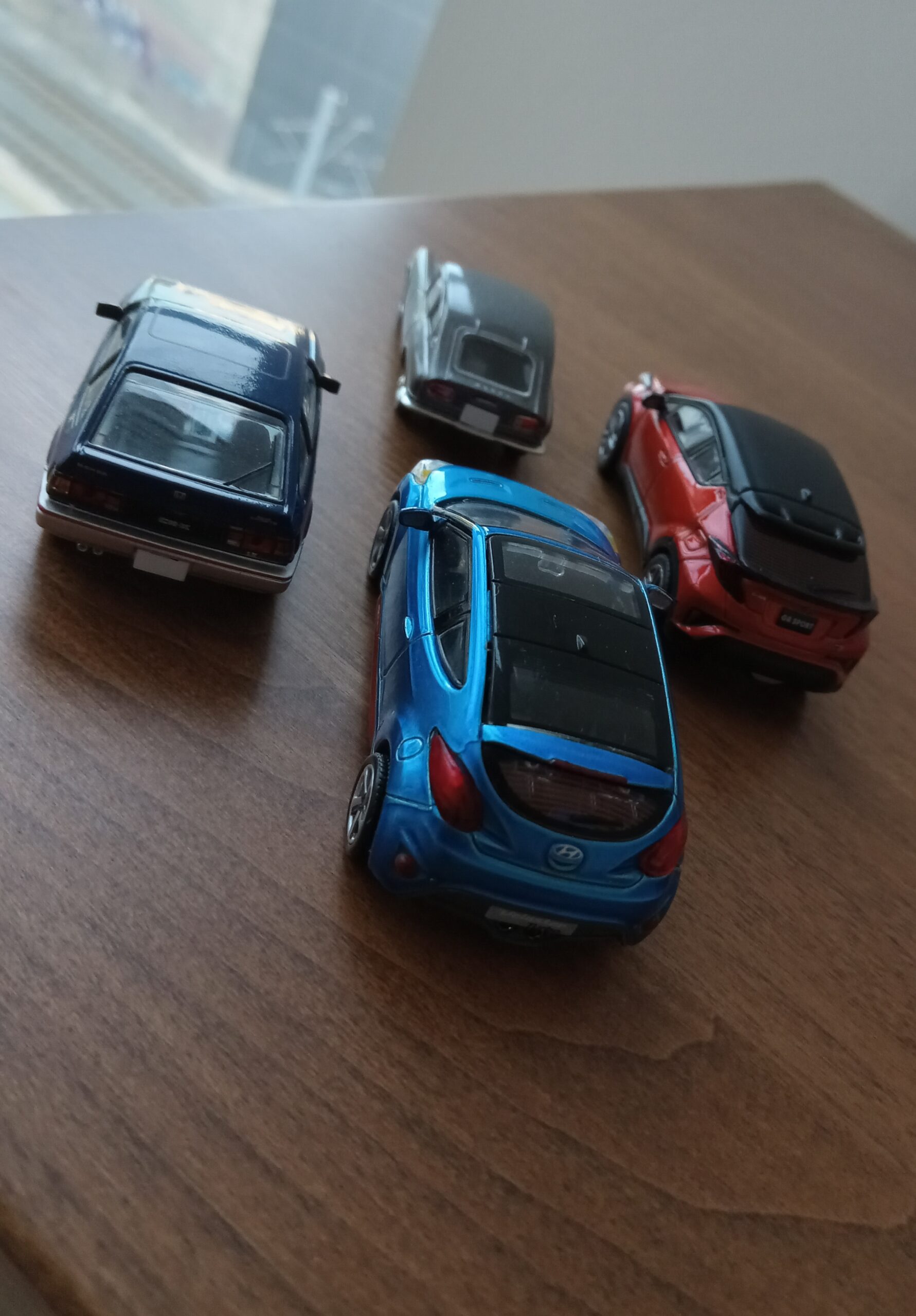
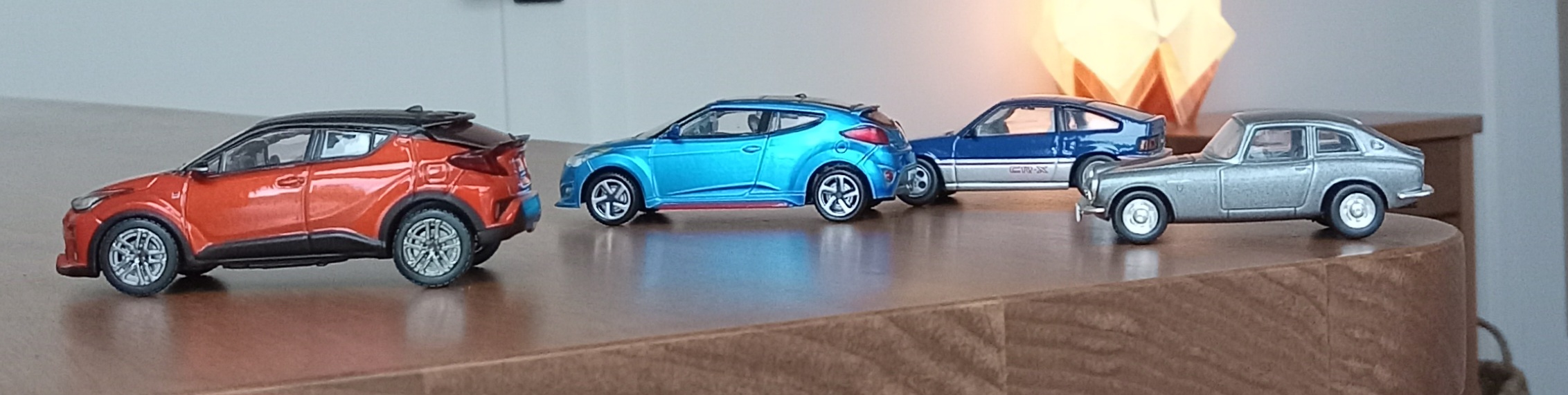
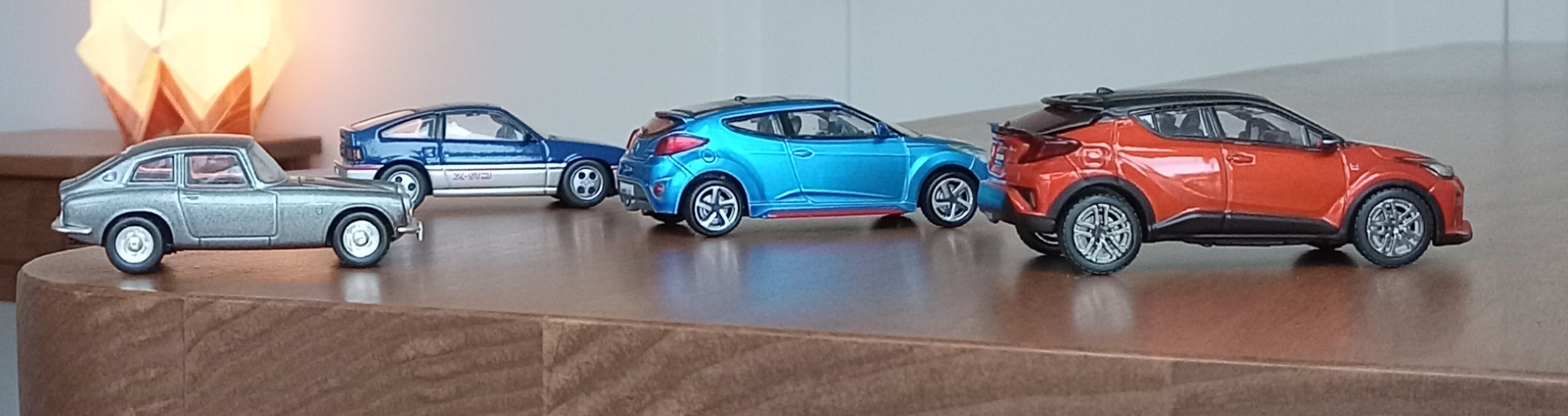
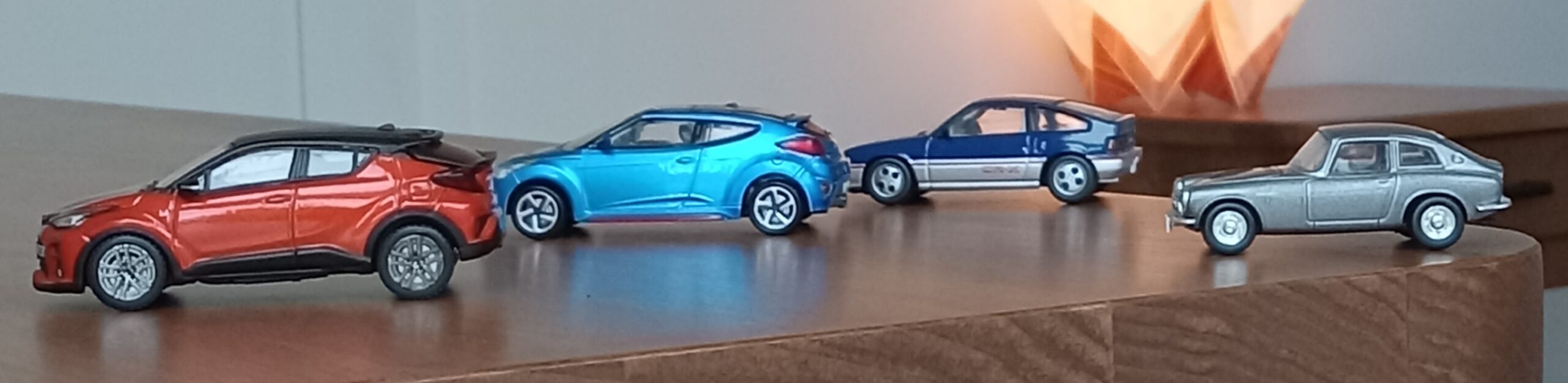
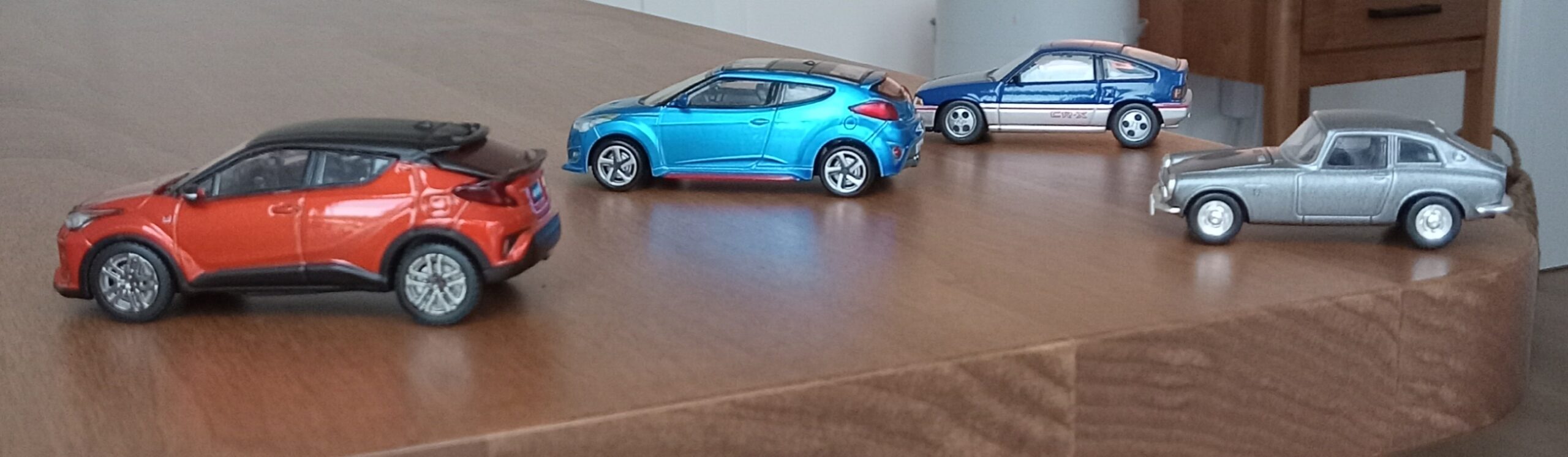
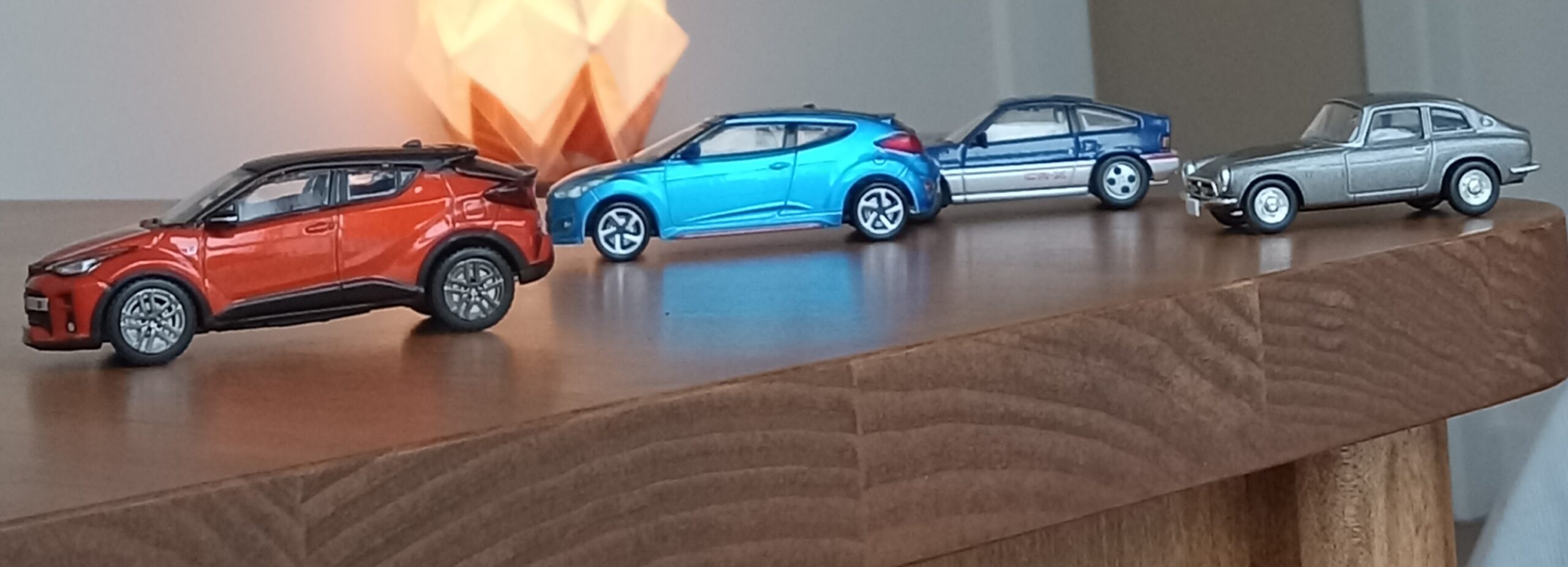
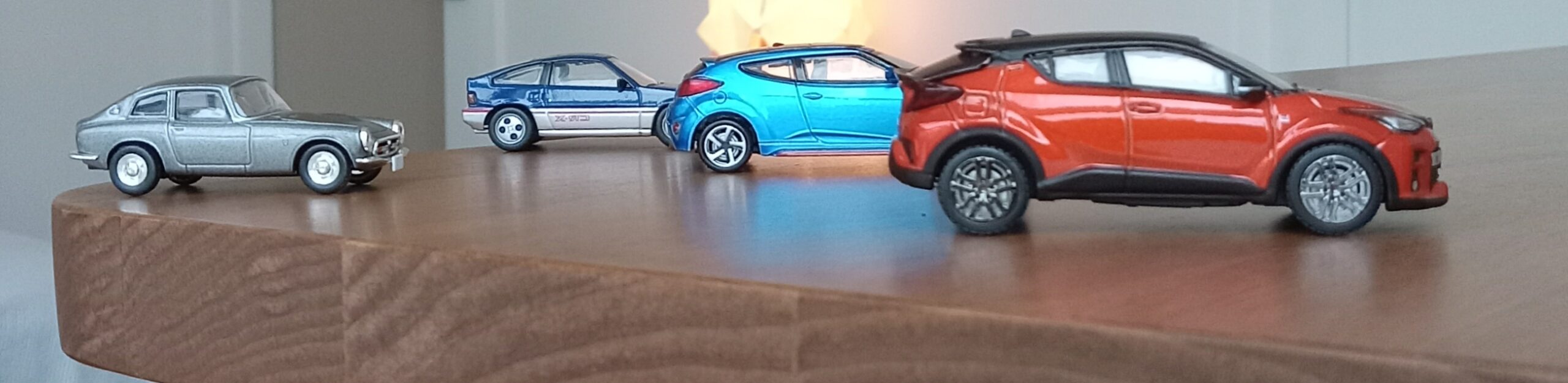
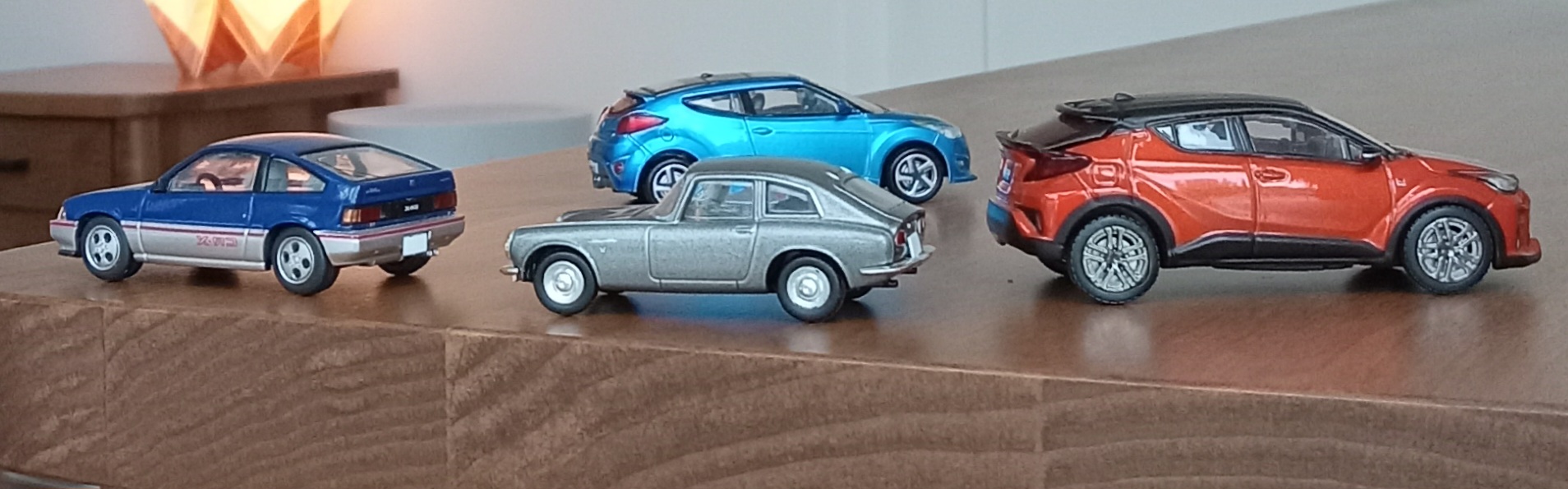
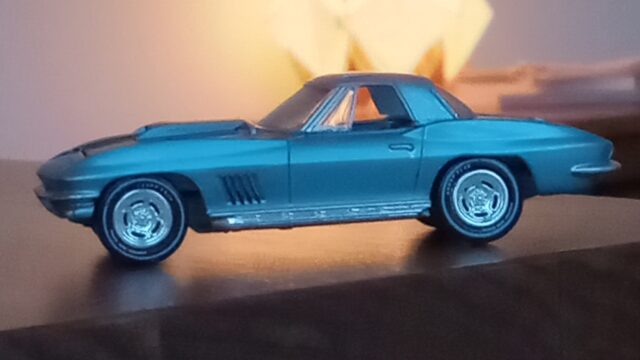
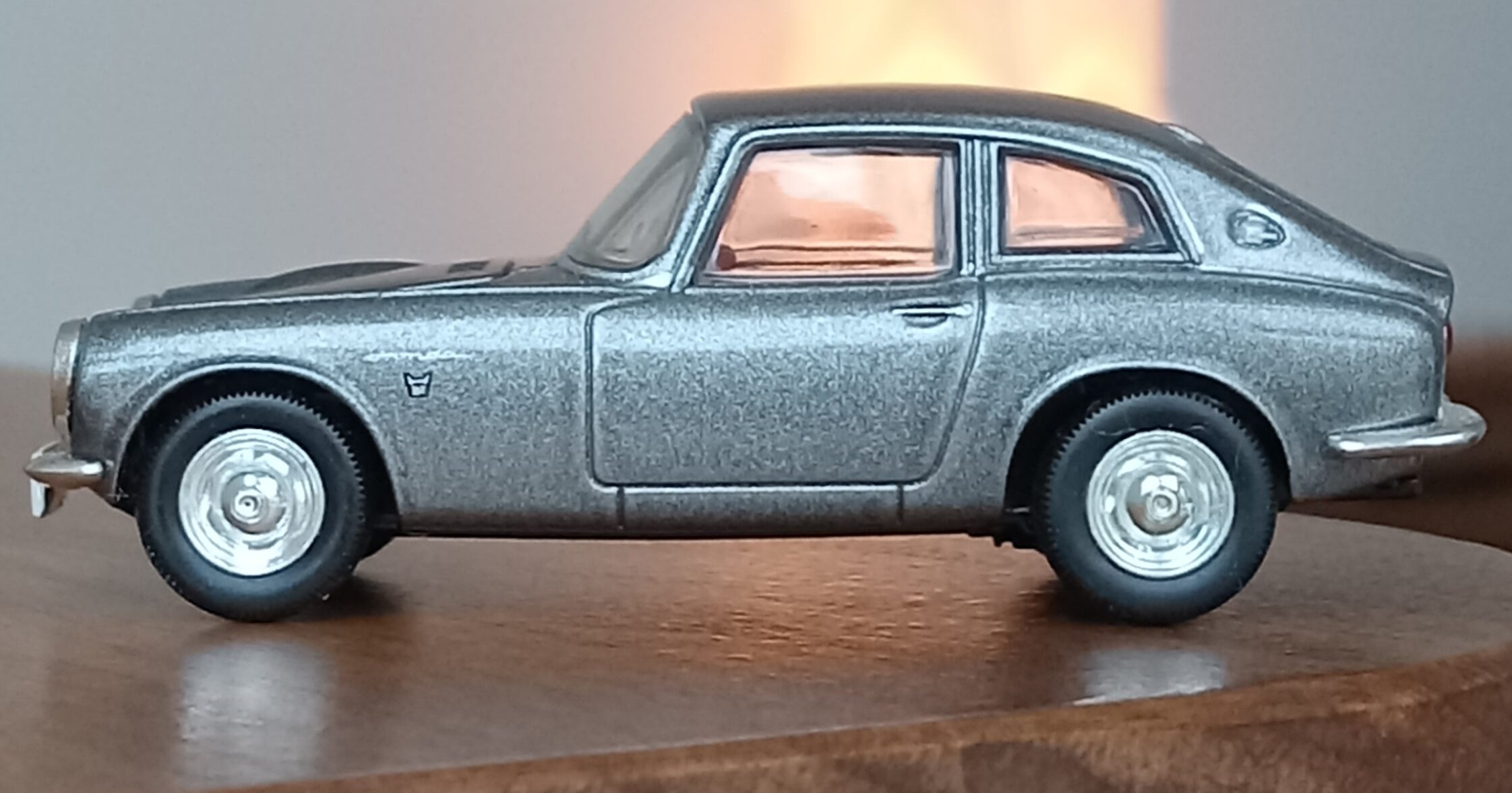
#ホンダS800クーペ、1965(ダークグレー)
寸評:『オープンモデルより数段強い個性が魅力:
コーダトロンカ・テール大爆発』
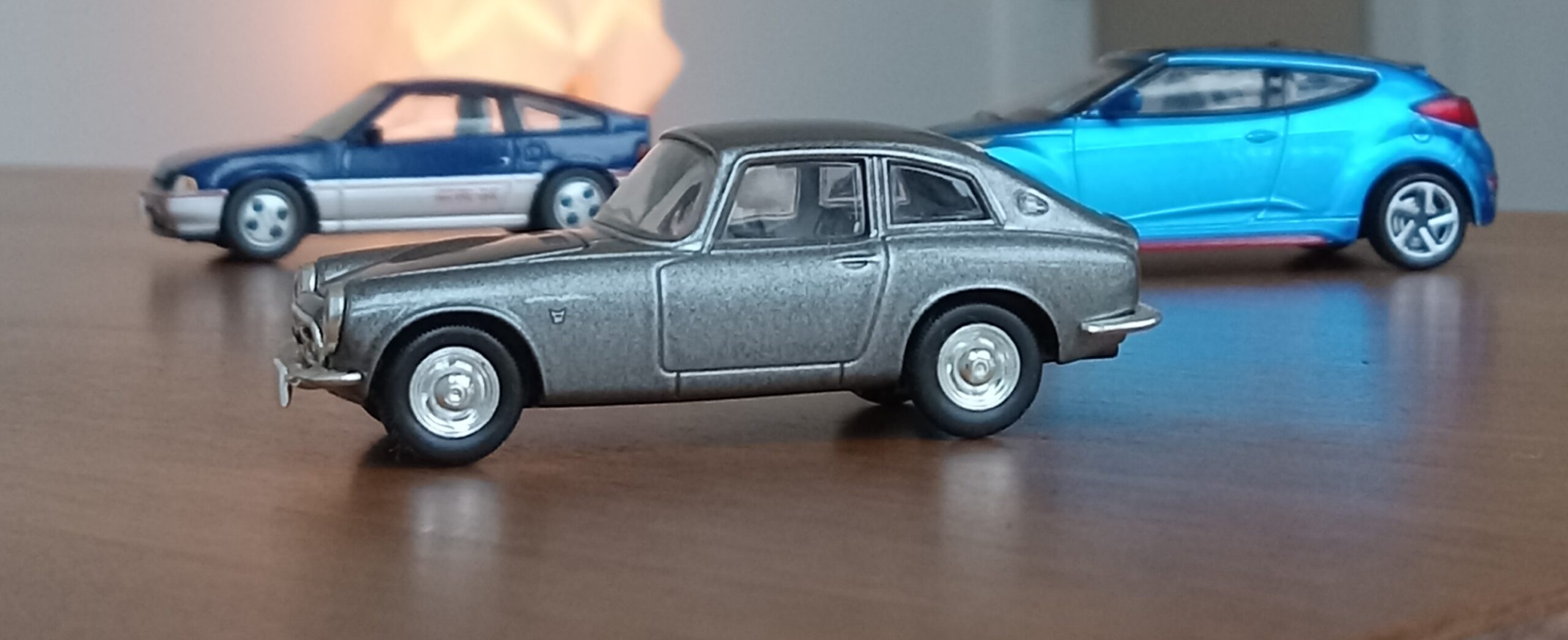
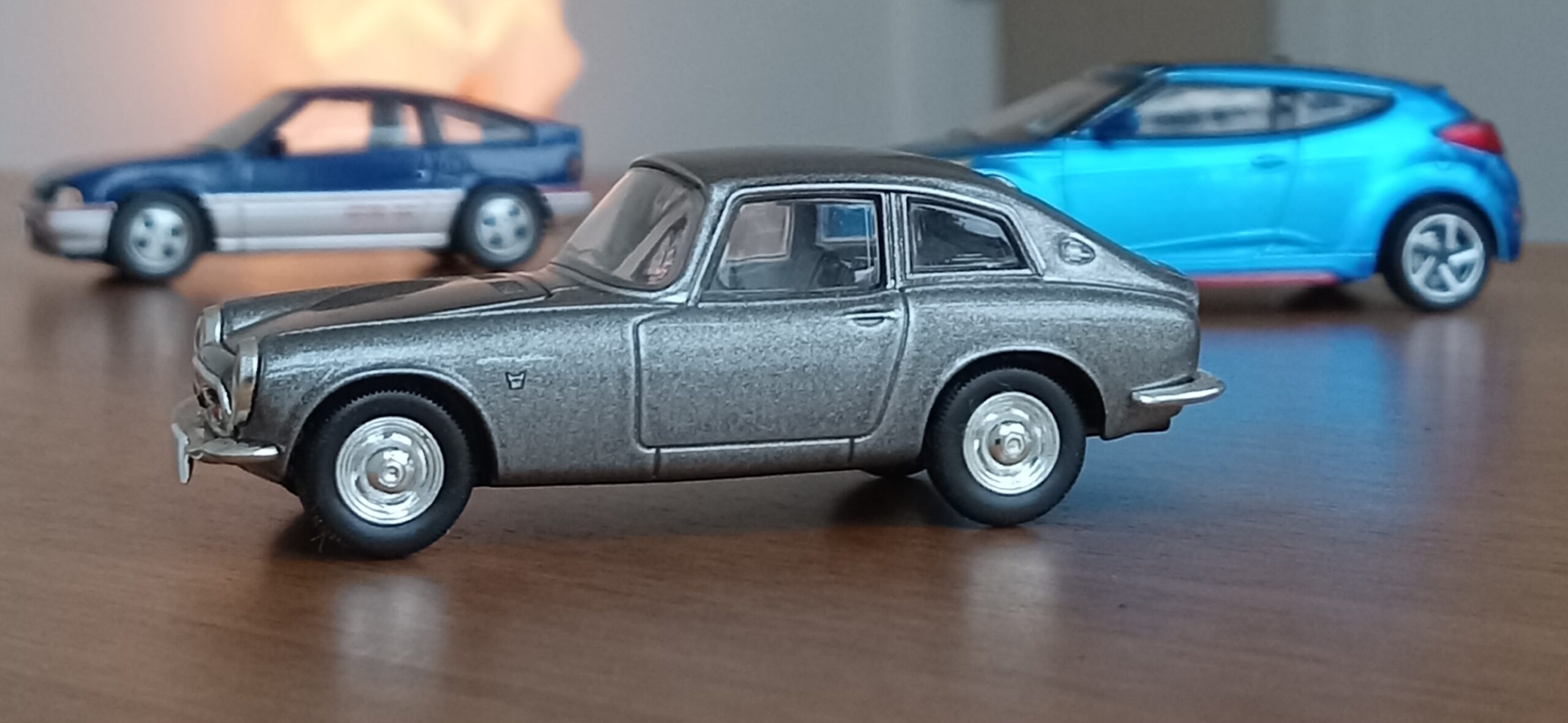
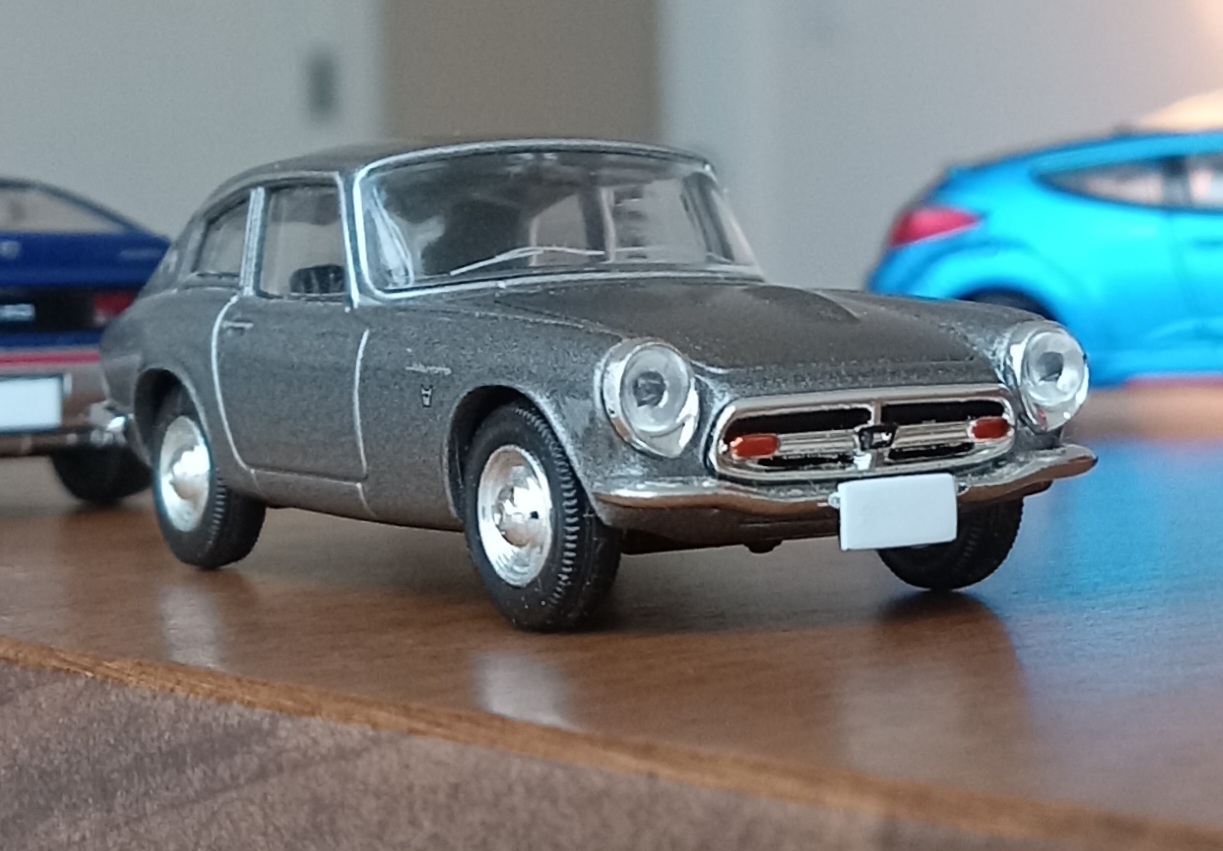
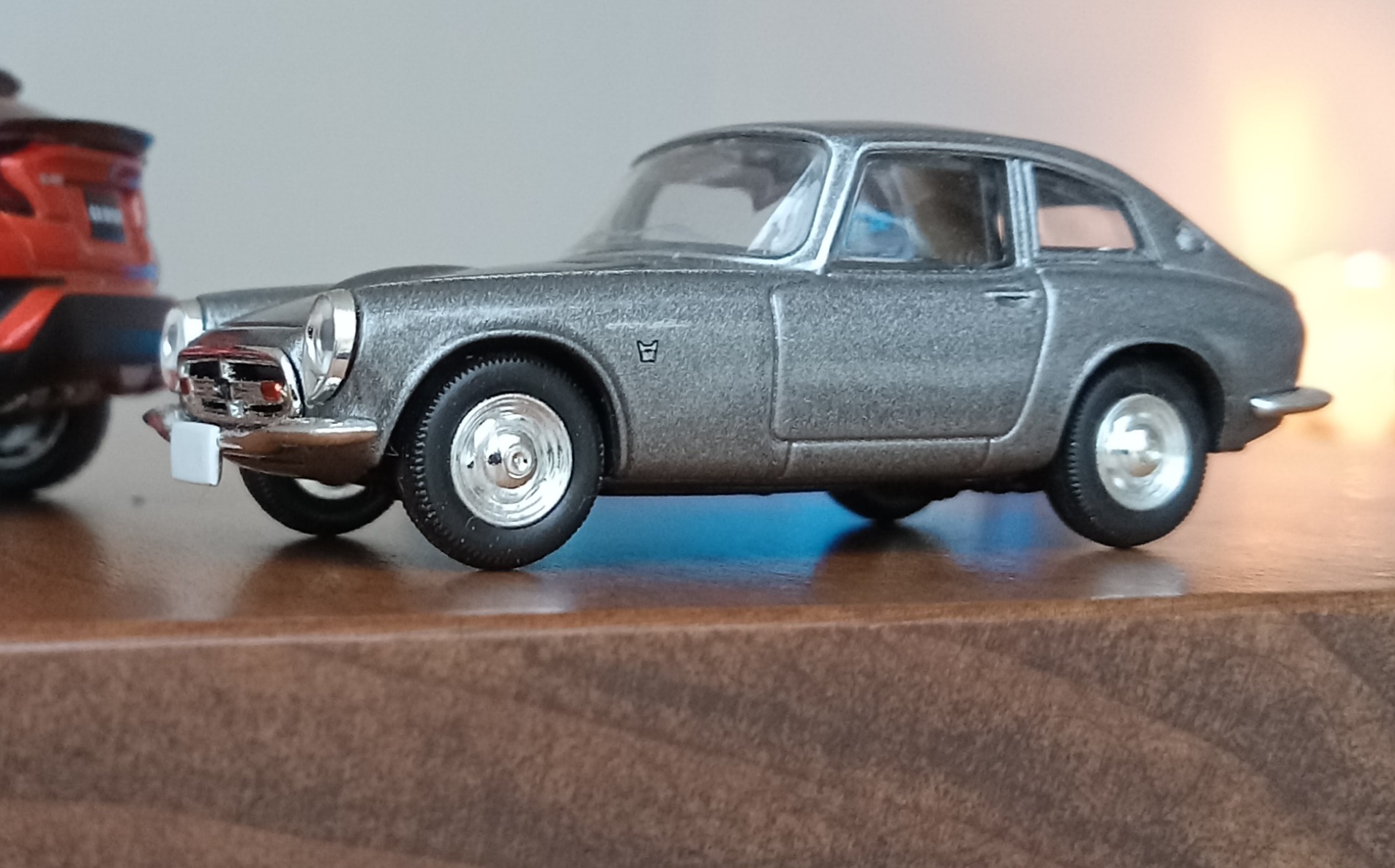
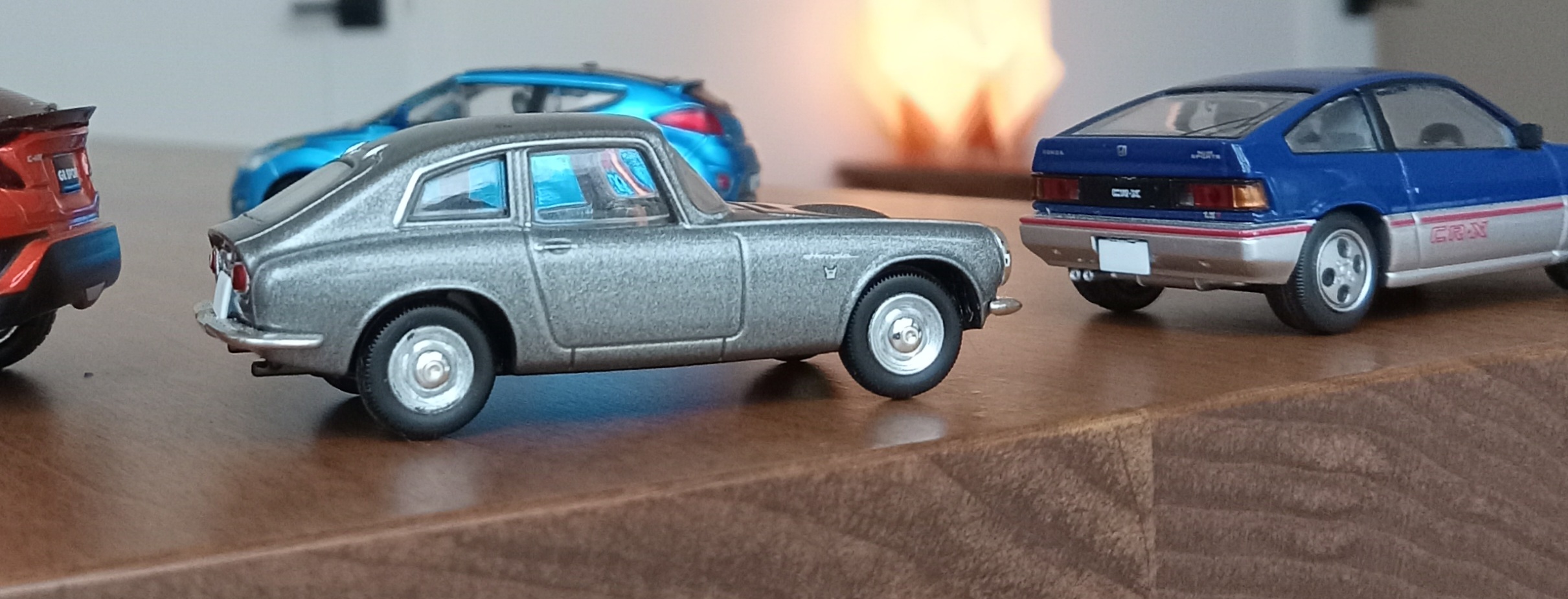
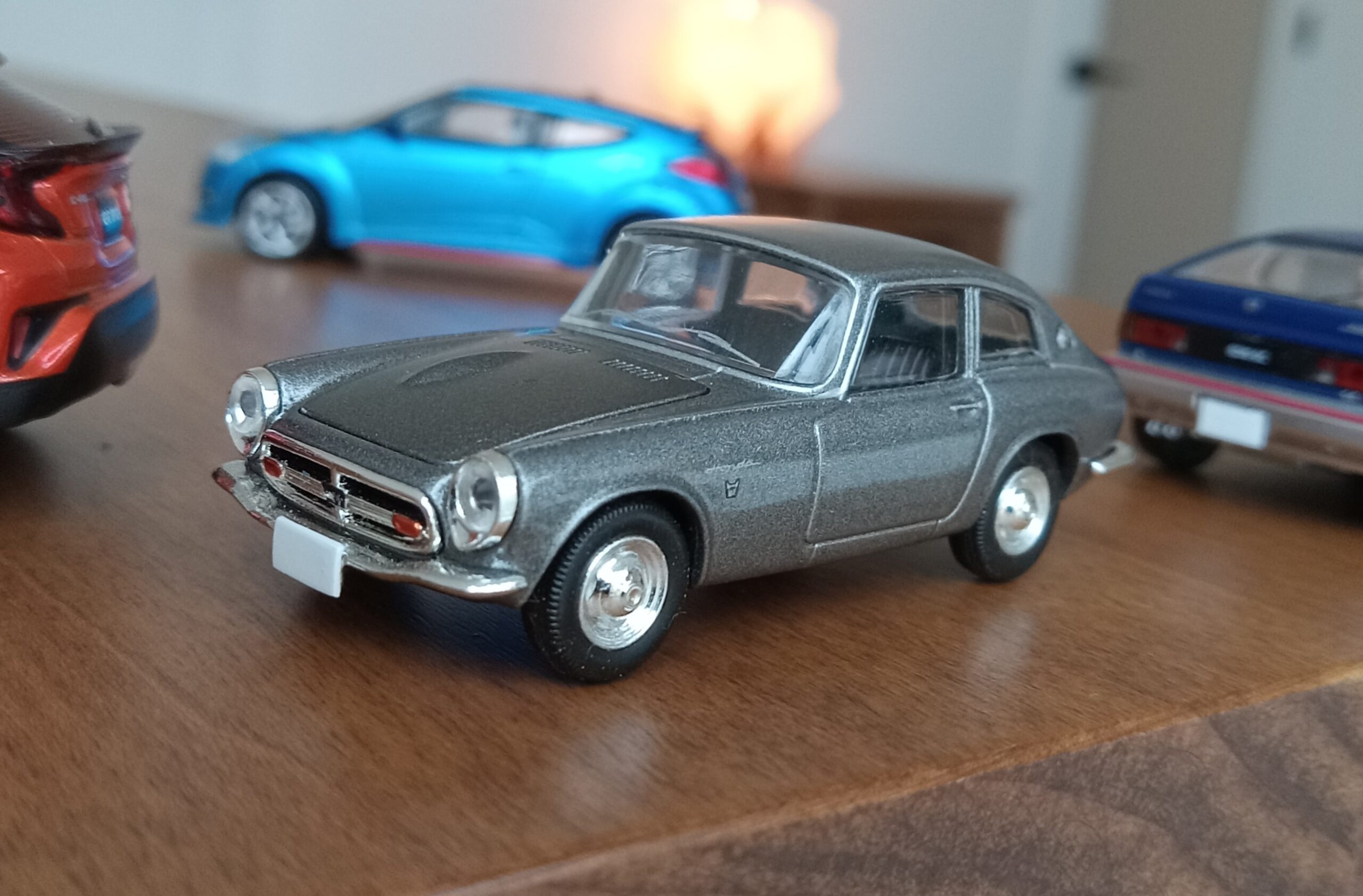
ホンダS800クーペは1966年登場の本格小型スポーツカーの集大成です。791cc直列4気筒DOHCエンジンを搭載し、最高出力70PS/8,000rpmを誇る高回転型スポーツカーです。機構面では、当初の2輪由来のチェーンドライブから保守的な5リンク・リジッドへ移行。デザインは、流麗なファストバックのルーフラインと、ボンネット上のパワーバルジが特徴です。
機構とデザインの特徴
高回転エンジン: バイク技術を活かした超高回転型DOHC
足回り: 信頼性を高めたリジッドアクスル式を採用
スタイリング: 美しいルーフラインのクーペボディ
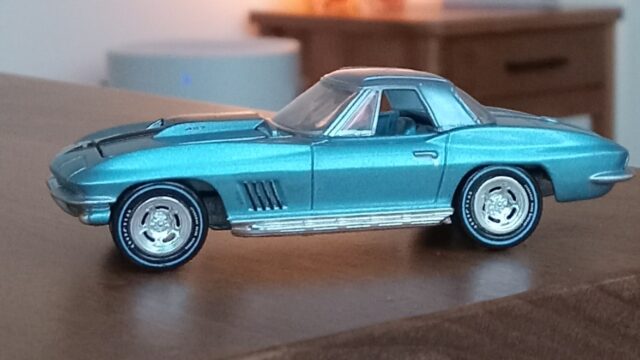
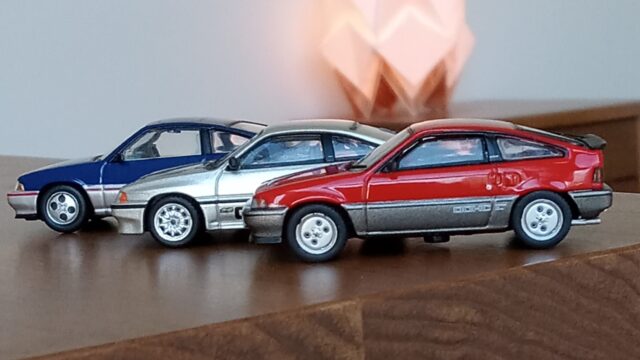
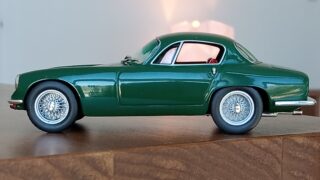
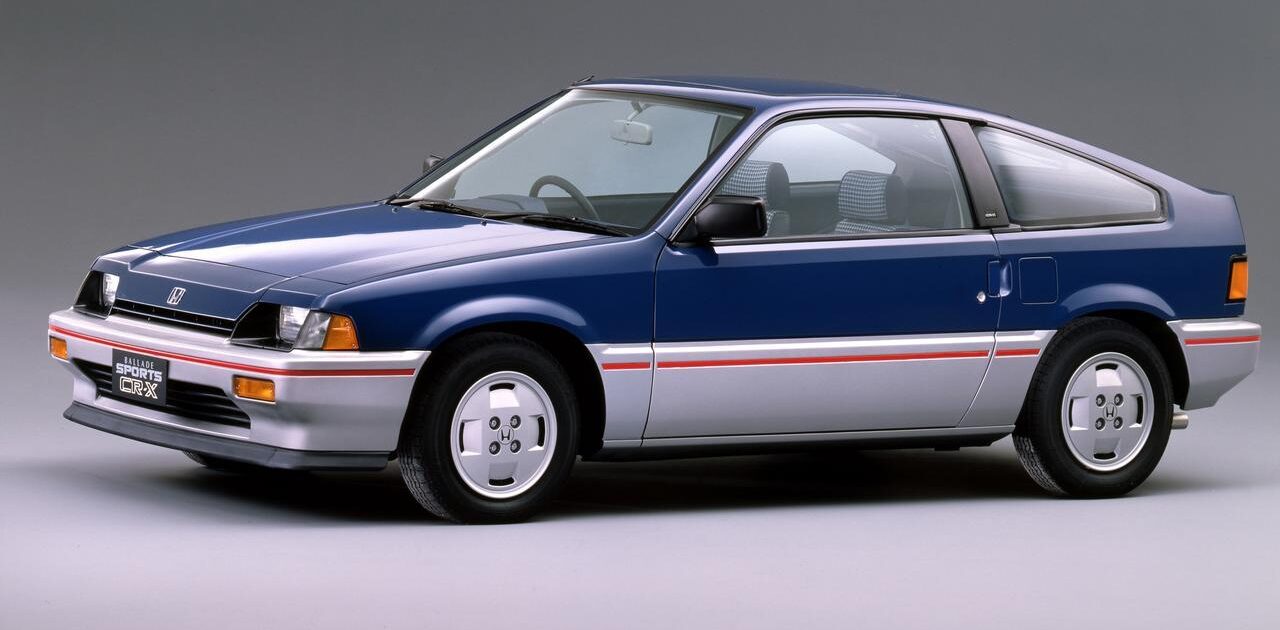
#ホンダ 初代CR-X 1.5i【バラード・スポーツ】(青X銀の2トン)
寸評:『80年台ホンダデザイン躍進の原動力:
ワンダーシビック族のヤンチャな末っ子』
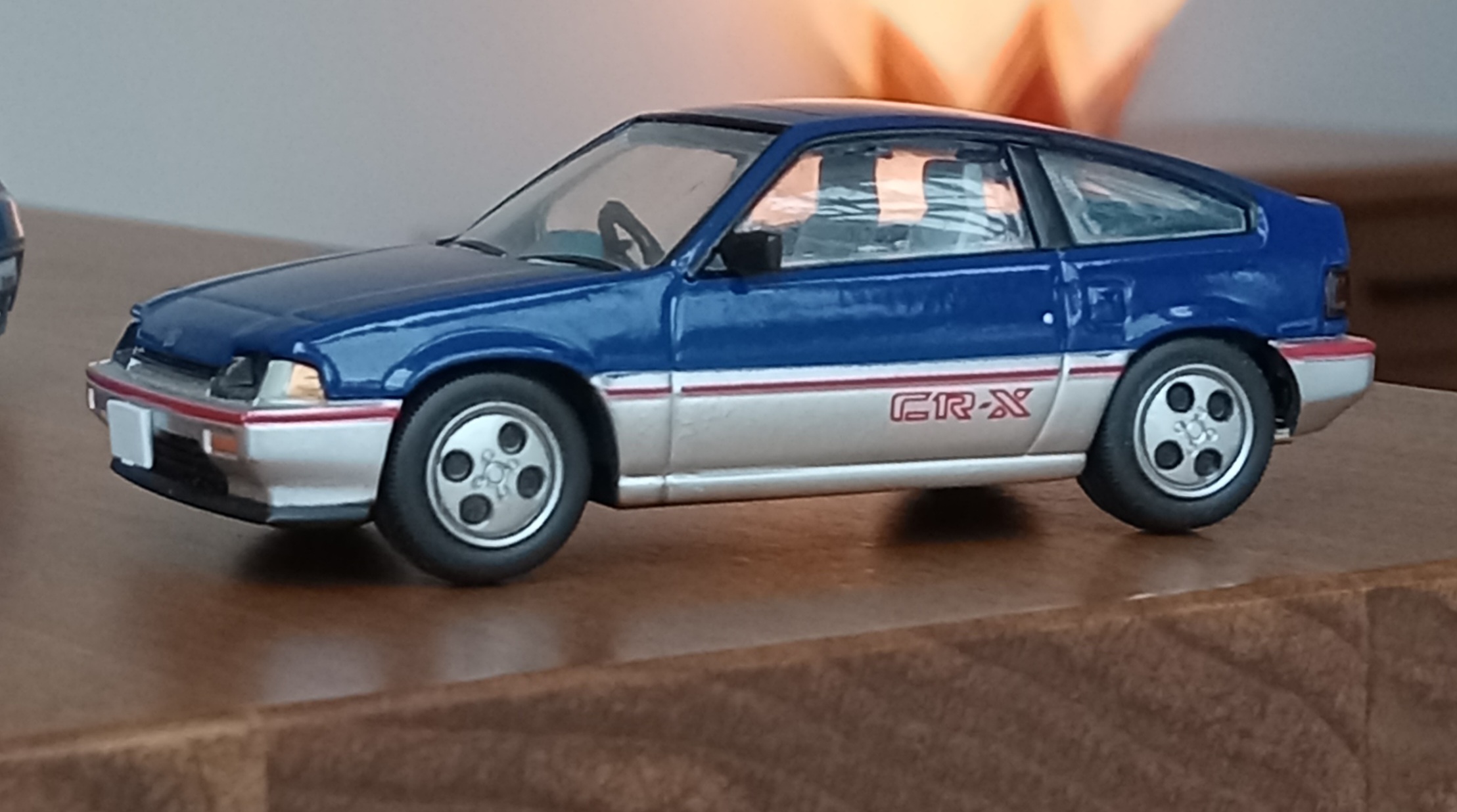
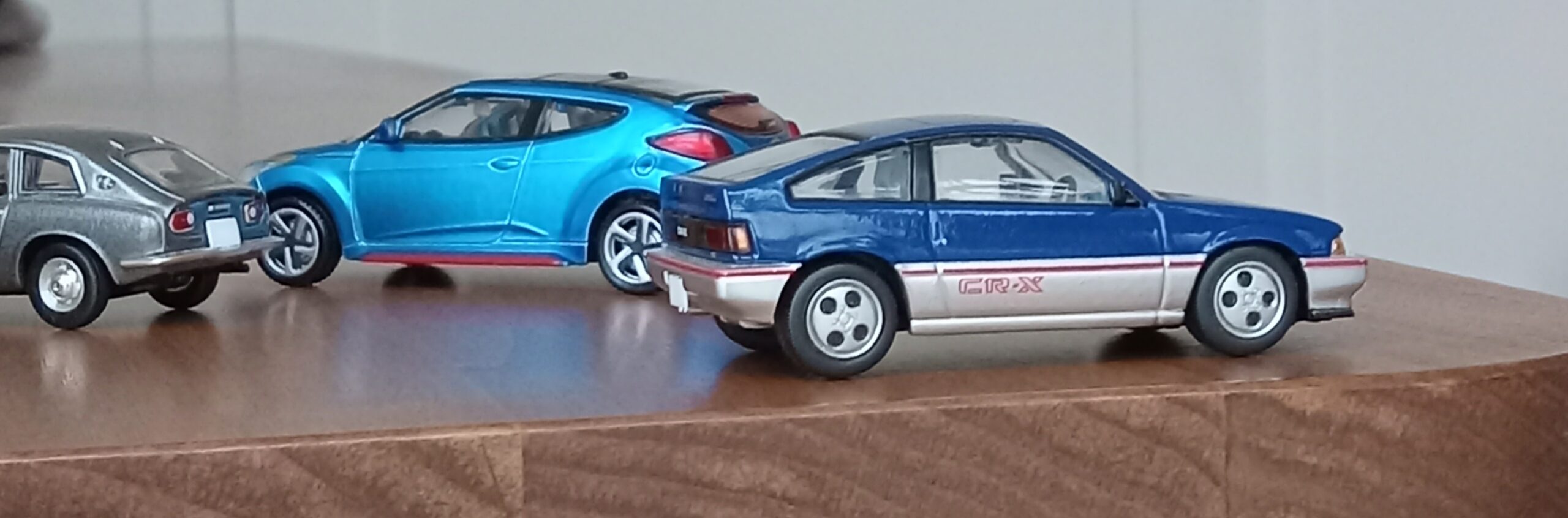
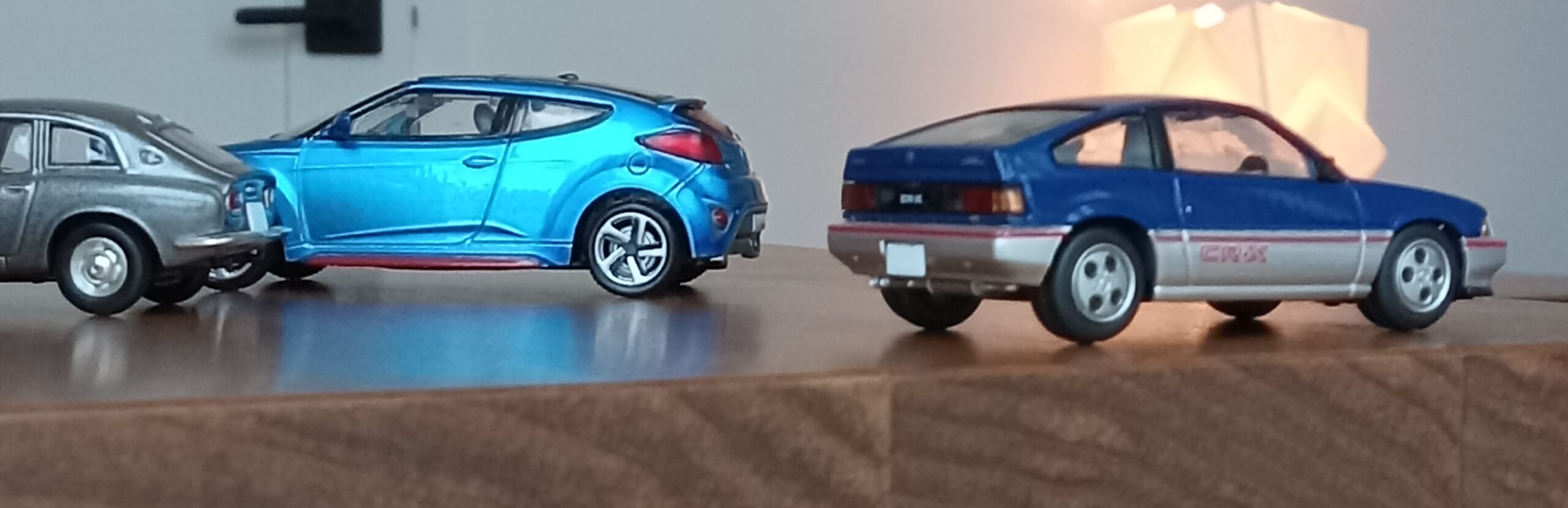
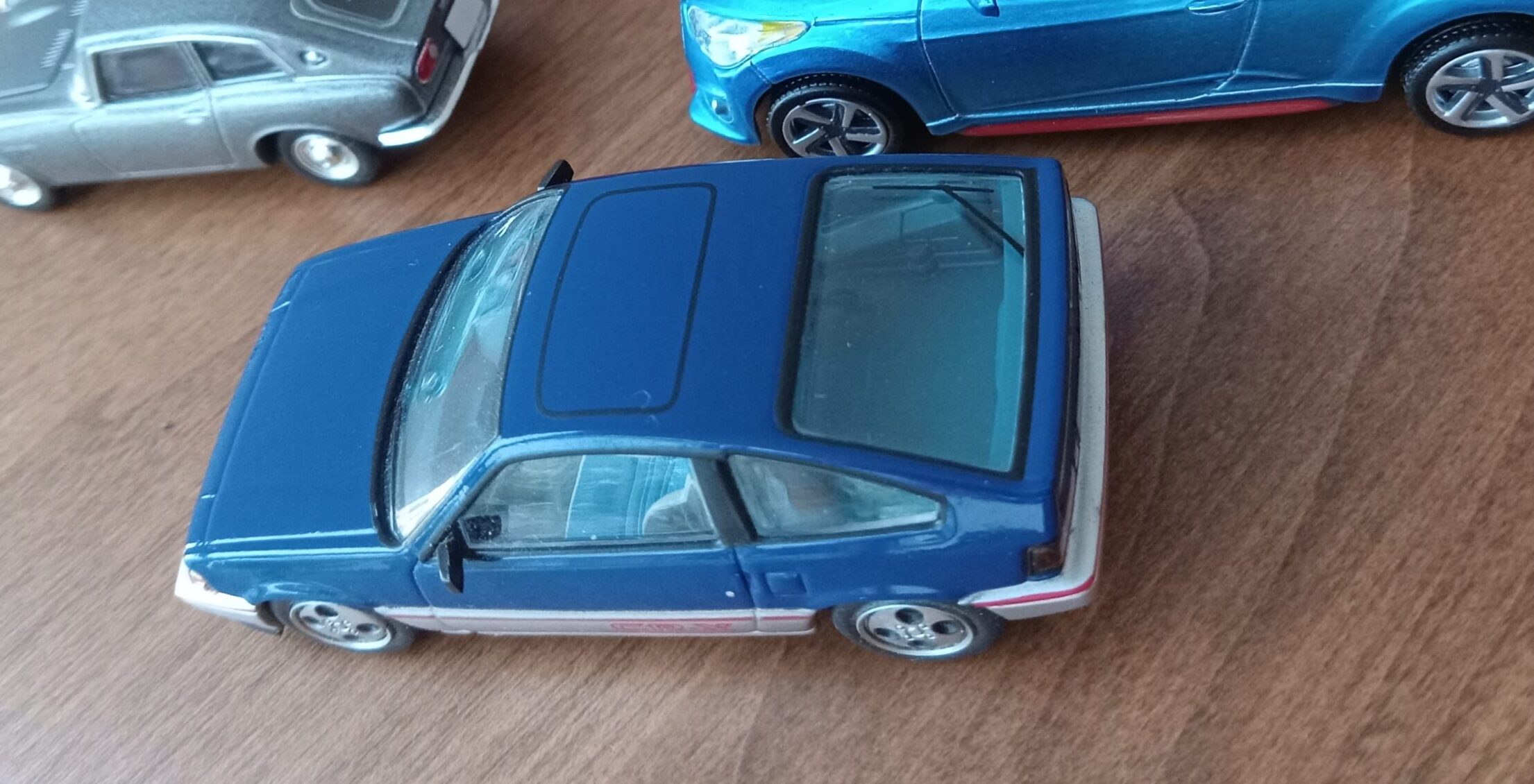
*カムバックテール:リアスパッと切り落とした特徴的なコーダトロンカ(カムバック)スタイルを採用。
*空力特性:空気抵抗を抑えるウェッジシェイプ(和傘型)のシルエットを構築。
*ワイド&ロー:低重心を強調したスポーティで未来的なくさび形のプロポーション。
*軽量ボディ:高張力鋼板を多用し、徹底的な軽量化と高剛性を両立。
*1.5Lエンジン:高効率な1.5L直列4気筒エンジン(EW型)を搭載し、軽快な吹け上がりを実現。
*足回り:フロントにマクファーソンストラット式、リアにトレーリングアーム式を採用し、俊敏なハンドリングを生み出す。
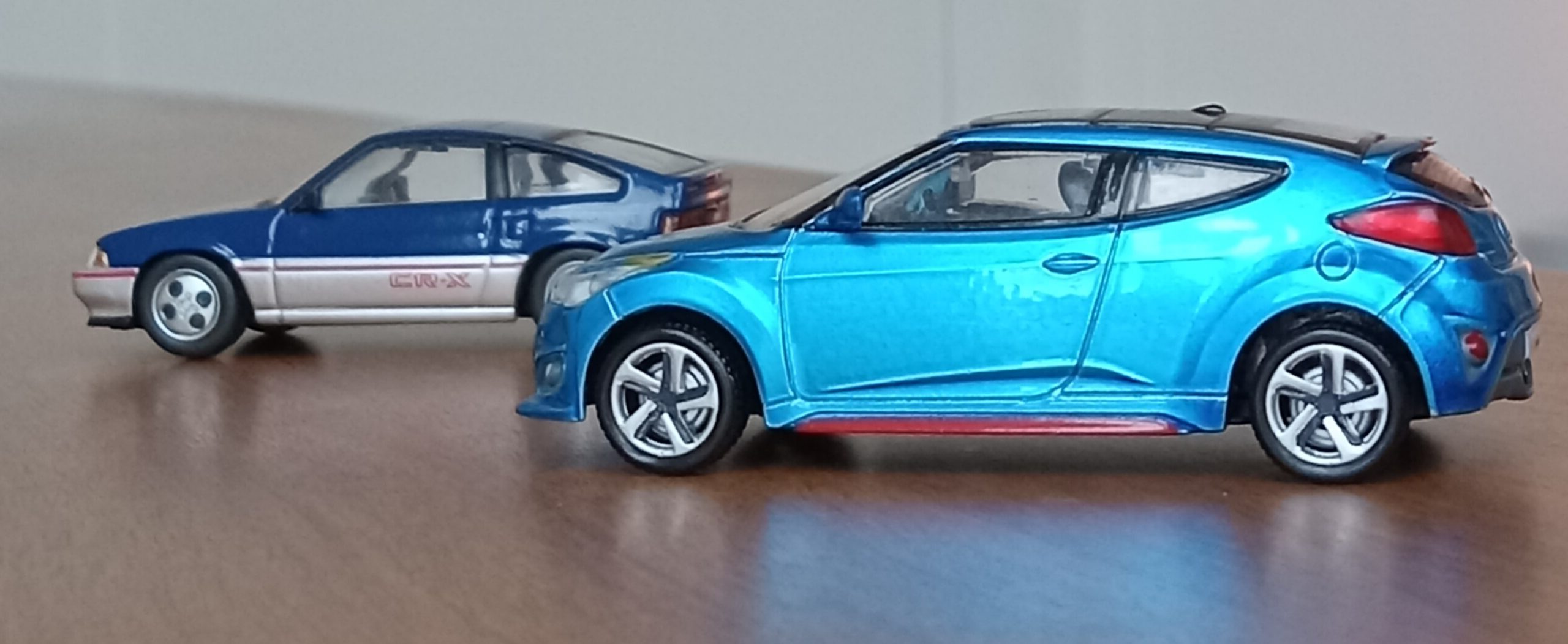
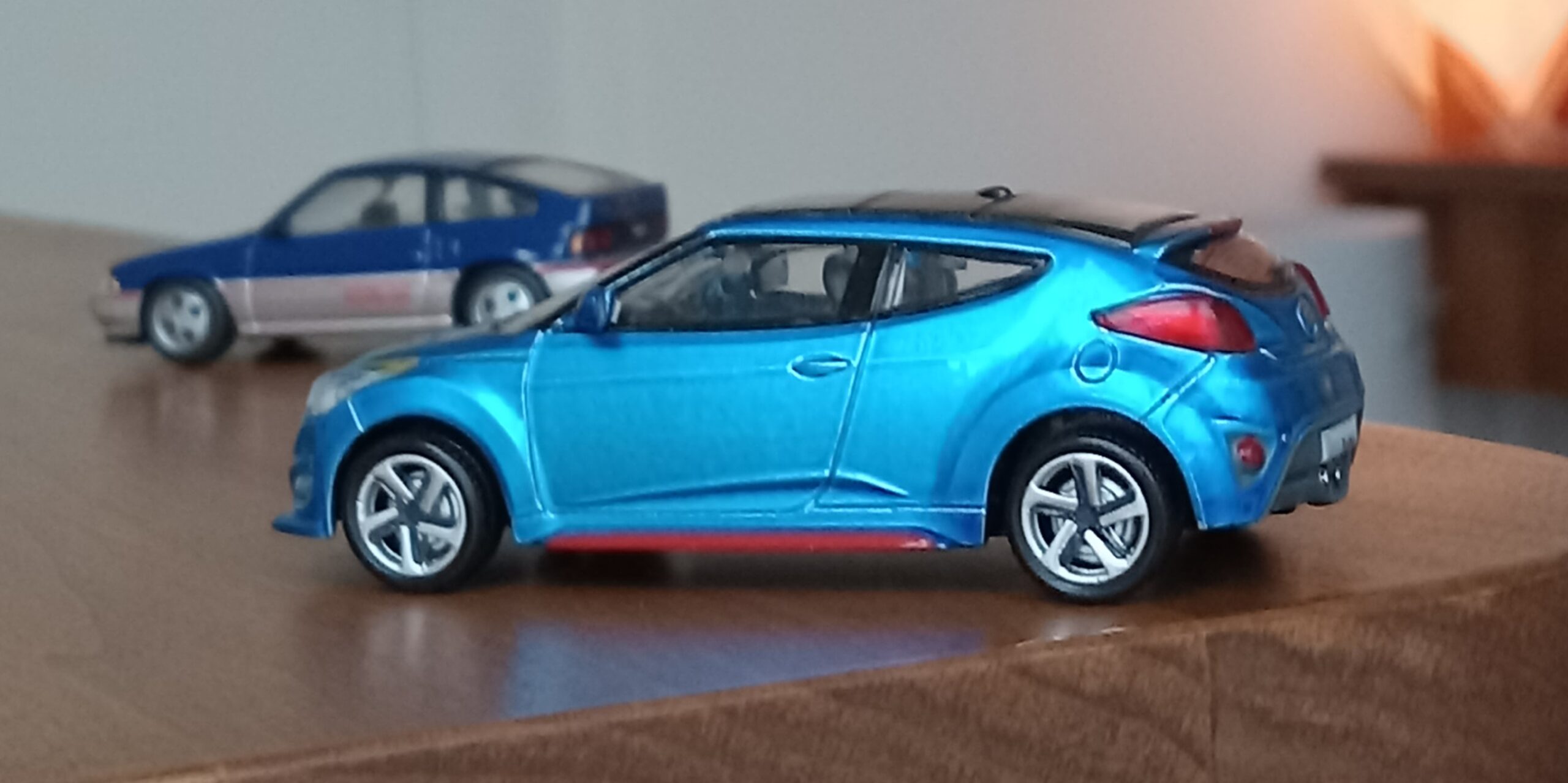
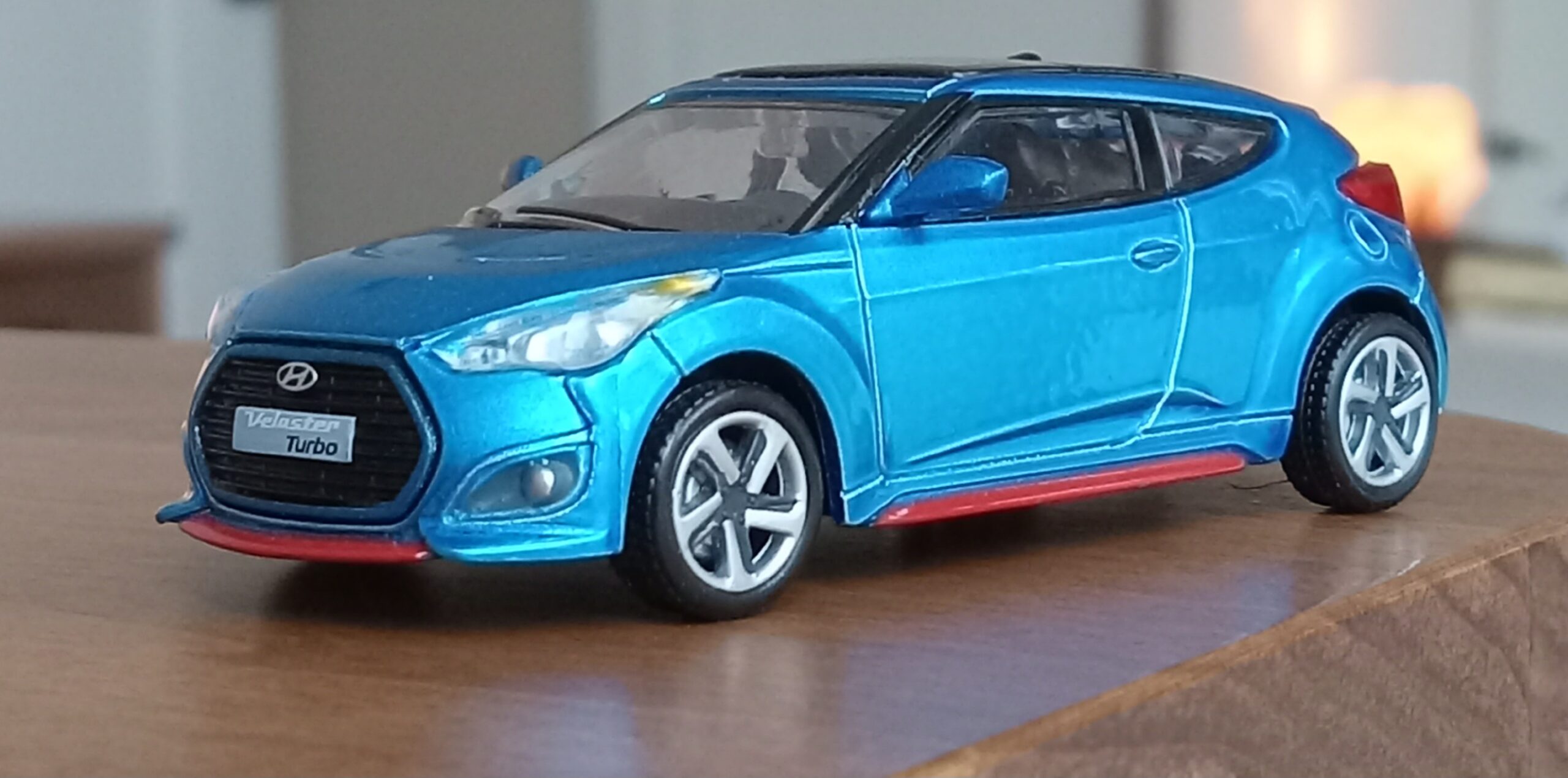
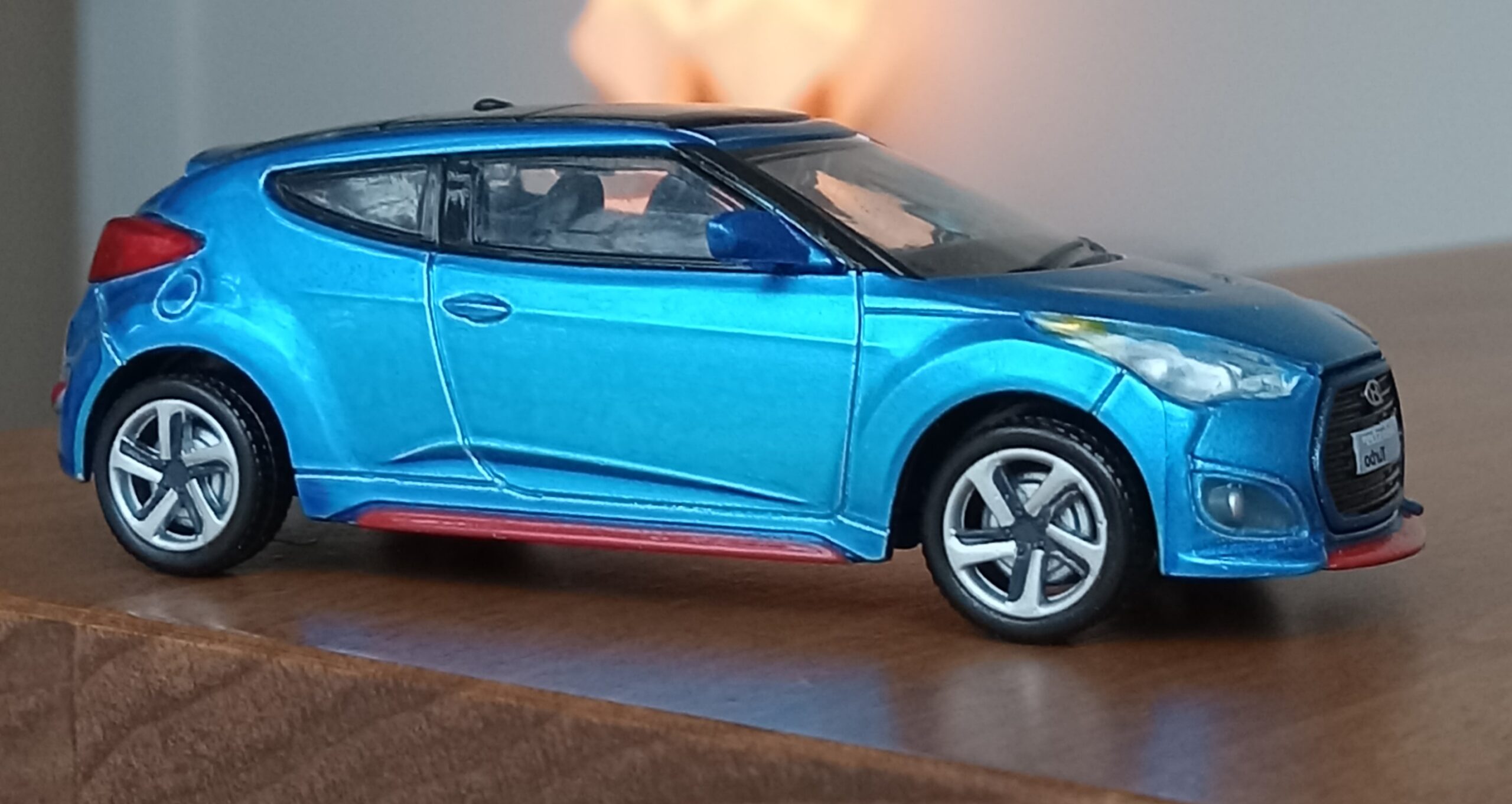
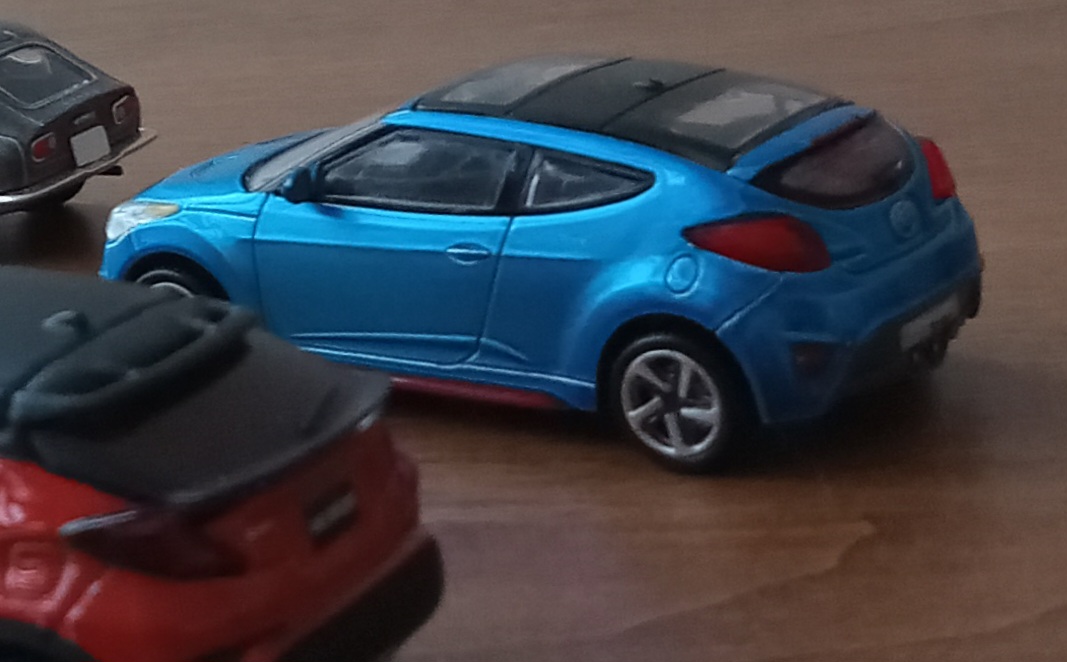
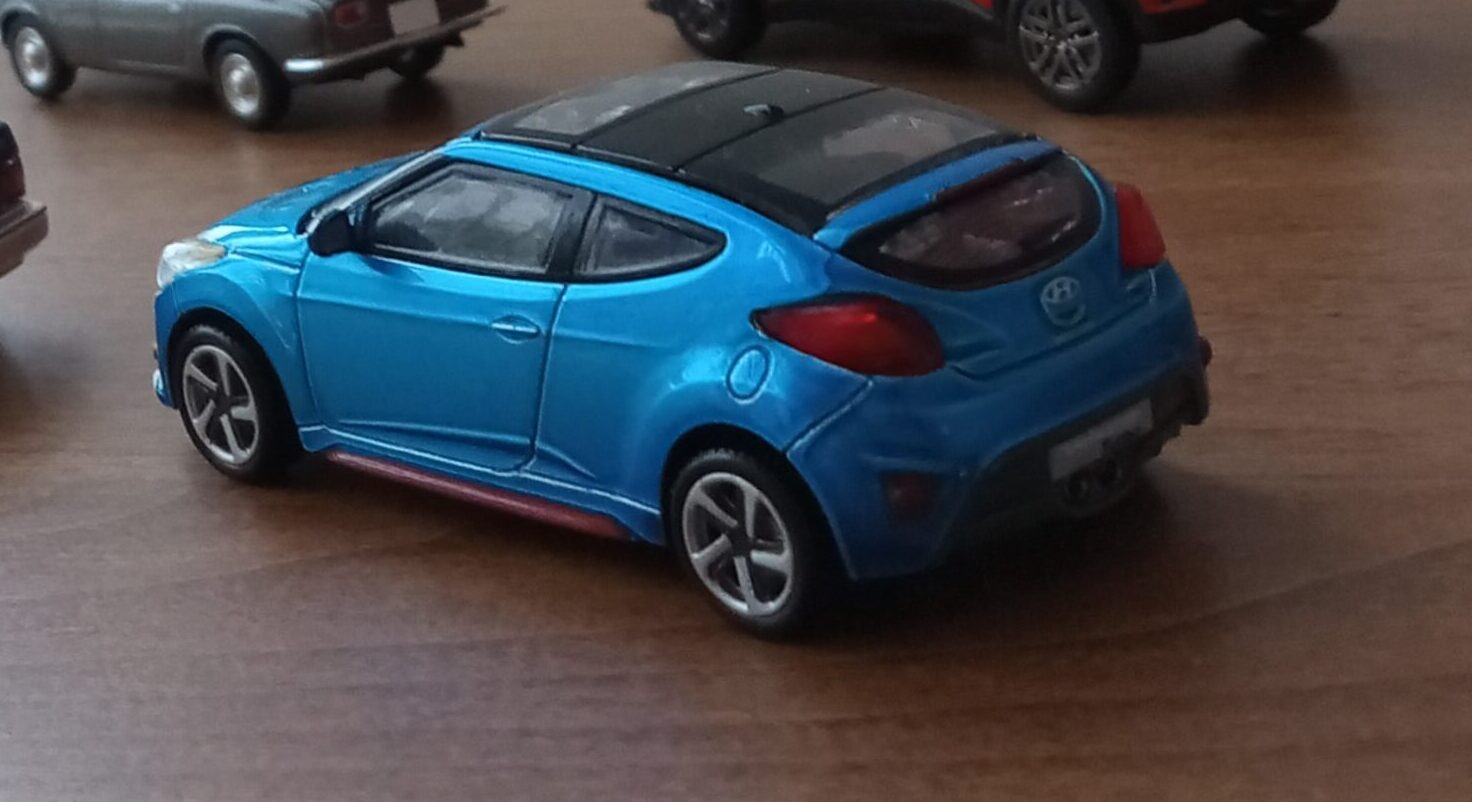
*現代 ヴェロスター(メタリック・エレクトリックブルー)
寸評:『超ロング・ホイールベースが産んだ
ーーー>獲物を狙うネコ科動物のスタンス』
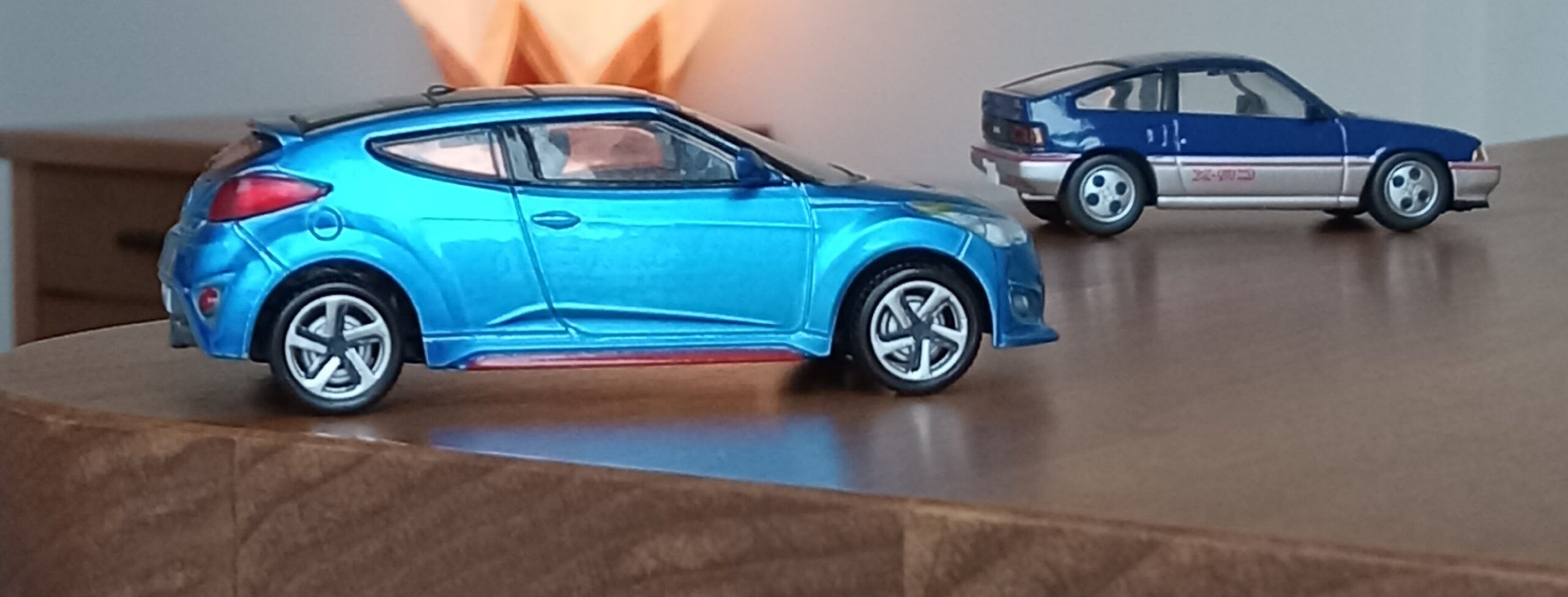
n
n
外観デザインの特徴
*非対称のサイドビュー:運転席側は長い1枚ドアでスポーティなクーペ風。助手席側は前後ドアを備え後席乗降性を確保。
*低重心プロポーション:ワイド感を強調する大型の六角形(キャスケード)グリルと、低く構えたルーフライン。
*アグレッシブなリア:中央に配置されたデュアルエキゾーストやディフューザー風造形で走りを主張。
n
*パワートレイン:1.6L直列4気筒直噴ターボ(最高出力201馬力など)や、本格スポーツモデル「N」では2.0Lターボ(最高出力275馬力)を搭載。
*足回り・シャシー:リアサスペンションにマルチリンク式を採用し、俊敏なハンドリングと高い走行安定性を実現。
*電子制御:コーナリング性能を高めるトルクベクタリングコントロールを装備。
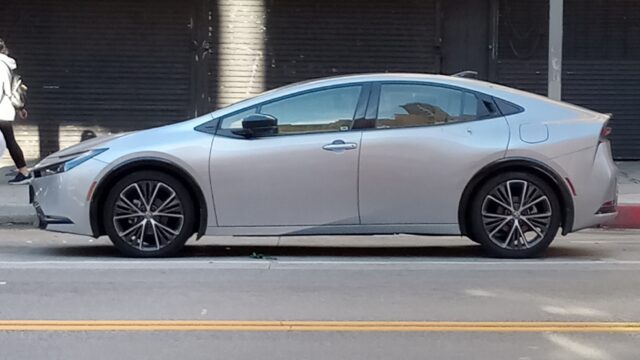
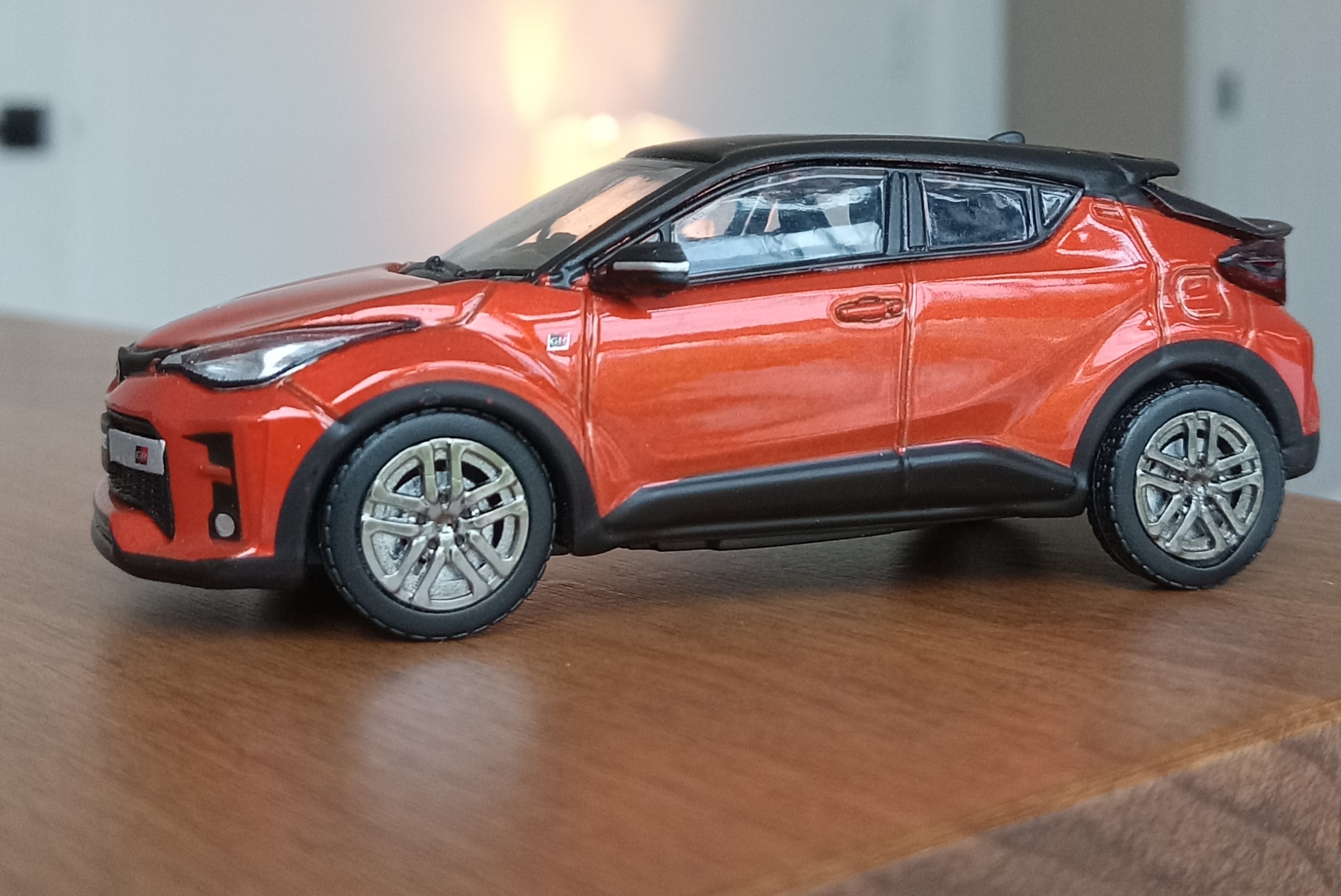
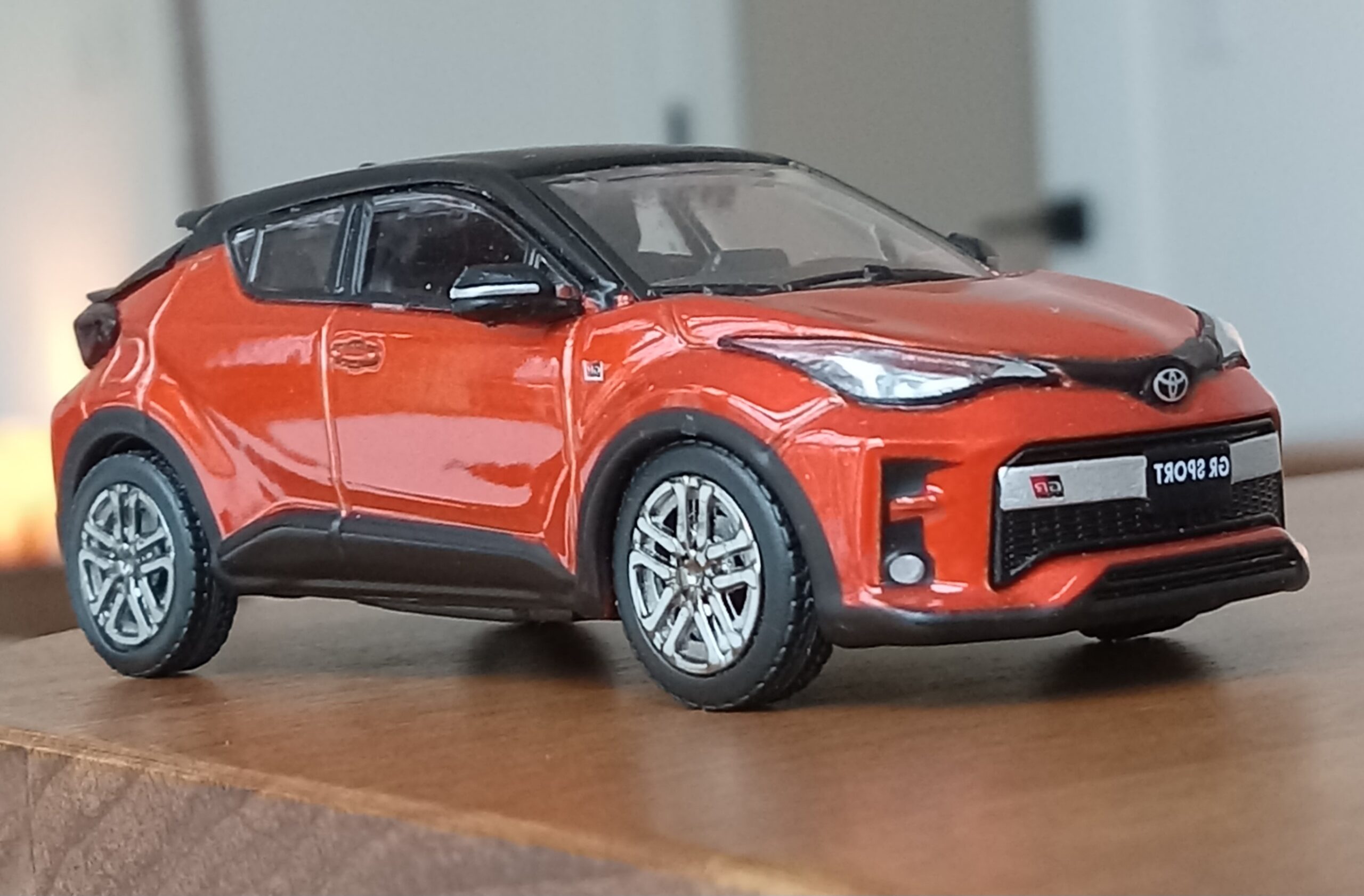
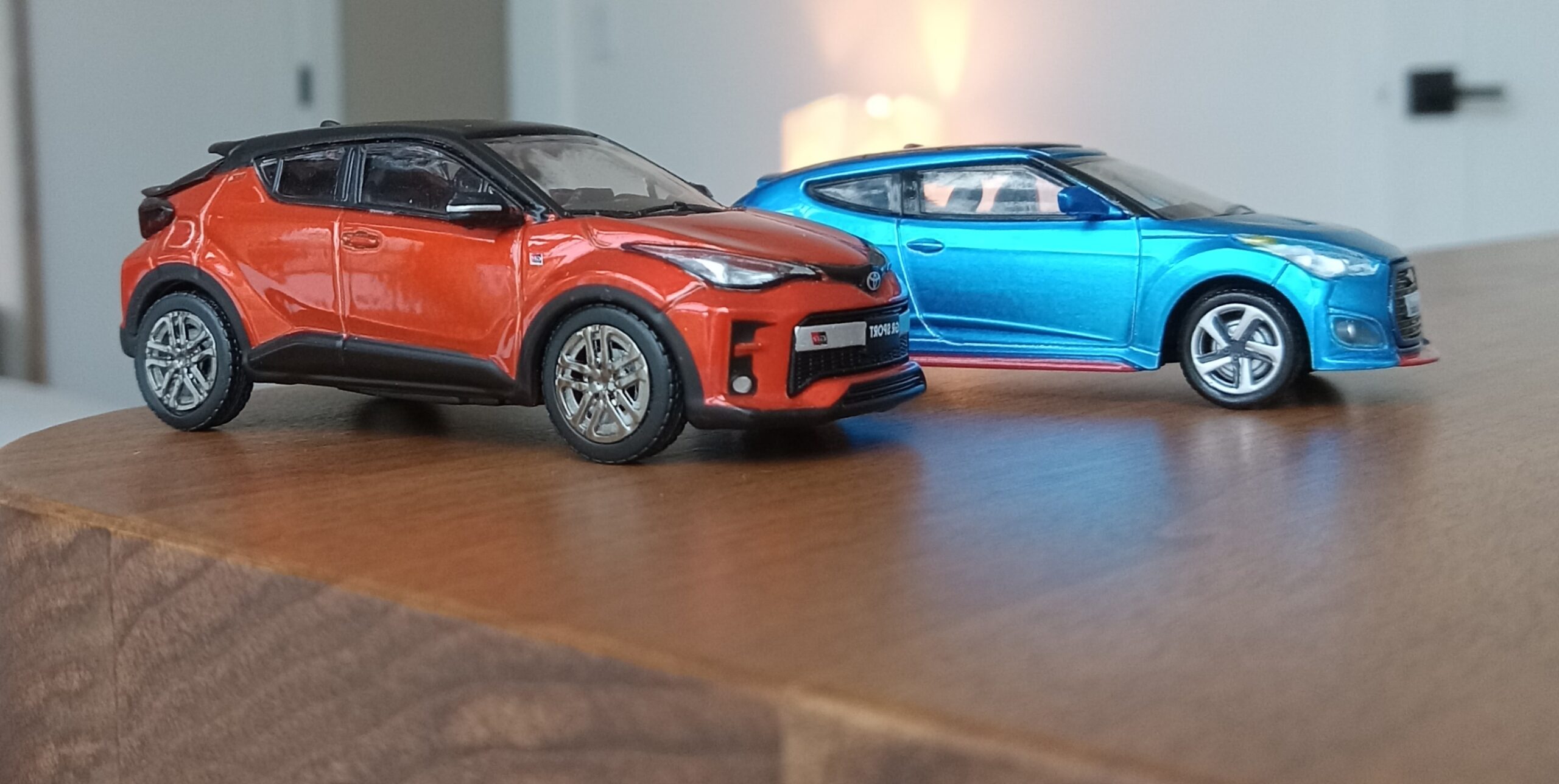
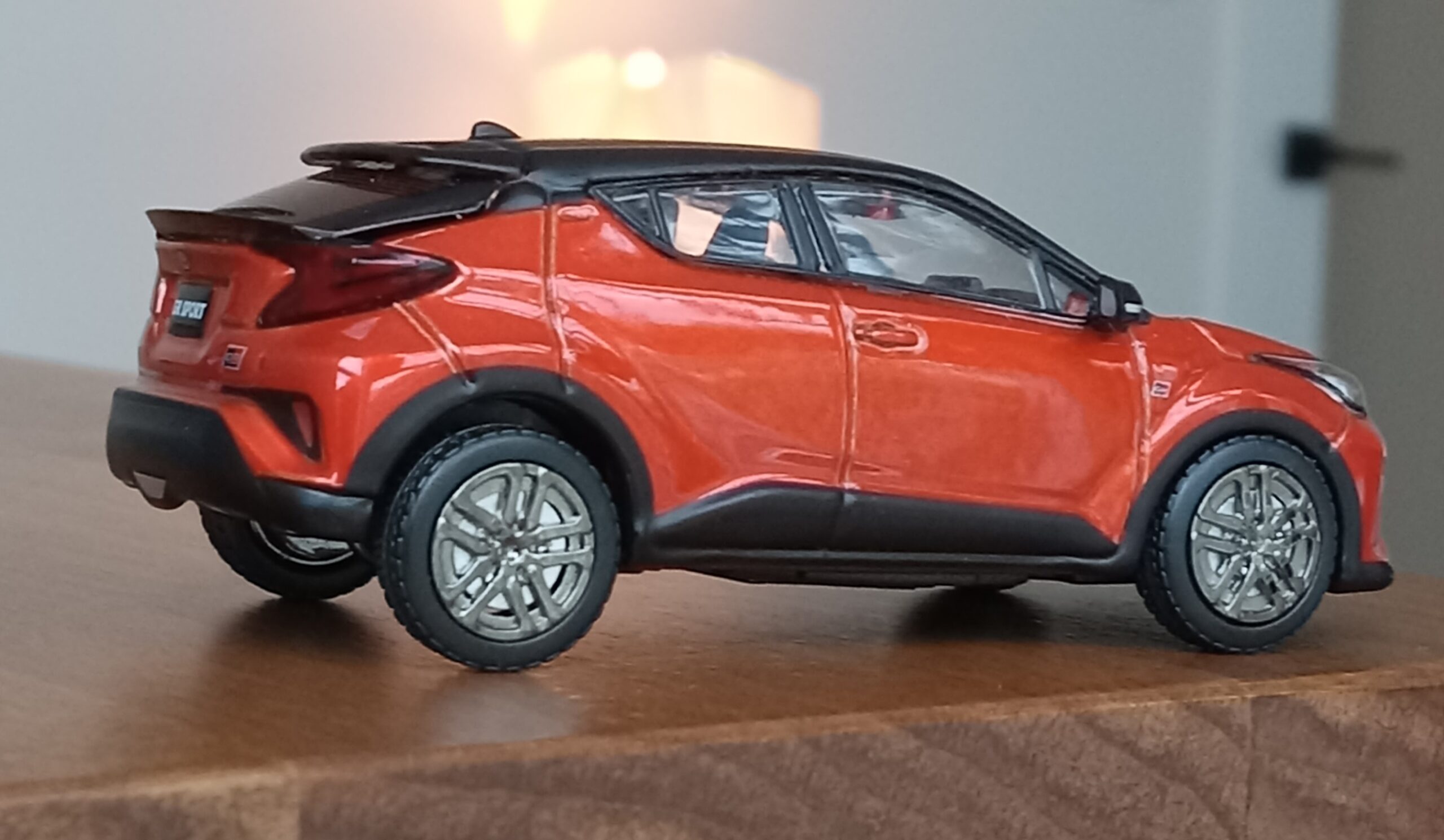
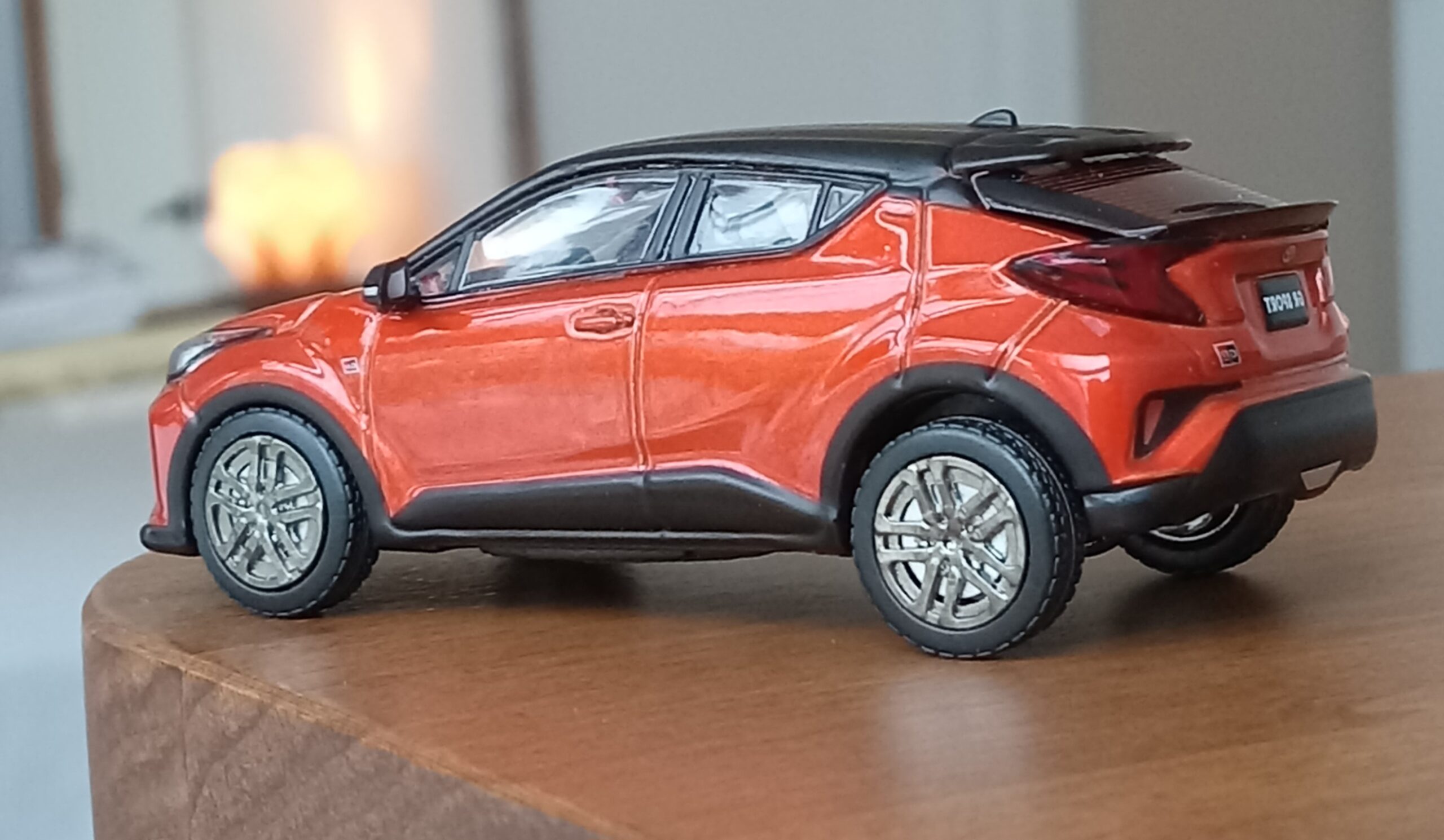
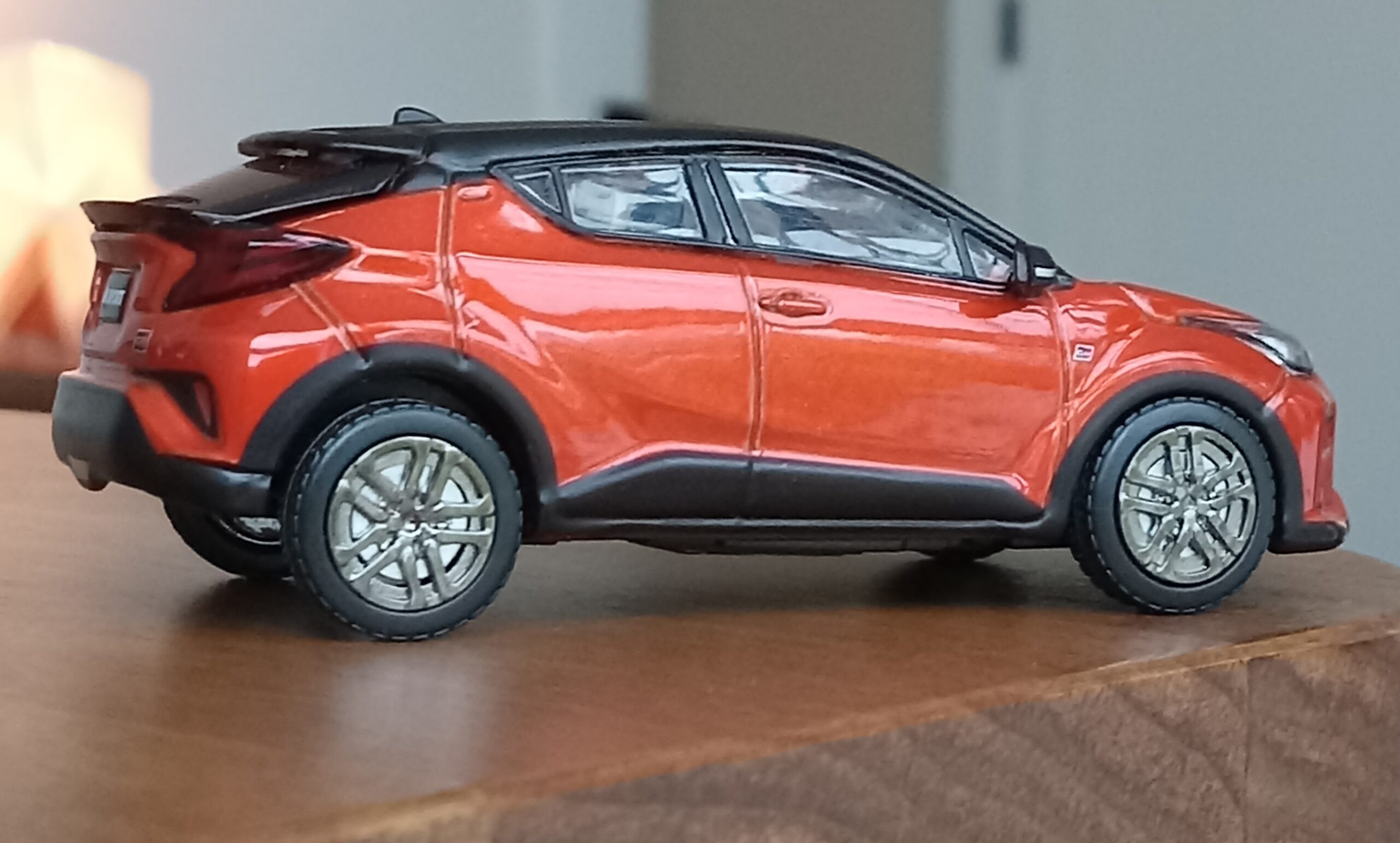
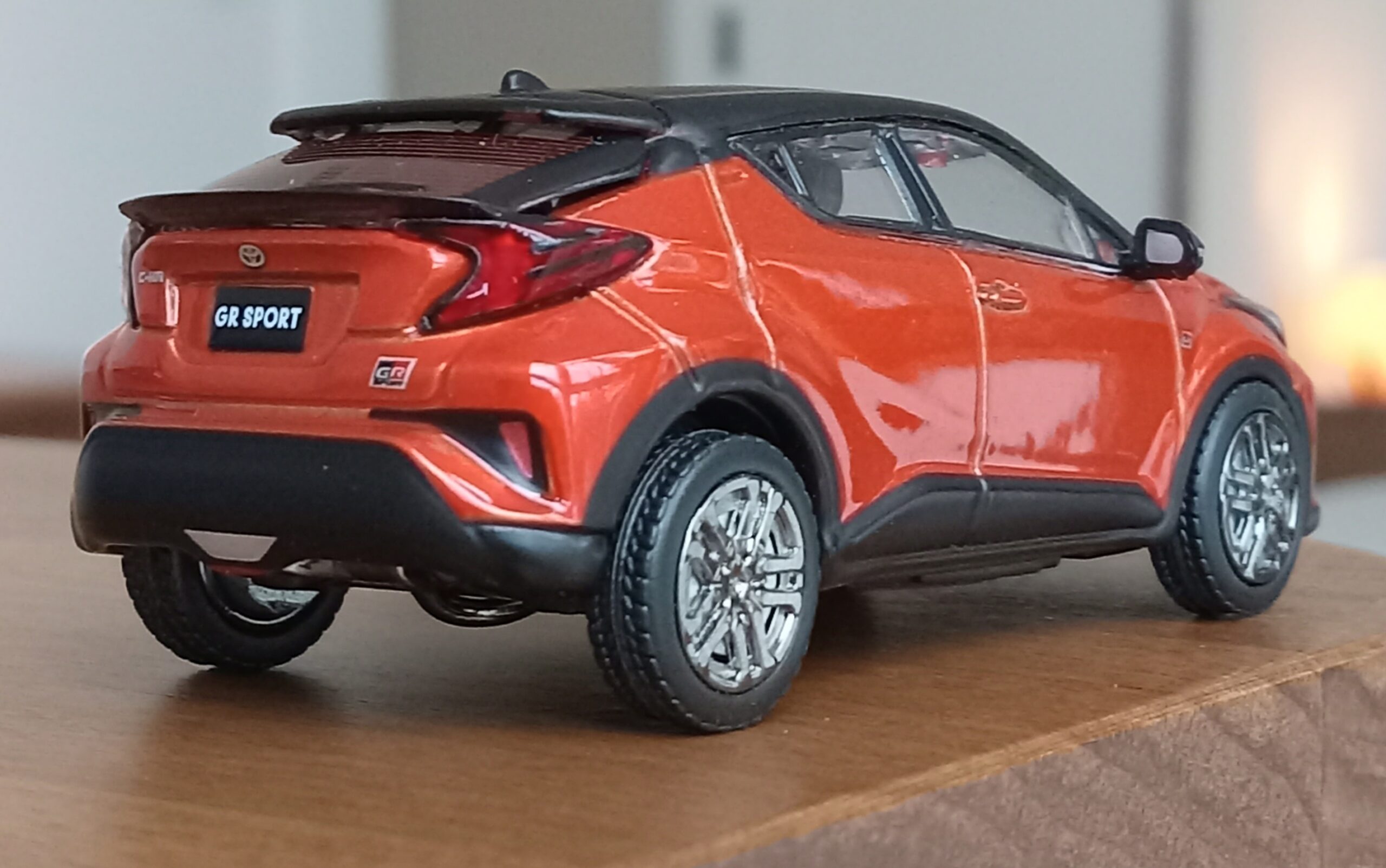
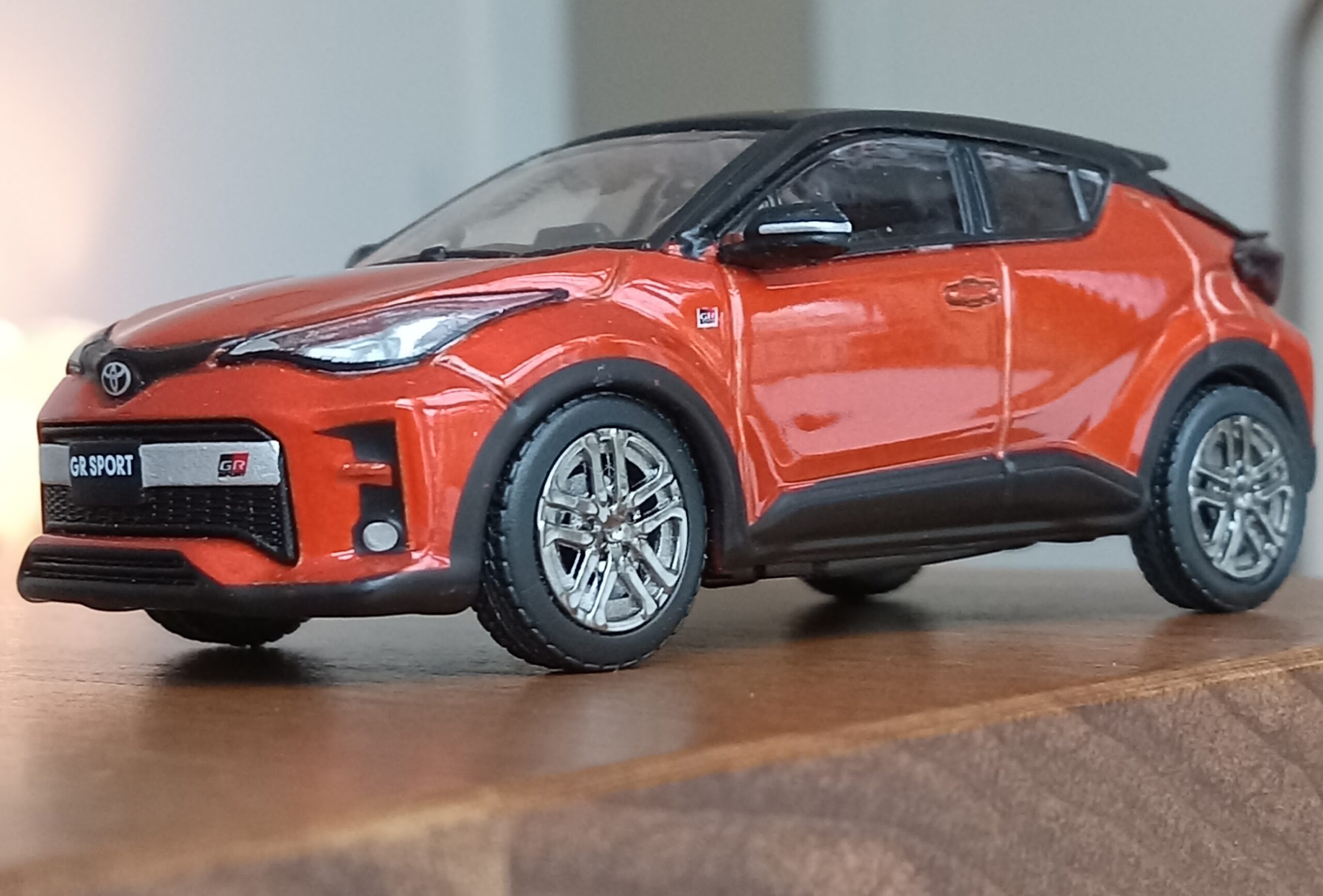
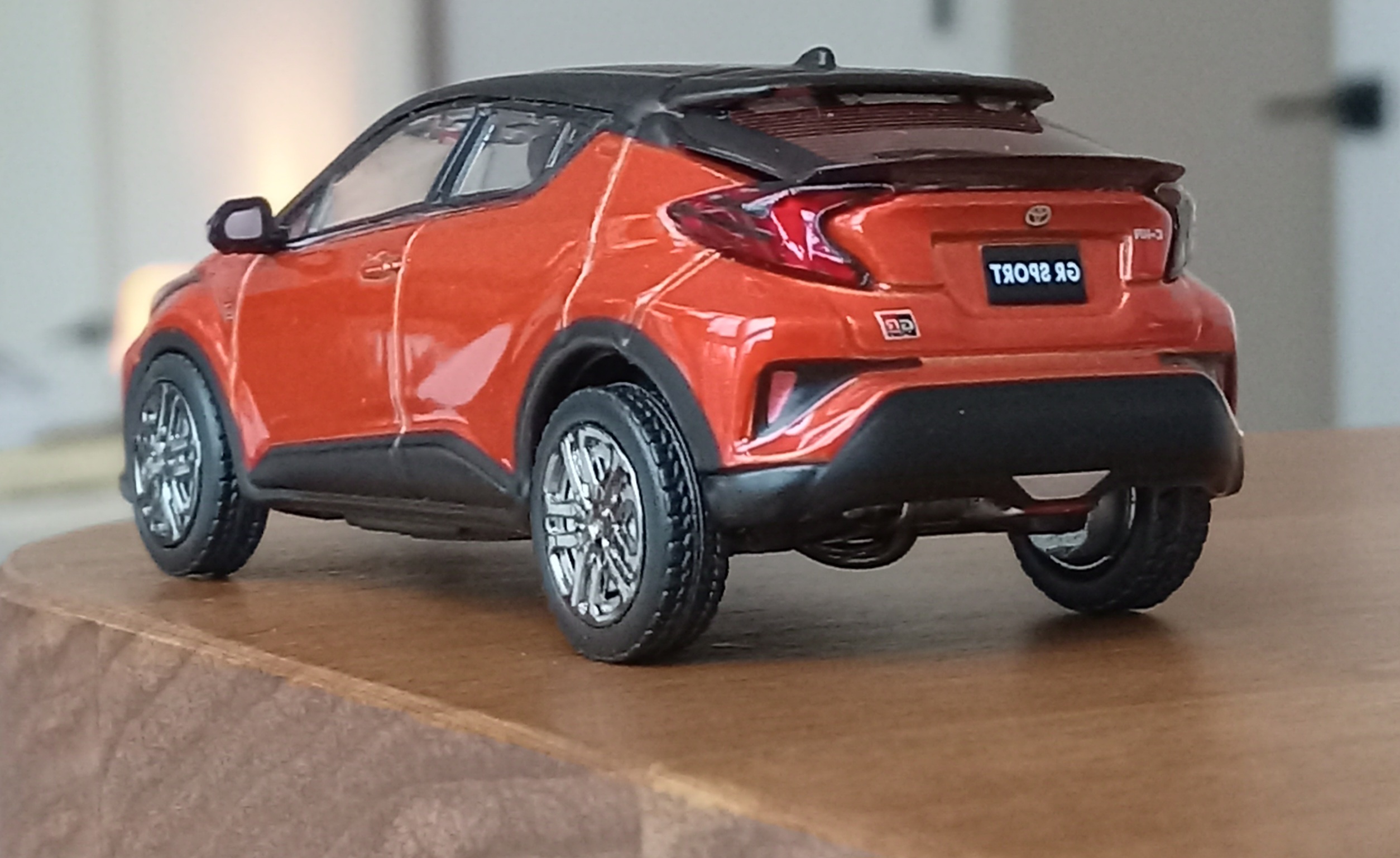
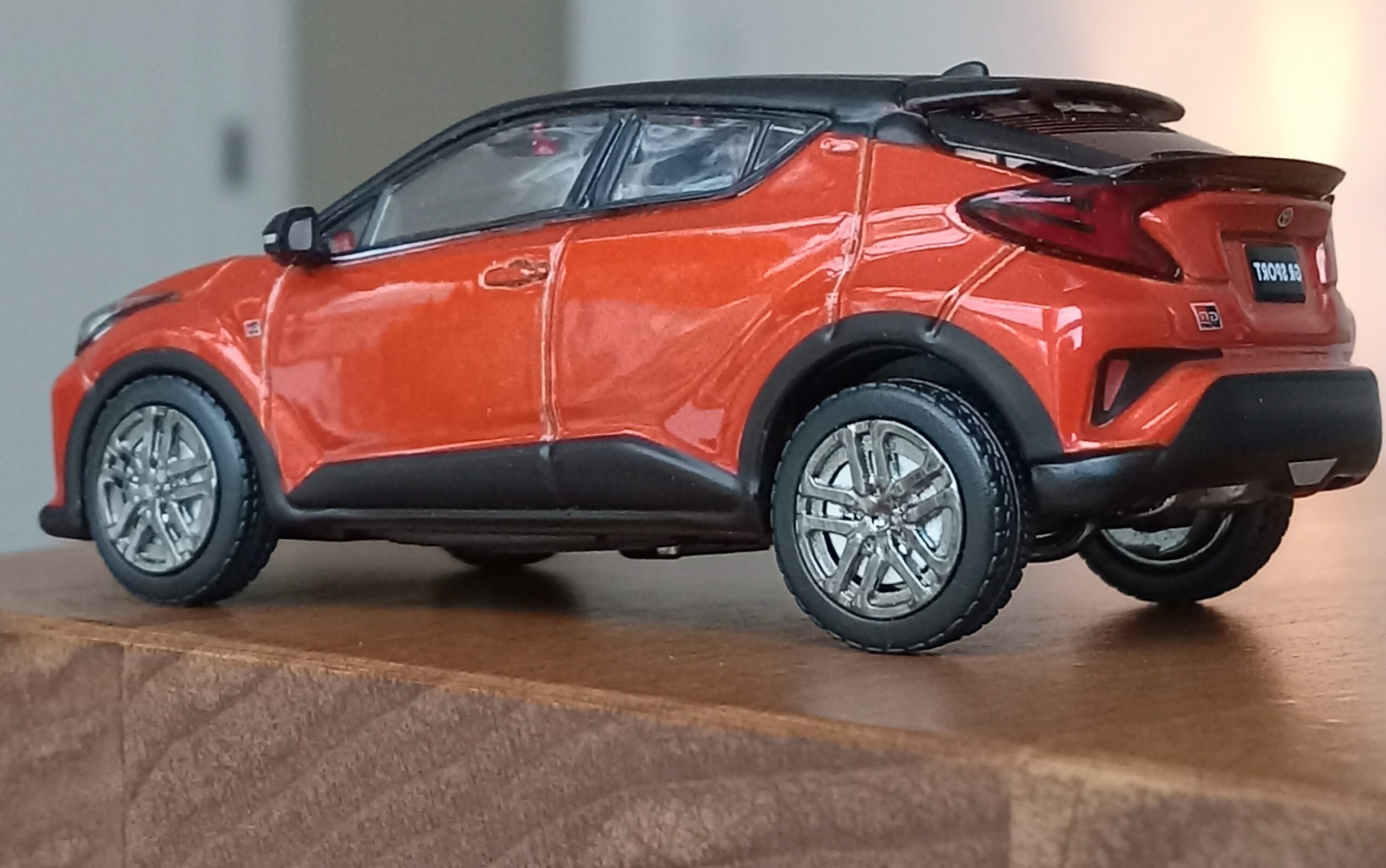
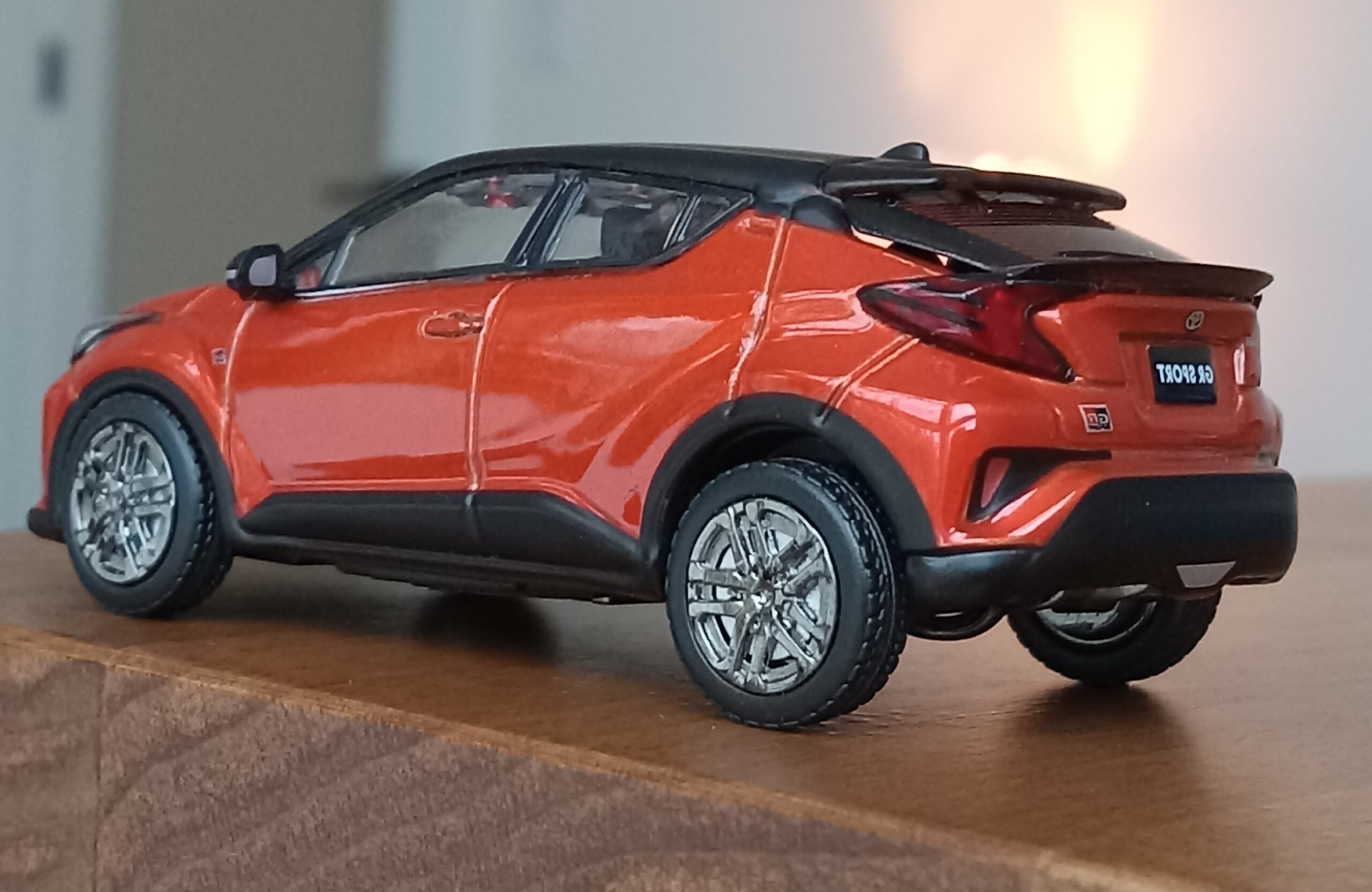
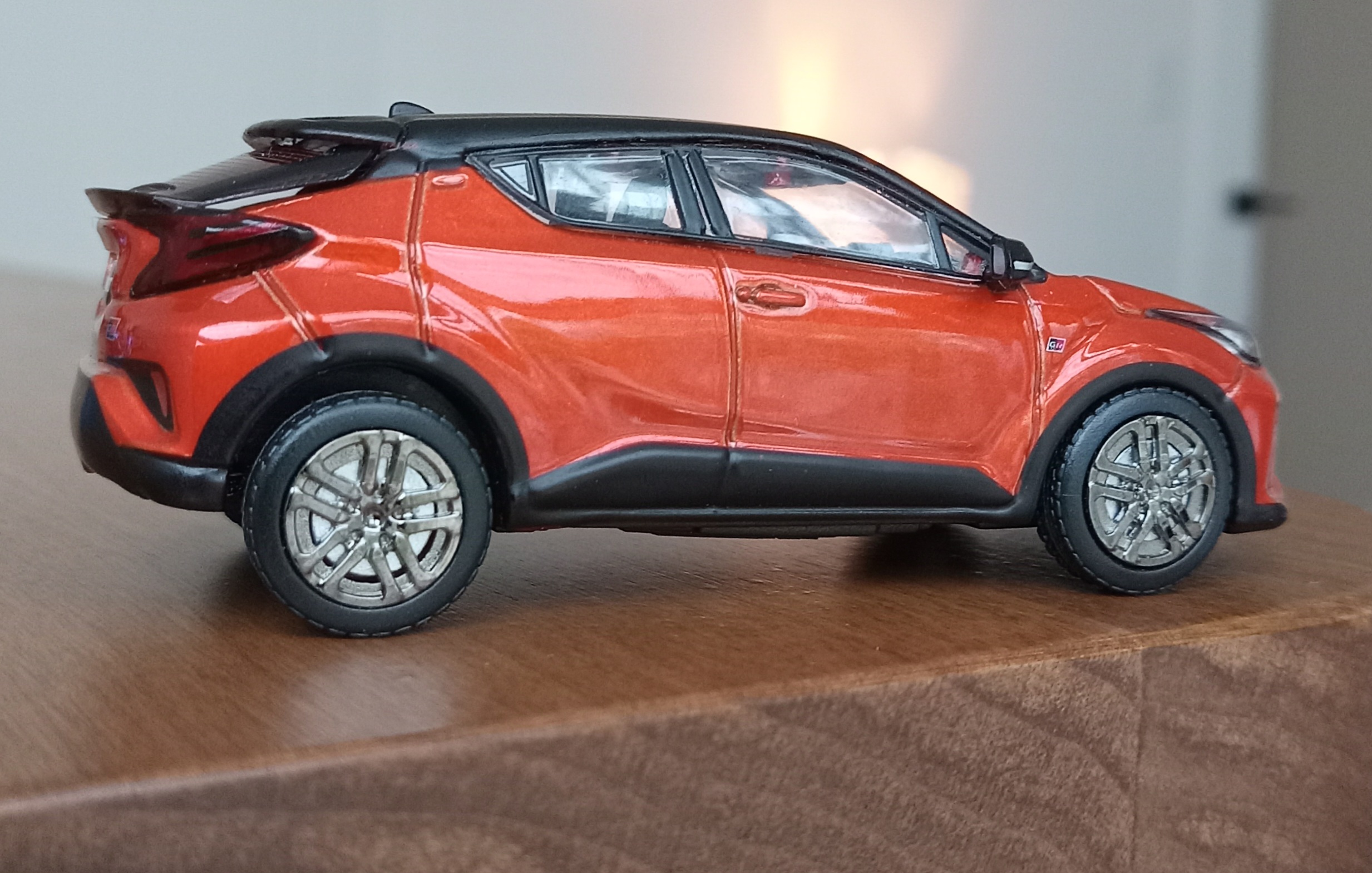
*トヨタ C-HR GRスポーツ(メタリック・オレンジ)
寸評:『トヨタだから出来た?お金のかかった複雑怪奇かつバランス感に富んだ
ーーーーー>二律背反する摩訶不思議な立体造形』
n
n
*プラットフォーム: 4代目プリウス譲りの「TNGA(Toyota New Global Architecture)」を採用し、低重心化と高いボディ剛性を達成。
*サスペンション: フロントにマクファーソンストラット、リアには新開発のダブルウィッシュボーン式を採用し、優れた操縦安定性と快適な乗り心地を両立。
*パワートレイン: 1.8Lハイブリッドシステム(2ZR-FXE)と、1.2L直噴ターボ(8NR-FTS)を設定し、機敏なレスポンスと環境性能を実現。
n
*ダイヤモンドテーマ: 塊感のあるキャビンに、面を削り出したダイヤモンドのような立体的な造形を多用。
*クーペスタイル: 大径タイヤを強調する力強いフェンダーと、後方へ向かって絞り込まれるキャビン、隠しドアハンドルで2ドアクーペのようなルーフラインを構築。
*フロント&リア: トヨタの「キーンルック」を進化させ、シャープなLEDヘッドライトとリアのフローティングLEDコンビネーションランプで先進性を強調。
n
n
*ミニカー解説:それぞれ、評価と感想
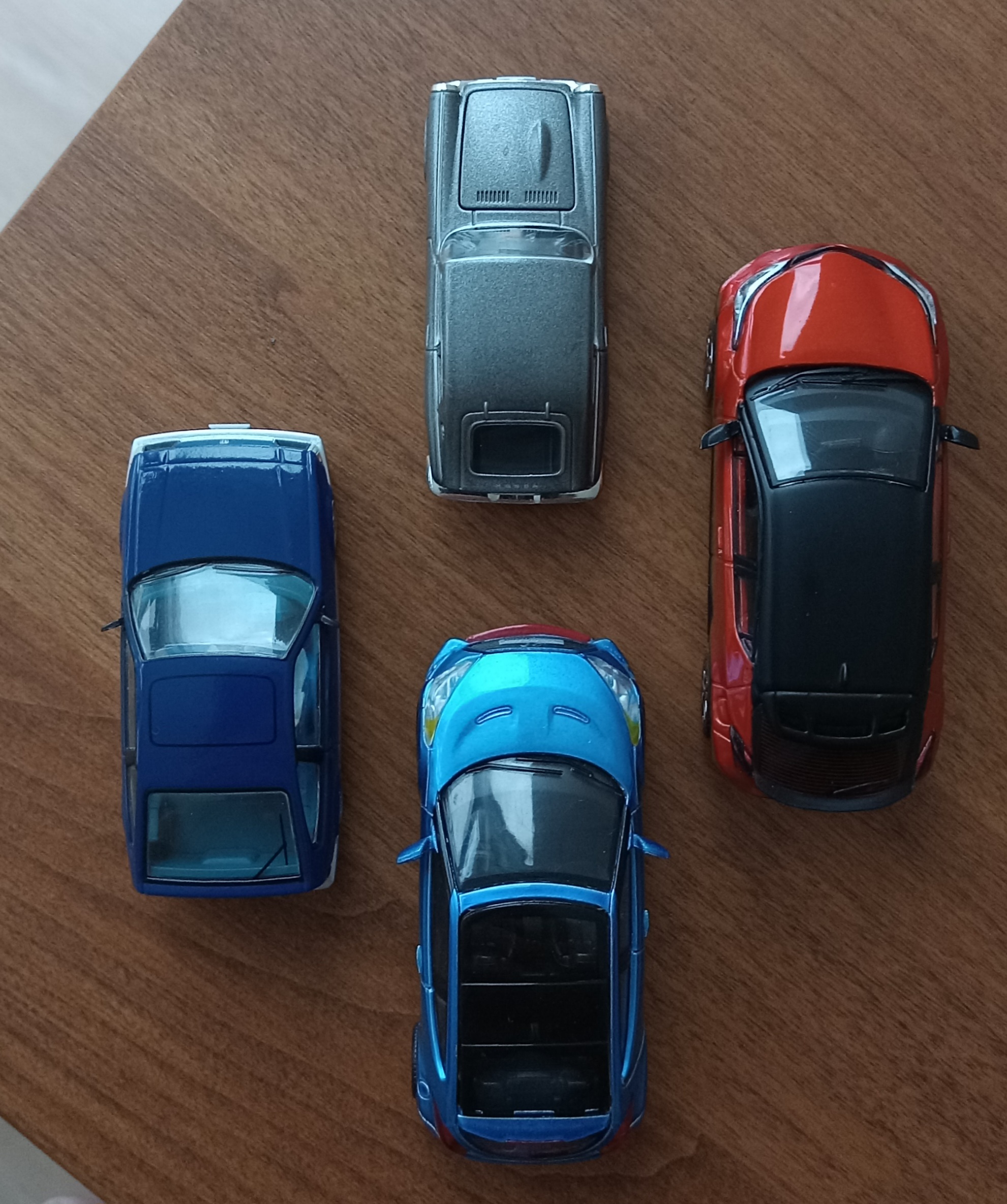
それでは今回集めた
4台のミニカーに付いての、
評価と感想を書いてみます。
*トミーテック製、1/64ダイキャスト完成品、LV-N124c ホンダ S800 クーペ、【青と銀の2トーン】
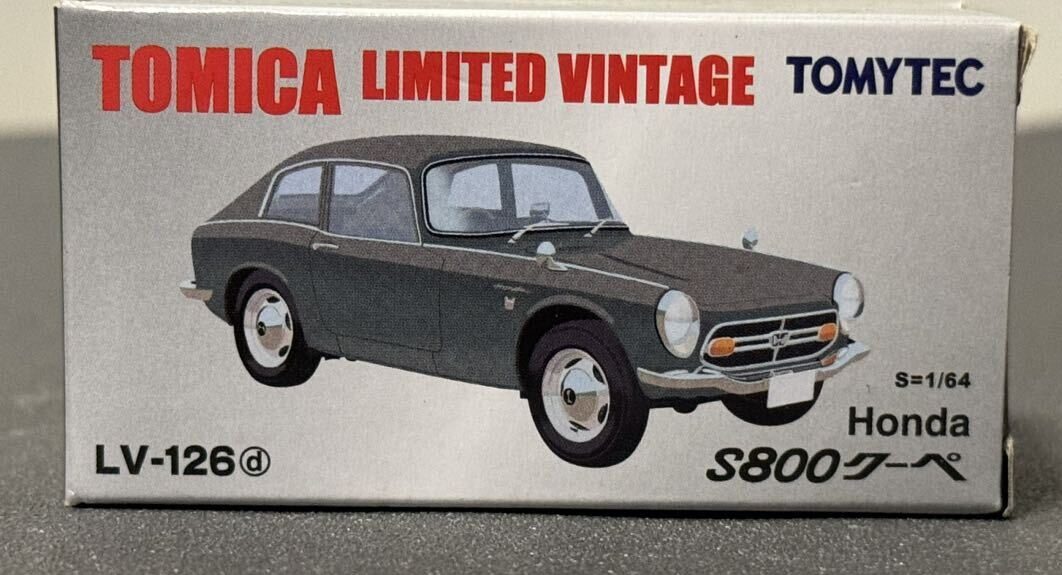
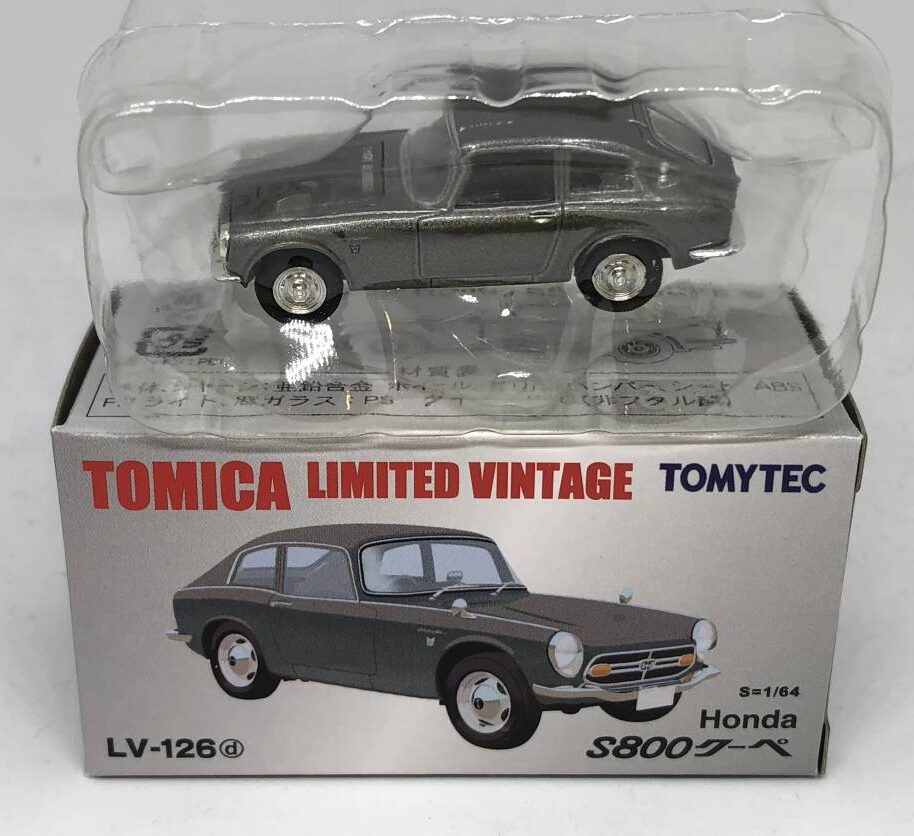
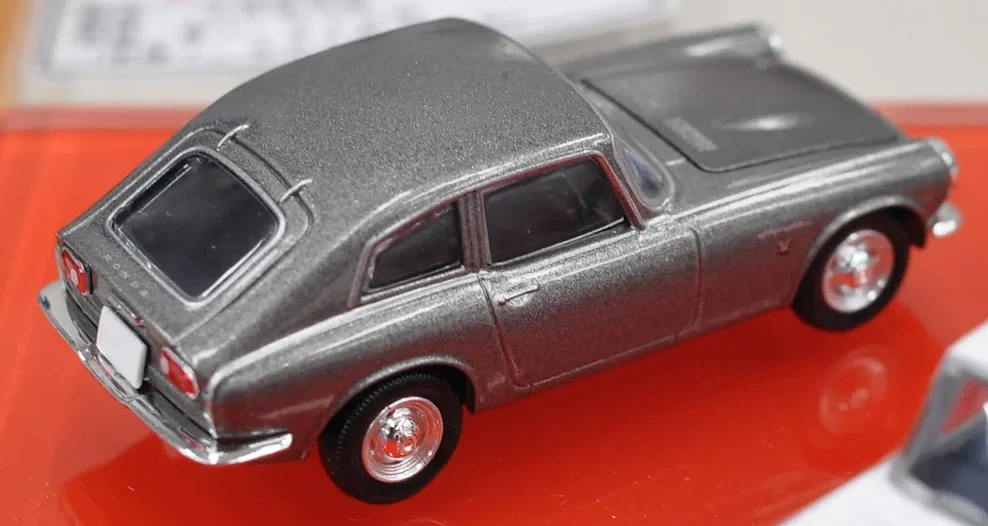
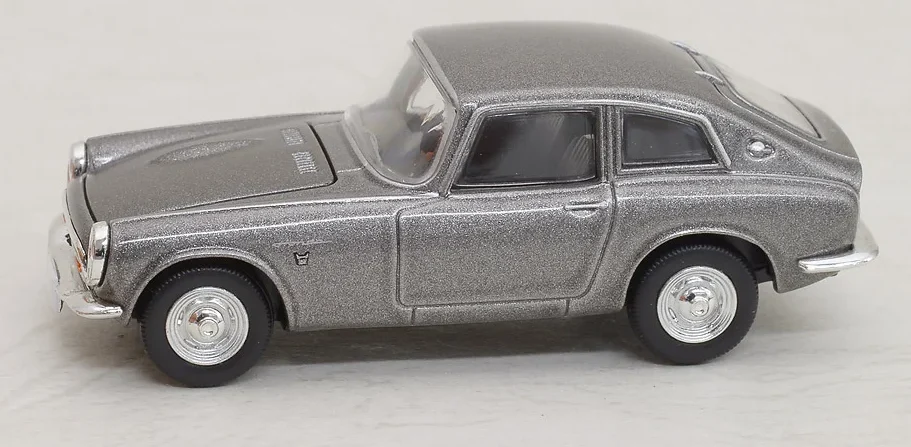
長所:
*ボディー、ホイール造形の正確さ
*ホイール・タイヤの大きさ、車高が完璧
*塗装と組みつけクオリティーの高さ
*正確なスケールと他のLV-N製品との相関性
残念な点:
*全くなし。
*本物より本物っぽい出来なので、
*完全に満足してます。
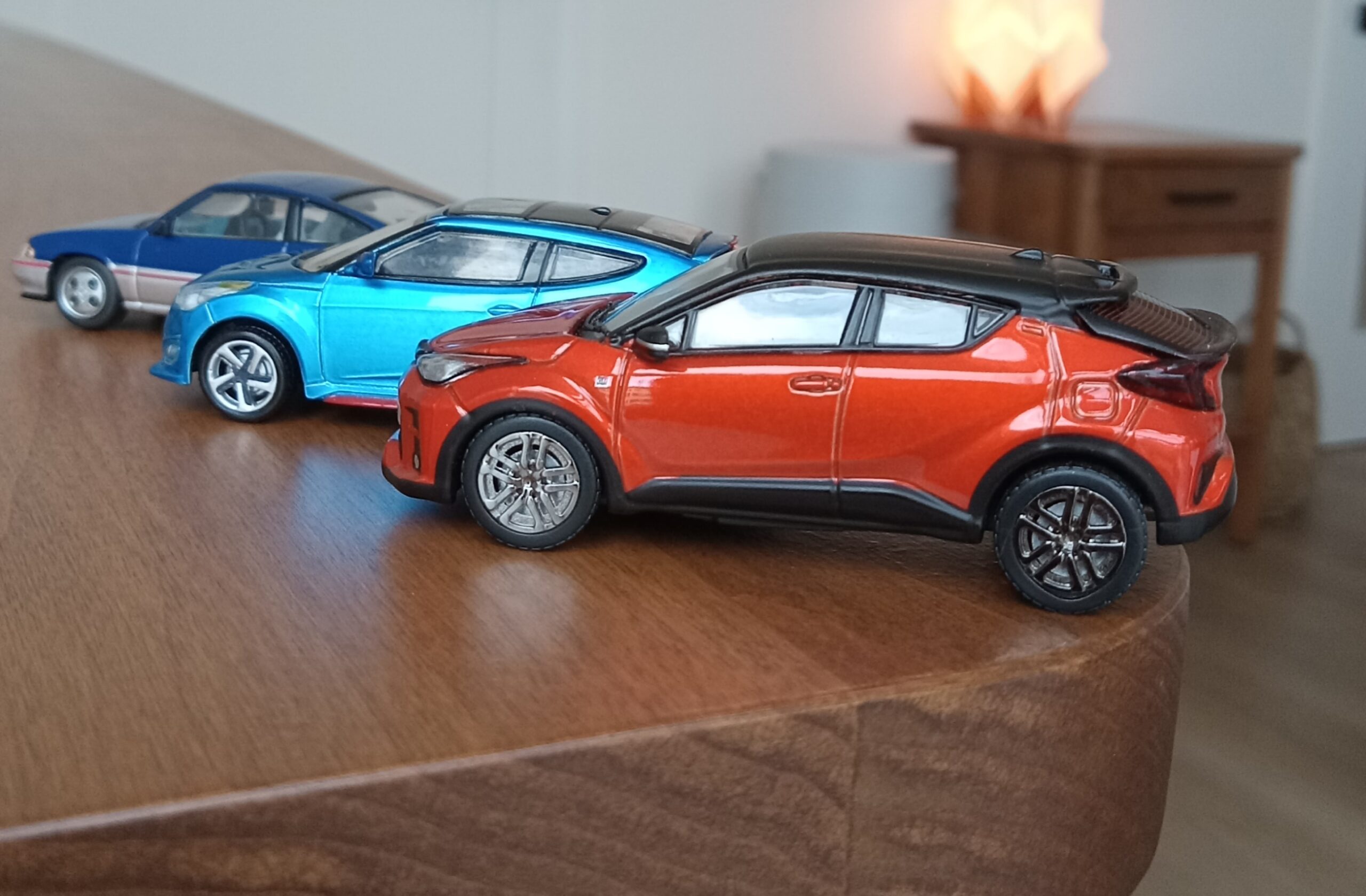
*トミーテック製、1/64ダイキャスト完成品、LV-N124c ホンダ バラードスポーツCR-X 1.5i【青と銀の2トーン】
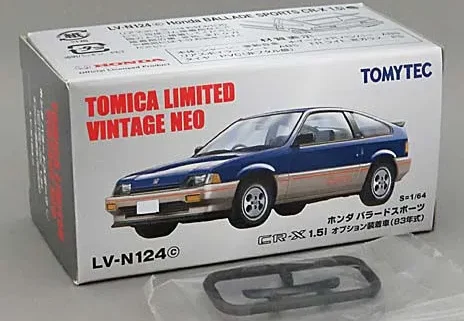
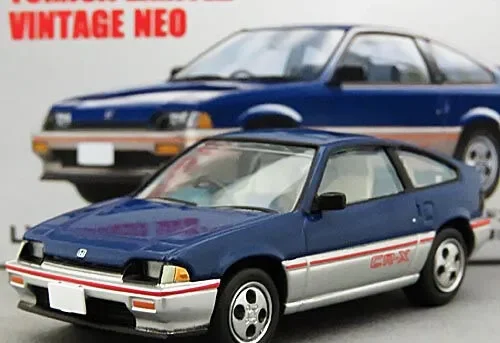
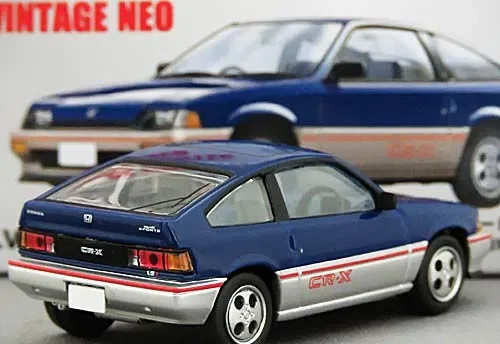
長所:
*ボディー、ホイール造形の正確さ
*塗装と組みつけクオリティーの高さ
*正確なスケールと他のLV-N製品との相関性
残念な点:
*ホイールとタイヤサイズが若干オーバーサイズ気味なところ
*経年変化で割れ気味な塗料
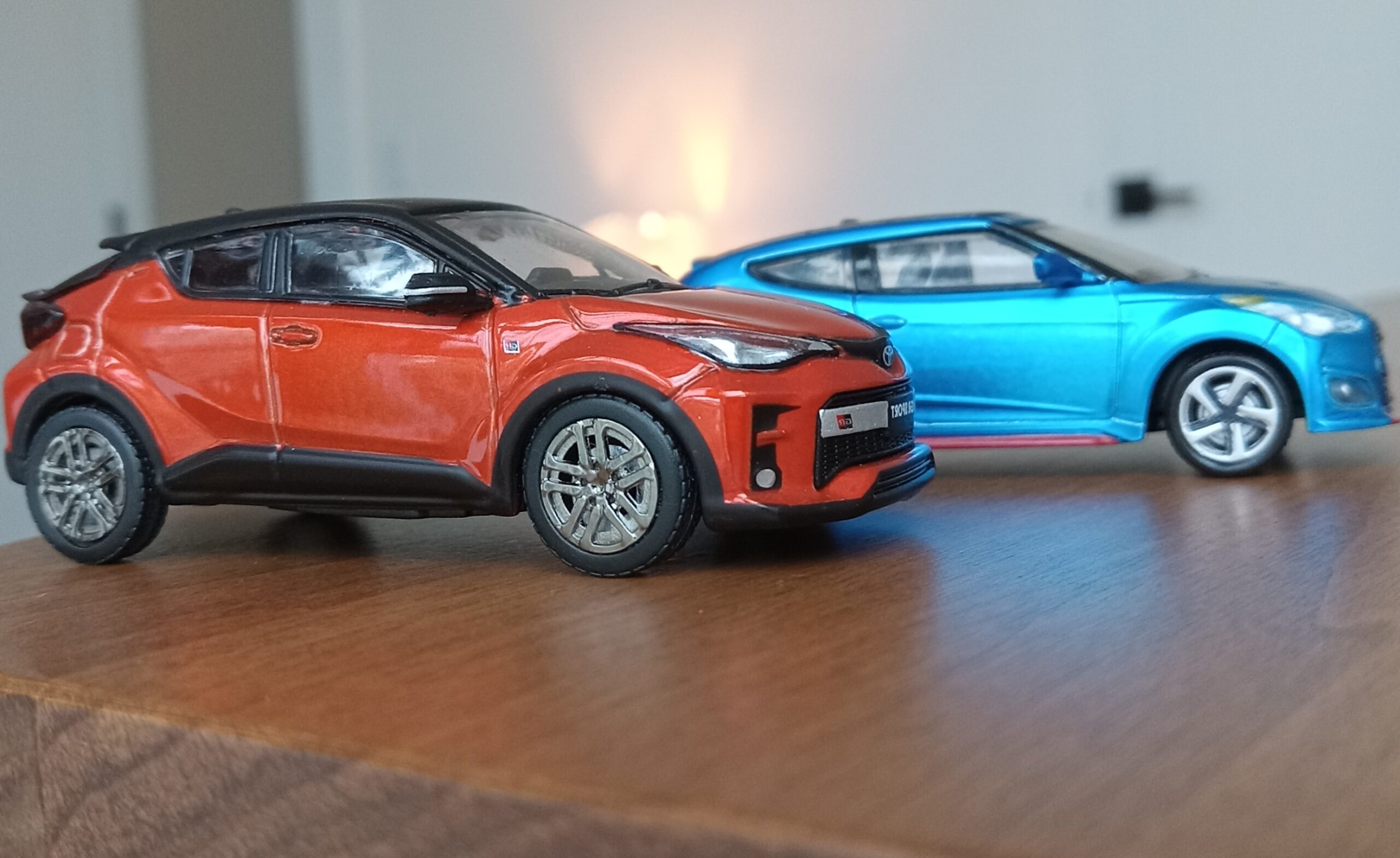
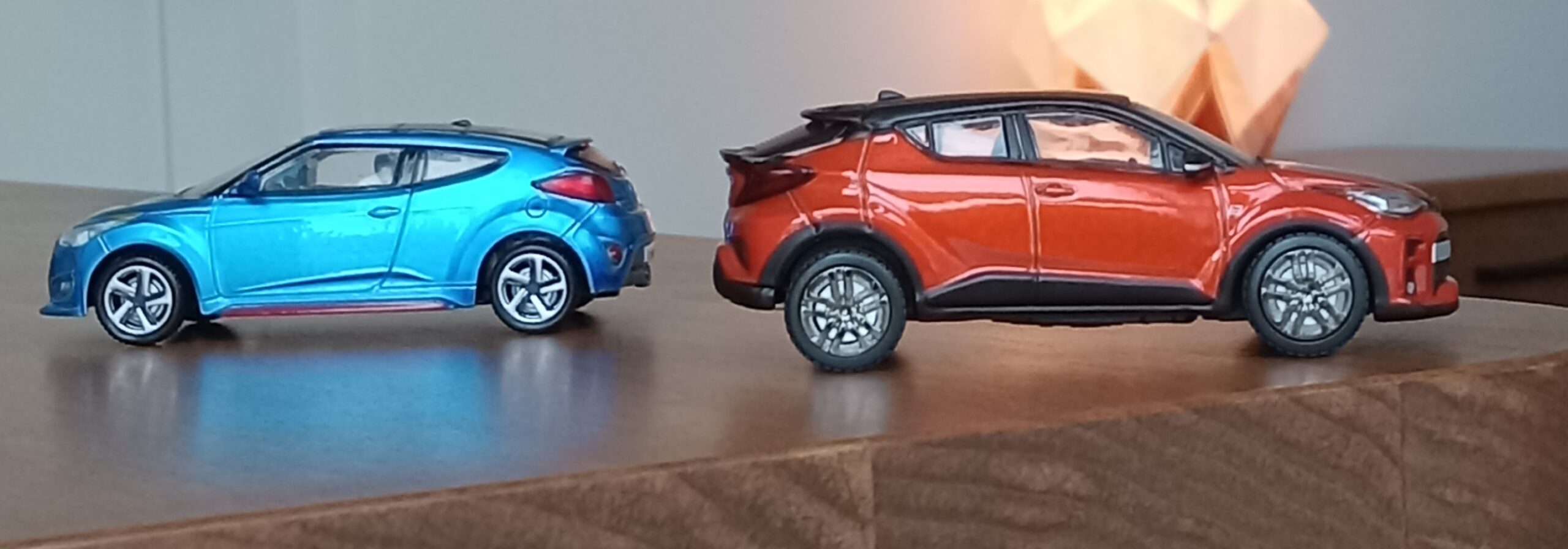
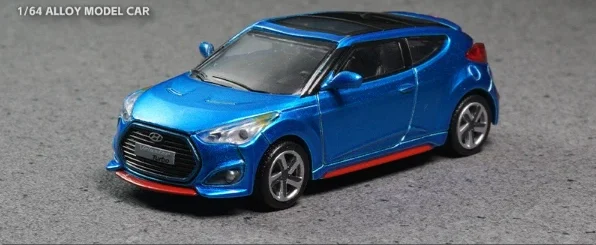
*シャドウ製、1/64ダイキャスト完成品、#153 現代ヴェロスター・ターボ、2012(エレクトリック・ブルー)
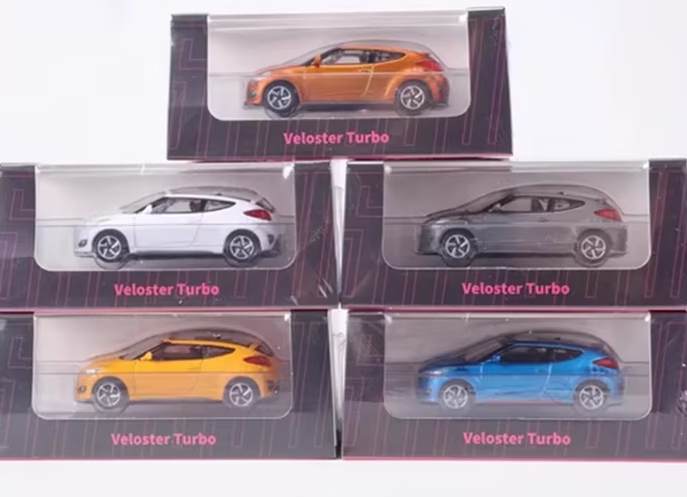
長所:
*ボディー、ホイール造形の正確さとディテールの再現度の凄さ
*塗装と組みつけクオリティーの高さ
*新興会社とは思えない、手慣れた部品分割や担保塗装のすばらしさ
*1/43の中堅ミニカーの出来を軽く上回るレベルの凄まじいバリュー
*このクオリティーで、他の韓国車を商品化希望
残念な点:
*ホイールとタイヤのサスペンション機能が
逆に不安定な全高を規定しています。
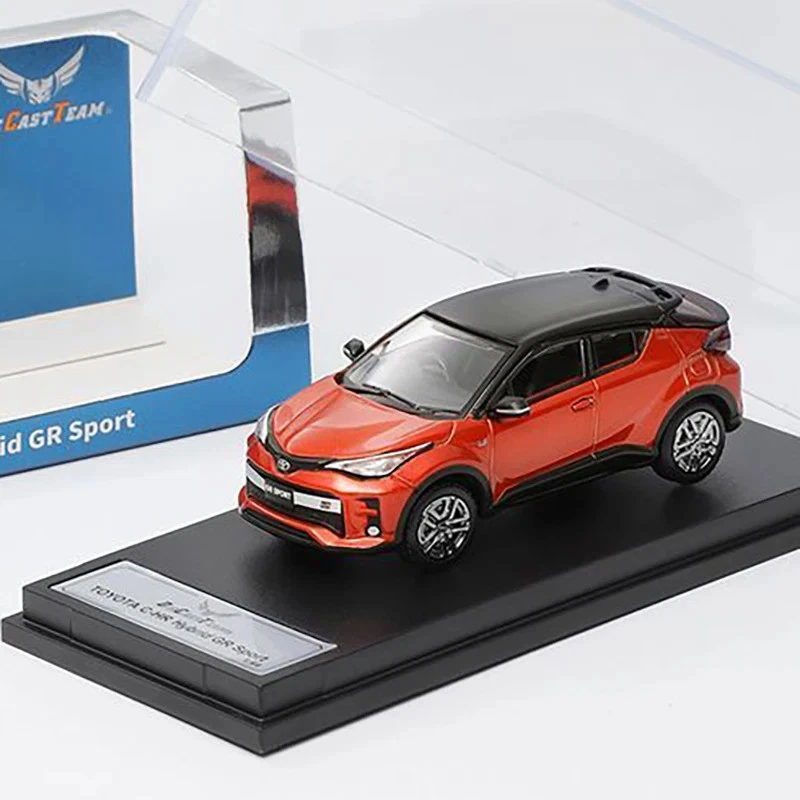
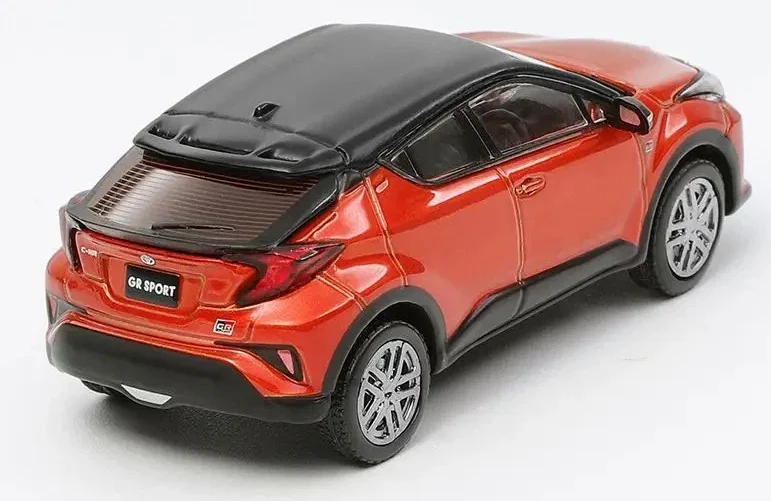
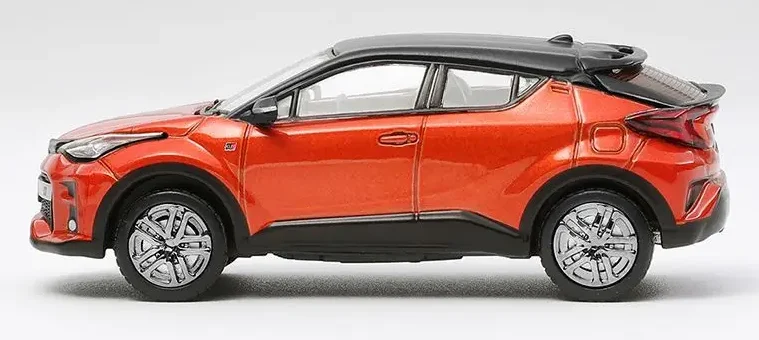
*DCT製、1/64ダイキャスト完成品、#106 トヨタ C-HR GR スポーツ、2019(メタリック・オレンジ)
長所:
*ボディー、ホイール造形の正確さとディテールの再現度の凄さ
*塗装と組みつけクオリティーの高さ
*新興会社とは思えない、手慣れた部品分割や担保塗装のすばらしさ
*1/43の中堅ミニカーの出来を軽く上回るレベルの凄まじいバリュー
*このクオリティーで、他の世界中の最新車種の商品化希望
残念な点:
*ホイールとタイヤのサスペンション機能【4つのバネ】が
逆に『高めで不安定な全高』を規定しています。
ー――→要、改造
*初挑戦:『4台(題)噺』とは?
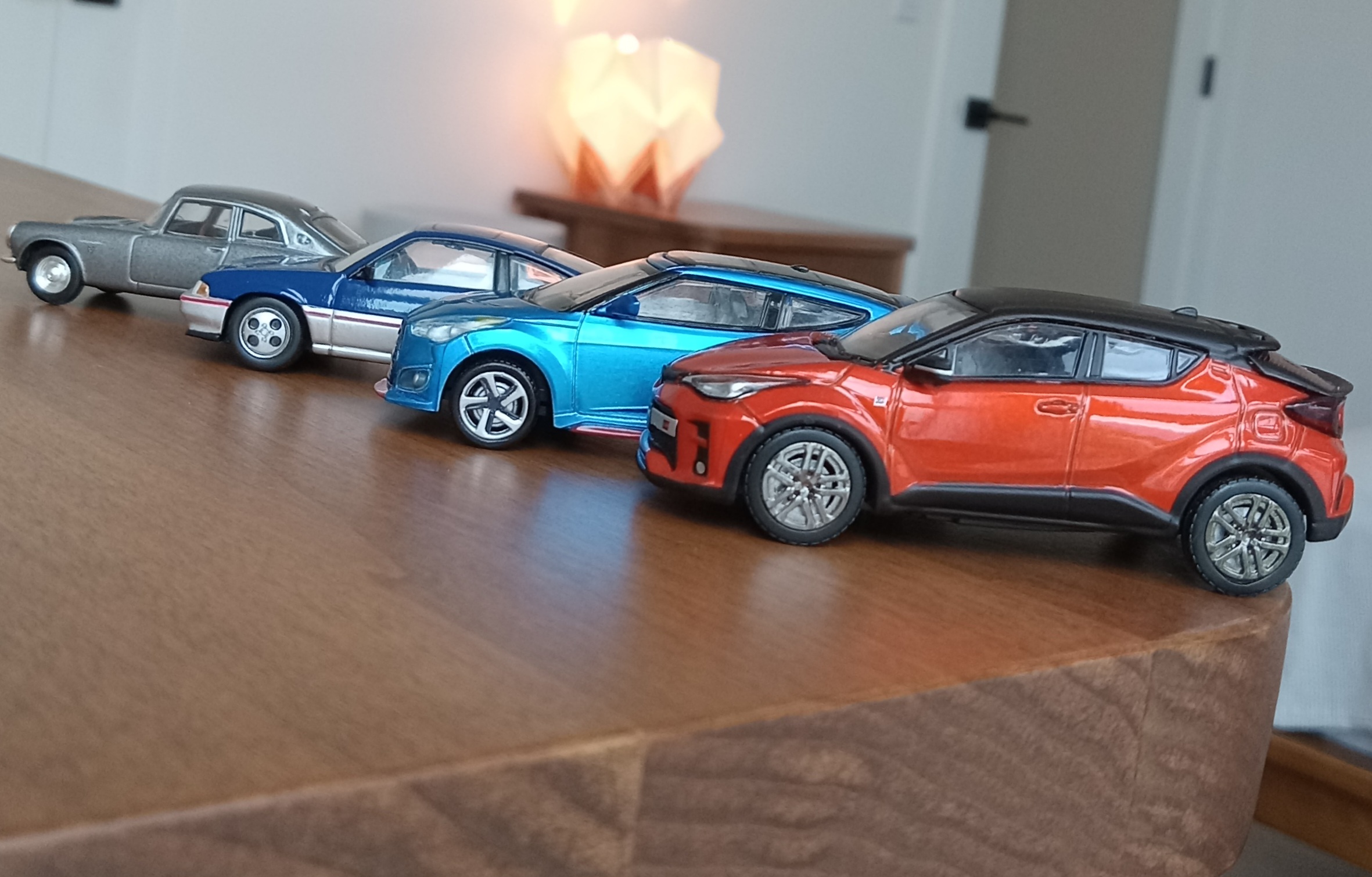
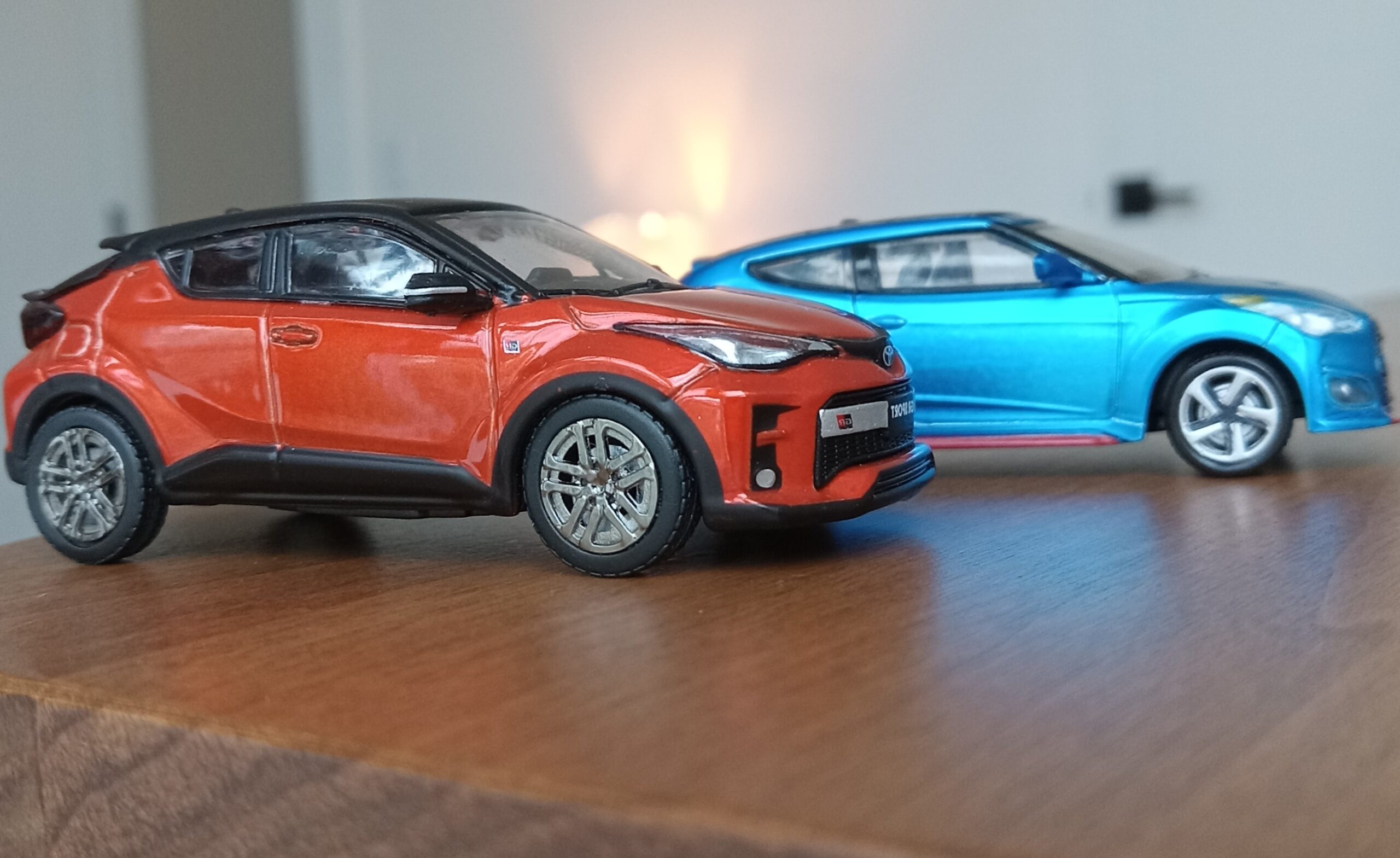
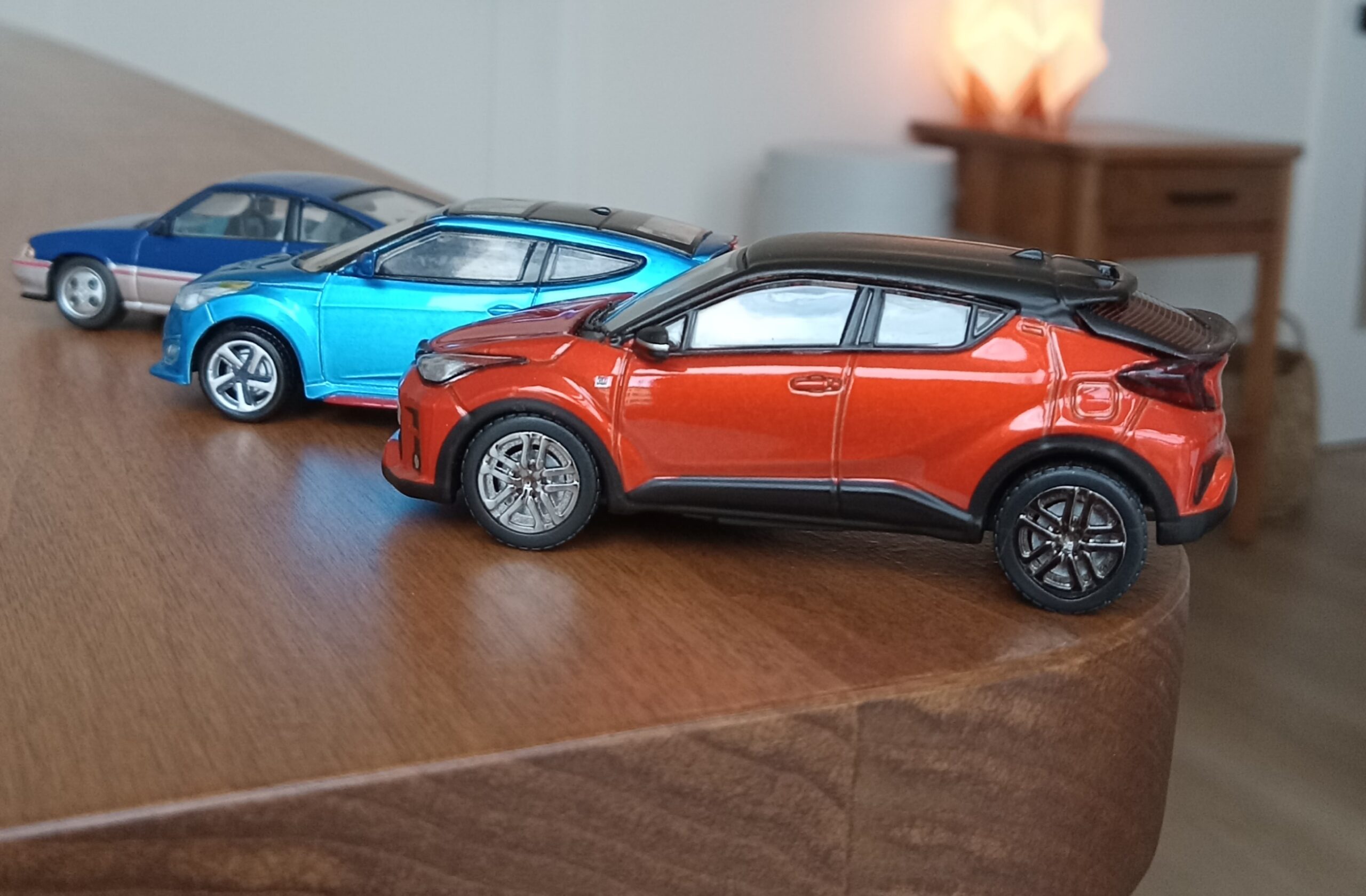
エ~今回は、
初挑戦ということで、
自動車4台【4題】をお題に見立てて、
三題噺ならぬ、4台話と銘打って、
落語風に仕立ててみます。
お題:
*ホンダS800 クーペ
*ホンダ 初代CR-X 1.5i【バラード・スポーツ】
*現代ヴェロスター
*トヨタC-HR GR スポーツ
例によって『AI』とタッグを組みまして、
15種類以上の『サゲ』を研究した結果
完成した落語です。
一席お付き合いのほどを、、、
『小型ハッチバック4台噺』(よんだいばなし):
今回は初物企画、三題ならぬ、四台噺となっております、
n
n
n
 「この爺さん、耄碌しちまったね、それを言うなら『マジンガーZの阿修羅男爵』ですぜ。指をくわえて見てちゃいけません。4台目、真打ちに登場するのが『トヨタ・C-HR GRスポーツ』(Toyota C-HR GR Sport)です。これはハッチバックの使い勝手に、今流行りのSUVの力強さを融合させた、いわば『クロスオーバー・ハッチバック』。外観デザインは、まるで彫刻。ダイヤモンドをモチーフにしたという、バキバキにエッジの効いた複雑な面構成(プレスライン)です。そこに『GR』の走りの遺伝子が加わって、カタマリ感が凄まじい。これは機能を超えた『感情を揺さぶるデザイン』。例えるなら、着物をド派手に着崩して、おまけに腕っぷしも強い、「粋でイナセな」お祭りの若い衆みたいな圧倒的な存在感でさぁ!」
n
n
n
お粗末さまでした、、、
n

n
n
n
n
n
n
n
n
n
n
n
*4台共通の『DNA』とは?
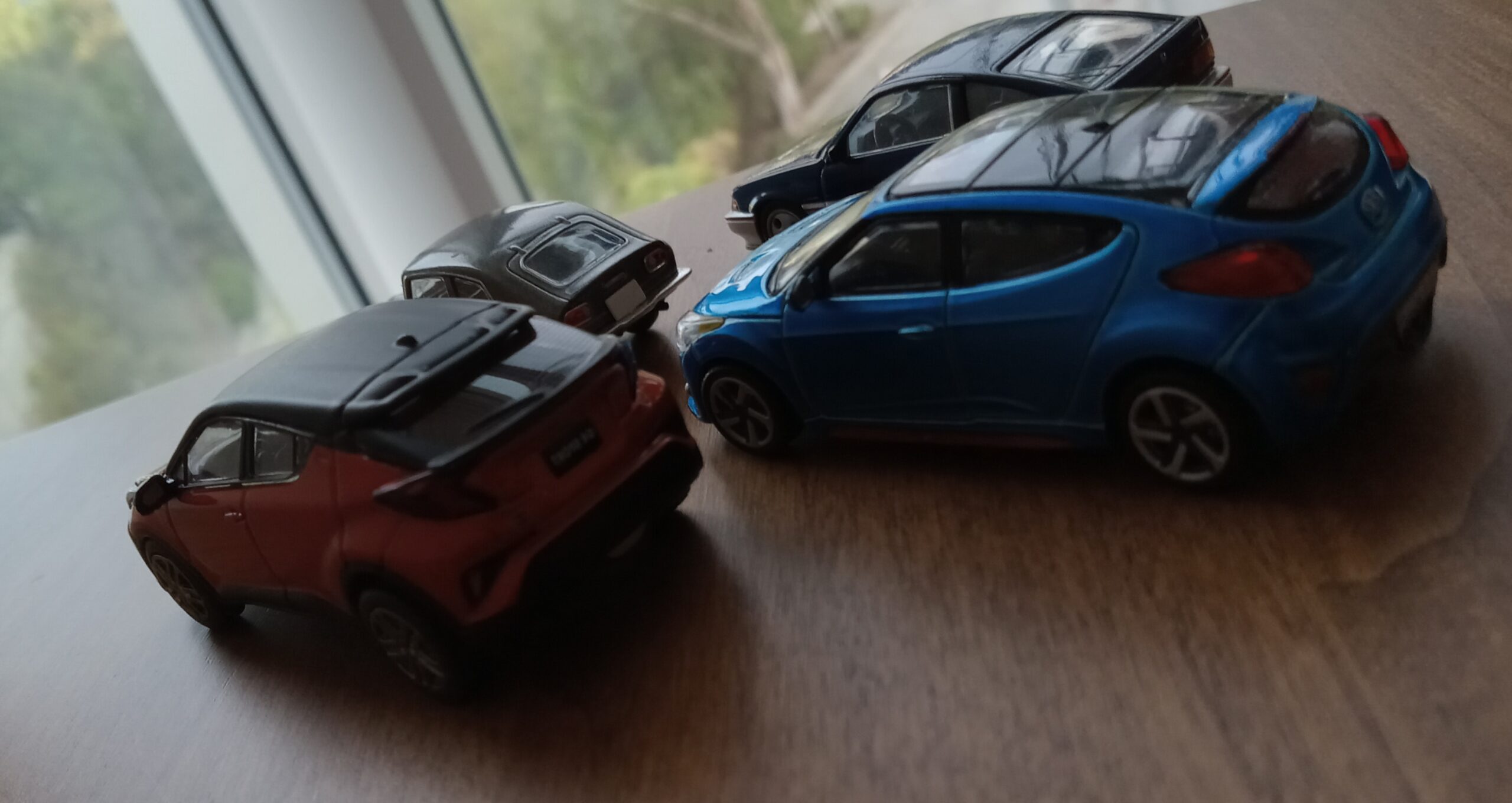
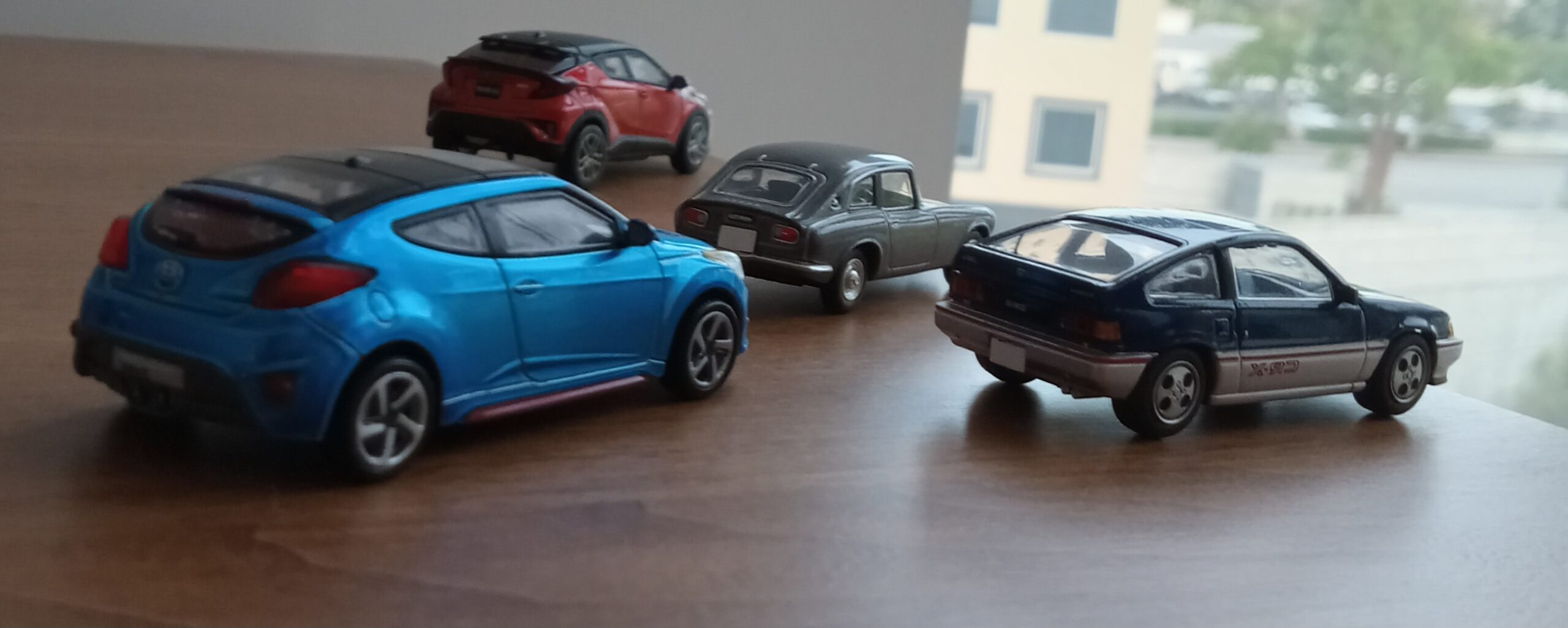
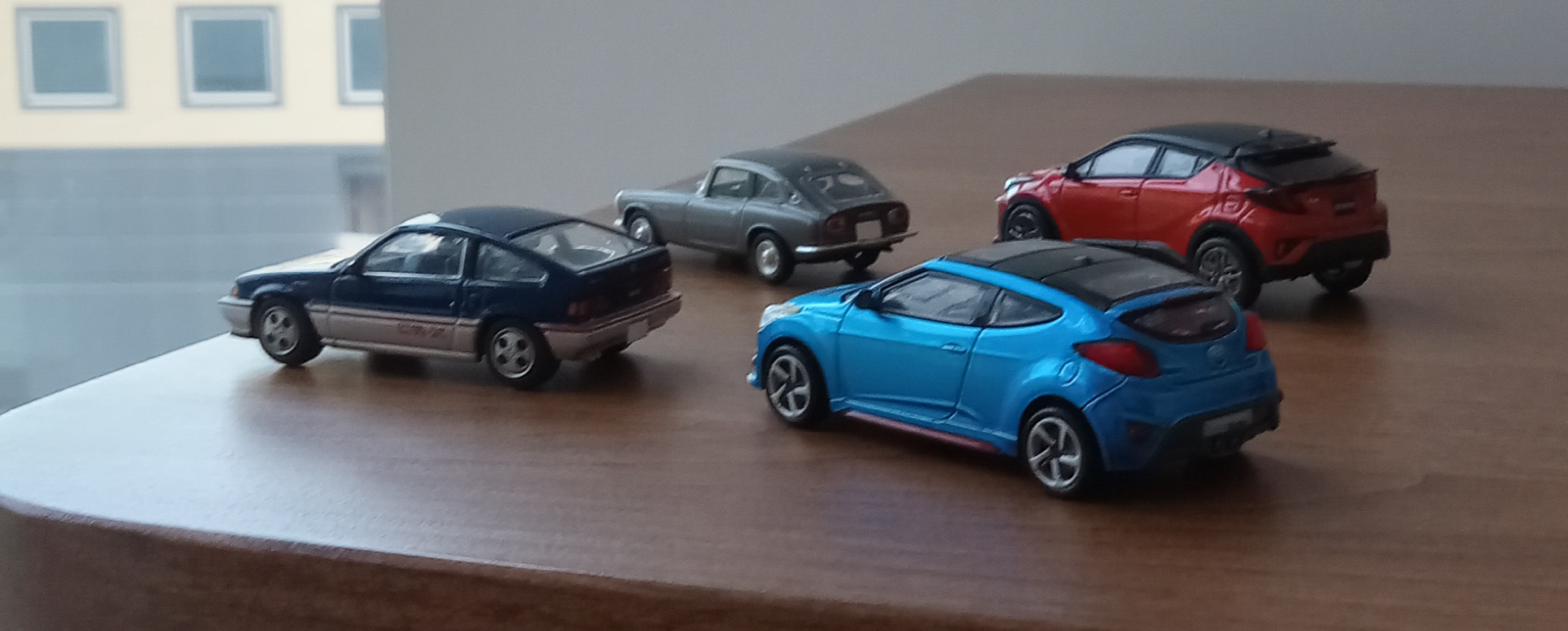
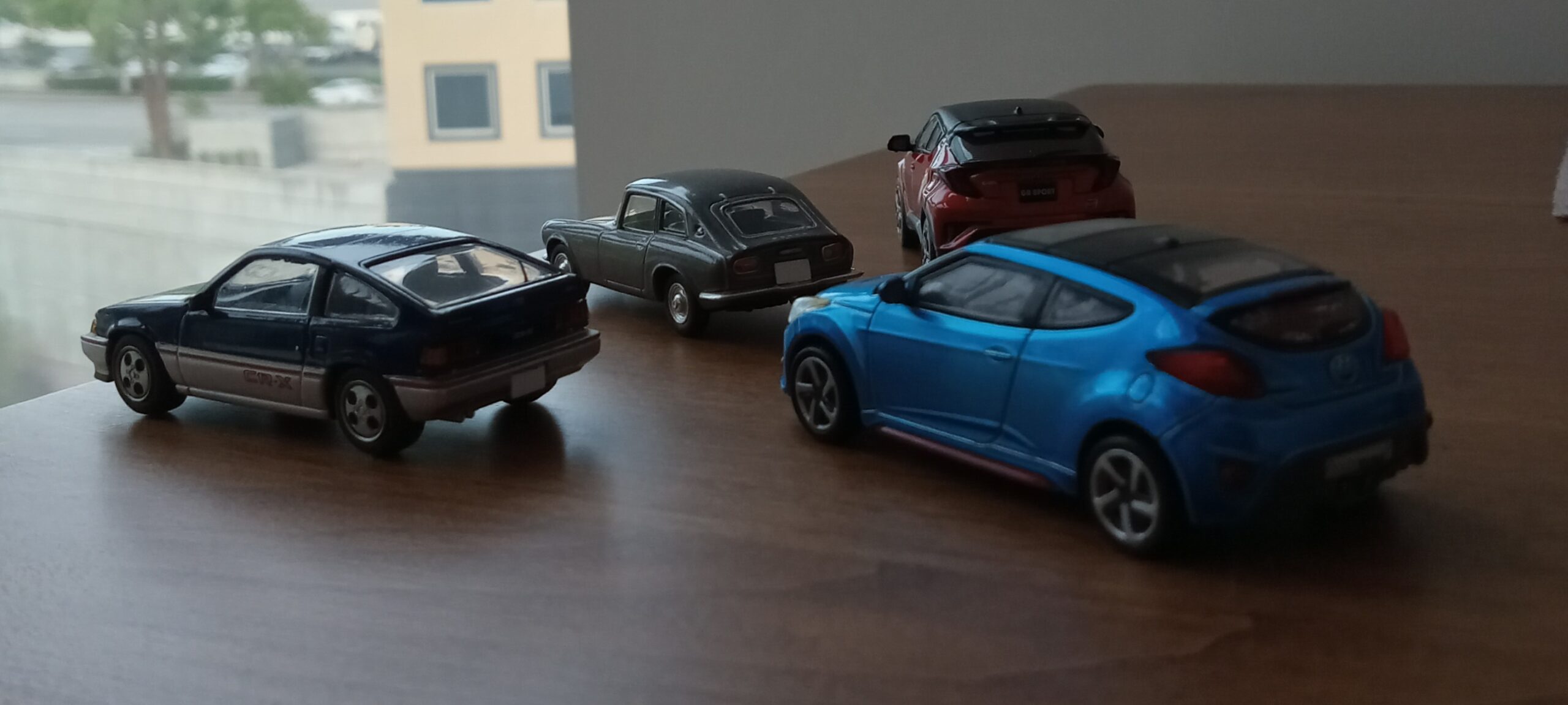
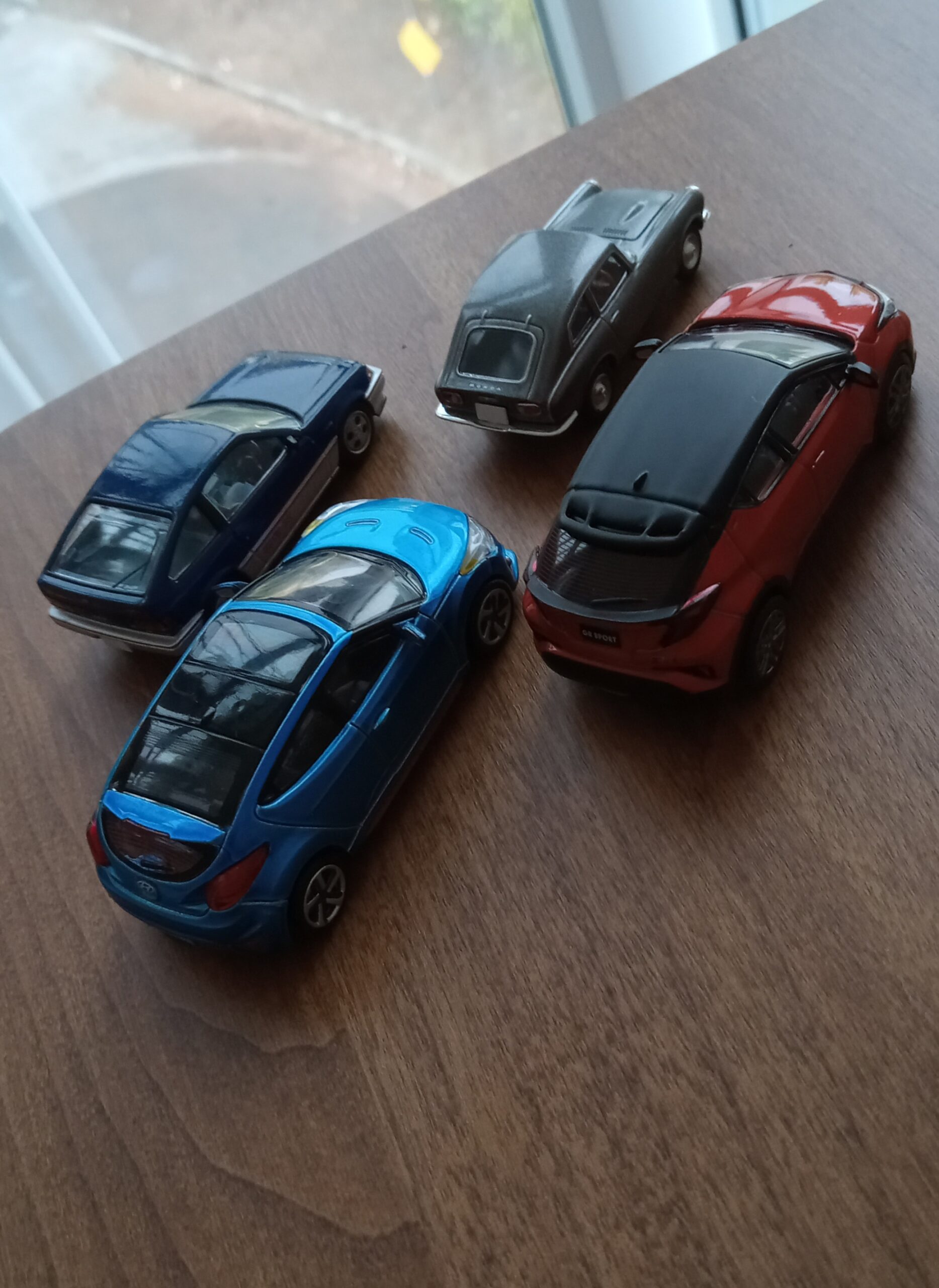
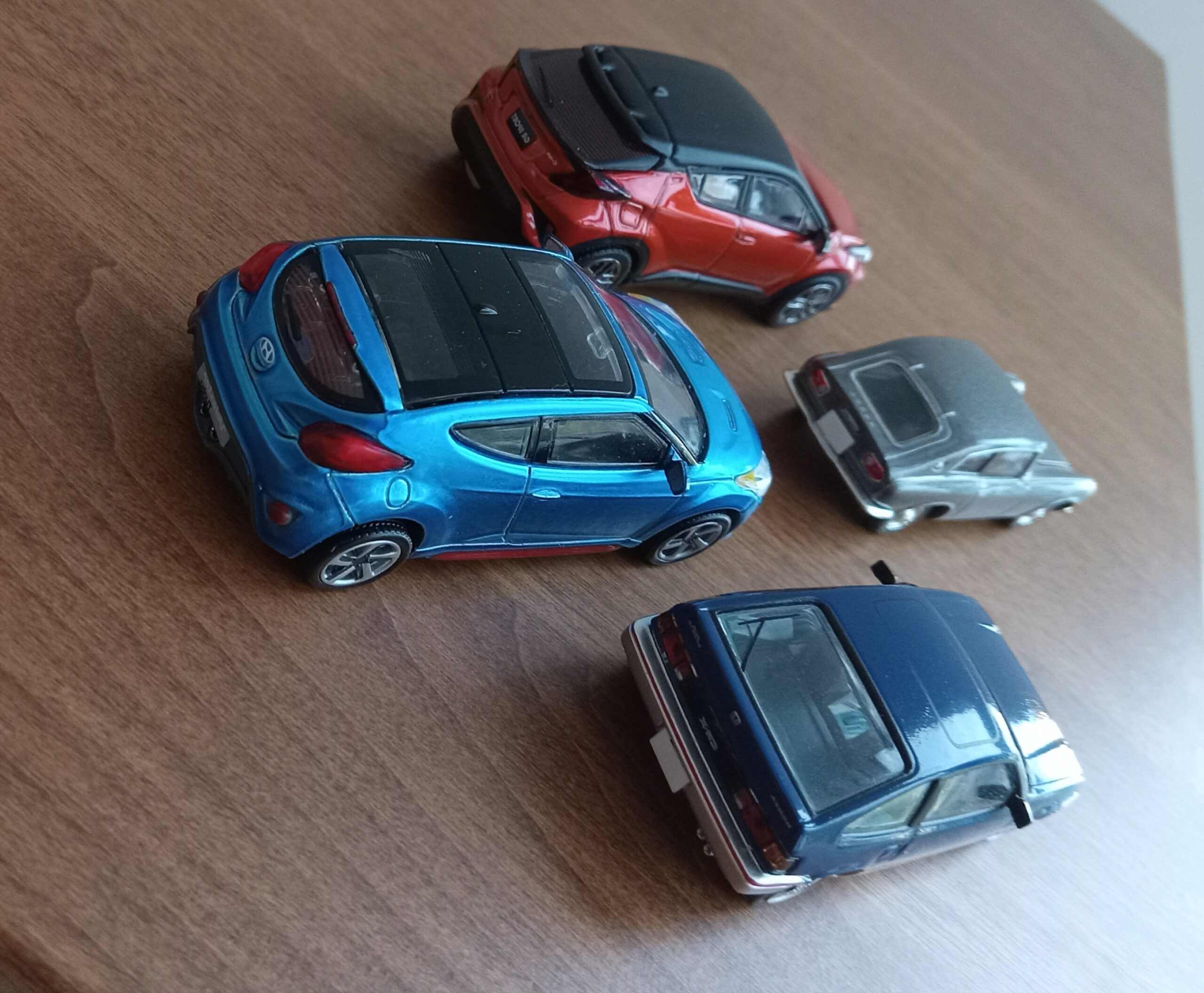
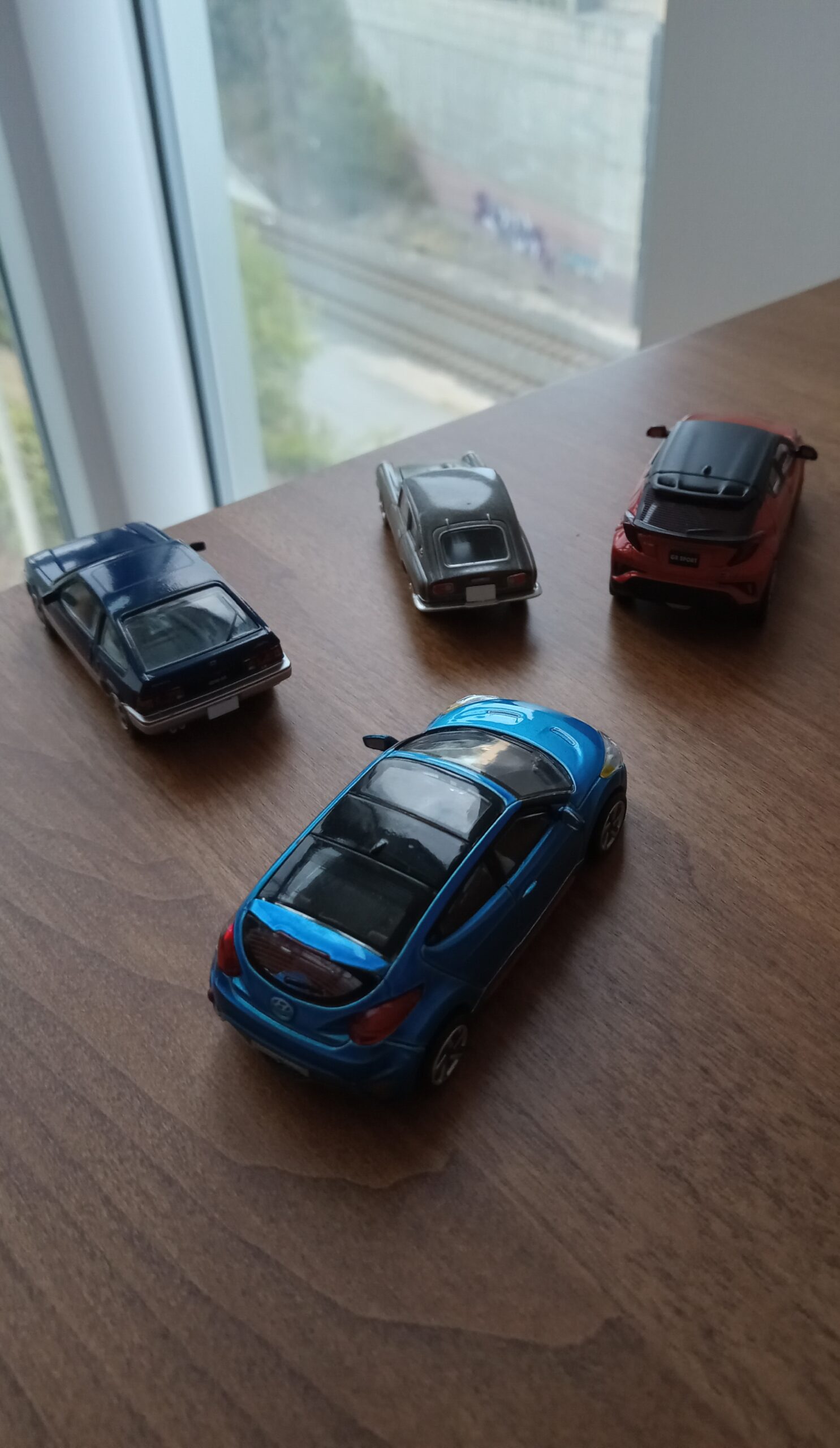
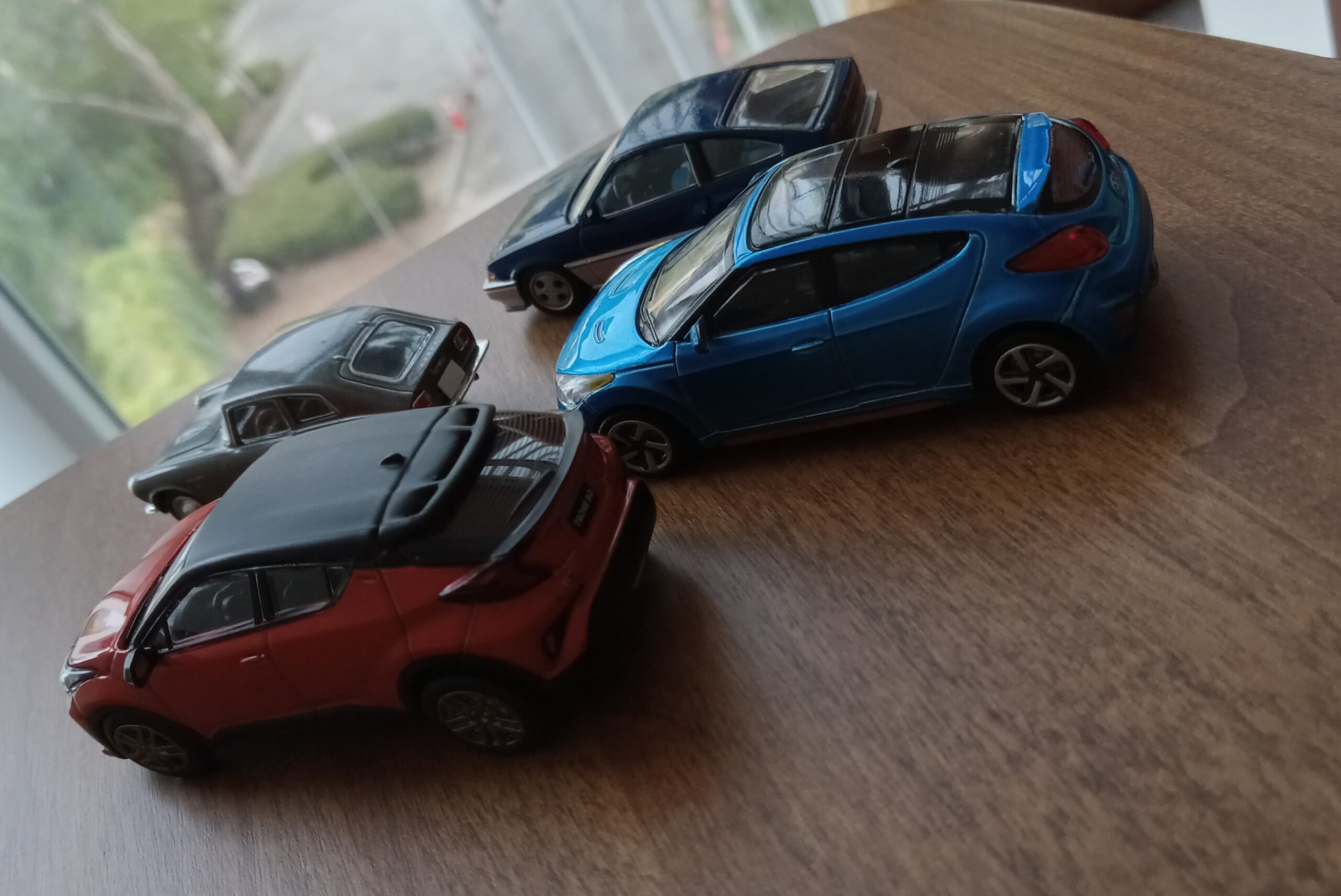
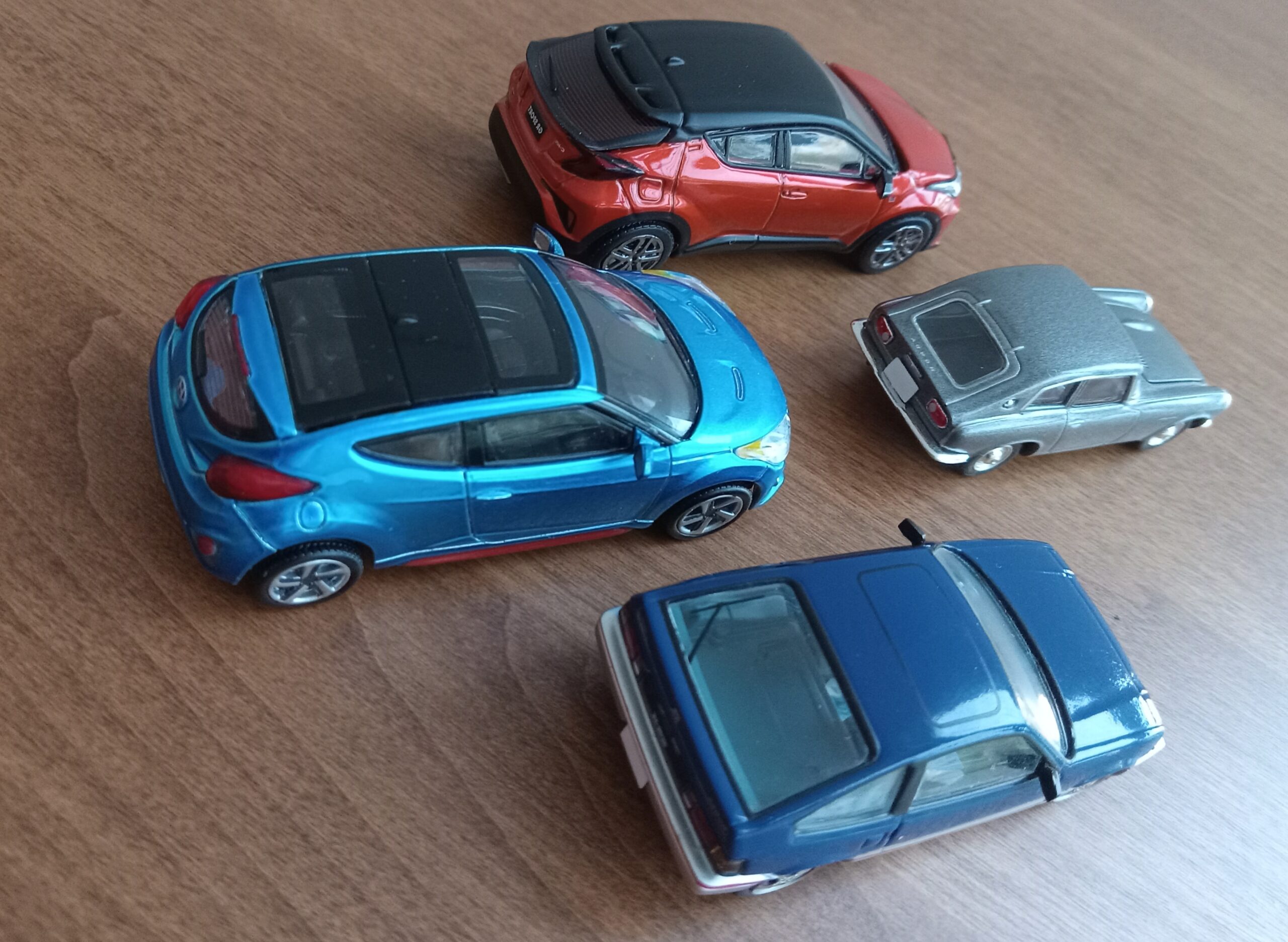
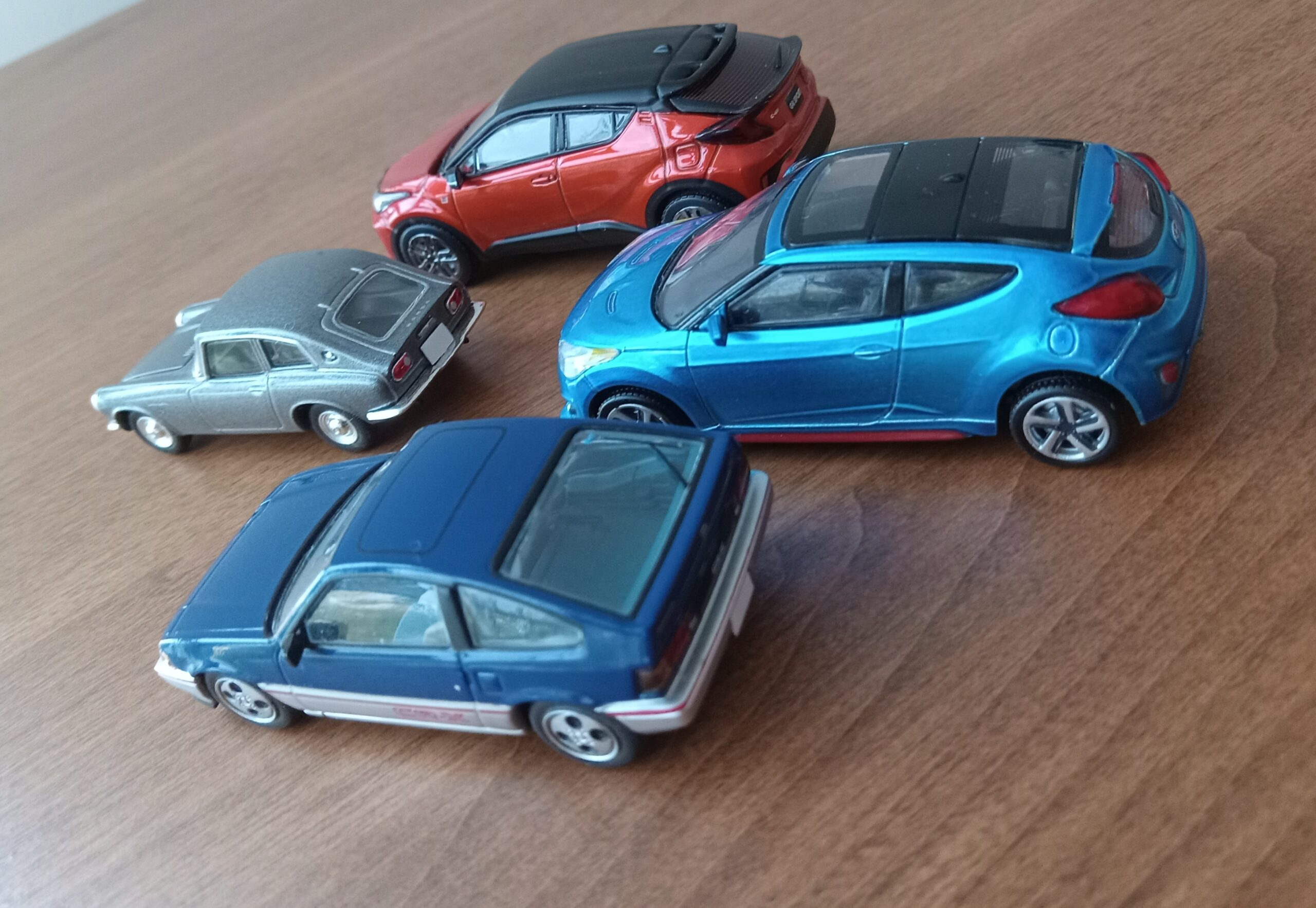
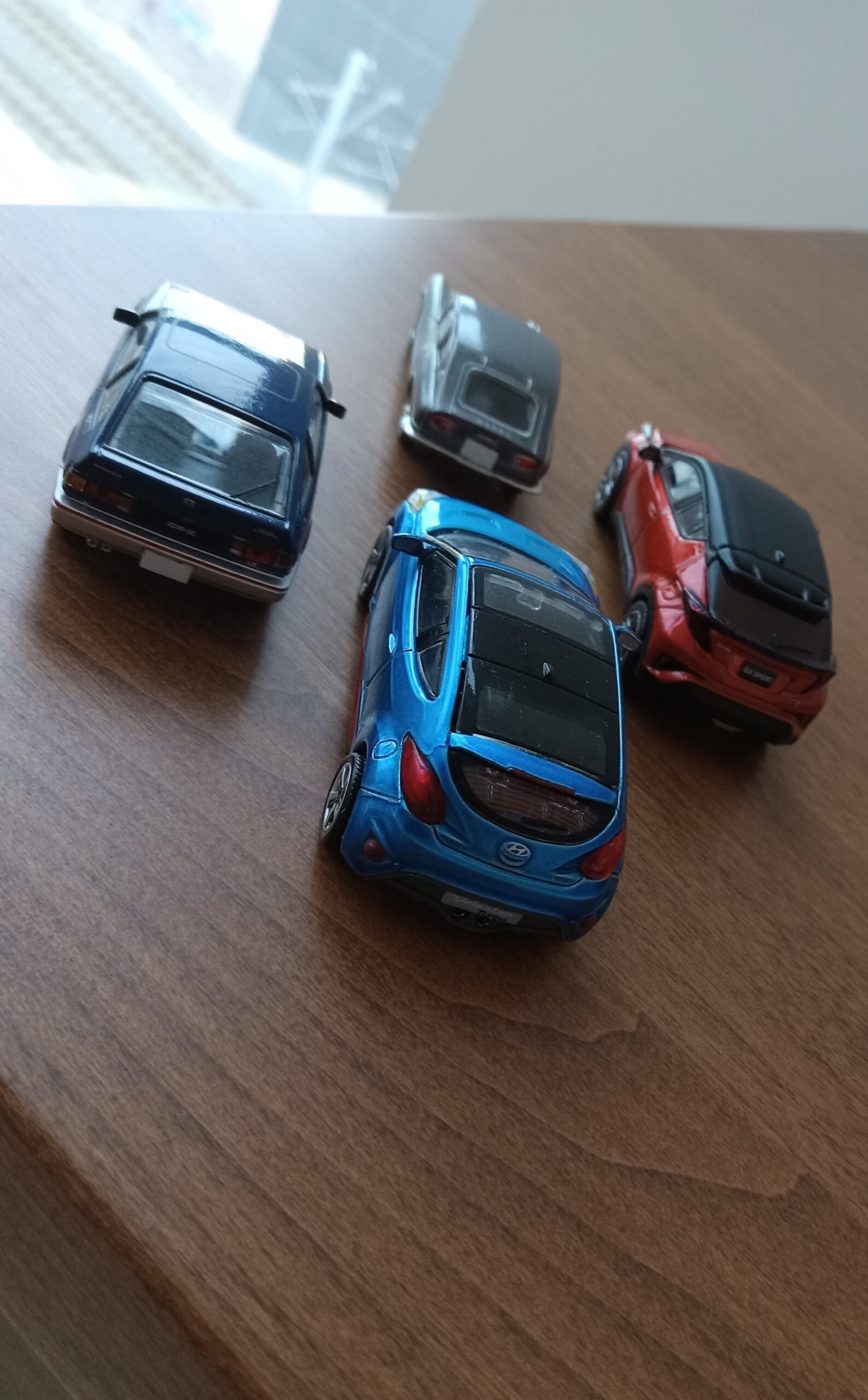
今回新たな試みとして、
好みの自動車カテゴリー:
『小型ハッチバック』の
外観デザインを
『雑感する企画』を始めてみました。
その結果はこんな感じです。
私がこのカテゴリーに感心するのは、
自動車の歴史の中で、
*さほど大きな商業的マーケットであるわけではないのですが、
*常に力とこだわりのあるデザインがひしめく市場で、
*工業製品の、効率性やデザインの先進性の
*見本市的な立ち位置に見えます。
そんな車を立体化した4台のミニカーを日本の老舗と、
中国の新興メーカーが分け合って制作しているのが、
凄く象徴的かつ希望に満ちた状況に見えました!
今後も、色々なカテゴリーにつての
出来の良い、ミニカーを集めて続けていきたい企画です。
例えば、
*VWゴルフなどの、3-4ドア小型車の変遷
*70年台スーパー・カーの変遷
*フェラーリF1の外観デザインの変遷
などいろいろ楽しみです。
スバらしい4台の実車とミニカー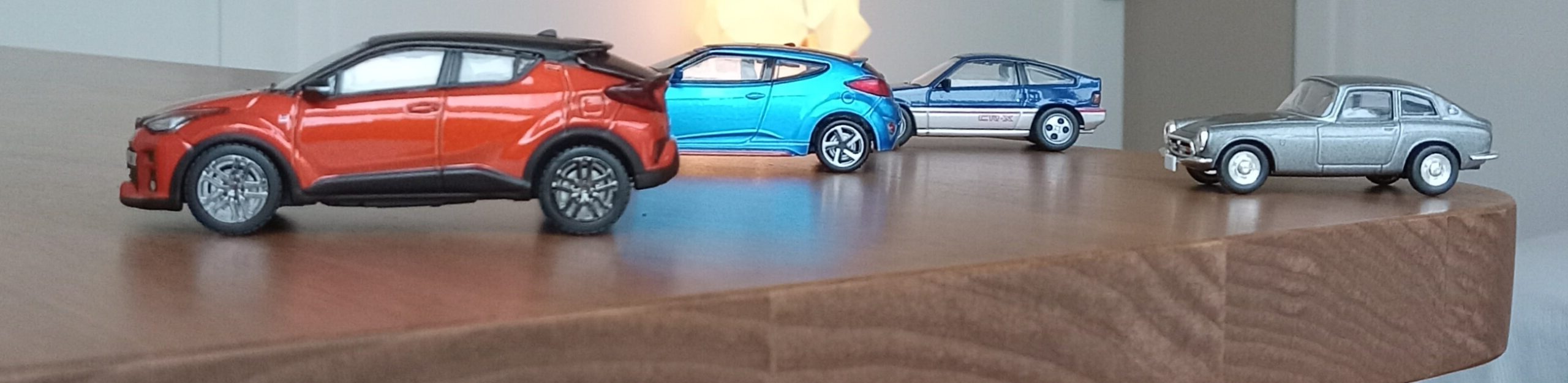 どちらも好みの工業製品です。
本ブログと記事内容につきまして:
ブログ記事を書くにあたり私の目標は、立体造形(料理も含めて)とのかかわりを通じて、私個人の特徴的(ネジ曲がり方も含めて)な評価軸を解明することで、「美しさ・美味しさ」に対する好奇心や、探求心を、どのように満足・充足させてきたのかを明記しておくことです。
従いまして、記事の中に出てくる、数字や年号、微細なデータなどには細心の注意を払っておりますが、時に大きな間違いや勘違いを犯していることも考えられます。特に自動車記事における主要諸元や、年号などには紛らわしいものも多く、あくまで参考程度に考えていただければ幸いです。
私としては、記事の中で個人的な外観デザインや味覚の評価、そこから広がる後半部分につなげるための、『流れ』を作るための客観的材料として年号やデータを挿入している感じです。あくまで重視したいのは、私個人の頭の中で起こる、記憶の錯そう的混沌から生まれる新たな『見方』や『情報の予想外のつながり』です。その勢いを作り出す、『流れ』の一環として、諸データが副次的に必要となるわけです。
話がそれますが、大好きな落語の世界に「三題噺」という、その場て会場から募った3つのお題を使って1つのお話に仕立てるといったお遊びがございますが、私はそれに近いことを立体造形の特徴や(料理のお味)をお題にして行っている感じがします。その中で頭の中に去来する数々の着想が、全く予想外で楽しく、次回からの記事内容を大幅に変えたり、新展開につながっています。
当ブロブの仕組み:
『好奇心の点と線 x 気まぐれ脳内回路=予想外の新展開』
こんな自分勝手なブログですが、今後ともよろしくお願いいたします。
追記:上記の『流れ』を作る為に必要な写真はできる限り、個人所有のミニカー・自前の料理などを使い撮影しておりますが、その他の必要最小限の図版や写真を他のブログ主様の記事や諸会社ホームページなどからお借りしております。(記事内容に合うよう加工させていただき、使用時は最小の解像度で載せております。)問題がある場合、ご連絡いただければ直ちに降ろさせていただきます。
追記2:当ブログ記事に掲載のミニカー写真等(個人撮影)は許可なしで、どのようにお使いいただいても結構です。私個人の創造性はこの世のもの、と言う認識の上で記事を製作しています。
!!!!!!!!!!!!!!!!!!!!!!!!!!!!!!!!!! Translated in English !!!!!!!!!!!!!!!!!!!!!!!!!!!!!!!!!!
Diecast Small Hatchback Meet: [A Story of Four 1/64-Scale Mini Hatchbacks?] Honda S800 Coupe, First-Generation CR-X, Hyundai Veloster, Toyota C-HR GR Sport [Diecast Small Hatchback Meet] in 1/64: Honda S800, Honda CR-X, Hyundai Veloster, Toyota C-HR GR Sport
(Honda S800 Coupe)
(Honda CR-X [First Generation])
(Hyundai Veloster)
(Toyota C-HR GR Sport)
For a change of pace this time,
I’d like to talk about one of my favorite car categories:
“Small Hatchbacks”
I’ll be weaving in some of the die-cast models I’ve collected recently,
so please bear with me for a bit.
Ever since I started driving,
almost every car I’ve owned has fallen into this category.
* They’re lightweight and nimble,
* They’re economical in both fuel efficiency and price,
* Many of them also feature excellent design,
* Plus, they’re practical and easy to load with luggage—
That’s the general idea. For someone like me, who’s never been concerned with
the opulence of industrial design or “symbols of prestige,”
they’ve been the perfect choice,
Up until now,
* 3 CR-Xs,
* 2 Priuses,
* an MG Midget, and others—
I’ve relied on these small, practical cars.
Regarding these four wonderful small hatchbacks,
I’d like to discuss them as follows:
* Real-car review & exterior design analysis: A brief overview…
* Die-cast model review:
* A spirit shared by all four?
* First attempt: What is the “Story of the Four” (title)?
* Real-car review & exterior design analysis: A brief overview…
#Honda S800 Coupe, 1965 (Dark Gray)
n
The Honda S800 Coupe, introduced in 1966, is the culmination of the full-fledged compact sports car. Equipped with a 791cc inline-four DOHC engine, it is a high-revving sports car boasting a maximum output of 70 PS at 8,000 rpm. Mechanically, it transitioned from the initial motorcycle-derived chain drive to a more conventional five-link rigid suspension. Its design is characterized by a sleek fastback roofline and a power bulge on the hood.
n
Mechanical and Design Features
High-Revving Engine: Ultra-high-revving DOHC utilizing motorcycle technology
Suspension: Adopts a rigid axle system for enhanced reliability
Styling: Coupe body with a beautiful roofline
#Honda First-Generation CR-X 1.5i [Ballad Sport] (Blue x Silver two-tone)
n
The first-generation Honda Ballade Sport CR-X 1.5i, introduced in 1983, was a lightweight, compact front-wheel-drive sports car. With a nimble body weighing around 800 kg and an innovative design, it gained immense popularity, particularly among young people at the time.
n
Exterior Design
n
* Comeback Tail: Features a distinctive “coda tronca” (comeback) style with a sharply cut-off rear end.
* Aerodynamics: Features a wedge-shaped (Japanese umbrella-style) silhouette designed to minimize air resistance.
* Wide & Low: Sporty, futuristic wedge-shaped proportions that emphasize a low center of gravity.
Mechanical Specifications
n
* Lightweight Body: Extensive use of high-tensile steel achieves both thorough weight reduction and high rigidity.
* 1.5L Engine: Equipped with a high-efficiency 1.5L inline-4 engine (EW type) that delivers a responsive throttle response.
* Suspension: Features a MacPherson strut front suspension and a trailing arm rear suspension, delivering agile handling.
* Hyundai Veloster (Metallic Electric Blue)
n
Launched in 2011, the Hyundai Veloster is a distinctive compact sports car that combines the styling of a coupe with the practicality of a hatchback, featuring an innovative “asymmetrical 2+1-door” design with one door on the driver’s side and two doors on the passenger side.
n
n
Exterior Design Features
n
* Asymmetrical Side View: The driver’s side features a long single door for a sporty coupe-like look, while the passenger side has both front and rear doors to ensure easy rear-seat access.
* Low-Center-of-Gravity Proportions: A large hexagonal (cascade) grille that emphasizes width, paired with a low-slung roofline.
* Aggressive Rear: The centrally positioned dual exhaust and diffuser-style design assert its dynamic performance.
Mechanical Features
n
* Powertrain: Equipped with a 1.6L inline-4 direct-injection turbo engine (maximum output: 201 horsepower, etc.) or, in the full-fledged sports model “N,” a 2.0L turbo engine (maximum output: 275 horsepower).
* Suspension and Chassis: Features a multi-link rear suspension system that delivers agile handling and high driving stability.
* Electronic Controls: Equipped with torque vectoring control to enhance cornering performance.
*Toyota C-HR GR Sport (Metallic Orange)
n
Launched in 2016, Toyota’s first-generation C-HR is an innovative compact SUV that thoroughly pursues driving performance and individuality by fusing a low-center-of-gravity, high-rigidity frame based on the new-generation “TNGA” platform with a sculpted, coupe-like exterior design inspired by a “diamond” motif.
n
n
Basic Mechanism and Driving Performance Based on TNGA
n
* Platform: Adopts “TNGA (Toyota New Global Architecture),” inherited from the 4th-generation Prius, achieving a low center of gravity and high body rigidity.
* Suspension: Features MacPherson struts at the front and a newly developed double-wishbone suspension at the rear, balancing excellent handling stability with a comfortable ride.
* Powertrain: Offers a choice between a 1.8L hybrid system (2ZR-FXE) and a 1.2L direct-injection turbo engine (8NR-FTS), delivering agile responsiveness and environmental performance.
Sculptural Exterior Design
n
* Diamond Theme: The solid-feeling cabin features extensive use of three-dimensional forms reminiscent of a diamond carved from a block of material.
* Coupe Style: Powerful fenders that emphasize the large-diameter tires, a cabin that tapers toward the rear, and hidden door handles create a roofline reminiscent of a two-door coupe.
* Front & Rear: An evolution of Toyota’s “Keen Look,” emphasizing a cutting-edge design with sharp LED headlights and floating LED combination taillights.
n
n
* Die-Cast Model Review: Evaluations and Impressions for Each
Now, I’ll write down my
evaluations and impressions of the
four die-cast models I collected this time.
* Tomytec, 1/64 die-cast ready-to-display model, LV-N124c Honda S800 Coupe, [Blue and Silver Two-Tone]
Pros:
* Accuracy of the body and wheel detailing
* Perfect wheel and tire sizes, and ride height
* High-quality paintwork and assembly
* Accurate scale and compatibility with other LV-N products
Cons:
* None at all.
* It looks even more realistic than the real thing,
* so I’m completely satisfied.
* Tomytec, 1/64 Die-Cast Ready-to-Display Model, LV-N124c Honda Ballade Sports CR-X 1.5i [Blue and Silver Two-Tone]
Pros:
* Accuracy of the body and wheel detailing
* High quality of paintwork and assembly
* Accurate scale and consistency with other LV-N products
Cons:
* The wheels and tires are slightly oversized
* Paint showing signs of cracking due to aging
* Shadow, 1/64 Die-Cast Ready-to-Display Model, #153 Hyundai Veloster Turbo, 2012 (Electric Blue)
Pros:
* The accuracy of the body and wheel sculpting, and the incredible level of detail reproduction
* High quality of paintwork and assembly
* The superb part separation and undercoating—so polished you wouldn’t believe this is from a startup company
* Incredible value that easily surpasses the quality of mid-range 1/43 scale die-cast models
* I hope they’ll release other Korean cars at this level of quality
Cons:
* The suspension mechanism for the wheels and tires
actually results in an unstable overall height.
* DCT, 1/64 Die-Cast Ready-to-Display Model, #106 Toyota C-HR GR Sport, 2019 (Metallic Orange)
Pros:
*Amazing accuracy in body and wheel sculpting, and incredible attention to detail
*High-quality paintwork and assembly
*Excellent part separation and undercoating—you’d never guess this is from a startup
*Incredible value that easily surpasses the quality of mid-range 1/43 scale die-cast models
* Given this level of quality, I hope they’ll release other latest car models from around the world
Cons:
* The suspension mechanism for the wheels and tires 
actually results in a “high and unstable overall height.”
—→ Modification required
* First Attempt: What is the “Four Cars (Topics)” Story?
Well… this time,
since it’s my first attempt,
I’ll treat four cars [four topics] as my themes,
and instead of a “three-topic story,” I’ll call it a “four-car story,”
and present it in the style of a rakugo performance.
Topics:
*Honda S800 Coupe
*Honda First-Generation CR-X 1.5i [Ballad Sport]
*Hyundai Veloster
*Toyota C-HR GR Sport
As usual, I teamed up with “AI,”
and after researching over 15 different “climaxes,”
this is the completed rakugo story.
I hope you’ll bear with me for this performance…
n
“The Story of Four Compact Hatchbacks” (Yondai Banashi):
n
Hello there, I hope you’ll bear with me for this humble performance.
This is a brand-new project—not a “three-topic” story, but a “four-car” tale.
I have absolutely no idea how this will turn out… (laughs)
n
People have long said, “to switch horses,” but these days, that’s all about cars. Especially those compact, nimble “hatchbacks”—they’re like the characters in rakugo stories darting about the city streets, and there’s something endearing about them.
Today, I’m presenting a unique project called “The Story of Four Cars,” where I’ll unravel the history of the “engineering and exterior design” of these small hatchbacks by drawing parallels with four famous models. Please feel free to listen along.
***
n
n
“Hey, Hachiko! There you go again, grinning at one of those weird-looking cars.”
n
“Oh, Boss. Today, I’m actually appreciating what’s known as the ‘functional beauty’ of automobiles. The evolution of the hatchback is a testament to the pride of craftsmen—how to create a stylish yet practical space within the limited length of a row house.
Strictly speaking, this is a lightweight sports car, but it’s a “hatchback-style” vehicle with a large hatch (door) that swings wide open at the rear—it’s practically a throwback to the past. Externally, it’s a “long-nose, short-deck” design—long in the front and short in the rear. It embodies the essence of traditional British sports cars, yet you can load luggage by opening the rear hatch. In other words, it combines “stylish driving for show” with “hidden practicality”—much like how a Tokyoite takes pride in the lining of their haori.
n
“I see. It’s the wisdom of a craftsman who makes sure to tidy away their tools properly, even in a cramped row house.”
n
“Wow. But as we move forward in time to the second model, the ‘first-generation CR-X’ (Honda CR-X), the design philosophy changes completely. This shape is called ‘coda truncata’—a design where the rear window is cut off sharply at a vertical angle, like the edge of a cliff. It’s the result of taking aerodynamic design to the extreme to slice through the air, and it’s incredibly mechanical and cool-looking. It reduces air resistance within a limited overall length while also ensuring rear visibility. It’s a “mass of function” that has been thoroughly stripped of all excess. To use a rakugo analogy, it’s a design like that of a sharp-witted master carpenter who cuts straight to the point without any idle chatter.”
n
“Hmm, so there’s a reason behind every shape. But aren’t modern cars much more complex?”
n
“You have a keen eye! Take the third-generation ‘Hyundai Veloster,’ for example—it’s the absolute champion when it comes to quirky design. Take a really close look at its exterior. On the driver’s side (the right side for right-hand drive), it’s a coupe-style single-door design, but when you walk around to the passenger side (the left side), there are two doors. It’s an asymmetrical ‘3-door (+hatch)’ design! They’ve made a clear compromise between the beauty of the design and the ease of getting in and out of the back seats, balancing the two on each side. This is truly a ‘design that challenges conventional wisdom.’ From one angle, it’s handsome; from the other, it’s practical. It’s like the dual-faced aesthetic of a drab minor bureaucrat by day and the Robin Hood-like thief Nezumi Kozou by night.”
n
“Wow, that’s interesting. Different expressions on each side—‘It’s Baron Ashura from Gatchaman!’ It’s like seeing the dual nature of human beings.”
n
“This old man’s gone senile—if you’re going to say that, it’s ‘Baron Ashura from Mazinger Z.’ Don’t just sit there with your fingers in your mouth. The fourth car, the headliner, is the “Toyota C-HR GR Sport.” This is what you might call a “crossover hatchback,” fusing the practicality of a hatchback with the power of today’s trendy SUVs. The exterior design is like a sculpture. It features a complex composition of sharply defined, angular surfaces (press lines) inspired by a diamond motif. Add the “GR” performance DNA to that, and the sense of solidity is incredible. This is a “design that stirs the emotions,” transcending mere functionality. To put it another way, it has the overwhelming presence of a “stylish and dashing” young festival-goer who wears his kimono in a wildly flamboyant, casual style—and is also a real tough guy to boot!”
n
“I see. The practical ‘S800,’ the aerodynamic ‘CR-X,’ the asymmetrical ‘Veloster,’ and the ‘C-HR’ that’s like a young guy from a row house. A car’s shape isn’t just a metal box—it’s a tug-of-war between human desire and technology, isn’t it?”
n
“Exactly! Each one is a masterpiece of a hatchback where the individuality of the four wheels truly shines.”
n
“Wow, I’m impressed. Hearing your explanation has made me want to sign a contract for a new hatchback myself. …But with designs diversifying and evolving this much, I wonder what kind of design will ultimately come out on top?”
n
“Hmm, Boss. No matter how much the appearance or design changes, the fundamentals of a hatchback remain the same. After all, it really comes down to having a rear hatch that pops open anytime.”
n
“The rear hatch opening? How does that make it the ultimate feature?”
n
n
“Well, Boss, whether it’s cars or rakugo, it seems that having the ‘rear end’ (the rear hatch) open well is what makes it good…”
n
n
That’s all for now…
n
n
n
n
n
n
n
n
n
n
n
n
n
*What is the “DNA” shared by all four cars?
As a new experiment this time,
I’ve started a project
to share my “random thoughts” on the exterior design
of my favorite car category:
“Compact Hatchbacks.”
Here are the results.
What impresses me about this category is that,
in the history of the automobile,
* Although it isn’t a particularly large commercial market,
* it’s a market teeming with designs that embody both power and meticulous attention to detail,
* and it seems to serve as a showcase
* for the efficiency and design innovation of industrial products.
The fact that four die-cast models of such cars are being produced jointly by a long-established Japanese company
and an emerging Chinese manufacturer
struck me as a situation that’s both highly symbolic and full of meaning!
This is a project I hope to continue,
collecting high-quality die-cast models from various categories.
For example,
*The evolution of 3–4-door compact cars like the VW Golf
*The evolution of 1970s supercars
*The evolution of Ferrari F1 exterior design
I’m looking forward to exploring these and many other topics.
Four superb real cars and their miniatures—
both are industrial products right up my alley.
Regarding this blog and its content:
My goal in writing these blog posts is to clarify my personal, distinctive criteria for evaluation—including my somewhat unconventional perspective—through my involvement with three-dimensional design (including cooking), and to document how I have satisfied and fulfilled my curiosity and desire to explore “beauty” and “deliciousness.”
Therefore, while I pay the utmost attention to the numbers, model years, and detailed data that appear in my articles, it’s possible that I may occasionally make significant errors or misunderstandings. In particular, key specifications and model years in automotive articles can often be confusing, so I would appreciate it if you treated them as general references only.
For my part, I feel that I’m inserting dates and data into the articles as objective material to create a “flow” that connects my personal assessments of exterior design and taste to the broader themes explored in the latter half of the piece. What I ultimately prioritize are the new “perspectives” and “unexpected connections between pieces of information” that emerge from the chaotic jumble of memories in my own mind. The various data points are needed secondarily as part of that “flow” to generate that momentum.
As a slight digression, in the world of rakugo—which I love—there’s a playful format called “san-dai-banashi,” where a performer weaves a single story using three topics solicited on the spot from the audience. I feel like I’m doing something similar, using the characteristics of three-dimensional sculptures and (the flavors of dishes) as my prompts. The countless ideas that flit through my mind during this process are completely unexpected and delightful; they often drastically change the content of future articles or lead to new developments.
How This Blog Works:
“Spots and Lines of Curiosity x Whimsical Mental Circuits = Unexpected New Developments”
This blog may be a bit self-indulgent, but I hope you’ll continue to follow along.
Note: To create the “flow” described above, I take as many photos as possible using my own die-cast cars and home-cooked meals. However, I do borrow the absolute minimum necessary illustrations and photos from other bloggers’ posts and company websites. (I edit them to fit the article’s content and post them at the lowest possible resolution.) If there are any issues, please contact me and I will remove them immediately.
Addendum 2: You are free to use the photos of die-cast cars and other images (taken by me) featured in this blog’s posts in any way you like without permission. I create these posts with the understanding that my personal creativity belongs to me alone.
Translated with DeepL.com

これはCTAサンプルです。
内容を編集するか削除してください。