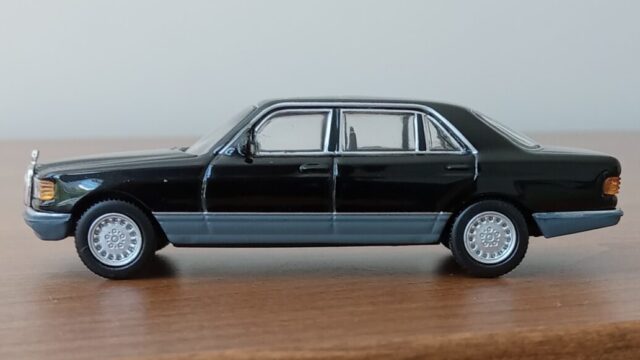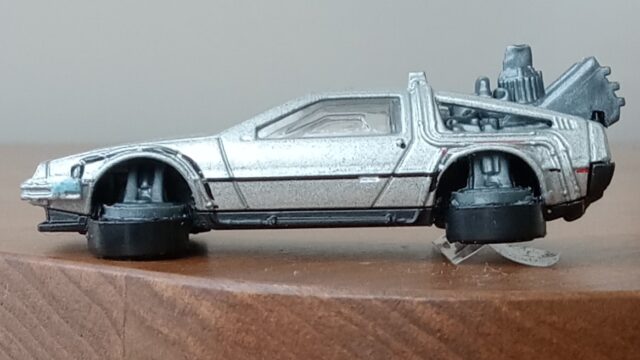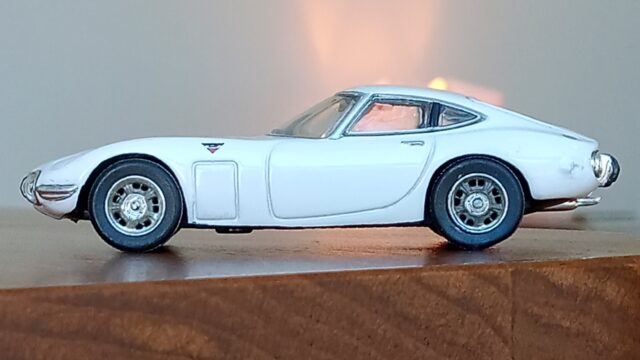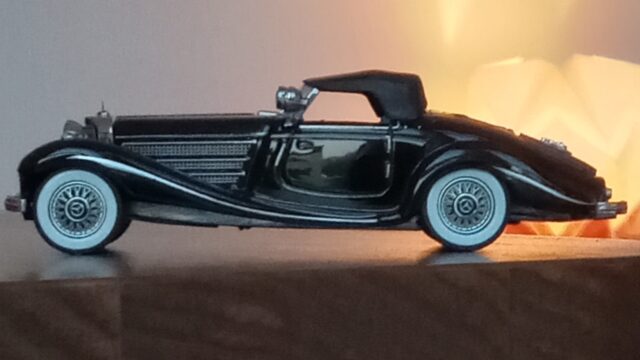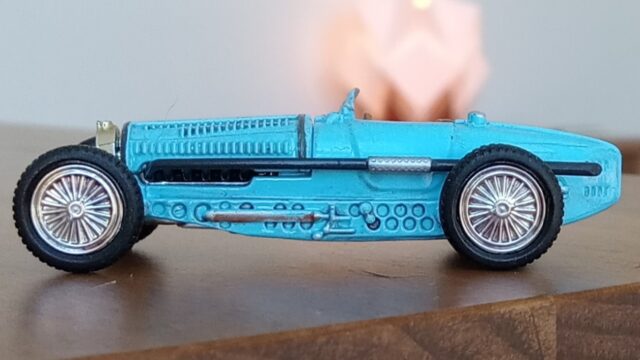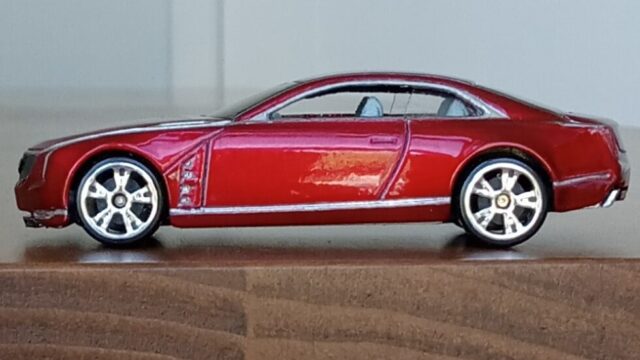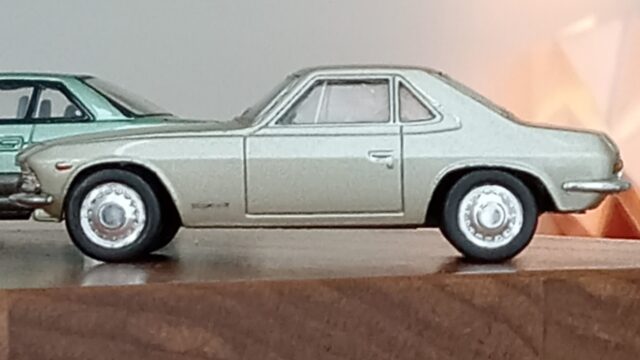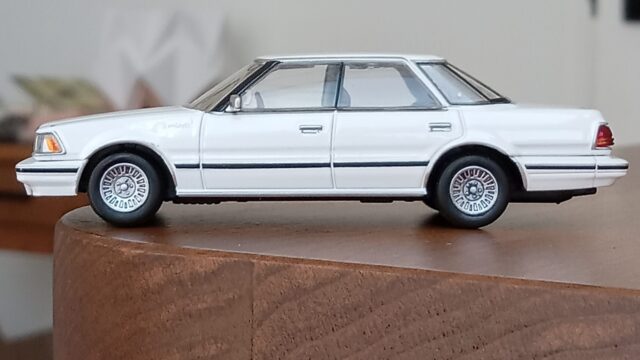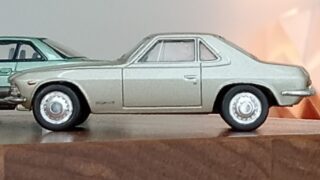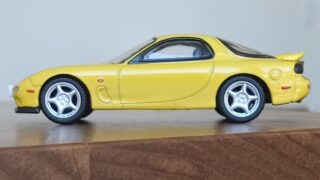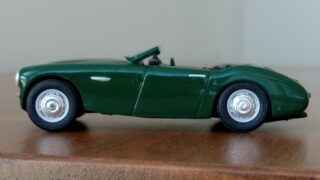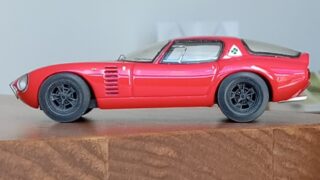
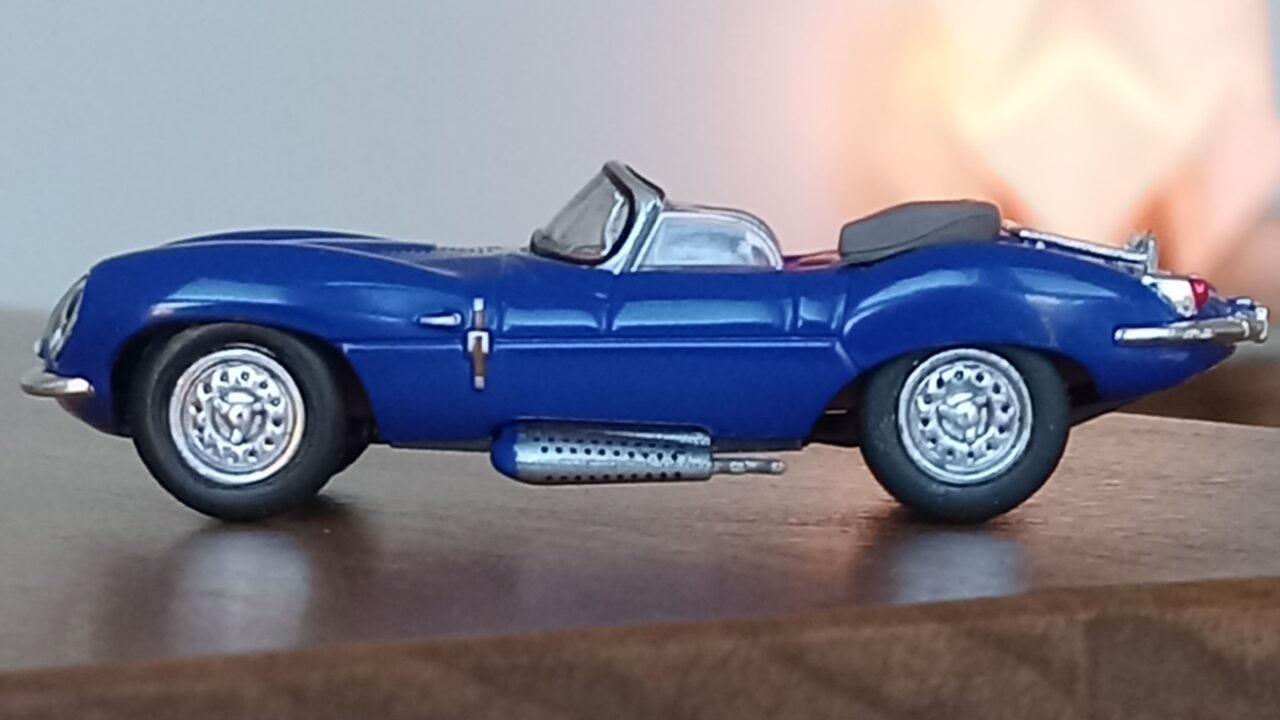
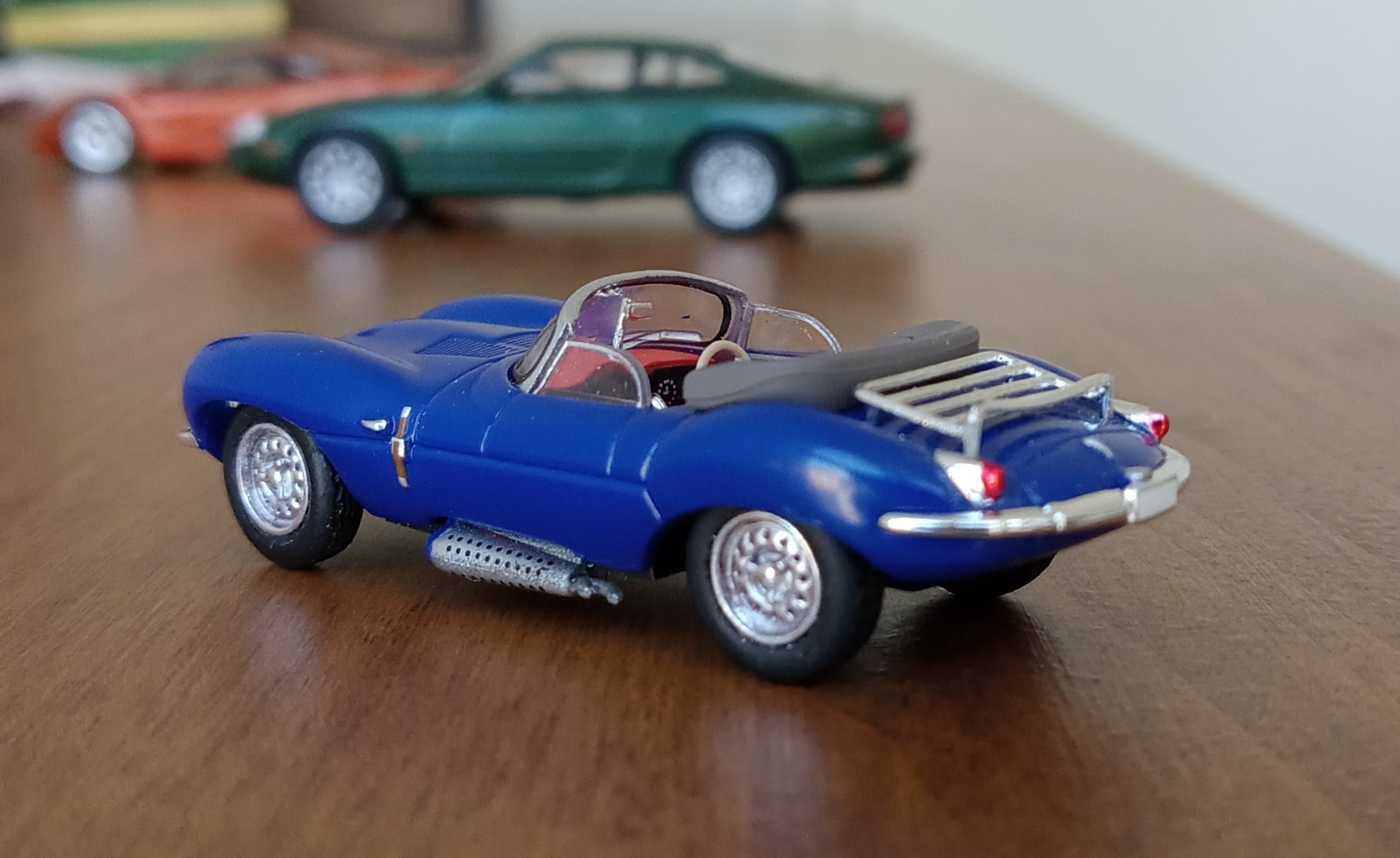
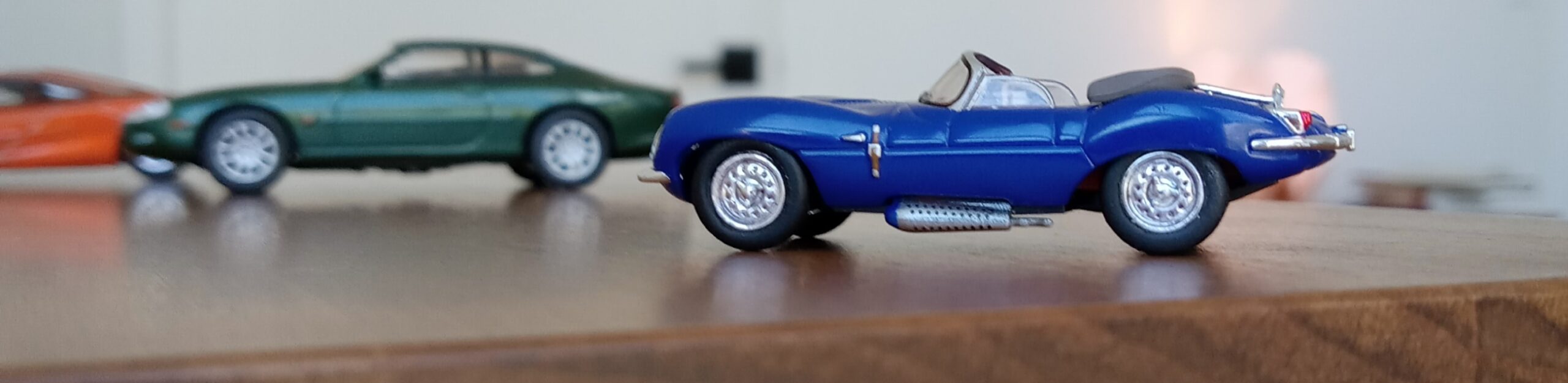
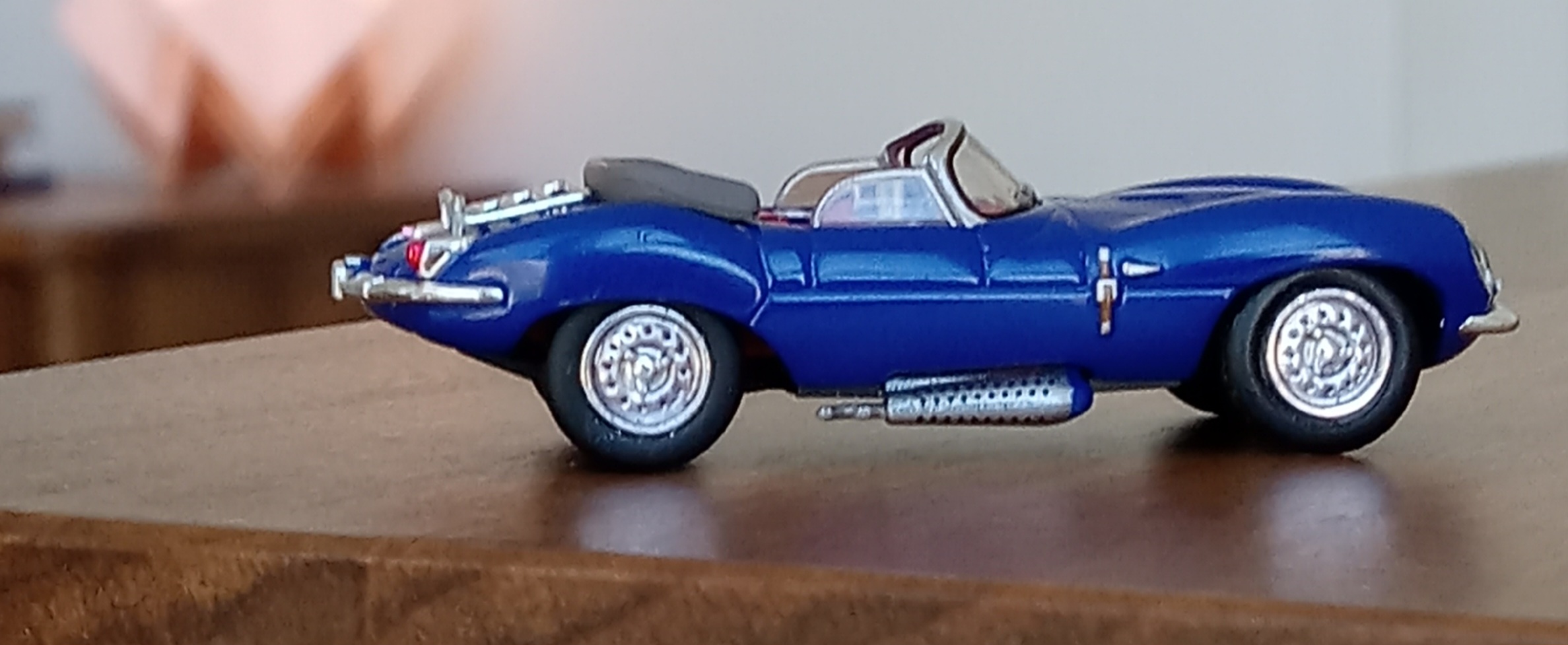
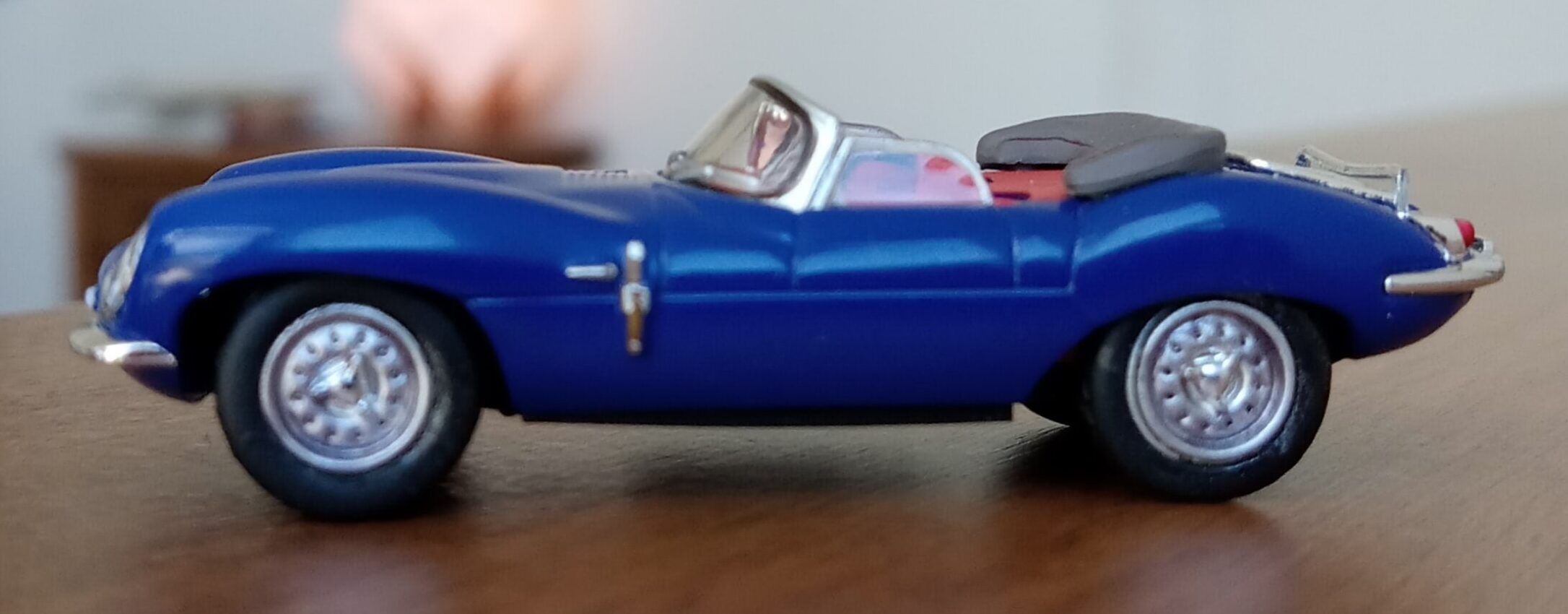
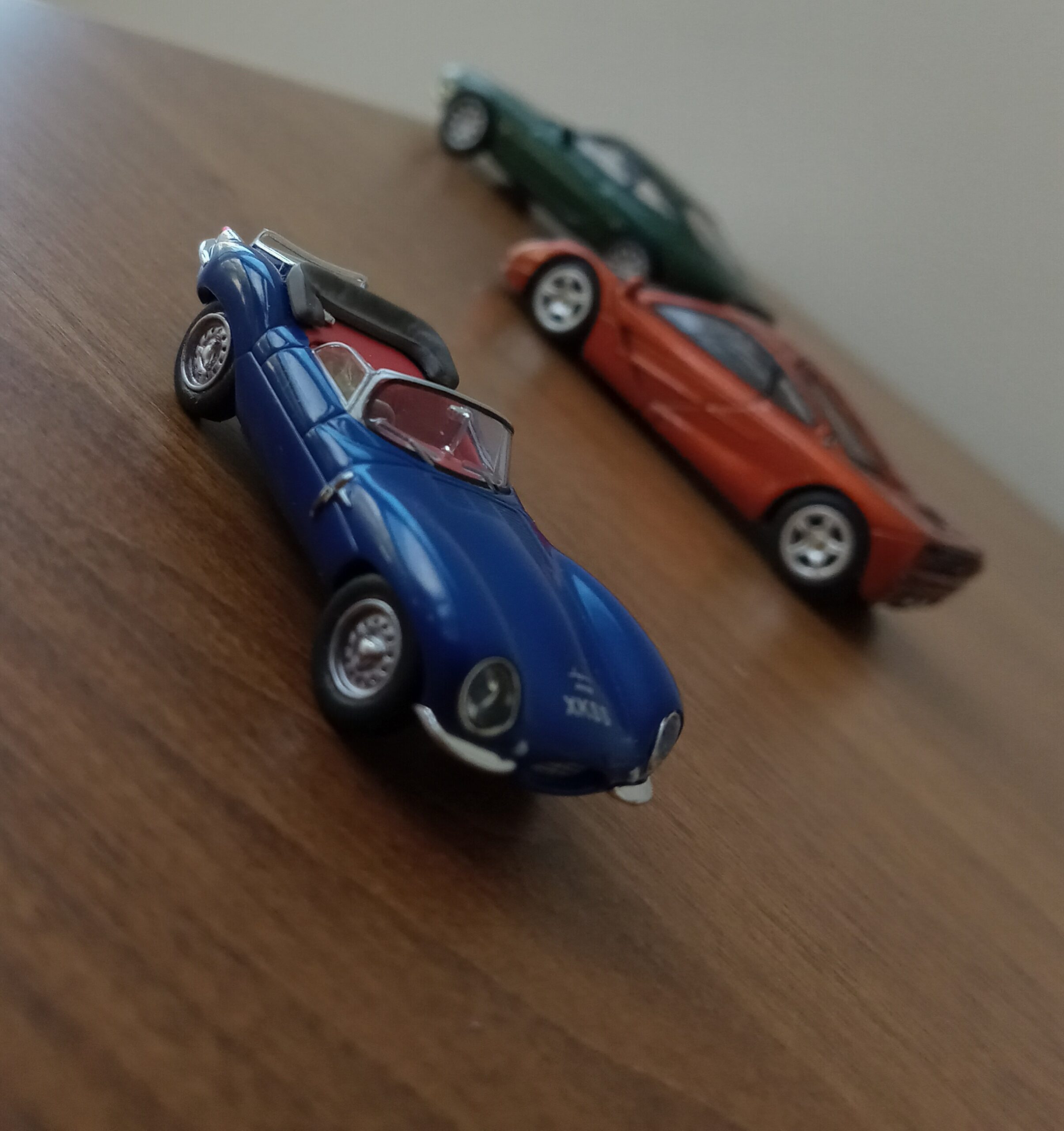
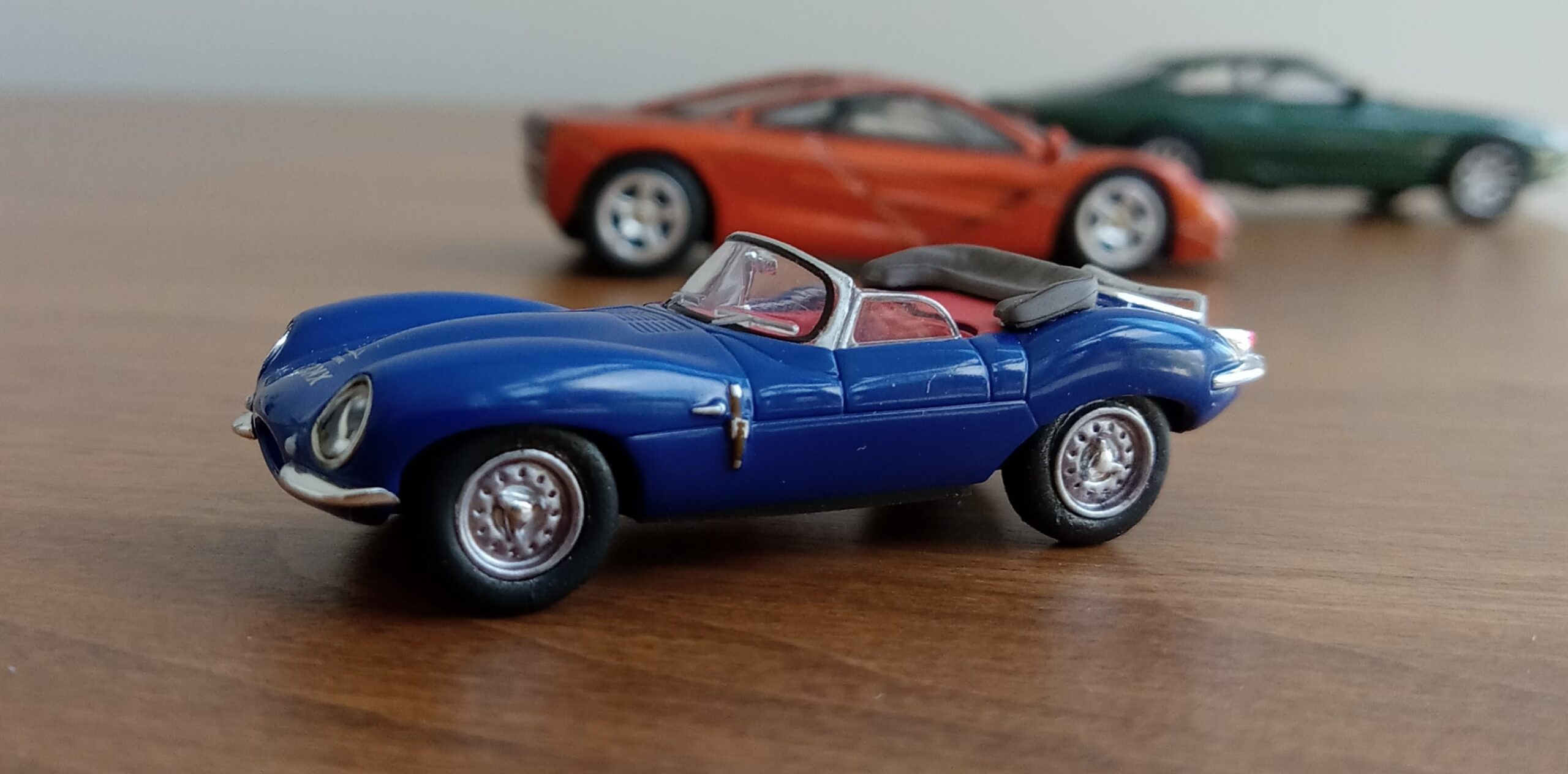
第26回ーー2ドア・クーペの系譜: 第8回【英国編】ジャガー・XKSS ロードスター、1957(ロイヤル・ブルー) Jaguar・XKSS、1957
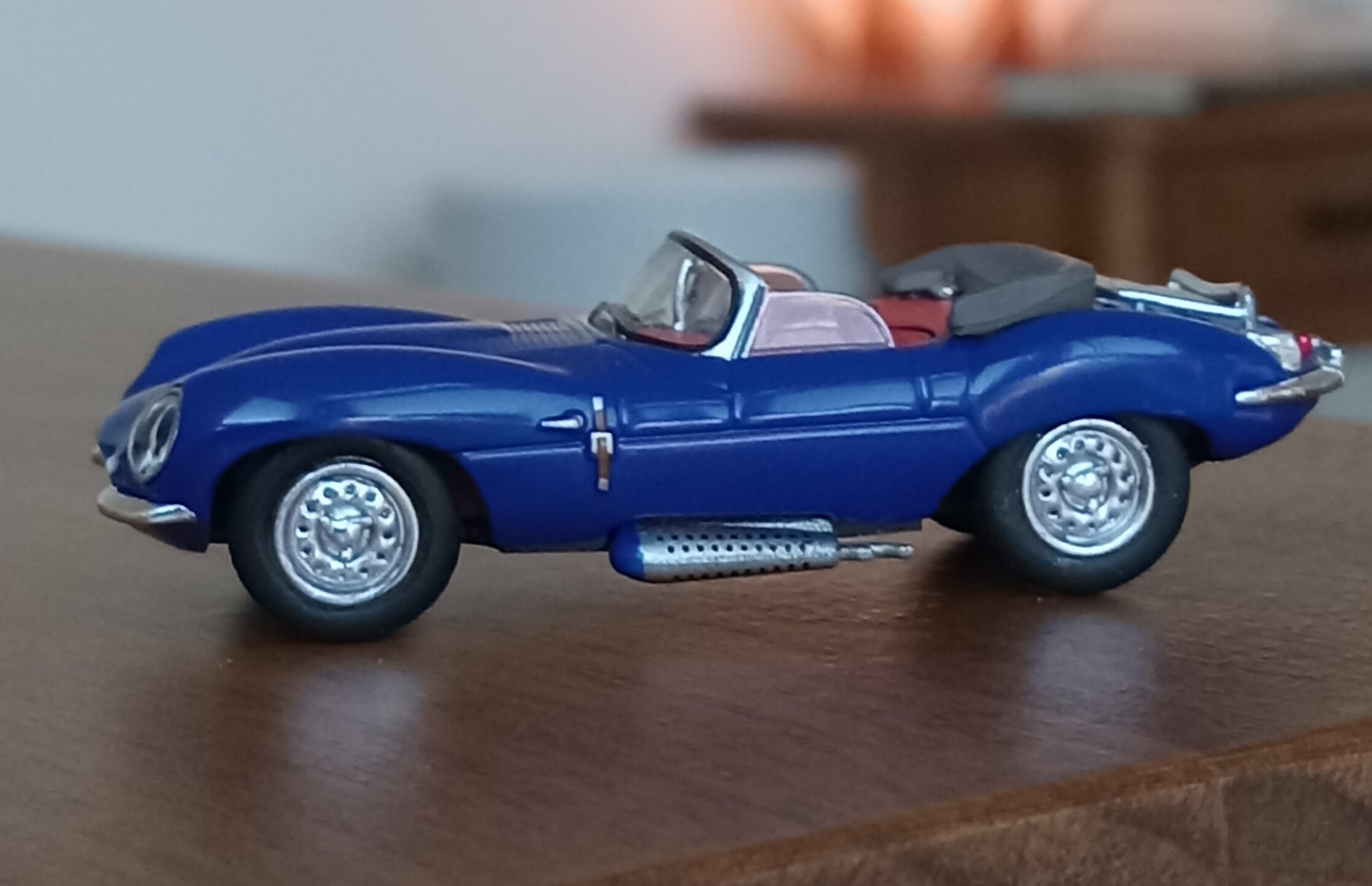
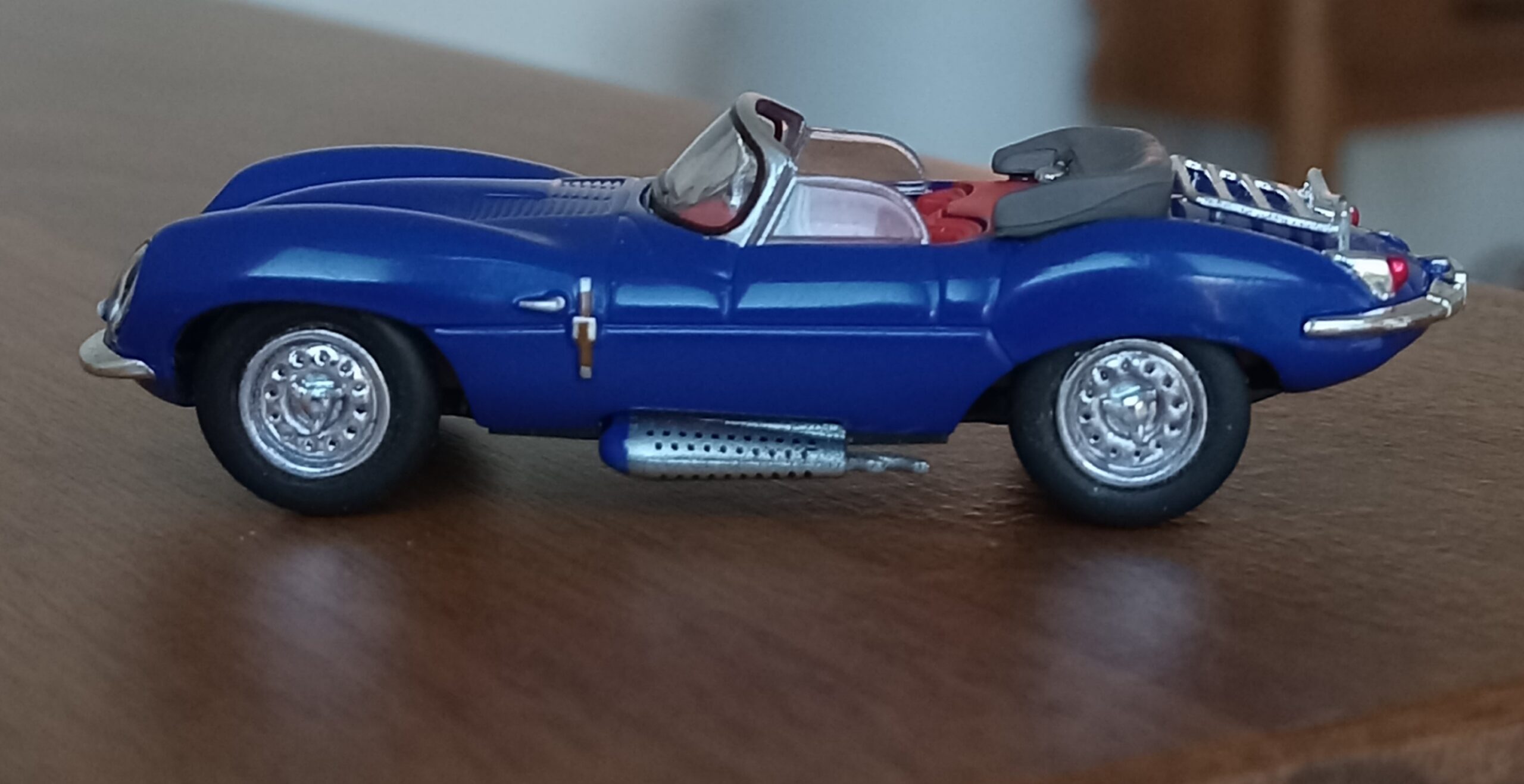
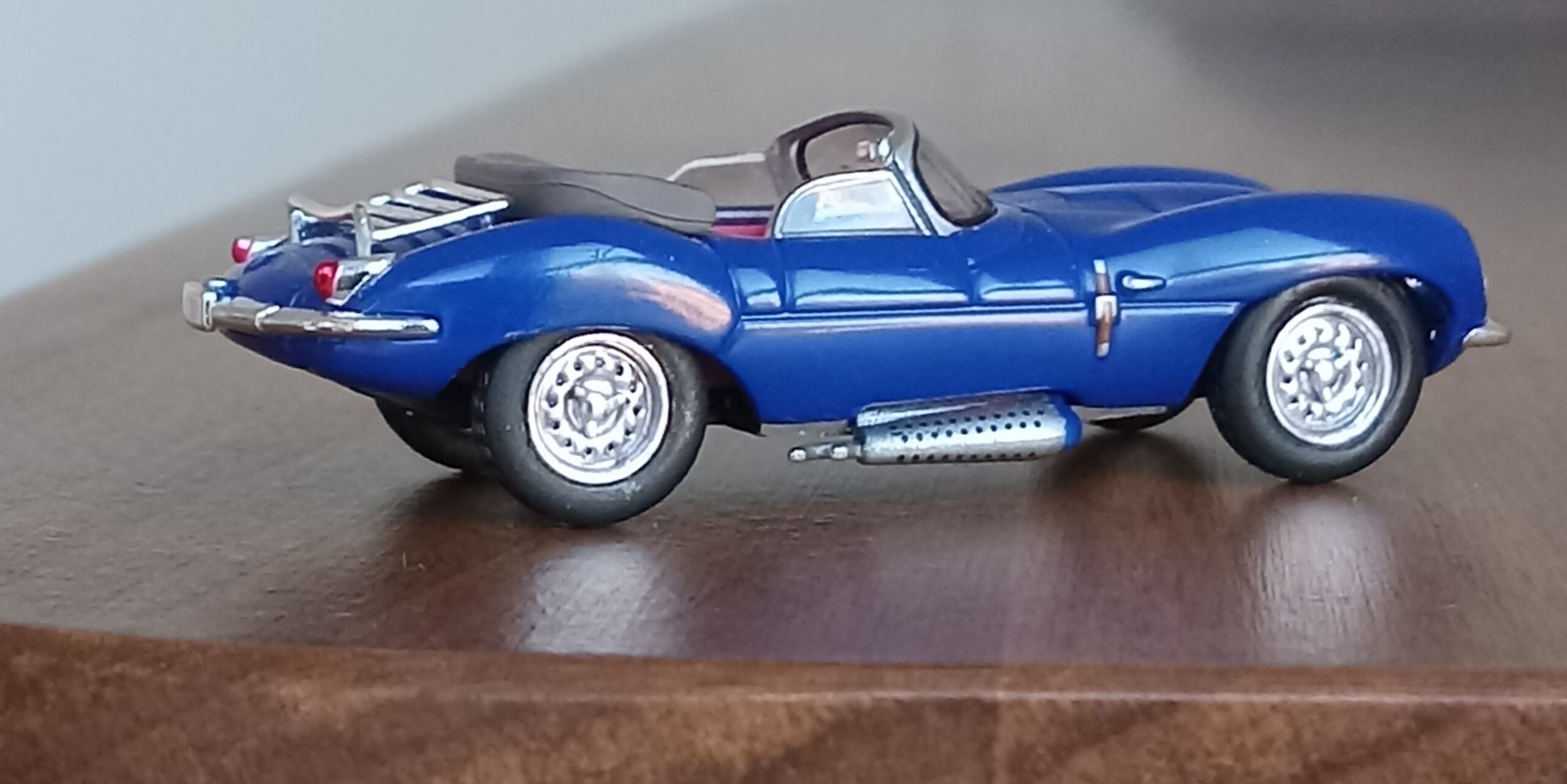
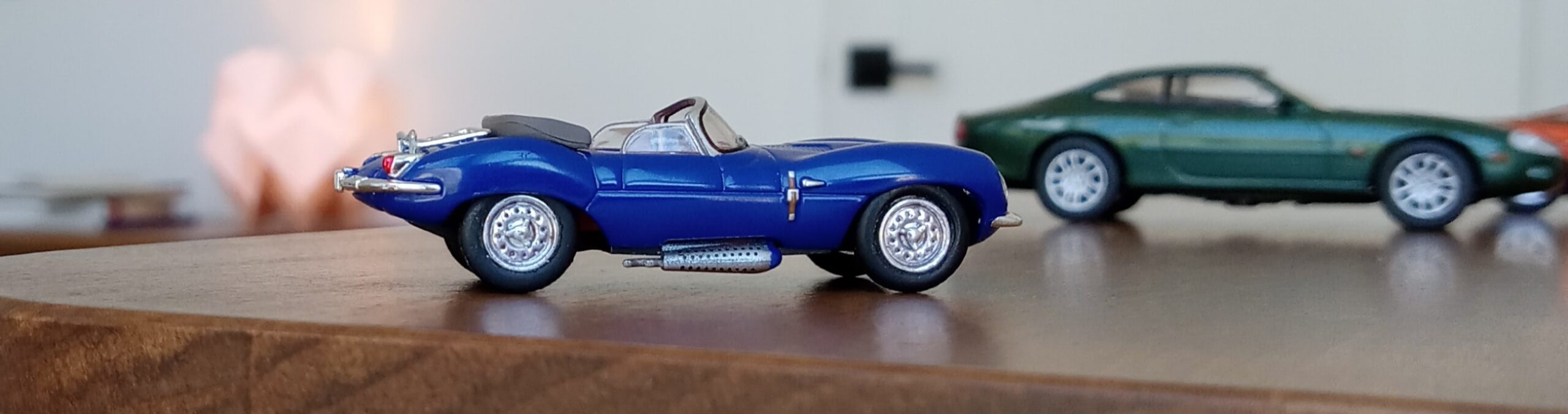
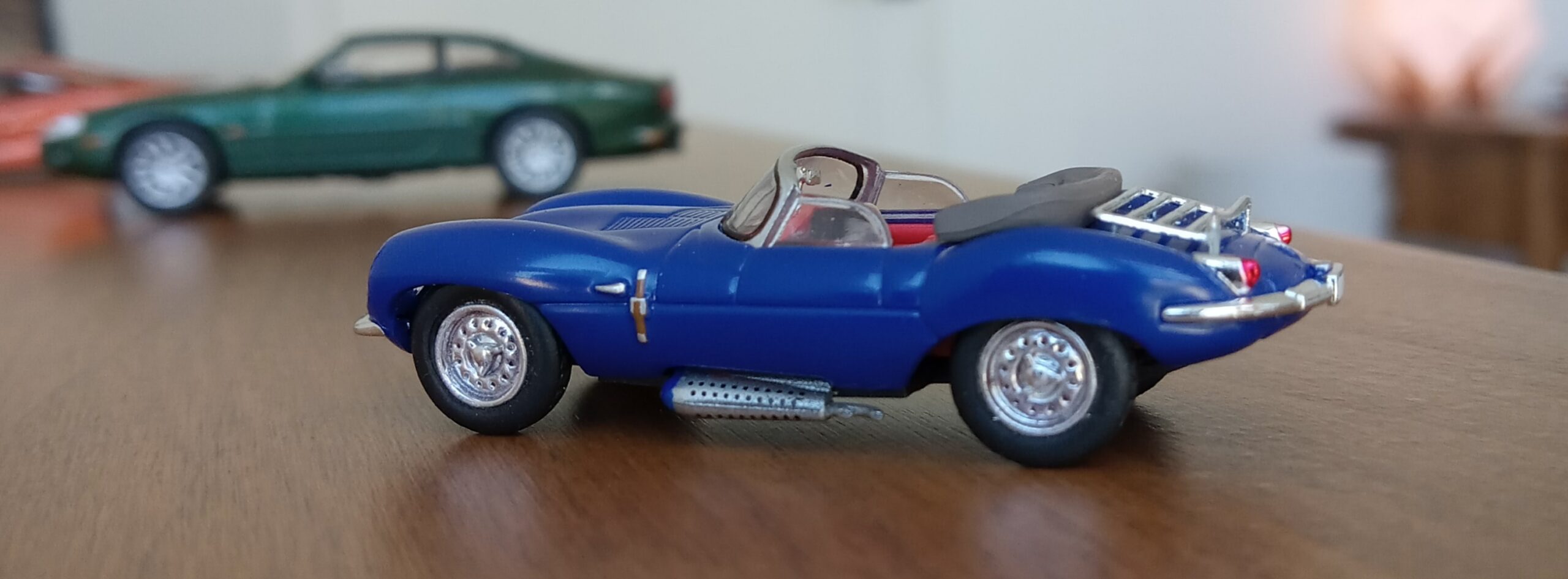
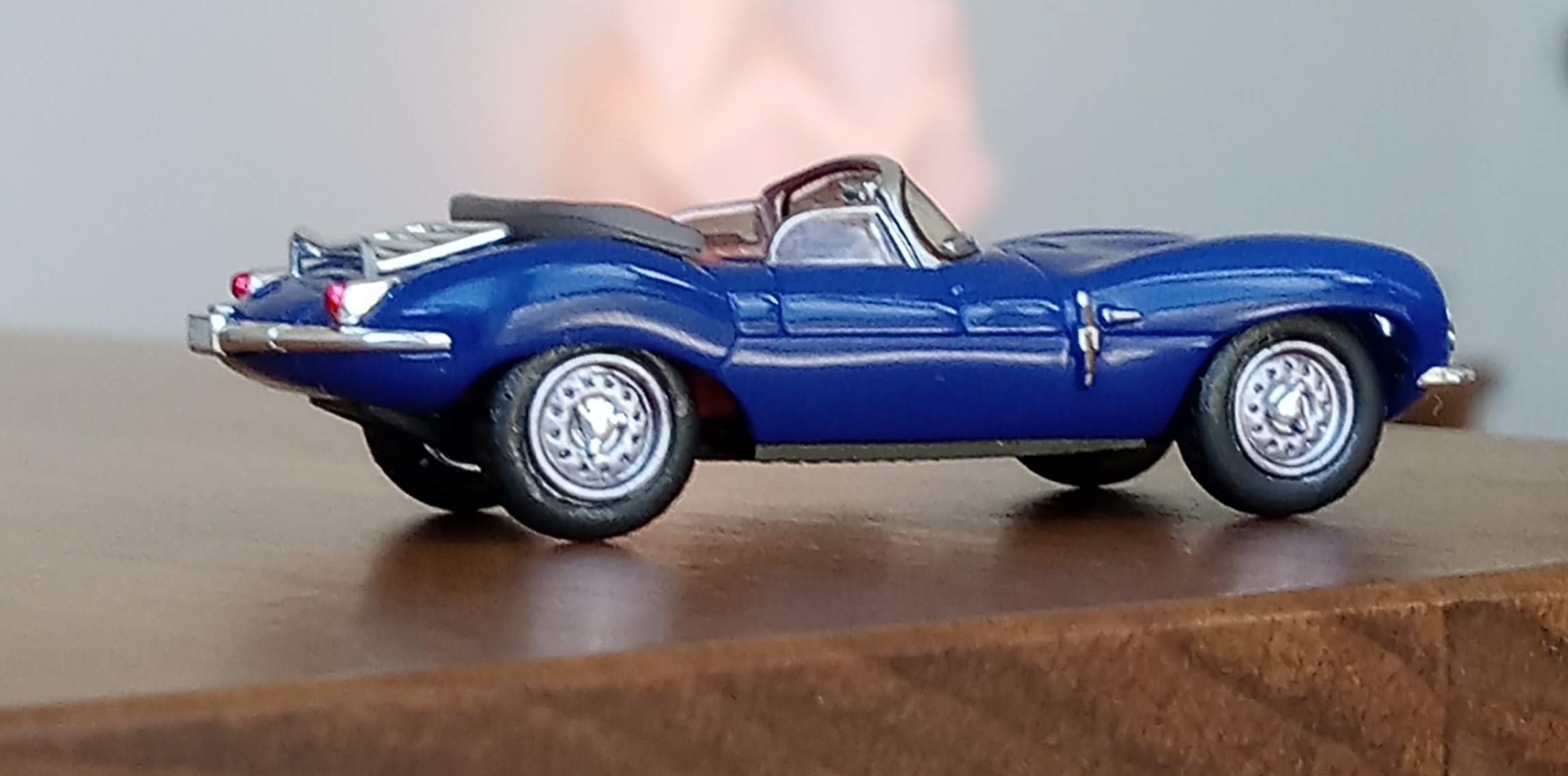
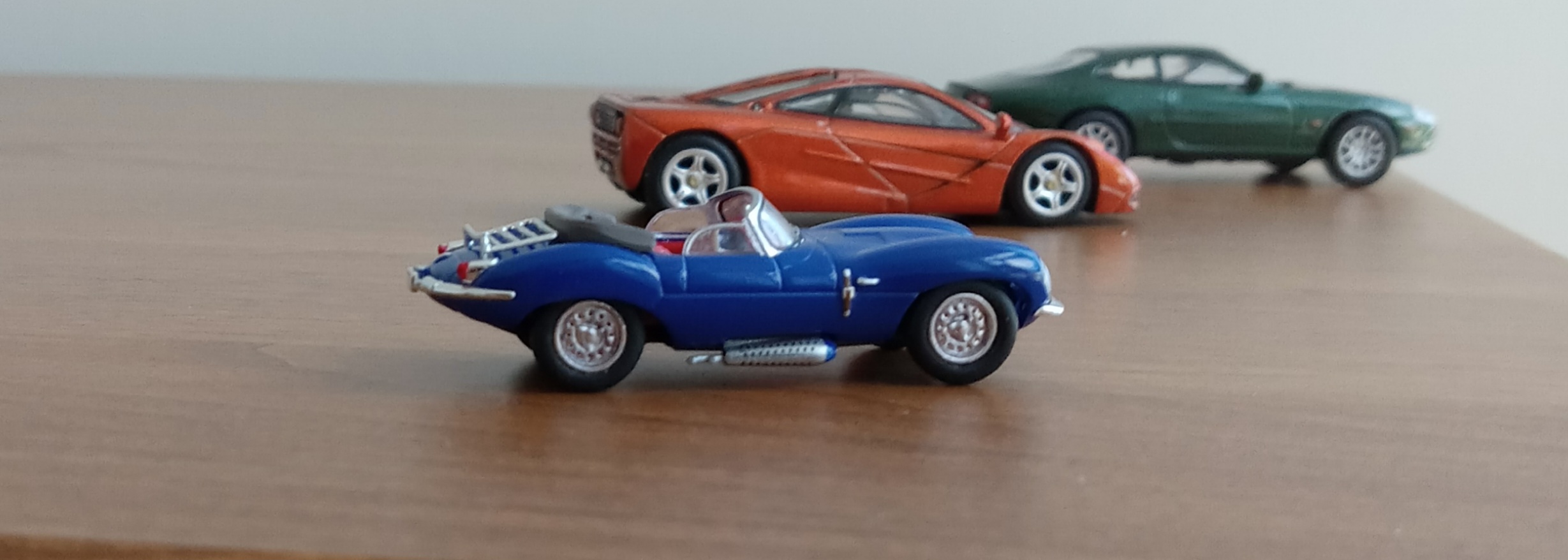
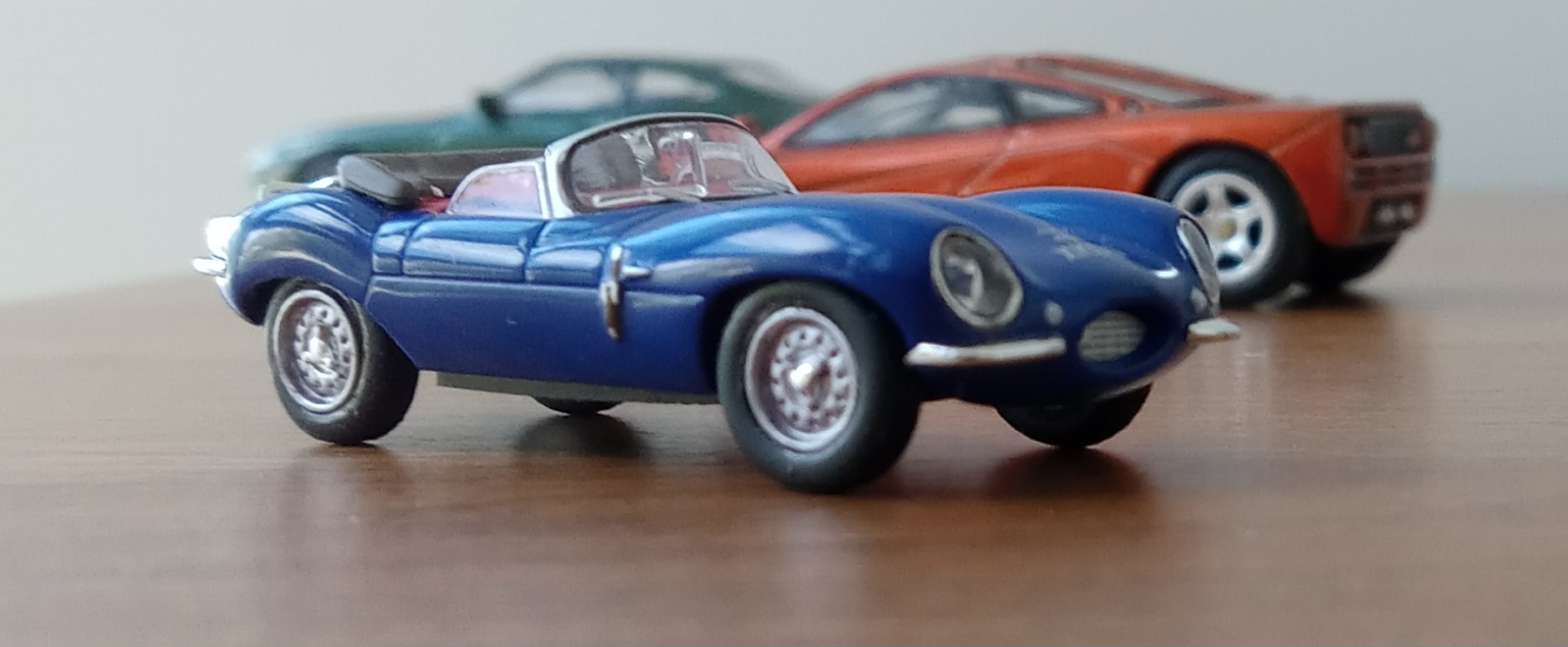
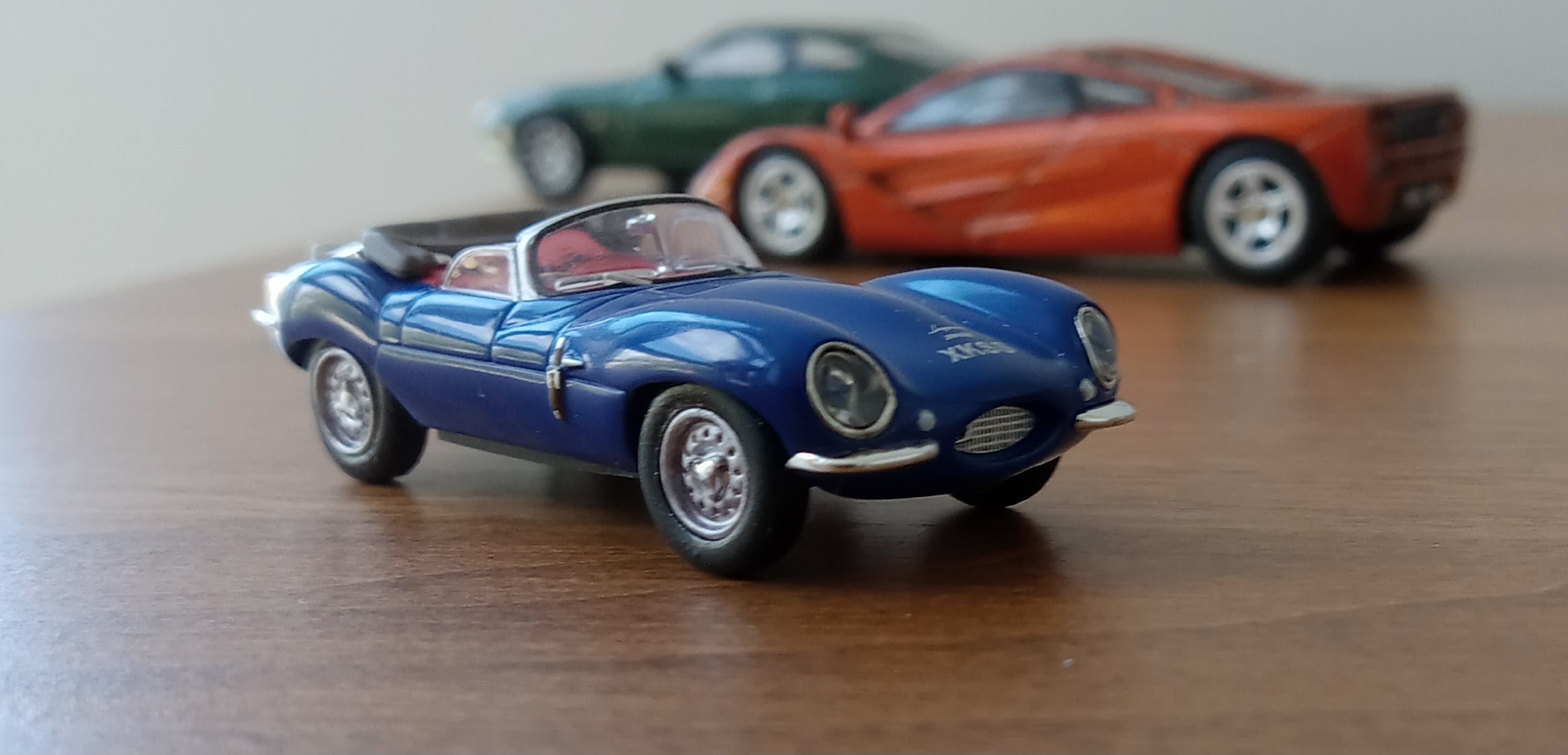
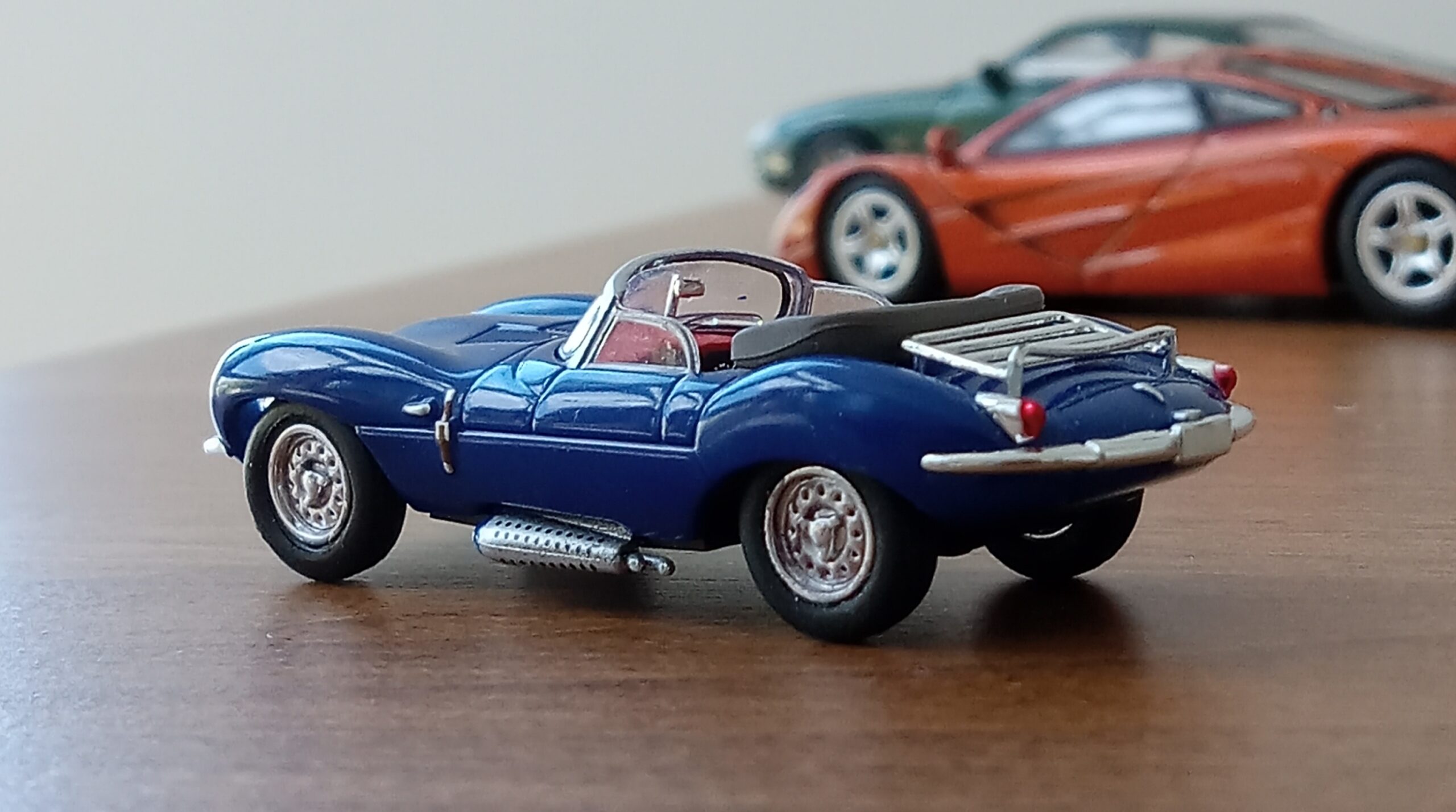
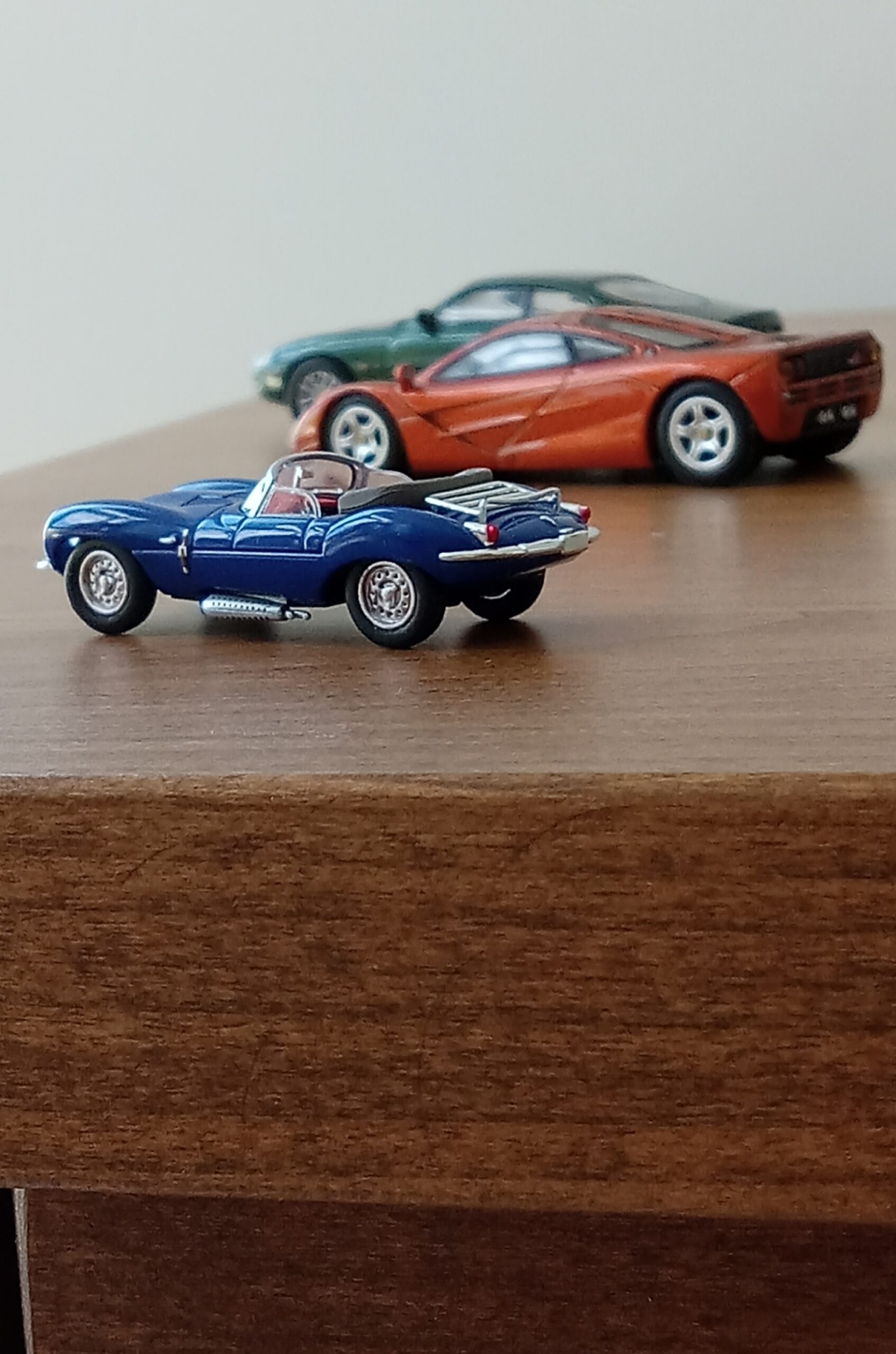
(使用模型:ブッシュ・リコー社製、1/87【HOスケール】ジャガー・XKSS【ロイヤル・ブルー】@改造箇所:車軸の位置と幅を微調整、ホイールの墨入れ)
#好みの自動車デザインーー2ドアクーペの系譜:
第26回目の今回は、『2ドアクーペの系譜』と題しまして、各国のお国柄や、外観デザインの個性が強く表れる、高級2ドア(GT)クーペ / ロードスターについてお話ししてみたいです。
【注意:オープンカーを含む】
以下の要領で進めていきます。
第8回の今回は【英国車編】
1957年型
ジャガー・XKSS についてのお話です。
【2ドア・クーペの系譜:目次】
【米国車編】
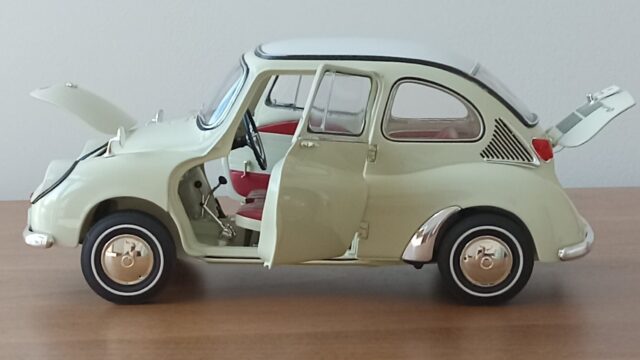
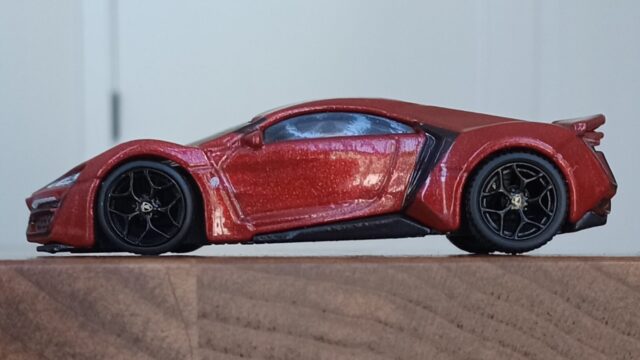
第1回:キャデラック・エルミラージュ、2013(メタリック・レッド)
第2回:リンカーン・コンチネンタル MK4、1972(ブラック)
第3回:マーキュリー・クーガー, 1967(LTメタリック・グリーン)
【ドイツ車編】
第4回:MB 500K スペシャル・ロードスター、1936(ブラック)
第5回:MB 300SL ロードスター、1957(シルバー)
第6回:MB SLS AMR ガルウイング、2010(ブラック)
【英国車編】
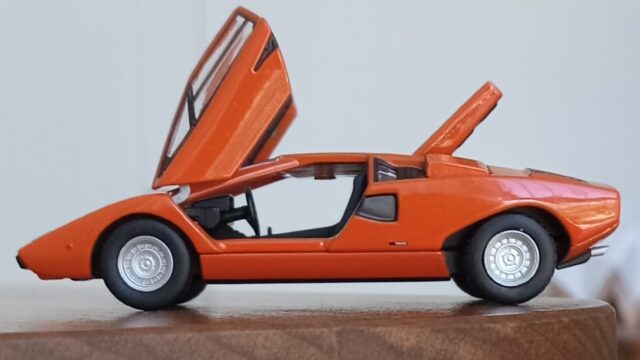
第7回:マクラーレン・F1、1992(メタリック・オレンジ)
第8回:ジャガー・XKSS ロードスター、1957(ロイヤル・ブルー)
第9回:ジャガー XKR クーペ、1996(ダークメタリック・グリーン)
【日本車・ニッサン編】
第10回:ニッサン 初代シルビア、1965(シャンペン・ゴールド)
第11回:ニッサン 5代目シルビア、1988(LTメタリック・グリーン)
【イタリア車編】
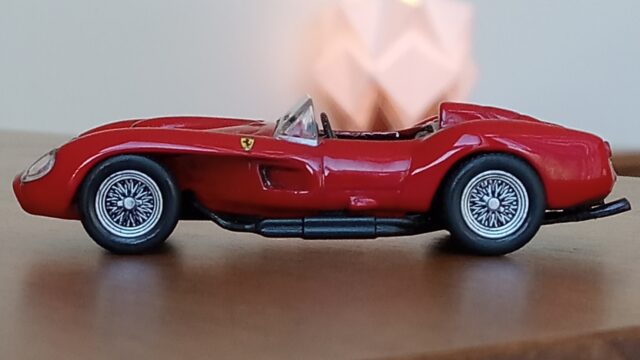
第12回:フェラーリ 250TR ポンツーンフェンダー、1958(赤)
第13回:フェラーリ 250GTO、1962(イタリアン・レッド)
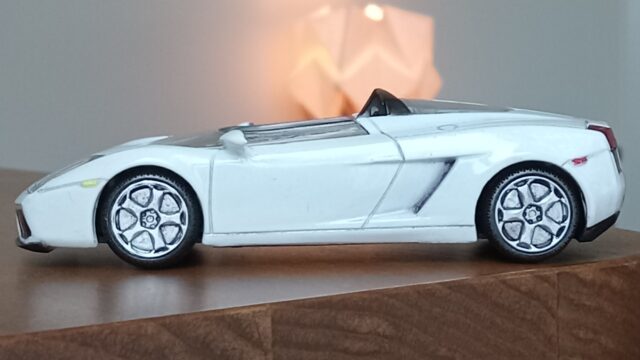
第14回:ランボルギーニ・コンセプトS、2005(パール・ホワイト)
【日本車・マツダ編】
第15回:マツダ コスモ・スポーツ、1967(シルバー)
第16回:マツダ ユーノス・コスモ、タイプ‐S(2トン:黒&グレー)
【フランス車編】
第17回:ブガッティ・タイプ59、1935(フレンチ・ブルー)
第18回:シトロエン・SM、1970(シャンペーン・ゴールド)
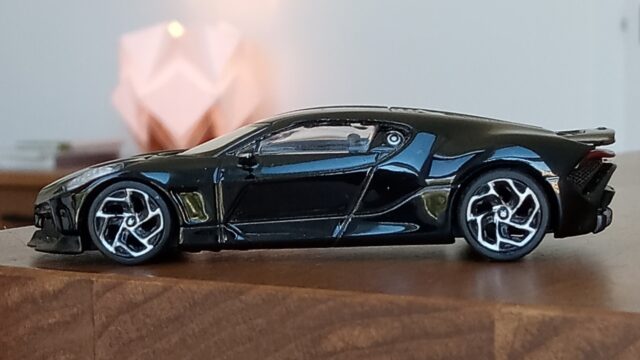
第19回:ブガッティ・ラ・ヴォワチュール・ノワール、2019(黒)
【日本車・トヨタ編】
第20回:トヨタ/ヤマハ・2000GT、1967(アイボリー・ホワイト)
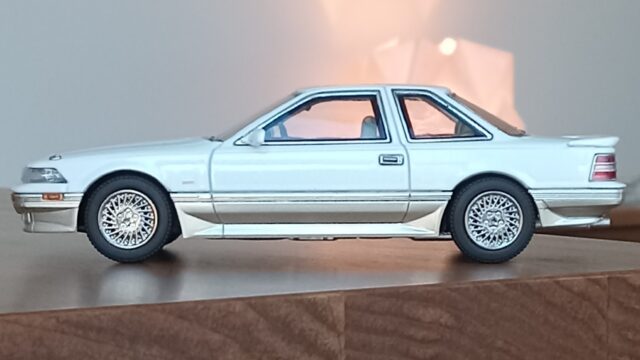
第21回:トヨタ・2代目ソアラ、1986 (2トン:黒&グレー)
第22回:レクサス LC【GWZ100型】、2017(メタリック・レッド)
【米国車編②】
第23回:ダッジ・チャレンジャー&プリムス・バラクーダ、1971
第24回:フォード・シェルビーGR-1 コンセプト、2004(クローム)
第25回:シボレー・コルベット C4 ZR-1、1990(真紅)
第26回:コルベット・スティングレー コンセプト、2009(シルバー)
#最強レースカー、Dタイプを市販車化:スティーブ・マックイーンもびっくりな、ただ物ではない『オーラ』
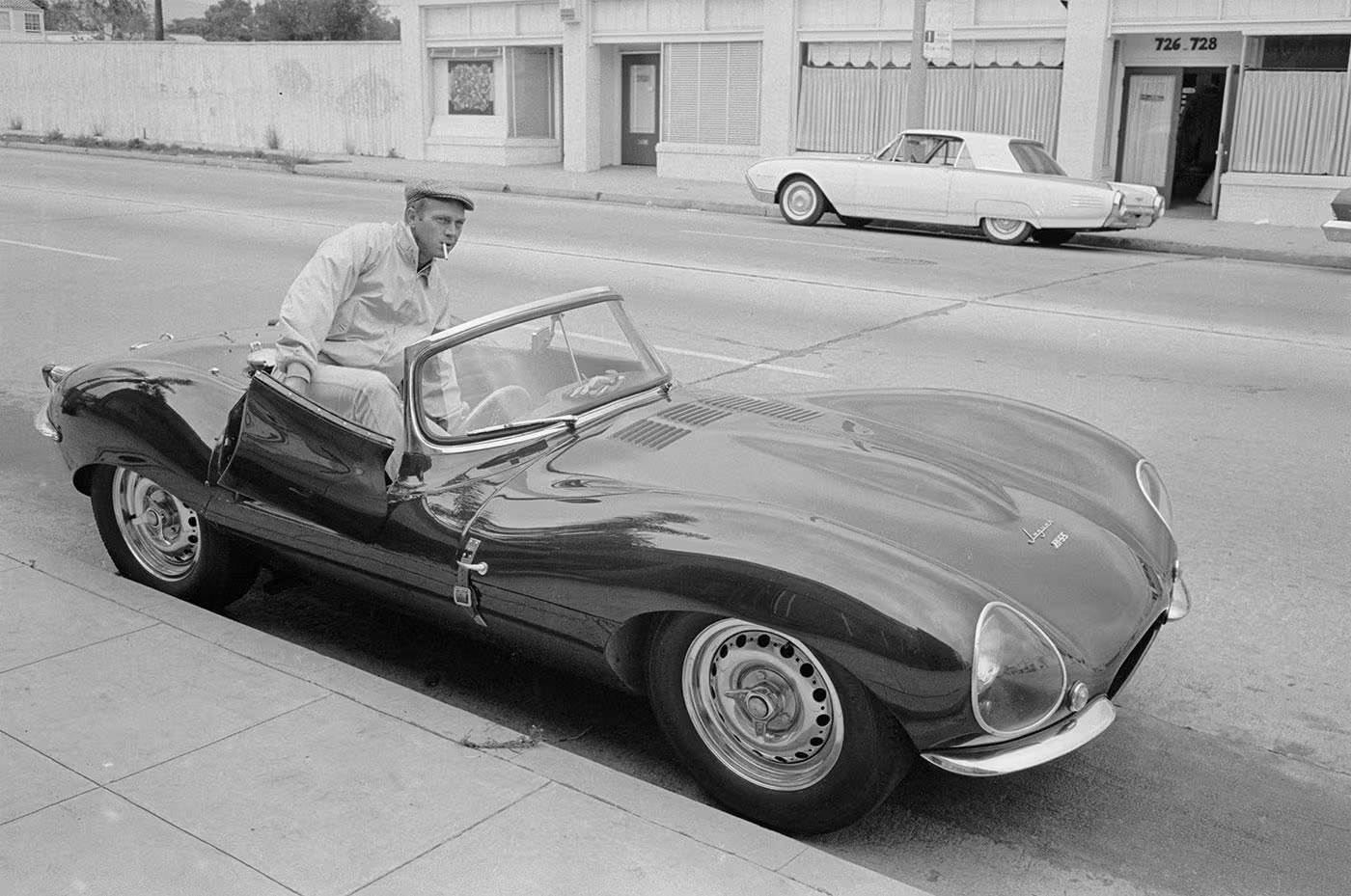
今回は、いよいよ
ジャガー『XKSS』です。
*D-タイプ譲りの実験機的な先進性と、
*それを豪華なロードスターにしたことによる、
独特なカタマリ感、
凝縮感とが同居した、
一番いい意味での、ランカシャー・ホットポット的
『ごった煮感』(大英博物館的/百科事典的な?、、)
が魅力の一台です。

その独特の世界観には、
*レースあり、
*週末のワインディング・ドライブあり、
*中・長距離旅行あり、
*二人でデートあり、と
自動車にかかわる、楽しい風景が
ぎっしりと、パッケージされています。
まさに凝縮された
『走る百科学』!!
さてそれでは、
この類まれな名車:ジャガーXKSSについて、
こんな感じで語っていきます。
*実車解説:民生版D-タイプ・ジャガーのオーラ
*外観デザインの特徴:
*『私』とXKSS:ごった煮の美学
*三題噺:百科学・スティーブマックイーン・空力実験
*その他の『ごった煮自動車』の系譜
*実車解説:民生版ジャガーD-タイプのオーラ
#S・マックイーンの愛車
n
n
ジャガー XKSSは、1957年に発表された『世界初のスーパーカー』とも称される伝説的なスポーツカーです。
ル・マン24時間耐久レースで3年連続(1955〜57年)優勝したレーシングカー「Dタイプ」をベースに、公道走行可能なロードカーとして再設計されました。生産台数の少なさと、俳優スティーブ・マックイーンが愛用したことで極めて高い希少価値を持っています。1. 誕生の経緯:レース引退から生まれた公道仕様1956年末にジャガーがワークス参戦を一時休止した際、未販売だったDタイプのシャシーを活用するために企画されました。レーシングカーの性能をそのままに、公道で走るための最低限の装備が追加されました。
n
n
n
n
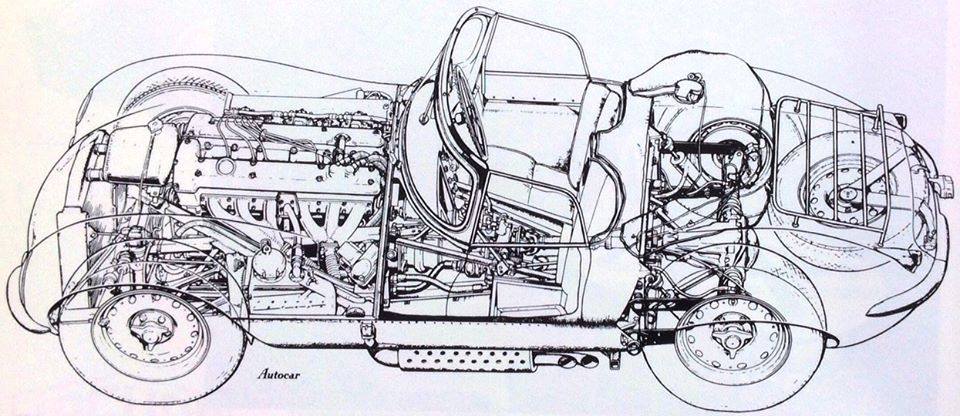
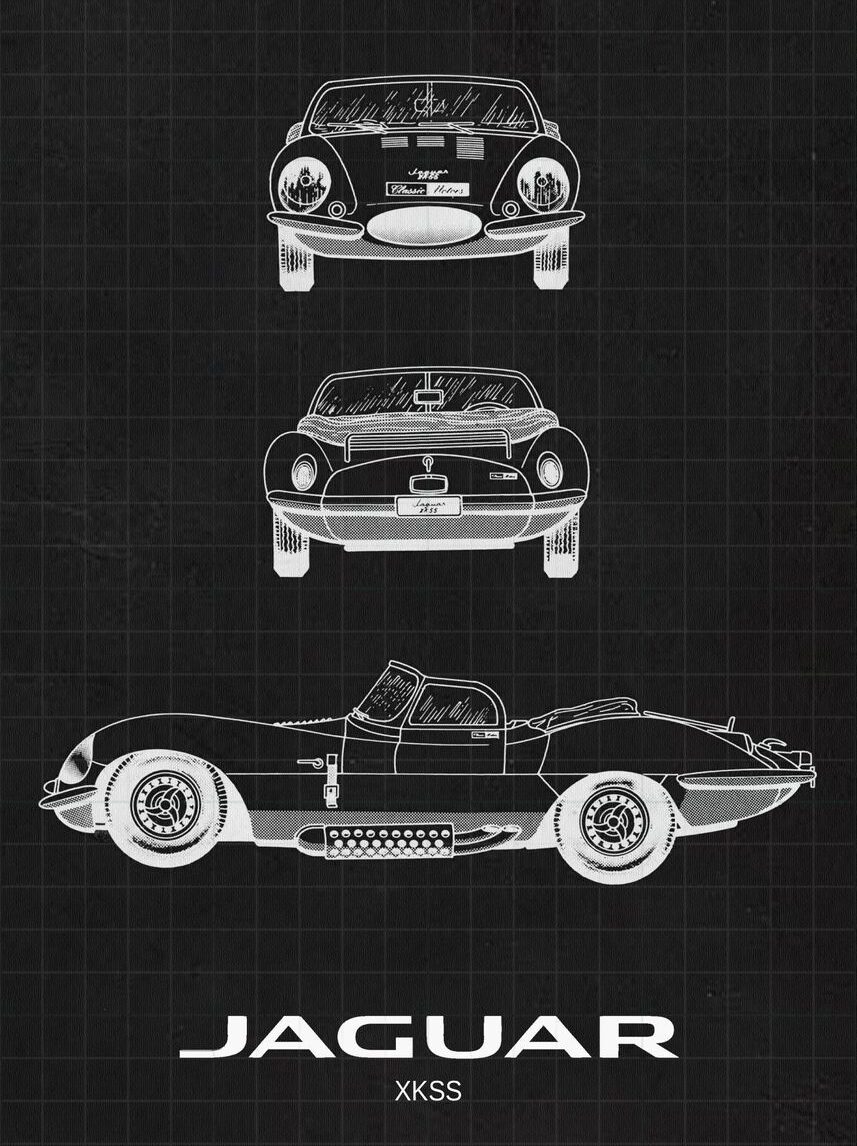
Dタイプからの主な変更点:
*コックピット後方の巨大なフィン(背びれ)の撤去。
*助手席用ドアの追加。
*フルサイズのフロントウィンドウとサイドスクリーンの装着。
*折りたたみ式の簡易的な幌(ソフトトップ)の装備。
*クローム仕上げのバンパーやテールランプの追加。
N
N
N
N
N
N
N
N
N
N
N
N
N
N
N
N
N
N
n
当初、25台の生産が予定されていましたが、1957年2月のブラウンズ・レーン工場での大火災により、製作途中だった9台が焼失してしまいました。そのため、当時ラインオフしたのはわずか16台のみとなり、ジャガー史上最も希少なモデルの一つとなりました。
なお、2016年には「ジャガー・クラシック」部門が、火災で失われた9台を当時の図面に基づいて再現する「コンティニュエーション・モデル」の製作を発表し、大きな話題となりました。
n
N
n
n
4. 歴史的価値と現代の評価
n
*スティーブ・マックイーン:大のクルマ好きで知られる彼が「グリーン・ラット(緑のネズミ)」と名付けたブリティッシュ・レーシング・グリーンのXKSSを愛用していたエピソードは有名です。現在はピーターセン自動車博物館に所蔵されています。
*市場価格:オリジナル個体は極めて希少で、オークション等に出れば数十億円規模の価値がつくとされています。
#主要諸元:
- 型式:XK型(レーシング仕様のD-TYPEジャガーと同型)
- 総排気量: 3.4L 直列6気筒 DOHC (Jaguar XK6)
- 最高出力 : 約 250 bhp @ 6,000 rpm
- 最大トルク:約 325 Nm (240 lb-ft) @ 4,500 rpm
- 駆動方式:FR(フロント・エンジン、リアドライブ)
- 定員:2名
- 車体形式:2ドア・クーペ
- ホイールベース:2,300 mm
- 全長:3,990 mm
- 全幅:1,660 mm
- 全高:1,120 mm
- 車両重量:
約 890 kg ~ 921 kg
*外観デザインの特徴:E-タイプへつながる流麗さの始まり
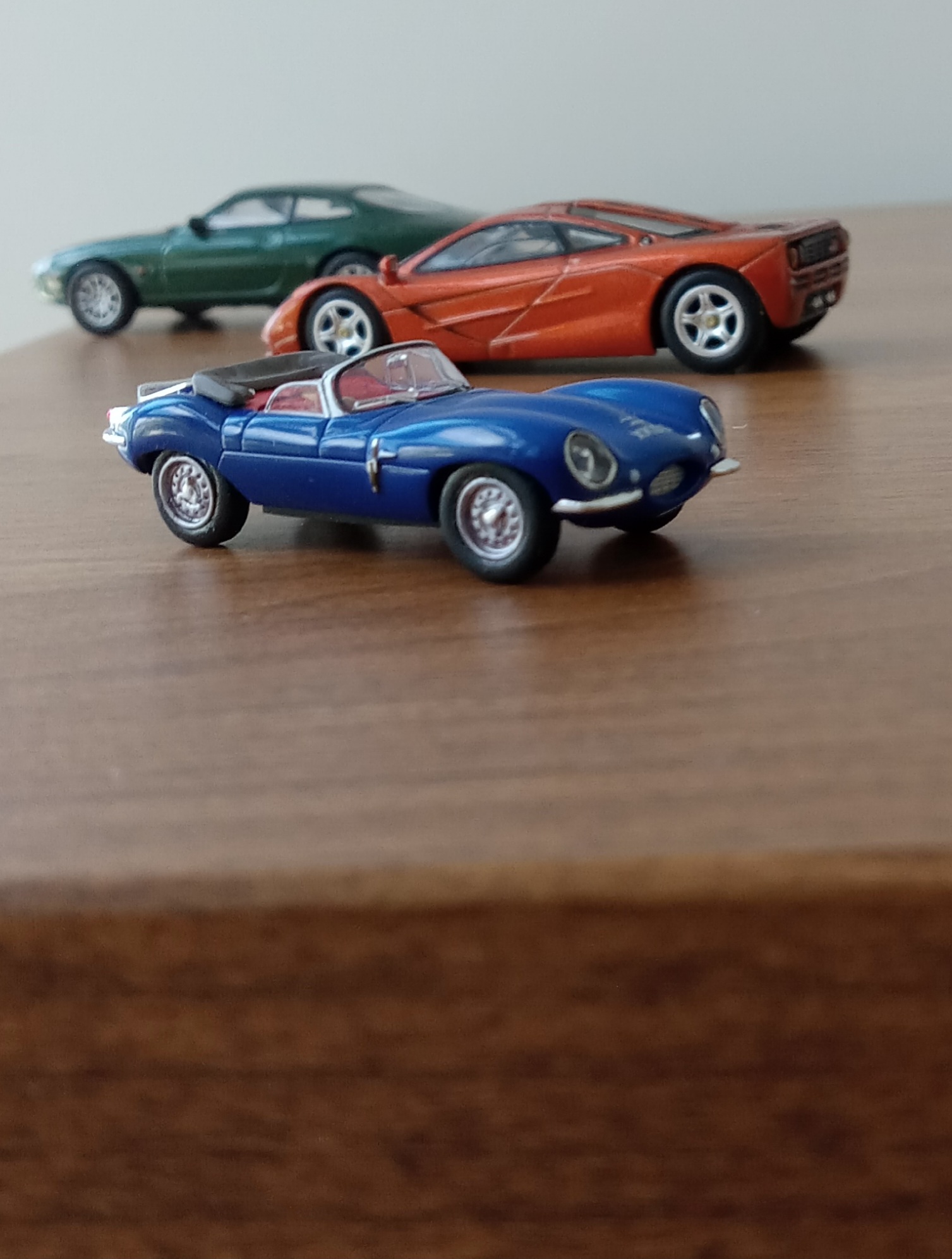
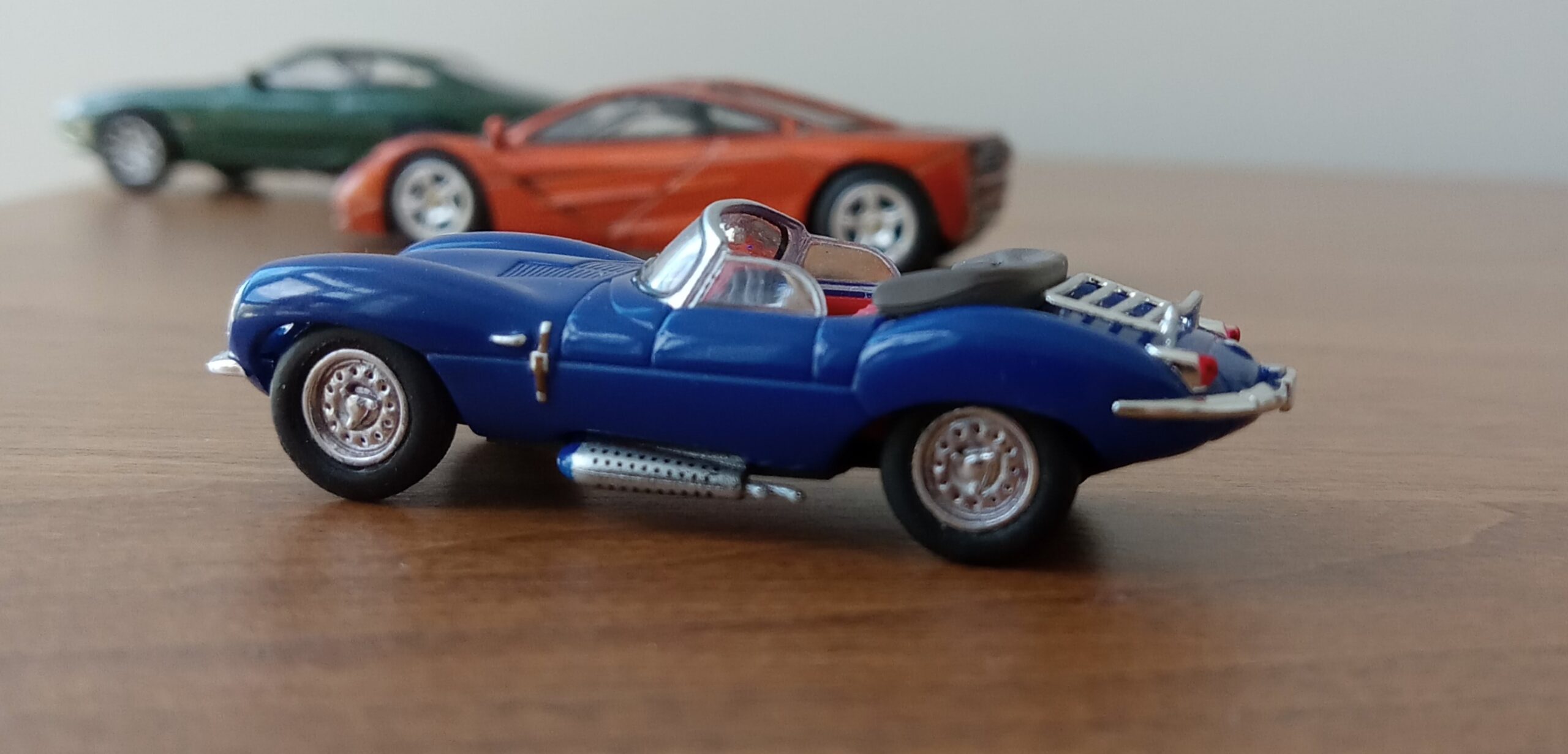
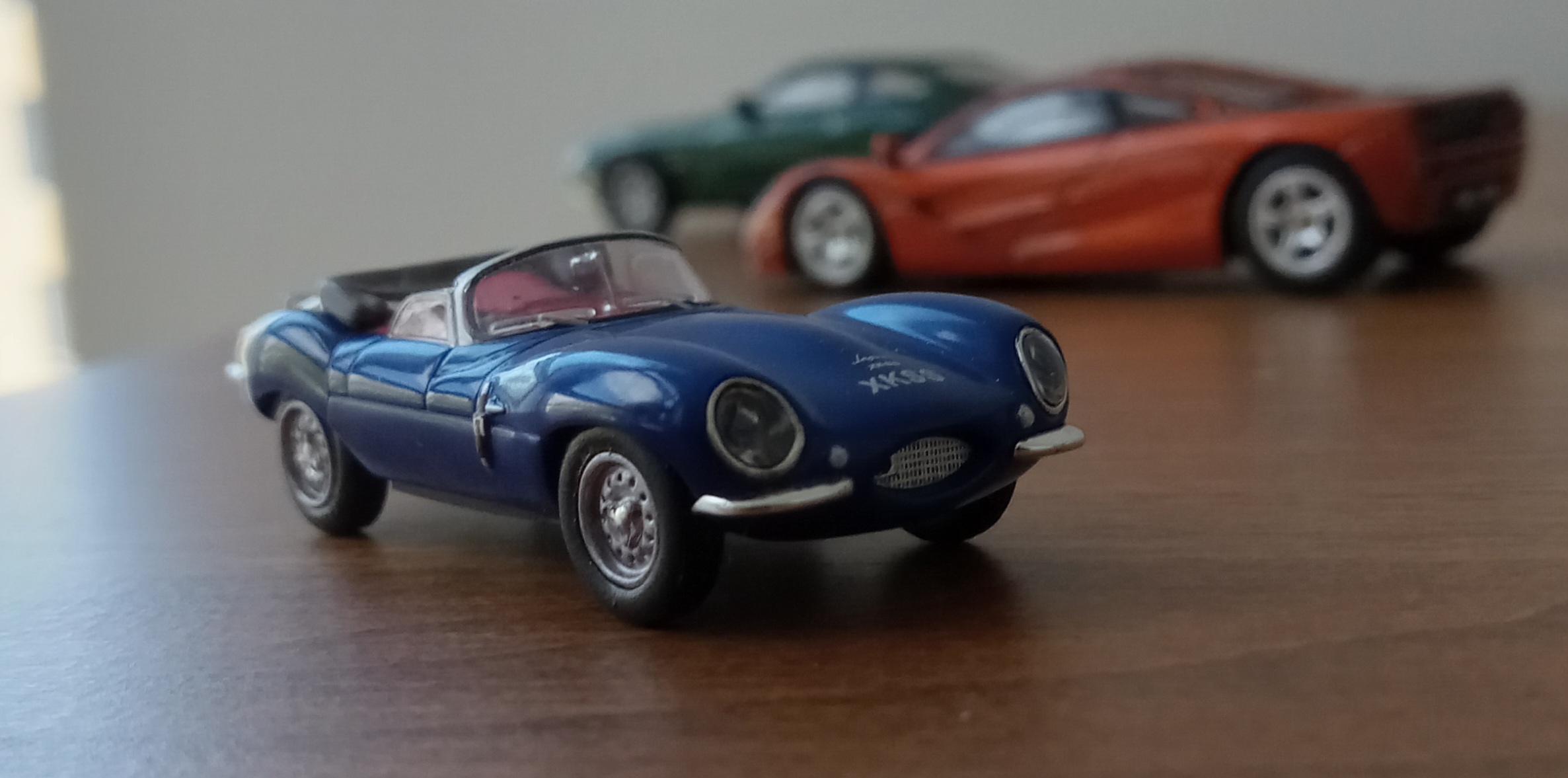
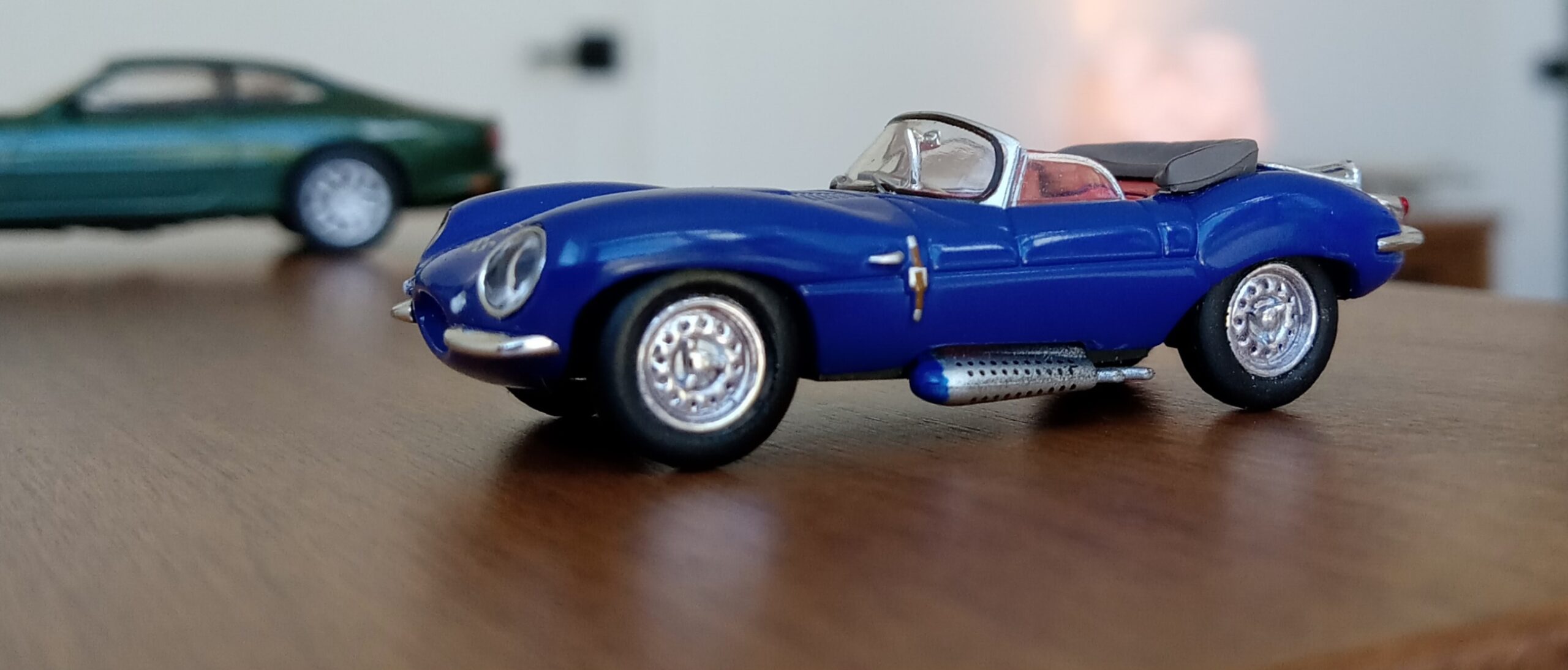
ぎゅっと詰め込んだ『ジャガーXKSS』の
外観デザイン的特徴ですが、
私的には、以下の6点となっています。
1、空力実験から生まれた流麗なボディー面と、流れるような全体像
ーーーーーー>後のジャガー・タイプEにつながる『有機的な美しさ』の原点です
2、レスカ―『D-タイプ』をほぼそのまま市販車に改造したため、生々しさと洗練さが同居した複雑な外観を持っています。
3、英国風なロードスターの分法に忠実な低めの風防とそれを後方から帽子のように閉じる小型の幌のバランス感
4.大きなスプーン型のフェンダーが4隅に陣取るスタンス:アメリカのマッスルカーのような荒らしさも内包
5、流麗な基本ボディーと、『取ってつけた感』満点の快適装備が奏でる、狂気に満ちたアンバランス感
1、空力実験から生まれた流麗なボディー面と、流れるような全体像
(空力実験車的な外装をもって、レースで素晴らしい成績を残した『D-タイプ』そのままの外観とエンジン、シャーシ性能がパンパンに詰め込まれています。笑)
ーーーーーー>後のジャガー・タイプEにつながる『有機的な美しさ』の原点です
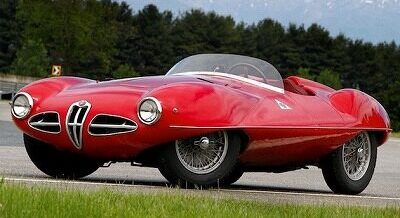
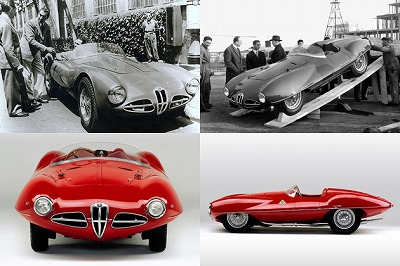
ーーーーー>アルファロメオの実験車:ディスコ・ボランティ的な「パンケーキの4隅にフェンダーをつた感じ」が素敵です。
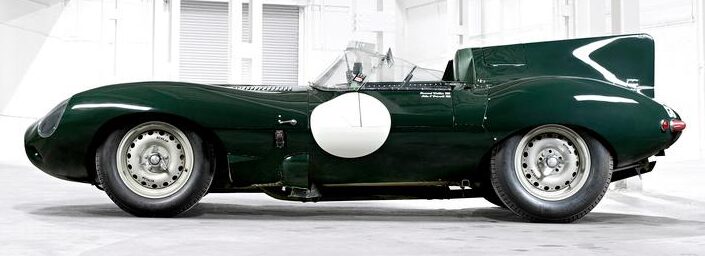
(レース版、D-タイプ ジャガー)
(アルファロメオ ディスコ・ボランティ)
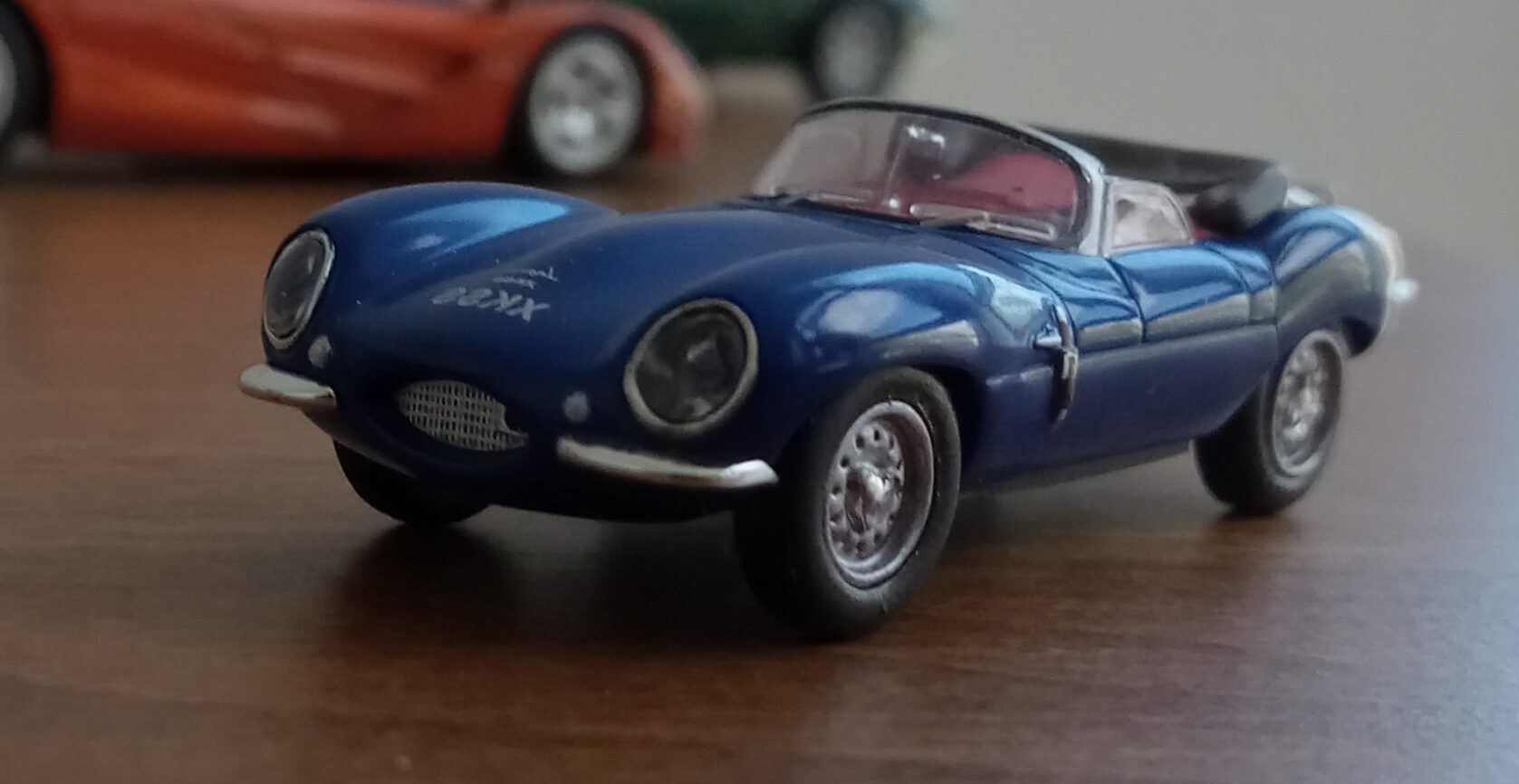
2、レスカ―『D-タイプ』をほぼそのまま市販車に改造したため、生々しさと洗練さが同居した複雑な外観を持っています。
ーーーーーー>同居した雑味こそがこの車の本質かもしれません。笑
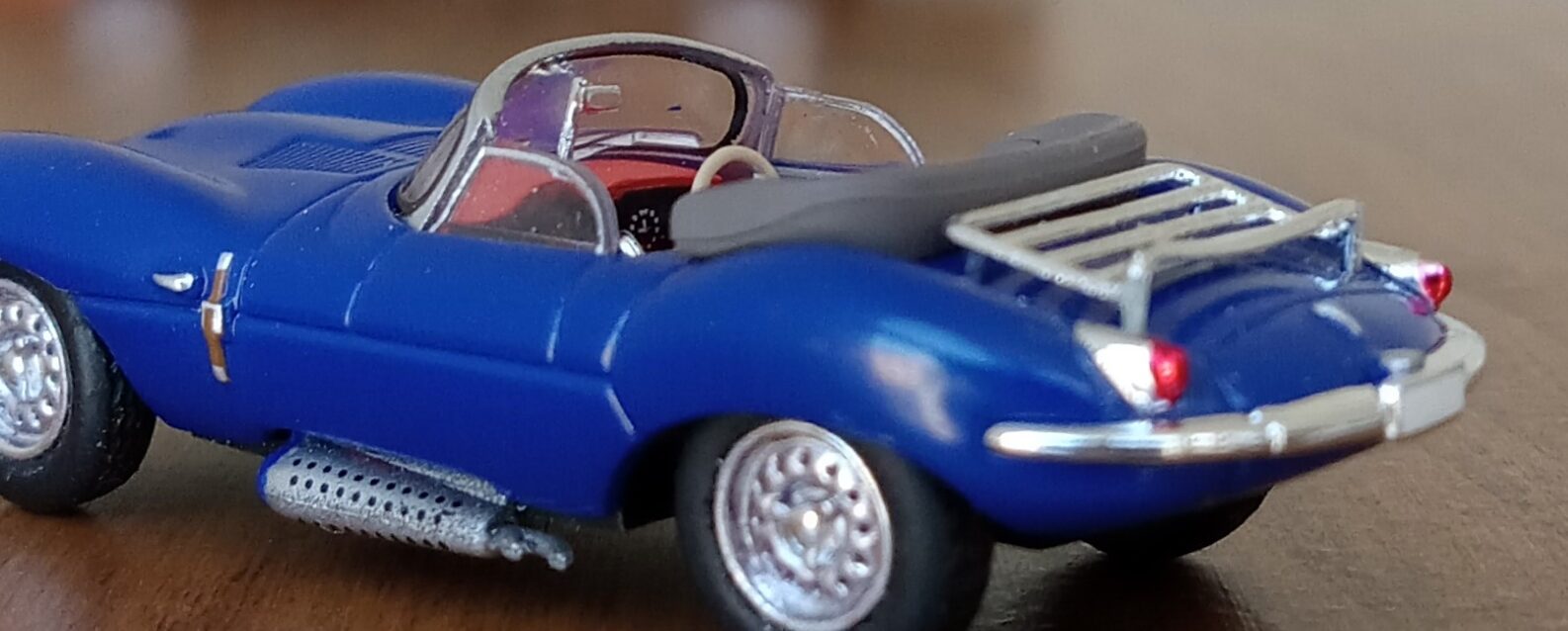
3、英国風なロードスターの文法に忠実な『低めの風防』とそれを後方から帽子のように覆う小型の幌のバランス感
ーーーー>紳士が被った、【ゴーグル付きの飛行帽】的なスポーツ感覚
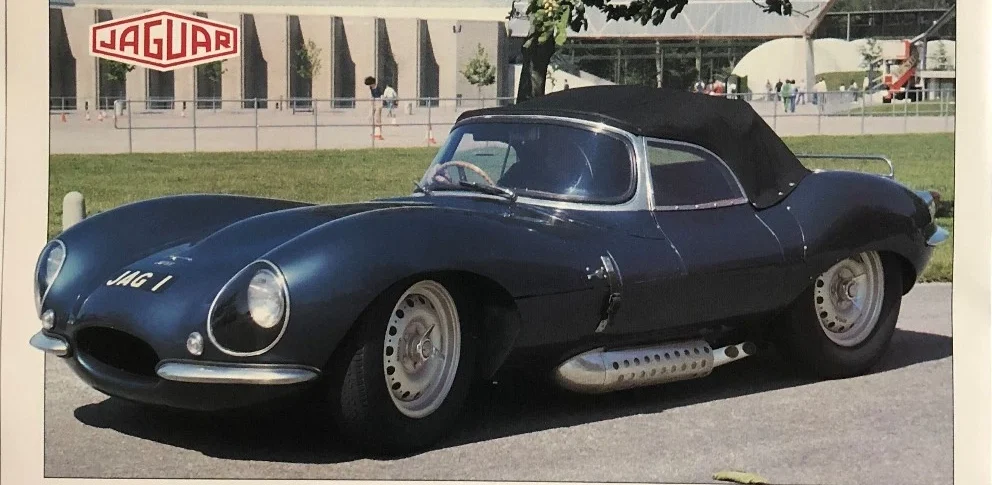
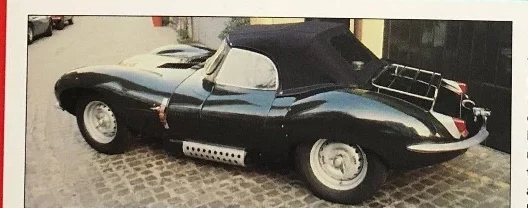
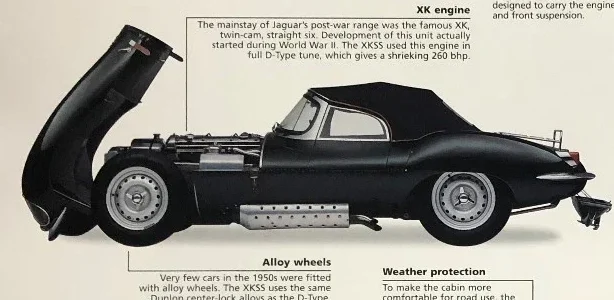
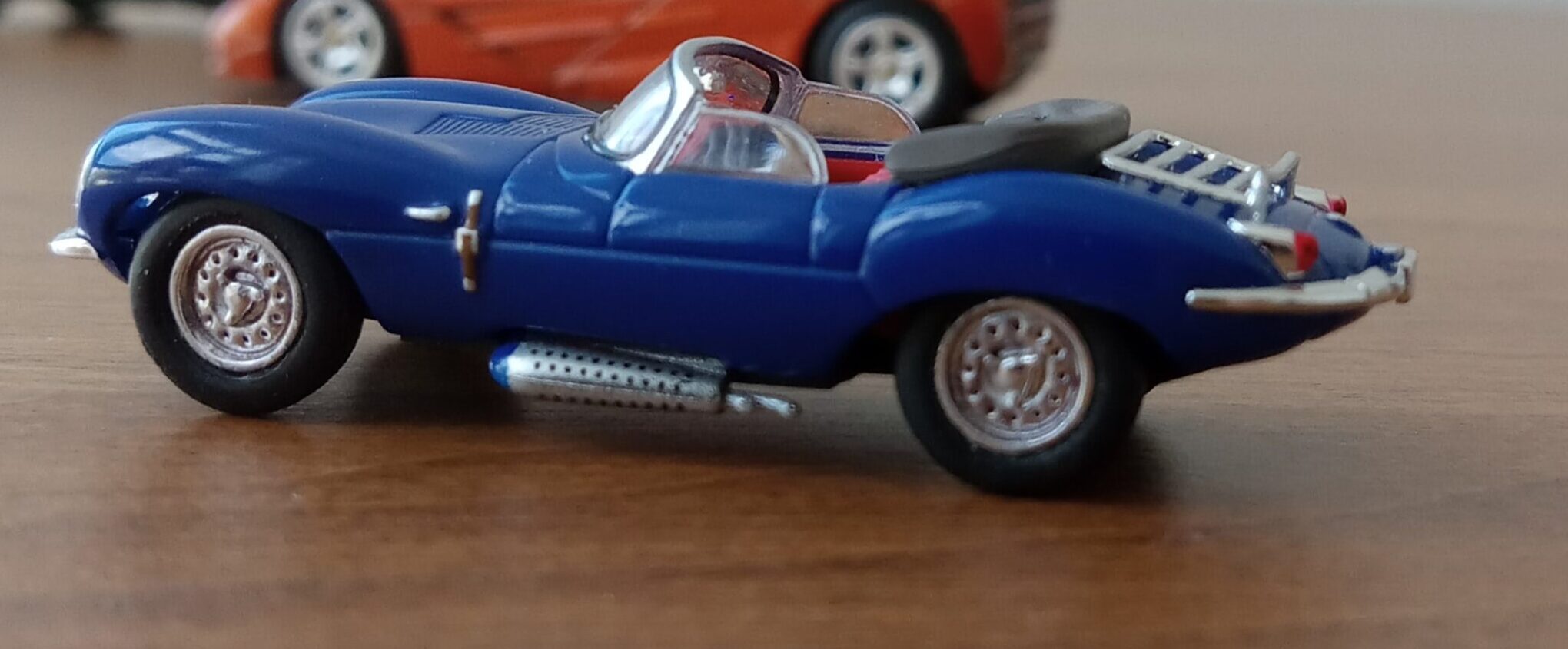
4.大きなスプーン型のフェンダーが4隅に陣取るスタンス:アメリカのマッスルカーのような荒らしさも内包
ーーーーー>2代目(C2型)のコルベットのフェンダーの4個の『チカラこぶ』をフィレットをかけて流面化した感じです。
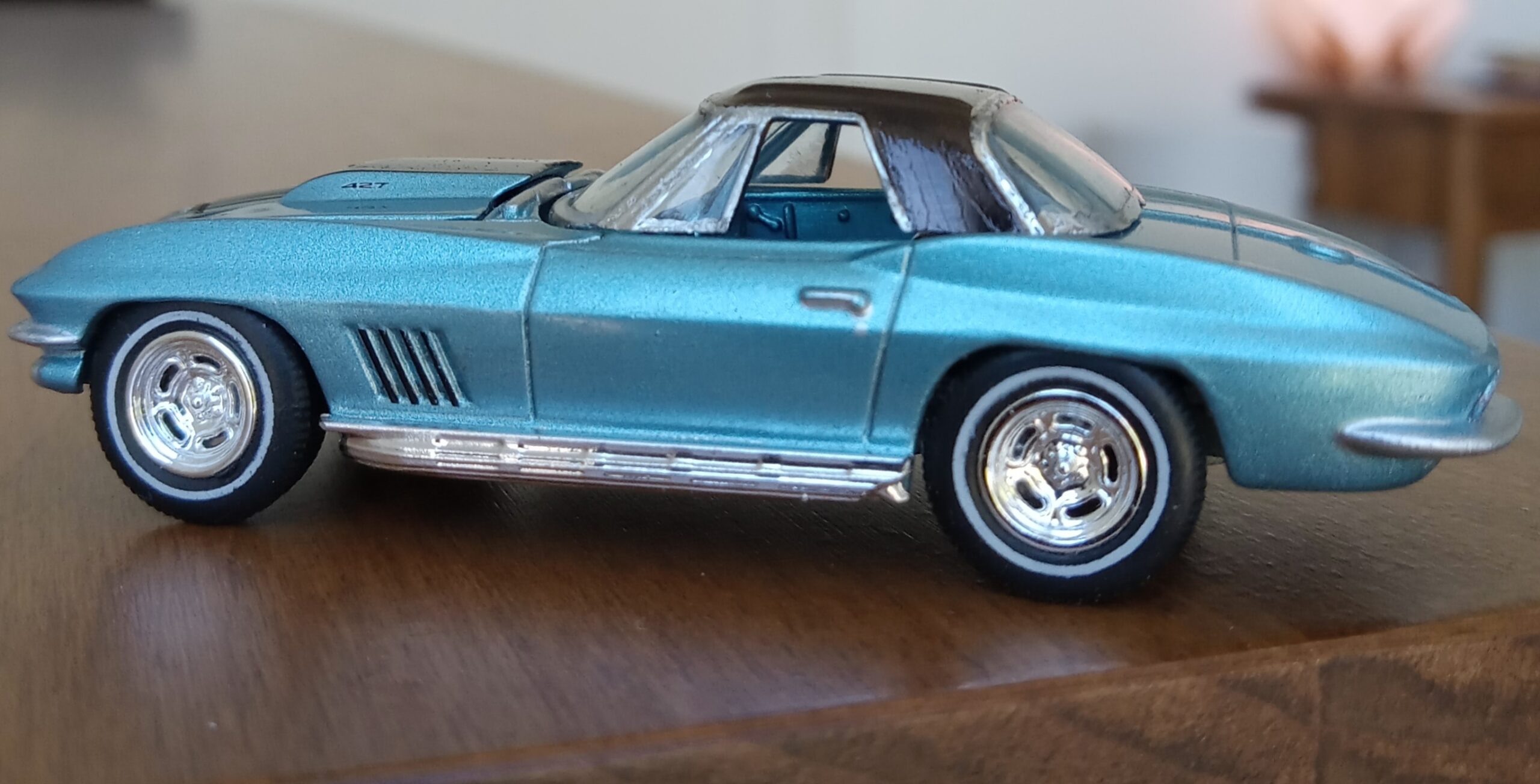
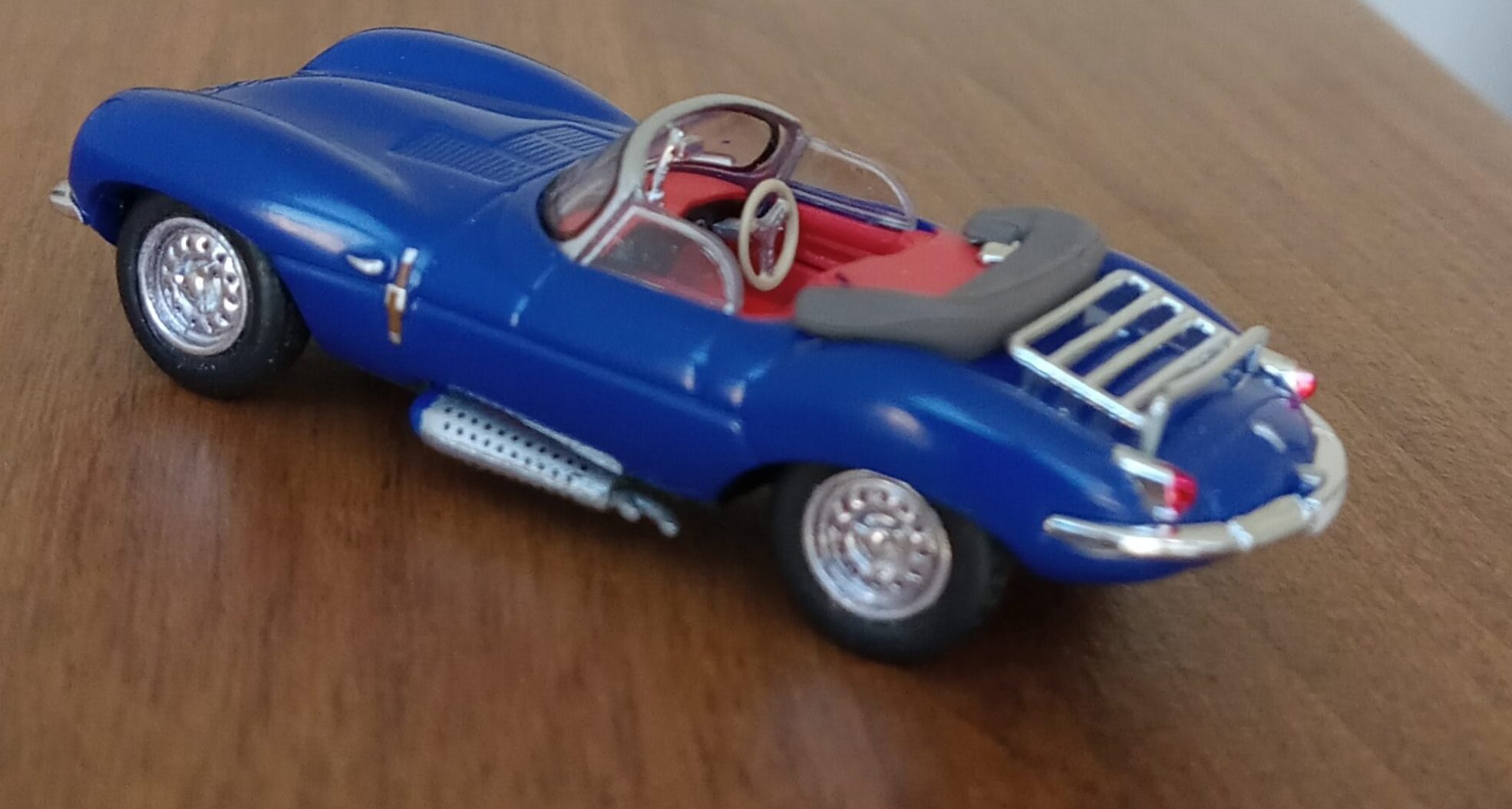
5、流麗な基本ボディーと、『取ってつけた感』満点の快適装備が奏でる、
ーーーーーーー>狂気に満ちたアンバランス感
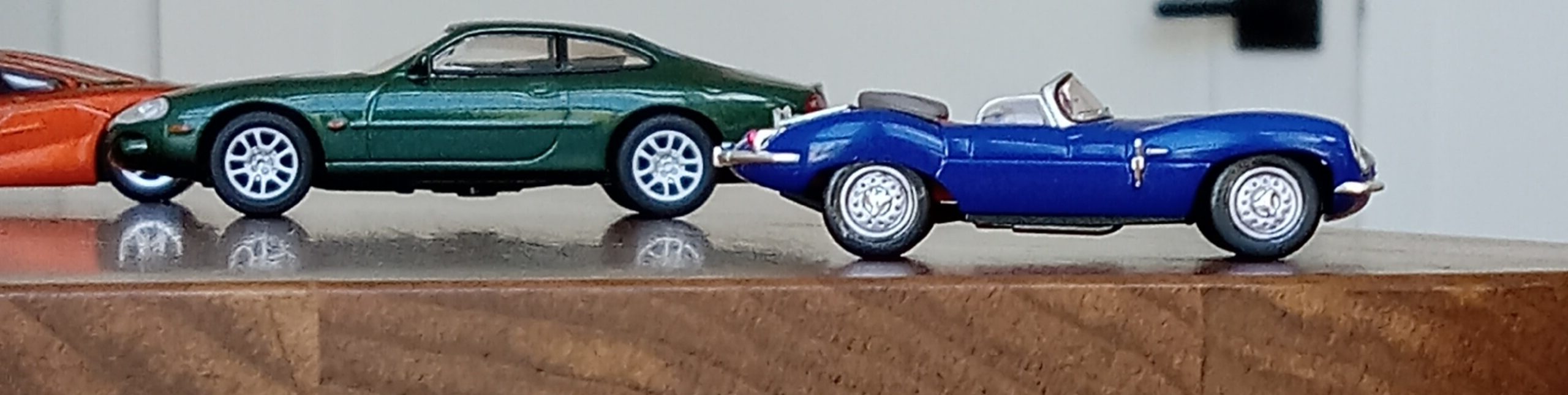
こんな興味深いXKSSですが、
次章ではこの車と私の
なれそめから現在までを語ってみます。
*『私』とジャガーXKSS:ごった煮の美学
パサディナの隣町、バーバンクに
オートブックス&エアロブックスという
カーフリークの殿堂のような本屋さんがあるのですが、
1990年代前半の学生時代に週一回ぐらい、
主に自動車雑誌の立ち読みのため通っていた時に、
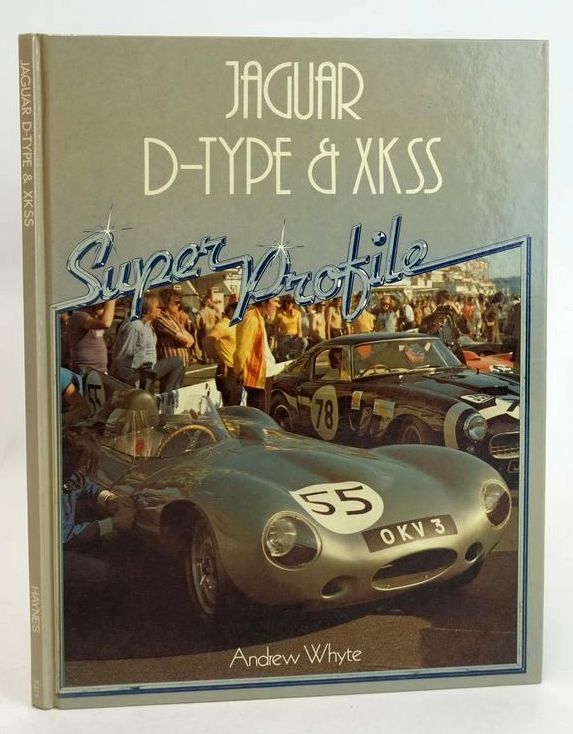 この本を発見しました。
Jaguar D-Type & XKSS Super Profile By Andrew Whyte –0-85429-371-2
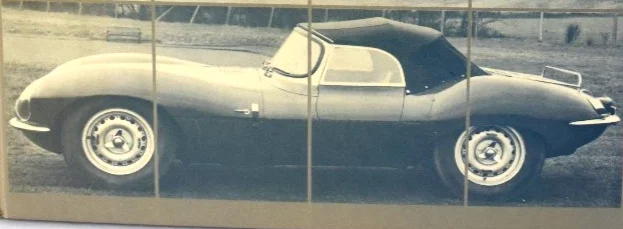
この本の裏表紙の一番下に乗っていましたこの、XKSSの幌をかけたサイドビューに惚れまして、立体模型などを探しましたが、どれもオープン状態をモデル化しており、なかなか幌をかけたミニカーにはめぐり会えませんでした。
その後、ドイツレベル社から出た、
1/25 プラキット版の出来がよさそうだなー、と感じてましたが、
ご縁がなく買えずじまいでした。
*ドイツレベル製, 1/25プラキット ジャガーXKSS(成形色:緑)
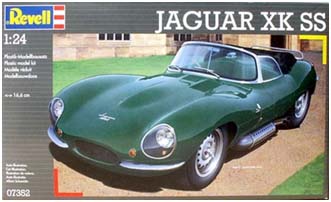
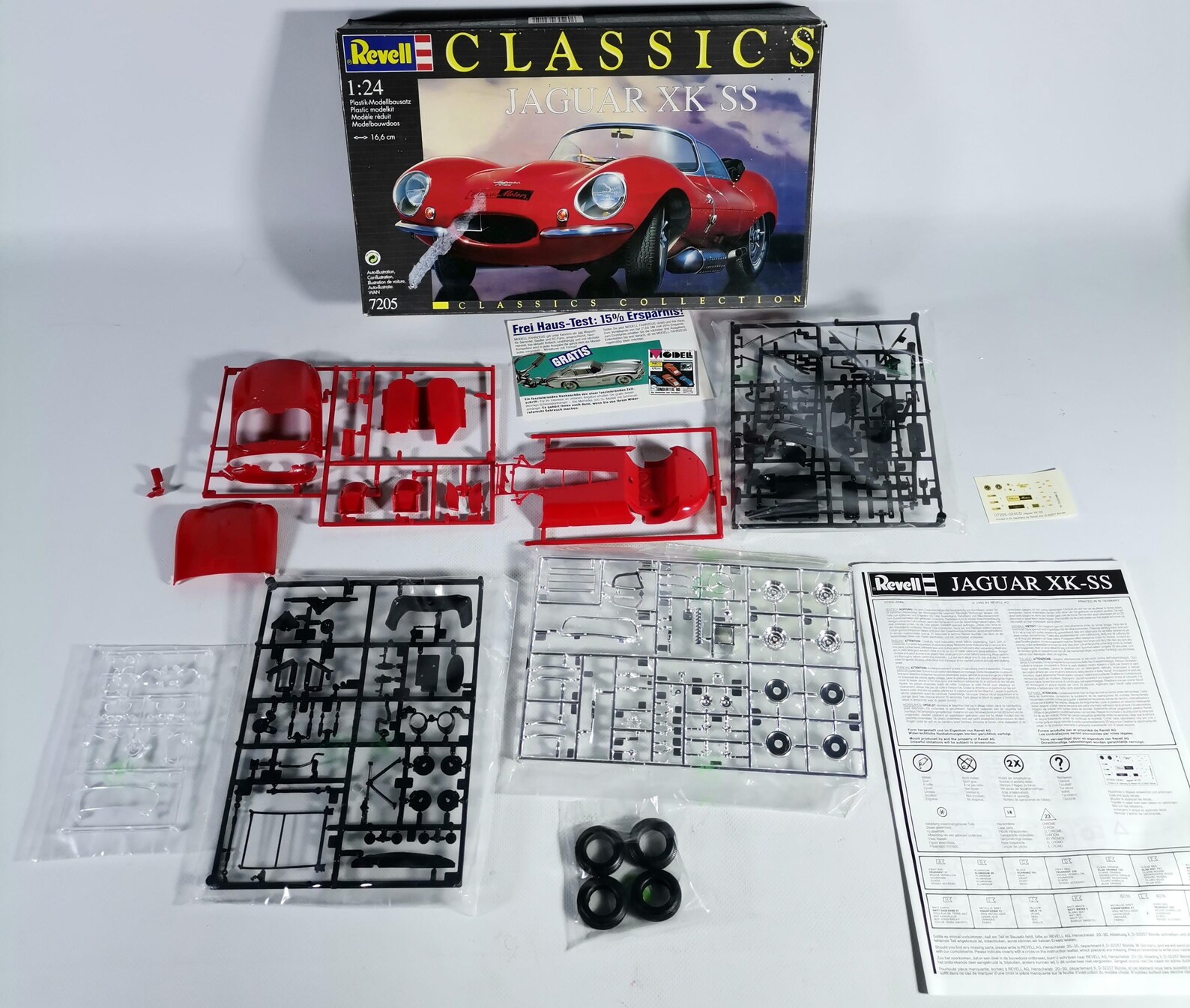
(残念ながら幌を閉じた状態のパーツは付いていませんが、出来上がりの動画などを観察してみたところ、このスケールでしか再現できないボディーのテンションや、エンジンルームのディテールなど、レベル版エンスージアスト・キット【フジミ模型製の超絶技巧キット】と呼びたくなる感じです。)
そして今回発見した珍品が、こちら
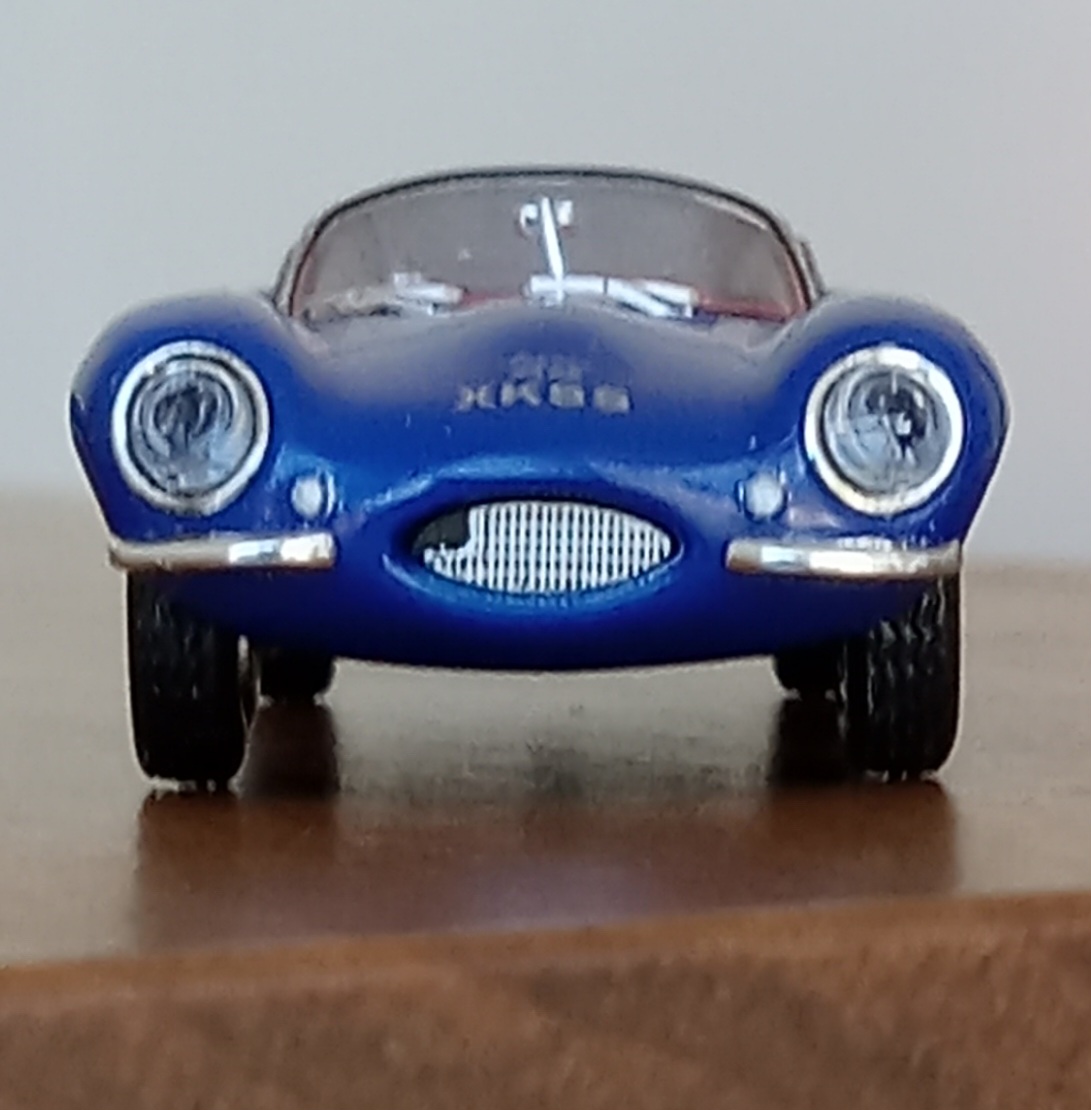
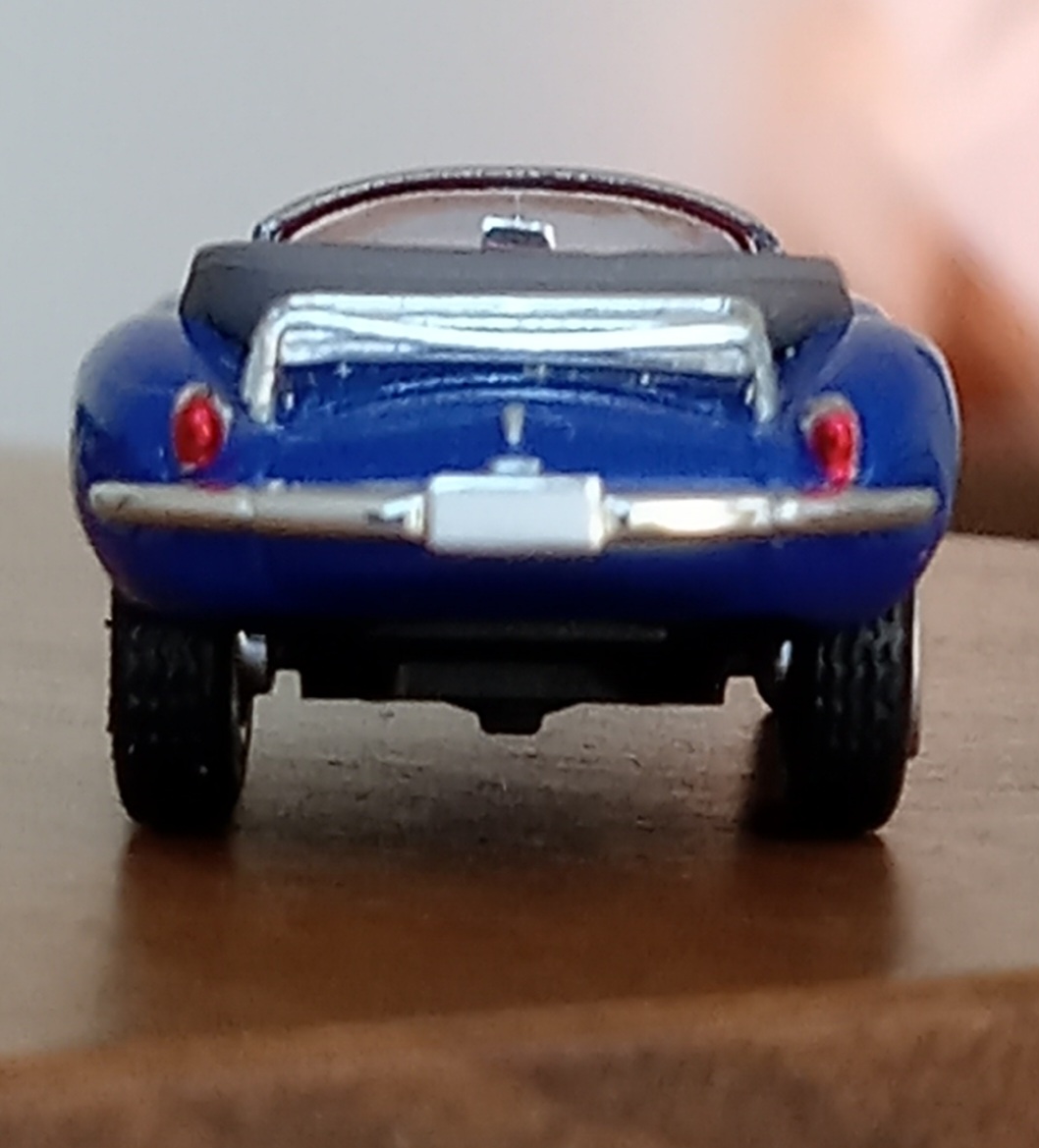
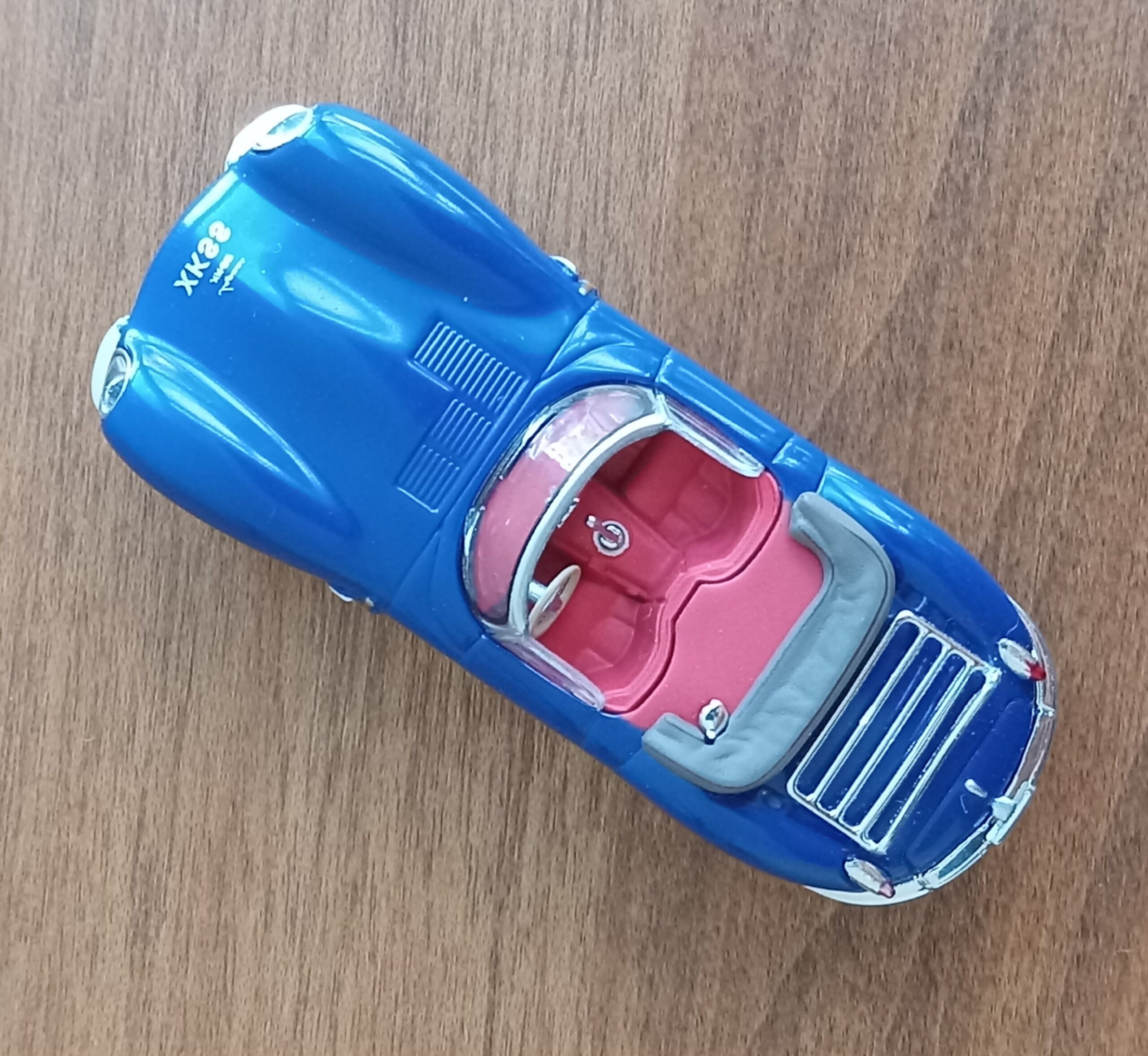
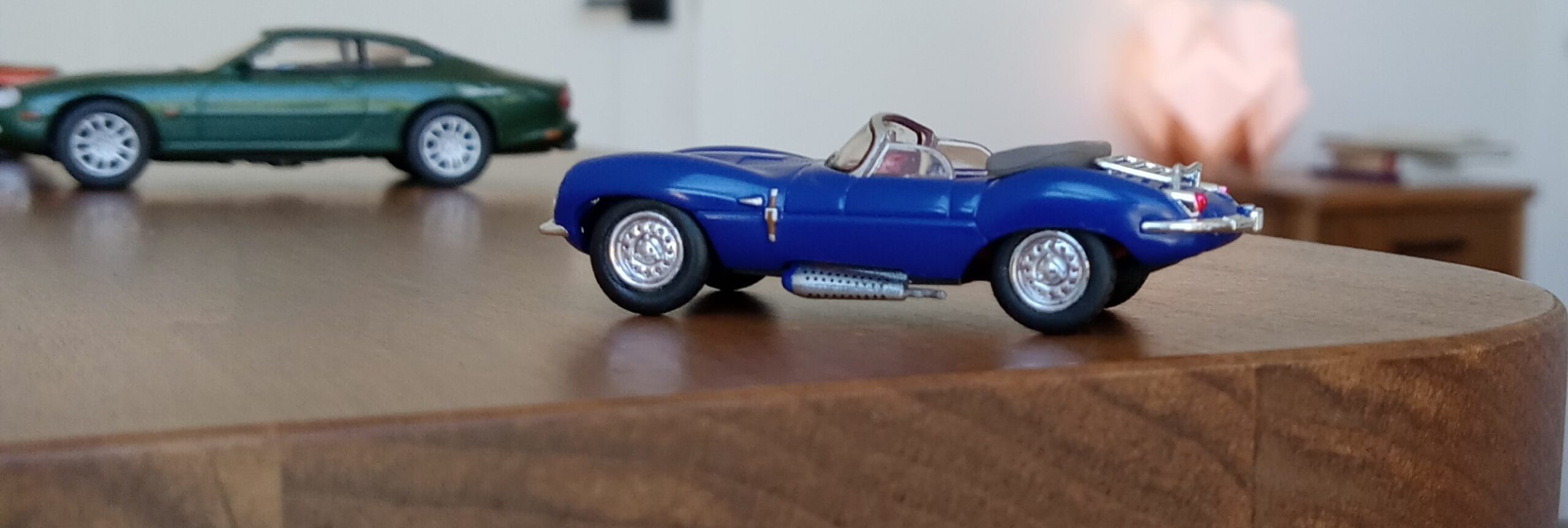
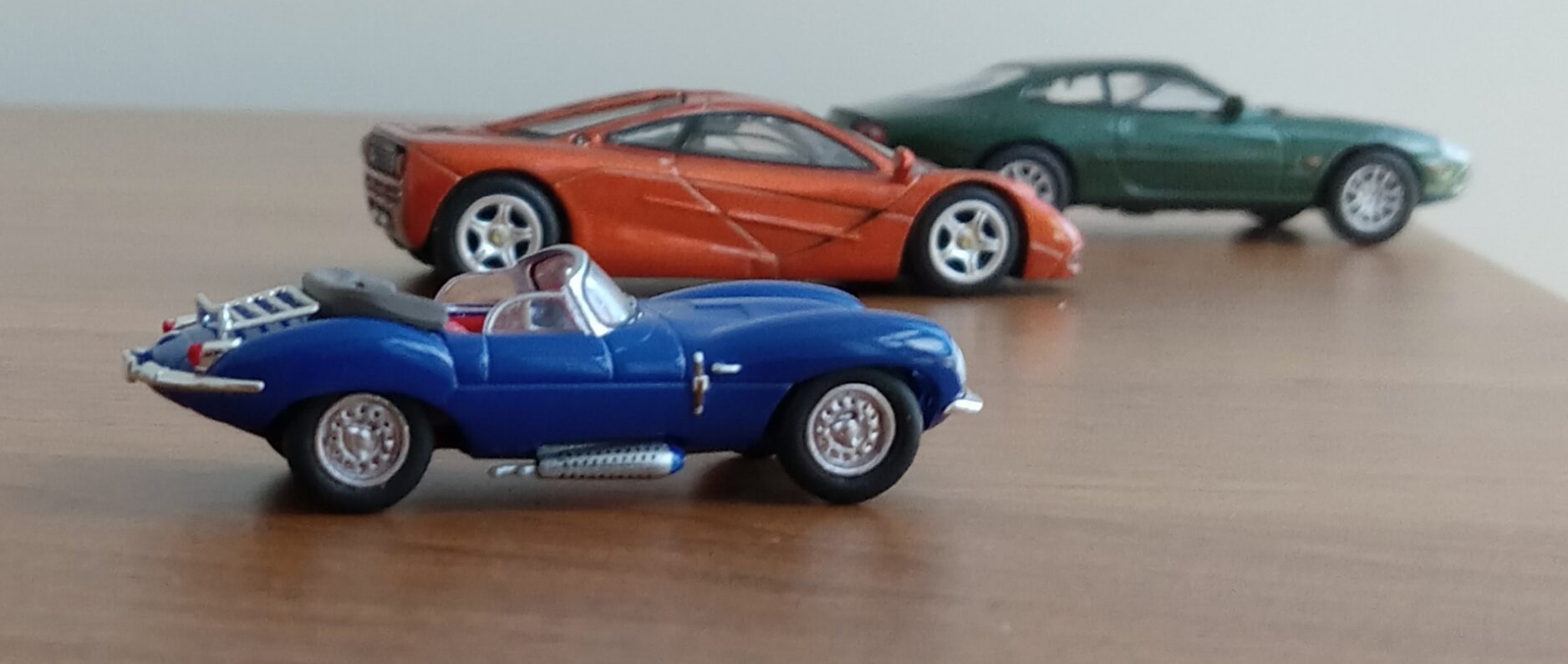
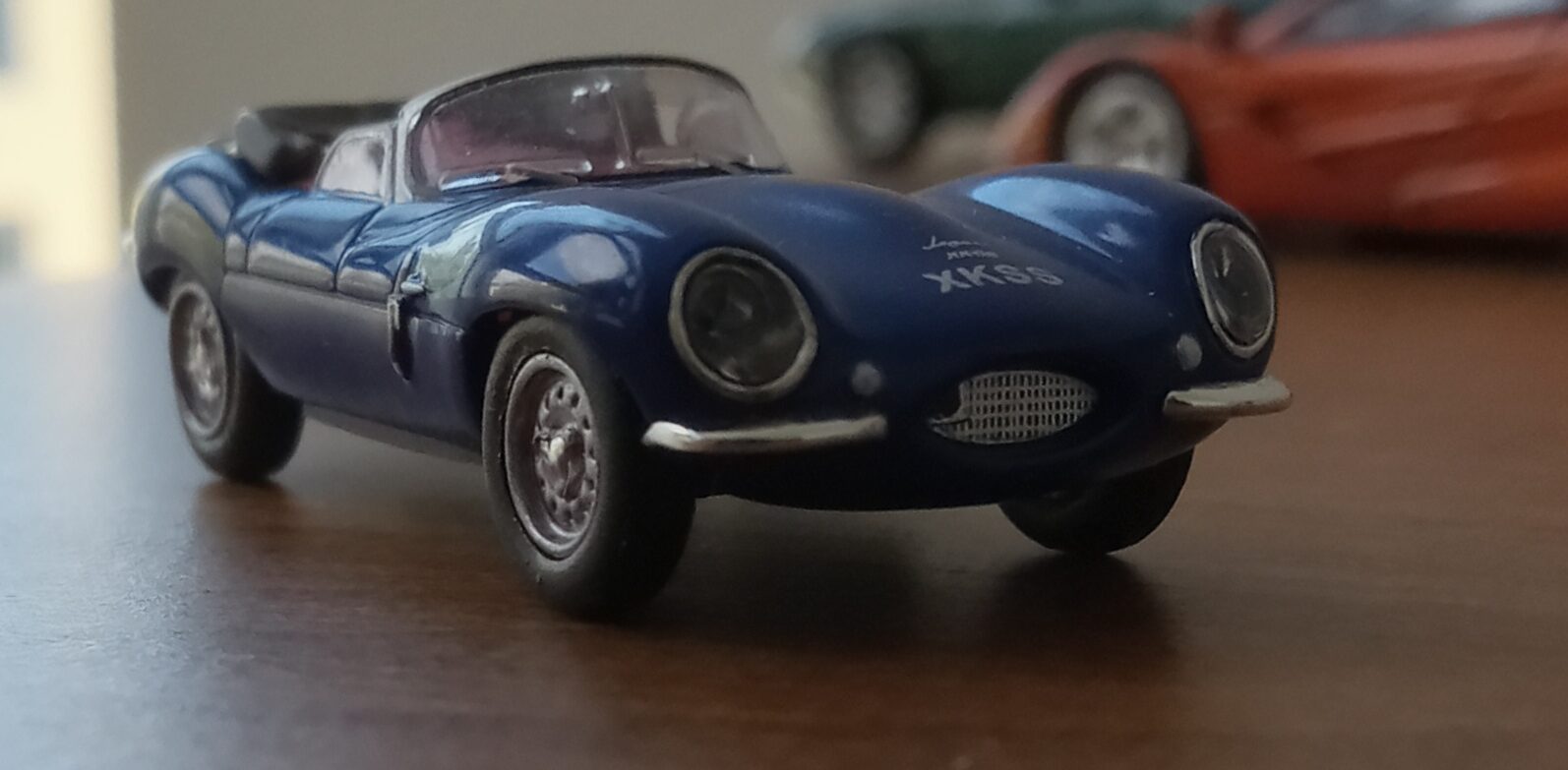
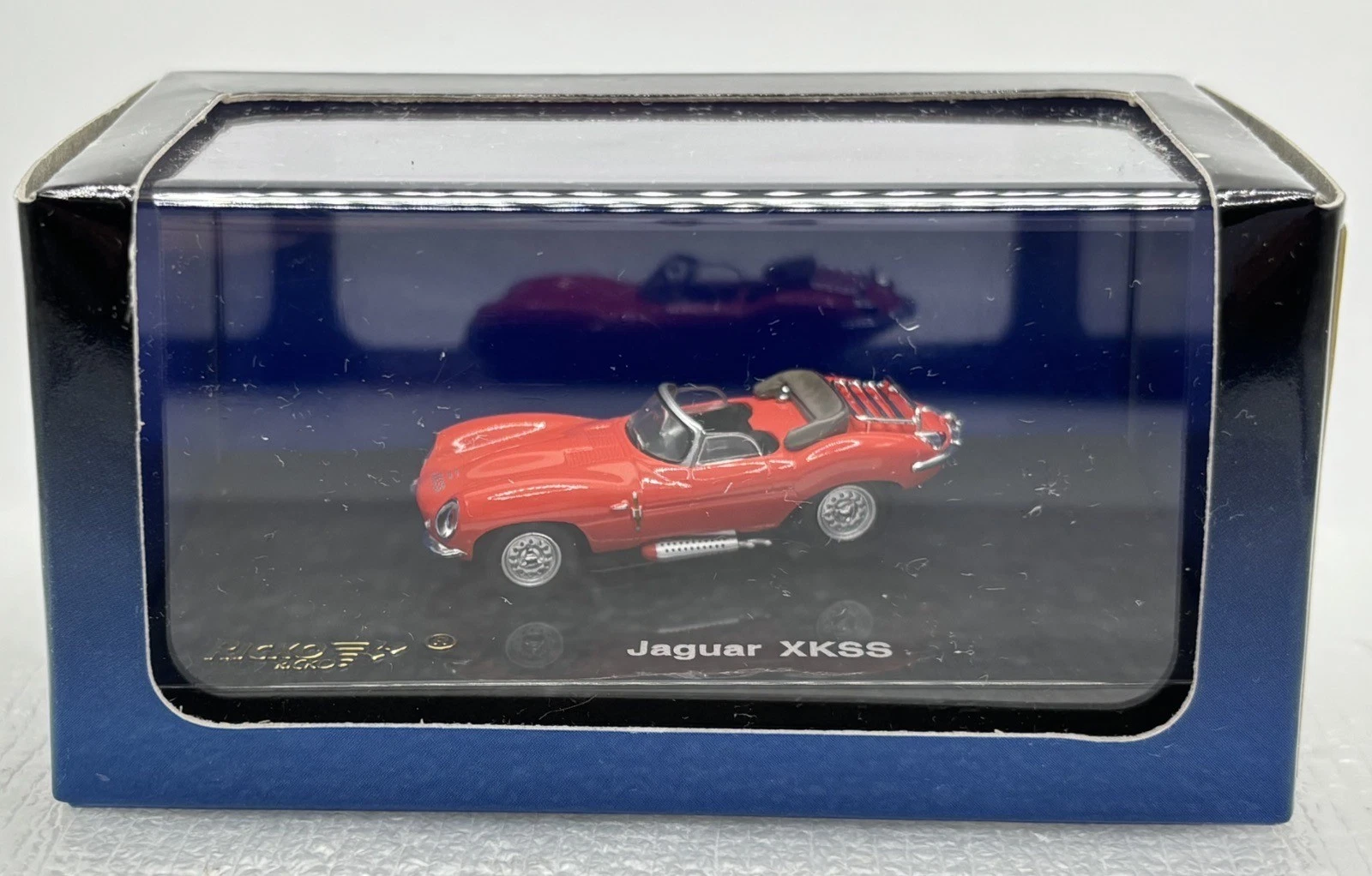
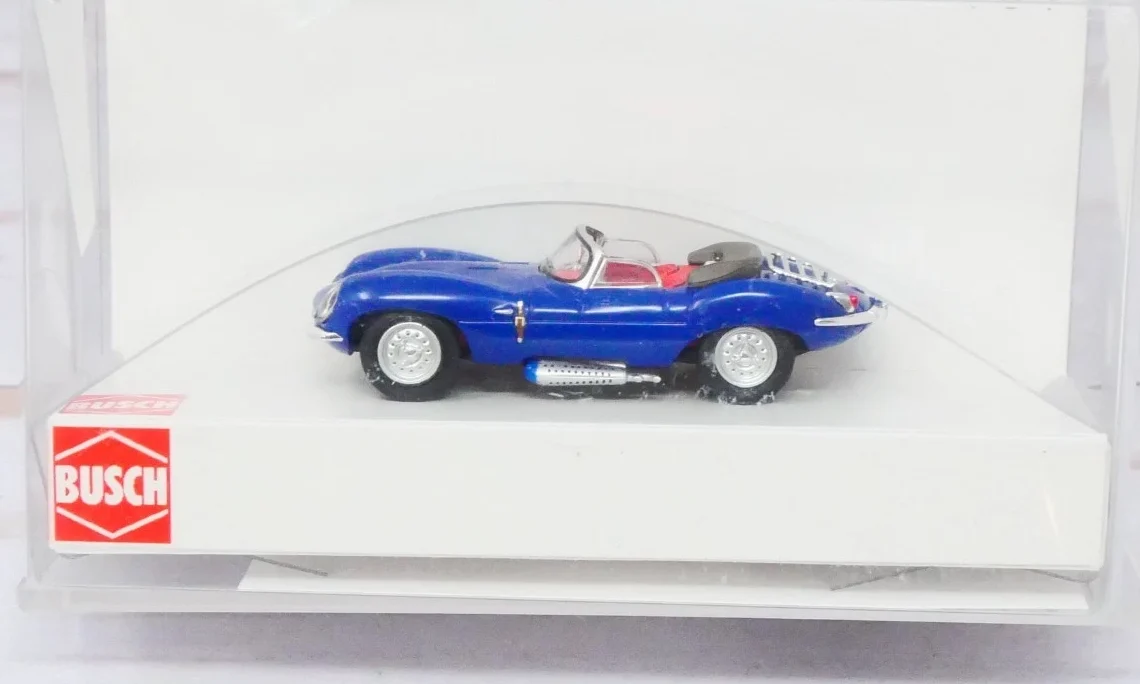
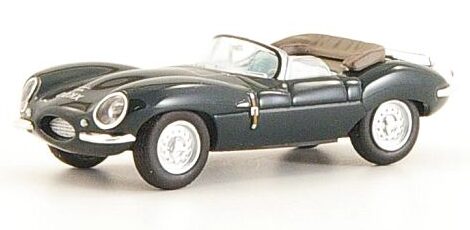
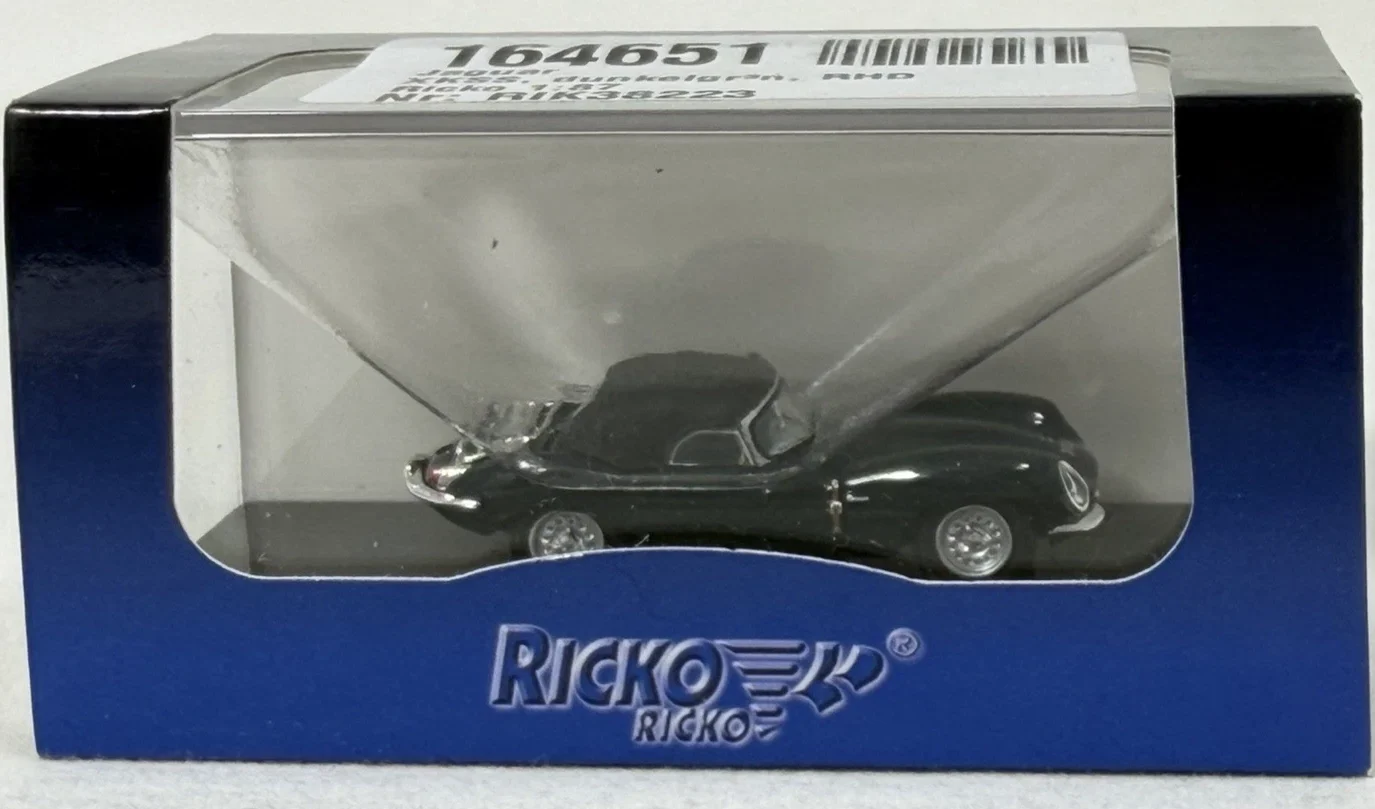
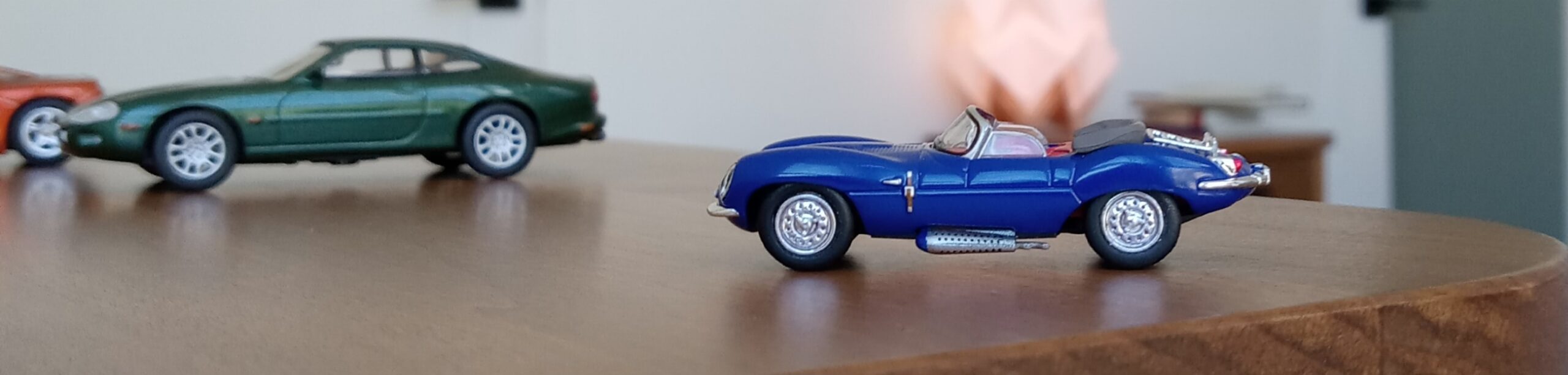
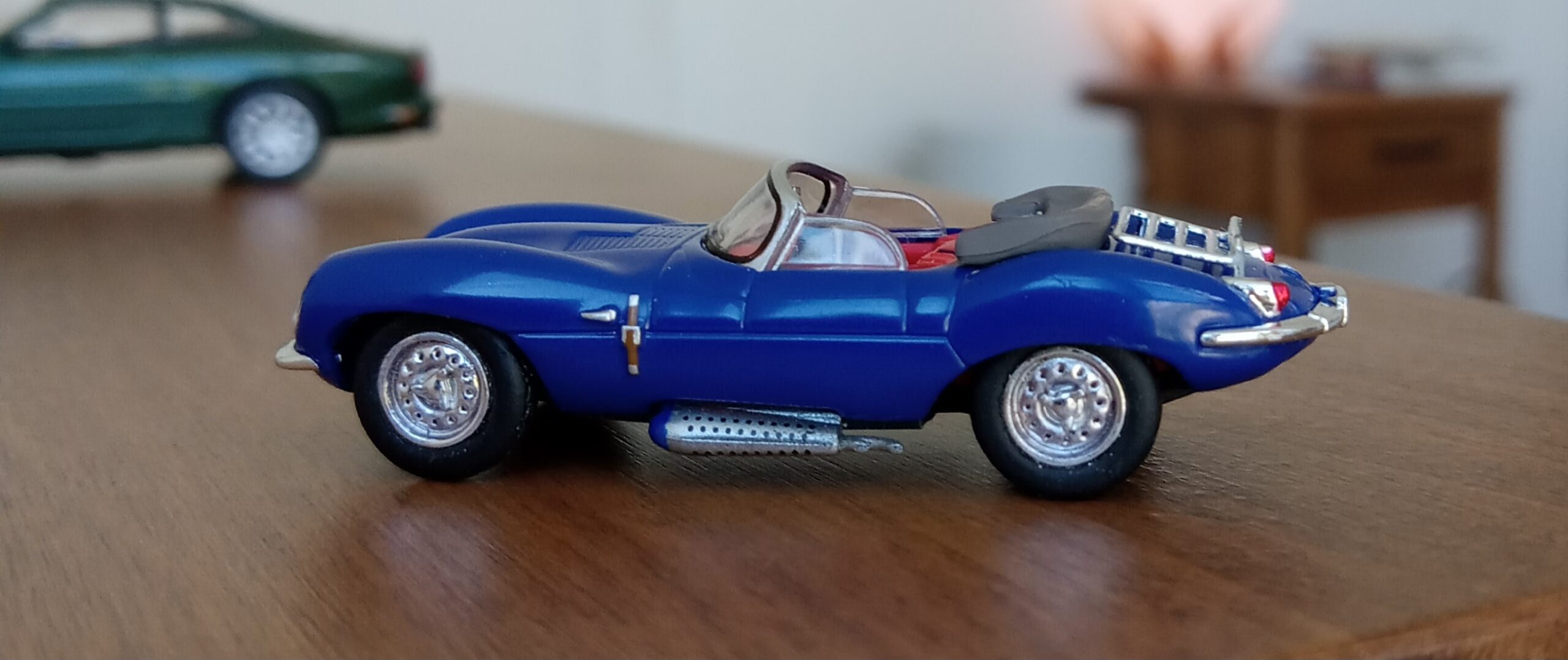
*ブッシュ・リコー社製、1/87【HOスケール】ジャガーXKSS (ロイヤル・ブルー&ブリティシュ・レーシング・グリーン))
(ボディー全体のテンション【張り】や捉え方、細部の塗装、タイヤホイールの大きさ軸の位置やバランスなど、すべてにおいて、1/43の模型を凌駕しています。ーーーーーー>おまけになんと、幌を上げた状態のバージョンもあるようで、『RICKO』さん、素晴らしいメーカーです。同じく1/87でジャガーE-タイプの後期型・ロードスターなんかも出ているようなので、今後記事にすることがあれば、そちらもぜひ入手したいです。)
次は締めの、
三題噺のコーナーとなります!!
*三題噺:空力実験・百科学・スティーブマックイーン



三題噺、行ってみましょう、
お題:
*空力実験:
*百科学:
*スティーブマックイーン
エ~―一席おつきあいのほどを
願っておきますが~
毎年5月、6月頃になりますと、
クルマ好きの間では、フランスで行われる
【ル・マン24時間レース】というのが
話題に上がります。
そんなル・マン24時間レースの歴史の中には、伝説的なエピソードが沢山ございます。
そんな中でも最大級の伝説が、
*ジャッキー・イクスの大逆転(1977年)
*マツダ 787Bによるロータリーエン初勝利(1991年)
*「ミスター・ル・マン」トム・クリステンセンの2000年から2005年にかけての6連勝
*ジャガー D-タイプによる(1955年〜1957年)3連覇
でしょうか?
偉大なD-タイプは、
*3,4リッターの直列6気筒DOHCから250馬力以上を絞り出すエンジンに、
*飛行機設計畑から移ってきた、マルコム・セイヤーがC-タイプに続き空力実験を重ねた結果完成した、流麗なオールアルミの超軽量ボディーを搭載、
*更には、全長=4メートル、車重=900kgを切ることに成功、
他を寄せ付ずに、
3連覇を成し遂げました。
そんなバリバリの【レーシング・カー】を
最小限のアメニティーをつけることで、市販車化した、
【史上初のスーパーカー】というのが、
我らが、XKSSでございます。
このスーパーカーの使用場面は多岐に及びまして、
*もちろん改造なしでの週末の公道レースでは敵なし、
*小さく地味な色目なので、そこまで目立たずお役所や映画スタジオへの通勤にも使え、
*年に一度の、夫婦での小旅行がてらのロングツアーにも最適、
*幼稚園のお子様を迎えに行って帰りにアイスクリーム屋さんへ、とか、
*もちろんスーパーへの買い物なんかにも使えますし、、、、
*ガールフレンドとのデートには,まさにもってこい、
*雨の日には幌をかけて昼寝を決め込み、甘音はショパンの何とか、
かんとか、、、
なんてんで、いつまでやっても止まりません。
このリストの長さと、情報過多なところだけで、
大英博物館の通常展示可能です、、、
これこそ英国の『お家芸』=百科学です!!
ところでこのリスト
よくよく観察してみて気付いたんですが、
これはすべて、この自動車の熱烈な愛好家で、所有者でもあった、
映画スター:
【スティーブマックイーン】さんの
行動パターンではないですか!!
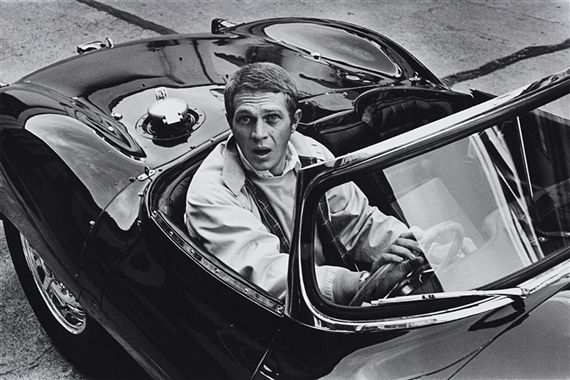
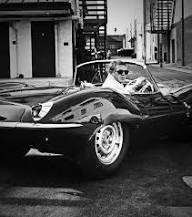
彼は自ら、1970年「セブリング12時間レース」で2位に入賞するなどレーシングドライバーとしても活躍しておりまして、ルマンのレーシングカーそのものであります、XKSSには目がなかったのでしょう、、、
巷には、彼がうれしそうに
XKSSの横でポーズを撮った写真が流布しております。
彼の、『King of Cool』なイメージを象徴するアイテムとして珍重されている感じです。
レーシングカーのDNAを持ち、
街乗りも可能な、
雑多な使い道、興味が尽きないところは、
まさに
*博物学的・
*百科事典的、
*英国的と言わざるを得ませんね。
言い換えますと、
偉大なるごった煮シチュー
=ランカシャー・ホットポットです。
そういえば、
このホットポットがマックイーンさんの大好物だったならいいのですが、
(そんなにうまくはいきません)
それは不明でして、
仕方がないので、
後で大英百科辞典で調べてみます、、、

お後がよろしいようで。』
ぺんぺんーー
*その他の『ごった煮自動車』の系譜:
美しいボディーに、
レーシングカーのメカメカしいディテールが見え隠れする、
いわゆる『ごった煮系の少量生産車』は
日・米・英・伊太利-の4国に存在します、
【出生の経緯はXKSSとは逆で、市販車のアップグレード版が多いですね、、、、】
こんな感じです。
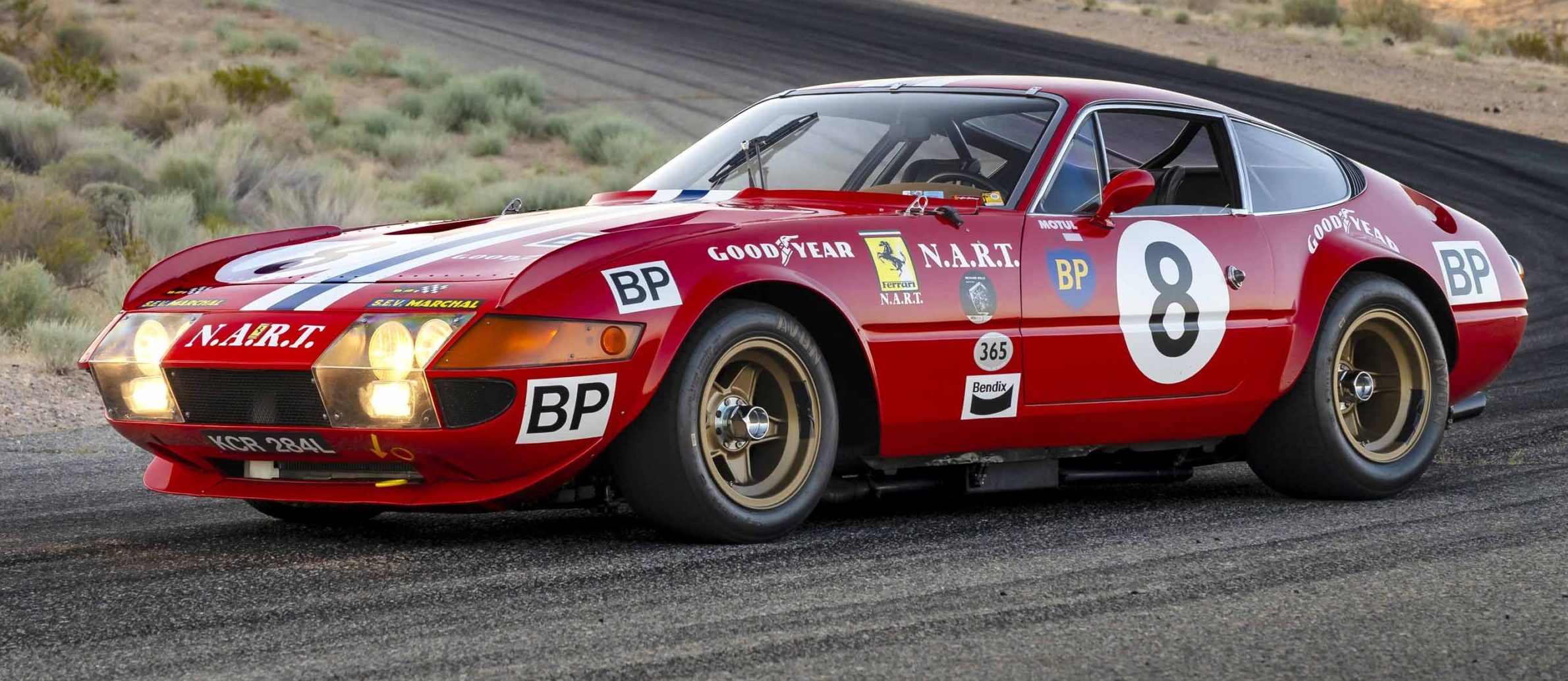
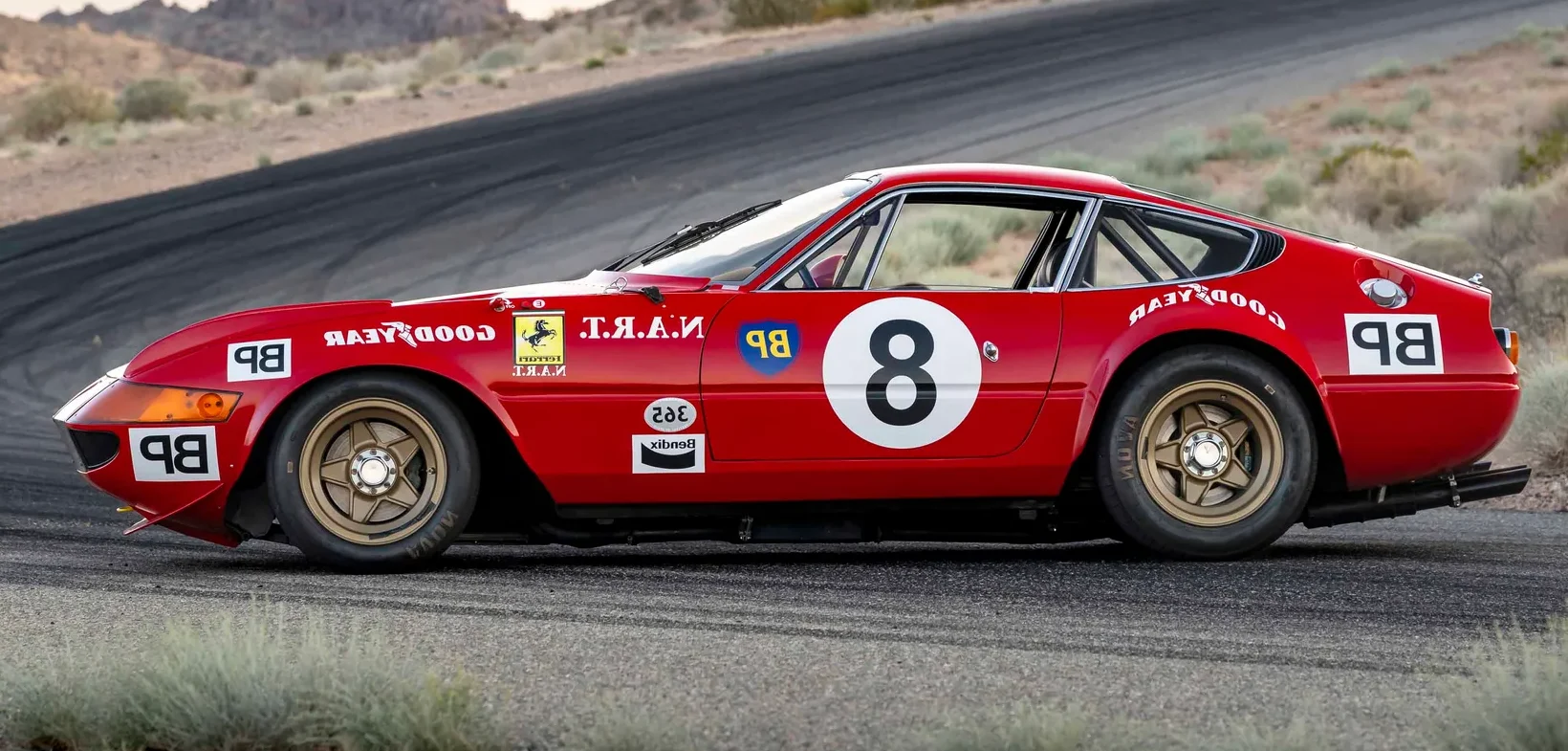
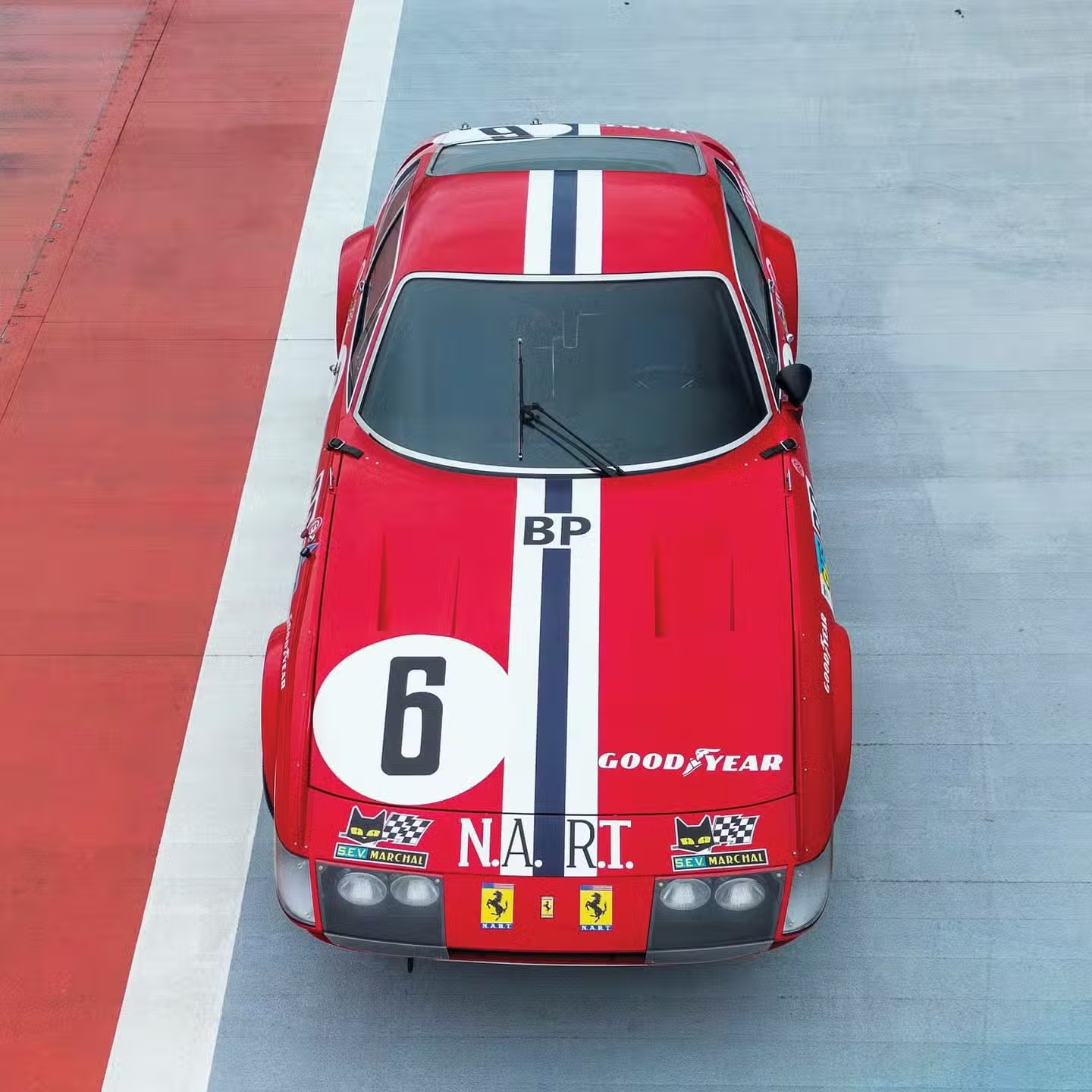
* 1973 Ferrari 365 GTB/4 デイトナ・コンペティツィオーネ(フェラーリ・レッド)
(流れるように美しいロングノーズ・ショートデッキのFRプロポーションに、アメリカチューナ的なかなりごついオーバーフェンダーとそこに収まる、太めのレーシング・タイヤ、更にフェンダー前のヒレのような清流版、フロントのエアダムなど、がくっつきーーーーー>ごった煮状態でです。)
ーーー>その『こてこて/ゴテゴテ感』が何とも言えない、良い旨味を出しています。
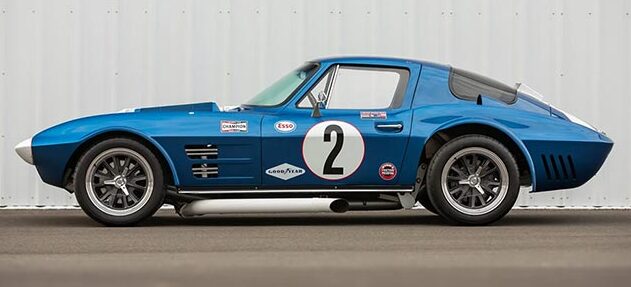
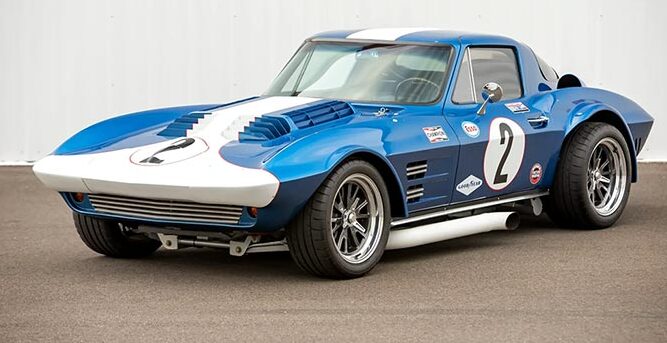
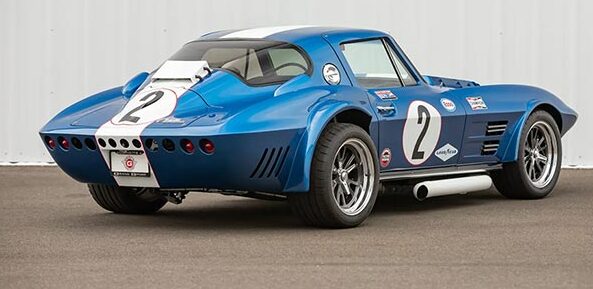
*シボレー・コルベット グランド・スポーツ、1963(メタリック・ブルー&ホワイト・ストライプ)
(こちらも同時期にデイトナと戦っていたライバルということもあり、よく似たごつさが迫力ですが、大幅に出っ張ったフェンダーサイドはさらに迫力があり、ボンネットのエンジンの真上に並ぶ、冷却用のルーバーがほかのクルマにない凄みを効かせています。)
ーーーーーー>ハーレーダビッドソンに通じるアメリカン硬派です。
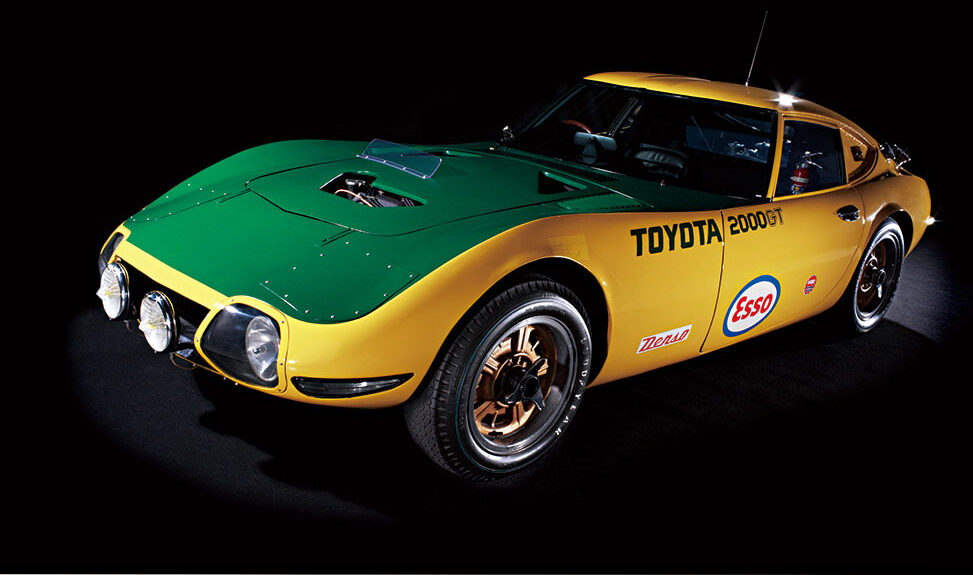
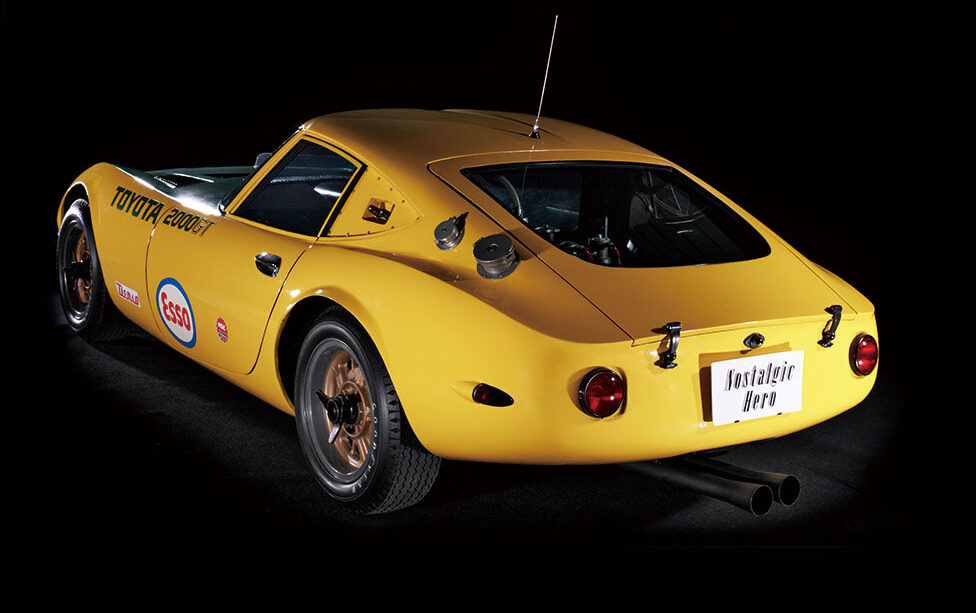
* トヨタ 2000GT 72時間平均速度挑戦ーー専用車 (黄色&緑の2トーン)
(きわめて流麗で滑らかなボディーの四隅にさりげない形で取り付けられたオーバーフェンダー、フロントヘッドライトは塞がれ、エア抜きのバルジがボンネットに出現、ホイールとタイヤはキャロルシェルビー仕様です。)
ーーーーー>『黄色に艶消し緑』という(注意喚起用?)、他社では全く見かけ無い車輛カラーも、この車にはなんだか似合います。
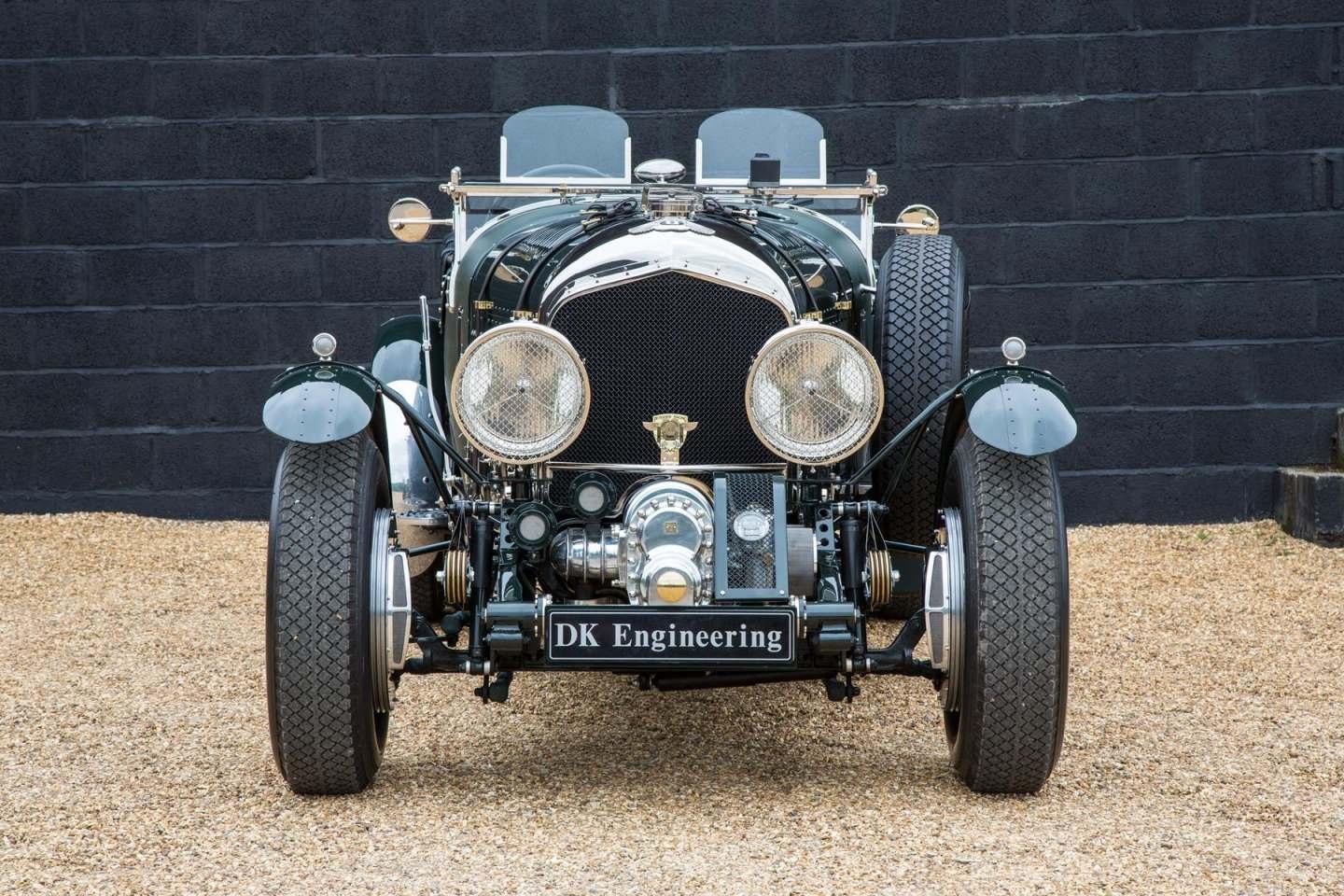
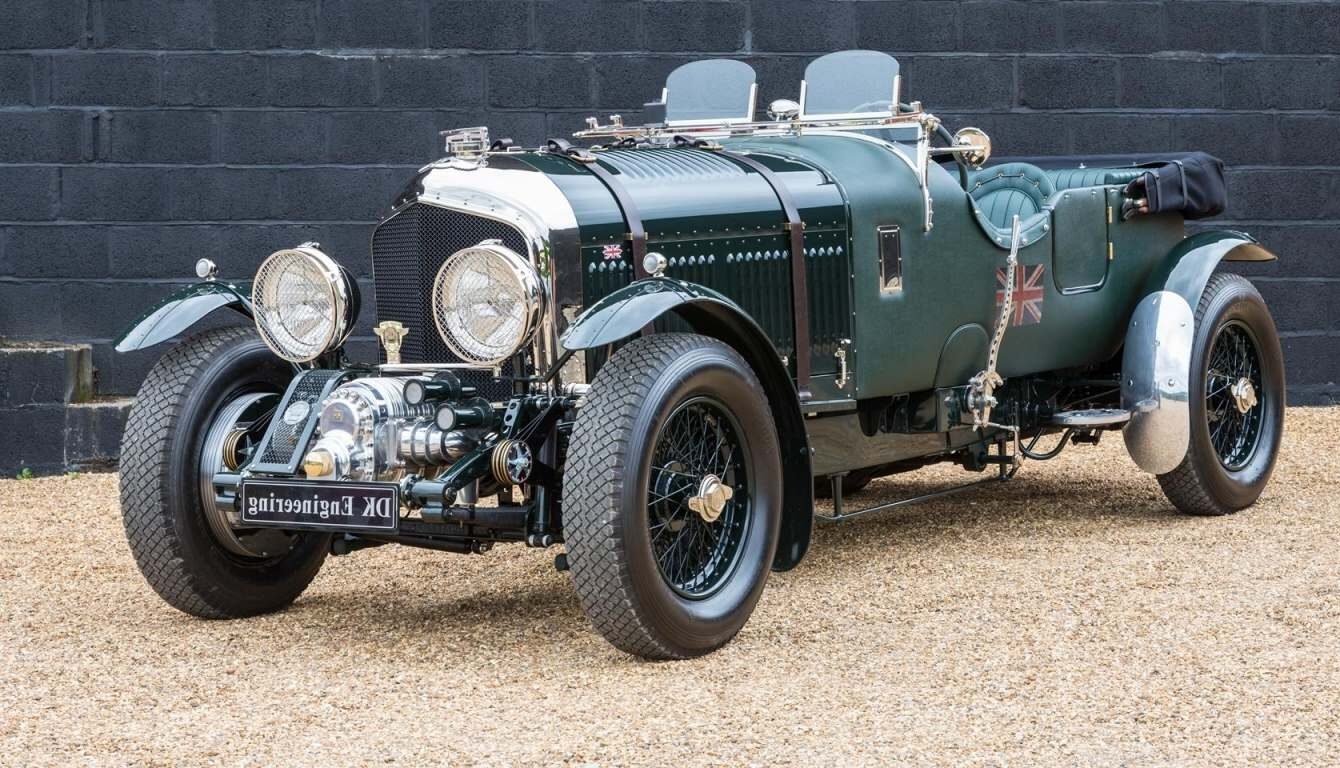
*ベントレー 4,5リッター ブローワー(ブリティッシュ・グリーン)
(巨大なエンジンの前方に鎮座するスーパーチャージャーが発する凄み、エンジン搭載位置の高さから来る威圧感と合わさって独特な、『世界一速いトラック』のイメージを放ってます。)
ーーーーー>前輪とヘッドライトにはさまれた部分のメカメカしさは何度見てもすごい迫力です!
このあたりのレーシングカーを子供時代に見てきた私たちの世代、
『メカフェチ』デザインの引き出しは
この辺りにありそうですね、、、、(笑)
次回は、
英国クーペの最終回
『ジャガー XKR』についてと、
英国クーペの総括に付きお話ししてみたいです。
本ブログと記事内容につきまして:
ブログ記事を書くにあたり私の目標は、立体造形(料理も含めて)とのかかわりを通じて、私個人の特徴的(ネジ曲がり方も含めて)な評価軸を解明することで、「美しさ・美味しさ」に対する好奇心や、探求心を、どのように満足・充足させてきたのかを明記しておくことです。
従いまして、記事の中に出てくる、数字や年号、微細なデータなどには細心の注意を払っておりますが、時に大きな間違いや勘違いを犯していることも考えられます。特に自動車記事における主要諸元や、年号などには紛らわしいものも多く、あくまで参考程度に考えていただければ幸いです。
私としては、記事の中で個人的な外観デザインや味覚の評価、そこから広がる後半部分につなげるための、『流れ』を作るための客観的材料として年号やデータを挿入している感じです。あくまで重視したいのは、私個人の頭の中で起こる、記憶の錯そう的混沌から生まれる新たな『見方』や『情報の予想外のつながり』です。その勢いを作り出す、『流れ』の一環として、諸データが副次的に必要となるわけです。
話がそれますが、大好きな落語の世界に「三題噺」という、その場て会場から募った3つのお題を使って1つのお話に仕立てるといったお遊びがございますが、私はそれに近いことを立体造形の特徴や(料理のお味)をお題にして行っている感じがします。その中で頭の中に去来する数々の着想が、全く予想外で楽しく、次回からの記事内容を大幅に変えたり、新展開につながっています。
当ブロブの仕組み:
『好奇心の点と線 x 気まぐれ脳内回路=予想外の新展開』
こんな自分勝手なブログですが、今後ともよろしくお願いいたします。
追記:上記の『流れ』を作る為に必要な写真はできる限り、個人所有のミニカー・自前の料理などを使い撮影しておりますが、その他の必要最小限の図版や写真を他のブログ主様の記事や諸会社ホームページなどからお借りしております。(記事内容に合うよう加工させていただき、使用時は最小の解像度で載せております。)問題がある場合、ご連絡いただければ直ちに降ろさせていただきます。
追記2:当ブログ記事に掲載のミニカー写真等(個人撮影)は許可なしで、どのようにお使いいただいても結構です。私個人の創造性はこの世のもの、と言う認識の上で記事を製作しています。
!!!!!!!!!!!!!!!!!!!!!!!!!!!!!!!!!!! Translated in English !!!!!!!!!!!!!!!!!!!!!!!!!!!!!!!!!!!
Part 26—The Lineage of Two-Door Coupes: Part 8 [UK Edition] Jaguar XKSS Roadster, 1957 (Royal Blue) Jaguar XKSS, 1957
(Model used: Bush-Ricco, 1/87 [HO scale] Jaguar XKSS [Royal Blue] @ Modifications: Slight adjustments to axle position and width, wheel shading)
#Favorite Car Designs—The Lineage of 2-Door Coupes:
For this 26th installment, titled “The Lineage of 2-Door Coupes,” I’d like to discuss luxury 2-door (GT) coupes and roadsters, which strongly reflect the national characteristics and unique exterior designs of various countries.
[Note: Includes convertibles]
I will proceed as follows.
This 26th installment is the [British Cars Edition]
We’ll be discussing the
1957
Jaguar XKSS.
[The Lineage of 2-Door Coupes: Table of Contents]
[American Cars Edition]
Part 1: Cadillac El Mirage, 2013 (Metallic Red)
Part 2: Lincoln Continental MK4, 1972 (Black)
Part 3: Mercury Cougar, 1967 (LT Metallic Green)
【German Cars】
Part 4: MB 500K Special Roadster, 1936 (Black)
Part 5: MB 300SL Roadster, 1957 (Silver)
Part 6: MB SLS AMR Gullwing, 2010 (Black)
[British Cars]
Part 7: McLaren F1, 1992 (Metallic Orange)
Part 8: Jaguar XKSS Roadster, 1957 (Royal Blue)
Part 9: Jaguar XKR Coupe, 1996 (Dark Metallic Green)
[Japanese Cars / Nissan]
Episode 10: Nissan First-Generation Silvia, 1965 (Champagne Gold)
Episode 11: Nissan Fifth-Generation Silvia, 1988 (LT Metallic Green)
[Italian Cars]
Episode 12: Ferrari 250TR Pontoon Fender, 1958 (Red)
Episode 13: Ferrari 250 GTO, 1962 (Italian Red)
Episode 14: Lamborghini Concept S, 2005 (Pearl White)
[Japanese Cars: Mazda Edition]
Episode 15: Mazda Cosmo Sport, 1967 (Silver)
Episode 16: Mazda Eunos Cosmo, Type-S (2-ton: Black & Gray)
[French Cars]
17th: Bugatti Type 59, 1935 (French Blue)
18th: Citroën SM, 1970 (Champagne Gold)
19th: Bugatti La Voiture Noire, 2019 (Black)
[Japanese Cars / Toyota Edition]
Episode 20: Toyota/Yamaha 2000GT, 1967 (Ivory White)
Episode 21: Toyota 2nd-generation Soarer, 1986 (Two-tone: Black & Gray)
Episode 22: Lexus LC [GWZ100], 2017 (Metallic Red)
[American Cars Part 2]
Episode 23: Dodge Challenger & Plymouth Barracuda, 1971
Episode 24: Ford Shelby GR-1 Concept, 2004 (Chrome)
Episode 25: Chevrolet Corvette C4 ZR-1, 1990 (Crimson)
Episode 26: Corvette Stingray Concept, 2009 (Silver)
#The Ultimate Race Car, the D-Type Made for the Road: An Extraordinary “Aura” That Would Even Surprise Steve McQueen
This time, we finally come to
the Jaguar “XKSS.”
* The experimental, cutting-edge nature inherited from the D-Type, and
* the fact that it was transformed into a luxurious roadster,
resulting in a unique sense of cohesion,
a feeling of condensed essence—
in the best possible sense, a Lancashire hotpot-like
“melting pot” (British Museum-esque/encyclopedic?…)
is what makes this car so appealing.
Its unique worldview is
* packed with racing,
* weekend drives on winding roads,
* medium- and long-distance trips,
* and romantic dates for two—
all the joyful scenes associated with motoring
are densely packed into this package.
It is truly a condensed
“Encyclopedia on Wheels”!!
So then,
I’ll be talking about
this exceptional classic car—the Jaguar XKSS—
in this manner.
* Real-car commentary: The aura of the consumer-market D-Type Jaguar
* Exterior design features:
* “Me” and the XKSS: The aesthetics of a hodgepodge
* Three-Part Story: The Science of Driving, Steve McQueen, Aerodynamic Testing
* The Lineage of Other “Eclectic Cars”
* Car Overview: The Aura of the Production-Spec Jaguar D-Type
# Steve McQueen’s Favorite Car
n
n
The Jaguar XKSS is a legendary sports car unveiled in 1957 and often hailed as the “world’s first supercar.”
Based on the “D-Type” racing car—which won the 24 Hours of Le Mans three consecutive years (1955–57)—it was redesigned as a road-legal vehicle. Due to its limited production run and the fact that actor Steve McQueen was a devoted owner, it holds extremely high collectible value.
n
N
n
n
1. Background: A Road-Legal Model Born from Retirement from Racing
n
It was conceived in late 1956 when Jaguar temporarily suspended its factory racing program, as a way to utilize unsold D-Type chassis. While retaining the racing car’s performance, the minimum equipment necessary for road use was added.
n
n
n
n
Major changes from the D-Type:
* Removal of the massive fin (tail fin) behind the cockpit.
* Addition of a passenger-side door.
* Installation of full-size front and side windows.
* Equipped with a simple, foldable soft top.
* Addition of chrome-finished bumpers and taillights.
N
N
N
nn
N
N
N
N
N
N
n
N
N
N
N
N
N
n
N
N
N
N
N
N
2. The Tragedy of the Factory Fire and the “Phantom Nine”
n
Initially, production was scheduled for 25 units, but a major fire at the Browns Lane factory in February 1957 destroyed nine cars that were still under construction. As a result, only 16 cars rolled off the production line at the time, making it one of the rarest models in Jaguar history.
n
n
In 2016, Jaguar Classic announced the production of “Continuation Models”—reproductions of the nine cars lost in the fire based on original blueprints—which generated significant buzz.
n
N
n
n
4. Historical Value and Modern Appreciation
n
* Steve McQueen: Known as a huge car enthusiast, he famously owned a British Racing Green XKSS that he nicknamed the “Green Rat.” It is currently housed at the Petersen Automotive Museum.
* Market Value: Original examples are extremely rare, and it is said that if one were to appear at auction, it could fetch a value in the tens of billions of yen.
# Key Specifications:
Model: XK (same model as the racing-spec D-Type Jaguar)
Total Displacement: 3.4L inline-6 DOHC (Jaguar XK6)
Maximum Power: Approx. 250 bhp @ 6,000 rpm
Maximum Torque: Approx. 325 Nm (240 lb-ft) @ 4,500 rpm
Drivetrain: FR (Front-engine, rear-wheel drive)
Seating Capacity: 2
Body Style: 2-door coupe
Wheelbase: 2,300 mm
Overall Length: 3,990 mm
Overall Width: 1,660 mm
Overall Height: 1,120 mm
Curb Weight:
Approx. 890 kg – 921 kg
*Exterior Design Features: The beginning of the elegance that led to the E-Type
n
n
n
n
The exterior design features of the
‘Jaguar XKSS,’ which
combines elements of a test car with a solid GT sports car,
are, in my opinion, the following six points:
1. Sleek body surfaces born from aerodynamic testing and a flowing overall silhouette
ーーーーーー> This is the origin of the “organic beauty” that would later lead to the Jaguar E-Type
2. Because it was essentially a production version of the Le Mans “D-Type” race car, it possesses a complex exterior that blends raw energy with refinement.
3. The balance between the low windshield—faithful to the British roadster tradition—and the small soft top that closes over it from the rear like a hat.
4. The stance with large, spoon-shaped fenders at all four corners: it also embodies a ruggedness reminiscent of American muscle cars.
5. The insane sense of imbalance created by the sleek base body and the comfort features that feel completely out of place.
1. The sleek body surfaces born from aerodynamic testing and the flowing overall silhouette
(It’s packed to the brim with the exact same exterior, engine, and chassis performance as the ‘D-Type’—which achieved brilliant results in races despite its aerodynamic test car-like exterior. Haha)
ーーーーーー> This is the origin of the ‘organic beauty’ that would later lead to the Jaguar E-Type
ーーーーー>Alfa Romeo’s experimental car: The “pancake with fenders attached to the four corners” look of the Disco Volanti is wonderful.
(Racing version, Jaguar D-Type)
(Alfa Romeo Disco Volanti)
2. Since the Rescar “D-Type” was converted into a production car almost exactly as-is, it has a complex exterior that combines raw authenticity with refinement.
ーーーーーー>Perhaps it is precisely this coexistence of rough edges that defines the essence of this car. lol
3. The balance between the “low windshield,” faithful to the British roadster aesthetic, and the small soft top that covers it from behind like a hat
ーーーー> A sporty feel reminiscent of a gentleman wearing a “flying cap with goggles”
4. A stance with large, spoon-shaped fenders positioned at all four corners: It also embodies the ruggedness of an American muscle car
ーーーーー>It feels like the four “muscle bulges” on the fenders of the second-generation (C2) Corvette have been smoothed out with fillets.
5. The interplay between the sleek base body and the comfort features that feel completely tacked-on,
ーーーーーーー> A sense of madness-filled imbalance
This XKSS is quite intriguing, but
in the next chapter, I’ll talk about
how I came to own this car and our journey together from then until now.
* “Me” and the Jaguar XKSS: The Aesthetics of a Melting Pot
In Burbank, the town next to Pasadena,
there’s a bookstore called AutoBooks & AeroBooks
that’s practically a mecca for car enthusiasts.
Back in the early 1990s, when I was a student, I used to go there about once a week,
mainly to browse through car magazines, and that’s when
I discovered this book.
Jaguar D-Type & XKSS Super Profile By Andrew Whyte –0-85429-371-2
I fell in love with this side view of the XKSS with its top down, which was featured at the very bottom of the book’s back cover. I searched for scale models and the like, but they all depicted the car with the top down, and I couldn’t seem to find a die-cast model with the top up.
Later, I felt that the 1/25 plastic kit released by German company Level looked promising,
but I never had the chance to buy it.
*Level (Germany), 1/25 Plastic Kit Jaguar XKSS (Molded Color: Green)
(Unfortunately, it doesn’t include parts for the closed top, but after watching videos of the finished model, the body tension and engine bay details—which can only be reproduced at this scale—make me want to call it a “Level Enthusiast Kit” [a Fujimi Models super-precision kit].)
And here is the rare find I discovered this time:
*Bush-Ricco, 1/87 [HO Scale] Jaguar XKSS (Royal Blue & British Racing Green)
(In every aspect—from the overall tension and form of the body, to the paintwork on the fine details, and the size, axle position, and balance of the tires and wheels—it surpasses 1/43-scale models. ーーーーーー> On top of that, it seems there’s even a version with the top up. ‘RICKO’ is a fantastic manufacturer. They also appear to have released a late-model Jaguar E-Type Roadster in 1/87 scale, so if I ever write an article about it, I’d definitely like to get my hands on that one too. )
Next up, to wrap things up,
it’s time for the “Three-Theme Story” corner!!
*Three-Theme Story: Aerodynamics Experiment, Science of 100, Steve McQueen
Let’s get started with the Three-Theme Story,
Topics:
*Aerodynamics Experiment:
*Science of 100:
*Steve McQueen
Well… I hope you’ll stick around
for a bit~
Around May every year,
among car enthusiasts, the
【24 Hours of Le Mans】 held in France
becomes a hot topic.
Throughout the history of the 24 Hours of Le Mans, there are many legendary episodes.
Among them, one of the greatest legends is,
* Jackie Ickx’s dramatic comeback (1977)
* The Mazda 787B’s first victory for a rotary engine (1991)
* “Mr. Le Mans” Tom Kristensen’s six consecutive wins from 2000 to 2005
and others,
* The Jaguar D-Type’s three consecutive victories (1955–1957)
would be a worthy addition, wouldn’t it?
The legendary D-Type featured:
* An engine that squeezed over 250 horsepower from a 3.4-liter inline-six DOHC,
* A sleek, ultra-lightweight all-aluminum body—the result of extensive aerodynamic testing conducted by Malcolm Sayer, who had come from the field of aircraft design, following his work on the C-Type,
* Furthermore, it succeeded in achieving a length of 4 meters and a curb weight of under 900 kg,
leaving the competition in the dust,
and achieved three consecutive championships.
That very same hardcore 【racing car】
was converted into a production vehicle by adding minimal amenities,
and that 【first-ever supercar】
is none other than our very own XKSS.
This supercar is versatile enough for a wide range of uses:
* Of course, it’s unbeatable in weekend street races without any modifications,
* Its compact size and understated color scheme keep it from standing out too much, making it suitable for commuting to government offices or movie studios,
* It’s perfect for an annual long road trip with your spouse,
* Picking up your child from kindergarten and stopping by an ice cream shop on the way home, or,
* Of course, you can use it for grocery runs at the supermarket, and…
* It’s absolutely perfect for dates with your girlfriend,
* On rainy days, you can put up the top, settle in for a nap, and listen to some Chopin or something,
or something like that…
And so on—I could go on forever.
Just the length of this list and the sheer volume of information alone
could fill a permanent exhibition at the British Museum…
This is truly Britain’s “specialty”—the science of a hundred subjects!!
By the way, looking closely at this list,
I realized something:
Isn’t this exactly the behavior pattern of
the movie star
[Steve McQueen],
who was a passionate enthusiast and owner of this car!!
He was an accomplished racing driver himself, having finished second in the 1970 “12 Hours of Sebring,” so he probably had no interest in the XKSS—a car that is essentially a Le Mans racer…
There are photos circulating of him happily
posing next to an XKSS.
It feels like his “King of Cool” image.
Possessing the DNA of a race car,
yet capable of street driving,
its versatile uses and endless appeal
can only be described as
*natural history,
*encyclopedic,
*and quintessentially British.
To put it another way,
it’s a grand hodgepodge stew
—Lancashire hotpot.
Come to think of it,
it would be nice if this hotpot had been Mr. McQueen’s favorite dish,
(but it doesn’t work out that well)
that remains unclear,
so I’ll just have to
look it up in the Encyclopædia Britannica later…
That’s all for now.
Pen-pen—
*Other examples of the “mishmash car” lineage:
With beautiful bodies
and mechanical racing car details peeking through,
so-called “small-production hotchpotch cars”
exist in four countries: Japan, the U.S., the U.K., and Italy.
[Their origins are the opposite of the XKSS; many are upgraded versions of production cars…]
It’s something like this.
* 1973 Ferrari 365 GTB/4 Daytona Competizione (Ferrari Red)
(It features the flowing beauty of a long-nose, short-deck FR silhouette, combined with American-tuner-style, rather bulky fender flares housing thick racing tires, plus fin-like air intakes in front of the fenders and a front air dam—all slapped on together—> resulting in a real hodgepodge.)
——> That “over-the-top, gaudy” vibe gives it an indescribable, delicious charm.
*Chevrolet Corvette Grand Sport, 1963 (Metallic Blue & White Stripes)
(As a rival that competed against the Daytona around the same time, it shares a similar ruggedness and presence. However, the significantly flared fenders add even more impact, and the cooling louvers lined up directly above the engine on the hood give it a menacing aura unlike any other car.)
ーーーーーー>It’s a tough, American-style machine reminiscent of Harley-Davidson.
* Toyota 2000GT 72-Hour Average Speed Challenge – Special Edition (Yellow & Green Two-Tone)
(The extremely sleek and smooth body features subtly integrated fender flares at the four corners; the front headlights are covered, and air vents appear on the hood; the wheels and tires are Carroll Shelby-spec.)
ーーーーー> The “yellow with matte green” color scheme (perhaps for visual distinction?), which is completely unseen on other manufacturers’ vehicles, somehow suits this car perfectly.
* Bentley 4.5-liter Blower (British Green)
(The sheer power emanating from the supercharger sitting in front of the massive engine, combined with the imposing presence created by the engine’s high mounting position, gives off a unique image of “the world’s fastest truck.”)
ーーーーー> The mechanical intensity of the area sandwiched between the front wheels and the headlights is incredibly powerful no matter how many times you look at it!
For our generation, who grew up watching racing cars like these,
the inspiration for “mechanical fetish” design
probably lies right here… (lol)
Next time,
I’d like to talk about
the final installment of the British Coupes series,
the “Jaguar XKR,”
and wrap up the series with a summary.
Regarding this blog and its content:
My goal in writing these blog posts is to document how I have satisfied and fulfilled my curiosity and desire to explore “beauty and deliciousness” by elucidating my own unique (and somewhat quirky) criteria for evaluation, shaped through my involvement with three-dimensional forms (including cooking).
Consequently, while I pay meticulous attention to the numbers, dates, and detailed data appearing in the articles, it is possible that I may occasionally make significant errors or misunderstandings. In particular, key specifications and dates in automotive articles can often be confusing, so I would appreciate it if you could consider them merely as a reference.
Personally, I feel that I insert dates and data into the articles as objective material to create a “flow” that connects my personal evaluations of exterior design and taste to the broader discussion that follows. What I ultimately prioritize are the new “perspectives” and “unexpected connections between information” that emerge from the chaotic jumble of memories in my own mind. The various data points are needed secondarily as part of that “flow” to generate that momentum.
This is a bit of a tangent, but in the world of rakugo—a form of traditional Japanese storytelling I love—there’s a playful format called “sandaibana,” where the performer weaves a single story using three topics solicited from the audience on the spot. I feel like I’m doing something similar, using the characteristics of three-dimensional forms and (the taste of food) as my prompts. The countless ideas that flit through my mind during this process are completely unexpected and delightful, often leading me to drastically change the content of future articles or sparking new developments.
How This Blog Works:
“Spots and Lines of Curiosity x Whimsical Mental Circuits = Unexpected New Developments”
This blog may be a bit self-indulgent, but I hope you’ll continue to follow along.
Note: To create the “flow” described above, I use my own miniature cars and homemade dishes for photos whenever possible. However, I do borrow the absolute minimum necessary illustrations and photos from other bloggers’ posts and company websites. (I edit them to fit the article’s content and post them at the lowest possible resolution.) If there are any issues, please contact me and I will remove them immediately.
Note 2: You are free to use the photos of die-cast cars and other images (taken by me) featured in this blog post in any way you like without seeking permission. I create these posts with the understanding that my personal creativity belongs to the public domain.

これはCTAサンプルです。
内容を編集するか削除してください。