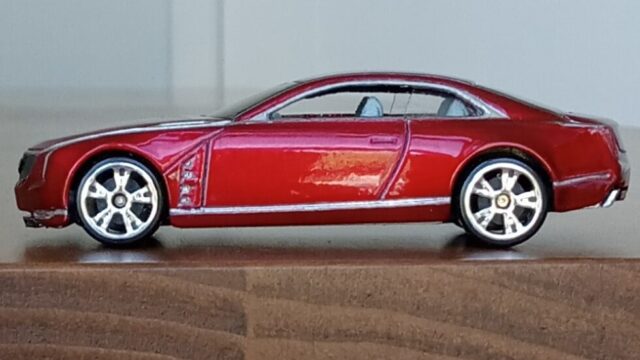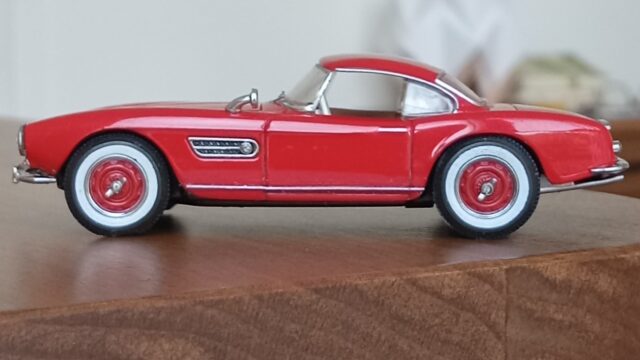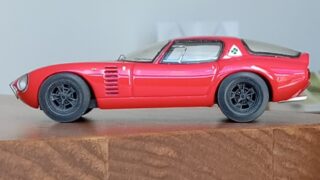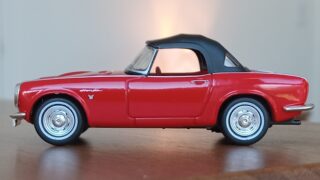
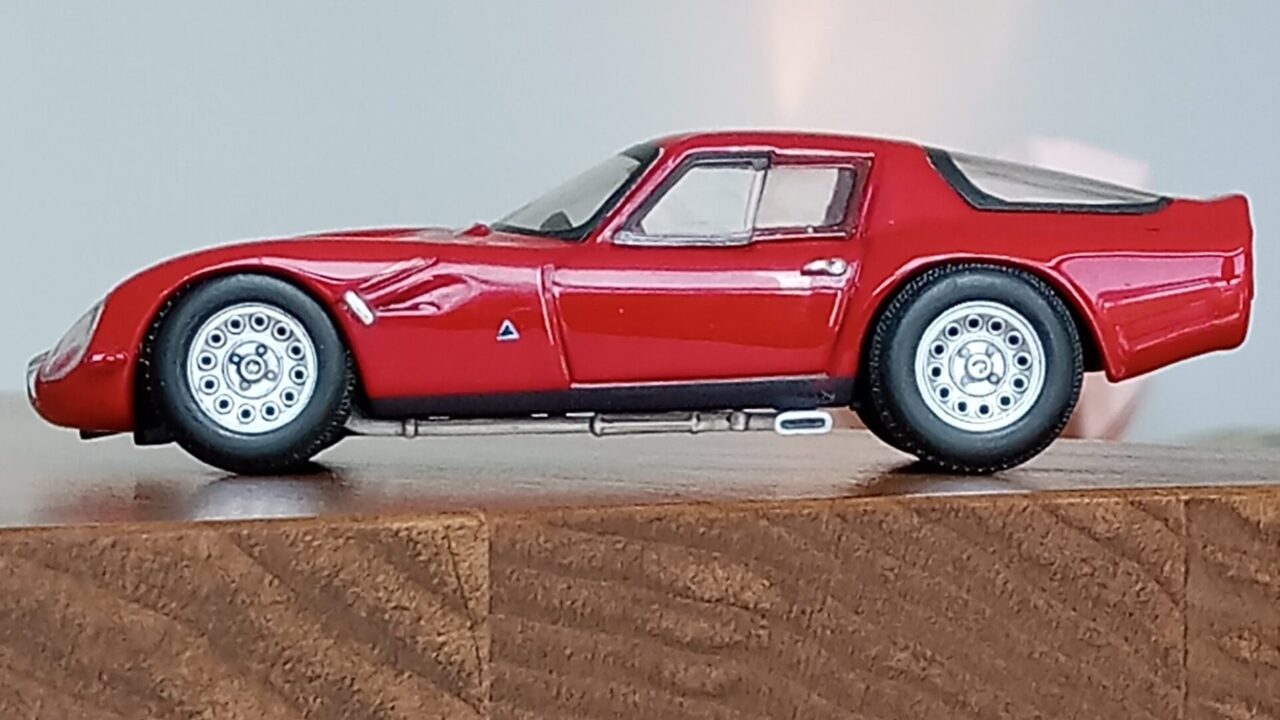
m第10回:アルファロメオ・ジュリア TZ2、1965(外装色:アルファ・レッド)
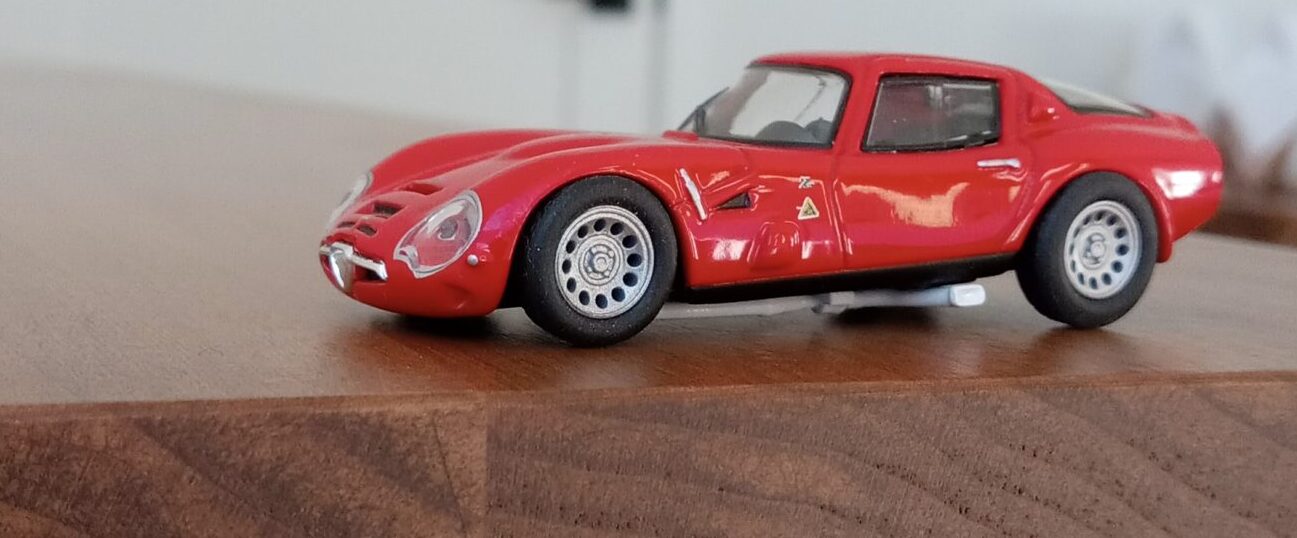
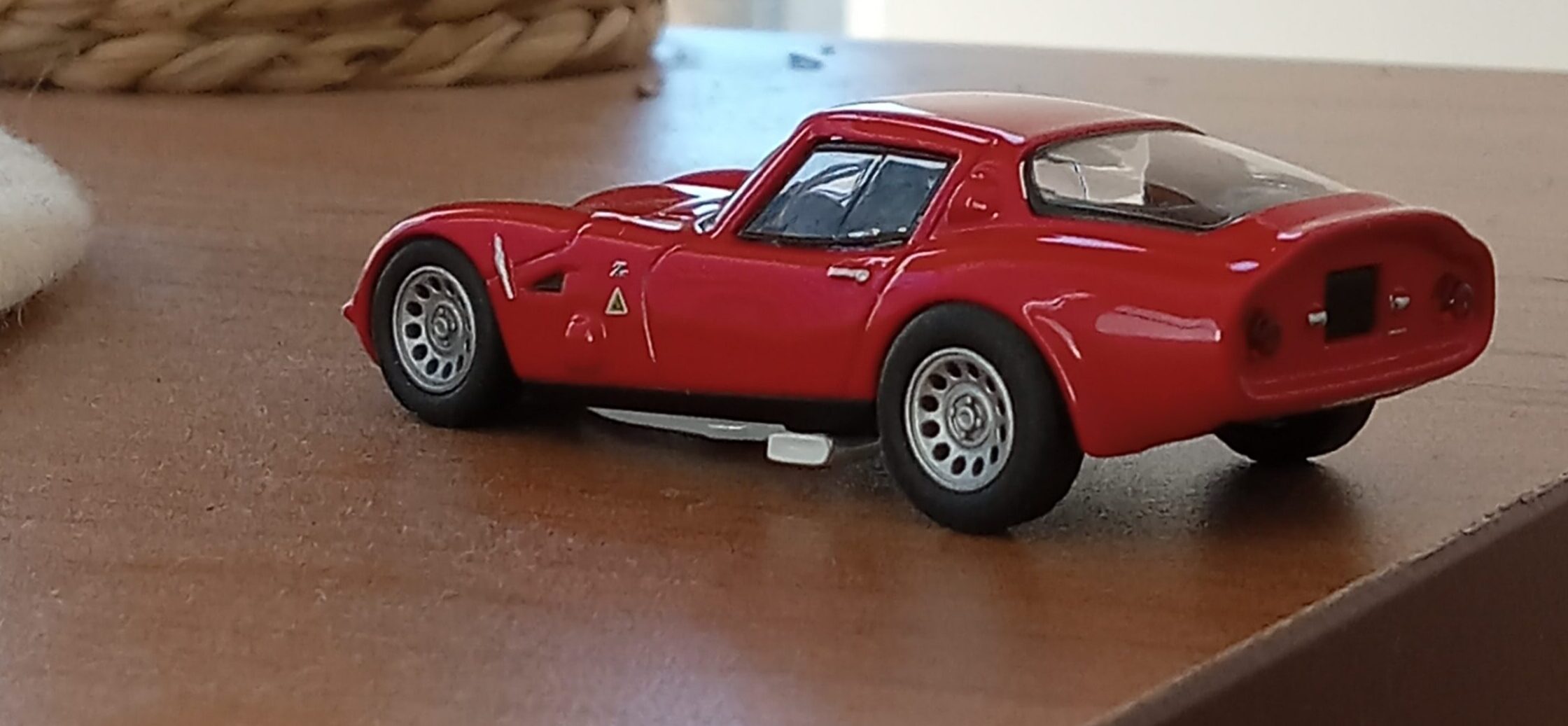
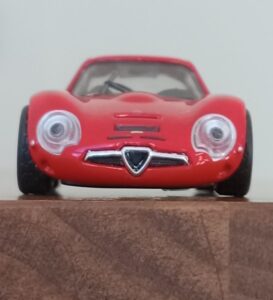
(京商製 1/64 アルファロメオ・ジュリア TZ2、1965(アルファ・レッド≒若干濃い目の赤))
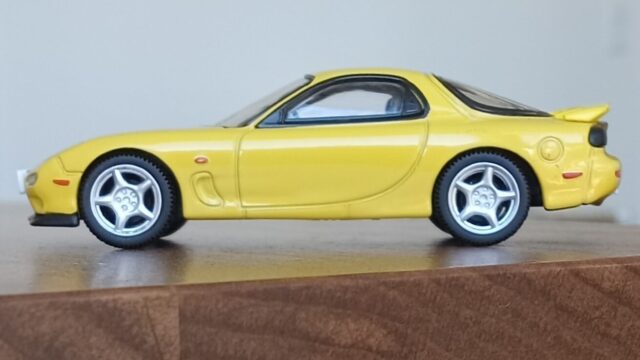
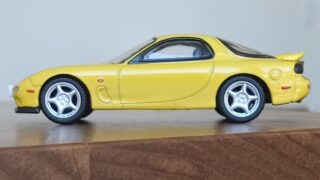
アンフィニ・RX-7,
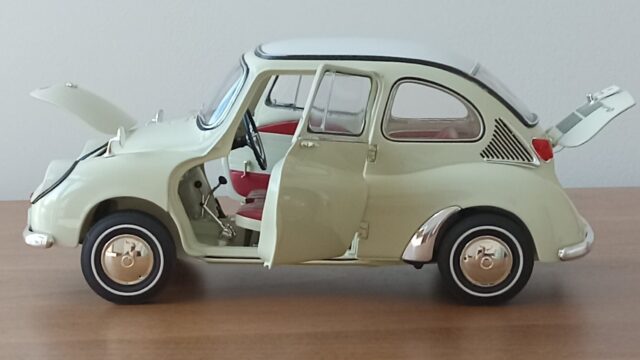
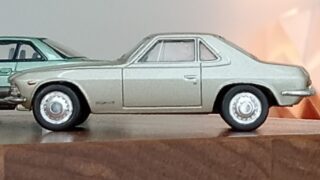
アルファロメオ・カングーロ、を見た後、
今回のアルファ・TZ2を見てみますと、
明らかな共通点の数々がみられます。
そんな中、外観デザインに一番強い影響力があるのが、
軽量化のかなめとなっている、
キャビン部分の最小化ではないでしょうか?
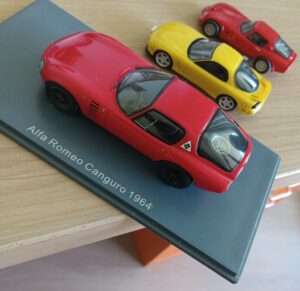
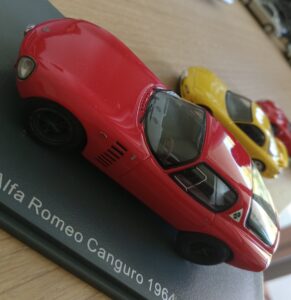
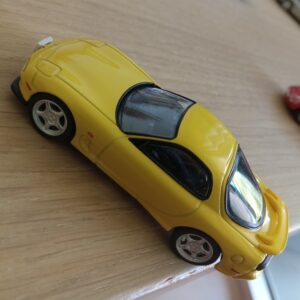
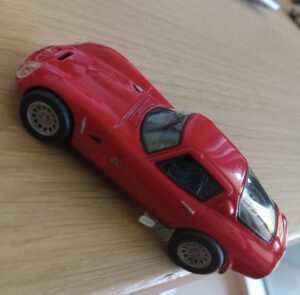
今回の記事は、後半に向かって、
キャビンの『最小化』や『Aピラーの位置と立ち方』を中心として、
3車の原型となったアルファ・TZ1とも絡める形で、
3車に共通する『何か?』を追求していきたいです。
其れでは以下の要領で進めていきます。
*実写解説:
*デザイン的特徴:熟成を重ねたワイン、、、
*『私』とアルファTZ2:1/43 プロバンス・モラージュのレジンキット
*旅の終わりに:『イタリア式軽量FRスポーツの終焉』
*実車解説:イタリア的軽量FRスポーツの到達点?
1963年に、ジュリエッタSZの後継者として登場したレーシングスポーツカー、「ジュリアTZ1 (Tubolare Zagato)」は鋼管チュブラーフレーム、SZ同様カロッツェリアザガート(デザイナー:エルコーレ・スパーダ)がデザイン・製造したアルミニューム製車体、専用の四輪独立サスペンションを持ち、車両重量は650kgに過ぎず、最高速度は216km/hに達しました。
(#アルファ社内のジゥゼッペ・ブッソによれば、TZ1はアマチュアドライバーがレースやラリーをエンジョイできるポテンシャルを持ちながら、純粋なレーシングカーではなくロードユースも可能にしたGTを目指していました。)
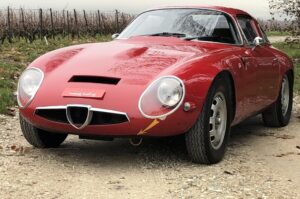
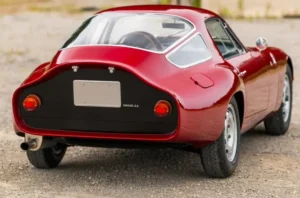
(アルファロメオ・TZ1, 1963)
1965年にはより贅肉をそぎ落とした、戦闘的な車体 (14cm低く、5cm広い)が与えられ、「ジュリアTZ2」に発展、車体は同じくカロッツェリア・ザガートがデザインしたFRP製となり、車両重量は620kgへと一層軽量化されました。ロードカーとしても販売されたTZ1と違い、TZ2は純粋なレーシングカーとして計画されたもので、高度にチューンされたドライサンプ式の170馬力エンジンをTZ1より低い位置に搭載、最高速度は245km/hに達しました。残念ながら、GTカーレースは既にミッドシップエンジン車中心の闘いとなっており、フロントエンジンのTZ2は時代の壁に突き当たった形となり、GTレースでの本格的な活躍は、後に登場するミッドシップのティーポ33に譲る形となりました。
(結局12台(そのうち2台は別ボディー)しか生産されなかったTZ2はTZ以上に貴重なモデルとして、ヒストリックカー市場では億単位の高値で取引されています。)
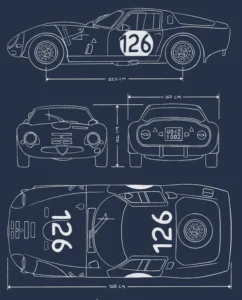
- 型式:2ドア・クーペ
- 総排気量:1,570cc
- 最高出力: 170 bhp @ 7,500 rpm
- 最大トルク:13.8kg-m / 3,000r.p.m.
- 駆動方式::FR
- 定員::2名
- 車体サイズ
- 全長:3,995mm
- 全幅:1,540mm
- 全高:1,060mm
- 全長:3,995mm
- 車両重量
620kg
 620kg
620kg*デザイン的特徴:『熟成を重ねたワイン?』
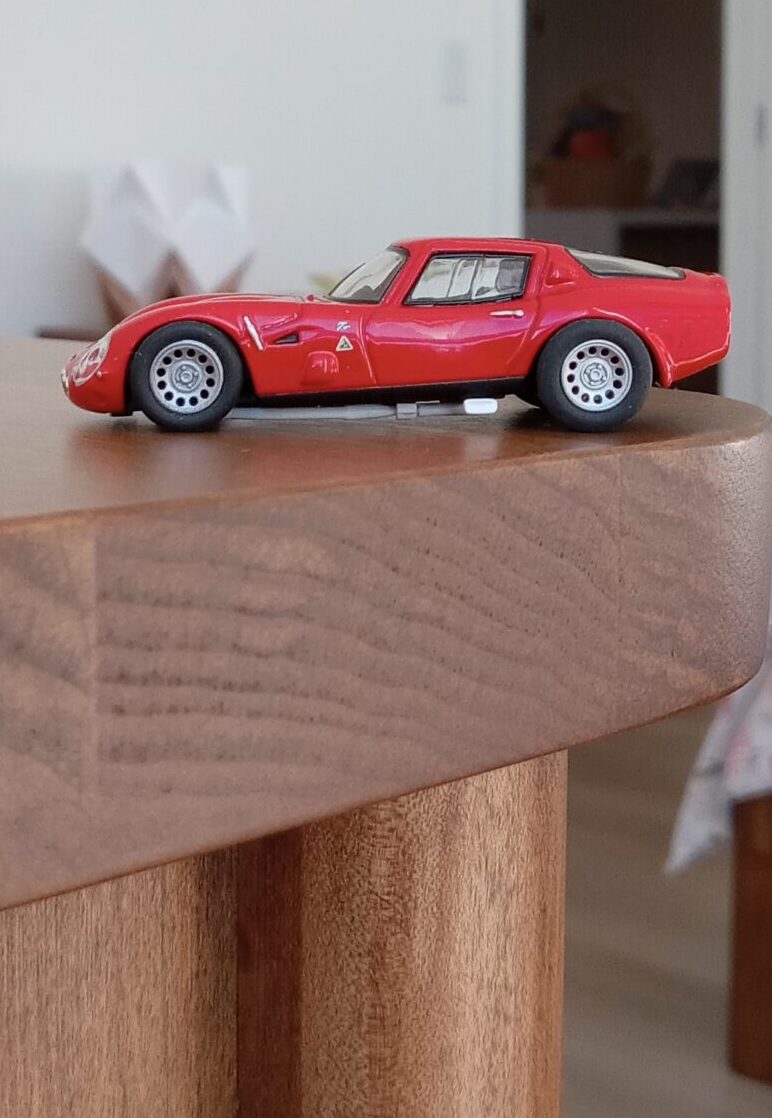
TZ1の発展型、
TZ2の外見的特徴は、
次の4点を挙げたいです。
1、14cmもの車高を削ることに加え、さらなるキャビン部分の流線形化がもたらした超攻撃的な全体像(狂気的/野獣的なスタンス)
2、全体を覆う、レースカーとしての実用的なディテールと有機曲面の味わい深い融合
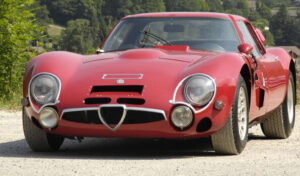
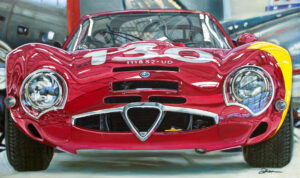
3、補助燈類が上手に埋めこまれたフロントフェイシア・グラフィックの妙味
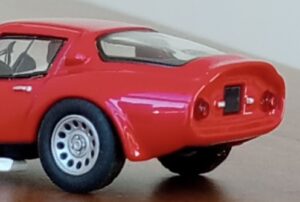
4、TZ1の3分割式から、一体化されてスピード感が増したリアウィンドウ回りとテールライト面の処理
ではそれぞれ細かく見て行きましょう。
1、14cmもの車高を削ることに加え、さらなるキャビン部分の流線形化がもたらした超攻撃的な全体像(狂気的/野獣的なスタンス)
(15インチのバイアスタイヤからより高いグリップ性能を持つ13インチのラジアルタイヤん履き替えたことも手伝って、カウンタックより低い1メートル6センチの全高を実現。切り立ったAピラー&ウィンドシールドによりキャビンはさらに小型化)
ーーーーーーーー>フロントノーズのあご部分を地面に引きずるような形相は勝利へ狂気的イメージあり。
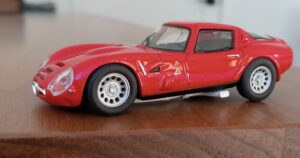
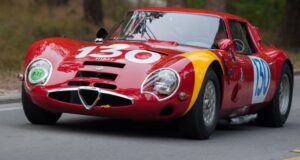
2、全体を覆う、レースカーとしての実用的なディテールと有機曲面の味わい深い融合
(サイド出しのマフラー、ヒンジや蝶番などが美しいザガート製ボディー表面にひしめく様子が味わい深いです。)
ーーーーー>自動車設計&デザインにおける究極の『用の美』でしょうか?
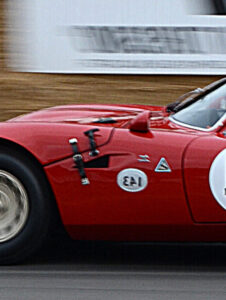
3、補助燈類が上手に埋めこまれたフロントフェイシア・グラフィックの妙味
(個々のレース仕様による多様な表情を見せるフロントフェイシア・グラフィックが秀逸)
4、TZ1の3分割式から、一体化されてスピード感が増したリアウィンドウ回りとテールライト面の処理
*『私』とアルファ・TZ2 =プロバンス・モラージュのレジンキット
1990年代の初め、まだネットのなかったころ、
美術学校の図書館の雑誌コーナーにあった
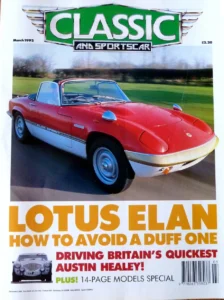 英国製のクラシック自動車雑誌:
『CLASSIC AND SPORTSCAR』
ではじめて見かけたアルファのTZ2ですが、
すぐに立体で見てみたいという衝動にかられ、
オレンジカウンティーの自動車関係のキット・ショウで、Provence Moulage 製の1/43、レジンキットを手に入れ、そのボディーを嘗め回すように鑑賞していました。(笑)
*Provence Moulage 製 1/43、レジンキット
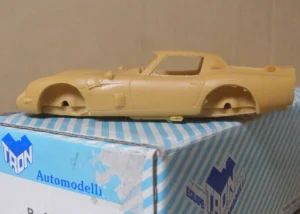
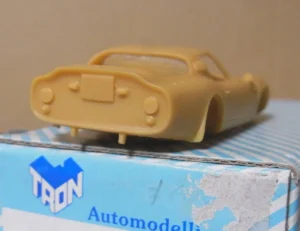
(こちらはTRON製の同じく1/43のキットですが、ボディー部分の彫刻や、プロポーション、ドアハンドルの切り立ったディテールなど、プロバンス・モラージュのものに極めて近いです。)
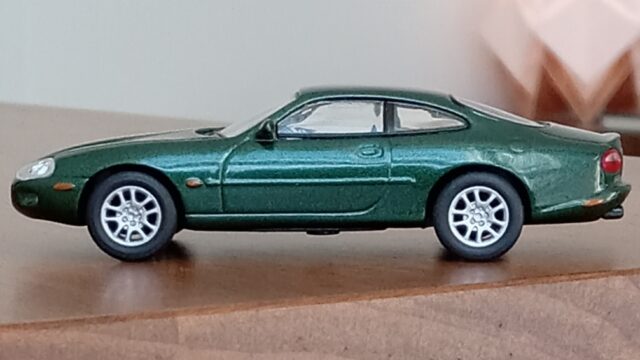
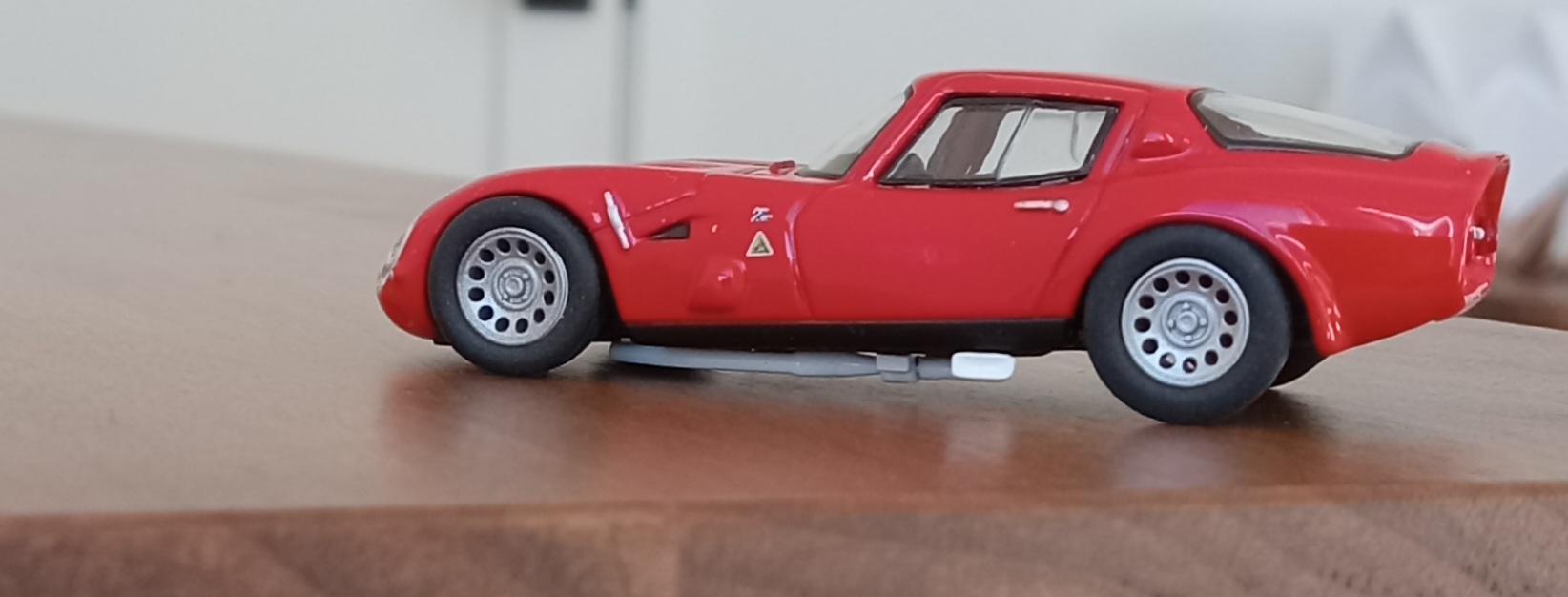
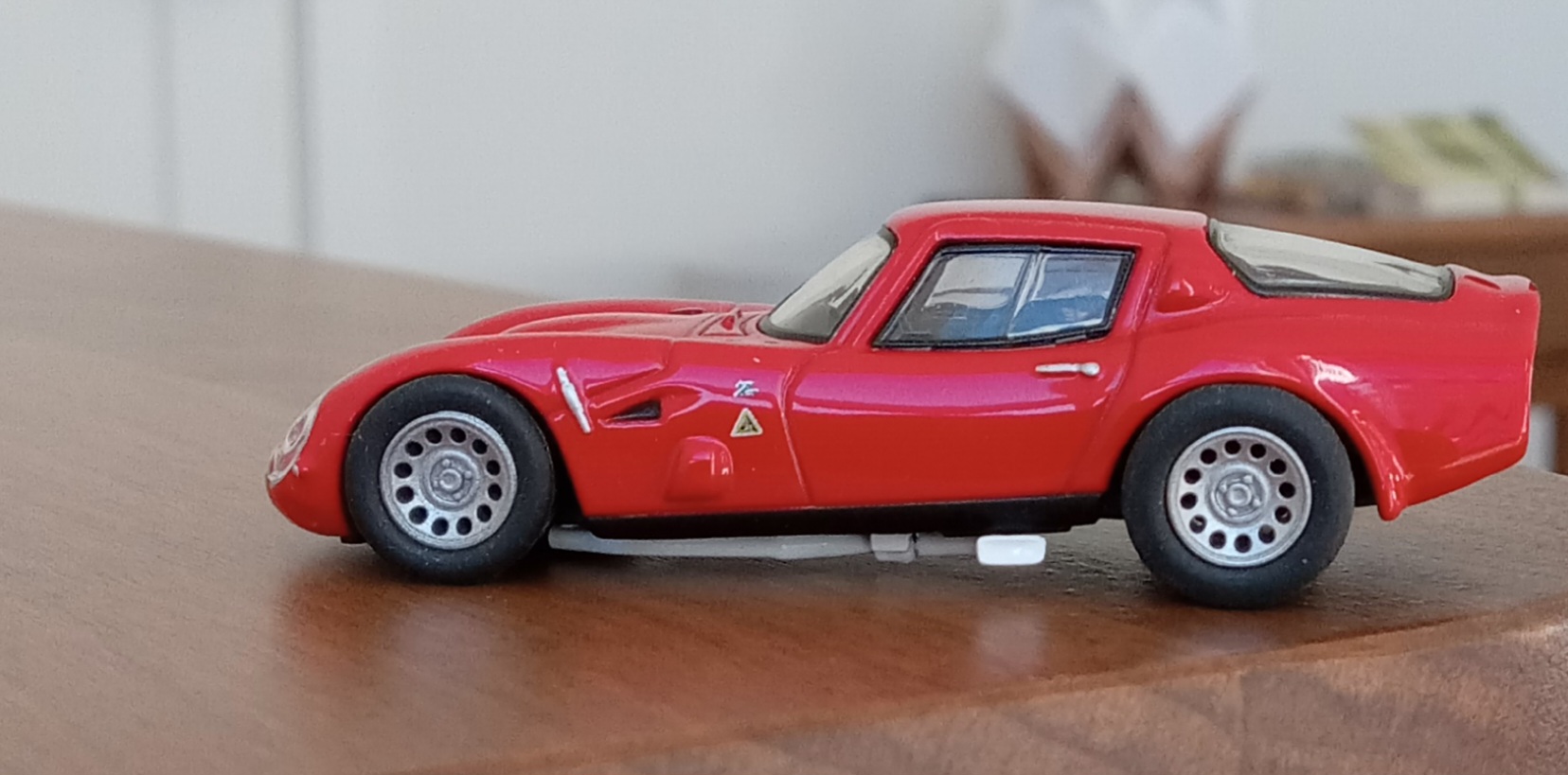
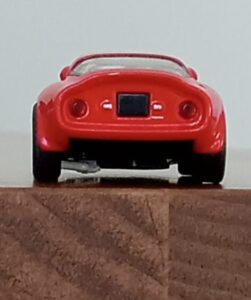
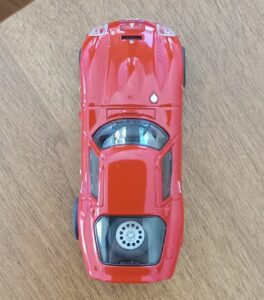
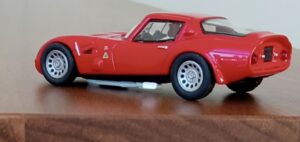
*京商製、1/64 アルファロメオ・TZ2 (イタリアンレッド、ダイキャストモデル)
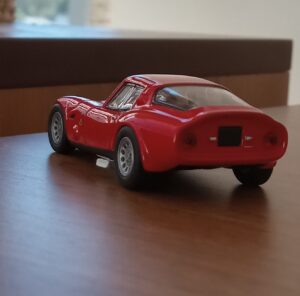
(塗装、彫刻、サイドビューは非常に優秀ですが、全幅が3-4mm足りてない感じで、フロントやリア,また3/4ビューなどがいまいち迫力に欠けます。)
*ベスト製、1/43 ダイキャスト(すべてのレースバージョンを網羅している感じです)
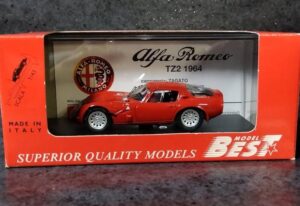 (10種類以上のバリエーションが出ていて、ボディー自体の出来はマアマアなんですが、タイヤサイズが大きすぎなのと、トレッドがナロー過ぎるので、損をしている感じでしょうか、、、以前4台ほど持っていたのですが、改造などしなかったので、何度見ても納得できませんでした。泣)
*ミニチャンプ製、1/43 ダイキャスト版、TZ2 (アルファ・レッド=少し暗い赤)
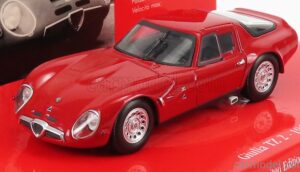 (ベスト製の1/43のものに比べ明らかに、サイズ的にも、ディテール的にも数段上の出来栄え、車幅も正確で、現在適当なものを物色中です。入手出来次第、前後3/4からの写真を撮り、此方の記事に加えたいです。)
*ブルックリン製、アルファTZ2,(ホワイトメタル製の完成品)
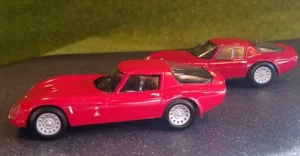 (ヴィンテージ系のアメ車専門のイメージがあるブルックリンがなぜかTZ2を出してます。私は未購入ですが、ウエブ記事の中での比較画像からはかなりしっかりした造形が見て取れます、記事の中では、ミニチャンプスのものよりもリアウインドを含むリアデッキ部分が若干長いとかいてあり、興味津々です。)
*BBR製、1/43 アルファ・TZ2, (レジン・完成品)
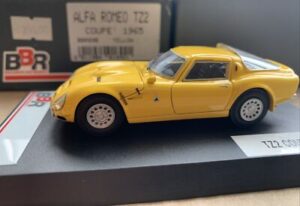 (こちらはカッチットしたBBRらしい造形ですが、若干古い設計なのと、メリハリが少し足りない感じです。ベスト版とミニチャンプス版の中間的な見た目ですが、値段が高いですし、入手はしませんがご参考までに。)
その他、オートアート製の1/18のもの、
モデルファクトリーHIROさんの1/12の複合素材のキットなどが主な立体物ですが、
一目見た時の印象に比べて、(フェラーリ250GTO 1962 などの一見よく似たデザインと比べても) 実際の全高が超絶に低いデザインなので、
そのあたりの異常さをうまく表現できているのが、
ミニチャンプスのもののように感じてます。
このミニチュア設計が難しい程に、謎に包まれたデザインが、
私にとって一層魅力的にしています。
それではいよいよ、
例の3台(RX-7, カングーロ、TZ2)を総括してみたいです。
*旅の終わりに:『イタリア式、軽量FRスポーツカーの終焉』
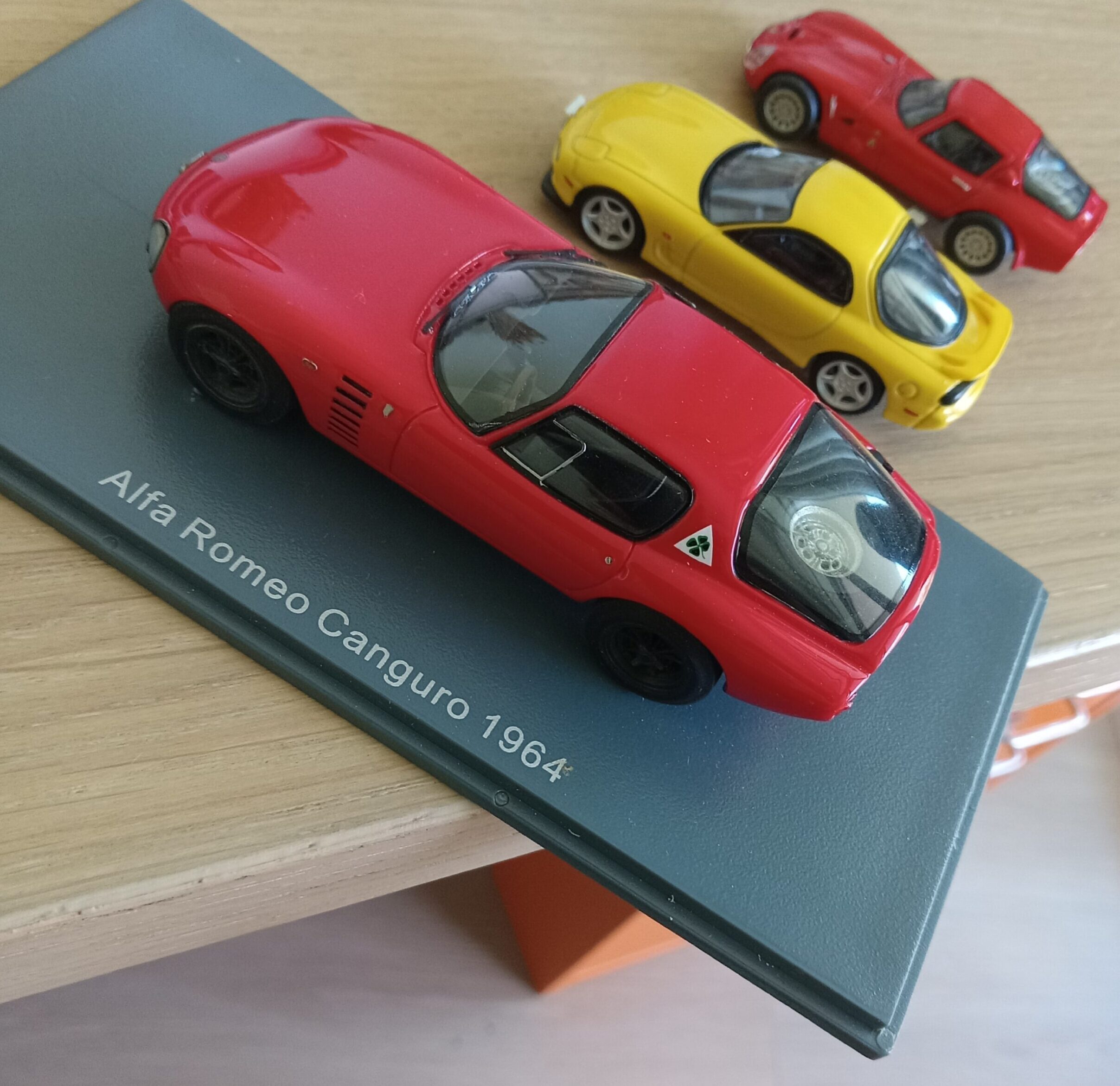
3台の車に共通する
オーラ的『何か?』の探求の旅
もいよいよ終わりに近づいています。
前回の記事、カングーロ編の最後に書きました仮説①:
つまりは、
*小さなエンジンをできるだけ低く、回転中心の真ん中に寄せて搭載、
*車体重量をとにかく軽く、
*そのために、ガラス部分を減らす、
*全長も減らす、車高は低く、旋回性のため車幅は削らず、
*更には、運転のしやすさ、フロント・コーナーの見切りの良さのため、Aピラーをできるだけ運転者の近くに寄せる、
その結果、
ーーーーーーーー>それらの特徴が3車に共通のDNAとなり
ーーーーーーーー>そのDNAの象徴として、自然とキャビンが最小化!
ーーーーーーーー>その上に、外見デザイン面の有機化の流れが重なり、
似通ったデザインとなった?
そのDNA+有機デザインこそが
ーーーーーーーーーー>私の大好物?
果たして、
この仮説①からさらに発展した部分はあったのでしょうか?
仮説②:3車=軽量FRスポーツカーの最終形態
GTカーレース、プロトタイプカーレースへの参戦を目的としたアルファロメオ・TZ2について調べることで、問題の3車がそれぞれの文脈で、軽量FRスポーツカーの理想を追求したことを確認することに相成りました。
つまりは、1962年前後からスポーツカーの駆動方式がFRからミッドシップへ大きく転換した時期に登場した、3車は軽排気量・軽量FRスポーツカーの到達点としてそれぞれ、
*TZ2ーーー機能・機構的に極純粋な、競技用のプロトタイプとして
*カングーローーーTZ2の特性を強調した形で、外観スタディーとして、
*アンフィニ・RX-7ーーー前者2台の精神を、(ロータリーエンジンの軽量・大出力の恩恵を受けることで、)1991年時点で復活させる形で、
軽量FR スポーツカーの理想を追求した、
その努力が極端に表れたのが、
* 空力的なキャビン横の最適化
* 軽量な極薄鋼板を曲面化することで合成を稼ぐーーー>結果的には有機面化
* 軽量化のため、ガラス部分を減らすために、蚊帳部分を縮小
* 操縦性の向上のため、Aピラーを内側に寄せ、見切りも向上
つまりスポーツカーにとって最重要な
*軽量
*高い剛性
*良好な視界
これらの実現のための努力がすべて、
3車に共通な
超コンパクトなキャビンを
作り出していたのではないでしょうか?
(この小さなキャビンが、これらの名車を写真では実際より大きく見せていました。)
一つの目標のために、簡単、お手軽な解決法に逃げることなく、
あくまで理想を追求する態度
その精神こそが
オーラ的『何か』
ではないでしょうか?
ちなみに、
喫茶の文化、 特に『お茶』について考えてみた時、
世界中に数々ある茶葉の加工技術のうち、
もっとも純粋、単純に見えさへする、
『緑茶/煎茶』にこだわったのが我々日本人です。
大排気量のエンジンや、直線加速にこだわるアメリカのレース界や
ホモロゲーションは厳しいながらも、ある程度何でもありのF1やルマンの世界は
発酵した茶葉に香料や添加物を加えた
ーーーーーーーーーー中国、中東や西洋の発酵茶や紅茶のように感じます。
それに対して、
軽量FRスポーツカーはーーーー>『煎茶』、
イギリスのライトウエイトはーーー>『濃茶』、
例の3車はーーーー>『お抹茶』そっくりに見えてきます。(笑)
イタリアに端を発した軽量FRスポーツカー追求の旅も
この辺でお後がよろしいようで。
(イギリス版はまたの機会に)
本ブログと記事内容につきまして:
ブログ記事を書くにあたり私の目標は、立体造形(料理も含めて)とのかかわりを通じて、私個人の特徴的(ネジ曲がり方も含めて)な評価軸を解明することで、「美しさ・美味しさ」に対する好奇心や、探求心を、どのように満足・充足させてきたのかを明記しておくことです。
従いまして、記事の中に出てくる、数字や年号、微細なデータなどには細心の注意を払っておりますが、時に大きな間違いや勘違いを犯していることも考えられます。特に自動車記事における主要諸元や、年号などには紛らわしいものも多く、あくまで参考程度に考えていただければ幸いです。
私としては、記事の中で個人的な外観デザインや味覚の評価、そこから広がる後半部分につなげるための、『流れ』を作るための客観的材料として年号やデータを挿入している感じです。あくまで重視したいのは、私個人の頭の中で起こる、記憶の錯そう的混沌から生まれる新たな『見方』や『情報の予想外のつながり』です。その勢いを作り出す、『流れ』の一環として、諸データが副次的に必要となるわけです。
話がそれますが、大好きな落語の世界に「三題噺」という、その場て会場から募った3つのお題を使って1つのお話に仕立てるといったお遊びがございますが、私はそれに近いことを立体造形の特徴や(料理のお味)をお題にして行っている感じがします。その中で頭の中に去来する数々の着想が、全く予想外で楽しく、次回からの記事内容を大幅に変えたり、新展開につながっています。
当ブロブの仕組み:
『好奇心の点と線 x 気まぐれ脳内回路=予想外の新展開』
こんな自分勝手なブログですが、今後ともよろしくお願いいたします。
追記:上記の『流れ』を作る為に必要な写真はできる限り、個人所有のミニカー・自前の料理などを使い撮影しておりますが、その他の必要最小限の図版や写真を他のブログ主様の記事や諸会社ホームページなどからお借りしております。(記事内容に合うよう加工させていただき、使用時は最小の解像度で載せております。)問題がある場合、ご連絡いただければ直ちに降ろさせていただきます。
追記2:当ブログ記事に掲載のミニカー写真等(個人撮影)は許可なしで、どのようにお使いいただいても結構です。私個人の創造性はこの世のもの、と言う認識の上で記事を製作しています。
!!!!!!!!!!!!!!!!!!!!!!!!!!!!!!!!! Translation in English !!!!!!!!!!!!!!!!!!!!!!!!!!!!!!!!!
Episode 10: Alfa Romeo Giulia TZ2, 1965 (Exterior Color: Italian Red)
(Kyosho 1/64 Alfa Romeo Giulia TZ2, 1965 (Italian Red))
After seeing the Amphi RX-7
and the Alfa Romeo Canguro,
looking at this Alfa TZ2,
a number of clear commonalities become apparent.
Among these, the most influential aspect of the exterior design,
which is key to weight reduction,
is likely the minimization of the cabin section, isn’t it?
Moving into the latter half of this article,
I’d like to focus on the cabin’s ‘minimization’ and the ‘position and angle of the A-pillars’,
while also connecting it to the Alfa TZ1, the prototype for these three cars,
to explore the ‘something’ common to all three.
We’ll proceed as follows:
* Live-action commentary:
* Design characteristics: Like a wine that’s aged to perfection…
* ‘Me’ and the Alfa TZ2: 1/43 scale Provence Morage resin kit
* At the journey’s end: ‘The End of the Italian Lightweight FR Sports Car’
* Real Car Commentary: The pinnacle of Italian lightweight FR sports cars?
In 1963, the racing sports car that emerged as the successor to the Giulietta SZ, The Giulia TZ1 (Tubolare Zagato) featured a steel tubular frame, an aluminum body designed and manufactured by Carrozzeria Zagato (Designer: Ercole Spada) like the SZ, and dedicated independent suspension on all four wheels. Its curb weight was a mere 650kg, and it reached a top speed of 216km/h.
(According to Alfa Romeo’s Giuseppe Busso, the TZ1 aimed to be a GT capable of road use, not a pure racing car, while retaining the potential for amateur drivers to enjoy racing and rallying.)
(Alfa Romeo TZ1, 1963)
In 1965, it evolved into the “Giulia TZ2” with a more streamlined, combat-ready body (27cm shorter, 14cm lower, 10cm wider). The body, also designed by Carrozzeria Zagato, was made of fiberglass, further reducing the vehicle weight to 620kg. Unlike the TZ1, which was also sold as a road car, the TZ2 was planned purely as a racing car. It mounted a highly tuned dry-sump 170-horsepower engine in a lower position than the TZ1, achieving a top speed of 245 km/h. Unfortunately, GT racing had already shifted to a battle dominated by mid-engine cars. The front-engine TZ2 hit a wall of its era, and its chance for serious success in GT racing was ultimately ceded to the later mid-engine Tipo 33.
(Ultimately, only 12 TZ2s were produced (two with different bodies), making it an even rarer model than the TZ. In the historic car market, they trade for prices in the hundreds of millions of yen.)
Key Specifications
Type: 2-door coupe
Total Displacement: 1,570 cc
Maximum Power: 170 bhp @ 7,500 rpm
Maximum Torque: 13.8 kg-m / 3,000 rpm
Drive Layout: FR
Seating Capacity: 2
Body Dimensions
Overall Length: 3,995 mm
Overall Width: 1,540mm
Overall Height: 1,060mm
Curb Weight
620kg
*Design Feature: ‘A wine that has matured over time?’
As an evolution of the TZ1,
the TZ2’s visual characteristics
can be summarized in four key points:
1. An ultra-aggressive overall stance (mad/beast-like) achieved by shaving 14cm off the height and further streamlining the cabin section
2. A tasteful fusion of practical racing car details and organic curves enveloping the entire body
3. The artistry of the front fascia graphics, skillfully integrating auxiliary lights
4. The rear window area and tail light treatment, now integrated for enhanced speed perception, departing from the TZ1’s three-part design.
Let’s examine each in detail.
1. A super-aggressive overall appearance (insane/ferocious stance) achieved by shaving 14cm off the height and further streamlining the cabin section.
(Achieved a height of just 1 meter 6 centimeters—lower than the Countach—by switching from 15-inch bias-ply tires to 13-inch radial tires offering superior grip. The steeply raked A-pillars and windshield further minimize the cabin size)
————————> The front nose’s jawline, almost dragging along the ground, projects a maniacal image of victory.
2. A profound fusion of practical racing car details and organic curves covering the entire body
(Side-exit mufflers, hinges, and other elements densely packed across the beautiful Zagato body surface create a rich aesthetic.)
──────> Is this the ultimate ‘functional beauty’ in automotive design?
3. The ingenuity of the front fascia graphics, with auxiliary lights skillfully integrated
(The front fascia graphics, displaying diverse expressions depending on individual race specifications, are outstanding)
4. The rear window area and tail light surface treatment, now integrated for increased speed sensation compared to the TZ1’s three-piece design
*‘Me’ and the Alfa TZ2 = Provence Morage resin kit
In the early 1990s, before the internet existed,
I first encountered the Alfa TZ2 in the magazine section of my art school library’s collection
British classic car magazine:
‘CLASSIC AND SPORTSCAR’
was where I first saw the Alfa TZ2.
Immediately seized by the urge to see it in three dimensions,
I acquired a 1/43 resin kit by Provence Moulage at an auto kit show in Orange County, and I would examine its body, almost licking it over. (laugh)
*Provence Moulage 1/43 resin kit
(This is a TRON-made kit, also 1/43 scale. Its body sculpting, proportions, and the sharply defined door handle details are extremely close to the Provence Moulage version.)
*Kyosho, 1/64 Alfa Romeo TZ2 (Italian Red, diecast model)
(The paintwork, sculpting, and side view are excellent, but the overall width feels about 3-4mm too narrow, making the front, rear, and 3/4 views lack impact.)
*Best, 1/43 diecast (Seems to cover all race versions)
(Over 10 variations exist. The body itself is passable, but the tires are too large and the tread is too narrow, which detracts from it… I used to own about four of these, but since I never modified them, I never felt satisfied no matter how many times I looked at them. Tears)
* Mini Champ, 1/43 diecast version, TZ2 (Alfa Red = slightly dark red)
(Compared to the Best-made 1/43 version, this is clearly several levels above in both size and detail. The car width is accurate too. I’m currently scouting for a suitable one. Once I get it, I’ll take photos from the front, rear, and three-quarter angles to add to this entry.)
* Brooklyn-made, Alfa TZ2 (White metal finished model)
(Brooklyn, known for vintage American cars, inexplicably released a TZ2. I haven’t bought it yet, but comparison images in web articles show quite solid sculpting. The article mentions the Mini Champs version has a slightly longer rear window area—I’m very curious to see how it compares.)
* BBR 1/43 Alpha TZ2 (Resin, finished model)
(This has the crisp, BBR-style sculpting, but the design feels slightly dated and lacks a bit of definition. It looks like a middle ground between the Best version and the Minichamps version. It’s expensive, so I won’t be getting it, but I thought I’d mention it for reference.)
Other main 3D models include AutoArt’s 1/18 scale version and Model Factory HIRO’s 1/12 composite material kit.
Compared to the initial visual impression (even against seemingly similar designs like the 1962 Ferrari 250 GTO), its actual overall height is exceptionally low.
I feel the Mini Champs version best captures that sense of abnormality.
This design, shrouded in mystery precisely because it’s so difficult to miniature,
makes it all the more appealing to me.
Now, finally,
I’d like to summarize those three cars (RX-7, Kanguro, TZ2).
*At the Journey’s End: ‘The Demise of the Italian-Style, Lightweight FR Sports Car’
The journey exploring the aura-like ‘something?’
shared by these three cars
is finally drawing to a close.
Hypothesis ① from the end of the previous article, the Canguro edition:
In essence,
* Mount the small engine as low as possible, centered on the rotational axis,
* Keep the body weight as light as possible,
* To achieve this, reduce glass area,
* Shorten overall length, lower ride height, but maintain width for agility,
* Furthermore, to enhance drivability and front corner visibility, position the A-pillars as close to the driver as possible,
The result:
————————> These characteristics became the shared DNA of the three cars
————————> As a symbol of that DNA, the cabin naturally became minimized!
————————> Overlaid with the trend toward organic exterior design,
resulting in similar designs?
That DNA + organic design is
————————> My absolute favorite?
Indeed,
did any aspects develop further from this Hypothesis ①?
Hypothesis ②: The Three Cars = The Ultimate Form of the Lightweight FR Sports Car
By researching the Alfa Romeo TZ2, developed for GT car racing and prototype car racing, I confirmed that the three cars in question pursued the ideal of the lightweight FR sports car within their respective contexts.
In other words, emerging around 1962 during the major shift in sports car drivetrains from FR to mid-engine, these three cars each represented the pinnacle of lightweight, small-displacement FR sports cars:
* TZ2——As a functionally and mechanically pure racing prototype
* Kangoo——As an exterior study emphasizing the TZ2’s characteristics
* Amphi RX-7——Reviving the spirit of the first two (by leveraging the rotary engine’s lightweight, high-output advantages) in 1991,
pursuing the ideal of the lightweight FR sports car.
That very spirit
is the aura-like ‘something’,
isn’t it?
Incidentally,
when contemplating tea-break culture, particularly ‘tea’,
among the myriad tea processing techniques worldwide,
we Japanese have remained devoted to
‘green tea/sencha’—the purest, seemingly simplest form.
The American racing scene, obsessed with large-displacement engines and straight-line acceleration,
and the worlds of F1 and Le Mans, where homologation is strict yet anything goes to a certain extent,
feel like fermented tea leaves with added flavorings and additives—
——————————like fermented teas or black teas from China, the Middle East, or the West.
In contrast,
Lightweight FR sports cars → ‘Sencha’ green tea,
British lightweight cars → ‘Koicha’ thick tea,
And those three cars → ‘Matcha’ powdered tea. They look just like them. (lol)
The journey to pursue lightweight FR sports cars, originating in Italy,
seems to be drawing to a close around here.
(The British version will have to wait for another time.)
Translated with DeepL.com

これはCTAサンプルです。
内容を編集するか削除してください。