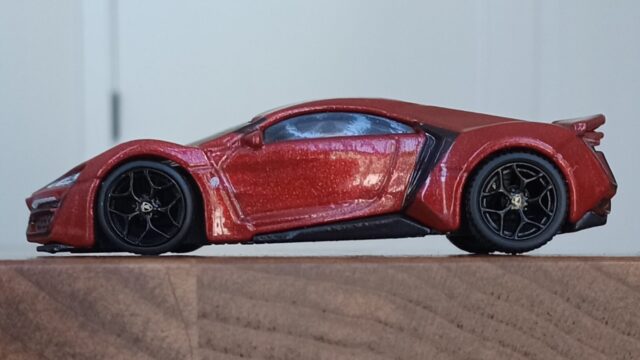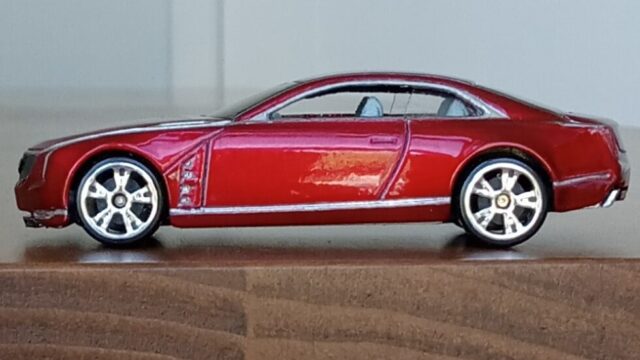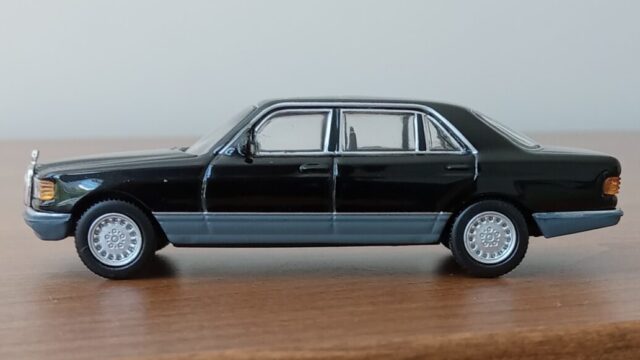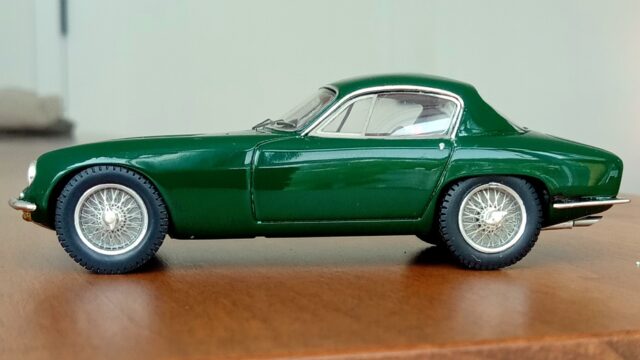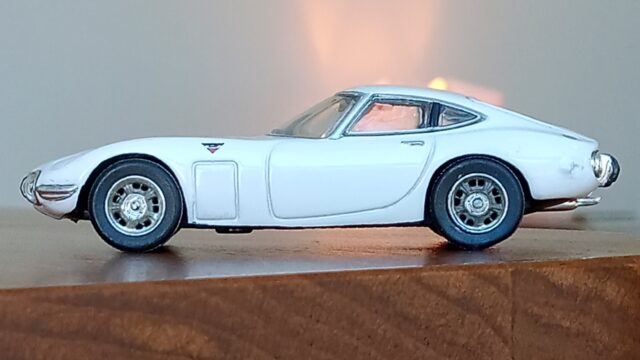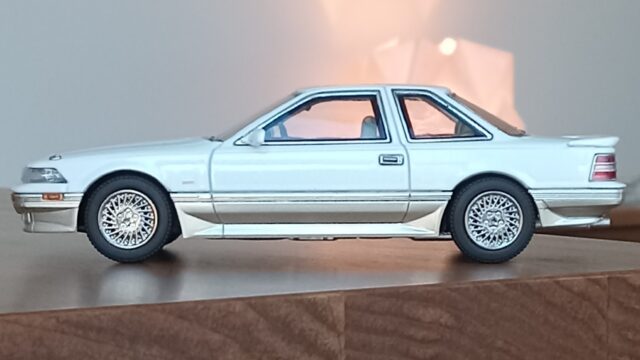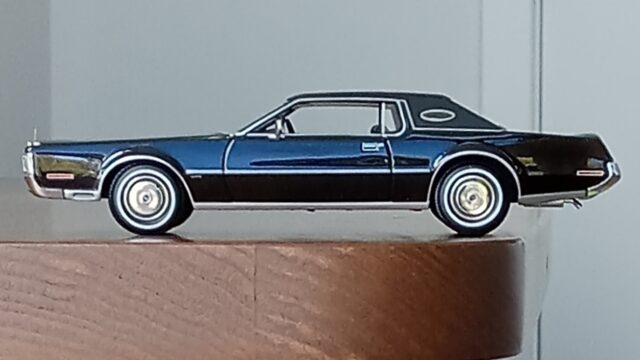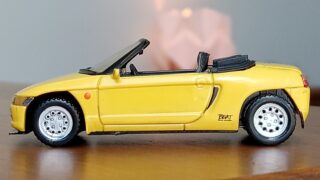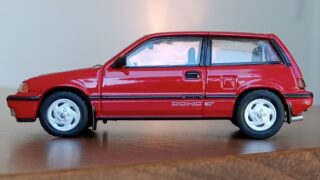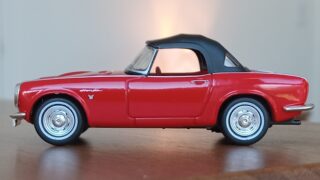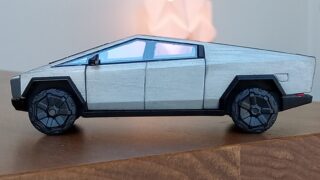
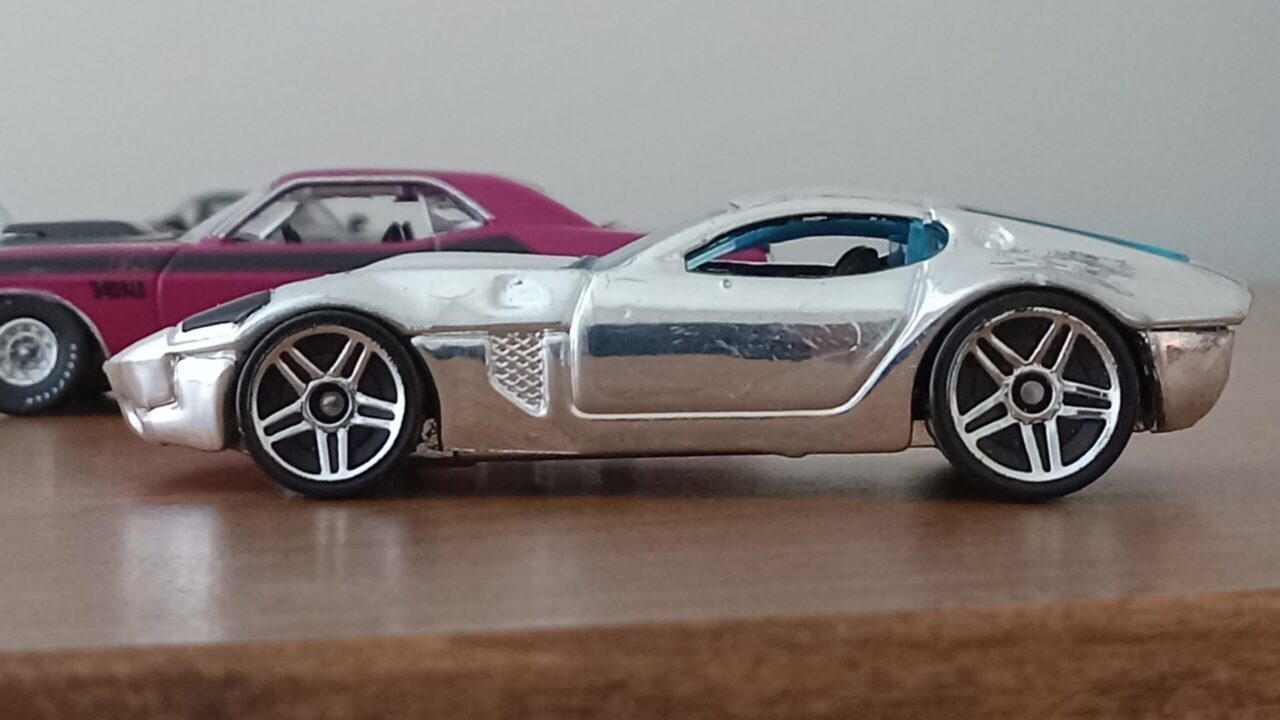
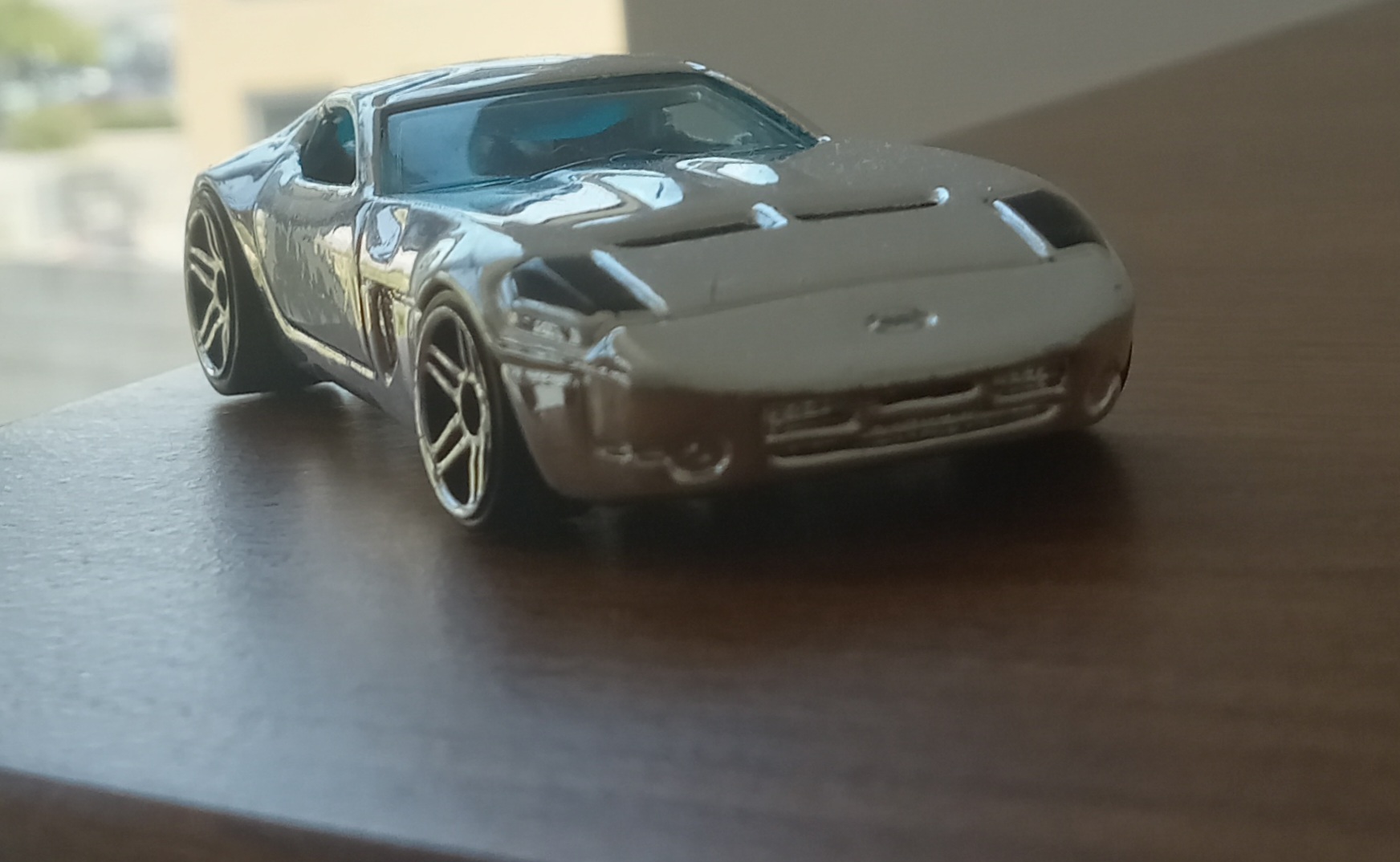
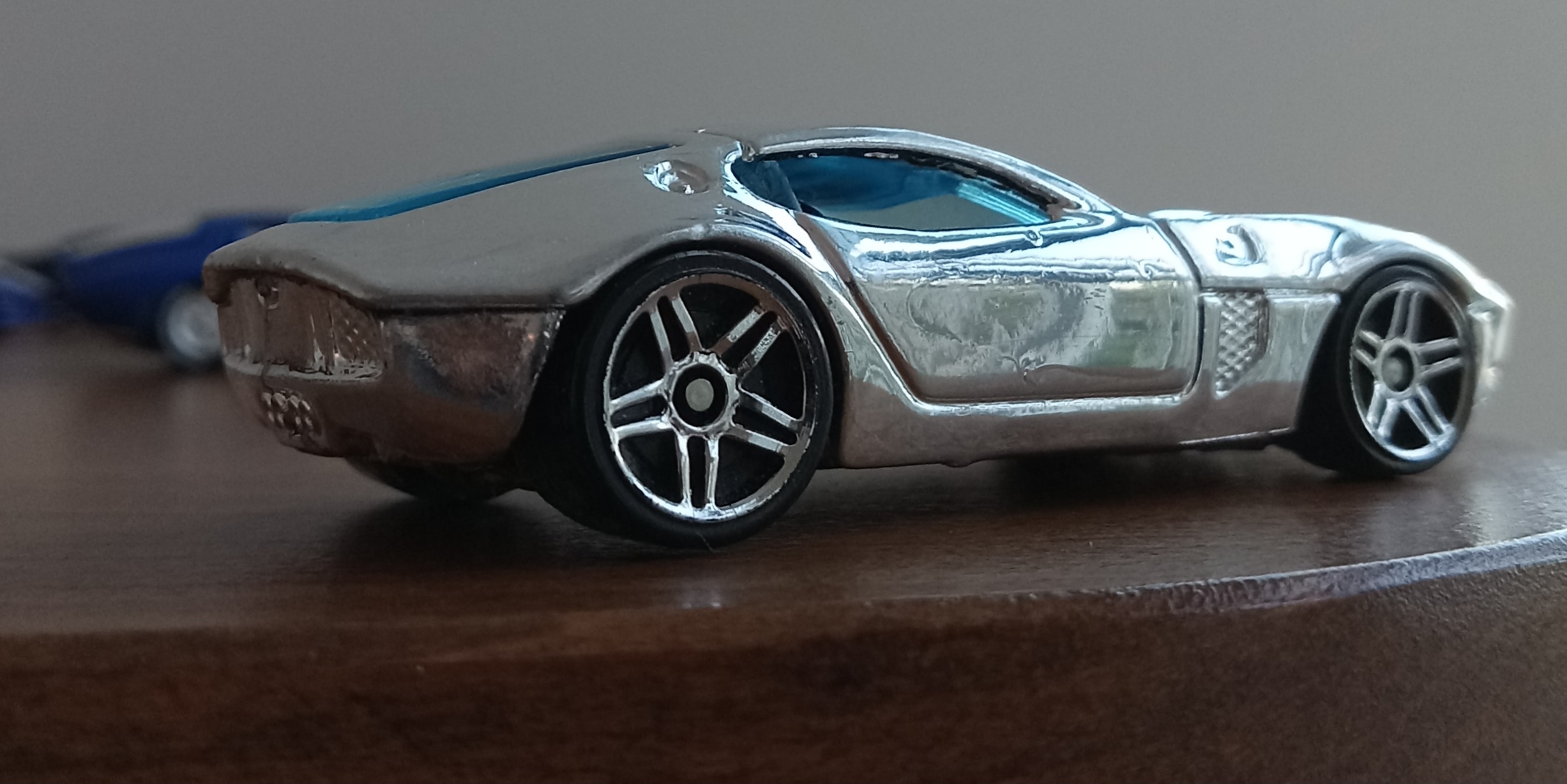
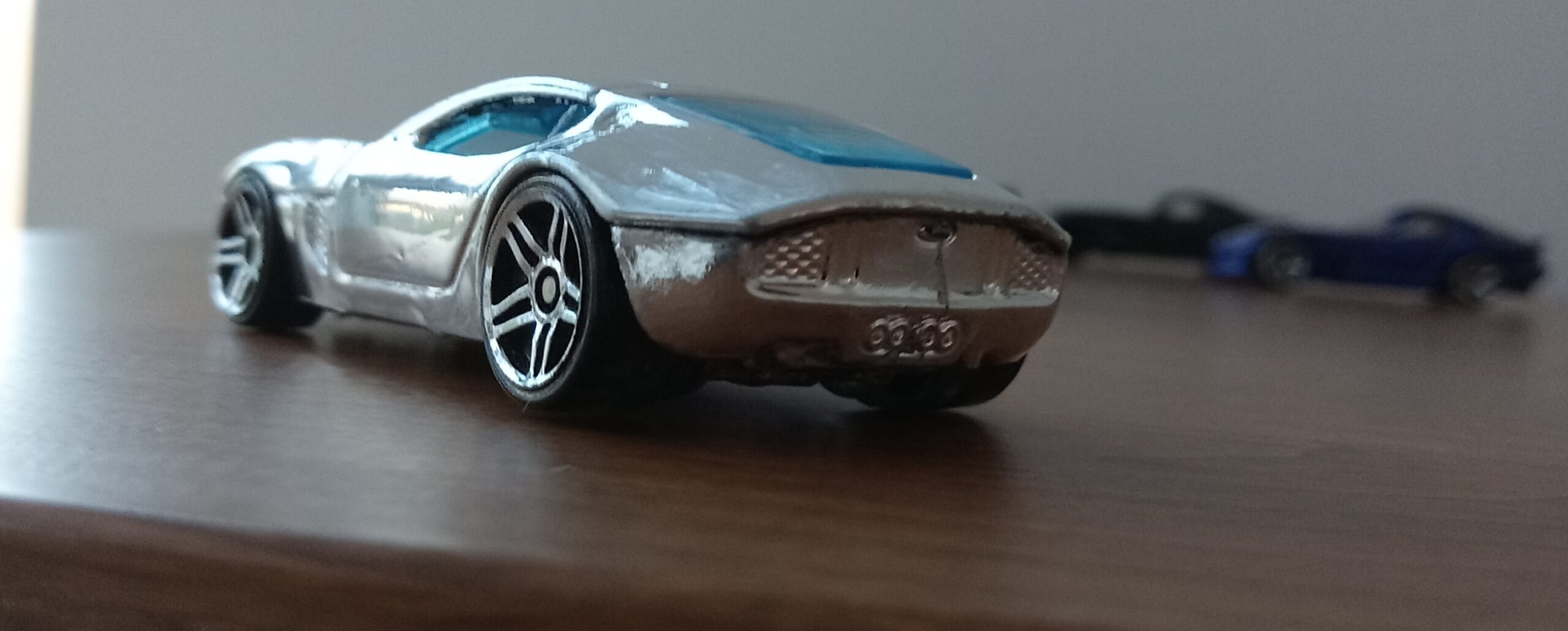
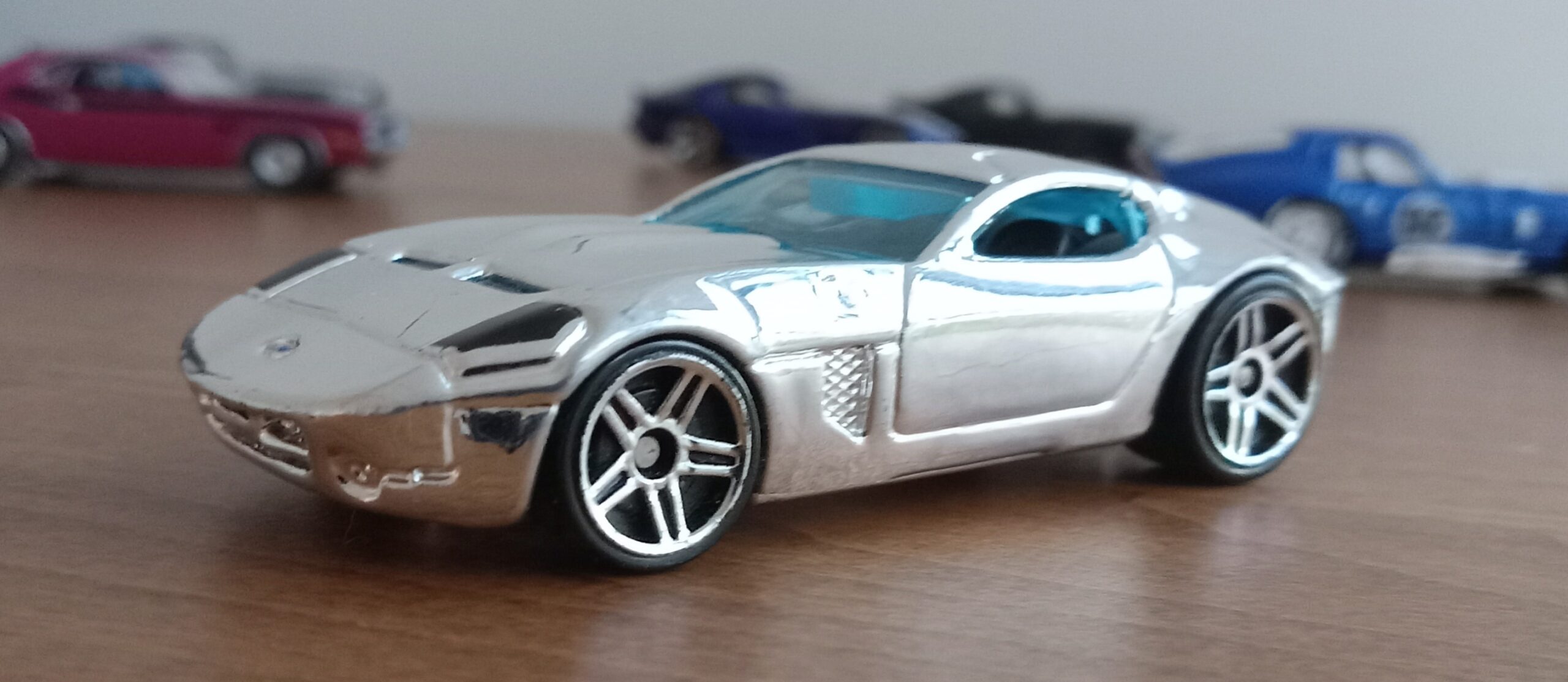
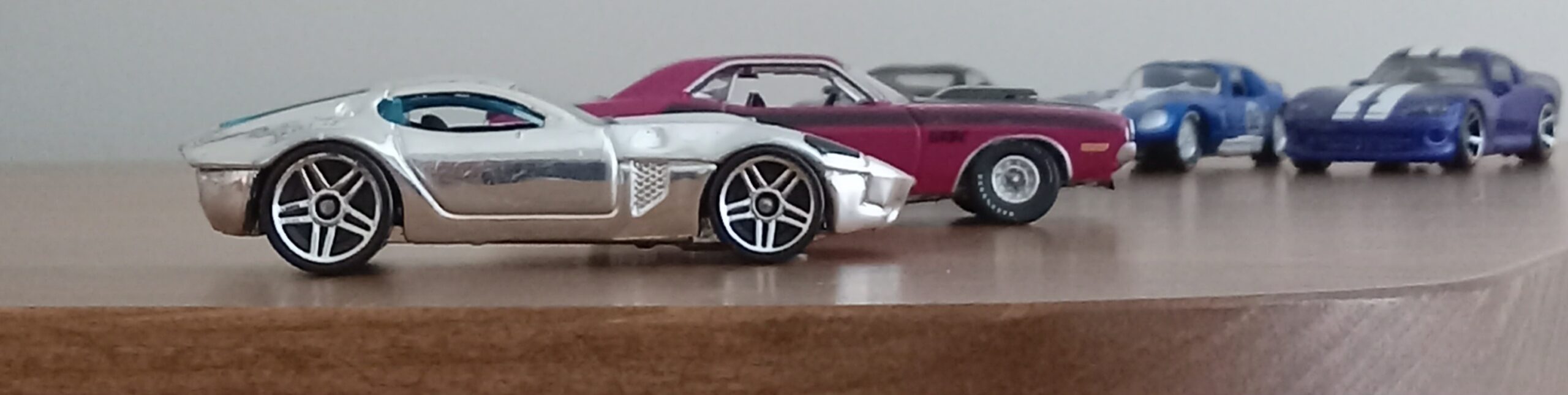
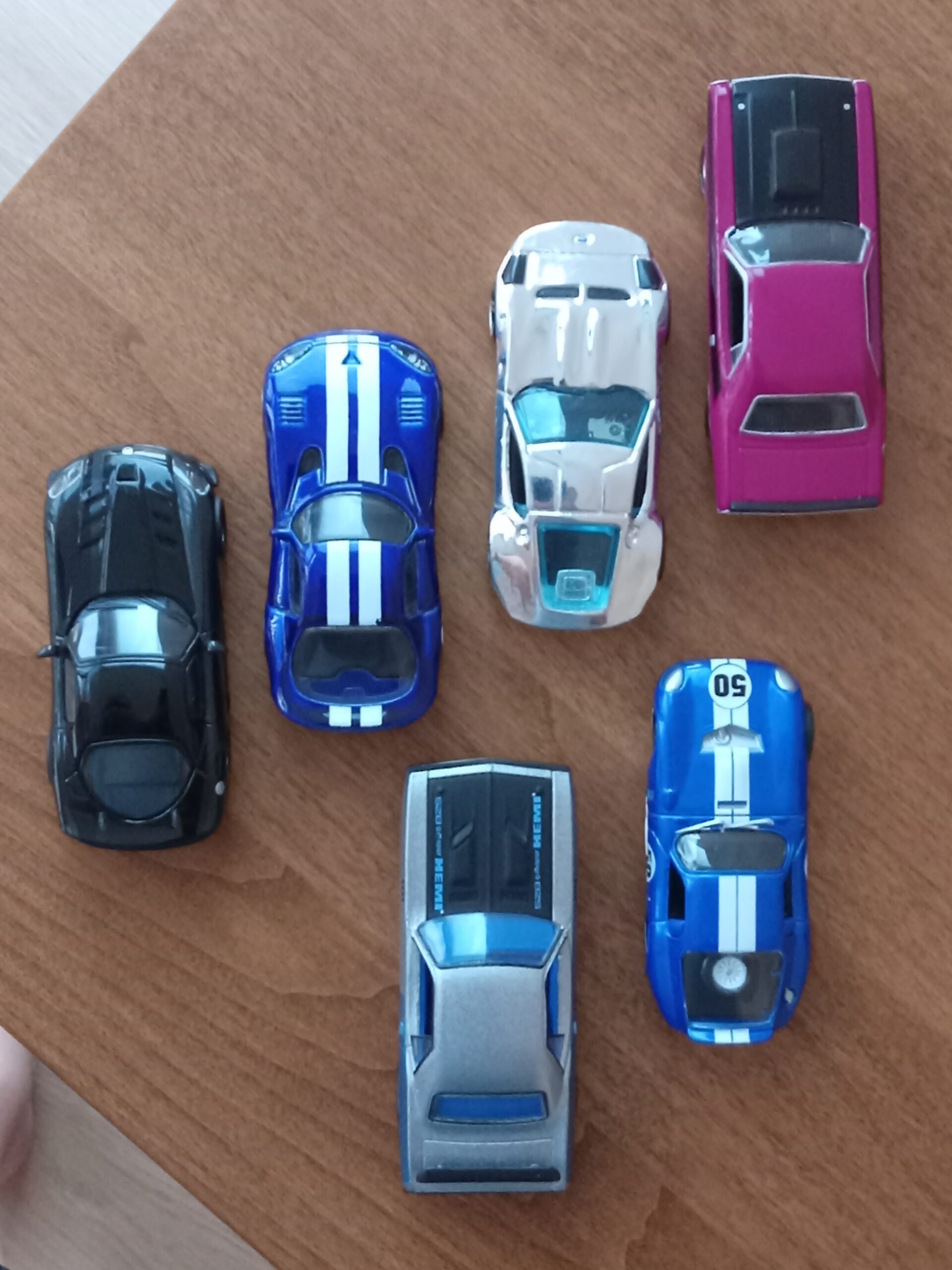
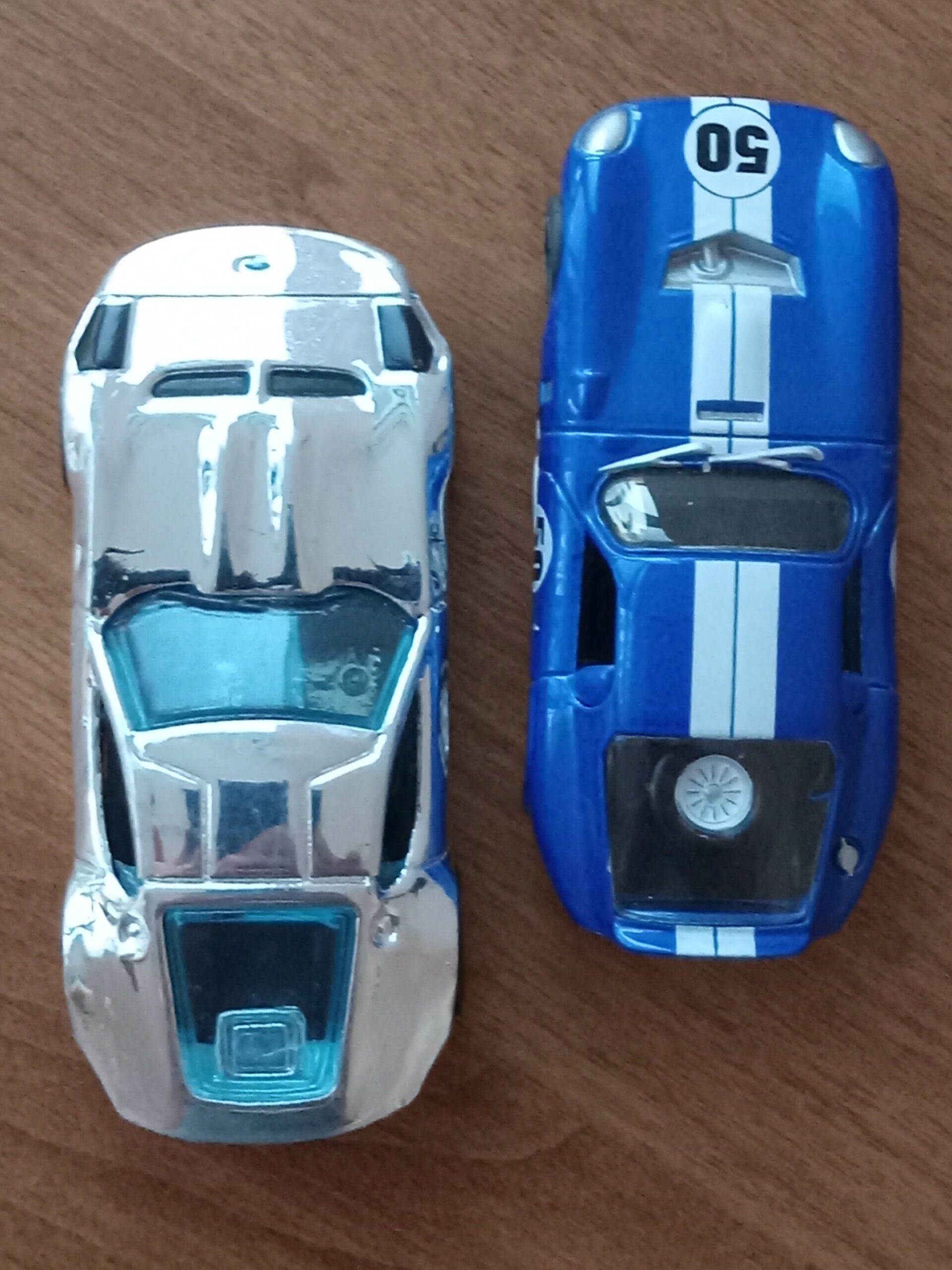
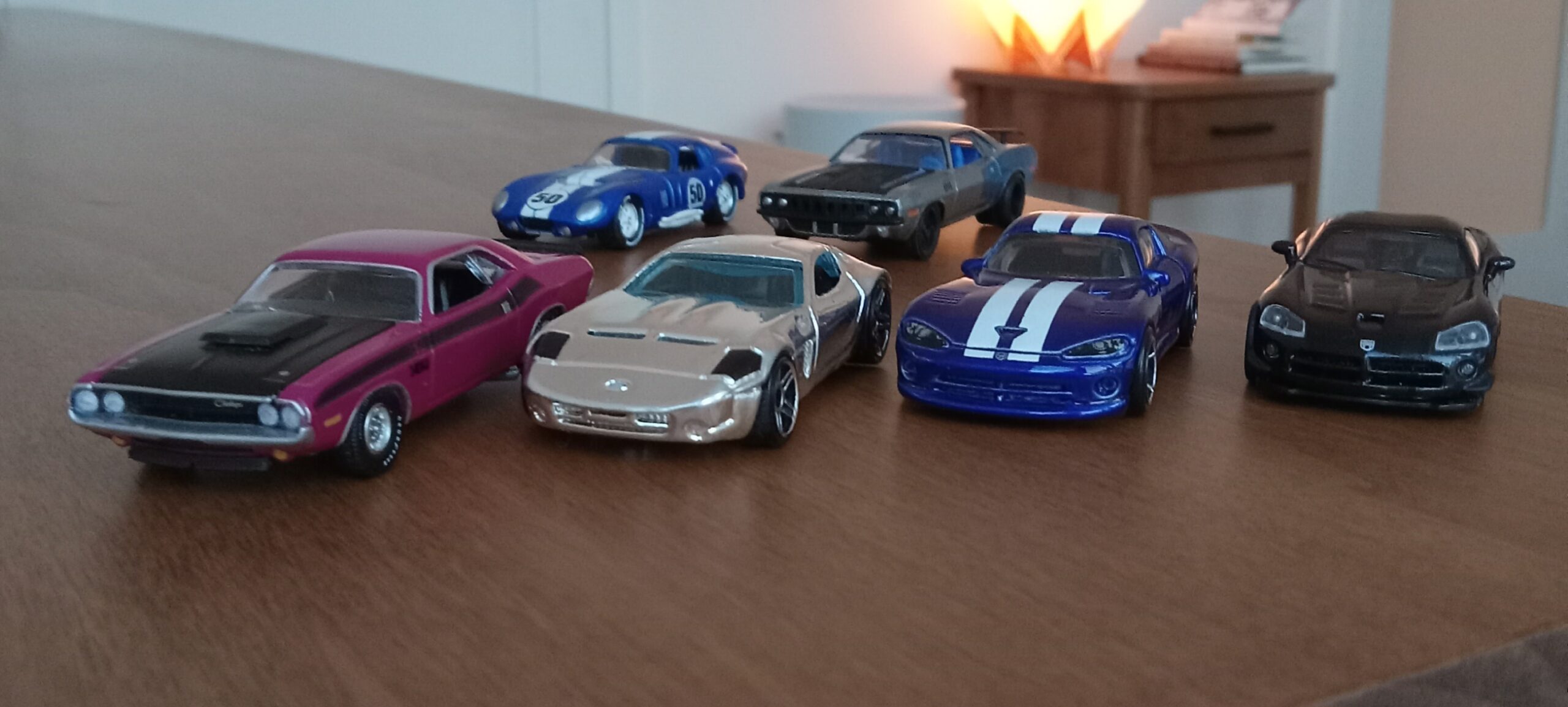
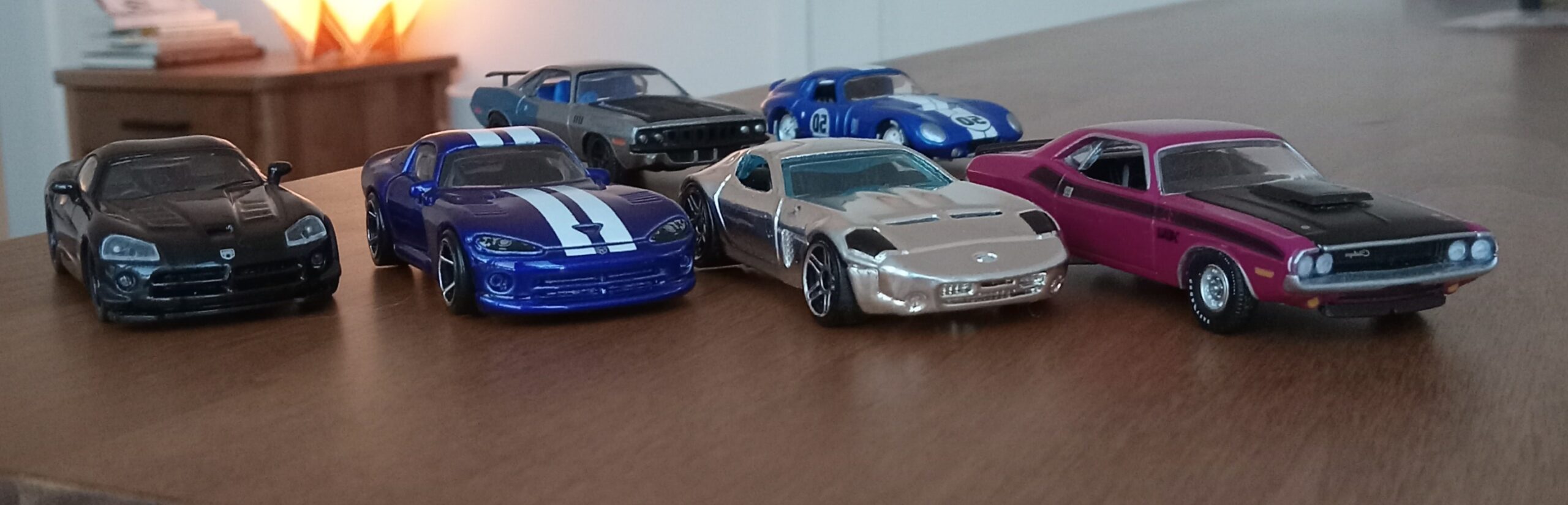
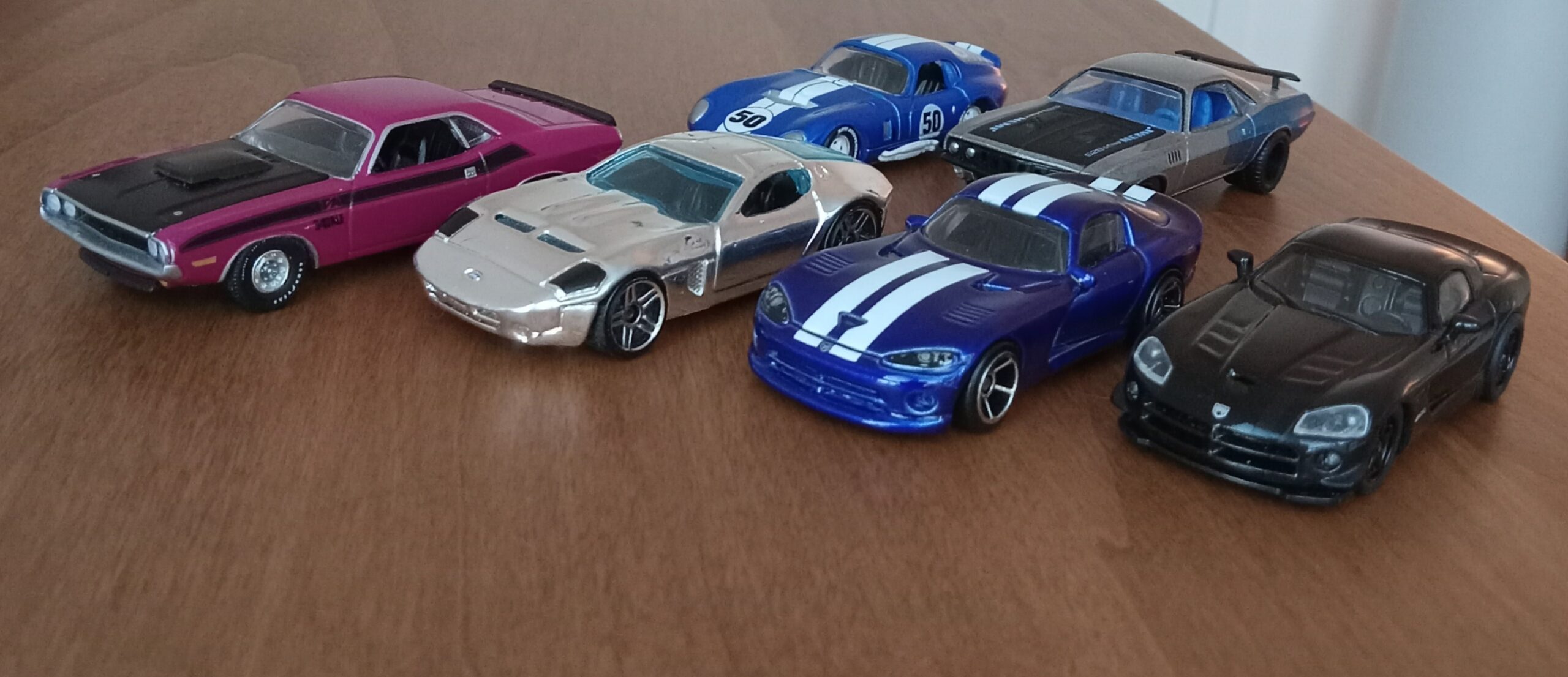
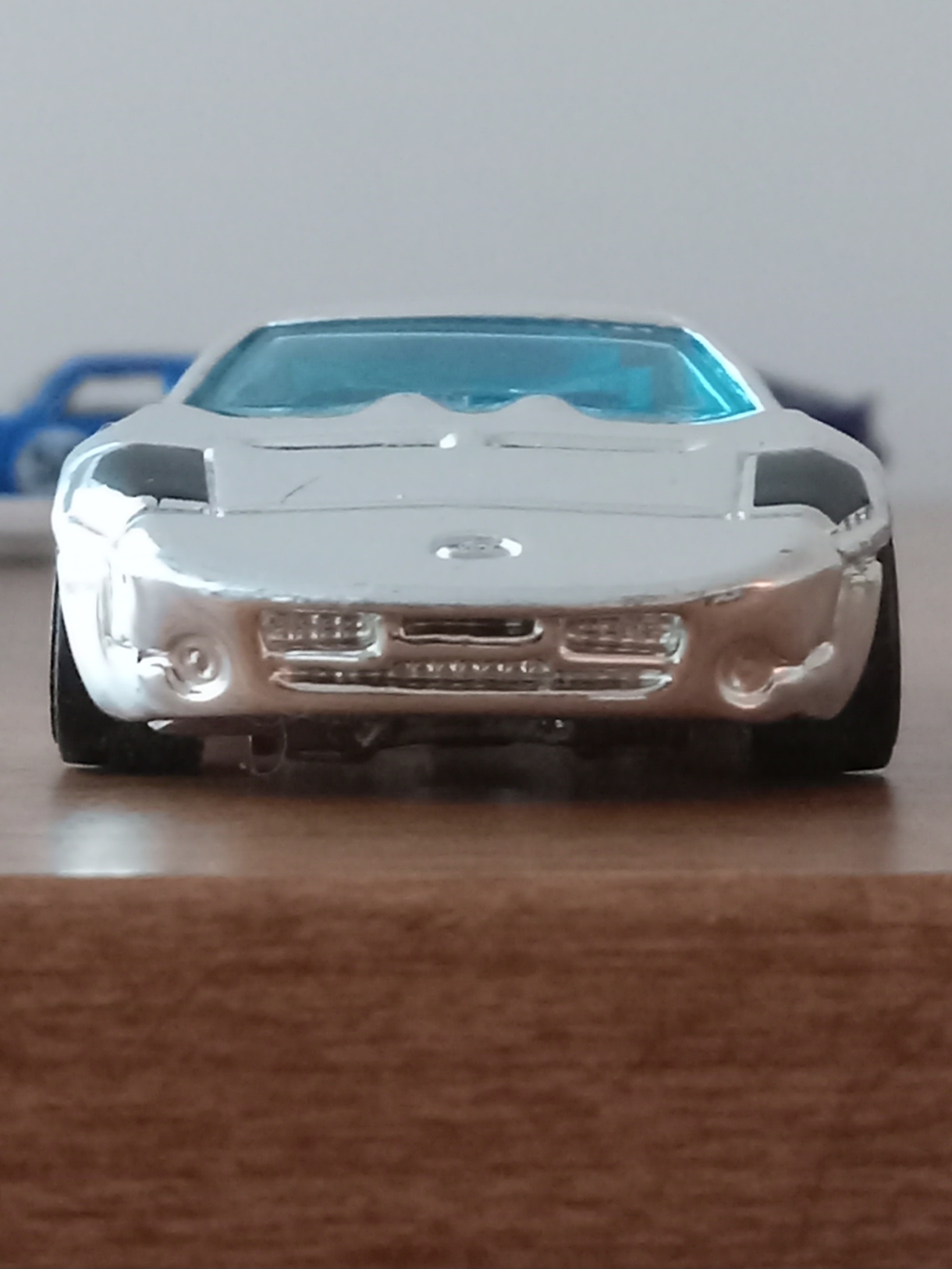
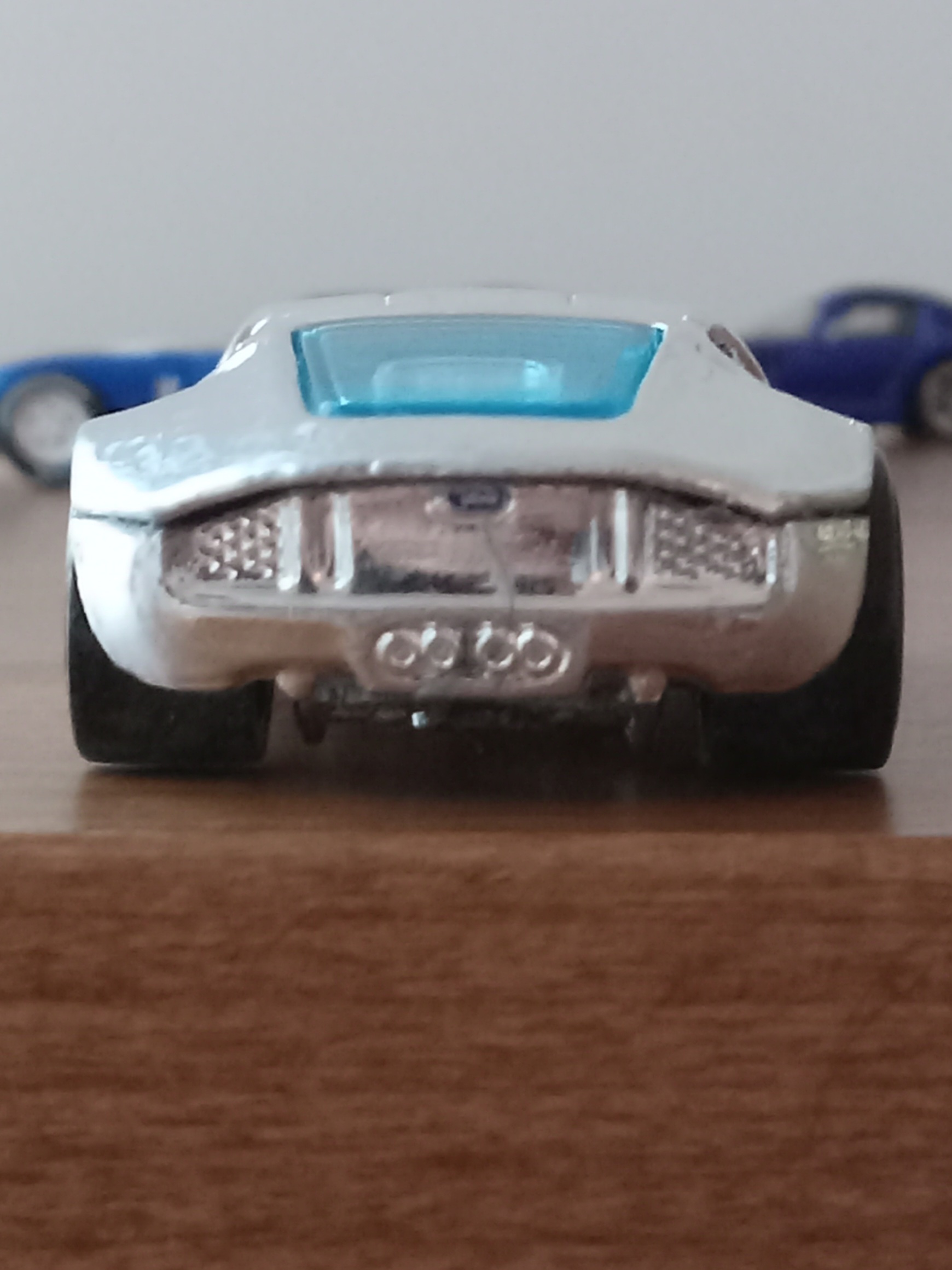
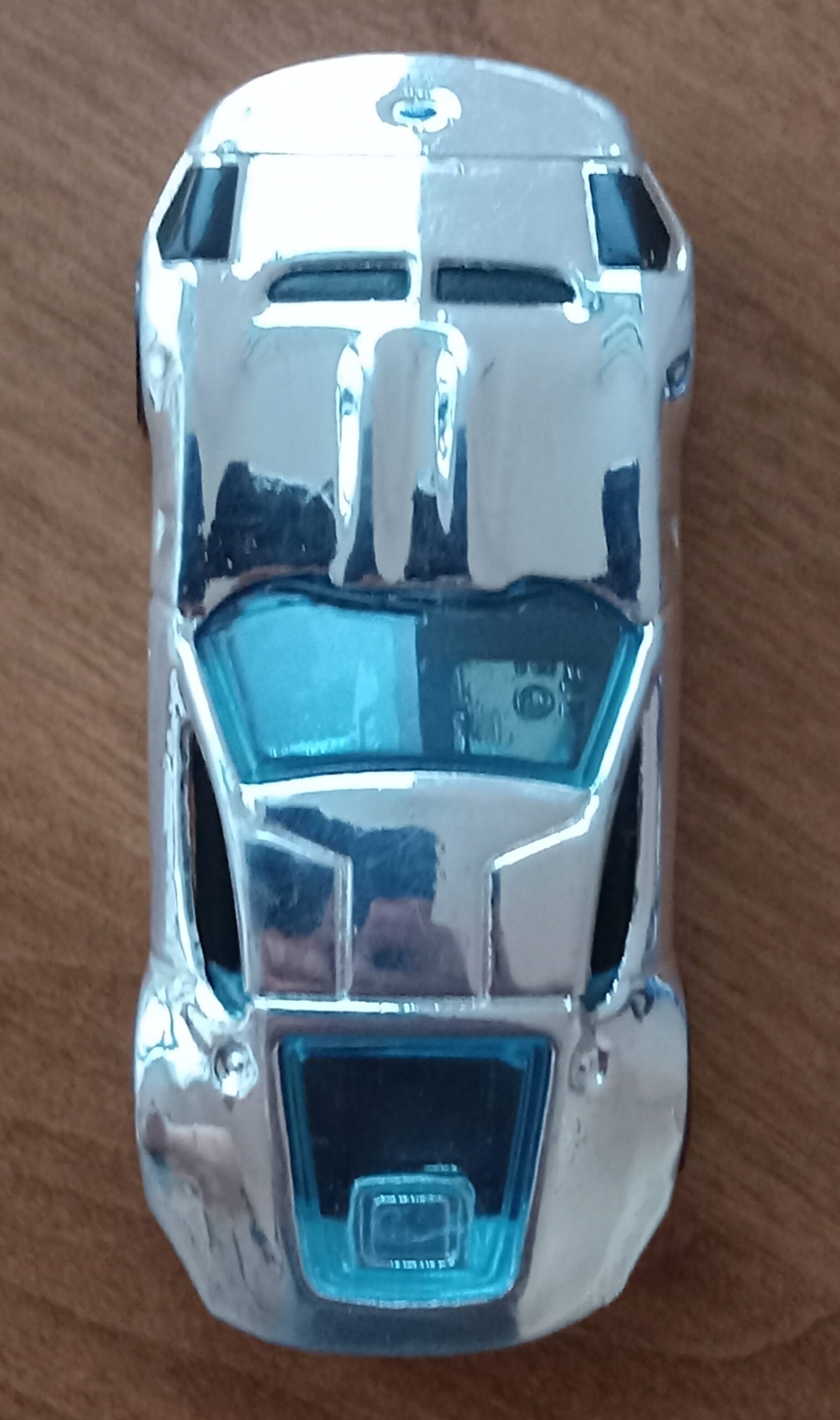
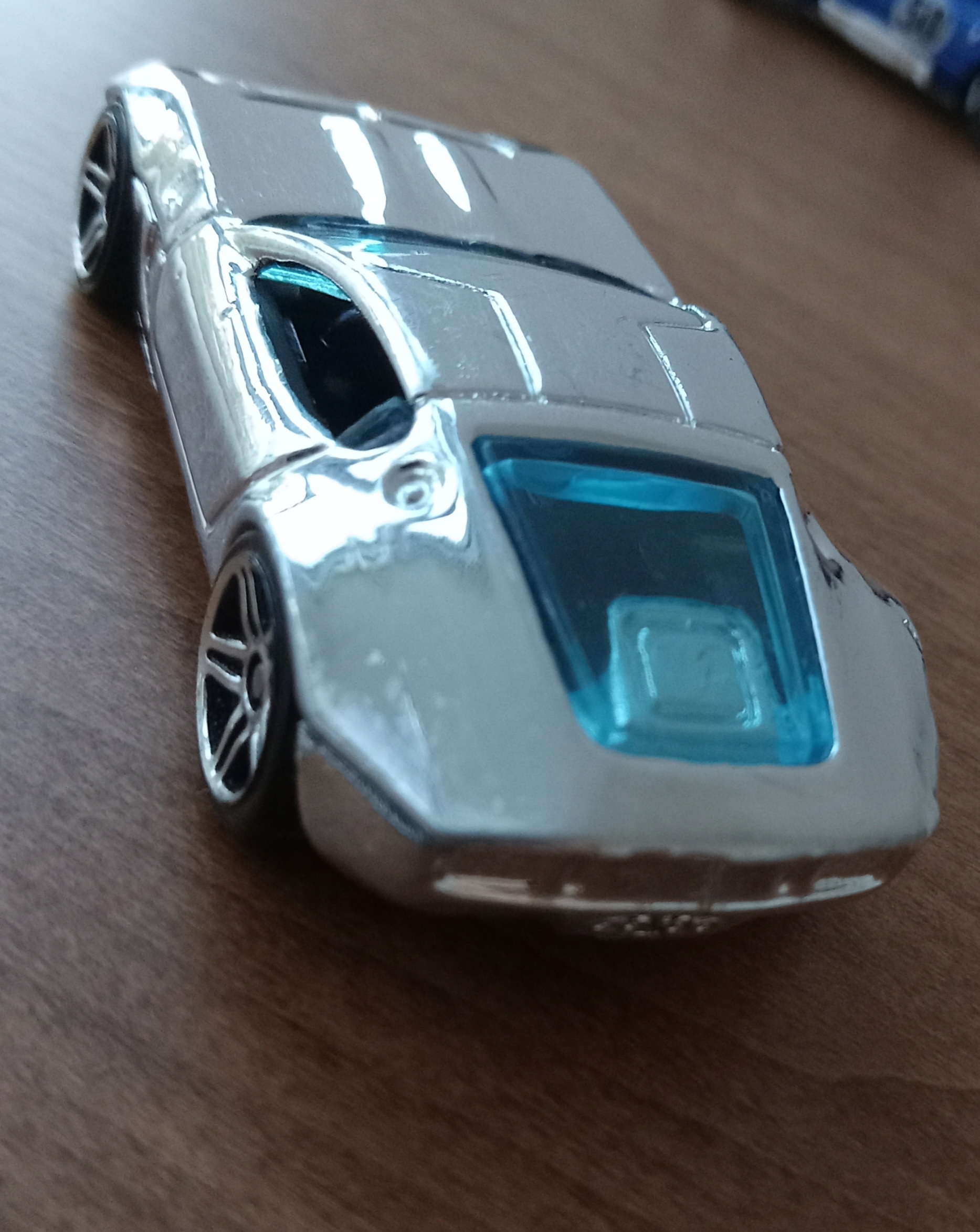
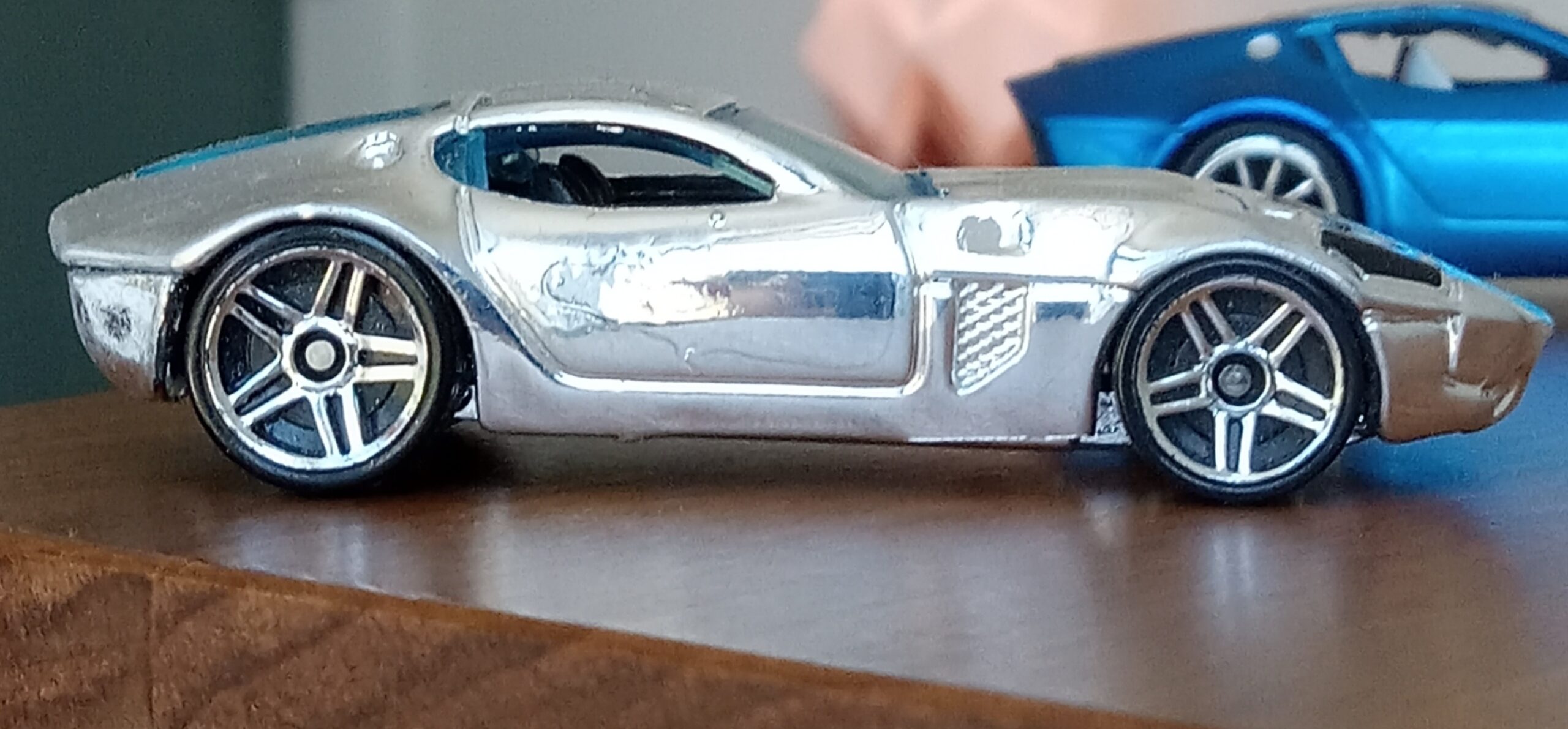
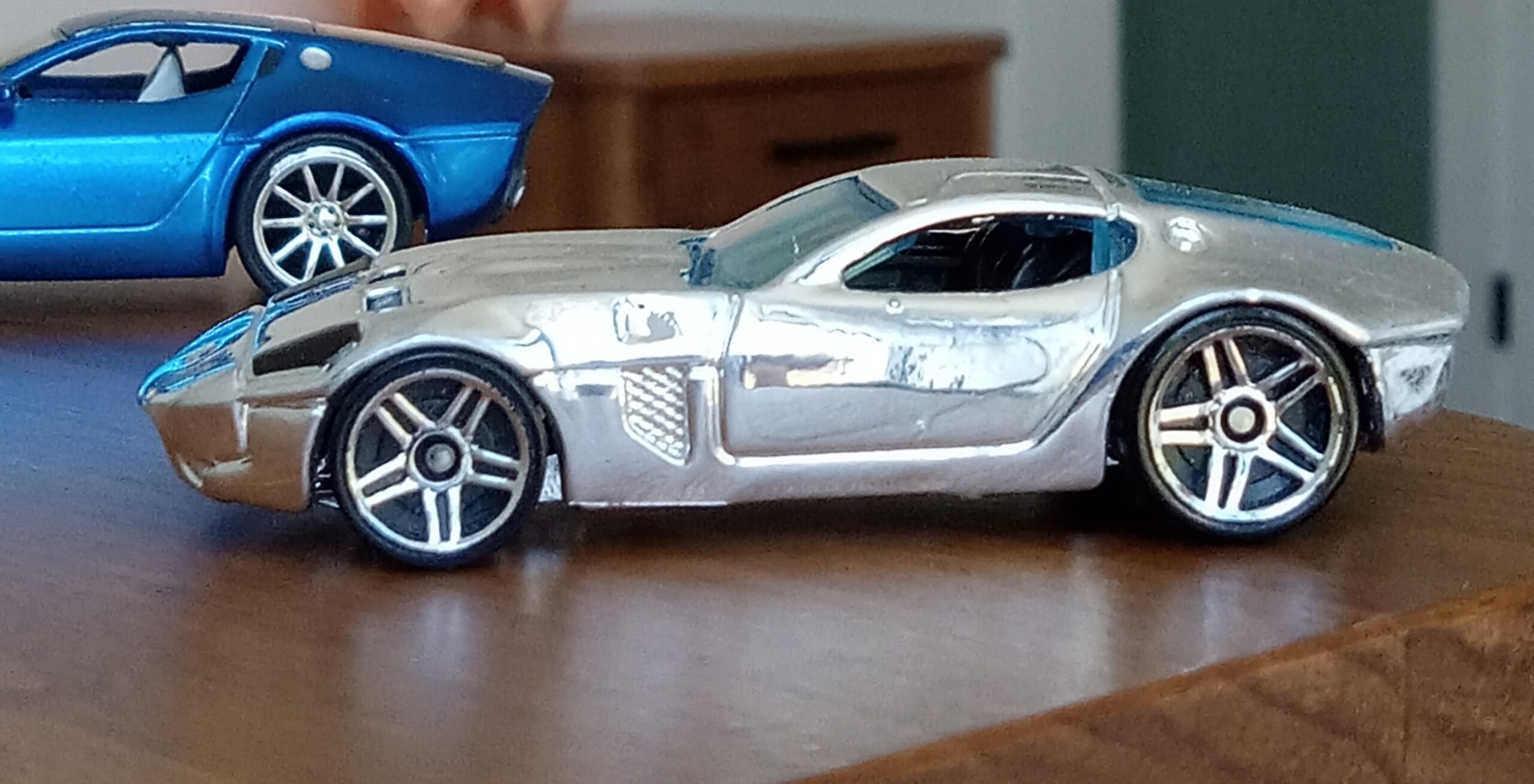
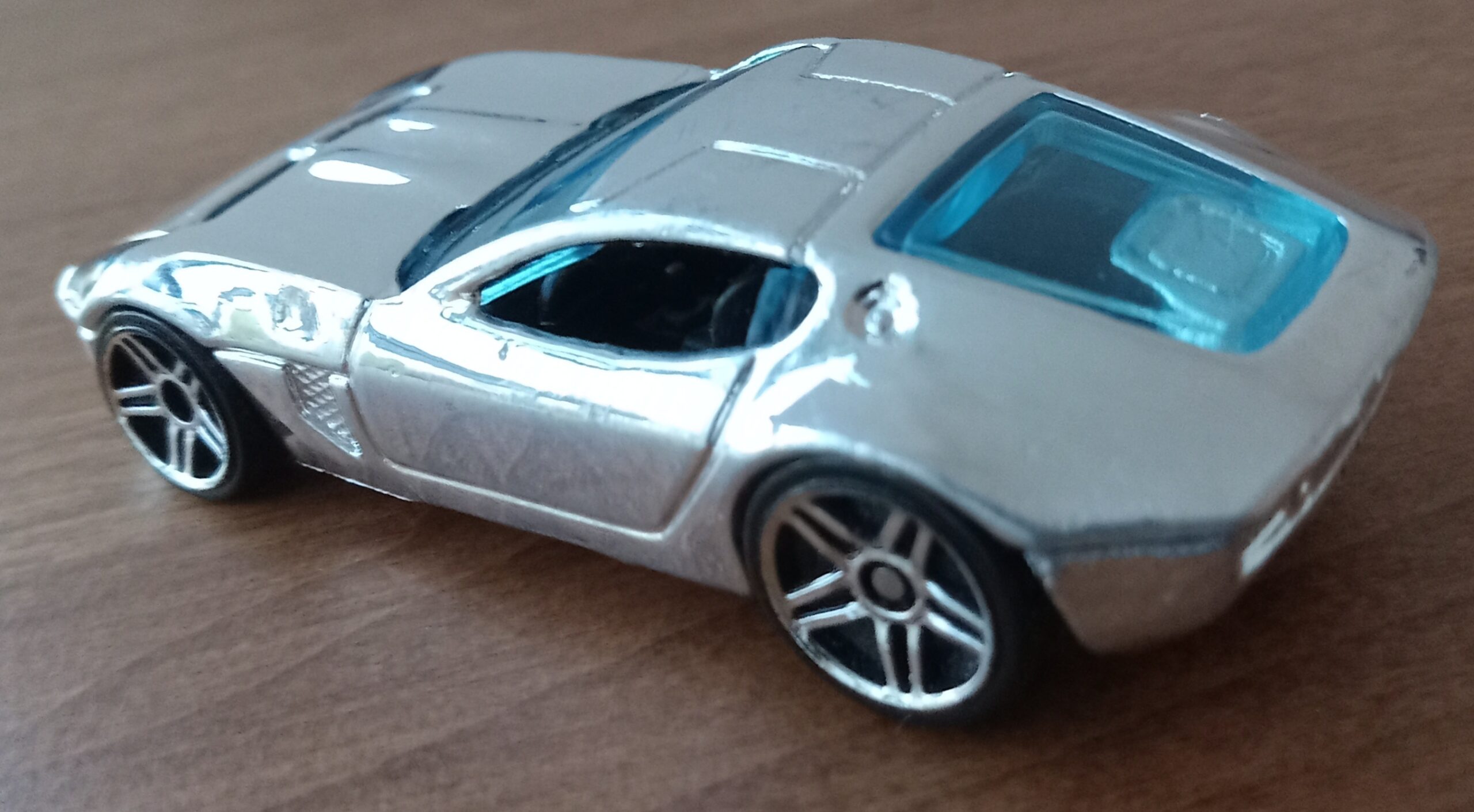
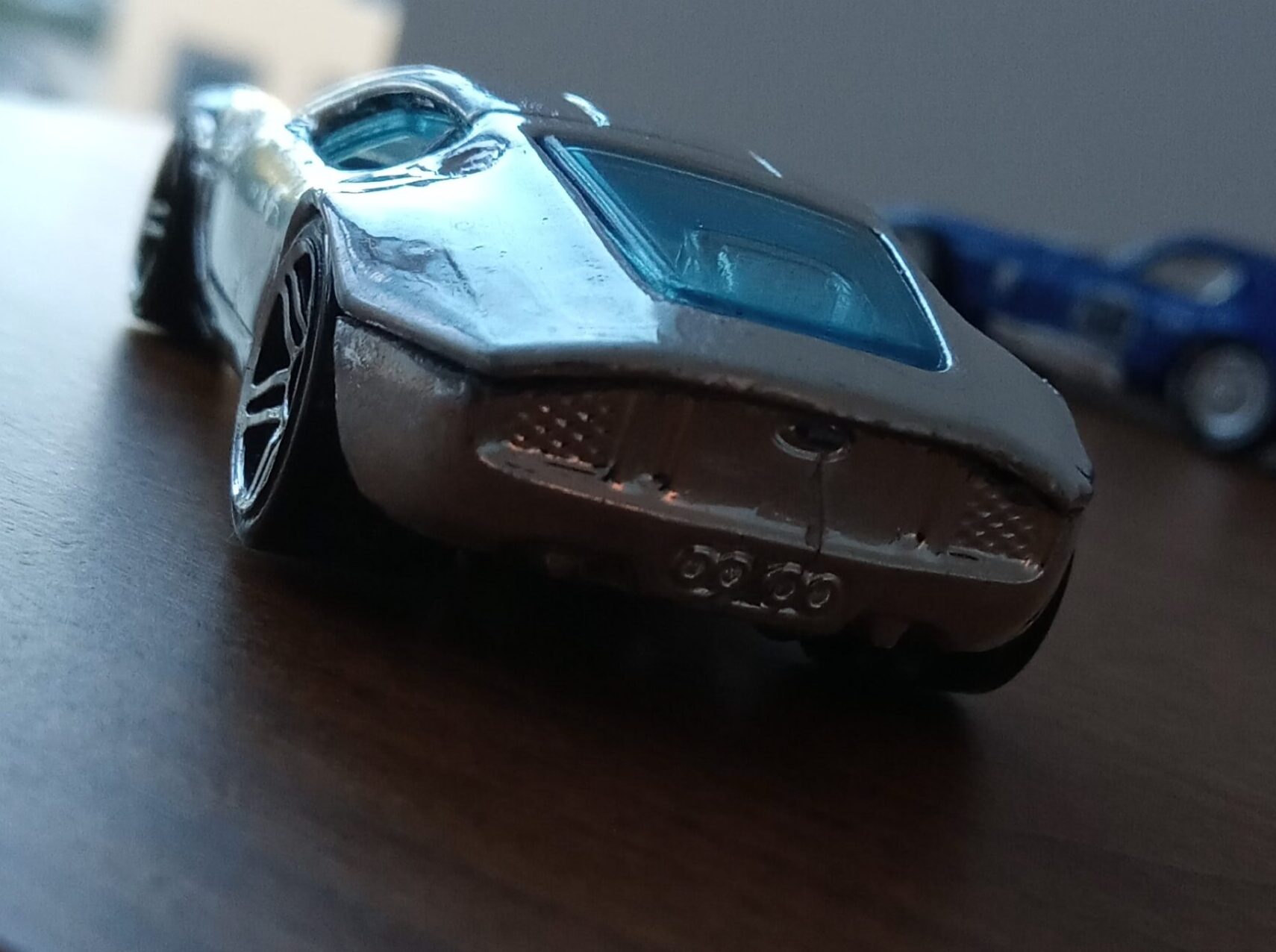
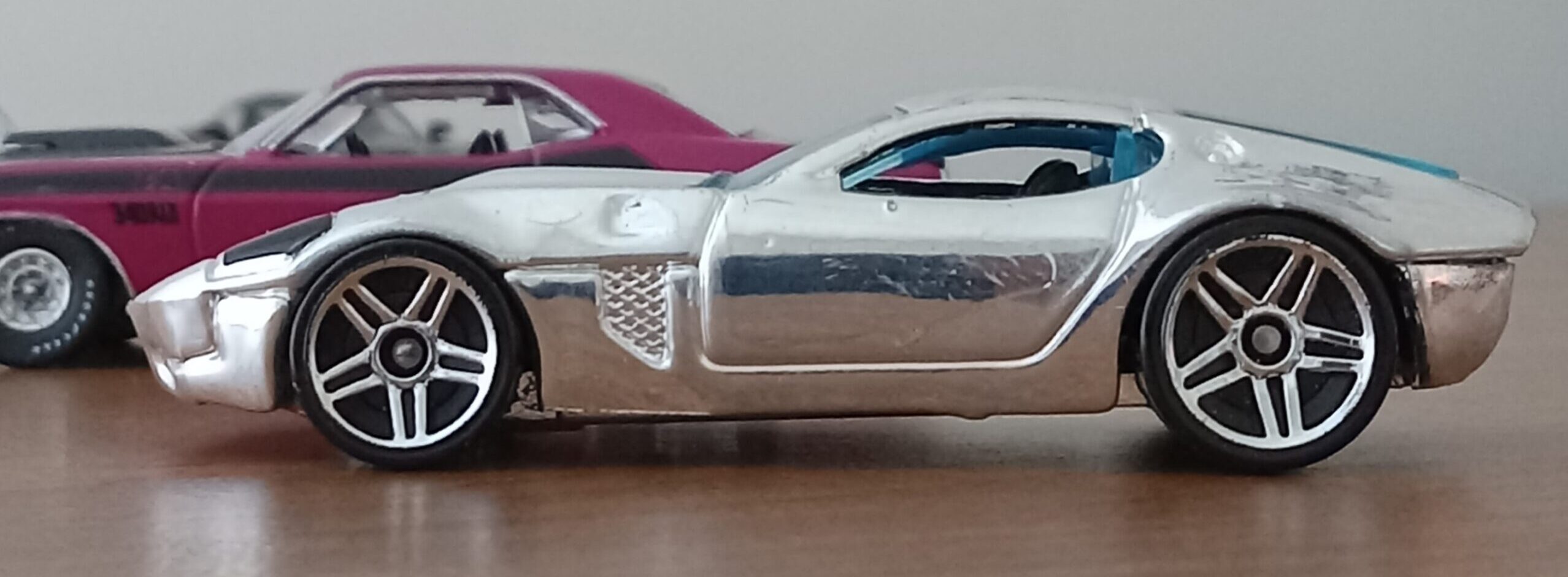
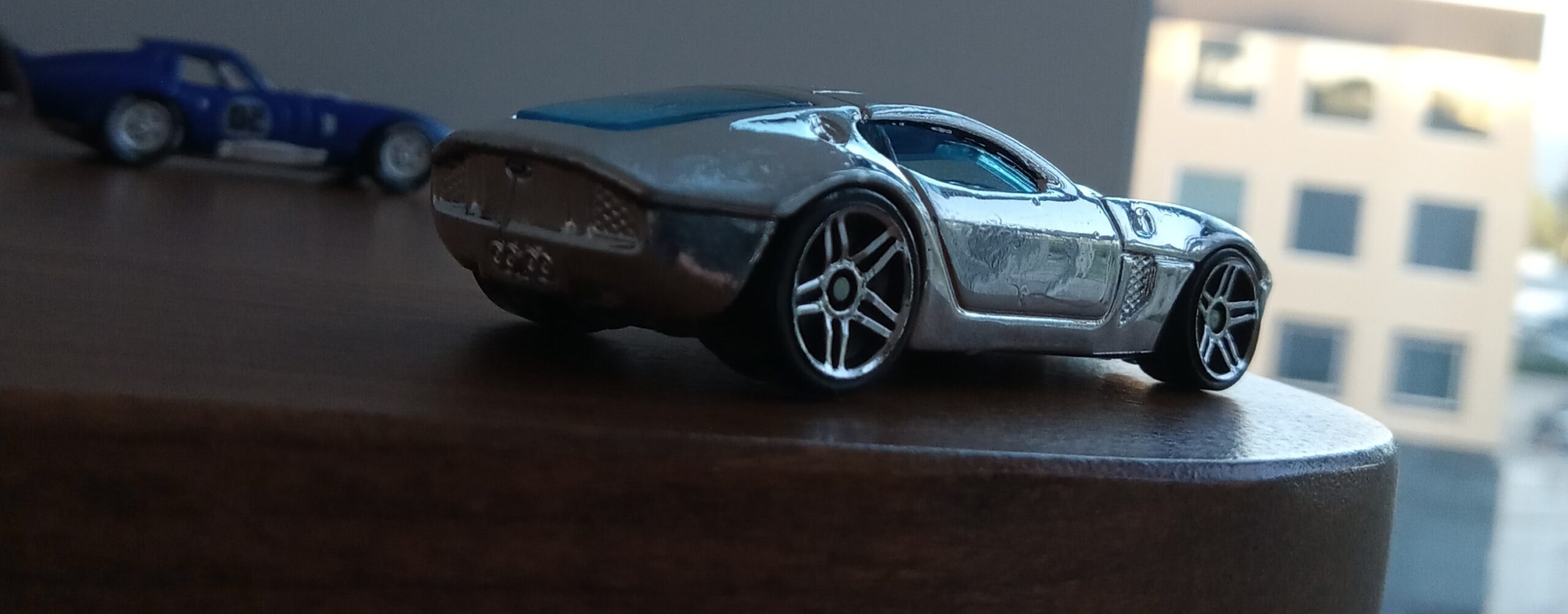
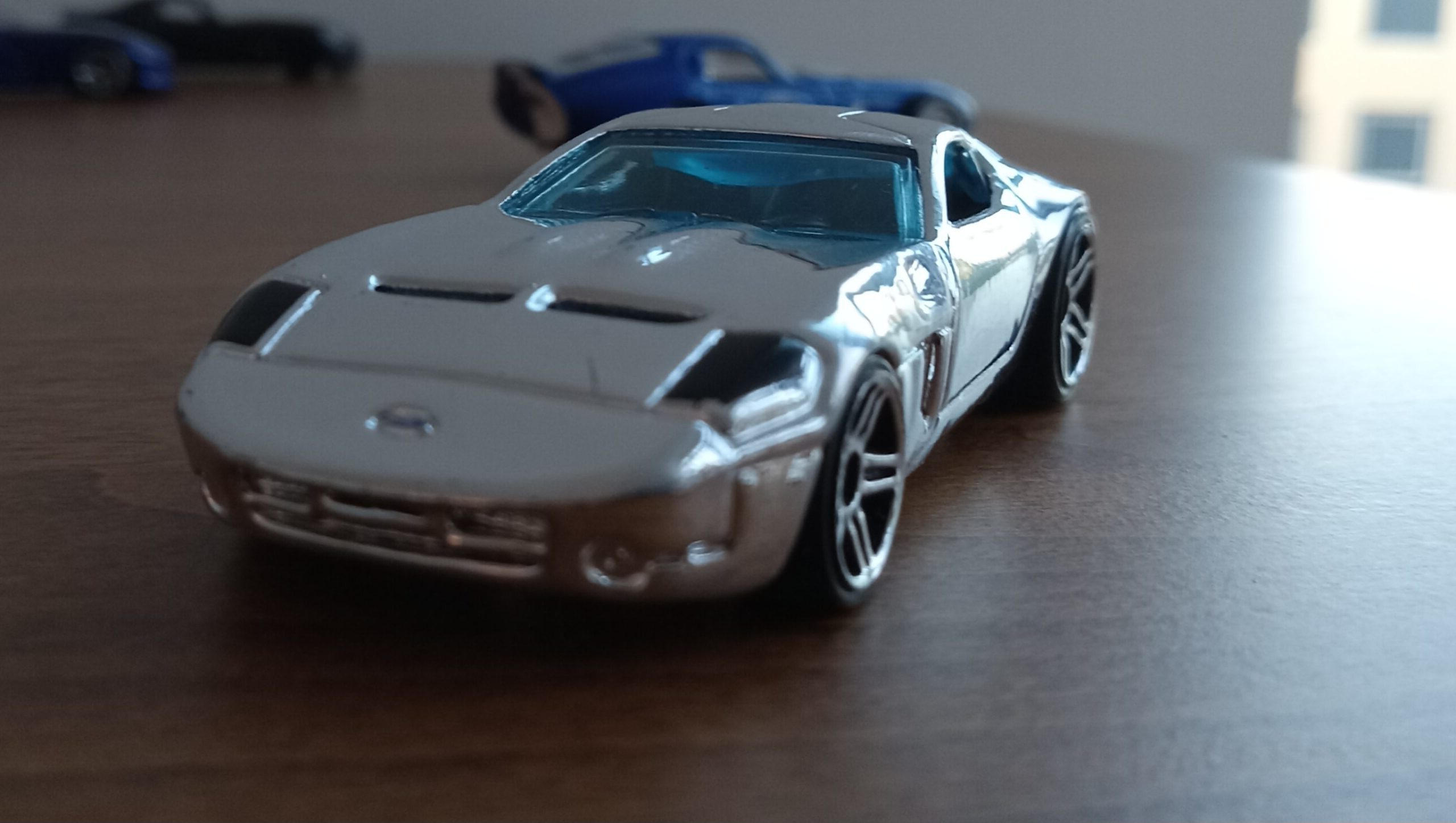
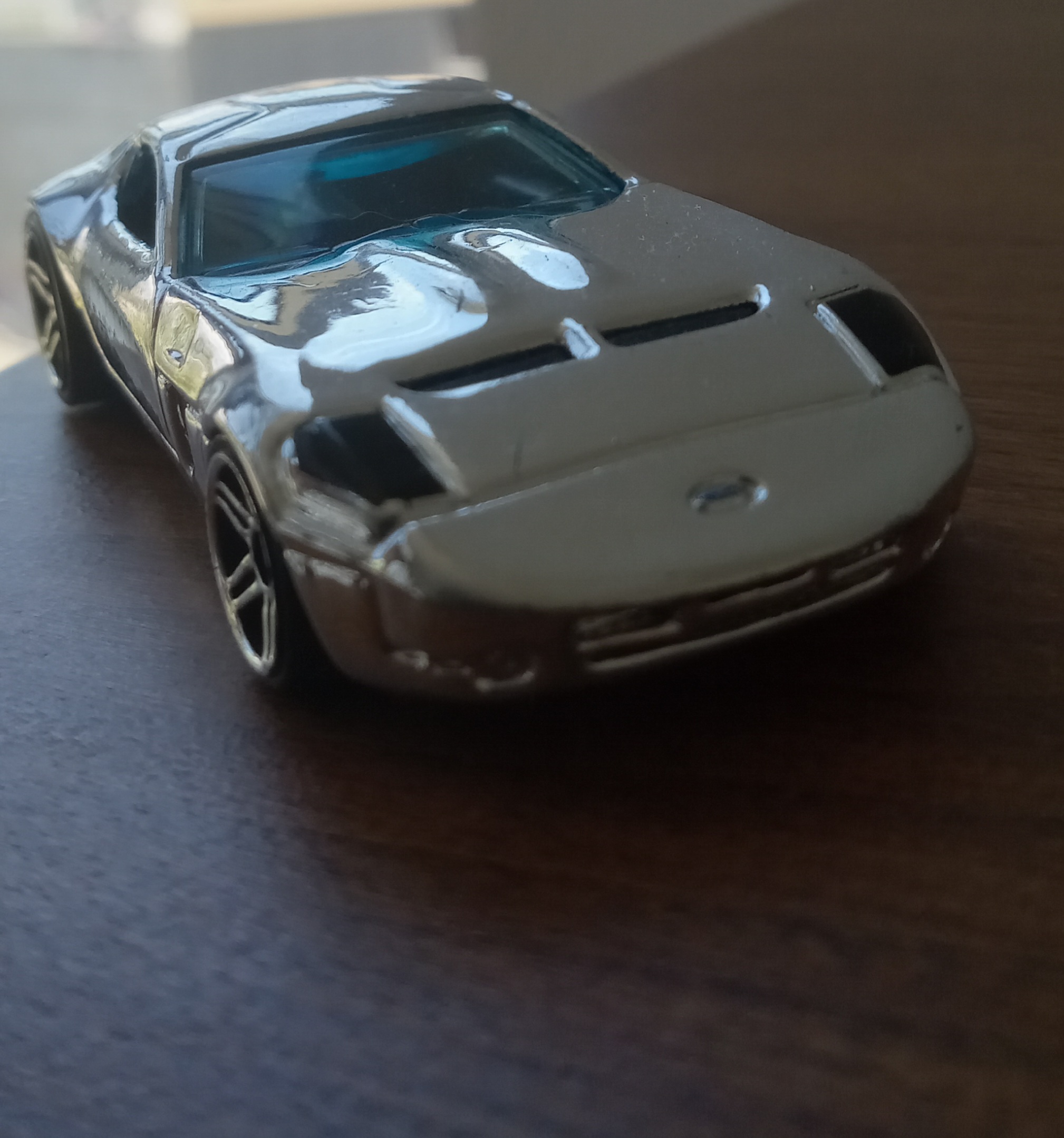
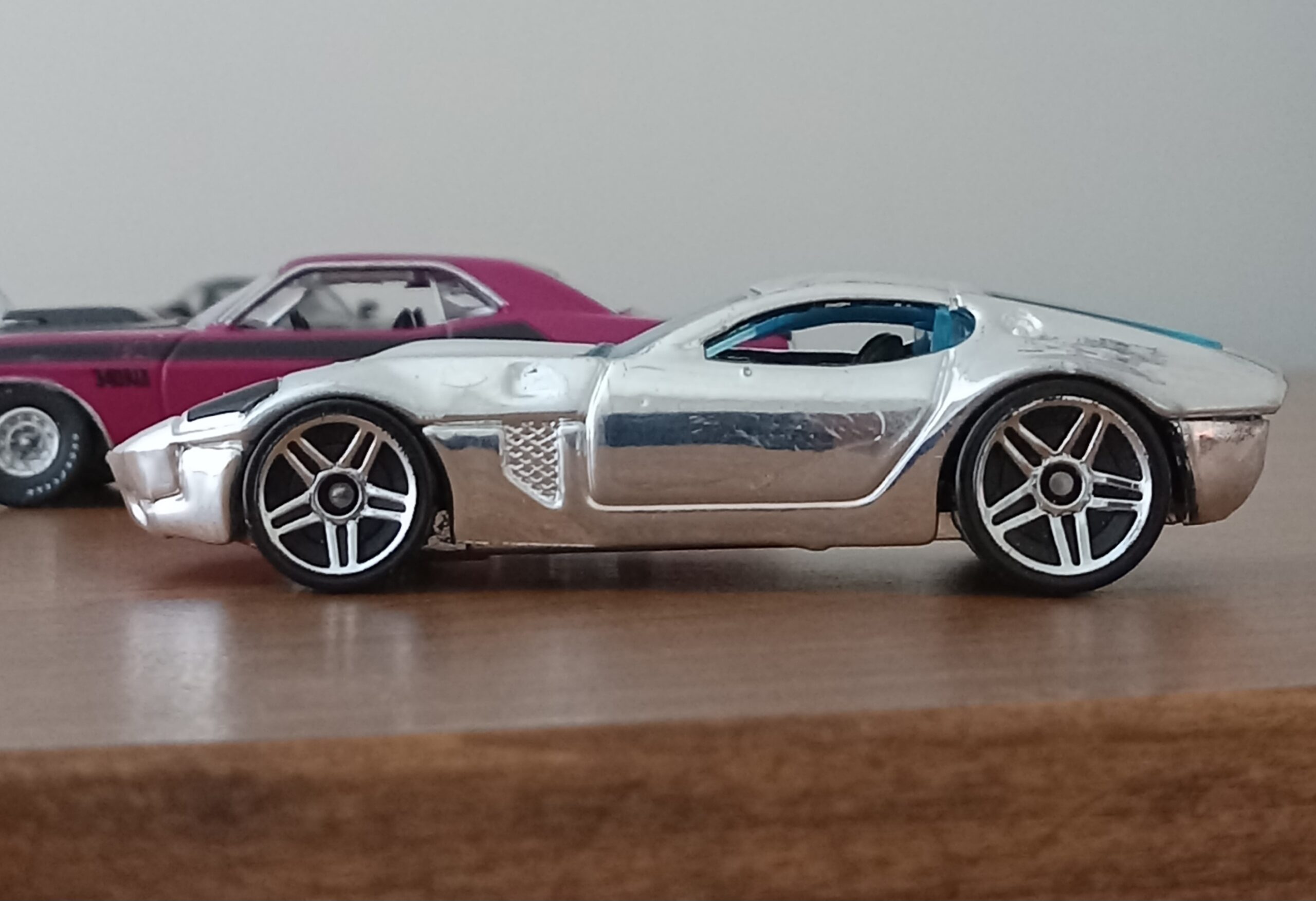
(写真撮影用ミニカー①:マテル社製、ホットホイール通常品、フォード・シェルビーGR-1 コンセプト, 2004【クローム】---改造箇所: カシメ止めを外し、シャーシ部分を大幅に薄くカット、リアバンパー部分の上下幅を現物合わせで、注意深く大幅にカット、車軸位置を出来る限り上げ、車高を最低に調整)
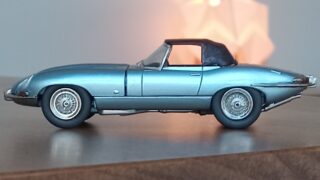
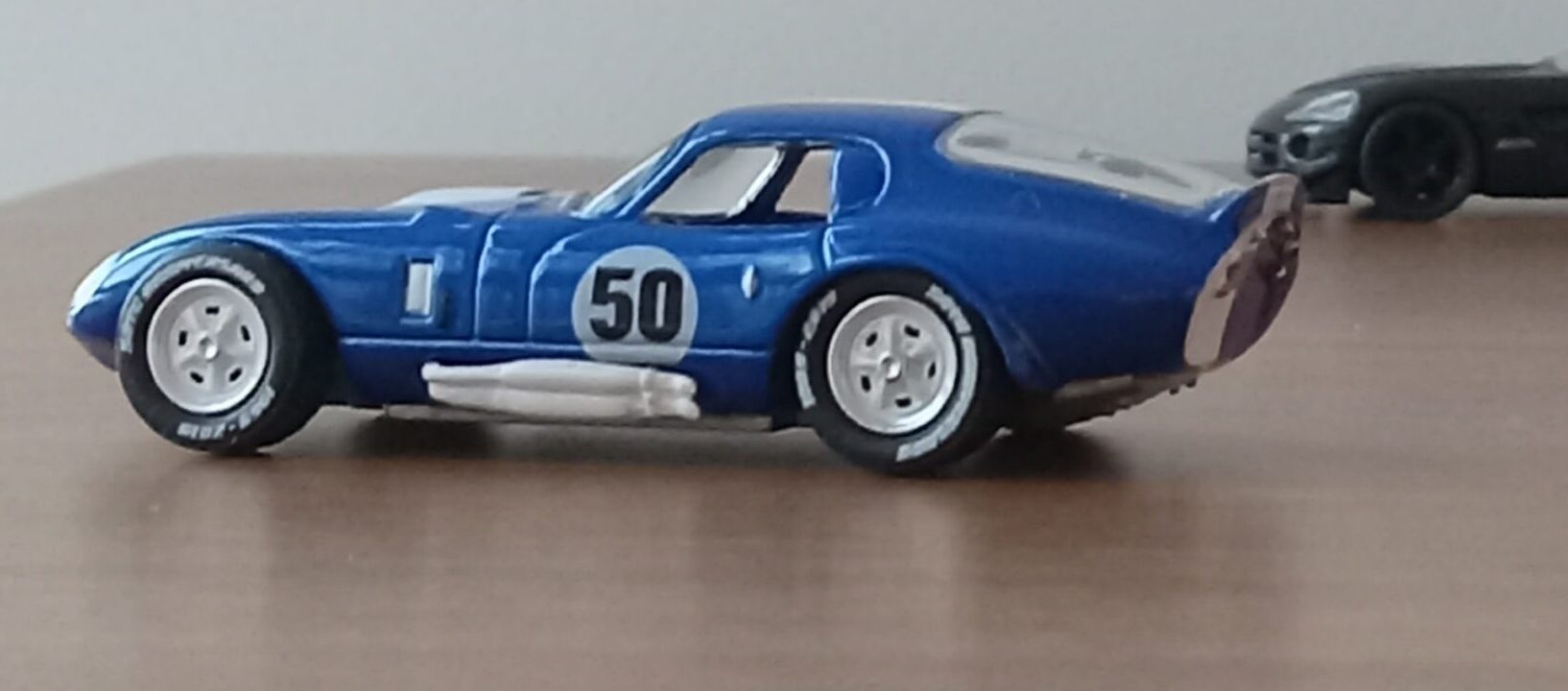
(ミニカー②:ジョニー・ライトニング社製、1/64 ダイキャスト完成品、フォード・シェルビー・コブラデイトナクーペ【レーシング・ブルー】----改造箇所:カシメ止めを外して、車高を低く調整』)
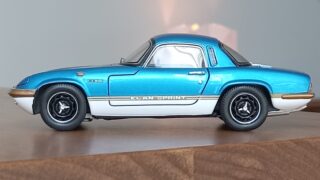
(ミニカー③:M2社製、1/64ダイキャスト完成品、ダッジ・チャレンジャー, 1970【プラム・ピンク】---改造箇所:車高微調整のみ)
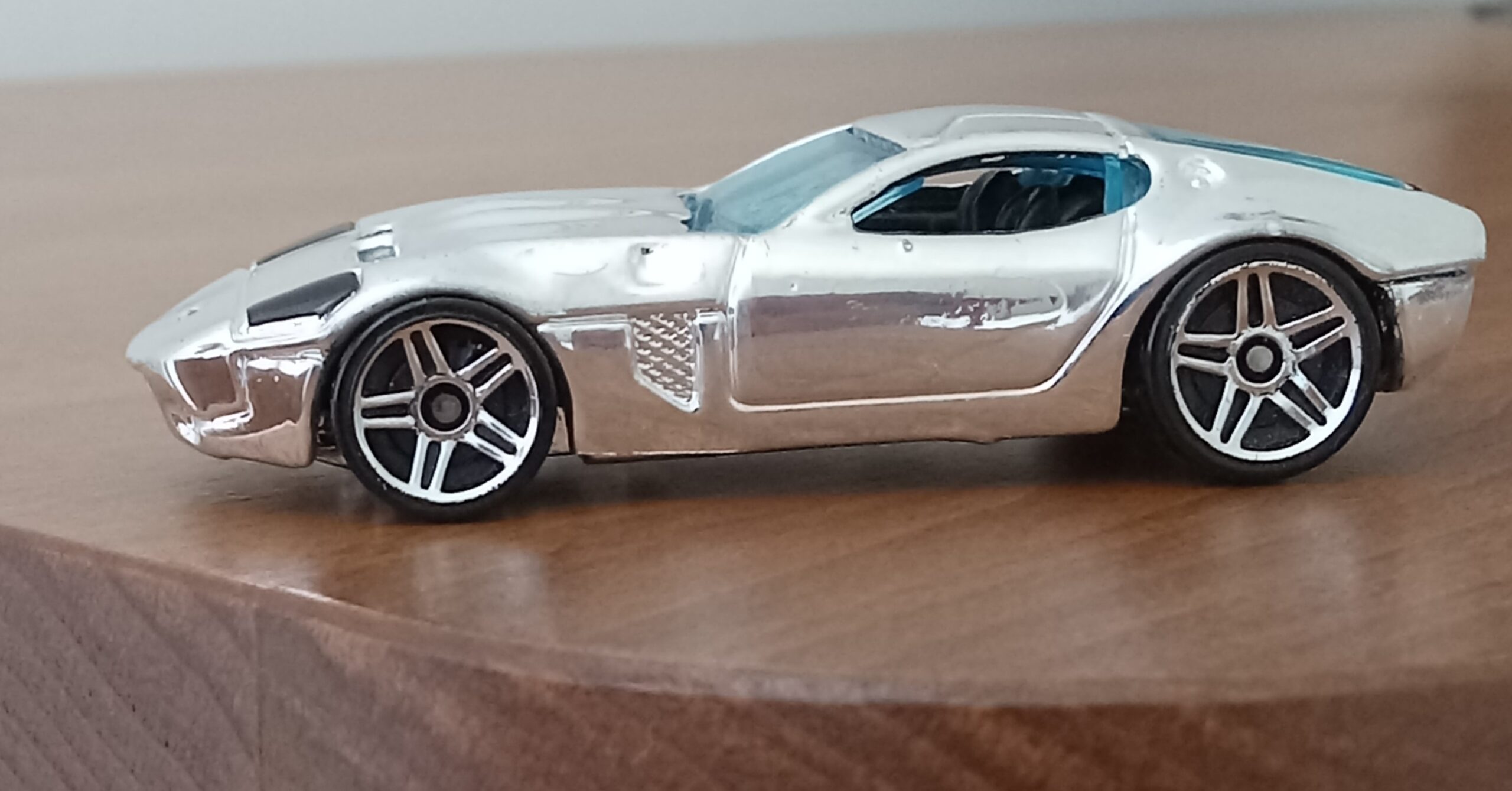
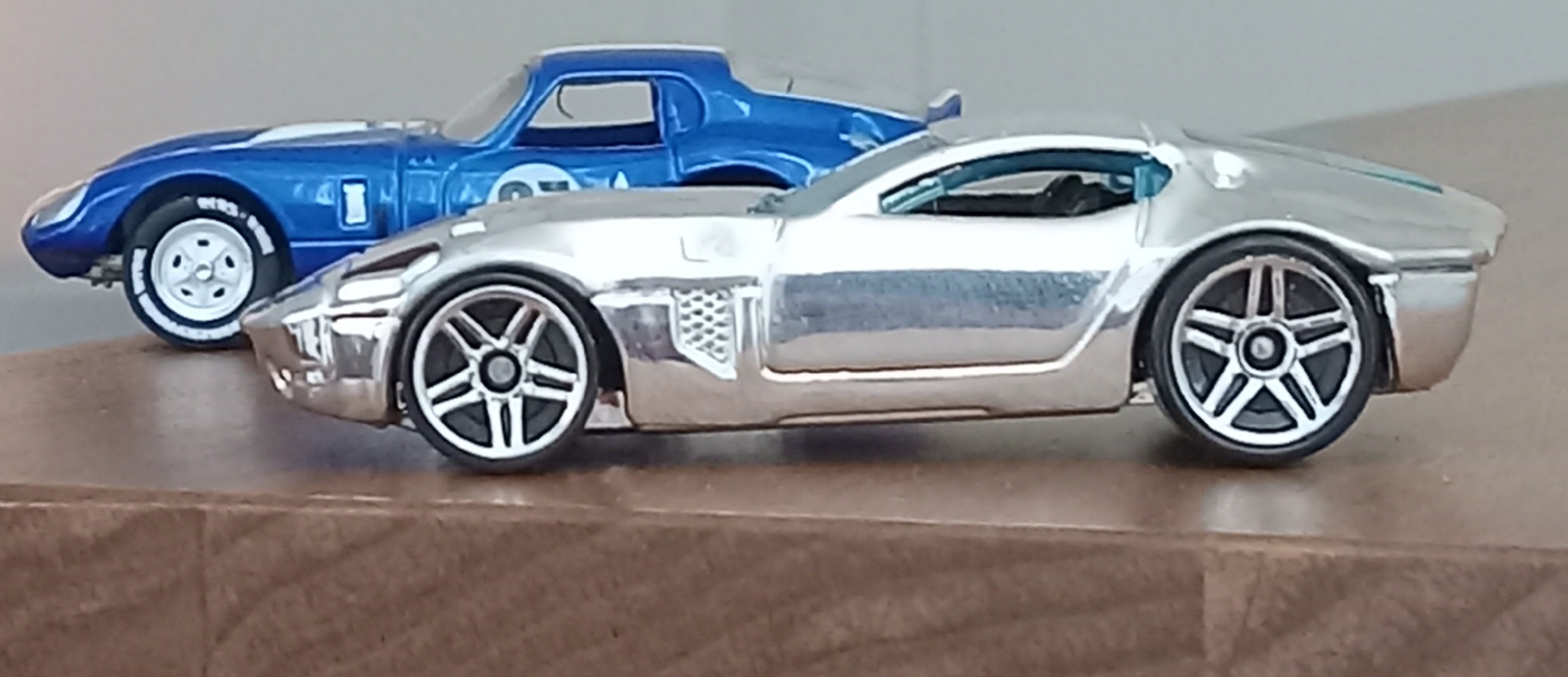
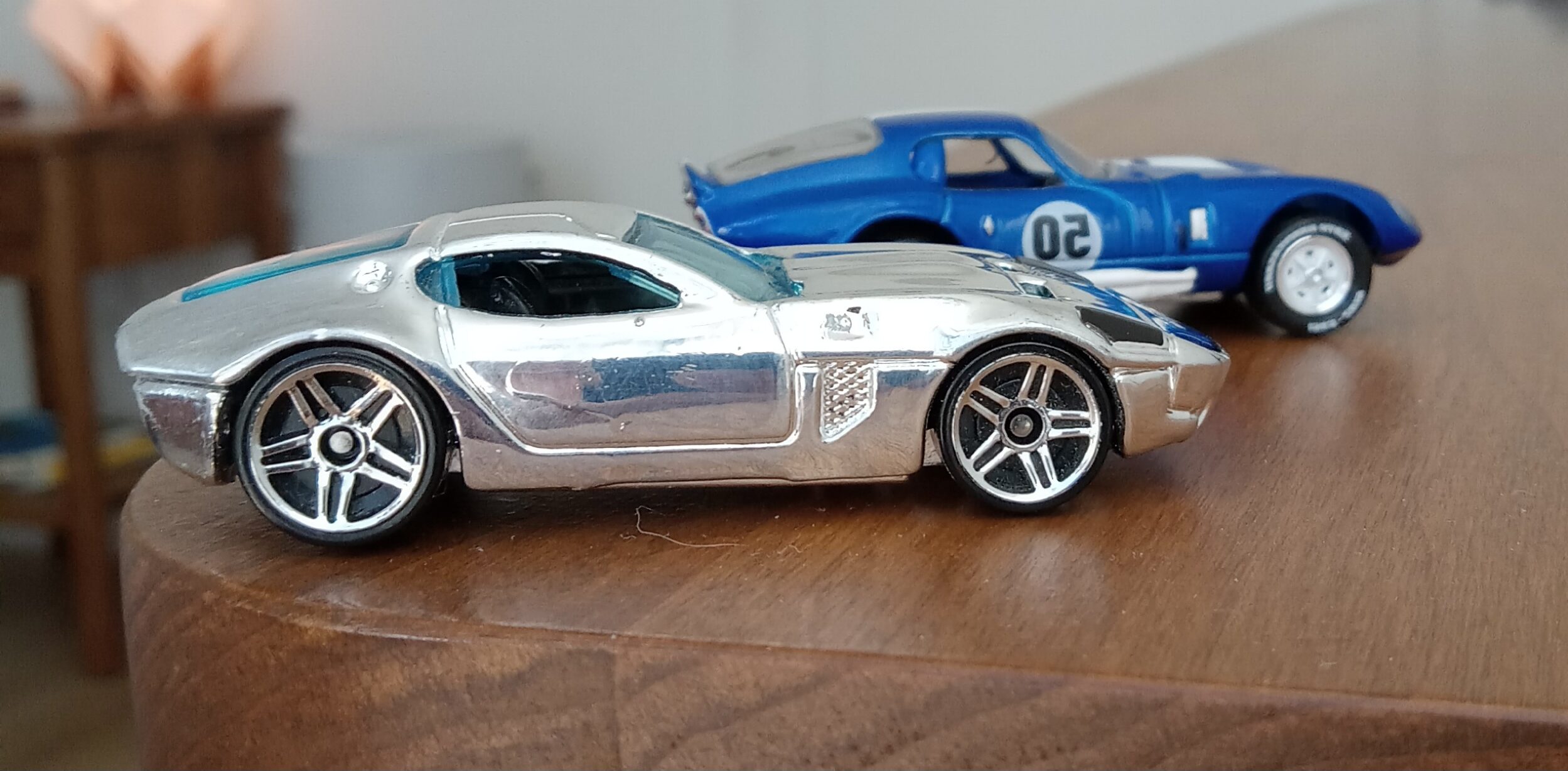
第45回ーー2ドア・クーペの系譜: 第25回【米国車編②】 フォード・シェルビーGR-1 コンセプト、2004(クローム) 『コブラ・デイトナ、復活の布石?』Ford Shelby GR-1 Concept『Cobra Daytona Coupe Revive!』
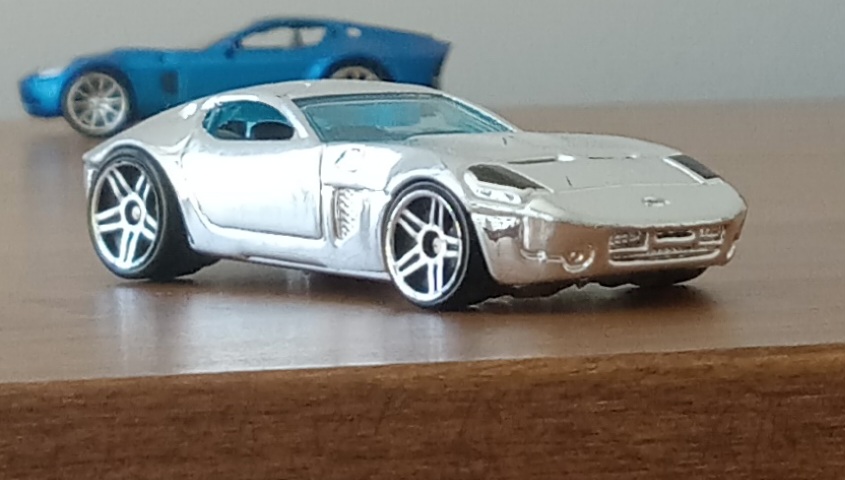
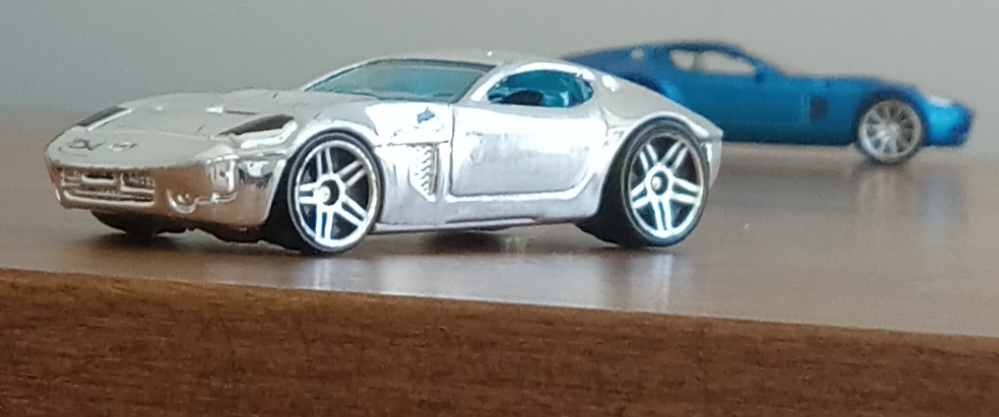
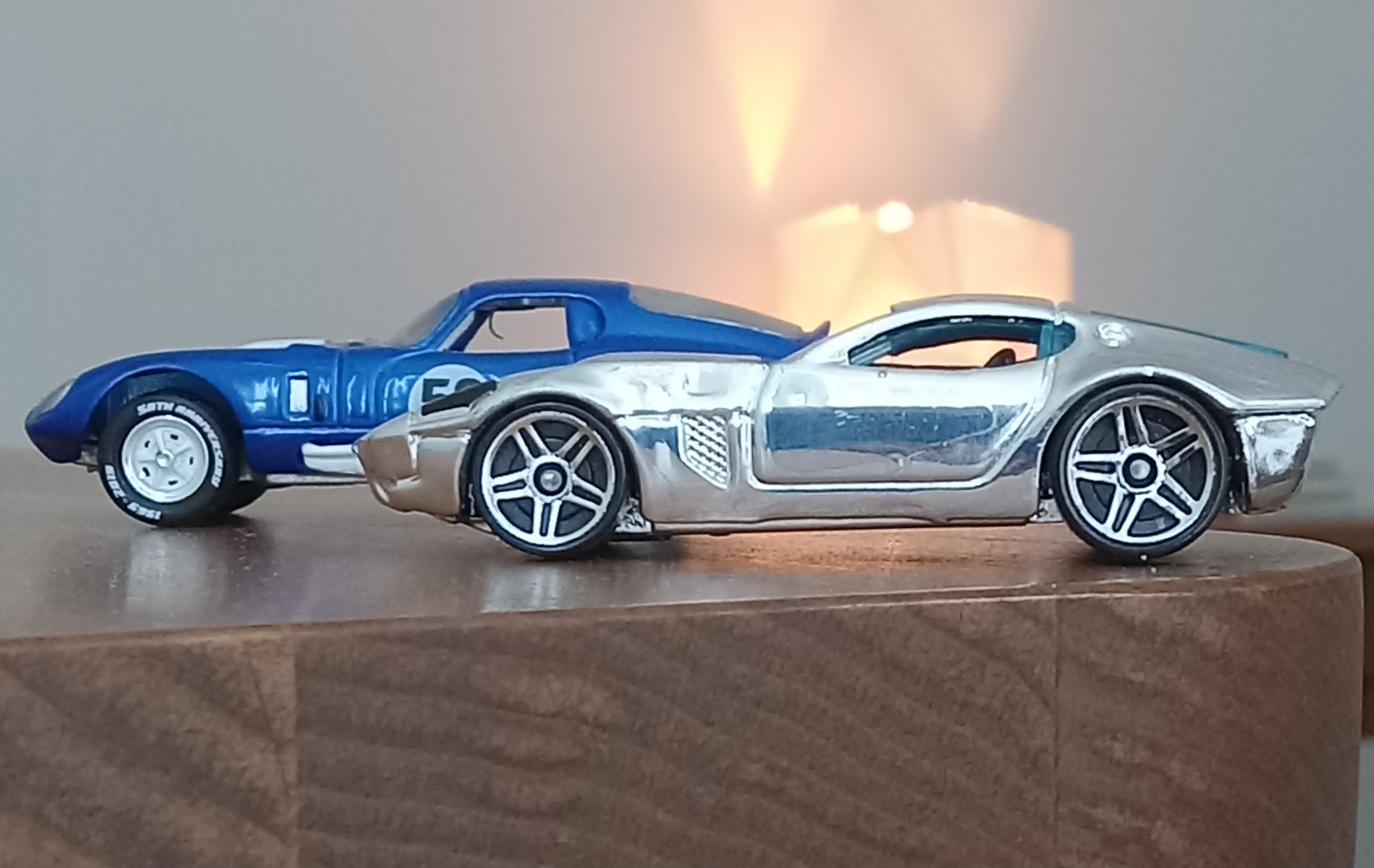
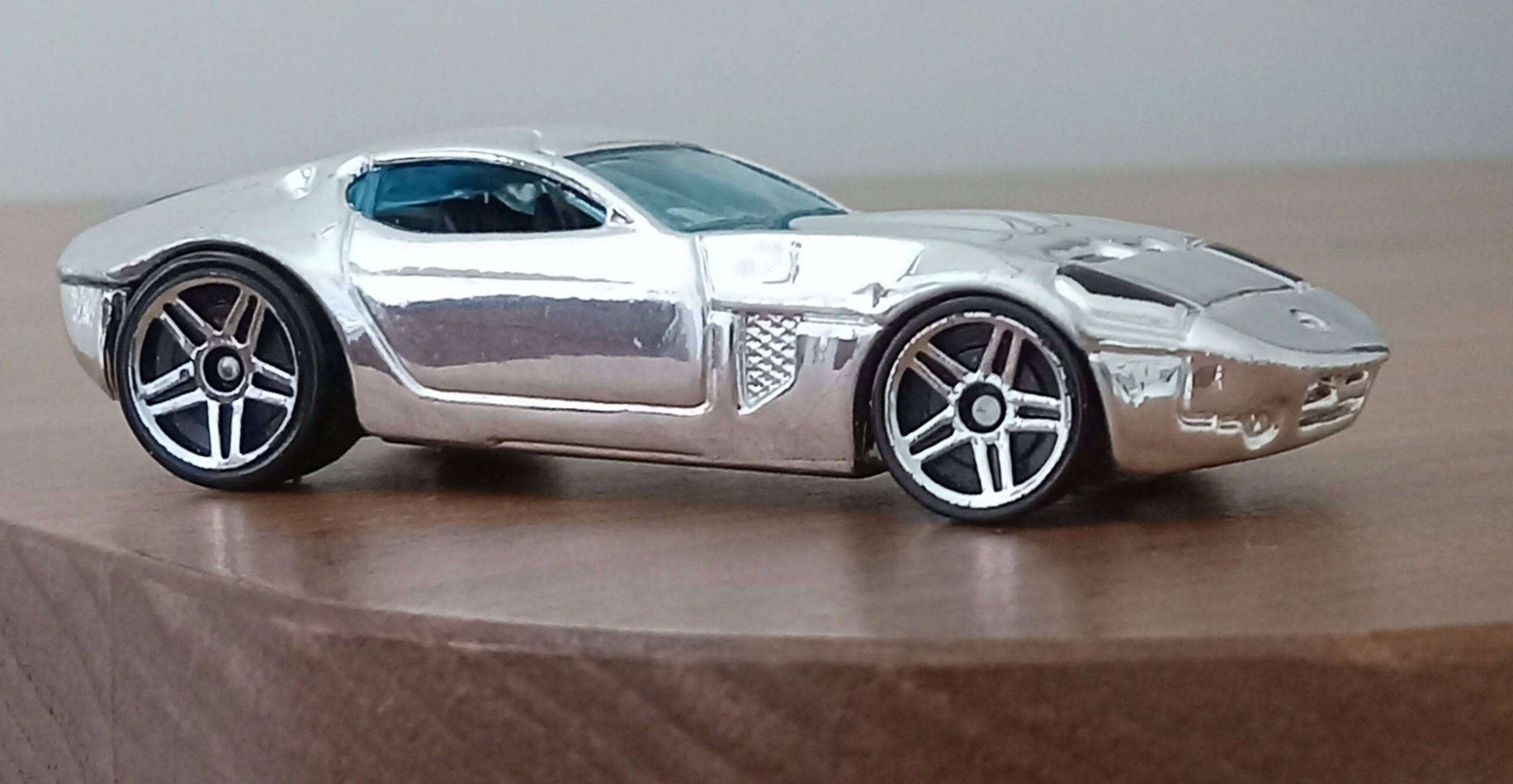
#好みの自動車デザインーー2ドア・クーペの系譜:
第45回目の今回は、『2ドアクーペの系譜、第25回』と題しまして、各国のお国柄や、外観デザインの個性が強く表れる、高級2ドア(GT)クーペ / ロードスターについてお話ししてみたいです。【注意:オープンカーを含む】
以下の要領で進めていきます。
第25回の今回はいよいよ
【米国車編②】としまして、
2004年発表の
フォード・シェルビーGR-1 コンセプト(クローム)
についてのお話です。
【2ドア・クーペの系譜:目次】
【米国車編】
第1回:キャデラック・エルミラージュ、2013(メタリック・レッド)
第2回:リンカーン・コンチネンタル MK4、1972(ブラック)
第3回:マーキュリー・クーガー, 1967(LTメタリック・グリーン)
【ドイツ車編】
第4回:MB 500K スペシャル・ロードスター、1936(ブラック)
第5回:MB 300SL ロードスター、1957(シルバー)
第6回:MB SLS AMR ガルウイング、2010(ブラック)
【英国車編】
第7回:マクラーレン・F1、1992(メタリック・オレンジ)
第8回:ジャガー・XKSS ロードスター、1957(ロイヤル・ブルー)
第9回:ジャガー XKR クーペ、1996(ダークメタリック・グリーン)
【日本車・ニッサン編】
第10回:ニッサン 初代シルビア、1965(シャンペン・ゴールド)
第11回:ニッサン 5代目シルビア、1988(LTメタリック・グリーン)
【イタリア車編】
第12回:フェラーリ 250TR ポンツーンフェンダー、1958(赤)
第13回:フェラーリ 250GTO、1962(イタリアン・レッド)
第14回:ランボルギーニ・コンセプトS、2005(パール・ホワイト)
【日本車・マツダ編】
第15回:マツダ コスモ・スポーツ、1968(レーシング・ホワイト)
第16回:マツダ ユーノス・コスモ、タイプ‐S(2トン:黒&グレー)
【フランス車編】
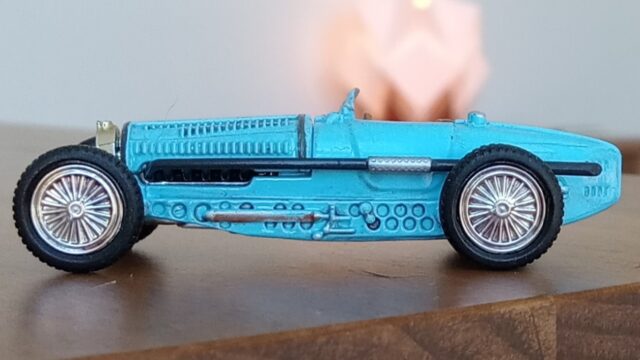
第17回:ブガッティ・タイプ59、1935(フレンチ・ブルー)
第18回:シトロエン・SM、1970(シャンペーン・ゴールド)
第19回:ブガッティ・ラ・ヴォワチュール・ノワール、2019(黒)
【日本車・トヨタ編】
第20回:トヨタ/ヤマハ・2000GT、1967(アイボリー・ホワイト)
第21回:トヨタ・2代目ソアラ、1986 (クリスタル・ホワイトⅡ)
第22回:レクサス LC500【GWZ100型】、2017(MT・レッド)
【米国車編②】
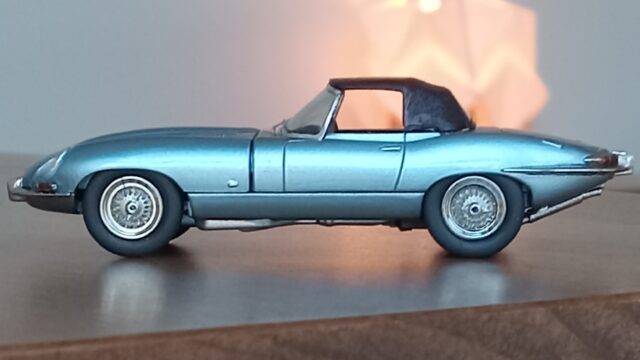
第23回:ダッジ・チャレンジャー、1970&プリムス・バラクーダ、1971
第24回:ダッジ・ヴァイパー SRT‐10 ACR、 2008(ブラック)
第25回:フォード・シェルビーGR-1 コンセプト、2004(クローム)
【日本車・ミツビシ編】
第26回:ミツビシ・ギャラン λ、1976(ブラウン・メタリック)
第27回:ミツビシ・エクリプス【北米仕様】、2006(オレンジ・メタ)
【ドイツ車編②】
第28回:BMW M635CSi、1984 (ダーク・メタリックブルー))
第29回:MB 560SEC AMG 6.0 ワイドボディー、1989(ブラック)
第30回:BMW M2 純正パフォーマンス・パーツ仕様、2025(ネオン・ライム)
第31回:初代アウディー・TT、1998(レイク・シルバー・メタリック)
【日本車・スバル編】
第32回:スバル・クロストレック XV, 2012(ライムグリーン・メタリック】
【英国車編②】
第33回:ロータス・初代エリート, 1959(ブリティシュ・グリーン)
第34回:ロータス・エラン S4 スプリント(2トン:ブルー、ホワイト&金)
第35回:ジャガー・Eタイプ ロードスター(ライトブルー・メタリック)
【日本車:ホンダ(軽量スポーツ編)】
第36回:ホンダ S800、1966(レッド)
第37回:ホンダ 初代CR-X 1.5i、1983(ブルー&シルバー2トン)
第38回:ホンダ ビート、1991(サンバ・イエロー)
【番外編】:コルベットの系譜
第1回:1967年型 スティングレー【C2】コンバーチブル(ハードトップ・メタ青)
第2回:1972年型 コルベット 【C3】コンバーチブル(メタリック・ブルー)
第3回:1984年型 コルベット クーペ【C4】(ブライト・レッド)
第4回:コルベット・インディー【ミッド・シップの先行開発車】(シルバー)
第5回:スティングレー・コンセプト【先行開発車】、2009(プルー・メタリック)
#シェルビー・デイトナクーペの復活?
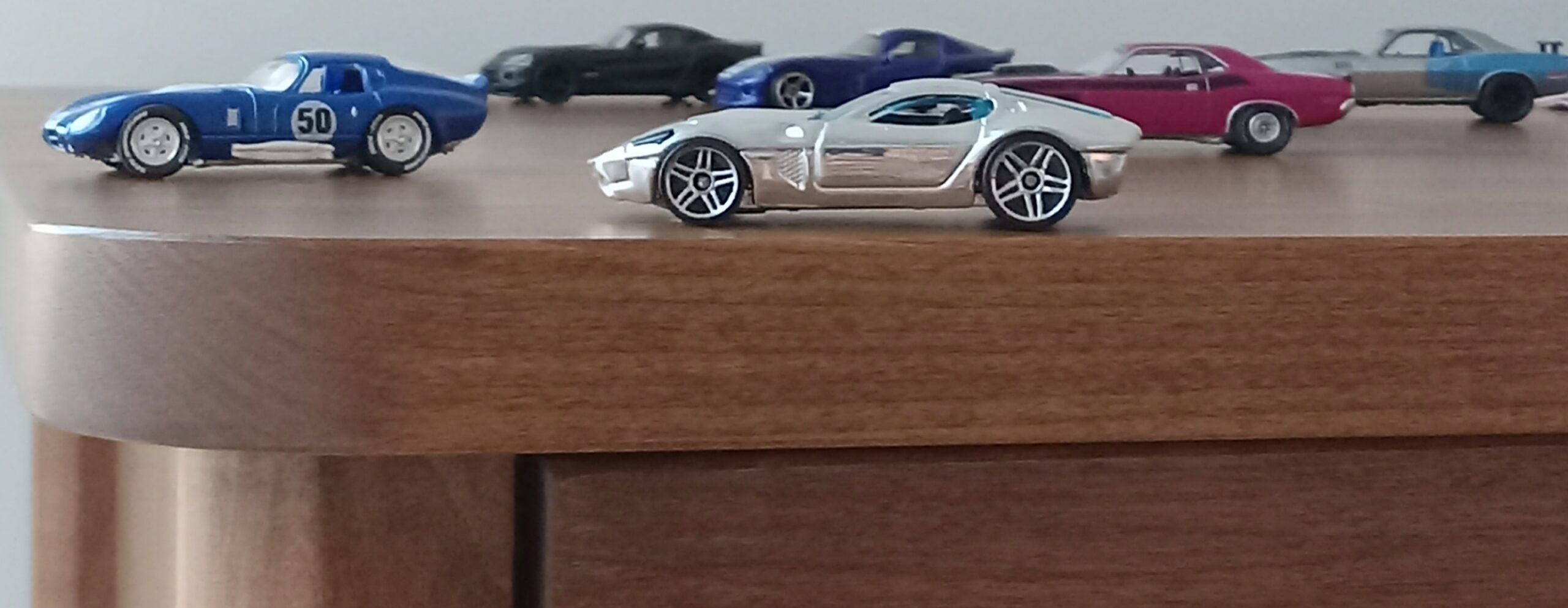
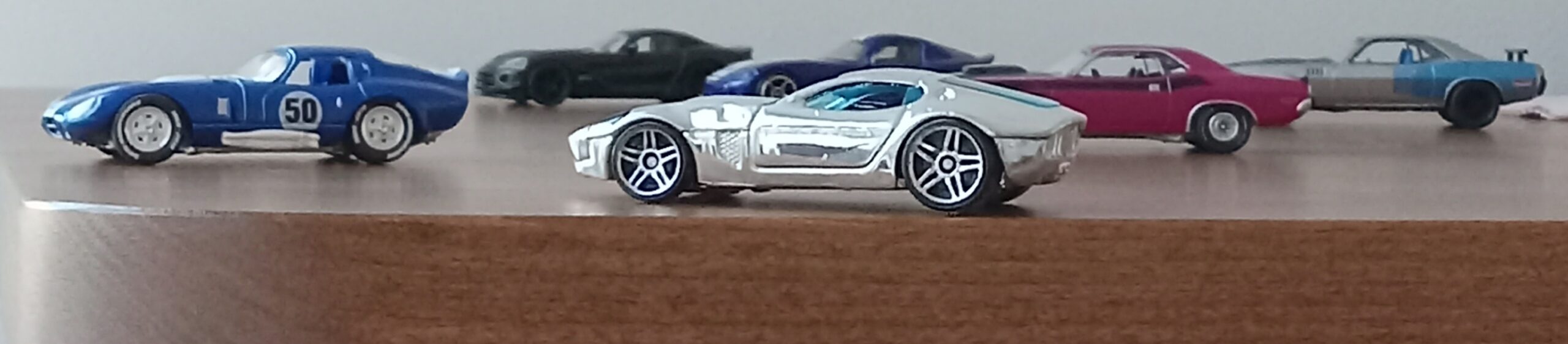
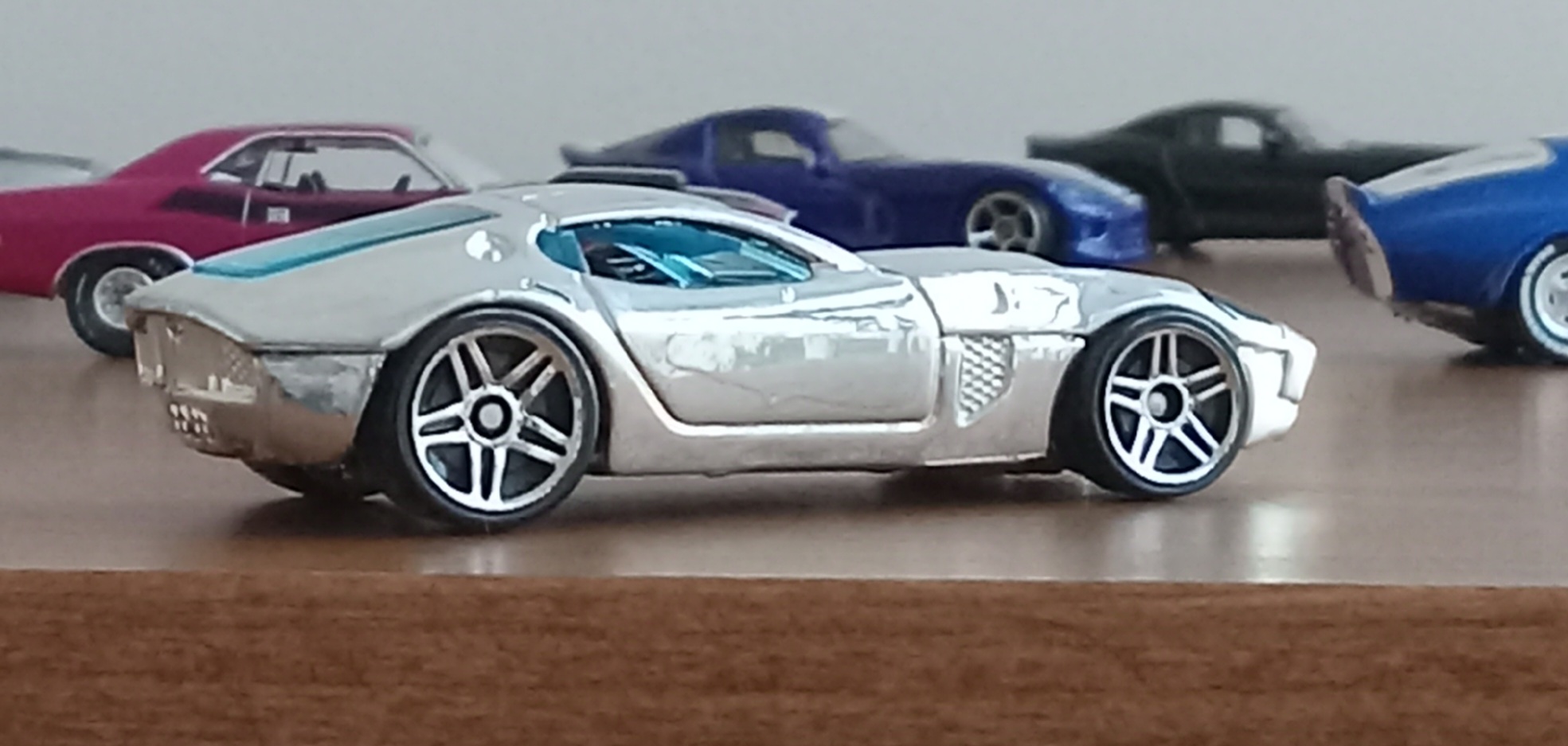
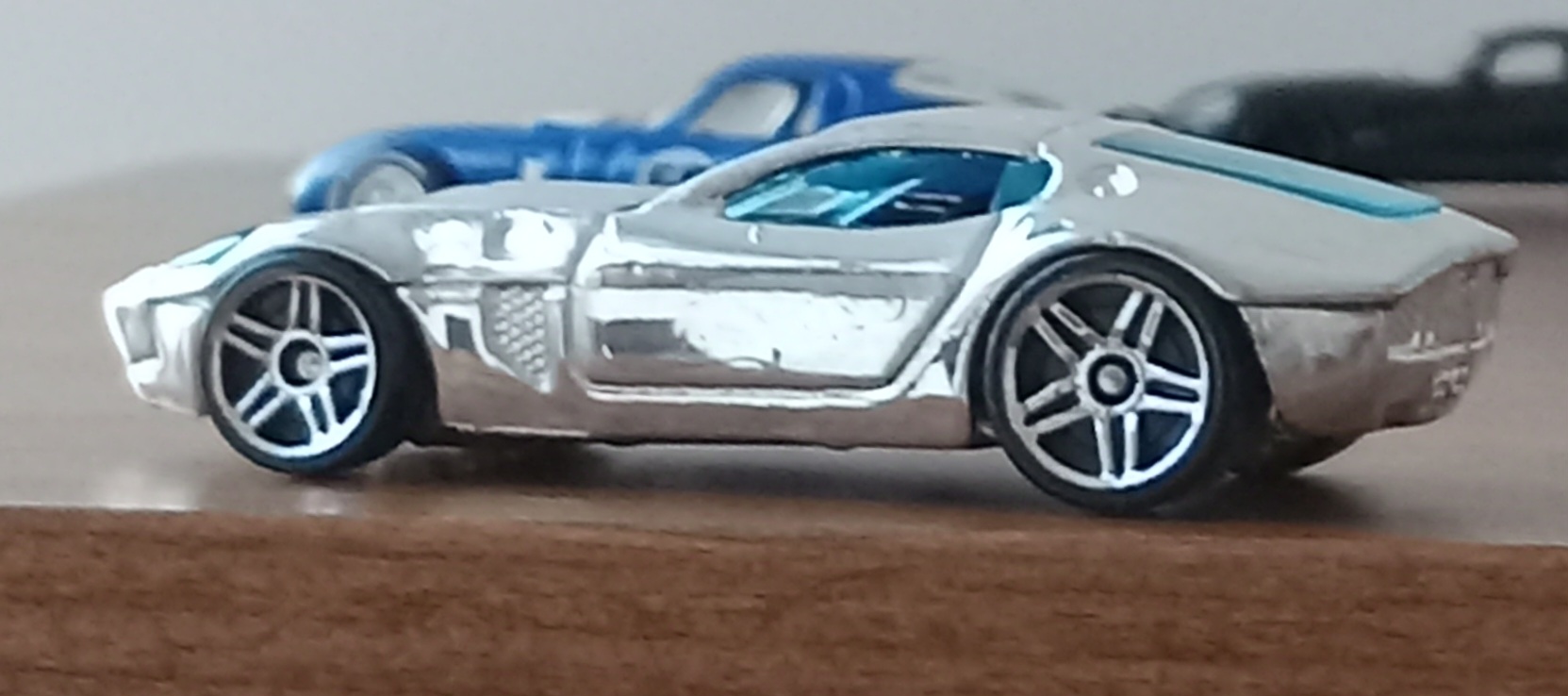
かねてより、『シェルビー・デイトナクーペ』の
『武骨でアメリカン』な
『コーダトロンカ・テール』
のデザインが大好きだったこともあり、
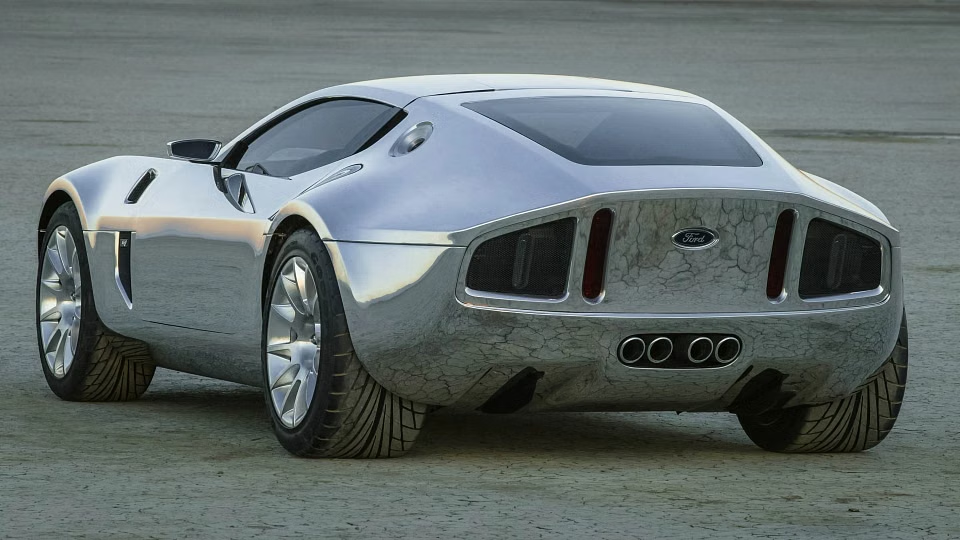 初めてフォード・シェルビーGR-1のテール部分の写真を見た時、
『一目ぼれ状態』
に陥り、
それ以来適当な模型やミニカーを探していました。
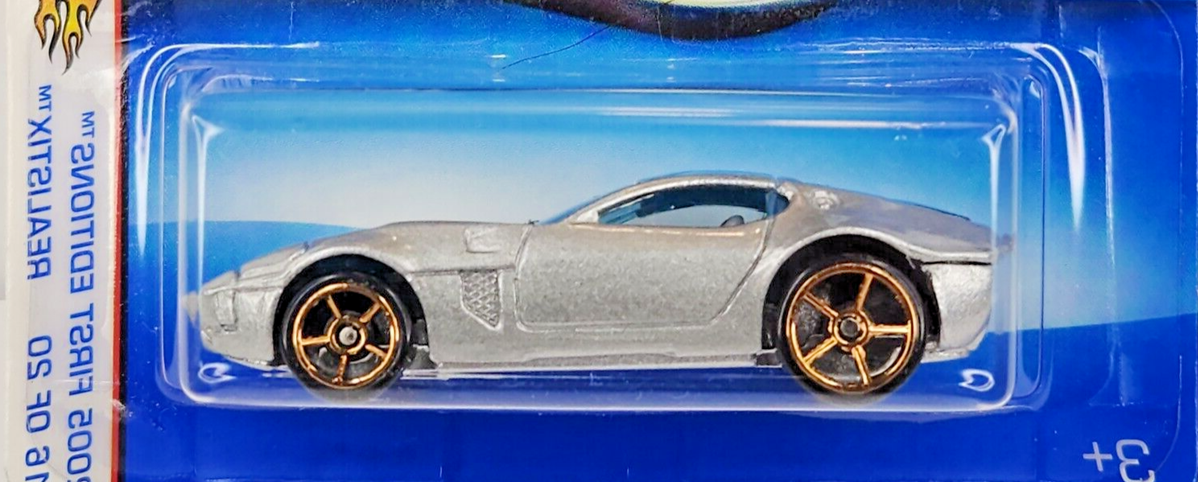
そんな中、昨年今回取り上げました、ホットホイールの通常版のメッキ塗装版GR-1 をイーベイで見つけまして、一目惚れ、さっそく入手してボディの厚みと車高を中心に「地を這うイメージに』大改造、いよいよ記事製作開始となりにけり。
それではこんな感じで、『シェルビー版
類まれなメッキボディーの未来派レーサー』を
ご紹介していきます。
*実写解説:実車写真集付き
*外観デザインの特徴:
*『私』とシェルビーGR-1
*三題噺:フェラーリ250GTO・コーダトロンカ・サリダキス
*その他のキャロル・シェルビーの末裔たち、、、
*実車解説:シェルビー・デイトナクーペ復活の狼煙?
#実車の写真館:
今回のマテル製のミニカーですが、
大まかなイメージは素晴らしいのですが、
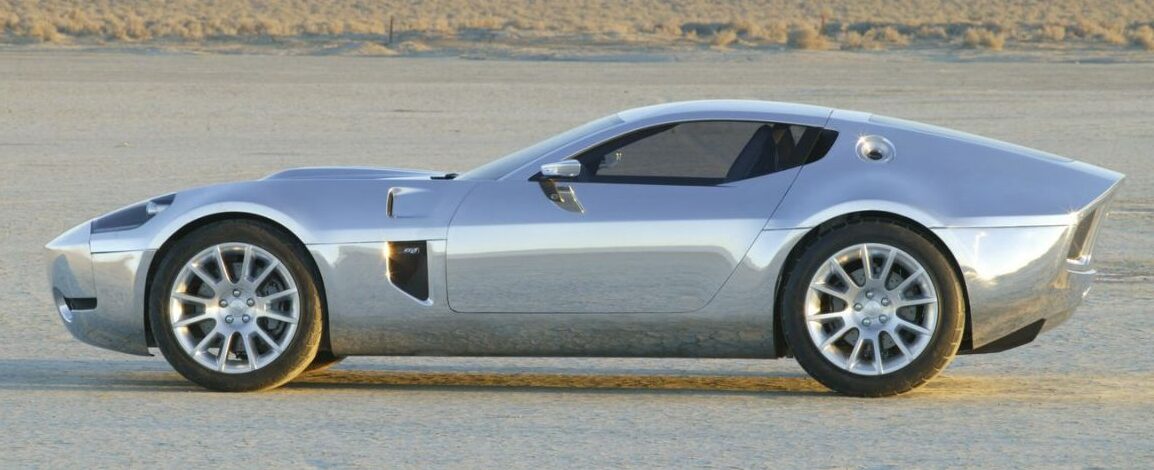
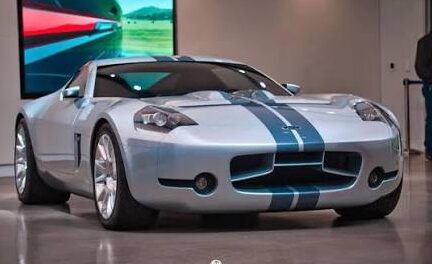
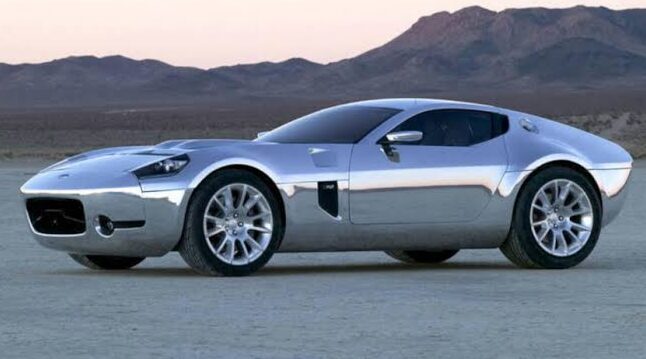
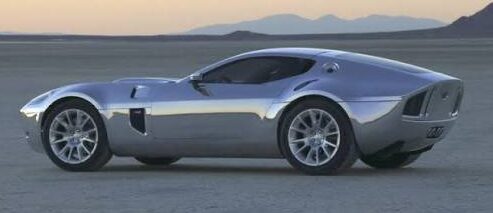
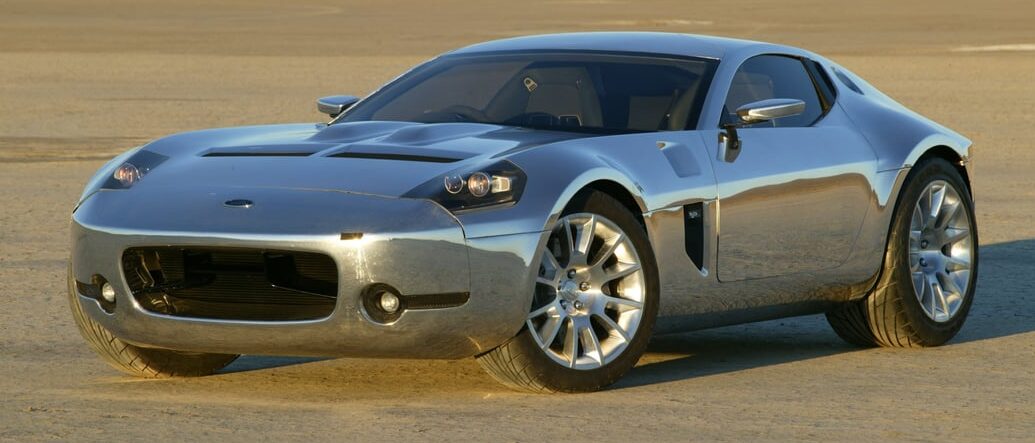
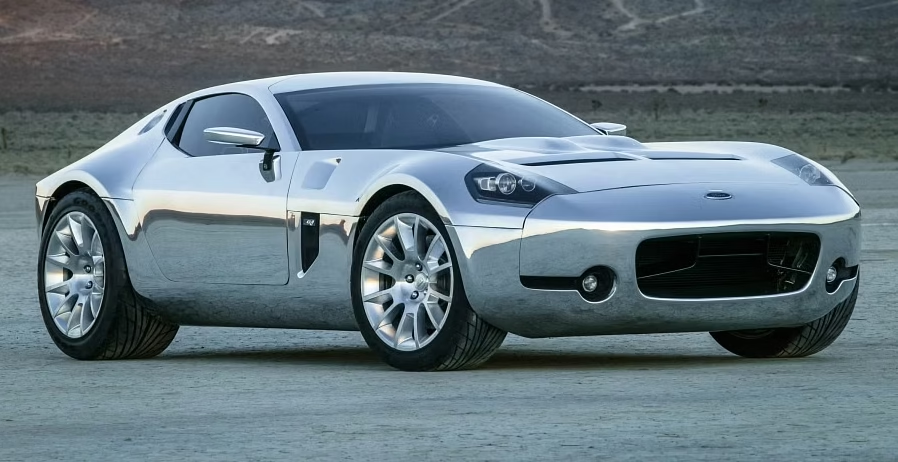
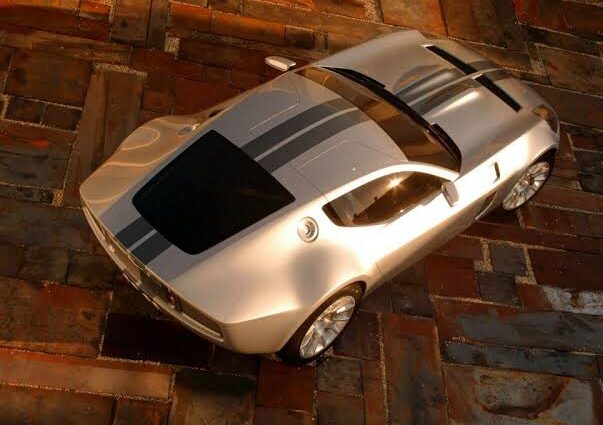
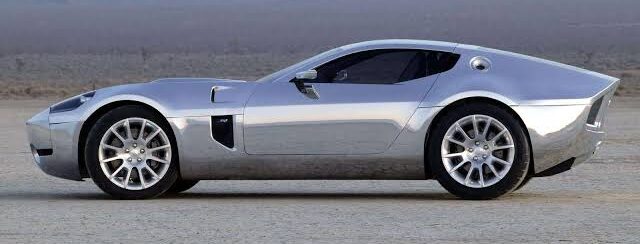
ボディー表面が全面的に分厚くメッキ処理されているせいで、全体的にもっさりしていてディテールのしゃぷさにかけるきらいがありますので、実車の写真集を用意しました。
n
n
 n
n
N
N
N
N
N
N
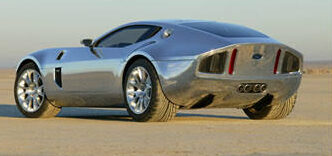
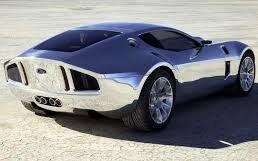
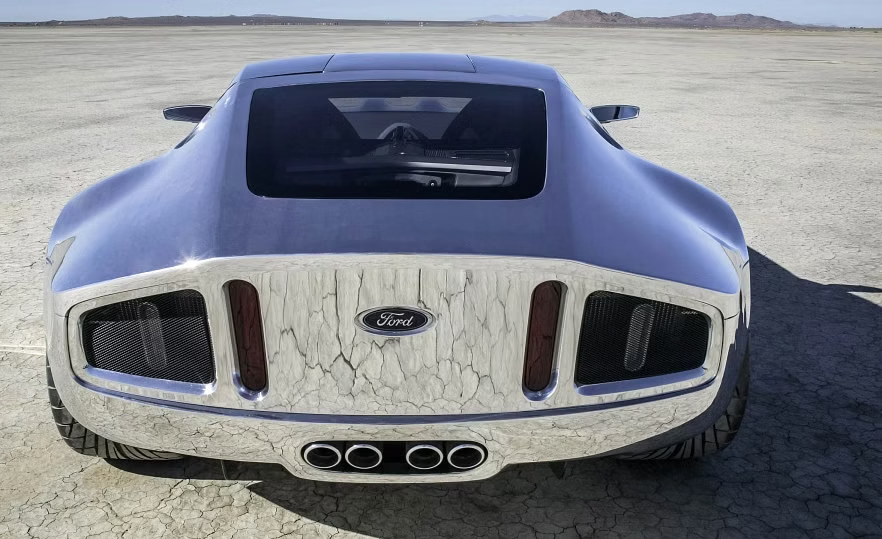
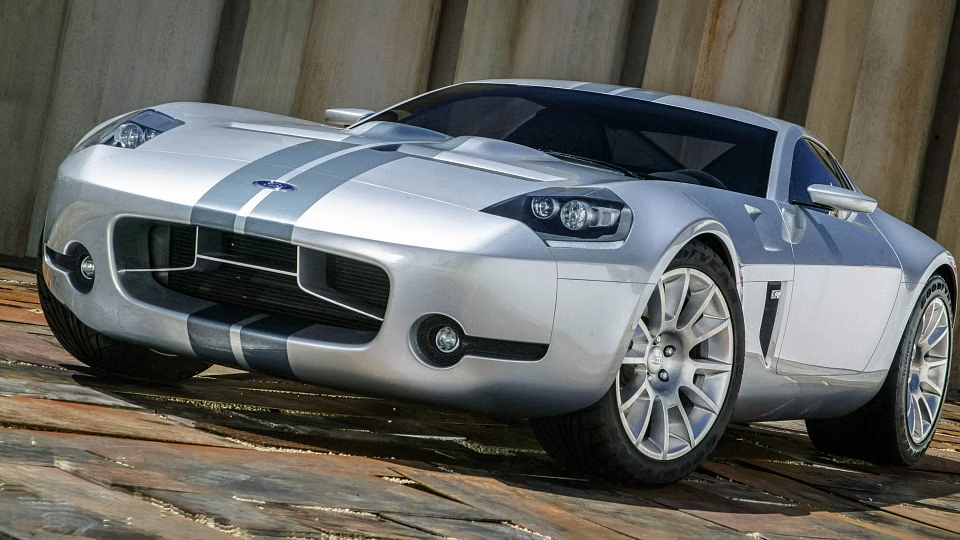
n
N
N
n
N
N
N
N
N
(こ(
n
N
N
N
N
N
N
n
N
N
N
N
N
n
N
N
N
N
N
N
n
N
N
N
N
N
N
n
N
N
N
N
N
N
n
N
N
N
N
N
N
n
N
N
N
N
N
概要:
n
n
n
n
n
n
n
n
n
n
n
n
n
n
n
n
n
n
n
n
n
n
n
n
フォード・シェルビー GR-1 コンセプトの外観デザインは、伝説的レーシングカー「シェルビー・デイトナクーペ」をモチーフにした、ロングノーズ・ショートデッキの迫力あるプロポーションが最大の特徴です。 フォード・シェルビー GR-1 コンセプト(2004年・2005年発表)のメインデザイナーは、当時フォードの社内デザイナーであったジョージ・サリダキス(George Saridakis)です。
n
*ロングノーズ・ファストバック:巨大なV10エンジンを収める長いボンネットから、滑らかにリアへと落ち込むティアドロップ型のキャビンとファストbackルーフ。
*マッスル感のある足回り:大きく張り出した前後のフェンダーアーチと力強いショルダーラインにより、静止状態でも走っているかのような躍動感を表現。
*切り詰められたオーバーハング:前後のオーバーハングを極限まで短くし、アグレッシブなスタンスを強調。
n
n
*ポリッシュ仕上げのアルミボディ:光沢のある削り出しアルミニウム風のボディパネルを採用し、彫刻的で美しい面の張りを強調。
*バタフライドア:上方に跳ね上がるように開閉する、スーパーカーらしい特徴的なドアを採用。
*大径ホイール:19インチの12スポーク削り出しアルミホイールを足元に配置。
n
n
*エンジン: 6.4リッター(390立方インチ)オールアルミ製V型10気筒エンジン。
*出力: 最高出力 605馬力 / トルク 501 lb-ft。
*トランスミッション: 後方配置の6速マニュアル(トランアクスル)とリミテッド・スリップ・デフ(LSD)。
*性能: 0-60mph加速は約3.9秒、最高速度は190マイル/h(約306km/h)以上を想定。
*当初は量産化も期待されましたが、当時の「フォードGT」の販売状況や予想される高いコストを懸念した財務的な理由から計画は中止されました。
*その後、2016年に米国のスーパーフォーマンス社が限定生産の権利を取得するなど、今なおファンから高い人気を集めています。
#こぼれ話:
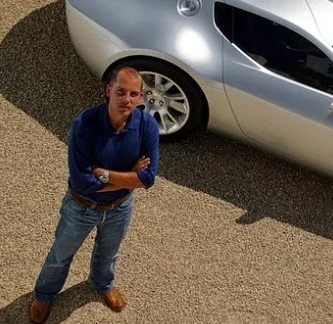
デザイナー、ジョージ・サリダキス(George Saridakis)とは?
*グラスゴー大学で航空宇宙工学の学位を取得後、品質管理の修士号を取得。
*ロンドンにあるロイヤル・カレッジ・オブ・アート(RCA)で車両デザイン(マイスター・オブ・デザイン)を修了。
*1997年:トヨタ自動車に入社し、ブリュッセルの欧州スタジオで勤務。
*2000年:フォード・モーター・カンパニーに移籍。
*2002年:南カリフォルニアへ異動し、リンカーン・マーキュリーおよびアドバンス・デザインを担当。
*代表的な功績:アイヴィンのアドバンス・デザイン・スタジオにて、最初の数枚のスケッチから「フォード・シェルビー GR-1」のコンセプトを創出し、高く評価される。
*その後:フォードでチーフデザイナー、エクステリア/インテリアのデザインディレクターなどを歴任。また、一時期ロールス・ロイス・モーター・カーズの外装デザインにも携わる。
n
#三面写真館:
#主要諸元:
- 型式:型式不明---フォードの「MOD(モジュラー)」エンジンファミリーをベースに開発された、6.4リッター(390立方インチ)のオールアルミ製 V型10気筒(V10)自然吸気エンジン
- 総排気量: 6.4L(390立方インチ)オールアルミ製 V型10気筒(自然吸気)
- 最高出力 : 605 bhp (613 PS) / 6,750 rpm
- 最大トルク:679 N·m (501 lb·ft) / 5,550 rpm
- 駆動方式:FR(フロントエンジン、リアドライブ)
- 定員:2名
- 車体形式:2ドア・クーペ
- ドア形状:バタフライドア
- ホイールベース:2,540 mm
- 全長:4,412 mm
- 全幅:1,895 mm
- 全高:1,168 mm
- 車両重量:
1,769 kg (3,900 lbs)
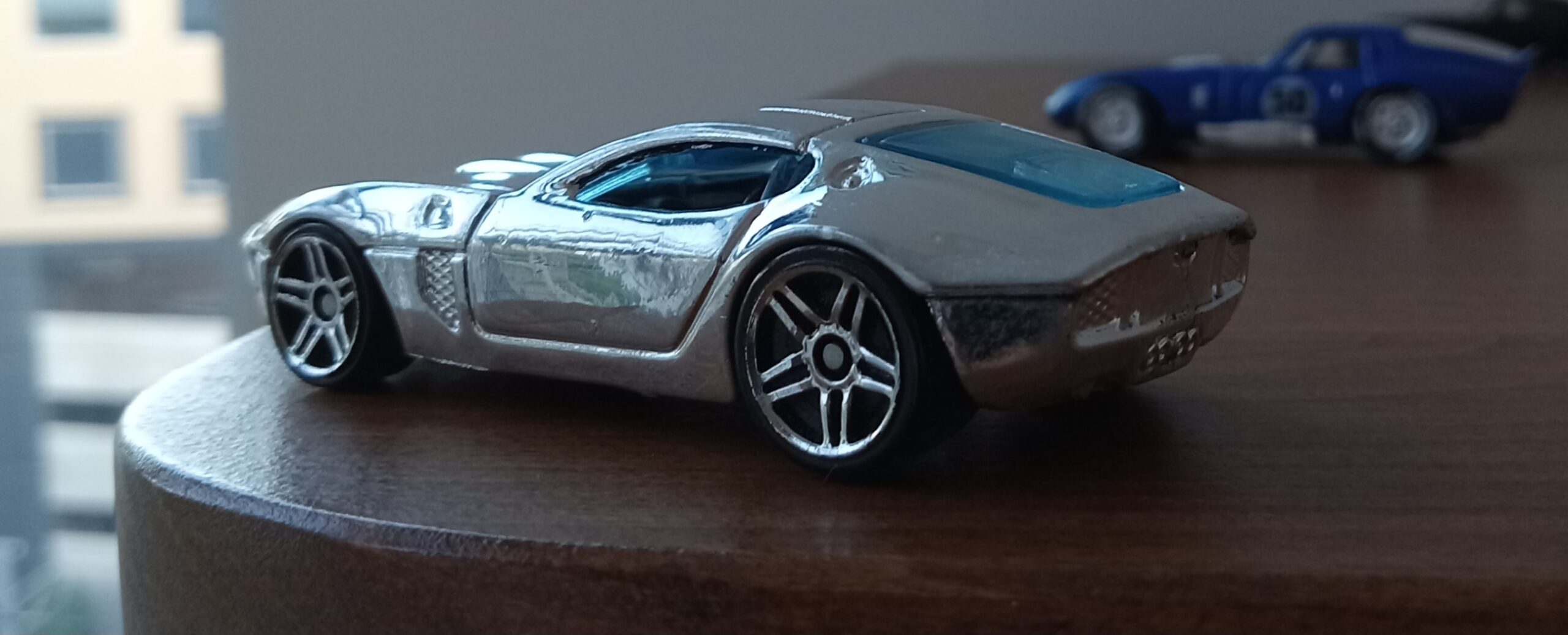
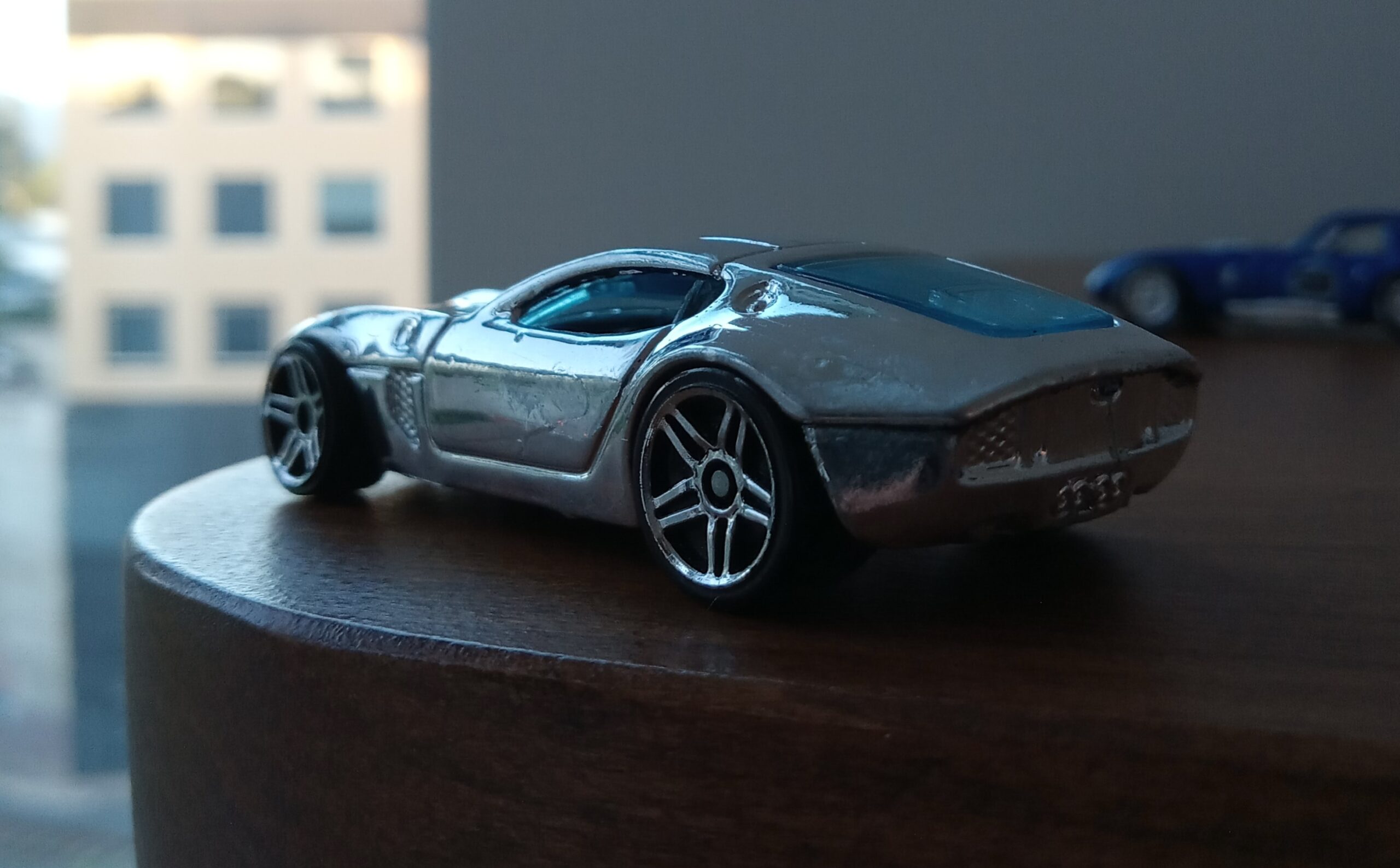
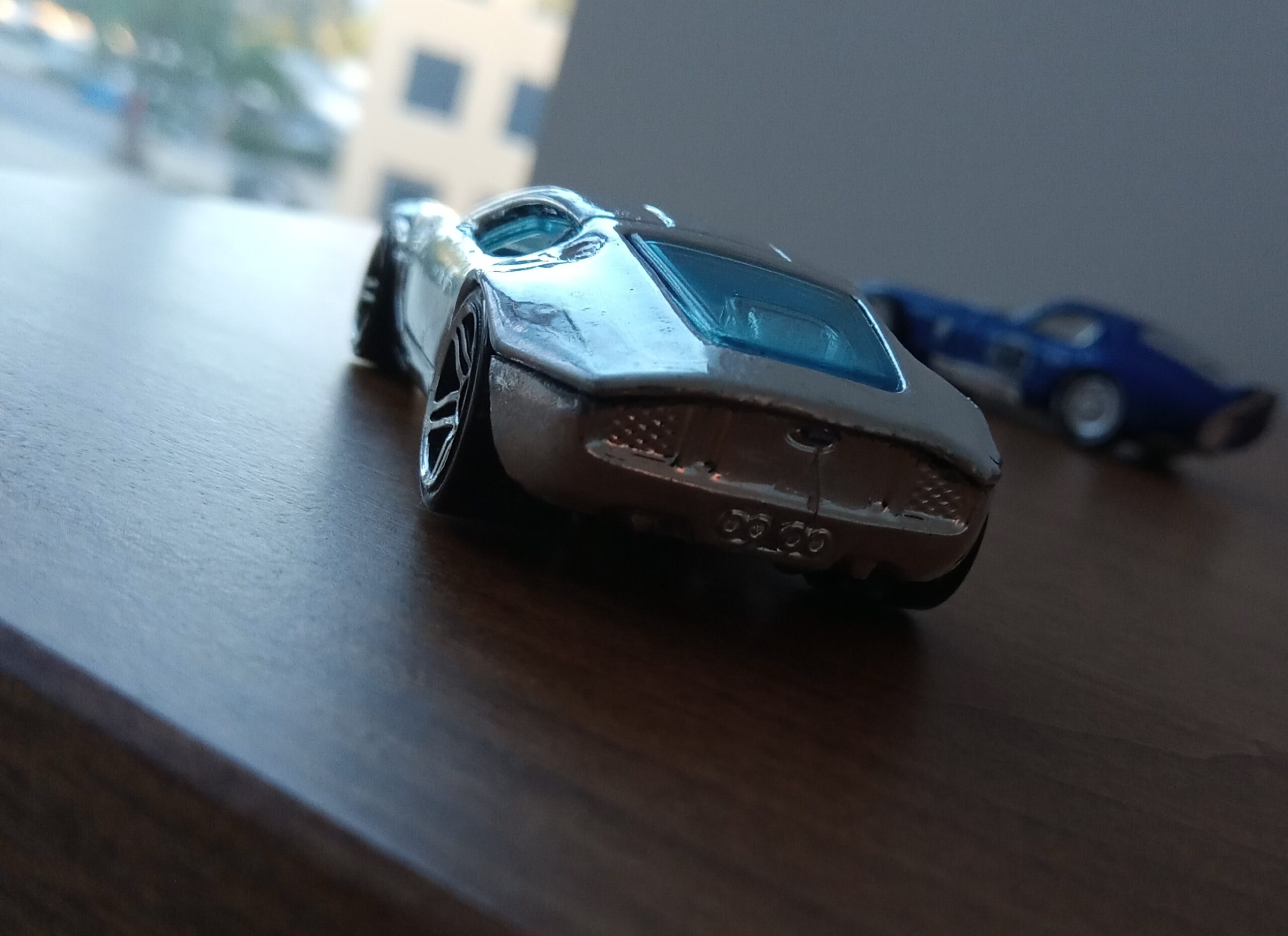
*外観デザインの特徴:蘇った『コーダトロンカ・テール』
(写真撮影に使用したミニカー:Jeda社製、1/64ダイキャスト完成品【実際には1/50ぐらい?)】フォード・シェルビーGR-1(メタリック・ブルー)--→無改造で使用)
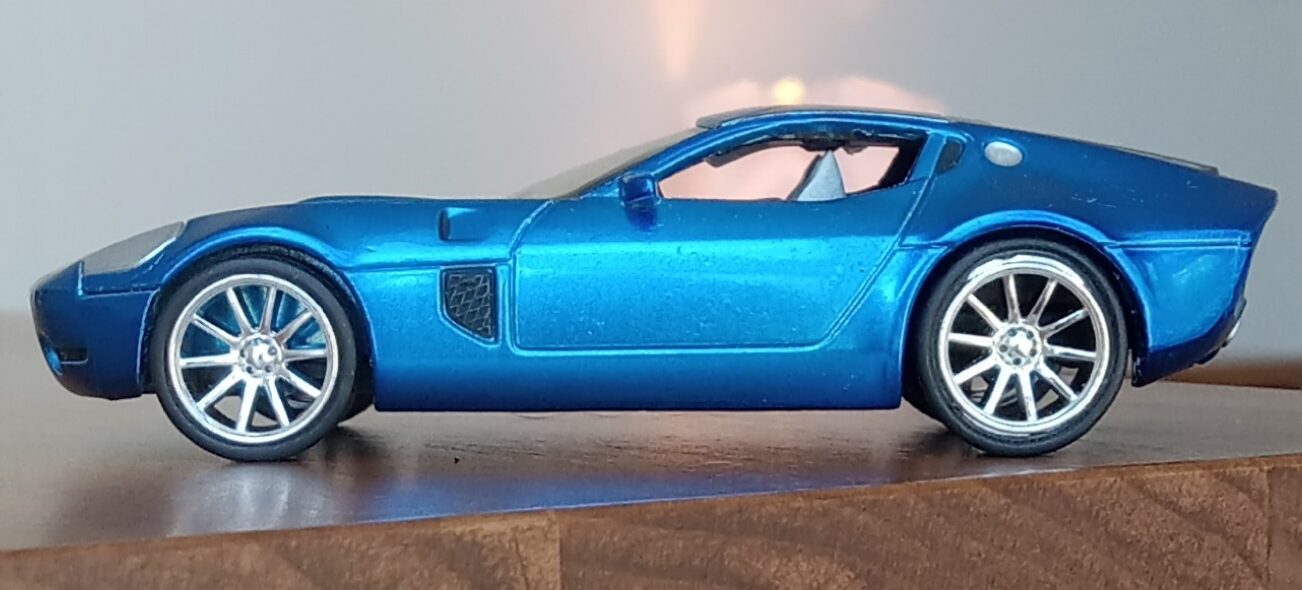
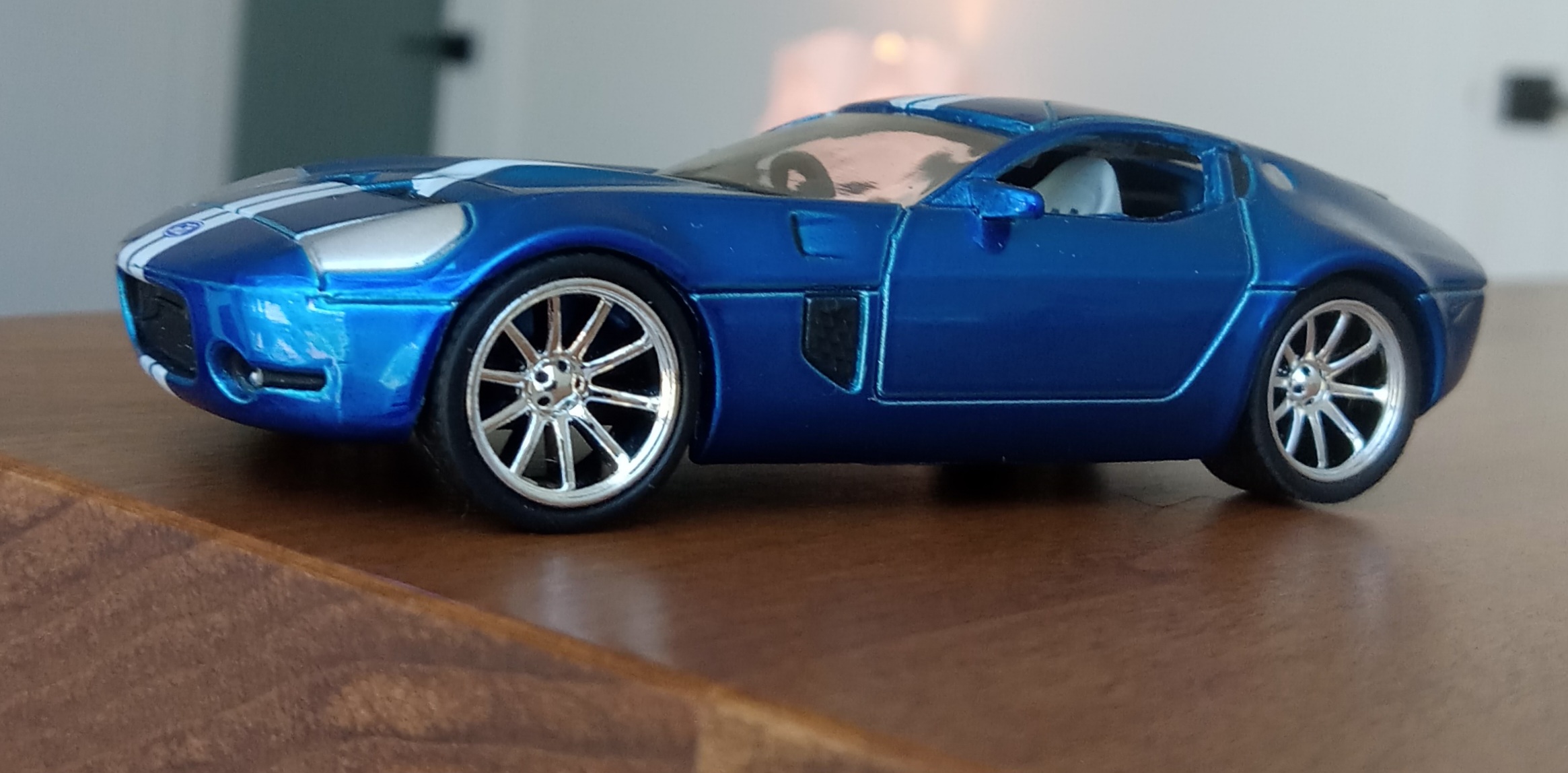
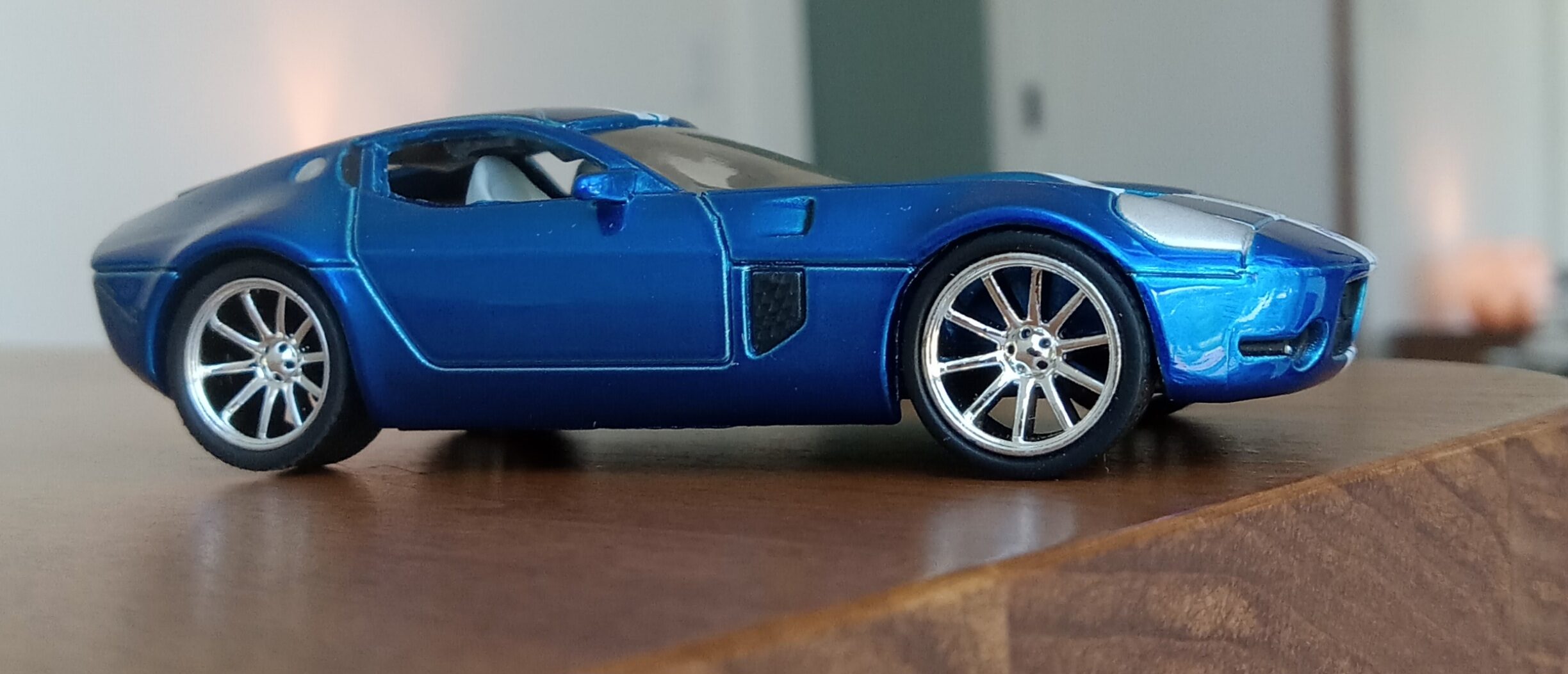
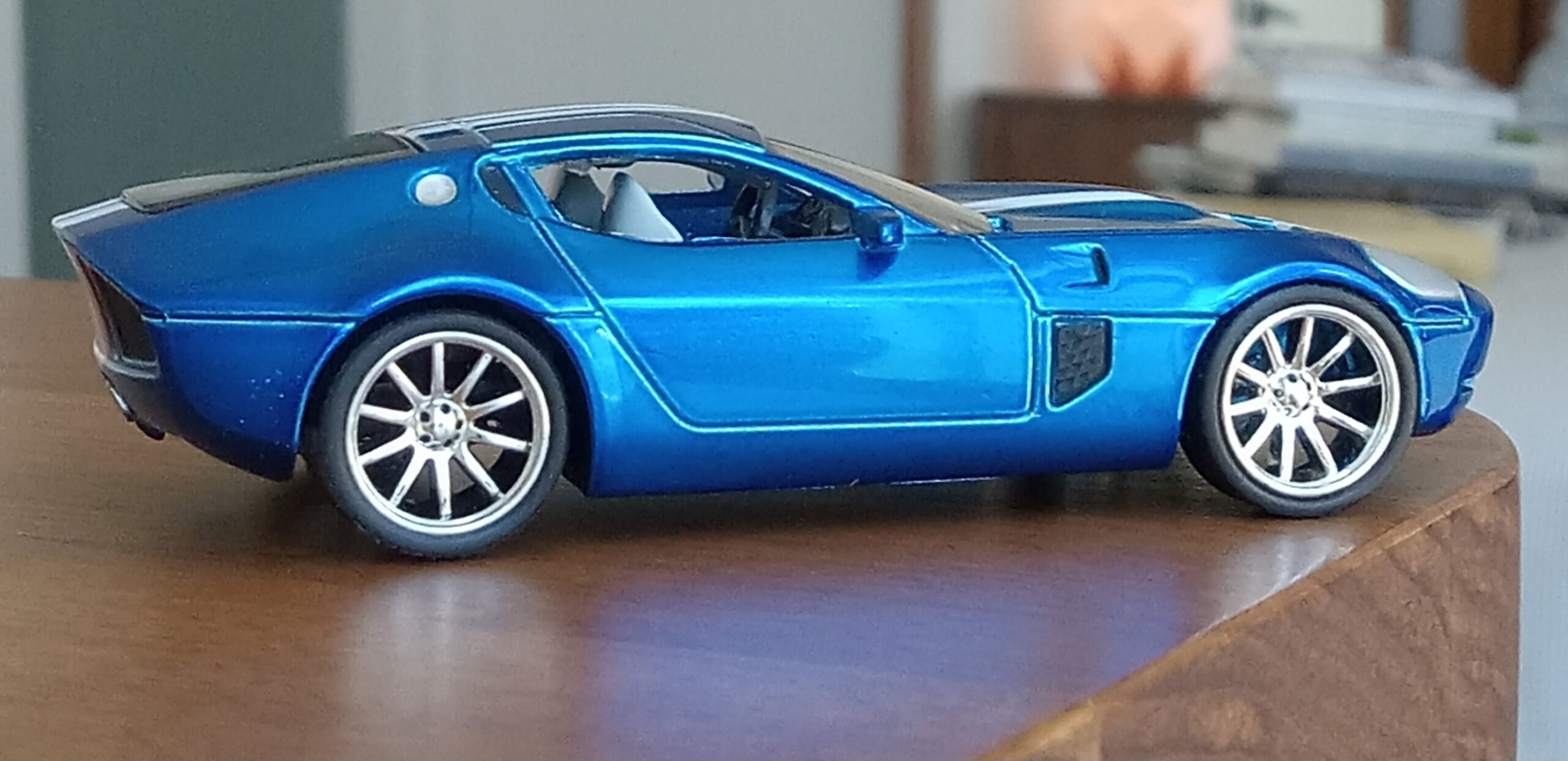
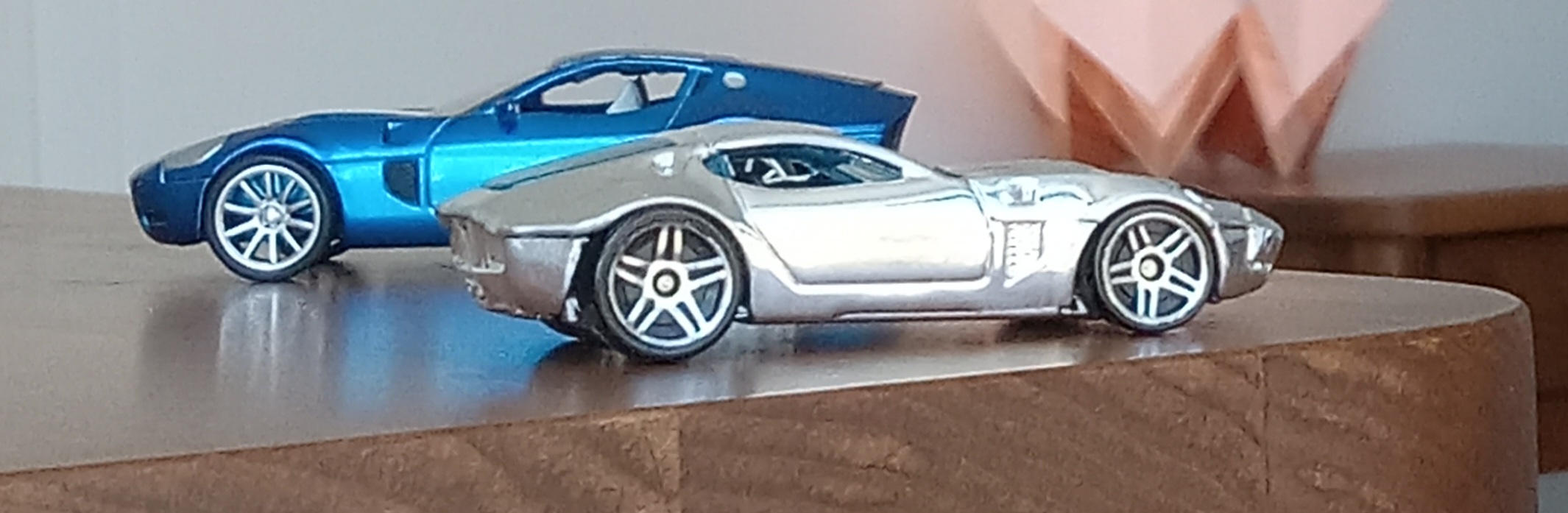
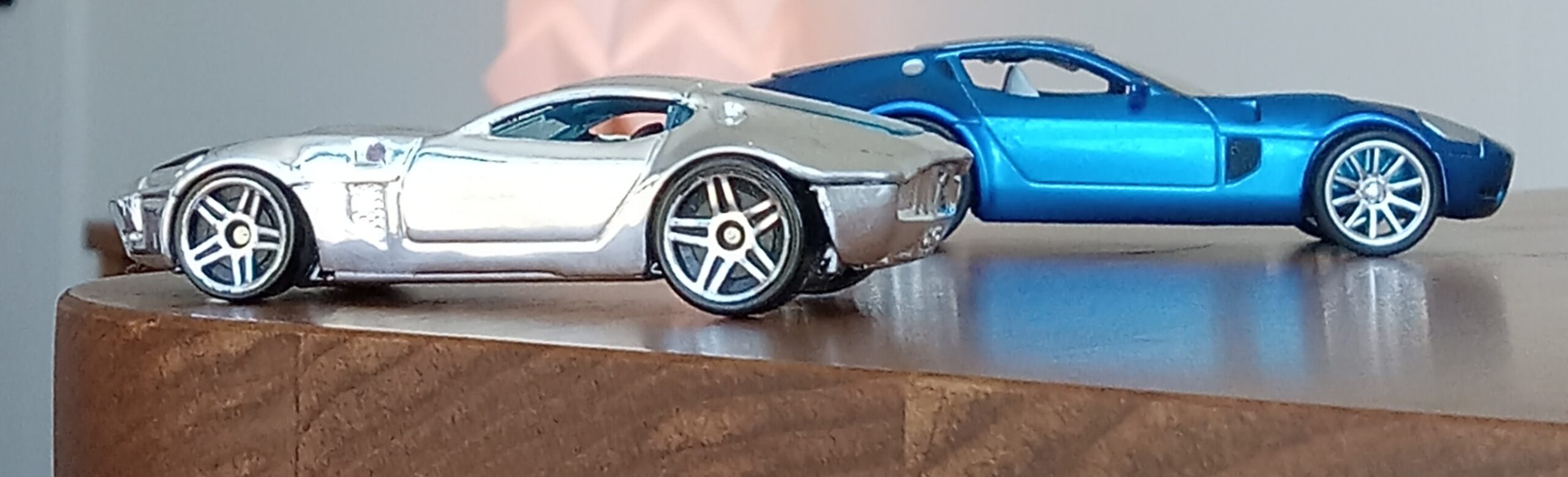
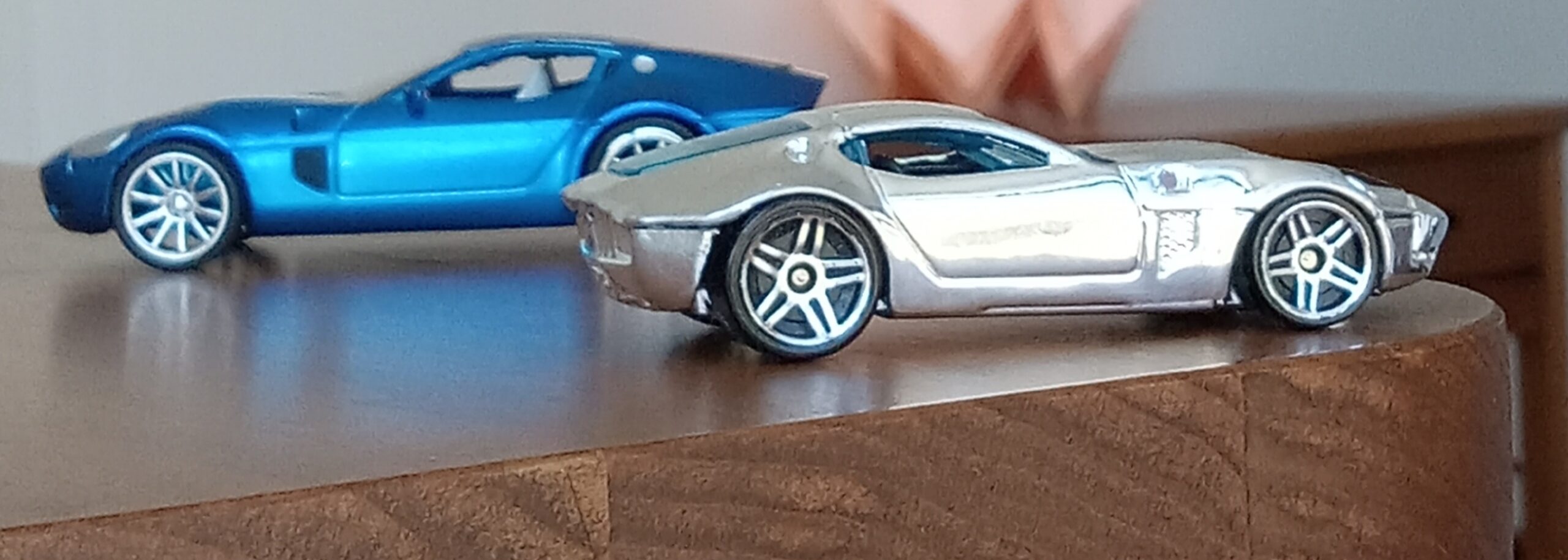
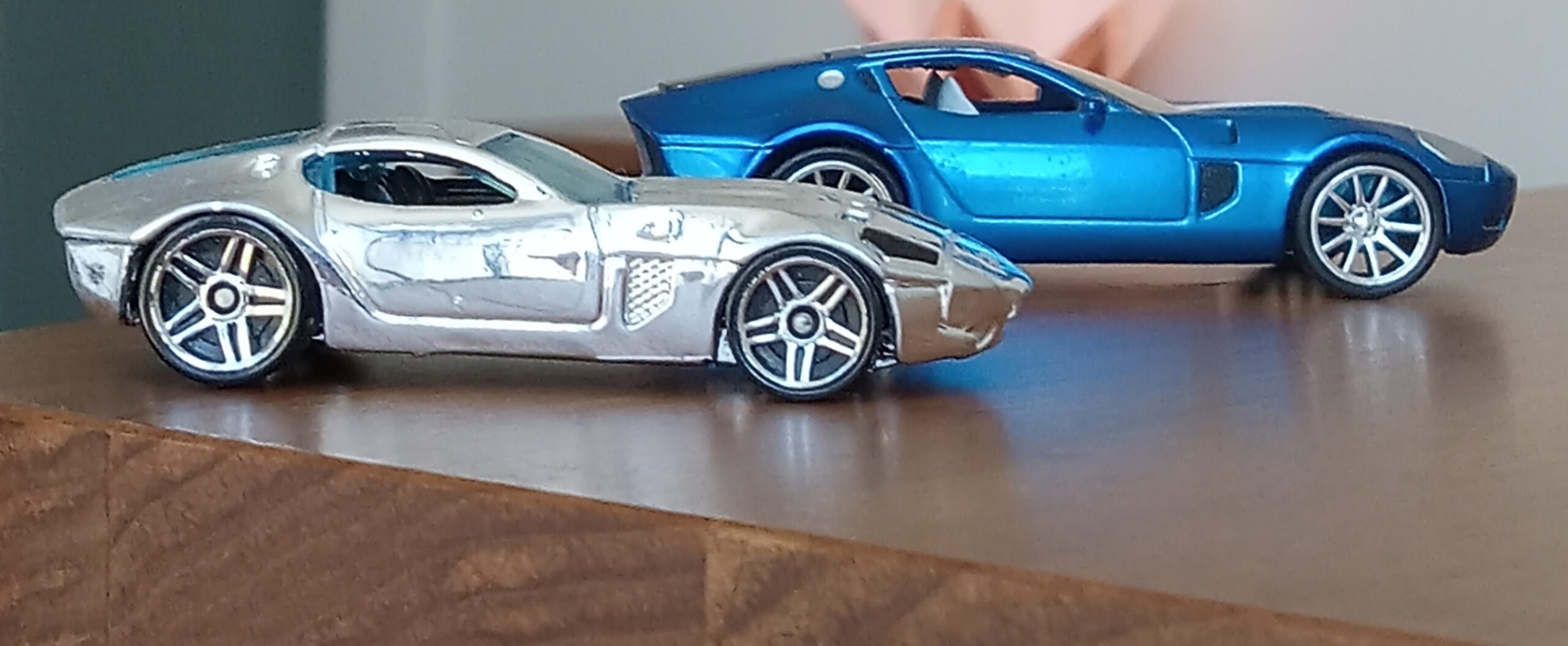
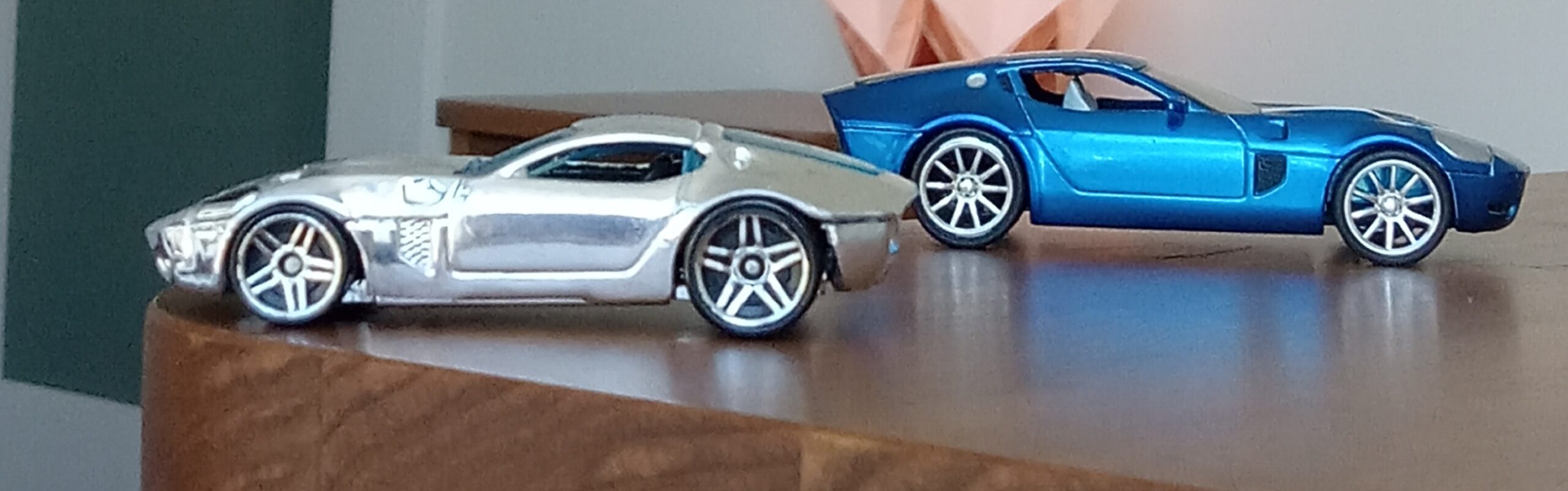
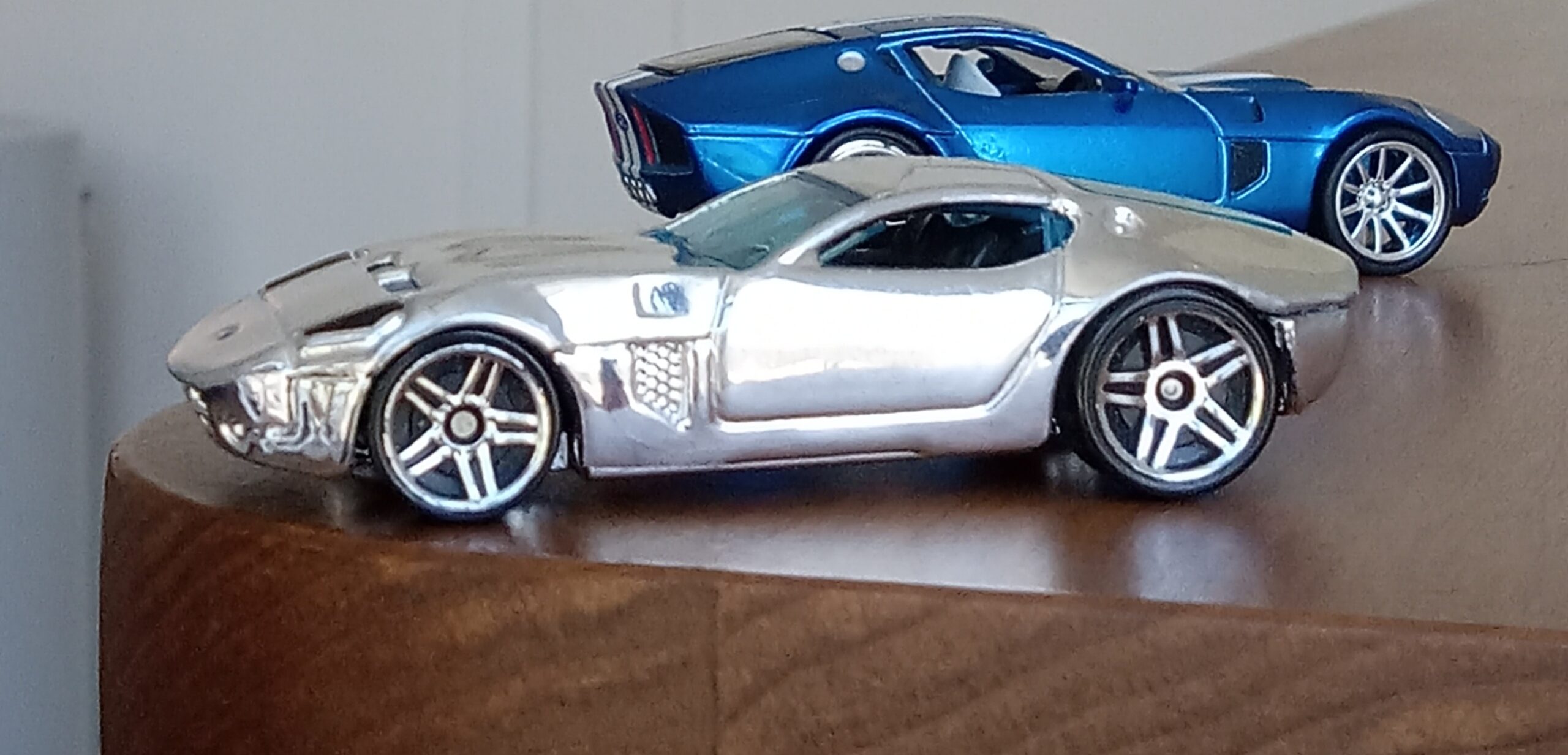
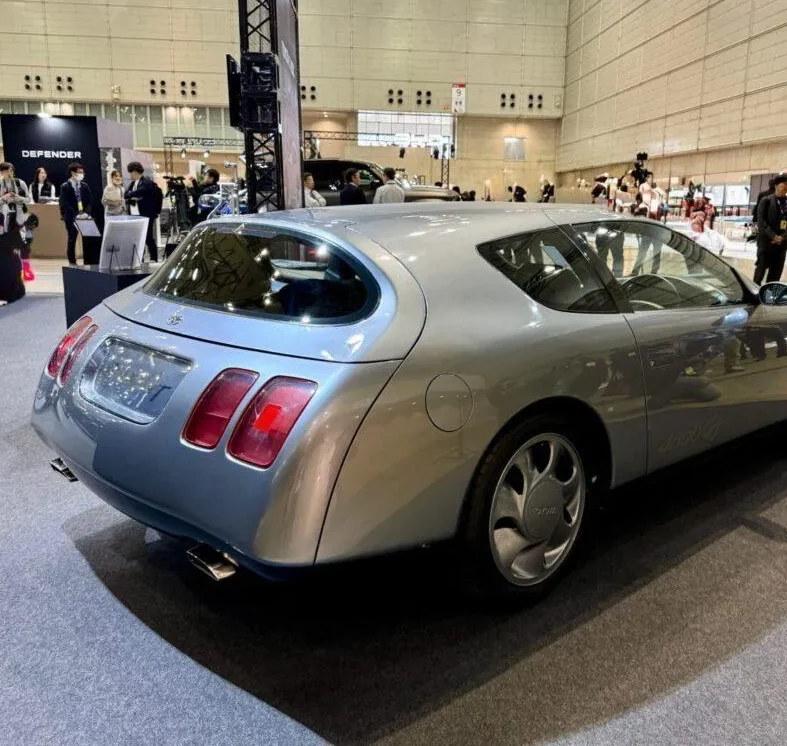
斜め後ろからの見た目が、
超絶美しい、現代に蘇った世紀のレーサー
『コブラ・デイトナ―クーペ』
この迫力満点な、
フォード版のコンセプトカーの外観デザインの特徴を
紐解いていきましょう!
以下のの5点+アルファが私の意見です。
n
1:オリジナルのプロポーションを引き継いだうえ、大胆に革新した、ロングホイールベース+超絶に低い全高が生み出す、大胆さと、均衡の間でのせめぎ合いの静寂感・清潔感
ーーーー>動いていない時も、レース後の余韻に満ち満ちています。嬉
2:大きく張り出した全後フェンダーを横断して最大幅から後端では極端に絞り込まれた【ドアからリアクオーターへつながる】ボディー横断面の醸し出す、いやおうなしのドラマ
ーーーーー>後方から見下ろしたとき、窓横からの絞り込みがたまりません!!
3:デイトナクーペ譲りのボンネット、リアフェイシアやボディー横にちりばめられた、レース仕様車独特の、ダクト、補器類のグラフィック処理のスマートさ
ーーーー>『拡散と集中』のコントラストが素晴らしいです!
4:重いっ切り絞り込まれたボディー後端に現われる、迫力に満ち満ちた【コーダ・トロンカスタイル】のテールエンド
5:オリジナルに比べて、動的不安定さが皆無な、低い重心位置を生かし切った余裕を感じる安定感≒フォードのデザイン流儀の深い味わい
ーーーー>「走って良し、止まって良し』の気品すら感じる騎士道的奥ゆかしさ
n
弱点:
#唯一の弱点は、フロントエンドの「表情」がイマイチ迫力に欠ける点でしょうか?
ーーーー>この部分は、初代のデイトナ・クーペに軍配が上がります。泣
ん
ではそれぞれ
写真入りで見て行きましょう。
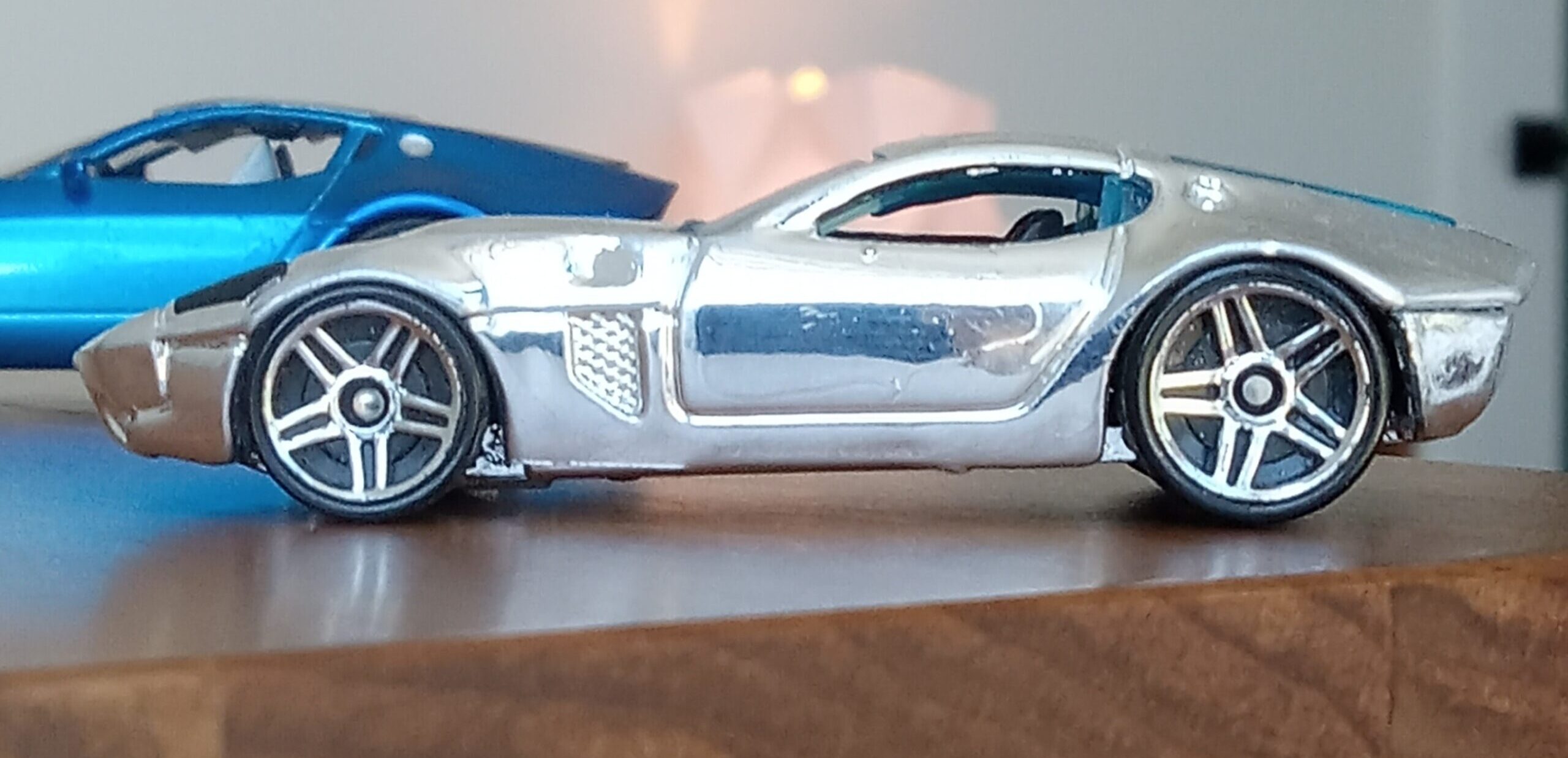
1:オリジナルのプロポーションを引き継いだうえ、大胆に革新した、ロングホイールベース+超絶に低い全高が生み出す、大胆さと、均衡の間でのせめぎ合いの静寂感・清潔感
(すべての面造り、ディテール、アルミボディーの造形などの丁寧さが光ります。)
ーーーー>動いていない時も、レース後の余韻に満ち満ちています。嬉
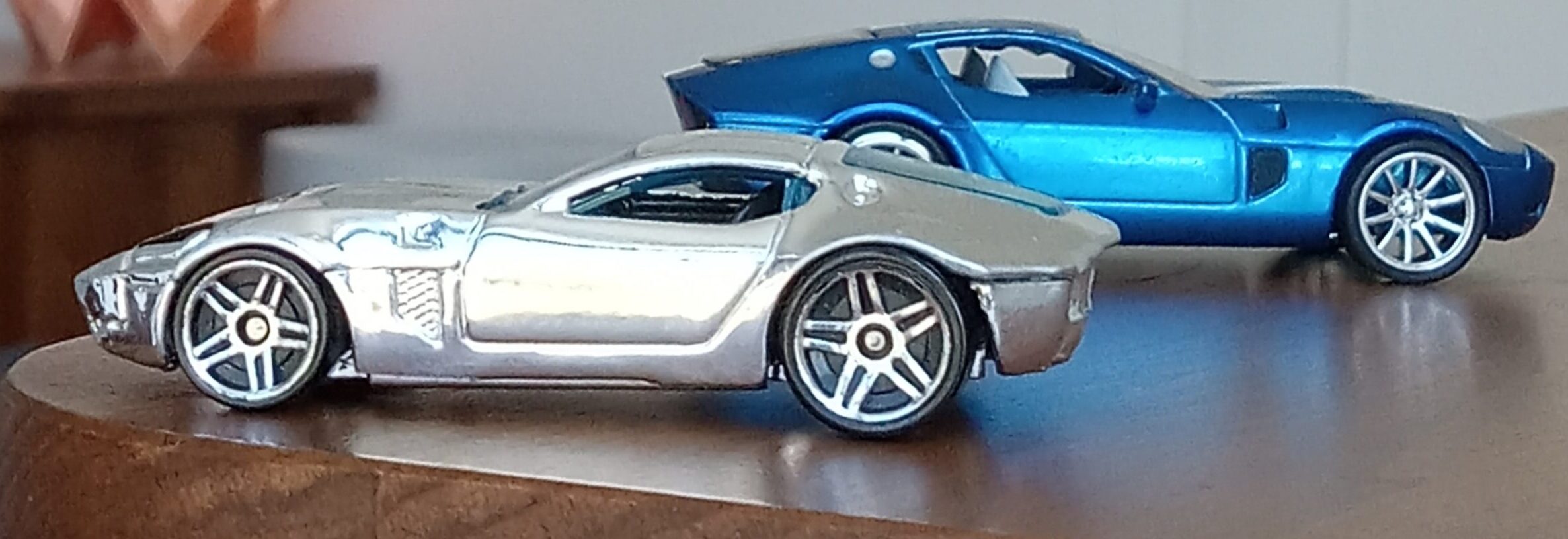
2:大きく張り出した全後フェンダーを横断して最大幅から後端では極端に絞り込まれた【ドアからリアクオーターへつながる】ボディー横断面の醸し出す、いやおうなしのドラマ
ーーーーー>後方から見下ろしたとき、窓横からの絞り込みがたまりません!!
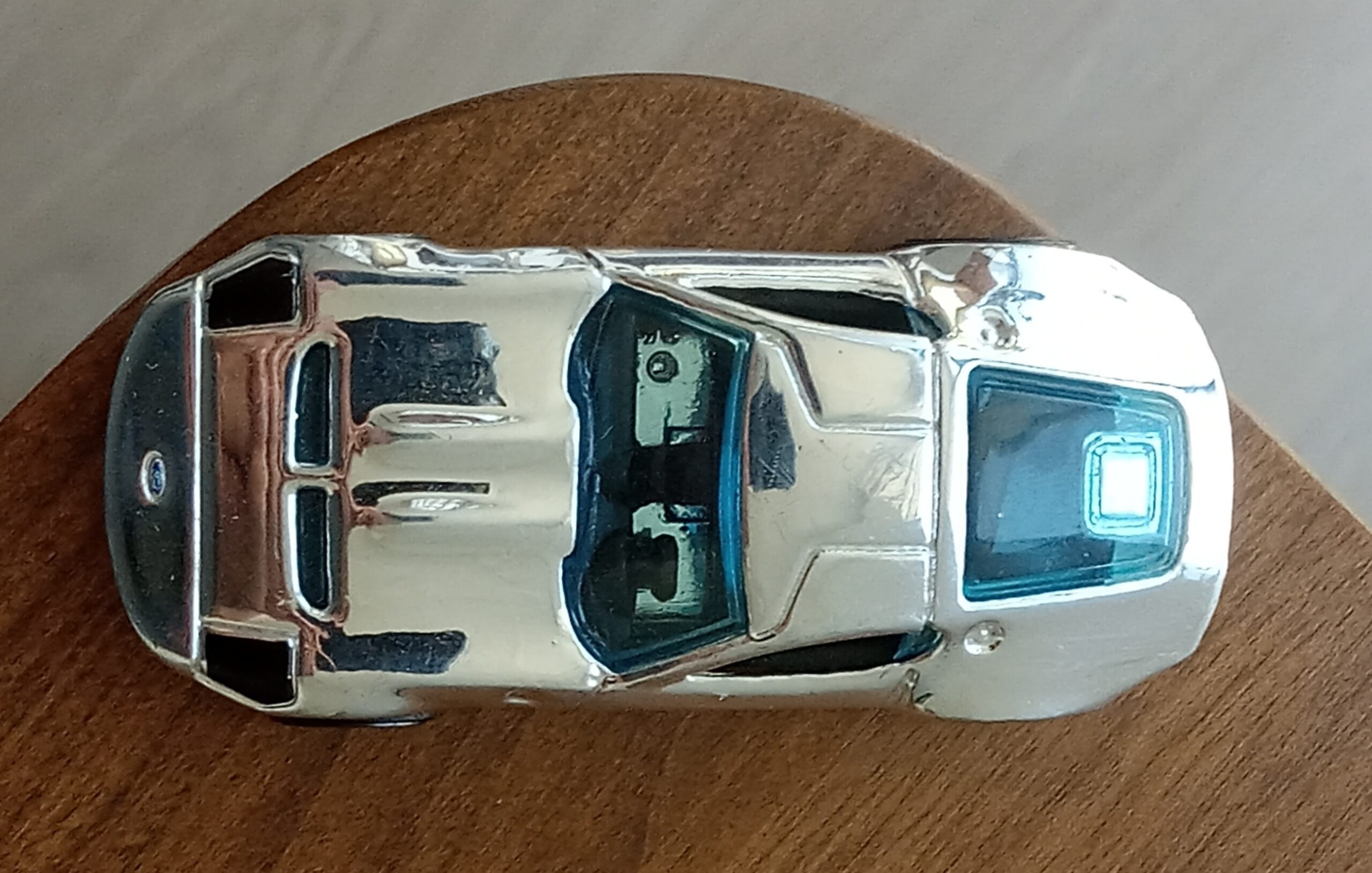
3:デイトナクーペ譲りのボンネット、リアフェイシアやボディー横にちりばめられた、レース仕様車独特の、ダクト、補器類のグラフィック処理のスマートさ
ーーーー>『拡散と集中』のコントラストが素晴らしいです!
4:重いっ切り絞り込まれたボディー後端に現われる、迫力に満ち満ちた【コーダ・トロンカスタイル】のテールエンド
ーーーー>この部分はオリジナルの数倍迫力があります。
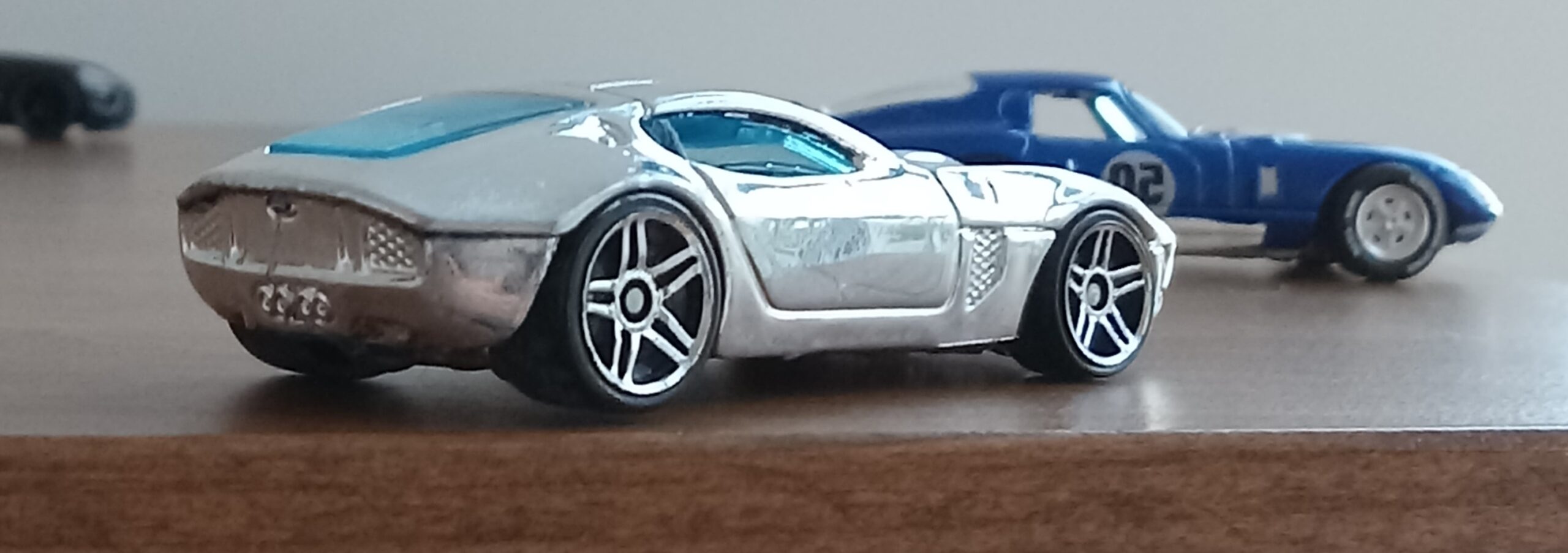
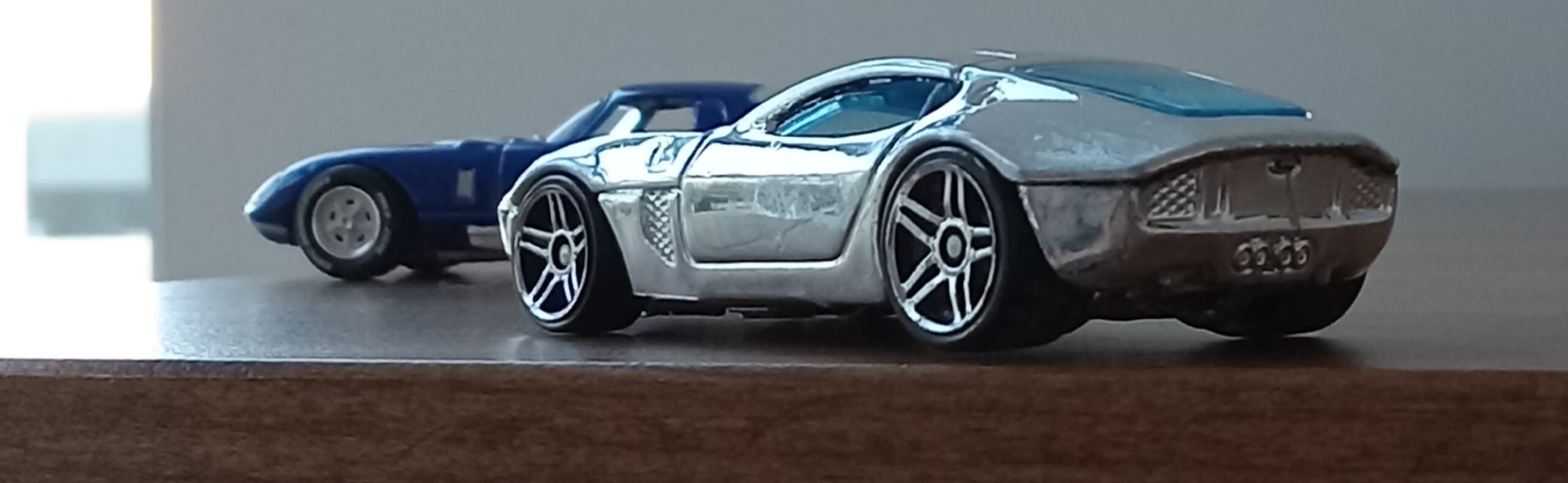
5:オリジナルに比べて、動的不安定さが皆無な、低い重心位置を生かし切った余裕を感じる安定感≒フォードのデザイン流儀の深い味わい
ーーーー>「走って良し、止まって良し』の気品すら感じる騎士道的奥ゆかしさ
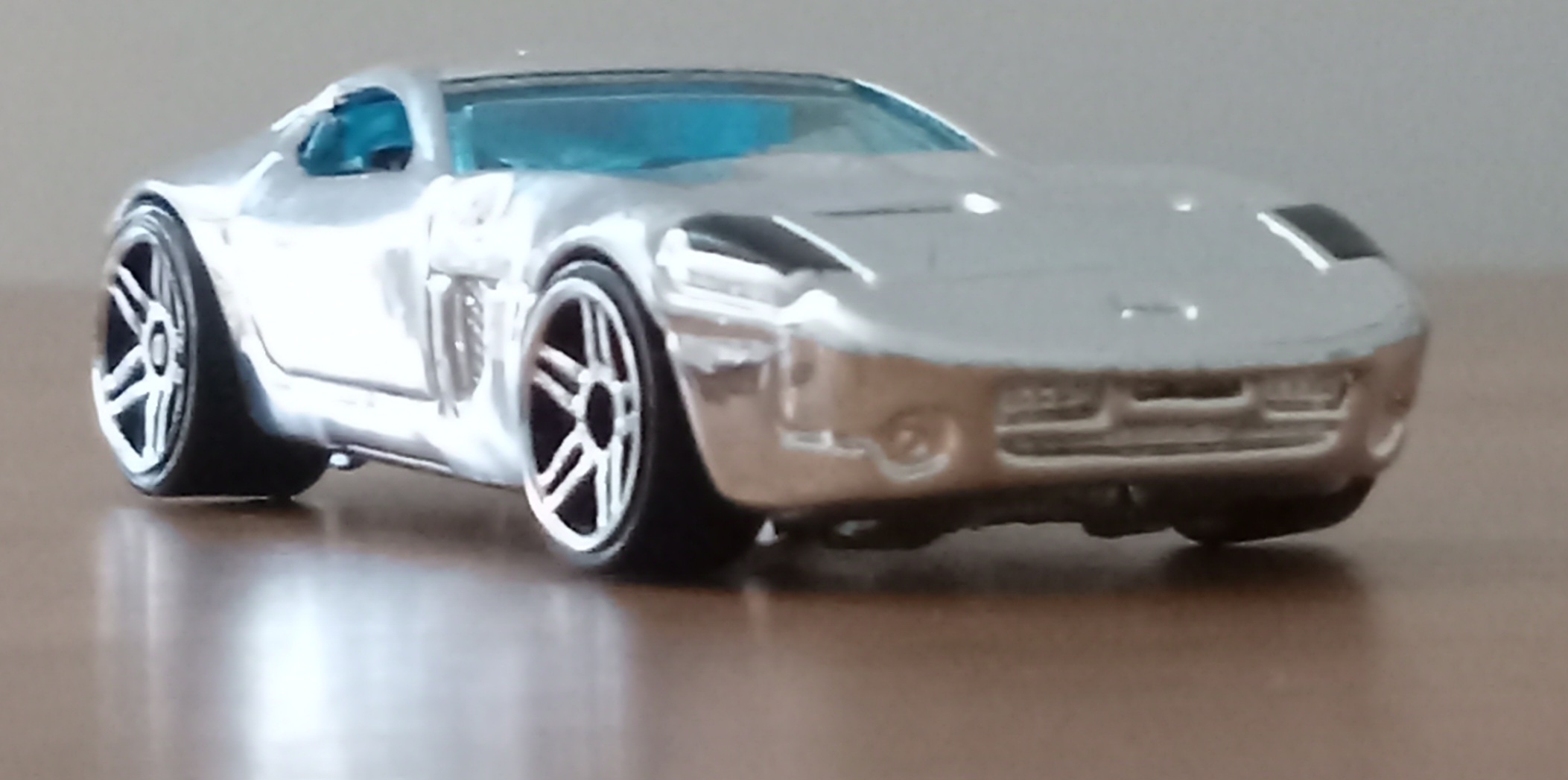
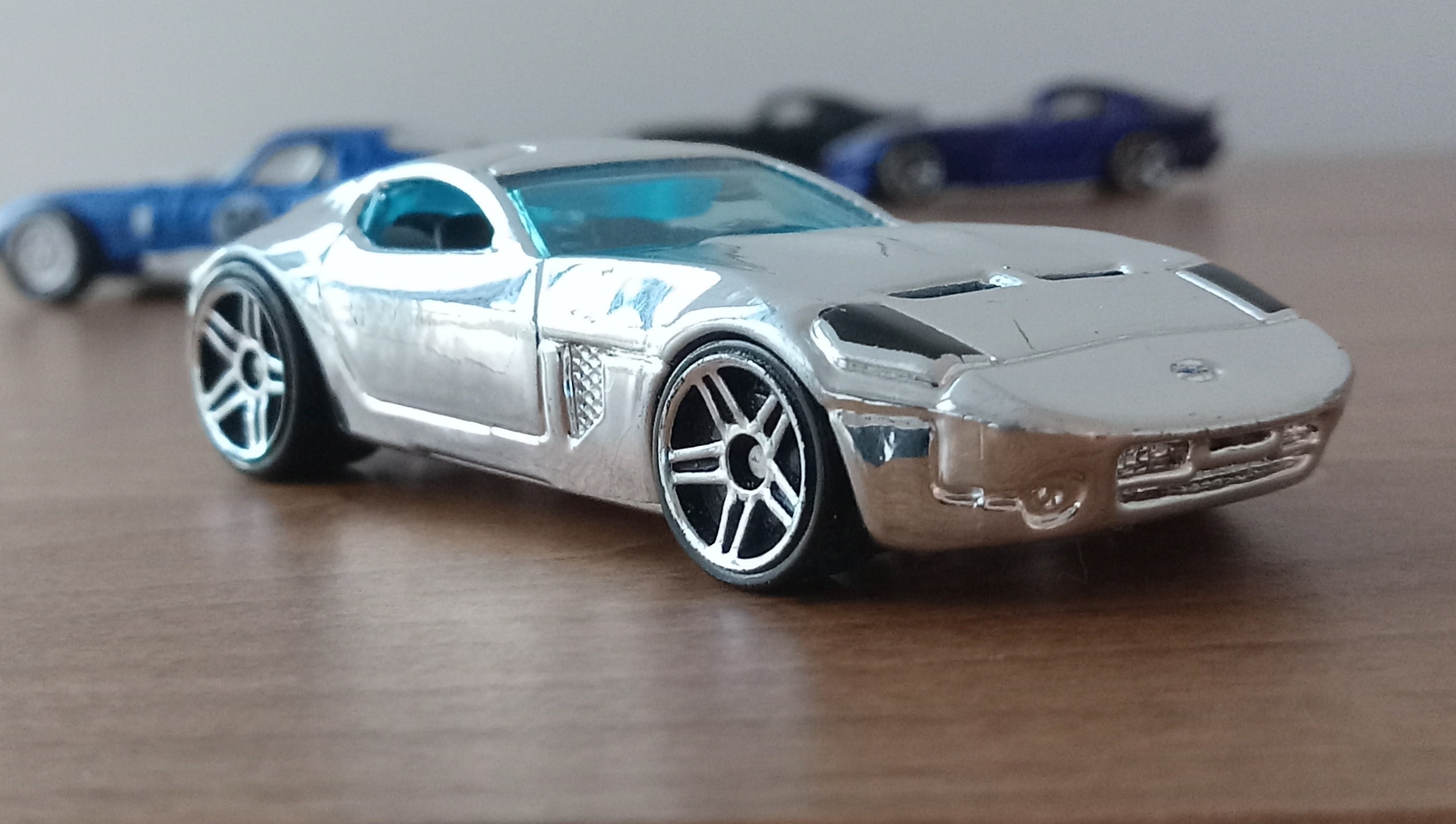
弱点:
#唯一の弱点は、フロントエンドの「表情」がイマイチ迫力に欠ける点でしょうか?
ーーーー>この部分は、初代のデイトナ・クーペに軍配が上がります。泣
次章では、私の個人的な『GR-1』体験を
お話しいたします。
*『私』とシェルビーGR-1コンセプト:
#広報写真の衝撃!!
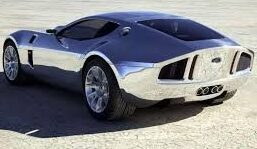
2004年に、週刊雑誌【AUTOWEEk】誌上、
モーターショーのコンセプトカー特集で発見した
この写真に写った『コード・トロンカ』テールの迫力に一目ぼれした私ですが、
その後市販化のニュースがなく、
すっかり忘れかけていた中、
昨年末に、
イーベイのホットホイール検索中に偶然発見した、
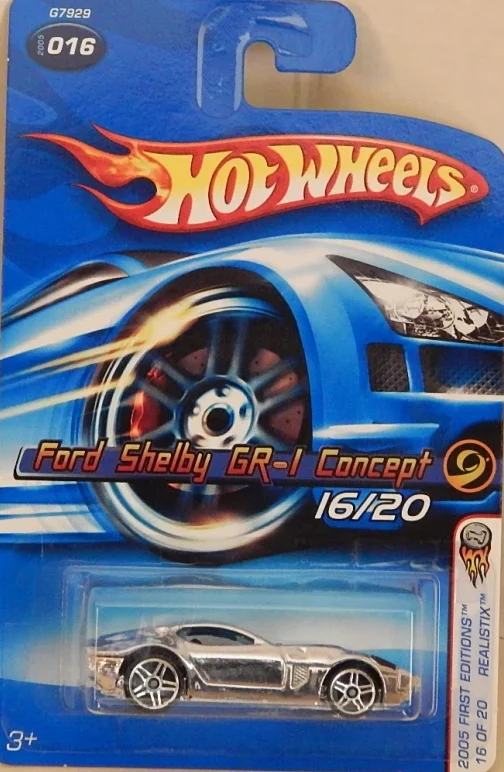
ホットホイール通常版のメッキボディーバージョンに
再度眼がくぎ付けとなりました!!
このミニカーのメッキ表面の波打ち具合になぜか心が引かれ、入手後まっさきに車高最小化を中心に大改造を施し、写真撮影!--->本記事執筆に相成りいました。
記事の制作に入ってから、
こんな感じで、新たな発見がありましたが、
始めに見つけた、ホットホイール版のオーラにはかないませんでした。
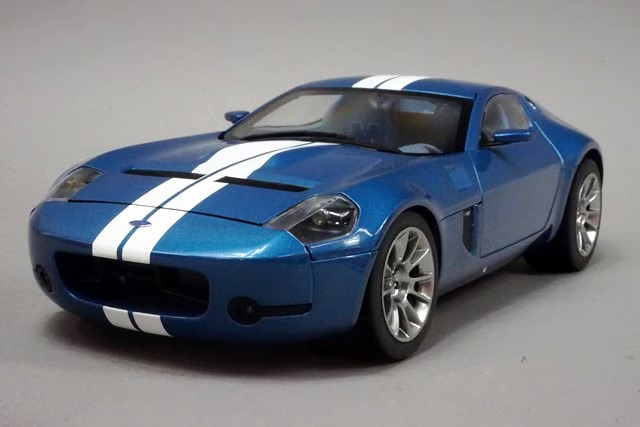
*1 Badd Ride 社製、1/64ダイキャスト完成品、フォード・シェルビーGR-1コンセプト(メタリック・ブルー&白のストライプ)
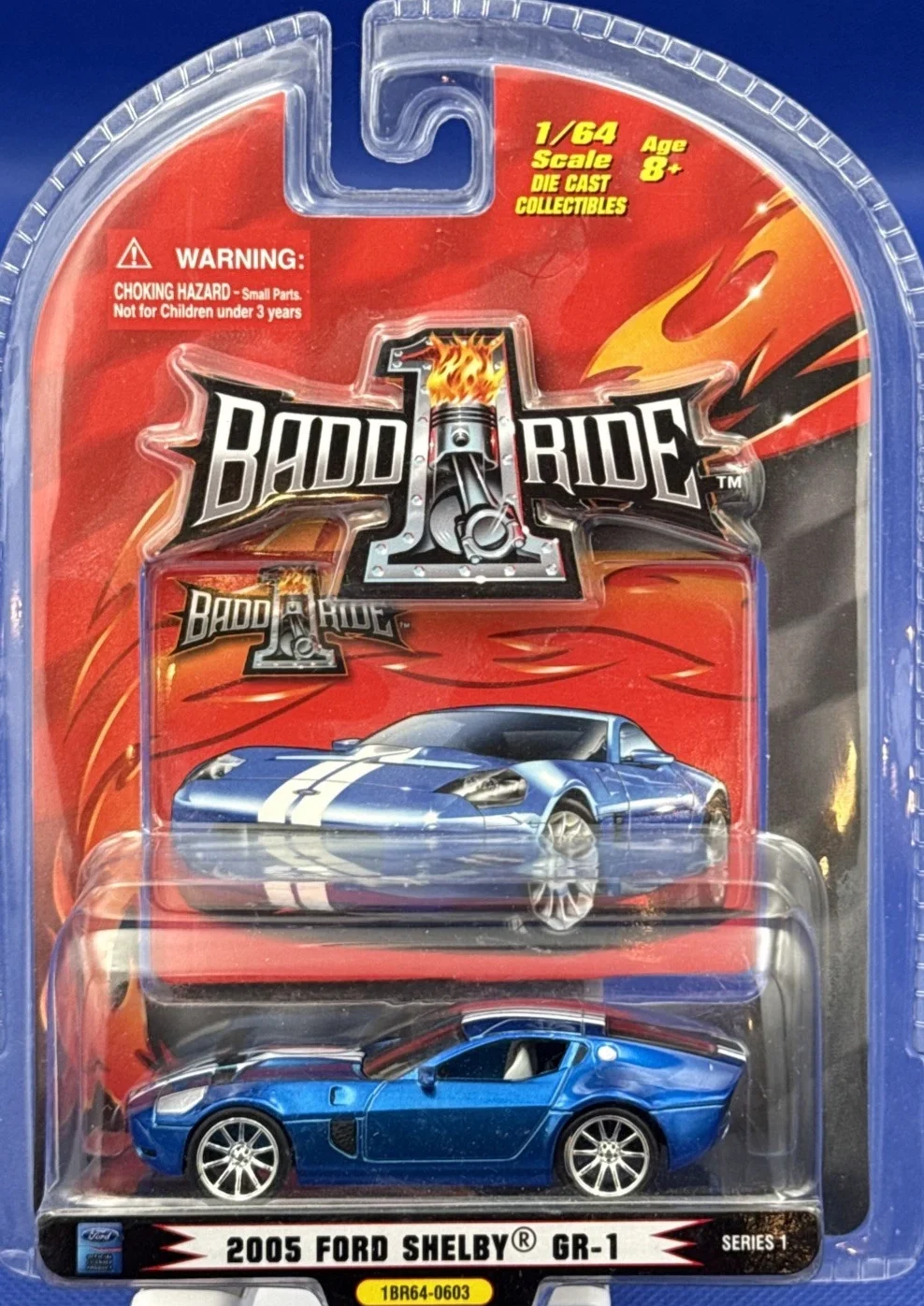
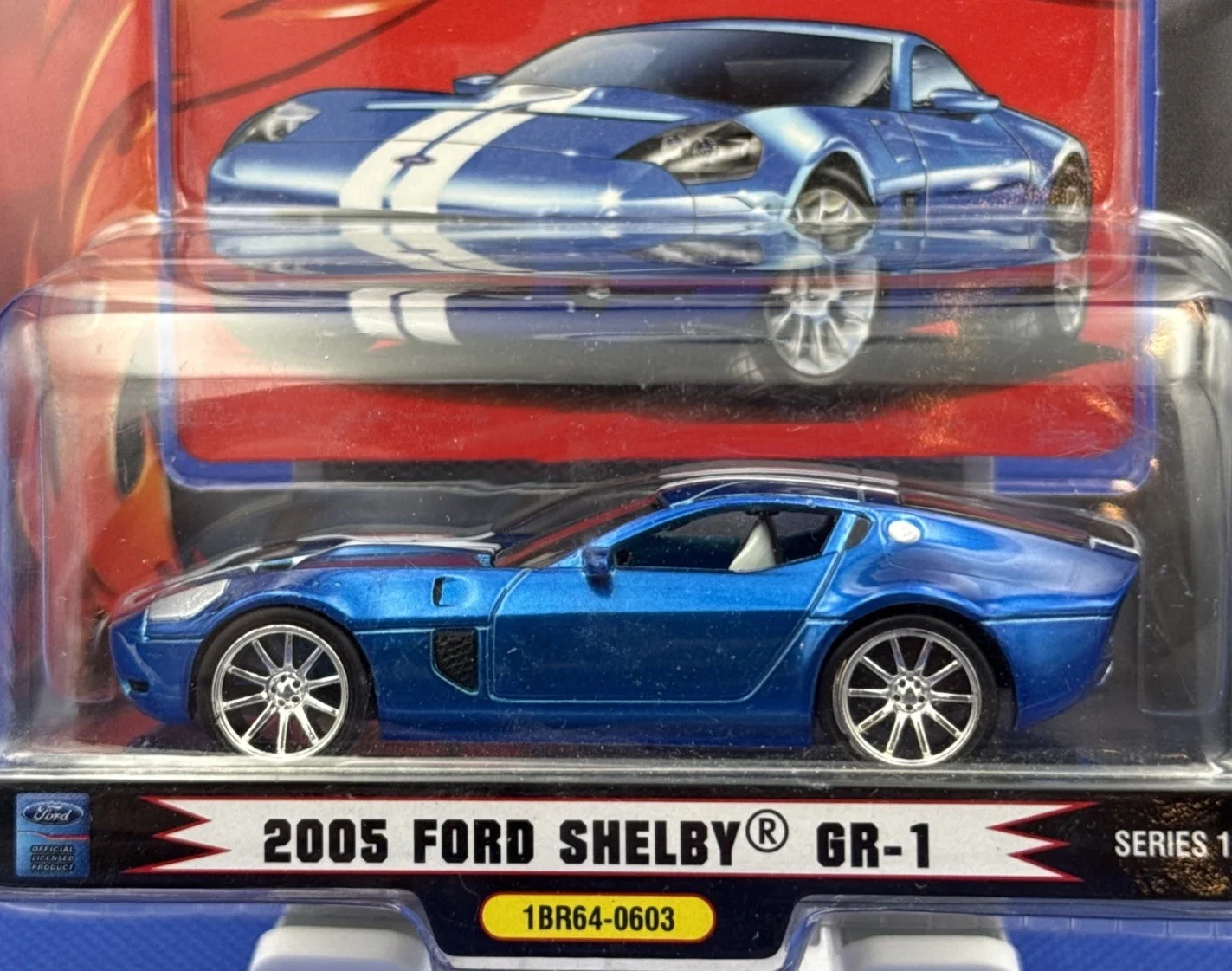
(スケールが1/50位と大き過ぎる以外は、カチットしたシャープなモールドがHW版と対照的
ーーー>タイヤ・ホイールサイズが少し大きすぎる以外は至第点です。)
*マテル社製、ホットホイール, 1/87【珍しいHOスケール!】 フォード・シェルビーGR-1コンセプト(各色あり)
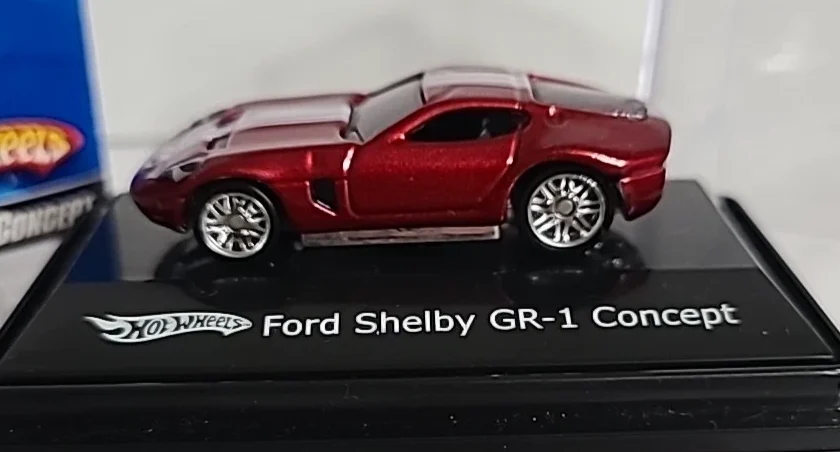
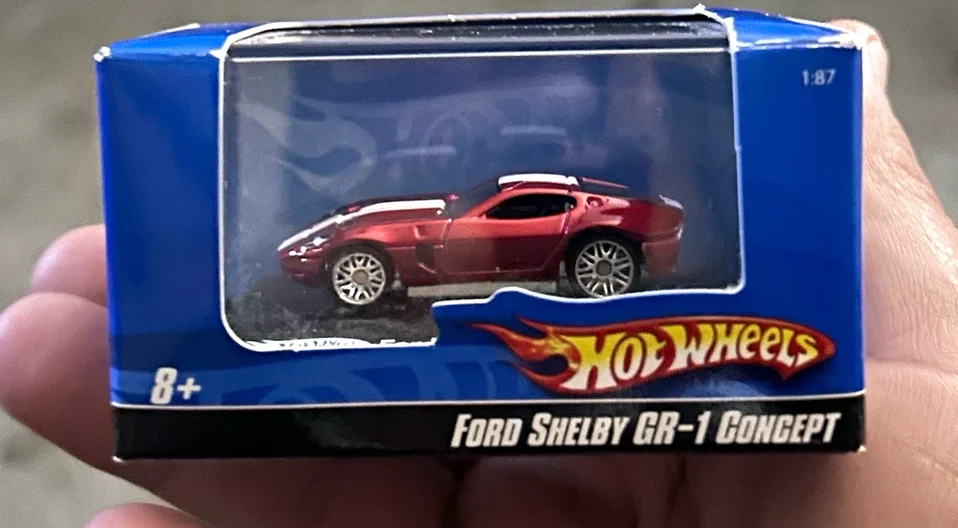 (出来は良さそうなのですが入手出来てません。
—->ヨーロッパの鉄道模型のアクセサリー市場向け商品でしょうか?? )
次はいよいよお待ちかね?の
三大噺のお時間です!
張り切っていきましょう。
*三題噺:フェラーリ250GTO’62・コーダトロンカ・サリダキス
さて今回も、
会場のお客様から頂きました3っつのお題から、
見事におかしく、ためになる落語を作ってお見せします。
リラックスして、
お楽しみに、
お題:
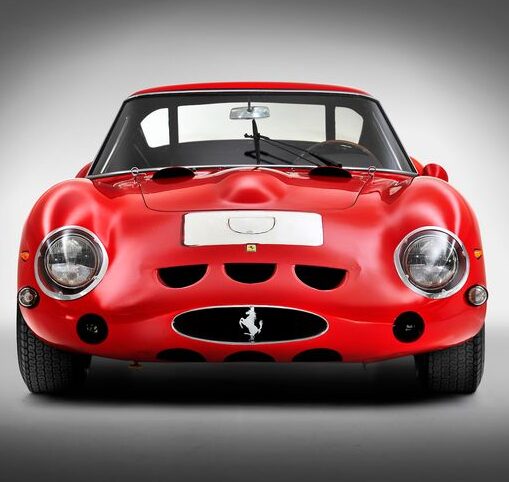
*フェラーリ250GTO’62
*コーダ・トロンカ
*ジョージ・サリダキス
(パン、パン、パパンと、張り扇の小気味よい音が静まり返った釈台に響き渡る)
n
n
 n
nn
n
n
n
n
n
n
n
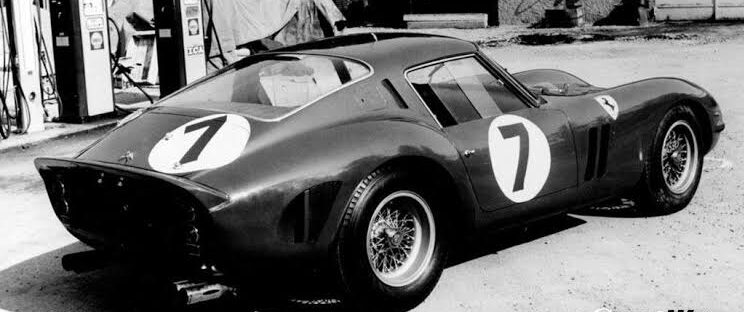
*その戦場に燦然と輝く至高の美神「フェラーリ250GTO’62」。
*空気を切り裂き、風を従える究極の機能美「コーダトロンカ」。
*そして、その伝説の魂を二一世紀の未来へと甦らせた気鋭のデザイナー:ジョージ・「サリダキス」。
n
この三題の糸を縦横無尽に織り成し、2004年に世界を震撼させながらも、ついに市販されることのなかった幻のスーパーカー「フォード・シェルビーGR-1コンセプト」の、その驚天動地の機構と外観デザインを、一席、格調高く読み上げてまいろうという趣向でございます。
そうしてサリダキスのペンから生み出された「フォード・シェルビーGR-1コンセプト」の外観デザインは、まさに古典と未来の狭間で激しく火花を散らす、空前絶後の「見物(みもの)」となったのでございます。
主役たるGR-1のボディの表面を覆うのは、塗装ではない。職人が何百時間もかけて磨き上げた、鏡面仕上げの、むき出しのアルミニウム。カリフォルニアの太陽の光を浴びてギラギラと眩い光を放つその姿は、まるで近未来の戦闘機か、あるいは一本の銀のインゴットから削り出された超彫刻。
n
過去のデザインへの郷愁(ノスタルジー)に引き込まれそうになりながらも、アルミニウムの硬質な輝きとエッジの効いたラインが、それを力づくで未来へと押し進めている。
n
n
n
*そして、デザイナーが古典の美に最敬礼を捧げ、アグレッシブな近未来のデザインへとジャンプする、その飽くなき冒険。
n
往(ゆ)く先は常に、眩いばかりの未来の地平!
これぞまさしく、
という、モータースポーツとデザイン冒険の、永遠の美学そのものでございます。
n
長らくのご静聴、誠にありがとうございました。
(一礼し、格調高き余韻を残して舞台を去る)
n

n
n
n
n
n
n
n
n
n
n
n
*その他のフォードの超新星たち、、、
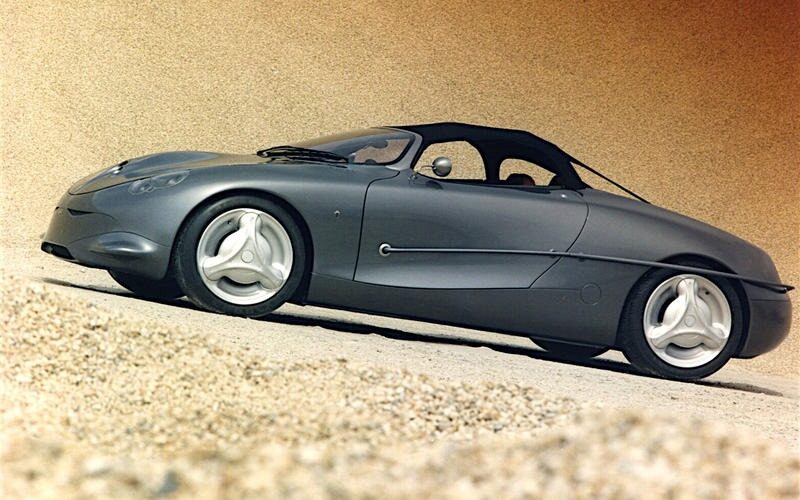
アメリカフォードの最近の後ろ向きなデザイン戦略はともかく、
海の向こう、ヨーロッパフォードに目を移しますと、
一時的にカロッツェリア・ギアを所有していた経緯もありまして、
非常にアグレッシブな生産車、ショーカーが
うごめいております。
*フォード・ギア フォーカス(コンセプト)
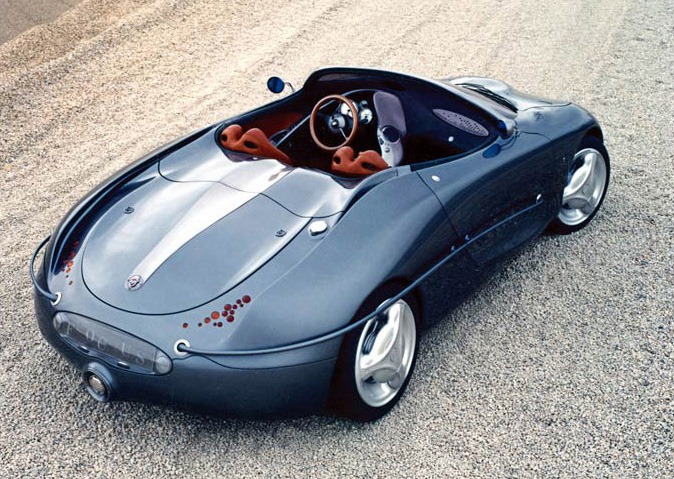
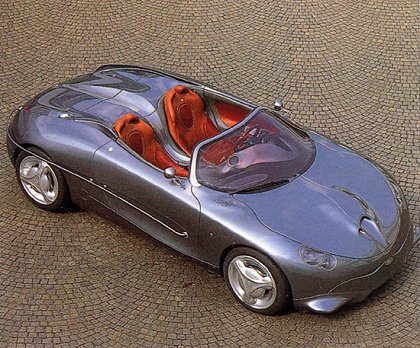
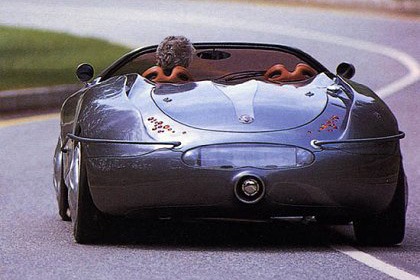
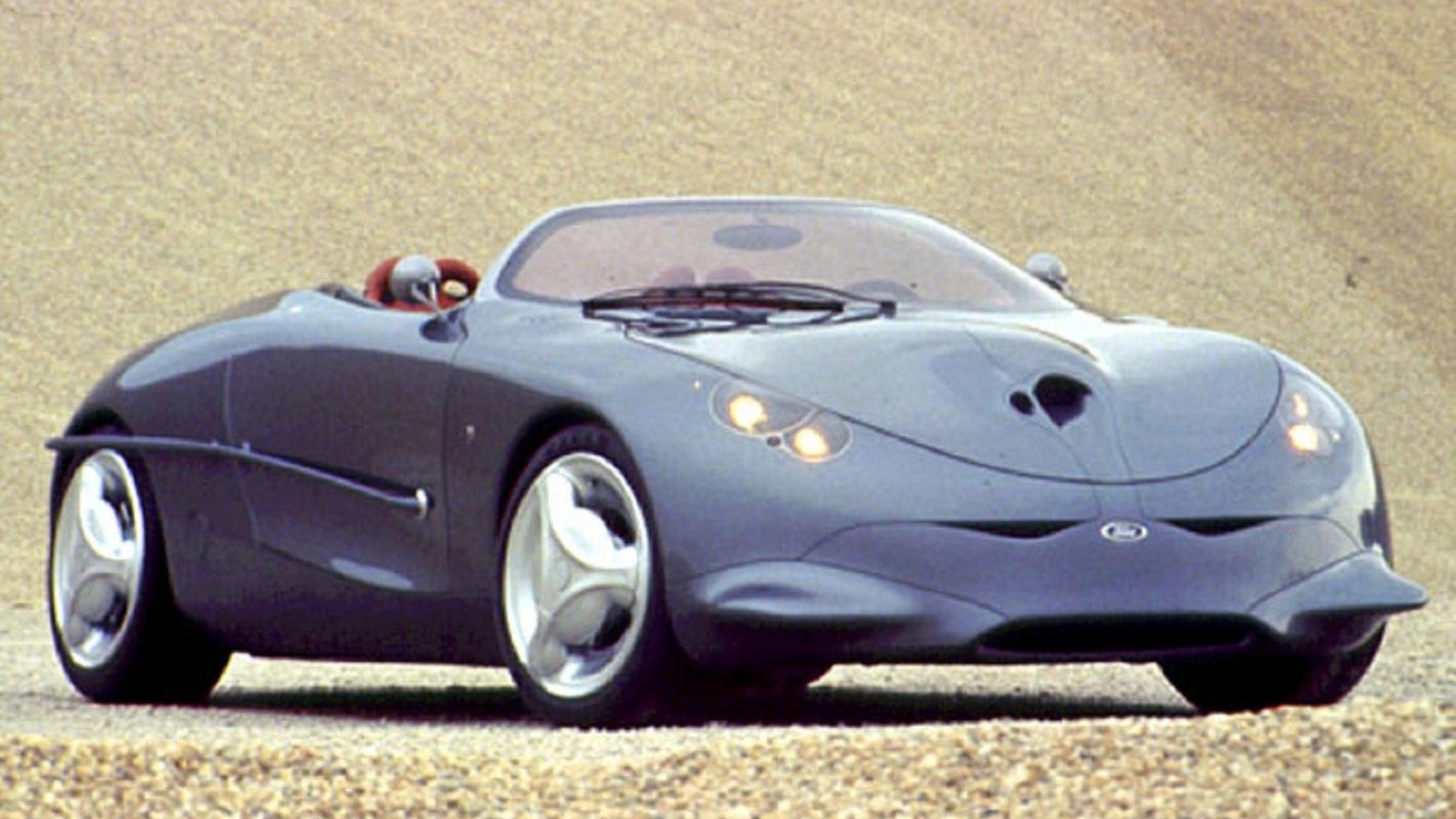
(オーガニック(昆虫型・有機デザイン)の傑作として『サイバーパンク映画におけるブレードランナー的な立ち位置』を有する超傑作車です。複雑怪奇な曲面、スムーズにブラ型幌が収まる美しいプロポーション、小さな穴型のグラフィックテーマなど全身が見どころのカタマリです。
ーーー>私の学生時代のアイドルです!)
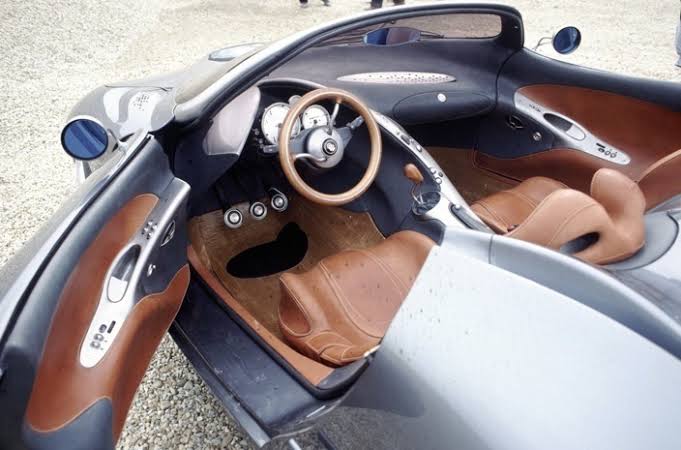
*マーキュリーMC4【コンセプト】(1997年)
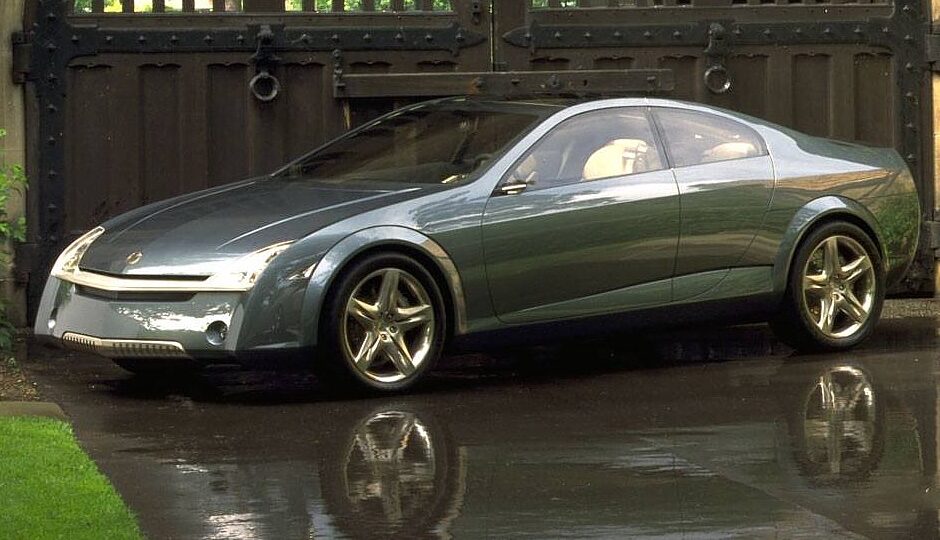
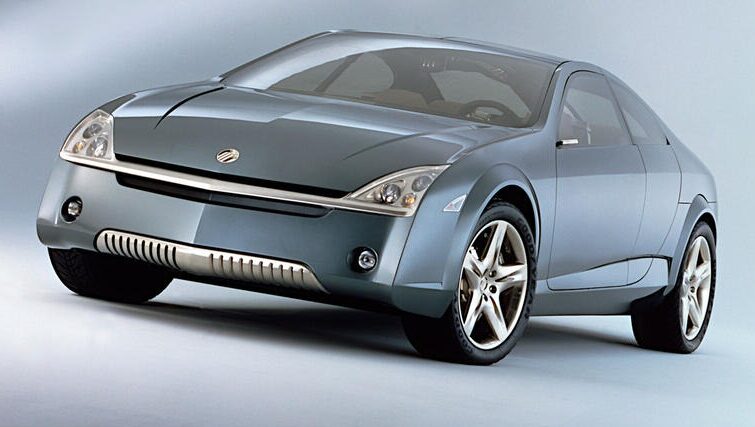
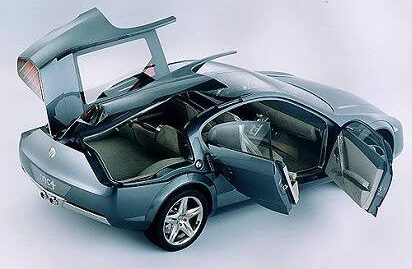 (当時のフォードデザインの清潔感あふれる面構成+ドアや開閉部のキリかクラインのぐらf引く感覚の妙味
ーーー>実物の表面を触ってみたい衝動にかられます。)
*フォード 24.7 コンセプト (2000)
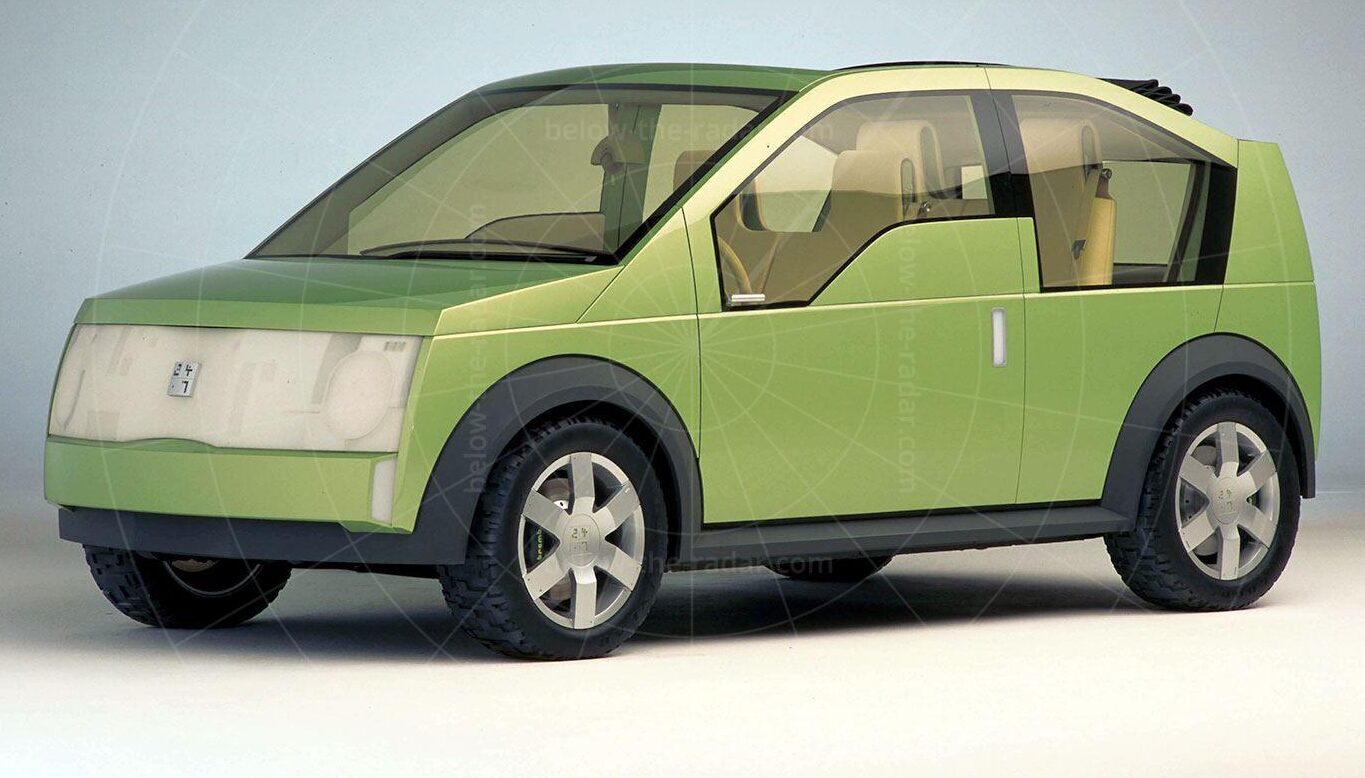
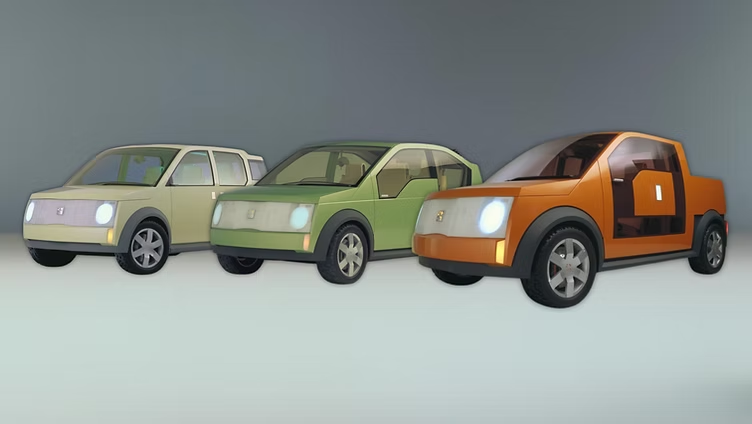
(現在のコネクテッド・カーのご先祖様的な立ち位置の、先進性あふれたコンセプトとそれ体現した、軽やかで親しみのある外観デザイン
ーーー>このころまでは、日本が強い分野でした、、、泣)
*1970年型、ダッジ・チャレンジャー
*2002年型、2代目ダッジ・バイパーSRT10 (ACRグレードは後に追加)
*2004年発表、フォード・シェルビーGR-1コンセプト
3台のアメ車にまつわる
お話もこれにて一件落着です!
今後もアメ車のデザイン記事は
描き続けていきたいテーマです。
お楽しみに、、、
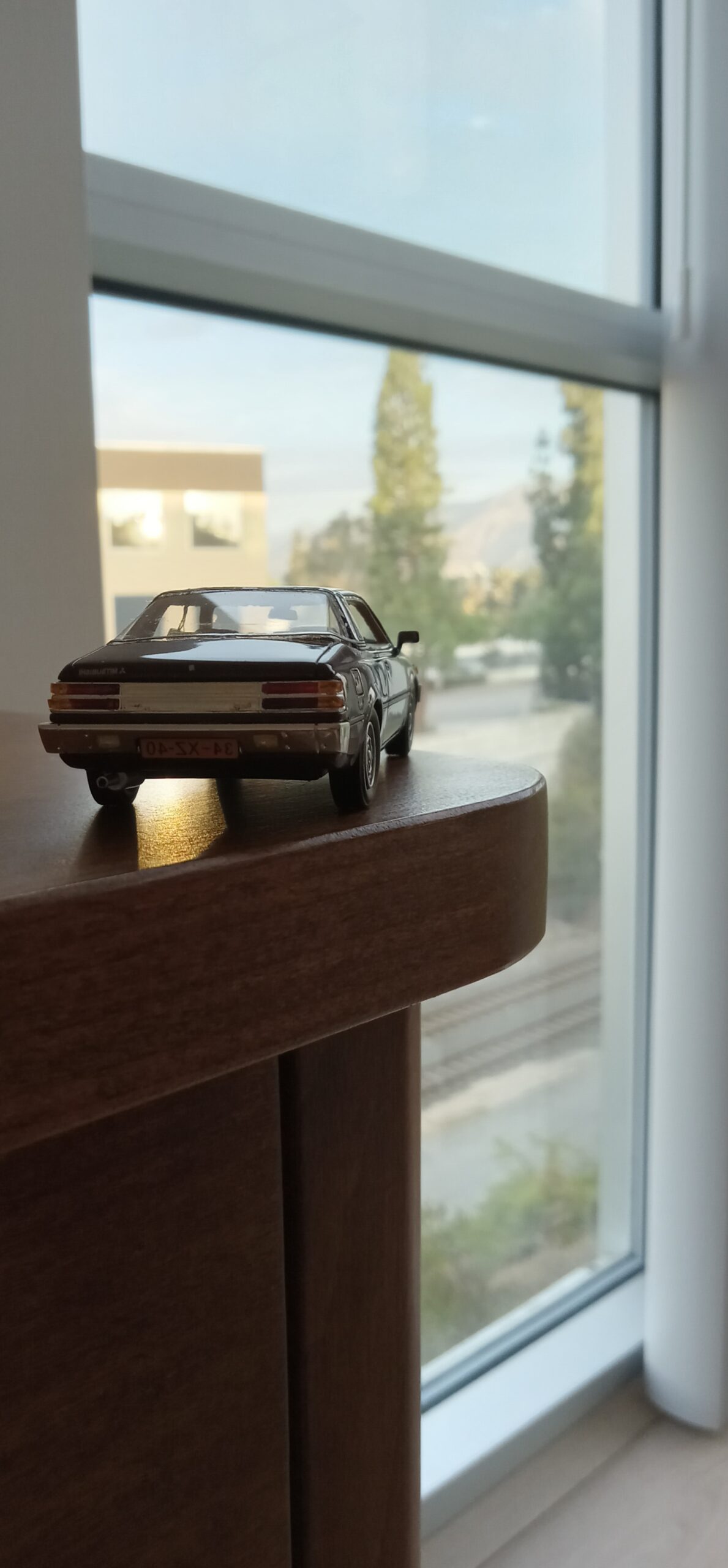
次回は、
ガラッと変わって、
隠れた名車、2台のマイナー三菱車
につて語ってみたいです。
本ブログと記事内容につきまして:
ブログ記事を書くにあたり私の目標は、立体造形(料理も含めて)とのかかわりを通じて、私個人の特徴的(ネジ曲がり方も含めて)な評価軸を解明することで、「美しさ・美味しさ」に対する好奇心や、探求心を、どのように満足・充足させてきたのかを明記しておくことです。
従いまして、記事の中に出てくる、数字や年号、微細なデータなどには細心の注意を払っておりますが、時に大きな間違いや勘違いを犯していることも考えられます。特に自動車記事における主要諸元や、年号などには紛らわしいものも多く、あくまで参考程度に考えていただければ幸いです。
私としては、記事の中で個人的な外観デザインや味覚の評価、そこから広がる後半部分につなげるための、『流れ』を作るための客観的材料として年号やデータを挿入している感じです。あくまで重視したいのは、私個人の頭の中で起こる、記憶の錯そう的混沌から生まれる新たな『見方』や『情報の予想外のつながり』です。その勢いを作り出す、『流れ』の一環として、諸データが副次的に必要となるわけです。
話がそれますが、大好きな落語の世界に「三題噺」という、その場て会場から募った3つのお題を使って1つのお話に仕立てるといったお遊びがございますが、私はそれに近いことを立体造形の特徴や(料理のお味)をお題にして行っている感じがします。その中で頭の中に去来する数々の着想が、全く予想外で楽しく、次回からの記事内容を大幅に変えたり、新展開につながっています。
当ブロブの仕組み:
『好奇心の点と線 x 気まぐれ脳内回路=予想外の新展開』
こんな自分勝手なブログですが、今後ともよろしくお願いいたします。
追記:上記の『流れ』を作る為に必要な写真はできる限り、個人所有のミニカー・自前の料理などを使い撮影しておりますが、その他の必要最小限の図版や写真を他のブログ主様の記事や諸会社ホームページなどからお借りしております。(記事内容に合うよう加工させていただき、使用時は最小の解像度で載せております。)問題がある場合、ご連絡いただければ直ちに降ろさせていただきます。
追記2:当ブログ記事に掲載のミニカー写真等(個人撮影)は許可なしで、どのようにお使いいただいても結構です。私個人の創造性はこの世のもの、と言う認識の上で記事を製作しています。
!!!!!!!!!!!!!!!!!!!!!!!!!!!!!!!!!!!! Translated in English !!!!!!!!!!!!!!!!!!!!!!!!!!!!!!!!!!!!
(Miniature Car for Photography #1: Mattel, Hot Wheels Standard Series, Ford Shelby GR-1 Concept, 2004 [Chrome]—Modifications: Removed the rivets; significantly thinned the chassis; carefully and substantially trimmed the height of the rear bumper to match the actual vehicle; raised the axle position as much as possible; adjusted the ride height to the lowest setting)
(Miniature Car #2: Johnny Lightning, 1/64 die-cast ready-to-display model, Ford Shelby Cobra Daytona Coupe [Racing Blue] —— Modifications: Removed the rivets and adjusted the ride height to be lower)
(Die-cast Model ③: M2, 1/64 scale die-cast ready-to-display model, Dodge Challenger, 1970 [Plum Pink] —— Modifications: Only minor adjustments to ride height)
Part 45—The Lineage of 2-Door Coupes: Part 25 [American Cars Part 2] Ford Shelby GR-1 Concept, 2004 (Chrome) “Cobra Daytona: A Prelude to a Revival?” Ford Shelby GR-1 Concept “Cobra Daytona Coupe Revive!”
#Favorite Car Designs—The Lineage of 2-Door Coupes:
For this 45th installment, titled “The Lineage of 2-Door Coupes, Part 25,” I’d like to discuss luxury 2-door (GT) coupes and roadsters, which strongly reflect the national characteristics and unique exterior design styles of various countries. [Note: Includes convertibles]
I’ll proceed as follows.
In this 25th installment, we finally move on to
[U.S. Cars Part 2],
featuring the
Ford Shelby GR-1 Concept (Chrome),
unveiled in 2004.
[The Lineage of 2-Door Coupes: Table of Contents]
[U.S. Cars]
Part 1: Cadillac Elmirage, 2013 (Metallic Red)
Part 2: Lincoln Continental MK4, 1972 (Black)
Part 3: Mercury Cougar, 1967 (LT Metallic Green)
[German Cars]
Part 4: MB 500K Special Roadster, 1936 (Black)
Episode 5: MB 300SL Roadster, 1957 (Silver)
Episode 6: MB SLS AMR Gullwing, 2010 (Black)
[British Cars]
Episode 7: McLaren F1, 1992 (Metallic Orange)
Episode 8: Jaguar XKSS Roadster, 1957 (Royal Blue)
Episode 9: Jaguar XKR Coupe, 1996 (Dark Metallic Green)
[Japanese Cars / Nissan Edition]
Episode 10: Nissan First-Generation Silvia, 1965 (Champagne Gold)
Episode 11: Nissan Fifth-Generation Silvia, 1988 (LT Metallic Green)
[Italian Cars]
Episode 12: Ferrari 250TR Pontoon Fender, 1958 (Red)
Episode 13: Ferrari 250GTO, 1962 (Italian Red)
Episode 14: Lamborghini Concept S, 2005 (Pearl White)
[Japanese Cars: Mazda]
Episode 15: Mazda Cosmo Sport, 1968 (Racing White)
Episode 16: Mazda Eunos Cosmo, Type-S (Two-Tone: Black & Gray)
[French Cars]
Episode 17: Bugatti Type 59, 1935 (French Blue)
Episode 18: Citroën SM, 1970 (Champagne Gold)
Episode 19: Bugatti La Voiture Noire, 2019 (Black)
[Japanese Cars: Toyota Edition]
Episode 20: Toyota/Yamaha 2000GT, 1967 (Ivory White)
Episode 21: Toyota 2nd-generation Soarer, 1986 (Crystal White II)
Episode 22: Lexus LC500 [GWZ100], 2017 (Manual Transmission, Red)
[American Cars Part 2]
Episode 23: Dodge Challenger, 1970 & Plymouth Barracuda, 1971
Episode 24: Dodge Viper SRT-10 ACR, 2008 (Black)
Episode 25: Ford Shelby GR-1 Concept, 2004 (Chrome)
[Japanese Cars: Mitsubishi Edition]
Episode 26: Mitsubishi Galant λ, 1976 (Brown Metallic)
Episode 27: Mitsubishi Eclipse [North American Spec], 2006 (Orange Metallic)
[German Cars Part 2]
Episode 28: BMW M635CSi, 1984 (Dark Metallic Blue)
Episode 29: MB 560SEC AMG 6.0 Widebody, 1989 (Black)
Episode 30: BMW M2 with Genuine Performance Parts, 2025 (Neon Lime)
Episode 31: First-Generation Audi TT, 1998 (Lake Silver Metallic)
[Japanese Cars: Subaru Edition]
Episode 32: Subaru Crosstrek XV, 2012 (Lime Green Metallic)
[British Cars Part 2]
Episode 33: Lotus First-Generation Elite, 1959 (British Green)
Episode 34: Lotus Elan S4 Sprint (2-Tone: Blue, White & Gold)
Episode 35: Jaguar E-Type Roadster (Light Blue Metallic)
[Japanese Cars: Honda (Lightweight Sports Cars)]
Episode 36: Honda S800, 1966 (Red)
Episode 37: Honda First-Generation CR-X 1.5i, 1983 (Blue & Silver Two-Tone)
Episode 38: Honda Beat, 1991 (Samba Yellow)
[Special Edition]: The Corvette Lineage
Episode 1: 1967 Stingray [C2] Convertible (Hardtop, Metallic Blue)
Episode 2: 1972 Corvette [C3] Convertible (Metallic Blue)
Episode 3: 1984 Corvette Coupe [C4] (Bright Red)
Part 4: Corvette Indy [Mid-Ship Prototype] (Silver)
Part 5: Stingray Concept [Prototype], 2009 (Metallic Blue)
#The Return of the Shelby Daytona Coupe?
I’ve long been a huge fan of the “Shelby Daytona Coupe’s”
“rugged, American”
“coda tronca tail”
design, so
when I first saw a photo of the rear end of the Ford Shelby GR-1,
I fell in love at first sight
,
and ever since then, I’ve been on the hunt for a suitable model or die-cast car.
Then, last year, I found the standard Hot Wheels version of the GR-1 with a chrome finish—the one I’m featuring here—on eBay. It was love at first sight, so I snapped it up right away. I gave it a major overhaul, focusing on the body thickness and ride height to achieve a “ground-hugging” look, and finally, I’m ready to start writing this article.
So, with that in mind, I’d like to introduce the “Shelby Edition
Futuristic Racer with a Rare Chrome Body”
to you.
* Real-life commentary: Includes a photo collection of the actual car
* Exterior design features:
* “Me” and the Shelby GR-1
* Three-topic story: Ferrari 250 GTO, Codatronca, Salidakis
* Other Descendants of Carroll Shelby…
* Real Car Commentary: A Signal for the Return of the Shelby Daytona Coupe?
#Real Car Photo Gallery:
Regarding this Mattel die-cast model,
while the overall impression is excellent,
the body surface is thickly plated across the entire surface, giving it a somewhat clunky appearance and making the details seem a bit lacking in sharpness. Therefore, I’ve prepared a photo collection of the actual car.
n
n
n
N
N
N
N
N
N
n
N
N
n
N
N
N
N
N
(ko(
n
N
N
N
N
N
N
n
N
N
N
N
N
n
N
N
N
N
N
N
N
n
N
N
N
N
N
N
N
n
N
N
N
N
N
N
n
N
N
N
N
N
N
n
N
N
N
N
N
Overview:
The Ford Shelby GR-1 is a stunningly beautiful two-seater high-performance concept car jointly unveiled in 2005 by legendary designer Carroll Shelby and Ford. It is characterized by its retro-futuristic design—heavily influenced by the iconic 1960s “Shelby Daytona Coupe”—a powertrain featuring a 6.4-liter V10 engine delivering a maximum output of 605 horsepower, and the fact that it was never put into production.
n
n
n
n
n
n
n
n
n
n
N
N
n
n
n
n
n
n
N
N
n
n
n
n
n
n
N
N
n
n
n
n
n
n
N
N
n
n
n
Design and Features:
n
The exterior design of the Ford Shelby GR-1 Concept is characterized by its striking “long-nose, short-deck” proportions, inspired by the legendary “Shelby Daytona Coupe” racing car. The lead designer of the Ford Shelby GR-1 Concept (unveiled in 2004 and 2005) was George Saridakis, who was an in-house designer at Ford at the time.
n
n
Proportions and Body Lines
* Long-nose fastback: A long hood housing a massive V10 engine flows seamlessly into a teardrop-shaped cabin and fastback roof that slopes smoothly toward the rear.
* Muscular stance: Widely flared front and rear fender arches and powerful shoulder lines convey a sense of dynamism, making the car appear as if it’s in motion even when stationary.
* Shortened Overhangs: The front and rear overhangs have been minimized to the absolute limit, emphasizing an aggressive stance.
n
n
Details and Materials:
* Polished Aluminum Body: Features glossy, machined-aluminum-style body panels that highlight the sculpted, beautiful contours.
* Butterfly Doors: Features distinctive supercar-style doors that open by swinging upward.
* Large-Diameter Wheels: 19-inch, 12-spoke machined aluminum wheels are fitted.
n
n
n
Specifications and Performance:
* Engine: 6.4-liter (390 cubic inches) all-aluminum V10 engine.
* Power: Maximum output 605 horsepower / Torque 501 lb-ft.
* Transmission: Rear-mounted 6-speed manual (transaxle) with a limited-slip differential (LSD).
* Performance: 0-60 mph acceleration in approximately 3.9 seconds; top speed expected to exceed 190 mph (approximately 306 km/h).
Production Status:
* Although mass production was initially anticipated, the plan was canceled for financial reasons due to concerns over the sales performance of the “Ford GT” at the time and the anticipated high costs.
* Since then, the car has continued to enjoy great popularity among fans; for example, in 2016, the U.S.-based company Super Performance acquired the rights to produce a limited run.
#Trivia:
Who is designer George Saridakis?
George Saridakis is a Greek-born automotive designer who has worked for automakers such as Ford. He is best known for designing the “Ford Shelby GR-1,” one of his signature works.
Education and Early Career:
* After earning a degree in aerospace engineering from the University of Glasgow, he obtained a master’s degree in quality management.
* He completed a Master of Design in Vehicle Design at the Royal College of Art (RCA) in London.
* 1997: Joined Toyota Motor Corporation and worked at its European studio in Brussels.
Key Career Milestones at Various Manufacturers:
* 2000: Moved to Ford Motor Company.
* 2002: Relocated to Southern California, where he was responsible for Lincoln, Mercury, and Advanced Design.
* Notable Achievement: At the Advanced Design Studio in Irvine, starting from the very first sketches,
(Photo
*Later: He held various positions at Ford, including Chief Designer and Design Director for Exterior and Interior Design. He was also involved in exterior design at Rolls-Royce Motor Cars for a time.
n
#Three-View Photo Gallery:
#Key Specifications:
Model: Model unknown—A 6.4-liter (390 cubic inches) all-aluminum naturally aspirated V10 engine developed based on Ford’s “MOD (Modular)” engine family
Total Displacement: 6.4 L (390 cubic inches) all-aluminum V10 (naturally aspirated)
Maximum Power: 605 bhp (613 PS) / 6,750 rpm
Maximum Torque: 679 N·m (501 lb·ft) / 5,550 rpm
Drivetrain: FR (front-engine, rear-wheel drive)
Seating Capacity: 2
Body Style: 2-door coupe
Door Type: Butterfly doors
Wheelbase: 2,540 mm
Overall Length: 4,412 mm
Overall Width: 1,895 mm
Overall Height: 1,168 mm
Curb Weight:
1,769 kg (3,900 lbs)
* Exterior Design Feature: The Revived “Coda Tronca Tail”
(Miniature car used for photography: Manufactured by Jeda, 1/64 die-cast model [actually about 1/50?]) Ford Shelby GR-1 (Metallic Blue) ——> Used as-is, unmodified)
The view from the rear at an angle is
absolutely stunning—a racer of the century brought back to life in the modern era
“Cobra Daytona Coupe”
Let’s delve into
the exterior design features of this incredibly powerful
Ford concept car!
Here are my top 5 points—plus a few extras.
n
1: While retaining the original proportions, it boldly innovates with a long wheelbase and an incredibly low overall height, creating a sense of calm and purity born from the tension between boldness and balance.
ーーーー>Even when it’s not moving, it’s brimming with the afterglow of a race. So exciting!
2: The undeniable drama created by the body’s cross-section—which extends from the door to the rear quarter panel—as it spans the large, flared rear fenders, tapering dramatically from its widest point to the rear edge.
ーーーーー>When viewed from above at the rear, the taper along the side of the window is simply irresistible!!
3: The hood inherited from the Daytona Coupe, along with the rear fascia and the body sides, is adorned with the smart graphic treatment of ducts and auxiliary components unique to race-spec cars
ーーーー> The contrast between “diffusion and concentration” is magnificent!
4: The powerful “Coda Trunca-style” tail end that appears at the sharply tapered rear of the body
5: A sense of stability that fully capitalizes on the low center of gravity—completely free of the dynamic instability found in the original—equating to the deep sophistication of Ford’s design philosophy
ーーーー> A chivalrous subtlety that even exudes the elegance of “great to drive, great to look at”
n
Weaknesses:
# The only weakness might be that the front end’s “expression” lacks a bit of impact?
——> In this regard, the first-generation Daytona Coupe takes the cake. *sob*
Hmm
Now, let’s take a look at each one
with photos.
1: While inheriting the original’s proportions, it boldly innovates with a long wheelbase and an incredibly low overall height, creating a sense of boldness balanced with a quiet, clean aesthetic born from the interplay between boldness and equilibrium
(The meticulous craftsmanship shines through in every surface, detail, and the shaping of the aluminum body.)
ーーーー>Even when it’s not moving, it’s brimming with the afterglow of a race. So happy!
2: The undeniable drama created by the body’s cross-section—which extends from the doors to the rear quarters—as it spans the large, flared rear fenders and tapers dramatically from its widest point to the rear edge.
ーーーーー>When viewed from above at the rear, the taper along the side of the windows is simply irresistible!!
3: The hood inherited from the Daytona Coupe, along with the rear fascia and the sides of the body, are adorned with the smart graphic treatment of ducts and auxiliary components unique to race-spec cars.
ーーーー>The contrast between “diffusion and concentration” is magnificent!
4: The powerful [Coda Trunca-style] tail end that appears at the sharply tapered rear of the body
ーーーー>This section has several times the impact of the original.
5: A sense of stability that fully capitalizes on the low center of gravity—with absolutely no dynamic instability compared to the original—equals the deep sophistication of Ford’s design philosophy
ーーーー> A chivalrous subtlety that even exudes the elegance of “great to drive, great to look at”
Weaknesses:
# Perhaps the only weakness is that the front end’s “expression” lacks a bit of impact?
ーーーー> In this regard, the first-generation Daytona Coupe takes the prize. *sob*
In the next chapter, I’ll share
my personal experience with the “GR-1.”
*“Me” and the Shelby GR-1 Concept:
#The Impact of the Press Photos!!
In 2004, in the weekly magazine *AUTOWEEK*,
during a special feature on motor show concept cars,
I fell in love at first sight with the sheer impact of the “Code Tronca” tail shown in this photo, but
but since there was no news of it ever going into production,
I had almost completely forgotten about it—
until late last year,
when I stumbled upon it by chance
while searching for Hot Wheels on eBay:
the chrome-bodied version of the standard Hot Wheels model
caught my eye all over again!!
For some reason, I was drawn to the rippled texture of this die-cast model’s chrome surface. As soon as I got it, I immediately gave it a major overhaul—focusing on lowering the ride height as much as possible—and took some photos! ---> Which led to me writing this article.
After I started working on this article,
I made some new discoveries like this,
but none of them could match the aura of the Hot Wheels version I found at the beginning.
*1 Badd Ride, 1/64 die-cast ready-to-display model, Ford Shelby GR-1 Concept (Metallic Blue & White Stripes)
(Aside from the scale being a bit too large at about 1/50, the crisp, sharp molding stands in stark contrast to the Hot Wheels version.
—> It’s nearly perfect, except that the tire and wheel sizes are a bit too large.)
* Manufactured by Mattel, Hot Wheels, 1/87 [Rare HO scale!] Ford Shelby GR-1 Concept (available in various colors)
(It looks well-made, but I haven’t been able to get my hands on one.
—-> Is this a product intended for the European model train accessory market??)
Next up is the long-awaited?
time for the “Three-Theme Story”!
Let’s get started with enthusiasm.
* Three-Theme Story: Ferrari 250 GTO ’62, Codatronca, Salidakis
Well, once again,
based on three topics submitted by the audience here,
I’ll craft and perform a rakugo story that’s both brilliantly funny and enlightening.
Relax,
and enjoy the show!
Topics:
* Ferrari 250 GTO ’62
* Coda Tronca
* George Salidakis
(The crisp, rhythmic sound of a fan—pan, pan, papan—echoes across the silent storytelling platform.)
n
“Well now, there is a golden age in the history of the automobile—a time that will never, ever be forgotten—that truly set hearts racing and blood boiling. The time was the 1960s. The pride of the superpower, America, and Europe’s traditional sense of beauty clashed on the battlefield known as the racetrack. It was, indeed, that very era.
n
n
n
n
n
n
n
n
n
n
n
n
n
n
n
n
n
n
n
n
n
n
Today’s theme is:
* The supreme goddess of beauty shining brilliantly on that battlefield: the “Ferrari 250 GTO ’62.”
* The ultimate functional beauty that slices through the air and commands the wind: the “Coda Tronca.”
* And the up-and-coming designer who revived the soul of that legend for the 21st century: George “Salidakis.”
n
n
Our intention here is to weave these three themes together in every possible way and present, in a dignified and elegant manner, the earth-shattering mechanics and exterior design of the “Ford Shelby GR-1 Concept”—the phantom supercar that shook the world in 2004 yet was never actually released to the public.
(Bang!)
n
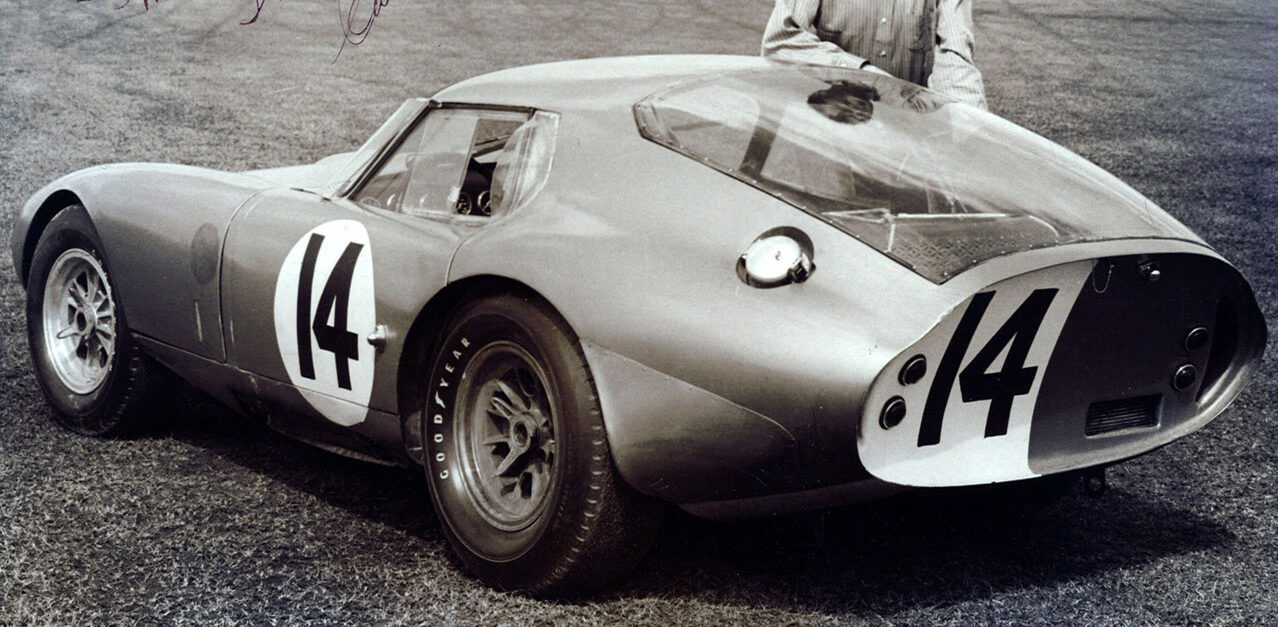
Now, first we must rewind the clock all the way back to 1962. At that time, in the International Manufacturers’ Championship—the pinnacle of motorsports—the Italian “Prancing Horse,” Scuderia Ferrari, reigned as the undisputed champion at the pinnacle of motorsports: the International Manufacturers’ Championship. Determined to dethrone the “Ferrari 250 GTO ’62” sitting on that throne, the master craftsman who embodied the spirit of Texas, Carroll Shelby, created a secret weapon based on the chassis of the legendary Cobra—the first-generation “Cobra Daytona Coupe.”
To overwhelm rivals with straight-line speed, there was one insurmountable barrier they simply had to overcome: the invisible monster known as “aerodynamic drag.” To tackle this, Shelby and his team adopted the cutting-edge aerodynamics of the time—namely, the “Coda Tronca” design, which created a sheer cliff at the rear end, as if it had been cleanly sliced off with a knife.
(Bang!)
n
With the functional beauty of this rugged yet ruthless “Coda Tronca,” the Daytona Coupe overpowered the wind and, in 1965, brilliantly claimed the World Championship title! It was a historic moment when America’s fierce fighting spirit reached the pinnacle of the world.
(Bang-bang-bang!)
n
Time passed, and in 2004—some 40 years later— A grand project took shape within Ford, aiming to revive Carol Shelby’s fiery fighting spirit and the legendary proportions of the Daytona Coupe for the modern era using the aggressive, forward-thinking technology of the 21st century. At that time, within the design team led by Chief Designer J. Mays, a young genius completed a single sketch. That young man was George “Salidakis,” the designer who would later take the world by storm.
(Bang!)
n
n
Salidakis agonized. “If we were to create nothing more than a nostalgic replica of the ‘good old days,’ it would be an insult to the spirit of Carroll Shelby. What we must create is an aggressive, forward-looking masterpiece that pays the highest homage to our glorious past (the classics) while keeping its gaze fixed on a future a light-year away.”
N
And so, the exterior design of the “Ford Shelby GR-1 Concept”—born from Salidakis’s pen—became an unprecedented “spectacle,” where sparks flew fiercely at the intersection of classic and future.
(Bang, bang, bam!)
n
Behold its majestic presence, unveiled at Pebble Beach in 2004!
The surface of the GR-1—the star of the show—is not covered in paint. It is bare aluminum with a mirror finish, polished by craftsmen over hundreds of hours. Bathed in the California sun, it glitters with a dazzling radiance, resembling either a fighter jet from the near future or a super-sculpture carved from a single silver ingot.
n
The front fascia retains echoes of the first-generation Daytona Coupe, yet features coldly glowing HID headlights and a massive mesh grille that draws in vast amounts of air, exuding the ferocity of a futuristic predator poised to kill its prey with a single bite.
n
And then, the line extending from the roof to the rear. This is the ultimate “Coda Tronca” as redefined by Salidakis for the modern era. The body line, flowing smoothly and tapering toward the rear, is cut off at the rear end—without a moment’s hesitation—not just vertically, but even more radically: “What! In a reverse slant!” Embedded in that cross-section are slit-shaped taillights utilizing modern LED technology, while thick exhaust pipes protrude from the muffler.
This is the pinnacle of beauty—a perfect fusion of the straight-line stability of the “Coda Tronca” that the Daytona Coupe once boasted and Salidakis’s forward-thinking vision.
n
Even as one is nearly drawn into nostalgia for past designs, the hard, lustrous sheen of the aluminum and the sharp, edgy lines forcefully propel it forward into the future.
(Bang!)
n
n
However, the true reason this GR-1 is such a “spectacle” lies in the formidable “mechanism” hidden beneath its beautiful exterior.
n
While many supercars touting a “future-oriented” approach are leaning toward technologies—such as hybrid systems and electronic controls—that cut off human sensory input, the mechanical setup chosen for this GR-1 was an extremely aggressive, even ferocious, embodiment of classic muscle car philosophy. Sitting majestically beneath the long hood is a heart that has been further refined based on the Ford GT chassis. Believe it or not, it’s a 6.4-liter, all-aluminum “naturally aspirated V10 engine” that delivers a maximum output of 605 horsepower!
(Boom!)
n
Competing solely on displacement and the number of cylinders, without the aid of a turbocharger—this is the American tradition. Paired with this engine is not a paddle-shift transmission, but a “six-speed manual transmission” where the driver shifts gears with their own hands! With electronic intervention kept to a minimum, you tame 600 wild horses using just your right foot and your own shifting skills.
n
Externally, it’s clad in the futuristic armor of a 21st-century mirror-finish aluminum body, yet inside, the “raw wildness and power” of Carroll Shelby—which once astonished the world—still lives on. Truly, while its body gazes toward the cosmos of the future, its heart inhales the mud of the battlefields (racing circuits) of the past. It is precisely this contradiction—this “gap between the classic and the future”—that has elevated this car from a mere industrial product to a once-in-a-lifetime artistic “spectacle.”
(Bang, bang, bang!)
n
And so, enthusiastic fans around the world watched with bated breath, exclaiming, “This is the true hyper-sports car that carries the Shelby legacy into the next generation! When will it go on sale? When will it be released?” However, contrary to public expectations, the decision made by Ford’s management was a ruthless one. Various circumstances—the approaching footsteps of the era leading up to the Lehman Shock, the high hurdles to mass production…—all these factors intertwined, and the “Ford Shelby GR-1 Concept” ultimately never made it onto the production line. Instead, as a single prototype, it was destined to fade into the shadows of history.
(The sound of a fan echoes with a touch of melancholy. Papap)
n
n
It seemed as though the dream had been crushed. However, the way of motorsports—and of race cars—is never to look back and shed tears.
n
They look back not to wallow in the beauty of legendary cars of the past, but to use that past as a springboard to reach the unseen horizons of the future as quickly as possible. “Learning from the past to understand the present” is not about standing still; it is nothing less than a running start to leap even farther.
n
The GR-1, never released to the public, ended up slumbering deep in a garage as a phantom curiosity. Yet the passion of Salidakis etched into its aluminum body, and the functional beauty of the Codatronca, continue to flow through the veins of designers creating the hypercars of the future.
(Here, strike the lectern once with a loud thud! Boom!)
n
n
Now then, let’s move swiftly toward the grand finale—the elegant closing act—to wrap up today’s reading.
n
* The style of a race car that checks its history in the rearview mirror and charges full speed toward the future.
* And the insatiable adventure of a designer who pays the highest homage to classical beauty before leaping into aggressive, near-future designs.
n
Where these two passionate narratives intersect—what on earth should we call the true nature of the Ford Shelby GR-1, this once-in-a-lifetime “spectacle”?
(The storyteller slowly raises his gaze, stands majestically, and raises his voice.)
b
The path ahead always leads to the dazzling horizon of the future!
n
This is truly
“Confirm history (Rear), and dash (Salidakis) toward the future!!”
n
—the very essence of the eternal aesthetics of motorsports and design adventure.
(Bang, bang, bap-bap-bang!)
n
n
Well then, this concludes my tale about the Ford Shelby GR-1 Concept.
Thank you very much for your kind attention.
n
(Bows and exits the stage, leaving a dignified afterglow)
n
n
n
n
n
n
n
n
n
n
n
n
n
n
n
n
n
*Other Ford supernovas…
Setting aside Ford of America’s recent backward-looking design strategy for a moment,
if we turn our attention across the ocean to Ford of Europe,
partly due to its history of temporarily owning Carrozzeria Gear,
there is a swarm of highly aggressive production cars and show cars
in the works.
* Ford Gear Focus (Concept)
(As a masterpiece of organic (insect-inspired, organic) design, this is a truly exceptional car that occupies a “Blade Runner-like position in cyberpunk cinema.” With its complex and bizarre curves, beautiful proportions that allow the bra-style soft top to retract smoothly, and a graphic theme featuring small perforations, every part of it is a sight to behold.
——> This was my idol back in my college days!)
* Mercury MC4 [Concept] (1997)
(The clean, crisp surface composition characteristic of Ford’s design at the time, combined with the subtle, almost Kleinian sense of depth in the doors and opening mechanisms
——> It makes me want to reach out and touch the actual surface.)
* Ford 24.7 Concept (2000)
(A concept brimming with innovation—essentially the forerunner of today’s connected cars—and an exterior design that embodies it, light and approachable
——> Up until this point, this was an area where Japan held a strong lead… *sob*)
* 1970 Dodge Challenger
* 2002 Second-Generation Dodge Viper SRT10 (ACR trim added later)
* Ford Shelby GR-1 Concept (unveiled in 2004)
And with that,
our stories about these three American cars have come to a close!
I plan to continue writing
articles on American car design in the future.
Stay tuned…
Next time,
in a complete change of pace,
I’d like to talk about two lesser-known Mitsubishi models—
hidden gems.
About this blog and its content:
My goal in writing these blog posts is to clarify my personal, distinctive criteria for evaluation—including my somewhat unconventional perspective—through my involvement with three-dimensional art (including cooking), and to document how I’ve satisfied and fulfilled my curiosity and desire to explore “beauty and deliciousness.”
Therefore, while I pay the utmost attention to the numbers, model years, and detailed data that appear in my articles, it’s possible that I may occasionally make significant errors or misunderstandings. In particular, key specifications and model years in automotive articles can often be confusing, so I would appreciate it if you treated them as general references only.
For my part, I feel as though I’m inserting dates and data into the articles as objective material to create a “flow” that connects my personal assessments of exterior design and taste to the broader themes explored in the latter half of the piece. What I ultimately prioritize are the new “perspectives” and “unexpected connections between pieces of information” that emerge from the chaotic jumble of memories in my own mind. The various data points are needed secondarily as part of that “flow” to generate that momentum.
As a slight digression, in the world of rakugo—which I love—there’s a playful format called “san-dai-banashi,” where a performer weaves a single story using three topics solicited on the spot from the audience. I feel like I’m doing something similar here, using the characteristics of three-dimensional sculptures and (the taste of food) as my prompts. The countless ideas that flit through my mind during this process are completely unexpected and delightful; they often drastically change the content of future articles or lead to new developments.
How This Blog Works:
“Spots and Lines of Curiosity x Whimsical Mental Circuits = Unexpected New Developments”
This blog may be a bit self-indulgent, but I hope you’ll continue to follow along.
P.S.: To create the “flow” described above, I take as many photos as possible using my own die-cast cars and home-cooked meals. However, I do borrow the bare minimum of other illustrations and photos from other bloggers’ posts and company websites. (I edit them to fit the article’s content and post them at the lowest possible resolution.) If there are any issues, please contact me, and I will remove them immediately.
Addendum 2: You are free to use the photos of die-cast cars and other images (taken by me) featured in this blog’s posts in any way you like without permission. I create these posts with the understanding that my personal creativity belongs to me alone.
Translated with DeepL.com

これはCTAサンプルです。
内容を編集するか削除してください。