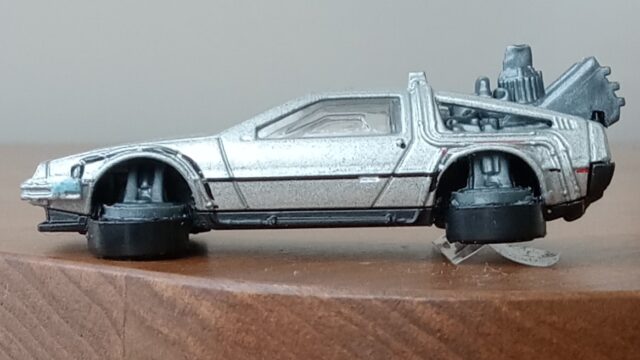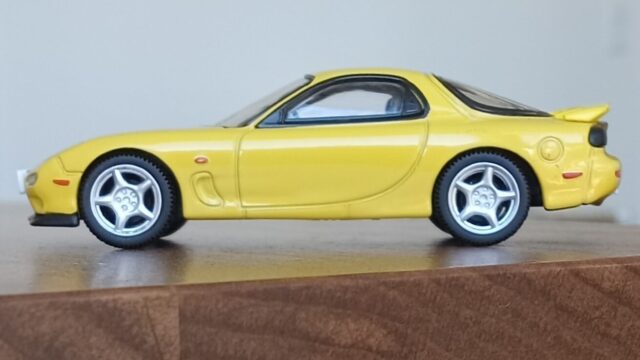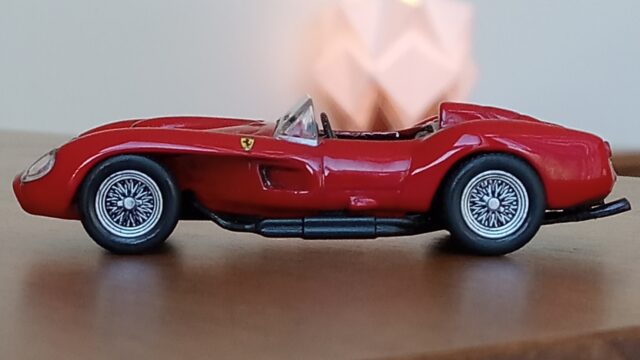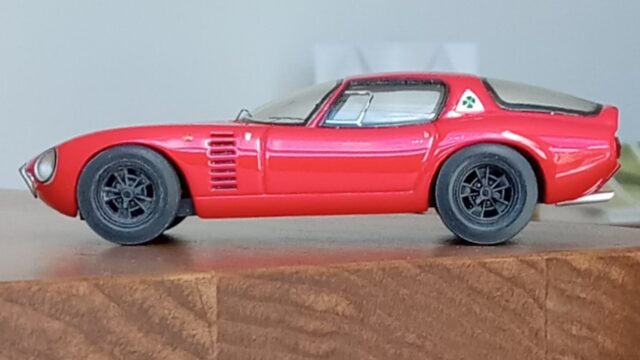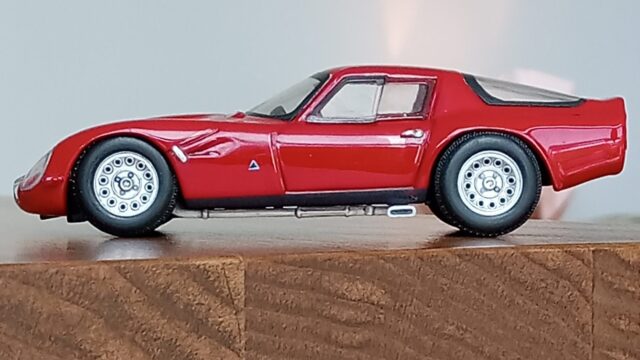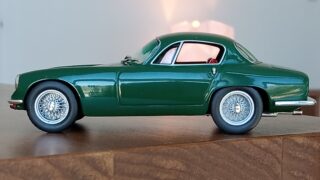
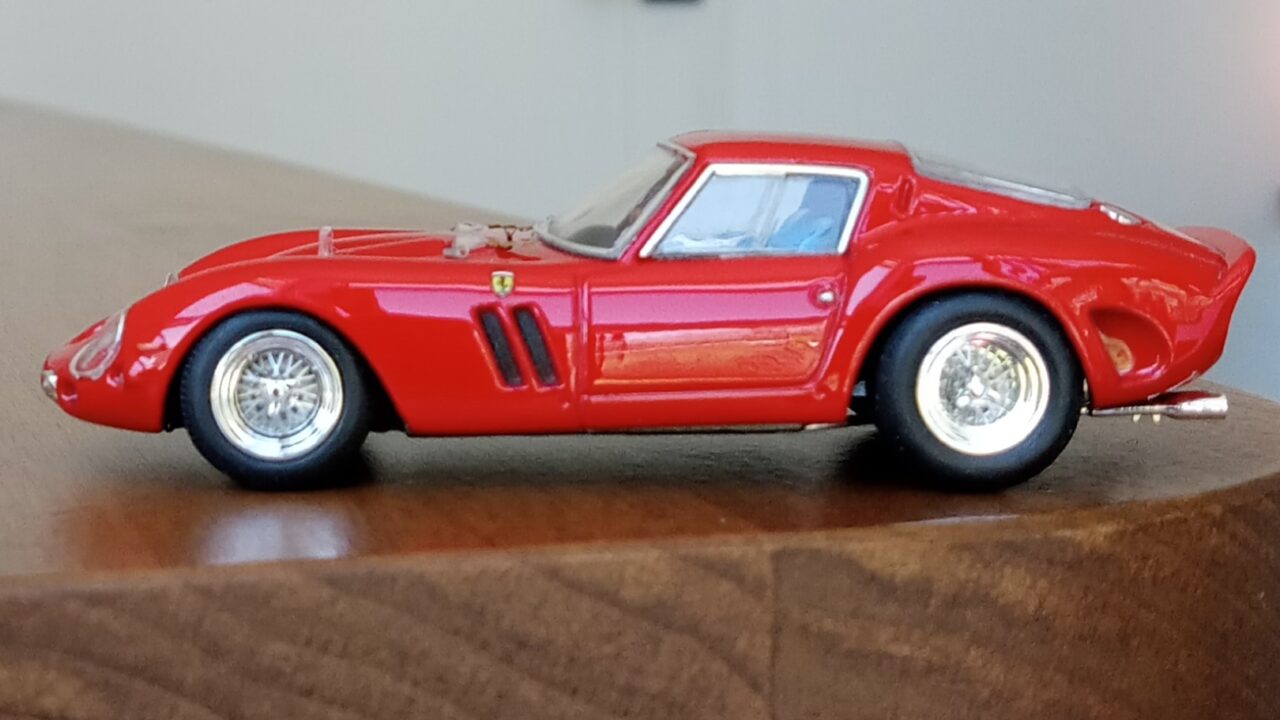
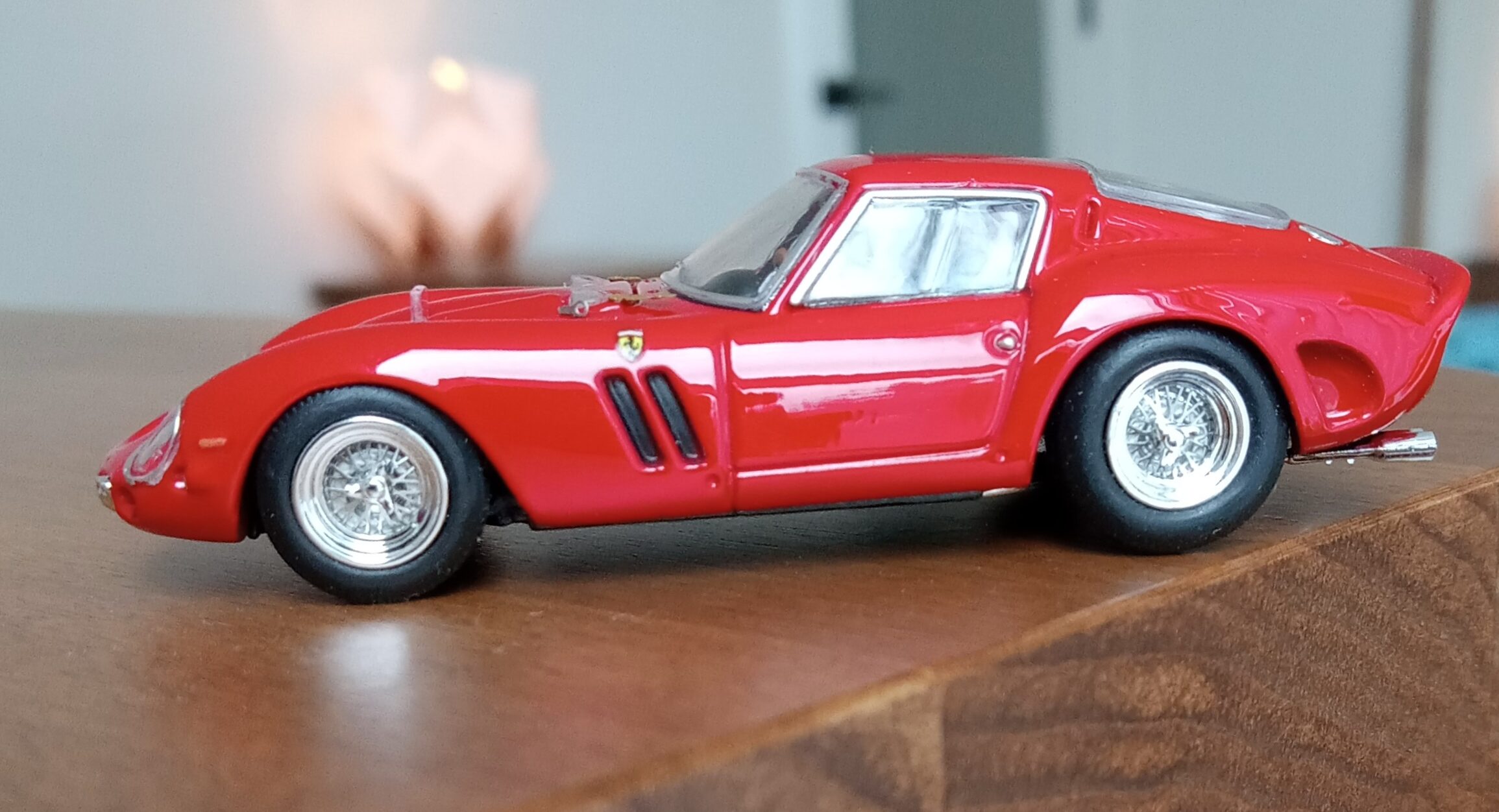
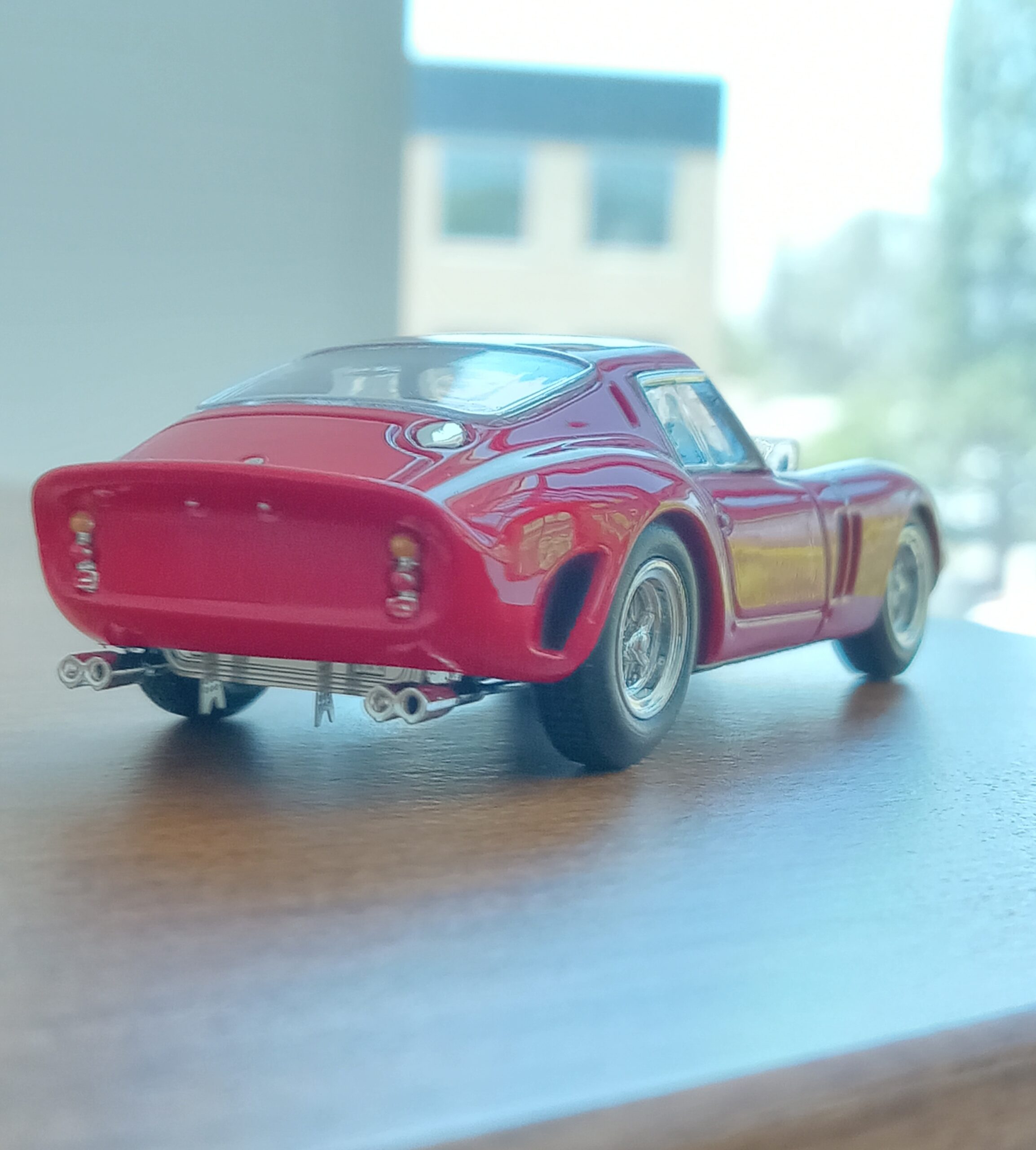
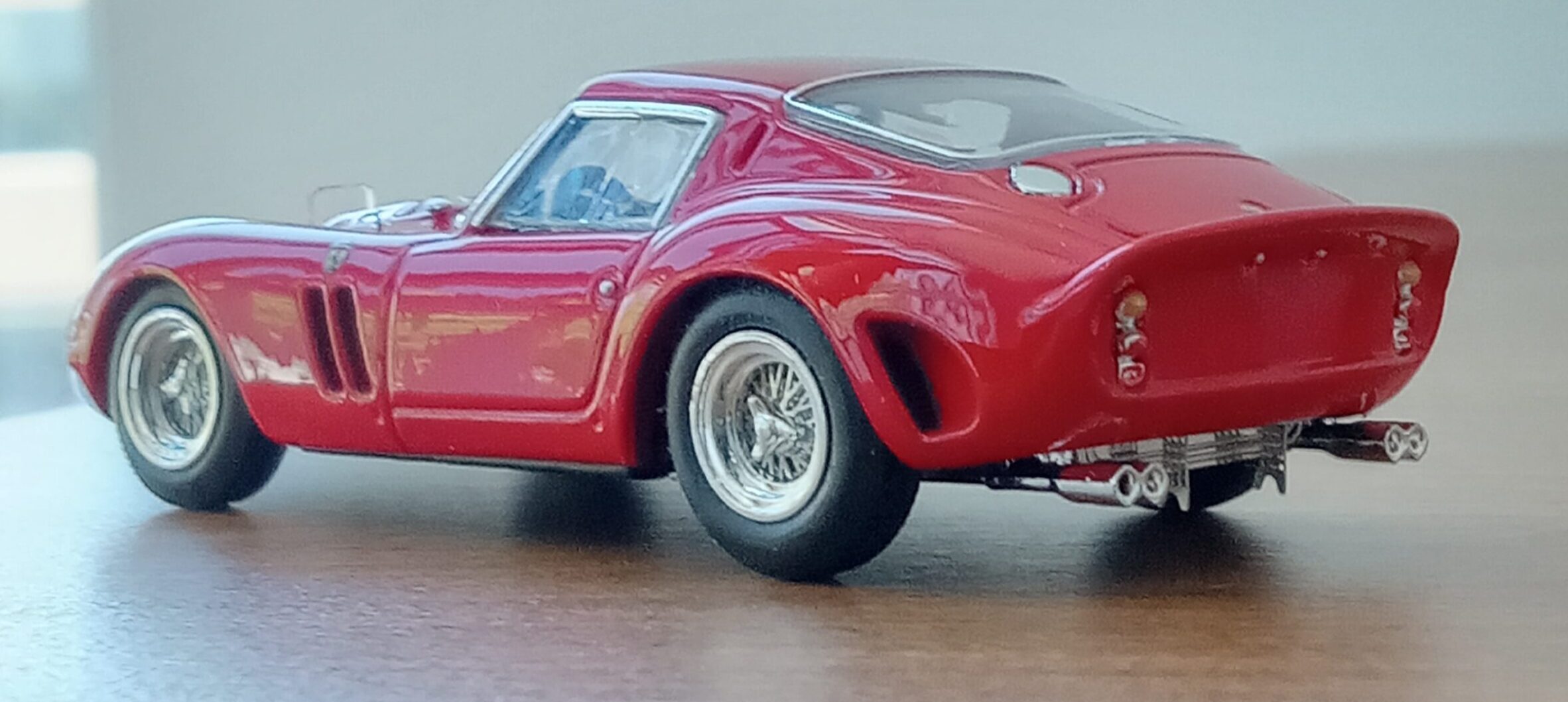
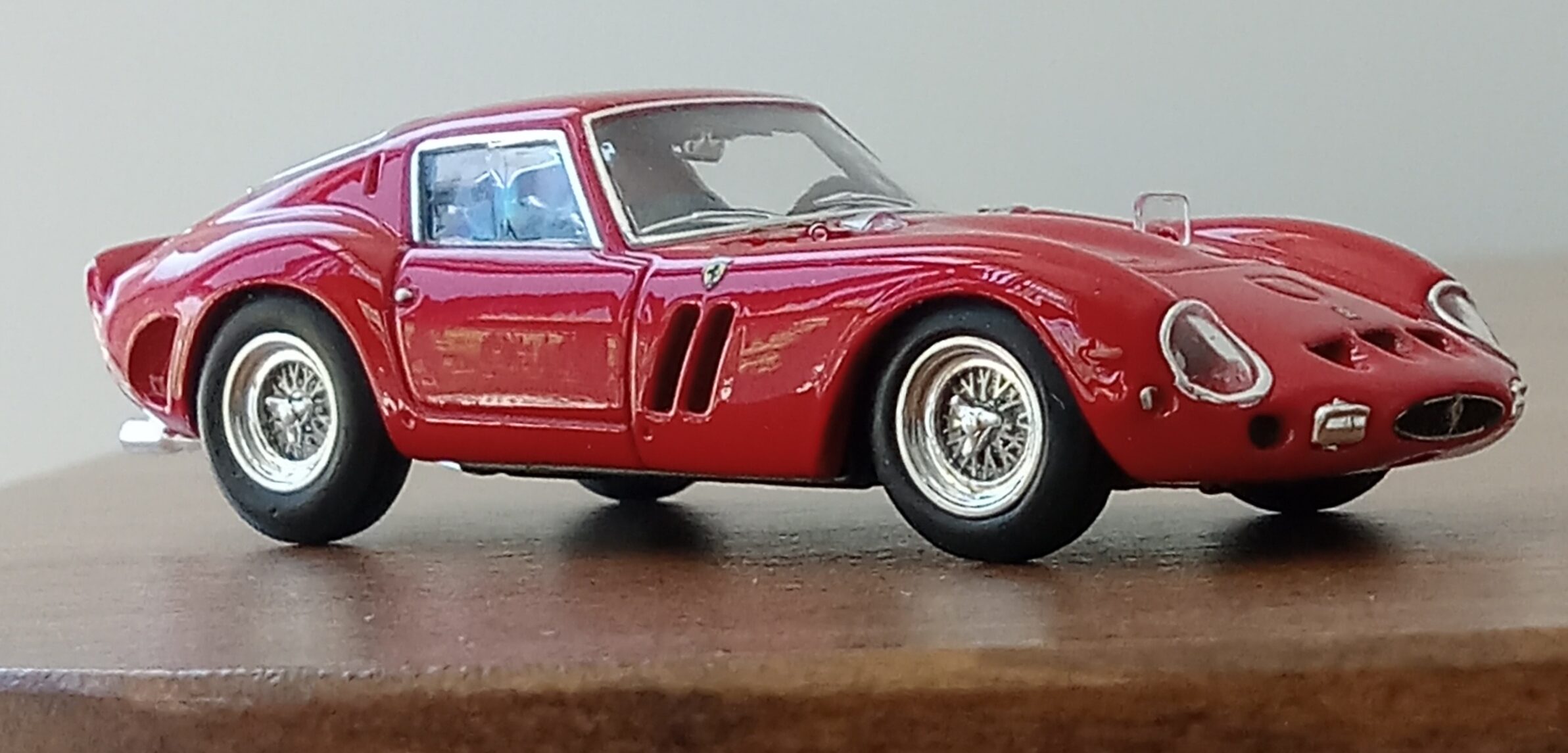
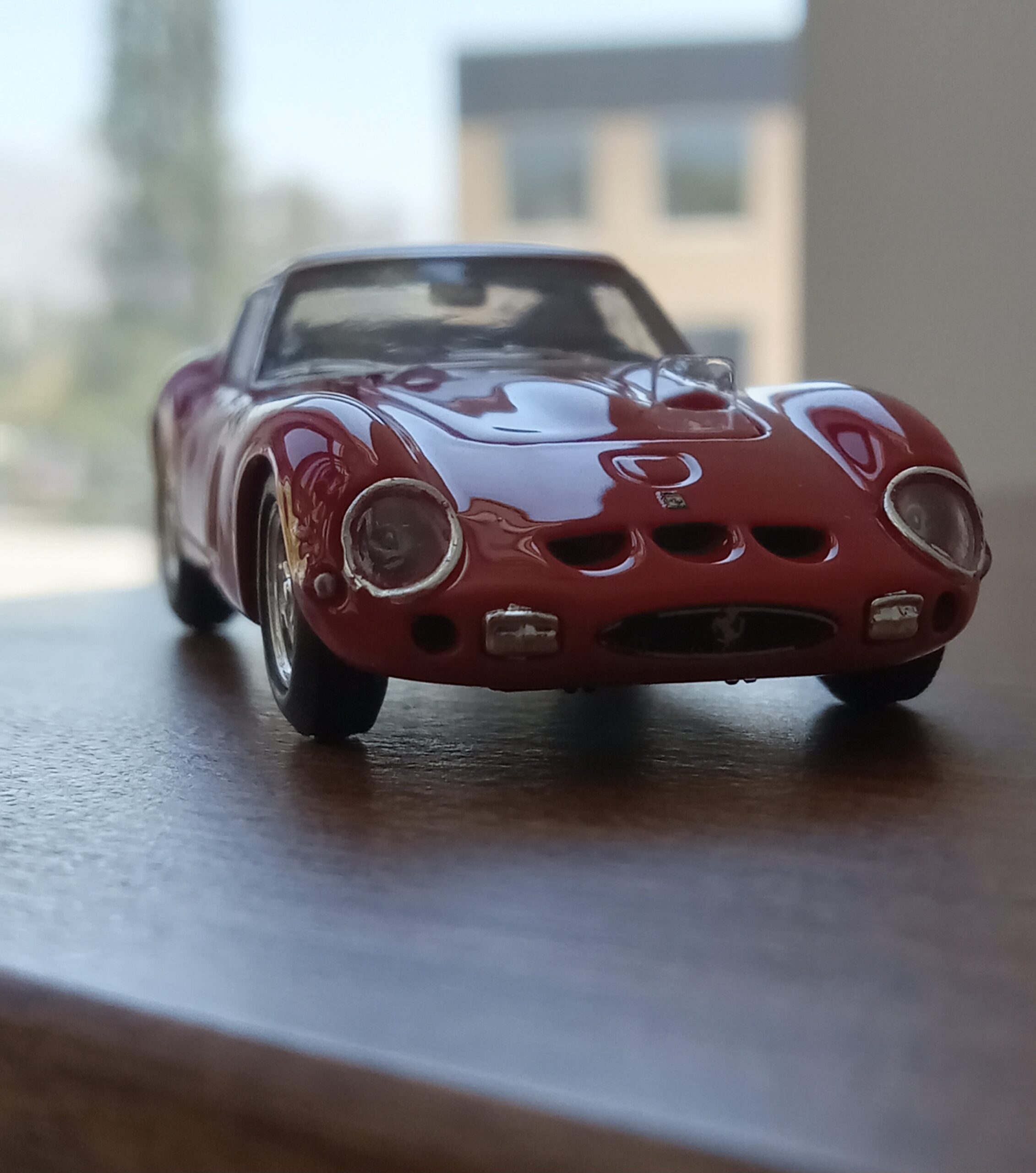
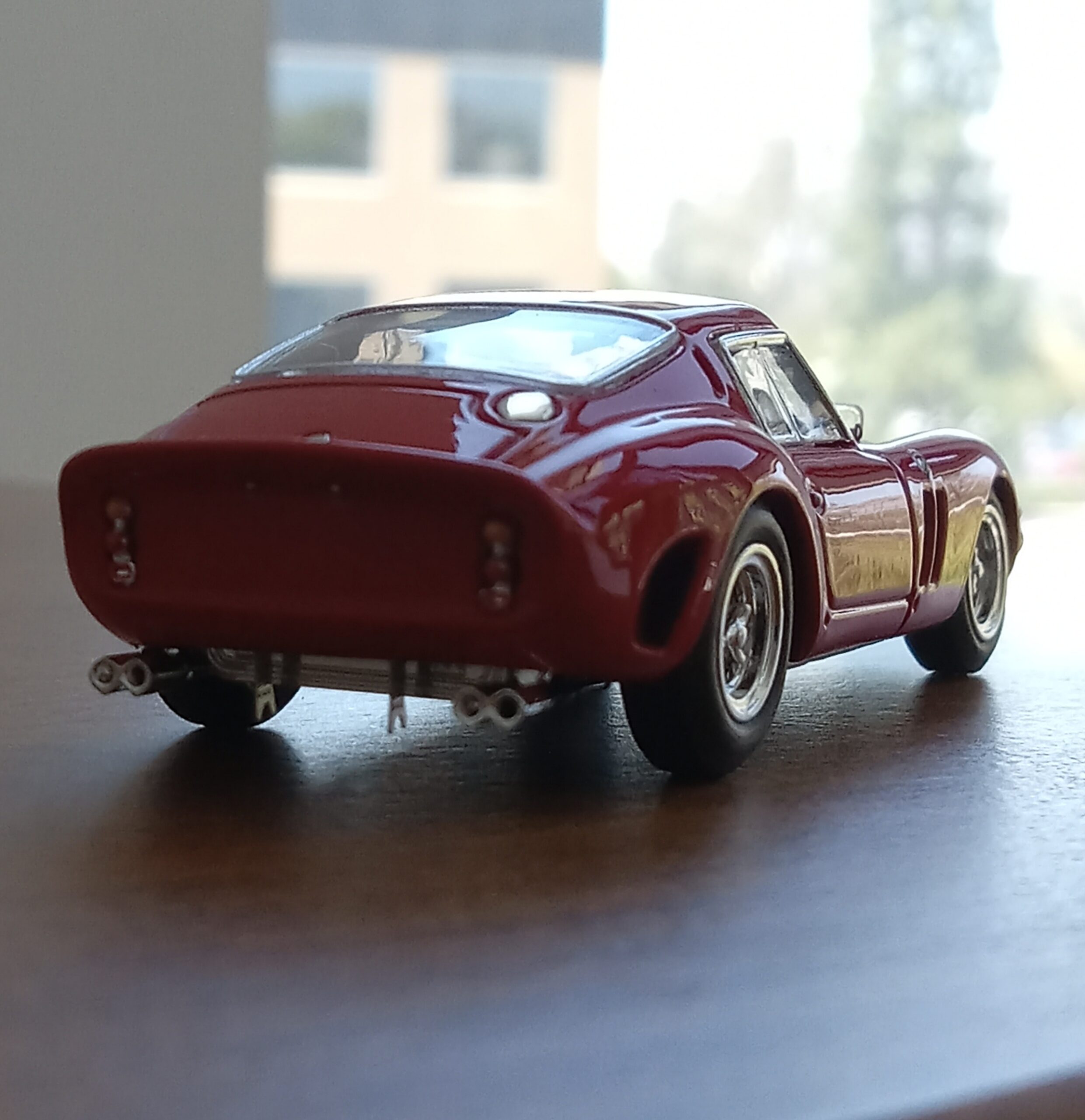
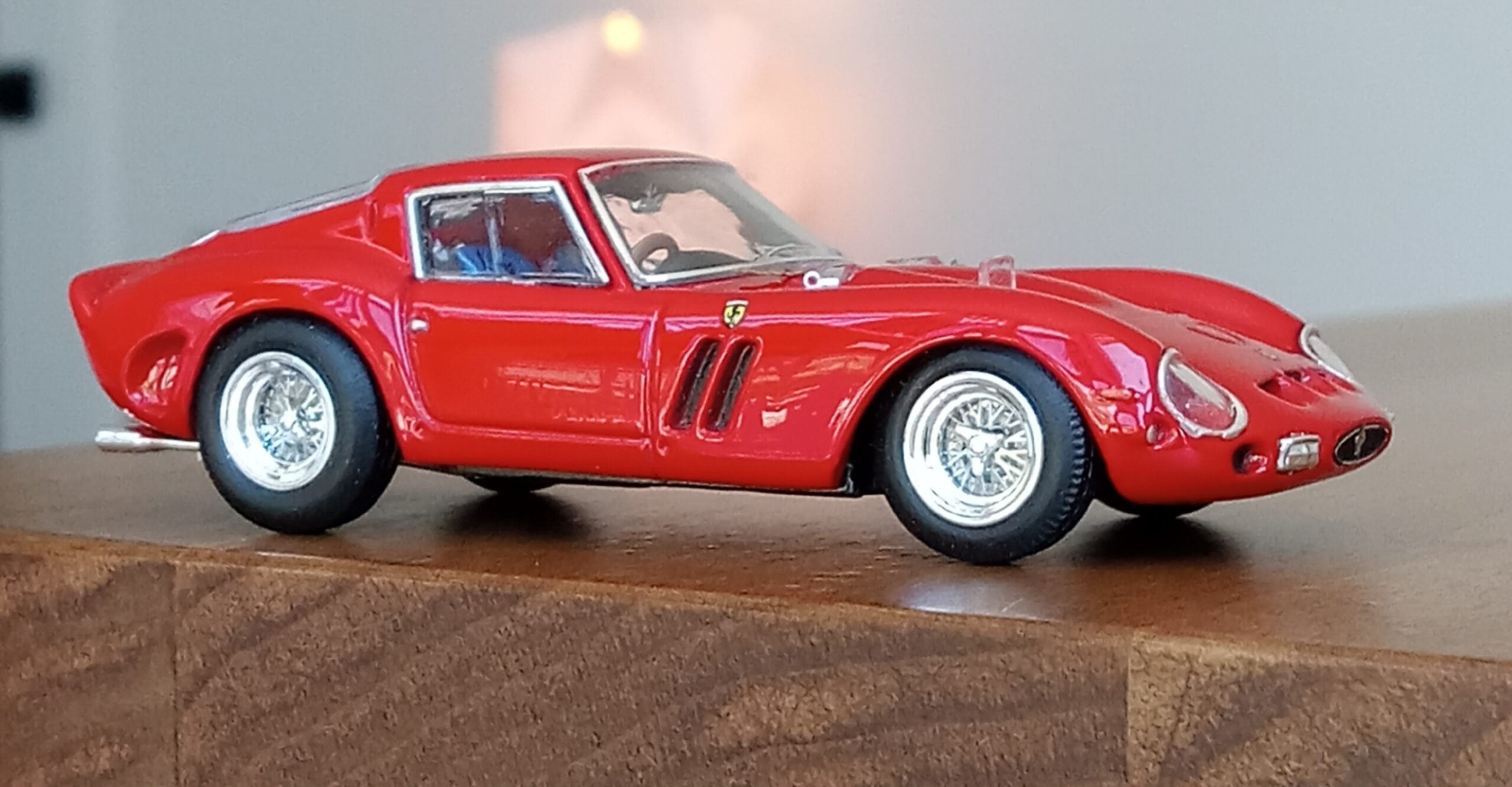
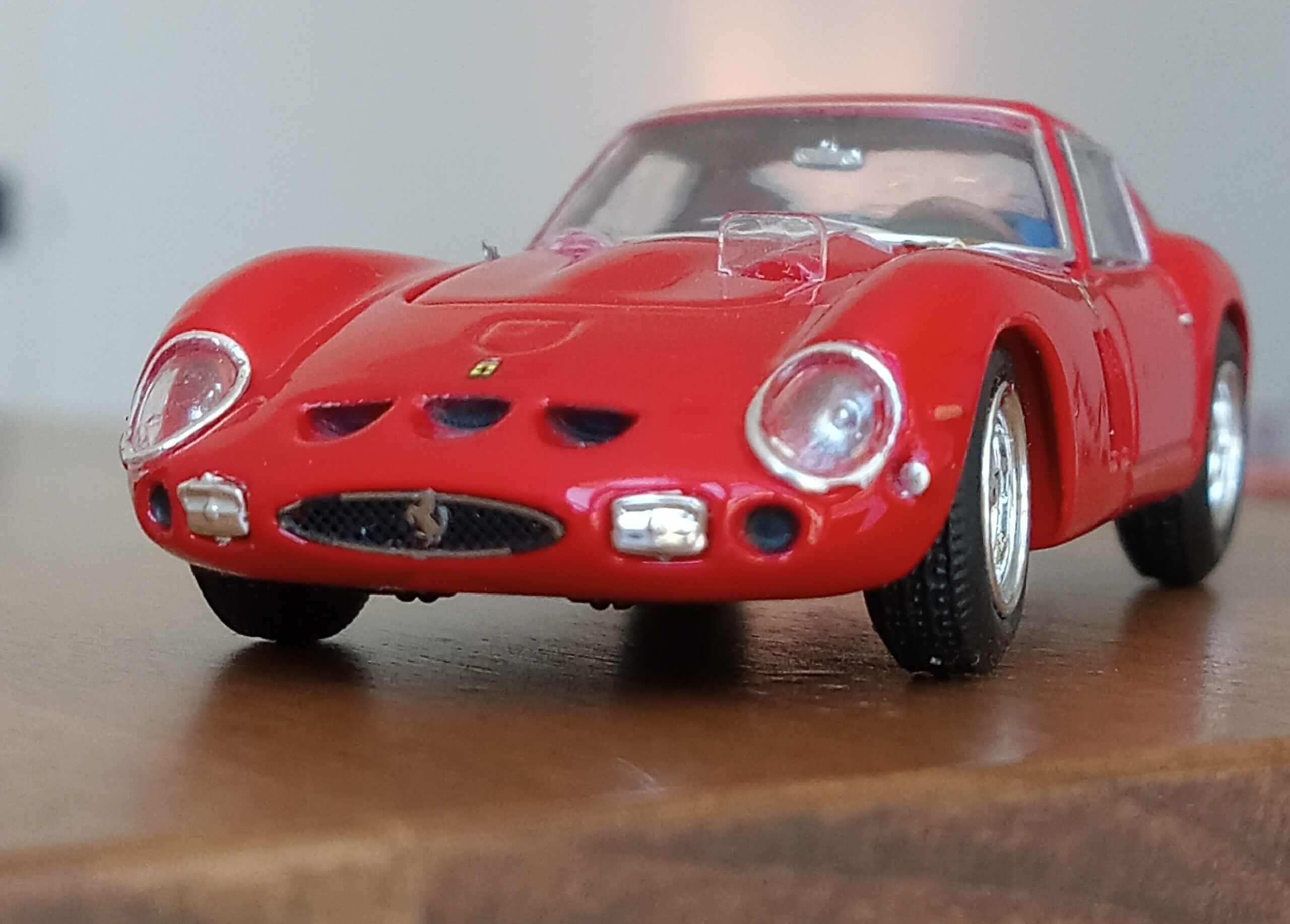
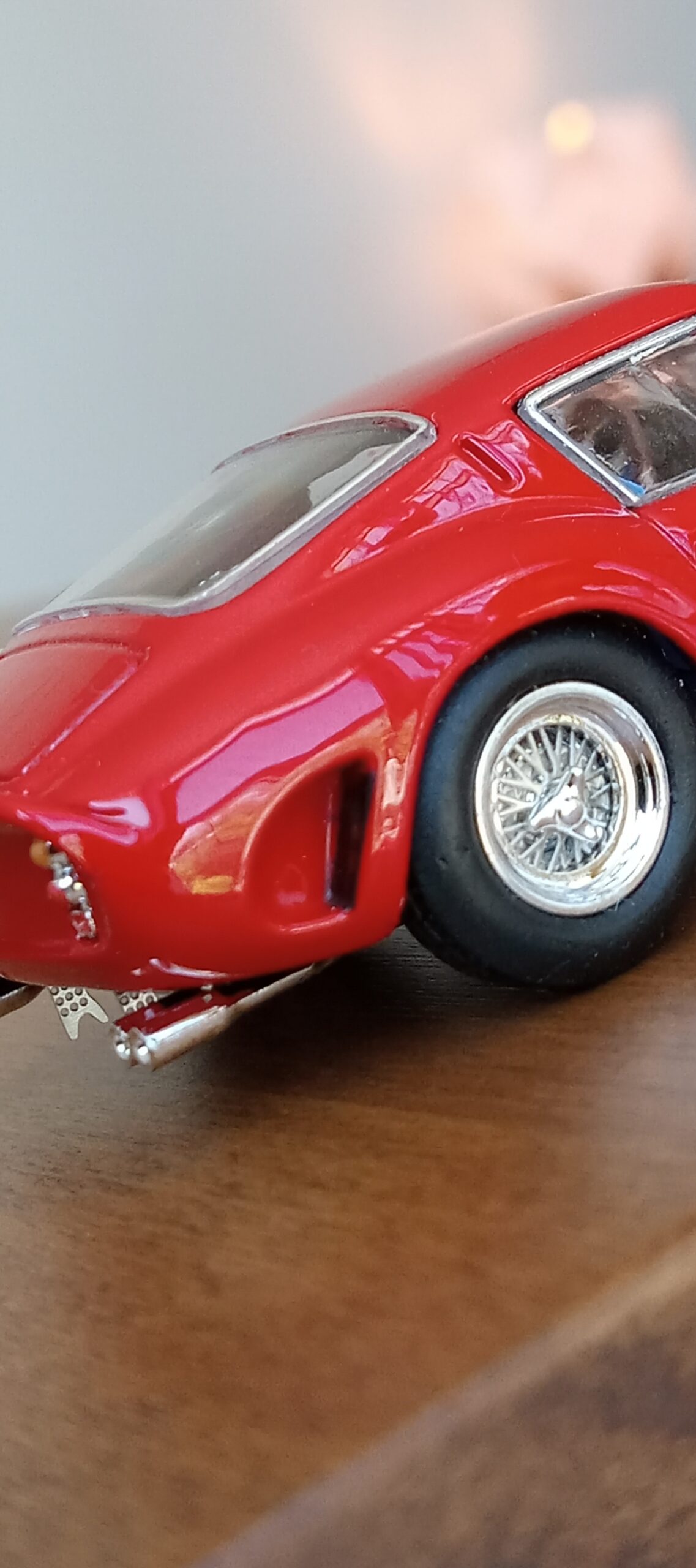
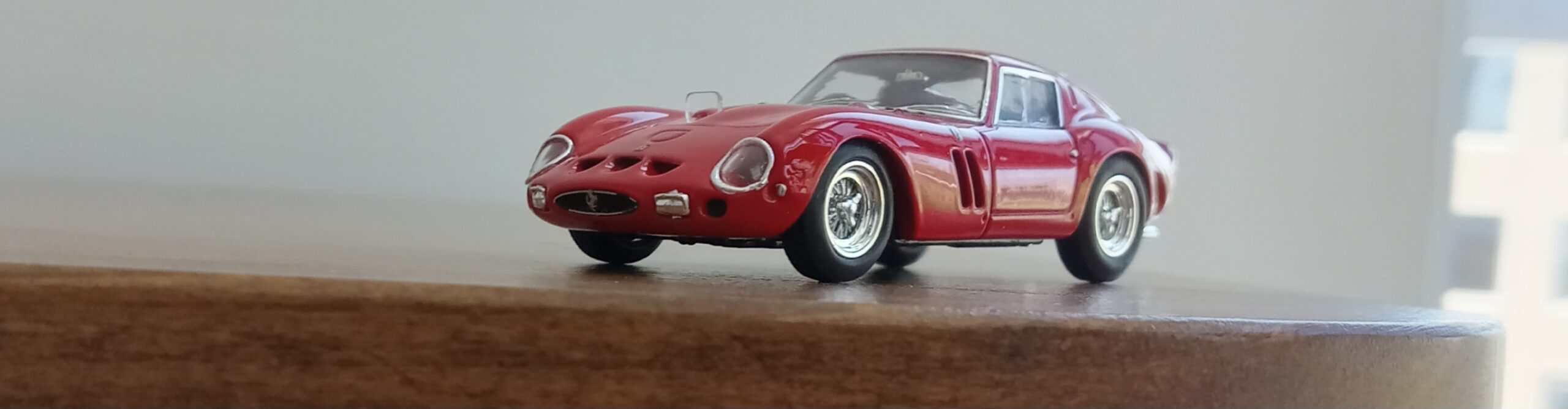
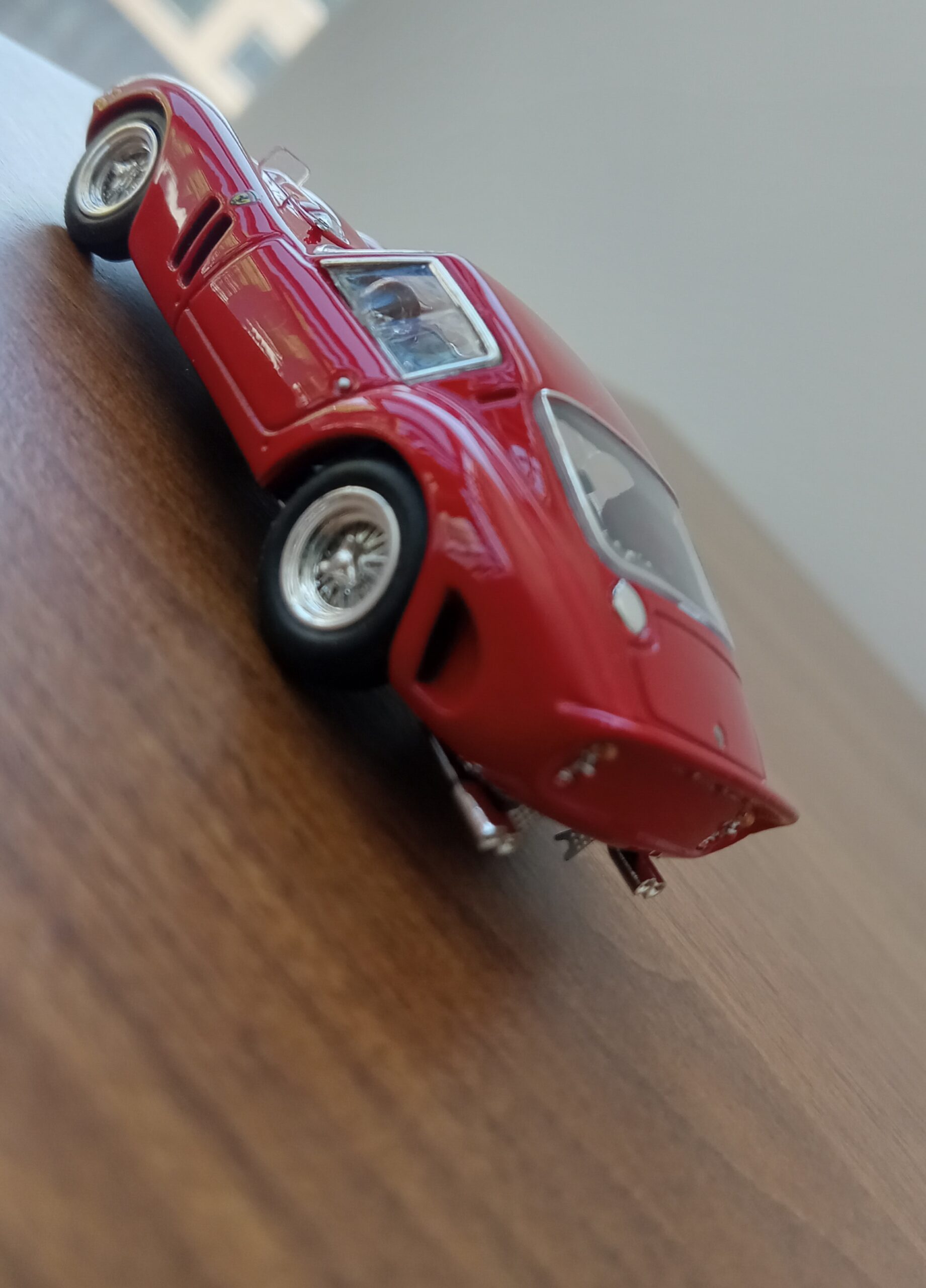
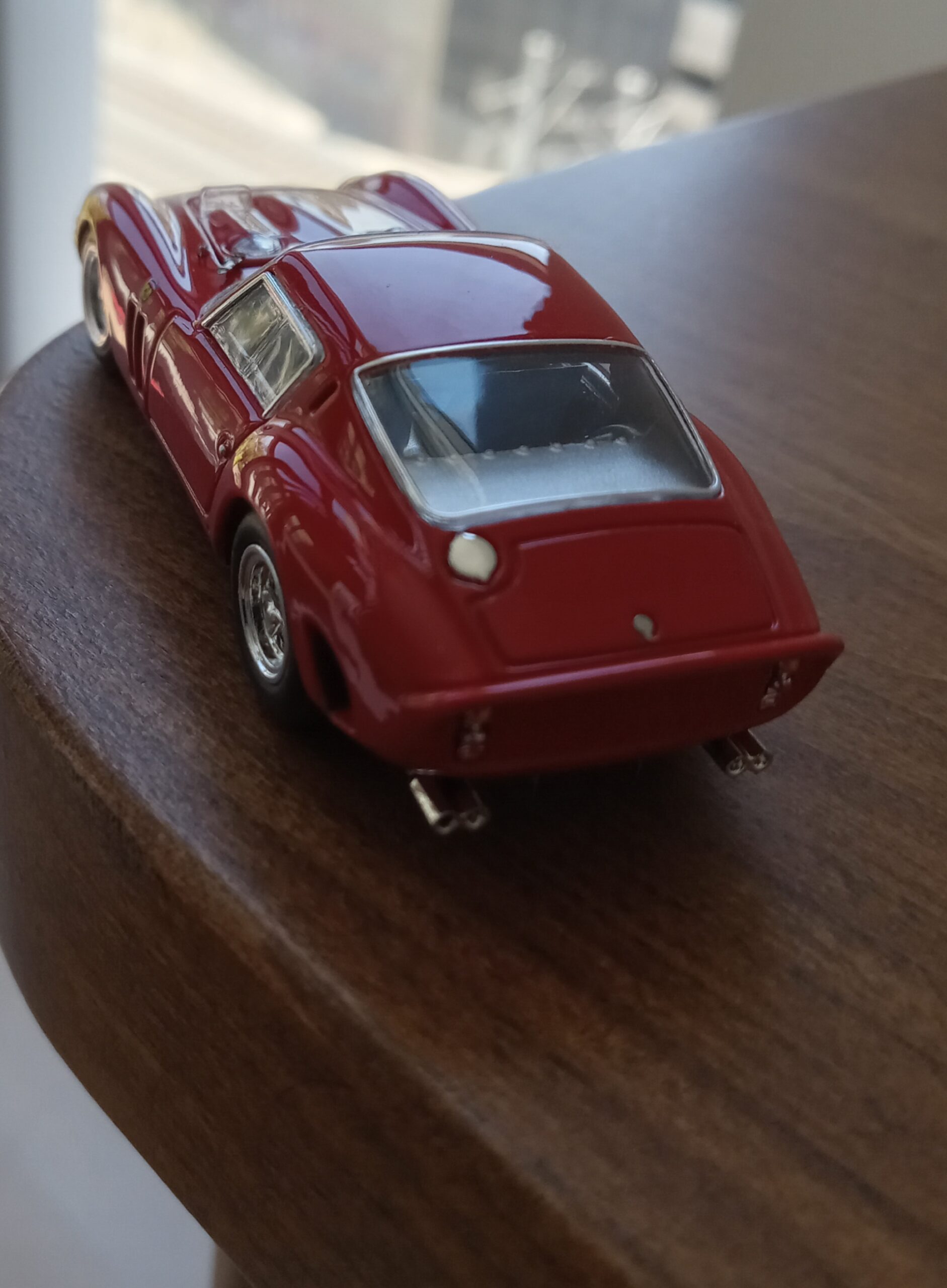
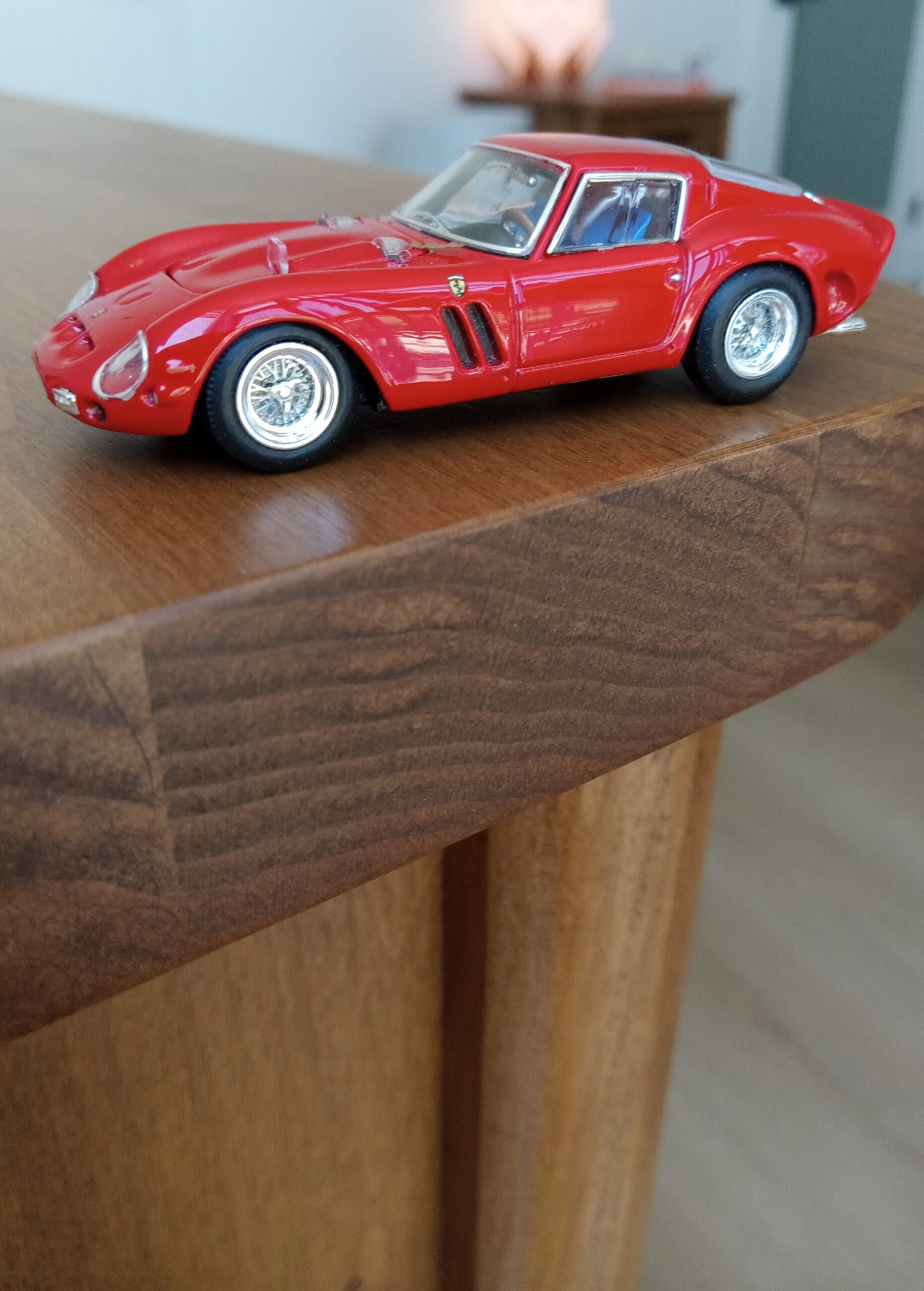
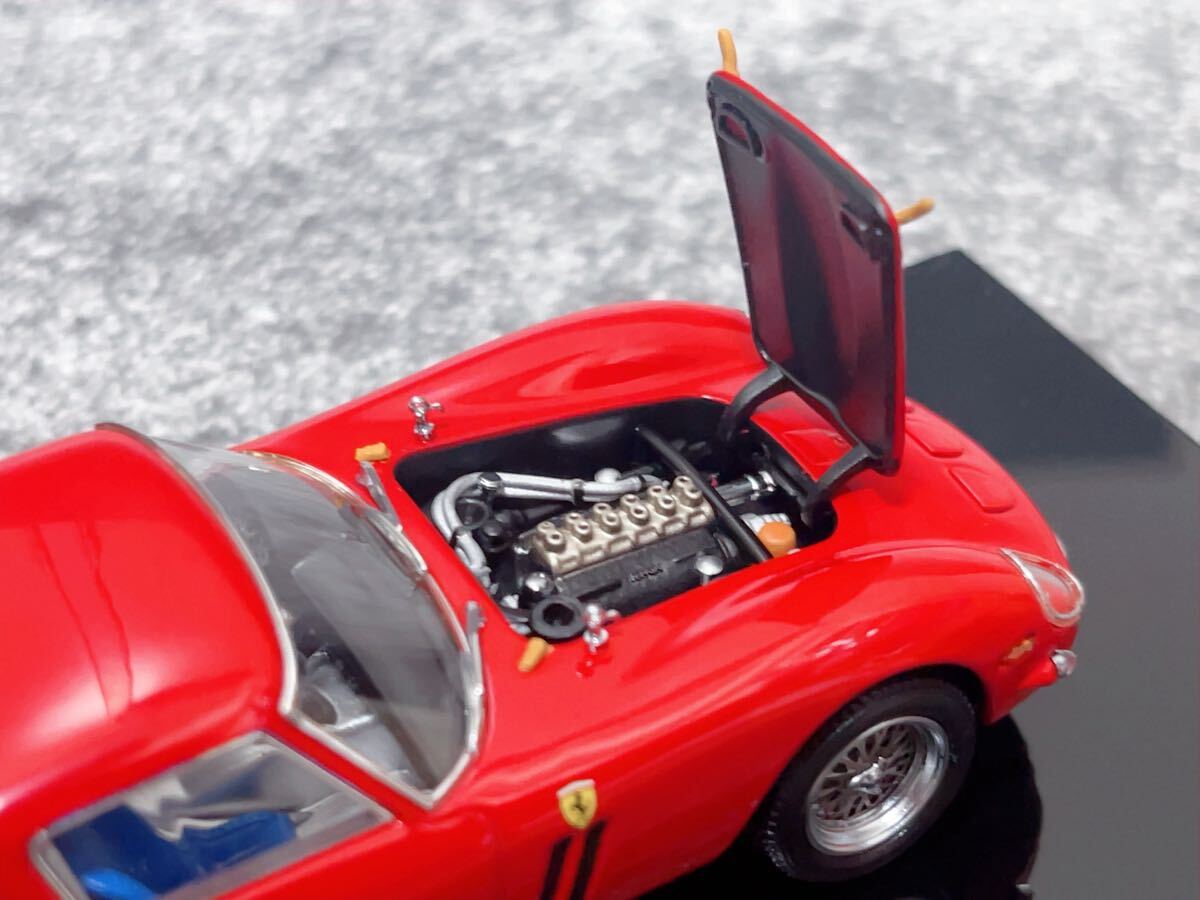
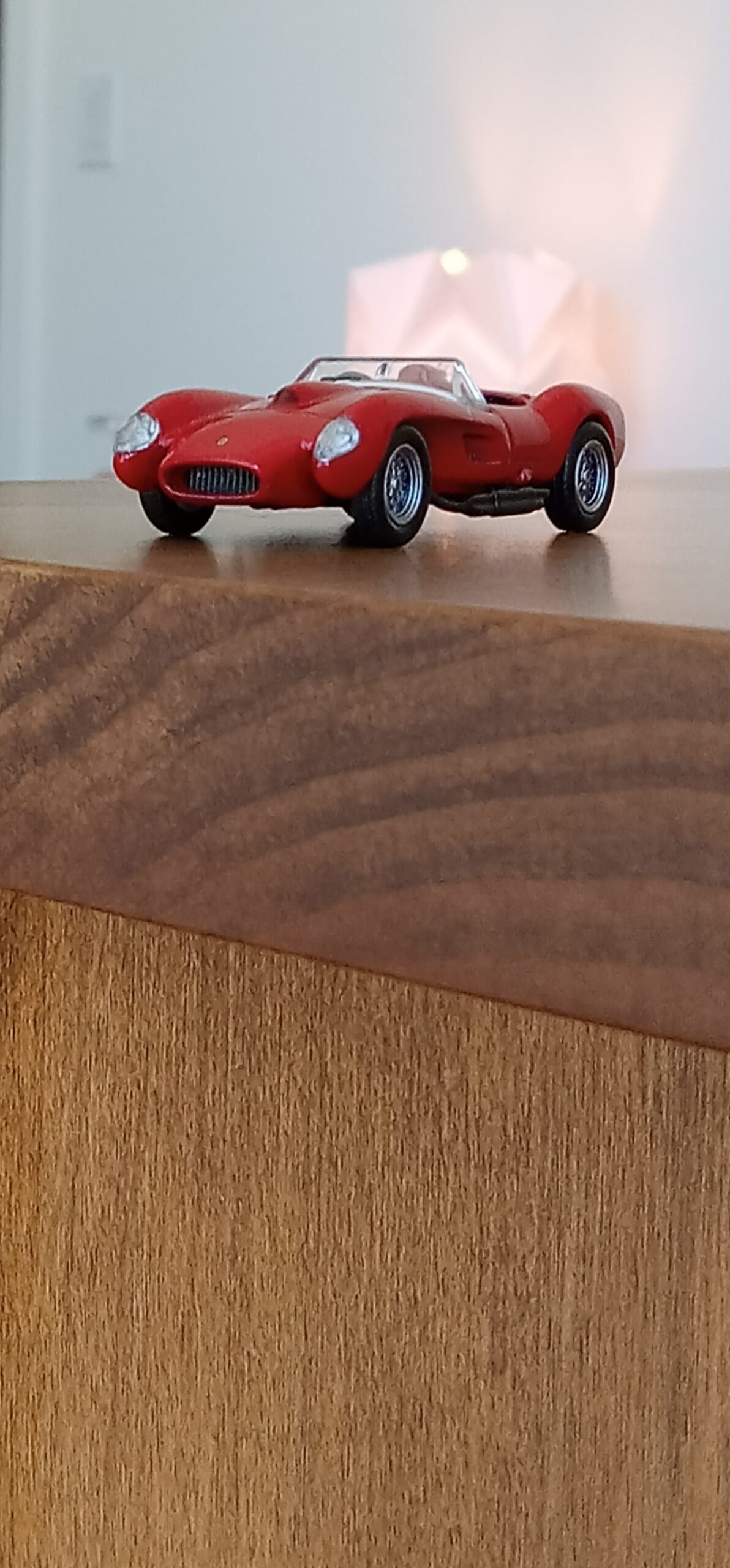
(撮影に使用したミニカー:クラッシック・ラバー社製、1/64 フェラーリ250 GTO, 1962(フェラーリ・レッド)---無改造にて使用。)
第13回【イタリア車編】 フェラーリ 250GTO、1962『私的に、最も美しいフェラーリ』 Ferrari 250 GTO, 1962『Arguably the Most Beautiful Ferrari』
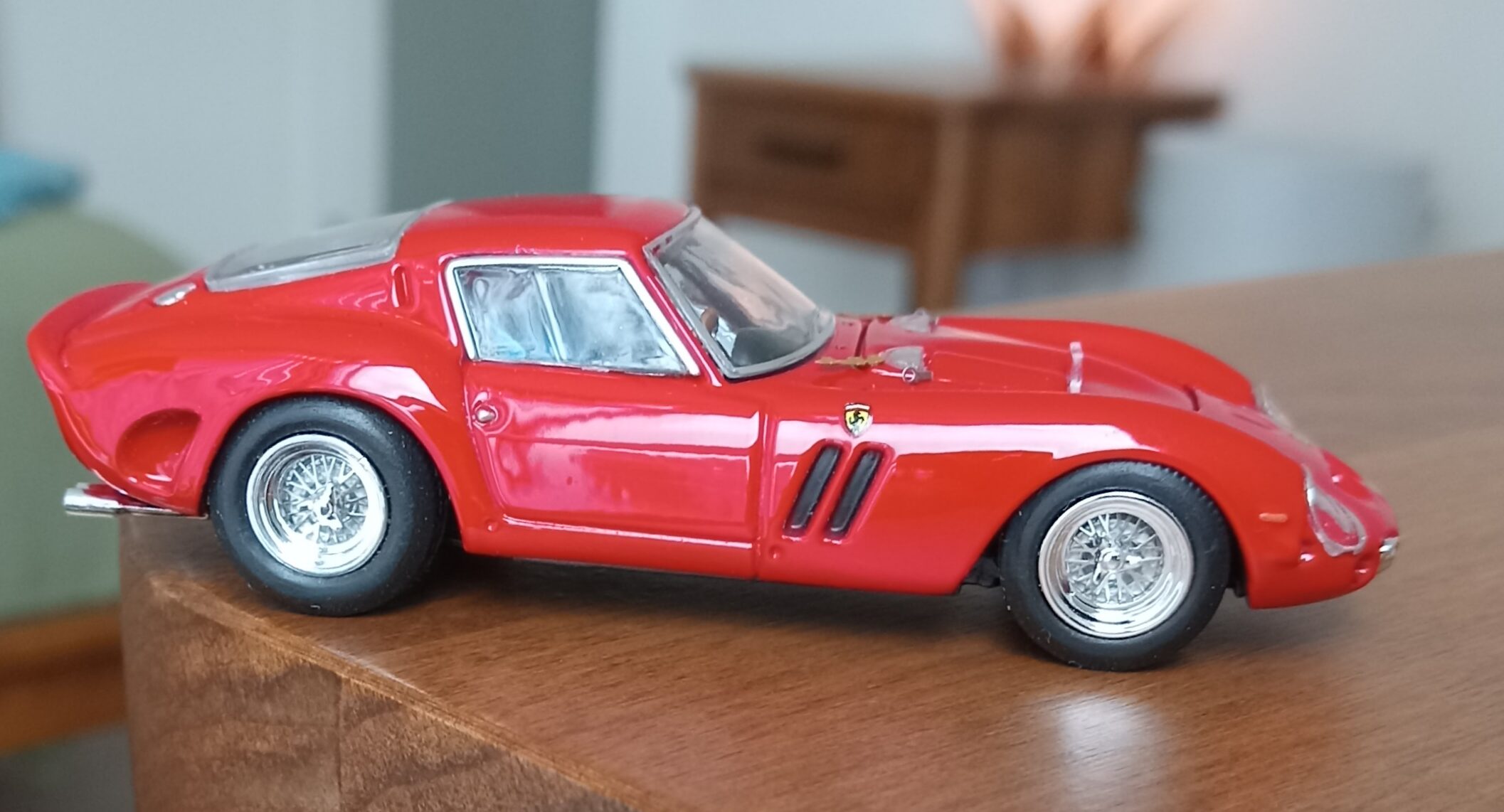
#好みの自動車デザインーー2ドアクーペの系譜:
第33回目の今回は、『2ドアクーペの系譜、第13回』と題しまして、各国のお国柄や、外観デザインの個性が強く表れる、高級2ドア(GT)クーペ / ロードスターについてお話ししてみたいです。【注意:オープンカーを含む】
以下の要領で進めていきます。
第13回の今回は【イタリア車編】
1962年型
フェラーリ 250GTO
についてのお話です。
【2ドア・クーペの系譜:目次】
【米国車編】
第1回:キャデラック・エルミラージュ、2013(メタリック・レッド)
第2回:リンカーン・コンチネンタル MK4、1972(ブラック)
第3回:マーキュリー・クーガー, 1967(LTメタリック・グリーン)
【ドイツ車編】
第4回:MB 500K スペシャル・ロードスター、1936(ブラック)
第5回:MB 300SL ロードスター、1957(シルバー)
第6回:MB SLS AMR ガルウイング、2010(ブラック)
【英国車編】
第7回:マクラーレン・F1、1992(メタリック・オレンジ)
第8回:ジャガー・XKSS ロードスター、1957(ロイヤル・ブルー)
第9回:ジャガー XKR クーペ、1996(ダークメタリック・グリーン)
【日本車・ニッサン編】
第10回:ニッサン 初代シルビア、1965(シャンペン・ゴールド)
第11回:ニッサン 5代目シルビア、1988(LTメタリック・グリーン)
【イタリア車編】
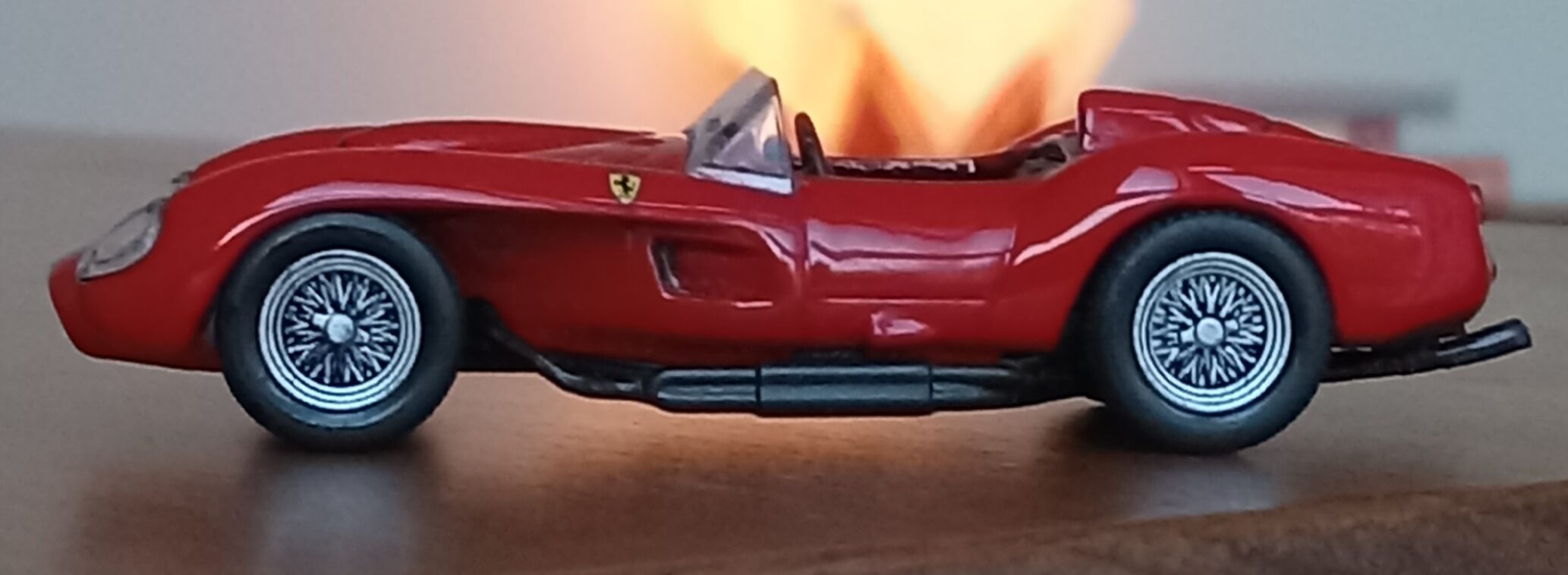
第12回:フェラーリ 250TR ポンツーンフェンダー、1958(赤)
第13回:フェラーリ 250GTO、1962(イタリアン・レッド)
第14回:ランボルギーニ・コンセプトS、2005(パール・ホワイト)
【日本車・マツダ編】
第15回:マツダ コスモ・スポーツ、1967(シルバー)
第16回:マツダ ユーノス・コスモ、タイプ‐S(2トン:黒&グレー)
【フランス車編】
第17回:ブガッティ・タイプ59、1935(フレンチ・ブルー)
第18回:シトロエン・SM、1970(シャンペーン・ゴールド)
第19回:ブガッティ・ラ・ヴォワチュール・ノワール、2019(黒)
【日本車・トヨタ編】
第20回:トヨタ/ヤマハ・2000GT、1967(アイボリー・ホワイト)
第21回:トヨタ・2代目ソアラ、1986 (2トン:黒&グレー)
第22回:レクサス LC【GWZ100型】、2017(メタリック・レッド)
【米国車編②】
第23回:ダッジ・チャレンジャー&プリムス・バラクーダ、1971
第24回:ダッジ・ヴァイパー SRT‐10 ACR、 2008(ブラック)
第25回:フォード・シェルビーGR-1 コンセプト、2004(クローム)
【日本車・ミツビシ編】
第26回:ミツビシ・ギャラン λ、1976(ブラウン・メタリック)
第27回:ミツビシ・エクリプス【北米仕様】、2006(オレンジ・メタ)
【ドイツ車編②】
第28回:BMW M635CSi、1984 (ダーク・メタリックブルー))
第29回:MB 560SEC AMG 6.0 ワイドボディー、1989(黒)
第30回:BMW M2 純正パフォーマンス・パーツ仕様、2025(ネオン・ライム)
【日本車・スバル編】
第31回:スバル・クロストレック XV, 2012(ライムグリーン・メタリック)
コルベットの系譜:(番外編)
第1回:1967年型 スティングレー【C2】コンバーチブル(ハードトップ・メタ青)
第2回:1972年型 コルベット 【C3】コンバーチブル(メタリック・ブルー)
第3回:1990年型 コルベット ZR-1【C4】クーペ(レッド)
第4回:スティングレー・コンセプト【先行開発車】、2009(プルー・メタリック)
#これぞ、レースが育んだ『美の極致』:
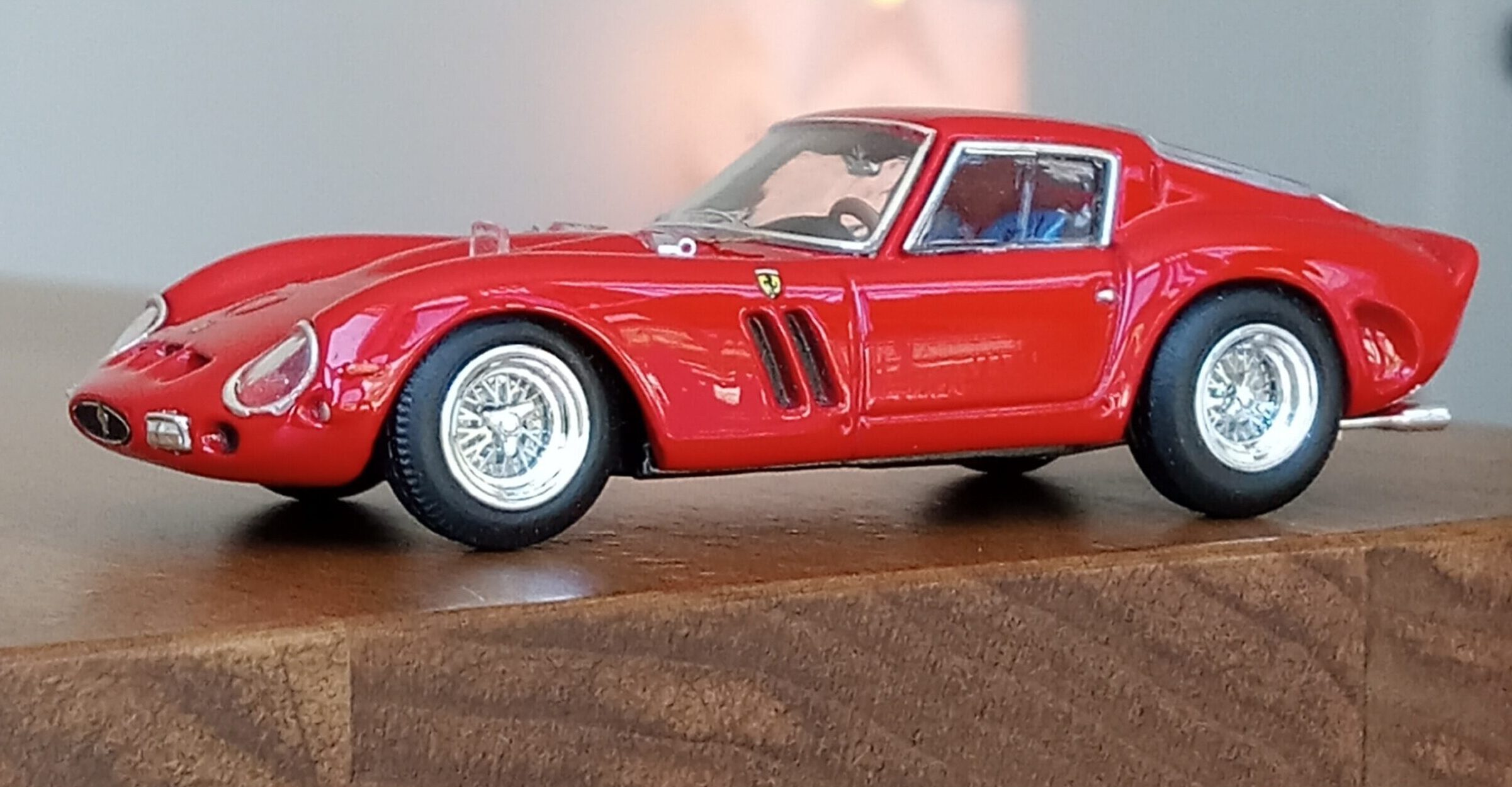
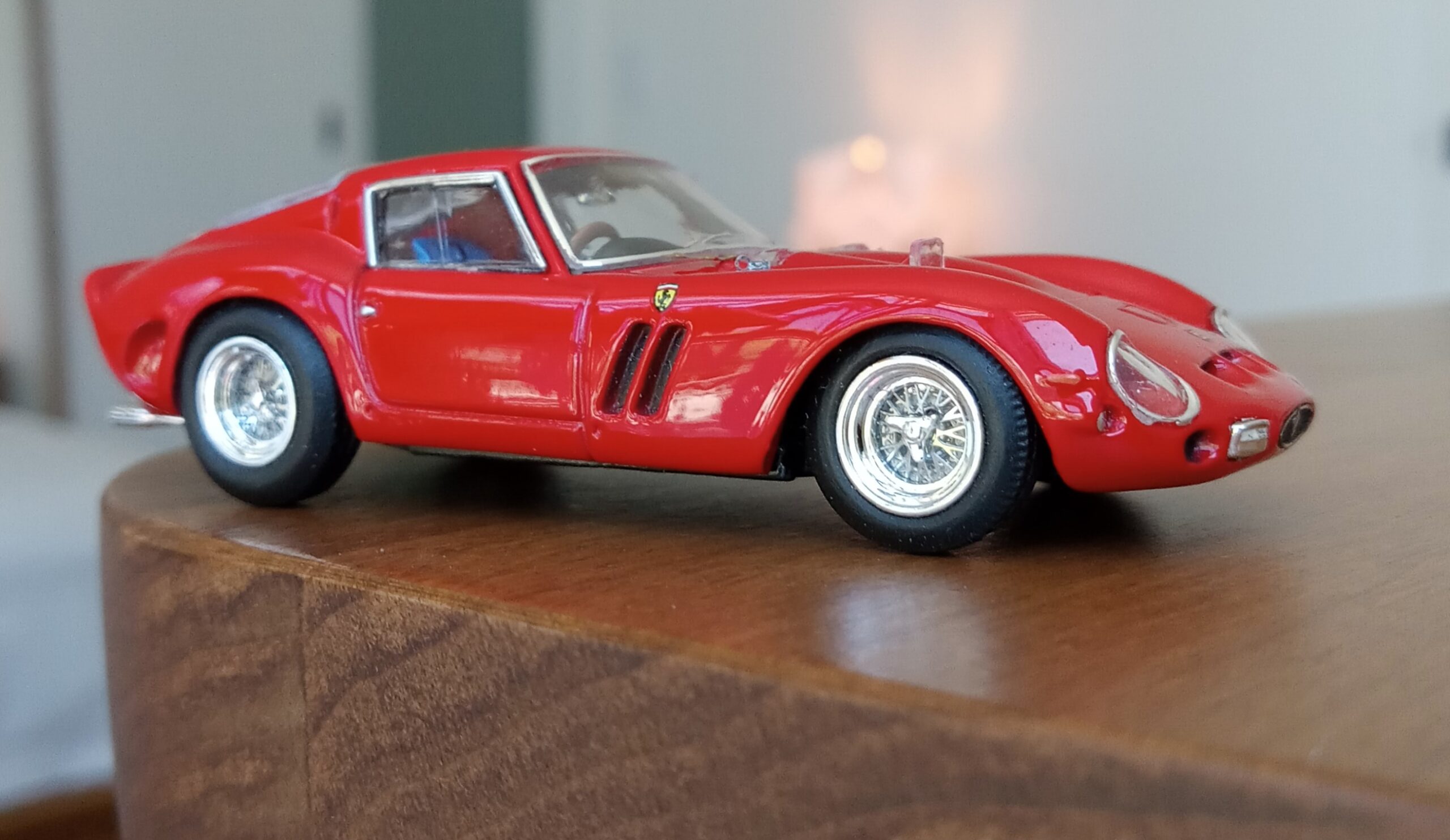
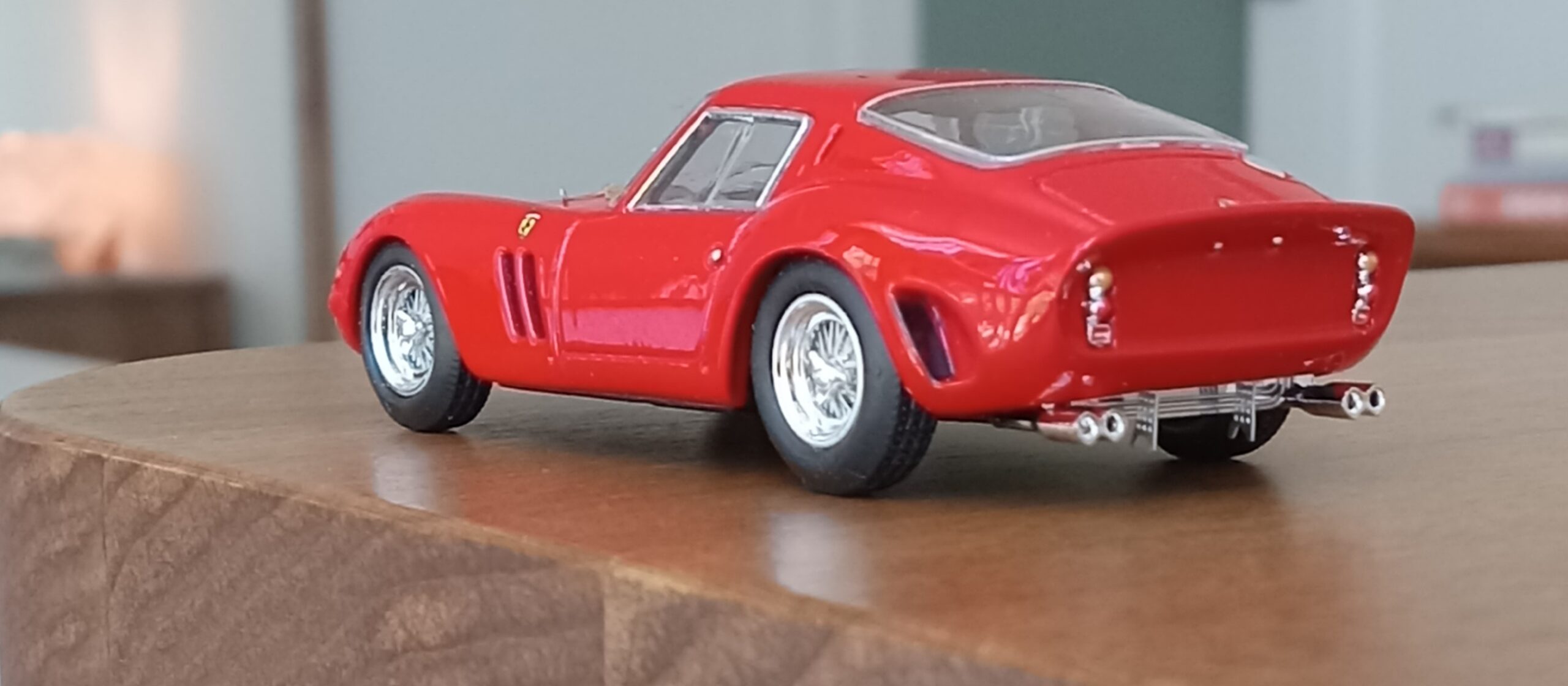
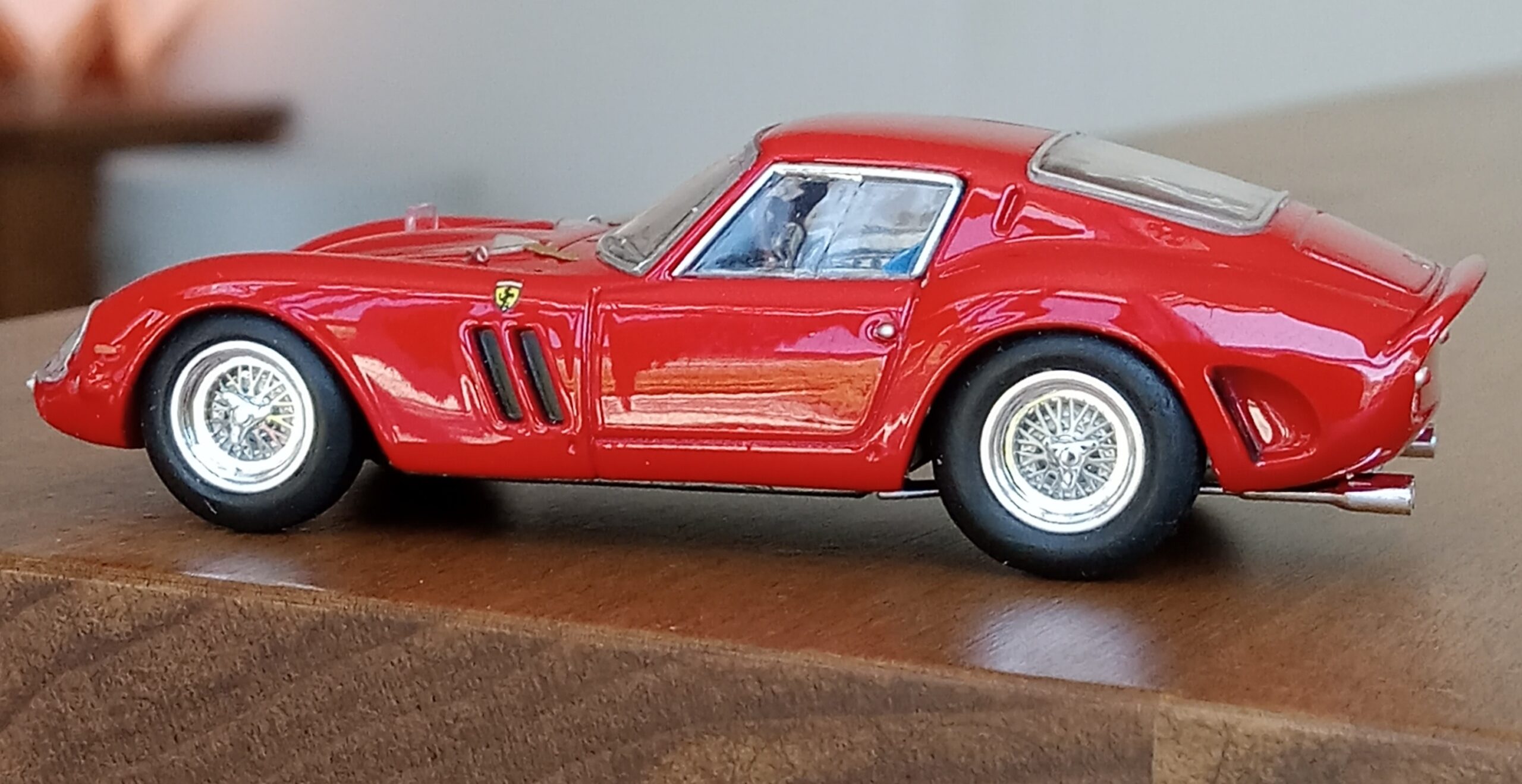
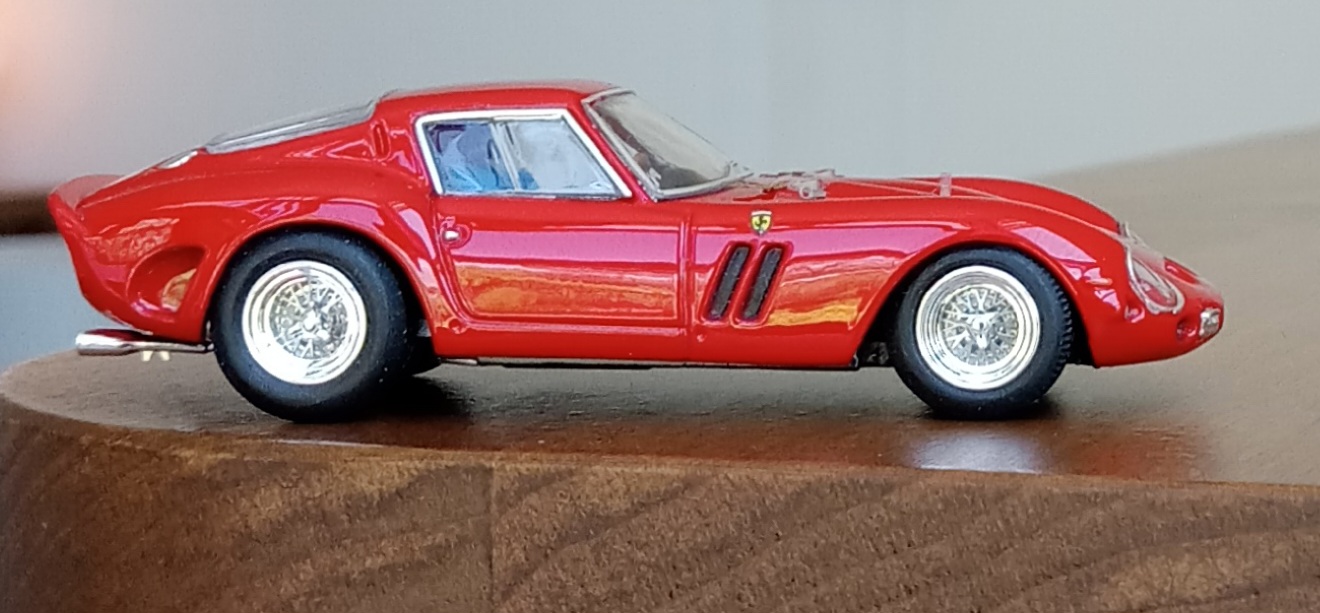
『美しい自動車御三家』番付に
常に入ってくる車があります。
*ジャガー・タイプE
*メルセデス・ベンツ 300SL ガルウイング、それと今回の、
*フェラーリ 250GTO
あたりが常連さんですが、
その中でやはり、個人的には、
この250GTOがダントツに
『美しいデザイン』
だと思っています!!
However, しかしながら、
*面白味や、
*マニアックさ、
*通好み、なんかを加味しますと、
自分的には、
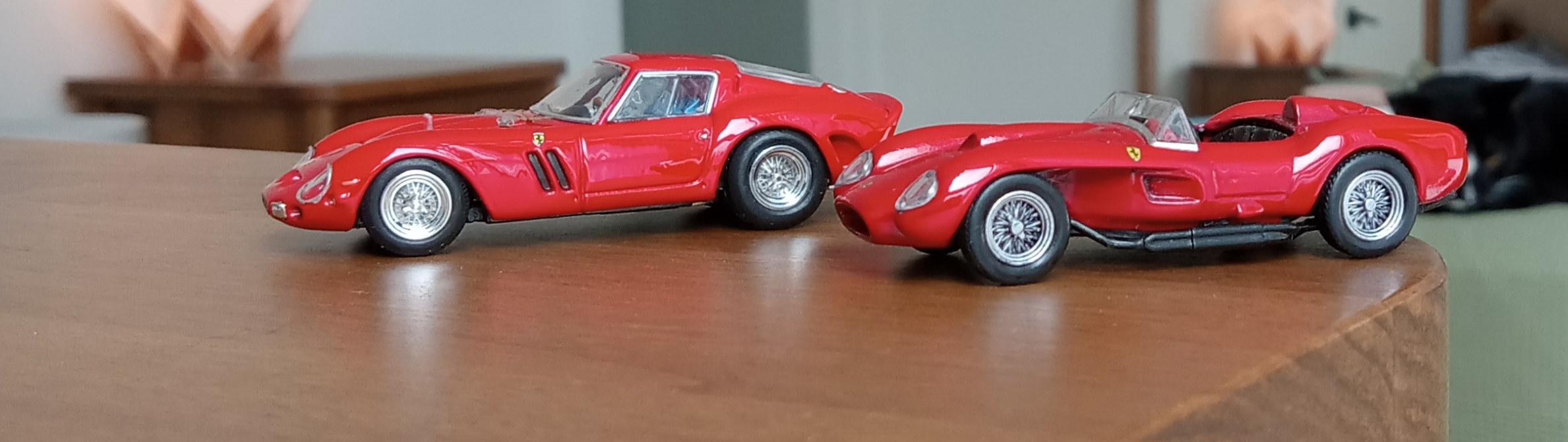
前回の250TRテスタロッサのほうがはるかに好みですが、、、、
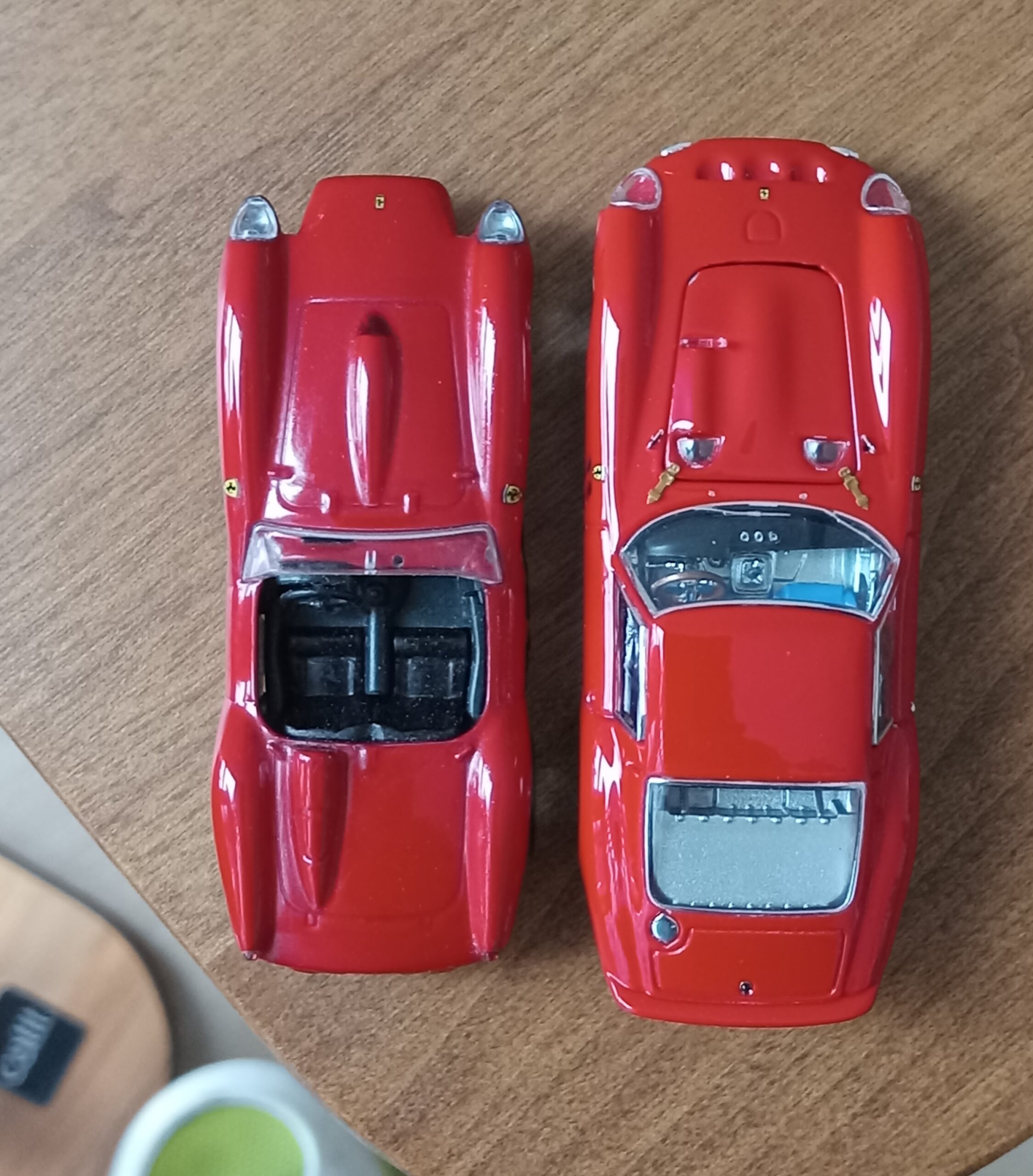
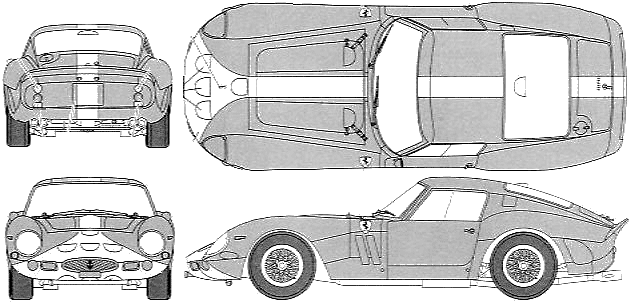
基本スペック、エンジン、排気量、サイズ、シャーシ&パケージデザインなどの設計自体はほぼ同一と言っていい間柄で、上から見たりしますと、
GTOはテスタロッサの進化型ということは明白です。
そして、GTOの、
*空力特性を生かした滑らかな造形は、
*遥かに洗練されたデザインだというのも
明白です。
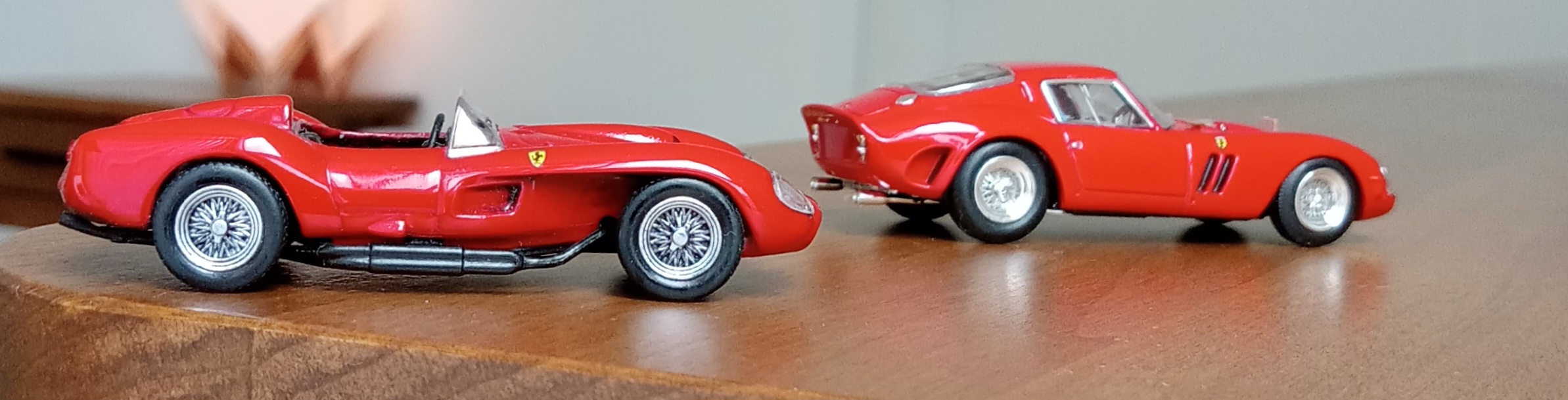
それでは、
私が一番美しいと思うフェラーリ、
『フェラーリ250GTO, 1962』
につきまして、以下の要領で、
お話しさせていただきます。
*実車解説:走る『美の極致!』
*外観デザインの特徴:野獣『250TR』を徹底的に流線化
*『私』と 62年型 250GTO
*三題噺:古今亭志ん生・青いシート・個体差
*その他の『超絶美しいデザイン』たち
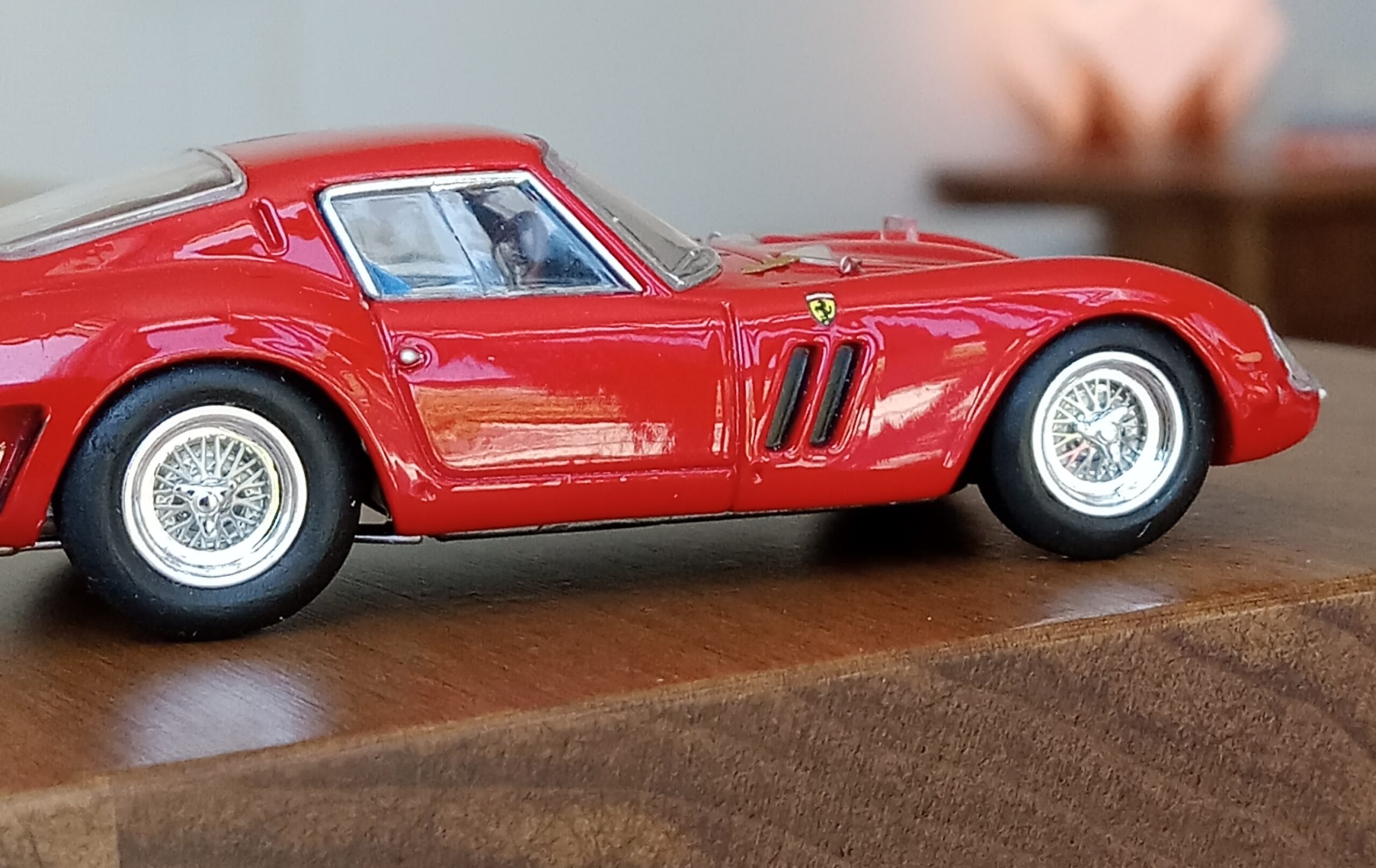
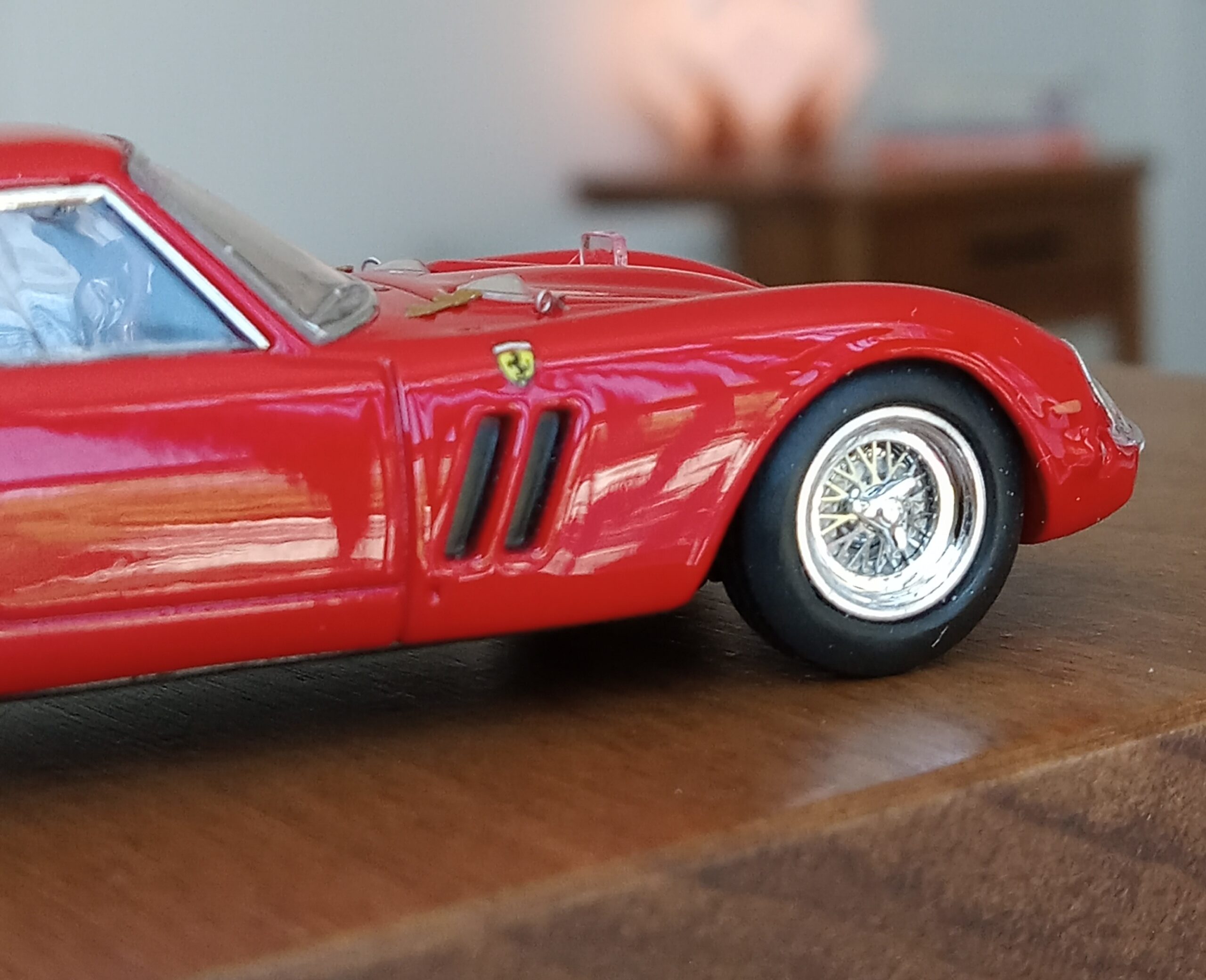
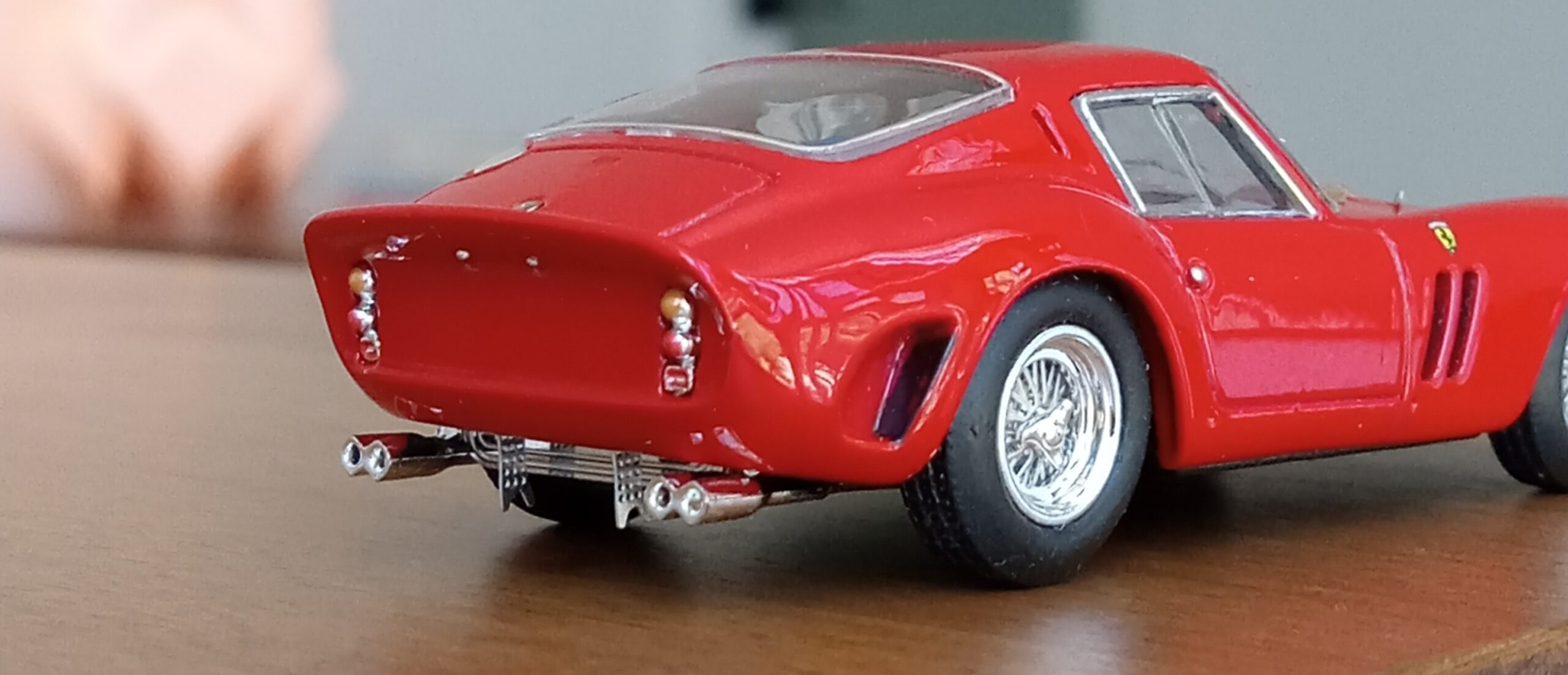
*実車解説:走る『美の極致!』
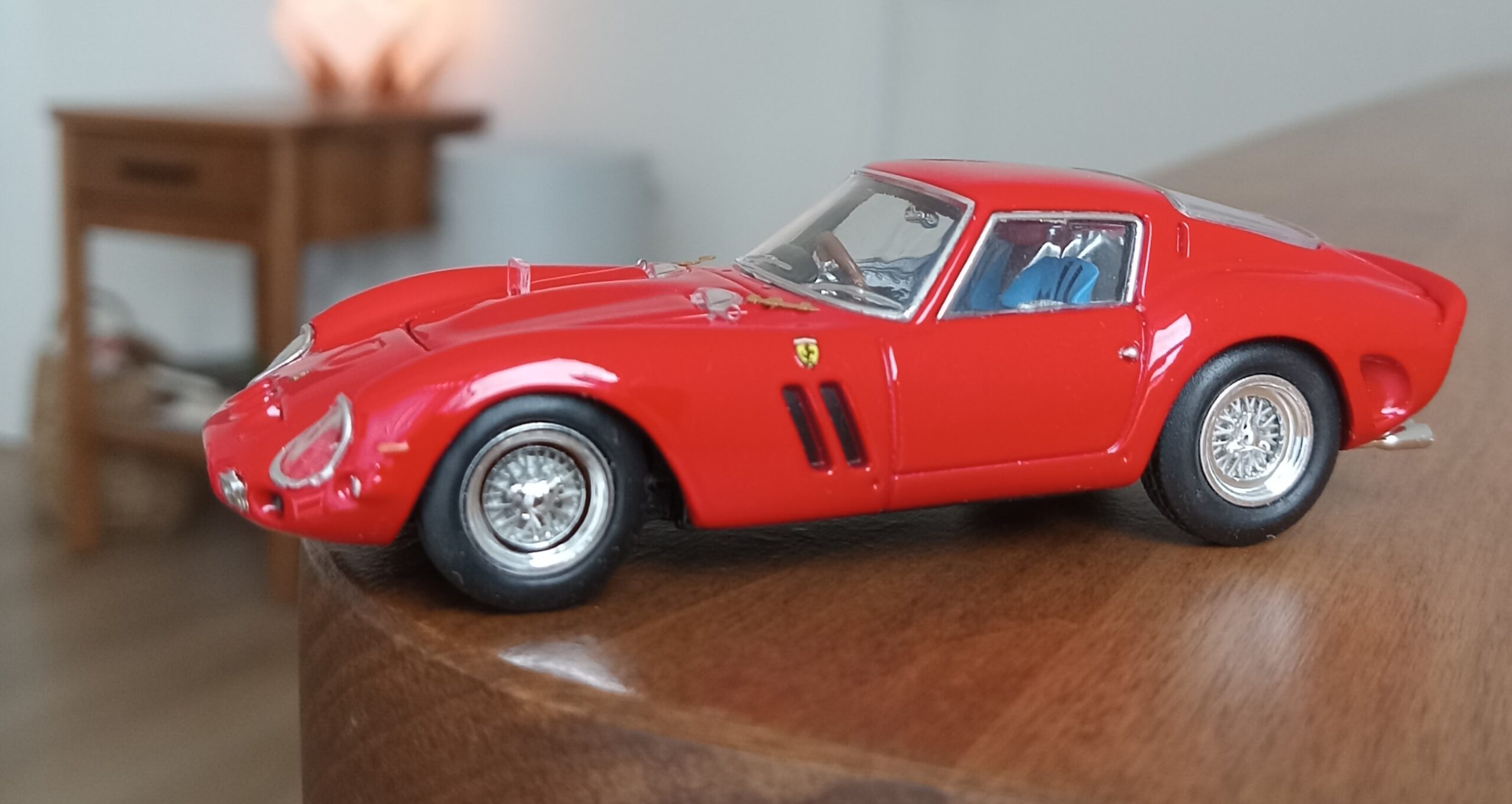
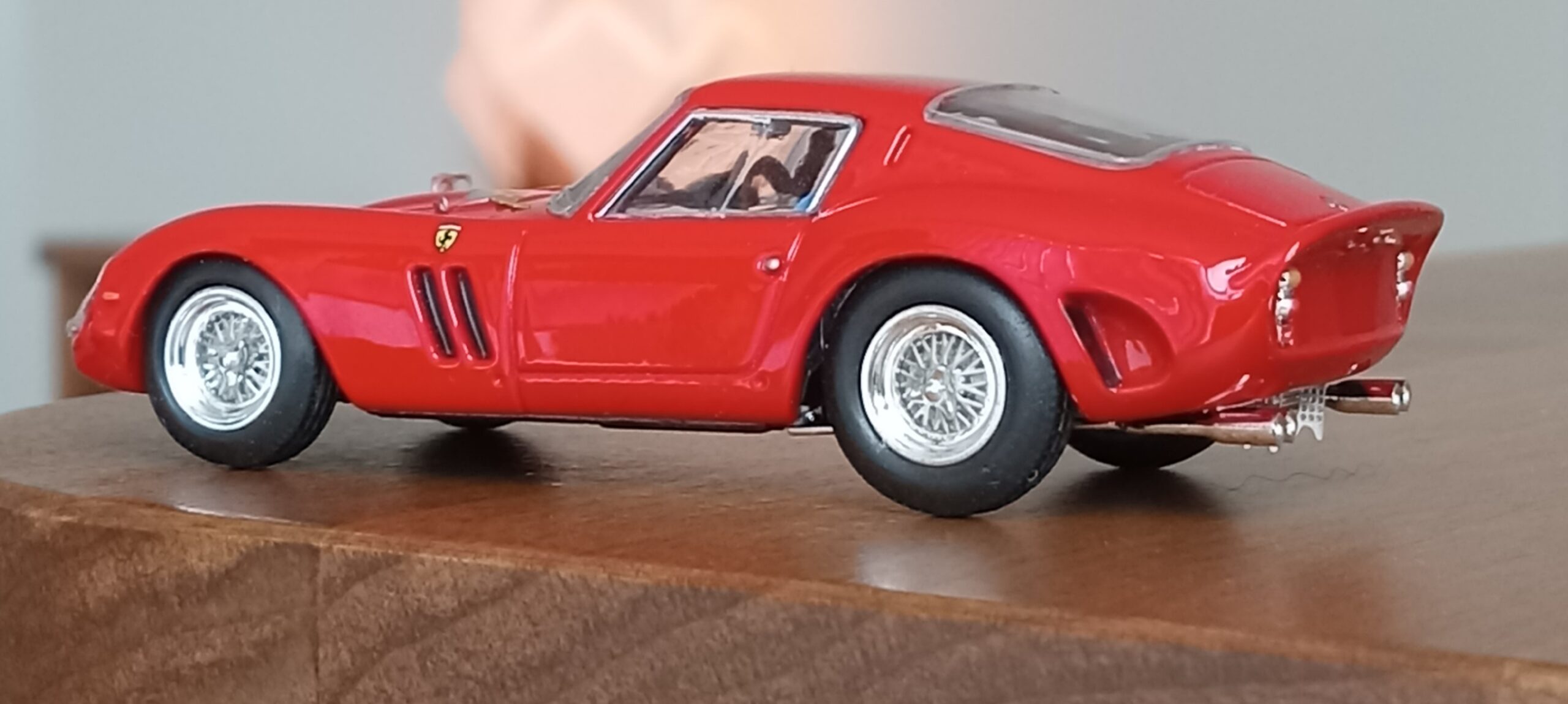
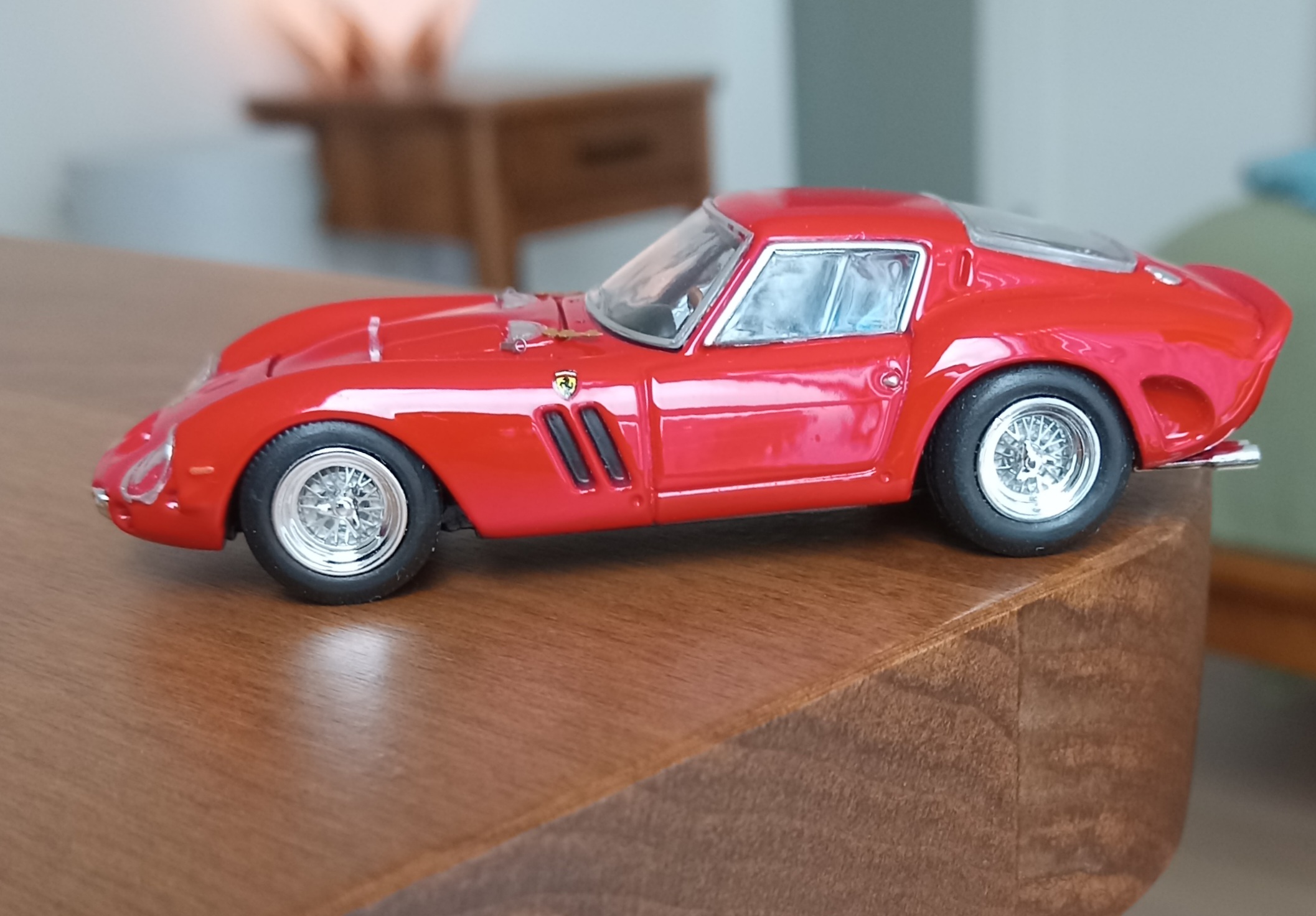
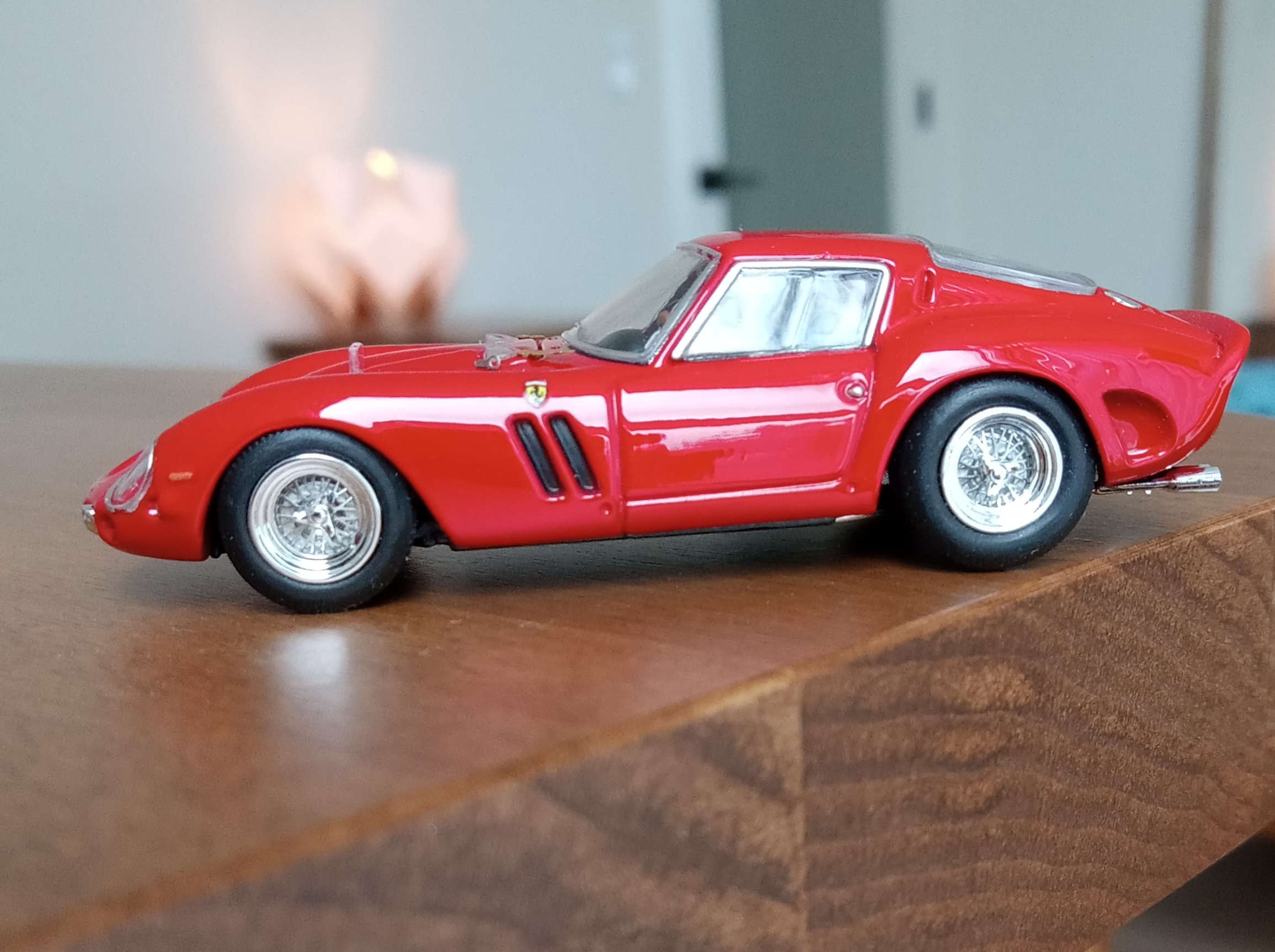
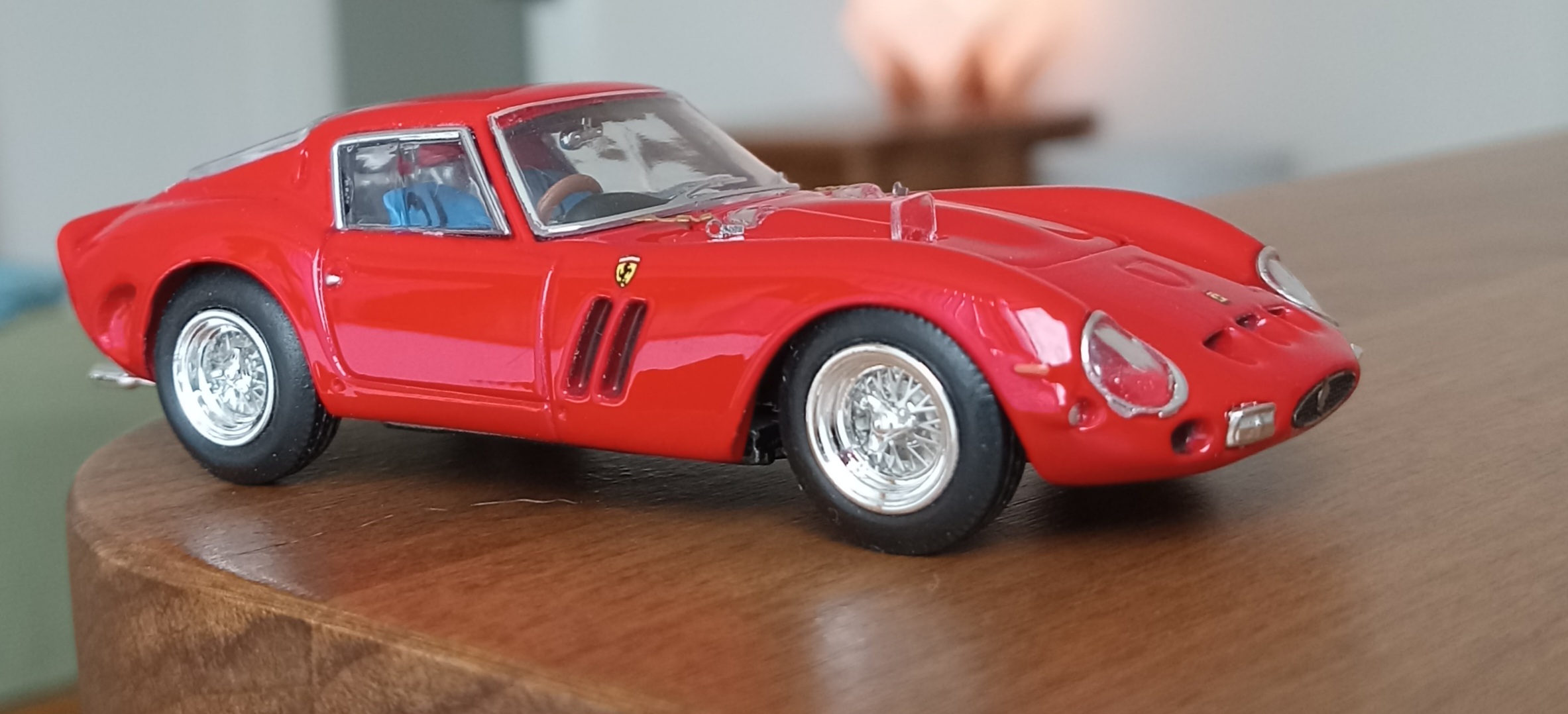
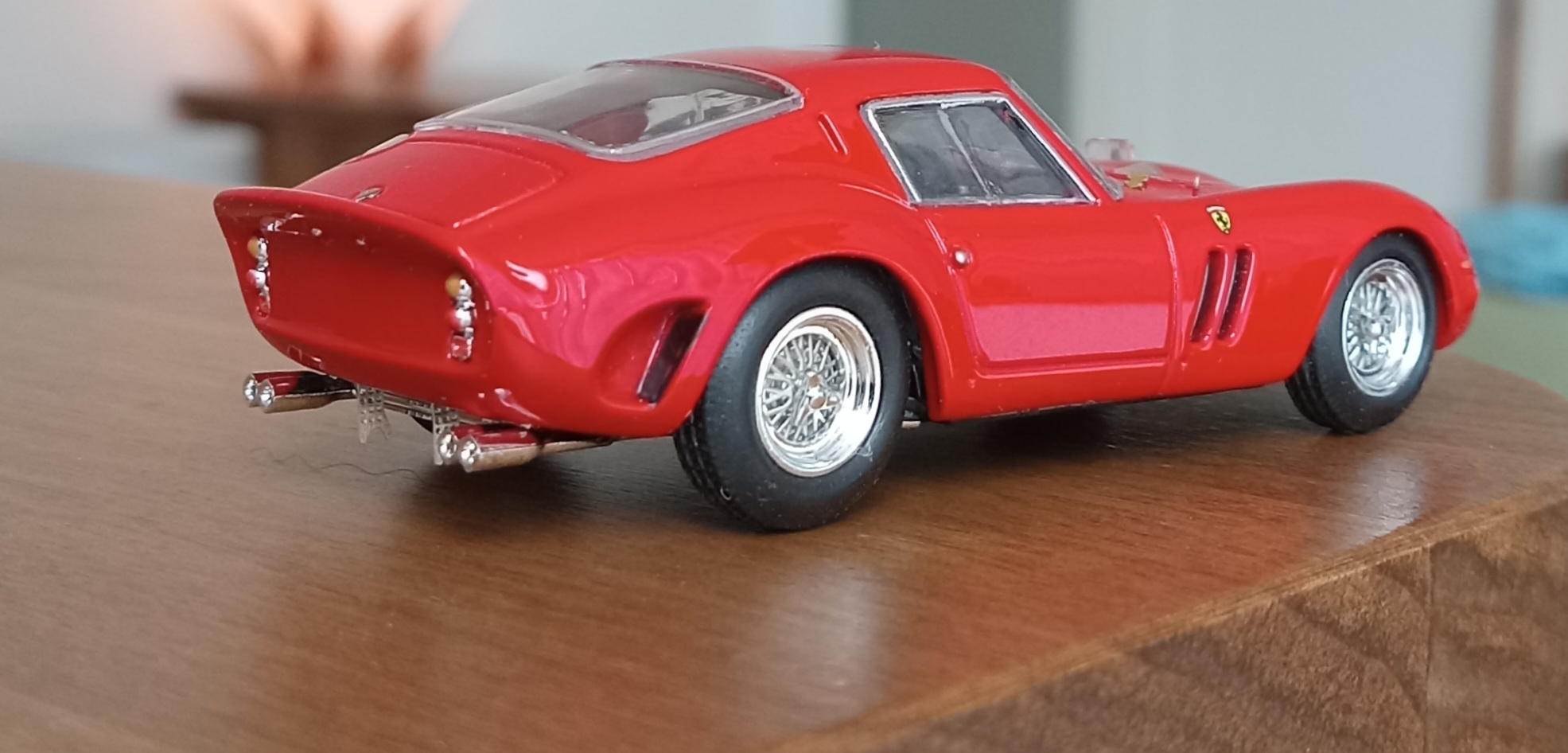
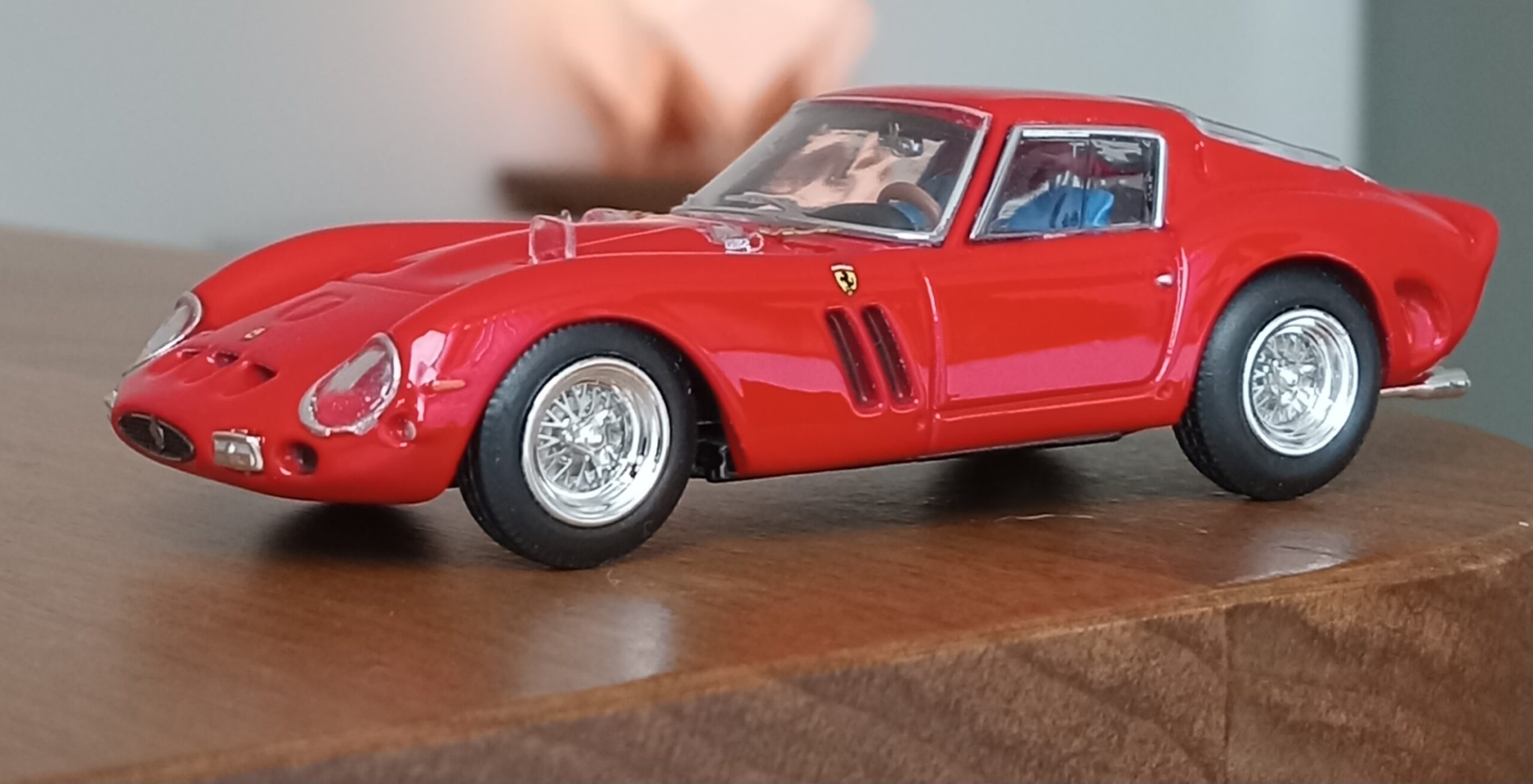
概要:
フェラーリ 250 GTO(1962年~)は、
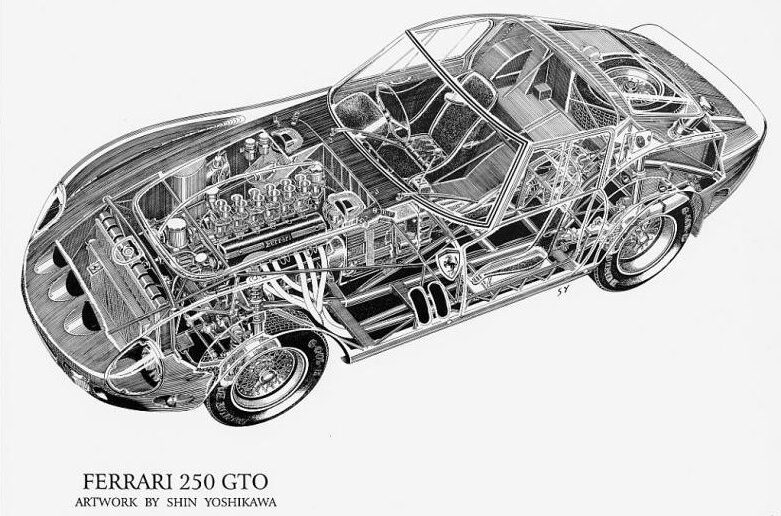
1962年から1964年の世界スポーツカー選手権(国際マニュファクチャラーズ選手権)を制するために開発された、フェラーリ史上最も伝説的なグループ3(GTクラス)用ホモロゲーション(公認)レーシングカーです。車名の「250」は単気筒あたりの排気量(250cc)、「GTO」は「Gran Turismo Omologato(公認されたGTカー)」を意味します。わずか36台(1962年型シリーズ1は33台)しか生産されておらず、現在では自動車オークションで数十億円から100億円近くの超高額で取引される世界最高峰のコレクターズアイテムです。
n
nn
#開発の背景と歴史:
*打倒ジャガーEタイプ:
1961年に登場したジャガー・Eタイプに対抗するため、フェラーリは既存のレースカー「250 GT SWB」の大幅なアップデートを余儀なくされました。
*「イル・モストロ(怪物)」からの出発:
天才エンジニアのジオット・ビッザリーニが開発を主導し、風洞実験を繰り返してプロトタイプを製作しました。当初は無骨な見た目から「イル・モストロ(怪物)」と呼ばれましたが、テスト走行では圧倒的な速さを記録しました。
*宮廷革命とスカリエッティによる完成:
1961大晦日、フェラーリ内部の内紛(宮廷革命)によりビッザリーニらが離脱。その後、チーフスタイリストのセルジオ・スカリエッティがボディラインを引き継ぎ、官能的で美しい最終デザインを完成させました。
#メカニズムの特徴:
*テスタロッサ譲りの心臓部:
エンジンはル・マン24時間レースで実績のある「250テスタロッサ」のドライサンプ式V12エンジンをベースにしています。ドライサンプ化によりエンジンをより低く、より後方に配置でき、低重心化と前後重量バランスが向上しました。
#外観デザイン上の要点::
n
n
N
n
N
M
n
そのディテールをフロント、サイド、リア、そして空力機能の観点から詳細に解説します。
フロント:圧倒的な存在感と機能美
フロントマスクは、レースでの勝利(冷却と空力)に直結するギミックが凝縮されています。
エンジンをドライサンプ化して極限まで低く、かつ後方に搭載したことで、地を這うような超低重心のロングノーズが実現しました。
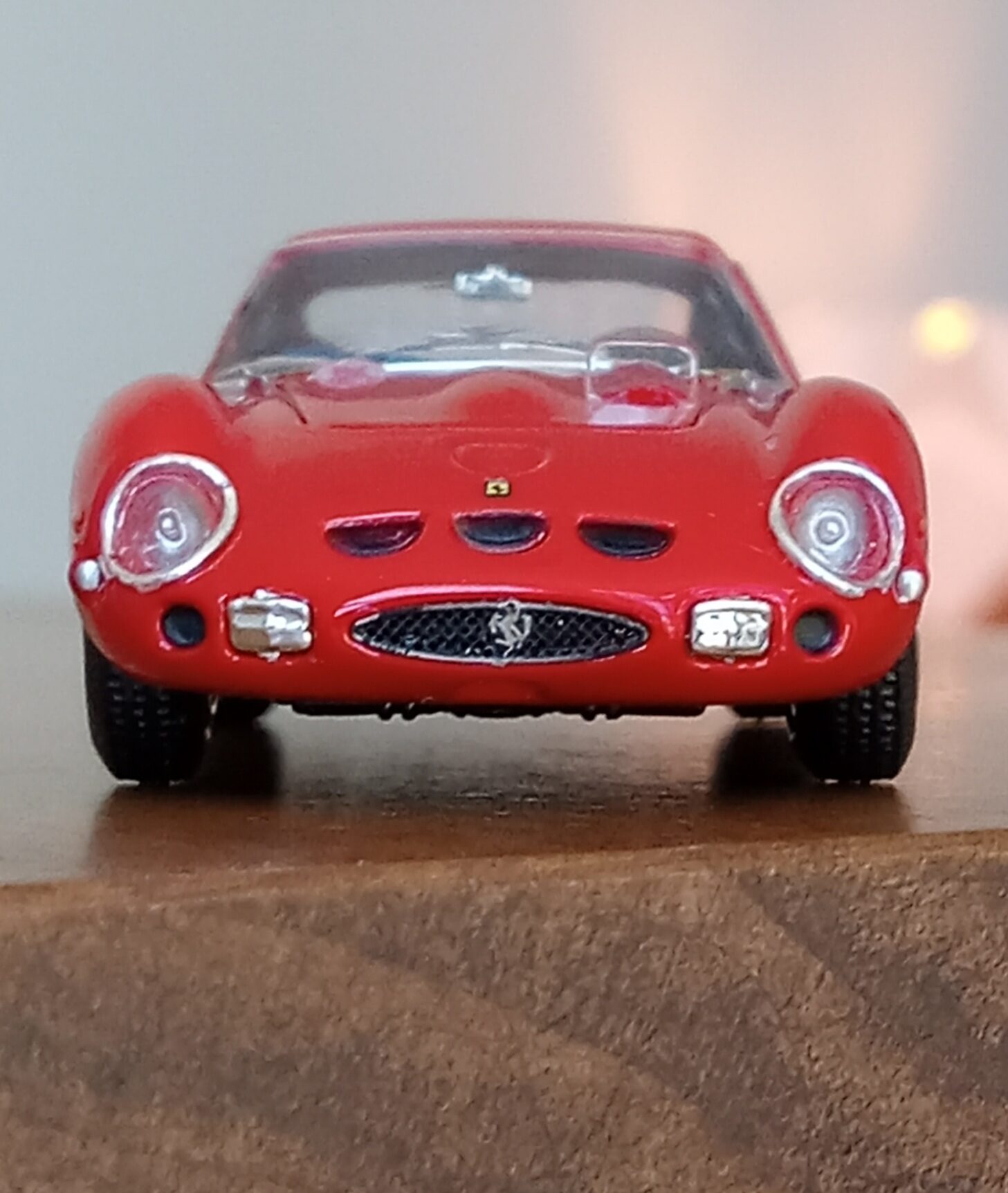
空気抵抗を減らすため、ヘッドライトは流線型のプレキシガラス(アクリル樹脂)カバーで覆われています。
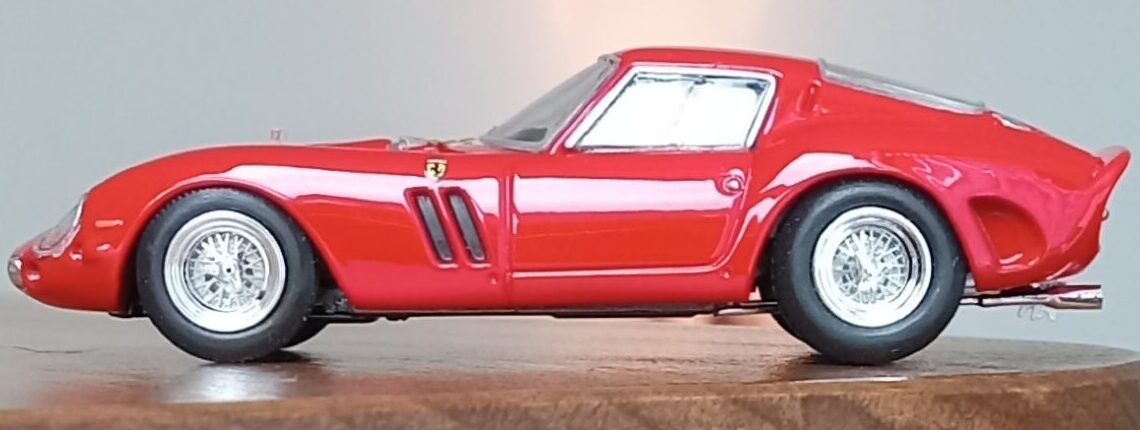
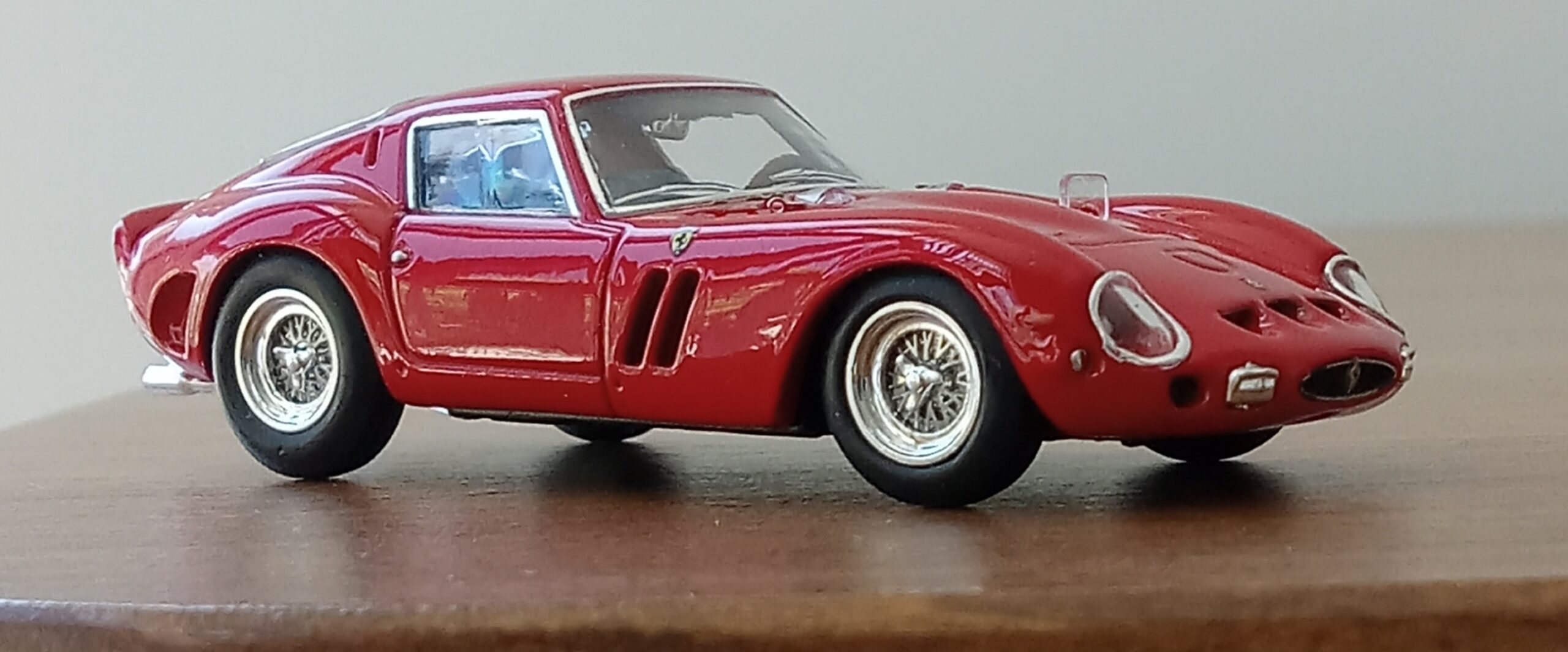
フロントホイールハウス後方には、エンジンルームの熱気を引き抜くためのスリット(エアーアウトレット)が刻まれています。個体によって2連、または3連の縦型スリットが存在します。
*深いコックピットとラップアラウンド・ウインドスクリーン
*ボラーニ製ワイヤーホイール
足元を引き締めるのは、センターロック(ノックオフ式)の伝統的なBorrani製ワイヤーホイールです。
n
*一体型(またはボルト留め)リアスポイラー
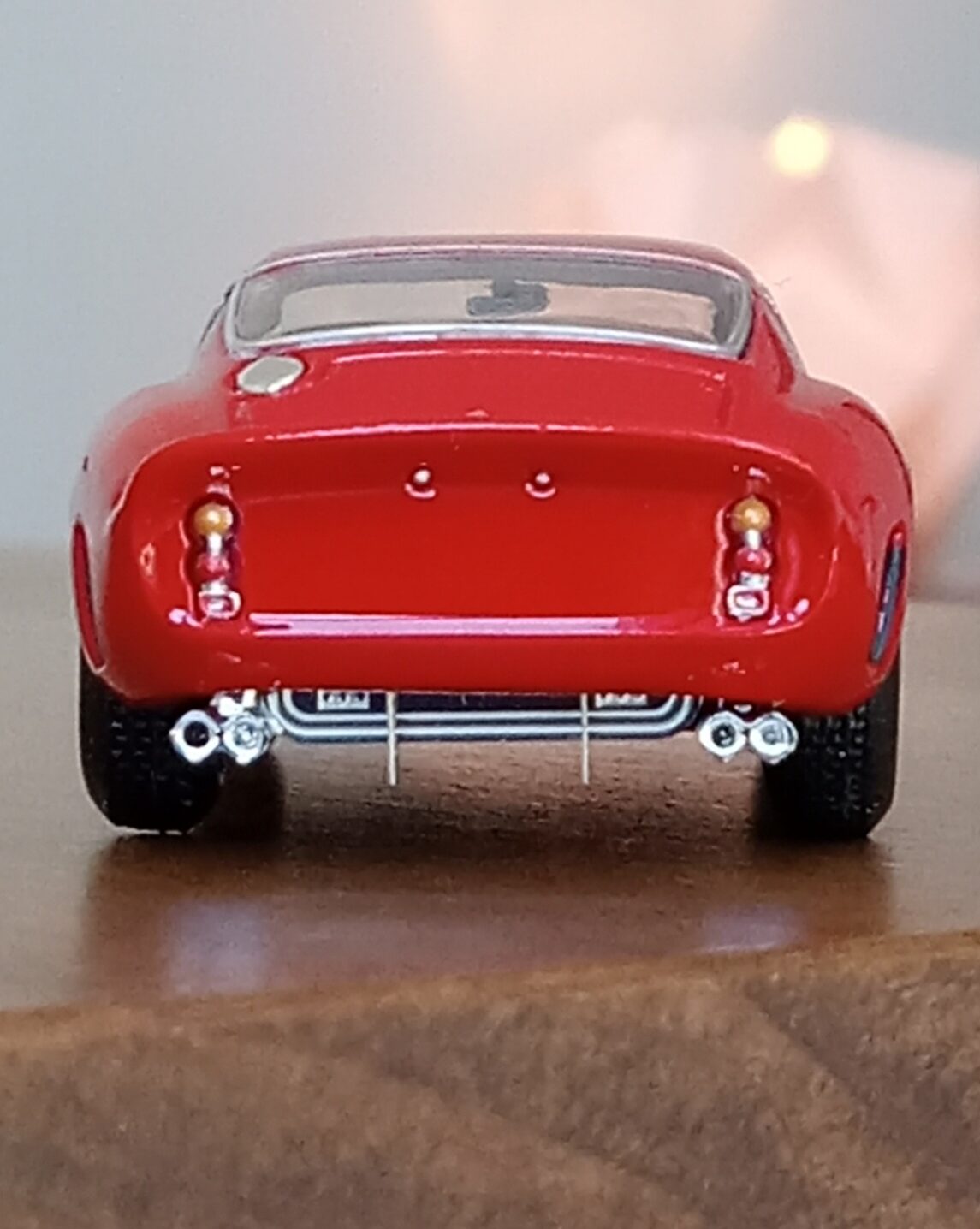
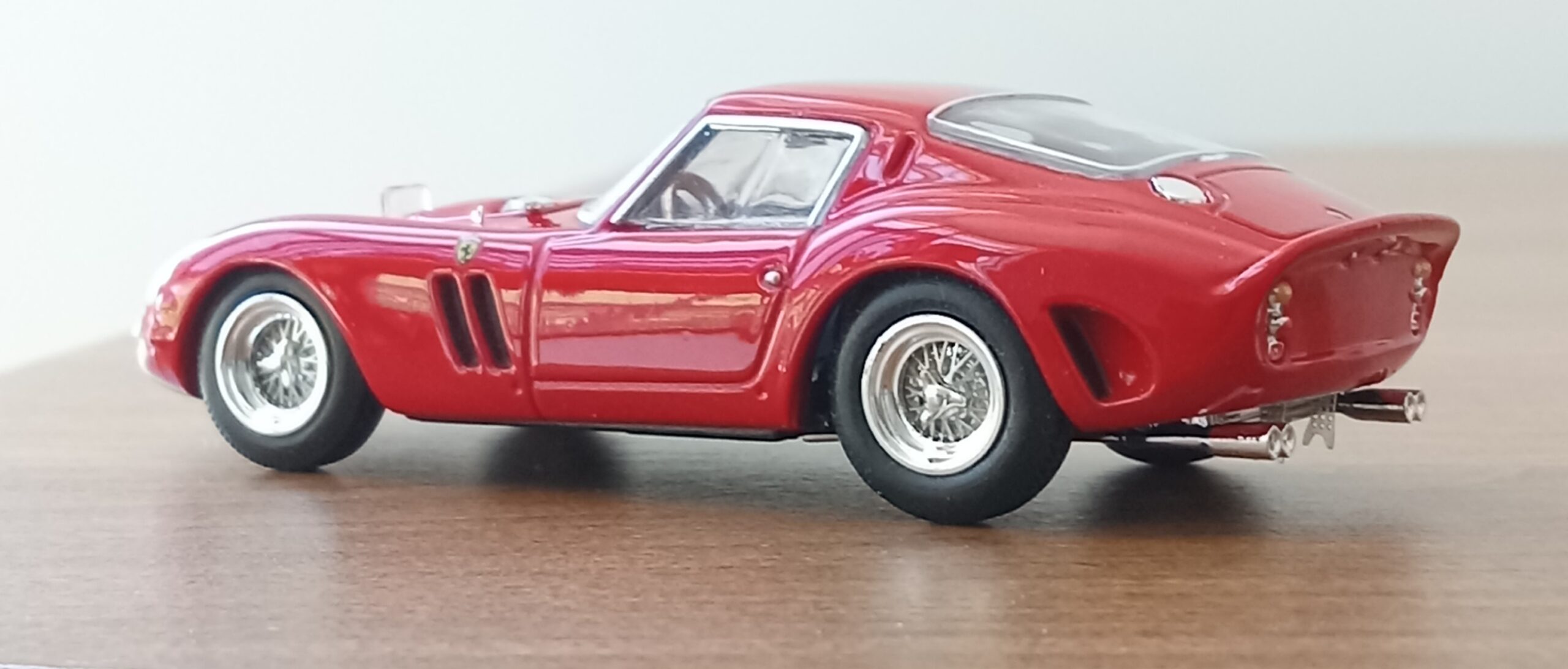
切り落とされたテールの上端には、走行テストを経て追加された跳ね上がった形状のリアスポイラー(ダックテール)が備わり、後輪のダウンフォースを稼いでいます。
幅広のレーシングタイヤを収めるため、リアフェンダーは大きく美しく盛り上がっており、リバースアングルから見た際の圧倒的な艶やかさを演出しています。
公道走行が可能なレースカー(GTホモロゲーション)という規定を満たすため、小さなウィンカーやライセンスプレートランプが、ボディラインを崩さないよう絶妙に埋め込まれています。
n
n
#モータースポーツでの圧倒的戦績:
n
250 GTOは、公道を自走してサーキットへ向かい、レースで優勝してそのまま乗って帰ることができる「最後のデュアルパーパス(万能)レーシングカー」と言われています。
*3年連続の世界タイトル: 1962年、1963年、1964年の世界スポーツカー選手権(GTクラス)で圧倒的な強さを誇り、3年連続でマニュファクチャラーズ・タイトルを獲得しました。
*主要レースを総なめ: ル・マン24時間レースのGTクラス優勝をはじめ、タルガ・フローリオ、グッドウッド・ツーリスト・トロフィー、ツール・ド・フランス(自動車レース)などで数々のクラス優勝や総合表彰台を独占しました。
1:極めて高い希少性:
生産台数がわずか36台であり、かつ、過酷なクラッシュ等で失われることなく「生産されたすべての個体が現存している」という奇跡的な歴史を持っています。
2:完璧な血統と美しさ:
レースでの輝かしい全勝記録(血統)に加え、「自動車の歴史の中で最も美しいデザインの一つ」と評価される美術品としての価値があります。
3:高級コレクターズクラブの存在:
250 GTOのオーナーだけが加入できる「GTOオーナーズクラブ」が存在し、5年ごとに世界中で特別なツアーが開催されます。メンバーにはラルフ・ローレンなどの世界的な著名人が名を連ねています。
#主要諸元:
- エンジン型式:水冷 60度 V型12気筒 SOHC(ティーポ168/62)
- 燃料供給装置:ウェーバー(Weber) 38 DCN キャブレター × 6基
- 潤滑方式:ドライサンプ方式
- 総排気量: 2,953.21 cc (1気筒あたり約250cc)
- 最高出力 : 300 hp / 7,500 rpm
- 最大トルク:30.0 mkg(294 Nm) / 5,500 rpm
- 駆動方式:フロント縦置きエンジン・後輪駆動(FR)
- 定員:2名
- 車体形式:2ドア・オープントップ
- ホイールベース:2,400 mm
- 全長:全長 4,400mm
- 全幅:1,675 mm
- 全高:約 1,245 mm
- 車両重量:
880 kg 〜 950 kg(軽量アルミニウム製ボディ)
*外観デザインの特徴:『FRレーサーの極北点』
フェラーリ 250GTO(1962年)は、「FRレーサーの極北」と称される伝説的な存在です。ミッドシップ化の過渡期において、フロントエンジンの限界を極め、レースで勝つために純粋に研ぎ澄まされたその姿は、芸術品のような美しさと圧倒的な戦績を両立させています。
その神々しいまでの立体造形とそのたたずまいには、人類が到達した高みを象徴する『オーラにまみれた至高の美』が存在しています。(この車の美しさを真っ向から否定できる人がいれば、ぜひお会いして話がしたいです。逆に、、、)
その美しさの秘密を、
自分の今持てるすべてを使い、
ここに表したいです。
6点あげたいです。
1:よくぞここまで、、、と言わざるを得ないほど磨き上げられた、流麗でしなやか、かつこの上なくスピーディー! 高速で移動する物体に捧げうるあらゆる賛美の言葉がふさわしい、ボディー全体造形の高度な達成域の深さ、広さ、崇高さ ーーーーーーーー>書いていて涙が出ます。
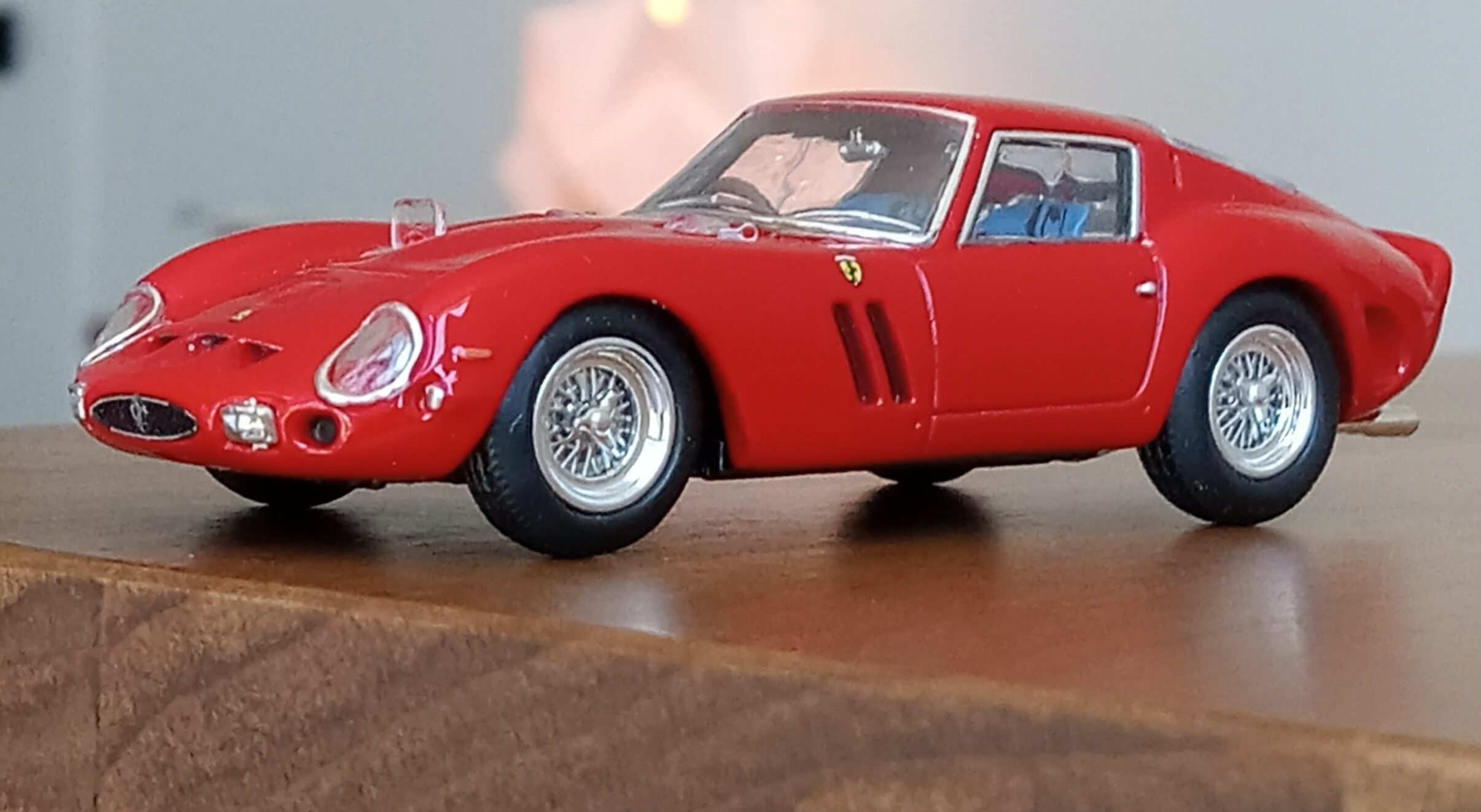
2:250TRで達成した戦闘能力はそのままに、空気抵抗削減のために、旧TRの全体を覆う、滑らかなオーダーメイドのスーツデザインの職人技! 素材は、ウエッジボディー、コーダ・トロンカ【スパッと切り落とした】のテールデザイン、空気流入量調整の3個のフロント・エアダウトなど、、、---->大技小技、すべてを『真芯』でとらえた一回きりの奇跡のセッション
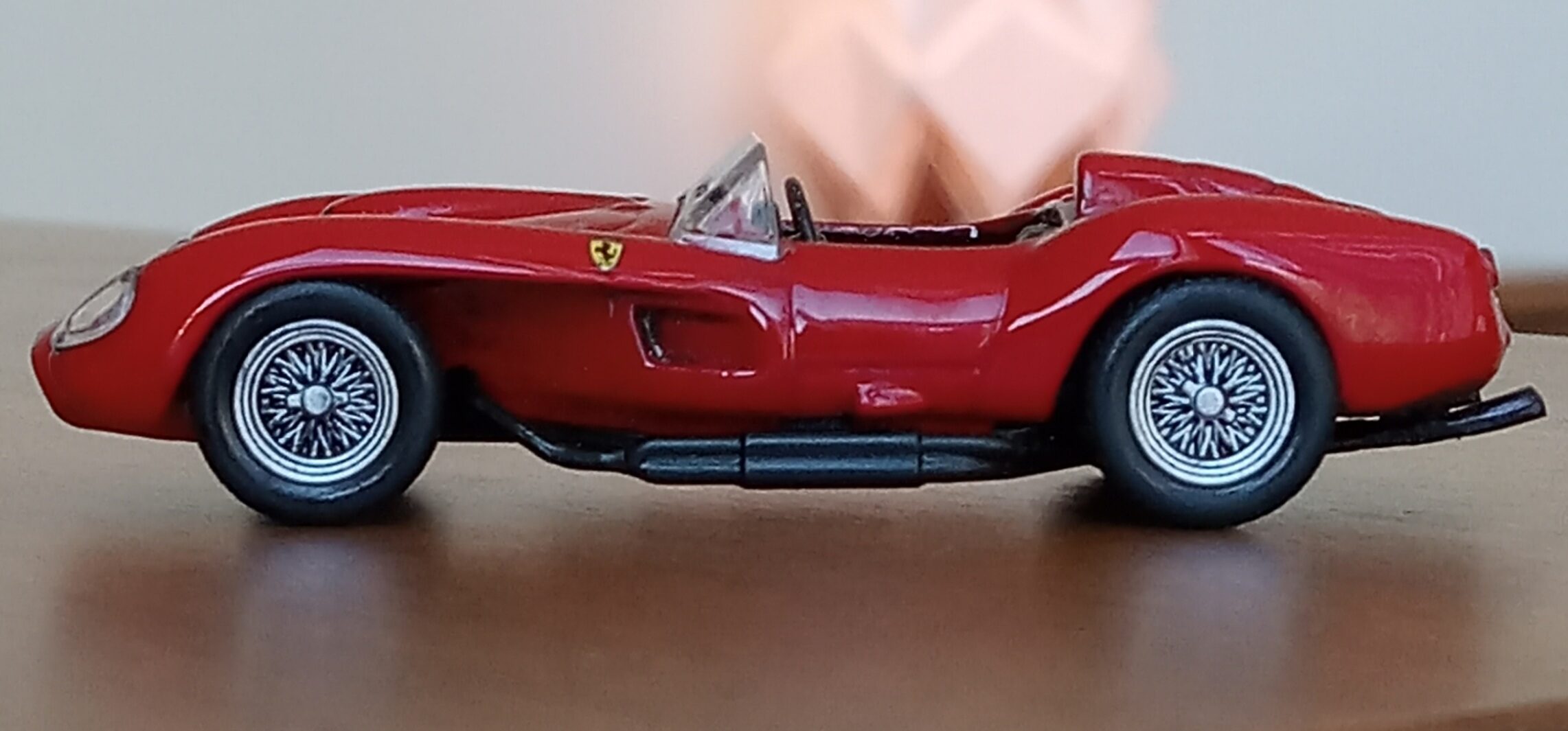
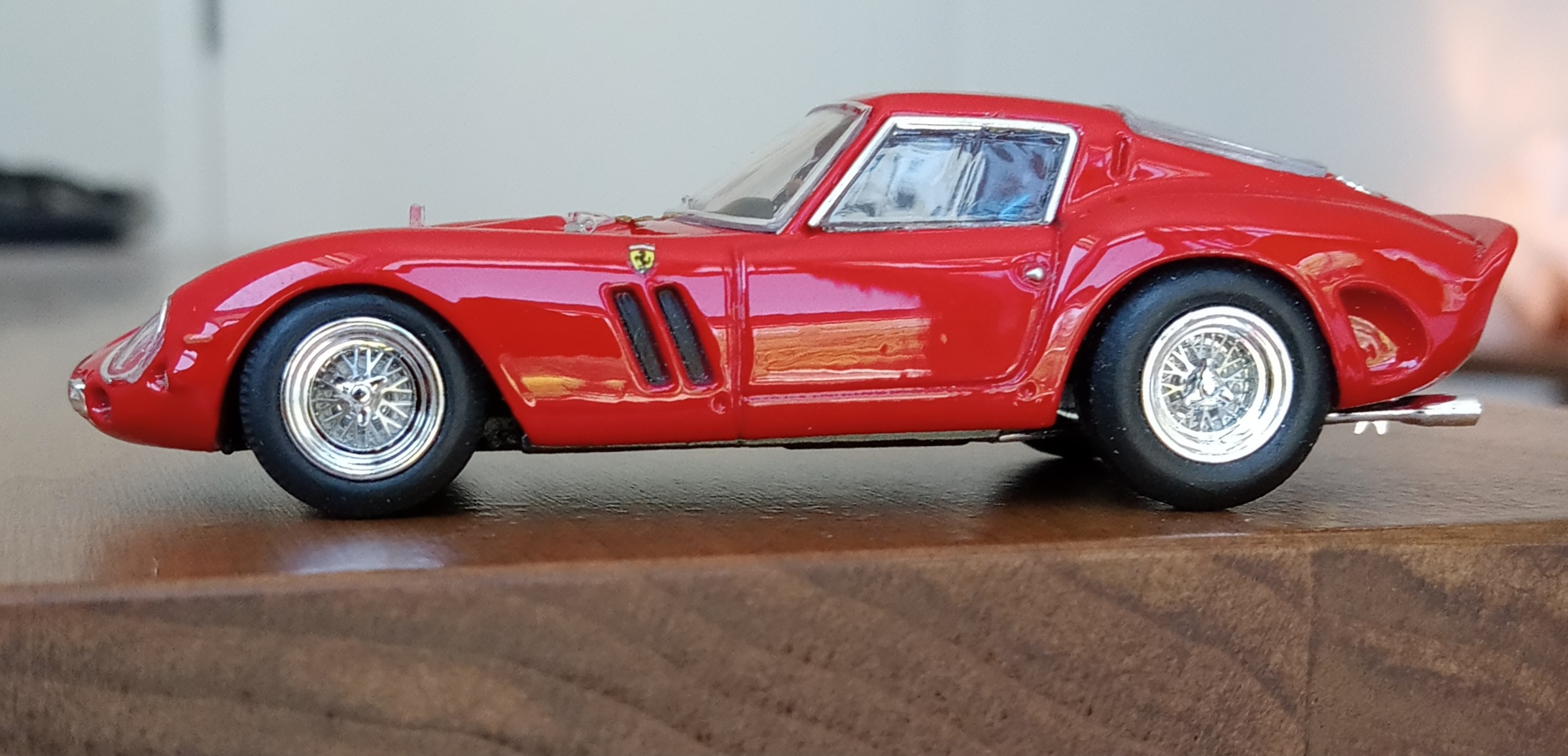
3:云うまでもなく、既に250TRポンツーン・フェンダー版で達成した重量バランスが産んだ、ーーーーー>究極のFRサイドビュー・プロポーション
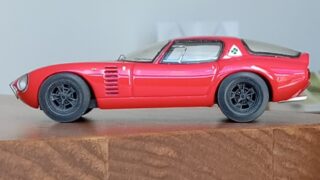
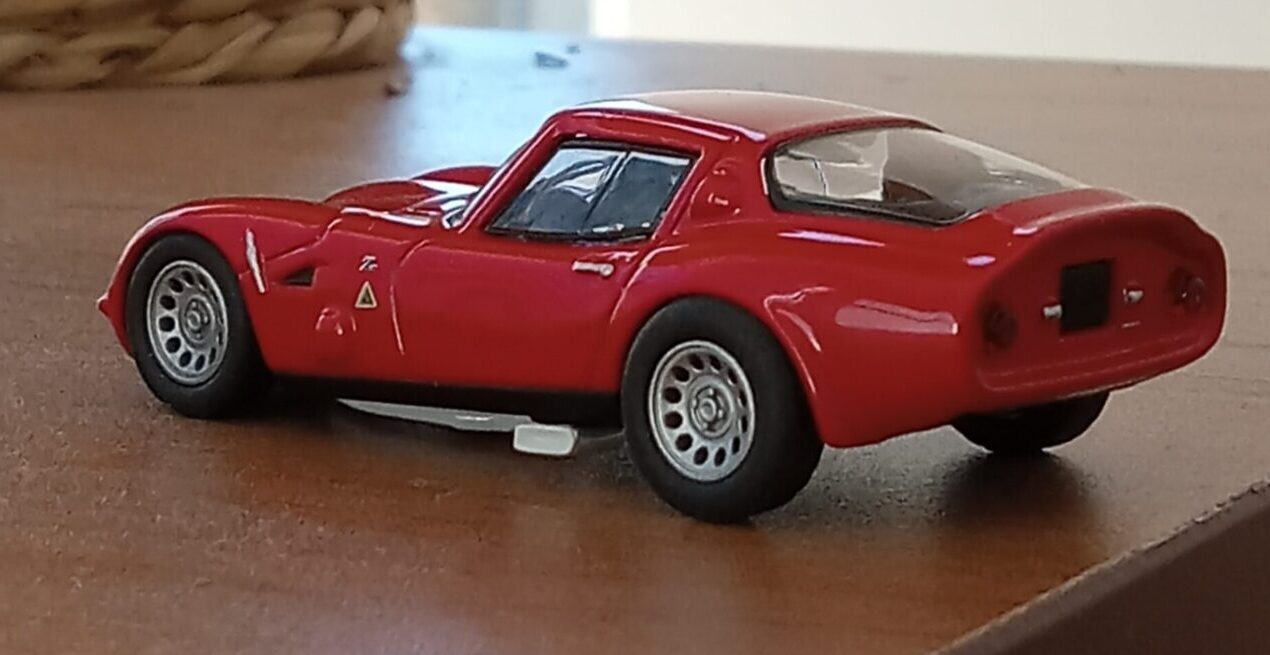
4:同時代のアルファロメオ・TZ-2との比較で明らかになる、拒食症になってレースに勝つぐらいなら『私は美しさを取る。』とでも言いたげな、エンツォ―の真顔が見え隠れする、『健康美を外れない範囲での至高の美』の追求‐-----逆に言いますと、TZ-2は拒食症的、ひずみや不健康さが若干滲んでます。泣
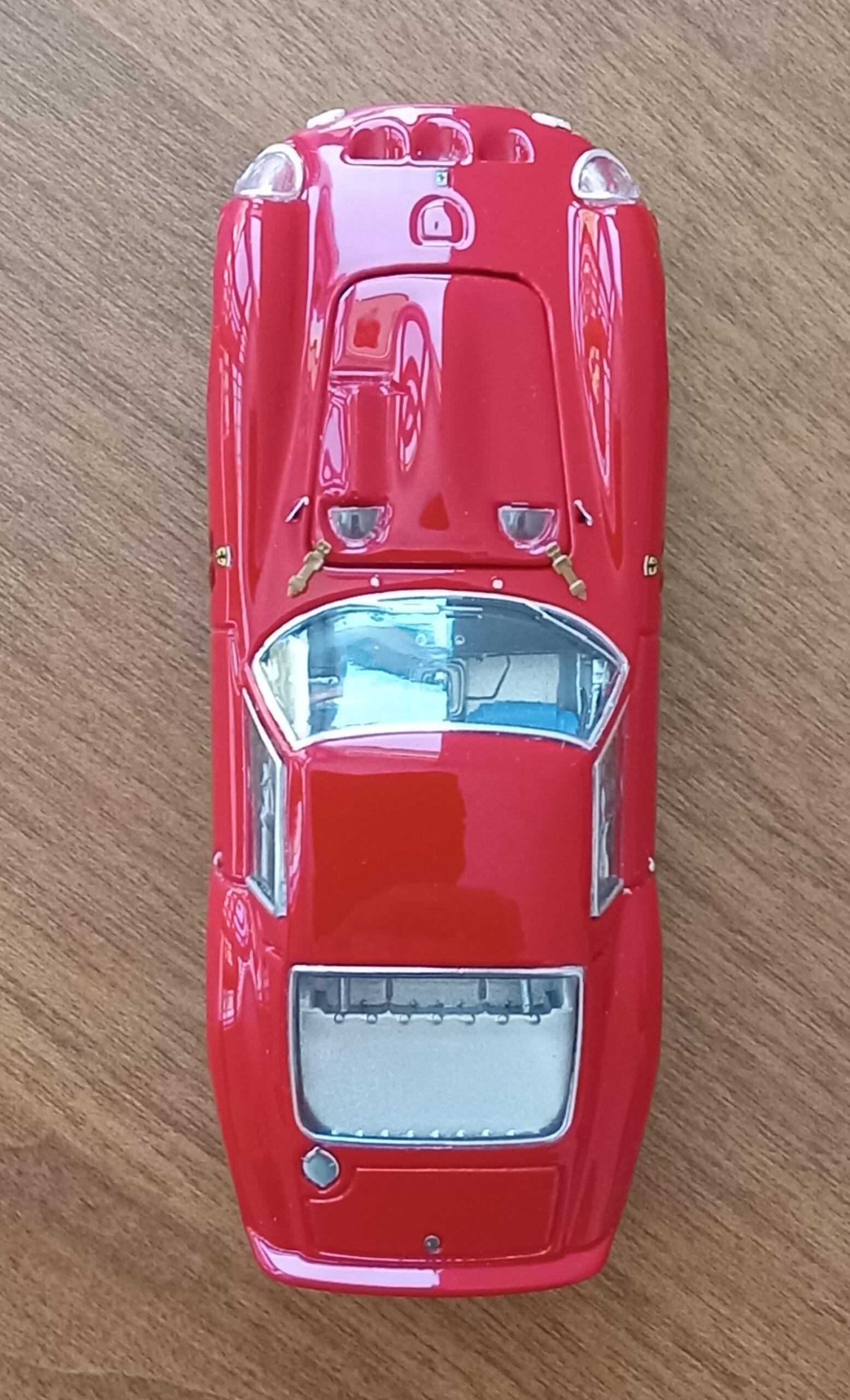
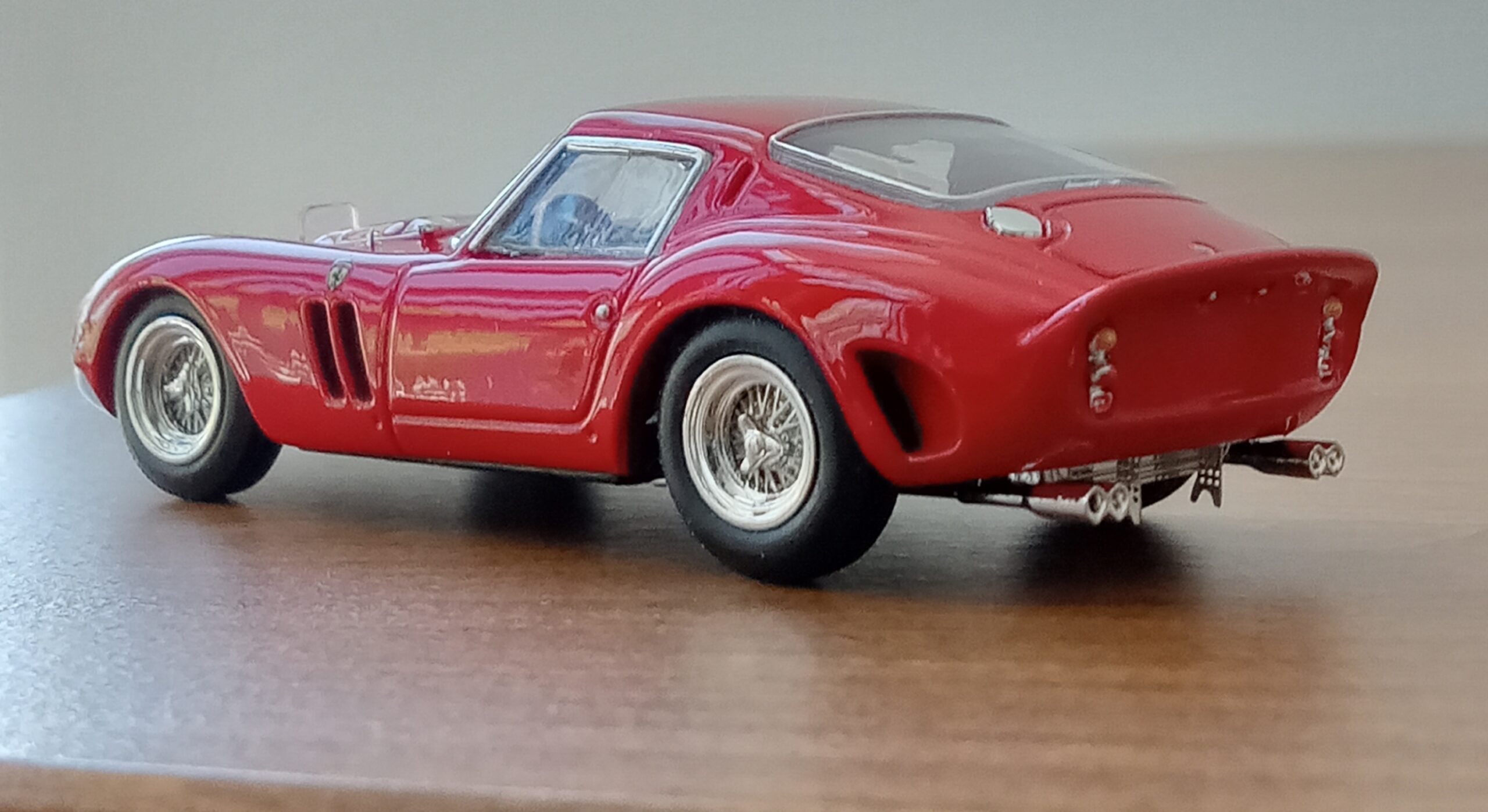
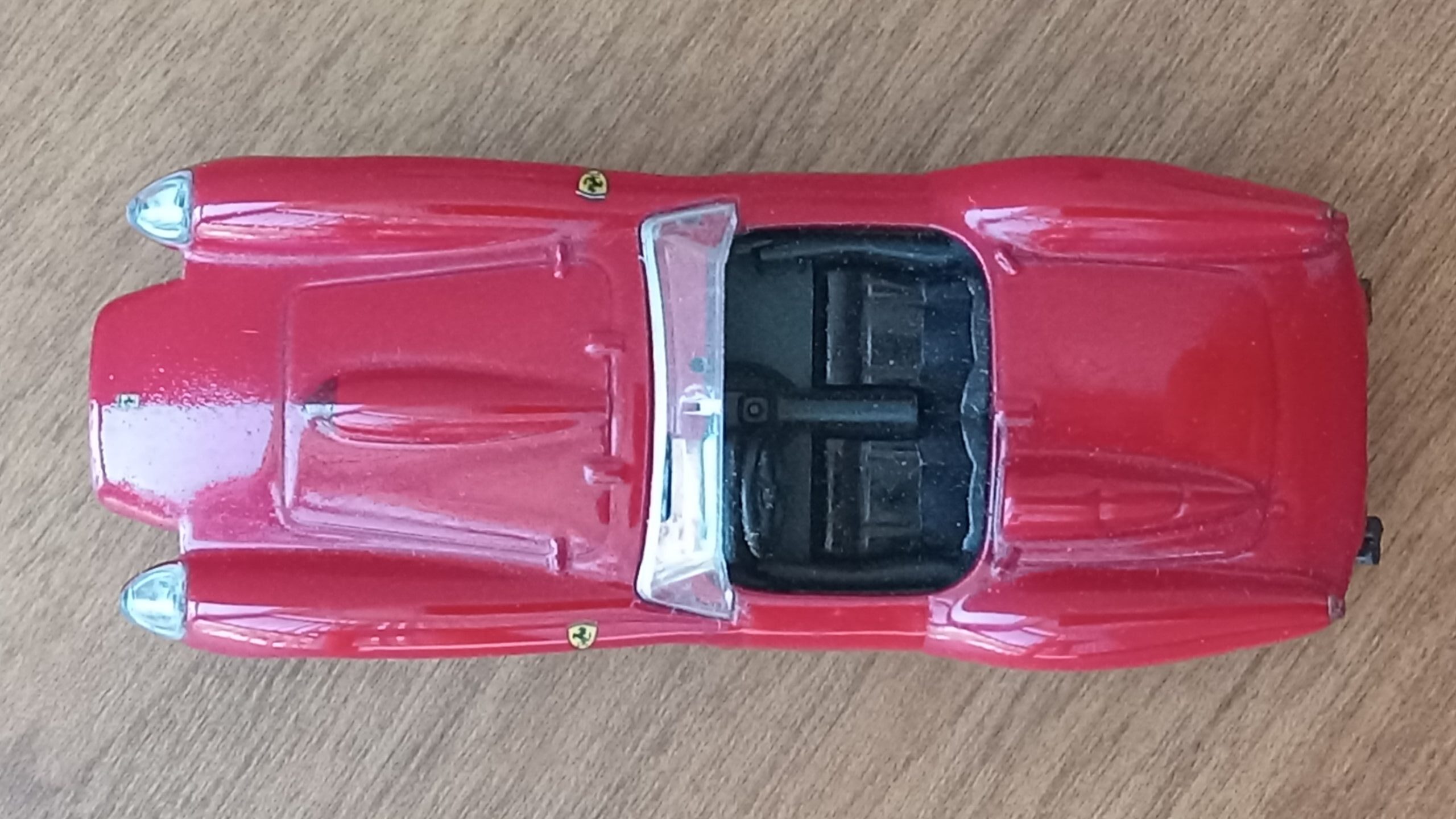
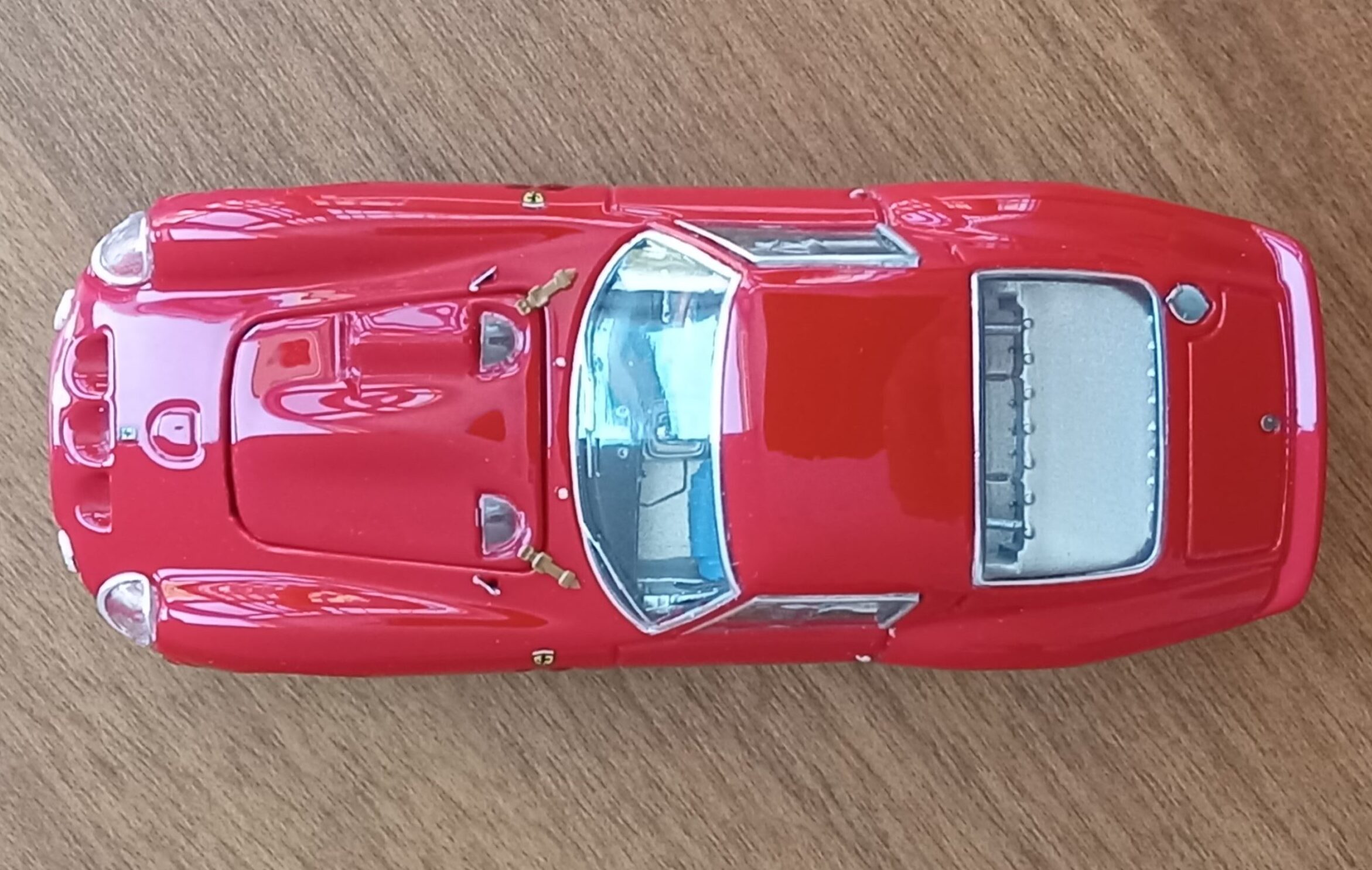
5:プランビュー【真上から見た時】はっきりと表れる風洞実験から導き出された、リアに向かってのサイド面とサイドウインドウ面の絞り込み、ーーーーーーー>又TRからのホイールベースと全長の増加が、ぎりぎりの線で、詰められたのが本当によくわかります。
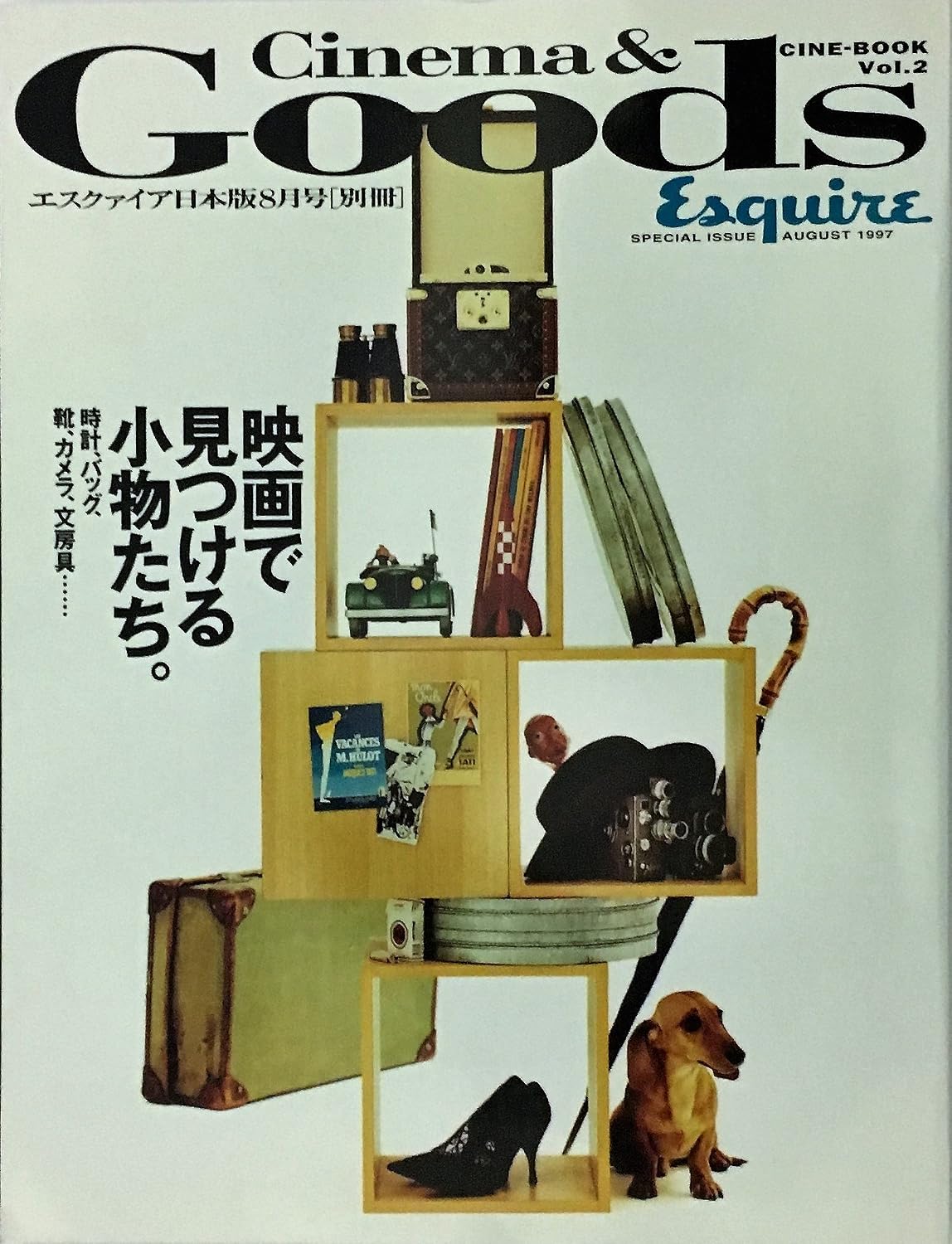
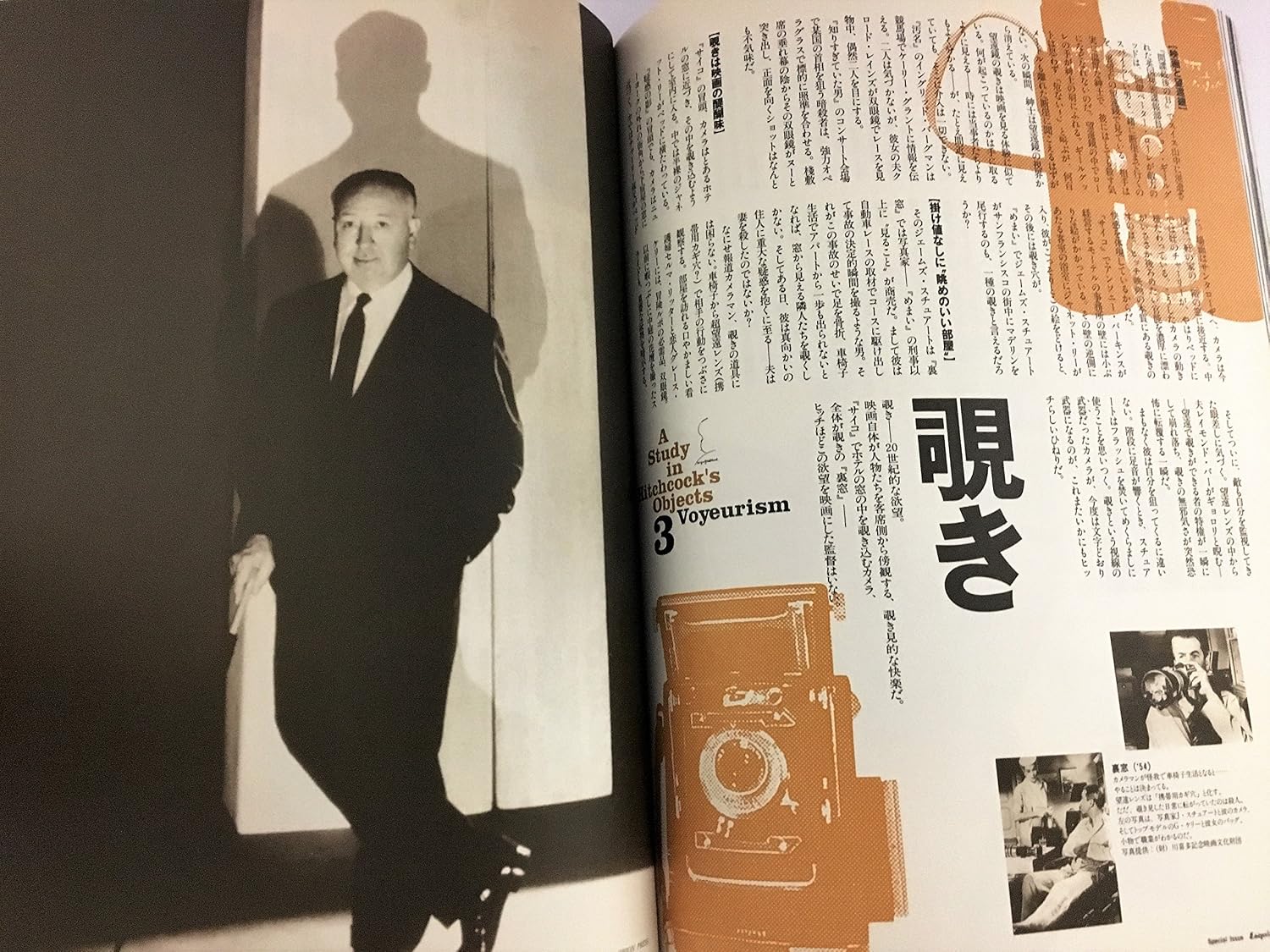
6:機能から導き出された小物類(灯火類、ドアノブ、取っ手、フュエル・キャップ類)の優雅で見事なボディー全体への配置の仕方。----→全盛期日本版『エスクァイア』のエディトリアル・デザインのようです。
では1つ1つ、
1:よくぞここまで、、、と言わざるを得ないほど磨き上げられた、流麗でしなやか、かつこの上なくスピーディー! 高速で移動する物体に捧げうるあらゆる賛美の言葉がふさわしい、ボディー全体造形の高度な達成域の深さ、広さ、崇高さ
(偶然に出来てしまった部分もあるのでしょうが、ポンツーン付きのTRですでに出来上がった『野獣的骨格』の上に、後の世でいえば、天才的な即興デザイナーがサッとダイノック【塗装が可能なフィルム】を被せ、後は優秀なモデラーに託したようなかんじです。そこには、ジャガーE-タイプに負けない、立体的に張り出したフロント・フェンダー、ボディーサイド・ドア横面からリアフェンダーに至るボリューム感と、E-タイプよりさらに複雑な上面の絞り込みをリアフェンダー上で一つにまとめる手腕も見どころ、最後に、すべてを引き締める、コーダ・トロンカ上のリアスポイラーとその取り付けの角度、、、キリがないです、本当に。)
ーーーーーーーー>書いていて涙が出ます。
2:250TRで達成した戦闘能力はそのままに、空気抵抗削減のために、旧TRの全体を覆う、滑らかなオーダーメイドのスーツデザインの職人技! 素材は、ウエッジボディー、コーダ・トロンカ【スパッと切り落とした】のテールデザイン、空気流入量調整の3個のフロント・エアダウトなど、、、
---->大技小技、すべてを『真芯』でとらえた一回きりの奇跡のセッション
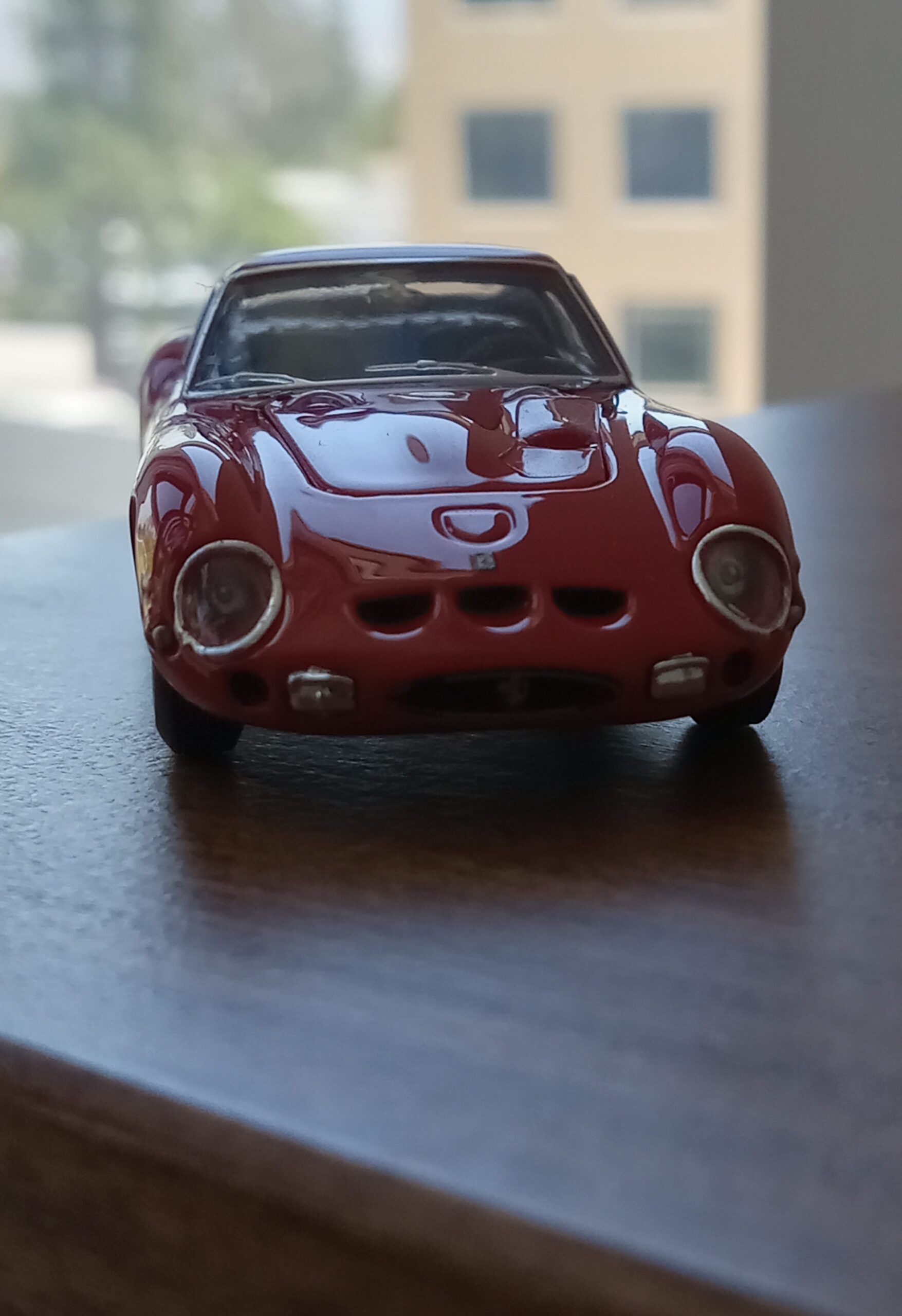
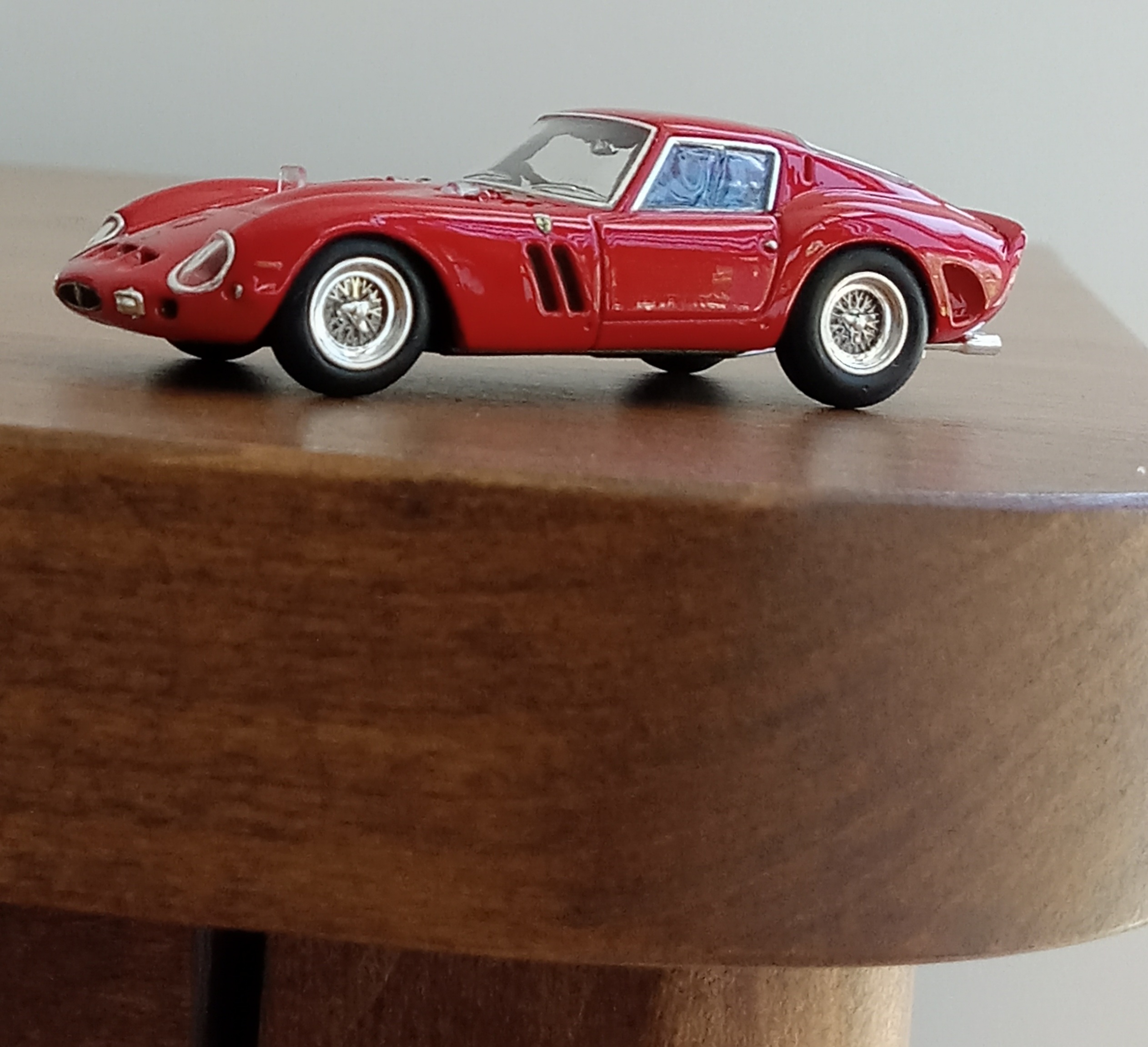
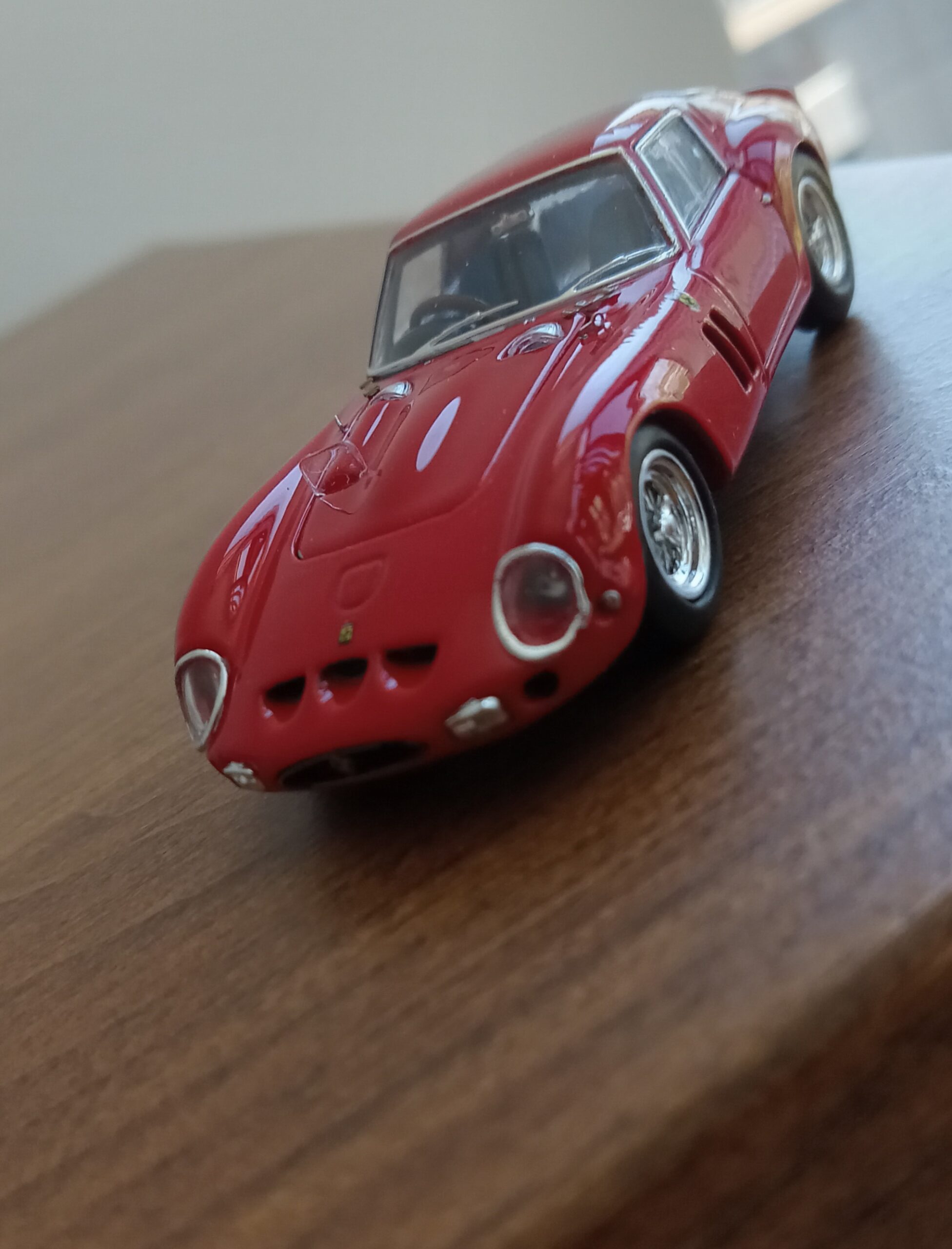
3:云うまでもなく、既に250TRポンツーン・フェンダー版で達成した重量バランスが産んだ、
ーーーーー>究極のFRサイドビュー・プロポーション
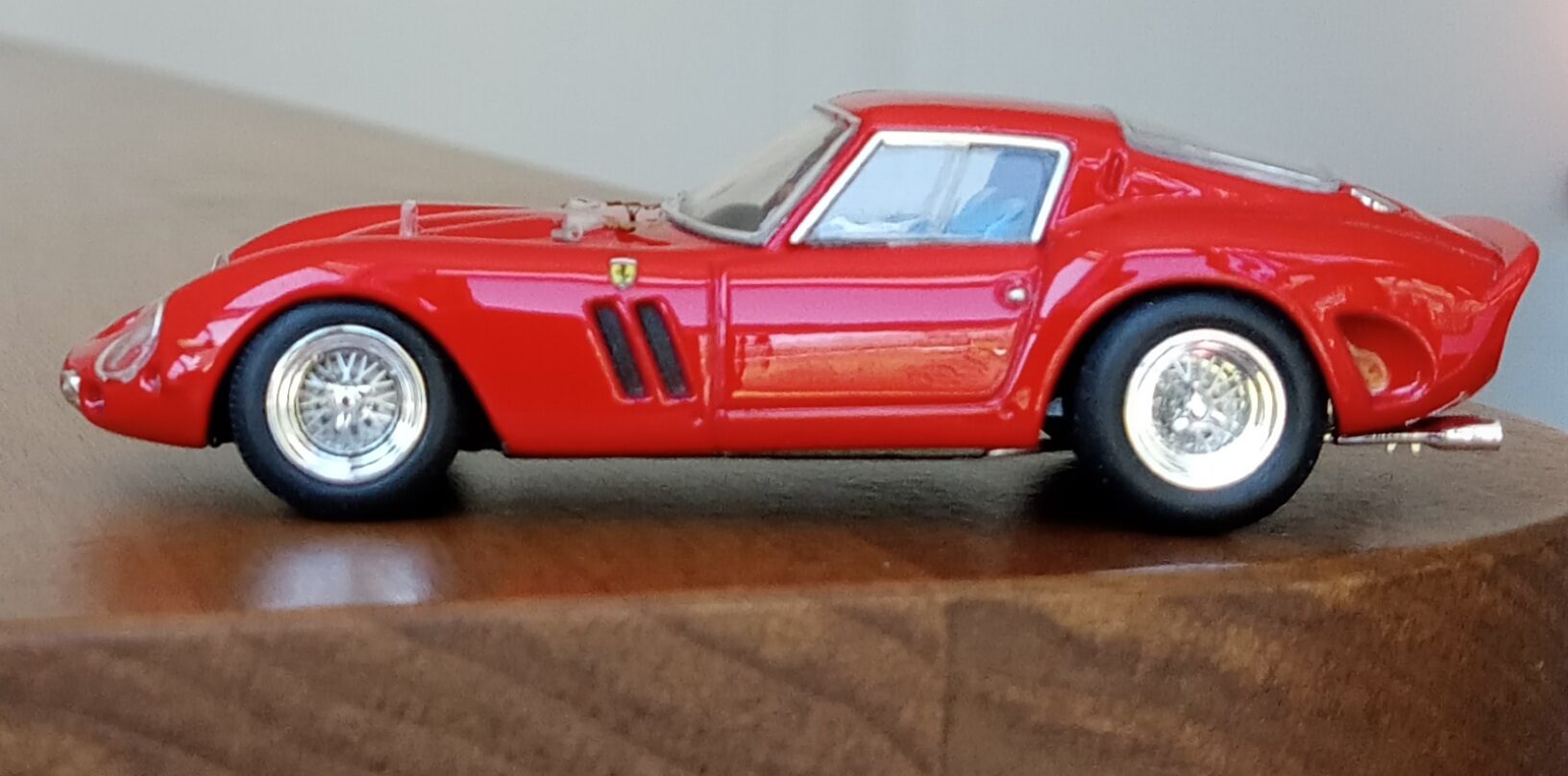
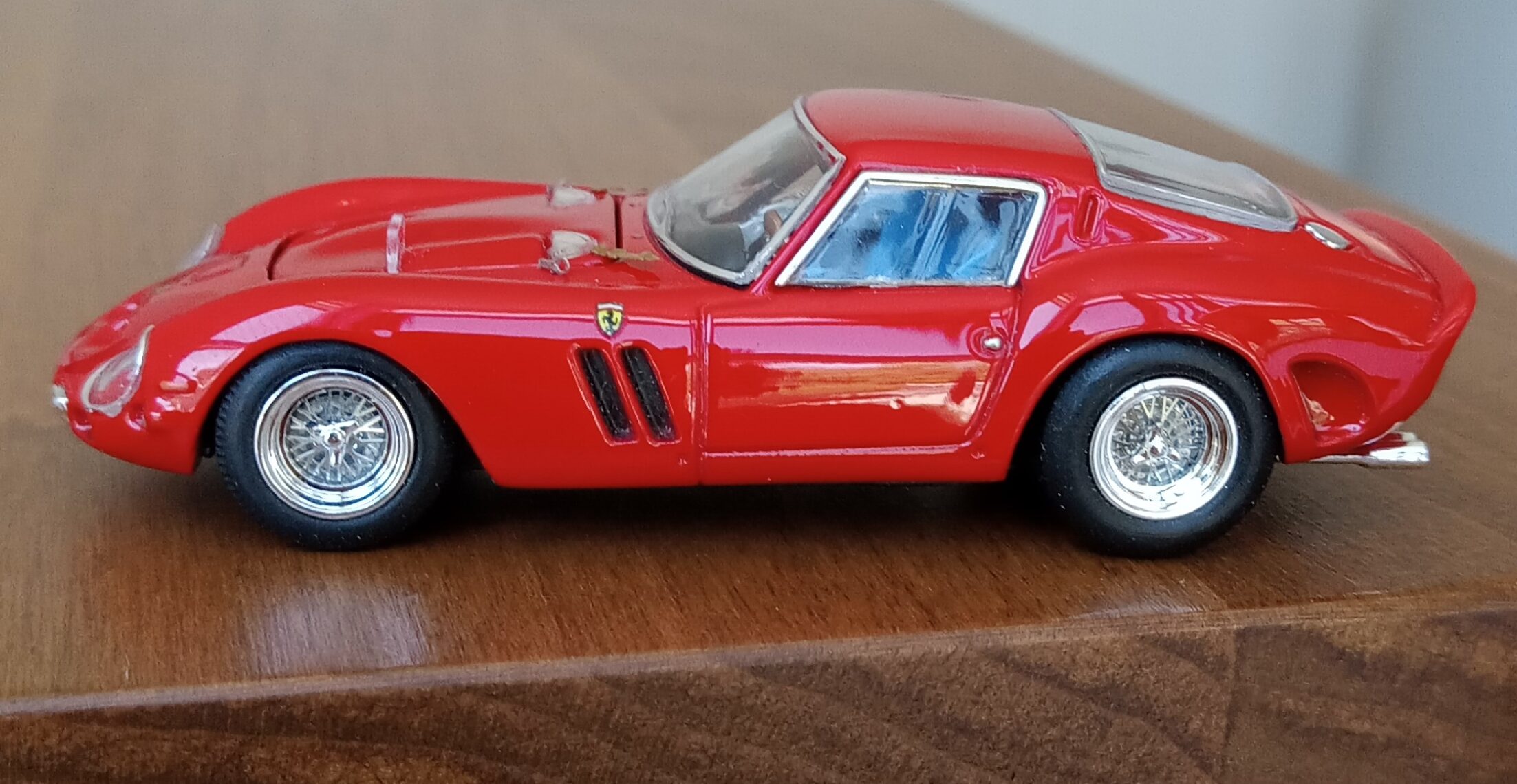
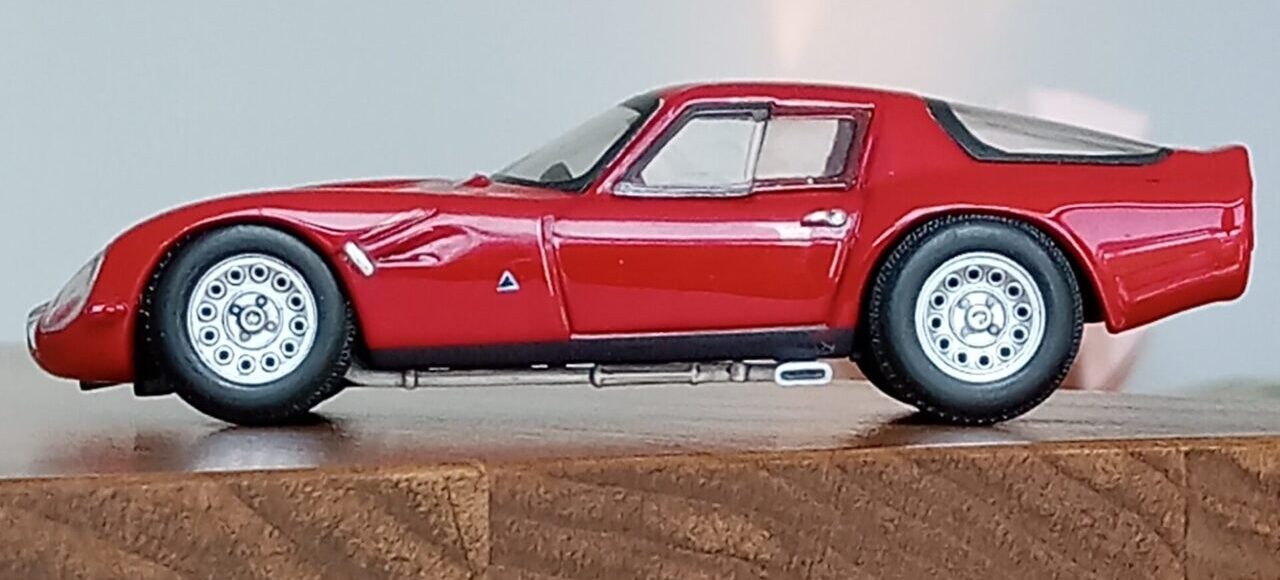
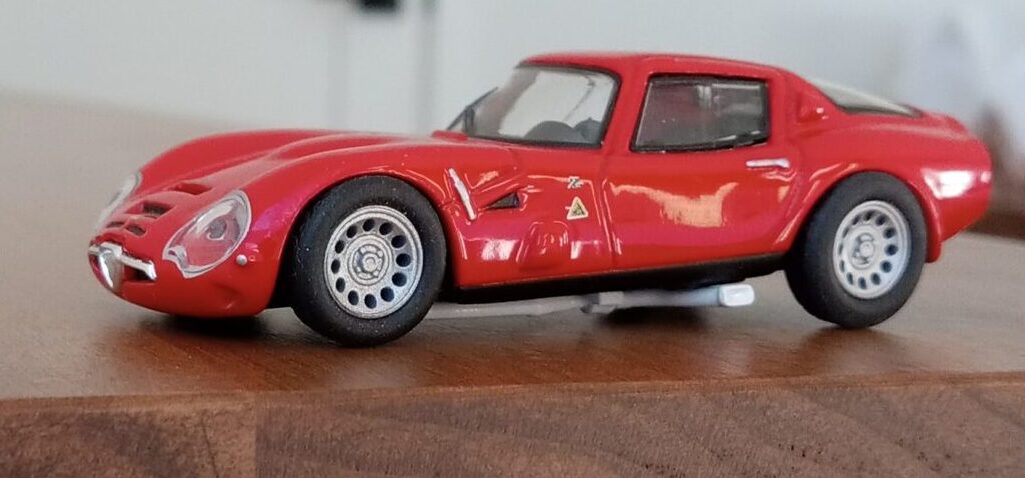
4:同時代のアルファロメオ・TZ-2との比較で明らかになる、拒食症になってレースに勝つぐらいなら『私は美しさを取る。』とでも言いたげな、エンツォ―の真顔が見え隠れする、『健康美を外れない範囲での至高の美』の追求
(美を求めるあまり、暗部にひきずりこまれる、、、という誘惑にぎりぎりの部分で、『NO!』と言い切る強さが現れたデザインだと感じます。--→その分、250TRにあったカリスマ性が減少しました。)
‐-----逆に言いますと、TZ-2は拒食症的、ひずみや不健康さが若干滲んでます。泣
5:プランビュー【真上から見た時】はっきりと表れる風洞実験から導き出された、リアに向かってのサイド面とサイドウインドウ面の絞り込み、
ーーーーーーー>又TRからのホイールベースと全長の増加が、ぎりぎりの線で、詰められたのが本当によくわかります。
6:機能から導き出された小物類(灯火類、ドアノブ、取っ手、フュエル・キャップ類)の優雅で見事なボディー全体への配置の妙味
----→全盛期日本版『エスクァイア』の大胆且つ繊細なエディトリアル・デザインのようです。
*『私』とフェラーリ250GTO:再会のときの時?
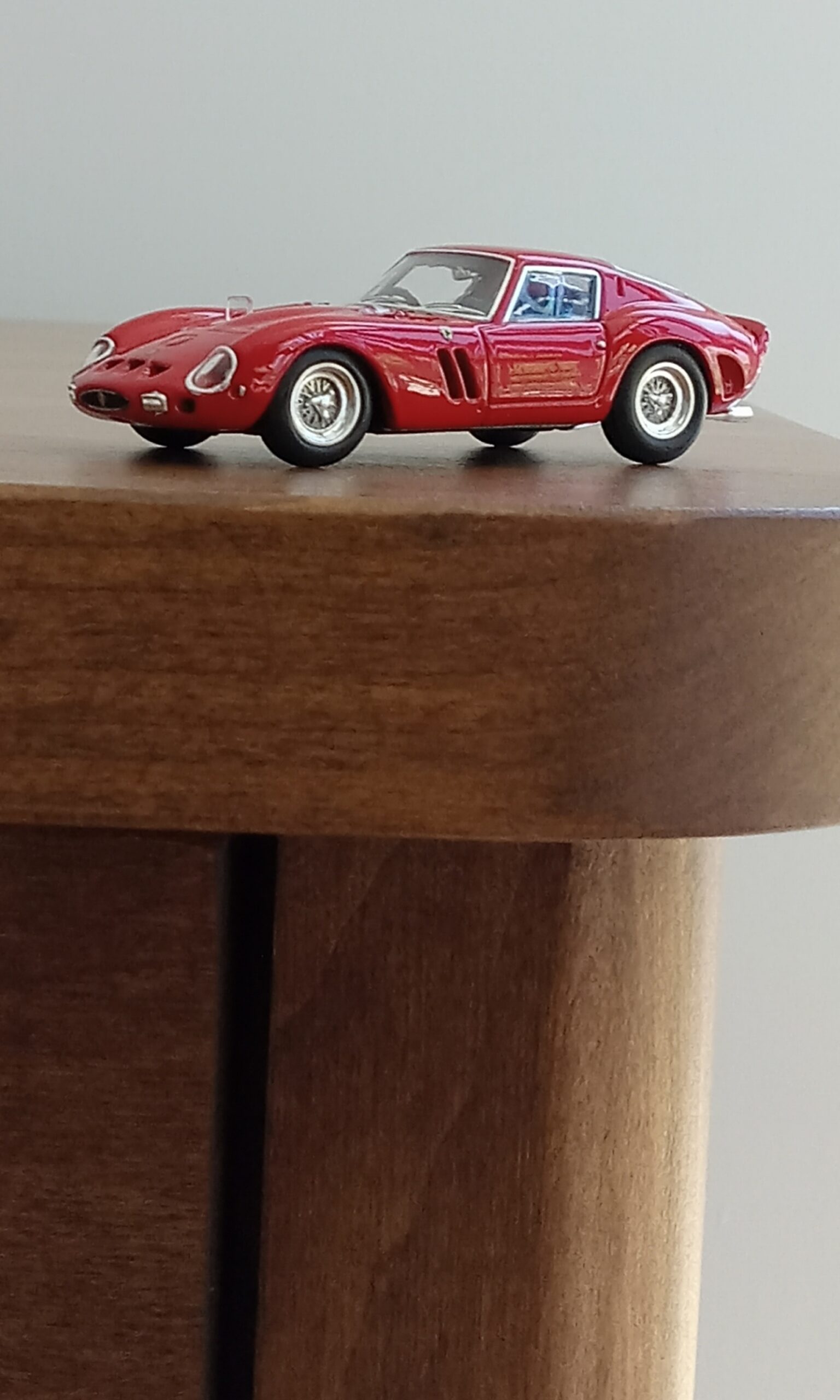
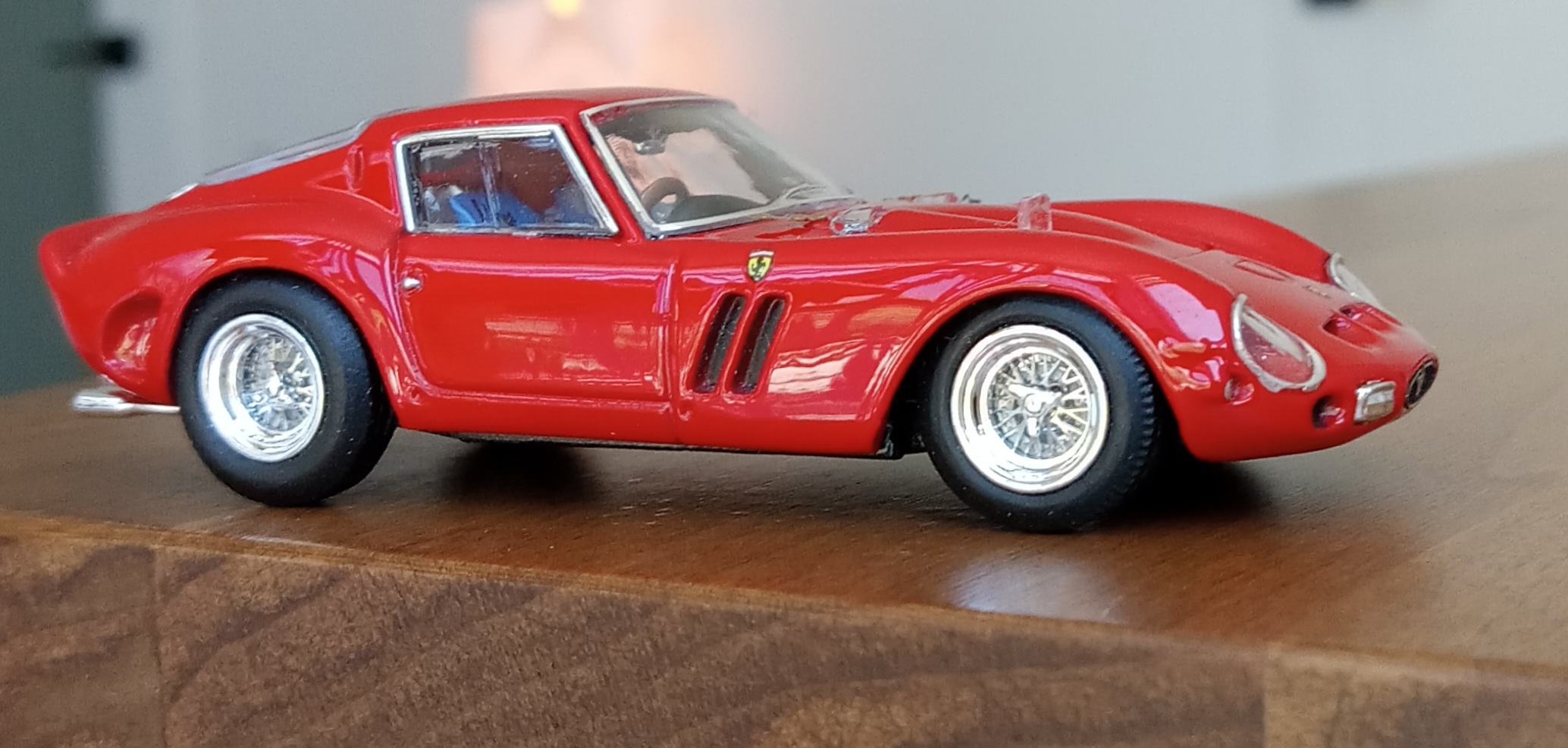
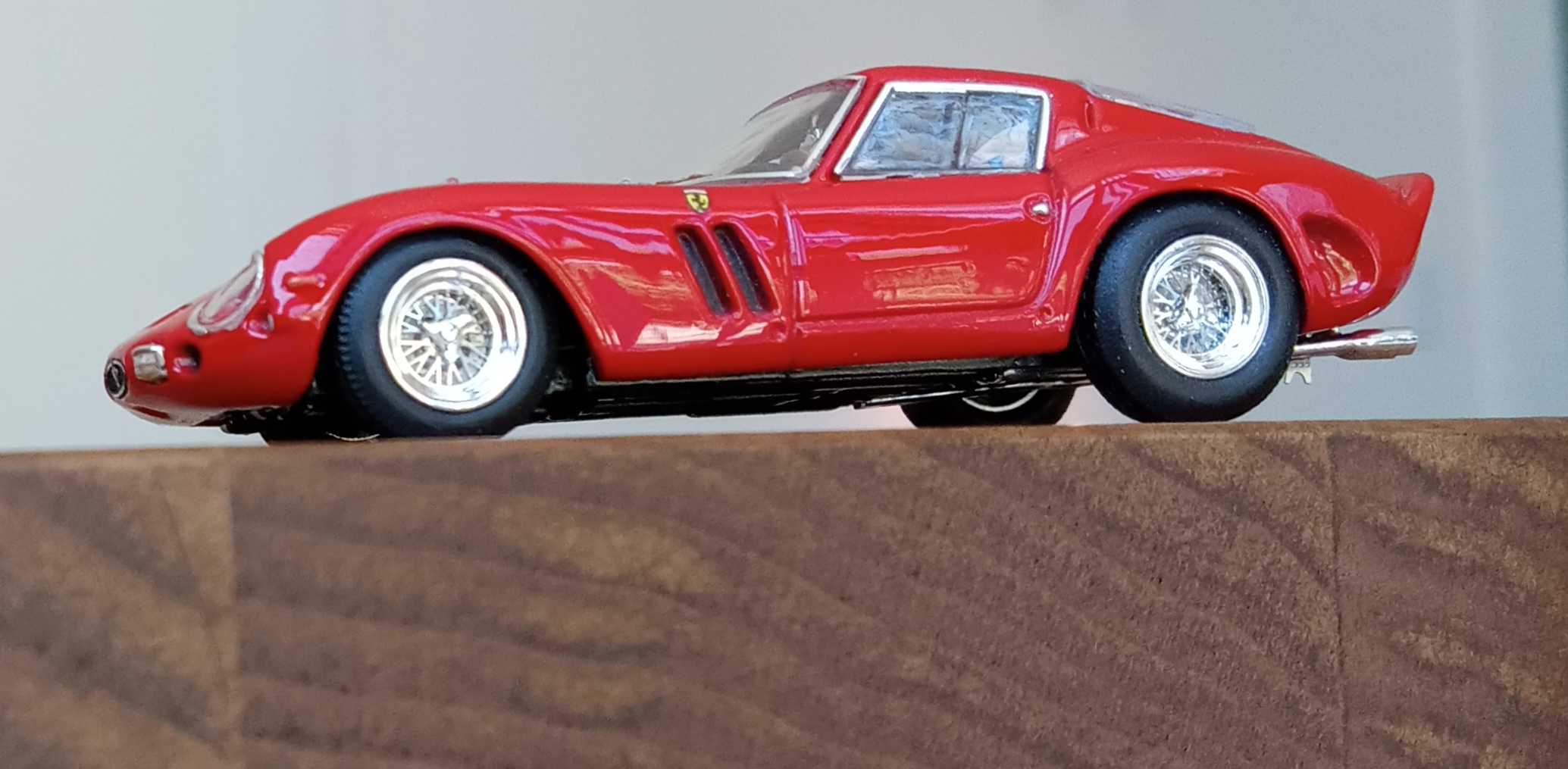
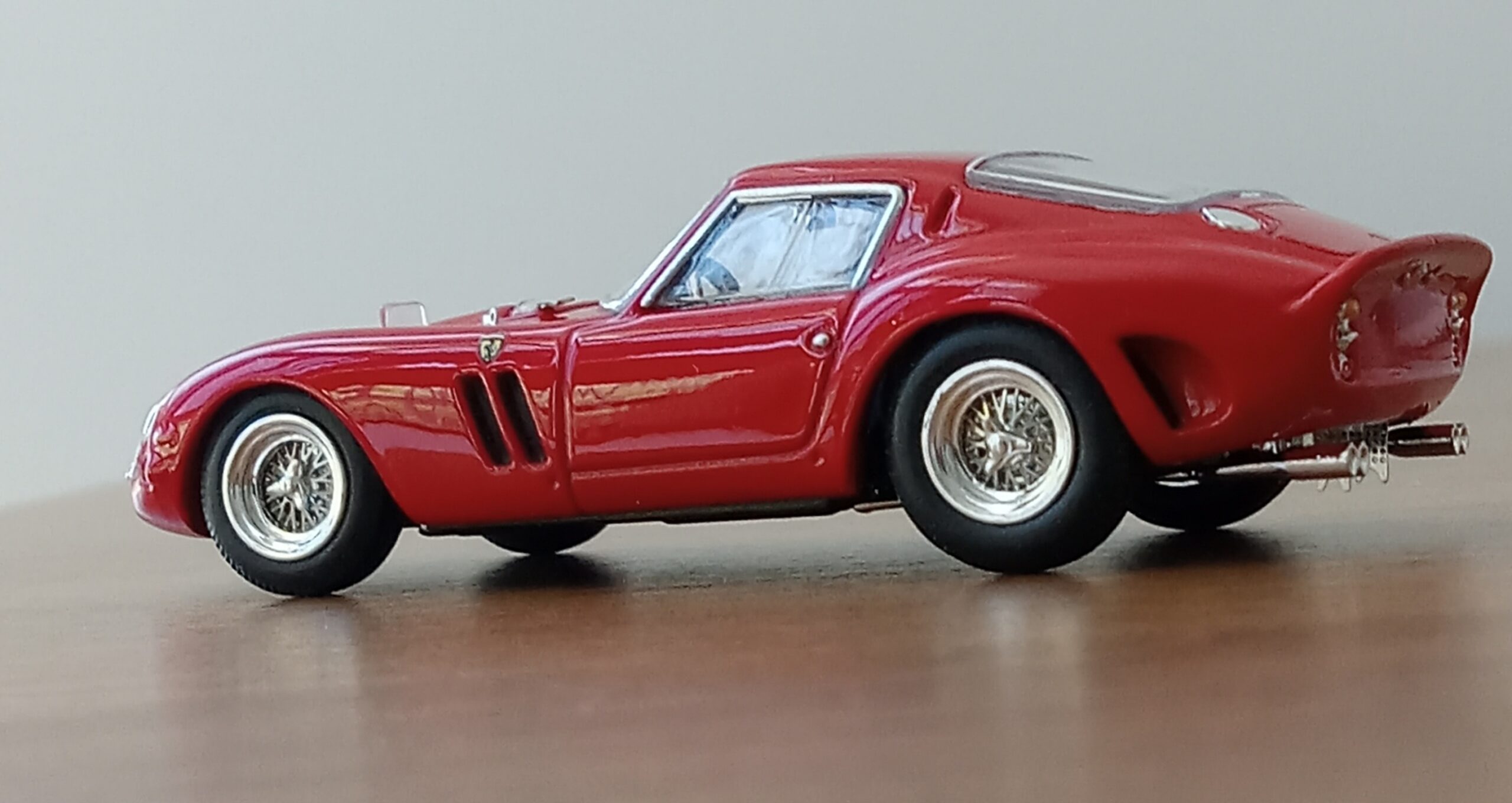
落語の世界に昭和の三大名人というのがありまして、
*五代目 古今亭志ん生(型破りの愛嬌持ち、庶民肌の天才)
*八代目 桂文楽(端正で完璧な落語を求めた)
*六代目 三遊亭圓生(膨大な演目を継承、綿密な描写と高い技術)
(文楽の代わりに、柳屋小さんを入れる場合もあります。)
こんな感じで、それぞれがはっきりとした個性をもって共存していました、
その後は、
以下の2人が牽引してきた落語界ですが、
*七代目 立川談志(古典落語の再構築、型破りのカリスマ)
*三代目 古今亭志ん朝(志ん生の次男で、鮮やかなテンポと抜群のスマートさ)
ここで注目したいのが、
古今亭志ん生と志ん朝の親子です、
親子なので、声質とか、落語(江戸っ子)口調に似たところがございますが、それ以外はほとんど対照的と言ってもいいぐらいにかけ離れた落語家さん親子で、
こんな感じでした。
#志ん生:
貧乏生活のどん底から養った、あったかみ、親しみ溢れる調子のいい江戸っ子らしい、他に得難いレベルの『フラ≒愛嬌』が信条で、歌うように畳みかける、滑らかな口調は癖になる味わいで、口座の途中で、物忘れしたり、それをうまくごまかしたり、失敗したり、晩年は失語だけでなく、口座途中で居眠り、何てのもなんのその、、、、実にあっけらかんとした、江戸っ子ぶり、、、好々爺っぷり、、、だったそうです。(笑)
#志ん朝:
行き当たりばったりの親父さんとは対照的に、几帳面で、落語に対しての向かい方が大真面目、、、でそこがちょっと私には?、、、何ですが、彼の落語は、おやじさんを軽く超えるスケール感と出来の良さを兼ね備え、いい意味で、おやじさん以外の名人3人(圓生、文楽、小さん)のいいとこすべてを合わせたような、落語界の最終兵器的な才能の持ち主、唯一の欠点は、口調、流れ、盛り上げ、落ちすべてが端正過ぎて引っ掛かりがないところでしょうか? うますぎて可愛げがないというか、、、聞きおわって、勉強になった感じ、、、? でも彼の口調と声質には親父さん譲りの『かすれ気味の伸びやかな高音』が備わってまして、これは本当に素晴らしかったです。(その点お兄さんの金原亭馬生さんは、おやじさん譲りの「フラ」のカタマリのような酔っ払いで、いつも寒そうで、ゆらゆらフラフラして(笑)私はこちらが好みですが)
前置きが長くなってしまいましたが、
フェラーリ250に話が戻ります。
今回に主人公、
フェラーリ250GTOこそがーーー>落語家の【志ん朝さん】
フェラーリ250TRのほうがーーー>親父さん【志ん生さん】
といった感じで、
私の両車が両者にぴったり当てはまります。(笑)
#250GTOには、
*完ぺき主義的な、美しさ、
*豊かな環境に育まれた『いいとの坊ちゃん=サラブレッド的』な資質があります。
#対して、250TRは、
*天才肌の芸術家肌、
*しくじっても、それか却って愛嬌{フラ}に、、、的な、、
私はどうしてもこの、
いいとこの坊ちゃん的イメージが鼻に付き、
『志ん朝』さんの落語を避けてきました、
しかしながら、今回色々調べたり、実際の立体を触って、擦って記事にしてみますと、
志ん朝さんがそうであるのと同じように、
『GTO』はただ
「いい子過ぎる、サラブレッド」なだけでは
ありませんでした、
* 風洞実験を重ねに、重ねた結果出てきた流面体を、
* デザイナーが磨き上げた結果できたクルマが、
*更にレース場を駆け抜け、勝ち続けることで、
オーラも付け加えてきました。
(高座での『バカ受け実演』の経験が加えられました)
私が見逃していたのは、
志ん朝さんが親父さんから受け継いだ、口調や音質の美しさにくわえ、
昭和の3大名人の持っていた資質すべてを内包するかのような「芸の深み」を血のにじむような努力によって身に付けてきたのだということを肌で感じ、不思議なのですが、私の中で、250GTOのすばらしさの蓋を開け、改めて評価し、あれも、これもと新発見を続ける中、なぜか、志ん朝さんのコンプレックスから脱する過程で、志ん朝さんがどれだけ悩み、努力し、父親の強烈な「フラ」以外の昭和の名人すべての資質のを身に付けるに至ったのか?という言葉がひらめき、
ーーーー>一気に、この得難い2つの宝物を愛し始めていました。
と同時に、
今まで、
*親の七光り、
*サラブレッドの家計、
*いいとこの坊ちゃん、的な、
レッテルが邪魔をして、十分に試していなかった、
デザイン、書物、立体物、食べ物、人間関係などが沢山あったのでは?
と気づき、
今後好き嫌いで、避けてきた
*当たり前のおいしさや
*まっすぐに美しもの、
を再検討、再体験・再評価したくなりました。
#250GTOの立体体験:
90年台中盤から、
1/43のダイキャスト、レジンや、ホワイトメタル製のミニカーを集めたり、制作したり趣味として楽しんできたのですが、
お話ししました通り、食わず嫌いの為か、
250GTOと私の関係はかなり貧しいモノでした、
*AMR 1/43 Ferrari 250GTO Rallye du Touquet 1965
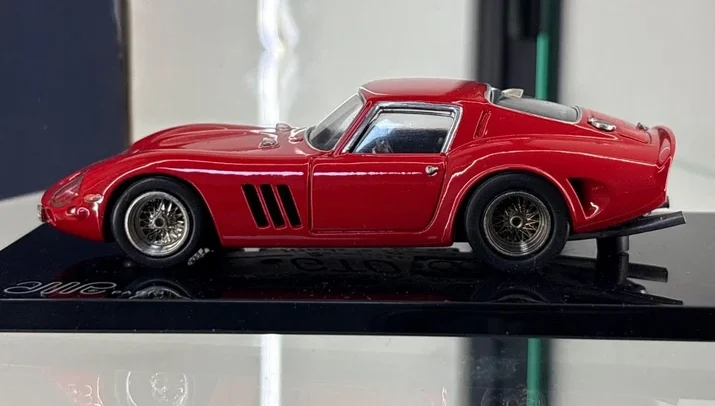
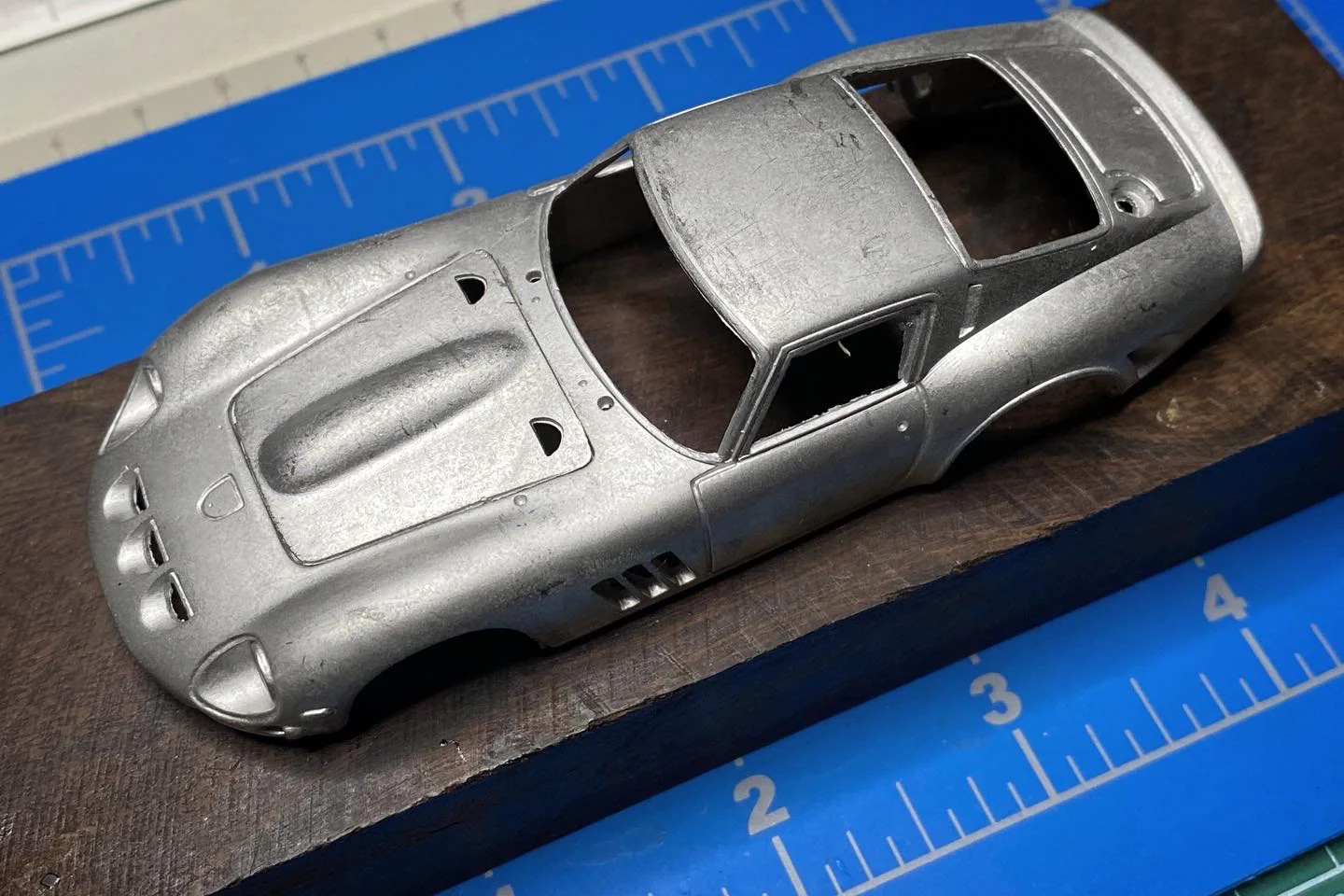
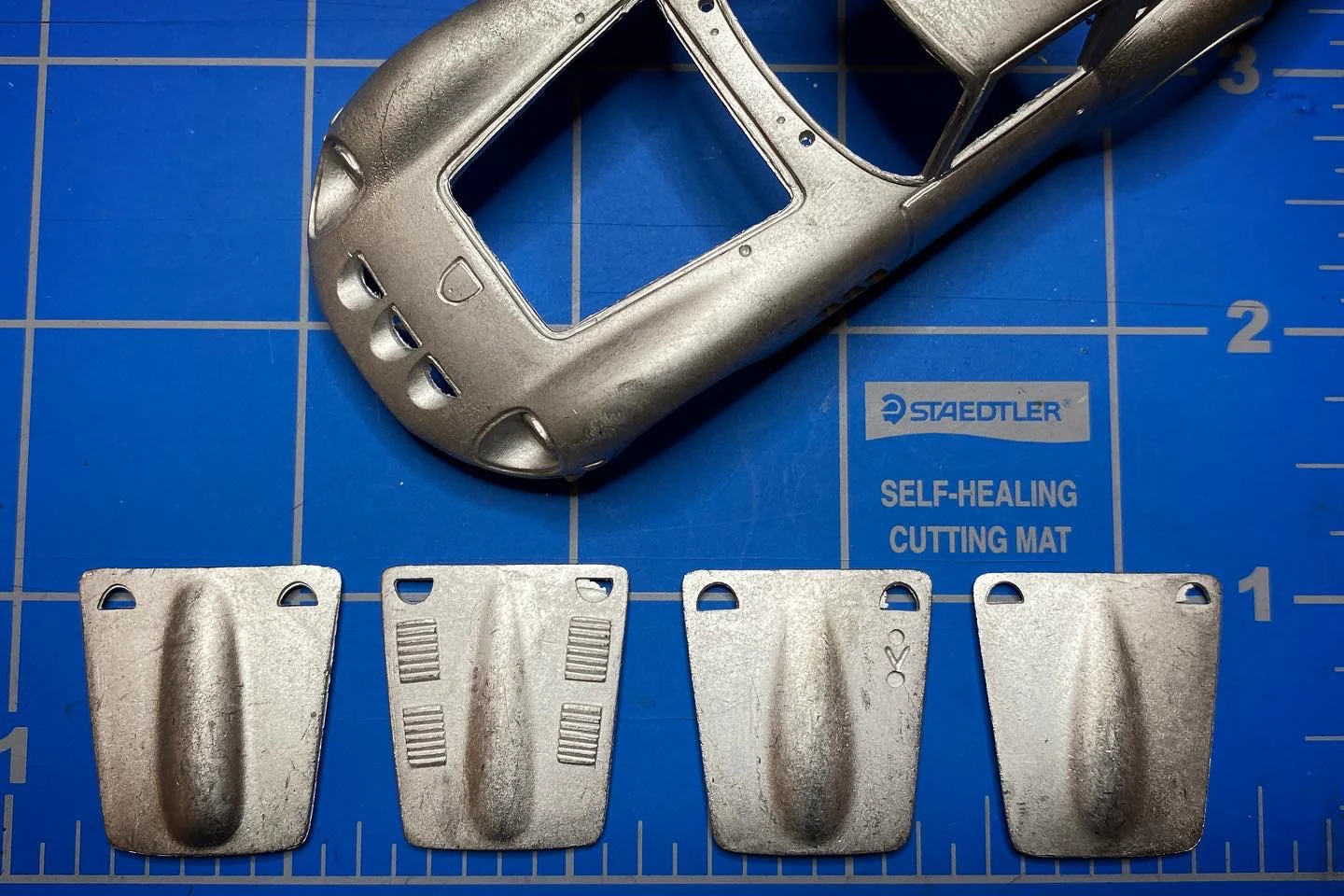
(1/43のホワイトメタルモデルの伝説の天才原型師:アンドレ・マリー・ルーフさんの神がかったキャスティングが見たくて、キットで入手してそのボディー部分を眺めたり、触ることで満足してしまいました、アルミの叩き出しを模した、ボンネットのバリエーションが素晴らしいですね。)
ーーーーーー>この時点で、AMRさんの実物以上に本物っぽい原型に、甘やかされてしまいました!!
京商さんの完成品です、
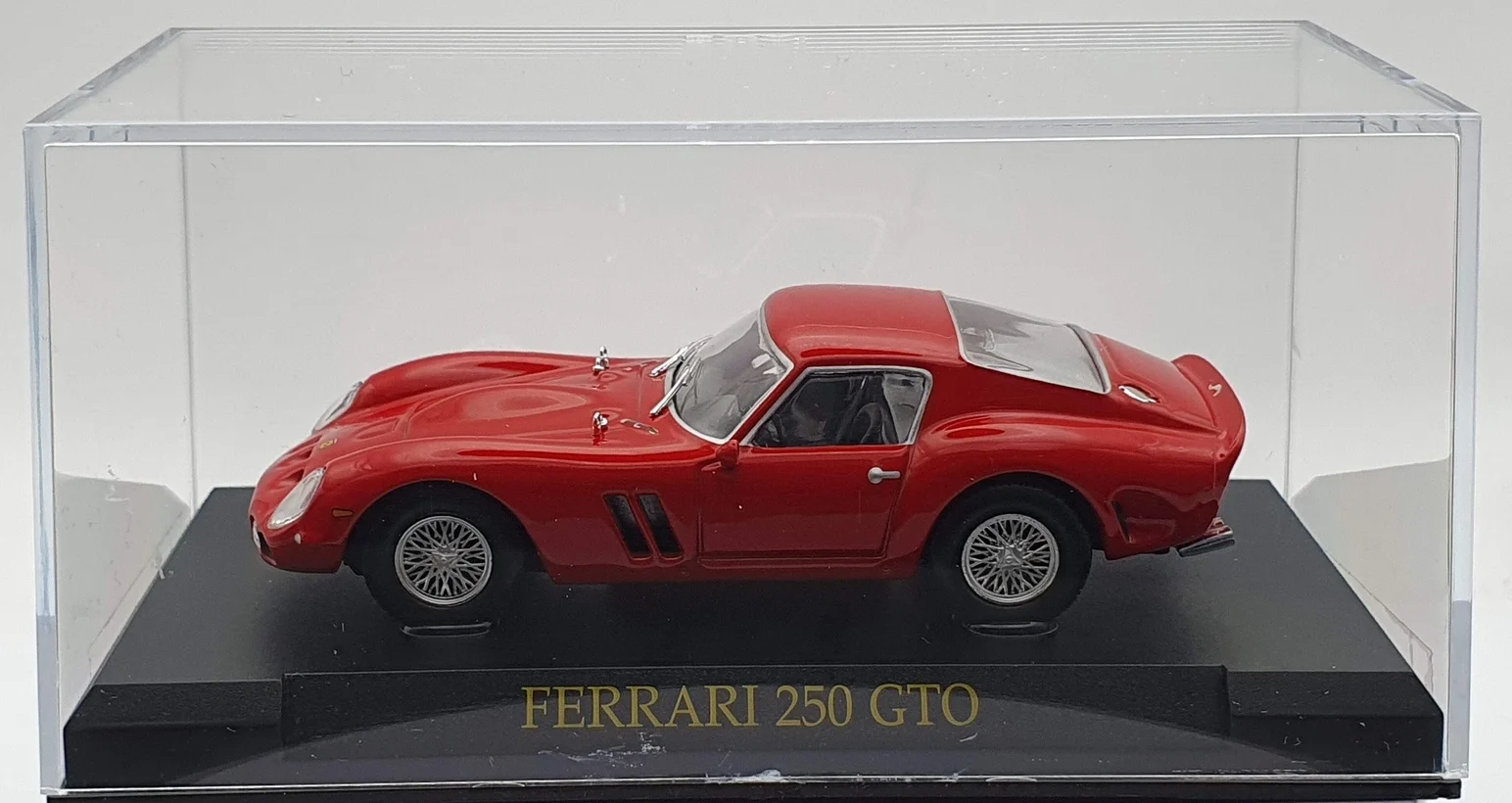
*京商製、1/43 ダイキャスト完成品、250GTO 62年型
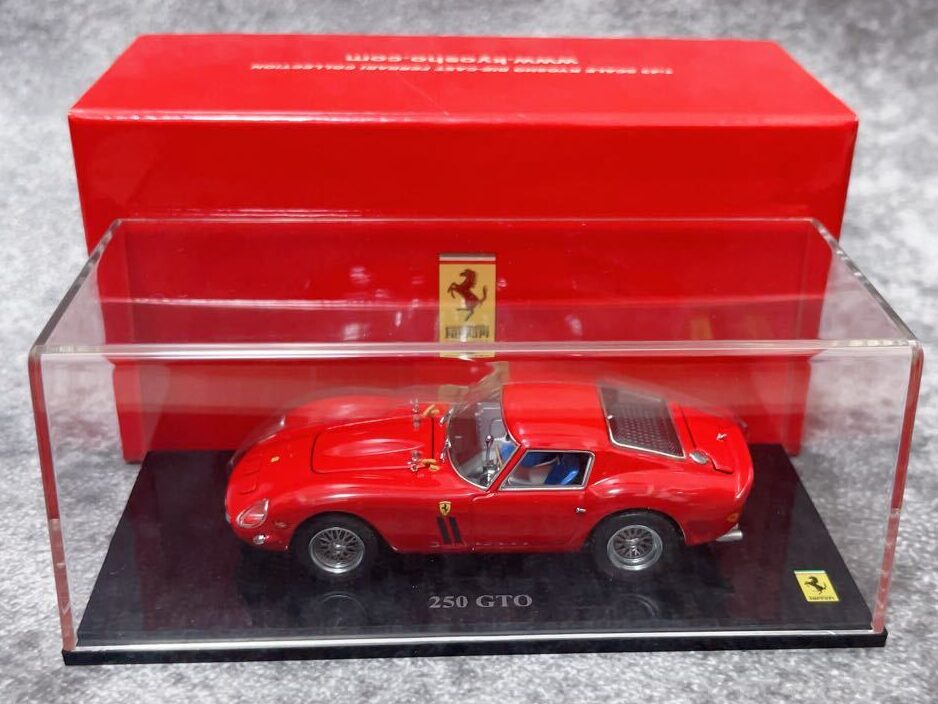
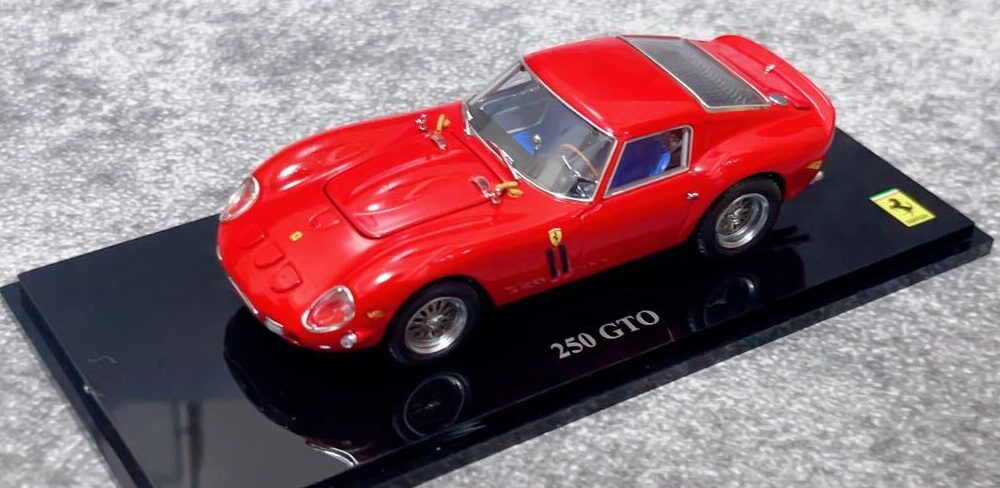
 (現在あまり見かけなくなりましたが、全部オープン系のカッチリした出来の良品だった記憶だあります。
---→なぜか縁がなく、あまり触らずに押し入れの肥やしと化しました。)
その後、
ダイキャストの完成品を手に入れ、
其れっきりになってました。
*ハチェット社製、1/43ダイキャスト完成品 フェラーリ250GTO
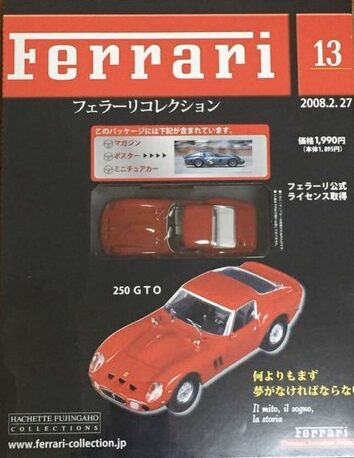
(この単純なデッサンだけがはっきり見える立体が好きになり、それ以降今回のCL社製まで、他のミニカーを買った記憶が記憶がありません。)
こちらは、
永遠のあこがれのキットです!
*メイクアップ社製、スーペリア・モデル、1/43ホワイトメタル製組み立てキット 62年型 250GTO(半組み立て済み)
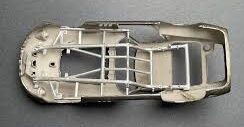
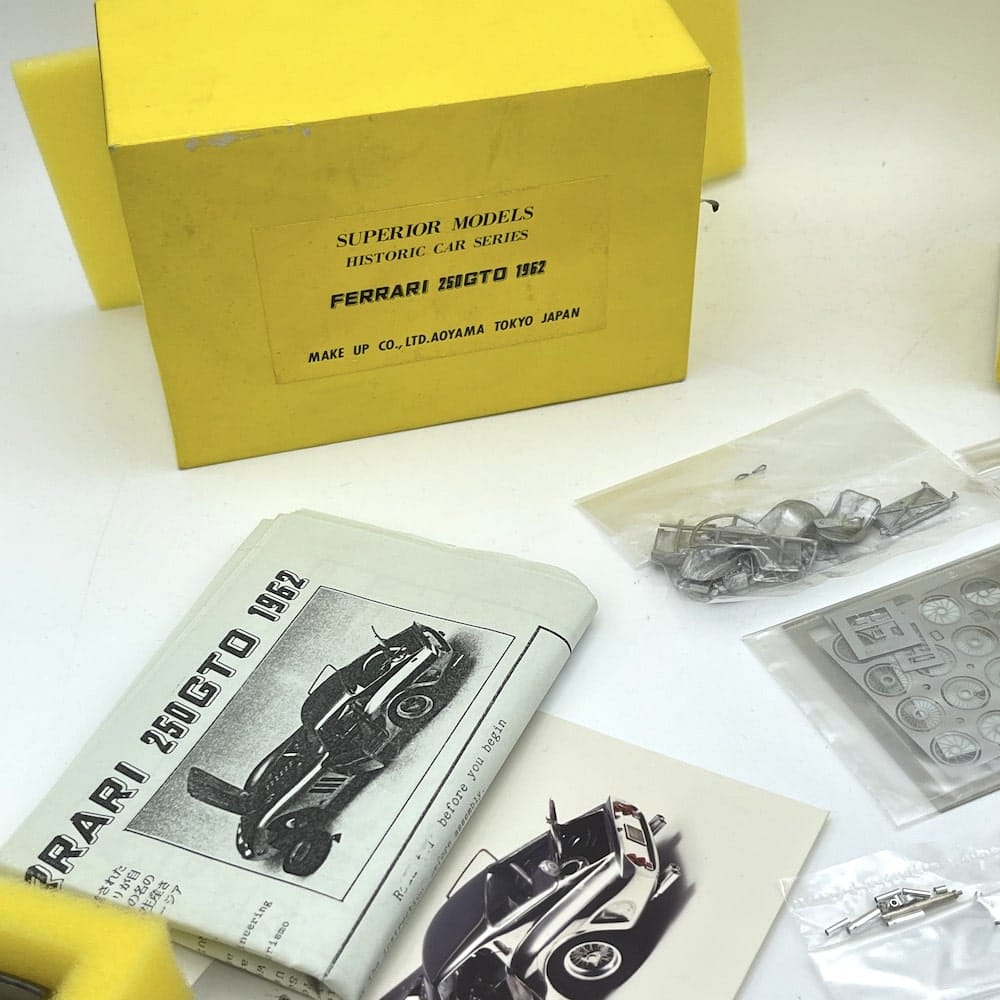
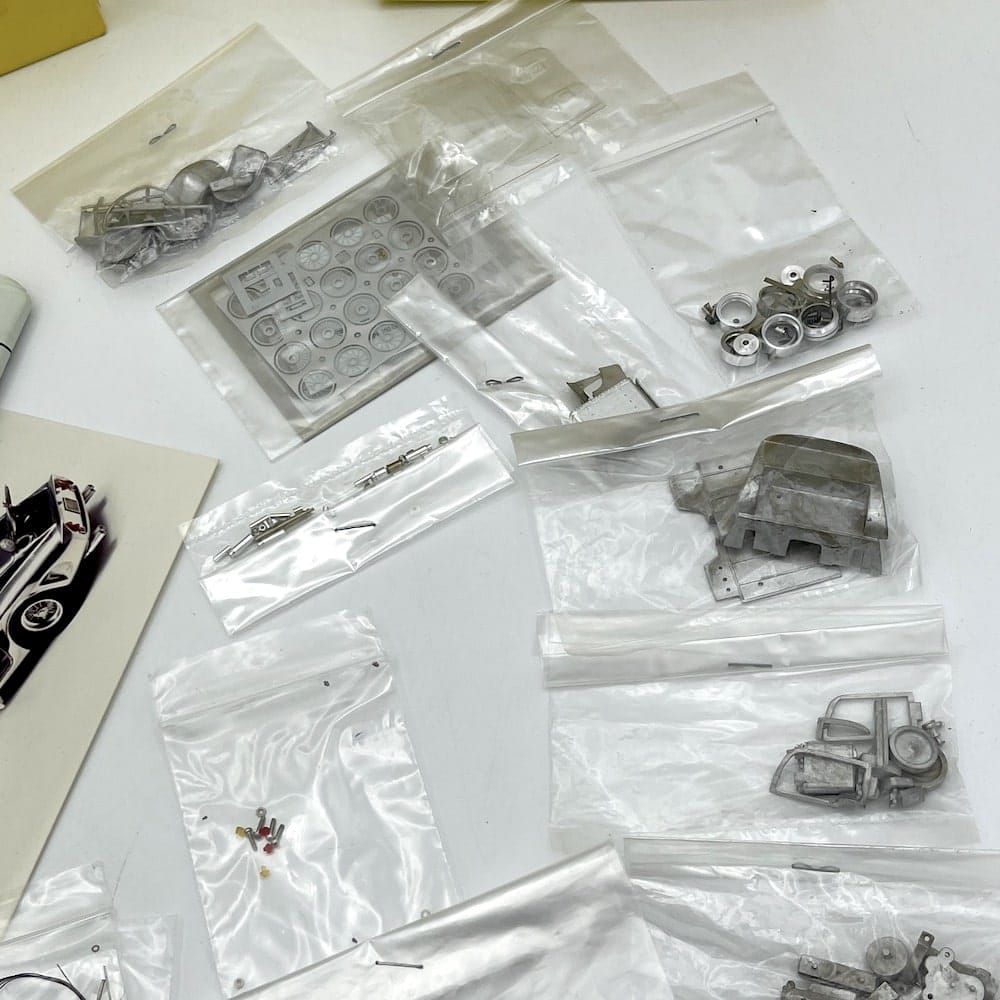
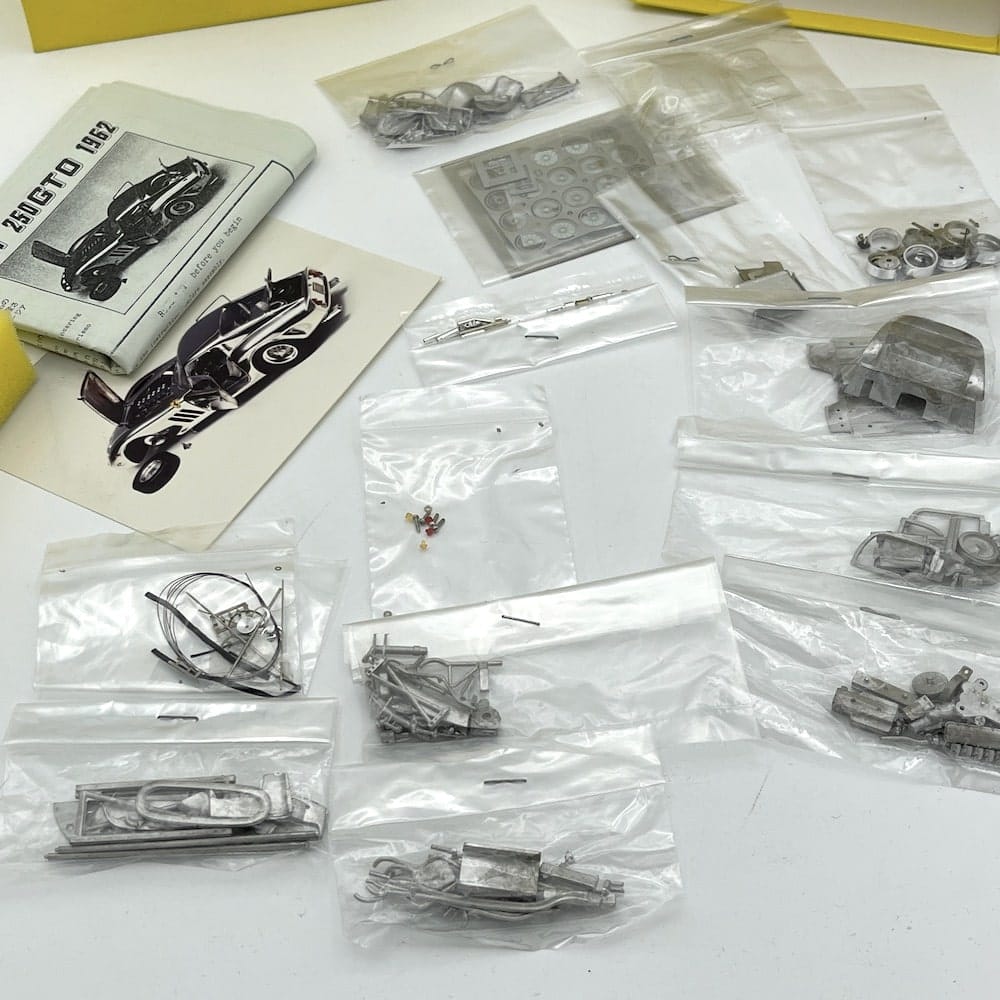
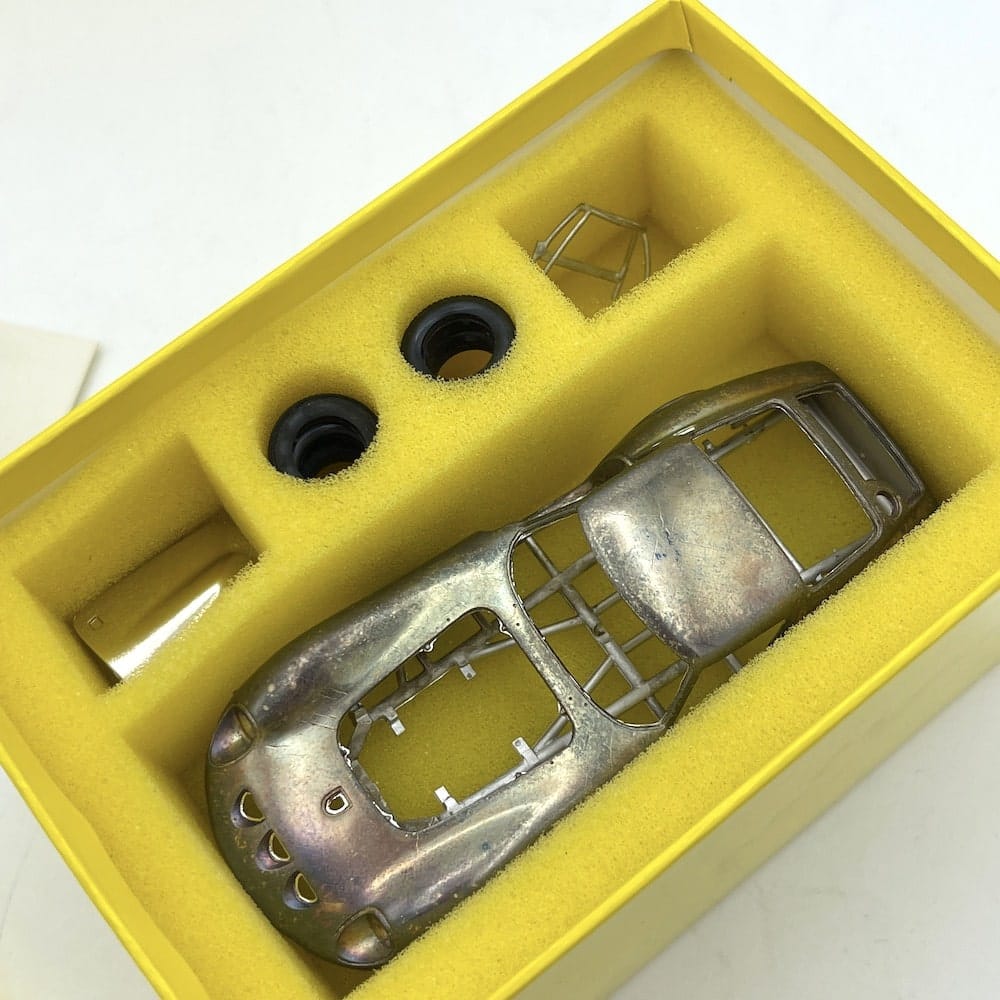 (まさに究極の1/43のキットです。ボンネット、ドア、トランクが開閉式なのはもちろん、給油口のドアも開閉可能となっています。
ーーーーーーー>今回初めて、その内容を写真で拝見できて、その凄まじいパーツ構成に驚きを隠せません。)
n
N
N
N
N
n
N
N
N
N
n
N
N
N
N
N
新興著しい中国製CLモデルさんの逸品です。
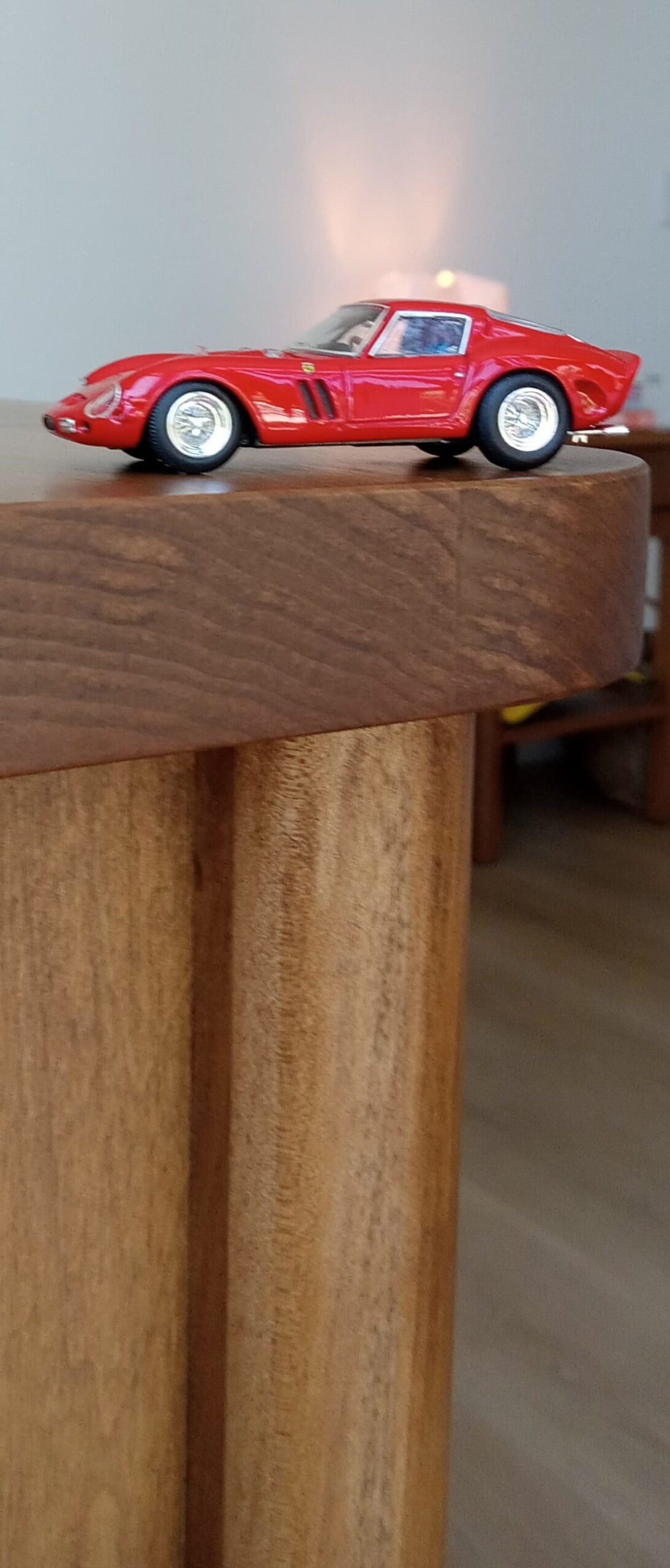
*クラッシク・ラバー社製、ダイキャスト完成品、フェラーリ250GTO ’62
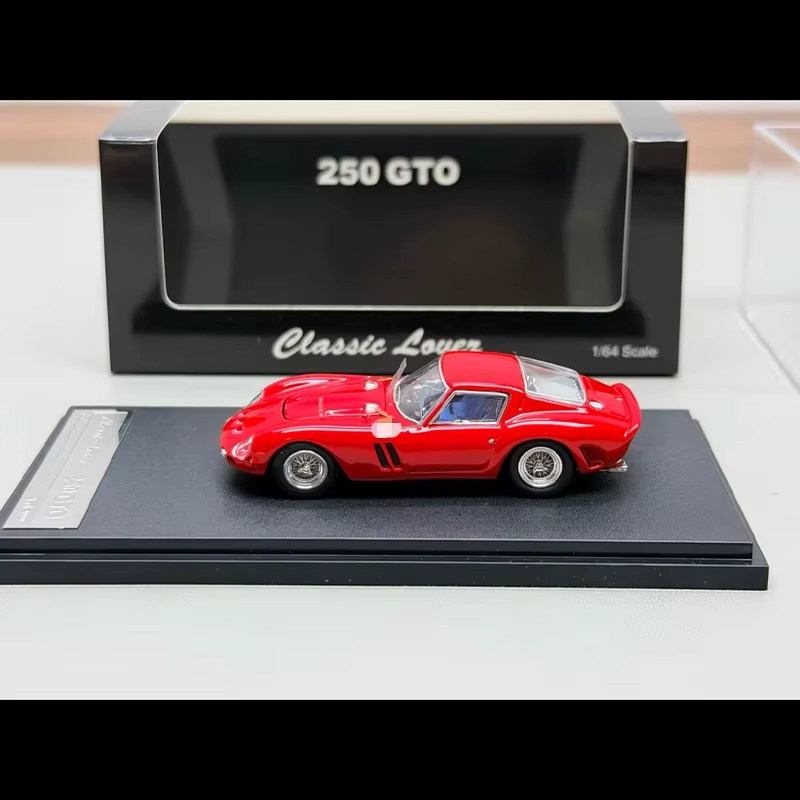
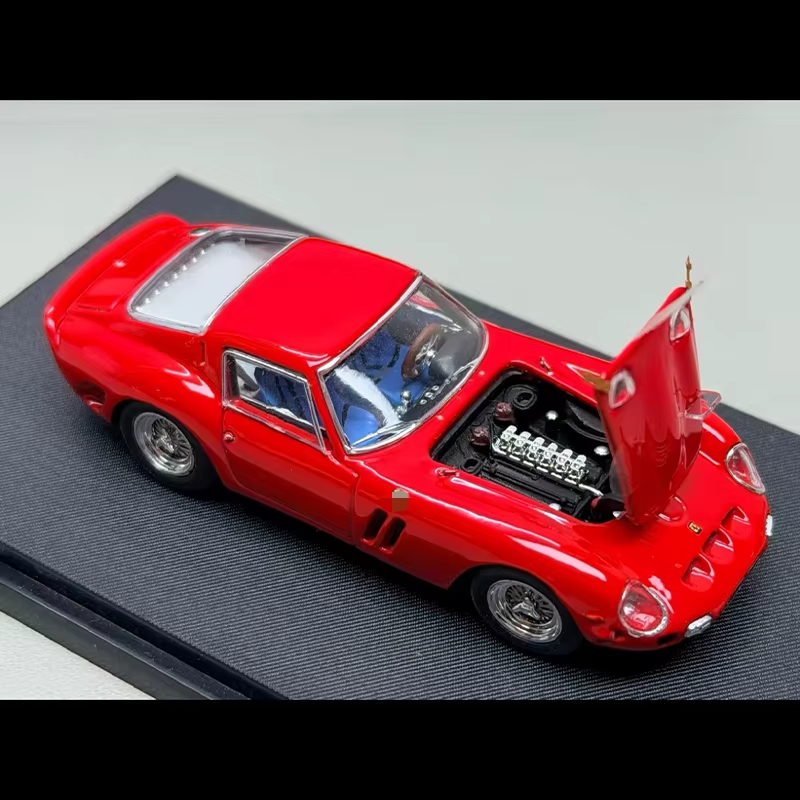
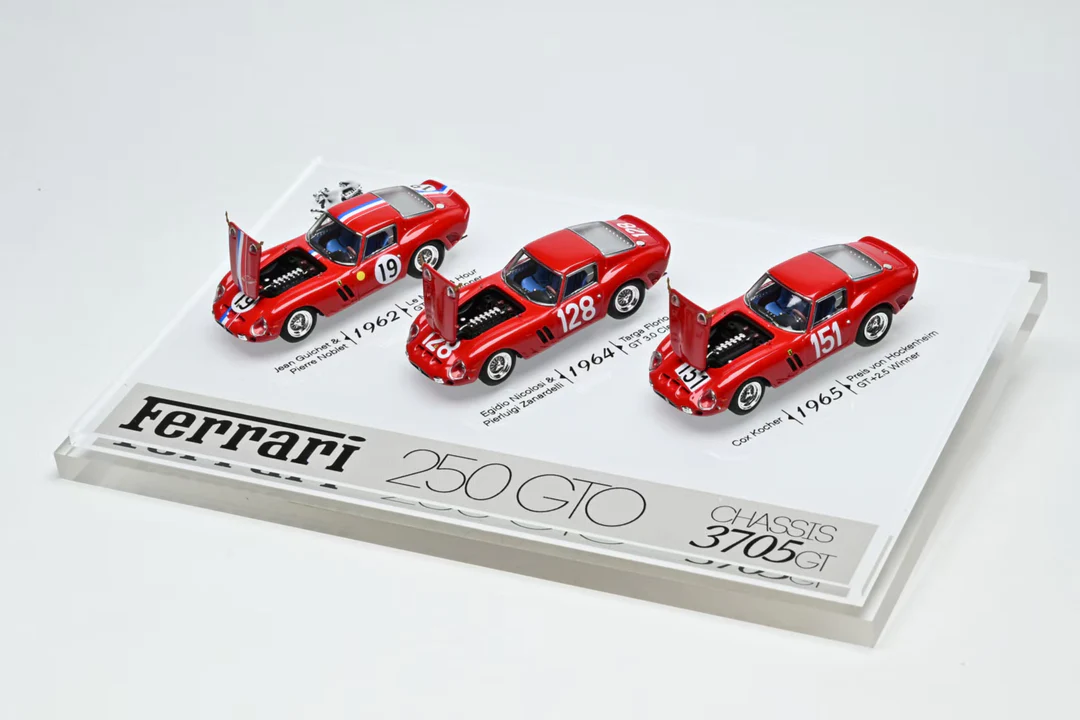
n
N
N
N
N
n
N
N
N
N
三題噺のお時間です!
n
N
N
N
N
n
N
N
N
N
*三題噺:古今亭志ん生・青いシート・個体差
ん


n
n
n
今回のお題は、
かなり突拍子もないモノ
になりました、、、
*青いシート:
*個体差:
n
N
N
N
N
グーグルAIさんに
上記のお題で、
フェラーリ250GTOにつて落語の三題噺形式で語ってほしいとお願いして、
さらに2-3度の応答を経て会話調に改造してできたのが以下のお話です。その出来とオチがさすが『AI』的で知的でしたので、
n
楽屋での一幕:洗練の美学と職人の呼吸
n
客(車好きの隠居):
いやあ、今日の志ん朝師匠の『文七元結』も痺れたねえ。一切の無駄がない、まさに「こぎれいな志ん朝」そのもの。一分の隙もない美しさだったよ。
へえ、ありがとうございます。でも、うちの師匠はいつも「親父(志ん生)の泥臭い人情味には勝てねえ」って、楽屋でぼやいているんですよ。
n
客:
なるほどねえ。先代の志ん生師匠といえば、クルマでたとえりゃーまるでフェラーリ 250TRのポンツーンフェンダーだ。あのむき出しの荒々しさと、人間の業を全肯定するような圧倒的な人情味。あれは野生の天才にしか出せない味だよ。
自動車ですか!あっしもいけるくちでして、、、、
客:
そりゃあお前さん、1962年型のフェラーリ 250GTOだよ。TRの野生を極限まで削ぎ落とし、空力の美学で包み込んだ究極の洗練。どこから見ても端正で、非の打ち所がない。
若手落語家:
へえ、でもそれじゃあ、うちの師匠の落語は機械みたいに冷たいって言われてるようで、弟子としては複雑だなぁ。
客:
バカ言っちゃいけない。250GTOのコックピットを見てごらん。あのスパルタンな鉄板剥き出しの空間に、ぽつんと鮮やかな青いシートが誂えてある。あれが職人の「粋」ってやつさ。志ん朝師匠が時折見せる、あのハッとするような江戸前の色気と一緒だよ。
若手落語家:
なるほど、あの青いシートが師匠の「お茶目な目配せ」ですか。
客:
それだけじゃない。あの車はわずか36台、すべて職人がアルミ板を手で叩いて作ったから、一台ごとに数センチの個体差があるんだ。左右のフェンダーの膨らみが微妙に違う。完璧な「型」の中に、手仕事の呼吸が隠されている。
若手落語家:
あ!分かります。師匠の落語も、毎日同じように完璧に聞こえて、その日の寄席の空気で、ほんのわずかに間(ま)やトーンが変わる。あの絶妙な個体差こそが、客を狂わせるんですよね。
客:
その通り。だからね、志ん朝師匠がいくら「親父の泥臭さが羨ましい」と言ったところで、GTOのボンネットの下を開ければ、そこには志ん生譲りの熱いV12エンジンが、寸分違わぬ高回転で爆音を上げているのさ。血は争えないねえ。
若手落語家:
うーん、さすが旦那、うまいことを言う!…あ、噂をすれば師匠が着替えを終えて、こっちに向かってきますよ。今日もバシッと仕立ての良いスーツを着て、本当に「こぎれい」だなぁ。
客:
おや、本当だ。しかし、お前さん、よく見てごらんよ。今日の志ん朝師匠、上着のポケットから覗いているハンカチーフが、あのGTOのシートと全く同じ、鮮やかなウルトラマリーンブルーじゃないか。
若手落語家:
本当だ!やっぱりうちの師匠、細部まで計算され尽くしていますね。
n
客:
いや、あれは計算じゃないよ。完璧な美学の中に、ほんの少し「個体差」という名の遊び心を忍ばせる……まさに職人の手叩きによる、「血(千)の滲むような、シート(高座)の工夫」ってやつさ。
n
n
いかがでしたか?
私が書こうとしていたバージョンでは、
下げの、高座と青いシートの関連など思いもよらなかったので、
この落ちを気に入りまして採用となりました。
n
n
n
今後とも『AIさん』との相談も含めて、
より良い三題噺が出来ればうれしいと感じています。
n
N
N
N
N
*その他の『麗しのレーサー』たち、、、
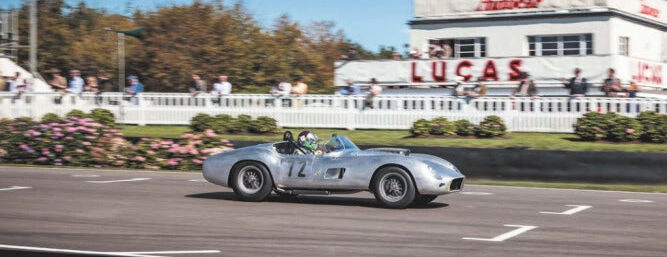
1960年台から70年代には、
美しさと速さを兼ね備えた
競技用自動車が目白押し状態で、
私が思いつくまま
並べてみましょう。
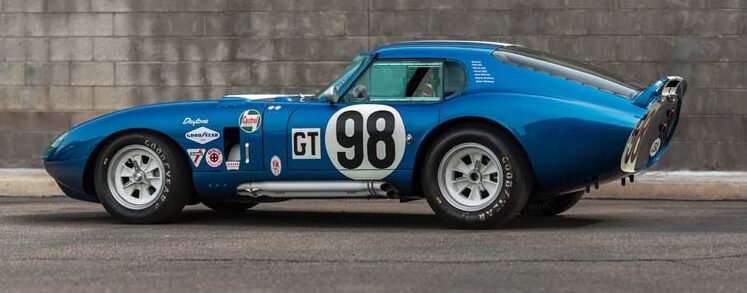
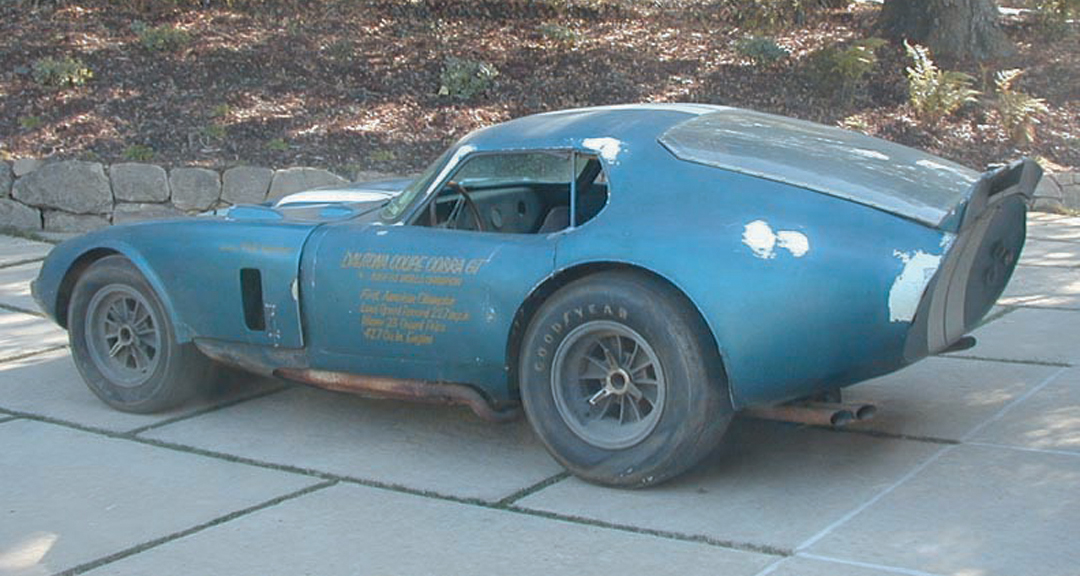
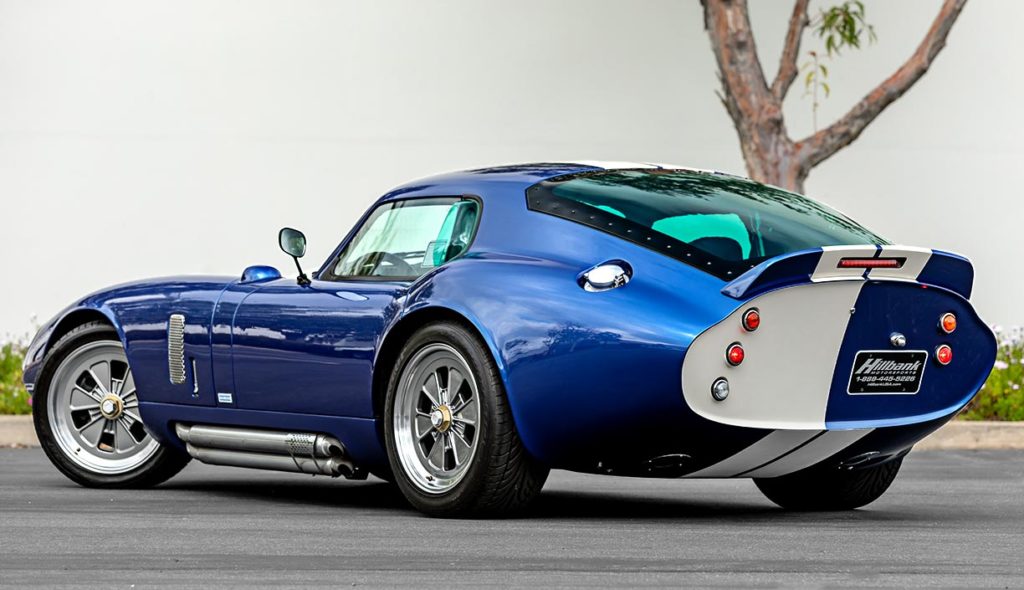
*ACコブラ デイトナ・クーペ、1964 (メタリック・ブルー)
(フェラーリ・250TRを空力化したのが250GTOだとしますと、ACコブラ427をエンジンとシャーシはそのままで、空力ボディーで覆たのがデイトナクーペとなります。リアエンドをスパッと斜めに切り落とした大胆さは、250GTOに勝るほど)
ーーーーーー>メタリックブルーに白のストライプがたまりません!
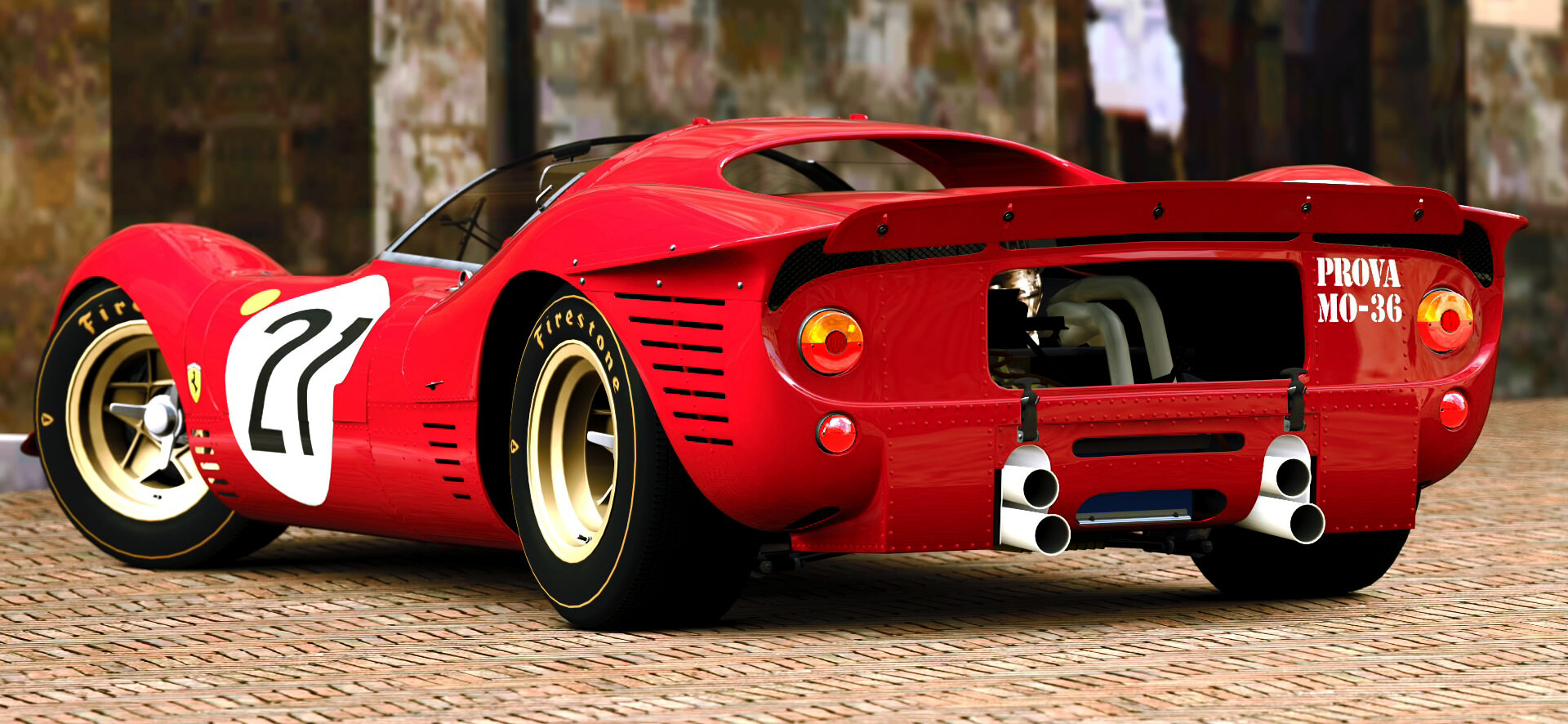
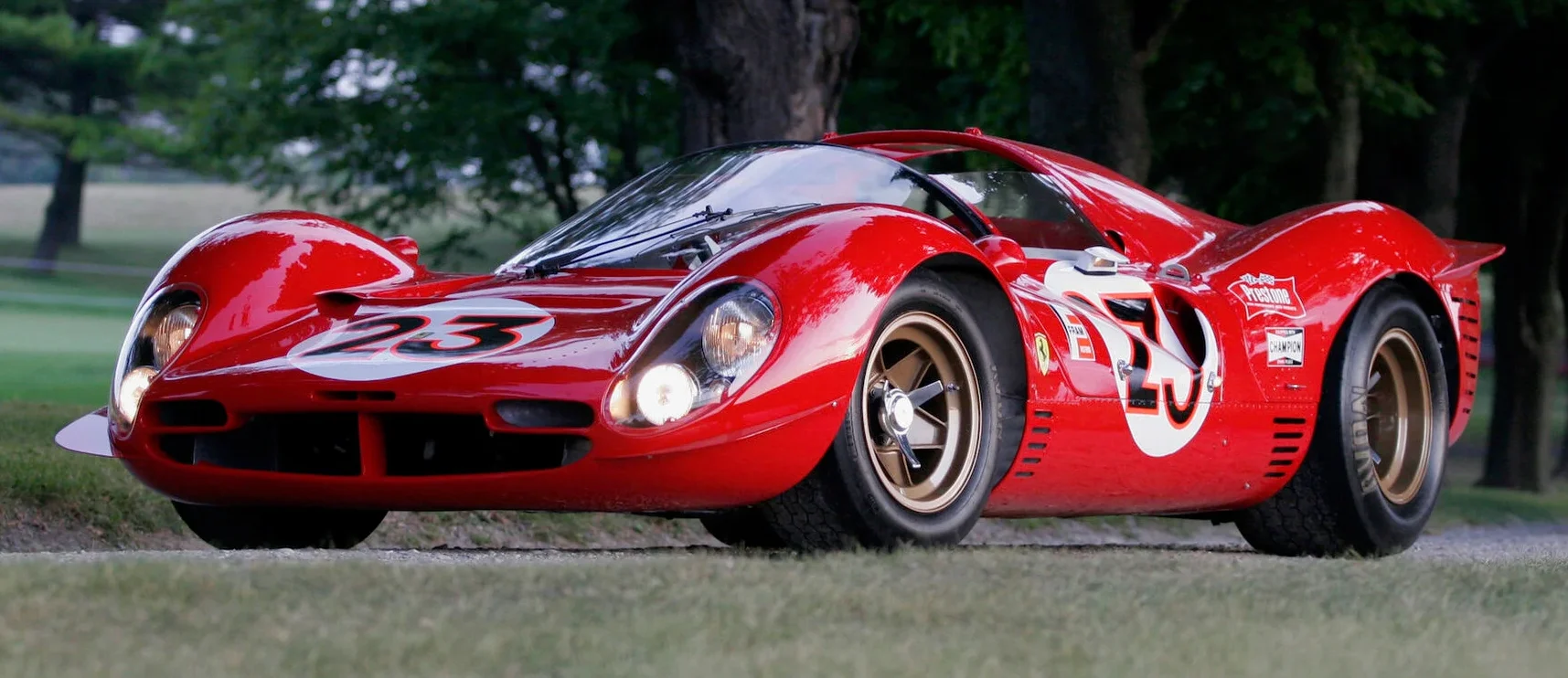
*フェラーリ330 P4,1967(フェラーリ・レッド)
(1966年のルマンでフォードGT40に大敗後、再設計されたフェラーリ版ミッドシップ・レーサーへの最終回答、GT40と同じく40インチ(1m)に抑えられた全高からリアに流れるラインの美しさ、それをコントラストをなす、巨大なフロントフェンダーのふくらみのアンバランス感が絶妙です。)
ーーーーーー>時々、コブラ427の野蛮さが見え隠れします。
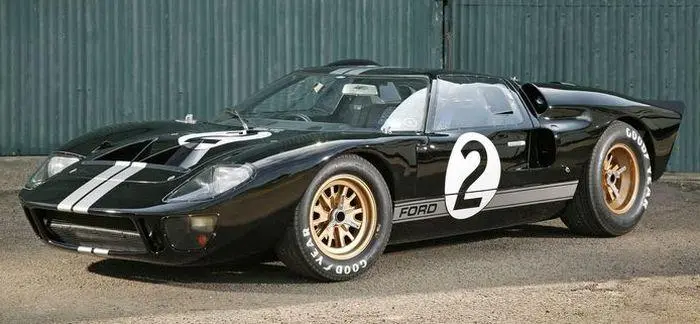
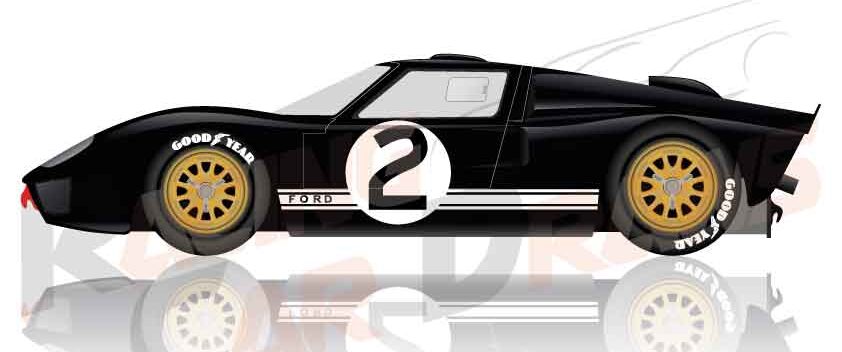
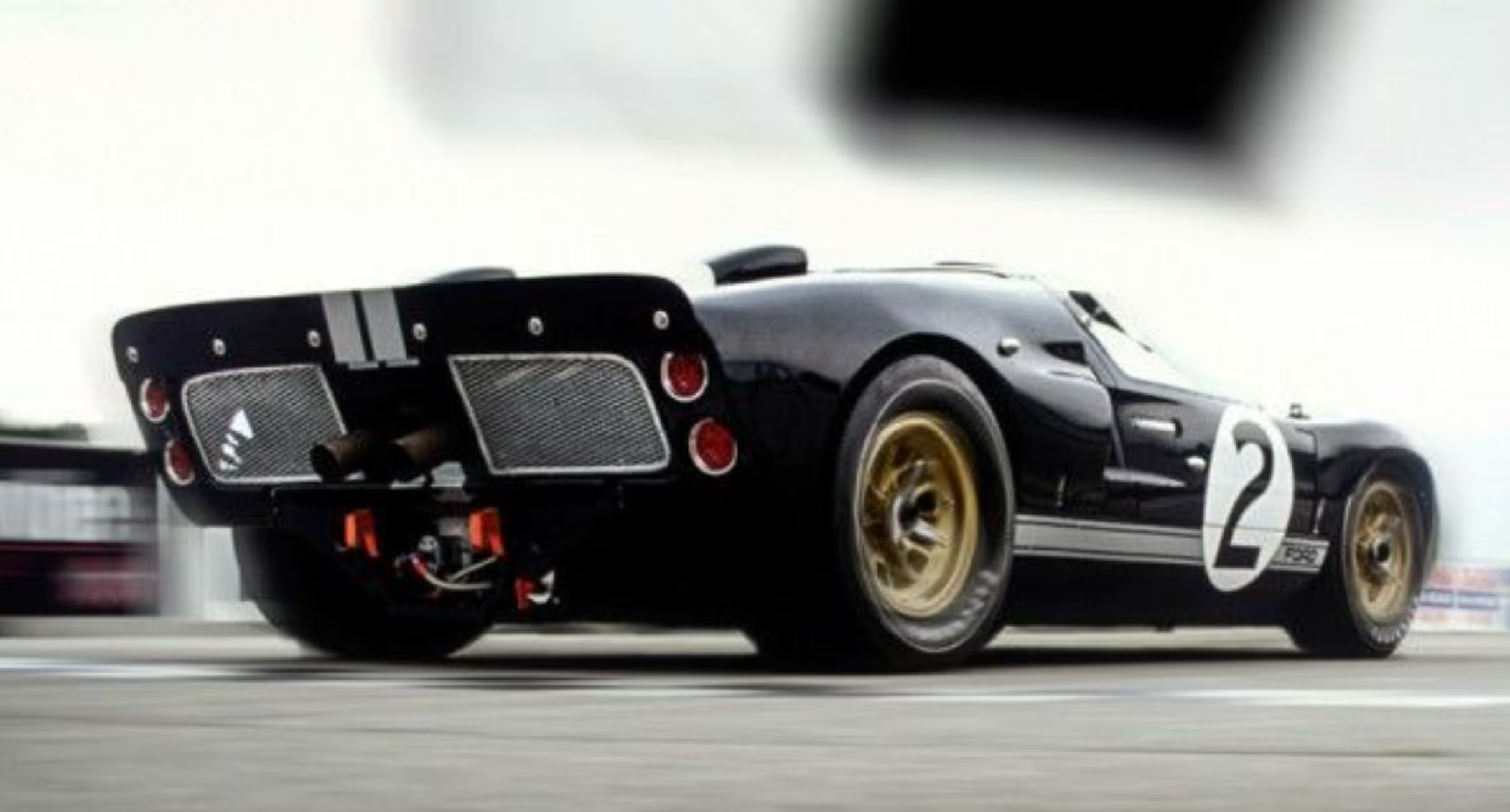
*フォードGT40 MK2, 1966(ブラック)
(GT40マーク1にはほとんど興味がないのですが、このMK2の丸っこいフロントと、カクカクしたリアの造形的アンバランス感は、いつ見ても魅力的で、私にとって、330P4 に勝る部分となっています。)
ーーーーーーー>前傾姿勢を強調した京商製の1/64モデルの出来は実車以上です!!
この時代はその後、レースの中心がカンナム系に移り、
ストリート車との差が大きくなり、
個人的には興味が薄れました、、
今回の記事を書くことで、
 『志ん朝』のような
【250GTO】が好きになりました。喜
今から、
志ん朝さんの落語を
聞いてみます。
 次回は、
次回は、
三遊亭小遊三さんのような、
器用な芸達者、
おまけにちょっと『きざ』なところもある、、
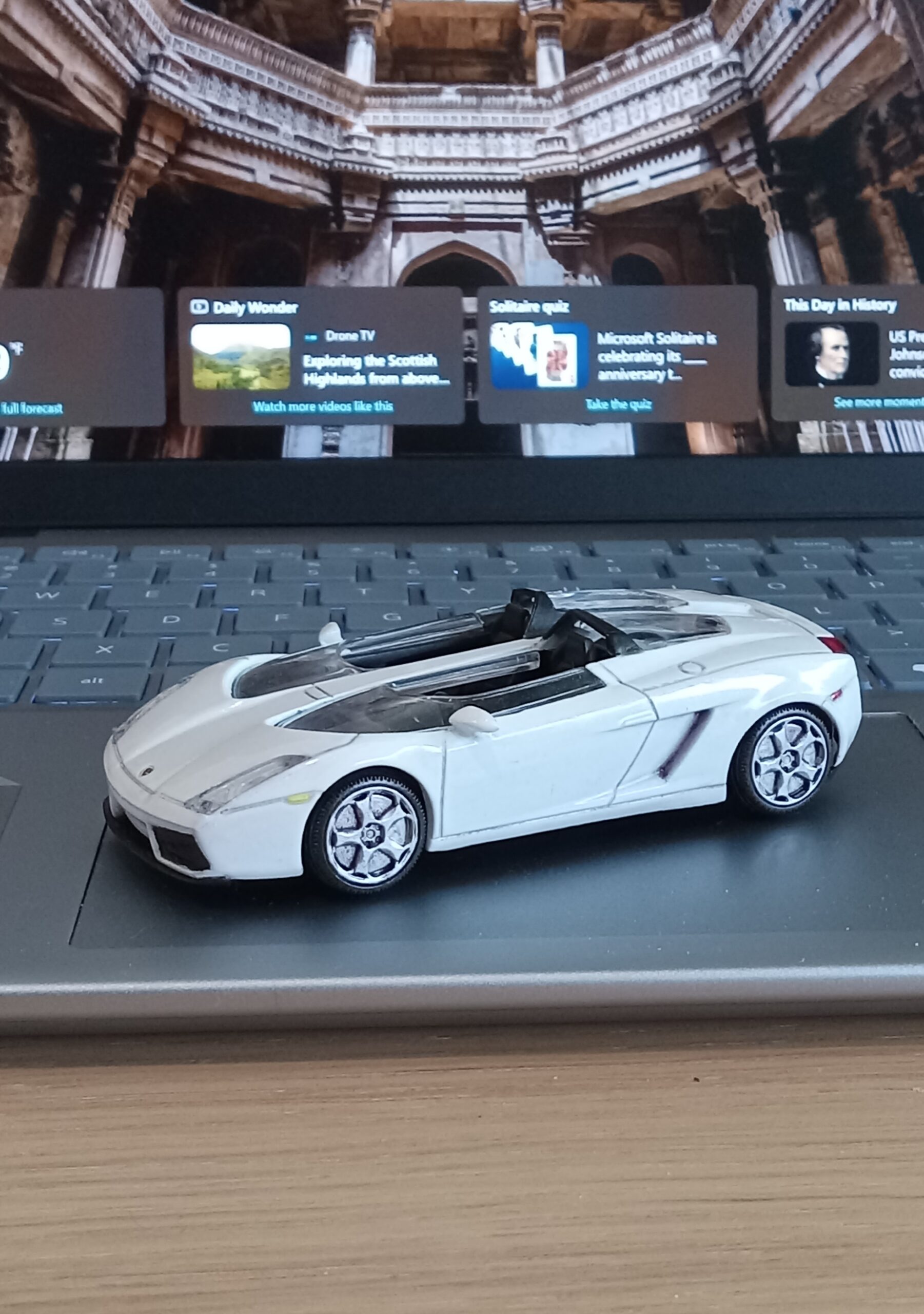
ランボルギーニ・コンセプトS
についてお話ししたいです。
お楽しみに――
本ブログと記事内容につきまして:
ブログ記事を書くにあたり私の目標は、立体造形(料理も含めて)とのかかわりを通じて、私個人の特徴的(ネジ曲がり方も含めて)な評価軸を解明することで、「美しさ・美味しさ」に対する好奇心や、探求心を、どのように満足・充足させてきたのかを明記しておくことです。
従いまして、記事の中に出てくる、数字や年号、微細なデータなどには細心の注意を払っておりますが、時に大きな間違いや勘違いを犯していることも考えられます。特に自動車記事における主要諸元や、年号などには紛らわしいものも多く、あくまで参考程度に考えていただければ幸いです。
私としては、記事の中で個人的な外観デザインや味覚の評価、そこから広がる後半部分につなげるための、『流れ』を作るための客観的材料として年号やデータを挿入している感じです。あくまで重視したいのは、私個人の頭の中で起こる、記憶の錯そう的混沌から生まれる新たな『見方』や『情報の予想外のつながり』です。その勢いを作り出す、『流れ』の一環として、諸データが副次的に必要となるわけです。
話がそれますが、大好きな落語の世界に「三題噺」という、その場て会場から募った3つのお題を使って1つのお話に仕立てるといったお遊びがございますが、私はそれに近いことを立体造形の特徴や(料理のお味)をお題にして行っている感じがします。その中で頭の中に去来する数々の着想が、全く予想外で楽しく、次回からの記事内容を大幅に変えたり、新展開につながっています。
当ブロブの仕組み:
『好奇心の点と線 x 気まぐれ脳内回路=予想外の新展開』
こんな自分勝手なブログですが、今後ともよろしくお願いいたします。
追記:上記の『流れ』を作る為に必要な写真はできる限り、個人所有のミニカー・自前の料理などを使い撮影しておりますが、その他の必要最小限の図版や写真を他のブログ主様の記事や諸会社ホームページなどからお借りしております。(記事内容に合うよう加工させていただき、使用時は最小の解像度で載せております。)問題がある場合、ご連絡いただければ直ちに降ろさせていただきます。
追記2:当ブログ記事に掲載のミニカー写真等(個人撮影)は許可なしで、どのようにお使いいただいても結構です。私個人の創造性はこの世のもの、と言う認識の上で記事を製作しています。
!!!!!!!!!!!!!!!!!!!!!!!!!!!!!!!!!!! Translated in English !!!!!!!!!!!!!!!!!!!!!!!!!!!!!!!!!!!
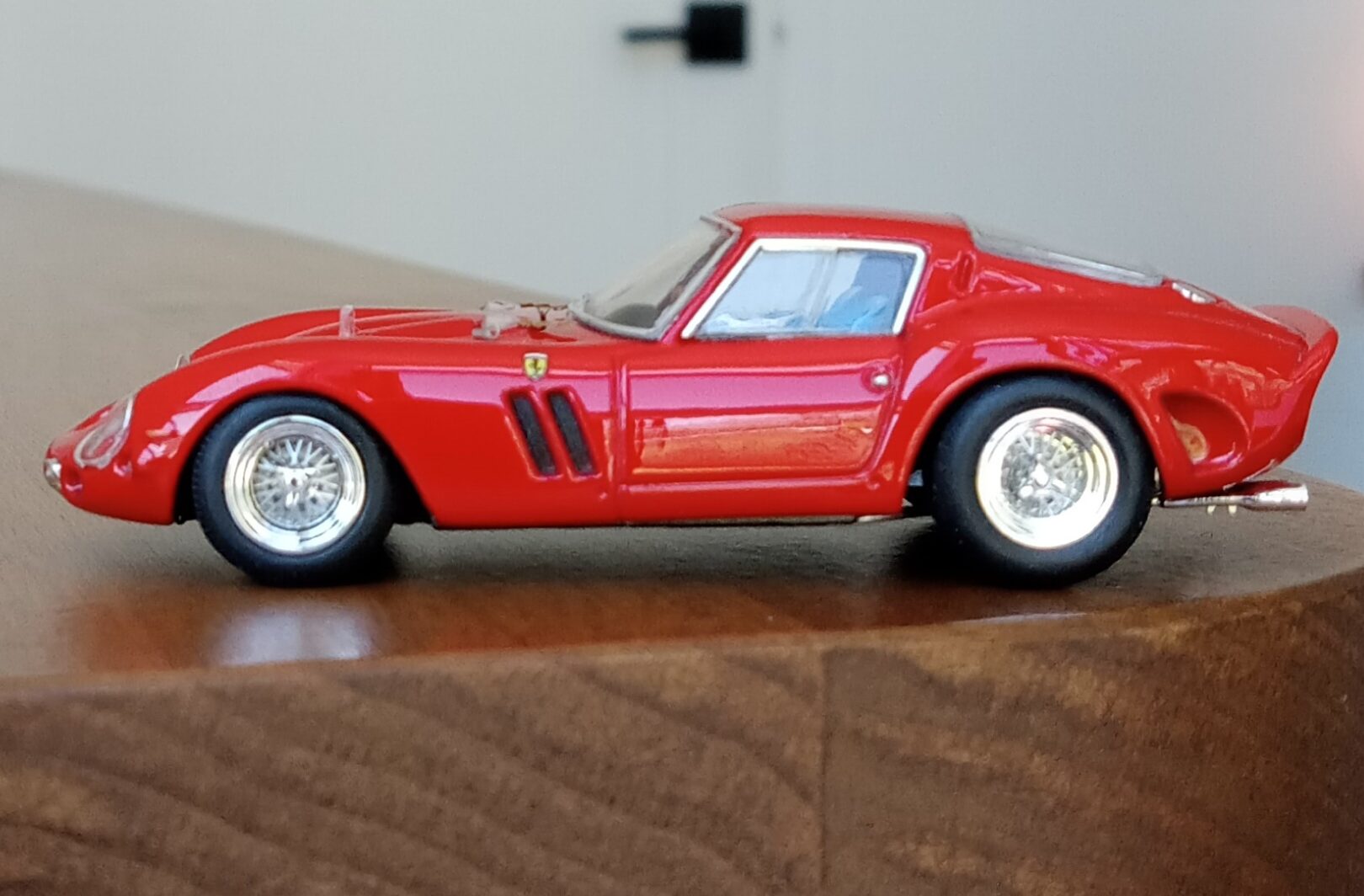
(Miniature car used in the photoshoot: Classic Rubber, 1/64 scale Ferrari 250 GTO, 1962 (Ferrari Red) —— Used as-is, with no modifications.)
Part 13 [Italian Cars Edition] Ferrari 250 GTO, 1962 “Arguably the Most Beautiful Ferrari”
#Favorite Car Designs—The Lineage of 2-Door Coupes:
For this 33rd installment, titled “The Lineage of 2-Door Coupes, Part 13,” I’d like to discuss luxury 2-door (GT) coupes and roadsters, which strongly reflect the national characteristics and unique exterior design styles of various countries. [Note: Includes convertibles]
I’ll proceed as follows.
This 13th installment is the [Italian Cars Edition]
We’ll be discussing the
1962
Ferrari 250 GTO.
[The Lineage of 2-Door Coupes: Table of Contents]
[American Cars Edition]
Episode 1: Cadillac El Mirage, 2013 (Metallic Red)
Episode 2: Lincoln Continental MK4, 1972 (Black)
Episode 3: Mercury Cougar, 1967 (LT Metallic Green)
[German Cars Edition]
Part 4: MB 500K Special Roadster, 1936 (Black)
Part 5: MB 300SL Roadster, 1957 (Silver)
Part 6: MB SLS AMR Gullwing, 2010 (Black)
[British Cars]
Part 7: McLaren F1, 1992 (Metallic Orange)
Episode 8: Jaguar XKSS Roadster, 1957 (Royal Blue)
Episode 9: Jaguar XKR Coupe, 1996 (Dark Metallic Green)
[Japanese Cars / Nissan Edition]
Episode 10: Nissan First-Generation Silvia, 1965 (Champagne Gold)
Episode 11: Nissan 5th-Generation Silvia, 1988 (LT Metallic Green)
[Italian Cars]
Episode 12: Ferrari 250TR Pontoon Fender, 1958 (Red)
Episode 13: Ferrari 250GTO, 1962 (Italian Red)
Episode 14: Lamborghini Concept S, 2005 (Pearl White)
[Japanese Cars: Mazda Edition]
Episode 15: Mazda Cosmo Sport, 1967 (Silver)
Episode 16: Mazda Eunos Cosmo, Type-S (Two-Tone: Black & Gray)
[French Cars]
Episode 17: Bugatti Type 59, 1935 (French Blue)
Episode 18: Citroën SM, 1970 (Champagne Gold)
Episode 19: Bugatti La Voiture Noire, 2019 (Black)
[Japanese Cars: Toyota Edition]
Episode 20: Toyota/Yamaha 2000GT, 1967 (Ivory White)
Episode 21: Toyota 2nd-Generation Soarer, 1986 (Two-Tone: Black & Gray)
Episode 22: Lexus LC [GWZ100], 2017 (Metallic Red)
[American Cars Part 2]
Episode 23: Dodge Challenger & Plymouth Barracuda, 1971
Episode 24: Dodge Viper SRT-10 ACR, 2008 (Black)
Episode 25: Ford Shelby GR-1 Concept, 2004 (Chrome)
[Japanese Cars: Mitsubishi Edition]
Episode 26: Mitsubishi Galant λ, 1976 (Brown Metallic)
Episode 27: Mitsubishi Eclipse [North American Spec], 2006 (Orange Metallic)
[German Cars Part 2]
Episode 28: BMW M635CSi, 1984 (Dark Metallic Blue)
Episode 29: Mercedes-Benz 560SEC AMG 6.0 Widebody, 1989 (Black)
Episode 30: BMW M2 with Genuine Performance Parts, 2025 (Neon Lime)
[Japanese Cars: Subaru Edition]
Episode 31: Subaru Crosstrek XV, 2012 (Lime Green Metallic)
The Corvette Lineage: (Special Edition)
Episode 1: 1967 Stingray [C2] Convertible (Hardtop, Metallic Blue)
Episode 2: 1972 Corvette [C3] Convertible (Metallic Blue)
Episode 3: 1990 Corvette ZR-1 [C4] Coupe (Red)
Part 4: Stingray Concept [Pre-production Model], 2009 (Metallic Blue)
#This Is the “Ultimate in Beauty” Forged by Racing:
There are certain cars that
consistently rank among the
“Big Three of Beautiful Cars.”
* Jaguar E-Type
* Mercedes-Benz 300SL Gullwing, and, in this installment,
* Ferrari 250GTO
These are the regulars, but
Among them, personally,
I believe this 250GTO is by far
the one with the
“most beautiful design”!!
However,
*When I factor in
*interesting features,
*its niche appeal,
*and what connoisseurs appreciate,
personally,
I much prefer the 250TR Testarossa from last time…
In terms of basic specifications—engine, displacement, size, chassis, and overall design—they’re practically identical. When viewed from above,
it’s clear that the GTO is an evolution of the Testarossa.
And regarding the GTO,
* its smooth lines, which make the most of its aerodynamic characteristics,
* and the fact that its design is far more refined
are also evident.
So,
regarding the Ferrari I consider the most beautiful,
the “Ferrari 250 GTO, 1962,”
I’d like to discuss it
as follows.
* Real-Car Commentary: “The Ultimate in Beauty!” on the Move
* Exterior Design Features: Thoroughly Streamlining the “Beast” 250TR
* “Me” and the 1962 250 GTO
* Three-Theme Story: Kokontei Shinshō, Blue Seats, and Individual Variations
* Other “Exquisitely Beautiful Designs”
* Car Review: The “Ultimate in Beauty!” on the Road
Overview:
The Ferrari 250 GTO (1962–) is
the most legendary Group 3 (GT class) homologation (official) racing car in Ferrari’s history, developed to dominate the World Sports Car Championship (International Manufacturers’ Championship) from 1962 to 1964. The “250” in the model name refers to the displacement per cylinder (250 cc), while “GTO” stands for “Gran Turismo Omologato” (homologated GT car). With only 36 units produced (33 for the 1962 Series 1), it is one of the world’s most coveted collector’s items, currently fetching astronomical prices ranging from tens of billions to nearly 100 billion yen at automobile auctions.
n
n
n
n
n
n
n
n
n
n
n
n
n
n
n
n
n
n
n
n
n
n
n
n
n
n
n
n
n
n
n
n
n
nn
# Development Background and History:
* Defeating the Jaguar E-Type:
To compete with the Jaguar E-Type, which debuted in 1961, Ferrari was forced to significantly update its existing race car, the “250 GT SWB.”
* Starting with “Il Mostro” (The Monster):
Led by the genius engineer Giotto Bizzarrini, the team conducted repeated wind tunnel tests to build a prototype. Initially nicknamed “Il Mostro” (The Monster) due to its rugged appearance, it recorded overwhelming speed during test runs.
* The “Court Revolution” and Scaglietti’s Final Touch:
On New Year’s Eve 1961, internal strife at Ferrari—known as the “Court Revolution”—led to the departure of Bizzarrini and his team. Subsequently, Chief Stylist Sergio Scaglietti took over the body design and perfected the sensual and beautiful final design.
# Mechanical Features:
* A Heart Inherited from the Testarossa:
The engine is based on the dry-sump V12 engine of the “250 Testarossa,” which had proven itself at the 24 Hours of Le Mans. The dry-sump system allowed the engine to be positioned lower and further rearward, resulting in a lower center of gravity and improved front-to-rear weight balance.
# Key Points of Exterior Design:
n
n
The exterior design of the Ferrari 250 GTO (Series 1, introduced in 1962) is hailed as “the ultimate beauty born of function” and stands as a landmark in automotive history. Rather than the traditional Pininfarina, Giotto Bizzarrini handled the basic aerodynamic design, and the Carrozzeria team led by Sergio Scaglietti completed it as a handcrafted, hand-hammered aluminum body.
n
N
N
n
n
(
n
n
n
N
M
n
We will explain these details in depth from the perspectives of the front, sides, rear, and aerodynamic functionality.
Front: Overwhelming Presence and Functional Beauty
The front fascia is packed with design elements directly linked to racing victory (cooling and aerodynamics).
n
* Triple D-shaped intakes (distinctive lids)
The three air intakes positioned at the front of the hood—resembling an inverted “D”—are the 250GTO’s most iconic feature. They are equipped with aluminum covers (lids) that can be attached or removed via fasteners (quick-release) to suit ambient temperatures and circuit characteristics.
* Long, Low Nose
By converting the engine to a dry-sump system and mounting it as low and far back as possible, the car achieved an ultra-low center of gravity and a long nose that seems to skim the ground.
* Headlights with Plexiglass Covers
To reduce air resistance, the headlights are covered with streamlined Plexiglass (acrylic resin) covers.
* Oval Radiator Inlet
The early models featured a small, oval-shaped opening, with driving lights and brake cooling ducts efficiently positioned to the left and right of it. 
n
n
n
n
n
Side: Elegant, Contoured Proportions
n
n
The overall height was reduced by approximately 90 mm compared to the “250GT SWB” on which it was based, creating a taut, muscular silhouette.
n
* Front fender outlets (shark gills)
Behind the front wheel wells, slits (air outlets) are carved to draw hot air out of the engine compartment. Depending on the specific model, there are either two or three vertical slits.
* Deep Cockpit and Wrap-Around Windshield
The steeply raked windshield features a pronounced curved surface (wrap-around) that extends to the sides, smoothly channeling airflow.
* Borrani Wire Wheels
The traditional Borrani wire wheels with center-lock (knock-off) design add a sleek touch to the lower body.
n
n
n
n
Rear: “Coda Tronca”—A Pioneer in Automotive Aerodynamics
The rear design reflects cutting-edge aerodynamic theories aimed at maintaining stability at high speeds.
n
* Coda Tronca (Ducktail Shape)
In stark contrast to the smooth roofline, the rear end features a “Coda Tronca (short tail)” shape, with a clean, vertical cut-off.
* Integrated (or bolted) rear spoiler
At the top of the truncated tail, an upward-curving rear spoiler (ducktail)—added following road tests—is fitted to generate downforce on the rear wheels.
* Voluminous rear fenders
To accommodate wide racing tires, the rear fenders are large and beautifully flared.
* Quad-Exhaust System
Four megaphone-style exhaust tips—two on each side—protrude from the lower section of the rear, unleashing the roar of the V12 engine.
n
n
n
n
n
n
n
# Aerodynamic Design Details
n
* Underbody Panel
An undercover panel (based on early diffuser concepts) that also serves as a fuel tank cover is mounted on the underside of the body, reducing underbody drag.
* Integration of Safety Components
To meet the regulations for a race car approved for public road use (GT homologation), small turn signals and license plate lights are exquisitely integrated into the bodywork so as not to disrupt the body lines.
n
* Individual Variations Due to Handcrafting
Since Scaglietti’s craftsmen shaped the aluminum sheets by hammering them by hand, each of the 36 Series 1 cars produced exhibits slight “individual variations (unique characteristics)” in the shape of the front intakes and the bulges of the fenders.
n
n
n
n
The exterior of the 1962 Ferrari 250 GTO is a design that can truly be called the “epitome of functional beauty”—a result of Italian craftsmanship elevating the data derived from wind tunnel testing and real-world circuit testing to the realm of art.
n
n
n
n
# Overwhelming Track Record in Motorsports:
n
The 250 GTO is often referred to as “the last dual-purpose (all-around) racing car”—one that could drive itself from public roads to the racetrack, win the race, and then drive back home.
* Three Consecutive World Titles: It demonstrated overwhelming dominance in the World Sports Car Championship (GT class) in 1962, 1963, and 1964, winning the Manufacturers’ Title for three consecutive years.
* Sweeping Major Races: Starting with its victory in the GT class at the 24 Hours of Le Mans, it dominated numerous class victories and swept the overall podium at events such as the Targa Florio, the Goodwood Tourist Trophy, and the Tour de France (automobile race).
n
n
n
n
# Modern-Day Value (Why Is It the World’s Most Expensive?):
n
n
1: Extremely High Rarity:
Only 36 units were produced, and it boasts a miraculous history in which “every single car ever produced still exists today,” having survived without any losses due to severe crashes or other incidents.
2: Impeccable Heritage and Beauty:
In addition to its glorious undefeated racing record (heritage), it holds artistic value as “one of the most beautiful designs in automotive history.”
3: The existence of an exclusive collectors’ club:
The “GTO Owners’ Club,” open only to 250 GTO owners, organizes special tours around the world every five years. Its members include world-renowned figures such as Ralph Lauren.
# Key Specifications:
Engine Type: Water-cooled 60-degree V12 SOHC (Tipo 168/62)
Fuel System: 6 × Weber 38 DCN carburetors
Lubrication System: Dry sump
Total Displacement: 2,953.21 cc (approx. 250 cc per cylinder)
Maximum Power: 300 hp / 7,500 rpm
Maximum Torque: 30.0 mkg (294 Nm) / 5,500 rpm
Drivetrain: Front-mounted longitudinal engine, rear-wheel drive (FR)
Seating Capacity: 2 passengers
Body Style: 2-door, open-top
Wheelbase: 2,400 mm
Overall Length: 4,400 mm
Overall Width: 1,675 mm
Overall Height: Approx. 1,245 mm
Curb Weight:
880 kg – 950 kg (lightweight aluminum body)
*Exterior Design Features: “The Ultimate FR Racer”
The Ferrari 250 GTO (1962) is a legendary car hailed as “the pinnacle of FR racers.” During the transitional period toward mid-engine designs, it pushed the limits of front-engine configuration to the extreme. Its form, honed purely for victory on the racetrack, combines the beauty of a work of art with an overwhelming track record.
Its almost divine three-dimensional form and presence embody “supreme beauty imbued with an aura” that symbolizes the pinnacle of human achievement. (If there’s anyone who can outright deny the beauty of this car, I’d love to meet them and have a conversation. On the other hand…)
I want to express the secret of that beauty
using every ounce of my current ability,
right here.
I’d like to highlight six points.
1: So polished that one can’t help but say, “How did they manage to take it this far…?”—graceful, supple, and supremely speedy! The depth, breadth, and grandeur of the body’s overall design—a pinnacle of achievement—deserves every word of praise one could bestow upon a high-speed object. ーーーーーーーー> Just writing this brings tears to my eyes.
2: While retaining the combat capabilities achieved with the 250TR, the craftsmanship of the smooth, custom-made suit design—which covers the entire body of the old TR—is a masterpiece aimed at reducing air resistance! The elements include the wedge body, the “coda tronca” [cleanly cut off] tail design, and the three front air ducts for adjusting airflow…—— —> A once-in-a-lifetime, miraculous session that captured every detail—big and small—with absolute precision
3: Needless to say, the weight balance already achieved with the 250TR Pontoon Fender version has produced ——> the ultimate FR side-view proportions
4: When compared to the contemporary Alfa Romeo TZ-2, the Enzo’s serious expression—as if to say, “I’d rather choose beauty than become anorexic just to win races”—peeks through, revealing a pursuit of “supreme beauty within the bounds of healthy beauty.” —————— Conversely, the TZ-2 appears anorexic, with a slight hint of distortion and unhealthiness seeping through. T_T
5: The plan view [viewed from directly above] clearly reveals the tapering of the side panels and side windows toward the rear, derived from wind tunnel testing—> You can really see how the increased wheelbase and overall length from the TR model were packed in right up to the very limit.
6: The elegant and masterful placement of small functional elements (lights, door knobs, handles, fuel caps) across the entire body. ———> It resembles the editorial design of the Japanese “Esquire” in its heyday.
Now, let’s go through them one by one:
1: So refined that one can’t help but say, “How did they manage to take it this far…?”—it’s fluid, supple, and supremely speedy! The depth, breadth, and grandeur of this advanced achievement in overall body design deserve every word of praise one could bestow upon a high-speed moving object.
(While some elements may have been the result of chance, it feels as though a genius improvisational designer—in modern terms—quickly draped Dinoc [a paintable film] over the “beast-like skeleton” already established by the pontoon-equipped TR, then entrusted the rest to a skilled modeler. Highlights include front fenders that protrude three-dimensionally, rivaling those of a Jaguar E-Type; the sense of volume extending from the side of the doors to the rear fenders; and the skillful way the top surface’s tapering—even more complex than the E-Type’s—is brought together at the rear fenders. Finally, there’s the rear spoiler on the coda tronca and the angle at which it’s mounted, which ties everything together… I could go on and on, really.)
ーーーーーーーー>Just writing this brings tears to my eyes.
2: While retaining the combat capabilities achieved by the 2:250TR, this car features the craftsmanship of a smooth, custom-tailored suit designed to cover the entire body of the original TR and reduce aerodynamic drag! Key elements include the wedge-shaped body, the “coda tronca” [cleanly cut-off] tail design, and three front air vents for adjusting airflow…
---->A once-in-a-lifetime, miraculous session where every major and minor detail was captured with “true precision”
3: Needless to say, this was born from the weight balance already achieved in the 250TR Pontoon Fender version,
ーーーーー>The ultimate FR side-view proportions
4: When compared to the contemporary Alfa Romeo TZ-2, the Enzo’s serious expression—as if to say, “I’d rather choose beauty than starve myself to win races”—peeks through, revealing a pursuit of “supreme beauty within the bounds of healthy beauty”
(I feel this design embodies the strength to firmly say “NO!” at the very edge of the temptation to be dragged into the shadows by an excessive pursuit of beauty. ——→ As a result, the charisma present in the 250TR has diminished.)
‐-----Conversely, the TZ-2 has a slightly anorexic feel to it, with a hint of distortion and unhealthiness seeping through. T_T
5: Plan View [Viewed from directly above]—The tapering of the side panels and side windows toward the rear, clearly derived from wind tunnel testing,
ーーーーーーー>You can really see how the increased wheelbase and overall length from the TR were packed in right up to the very limit.
6: The elegant and masterful placement of small functional elements (lights, door knobs, handles, fuel caps) across the entire body, derived from functionality
----→ It resembles the bold yet delicate editorial design of the Japanese edition of *Esquire* at its peak.
*“Me” and the Ferrari 250 GTO: Is it time for a reunion?
In the world of rakugo, there are the “Three Great Masters of the Showa Era”:
* Kokontei Shinshō, 5th Generation (an unconventional charmer and a genius with a down-to-earth spirit)
* Katsura Bunraku, 8th Generation (who sought refined and perfect rakugo)
* Sanyūtei Enshō, 6th Generation (who inherited a vast repertoire, known for meticulous depictions and superb technique)
(Sometimes, Yanagiya Kosan is included instead of Bunraku.)
In this way, each of them coexisted while possessing distinct personalities.
After that,
the rakugo world was led by the following two figures:
* Tachikawa Danshi (7th generation): A reconstructor of classical rakugo and an unconventional charismatic figure
* Kokontei Shincho (3rd generation): Shinsho’s second son, known for his vivid pacing and exceptional sophistication
What I’d like to highlight here is
the father-son duo of Kokontei Shinshō and Shinchō.
Since they were father and son, there were similarities in their voice quality and their “Edo-style” delivery, but in almost every other respect, they were such polar opposites that one could say they were almost completely different rakugo performers—
that’s how it was.
#Shinshō:
Raised from the very depths of poverty, he possessed a warmth and approachability typical of an Edo native. His creed was a level of “charm” that was truly hard to find elsewhere. His smooth, sing-like delivery was addictive; he’d forget lines mid-story, skillfully cover them up, or make mistakes. In his later years, he not only suffered from aphasia but would even doze off in the middle of a performance—yet none of that mattered… He was said to have a truly carefree, quintessential Edo-style personality… the very picture of a lovable old man… (laughs)
#Shincho:
In contrast to the carefree “old man,” he was meticulous and took rakugo with the utmost seriousness… which, to me, was a bit… ? …But his rakugo combined a sense of scale and quality that easily surpassed his father’s. In a good way, he was like the ultimate weapon of the rakugo world—a talent that seemed to combine all the best aspects of the other three masters (En’ō, Bunraku, and Kosan) besides his father. His only flaw was his tone, pacing, build-up, and punchline.
It was so good it almost lacked charm… or rather, after listening to it, I felt like I’d learned something…? But his tone and voice had that “slightly hoarse, resonant high pitch” he inherited from his father, and that was truly wonderful. (In that regard, his older brother, Kanahara-tei Bao, is a drunkard straight out of a “hula” dance—just like his father—who always looks cold and sways back and forth, (laughs) though I actually prefer him.)
I’ve gone on a bit too long with the preamble,
but let’s get back to the Ferrari 250.
The protagonist this time,
the Ferrari 250 GTO, is—> the rakugo storyteller [Shincho]
while the Ferrari 250 TR is—> his father [Shinsei]
That’s the general idea,
and it fits both cars and both men perfectly.
#The 250 GTO possesses:
* Perfectionist-level beauty,
* The “spoiled rich kid = thoroughbred-like” qualities nurtured in a privileged environment.
#In contrast, the 250 TR has:
* A genius-like, artistic streak,
* A charm where even when it messes up, it just adds to its endearing appeal…
I just couldn’t stand this
“rich kid” image,
so I’ve always avoided Shinchō’s rakugo performances,
However, after doing a lot of research this time, actually touching and running my hands over the real thing, and writing this article,
I realized that, just like Shinchō himself,
the “GTO” wasn’t just
a “too-good-to-be-true thoroughbred”—
it wasn’t just that.
* The aerodynamic form that emerged from repeated, repeated wind tunnel tests,
* The car that the designers refined to perfection,
* And by racing around the track and continuing to win,
it gained an aura of its own.
(The value of real-world performance was added.)
What I had overlooked was
that, in addition to the beauty of his tone and voice—which Shinchō inherited from his father—
he had acquired, through blood, sweat, and tears, a “depth of artistry” that seemed to embody all the qualities possessed by the three great masters of the Shōwa era. I felt this intuitively. Strangely enough, as I began to uncover the true brilliance of the 250 GTO, reevaluate it, and make one new discovery after another— for some reason, the thought struck me: “How much did Shinchō struggle and strive to overcome his insecurities and acquire all the qualities of the Showa-era masters—except for his father’s intense ‘fura’?”
————> In an instant, I found myself falling in love with these two priceless treasures.
At the same time,
I realized that up until now,
* Riding on his parents’ coattails,
* Coming from a “thoroughbred” family background,
* Being a “rich kid from a good family”—
these labels had gotten in the way, preventing me from fully exploring
so many things—design, books, sculptures, food, and relationships—that I hadn’t given a proper chance.
I realized this,
and from now on, I wanted to reexamine, re-experience, and re-evaluate
* the simple pleasures of taste,
* and things that are simply beautiful,
which I had previously avoided based on personal preference.
#The 250GTO Experience:
Since the mid-1990s,
I’ve enjoyed collecting and building 1/43-scale die-cast, resin, and white metal model cars as a hobby,
but as I mentioned, perhaps because I was prejudiced against it without even trying it,
my relationship with the 250GTO had been rather limited,
*AMR 1/43 Ferrari 250GTO Rallye du Touquet 1965
(I bought the kit just to see the divine casting by the legendary, genius 1/43 white metal model sculptor, André Marie-Ruff, and was satisfied just by looking at and touching the body parts. The variations on the hood, which mimic hammered aluminum, are truly wonderful.)
ーーーーーー>At this point, I was completely spoiled by AMR’s prototype, which looked even more authentic than the real thing!!
This is a ready-to-display model from Kyosho,
*Kyosho, 1/43 die-cast ready-to-display model, 1962 250GTO
(You don’t see these much anymore, but I remember they were all high-quality, open-top models with a solid build.
---→ For some reason, I never got around to it, and it ended up gathering dust in the closet.)
After that,
I got my hands on a die-cast ready-to-display model,
and that was the end of it.
* Hatchet, 1/43 scale die-cast ready-to-display model, Ferrari 250 GTO
(I fell in love with this three-dimensional model, where only the simple design is clearly visible, and from then on—right up until this CL model—I don’t recall ever buying any other die-cast cars.)
This one is
the kit I’ve always dreamed of!
* Makeup Co., Superior Model, 1/43 Scale White Metal Assembly Kit: 1962 250 GTO (Partially Assembled)
(This is truly the ultimate 1/43 scale kit. Not only do the hood, doors, and trunk open and close, but even the fuel filler door is movable.
——————> This is the first time I’ve seen photos of the contents, and I can’t hide my amazement at the sheer number of parts.)
n
n
N
N
N
N
N
n
N
N
N
N
n
n
N
N
N
N
N
n
N
n
n
N
N
N
N
N
N
And here’s a real gem from the rapidly emerging Chinese-made CL models,
which played a major role in this photo shoot.
* Classic Rubber, die-cast ready-to-display model, Ferrari 250 GTO ’62
(Currently, only versions with a red exterior and one with a race number are available, but I hope they’ll release metallic blue and yellow versions in the future as well. There seems to be a secret to the body’s design—the way it’s slightly “elongated” compared to the real car is wonderful. During the shoot, it was a constant stream of new discoveries and rediscoveries that really thrilled me.
——> I can hardly believe this is only $25!!)
n
n
N
N
N
N
N
n
N
N
N
N
n
n
N
N
N
N
N
n
N
N
N
Now, it’s finally time for
the “Three-Theme Story” segment!
n
n
N
N
N
N
N
n
N
N
N
n
n
N
N
N
N
N
n
N
N
N
*Three-Theme Story: Kokontei Shinshō, Blue Sheet, Individual Differences
n
n
n
n
n
n
n
This time’s theme
turned out to be
quite out of the blue…
n
n
n
n
n
* Kokontei Shinsho:
* Blue Seat:
* Individual Differences:
n
n
N
N
N
N
N
n
N
N
N
I wonder how this will turn out…
n
By the way, as a new experiment this time,
n
I asked Google AI
to use the above prompt
to tell a story about the Ferrari 250 GTO in the style of a “three-topic rakugo” story,
and after two or three rounds of back-and-forth, I reworked it into a conversational format to create the story below. The execution and punchline were truly “AI”-like and intelligent,
so I’ve decided to feature it as this installment’s three-topic rakugo story!!
n
n
n
N
N
N
n
A Scene in the Green Room: The Aesthetics of Refinement and the Artisan’s Rhythm
n
n
n
Audience Member (a retired car enthusiast):
Wow, Master Shinchō’s performance of “Bunshichi Motoyui” today really blew me away. Not a single unnecessary element—it was the very embodiment of “Shincho’s clean, polished style.” It was a beauty without a single flaw.
n
Young Rakugo Performer (Shincho’s disciple):
Oh, thank you very much. But my master is always grumbling backstage, saying, “I can’t beat my old man’s (Shinsho’s) down-to-earth, heartfelt charm.”
n
Audience Member:
I see. Speaking of the late Master Shinshō, if you were to compare him to a car, he’d be just like the pontoon fenders of a Ferrari 250TR. That raw, unbridled wildness, combined with an overwhelming warmth that fully embraces the human condition. That’s a quality only a wild genius can possess.
n
Young Rakugo Performer:
A car, you say! I’m quite the car enthusiast myself…
So, what would my master be?
n
Audience Member:
Well, my friend, he’s a 1962 Ferrari 250 GTO. It’s the ultimate in refinement—the wildness of the TR stripped down to the absolute minimum and wrapped in the aesthetics of aerodynamics. It’s elegant from every angle, with not a single flaw.
n
Young Rakugo Performer:
Huh. But if that’s the case, it sounds like people are saying my master’s rakugo is as cold as a machine—which leaves me with mixed feelings as his disciple.
n
Audience Member:
Don’t be silly. Take a look at the 250 GTO’s cockpit. In that spartan, bare-metal space, there’s a single, vivid blue seat custom-made just for it. That’s what you call a craftsman’s “refined flair.” It’s just like that breathtaking, old-school Edo-style charm that Master Shinchō occasionally shows.
n
Young Rakugo Performer:
I see. So that blue seat is Master Shincho’s “playful wink”?
n
Audience Member:
It’s not just that. Only 36 of those cars were ever made, and since craftsmen hammered the aluminum sheets by hand, each one varies by a few centimeters. The curves of the left and right fenders are subtly different. Hidden within that perfect “form” is the breath of the craftsman’s handiwork.
n
Young Rakugo Performer:
Ah! I get it. Master’s rakugo also sounds perfectly the same every day, but the pauses and tone shift ever so slightly depending on the atmosphere at the venue that day. It’s those exquisite individual differences that drive the audience wild, isn’t it?
n
Audience Member:
Exactly. That’s why, no matter how much Master Shinchō said he “envied his father’s down-to-earth charm,” if you open the hood of a GTO, you’ll find a fiery V12 engine—inherited from Shinshō—roaring at exactly the same high RPMs. You can’t fight your blood, can you?
n
Young Rakugo Performer:
Hmm, as expected of you, sir—that’s a great way to put it!… Oh, speaking of which, Master Shincho has finished changing and is coming this way. He’s wearing a sharply tailored suit again today—he really is “spick and span.”
n
Customer:
Oh, you’re right. But take a closer look, young man. The handkerchief peeking out of Master Shincho’s jacket pocket today is the exact same vivid sky blue as the seats in that GTO, isn’t it?
n
Young Rakugo Performer:
That’s true! As I thought, my master really does have everything calculated down to the last detail.
n
n
Audience Member:
No, that’s not calculated. It’s about sneaking in a tiny bit of whimsy—called “individual variation”—into a perfect aesthetic… It’s exactly what you’d call “the ingenuity of the seat (stage), born of blood (thousands) and sweat,” crafted by the hands of a true artisan.
n
n
n
n
n
What did you think?
In the version I was originally planning to write,
I hadn’t even considered the connection between the “sage” and the blue seat,
so I really liked this punchline and decided to go with it.
n
n
n
I hope to continue creating even better “Three-Theme Stories” in the future,
including through discussions with “AI-san.”
n
n
N
N
N
N
N
n
N
N
N
*Other “Beautiful Racers”…
From the 1960s through the 1970s,
the racing scene was teeming with
cars that combined beauty and speed,
so let me list them
as they come to mind.
* AC Cobra Daytona Coupe, 1964 (Metallic Blue)
(If we consider the 250 GTO to be a more aerodynamic version of the Ferrari 250 TR, then the Daytona Coupe is essentially an AC Cobra 427 with the same engine and chassis, but encased in an aerodynamic body. The boldness of its sharply angled rear end even surpasses that of the 250 GTO.)
ーーーーーー>I just can’t get enough of that metallic blue with white stripes!
*Ferrari 330 P4, 1967 (Ferrari Red)
(Ferrari’s final answer to the mid-engine racer concept—redesigned after a crushing defeat to the Ford GT40 at the 1966 Le Mans. The beauty of the lines flowing from the rear, with an overall height limited to 40 inches (1 m) just like the GT40, contrasts exquisitely with the sense of imbalance created by the massive bulge of the front fenders.)
————> At times, the raw power of the Cobra 427 seems to peek through.
*Ford GT40 MK2, 1966 (Black)
(I have almost no interest in the GT40 Mark 1, but the sculptural imbalance between the rounded front and the angular rear of this MK2 is captivating no matter how many times I look at it, and for me, it’s a feature that surpasses even the 330P4.)
ーーーーーーー>The 1/64 scale model by Kyosho, which emphasizes the car’s forward-leaning stance, is even better than the real thing!!
After that, the focus of racing shifted to the Can-Am series,
and the gap between race cars and street cars widened,
so personally, my interest waned…
Writing this article has made me
I’ve come to like
the 【250GTO】, like the one featured in “Shincho.” Yay!
Now,
I’m going to
listen to some of Shincho’s rakugo.
Next time,
I’d like to talk about
the Lamborghini Concept S.
Stay tuned――
Regarding this blog and its content:
My goal in writing these blog posts is to clarify my personal, distinctive criteria for evaluation—including my quirky perspectives—through my involvement with three-dimensional art (including cooking), and to document how I have satisfied and fulfilled my curiosity and desire to explore “beauty and deliciousness.”
Consequently, while I pay the utmost attention to the numbers, years, and detailed data that appear in my articles, it is possible that I may occasionally make significant errors or misunderstandings. In particular, key specifications and model years in automotive articles can often be confusing, so I would appreciate it if you treated them as general references only.
For my part, I feel that I’m inserting dates and data into the articles as objective material to create a “flow” that connects my personal assessments of exterior design and taste to the broader themes explored in the latter half of the piece. What I ultimately prioritize are the new “perspectives” and “unexpected connections between pieces of information” that emerge from the chaotic jumble of memories in my own mind. The various data points are needed secondarily as part of that “flow” to generate that momentum.
As a slight digression, in the world of rakugo—which I love—there’s a playful format called “san-dai-banashi,” where a performer weaves a single story using three topics solicited on the spot from the audience. I feel like I’m doing something similar, using the characteristics of three-dimensional sculptures and (the flavors of dishes) as my prompts. The countless ideas that flit through my mind during this process are completely unexpected and delightful; they often drastically change the content of future articles or lead to new developments.
How This Blog Works:
“Spots and Lines of Curiosity x Whimsical Mental Circuits = Unexpected New Developments”
This blog may be a bit self-indulgent, but I hope you’ll continue to follow along.
P.S.: To create the “flow” described above, I take as many photos as possible using my own die-cast cars and home-cooked meals. However, I do borrow the bare minimum of other illustrations and photos from other bloggers’ posts and company websites. (I edit them to fit the article’s content and post them at the lowest possible resolution.) If there are any issues, please contact me and I will remove them immediately.
Addendum 2: You are free to use the photos of die-cast cars and other images (taken by me) featured in this blog’s posts in any way you like without permission. I create these posts with the understanding that my personal creativity belongs to me alone.
Translated with DeepL.com

これはCTAサンプルです。
内容を編集するか削除してください。