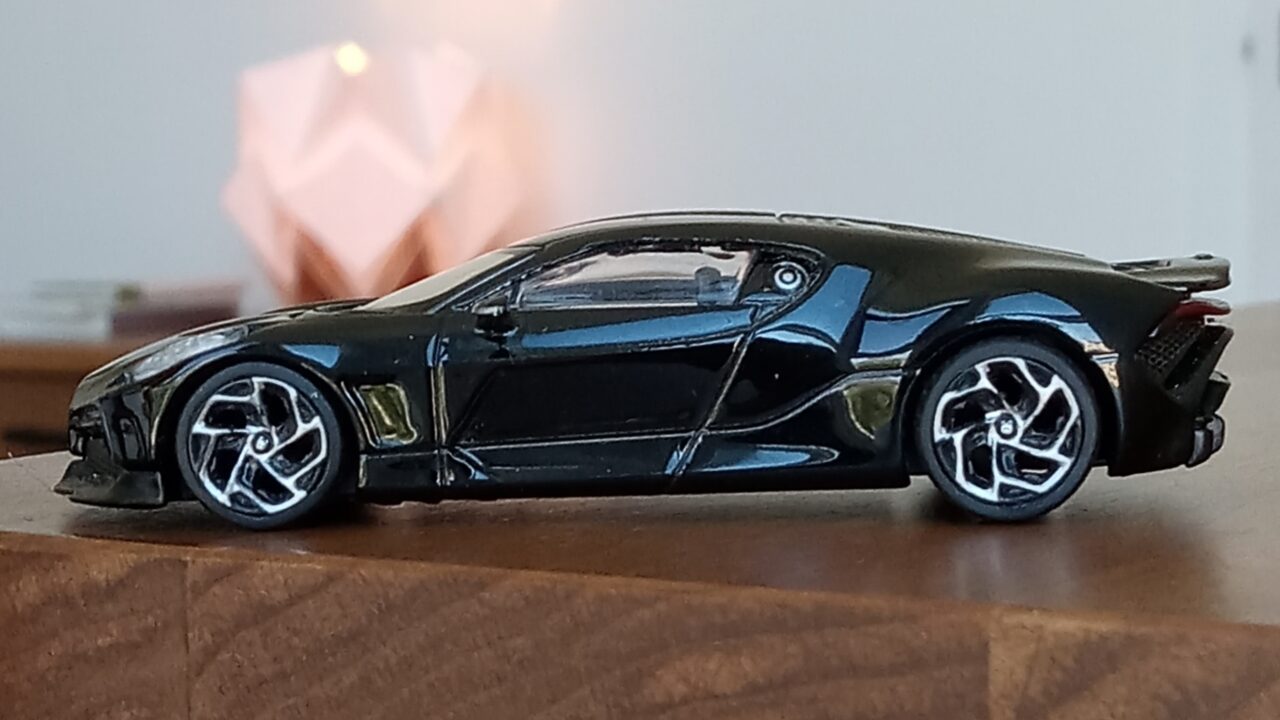
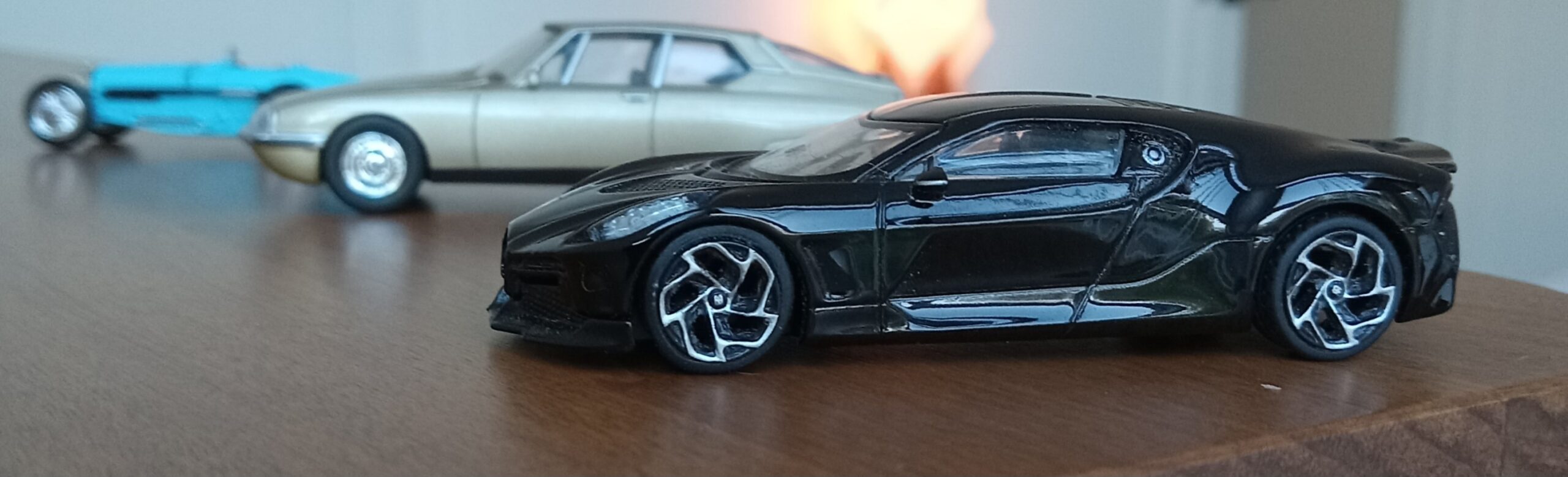
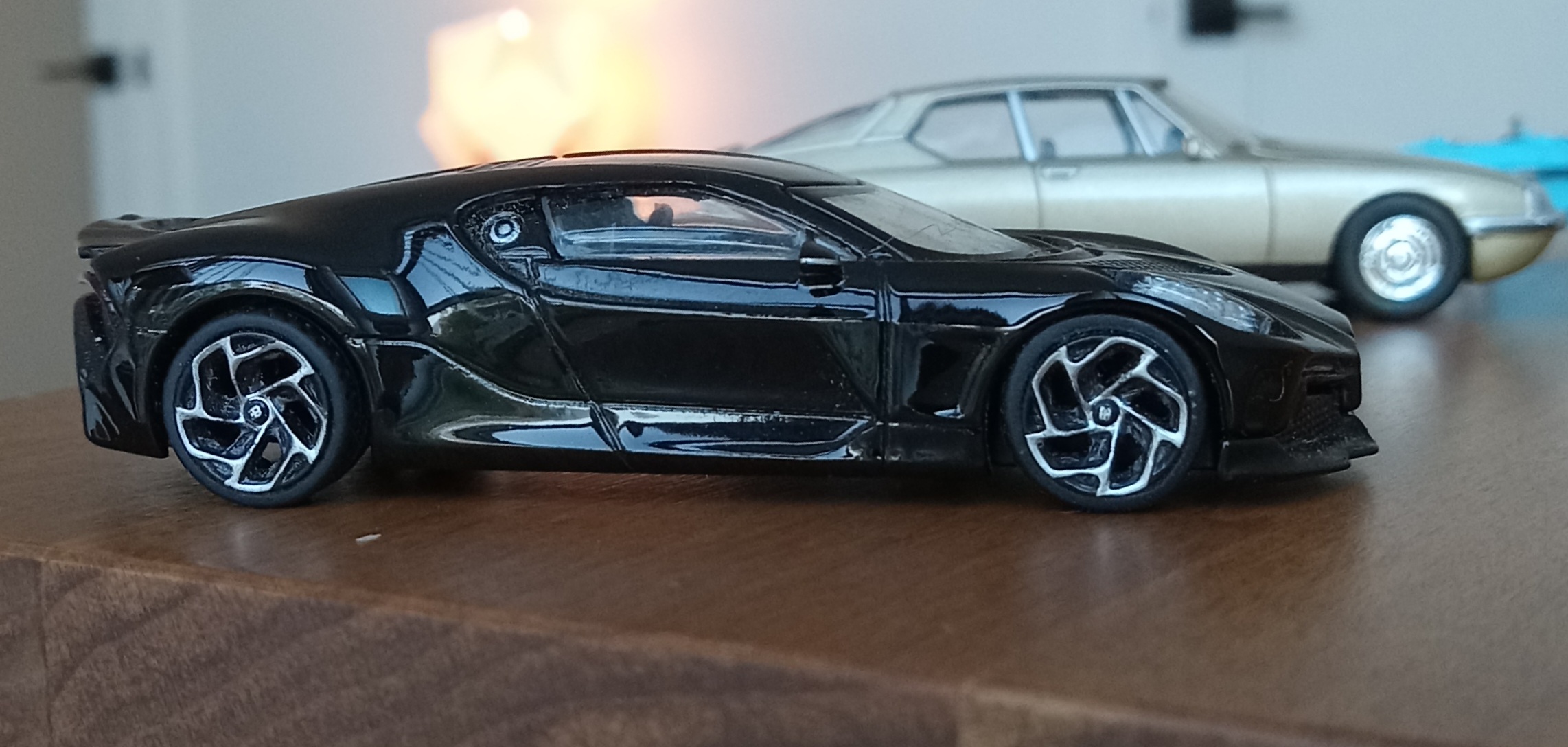
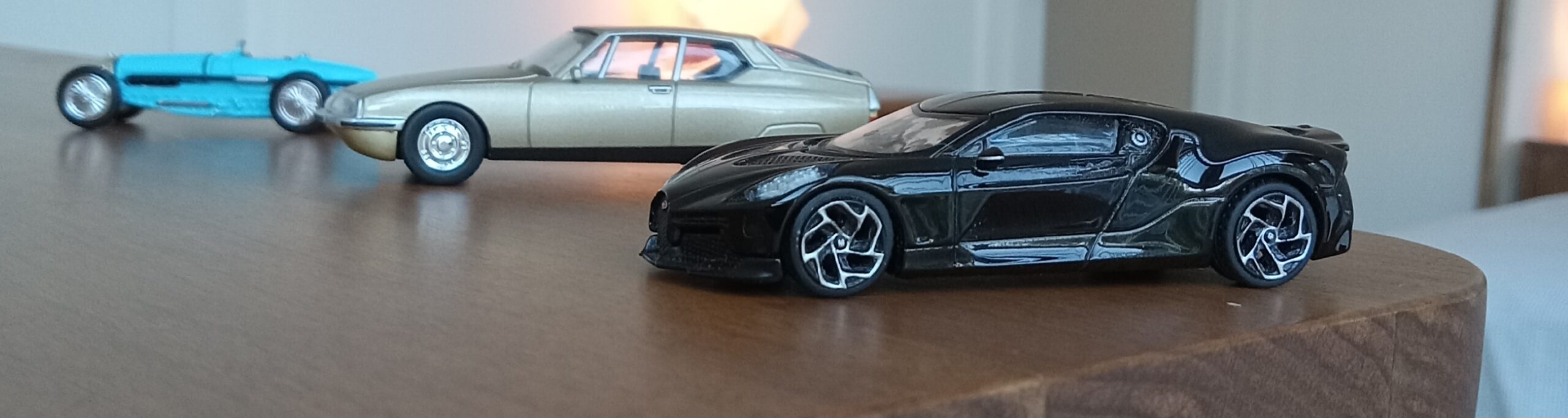
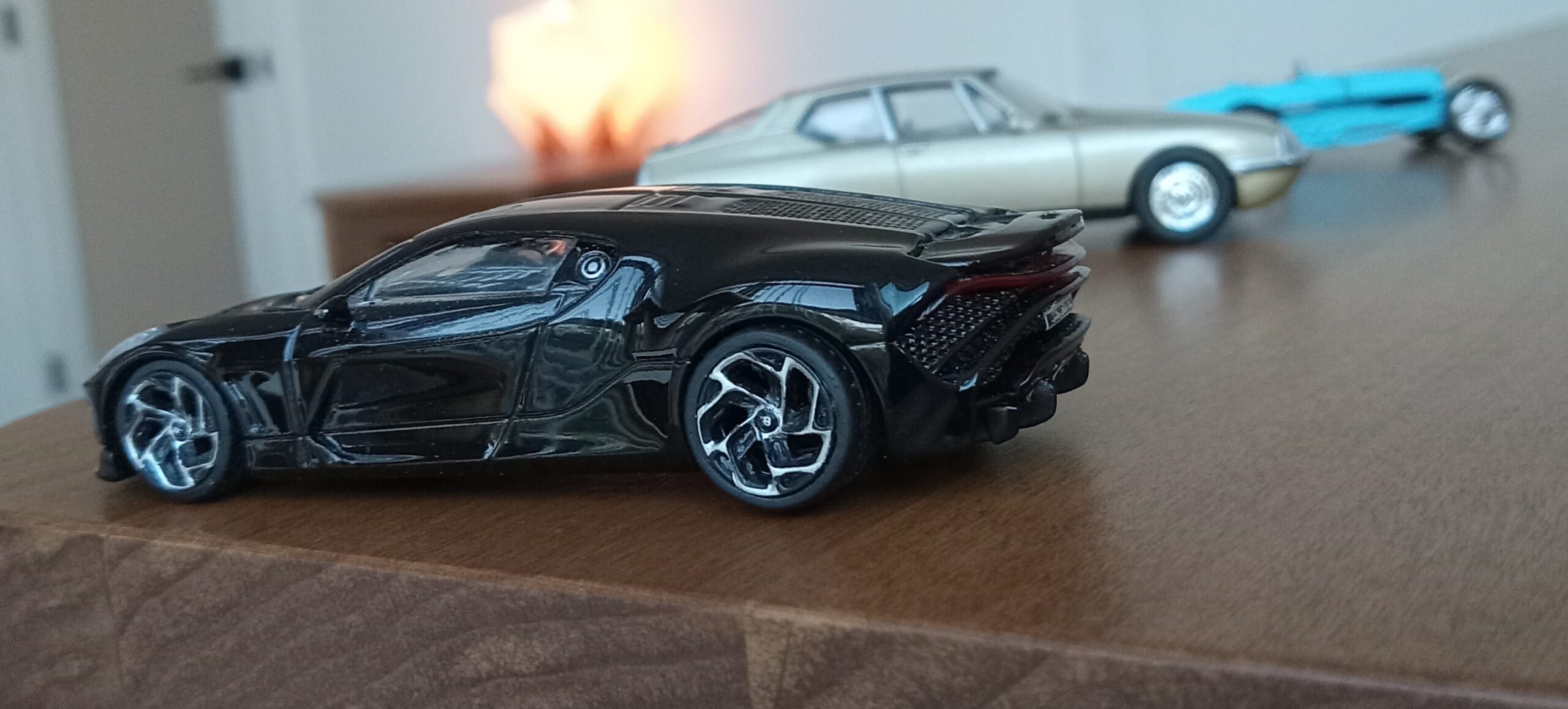
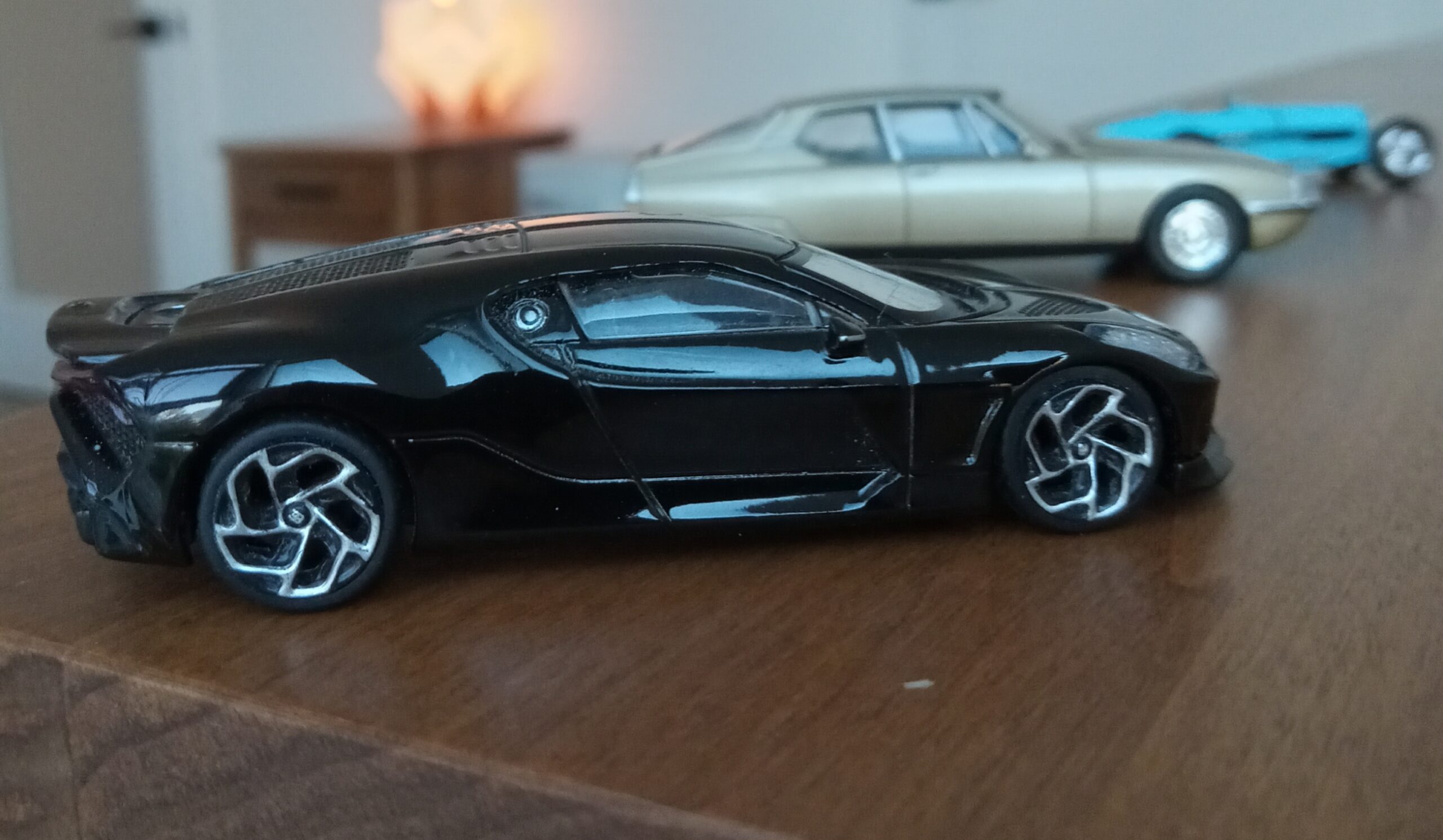
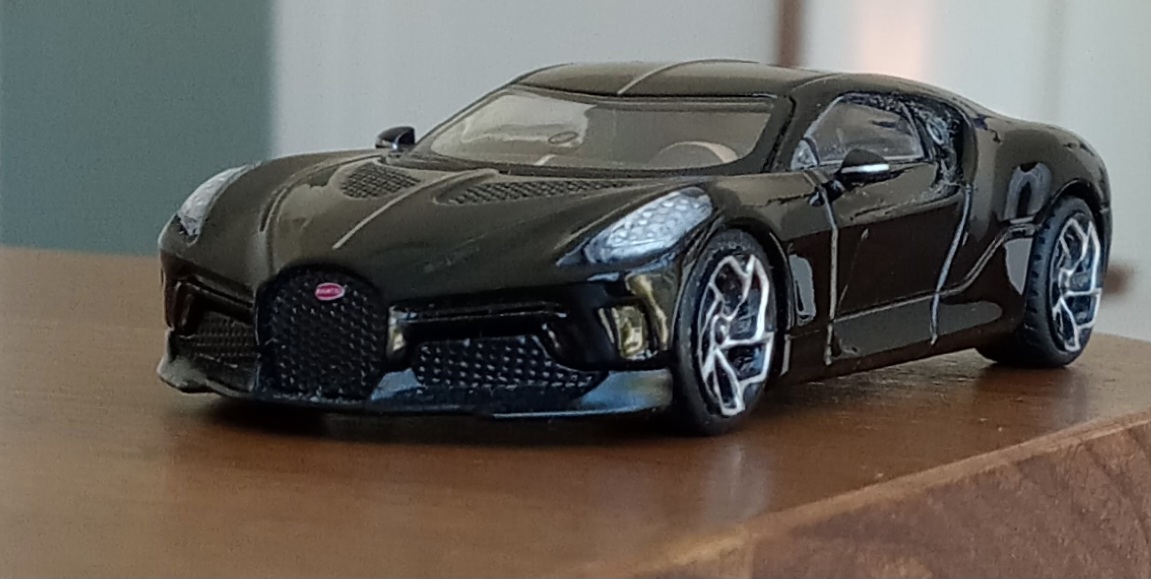
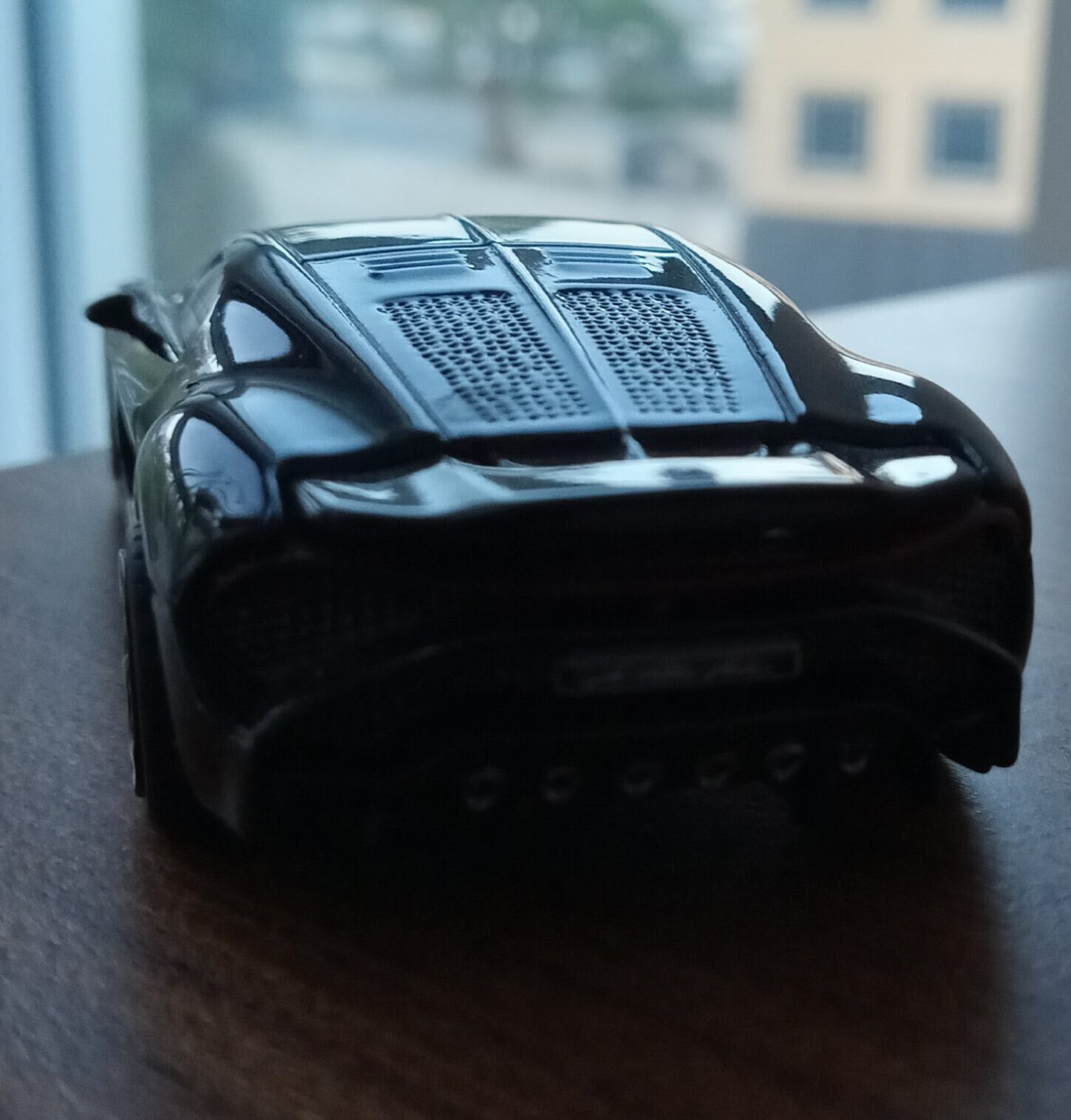
(JKL社製、1/64 ダイキャスト完成品、ブガッティ・ラ・ヴォワチュール・ノワール、2019(黒)ーーー>改造箇所:前後の車軸の微調整して若干の前傾姿勢を追加、リアスポイラーを一旦除去して、低い位置に再接着)
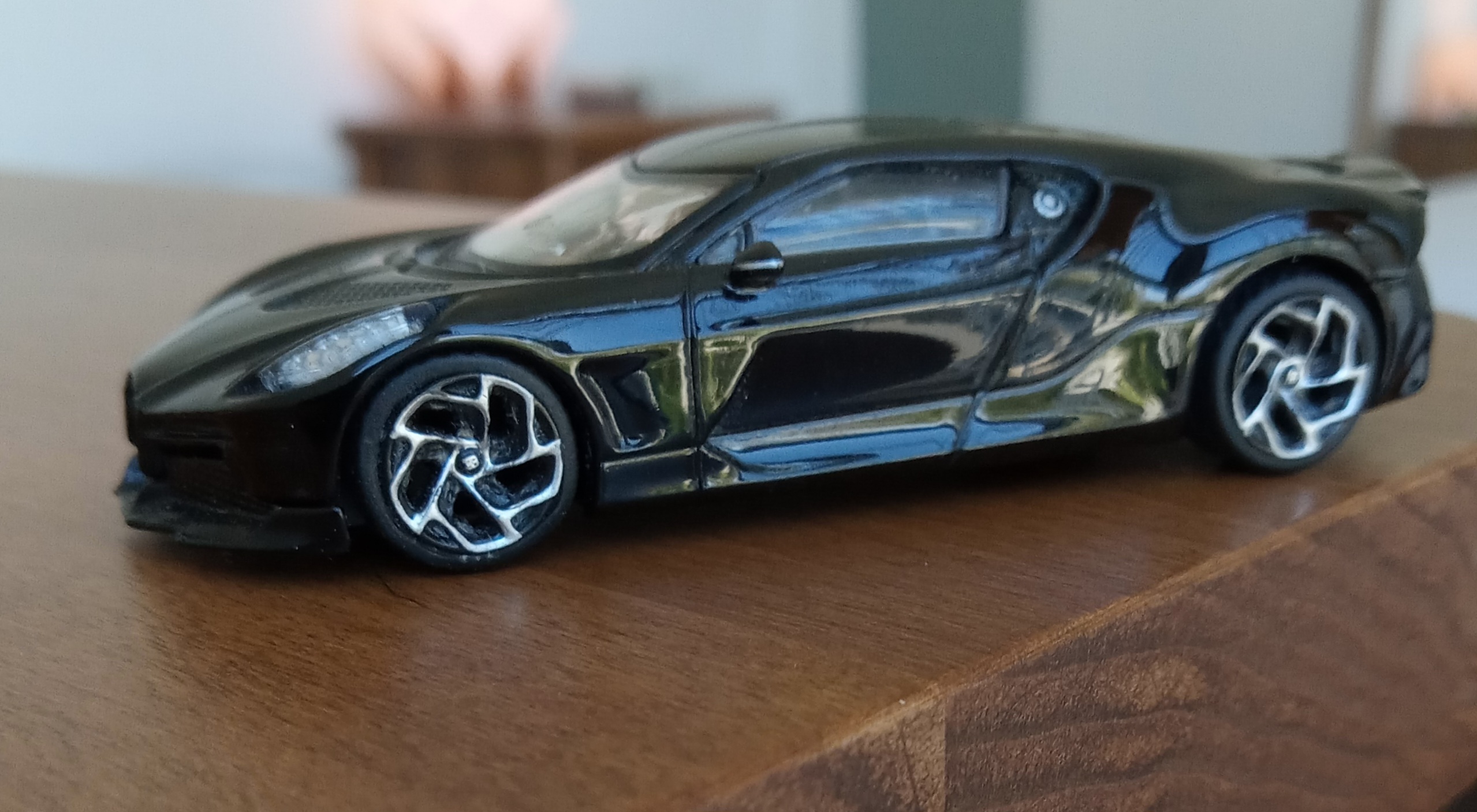
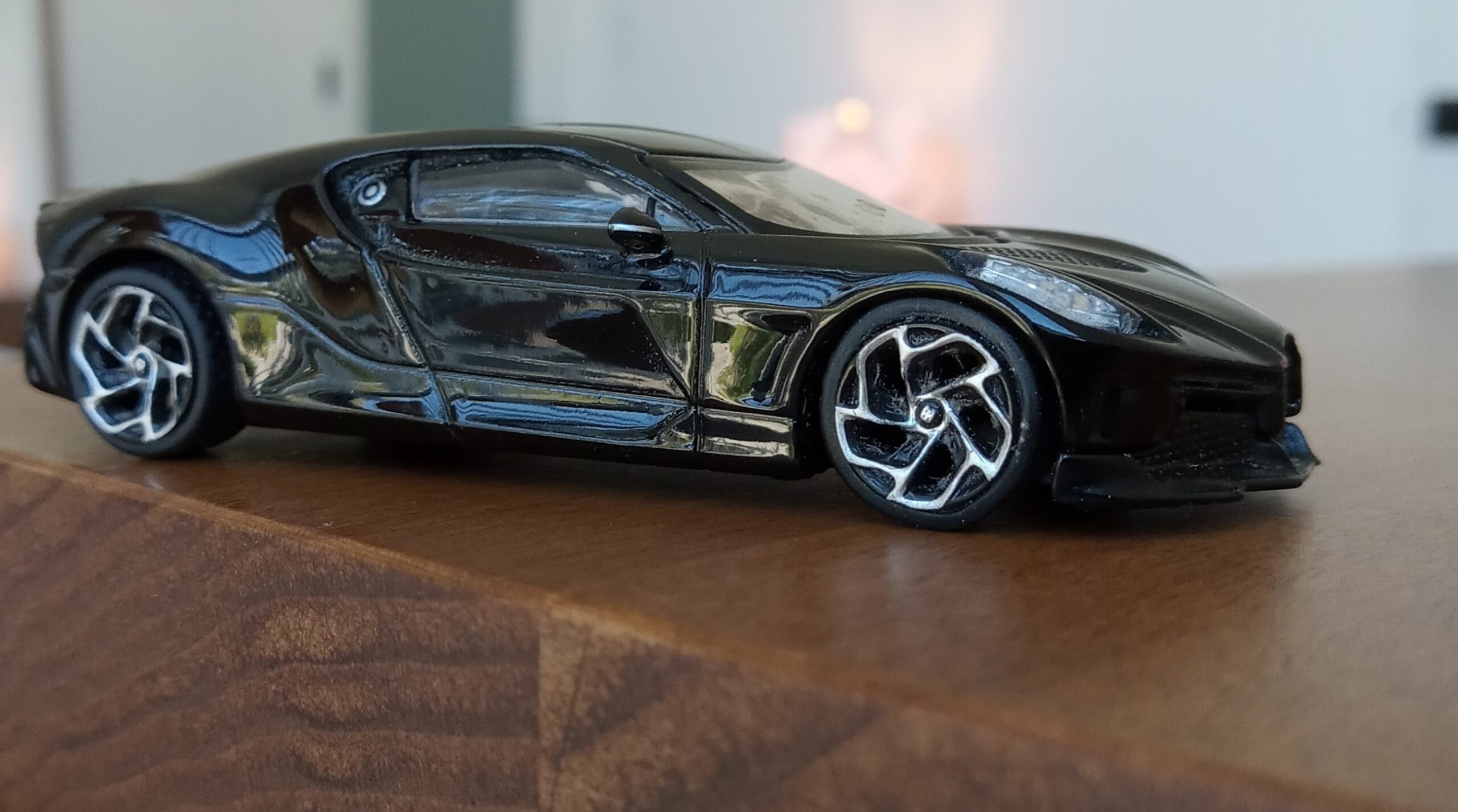
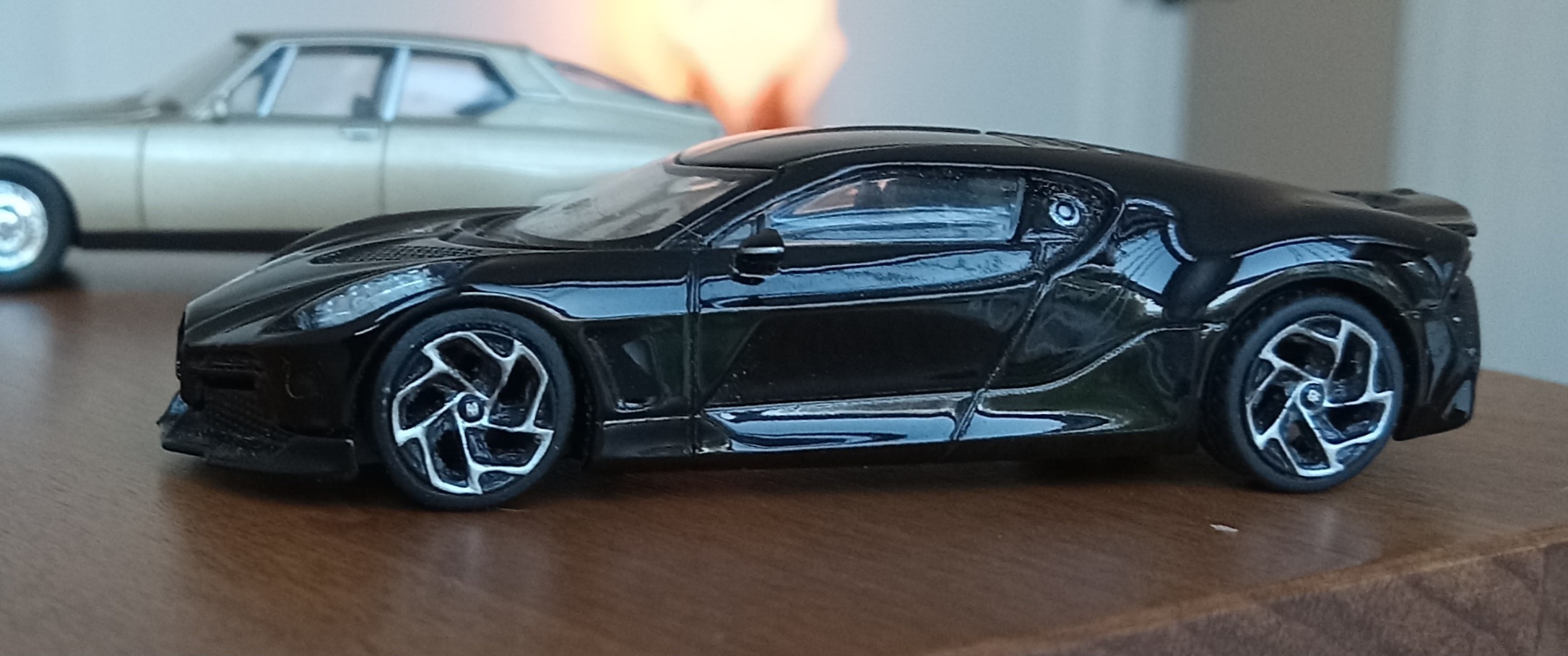
好みの自動車デザイン:第39回ーー2ドア・クーペの系譜: 第19回【フランス車編】 第19回:ブガッティ・ラ・ヴォワチュール・ノワール、2019(黒)『唯一無二の黒い宝石』 Bugatti La Voiture Noire『The Only Black One』
#好みの自動車デザインーー2ドア・クーペの系譜:
第39回目の今回は、『2ドアクーペの系譜、第19回』と題しまして、各国のお国柄や、外観デザインの個性が強く表れる、高級2ドア(GT)クーペ / ロードスターについてお話ししてみたいです。【注意:オープンカーを含む】
以下の要領で進めていきます。
第19回の今回は【フランス車編】
2019年発表の
ブガッティ・ラ・ヴォワチュール・ノワール、(黒)
についてのお話です。
【2ドア・クーペの系譜:目次】
【米国車編】
第1回:キャデラック・エルミラージュ、2013(メタリック・レッド)
第2回:リンカーン・コンチネンタル MK4、1972(ブラック)
第3回:マーキュリー・クーガー, 1967(LTメタリック・グリーン)
【ドイツ車編】
第4回:MB 500K スペシャル・ロードスター、1936(ブラック)
第5回:MB 300SL ロードスター、1957(シルバー)
第6回:MB SLS AMR ガルウイング、2010(ブラック)
【英国車編】
第7回:マクラーレン・F1、1992(メタリック・オレンジ)
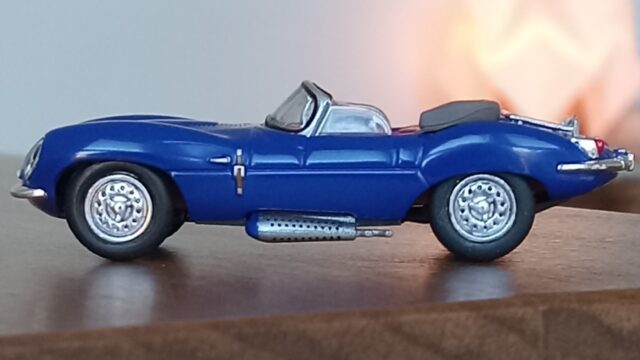
第8回:ジャガー・XKSS ロードスター、1957(ロイヤル・ブルー)
第9回:ジャガー XKR クーペ、1996(ダークメタリック・グリーン)
【日本車・ニッサン編】
第10回:ニッサン 初代シルビア、1965(シャンペン・ゴールド)
第11回:ニッサン 5代目シルビア、1988(LTメタリック・グリーン)
【イタリア車編】
第12回:フェラーリ 250TR ポンツーンフェンダー、1958(赤)
第13回:フェラーリ 250GTO、1962(イタリアン・レッド)
第14回:ランボルギーニ・コンセプトS、2005(パール・ホワイト)
【日本車・マツダ編】
第15回:マツダ コスモ・スポーツ、1968(レーシング・ホワイト)
第16回:マツダ ユーノス・コスモ、タイプ‐S(2トン:黒&グレー)
【フランス車編】
第17回:ブガッティ・タイプ59、1935(フレンチ・ブルー)
第18回:シトロエン・SM、1970(シャンペーン・ゴールド)
第19回:ブガッティ・ラ・ヴォワチュール・ノワール、2019(黒)
【日本車・トヨタ編】
第20回:トヨタ/ヤマハ・2000GT、1967(アイボリー・ホワイト)
第21回:トヨタ・2代目ソアラ、1986 (2トン:黒&グレー)
第22回:レクサス LC【GWZ100型】、2017(メタリック・レッド)
【米国車編②】
第23回:ダッジ・チャレンジャー&プリムス・バラクーダ、1971
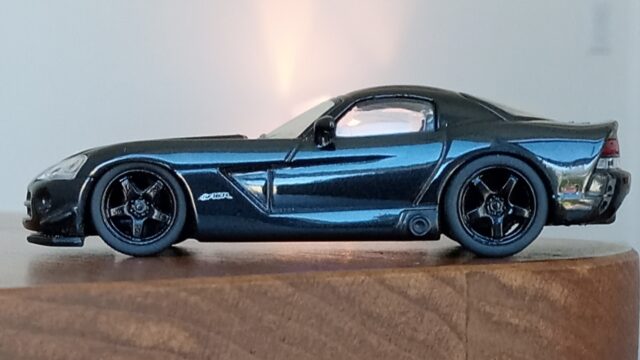
第24回:ダッジ・ヴァイパー SRT‐10 ACR、 2008(ブラック)
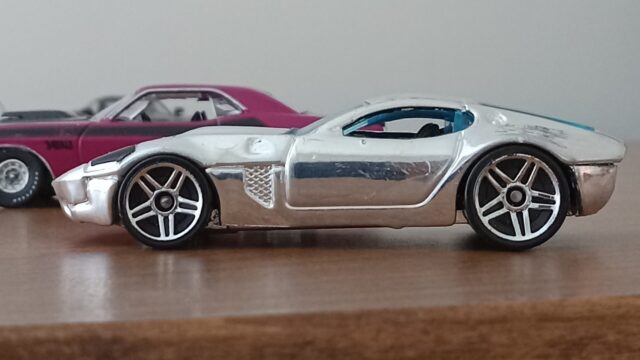
第25回:フォード・シェルビーGR-1 コンセプト、2004(クローム)
【日本車・ミツビシ編】
第26回:ミツビシ・ギャラン λ、1976(ブラウン・メタリック)
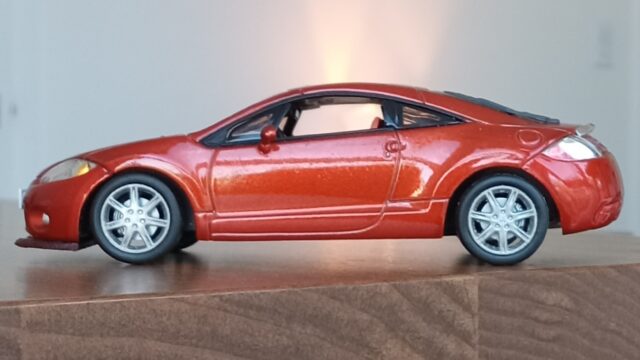
第27回:ミツビシ・エクリプス【北米仕様】、2006(オレンジ・メタ)
【ドイツ車編②】
第28回:BMW M635CSi、1984 (ダーク・メタリックブルー))
第29回:MB 560SEC AMG 6.0 ワイドボディー、1989(黒)
第30回:BMW M2 純正パフォーマンス・パーツ仕様、2025(ネオン・ライム)
【日本車・スバル編】
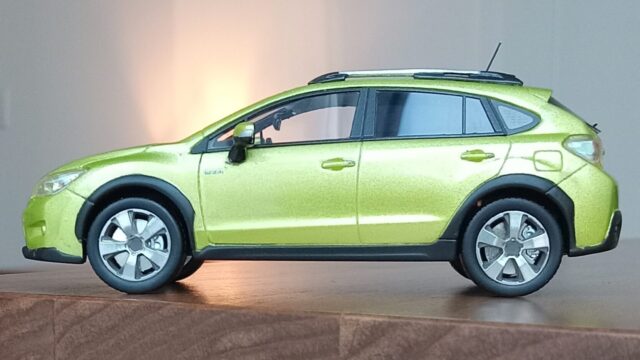
第28回:スバル・クロストレック XV, 2012(ライムグリーン・メタリック)
コルベットの系譜:(番外編)
第1回:1967年型 スティングレー【C2】コンバーチブル(ハードトップ・メタ青)
第2回:1972年型 コルベット 【C3】コンバーチブル(メタリック・ブルー)
第3回:1984年型 コルベット クーペ【C4】(ブライト・レッド)
第4回:スティングレー・コンセプト【先行開発車】、2009(プルー・メタリック)
#フランス出身、最後のモダンダンサー?

私にとって、今回の、
『ラ・ヴォワチュール・ノワール』
とは、
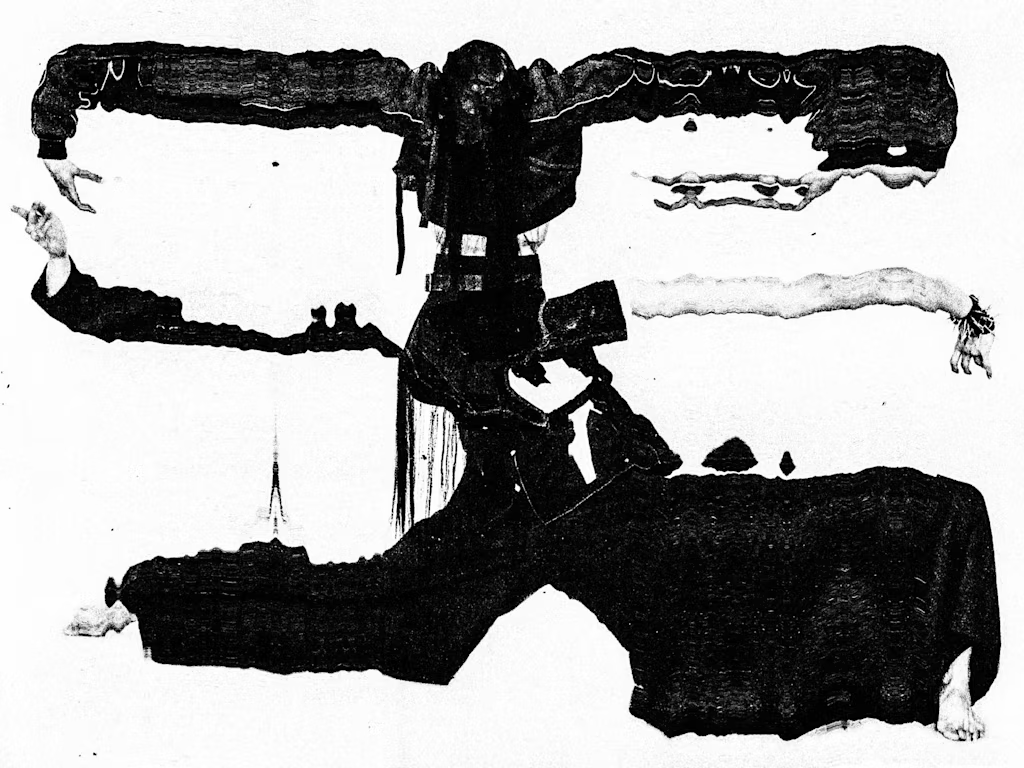
『大きなお面をつけた、
漆黒の舞踏家』です!
彼(彼女)の最後の舞台を見ている感じです。
*才気溢れる面打ちが趣向を凝らしたお面をつけ、
*その重さに圧倒されながらも、
*真っ黒な装束姿で、厳かに、最後は
*フラフラになりながらも、
*一心に最後の舞台をこなしています。
そんな記念碑的な、
『タダならぬ感じ』が
私を引き付けずにはおきません。
今回の記事では、
この『タダならぬモノ』が何か?を
探る旅にご一緒していただきます。
どうなるか全く予想できませんが、
一席おつきあいのほどを願っておきます、、、
こんな感じで進めていきます。
 *実車解説:黒面の最後のモダンダンサー?
*外観デザインの特徴:
N
N
*実車解説:黒面の最後のモダンダンサー
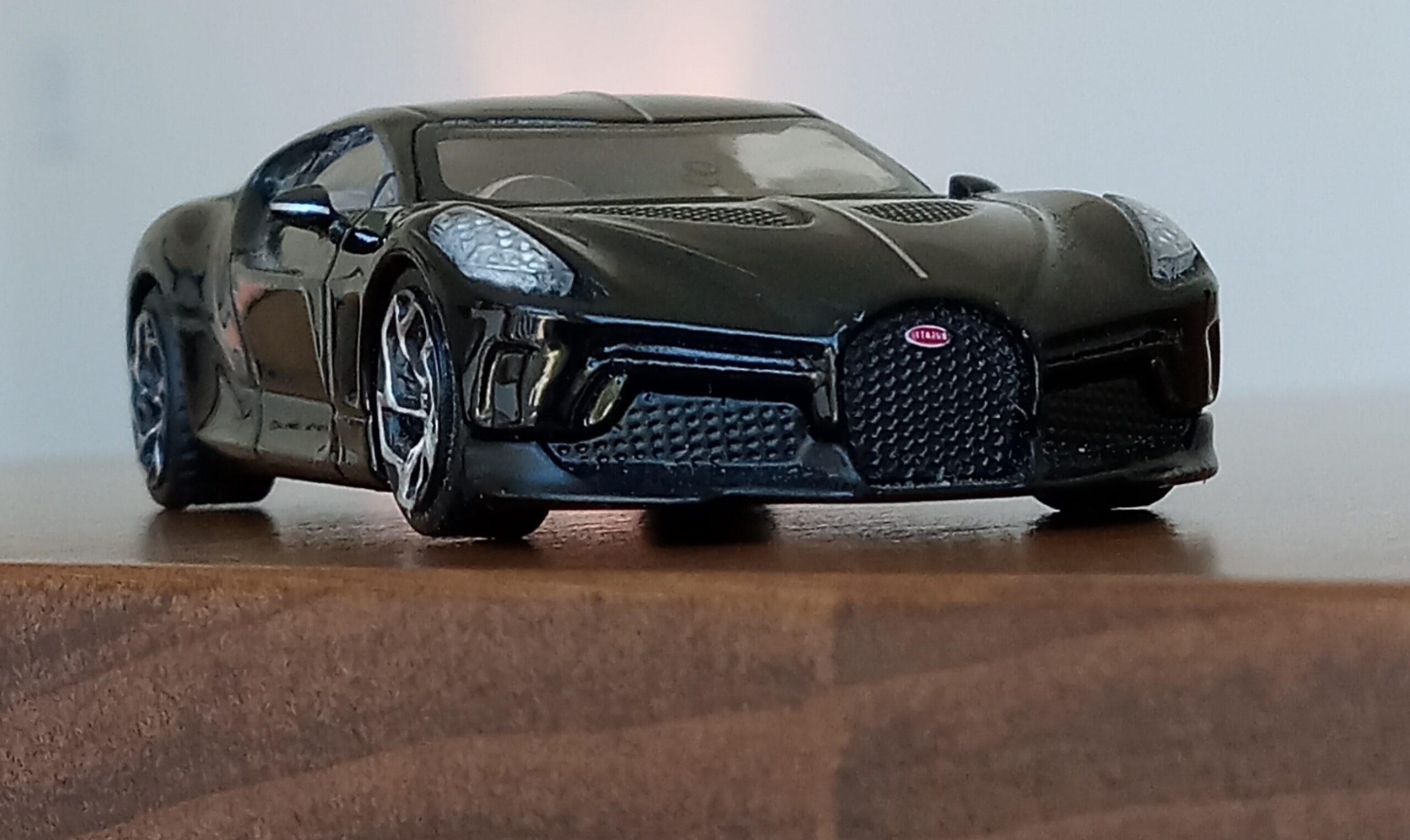
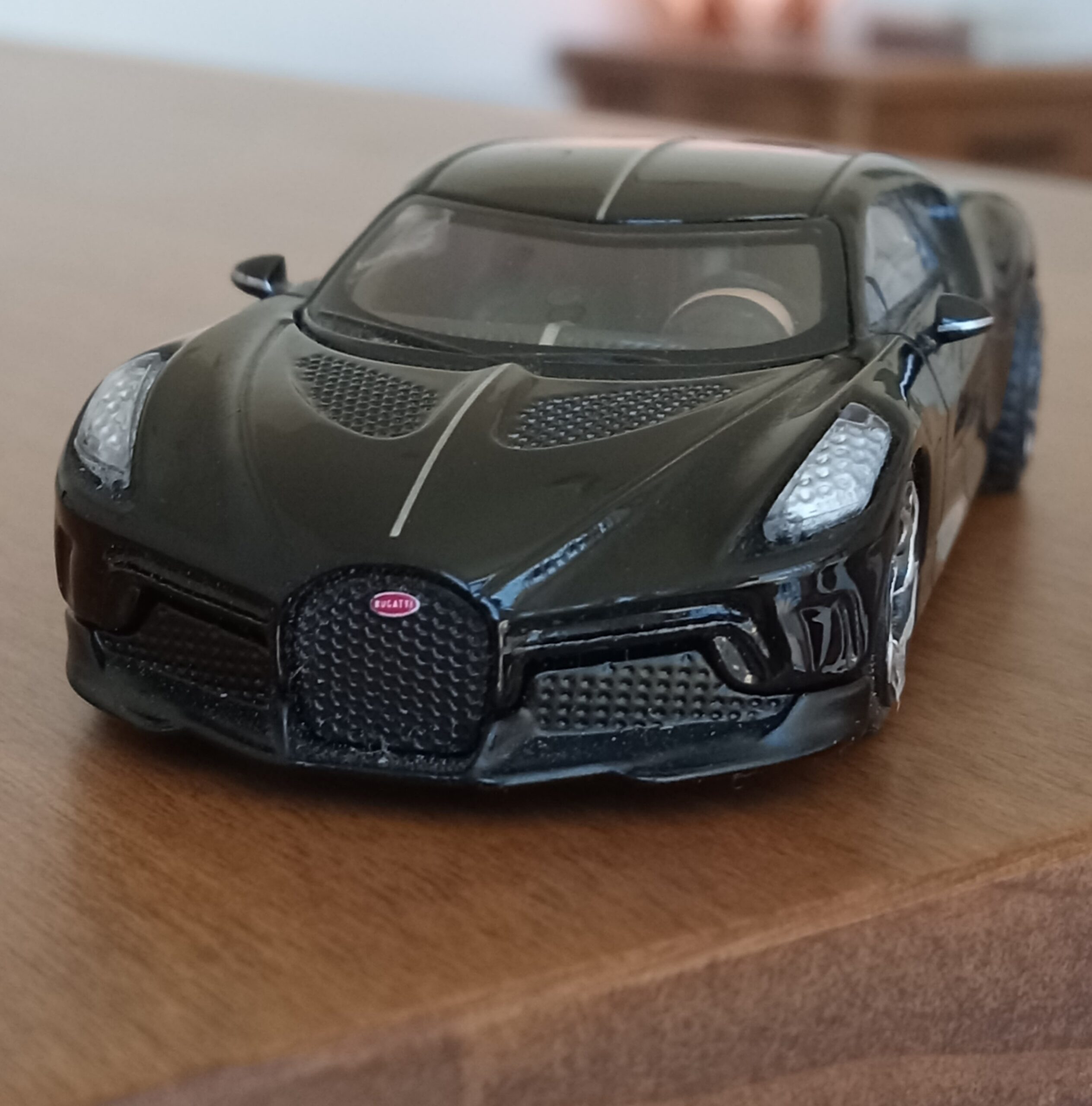
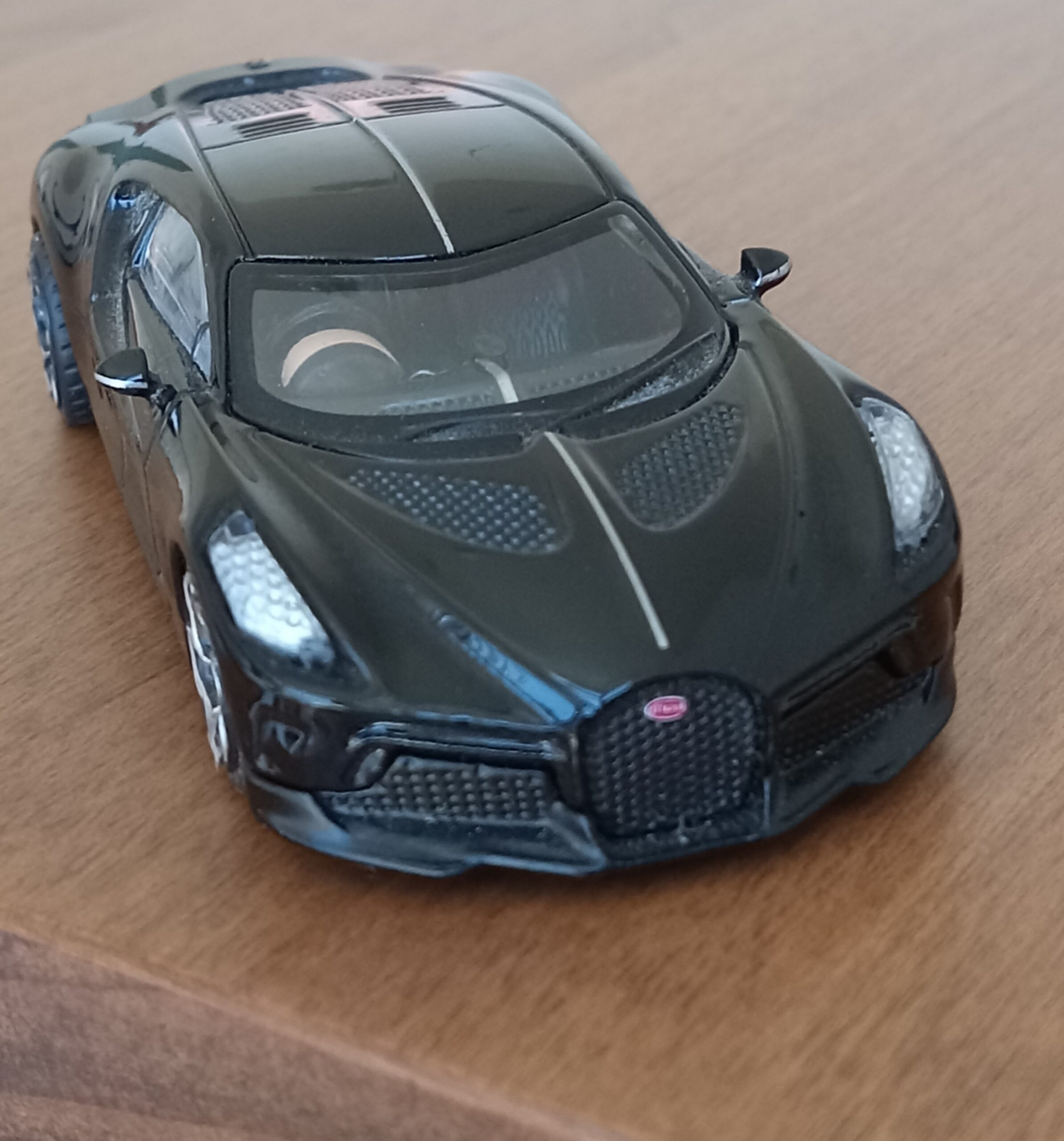
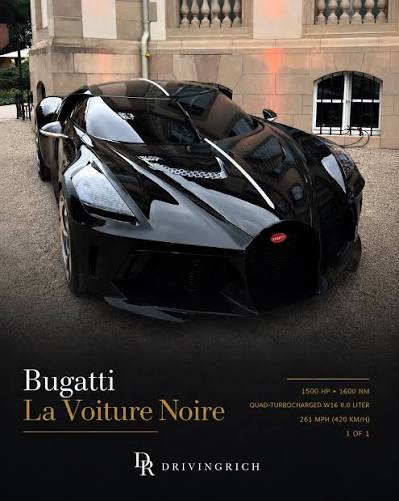
ブガッティ創業110周年を記念して製作された世界に1台だけのワンオフ・ハイパーカーです。価格は邦貨で約14億円(税抜)を超え、発表当時は「世界で最も高額な新車」として大きな話題を呼びました。
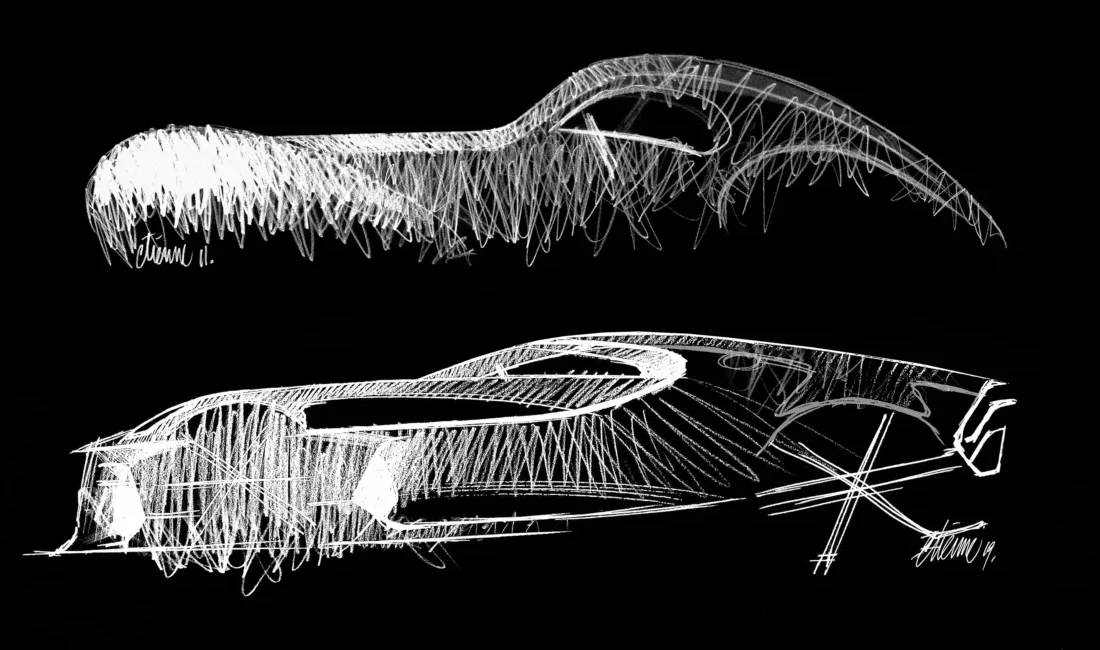
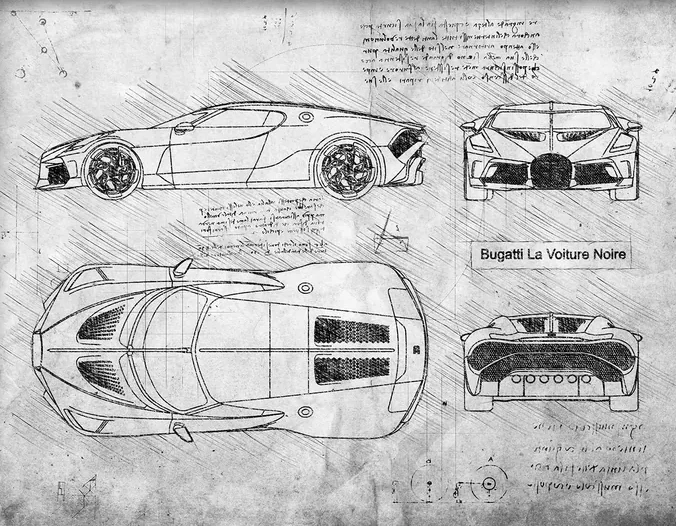
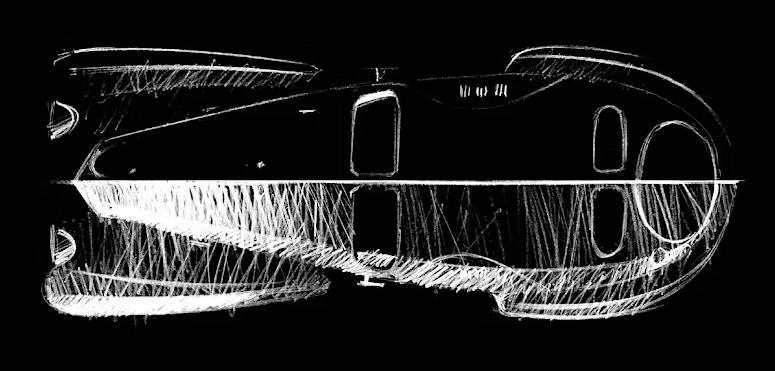
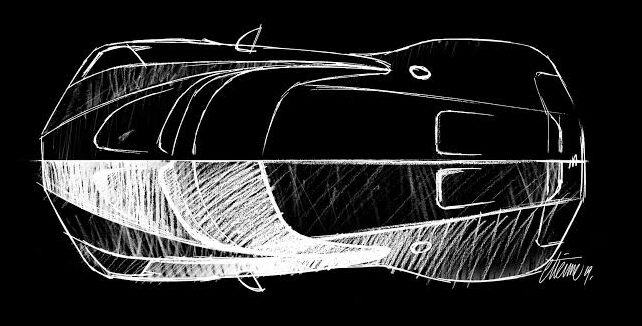
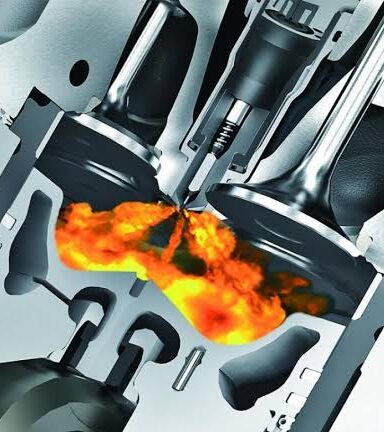
*心臓部: ベースとなる「シロン」や「ディーヴォ」と同様、最高出力1,500馬力、最大トルク1,600Nmを発揮する8リッターW型16気筒クワッドターボエンジンを搭載しています。
n
n
*外観デザインの特徴:
n
n


n
N
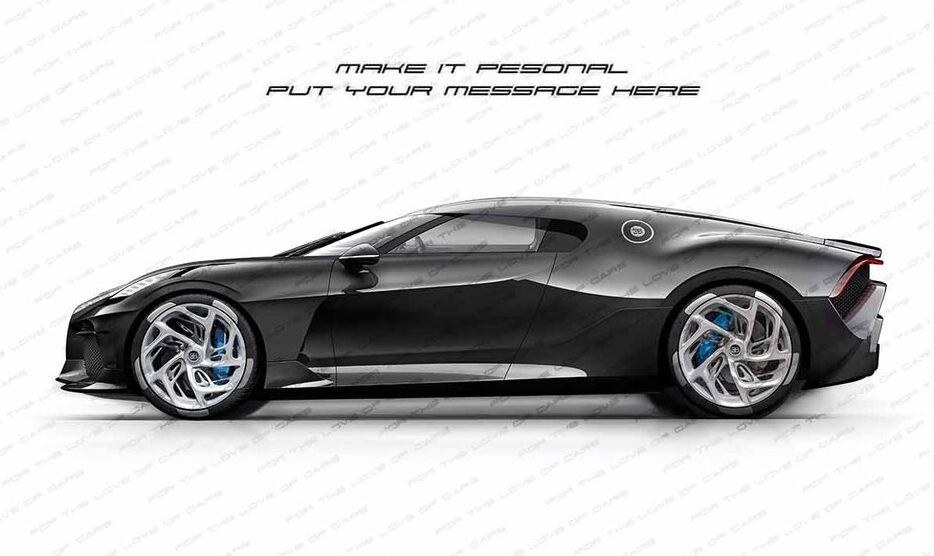
外観デザインにおける主要な特徴とこだわりは以下の通りです。
n
n
M
1. 歴史を継承する「センターフィン」:
N
N
2. バイザー効果を持つシームレスなウィンドウ:
N
N
n
*3Dプリント製グリル: ブガッティ伝統の馬蹄型フロントグリルは、すべてのメッシュセルが細部まで計算され、3Dプリンターによって精巧に造形されています。
*昆虫的なLEDヘッドライト: 各クラスタに25以上の個別に削り出された発光エレメントが敷き詰められており、有機的で圧倒的な目力を放ちます。
*ボンネット: 鋭い三角形のエアアウトレットと、アトランティックを想起させるクロームのストリップが走っています。
N
n
n
ホイールとタイヤのデザインにも境界線を無くすアプローチが取られており、独自のディッシュ/タービン調合金ホイールのスポークデザインが、タイヤ側面のパターンへと視覚的に連続するカスタムペイント(2トーン)仕様になっています。これにより、タイヤとホイールが一体の巨大なアートのように見え、車全体の流麗さを支えています。
n
N
N
N
n
n
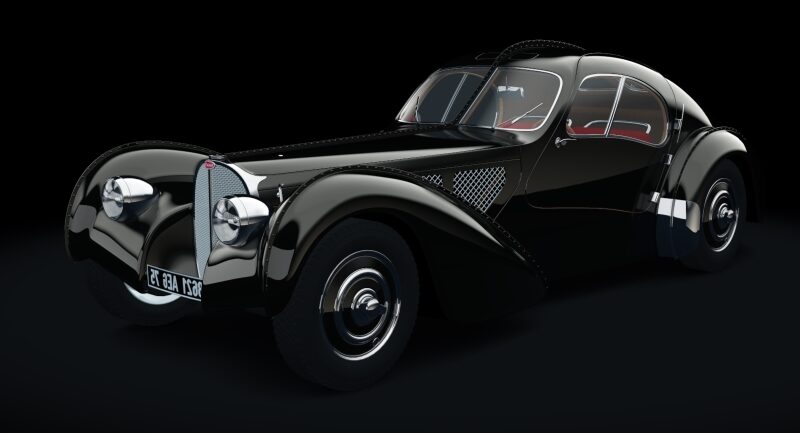
伝説の名車:『タイプ57SC アトランティーク』
n
n
 n
n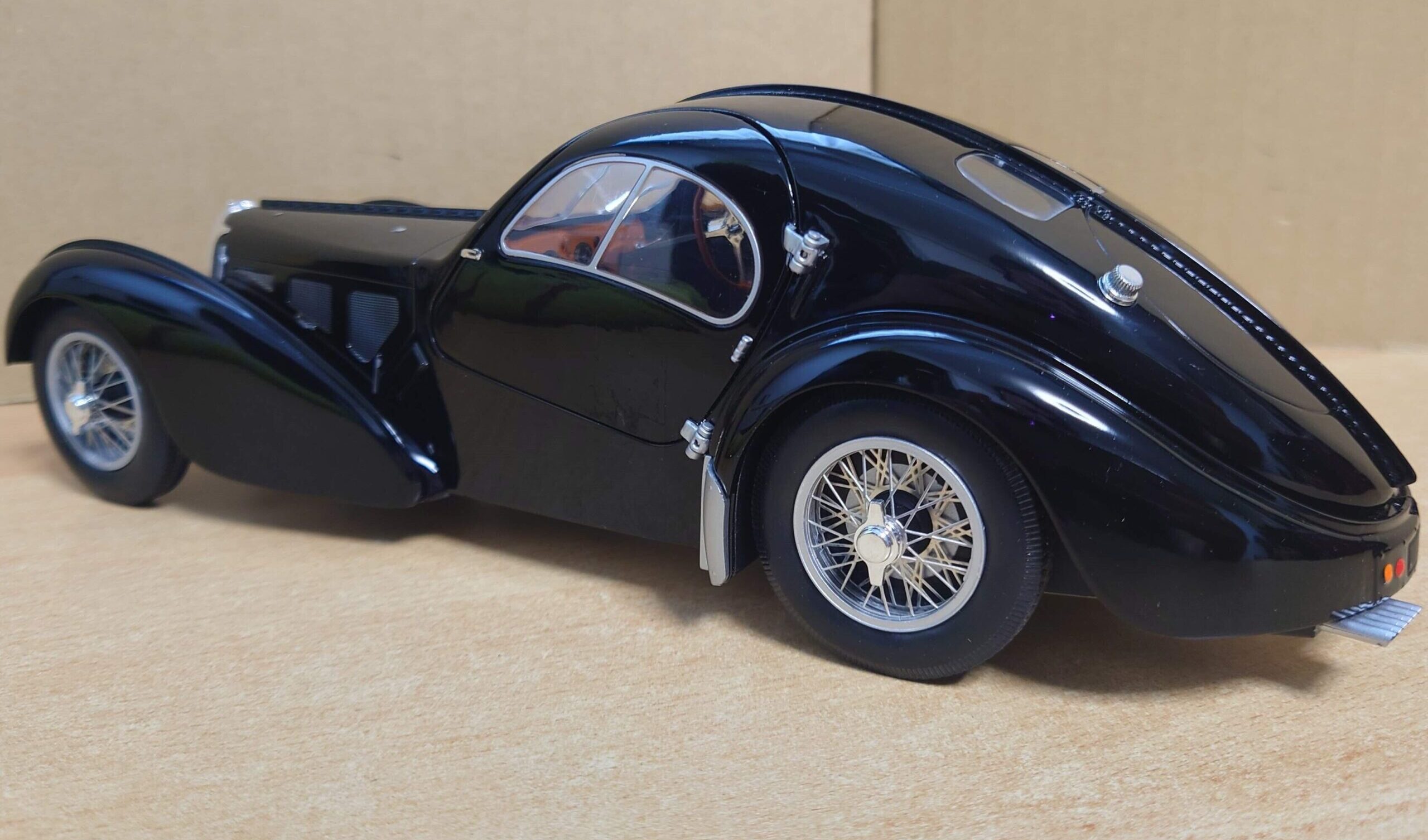
N
N
N
N
N
n
n
n
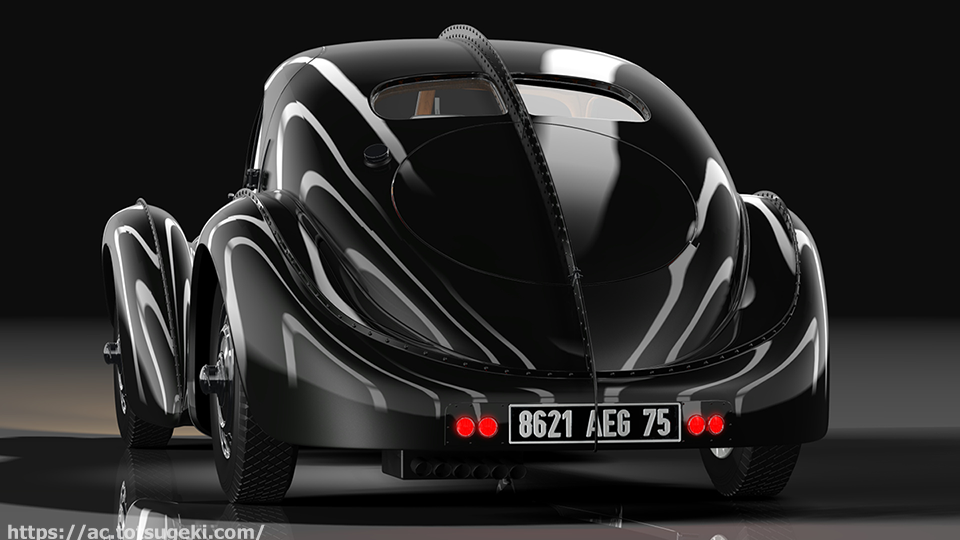
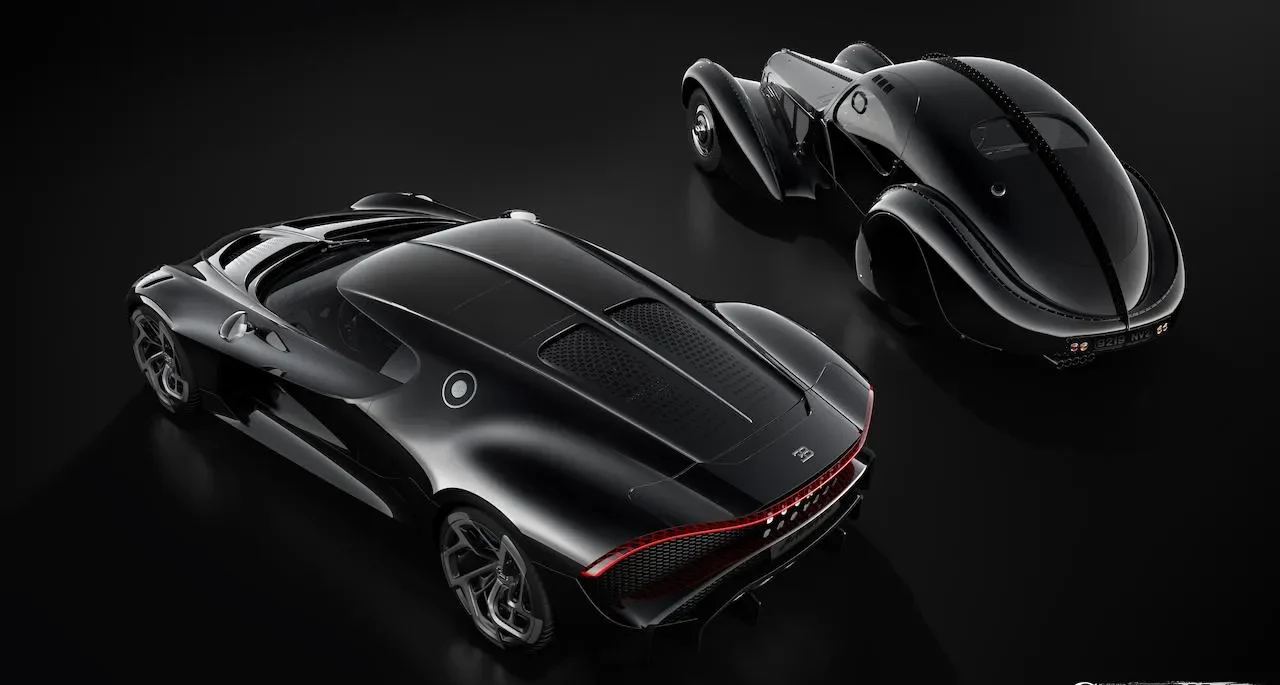
アトランティークを唯一無二の存在にしているのが、ボンネットの先端からルーフを通り、リアエンドまで車体を真っ二つに分けるように走る背ビレ状の突起(ドールサル・シーム)です。
n
*背景:
1935年のプロトタイプ「アエロリット」では、航空機用の軽量なマグネシウム合金(エレクトロン)が使われました。この素材は非常に可燃性が高く溶接が不可能だったため、パネル同士の外側をリベットで留める手法が採用されました。
n
*意匠としての継承:
市販版のアトランティークでは加工しやすいアルミニウムが採用され溶接も可能でしたが、ジャン・ブガッティはこのリベット留めの背ビレを美しい「デザインの象徴」としてあえて残しました。
N
n
*名称の由来: 「S」はフランス語で車高を下げたシャシーを意味する「Surbaissé」、「C」は機械式スーパーチャージャー(コンプレッサー)を意味します。
*エンジン: 3.3リッター(3,257cc)直列8気筒 DOHC エンジン
*最高出力: 約200馬力
*最高速度: 時速200km以上(当時としては驚異的なスピード)
n
N
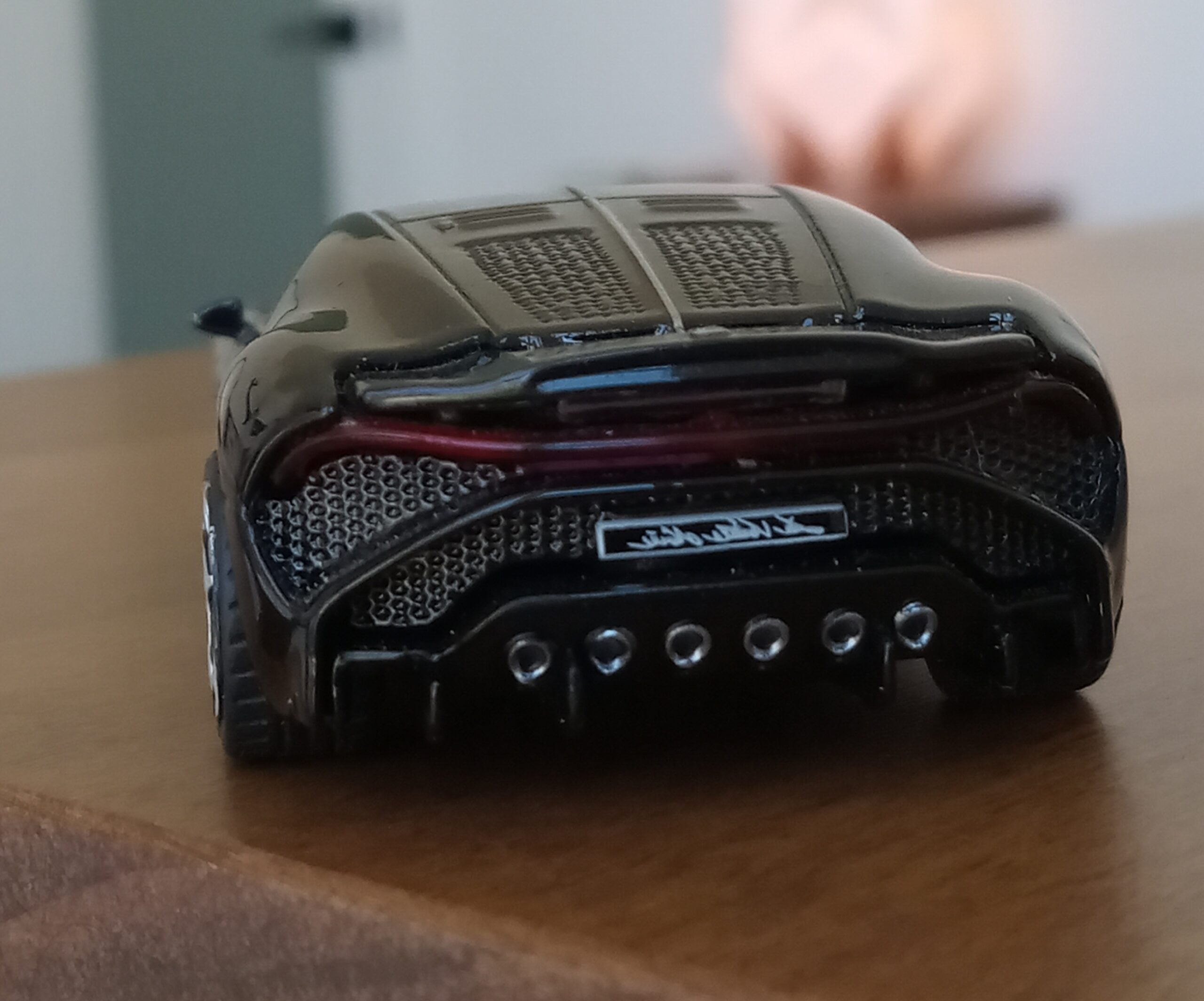
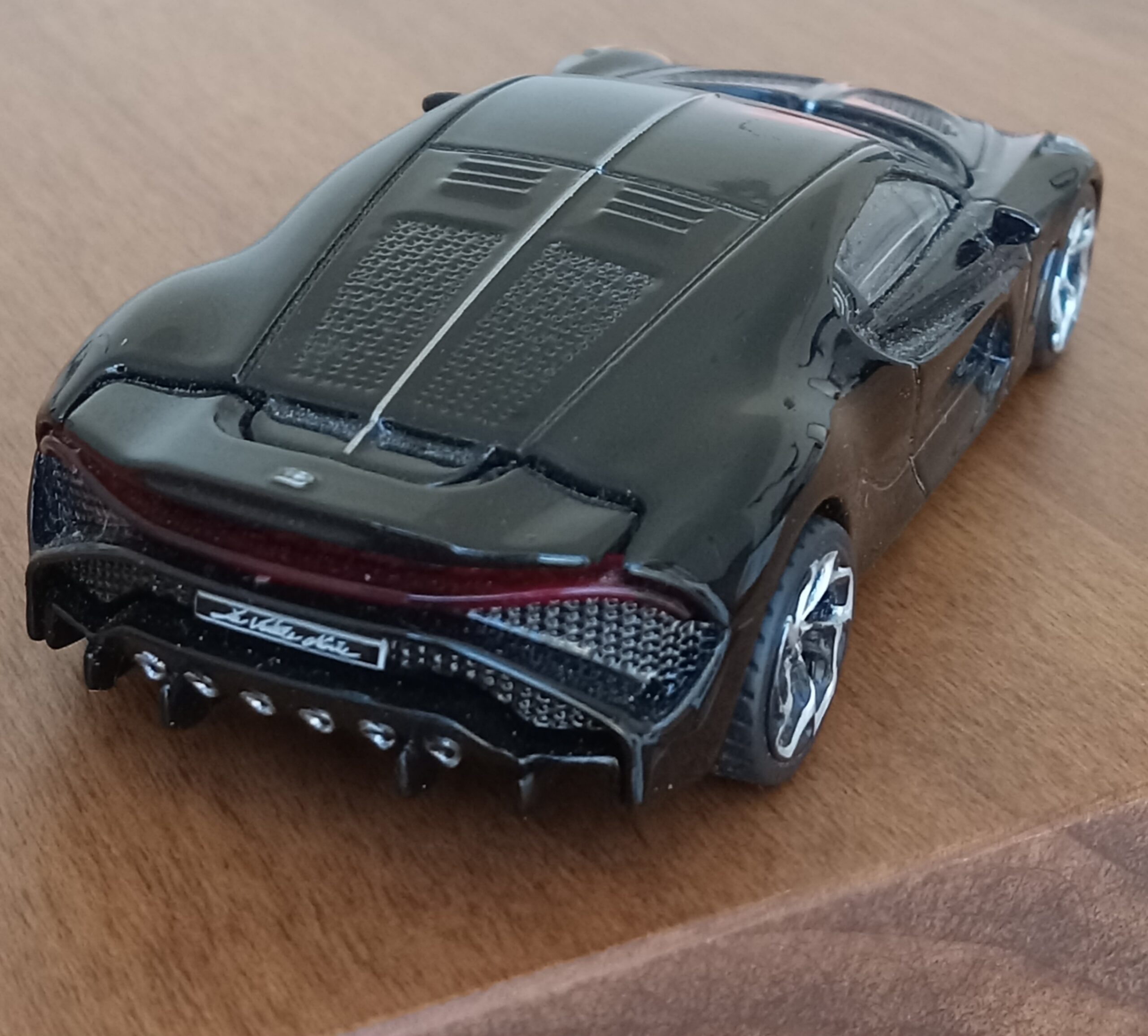
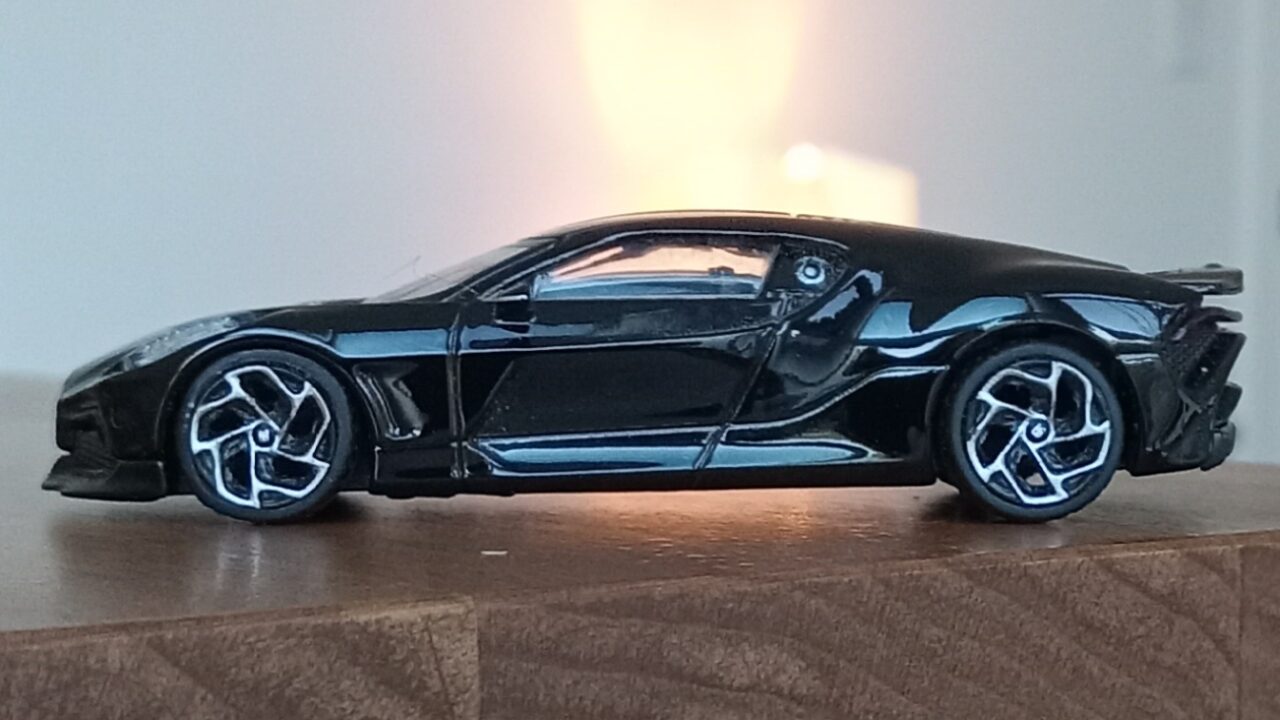
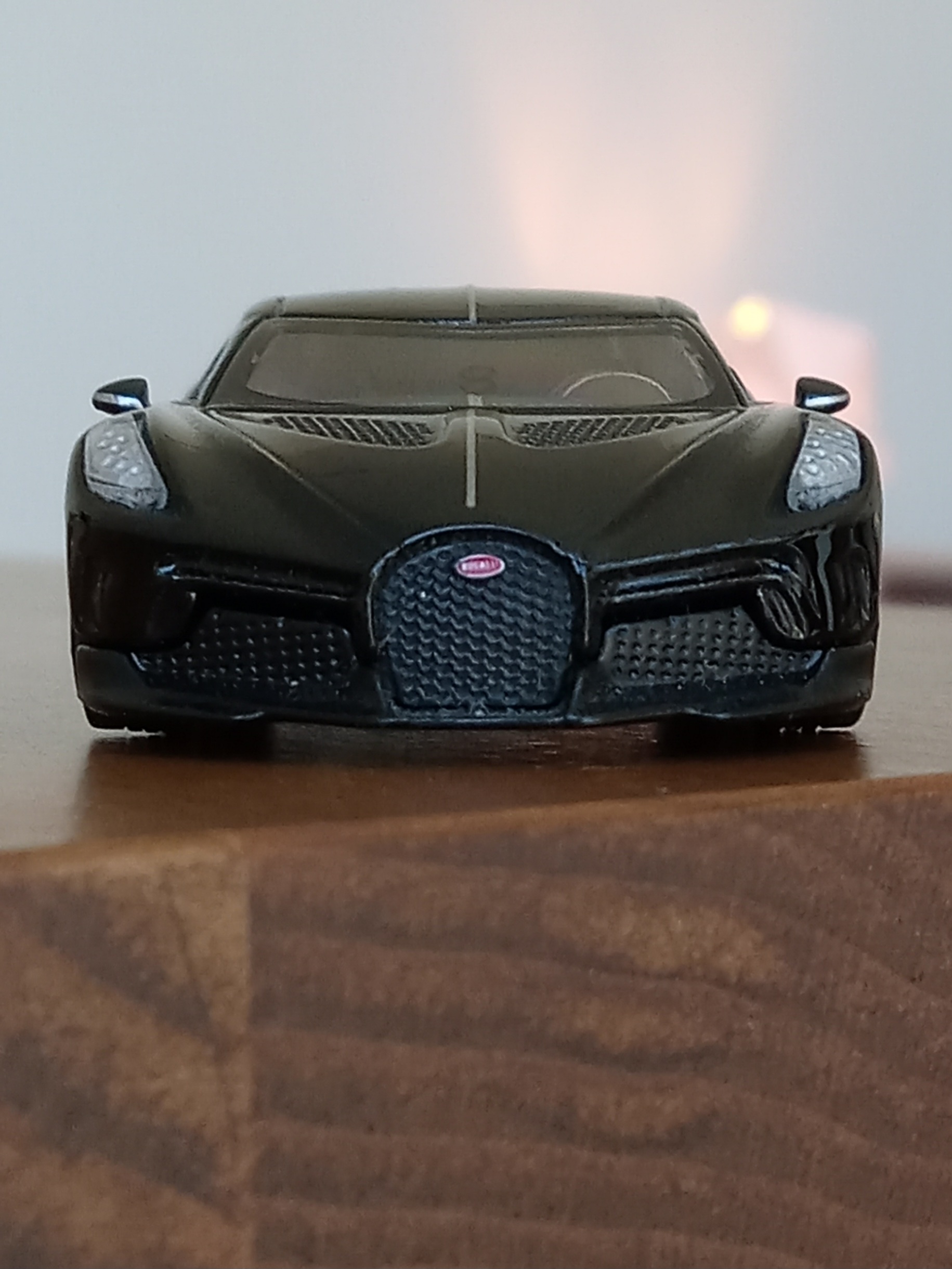
#主要諸元:
- 型式:CA18DET
- 総排気量:7,993 cc: W型16気筒 クワッド(4基)ターボチャージャー
- 最高出力 : 1,500 ps(1,103 kW / 1,479 bhp)/ 6,700 rpm
- 最大トルク:1,600 Nm(163.2 kgm)/ 2,000 – 6,000 rpm
- 駆動方式:恒久的4輪駆動(AWD / 4WD)
- 定員:2名
- 車体形式:2ドア クーペ(2シーター)
- ホイールベース:2,961 mm(シロンより 250 mm 延長)
- 全長:4,994 mm (シロンより 450 mm 延長)
- 全幅:2,038 mm
- 全高:1,212 mm
車体重量:約1,950kg〜1,995kg前後(非公開)
*外観デザインの特徴:重い黒マスクの正体とは?
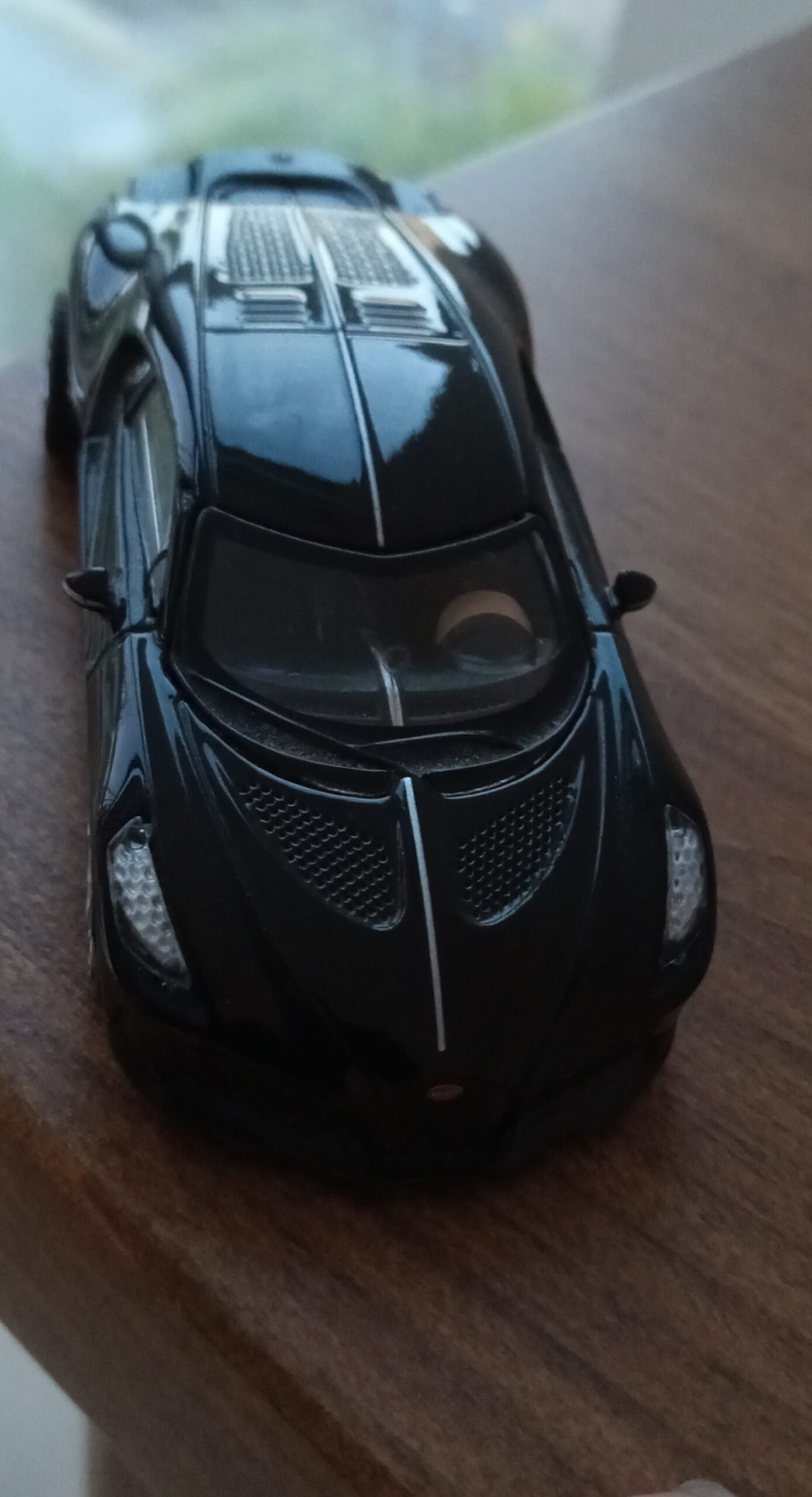
中身の濃いデザイン、
『ラ・ヴォワチュール・ノワール(黒い車)』の
デザイン上の特徴は、数多い(ほぼ無限)ですが、
ここでは私の独断と偏見にて、
6個に絞ってご紹介します。
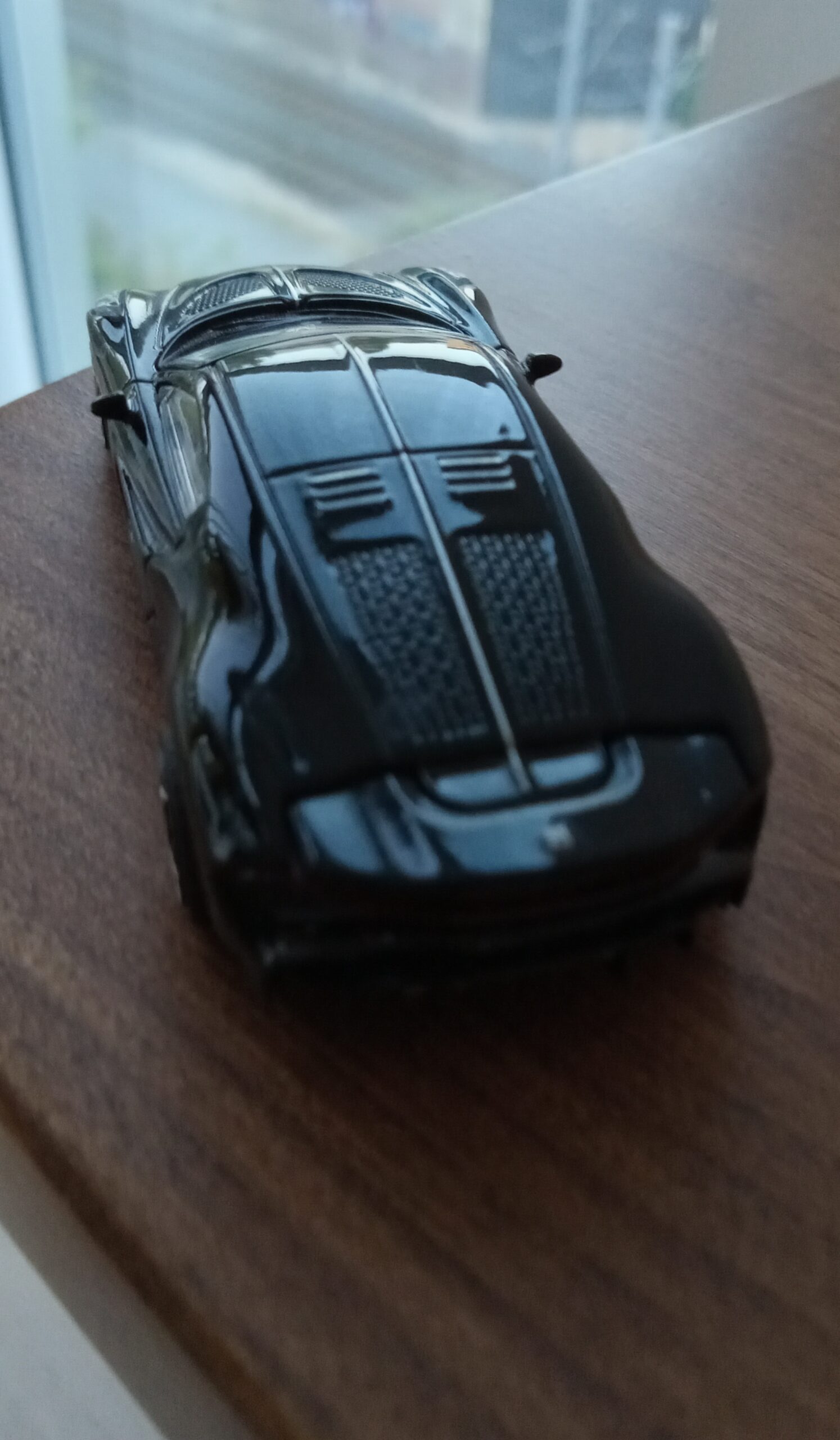
1:既に完璧なパッケージが成立している超高性能なヴェイロンに、重たい黒いお面を付けるように、全長を45cm、ホイールベースを25cmもかさ増しして成立させたオドロオドロしい全体像
ーーーーー>全長2m、全幅2m越えのボディー・サイズを使って、儀式のようなデザイン行為を行っています。
2:フロントエンジンのFRスポーツ・カーから縁遠かった、VW/アウディーグループの怨念が感じられる、(無理矢理伸ばした全長を使って現出した)世にも美しき擬似FRうろポーションー――→すさまじい執念を感じます。
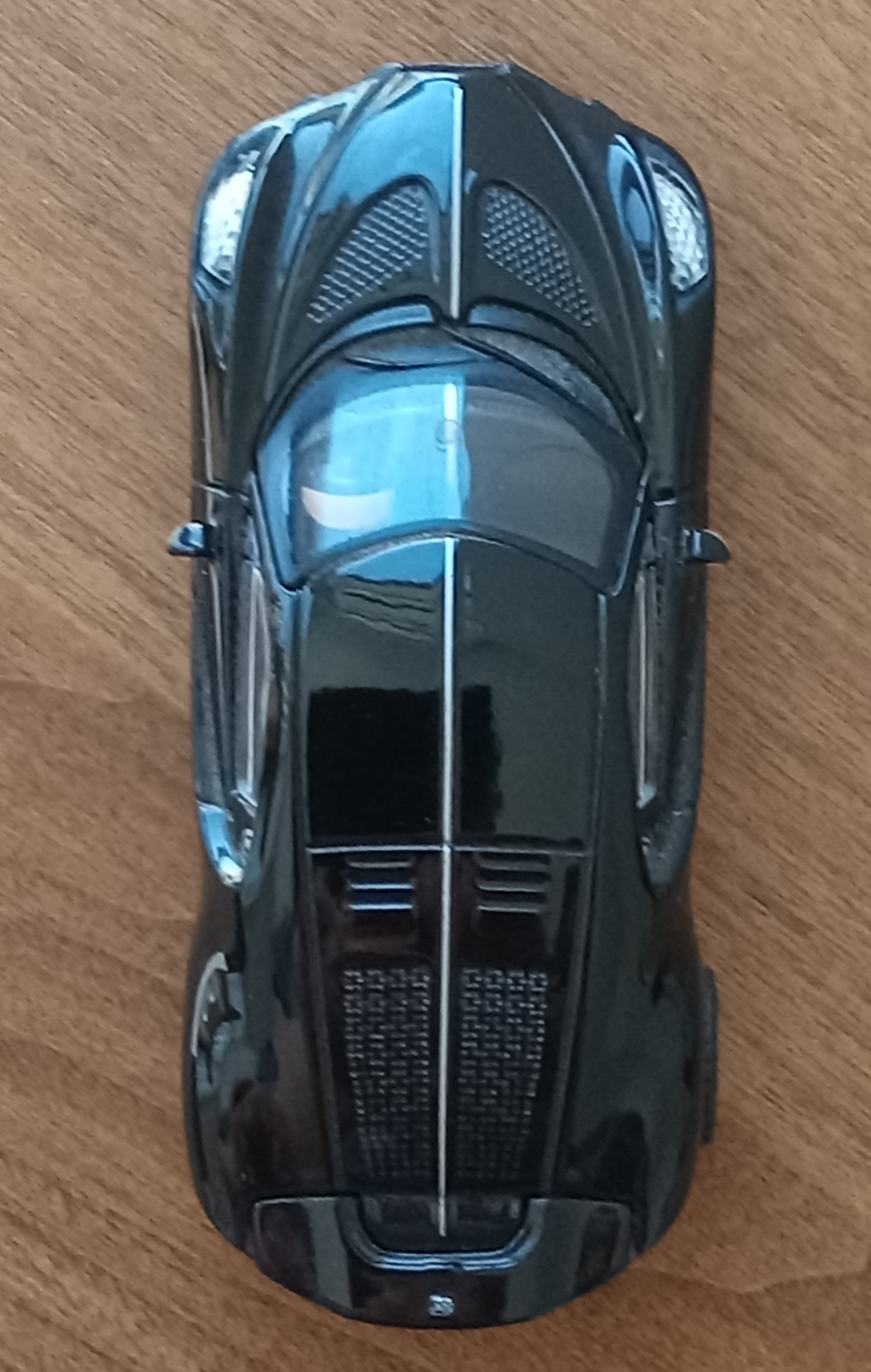
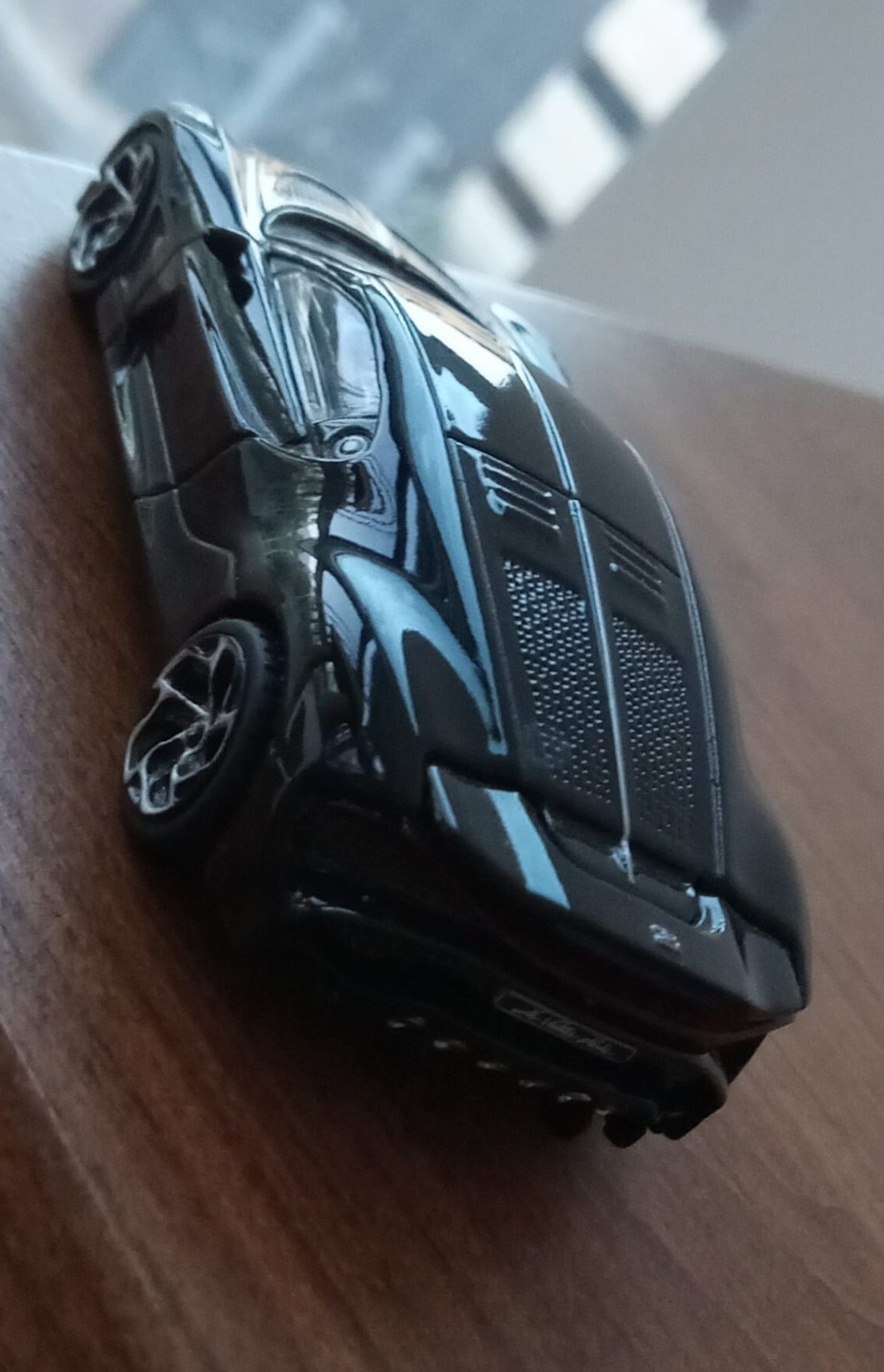
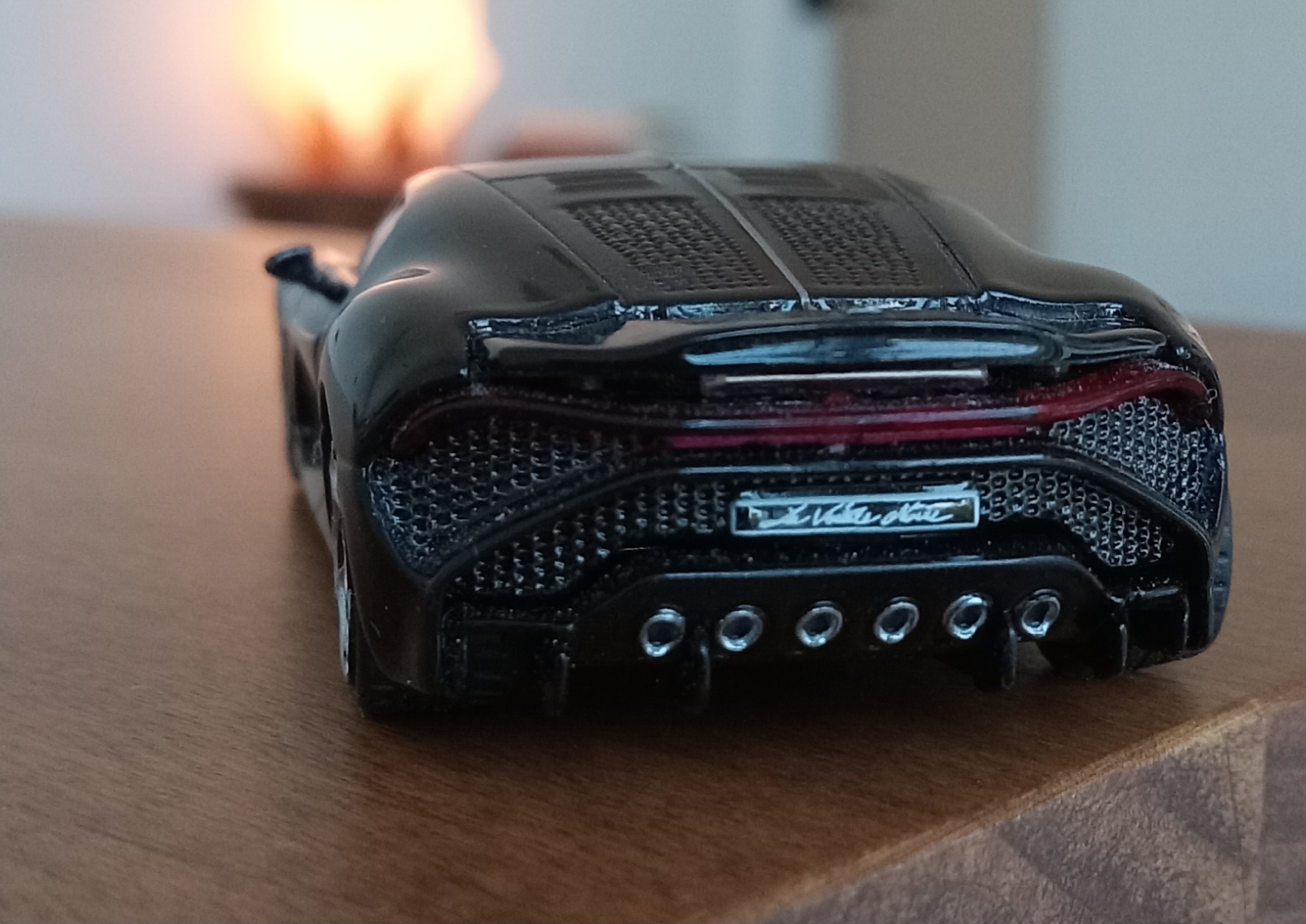
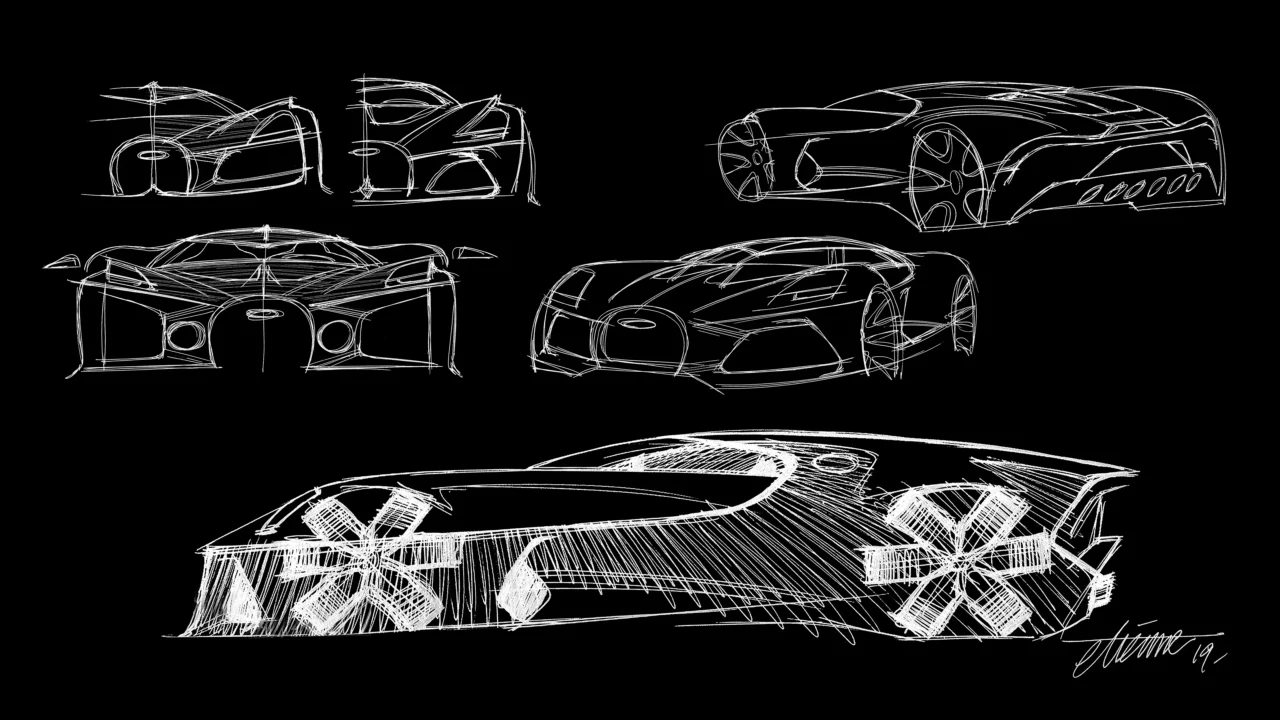
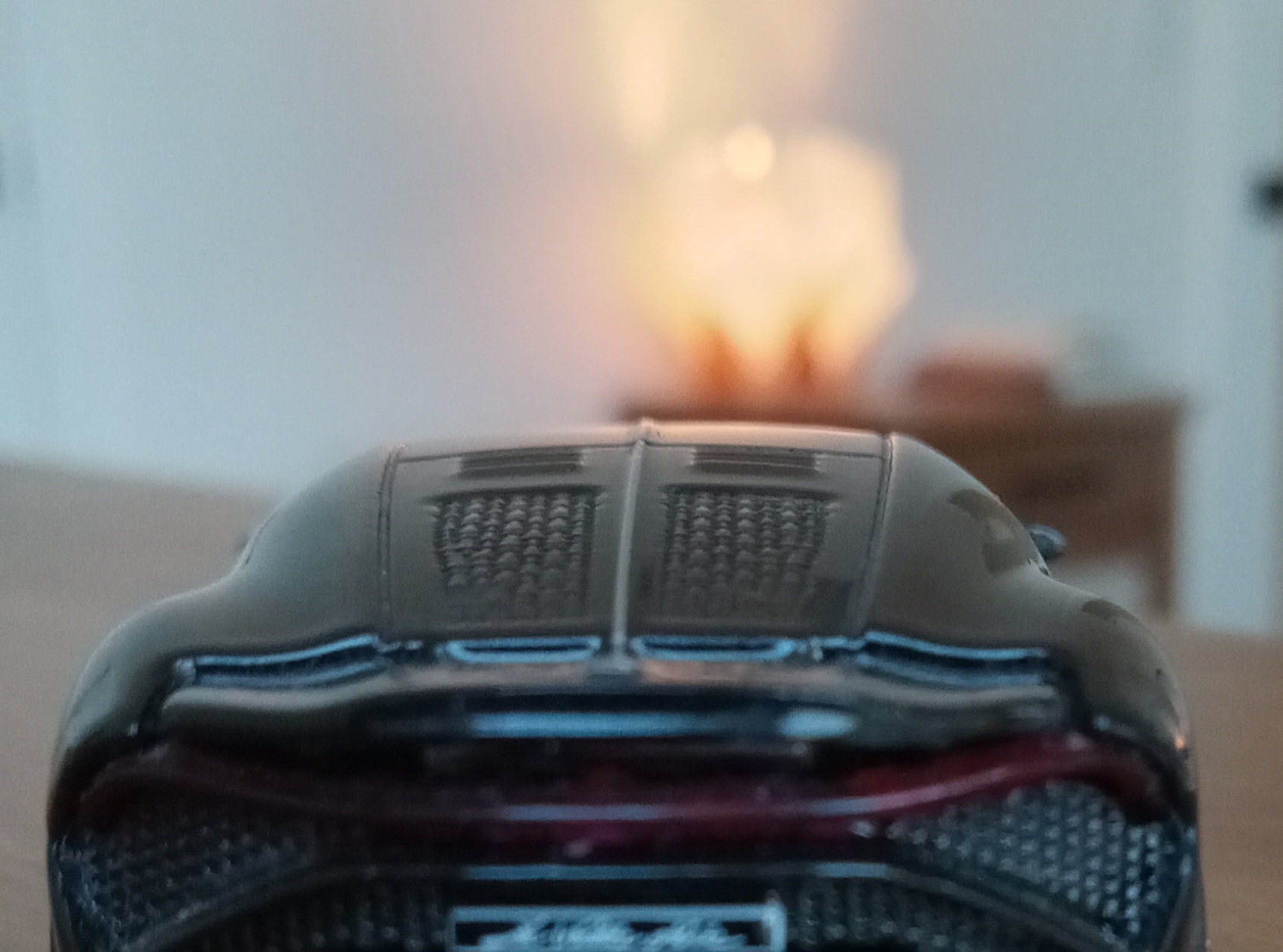
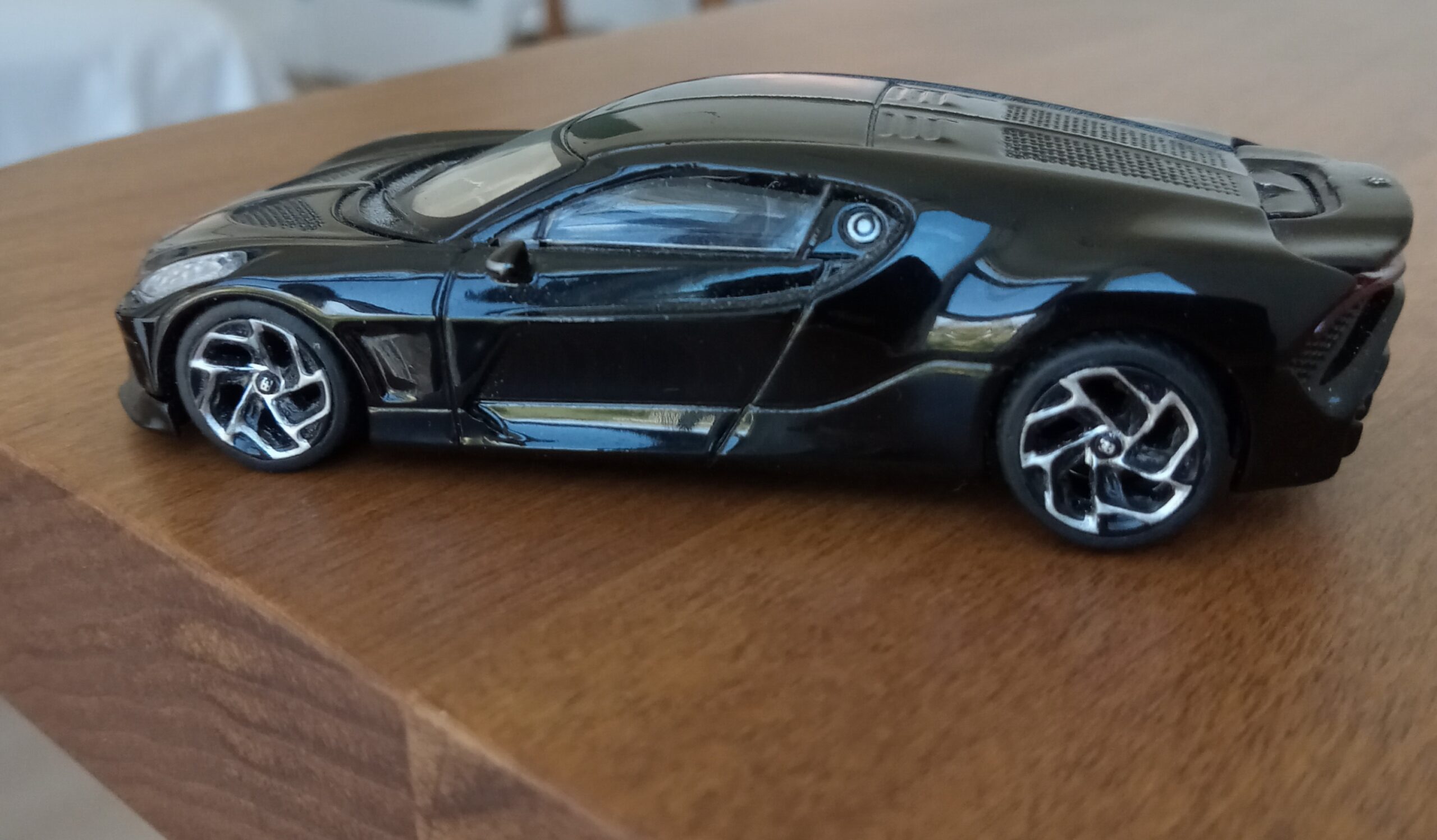
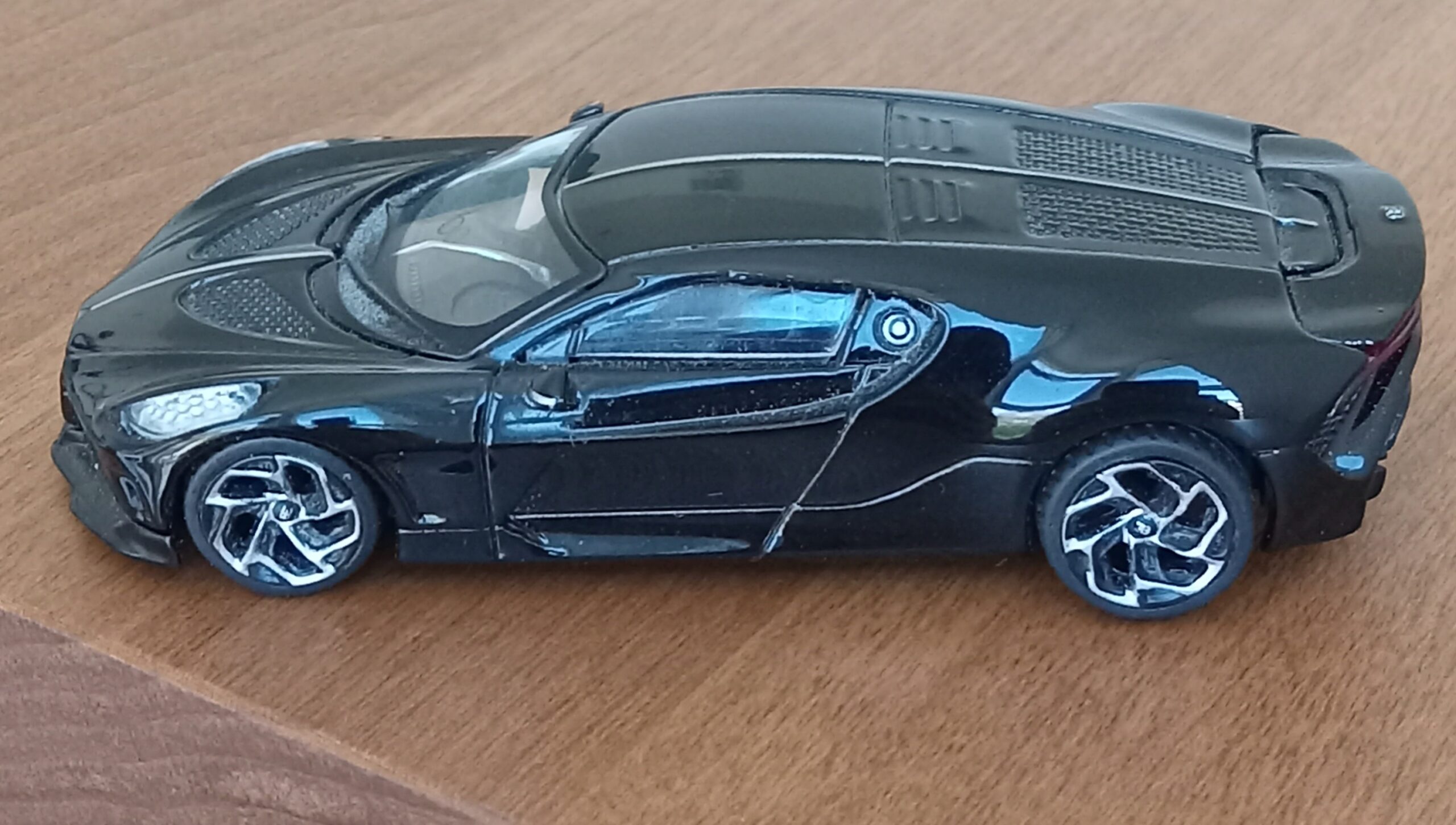
3:ボディー全体を前から後ろに横切る、(34年版からのリベット止め加工からの引用、)背ビレ・デザインの妖艶な美しさ
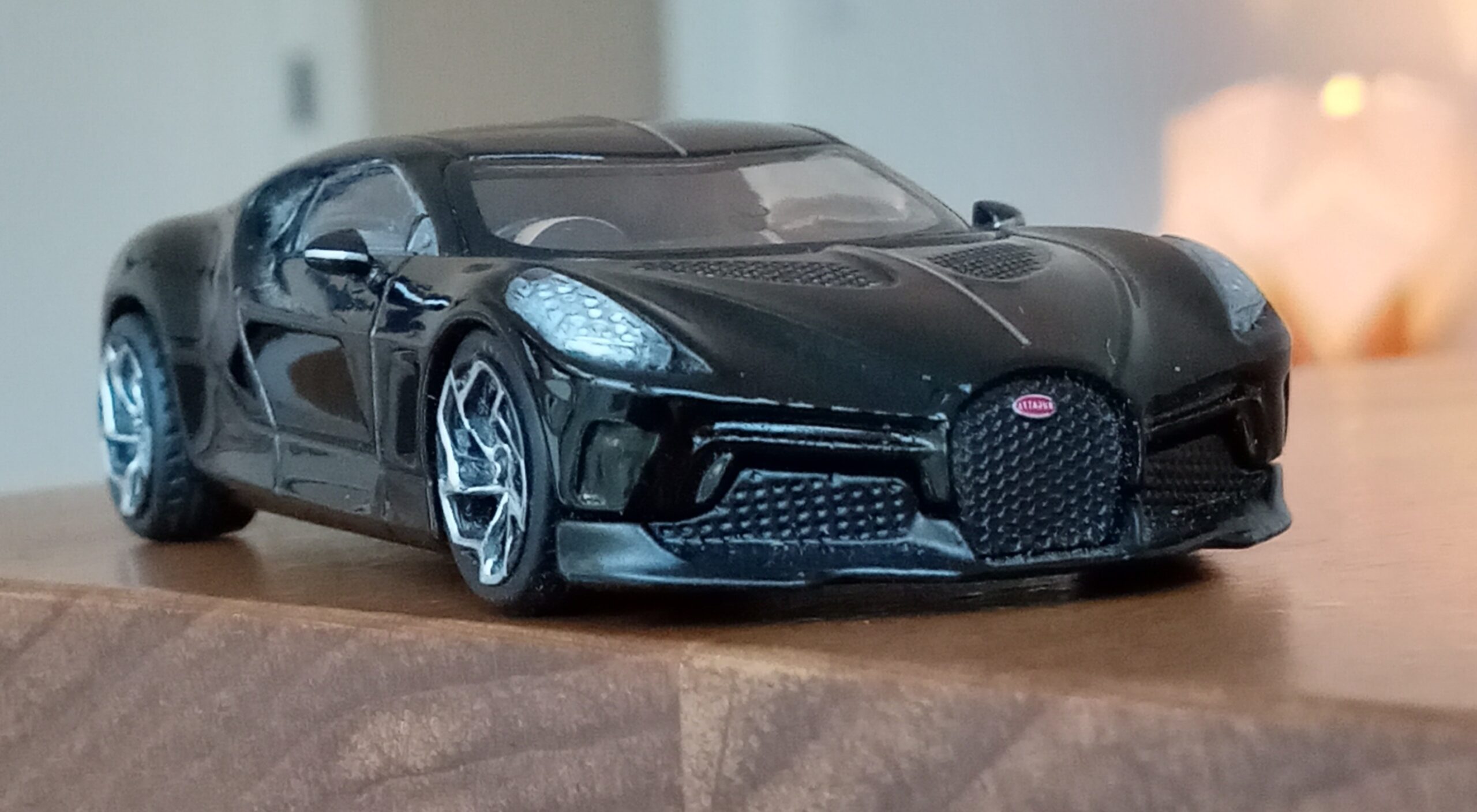
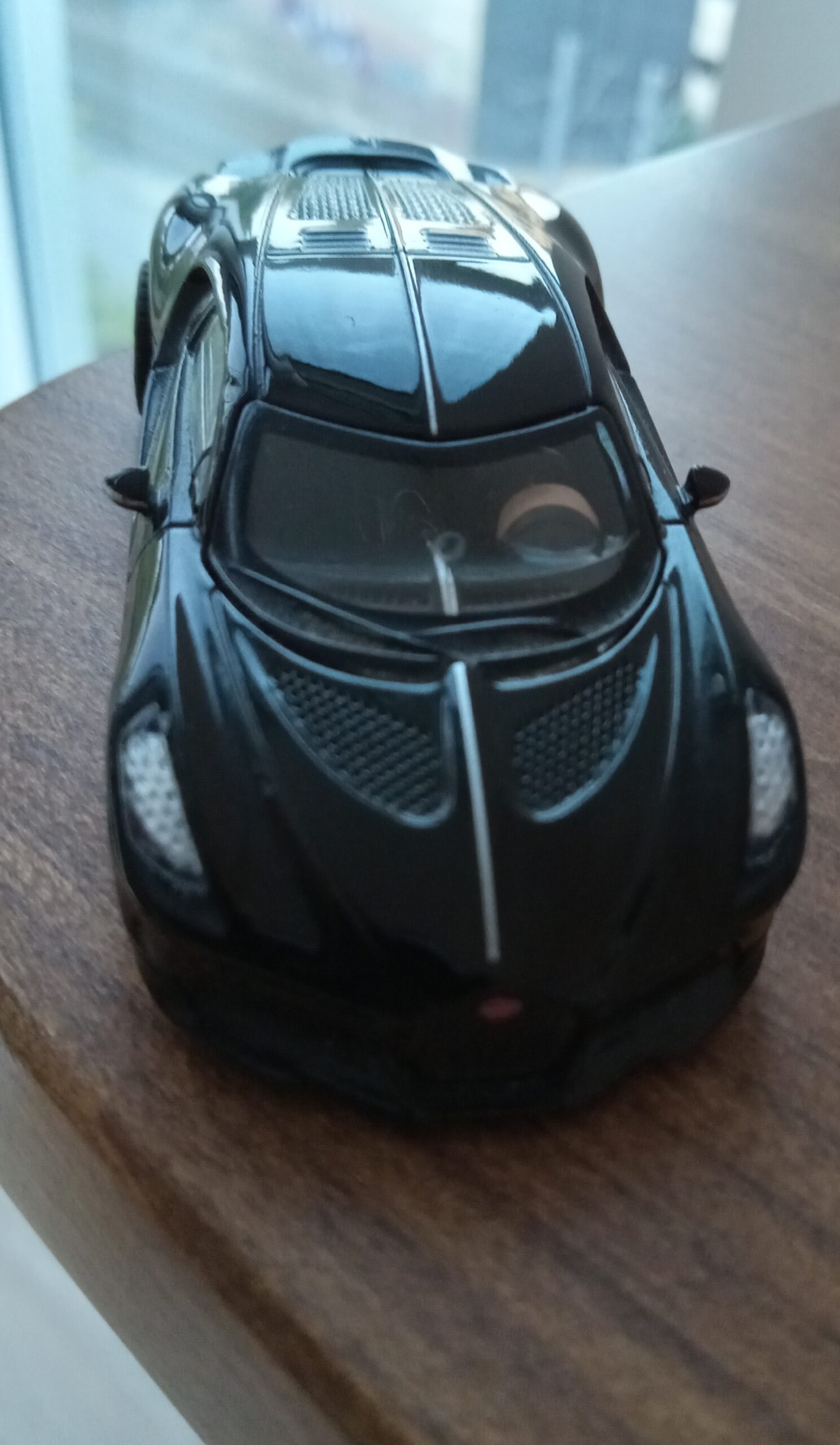
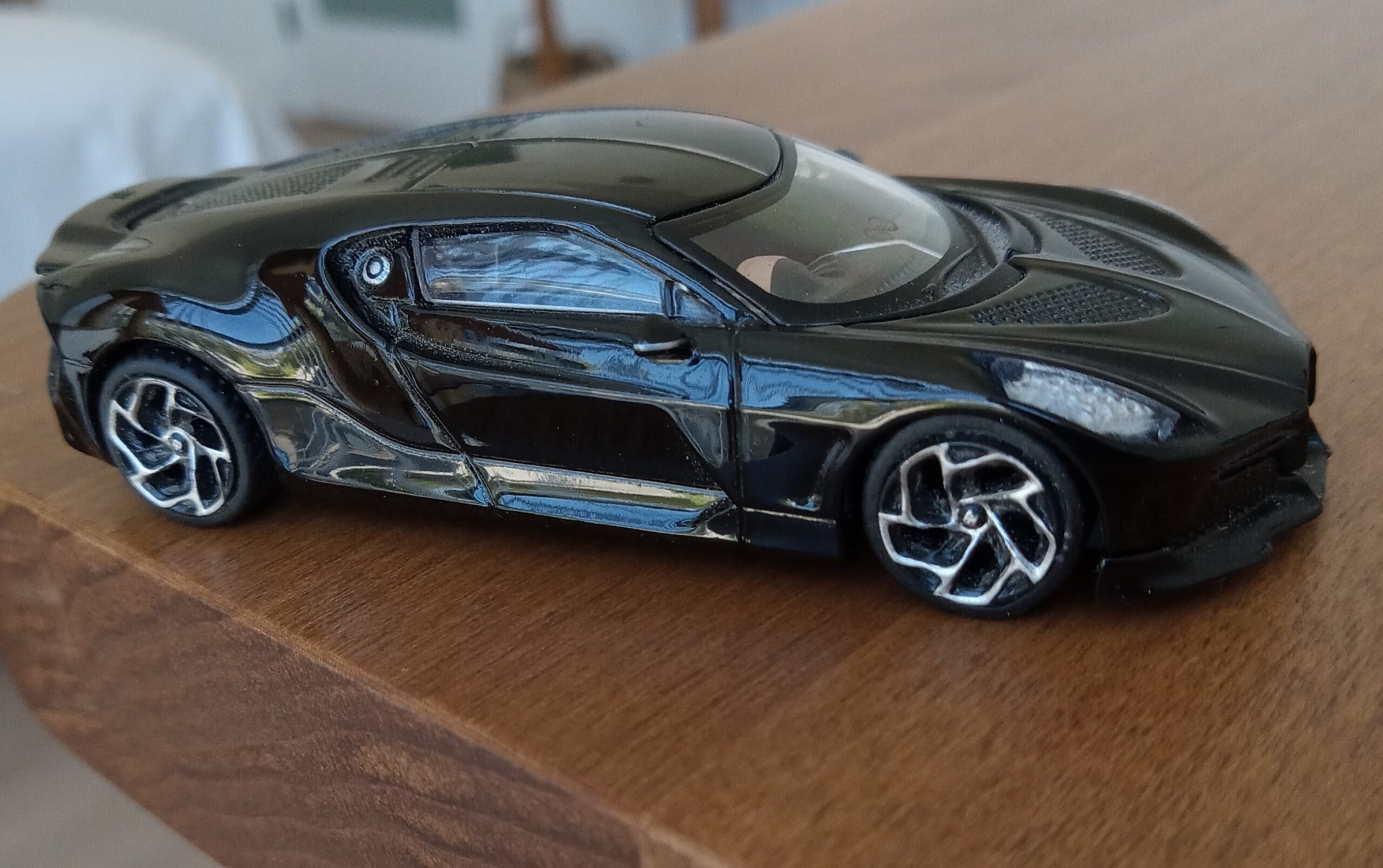
4:不気味に微笑むような、昆虫顔のフロントフェイシア・デザイン
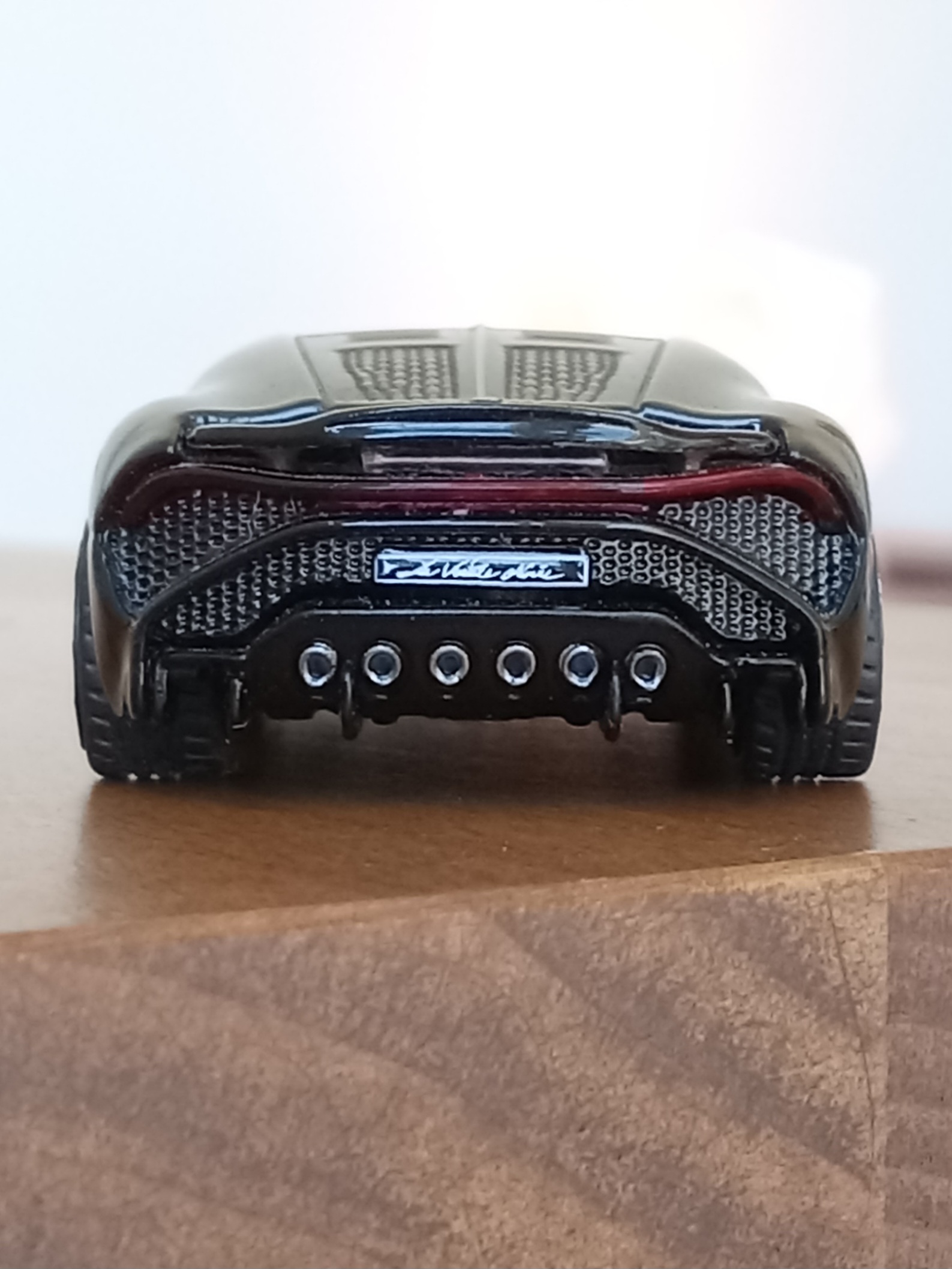
5:『これでもか!』と言わんばかりに6っ本突き出したマフラーデザインの下品な振り切れ方
6:従来のブガッティ・デザインにフォード・フォーカス【コンセプト版】の有機的な表面処理を足して2で割ったような、90年台から2010年代にかけてのヨーロッパ自動車デザインの総決算的な豪華絢爛、一歩間違えば下品になるギリギリのところで成立させたブガッティ・デザインチームの執念の一作
――ーーー>車の表皮から怨念や冷気が漂って、(笑)全体像がはっきり見えません。
それでは写真入りで、
見て行きましょう!
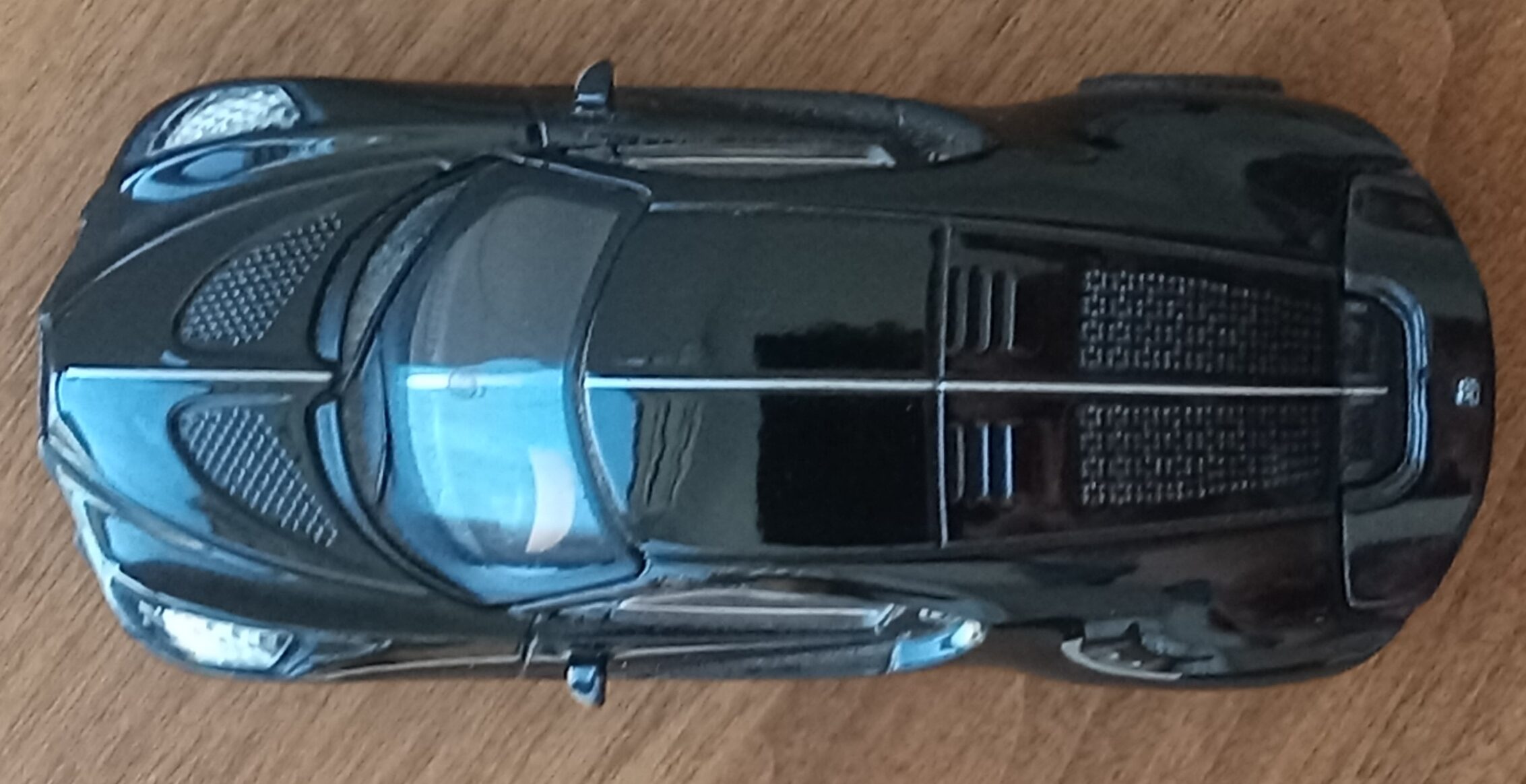
1:既に完璧なパッケージが成立している超高性能な旗艦クラスのシロンに、重たい黒いお面を付けるように、全長を45cm、ホイールベースを25cmもかさ増しして成立させたオドロオドロしい全体像
(ミニカー入手後、いやにでかいな?と違和感を覚え、ウイキペディアの主要諸元を見てビックリ、AMハマー並みの上面投影面積を使って成立するすさまじいまでの立体作品です)
ーーーーー>全長2m、全幅2m越えのボディー・サイズを使って、儀式のようなデザイン行為を行っています。
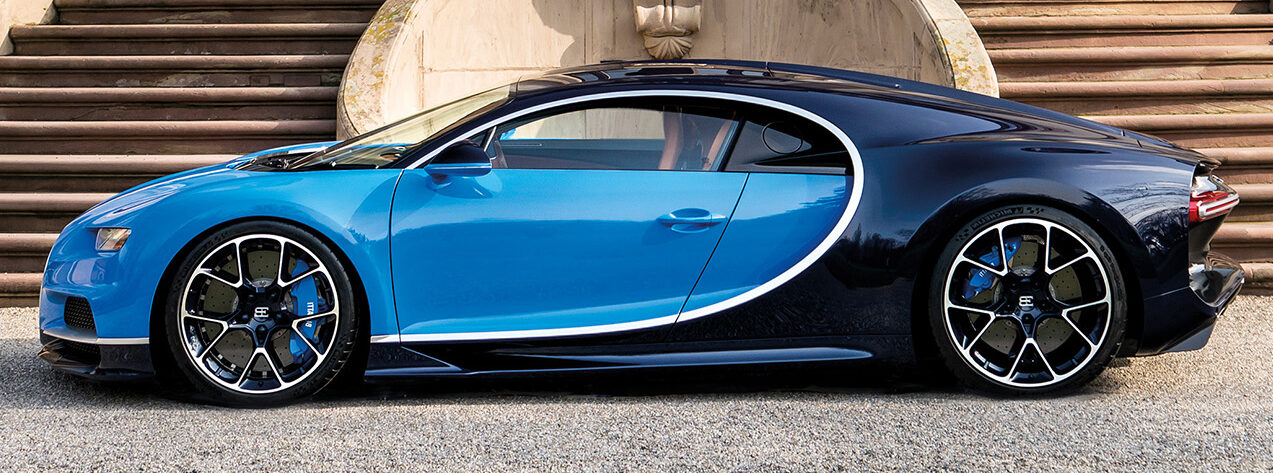
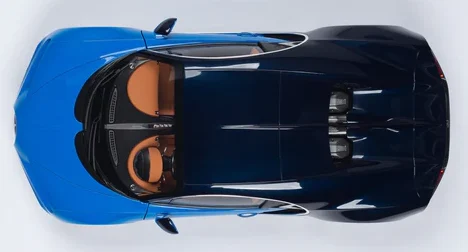
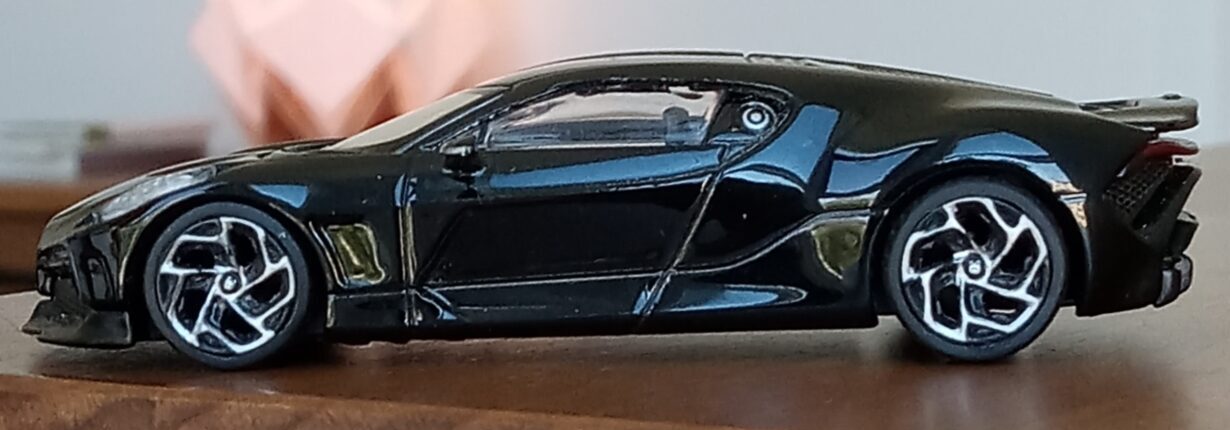
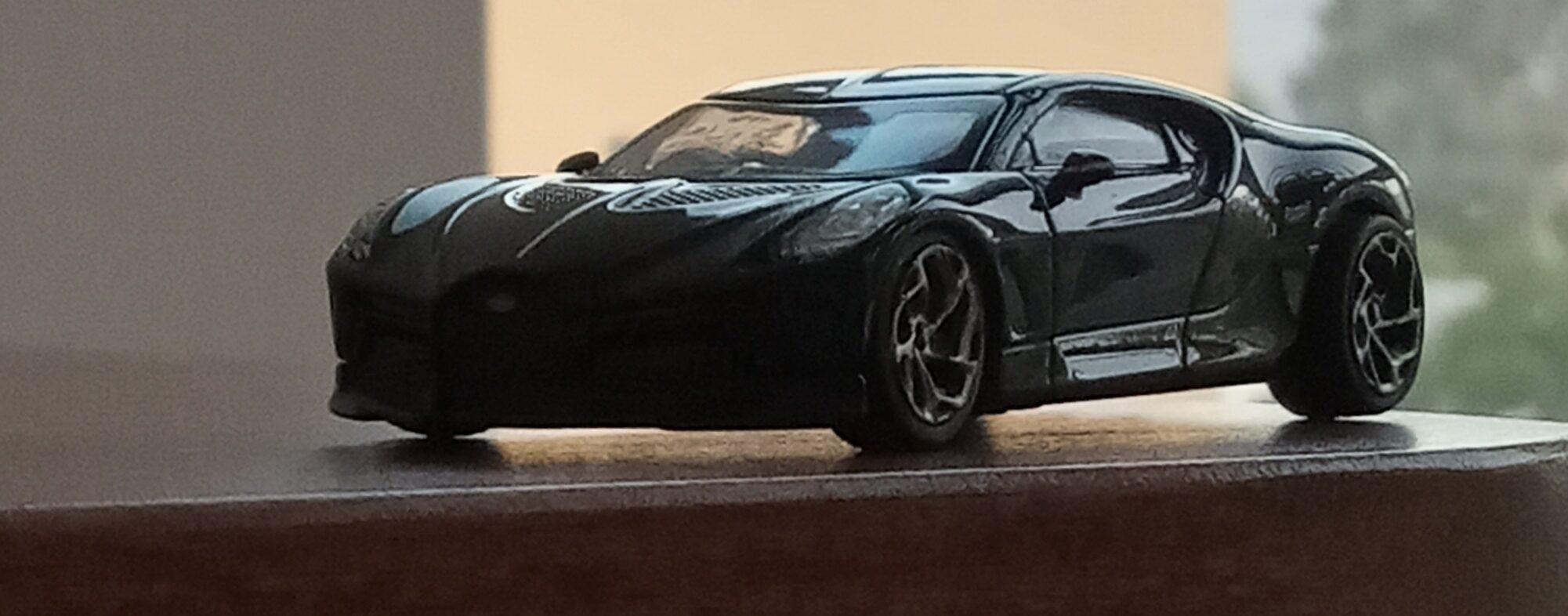
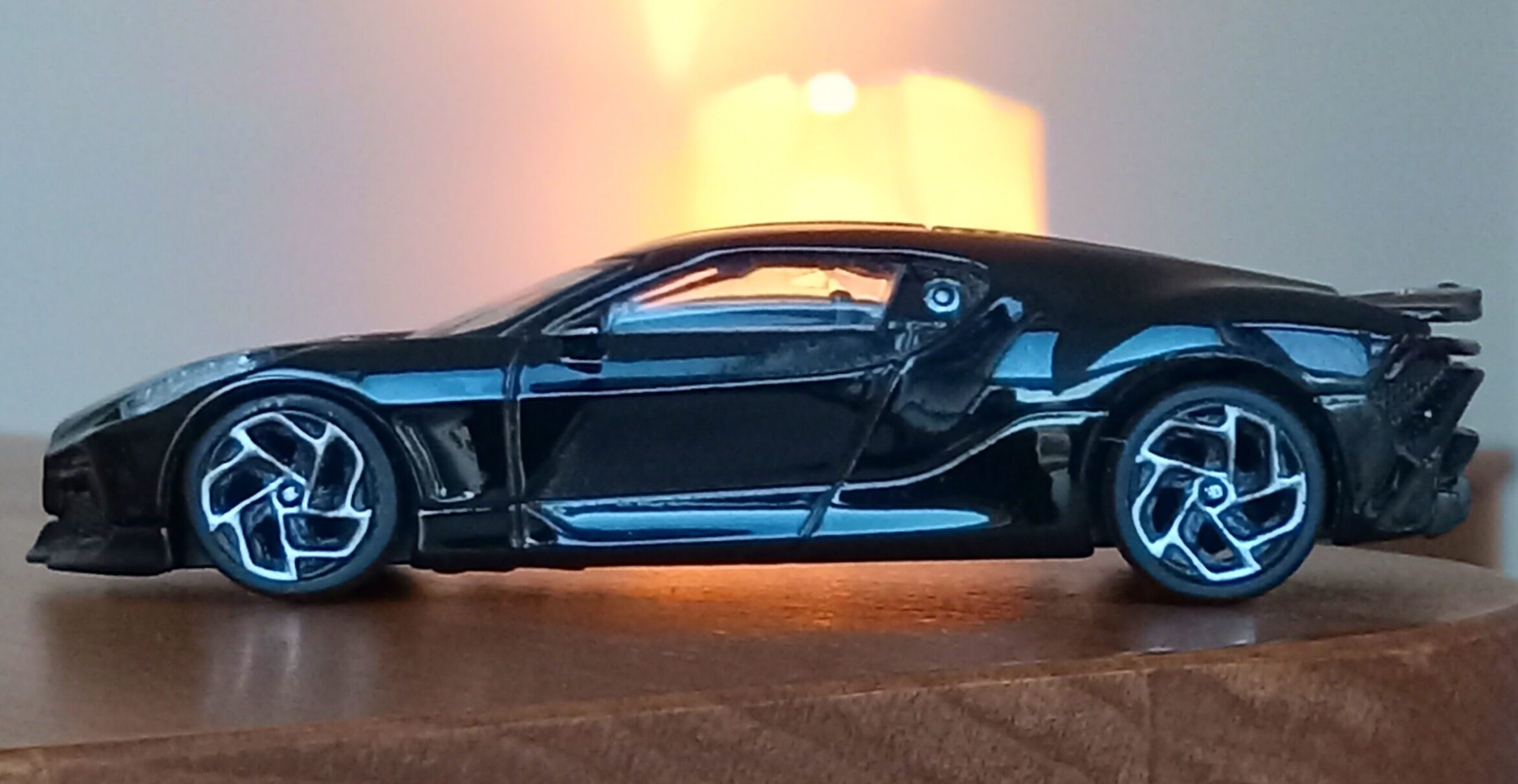
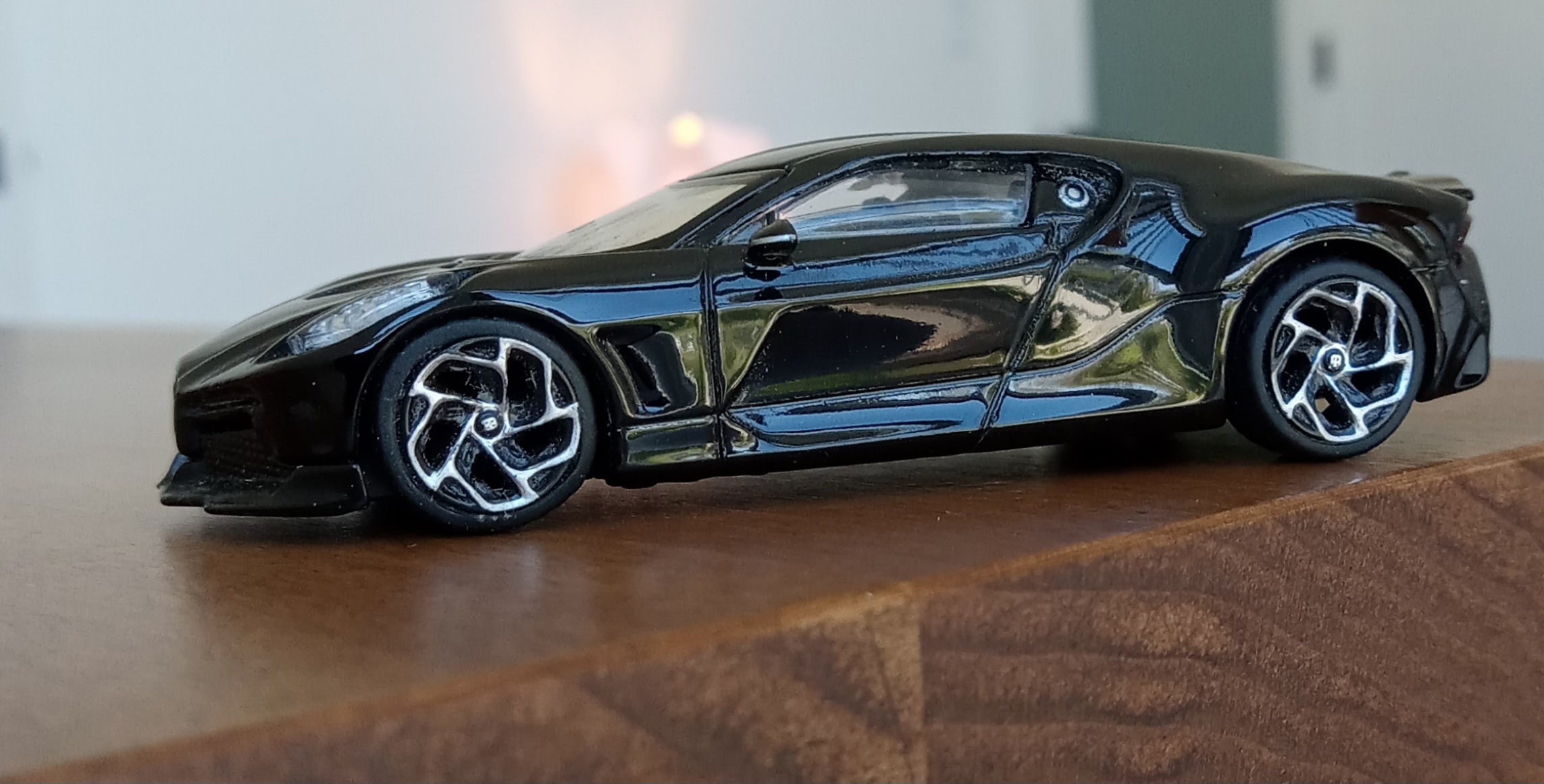
2:フロントエンジンのFRスポーツカー造りから縁遠かった、VW/アウディー/ポルシェグループの怨念が感じられる、(無理矢理伸ばした全長を使って現出した)世にも美しき擬似FRプロポーション
(ポルシェのRR, 5気筒エンジンをフロント車軸前に搭載することに執着することで、独自の市場を開拓してきた意地、みたいなものからの脱却のような?)
ー――ー>すさまじい執念を感じます、、、、、
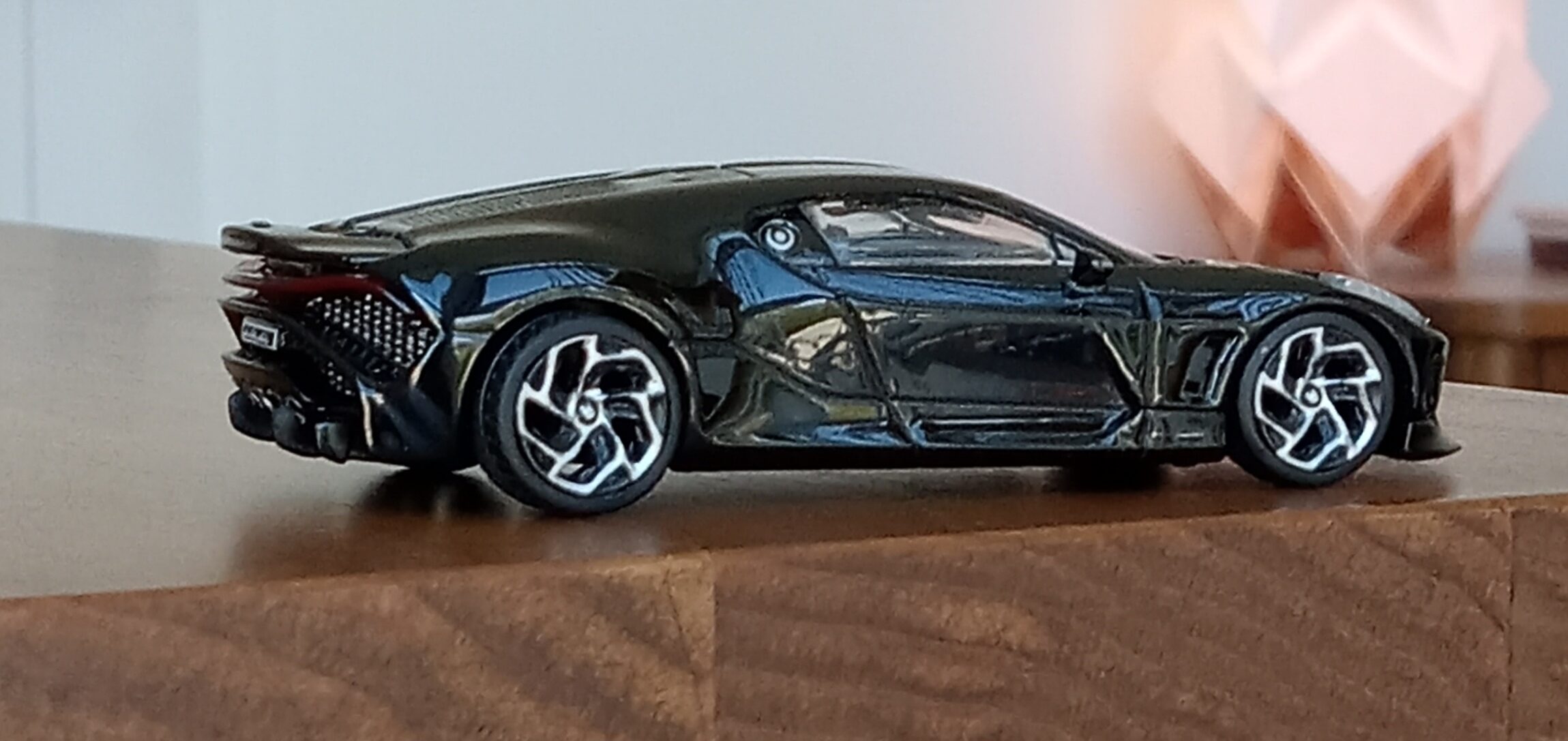
3:ボディー全体を前から後ろに横切る、(34年版からのリベット止め加工からの引用、)背ビレ・デザインの妖艶な美しさ
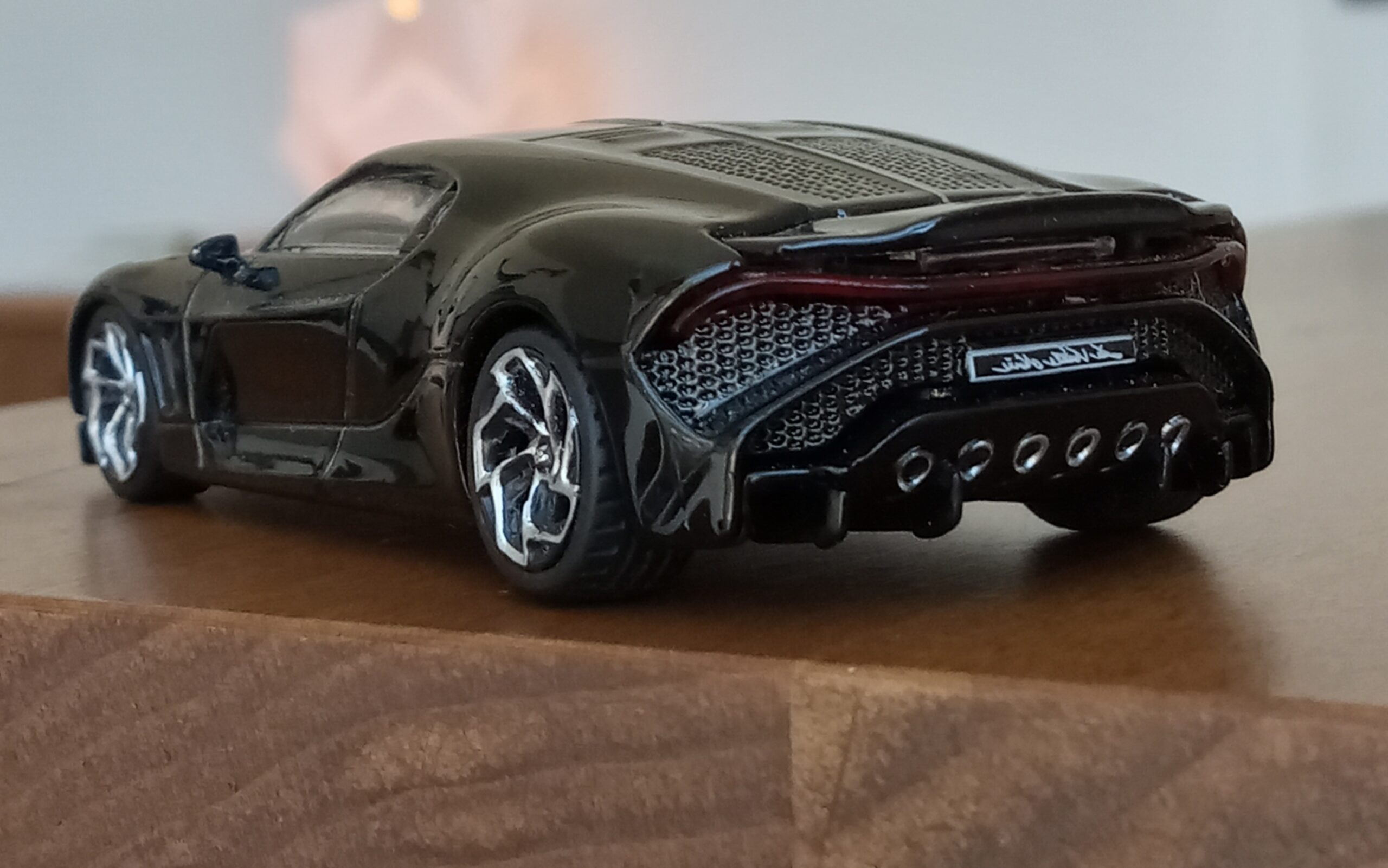
4:不気味に微笑むような、昆虫顔のフロントフェイシア・デザイン
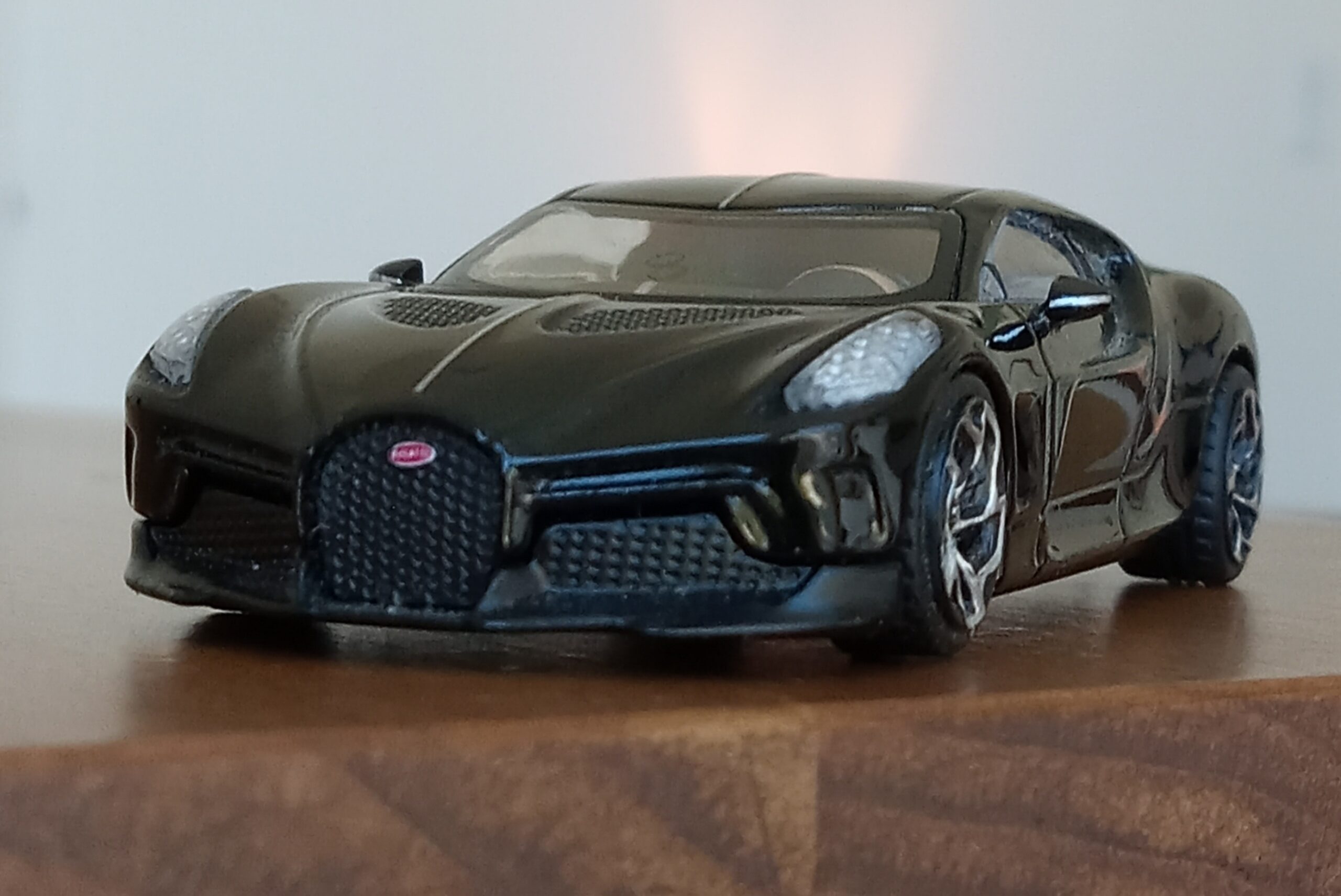
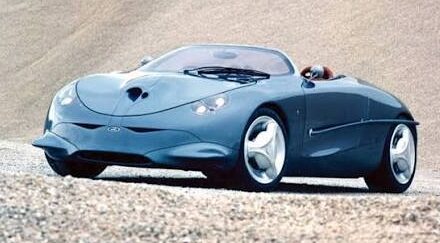
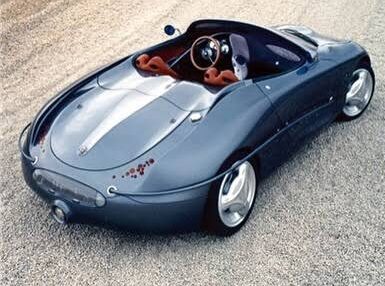
(こちらのギア・フォーカス【1992年発表のコンセプトカー】も昆虫顔と有機曲面デザインで有名です)
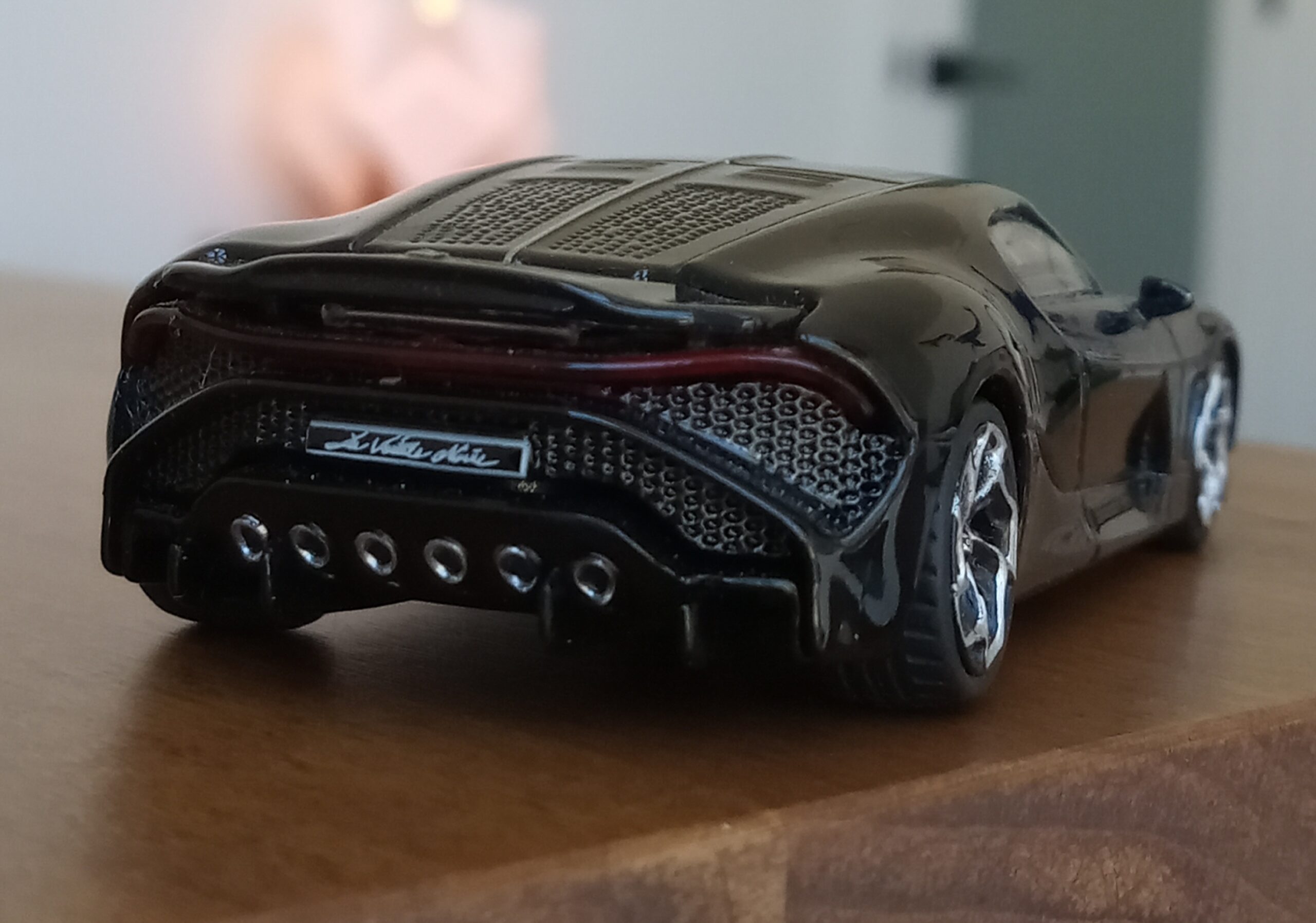
5:『これでもか!』と言わんばかりに6っ本突き出したマフラーデザインの下品な振り切れ方
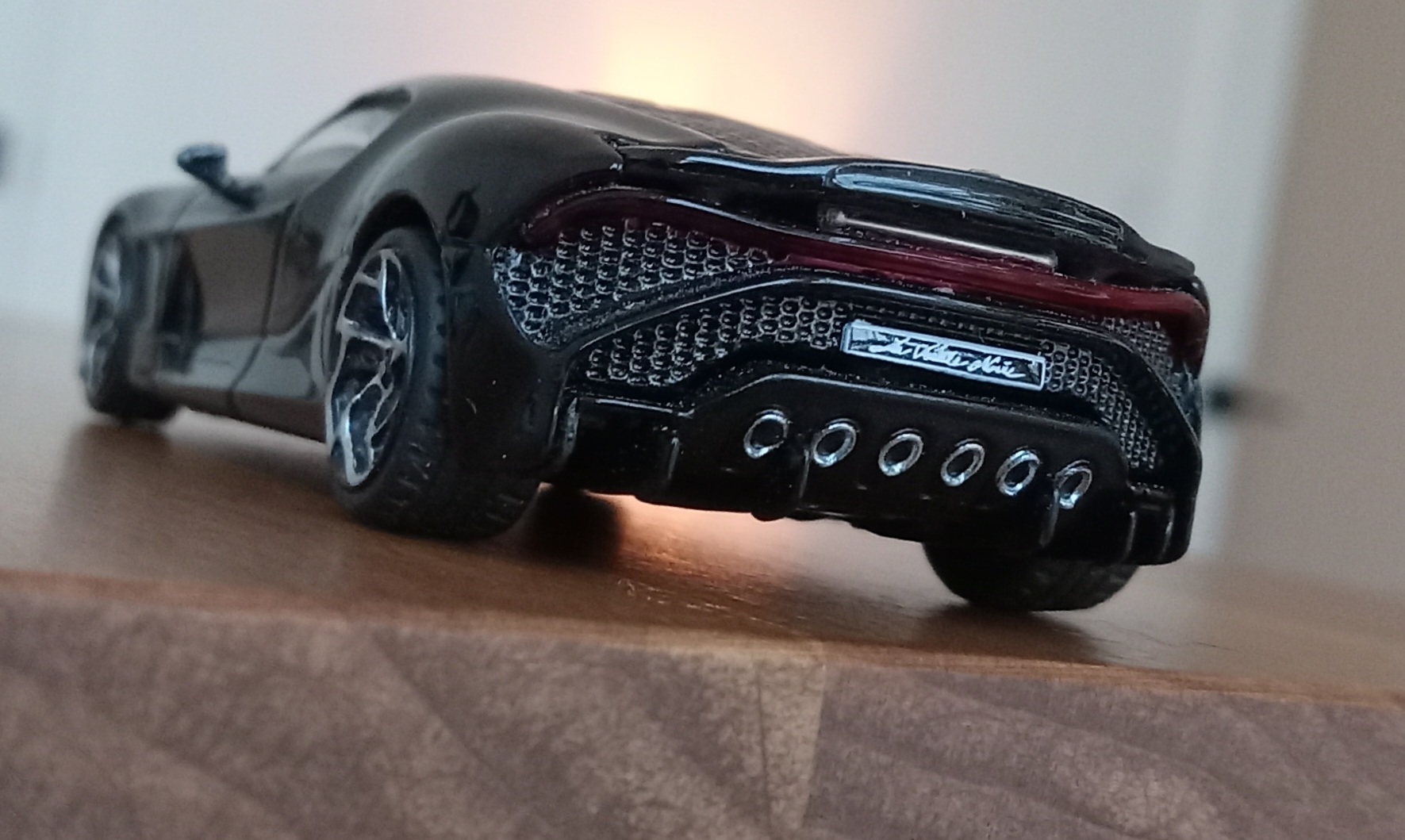
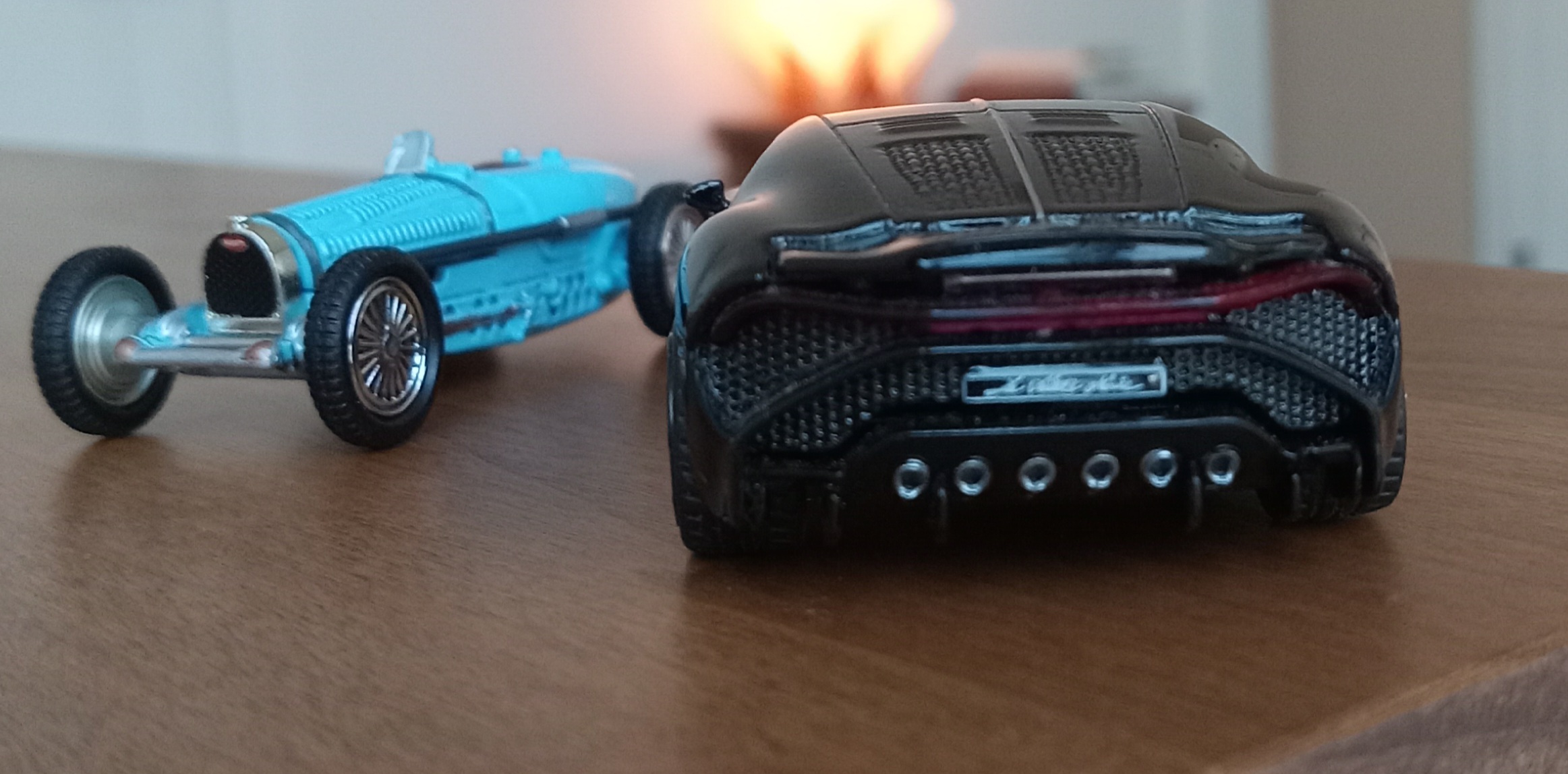
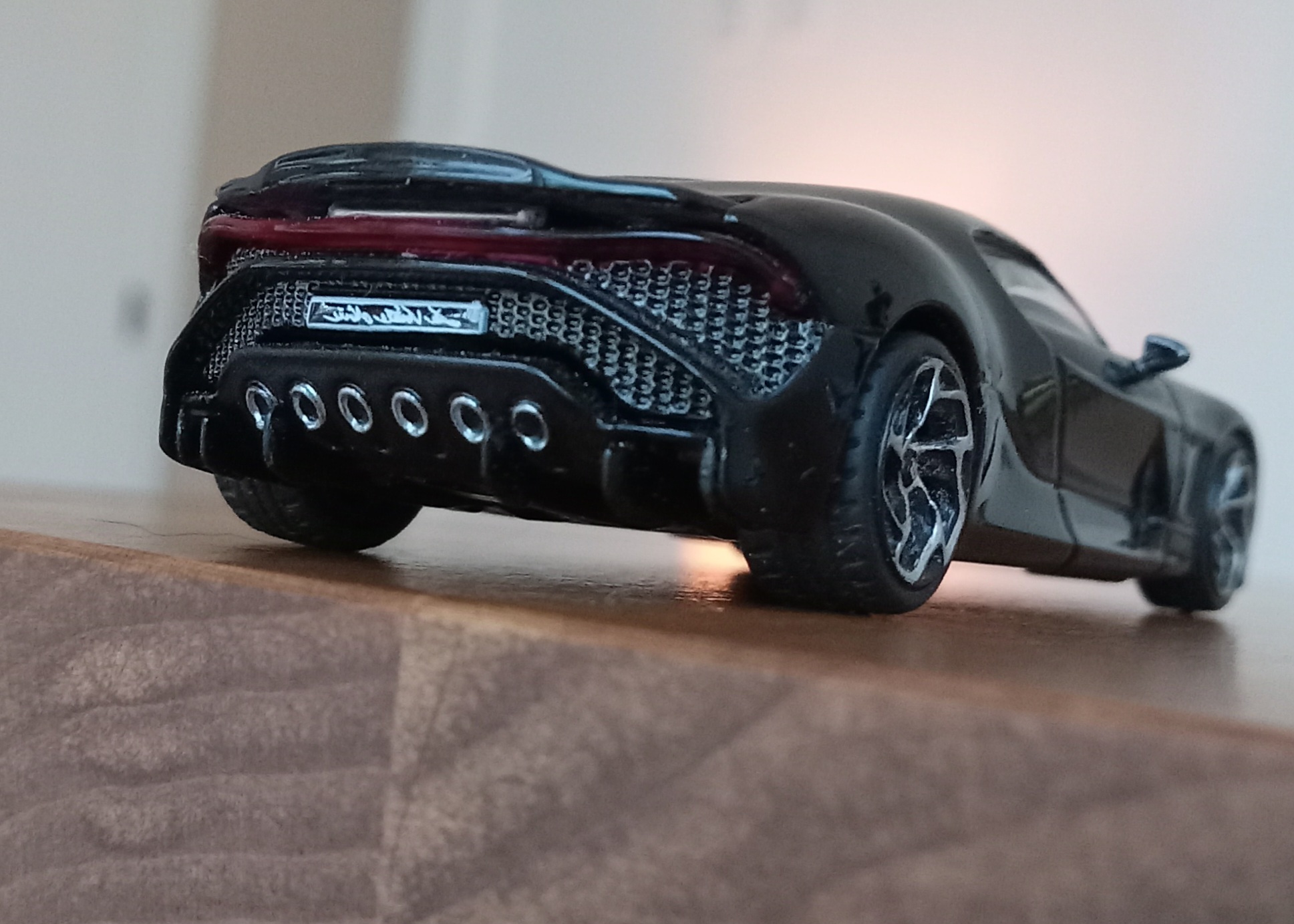
6:従来のブガッティ・デザインにフォード・フォーカス【コンセプト版】の有機的な表面処理を足して2で割ったような、90年台から2010年代にかけてのヨーロッパ自動車デザインの総決算的な豪華絢爛、一歩間違えば下品になるギリギリのところで成立させたブガッティ・デザインチームの執念の一作
(故フェルディナント・ピエヒ氏の葬列のはなむけ的な逸品+内燃機関搭載車最後を飾る打ち上げ花火のような、象徴的記念碑のダブルミーニング?)
――ーーー>車の表皮から怨念や冷気、殺気、妖気が漂って、(笑)全体像がはっきり見えません。冷笑
次は、
私の個人的な体験談です!
*『私』と:『ラ・ヴォワチュール・ノワール(黒い車)』(フェルディナント・ピエヒの落とし児?)
私がヤフーのネット記事か何かで、
この類まれな自動車を目にしたときに、
真っ先に感じたのが、
これで
『内燃機関を使った自動車は
終焉を迎えたのだ!』と
確信しました。
その車から妖気のように漂っていたのは、
ヨーロッパ社会が培ってきた、
*産業革命/石油/機械文明、
*競争社会、
*見えない階級制度、
*石油利権を争う権力闘争、
その他ありとあらゆる、
どす黒い
「魑魅魍魎たち』の巣食う、
近代物質文明への
最終オマージュのように見えました。
今後色々な、
ハイパー・カーや、EVとのハイブリッド的な富裕層の投資向け自動車が出来たとしても、
この車ほどの深い『業』を背負ってはいないと思います。
後で、
この車をフェルディナント・ピエヒ氏の親族がオークションを通じて入手したと知り、
何だか腑に落ちて、納得した自分がいました。
そこに現われたクルマには、
内燃機関を使った自動車の100年以上に渡る歴史に育まれた、
立体造形としての、見どころ満載な優雅で豪華な祭典状態でした。
つまりは、
*FR・MRスポーツカーの両性具有的プロポーション、
*ブガッティが象徴する、優雅さと、機械文明の強引さの同居、
*職人的な、繊細で手先の器用さの表れ的な有機曲面のつるべ打ち、
*すべてにおいての、やり過ぎ感と、それをとがめないお客の露呈、
*有終の美を飾る、全部乗せ感覚
美しさと醜さの至高の融合を感じた私は、
複雑な曲面と照明のリフレクションから、見れば見るほど、幻惑され、実態がつかみきれない、もどかしさの中に、ぼんやりしていました。
その後、
今回見知らぬ会社から発売されたミニカーを手に取るまでは、
純粋な内燃機関は、之でで終わり、、、といった悲しさと
もっと見てみたいといった欲求が混在した期間が続いていました。
それではこの複雑な車を、
1/64ダイキャスト完成品(無版権)、として
見事に再現した
ミニカーを見てみましょう。
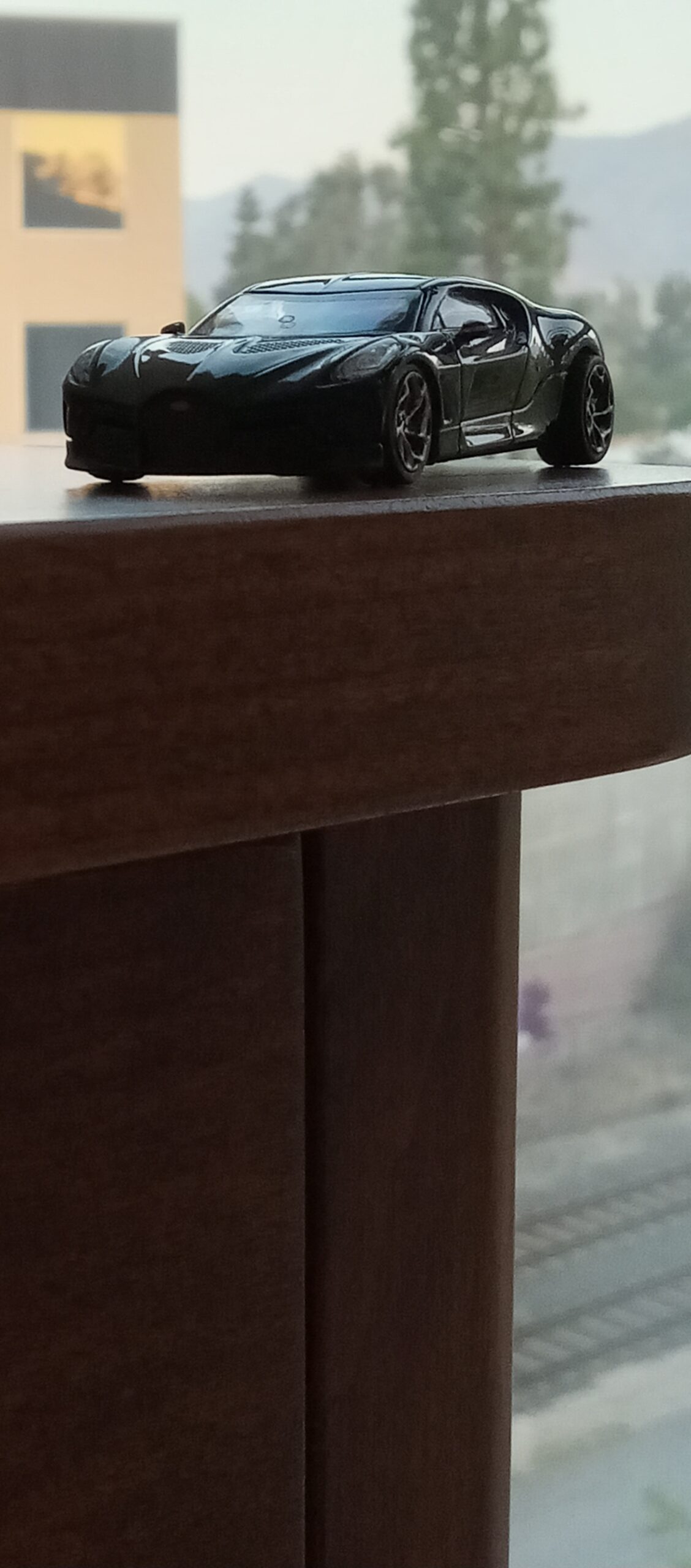
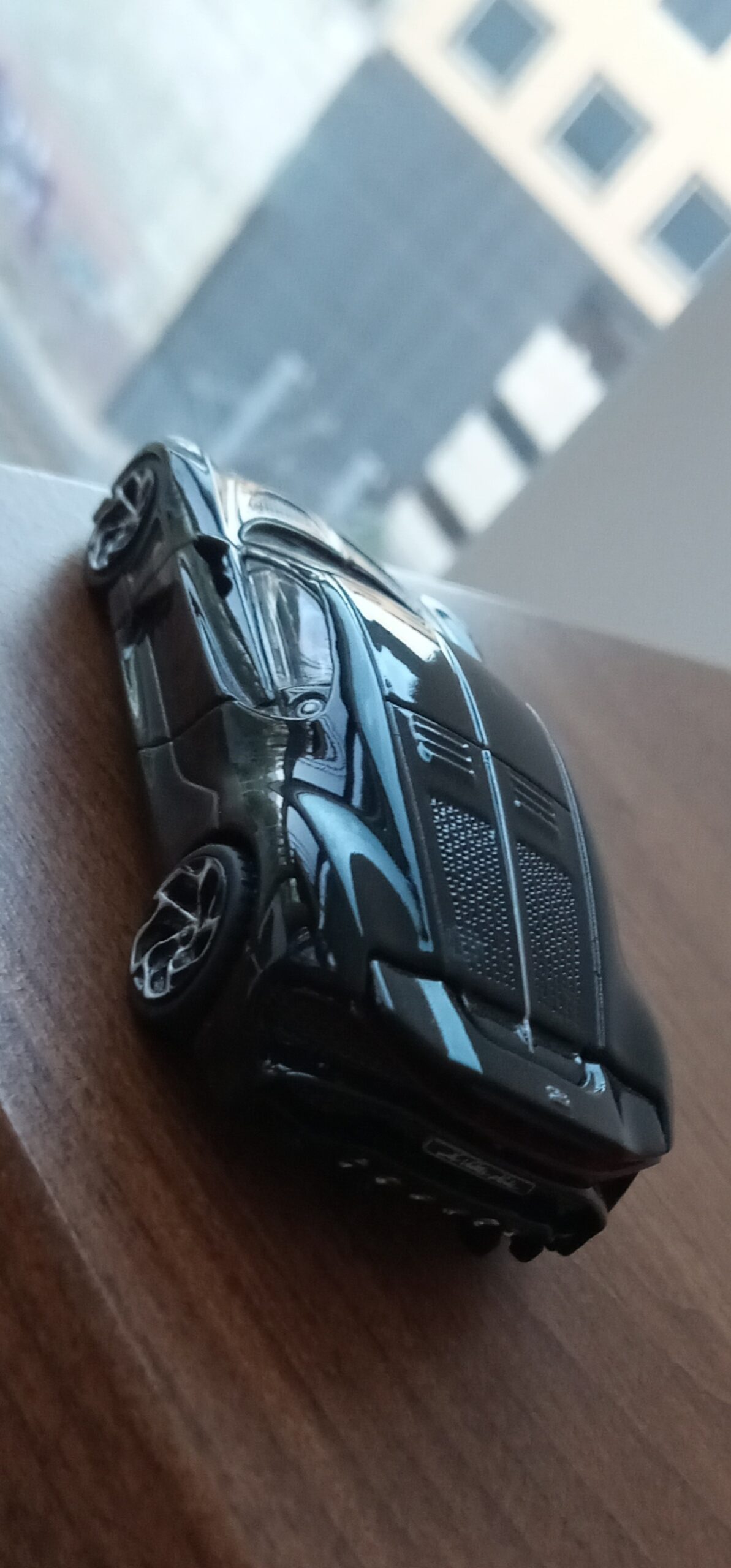
#JKL社製、1/64 ダイキャスト完成品、ブガッティ・ラ・ヴォワチュール・ノワール、2019(黒)
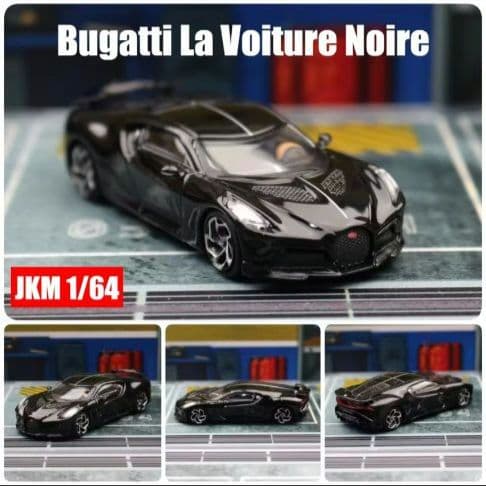 (無版権モノでは
 ありますが、立体の捉え方、ディテール再現、塗装など秀逸で、一見MINI・GT的な仕上がりで、シャシー自体もメタルパーツ、ずっしりと重くてになじみます。)
ーーー>唯一残念なのが、上がりっぱなしのリアスポイラー、内側からドリルで削って降ろした状態に改造しました。
このミニカーを撫でまわして、
感じた印象が、
この記事の前章で描いた、
デザイン的特徴部分となります。
ではいよいよ
三題噺となります。
*三題噺:フェルディナントピエヒ氏・内燃機関・魑魅魍魎


会場のお客様、今回も無理難題を、
ありがとうございます。
こんなお題が出ましたが、、、
*フェルディナント・ピエヒ氏
*内燃機関
*魑魅魍魎
今回も【AI】との凸凹チームワークで、
中世ヨーロッパが舞台の、
くだらない落ちが素敵な落語となりました。
n
エ~、一席おつきあいのほどを願っておきますが、、、
n
n
n
ヨハン「ピエヒ? なんだか頑固そうな名前ですね」
ヨハン「へえ、消えた伝説のオマージュ。だけど旦那、そんな真っ黒な車が夜霧の街道を走ってきたら、何も見えなくてぶつかっちまいますよ」
ヨハン「へぇ、能面のような完璧な対称美ですか。じゃあ、ピエヒ氏が作らせたその中身は?」
ヨハン「1,500馬力に6本マフラー!? ひええ……旦那、そんな恐ろしい火を噴く『魑魅魍魎』がこっちに向かって走ってきたら、街中が大火事になっちまう! 俺たちの命が危ない、どうやって火を消せばいいんですか!?」
ヨハン「なるほど! じゃあ、外が火事になる心配は……」
n
ハンス「ああ、それは『内燃(無いねん)』」
お後がよろしいようで、、、
n
n
n
*その他、哀愁の内燃機関に付きまして、、、
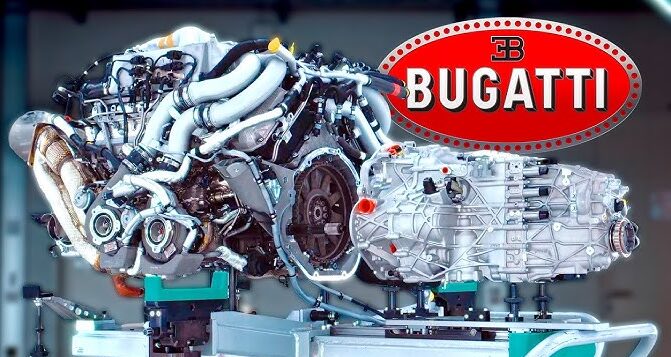
(ブガッティ・シロンとうさいのW16気筒4Ⅹターボエンジンーーーこれと同様のものが、ラ・ヴォワチュールにも搭載されています)
個人的に大好きな内燃機関を搭載した、
スポーツカー達です、、、
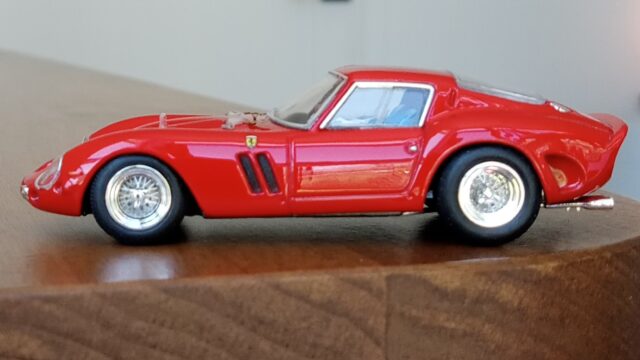
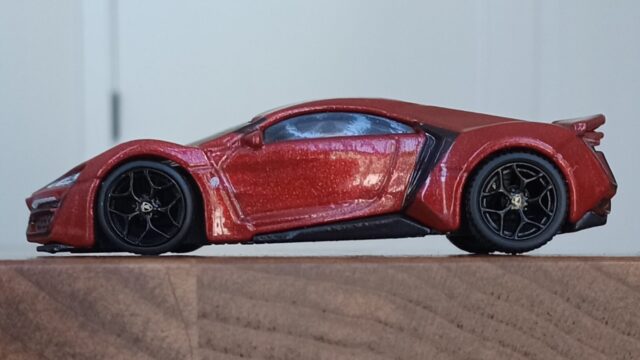
*Wモータース、ライカン ハイパー・スポーツ、2013
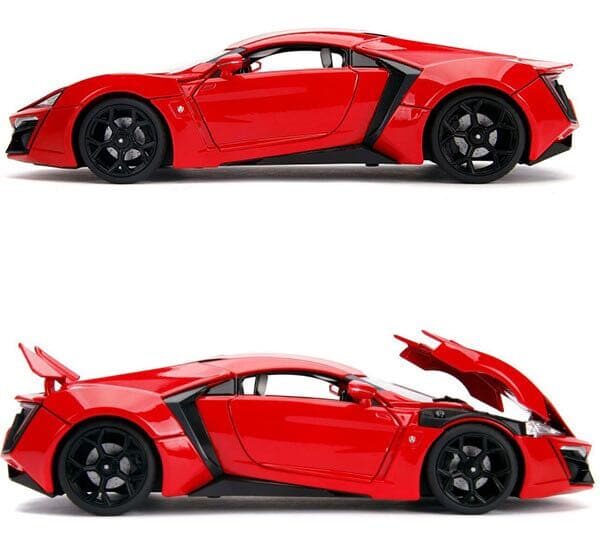 (中東発のハイパースポーツカーには、: ポルシェのチューナーとして有名なRUF社が手がけた3.7L 水平対向6気筒ツインターボエンジン(760馬力)が収まっています。
ーーーー>外観デザインの凝縮感にただ物でない何かを感じまhした。
*シェルビー・スーパー・カーズ【SSC】トゥアタラ、2019
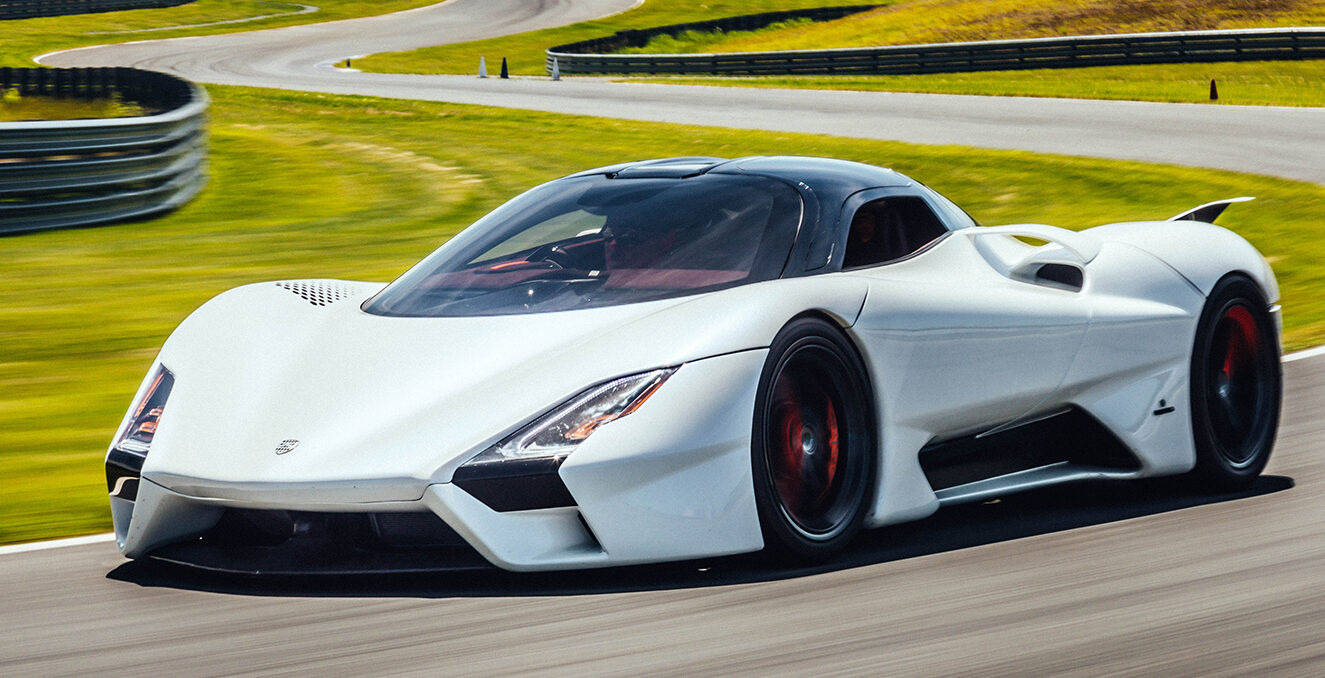
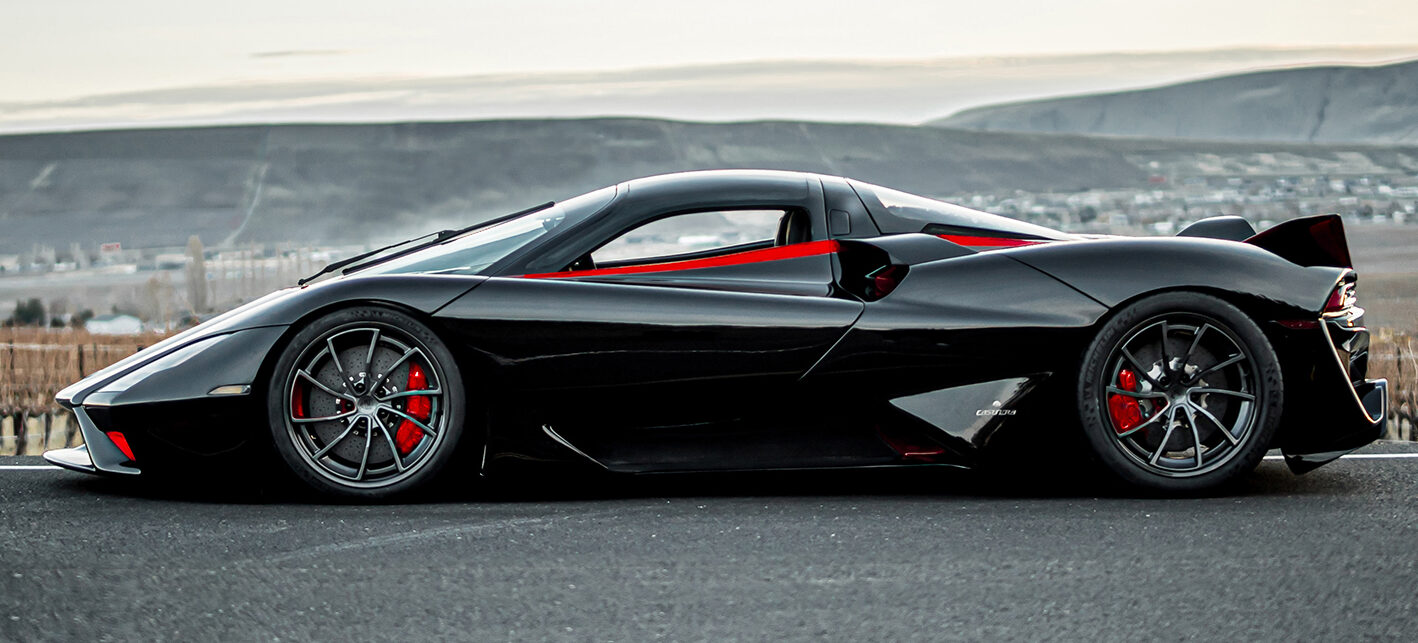
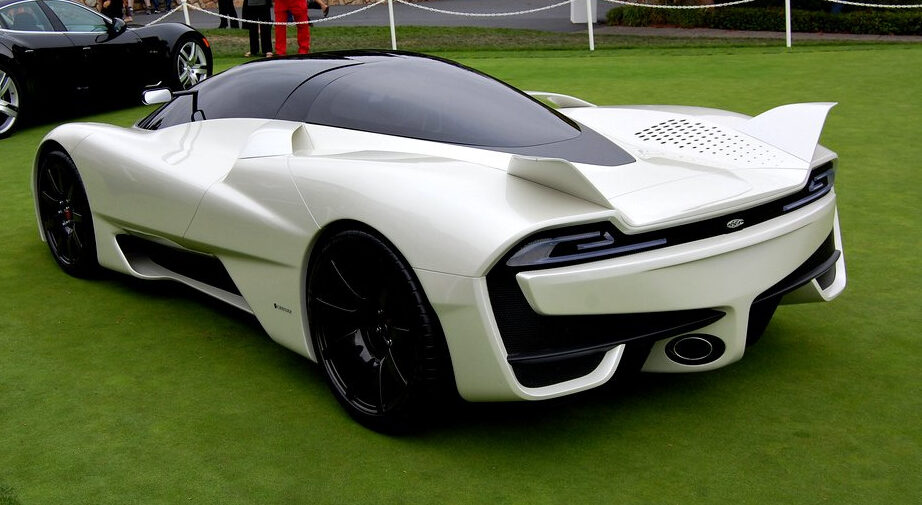 (この車はなんと、私の学生時代の後輩のイタリア人デザイナー:ジェイソン・カストリオタが外観デザインを担当しました。『猪突猛進的』な彼の性格がハッキリと出た力強いデザインです。1750馬力のエンジン搭載で、最高速500㎞を目指しています。)
ーーーーー>今年の夏、1/64の出来のよさそうなミニカーが発売されます!!
この分野は富裕層の豆鼓目的に利用されがちで、
個人的にはあまり興味がないのですが、
この2台は自分の中で特別な存在です。
消えゆく内燃機関の有終の美、
ヨーロッパ機械文明の終焉を象徴するかのような、
 『ラ・ヴォワチュール・ノワール』
に付いての記事は
ここで終わりとさせていただきます。
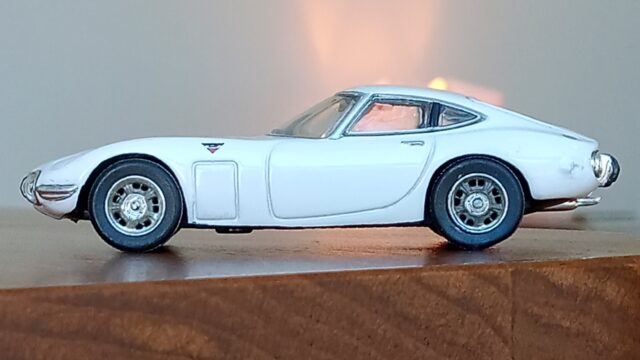
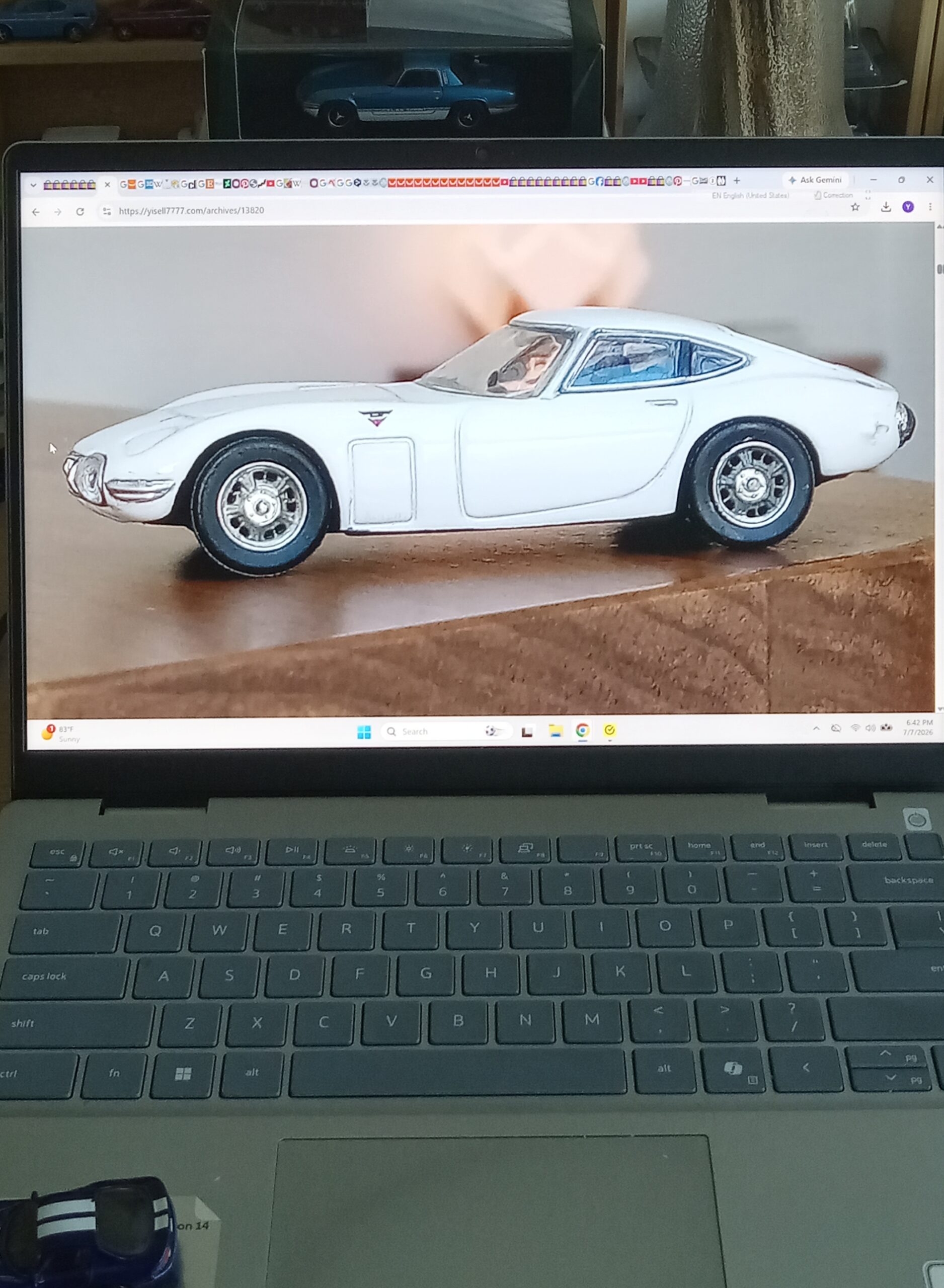 次回は、トヨタデザイン第一回目として、
『トヨタ2000GT』につてお送りします。
お楽しみに――
本ブログと記事内容につきまして:
ブログ記事を書くにあたり私の目標は、立体造形(料理も含めて)とのかかわりを通じて、私個人の特徴的(ネジ曲がり方も含めて)な評価軸を解明することで、「美しさ・美味しさ」に対する好奇心や、探求心を、どのように満足・充足させてきたのかを明記しておくことです。
従いまして、記事の中に出てくる、数字や年号、微細なデータなどには細心の注意を払っておりますが、時に大きな間違いや勘違いを犯していることも考えられます。特に自動車記事における主要諸元や、年号などには紛らわしいものも多く、あくまで参考程度に考えていただければ幸いです。
私としては、記事の中で個人的な外観デザインや味覚の評価、そこから広がる後半部分につなげるための、『流れ』を作るための客観的材料として年号やデータを挿入している感じです。あくまで重視したいのは、私個人の頭の中で起こる、記憶の錯そう的混沌から生まれる新たな『見方』や『情報の予想外のつながり』です。その勢いを作り出す、『流れ』の一環として、諸データが副次的に必要となるわけです。
話がそれますが、大好きな落語の世界に「三題噺」という、その場て会場から募った3つのお題を使って1つのお話に仕立てるといったお遊びがございますが、私はそれに近いことを立体造形の特徴や(料理のお味)をお題にして行っている感じがします。その中で頭の中に去来する数々の着想が、全く予想外で楽しく、次回からの記事内容を大幅に変えたり、新展開につながっています。
当ブロブの仕組み:
『好奇心の点と線 x 気まぐれ脳内回路=予想外の新展開』
こんな自分勝手なブログですが、今後ともよろしくお願いいたします。
追記:上記の『流れ』を作る為に必要な写真はできる限り、個人所有のミニカー・自前の料理などを使い撮影しておりますが、その他の必要最小限の図版や写真を他のブログ主様の記事や諸会社ホームページなどからお借りしております。(記事内容に合うよう加工させていただき、使用時は最小の解像度で載せております。)問題がある場合、ご連絡いただければ直ちに降ろさせていただきます。
追記2:当ブログ記事に掲載のミニカー写真等(個人撮影)は許可なしで、どのようにお使いいただいても結構です。私個人の創造性はこの世のもの、と言う認識の上で記事を製作しています。
!!!!!!!!!!!!!!!!!!!!!!!!!!!!!!!!!! Translated in English !!!!!!!!!!!!!!!!!!!!!!!!!!!!!!!!!!
(Manufactured by JKL, 1/64 die-cast ready-to-display model, Bugatti La Voiture Noire, 2019 (Black) ——> Modifications: Slightly adjusted the front and rear axles to add a slight forward lean; temporarily removed the rear spoiler and reattached it in a lower position)
Favorite Car Designs: Part 39—The Lineage of 2-Door Coupes: Part 19 [French Cars Edition] Part 19: Bugatti La Voiture Noire, 2019 (Black) “The One and Only Black Gem” Bugatti La Voiture Noire “The Only Black One”
#Favorite Car Designs—The Lineage of 2-Door Coupes:
For this 39th installment, titled “The Lineage of 2-Door Coupes, Part 19,” I’d like to discuss luxury 2-door (GT) coupes and roadsters, which strongly reflect the national characteristics and unique exterior design styles of various countries. [Note: Includes convertibles]
I’ll proceed as follows.
For this 19th installment, we’ll focus on [French Cars]
I’ll be discussing the
Bugatti La Voiture Noire (Black),
unveiled in 2019.
[The Lineage of 2-Door Coupes: Table of Contents]
[American Cars Edition]
Episode 1: Cadillac El Mirage, 2013 (Metallic Red)
Episode 2: Lincoln Continental MK4, 1972 (Black)
Episode 3: Mercury Cougar, 1967 (LT Metallic Green)
[German Cars Edition]
Part 4: MB 500K Special Roadster, 1936 (Black)
Part 5: MB 300SL Roadster, 1957 (Silver)
Part 6: MB SLS AMR Gullwing, 2010 (Black)
[British Cars]
Part 7: McLaren F1, 1992 (Metallic Orange)
Episode 8: Jaguar XKSS Roadster, 1957 (Royal Blue)
Episode 9: Jaguar XKR Coupe, 1996 (Dark Metallic Green)
[Japanese Cars / Nissan Edition]
Episode 10: Nissan First-Generation Silvia, 1965 (Champagne Gold)
Episode 11: Nissan 5th-Generation Silvia, 1988 (LT Metallic Green)
[Italian Cars]
Episode 12: Ferrari 250TR Pontoon Fender, 1958 (Red)
Episode 13: Ferrari 250GTO, 1962 (Italian Red)
Episode 14: Lamborghini Concept S, 2005 (Pearl White)
[Japanese Cars: Mazda Edition]
Episode 15: Mazda Cosmo Sport, 1968 (Racing White)
Episode 16: Mazda Eunos Cosmo, Type-S (Two-Tone: Black & Gray)
[French Cars Edition]
Episode 17: Bugatti Type 59, 1935 (French Blue)
Episode 18: Citroën SM, 1970 (Champagne Gold)
Episode 19: Bugatti La Voiture Noire, 2019 (Black)
[Japanese Cars: Toyota Edition]
Episode 20: Toyota/Yamaha 2000GT, 1967 (Ivory White)
Episode 21: Toyota 2nd-Generation Soarer, 1986 (Two-Tone: Black & Gray)
Episode 22: Lexus LC [GWZ100], 2017 (Metallic Red)
[American Cars Part 2]
Episode 23: Dodge Challenger & Plymouth Barracuda, 1971
Episode 24: Dodge Viper SRT-10 ACR, 2008 (Black)
Episode 25: Ford Shelby GR-1 Concept, 2004 (Chrome)
[Japanese Cars: Mitsubishi Edition]
Episode 26: Mitsubishi Galant λ, 1976 (Brown Metallic)
Episode 27: Mitsubishi Eclipse [North American Spec], 2006 (Orange Metallic)
[German Cars Part 2]
Episode 28: BMW M635CSi, 1984 (Dark Metallic Blue)
Episode 29: Mercedes-Benz 560SEC AMG 6.0 Widebody, 1989 (Black)
Episode 30: BMW M2 with Genuine Performance Parts, 2025 (Neon Lime)
[Japanese Cars: Subaru Edition]
Episode 28: Subaru Crosstrek XV, 2012 (Lime Green Metallic)
The Corvette Lineage: (Special Edition)
Episode 1: 1967 Stingray [C2] Convertible (Hardtop, Metallic Blue)
Episode 2: 1972 Corvette [C3] Convertible (Metallic Blue)
Episode 3: 1984 Corvette Coupe [C4] (Bright Red)
Episode 4: Stingray Concept [Pre-production Prototype], 2009 (Metallic Blue)
#From France, the Last Modern Dancer?
For me, this installment of
“La Voiture Noire”
is
“a jet-black dancer
wearing a large mask”!
It feels like I’m watching his (or her) final performance.
* Wearing an exquisitely crafted mask created by a brilliant mask-maker,
* Overwhelmed by its weight,
* Dressed in jet-black attire, solemnly, and finally,
* Even as he (or she) begins to stagger,
* He (or she) performs this final stage with single-minded devotion.
That monumental,
“extraordinary feeling”
simply won’t let me look away.
In this article,
I’d like to invite you to join me on a journey
to discover what this “extraordinary thing” is.
I have absolutely no idea how this will turn out,
but I hope you’ll stick with me for a while…
Here’s how we’ll proceed.
* Car Overview: The Last Modern Dancer in Black?
* Exterior Design Features:
* “Me” and “La Voiture Noire (The Black Car)”
* Three-Theme Story: Ferdinand Piëch, Internal Combustion Engines, and Demons and Monsters
* The “Beauties” That Adorn the Melancholy of the Internal Combustion Engine
n
N
N
N
n
N
* Car Review: The Last “Modern Dancer” with a Black Face
Overview:
The Bugatti La Voiture Noire is
a one-of-a-kind hypercar built to commemorate the 110th anniversary of Bugatti’s founding. Priced at over 1.4 billion yen (excluding tax), it caused a huge stir at the time of its announcement as “the world’s most expensive new car.”
n
n
n
n
m
n
n
n
n
n
n
n
n
n
n
n
n
n
n
n
n
n
n
n
n
n
n
n
n
n
n
n
n
n
n
n
n
n
n
n
n
n
n
n
n
n
n
n
n
n
n
n
n
n
n
n
n
n
n
n
n
n
n
n
n
n
n
n
n
n
Legendary Inspiration: “Type 57SC Atlantique”:
Its name, which means “black car” in French, pays homage to the “Type 57SC Atlantique”—designed by Jean Bugatti in the 1930s and hailed as one of the world’s most beautiful cars. Of the four cars built at the time, the second—known as “La Voiture Noire”—disappeared during World War II; this model was designed to revive that legend for the modern era.
Overwhelming Performance and Design:
* At its heart: Like its base models, the “Chiron” and “Divo,” it is powered by an 8-liter W16 quad-turbo engine that delivers a maximum output of 1,500 horsepower and peak torque of 1,600 Nm.
n
n
* Exterior Design Features:
n
The exterior design of the Bugatti La Voiture Noire is the ultimate “haute couture of the automobile,” blending a perfect homage to the legendary 1930s “Type 57 SC Atlantic” with modern hypercar technology.
True to its name, “The Black Car,” the carbon-fiber body, finished in a deep gloss black, features a longer nose and wheelbase than its base model, the Chiron, and boasts the elegant silhouette of a grand tourer (GT).
n
n
n
n
n
N
The key features and design details of the exterior are as follows.
n
n
M
1. The “Center Fin” that carries on the legacy:
The most iconic feature is the chrome “center fin”—a spine that runs in a straight line down the center of the body, from the front nose through the roof to the rear. This is a modern reinterpretation of the original car’s “riveted joints”—which were used on its non-weldable magnesium alloy panels—and beautifully defines the visual flow of the design. The windshield wipers are also positioned vertically along this fin.
n
N
N
2. Seamless Windows with a Visor Effect:
The car features a floating windshield where the front glass flows seamlessly into the side windows, reminiscent of a helmet visor or an aircraft canopy. By concealing the A-pillars (front pillars), the entire cabin appears as a smooth, unified glass dome, accentuating the beauty of the side profile.
n
N
N
3. A Front Mask That Showcases Craftsmanship:
n
* 3D-Printed Grill: Bugatti’s traditional horseshoe-shaped front grill features mesh cells meticulously calculated down to the finest detail and exquisitely crafted using a 3D printer.
* Insect-Inspired LED Headlights: Each cluster is packed with over 25 individually machined light-emitting elements, radiating an organic and overwhelming intensity.
* Hood: It features sharp triangular air outlets and a chrome strip that evokes the Atlantic.
N
N
n
5. A Cohesive Look from the Wheels Up:
n
The wheel and tire design also adopts an approach that eliminates visual boundaries, featuring a custom two-tone paint scheme where the unique dish/turbine-style alloy wheel spoke design visually flows into the pattern on the tire sidewalls. This makes the tires and wheels appear as a single, massive work of art, enhancing the car’s overall elegance.
The pinnacle of modern coachbuilding:
Bugatti has transcended the role of a mere mass-production automaker, reviving the tradition of “coachbuilding (carrozzeria)” in the modern era to bring customers’ ideals to life. This ultimate vehicle is also known to have been delivered to an avid collector with deep knowledge of Bugatti (the leading theory suggests it was the late Ferdinand Piëch, former Chairman of the VW Group, or his son).
n
N
N
N
n
n
Legendary Car: “Type 57SC Atlantic”
The Bugatti Type 57SC Atlantic is a legendary classic car—often referred to as the “Mona Lisa of the automotive world”—of which only four were produced between 1936 and 1938, making it one of the world’s rarest and most expensive vehicles. Designed by Jean Bugatti, son of founder Ettore Bugatti, it is known as a masterpiece that has left an indelible mark on automotive history, blending a beautiful, streamlined Art Deco body with the pinnacle of driving performance for its era.
n
n
n
n
N
N
N
N
N
N
n
n
n
1. Distinctive Design: Riveted seams resembling dorsal fins
n
What makes the Atlantique truly one-of-a-kind is the dorsal fin-like protrusion (Dorsal Seam) that runs from the tip of the hood, across the roof, and all the way to the rear end, as if splitting the body in two.
n
*Background:
The 1935 prototype, the “Aerolit,” used a lightweight magnesium alloy (Electron) designed for aircraft. Since this material was highly flammable and could not be welded, a method of riveting the outer edges of the panels together was adopted.
n
* Design Heritage:
Although the production version of the Atlantique used aluminum—a material that was easier to work with and could be welded—Jean Bugatti deliberately retained this riveted dorsal fin as a beautiful “symbol of design.”
n
N
2. Specifications and Overwhelming Performance
n
It is often referred to as the “first supercar,” boasting not only a beautiful appearance but also powertrain performance that was in a league of its own for the time.
n
* Origin of the Name: “S” stands for “Surbaissé,” the French term for a lowered chassis, while “C” stands for a mechanical supercharger (compressor).
* Engine: 3.3-liter (3,257 cc) inline-8 DOHC engine
* Maximum output: Approximately 200 horsepower
* Top speed: Over 200 km/h (an astonishing speed for its time)
n
N
#Key Specifications:
Model: CA18DET
Total Displacement: 7,993 cc: W-type 16-cylinder with quad (4) turbochargers
Maximum Power: 1,500 ps (1,103 kW / 1,479 bhp) / 6,700 rpm
Maximum Torque: 1,600 Nm (163.2 kgm) / 2,000–6,000 rpm
Drivetrain: Permanent All-Wheel Drive (AWD / 4WD)
Seating Capacity: 2 passengers
Body Style: 2-door coupe (2-seater)
Wheelbase: 2,961 mm (250 mm longer than the Chiron)
Overall Length: 4,994 mm (450 mm longer than the Chiron)
Overall Width: 2,038 mm
Overall Height: 1,212 mm
Curb Weight: Approx. 1,950 kg to 1,995 kg (undisclosed)
*Exterior Design Features: What’s Behind the Heavy Black Mask?
The design is rich in detail,
and while the design features of
“La Voiture Noire (The Black Car)” are numerous (almost infinite),
here, based on my own personal opinion and bias,
I’ll narrow it down to six points.
1: An eerie overall appearance created by adding a “heavy black mask” to the already perfectly packaged, ultra-high-performance Veyron—achieved by increasing the overall length by 45 cm and the wheelbase by 25 cm
ーーーーー>Using a body size with an overall length of 2 m and a width exceeding 2 m, the designers have performed a ritual-like act of design.
2: A stunning pseudo-FR creation (brought to life by forcibly extending the overall length) that seems to embody the VW/Audi Group’s long-held grudge against front-engine, rear-wheel-drive (FR) sports cars—→ I sense a tremendous level of obsession.
3: The alluring beauty of the dorsal fin design, which runs across the entire body from front to back (a reference to the riveted finish from the 1934 model).
4: The front fascia design, with its insect-like face that seems to smile eerily.
5: The vulgar, over-the-top exhaust design with six pipes jutting out, as if to say, “Is this enough?!”
6: A masterpiece born from the Bugatti design team’s relentless dedication—a sumptuous culmination of European automotive design from the ’90s through the 2010s, as if they took traditional Bugatti design, added the organic surface treatment of the Ford Focus [Concept], and divided the result by two—a design that walks the fine line between opulence and vulgarity
――ーーー>A sense of resentment and chill seems to emanate from the car’s exterior (lol), making it hard to get a clear view of the whole thing.
Now, let’s take a look
at the photos!
1: The Chiron is an ultra-high-performance flagship model with an already perfect package. This eerie overall design was created by adding a “heavy black mask”—increasing the overall length by 45 cm and the wheelbase by 25 cm.
(After getting the die-cast model, I felt something was off—it seemed unnaturally huge. When I checked the key specifications on Wikipedia, I was shocked: it’s a staggering three-dimensional creation with a top surface area on par with an AM Hummer.)
ーーーーー>Using a body size with an overall length of 2m and a width exceeding 2m, they’re performing a design ritual of sorts.
2: You can sense the lingering resentment of the VW/Audi/Porsche Group—which had long been distant from building front-engine, rear-wheel-drive (FR) sports cars—in these incredibly beautiful pseudo-FR proportions (brought to life by forcibly extending the overall length).
(Is this a break from their stubborn determination—the kind of pride that allowed them to carve out a unique market by insisting on mounting Porsche’s rear-engine, five-cylinder engines in front of the front axle?)
――> I sense a tremendous level of determination……
3: The alluring beauty of the dorsal fin design, which runs across the entire body from front to back (a nod to the riveted finish from the 1934 model)
4: The front fascia design, with its insect-like face that seems to smile eerily
(The Gear Focus [a concept car unveiled in 1992] is also famous for its insect-like face and organic curved surfaces)
5: The vulgar, over-the-top exhaust design with six pipes jutting out, as if to say, “Is this enough?!”
6: A work of opulent splendor that serves as a culmination of European automotive design from the 1990s through the 2010s—as if you took traditional Bugatti design, added the organic surface treatment of the Ford Focus [concept version], and divided the result by two. It is a masterpiece born of the Bugatti design team’s relentless dedication, achieved right on the fine line between elegance and vulgarity
(A masterpiece that serves as a fitting tribute to the late Ferdinand Piëch’s funeral procession—plus a symbolic monument like a fireworks display marking the end of the internal combustion engine era—a double meaning?)
――ーーー> A sense of resentment, chill, murderous intent, and eerie energy emanates from the car’s exterior, (lol) making it hard to see the whole picture clearly. Sarcastic laugh
Next up,
a story from my own personal experience!
*“Me” and: “La Voiture Noire” (The Black Car) (Ferdinand Piëch’s illegitimate child?)
When I came across
this extraordinary automobile in a Yahoo article or something,
the very first thing I felt was
that this marked
the “end of the road
for internal combustion engine cars!”
I was convinced of it.
What seemed to emanate from that car like a malevolent aura was
everything that European society had cultivated:
* the Industrial Revolution, oil, and mechanical civilization;
* a competitive society;
* an invisible class system;
* power struggles over oil interests;
and every other kind of
deeply sinister
“demons and monsters” that European society had cultivated—
It seemed like a final homage
to modern material civilization.
Even if various
hypercars or hybrid vehicles aimed at the wealthy—combining EV technology—are developed in the future,
I don’t think any of them will bear such a deep “burden of karma” as this car does.
Later,
when I learned that a relative of Ferdinand Piëch had acquired this car at auction,
it somehow clicked, and I found myself convinced.
The car that appeared before me was
a truly spectacular celebration of elegance and luxury—a three-dimensional masterpiece
nurtured by over 100 years of automotive history centered on the internal combustion engine.
In other words,
* The androgynous proportions of both FR and MR sports cars,
* The coexistence of elegance and the brashness of mechanical civilization that Bugatti symbolizes,
* The relentless succession of organic curves—a manifestation of artisanal, delicate, and dexterous craftsmanship,
* The sense of excess in every aspect and the revelation of customers who don’t hold it against the car,
* The feeling of “going all out” that crowns it with a grand finale
Feeling the supreme fusion of beauty and ugliness,
I found myself lost in a haze of frustration—the more I looked at the complex curves and the reflections of the lighting, the more mesmerized I became, unable to fully grasp its true nature.
After that,
until I picked up this die-cast model released by an unfamiliar company,
I went through a period marked by a mixture of sadness—thinking, “This is the end of pure internal combustion engines…”—
and a desire to see more.
So let’s take a look at this die-cast model car,
which masterfully recreates this complex vehicle
as a 1/64-scale die-cast finished model (unlicensed).
#JKL, 1/64 Die-Cast Finished Model, Bugatti La Voiture Noire, 2019 (Black)
(Although it’s an
unlicensed model, the three-dimensional rendering, detail reproduction, and paint job are outstanding. At first glance, it has a MINI GT-like finish, and the chassis itself is made of metal—it’s solidly heavy and feels substantial in the hand.)
――> The only disappointment was the rear spoiler, which was raised too high, so I modified it by drilling from the inside to lower it.
As I ran my hands over this die-cast model,
the impression I got
is exactly what I described in the previous section of this article
regarding its design features.
Now, finally,
it’s time for the “Three-Theme Story.”
*Three-Theme Story: Ferdinand Piëch, Internal Combustion Engines, Monsters and Demons
To the audience here today, thank you once again
for these challenging topics.
Here are the themes we were given…
*Ferdinand Piëch
* Internal Combustion Engine
* Monsters and Demons
Once again, thanks to our uneven teamwork with [AI],
we created a rakugo story set in medieval Europe
with a silly punchline that’s just wonderful.
n
Well, I hope you’ll bear with me for a moment…
n
The setting is medieval Europe, in the laboratory of the alchemist Hans.
n
n
Hans: “Hey, Johan. This treasure called ‘La Voiture Noire’ is worth 2.2 billion yen. Actually, the man behind its creation is none other than the most powerful figure in the automotive world—the legendary Ferdinand Piëch.”
n
Johan: “Piëch? That sounds like a stubborn name.”
N
Hans: “Far from being stubborn—he’s a technical genius. It was precisely because he issued that impossible demand—‘Build a car with over 1,000 horsepower, and make the cooling system perfect’—that Bugatti was revived. This black car is also a tribute to his insane determination. The exterior recreates the fourth example of the legendary ‘Type 57SC Atlantic,’ a car that once vanished into the shadows of history.”
n
Johan: “Wow, an homage to a vanished legend. But sir, if a car that black came barreling down a road in the night fog, I wouldn’t be able to see a thing and would end up crashing into it.”
n
Hans: “Don’t worry. The body, hand-woven by artisans using carbon fiber to achieve perfect ‘bilateral symmetry (center line),’ is just like a Japanese ‘Noh mask.’ At first glance, it appears cold and expressionless, but precisely because the left and right sides are perfectly identical, it exudes a tremendous presence even in the darkness, depending on how the light hits it.”
n
Johan: “Wow, perfect symmetrical beauty like a Noh mask, huh? So, what about the innards that Mr. Piech had built?”
n
Hans: “That’s where it gets crazy. It’s the ‘internal combustion engine’ he was so obsessed with—an 8-liter W-16 with four turbos. From our medieval perspective, it’s an iron cage trapping ‘demons and monsters’ that constantly spew fire within the cylinders. Step on the gas, and it spews a terrifying blast of flame and heat—1,500 horsepower—from the six-outlet rear exhaust, charging straight ahead at 400 kilometers per hour!”
n
Johan: “1,500 horsepower and six exhaust pipes!? Yikes… Sir, if such a terrifying, fire-breathing ‘demon’ comes barreling toward us, the whole town will go up in flames! Our lives are in danger—how are we supposed to put out the fire!?”
n
Hans: “Whoa, whoa, don’t panic like that, Johan. Anticipating exactly that, Mr. Piech had the car equipped with ‘four-wheel drive (4WD),’ which perfectly distributes drive power to all four wheels. No matter how much that monster rages inside, because all four wheels grip the ground evenly, the explosion is perfectly contained within the car without any fire escaping to the outside. In other words, structurally speaking, the fire is confined solely to the inside of the car.”
n
Johan: “I see! So, there’s no need to worry about a fire breaking out on the outside…”
n
n
Hans: “Ah, that’s ‘internal combustion (none)’.”
And that’s all for now…
n
n
n
*On the subject of the melancholic internal combustion engine…
(The Bugatti Chiron’s W16 4x turbo engine—a similar one is also installed in La Voiture)
These are sports cars equipped with internal combustion engines
that I personally love…
*W Motors, Lykan HyperSport, 2013
(This Middle Eastern hypercar is powered by a 3.7L flat-6 twin-turbo engine (760馬力) developed by RUF, a company famous for tuning Porsches.
——> I sensed something extraordinary in the refined intensity of its exterior design.
*Shelby SuperCars [SSC] Tuatara, 2019
(Believe it or not, the exterior design of this car was handled by an Italian designer who was a junior of mine back in college: Jason Castriota. It’s a powerful design that clearly reflects his “headstrong” personality. Equipped with a 1,750-horsepower engine, it aims for a top speed of 500 km/h.)
ーーーーー>This summer, a 1/64-scale die-cast model that looks like it’ll be top-notch is set to go on sale!!
This market tends to cater to the wealthy as a status symbol,
and personally, I’m not all that interested in it,
but these two cars hold a special place in my heart.
A fitting finale for the fading internal combustion engine,
as if symbolizing the end of European mechanical civilization,
“La Voiture Noire”
—this concludes
my article on that topic.
Next time, as the first installment of “Toyota Design,”
I’ll be writing about the “Toyota 2000GT.”
Stay tuned――
Regarding this blog and its content:
My goal in writing these blog posts is to clarify my personal, distinctive criteria for evaluation—including my own quirks—through my engagement with three-dimensional forms (including cuisine), and to document how I have satisfied and fulfilled my curiosity and spirit of inquiry regarding “beauty” and “deliciousness.”
Therefore, while I pay the utmost attention to the numbers, dates, and detailed data that appear in my articles, it is possible that I may occasionally make significant errors or misunderstandings. In particular, key specifications and dates in automotive articles can often be confusing, so I would appreciate it if you would consider them for reference only.
For my part, I feel as though I’m inserting dates and data into the articles as objective material to create a “flow” that connects my personal assessments of exterior design and taste to the broader themes explored in the latter half of the piece. What I ultimately prioritize are the new “perspectives” and “unexpected connections between pieces of information” that emerge from the chaotic jumble of memories in my own mind. The various data points are needed secondarily as part of that “flow” to generate that momentum.
As a slight digression, in the world of rakugo—which I love—there’s a playful format called “san-dai-banashi,” where a performer weaves a single story using three topics solicited on the spot from the audience. I feel like I’m doing something similar, using the characteristics of three-dimensional sculptures and (the flavors of dishes) as my prompts. The countless ideas that flit through my mind during this process are completely unexpected and delightful; they often drastically change the content of future articles or lead to new developments.
How This Blog Works:
“Spots and Lines of Curiosity x Whimsical Mental Circuits = Unexpected New Developments”
This blog may be a bit self-indulgent, but I hope you’ll continue to follow along.
Note: To create the “flow” described above, I take as many of the necessary photos as possible using my own die-cast cars and home-cooked meals. However, I do borrow the absolute minimum required illustrations and photos from other bloggers’ posts and company websites. (I edit them to fit the article’s content and post them at the lowest possible resolution.) If there are any issues, please contact me and I will remove them immediately.
Addendum 2: You are free to use the photos of die-cast cars and other images (taken by me) featured in this blog’s posts in any way you like without permission. I create these posts with the understanding that my personal creativity belongs to me alone.
Translated by DeepL

これはCTAサンプルです。
内容を編集するか削除してください。