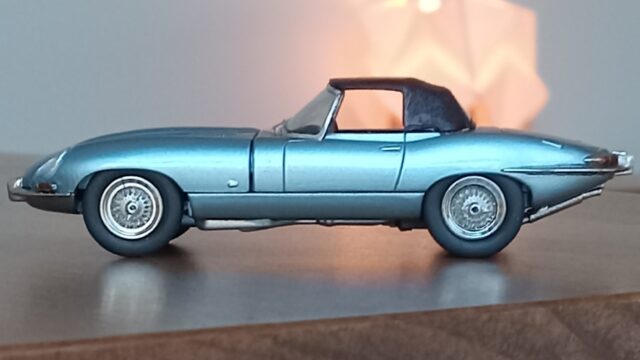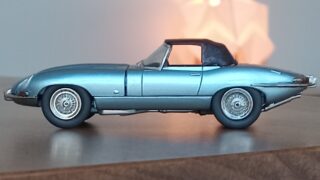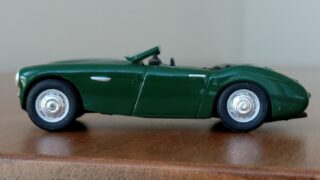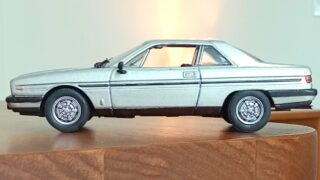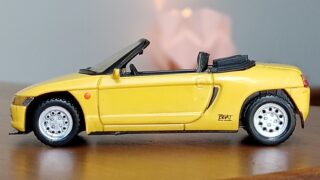
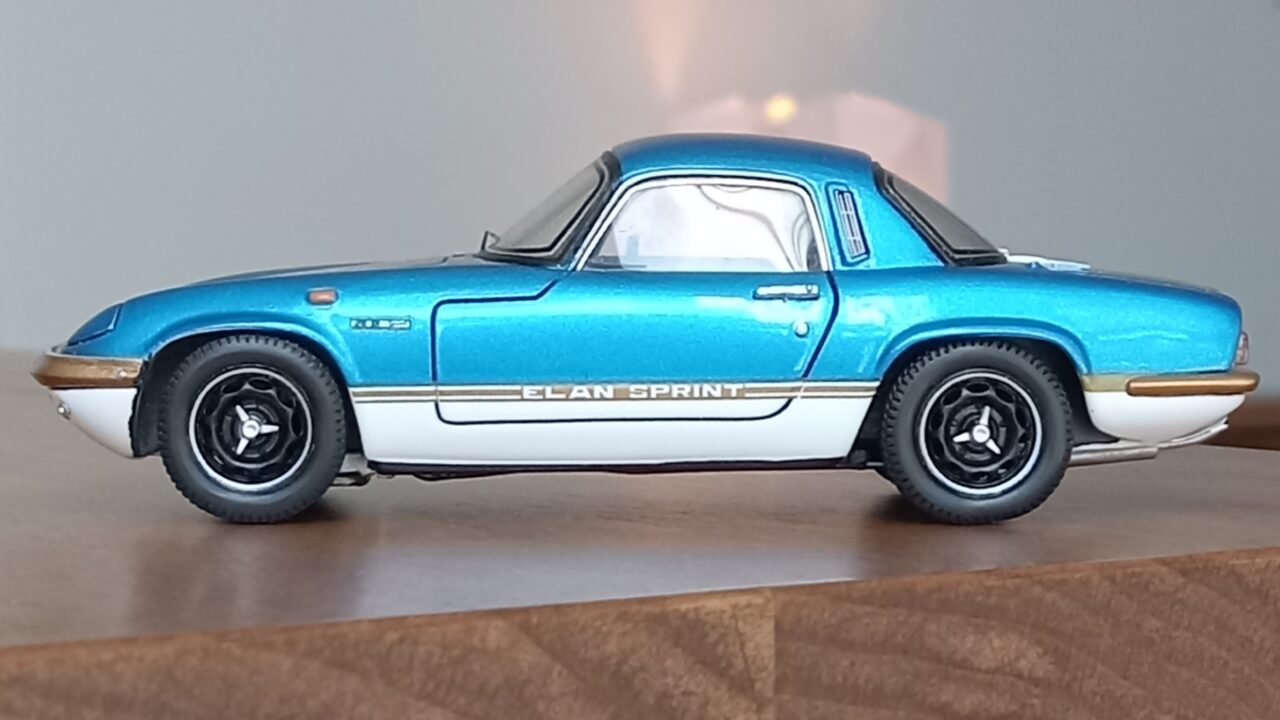

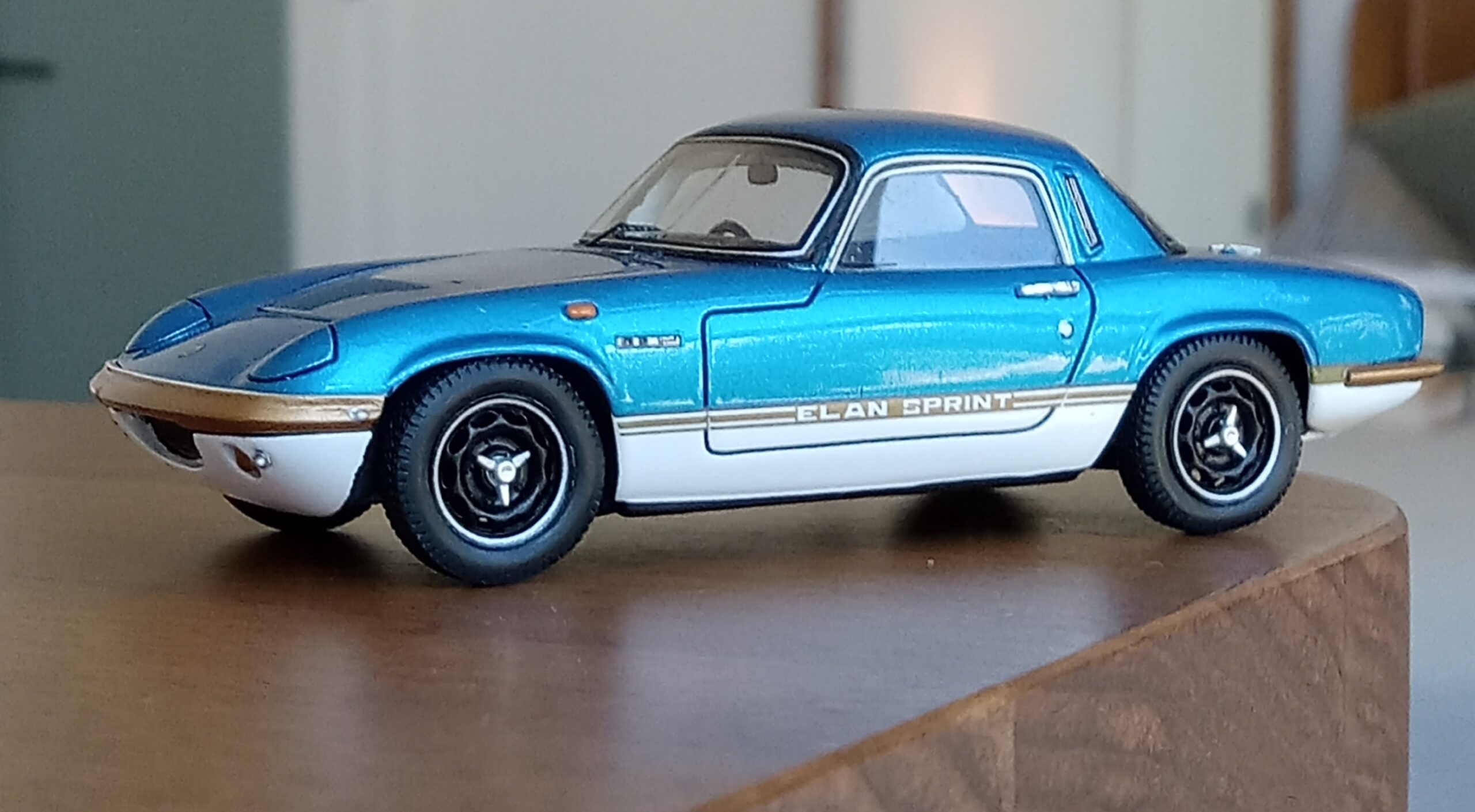
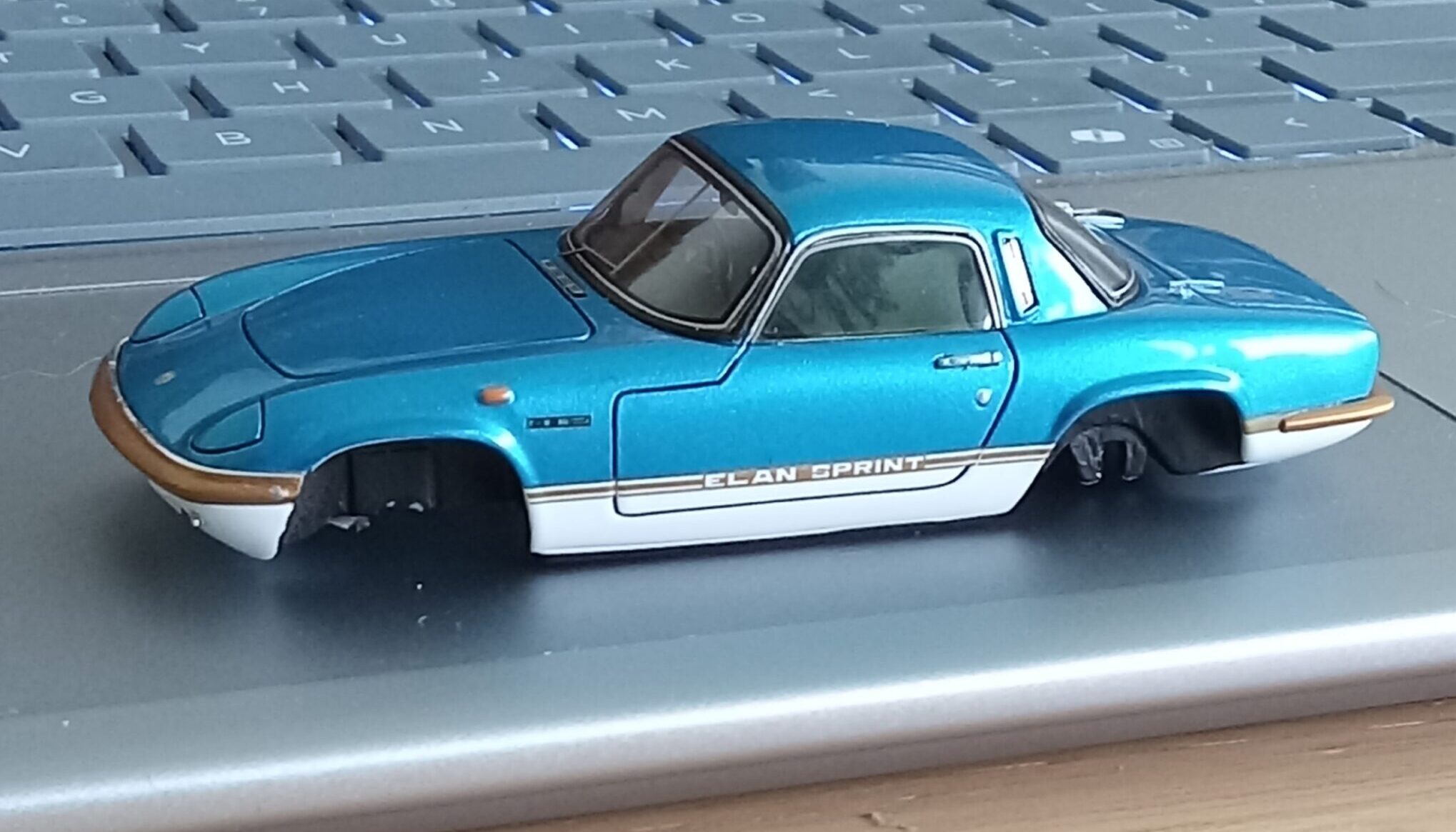
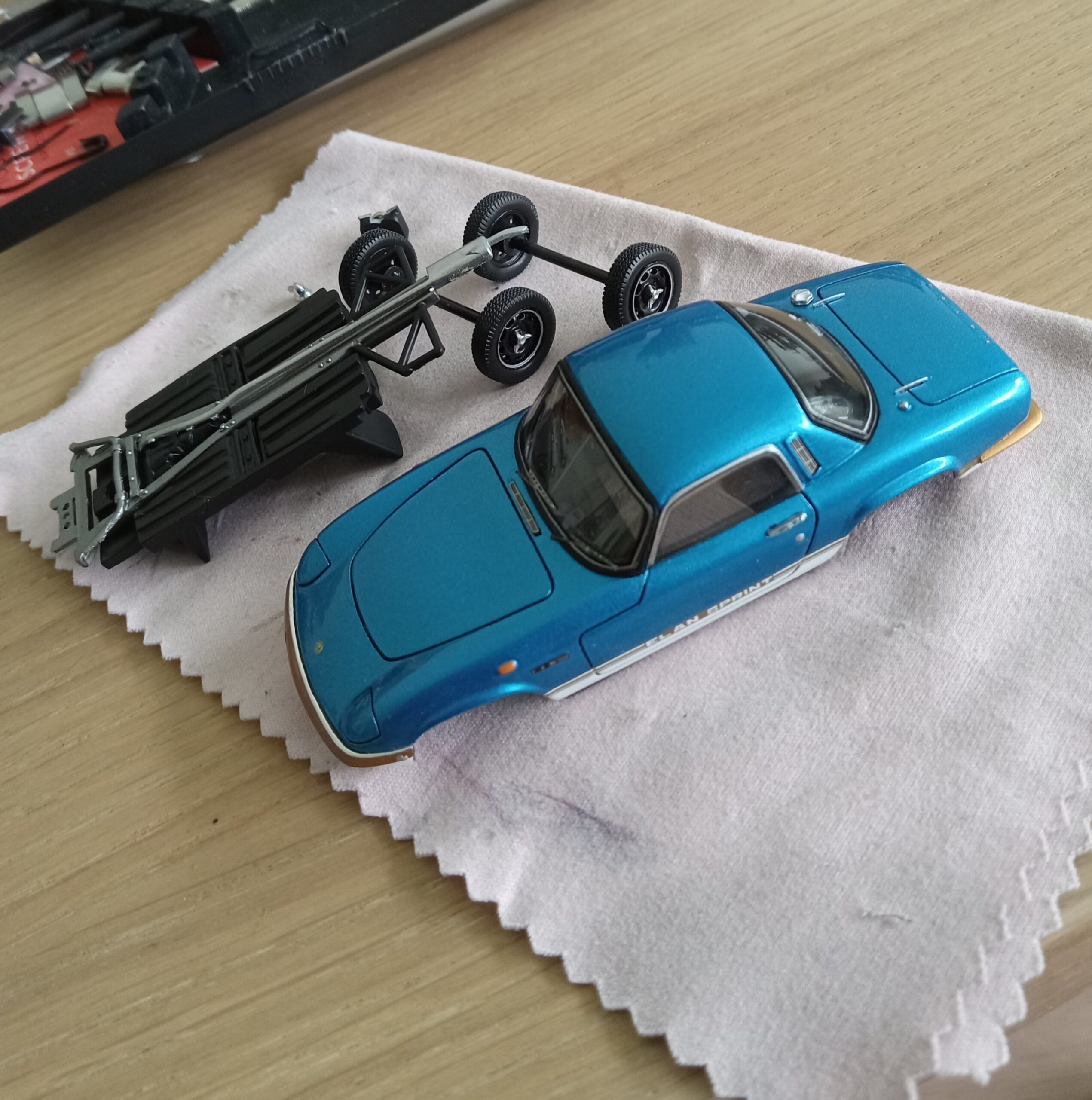
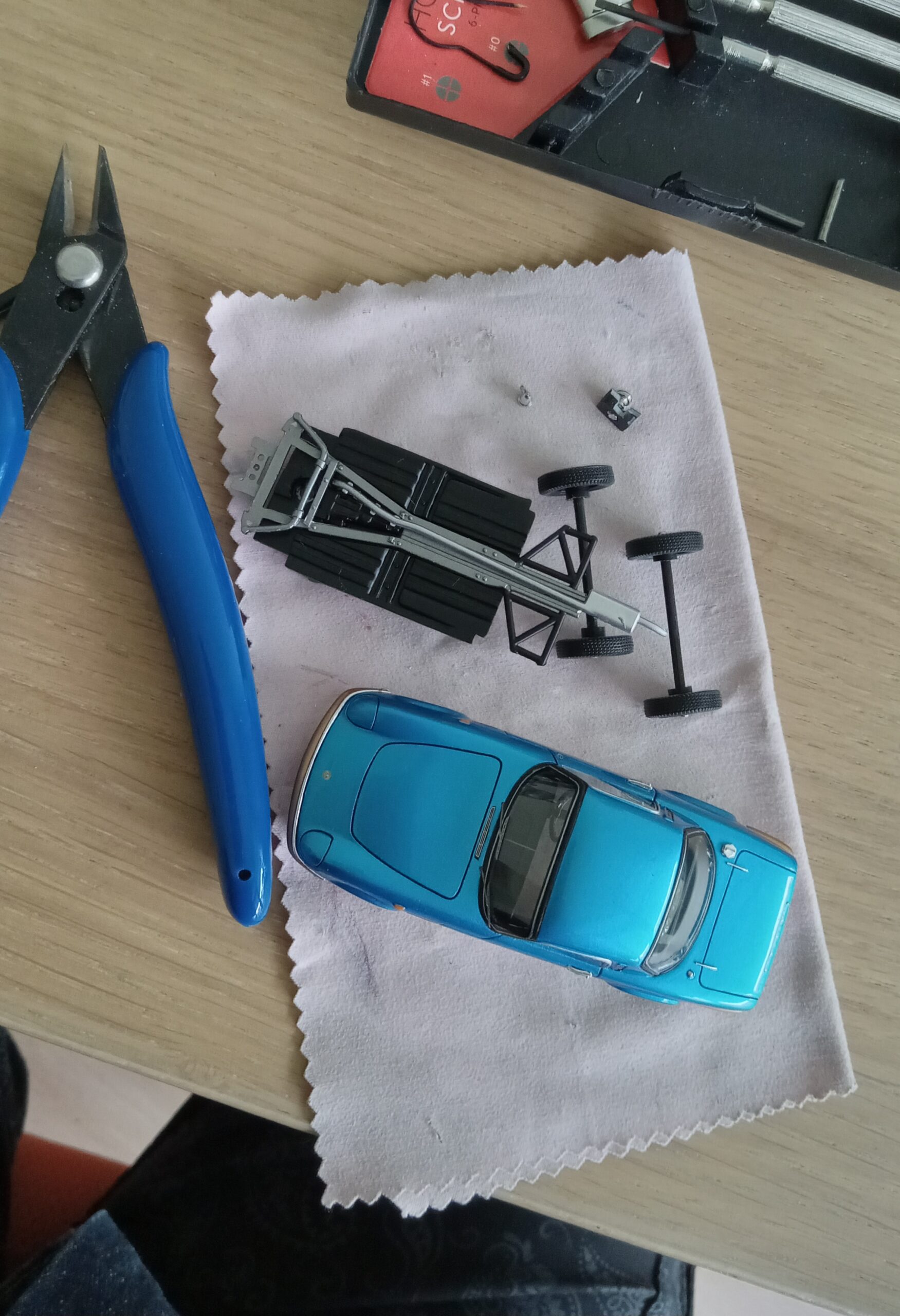
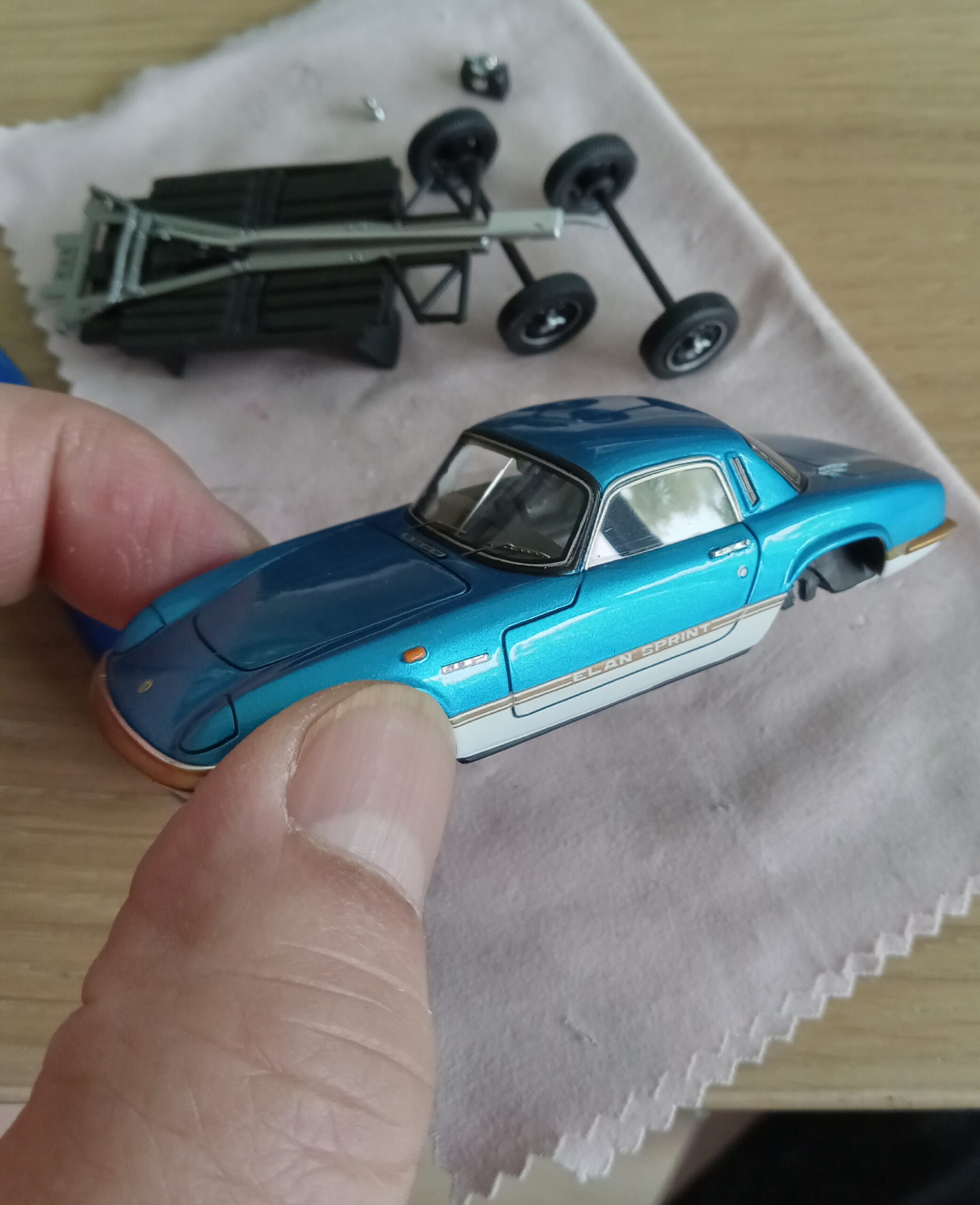
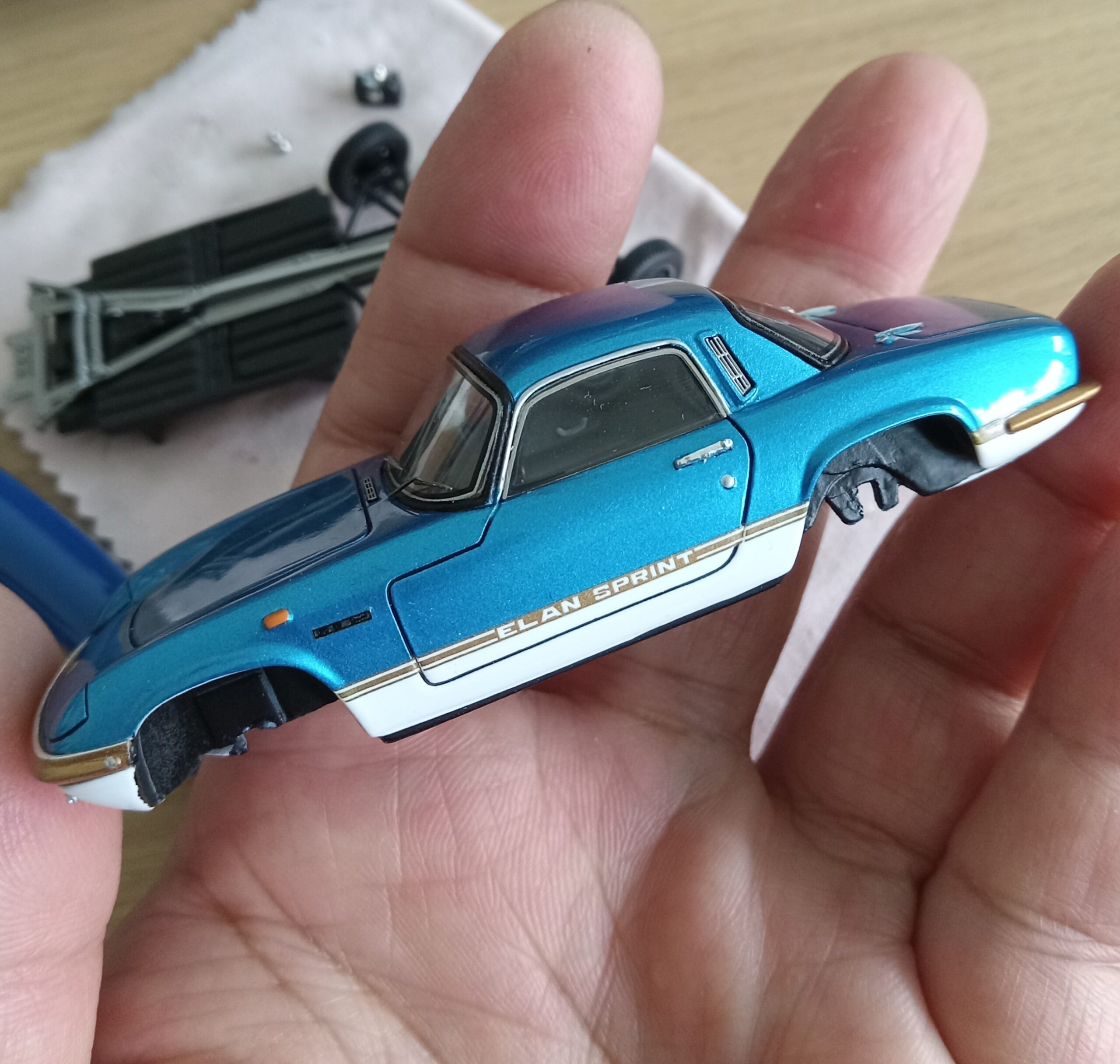
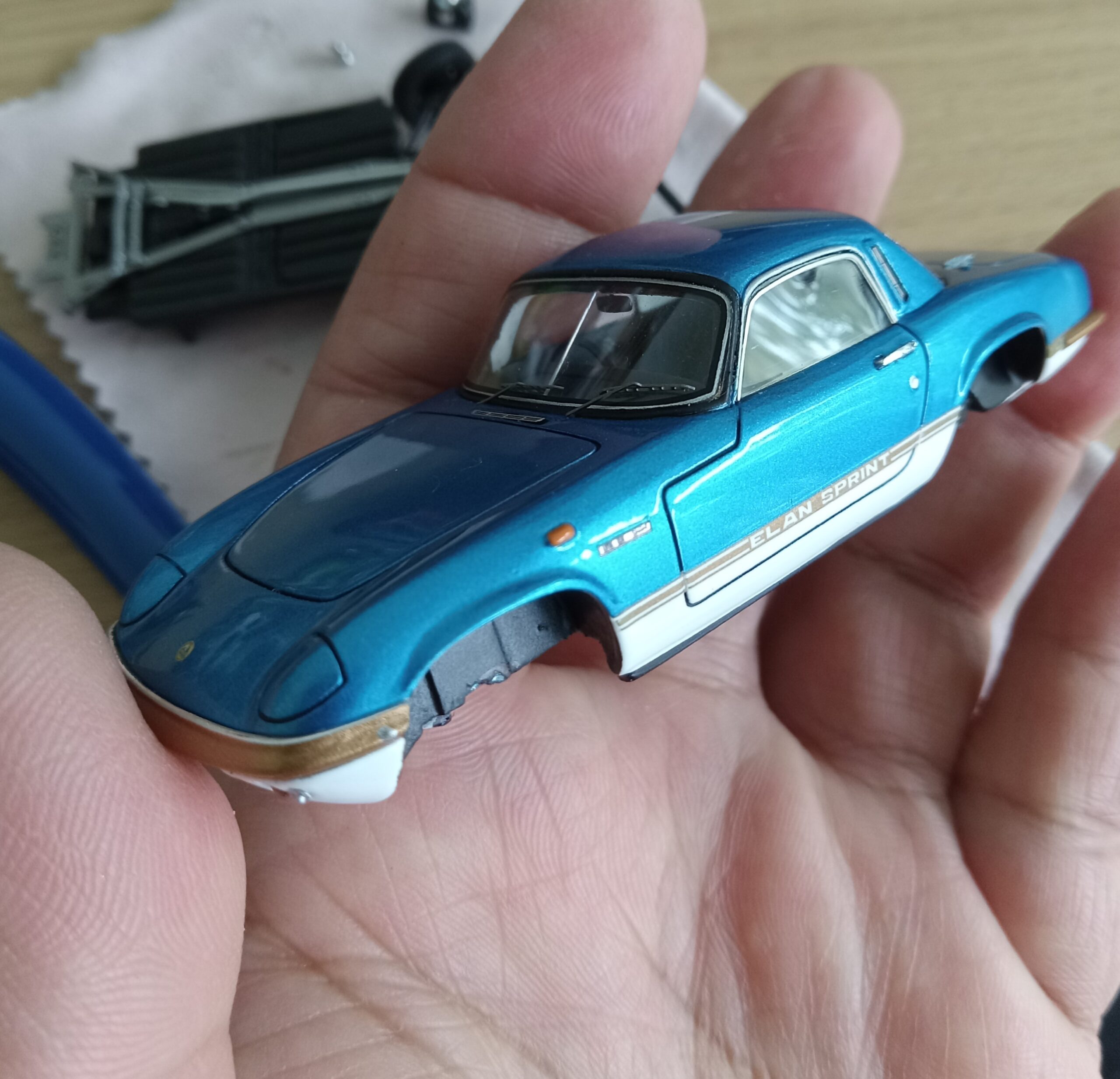
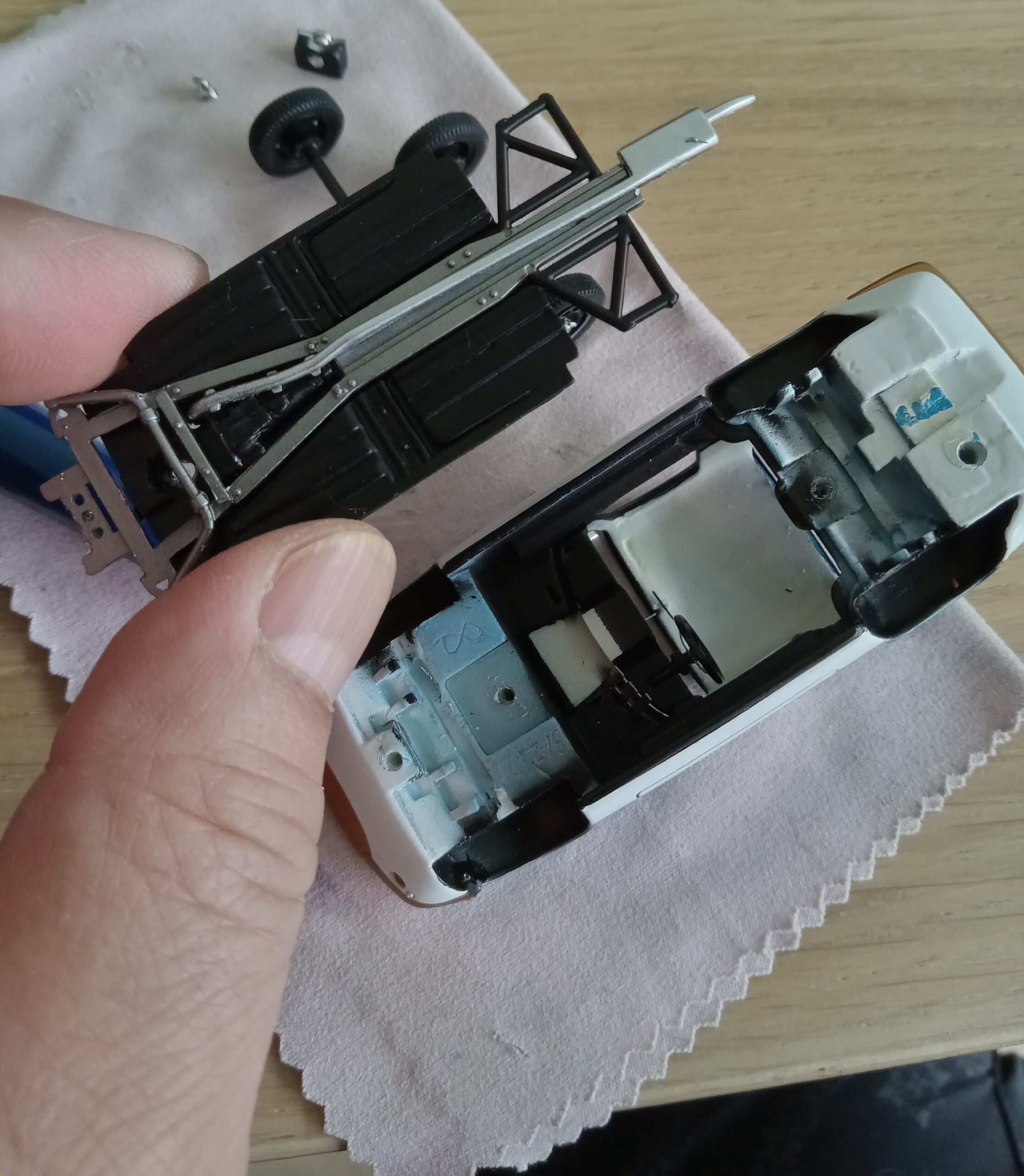
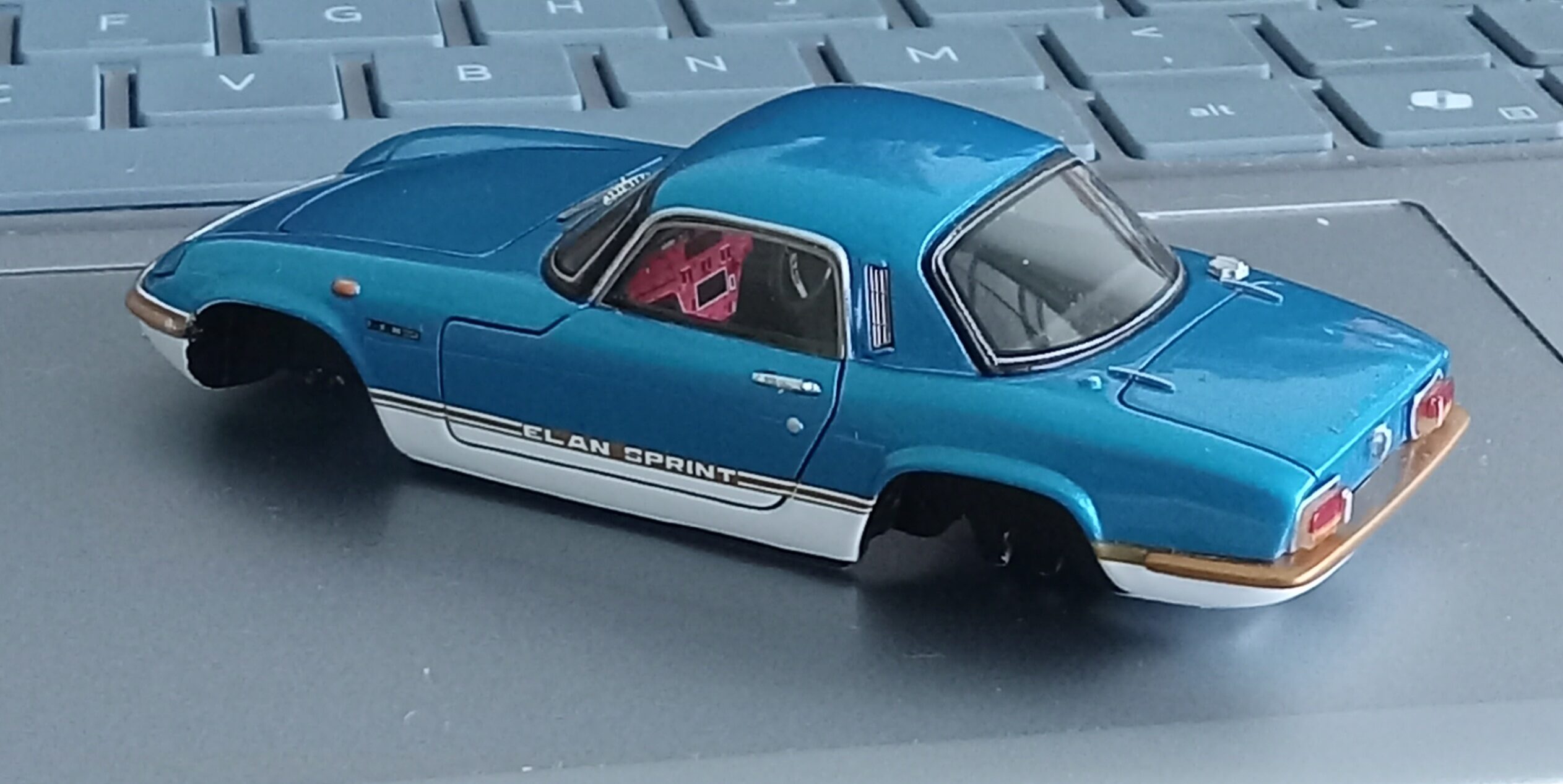
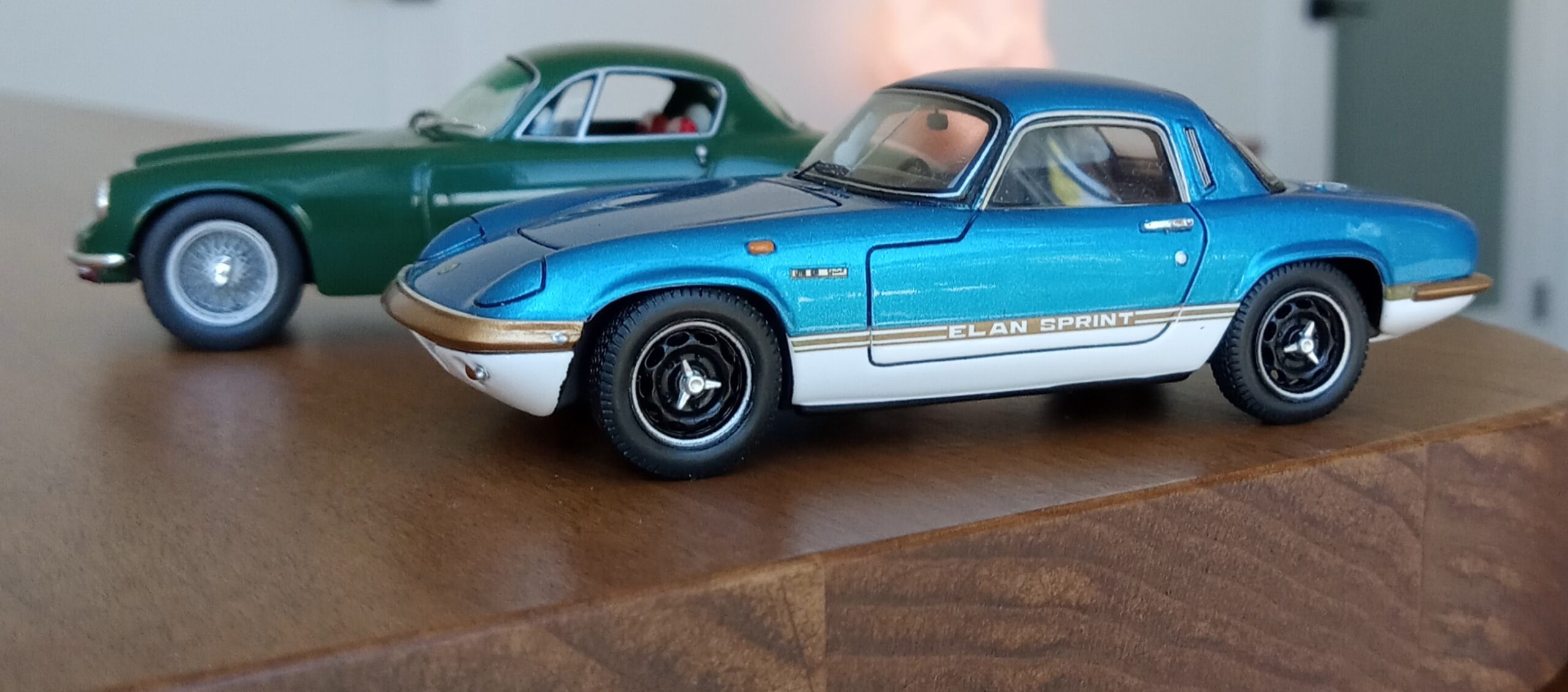
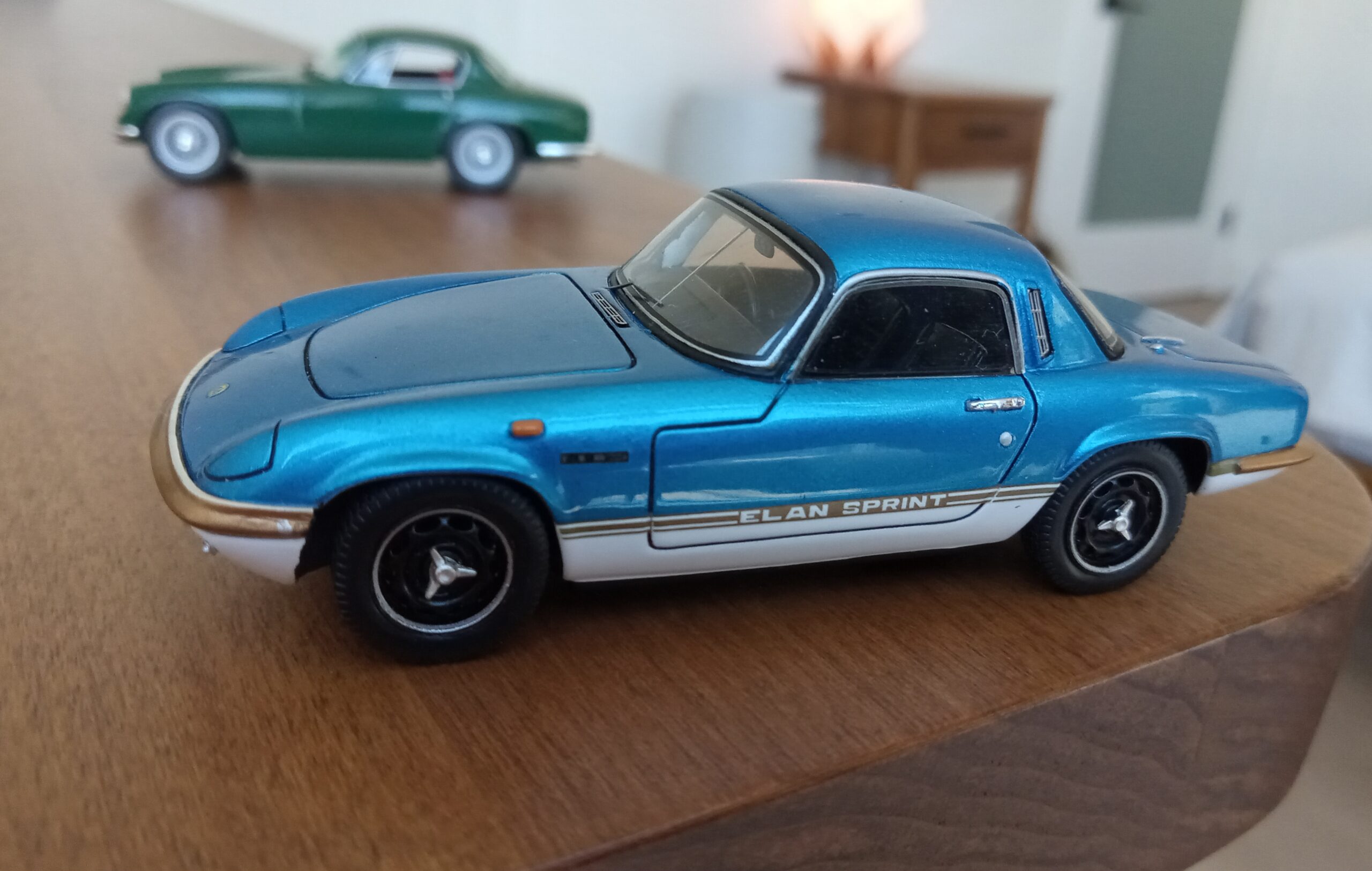
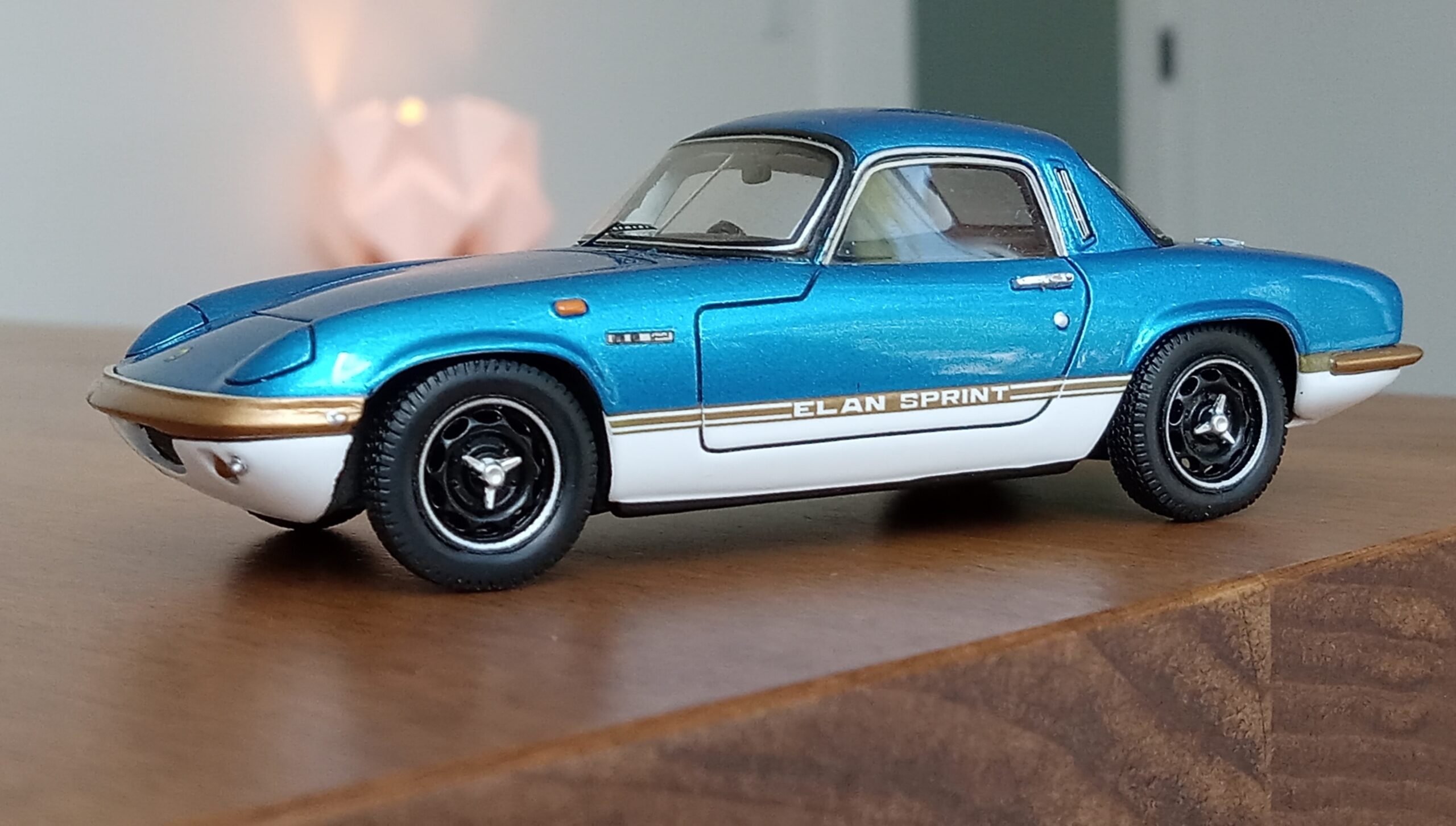
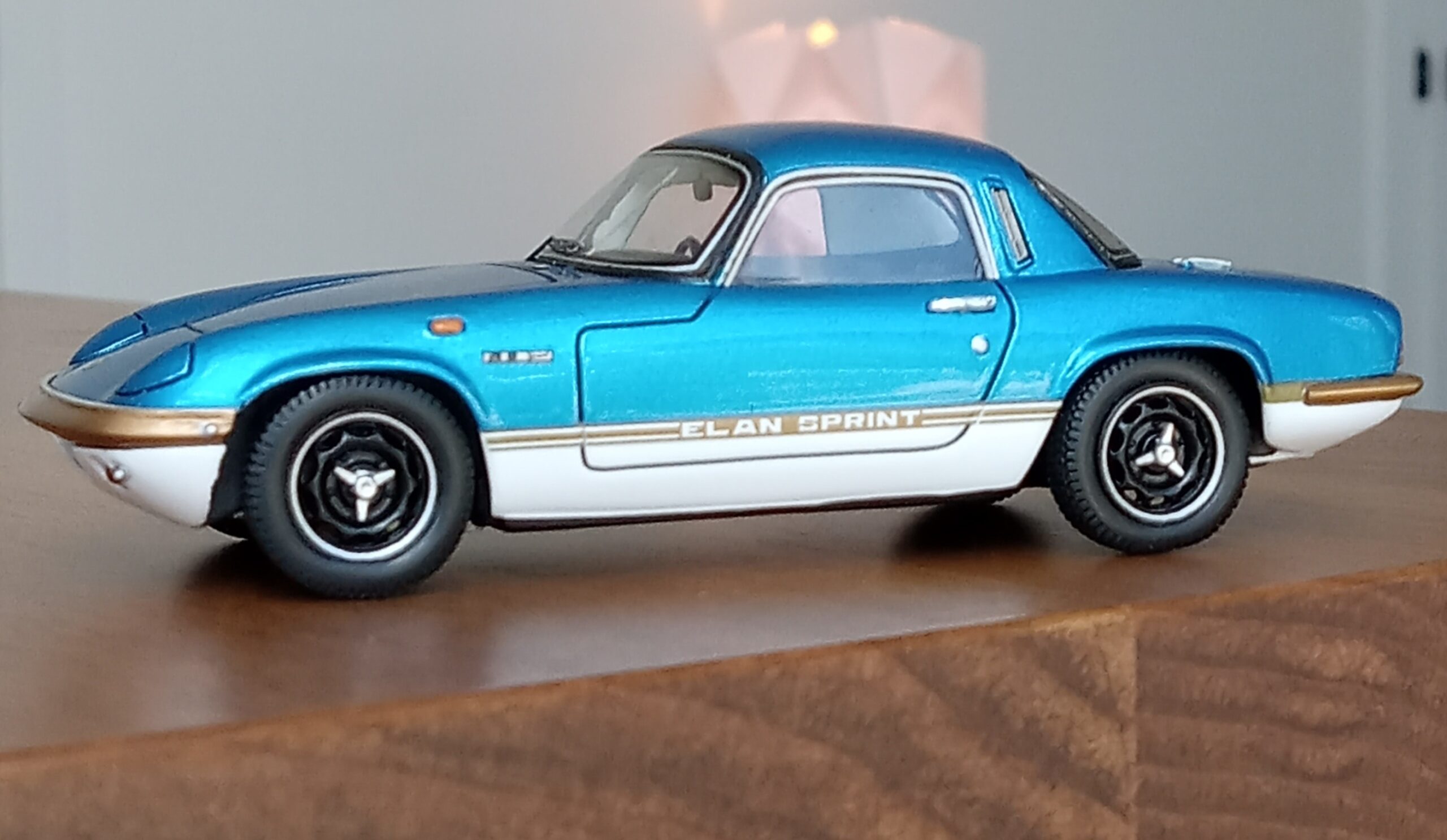
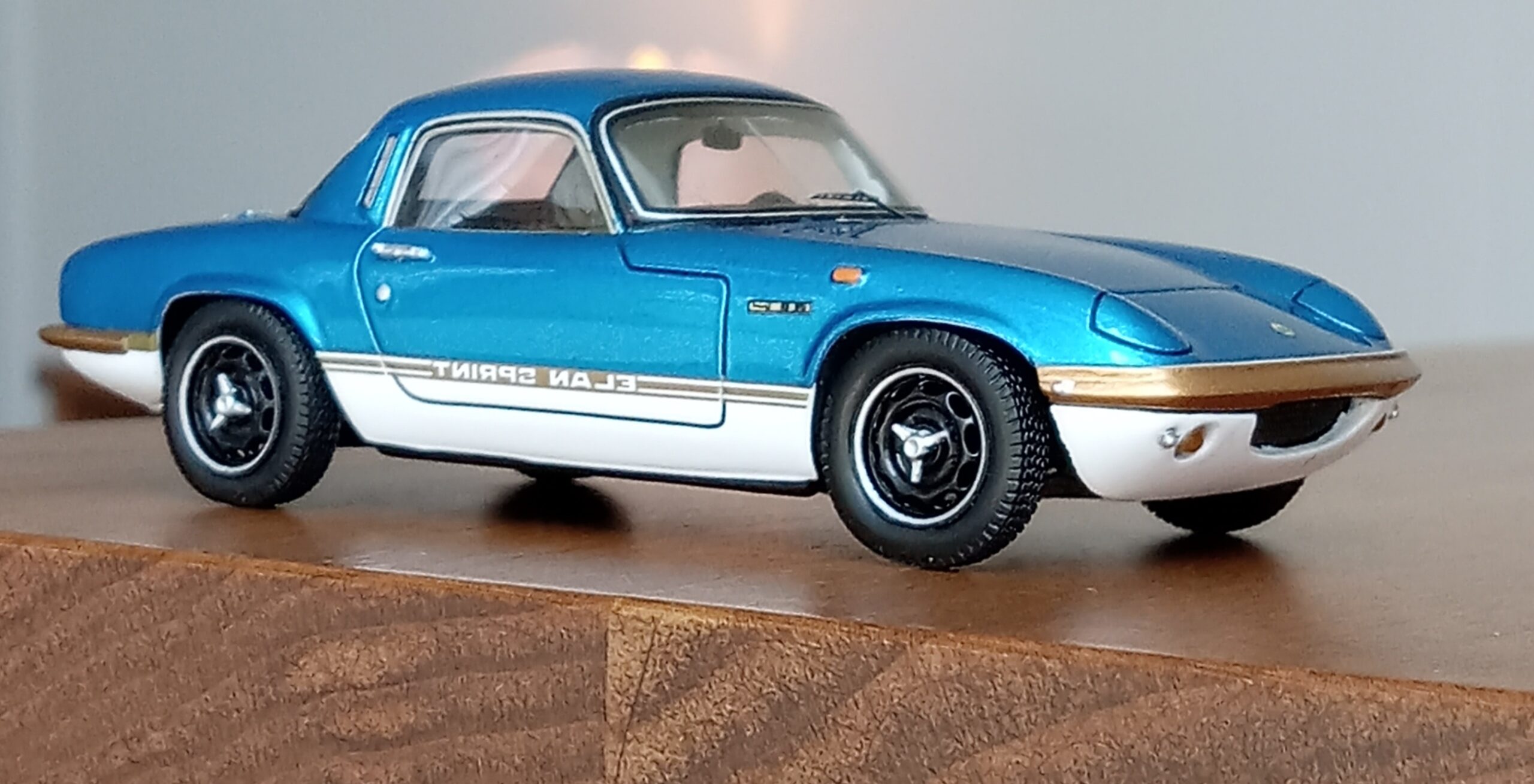
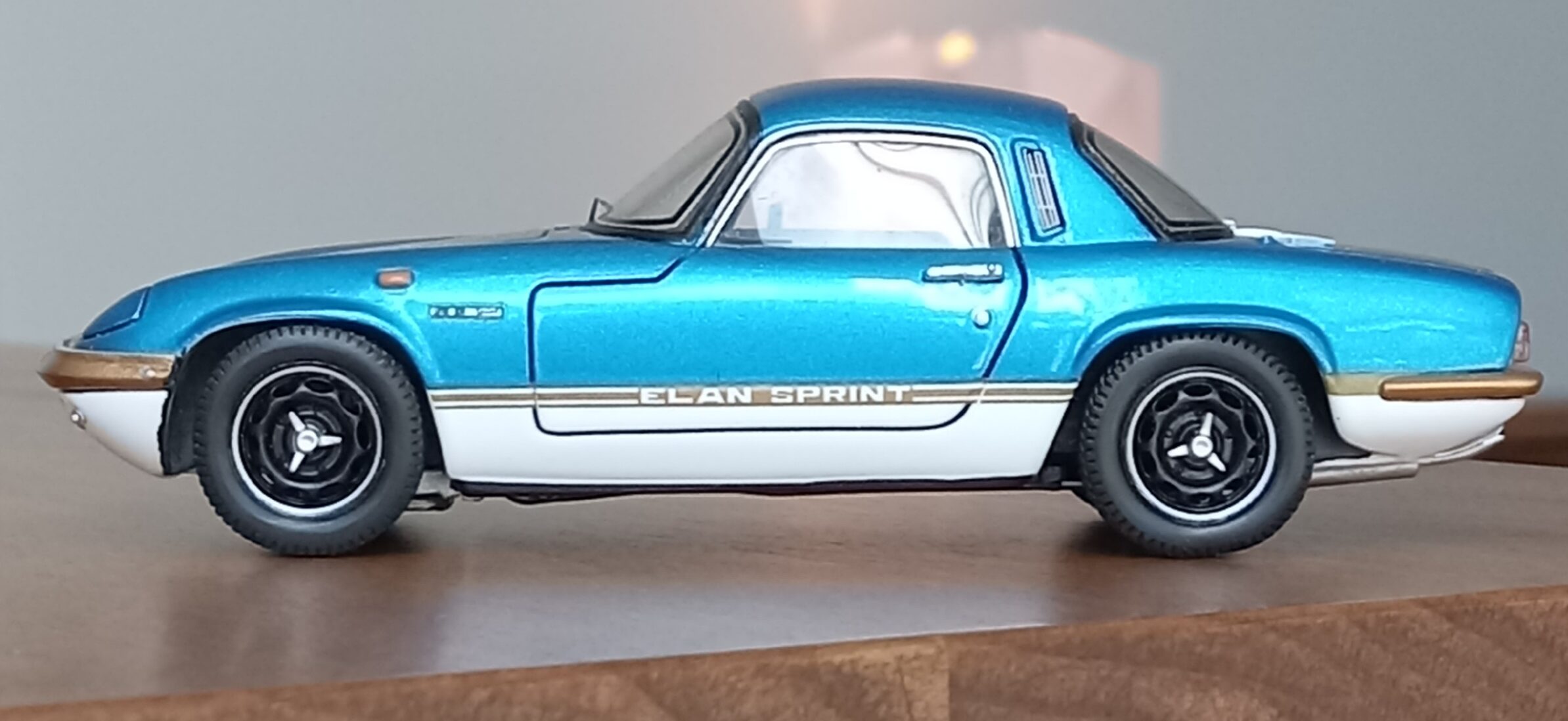
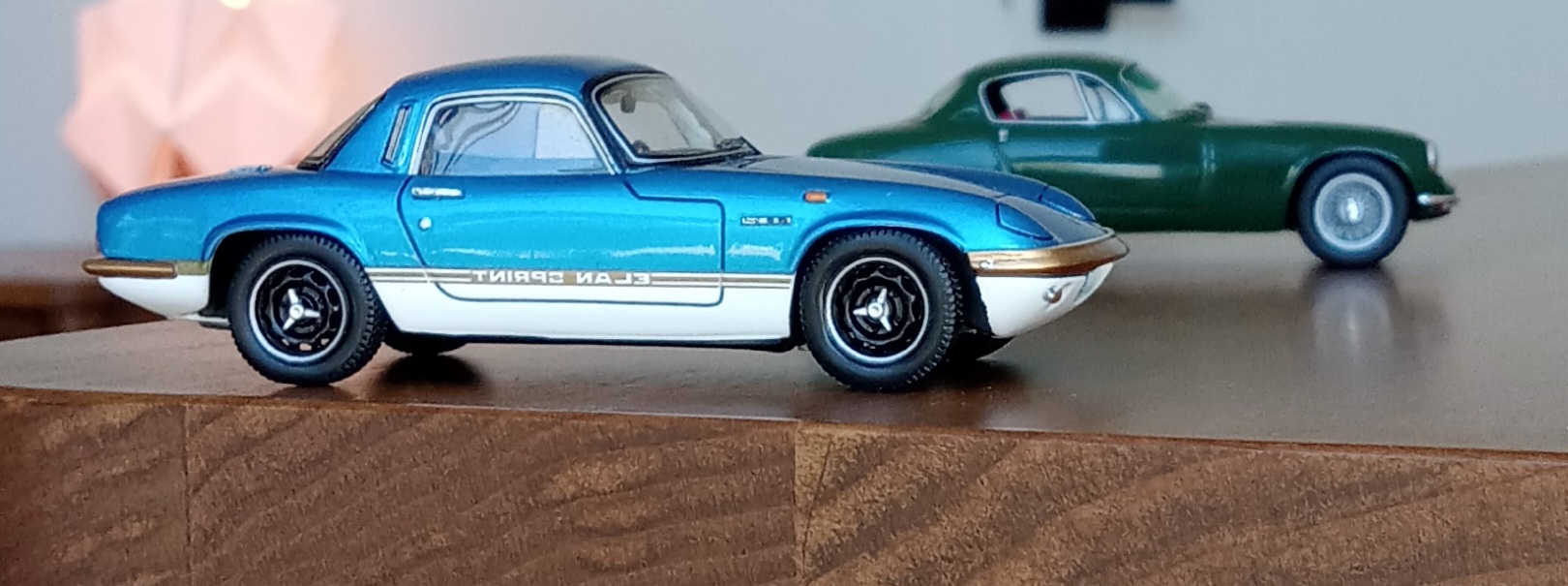
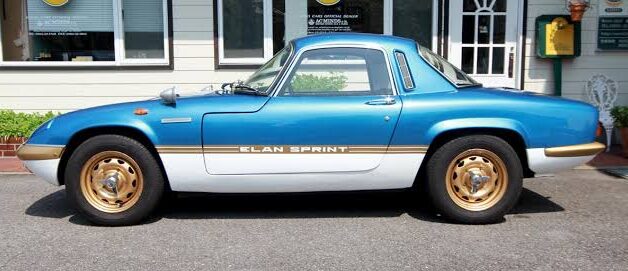
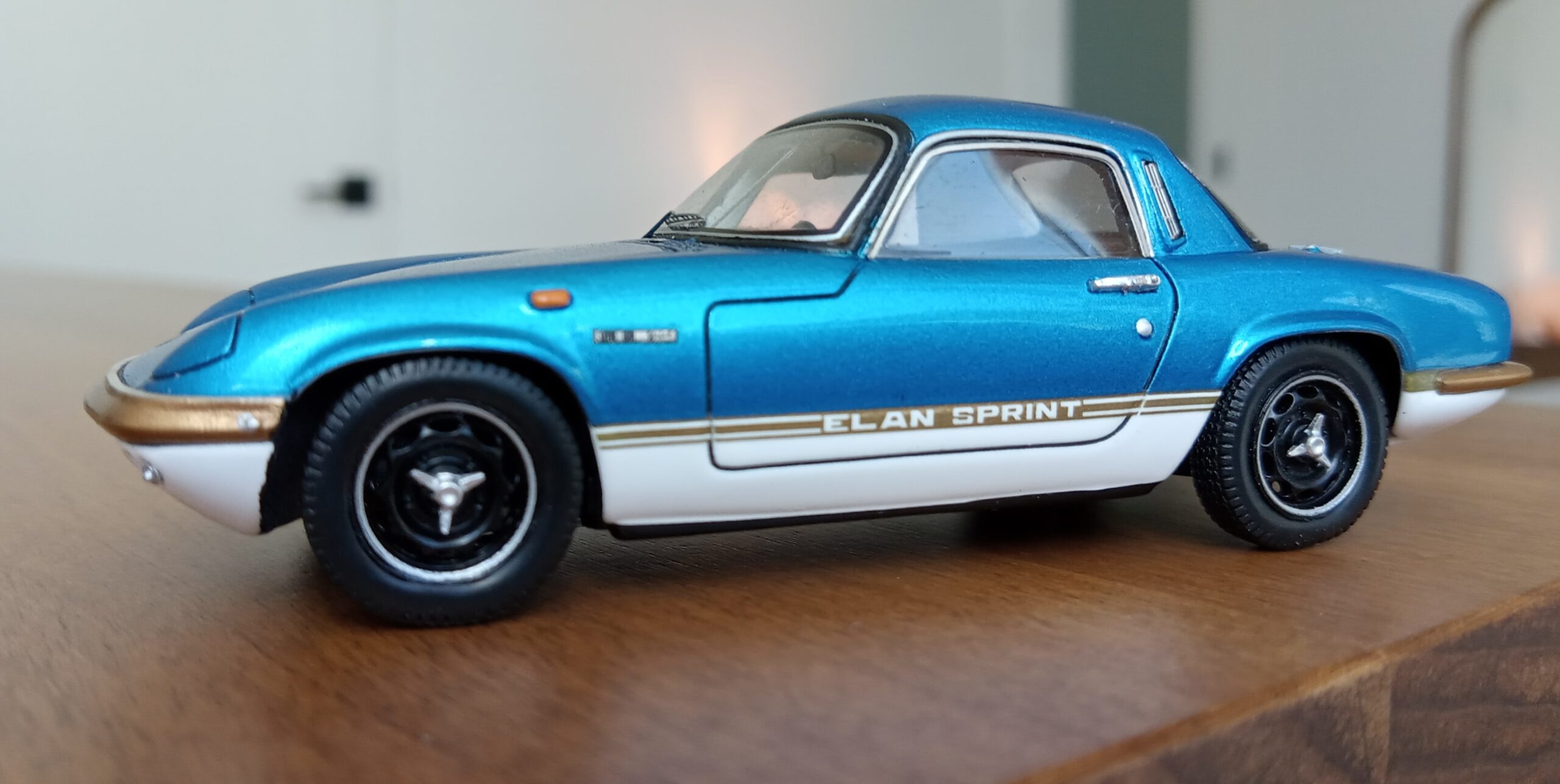
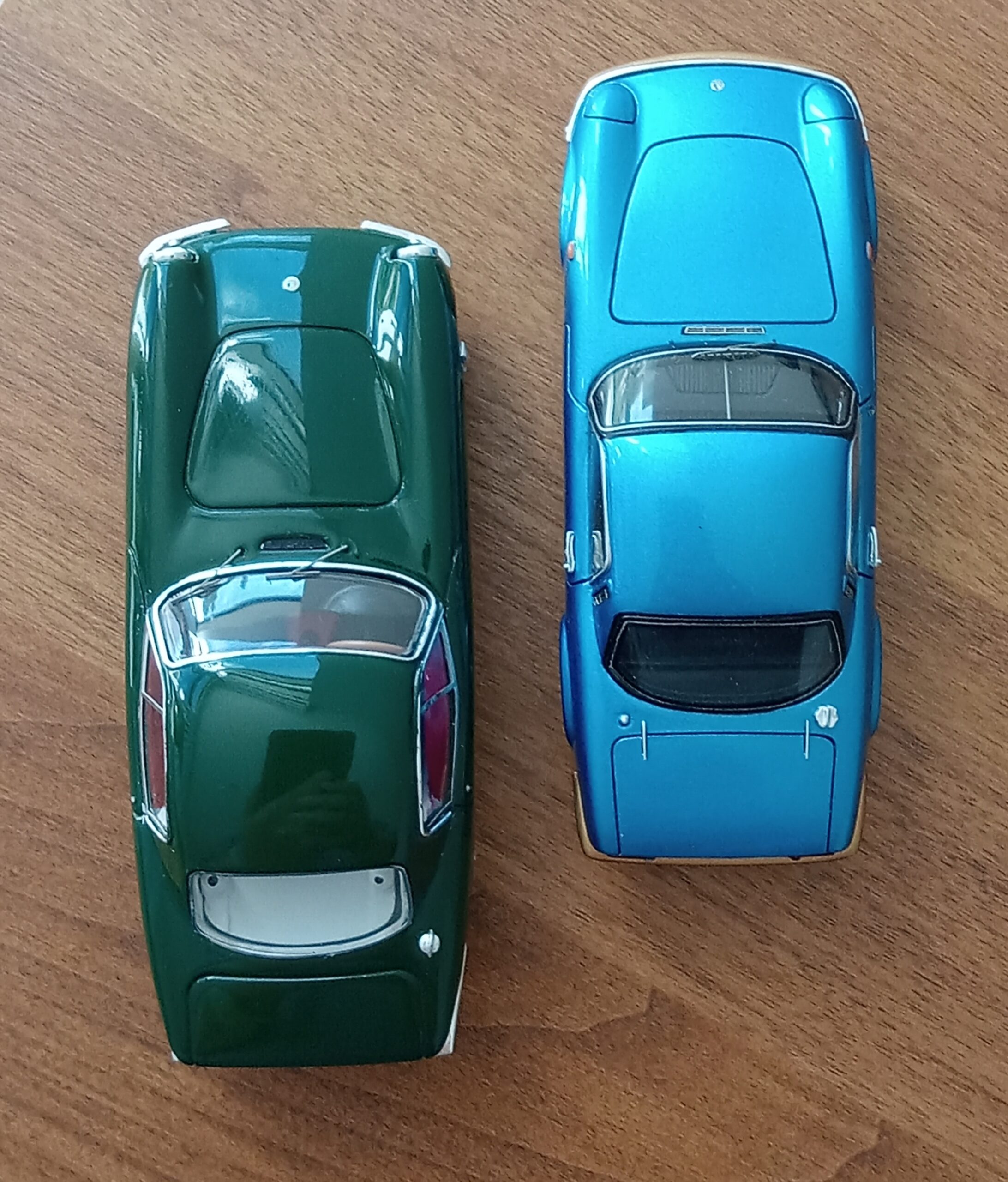
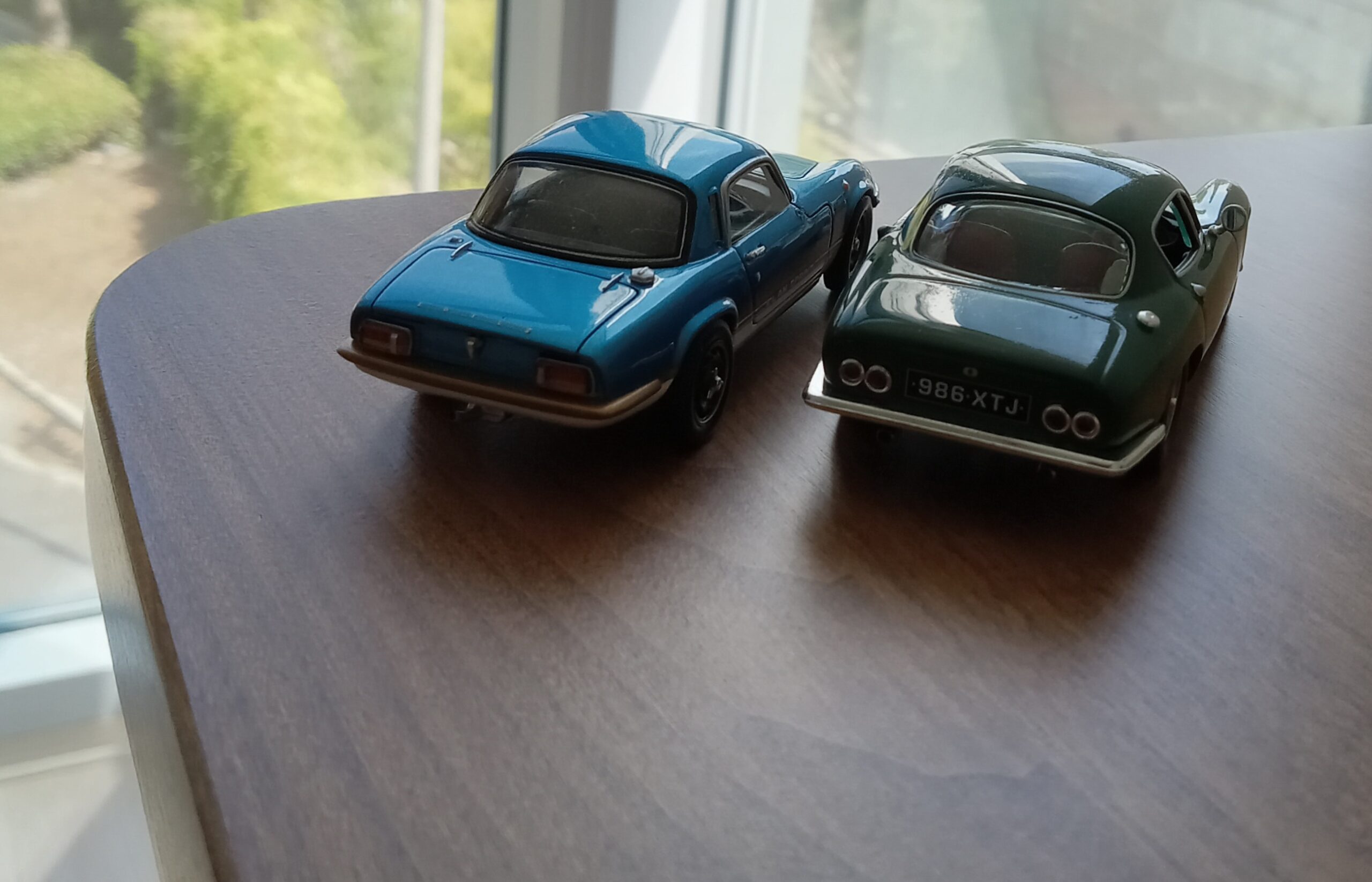
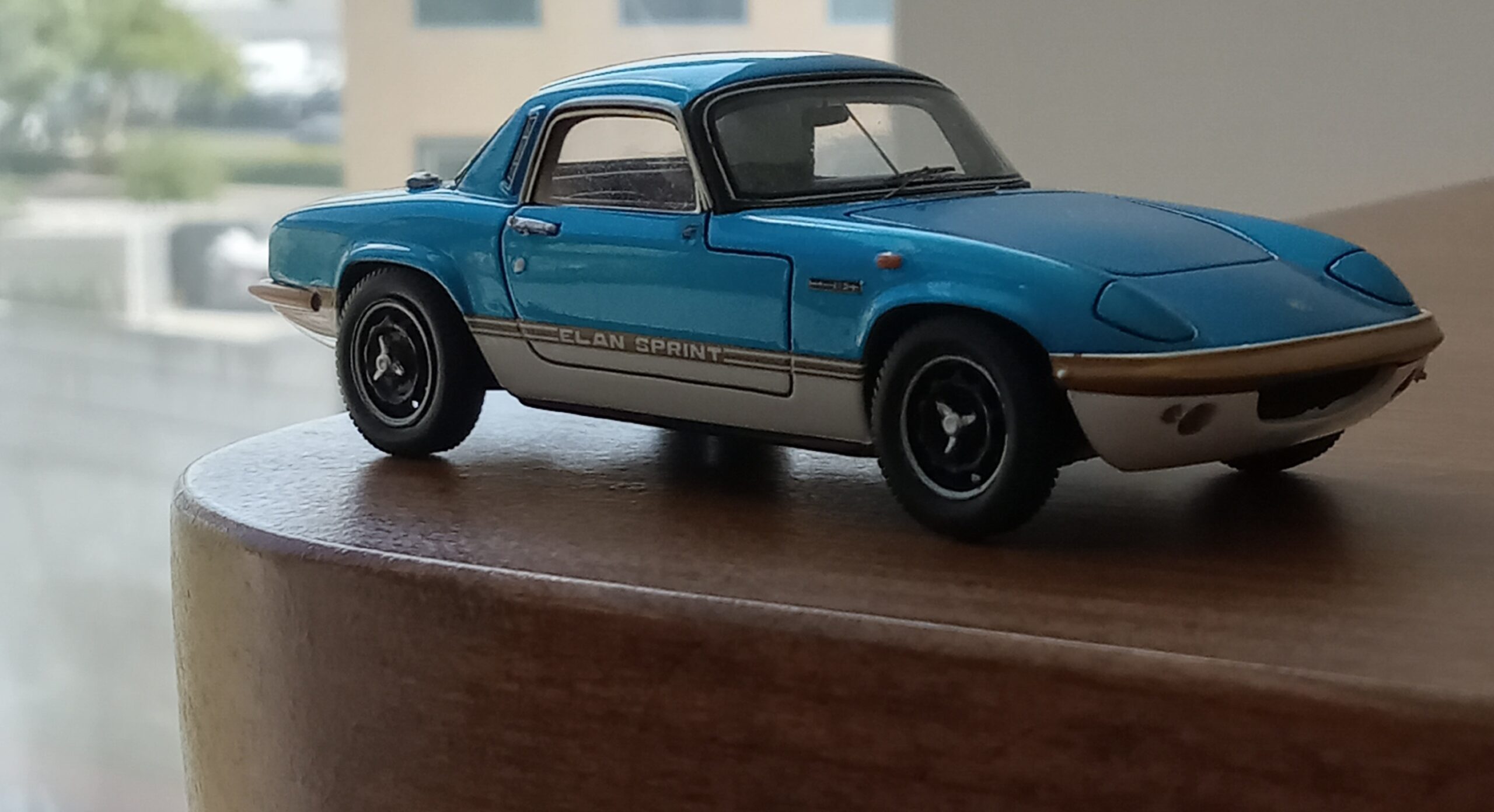
(写真撮影に使用したミニカー①:SPARK社製、1/43レジン完成品、ロータス・エラン S4 スプリント(メタリックブルー、白&金)---改造箇所:上下を分割後、タイヤ&ホイールのトラック最大化⁺前後軸位置を若干の前傾姿勢になるように微調整)
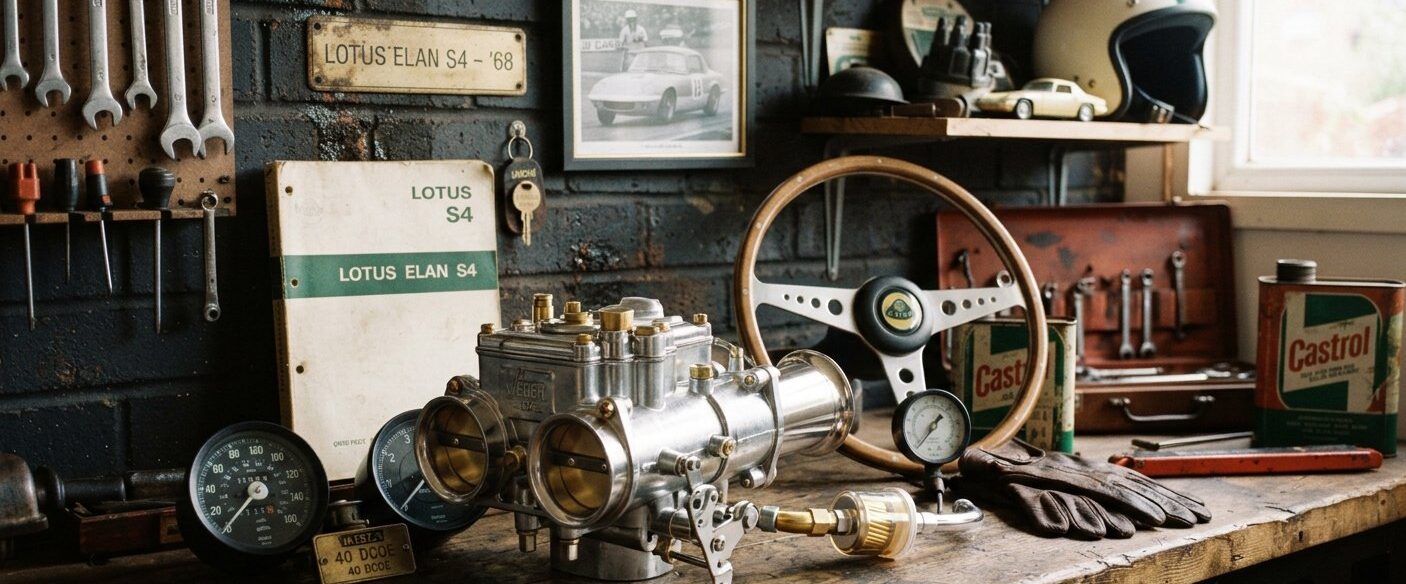
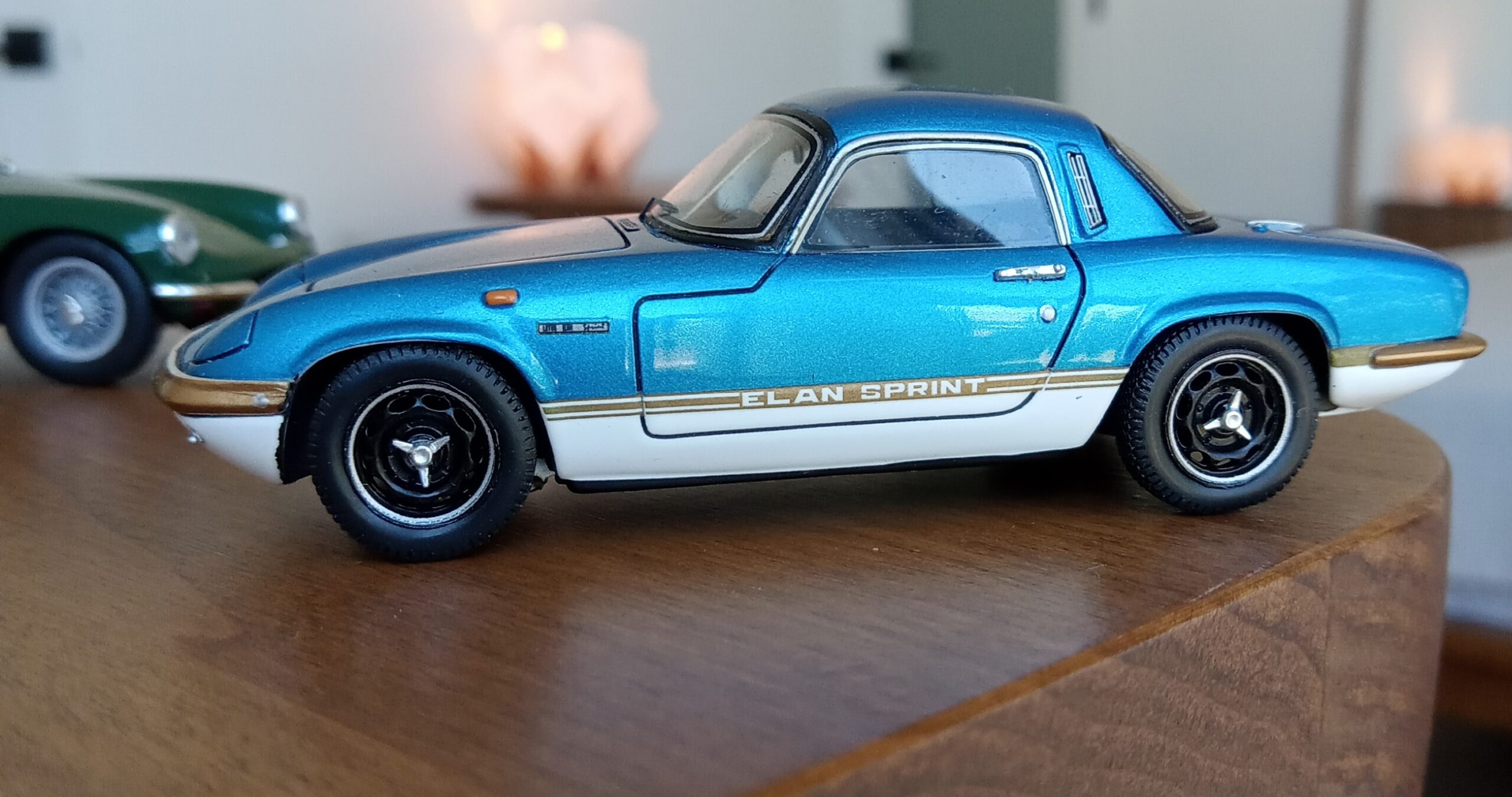
好みの自動車デザイン:第54回ーー2ドア・クーペの系譜: 第34回【英国車②】 ロータス・エラン S4 スプリント、1971(メタリックブルー、白&金))『量産型:軽量英国スポーツ車』Lotus Elan S4 Sprint、1971(Met. Blue, White & Gold)『Chapman’s Masterpiece』
n
#改造プロジェクト:
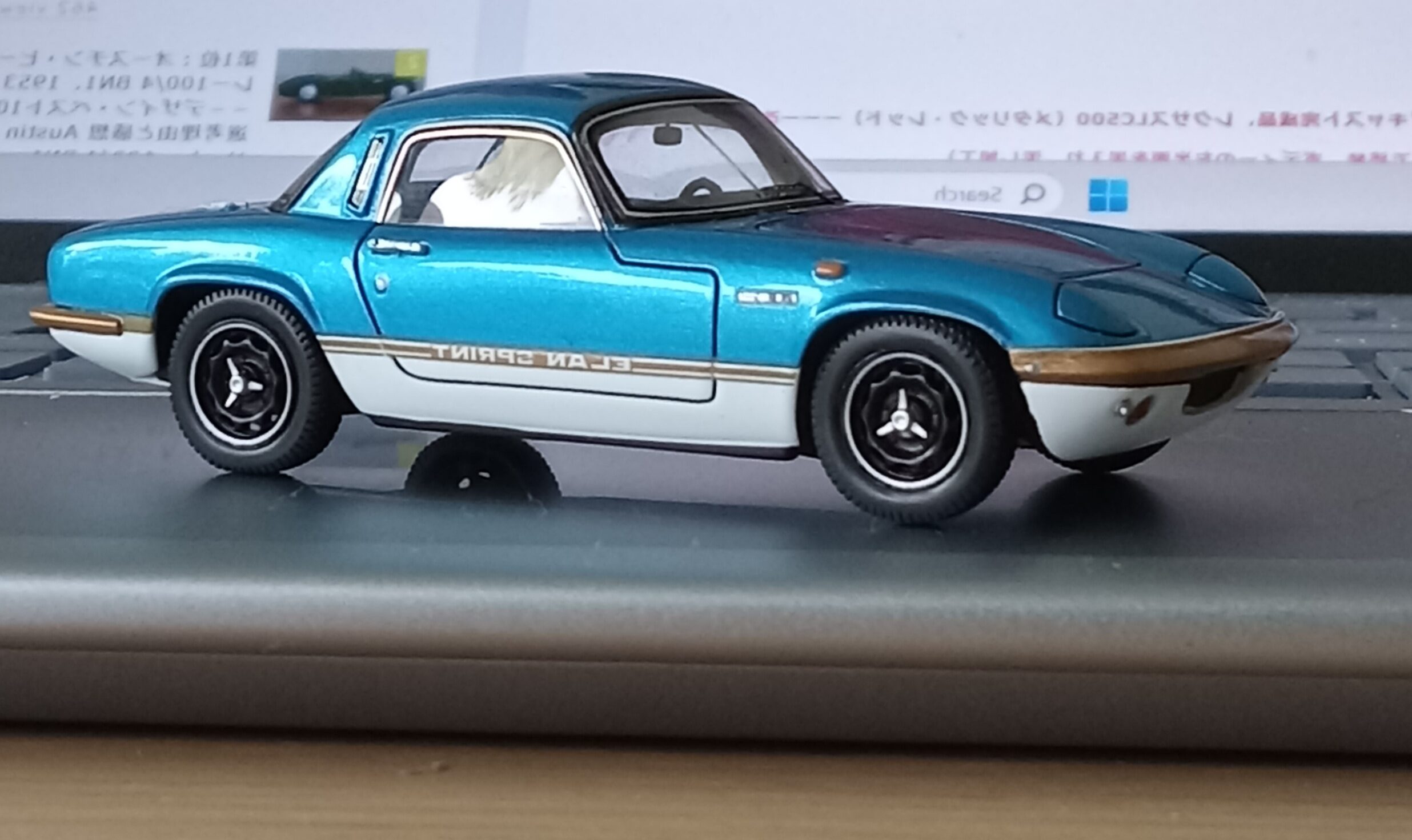
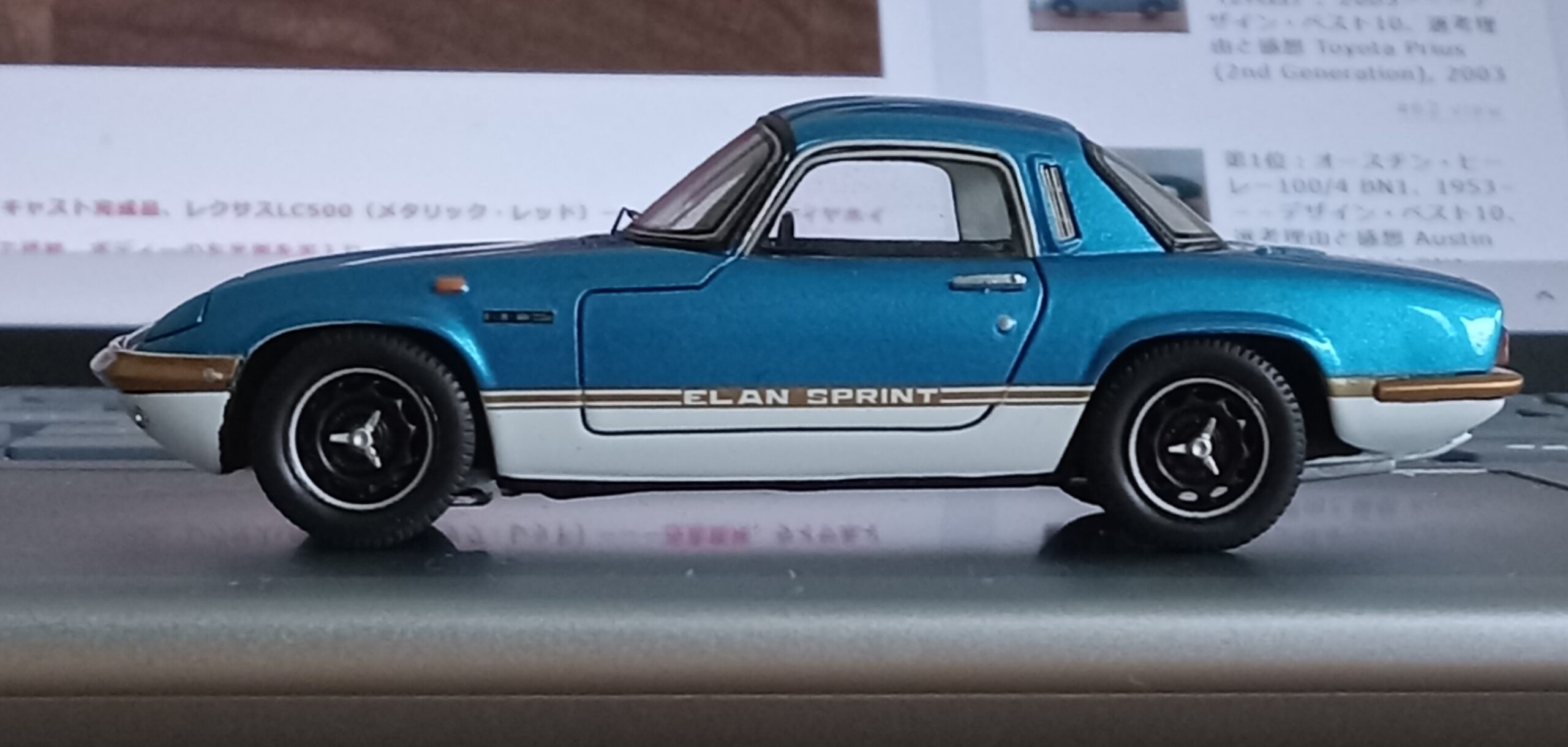
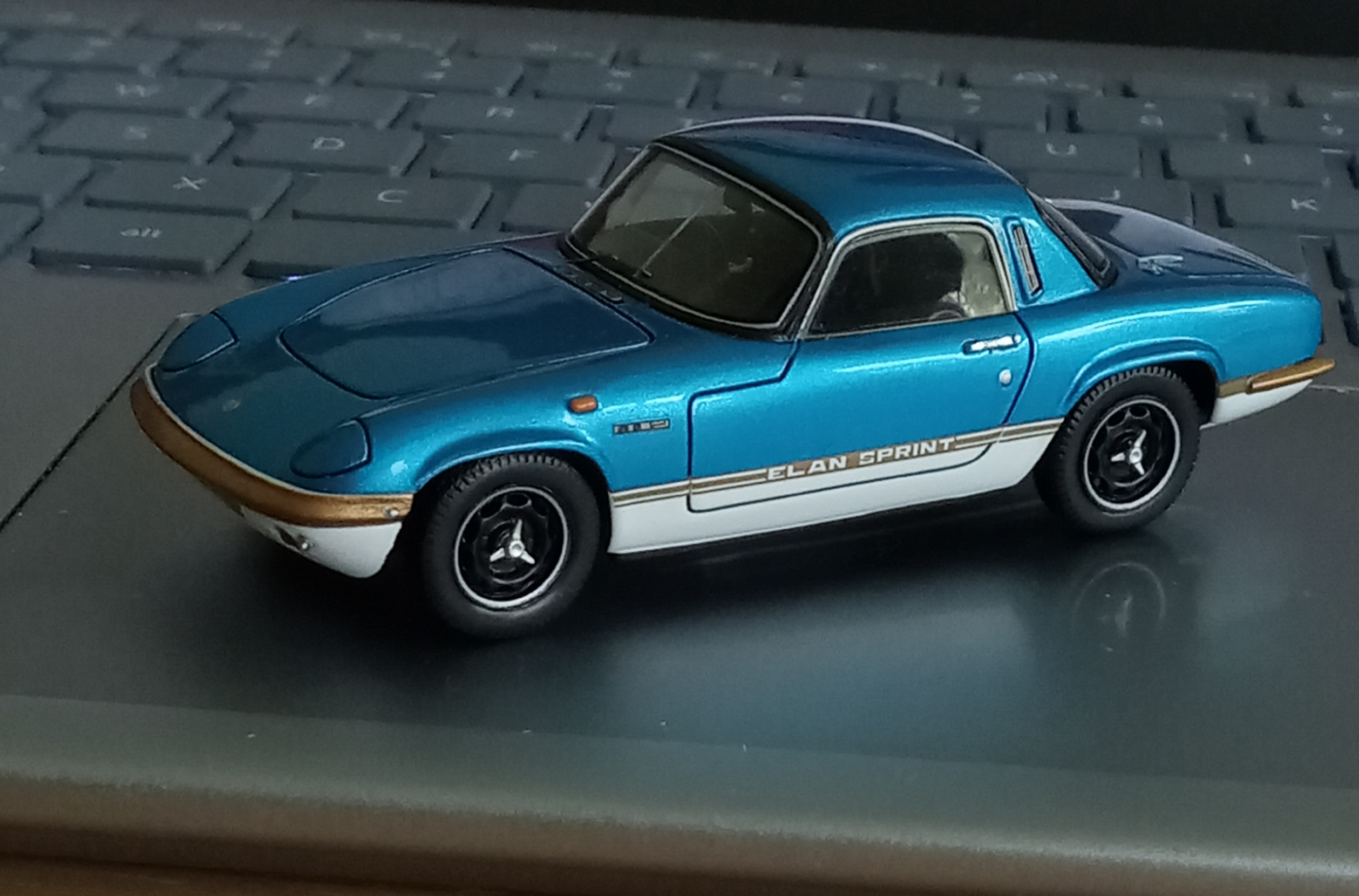
改造行程:
1:ボディーの上下を分解して、丁寧に車軸を外し、
2:ホイール&タイヤを車軸から外し、
3:車幅が最大になるよう調整&瞬着にて再接着、
4:軸受け部分を2-3mm削り、車高を微調整、
5:何度も繰り返し理想的な若干前傾姿勢になるよう車高を決める。
n
N
N
n
n
n
n
n
n
n
n
n
n
n
n
N
N
n
n
n
n
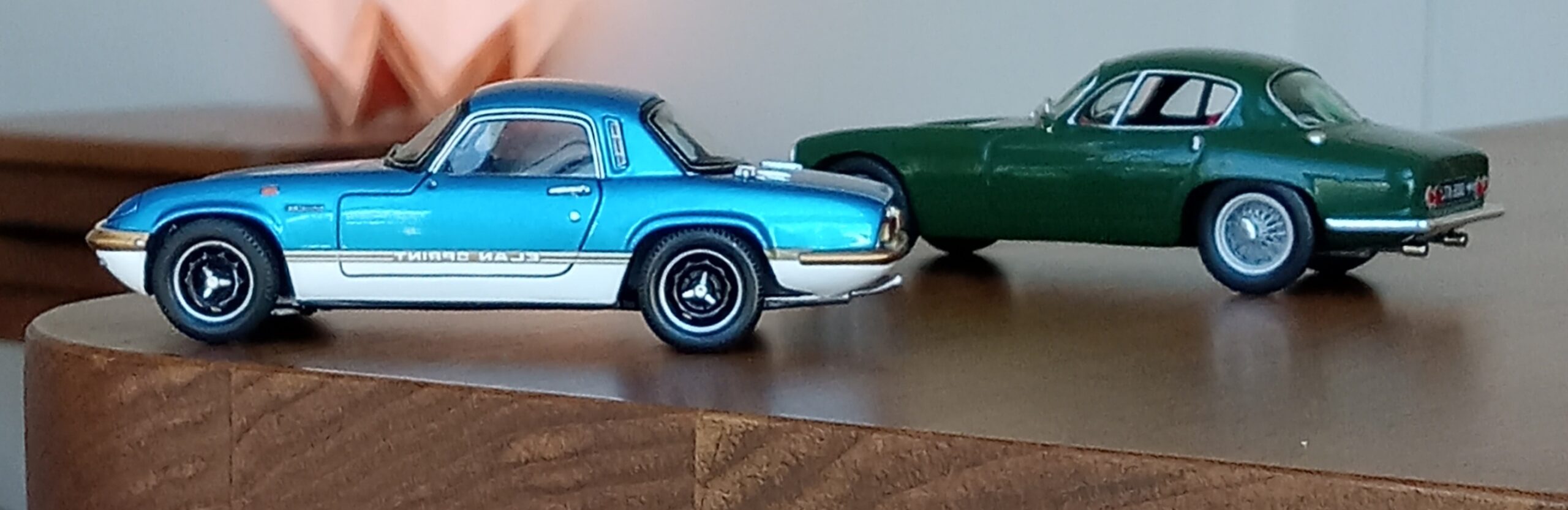
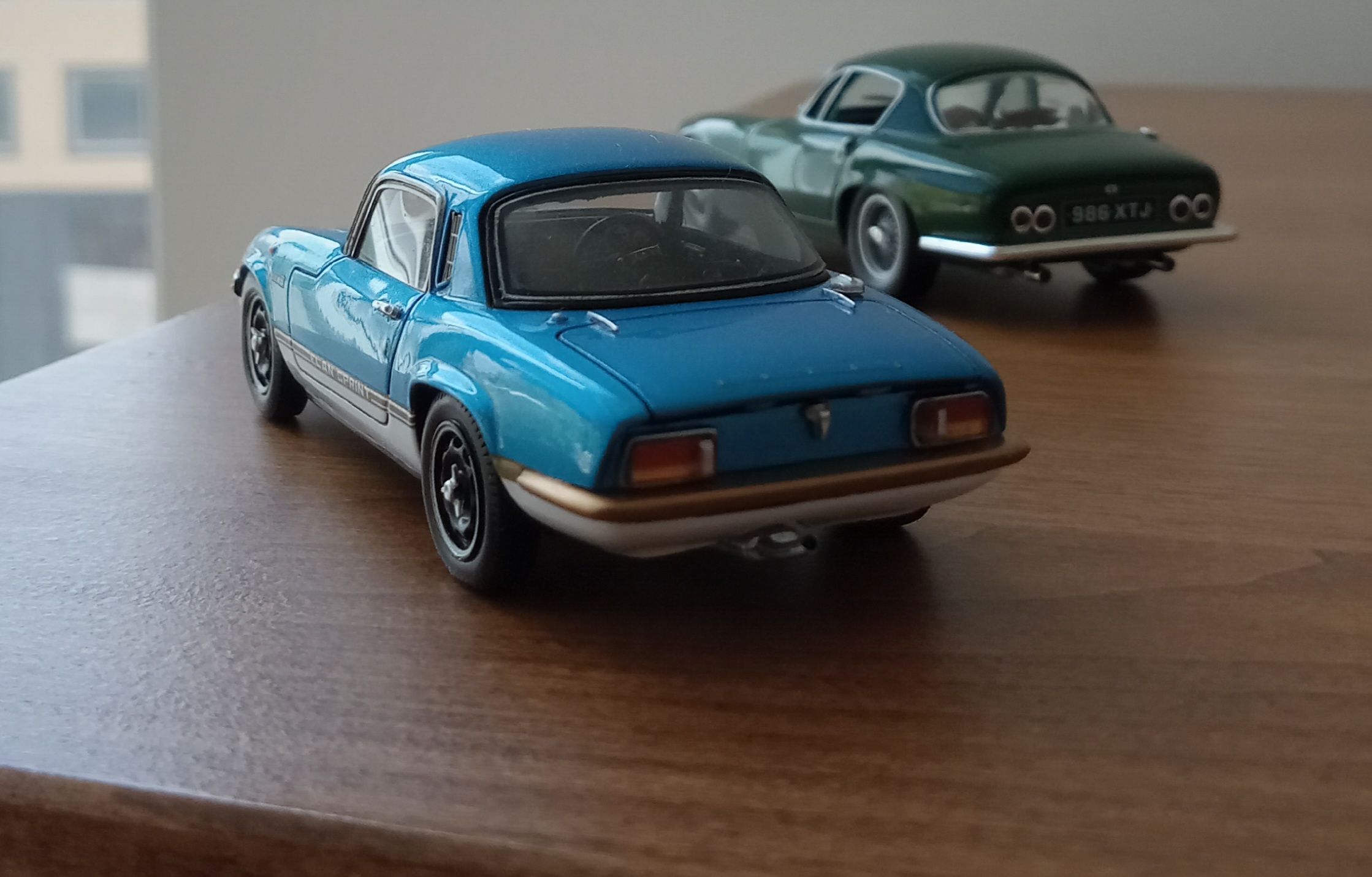
(写真撮影に使用したミニカー②:IXO社製、1/43ダイキャスト完成品、初代ロータス・エ ラン S1、1959(ブリティッシュ・レーシング・グリーン)ーーー改造箇所:ボディーを上下にばらして、タイヤ&ホイールのトラックと軸位置を微調整、当時の英国車独特のスタンスを半日かけて徹底再現)
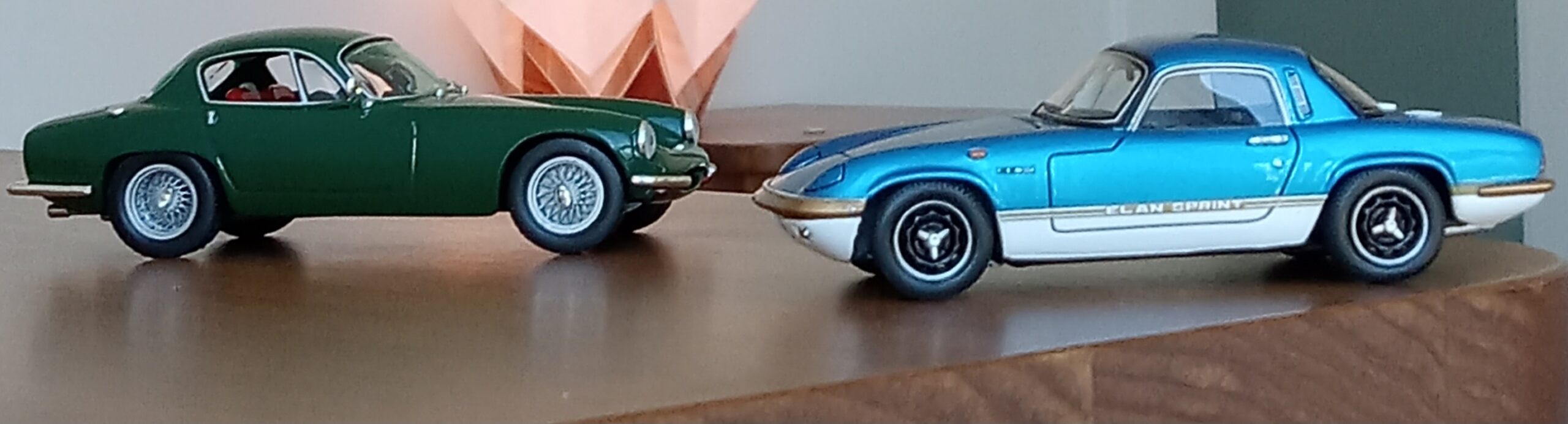
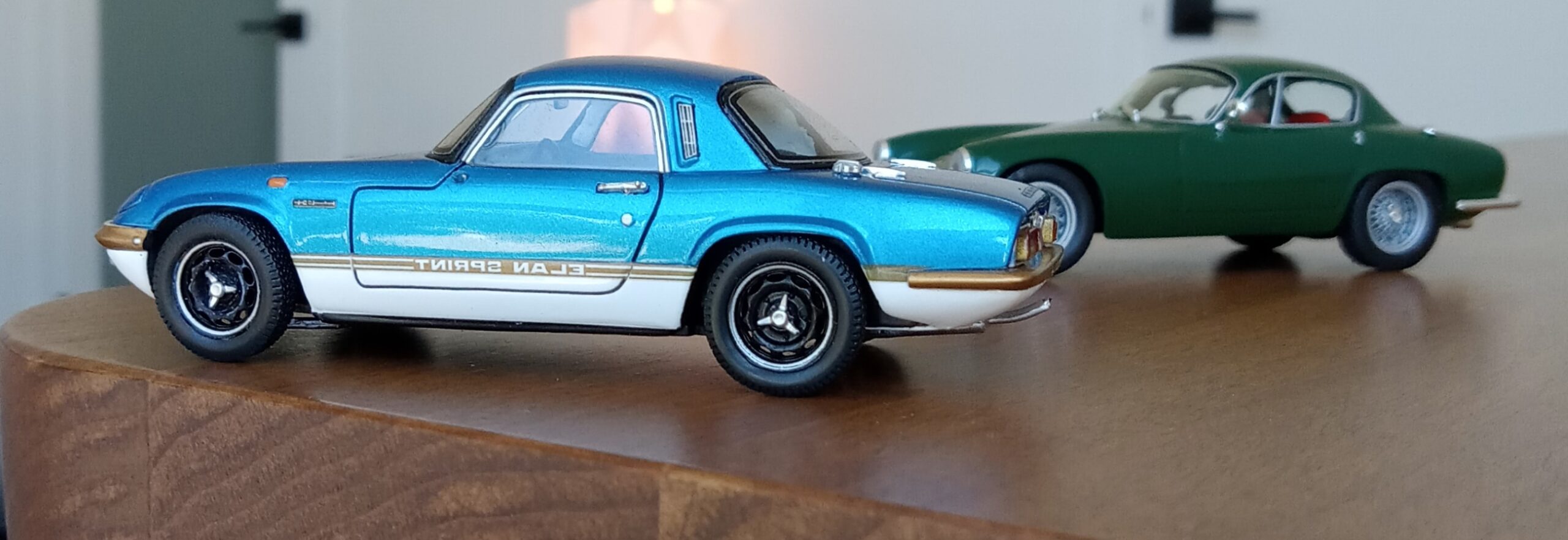
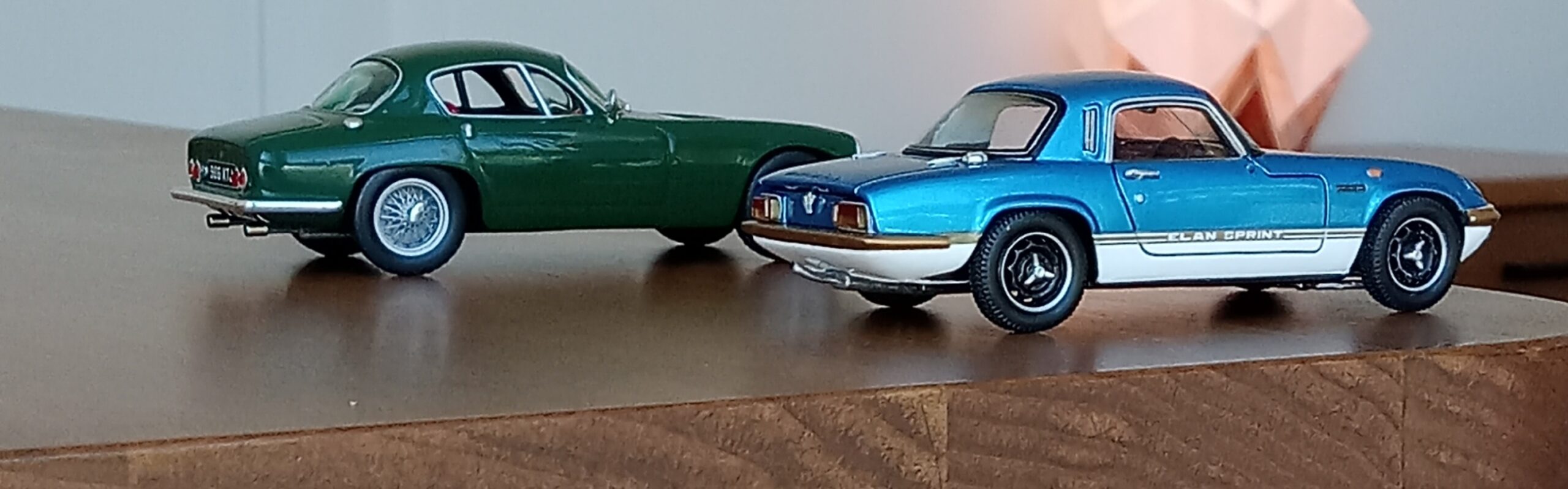
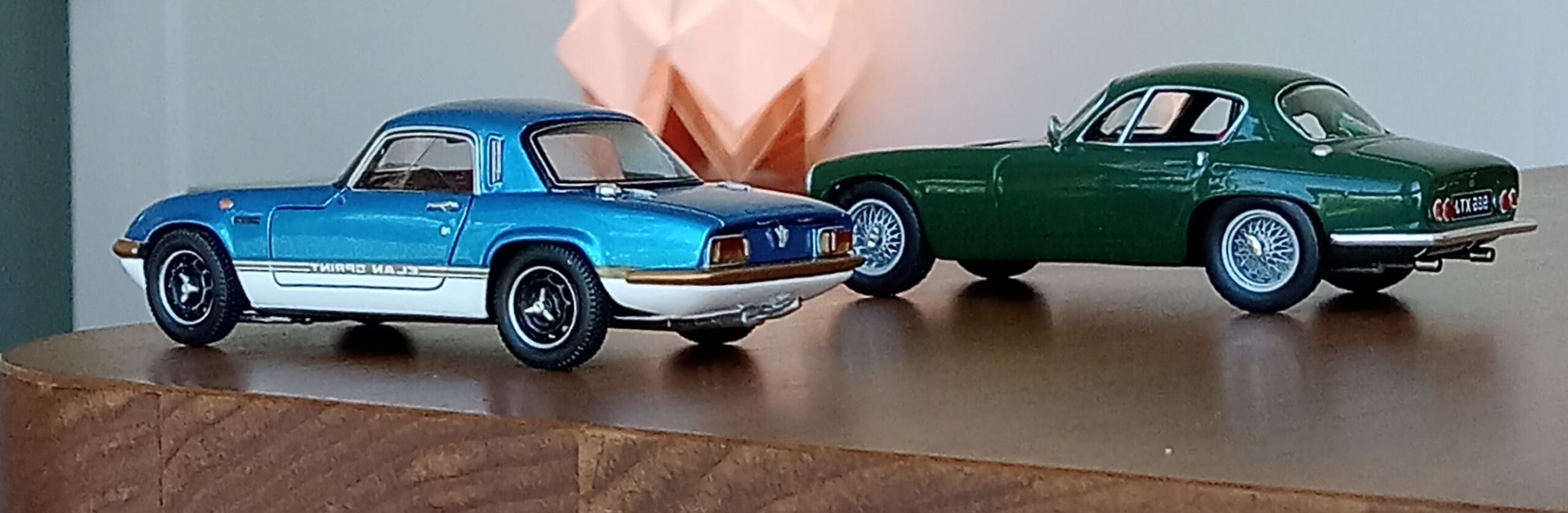
第54回目の今回は、『2ドアクーペの系譜、第34回』と題しまして、各国のお国柄や、外観デザインの個性が強く表れる、高級2ドア(GT)クーペ / ロードスターについてお話ししてみたいです。【注意:オープンカーを含む】
以下の要領で進めていきます。
第34回の今回はいよいよ
【英国車編②】002としまして、
1971年発表の
ロータス・エラン S4 スプリント(メタリックブルー、白、金)
についてのお話です。
【2ドア・クーペの系譜:目次】
【米国車編】
第1回:キャデラック・エルミラージュ、2013(メタリック・レッド)
第2回:リンカーン・コンチネンタル MK4、1972(ブラック)
第3回:マーキュリー・クーガー, 1967(LTメタリック・グリーン)
【ドイツ車編】
第4回:MB 500K スペシャル・ロードスター、1936(ブラック)
第5回:MB 300SL ロードスター、1957(シルバー)
第6回:MB SLS AMR ガルウイング、2010(ブラック)
【英国車編】
第7回:マクラーレン・F1、1992(メタリック・オレンジ)
第8回:ジャガー・XKSS ロードスター、1957(ロイヤル・ブルー)
第9回:ジャガー XKR クーペ、1996(ダークメタリック・グリーン)
【日本車・ニッサン編】
第10回:ニッサン 初代シルビア、1965(シャンペン・ゴールド)
第11回:ニッサン 5代目シルビア、1988(LTメタリック・グリーン)
【イタリア車編】
第12回:フェラーリ 250TR ポンツーンフェンダー、1958(赤)
第13回:フェラーリ 250GTO、1962(イタリアン・レッド)
第14回:ランボルギーニ・コンセプトS、2005(パール・ホワイト)
【日本車・マツダ編】
第15回:マツダ コスモ・スポーツ、1968(レーシング・ホワイト)
第16回:マツダ ユーノス・コスモ、タイプ‐S(2トン:黒&グレー)
【フランス車編】
第17回:ブガッティ・タイプ59、1935(フレンチ・ブルー)
第18回:シトロエン・SM、1970(シャンペーン・ゴールド)
第19回:ブガッティ・ラ・ヴォワチュール・ノワール、2019(黒)
【日本車・トヨタ編】
第20回:トヨタ/ヤマハ・2000GT、1967(アイボリー・ホワイト)
第21回:トヨタ・2代目ソアラ、1986 (クリスタル・ホワイトⅡ)
第22回:レクサス LC500【GWZ100型】、2017(MT・レッド)
【米国車編②】
第23回:ダッジ・チャレンジャー、1970&プリムス・バラクーダ、1971
第24回:ダッジ・ヴァイパー SRT‐10 ACR、 2008(ブラック)
第25回:フォード・シェルビーGR-1 コンセプト、2004(クローム)
【日本車・ミツビシ編】
第26回:ミツビシ・ギャラン λ、1976(ブラウン・メタリック)
第27回:ミツビシ・エクリプス【北米仕様】、2006(オレンジ・メタ)
【ドイツ車編②】
第28回:BMW M635CSi、1984 (ダーク・メタリックブルー)
第29回:MB 560SEC AMG 6.0 ワイドボディー、1989(ブラック)
第30回:BMW M2 純正パフォーマンス・パーツ仕様、2025(ネオン・ライム)
第31回:初代アウディー・TT、1998(レイク・シルバー・メタリック)
【日本車・スバル編】
第32回:スバル・クロストレック XV, 2012(ライムグリーン・メタリック】
【英国車編②】
第33回:ロータス・初代エリート, 1959(ブリティシュ・グリーン)
第34回:ロータス・エラン S4 スプリント(3トーン:メタブルー、白&金)
第35回:ジャガー・Eタイプ ロードスター(ライトブルー・メタリック)
【日本車:ホンダ(軽量スポーツ編)】
第36回:ホンダ S800、1966(スカーレット)
第37回:ホンダ 【ワンダー】シビック Si、1984 (スーパーレッド)
第38回:ホンダ ビート、1991(サンバ・イエロー)
【イタリア車編➁】
第39回:ランチア ガンマ・クーペ、1976(グリジオ・アージェント(銀))
第40回:マセラティ― メラク SS、1975(ブルー・セーラ・メタリック)
第41回:フェラーリ ラ・フェラーリ、2013(ロッソ・コルサ(赤))
【日本車:トヨタ編②】
第42回:トヨタ コロナ・ハードトップ 1800GT-TR、1982 (ブレージングレッド(赤))
第43回:トヨタ GRスープラ、2019 【DB型・A90/A91】 (ボルカニックアッシュグレーメタリック(銀))
第44回:トヨタ GR GT、 2027【予定】(ガンメタル系)
【米国車③番外編】:コルベットの系譜
第1回:1967年型 スティングレー【C2】コンバーチブル(ハードトップ・メタ青)
第2回:1972年型 コルベット 【C3】コンバーチブル(メタリック・ブルー)
第3回:1984年型 コルベット 【C4】クーペ(ブライト・レッド)
第4回:コルベット・インディー、1986【ミッド・シップの先行開発車】(シルバー)
第5回:スティングレー・コンセプト【先行開発車】、2009(プルー・メタリック)

#チャップマン=第2章【量産機】:ブリティッシュ・ライトウエイト・スポーツ

私にとって、
『ロータス・エラン(S4)』は
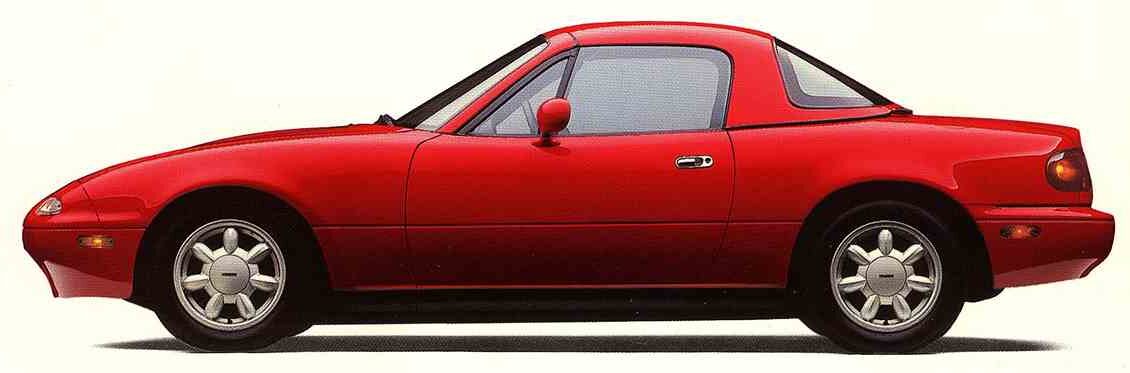
マツダ MX-5/ミアータのお父さんです。
頭の中では、
こんな感じで並んでいます。
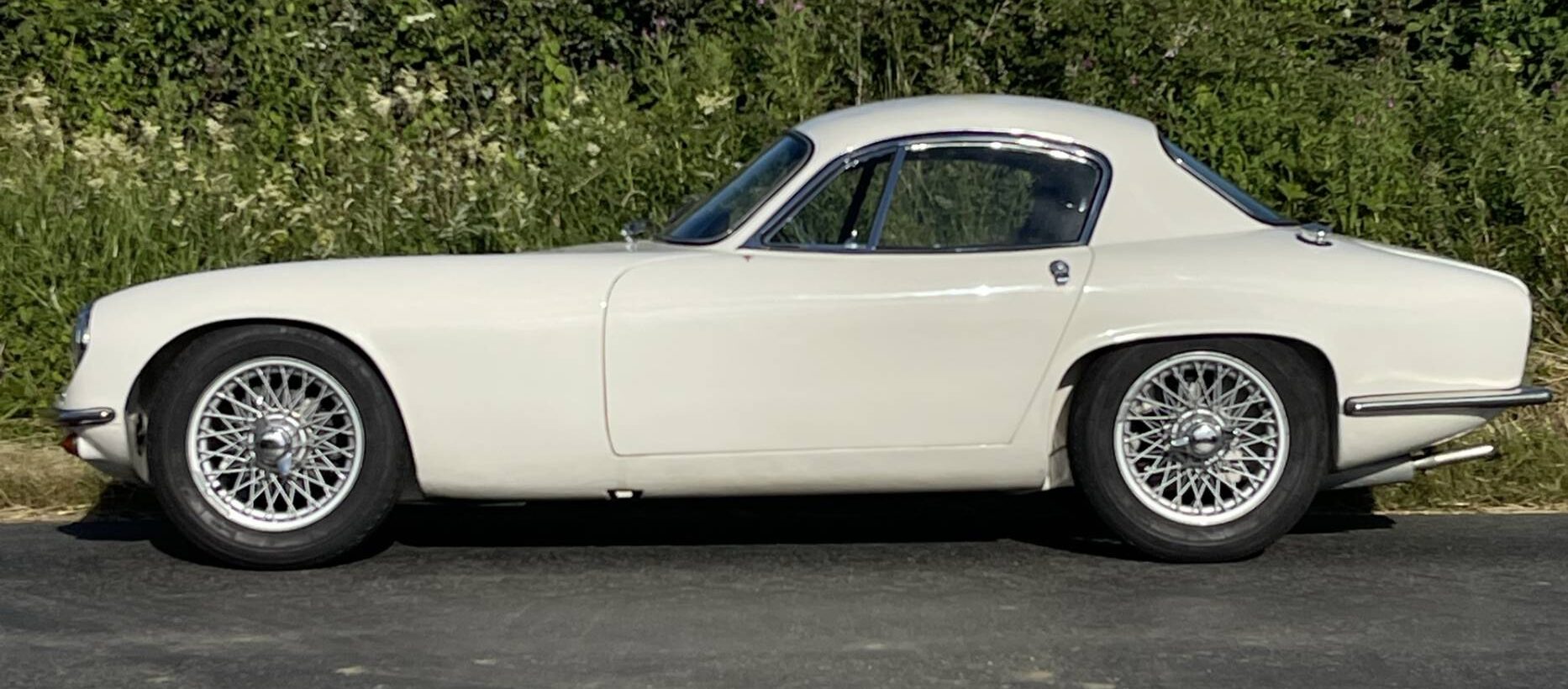
(1959、ロータスエリート)
(1971、ロータス エラン・S4スプリント)
1990、マツダ/MX5)
キット・カーではなく、
量産モデルとしての、『軽量スポーツカーのメートル原器』のような存在で、
1990年台にはマツダが同様の機構で再発売して、
現在まで続く、内燃機関による小型高速自動車の大絵巻を形作っています。
その原型となったのが
ロータス・エランです。
その中で、
最終形態=完成形がS4・スプリントです。
それでは、
こんな感じで見て行きましょう!
* 実車解説 : 量産『軽量スポーツカーのメートル原器』
*外観デザインの特徴:
*『私』とロータス エリート・S4スプリント:
*三題噺:バックボーンフレーム・トヨタ2000GT・
*その他の軽量スポーツカーたち、、、
*実車解説:エリートの大量生産化‐--大成功!
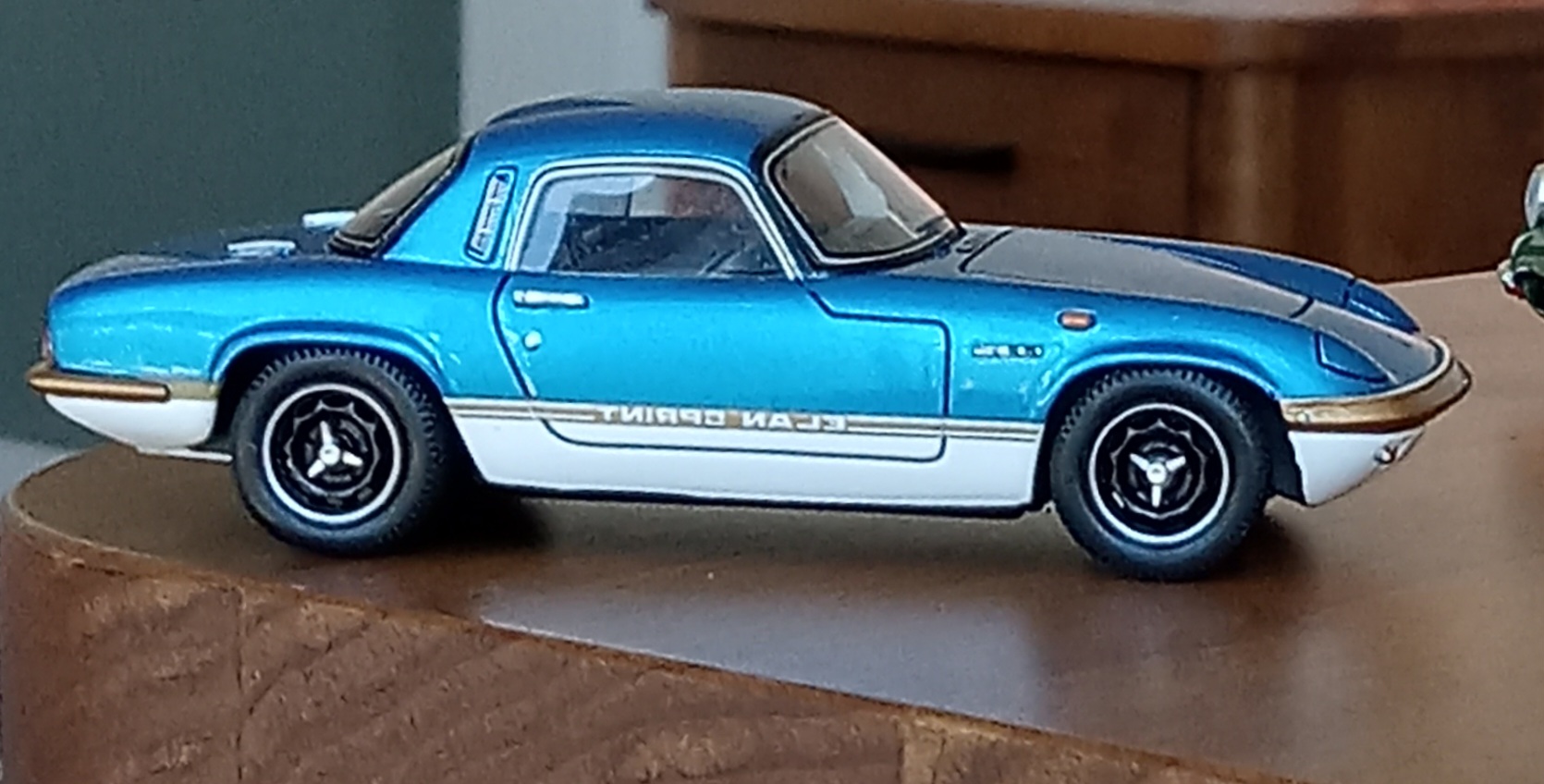
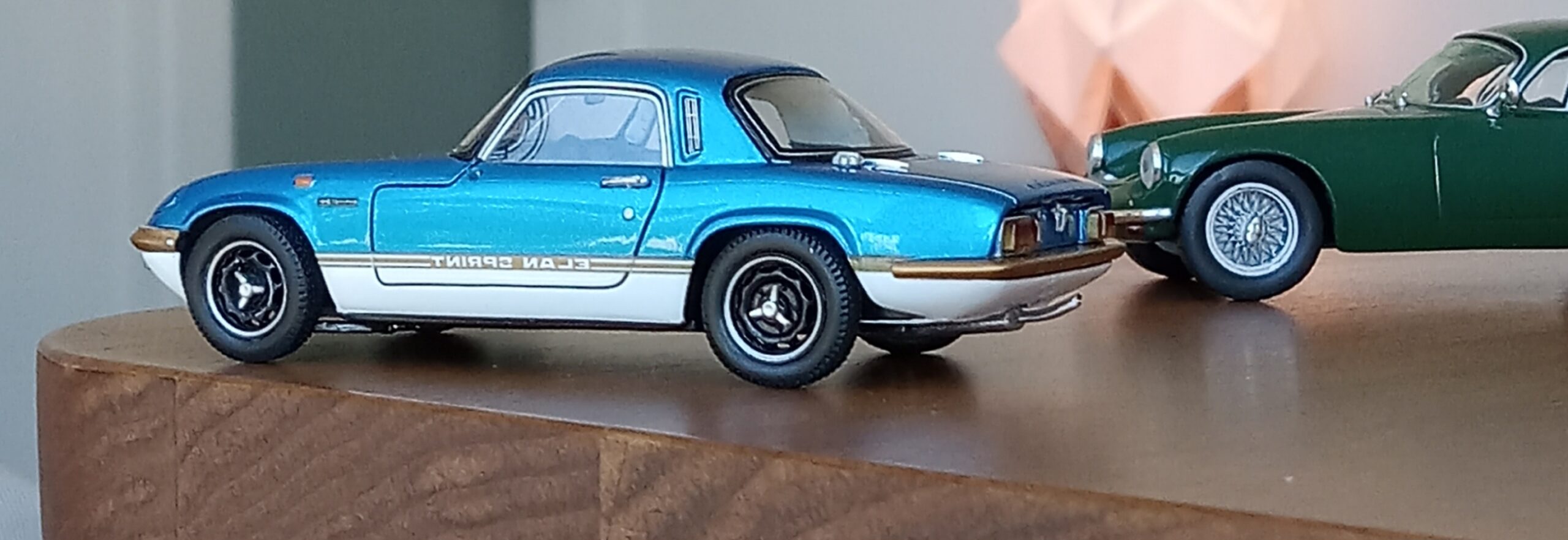
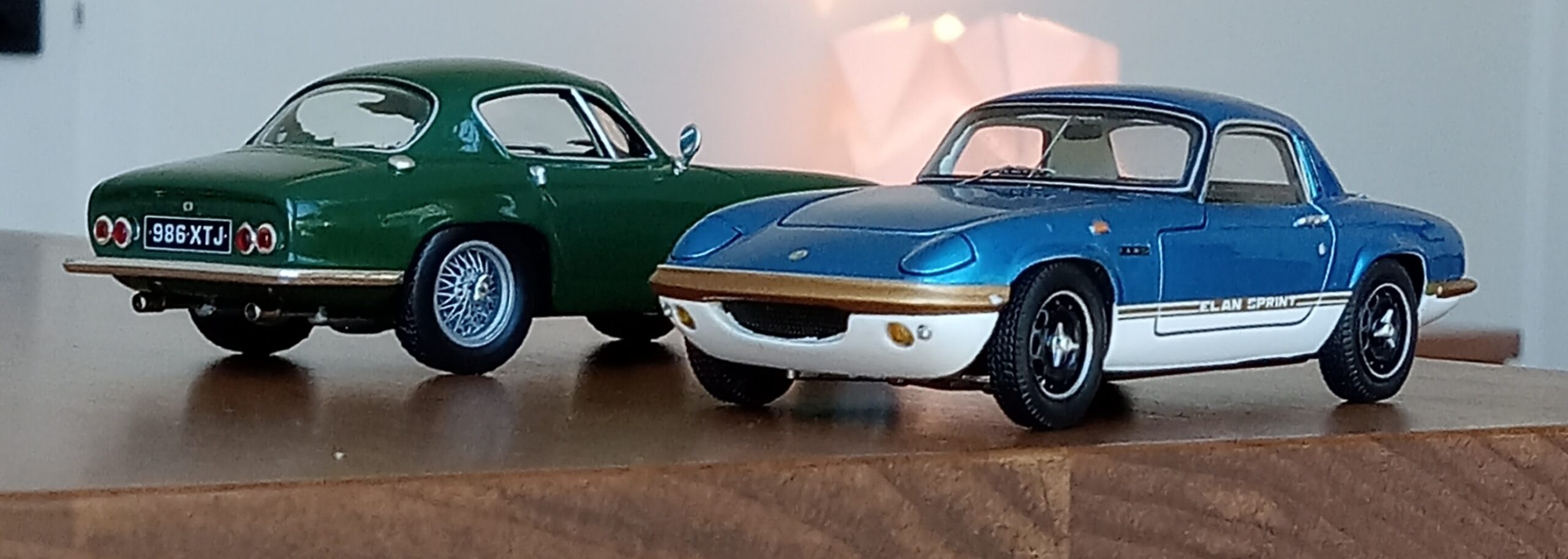
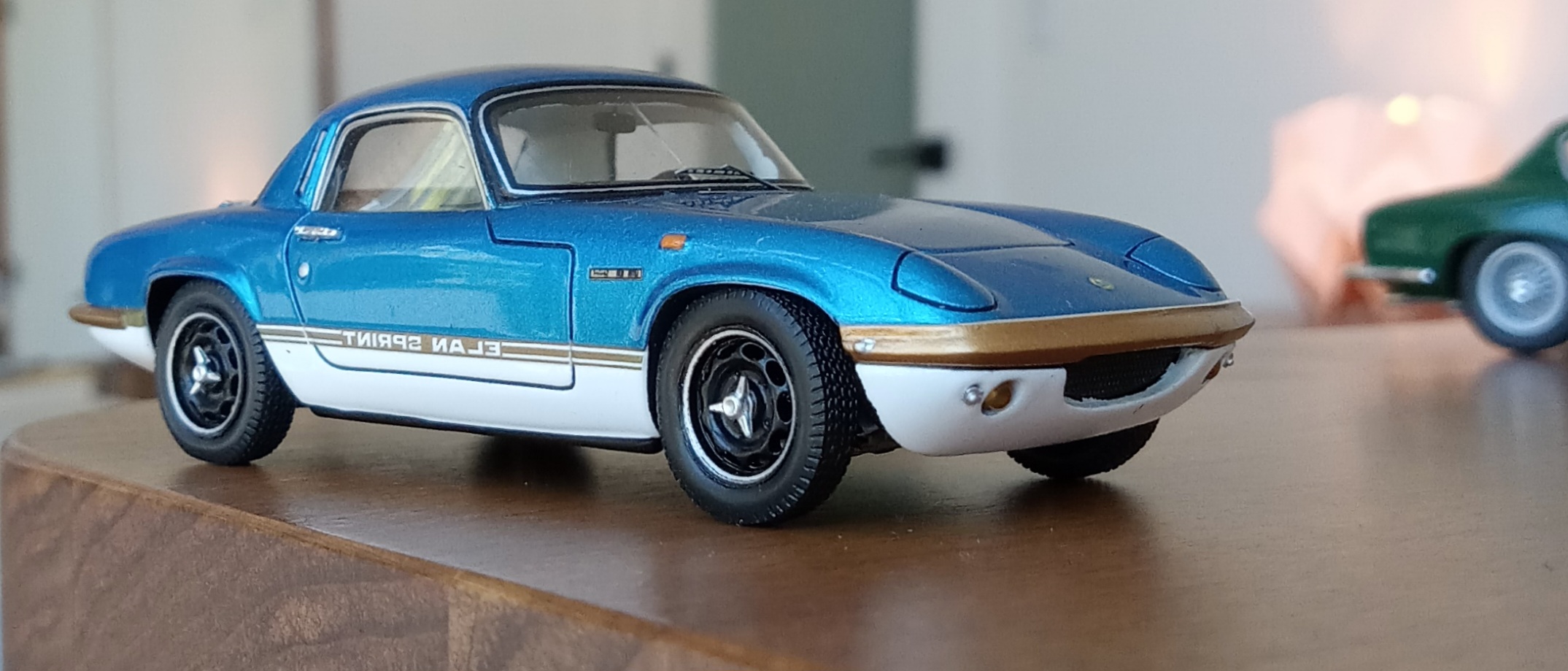
概要:
ロータス エラン S4 スプリント(Lotus Elan S4 Sprint)は、創設者コーリン・チャップマンの「軽量化こそ正義」というエンジニアリング哲学を極限まで具現化した、ミッドセンチュリー期を代表する傑作ライトウェイトスポーツカーです。
n
n
n
n
n
n
n
n
n
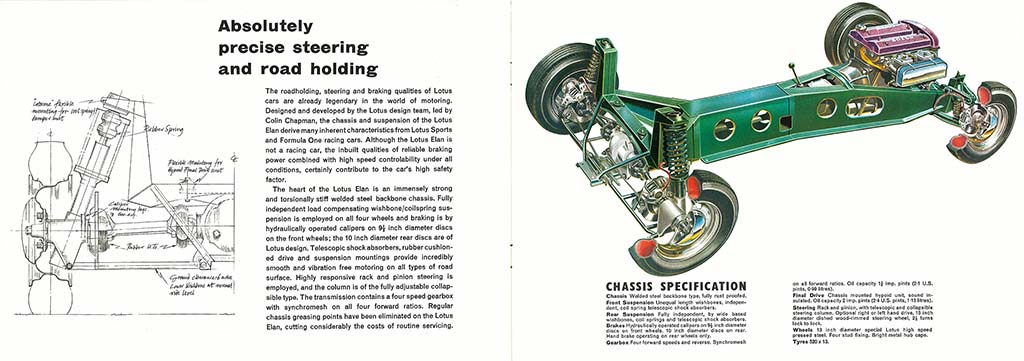
- バックボーンフレームによる「背骨」の構造
チャップマンが考案した鋼板溶接によるスチール製バックボーンシャシーは、文字通りクルマの「背骨」です。Y字型の前後二股構造の中に、エンジン、トランスミッション、プロペラシャフトを路面に近い極めて低い位置に収めています。この構造により、主要な重量物がすべて車両の中心軸(マスの集中化)かつ低重心に配置され、デザイン的にもサイドシルを削って全幅をタイトに抑える(1,422mm)ことに貢献しています。
n - FRP(繊維強化プラスチック)ボディのモノコック的活用
このスチール製の背骨に被せられたのが、非常に軽量なFRP製一体成型ボディです。単なるアウターパネル(外板)としてだけでなく、シャシーと結合されることで車体全体の剛性を担保する構造材の一部として機能しています。これにより、車重はわずか約700kgという驚異的な軽さを達成しました。
n - 「ビッグバルブ」ツインカムエンジンと足回り
スプリントの心臓部には、トニー・ラッドが手がけた1,558ccの「ビッグバルブ」DOHCエンジンが搭載され、126馬力を発生します。このコンパクトな4気筒をフロントミッドシップ(前輪車軸より後方)に寄せてマウントし、4輪独立サスペンション(前ダブルウィッシュボーン、後チャップマンストラット)と組み合わせることで、現代のスポーツカーすら凌駕する極上のハンドリング性能という「機能」を成立させています。
nn
- バックボーンフレームによる「背骨」の構造
n
n

n
エラン S4 スプリントのエクステリアは、機能から導き出された「削ぎ落とされたフォルム」でありながら、どこかエモーショナルでオーガニックな艶めかしさを放っています。
- プロポーションの黄金比と凝縮
全長3,683mm、全幅1,422mm、全高1,180mmという現代の軽自動車並みのサイズ感の中に、ロングノーズ・ショートデッキの古典的スポーツカーのプロポーションが破綻なく凝縮されています。特にS4以降の特徴であるフレアされたホイールアーチは、わずかにワイドになった13インチの155サイズタイヤを包み込み、路面を踏みしめる力強さをデザインに与えています。
n - リトラクタブル・ヘッドライトがもたらすクリーンな表情
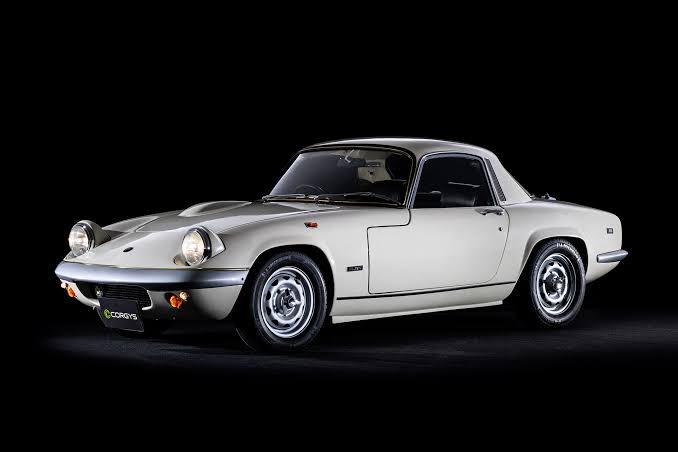
デザイナーのロン・ヒックマンらによるフロントマスクは、インテーク(開口部)の楕円形グラフィックと、リトラクタブル・ヘッドライトの組み合わせが特徴です。消灯時はライトが完全にノーズのラインと同化し、一切のブレイクライン(線の途切れ)がない、まるで川床の小石のように滑らかでクリーンな「空気の壁を切り裂くフォルム」を形成します。このライトはバキューム(負圧)駆動という極めてプリミティブな機構で動作し、軽量化と低ノーズ化を同時に満たす機能的デザインです。
n - 「ゴールドリーフ」ツートーンカラーという視覚的演出
スプリントを象徴するのが、当時のF1チーム(ゴールドリーフ・チーム・ロータス)の意匠を反映した独自のツートーンカラー(バイカラー)です。
ボディ上部を鮮烈なレッド(またはブルー、イエロー等)、下部をクリーンなホワイトで塗り分け、その境界線に「ELAN SPRINT」のロゴが入ったゴールドのストライプを走らせています。さらにフロントとリアのバンパーもゴールドに塗装されています。
この巧みなカラーブロックは、ただでさえ低い車体を視覚的にさらに低く、長く見せる効果を持っており、グラフィックデザインがプロダクトの立体感を強調する好例と言えます。
N
n
n
- プロポーションの黄金比と凝縮
n
n
 n
n
ロータス エラン S4 スプリントは、装飾によってキャラクターラインを捏造する現代のカーデザインとは対極にあります。FRPという新素材の特性を活かした「継ぎ目のない、張り詰めた1枚の皮膚のようなサーフェイス」が、バックボーンシャシーという「強靭な骨格」を包み込むことで生まれた美しさです。
n
n
n
n
現代のカーデザインやマツダ・ロードスター等の後続車に与えた具体的な影響:
ロータス エラン S4 スプリント(およびエラン・シリーズ)が、現代のカーデザインや1989年に登場した初代マツダ・ロードスター(NA型)をはじめとする後続のスポーツカーに与えた影響は、単なる「レトロな造形の模倣」にとどまりません。それは、「人間中心のコンパクトなパッケージング」と「情緒的なサーフェイス(曲面)処理」の本質的な継承です。
n
n
N
n
- フロントマスクの記号性と表情の継承
エランのアイコンである「楕円形のフロントインテーク」と「リトラクタブル・ヘッドライト」の組み合わせは、初代ロードスターにそのまま受け継がれました。ロードスターのデザインを担当した俣野努氏らは、エランが持つ「消灯時はクリーンで空力的に優れ、点灯時は生き物のような愛嬌のある表情(ファン・トゥ・ドライブの象徴)」という記号性を、現代(1980年代末)の安全基準や生産技術に合わせて見事にリ・デザインしました。
n - ドアハンドルのデザイン思想
エランのドアハンドルは、ボディサイドの滑らかなFRPの面を邪魔しないよう、非常に小ぶりで埋め込まれたような形状(クローム仕上げ)をしています。初代ロードスターの「フラッシュサーフェイス(段差のない)な丸型めっきドアハンドル」は、このエランの「美しいボディの面を突起物で汚さない」というデザイナーの執念を、現代的なポップさで再現した好例です。
N
N
- フロントマスクの記号性と表情の継承
- リフレクション(光の反射)で魅せるデザイン
エランのボディには、明確なエッジや彫りの深いキャラクターライン(プレス線)がほとんどありません。FRPの成型自由度を活かした、豊かで張り詰めた「面(サーフェイス)」だけで構成されています。
この「線ではなく、面と光の反射(リフレクション)でクルマのシェイプを表現する」という手法は、現代のマツダの「魂動(こどう)デザイン」や、ポルシェなどのプレミアムスポーツカーのデザインに共通する普遍的なフィロソフィーです。エランは「引き算のカーデザイン」の先駆者でした。
n
N
- リフレクション(光の反射)で魅せるデザイン
n
n
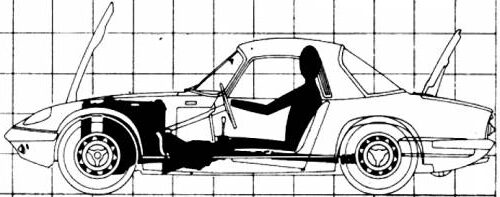
n
n
エランが自動車史に残した最大の功績は、「優れたメカニズムのパッケージ(骨格)さえ作れば、外見は自然と美しくなる」という事実を証明したことです。
n
- タイトな居住空間と理想のプロポーション
エランは、バックボーンシャシーによってセンタートンネルが高く、乗員はそこに深く潜り込むように座ります。この「人間とメカニズムが限界までタイトに凝縮された骨格」があるからこそ、あの極限まで低いボンネットとフードライン、そして四隅に配置されたタイヤという「無条件に美しいプロポーション」が生まれました。
現代のクルマは安全基準(衝突安全や歩行者保護)の観点からボンネットが高くなりがちですが、デザイナーたちは今でもエランのような「低く、塊感のあるプロポーション」を理想として、ヘッドライトの薄型化やエンジンのマウント位置の工夫など、パッケージングでの戦いを続けています。
n
N
N
- タイトな居住空間と理想のプロポーション
n
それは、「軽さはすべての性能(加速、減速、旋回、そしてデザインの美しさ)を向上させる」というチャップマンの思想を、デザインの力で具現化し、後世のデザイナーたちに「スポーツカーデザインの本質は、加飾ではなく、骨格と面の純度にある」と気づかせたことにあります。エランの登場がなければ、現代のライトウェイトスポーツカーというカテゴリーそのものが、これほど豊かに発展することはなかったと言えます。
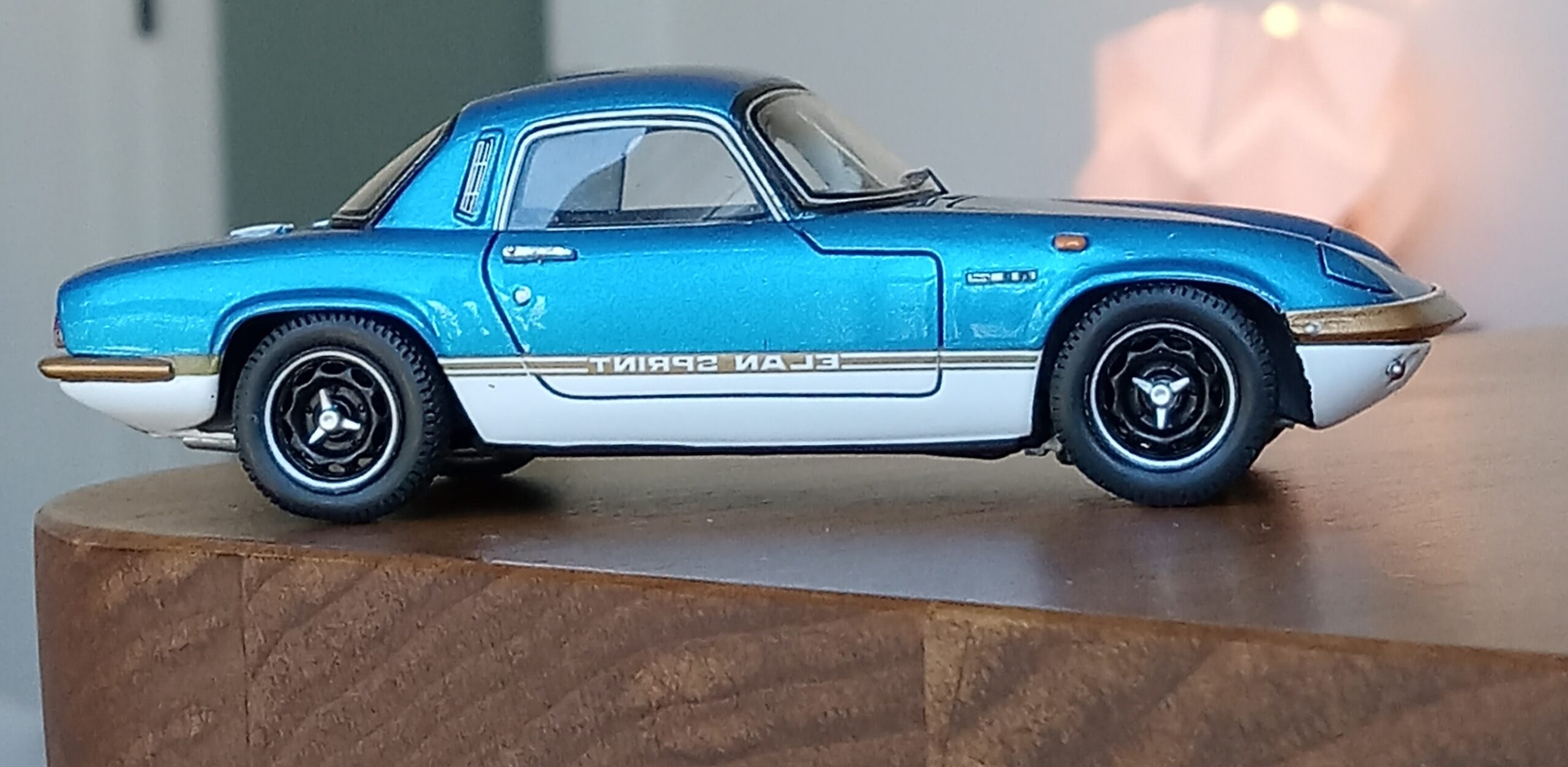
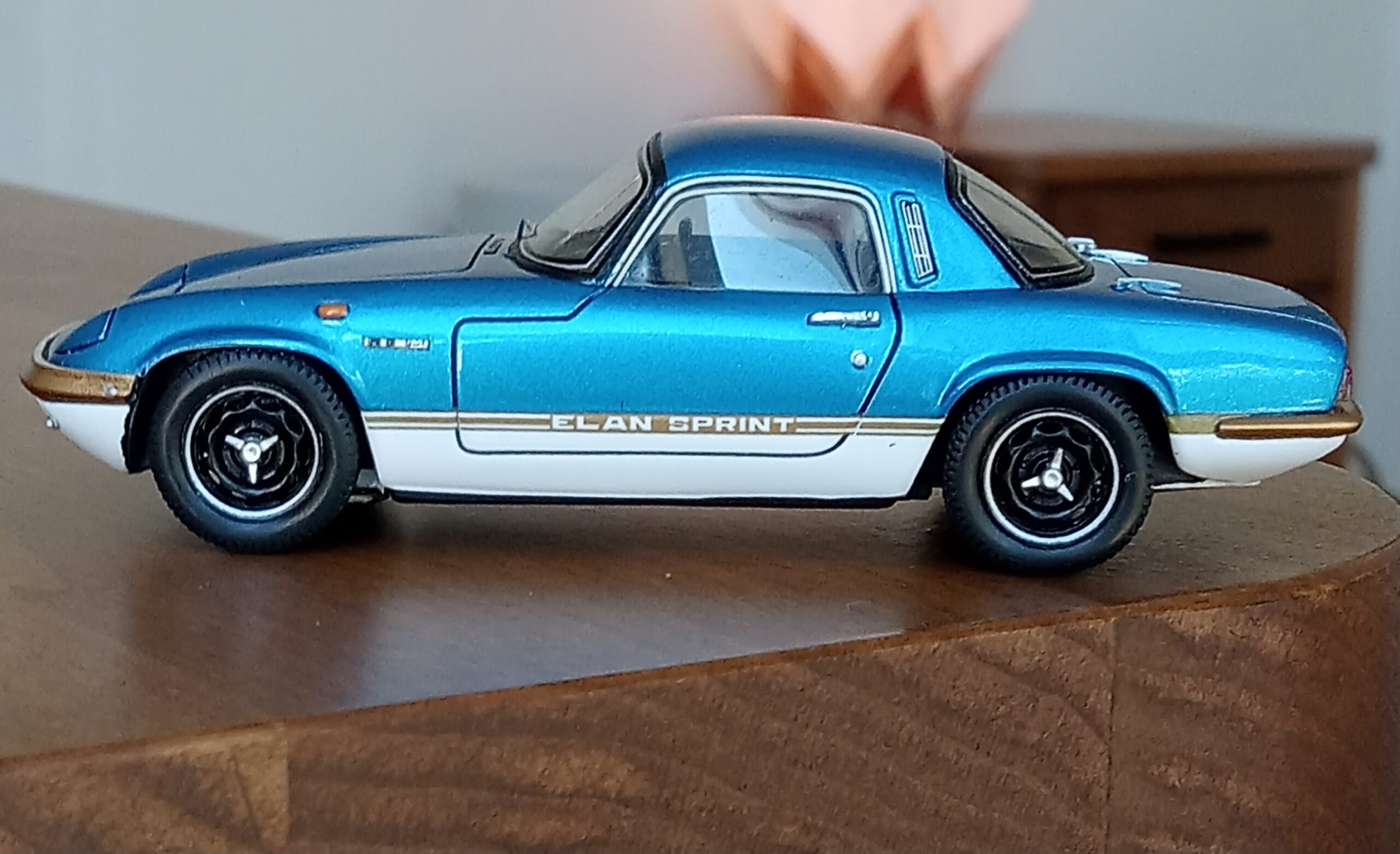
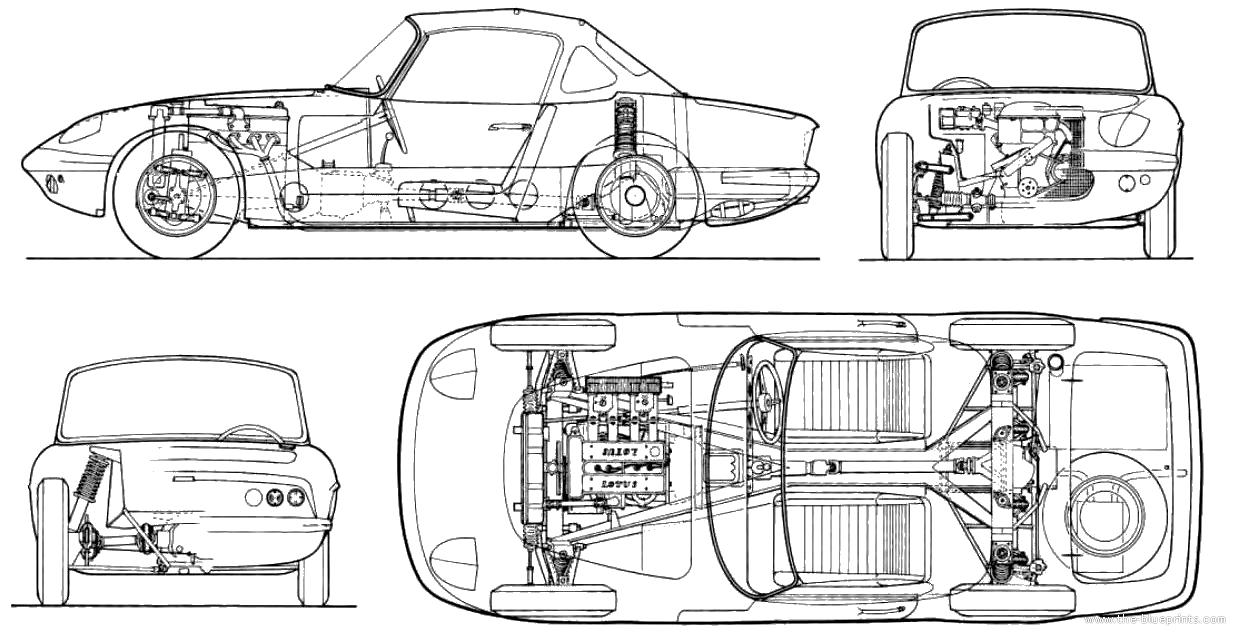
#三面写真:
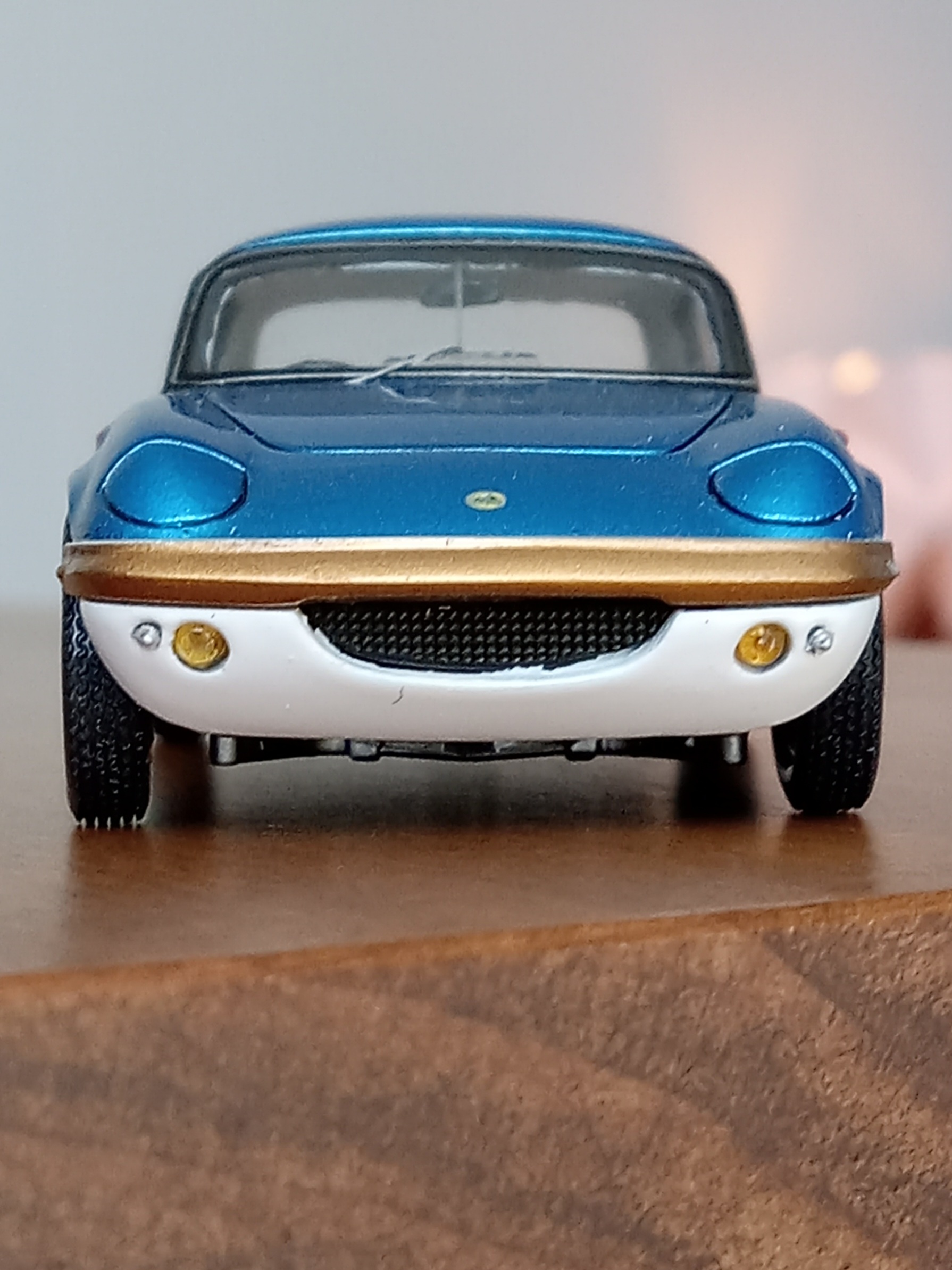
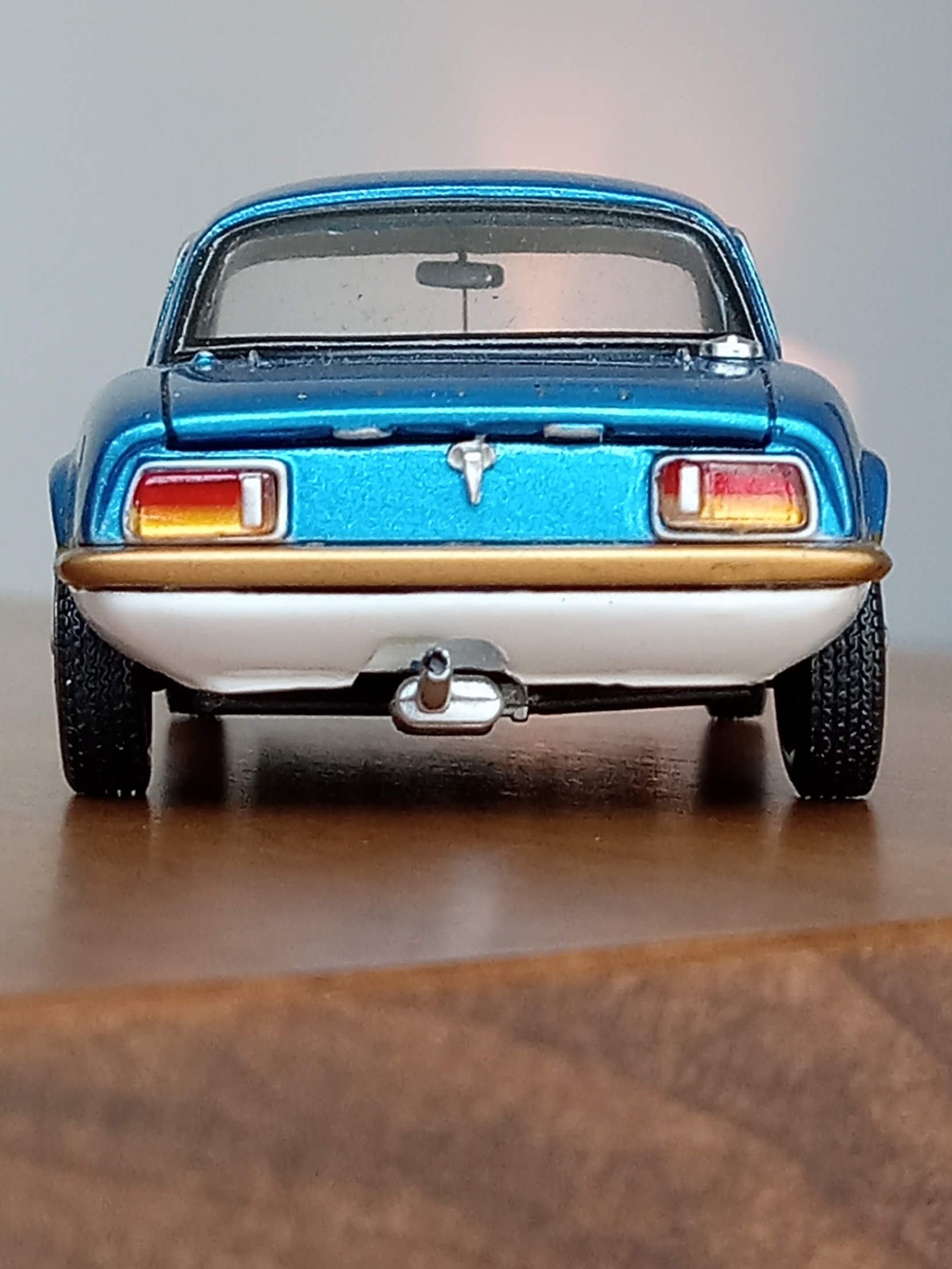
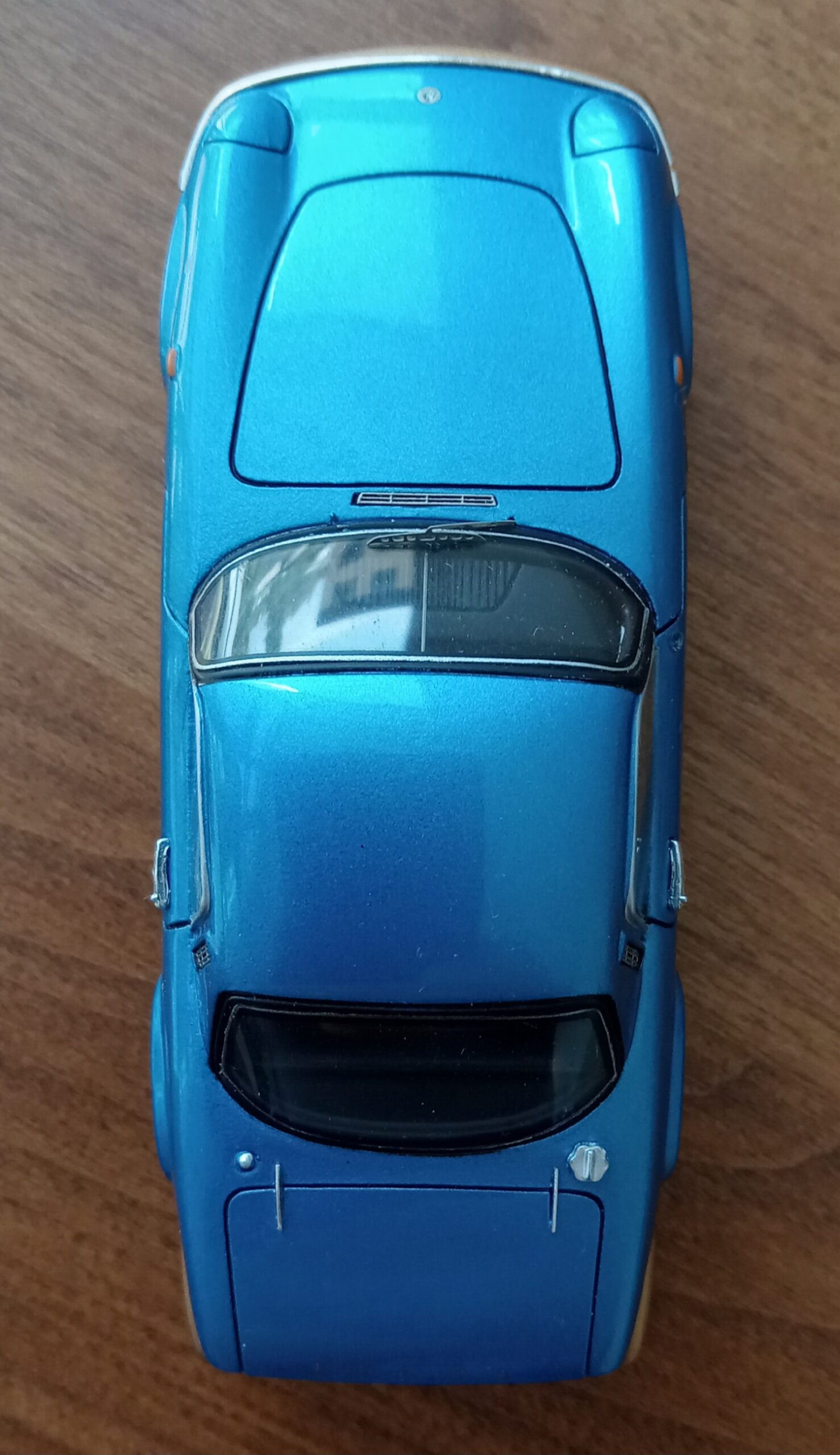
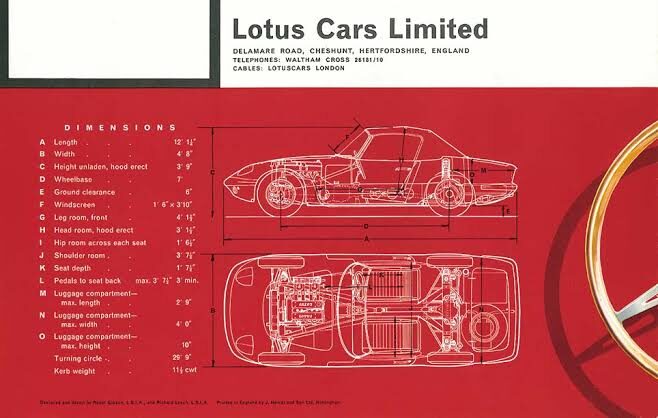
#主要諸元:
- エンジン型式:ロータス・ツインカム・「ビッグバルブ(Big Valve)」
- 総排気量:1,558 cc
- エンジン型式: 水冷直列4気筒DOHC(ロータス・ツインカム “ビッグバルブ”)
- 燃料供給装置:ウェーバー(Weber)40 DCOE ×2
- 最高出力 : 126 bhp / 6,500 rpm
- 最大トルク:15.6 kg-m(113 lb-ft) / 5,500 rpm
- 最高速度:0-60マイル(約96km/h)加速:約 6.5 〜 6.6 秒
- 駆動方式:FR(フロントエンジン・後輪駆動)
- 定員:2名
- 車体形式:2ドア・クーペ
- ホイールベース:2,134 mm
- 全長:3,683 mm
- 全幅:1,422 mm
- 全高:1,156 mm
- 車両重量:
約 698.5 kg 〜 708 kg(仕様による)
*外観デザインの特徴:美しい『フィックスヘッド・クーペ』

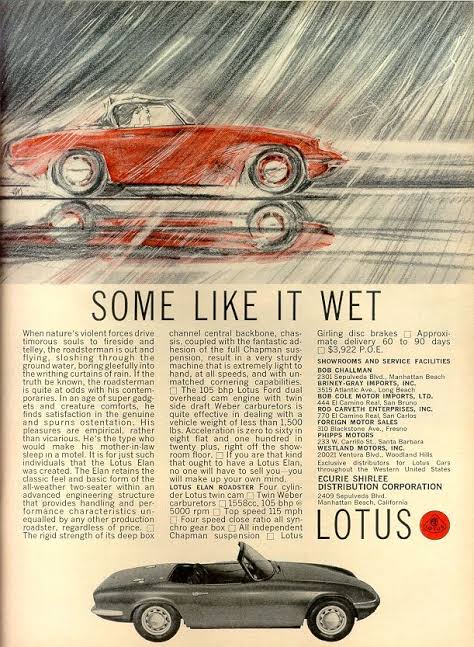
(発表当時の広告ページ)
*機能的な骨格に、
*またとなく均整の取れた外観+『面の純度』を
与えられた『エラン』は、
どこから見ても、様子がいい、
『粋のカタマリ』のような自動車です!!
私は以下の5点の特徴を
上げてみました。
N
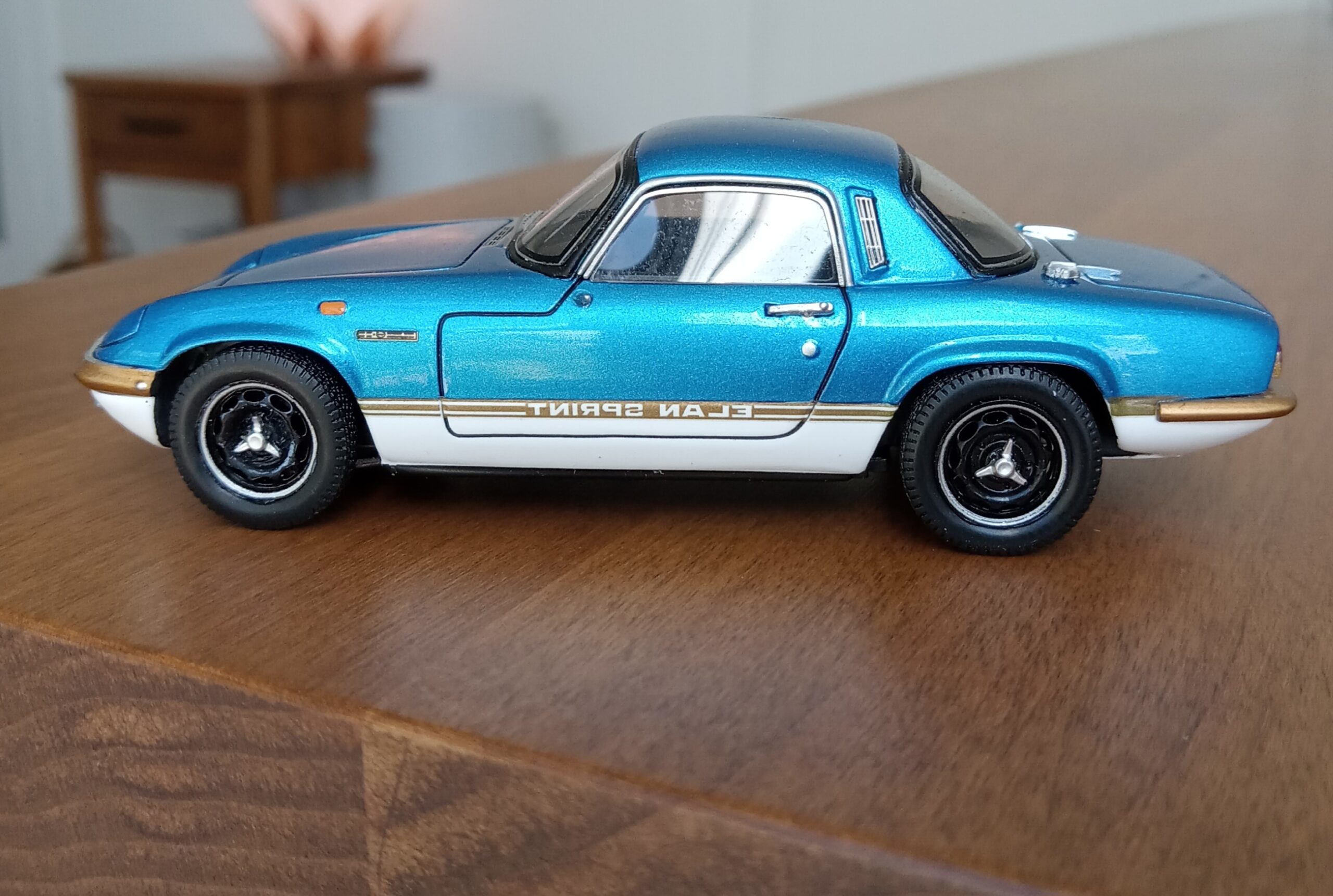
1:Y型バックボーンフレームを収めた、理想的なFR骨格に『ミニマル面の美しさ』を極めた外皮を合わせた、軽量スポーツカーの原子核のような外観ーーーー>先代エリートから受け継いだ、「フロント車軸より後ろに収めたエンジン位置」がダイナミックなプロポーションの全てを決めています。
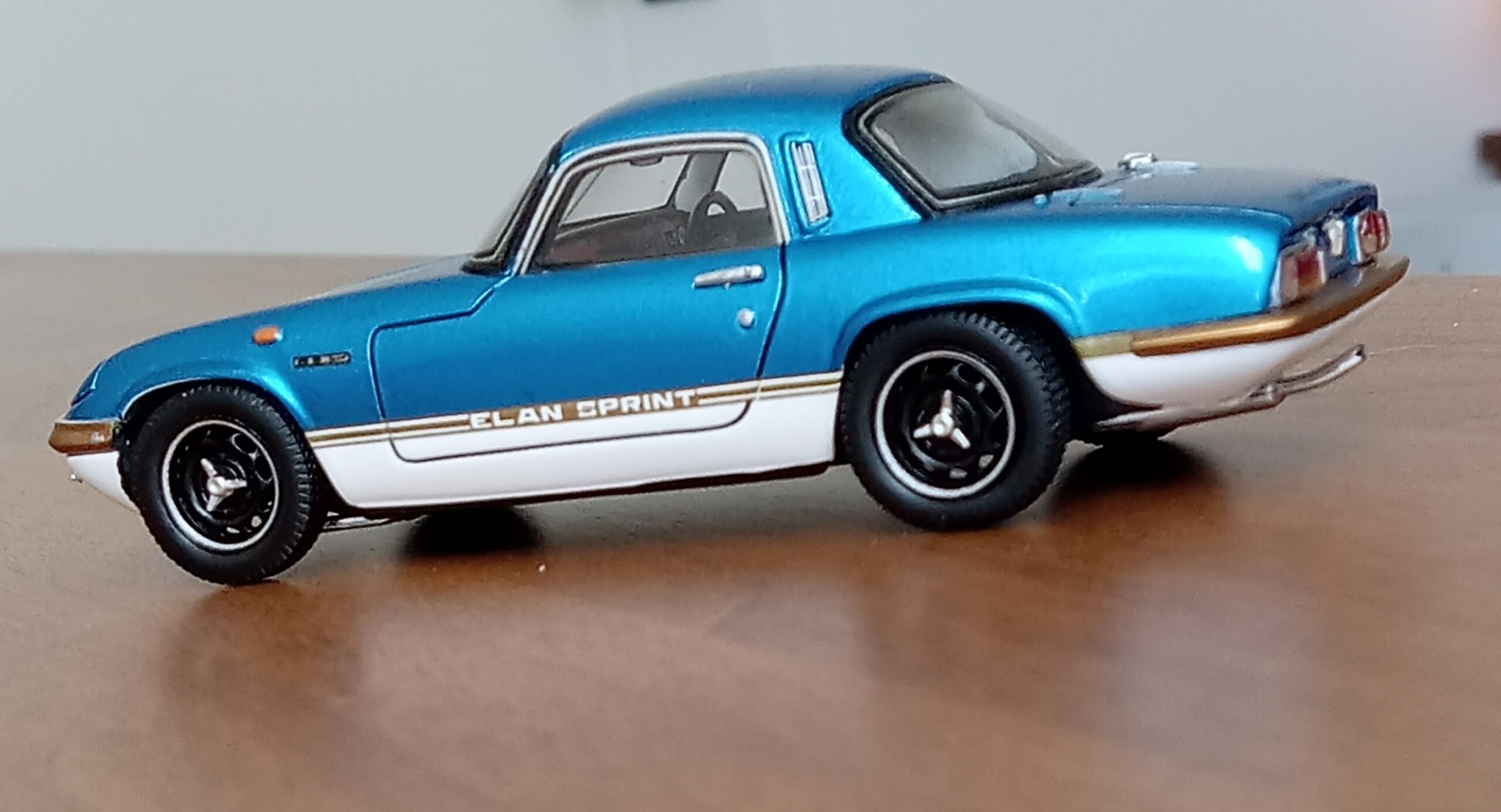
2:『動』と『静』の同居した、落ち着きと衝動に満ちたアンビバレントなサイドビュー・プロポーションの深い味わいーーー>ロードスターにはない均整があります。
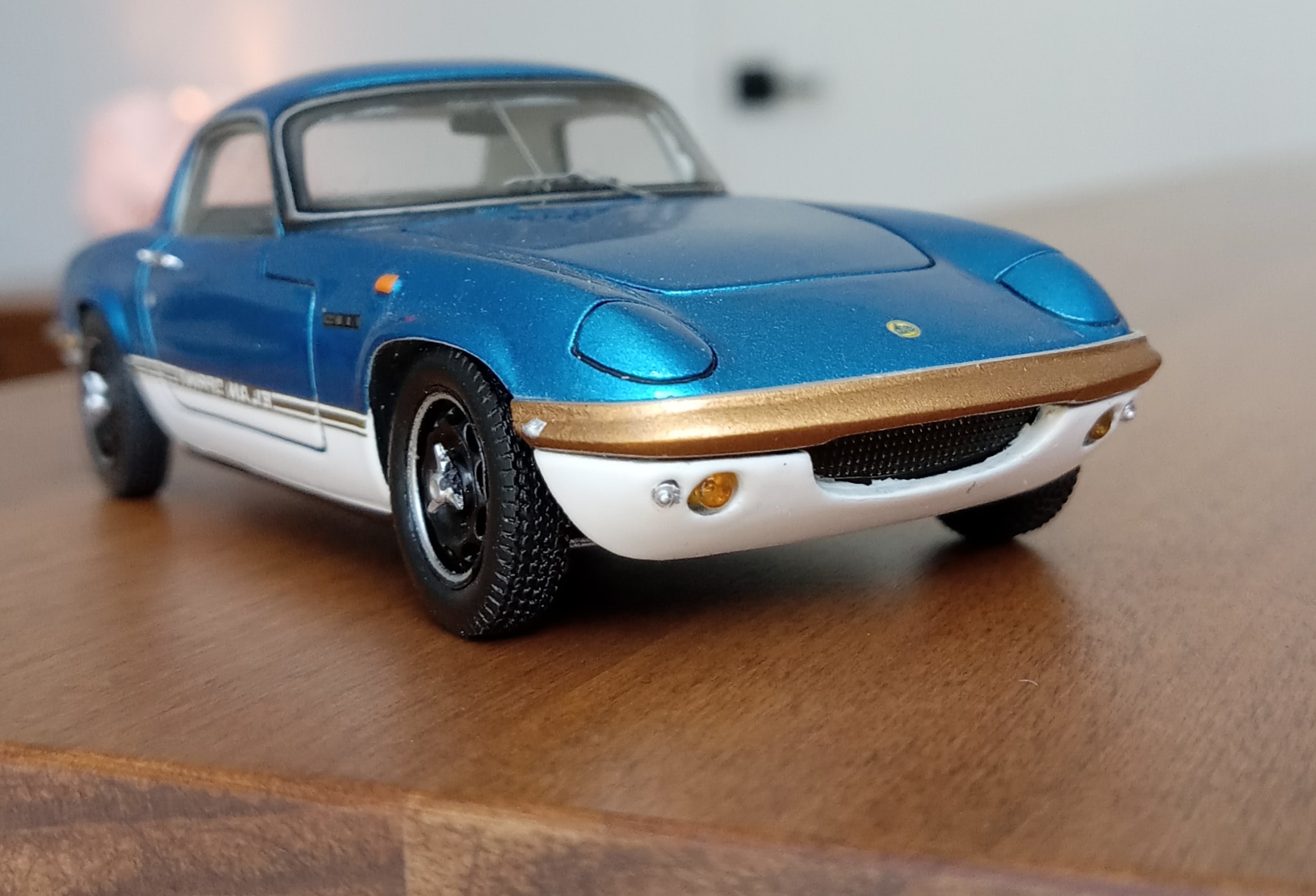
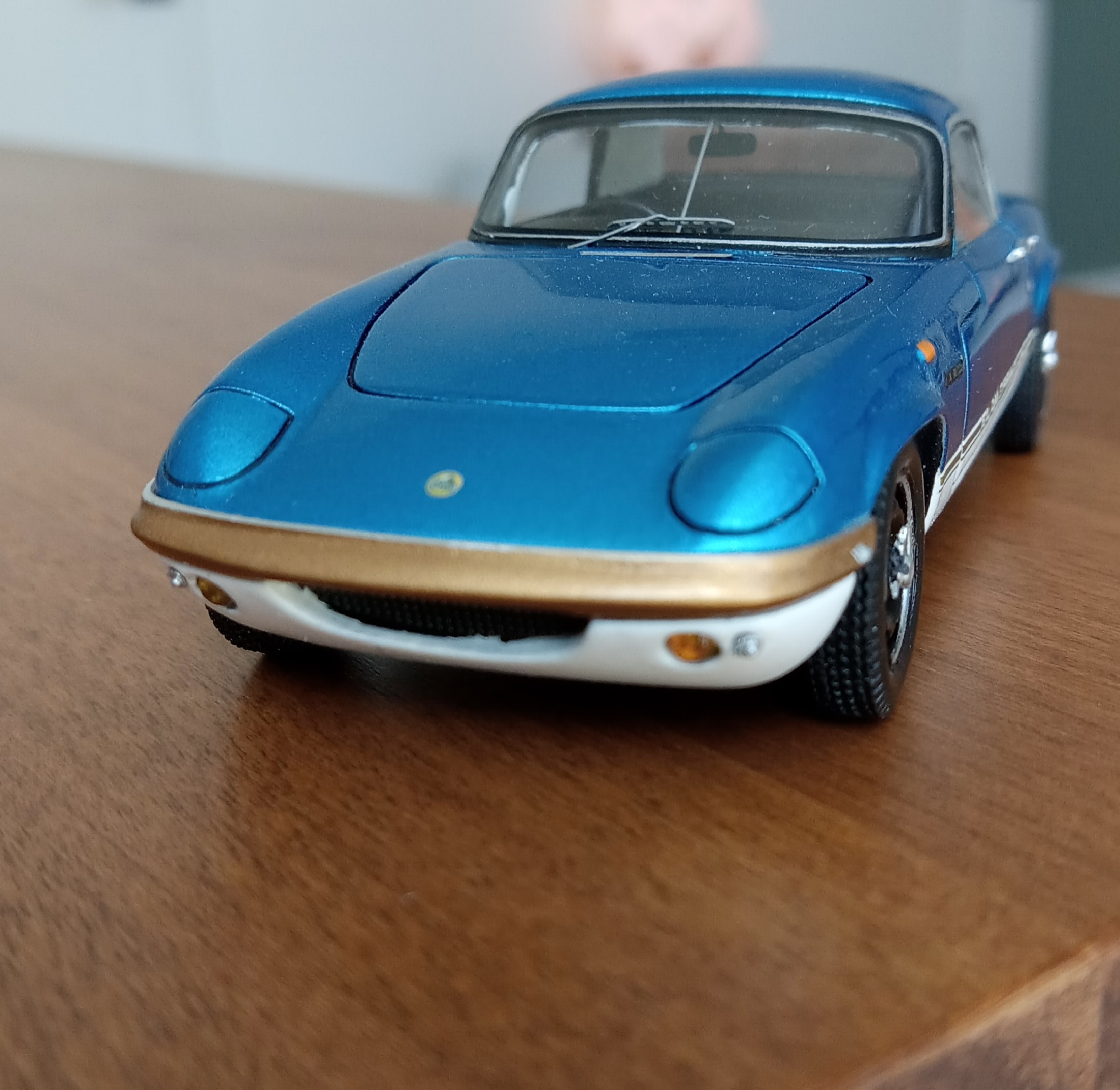
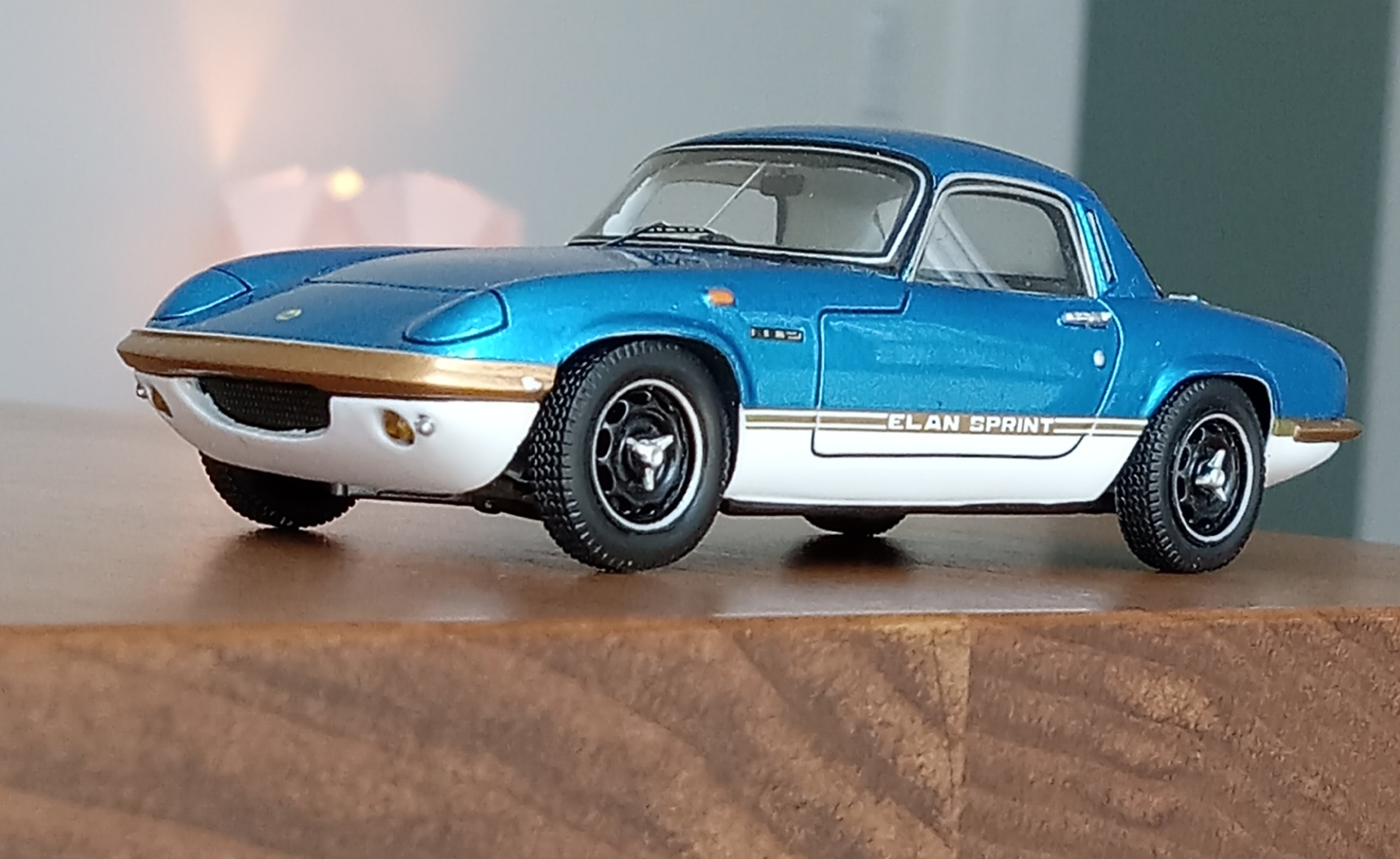
3:エリートよりさらに低いフロント周りの実現のために取られた特殊なリトラクタブルヘッドライトの美しいカットライン!!
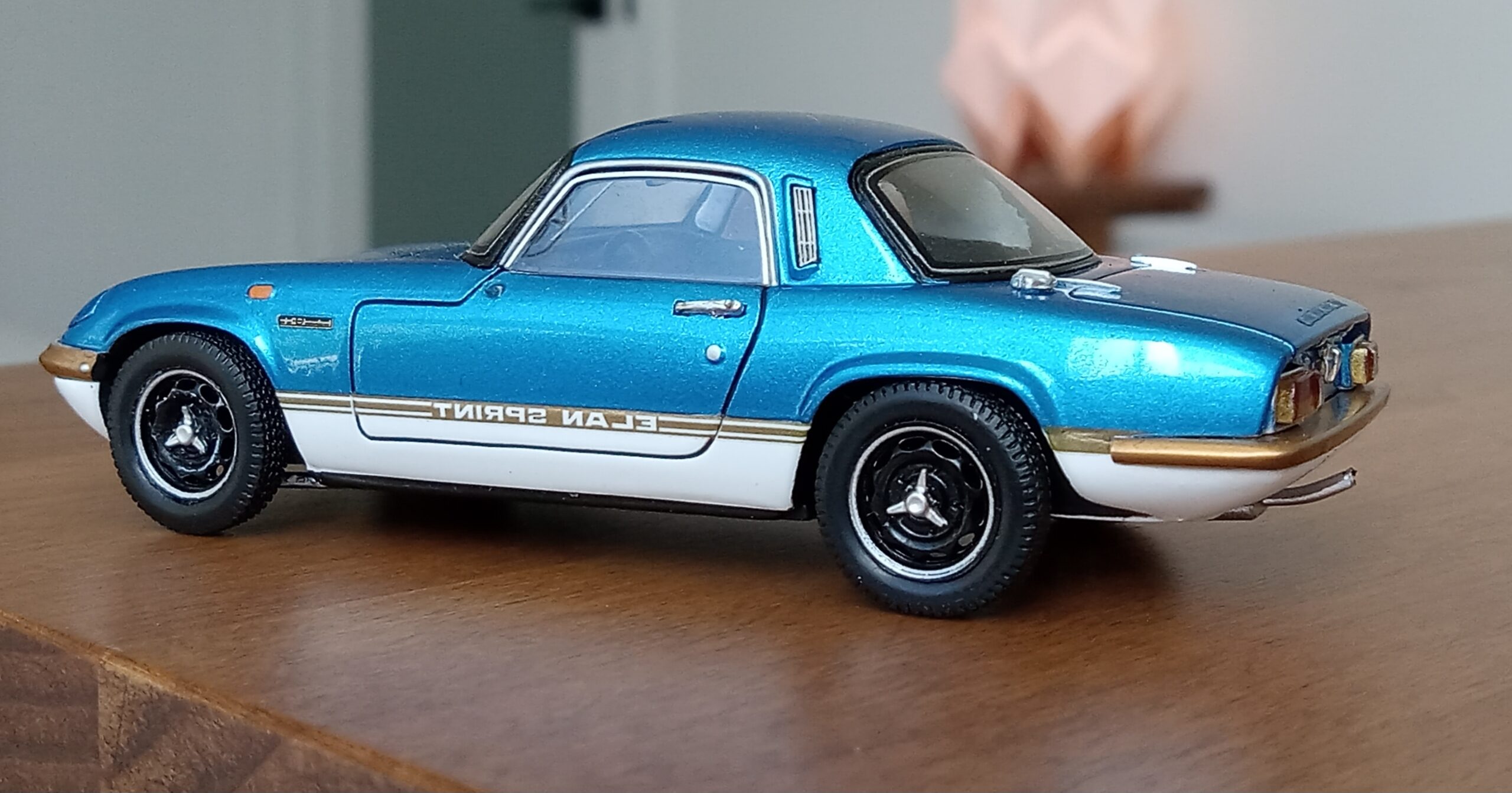
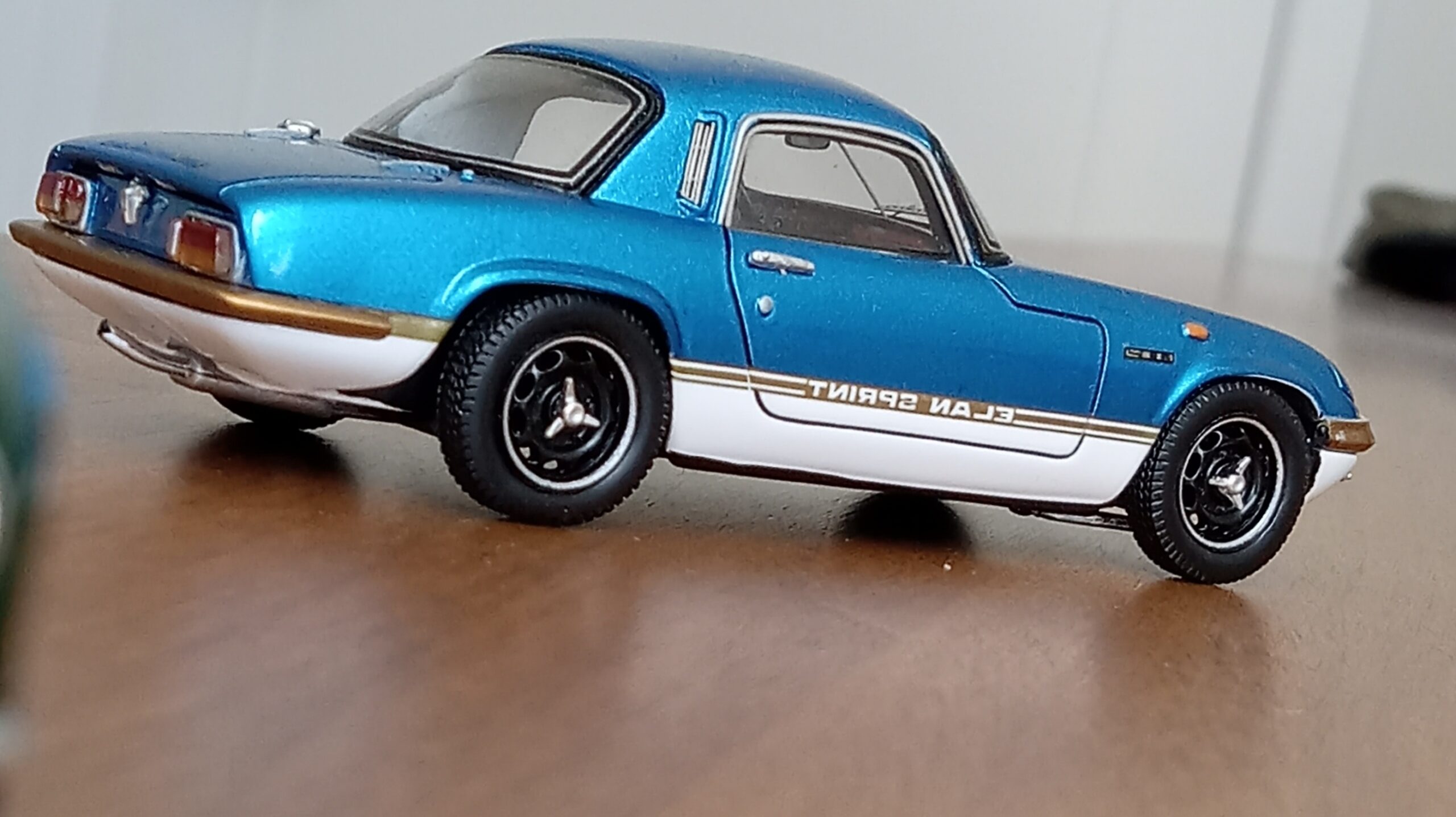
4:空力追求から選択されたコード・トロンカスタイルの、「切り落とされたテイルエンド」の潔い切れ味+ミニマルな灯火類のグラフィック・デザインの妙味
5:得も言われぬほど吟味された、大き過ぎず小さすぎない、ハードトップ部分+ラップアラウンド式の美しいリアウインドウ
6:車体を視覚的に引き締める、F1優勝を記念したゴールドリーフ入りのトリコロールのカラースキーム
では、それぞれ
写真入りで見て行きましょう!
1:Y型バックボーンフレームを収めた、理想的なFR骨格に『ミニマル面の美しさ』を極めた外皮を合わせた、軽量スポーツカーの原子核のような外観
(ファイバグラス製の外皮部分が、オーガニックななまめかしさを醸造している点も見逃せません。)
ーーーー>先代エリートから受け継いだ、「フロント車軸より後ろに収めたエンジン位置」がダイナミックなプロポーションの全てを決めています。
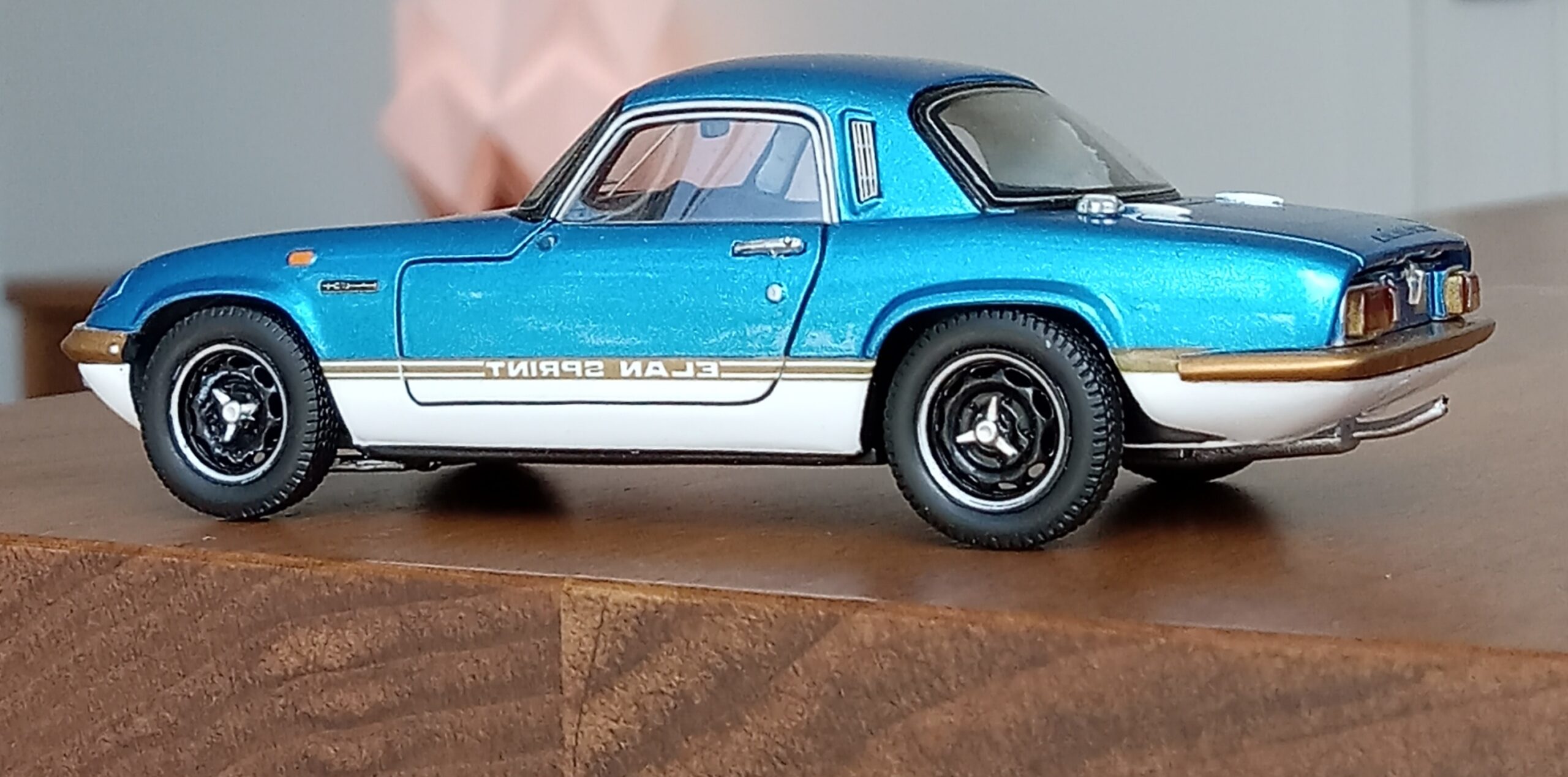
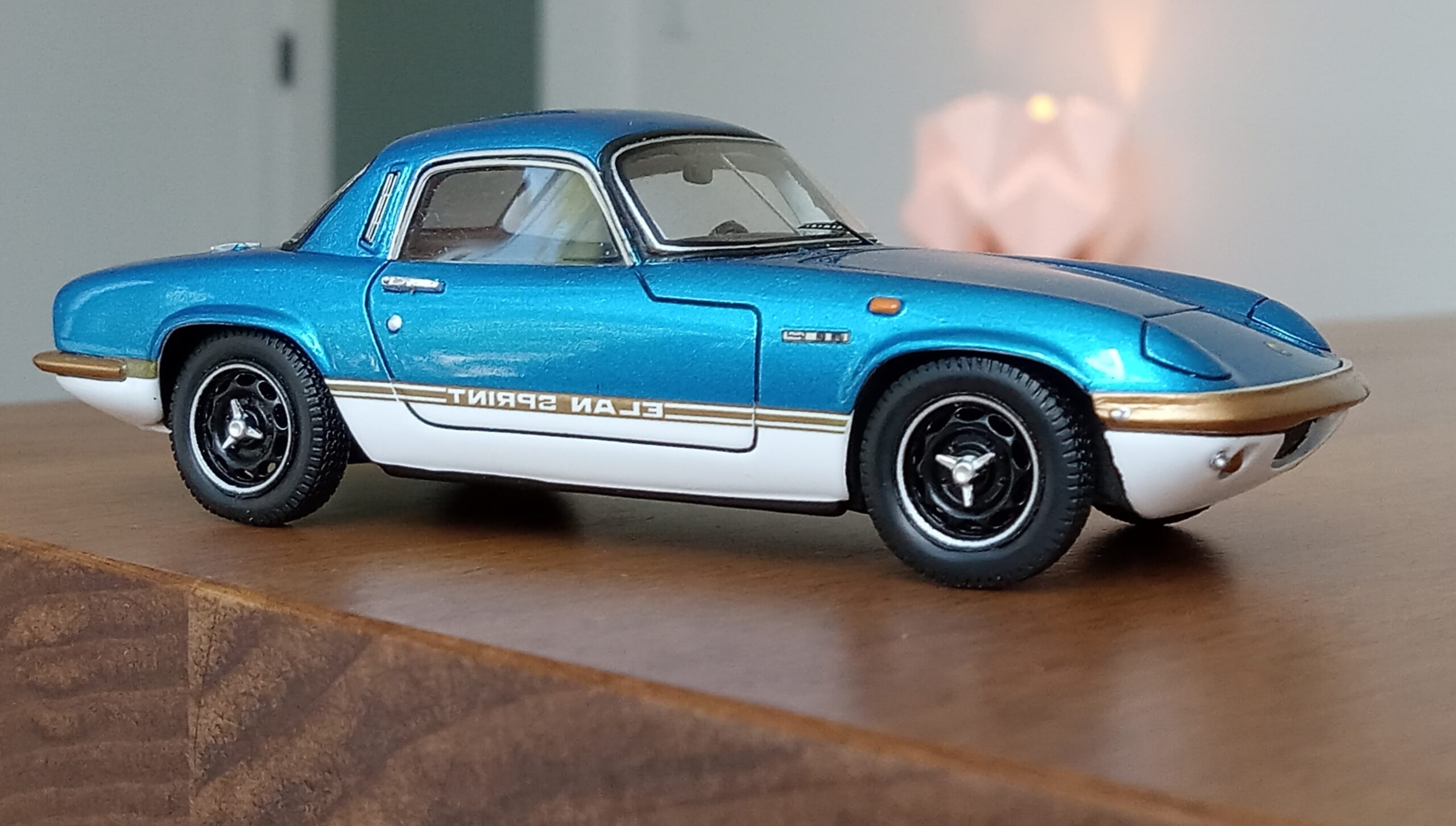
2:『動』と『静』の同居した、落ち着きと衝動に満ちたアンビバレントなサイドビュー・プロポーションの深い味わい
(エリートに比べかなり長いホイールベースがドア以降のスペースを作り、動的バランスを若干安定方向に寄せています。)
ーーー>ロードスターにはない均整があります。
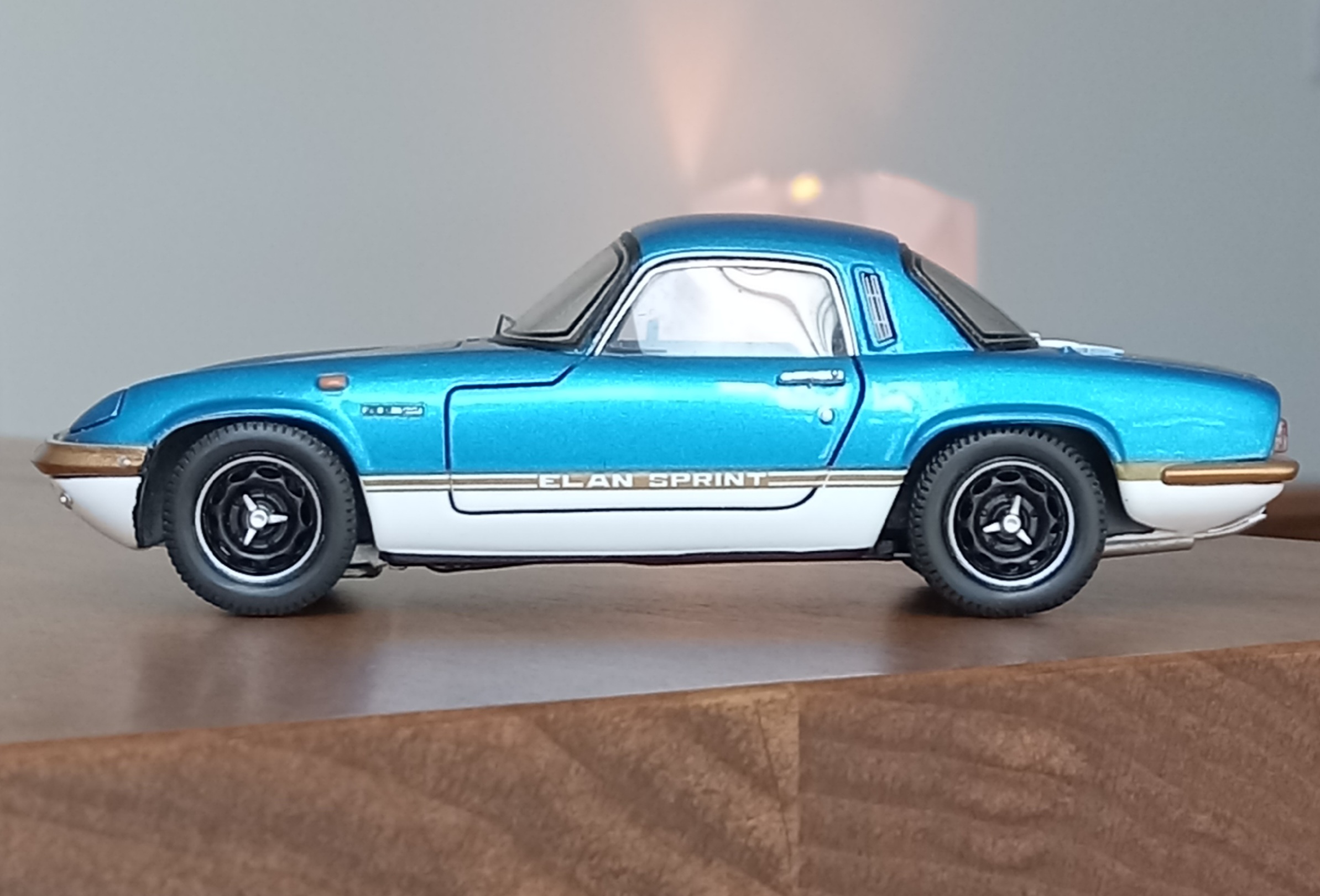
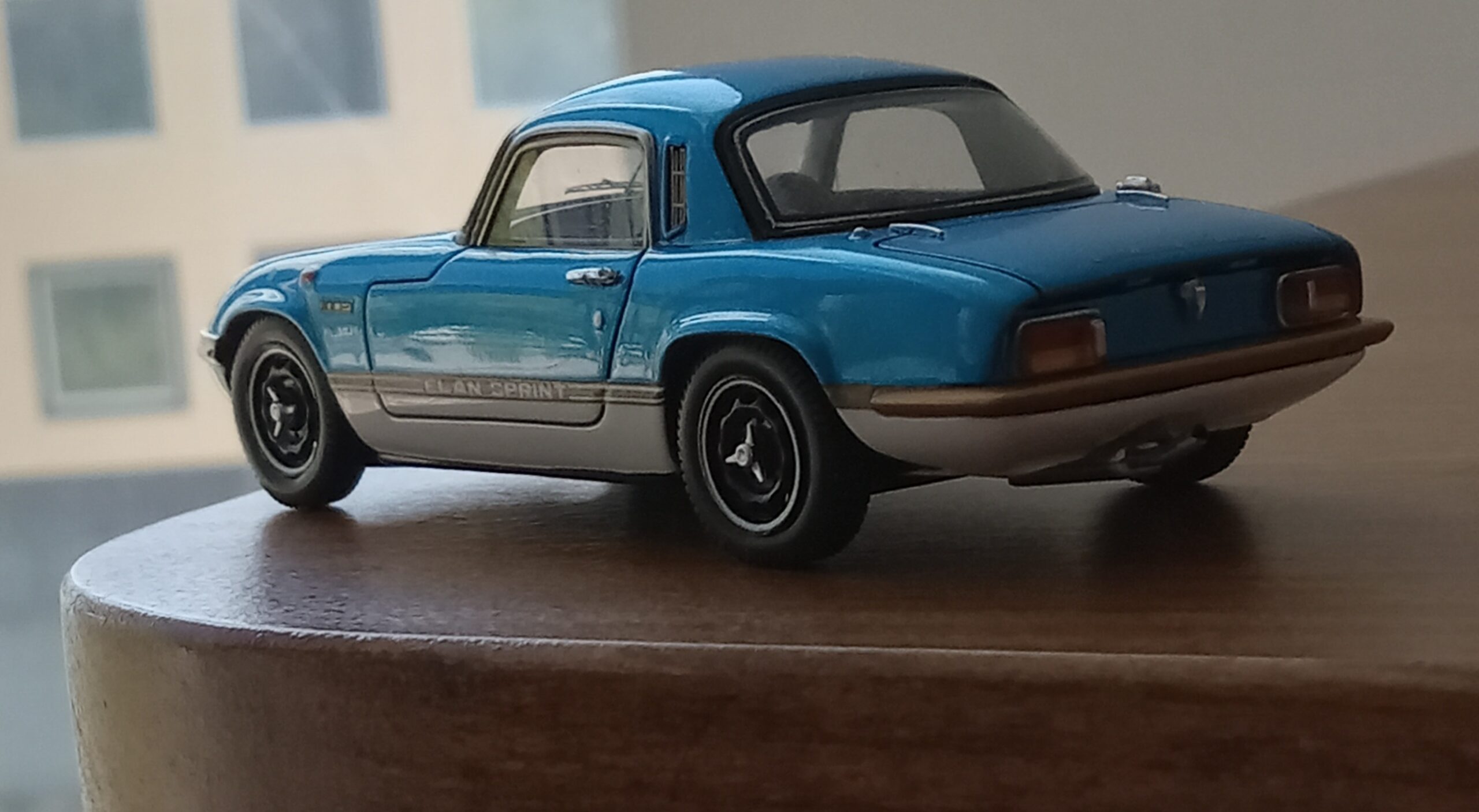
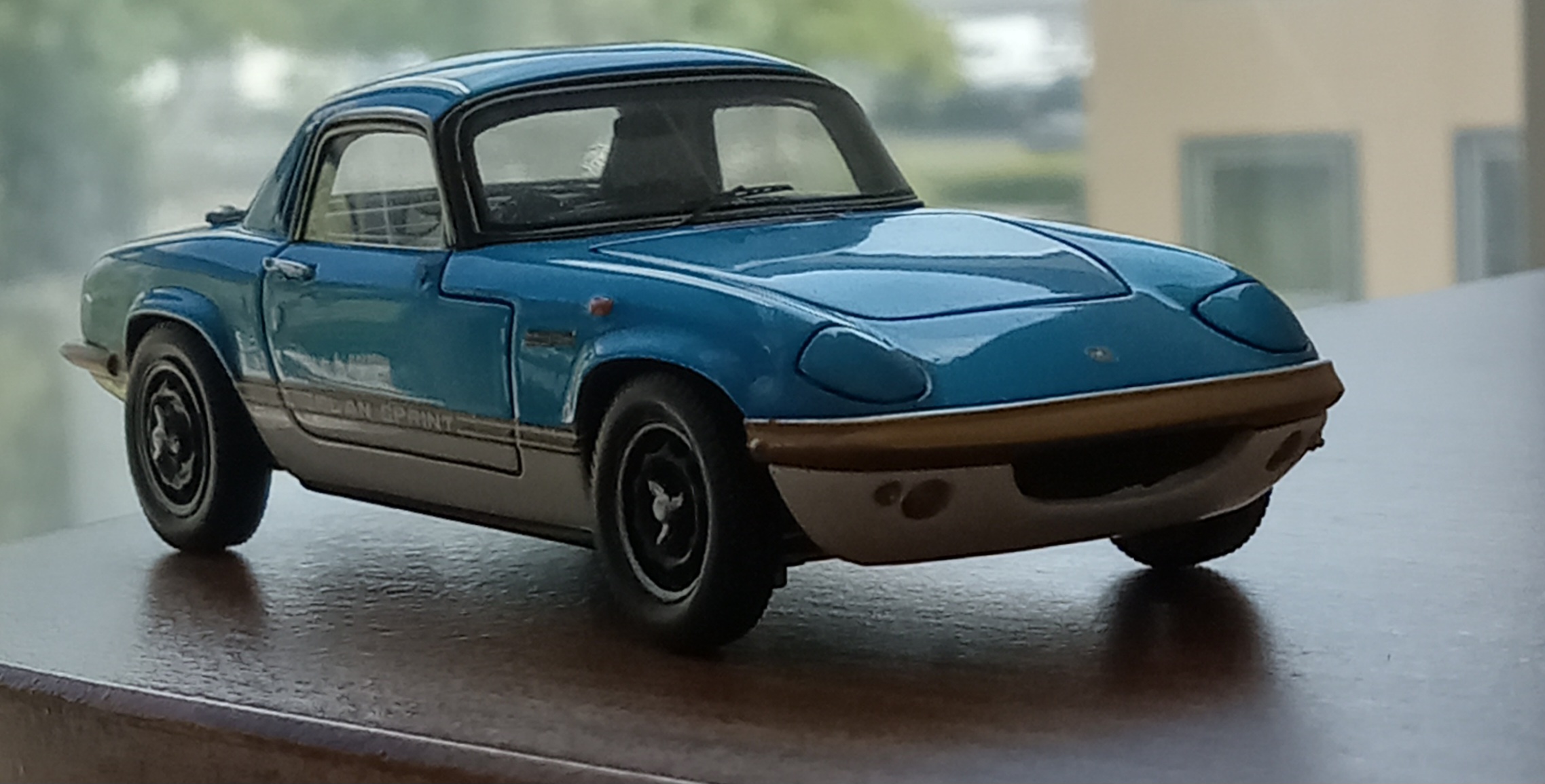
3:エリートよりさらに低いフロント周りの実現のために取られた特殊なリトラクタブルヘッドライトの美しいカットライン!!
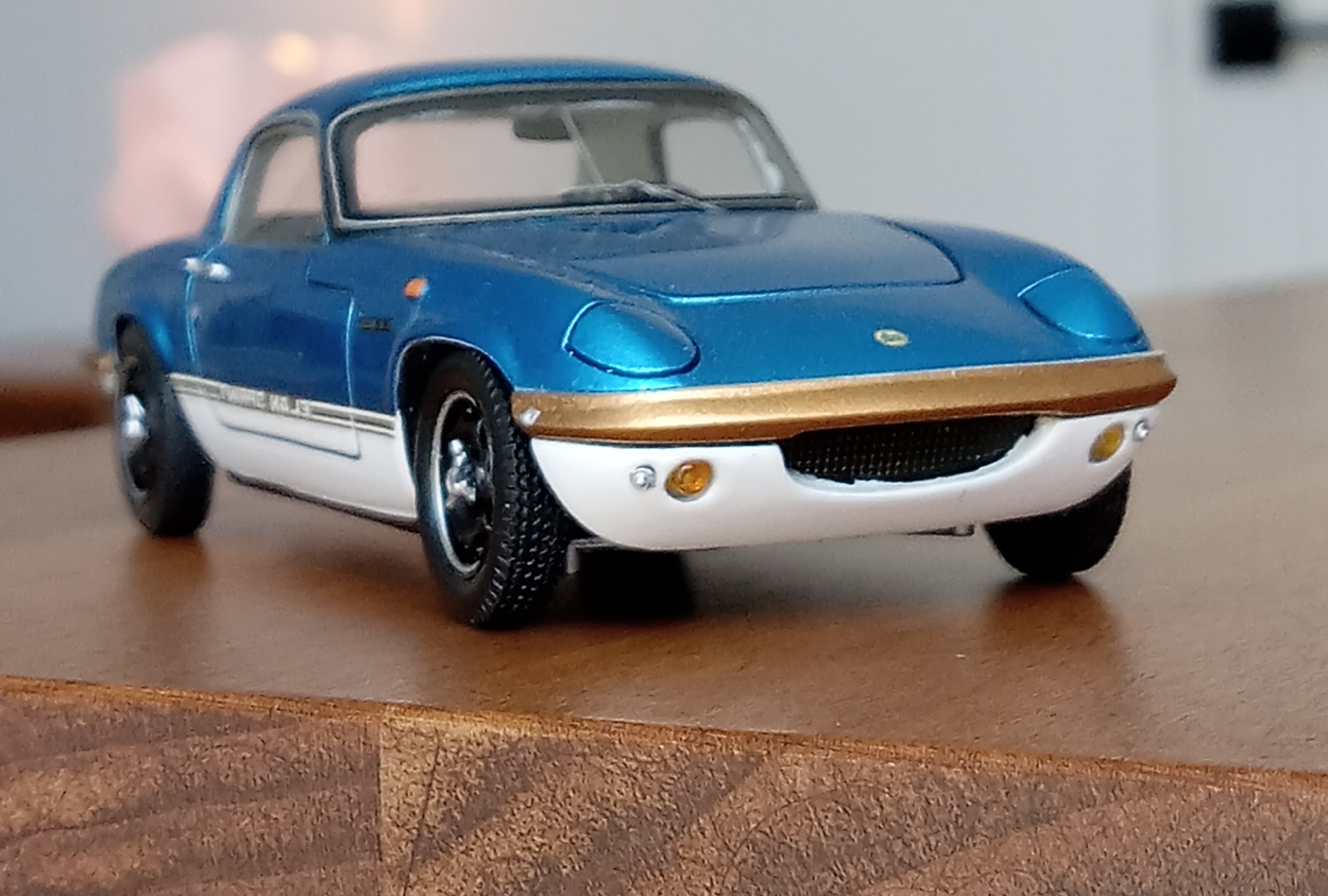
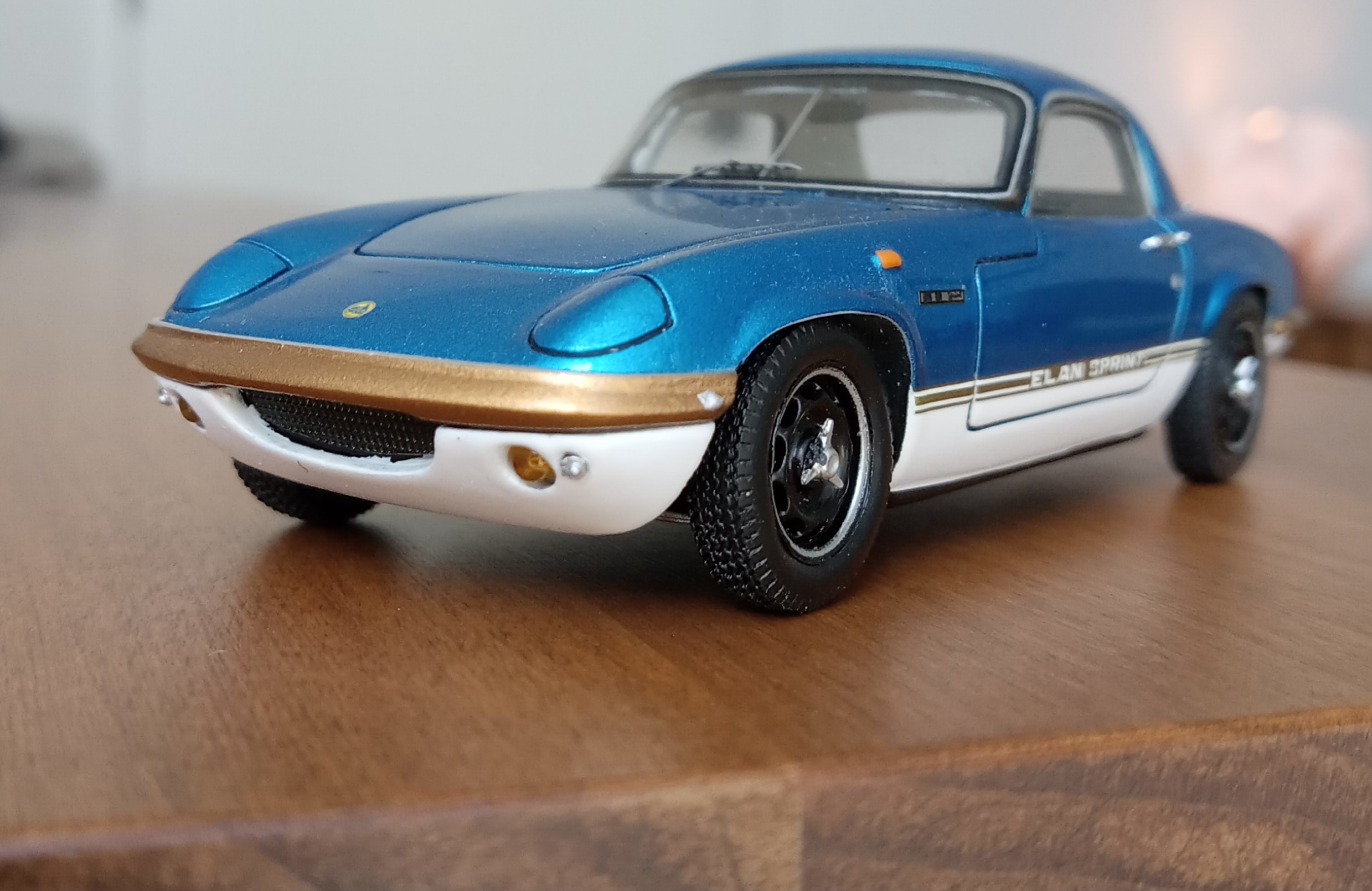
4:空力追求から選択されたコード・トロンカスタイルの、「切り落とされたテイルエンド」の潔い切れ味
+ミニマルな灯火類のグラフィック・デザインの妙味
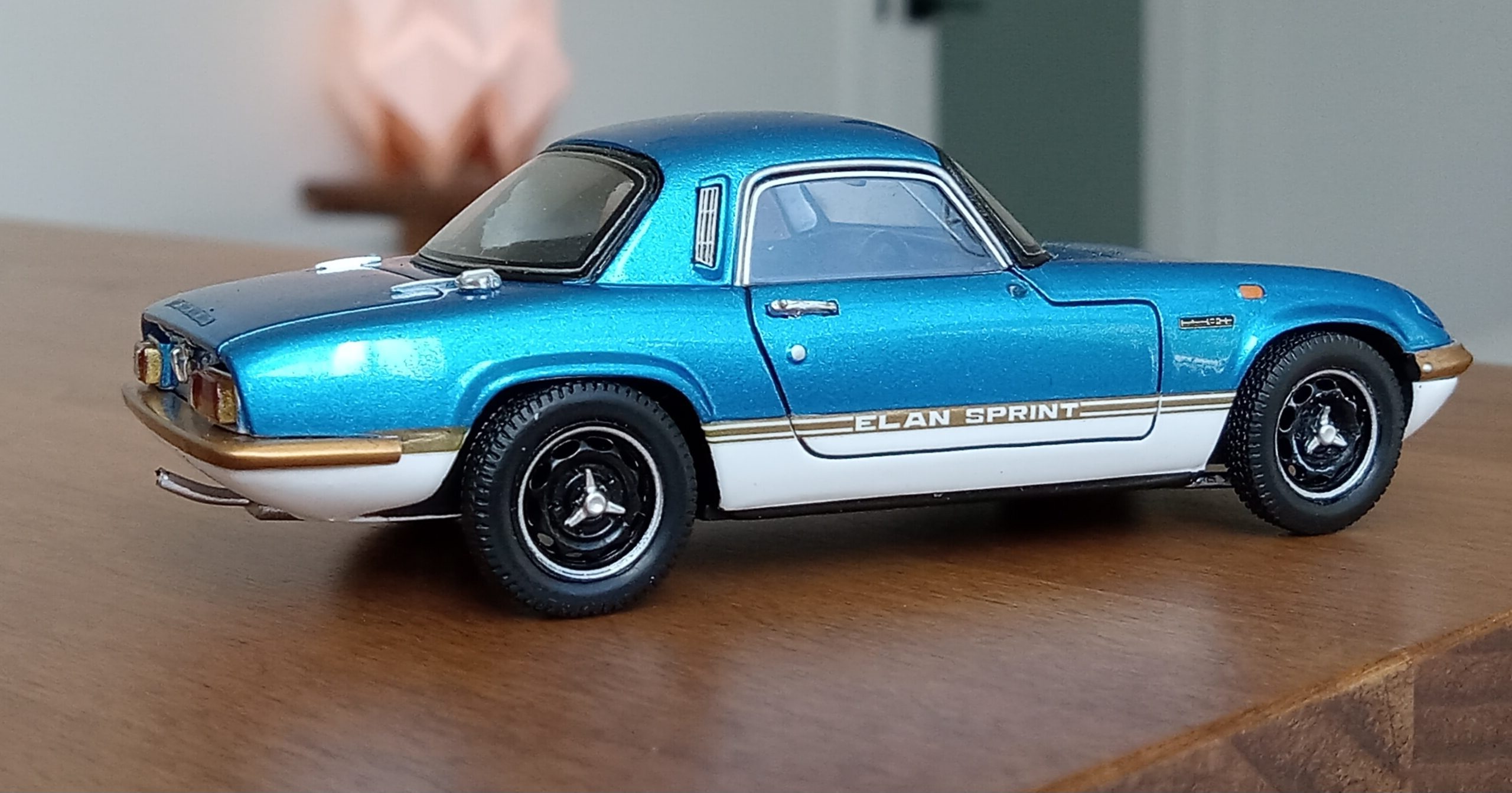
5:得も言われぬほど吟味された、大き過ぎず小さすぎない、ハードトップ部分+ラップアラウンド式の美しいリアウインドウ
6:車体を視覚的に引き締め、特別感を強度に演出する、F1優勝を記念したゴールドリーフ入りのトリコロールのカラースキーム
次は、私の個人的な
『エラン体験』のお時間です。
*『私』とロータス・エランS4スプリント仕様:

1990年代初め、
マツダ・MX5 『ミアータ』がLAで大ヒットを飛ばし、
その流れで、日米両国の雑誌でミアータの祖先に当たる
『ロータスエラン』に
注目が集まりました。
それ以前にも、
*クラシックカー・ショーや、
*デザインクラスの講師の個人使用のエランを
*まじかで見せていただいたりしていたので、
そのカッチリした出来のいいデザインに
興味を持っていました。
ミアータに関する雑誌の記事を通じて知った、
*北米デザイン部署のトム俣野さんつながりや、
*プロジェクトリーダの立花啓毅さんのインタビューなどで知った、
小型スポーツカーの軽量化や新素材の使い方、デ・トマソ・バレルンガーやフィアット・アバルトに付いての蘊蓄などに交じりながら、常に、その文脈の中心にあったのが
ーーーーー>『ロータスエラン』の存在でした!
#感動ポイント
*デザインのキリっとしたバランス感
*どこから見ても破綻のない安定感
*それをまとめる愛嬌一杯の、ヘッドライトの切り欠きライン
*FHC(ハードトップ)版の美しいトップデザイン
*スプリント版のトリコロール・グラフィックの特別感
それでは次に、エランにまつわる
個人的な立体体験です。
#『掌』の体験:
プラモデル編:
*タミヤ模型製、1/24プラモデルキット、マツダMX-5 (ロードスタ
ー)
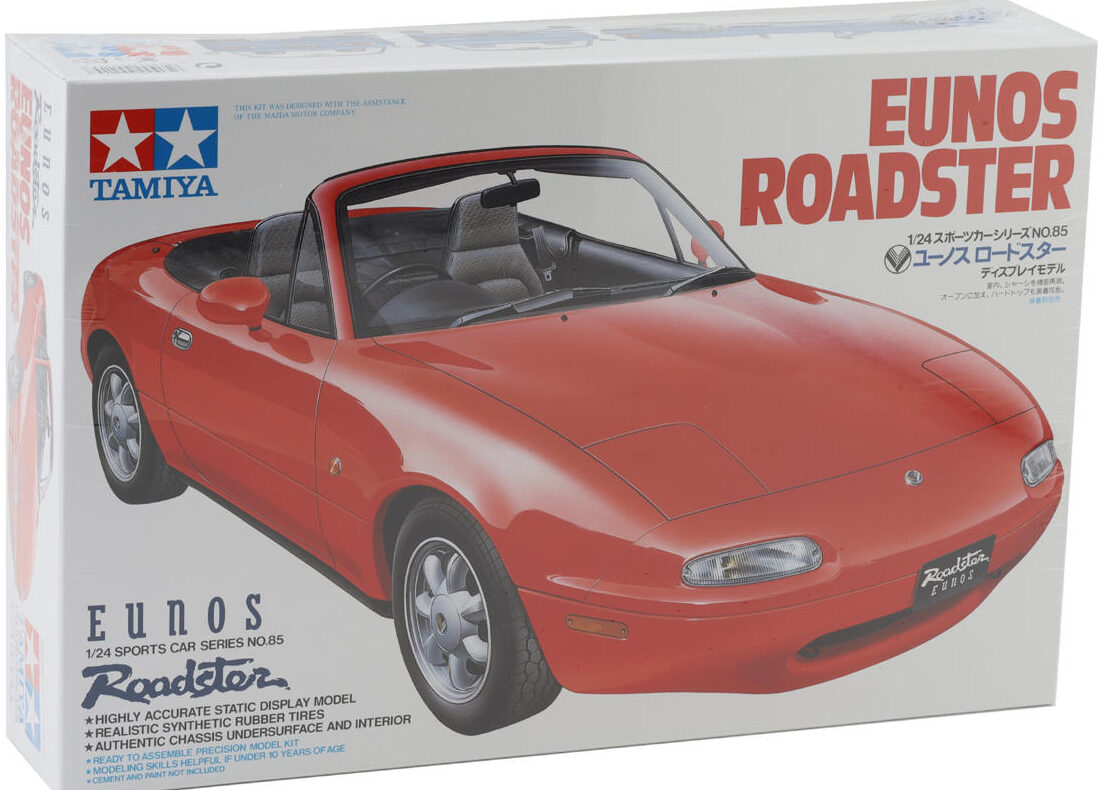
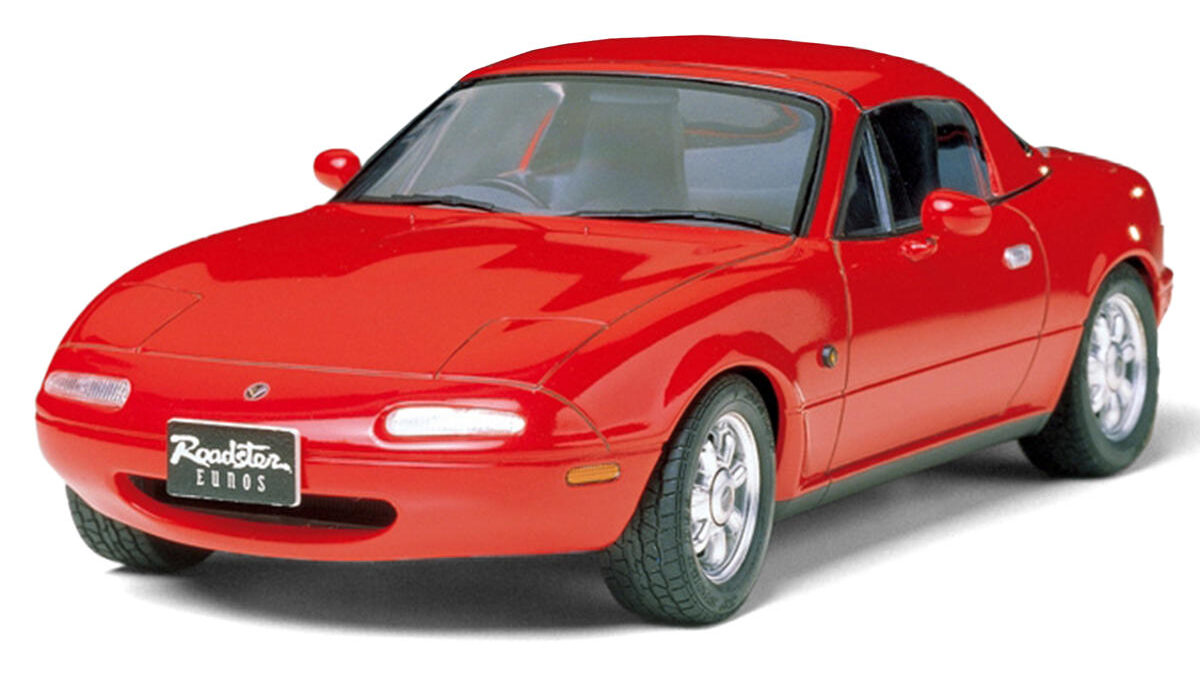
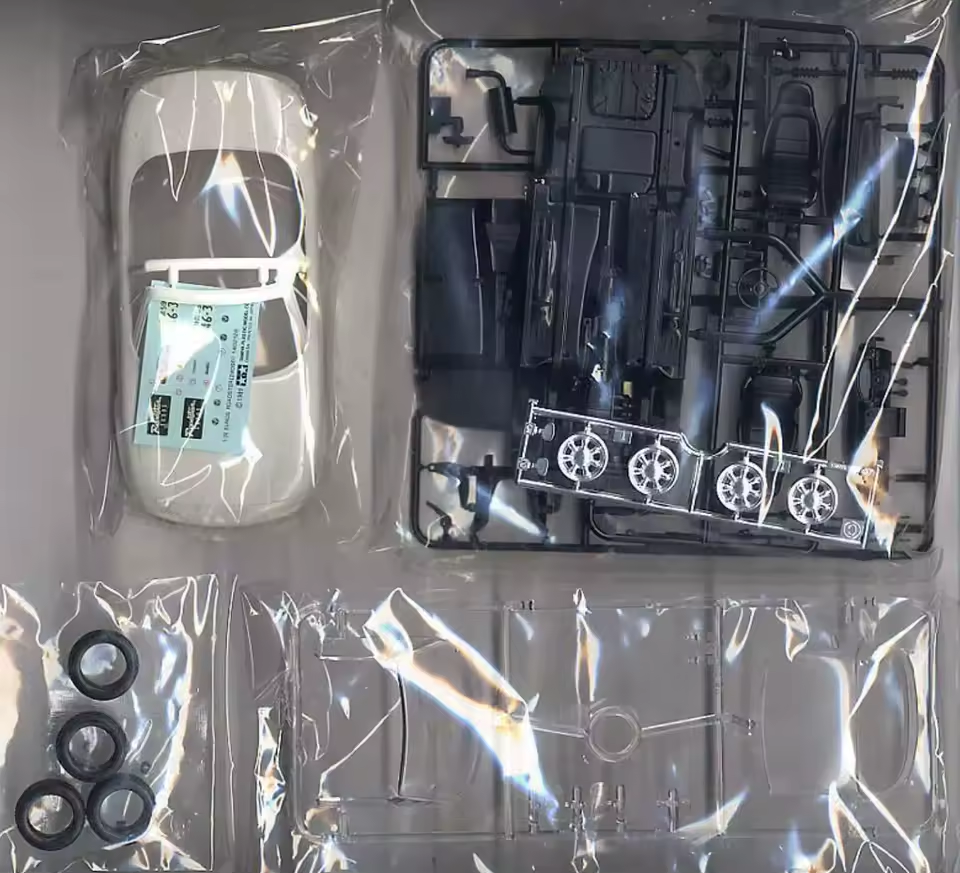 (実車発売後すぐに発売されたキットです、エンジンレスの、バスタブ・インテリア式なシンプルなものですが、ボディーやシャーシの造形がしっかりしていて、タミヤ・ディフォルメも控えめ、ソフトトップとハードトップも付属していました。
ーーーー>後に、北米版、ミアータ仕様も発売されてました。
*レベル社製、1/25プラモデルキット、マツダ・MX-5 ミアータ(2in1シリーズ)
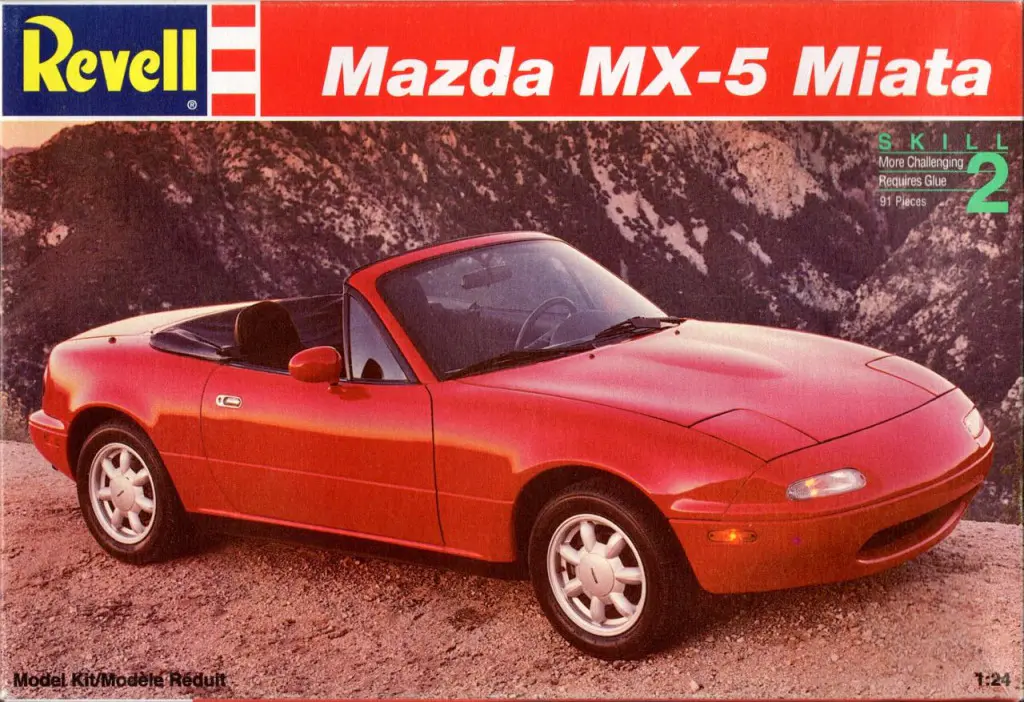
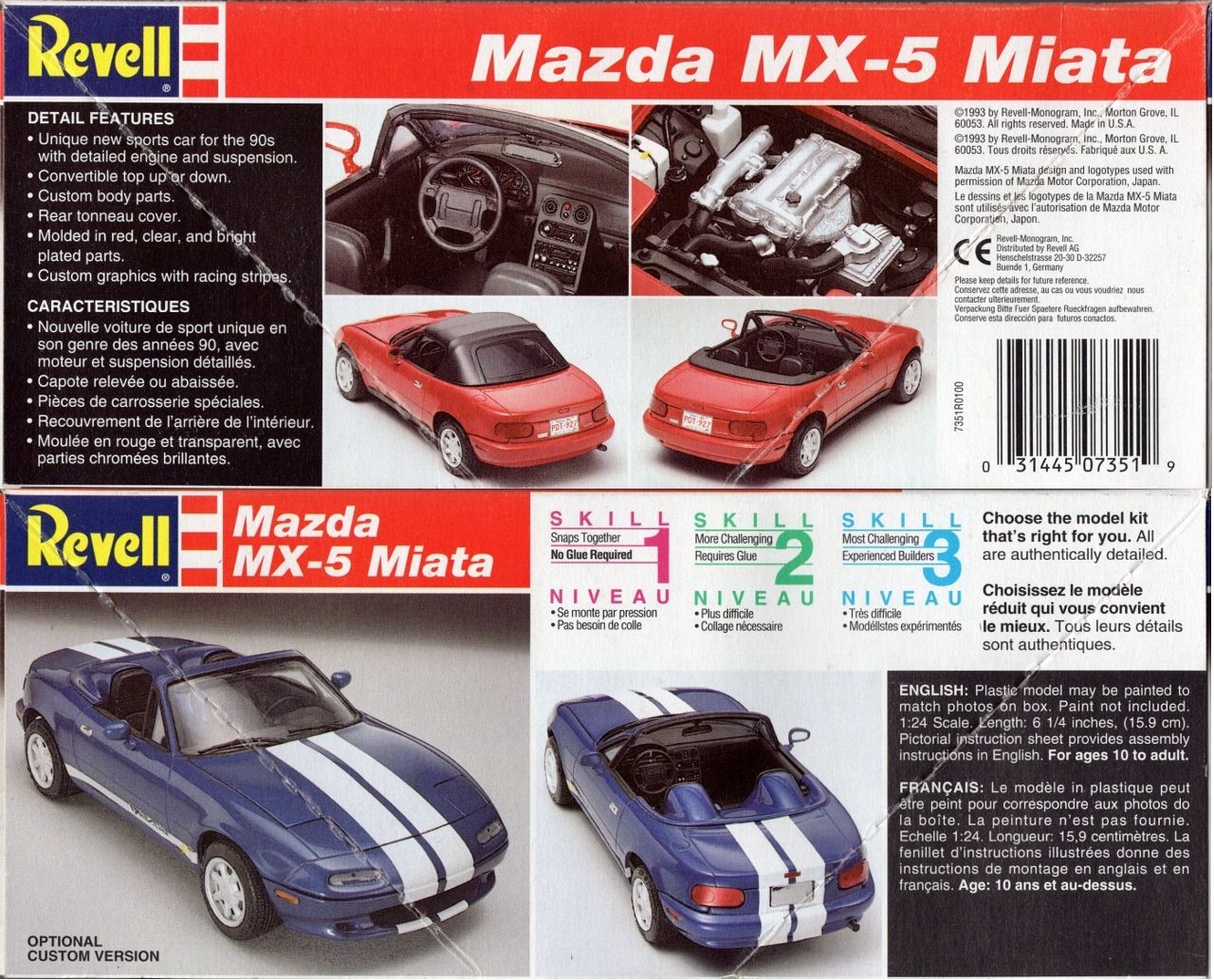
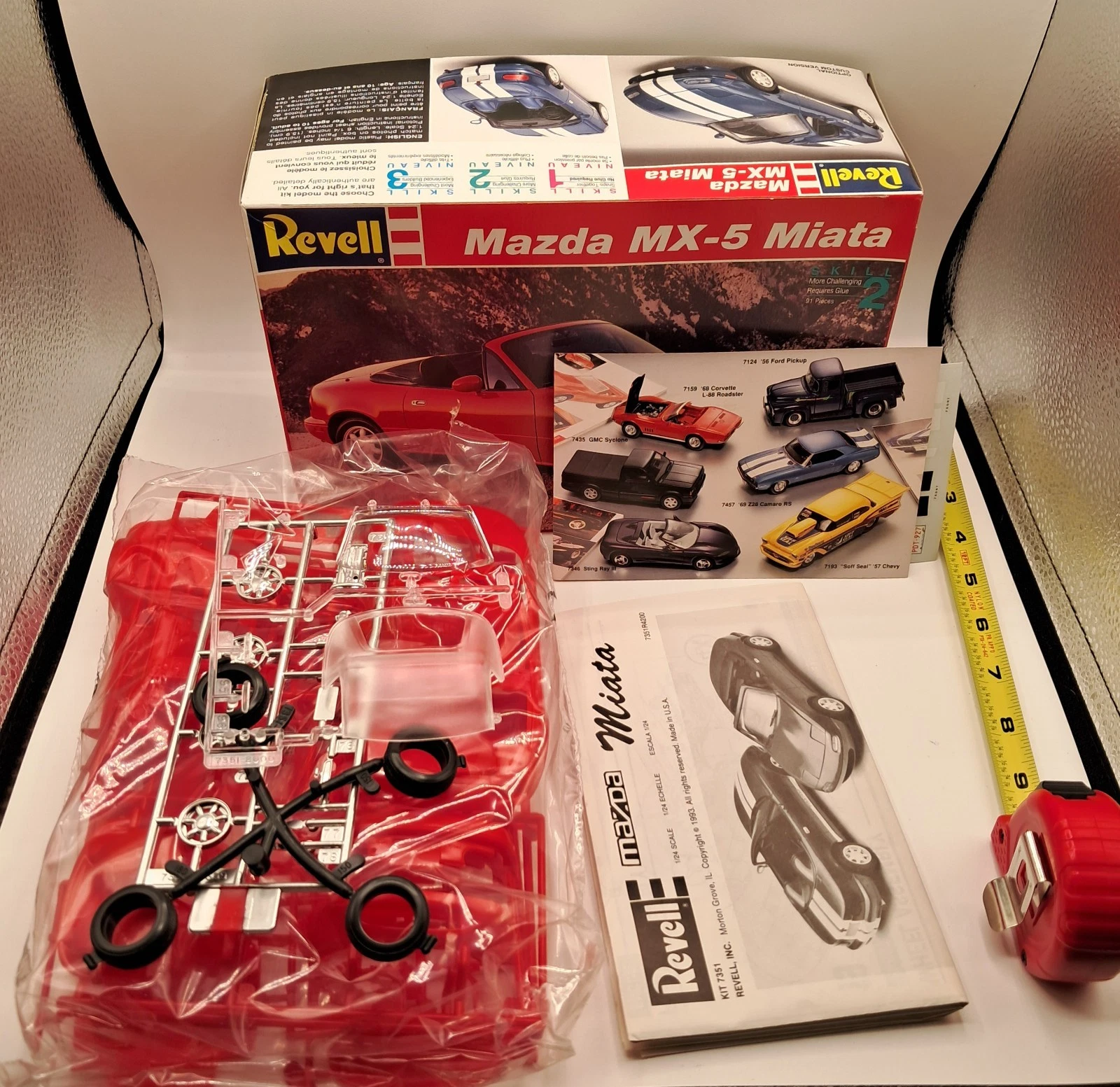
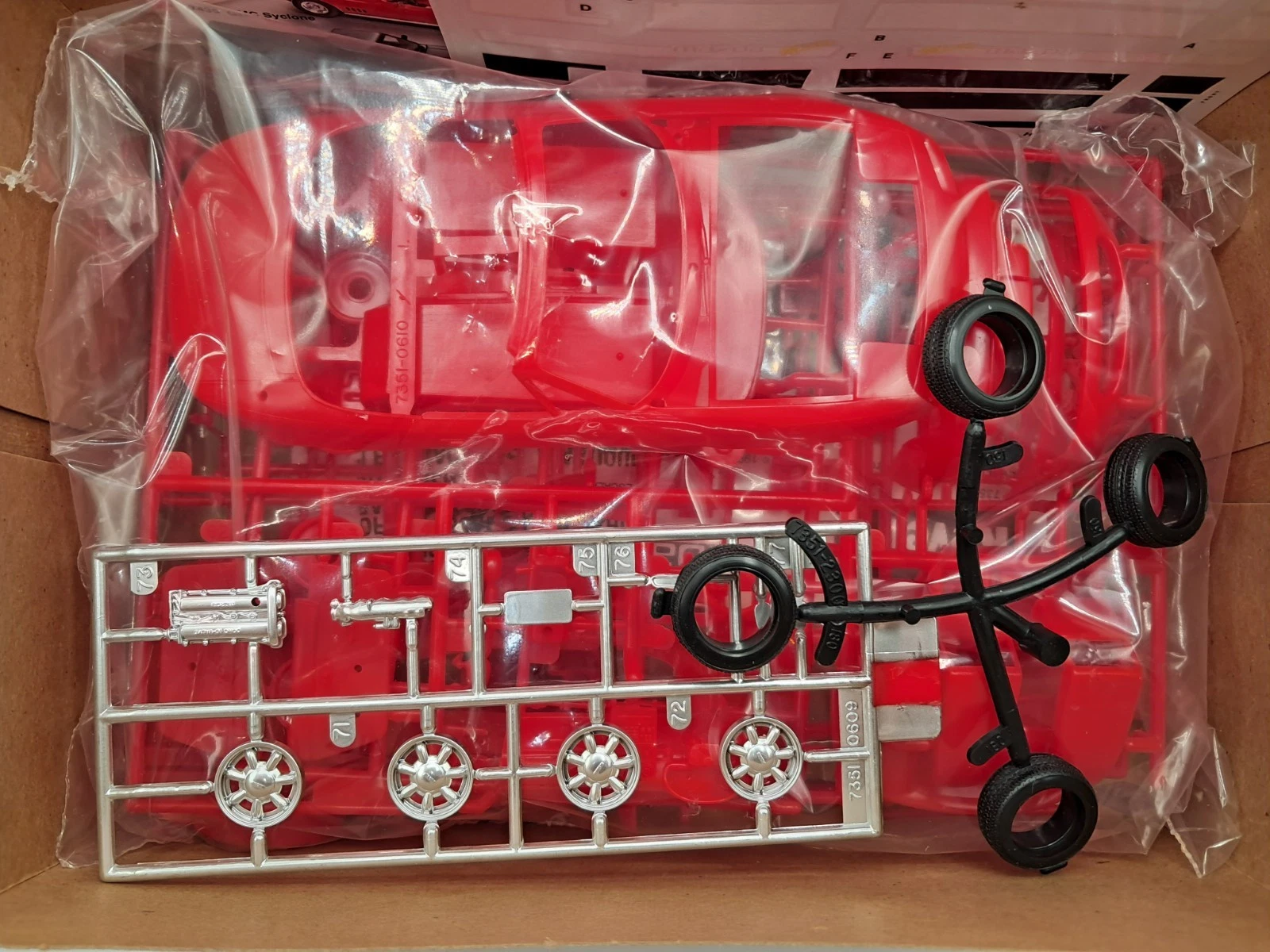 (2個一で、ノーマルとカスタムのどちらかエランで制作できるキット、ボディー造形が田宮版より丸っこく、エンジンやシャシ部分も十分間パーツを使う、モノグラムへの吸収前の傑作・フルディスプレイキットでした。
ーーー>途中まで組み立てて頓挫してました、、、)
*グンゼ産業社製、1/24ハイテック『マルチマテリアル』キット、ロータス・エラン S3
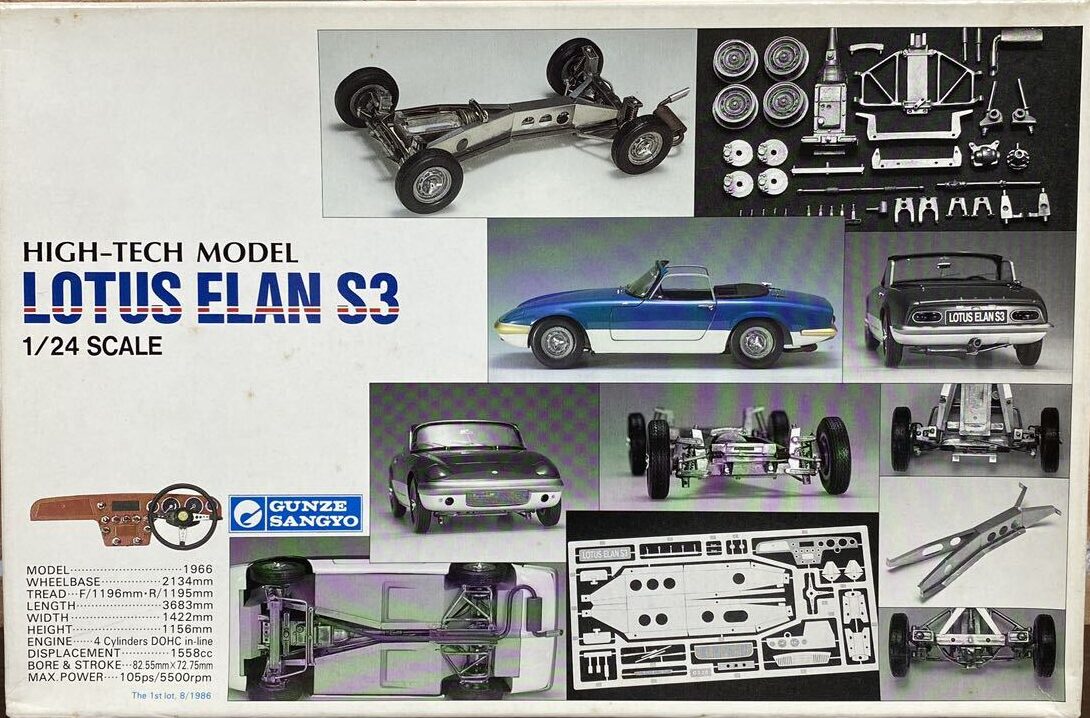
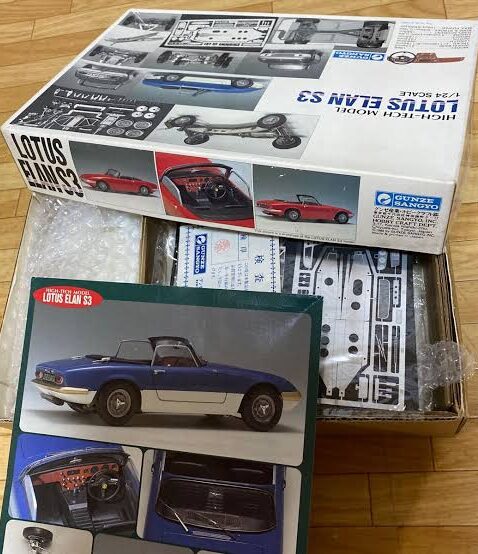
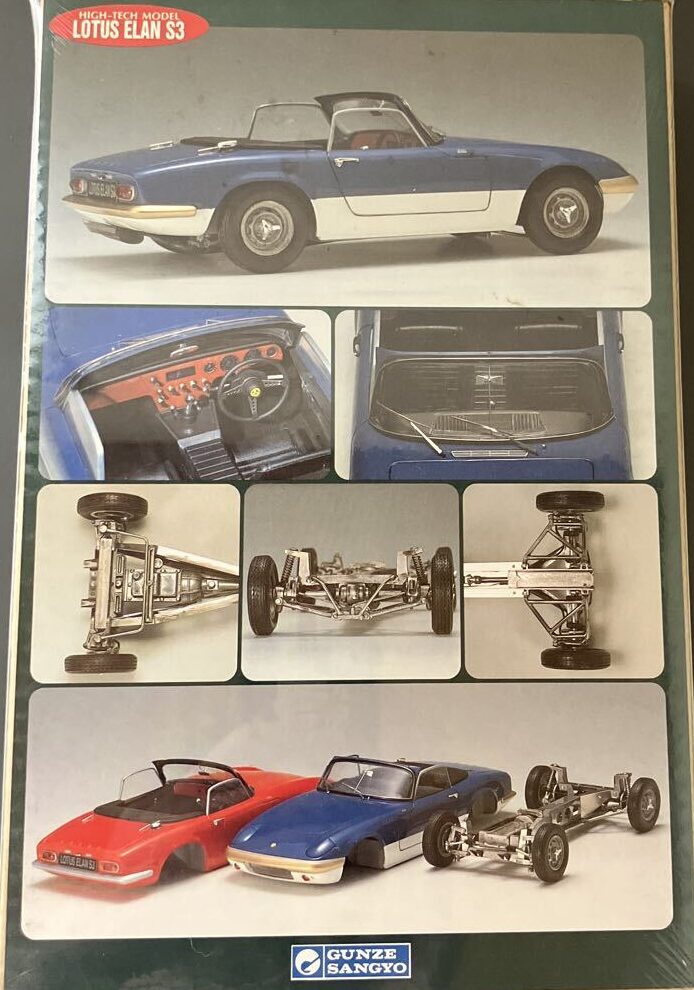 (プラ部品に加え、ホワイトメタルやフォトエッチ、鋳物、引き物部品も接された豪華商品、ディテールだけでなく、ボディー全体の印象も良好でした。
ーーー>後に簡易版プラキットも出てました。)
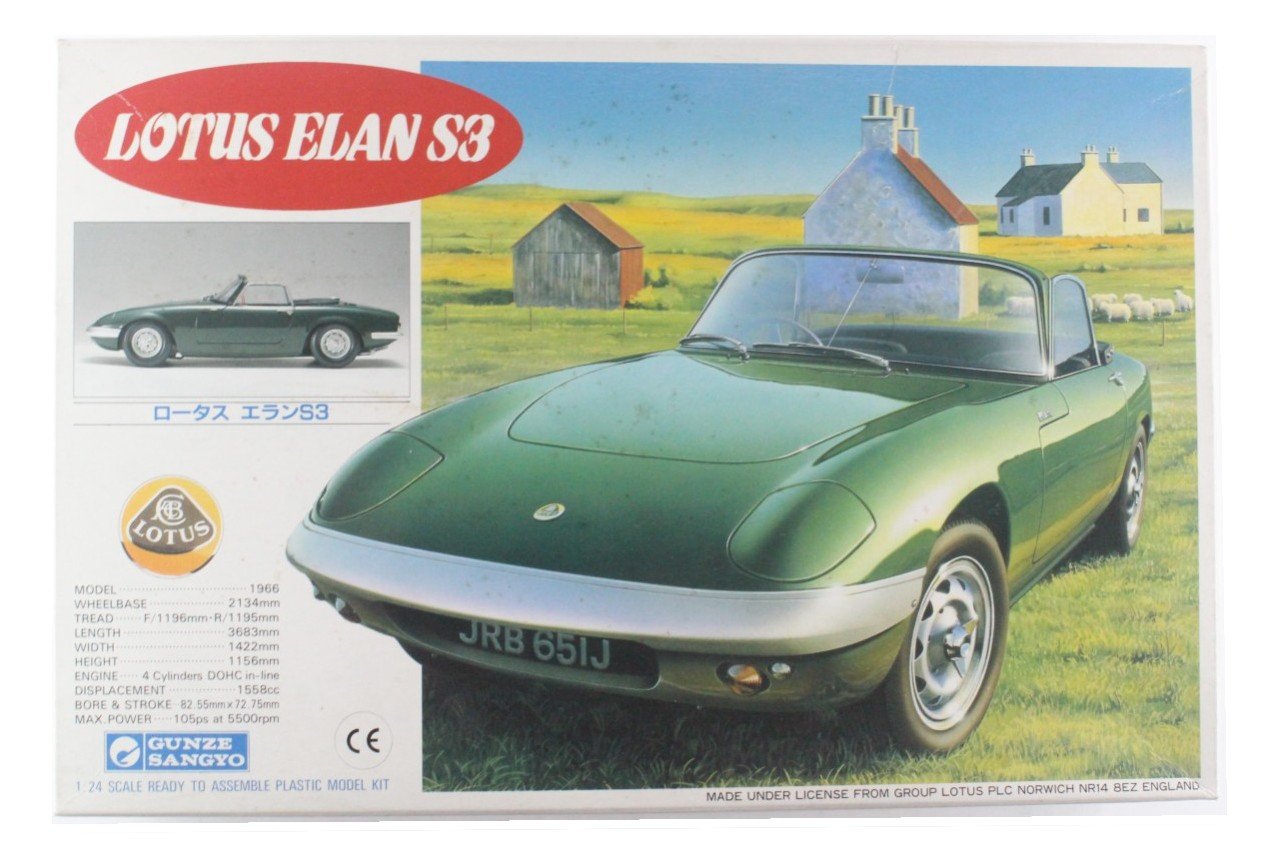
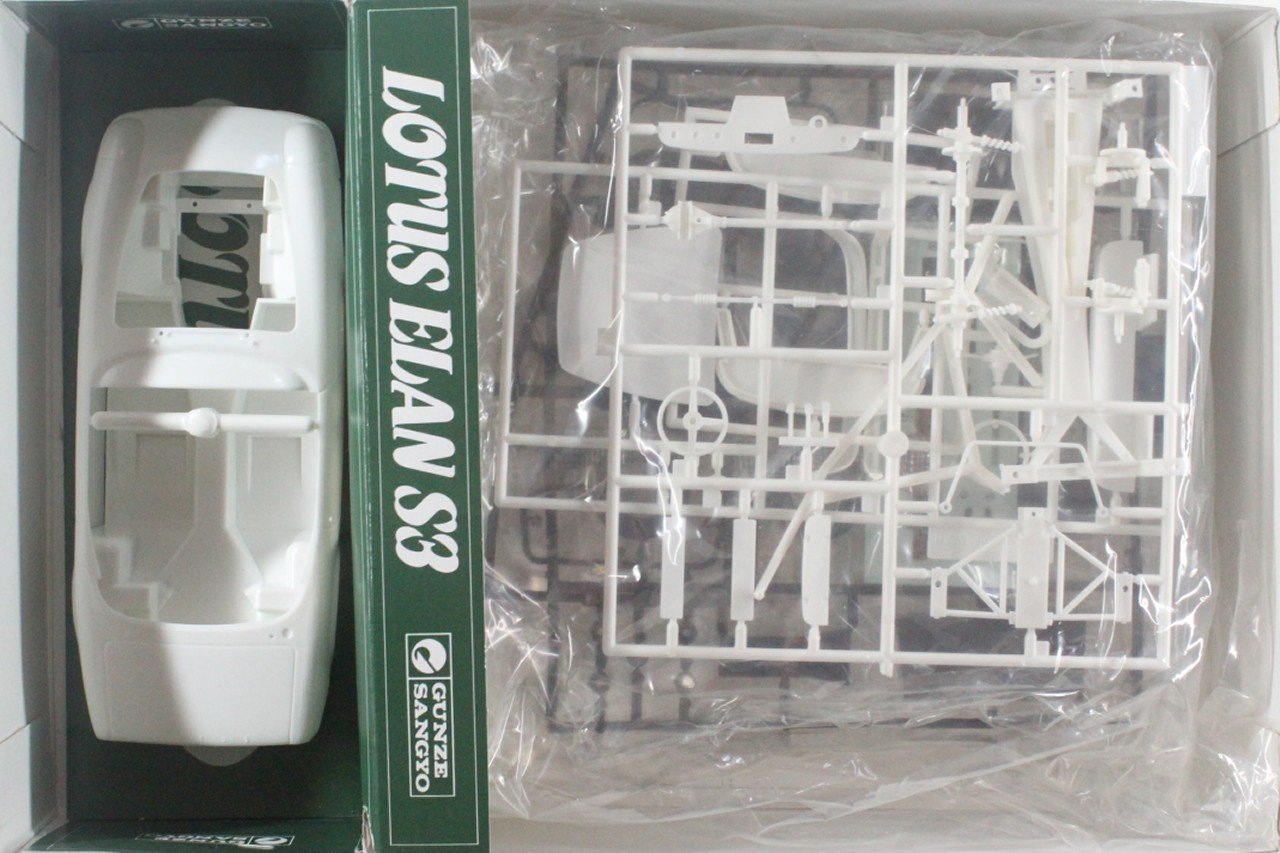
*グンゼ産業社製、1/24プラモデルキット、ロータス・エランS3(白成型)
(上でご紹介した所品の廉価・簡易版ですーーー>息の長い商品のようで、最近でもイーベイでよく見かけます。)
ミニカー編:
*グランプリ・モデル社製、1/43ホワイトメタル完成品、ロータス・エランS4 スプリント仕様【青、金、白】
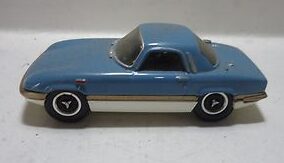
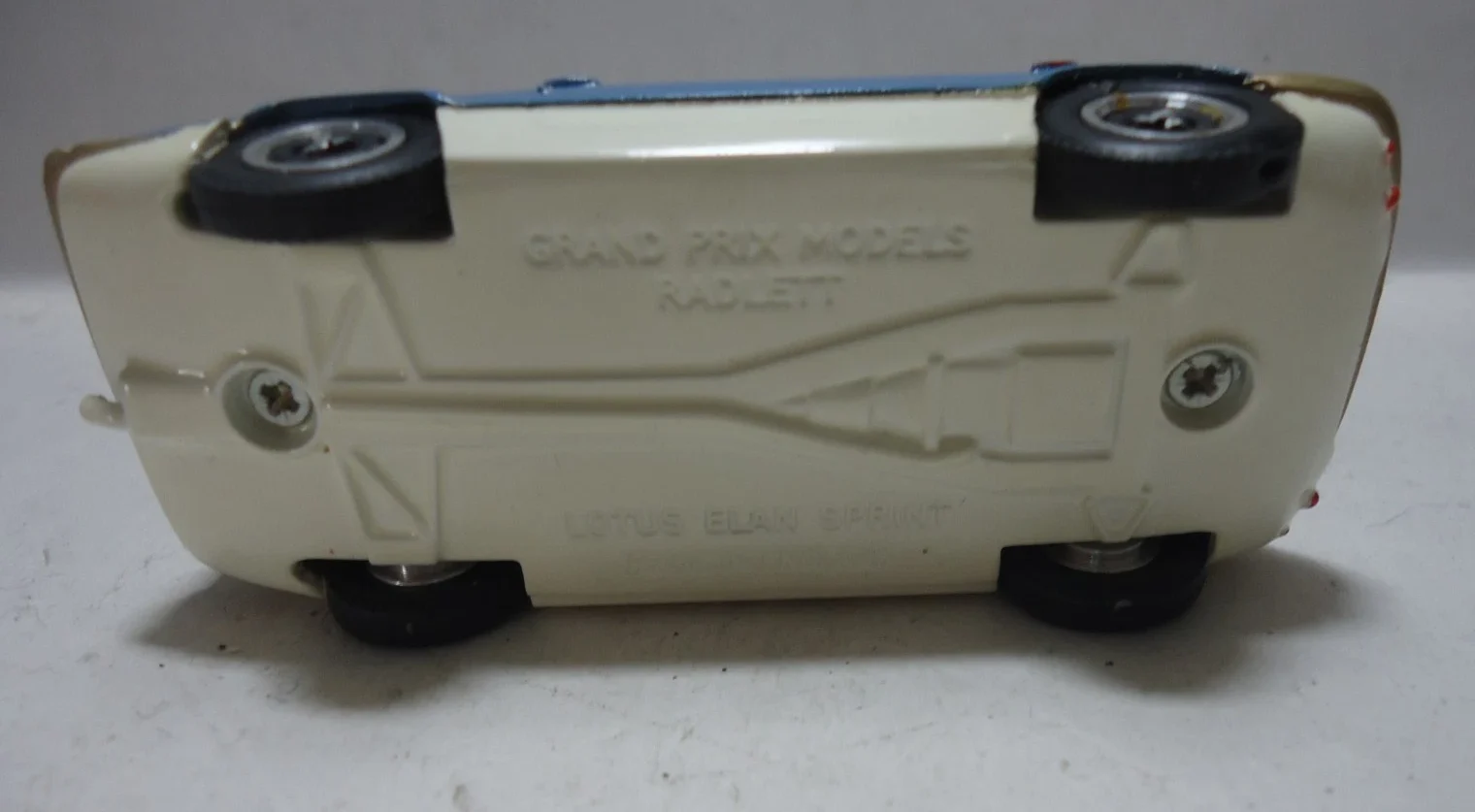 (90年代半ば当時珍しかった、スプリント仕様のモデル化、全体像は今一つでしたが、たたずまいはいい感じ
ーーー>それ以外のバージョンのモデルやキットも出ていました)
*京商製、1/43ダイキャスト完成品、ロータス・エラン各種
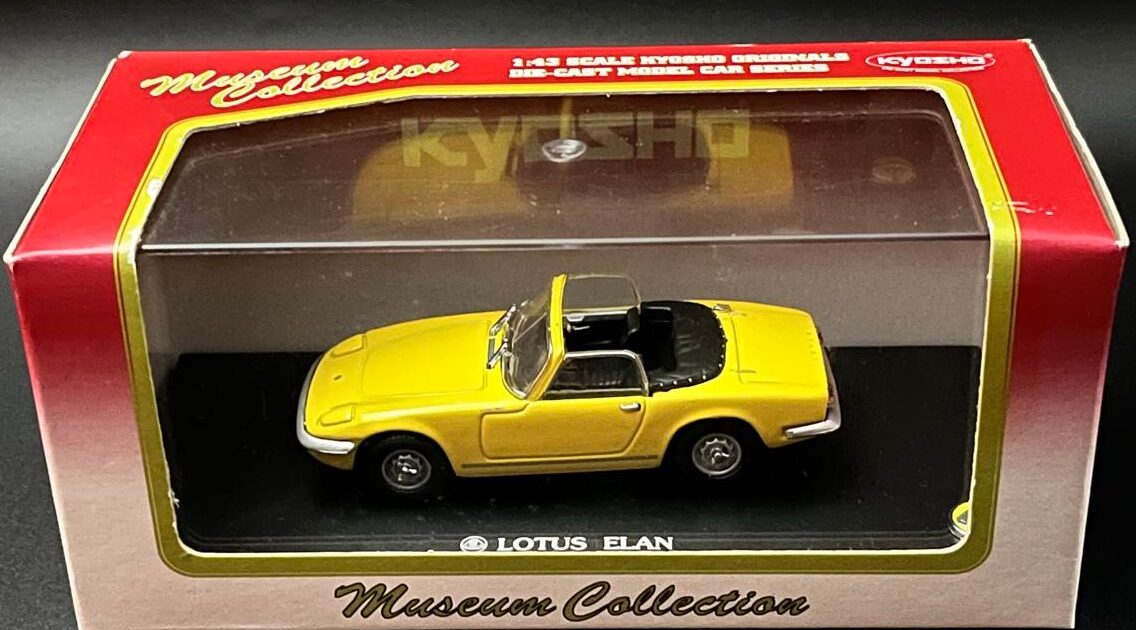
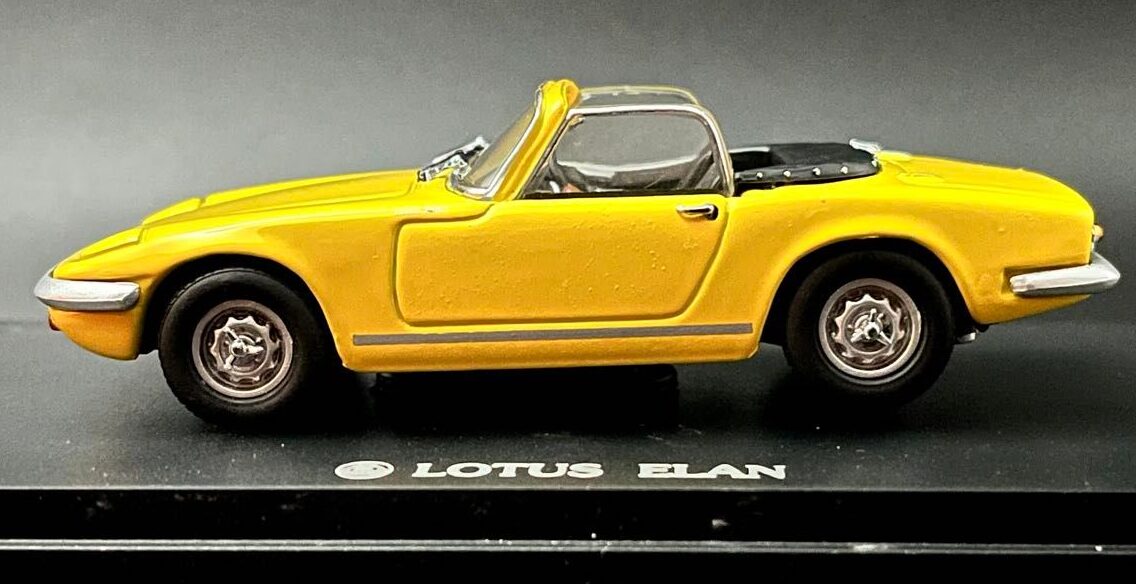
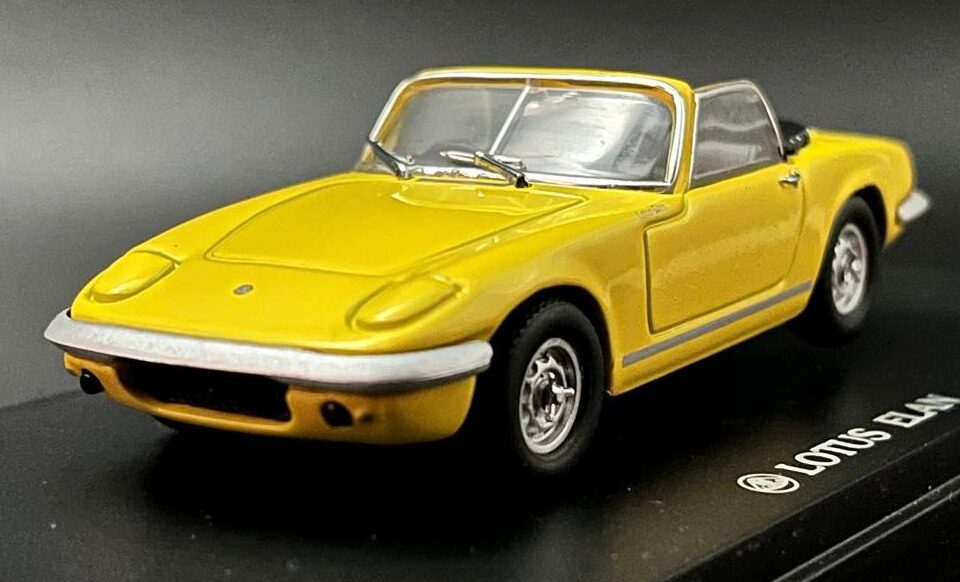 (初期のKYOSHO製ダイキャストのため、フロントヘッドライト周りの丸っこいボリューム感が乏しく、全体的に造形がかなり甘い感じですが、ロードスター、FHCなどいろいろなバリエーションが出てました。
ーーー>S3とS4スプリント版も出てました、、、)
*VITESSE社製、1/43ダイキャスト完成品、ロータス・エラン S3 クーペ(BR グリーン)
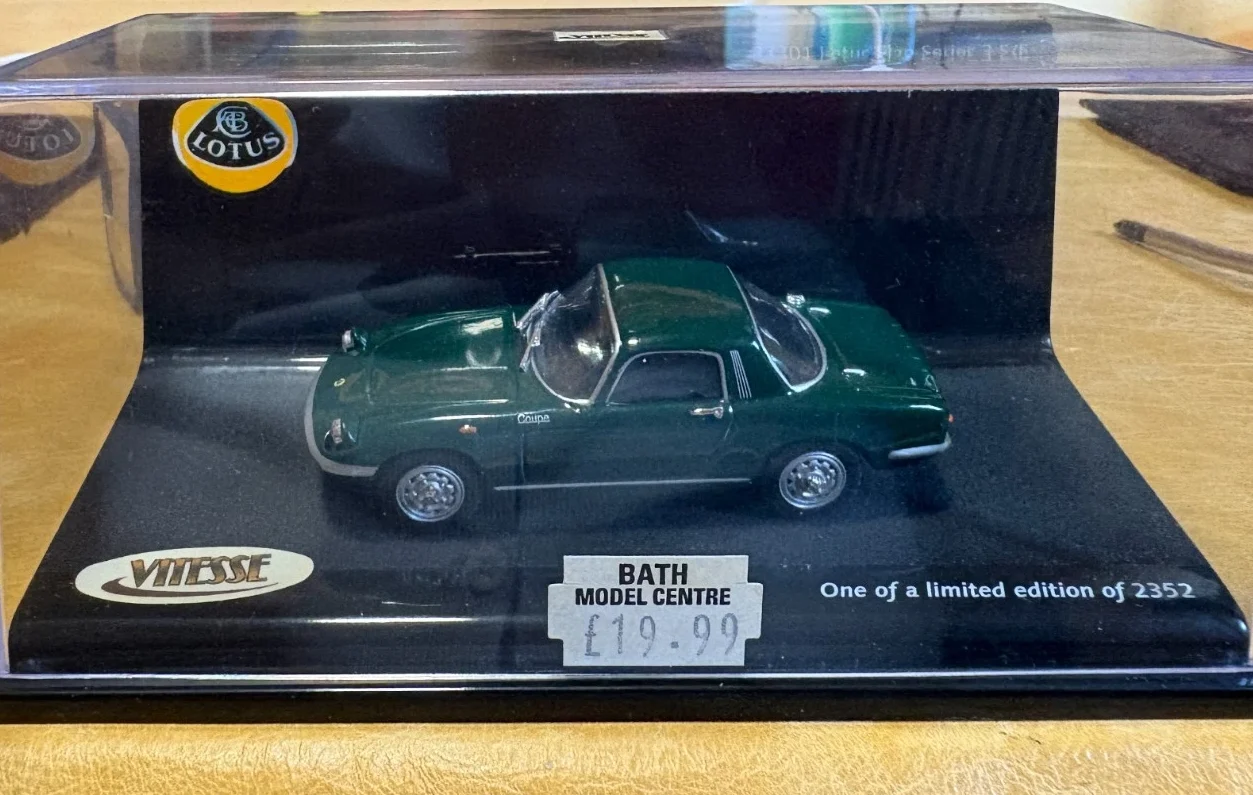
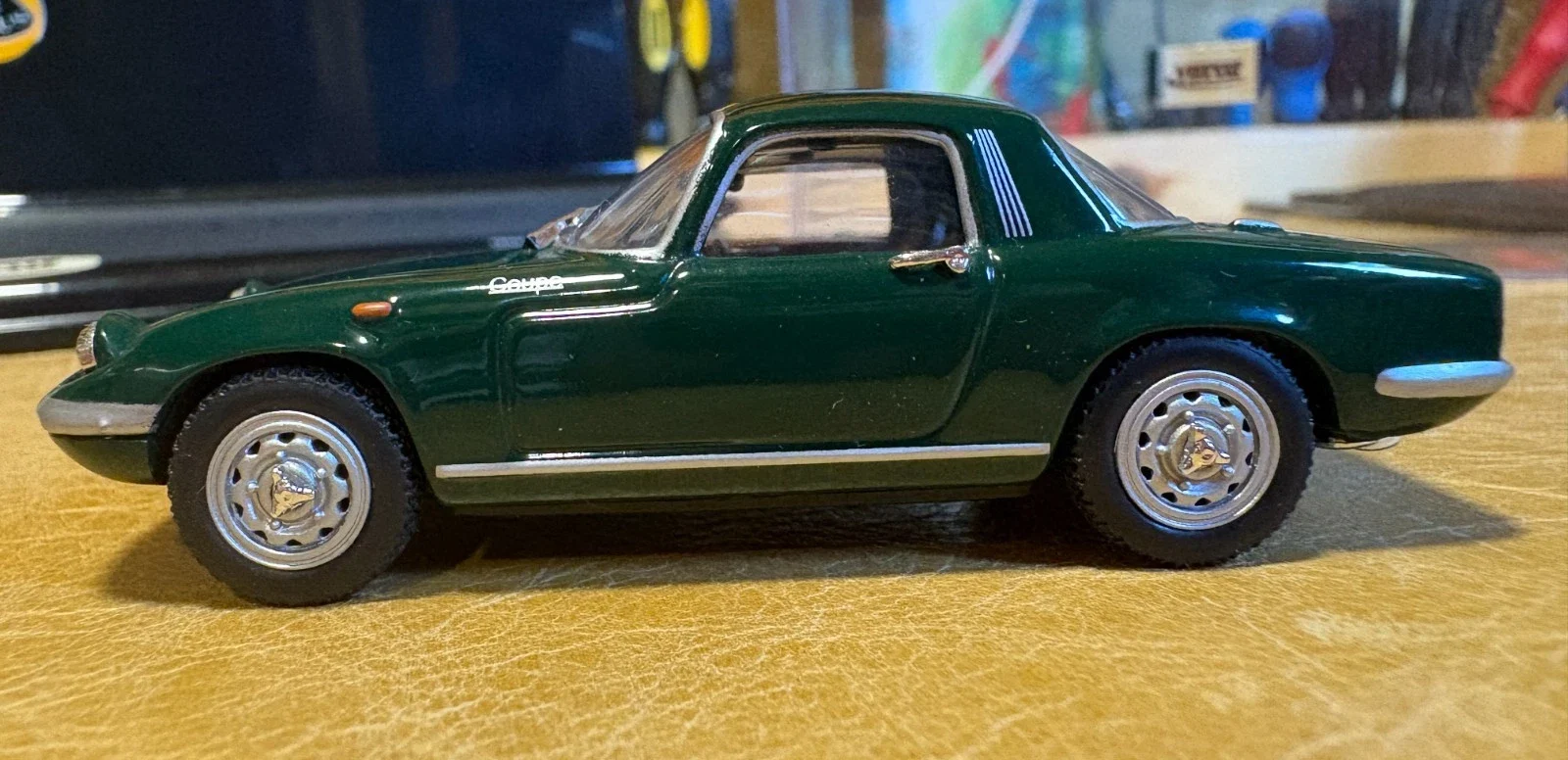
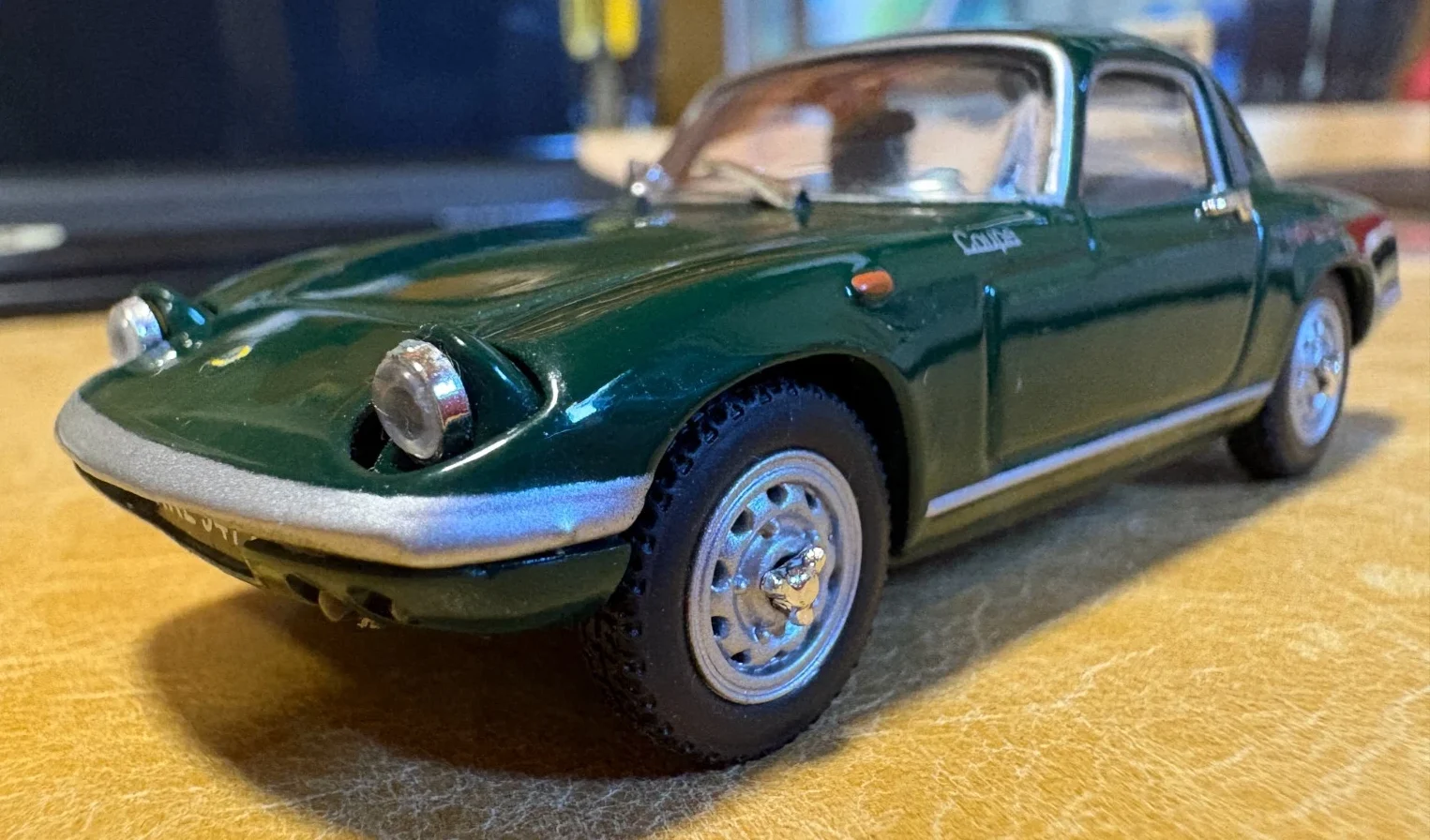 (ヘッドライトのオープンギミック付き、全体像は、京商版より正確で、ハードトップの塗分けやディテールも完璧です。
ーーー>ホイール断面が少し出っ張り気味なのが残念です。
*エブロ社製、1/43レジン完成品、ロータス・エラン【ストリート、レース仕様など各種】
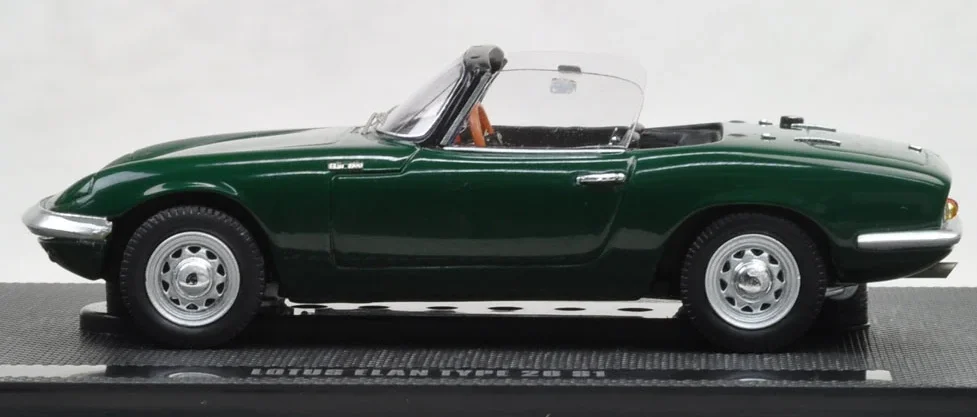
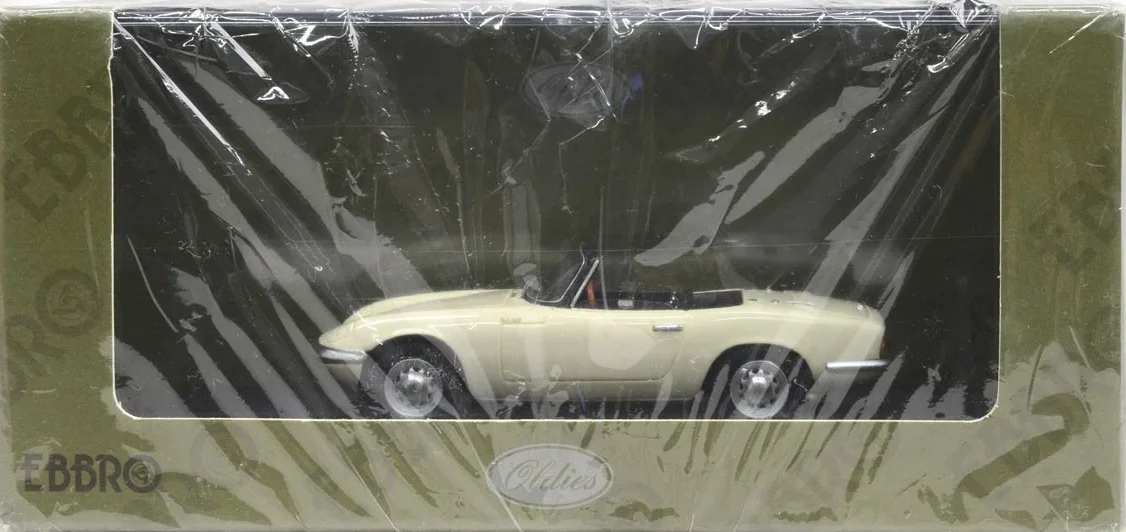
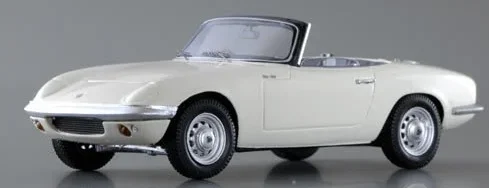 (こちらは、現物未見ですが、レジン完成品で、スパーク社製のものとよく似た感じの素晴らしい造形が見て取れます。ー
ーー>ストリート仕様のS1[ド・ノーマル版])
*スパーク社製、1/43レジン完成品、ロータス・エラン S4 スプリント仕様【青メタ・金・白のトリコロール)
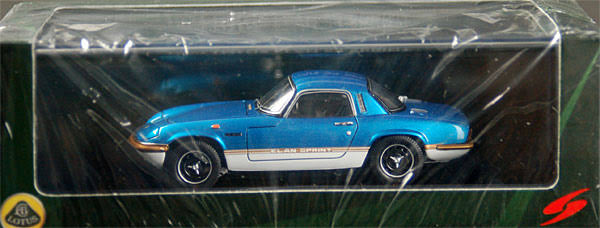
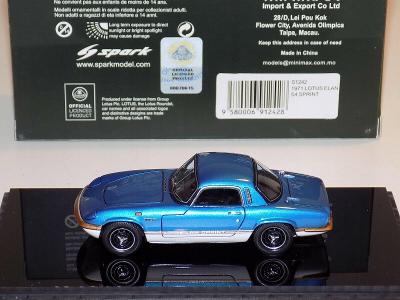
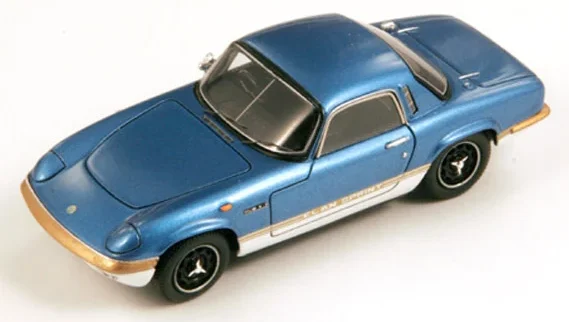
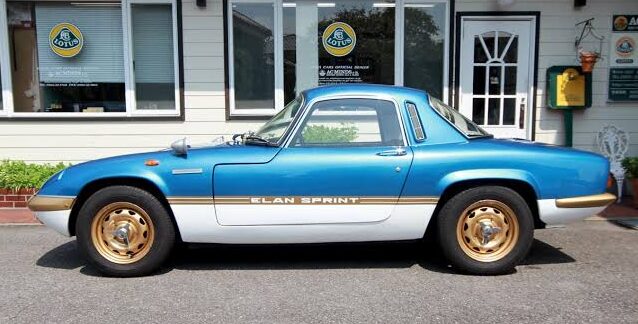 (今回ノ写真撮影ん使用させていただきました、造形、塗装、細部の再現度、組付け精度のどれをとっても95点以上の、完璧ミニカーです
――ーー>タイヤのトラックと前後の軸位置の微調整など必要ないくらいです)
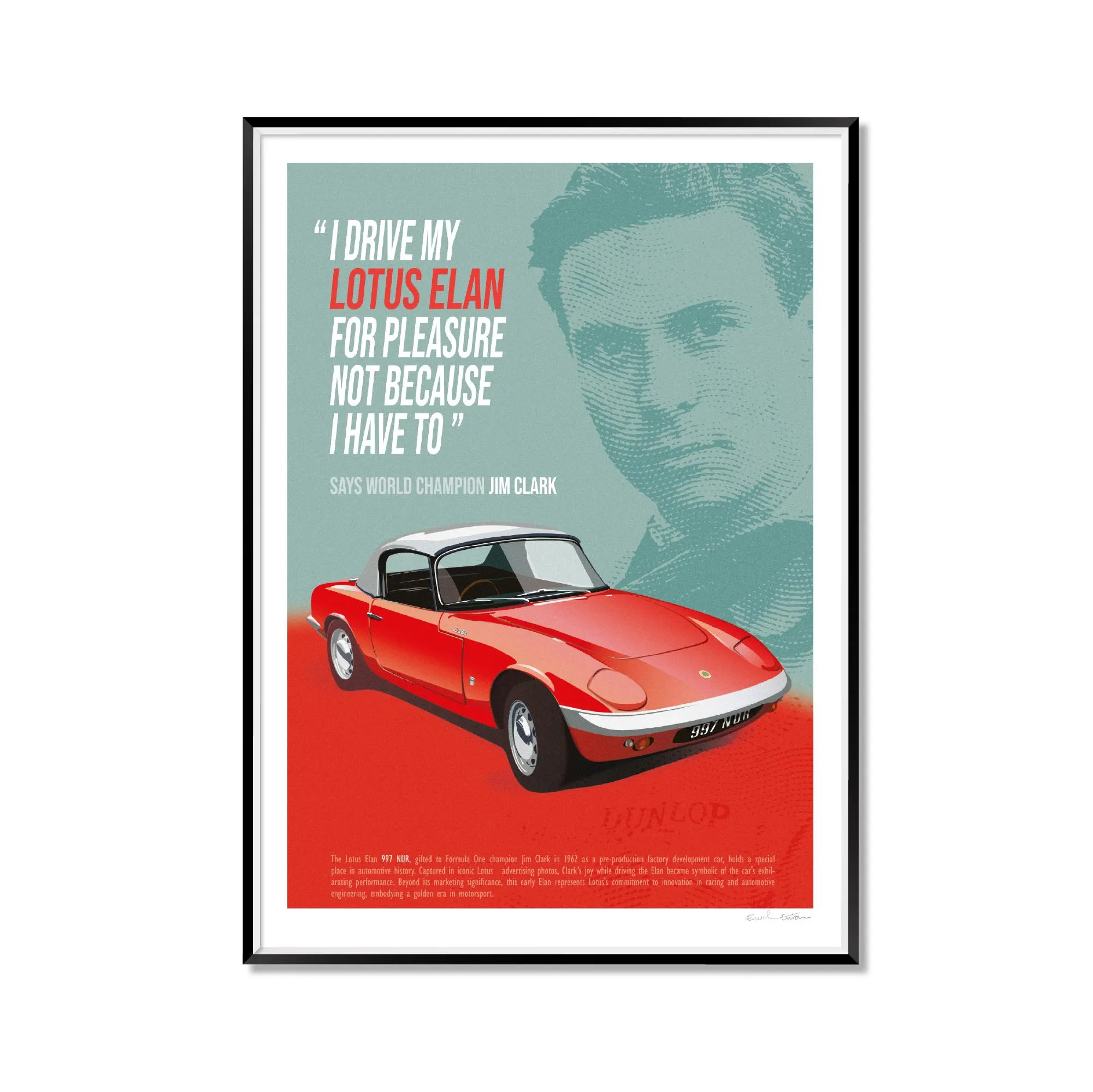
(実車写真です)
こんな感じで、
やっと完璧な立体物に
出会うことが出来ました、、、嬉
ではお待ちかね、、、?
三大噺のお時間です。
*三大噺:バックボーンフレーム・FRP・引き算の美学
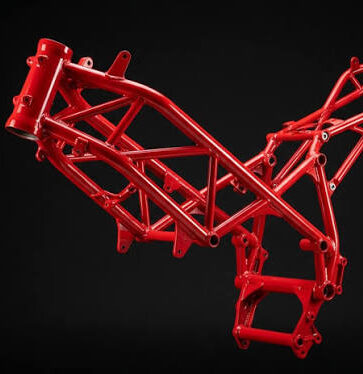
今回の『無理・難題』は、
こんな感じです、、、
#お題:
*バックボーン・フレーム
*FRP
*引き算の美学
#通底テーマ:『出藍の誉れ』
『こんなん出ましたけどぉ~』
プロンプト:
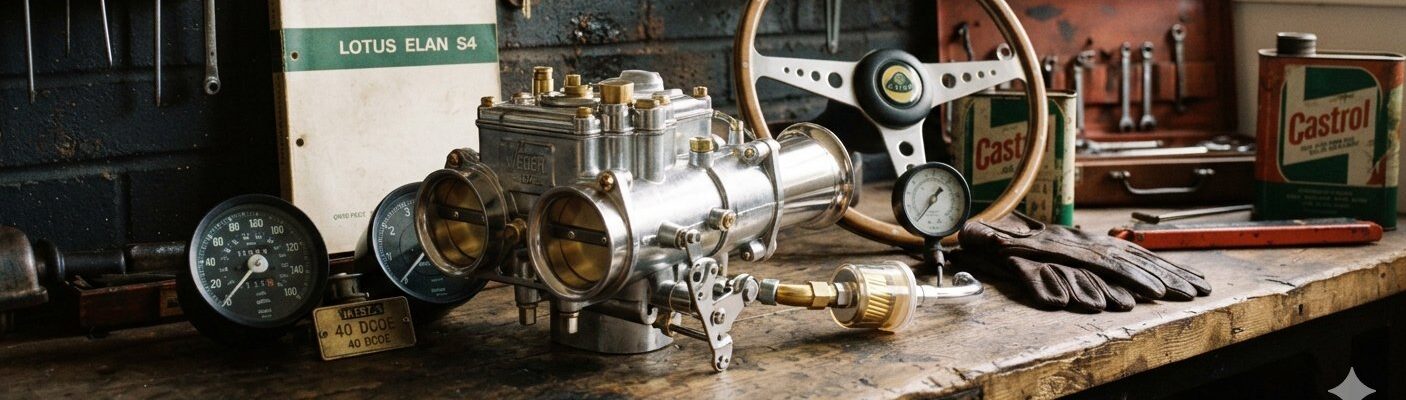
スポーツカー1971年型のロータス・エラン S4 スプリントの機構と外観デザインにつての解説文を、実際のデザイナー目線で、1970年台の新鋭のハリウッドSF映画監督と、お宅気質の特撮監督の間の会話調の、三大噺の落語で、5000字以内で制作してください。サゲはテーマを回収して、知的にウイットを聞かせて落としてください。通底するテーマは: 藍より青し(先代ロータスエリートに対しての出藍の誉れ)、お題は: バックボーンフレーム・FRP・引き算の美学 の3題です。
n
n
『出藍の銀河 〜チャップマンの背骨と、星の彼方の引き算美学〜』
n
n
n
今度は時代を1970年代のハリウッドへと移しまして、SF特撮映画のスタッフルームへ皆様をご案内いたします。
n
n
n
n
n
n
n
お後がよろしいようで。n
n(パン、パン、パパン。幕閉まる)
n
 n
n
N
n
n
n
n
n
n
n
n
n
n
*他国の超軽量スポーツカーの流れ、、、、

英国だけにこだわらず、
各国の軽量スポーツカーにも目を移してみたいです!
*トヨタ・スポーツ800、1962(レッド)
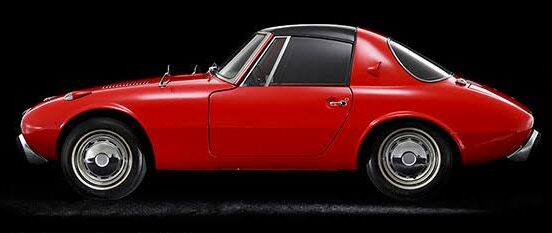
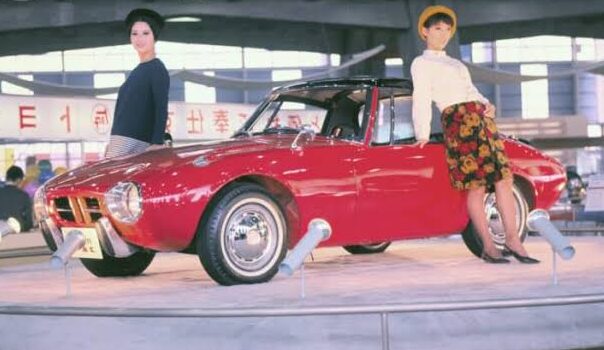
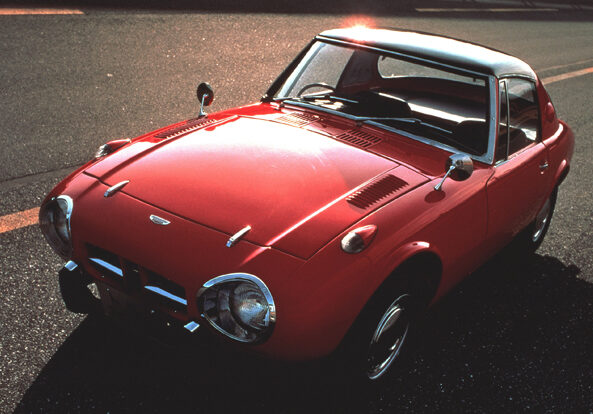
(同じトヨタの2000GTと違い、超小型、超軽量に振り切ったコンセプトは、超軽量好きの英国のマニアに大人気みたいです。
ーーー>日東模型の傑作キットを2度作った記憶があります。)
*アルピーヌ・ルノー A110、2017(メタリック・ブルー)
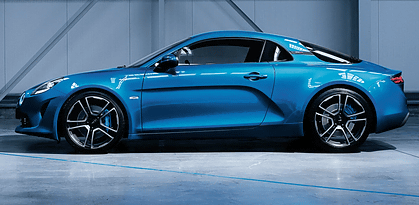
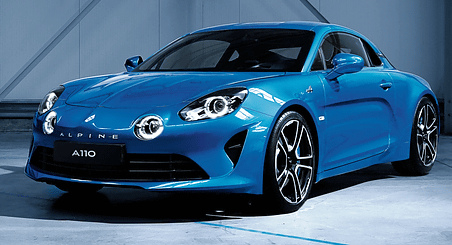 (オリジナルのリアエンジンに比べて、ミッドシップに変更されたシャーシ構成が、軽量化と相まってさらに尖ったスポーツカーに仕立ててある感じがします。
ーーー>軽量・小型を守って外してないストイックさに惚れました!)
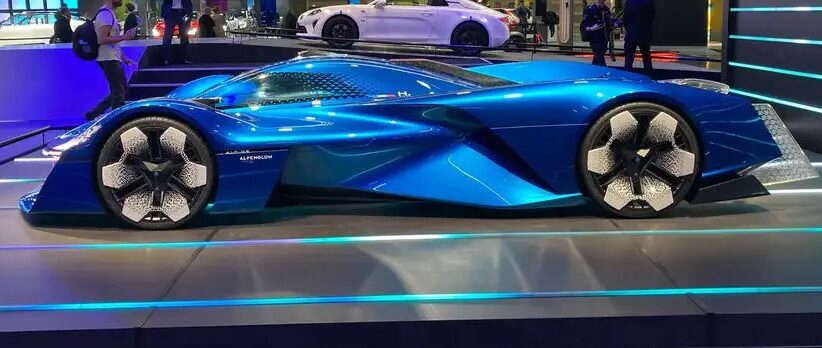
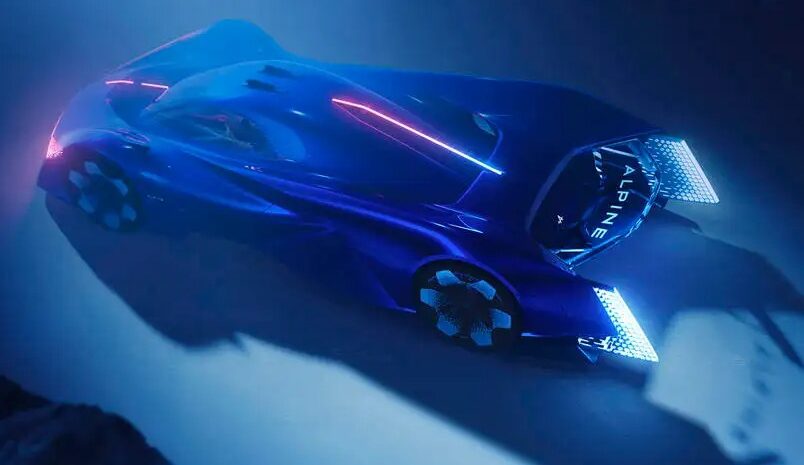
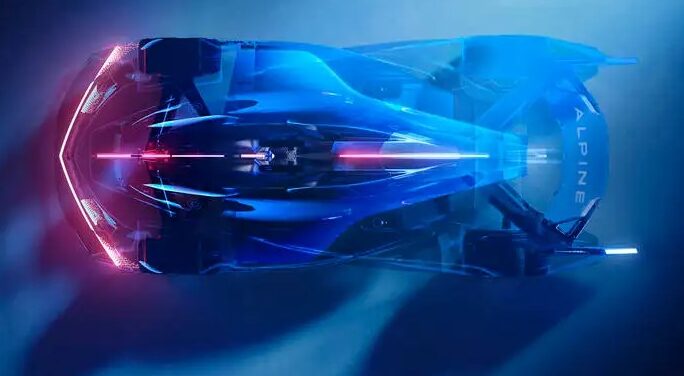
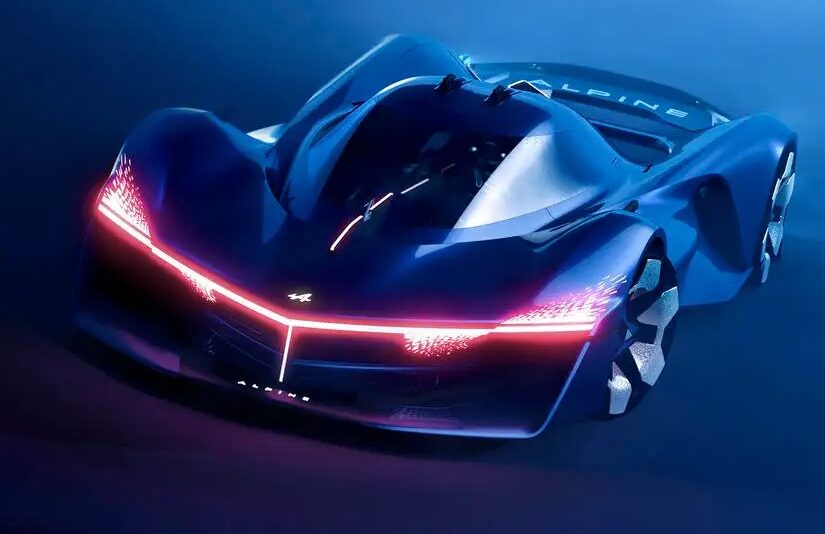
*アルピーヌ・ルノー、 アルペングロー・コンセプト【水素エンジン仕様の未来カー】
(若干ニッサン、スカイラインコンセプトっぽいですが、後ろに流れる感じは、これまでのアルピーヌ系のコンセプトの系統上にあります。
ーーー>見る方向によりいろんな顔を見せてくれます)
今後電気自動車やスイスの動力源が復旧した後も、
自動車ににおける
『超軽量コンセプト』は
大きな関心事であり続けてほしいです!
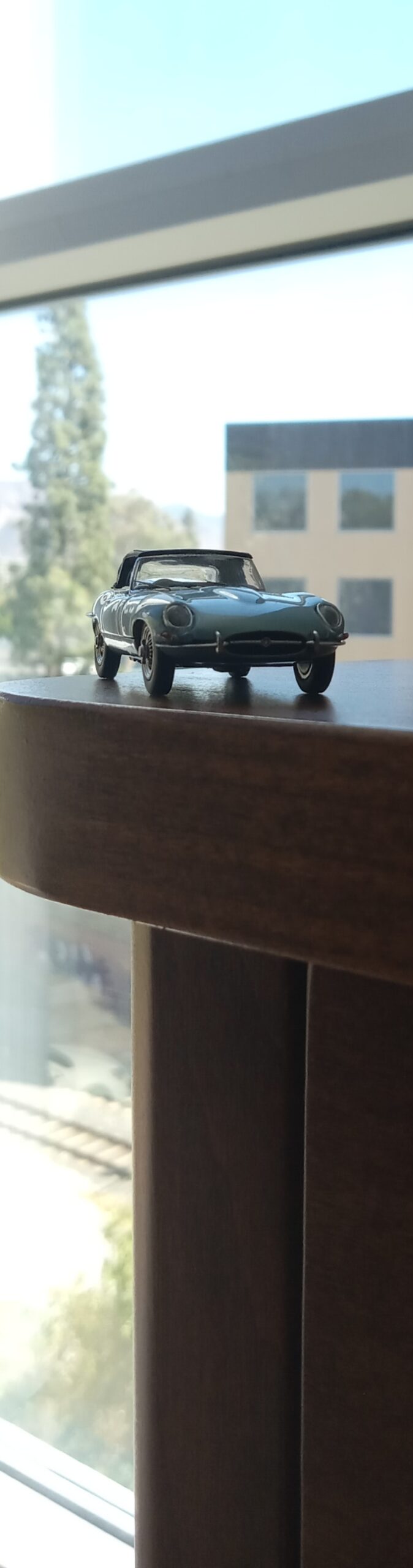
エラン、本当に
カッコいいです!
次回は英国繋がり、
少し高級ですが、、、
ジャガー・Eタイプです。
本ブログと記事内容につきまして:
ブログ記事を書くにあたり私の目標は、立体造形(料理も含めて)とのかかわりを通じて、私個人の特徴的(ネジ曲がり方も含めて)な評価軸を解明することで、「美しさ・美味しさ」に対する好奇心や、探求心を、どのように満足・充足させてきたのかを明記しておくことです。
従いまして、記事の中に出てくる、数字や年号、微細なデータなどには細心の注意を払っておりますが、時に大きな間違いや勘違いを犯していることも考えられます。特に自動車記事における主要諸元や、年号などには紛らわしいものも多く、あくまで参考程度に考えていただければ幸いです。
私としては、記事の中で個人的な外観デザインや味覚の評価、そこから広がる後半部分につなげるための、『流れ』を作るための客観的材料として年号やデータを挿入している感じです。あくまで重視したいのは、私個人の頭の中で起こる、記憶の錯そう的混沌から生まれる新たな『見方』や『情報の予想外のつながり』です。その勢いを作り出す、『流れ』の一環として、諸データが副次的に必要となるわけです。
話がそれますが、大好きな落語の世界に「三題噺」という、その場て会場から募った3つのお題を使って1つのお話に仕立てるといったお遊びがございますが、私はそれに近いことを立体造形の特徴や(料理のお味)をお題にして行っている感じがします。その中で頭の中に去来する数々の着想が、全く予想外で楽しく、次回からの記事内容を大幅に変えたり、新展開につながっています。
当ブロブの仕組み:
『好奇心の点と線 x 気まぐれ脳内回路=予想外の新展開』
こんな自分勝手なブログですが、今後ともよろしくお願いいたします。
追記:上記の『流れ』を作る為に必要な写真はできる限り、個人所有のミニカー・自前の料理などを使い撮影しておりますが、その他の必要最小限の図版や写真を他のブログ主様の記事や諸会社ホームページなどからお借りしております。(記事内容に合うよう加工させていただき、使用時は最小の解像度で載せております。)問題がある場合、ご連絡いただければ直ちに降ろさせていただきます。
追記2:当ブログ記事に掲載のミニカー写真等(個人撮影)は許可なしで、どのようにお使いいただいても結構です。私個人の創造性はこの世のもの、と言う認識の上で記事を製作しています。
!!!!!!!!!!!!!!!!!!!!!!!!!!!!!!!!!!!! Translated in English !!!!!!!!!!!!!!!!!!!!!!!!!!!!!!!!!!!!
(Miniature car used for photography #1: Manufactured by SPARK, 1/43 scale resin model, Lotus Elan S4 Sprint (Metallic Blue, White & Gold) —— Modifications: Split the upper and lower halves; maximized tire and wheel track width; fine-tuned the front and rear axle positions to create a slightly forward-leaning stance)
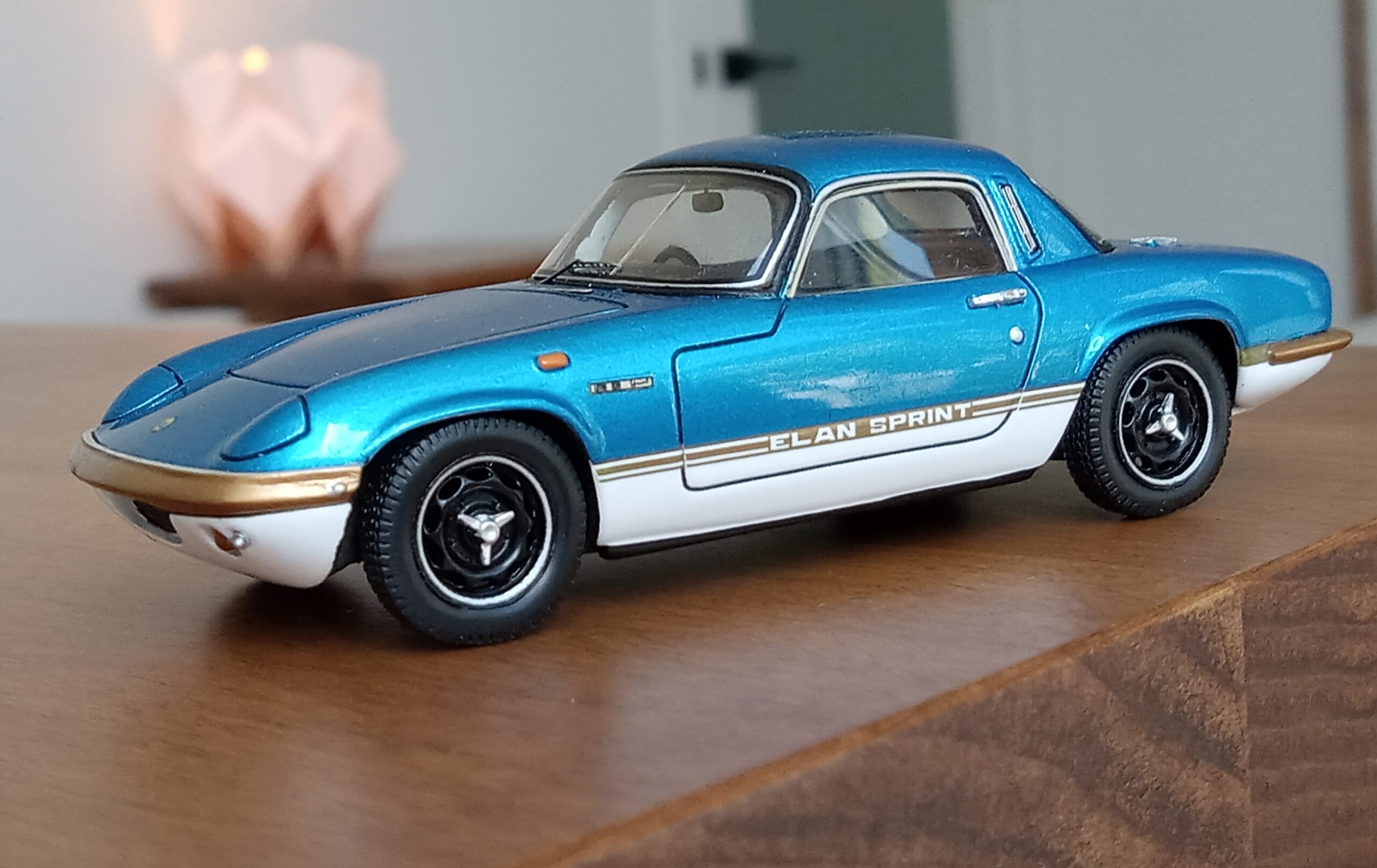
Favorite Car Designs: No. 54—The Lineage of Two-Door Coupes: No. 34 [British Cars ②] Lotus Elan S4 Sprint, 1971 (Metallic Blue, White & Gold) “Production Model: Lightweight British Sports Car” Lotus Elan S4 Sprint, 1971 (Met. Blue, White & Gold) “Chapman’s Masterpiece”
n
#Modification Project:
Modification Process:
1: Disassemble the upper and lower body sections and carefully remove the axles,
2: Remove the wheels and tires from the axles,
3: Adjust to achieve the maximum vehicle width and reattach using instant adhesive,
4: Shave 2–3 mm off the bearing areas and fine-tune the ride height,
5: Repeat this process multiple times to determine the ideal ride height that achieves a slightly forward-leaning stance.
n
N
N
n
n
n
n
n
n
n
n
n
n
n
n
N
N
n
n
n
n
(Miniature car used for photography #2: Manufactured by IXO, 1/43 scale die-cast model, First-generation Lotus Elan S1, 1959 (British Racing Green) — Modifications: Disassembled the body vertically, made fine adjustments to the track width and axle positions of the tires and wheels, and spent half a day meticulously recreating the distinctive stance of British cars from that era)
For this 54th installment, titled “The Lineage of 2-Door Coupes, Part 34,” I’d like to discuss luxury 2-door (GT) coupes and roadsters, which strongly reflect the national characteristics and unique exterior design styles of various countries. [Note: Includes convertibles]
I’ll proceed as follows.
In this 34th installment, we finally arrive at
[British Cars Part 2] No. 002,
which features the
Lotus Elan S4 Sprint (Metallic Blue, White, Gold),
released in 1971.
[The Lineage of 2-Door Coupes: Table of Contents]
[American Cars Series]
Part 1: Cadillac El Mirage, 2013 (Metallic Red)
Part 2: Lincoln Continental MK4, 1972 (Black)
Part 3: Mercury Cougar, 1967 (LT Metallic Green)
[German Cars]
Part 4: MB 500K Special Roadster, 1936 (Black)
Part 5: MB 300SL Roadster, 1957 (Silver)
Part 6: MB SLS AMR Gullwing, 2010 (Black)
[British Cars]
Part 7: McLaren F1, 1992 (Metallic Orange)
Part 8: Jaguar XKSS Roadster, 1957 (Royal Blue)
Part 9: Jaguar XKR Coupe, 1996 (Dark Metallic Green)
[Japanese Cars / Nissan Edition]
Episode 10: Nissan First-Generation Silvia, 1965 (Champagne Gold)
Episode 11: Nissan Fifth-Generation Silvia, 1988 (LT Metallic Green)
[Italian Cars Edition]
Episode 12: Ferrari 250TR Pontoon Fender, 1958 (Red)
Episode 13: Ferrari 250 GTO, 1962 (Italian Red)
Episode 14: Lamborghini Concept S, 2005 (Pearl White)
[Japanese Cars: Mazda Edition]
Episode 15: Mazda Cosmo Sport, 1968 (Racing White)
Episode 16: Mazda Eunos Cosmo, Type-S (2-Tone: Black & Gray)
[French Cars]
Episode 17: Bugatti Type 59, 1935 (French Blue)
Episode 18: Citroën SM, 1970 (Champagne Gold)
Episode 19: Bugatti La Voiture Noire, 2019 (Black)
[Japanese Cars: Toyota Edition]
Episode 20: Toyota/Yamaha 2000GT, 1967 (Ivory White)
Episode 21: Toyota 2nd-Generation Soarer, 1986 (Crystal White II)
Episode 22: Lexus LC500 [GWZ100], 2017 (Manual Transmission, Red)
[American Cars Part 2]
Episode 23: Dodge Challenger, 1970 & Plymouth Barracuda, 1971
Episode 24: Dodge Viper SRT-10 ACR, 2008 (Black)
Episode 25: Ford Shelby GR-1 Concept, 2004 (Chrome)
[Japanese Cars: Mitsubishi Edition]
Episode 26: Mitsubishi Galant λ, 1976 (Brown Metallic)
Episode 27: Mitsubishi Eclipse [North American Spec], 2006 (Orange Metallic)
[German Cars Part 2]
Episode 28: BMW M635CSi, 1984 (Dark Metallic Blue)
Episode 29: Mercedes-Benz 560SEC AMG 6.0 Widebody, 1989 (Black)
Episode 30: BMW M2 with Genuine Performance Parts, 2025 (Neon Lime)
Episode 31: First-Generation Audi TT, 1998 (Lake Silver Metallic)
[Japanese Cars: Subaru Edition]
Episode 32: Subaru Crosstrek XV, 2012 (Lime Green Metallic)
[British Cars Part 2]
Episode 33: Lotus First-Generation Elite, 1959 (British Green)
Episode 34: Lotus Elan S4 Sprint (3-tone: Meta Blue, White & Gold)
Episode 35: Jaguar E-Type Roadster (Light Blue Metallic)
[Japanese Cars: Honda (Lightweight Sports Cars)]
Episode 36: Honda S800, 1966 (Scarlet)
Episode 37: Honda “Wonder” Civic Si, 1984 (Super Red)
Episode 38: Honda Beat, 1991 (Samba Yellow)
[Italian Cars Part 2]
Episode 39: Lancia Gamma Coupe, 1976 (Grigio Argent (Silver))
Episode 40: Maserati Merak SS, 1975 (Blue Sailor Metallic)
Episode 41: Ferrari LaFerrari, 2013 (Rosso Corsa (Red))
[Japanese Cars: Toyota Part 2]
Episode 42: Toyota Corona Hardtop 1800GT-TR, 1982 (Blazing Red)
Episode 43: Toyota GR Supra, 2019 [DB Series, A90/A91] (Volcanic Ash Gray Metallic)
Episode 44: Toyota GR GT, 2027 [Scheduled] (Gunmetal-tone)
[American Cars Part 3: Special Edition]: The Corvette Lineage
Episode 1: 1967 Stingray [C2] Convertible (Hardtop, Metallic Blue)
Episode 2: 1972 Corvette [C3] Convertible (Metallic Blue)
Part 3: 1984 Corvette [C4] Coupe (Bright Red)
Part 4: Corvette Indy, 1986 [Mid-ship Pre-production Prototype] (Silver)
Part 5: Stingray Concept [Pre-production Prototype], 2009 (Blue Metallic)
#Chapman = Chapter 2 [Production Models]: British Lightweight Sports Cars
For me,
the “Lotus Elan (S4)” is
the forerunner of the Mazda MX-5/Miata.
In my mind,
they line up like this:
(1959, Lotus Elite)
(1971, Lotus Elan S4 Sprint)
(1990, Mazda MX-5)
It’s not just a kit car—
it’s more like the “standard of measurement” for lightweight sports cars as a mass-produced model.
In the 1990s, Mazda re-released it with a similar design,
shaping the grand narrative of small, high-speed internal combustion engine cars that continues to this day.
The prototype for all of this
was the Lotus Elan.
Among these,
the final form—the perfected version—is the S4 Sprint.
So then,
let’s take a look at it like this!
* Real-Car Commentary: Mass-Produced “Standard of Lightweight Sports Cars”
* Exterior Design Features:
* “Me” and the Lotus Elite S4 Sprint:
* Three-Topic Story: Backbone Frame, Toyota 2000GT,
* Other Lightweight Sports Cars…
* Car Overview: Mass Production of the Elite—A Huge Success!
Overview:
n
The Lotus Elan S4 Sprint is a masterpiece of mid-century lightweight sports cars that embodies to the utmost degree founder Colin Chapman’s engineering philosophy: “Lightness is justice.”
Based on the “S4” introduced in 1968, the “Sprint”—produced from 1971 to 1973 as the final evolution of the Elan—features a “structure” stripped of all excess that is perfectly synchronized with its design, which serves as a “skin” that beautifully envelops that mechanism.
n
n
n
n
n
n
In this article, I will explain the aesthetics of its innovative mechanics and exterior design from the perspective of a product designer.
n
n
1. Mechanics: The Skeleton of Functional Beauty Born of Minimalism
n
n
From a designer’s perspective, the Elan’s chassis structure represents the pinnacle of the “aesthetics of subtraction.” It lacks the bloated safety features and ornamentation found in modern cars, consisting solely of the bare minimum required for driving.
n
n
n
The “Spine” Structure of the Backbone Frame
The steel backbone chassis, devised by Chapman and constructed from welded steel plates, is literally the car’s “spine.” Within its Y-shaped front-to-rear bifurcated structure, the engine, transmission, and propeller shaft are housed in an extremely low position close to the road surface. This structure places all major weight-bearing components along the vehicle’s central axis (centralization of mass) and at a low center of gravity, while also contributing to the design by allowing the side sills to be trimmed to keep the overall width compact (1,422 mm).
n
Monocoque-Style Utilization of the FRP (Fiber-Reinforced Plastic) Body
Covering this steel backbone is an extremely lightweight, one-piece molded FRP body. It functions not merely as an outer panel but, by being integrated with the chassis, serves as a structural component that ensures the rigidity of the entire vehicle. As a result, the vehicle achieves an astonishingly light curb weight of just approximately 700 kg.
n
“Big Valve” Twin-Cam Engine and Suspension
At the heart of the Sprint is a 1,558 cc “Big Valve” DOHC engine designed by Tony Rudd, which produces 126 horsepower. By mounting this compact four-cylinder engine in a front-mid-ship position (behind the front axle) and combining it with independent suspension on all four wheels (double wishbone in the front, Chapman strut in the rear), the car delivers exceptional handling performance that surpasses even modern sports cars.
n n
2. Exterior Design: The Magic of Organic Surfaces and Color Blocks
n
n
n
n
n
The exterior of the Elan S4 Sprint features a “streamlined form” derived from function, yet it exudes a certain emotional and organic allure.
n
The Golden Ratio of Proportions and Compact Design
Overall length: 3,683 mm, overall width: 1,422 mm, and a height of 1,180 mm—dimensions comparable to a modern kei car—yet the classic sports car proportions of a long-nose, short-deck design are seamlessly condensed within this compact frame. In particular, the flared wheel arches—a hallmark of the S4 and later models—envelop the slightly wider 13-inch tires with 155-series profiles, lending the design a powerful, road-hugging presence.
n
A Clean Front End Thanks to Retractable Headlights
The front fascia, designed by Ron Hickman and his team, is characterized by the combination of the elliptical intake graphics and the retractable headlights. When turned off, the lights blend completely with the nose line, forming a “form that slices through the air” that is as smooth and clean as pebbles on a riverbed, with absolutely no breaks in the line. These lights operate using a vacuum-driven mechanism—an extremely primitive system—resulting in a functional design that simultaneously achieves weight reduction and a lower nose profile.
n
The “Gold Leaf” Two-Tone Color Scheme: A Visual Statement
Symbolizing the Sprint is its unique two-tone (bicolor) paint scheme, which reflects the design of the F1 team of that era (Gold Leaf Team Lotus).
The upper body is painted a vivid red (or blue, yellow, etc.), while the lower section is a clean white, with a gold stripe bearing the “ELAN SPRINT” logo running along the boundary between the two. Furthermore, the front and rear bumpers are also painted gold.
This skillful color blocking has the effect of making the already low-slung body appear even lower and longer visually, serving as an excellent example of how graphic design can emphasize a product’s three-dimensionality.
N
n
n
3. Summary: The Greatness of the Elan from a Designer’s Perspective
n
n
n
n
n
The Lotus Elan S4 Sprint stands in stark contrast to modern car design, which often fabricates character lines through ornamentation. Its beauty stems from a “seamless, taut surface resembling a single sheet of skin”—a design that leverages the properties of the new material, FRP—enveloping the “robust skeleton” of the backbone chassis.
n
This styling—a masterful fusion of mechanical rationality and emotional form that evokes the joy of driving—later became the design bible for lightweight sports cars worldwide, starting with Japan’s “Mazda Roadster (MX-5).” Even now, more than half a century after its debut, its timeless presence has not faded, and it continues to shine as the “epitome of minimalism” in automotive design.
n
n
n
n
Specific influences on modern car design and successor models such as the Mazda Roadster:
n
The influence of the Lotus Elan S4 Sprint (and the Elan series) on modern car design and subsequent sports cars—including the first-generation Mazda Roadster (NA model), which debuted in 1989—goes far beyond mere “imitation of retro styling.” It represents an essential inheritance of “human-centered, compact packaging” and “emotive surface treatment.”
n
From a product designer’s perspective, I will explain the specific influence the Elan had on subsequent vehicles along three main axes.
n
N
1. Direct and Symbolic Influence on the First-Generation Mazda Roadster (NA Model)
n
It is well known that the development team for the first-generation Mazda Roadster thoroughly studied the Elan and used it as a benchmark. In this, one can clearly see the designers’ intended “homage” and “modern interpretation of its iconic elements.”
n
Inheritance of the Front Mask’s Iconic Character and Expression
The combination of the Elan’s iconic “elliptical front intake” and “retractable headlights” was carried over unchanged to the first-generation Roadster. Tsutomu Matano and his team, who were responsible for the Roadster’s design, masterfully reimagined the Elan’s symbolic character—which featured a “clean, aerodynamically superior appearance when the lights are off, and a lively, endearing expression when lit (symbolizing the ‘fun-to-drive’ spirit)”—to align with contemporary (late 1980s) safety standards and production technologies.
n
The Design Philosophy Behind the Door Handles
The Elan’s door handles are very compact and feature a recessed design (with a chrome finish) to avoid disrupting the smooth FRP surface of the body side. The first-generation Roadster’s “flush-surface (seamless) round chrome-plated door handles” are a prime example of how the designers’ determination to “not mar the beautiful body surfaces with protrusions”—a principle inherited from the Elan—was recreated with a modern, pop sensibility.
N
N
2. “Elimination of Superfluous Character Lines” and “Taut Surface Composition”
n
The Elan’s DNA is deeply embedded in contemporary car design (trends from the 2010s onward).
n
A Design That Captivates Through Reflection (Light Reflection)
The Elan’s body has almost no distinct edges or deeply sculpted character lines (press lines). It is composed solely of rich, taut “surfaces” that take full advantage of the molding flexibility of FRP.
This approach—expressing a car’s shape “not through lines, but through surfaces and the reflection of light”—is a universal philosophy shared by Mazda’s contemporary “Kodo Design” and the designs of premium sports cars like Porsche. The Elan was a pioneer of “subtractive car design.”
n
N
3. Proof of the “Packaging = Design” Philosophy
n
n
n
n
n
The Elan’s greatest contribution to automotive history was proving the fact that “if you create an excellent mechanical package (skeleton), the exterior will naturally become beautiful.”
n
A Compact Interior and Ideal Proportions
In the Elan, the backbone chassis creates a high center tunnel, and occupants sit as if diving deep into it. It is precisely because of this “skeleton, where humans and mechanics are condensed as tightly as possible to the limit” that the “unconditionally beautiful proportions”—featuring an extremely low hood and hood line, as well as tires positioned at the four corners—were born.
While modern cars tend to have higher hoods due to safety standards (such as crash safety and pedestrian protection), designers still hold the Elan’s “low, solid proportions” as the ideal and continue to grapple with packaging challenges—such as making headlights thinner and optimizing engine mounting positions.
n
N
N
Summary
n
The influence the Lotus Elan had on subsequent models went beyond simply reigniting the boom for “cute, round-eyed convertibles.”
It lies in the fact that it embodied Chapman’s philosophy—that “lightness enhances all aspects of performance (acceleration, deceleration, cornering, and the beauty of design)”—through the power of design, leading future designers to realize that “the essence of sports car design lies not in ornamentation, but in the purity of the structure and surfaces.” It can be said that without the Elan’s debut, the category of modern lightweight sports cars itself would not have developed so richly.
#Three-view photos:
#Key Specifications:
Engine Type: Lotus Twin Cam “Big Valve”
Total Displacement: 1,558 cc
Engine Type: Water-cooled inline-4 DOHC (Lotus Twin Cam “Big Valve”)
Fuel System: Weber 40 DCOE ×2
Maximum Power: 126 bhp / 6,500 rpm
Maximum Torque: 15.6 kg-m (113 lb-ft) / 5,500 rpm
Top Speed: 0–60 mph (approx. 96 km/h) Acceleration: approx. 6.5–6.6 seconds
Drivetrain: FR (front-engine, rear-wheel drive)
Seating Capacity: 2
Body Style: 2-door coupe
Wheelbase: 2,134 mm
Overall Length: 3,683 mm
Overall Width: 1,422 mm
Overall Height: 1,156 mm
Curb Weight:
Approx. 698.5 kg – 708 kg (depending on specifications)
* Exterior Design Features: A beautiful “fixed-head coupe”
(Advertisement page from the time of its announcement)
* Built on a functional skeleton,
* Endowed with a uniquely well-proportioned exterior and “purity of form,”
the “Elan” is
a car that looks great from every angle—
a true “embodiment of style”!!
I’ve highlighted the following five features:
N
1: An appearance like the nucleus of a lightweight sports car—combining an ideal FR chassis housing a Y-shaped backbone frame with a body that epitomizes the “beauty of minimalist surfaces”—> The “engine positioned behind the front axle,” inherited from the previous-generation Elite, defines the entirety of its dynamic proportions.
2: The deep appeal of an ambivalent side view—a blend of “motion” and “stillness,” filled with both calm and impulse—> It possesses a sense of balance that the Roadster lacks.
3: The beautiful cut lines of the special retractable headlights, designed to achieve a front end even lower than the Elite’s!!
4: The clean, sharp lines of the “truncated tail end”—a Cord Tronca-style design chosen for aerodynamic efficiency—combined with the subtle elegance of the minimalist lighting graphics
5: The hardtop section—neither too large nor too small, the result of meticulous refinement—paired with the beautiful wrap-around rear window
6: The tricolor color scheme featuring gold leaf—commemorating an F1 victory—that visually tightens the car’s silhouette
Now, let’s
take a look at each one
with photos!
1: An appearance like the nucleus of a lightweight sports car, combining an ideal FR chassis housing a Y-shaped backbone frame with an exterior that epitomizes the “beauty of minimalist surfaces”
(Don’t overlook how the fiberglass bodywork lends an organic, alluring charm.)
ーーーー>The “engine positioned behind the front axle”—inherited from the previous-generation Elite—is what defines its dynamic proportions.
2: The deep appeal of the ambivalent side-view proportions, filled with both calm and impulse, where “motion” and “stillness” coexist
(The significantly longer wheelbase compared to the Elite creates space behind the doors, shifting the dynamic balance slightly toward stability.)
——> It possesses a sense of proportion that the Roadster lacks.
3: The beautiful cut lines of the special retractable headlights, designed to achieve a front end even lower than the Elite’s!!
4: The clean, sharp lines of the “truncated tail end”—a Cord Tronca-style design chosen for aerodynamic efficiency—combined with the subtle elegance of the minimalist lighting graphics
5: The hardtop—neither too large nor too small—and the beautiful wrap-around rear window, both the result of meticulous refinement
6: The tricolor color scheme featuring gold leaf to commemorate the F1 victory, which visually tightens the car’s silhouette
*“Me” and the Lotus Elan S4 Sprint:
In the early 1990s,
the Mazda MX-5 “Miata” was a huge hit in LA,
and riding that wave, magazines in both Japan and the U.S. began to
focus their attention on the “Lotus Elan,”
the Miata’s predecessor.
Even before that,
*at classic car shows,
*and through a design class instructor who owned an Elan,
*I’d had the chance to see one up close,
so I’d already developed an interest
in its crisp, well-crafted design.
Through magazine articles about the Miata,
* my connection to Tom Matano of the North American design department, and
* interviews with project leader Keiki Tachibana,
I learned about weight reduction in small sports cars, the use of new materials, and insights into De Tomaso Barelunga and Fiat Abarth—but at the very center of that context was always
————> the “Lotus Elan”!
#Highlights
* The sharp, balanced design
* A sense of stability that never falters, no matter the angle
* The charming headlight cutout lines that tie it all together
* The beautiful roof design of the FHC (hardtop) version
* The unique feel of the Sprint version’s tricolor graphics
Next, here’s my
personal hands-on experience with the Elan.
# “Hands-On” Experience:
Plastic Model Edition:
* Tamiya 1/24 scale plastic model kit, Mazda MX-5 (Roadster)
(This kit was released shortly after the actual car went on sale. It’s a simple, engine-less model with a “bathtub” interior, but the body and chassis are well-sculpted, the Tamiya-style stylization is subtle, and both a soft top and a hardtop were included.
——> Later, a North American version featuring the Miata specification was also released.
* Revell, 1/25 scale plastic model kit, Mazda MX-5 Miata (2-in-1 Series)
(A two-in-one kit that allows you to build either the stock or custom version of the Elan. The body styling is rounder than the Tamiya version, and the engine and chassis sections also make full use of separate parts. It was a masterpiece and a full-display kit released before the company was absorbed by Monogram.
――> I got partway through assembling it and then gave up…)
* Manufactured by Gunze Industries, 1/24 Hi-Tech “Multi-Material” Kit, Lotus Elan S3
(A deluxe product that included not only plastic parts but also white metal, photo-etched parts, castings, and drawn metal parts; not only were the details excellent, but the overall impression of the body was also very good.
――> A simplified plastic kit was released later.)
* Gunze Industries, 1/24 scale plastic model kit, Lotus Elan S3 (white molded)
(This is the budget, simplified version of the item introduced above—> It seems to be a long-running product; I still see it frequently on eBay even recently.)
Miniature Car Edition:
* Grand Prix Model, 1/43 scale white metal ready-to-display model, Lotus Elan S4 Sprint Spec [Blue, Gold, White]
(A model of the Sprint Spec, which was rare back in the mid-90s; while the overall appearance wasn’t quite right, the stance looked good.
――> Models and kits of other versions were also released.)
*Kyosho, 1/43 die-cast ready-to-display model, various Lotus Elan models
(Since these were early Kyosho die-cast models, the rounded volume around the front headlights is lacking, and the overall sculpting feels rather rough, but various variations were released, such as the Roadster and FHC.
――>S3 and S4 Sprint versions were also available…)
*VITESSE, 1/43 die-cast ready-to-display model, Lotus Elan S3 Coupe (BR Green)
(Features a working headlight mechanism; the overall design is more accurate than the Kyosho version, and the paint separation and details on the hardtop are perfect.
――> It’s a shame that the wheel rims protrude slightly.
* Eburo, 1/43 scale resin ready-to-display model, Lotus Elan [various versions, including street and race specs]
(I haven’t seen the actual model yet, but as a resin ready-to-display model, it appears to have excellent sculpting very similar to the Spark version. —
—> Street-spec S1 [stock version])
* Spark, 1/43 resin ready-to-display model, Lotus Elan S4 Sprint Spec [Blue Metallic, Gold, and White Tricolor]
(I used this model for the photos in this post. Whether you look at the sculpting, paint job, detail reproduction, or assembly precision, it’s a perfect die-cast model that scores over 95 points in every category.
――ーー>It’s so precise that there’s no need for even minor adjustments to the tire tracks or the front and rear axle positions.)
(Photo of the actual car)
Just like this,
I’ve finally come across
a perfect three-dimensional model… I’m so happy!
Now, the moment you’ve all been waiting for…?
It’s time for the “Three Great Stories.”
*The Three Great Stories: Backbone Frame, FRP, and the Aesthetics of Subtraction
This time’s “Impossible Challenge”
looks something like this…
“Well, look what I came up with~”
Prompt:
Please create a 5,000-character explanation of the mechanical structure and exterior design of the 1971 Lotus Elan S4 Sprint sports car. Write it from the perspective of an actual designer, in the style of a “Three Great Stories” rakugo performance—a conversational exchange between a cutting-edge 1970s Hollywood sci-fi director and a homebody special effects director—and keep it within 5,000 characters. For the closing line, bring the theme full circle and end on an intellectually witty note. The underlying theme is: “Bluer Than Indigo” (praise for the successor surpassing its predecessor, the Lotus Elite); the three specific topics are: backbone frame, FRP, and the aesthetics of subtraction.
n
n
n
n
n
“The Galaxy Beyond the Blue: Chapman’s Backbone and the Aesthetics of Subtraction Beyond the Stars”
n
n
Alright, from beyond the galaxy—or perhaps from a Hollywood film studio… I’d be delighted if you’d join me for a moment.
n
n
This time, we’ll shift the era to 1970s Hollywood and guide you all into the staff room of a sci-fi special effects film set.
n
Taking the stage is George, an up-and-coming film director who dreams of new forms of visual expression and the future of sci-fi. And Ken, the special effects director with a bit of an “otaku” streak, who pours his heart and soul into the details of miniatures and special effects gimmicks.
n
Standing before the 1971 “Lotus Elan S4 Sprint”—the state-of-the-art model at the time—parked in the studio lot, these two discuss how to incorporate it into movie sets and spaceship designs.
n
The topics are “backbone frame,” “FRP,” and “the aesthetics of subtraction.” The underlying theme is “the pupil surpassing the master”—how this model managed to surpass its great predecessor, the Lotus Elite.
n
Please enjoy this in-depth discussion.
◇
n
n
(On stage, the pleasant sounds of movie cameras and miniatures being fiddled with—tap, tap, click, clack—echo.)
n
George: “Hey, Ken! I’m stuck trying to come up with a design for the spaceship in my next sci-fi movie. Is there any kind of groundbreaking shape that would make the audience gasp, ‘That’s the future!’ the moment it appears on screen?” ”
n
Ken: “Director, if that’s what you’re looking for, you should go check out my new pride and joy parked right behind Studio 3 on the lot right now. It’s a 1971 ‘Lotus Elan S4 Sprint.’ From our perspective as special effects guys, that car is the blueprint for a spaceship of the future.”
n
George: “An Elan S4 Sprint, you say? Oh, you mean that two-tone car—the top is Shirasu White, the bottom is Carnival Red, with a vivid gold stripe running down the middle? Sure, that color scheme looks like a rocket flying through the pitch-black expanse of space and is really cool, but the shape itself is pretty plain; it just looks like a classic sports car to me.”
n
Ken: “Come on, Director. You’re no good—you always judge things just by their ‘looks’ on screen. In special effects, the soul of sci-fi lies in the ‘structure’ hidden beneath the exterior. Why don’t you crawl under that Elan and take a look at the chassis? You’ll be blown away.”
n
George: “Let me see… (makes a gesture as if crawling under the car) …Hey, Ken! You’ve got to be kidding me! Under the floor of this car, there’s just a single thick, square steel tube running right down the middle! From there, limbs pop out front and back—just like fish bones or the letter ‘X’—supporting the engine and suspension. Under the floor on both sides, there’s absolutely nothing—it’s completely empty!”
n
Ken: “Heh heh, did you notice? That’s exactly what makes Colin Chapman a genius—it’s the ‘backbone frame’! Ordinary cars use ladder frames or monocoque structures that enclose the entire vehicle. But the Elan runs a single, sturdy steel backbone right through the center—where torsional and bending forces are most concentrated. Isn’t that how spaceship frames work, too? Instead of unnecessarily weighing down the whole structure, it transfers all the load to the main backbone and lightens the rest. This achieves both incredible rigidity and otherworldly lightness.”
n
George: “I see…! Concentrating the force at a single point and lightening the rest. Even in sci-fi spaceships, there are designs where the living quarters (cabin) and the engine are connected by a single shaft—that’s exactly the same kind of rationality. But Ken, if the framework is that simple, wouldn’t the backbone snap right in two if the body on top were too heavy?”
n
Ken: “That’s exactly the point, Director! Try tapping that body a little.”
n
George: “(Tap, tap) …Huh? It doesn’t have that cold, metallic ring. It’s not iron, and it’s not aluminum either. But it has a strangely firm feel to it and seems sturdy. What on earth is this material?”
n
Ken: “This is the ‘magical material’ indispensable to our special effects movie miniature production: ‘FRP (Fiber-Reinforced Plastic)’! It’s made by soaking fine glass fibers in resin and letting it harden. It’s not as heavy as steel, so the car weighs just under 700 kilograms. Plus, it allows us to create beautiful, organic curves—smoothly undulating from the front fenders to the rear—all in a single mold, something you couldn’t achieve with a metal press. And take a look at this front end. During the day, the headlights are hidden, and the hood forms a completely smooth, aerodynamic surface. But when night falls and you flip the switch, the lights pop up using the engine’s vacuum pressure (retractable headlights). What do you think of this gimmick? It’s just like a fighter jet’s missile hatch—it really tickles the geek in you, doesn’t it?”
n
George: “I see. It’s precisely because FRP is such a lightweight material that you can freely incorporate complex curved surfaces and even playful pop-up mechanisms like that. …But listening to you, it seems this car has absolutely no unnecessary embellishments.”
n
Ken: “That is precisely the ‘aesthetics of subtraction’ that lies at the heart of Elan. Chapman practiced a thorough approach to subtraction, adhering to the principle: ‘Never build anything that isn’t necessary for function. Make each part serve two or more purposes.’ For example, that hollow space inside the backbone frame the director saw earlier—it’s not just an empty steel box. The propeller shaft that transmits power to the rear wheels runs right through that tunnel. While it serves as the framework, it also functions as a pipe to carry the power. Eliminate wasted space, reduce weight, and strip away ornamentation. At the end of that process of subtraction, this ultimate lightweight sports car was born. Our special effects sets should be the same way. Rather than adding unnecessary decorations that don’t appear on camera (addition), it’s the “beauty of the skeleton”—found at the end of subtraction—that creates realism on screen.”
n
George: “The aesthetics of subtraction, huh… That’s deep. But Ken, when you mention Lotus, there’s that legendary predecessor, the ‘Lotus Elite,’ isn’t there? That Elite was the great pioneer—a master, so to speak—who took on the challenge of creating the world’s first FRP monocoque (all-resin body). Isn’t this Elan just a inferior copy of that Elite, or just a rehash?”
m
Ken: “Absolutely not! Director, this is the greatest drama in automotive history—the story of ‘bluer than the indigo’ (the disciple surpassing the master)!”
n
George: “‘The disciple surpassing the master’? You mean that saying where the cloth taken from an indigo-dyed vat turns out a more vivid blue than the original indigo leaf juice—the one about the disciple surpassing the great master?”
n
Ken: “Exactly! The previous-generation Elite (Indigo) was certainly beautiful and innovative, but because they tried to build the entire body out of FRP alone (FRP monocoque), the suspension mounts snapped, the body cracked from engine vibrations, and on top of that, the manufacturing costs were so high they nearly brought the company to its knees—it was an ‘unfinished masterpiece’ that brought tears to the eyes of both owners and the manufacturer. You could say it’s like a special effects movie where ‘the idea was great, but the technology couldn’t keep up, so the production fell apart.’”
n
George: “Ah, that’s a common story in the movie industry, too (wry smile).”
n
Ken: “So, building on those painful lessons (and hardships), this Elan (the successor) was born. Chapman abandoned the Elite’s weakness—relying solely on FRP for strength—and devised a more restrained yet perfect hybrid structure: ‘a steel backbone frame covered with an FRP shell,’ as I mentioned earlier. This gave it overwhelming durability that far surpassed the Elite, along with the reliability that allows anyone to ride it every day. The sapling planted by the great pioneer, the Elite (Indigo), was given a powerful heart—a 126-horsepower big-valve twin-cam engine—in this 1971 Elan Sprint (Blue). It shook the world as a true “pupil surpassing the master,” surpassing its predecessor in both name and reality. It’s just like a movie sequel that overcomes all the failures of the original and becomes a global mega-hit!”
n
George: “I see! Coldly analyzing the master’s failures and surpassing them through the ‘aesthetics of subtraction.’ That’s truly ‘bluer than Elan (Blue).’ All right, Ken! Let’s make our new sci-fi movie in the spirit of Elan. Hollywood’s old-school ‘additive movies’—where they throw money at lavish sets—are outdated. From now on, it’s all about the thorough ‘aesthetics of subtraction’ and the spirit of ‘outshining the master’!”
n
Ken: “Whoa, Director, you’re really getting into this! So, specifically, what kind of special-effects spaceship are we going to build?”
n
George: “First, for the mainframe (skeleton) of the super-giant space battleship that will be the star of the movie, we’ll use the futuristic magical material ‘FRP’ to create an ultra-lightweight backbone frame with a hollowed-out interior. Then, with the weight saved by that ‘subtraction,’ we’ll embed about 100 retractable, massive laser cannons—so massive they’d reach the moon—into the battleship’s hull (surface), surpassing any previous sci-fi movie (truly ‘surpassing the master’s work’)!”
n
Ken: “Whoa, whoa, Director, hold on a second. A hollowed-out plastic (FRP) skeleton won’t be able to withstand the weight and recoil of 100 giant laser cannons—it’ll snap right in half the moment it appears on screen!”
n
George: “It’ll be fine, Ken. The moment it breaks, the spaceship’s hull will pop open, exposing the propeller shaft inside, which will then plunge straight into the enemy fortress—it’ll be a stylish special effects gimmick that’ll go down in movie history.”
n
Ken: “Don’t talk nonsense. Before it goes down in movie history, the miniature will be blown to smithereens on the first day of shooting, and our staff room will go up in flames. We’re trying to make a sci-fi blockbuster, but it’ll literally become the ‘final stop’—or rather, the ‘glorious ascension’—of our careers as directors.”
◇
n
n
n
n
n
n
n
n
n
That seems to wrap things up. n
n (Clap, clap, clap. Curtain falls)
n
n
n
n
N
n
n
n
n
n
n
n
n
n
n
n
n
n
◇
n
*The trend of ultra-lightweight sports cars in other countries…
I’d like to look beyond just the UK
and turn my attention to lightweight sports cars from other countries as well!
* Toyota Sports 800, 1962 (Red)
(Unlike Toyota’s 2000GT, its concept—which went all out for ultra-compact and ultra-lightweight—seems to be hugely popular among British enthusiasts who love ultra-lightweight cars.
――> I remember building Nitto Model’s masterpiece kit twice.)
* Alpine Renault A110, 2017 (Metallic Blue)
(Compared to the original rear-engine layout, the mid-ship chassis configuration—combined with weight reduction—gives it the feel of an even more extreme sports car.
—> I fell in love with its stoic dedication to maintaining its lightweight and compact design!)
* Alpine Renault, Alpenglow Concept [Future Car with Hydrogen Engine]
(It’s slightly reminiscent of the Nissan Skyline Concept, but the flowing lines toward the rear are in line with previous Alpine-style concepts.
――> It reveals different looks depending on the angle from which you view it.)
Even after electric vehicles become mainstream and Switzerland’s power supply is restored,
I hope the
“ultra-lightweight concept”
continues to be a major focus in the automotive world!
The Elan is truly
cool!
Next up, with a British connection—
it’s a bit on the luxury side, but…
the Jaguar E-Type.
Regarding this blog and its content:
My goal in writing these blog posts is to clarify my personal, distinctive criteria for evaluation—including my somewhat unconventional perspective—through my involvement with three-dimensional art (including cooking), and to document how I have satisfied and fulfilled my curiosity and spirit of inquiry regarding “beauty and deliciousness.”
Consequently, while I pay the utmost attention to the numbers, model years, and detailed data that appear in my articles, it’s possible that I may occasionally make significant errors or misunderstandings. In particular, key specifications and model years in automotive articles can often be confusing, so I would appreciate it if you treated them as general references only.
For my part, I feel as though I’m inserting dates and data into the articles as objective material to create a “flow” that connects my personal assessments of exterior design and taste to the broader themes explored in the latter half of the piece. What I ultimately prioritize are the new “perspectives” and “unexpected connections between pieces of information” that emerge from the chaotic jumble of memories in my own mind. The various data points are needed secondarily as part of that “flow” to generate that momentum.
As a slight digression, in the world of rakugo—which I love—there’s a playful format called “sandaibana,” where a performer weaves a single story using three topics solicited on the spot from the audience. I feel like I’m doing something similar here, using the characteristics of three-dimensional sculptures and (the flavors of dishes) as my prompts. The countless ideas that flit through my mind during this process are completely unexpected and delightful; they often drastically change the content of future articles or lead to new developments.
How This Blog Works:
“Spots and Lines of Curiosity x Whimsical Mental Circuits = Unexpected New Developments”
This blog may be a bit self-indulgent, but I hope you’ll continue to follow along.
Note: To create the “flow” described above, I take as many of the necessary photos as possible using my own miniature cars and home-cooked meals. However, I do borrow the absolute minimum of other illustrations and photos from other bloggers’ posts and company websites. (I edit them to fit the article’s content and post them at the lowest possible resolution.) If there are any issues, please contact me, and I will remove them immediately.
Addendum 2: You are free to use the photos of die-cast cars and other images (taken by me) featured in this blog’s posts in any way you like without permission. I create these posts with the understanding that my personal creativity is my own.
Translated in DeepL.com

これはCTAサンプルです。
内容を編集するか削除してください。