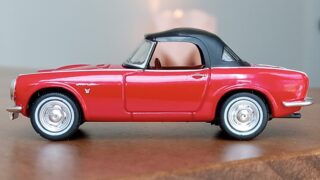
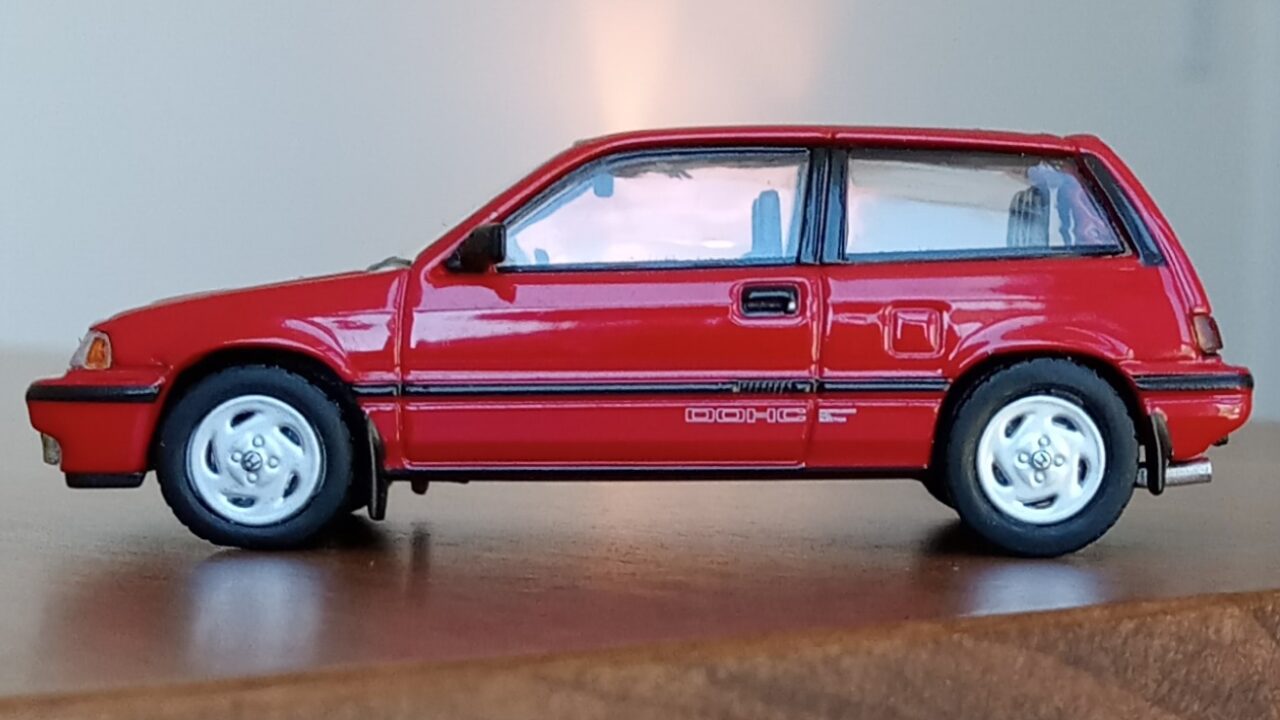

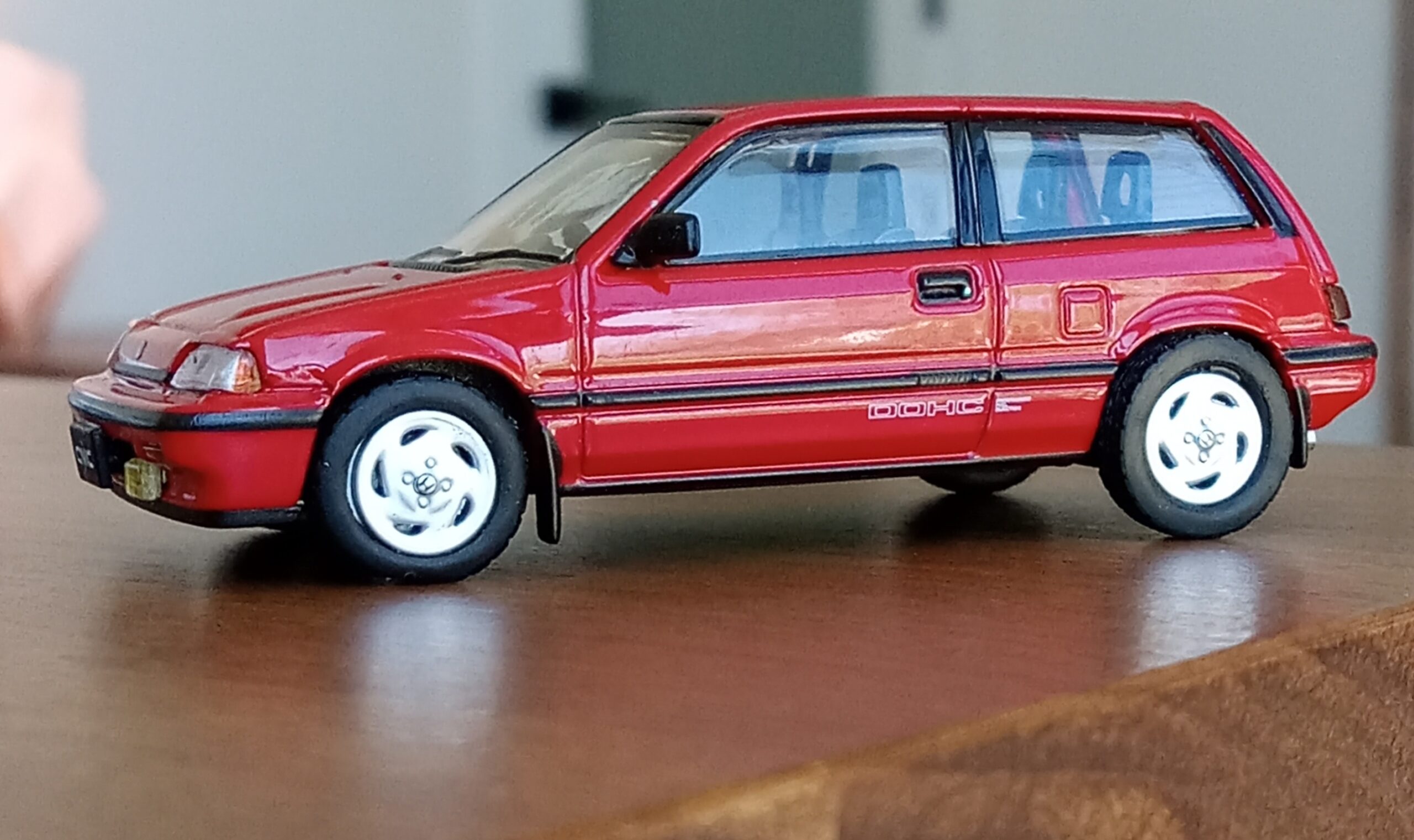
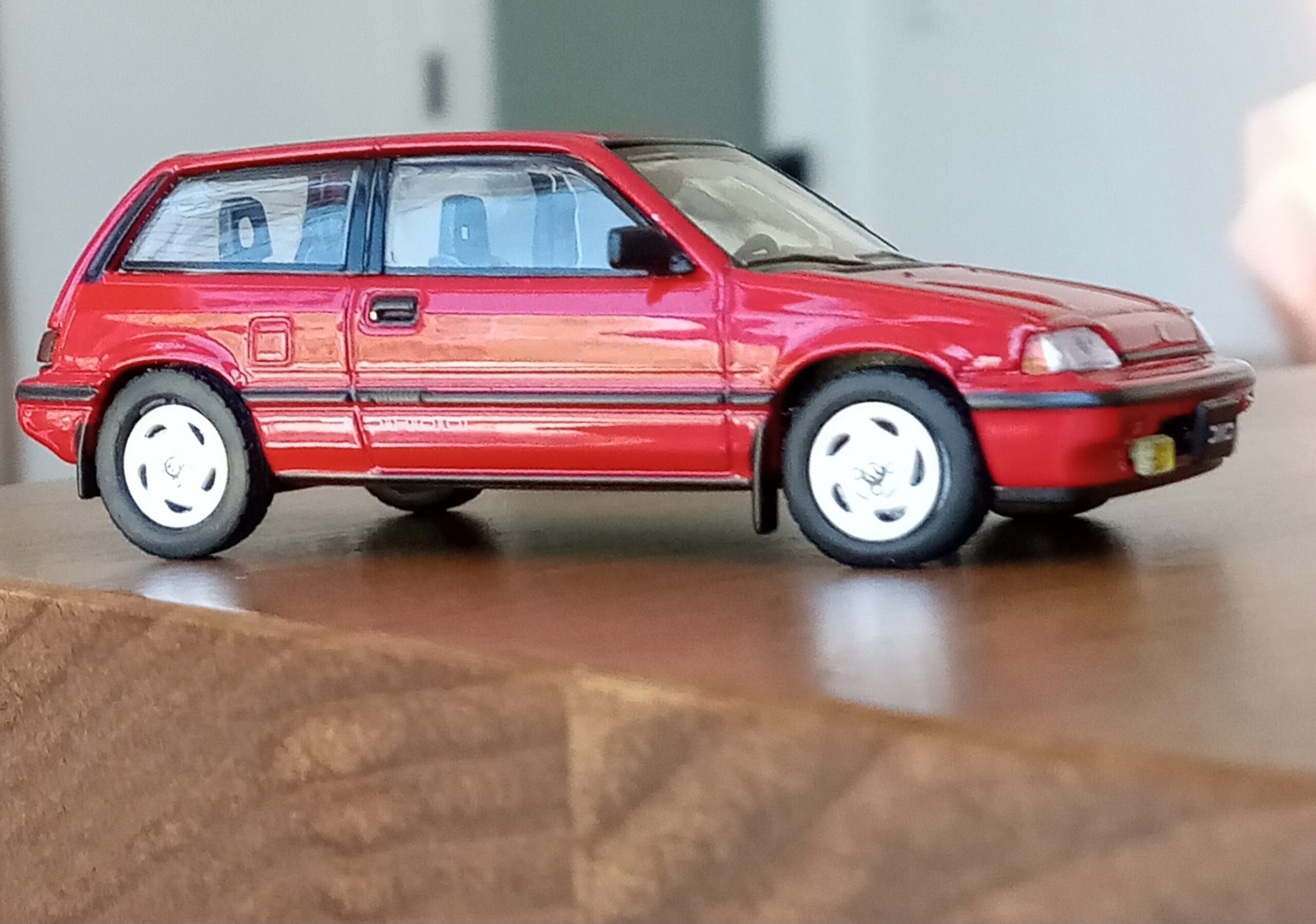
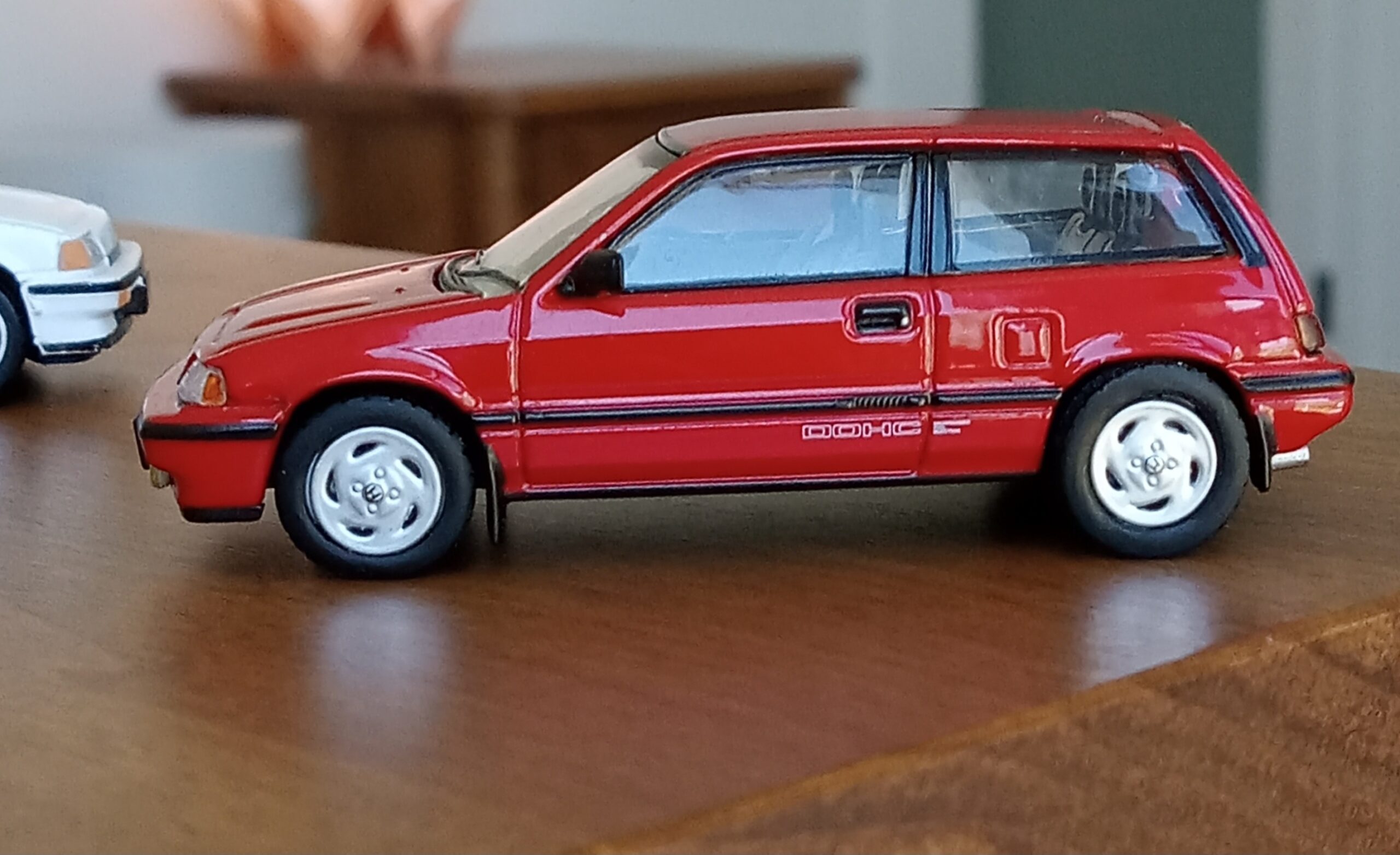
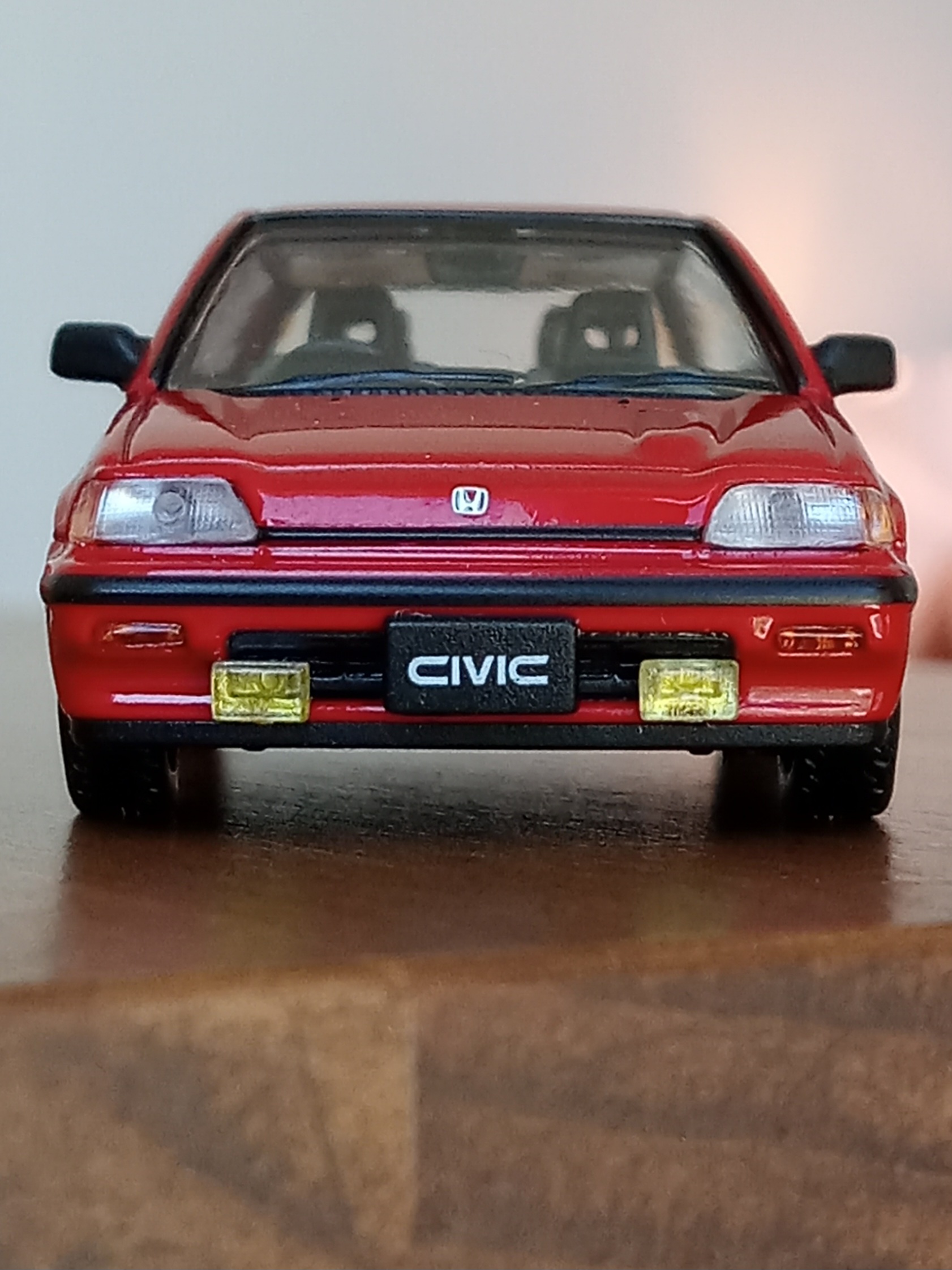
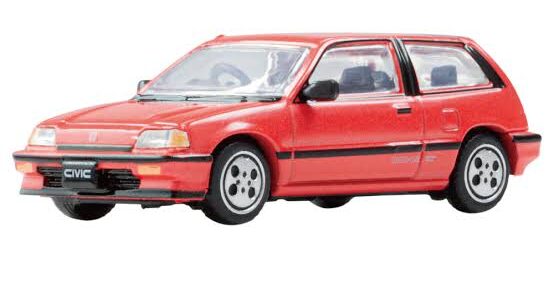
(撮影に使用したミニカー:ホビージャパン製、1/64ダイキャスト完成品、ホンダ シビック後期型 Si(E-AT型)1985(スーパー・レッド)ーーー>改造箇所:タイヤ&ホイールの軸位置を最適化)
好みの自動車デザイン:第58回ーー2ドア・クーペの系譜: 第37回【ホンダ編】 ホンダ【ワンダー】シビック Si、1984(スーパー・レッド )『ホンダ躍進の象徴!』Honda【Wonder】Civic、1984(Super Red)『Kool Honda’s Leading Image!』

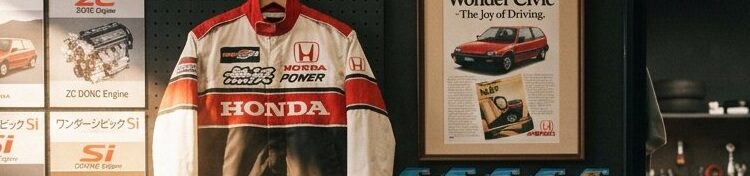
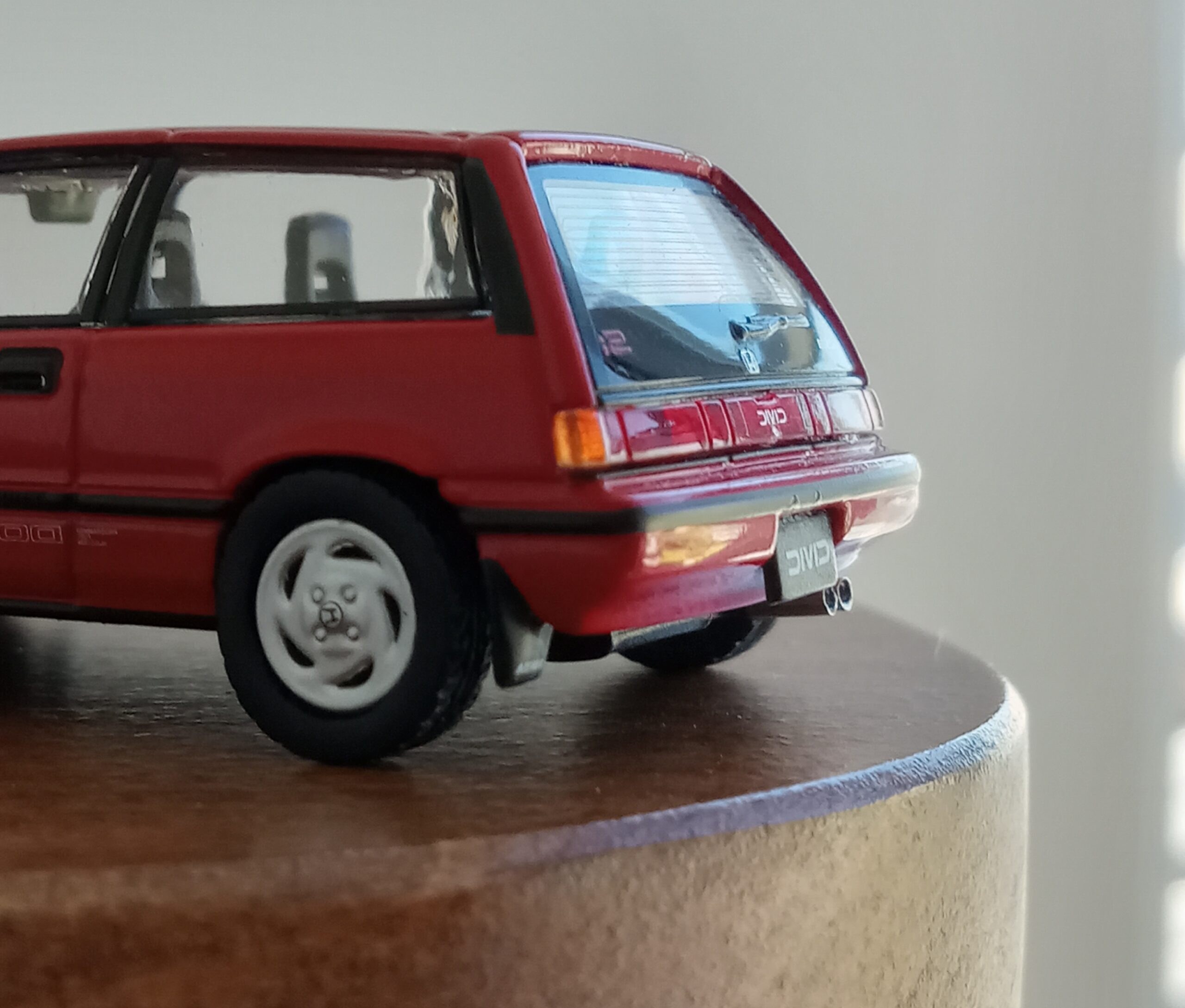
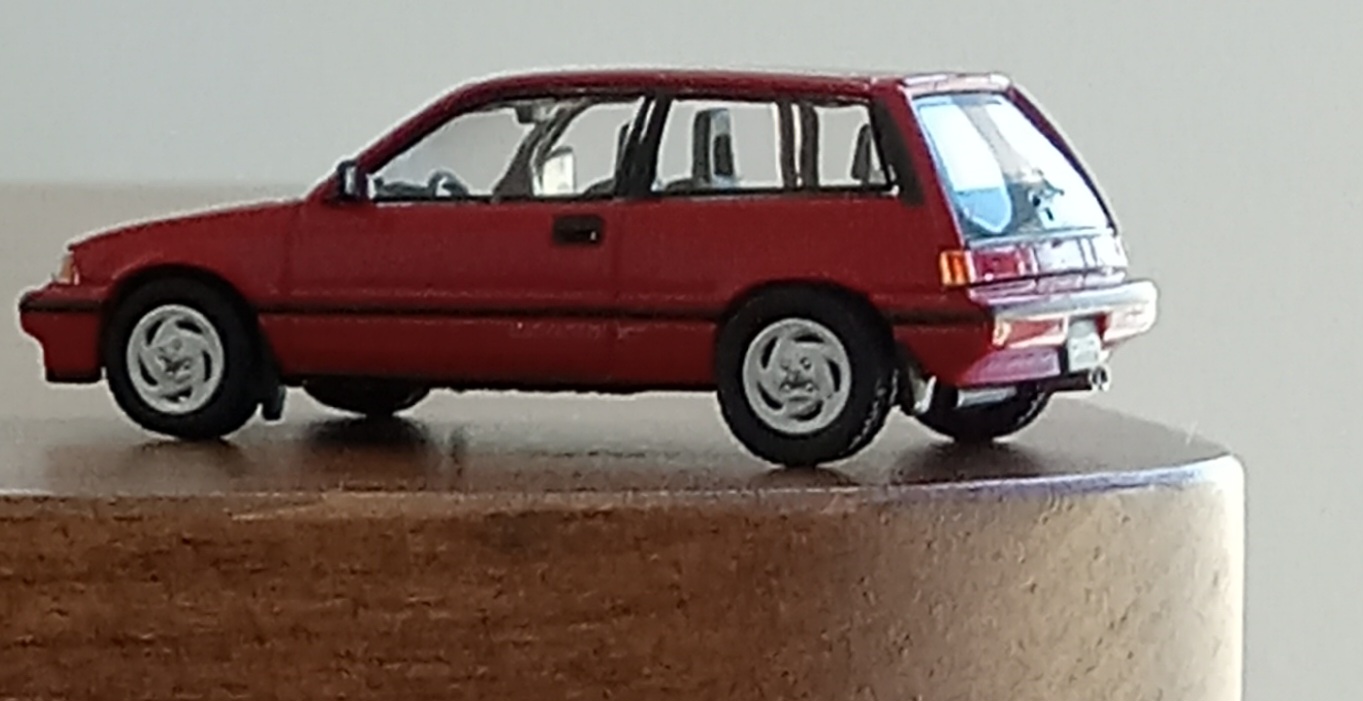
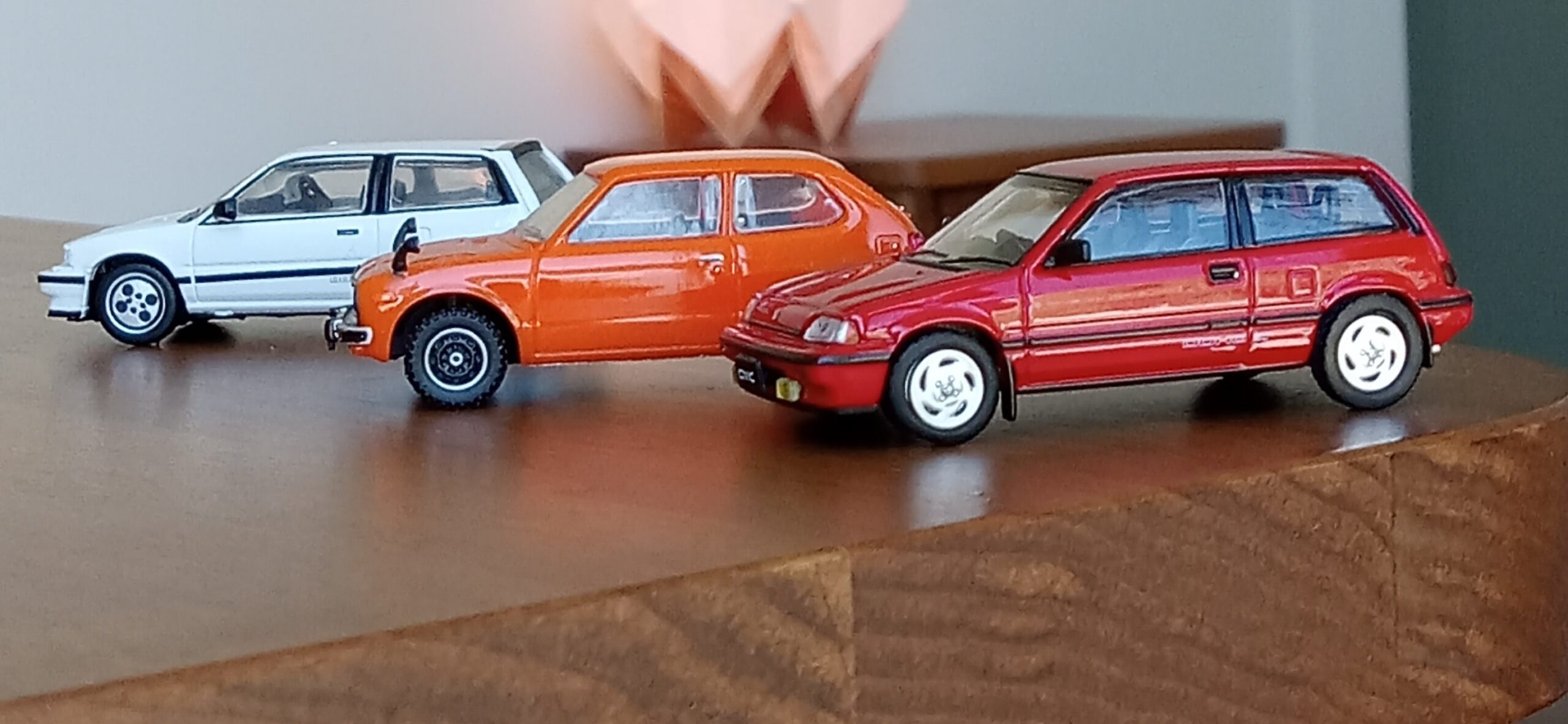
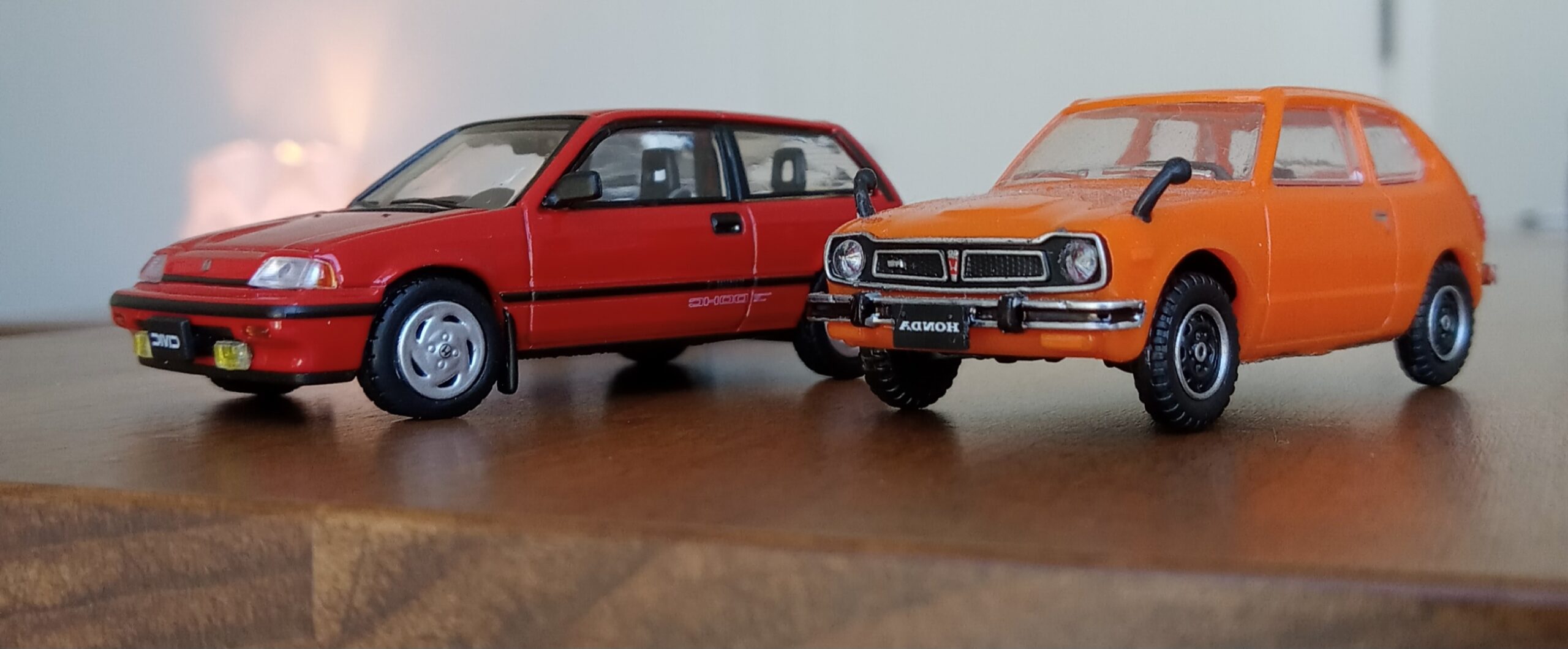
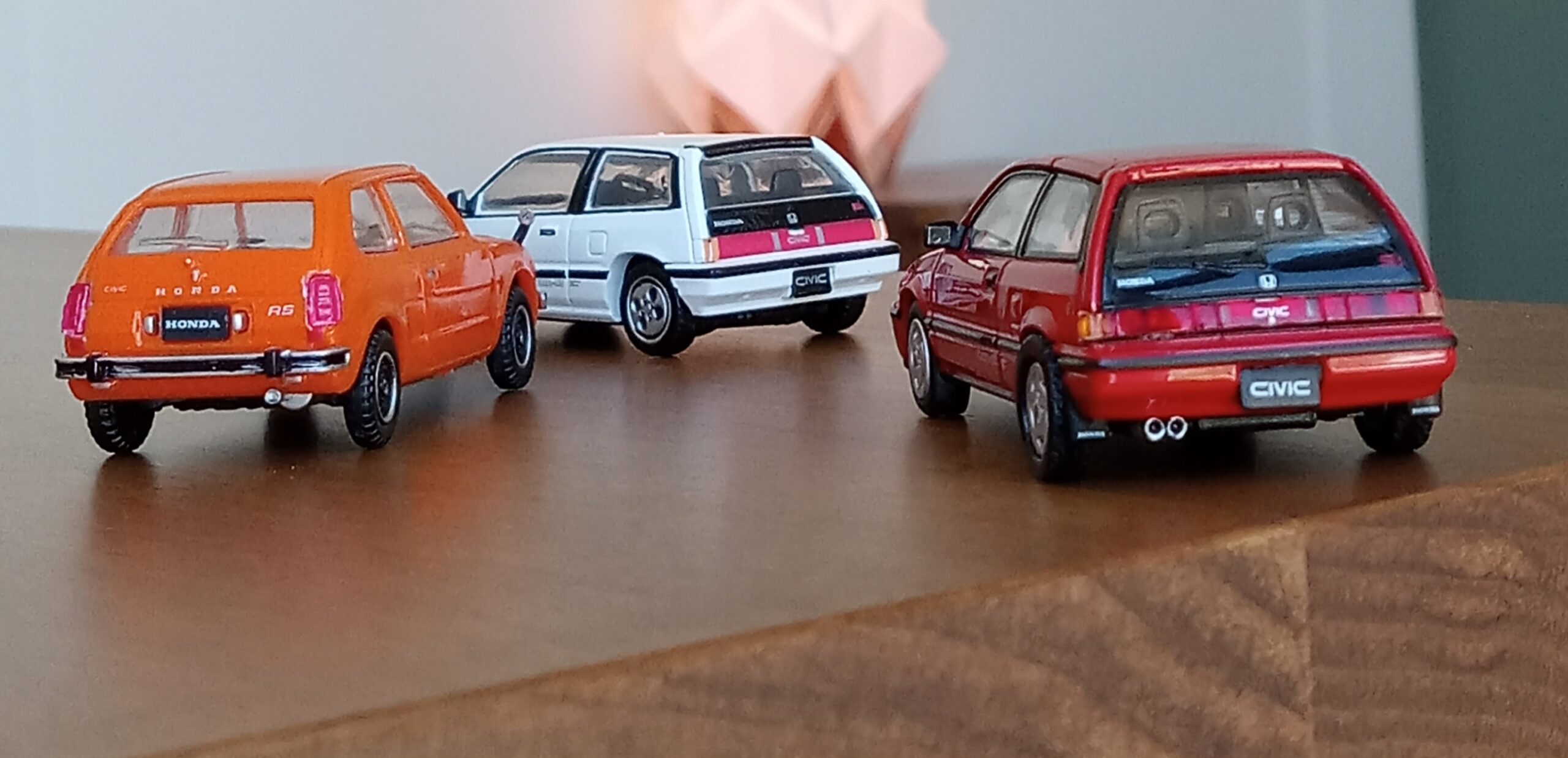
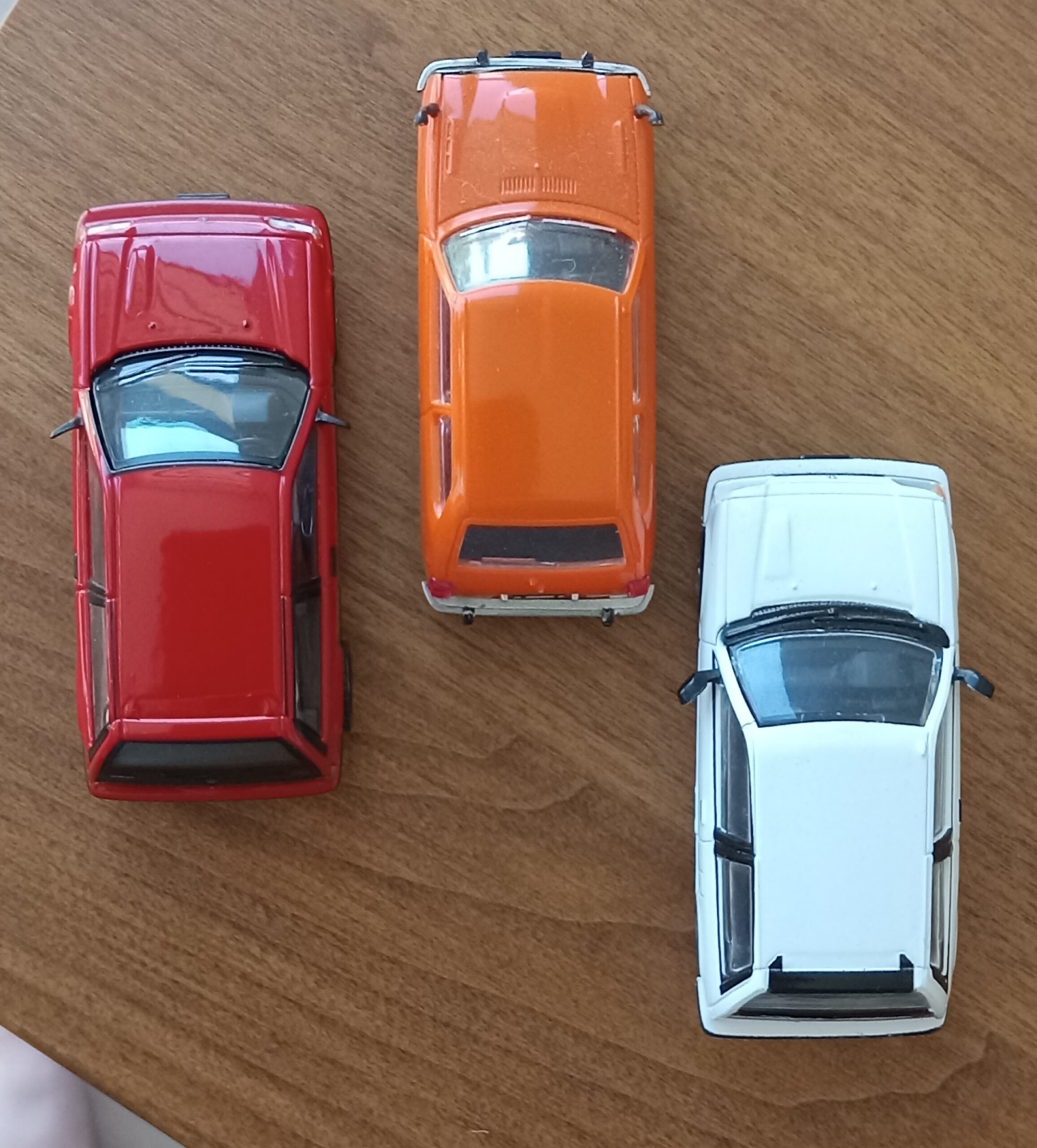
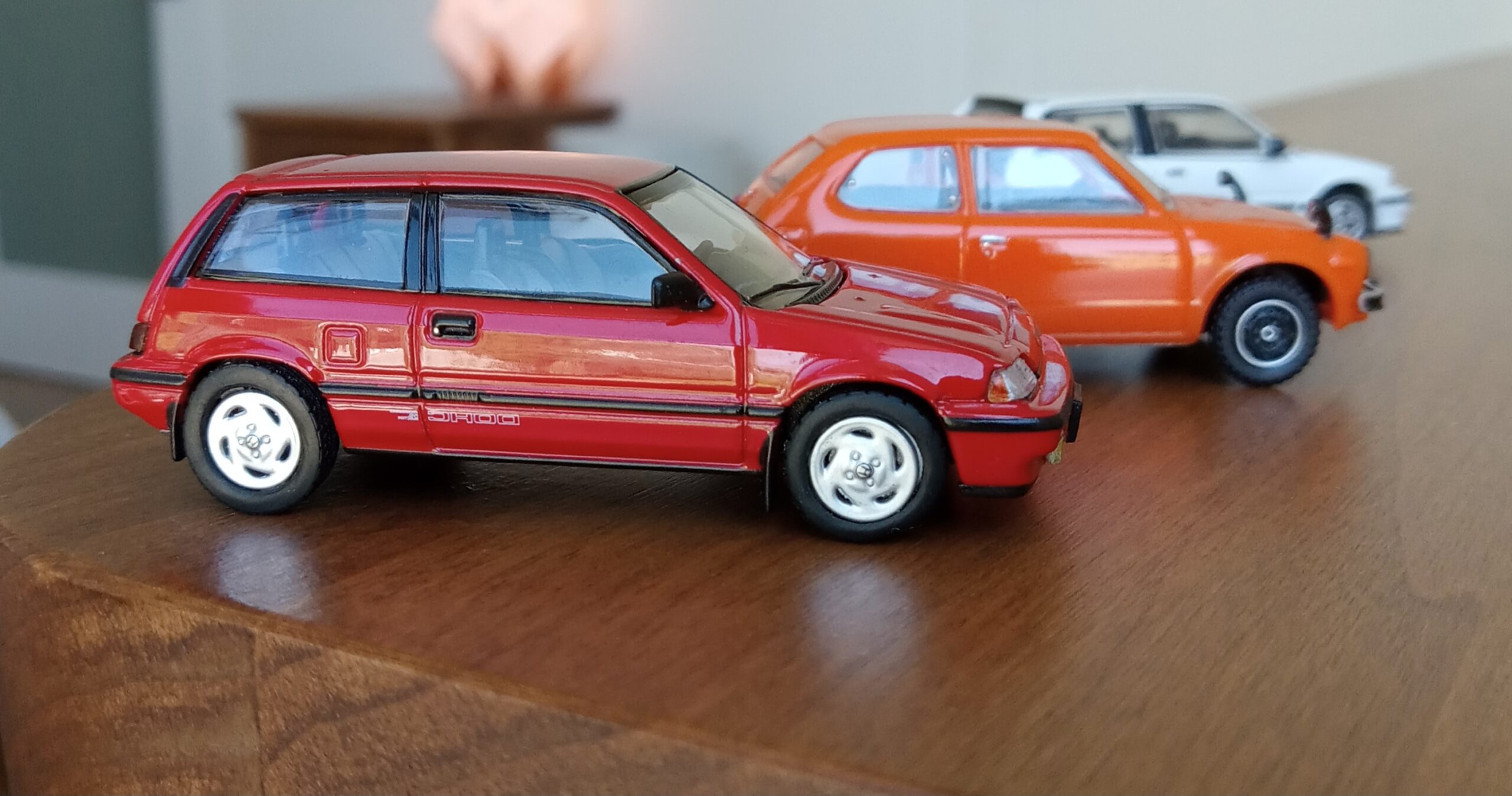
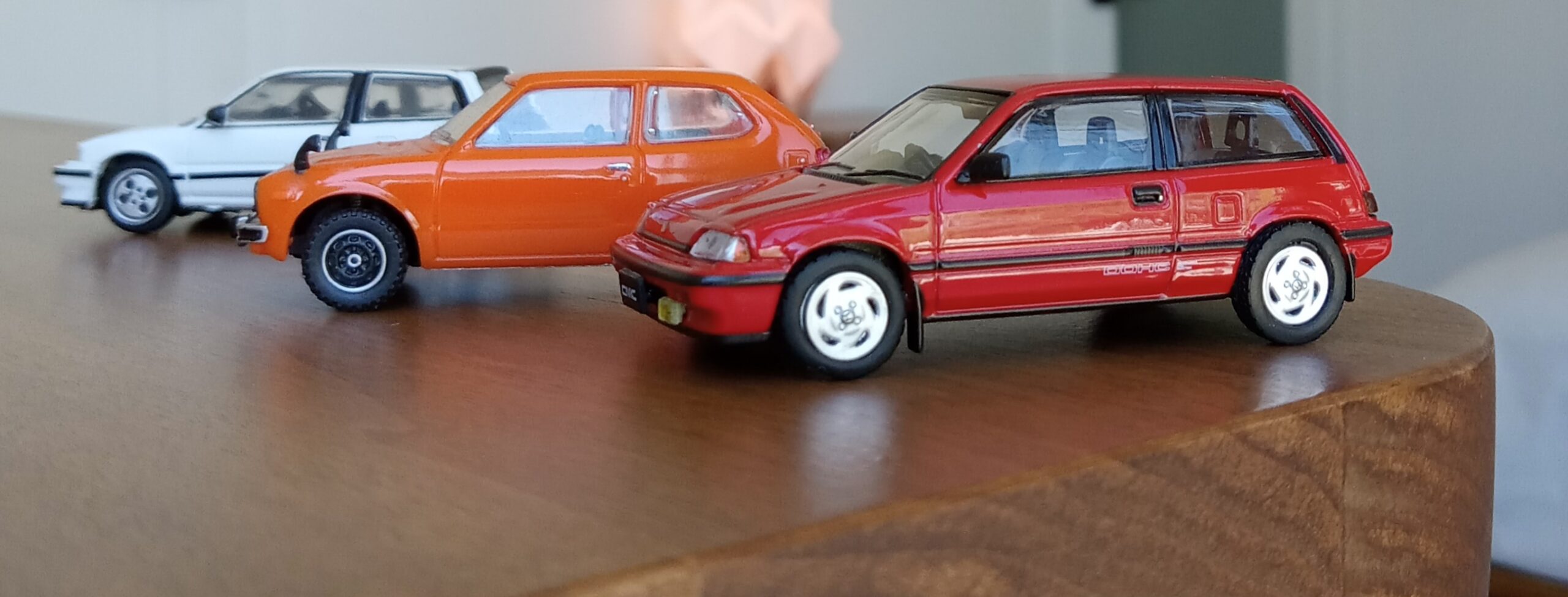
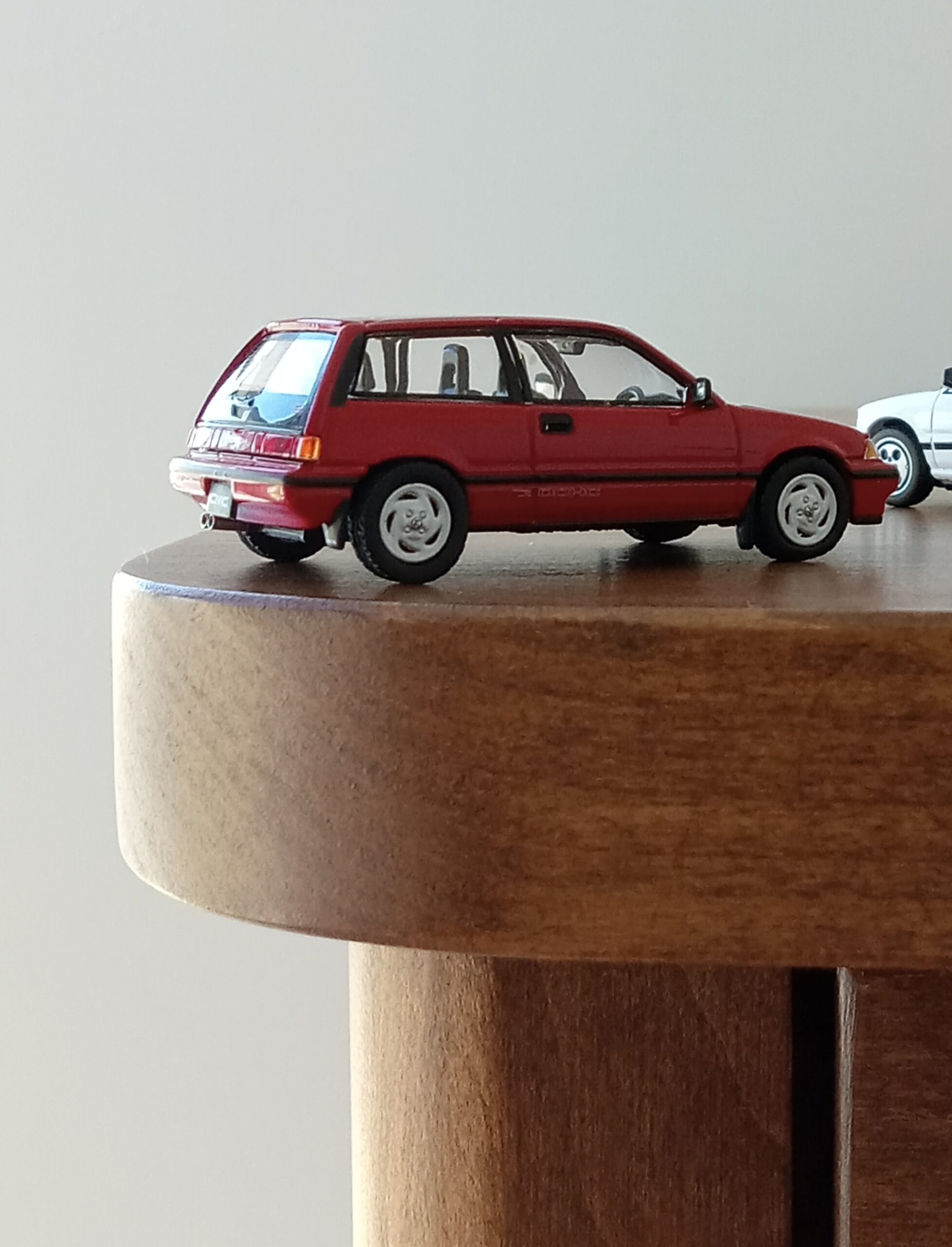
第58回目の今回は、『2ドアクーペの系譜、第37回』と題しまして、各国のお国柄や、外観デザインの個性が強く表れる、高級2ドア(GT)クーペ / ロードスターについてお話ししてみたいです。【注意:オープンカーを含む】
以下の要領で進めていきます。
第37回の今回はいよいよ
【日本車:ホンダ(軽量スポーツ編 002)】
1985年発表の
ホンダ 【ワンダー】シビック Si、1985 (スーパーレッド)
についてのお話です。
【2ドア・クーペの系譜:目次】
【米国車編】
第1回:キャデラック・エルミラージュ、2013(メタリック・レッド)
第2回:リンカーン・コンチネンタル MK4、1972(ブラック)
第3回:マーキュリー・クーガー, 1967(LTメタリック・グリーン)
【ドイツ車編】
第4回:MB 500K スペシャル・ロードスター、1936(ブラック)
第5回:MB 300SL ロードスター、1957(シルバー)
第6回:MB SLS AMR ガルウイング、2010(ブラック)
【英国車編】
第7回:マクラーレン・F1、1992(メタリック・オレンジ)
第8回:ジャガー・XKSS ロードスター、1957(ロイヤル・ブルー)
第9回:ジャガー XKR クーペ、1996(ダークメタリック・グリーン)
【日本車・ニッサン編】
第10回:ニッサン 初代シルビア、1965(シャンペン・ゴールド)
第11回:ニッサン 5代目シルビア、1988(LTメタリック・グリーン)
【イタリア車編】
第12回:フェラーリ 250TR ポンツーンフェンダー、1958(赤)
第13回:フェラーリ 250GTO、1962(イタリアン・レッド)
第14回:ランボルギーニ・コンセプトS、2005(パール・ホワイト)
【日本車・マツダ編】
第15回:マツダ コスモ・スポーツ、1968(レーシング・ホワイト)
第16回:マツダ ユーノス・コスモ、タイプ‐S(2トン:黒&グレー)
【フランス車編】
第17回:ブガッティ・タイプ59、1935(フレンチ・ブルー)
第18回:シトロエン・SM、1970(シャンペーン・ゴールド)
第19回:ブガッティ・ラ・ヴォワチュール・ノワール、2019(黒)
【日本車・トヨタ編】
第20回:トヨタ/ヤマハ・2000GT、1967(アイボリー・ホワイト)
第21回:トヨタ・2代目ソアラ、1986 (クリスタル・ホワイトⅡ)
第22回:レクサス LC500【GWZ100型】、2017(MT・レッド)
【米国車編②】
第23回:ダッジ・チャレンジャー、1970&プリムス・バラクーダ、1971
第24回:ダッジ・ヴァイパー SRT‐10 ACR、 2008(ブラック)
第25回:フォード・シェルビーGR-1 コンセプト、2004(クローム)
【日本車・ミツビシ編】
第26回:ミツビシ・ギャラン λ、1976(ブラウン・メタリック)
第27回:ミツビシ・エクリプス【北米仕様】、2006(オレンジ・メタ)
【ドイツ車編②】
第28回:BMW M635CSi、1984 (ダーク・メタリックブルー)
第29回:MB 560SEC AMG 6.0 ワイドボディー、1989(ブラック)
第30回:BMW M2 純正パフォーマンス・パーツ仕様、2025(ネオン・ライム)
第31回:初代アウディー・TT、1998(レイク・シルバー・メタリック)
【日本車・スバル編】
第32回:スバル・クロストレック XV, 2012(ライムグリーン・メタリック】
【英国車編②】
第33回:ロータス・初代エリート, 1959(ブリティシュ・グリーン)
第34回:ロータス・エラン S4 スプリント(3トーン:メタブルー、白&金)
第35回:ジャガー・Eタイプ ロードスター(ライトブルー・メタリック)
【日本車:ホンダ(軽量スポーツ編)】
第36回:ホンダ S800、1966(スカーレット)
第37回:ホンダ 【ワンダー】シビック Si、1985 (スーパーレッド)
第38回:ホンダ ビート、1991(サンバ・イエロー)
【イタリア車編➁】
第39回:ランチア ガンマ・クーペ、1976(グリジオ・アージェント(銀))
【日本車:トヨタ編②】
第40回:トヨタ コロナ・ハードトップ 1800GT-TR、1982 (ブレージングレッド(赤))
第41回:トヨタ GRスープラ、2019 【DB型・A90/A91】 (ボルカニックアッシュグレーメタリック(銀))
第42回:トヨタ GR GT、 2027【予定】(ガンメタル系)
【イタリア車編③番外編】:スーパーカーの系譜
第1回:マセラティ― メラク SS、1975(ブルー・セーラ・メタリック)
第2回:ランチア・ストラトス HF、1973(ロッソ・ストラトス)
第3回:ランボルギーニ・ミウラ SV、1971(ロッソ&オロ/赤&金)
第4回:フェラーリ・ディノ 206 コンペティツィオーネ プロトティーポ(ジアッロ・フライ/黄色)
第5回:デ・トマソ パンテーラGTS、1971(ロッソ/赤&マットブラック)
第6回:フェラーリ ラ・フェラーリ、2013(ロッソ・コルサ(赤))
【米国車③番外編】:コルベットの系譜
第1回:1967年型 スティングレー【C2】コンバーチブル(ハードトップ・メタ青)
第2回:1972年型 コルベット 【C3】コンバーチブル(メタリック・ブルー)
第3回:1984年型 コルベット 【C4】クーペ(ブライト・レッド)
第4回:コルベット・インディー、1986【ミッド・シップの先行開発車】(シルバー)
第5回:スティングレー・コンセプト、2009【FRスポーツ・先行開発車】(ライトプルー・メタリック)
n
n
nn

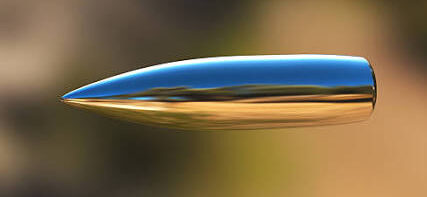
#ロング・ルーフの弾丸:ホンダ躍進のシンボル!

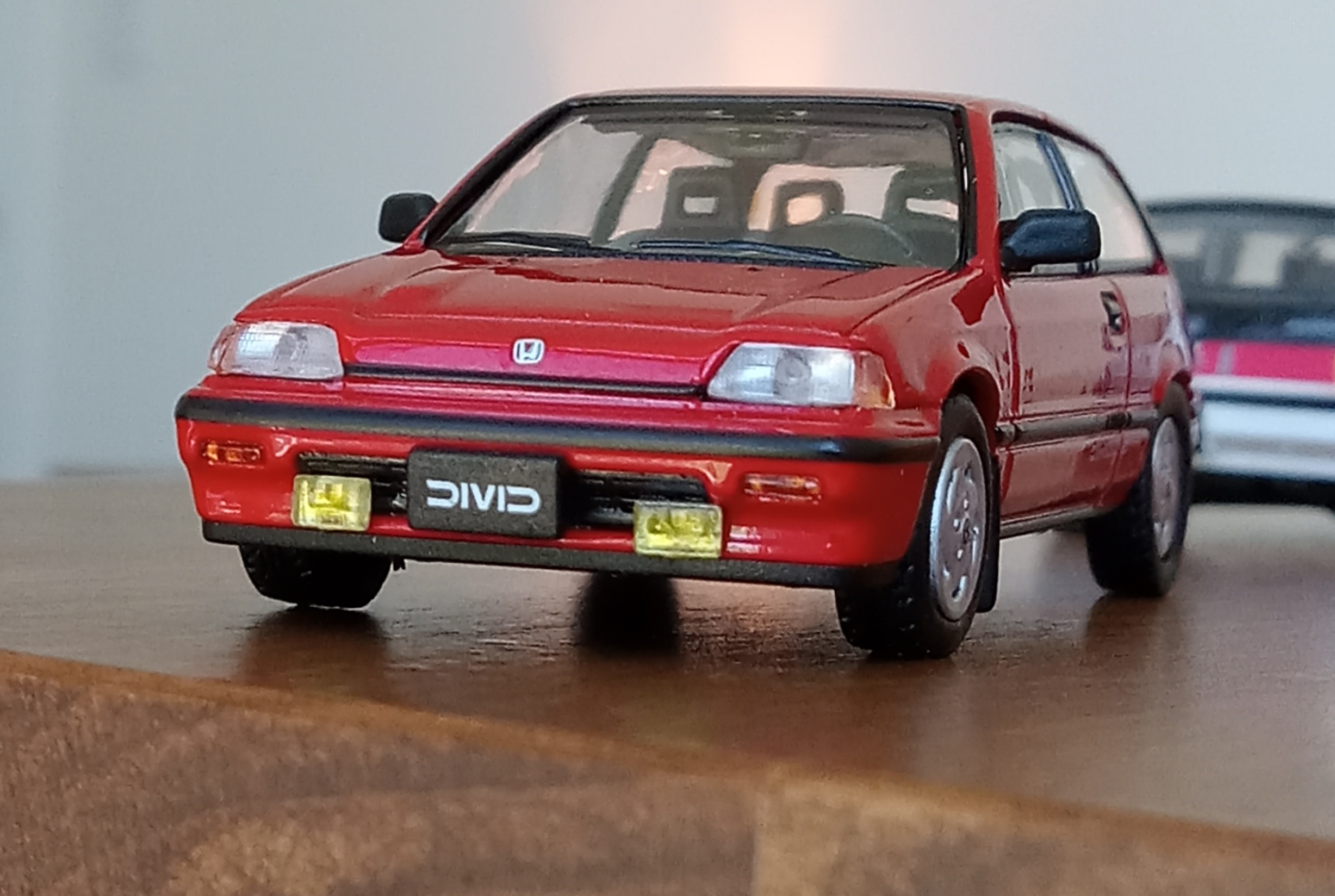
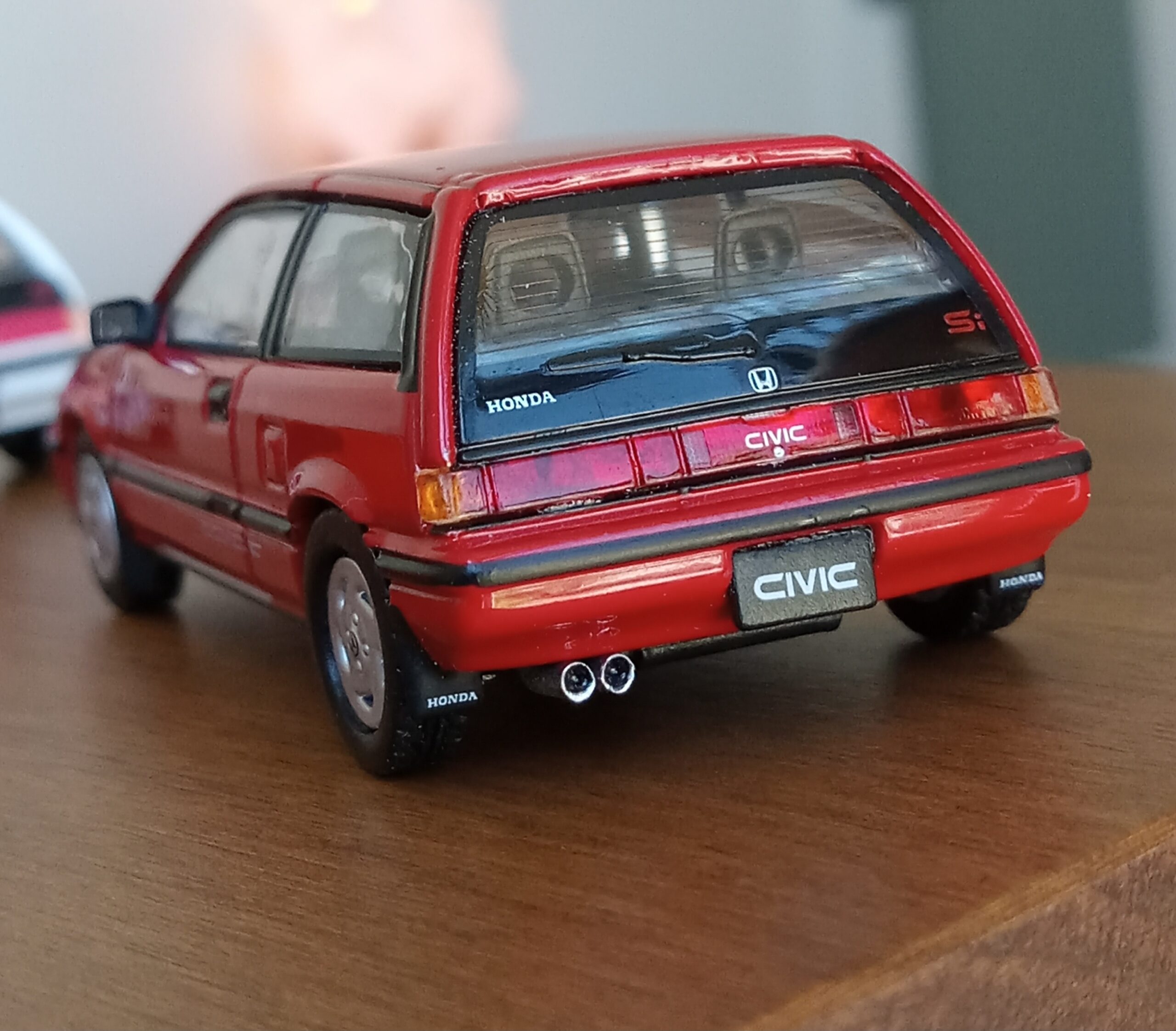
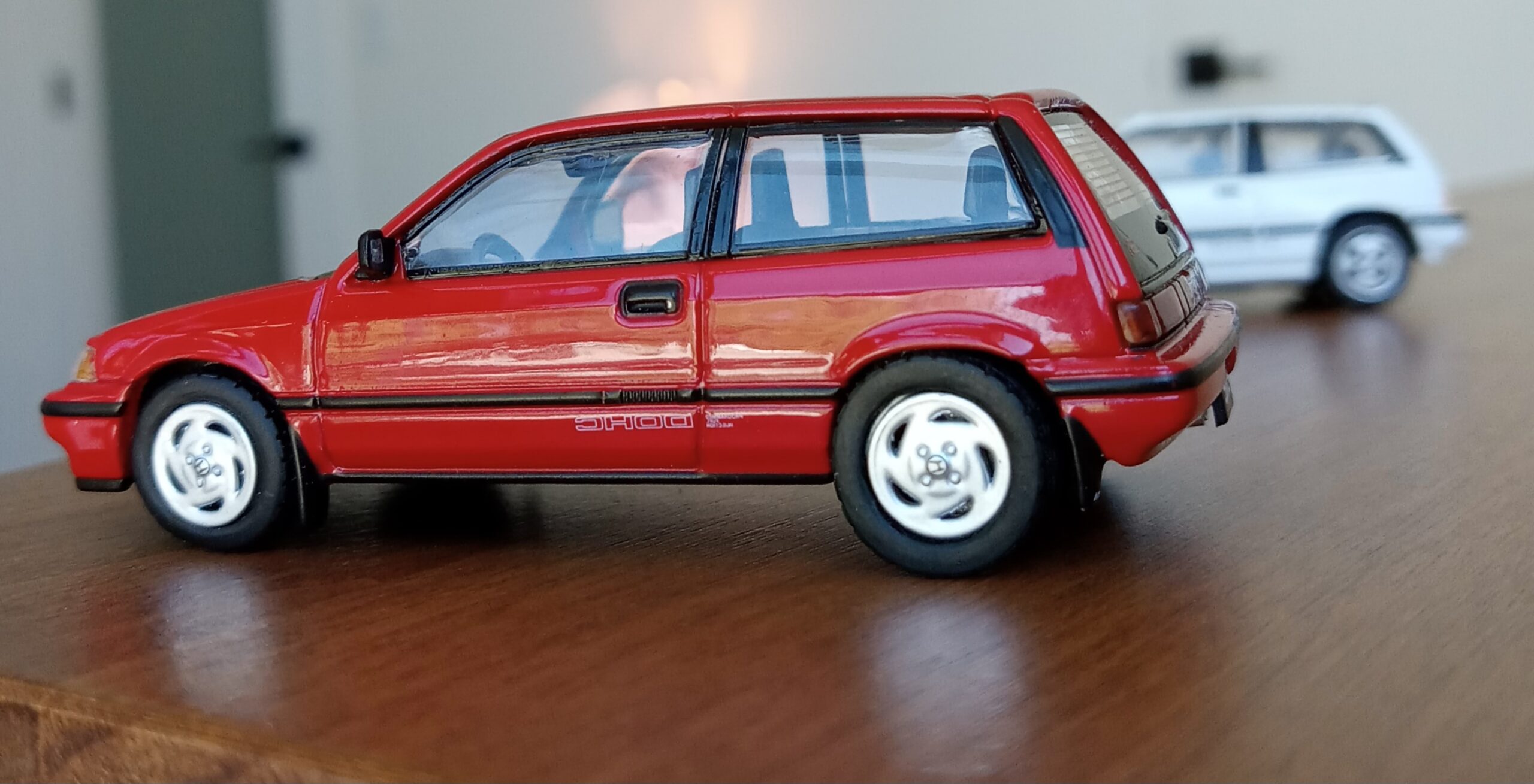
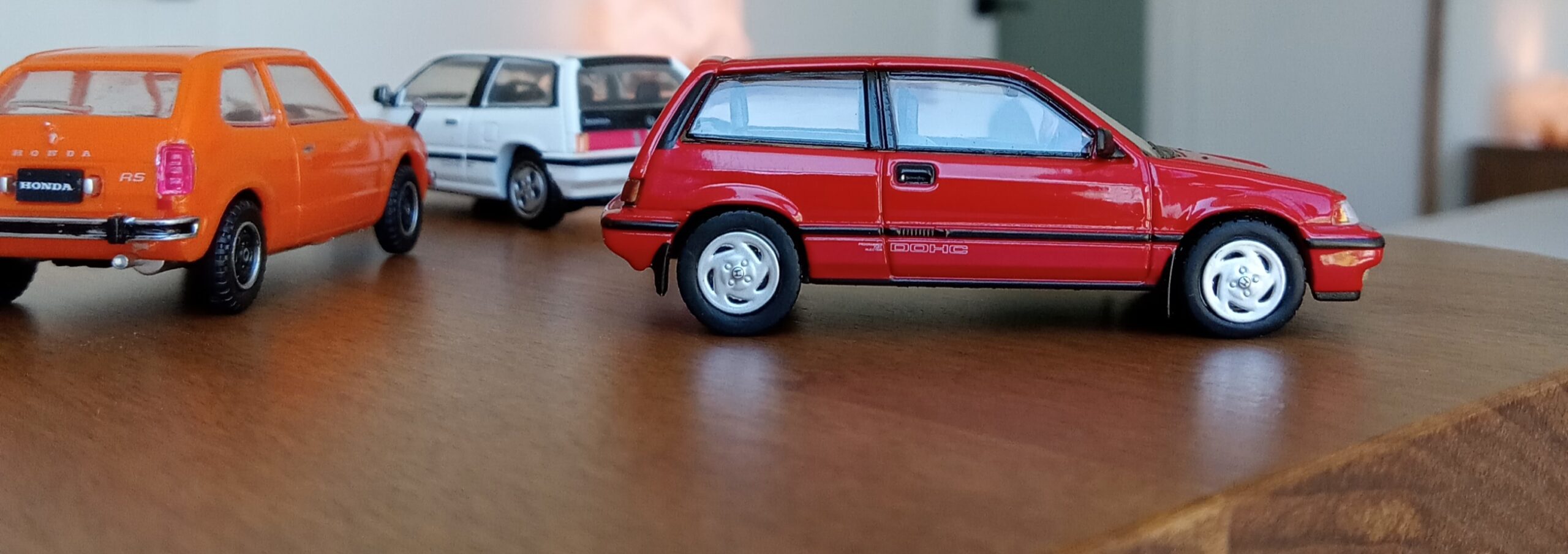
『ワンダーシビック!!』
発表された大学一年生の時、
クルマ好きの友人と、
『色々ここが凄い、あそこも新しい!』
とワクワクした記憶があります。
*弾丸デザインの斬新さ、特にリアゲート周りの処理、
*内装のさっぱりしたいい意味で、プラスチッキーな清潔感、
*そこが逆に新しい、、、、的な?
こんな感じで、、
個人的には、
同時期のシビック・3ドア、CR-X、アコード・エアロデッキの3台を、
『弾丸3兄妹』と名付けて、
勝手に興奮していました。
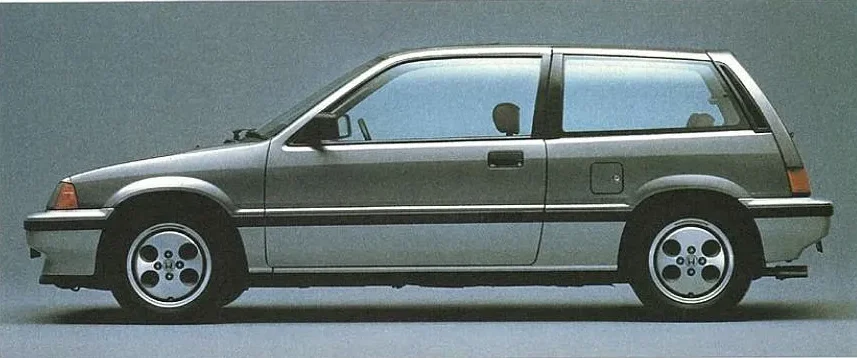
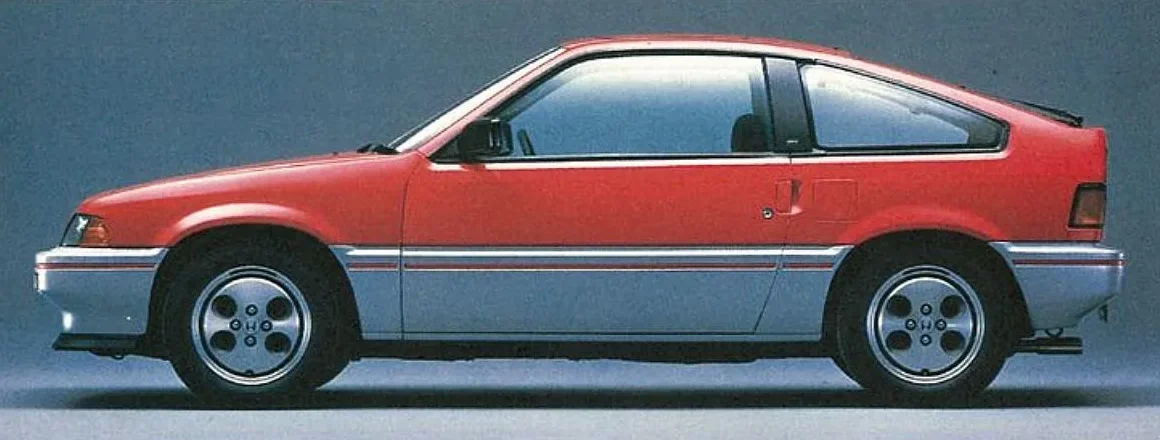
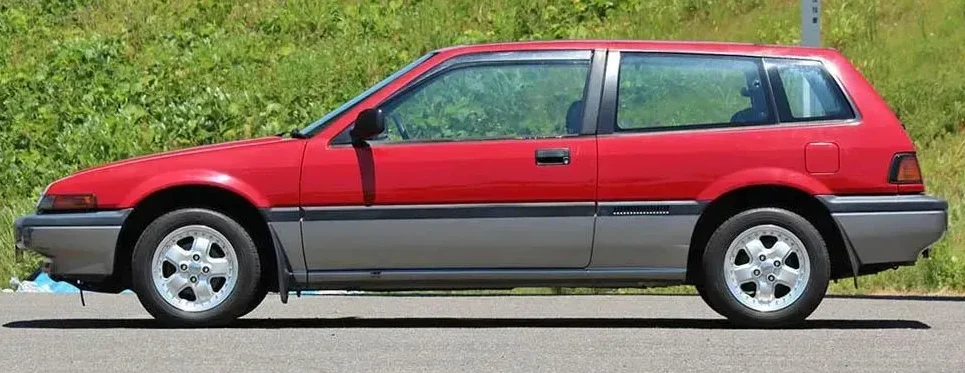
その中でも、
*実験的・コンセプトカー的なエアロデッキや、
*スポーツ・カー的な立ち位置の、CR-Xとは違って、
3代目シビックのラインナップのドン真ん中に位置する3ドア版に
『コーダ・トロンカの
テイル処理』を採用し
結果的に大成功を収めた事実は絶対に忘れられない『ホンダ魂の発露』です!
そんな日本が誇る
『弾丸ボーイ』について、
こんな感じに、語ってみたいです。
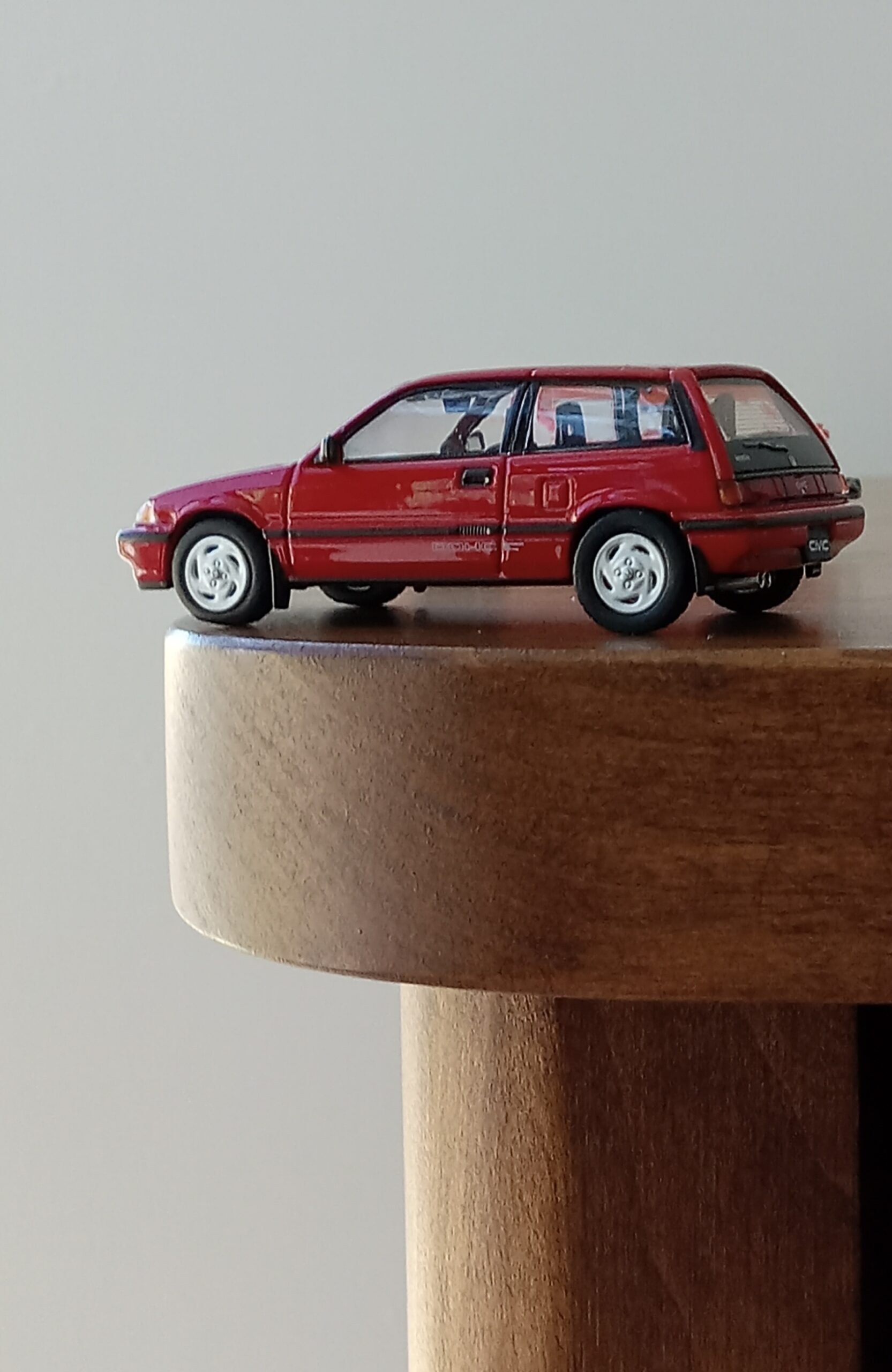 *実車解説:
*外観デザインの特徴::
*『私』とワンダーシビック・3ドアハッチバック:
*三題噺:
*ホンダの『弾丸・ボーイ』たち、、、、
*実車解説: バブル期の人気者?
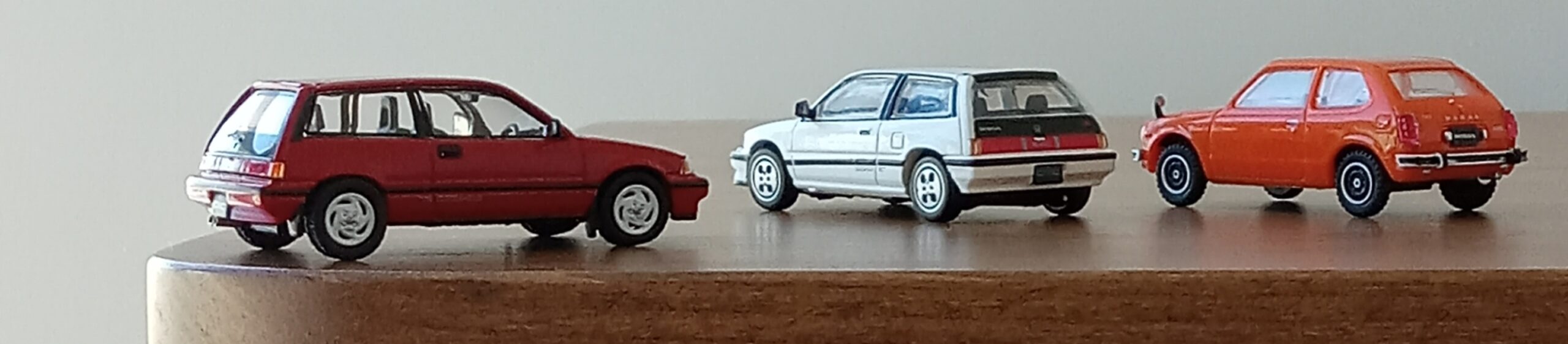
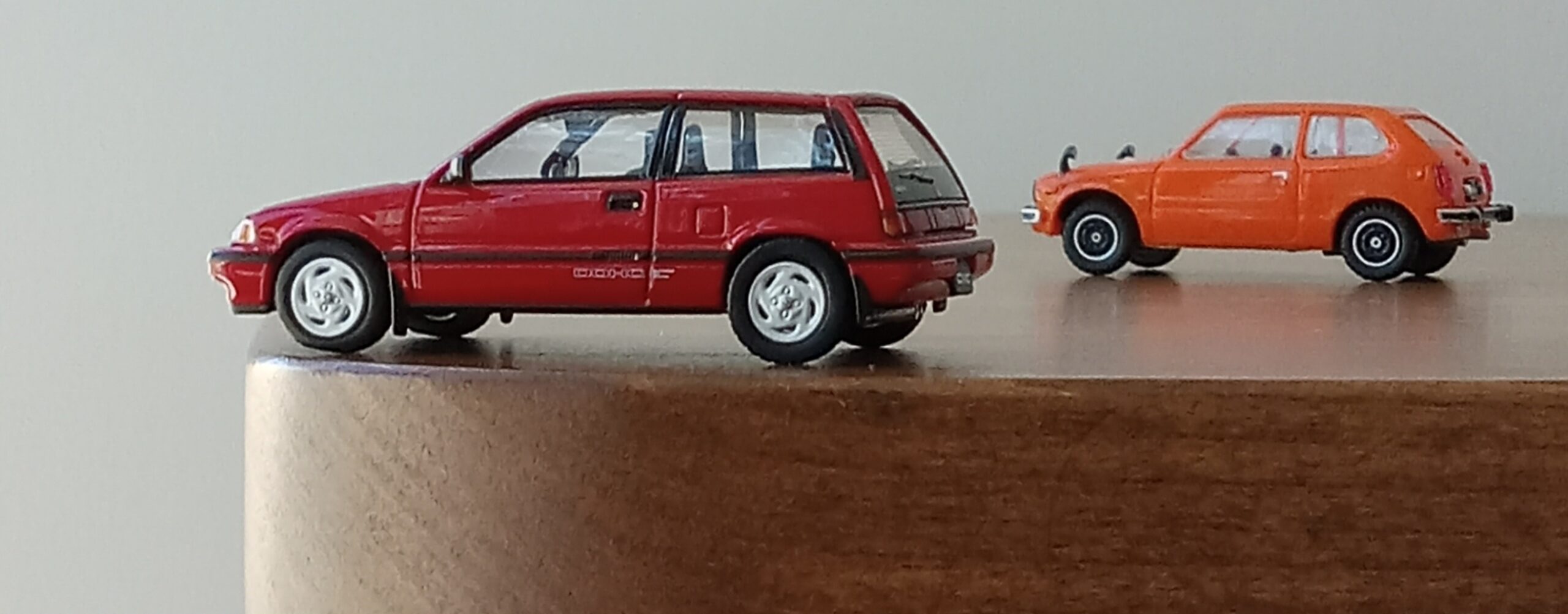
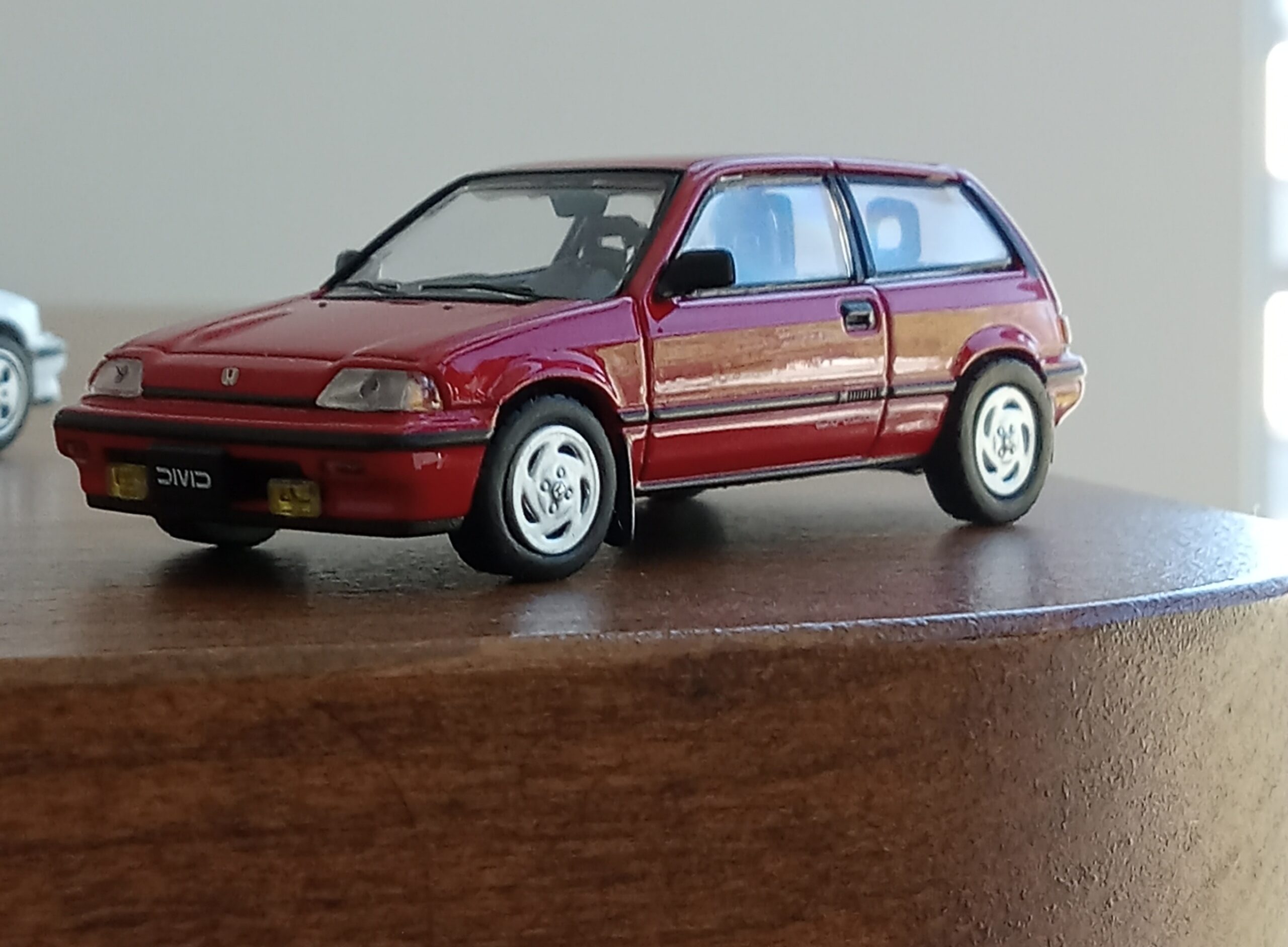
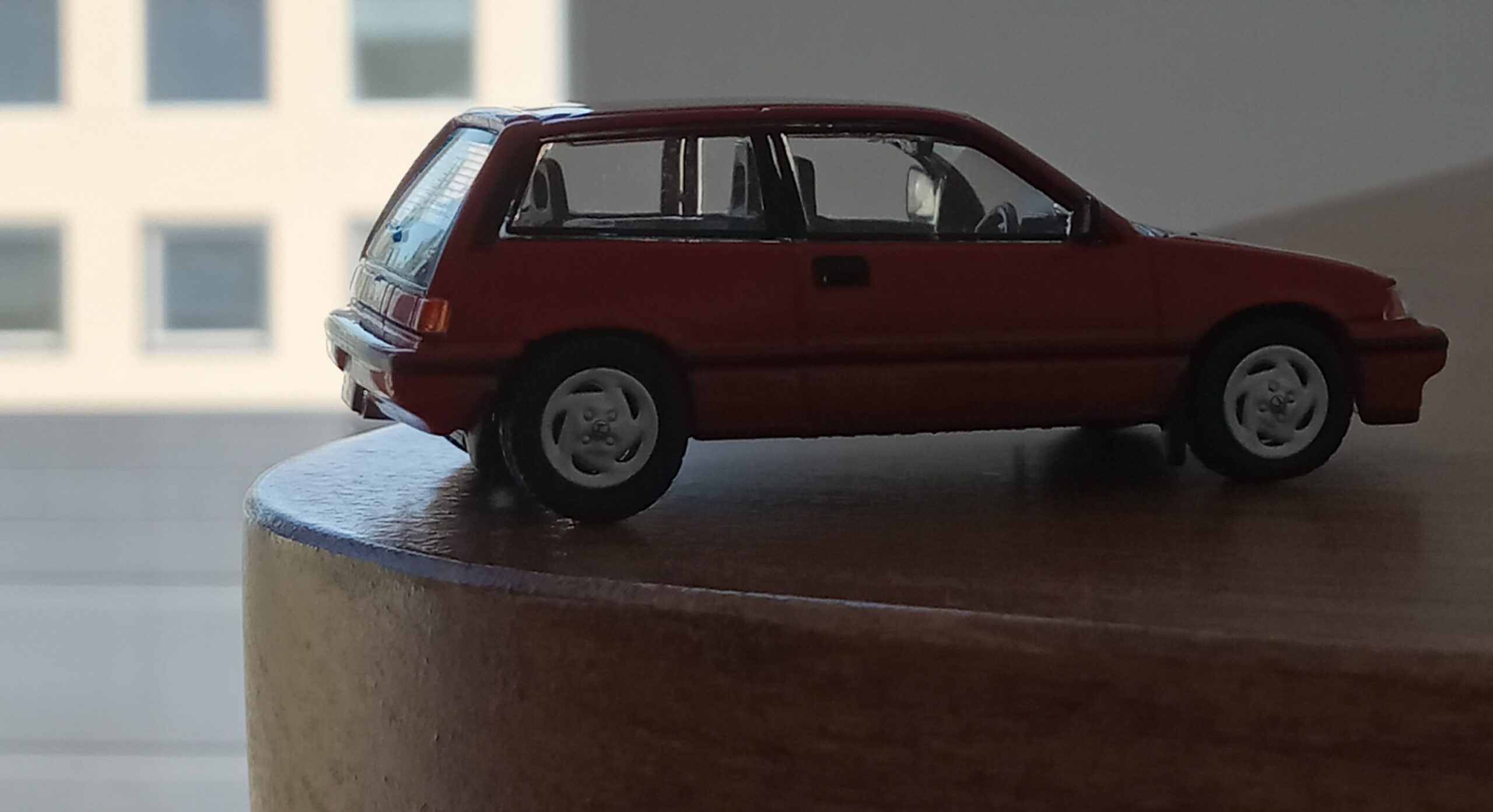
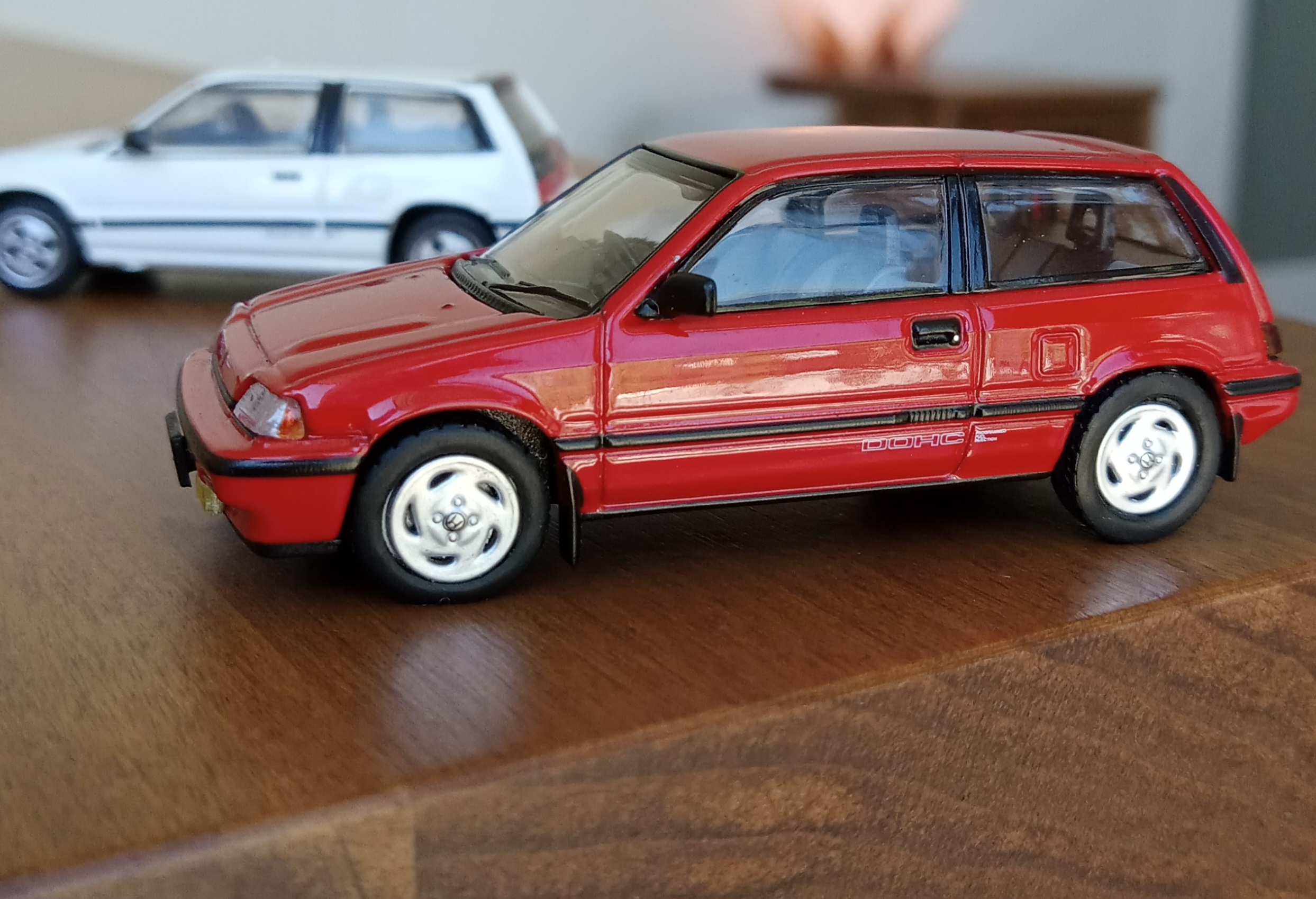
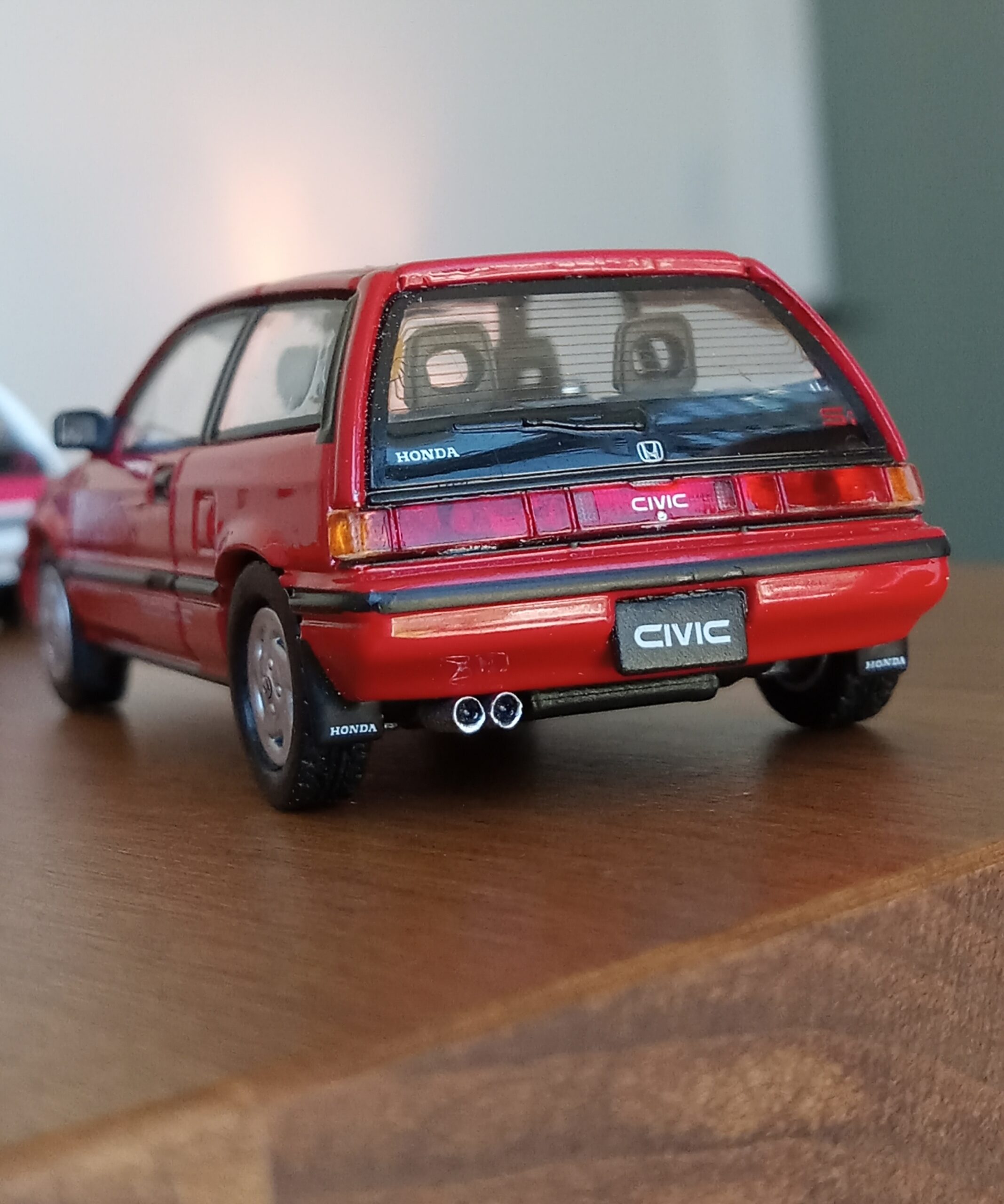
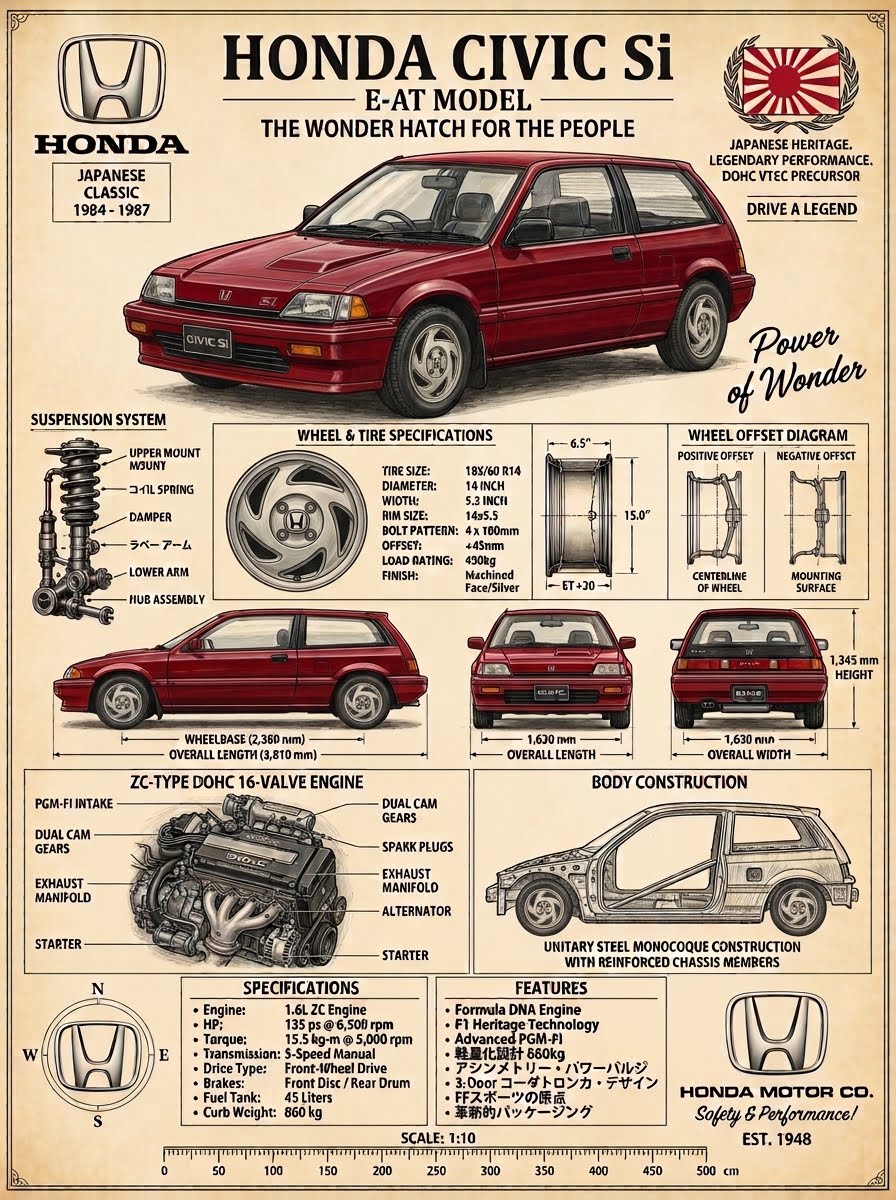
概略説明:
n
n
n

 n
n
n
n
n
n
n
n
n
n
n
n
n
n
n
n
n
n
n
n
n
n
n
n
n
n
n
n
n
n
n
n
n
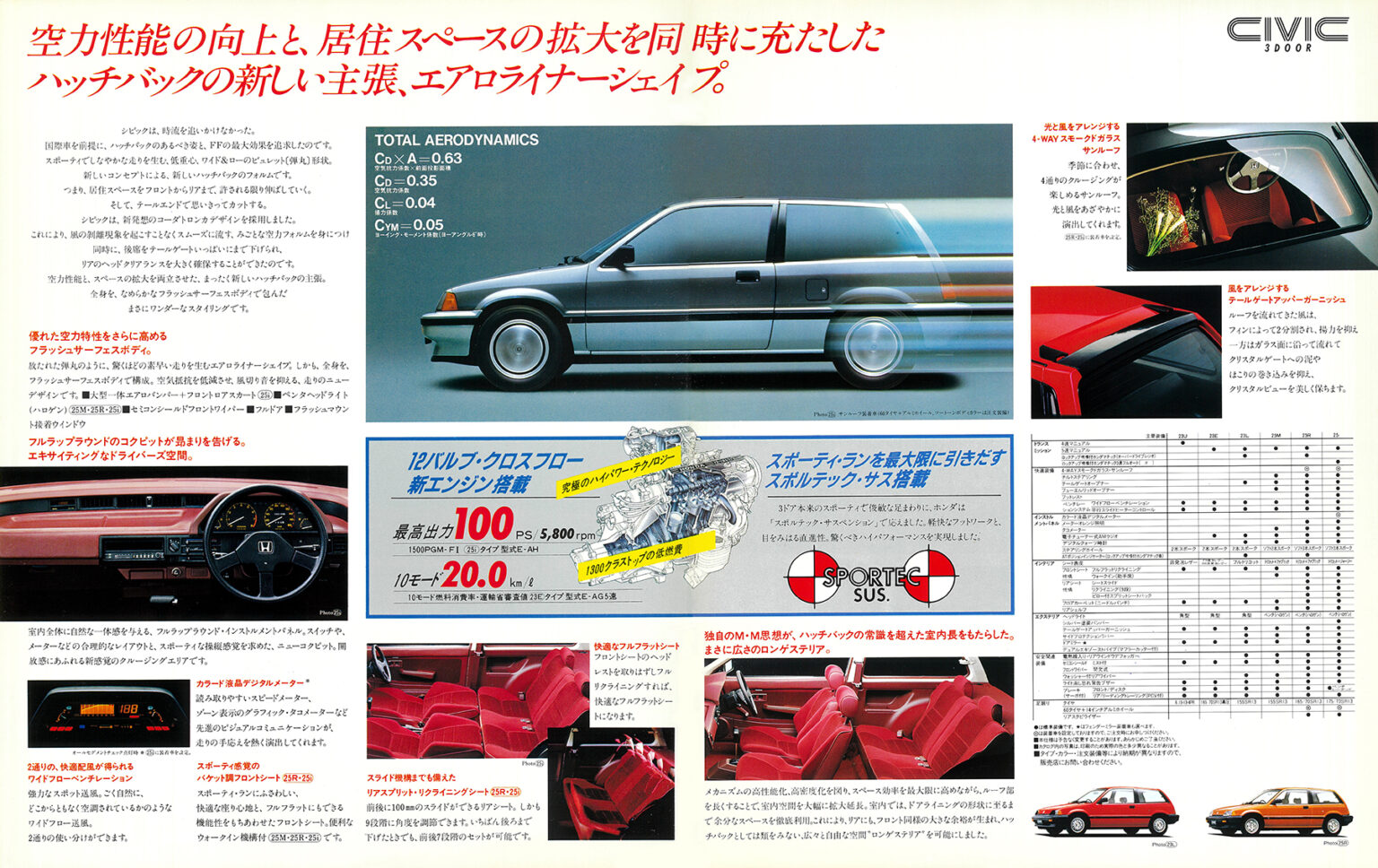
テールレンズやリヤバンパー、そしてリヤガラスまでもが、この垂直な切断面の中に完璧なフラットさで収められており、一切の余計な装飾を排除した「引き算の美学」が貫かれています。
n
n
n
n
n
n
n
- 空力特性(エアロダイナミクス): 垂直に断ち切られたリヤエンドは、走行時に車両後方に発生する空気の渦(ドラッグ)をコントロールし、優れた空力特性(高車速時の安定性)をもたらしました。
n - 居住空間の最大化: メカを最小に、人間の空間を最大にする思想通り、ルーフを限界まで後ろに引いたことで、コンパクトな全長でありながら、後席のヘッドクリアランス(頭上空間)と圧倒的な荷室容量を同時に確保しています。
n
- 空力特性(エアロダイナミクス): 垂直に断ち切られたリヤエンドは、走行時に車両後方に発生する空気の渦(ドラッグ)をコントロールし、優れた空力特性(高車速時の安定性)をもたらしました。
n
通常、背の高いDOHCエンジンを載せるにはボンネットを高くせざるを得ませんが、ホンダはフロントにコイルスプリングではなく、スペース効率に優れたトーションバー式ストラットサスペンションを採用。これにより、エンジンの位置を極限まで下げ、地を這うような超低ノーズを実現しました。
n
n
n
 n
n
n
n
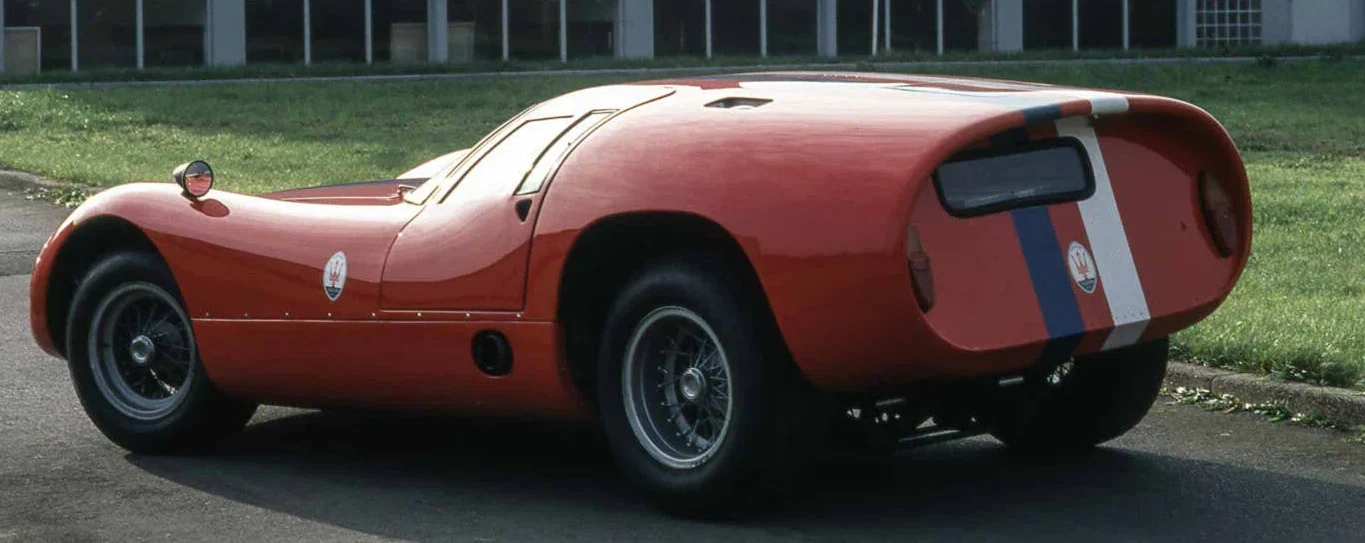
3代目シビック Siのアイデンティティである「コーダトロンカ」は、自動車の黎明期から続く「空力学と美学の闘争」の歴史から生まれた、インダストリアルデザインにおける極めて贅沢な果実です。
N
n
 n
n
n
n
n
n
nn
これを1960年代にエモーショナルな「美」へと昇華させたのがイタリアのカロッツェリア、ザガート(Zagato)です。天才デザイナーのエルコーレ・スパーダが手がけた「アルファロメオ・ジュリエッタSZ(Coda Tronca・1961年)」や「ジュリアTZ(1963年)」は、レーシングカーとしての空力性能(最高速度の向上)を極めつつ、同時に彫刻的な美しさを持つ元祖コーダトロンカとして歴史に名を刻みました。
n
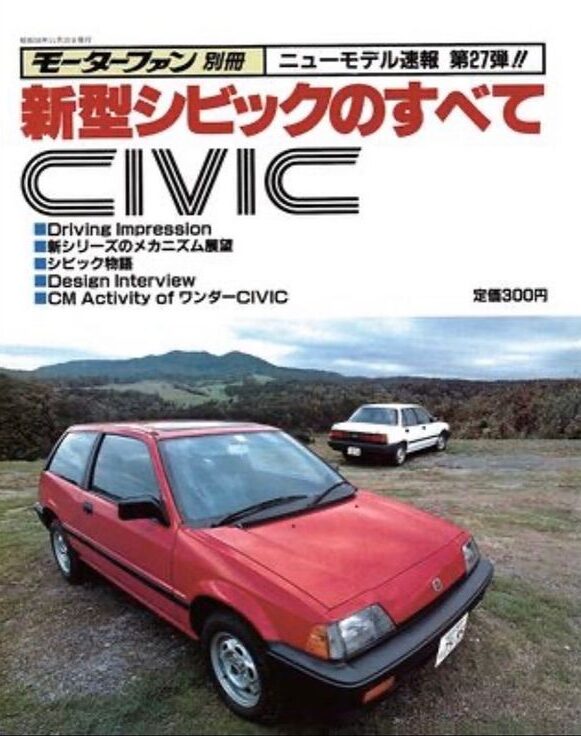
ピニンファリーナが1967年に発表したコンセプトカー「BMC・エアロダイナミカ」などは、のちのハッチバックの原型となるシルエットにコーダトロンカを融合させ、未来の量産車の方向性を示しました。その後、1970年代のアルファロメオ・アルファスッドや、シトロエン・CX、ローバー・SD1といった市販車が、この思想を「空力性能とラゲッジ空間の合理的な両立」として取り入れていきました。
n
n
n
n
n
n
n
n
n
n
n
n
n
n
n
n
n
n
n
n
n
n
n
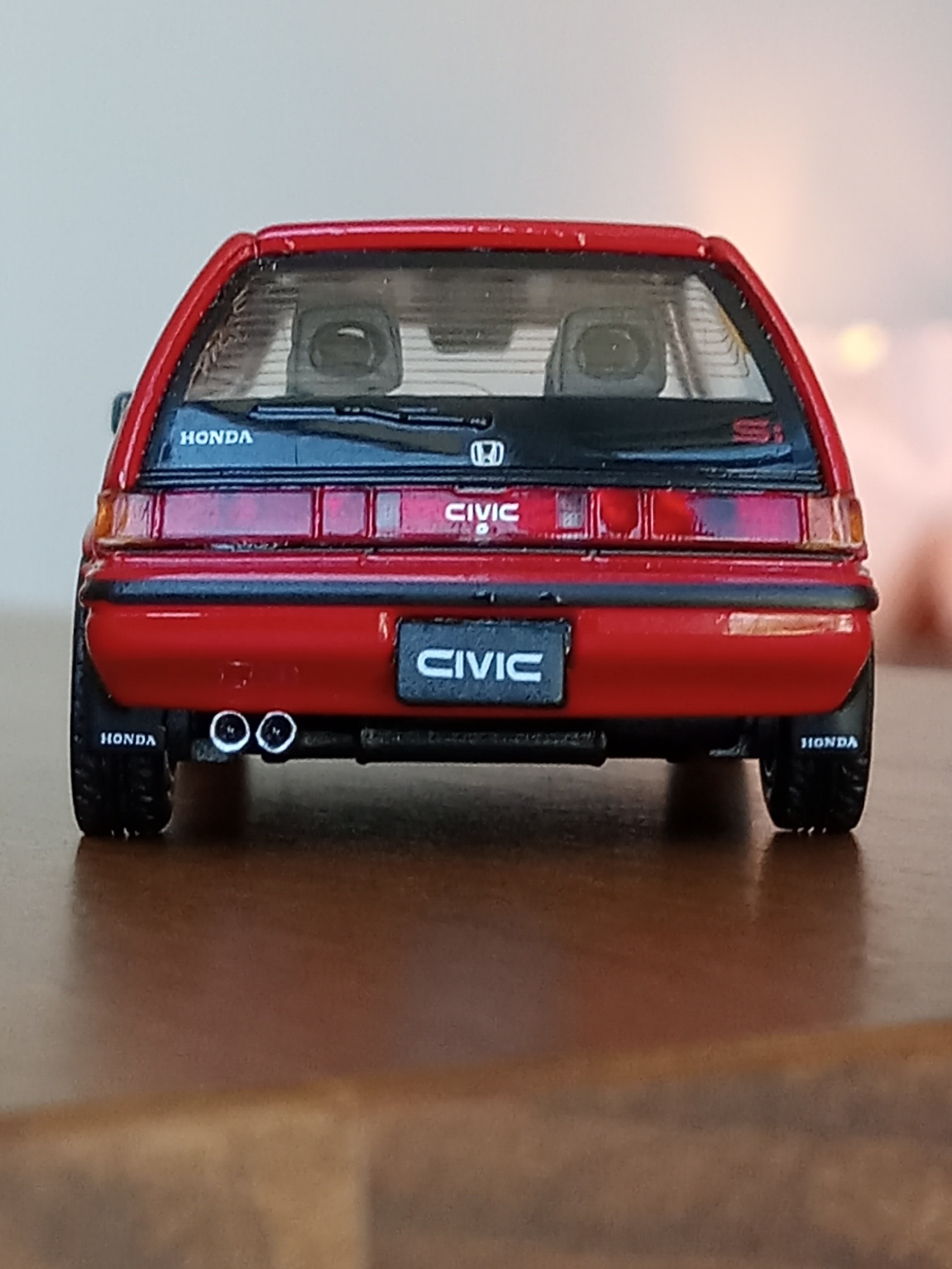
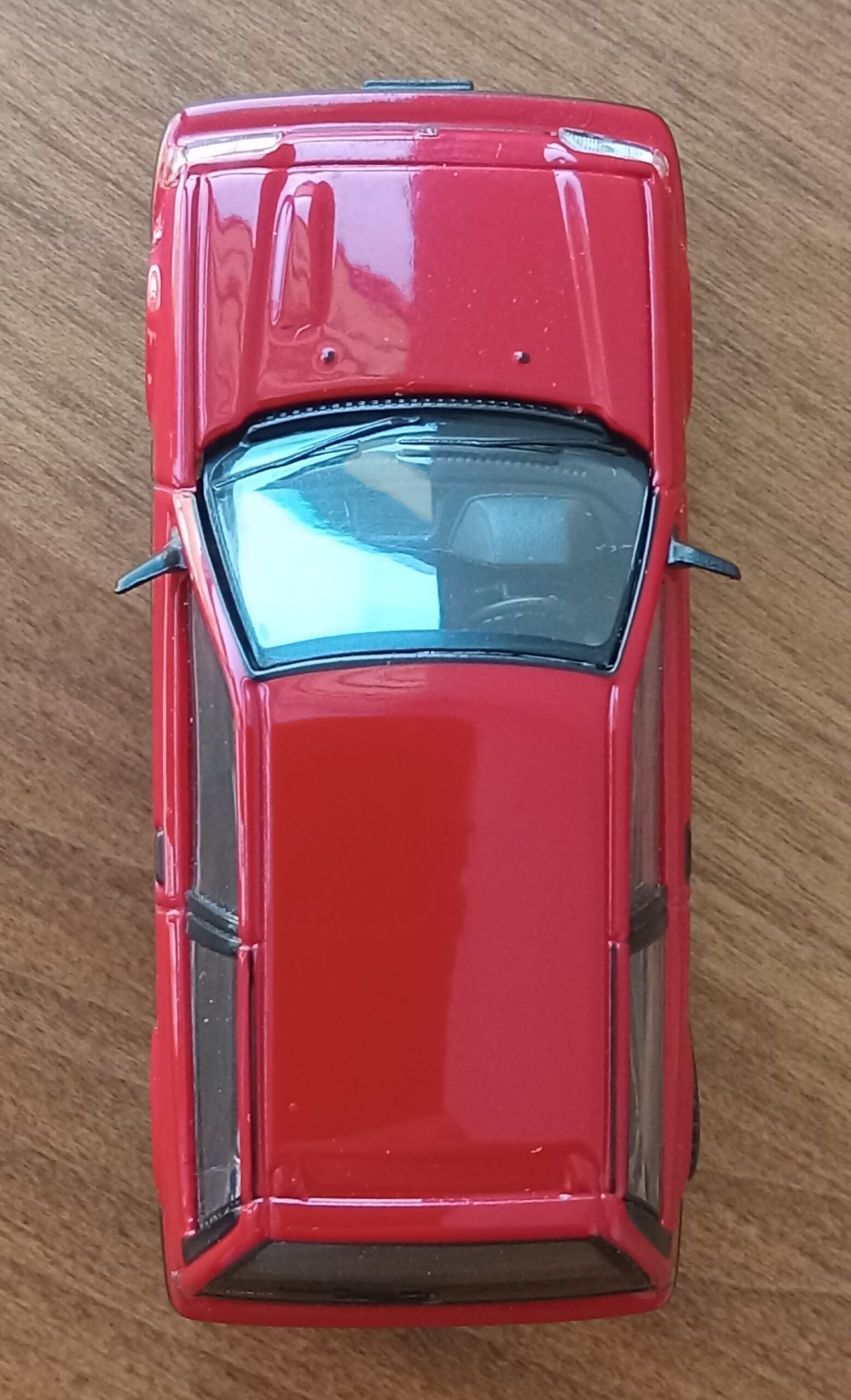
n
n
#主要諸元:
- エンジン型式:ZC型
- 総排気量:1,590 cc
- エンジン型式: 水冷直列4気筒横置 DOHC 16バルブ
- 燃料供給装置:電子燃料噴射式(ホンダPGM-FI)
- 最高出力 : 135 ps / 6,500 rpm(グロス値)
- 最大トルク:15.5 kg・m / 5,000 rpm(グロス値)
- 最高速度:193.10km/h (モーターマガジン誌等による実測値)
- 駆動方式:FF(フロントエンジン・前輪駆動)
- 定員:5名
- 車体形式:2ドア・ハッチバック
- ホイールベース:2,380 mm
- 全長:3,810 mm
- 全幅:1,630 mm
- 全高:1,340 mm
- 車両重量:
890 kg(5速MT) / 900 kg(3速AT)
*外観デザインの特徴:『弾丸3兄弟』のリーダーとは?
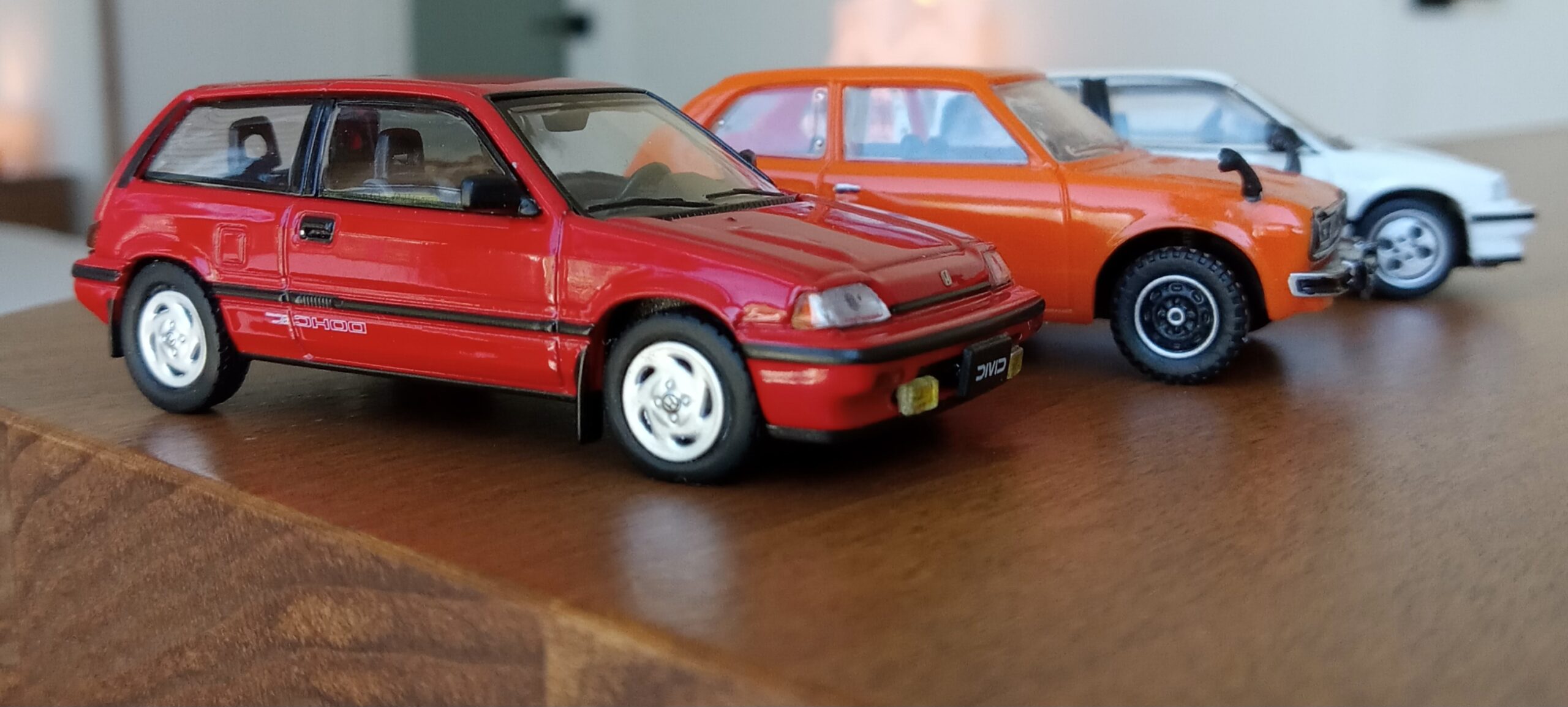
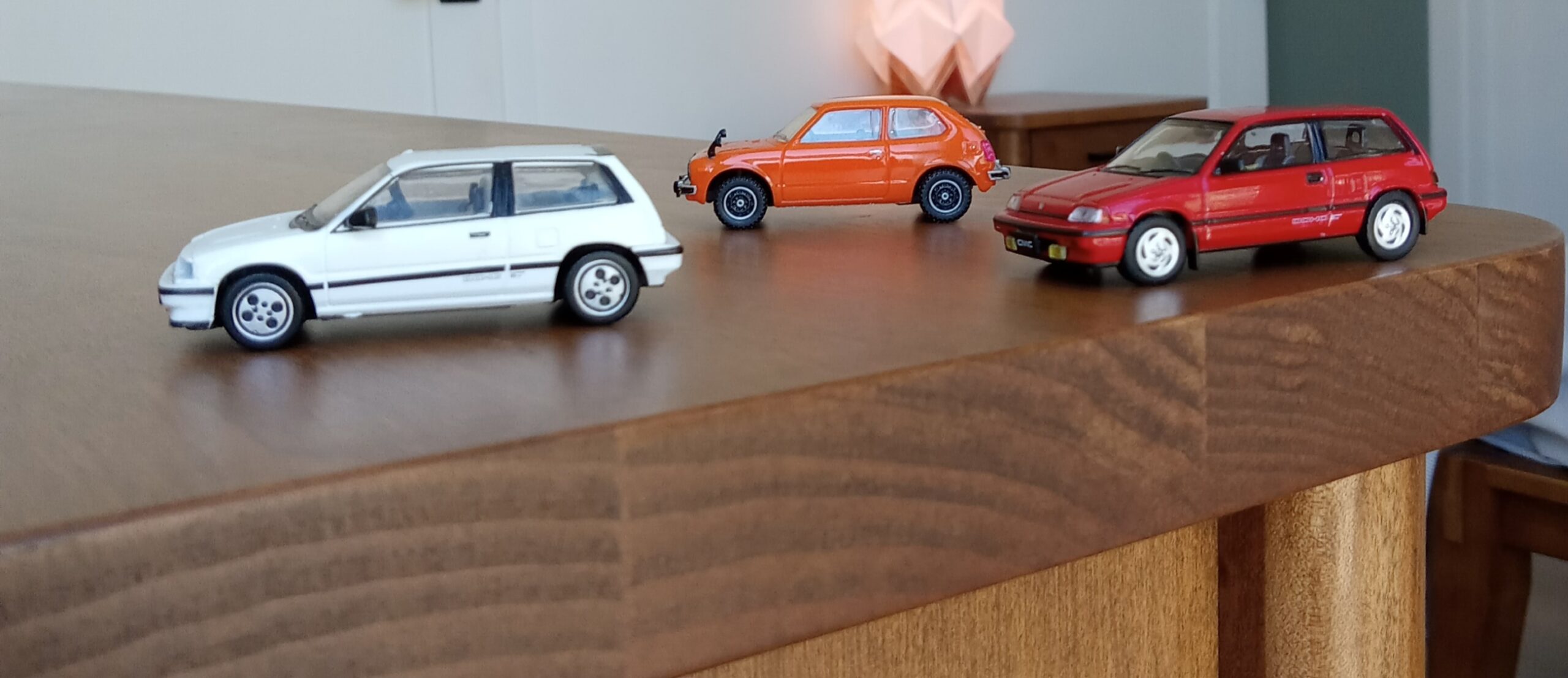
弾丸デザインの部分だけが、
強調されがちですが、
それ以外にも、
『ワンダーシビック・3ドア』
の外観デザインの特徴は、
多岐にわたっています。
独断と偏見に従って、
5つ挙げてみました。
n
1:低いボンネットから始まり、流れるようにわずかな弧を描くルーフラインが突然まっすぐ垂直に切った【コーダ・トロンカ】テールの時代を反映した潔さ・美しさーーー>今まで全く見たことがない処理にただ、ただ驚きました!
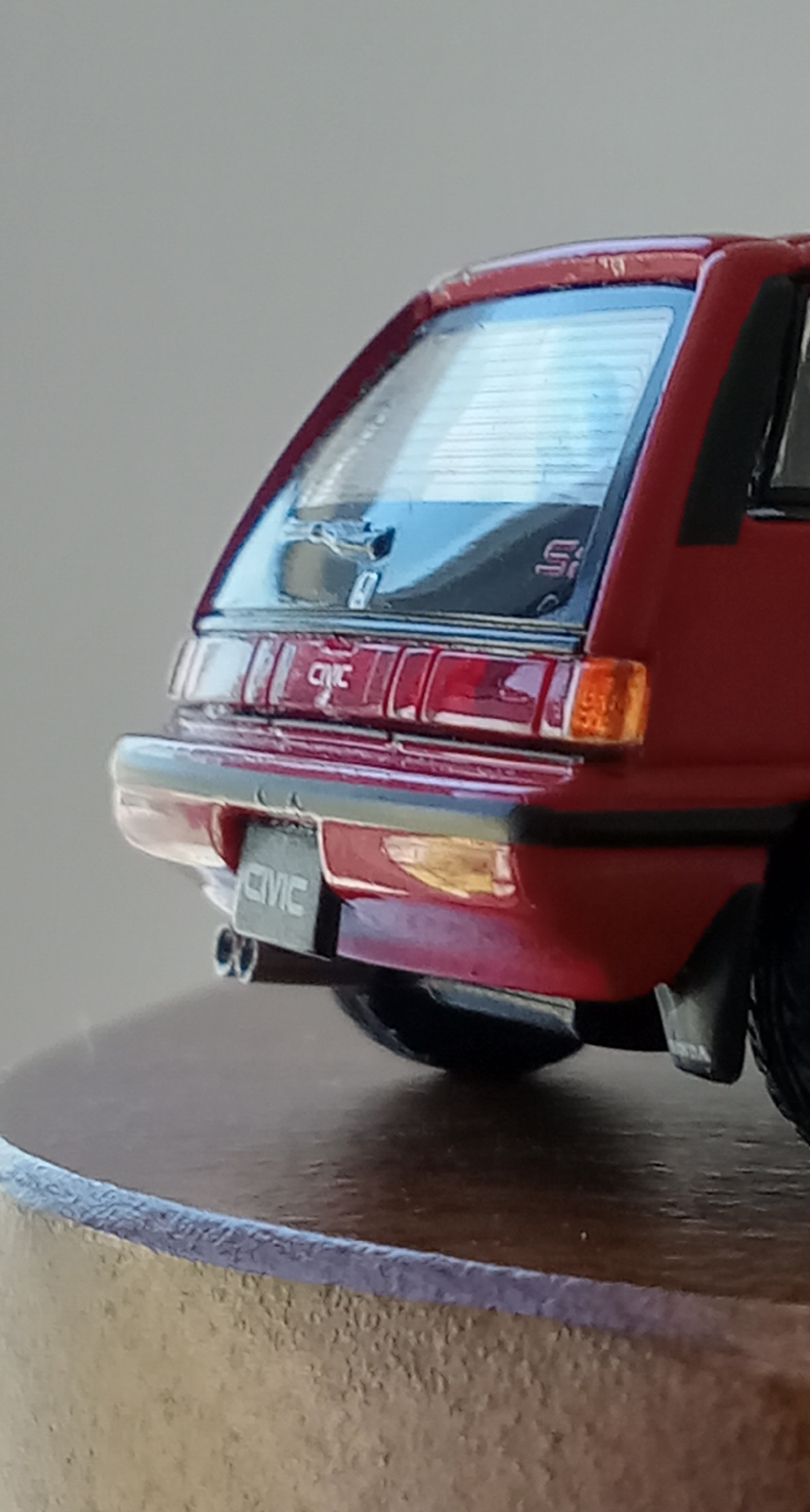
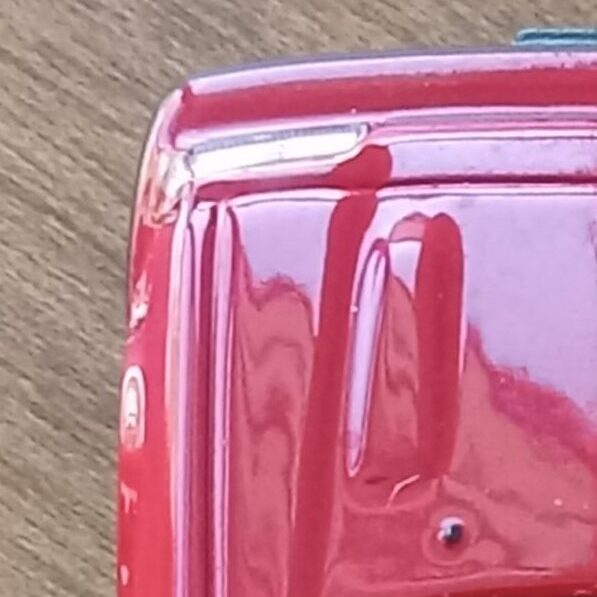
2:テールゲートの垂直面全体を一段癖ませたうえ、ガラス張りにした圧倒的な存在感ーーー>リアから見た時のグラフィック効果が『空前絶後レベル』で、絶大です!
3:この時代のホンダ車にトレードマークの、グラスエリアの最大化が産む、外観的な清々しさと、乗車時の内側からの『明るさ』の両立ーーー>シティーや、シビック・シャトルなどにも同じ特徴がありますが、どれもイメージが『カラッと!』明るいですね。
4:ボディー全体を横切る黒いラバー素材の帯が、外観の印象を引き締め、比較的高い全高を低くスポーティーに見せています。ーーー>CR-X等の様に『サッコプレート化』せずとも伸びやかさを演出できていますね。
5:Siに特有な、S800譲りのボンネットの片側バルジと、ドア下のセンスあふれるグラフィック効果
それでは、
それぞれ写真入りで見て行きましょう。
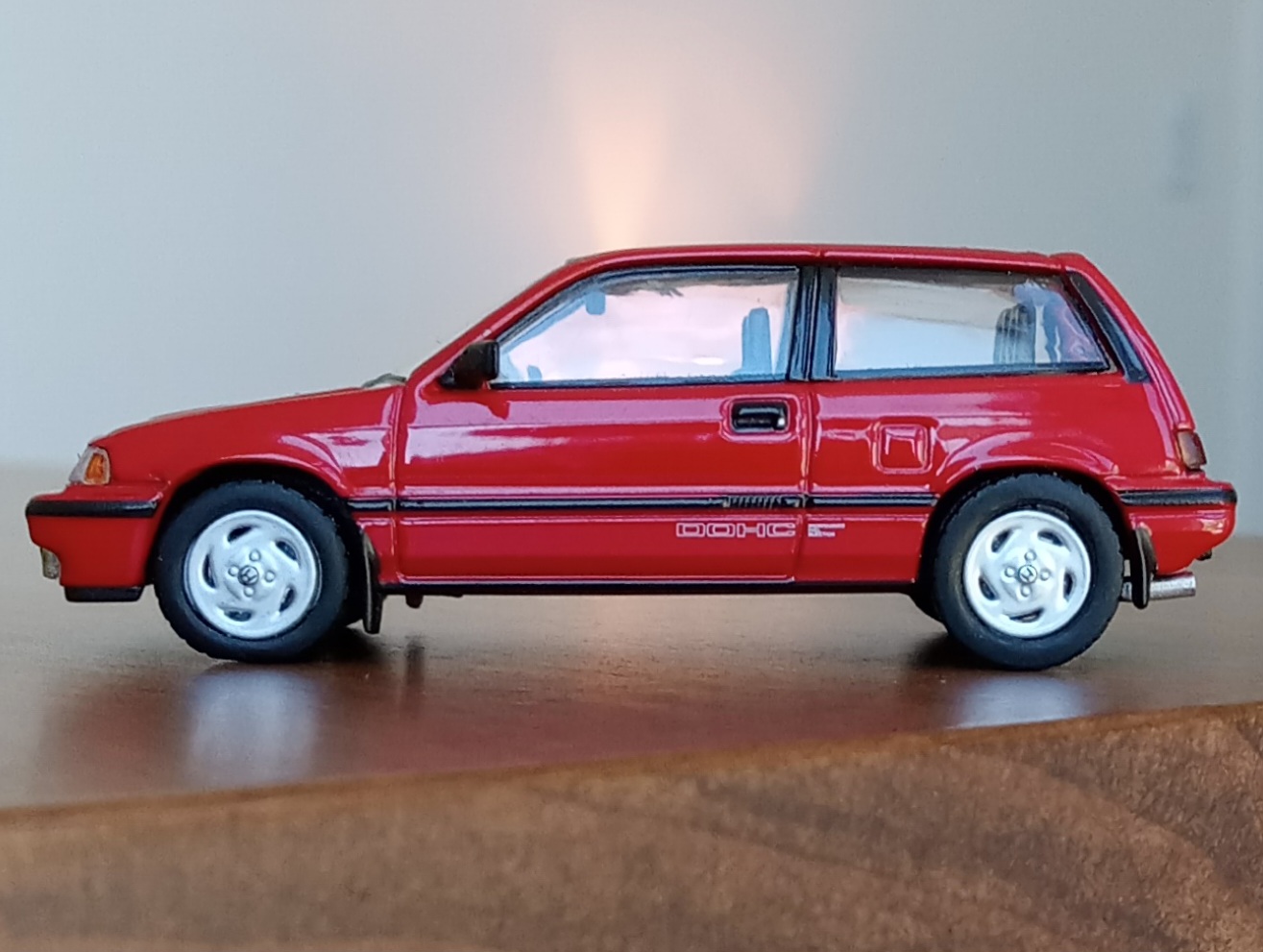
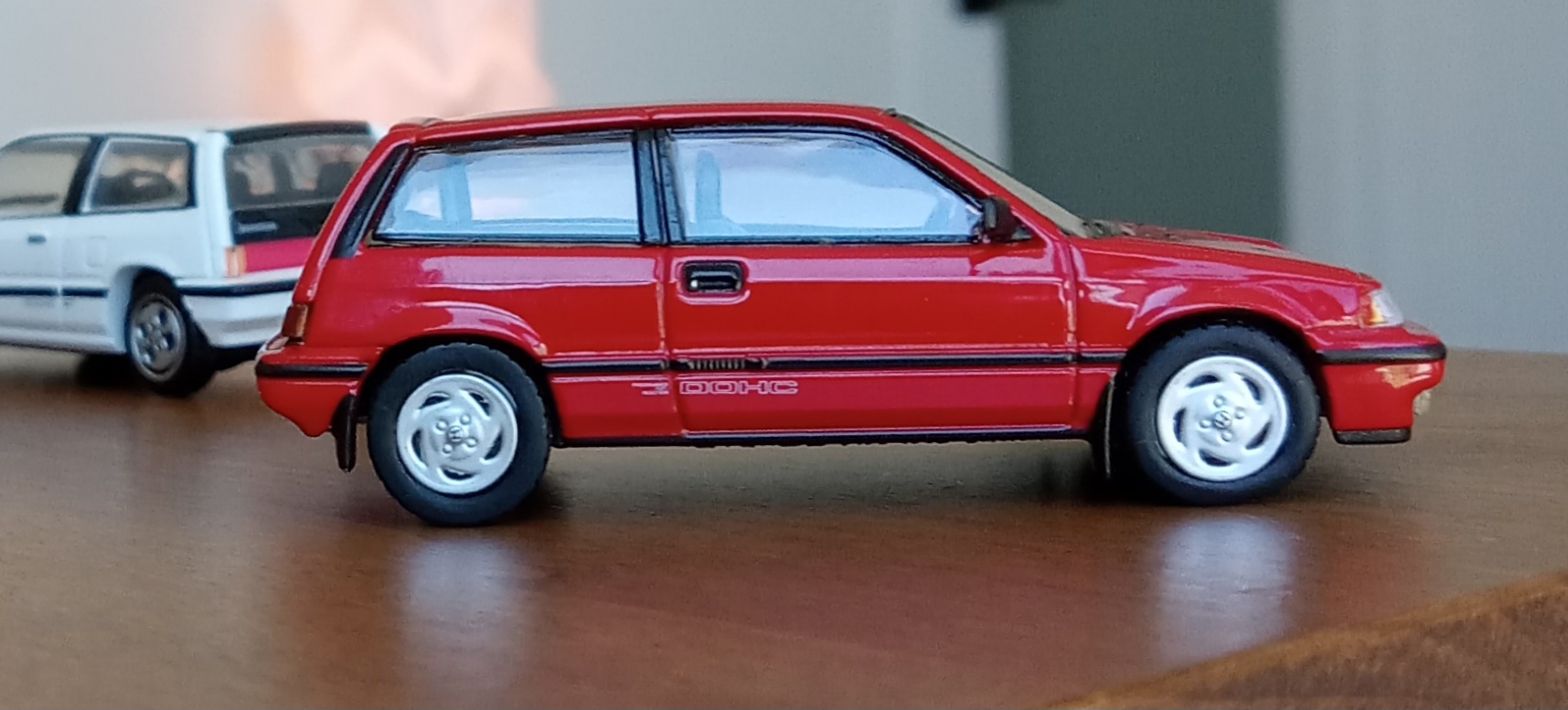
1:低いボンネットから始まり、流れるようにわずかな弧を描くルーフラインが突然まっすぐ垂直に切った【コーダ・トロンカ】テールの時代を反映した潔さ・美しさ
(ルーフラインの後端の『キック部分』が本当に大好きで、自分が乗っていた『CR-X』のものよりも顕著なのが、いつもうらやましかった記憶がまざまざと蘇ります!!)
ーーー>今まで全く見たことがない処理にただ、ただ驚きました!
2:テールゲートの垂直面全体を一段癖ませたうえ、一面ガラス張りにした圧倒的な存在感
(モダン建築の『全面ガラス張りの壁面』を連想させる大発明です、サイドガラスの下端よりさらに下げ、テールランプと面一にした部分は天才的です。友人の乗っていたシビックのテールゲート面を触りまくりました、、、、(笑)」
ーーー>リアから見た時のグラフィック効果が『空前絶後レベル』で、絶大です!
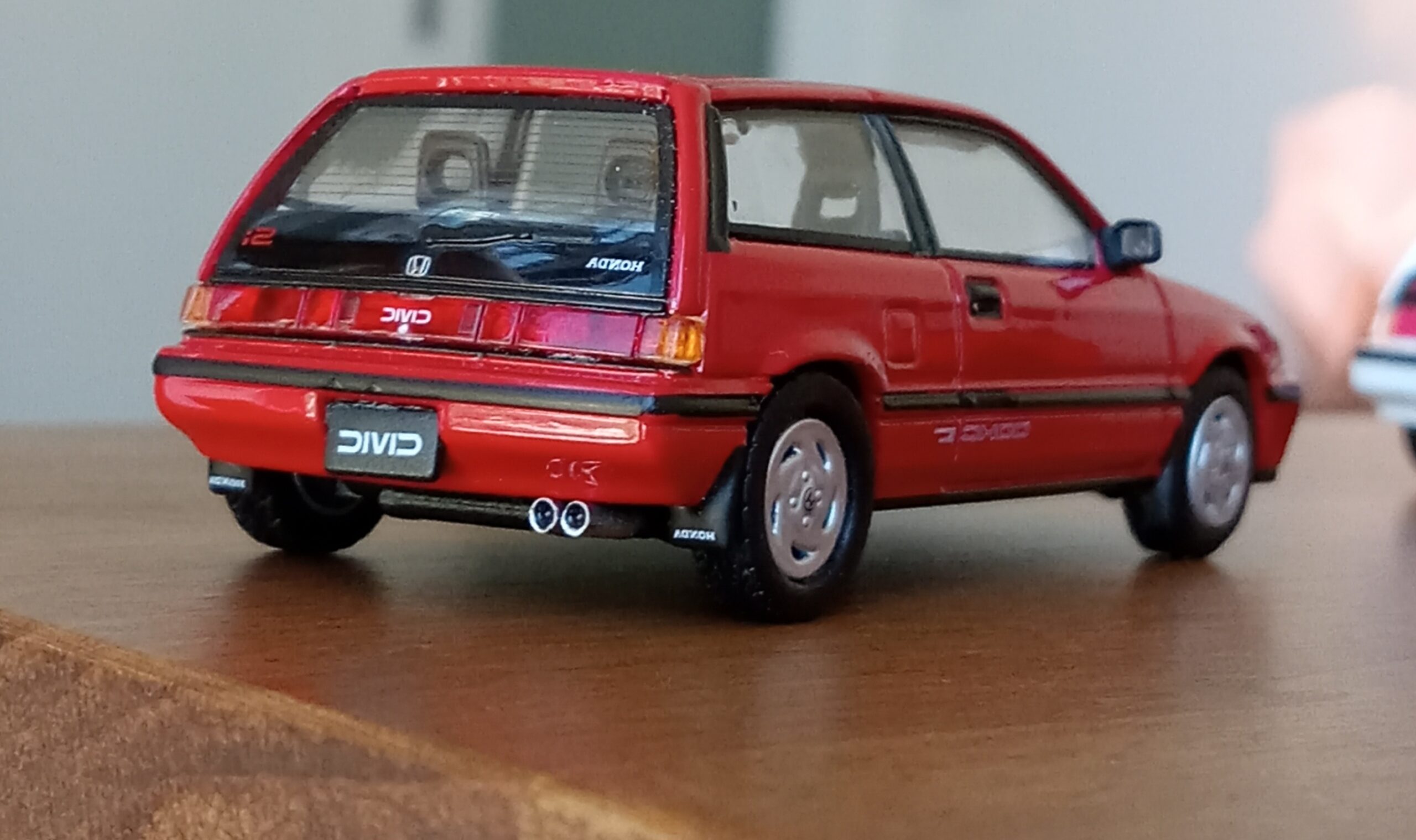
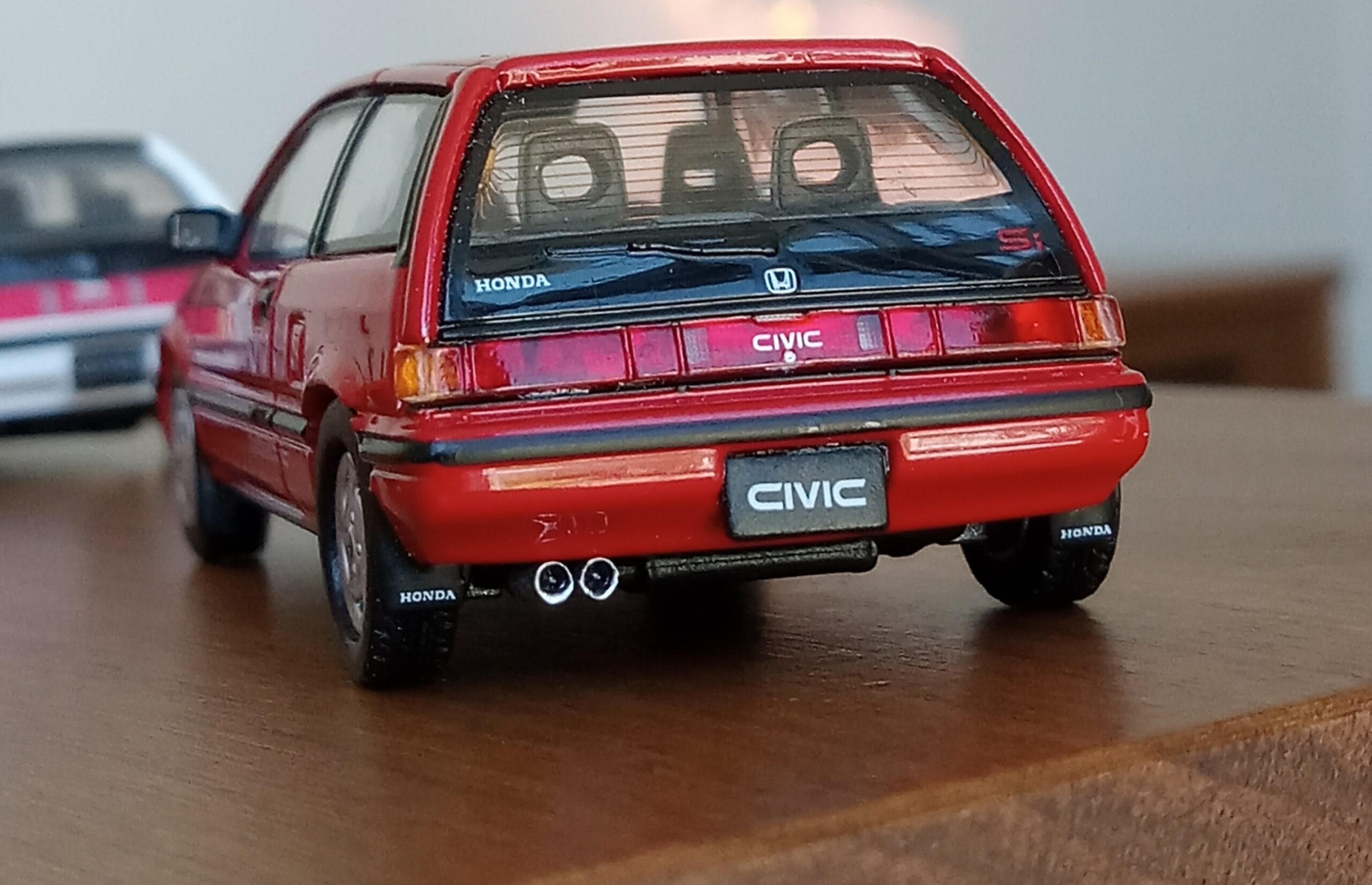
3:この時代のホンダ車にトレードマークの、グラスエリアの最大化が産む、外観的な清々しさと、乗車時の内側からの『明るさ』の両立
ーーー>シティーや、シビック・シャトルなどにも同じ特徴がありますが、どれもイメージが『カラッと!』明るいですね。
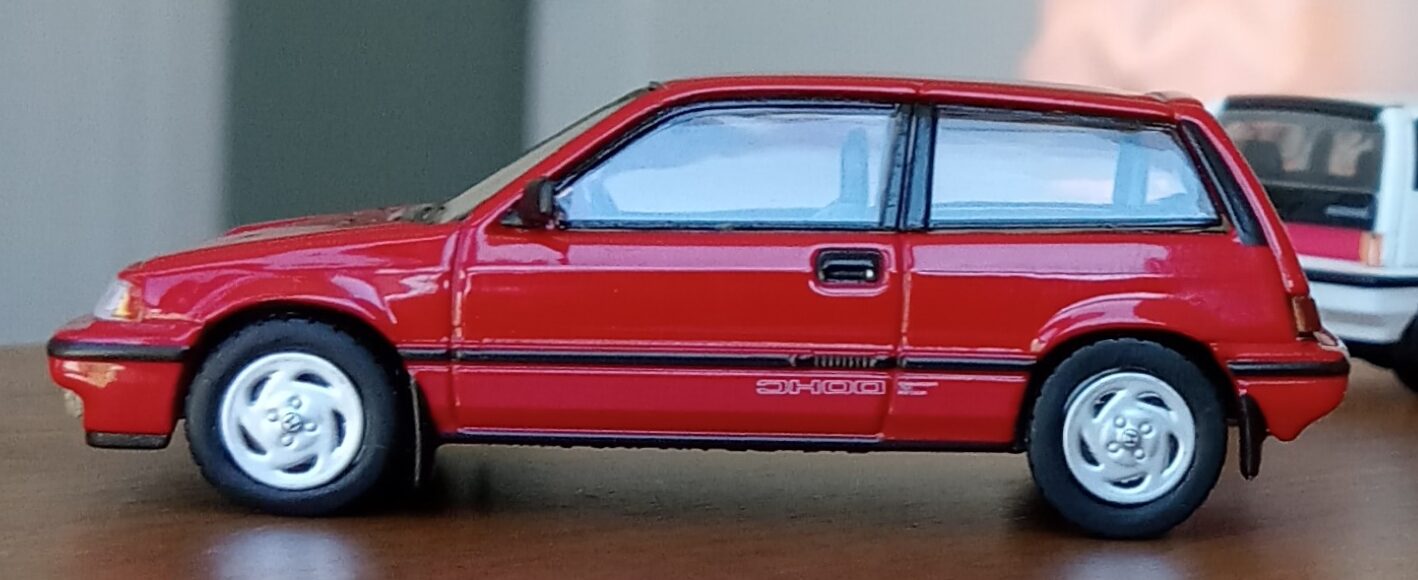
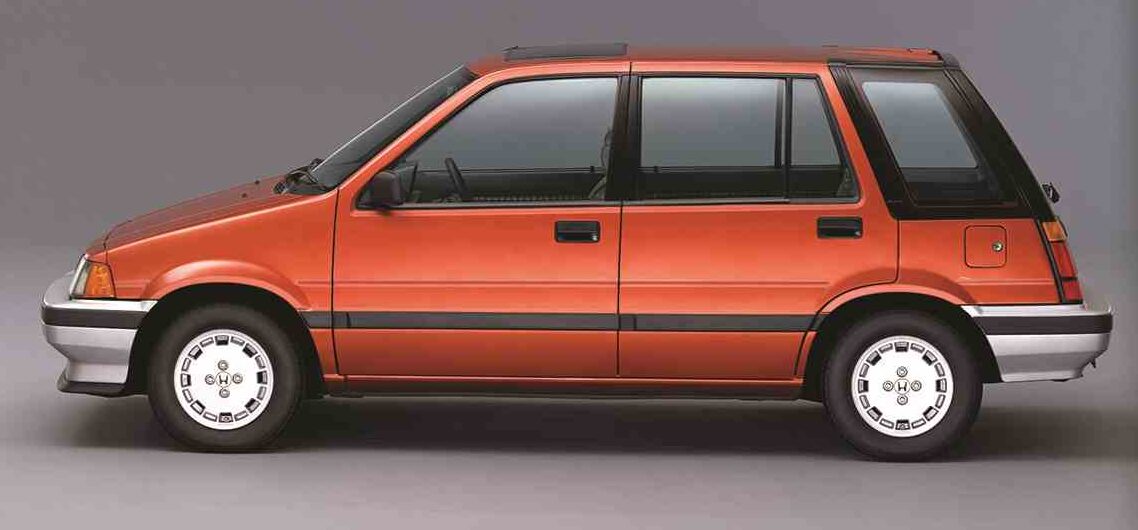
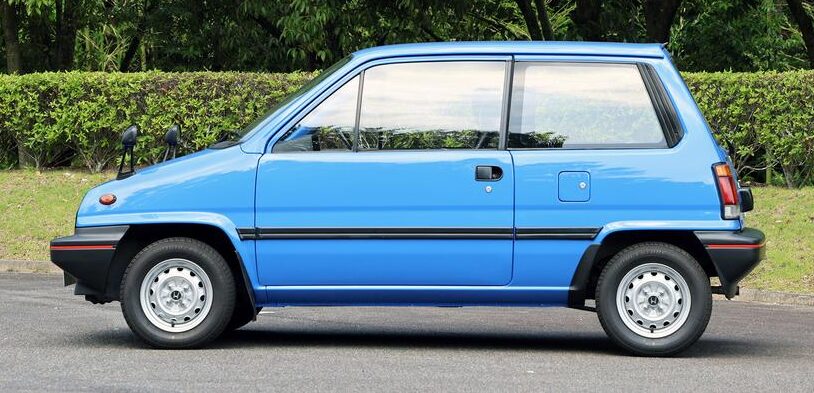
4:ボディー全体を横切る黒いラバー素材の帯が、外観の印象を引き締め、比較的高い全高を低くスポーティーに見せています。
ーーー>CR-X等の様に『サッコプレート化』せずとも伸びやかさを演出できていますね。
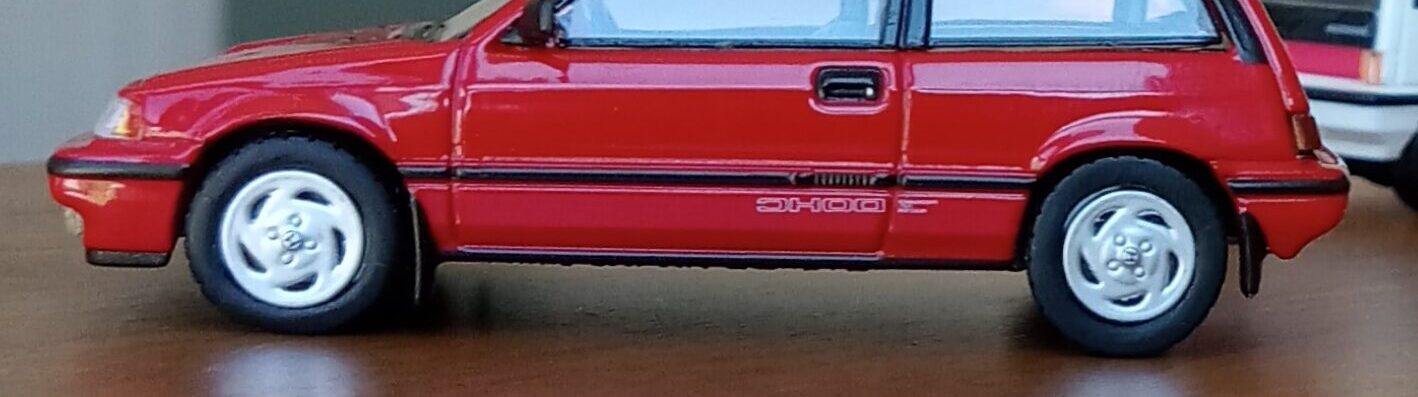
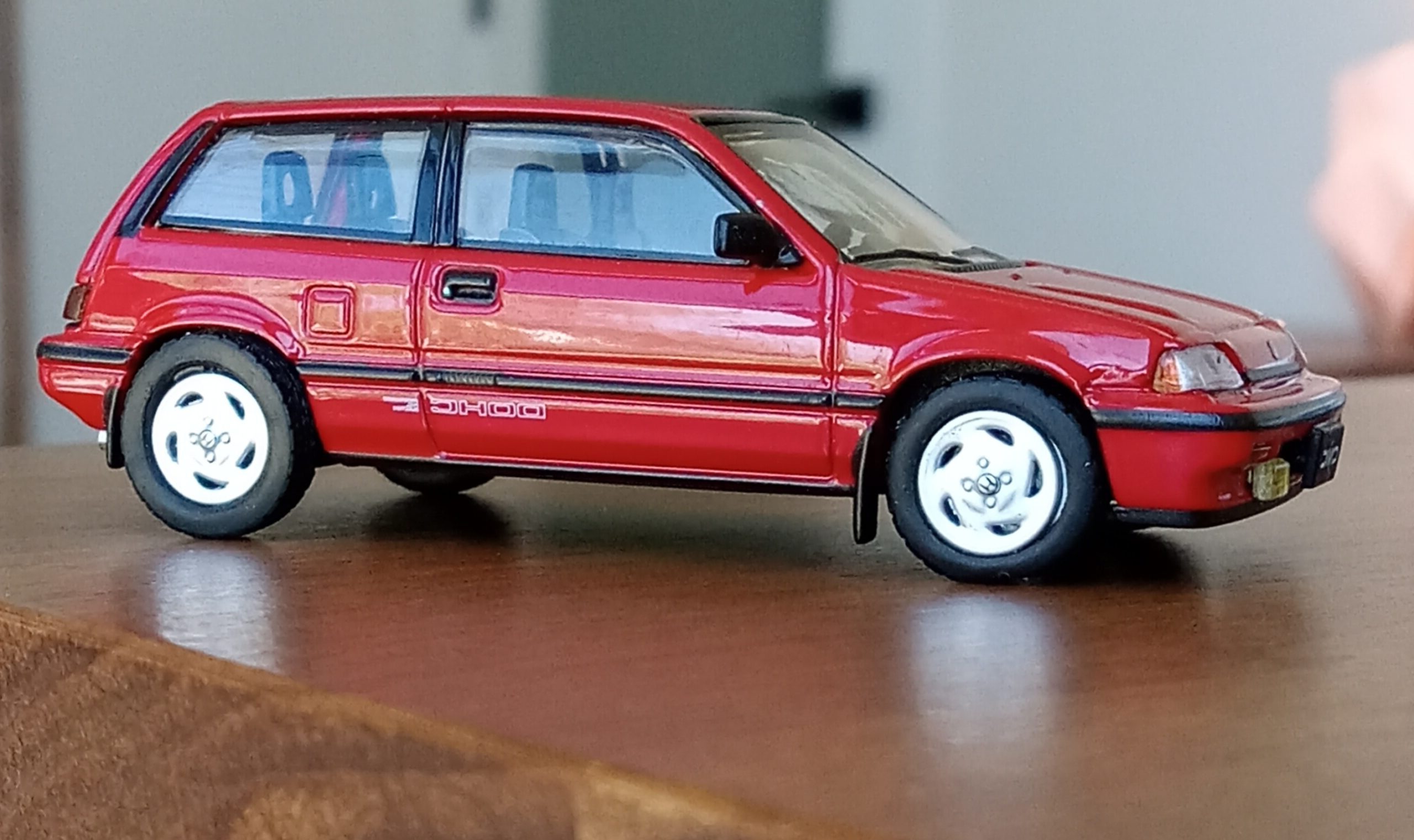
5:Siに特有な、S800譲りのボンネットの片側バルジと、ドア下のセンスあふれるグラフィック効果
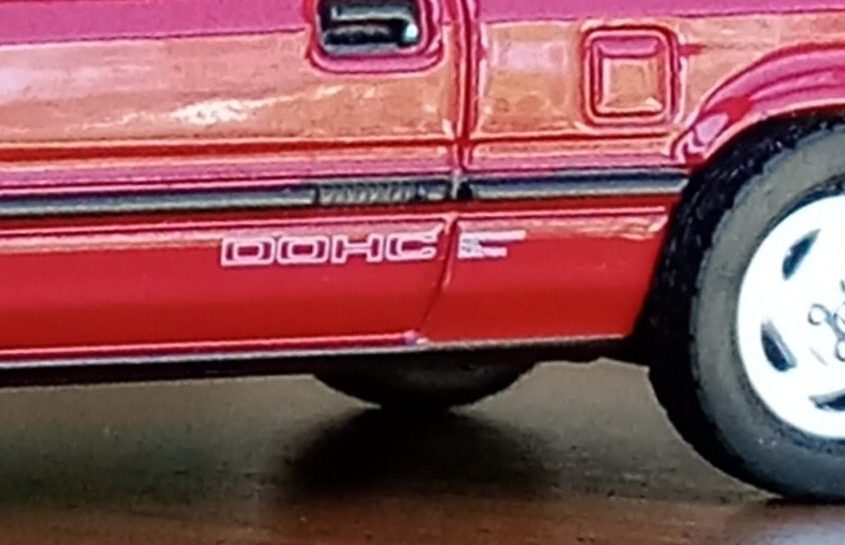
*『私』とワンダーシビック Si

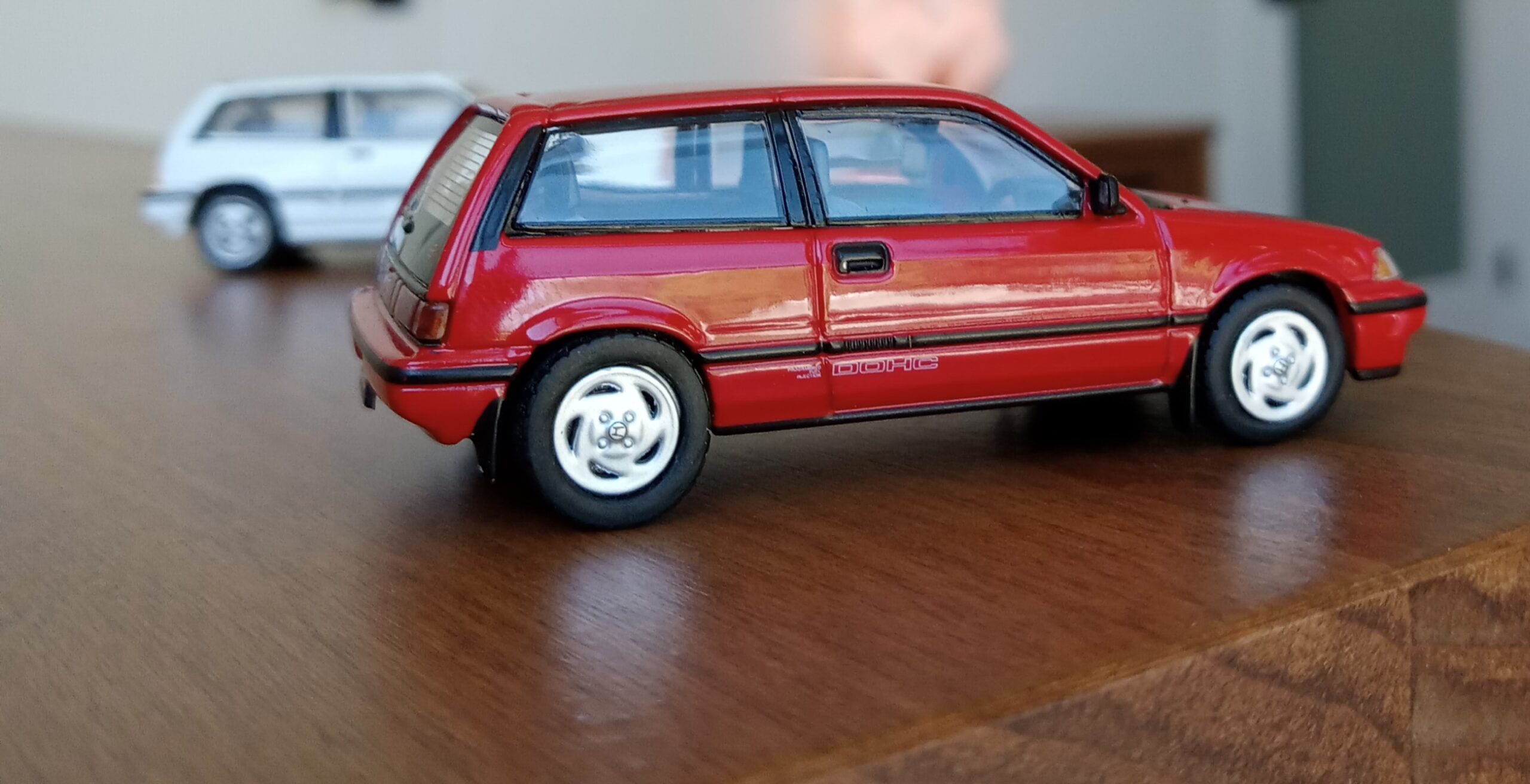
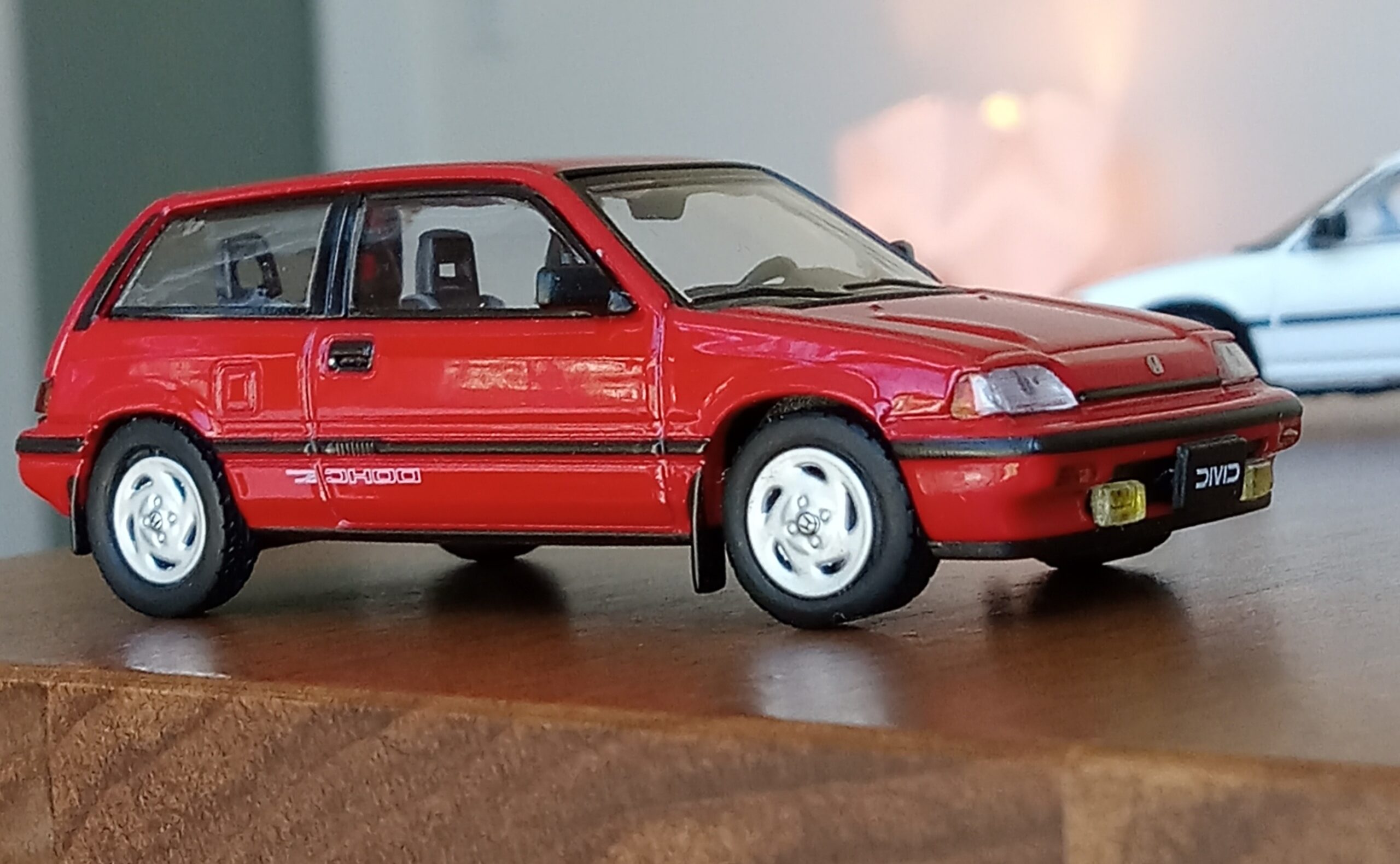
本当に不思議なんですが、
この世代のシビック・3ドアのアメリカでの見え方が、
日本と全く違って、ほとんど目立たず、
ただの日本の『白物家電のような扱い』だったことです。
*90年代初めこちら、LAで人気の外装色は、
*圧倒的に、当時ホンダ・グレードと呼ばれていた、
*シャンパンベージュ・メタリック【カラーコード:
YR-60M≒薄い黄土色】でした。
この色が曲者で、
こちらの気候になじみ過ぎて?
この外装色をまとったクルマの存在を弱体化してしまい、
半分近くがこの色をまとっていた
ワンダーシビックのリアハッチの印象も
ほとんどありません。泣き
理由を考えますと、
淡く、鮮度の低い、地味な周りに溶け込むボディーカラーと、
はっきりしたリアゲート周りのグラフィックが、
あまりにもミスマッチで、
印象に残らなかったんじゃないでしょうか?
アメリカでの見え方はともかく、
私の個人的な立体経験はこんな感じでした、、、
#立体模型:
*タミヤ模型製、 1/24 スポーツカーシリーズ No.51「ホンダ シビック 3ドア 25i」
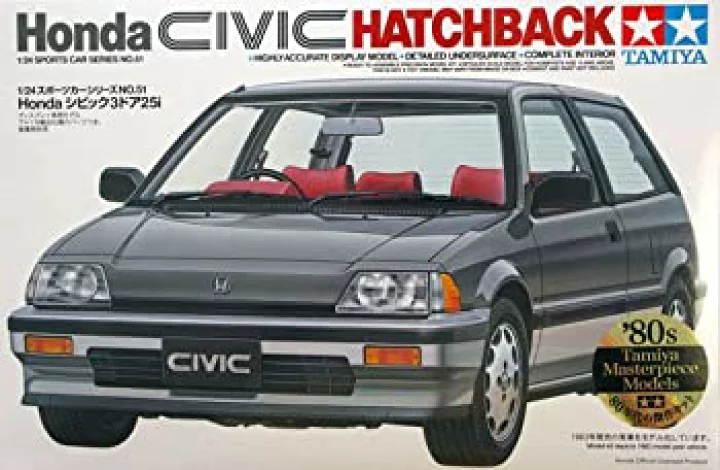
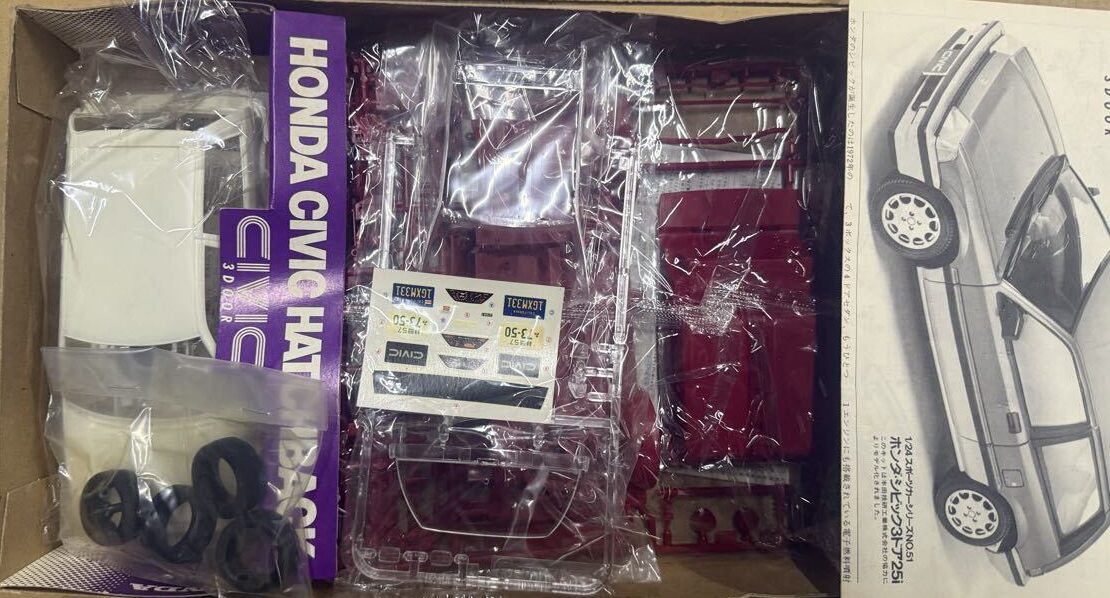
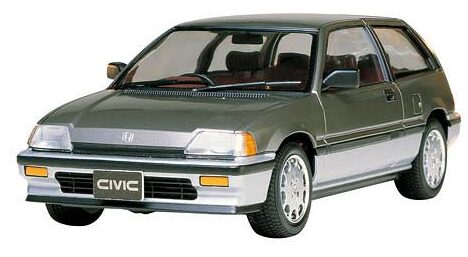 (CR-Xも出ていましたが、どちらもバスタブ式内装、エンジン・レスのプロポーションキットでしたが、造形の印象は良く、
ーーー>カチッとした田宮らしいキットでした。)
*京商製、1/64ダイキャスト完成品、シビック・3ドアSi(各色)
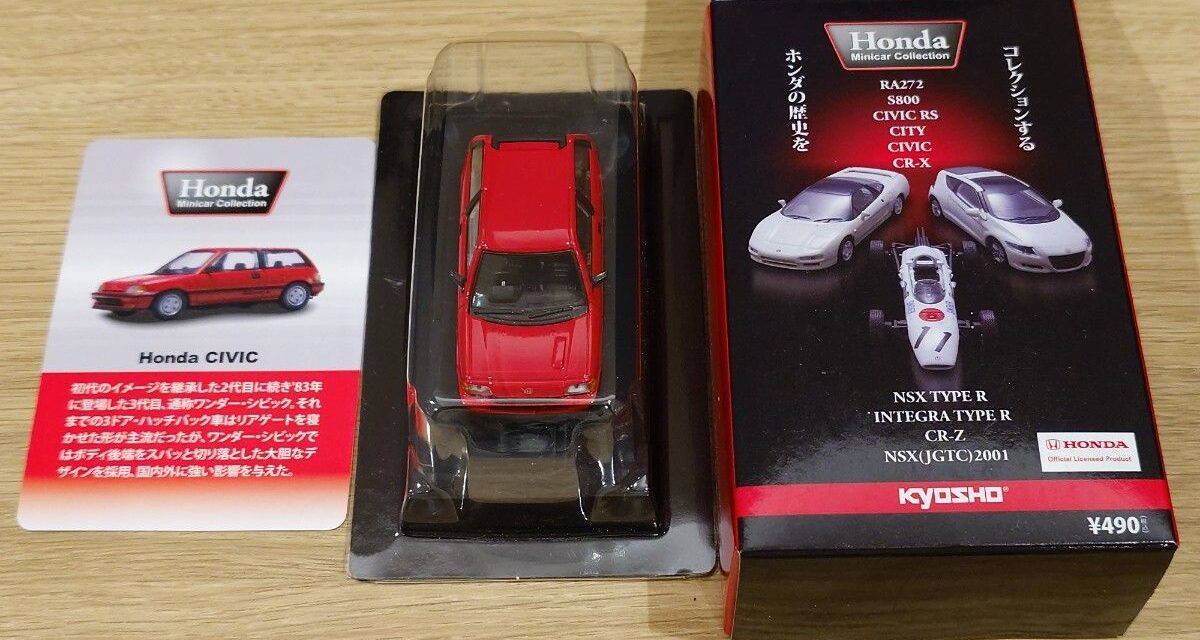
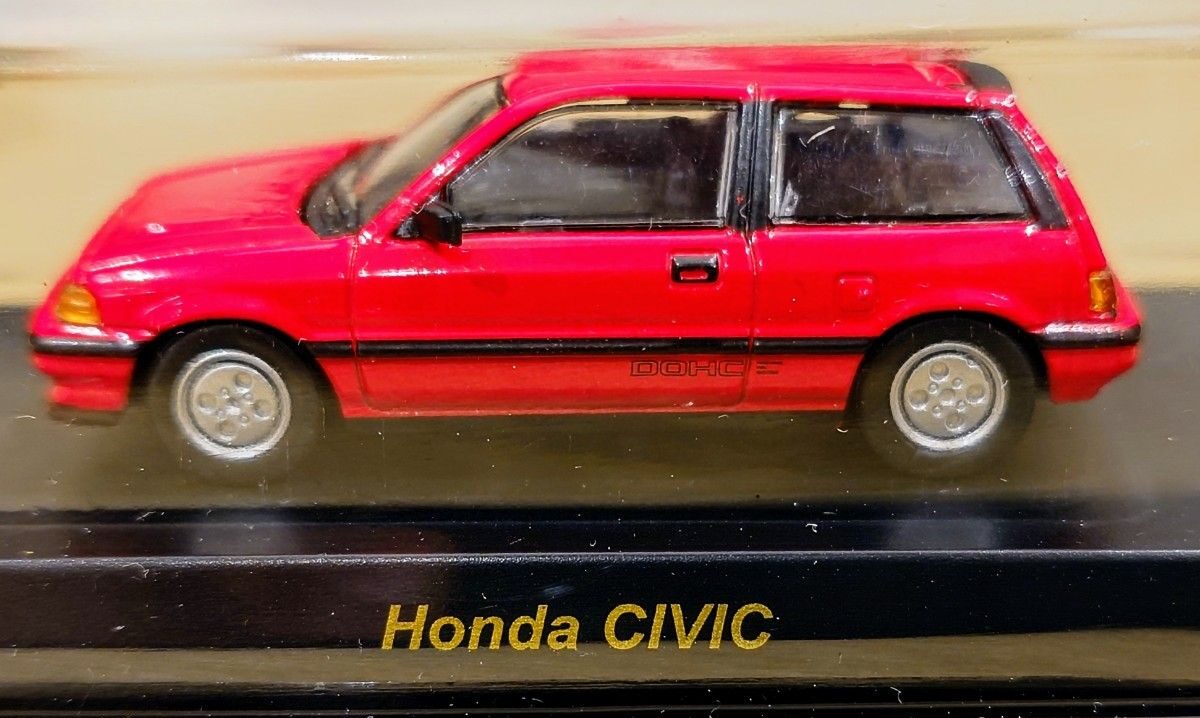
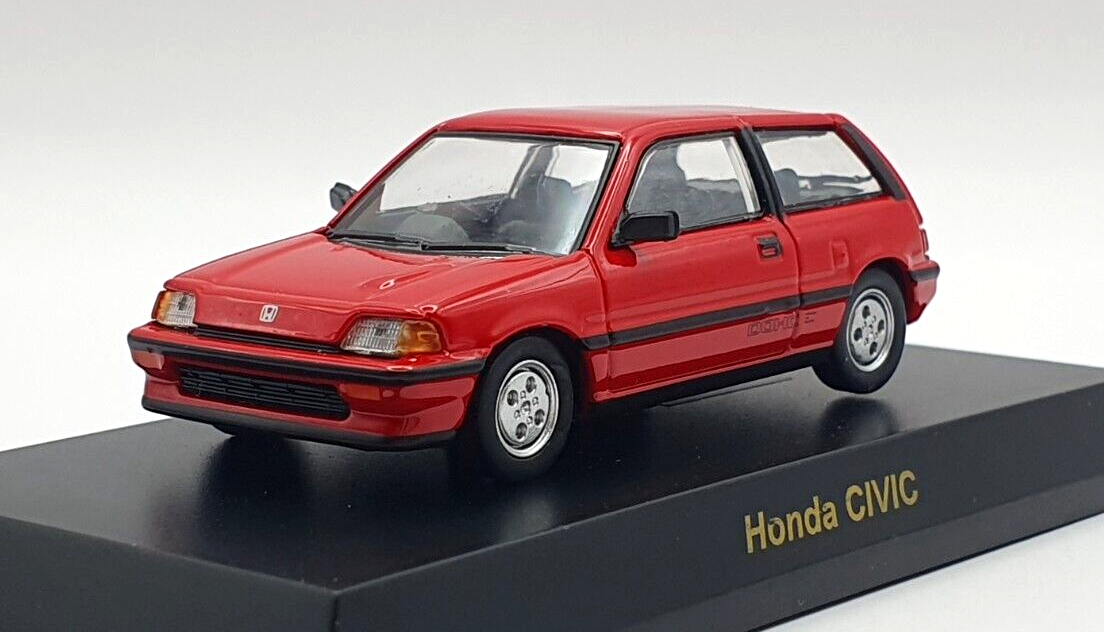 (一番肝心な『緩やかに波打ったルーフラmイン』にとらえ方がイマイチで、屋根がひん曲がったような印象です。
ーーー>そんな繊細なカーブを描くルーフラインを作り上げたホンダデザイン陣に敬意の念が沸き上がります!!)
*コナミ製、1/64ダイキャスト完成品、4代目シビック・3ドアSi
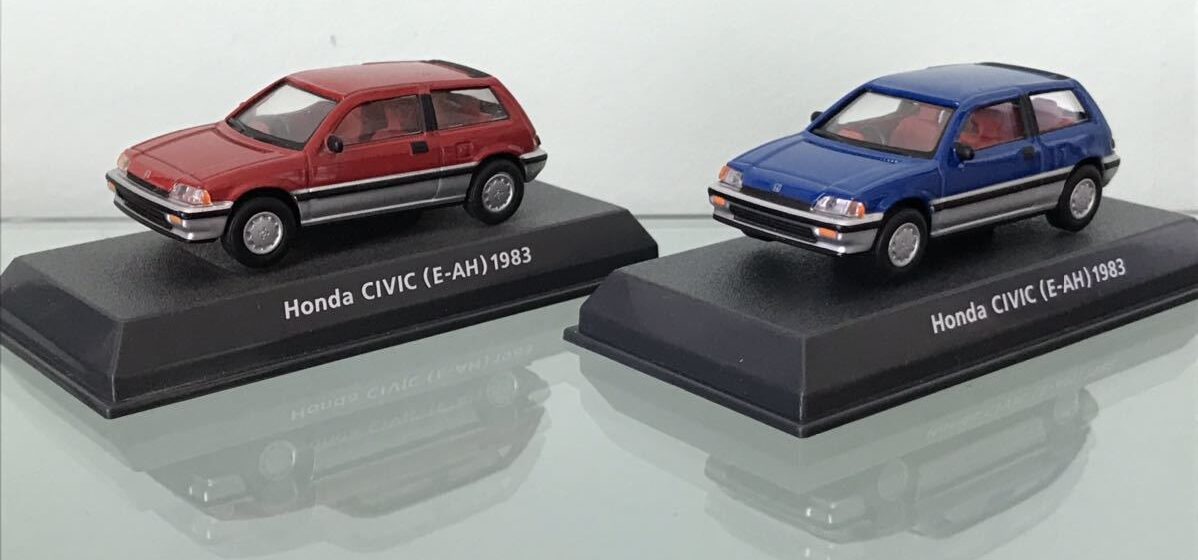
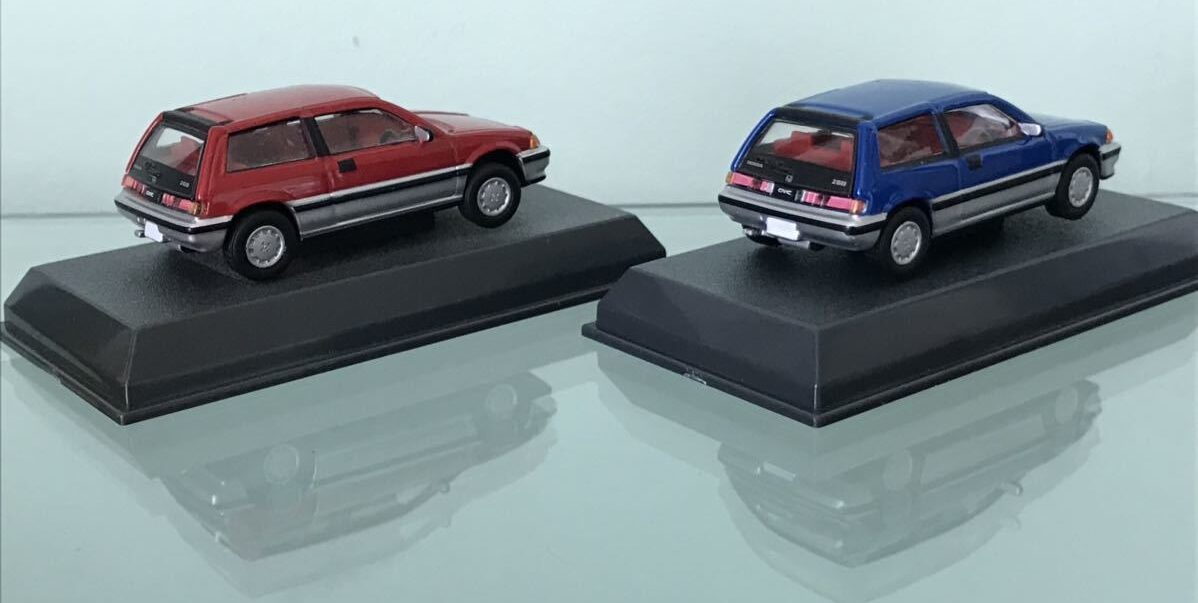 (こちら存在は知ってましたが、実物は見件です、写真からは、京商とホビージャパンの中間的な『こなれた』とらえ方っぽいですが、、、
--→2トンの塗装が素敵です。)
*スタジオソータ社製:カプセルトイ、 1/64プラスチック完成品、「ホンダ シビック Si」
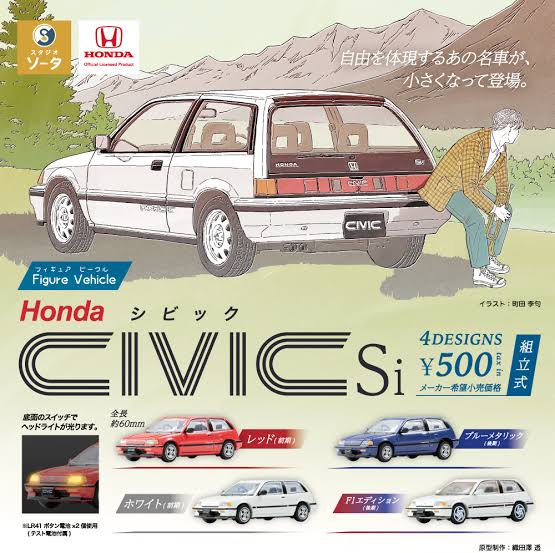
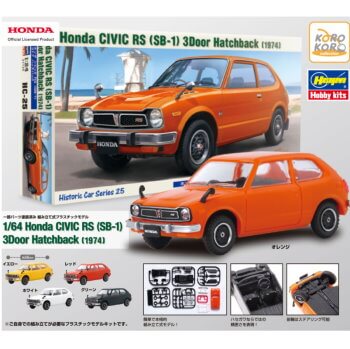 (外見の造形デッサンが優れていて、先行の京商製のダイキャストのものに比べて格段に本物っぽいです。全色そろえました。
ーーーー>そのうえ、ヘッドライトが点灯可能です!)
(世代は違いますけど、こちらのハセガワ製のガチャ・キットも優秀です!)
*ホビージャパン社製、1/64ダイキャスト完成品、ホンダ・シビック3ドア(各色)
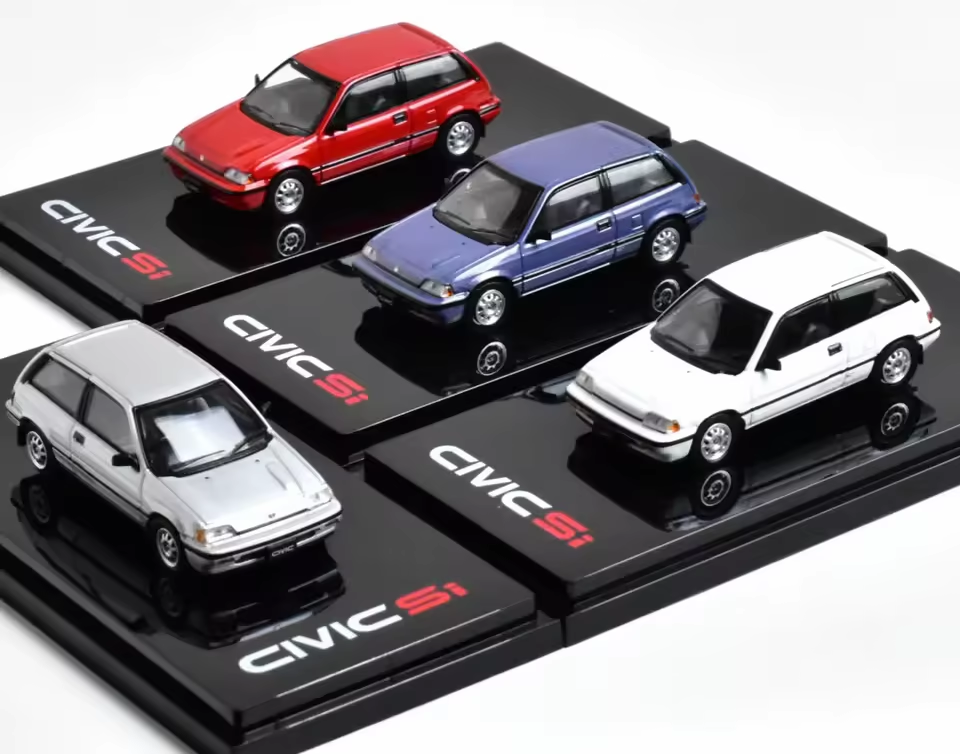
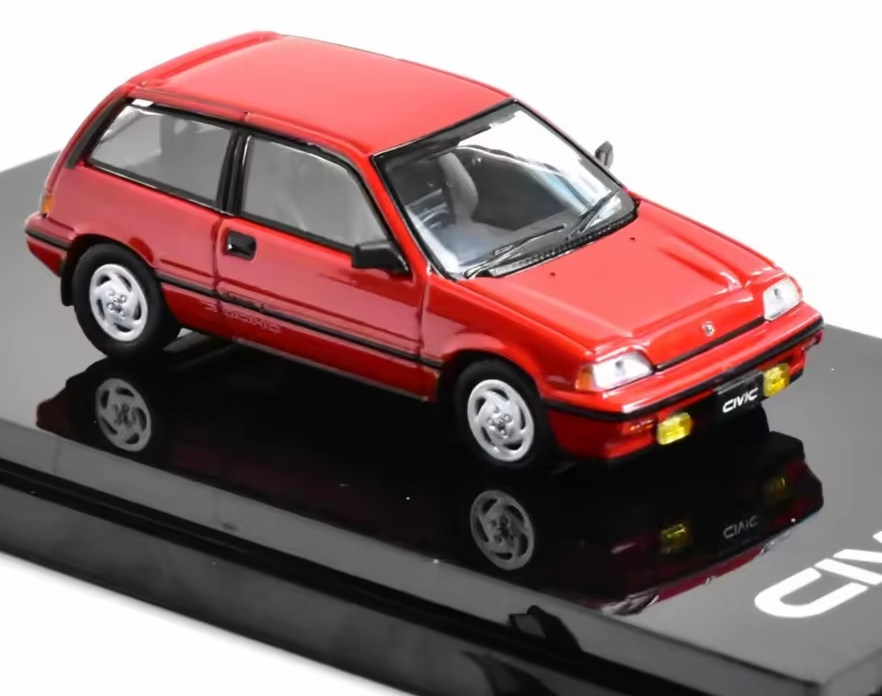 (造形ヨシ、塗装ヨシ、組付け精度ヨシの3拍子揃った決定版商品
--→このシリーズで商品が出れば、決定版です。)
今後と、ももっと
ミニカーが出てほしい題材です!!
*三題噺:弾丸デザイン・宗一郎魂・ルイアームストロング
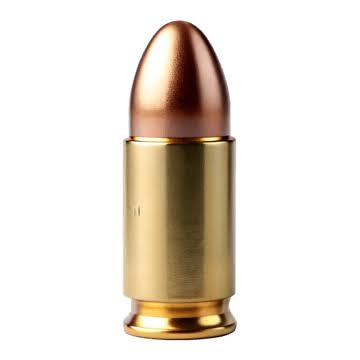
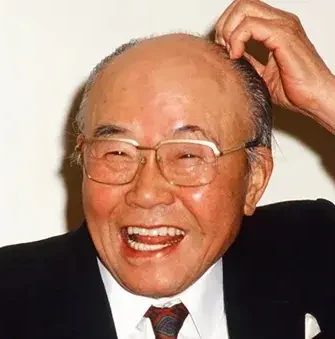

今回は少し突拍子もないコンビネーションですが、
頑張っていってみます!
#お題:
*弾丸デザイン
*宗一郎魂
*ルイアームストロング
#通底するテーマ:『日本らしきイノベーション』
プロンプト:
4代目ワンダーシビック・3ドアの機構、外観デザインに付いての詳しい解説を実際のデザイナー目線で、2075年に本田宗一郎の好奇心旺盛の新しもの好きな子孫とそ量子AI技術者との間の会話形式の(三題噺の)落語形式で、滑稽且つ知的に制作してください。通底テーマを下げで回収しながら、考え落ち+おやじギャグで落としてください。#お題: *弾丸デザイン *宗一郎魂 *ルイアームストロング #通底するテーマ:『日本らしきイノベーション』
【サイバー・ネオ落語風(イチオシ)】
『未来創世量子噺:百年の火花を継ぐ弾丸(ワンダー)〜サッチモの喇叭と宗一郎の遺伝子(ハイパー・スピリット)〜』『どうも、一席おつきあいのほどを願っておきますがアー。
時に時は西暦2075年、ところはネオ・トウキョウの空中庭園。本田宗一郎のDNAを色濃く継ぎ、最新の反重力モビリティをいじくり回している新しもの好きな玄孫(まごまご)の「創(はじめ)」と、その相棒である超高性能「量子AI技術者(通称:Q)」の、時空を超えたおかしな会話から一席、お付き合いを願います。
n
n
n
n
n
n
親父ギャグ、、、いいですねーー
お後がよろしいようで、、、
 n
n
n
n
n
n
*その他の『弾丸ボーイ』たち、、、
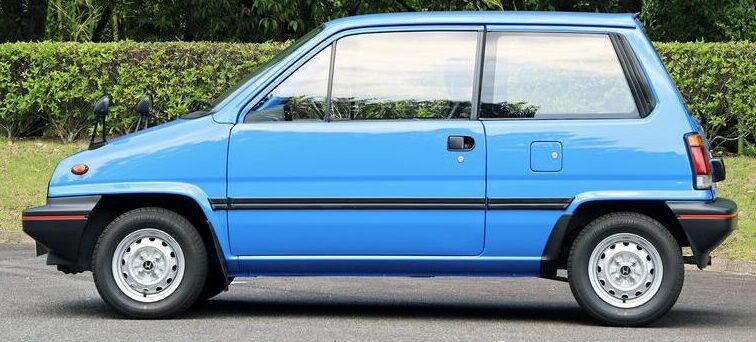
80年台のホンダ車、
本当に
『弾丸ファミリー』と
呼んだ方がいいぐらいに、
リアデッキが、
「断ち切られて」いましたね!
世界にはまだまだ
いろいろありますよ!
*フォード、GT40、1965(ライトブルー)
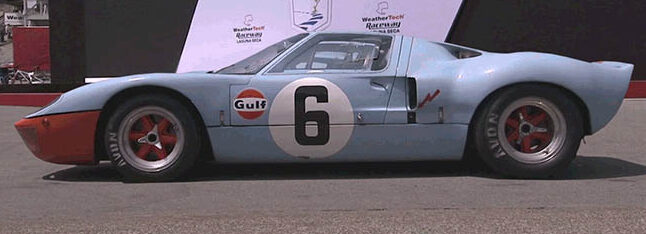
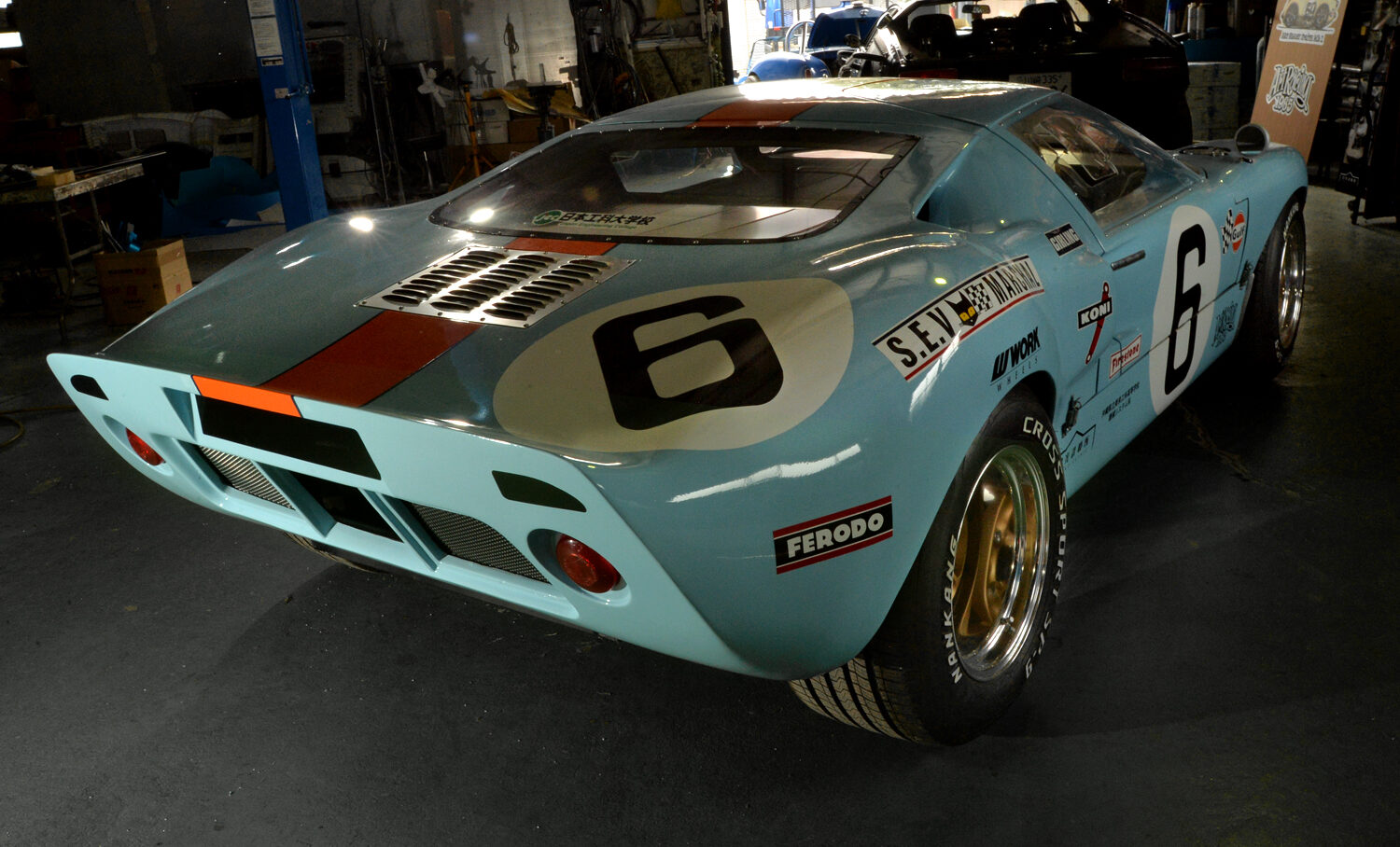 (妥当フェラーリの号令の下、アメリカレース界が一丸となり、初めてルマン優勝を果たしました。
ーーー>当時のあらゆるアイシンテクノロジーが使われ、『コード・トロンカ』テールはその一つです。)
*トヨタ 4500GT コンセプト・カー、1989(初公開:フランクフルト・ショー)
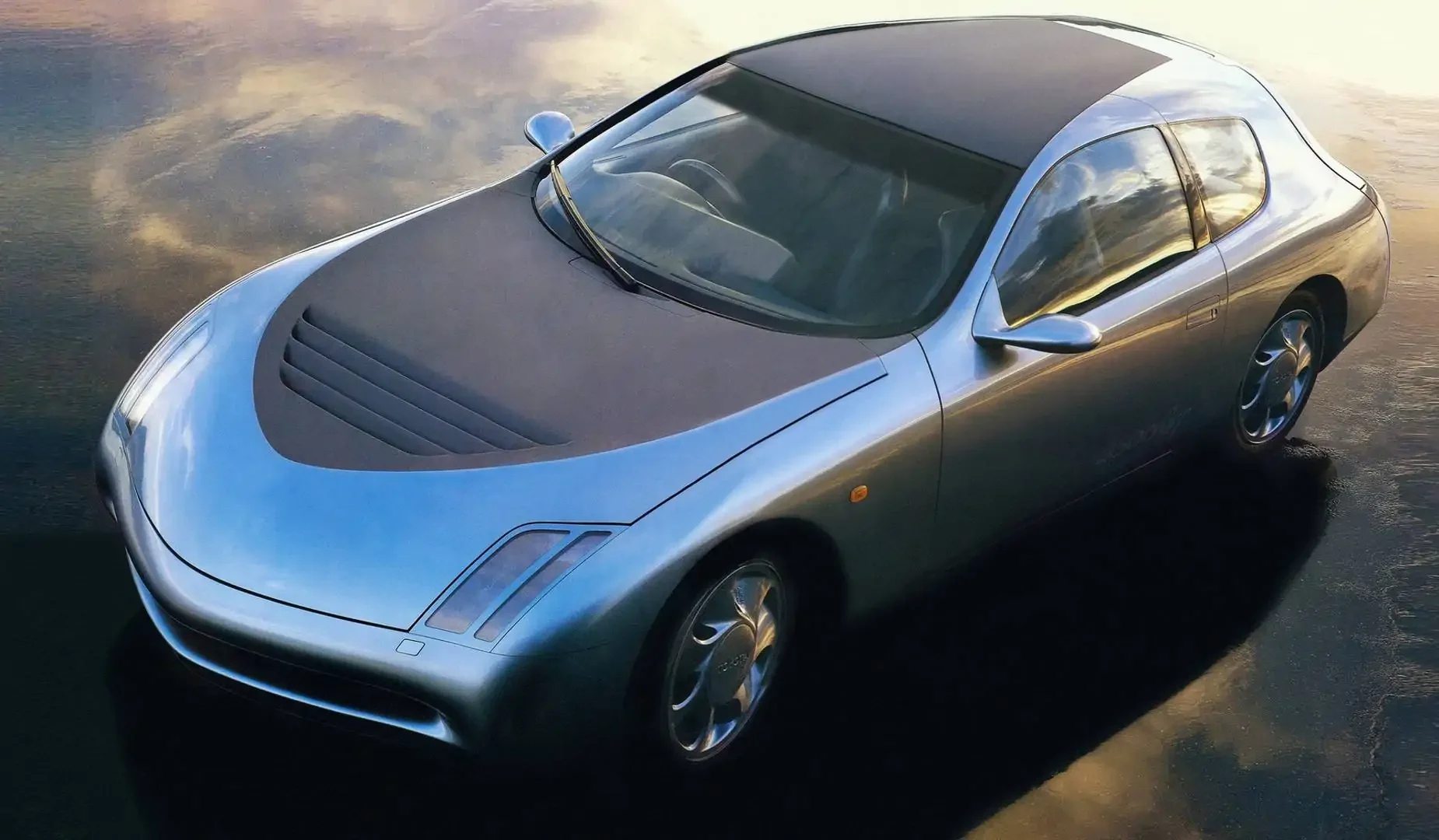
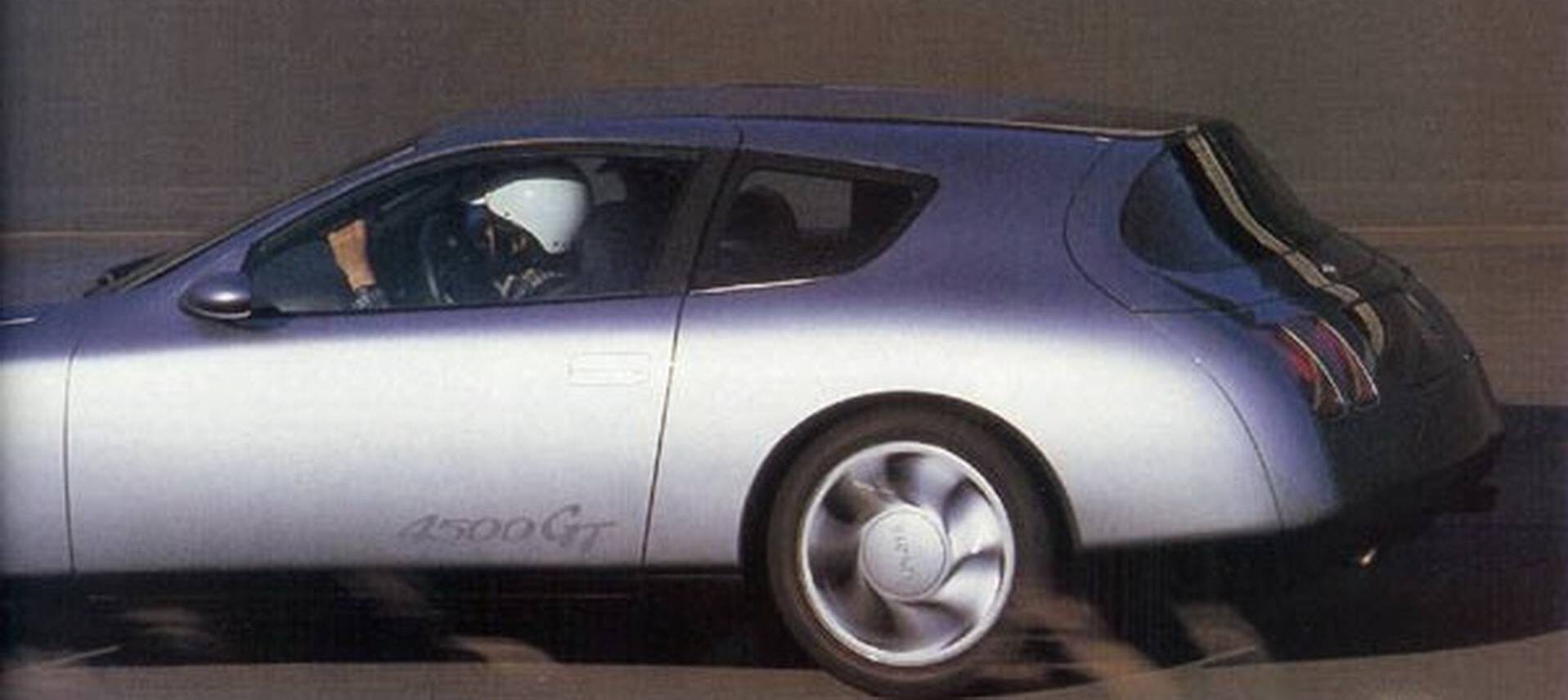
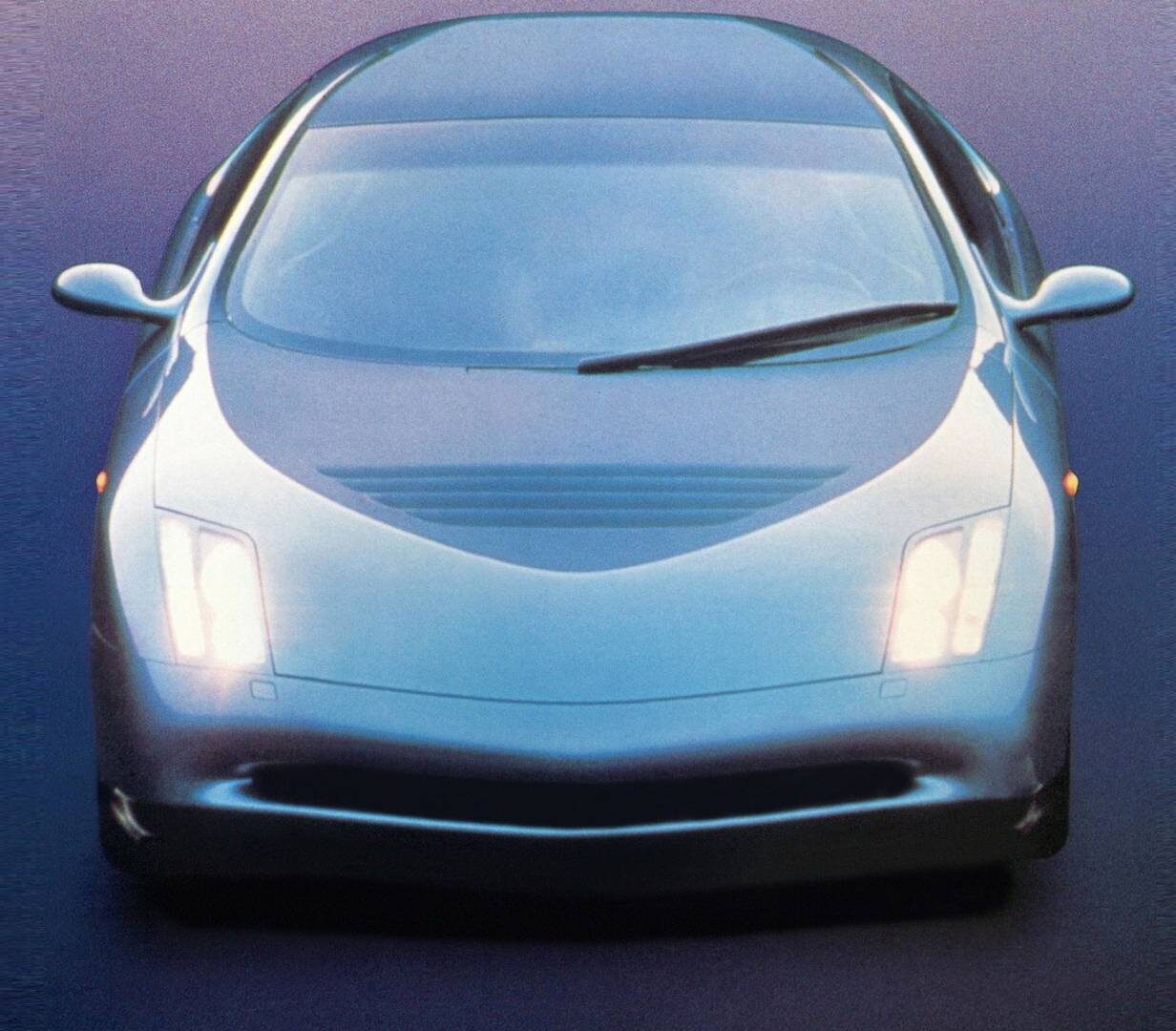
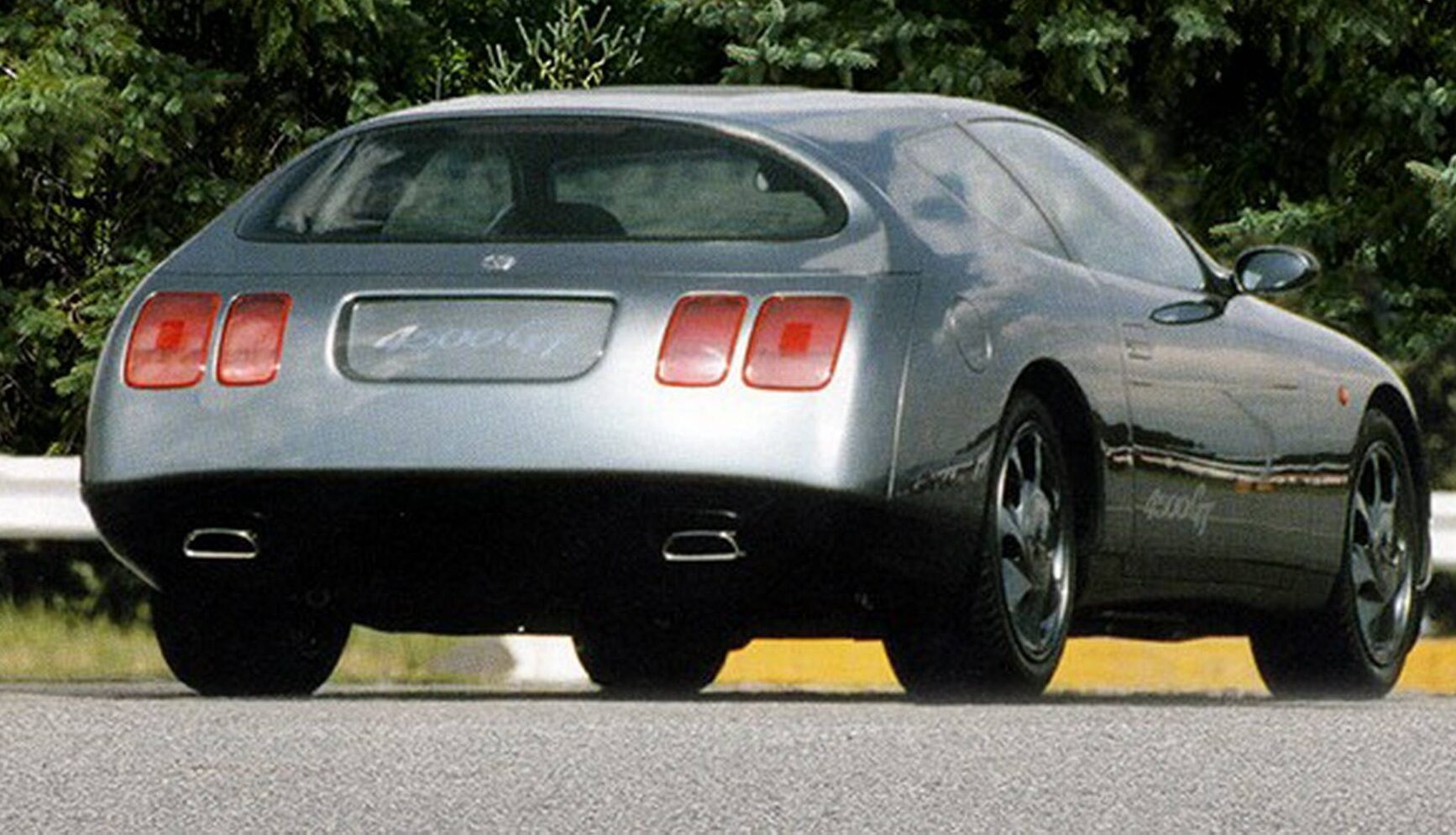 (学生時代に写真を見て、「これが2000GTの後継車?」とびっくりしました。
ーーー>あらゆる部分が実験的で、当時のトヨタデザインの意気込みを感じます!)
*アルファロメオ・ティーポ33/2ストラダーレ、1967(アルファレッド)
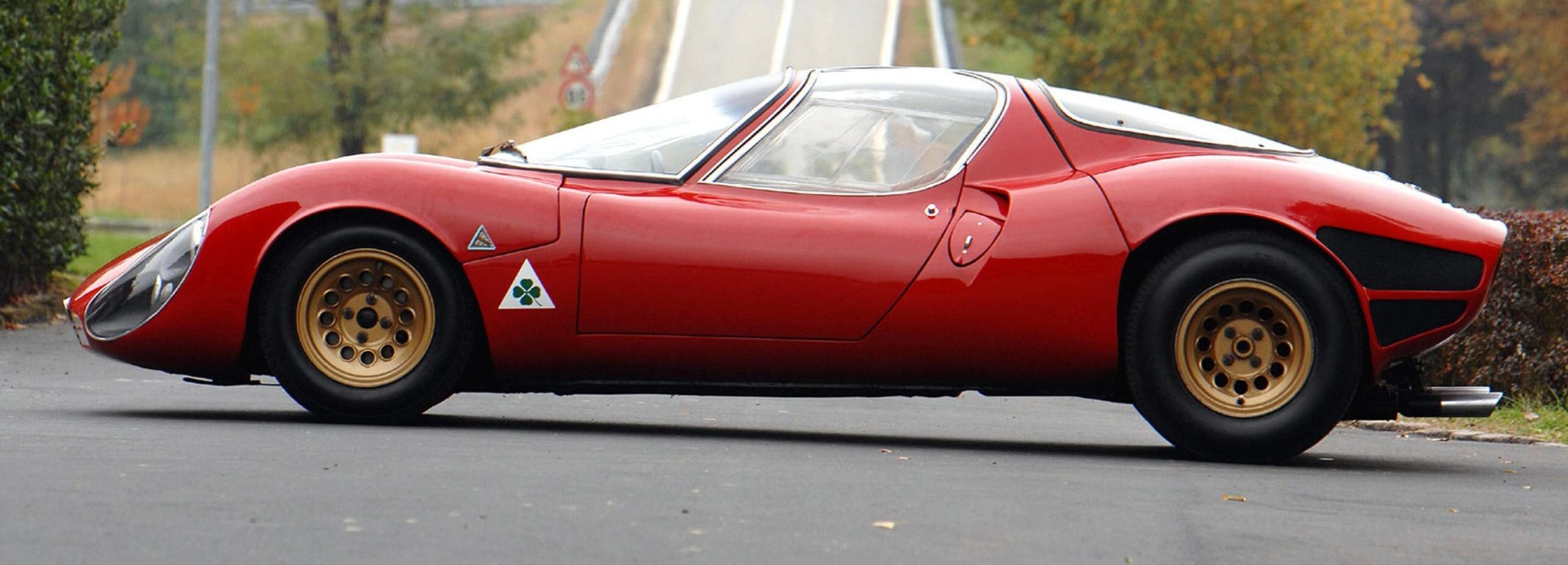
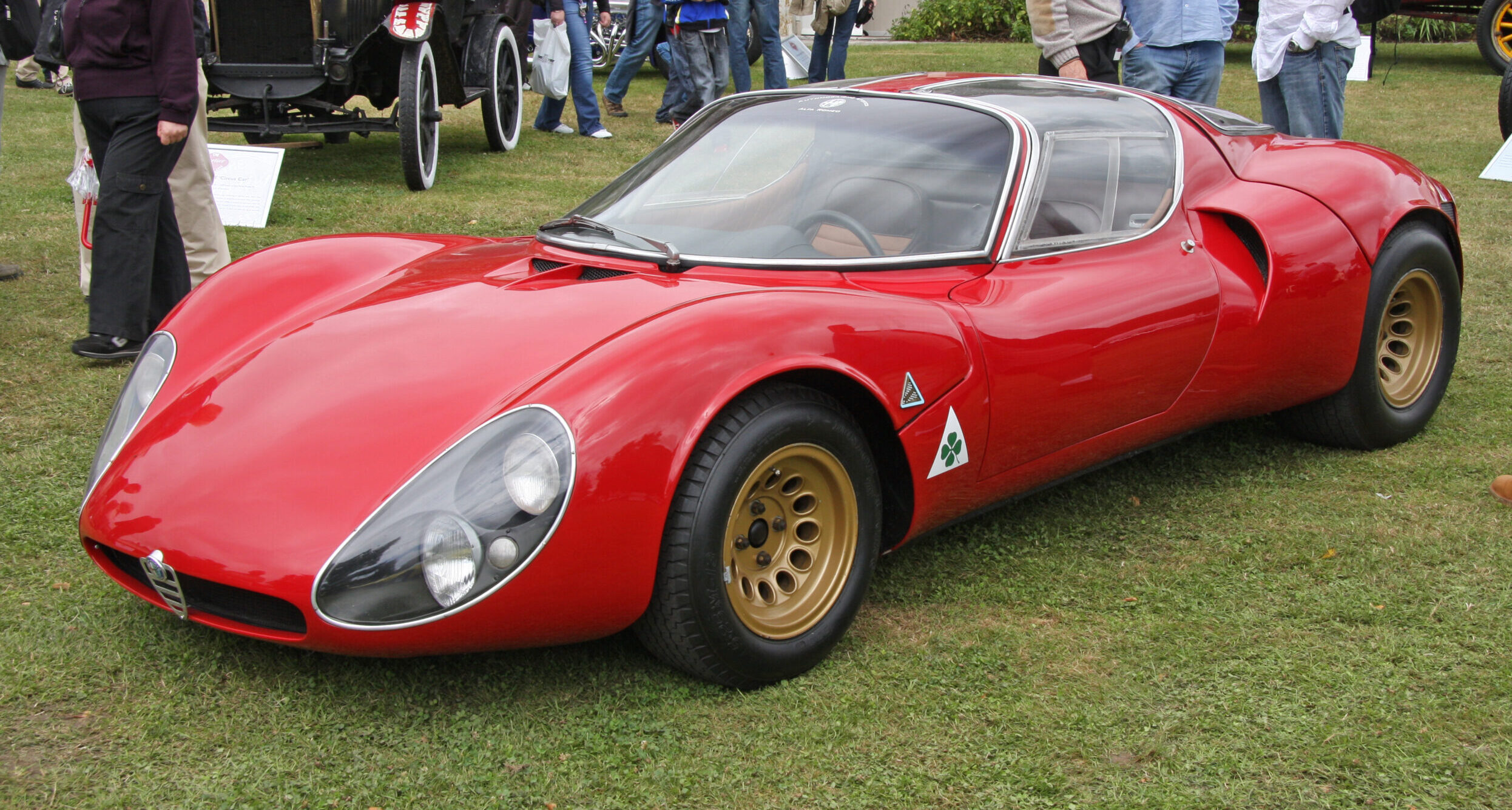
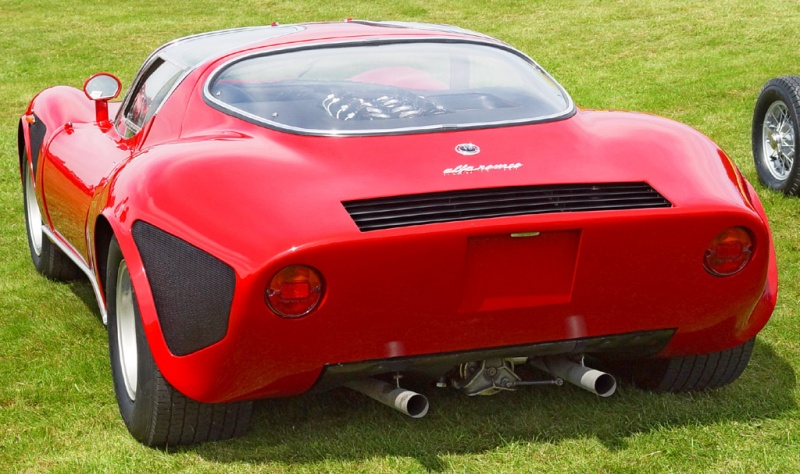 (史上最も美しいスポーツカーとも言われてますね!個人的には実車が凄まじく小さいのに驚きました:3m96cm ーーー>以前は、フェラーリ330Pと同じぐらいの量感でした、、、、)
*5代目トヨタ・プリウス、2023
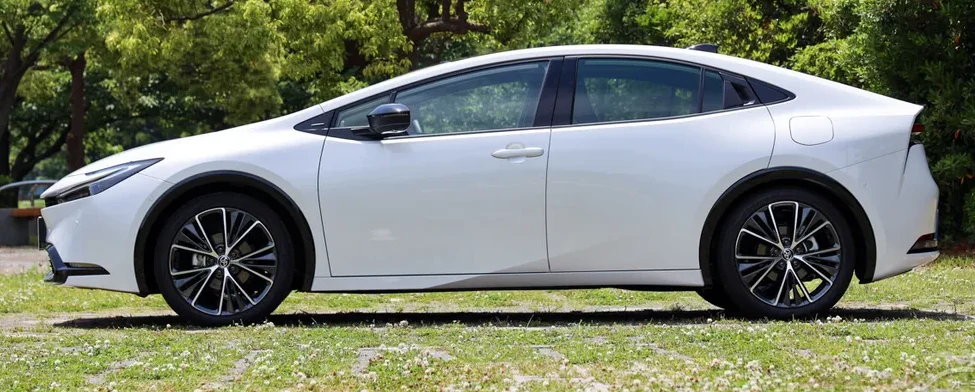
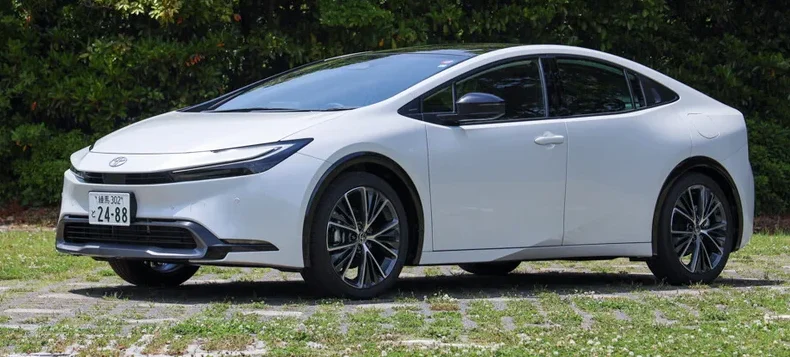
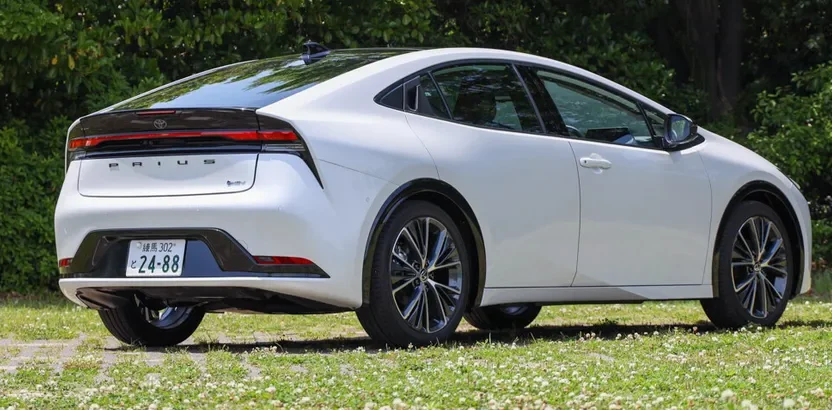 (2代目プリウスから始まった、コーダ・トロンカのテールデザインを持っていますが、ルーフの流れの頂点が「前か後ろ」で毎回動いています。
ーーー>最新型の三角の頂点が後ろにあるデザインが苦手でしたが、最近その漢字を『えと捉えて食べられるように訓練しました!)
自動車デザインの世界の
コーダ・トロンカの自動車後端への応用は、
切っても切れない、
『米の飯』のような方法となりましたね。
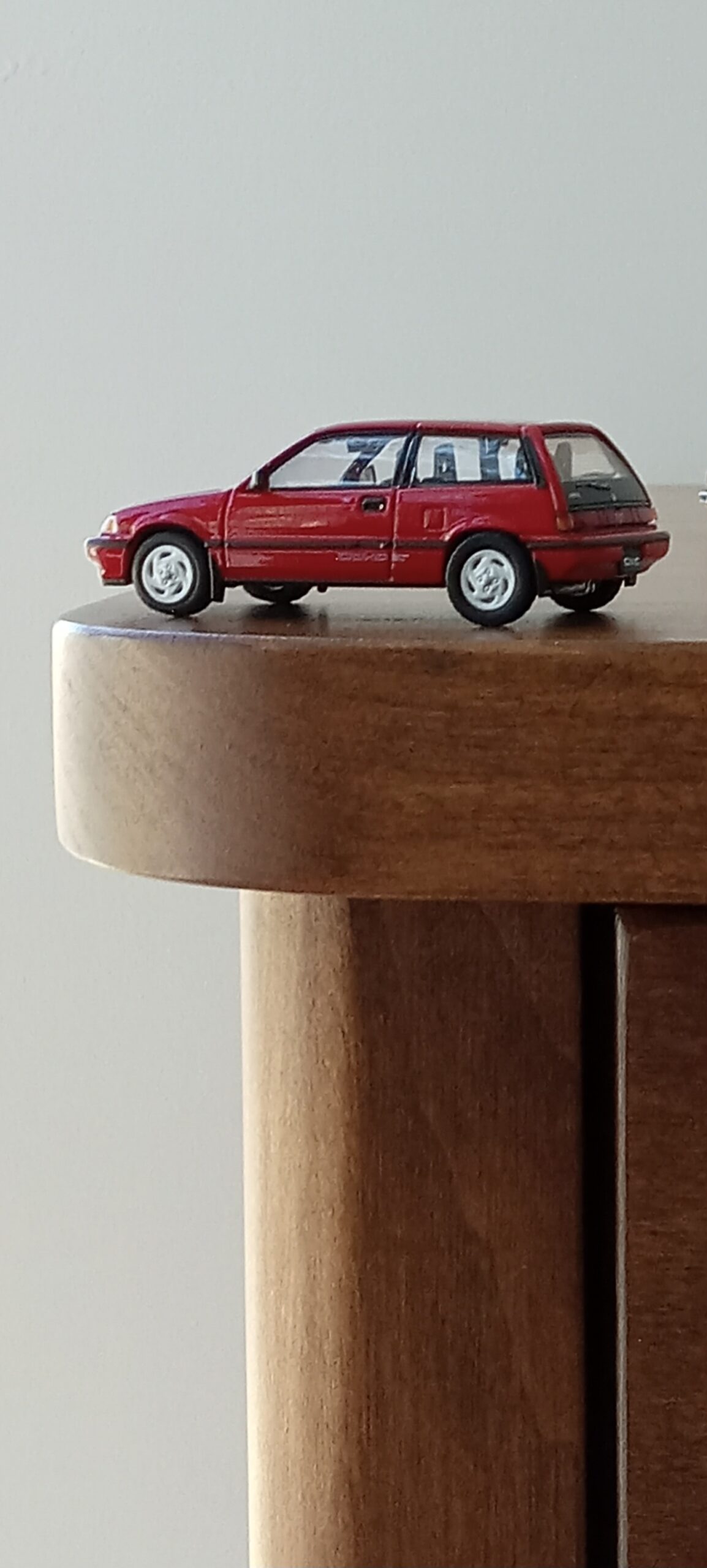
そんなコーダ・トロンカの原理を、
*廉価で小型な実用車に、
*長いルーフラインと合わせ技で応用した、
『ワンダー・シビック』の功績は
とんでもなく大きいです。
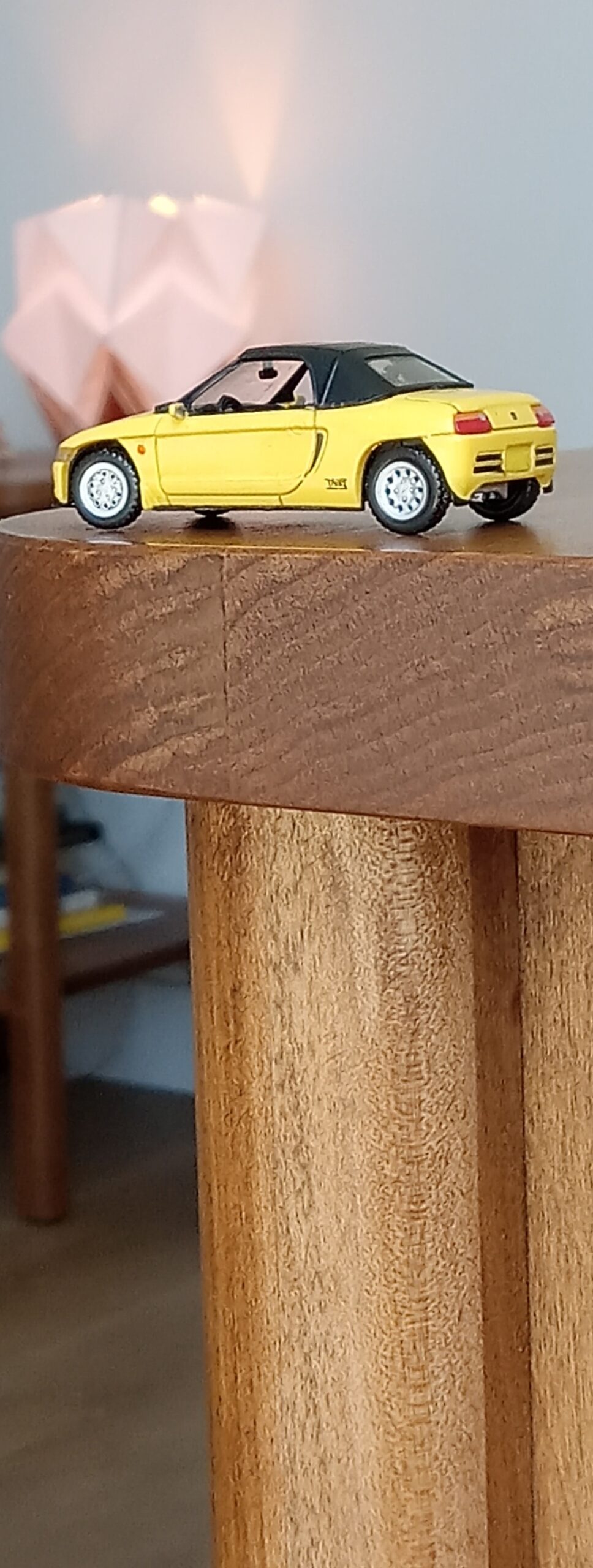
次回は
『サンバで踊りましょう!』
ホンダ・ビートにつてのお話です。
お楽しみに――
本ブログと記事内容につきまして:
ブログ記事を書くにあたり私の目標は、立体造形(料理も含めて)とのかかわりを通じて、私個人の特徴的(ネジ曲がり方も含めて)な評価軸を解明することで、「美しさ・美味しさ」に対する好奇心や、探求心を、どのように満足・充足させてきたのかを明記しておくことです。
従いまして、記事の中に出てくる、数字や年号、微細なデータなどには細心の注意を払っておりますが、時に大きな間違いや勘違いを犯していることも考えられます。特に自動車記事における主要諸元や、年号などには紛らわしいものも多く、あくまで参考程度に考えていただければ幸いです。
私としては、記事の中で個人的な外観デザインや味覚の評価、そこから広がる後半部分につなげるための、『流れ』を作るための客観的材料として年号やデータを挿入している感じです。あくまで重視したいのは、私個人の頭の中で起こる、記憶の錯そう的混沌から生まれる新たな『見方』や『情報の予想外のつながり』です。その勢いを作り出す、『流れ』の一環として、諸データが副次的に必要となるわけです。
話がそれますが、大好きな落語の世界に「三題噺」という、その場て会場から募った3つのお題を使って1つのお話に仕立てるといったお遊びがございますが、私はそれに近いことを立体造形の特徴や(料理のお味)をお題にして行っている感じがします。その中で頭の中に去来する数々の着想が、全く予想外で楽しく、次回からの記事内容を大幅に変えたり、新展開につながっています。
当ブロブの仕組み:
『好奇心の点と線 x 気まぐれ脳内回路=予想外の新展開』
こんな自分勝手なブログですが、今後ともよろしくお願いいたします。
追記:上記の『流れ』を作る為に必要な写真はできる限り、個人所有のミニカー・自前の料理などを使い撮影しておりますが、その他の必要最小限の図版や写真を他のブログ主様の記事や諸会社ホームページなどからお借りしております。(記事内容に合うよう加工させていただき、使用時は最小の解像度で載せております。)問題がある場合、ご連絡いただければ直ちに降ろさせていただきます。
追記2:当ブログ記事に掲載のミニカー写真等(個人撮影)は許可なしで、どのようにお使いいただいても結構です。私個人の創造性はこの世のもの、と言う認識の上で記事を製作しています。
!!!!!!!!!!!!!!!!!!!!!!!!!!!!!!!!!!!! Translated in English !!!!!!!!!!!!!!!!!!!!!!!!!!!!!!!!!!!!
(Miniature car used in the photoshoot: Manufactured by Hobby Japan, 1/64 die-cast ready-to-display model, Honda Civic Late-Model Si (E-AT) 1985 (Super Red) ——> Modifications: Optimized tire and wheel axle positioning)
Favorite Car Designs: Part 58—The Lineage of 2-Door Coupes: Part 37 [Honda Edition] Honda [Wonder] Civic Si, 1984 (Super Red) “A Symbol of Honda’s Rapid Advancement!” Honda [Wonder] Civic, 1984 (Super Red) “Kool Honda’s Leading Image!”
For this 58th installment, titled “The Lineage of 2-Door Coupes, Part 37,” I’d like to discuss luxury 2-door (GT) coupes and roadsters, which strongly reflect the national characteristics and unique exterior design styles of various countries. [Note: Includes convertibles]
I’ll proceed as follows.
In this 37th installment, we finally turn to
[Japanese Cars: Honda (Lightweight Sports Cars, Part 002)]
We’ll be discussing the
Honda [Wonder] Civic Si, 1985 (Super Red),
which was released in 1985.
[The Lineage of 2-Door Coupes: Table of Contents]
[American Cars Edition]
Episode 1: Cadillac El Mirage, 2013 (Metallic Red)
Episode 2: Lincoln Continental MK4, 1972 (Black)
Episode 3: Mercury Cougar, 1967 (LT Metallic Green)
[German Cars]
Part 4: MB 500K Special Roadster, 1936 (Black)
Part 5: MB 300SL Roadster, 1957 (Silver)
Part 6: MB SLS AMR Gullwing, 2010 (Black)
[British Cars]
Part 7: McLaren F1, 1992 (Metallic Orange)
Part 8: Jaguar XKSS Roadster, 1957 (Royal Blue)
Part 9: Jaguar XKR Coupe, 1996 (Dark Metallic Green)
[Japanese Cars / Nissan Edition]
Episode 10: Nissan First-Generation Silvia, 1965 (Champagne Gold)
Episode 11: Nissan Fifth-Generation Silvia, 1988 (LT Metallic Green)
[Italian Cars Edition]
Episode 12: Ferrari 250TR Pontoon Fender, 1958 (Red)
Episode 13: Ferrari 250 GTO, 1962 (Italian Red)
Episode 14: Lamborghini Concept S, 2005 (Pearl White)
[Japanese Cars: Mazda Edition]
Episode 15: Mazda Cosmo Sport, 1968 (Racing White)
Episode 16: Mazda Eunos Cosmo, Type-S (2-Tone: Black & Gray)
[French Cars]
Episode 17: Bugatti Type 59, 1935 (French Blue)
Episode 18: Citroën SM, 1970 (Champagne Gold)
Episode 19: Bugatti La Voiture Noire, 2019 (Black)
[Japanese Cars: Toyota Edition]
Episode 20: Toyota/Yamaha 2000GT, 1967 (Ivory White)
Episode 21: Toyota 2nd-Generation Soarer, 1986 (Crystal White II)
Episode 22: Lexus LC500 [GWZ100], 2017 (Manual Transmission, Red)
[American Cars Part 2]
Episode 23: Dodge Challenger, 1970 & Plymouth Barracuda, 1971
Episode 24: Dodge Viper SRT-10 ACR, 2008 (Black)
Episode 25: Ford Shelby GR-1 Concept, 2004 (Chrome)
[Japanese Cars: Mitsubishi Edition]
Episode 26: Mitsubishi Galant λ, 1976 (Brown Metallic)
Episode 27: Mitsubishi Eclipse [North American Spec], 2006 (Orange Metallic)
[German Cars Part 2]
Episode 28: BMW M635CSi, 1984 (Dark Metallic Blue)
Episode 29: Mercedes-Benz 560SEC AMG 6.0 Widebody, 1989 (Black)
Episode 30: BMW M2 with Genuine Performance Parts, 2025 (Neon Lime)
Episode 31: First-Generation Audi TT, 1998 (Lake Silver Metallic)
[Japanese Cars: Subaru Edition]
Episode 32: Subaru Crosstrek XV, 2012 (Lime Green Metallic)
[British Cars Part 2]
Episode 33: Lotus First-Generation Elite, 1959 (British Green)
Episode 34: Lotus Elan S4 Sprint (3-Tone: Meta Blue, White & Gold)
Episode 35: Jaguar E-Type Roadster (Light Blue Metallic)
[Japanese Cars: Honda (Lightweight Sports Cars)]
Episode 36: Honda S800, 1966 (Scarlet)
Episode 37: Honda [Wonder] Civic Si, 1985 (Super Red)
Episode 38: Honda Beat, 1991 (Samba Yellow)
[Italian Cars Part 2]
Episode 39: Lancia Gamma Coupe, 1976 (Grigio Argento (Silver))
[Japanese Cars: Toyota Part 2]
Episode 40: Toyota Corona Hardtop 1800GT-TR, 1982 (Blazing Red)
Episode 41: Toyota GR Supra, 2019 [DB Series, A90/A91] (Volcanic Ash Gray Metallic)
Episode 42: Toyota GR GT, 2027 [Planned] (Gunmetal)
[Italian Cars Part 3: Special Edition]: The Supercar Lineage
Episode 1: Maserati Merak SS, 1975 (Blue Sera Metallic)
Episode 2: Lancia Stratos HF, 1973 (Rosso Stratos)
Episode 3: Lamborghini Miura SV, 1971 (Rosso & Oro / Red & Gold)
Episode 4: Ferrari Dino 206 Competizione Prototipo (Giallo Frai / Yellow)
Episode 5: De Tomaso Pantera GTS, 1971 (Rosso / Red & Matte Black)
Part 6: Ferrari LaFerrari, 2013 (Rosso Corsa (Red))
[American Cars #3: Special Edition]: The Corvette Lineage
Part 1: 1967 Stingray [C2] Convertible (Hardtop, Metallic Blue)
Part 2: 1972 Corvette [C3] Convertible (Metallic Blue)
Part 3: 1984 Corvette [C4] Coupe (Bright Red)
Part 4: Corvette Indy, 1986 [Mid-ship Pre-production Prototype] (Silver)
Part 5: Stingray Concept, 2009 [FR Sports Prototype] (Light Blue Metallic)
n
n
nn
#The Long-Roofed Bullet: A Symbol of Honda’s Rise!
“Wonder Civic!!”
I remember when it was unveiled during my freshman year of college,
my car-loving friends and I
would get all excited, saying,
“This part is amazing, and that part is so innovative!”
* The boldness of the bullet-shaped design, especially the styling around the rear hatch,
* The interior’s crisp, clean, and—in a good way—plastic-like feel,
* Which, in a way, was actually what made it feel so fresh… or something like that?
Something like that…
Personally,
I dubbed the three models from that era—the 3-door Civic, the CR-X, and the Accord Aero Deck—
the “Bullet Trio,”
and got all excited about them on my own.
Among them,
* unlike the experimental, concept-car-like Aero Deck,
* or the CR-X, which positioned itself as a sports car,
the 3-door version—which sat right in the middle of the third-generation Civic lineup—
adopted the “Coda Trunca
tail design,”
and the fact that it ended up being a huge success is an “expression of the Honda spirit” I’ll never forget!
I’d like to talk a bit
about these “Bullet Boys,”
the pride of Japan, in this post.
* Car Overview:
* Exterior Design Features:
* “Me” and the Wonder Civic 3-Door Hatchback:
* Three-Topic Story:
* Honda’s “Bullet Boys”…
* Car Overview: A Bubble-Era Favorite?
Overview:
n
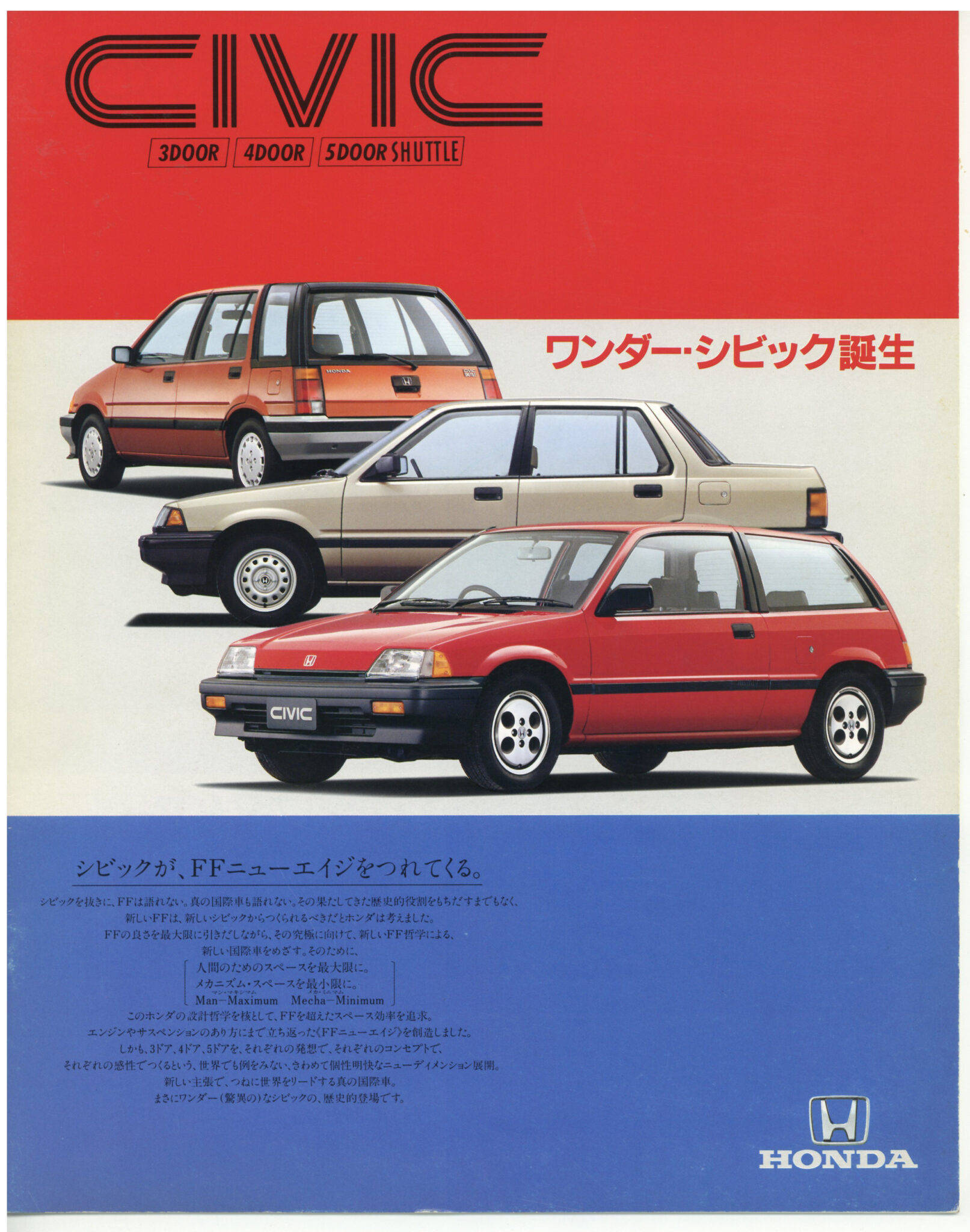
The 3-door hatchback version of the third-generation Honda Civic (commonly known as the “Wonder Civic”), and the “Si” model (introduced in 1984) that reigned at the top of the lineup,
n
are among the greatest masterpieces in the history of Japanese car design. Under the leadership of Shinya Iwakura, who was the head of Honda’s design division at the time, it was Yoshikazu Kigoshi who, as the lead exterior designer, brought this innovative form to life.
When analyzing this car from a designer’s perspective, the most crucial point lies in how the aerodynamic feature known as the “coda truncata” (truncated tail) was elevated—not merely as a technical solution—but into an unprecedented, deeply emotional form of “beauty.”
n
n
n
n
n
n
n
n
n
n
n
n
n
n
n
n
n
n
n
n
n
n
n
n
n
n
n
n
n
n
n
n
n
n
n
n
n
n
n
n
n
n
n
n
n
n
n
n
n
1. The Aesthetics of Exterior Design Centered on the “Coda Trunca”:
n
The design team, led by Yoshikazu Kigoshi, set out to challenge the conventional stereotype that “hatchbacks are mass-market utility vehicles” with this 3-door hatchback. Their greatest asset was the “Coda Trunca” silhouette, which elegantly extends the roofline all the way to the rear and sharply cuts off the tail end vertically.
n
The Completion of Mass and the Aesthetics of Subtraction:
n
While typical hatchbacks tend to have a sloped rear gate to ensure passenger comfort and cargo space, the Wonder Civic deliberately features a completely vertical rear end. This allows the entire car to exude a powerful presence as a single “solid mass.”
The taillights, rear bumper, and even the rear window are perfectly flush within this vertical cut, embodying an “aesthetics of subtraction” that eliminates all unnecessary ornamentation.
The Dynamism of the Long Roof:
n
To cut the rear vertically, the roof had to be extended far back. The combination of this long roof and the extremely short rear overhang (the length from the rear wheels backward) creates an overwhelming forward-leaning stance (wedge shape) and a sense of dynamism, reminiscent of a wild beast crouching low to stalk its prey.
n
Seamless Glass Cabin:
n
The slim, black-finished pillars and the vast glass area that blends seamlessly with the body symbolize the Honda-esque cleanliness that Shinya Iwakura sought to achieve. The rear section, squarely cut off by the “Coda Tronca,” creates a sense of transparency reminiscent of a “glass box” that evokes architectural modernism.
n
n
2. The Harmonious Synchronization of Mechanics and Design:
n
n
This beautiful and radical Coda Tronca tail and long roof are not merely a designer’s “pipe dream”; they are made possible by the triumph of packaging—the pursuit of Honda’s “M·M Philosophy (Man Maximum/Mechanism Minimum)” pushed to its absolute limit.
n
The Aerodynamic and Spatial Miracle Brought About by the Tail Shape:
n
Aerodynamic Characteristics: The vertically truncated rear end controls the air vortices (drag) generated behind the vehicle while driving, resulting in excellent aerodynamic performance (stability at high speeds).
n
Maximizing Interior Space: True to the philosophy of minimizing mechanical components to maximize passenger space, the roof was extended as far back as possible. This design ensures ample rear-seat headroom and an impressive cargo capacity despite the vehicle’s compact overall length.
n
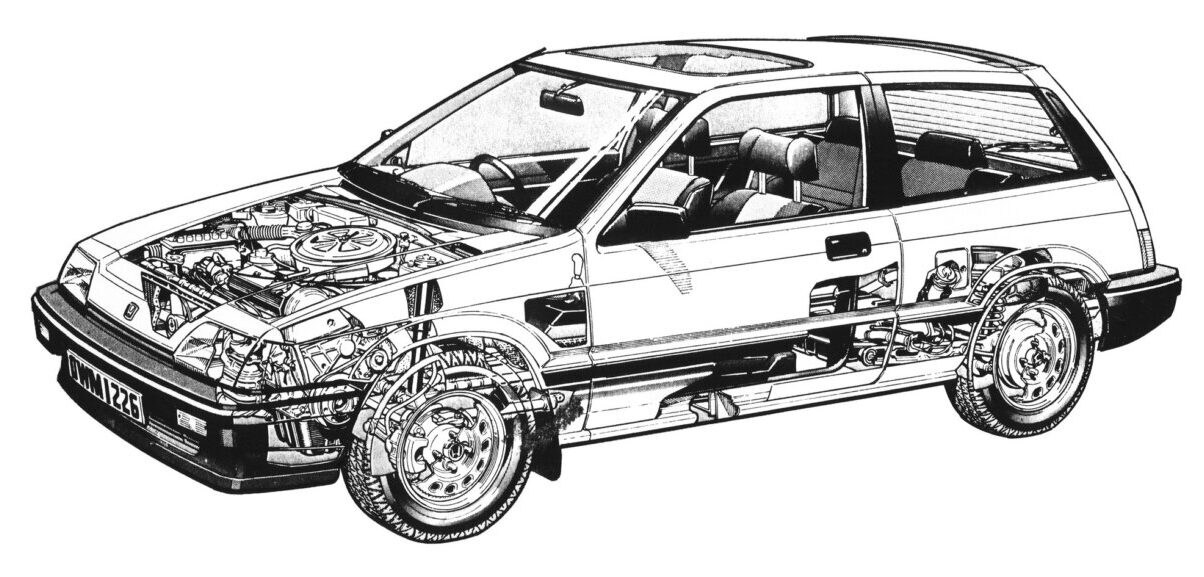
The Heart of the “Si”: The ZC-Type DOHC Engine and Ultra-Low Nose:
n
In 1984, the long-awaited 1.6L inline-4 DOHC “ZC-type” engine was installed in this beautiful package, giving birth to the “Si.”
Normally, installing a tall DOHC engine necessitates a high hood, but Honda opted for a space-efficient torsion bar strut suspension at the front instead of coil springs. As a result,
Overview:
n
The third-generation Honda Civic (commonly known as the “Wonder Civic”), specifically the 3-door hatchback and the “Si” model (introduced in 1984) that reigned at the top of the lineup,
n
is one of the greatest masterpieces in the history of Japanese automotive design. Under the leadership of Shinya Iwakura, who was the head of Honda’s design division at the time, Yoshikazu Kigoshi served as the lead exterior designer and brought this innovative form to life.
When analyzing this car from a designer’s perspective, the most crucial point lies in how the aerodynamic feature known as the “coda truncata” (truncated tail) was elevated—not merely as a technical solution—but into an unprecedented, deeply emotional form of “beauty.”
n
n
n
n
n
n
n
n
n
n
n
n
n
n
n
n
n
n
n
n
n
n
n
n
n
n
n
n
n
n
n
n
n
n
n
n
n
n
n
n
n
n
n
n
n
n
n
n
n
1. The Aesthetics of Exterior Design Centered on the “Coda Trunca”:
n
The design team, led by Yoshikazu Kigoshi, set out to challenge the conventional stereotype that “hatchbacks are mass-market utility vehicles” with this 3-door hatchback. Their greatest asset was the “Coda Trunca” silhouette, which beautifully extends the roofline all the way to the rear and sharply cuts off the tail end vertically.
n
The Completion of Mass and the Aesthetics of Subtraction:
n
While typical hatchbacks tend to have a sloped rear gate to ensure interior space and cargo capacity, the Wonder Civic deliberately features a completely vertical rear end. As a result, the entire car exudes a powerful presence as a single “solid mass.”
The taillights, rear bumper, and even the rear window are perfectly flush within this vertical cut, embodying an “aesthetics of subtraction” that eliminates all unnecessary ornamentation.
The Dynamism of the Long Roof:
n
To cut the rear vertically, the roof had to be extended far back. The combination of this long roof and the extremely short rear overhang (the length from the rear wheels backward) creates an overwhelming forward-leaning stance (wedge shape) and a sense of dynamism, reminiscent of a wild beast crouching low to stalk its prey.
n
Seamless Glass Cabin:
n
The slim, black-finished pillars and the vast glass area that blends seamlessly with the body symbolize the Honda-esque clean lines that Shinya Iwakura sought to achieve. The rear section, squarely cut off by the Coda Tronca, creates a sense of transparency reminiscent of a “glass box” that evokes architectural modernism.
n
n
2. The Harmonious Synchronization of Mechanics and Design:
n
n
This beautiful and radical Coda Tronca tail and long roof are not merely a designer’s “pipe dream”; they are made possible by the triumph of packaging—the pursuit of Honda’s “M·M Philosophy (Man Maximum/Mechanism Minimum)” pushed to its absolute limit.
n
The Aerodynamic and Spatial Miracle Brought About by the Tail Shape:
n
Aerodynamic Characteristics: The vertically truncated rear end controls the air vortices (drag) generated behind the vehicle while driving, resulting in excellent aerodynamic performance (stability at high speeds).
n
Maximizing Interior Space: True to the philosophy of minimizing mechanical components to maximize passenger space, the roof was extended as far back as possible. This design ensures ample rear-seat headroom and an impressive cargo capacity despite the vehicle’s compact overall length.
n
The Heart of the “Si”: The ZC-Type DOHC Engine and Ultra-Low Nose:
n
In 1984, the long-awaited 1.6L inline-4 DOHC “ZC-type” engine was installed in this beautiful package, giving birth to the “Si.”
Normally, installing a tall DOHC engine necessitates a high hood, but Honda opted for a space-efficient torsion bar strut suspension at the front instead of coil springs. This allowed the engine to be positioned as low as possible, resulting in an ultra-low nose that seemed to skim the ground.
It is precisely these proportions—starting from the low nose, flowing through the long roof, and surging straight to the rear “coda tronca”—that embody the Si’s “unmistakable sense of speed.” The small, asymmetrical power bulge—a solitary feature on the hood—is a necessary design element to accommodate the DOHC engine; it stands as the sole accent on the otherwise flat body, silently asserting the car’s high performance.
n
n
3. Summary: A Timeless Model of Industrial Design
n
n
n
n
Under the direction of Shinya Iwakura and with the refined sensibility of Yoshikazu Kigoshi, the third-generation Civic Si was crafted not merely as a “sporty hatchback,” but as a “product of pure functional beauty that can only exist at the pinnacle of functional refinement.”
Placing the “Coda Trunca”—a mechanism designed for aerodynamics and space efficiency—at the center of the design, while encapsulating the DOHC engine within a low-slung hood, this perfect harmony between mechanism and design enabled the car to achieve the remarkable feat of becoming the first automobile ever to win the Good Design Grand Prize in 1984.
This “Wonder Civic Si” embodies the very essence of the minimalist aesthetic that Japanese automotive design proudly showcases to the world.
n
n
n
#Side Note:
n
The “Coda Tronca”—the defining feature of the third-generation Civic Si—is an exceptionally luxurious achievement in industrial design, born from the history of the “struggle between aerodynamics and aesthetics” that has persisted since the dawn of the automobile.
N
n
1. The Origins of the Coda Tronca: The Birth of Aerodynamic Theory and Beauty:
n
The theoretical roots of this design lie in the “Kamm tail” theory proposed in the 1930s by German aerodynamicist Dr. Wunibald Kamm and others. While an ideal streamlined (teardrop-shaped) design requires a long, elongated body, this is impossible for production cars. Dr. Kamm proved that “even if the streamlined shape is cut off vertically midway, the airflow continues smoothly as if there were a virtual tail, thereby reducing aerodynamic drag.”
n
n
n
n
n
n
n
n
n
N
In the 1960s, the Italian carrozzeria Zagato elevated this concept into an emotional form of “beauty.” The “Alfa Romeo Giulietta SZ (Coda Tronca, 1961)” and “Giulia TZ (1963),” designed by the genius designer Ercole Spada, went down in history as the original Coda Tronca models, achieving the pinnacle of aerodynamic performance (increased top speed) as racing cars while simultaneously possessing sculptural beauty.
n
2. The Spread from European Concept Cars to Mass-Market Vehicles:
n
From the 1960s through the 1970s, European designers vied with one another to incorporate this design approach into their concept cars.
The “BMC Aerodinamica” concept car, unveiled by Pininfarina in 1967, fused the Coda Tronca with a silhouette that would later become the prototype for the hatchback, pointing the way toward the future of mass-produced vehicles. Subsequently, production cars of the 1970s—such as the Alfa Romeo Alfasud, the Citroën CX, and the Rover SD1—adopted this philosophy as a “rational balance between aerodynamic performance and luggage space.”
n
n
n
3. The “Paradigm Shift Toward Subtraction” Achieved by the Wonder Civic Si:
n
n
n
n
n
n
n
n
n
n
n
n
n
n
n
n
n
n
n
n
n
n
n
n
n
Until then, the “coda tronca” design found in European cars had primarily been used to enhance the speed of sports cars or as the culminating point of a fastback (a flowing, sloping roofline).
However, what Yoshikazu Kigoshi and his team at Honda achieved with the third-generation Civic was an even more radical and minimalist interpretation: “rather than a fastback, dropping the roofline vertically from a long roofline in one swift motion.”
n
Influenced by the clean lines of European modernist architecture and product design, Mr. Kigoshi incorporated the rear window, taillights, and bumper into the rear cut surface (a sheer cliff) as “flush surfaces,” creating a completely seamless finish.
n
While respecting the context of “aerodynamics for racing” found in European cars of the past, he evolved this concept into a modern “fusion of minimalism and packaging.” The rear design of this 1983 Civic Si was a historic turning point that redefined European historical trends through a Japanese aesthetic sensibility.
n
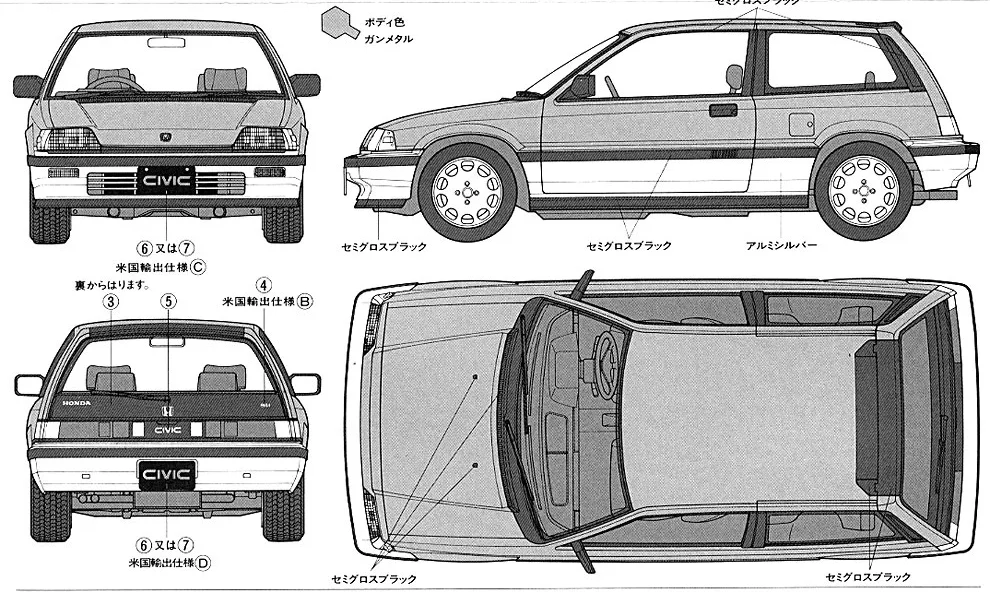
#Three-View Photos:
n
n
n
#Key Specifications:
Engine Type: ZC
Total Displacement: 1,590 cc
Engine Configuration: Water-cooled, inline-4, transverse, DOHC, 16-valve
Fuel System: Electronic Fuel Injection (Honda PGM-FI)
Maximum Power: 135 ps / 6,500 rpm (gross)
Maximum Torque: 15.5 kg·m / 5,000 rpm (gross)
Top Speed: 193.10 km/h (measured by Motor Magazine and others)
Drivetrain: FF (front-engine, front-wheel drive)
Seating Capacity: 5
Body Style: 2-door hatchback
Wheelbase: 2,380 mm
Overall Length: 3,810 mm
Overall Width: 1,630 mm
Overall Height: 1,340 mm
Curb Weight:
890 kg (5-speed MT) / 900 kg (3-speed AT)
*Exterior Design Features: Who Is the Leader of the “Three Bullet Brothers”?
While the “bullet” design elements
tend to get the most attention,
there are actually
many other
distinctive features
in the exterior design of the
“Wonder Civic 3-Door.”
Based on my own personal opinion and bias,
I’ve listed five of them.
n
1: Starting from the low hood, the roofline flows in a gentle arc before suddenly cutting straight and vertical—a clean, beautiful design reflecting the “Coda Trunca” tail era—> I was simply, utterly amazed by this design treatment I’d never seen before!
2: The overwhelming presence created by the entire vertical surface of the tailgate being angled downward and made entirely of glass—> The visual impact when viewed from the rear is on an “unprecedented and unmatched level”—it’s absolutely stunning!
3: The trademark feature of Honda cars from this era—maximizing the glass area—achieves a balance between a refreshing exterior appearance and the “brightness” felt from inside the cabin when riding—> Models like the City and Civic Shuttle share this characteristic, and they all have a “crisp and bright!” image.
4: A black rubber strip running across the entire body tightens the exterior’s impression and makes the relatively tall overall height appear lower and sportier. —> It manages to convey a sense of expansiveness without resorting to a “sacco plate” design, as seen on the CR-X and others.
5: The Si’s signature single-sided hood bulge—inherited from the S800—and the tasteful graphic accents below the doors
Now then,
let’s take a look at each of these features with photos.
1: Starting with the low hood, the roofline flows in a gentle arc before suddenly cutting straight and vertical—a clean, beautiful design that reflects the era of the “coda truncata” tail.
(I absolutely love the “kick” at the rear end of the roofline; I vividly remember always envying how much more pronounced it was on this model than on the “CR-X” I used to drive!!)
――> I was simply, utterly amazed by a design treatment I’d never seen before!
2: An overwhelming presence created by angling the entire vertical surface of the tailgate and making it entirely glass.
(It’s a brilliant invention reminiscent of “all-glass walls” in modern architecture. The part that’s lowered even further than the bottom edge of the side windows and flush with the taillights is genius. I couldn’t stop touching the tailgate of my friend’s Civic… (lol)”
ーーー>The visual impact when viewed from the rear is on an “unprecedented and unmatched level”—it’s absolutely stunning!
3: The balance between the refreshing exterior appearance—achieved by maximizing the glass area, a hallmark of Honda cars from this era—and the “brightness” felt from inside the cabin while riding.
——> Models like the City and Civic Shuttle share this same characteristic; they all have a “crisp and bright!” image.
4: A black rubber strip running across the entire body tightens up the exterior’s appearance and makes the relatively tall vehicle look lower and sportier.
——> It manages to convey a sense of fluidity without resorting to a “sack-like” design, as seen in the CR-X and others.
5: Unique to the Si: the single-sided hood bulge inherited from the S800 and the tasteful graphic accents below the doors
* “Me” and the Wonder Civic Si
It’s truly mysterious, but
the way this generation of the 3-door Civic was perceived in the U.S.
was completely different from Japan—it barely stood out,
and was simply treated “white goods.”
* In the early ’90s here in LA, the most popular exterior color was,
* overwhelmingly, what was then called the “Honda Grade,”
* Champagne Beige Metallic [Color Code:
YR-60M ≈ light ochre].
This color was a bit of a problem—
perhaps because it blended in too well with the local climate?
it made cars painted in this color blend into the background,
and even though nearly half of the
Wonder Civics were painted this color,
I have almost no memory of their rear hatch designs. Sigh
Thinking about why,
I suspect it was because the pale, dull body color—which blended into the surroundings—
and the bold graphics around the rear hatch
were such a stark mismatch
that they simply didn’t leave an impression.
Setting aside how it looked in the U.S.,
this was my personal experience with the 3D model…
#3D Model:
* Tamiya Model, 1/24 Sports Car Series No. 51 “Honda Civic 3-Door 25i”
(A CR-X was also released; both were “bathtub-style” interior, engine-less proportion kits, but the sculpting was impressive,
——> It was a crisp, quintessentially Tamiya kit.)
* Kyosho, 1/64 die-cast ready-to-display model, Civic 3-Door Si (various colors)
(The most crucial element—the “gently undulating roof line”—wasn’t quite captured right, giving the impression that the roof is warped.
——> I’m filled with admiration for the Honda design team that created such a delicate, curved roof line!!)
* Konami, 1/64 die-cast ready-to-display model, 4th-generation Civic 3-door Si
(I knew this one existed, but this is my first time seeing the actual item. From the photos, it seems to strike a “refined” balance between Kyosho and Hobby Japan’s approaches…
--→ The two-tone paint job is gorgeous.)
* Studio Sota: Capsule toy, 1/64 scale plastic ready-to-display model, “Honda Civic Si”
(The exterior sculpting and design are superb, and it looks significantly more realistic than the earlier die-cast version by Kyosho. I’ve collected the entire color lineup.
ーーーー>On top of that, the headlights light up!)
(Although it’s from a different generation, this Hasegawa gacha kit is also excellent!)
* Manufactured by Hobby Japan: 1/64 die-cast ready-to-display model, Honda Civic 3-door (all colors)
(The definitive model that checks all three boxes: excellent sculpting, excellent paintwork, and excellent assembly precision
--→If a model is released in this series, it’s the definitive version.)
I really hope
more die-cast models of this subject are released in the future!!
*Three-Theme Story: Bullet Design, Soichiro’s Spirit, Louis Armstrong
This time, it’s a slightly out-of-the-blue combination, but
I’ll do my best!
#Topics:
*Bullet Design
*Soichiro’s Spirit
*Louis Armstrong
#Underlying Theme: “Innovation That Feels Japanese”
Prompt:
Please create a humorous yet intelligent “three-topic story” in the style of a rakugo performance, presented as a conversation in the year 2075 between a curious, tech-loving descendant of Soichiro Honda and a quantum AI engineer. The story should provide a detailed explanation of the mechanics and exterior design of the 4th-generation Wonder Civic 3-door from the perspective of an actual designer. Please weave the overarching theme into the narrative and conclude with a punchline that combines a clever twist and an “old-man” joke. #Topics: *Bullet Design *The Spirit of Soichiro *Louis Armstrong #Overarching Theme: “Innovation in the Japanese Style”
n
[Cyber-Neo Rakugo Style (Top Pick)]
“Future Genesis Quantum Tale: The Bullet (Wonder) Carrying on a Century’s Spark—Satchmo’s Trumpet and Soichiro’s Genes (Hyper Spirit)—” “Hello there, I hope you’ll bear with me for a little while, ah.
The year is 2075, at the Sky Garden in Neo-Tokyo. Please join me for a story based on the zany, time-and-space-spanning conversation between “Hajime”—a tech-savvy great-great-grandson who strongly inherits Soichiro Honda’s DNA and is tinkering with the latest anti-gravity mobility devices—and his partner, the ultra-high-performance “Quantum AI Engineer” (commonly known as “Q”).
n
n
Hajime: “Hey, Q! I salvaged some absolutely mind-blowing old-school design data from the molecular server in the warehouse. It’s the ‘4th-generation Civic 3-door,’ released in 1983—commonly known as the Wonder Civic!”
n
Q: “Beep… Verifying data. This is an internal combustion engine vehicle from the Showa era, nearly 100 years ago. Compared to today’s quantum levitation machines, it’s just a combination of a hunk of iron and a primitive gasoline engine. What’s so interesting about it?”
n
Sō: “This is exactly why people say you’re just an AI made of nothing but equations! Just look at this overwhelming “bullet design” (*Topic #1). Back then, cars typically had a low front end and a rear end that jutted out as the trunk. Yet this Wonder Civic—from the front to the roof and all the way to the rear end—is cut in a straight line, just like a single bullet. Not a rocket, but deliberately a “bullet.” Isn’t this sense of condensed mass so intellectually stimulating that it still gives me chills even now?!”
n
Q: “I see. When you overlay a fluid dynamics hologram… I was amazed. Instead of just making it a square box, by cleanly cutting off the rear window of the 3-door hatchback almost vertically, it creates a regular vortex of air at the rear of the body. Intentionally minimizing air resistance while maximizing interior space… it’s truly the pinnacle of functional beauty. This is a meticulously calculated ‘bullet of function.’”
n
Sō: “Right? Plus, from a designer’s perspective, the side windows are flush with the body surface—no steps at all. Achieving this on a mass-produced car with the manufacturing technology of that era must have involved some truly grueling, blood-sweat-and-tears battles between the on-site craftsmen and the designers. And that’s not all—the front suspension features a sporty torsion bar strut setup, and the engine is a newly developed 12-valve unit. This obsession—“We will make absolutely no technical compromises; we want to astound the world”—that is the very embodiment of the Soichiro Spirit (*Theme No. 2*) that has been passed down through my family for generations!”
n
Q: “The Soichiro Spirit, you say. According to my deep learning, Soichiro Honda always said, ‘Don’t imitate others; astonish the world with technology.’ This Wonder Civic wasn’t designed to mimic the luxury hatchbacks of Europe at the time; it was built with a completely original philosophy to zip nimbly through Japan’s narrow alleys. It’s truly ‘Japanese-style innovation’ (*underlying theme). It’s the aesthetics of subtraction—condensing something into a small space and packing the universe inside—a concept shared with bonsai and sukiya-style architecture.”
n
Sō: “That’s right, Q! It’s not an imitation of the West—it’s an innovation born from the Japanese sense of beauty. There’s a record showing that when this Wonder became a huge hit worldwide, a certain historic jazz album was playing in an American jazz club. Who do you think it was? That’s right—Louis Armstrong (*Topic No. 3)!”
n
Q: “Satchmo? That husky yet uniquely original tone of his trumpet—one that no one can imitate…”
n
Sō: “Exactly! Louis’s music turned the existing framework of classical music upside down and sparked a new innovation—jazz—from the streets. The Wonder Civic is the same. It brought the street culture of the hatchback into the stuffy, sedan-dominated automotive world and made the world swing. It’s as if ‘Honda’s trumpet’ resonated all over the world with the melody of ‘What a Wonderful World’!”
n
Q: “That’s a wonderful synchronization of sight and sound, So. To compete against the massive American cars from the West, they deliberately chose to fight with a strategy of ‘small, sharp, and beautiful.’ This is the very essence of Japanese ingenuity—creating maximum value from limited resources. We should definitely incorporate this ‘Wonder philosophy’ into modern quantum mobility design, even 100 years from now.”
n
Sō: “All right, it’s settled! Let’s design a new 2075-model anti-gravity machine right now, based on this Wonder Civic’s ‘bullet design’ and ‘Soichiro’s spirit’! We won’t lose to those massive Western luxury hovercraft—we’ll show the world the beauty of Japanese minimalism!”
n
Q: “Understood. I’ll start the quantum simulation now. …Huh? Sō, I’ve loaded the engine emulation data, but this Civic from 100 years ago—the exhaust note is incredibly quiet. They even took care to be considerate of the neighbors.”
n
Sō: “Hahaha! Of course! It’s a clean, quiet Japanese innovation that the world takes pride in. The whole world listened intently to the beauty of that exhaust note.”
n
Q: “It really is just like Louis Armstrong’s trumpet, isn’t it?”
n
Sō: “No, Louis’s trumpet is powerful, right? This Civic’s ride was more… refined, and its ‘quiet’ sound was its selling point.”
n
Q: “Oh, quiet (silent), you say?”
N
Sō: “That’s right. Since it was such a wondrous car that amazed the world, it drove with the grace of ‘humanity (Louis)’ and ‘Armstrong (his walking style, so enchanting—thumbs up)!’ It was so quiet and sleek that its exhaust note wasn’t even ‘Satchmo (detected)’.”
n
Dad jokes… I love ’em—
Well then, I’ll leave it at that…
n
n
n
n
n
n
n
n
n
n
n
n
n
n
n
n
n
n
*Other “Bullet Boys”…
Honda cars from the ’80s—
it really
would be more fitting to call them
the “Bullet Family,”
since their rear decks
were “cut off”!
There’s still so much
out there in the world!
* Ford GT40, 1965 (Light Blue)
(Under Ferrari’s leadership, the American racing world united and secured its first Le Mans victory.
――> Every available Aisin technology of the time was utilized, and the “Code Tronca” tail was one of them.)
* Toyota 4500GT Concept Car, 1989 (First unveiled at the Frankfurt Motor Show)
(When I saw a photo of this as a student, I was shocked and thought, “Is this the successor to the 2000GT?”
――> Every aspect was experimental, and you can really feel the passion behind Toyota’s design at the time!)
3: The signature feature of Honda cars from this era—the maximization of the glass area—achieves a balance between a refreshing exterior appearance and a sense of “brightness” from inside the cabin.
——> Models like the City and Civic Shuttle share this same characteristic, and they all have a “crisp and bright” image.
4: A black rubber strip running across the entire body tightens up the exterior’s appearance, making the relatively tall vehicle look lower and sportier.
——> It manages to convey a sense of expansiveness without resorting to a “sack-like” design, as seen on the CR-X and others.
5: The single-sided hood bulge—inherited from the S800 and unique to the Si—and the tasteful graphic accents below the doors.
* “Me” and the Wonder Civic Si
It’s truly mysterious, but
the way this generation of the 3-door Civic was perceived in the U.S.
was completely different from Japan—it barely stood out
and was treated just like a Japanese “white goods appliance.”
* In the early ’90s here in LA, the most popular exterior color was,
* overwhelmingly, what was then called the “Honda Grade,”
* Champagne Beige Metallic [Color Code:
YR-60M ≈ light ochre].
This color was a bit of a problem—
perhaps it blended in too well with the local climate?
It made cars painted in this color seem almost invisible,
and even the Wonder Civic,
nearly half of which were painted this color,
left almost no impression of its rear hatch. *sob*
Thinking about the reason,
the pale, dull body color—which blended into the surroundings—
and the bold graphics around the rear hatch
were such a mismatch
that it probably didn’t leave much of an impression, right?
Setting aside how it looked in the U.S.,
this was my personal experience with the 3D model…
#3D Model:
* Tamiya Models, 1/24 Sports Car Series No. 51 “Honda Civic 3-Door 25i”
(They also released a CR-X, but both were “bathtub-style” interior, engine-less proportion kits; however, the sculpting was impressive,
——> It was a crisp, quintessentially Tamiya kit.)
* Kyosho, 1/64 die-cast ready-to-display model, Civic 3-Door Si (various colors)
(The most crucial element—the “gently undulating roofline”—wasn’t quite captured right, giving the impression that the roof is warped.
――> I have nothing but respect for the Honda design team that created such a delicately curved roofline!!)
* Konami, 1/64 die-cast ready-to-display model, 4th-generation Civic 3-door Si
(I knew this model existed, but this is my first time seeing the actual item. From the photos, it seems to strike a “refined” balance between Kyosho and Hobby Japan’s styles…
--→ The two-tone paint job is gorgeous.)
* Studio Sota: Capsule toy, 1/64 scale plastic ready-to-display model, “Honda Civic Si”
(The exterior sculpting is superb, and it looks significantly more realistic than the earlier die-cast model from Kyosho. I’ve collected all the colors.
ーーーー>On top of that, the headlights light up!)
(Although it’s from a different generation, this gacha kit from Hasegawa is also excellent!)
* Hobby Japan, 1/64 Die-Cast Ready-to-Display Model, Honda Civic 3-Door (All Colors)
(The definitive model that checks all three boxes: excellent sculpting, excellent paint job, and excellent assembly precision.
--→ If a model from this series is released, it’s the definitive version.)
I really hope to see
even more die-cast models based on this subject in the future!!
*Three-Theme Story: Bullet Design, Soichiro’s Spirit, Louis Armstrong
It’s a bit of an out-there combination this time,
but I’ll do my best!
#Topics:
* Bullet Design
* Soichiro’s Spirit
* Louis Armstrong
#Underlying Theme: “Innovation That Feels Japanese”
Prompt:
Please create a humorous yet intelligent rakugo-style “three-topic story” set in the year 2075. It should take the form of a conversation between a curious, tech-loving descendant of Soichiro Honda—who shares his grandfather’s passion for innovation—and a quantum AI engineer. The story must provide a detailed explanation of the mechanics and exterior design of the 4th-generation Wonder Civic 3-door from the perspective of an actual designer. Please weave the overarching theme throughout the story and conclude with a punchline that combines a clever twist and a dad joke. #Topics: *Bullet Design *Soichiro’s Spirit *Louis Armstrong #Overarching Theme: “Innovation in the Japanese Spirit”
n
[Cyber-Neo Rakugo Style (Top Pick)]
“Future Genesis Quantum Story: The Bullet (Wonder) Carrying on a Century’s Spark—Satchmo’s Trumpet and Soichiro’s Genes (Hyper Spirit)—” “Hello there, I hope you’ll bear with me for a little while, ah.
The year is 2075, and the setting is the Sky Garden of Neo-Tokyo. I invite you to join me for a story born from the zany, time-and-space-spanning conversations between “Hajime”—the tech-loving great-great-grandson who strongly inherits Soichiro Honda’s DNA and is constantly tinkering with the latest anti-gravity mobility devices—and his partner, the ultra-high-performance “Quantum AI Engineer” (commonly known as “Q”).
n
n
Hajime: “Hey, Q! I salvaged some absolutely incredible old-school design data from the warehouse’s molecular server. It’s the ‘4th-generation Civic 3-door,’ released in 1983—commonly known as the Wonder Civic!”
n
Q: “Beep… Verifying data. This is an internal combustion engine vehicle from the Showa era, nearly 100 years ago. Compared to today’s quantum levitation machines, it’s just a combination of a hunk of iron and a primitive gasoline engine. What’s so interesting about it?”
n
Sō: “This is exactly why people say you’re just an AI made of nothing but equations! Just look at this overwhelming “bullet design” (*Topic #1). Back then, cars typically had a low front end and a rear end that jutted out as the trunk. Yet this Wonder Civic—from the front to the roof and all the way to the rear end—is cut in a straight line, just like a single bullet. Not a rocket, but deliberately a “bullet.” Isn’t this sense of condensed mass so intellectually stimulating that it still gives me chills even now?!”
n
Q: “I see. When you overlay a fluid dynamics hologram… I was amazed. Instead of just making it a square box, by cleanly cutting off the rear window of the 3-door hatchback at a nearly vertical angle, it creates a regular air vortex at the rear of the body. Intentionally minimizing air resistance while maximizing interior space… it’s truly the pinnacle of functional beauty. This is a meticulously calculated ‘bullet of function.’”
n
Sō: “Right? Plus, from a designer’s perspective, the side windows are flush with the body surface—no steps at all. Achieving this on a mass-produced car with the manufacturing technology of that era must have involved some truly grueling, blood-sweat-and-tears battles between the on-site craftsmen and the designers. And that’s not all—the front suspension features a sporty torsion bar strut setup, and the engine is a newly developed 12-valve unit. This obsession—“We will make absolutely no technical compromises; we want to astound the world”—that is the very embodiment of the Soichiro Spirit (*Theme No. 2*) that has been passed down through my family for generations!”
n
Q: “The Soichiro Spirit, you say. According to my deep learning, Soichiro Honda always said, ‘Don’t imitate others; astonish the world with technology.’ This Wonder Civic wasn’t designed to mimic the luxury hatchbacks of Europe at the time; it was built with a completely original philosophy to zip nimbly through Japan’s narrow alleys. It’s truly ‘Japanese-style innovation’ (*underlying theme). It’s the aesthetics of subtraction—condensing something into a small space and packing the universe inside—a concept shared with bonsai and sukiya-style architecture.”
n
Sō: “That’s right, Q! It’s not an imitation of the West—it’s an innovation born from the Japanese sense of beauty. There’s a record showing that when this Wonder became a huge hit worldwide, a certain historic jazz album was playing in an American jazz club. Who do you think it was? That’s right—Louis Armstrong (*Topic No. 3)!”
n
Q: “Satchmo? That husky yet uniquely original tone of his trumpet—one that no one can imitate…”
n
Sō: “Exactly! Louis’s music turned the existing framework of classical music upside down and sparked a new innovation—jazz—from the streets. The Wonder Civic is the same. It brought the street culture of the hatchback into the stuffy, sedan-dominated automotive world and made the world swing. It’s as if ‘Honda’s trumpet’ resonated all over the world with the melody of ‘What a Wonderful World’!”
n
Q: “That’s a wonderful synchronization of sight and sound, So. To compete against the massive American cars from the West, they deliberately chose to fight with a strategy of ‘small, sharp, and beautiful.’ This is the very essence of Japanese ingenuity—creating maximum value from limited resources. We should definitely incorporate this ‘Wonder philosophy’ into modern quantum mobility design, even 100 years from now.”
n
Sō: “All right, it’s settled! Let’s design a new 2075-model anti-gravity machine right now, based on this Wonder Civic’s ‘bullet design’ and ‘Soichiro’s spirit’! We won’t lose to those massive Western luxury hovercraft—we’ll show the world the beauty of Japanese minimalism!”
n
Q: “Understood. I’ll start the quantum simulation now. …Huh? Sō, I’ve loaded the engine emulation data, but this Civic from 100 years ago—the exhaust note is incredibly quiet. They’ve even gone so far as to consider the neighbors.”
n
Sō: “Hahaha! Of course! It’s a clean, quiet Japanese innovation that we’re proud to showcase to the world. The whole world listened intently to the beauty of that exhaust note.”
n
Q: “It really is just like Louis Armstrong’s trumpet, isn’t it?”
n
Sō: “No, Louis’s trumpet is powerful, right? This Civic’s ride was more… refined, and its ‘quiet’ sound was its selling point.”
n
Q: “Oh, quiet (silent), you say?”
N
Sō: “That’s right. Since it was such a wondrous car that amazed the world, it drove with the grace of ‘humanity (Louis)’ and ‘Armstrong (his walking style, so enchanting—thumbs up)!’ It was so quiet and sleek that its exhaust note wasn’t even ‘Satchmo (detected)’.”
n
Dad jokes… I love ’em—
Well then, I’ll leave it at that…
n
n
n
n
n
n
n
n
n
n
n
n
n
n
n
n
n
n
*Other “Bullet Boys”…
Honda cars from the ’80s—
it really
would be more fitting to call them
the “Bullet Family,”
since their rear decks
were “cut off”!
There’s still so much
out there in the world!
* Ford GT40, 1965 (Light Blue)
(Under Ferrari’s leadership, the American racing world united and secured its first Le Mans victory.
――> Every available Aisin technology of the time was utilized, and the “Code Tronca” tail was one of them.)
* Toyota 4500GT Concept Car, 1989 (First unveiled at the Frankfurt Motor Show)
(When I saw a photo of this as a student, I was shocked and thought, “Is this the successor to the 2000GT?”
――> Every aspect was experimental, and you can really feel the passion behind Toyota’s design at the time!)
* Alfa Romeo Tipo 33/2 Stradale, 1967 (Alfa Red)
(It’s often called the most beautiful sports car in history! Personally, I was surprised at how incredibly small the actual car is: 3 m 96 cm
*5th-generation Toyota Prius, 2023
(It features the “coda tronca” tail design that began with the 2nd-generation Prius, but the apex of the roofline shifts back and forth between ‘front’ and “rear” with each model.
―――> I used to dislike the latest model’s design, where the apex of the triangle is at the rear, but recently I’ve trained myself to view that kanji character as ‘e’ so I can accept it!)
In the world of automotive design,
the application of the “coda trunca” principle to the rear end of a car
has become as inseparable
as “rice is to a meal.”
The achievements of the “Wonder Civic,”
which applied the principles of the coda tronca
* to an affordable, compact practical car,
* in combination with a long roofline,
are
incredibly significant.
Next time,
“Let’s Dance to Samba!”
I’ll be talking about the Honda Beat.
Stay tuned――
Regarding this blog and its content:
My goal in writing these blog posts is to clarify my personal, distinctive criteria for evaluation—including my own quirks—through my involvement with three-dimensional design (including cooking), and to clearly document how I have satisfied and fulfilled my curiosity and spirit of inquiry regarding “beauty and deliciousness.”
Consequently, while I pay the utmost attention to the numbers, model years, and detailed data that appear in my articles, it’s possible that I may occasionally make significant errors or misunderstandings. In particular, key specifications and model years in automotive articles can often be confusing, so I would appreciate it if you treated them as general references only.
For my part, I feel as though I’m inserting dates and data into the articles as objective material to create a “flow” that connects my personal assessments of exterior design and taste to the broader themes explored in the latter half of the piece. What I ultimately prioritize are the new “perspectives” and “unexpected connections between pieces of information” that emerge from the chaotic jumble of memories in my own mind. The various data points are needed secondarily as part of that “flow” to generate that momentum.
As a slight digression, in the world of rakugo—which I love—there’s a playful format called “san-dai-banashi,” where a performer weaves a single story using three topics solicited on the spot from the audience. I feel like I’m doing something similar here, using the characteristics of three-dimensional sculptures and (the flavors of dishes) as my prompts. The countless ideas that flit through my mind during this process are completely unexpected and delightful; they often drastically alter the content of future articles or lead to new developments.
How This Blog Works:
“Dots and Lines of Curiosity x Whimsical Mental Circuits = Unexpected New Developments”
This blog may be a bit self-indulgent, but I hope you’ll continue to follow along.
P.S.: To create the “flow” described above, I take photos using my own miniature cars and home-cooked meals whenever possible. However, I do borrow the absolute minimum necessary illustrations and photos from other bloggers’ posts and company websites. (I edit them to fit the article’s content and post them at the lowest possible resolution.) If there are any issues, please contact me and I will remove them immediately.
Addendum 2: You are free to use the photos of die-cast cars and other images (taken by me) featured in this blog’s articles in any way you like without permission. I create these articles with the understanding that my personal creativity belongs to me alone.
Translated with DeepL.com

これはCTAサンプルです。
内容を編集するか削除してください。