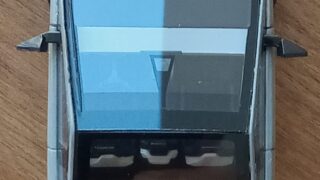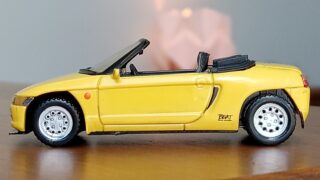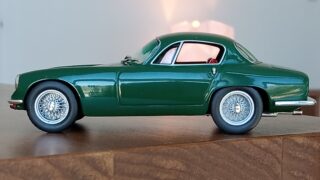
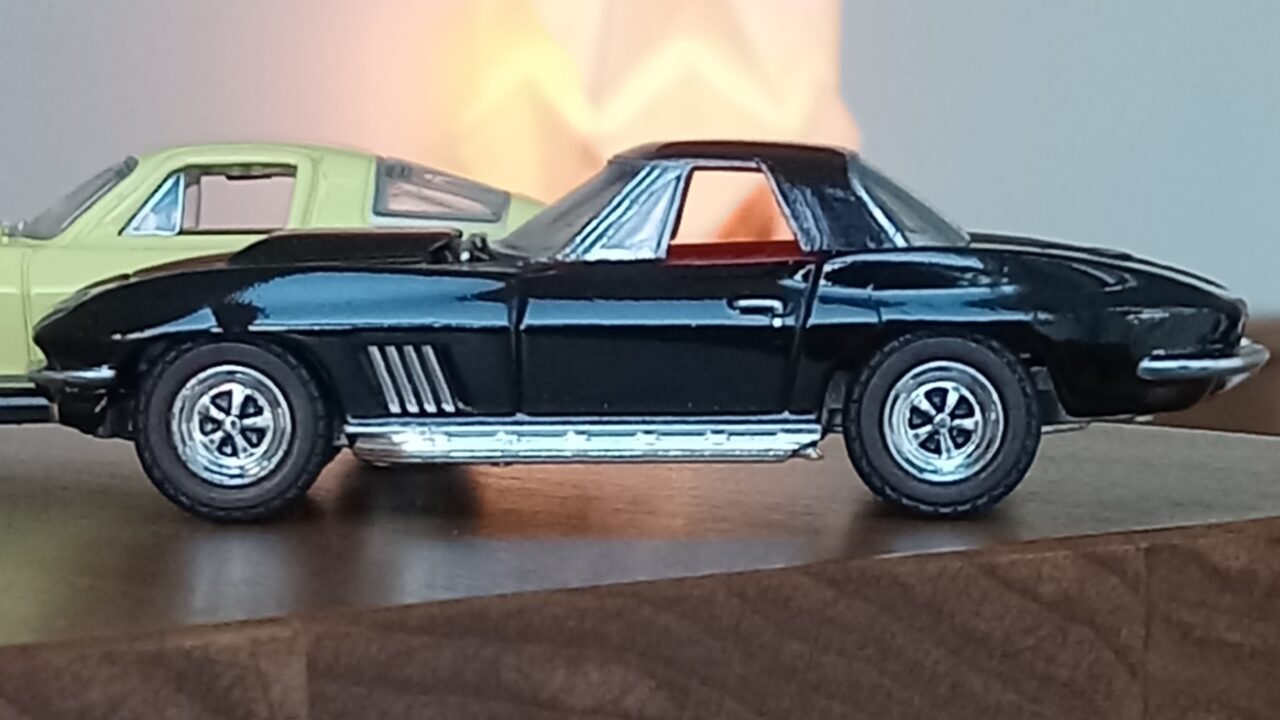
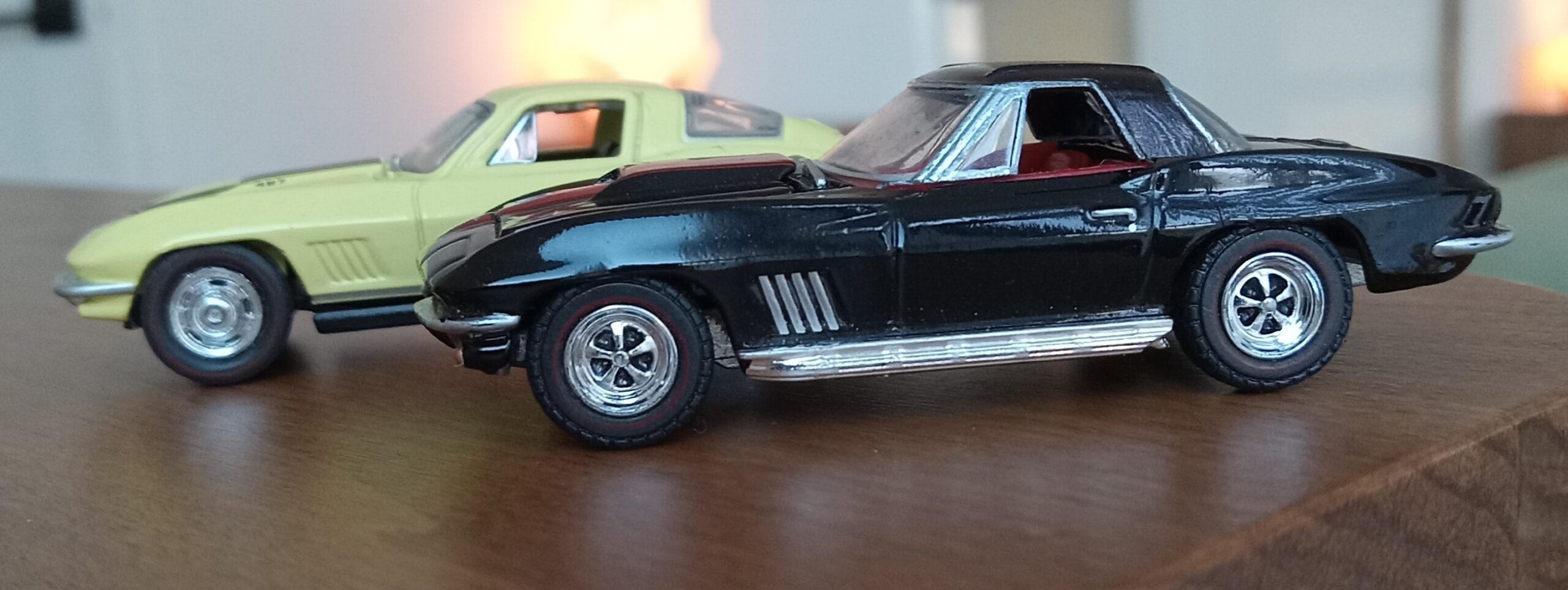
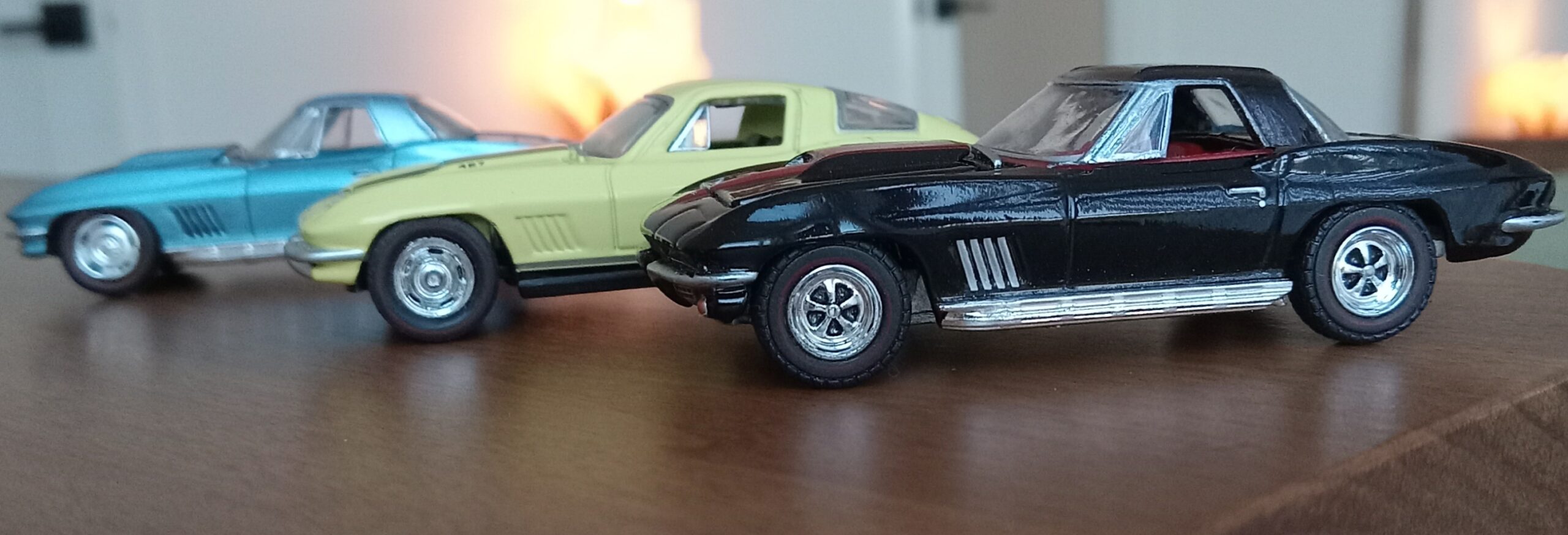
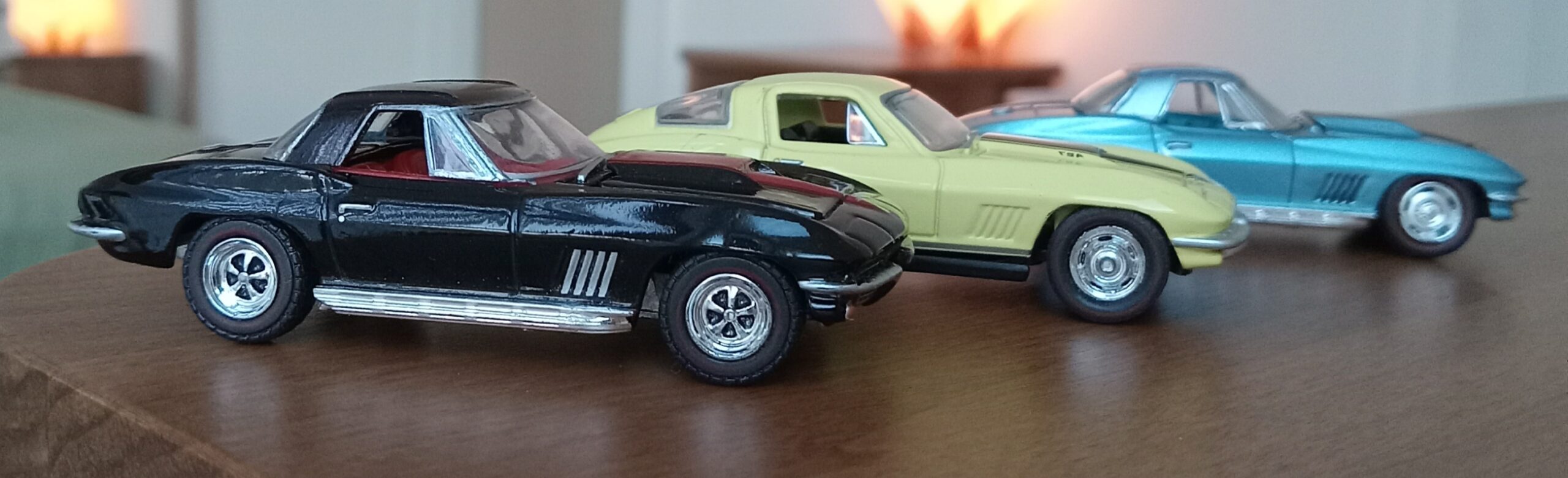
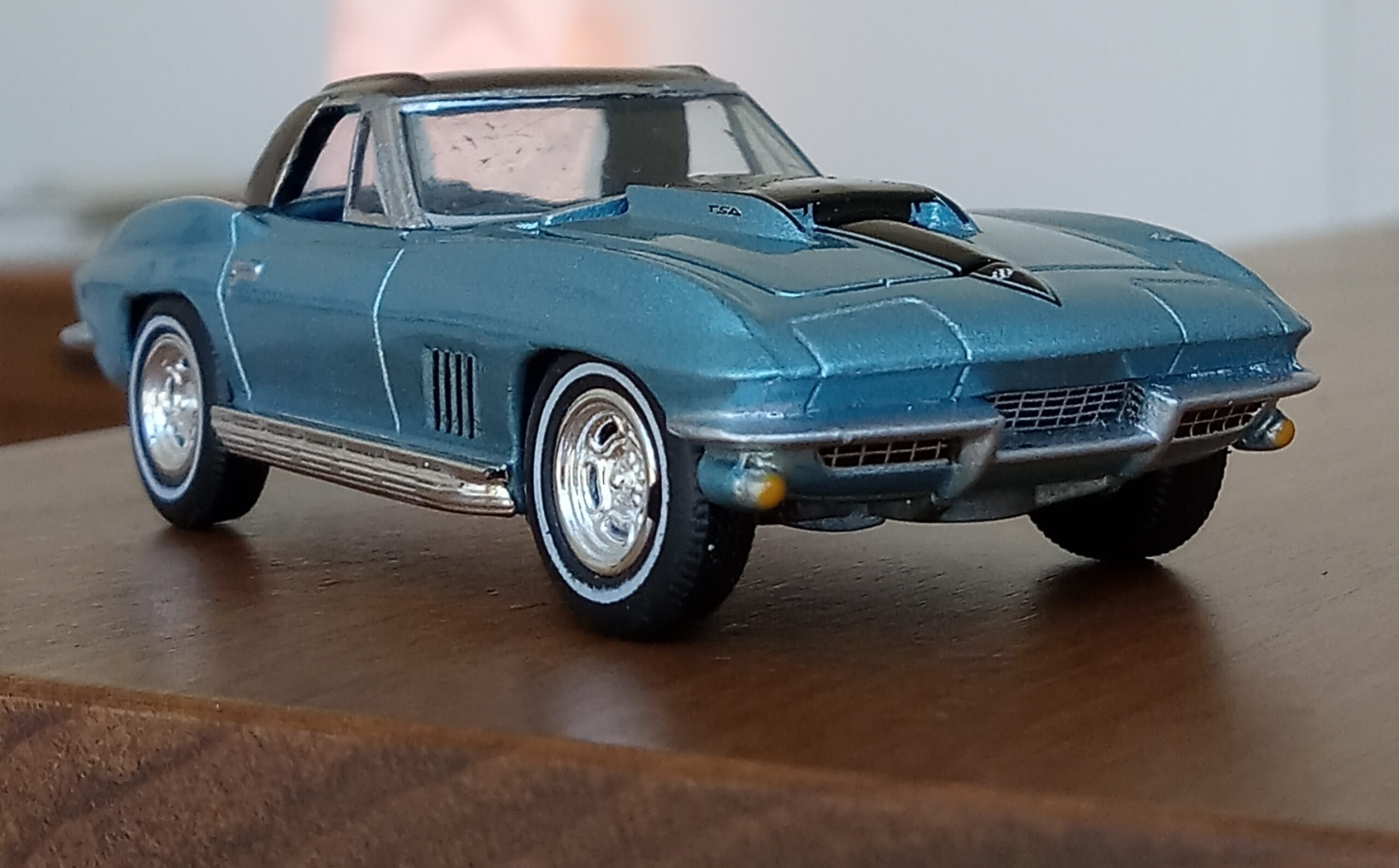
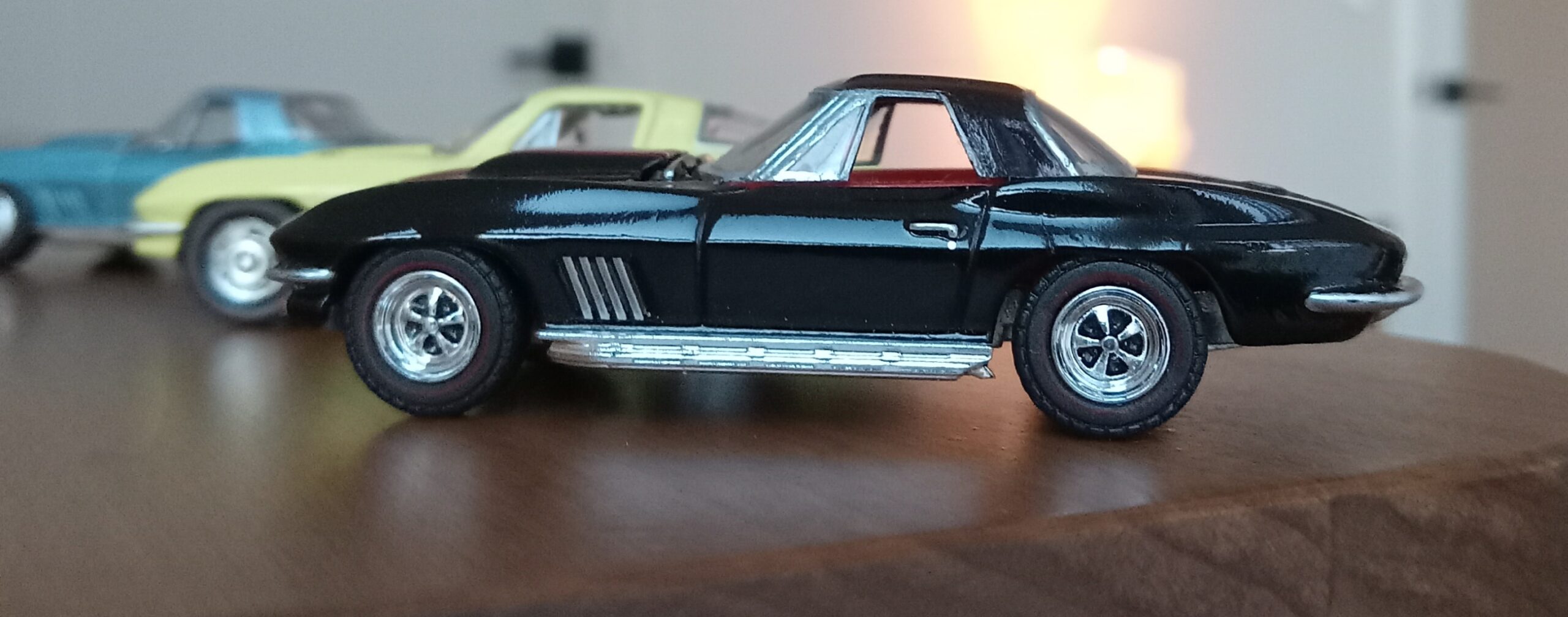
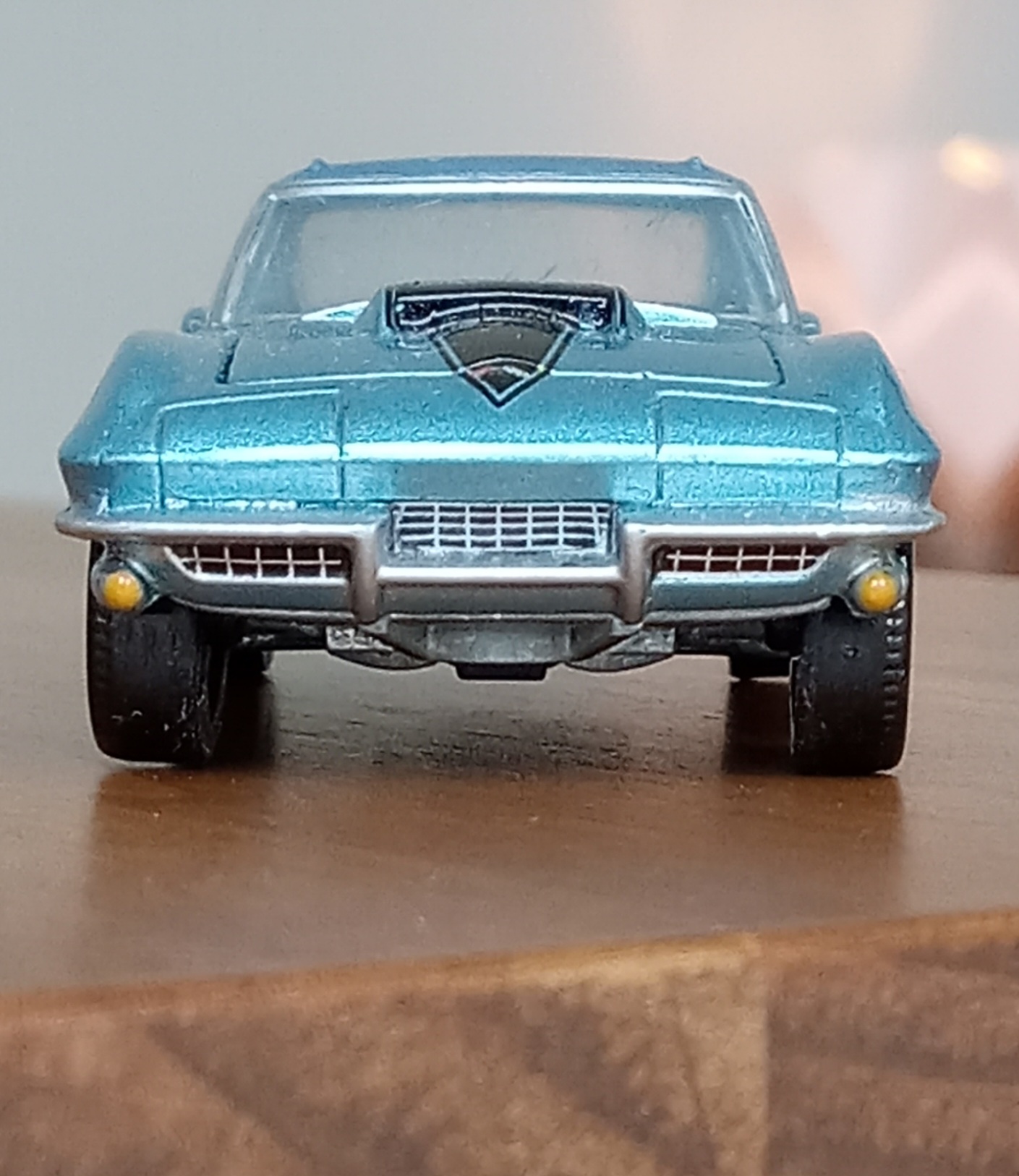
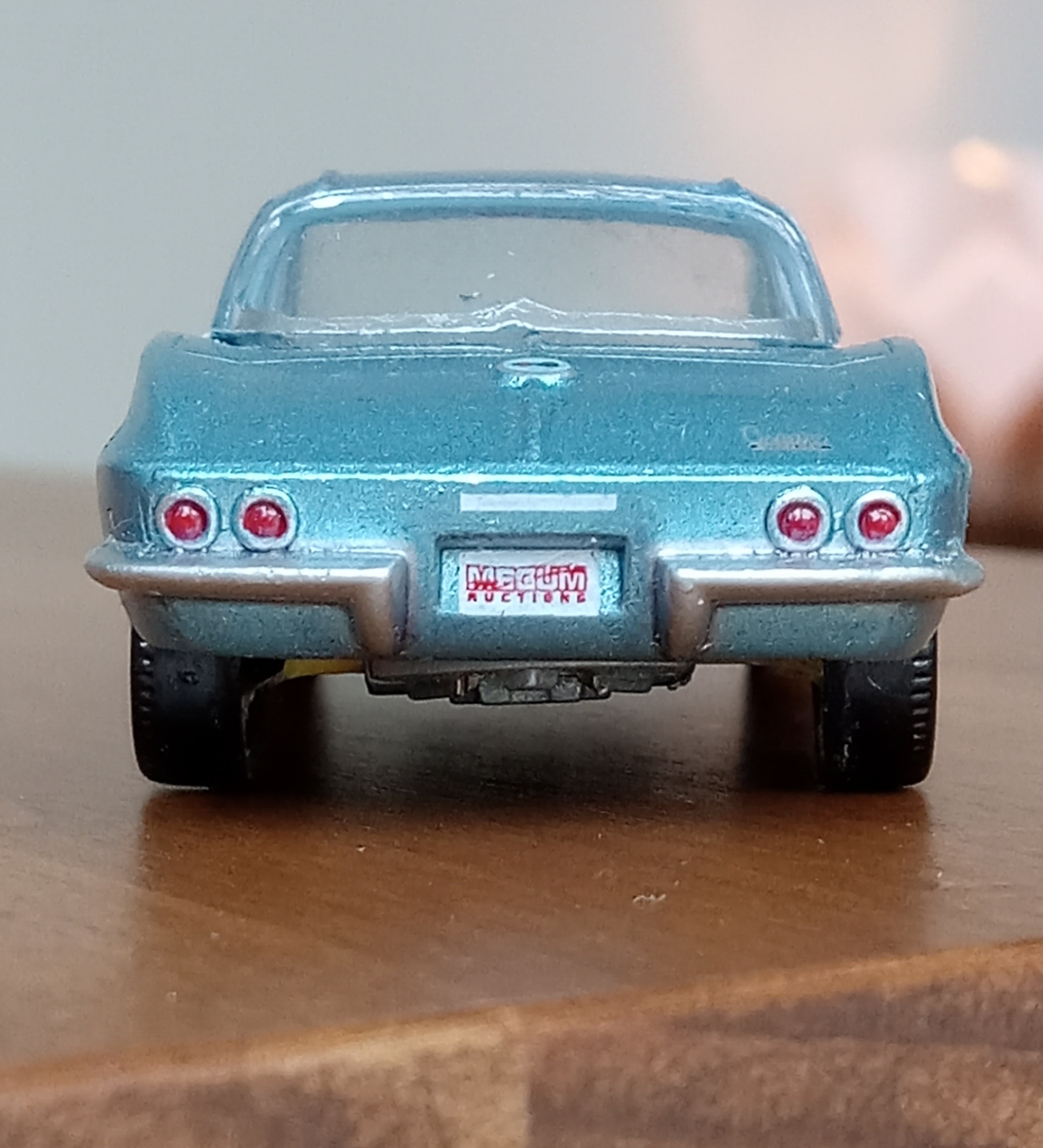
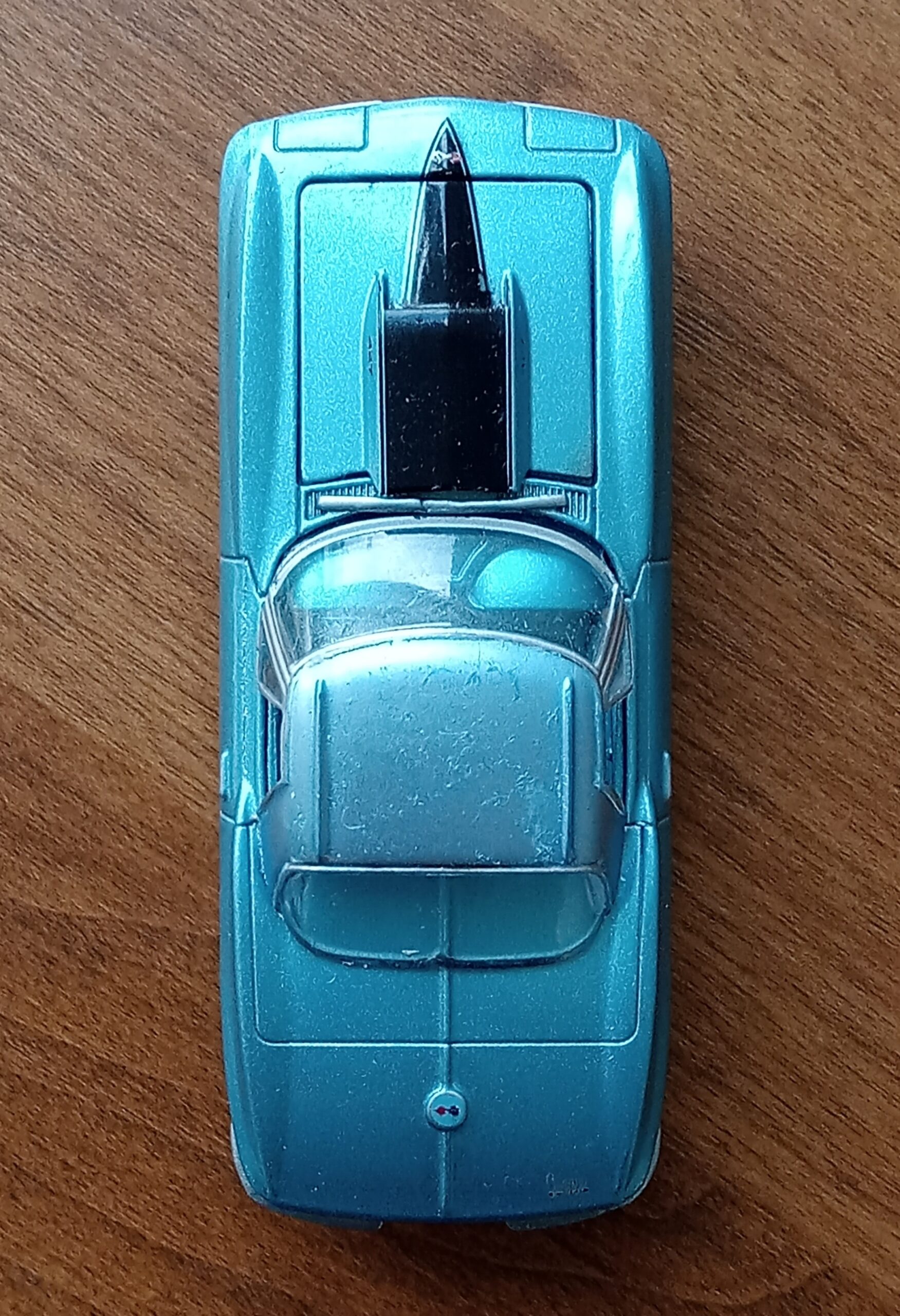
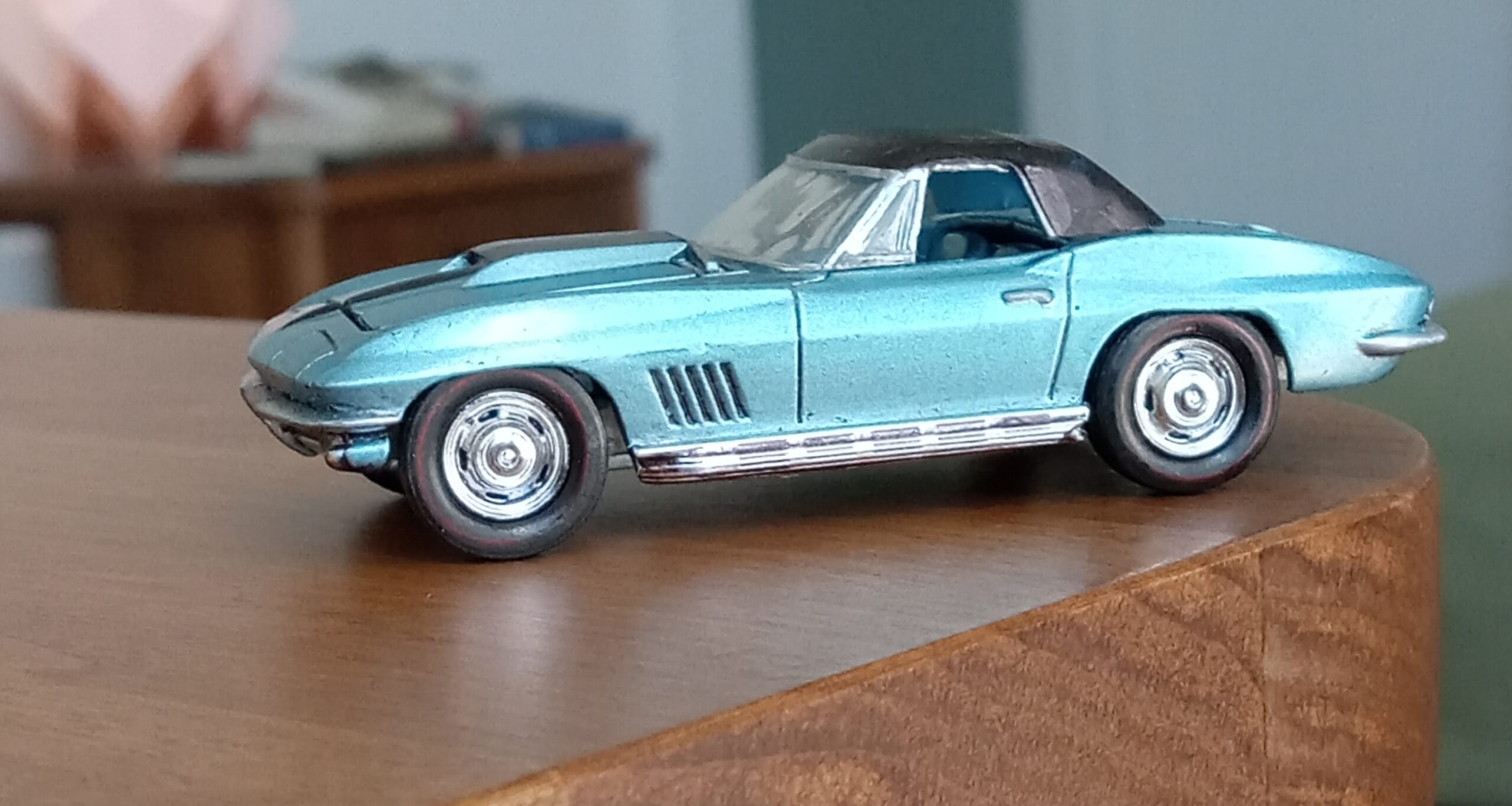
(撮影用ミニカー:【青と黒の車体】グリーンライト社製, 1/64 1967年型 シボレー・コルベット コンバーチブルーーーー同社製、レーシングバージョンの’67コルベットのハードトップを成型・塗装後装着、【黄色の車体】オートワールド社製、1/64 デラックス・シリーズ版 1967年型コルベット・クーペーーーM2社製ホイール&グリーンライト社製タイヤに交換)
第29回ーー【コルベット遍歴ー第1回】、シボレー・コルベット スティングレー、1967(ハードトップ装着/タキシード・ブラック)Chevy Corvette Stingray、1966(Hardtop/Tuxedo Black)
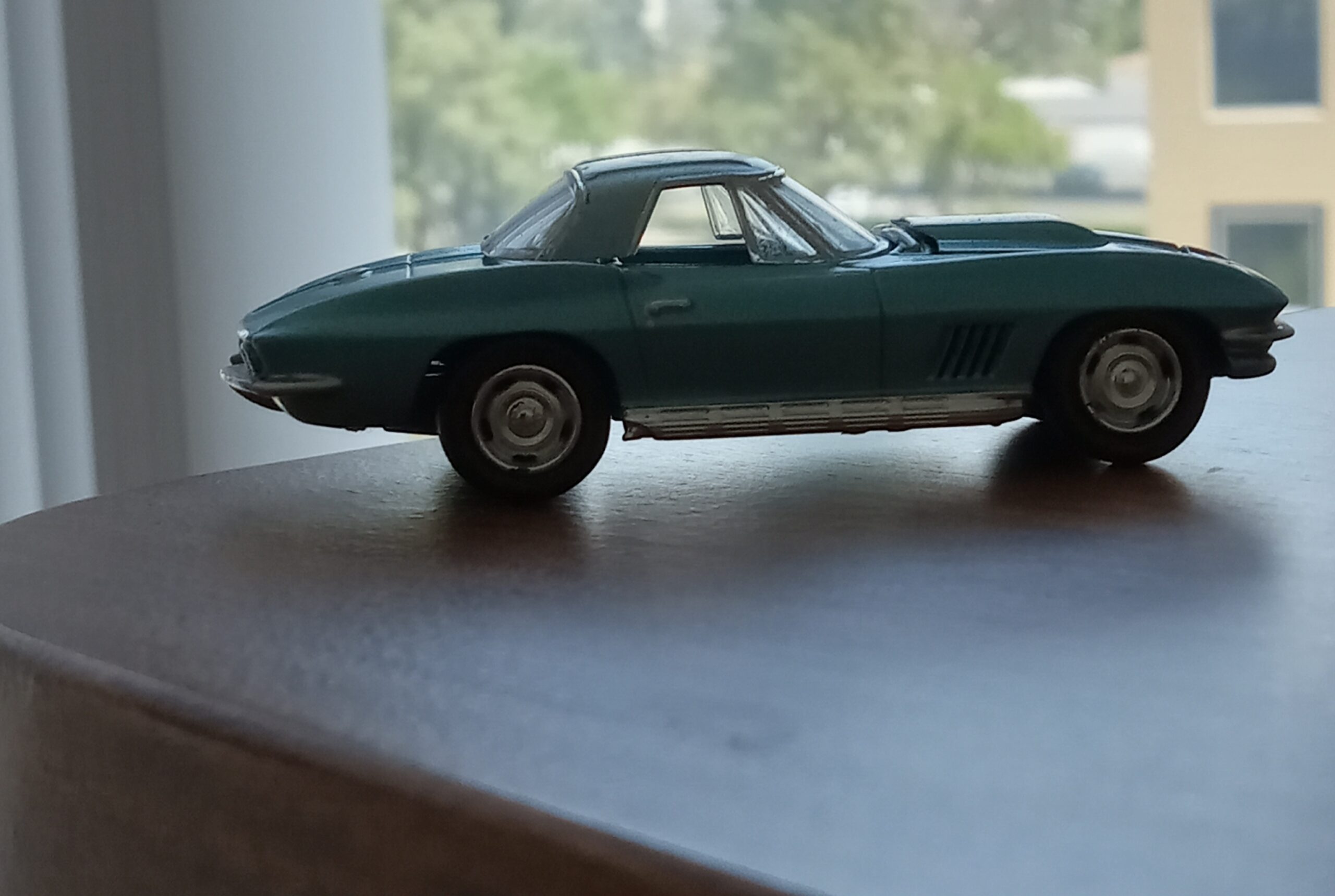
第29回目の今回は、『2ドアクーペの系譜』を一旦お休みしまして、アメ車の奥の院=【私のコルベット遍歴】第1回としまして、1967年型の『シボレー・コルベット スティングレー/ハードトップ装着型』についてお話ししてみたいです。
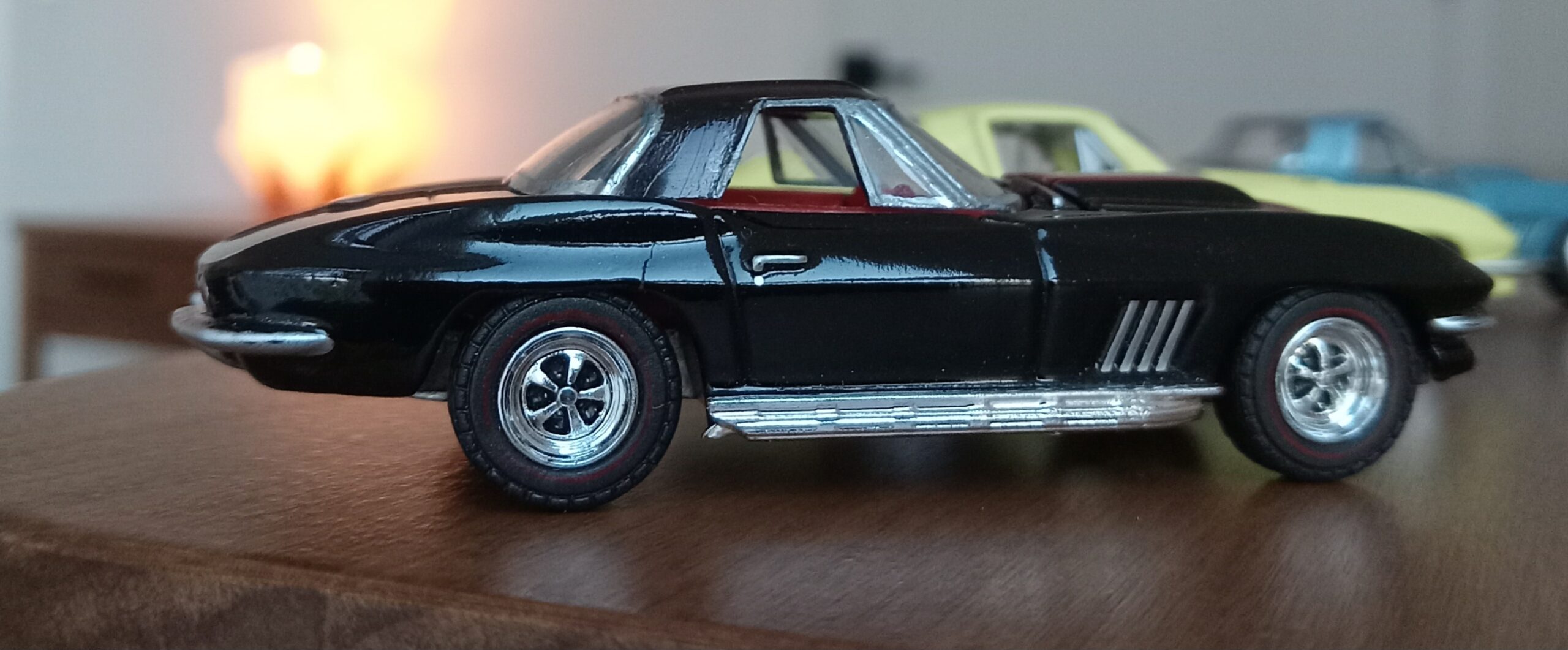
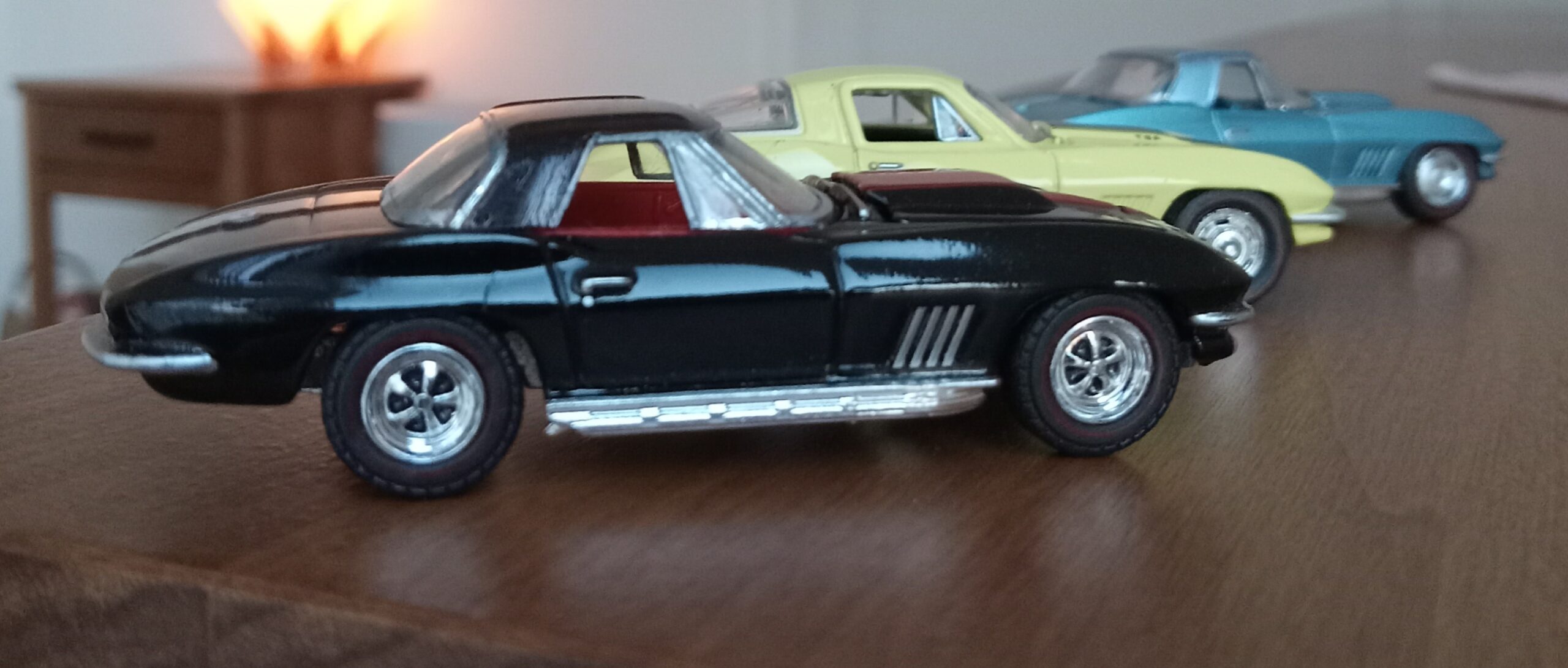
好みのコルベット経歴:(【2ドアクーペの系譜】番外編)
第1回:1967年型 スティングレー【C2】コンバーチブル(ハードトップ・黒)
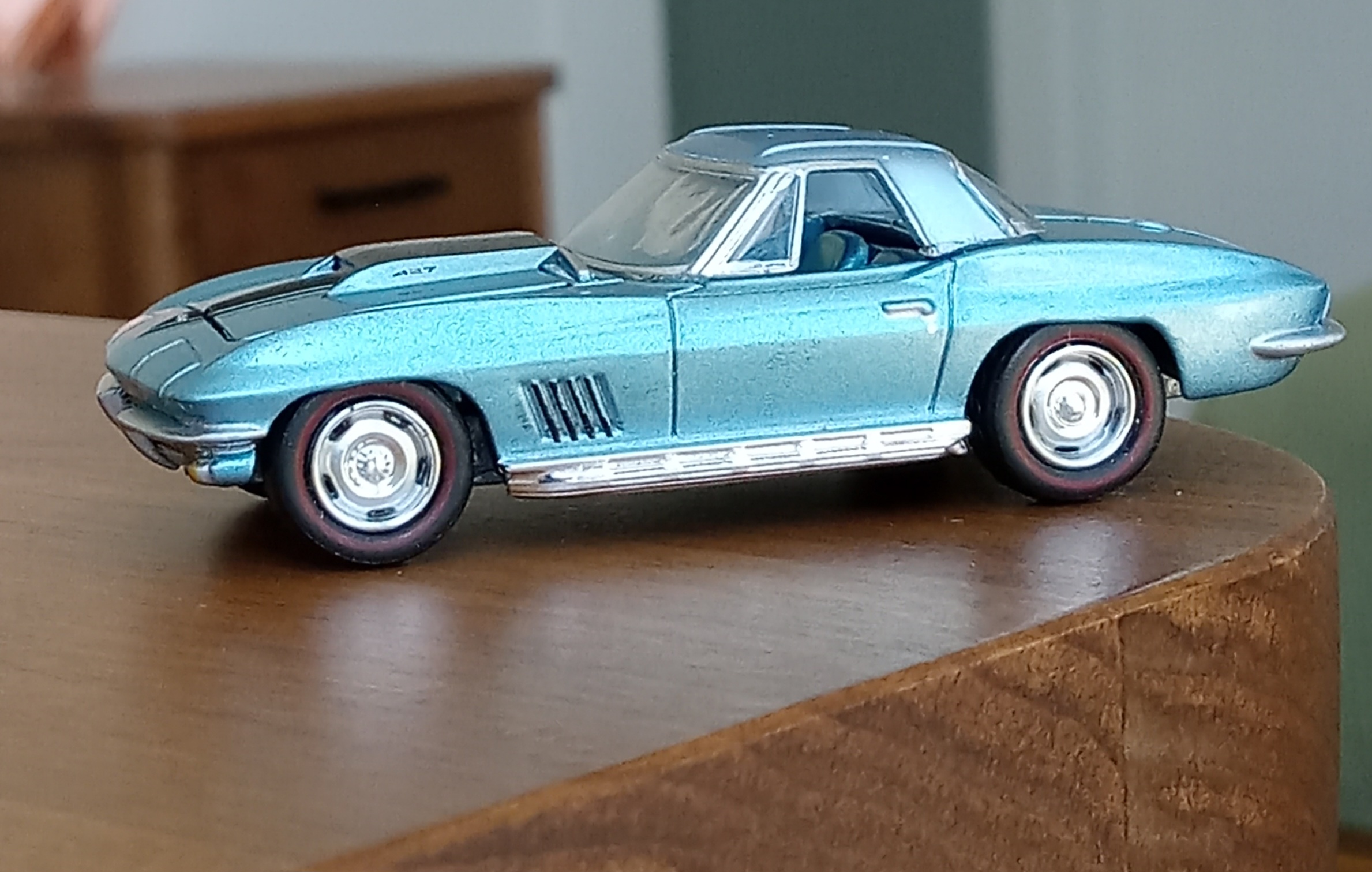
第2回:1972年型 コルベット 【C3】コンバーチブル(メタリック・ブルー)
第3回:1990年型 コルベット ZR-1【C4】クーペ(レッド)
第4回:スティングレー・コンセプト【先行開発車】、2009(プルー・メタリック)
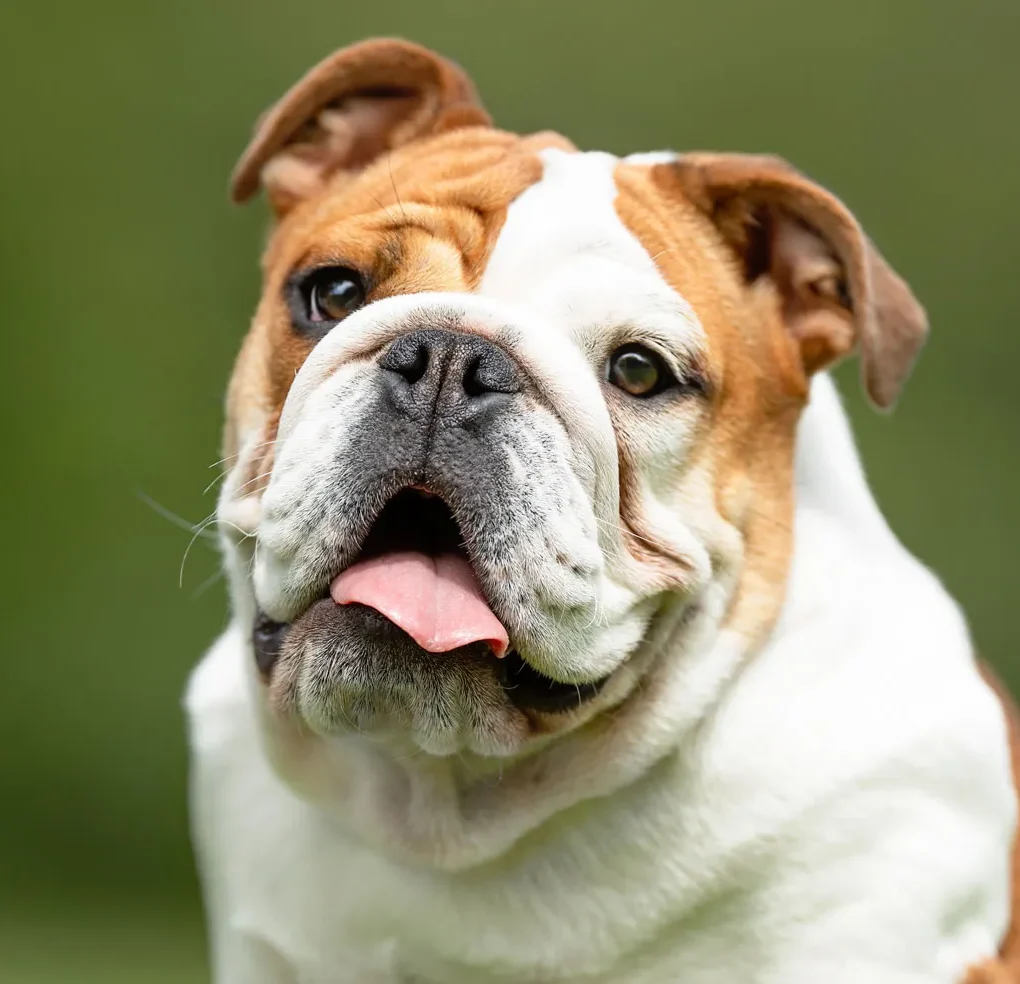
#『ハンサムなブルドッグ』参上!!
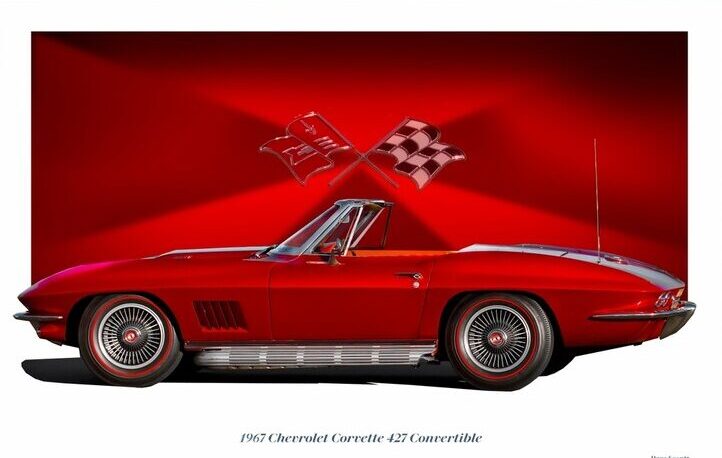
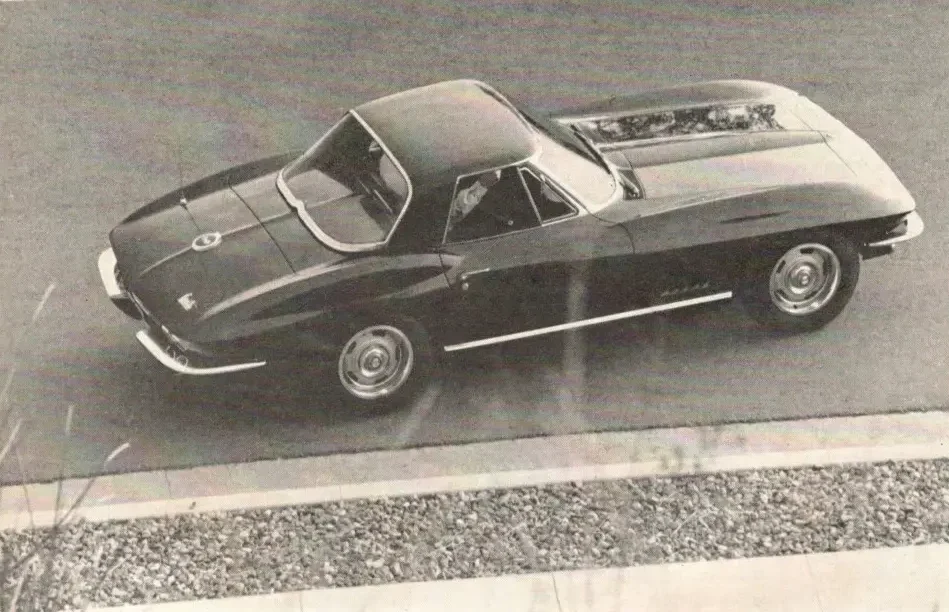
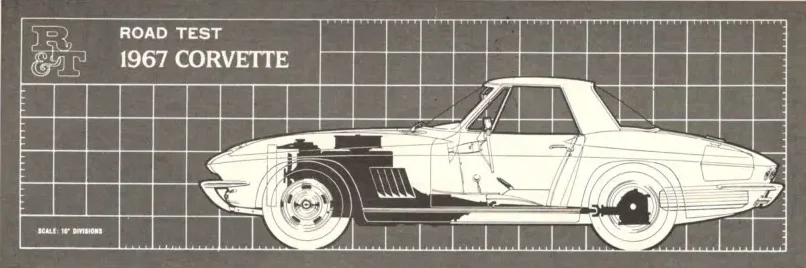
(当時の雑誌広告です。)
私の中で、
C2型のコンバーチブル【ハードトップ装着型】は
アメリカのテレビ・アニメ:『トムとジェリー』に出てきた
【ブルさん=スパイク】を
少しハンサムにした感じです。
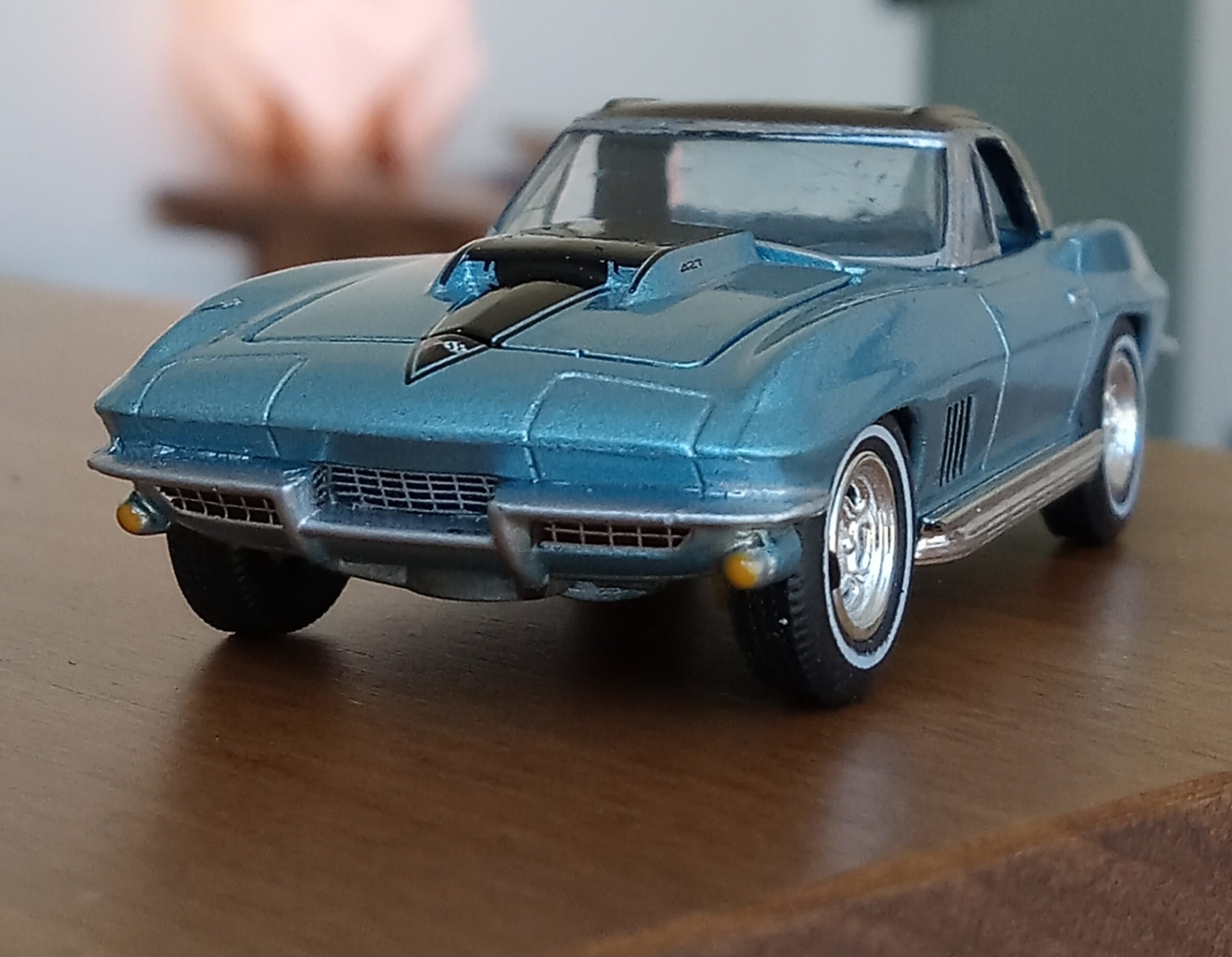
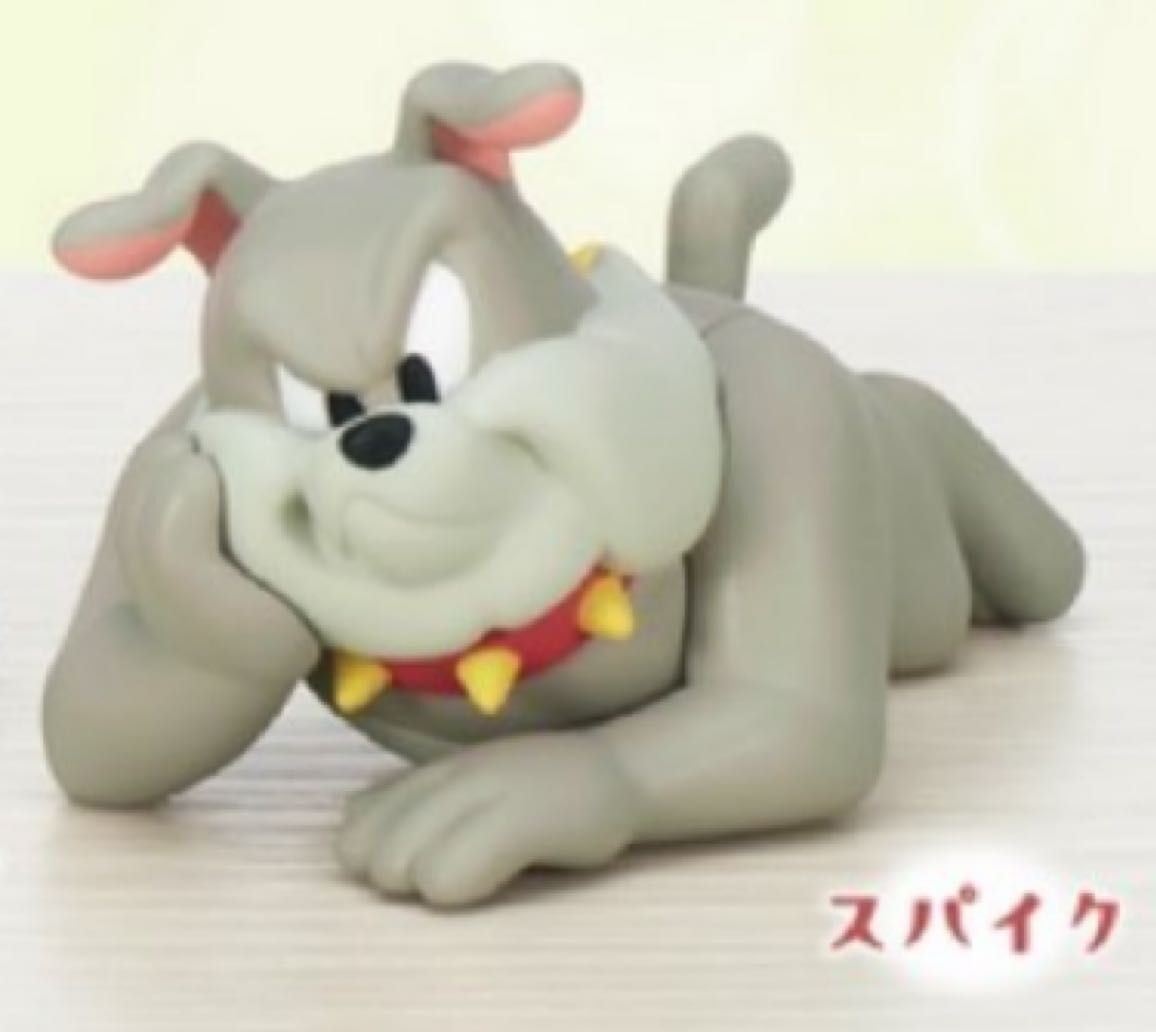

こんな感じです、
*ゴツくて不器用、
*でも、性格はハンサムで2枚目、的な、
独特な魅力があり、
*アメリカの生粋のマッスルカーであり、
*英国・ヨーロッパ的なカブリオレにレース用のハードトップをつけたスマート感もあり、
走行中の印象は、
*フロントから近づいてくる時は、ーーーーー>いかつい【ブルドック】
*通り過ぎていく時魅せる後ろ姿は、ーーーーー>しなやかな【紳士】
こんな2面性にあふれた自動車が
魅力的でないはずはありません!
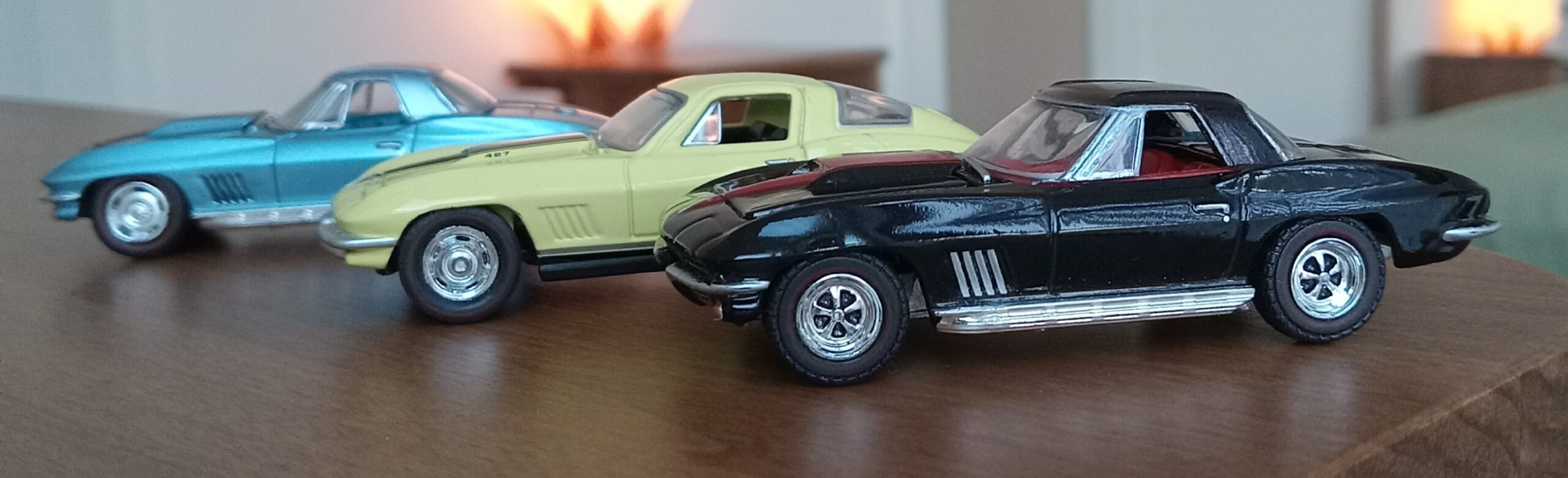
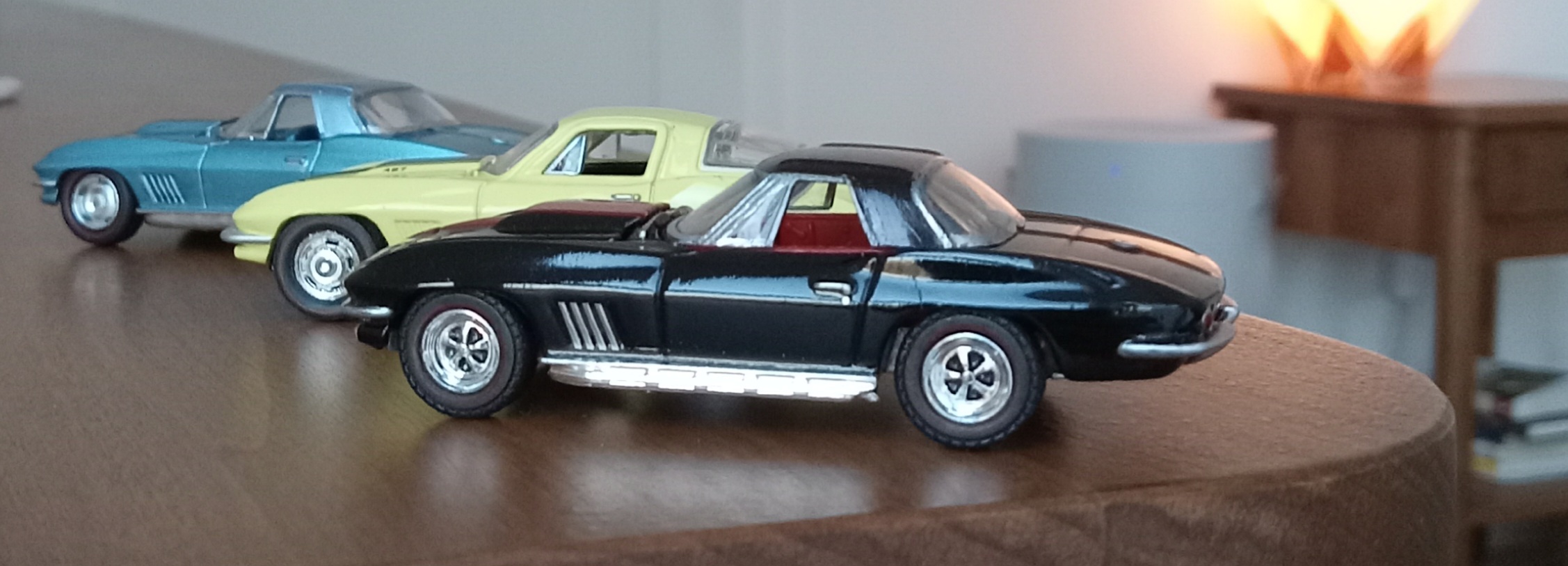
早速、こんな感じで、
見て行きましょう、
*実車解説:ハンサムな『ブルドック』
*外観デザインの特徴:ビルミッチェル vs. ラリー篠田
*『私』と67年型スティングレー・ハードトップ装着型
*三題噺:ラリー・篠田 / ブルドック / 漢気
*その他のハードトップ装着のコンバーチブル車
*実車解説 : ビル・ミッチェル zs. ラリー篠田の葛藤劇場?
#全体像:
1967年式のシボレー コルベット スティングレー(C2型)は、63年型の未来的かつ超個性的=筋肉質なデザイン造形を深化・洗練させた、第2世代コルベットの最終進化型です。その他のどんな車にも似ていない、彫刻的デザインとともに、車体性能的にも圧倒的なパワーを誇り、中でも427ビッグブロックエンジン搭載モデルは、アメリカン・マッスルカーの最高峰として現在も絶大な人気を誇る伝説的な名車です。
1. エクステリアとデザイン
1967年型シボレー・コルベット スティングレー(C2最終型)の外観デザインは、
*インスピレーションの源泉
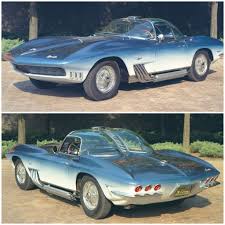
ミッチェルとシノダが手掛けたコンセプトカー「マコシャーク(XP-755)」の流線型のフォルムや、海で実際に釣り上げたサメのカラーリングがC2デザインのベースとなりました。
*スケッチとクレイモデル
GMの極秘スタジオである「スタジオX(地下スタジオ)」にて、ピーター・ブロックらの初期スケッチをもとに、シノダを中心とした少人数のチームがクレイモデルを製作しました。ここでロングノーズ・ショートデッキという黄金比が確立されました。
*「スプリットウィンドウ」の誕生と廃止
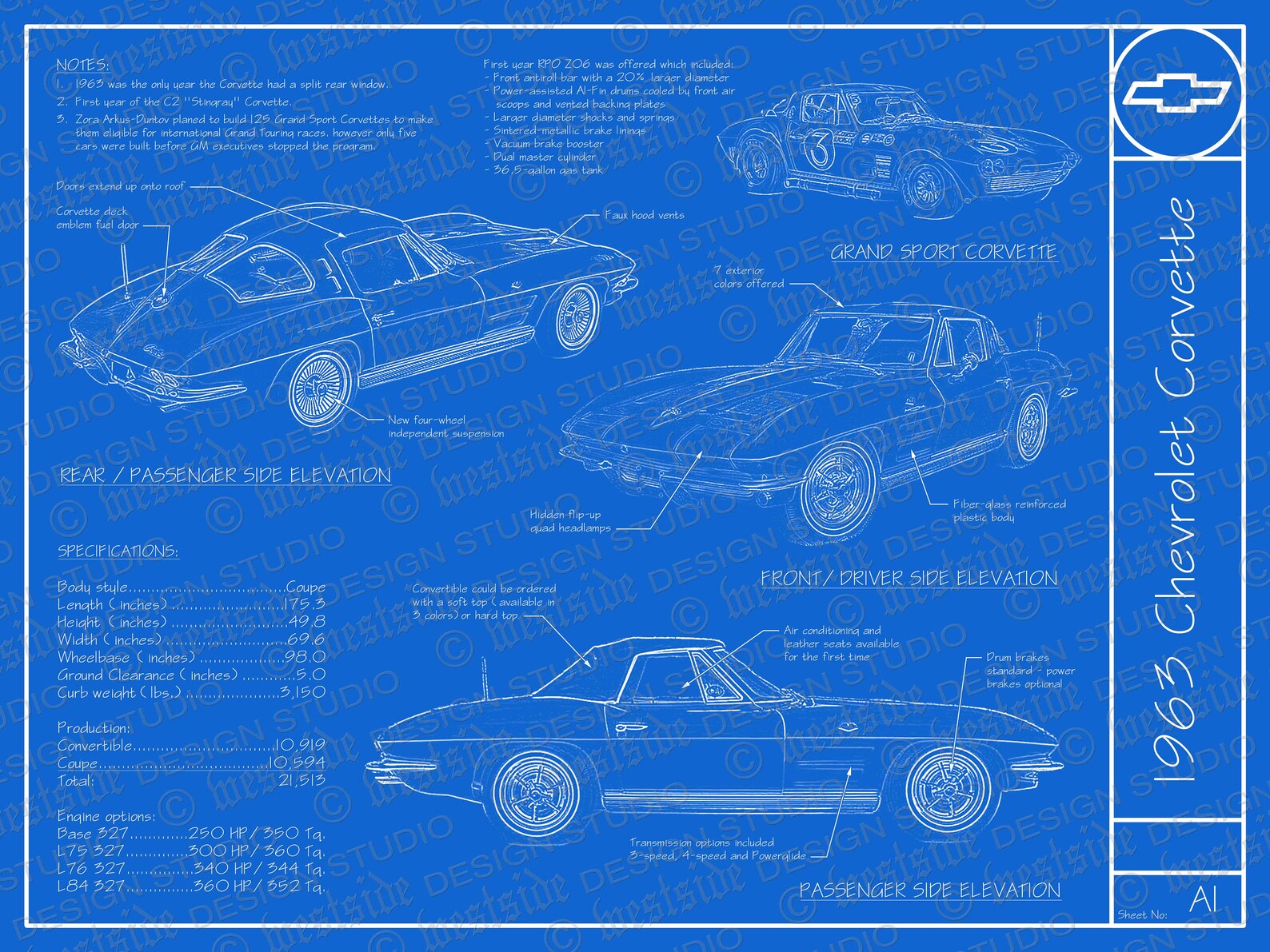
1963年のデビュー時、ルーフからテールまで走るセンターリブと分割式リアウィンドウが採用されました。これはミッチェルの強いこだわりによるものでしたが、後方視界の悪さからわずか1年で廃止され、1964年以降は1枚ガラスに変更されました。
n
n
n
n
n
n
nn
n
nn
n
n
nn
n
n
n
n
n
n
n
n
n
#1963年のデビュー以来、
完成されたC2型のスタイリングは1967年に最も洗練された姿を迎えました。
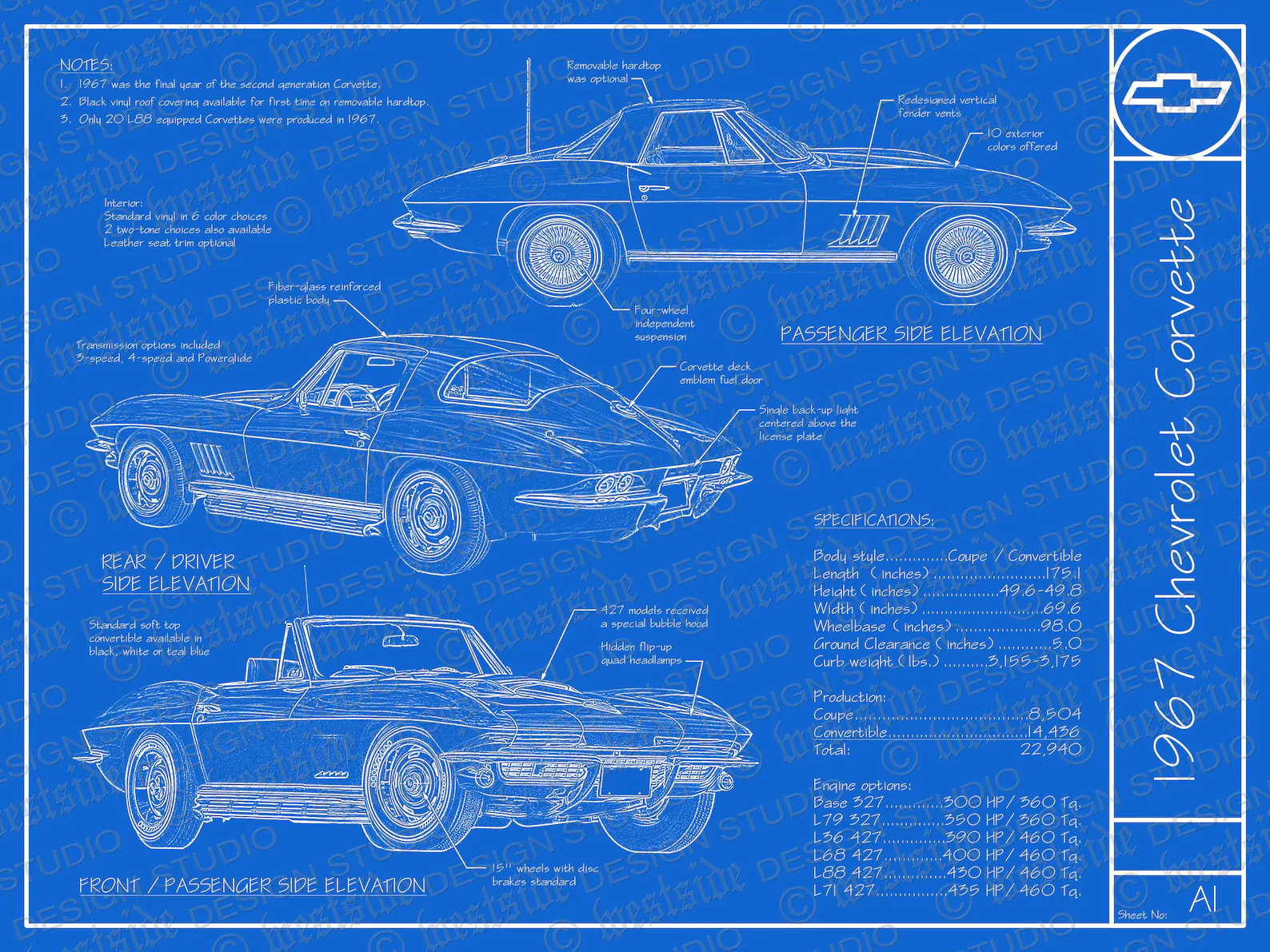
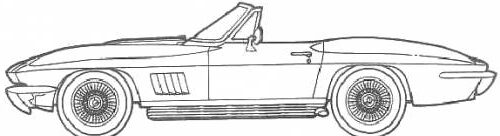
*フロントフェンダー: フェンダー上部のスリット(ダクト)が、従来の3本から5本に変更されました。
*リアデザイン: バックアップランプ(後退灯)がライセンスプレートの上に1つ配置されたのが1967年型の大きな特徴です。
*エンブレムの縮小: サイドのクロームパーツやフェンダーのクロスフラッグエンブレムが取り外されたり小型化され、よりシンプルで美しいボディラインが強調されました。
n
N
*ビッグブロック(427ci): トライパワー(3連キャブレター)仕様で400馬力や435馬力を叩き出し、さらにサーキット向けの限定モデル「L88」はカタログ値430馬力ながら、実際には550馬力以上のモンスター級スペックを秘めていました。
n
n
n
n
n
n
n
#主要諸元:
- 型式:L-71(ストリート最高峰)
- 総排気量:ビッグブロック V型8気筒 (427立方インチ / 6,997 cc)
- 最高出力 : 435 hp @ 5,800 rpm(L-71)
- 最大トルク:63.6 kgfm (460 lb-ft) @ 4,000 rpm(3連2バレルキャブ)
- 駆動方式:FR(フロントエンジン、リアドライブ)
- 定員:2名
- 車体形式:2ドア・コンバーチブル
- ホイールベース:2,489 mm (98.0 インチ)
- 全長:4,448 mm (175.1 インチ)
- 全幅:1,758 mm〜1,768 mm (ビッグブロックは若干ワイド)
- 全高:1,265 mm (49.8 インチ)
約 1,385 kg 〜 1,513 kg
(3,053 〜 3,336 lbs / 搭載エンジンにより増減)
*外見デザインの特徴:ハンサムな『ブルドッグ』
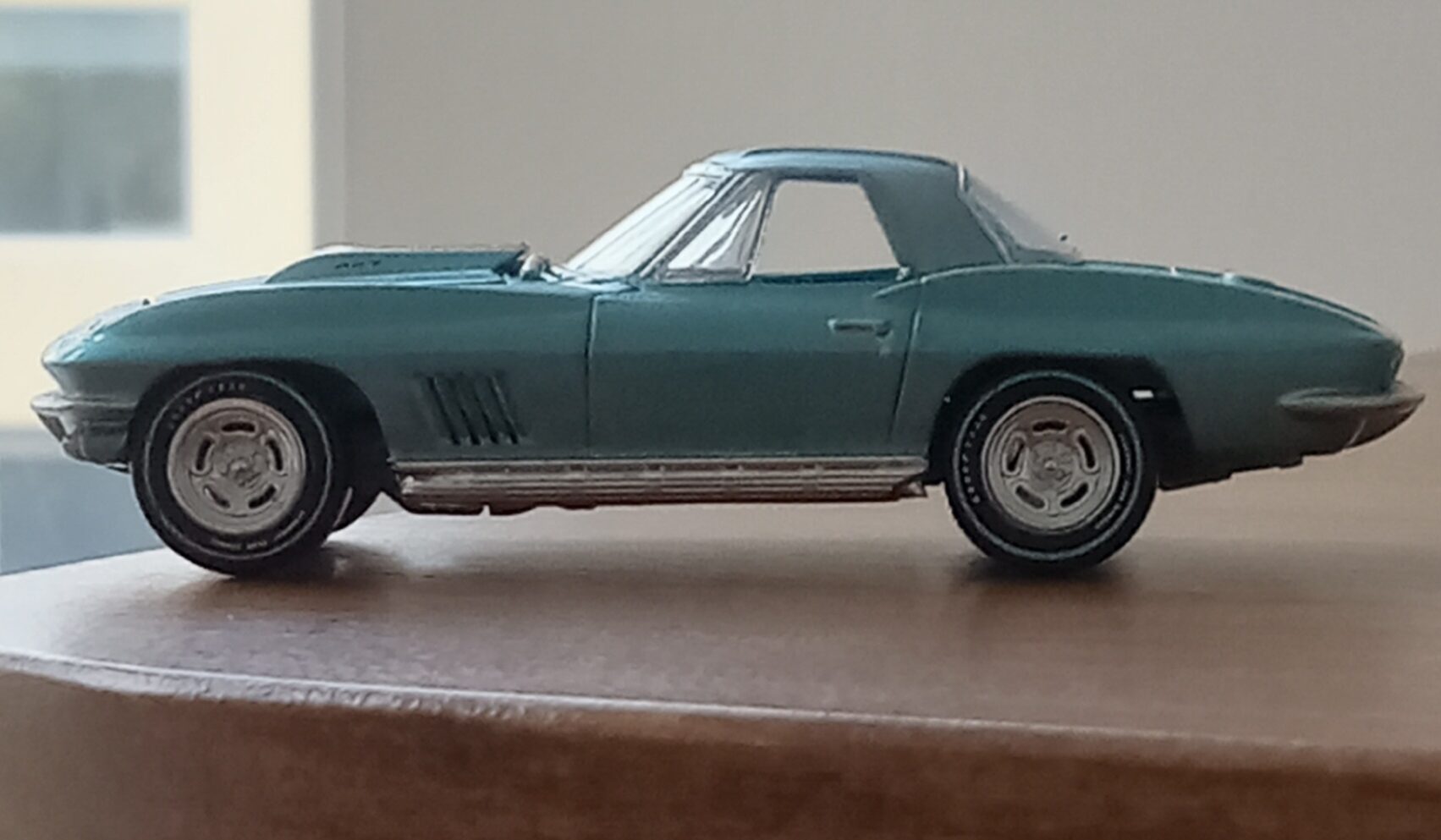
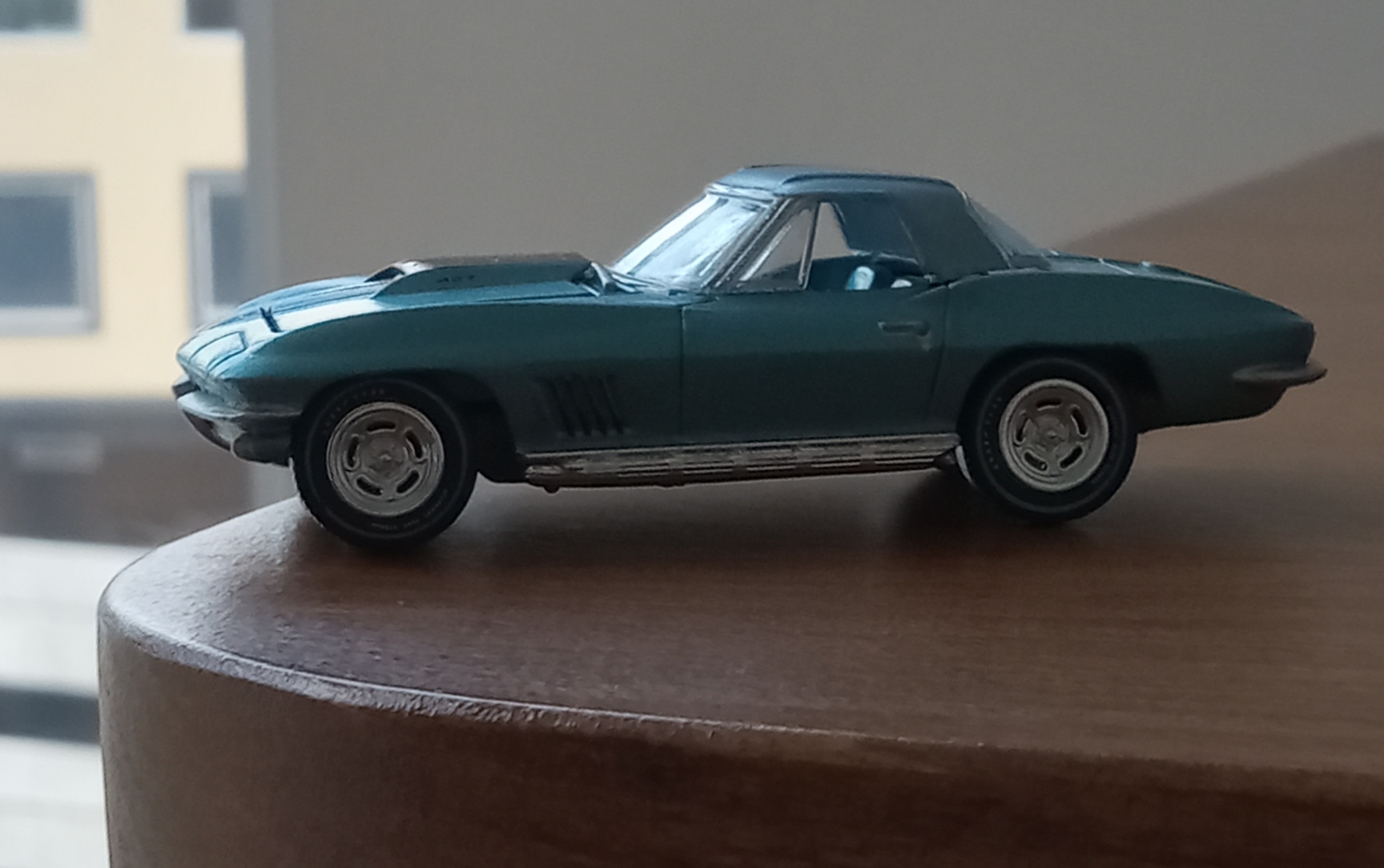
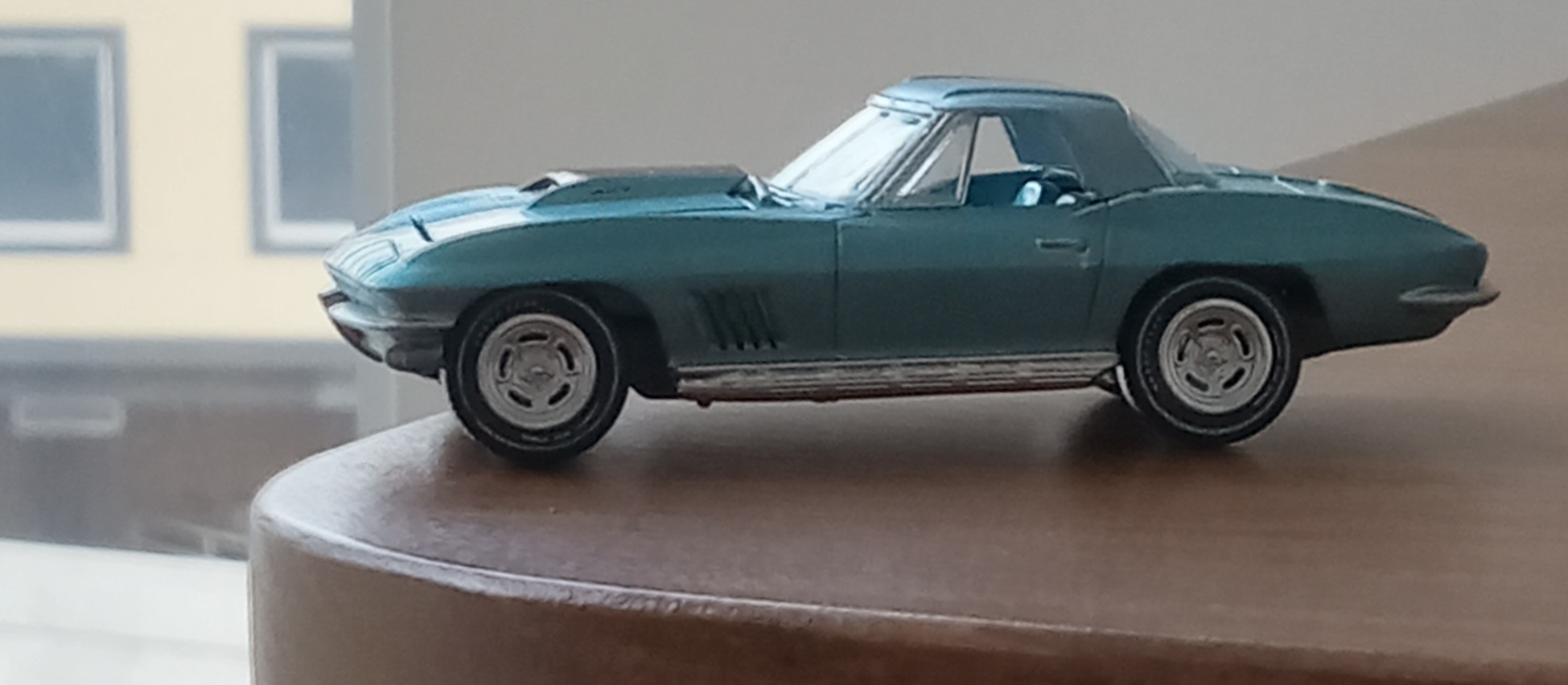
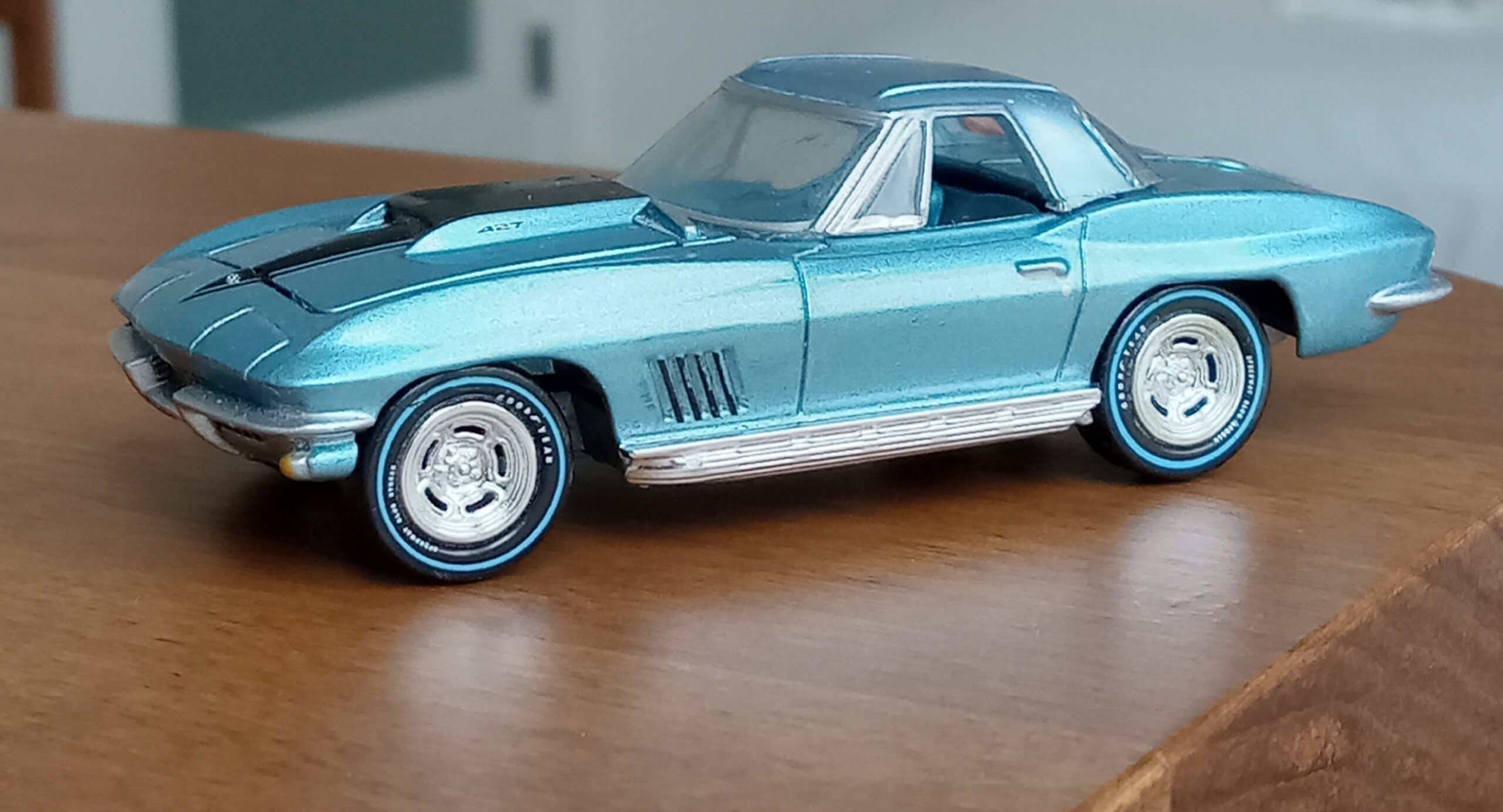
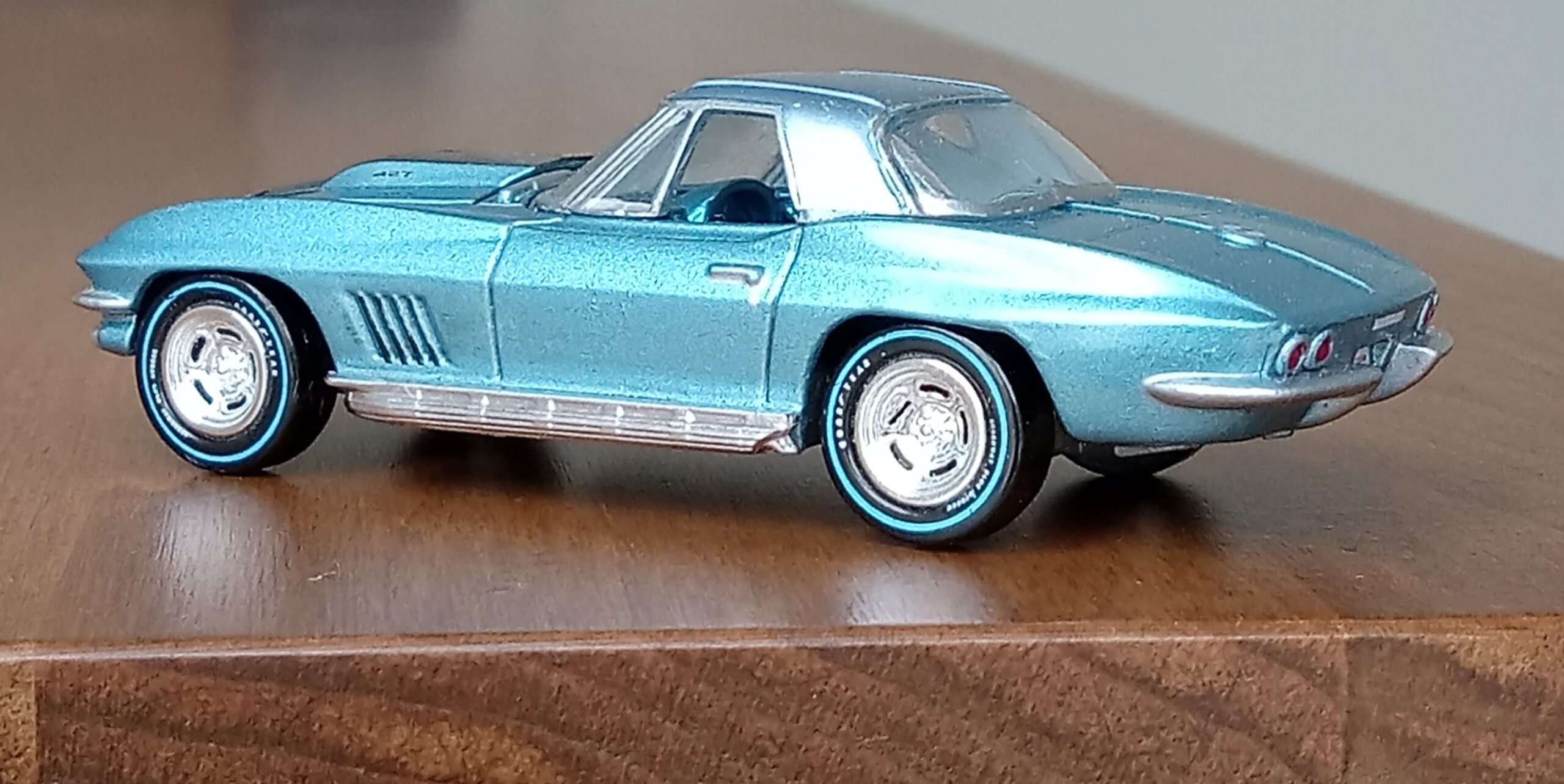
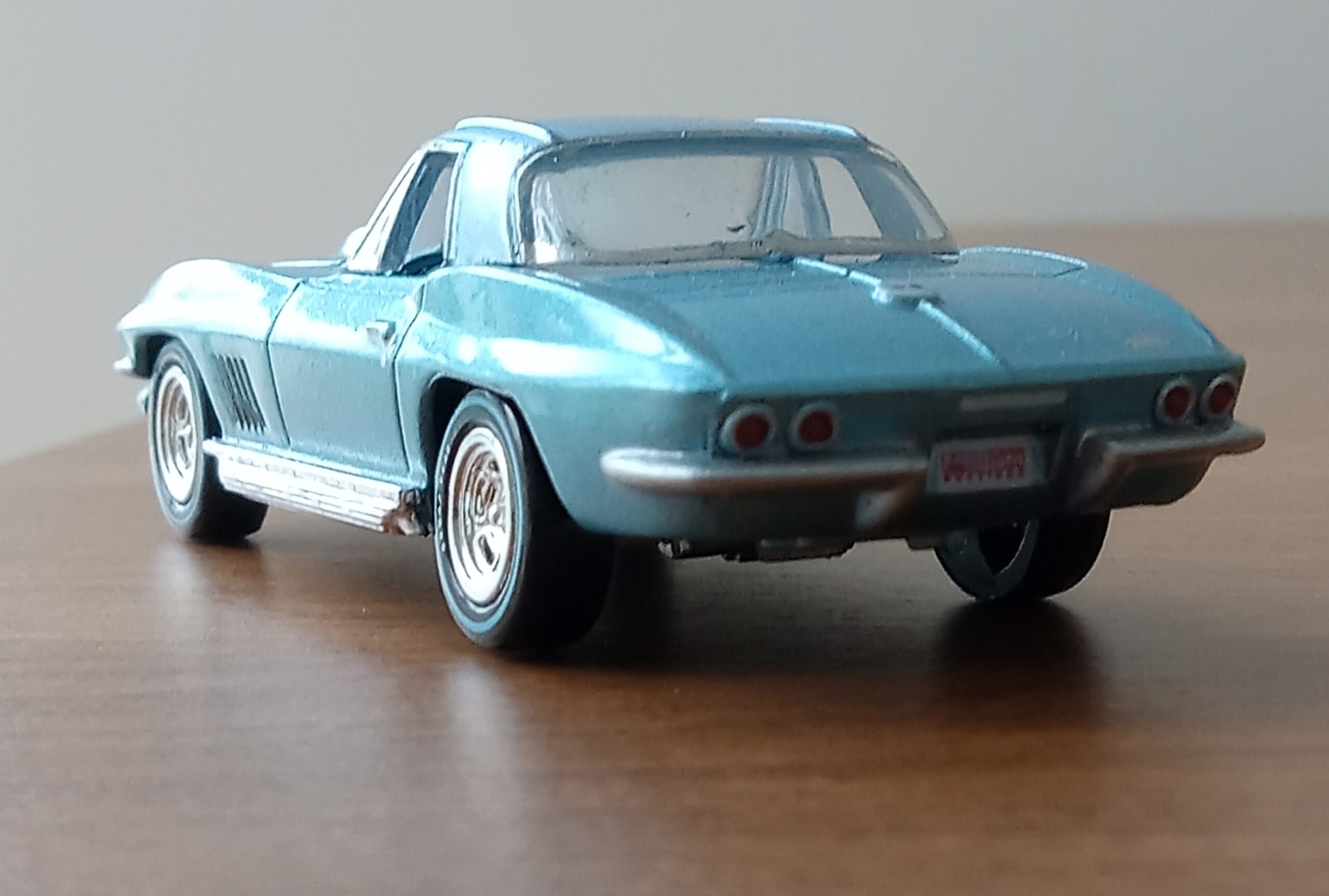
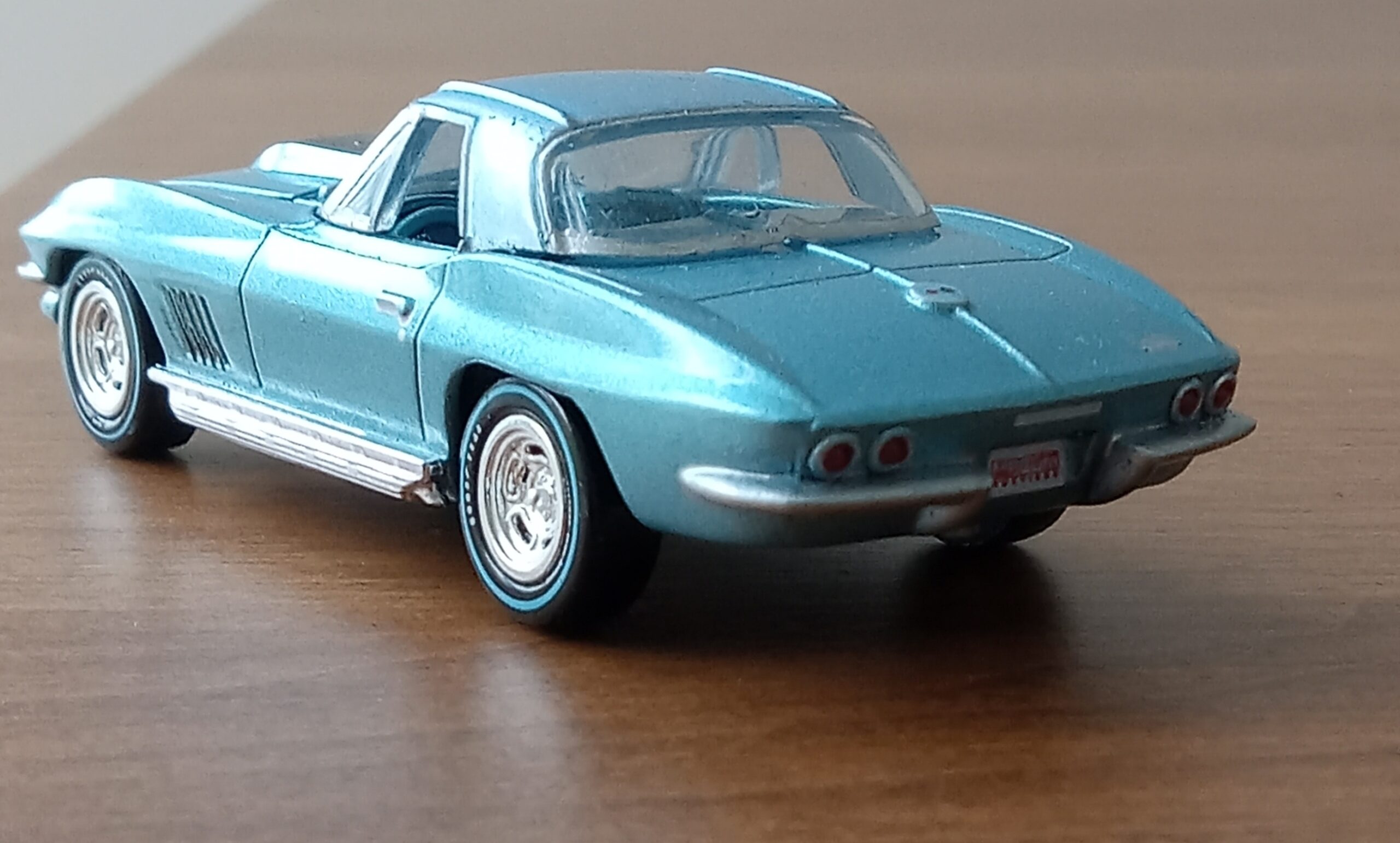
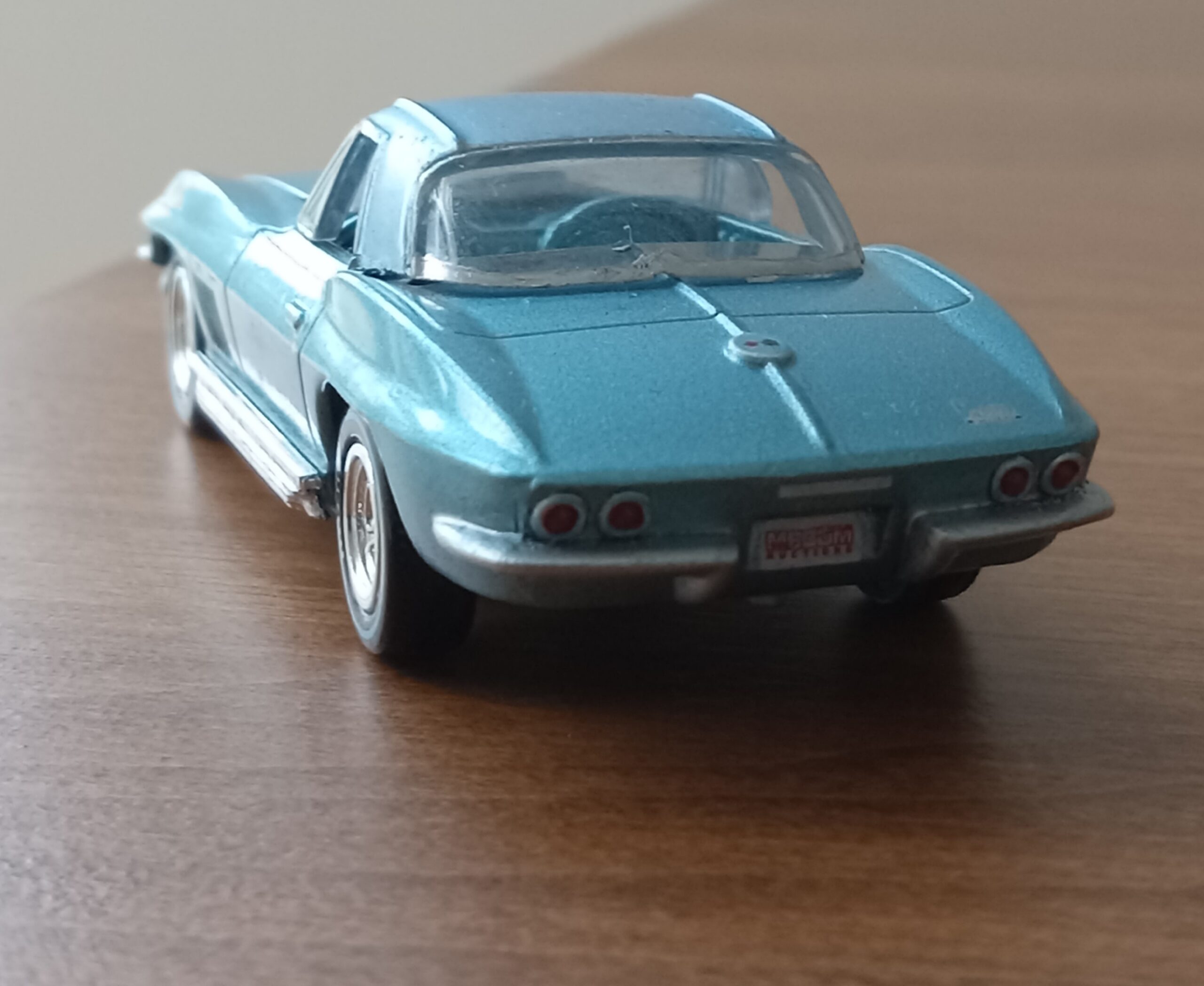
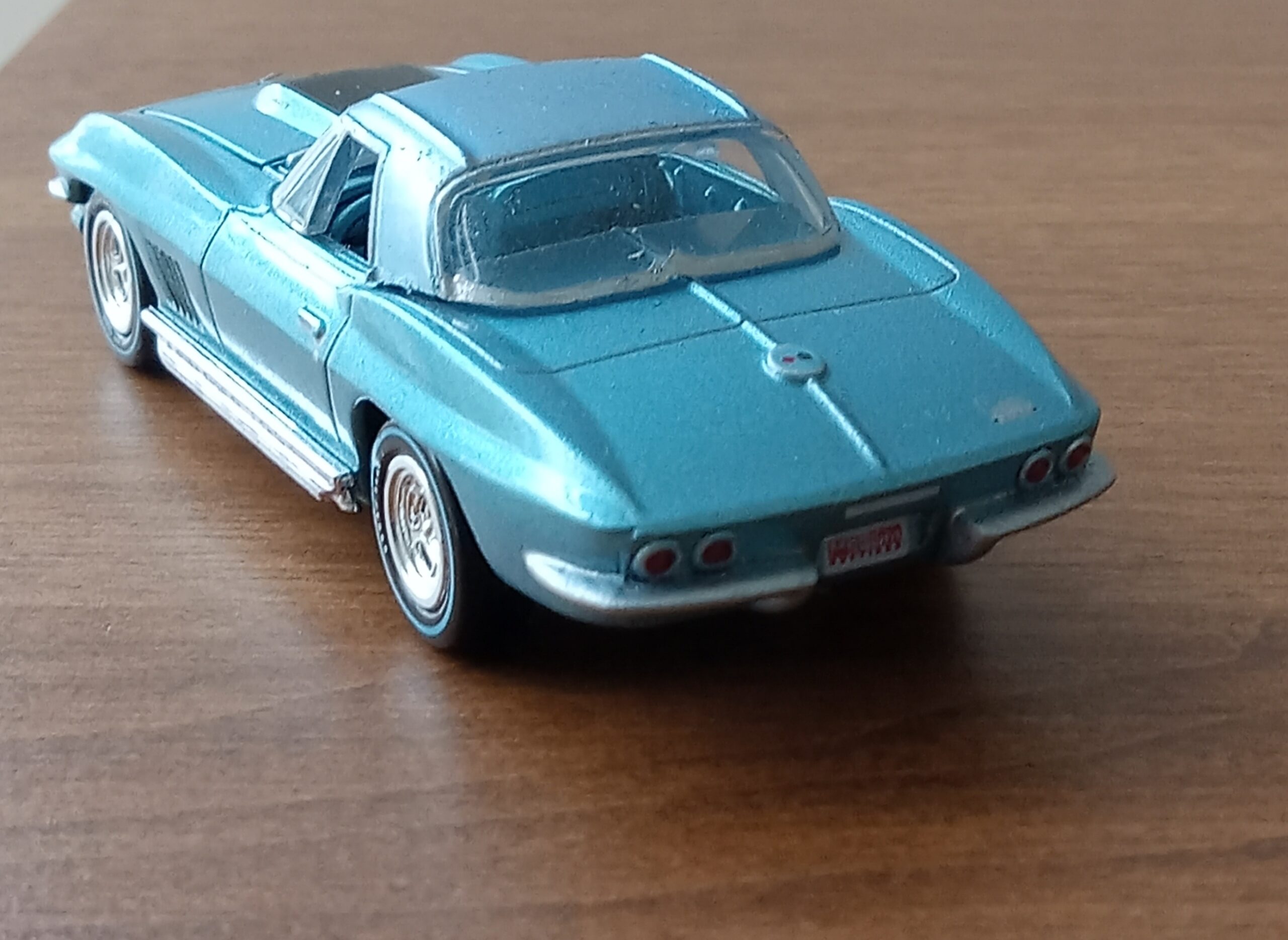
それでは、
この類まれな『マッスル・コルベット』の
デザイン的特徴につきまして、
以下の6点に絞って、
私のインプレッションをお話ししたいです。
1:まさに『マッスル・カー!』、筋肉隆々なフェンダーが4隅に配される姿はまさに、他に比べようがない唯一無二のアメリカン・デザインの孤高の頂点!
ーーーーーー>あらゆる画角からの姿が、彫刻的傑作です。
2:見落としがちですが、サイドビューが引き立つ、完璧なエンジン位置から導き出される、理想的FRプロポーション
――ーーーー>当時のヨーロッパスポーツに負けない、野性的な方向性が強烈
3:少し上下に、厚めで表情が見えないことで不気味さが増す、、サメの頭部的に尖ったフロントマスクーーーーー>ここまで尖ったフロントは珍しいです。
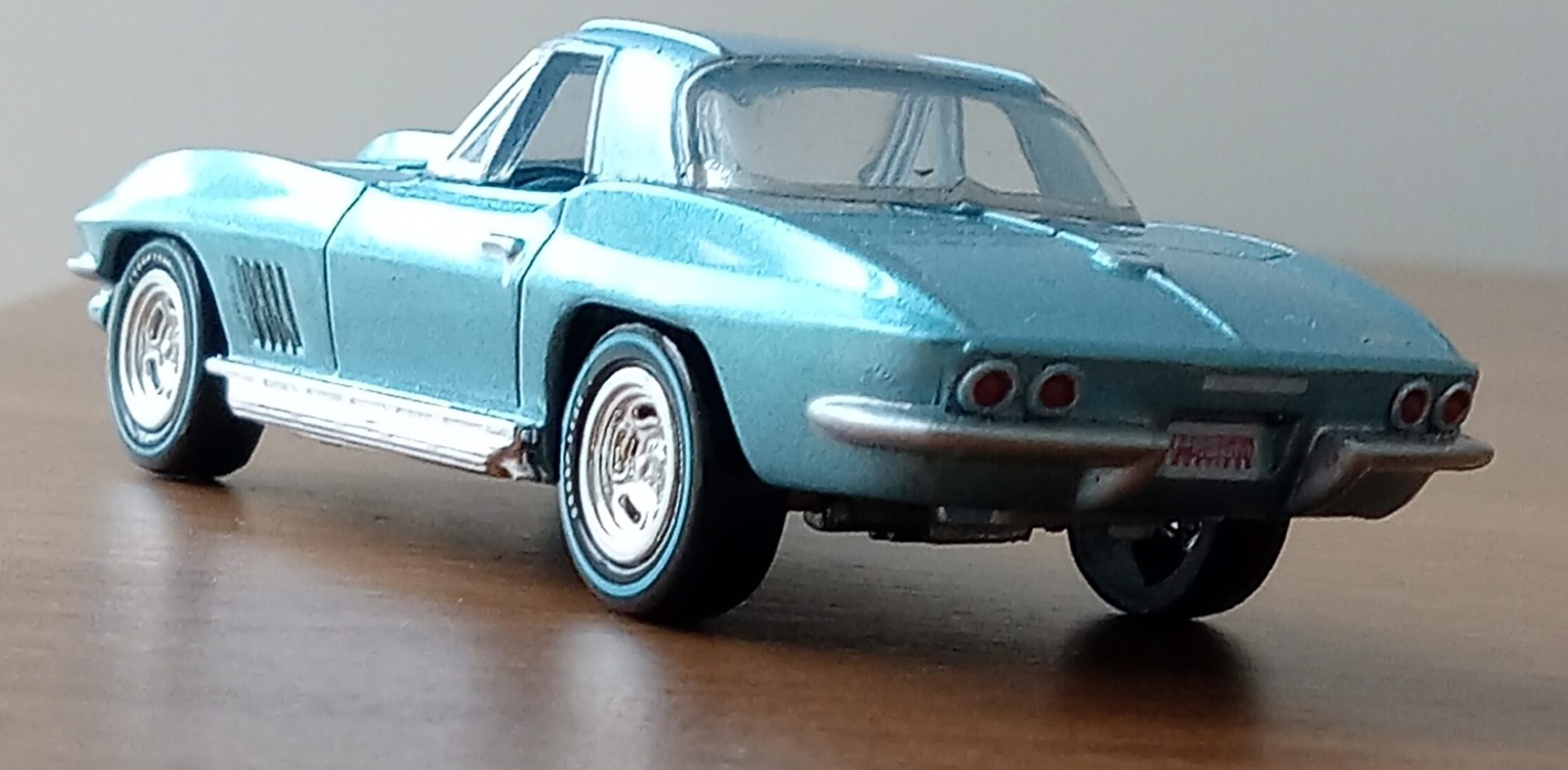
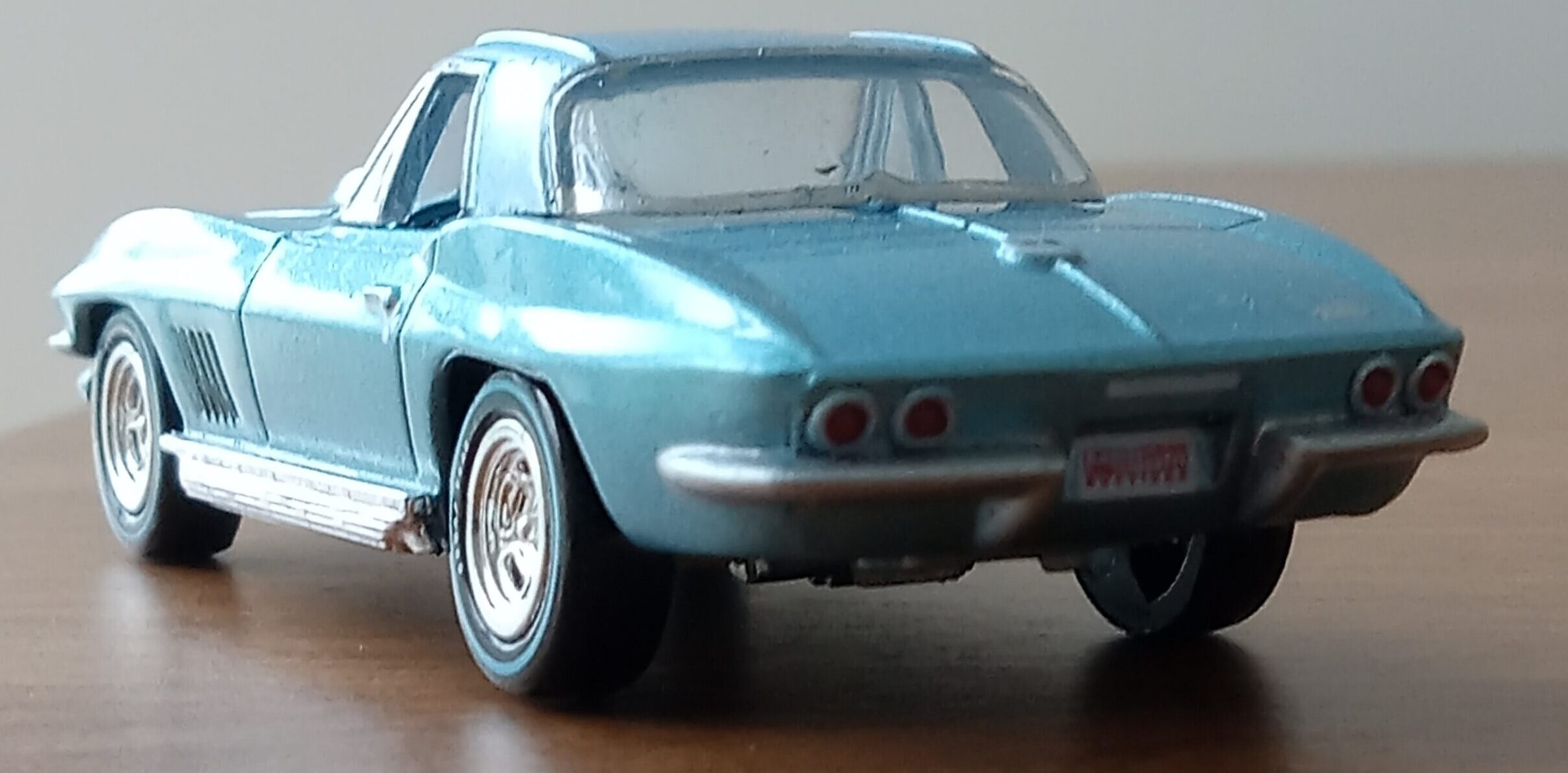
4:フロントに比べて、スラッとしてシャープで2枚目なリア・クオーター周りの造形
5:荒々しいコンバーチブルを一気に、引き締まった+気品あふれるクーペに変える『完璧に計算ずくでデザインされた』オプションのハードトップ
これでは
細かく見て行きましょう。
1:まさに『マッスル・カー!』、筋肉隆々なフェンダーが4隅に配される姿はまさに、他に比べようがない唯一無二のアメリカン・デザインの孤高の頂点!
(まさにビル・ミッチェル✕ラリー篠田コンビの勝利、ヨーロッパのカロッツェリアに頼ることなしで、純粋なアメリカンデザインの創造を成功させた功績は素晴らしいものがあります、まさにGMデザインスタジオの勝利です)
ーーーーーー>あらゆる画角からの姿が、『彫刻的=傑作』です。
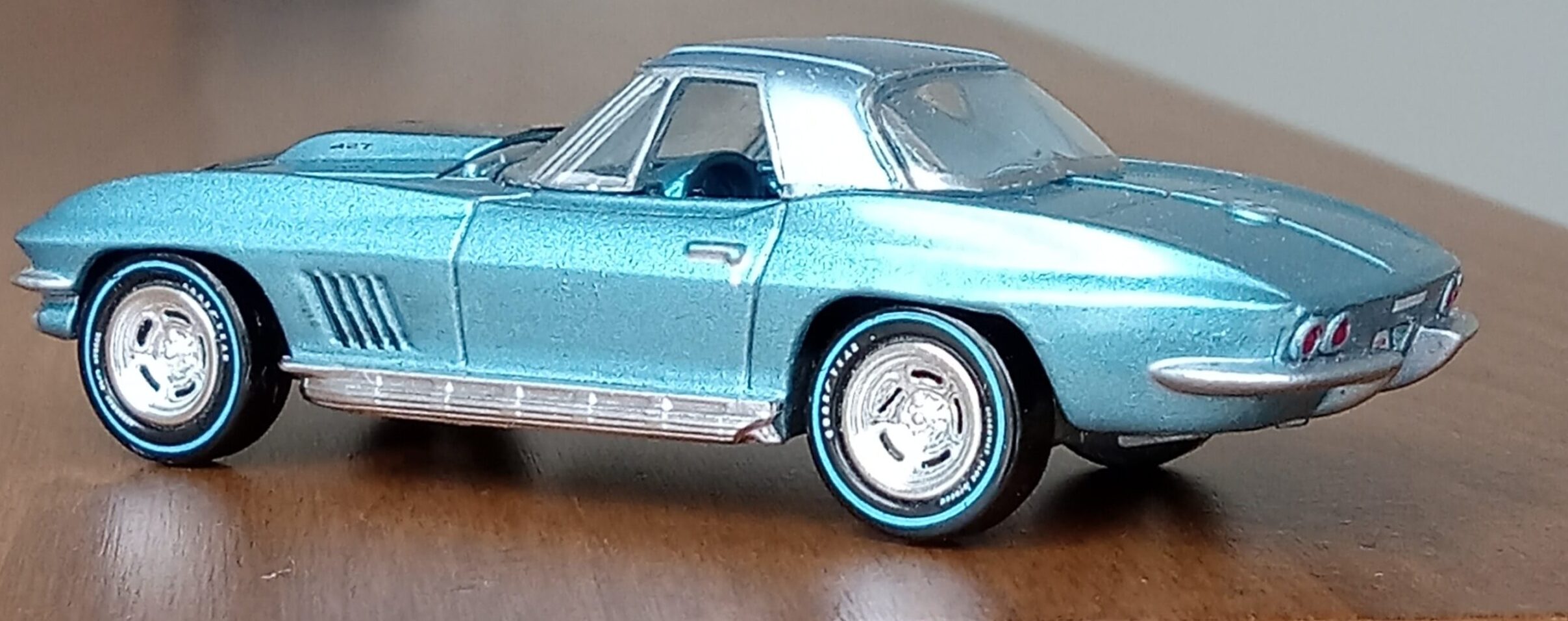
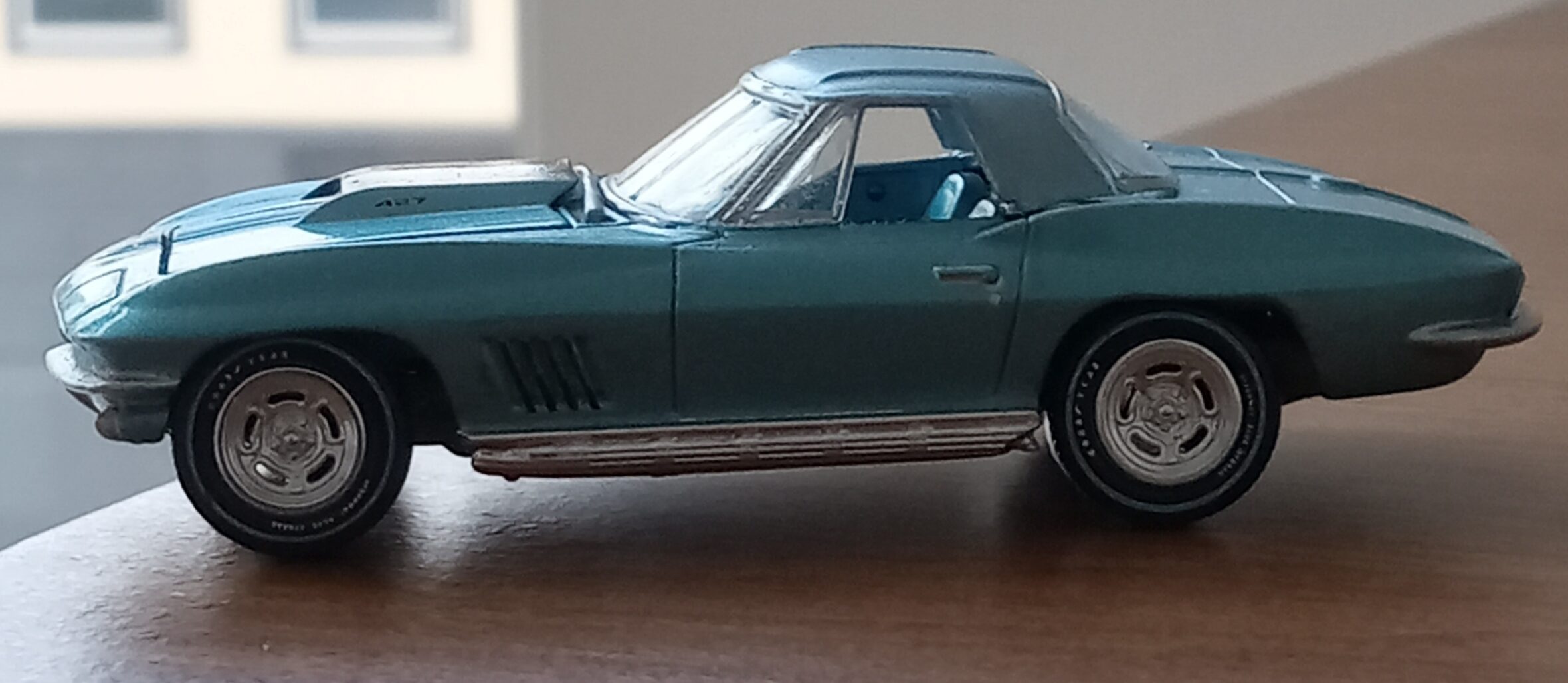
2:見落としがちですが、サイドビューが引き立つ、完璧なエンジン位置から導き出される、理想的FRプロポーション
(エンジンブロックの先端がフロントの車軸より後ろから始まる、典型的なFRパケージを巨大なアメリカンエンジンで実現)
――ーーーー>当時のヨーロッパスポーツに負けない、野性的な方向性が強烈
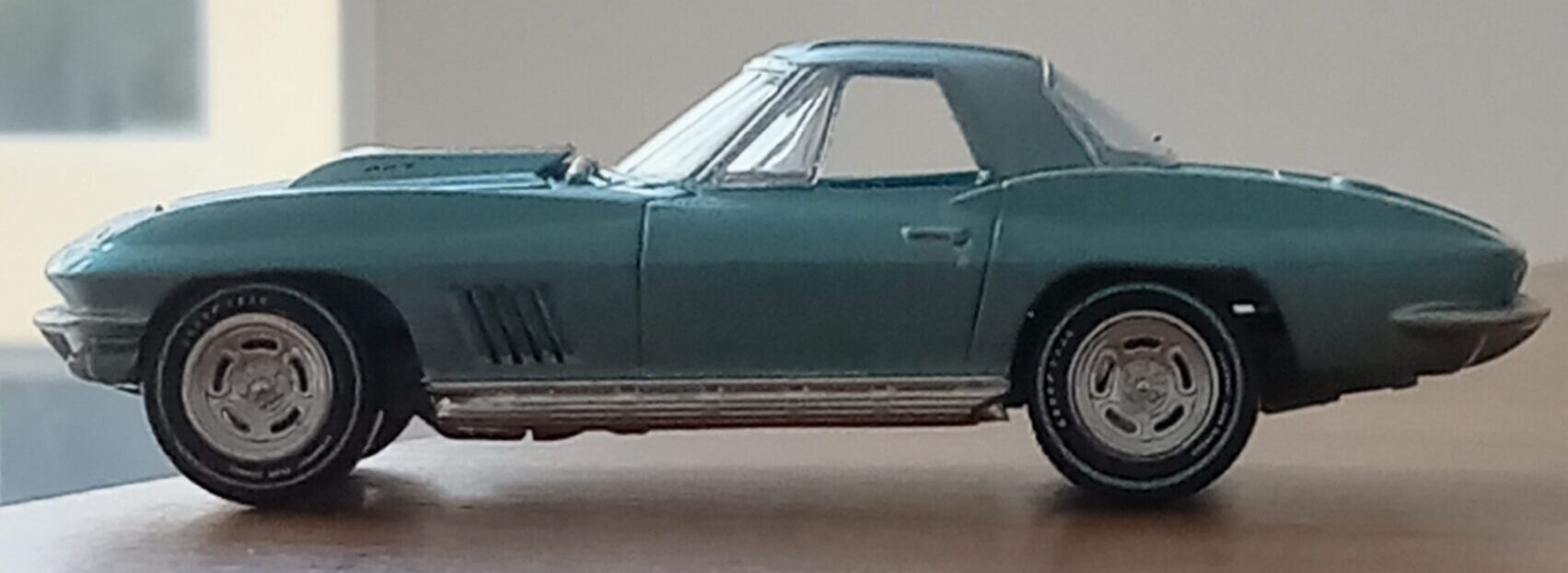
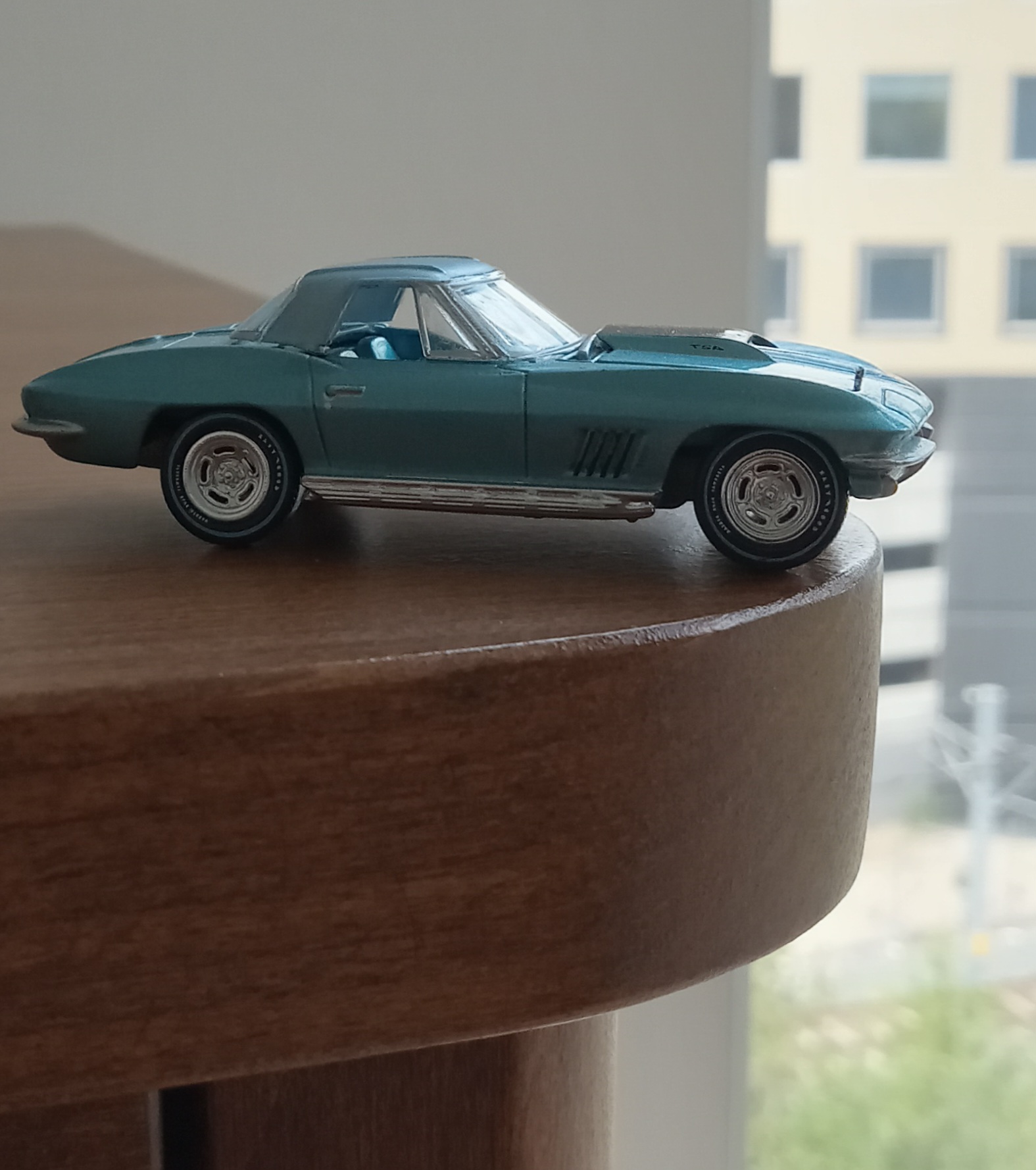
3:少し上下に、厚めで表情が見えないことで不気味さが増す、、サメの頭部的に尖ったフロントマスク
(実際には、『アカエイ』からインスピレーションを得たようですが、リトラクタブルライトの相乗効果もあり、とにかく【なんだか不気味な表情】がいかにもこの世代のコルベットにはぴったりでした。)
ーーーーー>ここまで尖ったフロントは珍しいです。
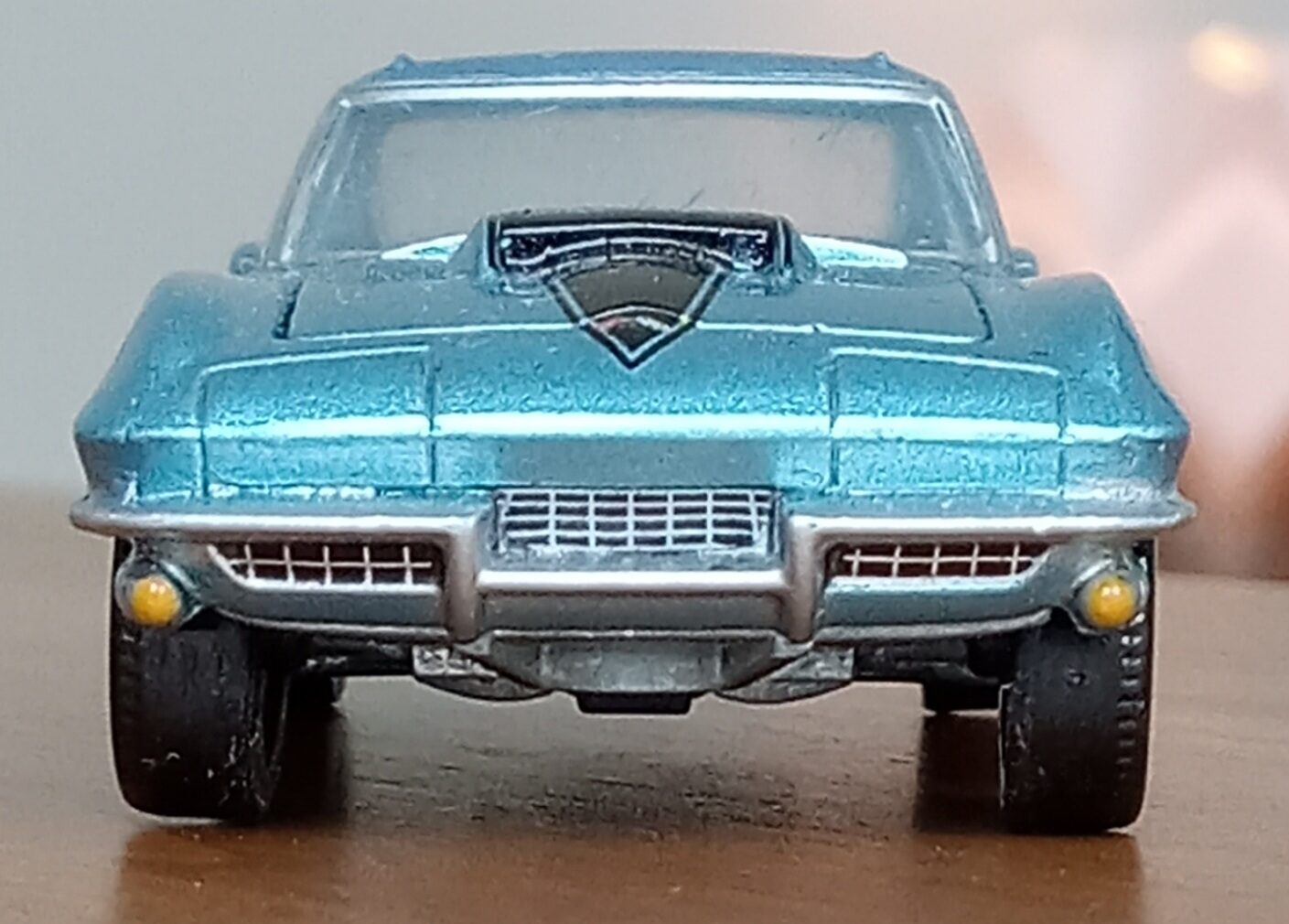
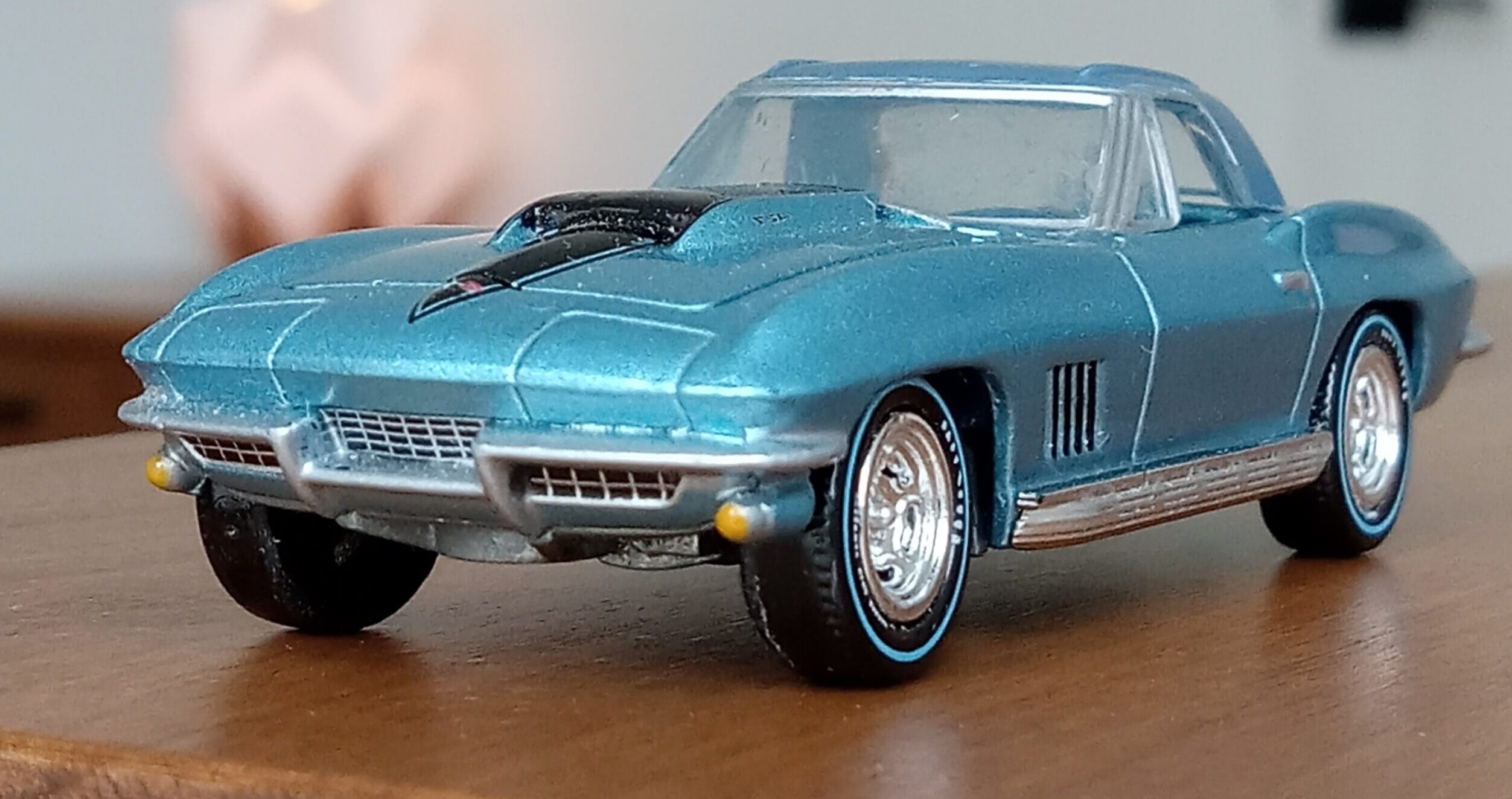
4:フロントに比べて、スラッとしてシャープで2枚目なリア・クオーター周りの造形
ーーーーー>目の前を通り過ぎるときのスピード感が強調される先細りのボディー後端と、それを繰り返すことで、更に強調するバンパー先端の尖り
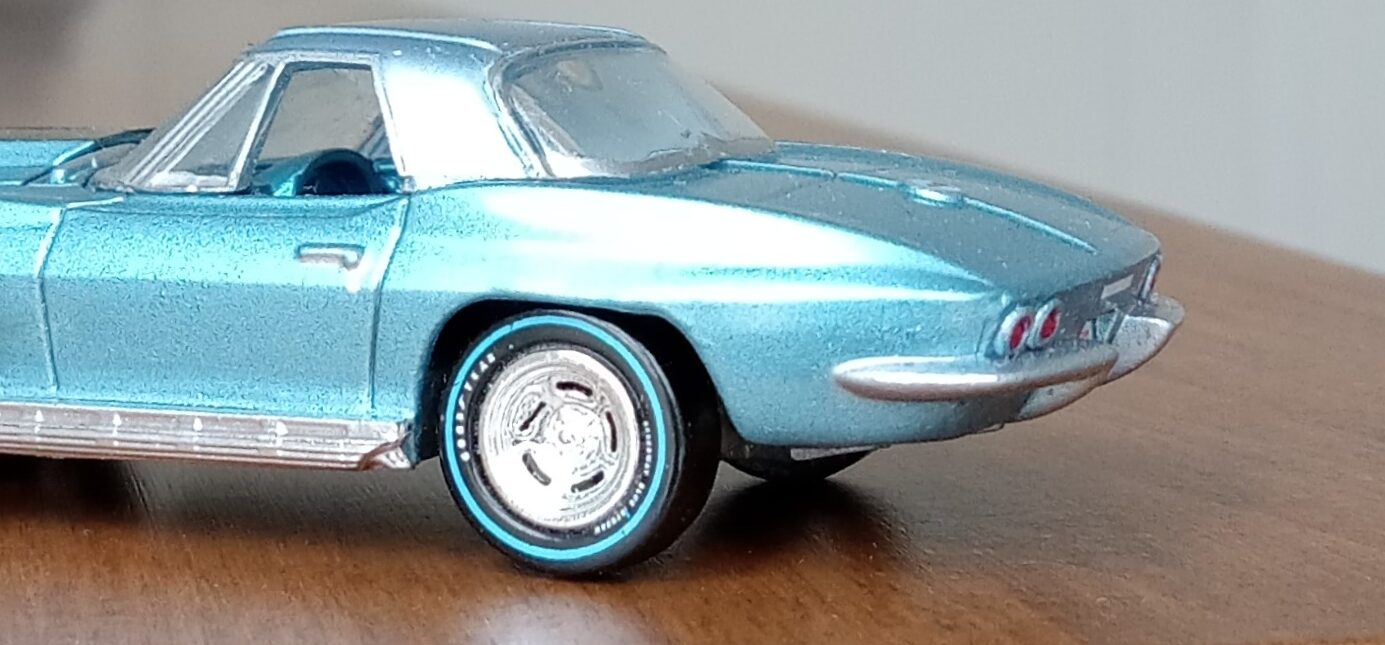
5:荒々しいコンバーチブルを一気に、引き締まった+気品あふれるクーペに変える
ーーーーー>『完璧に計算ずくでデザインされた』オプションのハードトップ
*『私』と67年型コルベット・ロードスター(ハード・トップ付)
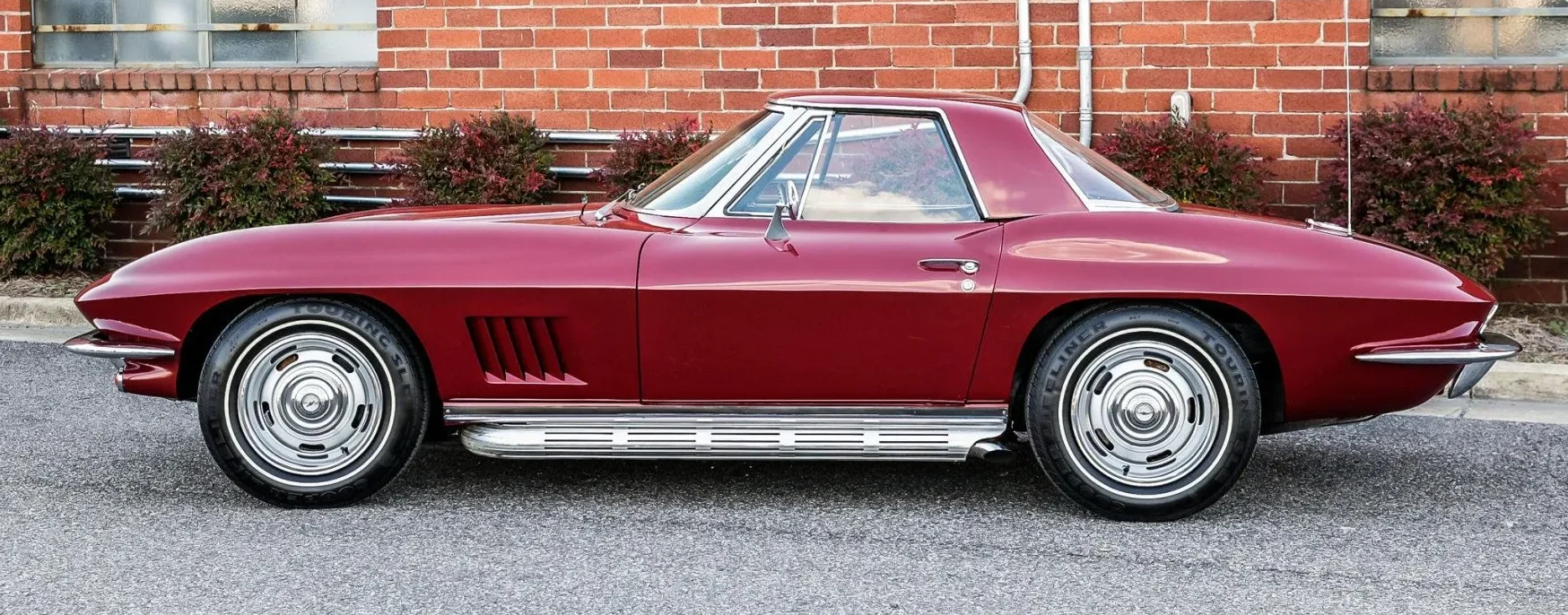
『第2世代の(C2型)コルベット・ロードスター』は、
それまで、
何度も実車を目撃してきましたが、
*威圧感満点のフロント・フェイシアがすごい存在感、
*4隅のフェンダー上の力こぶがボディービルダーみたいで、
*マッチョカッコ良さがある、
程度の認識しかありませんでした。
そんな私の認識を大きく変える出来事が、
ある、ウェブページで発見した
『67年型コルベット・ロードスター、ディタッチャブル・
ハードトップ装着型』
の写真でした。
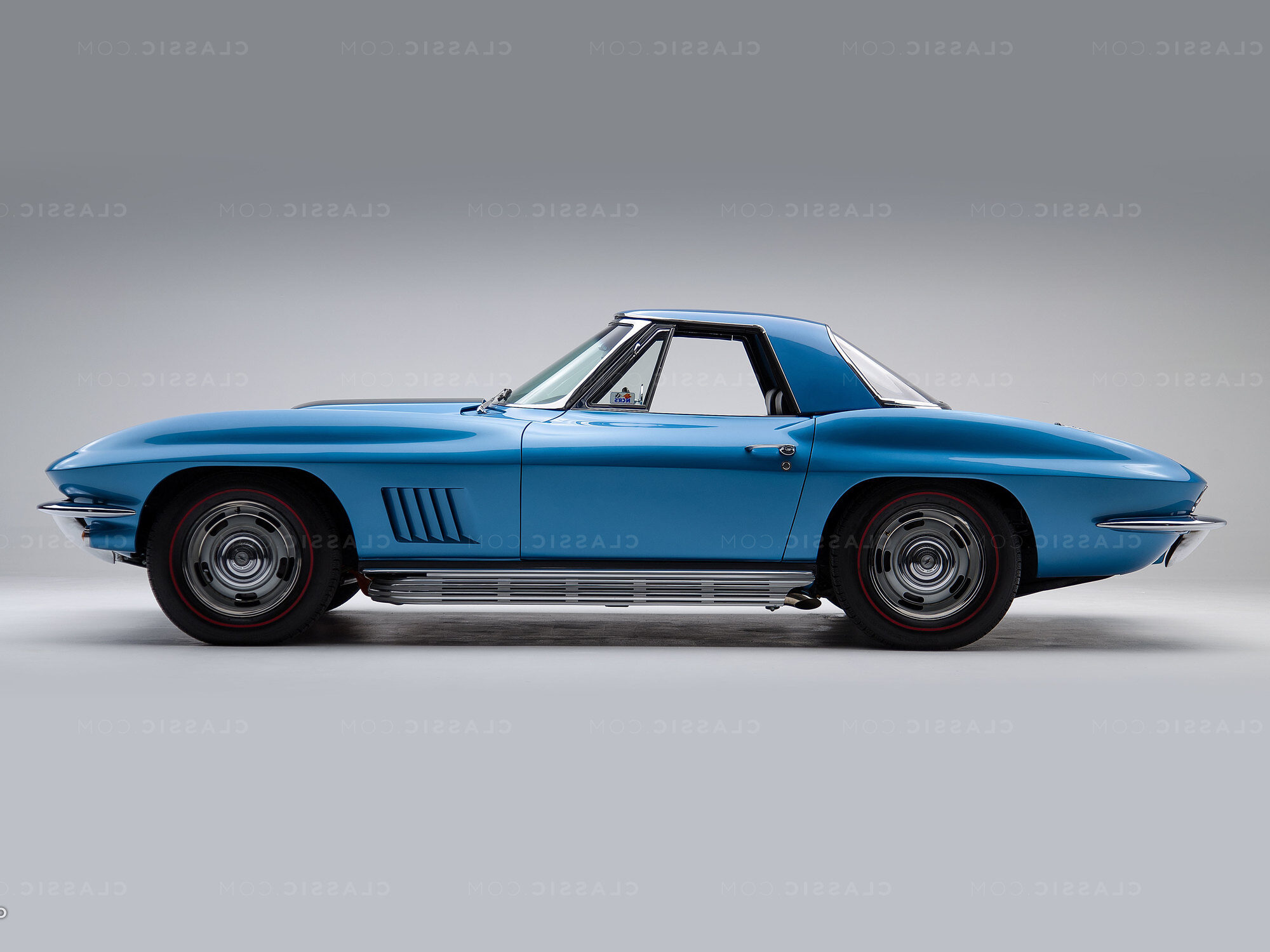
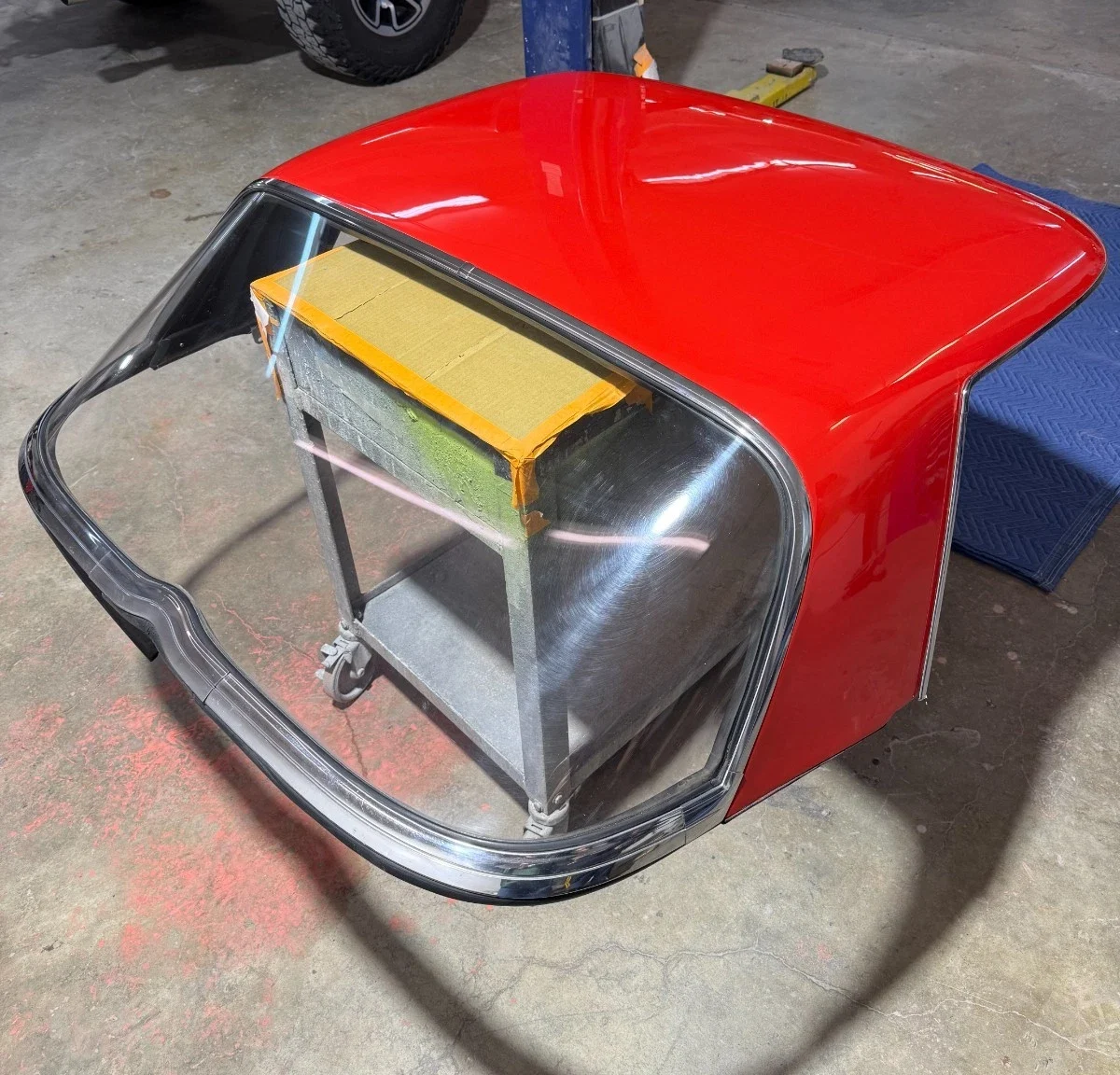
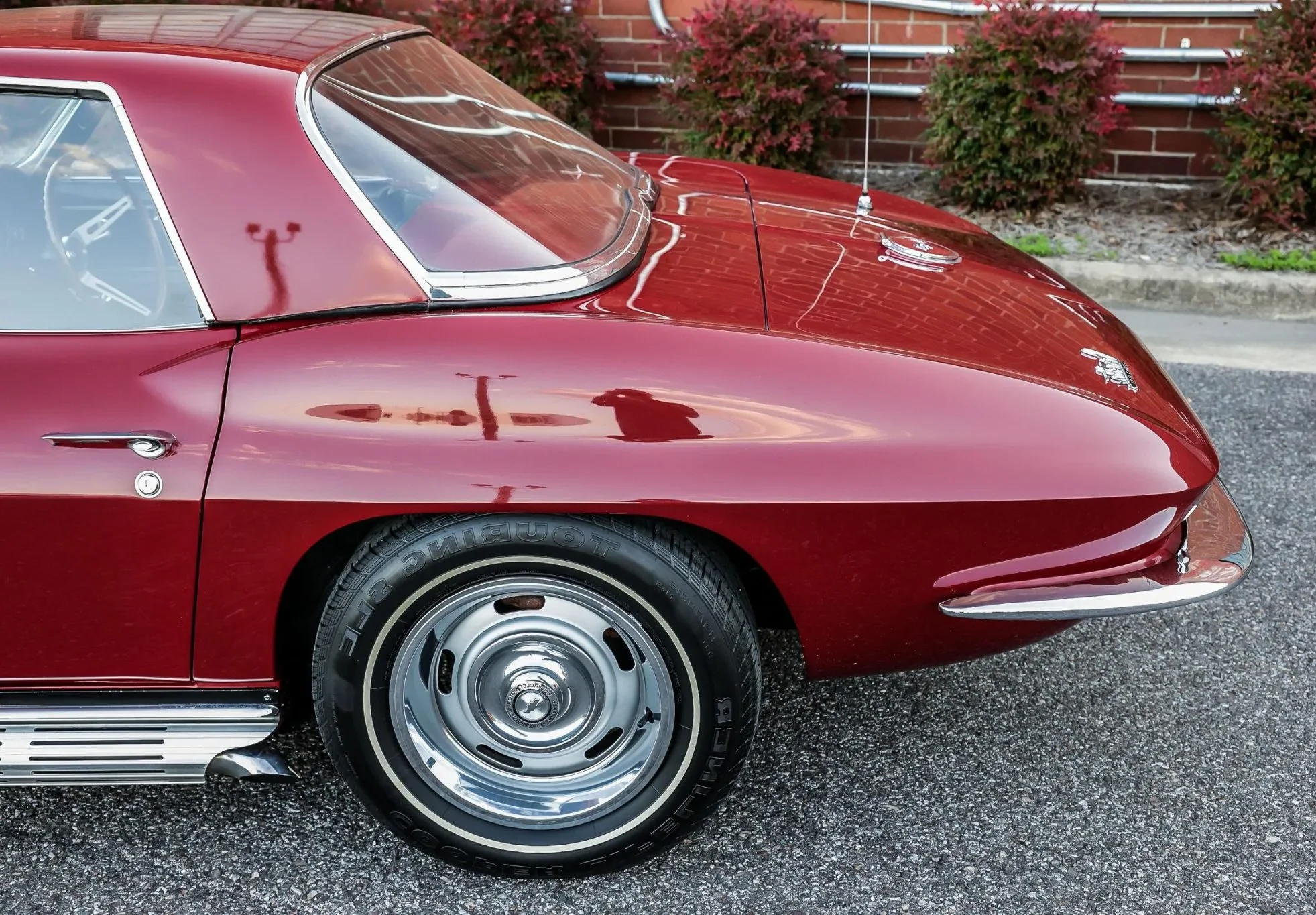 (66年―67年型用、実物の脱着式ハード・トップ:イーベイにてお値段は、$4,000でした。)
この脱着式ハードトップ、
*ルーフラインが後端に向け、少し『尻下がり』になっているのが気になって、
*色んな写真を探したのですが、やはりどれも下がってました。
*更に、4隅のフェンダーを引き締め・中央にまとめる感じに、
*引き絞るA,Bピラーが近すぎず、遠からずの距離を開けて『台形型』を構成し、アメンボの足のように踏ん張ってるバランスの取れた姿が、
滅茶苦茶カッコ良かったです。
その後こんなかたちでの『立体遍歴』を経て、
今回の【5台の大改造プロジェクト】へと繋がっていきます。
<https://yisell7777.com/archives/8621>
まず最初、
30年以上前にこだわったのがこの1/43のプラ・キットでした。
*モノグラム社製、1/43 プラモデル 67年型コルベット・ロードスター(ソフトトップ・パーツ付き)
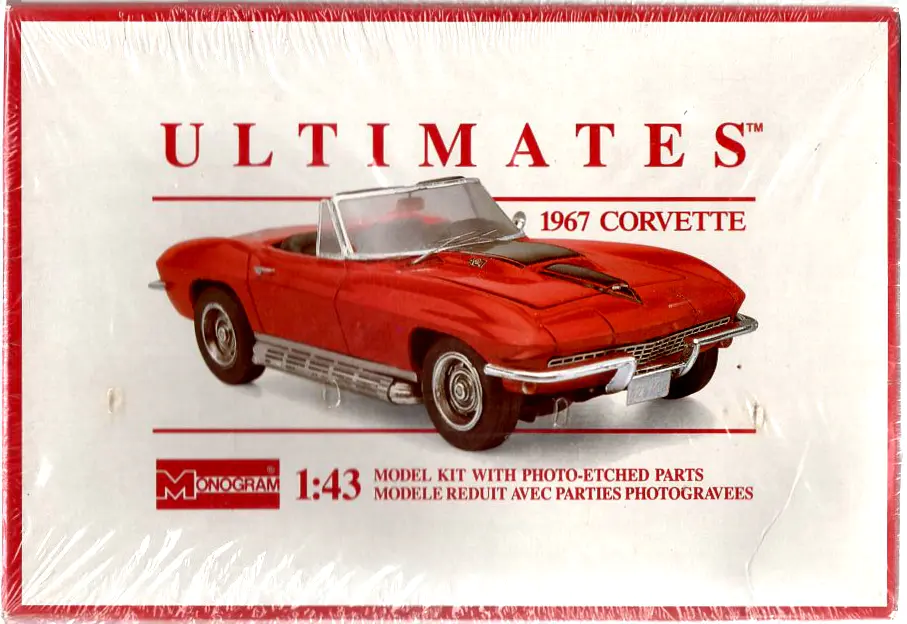
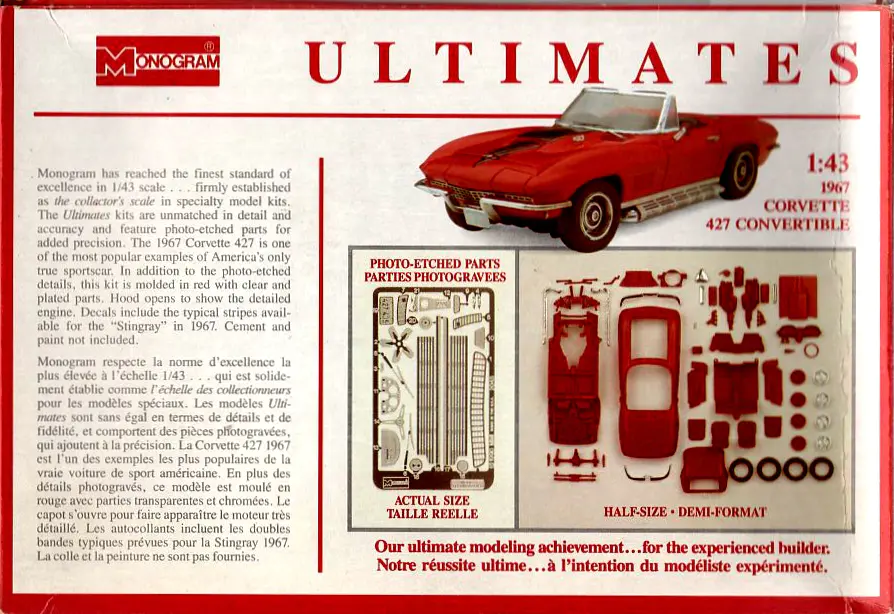
(なぜかモノグラムからこのコルベットと、ACコブラ289型の2点が1/43キットで出ていました。どちらも非常に出来が良く、(フォトエッチ・パーツ入り)コブラは塗装して制作しましたが、
ーーー>コルベットは、ボディー形状とソフトトップの形状をパテでいじり始めたら、完成まで気力が続きませんでした、、、、泣)
*SMTS社製、ホワイとメタルの完成品, 1/43 66年型コルベット・ロードスター(バーガンディー)
(この写真は、色違いのイーベイで以前売られたものみたいです)
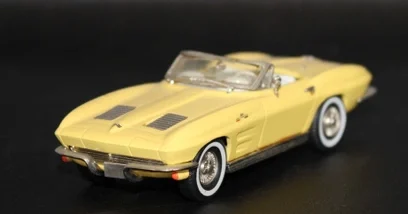 (こちらは、オレンジカウンティーのモデルカーショーで知り合ったディーラーさんと交換したもので、非常に重くて、出来もなかなかのもので、モノグラムのプラキットのソフトトップを艶なしのバーガンディーで塗装して載せていました。)
*フランクリン・ミント社製:ダイキャスト完成品、1/24 67年型コルベット、ロードスター(デタッチャブルハードトップ付)(タキシード・ブラック)
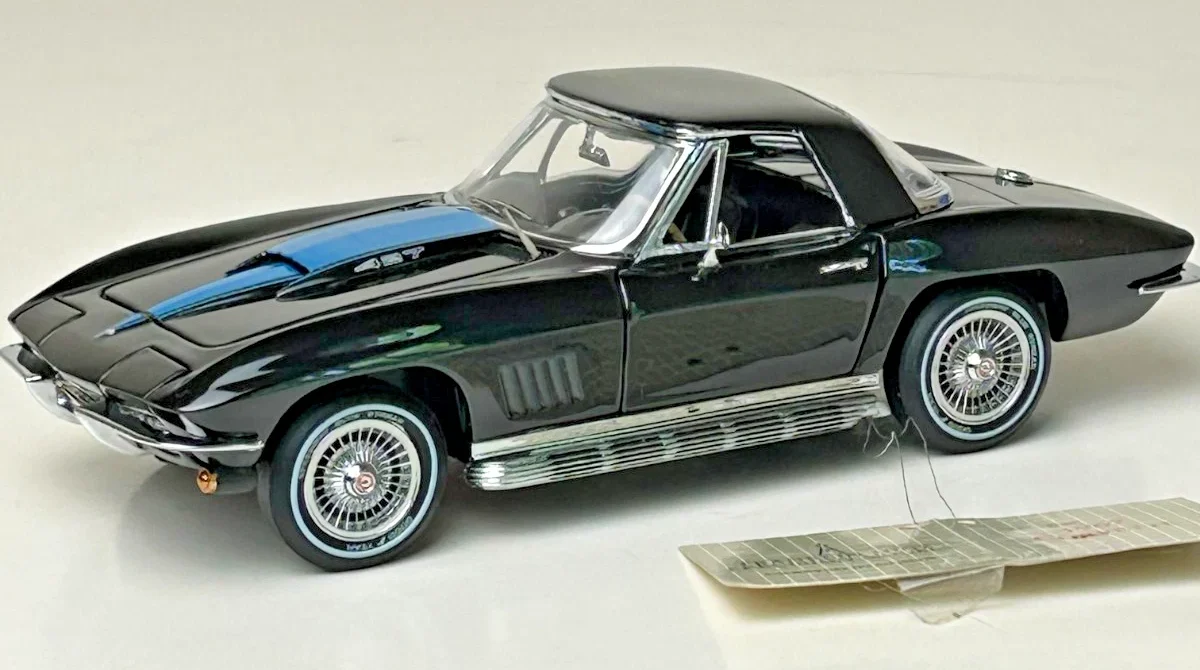
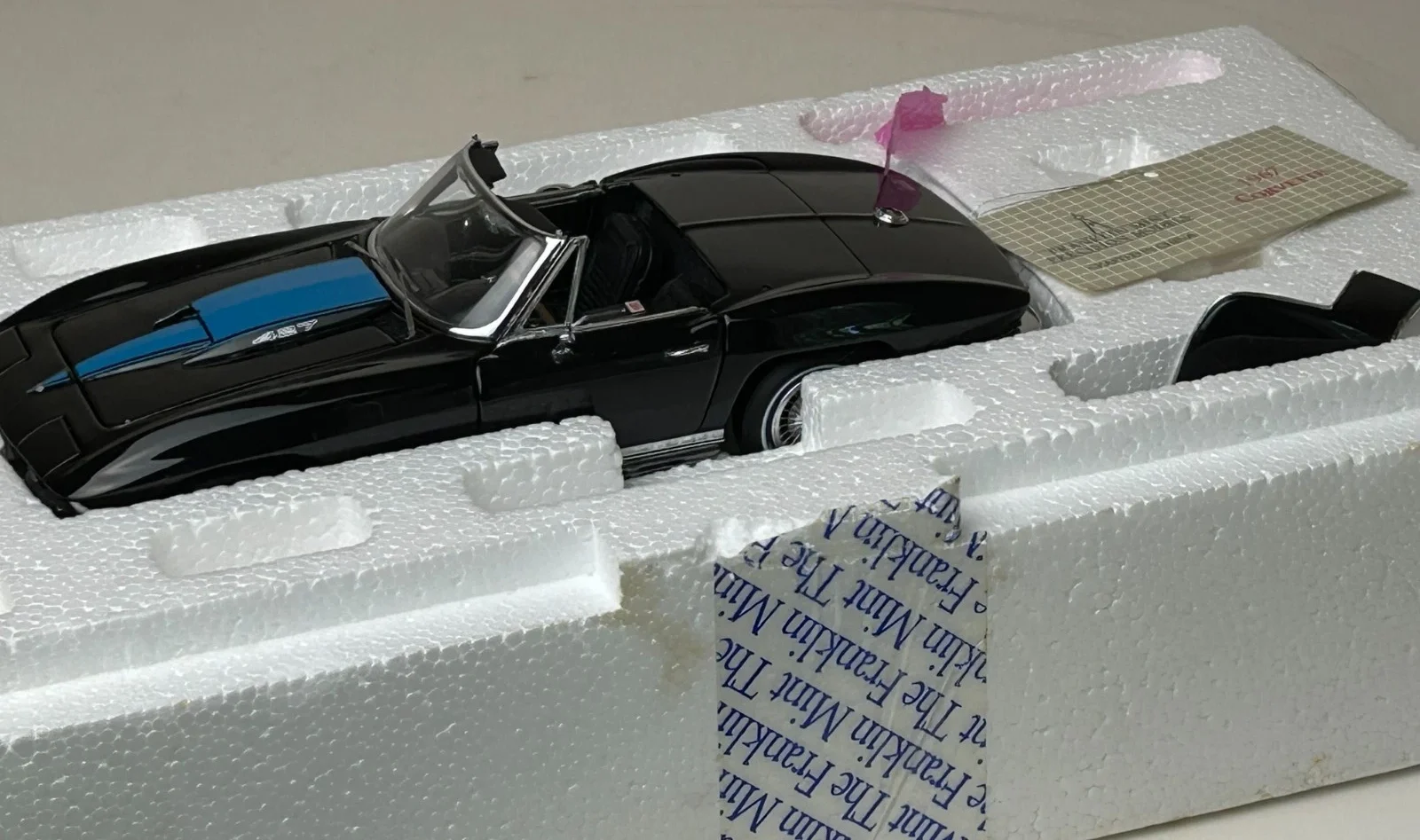
(こちらは何度もグレンデールのショッピングモールのフランクリンミントのデーラーショップで拝見して、箱にしまっての、下手な踊りを繰り返しながらも、結局買わずじまいでした。(笑)
――ーーー>ディテールや塗装が素晴らしかったのですが、ハードトップが巨大で、今一しっくり来ませんでした。泣)
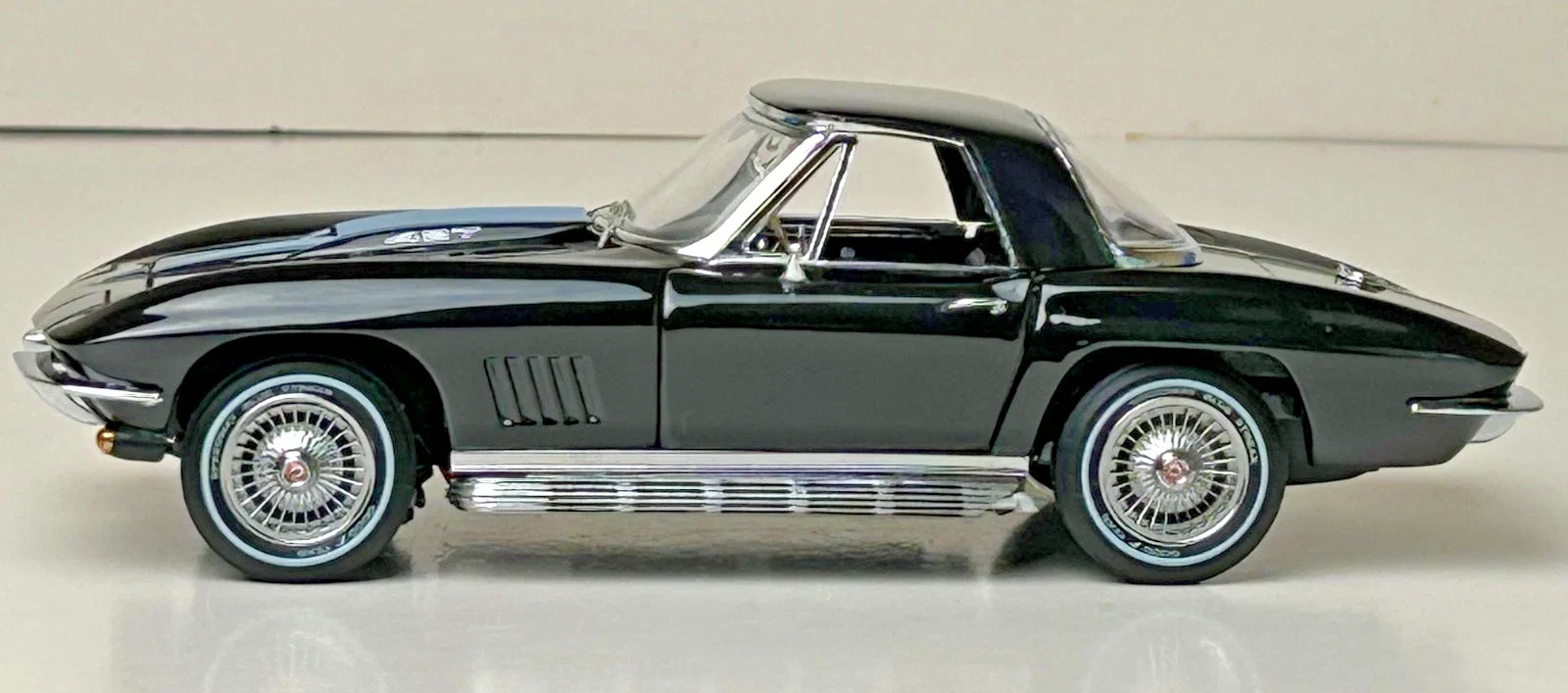
*フランクリン・ミント社製、ダイキャスト完成品、1/12 67年型コルベット、ロードスター(デタッチャブルハードトップ付)
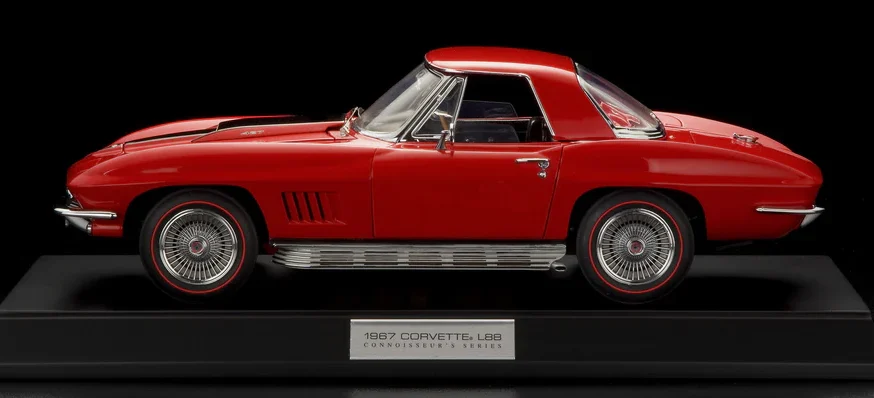
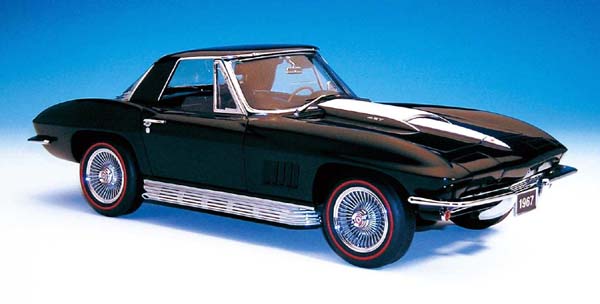
(1/12大型バージョンも2002年に発売されました、こちらの実物は未見ですが、ヘッドライトが開閉可能なうえライトが点灯します。
ーーーーー>残念ながら、こちらも少しハードトップのおさまりが悪く、若干背が高い感じです、、、)
*NOREV社製、1/18 ダイキャスト完成品 1963年型コルベット・ロードスター(赤・ソフト・トップ付)
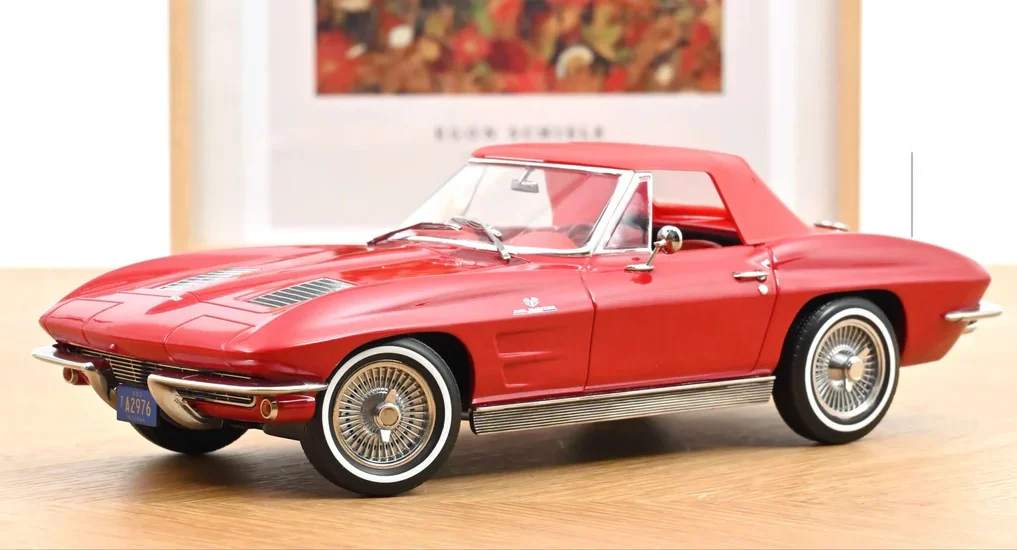
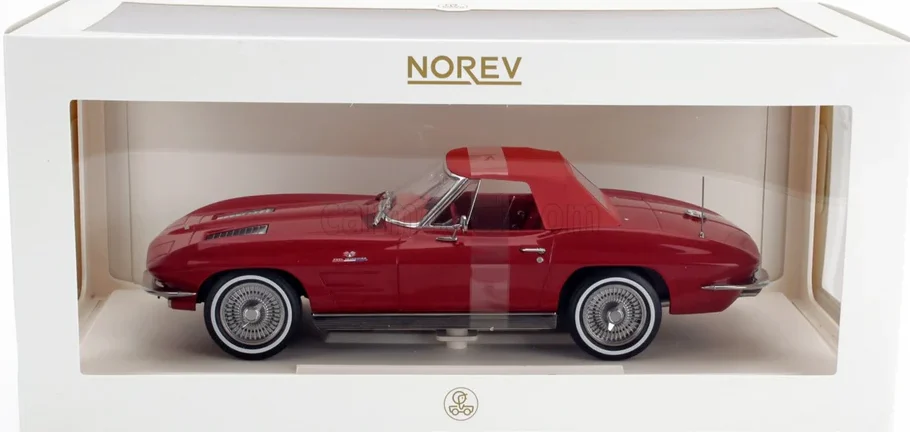
(こちらはエンジンレスのソリッドタイプのプロポーションモデルで、全体の造形やタイヤサイズなどはほぼ完璧に再現されています。
ーーーーー>惜しむらくは、63年型なので、ボンネットの迫力が今一つ。)
その他、
今回の改造に使った1/64ミニカーのリストです。
*グリーンライト社製、1/64 1966&1967年型コルベット・ロードスター(各色・ハードトップ又はソフトトップ付など各種)
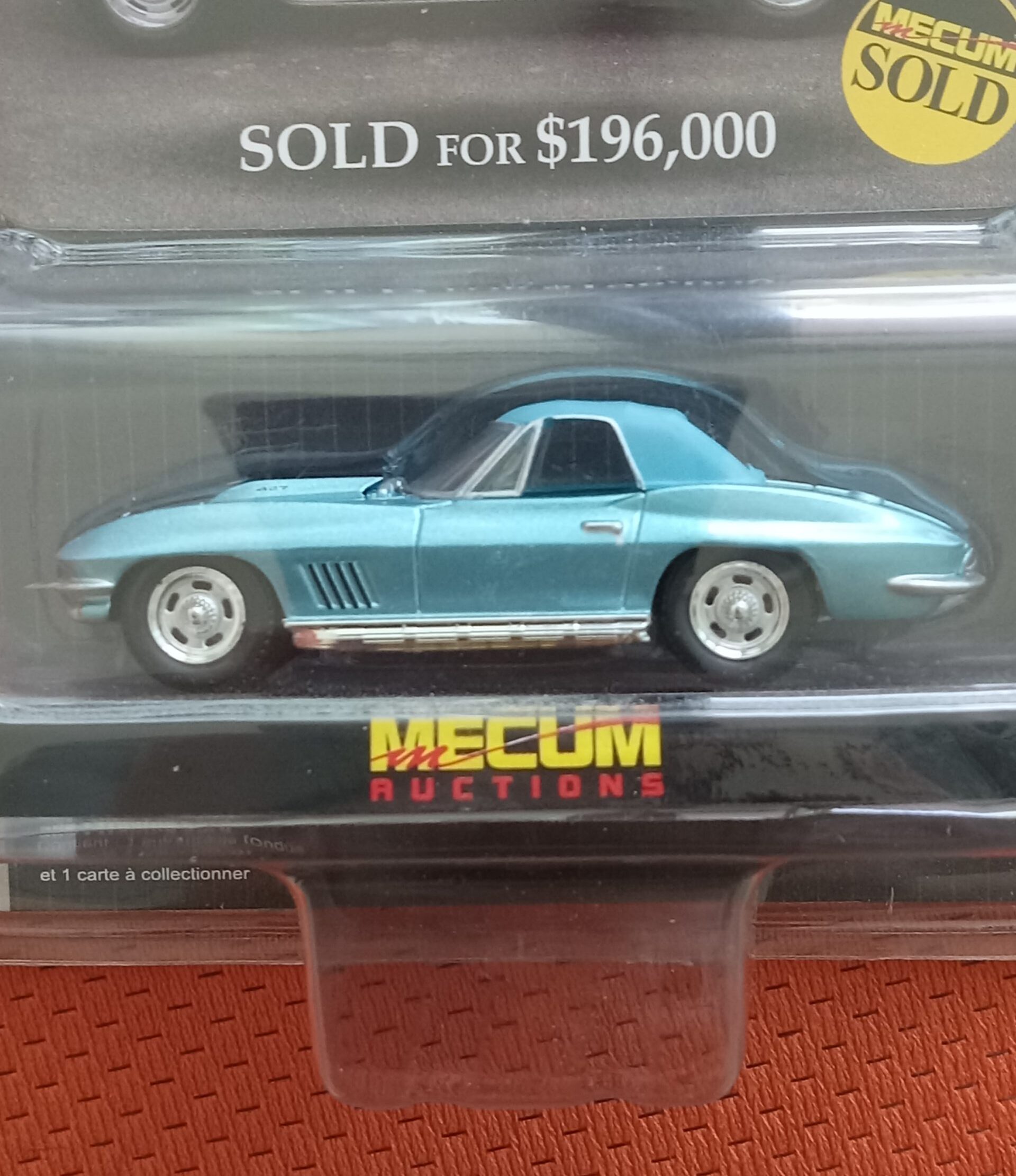
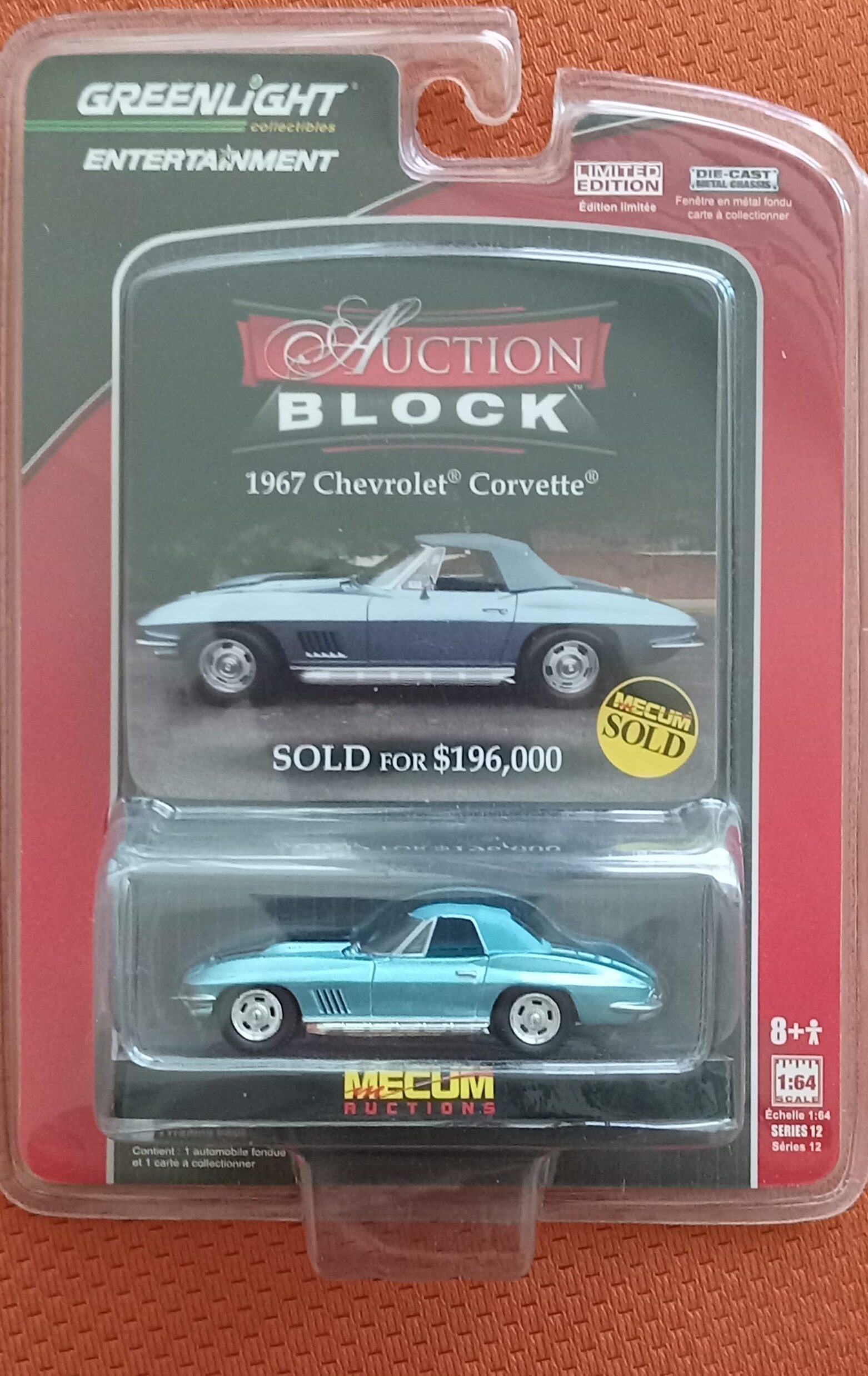
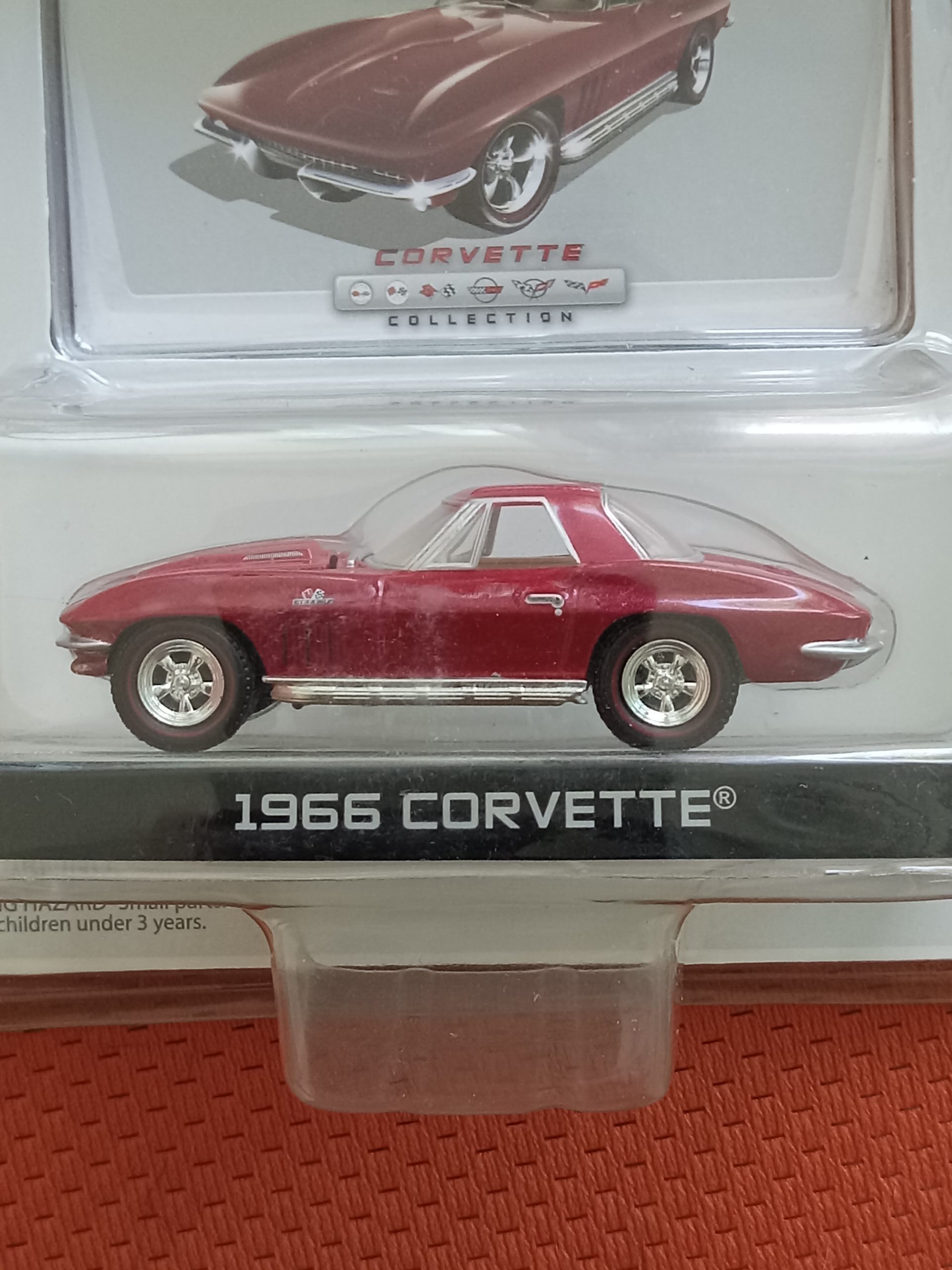
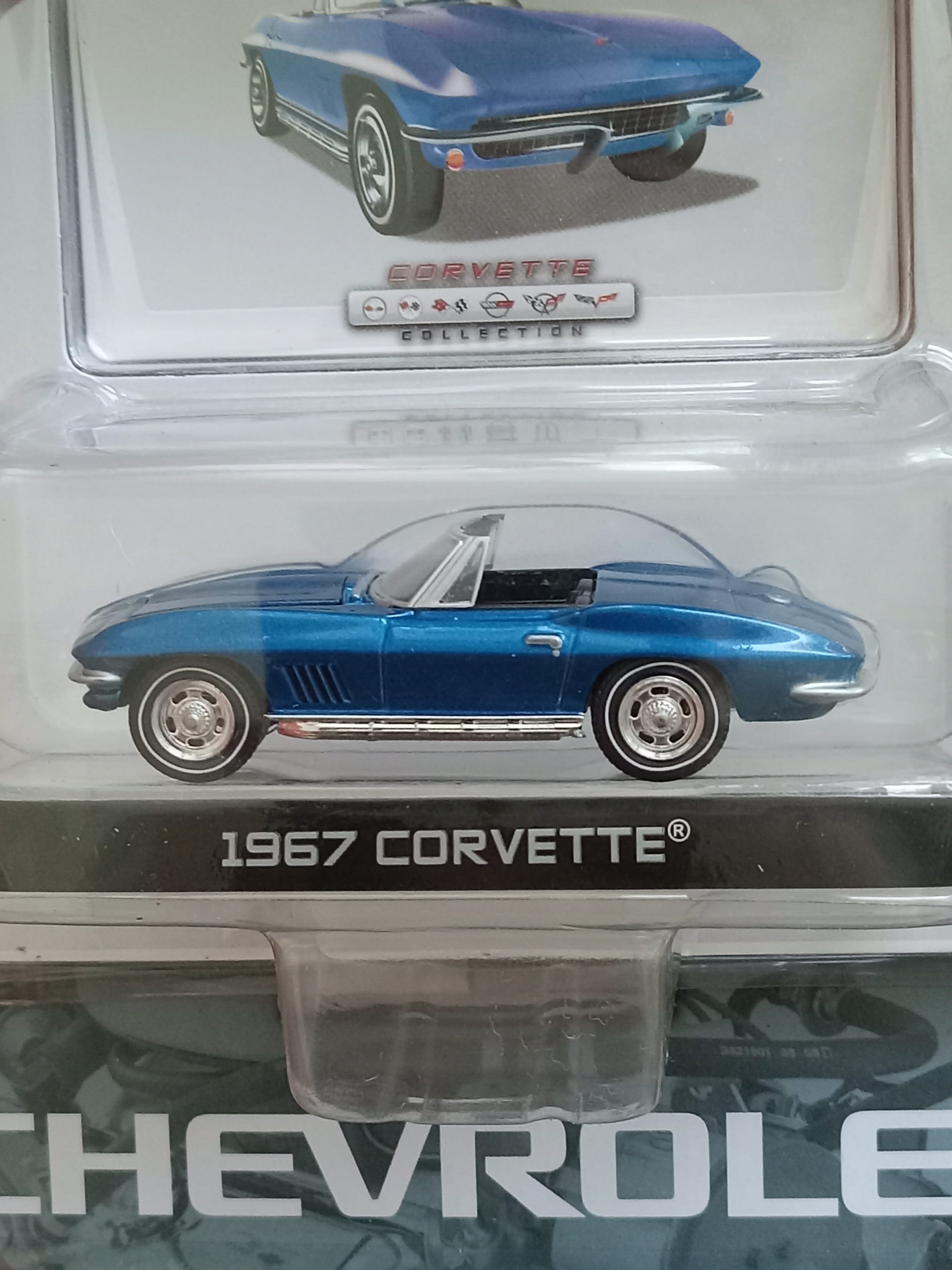
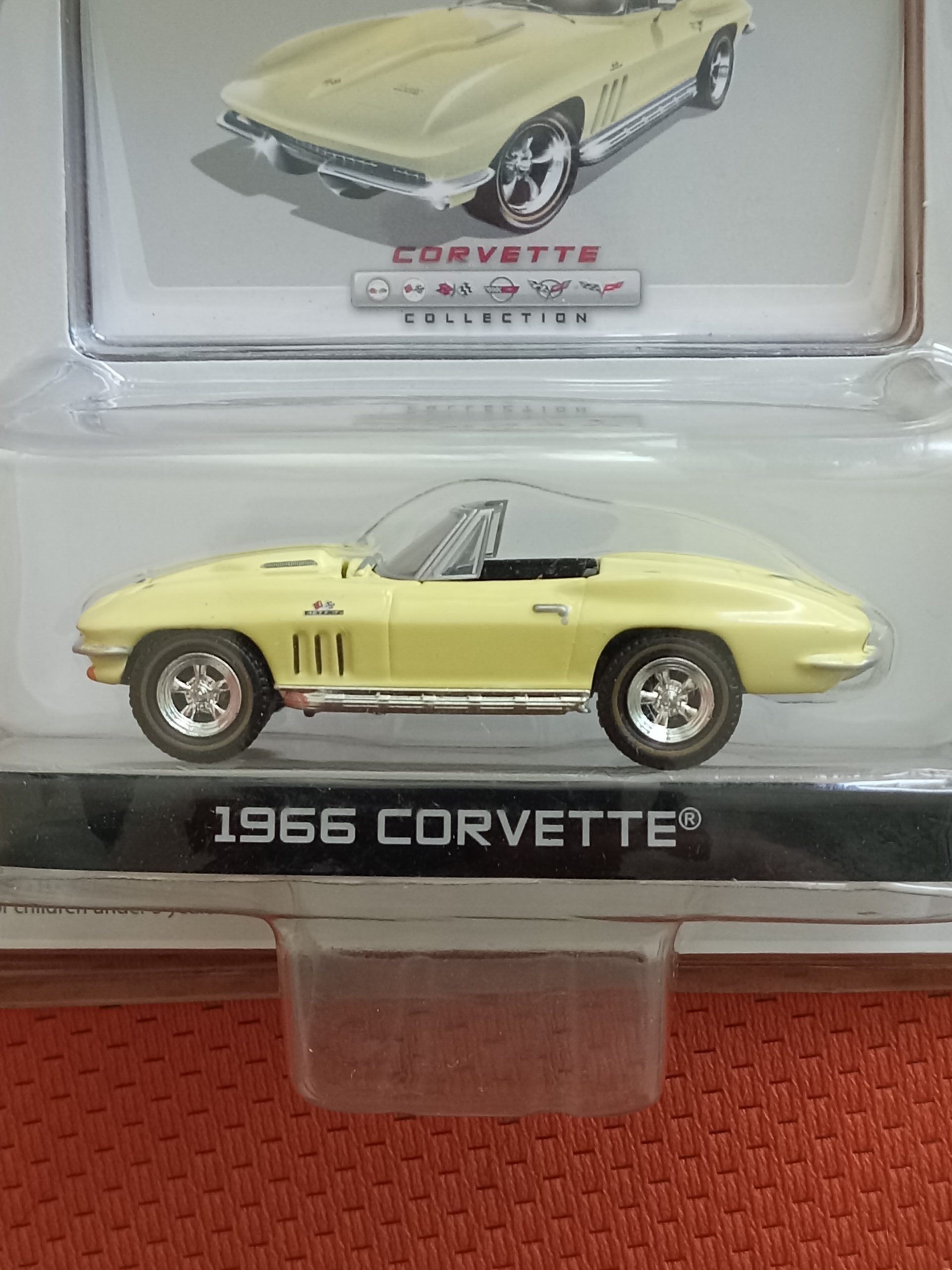
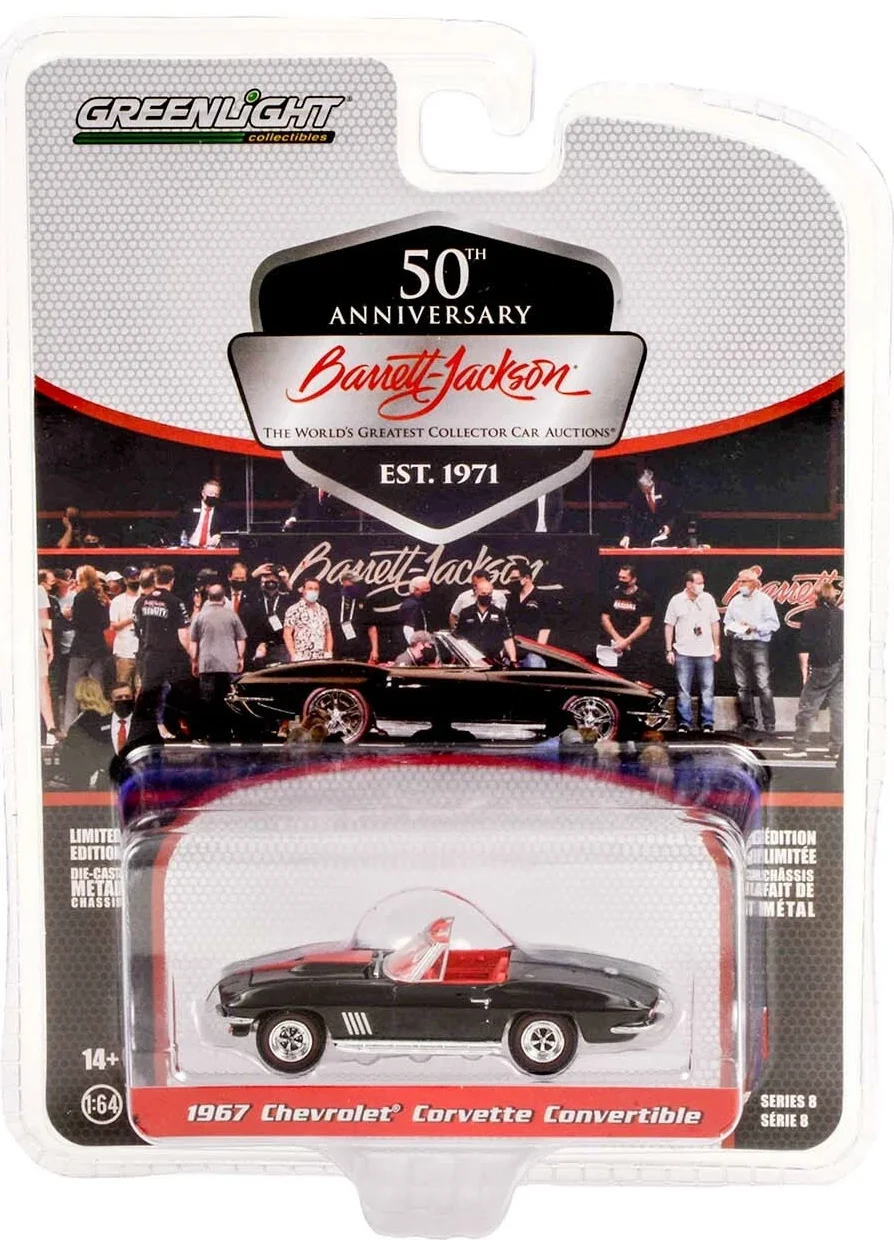
(全体の印象は1/64ミニカーでは一番、タイヤの大きさと太さがイマイチです】
*グリーンライト社製、1/64 1967年型コルベット・ロードスター/レーシングバージョン(ハードトップ付)
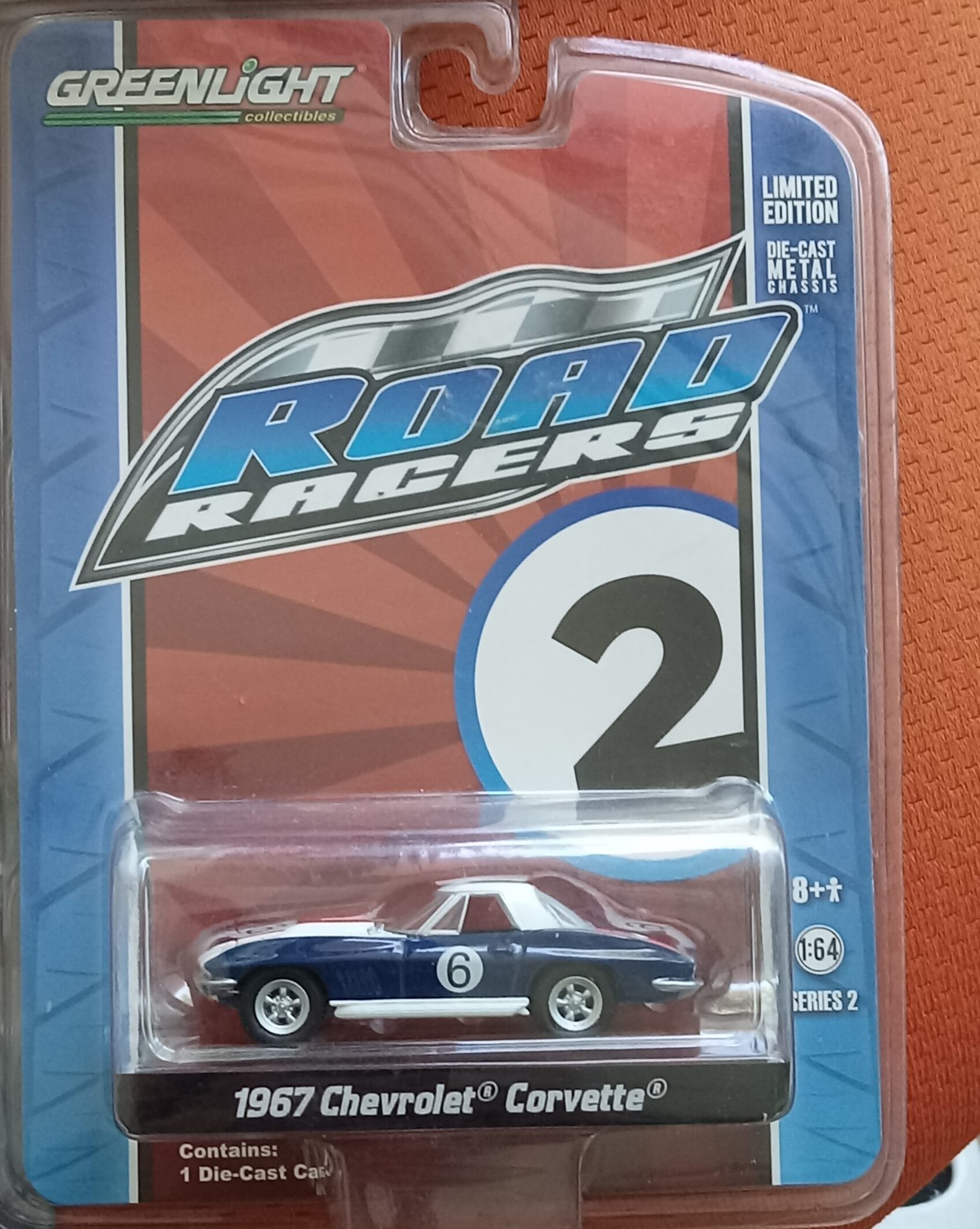
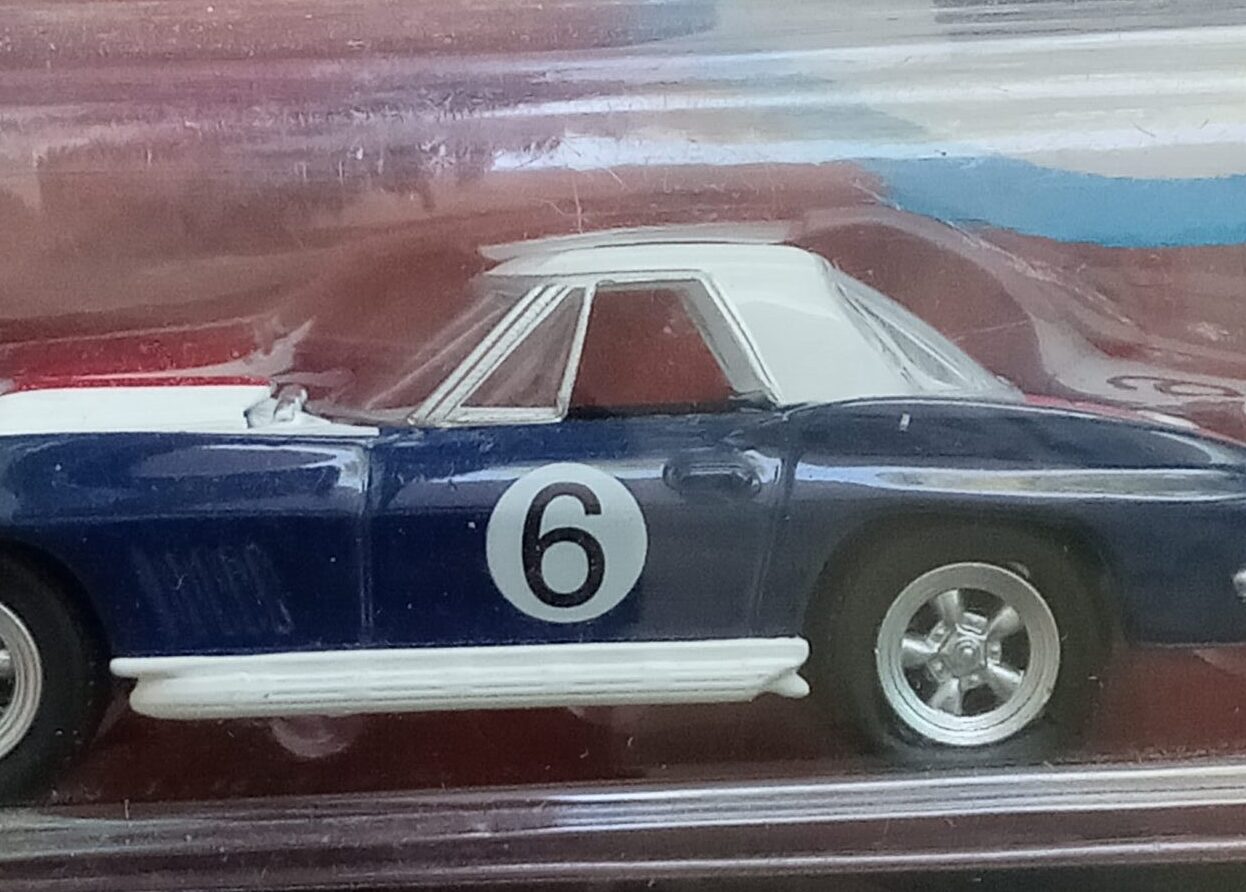
(非常に出来の良いハードトップが付いてきますので、これを拝借して、67年型ロードスターに移植しました。合計3台も消費しました
ーーー>今回大活躍の商品です。)
*M2ミニチュア―社製、1/64 1967年型クーペ(グレイ)
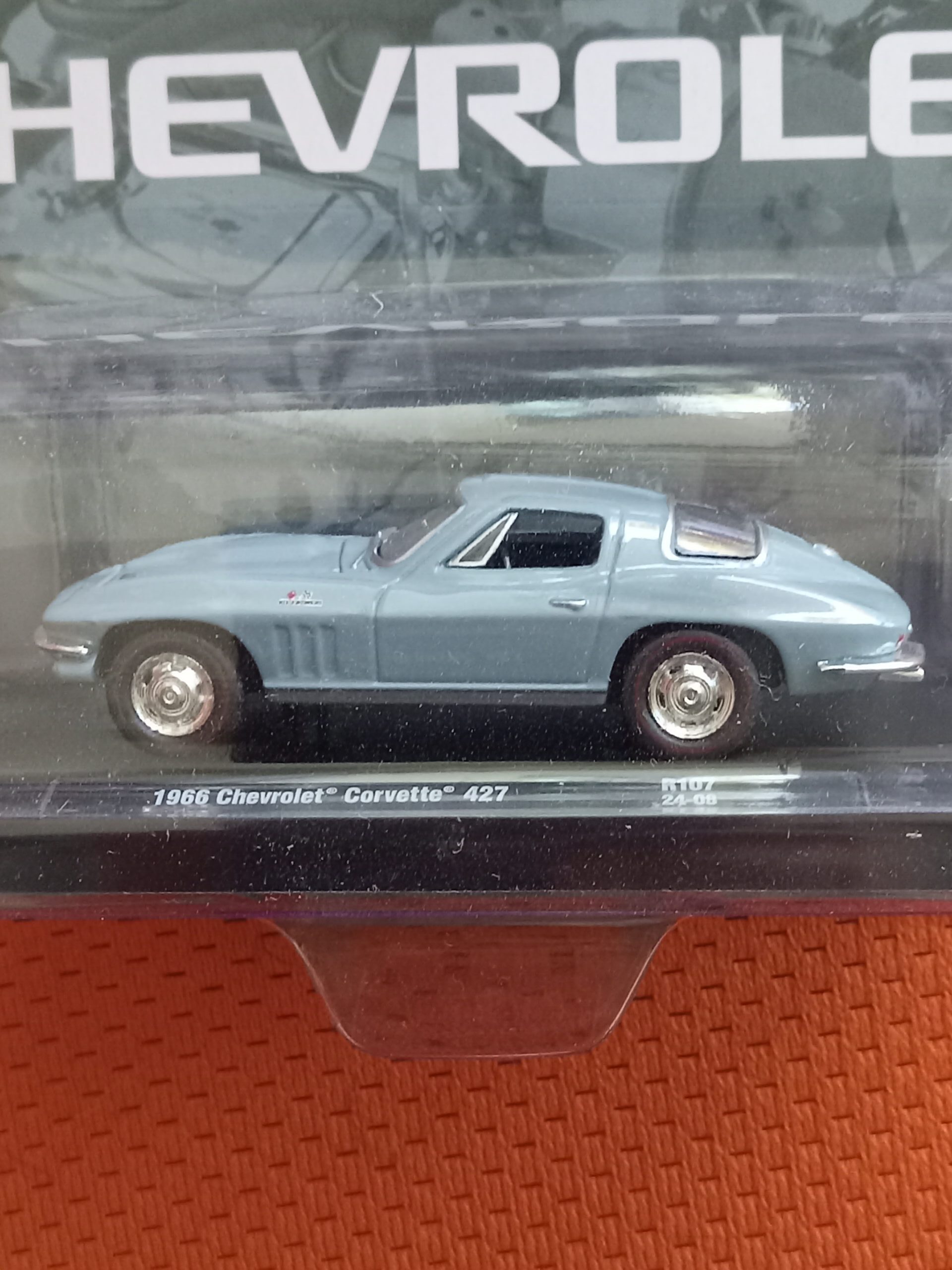
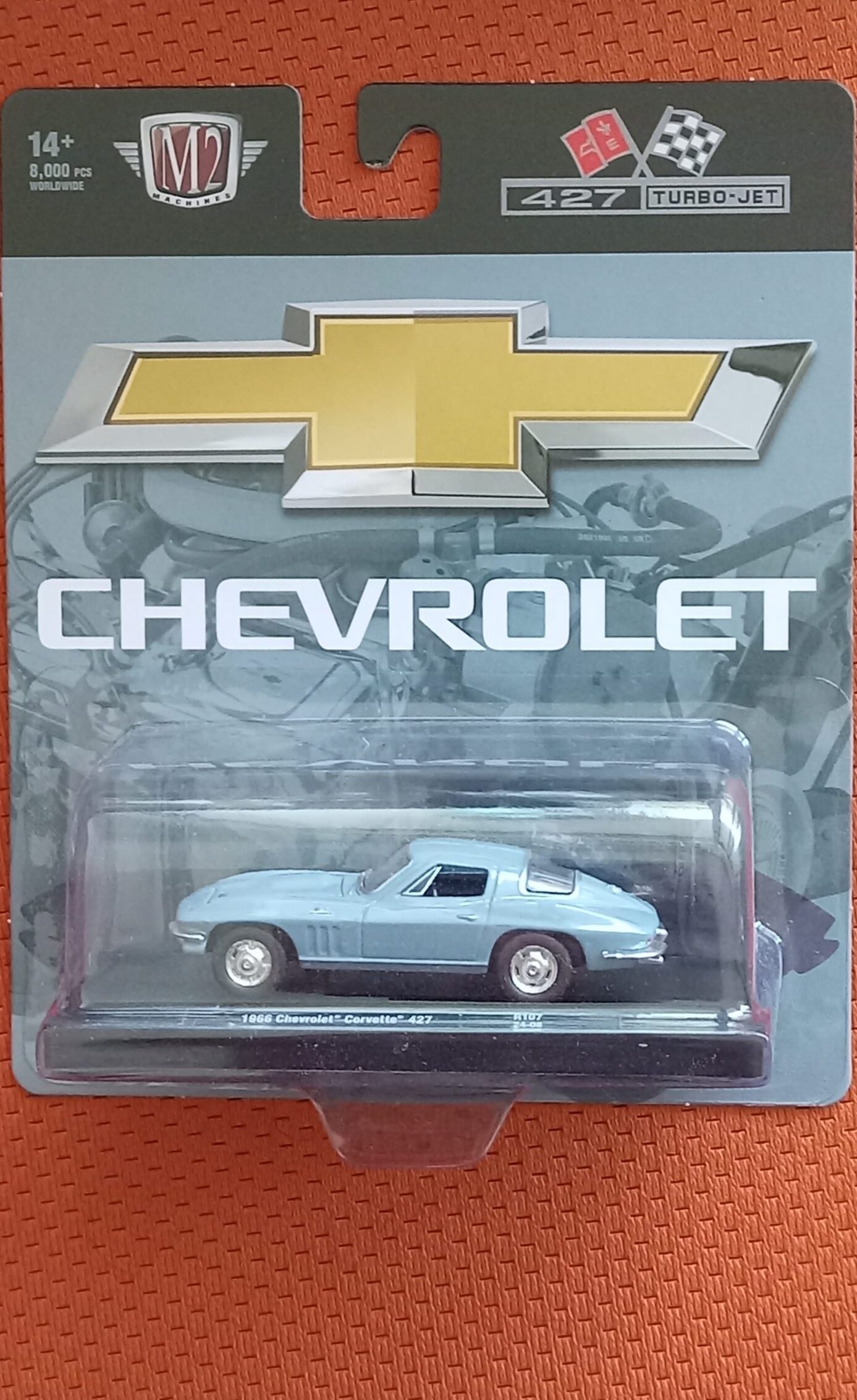
(ホイールとレッドレタータイヤの出来が良いので、グリーンライト版に移植しました)
*オートワールド / ジョニーライトニング社製、1/64 1967年型コルベット・クーペ
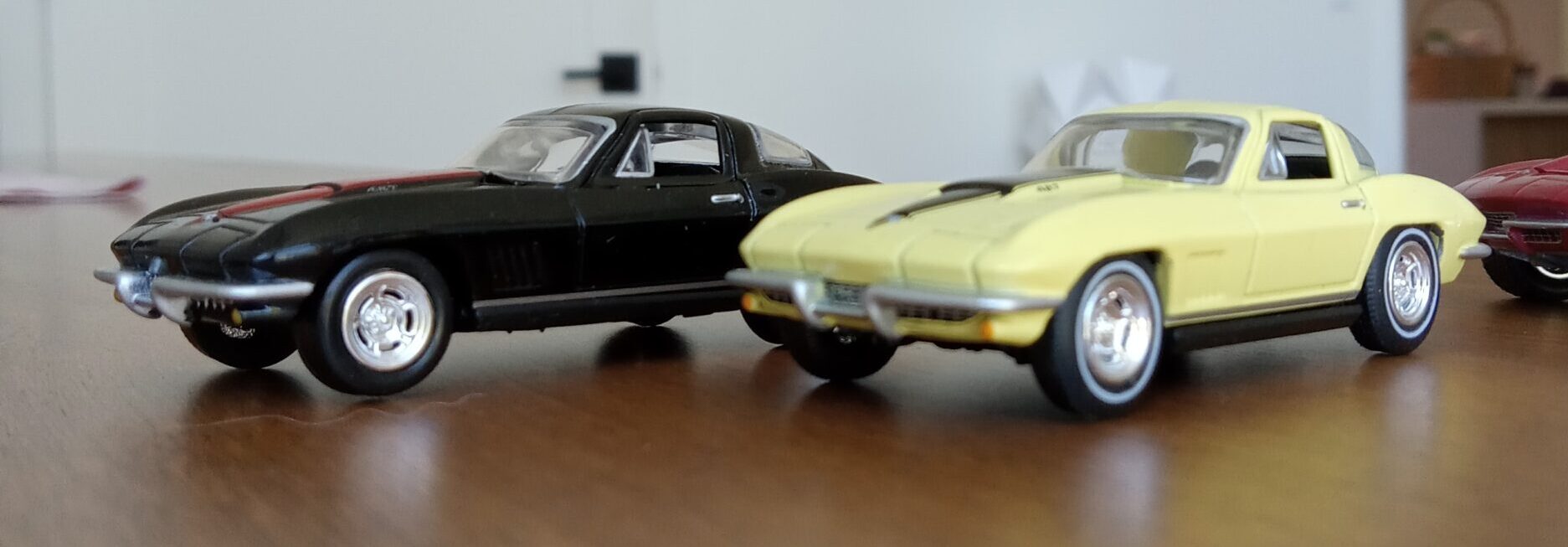
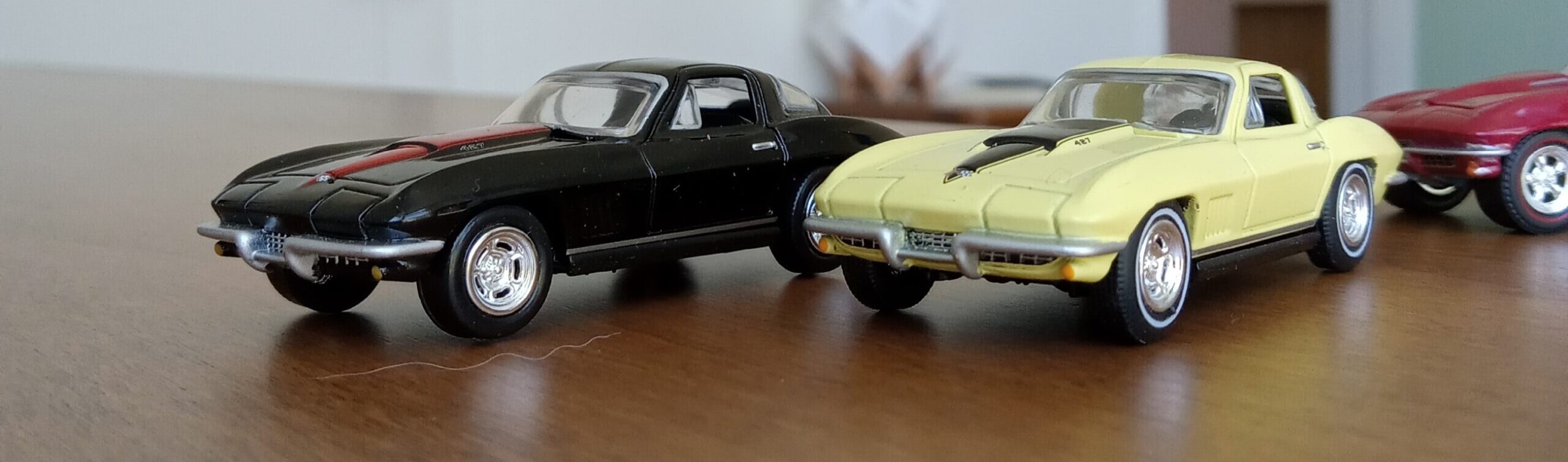
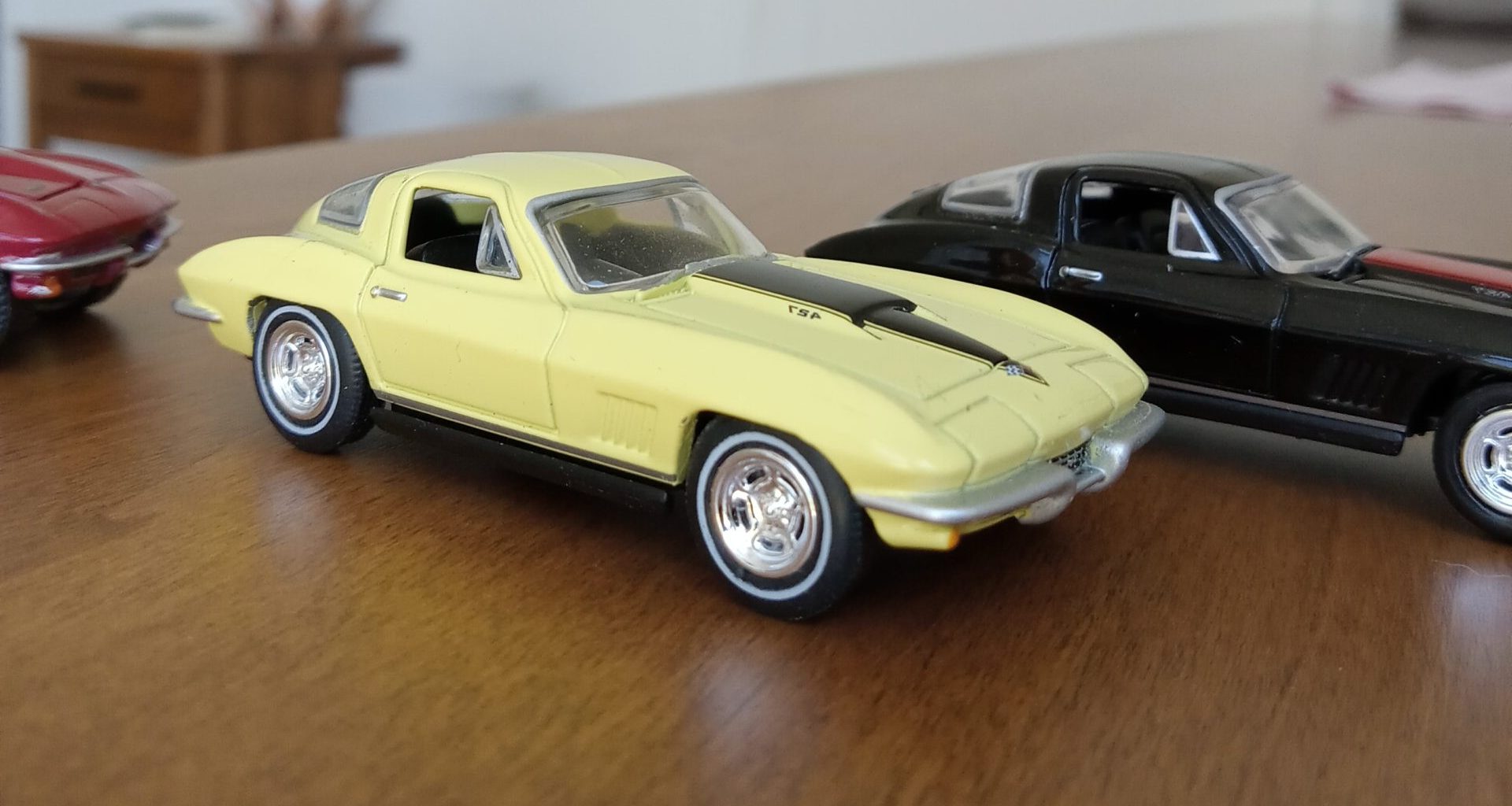 (色んなホイール/タイヤの組み合わせを吟味するため、各色:3-4色分使いました。笑)
*ジョニーライトニング社製、1/64 66年型コルベット・ロードスター(メタリックブルー/ハードトップ装着型)
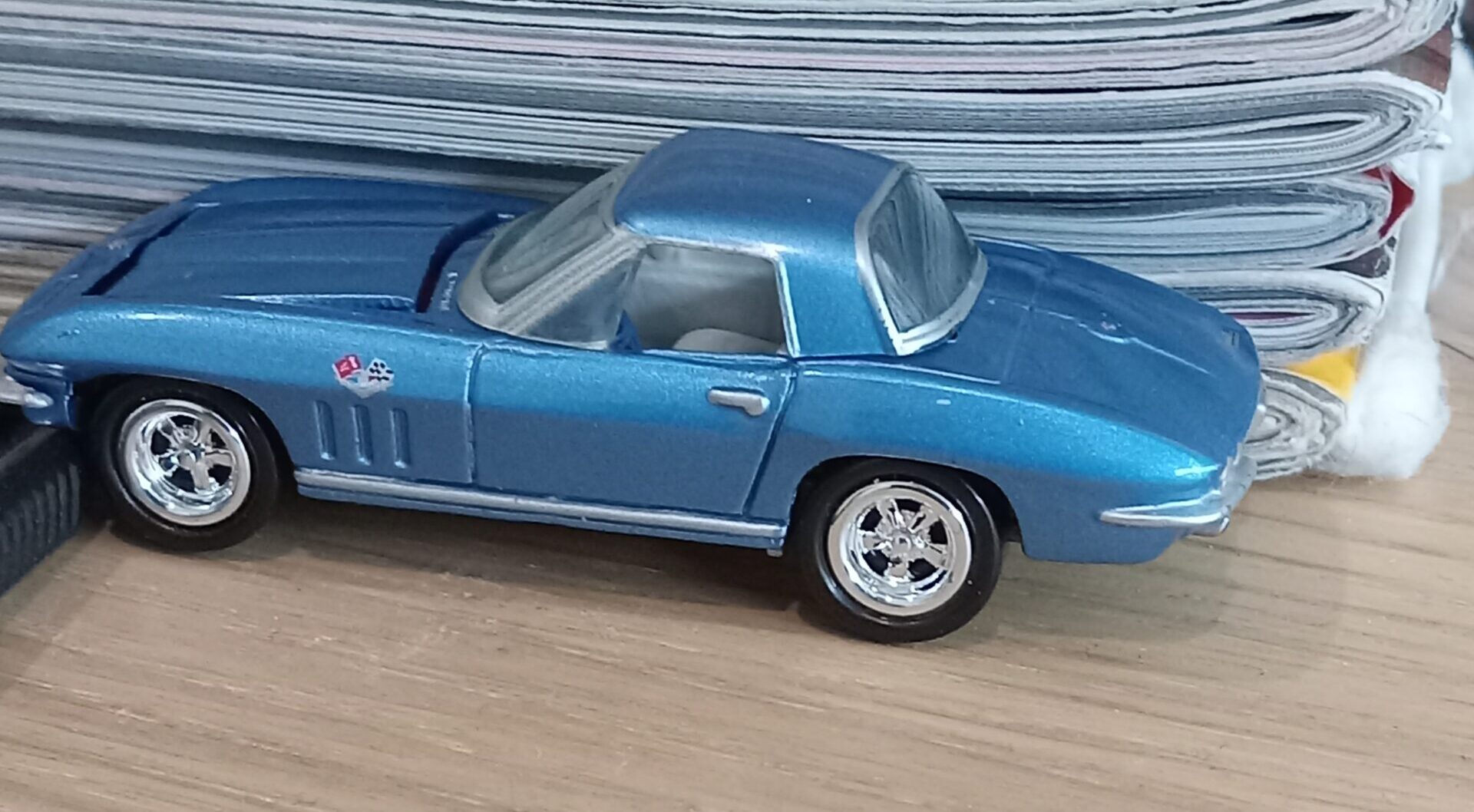 (こちらはすでに目標に近い内容が出来上がっていましたので、参考までに入手、やはり30年近く前に発売されたビンテージものなので、出来がかなりおもちゃっぽく、使うことは出来ませんでした。)
さすがにアメリカの『魂』のような車だけに、
色んなミニカーやキットがあるものですね!
その『アメリカ魂』をつくりあげたのが、
【日本人≒日系2世の
アメリカ人】というのが
運命のめぐりあわせと感じます。
面白くありませんか?
では当の、
ラリー篠田さんにつて少し見て行きましょう。
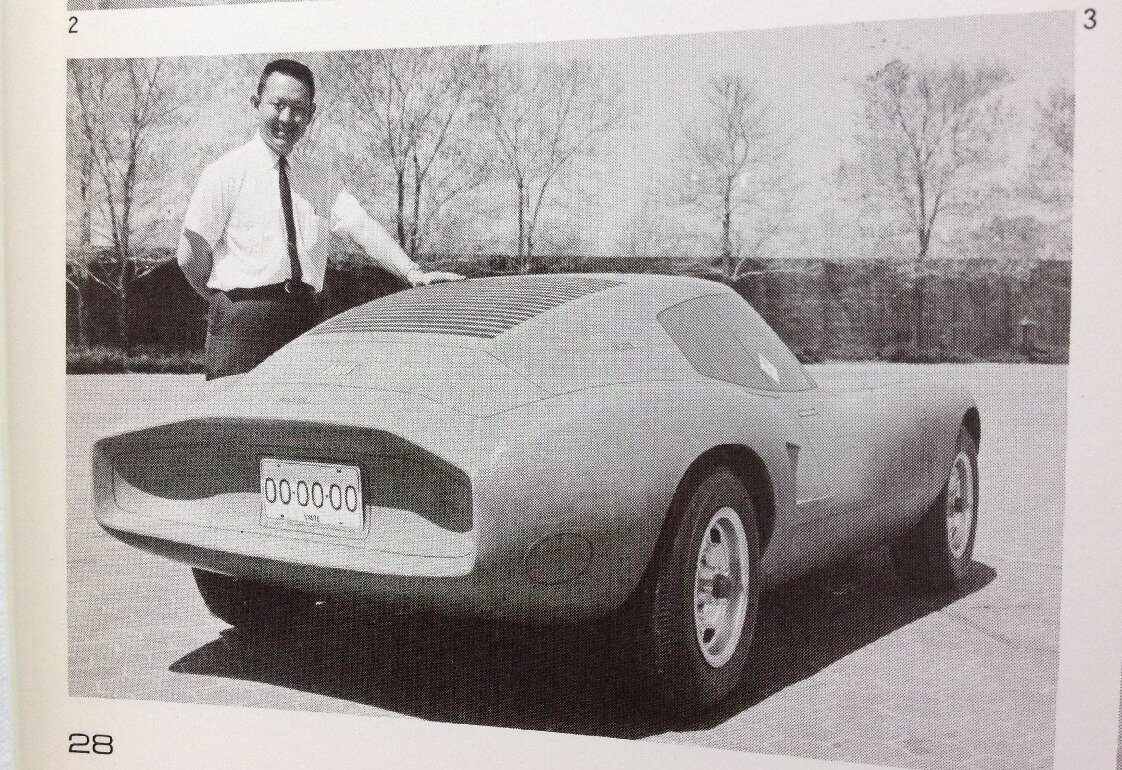
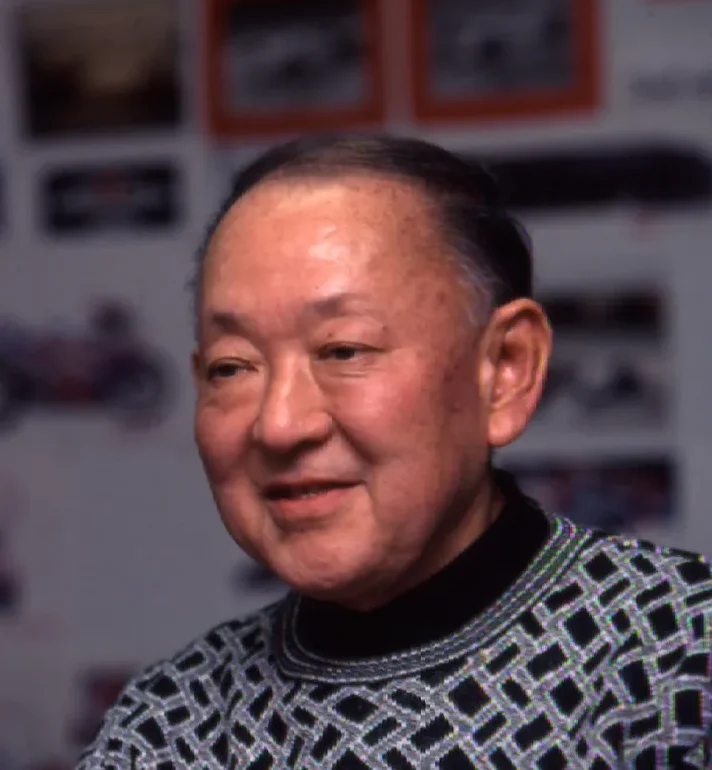
*ラリー・篠田:筋金入りの『スピード狂』
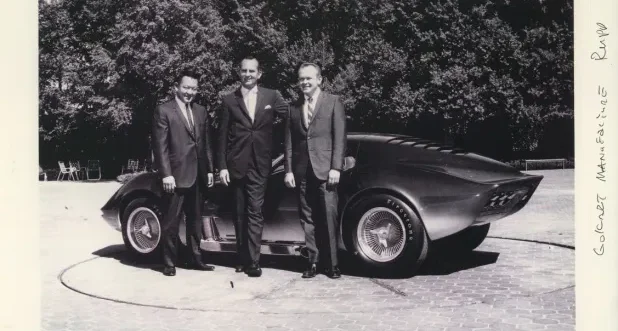
n
n
n
n
n
n
n
びっくりエピソード:
n
n
n
*大戦中、日本人に対する差別政策により送られた収容所で、「オレンジの木箱を解体し、リクライニング機能付きの椅子」を自作し、家族を驚かせる。
n
n
n
n
n
n
n
次に、
ラリー・シノダが活躍した1950〜60年代のGM(ゼネラルモーターズ)デザイン部門は、強烈な個性と才能がぶつかり合う「梁山泊」のような場所でした 。その中で彼が築いた、アメリカ車史に立ち並ぶ巨匠たちとの愛憎入り混じるエキサイティングな関係性を紹介します。
n
n
n
n
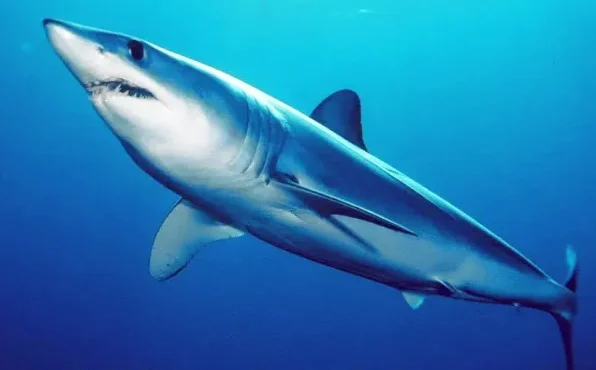
*青ざめ『メコ・シャーク』に固執するミッチェルの要求を受け、コンセプトカー:「メコ・シャークl」をデザインするも、ミッチェルが要求した本物のサメのようなボディーサイドの青から白へのグラデーション塗装に対し「車の立体感が台無しになる」と猛反発
*2人は毎日のように怒鳴り合いのケンカをしていましたが、ミッチェルはラリーの「反骨心」と「本物の才能」を誰よりも愛していました。後にラリーがフォードへ移籍する際、ミッチェルは裏切りを許せず激怒しましたが、彼が亡くなるまでその実力を認め合っていました。
n
n
n
【関係:雲の上の「絶対君主」と、反逆の若手】
*自動車デザインの神様、と呼ばれたハーレーの「車は長く、低く、クロームメッキでギラギラしているほど美しい」という思想に対し、ホットロッド(無駄を削ぎ落として速くする)出身のラリーは、アールの過剰な装飾主義が大嫌いでした。
n
n
n
*「コルベットの父」と呼ばれる伝説の技術者、ゾーラ・ダントフ(Zora Arkus-Duntov)とラリーの関係は、リアガラスを中央で2つに割った「スプリット・ウィンドウ」、ラリーとミッチェルが美学のためにこだわったこのデザインに、ゾーラは「後方視界が悪すぎて危険だ。レースで勝てない」と猛猛反発
n
n
n
*GMでラリーの才能を熱愛していたバンキーは、1968年にライバル社であるフォードの社長に電撃的に引き抜かれます。その際、バンキーが「どうしても連れて行く」と真っ先に指名したのがラリーでした。
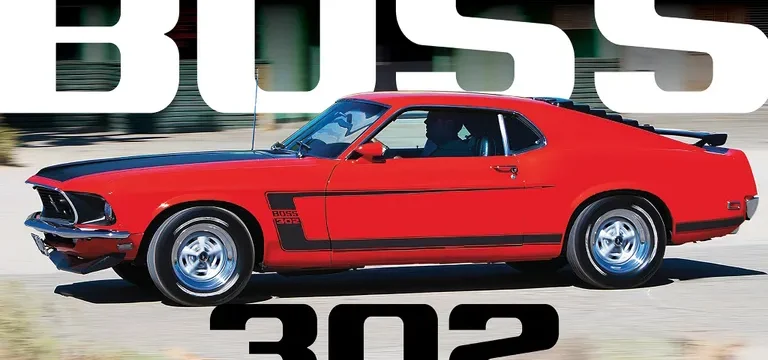
*フォードに移籍したラリーは、保守的だったフォードのデザイン部門を引っかき回し、マスタングの最高峰「BOSS 302」を作り上げます。この「BOSS」は自分を信頼して自由に暴れさせてくれたバンキーへの、ラリーなりの最高の敬意とユーモアが込もったネーミングでした。
n
n
n
n
n
n
n
重い腎臓病を患いながらも、車への情熱は衰えず、亡くなる直前までコルベットのカスタムキットのデザインを続けていました。まさに「生涯現役のホットロッダー」として駆け抜けた人生でした。
n
n
『三題噺』の時間です。
*三題噺:ラリー篠田・ブルドック・漢気
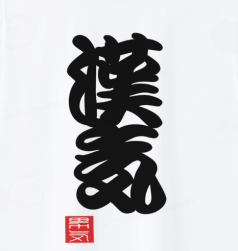
では今回、会場から頂きました
お題は、こんな感じです、、、
*ラリー・シノダ
*ブルドック
*漢気
あまり波乱がない感じの3題ですが、(笑)
一席おつきあいのほどを
願っておきますが、、、、
エ~『名は体を表す』なんてことを言いますが、
むしろ、その人物の名前より、
*顔の表情や、
*立ち振る舞い、
*その姿かたちは、
その人の本性を無言で表しているものですねぇーーー
*品のいい人、
*荒っぽい人、
*皮肉屋さん、
*肉屋の丸小の欽ちゃんなんて、、、私の幼馴染がいましたねぇ
話がどっか行っちゃいましたけど、、、
ところで、
今回の記事の主題:第2世代型コルベットの生みの親、
日系2世デザイナーの
ラリー・シノダさんは
どんな気性の持ち主だったんでしょか?
色々調べ始めますと、、、
*筋金入りのスピード狂、ホット・ロッダー(改造車愛好家)
*デザイナーとしてはリスクを厭わぬ、生粋のクリエイター気質、
*その理想を追求するためには、上司や会社システムにも屈せず、「妥協のない頑固者」ーーーーー>実力を認められ、理解者(上司)に恵まれる
*逆境をクリエイティビティ―に変える不屈の精神、
*自分の我を通す天才肌、時にはユーモアたっぷりの大ぼら吹き、、、、
*波乱万丈な「人間味あふれる」人となり
そんな
破天荒な気性が見え隠れしております。
そこでなんですが、
私の67年型(C2型)コルベットのイメージは、
始めにお話ししました、
『ハンサムなブルドッグ』です!
*フロント・エンドを含めた前半部からのイメージは、
足をかがめて獲物に跳びかかりそうなブルドックのイメージ、
*そのドッシリトした、ボディーが目の前を通り過ぎるときの流れるイメージは、まさに、キリっとした『スマート感』があります。
やはりこの、第2世代のコルベットも、
優秀なデザインにありがちな相反するコントラストからくる
「揺らぎ=奥深さ」なんかが
内在しています。
ちょっと飛躍気味ですが、、、
*やはり個人的に、えぐみや味わい深さや、
*矛盾感あふれる多層的な美観
*常に動的な不安定な揺らぎ溢れる価値観
*この存在の揺れ幅がV8エンジンの轟のように、
逆らいようもない感動を起こすのでしょうか?
そういえば、
*アメリカの象徴:V8の低重音の轟、、、
*ラリー篠田さん=「妥協のない頑固者」、
*ブルドックの武骨な体躯
これらすべては、アメリカでも日本でも消滅しつつあります、
『漢気』=超ハラスメント案件
に行きつく感じですね。
ラリー篠田さんが体現した『超ポジティブな心意気』、
*アメリカのリーダーの心を動かさせ、
*歴史的な立体造形を作り出させた原動力の中に、
この漢気が絶対にあるように感じます。
*サムライ
*封建的、
*男尊女卑的、等々の、
ブラックイメージの権化的な『漢気』、というものをそのイメージだけで封印してしまうのはもったいないと感じます。
思えば、私が愛してやまない自動車デザインの誕生秘話には常に今回の篠田さんと上司の関係などのような、『漢気のぶつかり合い』から生まれていることが多々あります。
『名は体を表す』、だけでなく、今回追求してきたブルドック顔のコルベット第2世代には、非常に深い情熱『漢気の中の最もポジティブな部分」を持ち合わせていました、
結局、
『外見は中身を現わす』といった
今回のテーマの戻っていきますね。
赤面症の私は、
自身の中身のなさに
いつも以上に赤面してしまいます、、、
(後半色が色変え無しで書きました、、、)
*その他、『好みのコルベット・デザイン』たち、、
日本人のデザイナーが強い影響を与えたコルベットデザインですが、
そのほかどんな面白いデザインがあるのでしょうか?
生産車、先行企画車を含め、独断と偏見で、
並べてみましょう。
*第3世代(1968-1982)(C3型)コルベット・シリーズ
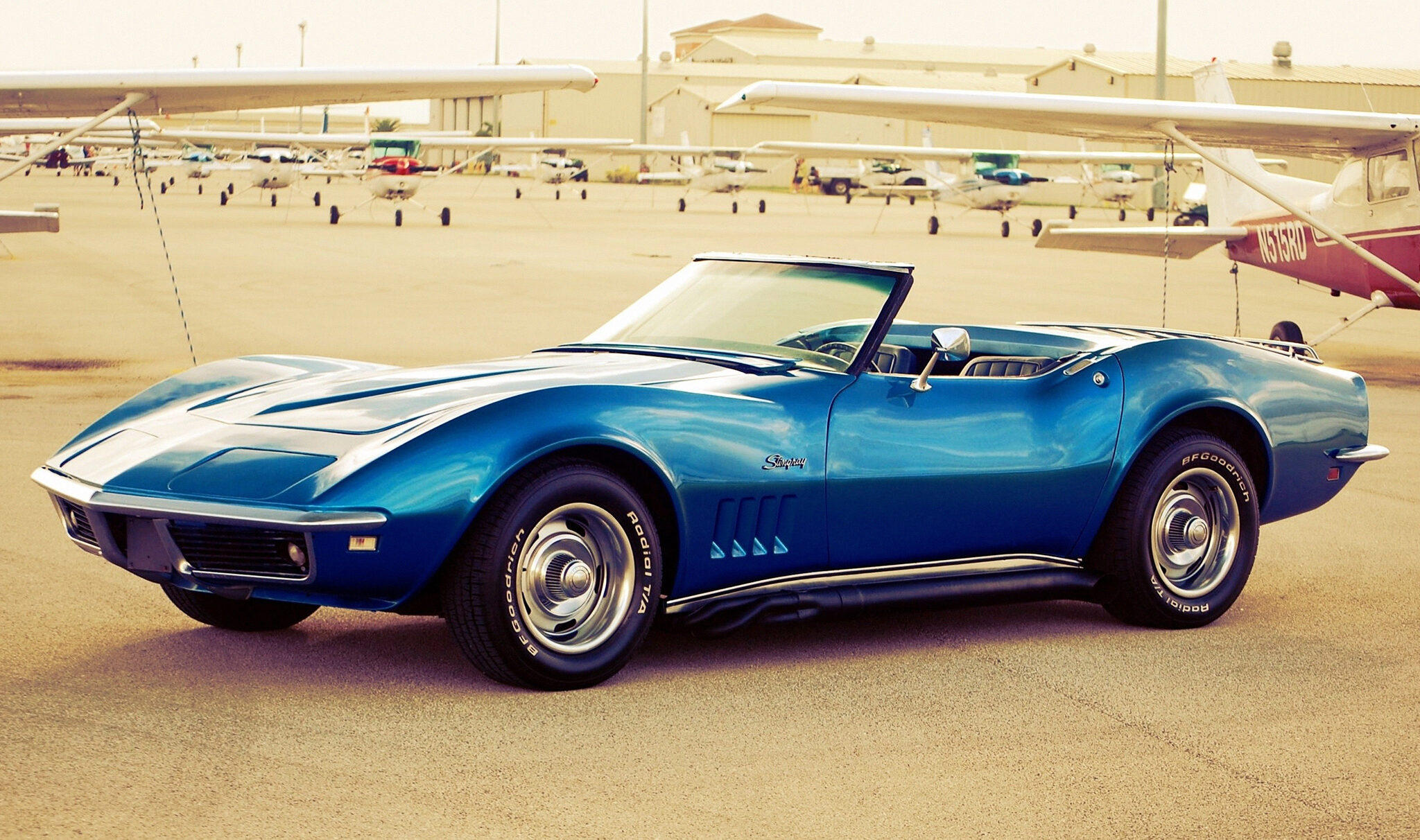
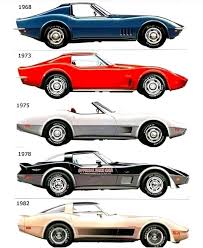
(ラリー篠田さんのフォードへの転職後の置き土産的なコンセプトカー:『メコ・シャークlll 』が原案となり、装飾を廃した流麗な外観が魅力です。
ーーーー>14年間も作られた関係上、玉石混合感がありますが、個人的には、アイアン・バンパー時代が好物です。)
*第4世代(1984-1992)【C4型】コルベット・シリーズ
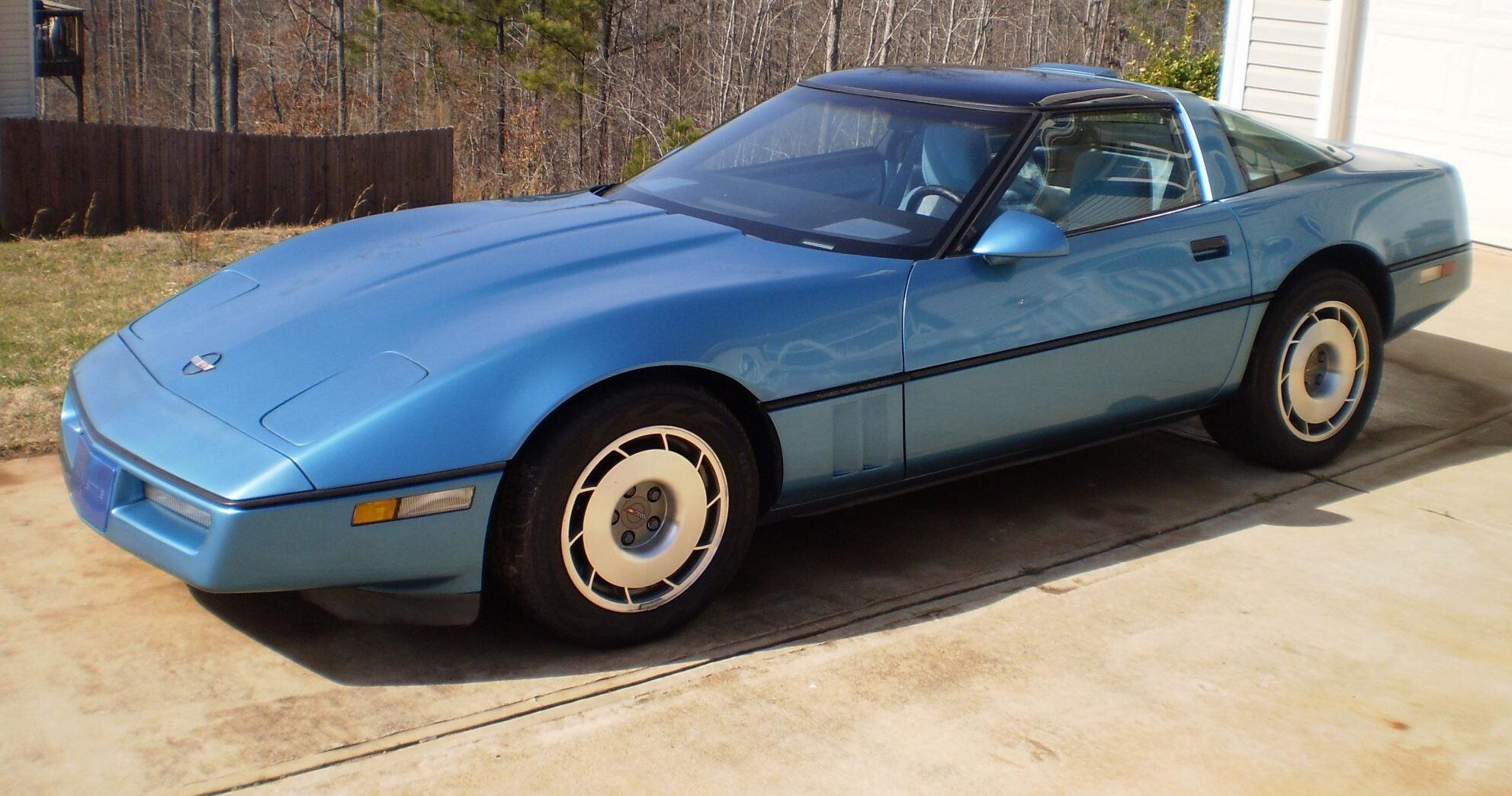
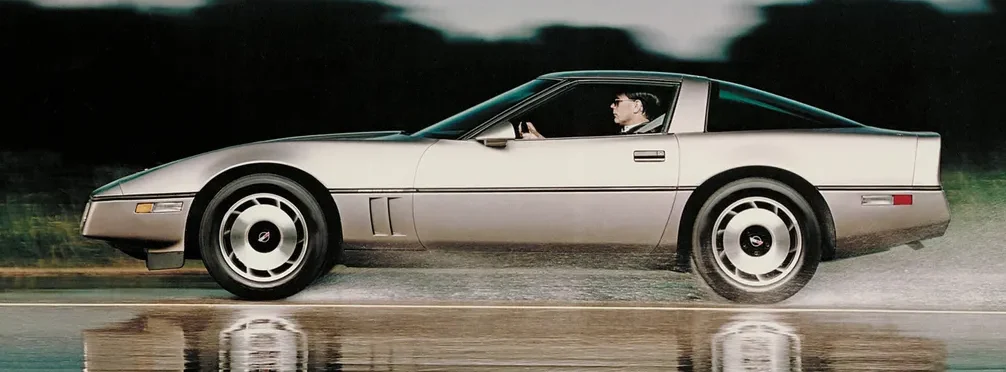
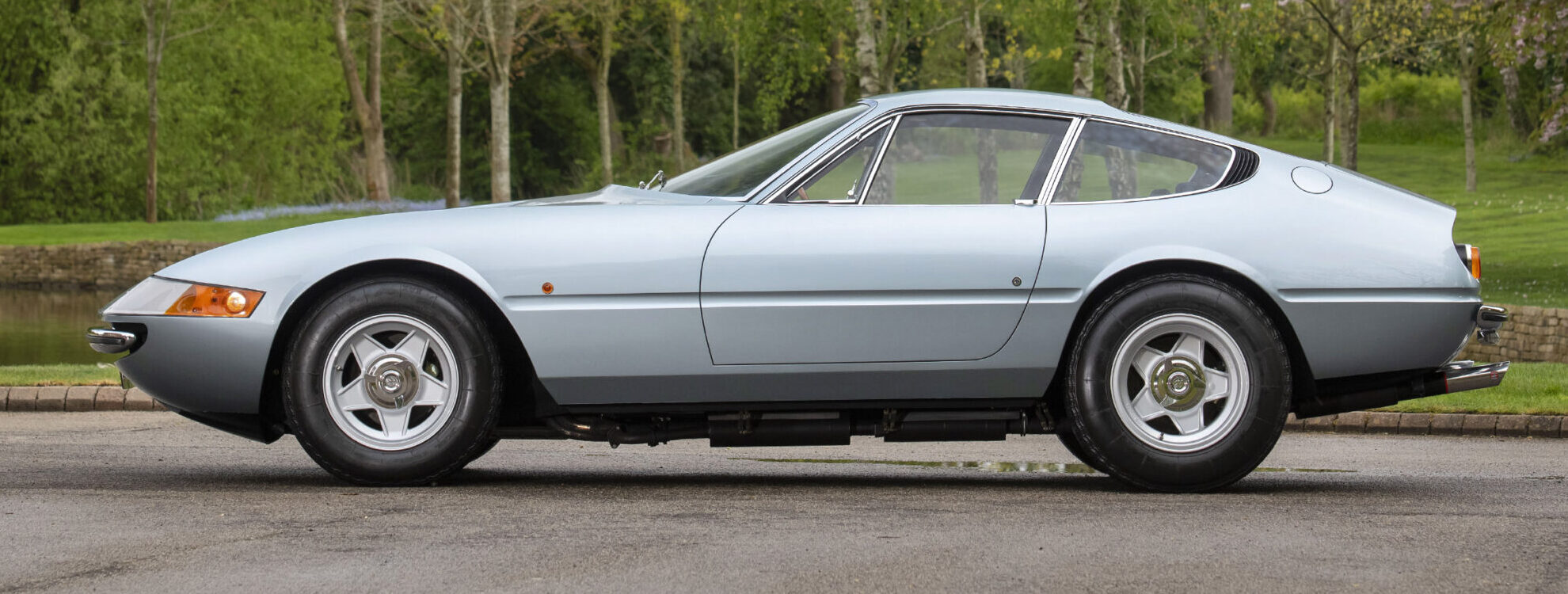
(フェラーリ大好きデザイン副社長:チャック・ジョーダン時代の代表作、美しいサイドビューがフェラーリ・365GTB/4 デイトナに何気に似ています。
ーーーーーー>均整の取れた抑え気味の抑揚が当時のヨーロッパ・デザインに対するリスペクトを感じます。)
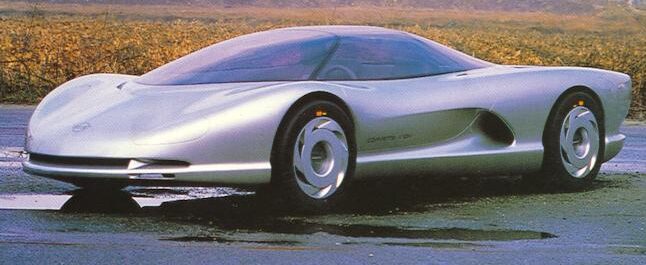
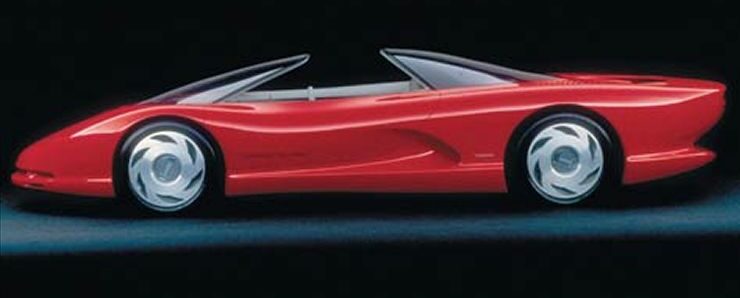
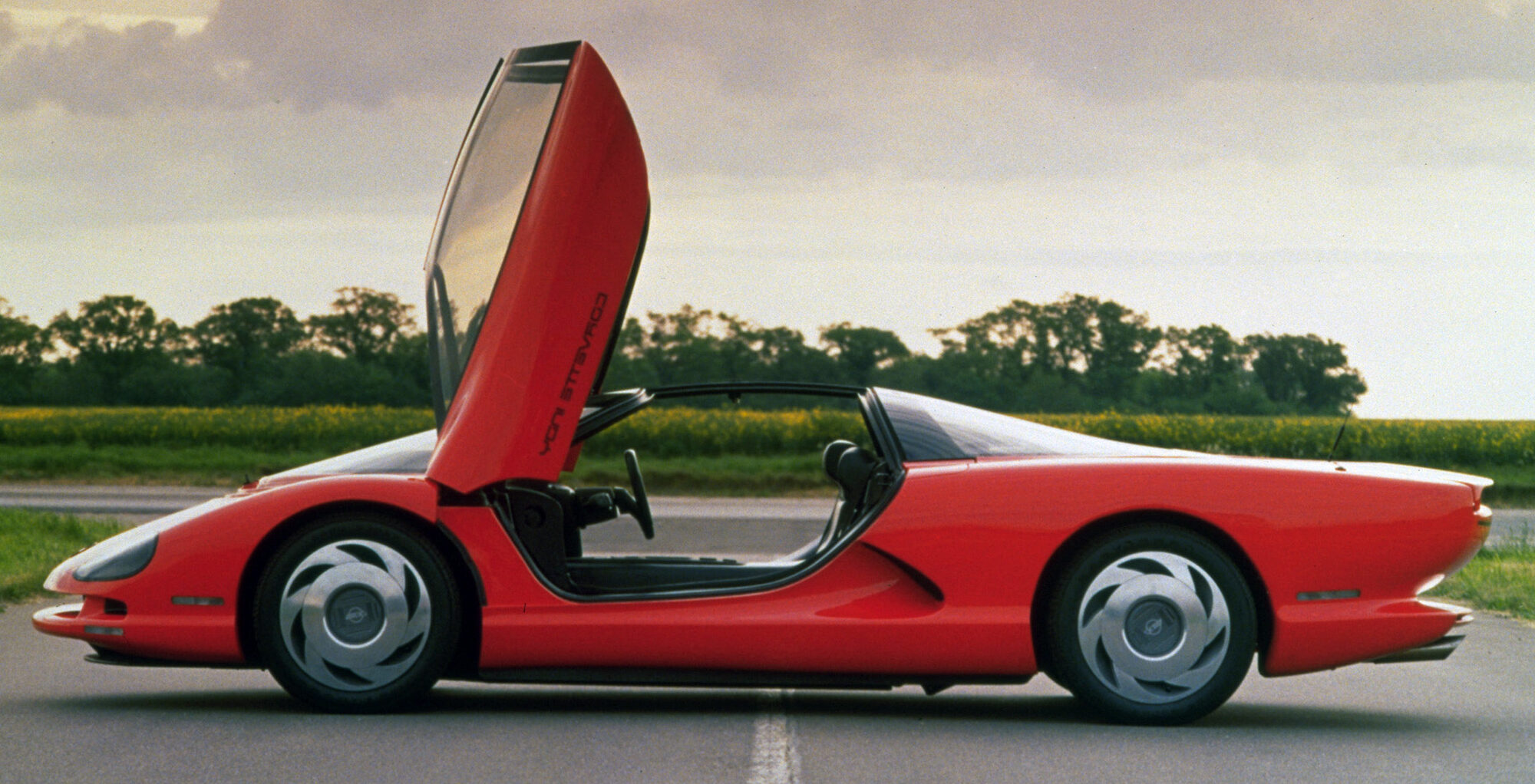
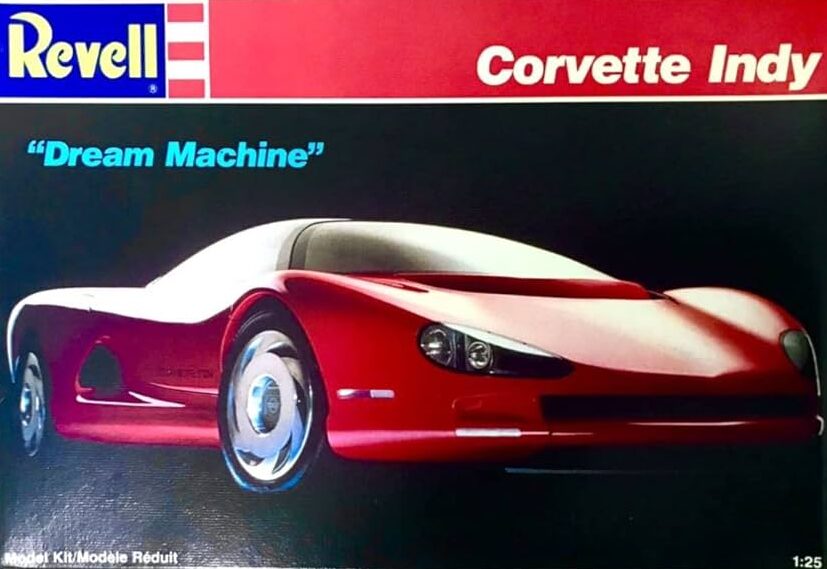
*1985年、コルベット・インディー(ミッドシップのコンセプトカー)
n
n
n
n
n
n
n
n
n
n
n
n
n
n
n
n
n
ーーー>出来の良い1/25プラキットがレベル社から出ていて、それを組んでいろんな角度から眺めていました。)
*2009年 コルベット・スティングレー コンセプト(先行企画車)
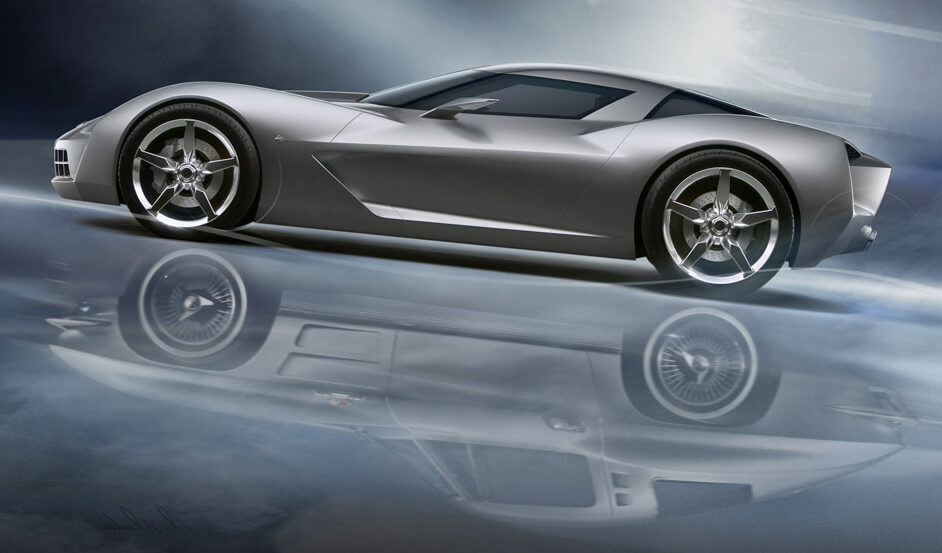
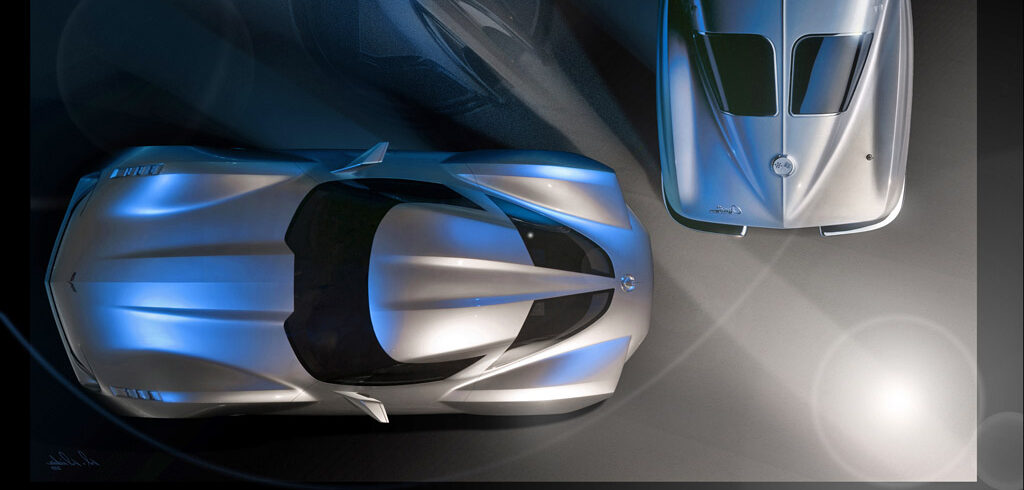
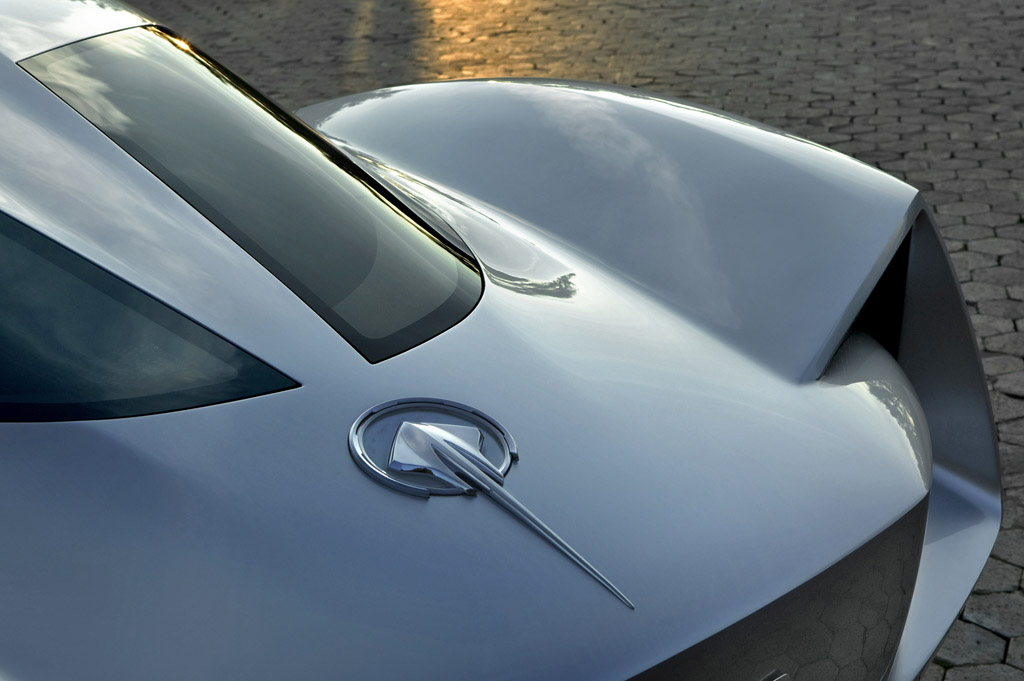
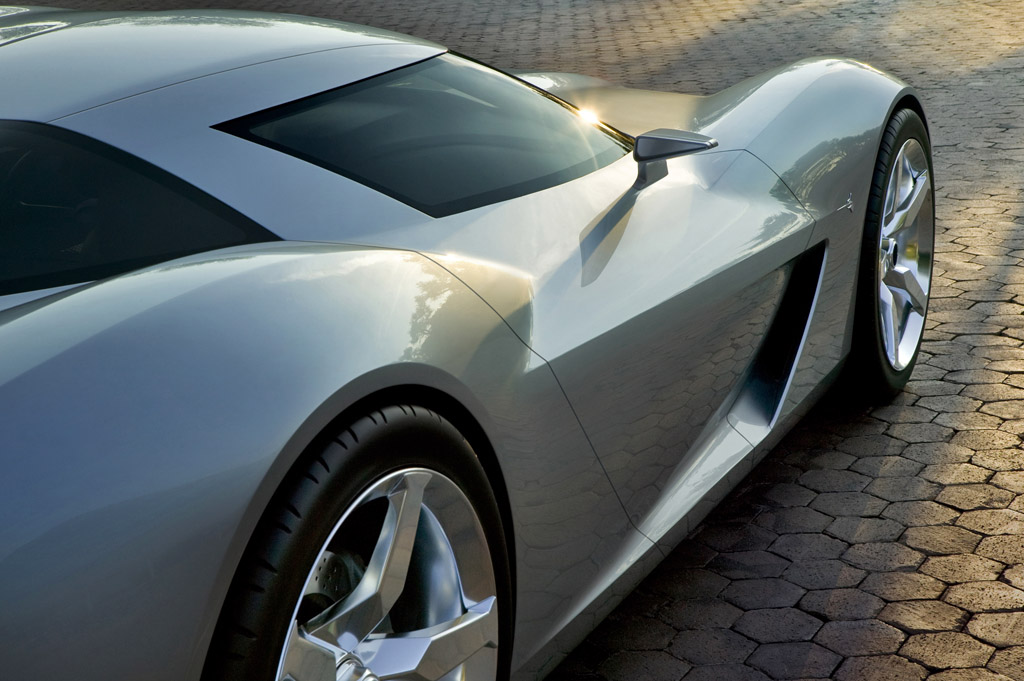
(いまだに第8世代のコルベットがこのコンセプトから生まれるべきだったと考えております。(笑)強烈なC2型デザインに対するオマージュはともかく、造形全体からあふれる、アメリカマッスルカーとしてのオーラとお化けのようなスタンス感がすさまじいです。
ーーーーー>ディテールの集積感が魅力的な実際のミッドシップC8に比べて、大きなマス【角材】から削り出した彫刻作品といった感じが段違いです。)
今回は、
恐らく最長記事となってしまいました、
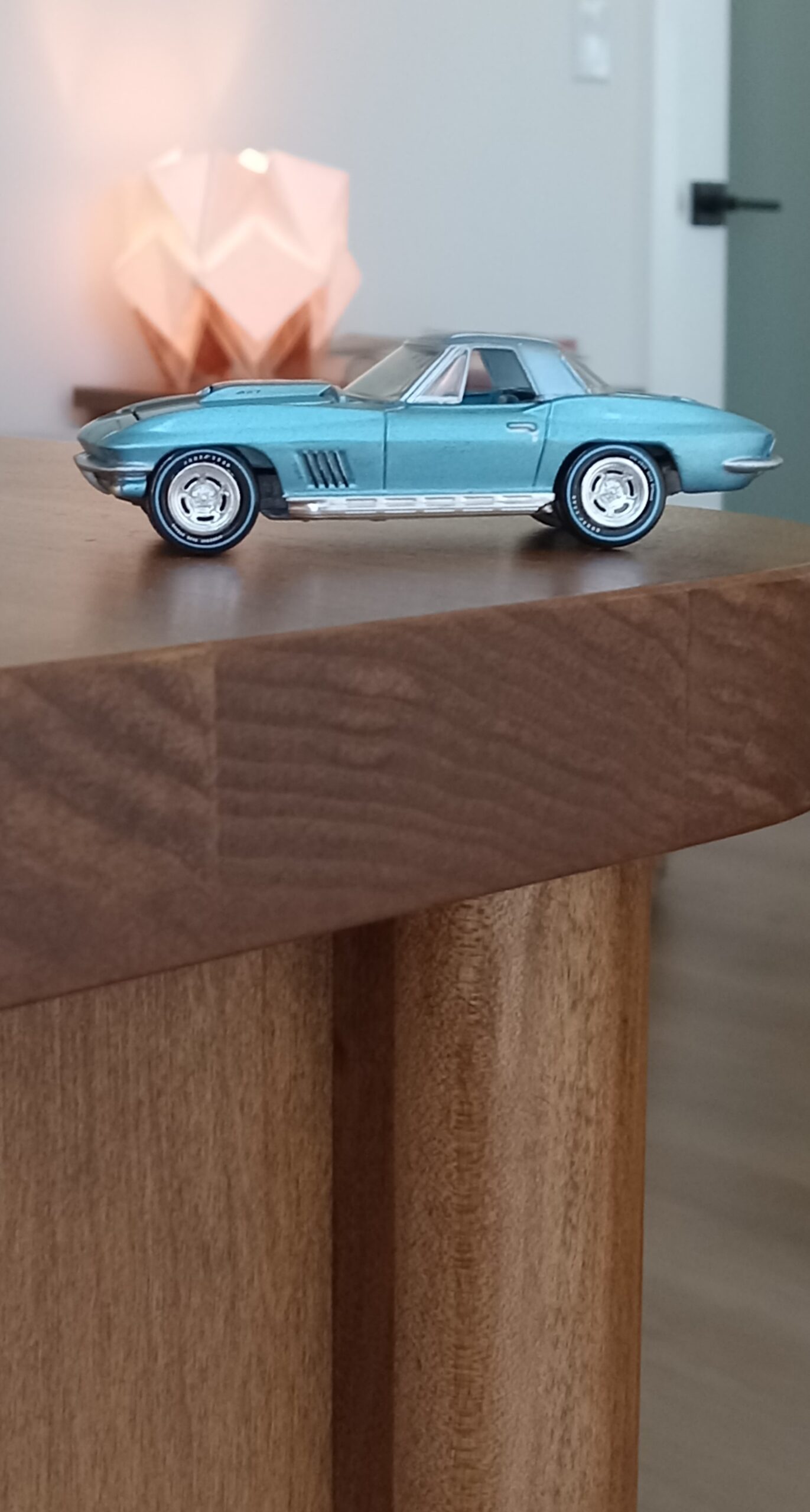
長々お疲れさまでしたーー
次回は、
再び『2ドア・クーペの変遷』記事に戻りまして、
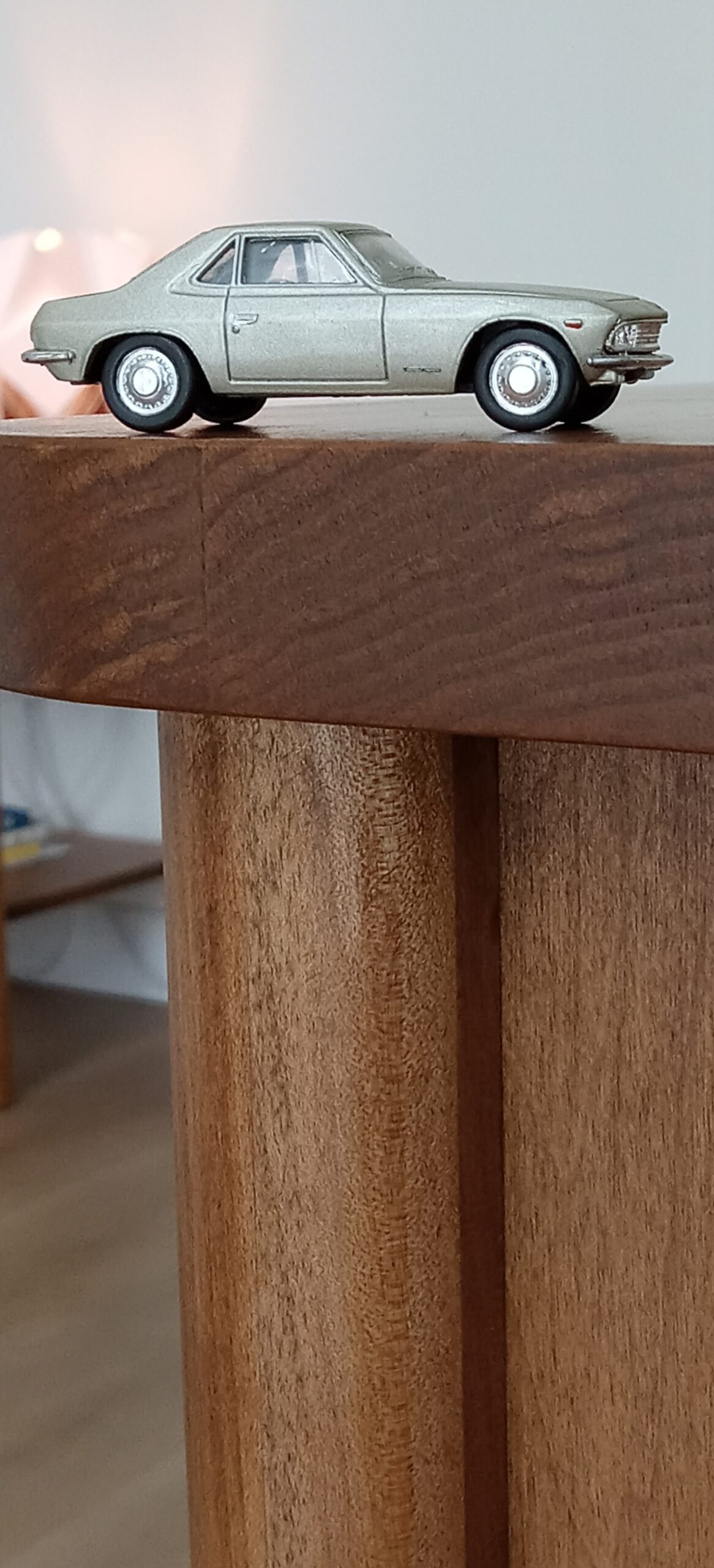
初代ニッサン・シルビアにつて
お話しさせていただきます。
本ブログと記事内容につきまして:
ブログ記事を書くにあたり私の目標は、立体造形(料理も含めて)とのかかわりを通じて、私個人の特徴的(ネジ曲がり方も含めて)な評価軸を解明することで、「美しさ・美味しさ」に対する好奇心や、探求心を、どのように満足・充足させてきたのかを明記しておくことです。
従いまして、記事の中に出てくる、数字や年号、微細なデータなどには細心の注意を払っておりますが、時に大きな間違いや勘違いを犯していることも考えられます。特に自動車記事における主要諸元や、年号などには紛らわしいものも多く、あくまで参考程度に考えていただければ幸いです。
私としては、記事の中で個人的な外観デザインや味覚の評価、そこから広がる後半部分につなげるための、『流れ』を作るための客観的材料として年号やデータを挿入している感じです。あくまで重視したいのは、私個人の頭の中で起こる、記憶の錯そう的混沌から生まれる新たな『見方』や『情報の予想外のつながり』です。その勢いを作り出す、『流れ』の一環として、諸データが副次的に必要となるわけです。
話がそれますが、大好きな落語の世界に「三題噺」という、その場て会場から募った3つのお題を使って1つのお話に仕立てるといったお遊びがございますが、私はそれに近いことを立体造形の特徴や(料理のお味)をお題にして行っている感じがします。その中で頭の中に去来する数々の着想が、全く予想外で楽しく、次回からの記事内容を大幅に変えたり、新展開につながっています。
当ブロブの仕組み:
『好奇心の点と線 x 気まぐれ脳内回路=予想外の新展開』
こんな自分勝手なブログですが、今後ともよろしくお願いいたします。
追記:上記の『流れ』を作る為に必要な写真はできる限り、個人所有のミニカー・自前の料理などを使い撮影しておりますが、その他の必要最小限の図版や写真を他のブログ主様の記事や諸会社ホームページなどからお借りしております。(記事内容に合うよう加工させていただき、使用時は最小の解像度で載せております。)問題がある場合、ご連絡いただければ直ちに降ろさせていただきます。
追記2:当ブログ記事に掲載のミニカー写真等(個人撮影)は許可なしで、どのようにお使いいただいても結構です。私個人の創造性はこの世のもの、と言う認識の上で記事を製作しています。
!!!!!!!!!!!!!!!!!!!!!!!!!!!!!!!!!!! Translated in English !!!!!!!!!!!!!!!!!!!!!!!!!!!!!!!!!!!
(Miniature car for photography: [Blue and black body] by Greenlight, 1/64 1967 Chevrolet Corvette Convertible—The company’s racing version of the ’67 Corvette hardtop was molded, painted, and then installed; [Yellow Body] Manufactured by Auto World, 1/64 Deluxe Series 1967 Corvette Coupe—Replaced with M2 wheels and Greenlight tires)
Episode 29—[Corvette History—Part 1], Chevrolet Corvette Stingray, 1967 (Hardtop/Tuxedo Black) Chevy Corvette Stingray, 1966 (Hardtop/Tuxedo Black)
For this 29th installment, I’d like to take a break from “The Lineage of 2-Door Coupes” and, as the first installment of “My Corvette History”—the inner sanctum of American cars—talk about the 1967 “Chevrolet Corvette Stingray (Hardtop).”
Corvette Lineage: (Special Edition)
Part 1: 1967 Stingray [C2] Convertible (Hardtop, Black)
Part 2: 1972 Corvette [C3] Convertible (Metallic Blue)
Part 3: 1990 Corvette ZR-1 [C4] Coupe (Red)
Part 4: Stingray Concept [Pre-production Prototype], 2009 (Metallic Blue)
#The “Handsome Bulldog” Makes an Appearance!!
(This is a magazine ad from back then.)
To me,
the C2-generation convertible [with hardtop] looks
like
[Mr. Bull = Spike]
from the American TV cartoon “Tom and Jerry,”
but a little more handsome.
It’s like this:
* Rugged and clumsy,
* But with a handsome, leading-man personality—
with a unique charm,
* A true American muscle car,
* Yet it also has a smart, sophisticated look, like a British or European cabriolet fitted with a racing hardtop,
The impression while driving is:
* When approaching from the front: ーーーーー> A fierce [Bulldog]
* The rear view as it passes by: ーーーーー> A graceful [gentleman]
A car brimming with such duality
simply has to be captivating!
So, let’s dive right in
and take a look,
* Car Review: The Handsome “Bulldog”
* Exterior Design Features: Bill Mitchell vs. Larry Shinoda
* “Me” and the 1967 Stingray Hardtop
* Three-Theme Story: Larry Shinoda / Bulldog / Manly Spirit
* Other Convertibles with Hardtops
* Real Car Commentary: Bill Mitchell vs. Larry Shinoda’s Theater of Conflict?
#Overview:
The 1967 Chevrolet Corvette Stingray (C2) is the final evolution of the second-generation Corvette, representing a deepening and refinement of the futuristic, ultra-distinctive, and muscular design of the 1963 model. With a sculptural design unlike any other car, it boasts overwhelming power in terms of performance as well. Among them, the model equipped with the 427 Big Block engine is a legendary car that still enjoys immense popularity today as the pinnacle of American muscle cars.
1. Exterior and Design
The exterior design of the 1967 Chevrolet Corvette Stingray (final C2 model) was
led by designer Larry Shinoda under the supervision of GM Vice President Bill Mitchell. It is characterized by a sleek yet aggressive form inspired by stingrays and sharks (Mako Sharks).
The Exterior Design Process
* Sources of Inspiration
The streamlined form of the “Mako Shark (XP-755)” concept car, created by Mitchell and Shinoda, and the coloring of a shark actually caught at sea served as the basis for the C2 design.
* Sketches and Clay Models
At GM’s top-secret “Studio X” (the underground studio), a small team led by Shinoda created clay models based on early sketches by Peter Block and others. It was here that the golden ratio of a long nose and short deck was established.
* The Birth and Discontinuation of the “Split Window”
At its debut in 1963, the car featured a center rib running from the roof to the tail and a split rear window. Although this was a strong preference of Mitchell’s, it was discontinued after just one year due to poor rear visibility, and a single-pane glass window was adopted starting in 1964.
n
n
n
n
n
n
n
n
nn
n
nn
n
n
nn
n
n
n
n
n
n
n
n
n
#Since its debut in 1963,
the refined styling of the C2 model reached its most sophisticated form in 1967.
* Front Fenders: The number of slits (vents) on the upper part of the fenders was increased from three to five.
* Rear Design: A major feature of the 1967 model was the placement of a single backup lamp above the license plate.
* Emblem downsizing: Chrome trim on the sides and the cross-flag emblem on the fenders were either removed or scaled down, emphasizing the simpler, more beautiful body lines.
* Wheel covers: In accordance with new safety standards, spinner-type wheels were discontinued and replaced with starburst caps.
n
n
N
n
n
2. Engine and Performance
The 1967 model offered a variety of V8 engines, with the 427 cubic inch (approx. 7.0-liter) big-block engine boasting overwhelming performance.
n
* Small-block (327ci): Delivered 300 horsepower, or 350 horsepower with features such as an aluminum intake.
* Big Block (427ci): Delivered 400 or 435 horsepower with Tri-Power (triple carburetor) configuration; furthermore, the limited-edition track-focused “L88” model, while rated at 430 horsepower in the catalog, actually harbored monster-class specs exceeding 550 horsepower.
n
n
n
n
n
n
n
4. Value as a Collector’s Item
Since the model transitioned to an entirely new body style (C3) the following year (1968), the 1967 model is regarded as the ultimate C2 Stingray. With a production run of approximately 22,900 units (about two-thirds of which were convertibles), vehicles in original condition command extremely high prices at auctions worldwide.
n
n
n
#Key Specifications:
Model: L-71 (Top-of-the-line street model)
Total Displacement: Big-block V8 (427 cubic inches / 6,997 cc)
Maximum Power: 435 hp @ 5,800 rpm (L-71)
Maximum Torque: 63.6 kgfm (460 lb-ft) @ 4,000 rpm (Triple 2-barrel carburetors)
Drivetrain: FR (Front-engine, rear-wheel drive)
Seating Capacity: 2
Body Style: 2-door convertible
Wheelbase: 2,489 mm (98.0 inches)
Overall Length: 4,448 mm (175.1 inches)
Overall Width: 1,758 mm – 1,768 mm (Big Block models are slightly wider)
Overall height: 1,265 mm (49.8 inches)
Approx. 1,385 kg – 1,513 kg
(3,053 – 3,336 lbs / Varies depending on engine)
*Exterior Design Features: The Handsome “Bulldog”
Now then,
regarding the design features
of this exceptional “Muscle Corvette,”
I would like to share my impressions,
focusing on the following six points.
1: It is truly a “Muscle Car!” The sight of muscular fenders positioned at all four corners is the unrivaled, solitary pinnacle of American design—unlike anything else!
ーーーーーー> Its appearance from every angle is a sculptural masterpiece.
2: It’s easy to overlook, but the ideal FR proportions, derived from the perfect engine placement that makes the side view stand out
――ーーーー> It has a fierce, wild character that rivals the European sports cars of the era
3: The front grille, which is slightly elongated vertically and thick enough to obscure its features, adding to its menacing aura—it’s pointed like a shark’s headーーーーー> A front end this pointed is rare.
4: Compared to the front, the rear quarter panel area features a slender, sharp, and handsome design.
5: The optional hardtop—a “perfectly calculated design”—transforms the rugged convertible into a sleek and elegant coupe in an instant.
With that said,
let’s take a closer look.
1: Truly a “muscle car!” The sight of those bulging fenders positioned at all four corners is the unrivaled, solitary pinnacle of American design—a one-of-a-kind masterpiece!
(This is truly a triumph for the Bill Mitchell and Larry Shinoda duo. Their achievement in successfully creating pure American design without relying on European carrozzerias is remarkable—it is truly a victory for the GM Design Studio.)
ーーーーーー> Its appearance from every angle is “sculptural = a masterpiece.”
2: It’s easy to overlook, but the side view stands out thanks to the ideal FR proportions derived from the perfect engine placement.
(A classic FR layout—where the front of the engine block starts behind the front axle—is realized with a massive American engine.)
――ーーーー> Its wild, aggressive character rivals that of European sports cars of the era.
3: A front fascia that’s slightly elongated vertically and thick, with its expression obscured—adding to the eerie vibe—and a shark-like, pointed nose
(In reality, it seems to have been inspired by a “stingray,” but combined with the retractable headlights, the resulting “somehow eerie expression” was just perfect for this generation of Corvettes.)
ーーーーー>A front end this pointed is rare.
4: Compared to the front, the rear quarter panel area features a sleek, sharp, and sophisticated design
ーーーーー> The tapered rear end emphasizes the sense of speed as it passes by, and the pointed tip of the bumper further accentuates this effect
5: Transforming the rugged convertible into a sleek and elegant coupe in one fell swoop
ーーーーー>The optional hardtop, ‘designed with perfect precision’
*“Me” and the 1967 Corvette Roadster (with hardtop)
The “Second-generation (C2) Corvette Roadster”—
I had seen the actual car
many times before, but
*The front fascia, exuding an overwhelming sense of presence,
*The bulges on the fenders at each corner look like a bodybuilder’s muscles,
*It has a ruggedly cool look,
That was the extent of my understanding.
But an event that completely changed my perception
was discovering a photo on a certain webpage of
“1967 Corvette Roadster with Detachable
Hardtop”
on a certain website.
(For 1966–1967 models, an actual detachable hardtop: priced at $4,000 on eBay.)
Regarding this detachable hardtop,
* I was bothered by the fact that the roofline slopes slightly downward toward the rear,
* so I searched through various photos, but sure enough, they all had the same downward slope.
* Furthermore, the way the fenders at the four corners were tightened and converged toward the center,
* with the A and B pillars spaced neither too close nor too far apart to form a “trapezoidal shape,” creating a balanced stance that seemed to brace itself like the legs of a water strider—
it was incredibly cool.
After going through this kind of “3D evolution,”
it led to this current [5-Car Major Modification Project].
<https://yisell7777.com/archives/8621>
First of all,
what I was obsessed with over 30 years ago was this 1/43 scale plastic kit.
*Monogram, 1/43 Scale Plastic Model: 1967 Corvette Roadster (with soft top parts)
(For some reason, Monogram released two 1/43 scale kits: this Corvette and the AC Cobra 289. Both were exceptionally well-made. I painted and built the Cobra (which included photo-etched parts), but
——> but with the Corvette, once I started tweaking the body shape and the soft top with putty, I just couldn’t muster the energy to finish it… sob)
*SMTS, White and Metal Ready-to-Run Model, 1/43 1966 Corvette Roadster (Burgundy)
(This photo appears to be of a different color variant previously sold on eBay)
(This one was traded with a dealer I met at the Orange County Model Car Show. It’s very heavy and quite well-made; I painted a soft top from a Monogram plastic kit in matte burgundy and mounted it on this model.)
*Franklin Mint: Die-cast finished model, 1/24 scale 1967 Corvette Roadster (with detachable hardtop) (Tuxedo Black)
(I saw this many times at the Franklin Mint dealer shop in the Glendale shopping mall. I’d take it out of the box, admire it, and then put it back, but in the end, I never bought it. (lol)
――ーーー>The details and paint job were fantastic, but the hardtop was huge, and it just didn’t quite look right. (Tears)
*Franklin Mint, die-cast finished model, 1/12 scale 1967 Corvette Roadster (with detachable hardtop)
(A 1/12 large-scale version was also released in 2002. I haven’t seen the actual model, but the headlights open and close, and the lights even turn on.
ーーーーー>Unfortunately, the hardtop doesn’t fit quite right on this one either, and it feels a bit too tall…)
*NOREV, 1/18 die-cast finished model, 1963 Corvette Roadster (red, with soft top)
(This is a solid-body, engine-less scale model, and the overall design and tire size are reproduced almost perfectly.
ーーーーー>The only downside is that, since it’s a ’63 model, the hood lacks a bit of impact.)
Additionally,
here is a list of the 1/64 scale die-cast models used for this modification.
*Greenlight, 1/64 1966 & 1967 Corvette Roadster (various colors, hardtop or soft top versions, etc.)
(Overall, it has the best look of any 1/64 scale model car, but the tire size and width are a bit lacking)
*Greenlight, 1/64 1967 Corvette Roadster/Racing Version (with hardtop)
(It comes with a very well-made hardtop, so I borrowed it and transplanted it onto the ’67 Roadster. I ended up using a total of three cars
ーーー>This is the product that really came in handy this time.)
*M2 Miniatures, 1/64 1967 Coupe (Gray)
(The wheels and red-letter tires were so well-made that I transplanted them onto the Greenlight version)
*Auto World / Johnny Lightning, 1/64 1967 Corvette Coupe
(I used 3–4 sets of each color to carefully evaluate various wheel/tire combinations. lol)
* Johnny Lightning, 1/64 1966 Corvette Roadster (Metallic Blue / Hardtop Version)
(This one was already close to what I was aiming for, so I got it for reference. However, since it’s a vintage model released nearly 30 years ago, the finish is quite toy-like, so I couldn’t use it.)
As you’d expect from a car that embodies the “American spirit,”
there are all kinds of die-cast models and kits out there!
The fact that the person who brought that “American spirit” to life
was a
[Japanese-American (second-generation)]
feels like a twist of fate.
Isn’t that interesting?
Now, let’s take a closer look
at the man himself,
Larry Shinoda.
*Larry Shinoda: A die-hard “speed freak”
n
n
n
n
n
n
n
n
n
n
n
n
n
n
n
The Footsteps of a Passionate Hot Rodder:
n
n
n
n
Larry Shinoda (1930–1997), a legendary car designer who left an indelible mark on American automotive history, was a “passionate hot rodder” who never pandered to anyone, driven by an indomitable spirit and a die-hard passion for speed. Chevrolet Corvette Stingray (C2) and the Ford Mustang “BOSS 302”—we delve into the eventful and deeply human “personality” of the man who created these iconic American cars.
n
n
n
n
Surprising Anecdotes:
n
n
n
* During World War II, while in an internment camp resulting from discriminatory policies against Japanese Americans, he surprised his family by dismantling an orange crate to build a “reclining chair” of his own.
n
* After the war, he made a name for himself in LA as a top-tier racer, even winning the first national championship of the National Hot Rod Association in 1955. (Perhaps it was precisely because he had a perfect understanding of car mechanics that he was able to create designs that focused not only on visual beauty but also on performance.)
n
n
* He flatly declared that watercolors and rough sketches were a waste of time, got expelled from a prestigious art school, then joined GM. He happened to run into the legendary boss, Bill Mitchell, at a red light, and in an impromptu drag race, Rally won hands down. Impressed, Bill recruited him to a secret underground studio where a confidential design project (the Meco Shark, created to avoid Harry Earl’s scrutiny) was underway… and so on
n
n
n
ーーーーーーーー>He also had a side as an “uncompromising maverick” who bit back at the system…
n
n
n
n
Next,
the GM (General Motors) design department during the 1950s and 60s, when Larry Shinoda was active, was a place like “Liangshanbo” where intense personalities and talents clashed. Here, we’ll explore the exciting, love-hate relationships he forged with the masters who stand alongside him in the annals of American automotive history.
n
n
n
1. Bill Mitchell (2nd Vice President of GM Design)
[Relationship: “Boss and Underling” who fought like brothers]
n
n
n
n
n
* Pale: In response to Mitchell’s insistence on the “Meco Shark,” he designed the concept car “Meco Shark I.” However, he vehemently opposed Mitchell’s demand for a blue-to-white gradient paint job on the body sides—resembling a real shark—arguing that it would “ruin the car’s three-dimensionality.”
* The two would yell at each other almost every day, but Mitchell loved Larry’s “rebellious spirit” and “genuine talent” more than anyone else. Later, when Larry moved to Ford, Mitchell was furious and couldn’t forgive the betrayal, yet they continued to acknowledge each other’s abilities until the day he died.
n
n
n
n
n
2. Harley Earl (First Vice President of GM Design)
[Relationship: The “Absolute Monarch” on a Pedestal and the Rebellious Youngster]
*While Harley—known as the “God of Automotive Design”—believed that “a car is beautiful when it is long, low, and gleaming with chrome,” Larry, who came from a hot rod background (where excess is stripped away to achieve speed), detested Earl’s excessive ornamentation.
n
*Together with Mitchell, the future boss, Larry secretly developed a sports car (the prototype for the later C2 Corvette) in an underground studio, behind Earl’s back, designed to look sharper and lighter. Overcoming the massive obstacle that was Earl strengthened the bond between Larry and his team.
n
n
n
n
n
3. Zora Arkus-Duntov (Corvette Development Manager / Chief Engineer)
[Relationship: A “comrade-in-arms” and “rival” who pursued functional beauty]
n
* The relationship between Larry and Zora Arkus-Duntov—the legendary engineer known as the “Father of the Corvette”—was marked by fierce conflict over the “split window,” a design where the rear window was divided into two sections down the center. While Larry and Mitchell were committed to this design for its aesthetic appeal, Zora vehemently opposed it, arguing, “The rear visibility is too poor; it’s dangerous. We won’t be able to win races.”
* In the end, the design was scrapped after just one year, and Zora’s argument prevailed. However, Zora held Rally’s “deep understanding of aerodynamics and mechanics as a racing car” in very high regard.
n
n
n
n
n
n
4. Semon “Bunkie” Knudsen (GM Vice President ➔ Ford President)
[Relationship: The “Greatest Supporter” Who Helped Rally Shine Brightest]
n
n
* Although not a designer, top executive Bunkie Knudsen was an indispensable figure in Rally’s life,
n
* Bunkie, who was passionate about Rally’s talent at GM, was suddenly poached in 1968 to become president of rival company Ford. At that time, the first person Bunkie specifically named, saying, “I absolutely have to take him with me,” was Rally.
* After moving to Ford, Rally shook up the conservative Ford design department and created the pinnacle of the Mustang, the “BOSS 302.” The name “BOSS” was Rally’s way of paying the ultimate tribute to Bunky—who had trusted him and given him free rein—infused with his own unique sense of humor.
n
n
n
n
n
n
n
n
n
n
In his later years,
despite suffering from severe kidney disease, his passion for cars never waned, and he continued designing custom kits for Corvettes right up until his death. His life was truly that of a “hot rodder who remained active until the very end.”
n
n
n
Now, it’s time for the much-anticipated
“Three-Theme Story.”
*Three-Theme Story: Larry Shinoda, Bulldog, Manly Spirit
So, the themes we received from the audience this time
are as follows…
*Larry Shinoda
*Bulldog
*Manly Spirit
These three topics don’t seem to promise much drama, (lol)
but I hope you’ll stick around
for the whole performance…
Well… they say “the name reflects the person,”
but actually, more than a person’s name,
* their facial expressions,
* their demeanor,
* and their appearance
silently reveal their true nature, don’t they?
* A refined person,
* A rough-and-tumble type,
* A cynic,
* Or even “Kin-chan” from the butcher shop… I had a childhood friend just like that.
I’ve gone off on a tangent here, but…
By the way,
the main topic of this article: the creator of the second-generation Corvette,
the second-generation Japanese-American designer
Larry Shinoda—
what kind of personality did he have?
When I started looking into it…
* A die-hard speed demon and hot rodder (custom car enthusiast)
* As a designer, he was a true creative who wasn’t afraid to take risks,
* To pursue his ideals, he wouldn’t bow to superiors or corporate systems—an “uncompromising stubborn man” —> His talent was recognized, and he was blessed with understanding superiors
* An indomitable spirit that turned adversity into creativity,
* A genius who got his way, and at times, a big-mouthed braggart full of humor…
* A “down-to-earth” personality with a turbulent life story
Such
a wild and unconventional temperament is clearly evident.
So,
my image of the 1967 (C2) Corvette is,
as I mentioned at the beginning,
a “Handsome Bulldog”!
*The impression from the front end and the front half of the car
is that of a bulldog crouching down, ready to pounce on its prey.
*The flowing image of that solid, sturdy body as it passes right in front of you has a truly sharp, “sleek” feel to it.
Indeed, this second-generation Corvette also possesses
“fluctuation = depth”
inherent in it.
This might be a bit of a stretch, but…
*Personally, I think it’s the sharpness, the depth of character,
*the multi-layered beauty brimming with contradictions,
*the values overflowing with constant dynamic instability and fluctuation,
*and the fact that the range of this existence, like the roar of a V8 engine,
evokes an irresistible sense of awe?
Come to think of it,
* The symbol of America: the deep, rumbling roar of a V8…
* Mr. Larry Shinoda = “an uncompromising, stubborn man,”
* The rugged physique of a bulldog
All of these are gradually disappearing, both in America and Japan,
leading us to the notion that
‘Manly Spirit’ = a major harassment issue.
The “ultra-positive spirit” embodied by Mr. Larry Shinoda—
* which moved the hearts of American leaders,
* and served as the driving force behind the creation of historic three-dimensional sculptures—
I feel that this “Han-ki” is absolutely present within it.
*Samurai
*Feudal,
*Male-dominated, etc.,
It feels like a waste to dismiss this “Han-ki”—the very embodiment of such negative stereotypes—based solely on that image.
Come to think of it, the untold stories behind the birth of the car designs I love so dearly often stem from “clashes of Han-ki,” much like the relationship between Mr. Shinoda and his boss in this case.
It’s not just that “the name reflects the nature”—the second-generation Corvette with its bulldog-like face, which we’ve been exploring here, possessed a profound passion, “the most positive aspect of that ‘manly spirit.’”
In the end,
we come back to this issue’s theme:
“Appearance reflects the inner self.”
As someone who blushes easily,
I find myself blushing even more than usual
at my own lack of substance…
(I wrote the second half without changing the color…)
* Other “Favorite Corvette Designs”…
While Japanese designers had a strong influence on Corvette design,
what other interesting designs are out there?
Let’s list them here, based purely on my own personal preferences,
including both production models and concept cars.
* 3rd Generation (1968–1982) (C3) Corvette Series
(Based on the “Meco Shark III” concept car—a parting gift of sorts from Rali Shinoda after he moved to Ford—its appeal lies in its sleek, unadorned exterior.
ーーーー>Since it was produced for 14 years, the models vary in quality, but personally, I’m a fan of the iron bumper era.)
* 4th Generation (1984-1992) [C4] Corvette Series
(A masterpiece from the era of Chuck Jordan, Vice President of Design and a huge Ferrari fan; the beautiful side profile bears a subtle resemblance to the Ferrari 365GTB/4 Daytona.
ーーーーーー>The well-balanced, understated contours convey a sense of respect for European design of the time.)
*1985 Corvette Indy (mid-engine concept car)
n
n
n
n
n
n
n
n
n
n
n
n
n
n
n
n
n
n
n
n
n
n
(This design made a huge impression on me when I was a design student. It reminds me of a demonstration of Tom Peters-style rendering by an instructor at night school, who had learned the technique at the GM studio where he did his internship.
——> Level released a well-made 1/25 scale plastic kit, and I used to assemble it and admire it from every angle.)
*2009 Corvette Stingray Concept (Pre-production concept car)
(I still believe the 8th-generation Corvette should have been born from this concept (lol). Regardless of whether you’re a fan of its homage to the bold C2 design, the aura of an American muscle car that radiates from its entire form is simply incredible.
ーーーーー>Compared to the actual mid-engine C8, which captivates with its intricate details, this concept feels like a sculpture carved from a single block of metal—it’s in a league of its own.)
This time,
this has probably become my longest post yet,
Thanks for sticking with me through this long post—
Next time,
we’ll return to the “Evolution of the 2-Door Coupe” series,
and I’ll be talking
about the first-generation Nissan Silvia.
About this blog and its content:
My goal in writing these blog posts is to document how I have satisfied and fulfilled my curiosity and desire to explore “beauty and deliciousness” by elucidating my own unique (and somewhat quirky) criteria for evaluation, shaped through my involvement with three-dimensional forms (including cooking).
Consequently, while I pay the utmost attention to the numbers, model years, and detailed data appearing in these articles, it is possible that I may occasionally make significant errors or misunderstandings. In particular, key specifications and model years in automotive articles can often be confusing, so I would appreciate it if you would consider them merely as a reference.
For my part, I feel that I insert dates and data into the articles as objective material to create a “flow” that connects my personal evaluations of exterior design and taste to the broader themes explored in the latter half. What I ultimately prioritize are the new “perspectives” and “unexpected connections between information” that emerge from the chaotic jumble of memories in my own mind. The various data points are needed secondarily as part of that “flow” to generate that momentum.
As a slight digression, in the world of rakugo—a form of storytelling I love—there is a playful tradition called “sandaibana,” where a performer weaves a single story using three topics solicited from the audience on the spot. I feel like I’m doing something similar here, using the characteristics of three-dimensional forms and (the taste of food) as my prompts. The countless ideas that flit through my mind during this process are completely unexpected and delightful, often leading me to drastically change the content of future articles or sparking new developments.
How this blog works:
“Spots and lines of curiosity x whimsical mental circuits = unexpected new developments”
This blog may be a bit self-indulgent, but I hope you’ll continue to follow along.
Note: To create the “flow” described above, I use my own miniature cars and home-cooked meals for photos whenever possible. However, I do borrow the absolute minimum necessary illustrations and photos from other bloggers’ articles and company websites. (I edit them to fit the article’s content and post them at the lowest possible resolution.) If there are any issues, please contact me and I will remove them immediately.
Update 2: You are free to use the photos of die-cast cars and other images (taken by me) featured in this blog’s articles in any way you like without permission. I create these articles with the understanding that my personal creativity belongs to me alone.
Translated with DeepL.com

これはCTAサンプルです。
内容を編集するか削除してください。