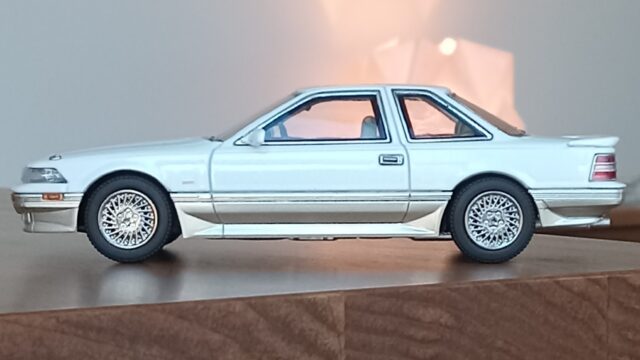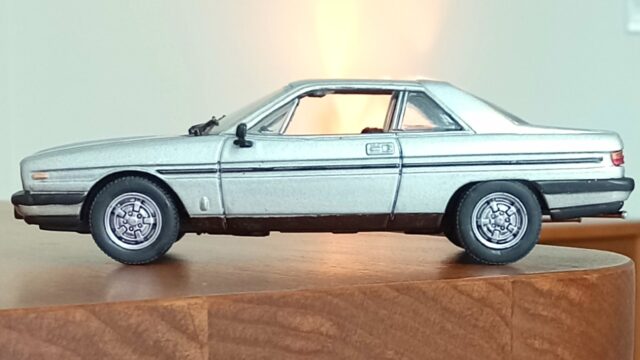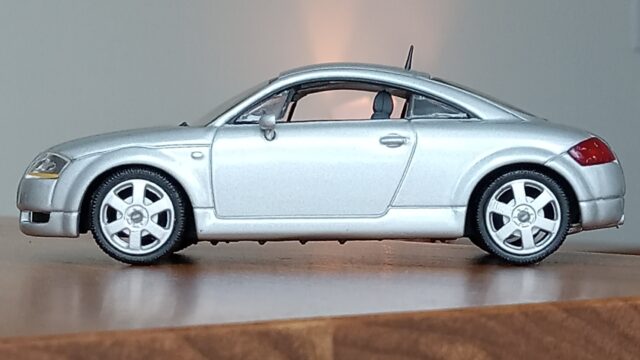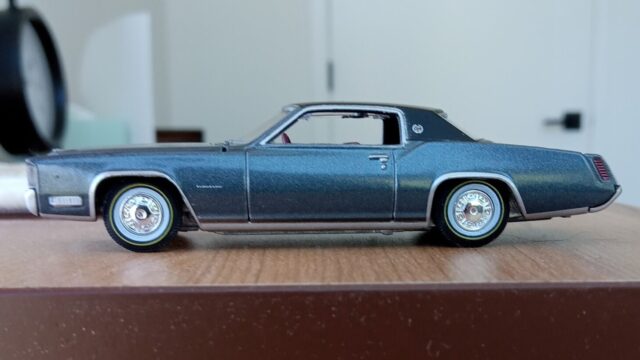
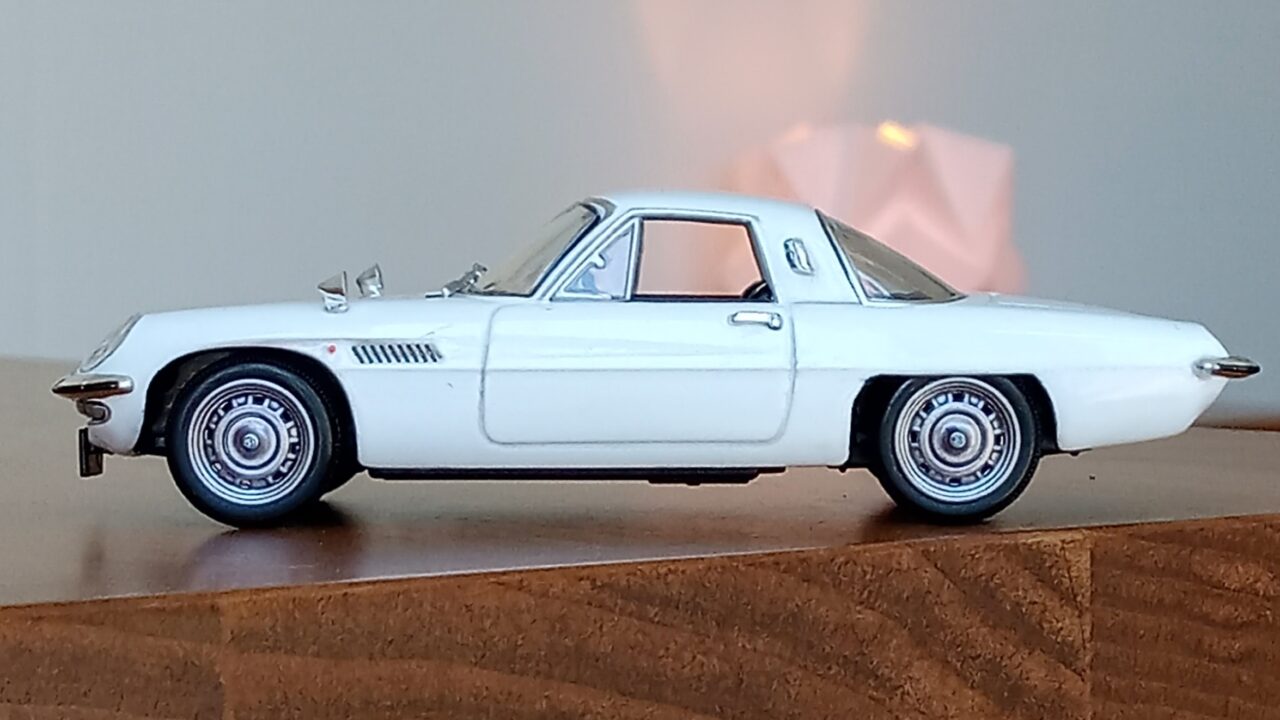
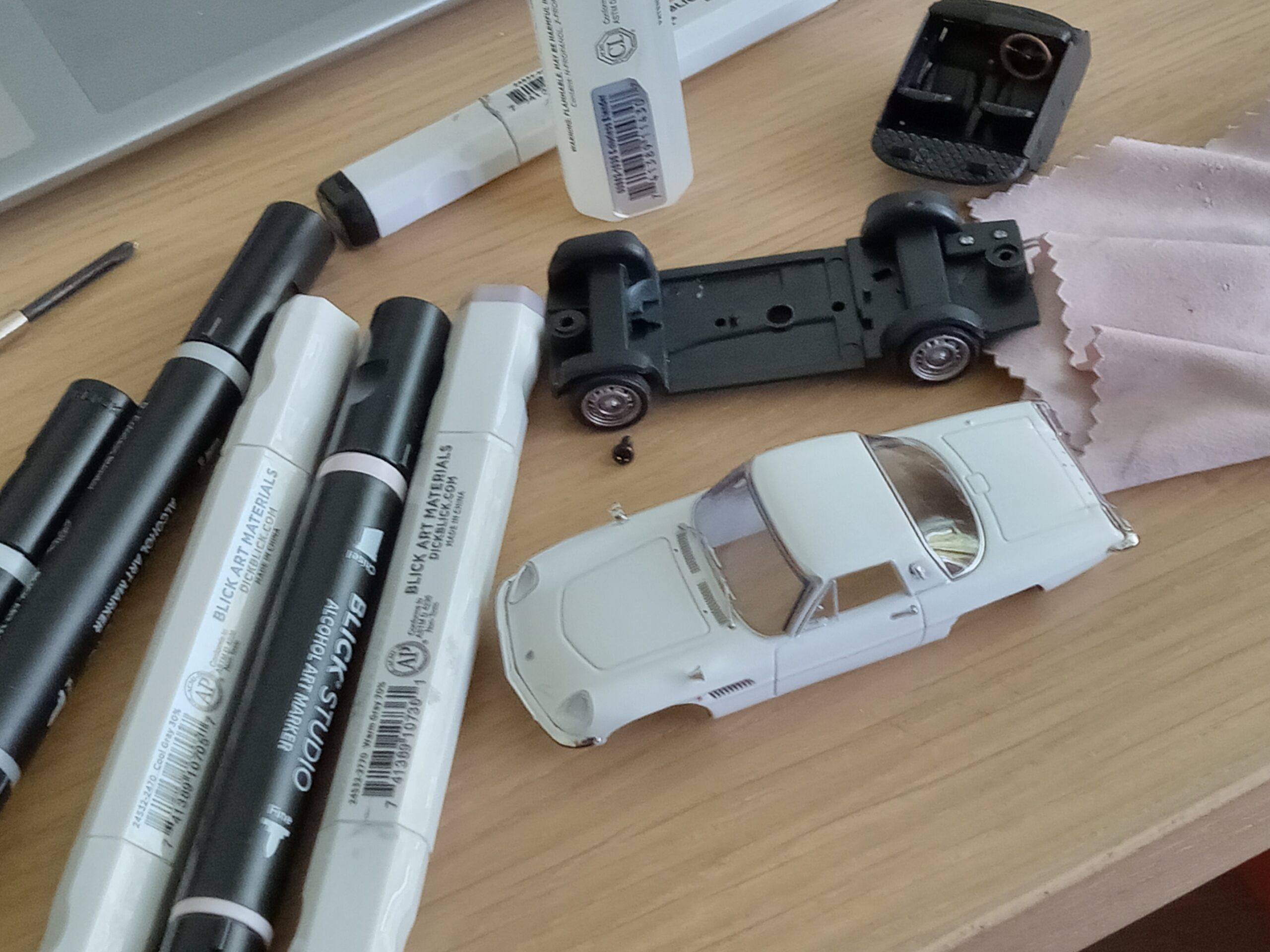
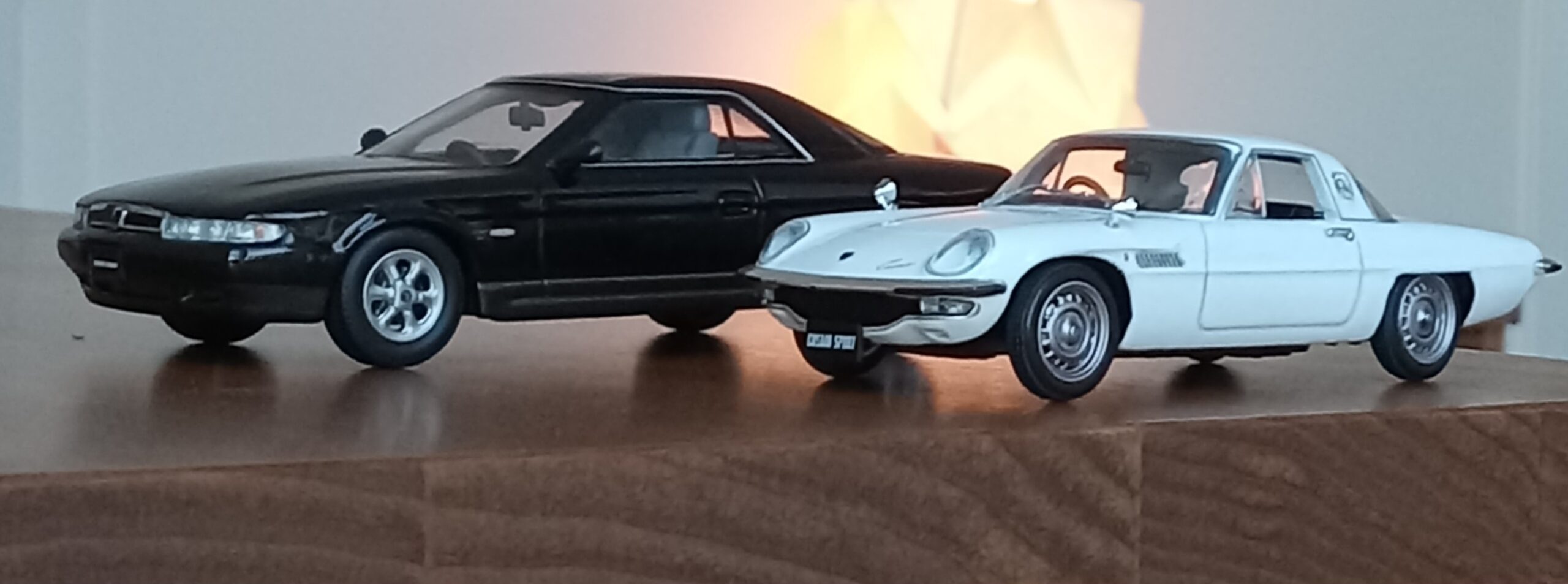
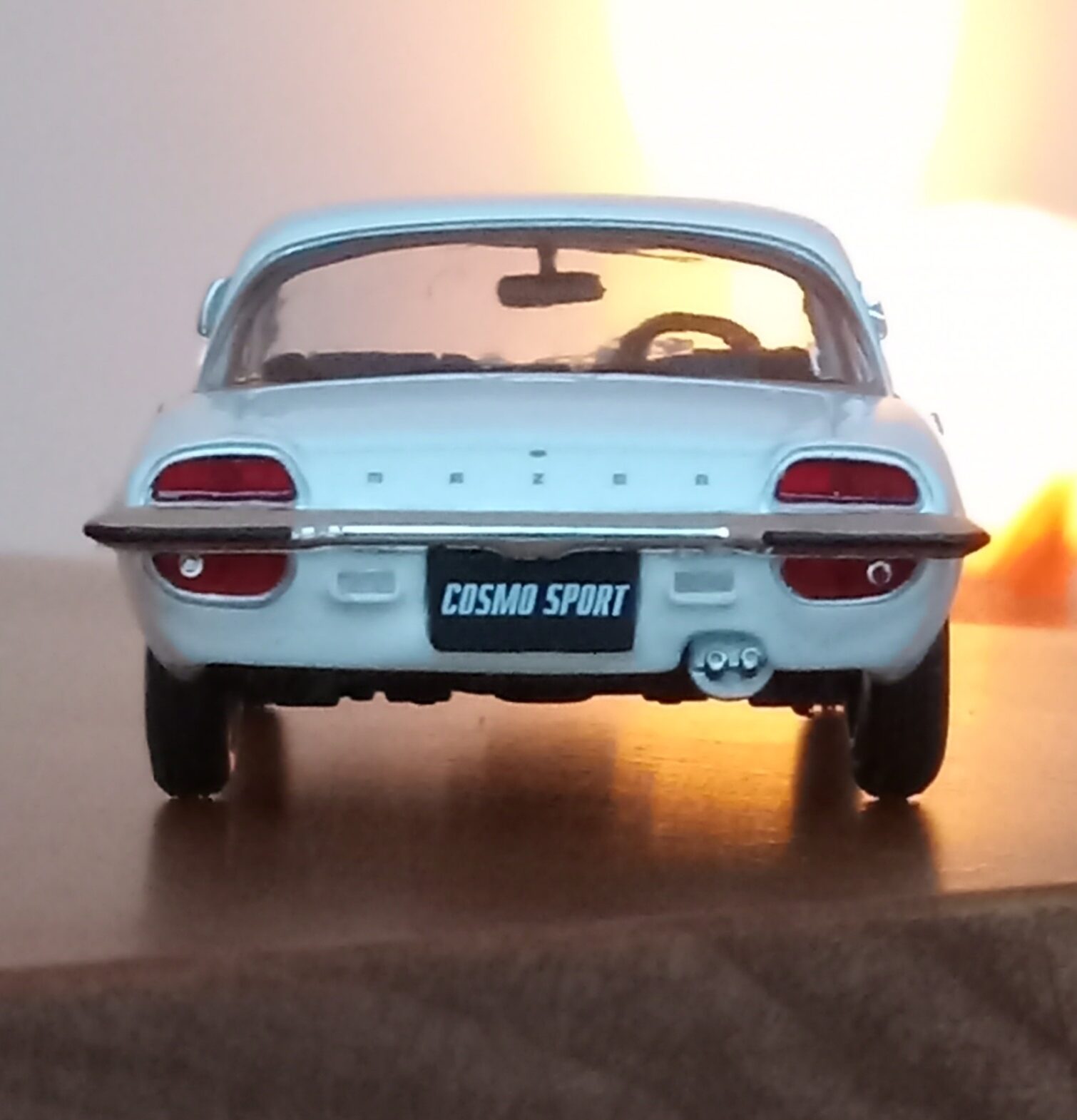
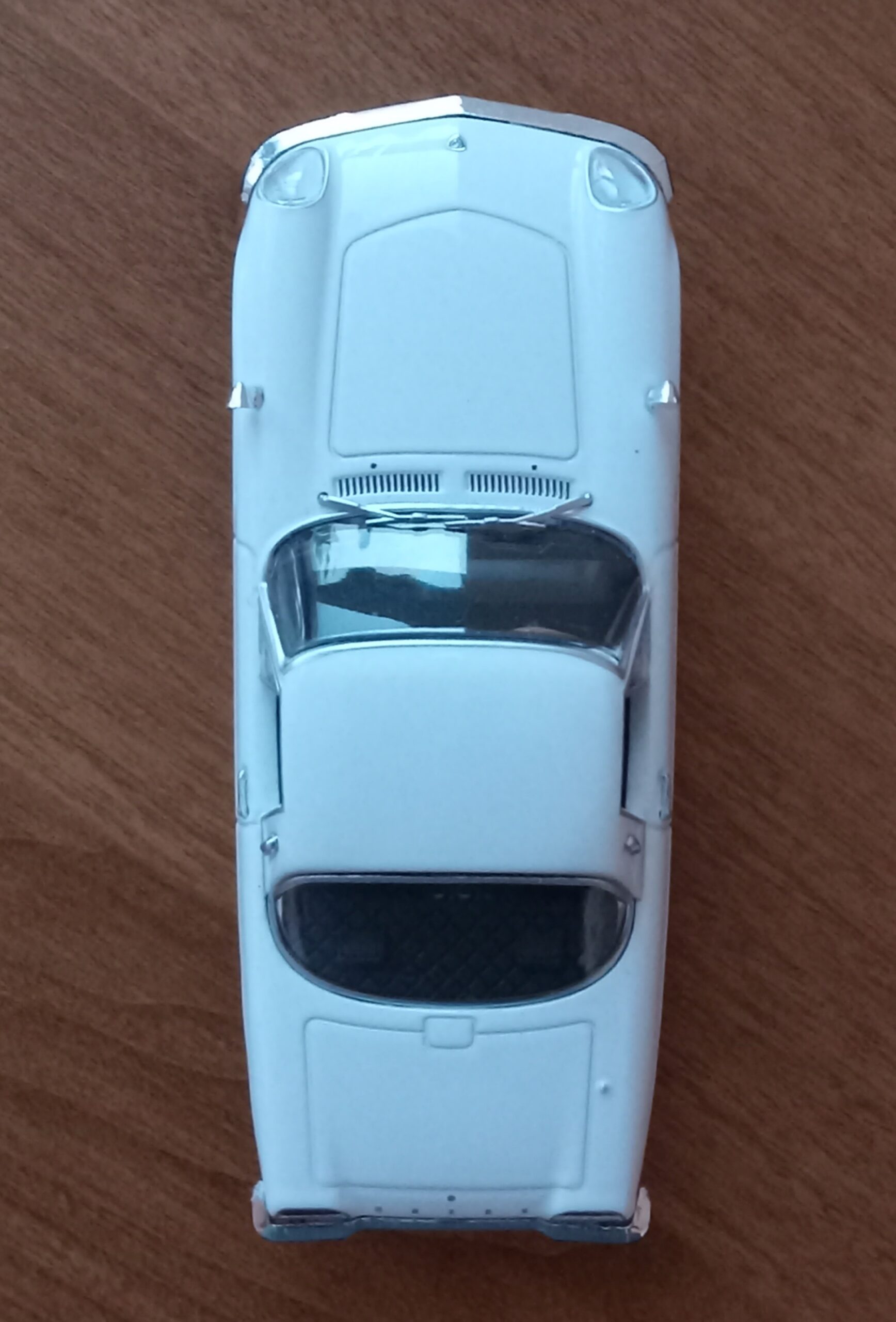
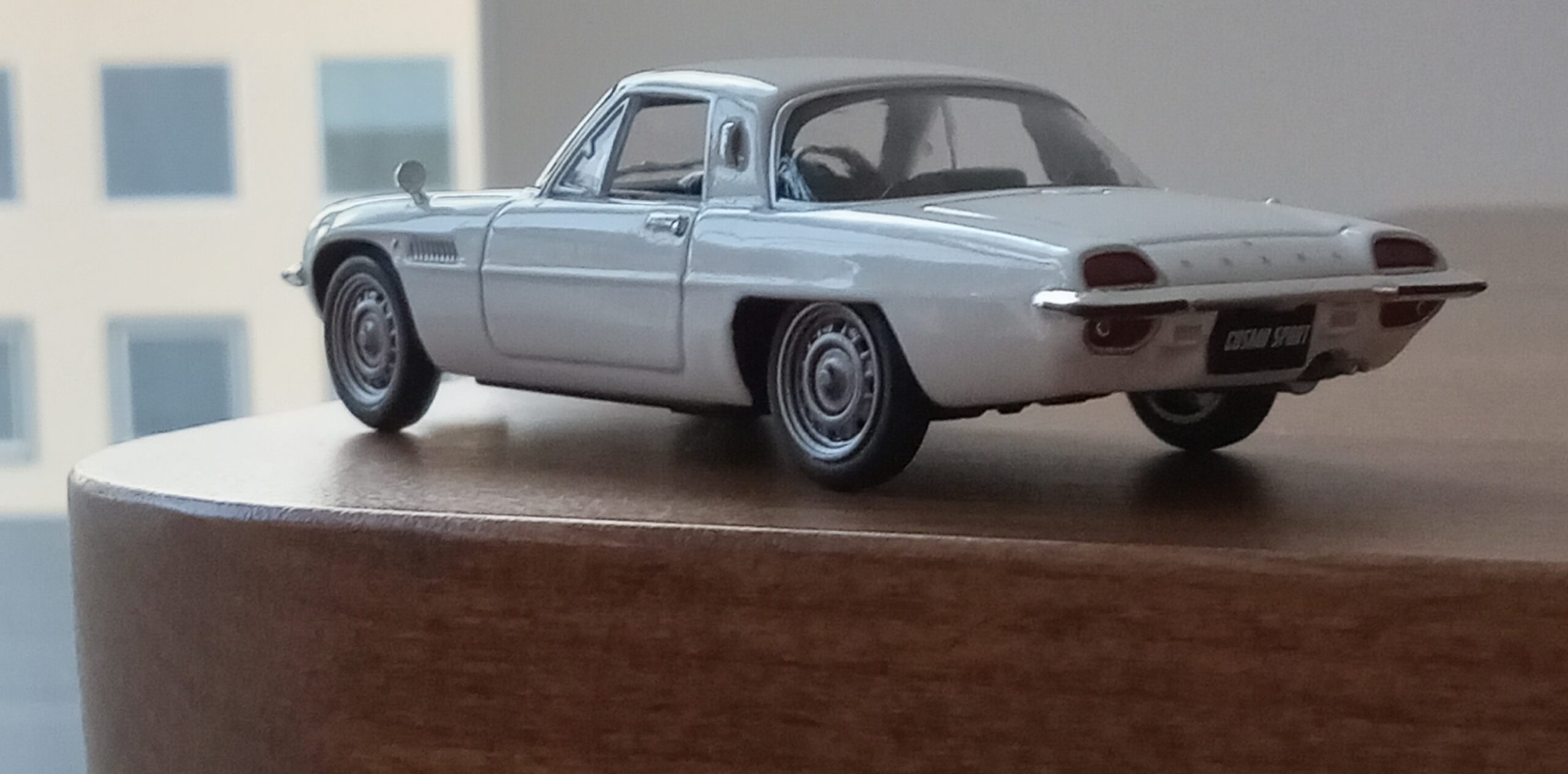
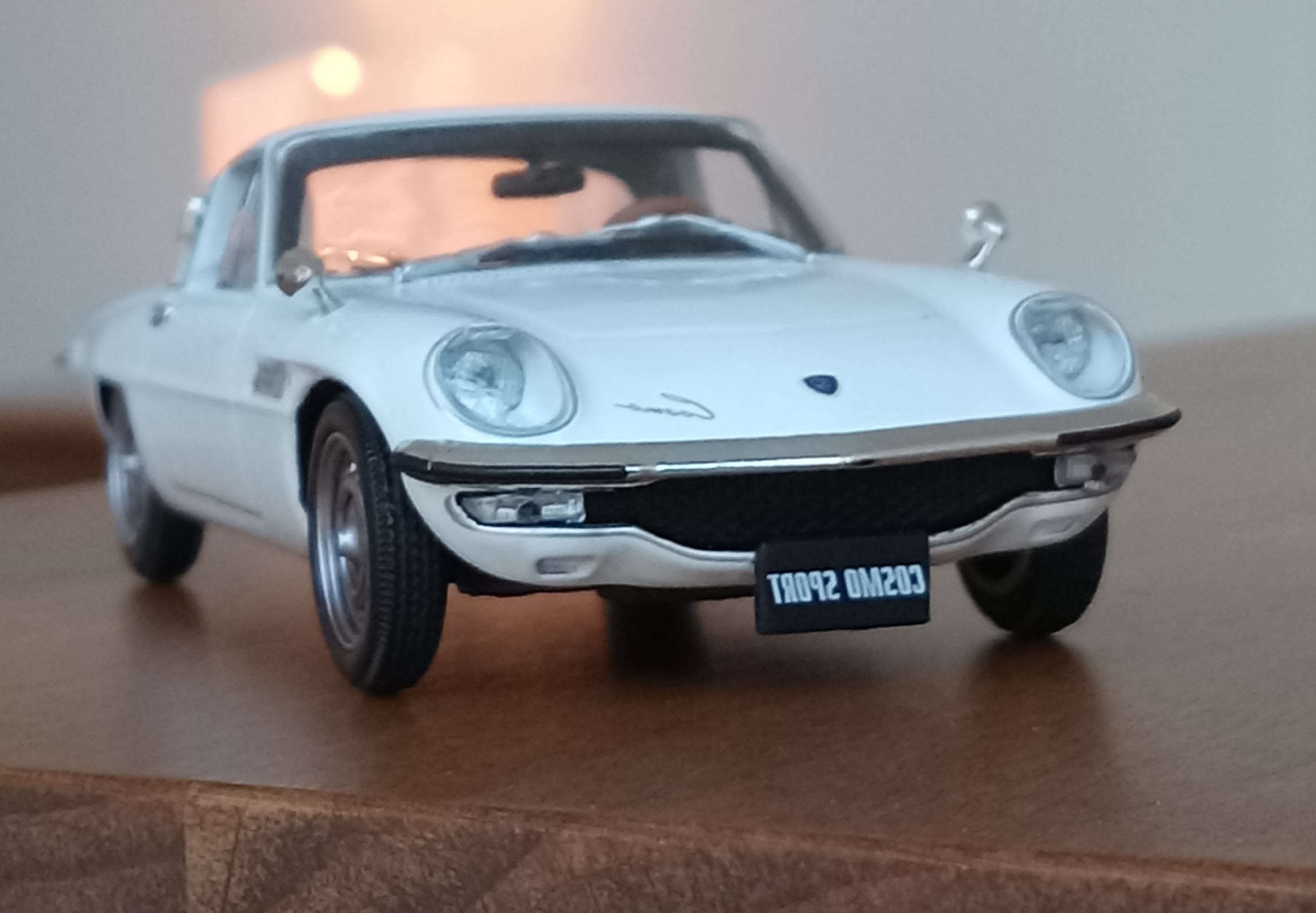
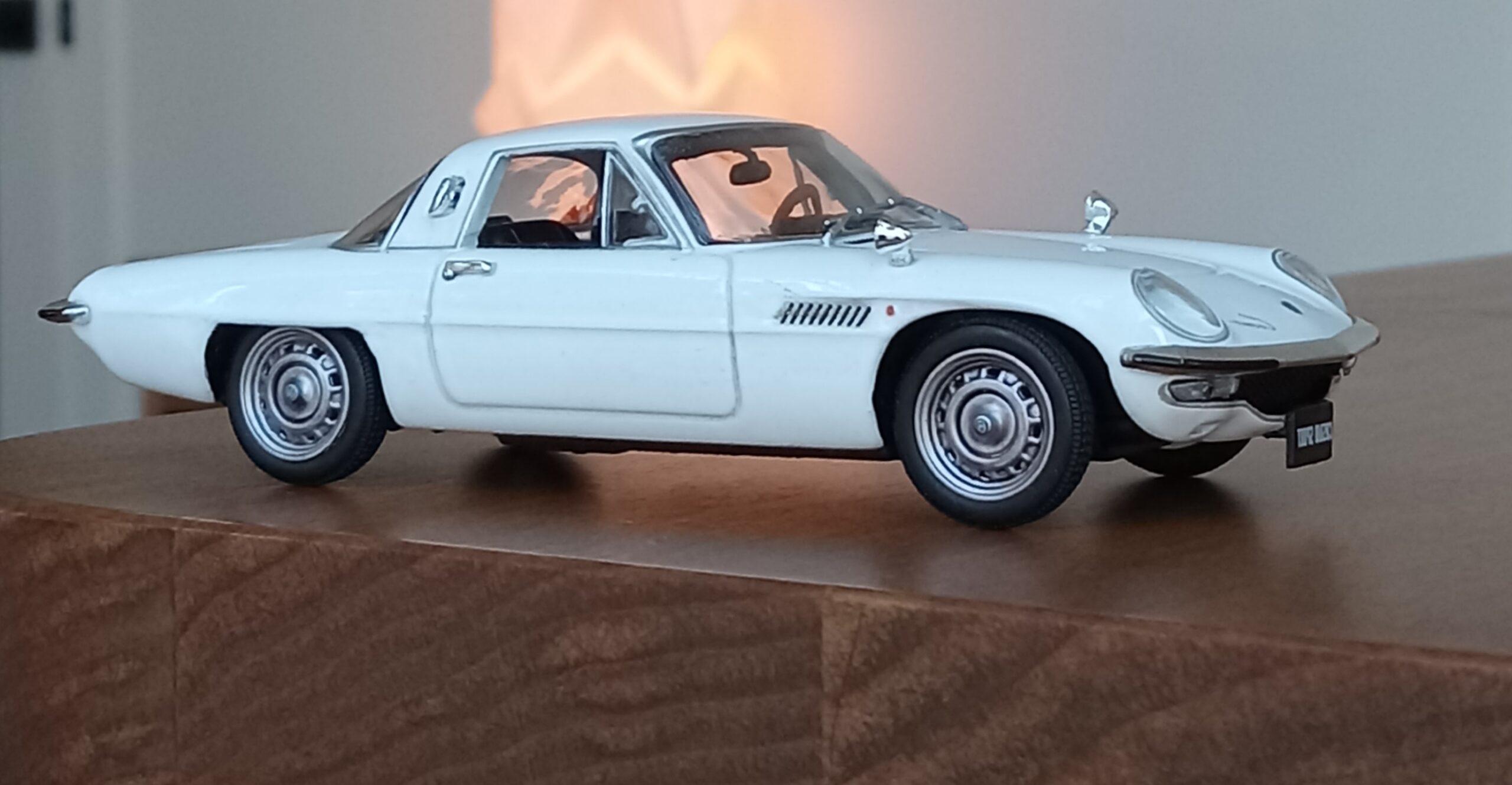
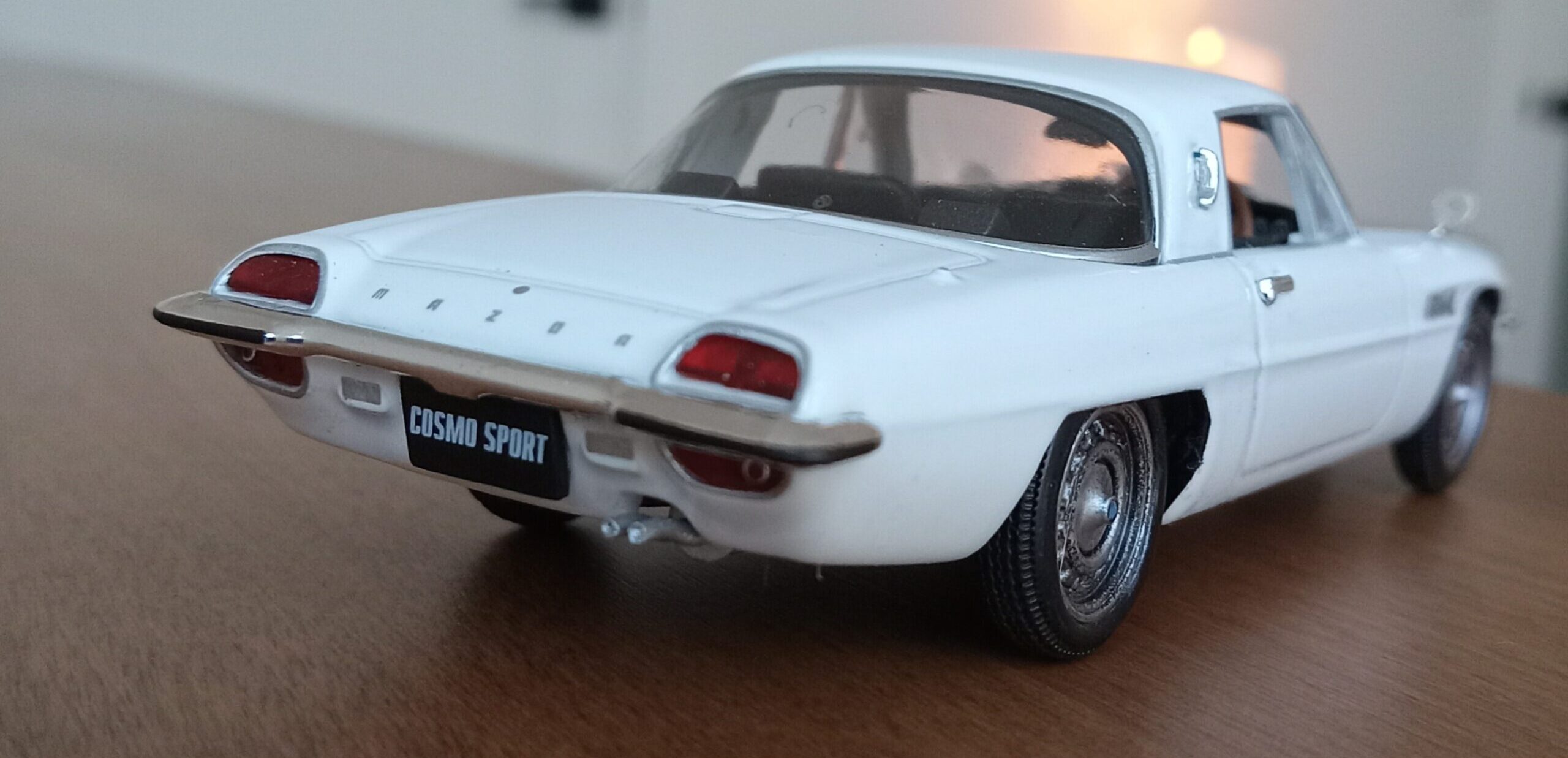
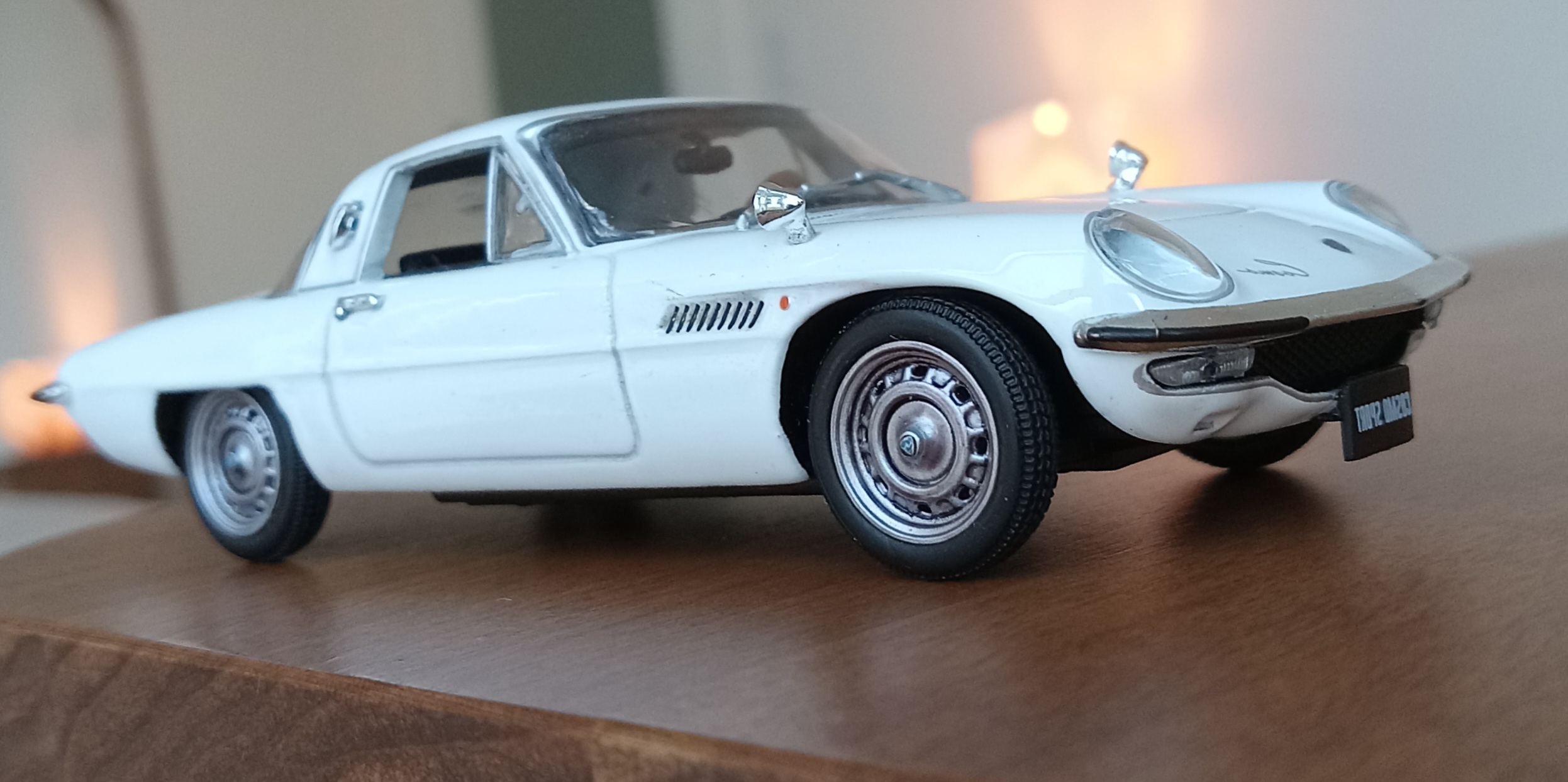
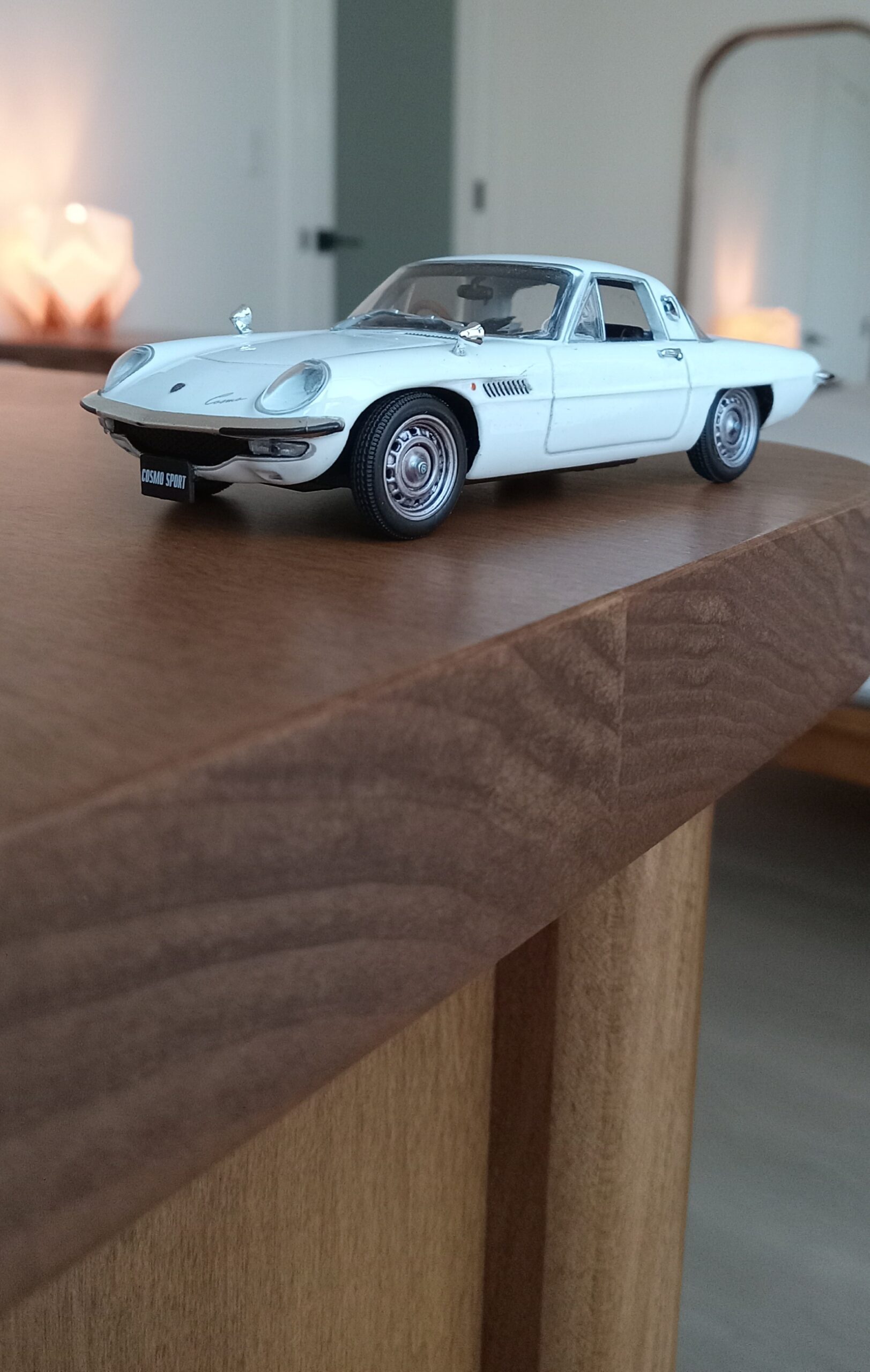
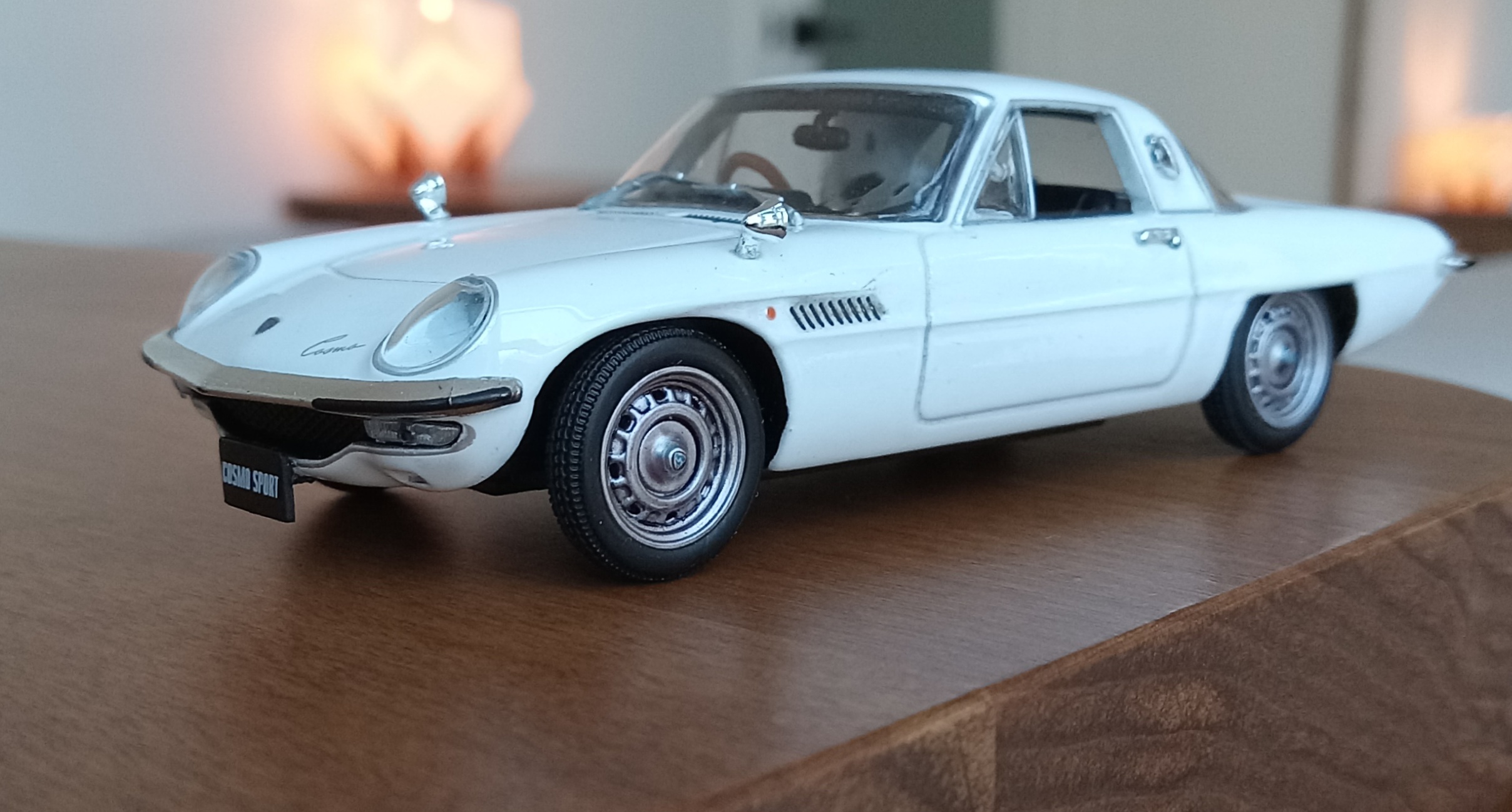
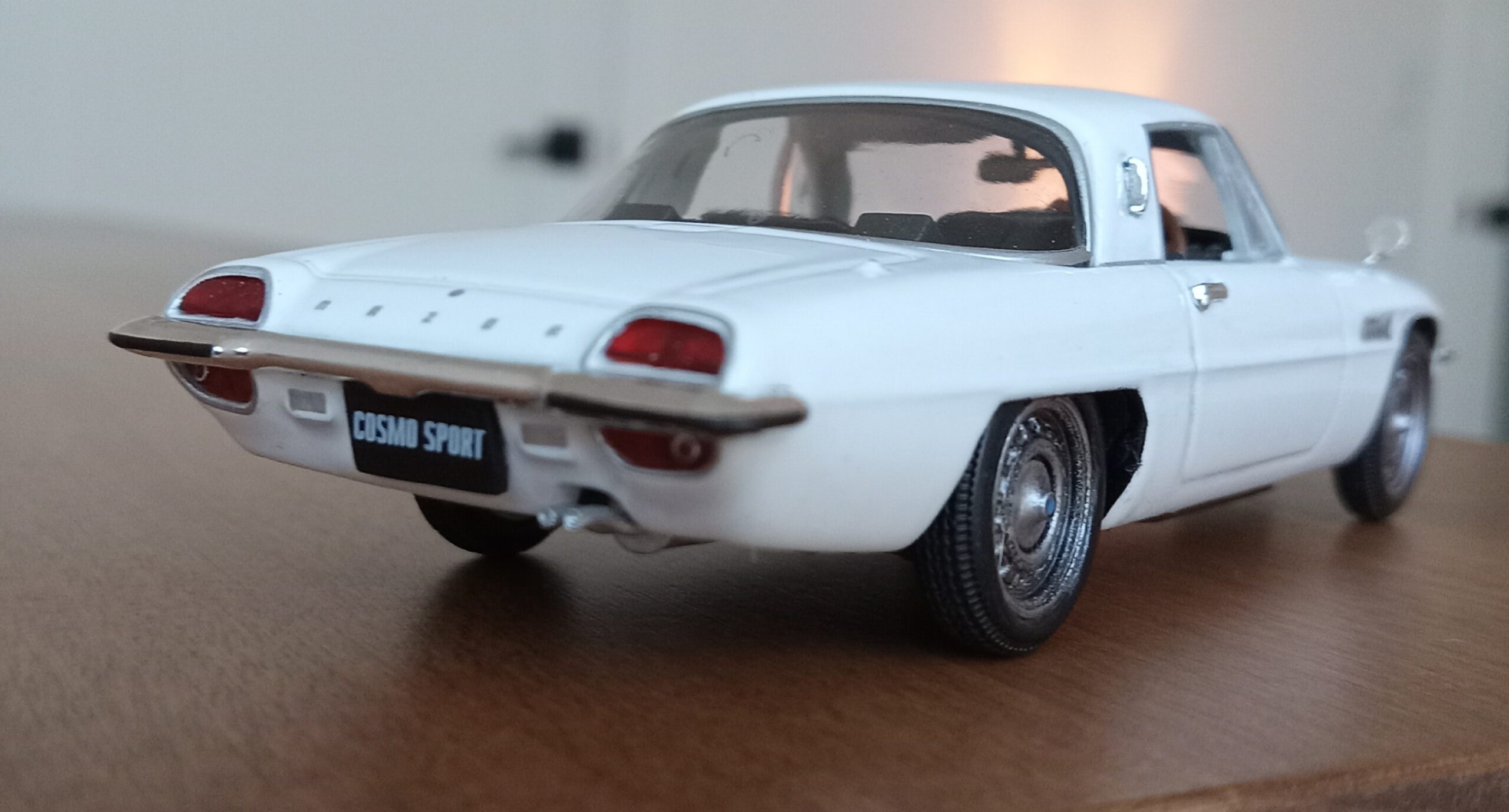
(アシェット社製、1/43 【週刊プレミアムモデル】1967年型初代コスモ・スポーツ(レーシング・ホワイト)、簡単な改造を施しました、改造記事はすぐ下に、、、)
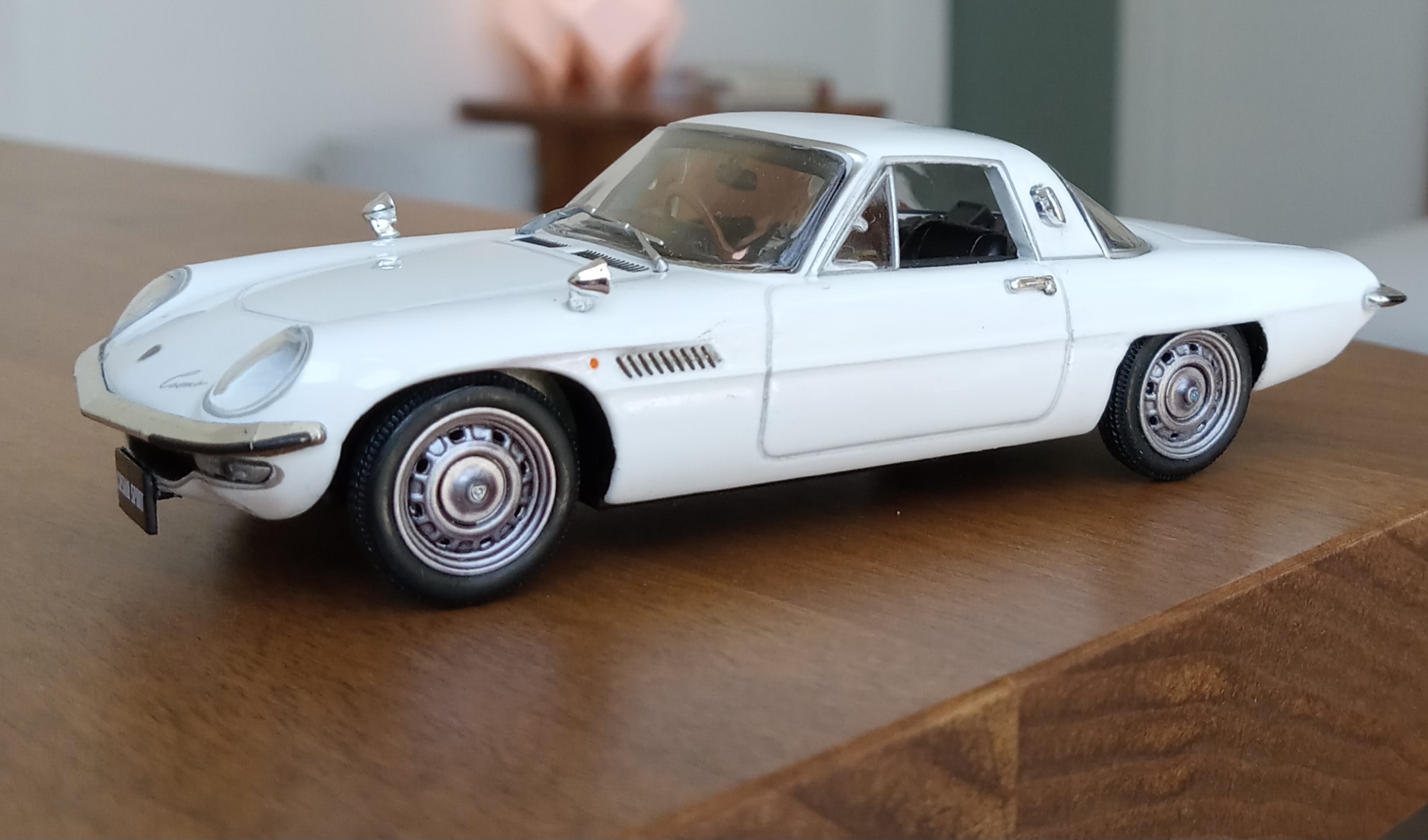
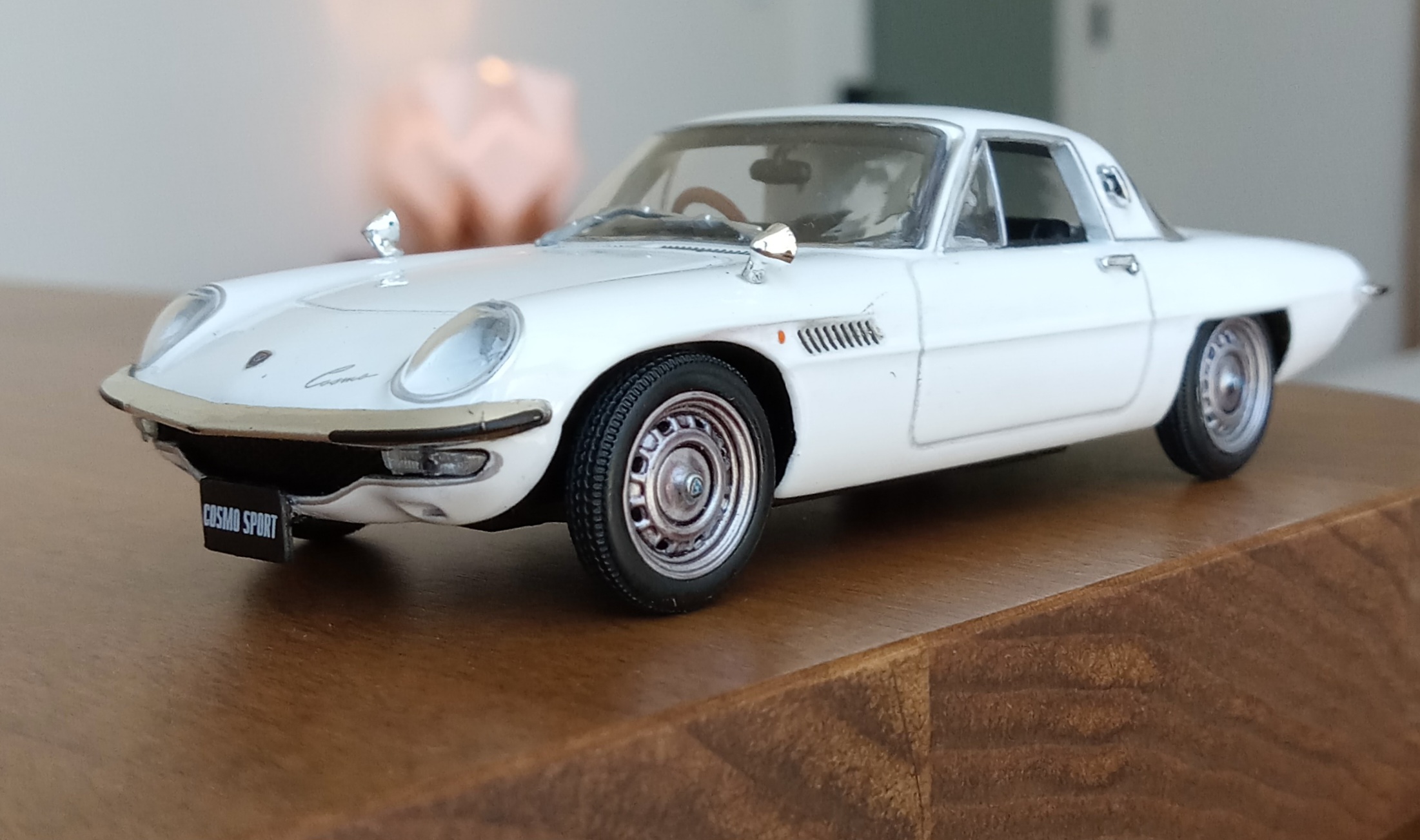
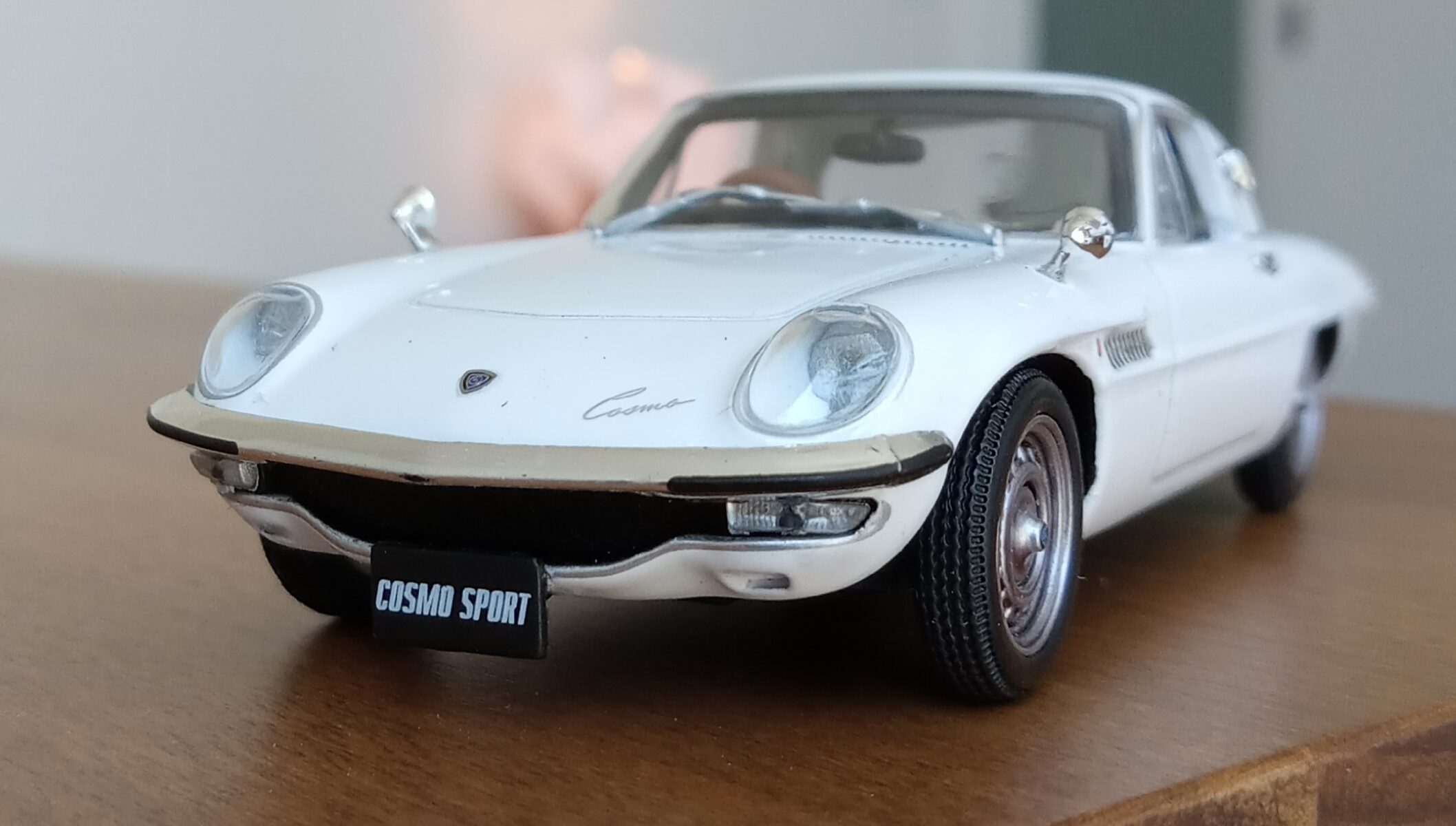
第35回ーー2ドア・クーペの系譜: 第15回【日本車編】 マツダ 初代コスモ・スポーツ、1968『帰ってきたウルトラマンのマット・ビハイクル』 Mazda Cosmo Sports, 1968 『Mat Vehicle from Ultraman Returned』
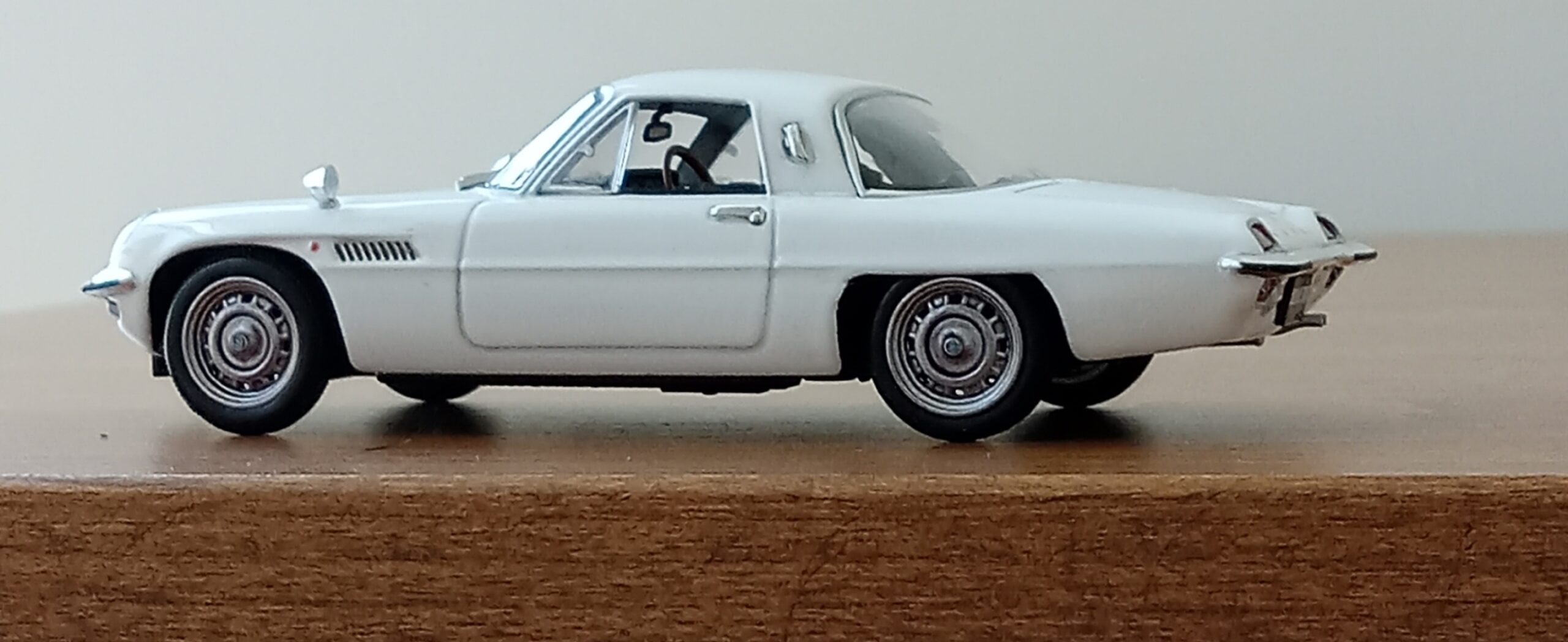
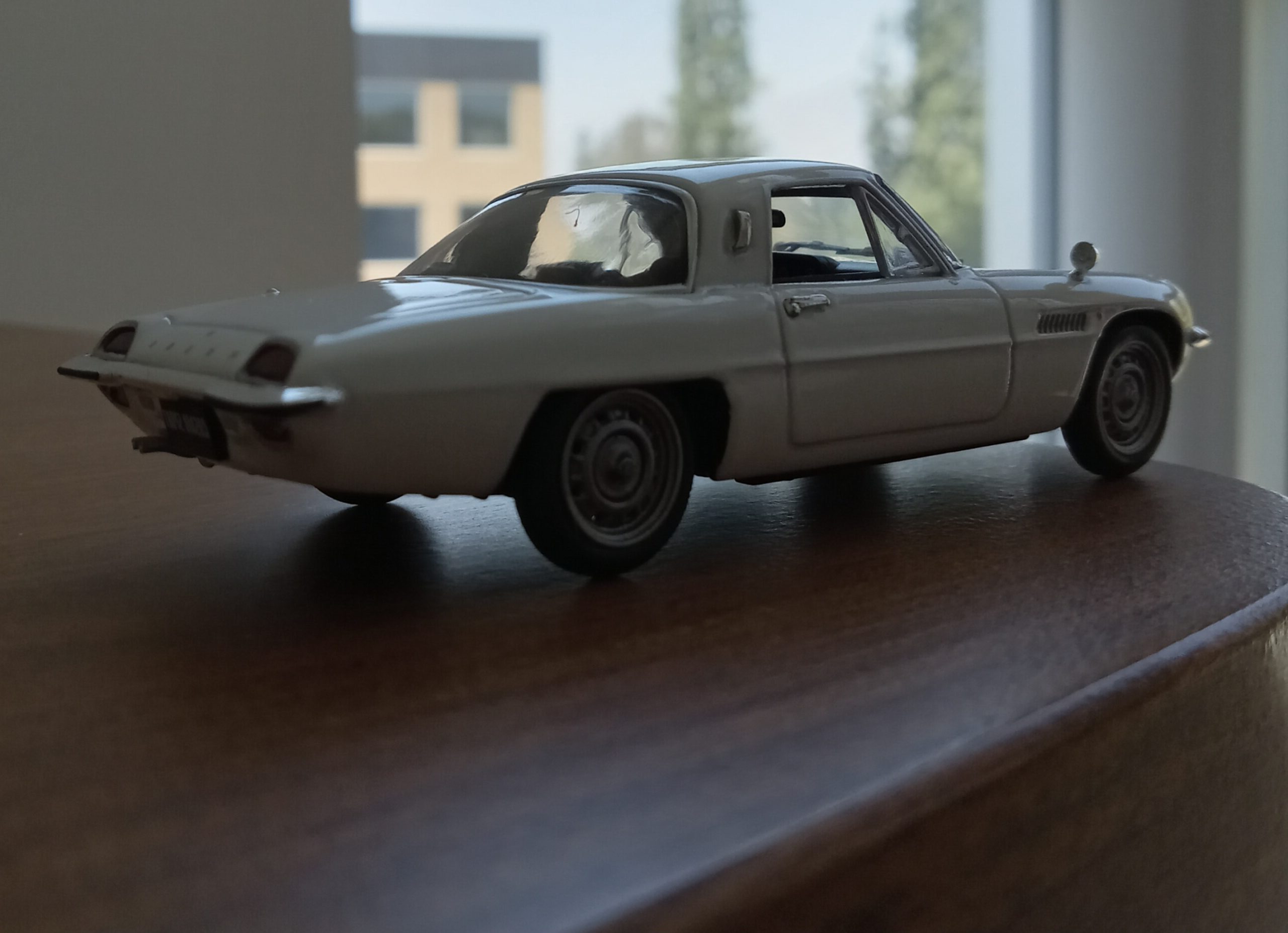
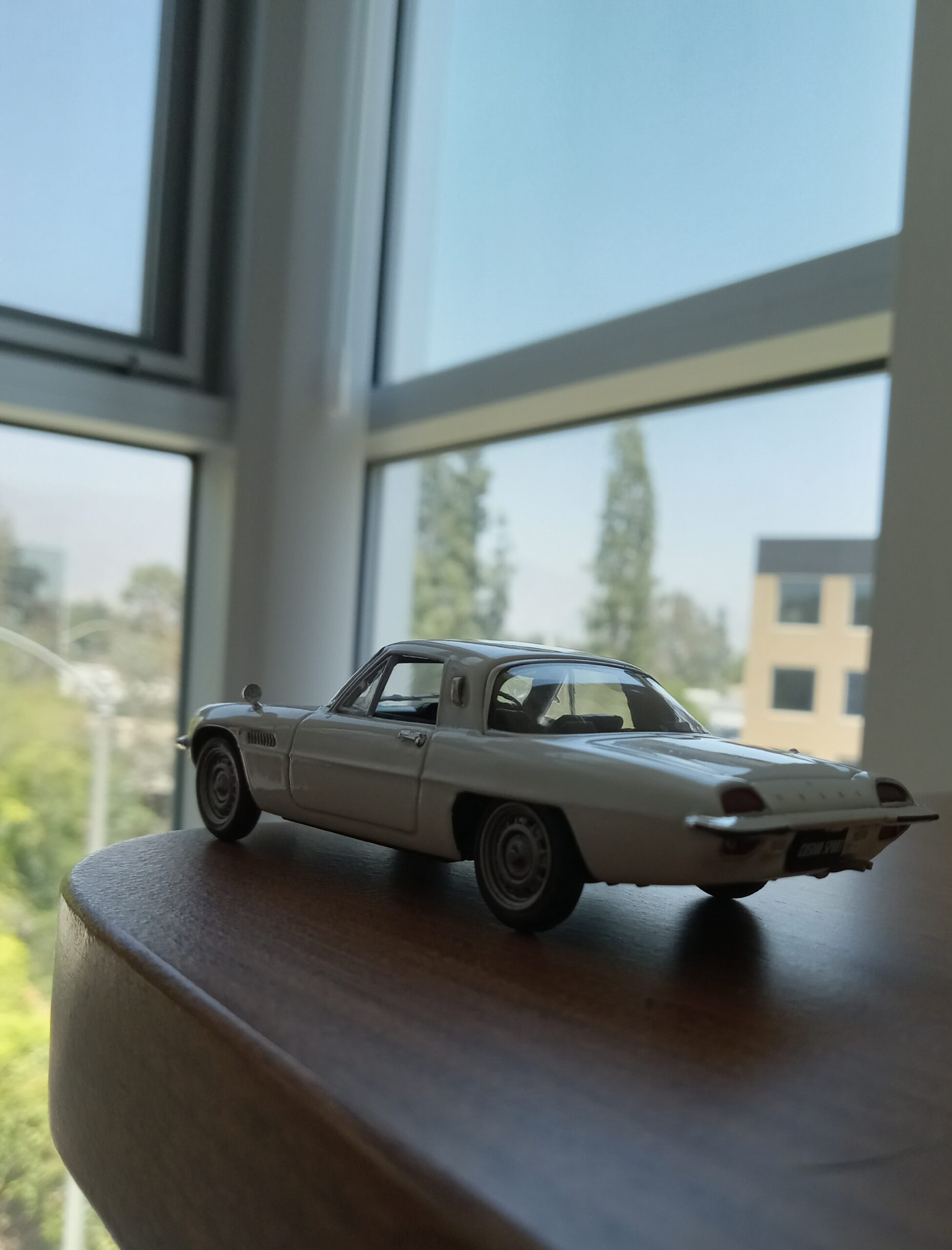
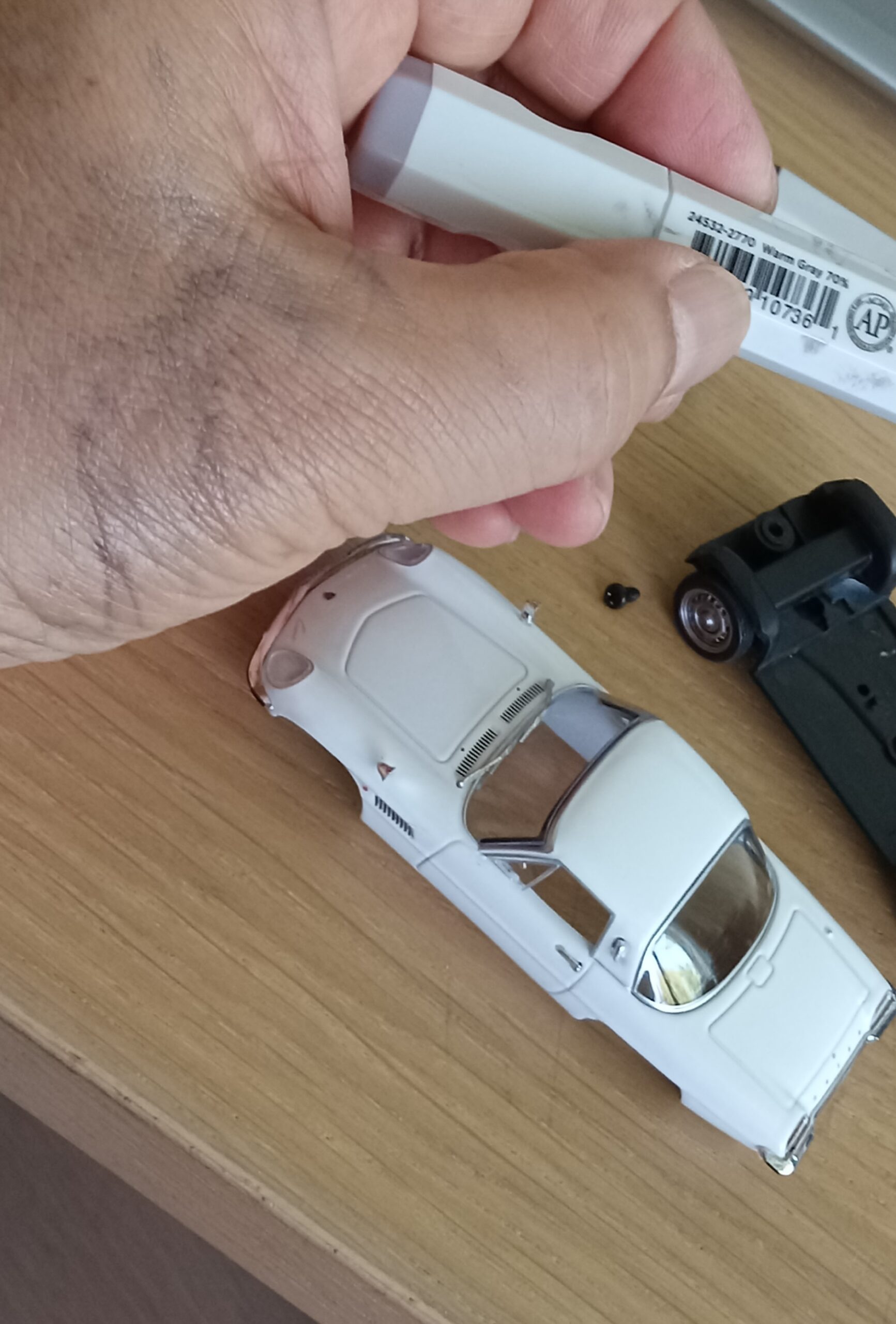
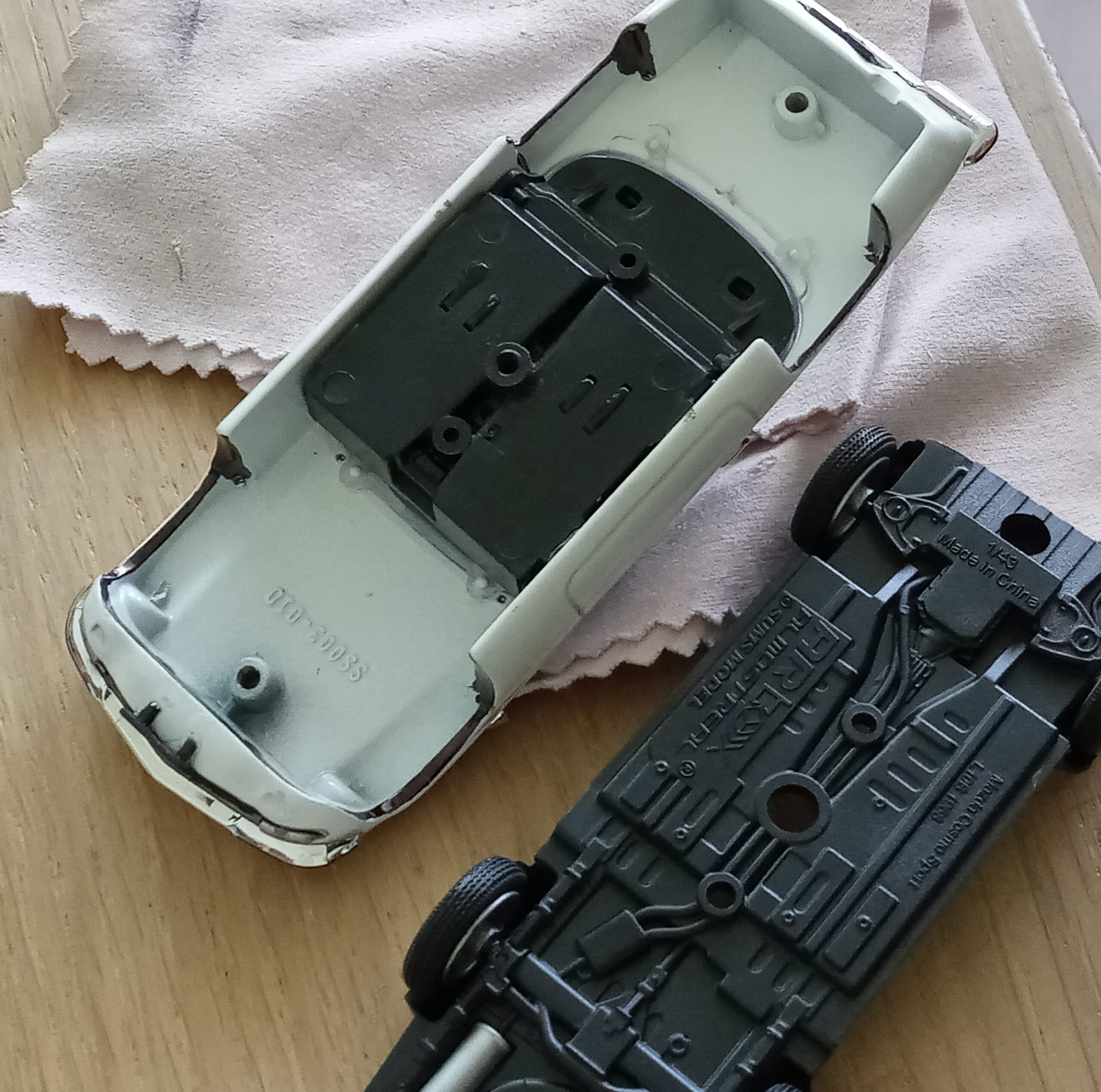
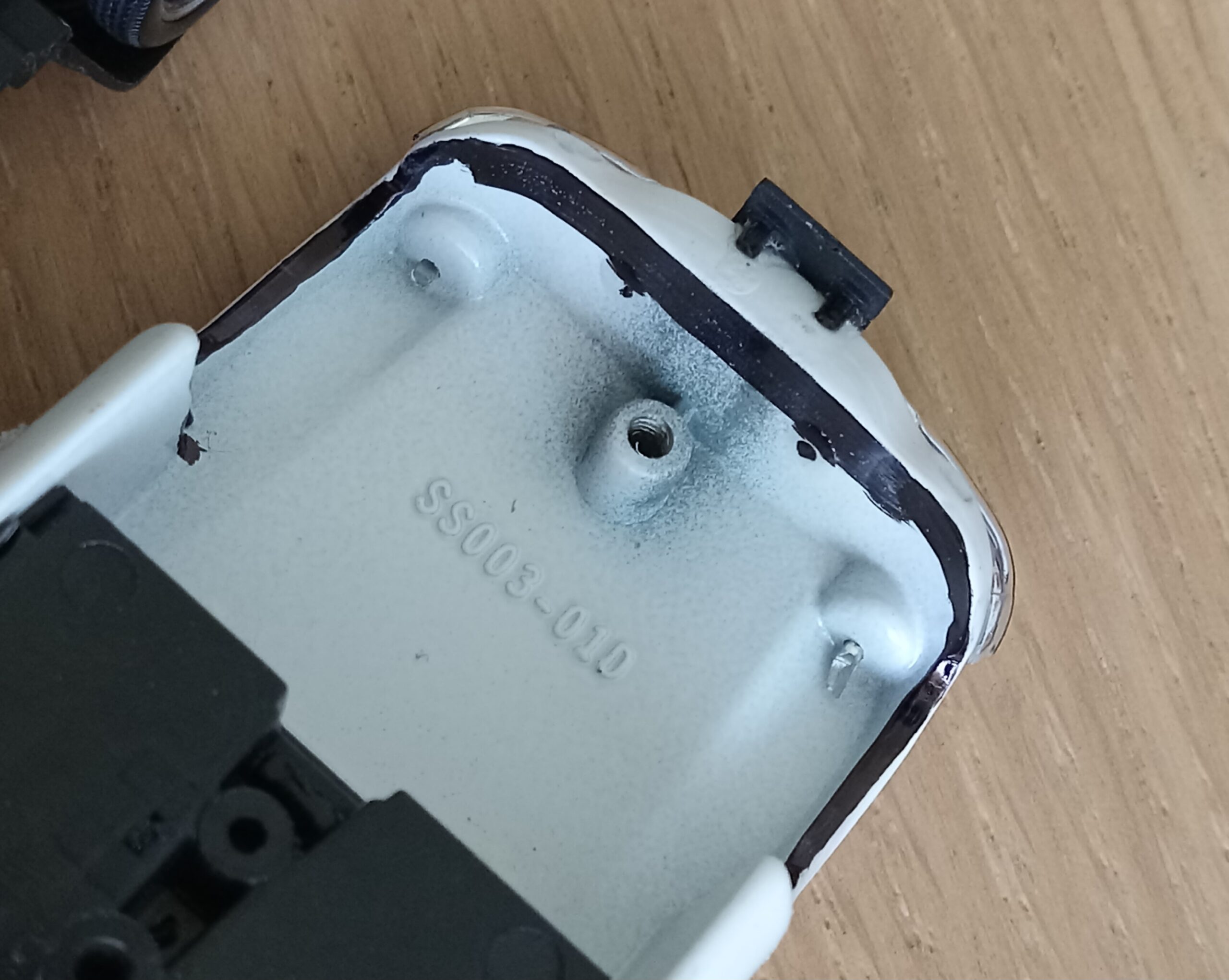
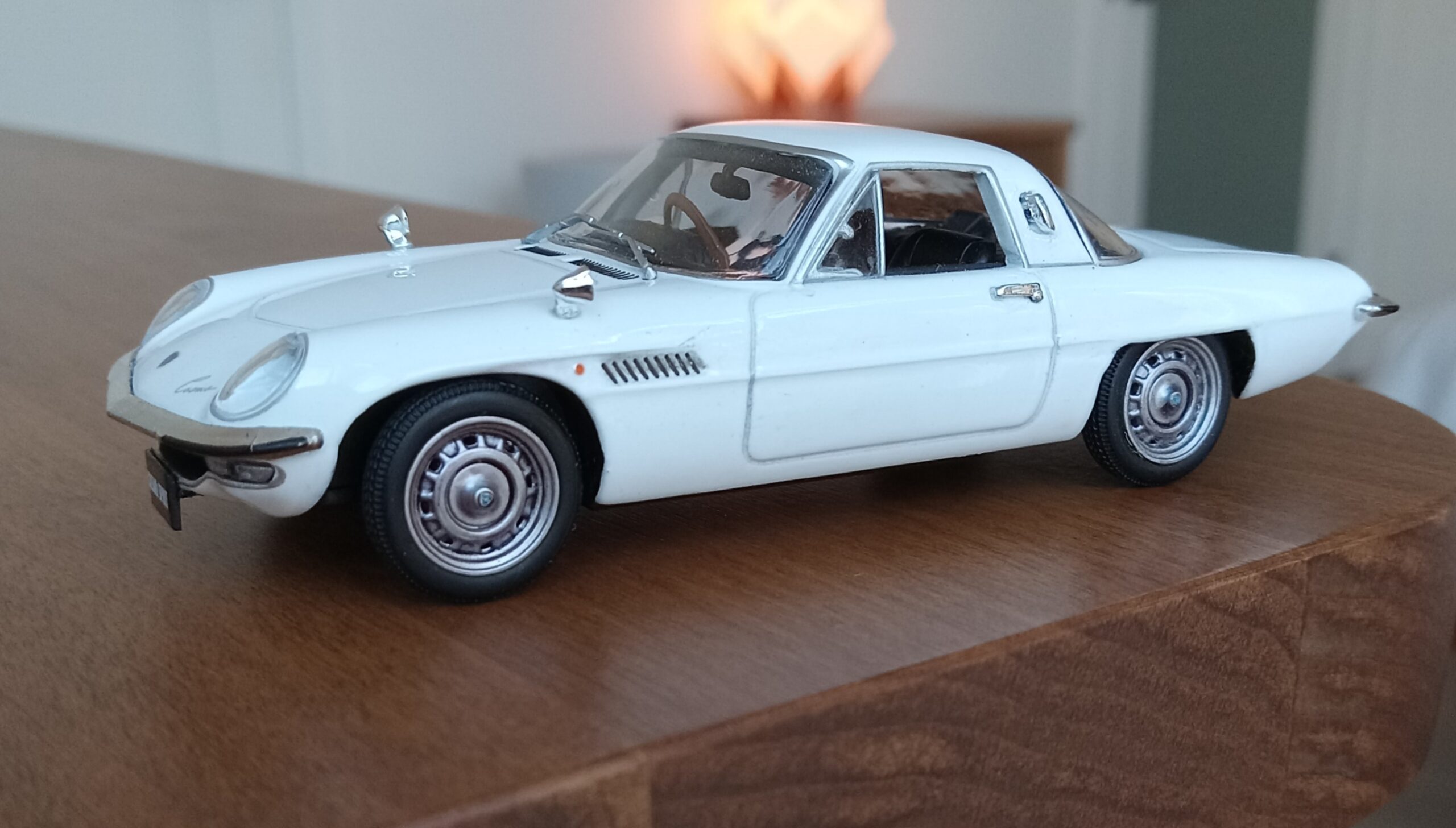
【プチ改造プロジェクト】:
今回写真撮影に使用しました、アシェット社製のミニカーは1/43ということもあり、又アシェット社が設計と製造を任せている会社が、中国の老舗ダイキャストメーカーの『ALMOST REAL社』ということもあり、
*ボディー全体のデッサンの捉え方や、
*ディテールの再現性、
*製造クオリティーの確かさは、
これ以上望むことはできないほどの内容です。
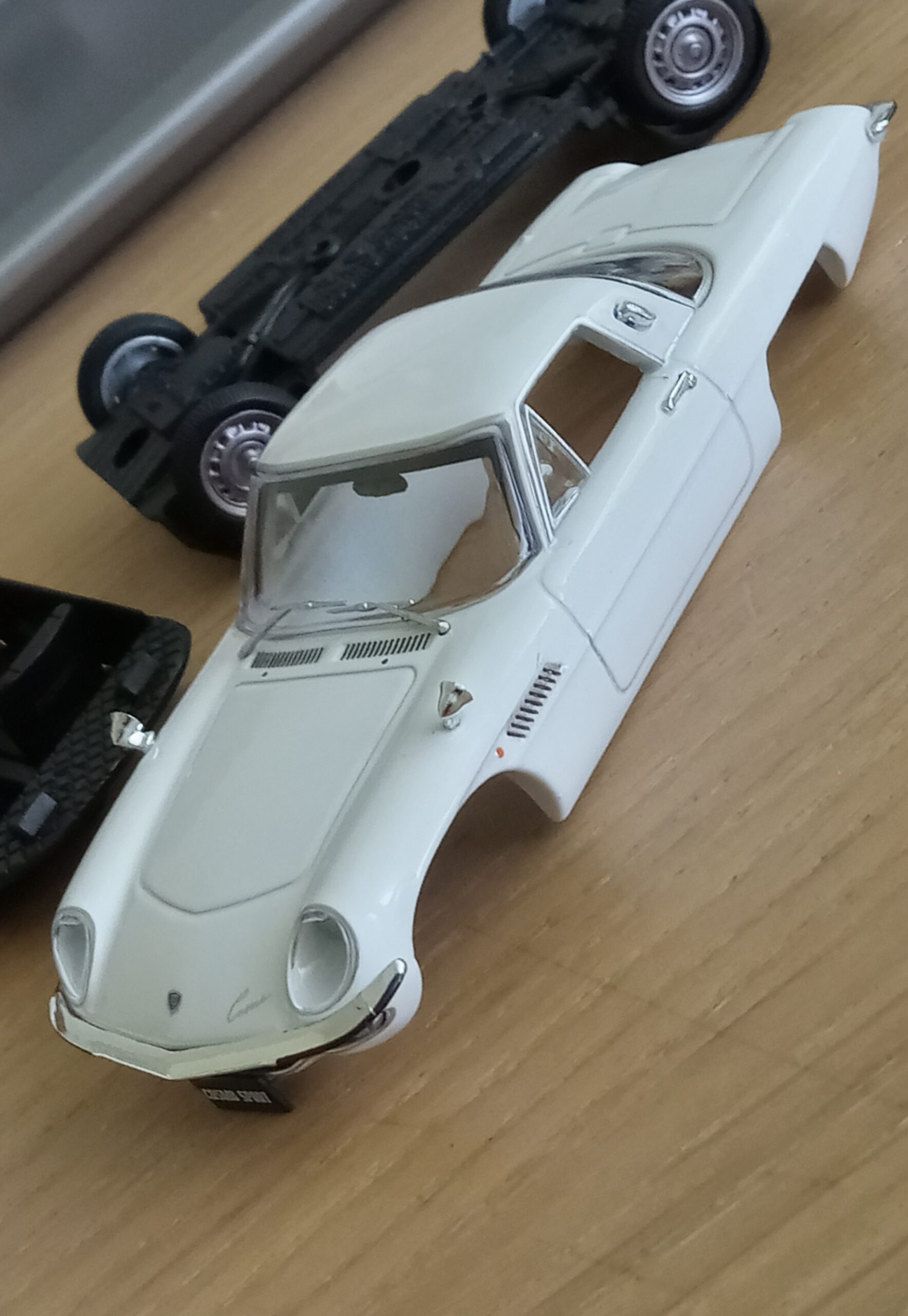
そんな中以下の2点に絞り、アップグレードのためのカスタムを加えてみました、
1:タイヤ位置の若干の前傾化とトレッドを広く調整
2:タイヤハウス内を黒く塗りボディーを薄く見せ、ボディー下面やスジボリを軽くグレーにてウオッシュ加工
#好みの自動車デザインーー2ドアクーペの系譜:
第35回目の今回は、『2ドアクーペの系譜、第15回』と題しまして、各国のお国柄や、外観デザインの個性が強く表れる、高級2ドア(GT)クーペ / ロードスターについてお話ししてみたいです。【注意:オープンカーを含む】
以下の要領で進めていきます。
第15回の今回は【日本車・マツダ編】
1968年発表の
初代コスモ・スポーツ(レーシング・ホワイト)
についてのお話です。
【2ドア・クーペの系譜:目次】
【米国車編】
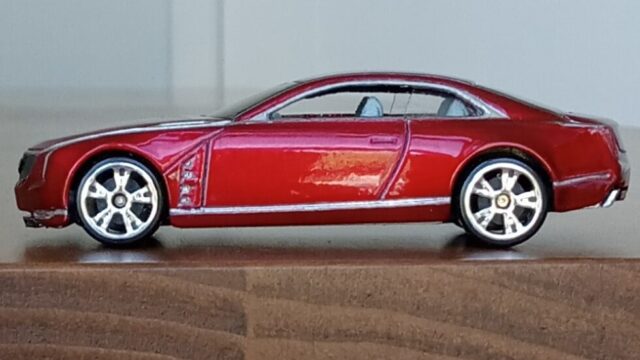
第1回:キャデラック・エルミラージュ、2013(メタリック・レッド)
第2回:リンカーン・コンチネンタル MK4、1972(ブラック)
第3回:マーキュリー・クーガー, 1967(LTメタリック・グリーン)
【ドイツ車編】
第4回:MB 500K スペシャル・ロードスター、1936(ブラック)
第5回:MB 300SL ロードスター、1957(シルバー)
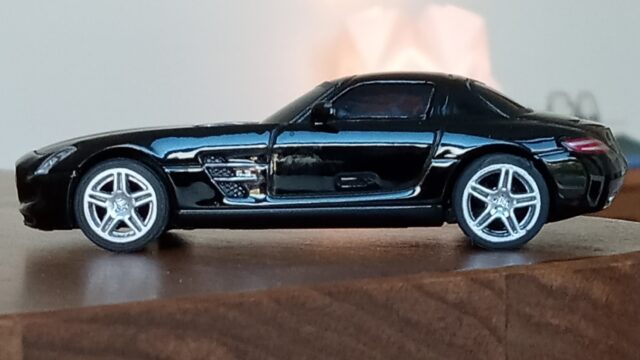
第6回:MB SLS AMR ガルウイング、2010(ブラック)
【英国車編】
第7回:マクラーレン・F1、1992(メタリック・オレンジ)
第8回:ジャガー・XKSS ロードスター、1957(ロイヤル・ブルー)
第9回:ジャガー XKR クーペ、1996(ダークメタリック・グリーン)
【日本車・ニッサン編】
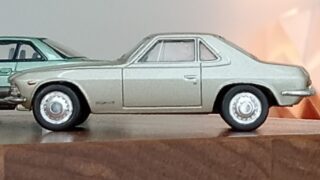
第10回:ニッサン 初代シルビア、1965(シャンペン・ゴールド)
第11回:ニッサン 5代目シルビア、1988(LTメタリック・グリーン)
【イタリア車編】
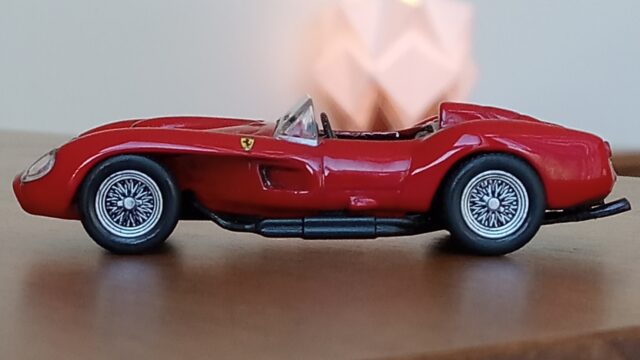
第12回:フェラーリ 250TR ポンツーンフェンダー、1958(赤)
第13回:フェラーリ 250GTO、1962(イタリアン・レッド)
第14回:ランボルギーニ・コンセプトS、2005(パール・ホワイト)
【日本車・マツダ編】
第15回:マツダ コスモ・スポーツ、1968(レーシング・ホワイト)
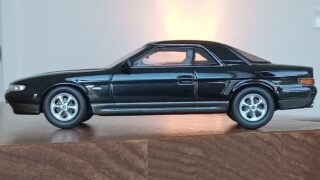
第16回:マツダ ユーノス・コスモ、タイプ‐S(2トン:黒&グレー)
【フランス車編】
第17回:ブガッティ・タイプ59、1935(フレンチ・ブルー)
第18回:シトロエン・SM、1970(シャンペーン・ゴールド)
第19回:ブガッティ・ラ・ヴォワチュール・ノワール、2019(黒)
【日本車・トヨタ編】
第20回:トヨタ/ヤマハ・2000GT、1967(アイボリー・ホワイト)
第21回:トヨタ・2代目ソアラ、1986 (2トン:黒&グレー)
第22回:レクサス LC【GWZ100型】、2017(メタリック・レッド)
【米国車編②】
第23回:ダッジ・チャレンジャー&プリムス・バラクーダ、1971
第24回:ダッジ・ヴァイパー SRT‐10 ACR、 2008(ブラック)
第25回:フォード・シェルビーGR-1 コンセプト、2004(クローム)
【日本車・ミツビシ編】
第26回:ミツビシ・ギャラン λ、1976(ブラウン・メタリック)
第27回:ミツビシ・エクリプス【北米仕様】、2006(オレンジ・メタ)
【ドイツ車編②】
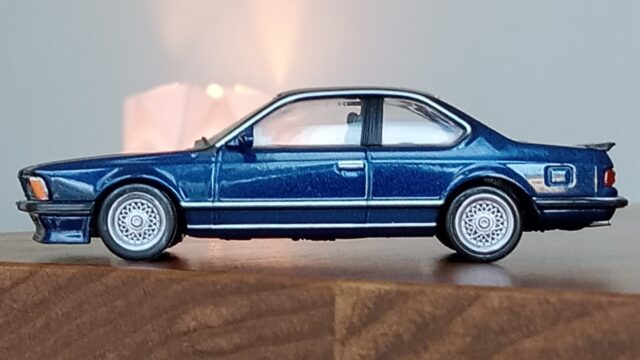
第28回:BMW M635CSi、1984 (ダーク・メタリックブルー))
第29回:MB 560SEC AMG 6.0 ワイドボディー、1989(黒)
第30回:BMW M2 純正パフォーマンス・パーツ仕様、2025(ネオン・ライム)
【日本車・スバル編】
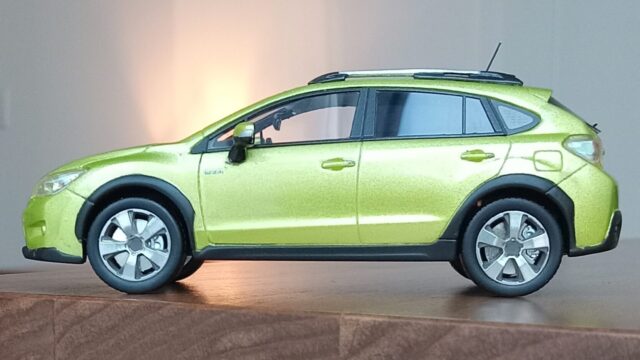
第31回:スバル・クロストレック XV, 2012(ライムグリーン・メタリック)
コルベットの系譜:(番外編)
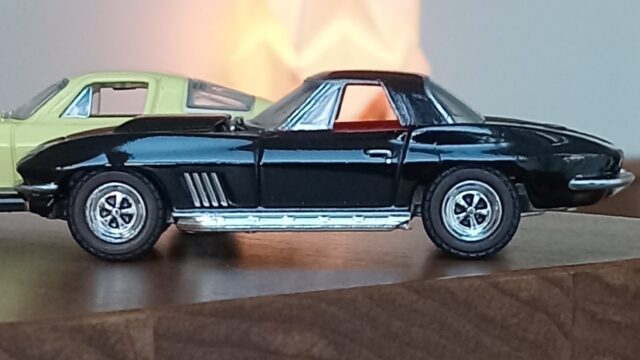
第1回:1967年型 スティングレー【C2】コンバーチブル(ハードトップ・メタ青)
第2回:1972年型 コルベット 【C3】コンバーチブル(メタリック・ブルー)
第3回:1990年型 コルベット ZR-1【C4】クーペ(レッド)
第4回:スティングレー・コンセプト【先行開発車】、2009(プルー・メタリック)
#私のヒーロー:2台の『ウルトラ・ビークル』
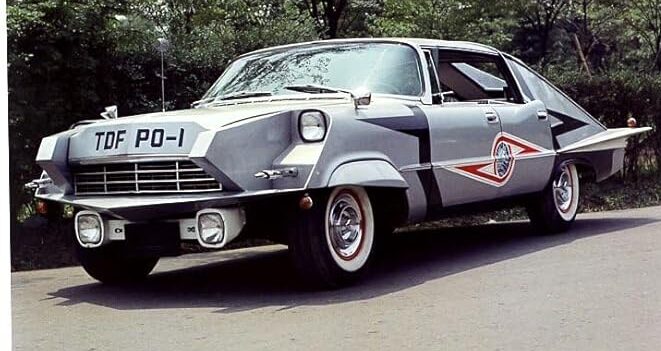
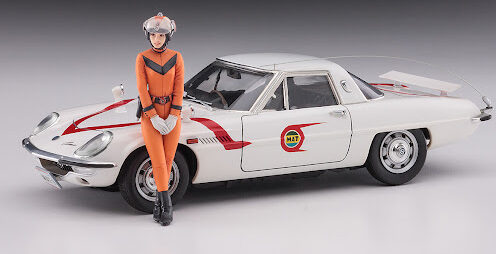 (ウルトラ・セブンから『ポインタ―号』)
(下が、帰ってきたウルトラマンから『マット・ビハイクル)』
自動車や建築機器が大好きだった私にとって、
ウルトラシリーズの初期に登場した、
この2台は、
*ポインター号:ウルトラセブン
*マット・ビハイクル:帰って来たウルトラマン
作品中のウルトラマンや怪獣以上に、
ヒーローとしてあがめていました。
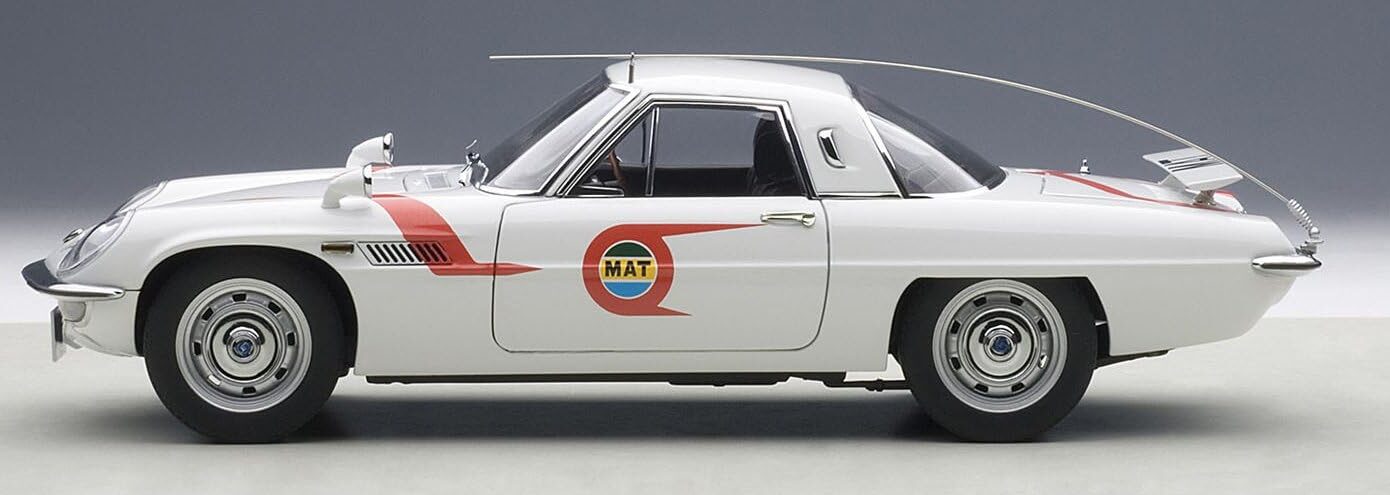
そのマット・ビハイクルはマツダから発売されたばかりのロータリーエンジンを積んだスポーツカーに【MAT: Monster Attack Team (怪獣攻撃隊) 】の塗装を施し、ほぼそのまま使用されていました。
当時からすでにメカフェチの兆候があった私にとっては、
その車の後部
バンパー下から前に向かって
【弧】を描く、柔軟性に富んだアンテナ
の存在が気になって仕方がありませんでした。(笑)
そういえば、
60年台から80年台ぐらいまで、自動車につきもののラジオ用のアンテナは
個性的なものが多く、
それ自体自動車デザインの一部
だったように記憶しています。
1960年代‐70年台の自動車アンテナ:
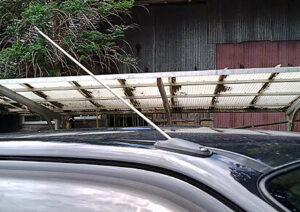
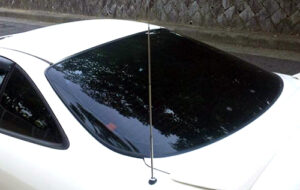
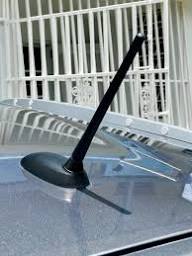
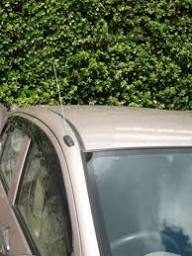
カーステレオの黎明期(AMからFMへの移行期)にあたり、「いかに受信感度を保ちながら、美しく機能的に車体へ統合するか」が模索された時代です。現在のシャークフィンやガラス内蔵型とは異なり、金属製のロッド(棒)をベースにした個性豊かなデザインが主流でした。
*手動式フェンダーアンテナ:前後のフェンダー(泥よけ)に配置され、乗車前に手で引き出す標準的なタイプ。
*手動式ピラーアンテナ:運転席側のAピラー(フロントガラスの支柱)に沿って配置され、窓を開けて伸縮操作ができたタイプ。
*オート(電動)アンテナ:1960年代後半に登場した高級車向けで、ラジオの電源と連動してモーター駆動で自動伸縮するタイプ。
当時はいたずら防止や屋内駐車場での破損を防ぐため、車を降りる際に手動で最後まで押し込んで格納する光景が一般的でした。
1960年代のアンテナは単なる受信機ではなく、クロームメッキの輝きを含めて「車のシルエットを構成する重要なアクセサリー」としてデザインされていたのが大きな特徴です。
私の本性は、
『アンテナ・マニア』たったりして、、、(笑)
それでは、
私の子供心をその未来的な出で立ちでくすぐり、
その後の「自動車デザイン・マニア」への一直線を決定付けた、
【初代コスモスポーツ】につて、
こんな感じで見て行きたいです。
*実車解説:未来から飛来した宇宙船?
*外観デザインの特徴:
*『私』と初代コスモ・スポーツ:
*三題噺:おにぎり・怪獣モグネズン・HUMVEE
*その他のマツダクーペたち、、、
*実車解説:未来から飛来した宇宙船?
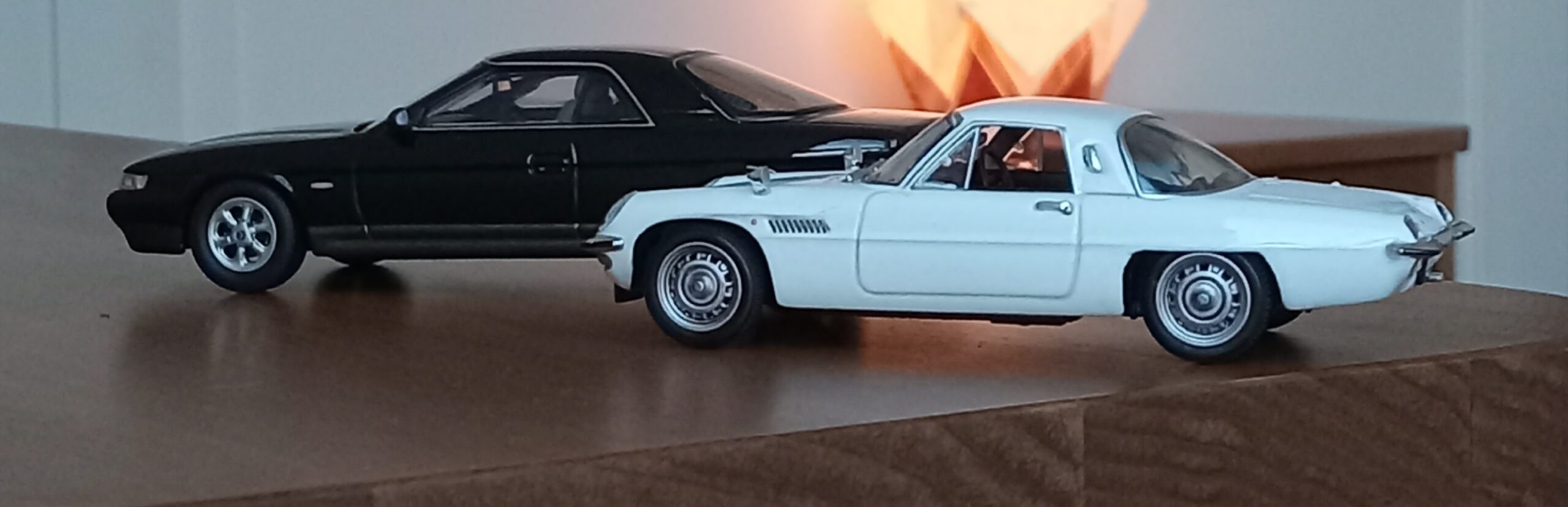
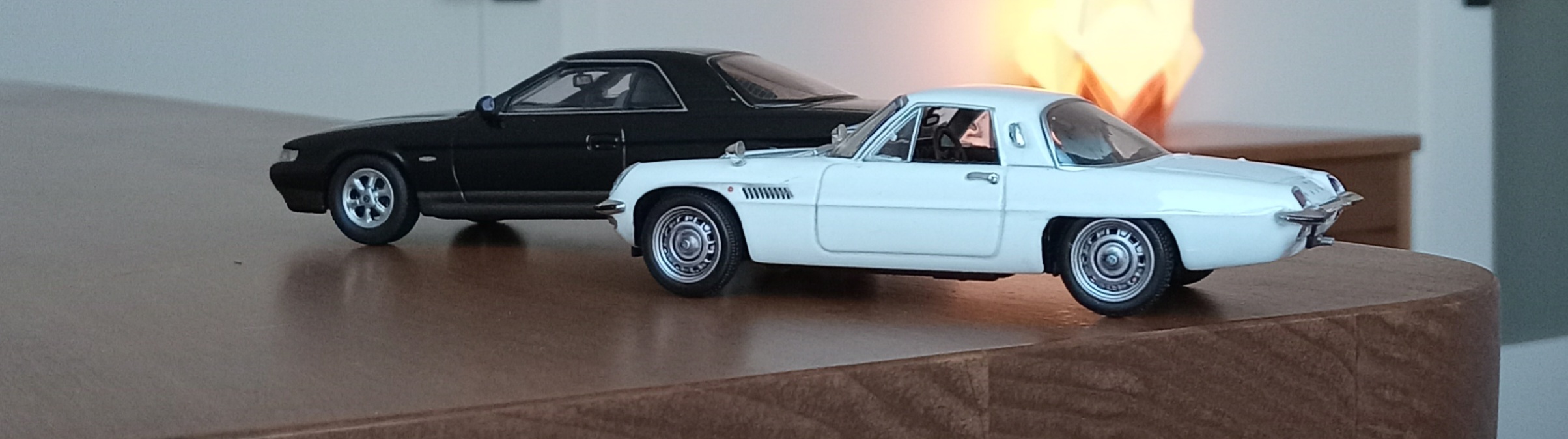
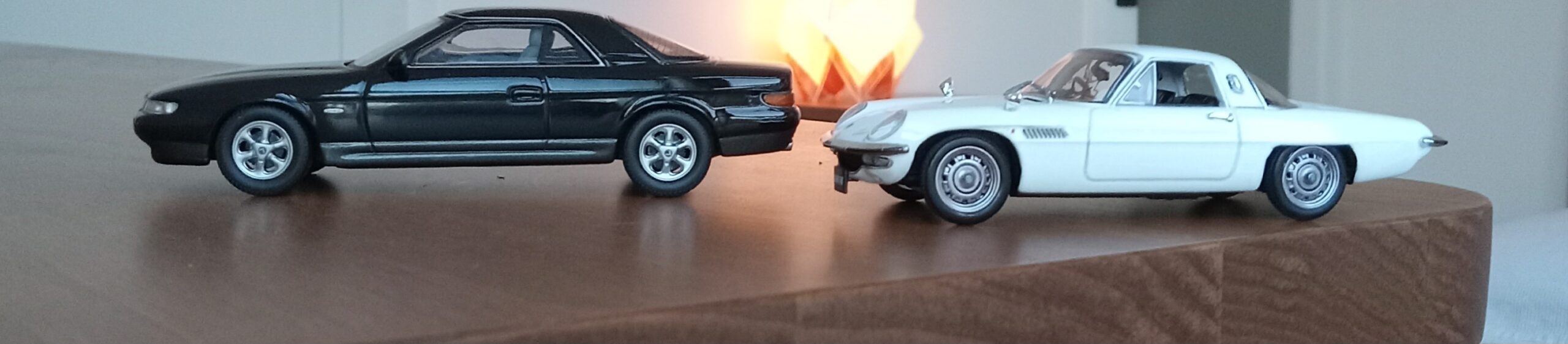
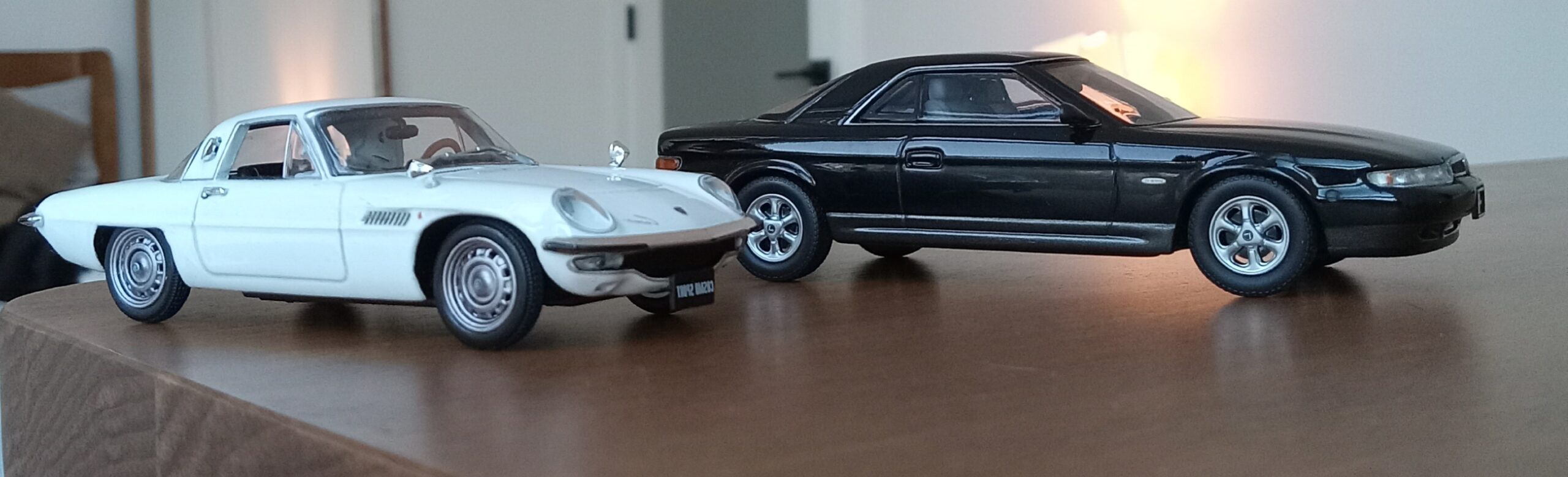
概略:
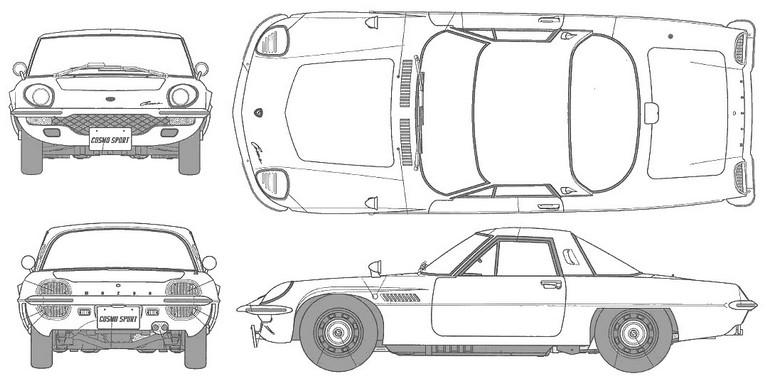
世界初の実用的な量産2ローター・ロータリーエンジンを搭載し、1967年にマツダ(旧東洋工業)から発売された伝説のスポーツカーです。全高1,165mmの流麗で未来的なフォルムは「走るというより飛ぶ感じ」と称され、今なお世界中のファンを魅了し続けています。
N
n
主な特徴と歴史:
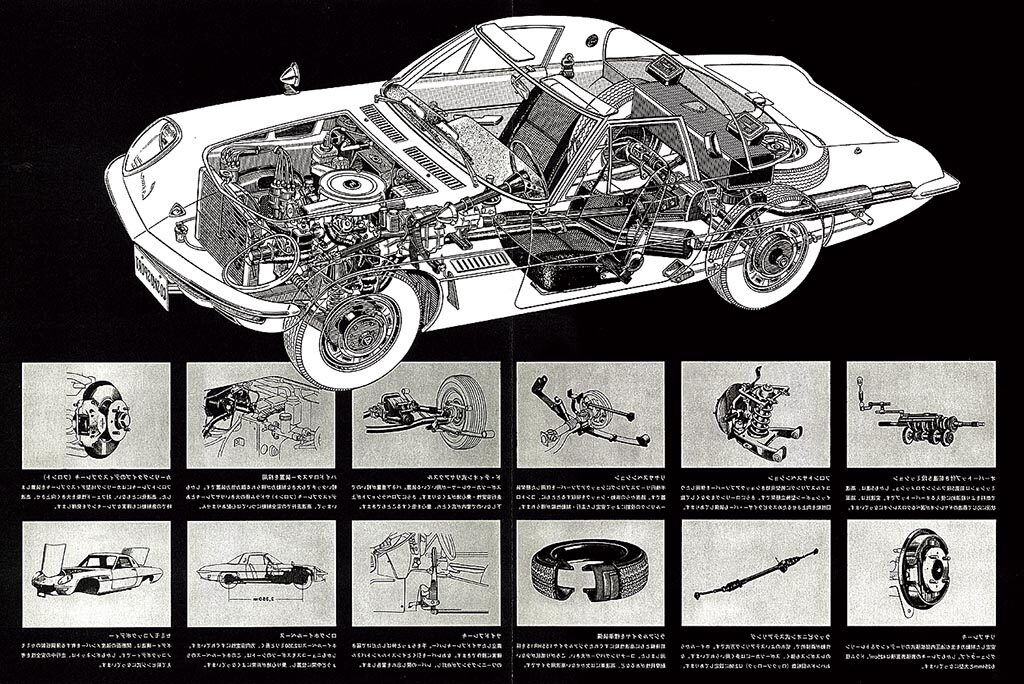
*世界初のロータリーエンジン: ドイツのNSU社から技術導入し、6年の歳月をかけて「悪魔の爪痕」と呼ばれたチャターマーク(波状摩耗)などの難題を克服。小型・軽量・高出力を実現しました。
n
*生産台数: 1967年から1972年までの生産終了までにわずか1,176台のみが生産され、非常に希少な名車となっています。
n
n
n
n
n
n
n
n
n
n
n
n
n
n
n
n
n
時代を先取りしたデザイン:
*スペースエイジ・スタイル: 全高がわずか1,165mmと非常に低く、空力特性と未来感を両立させた流線型のボディは「宇宙船」や「ジェット機」を彷彿とさせます。 初代マツダ「コスモスポーツ」のスタイリングデザインを手掛けたのは、東洋工業(現マツダ)の社内デザイナーだった小林平治(こばやし へいじ)氏です。当時の造形係主任・田窪昌司氏の主導のもと、彼の描いた未来的なデザイン画が当時の松田恒次社長の目に留まり、市販化への道が開かれました。
n
n
小林平治さん(デザイナー):
宇宙へのロマンが導いたデザイン: SFや推理小説が好きだった小林氏は、「クルマは走る宇宙になるんだ」という強い世界観を持っていました。空飛ぶ円盤や宇宙船を思わせる futuristic(未来的)で流麗なボディラインは、彼の宇宙への憧れから生まれたものです。
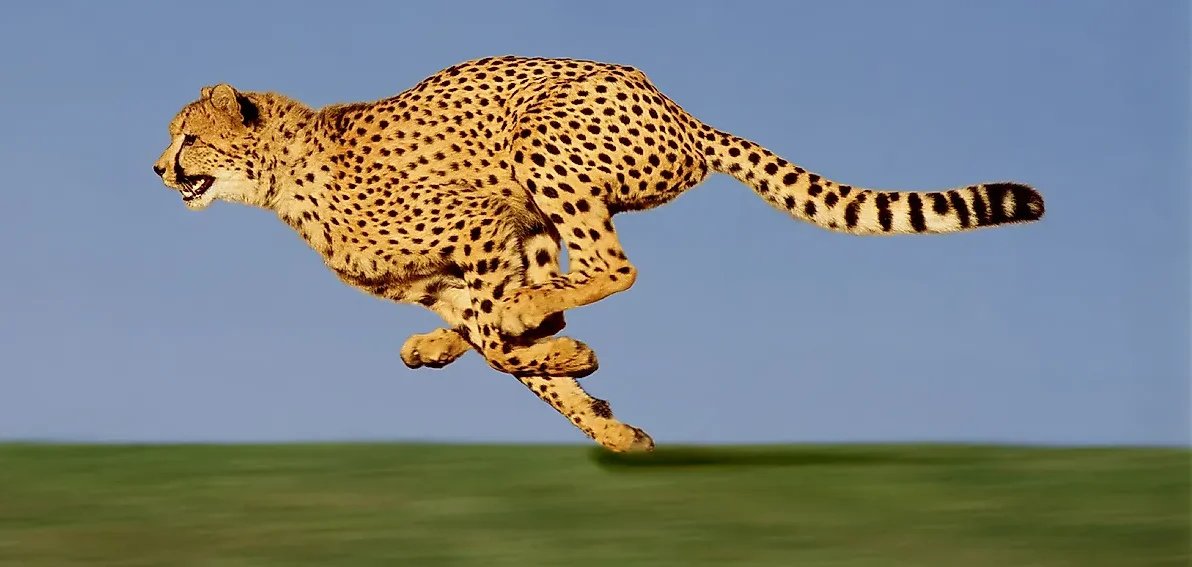 「ヒョウ」がモチーフ: 当初は量産を前提としないイメージカーとして社長から開発の命を受けたデザインチームは、「ヒョウが獲物に襲いかかる瞬間の、重心が頭から肩のあたりにきた精悍で躍動的な姿」をイメージして車体形状を造り上げました。
n
n
*インテリア: 航空機のコックピットのようなデザインのインパネや、高いホールド性を持つシートなど、ドライバーをその気にさせるスポーティな空間に仕上がっています。
モデルの変遷:
*前期型(L10A型 / 1967年〜): 491cc×2エンジン、110PSを搭載。最高速度185km/h
*後期型(L10B型 / 1968年〜): エンジンを強化し128PSに。最高速度200km/hに達し、ホイールベースの15cmの延長やブレーキの強化が行われました。
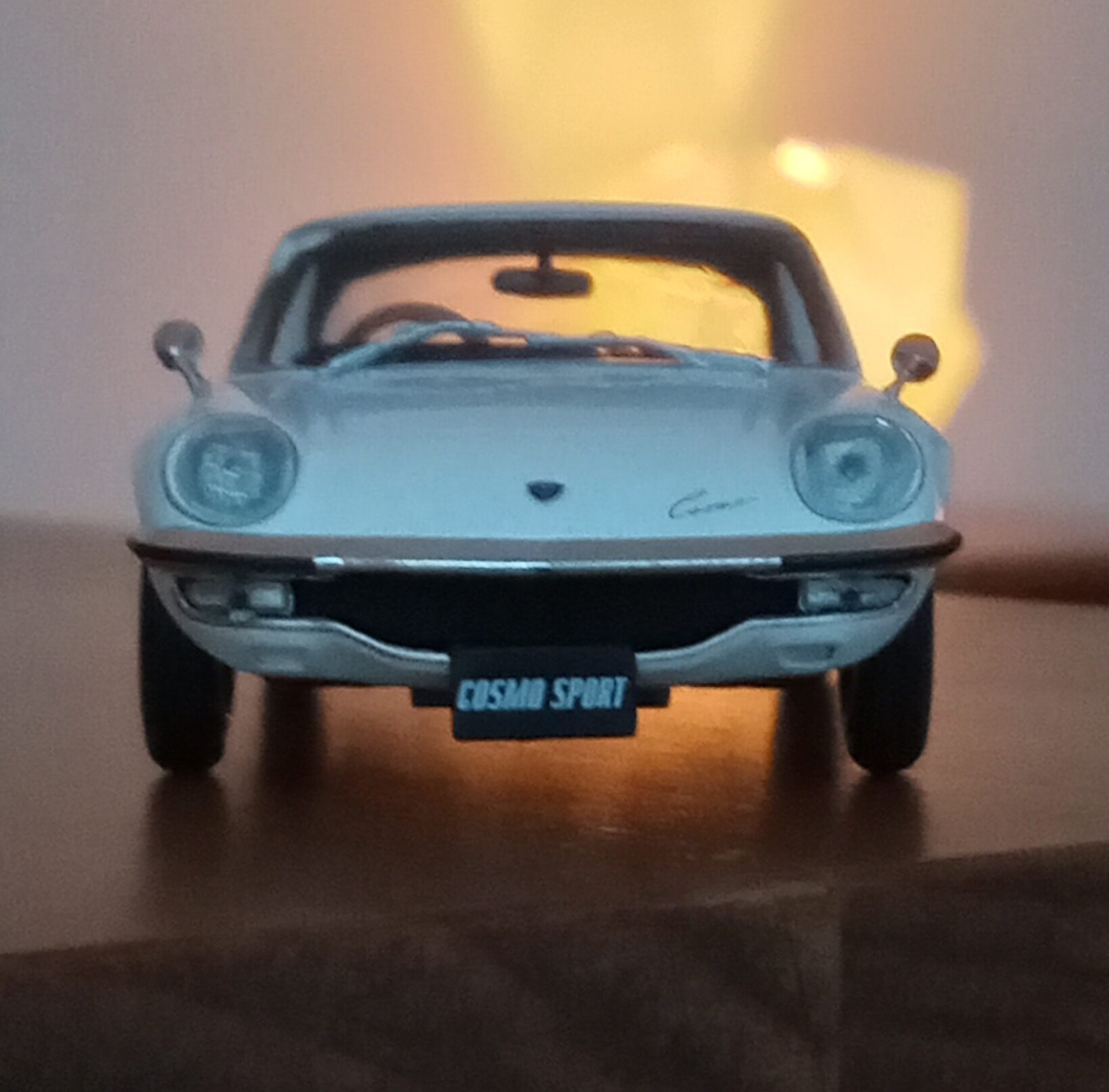
現存する車両について:
#主要諸元:
- 型式:L10B型
- 総排気量:491cc × 2
- エンジン型式: 10A型・水冷直列2ローター
- 最高出力 : 128ps / 7,000rpm
- 最大トルク:14.2kg・m / 5,000rpm
最高速度:200km/h
- 駆動方式:FR(フロントエンジン・後輪駆動)
- 定員:2名
- 車体形式:2ドア・クーペ
- ホイールベース:2,350mm
- 全長:4,130mm
- 全幅:1,590mm
- 全高:1,165mm
- 車両重量:
960 kg
*外観デザインの特徴:『獲物を狙う宇宙船?』
時代を大幅に先取りしたデザイン、
「初代コスモ・スポーツ」のデザイン的特徴を
見て行きましょう。
以下の6点あげてみます。
1:この車以前にも以降にも、ボディーの全体的にも、局所的にも、他に見たことがない個空前絶後の【ロケット=宇宙時代】を先取りした個性的デザイン
2:空力実験車並みの「前から後ろに流れる」流線形フォルムを、デザイナーの個性あふれる面構成で包んだ【生き生きした】立体構成
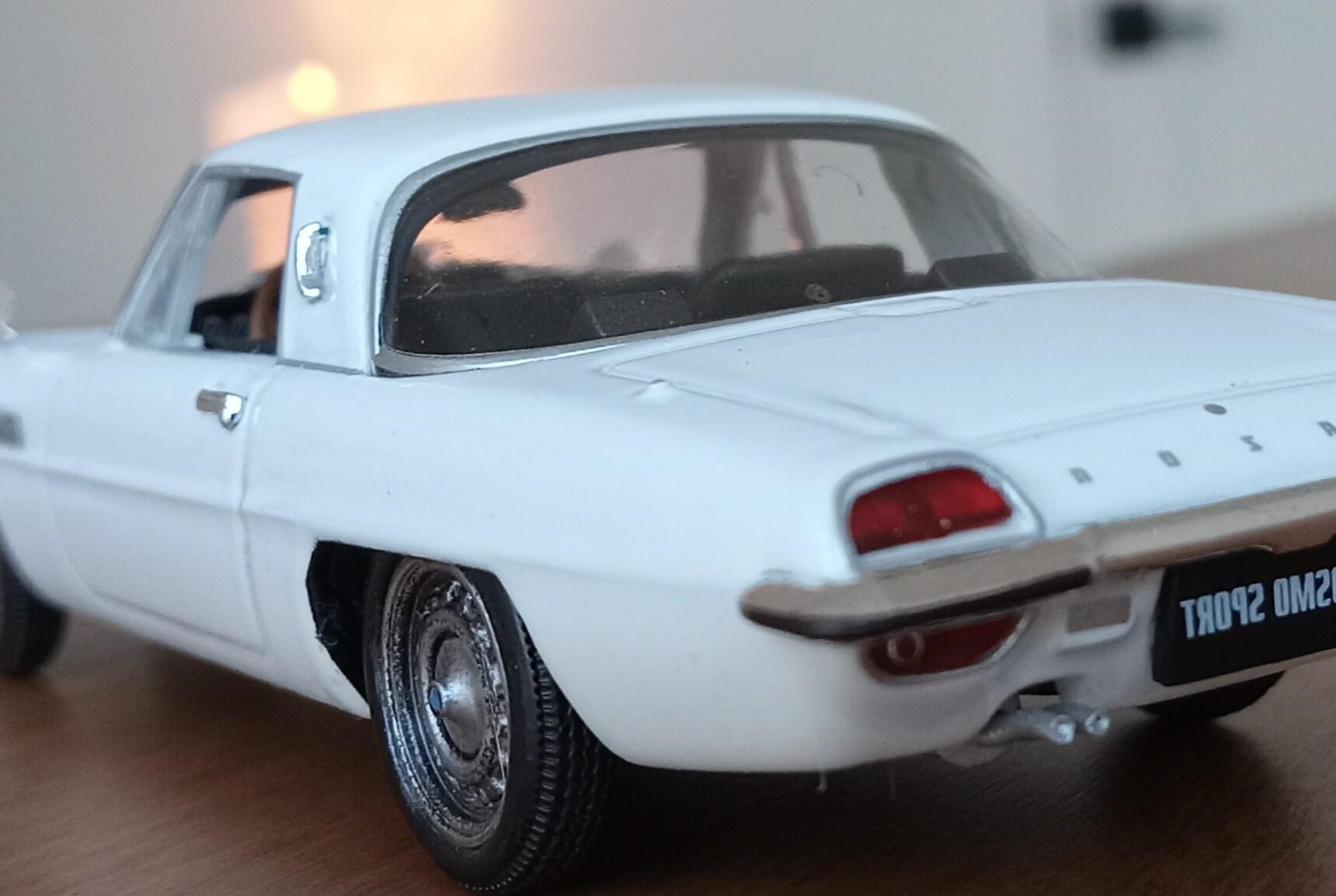
3:直線的で『スピード感』をイメージしたメインボディーと見事なコントラストを奏でる、曲面を生かしたキャビン部分の美しさ
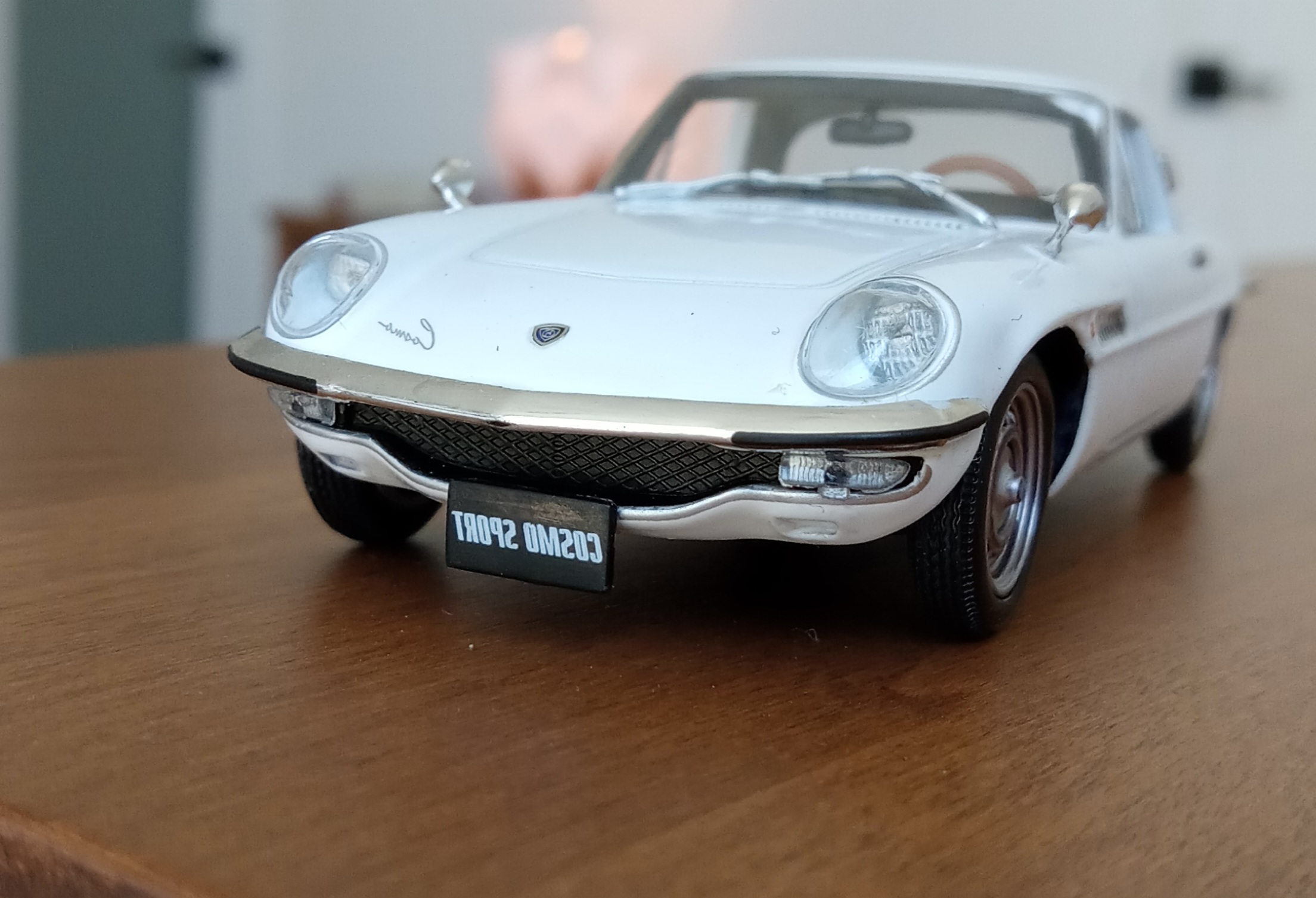
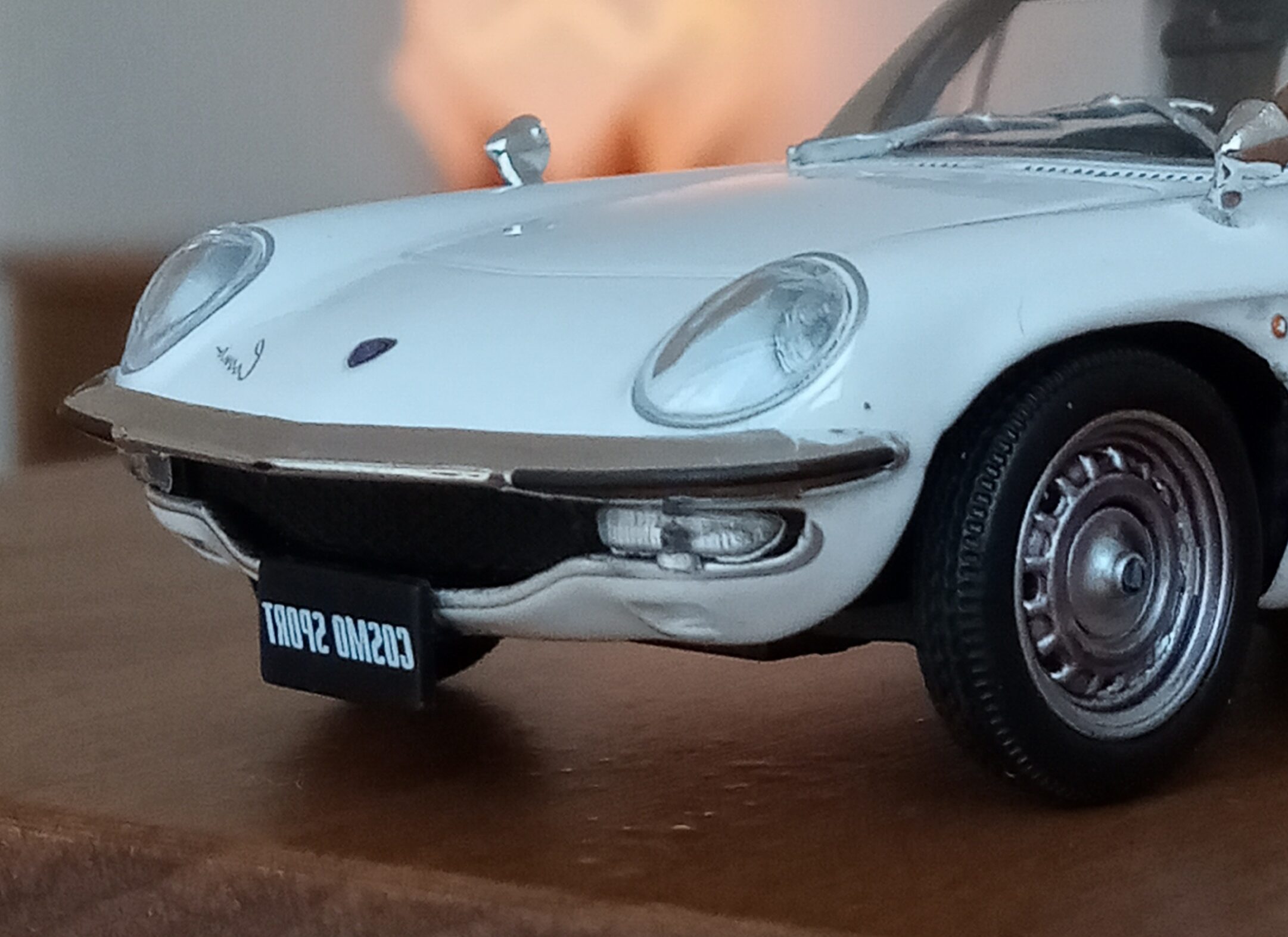
4:両生類のような、個性と愛嬌にあふれた、その他の『何にも似ていない』フロントフェイシア
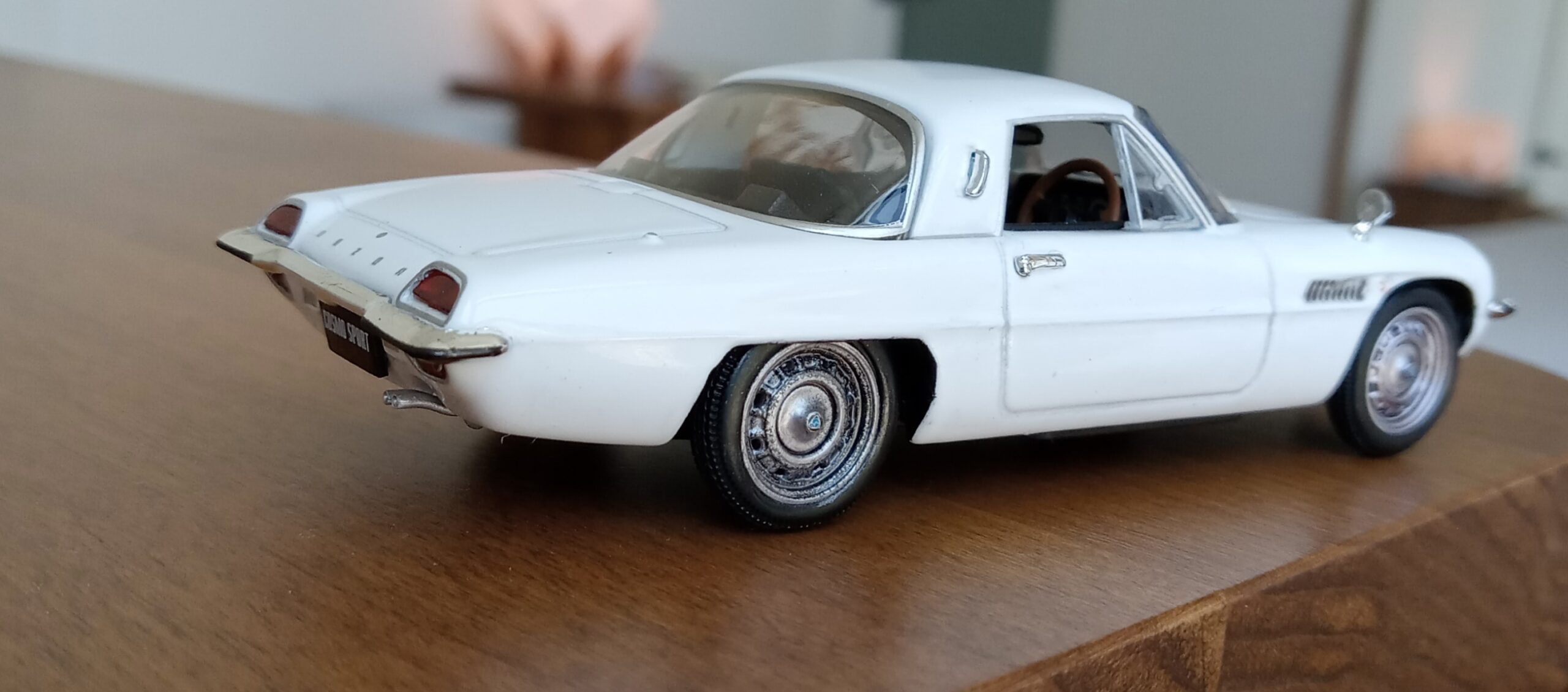
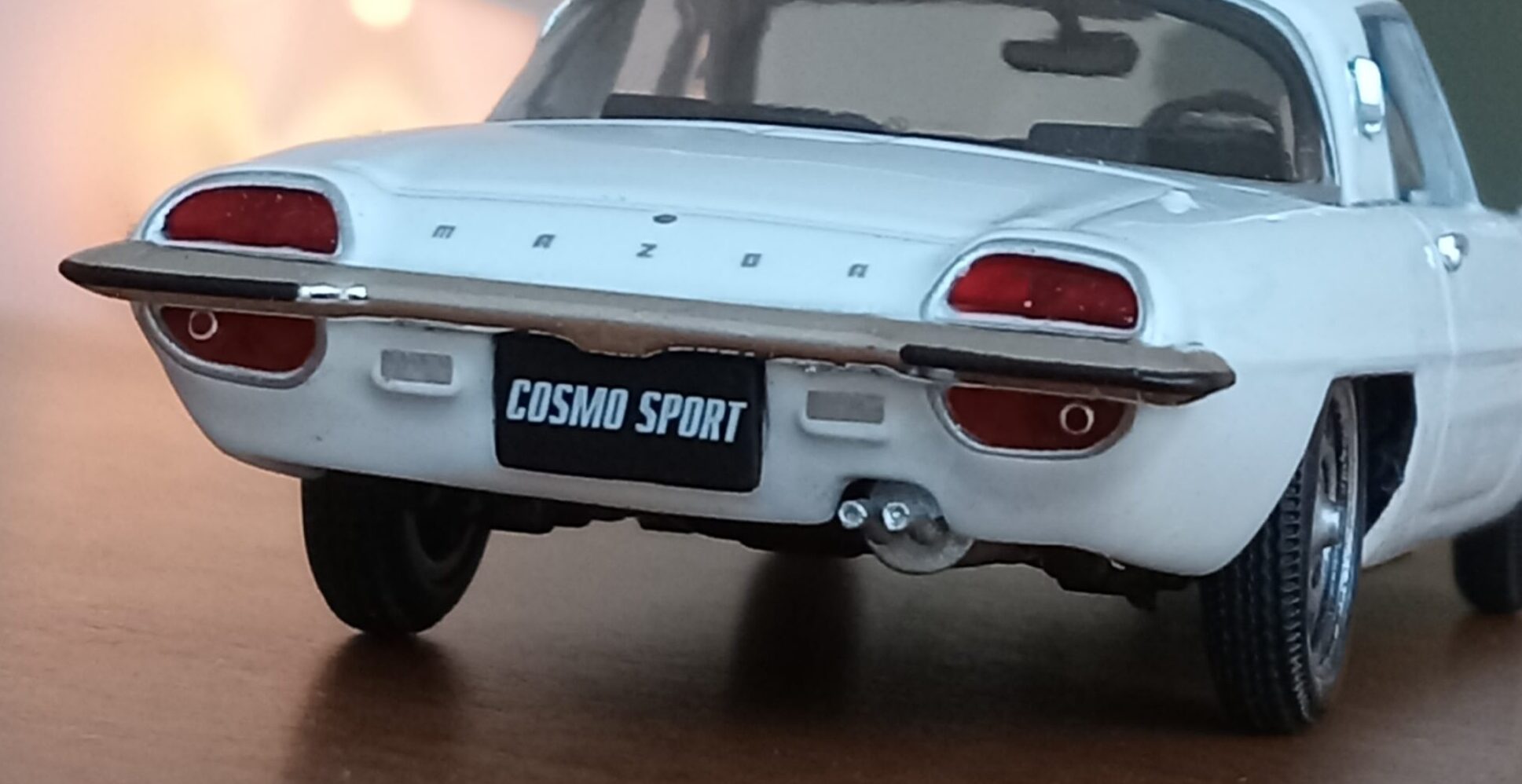
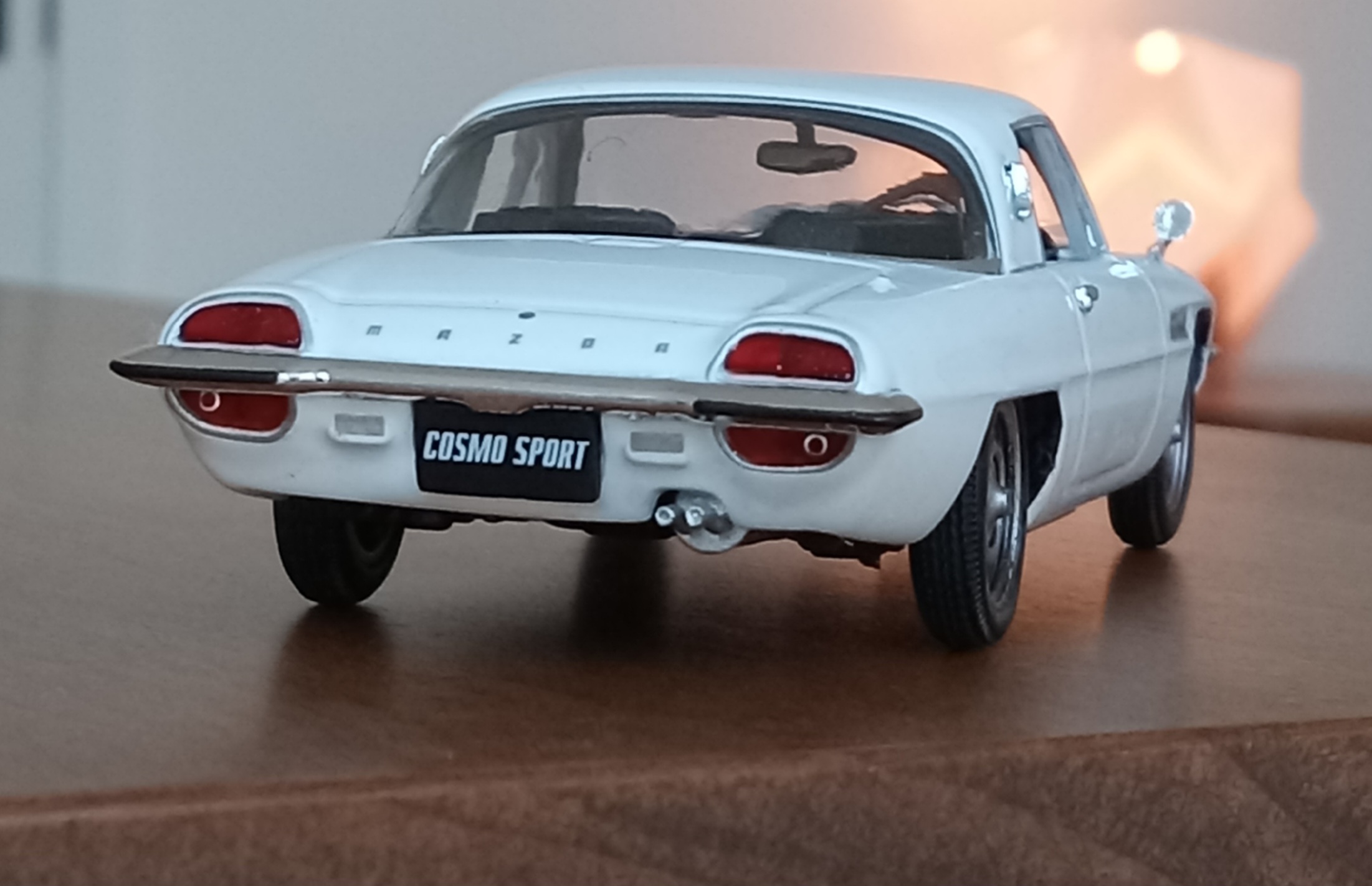
5:極めて立体的かつ未来的なこれまた、他に似たものがないテールエンドのデザイン
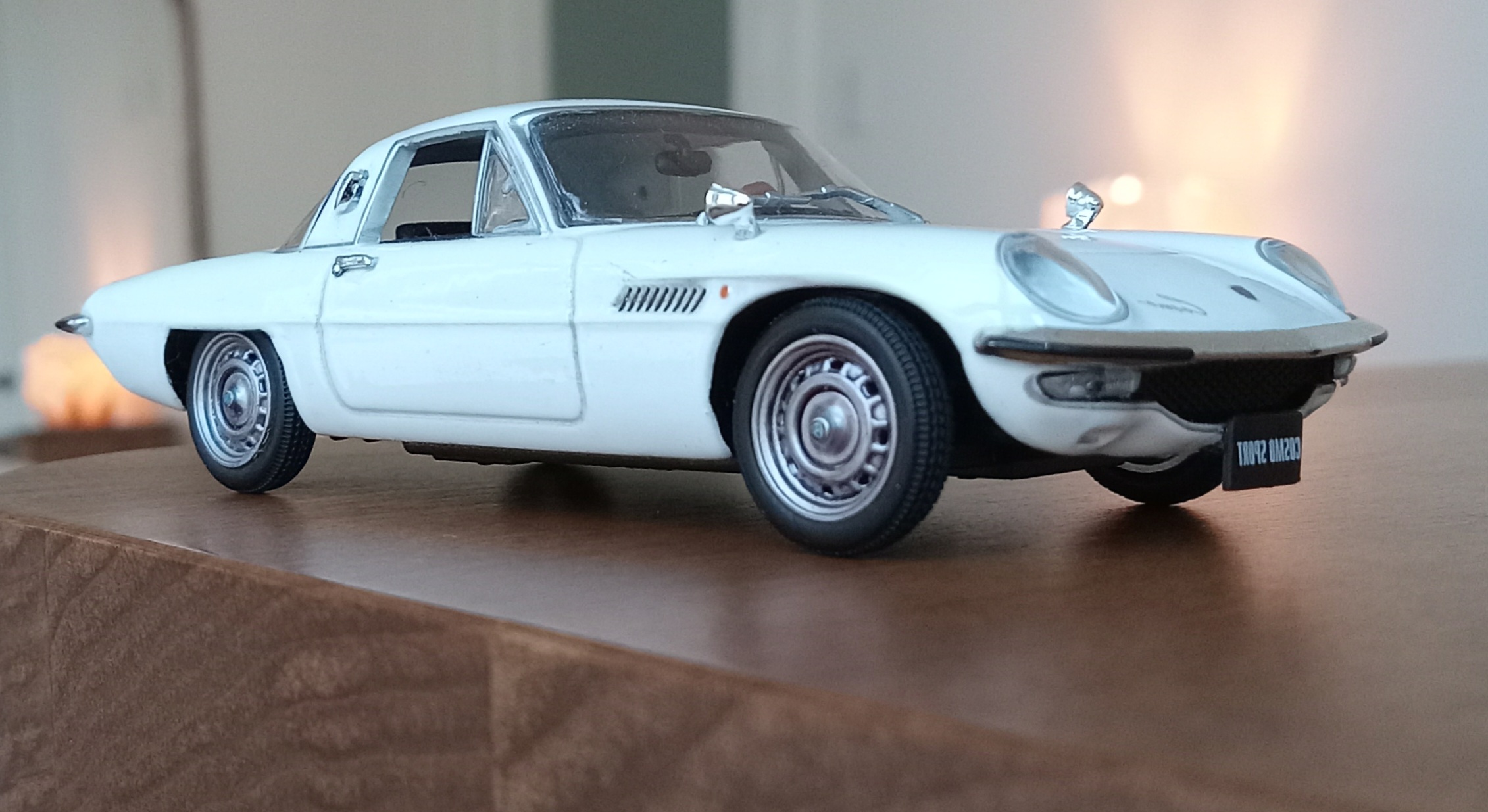
6:充分な車幅、比較的大きなタイヤサイズと(後期型で延長された)ホイールベースが産んだ、絶妙なスタンス感
次に、
1つづつ詳しく見て行きましょう。
1:この車以前にも以降にも、ボディーの全体的にも、局所的にも、他に見たことがない個空前絶後の【宇宙時代】を先取りした個性的デザイン
ーーーーーー>同時代のアポロ/マーキュリー計画の楽天的な「匂い」が立ち込める、スペース・エイジデザイン
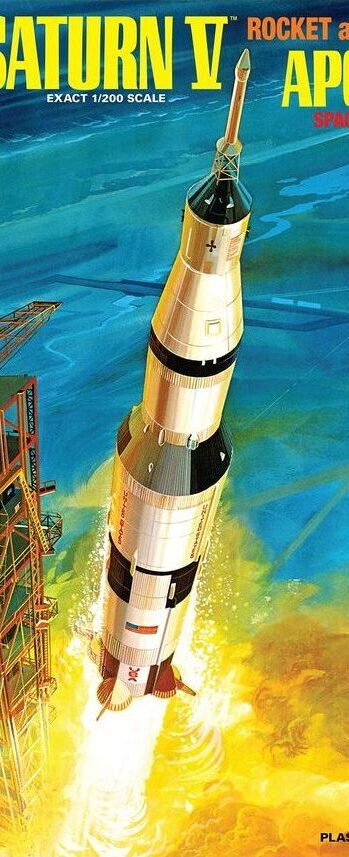
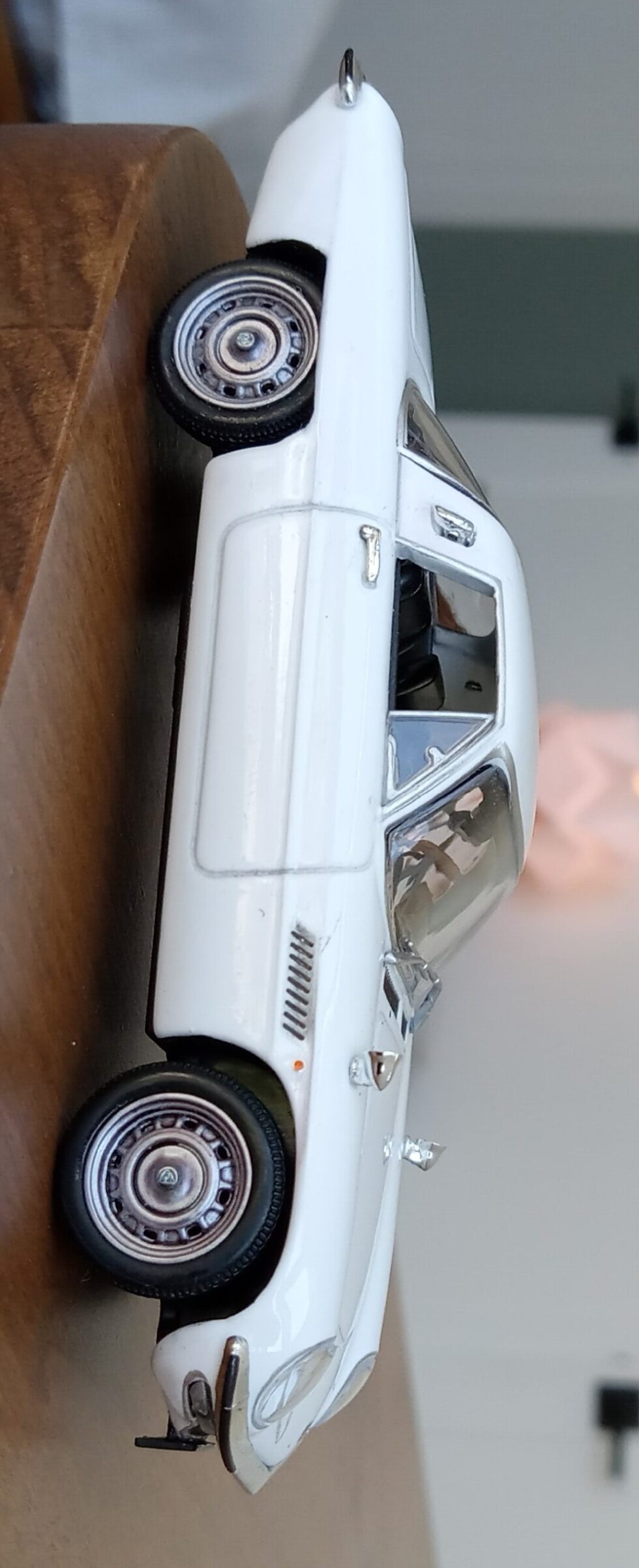
2:空力実験車並みの「前から後ろに流れる」流線形フォルムを、デザイナーの個性あふれる面構成で包んだ【生き生きした】立体構成
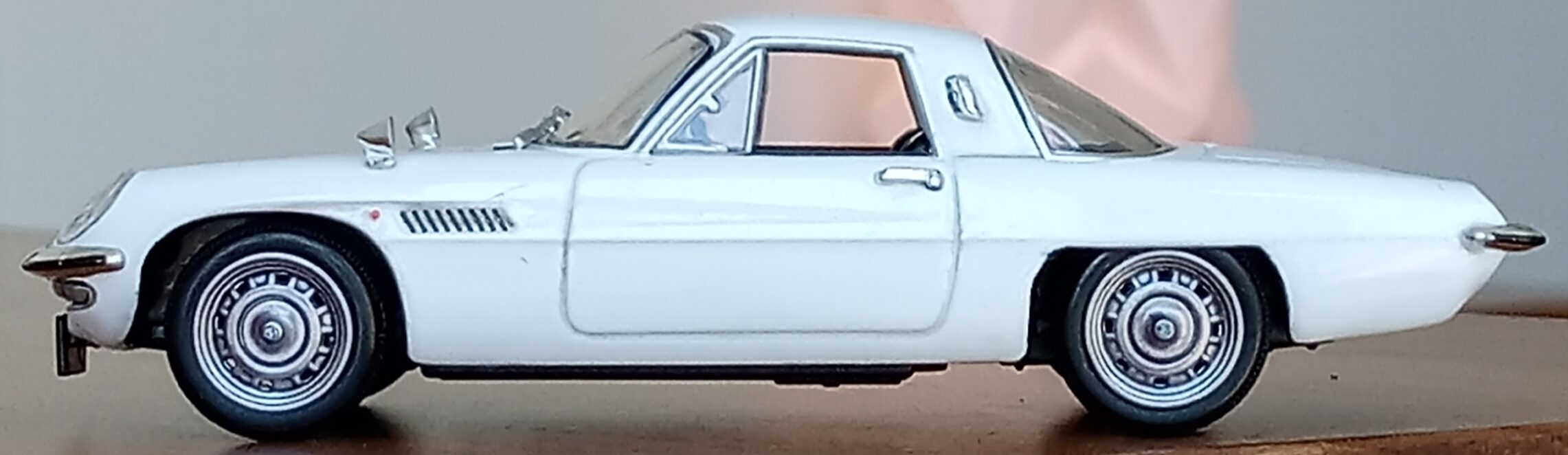
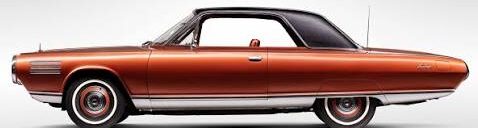 (クライスラー・ガスタービンカー、1963年発表のコンセプト・カー)
3:直線的で『スピード感』をイメージしたメインボディーと見事なコントラストを奏でる、曲面を生かした優雅でコンパクトなキャビン部分の美しさ
4:爬虫類・両生類のような、個性と愛嬌にあふれた、その他の『何にも似ていない』フロントフェイシア
ーーーーーー>カエル顔?

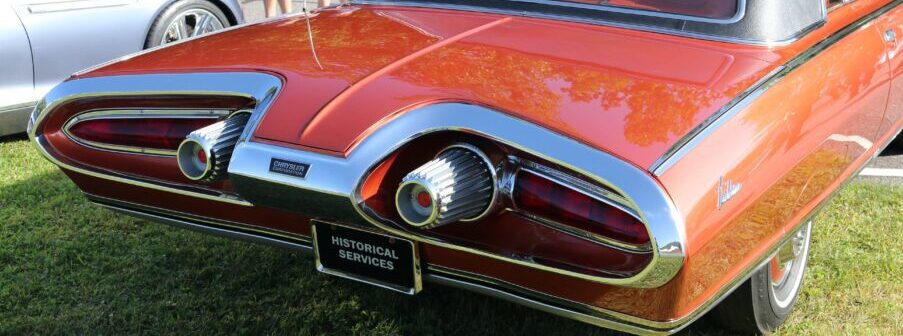
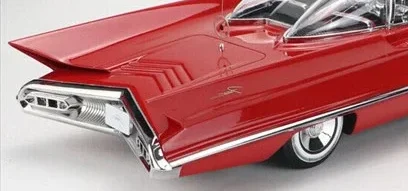
5:極めて立体的かつ未来的なこれまた、他に似たものがないテールエンドのデザイン
(堀の深い表情に、鋭く出っ張ったバンパーの切れ味、、)
ーーーーー>敢えて探せば、バットモービルやタービンカーの後部的?
6:充分な車幅、比較的大きなタイヤサイズと(後期型で延長された)ホイールベースが産んだ、絶妙なスタンス感
――ーー>小さめのキャビンと、ショルダーの張り出しが産む絶妙な
【踏ん張り感】
*『私』と初代コスモ・スポーツ:シーソー・ゲーム感覚?
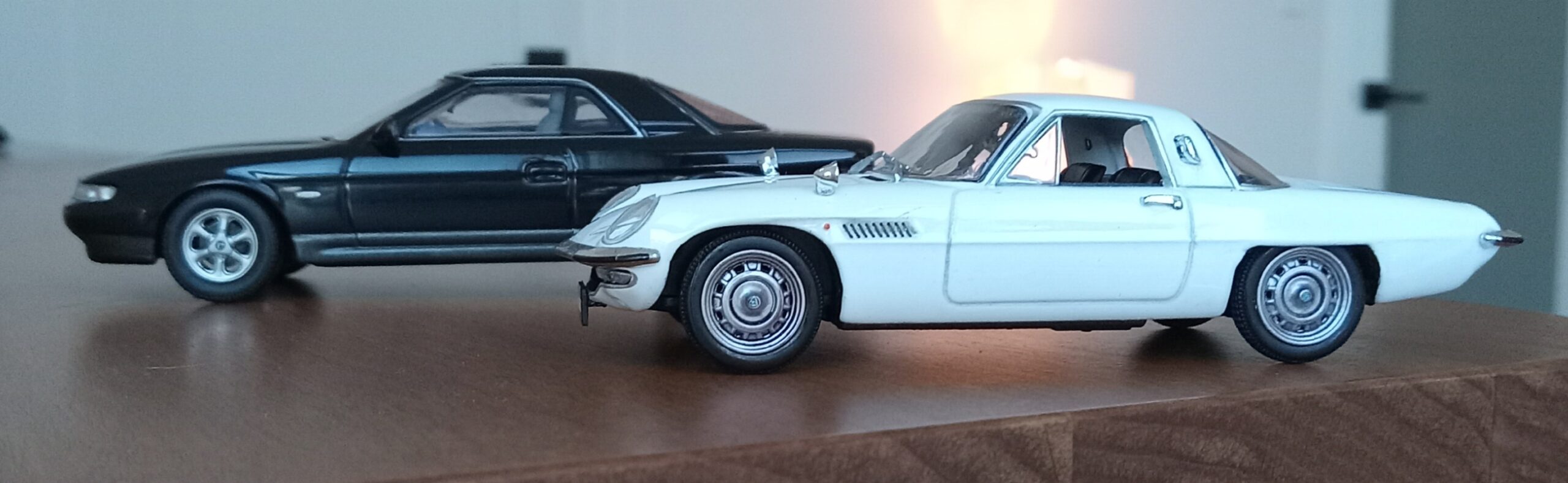
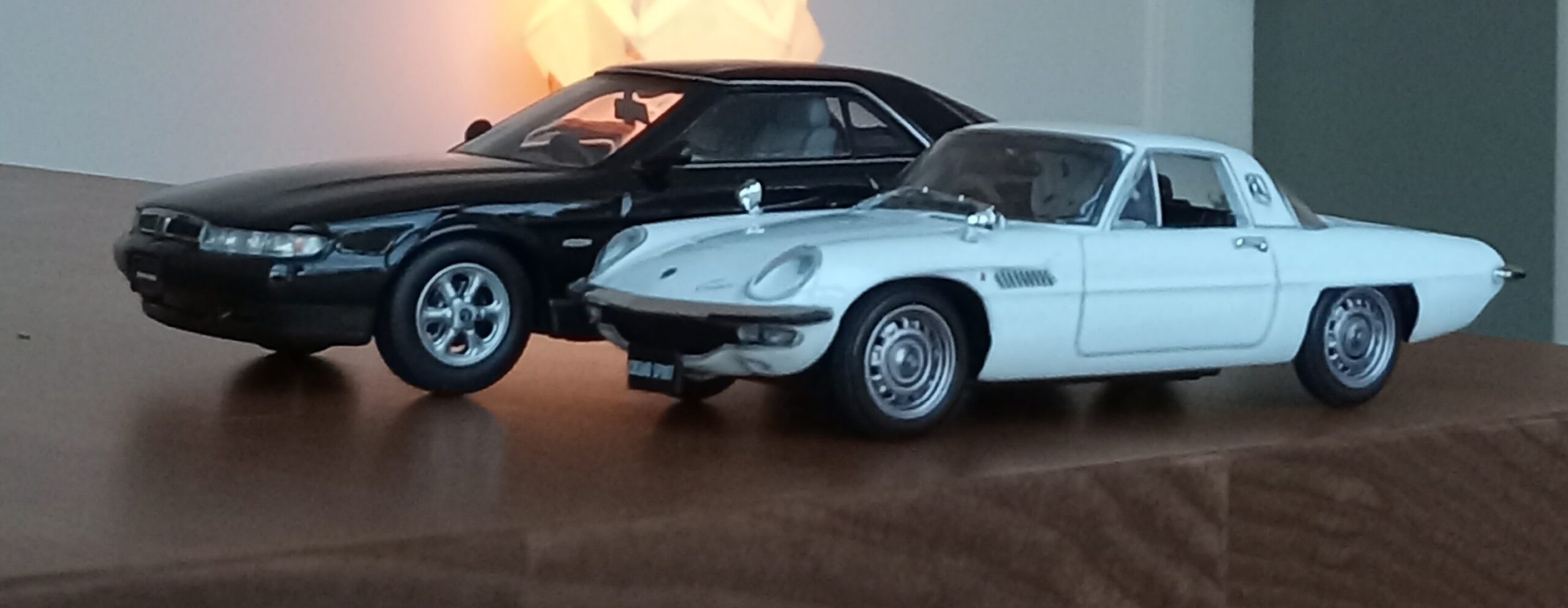
私にとって『コスモス・ポーツ』は
「好きになったり・
嫌いになったり」の
アンビバレントな対象です。
*小学生時代は『マット・ビハイクル』にベタ惚れ、
*スパーカーブーム以降は完全に忘却のかなたへ、、、、
*大学時代に、クライスラー・タービンカートの絡みで、復活、
*今回ミニカーを通して
再び熱が上がった、感じです。
立体模型とは、こんな感じで、
かかわってきました。
#プラモデル編:
*日本模型【ニチモ】製、1/24 プラモデル、マツダ コスモ・スポーツ【後期型】
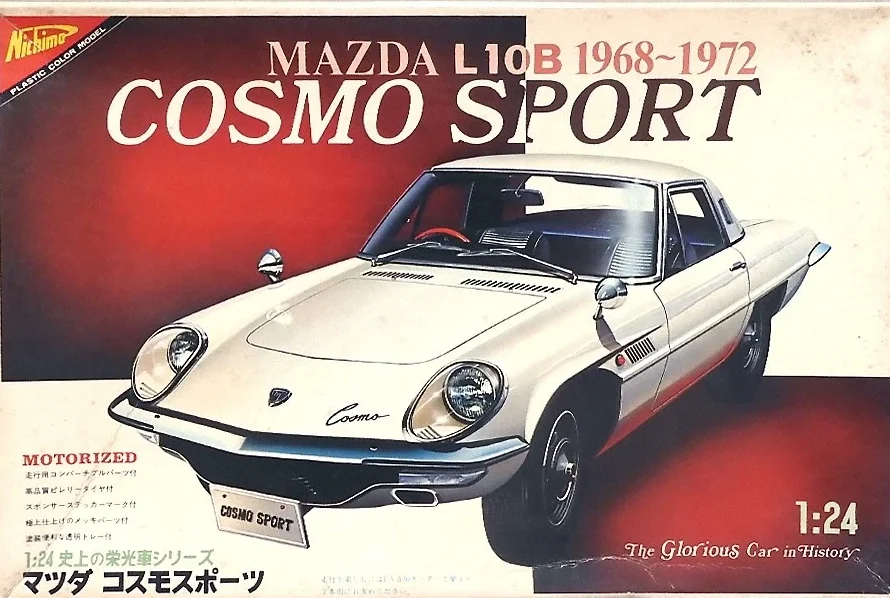
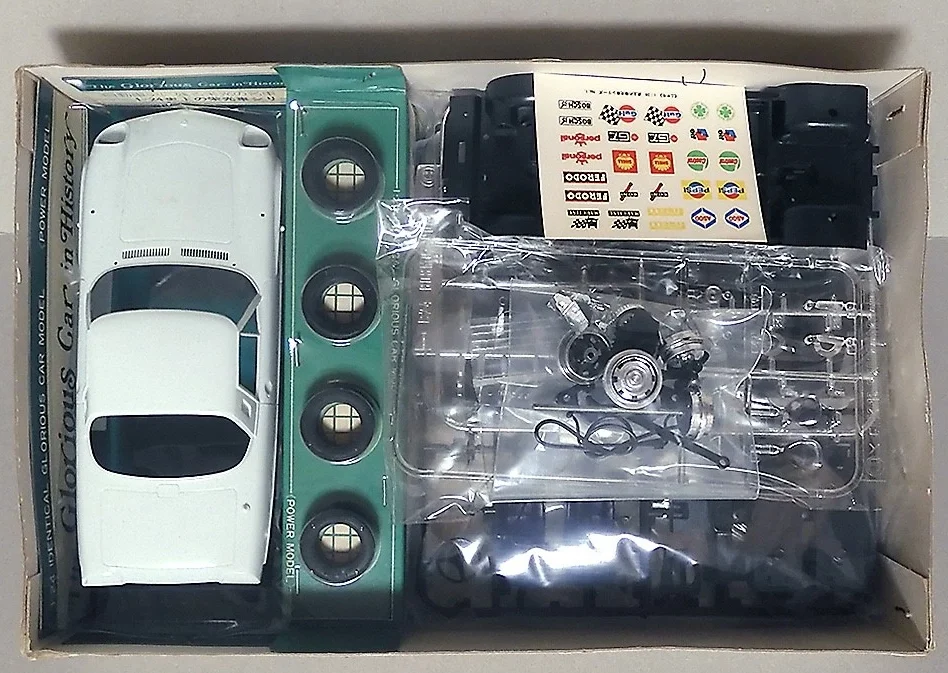 (ニチモらしく、カッチットした直線的なボディー造形と、それなりな細部の再現が記憶に残ってます。
ーーー>日東の出来が良いシリーズで出なかったのが残念です。)
*日東模型製、1/24 プラモデル、コスモ スポーツ【前期型】
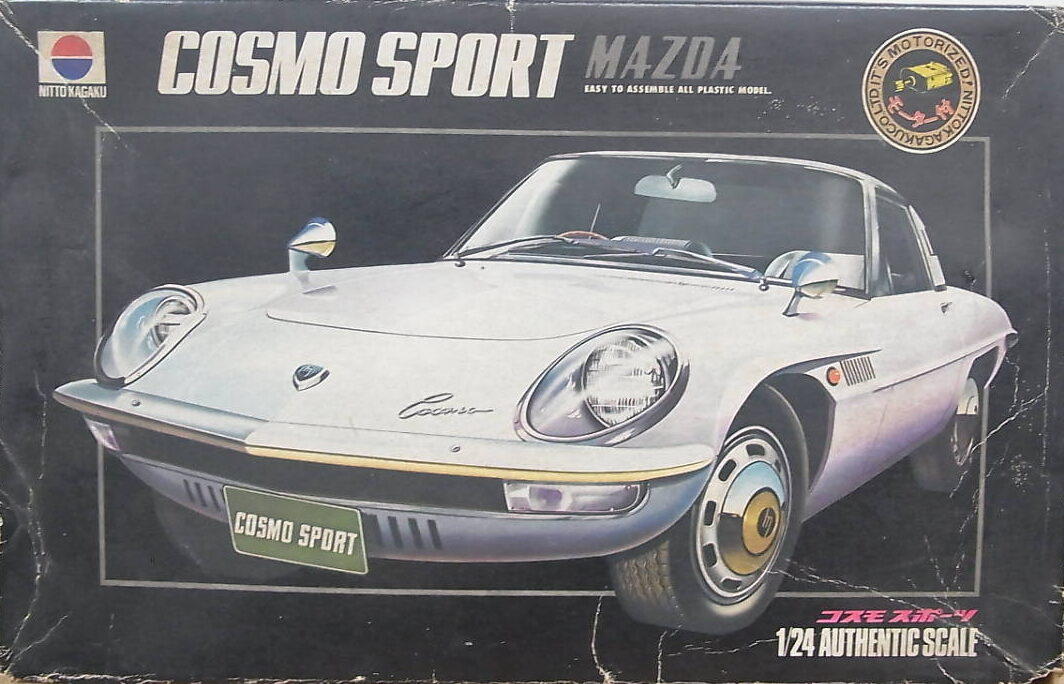
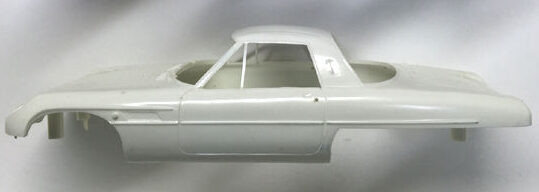 (実車で15cmもホイールベースが短い初期型を再現、スパーカーブームに便乗して再版されて以来市場でほとんど見かけませんでした、私も模型店で中を数回覗いたきりでした。
---→80年代以降に展開されたクラッシックカーシリーズ(ホンダ・S800や、SR311フェアレディーZが有名)で商品化されなかったのが残念です。)
*ハセガワ製、1/24 プラモデル、マツダ コスモ・スポーツ【後期型】
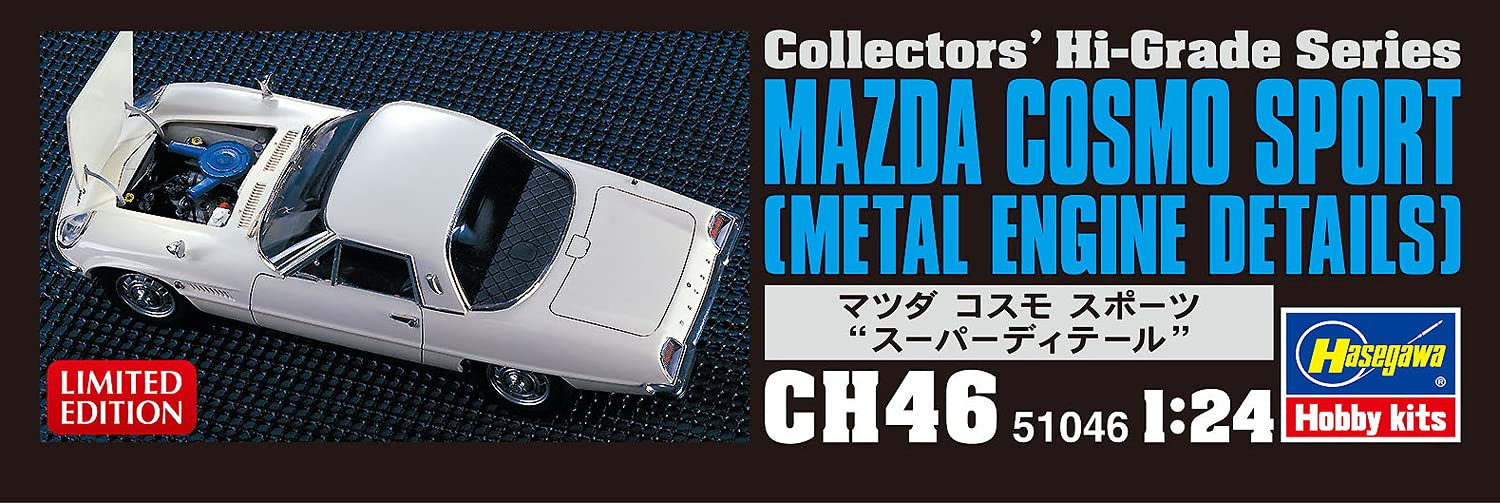
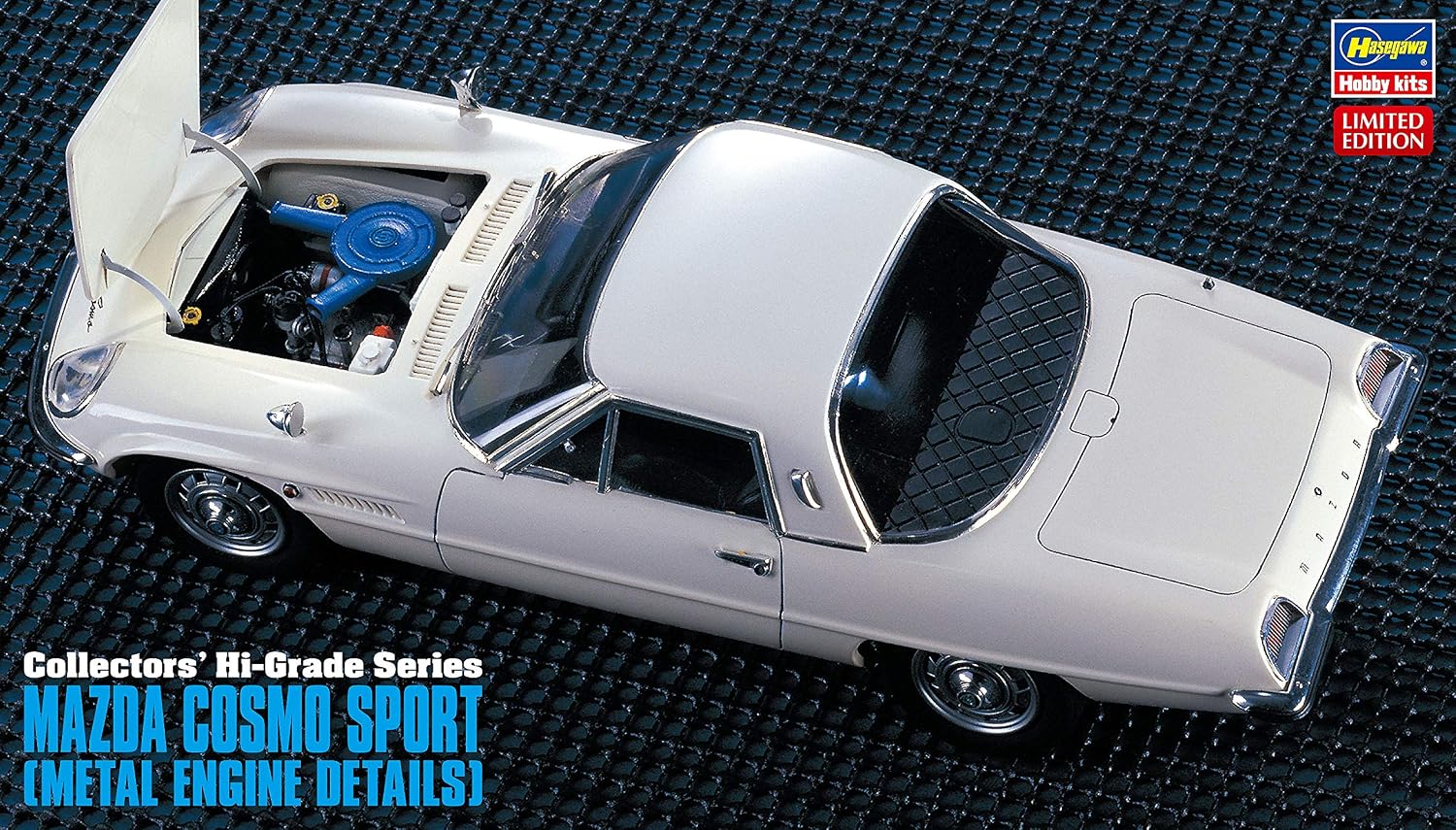
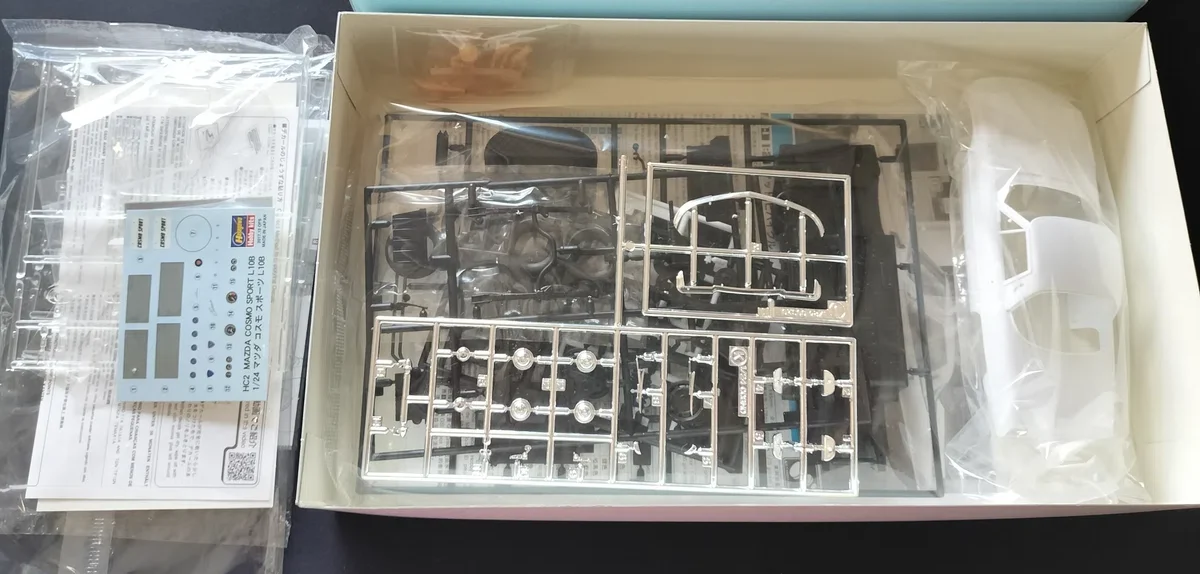 (こちらは渡米後に出た商品で、一度模型店で仲を除いただけですが、かなり初期の商品の為か、ボディーが直線的過ぎ【のっぺり&平坦】で、上方から見た時の後方に行くに従っての絞り込みが少なかった記憶があります。
---→一般的には、この車のベスト・キットと言われているようですが、、、)
#ミニカー編:
昨年の暮れから、
今回の記事を書くにあたっての、ミニカー探しが始まりました。
まず最初に入手したのが、
*京商製、1/64ダイキャスト完成品、初代コスモ・スポーツ【後期型】(シルバー)でした。
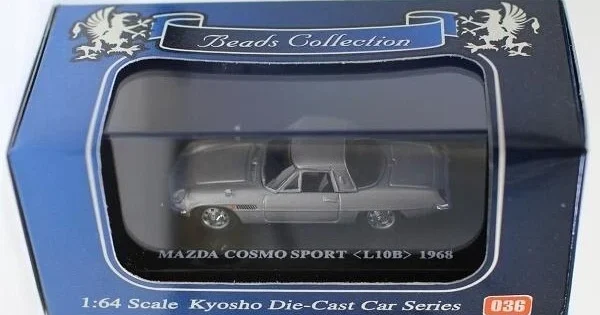
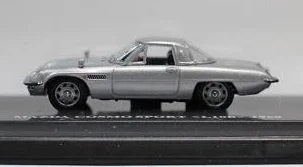 (キャスティングは少し古めですが、ボディーの捉え方が優秀で、タイヤの大きさ、ホイールの彫刻など、素晴らしいモノです。キャビンが別パーツなので、若干『取ってつけた感』が否めませんが、、、許容範囲です。
---→どこに出しても恥ずかしくない、しっかりしたミニカーです!)
*コナミ製『絶版名車コレクション』1/64 ダイキャスト完成品、初代コスモ・スポーツ【後期型】(ホワイト)
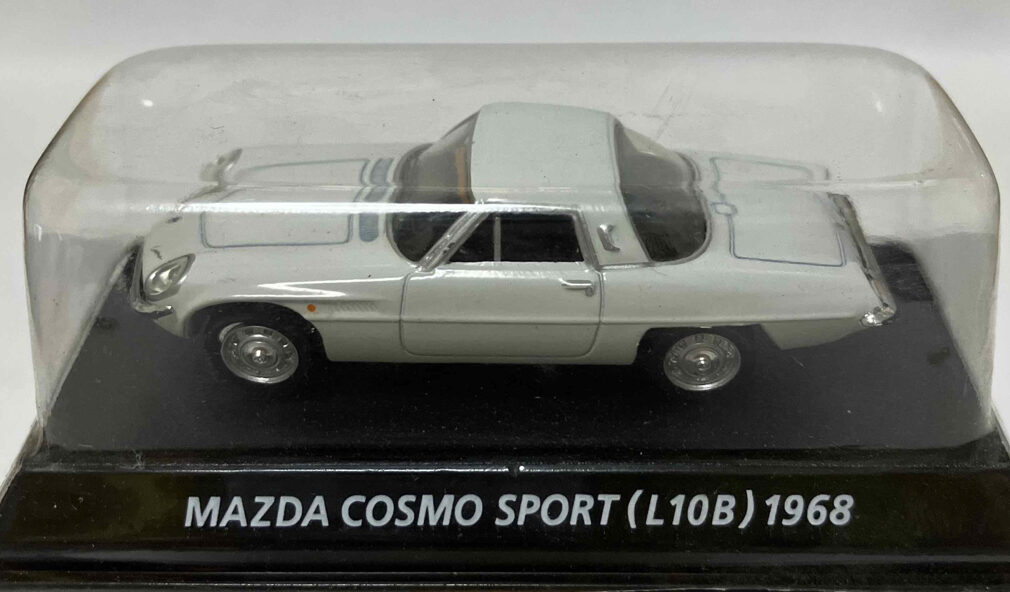
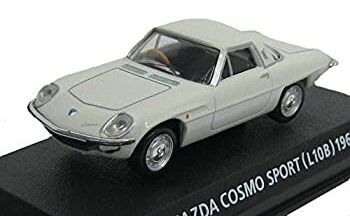 (キャスティングのシャープさは、京商以上、ボディーが若干厚めなのと、タイヤが少し太すぎるのが難点、
---→墨入れとタイヤの寸詰めで大化けする予感!)
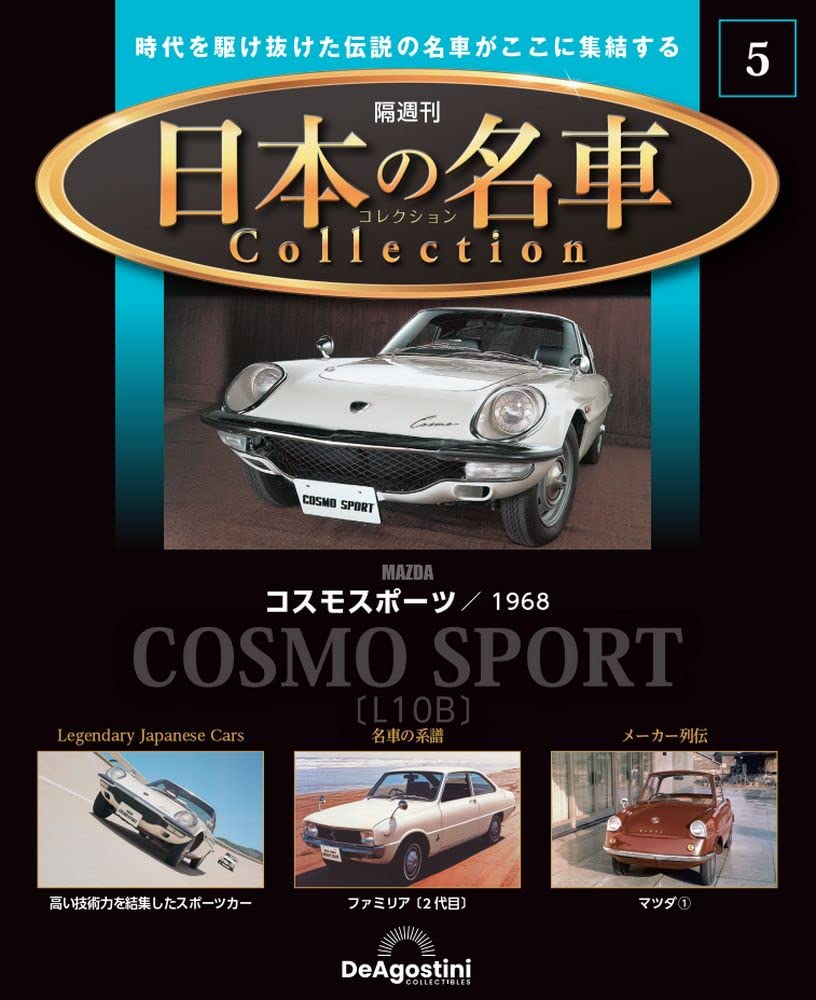
*ディアゴスティーニ社製、ダイキャスト完成品、初代コスモ・スポーツ【後期型】(ホワイト)
(最後発でパーツ分割が細かく意欲的な設計なのですが、組付け精度と塗装クオリティー、タイヤとホイールの設計制度が追い付かず残念な結果に。
ーーーー>ディアゴスティーニのこのシリーズのファンなのですが、この商品はイマイチでした。)
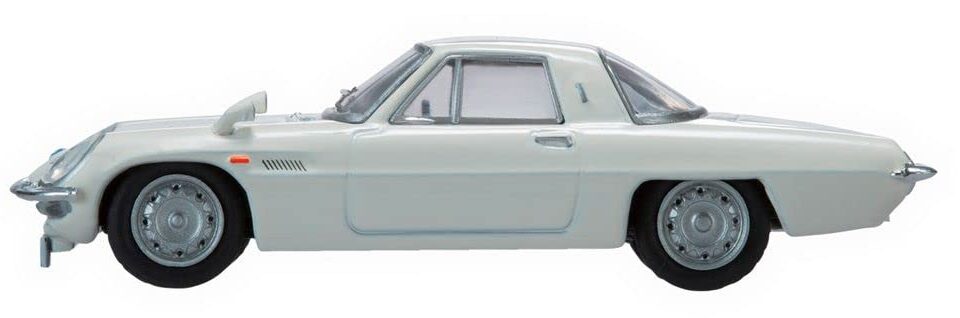
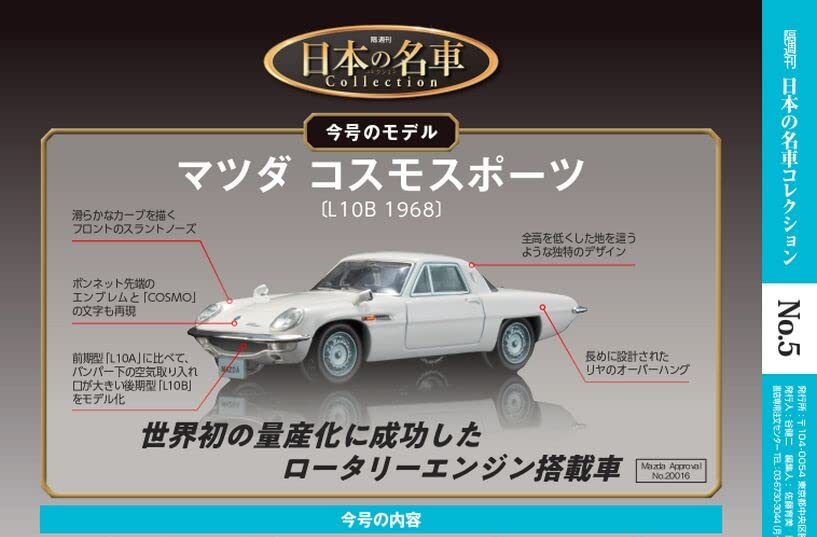
最後に手にしたのが、
少し大きな1/43スケールの完成品です。
*アシェット社製、プレミアムシリーズ、1/43 ダイキャスト完成品、初代 コスモ・スポーツ【後期型】(レーシング・ホワイト)
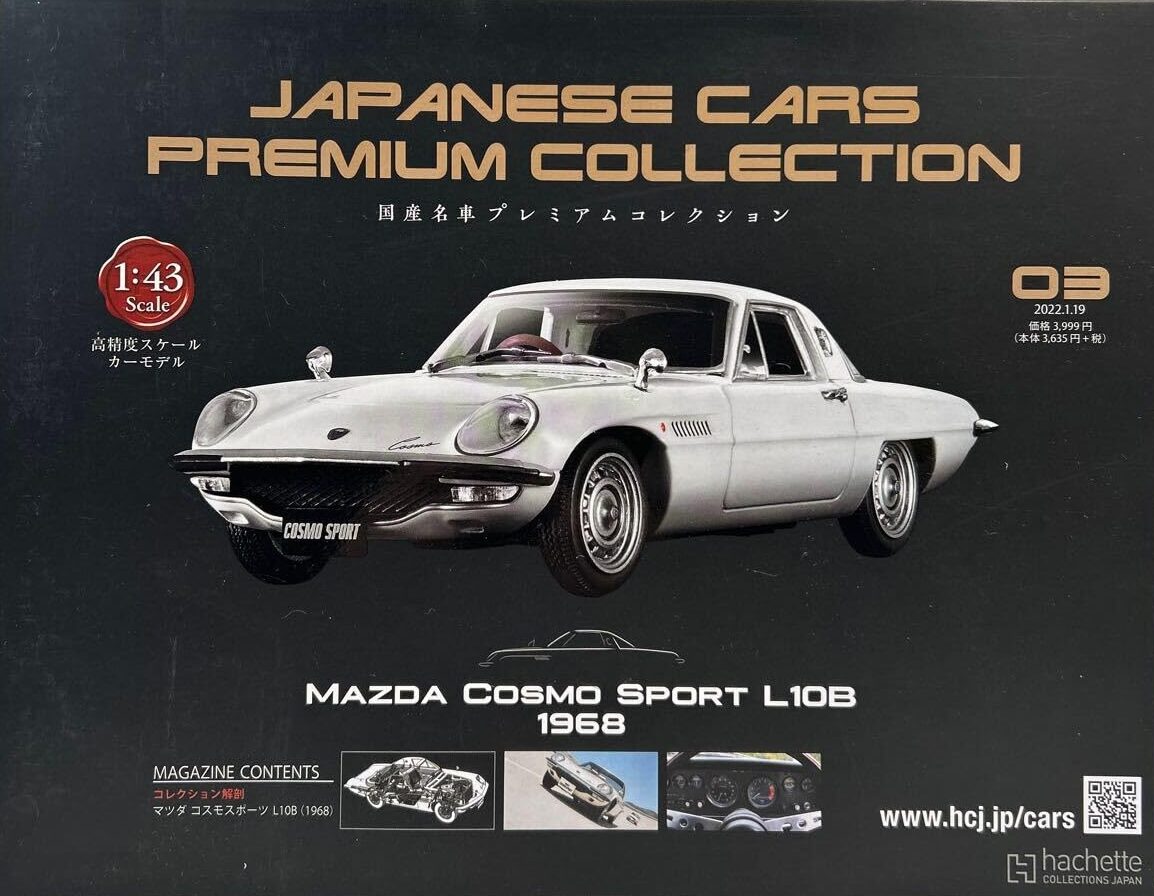
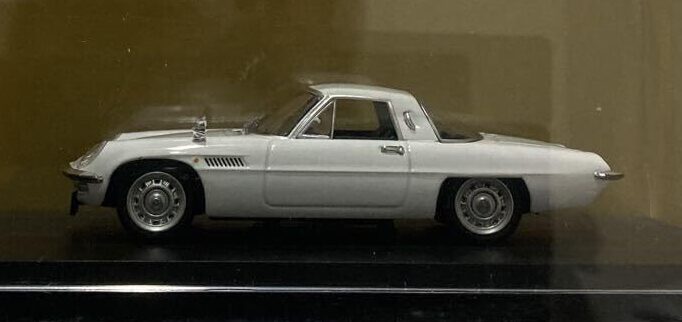
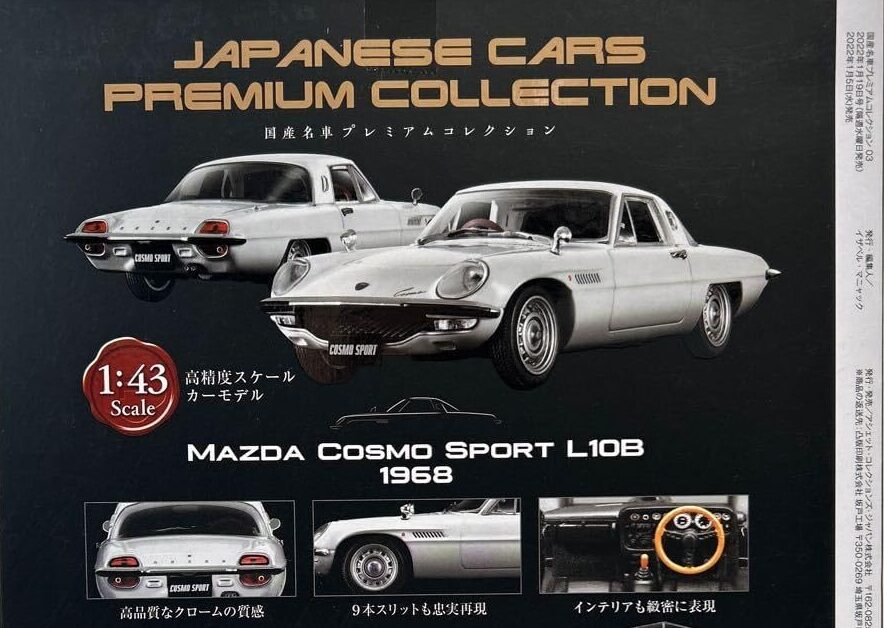 (ホイールのデザインが若干本物と違いますが、それ以外は私のイメージするところと同じです!!
---→このプレミアムシリーズは傑作ミニカーが多く、ボンド版トヨタ2000GT, フェアレディー240ZGや5代目シルビアも入手済みです。)
【ほんの少しの改造で、見違えるようになりました。2-300枚の写真を撮りましたが、どこから見ても素晴らしいミニカーとなりました。】
それではお待ちかね?、、、
三題噺が始まります。
*三題噺:おにぎり・怪獣モグネズン・HUMVEE
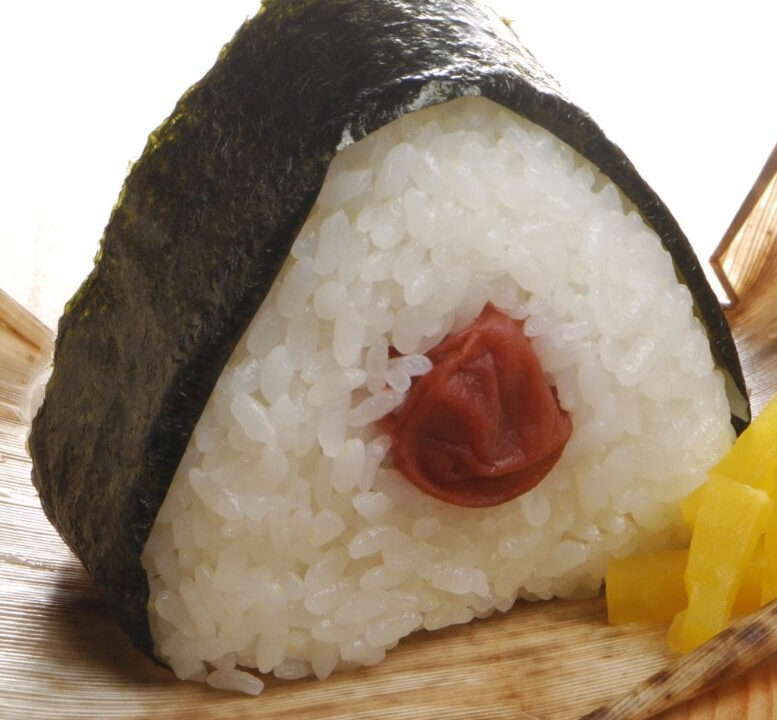
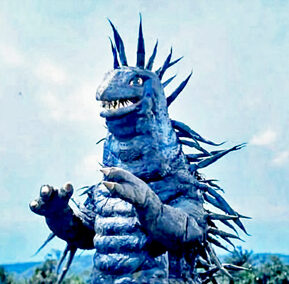
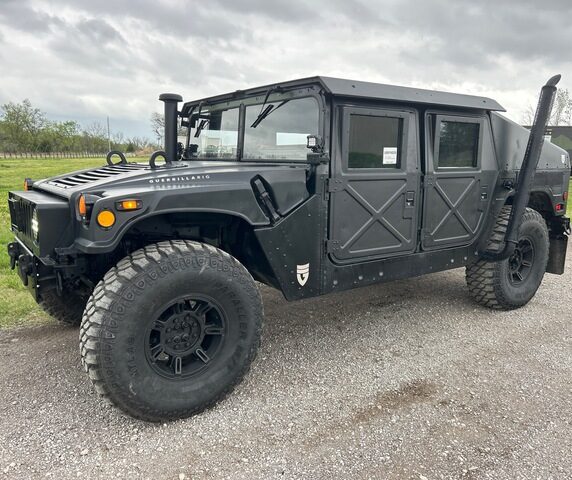
今回会場から頂いたのは、、、、
これはかなり『ぶっ飛んだ』お題ですが、
どうなりますやら楽しみです。
*おにぎり
*怪獣モグネズン
*HUMVEE
枕噺:
ええ、世の中には、いつの時代も男のロマンを駆り立てる乗り物ってぇのがあるものでございます。昔なら大名行列の駕籠(かご)だの、駿馬(しゅんま)だのと言いましたが、現代なら何と言っても自動車。
それも、ただ走ればいいってぇんじゃなくて、あの流れるようなお姿、そして未来の技術が詰まったエンジンなんてのを聞くと、それだけで胸が躍るじゃありませんか。
特に昭和の男たちを熱狂させた、あの宇宙船のような名車なんかを目の前にしますと、もう居ても立ってもいられない……おや、あそこで首を長くして車を眺めている男がいますねぇ。
n
N
本編:
n
「いやぁ熊さん、マツダの初代コスモスポーツはいつ見ても格好いいねぇ!」
n
n
N
N
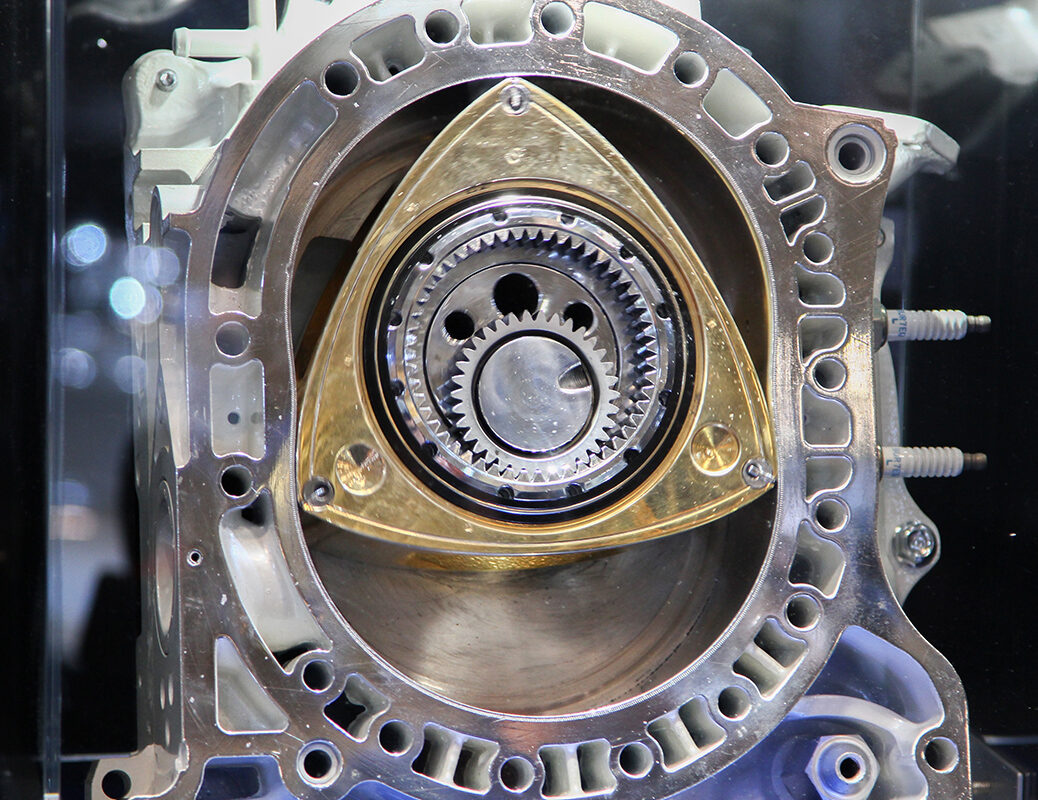
「でもあのエンジン、中身はおにぎりみたいな形のローターが回ってるだけなんだろ?」
「ただ回るんじゃねぇ。普通のエンジンがピストンを上下させるのに対して、これはおにぎりが回転して直接動力を生む。だから振動がなくて、1000cc未満の排気量なのに110馬力、最高時速は185キロも出たんだ。信じられないほど滑らかに吹け上がるんだぜ」
「おう、この未来的な姿を眺めてるだけでも、白飯が3杯は食えるだろ?」
「悪いが、、生憎出かける前に、歌舞伎揚げ一袋食ッちまたんで、満腹でぇー」
n
N
「へぇ! そんなすごい車が、あの『帰ってきたウルトラマン11
話』で毒ガス怪獣モグネズンを相手にミサイ
ルランチャーを発射したりなんかして、大活躍したんだな」
「なるほど。でも地球防衛組織なんだから、もっとゴツくて頑丈
なアメリカの軍用車……あのHUMVEE(ハンヴィー)でも使えば良かったのに」
n
「あ、身動きが取れなくなって、モグネズンの良いマト(MAT)になっちまうか!」
「へぇ、ゴツい軍用車より、おにぎりエンジンの方がずっと頼りになるんだねぇ。コーナリングの安定感も抜群だったんだろ?」
「なるほど、おにぎり型エンジンだけに、やっぱり足回りの『握り(グリップ)』が良かったんだねぇ」n
NN
n
n
 お後がよろしようで、、n
n
n
n
n
n
n
nnn
n
(今回も、AIとタッグを組んで、何度も書き換えて完成となりました。
書き換えるうちに、『落ち』がシンプルになってはっきりしました。)
注釈:
#『帰ってきたウルトラマン』第11話「毒ガス怪獣出現」
マットビハイクルがメインで活躍する代表的なエピソードです。走行中にルーフのミサイルランチャーを展開し、怪獣モグネズンを攻撃する貴重なシーンが描かれます。
#『毒ガス怪獣:モグネズン』とは?
モグラとネズミとヤマアラシを合わせたような怪獣。 旧日本軍が開発した猛毒の「イエローガス」を飲み込んでしまい、それを武器として吐くことができる。
*その他のヒーロー・ビークルたち、、、
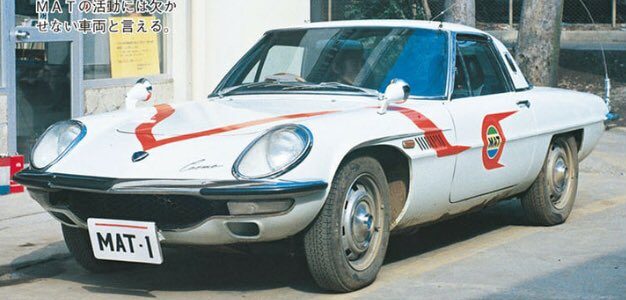
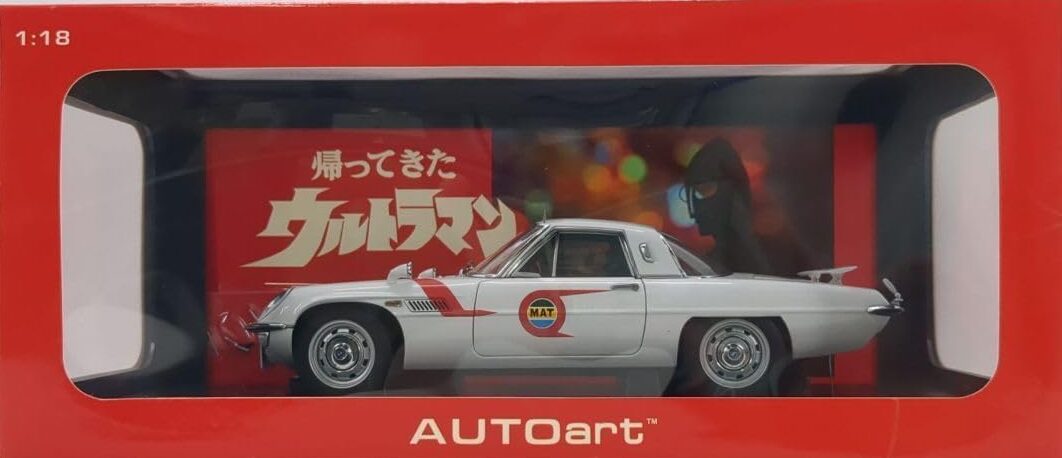
ドラマや映画の主役並みの人気を持って行く、
メカや車には興味が尽きません。
その他にはこんな感じで、
色々出てきました。
*TVシリーズ:マイアミ・バイス登場の、フェラーリ― デイトナ・スパイダー(黒)
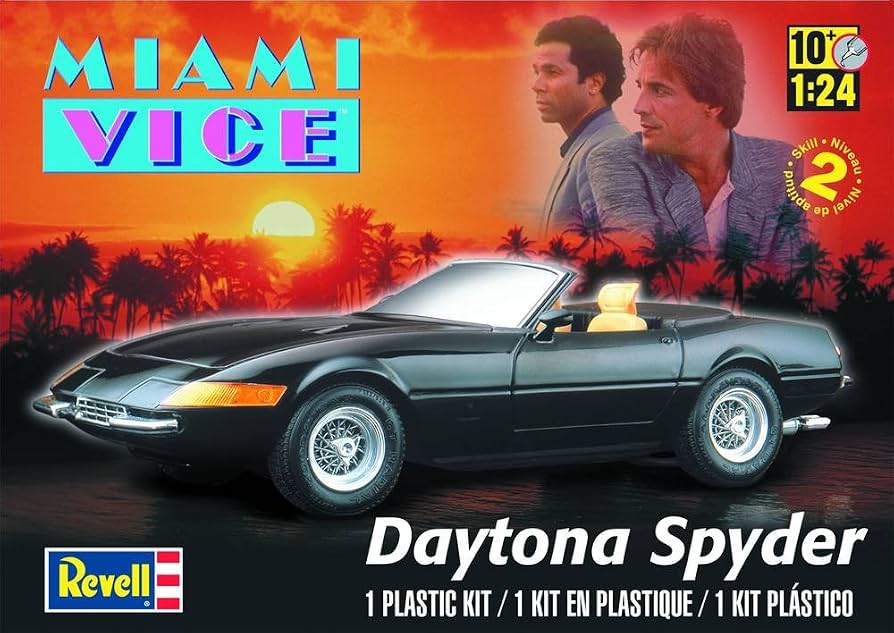 (ガンダム・キットの原型師、小松原さんも大好きな特装車、フェラーリから怒られ、第2シーズンからは、512TRテスタロッサに交代に。
ーーー>実はC4型コルベットを大幅改装したカスタムカー、私的には本物のフェラーリより幅広でカッコいいかも?
* 映画:スターウォーズ、エピソード7『フォースの覚醒』登場の、レイのスピーダー
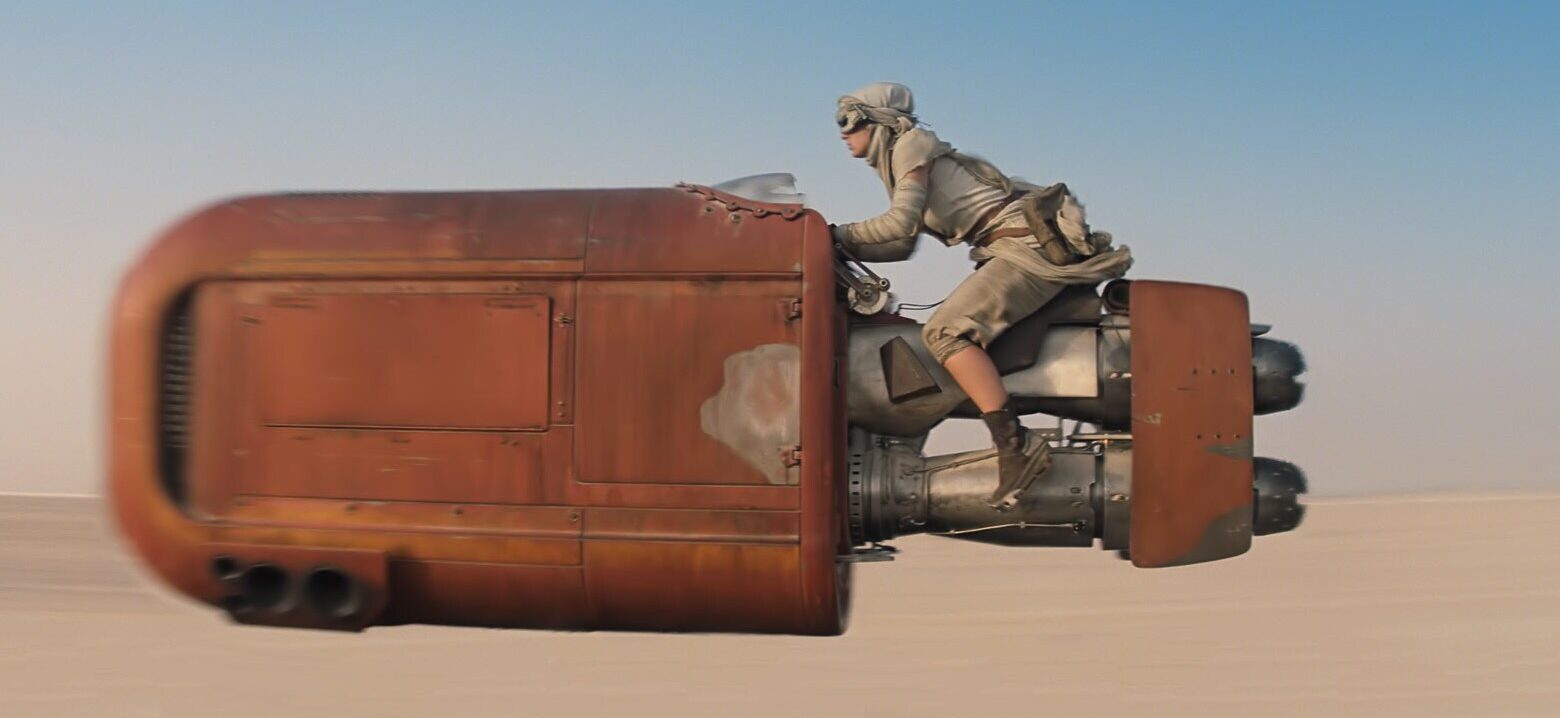
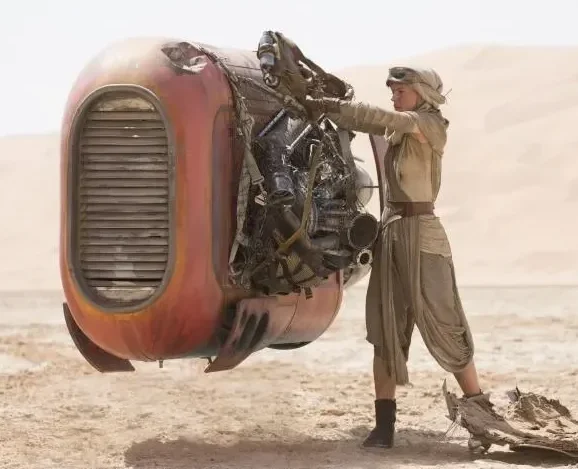
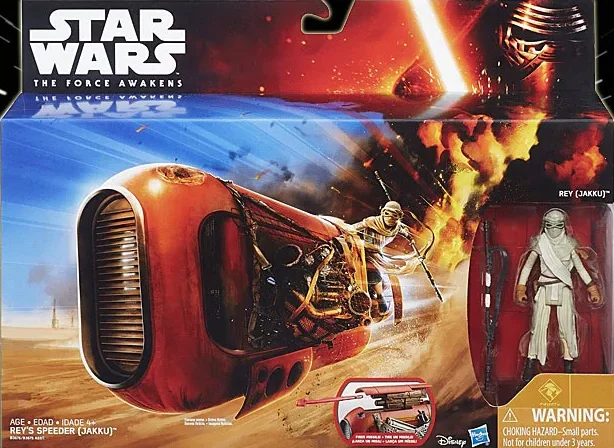
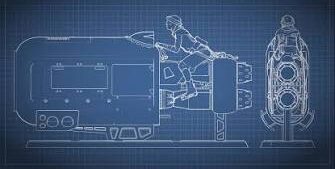
(大きなお弁当箱型ロケットエンジンむき出しの迫力と、楽しさいっぱいのデザイン)
ーーーーーー>『主人公:レイの性格』を無言で暗示する出で立ち、見るたびにウキウキします。
*TVシリーズ:西部警察登場の、日産6代目『ニューマン』・スカイラインRSターボを改造した『マシンRS(1-3)』
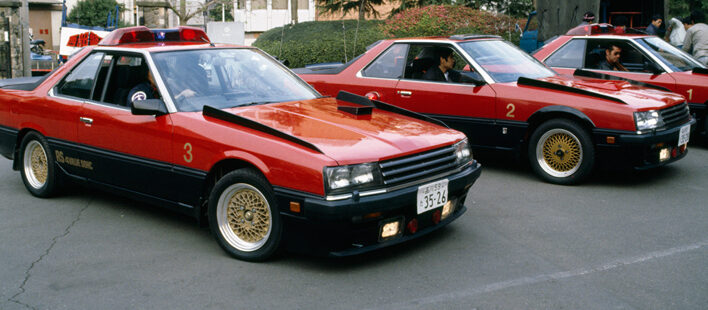
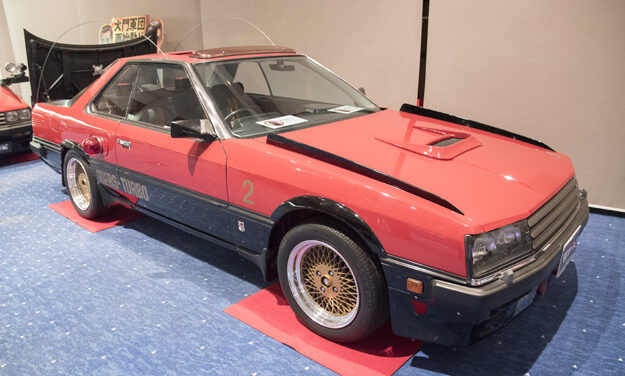
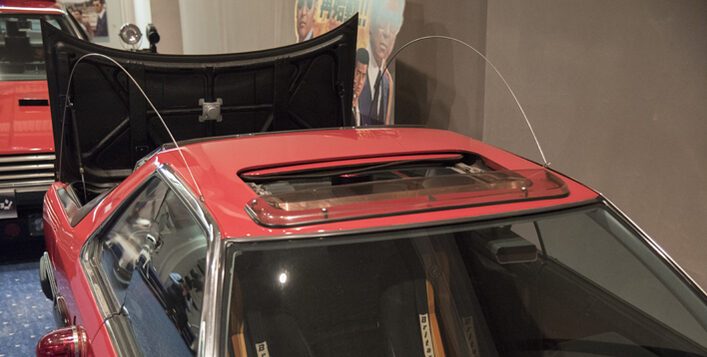
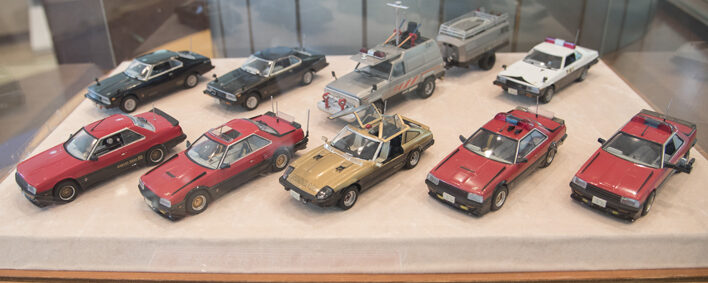
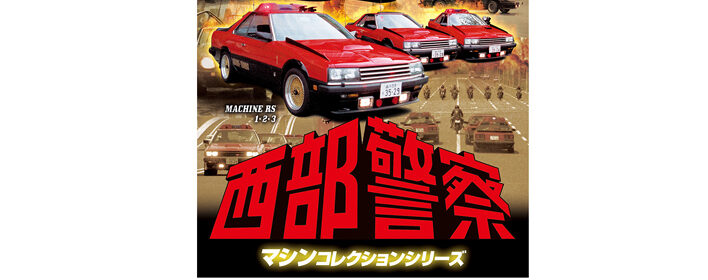 (西部警察自体は一度も見たことはないですが、アオシマさんのプラモデルなどから、マシンRSシリーズが大好きでした。直線的な『ニューマン』スカイラインにゴテゴテとしたエアロパーツをつけたり、ごった煮間とシャープ感が素敵です。)
ーーーー>いつになっても子供っぽい、悪趣味に好奇心が奪われがちです、、、
*映画:バック・トゥー・ザ・フューチャー2登場の、デロリアンDMC【飛行型】
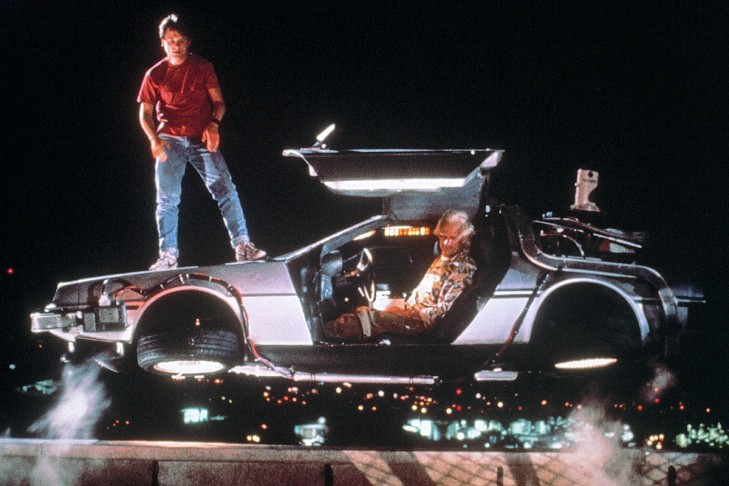
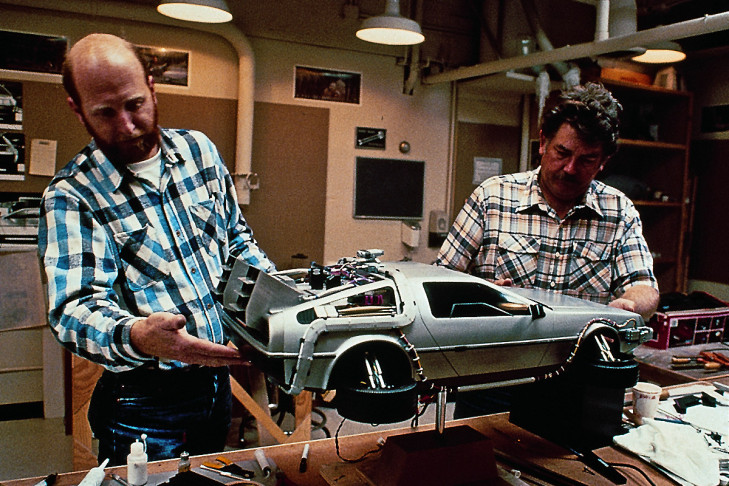
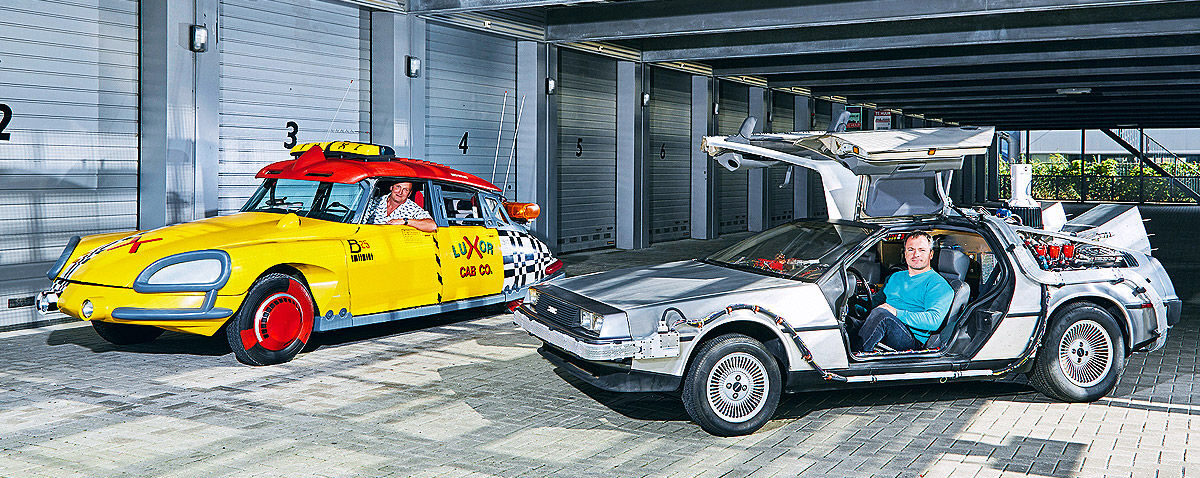
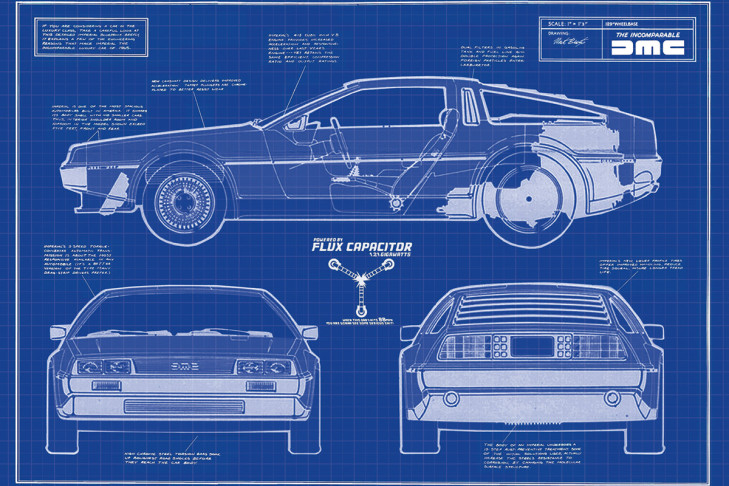 (ドクやマーティーと並ぶ第3の主人公といったほうがいい感じ、パート1の最後にタイヤが展開して飛び立った時の驚きとうれしさは絶対に忘れません!!)
ーーーーー>センス・オブ・ワンダーのカタマリです!
*TVシリーズ:ウルトラマンタロウ登場の、ZATのラビット・パンダ
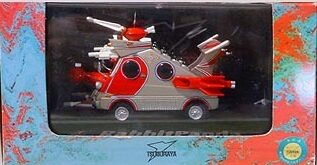
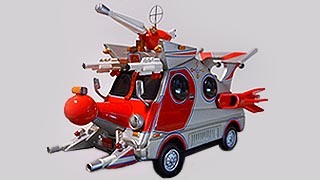
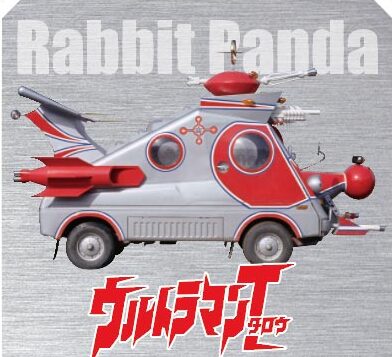
(子供ながらに、「なめとるんか!』と思ってましたが、今見ると意外とツボかも、、、、)
*TVシリーズ:ウルトラ・セブン登場の、ポインター号
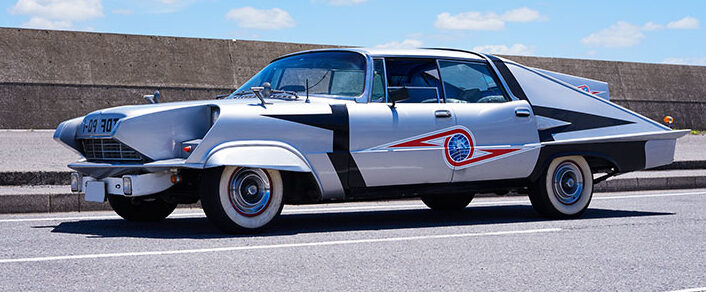
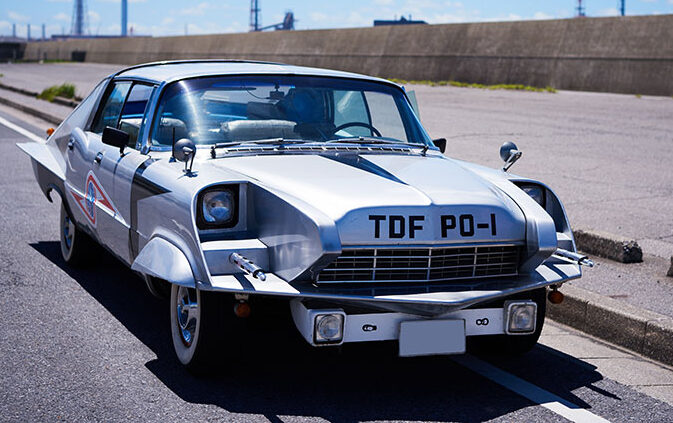
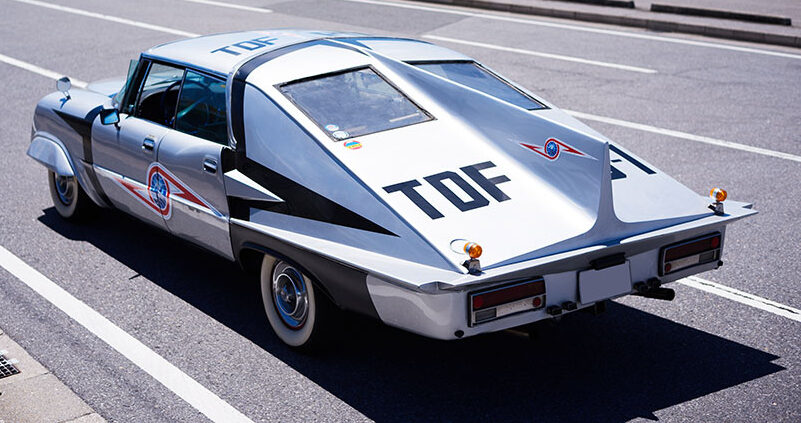
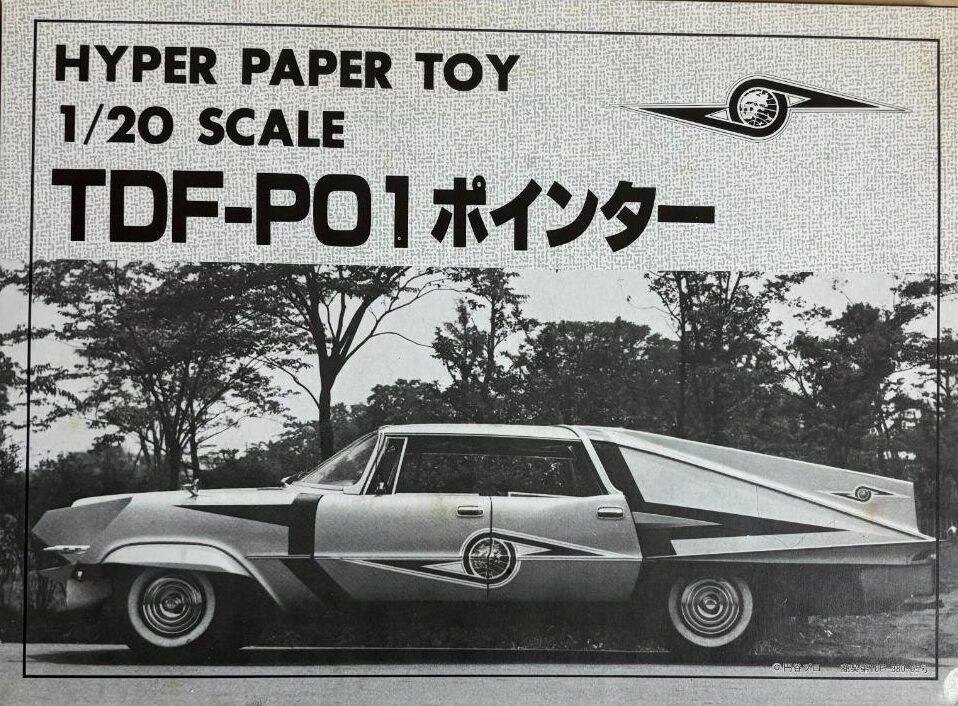
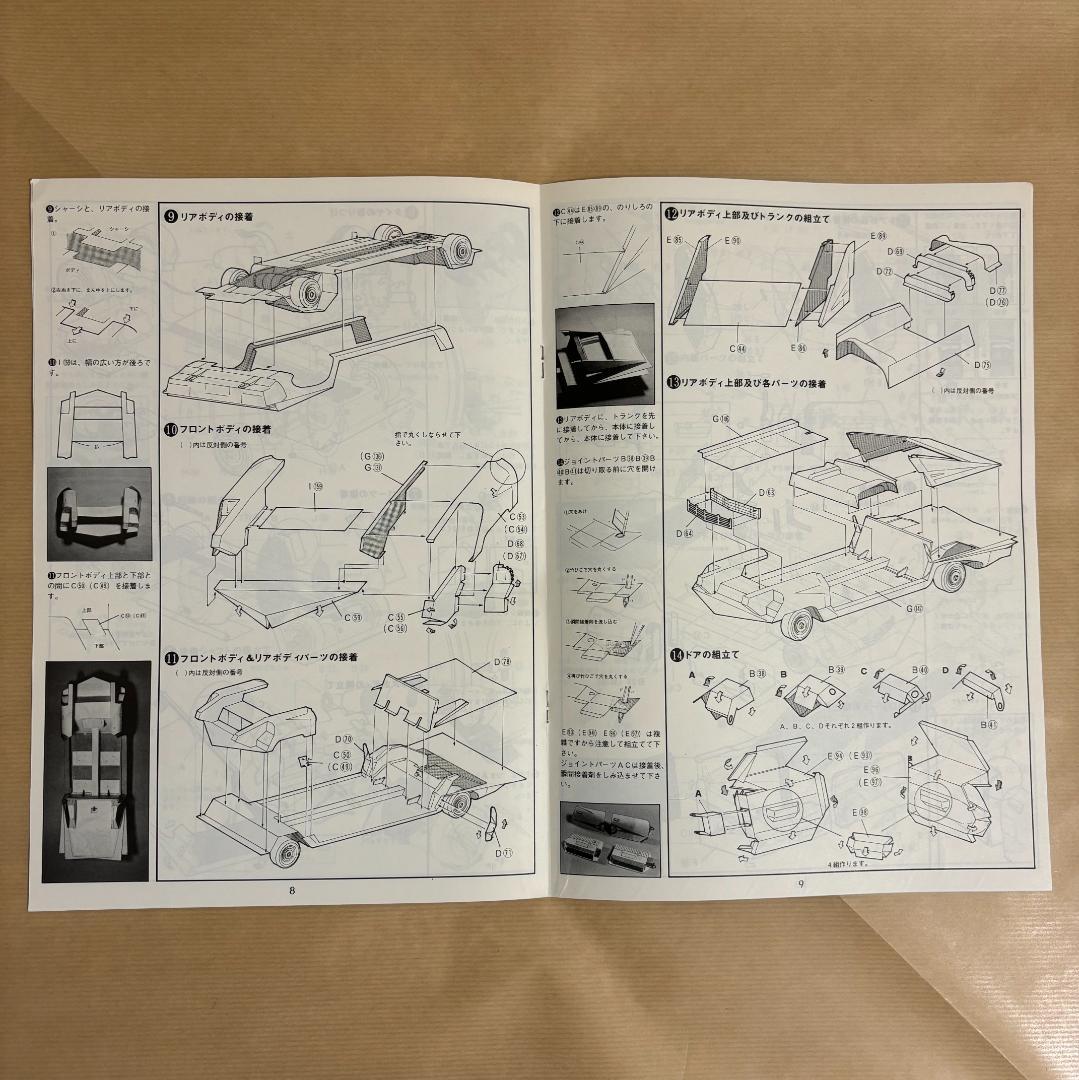
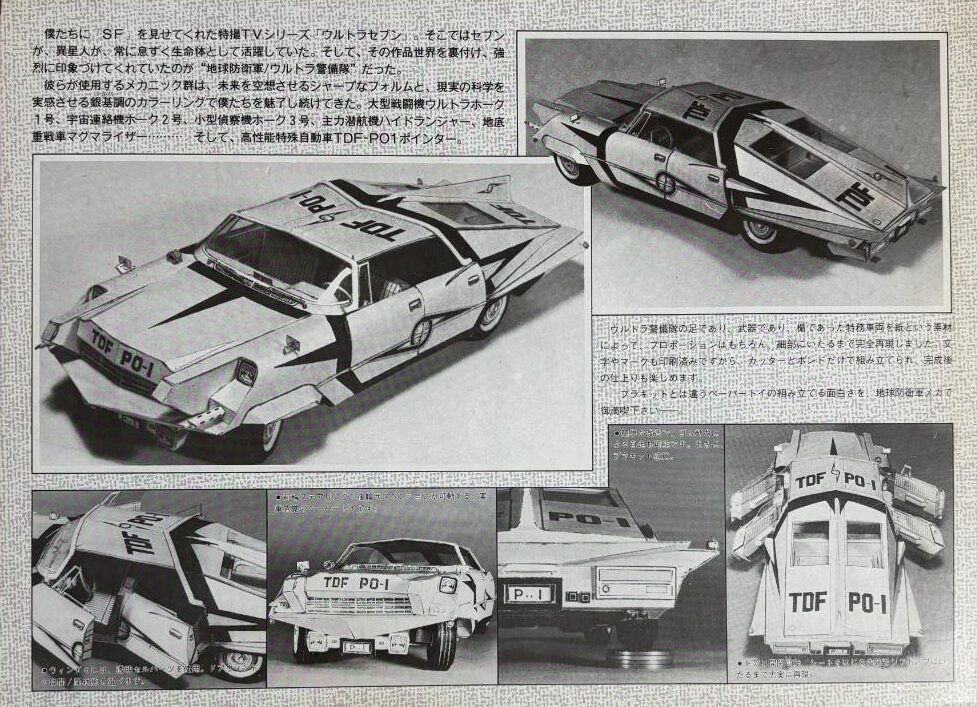 (ウルトラシリーズ登場のメカの中で、最も好みです。当時の大型のアメ車の4ドア・ピラーレス・ハードトップの雰囲気を感じていました。立体的にも、グラフィック的にも素晴らしいデザイン。)
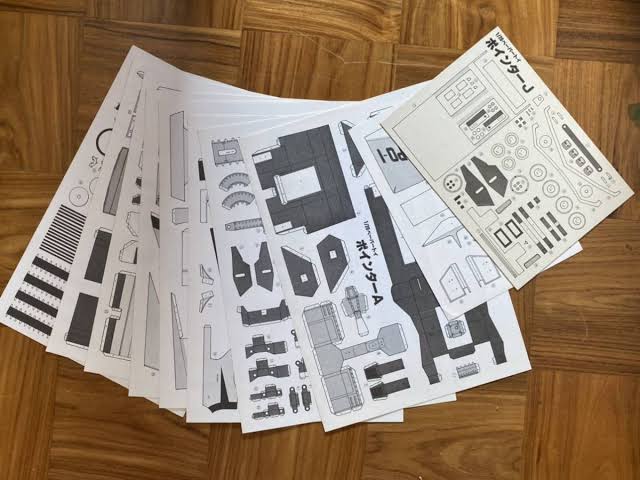
ーーーー>オタキング岡田さんが経営されていたのゼネラル・プロダクツから出ていた、複雑なペーパークラフトを作った思い出が蘇ります!
(ジェネラル・プロダクツ製の1/20ポインターのペーパークラフトのキットです。)
*TVシリーズ:チャーリーズ・エンジェルの登場の、ボスレーのサンダーバード
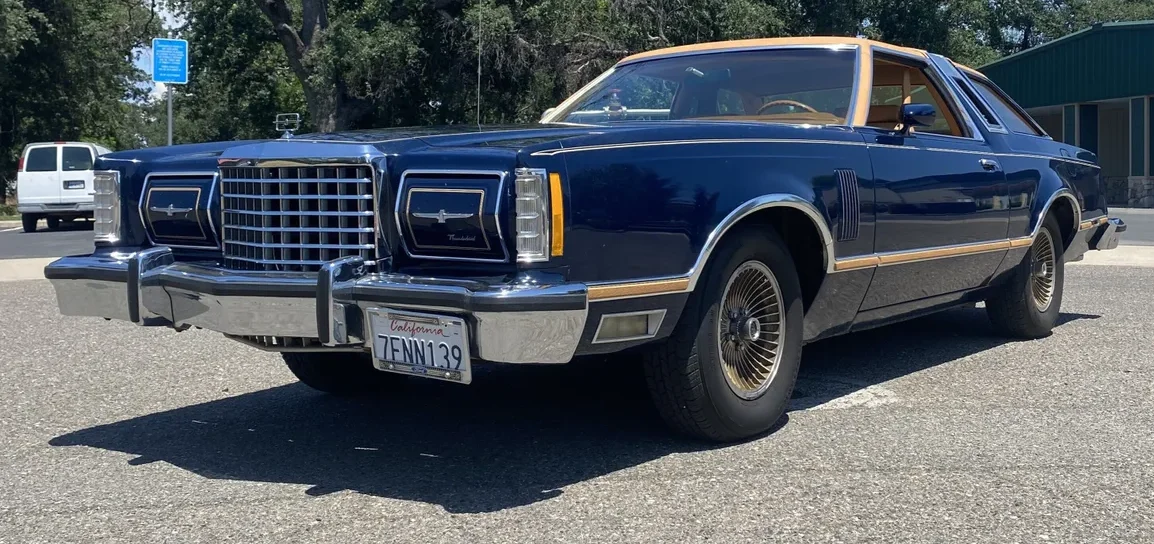
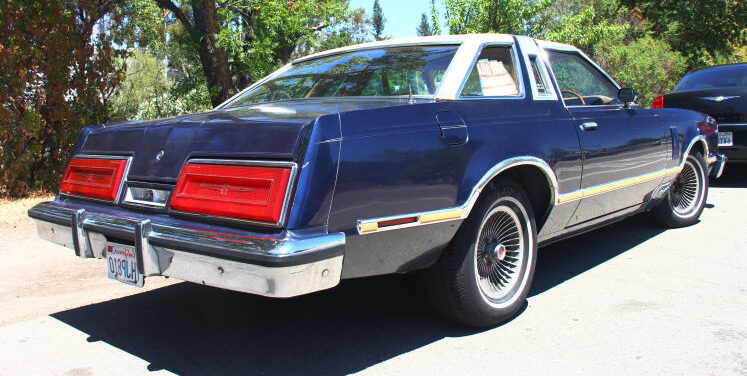 (提携先のフォードから提供された自動車ラインナップが画面に登場してましたね。ピント、マスタングII, リンカーンなど、、、)
ーーーー>GM車やクライスラー製の自動車がよく爆発してました!!
 これは面白いリストになりましたね、
今後も奇想天外な立体造形を
ヒーロー、ヒロインに
作ってあげてほしいです。
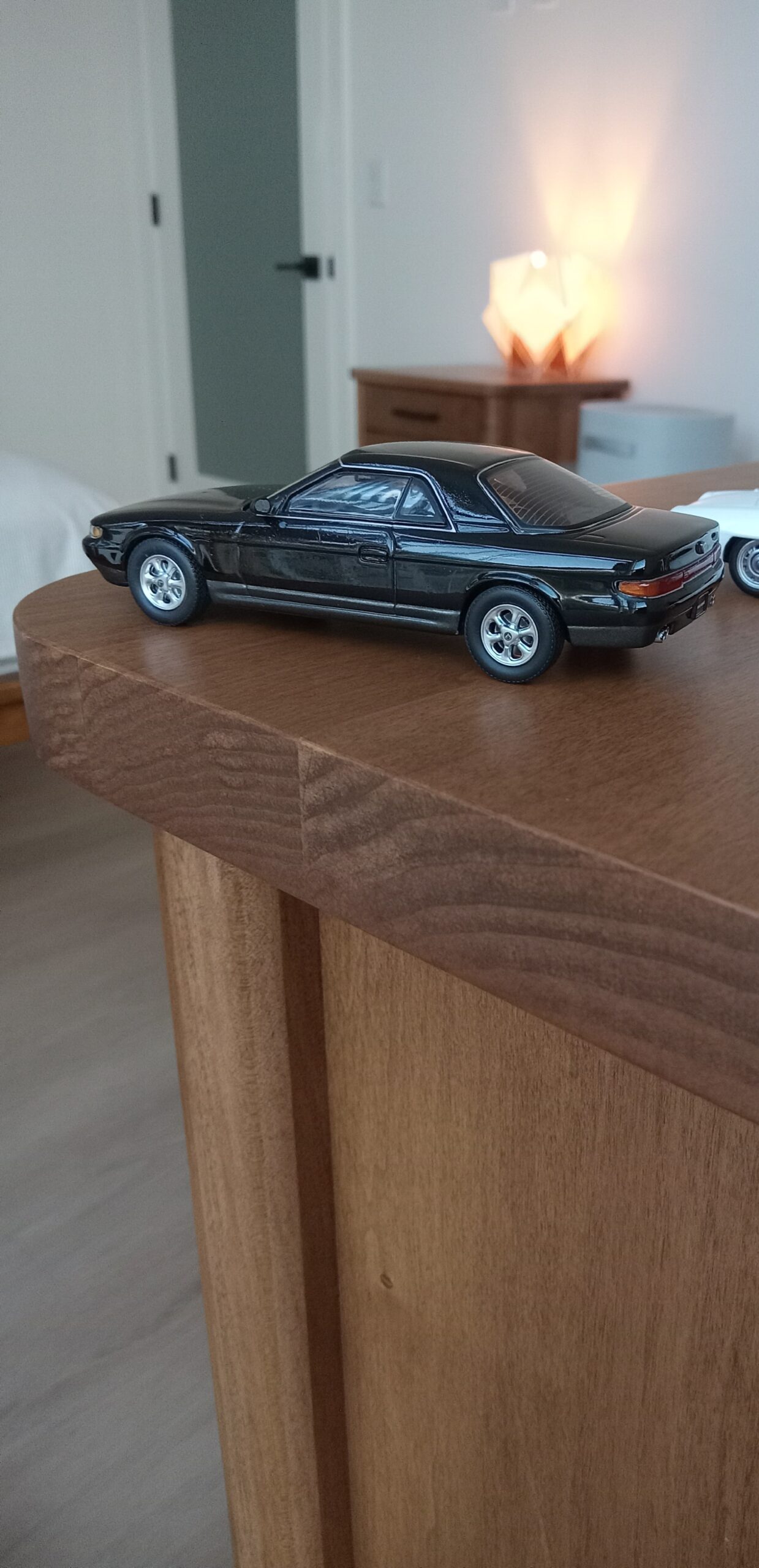 次回は、マツダのクーペ第2弾:
『ユーノス・コスモ』に付いて
お話ししたいです。
お楽しみに――
本ブログと記事内容につきまして:
ブログ記事を書くにあたり私の目標は、立体造形(料理も含めて)とのかかわりを通じて、私個人の特徴的(ネジ曲がり方も含めて)な評価軸を解明することで、「美しさ・美味しさ」に対する好奇心や、探求心を、どのように満足・充足させてきたのかを明記しておくことです。
従いまして、記事の中に出てくる、数字や年号、微細なデータなどには細心の注意を払っておりますが、時に大きな間違いや勘違いを犯していることも考えられます。特に自動車記事における主要諸元や、年号などには紛らわしいものも多く、あくまで参考程度に考えていただければ幸いです。
私としては、記事の中で個人的な外観デザインや味覚の評価、そこから広がる後半部分につなげるための、『流れ』を作るための客観的材料として年号やデータを挿入している感じです。あくまで重視したいのは、私個人の頭の中で起こる、記憶の錯そう的混沌から生まれる新たな『見方』や『情報の予想外のつながり』です。その勢いを作り出す、『流れ』の一環として、諸データが副次的に必要となるわけです。
話がそれますが、大好きな落語の世界に「三題噺」という、その場て会場から募った3つのお題を使って1つのお話に仕立てるといったお遊びがございますが、私はそれに近いことを立体造形の特徴や(料理のお味)をお題にして行っている感じがします。その中で頭の中に去来する数々の着想が、全く予想外で楽しく、次回からの記事内容を大幅に変えたり、新展開につながっています。
当ブロブの仕組み:
『好奇心の点と線 x 気まぐれ脳内回路=予想外の新展開』
こんな自分勝手なブログですが、今後ともよろしくお願いいたします。
追記:上記の『流れ』を作る為に必要な写真はできる限り、個人所有のミニカー・自前の料理などを使い撮影しておりますが、その他の必要最小限の図版や写真を他のブログ主様の記事や諸会社ホームページなどからお借りしております。(記事内容に合うよう加工させていただき、使用時は最小の解像度で載せております。)問題がある場合、ご連絡いただければ直ちに降ろさせていただきます。
追記2:当ブログ記事に掲載のミニカー写真等(個人撮影)は許可なしで、どのようにお使いいただいても結構です。私個人の創造性はこの世のもの、と言う認識の上で記事を製作しています。
!!!!!!!!!!!!!!!!!!!!!!!!!!!!!!!!!! Translated in English !!!!!!!!!!!!!!!!!!!!!!!!!!!!!!!!!!
(Manufactured by Hachette, 1/43 scale [Weekly Premium Model] 1967 First-Generation Cosmo Sport (Racing White); I’ve made some minor modifications—see the modification article below…)
Part 35—The Lineage of 2-Door Coupes: Part 15 [Japanese Cars Edition] Mazda First-Generation Cosmo Sports, 1968 “Mat Vehicle from Ultraman Returned”
[Mini Modification Project]:
The 1/43-scale die-cast model from Hachette that I used for this photo shoot—and given that Hachette entrusts its design and manufacturing to “ALMOST REAL,” a long-established Chinese die-cast manufacturer—
* The overall body proportions,
* The level of detail reproduction,
* And the reliability of the manufacturing quality,
are all so exceptional that I couldn’t ask for anything more.
With that in mind, I narrowed it down to the following two points and made some custom upgrades:
1: Slightly tilted the tires forward and widened the tread
2: Painted the inside of the wheel wells black to make the body appear thinner, and applied a light gray wash to the underside of the body and the panel lines
#Favorite Car Designs—The Lineage of 2-Door Coupes:
For this 35th installment, titled “The Lineage of 2-Door Coupes, Part 15,” I’d like to discuss luxury 2-door (GT) coupes and roadsters, which strongly reflect the national characteristics and unique exterior designs of various countries. [Note: Includes convertibles]
I’ll proceed as follows.
This 15th installment is the [Japanese Cars: Mazda Edition]
We’ll be discussing the
first-generation Cosmo Sport (Racing White),
unveiled in 1968.
[The Lineage of 2-Door Coupes: Table of Contents]
[American Cars Edition]
Episode 1: Cadillac El Mirage, 2013 (Metallic Red)
Episode 2: Lincoln Continental MK4, 1972 (Black)
Episode 3: Mercury Cougar, 1967 (LT Metallic Green)
[German Cars Edition]
Part 4: MB 500K Special Roadster, 1936 (Black)
Part 5: MB 300SL Roadster, 1957 (Silver)
Part 6: MB SLS AMR Gullwing, 2010 (Black)
[British Cars]
Part 7: McLaren F1, 1992 (Metallic Orange)
Episode 8: Jaguar XKSS Roadster, 1957 (Royal Blue)
Episode 9: Jaguar XKR Coupe, 1996 (Dark Metallic Green)
[Japanese Cars / Nissan Edition]
Episode 10: Nissan First-Generation Silvia, 1965 (Champagne Gold)
Episode 11: Nissan 5th-Generation Silvia, 1988 (LT Metallic Green)
[Italian Cars]
Episode 12: Ferrari 250TR Pontoon Fender, 1958 (Red)
Episode 13: Ferrari 250GTO, 1962 (Italian Red)
Episode 14: Lamborghini Concept S, 2005 (Pearl White)
[Japanese Cars: Mazda Edition]
Episode 15: Mazda Cosmo Sport, 1968 (Racing White)
Episode 16: Mazda Eunos Cosmo, Type-S (Two-Tone: Black & Gray)
[French Cars]
Episode 17: Bugatti Type 59, 1935 (French Blue)
Episode 18: Citroën SM, 1970 (Champagne Gold)
Episode 19: Bugatti La Voiture Noire, 2019 (Black)
[Japanese Cars: Toyota Edition]
Episode 20: Toyota/Yamaha 2000GT, 1967 (Ivory White)
Episode 21: Toyota 2nd-Generation Soarer, 1986 (Two-Tone: Black & Gray)
Episode 22: Lexus LC [GWZ100], 2017 (Metallic Red)
[American Cars Part 2]
Episode 23: Dodge Challenger & Plymouth Barracuda, 1971
Episode 24: Dodge Viper SRT-10 ACR, 2008 (Black)
Episode 25: Ford Shelby GR-1 Concept, 2004 (Chrome)
[Japanese Cars: Mitsubishi Edition]
Episode 26: Mitsubishi Galant λ, 1976 (Brown Metallic)
Episode 27: Mitsubishi Eclipse [North American Spec], 2006 (Orange Metallic)
[German Cars Part 2]
Episode 28: BMW M635CSi, 1984 (Dark Metallic Blue)
Episode 29: Mercedes-Benz 560SEC AMG 6.0 Widebody, 1989 (Black)
Episode 30: BMW M2 with Genuine Performance Parts, 2025 (Neon Lime)
[Japanese Cars: Subaru Edition]
Episode 31: Subaru Crosstrek XV, 2012 (Lime Green Metallic)
The Corvette Lineage: (Special Edition)
Episode 1: 1967 Stingray [C2] Convertible (Hardtop, Metallic Blue)
Episode 2: 1972 Corvette [C3] Convertible (Metallic Blue)
Episode 3: 1990 Corvette ZR-1 [C4] Coupe (Red)
Part 4: Stingray Concept [Pre-production Model], 2009 (Metallic Blue)
#My Heroes: Two “Ultra Vehicles”
(The “Pointer” from *Ultra Seven*)
(Below: The “Matt Vehicle” from *The Return of Ultraman*)
As someone who loved cars and construction equipment,
these two vehicles, which appeared in the early days of the Ultra Series,
were
* Pointer: Ultra Seven
* Matt Vehicle: Return of Ultraman
I revered them as heroes even more than
the Ultramen and monsters in the shows.
That “Matt Vehicle” was essentially a sports car equipped with a rotary engine—which had just been released by Mazda—painted with the letters “MAT: Monster Attack Team” and used almost exactly as is.
For me, who was already showing signs of being a mecha enthusiast back then,
I simply couldn’t stop wondering about the existence of
—the flexible antenna
that curved in an 【arc】 from below the rear bumper toward the front—
(laughs).
Come to think of it,
from the ’60s through the ’80s or so, the radio antennas that were standard on cars
were often quite distinctive,
and I remember them being
an integral part of the car’s design in their own right.
Car antennas of the 1960s–70s:
This was the dawn of the car stereo era (the transition from AM to FM), a time when manufacturers were exploring “how to maintain reception sensitivity while integrating the antenna beautifully and functionally into the car body.” Unlike today’s shark-fin or glass-integrated antennas, distinctive designs based on metal rods were the mainstream.
Three Main Types of Car Antennas in the 1960s:
n
* Manual fender antenna: A standard type mounted on the front or rear fenders (mudguards) that was manually extended by hand before getting into the car.
* Manual pillar antenna: Mounted along the driver’s side A-pillar (the support pillar for the windshield), this type could be extended or retracted by opening the window.
* Automatic (electric) antenna: Introduced in the late 1960s for luxury cars, this type extended and retracted automatically via a motor linked to the radio’s power supply.
Back then, to prevent tampering and damage in indoor parking garages, it was common practice to manually push the antenna all the way back into its housing when getting out of the car.
A major characteristic of 1960s antennas was that they were designed not merely as receivers, but as “essential accessories that defined the car’s silhouette,” including the gleam of their chrome plating.
Deep down,
I might actually be an
“antenna maniac”… (laughs)
So then,
I’d like to take a look at
the
[First-Generation Cosmo Sport],
which tickled my childlike imagination with its futuristic appearance
and set me on a straight path to becoming an “automotive design maniac.”
* Real Car Review: A Spaceship from the Future?
* Exterior Design Features:
* “Me” and the First-Generation Cosmo Sport:
* Three-Theme Story: Rice Balls, the Monster Mogunezun, and the HUMVEE
* Other Mazda Coupes…
* Real Car Review: A Spaceship from the Future?
Overview:
The first-generation Cosmo Sport is
a legendary sports car released in 1967 by Mazda (formerly Toyo Kogyo), featuring the world’s first practical, mass-produced two-rotor rotary engine. Its sleek, futuristic form—standing just 1,165 mm tall—was described as “feeling more like flying than driving,” and it continues to captivate fans around the world to this day.
n
N
n
Key Features and History:
* The World’s First Rotary Engine: Mazda acquired the technology from Germany’s NSU and spent six years overcoming challenges such as “chatter marks” (wavy wear patterns), known as the “devil’s claw marks.” This led to the development of a compact, lightweight, and high-output engine.
* Overwhelming Specifications: The 491cc twin-rotor engine boasted a maximum output of 110 PS (early model), delivering performance that surpassed even the 2-liter class of the time.
n
* Production Numbers: Only 1,176 units were produced between 1967 and 1972, when production ended, making it an extremely rare and legendary car.
n
n
n
n
n
n
n
n
n
n
n
n
n
n
n
n
n
n
n
n
n
n
n
n
n
n
n
A Design Ahead of Its Time:
* Space-Age Style: With a total height of just 1,165 mm, the streamlined body—which balances aerodynamic performance with a futuristic aesthetic—is reminiscent of a “spaceship” or “jet aircraft.” The styling design of the first-generation Mazda “Cosmo Sport” was created by Heiji Kobayashi, an in-house designer at Toyo Kogyo (now Mazda). Under the leadership of Masashi Takubo, then head of the styling department, Kobayashi’s futuristic design sketches caught the eye of then-President Tsuneji Matsuda, paving the way for the car’s commercial release.
n
n
n
Heiji Kobayashi (Designer):
A Design Inspired by the Romance of Space: A fan of science fiction and mystery novels, Kobayashi held a strong vision that “a car is a space vehicle on wheels.” The futuristic and flowing body lines, reminiscent of flying saucers and spaceships, were born from his longing for space.
The “Leopard” as a Motif: Initially commissioned by the president to develop a concept car—not intended for mass production—the design team crafted the body shape based on the image of “a leopard’s fierce and dynamic posture as it pounces on its prey, with its center of gravity shifted from its head to its shoulders.”
n
n
n
n
* Interior: Featuring a dashboard designed to resemble an aircraft cockpit and seats offering excellent lateral support, the interior creates a sporty environment that inspires the driver.
Model History:
* Early Model (L10A / 1967–): Equipped with two 491cc engines producing 110 PS. Top speed: 185 km/h
* Late Model (L10B / 1968–): The engine was upgraded to 128 PS. It reached a top speed of 200 km/h, and the wheelbase was extended by 15 cm while the brakes were reinforced.
About Surviving Vehicles:
Even today, these vehicles are carefully maintained by dedicated owners and can be seen at events and other gatherings.
#Key Specifications:
Model: L10B
Total Displacement: 491cc × 2
Engine Model: 10A, Water-cooled Inline 2-rotor
Maximum Power: 128 ps / 7,000 rpm
Maximum Torque: 14.2 kg·m / 5,000 rpm
Top Speed: 200 km/h
Drivetrain: FR (Front-engine, Rear-wheel drive)
Seating Capacity: 2
Body Style: 2-door coupe
Wheelbase: 2,350 mm
Overall Length: 4,130 mm
Overall Width: 1,590 mm
Overall Height: 1,165 mm
Curb Weight:
960 kg
*Exterior Design Features: “A Spaceship Hunting Its Prey?”
A design that was far ahead of its time—
let’s take a look at the design features
of the “First-Generation Cosmo Sport.”
Here are six key points:
1: A unique design that anticipated the “rocket/space age”—unprecedented and unmatched—both in the car’s overall body and in its details, unlike anything seen before or since
2: A [vibrant] three-dimensional composition that wraps a “front-to-back flowing” streamlined form—on par with an aerodynamic test vehicle—in a surface configuration brimming with the designer’s individuality
3: The beauty of the cabin section, which makes full use of curved surfaces, creating a stunning contrast with the main body’s linear lines that evoke a sense of “speed”
4: The front fascia—which, like an amphibian, is full of personality and charm—is unlike anything else
5: An extremely three-dimensional and futuristic tail end design that is, once again, unlike anything else
6: An exquisite sense of stance born from ample vehicle width, relatively large tire sizes, and a wheelbase (extended in later models)
Next,
let’s take a closer look at each one in detail.
1: A unique, one-of-a-kind design that anticipated the “Space Age”—unseen before or since, both in the car’s overall body and in its individual details
ーーーーーー> A Space Age design imbued with the optimistic “vibe” of the contemporary Apollo and Mercury programs
2: A [vibrant] three-dimensional composition that wraps a “front-to-back flowing” streamlined form—on par with an aerodynamic test vehicle—in a surface configuration brimming with the designer’s individuality
(Chrysler Gas Turbine Car, a concept car unveiled in 1963)
3: The beauty of the elegant, compact cabin—which makes full use of curved surfaces—creating a striking contrast with the main body’s linear lines that evoke a sense of “speed”
4: The front fascia—unique and full of charm, reminiscent of reptiles or amphibians—is unlike anything else
—————> A frog’s face?
5: The extremely three-dimensional and futuristic design of the rear end, which is also unlike anything else
(With its deep, sculpted contours and the sharp, protruding lines of the bumper…)
ーーーーー>If you really had to find a comparison, perhaps the rear end of the Batmobile or the Turbine Car?
6: An exquisite sense of stance born from ample width, relatively large tire sizes, and a (in later models, extended) wheelbase
――ーー>An exquisite
【sense of stability】 created by the compact cabin and the flared shoulders
* “Me” and the first-generation Cosmo Sport: Like a game of seesaw?
For me, the “Cosmo Sport” is
an ambivalent object
that I “love one moment and
hate the next.”
* In elementary school, I was head over heels for “Matt Vehicles,”
* After the supercar boom, it faded completely into oblivion…
* It made a comeback during my college years thanks to the Chrysler Turbine Kart,
* And now, through these die-cast models,
I feel my passion has reignited.
This is how I’ve
engaged with 3D models.
# Plastic Model Edition:
* Made by Nihon Model [Nichimo], 1/24 scale plastic model, Mazda Cosmo Sport [Late Model]
(True to Nichimo’s style, I remember its crisp, linear body design and reasonably detailed reproduction.
――> It’s a shame this wasn’t released as part of Nitto’s high-quality series.)
* Nitto Models, 1/24 scale plastic model kit, Cosmo Sport [Early Model]
(This kit reproduces the early model, which has a wheelbase 15 cm shorter than the production car. Since it was reissued to ride the wave of the sports car boom, I’ve hardly ever seen it on the market—I’ve only spotted it a few times while browsing inside model shops.
---→It’s a shame it wasn’t released as part of the classic car series launched in the 1980s and beyond (notably featuring the Honda S800 and the SR311 Fairlady Z).)
* Hasegawa, 1/24 scale plastic model kit, Mazda Cosmo Sport [Late Model]
(This product was released after I moved to the U.S. I only took a quick look at it once in a model shop, but perhaps because it was a fairly early release, I remember the body being too angular [flat and featureless], and when viewed from above, it didn’t taper back enough toward the rear.
---→Generally speaking, this is considered the best kit for this car, though…)
# Die-Cast Models:
Starting late last year,
I began searching for die-cast models to feature in this article.
The first one I acquired was
* A Kyosho 1/64 die-cast ready-to-display model of the first-generation Cosmo Sport [Late Model] (Silver).
(The casting is a bit dated, but the body is excellently rendered—the tire size and wheel detailing are superb. Since the cabin is a separate part, it’s hard to deny that it looks a bit “attached,” but… it’s within acceptable limits.
---→ It’s a solid die-cast model that you won’t be ashamed to display anywhere!)
* Konami’s “Out-of-Print Classic Car Collection” 1/64 die-cast ready-to-display model, First-Generation Cosmo Sport [Late Model] (White)
(The sharpness of the casting surpasses that of Kyosho; the only drawbacks are that the body is slightly thick and the tires are a bit too wide,
---→ I have a feeling it’ll look amazing with some panel lining and slightly shorter tires!)
* Diagostini, die-cast ready-to-display model, First-Generation Cosmo Sport [Late Model] (White)
(Although it was the last to be released and features an ambitious design with detailed part separation, the assembly precision, paint quality, and the accuracy of the tire and wheel designs didn’t quite measure up, resulting in a disappointing outcome.
ーーーー>I’m a fan of Diagostini’s series, but this particular product was a bit underwhelming.)
The last one I got my hands on was
a slightly larger 1/43-scale ready-to-display model.
* Manufactured by Hachette, Premium Series, 1/43 die-cast ready-to-display model, First-generation Cosmo Sport [Late Model] (Racing White)
(The wheel design is slightly different from the real thing, but other than that, it’s exactly how I imagined it!!
---→ This Premium Series has many masterpiece die-cast models; I’ve already acquired the Bond-edition Toyota 2000GT, the Fairlady 240ZG, and the 5th-generation Silvia.)
[With just a few minor modifications, it’s become unrecognizable. I took about 200–300 photos, and it’s turned into a fantastic die-cast model no matter how you look at it.]
So, have you been waiting for this?…
Here comes the “Three-Theme Story.”
*Three-Theme Story: Rice Balls, the Monster Mogunezun, HUMVEE
What I received from the venue this time was…
These are some pretty “out-there” themes,
but I’m looking forward to seeing how it turns out.
* Rice balls
* The monster Mogunezun
* HUMVEE
Opening Remarks:
n
Yes, in every era, there have always been vehicles that stir the romantic spirit of men. In the old days, people would talk about the palanquins in daimyo processions or fine steeds, but in modern times, it’s got to be the automobile.
n
And it’s not just about them running—that flowing silhouette, and the sound of an engine packed with futuristic technology—doesn’t that alone make your heart race?
n
Especially when you see one of those legendary cars that looked like spaceships and drove men of the Showa era wild right before your eyes, you just can’t sit still… Oh, look, there’s a guy over there craning his neck to gaze at a car.
n
N
Main Story:
n
“Man, Kuma-san, Mazda’s first-generation Cosmo Sport looks cool no matter how many times I see it!”
“Hey, Hachi-chan. It’s a legendary car—the first in the world to put the rotary engine into practical use.”
n
n
n
n
n
n
N
N
“But that engine—inside, it’s just a rotor shaped like a rice ball spinning around, right?”
“It doesn’t just spin. While a regular engine moves pistons up and down, this one generates power directly by rotating that ‘rice ball.’ That’s why it’s vibration-free, and even though it has a displacement of less than 1,000 cc, it produced 110 horsepower and reached a top speed of 185 km/h. It revs up incredibly smoothly, you know.”
“I see. Still, this car looks like a spaceship from every angle—its beautiful, streamlined design, as if it’s charging toward the future, is incredibly sharp and sleek.”
“Yeah, just looking at this futuristic look alone is enough to make you eat three bowls of white rice, right?”
“Sorry, but… unfortunately, I polished off a whole bag of Kabuki-age before we left, so I’m stuffed.”
“What are you talking about—(Don’t go tickling me like that!)—I was just using that as an example!”
n
n
N
“Wow! So that amazing car actually played a huge role in that ‘Ultraman Returns Episode 11
’ episode, firing missiles
and really shone.”
“That’s right! On the mountain roads of Hakone, this lightweight, low-center-of-gravity car zipped past and outmaneuvered Mognezun as it spewed yellow gas. It was a truly heroic feat worthy of the name ‘Matt Vehicle,’ the MAT special investigation vehicle.”
n
n
n
“I see. But since you’re an Earth defense organization, you should’ve used a tougher, sturdier
American military vehicle… like that HUMVEE.”
“Don’t be ridiculous. What do you think would happen if you brought a HUMVEE—which is two meters wide—onto those narrow mountain passes in Hakone?”
n
N
N
n
“Oh, it’d get stuck and turn into a perfect target (MAT) for Mognezun!”
“Exactly! No matter how much power it has, it’d be a waste on Japan’s narrow mountain roads. It’s precisely because of this Cosmo Sport’s nimble handling that we can outmaneuver the kaiju.”
n
n
N
“Wow, so the ‘rice ball’ engine is way more reliable than a bulky military vehicle, huh? The cornering stability must have been outstanding, too, right?”
“You bet. It had an amazing sense of traction, like it was suction-cupped to the road.”
n
“I see. Since it’s a ‘rice ball’-shaped engine, I guess the suspension really did have great ‘grip,’ didn’t it?” n
NN
n
n
n
See you later… n
n
n
n
n
n
n
nn
n
n
n
(Once again, I teamed up with AI, rewrote it numerous times, and finally finished it.
As I rewrote it, the “punchline” became simpler and clearer.)
Notes:
# “Ultraman Returns” Episode 11: “The Appearance of the Poison Gas Monster”
This is a classic episode featuring the Matt Vehicle in a leading role. It features a rare scene where the Matt Vehicle deploys its roof-mounted missile launcher while driving to attack the monster Mognezun.
# What is the “Poison Gas Monster: Mognezun”?
A monster that looks like a cross between a mole, a rat, and a porcupine. It swallowed the highly toxic “Yellow Gas” developed by the former Japanese military and can spit it out as a weapon.
*Other Hero Vehicles…
With popularity rivaling that of leading characters in TV dramas and movies,
my fascination with mecha and cars knows no bounds.
Here are some other examples that
have appeared over the years.
* From the TV series *Miami Vice*: the Ferrari Daytona Spider (black)
(A special-edition car that Mr. Komatsubara, a Gundam kit prototype designer, also loves. Ferrari got upset, so it was replaced by a 512TR Testarossa starting in Season 2.
――> Actually, it’s a custom car based on a heavily modified C4 Corvette. Personally, I think it might be wider and cooler than a real Ferrari?
* Movie: Rey’s speeder from *Star Wars: Episode VII – The Force Awakens*
(The sheer impact of its exposed, large “lunchbox”-shaped rocket engine and its fun-filled design)
ーーーーーー>Its appearance silently hints at “the protagonist Rey’s personality”—it makes me excited every time I see it.
* TV Series: The “Machine RS (1-3),” a modified version of the 6th-generation Nissan “Newman” Skyline RS Turbo, featured in *Western Police*
(I’ve never actually watched *Western Police* myself, but I’ve always loved the Machine RS series, especially from Aoshima’s plastic models. The combination of the sleek, linear “Newman” Skyline with all those gaudy aero parts creates a wonderful mix of eclectic chaos and sharp lines.)
ーーーー>No matter how old I get, I tend to get drawn in by childish, tacky things…
*Movie: The DeLorean DMC [Flying Model] from *Back to the Future Part II*
(It feels more like a third main character alongside Doc and Marty. I’ll never forget the surprise and joy I felt at the end of Part I when the tires extended and it took off!!)
ーーーーー>It’s pure “sense of wonder”!
*TV Series: ZAT’s Rabbit Panda from *Ultraman Taro*
(As a kid, I thought, “Are they kidding me?!” but looking at it now, it might actually hit the spot…)
* TV Series: The Pointer from *Ultra Seven*
(This is my absolute favorite mecha from the *Ultra* series. It really captured the vibe of those big American four-door, pillarless hardtops from back then. The design is fantastic, both in terms of its three-dimensional form and its graphics.)
ーーーー>This brings back memories of building those intricate paper craft models released by General Products, the company run by “Otaking” Okada!
(This is the 1/20-scale Pointer paper craft kit made by General Products.)
*TV Series: Bossley’s Thunderbird from *Charlie’s Angels*
(The lineup of cars provided by our partner, Ford, appeared on screen, didn’t it? The Pinto, Mustang II, Lincoln, and others…)
ーーーー>GM and Chrysler cars were always blowing up!!
This turned out to be an interesting list,
and I hope they continue to create
outlandish 3D models
for the heroes and heroines.
Next time, I’d like to talk about the second installment of Mazda coupes:
the “Eunos Cosmo.”
Stay tuned――
Regarding this blog and its content:
My goal in writing these blog posts is to clarify my personal, distinctive criteria for evaluation—including my quirky perspectives—through my involvement with three-dimensional art (including cooking), and to document how I’ve satisfied and fulfilled my curiosity and desire to explore “beauty and deliciousness.”
Consequently, while I pay the utmost attention to the numbers, years, and detailed data that appear in my articles, it is possible that I may occasionally make significant errors or misunderstandings. In particular, key specifications and model years in automotive articles can often be confusing, so I would appreciate it if you treated them as general references only.
For my part, I feel that I’m inserting dates and data into the articles as objective material to create a “flow” that connects my personal assessments of exterior design and taste to the broader themes explored in the latter half of the piece. What I ultimately prioritize are the new “perspectives” and “unexpected connections between pieces of information” that emerge from the chaotic jumble of memories in my own mind. The various data points are needed secondarily as part of that “flow” to generate that momentum.
As a slight digression, in the world of rakugo—which I love—there’s a playful format called “san-dai-banashi,” where a performer weaves a single story using three topics solicited on the spot from the audience. I feel like I’m doing something similar here, using the characteristics of three-dimensional sculptures and (the flavors of dishes) as my prompts. The countless ideas that flit through my mind during this process are completely unexpected and delightful; they often drastically change the content of future articles or lead to new developments.
How This Blog Works:
“Spots and Lines of Curiosity x Whimsical Mental Circuits = Unexpected New Developments”
This blog may be a bit self-indulgent, but I hope you’ll continue to follow along.
P.S.: To create the “flow” described above, I take as many photos as possible using my own die-cast cars and home-cooked meals. However, I do borrow the bare minimum of other illustrations and photos from other bloggers’ posts and company websites. (I edit them to fit the article’s content and post them at the lowest possible resolution.) If there are any issues, please contact me and I will remove them immediately.
Addendum 2: You are free to use the photos of die-cast cars and other images (taken by me) featured in this blog’s posts in any way you like without permission. I create these posts with the understanding that my personal creativity belongs to me alone.
Translated with DeepL.com (free version)
Translated with DeepL.com

これはCTAサンプルです。
内容を編集するか削除してください。