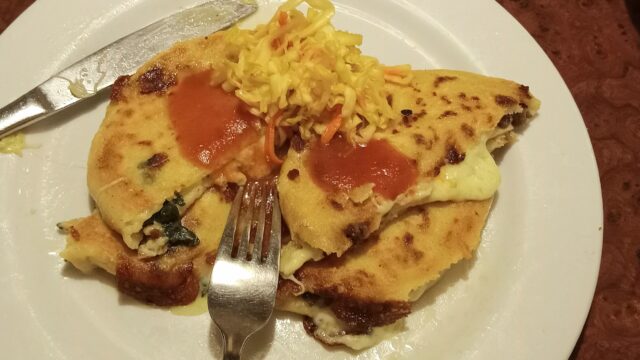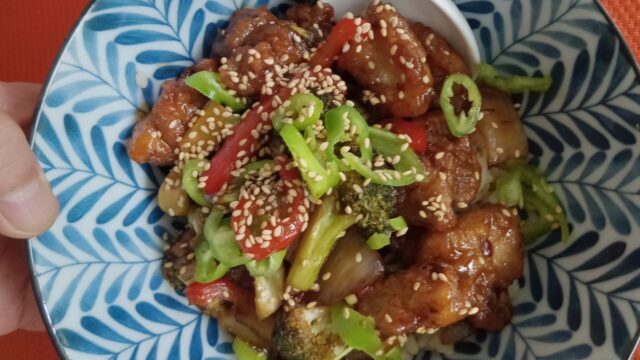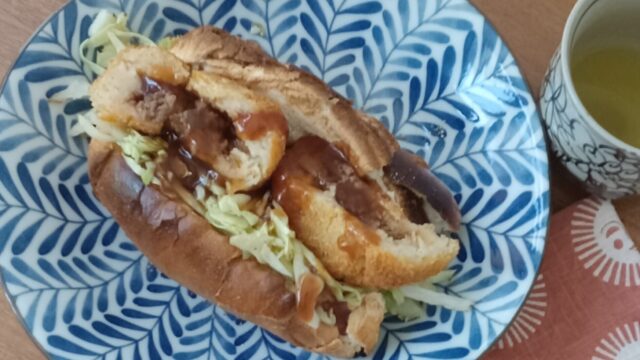
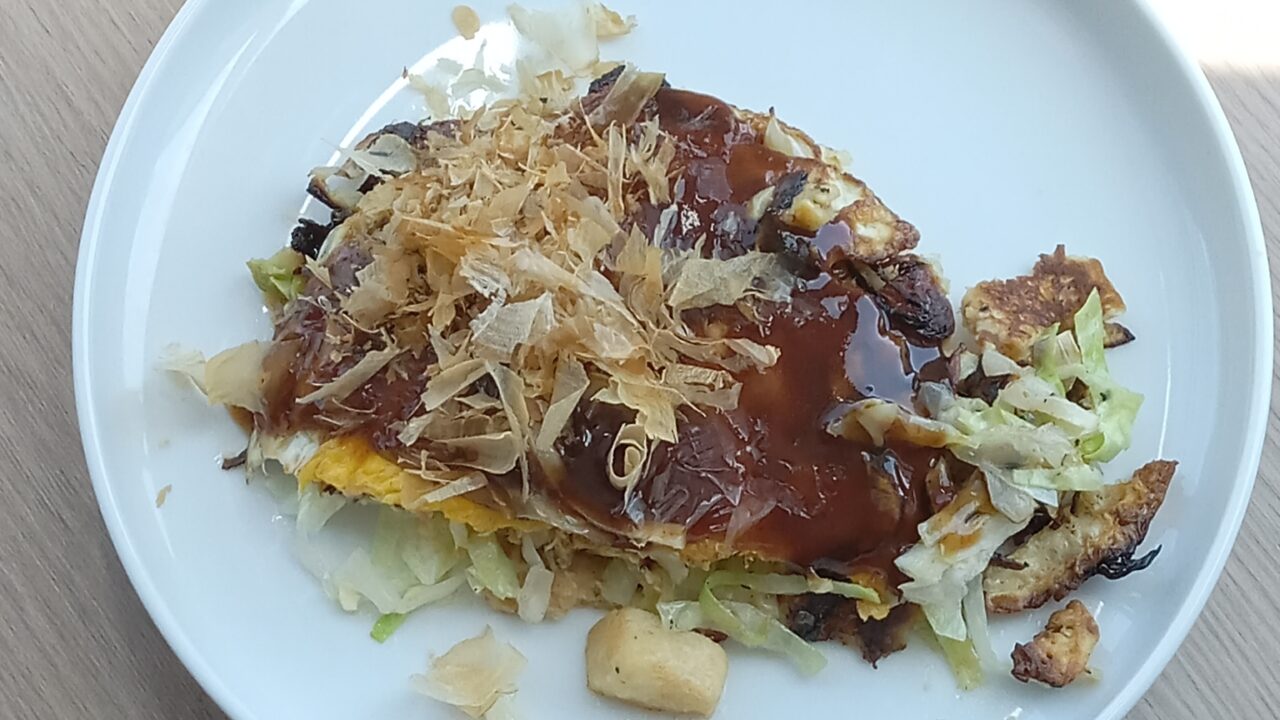
名古屋では【キャベツ焼き!】として、
屋台やスーパーでおなじみ、、、です。
簡単レシピ:【特製ソース&韓国カマボコが決め手!】『広島風:豚玉・お好み焼き』 Pork & Egg Okonomiyaki : 【Savory Cabbage Pancake w/ Delicious Homemade-Sauce】
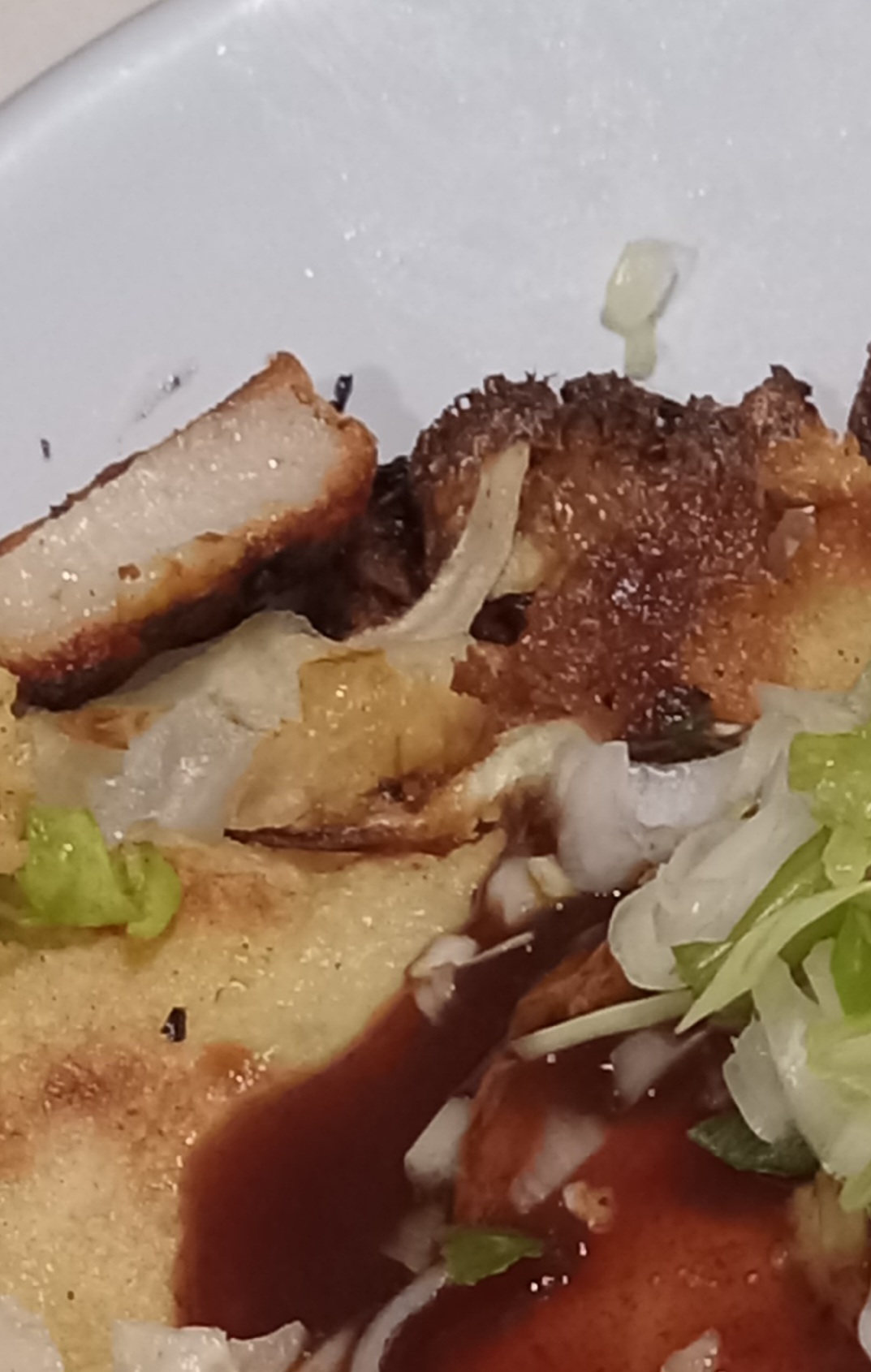
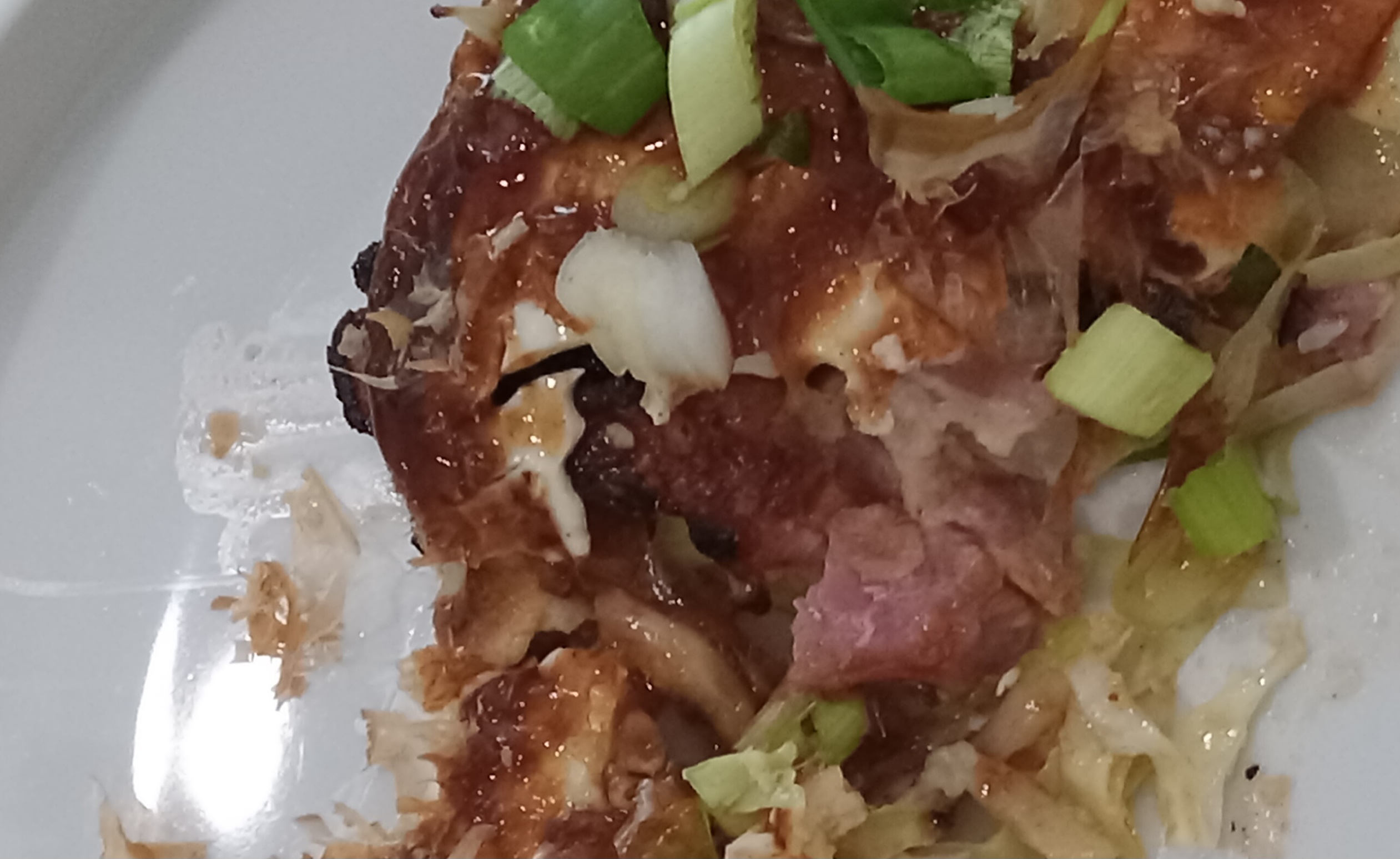
最近、遅ればせながら、
NHKの「てっぱん(2010年放送)」
という朝ドラを
見ているのですが、
その中で主人公の少女が、広島風の『お好み焼き』を焼きまくるのですが、その広島風のお好み焼きが、子供時代にいつも食べていたキャベツ焼風の、名古屋のスーパーや屋台で売っていたお好み焼きにそっくりで、
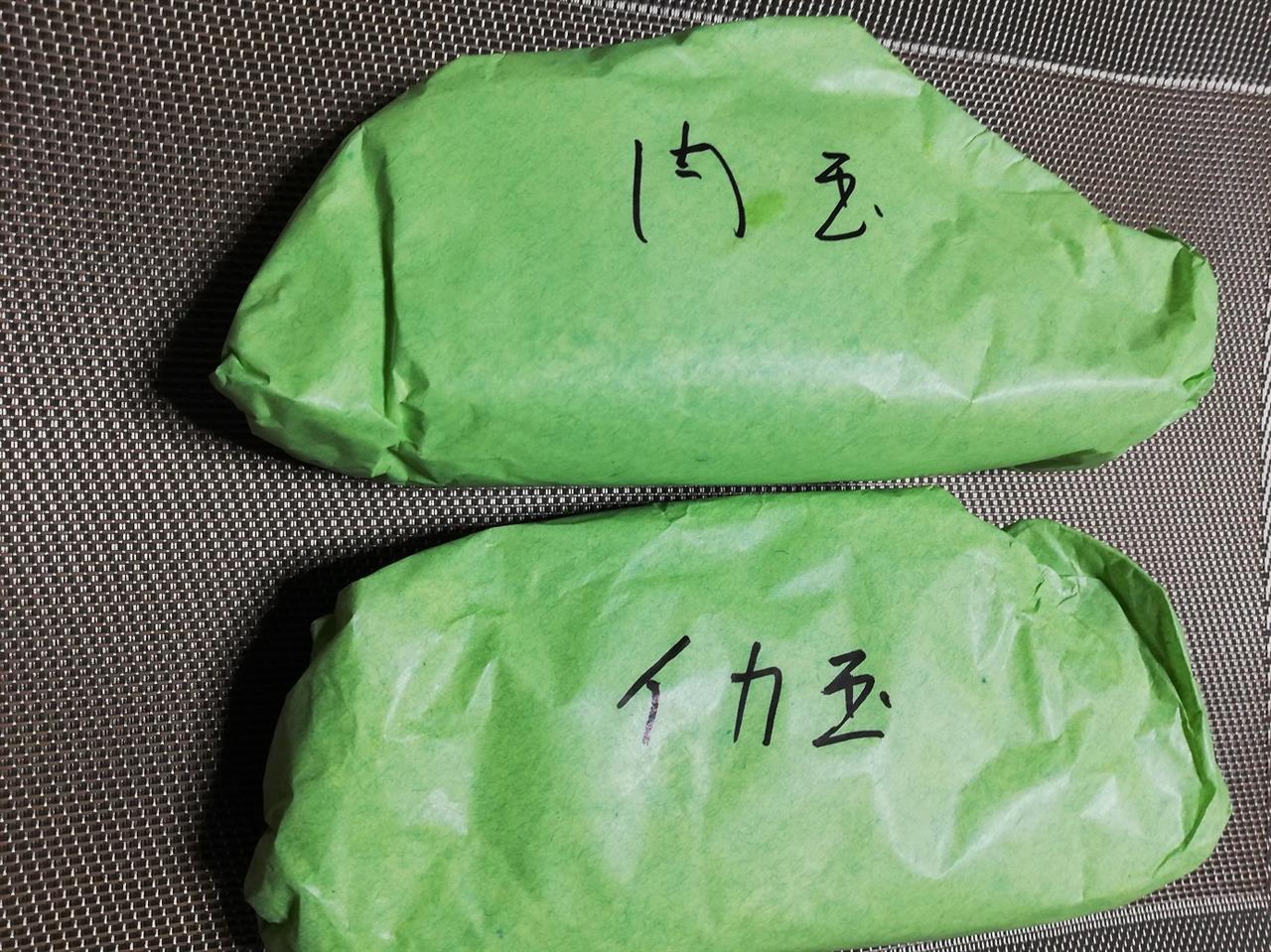
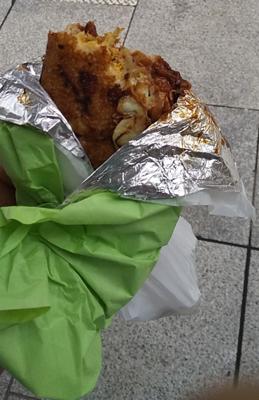
作ってみたくてしょうがなくなりました。
今回は、豚肉の代わりに
生のベーコンと卵、かまぼこ(韓国風練り物入り)で、
『豚たま・広島風お好み焼き』、
作ってみます!
お好み焼きが大好きな私たち夫婦は、
以前も色々改造しながら、
キャベツ焼き、モダン焼、大阪風お好み、など作ってきましたが、
今回はシンプルな広島風で行ってみます。
こんな感じで、、、
*材料:【二人前】
*作り方:
*見た目:
*お味:
*感想:
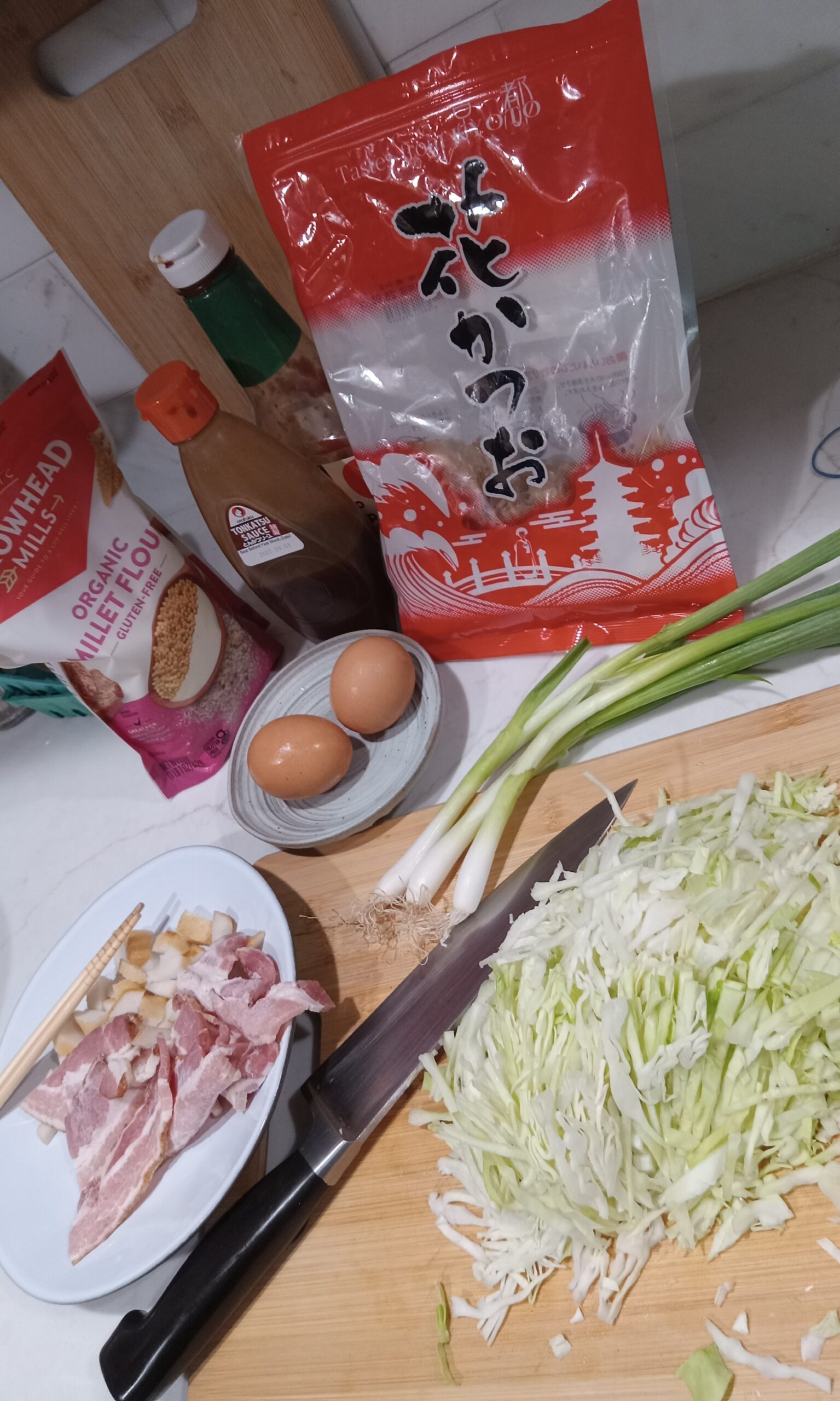
*材料:至ってシンプル&ベーシック
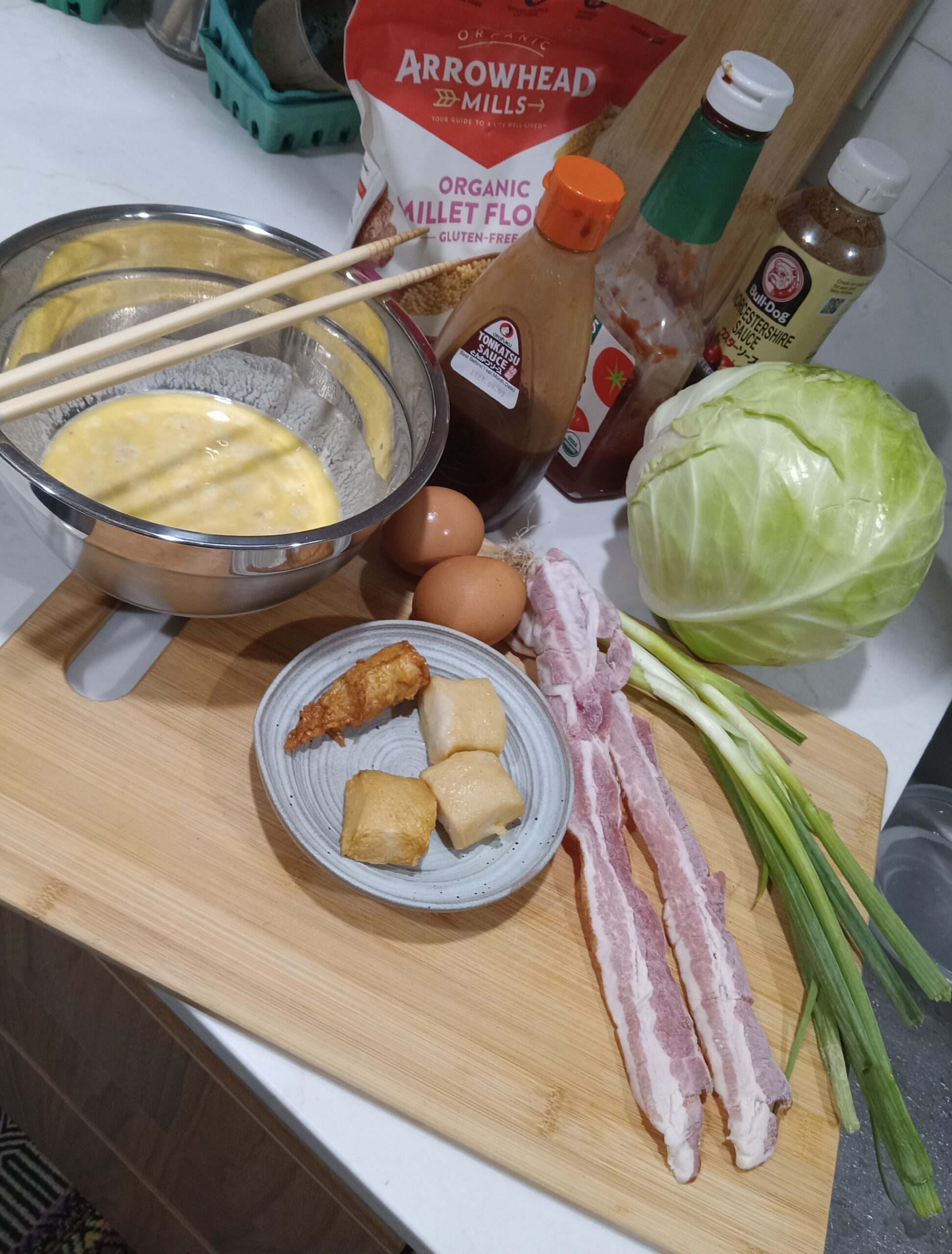
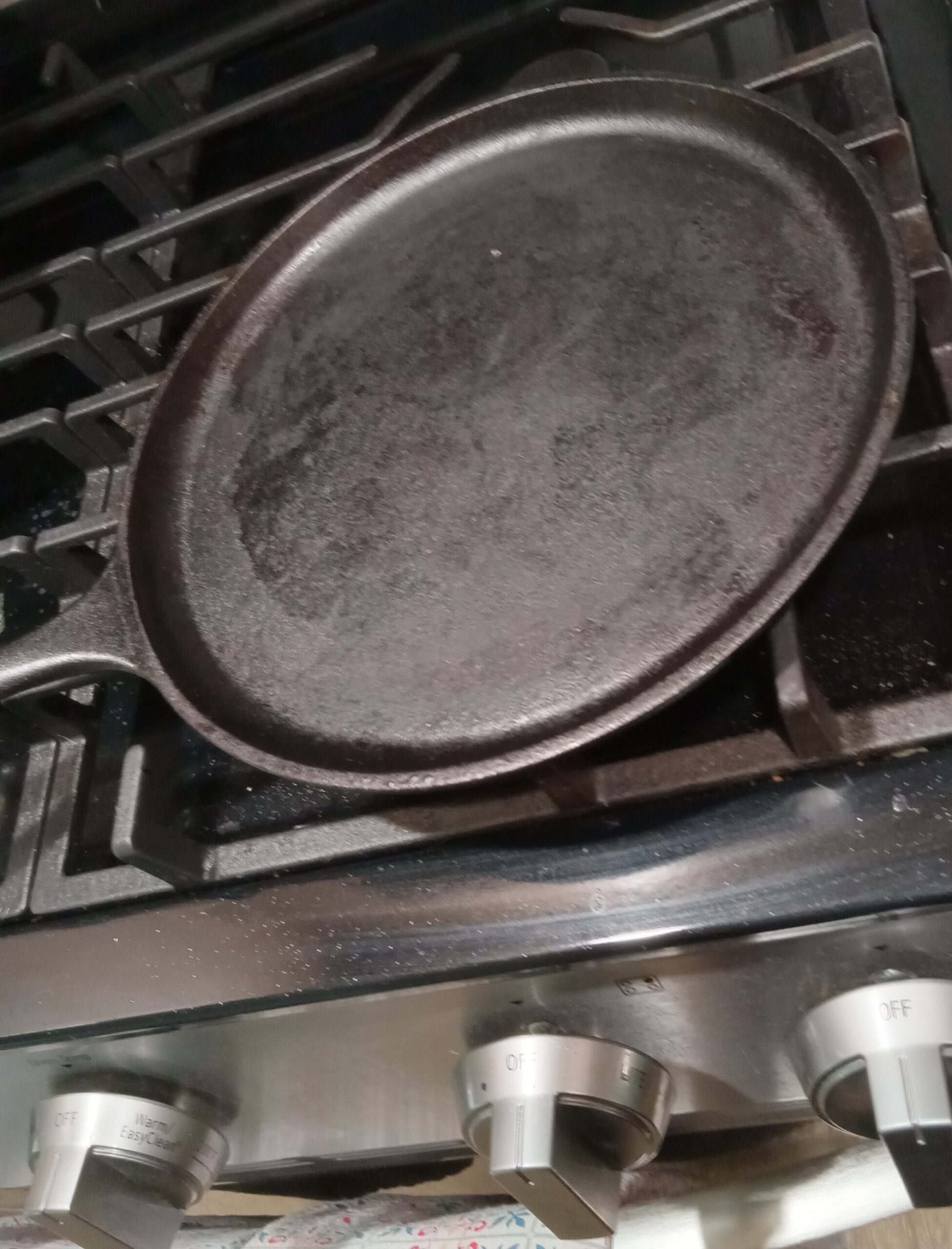
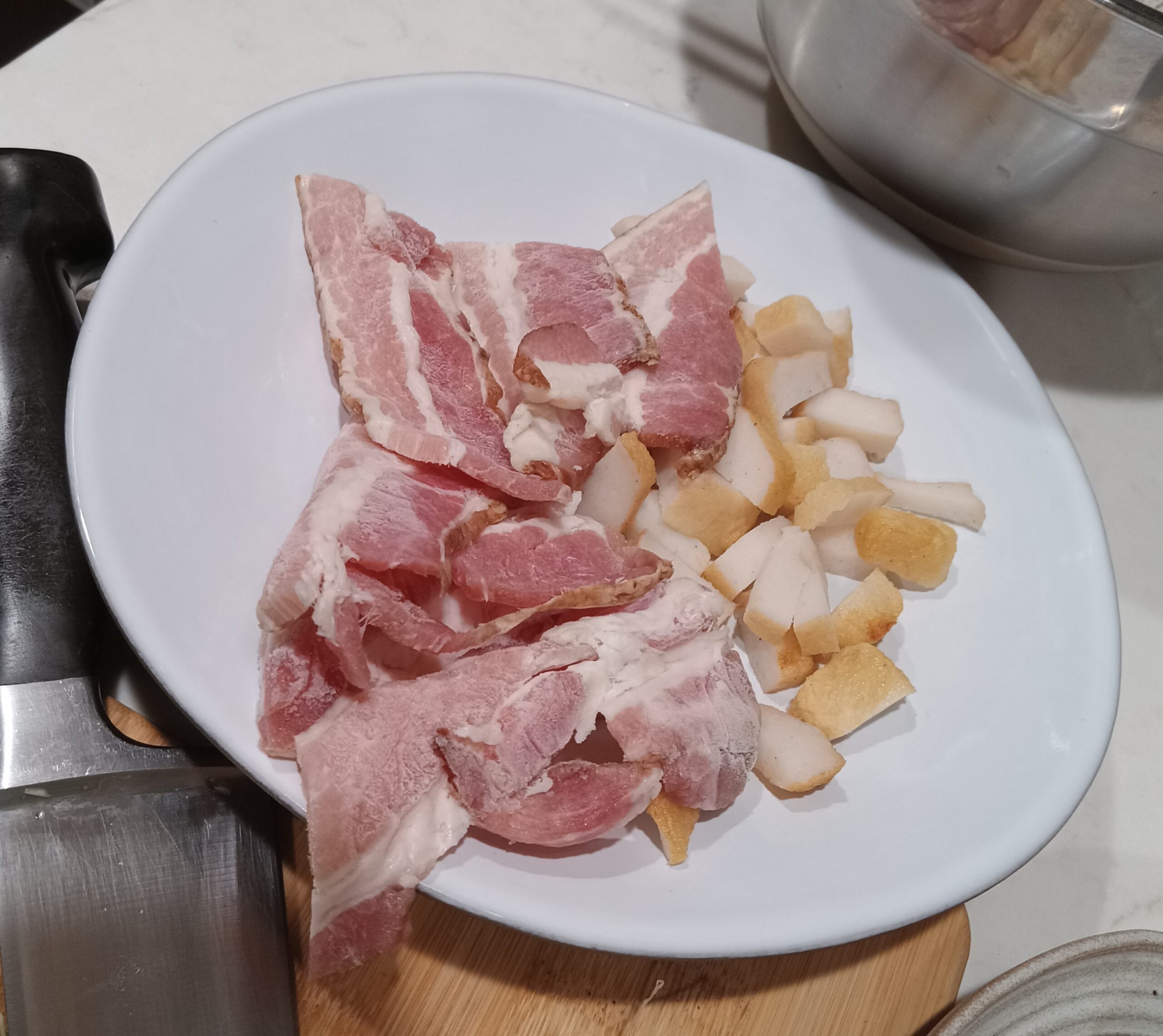
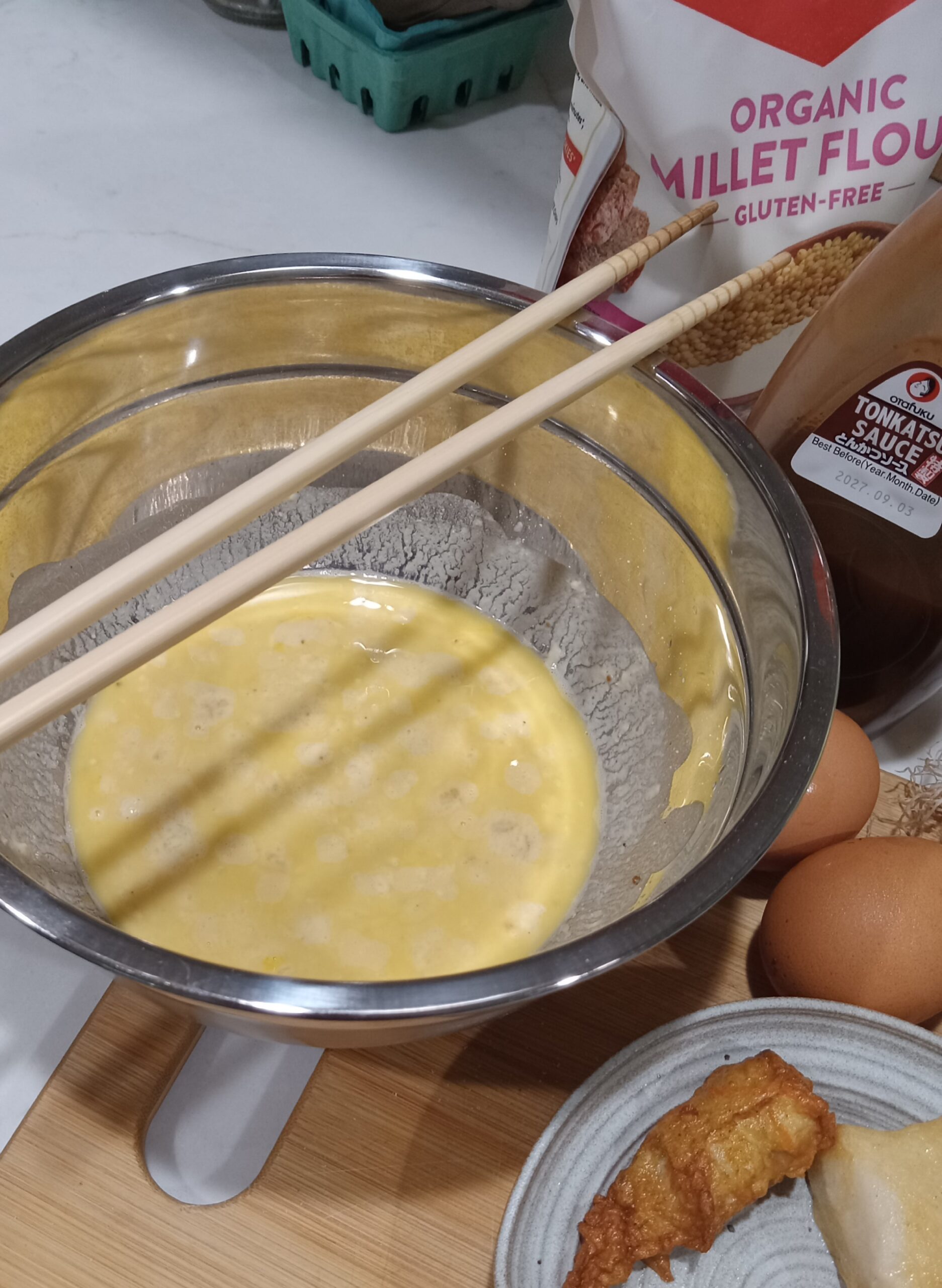
今回はありあわせの材料で作ってみます。
*豚バラの代わりに、ノン・スモークのベーコン
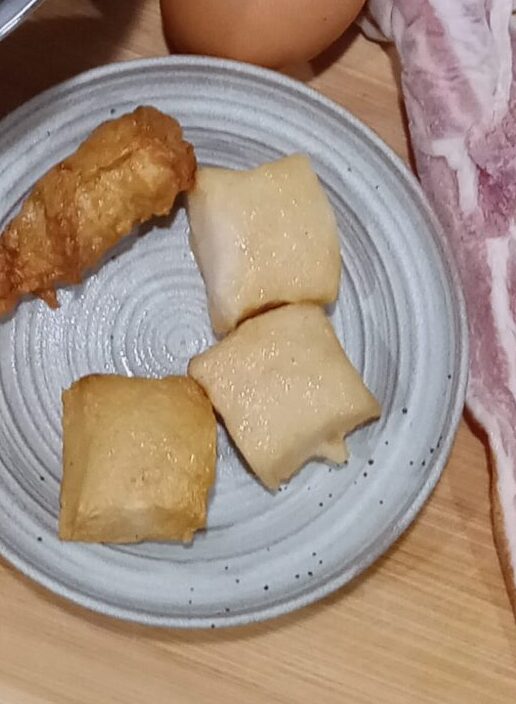
*ちくわの代わりに、韓国風練り物
(こちらでは、「ヤマサ天ぷら」と呼ばれてます)
#材料:(2人前)
【生地】
*お好みの小麦粉類(今回はミレット粉@)ーー80g
*粉末状の出汁ーーーー1/2袋
*お水ーーー300cc
*卵ーーーーー1個
*塩・胡椒―ーー適宜
【本体】
*キャベツーーーー中玉1/3
*万能ねぎーーーー3本
*豚バラ(生ベーコンで代用)ーーーー3切れ
*ちくわ、かまぼこ類ーーーー30g
*卵ーーーー2個
*鰹節―ーーー10g(2掴み)
*塩・コショ---適宜
*調理油(アボカドオイル仕様)---適宜
【ソース】
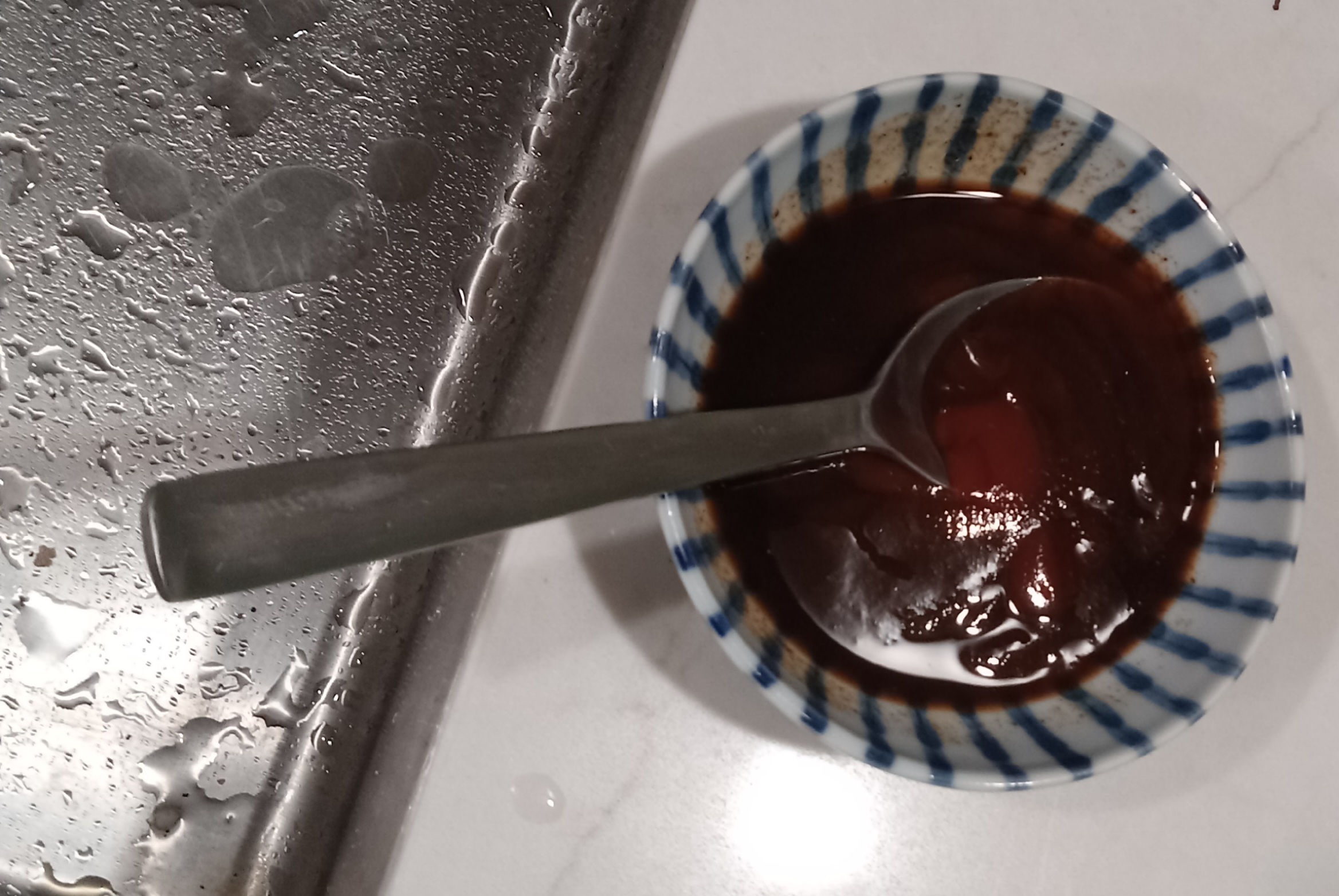
*ウスターソースーーー大さじ3
*とんかつソースーーー大さじ4
*トマトケチャップ―ーー大さじ1
【トッピング】
*鰹節―ーー適宜
*青のり等、お好みで
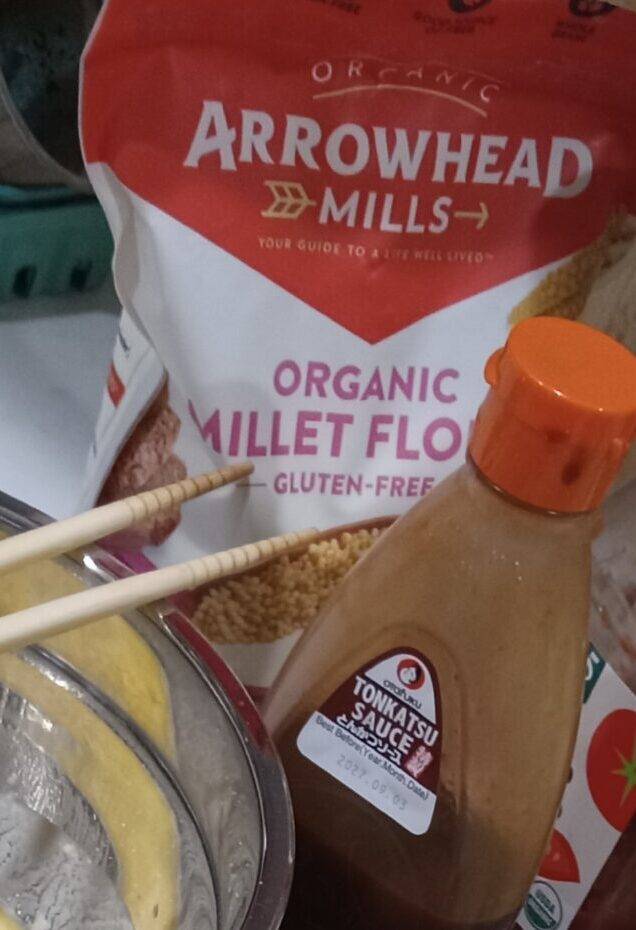
@ミレット粉:
キビやアワなどのイネ科の雑穀を細かく挽いたグルテンフリーの粉です。
栄養価が高く、パンやクッキー、薄焼きパンなどに使われます。
*作り方:
それでは
フライパンx2を温め、焼き始めて行きましょう。
(広島風のお好み焼き制作のかなめ、大き目の鉄板がないため、
今回は、2つのフライパンを使い最後に『卵焼きに載せる』過程を行います!)
#作り方:2つのフライパンを使って、、、
1:小麦粉に卵、顆粒だし、水を加えて、しっかりと混ぜて滑らかに溶かし、塩・コショウで味を調えます。(クレープ生地みたいに、少し水っぽいぐらいでOKです)
2:フライパンに火を入れ、オイルを多めにひき、なじませます。
3:生地をクレープの要領で円形に伸ばし、(弱めの中火)小口切りのネギと鰹節(2つまみ)を振りかけます。
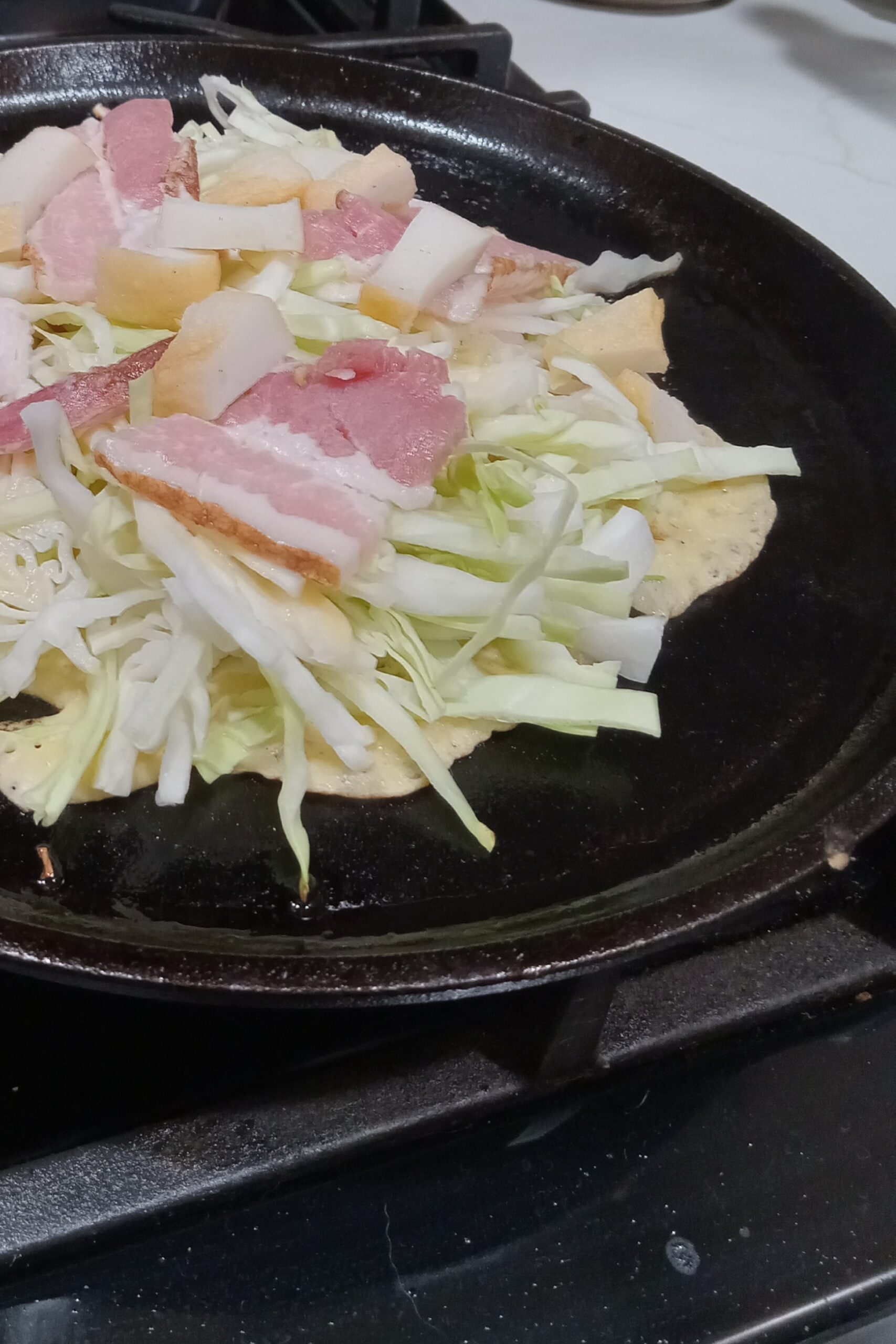
4:その上に半量のキャベツを山盛りに載せ、ベーコン、ちくわ、鰹節を載せ、生地を上から回しかけます。
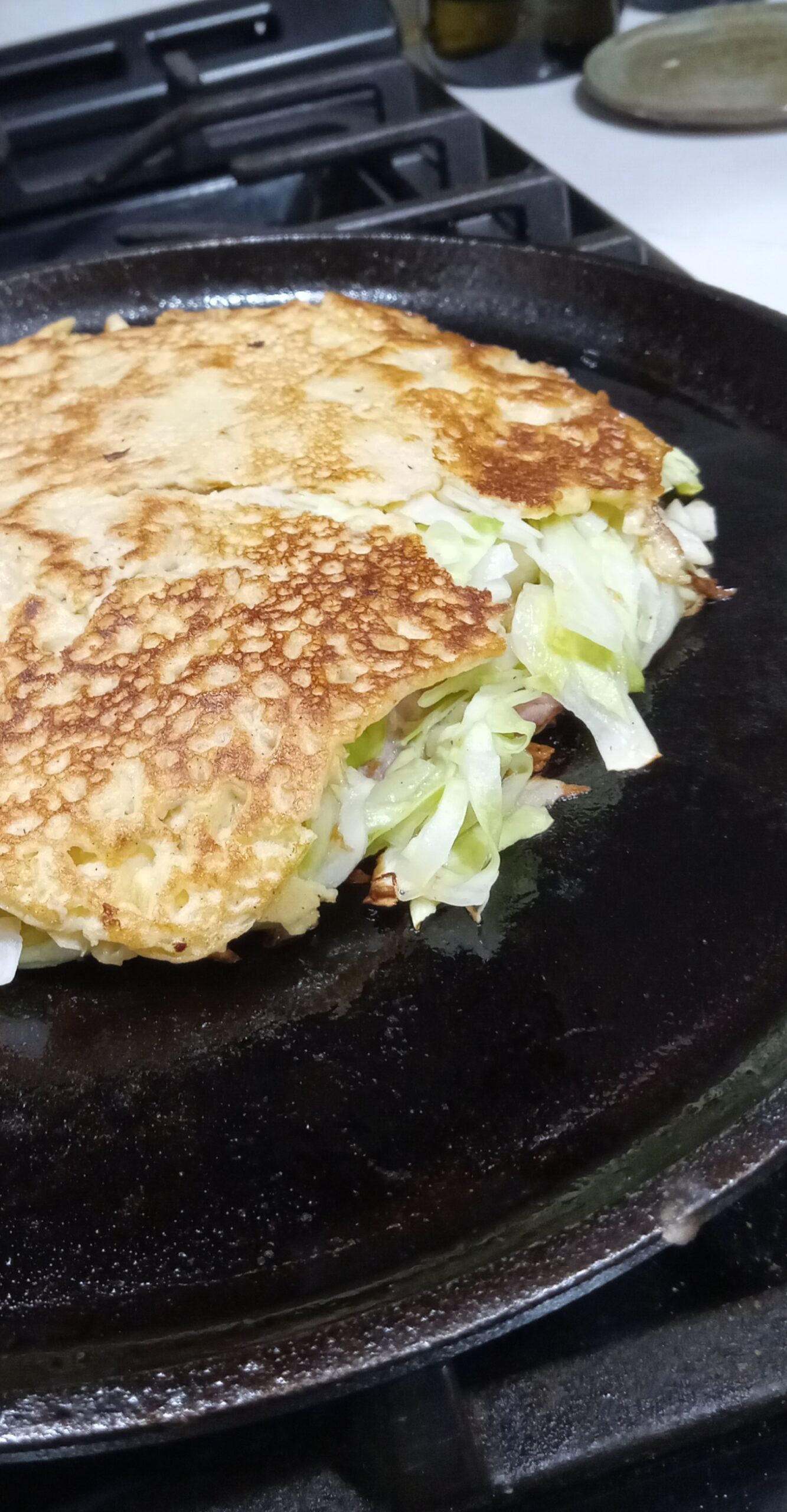
5:フライ返しで焼け具合を見て、裏面が少し焦げ始めたら両手にフライ返しを持ち、一気に裏返します。(多少汚くなっても大丈夫、ヘラで回りを丸く整えます)
6:火力を少し落とし、フライ返しで少し押して空気を抜く感じで、キャベツの焦げた匂いが上がるまで、10分程度焼きすすめます。
7:油を引いた別のフライパンに卵を割り入れ、黄身を崩し、元のフライパン上の、焼きあがった本体を両手・フライ返しで持ち上げそっと卵の上に載せます
8:すぐに真ん中から2つに切り、取り皿に反転させながら卵が上に来るよう、半月状に盛り付けます
9:しっかり混ぜ合わせた『お好みソース』をたっぷり塗り、鰹節や青のりで飾って、勧めます。
【言葉で現わすと少し面倒に聞こえますが、実際は簡単ですよ、、、】
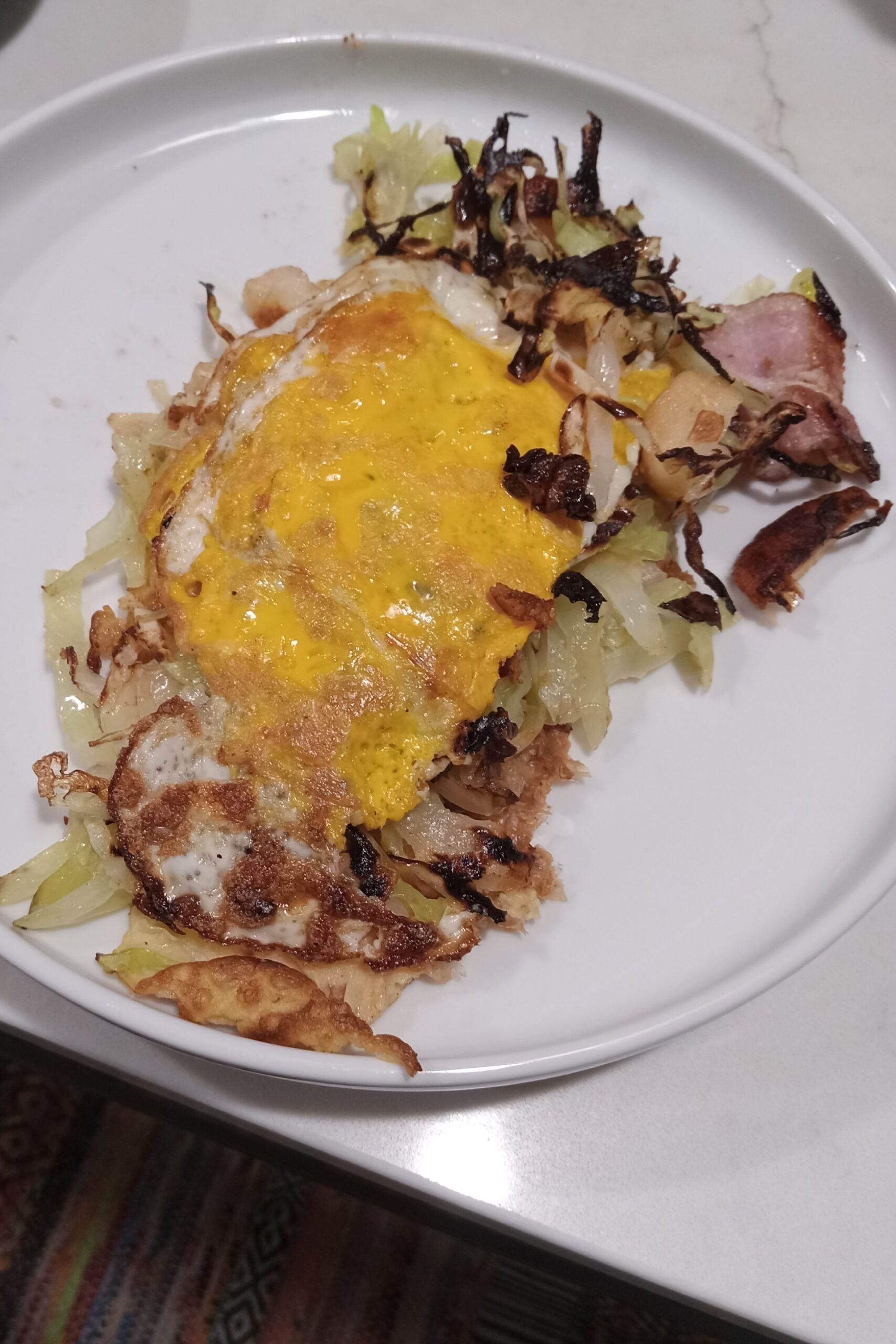
*見た目とお味:『おのみっちゃん』の味?
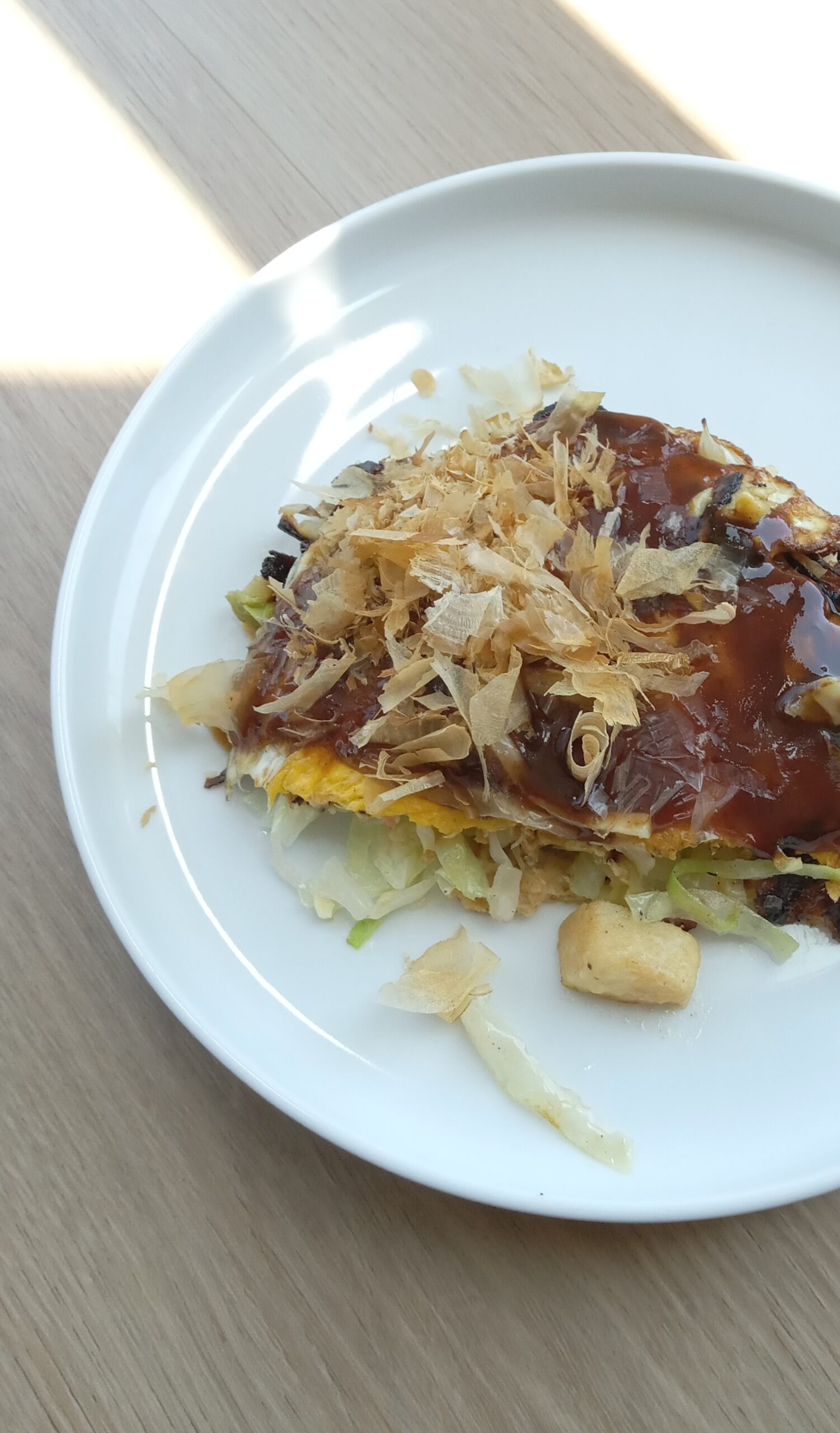
朝ドラ:『てっぱん』の初期、
主人公の少女の尾道時代、彼女の父が作った大きなてっぱんの上で彼女の母(安田成美)の焼くお好み焼きシーンが何度も出てきます。極めてシンプルなのですが、特製ソースを塗った途端、一気に食欲が刺激されます。
一晩3本のパターンで、
ここ3週間夫婦そろって鑑賞するたび、お腹が減ってきました。(笑)
それでは行ってみましょう!
#見た目:
最終的に、
*マヨネーズの横振りかけの印象が強い、大阪風お好みに対して、
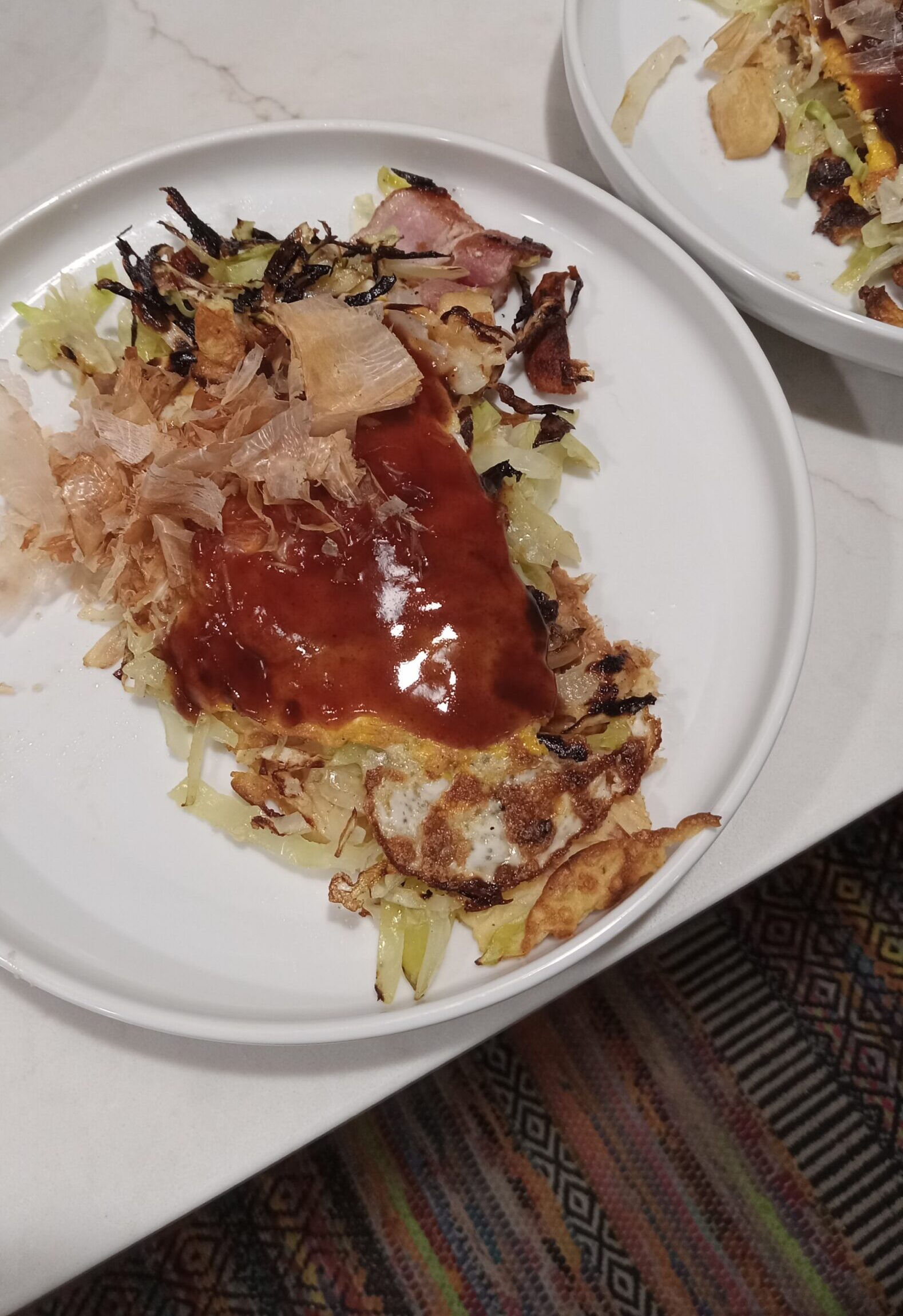
*艶やかなソースに乗ったひらひら動く鰹節がシンボルとなる、
『広島≒尾道風のお好み焼き』
今回私たちが作ったものも、
マヨネーズに頼らない、鰹節仕様です。
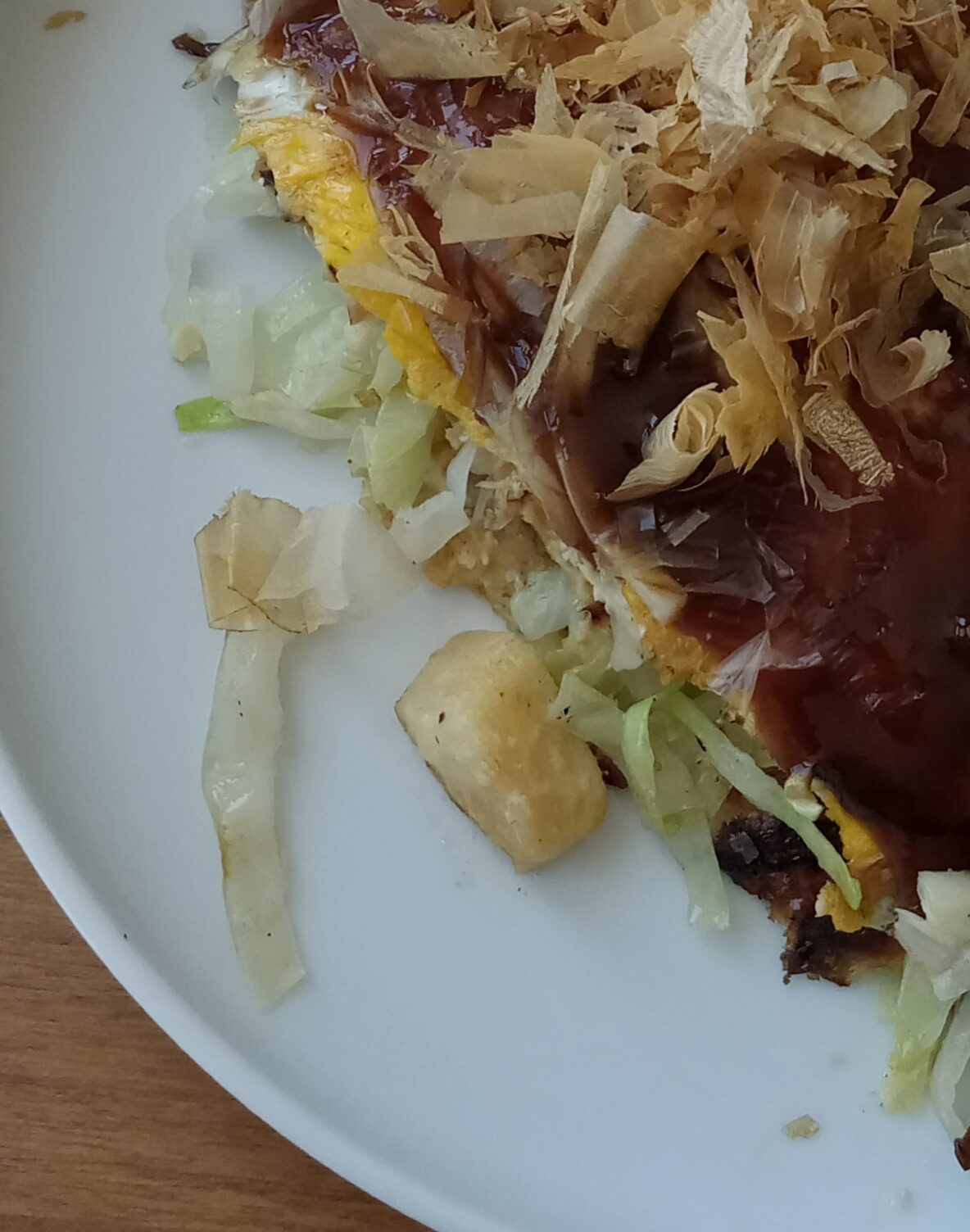
ひらめく鰹節と、
飛び出したかまぼこの可愛らしい姿が、食べる前から
土曜日のお昼の、
楽しく・おいしい『お好み焼き体験』を予見していました!
ではいよいよ食べてみましょう!
#お味:焦げたキャベツとソースの相性がすべて!
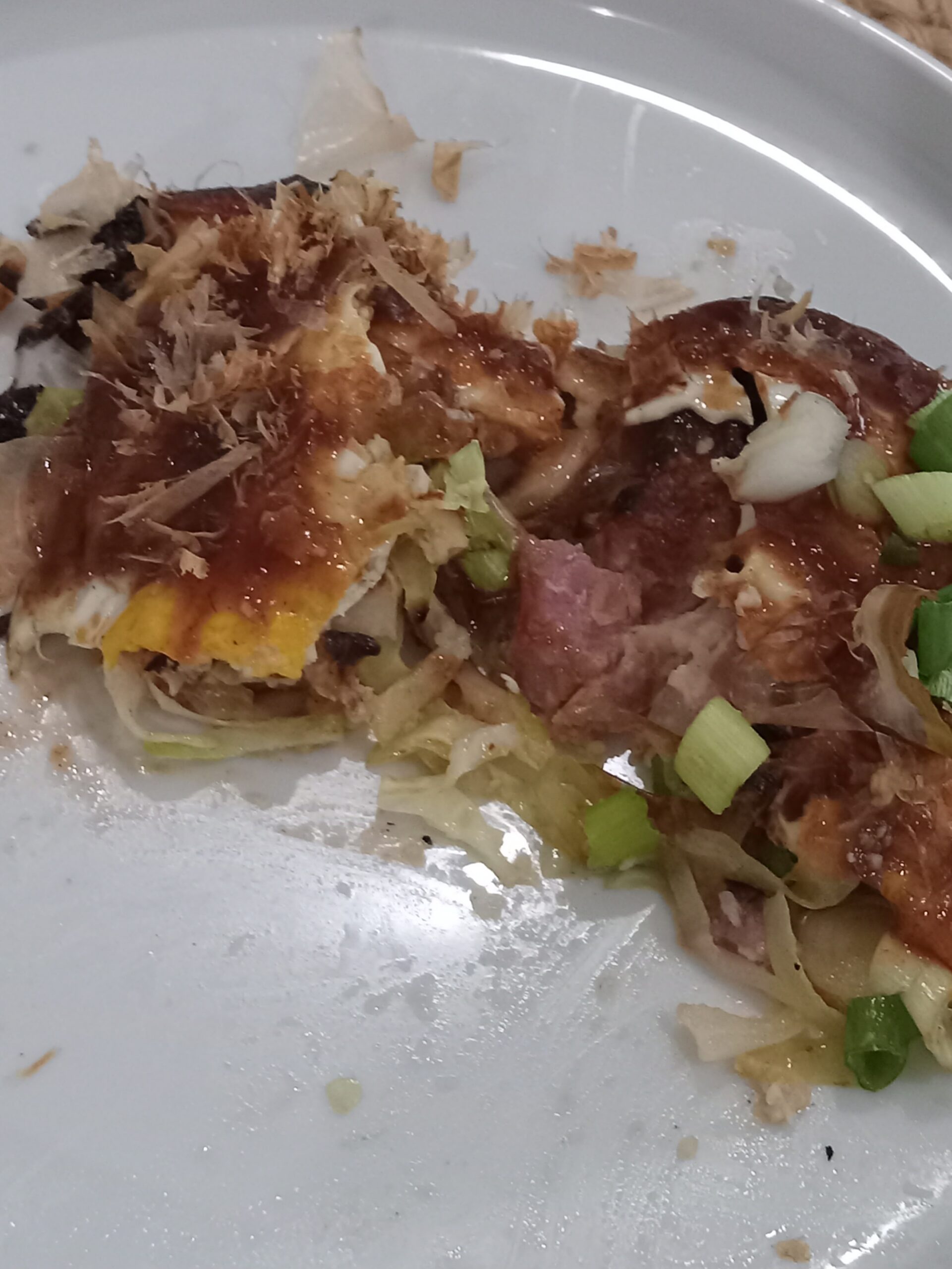
朝ドラ:てっぱんの50話以降で、主題となる大阪風と広島風それぞれのお好み焼きの併売問題ですが、
私個人の経験からも、
両者にはこんな違いがあるように思います。
大阪風お好み:
*関西風の出汁が効いて、
*山芋によるフワッと軽い粉もの食感
*キャベツは細かく切られ、存在をそれほど主張しない、
*マヨネーズはむしろご飯と食べるための促進剤で、
*本来あまり必要なし、
*フワッと焼き上げる、焼き方が難しく外食で食べる感じ。
*ソースは、バランス重視な甘辛
広島/尾道風お好み:
*全国のスーパーで復旧している、手軽なキャベツ焼きの高級版、
*出汁には頼らず、あくまで乗せる具材、
*ソースとキャベツの相性で食べる『スナック的』立ち位置
*『クレープで包まれたキャベツや焼き】、といったコンセプト。
*ソースが甘めで、若干スナック・ランチ的な立ち位置?
*焼き方が単純なためか、家庭でも大人気、、、
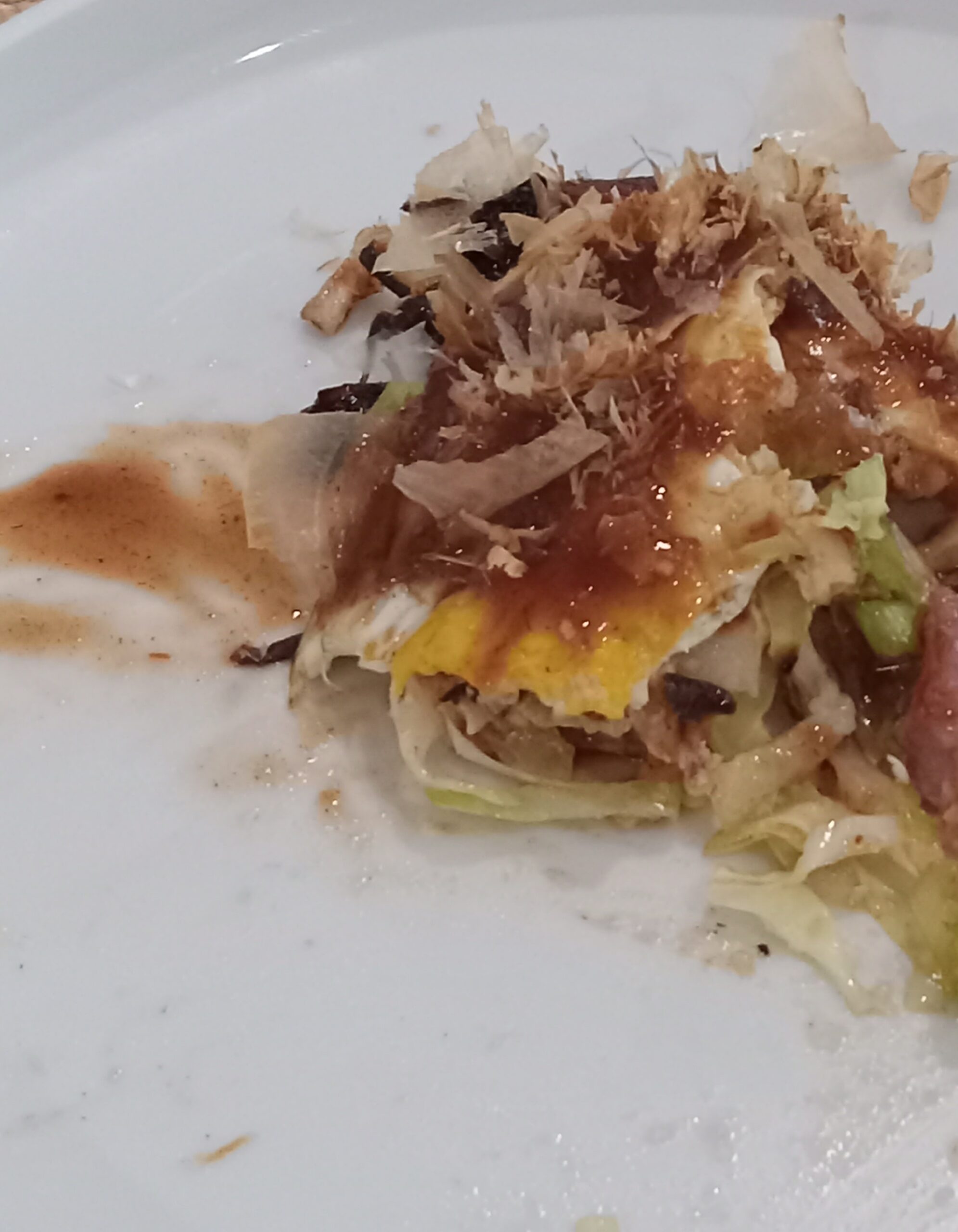
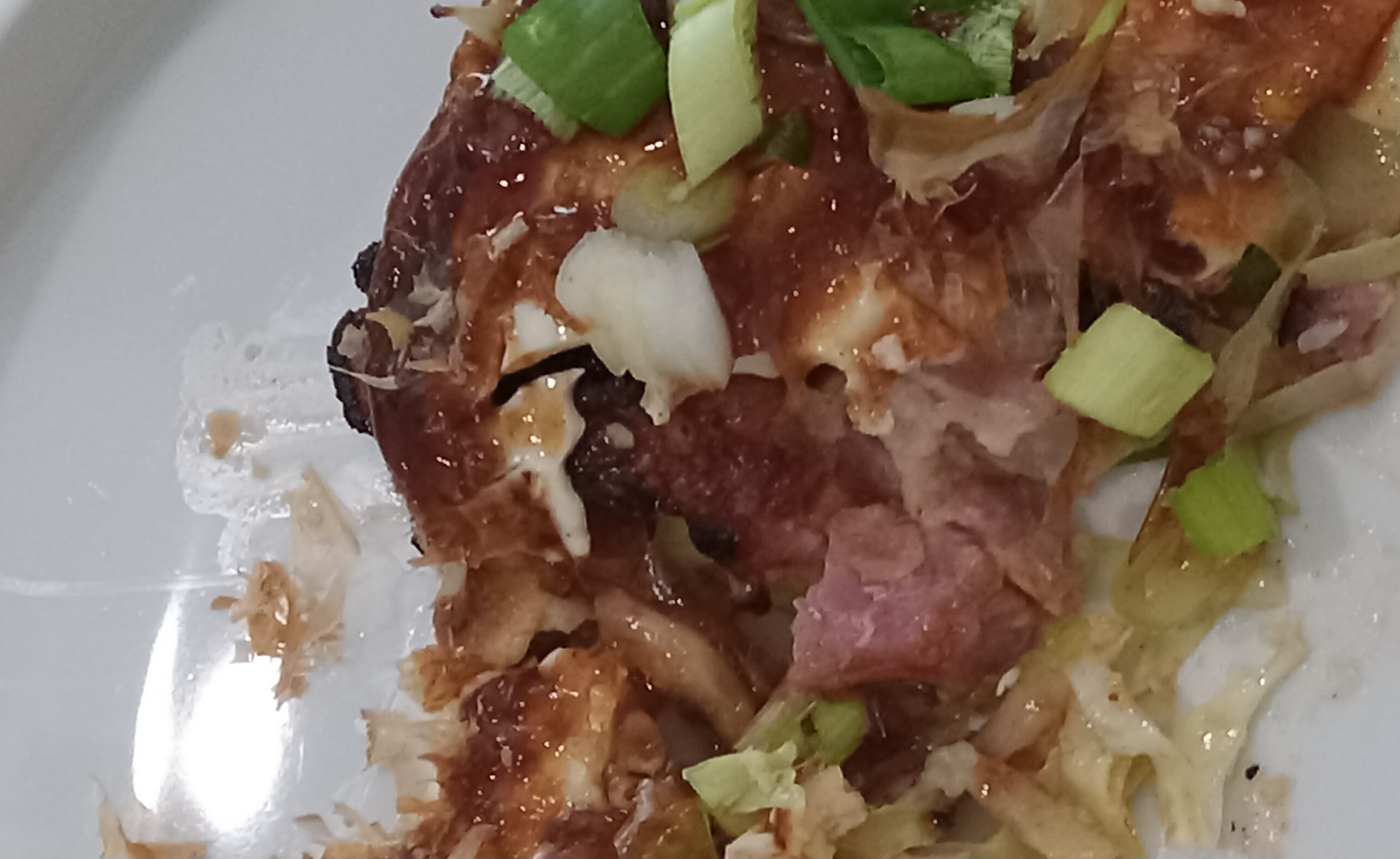
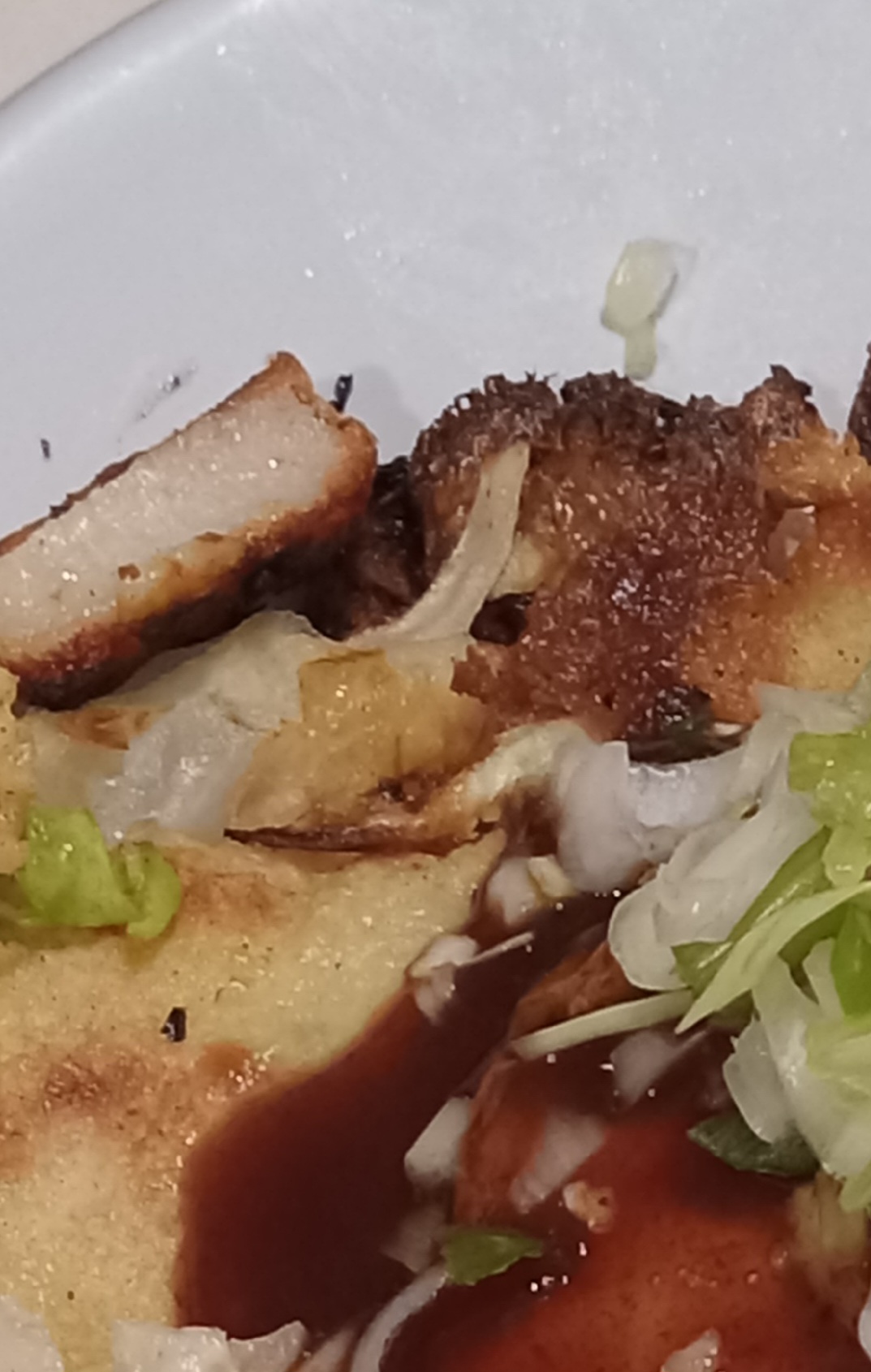
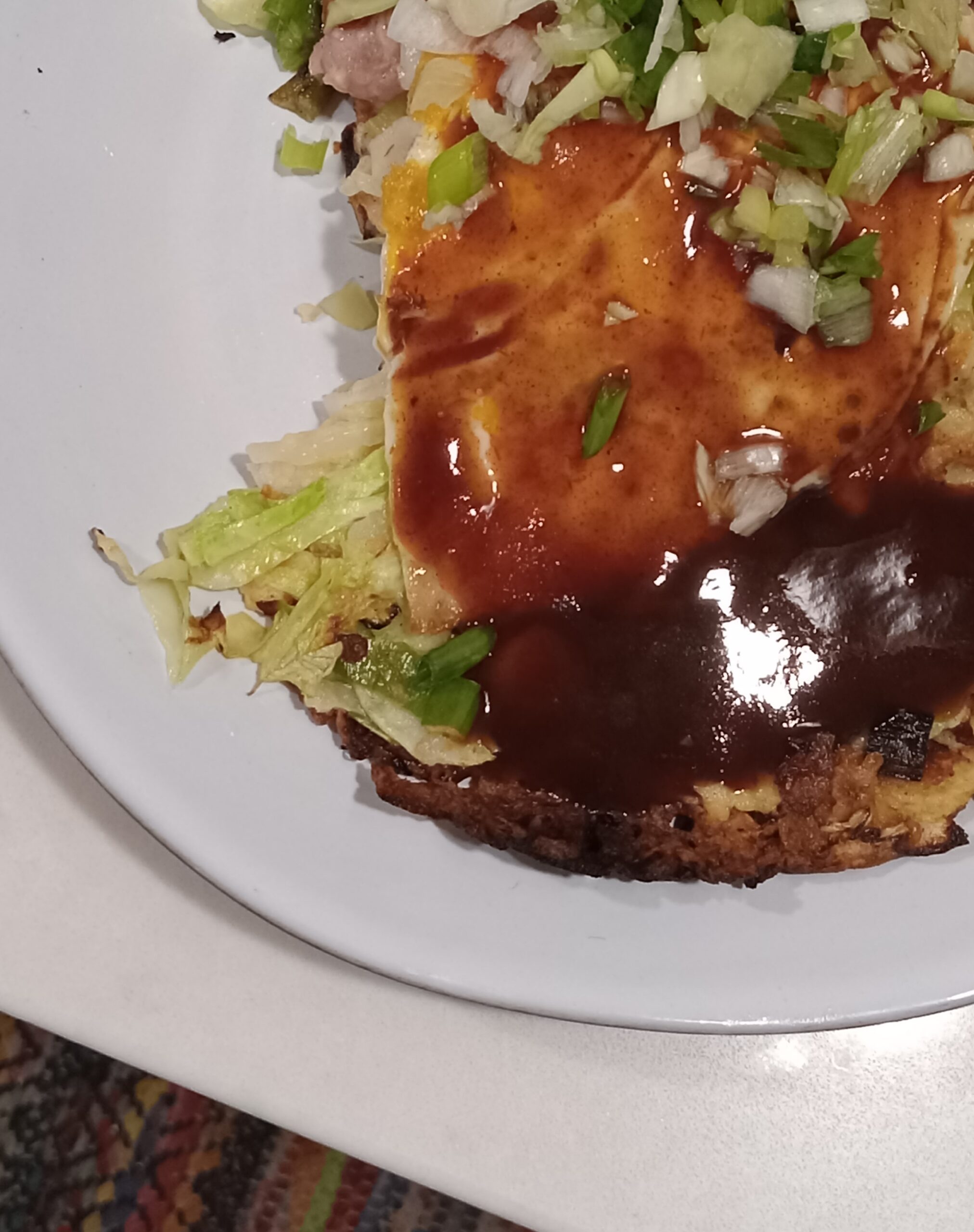
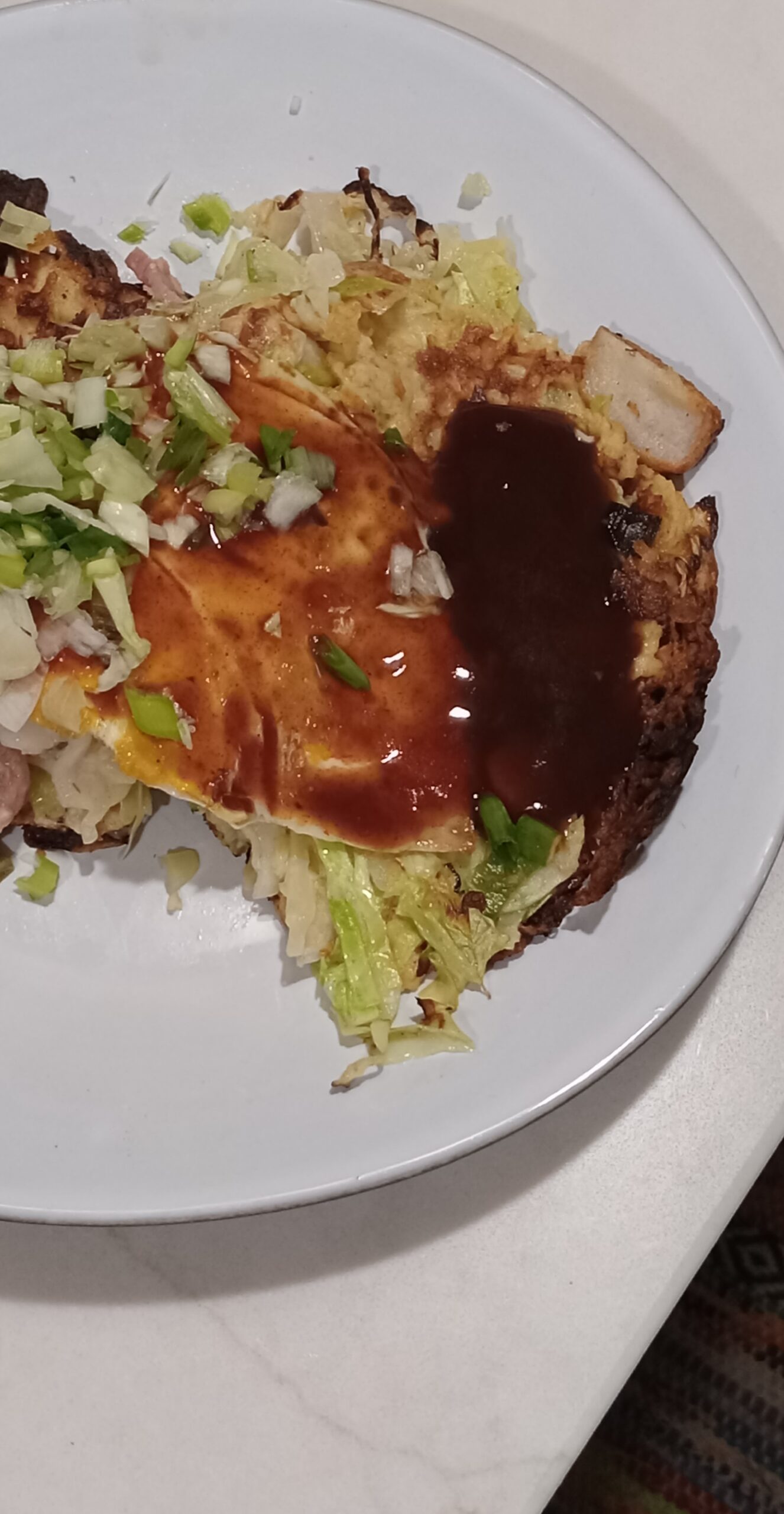
今回私が焼いたお好み焼きは、
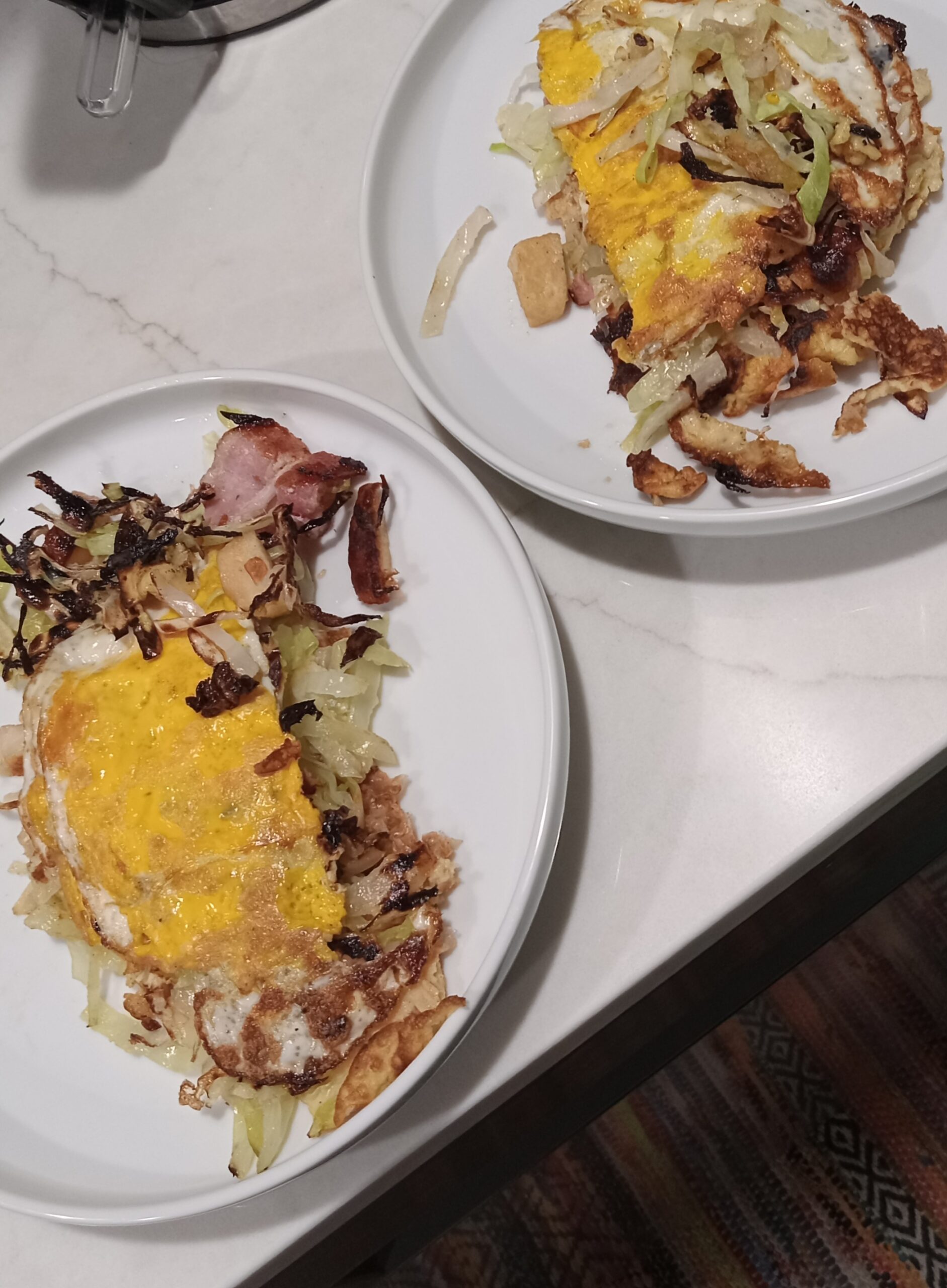
*1枚目が、豚たま、
*2枚目が、豚たま+ネギ入りで、
どちらも、食べなれた名古屋のキャベツ焼きのように、
焦げたキャベツのほろ苦さと、
甘めのソースのマッチングが素晴らしく、
おまけの、「韓国風かまぼこ」がもいいわき役を演じていました。嬉
#個人的には、
一度冷めたものを再度温めた時のほうが、
一体感が出て、食べやすく、
全体の味を把握しやすくて好みです、、、
今回切らせていた、
紅ショウガも加えて再度挑戦したいです。
よろしかったら、
お試しください――
本ブログと記事内容につきまして:
ブログ記事を書くにあたり私の目標は、立体造形(料理も含めて)とのかかわりを通じて、私個人の特徴的(ネジ曲がり方も含めて)な評価軸を解明することで、「美しさ・美味しさ」に対する好奇心や、探求心を、どのように満足・充足させてきたのかを明記しておくことです。
従いまして、記事の中に出てくる、数字や年号、微細なデータなどには細心の注意を払っておりますが、時に大きな間違いや勘違いを犯していることも考えられます。特に自動車記事における主要諸元や、年号などには紛らわしいものも多く、あくまで参考程度に考えていただければ幸いです。
私としては、記事の中で個人的な外観デザインや味覚の評価、そこから広がる後半部分につなげるための、『流れ』を作るための客観的材料として年号やデータを挿入している感じです。あくまで重視したいのは、私個人の頭の中で起こる、記憶の錯そう的混沌から生まれる新たな『見方』や『情報の予想外のつながり』です。その勢いを作り出す、『流れ』の一環として、諸データが副次的に必要となるわけです。
話がそれますが、大好きな落語の世界に「三題噺」という、その場て会場から募った3つのお題を使って1つのお話に仕立てるといったお遊びがございますが、私はそれに近いことを立体造形の特徴や(料理のお味)をお題にして行っている感じがします。その中で頭の中に去来する数々の着想が、全く予想外で楽しく、次回からの記事内容を大幅に変えたり、新展開につながっています。
当ブロブの仕組み:
『好奇心の点と線 x 気まぐれ脳内回路=予想外の新展開』
こんな自分勝手なブログですが、今後ともよろしくお願いいたします。
追記:上記の『流れ』を作る為に必要な写真はできる限り、個人所有のミニカー・自前の料理などを使い撮影しておりますが、その他の必要最小限の図版や写真を他のブログ主様の記事や諸会社ホームページなどからお借りしております。(記事内容に合うよう加工させていただき、使用時は最小の解像度で載せております。)問題がある場合、ご連絡いただければ直ちに降ろさせていただきます。
追記2:当ブログ記事に掲載のミニカー写真等(個人撮影)は許可なしで、どのようにお使いいただいても結構です。私個人の創造性はこの世のもの、と言う認識の上で記事を製作しています。
!!!!!!!!!!!!!!!!!!!!!!!!!!!!!!!!!! Translated in English !!!!!!!!!!!!!!!!!!!!!!!!!!!!!!!!!!
In Nagoya, it’s known as 【Cabbage Pancake!】,
and is a familiar sight at food stalls and supermarkets…
Easy Recipe: 【The Secret Is in the Special Sauce & Korean Fish Cake!】 “Hiroshima-Style: Pork & Egg Okonomiyaki” Pork & Egg Okonomiyaki: 【Savory Cabbage Pancake with Delicious Homemade Sauce】
Recently, a bit belatedly,
I’ve been watching
NHK’s morning drama series
“Teppan” (aired in 2010),
In the show, the young female protagonist makes Hiroshima-style “okonomiyaki” over and over again. That Hiroshima-style okonomiyaki looks exactly like the cabbage-style okonomiyaki I used to eat as a child—the kind sold at supermarkets and food stalls in Nagoya—
so I just couldn’t resist trying to make it myself.
This time, instead of pork,
I’ll use raw bacon, eggs, and kamaboko (with Korean-style fish paste),
to make “Pork and Egg Hiroshima-Style Okonomiyaki”!
My husband and I both love okonomiyaki,
and we’ve made various versions before—
like cabbage-style okonomiyaki, modern-style okonomiyaki, and Osaka-style okonomiyaki—
but this time, we’re going with a simple Hiroshima-style version.
It’ll look something like this…
*Ingredients: [Serves 2]
*Instructions:
*Appearance:
*Taste:
*Impressions:
*Ingredients: Extremely simple & basic
This time, we’ll make it with whatever ingredients we have on hand.
* Unsmoked bacon instead of pork belly
* Korean-style fish cake instead of chikuwa
(Here, it’s called “Yamasa Tempura”)
#Ingredients: (Serves 2)
[Batter]
* Flour of your choice (this time: millet flour) — 80g
* Powdered dashi — 1/2 packet
* Water — 300cc
* Egg — 1
* Salt & pepper — to taste
[Filling]
* Cabbage — 1/3 of a medium head
* Green onions — 3 stalks
* Pork belly (can be substituted with raw bacon) — 3 slices
* Chikuwa and kamaboko — 30g
* Eggs — 2
* Bonito flakes — 10g (2 handfuls)
* Salt and pepper — to taste
* Cooking oil (avocado oil) — as needed
[Sauce]
* Worcestershire sauce — 3 tablespoons
* Tonkatsu sauce — 4 tablespoons
* Tomato ketchup—1 tablespoon
[Toppings]
* Bonito flakes—to taste
* Aonori (dried green laver) or other toppings of your choice
@Millet flour:
This is a gluten-free flour made by finely grinding grass family grains such as millet and foxtail millet.
It is highly nutritious and is used in bread, cookies, and thin flatbreads.
* Instructions:
Now then,
let’s heat up two frying pans and start cooking.
(Since we don’t have a large griddle—which is key to making Hiroshima-style okonomiyaki—
this time, we’ll use two frying pans and perform the final step of “placing it on a rolled omelet”!)
#Instructions: Using two frying pans…
1: Add eggs, granulated dashi, and water to the flour, mix thoroughly until smooth, and season with salt and pepper. (It’s okay if the batter is a little runny, like crepe batter.)
2: Heat the frying pans, add a generous amount of oil, and let it coat the pans.
3: Spread the batter into a circle like you would for a crepe (over medium-low heat), then sprinkle with finely chopped green onions and bonito flakes (2 pinches).
4: Pile half the cabbage on top, then add the bacon, chikuwa, and bonito flakes, and pour the remaining batter over everything.
5: Check the browning with a spatula; when the bottom starts to brown slightly, hold the spatula in both hands and flip it over in one swift motion. (It’s okay if it looks a little messy—use a spatula to smooth out the edges into a round shape.)
6: Reduce the heat slightly. Press down gently with the spatula to release any air bubbles, and continue cooking for about 10 minutes until you can smell the cabbage caramelizing.
7: Crack an egg into a separate, oiled frying pan and break up the yolk. Using both hands and the spatula, lift the cooked pancake from the original pan and gently place it on top of the egg.
8: Immediately cut it in half from the center, then flip it onto a serving plate so the egg is on top, arranging it in a half-moon shape.
9: Generously spread a well-mixed “okonomiyaki sauce” over the top, garnish with bonito flakes and aonori, and serve.
[It might sound a bit complicated when described in words, but it’s actually quite simple…]
*Appearance and Taste: Does it taste like “Onomichan”?
In the early episodes of the morning drama “Teppan,”
during the protagonist’s childhood in Onomichi, there are numerous scenes where her mother (Narumi Yasuda) grills okonomiyaki on a large teppan made by her father. It’s extremely simple, but the moment the special sauce is spread on top, your appetite is instantly whetted.
We’ve been watching three episodes a night,
and for the past three weeks, my husband and I have gotten hungry every time we watch it. (lol)
Well then, let’s give it a try!
#Appearance:
Ultimately,
* Compared to Osaka-style okonomiyaki, which is strongly associated with mayonnaise drizzled on the side,
* “Hiroshima ≈ Onomichi-style okonomiyaki” is characterized by
fluttering bonito flakes floating on a glossy sauce.
The one we made this time is also
the bonito flake version, which doesn’t rely on mayonnaise.
The fluttering bonito flakes and
the cute sight of the kamaboko sticking out were already hinting, even before we took a bite,
at a fun and delicious “okonomiyaki experience”
for Saturday lunch!
Now, let’s finally dig in!
#Taste: The combination of charred cabbage and sauce is everything!
Morning Drama: “Teppan”—Starting from Episode 50, the show focuses on the issue of selling both Osaka-style and Hiroshima-style okonomiyaki side by side, but
based on my personal experience,
I think there are differences between the two like this.
Osaka-style Okonomiyaki:
* Features a distinct Kansai-style dashi broth,
* Has a light, fluffy texture from the yam,
* The cabbage is finely chopped and doesn’t overpower the dish,
* Mayonnaise is more of an accompaniment to help you eat it with rice,
* Not really necessary on its own,
* Cooked until fluffy—the cooking technique is tricky, so it feels like something you’d eat at a restaurant.
* The sauce is sweet and savory, with an emphasis on balance
Hiroshima/Onomichi-style Okonomiyaki:
* A premium version of the convenient cabbage pancakes now available in supermarkets nationwide,
* Doesn’t rely on dashi; the focus is strictly on the toppings,
* Has a “snack-like” appeal based on the combination of the sauce and cabbage,
* Conceptually, it’s like “cabbage and grilled ingredients wrapped in a crepe.”
* The sauce is on the sweeter side, giving it a slightly snack- or lunch-like vibe?
* Perhaps because it’s so simple to make, it’s hugely popular at home too…
The okonomiyaki I made this time were:
*The first one was pork and egg,
*The second one was pork and egg with green onions,
Both were just like the Nagoya-style cabbage pancakes I’m used to—
the slightly bitter taste of the charred cabbage
paired wonderfully with the sweet sauce,
and the bonus “Korean-style fish cake” played a great supporting role. Yay!
#Personally,
I prefer them after they’ve cooled and been reheated—
the flavors blend better, they’re easier to eat,
and it’s easier to appreciate the overall taste…
Next time, I’d like to try making them again
with the red pickled ginger I had on hand this time.
If you’d like,
please give it a try ――
Regarding this blog and its content:
My goal in writing these blog posts is to clarify my personal, distinctive criteria for evaluation—including my somewhat unconventional perspectives—through my involvement with three-dimensional art (including cooking), and to document how I have satisfied and fulfilled my curiosity and desire to explore “beauty and deliciousness.”
Consequently, while I pay the utmost attention to the numbers, years, and detailed data that appear in my articles, it is possible that I may occasionally make significant errors or misunderstandings. In particular, key specifications and model years in automotive articles can often be confusing, so I would appreciate it if you treated them as general references only.
For my part, I feel that I’m inserting dates and data into the articles as objective material to create a “flow” that connects my personal assessments of exterior design and taste to the broader themes explored in the latter half of the piece. What I ultimately prioritize are the new “perspectives” and “unexpected connections between pieces of information” that emerge from the chaotic jumble of memories in my own mind. The various data points are needed secondarily as part of that “flow” to generate that momentum.
As a slight digression, in the world of rakugo—which I love—there’s a playful format called “san-dai-banashi,” where a performer weaves a single story using three topics solicited on the spot from the audience. I feel like I’m doing something similar, using the characteristics of three-dimensional sculptures and (the flavors of dishes) as my prompts. The countless ideas that flit through my mind during this process are completely unexpected and delightful; they often drastically change the content of future articles or lead to new developments.
How This Blog Works:
“Spots and Lines of Curiosity x Whimsical Mental Circuits = Unexpected New Developments”
This blog may be a bit self-indulgent, but I hope you’ll continue to follow along.
Note: To create the “flow” described above, I take photos using my own die-cast cars and home-cooked meals whenever possible. However, I do borrow the absolute minimum necessary illustrations and photos from other bloggers’ posts and company websites. (I edit them to fit the article’s content and post them at the lowest possible resolution.) If there are any issues, please contact me and I will remove them immediately.
Addendum 2: You are free to use the photos of die-cast cars and other images (taken by me) featured in this blog’s posts in any way you like without permission. I create these posts with the understanding that my personal creativity belongs to me alone.
Translated with DeepL.com

これはCTAサンプルです。
内容を編集するか削除してください。