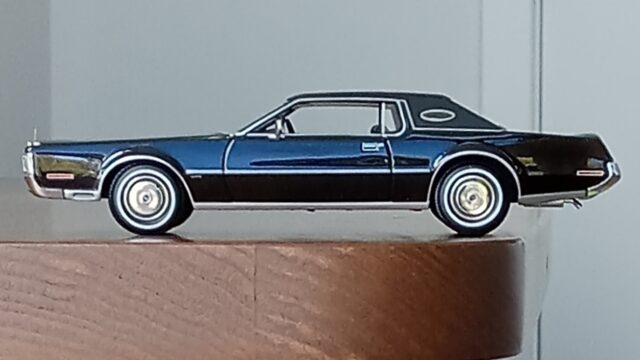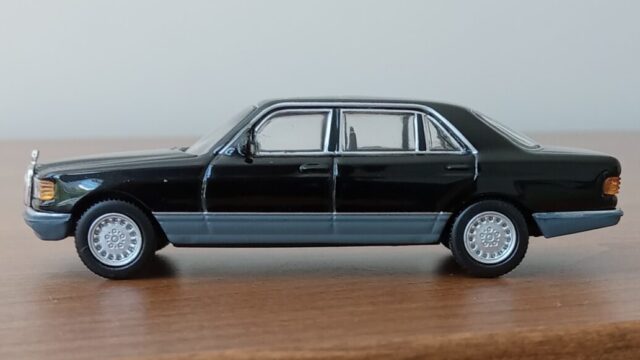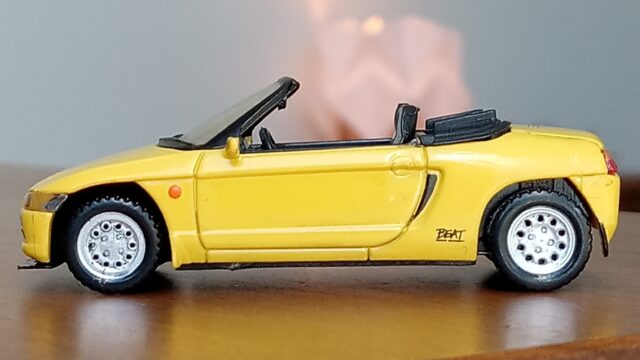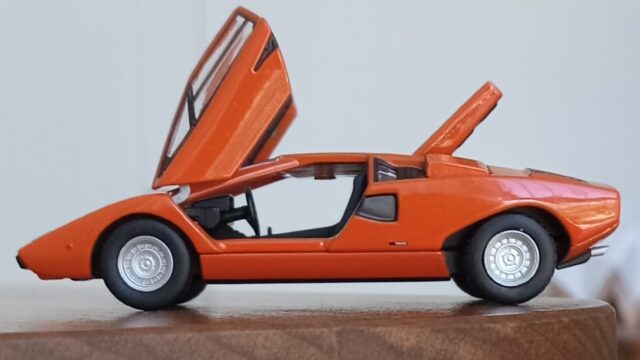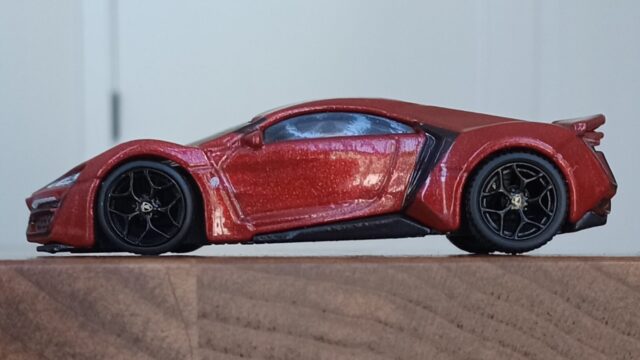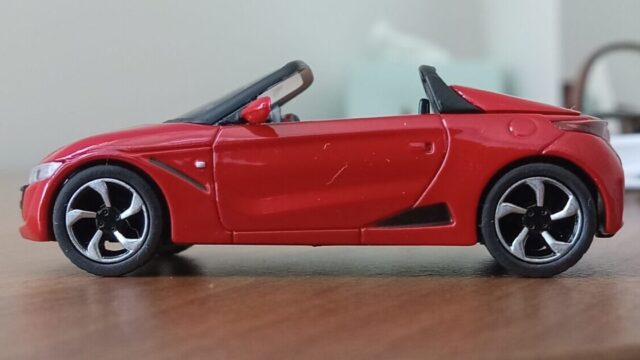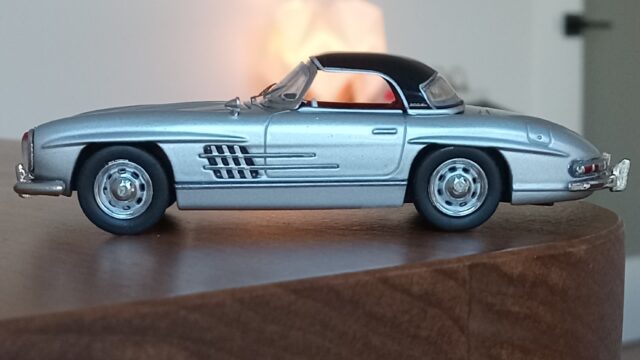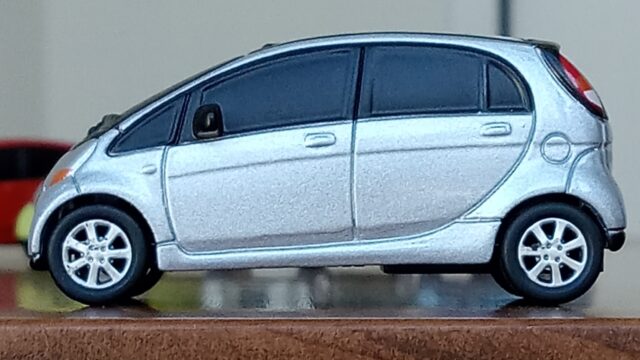
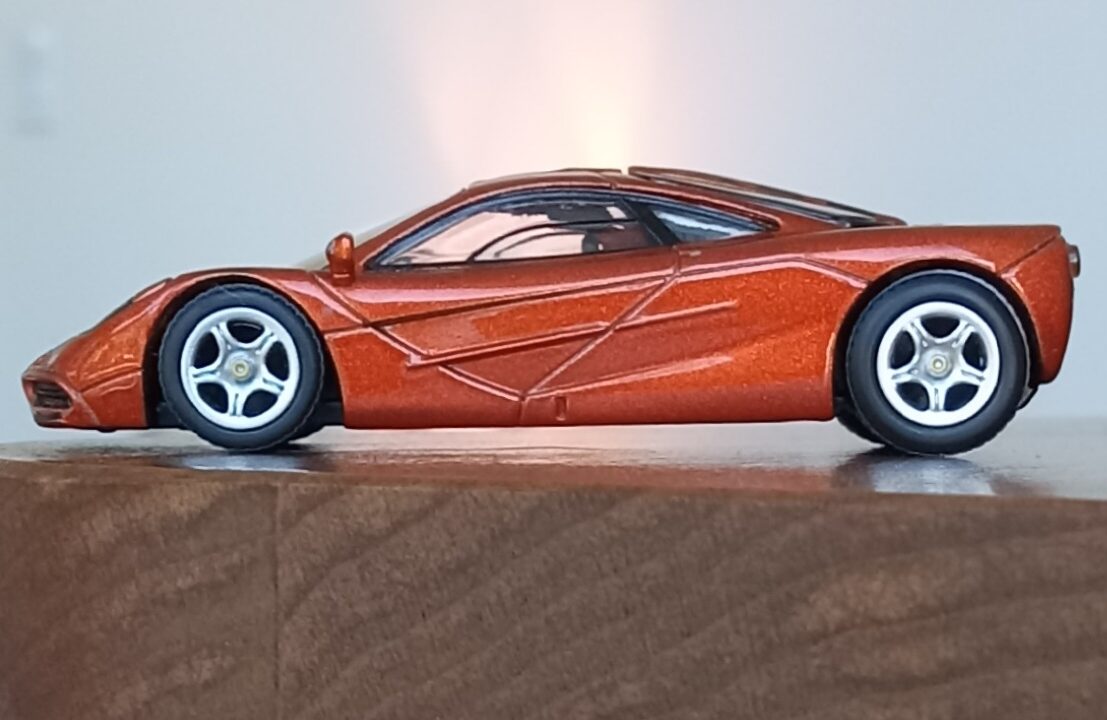
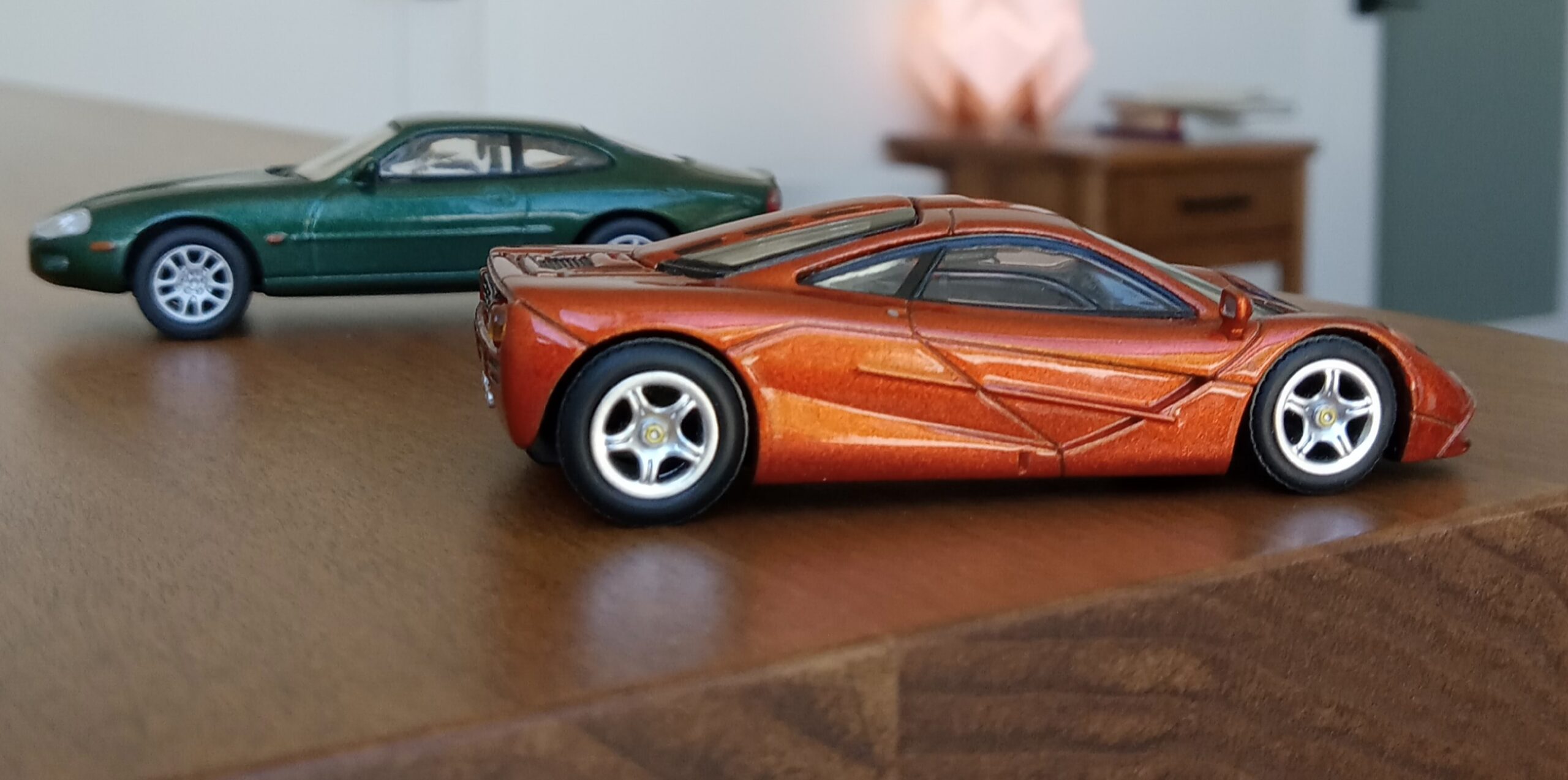
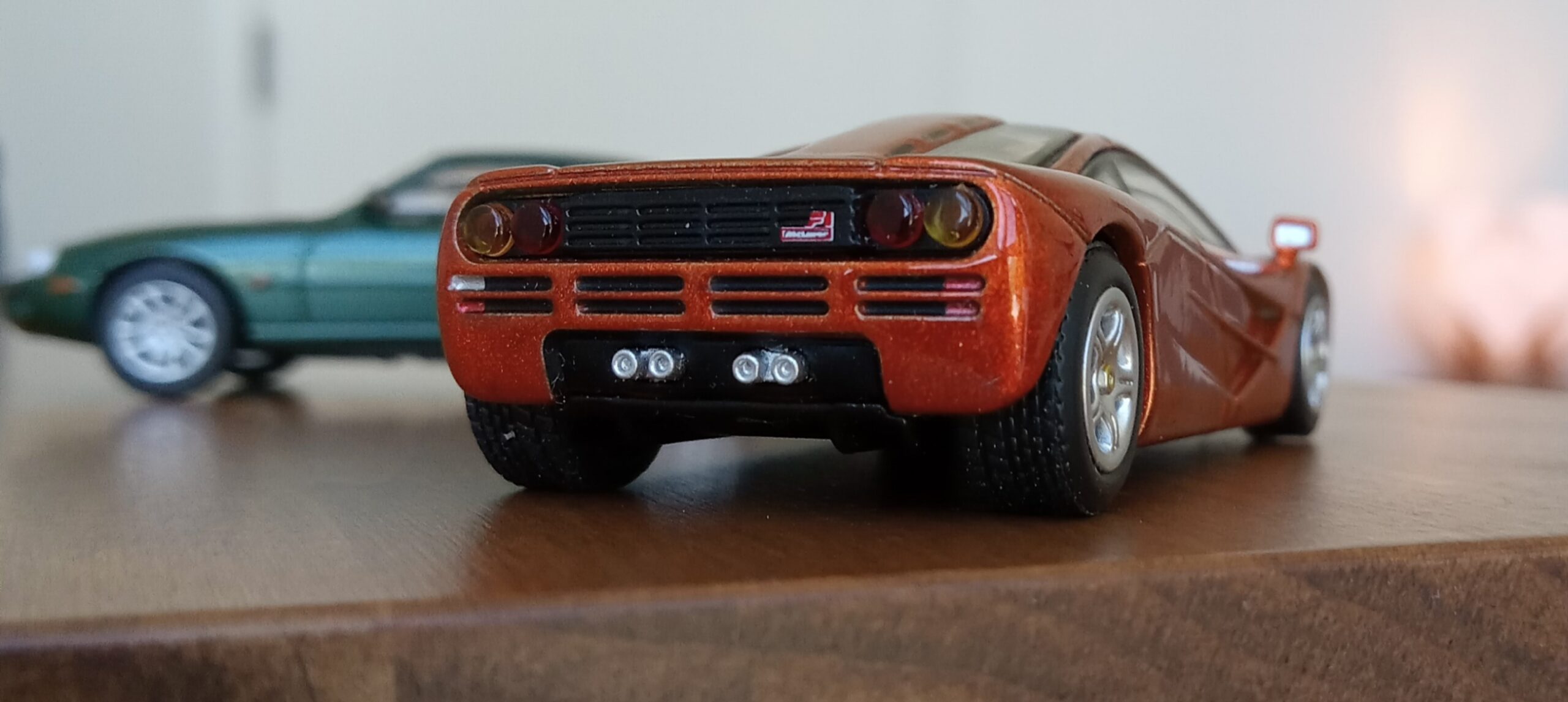
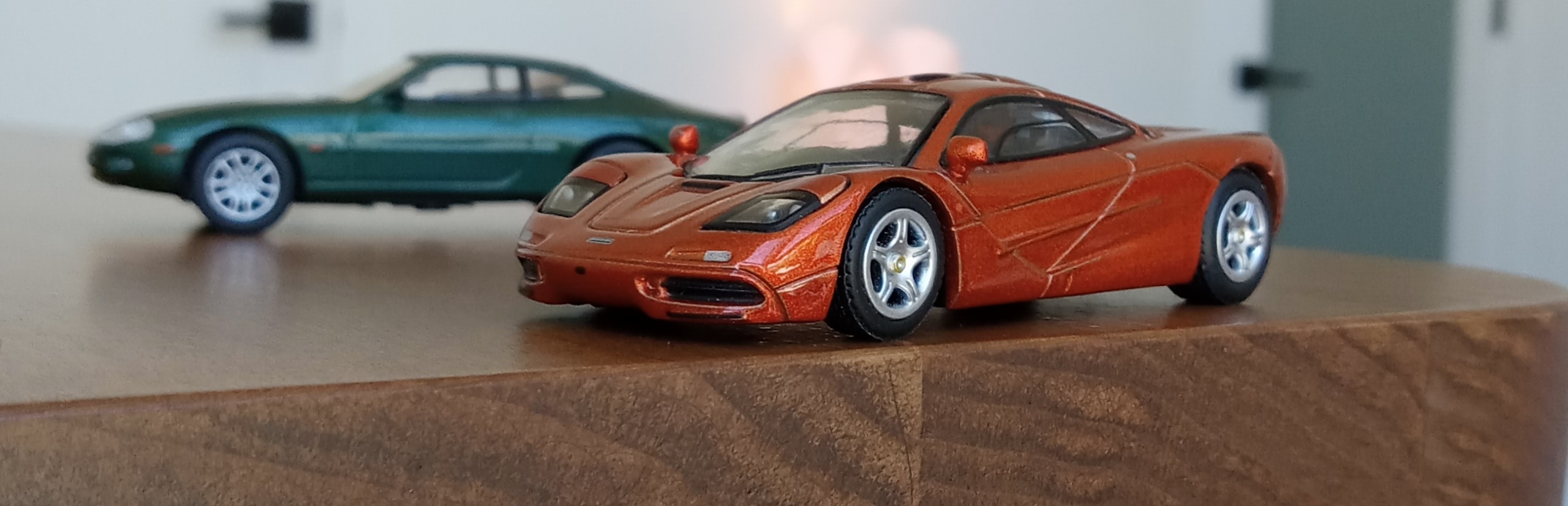
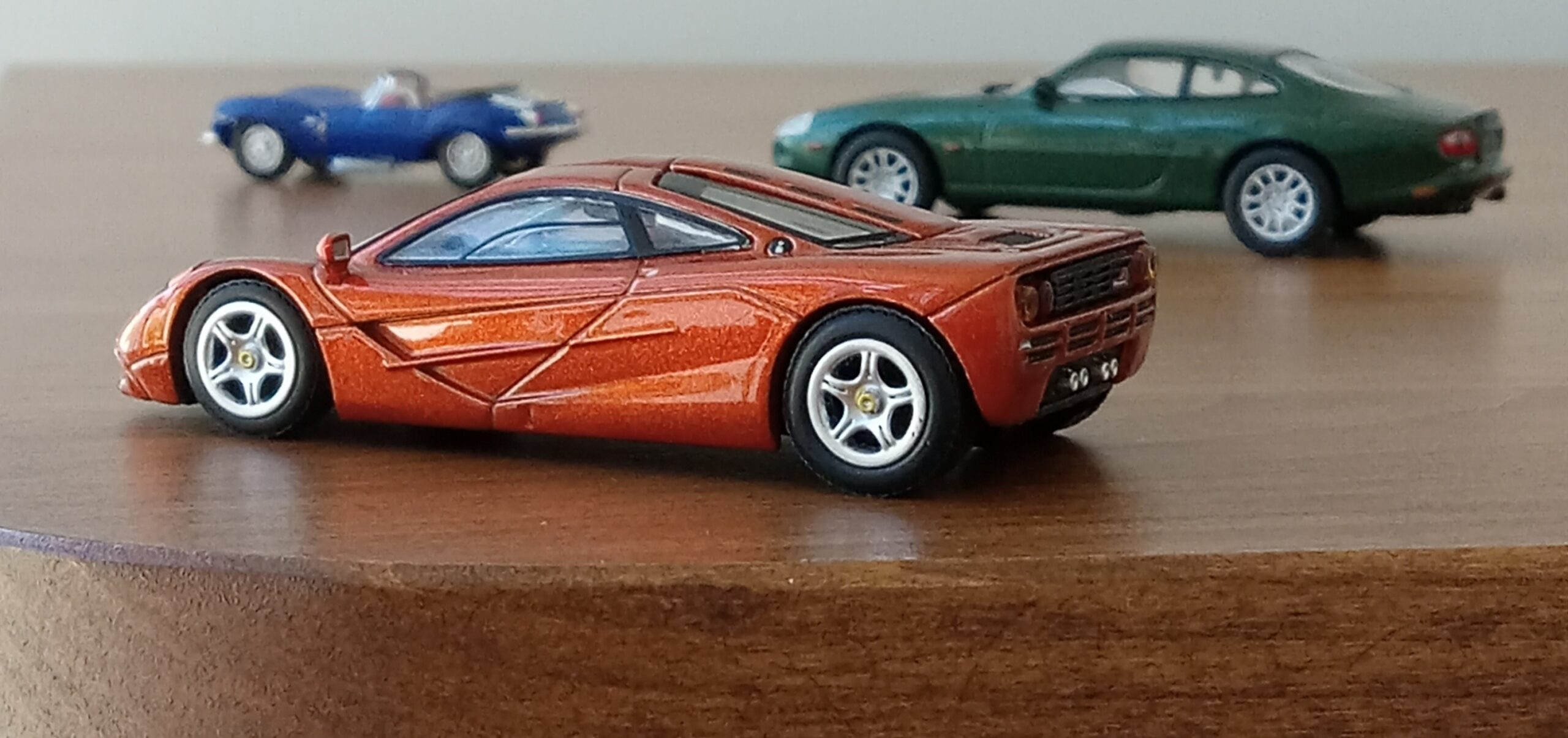
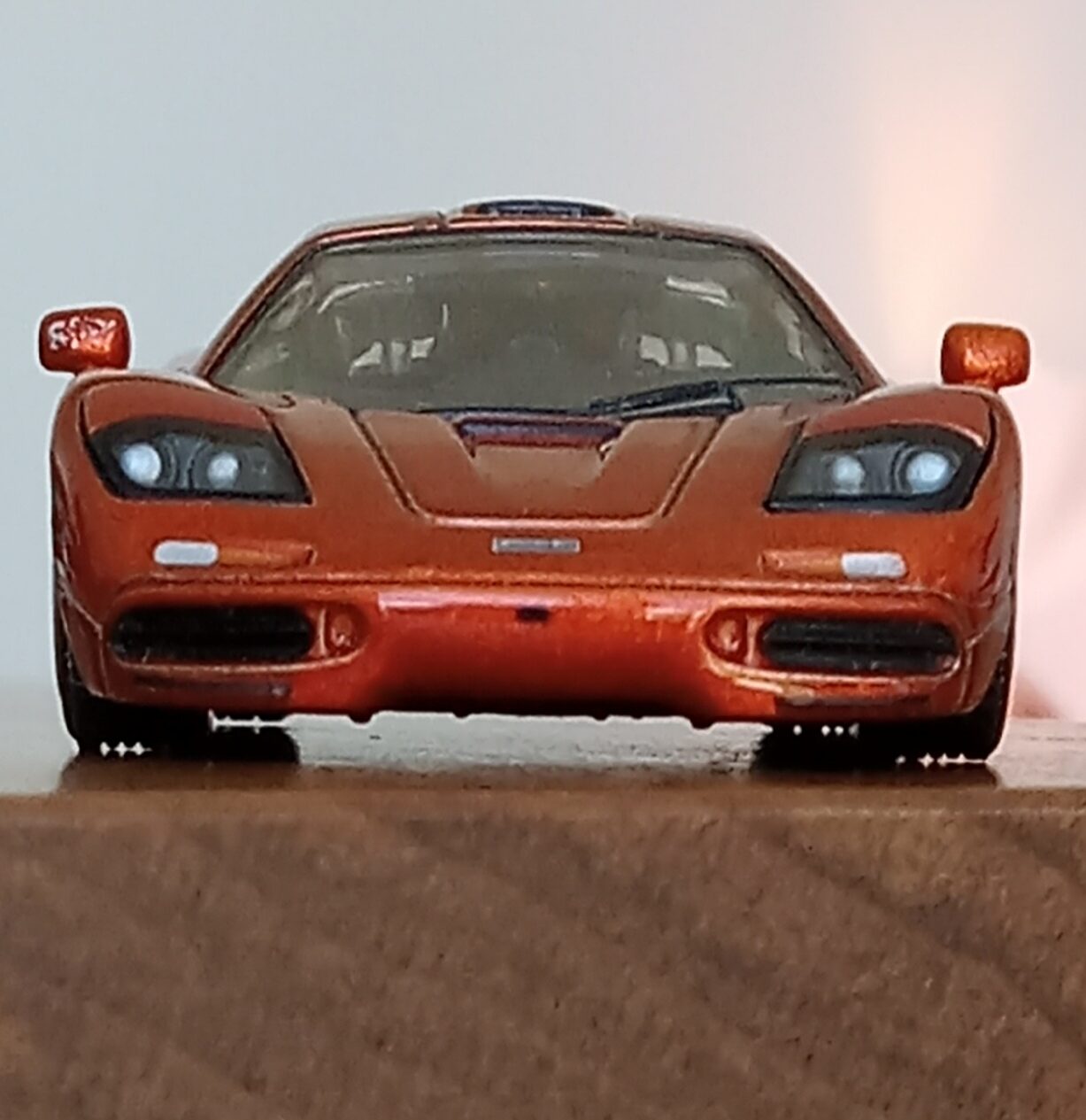
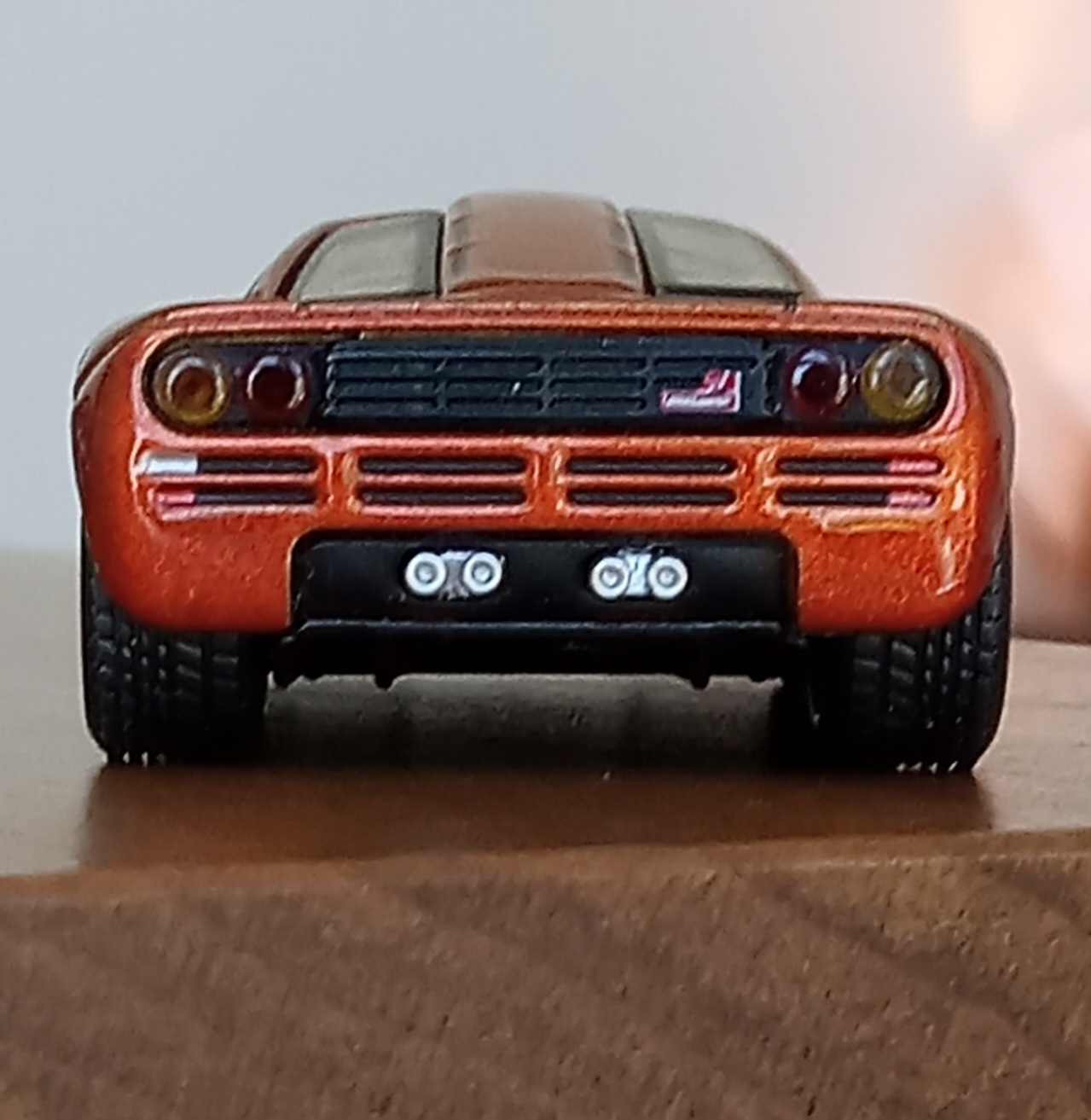
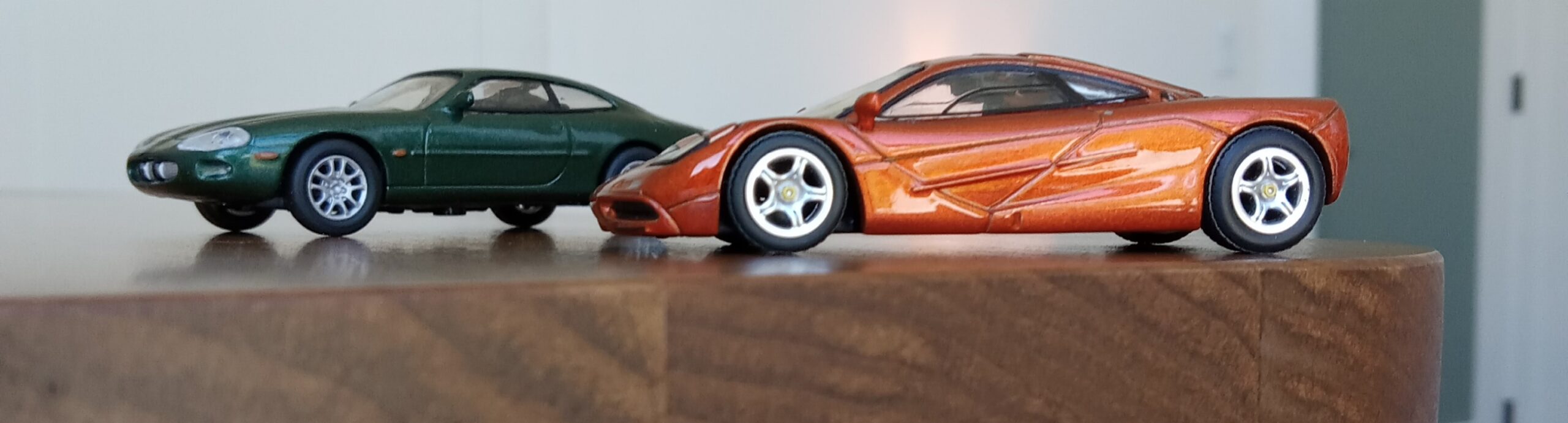
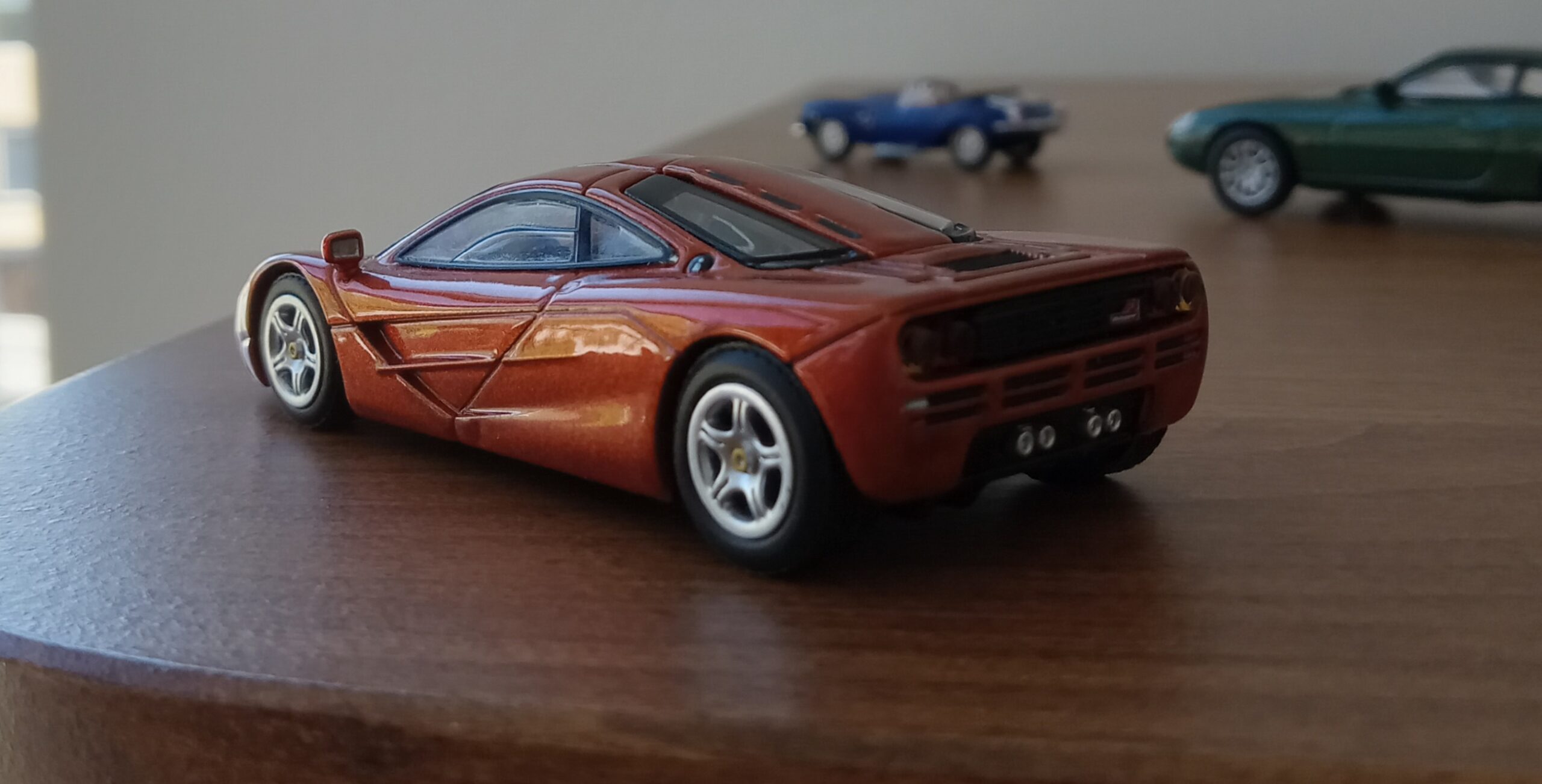
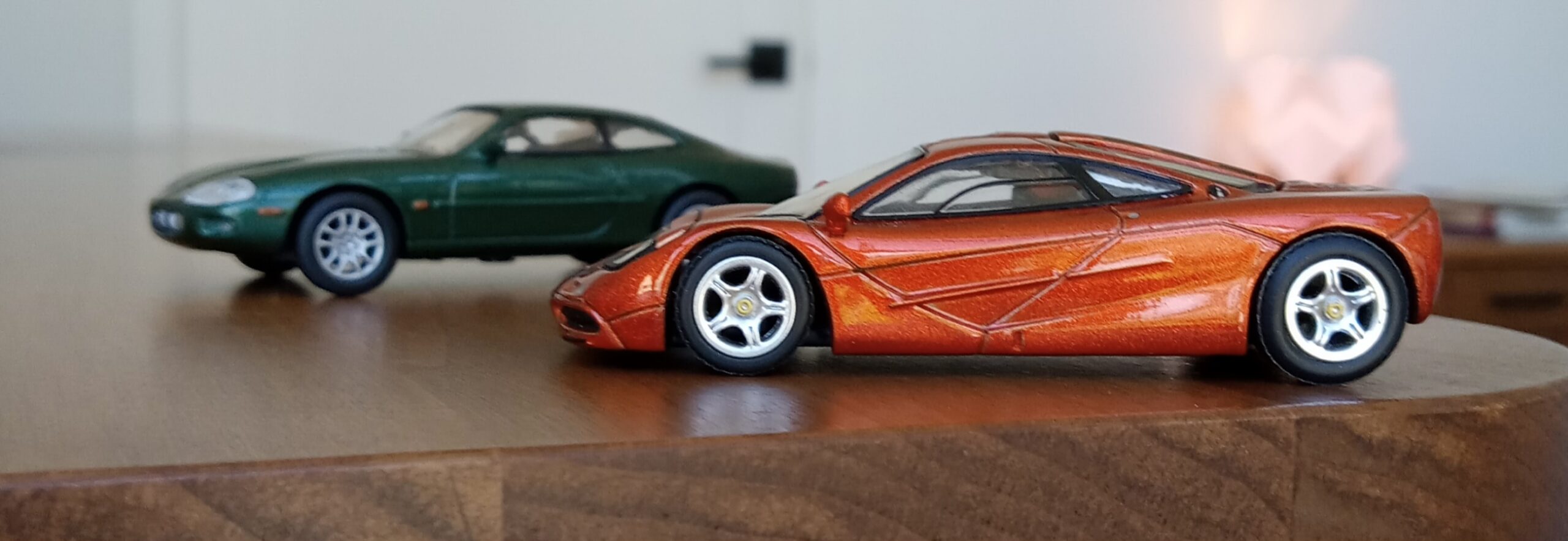
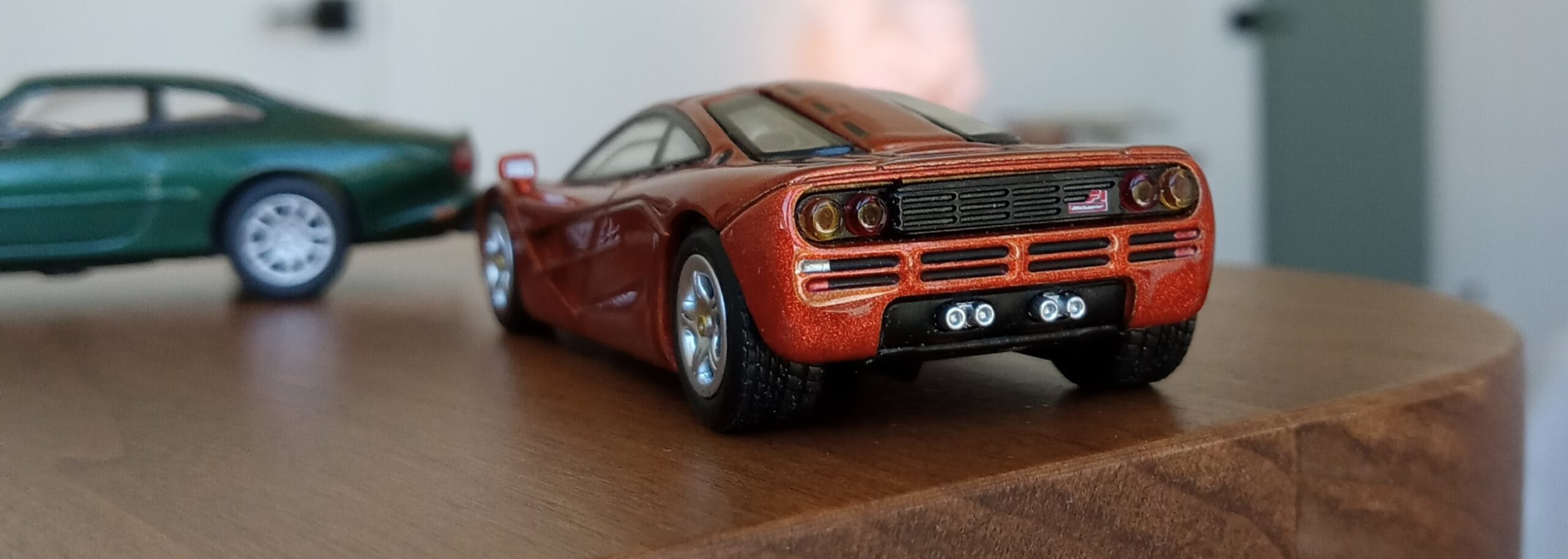
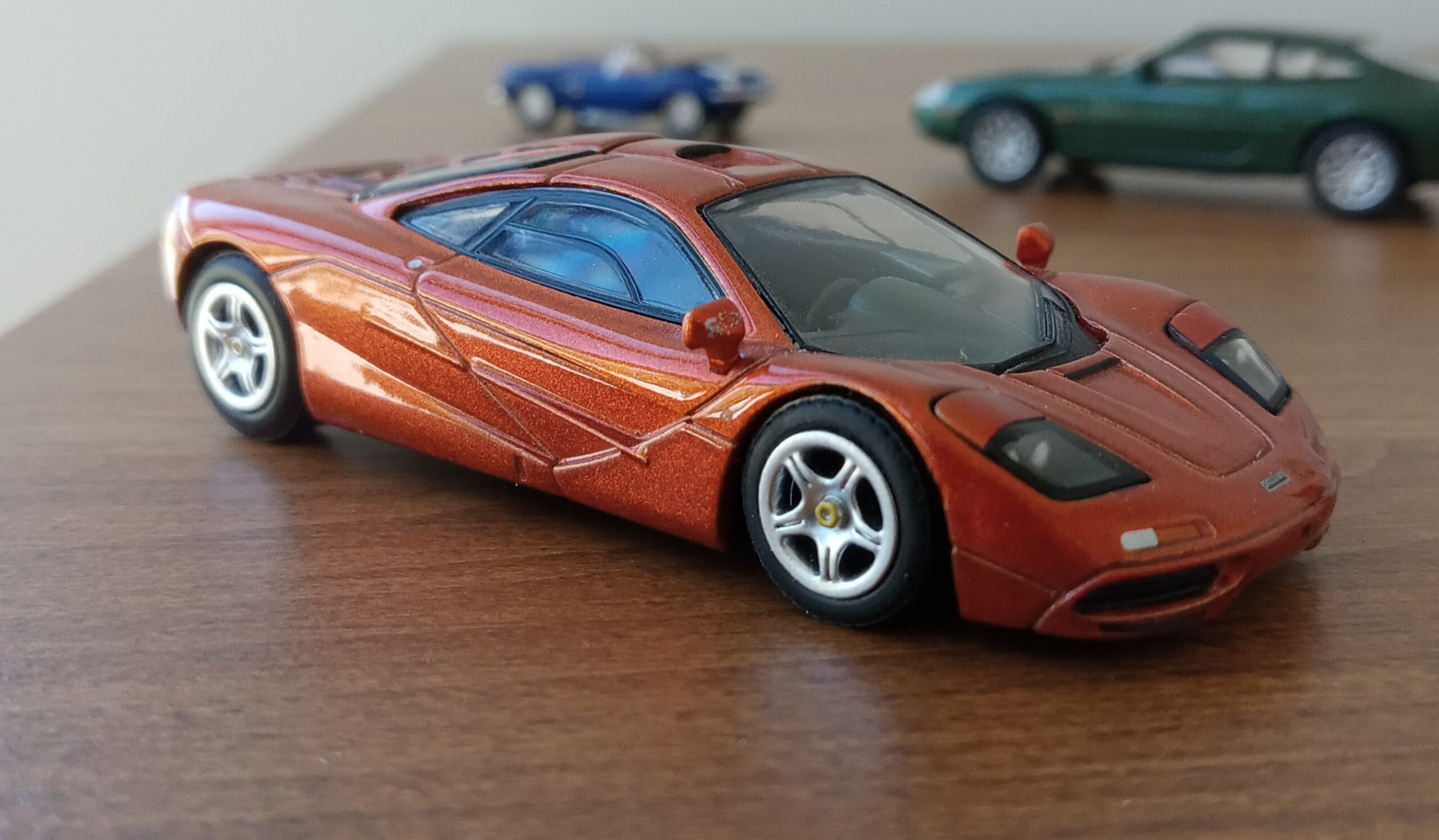
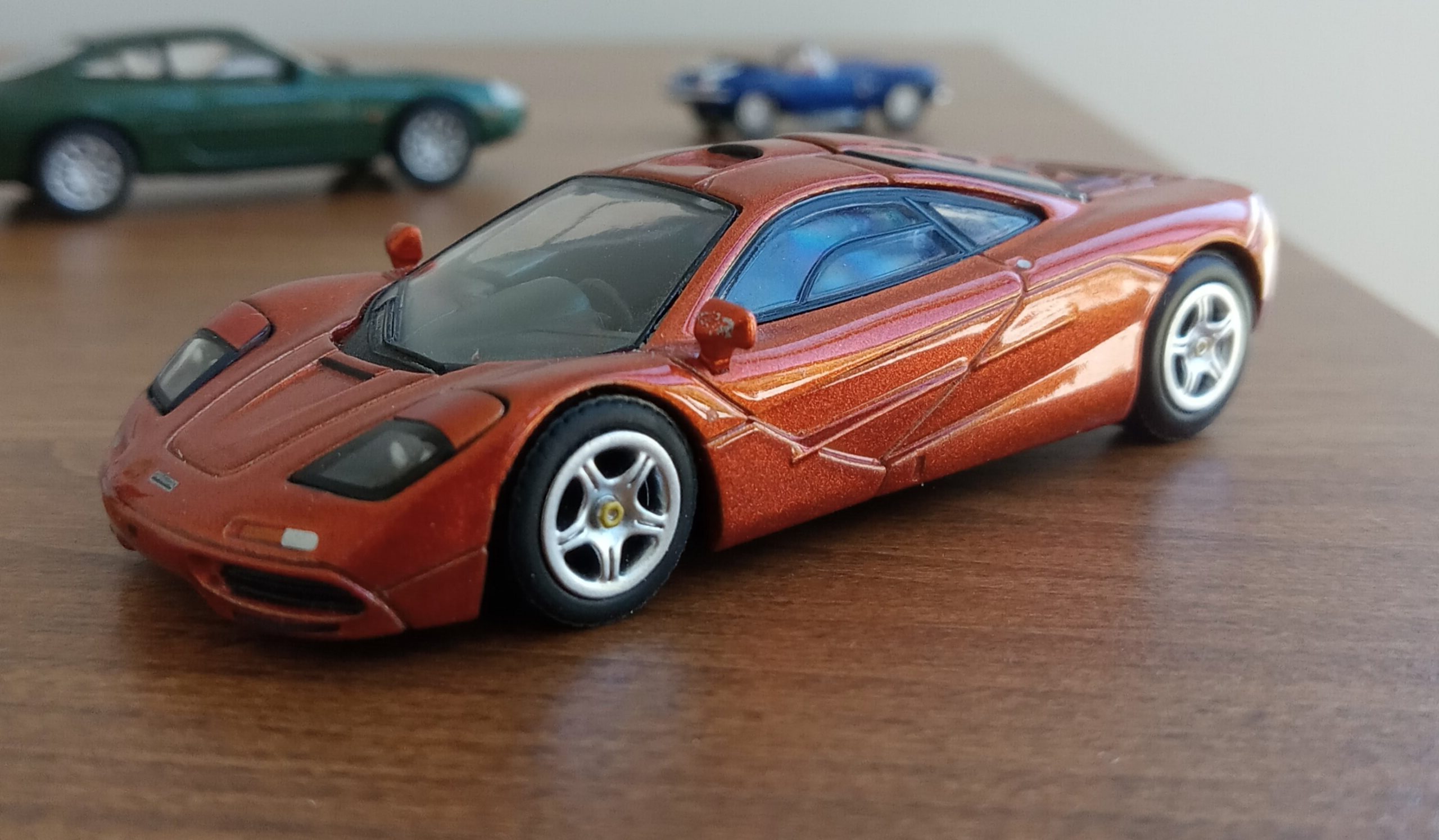
(写真撮影に使用したミニカー:ポップレース社製、1/64 マクラーレン F1、1992(メタリック・オレンジ)を無改造で使用)
第25回ーー2ドア・クーペの系譜: 第7回【英国編】マクラーレン F1、1992(外装色メタリック・オレンジ) Mclaren F1 、1992(Metalic Orange)
#好みの自動車デザインーー2ドアクーペの系譜:
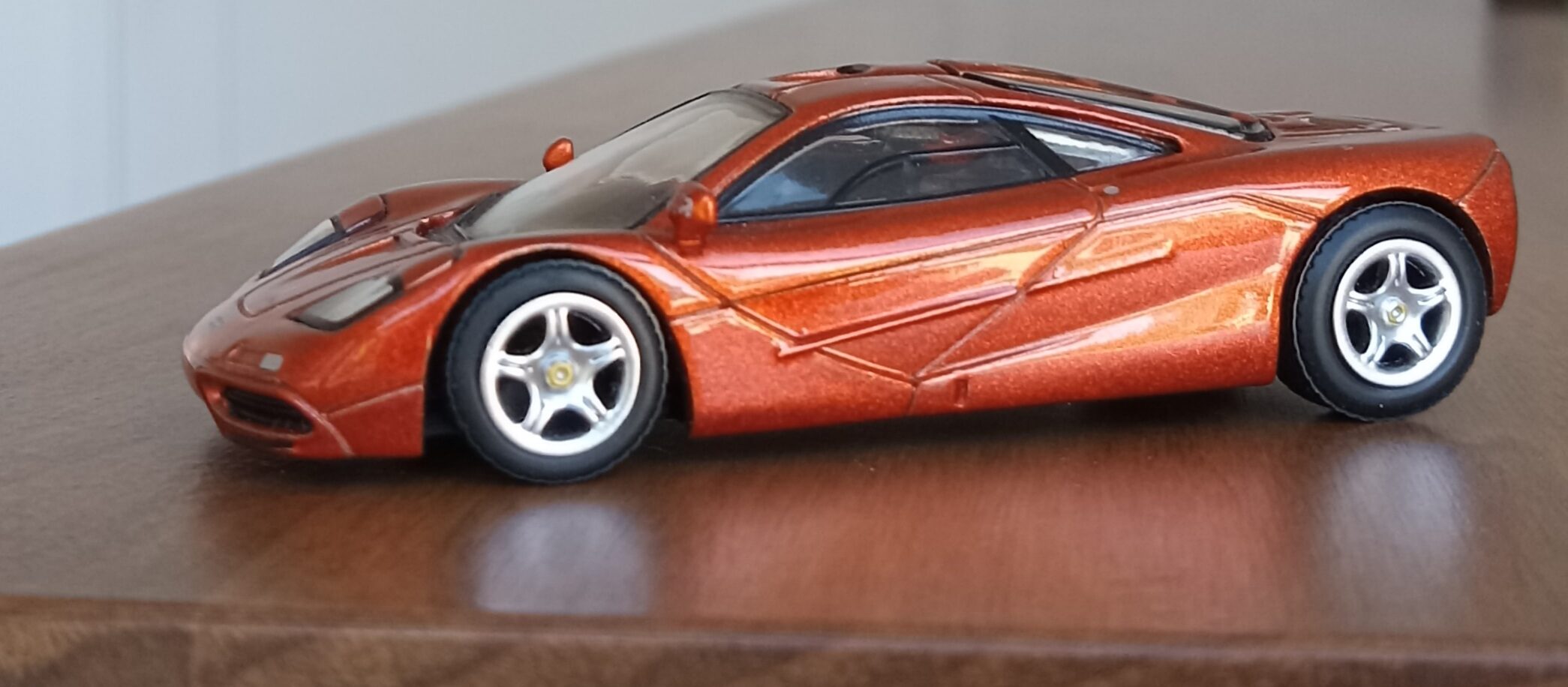
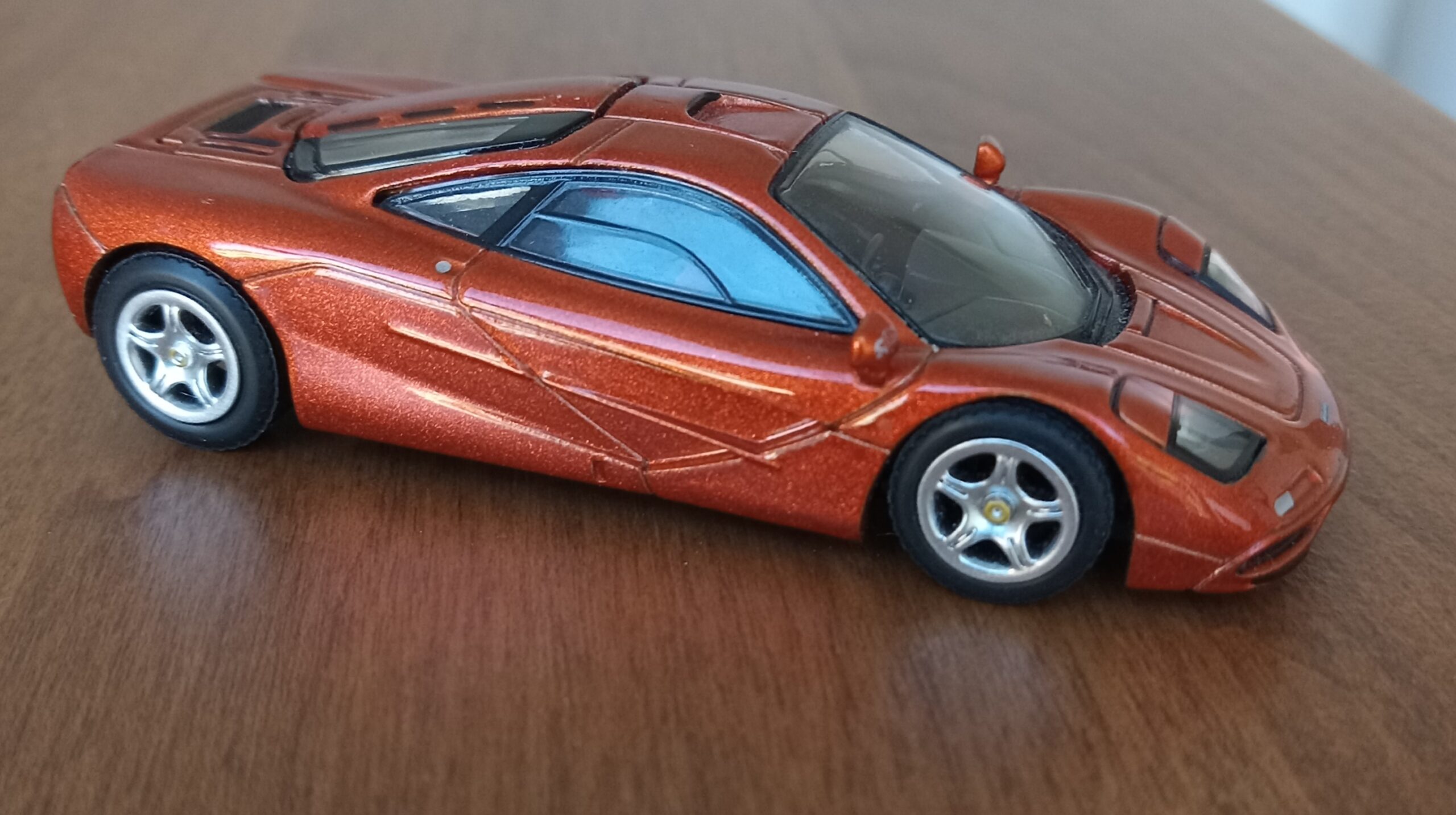
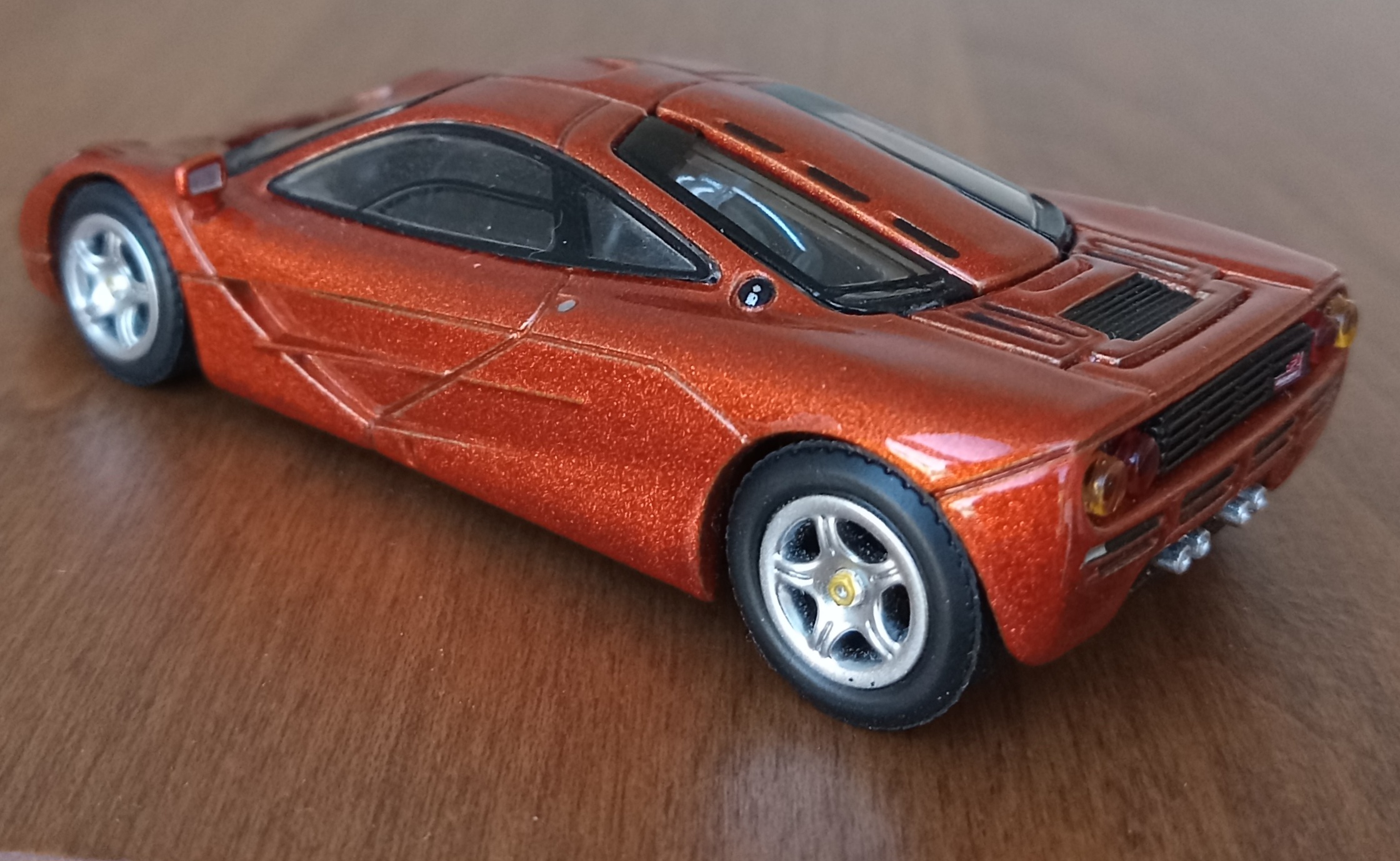
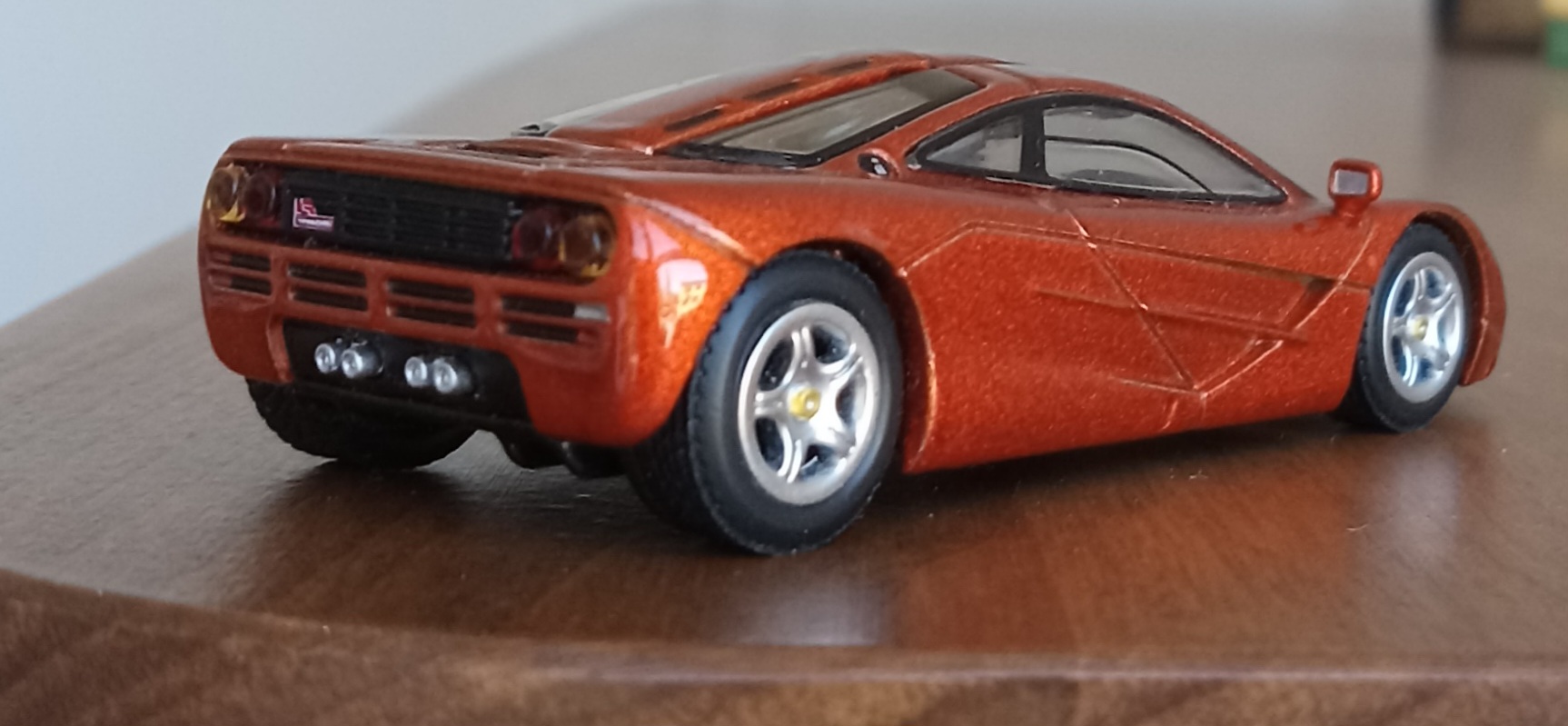
第25回目の今回は、『2ドアクーペの系譜』と題しまして、各国のお国柄や、外観デザインの個性が強く表れる、高級2ドア(GT)クーペ / ロードスターについてお話ししてみたいです。
【注意:オープンカーを含む】
以下の要領で進めていきます。
第7回の今回は【イギリス車編】
1992年型
マクラーレン F1についてのお話です。
【2ドア・クーペの系譜:目次(今後の予定を含む)】
【米国車編】
第1回:キャデラック・エルミラージュ、2013(メタリック・レッド)
第2回:リンカーン・コンチネンタル MK4、1972(ブラック)
第3回:マーキュリー・クーガー, 1967(LTメタリック・グリーン)
【ドイツ車編】
第4回:MB 500K スペシャル・ロードスター、1936(ブラック)
第5回:MB 300SL ロードスター、1957(シルバー)
第6回:MB SLS AMR ガルウイング、2010(ブラック)
【英国車編】
第7回:マクラーレン・F1、1992(メタリック・オレンジ)
第8回:ジャガー XKR、1996(ダークメタリック・グリーン)
第9回:アストン・マーチン One-77(LTメタリック・ブルー)
【日本車・ニッサン編】
第10回:ニッサン 初代シルビア、1965(シャンペン・ゴールド)
第11回:ニッサン 5代目シルビア、1988(LTメタリック・グリーン)
【イタリア車編】
第12回:フェラーリ 250TR ポンツーンフェンダー、1958(赤)
第13回:フェラーリ 250GTO、1962(イタリアン・レッド)
第14回:ランボルギーニ・コンセプトS、2005(パール・ホワイト)
【日本車・マツダ編】
第15回:マツダ コスモ・スポーツ、1967(シルバー)
第16回:マツダ ユーノス・コスモ、タイプ‐S(2トン:黒&グレー)
【フランス車編】
第17回:ブガッティ・タイプ59、1935(フレンチ・ブルー)
第18回:シトロエン・SM、1970(シャンペーン・ゴールド)
第19回:ブガッティ・ラ・ヴォワチュール・ノワール、2019(黒)
【日本車・トヨタ編】
第20回:トヨタ/ヤマハ・2000GT、1967(アイボリー・ホワイト)
第21回:トヨタ・2代目ソアラ、1986 (2トン:黒&グレー)
第22回:レクサス LC【GWZ100型】、2017(メタリック・レッド)
【米国車編②】
第23回:ダッジ・チャレンジャー&プリムス・バラクーダ、1971
第24回:フォード・シェルビーGR-1 コンセプト、2004(クローム)
第25回:シボレー・コルベット C4 ZR-1、1990(真紅)
第26回:コルベット・スティングレー コンセプト、2009(シルバー)
#F1デザインの鬼才:ゴードン・マーレイ設計の最高性能&超スパルタンな3人乗りスポーツカー
マクラーレン F1に対して、
自動車評論家、福野礼一郎さん曰く、
『究極のロードカー』
設計者ゴードン・マレーの「軽量化」と「パッケージング」に対する徹底したこだわりを、自身の著書や連載で繰り返し絶賛しています。
私は以前から彼の著書の愛読者で、
このマクラーレン F1についての
『自腹で個人輸入してのインプレッション』を読み、
かねてから外観デザインにほれ込んでいた、この稀有な公道レーサーをさらに愛でるようになりました。
*ミッドシップのパッケージレイアウトに新たな革命的変化をもたらした
『3人乗り+
ドライバーが真ん中に乗車』と言う、
常識破りのアイデア、
*ブレーキフルードタンクの蓋に高価な軽合金(チタン)を使うといった狂気に満ちた執念、
等など、話題に事欠かない、
完璧主義&合理主義に貫かれたゴードン・マレーの【究極の自動車】について
こんな感じで、
お話ししていきたいです。
*実車解説: 狂気的シャーシ・デザイン
*外観デザインの特徴:ミニマル&クレージー
*『私』とマクラーレン F1
*三題噺:チタン・三角形・福野礼一郎
*その他の『妥協知らずのデザイン』
*実車解説 : 狂気的シャーシ・デザイン
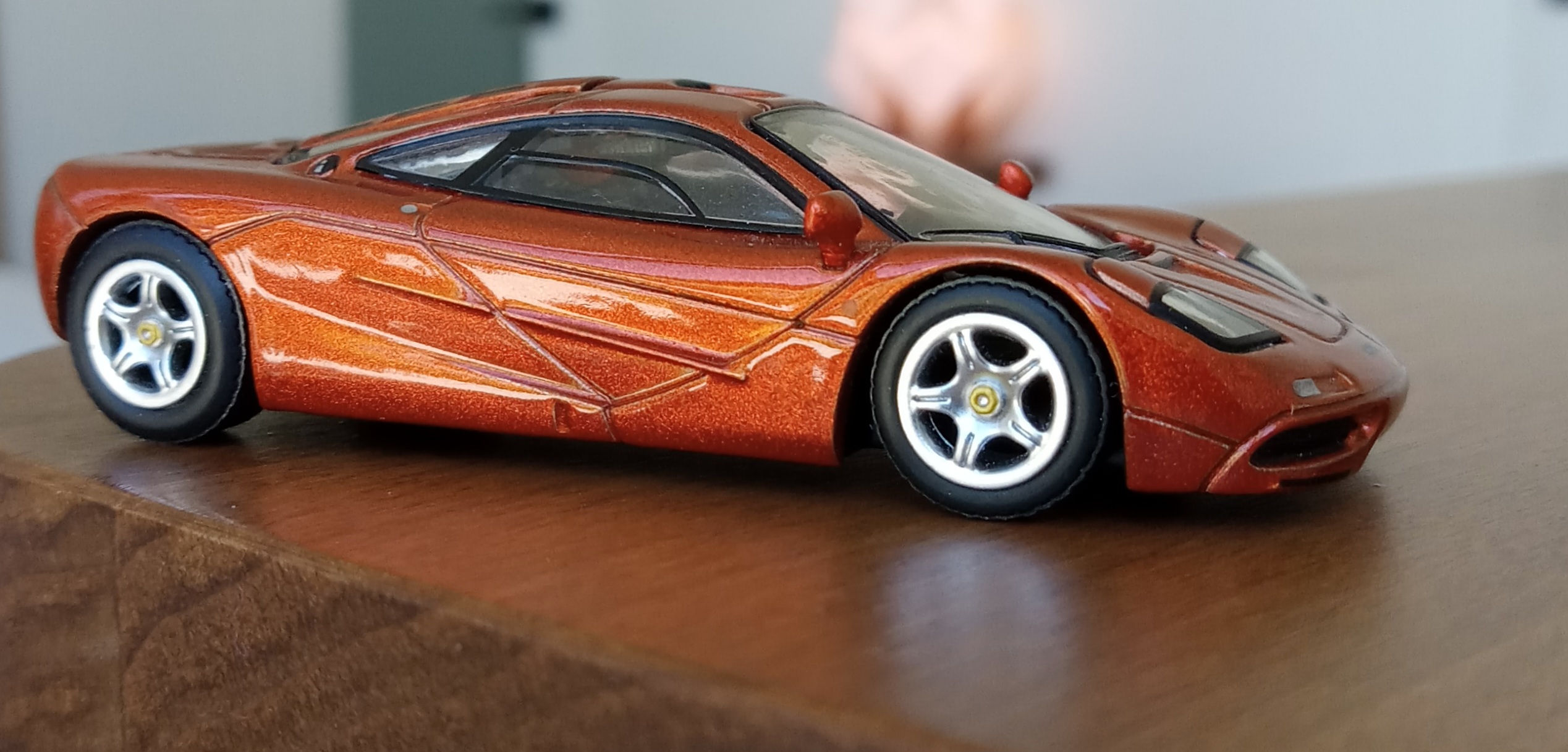
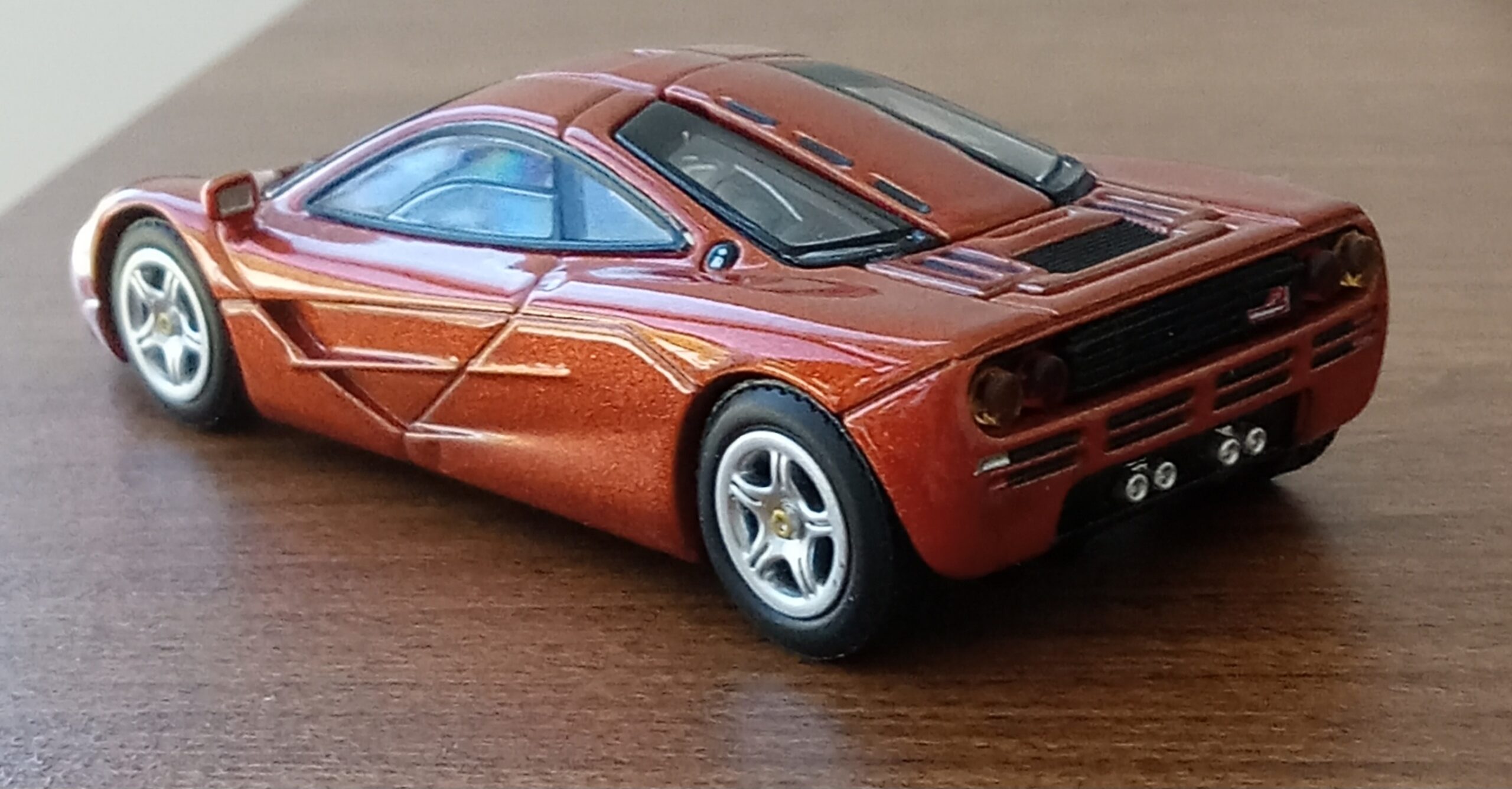
実車を個人輸入してまで、マクラーレン F1につての研究・考察を貫かれた、福野礼一郎さんによる著作中のコメントなどを参考にまとめてみました。
n
n
n
N
N
N
Nn
*「工業製品としての完璧さ」と
*「設計思想の純粋さ」の両面から絶賛しています。nn
N
N
N
以下の通りです。
n
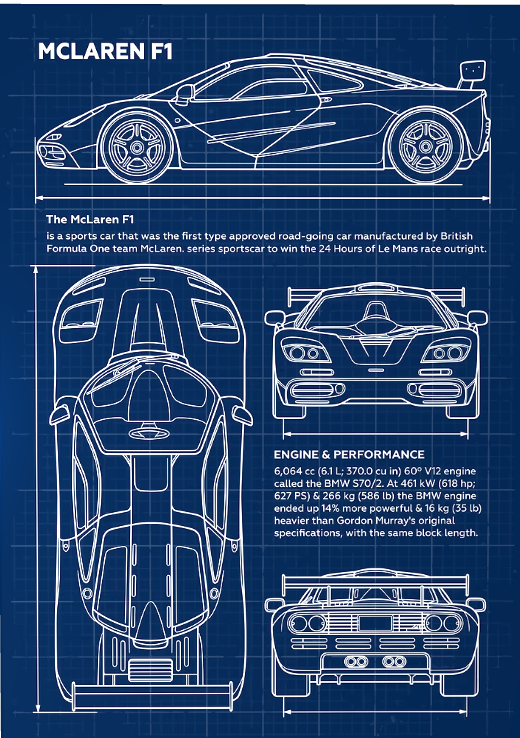
*慣性モーメントの低減: 重い物体(ドライバーやエンジン)を車両の中心に集めることで、運動性能を極限まで高めている点を「理にかなった設計」として称賛
*実用性の共存: 単なるスーパーカーに留まらず、3人が乗れて荷物も積めるという、ゴードン・マレーの執念とも言える「パッケージングの妙」を絶賛
n
n
n
n
n
n
n
n
n
N
N
N
N
n
N
N
N
NN
n
*「生きているような」感触: 現代のターボ車にはない、ドライバーの意志に即座に反応する自然吸気エンジンの鋭さを「作り手の情熱がダイレクトに伝わる」と表現
n
*徹底した遮熱: エンジンルームに金箔(24金)を使用して断熱を行うなど、機能に基づいた贅沢な素材使いも評価の対象
n
n
N
N
3. 軽量化への異常なまでの執着
n
福野氏は、車重を1.1トン程度に抑えた「軽さ」こそが最大のパフォーマンスであると説いています。
n
*カーボンモノコック: ロードカーとして世界で初めてフルカーボンモノコックを採用し、軽量かつ高剛性を実現した技術的先駆性を高く評価
*専用設計のパーツ: オーディオや車載工具に至るまで、市販の流用品を一切使わず、この車のためだけに軽量設計された部品で構成されている「妥協のなさ」を絶賛
n
n
N
N
n
F1マシンと同じダブルウィッシュボーン式を採用しながらも、単に固めるのではなく、ロードカーとしてのしなやかな乗り心地と正確なハンドリングを両立させている点を高く評価しています。
*福野氏は、ブッシュの特性やジオメトリーの計算し尽くされた設計を「知性の勝利」として紹介N
#福野氏は著書『福野礼一郎のクルマ論評』シリーズで、
これらのメカニズムが図解や緻密なテキストでさらに深く掘り下げられています。
マクラーレンF1の生産台数: 1992年から1998年までに合計106台(ロードカー、GTR、LM等を含む)が生産されました。
nn
n
N
N
N
n
N
#主要諸元:
- 型式:BMW S70/2
- 総排気量: 6,064 cc、60度 V型12気筒 DOHC 48バルブ(自然吸気)
- 最高出力 : 627 ps (461 kW) / 7,500 rpm
- 最大トルク:650 Nm (66.3 kgm) / 5,600 rpm
- 駆動方式:MR(ミッドエンジン、リアドライブ)
- 定員:3名
- 車体形式:2ドア・クーペ
- ホイールベース:2,680 mm
- 全長:4,288 mm
- 全幅:1,820 mm
- 全高:1,140 mm
- 車両重量:
1,138 kg 〜 1,140 kg
N
N
N
N
*外観デザインの特徴:ミニマル&クレージー
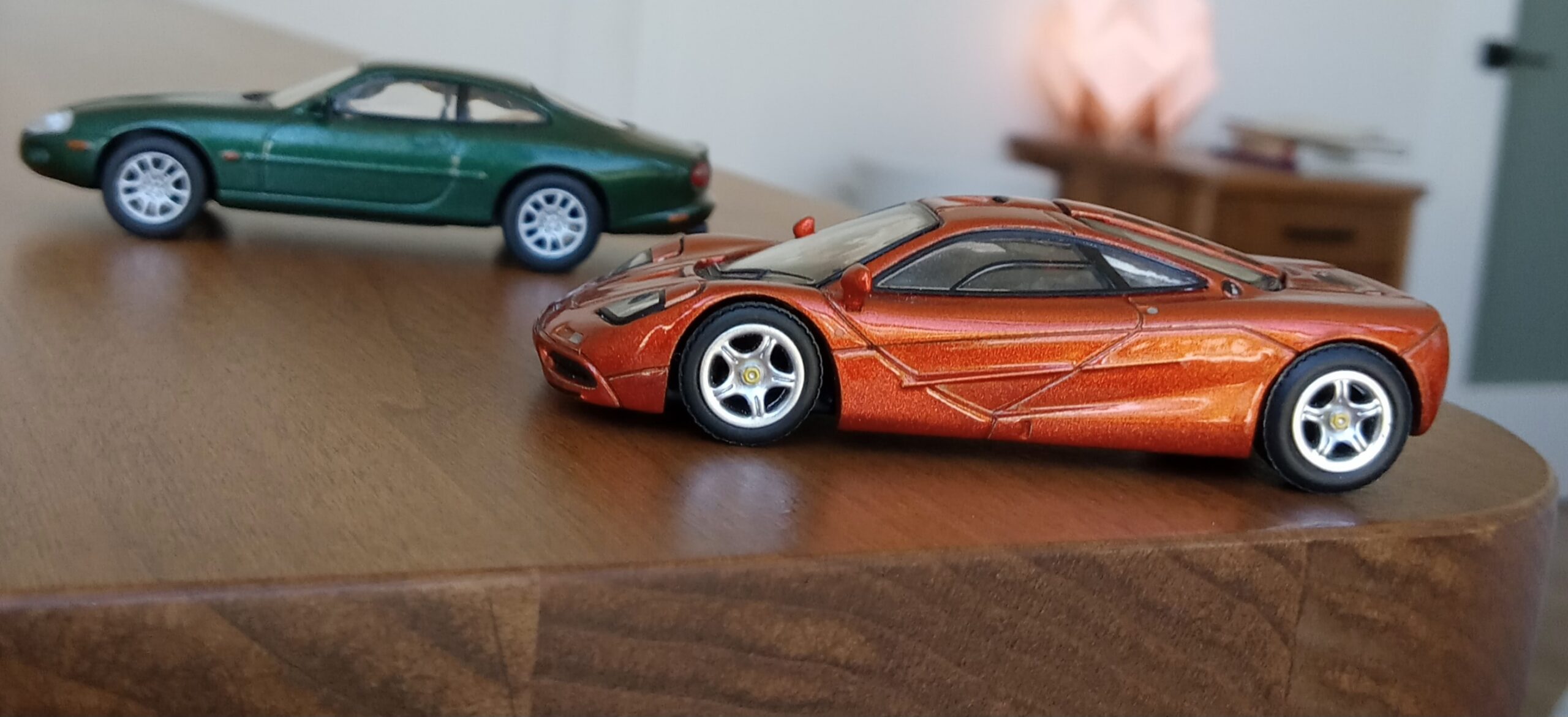
#デザイン考察: 三人乗車を象徴?ーーーー>サイドビューの三角形のテーマ
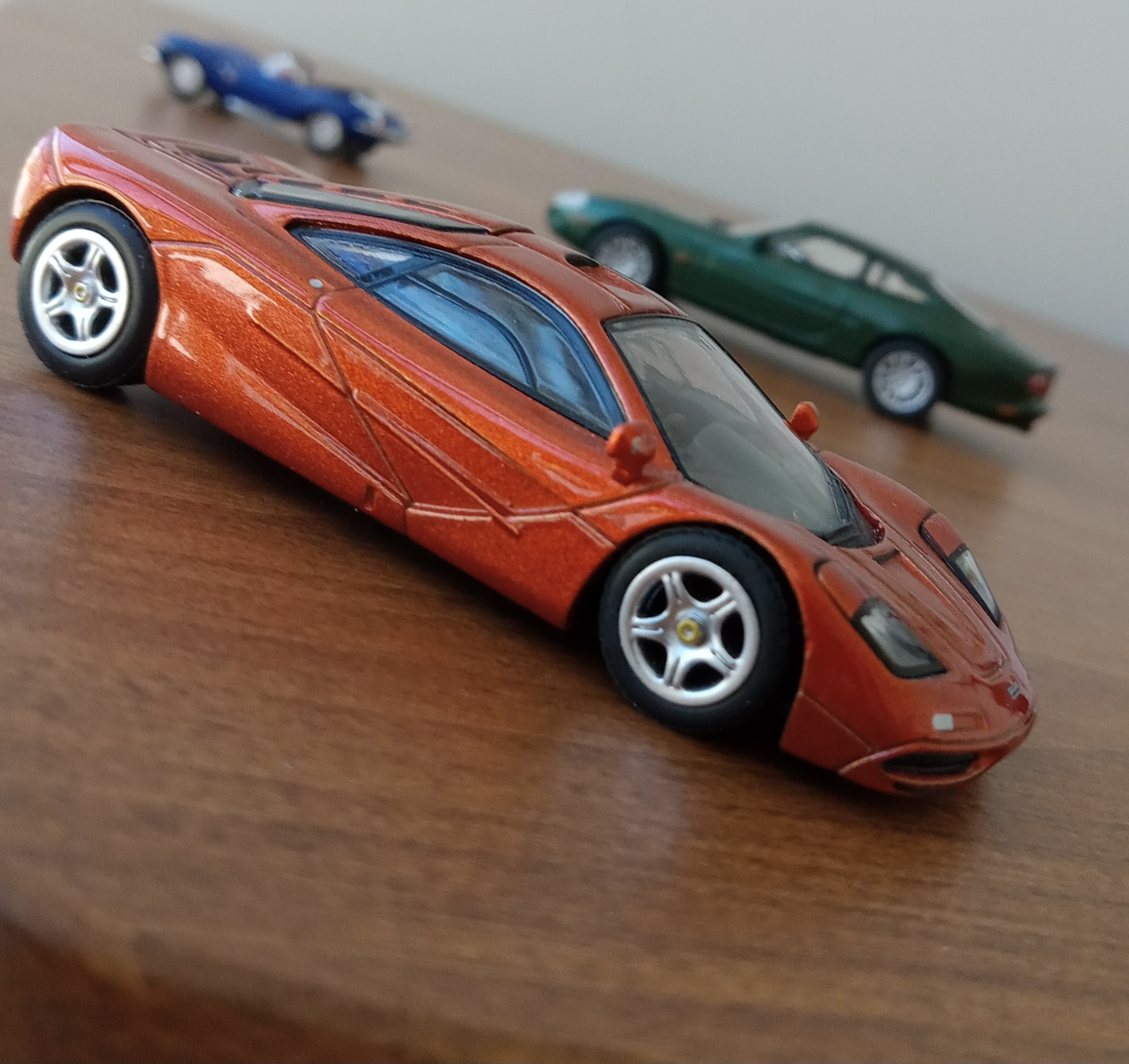
三人乗りの、
『公道仕様の究極スポーツカー』マクラーレンF1、
私にとってのデザイン的特徴は以下の6点です。
1、超合理的なパケージを鋭く包むミニマル&カタマリ感あふれる全体像
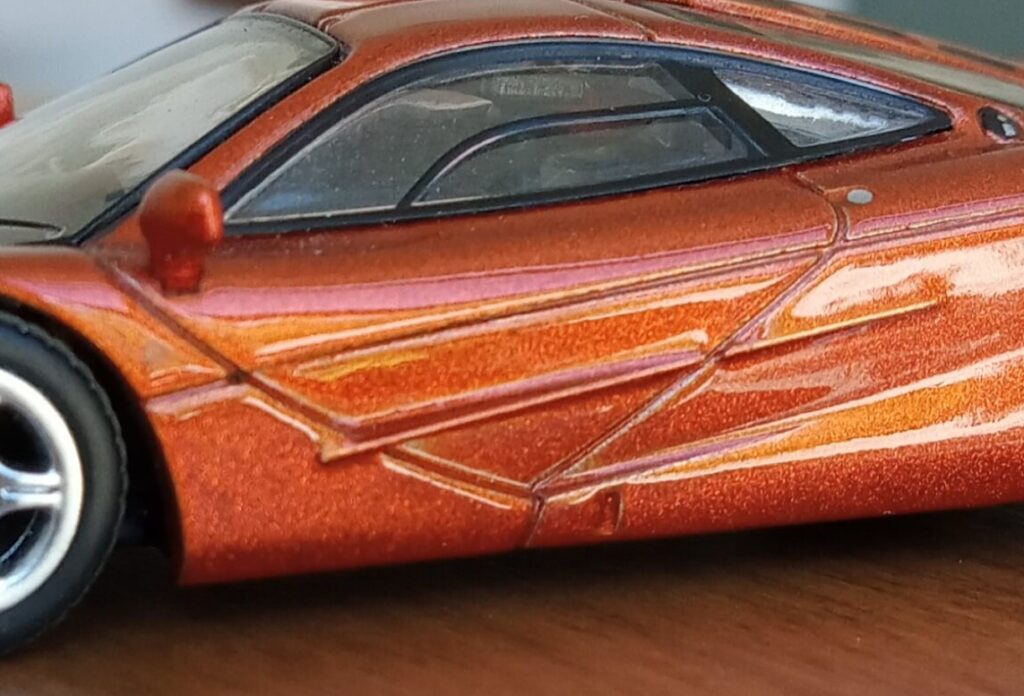
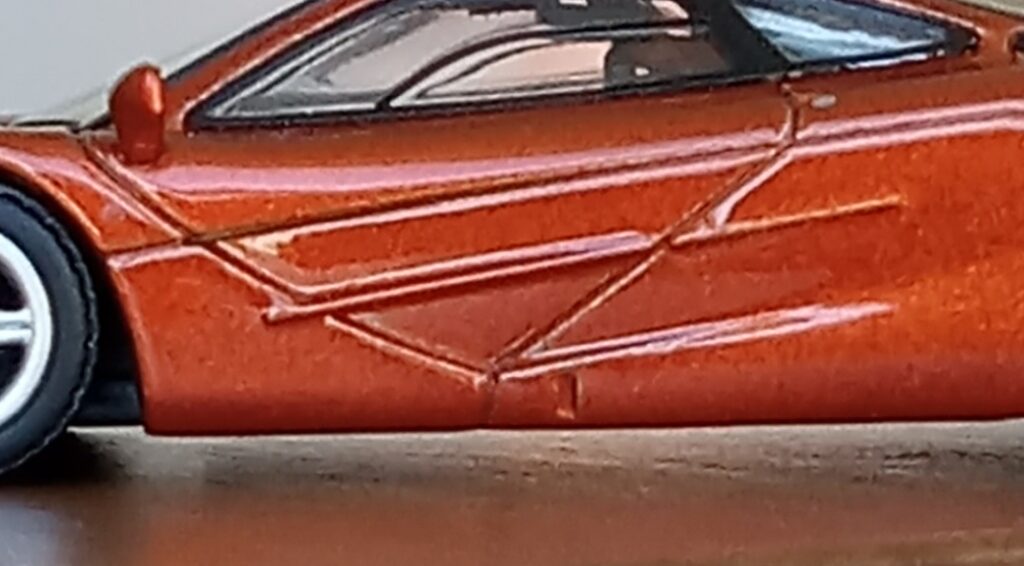
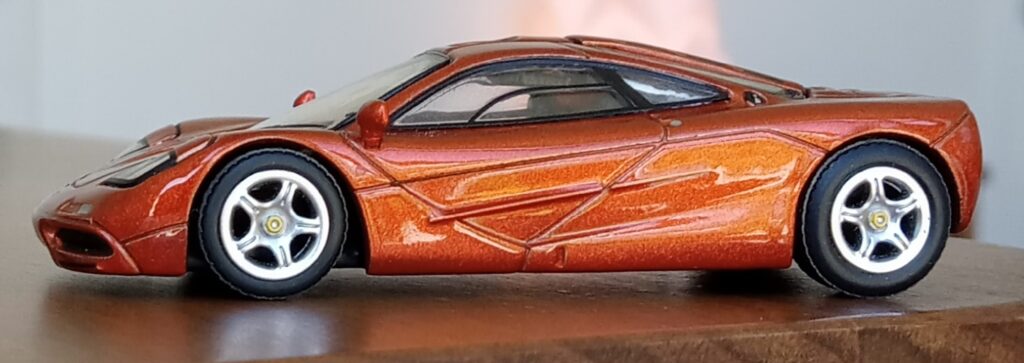
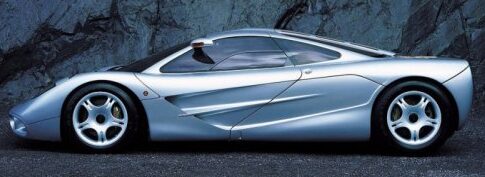
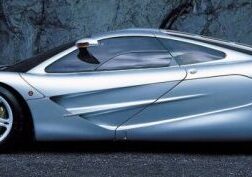
2、美しいサイドビュー・プロポーションを引き締める『三角形』テーマを見事に構成するサイドエア抜きベントとドアカットラインーーー>後の数々の自動車デザインに影響を与えました。
3、前後別サイズのホイール&タイヤサイズを巧妙に生かしたスタンス感満点の強烈ウエッジーなサイドビュー
4.ホイール間の三角以外の余ったスペースにラゲッジ・スペースを設けるという発想の転換の素晴らしさ
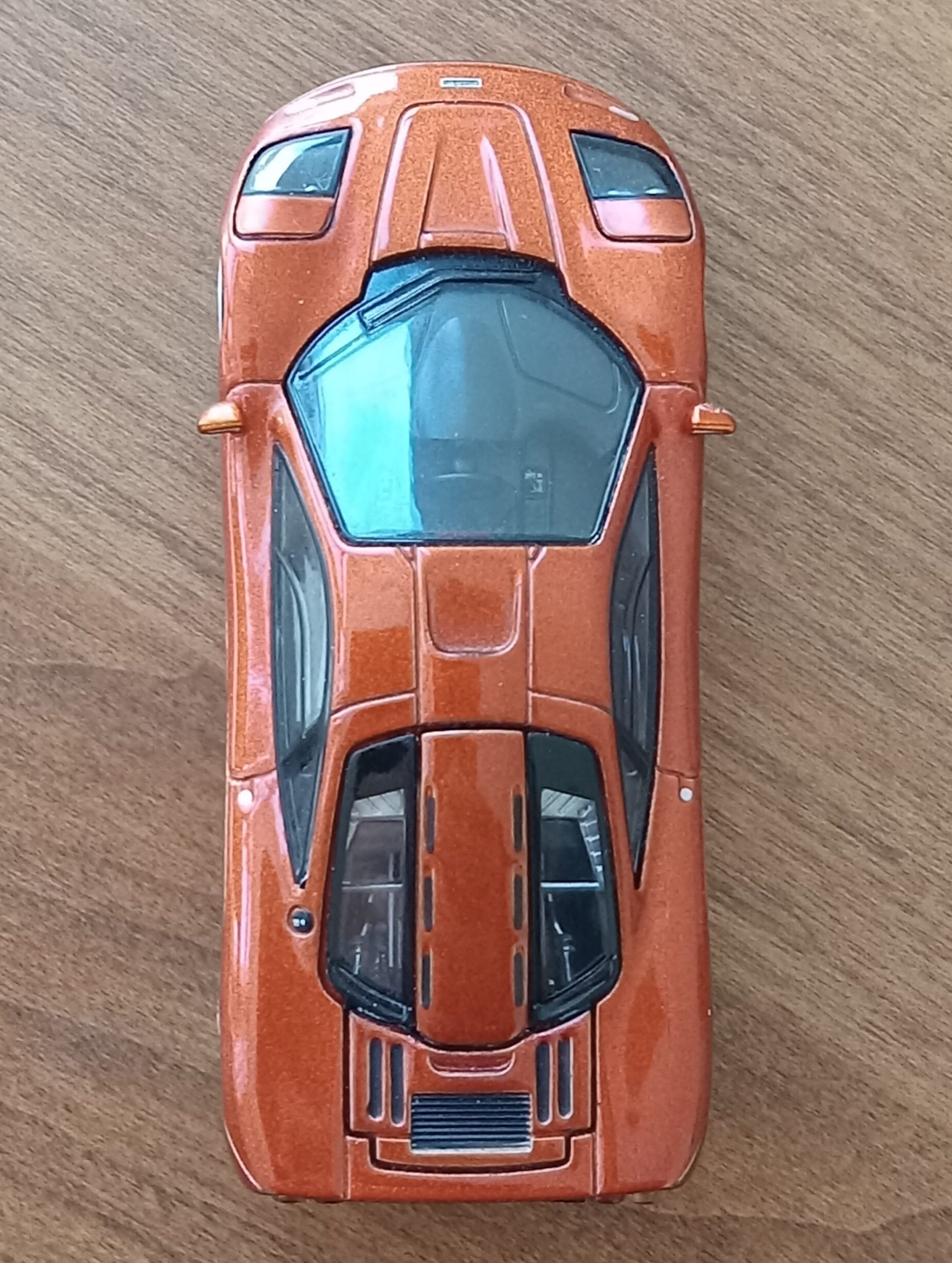
5.上から見た時に巨大なエンジンを収めるリアウインドー周辺に集中するメカメカしいディテールが産み出す『粗密』のコントラストの妙味
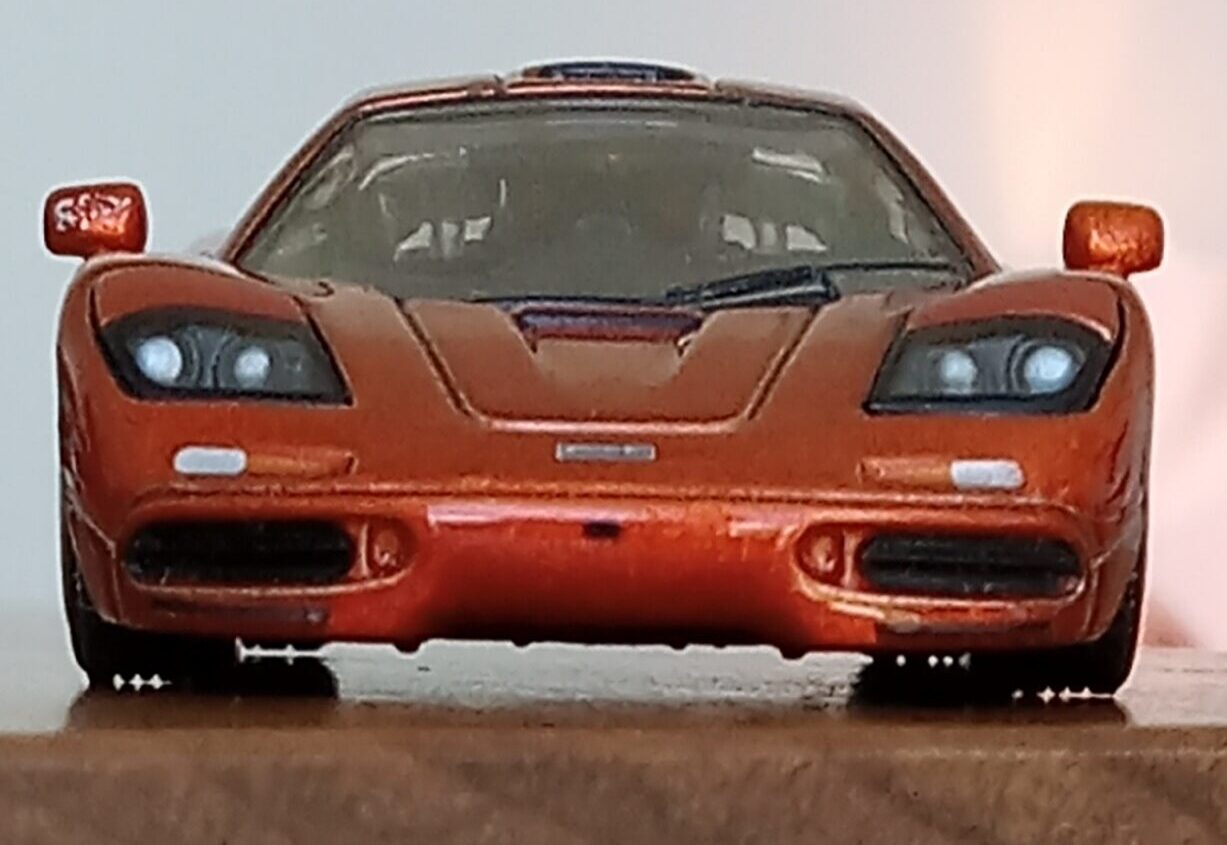
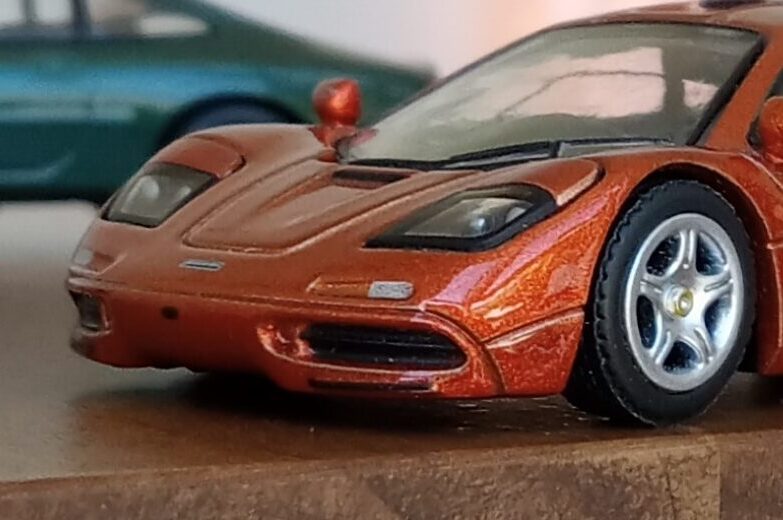
@6.唯一の弱点となるフロントフェイシア部分の押し出しの弱さ
ーーーーーーーーー>その他の部分の強烈さとバランスすると捉えれば許容範囲?
1、超合理的なパケージを鋭く包むミニマル&カタマリ感あふれる全体像
(無駄な空間が全くなく、端から端まで餡子が詰まった「塊」をこれ以上ないほどのテクニックで彫り上げた彫刻作品です。)
ーーーーーー>後にも先にもほとんどないほど充実したカタマリ感です。
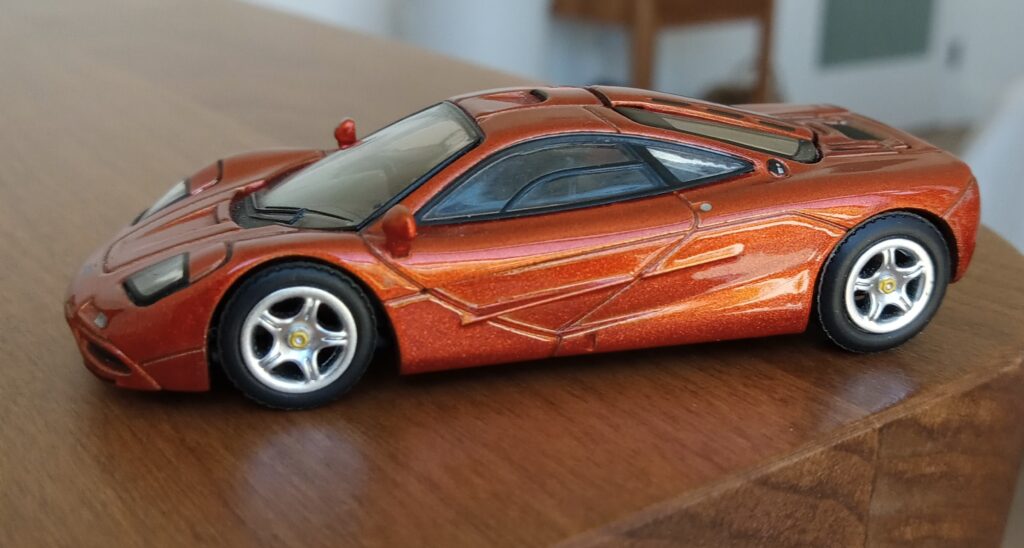
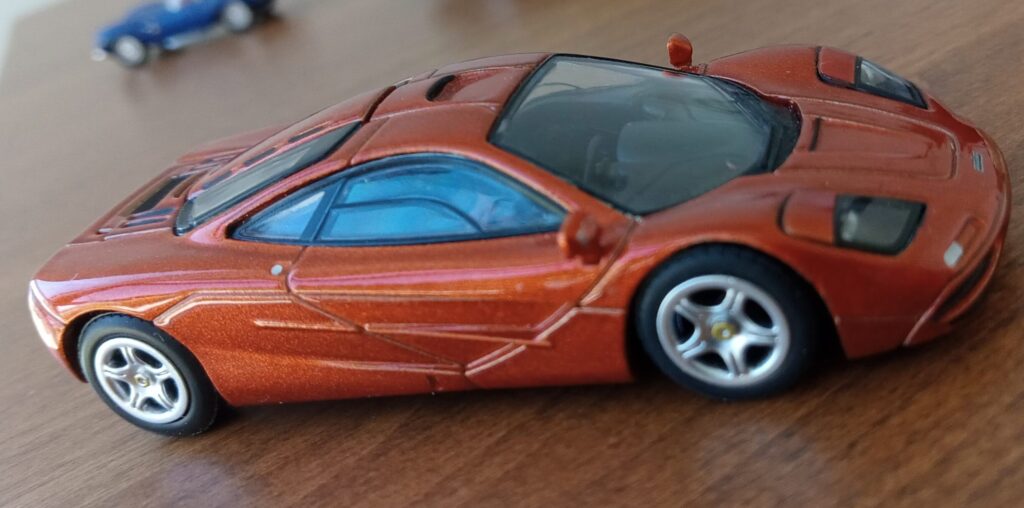
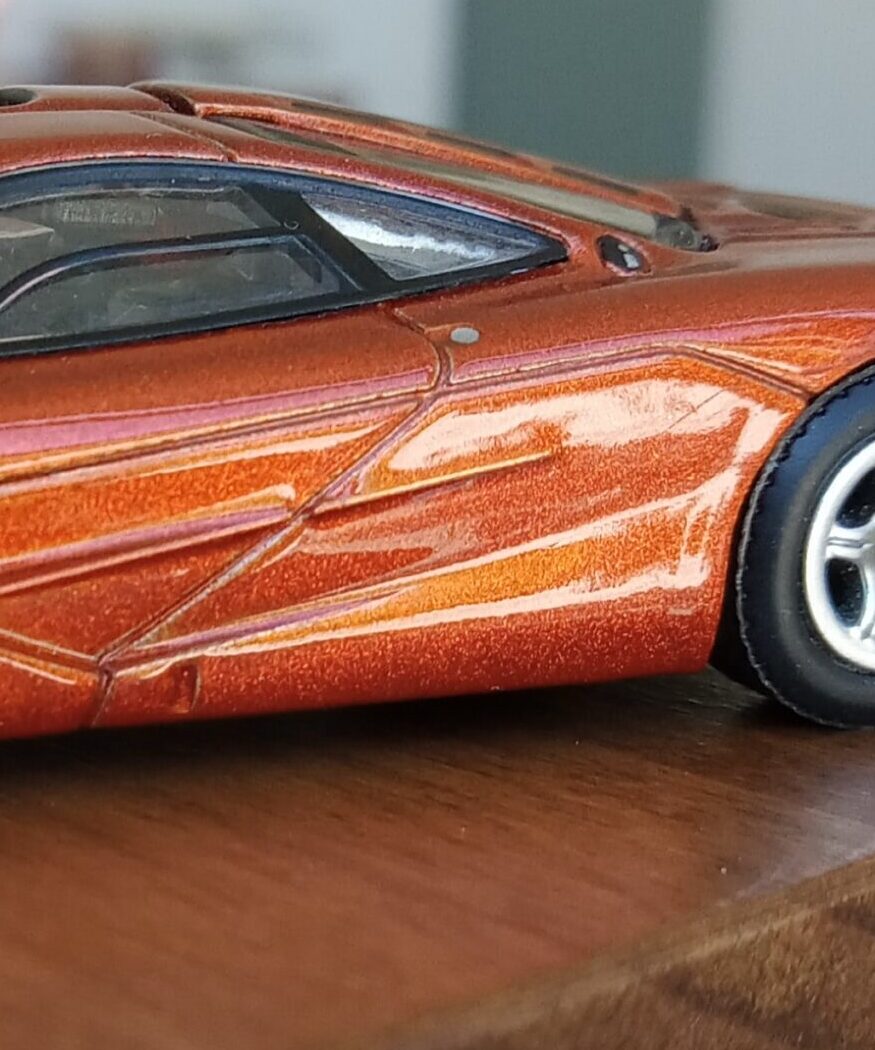
2、美しいサイドビュー・プロポーションを引き締める『三角形』テーマを見事に構成するサイドエア抜きベントとドアカットライン
(この三角形の傾斜角の鋭さがこの車の加速性能のグラフを連想させ、怪物級の素性を暗にほのめかしています。(笑))
ーーーーー>サイドベントから斜め上へ鋭く伸びる3本(複数)のグラフィック・ラインは後の数々の自動車デザインに影響を与えましたが、これほど急な角度は見たことがありません。
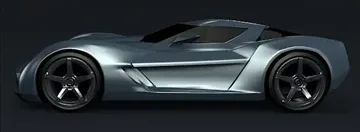 (コルベットスティングレー・コンセプト、2012)
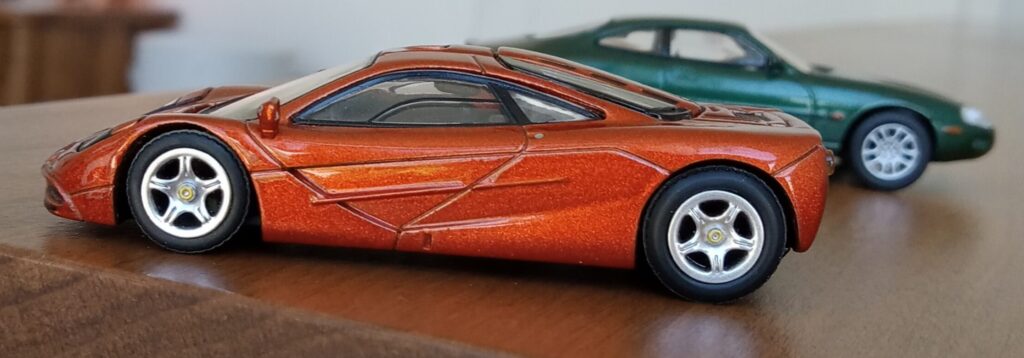
3、前後別サイズのホイール&タイヤサイズを巧妙に生かしたスタンス感満点の強烈ウエッジーなサイドビュー
ーーーーーー>長いホイールベースと、低い前輪用フェンダーのより実現したスタンス感と方向性の両立が美しいです。
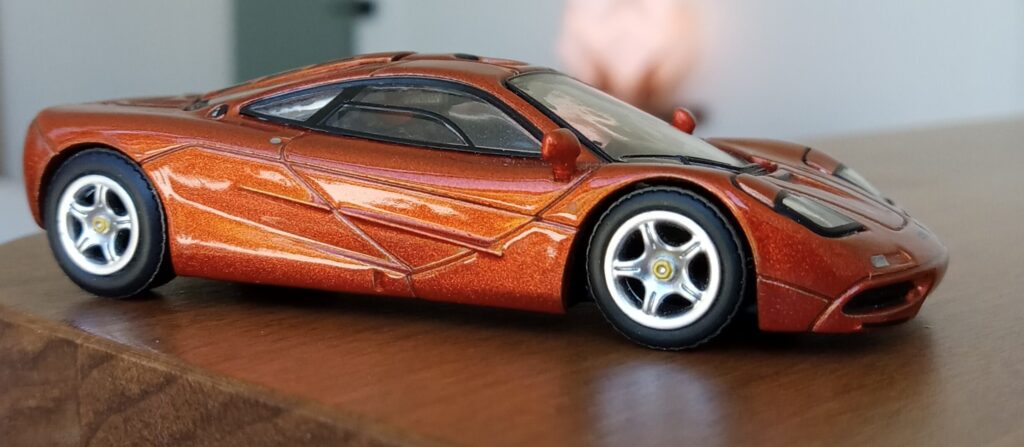
4.ホイール間の三角以外の余ったスペースにラゲッジ・スペースを設けるという発想の転換の素晴らしさ
ーーーーーー>ピックアップ・トラックのサイドドア後ろの買い物用の便利ドア以外にはあまり例を見ません。
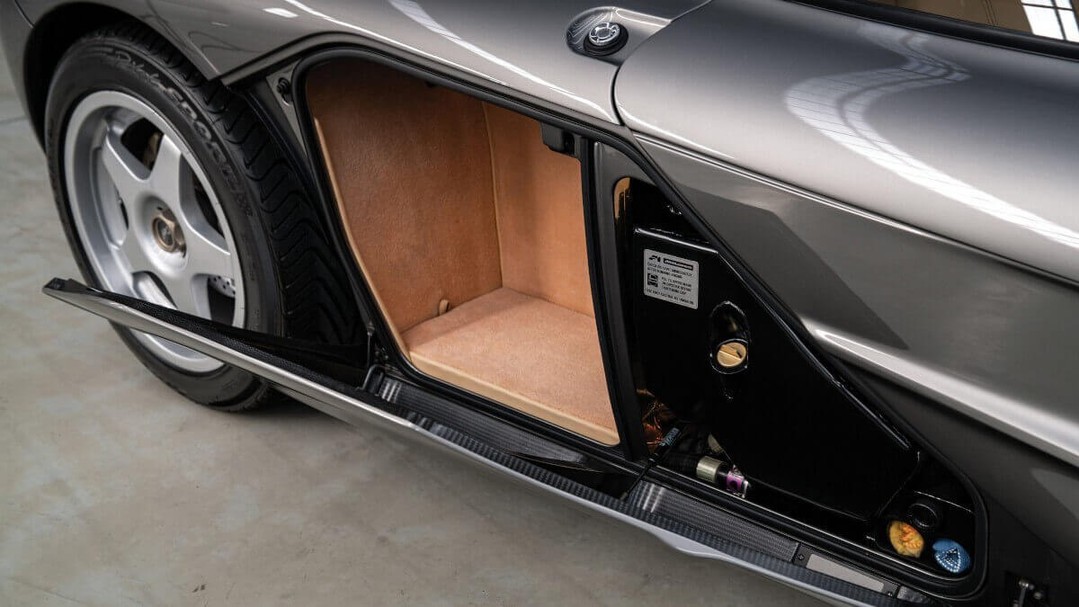
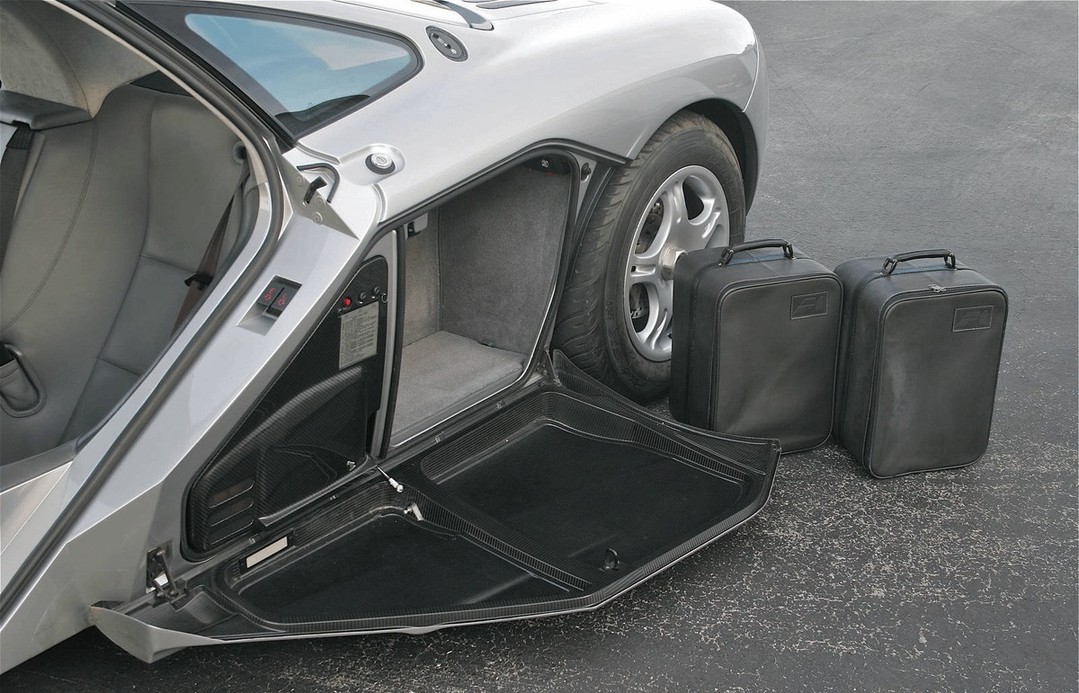
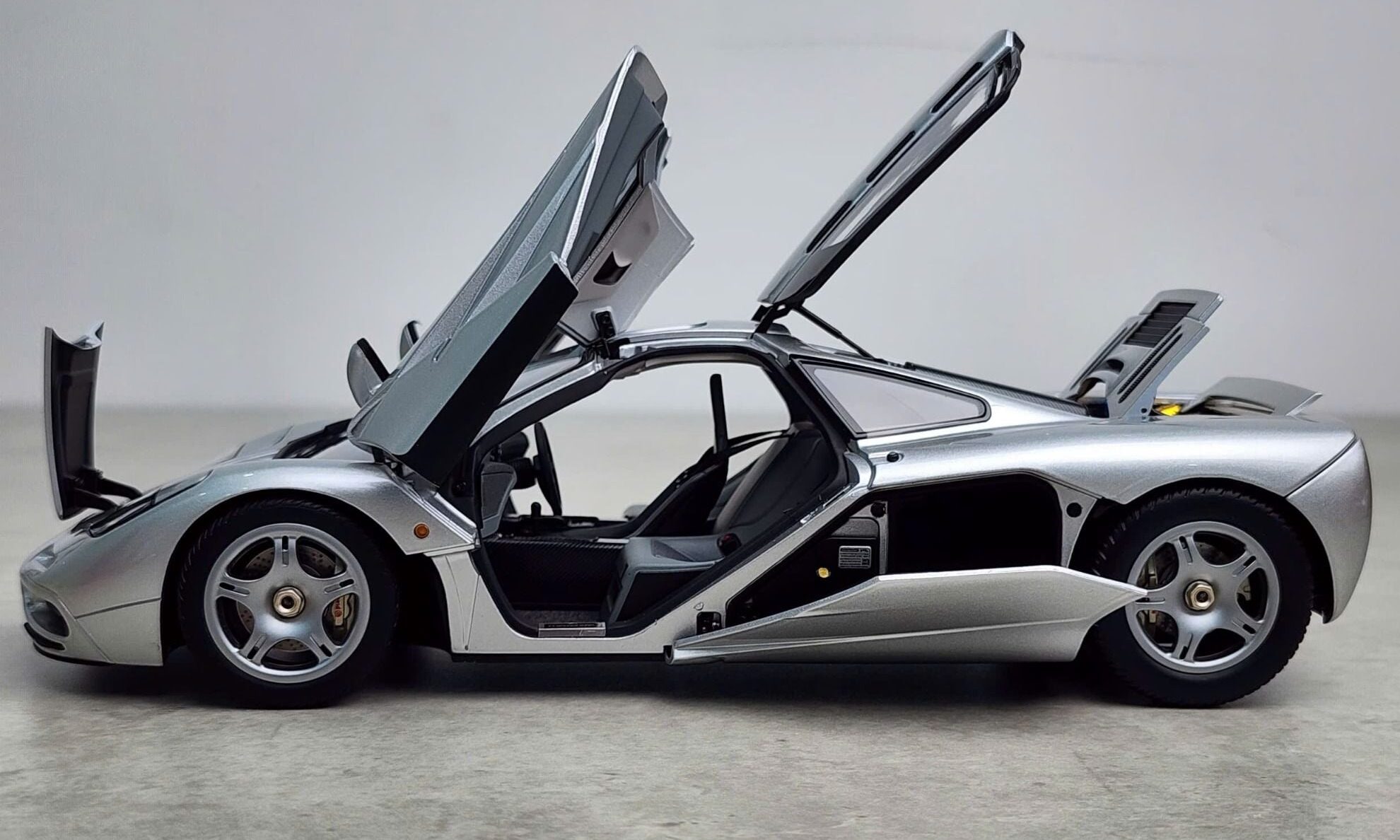
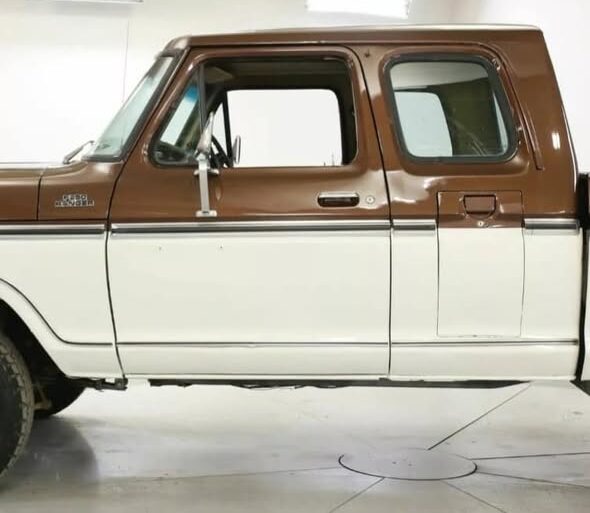
(こちらは、1979年に500台だけ作られたフォード・スーパーキャブ ディアボーン・エディションだそうです。)
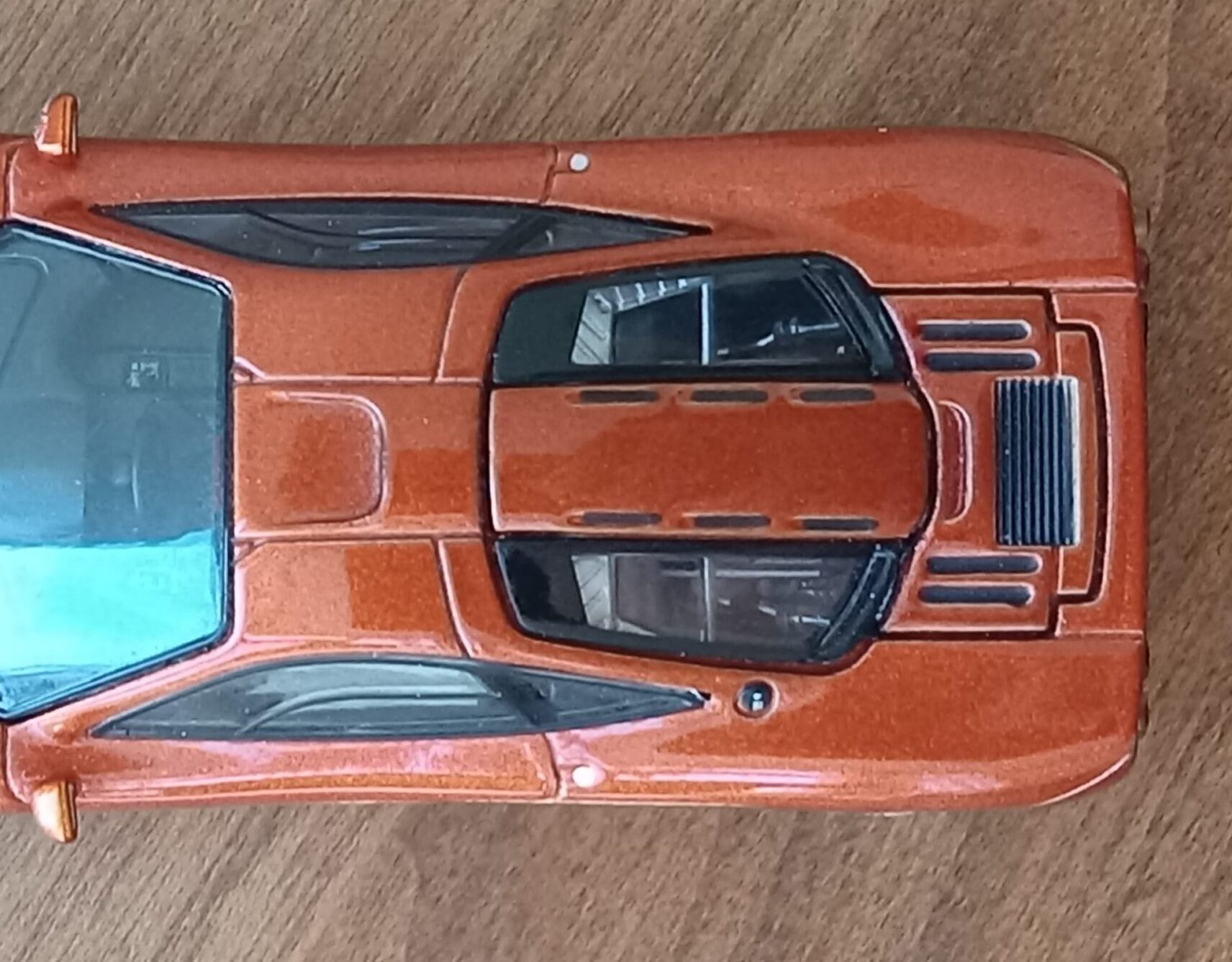
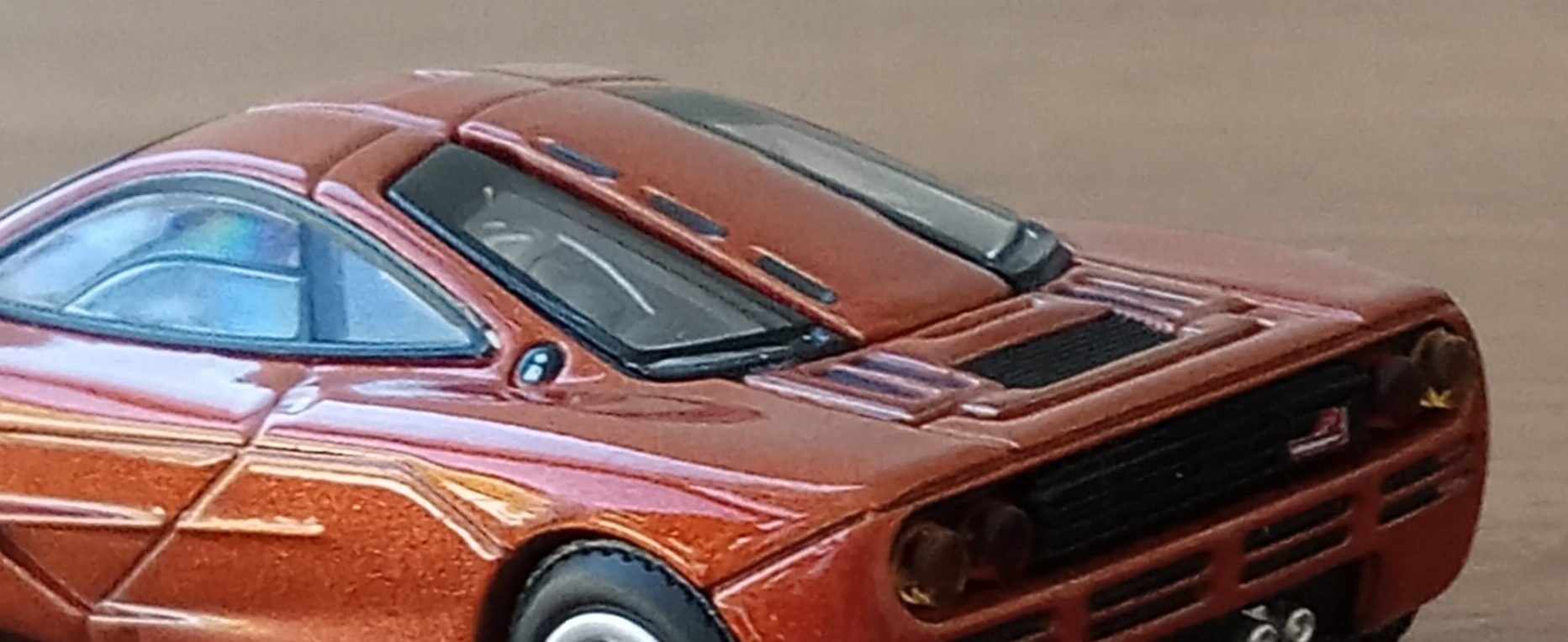
5.上から見た時に巨大なエンジンを収めるリアウインドー周辺に集中するメカメカしいディテールが産み出す『粗密』のコントラストの妙味
(ルーフ上部から始まるエア取り入れベントと融合されたエンジン整備用の窓と、速度感応型のスポイラー周りのグラフィックがメカフェチの心をくすぐります。)
@6.唯一の弱点?となるフロントフェイシア部分の押し出しの弱さ
ーーーーーーーーー>その他の部分の強烈さとバランスすると捉えれば許容範囲?
*『私』とマクラーレンF1:ミッドシップ超絶パッケージの系譜
#三台のクレージーなパケージ:
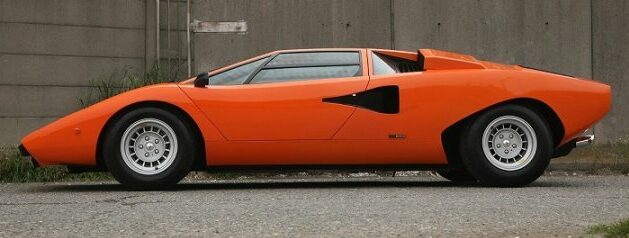
(ランボルギーニ・カウンタックLP400、1974)
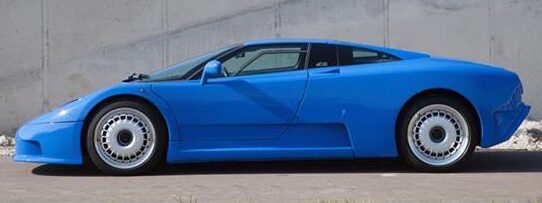
(ブガッティEB110, 1991)
(マクラーレン F1、1992)
1992年の学生時代に、美術学校の図書館で、イギリスの【AUTO CAR】という雑誌で、マクラーレンF1の存在を知ることになり、当時課題のスポーツカーパッケージのデザインについて色々参考にした記憶があります。
その後もいろいろなスポーツカーのパケージを調べたりするうちに、
ミッドシップに関しては、
上記の3台が最強だという真理に達しました。
その後この記事の最初のほうに書きましたように、
福野礼一郎さんのマクラーレンF1についての文章に触
れ、再びこの車の特別感に感服するに至りました。
#立体体験:
この車に関しては、
最近出来の良い1/64のミニカーを2台買ったのがすべてとなります。
*LCD社製、1/64(レジン模型?)マクラーレン F1 (ライトブルー・メタリック)
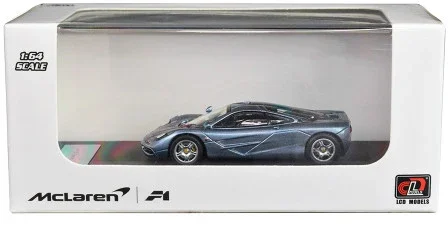
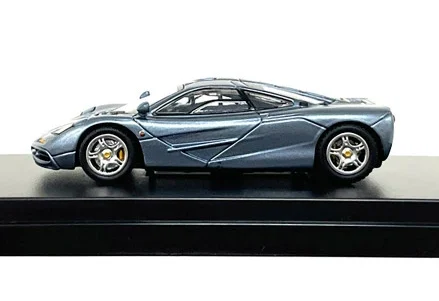
(繊細な彫刻と美しい塗装、ガラスやライト類のディーテールの組付けの確かさなど、最近の1/64ミニカーの躍進を代表するかのような、中価格帯メーカーです。薄青い色目に品があり、他のメーカ(MINI GTやPOP RACE等)のモデルとの差別化が明確にあります。)
*ポップレース社製、1/64 ダイキャスト製、マクラーレン F1(メタリック・オレンジ)
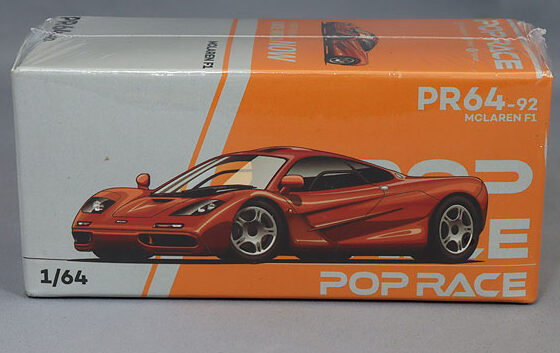
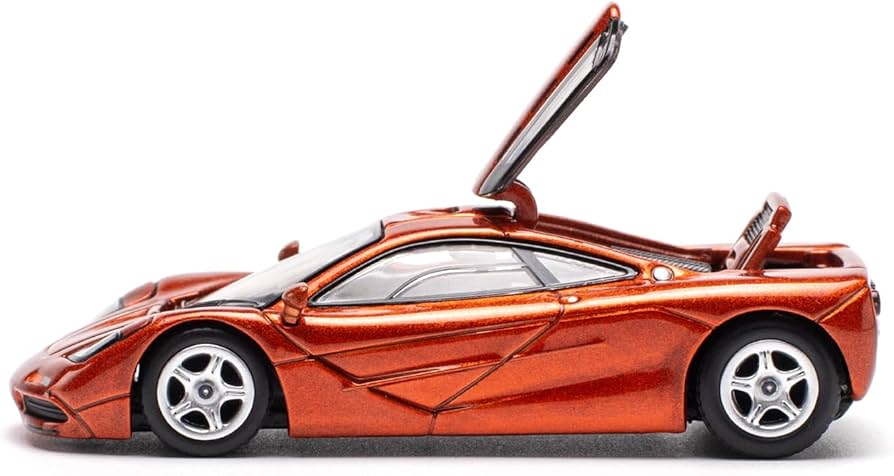
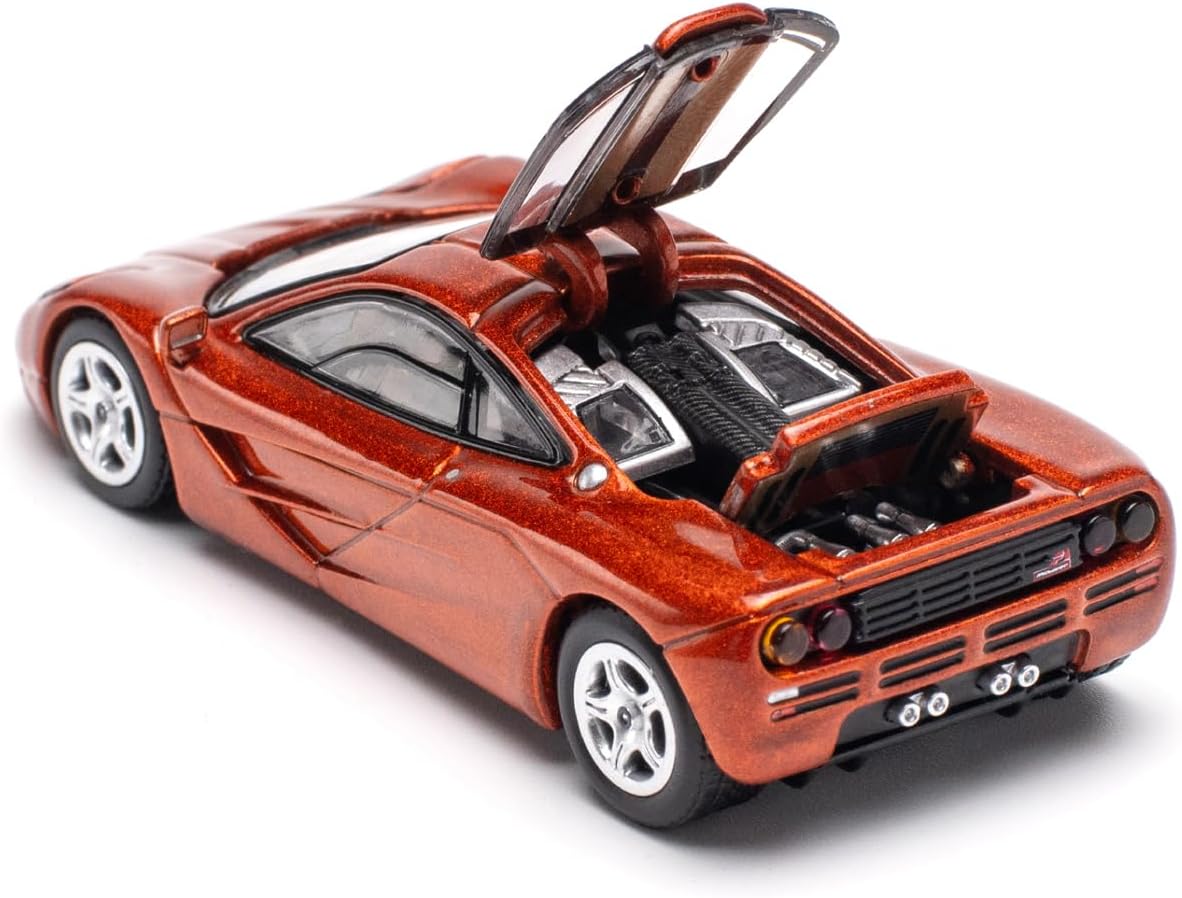
(LCD版より少し低価格なのですが、エンジンゲートとリアトランクが開閉可能で、その中にあるエンジン部分も立体的に再現され、すさまじいお値打ち感があります。塗装が少し厚めなのと、ライトやガラス面の繊細な立て付けは、LCD版に軍配が上がりますが、
ーーーーーーー>丈夫で壊れにくそうなホット・ホイールやMINI GT的なつくりなので、掌の名がで触りながらめでるのに最適です。)
*三題噺:チタン・三角形・福野礼一郎
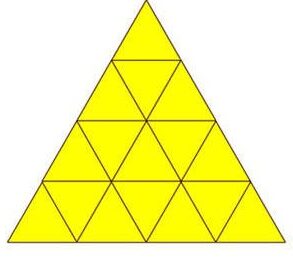

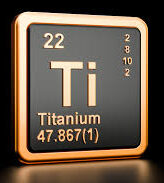
この記事をまとめる感じで、
【三題噺】を語ってみたいです。
お題は、
*チタン
*三角形
*福野礼一郎
となっております。
『それでは一席ばかばかしいところを
お付き合いのほどを願っておきますが、、、
むかしから、F1レースの世界では、
*エンジン効率の追求と、
*軽量化が最重要項目となっておりまして、
その【F1】=フォーミュラ1 のコンセプトを市販車の世界に持ち込んだマクラーレンF1の設計を任されたF1設計の達人、ゴードン・マレーにとりましても、
軽量化が第一の課題でありました、、、
その実現のためには、
努力とコストを惜しまないストイックな態度が光ります。
つまりは、
*世界初のフル・カーボン製モノコックボディーの採用、
*約16gの『金』を断熱材としてエンジンルーム内に使用
*マグネシウム、チタン、ケブラーなどの高価な軽量素材を多用
*ブレーキ・フルードタンクの蓋にチタン材を使用
*重量を増やす原因となるパワーステアリング、ABS、ブレーキサーボ、トラクションコントロールなどは未搭載
*搭載されたBMW製6.1L V12エンジンは、
補機類を含めた重量を抑えつつ高出力を出すよう専用設計
* フロントガラスには厚さを抑えた軽量ガラスを採用
『パワーより、軽量化(軽さは正義)』というスローガンのもと、
涙ぐましい努力の結果、
当時の高性能市販車としては異例の、
1,138kgという驚異的な車重を実現、
後にも先にも存在しない、
『ピュアで、完全な公道スポーツカー』
が完成しました。
外観上のテーマは、
(同車が3人乗車の3座式のレイアウトであることおw象徴したような、)
【三角形】となっておりまして、
横から見た時に、
ドアのカットライン自体が、
下向きの富士山のような
美しい三角形を描いております!嬉
なんか私、
マクラーレン F1博士のようですって?
いえいえ、それは誤解でして、
今までお話ししたのはほとんどが私の尊敬する師匠、
福野礼一郎師匠の受け売りでして、
彼の著書の中に書かれていたことを
思い出しながら語らせていただきました。
全くの受け売り状態です。(笑)
私の話は受け売りですが、
ゴードン・マレーさんとマクラーレン F1の設計にかかわった技術者さんたちには、受け売りアイデアは皆無で、
ほとんどの設計アイデアが彼らのオリジナルであったのは
私が一番感銘を受けたところです。
最後の感想だけが私のオリジナル部分です、、、(笑)
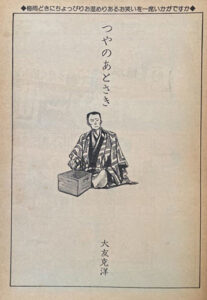
この辺でお後がよろしいようで、、』
ペンペンー
*その他の『妥協知らずのデザイン』達:
この項目は既に、語らせていただきましたように、
以下の2台を上げたいです。
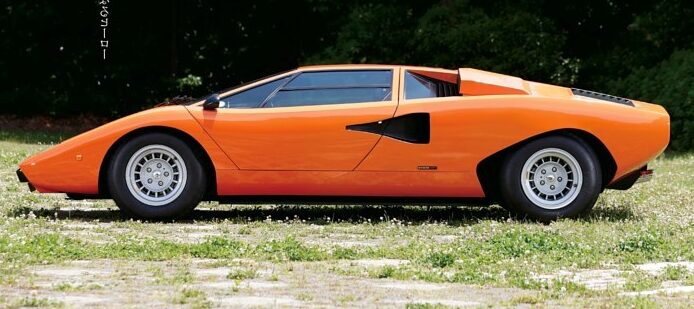
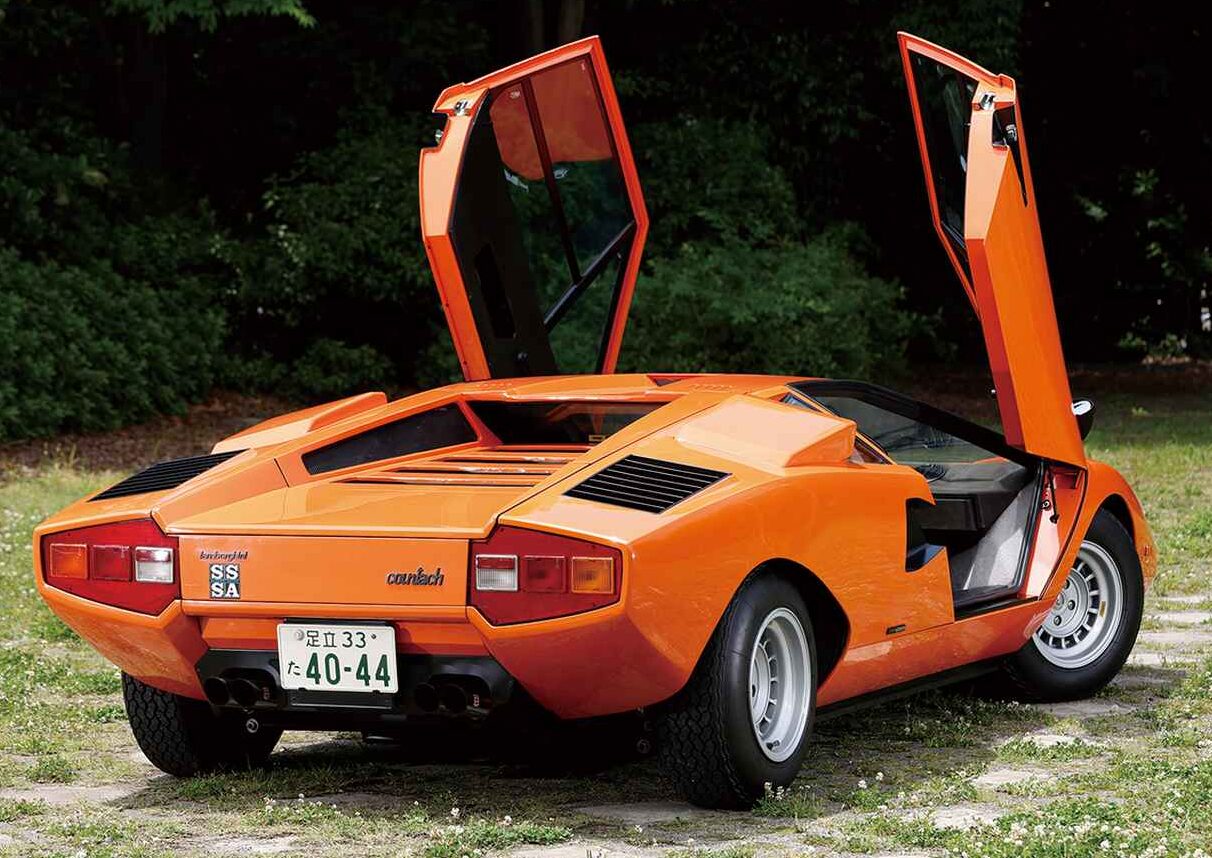
*ランボルギーニ・カウンタック LP400, 1974 (オレンジ)
(パオロ・スタンツァーニの独創的なシャーシに、鬼才:マルチェロ・ガンディー二の狂気に満ちたボディーデザインを搭載)
ーーーー>永遠に語り継がれる、ス=パーカーの金字塔です
*ブガッティ EB110, 1992 (フレンチ・ブルー)
(VWアウディーグループに吸収される前の、スタンツァーニとガンディー二のタッグによるLP400の設計における欠陥部分を補完するための理想主義的アプローチが再び炸裂!)
ーーーーー>またとないパケージが新生ブガッティのカリスマ性と方向性を決定しました。
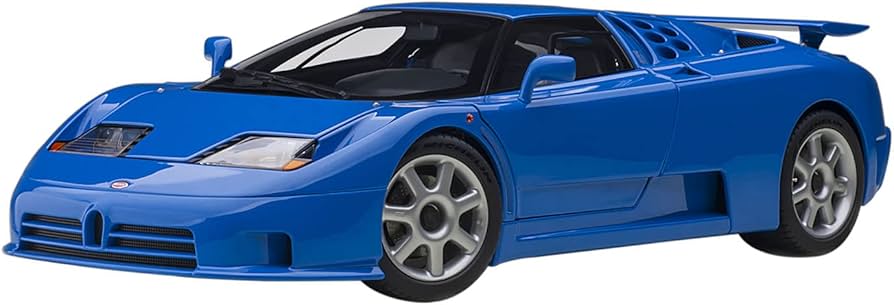
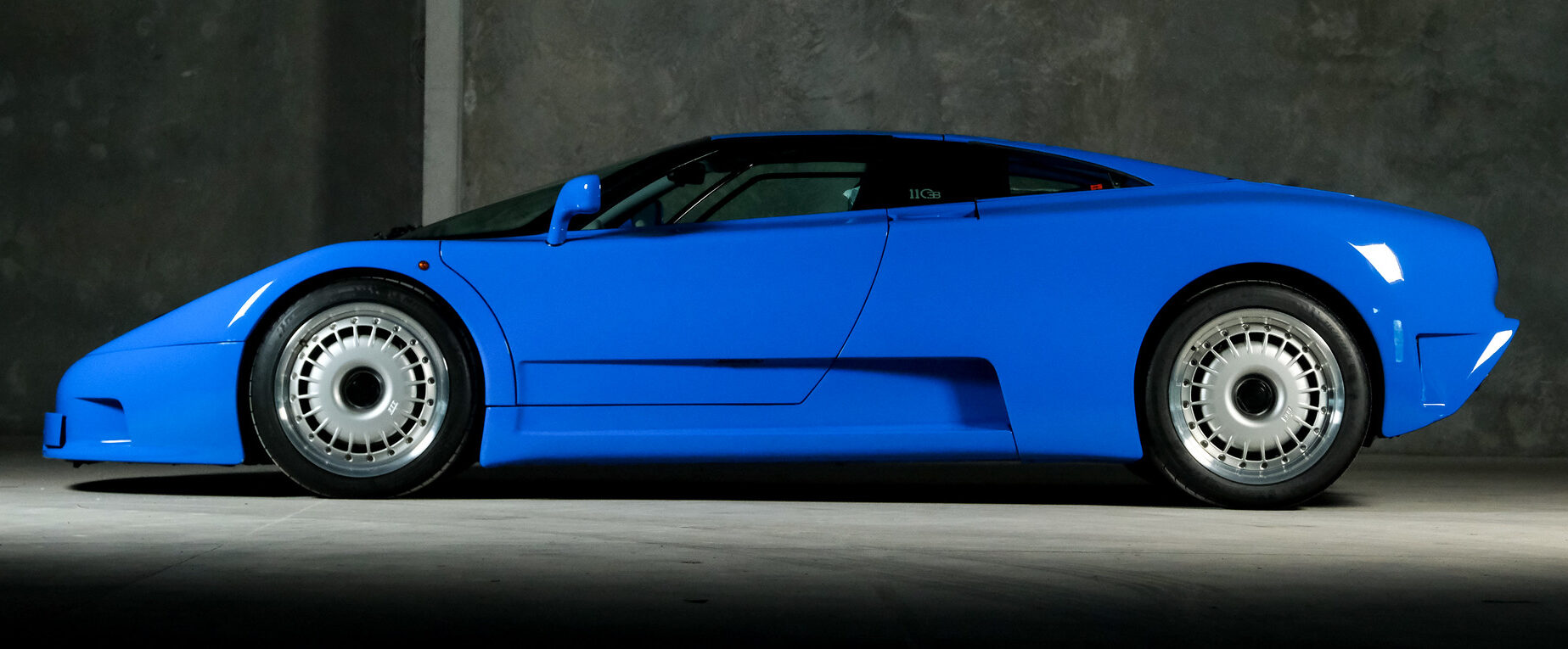
レーシングカー・デザインの世界では、
極端な理想化は常識ですが、
市販車としてここまでの理想を追求する事はまれな存在です。
今後もこんな超絶な乗り物が出現することお祈りしながら、、、
この記事を終えたいです。

次回は、
「好みの英国クーペデザイン第2弾」としまして、
ジャガーXKSSに付いてお話ししたいです。
本ブログと記事内容につきまして:
ブログ記事を書くにあたり私の目標は、立体造形(料理も含めて)とのかかわりを通じて、私個人の特徴的(ネジ曲がり方も含めて)な評価軸を解明することで、「美しさ・美味しさ」に対する好奇心や、探求心を、どのように満足・充足させてきたのかを明記しておくことです。
従いまして、記事の中に出てくる、数字や年号、微細なデータなどには細心の注意を払っておりますが、時に大きな間違いや勘違いを犯していることも考えられます。特に自動車記事における主要諸元や、年号などには紛らわしいものも多く、あくまで参考程度に考えていただければ幸いです。
私としては、記事の中で個人的な外観デザインや味覚の評価、そこから広がる後半部分につなげるための、『流れ』を作るための客観的材料として年号やデータを挿入している感じです。あくまで重視したいのは、私個人の頭の中で起こる、記憶の錯そう的混沌から生まれる新たな『見方』や『情報の予想外のつながり』です。その勢いを作り出す、『流れ』の一環として、諸データが副次的に必要となるわけです。
話がそれますが、大好きな落語の世界に「三題噺」という、その場て会場から募った3つのお題を使って1つのお話に仕立てるといったお遊びがございますが、私はそれに近いことを立体造形の特徴や(料理のお味)をお題にして行っている感じがします。その中で頭の中に去来する数々の着想が、全く予想外で楽しく、次回からの記事内容を大幅に変えたり、新展開につながっています。
当ブロブの仕組み:
『好奇心の点と線 x 気まぐれ脳内回路=予想外の新展開』
こんな自分勝手なブログですが、今後ともよろしくお願いいたします。
追記:上記の『流れ』を作る為に必要な写真はできる限り、個人所有のミニカー・自前の料理などを使い撮影しておりますが、その他の必要最小限の図版や写真を他のブログ主様の記事や諸会社ホームページなどからお借りしております。(記事内容に合うよう加工させていただき、使用時は最小の解像度で載せております。)問題がある場合、ご連絡いただければ直ちに降ろさせていただきます。
追記2:当ブログ記事に掲載のミニカー写真等(個人撮影)は許可なしで、どのようにお使いいただいても結構です。私個人の創造性はこの世のもの、と言う認識の上で記事を製作しています。
!!!!!!!!!!!!!!!!!!!!!!!!!!!!!!!!!!! Translated in English !!!!!!!!!!!!!!!!!!!!!!!!!!!!!!!!!!!
(Die-cast model used for photography: Pop Race 1/64 scale McLaren F1, 1992 (Metallic Orange), used as-is without modifications)
Part 25—The History of Two-Door Coupes: Part 7 [UK Edition] McLaren F1, 1992 (Metallic Orange) McLaren F1, 1992 (Metallic Orange)
#Favorite Car Designs—The Lineage of Two-Door Coupes:
For this 25th installment, titled “The Lineage of 2-Door Coupes,” I’d like to discuss luxury 2-door (GT) coupes and roadsters, which strongly reflect the national characteristics and unique exterior design styles of various countries.
[Note: Includes convertibles]
I will proceed as follows.
This 7th installment is the [British Cars Edition]
1992
This installment focuses on the McLaren F1.
[The Lineage of 2-Door Coupes: Table of Contents (including future plans)]
[American Cars]
Part 1: Cadillac El Mirage, 2013 (Metallic Red)
Part 2: Lincoln Continental MK4, 1972 (Black)
Part 3: Mercury Cougar, 1967 (LT Metallic Green)
[German Cars]
Part 4: MB 500K Special Roadster, 1936 (Black)
Part 5: MB 300SL Roadster, 1957 (Silver)
Part 6: MB SLS AMR Gullwing, 2010 (Black)
[British Cars]
Part 7: McLaren F1, 1992 (Metallic Orange)
Part 8: Jaguar XKR, 1996 (Dark Metallic Green)
Part 9: Aston Martin One-77 (Light Metallic Blue)
[Japanese Cars / Nissan]
Episode 10: Nissan First-Generation Silvia, 1965 (Champagne Gold)
Episode 11: Nissan Fifth-Generation Silvia, 1988 (LT Metallic Green)
[Italian Cars]
Episode 12: Ferrari 250TR Pontoon Fender, 1958 (Red)
Episode 13: Ferrari 250 GTO, 1962 (Italian Red)
Episode 14: Lamborghini Concept S, 2005 (Pearl White)
[Japanese Cars: Mazda Edition]
Episode 15: Mazda Cosmo Sport, 1967 (Silver)
Episode 16: Mazda Eunos Cosmo, Type-S (2-Tone: Black & Gray)
[French Cars]
Episode 17: Bugatti Type 59, 1935 (French Blue)
Episode 18: Citroën SM, 1970 (Champagne Gold)
Episode 19: Bugatti La Voiture Noire, 2019 (Black)
[Japanese Cars / Toyota Edition]
Episode 20: Toyota/Yamaha 2000GT, 1967 (Ivory White)
Episode 21: Toyota 2nd-generation Soarer, 1986 (Two-tone: Black & Gray)
Episode 22: Lexus LC [GWZ100], 2017 (Metallic Red)
[American Cars Part 2]
Episode 23: Dodge Challenger & Plymouth Barracuda, 1971
Episode 24: Ford Shelby GR-1 Concept, 2004 (Chrome)
Episode 25: Chevrolet Corvette C4 ZR-1, 1990 (Crimson)
Episode 26: Corvette Stingray Concept, 2009 (Silver)
#F1 Design Genius: The High-Performance & Ultra-Spartan 3-Seater Sports Car Designed by Gordon Murray
Regarding the McLaren F1,
automotive critic Reiichiro Fukuno states,
“The Ultimate Road Car”
In his books and columns, he has repeatedly praised designer Gordon Murray’s uncompromising dedication to “lightweighting” and “packaging.”
I have long been a devoted reader of his books,
and after reading his
“Impressions from Importing It Myself at My Own Expense”
about this McLaren F1,
I came to appreciate this rare street racer—whose exterior design I had long admired—even more.
* The revolutionary change it brought to the mid-engine layout:
the unconventional idea of
“three passengers plus
the driver in the center,”
* The maddening obsession, such as using an expensive lightweight alloy (titanium) for the brake fluid reservoir cap,
and so on—there’s no shortage of topics to discuss
regarding Gordon Murray’s [ultimate automobile],
which is permeated with perfectionism and rationalism.
I’d like to talk about it
in this sort of way.
* Real-car analysis: Insane chassis design
* Exterior design features: Minimalist & Crazy
* “Me” and the McLaren F1
* Three-Part Story: Titanium, Triangles, and Reiichiro Fukuno
* Other Examples of “Uncompromising Design”
* Real Car Analysis: Insane Chassis Design
For this car review, I’ve taken a different approach.
I’ve compiled this content by referencing comments from the writings of Reiichiro Fukuno, who went so far as to personally import a McLaren F1 to pursue his research and analysis of the car.
n
n
n
n
n
N
N
N
Nn
He praises the McLaren F1
*for its “perfection as an industrial product” and
* “purity of design philosophy.” nn
N
N
N
The key mechanical features he particularly praises
are as follows.
n
1. Thorough packaging and a central driving position
n
Mr. Fukuno highly praises the perfect weight distribution and visibility created by the “triangular, three-seat layout,” which places the driver’s seat in the center with the passenger seats positioned to the left and right rear.
n
* Reduction of moment of inertia: He praises the design as “logical” for maximizing dynamic performance by concentrating heavy components (the driver and engine) at the vehicle’s center.
* Coexistence of practicality: He lauds what could be called Gordon Murray’s “masterful packaging”—a design that goes beyond being merely a supercar to accommodate three passengers and luggage.
n
n
n
n
n
n
n
n
n
n
n
n
n
n
n
n
n
n
n
n
n
n
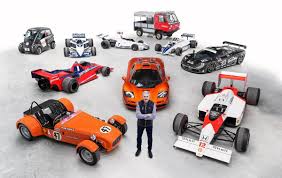
n【Gordon Murray’s Creative Projects】
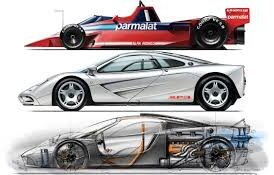
From top to bottom:
(1979 Brabham BT46-Fan Car)
(1992 McLaren F1)
(2022 Gordon Murray T.50)
N
N
N
N
n
N
n
N
N
N
NN
2. The Sensuality and Responsiveness of the BMW V12 Engine
n
Regarding the 6.1L V12 (S70/2) engine developed by BMW M, Mr. Fukuno focused on its overwhelming responsiveness and precise rotational feel
n
* A “lifelike” sensation: He described the sharpness of the naturally aspirated engine—which responds instantly to the driver’s intentions in a way modern turbocharged cars lack—as “a direct transmission of the builder’s passion”
n
* Thorough heat shielding: The use of luxurious materials based on function—such as applying 24-karat gold leaf for insulation in the engine bay—was also a point of praise
n
n
N
N
3. An almost obsessive commitment to weight reduction
n
Mr. Fukuno argues that “lightness”—keeping the vehicle weight down to around 1.1 tons—is the ultimate performance factor.
n
* Carbon monocoque: Highly praised for its technical pioneering spirit in adopting the world’s first full carbon monocoque in a road car, achieving both light weight and high rigidity
* Custom-designed parts: Hailed for its “uncompromising” approach, featuring components—from the audio system to the onboard tools—that are exclusively lightweight designs created for this car, with absolutely no use of off-the-shelf parts
n
n
N
N
4. Intelligent Suspension Design
n
While adopting the same double-wishbone configuration as an F1 car, the design is highly praised for achieving a balance between a supple ride and precise handling as a road car, rather than simply being stiff.
* Mr. Fukuno describes the meticulously calculated design of the bushings and geometry as a “triumph of intelligence.” N
# In his book series *Reiichiro Fukuno’s Car Reviews*,
Mr. Fukuno delves even deeper into these mechanisms through illustrations and detailed text.
McLaren F1 Production Numbers: A total of 106 units (including road cars, GTRs, LMs, etc.) were produced between 1992 and 1998.
n
nn
n
N
N
N
n
N
# Key Specifications:
Model: BMW S70/2
Total Displacement: 6,064 cc, 60-degree V12 DOHC 48-valve (naturally aspirated)
Maximum Power: 627 ps (461 kW) / 7,500 rpm
Maximum Torque: 650 Nm (66.3 kgm) / 5,600 rpm
Drivetrain: MR (mid-engine, rear-wheel drive)
Seating Capacity: 3
Body Style: 2-door coupe
Wheelbase: 2,680 mm
Overall Length: 4,288 mm
Overall Width: 1,820 mm
Overall Height: 1,140 mm
Curb Weight:
1,138 kg – 1,140 kg
n
N
N
N
N
*Exterior Design Features: Minimalist & Crazy
#Design Analysis: Symbolizing a three-person ride? ーーーー> The triangular theme in the side view
The three-seater,
“ultimate road-legal sports car,” the McLaren F1—
for me, its design features can be summarized in the following six points:
1. An overall appearance that sharply encapsulates an ultra-rational package, exuding minimalism and a sense of solidity
2. Side air vents and door cut lines that masterfully compose the ‘triangular’ theme, tightening the beautiful side view proportions —— > This influenced numerous subsequent automotive designs.
3. A strikingly wedge-shaped side view brimming with stance, cleverly utilizing front and rear wheels and tires of different sizes
4. The brilliance of the paradigm shift: creating luggage space in the remaining triangular space between the wheels
5. The exquisite contrast between “rough and fine” details created by the mechanical elements concentrated around the rear window—which houses the massive engine—when viewed from above
@6. The only weakness is the lack of presence in the front fascia
ーーーーーーーーー> Is this acceptable if viewed as balanced against the intensity of the other parts?
1. An overall appearance brimming with minimalism and a sense of solidity, sharply enveloping an ultra-rational package
(It’s a sculptural masterpiece crafted with unparalleled technique—a “mass” packed to the brim from end to end, with absolutely no wasted space.)
ーーーーーー> A sense of solidity so profound it’s virtually unmatched, past or present.
2. Side air vents and door cut lines that masterfully compose the “triangular” theme, tightening the beautiful side-view proportions
(The sharpness of these triangular angles evokes the acceleration performance graph of this car, subtly hinting at its monster-class potential. (lol))
ーーーーー>The three (or more) graphic lines extending sharply upward from the side vents have influenced countless automotive designs since, but I’ve never seen such steep angles.
(Corvette Stingray Concept, 2012)
3. A strikingly wedge-shaped side view brimming with stance, skillfully utilizing front and rear wheels and tires of different sizes
ーーーーーー> The balance between the sense of stance—achieved through the long wheelbase and low front fenders—and directionality is beautiful.
4. The brilliance of the innovative idea to create luggage space in the unused triangular area between the wheels
ーーーーーー> Aside from the convenient shopping doors behind the side doors on pickup trucks, there are few other examples of this.
(This is reportedly the Ford SuperCab Dearborn Edition, of which only 500 units were produced in 1979.)
5. The exquisite contrast between “rough” and “smooth” created by the mechanical details concentrated around the rear window—which houses the massive engine when viewed from above
(The graphics around the speed-sensitive spoiler, combined with the engine access window integrated into the air intake vent starting from the top of the roof, are sure to tickle the fancy of any car enthusiast. )
@6. The only weakness? The front fascia lacks a strong presence.
ーーーーーーーーー> Is this acceptable if viewed as a balance against the intensity of the other parts?
* “Me” and the McLaren F1: The lineage of the ultimate mid-engine package
# Three crazy packages:
(Lamborghini Countach LP400, 1974)
(Bugatti EB110, 1991)
(McLaren F1, 1992)
Back in 1992, when I was a student, I discovered the McLaren F1 in a British magazine called *Auto Car* at my art school’s library. I remember using it as a reference for a design assignment on sports car packaging.
As I continued researching various sports car designs,
I came to the conclusion that,
when it comes to mid-engine cars,
the three models mentioned above are the absolute best.
Later, as I wrote earlier in this article,
I came across an essay by Reiichiro Fukuno about the McLaren F1
and was once again struck by the car’s unique character.
#Hands-On Experience:
As for this car,
my experience is limited to having recently purchased two well-made 1/64 scale die-cast models.
*LCD, 1/64 (resin model?) McLaren F1 (Light Blue Metallic)
(With its delicate sculpting, beautiful paintwork, and the precision of the glass and lighting details, this mid-range manufacturer seems to epitomize the recent advancements in 1/64 scale models. The pale blue hue exudes elegance, clearly setting it apart from models by other manufacturers such as MINI GT and POP RACE.)
*POP RACE, 1/64 die-cast, McLaren F1 (Metallic Orange)
(Although slightly cheaper than the LCD version, the engine cover and rear trunk open and close, and the engine compartment inside is faithfully reproduced in 3D, offering incredible value for the price. While the paint is a bit thick and the LCD version has the edge in the delicate fit of the lights and glass surfaces,
ーーーーーーー> It has a sturdy, Hot Wheels- or MINI GT-style build that feels durable and hard to break, making it perfect for admiring while holding it in the palm of your hand.)
*Three-Theme Story: Titanium, Triangle, Reiichiro Fukuno
In the spirit of summarizing this article,
I’d like to tell a [Three-Theme Story].
The themes are:
*Titanium
*Triangle
*Reiichiro Fukuno
That’s it.
“So, I hope you’ll bear with me for a bit of a silly story…
For a long time in the world of F1 racing,
*the pursuit of engine efficiency and
*weight reduction have been the top priorities,
and even for Gordon Murray—the master of F1 design entrusted with designing the McLaren F1, which brought the [F1] = Formula 1 concept into the world of production cars—
weight reduction was the primary challenge…
To achieve this,
his stoic attitude—sparing no effort or expense—truly shines through.
In other words,
* The adoption of the world’s first full-carbon monocoque body,
* The use of approximately 16g of ‘gold’ as thermal insulation within the engine bay
* Extensive use of expensive lightweight materials such as magnesium, titanium, and Kevlar
* Use of titanium for the brake fluid reservoir cap
* Omission of components that add weight, such as power steering, ABS, brake boosters, and traction control
* The BMW-built 6.1L V12 engine was specially designed
to deliver high output while keeping the weight of auxiliary components to a minimum
* Thin, lightweight glass is used for the windshield
Under the slogan “Lightweight over power (lightness is justice),”
as a result of painstaking efforts,
it achieved an astonishing curb weight of 1,138 kg—
unprecedented for a high-performance production car at the time—
creating a “pure, complete street-legal sports car”
that has never existed before or since.
The design theme for the exterior
(which seems to symbolize the car’s three-seat layout)
is the 【triangle】,
and when viewed from the side,
the cutline of the door itself
forms a beautiful triangle
resembling Mount Fuji pointing downward! Haha
You might be thinking,
“Hey, I sound just like Dr. McLaren F1!”
No, no, that’s a misunderstanding.
Almost everything I’ve said so far is simply regurgitating the words of my respected mentor,
Master Reiichiro Fukuno,
and I’ve been speaking while recalling
what was written in his books.
It’s all secondhand information. (lol)
While my talk is just regurgitating what I’ve heard,
what impressed me most was that Gordon Murray and the engineers involved in designing the McLaren F1
had absolutely no regurgitated ideas—
almost all of their design concepts were entirely original.
Only my final thoughts are my own original contribution… (lol)
I think I’ll wrap it up here…』
Pen-pen-
*Other examples of “uncompromising design”:
As I mentioned earlier,
I’d like to highlight the following two cars:
*Lamborghini Countach LP400, 1974 (Orange)
(Paolo Stanzani’s ingenious chassis paired with the mad genius Marcello Gandini’s insane body design)
ーーーー>A supercar masterpiece that will be talked about forever
* Bugatti EB110, 1992 (French Blue)
(An idealistic approach—a collaboration between Stanzani and Gandini—explodes once again to correct the design flaws of the LP400, created before the company was absorbed by the VW-Audi Group!)
ーーーーー>This one-of-a-kind package defined the charisma and direction of the reborn Bugatti.
In the world of racing car design,
extreme idealization is the norm,
but it is rare for a production car to pursue such ideals to this extent.
Hoping that such extraordinary vehicles will continue to appear in the future…
I’d like to conclude this article.
Next time,
as “My Favorite British Coupe Designs, Part 2,”
I’d like to talk about the Jaguar XKSS.
About this blog and its content:
My goal in writing these blog posts is to document how I have satisfied and fulfilled my curiosity and desire to explore “beauty and deliciousness” by elucidating my personal, distinctive criteria for evaluation—including my own quirks—through my involvement with three-dimensional forms (including cooking).
Consequently, while I pay close attention to the numbers, dates, and detailed data appearing in the articles, it is possible that I may occasionally make significant errors or misunderstandings. In particular, key specifications and dates in automotive articles can often be confusing, so I would appreciate it if you could consider them merely as a reference.
Personally, I feel that I insert dates and data into the articles as objective material to create a “flow” that connects my personal evaluations of exterior design and taste to the broader discussion that follows. What I ultimately prioritize are the new “perspectives” and “unexpected connections between information” that emerge from the chaotic jumble of memories in my own mind. The various data points are needed secondarily as part of that “flow” to generate that momentum.
This is a bit of a tangent, but in the world of rakugo—a form of traditional Japanese storytelling I love—there’s a playful format called “sandaibana,” where the performer weaves a single story using three topics solicited from the audience on the spot. I feel like I’m doing something similar, using the characteristics of three-dimensional forms and (the taste of food) as my prompts. The countless ideas that flit through my mind during this process are completely unexpected and delightful, often leading me to drastically change the content of future articles or sparking new developments.
How This Blog Works:
“Spots and Lines of Curiosity x Whimsical Mental Circuits = Unexpected New Developments”
This blog may be a bit self-indulgent, but I hope you’ll continue to follow along.
Note: To create the “flow” described above, I use my own miniature cars and home-cooked meals for photos whenever possible. However, I do borrow the absolute minimum necessary illustrations and photos from other bloggers’ posts and company websites. (I edit them to fit the article’s content and post them at the lowest possible resolution.) If there are any issues, please contact me and I will remove them immediately.
P.S. 2: You are free to use the photos of die-cast cars and other images (taken by me) featured in this blog’s posts in any way you like without permission. I create these posts with the understanding that my personal creativity belongs to the world.
Translated with DeepL.com
Translated with DeepL.com (free version)

これはCTAサンプルです。
内容を編集するか削除してください。