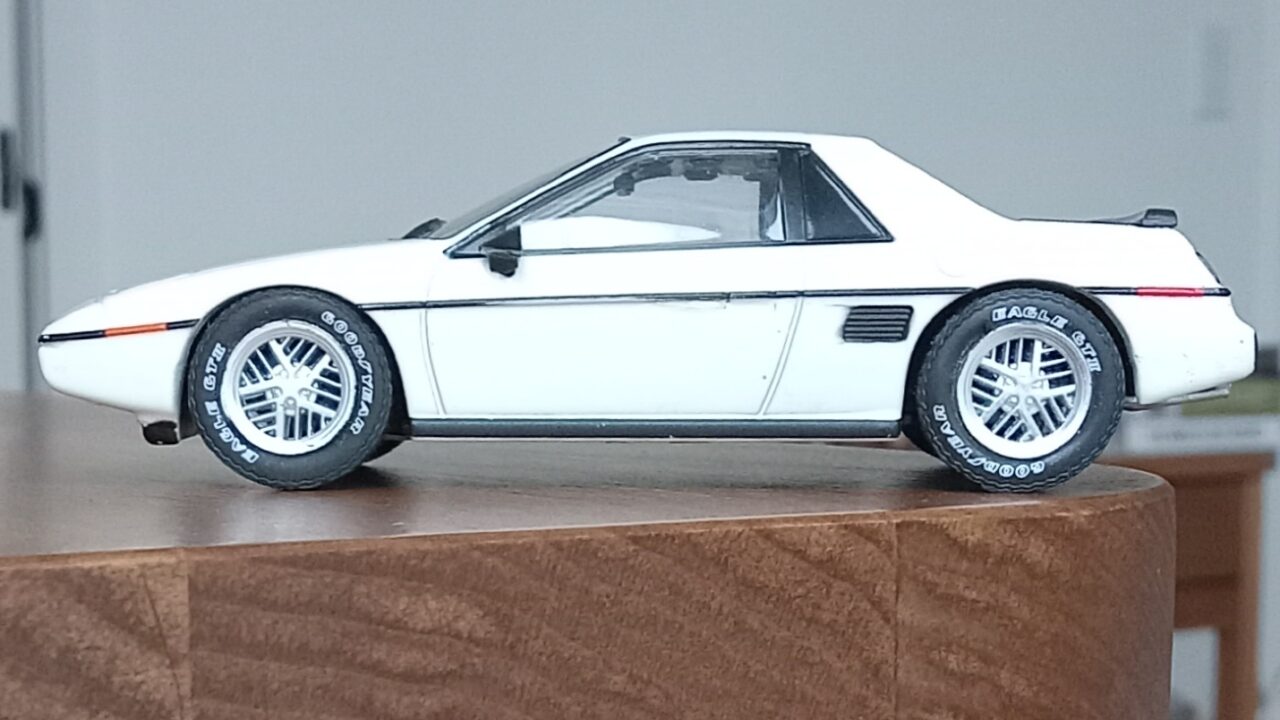
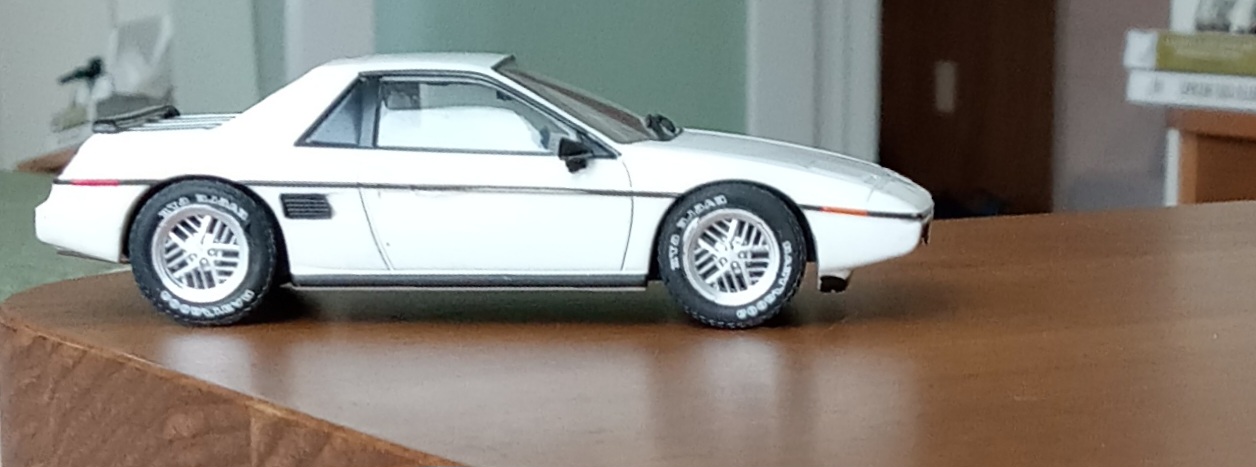
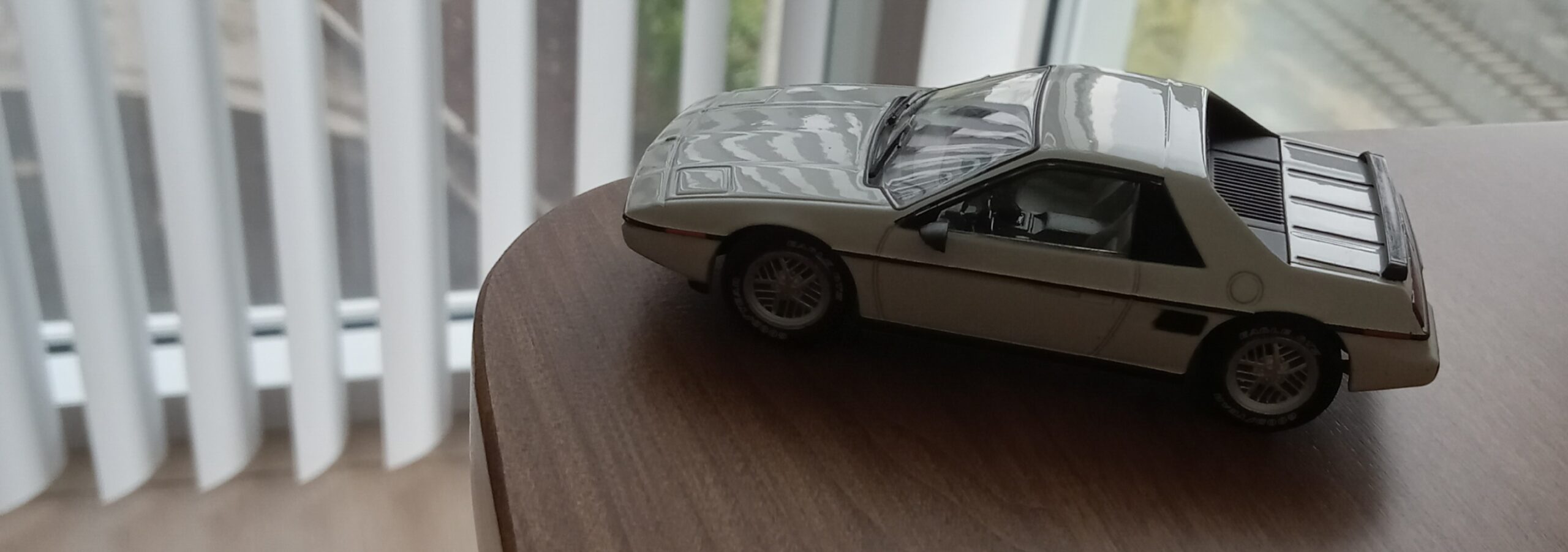
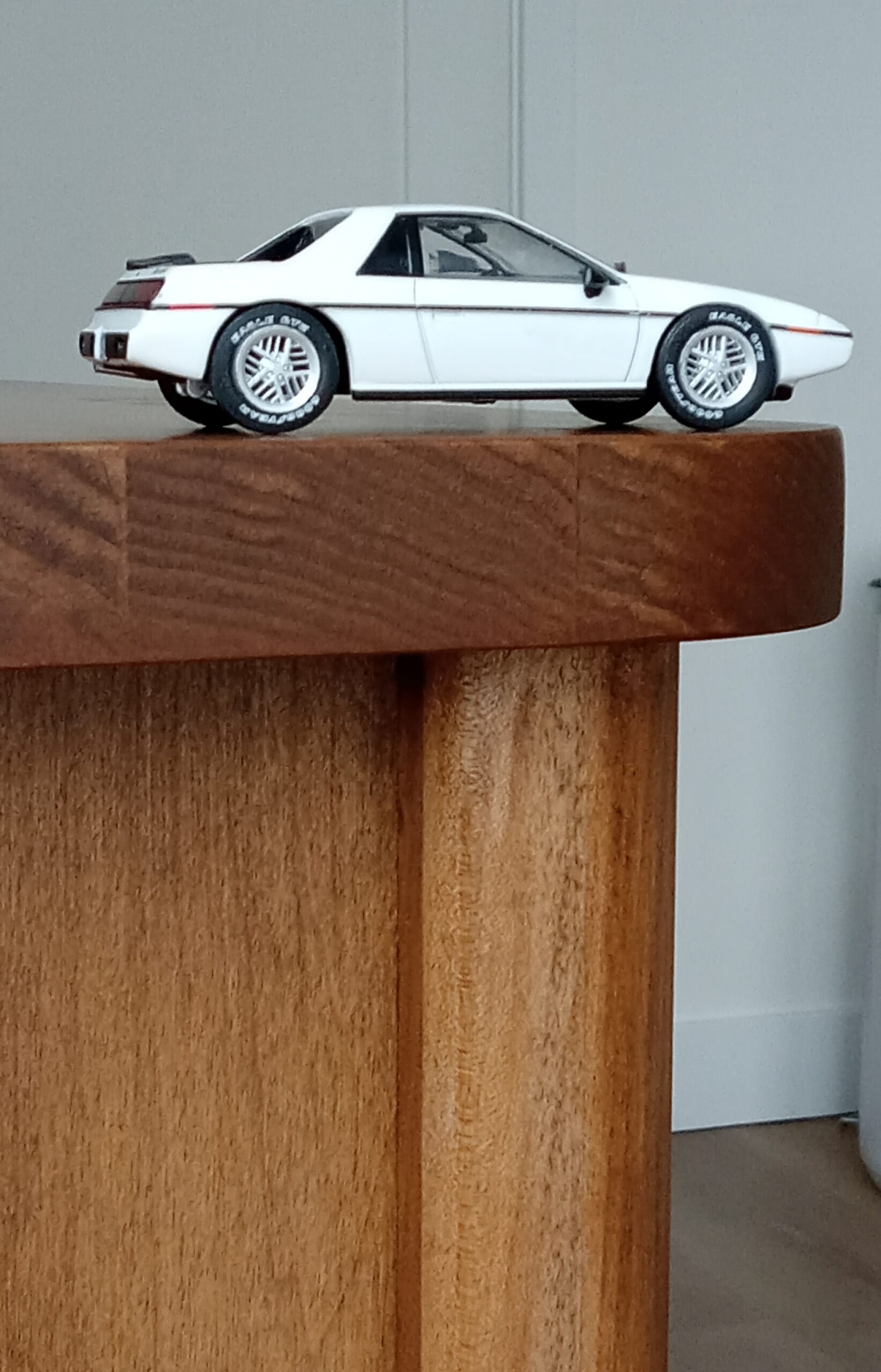
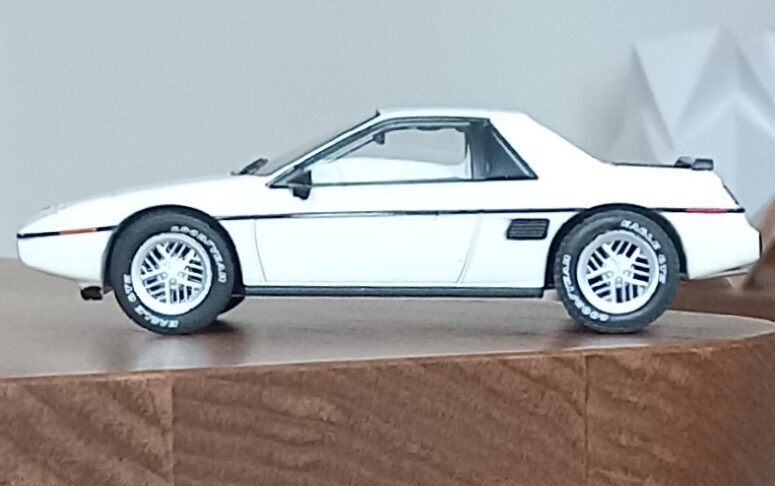
第14回:ポンティアック・フィエロ 2M4、1984(外装色:ホワイト・M40:GM Color Code)
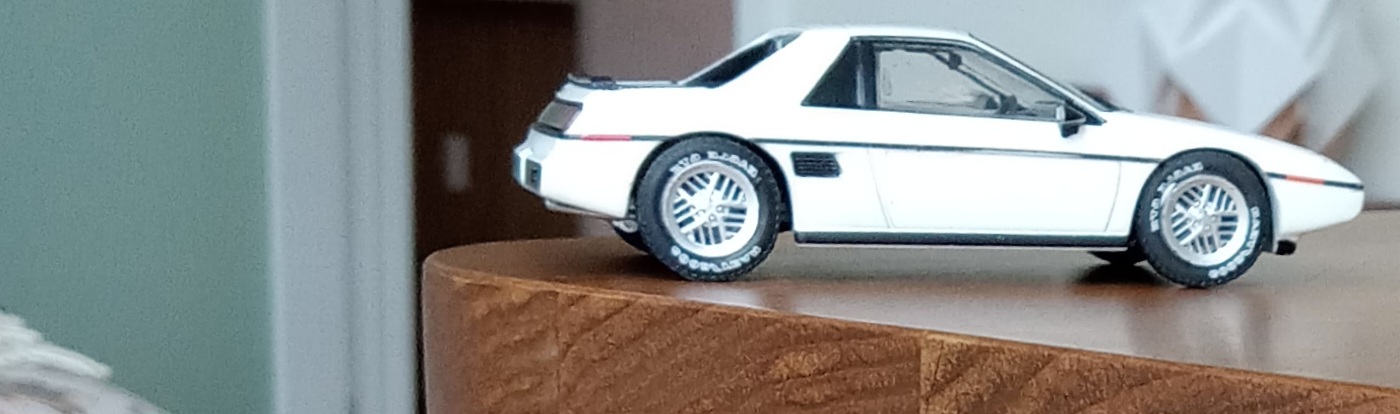
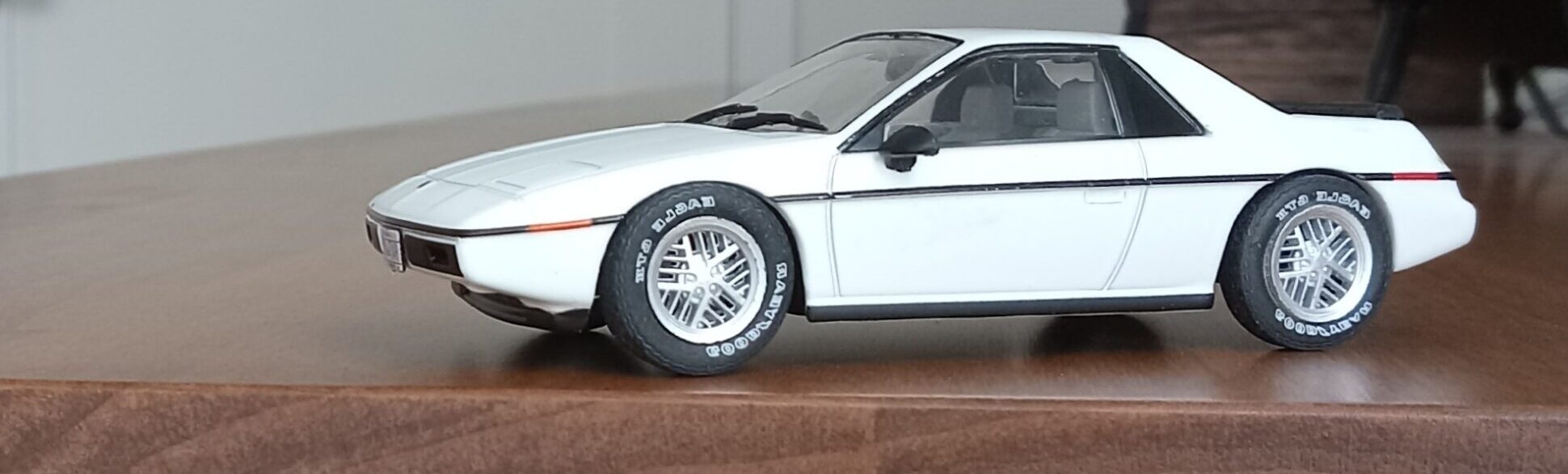
軽量ミッドシップ・2シーターが続きますが、
こちらポンティアック・フィエロはフィアットX1/9的な大衆向けのどちらかと言えば、
*デートカー又は、
*セクレタリーカー、(独身の女性に人気を博しました)
*シティーコミューター
といった感じのさりげない逸品です。
私にとってのポンティアック・フィエロは、
村上春樹さん作の小説、『ノルウェーの森』に出てくる
主人公ワタナベ君の恋人
『緑さん』
そっくりです。
『おきゃん(御侠)』
なキャラで
*彼女は活発・自由奔放で、
*思ったことを率直に言葉にする性格、
*主人公のワタナベを振り回す存在です。
*月経時には、赤い帽子をかぶり、
話しかけないで、とあらかじめ要求する
そんな感じの女性です。
それでは、
『おきゃん』なフィエロさんを
こんな感じで、見て行きましょう。
*客観的、実車情報:
*外観デザインの特徴:
*『私』とフィエロ:
*総評&その他の「おきゃんな」クルマ達:
*客観的、実車情報:アメリカ版デートカー(女性オーナー向き?)
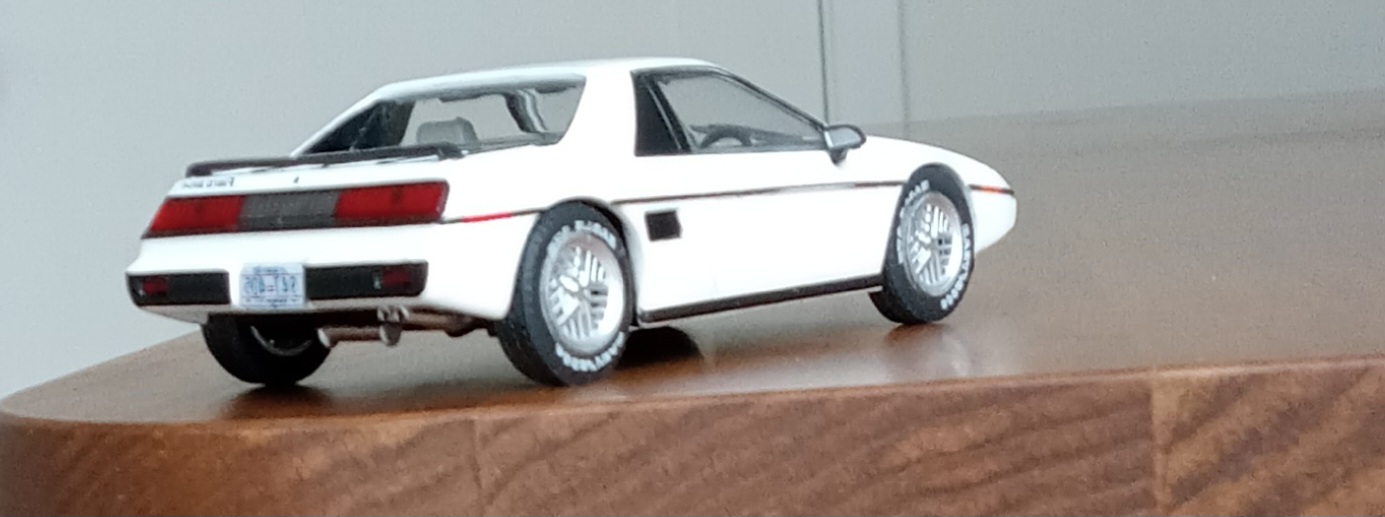
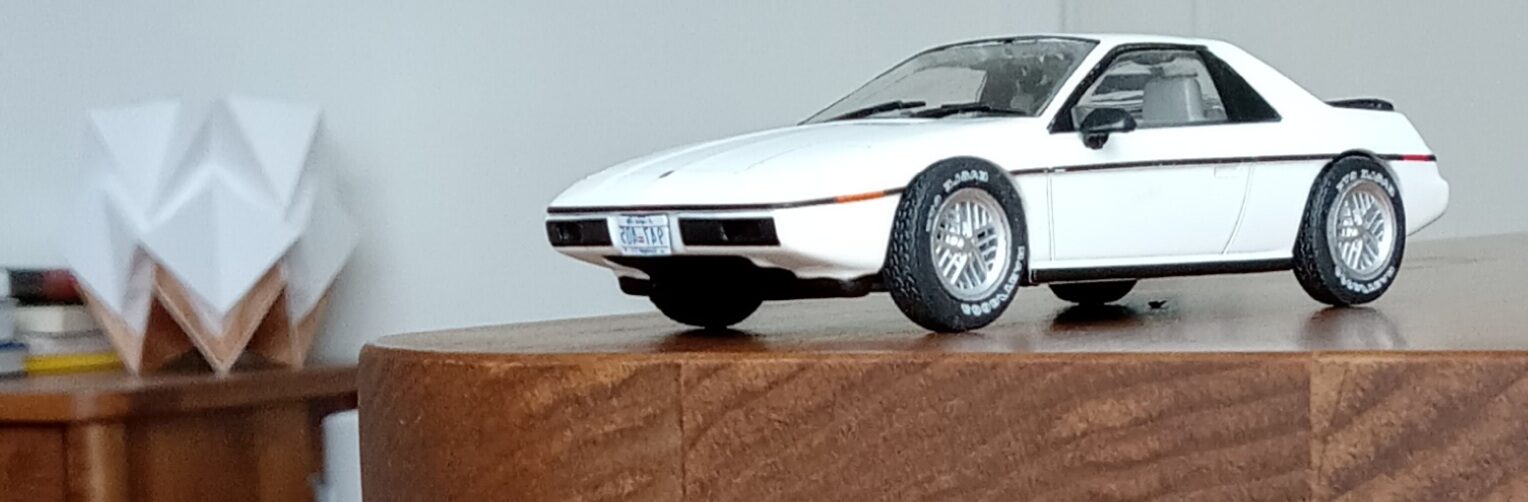
ポンティアック・フィエロ は、ゼネラルモーターズ社が製造、自社のスポーツブランド、ポンティアックの2シータースポーツカー、「手頃な価格で手に入るミッドシップスポーツカー」として開発されたました。ポンティアック初の2人乗り車であり、アメリカの自動車メーカーによる初のリアミッドエンジン量産車として、手ごろな価格と軽快なイメージもあり、独身女性を中心に初年度は、136,840台を売り上げ予想外の大ヒットとなりました。
n
n
n
その後、高性能版や、車体後部をフェラーリ風に改修したファーストバック版モデルなども投入され、一定の販売を維持しましたが、後発のトヨタMR-2等の強力なライバルに押せれる形となり、最終的には販売数が下降し始め、1998年に販売終了するまでに合計約37万台を売り上げ、惜しまれながら、わずか5年余りの短い生涯に幕を閉じました。
n
n
n
フィエロには以下のような特徴があります。
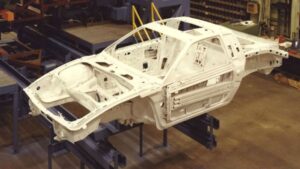
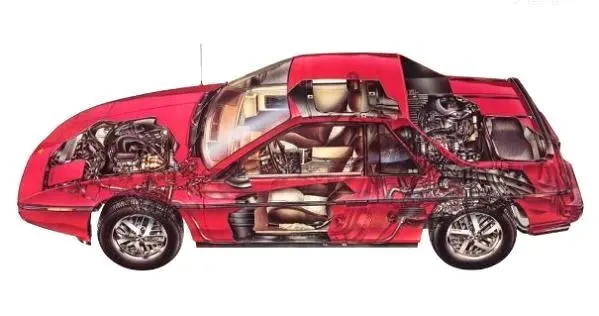
* ミッドシップレイアウト: エンジンを座席の後ろ、後輪車軸の前に配置するミッドシップ(MR)方式を採用しており、これにより良好な重量バランスとハンドリング性能を目指しました。
* 軽量ボディ: 車重は約1100kgと比較的コンパクトで軽量でした。
* エンジン: 初期のモデルでは2.5L直列4気筒OHVエンジン(約92馬力)が搭載され、後にオプションとして2.8L V6エンジン(約140馬力)が追加され、パフォーマンスが向上しました。
* インディ500ペースカー: 1984年のインディ500のペースカーに選ばれるなど、発売当初は注目を集めました。
* レプリカのベース車両: 樹脂製のボディパネルがスペースフレームにボルト留めされている構造のため、ボディの脱着が容易でした。この特性から、フェラーリやランボルギーニなどのスーパーカーのレプリカ車両のベースとして広く利用されました。
n
 |
|
M
n
n
n
n
n
n
n
n
n
n
n
n
n
n
n
n
N
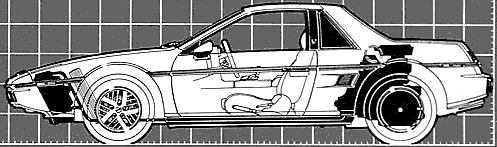
ハルキ・アルディカティ (Hulki Aldikacti)とジョージ・ミリドラッグ (George Milidrag)によって主導され、1980年代のデザイントレンドである、低く構えたシャープなウェッジシェイプ(くさび形)を採用しています。また、現代では少なくなったリトラクタブル(格納式)ヘッドライトも特徴的な要素です。フィエロの外観デザインは、当初はエンジン性能が外観に伴っていないという批判もありましたが、V6エンジン搭載モデルの追加や最終年式の改良されたサスペンションチューニングにより、真のスポーツカーとしての評価を確立していきました。その先進的なデザインとコンセプトは、日本初のオーナーであり、酔狂な自動車好きである白洲次郎氏が所有していたことからも、当時から注目されていたことが分かります。
n
n
n
n
*主要諸元:
- 型式:2M4型
- 総排気量: 2.5L 直列4気筒 (LR8、151 cu in)
: 2.8L V型6気筒 (L44、173 cu in) - 最高出力 : 92 bhp (4気筒版)
:140 bhp (6気筒版)
- 最大トルク:134 ft/lbs (4気筒版)
:170 ft/lbs (6気筒版)
- 駆動方式:MR(ミッドシップ)
- 定員:2名
- 車体サイズ:
- 全長:4,072 mm
- 全幅:1,753 mm
- 全高:1,191 mm
- 車両重量:
1,116kg
【前・後輪、重量配分:43.5/56.5】
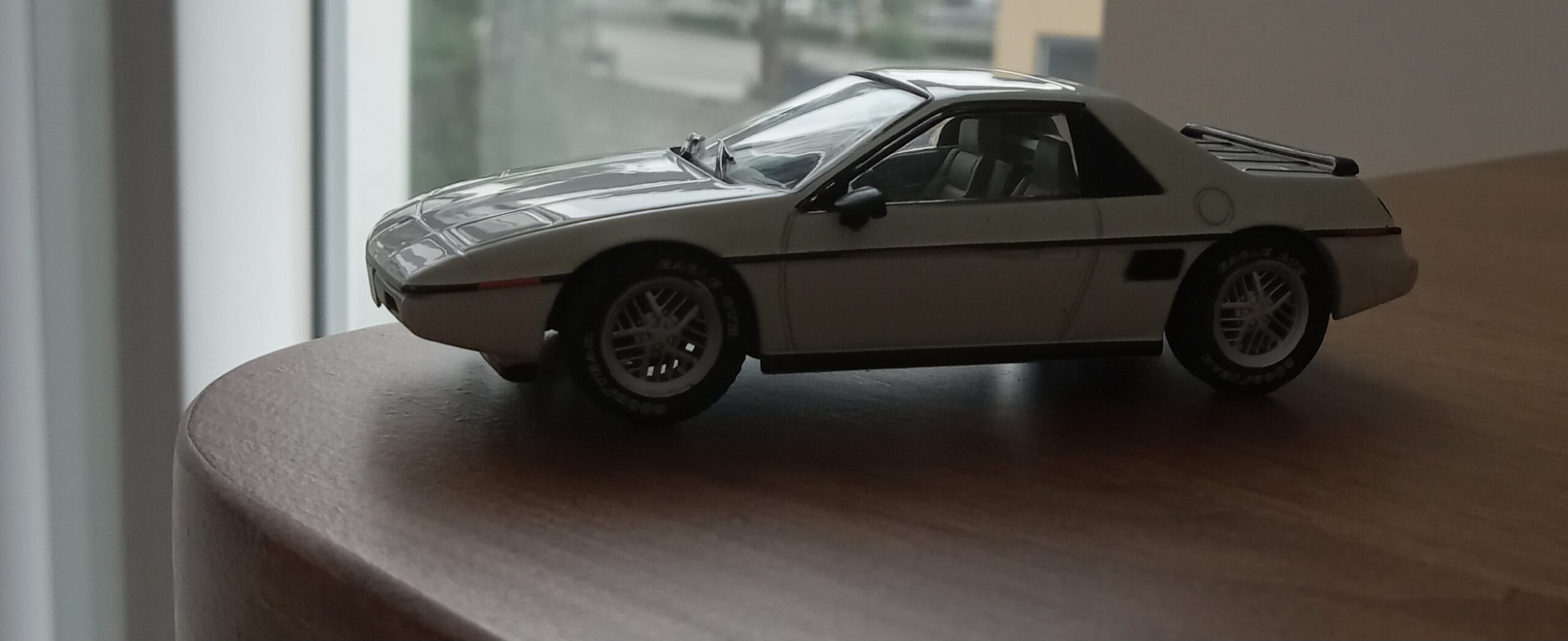
*フィエロの外見的特徴:【ザ・ウエッジ】な全体像
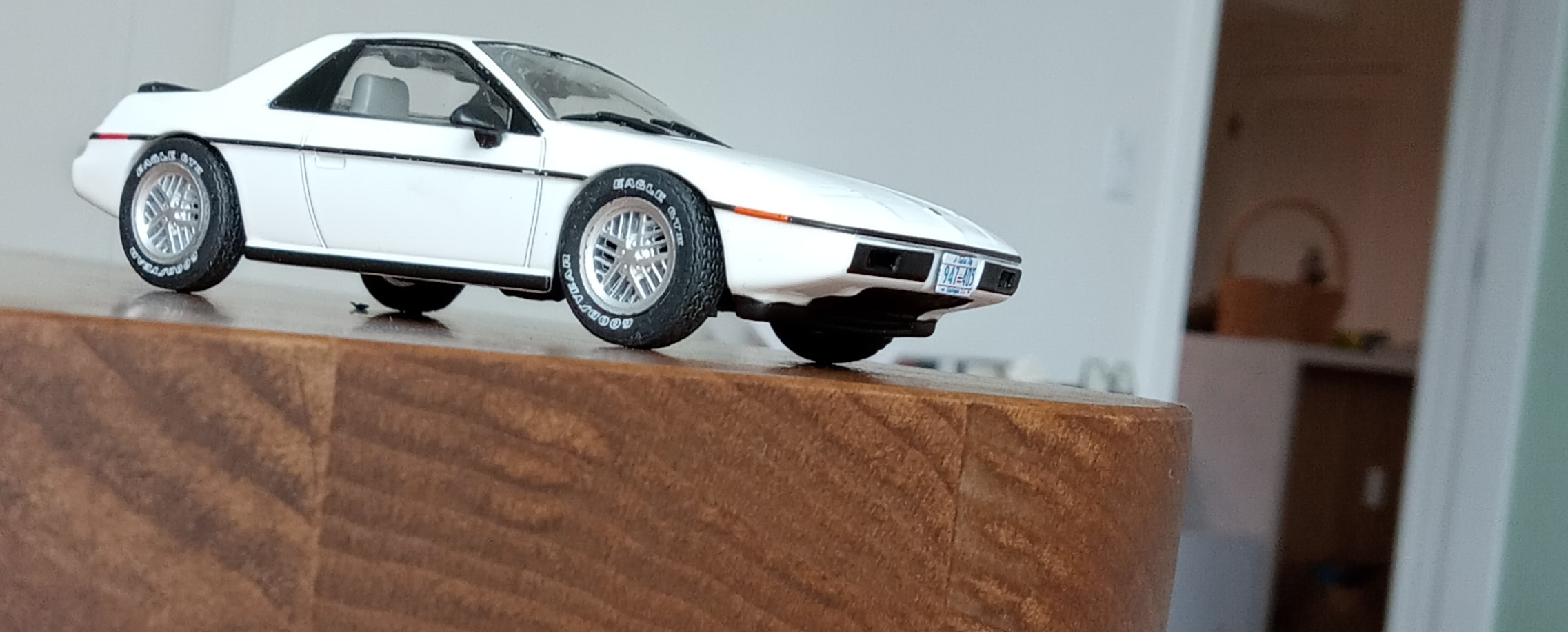
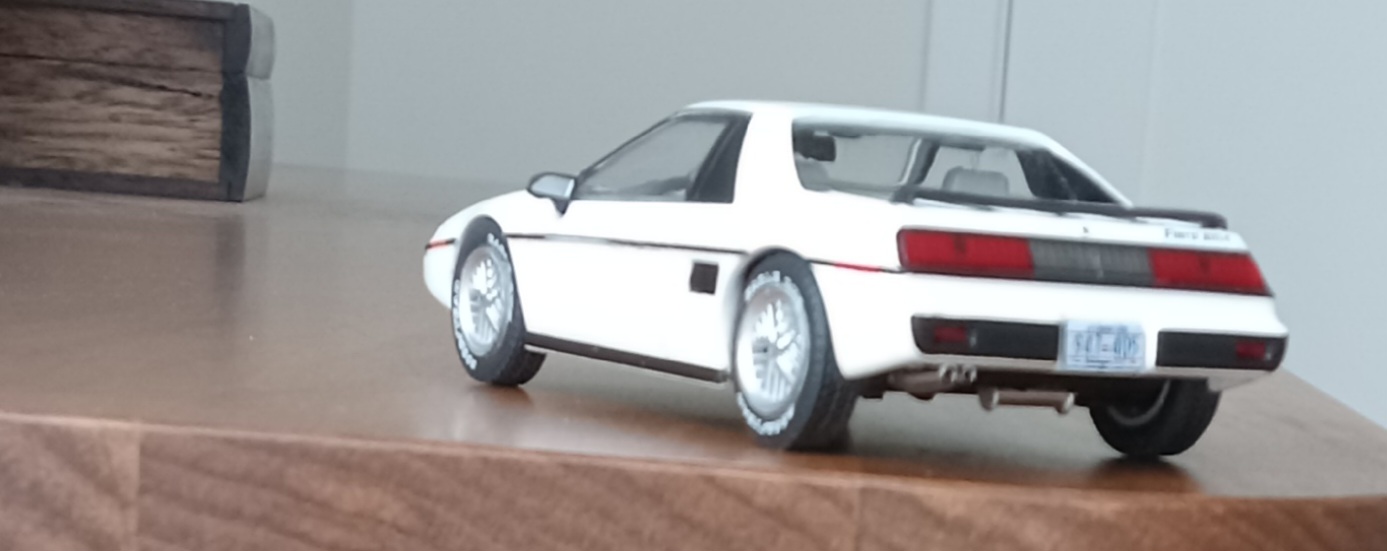
それでは『おきゃんなアメ車』:フィエロさんの特徴を
6点のデザイン的観点から見て行きましょう!
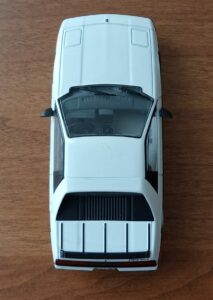
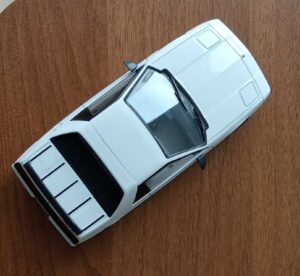
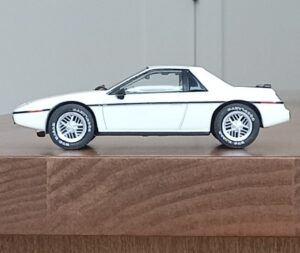
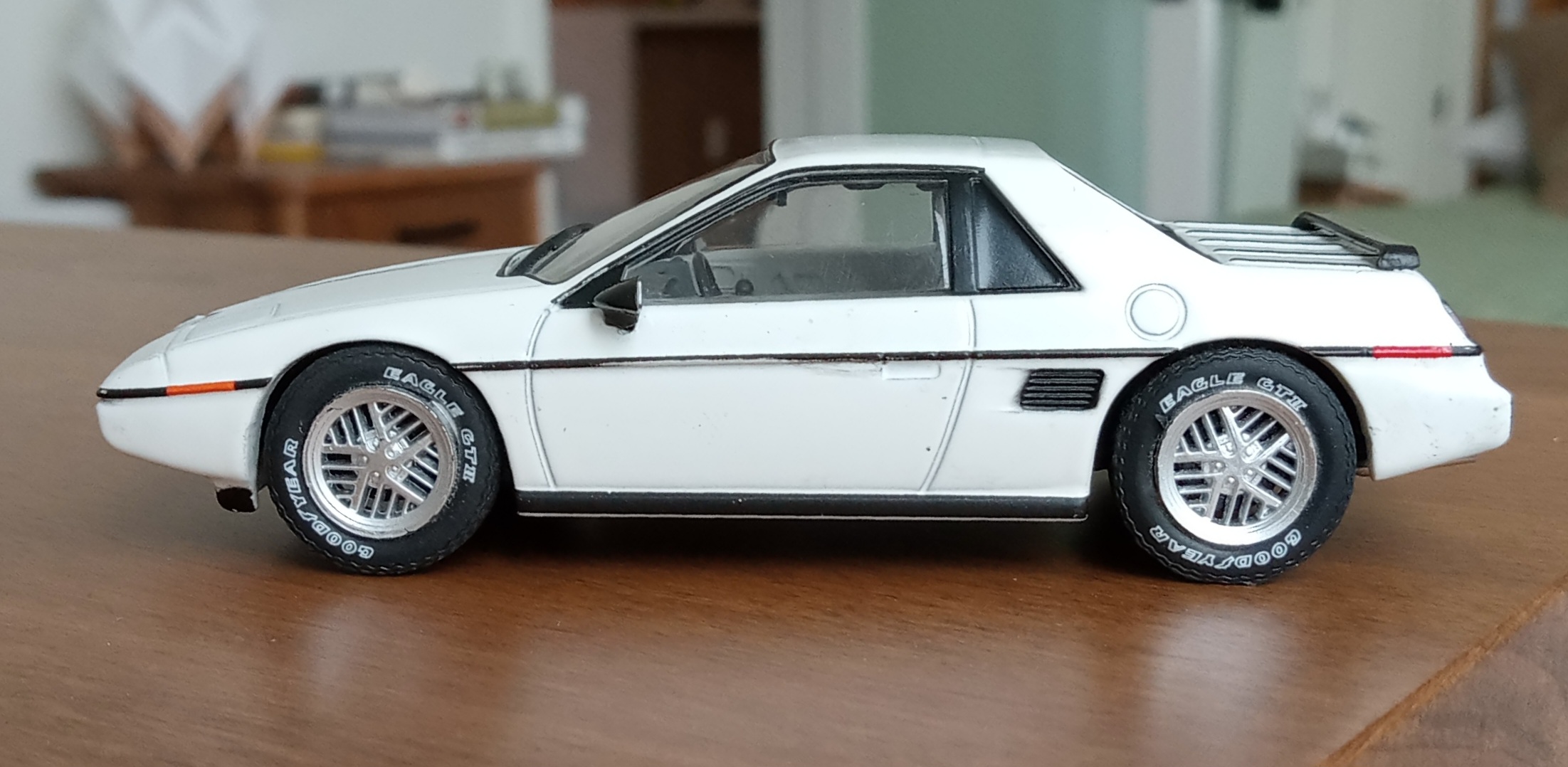
1.サイドビューだけでなくトップビューから見ても『くさび形』‼ 本家のフィアットX1/9を超える徹底的なウエッジ・シェイプが鮮烈!
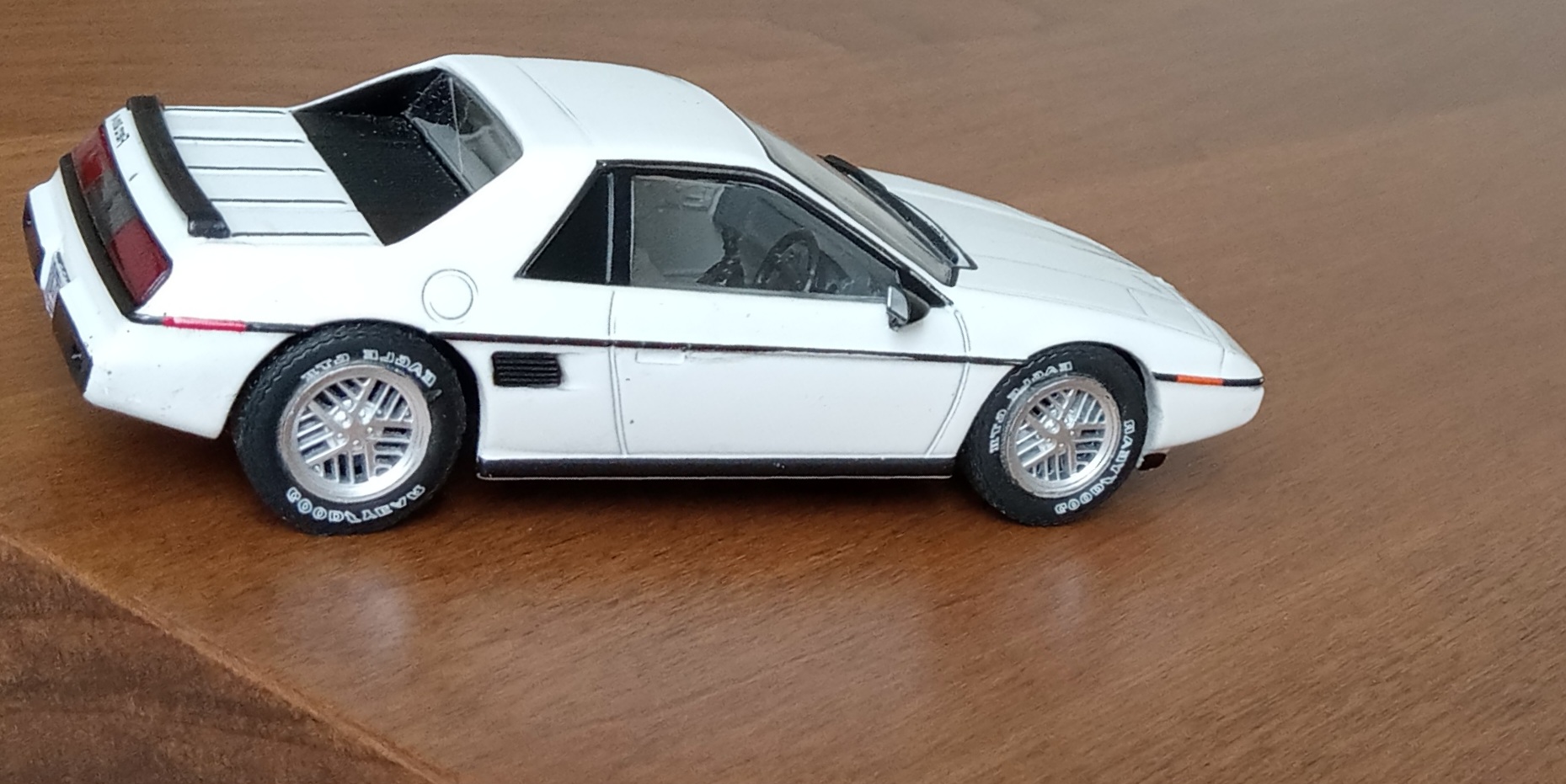
2、単純明快な面構成と外郭ラインに隠れがちな、ドアサイドのスイープ面のボリューム感がGMデザインの遺伝子を表してます。
3.全体に流れる『とってつけた感』が皆無な、完成された均整美と強烈な方向性の同居
4、全幅の広さからくる、この価格帯の2ドア車にはまれな、リアのトラクションが載ったスタンス感。
5、特徴4と相反する、全体イメージの『小股の切れ上がった』、きびきびとしていて色気がある、洗練された気品、爽快感、軽快感、気軽感、さりげなさ、、、、かといってどこも大げさでない様子の良さ。
(次回以降予定しています、ランチア・ストラトスと真逆な味わい)
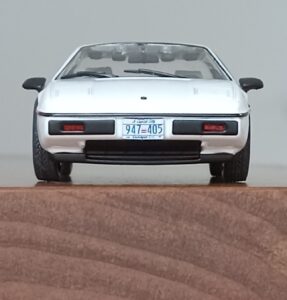
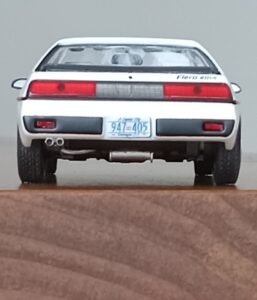
6、薄化粧が心地よい、フェイシアとリアのデザイン
ーーーーー>フェラーリになりたくてたまらない、マイナー後のごてごて感と対照的です。
それではそれぞれ
詳しく見て行きましょう!
1.サイドビューだけでなくトップビューから見ても『くさび形』‼ 本家のフィアットX1/9を超える徹底的なウエッジ・シェイプが鮮烈!
(非常に珍しい、ロッカーパネルの下端部さえ前に行くに従い、若干上向にスイープしています。)
ーーーーー>安定的に落ち着きがちなクーペタイプのルーフをものともしない、前に向かう『方向性がすさまじいです。
2、単純明快な面構成と外郭ラインに隠れがちな、ドアサイドのスイープ面のボリューム感がGMデザインの遺伝子を表してます。
(上から見た時に、ドア横を頂点とした美しいスイープを描いています。)
ーーーーー>廉価な車ですが、アメ車はアメ車といった感じでしょうか?

3.全体に流れる『とってつけた感』が皆無な、完成された均整美と強烈な方向性の同居
(立体を構成している線と面に『これで良し!』といった、迷いのない潔い意志を感じます。)
ーーーーー>ポンティアックというよりは、シボレー的な、、、
4、全幅の広さからくる、この価格帯の2ドア車にはまれな、リアのトラクションが載ったスタンス感。
ーーーーー>リアタイヤの直前当たりが一番幅広なことが影響しています。
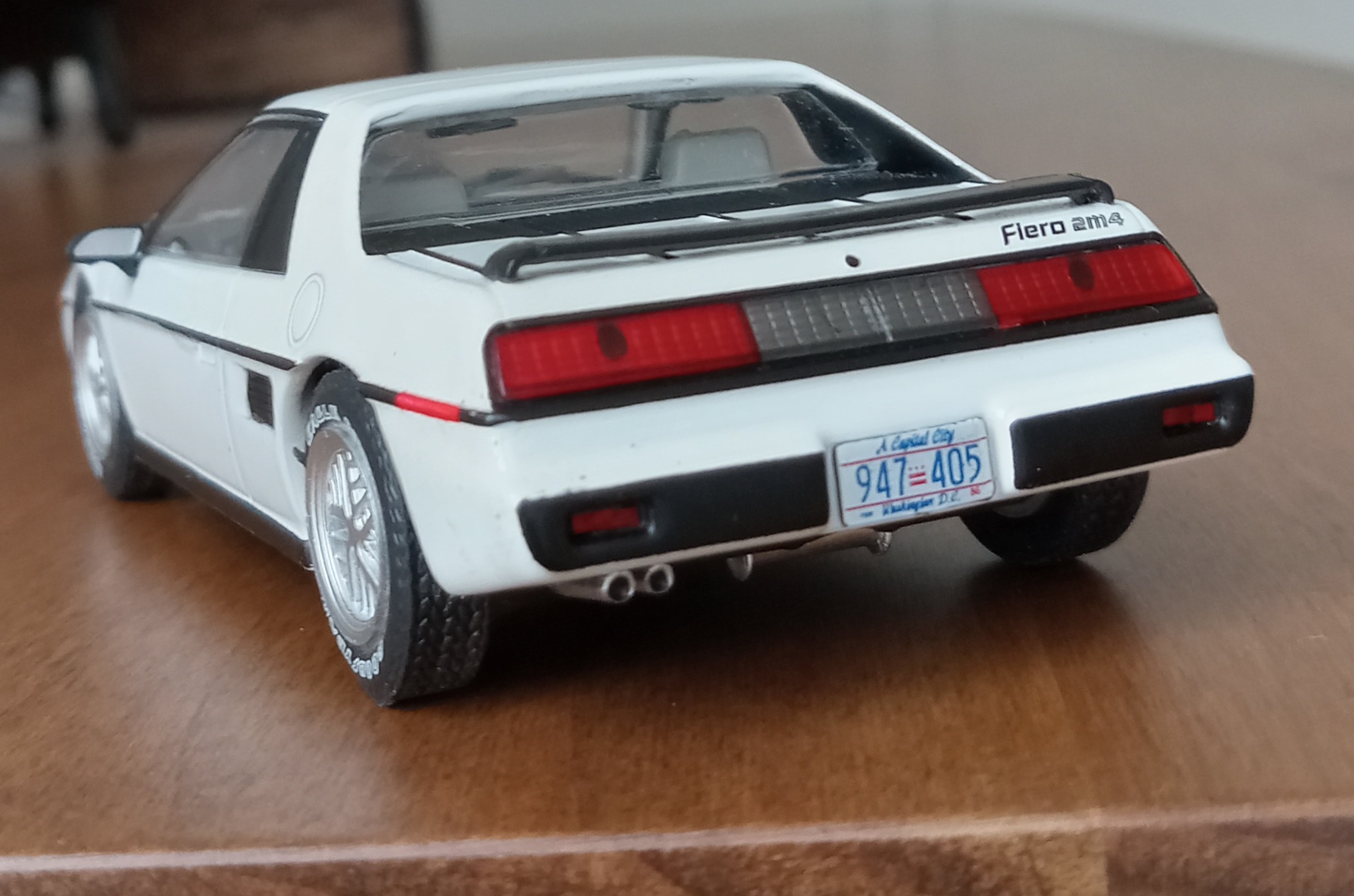
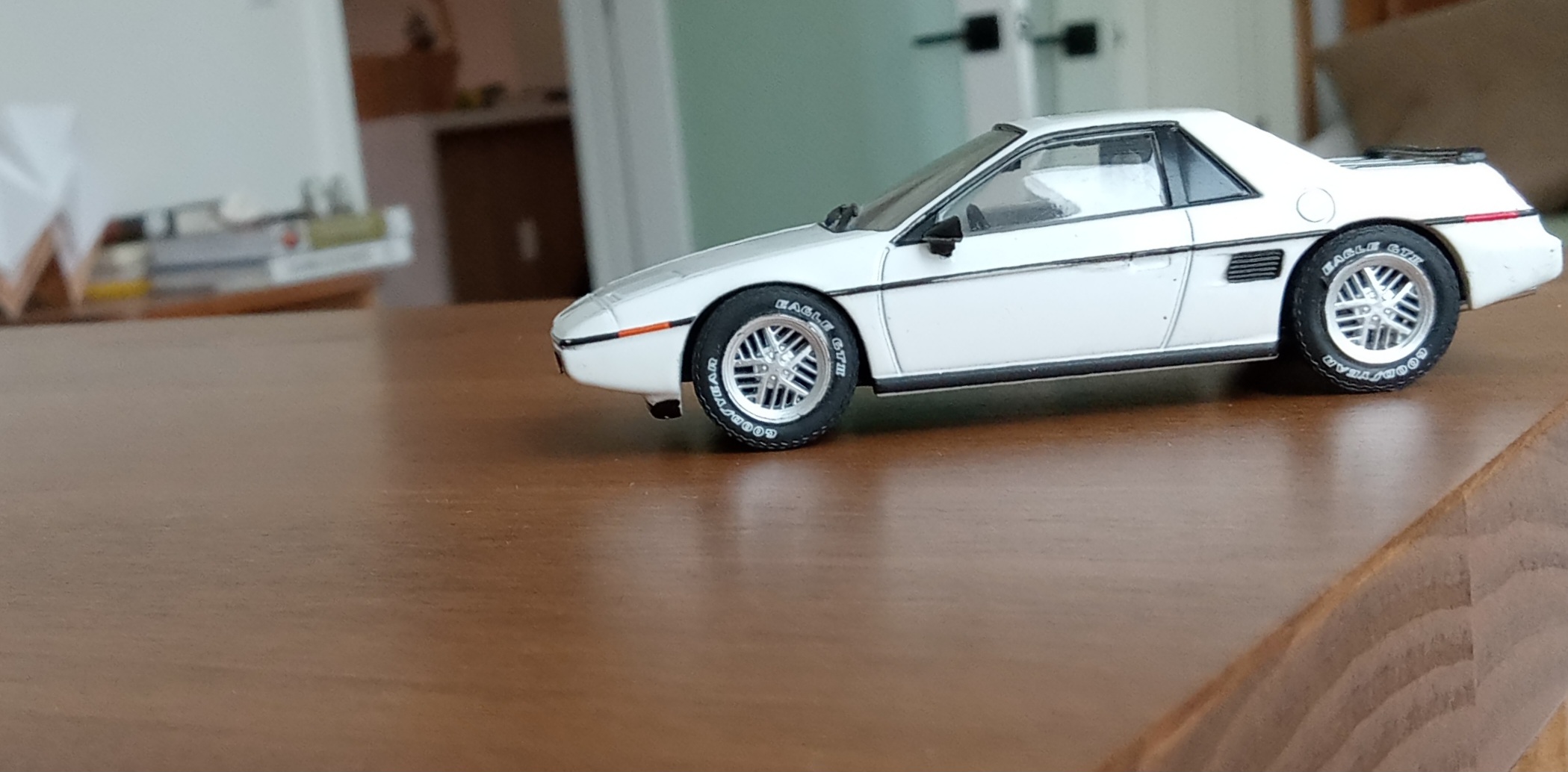
5、特徴4と相反する、全体イメージの『小股の切れ上がった』、きびきびとしていて色気がある、洗練された気品、爽快感、軽快感、気軽感、さりげなさ、、、、かといってどこも大げさでない様子の良さ。
ーーーーー>次回以降予定しています、ランチア・ストラトスと真逆な味わい
6、薄化粧が心地よい、フロント・フェイシアとリアのデザイン
ーーーーー>フェラーリになりたくてたまらない、マイナー後のごてごて感と対照的です。
*『私』とフィエロ:一時はベタぼれ状態、、、、、、、、
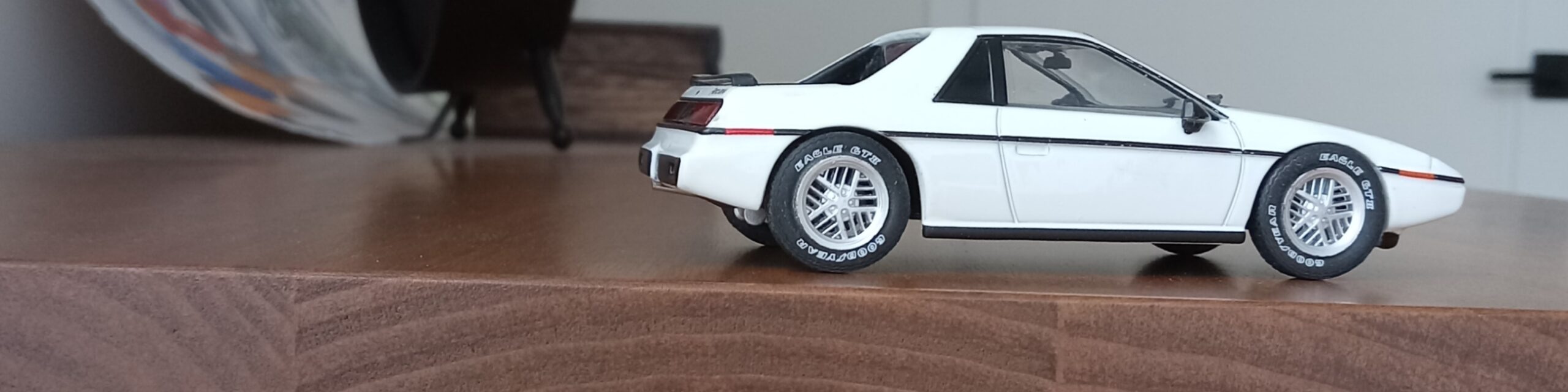
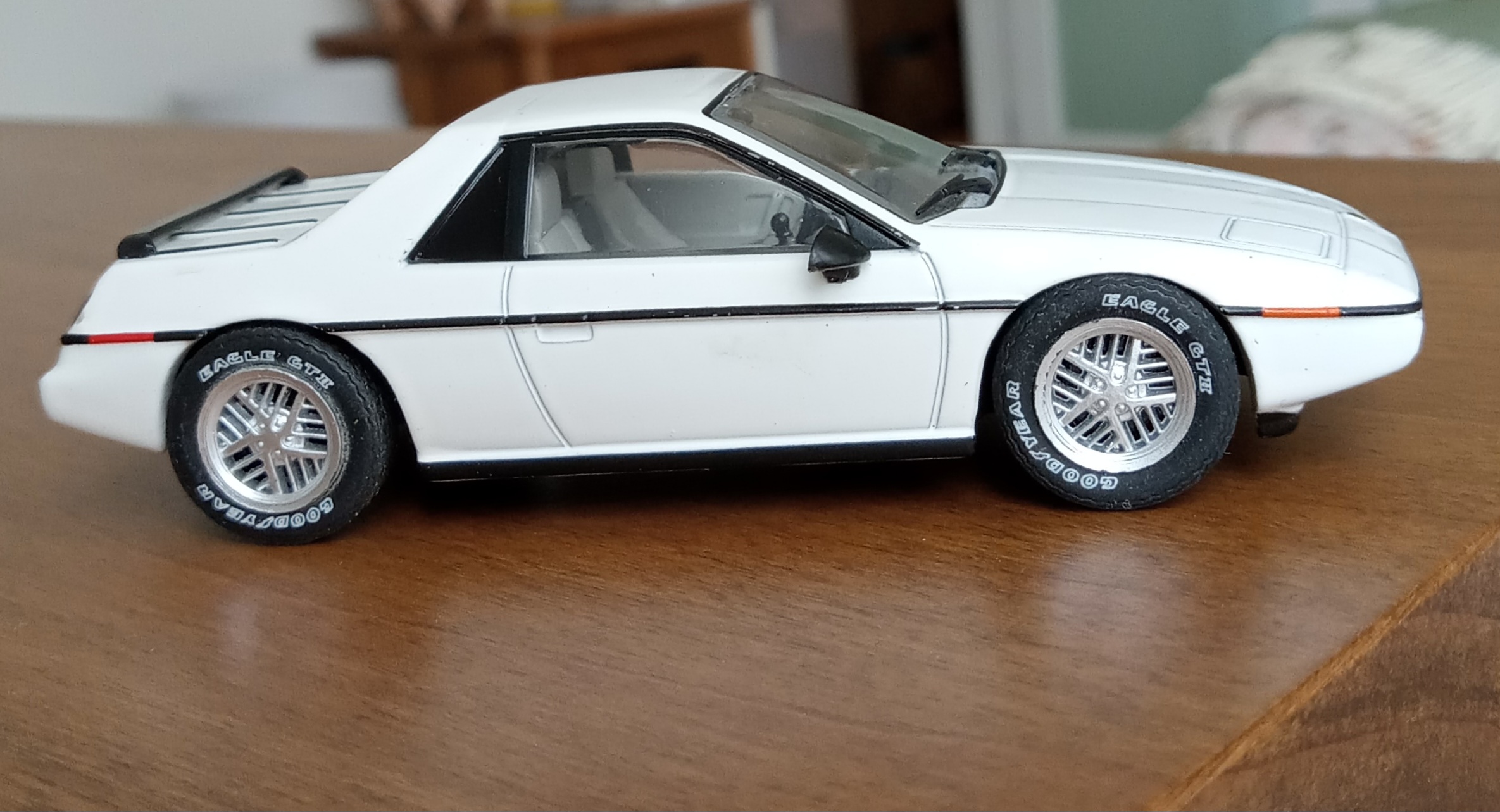
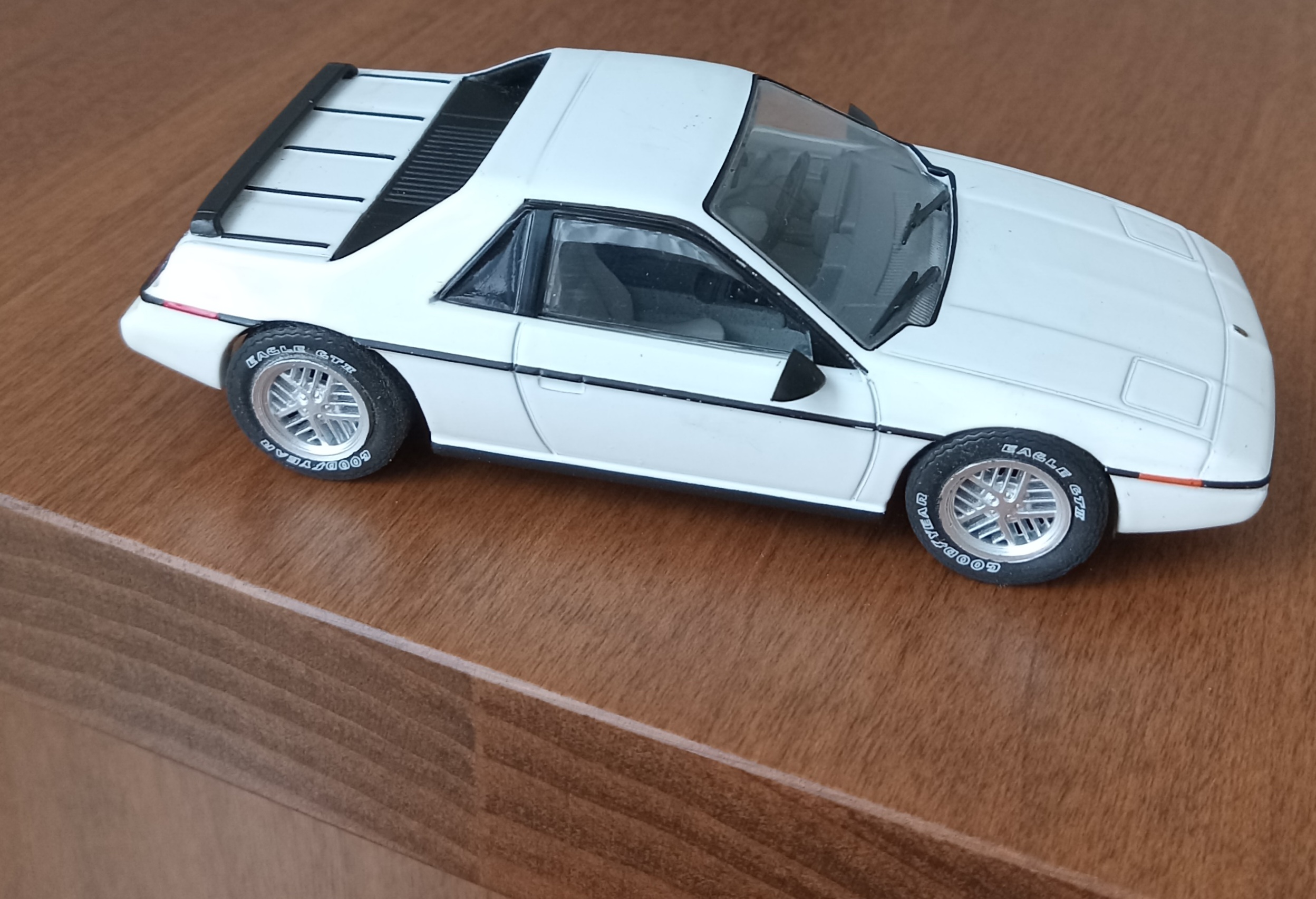
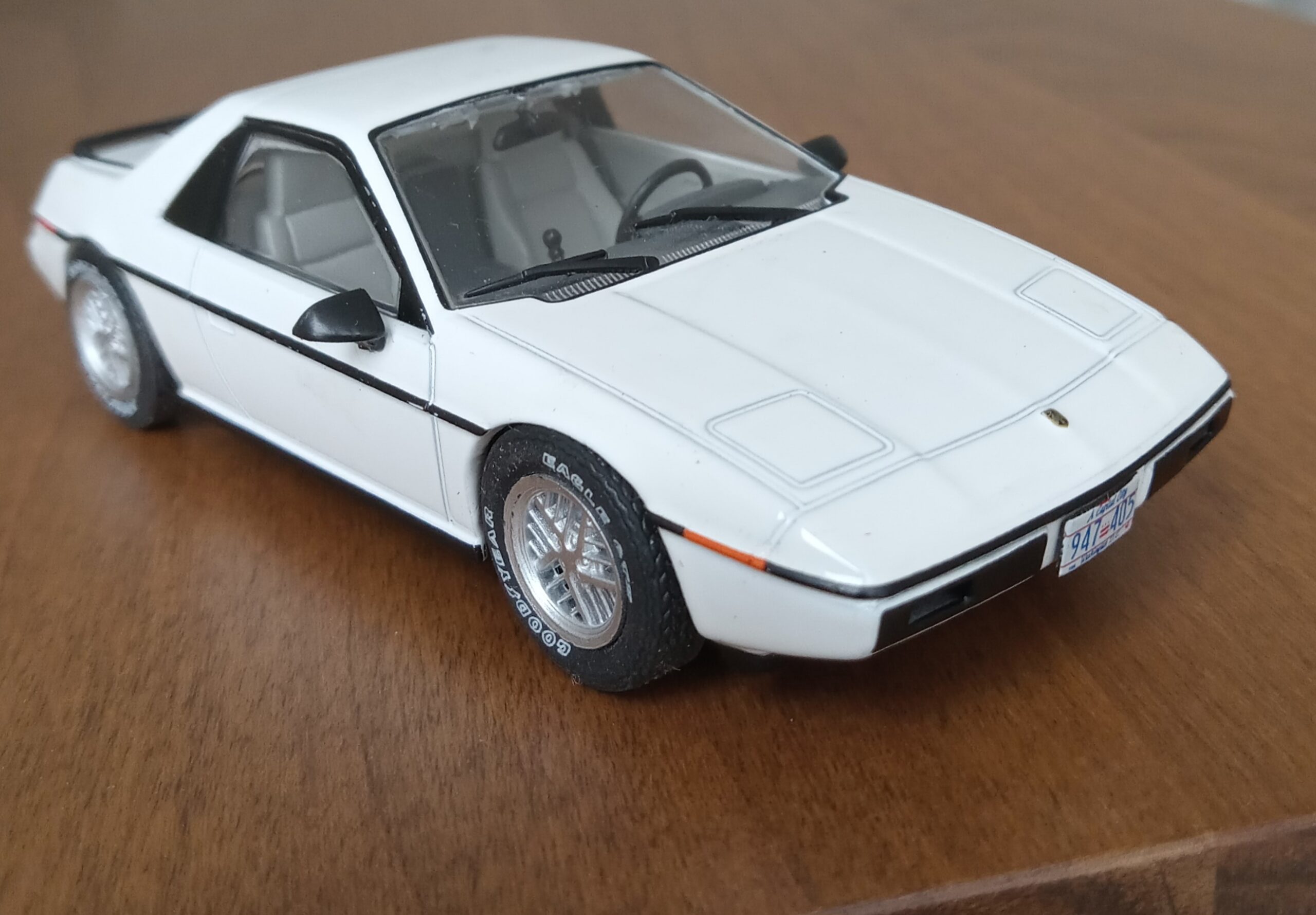
最初に、自動車雑誌か何かで、
1984年型『ポンティアック・フィエロ』を見て、
『何ときれいな、
【カタチ】なんだろう!』と、
一目ぼれ、
それ以来、
*何とかして、立体模型を手に入れたり、
*名古屋、輸入外国車モーターショーで実車に接したりして、
フィエロ愛を
育んできました。
立体模型はこんな感じで、
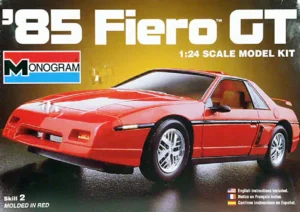
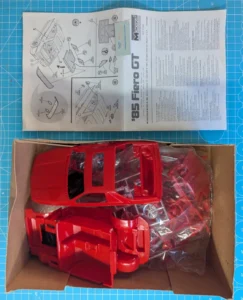
*モノグラム社製、1/24 1985年型 ポンティアック・フィエロ GT (グルー・キット)
(マイナー後の同ブランドのファイヤーバード譲りの大きな丸っぽいフロントバンパー仕様のモデル、それ以外はモノグラムのクルマキットの標準的なパーツ割で、モールドはシャープで、エンジンまで再現されてました。やはりフロントバンパーのせいで、頭でっかち感が否めませんでした。)
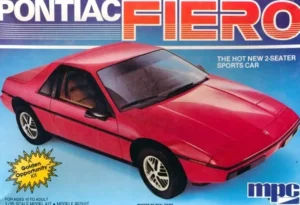
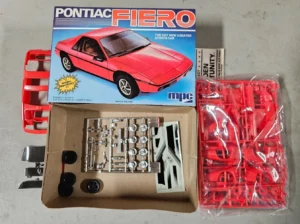
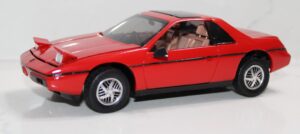
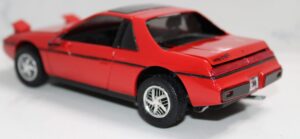
*MPC社製、1984年型 ポンティアック・フィエロ(クーペ、グルー・キット)
(こちらは最初期の1984年デビュー時のクーペをモデル化、(MPC社にありがちな商品内容・出来にばらつきあり)モールドこそいつも通りの甘い感じですが、ボディーの再現度やエンジン豚コクピットの細かさは、目を見張るものがあり、組まずに、真っ赤なボディーを、あーだこーだいいながら、2か月ほど眺め続けていました。笑)
そんな中、今回の記事を書くこととなり、
*改めて調べてみたり、
*適当なミニカーを探したり、
*写真撮影をしたりで、
再びかかわることになり、非常に濃密な時間が過ごせて、
幸せな思いに慕っております。
今後も、こんなマイナー車にこそ、
独断と偏見で、光を当てて楽しんでいきたいです。
本当に自動車デザインは
奥が深いです。
*そういえば、『ノルウェーの森の緑さん』は、どこ行った、、、?(蛇足エンディング・シリーズ復活祝)
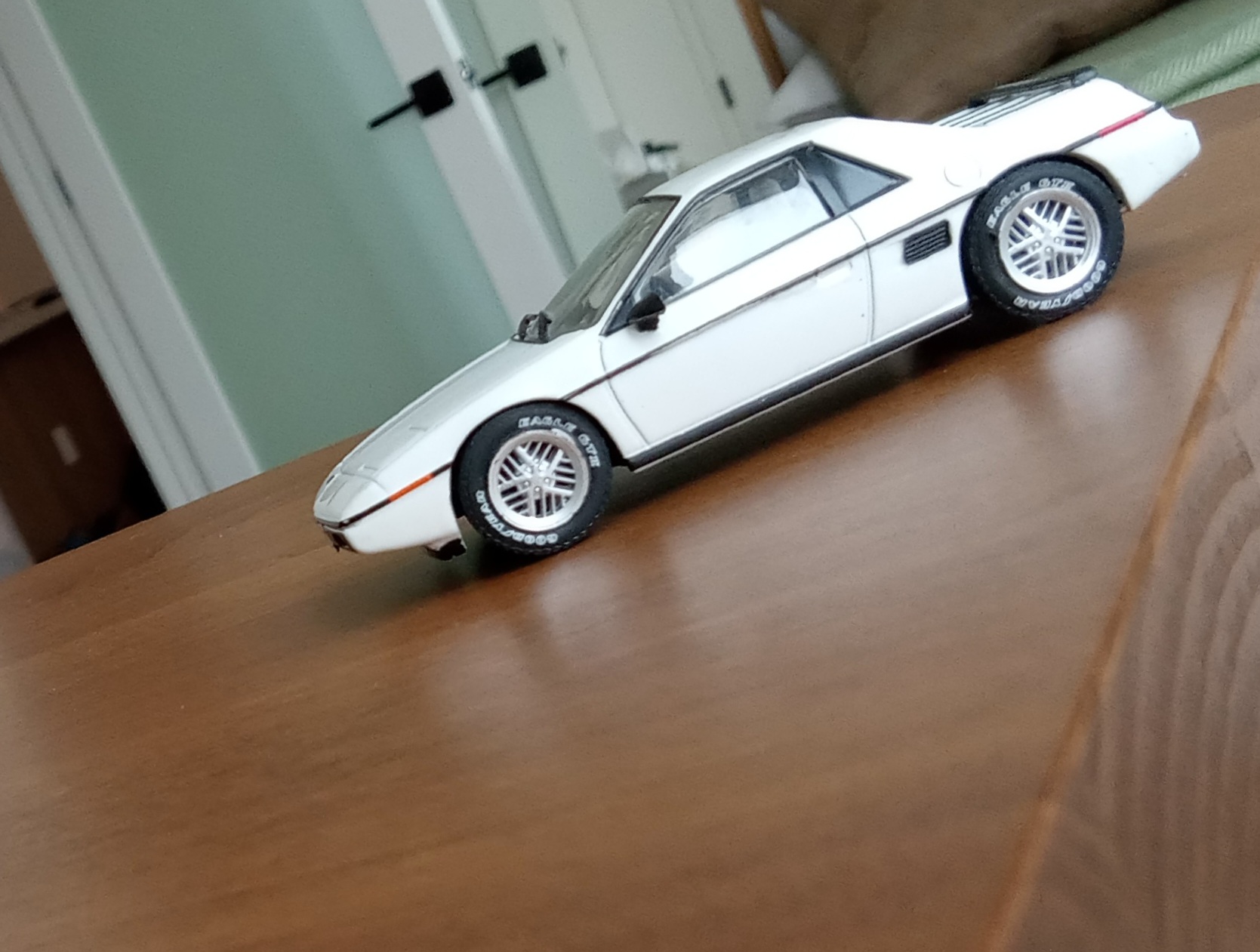
私が今回推しています、
1984年版の最初期のフィエロ・クーぺのエンジン、
わずか92馬力です。
この非力さでフェラーリ―等と同じく、
ミッドシップにエンジンを載せて、
つんと澄まして、
スポーティーなイメージを演出しております、
>>>>>>>それに対して、
ノルウェーの森の『緑さん』、
親の見栄から無理に?お金持ちの子女が通う、
ミッション系の学校に入学させられ、貧乏な自分をいたわるため、
お鍋や、料理器具を丁寧に選び、
自分で、管理して、自炊しているために、
料理の腕はプロ級、、、、

(映画:『ノルウェーの森』(監督:
トラン・アン・ユン)の中で『緑』役の
水原希子さん)
まさに、完全な、
『細うで繁盛記』状態です!!
そんな、けなげで、
苦労を外に出さない、自立したイメージが、
92馬力の
『1984年型、フィエロ・クーペ』
にそっくりです!!(笑)
ちょっと、ノルウェーの森、
読み直してみたくなりました。
実際、フィエロには
『緑さん』に乗っていただきたいです。
 それでは次回は、
今は亡き、徳大寺有恒さんをしのびながら、
ジャガーXJ12, シリーズ2について、
お話ししたいです。
お楽しみに―
本ブログと記事内容につきまして:
ブログ記事を書くにあたり私の目標は、立体造形(料理も含めて)とのかかわりを通じて、私個人の特徴的(ネジ曲がり方も含めて)な評価軸を解明することで、「美しさ・美味しさ」に対する好奇心や、探求心を、どのように満足・充足させてきたのかを明記しておくことです。
従いまして、記事の中に出てくる、数字や年号、微細なデータなどには細心の注意を払っておりますが、時に大きな間違いや勘違いを犯していることも考えられます。特に自動車記事における主要諸元や、年号などには紛らわしいものも多く、あくまで参考程度に考えていただければ幸いです。
私としては、記事の中で個人的な外観デザインや味覚の評価、そこから広がる後半部分につなげるための、『流れ』を作るための客観的材料として年号やデータを挿入している感じです。あくまで重視したいのは、私個人の頭の中で起こる、記憶の錯そう的混沌から生まれる新たな『見方』や『情報の予想外のつながり』です。その勢いを作り出す、『流れ』の一環として、諸データが副次的に必要となるわけです。
話がそれますが、大好きな落語の世界に「三題噺」という、その場て会場から募った3つのお題を使って1つのお話に仕立てるといったお遊びがございますが、私はそれに近いことを立体造形の特徴や(料理のお味)をお題にして行っている感じがします。その中で頭の中に去来する数々の着想が、全く予想外で楽しく、次回からの記事内容を大幅に変えたり、新展開につながっています。
当ブロブの仕組み:
『好奇心の点と線 x 気まぐれ脳内回路=予想外の新展開』
こんな自分勝手なブログですが、今後ともよろしくお願いいたします。
追記:上記の『流れ』を作る為に必要な写真はできる限り、個人所有のミニカー・自前の料理などを使い撮影しておりますが、その他の必要最小限の図版や写真を他のブログ主様の記事や諸会社ホームページなどからお借りしております。(記事内容に合うよう加工させていただき、使用時は最小の解像度で載せております。)問題がある場合、ご連絡いただければ直ちに降ろさせていただきます。
追記2:当ブログ記事に掲載のミニカー写真等(個人撮影)は許可なしで、どのようにお使いいただいても結構です。私個人の創造性はこの世のもの、と言う認識の上で記事を製作しています。
!!!!!!!!!!!!!!!!!!!!!!!!!!!!!!!!!!!! Translation in English !!!!!!!!!!!!!!!!!!!!!!!!!!!!!!!!!!!!
Episode 14: Pontiac Fiero 2M4, 1984 (Exterior Color: White #M40:GM color code)
* City commuter
It’s a subtle gem of a car.
For me, the Pontiac Fiero is
just like
‘Midori-san’
the girlfriend of the protagonist Watanabe
in Haruki Murakami’s novel Norwegian Wood.
She’s a “Okyan” (a bold, free-spirited woman) type.
*She’s lively and free-spirited,
*has a personality that speaks her mind directly,
*and is someone who keeps the protagonist Watanabe on his toes.
*During her period, she wears a red hat
and asks in advance not to be spoken to.
That’s the kind of woman she is.
Now then,
let’s take a look at the ‘Okyan’ Fiero
in this manner.
* Objective, actual vehicle information:
* Exterior design features:
* ‘Me’ and the Fiero:
* Overall impressions & other “Okyan” cars:
* Objective, actual vehicle info: American date car (for female owners?)
The Pontiac Fiero was manufactured by General Motors as a two-seater sports car under their Pontiac brand, developed as an “affordable mid-engine sports car.” As Pontiac’s first two-seater and America’s first mass-produced rear mid-engine car, its affordable price and nimble image led to unexpected success, particularly among single women. First-year sales reached 136,840 units.
n
n
n
Subsequent high-performance versions and a fastback model with a Ferrari-inspired rear body were introduced, maintaining steady sales. However, it faced strong competition from later models like the Toyota MR-2, leading to a decline in sales. By the time production ended in 1998, total sales reached approximately 370,000 units. Regrettably, its short life spanned just over five years.
The Fiero featured the following characteristics:
* Mid-engine layout: Adopted a mid-engine (MR) configuration, placing the engine behind the seats and in front of the rear axle. This provided excellent weight balance and handling performance.
The Fiero featured the following characteristics:
* Mid-ship layout: It adopted a mid-ship (MR) configuration, placing the engine behind the seats and in front of the rear axle, aiming for excellent weight balance and handling performance.
* Lightweight body: The vehicle weighed approximately 1,100 kg, making it relatively compact and light.
* Engine: Early models featured a 2.5L inline-4 OHV engine (approx. 92 hp). A 2.8L V6 engine (approx. 140 hp) was later added as an option, enhancing performance.
* Indy 500 Pace Car: It garnered significant attention upon launch, notably being selected as the pace car for the 1984 Indianapolis 500.
* Replica Base Vehicle: Its structure, featuring resin body panels bolted to a space frame, allowed for easy body removal. This characteristic led to its widespread use as a base for replica vehicles of supercars like Ferrari and Lamborghini.
n
n
n
The Pontiac Fiero remains a cult favorite among some automotive enthusiasts today, thanks to its unique concept and design.
N
|
n
M
n
n
n
n
n
n
n
n
n
n
n
n
n
n
n
n
n
n
n
n
n
n
N
The exterior design,
led by Hulki Aldikacti and George Milidrag, adopted the low-slung, sharp wedge shape that was a design trend of the 1980s. Another distinctive feature is the retractable headlights, a rarity in modern designs. While the Fiero’s exterior design initially faced criticism that its engine performance didn’t match its looks, the addition of V6 engine models and improved suspension tuning in the final model year helped establish its reputation as a true sports car. Its advanced design and concept were notable even then, evidenced by its ownership by Jiro Shirasu, Japan’s first owner and an eccentric car enthusiast.
n
n
n
The Fiero’s design emerged from the ingenuity of engineers striving to achieve an attractive, sporty appearance reminiscent of Italian supercars within the strict cost and fuel efficiency constraints of GM, a massive profit-driven corporation. It was designed not as a mere copy, but as a unique American mid-engine sports car with its own distinct technical foundation.
*Key Specifications:
Model: 2M4
Total Displacement: 2.5L Inline-4 (LR8, 151 cu in)
: 2.8L V6 (L44, 173 cu in)
Maximum Power: 92 bhp (4-cylinder version)
: 140 bhp (6-cylinder version)
Maximum Torque: 134 ft/lbs (4-cylinder version)
: 170 ft/lbs (6-cylinder version)
Drive Layout: MR (Mid-engine)
Seating Capacity: 2
Body Dimensions:
Overall Length: 4,072 mm
Overall Width: 1,753 mm
Overall Height: 1,191 mm
Curb Weight:
1,116 kg
[Front/Rear Weight Distribution: 43.5/56.5]
*Fiero’s Visual Signature: The Overall ‘Wedge’ Profile
Now, let’s examine the characteristics of the ‘Cheeky American Car’: the Fiero,
from six design perspectives!
1. A ‘wedge shape’ visible not just from the side view, but also from the top view‼ Its thorough wedge shape, surpassing even the original Fiat X1/9, is striking!
2. The simple, clear surface composition and outer contour lines conceal the voluminous sweep of the door sides, revealing GM design DNA.
3. A sense of ‘artificiality’ is entirely absent throughout, achieving a perfect balance of harmonious beauty and intense directionality.
4. The rear stance conveys traction, rare for a two-door in this price range, thanks to its substantial width.
5. Contrasting with feature 4, the overall impression is ‘nimble and agile’—refined elegance, refreshing lightness, casual ease, and understated charm… yet nothing feels exaggerated.
(To be covered in future installments: its taste is the polar opposite of the Lancia Stratos)
6. The pleasantly understated design of the fascia and rear
──────> This contrasts sharply with the post-facelift clutter that desperately wants to be a Ferrari.
Now, let’s examine each point
in detail!
1. Not just the side view, but even from above, it’s a ‘wedge shape’‼ Its thorough wedge form, surpassing even the original Fiat X1/9, is striking!
(Extremely rare: even the lower edge of the rocker panel sweeps slightly upward as it moves forward.)
————> It defies the typically stable, sedate coupe roofline with an incredible forward-driving ‘directionality’.
2. The simple, clear surface composition and outer lines conceal the voluminous sweep of the door sides, revealing GM design DNA.
(Viewed from above, it creates a beautiful sweep with the door side as its apex.)
ーーーーー>It’s an affordable car, but it feels distinctly American, doesn’t it?
3. A seamless blend of refined, balanced beauty and intense directionality, with absolutely no sense of anything being tacked on.
(The lines and surfaces forming the three-dimensional shape convey a decisive, uncompromising intent – a clear ‘This is it!’ statement.)
ーーーーー>More Chevrolet than Pontiac…
4. A stance with rear traction, rare for a 2-door in this price range, stemming from its overall width.
ーーーーー>This is influenced by the point just in front of the rear tires being the widest.
5. Contrasting with feature 4, the overall impression is ‘nimble and agile’—refined elegance, refreshing lightness, casual ease, and understated charm… yet nothing feels exaggerated.
──────> Scheduled for future coverage: a taste diametrically opposed to the Lancia Stratos
6. The front fascia and rear design feel pleasantly understated.
──────> It yearns to be a Ferrari, contrasting sharply with the cluttered look after minor updates.
*Me and the Fiero: I was head over heels for it at one point…
First, in an auto magazine or something,
I saw the 1984 Pontiac Fiero,
and thought,
‘What a beautiful shape!’
Love at first sight.
Ever since then,
*I somehow got my hands on a scale model,
*encountered the real thing at the Nagoya Imported Foreign Car Motor Show,
and nurtured my love for the Fiero.
The scale model looked like this:
* Monogram 1/24 scale 1985 Pontiac Fiero GT (glue kit)
(This model featured the large, rounded front bumper design inherited from the Firebird after the minor redesign. Otherwise, it used Monogram’s standard car kit parts layout. The molding was sharp, even reproducing the engine. However, the front bumper inevitably gave it a top-heavy look.)
* MPC, 1984 Pontiac Fiero (Coupe, glued kit)
(This model depicts the earliest 1984 debut coupe. (As is common with MPC products, there’s some variation in contents and quality.) While the molding has the usual soft feel, the body reproduction and the intricate details of the engine bay and cockpit are truly remarkable. I spent about two months just staring at the bright red body, going on and on about it, without even assembling it. lol)
Amidst this, I found myself writing this article,
* Researching it anew,
* Hunting for suitable miniatures,
* Taking photographs,
and thus engaging with it once more. It was an incredibly rich experience,
leaving me filled with happy nostalgia.
Moving forward, I want to keep shining my own light on these minor cars,
enjoying them through my own biases and preferences.
Automotive design truly has
a lot of depth.
*Come to think of it, where did “Green-san of Norway’s Forest” go…? (Celebrating the revival of the Superfluous Ending Series)
What I’m pushing this time is
the engine of the earliest 1984 Fiero Coupe,
a mere 92 horsepower.
Despite this lack of power, like Ferraris and such,
it has the engine mounted midship,
stiffly and primly,
projecting a sporty image.
>>>>>>>In contrast,
“Green-san” from Norwegian Wood,
forced by parental pride? to a missionary school
for wealthy children,
she carefully selects pots and cooking utensils,
manages them herself, and cooks her own meals
to care for her impoverished self.
Her cooking skills are professional-grade…
(Kiko Mizuhara as ‘Midori’ in the film:
‘Norwegian Wood’ (Director: Tran Anh Hung))
It’s truly a perfect
‘The Story of a Thin Arm’ situation!!
That image of being so resilient,
never showing hardship, and being self-reliant,
is exactly like
a 92 horsepower
‘1984 model Fiero Coupe’!! (lol)
It makes me want to reread Norwegian Wood.
Actually, I’d love to see Ms. Midori driving a Fiero.
Next time, while remembering the late Mr. Tokudaiji Aritsune,
I’d like to talk about the Jaguar XJ12, Series 2.
Stay tuned―
Translated with DeepL.com

これはCTAサンプルです。
内容を編集するか削除してください。