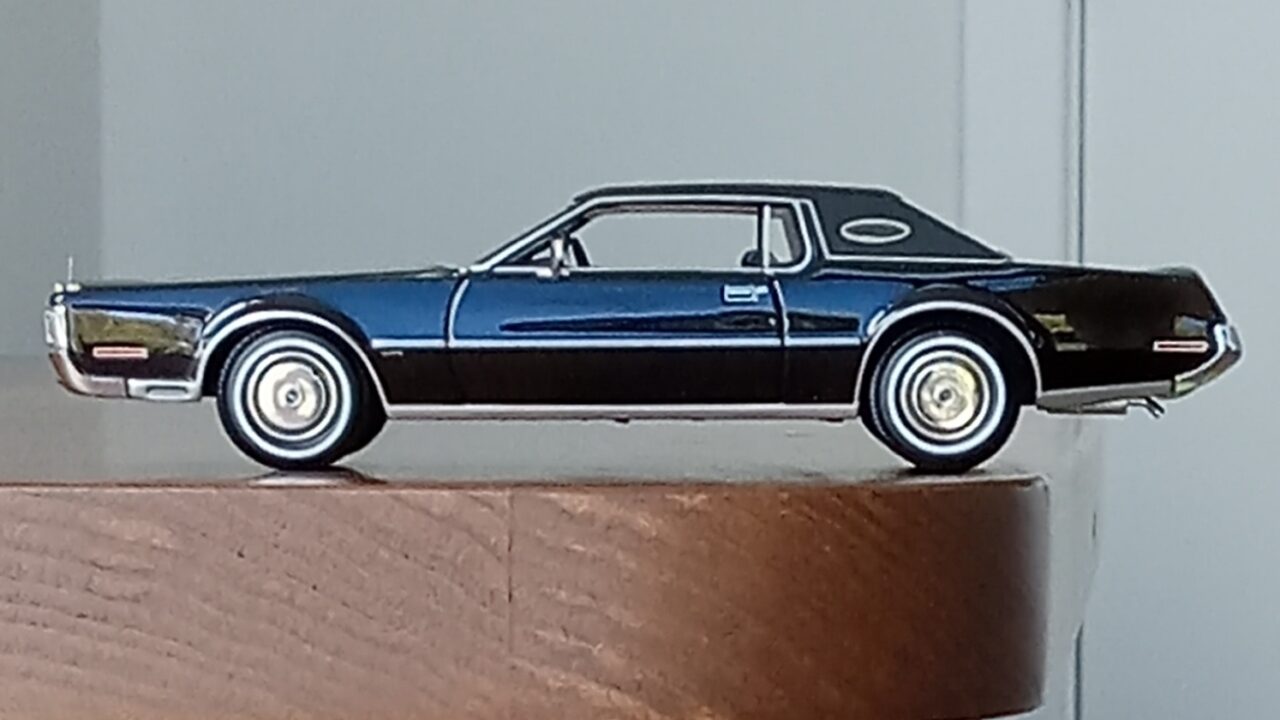
#『ナイフ・ブレード』デザインの完成形:

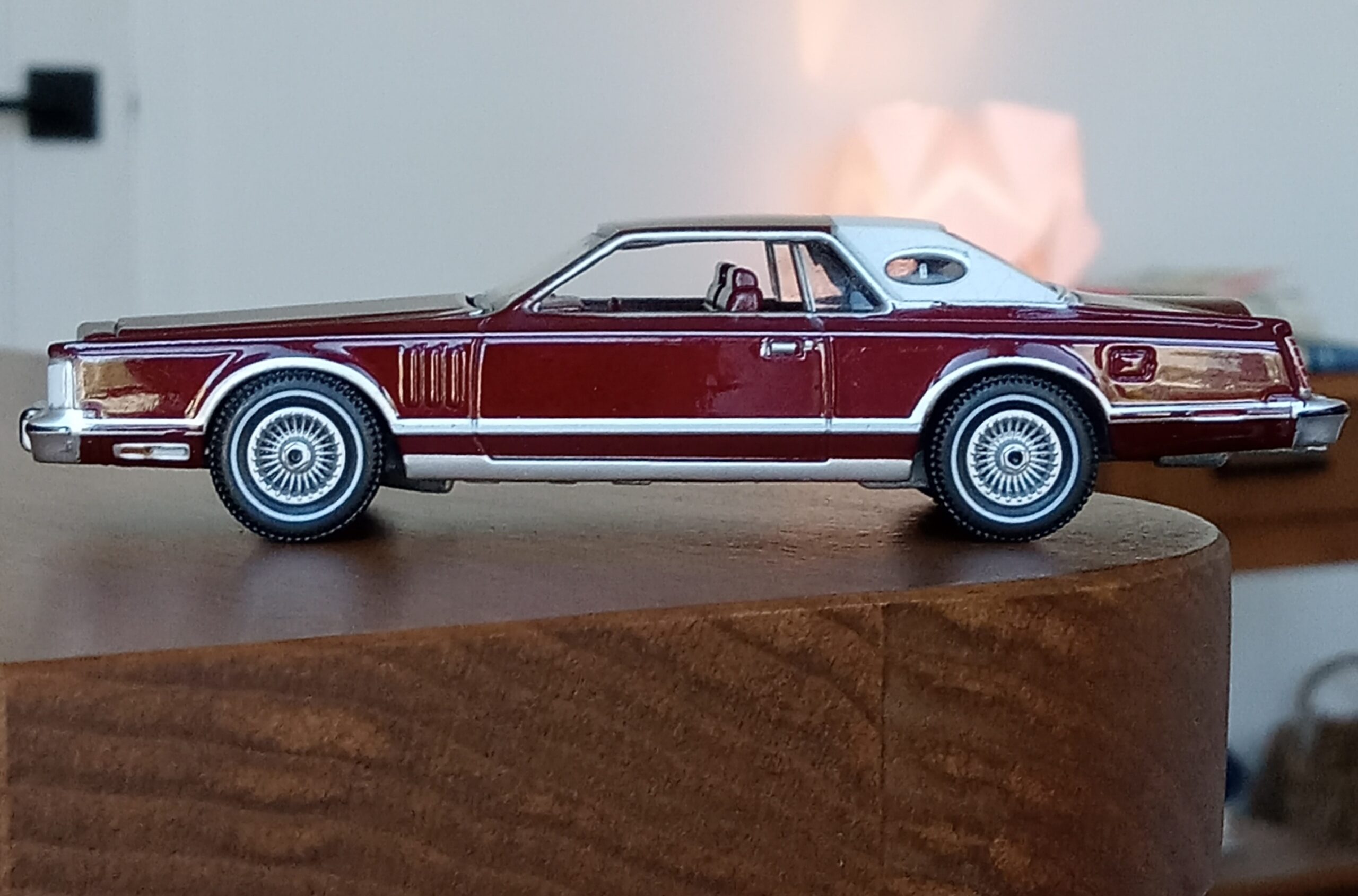
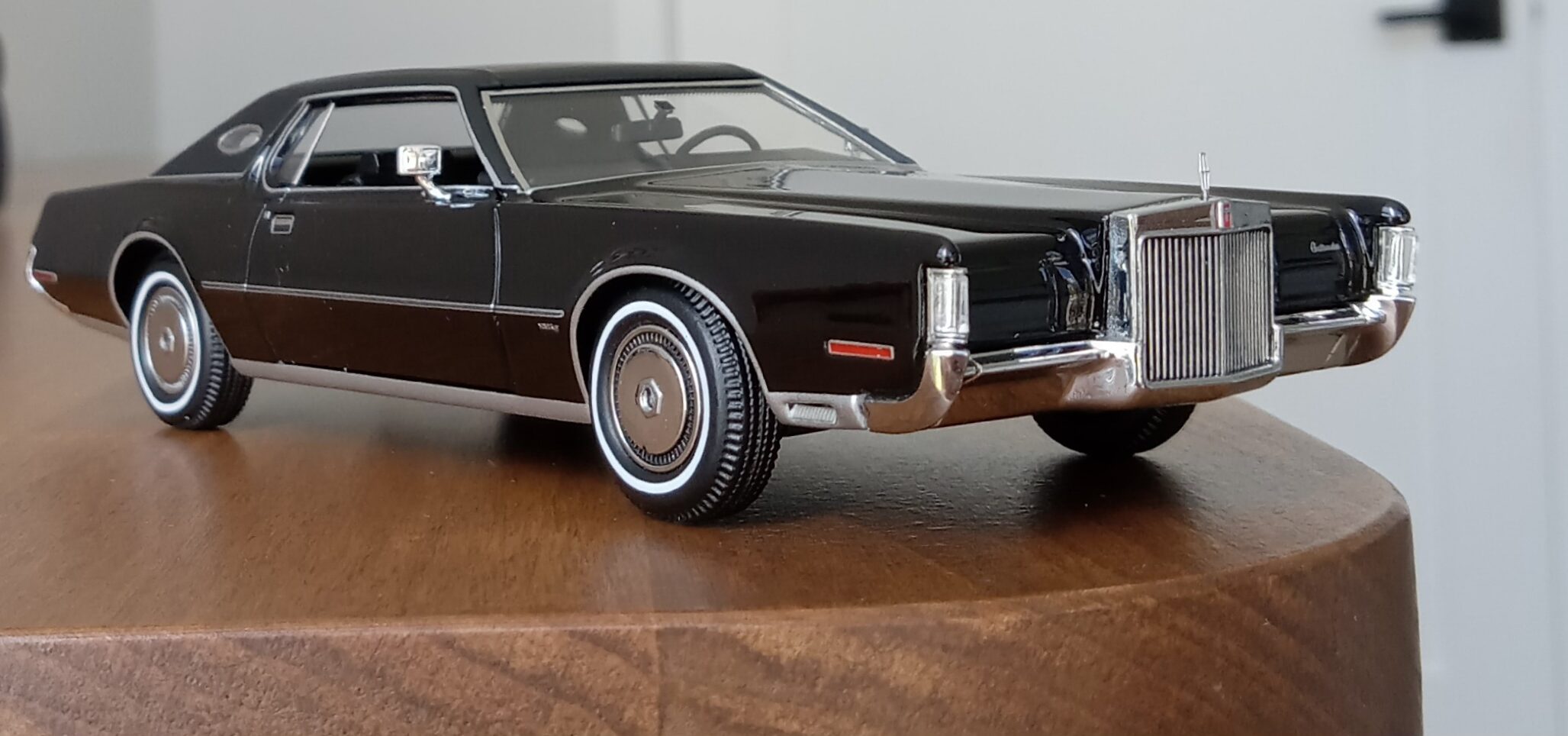
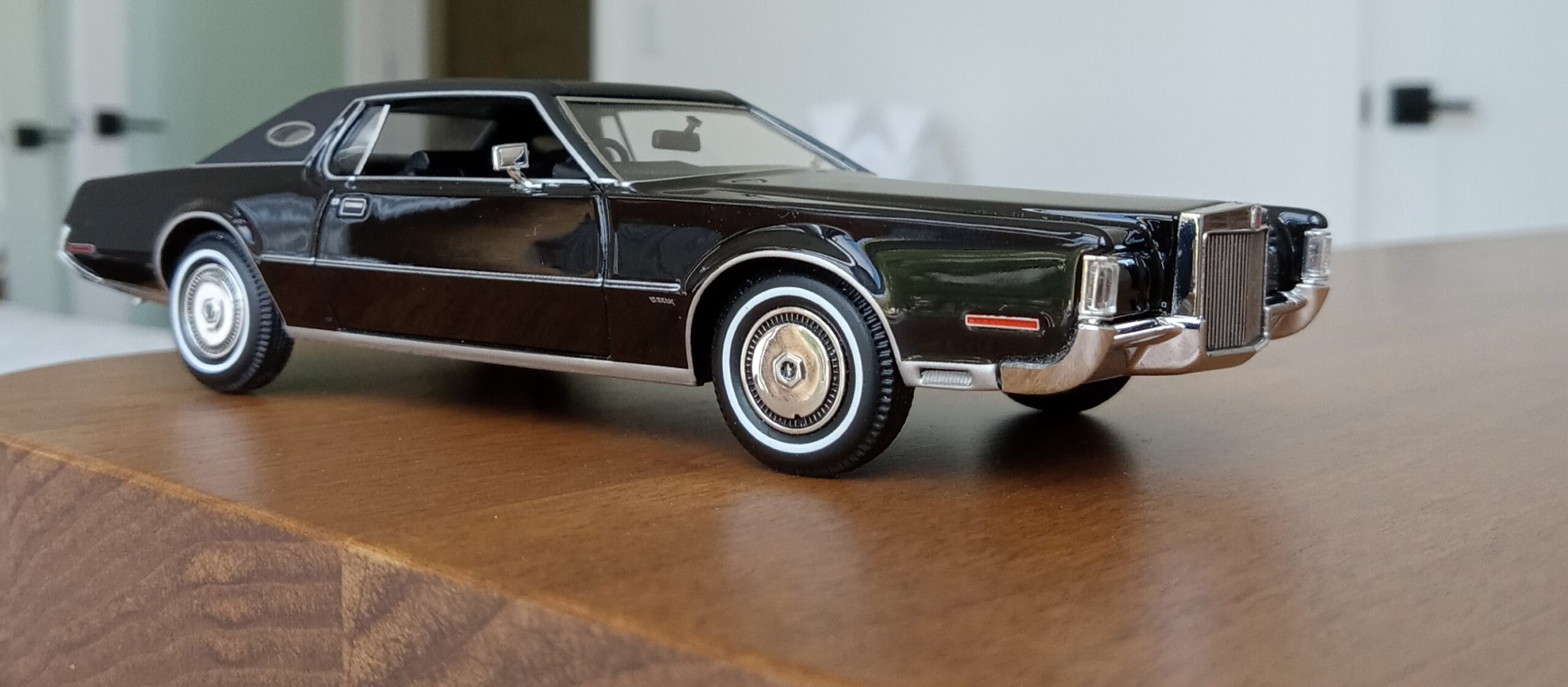
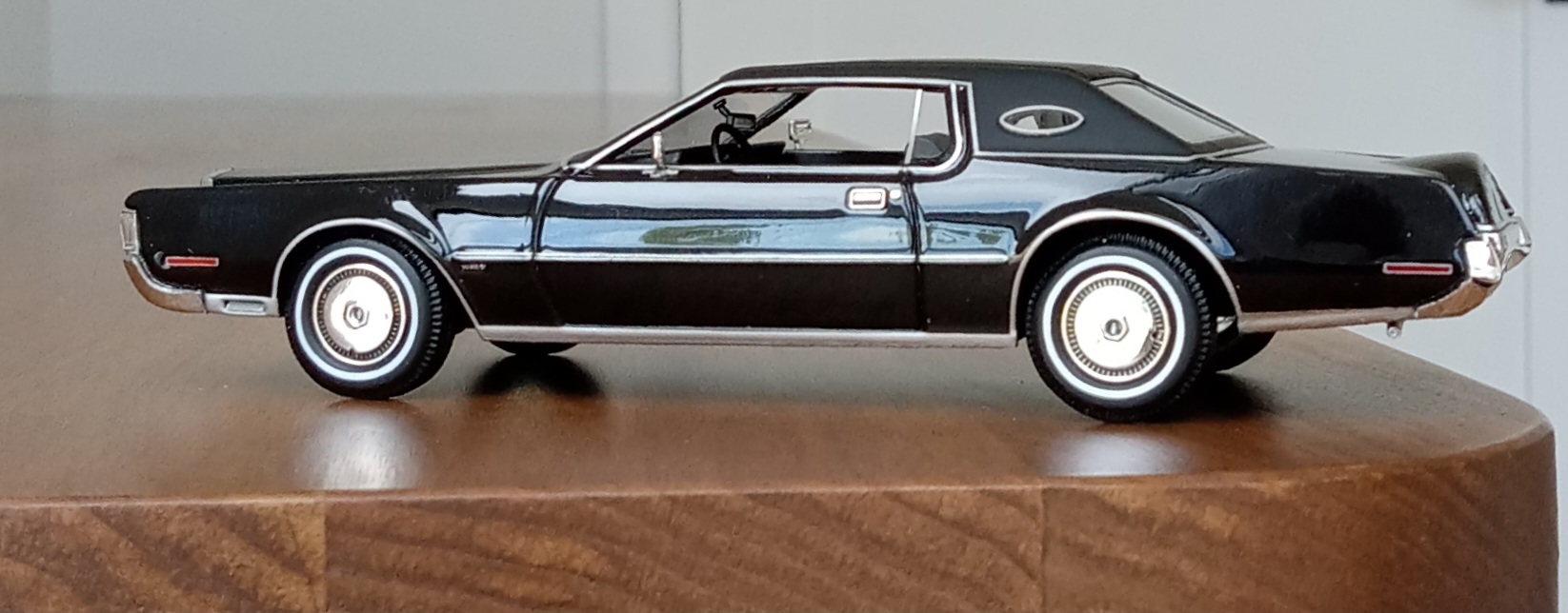
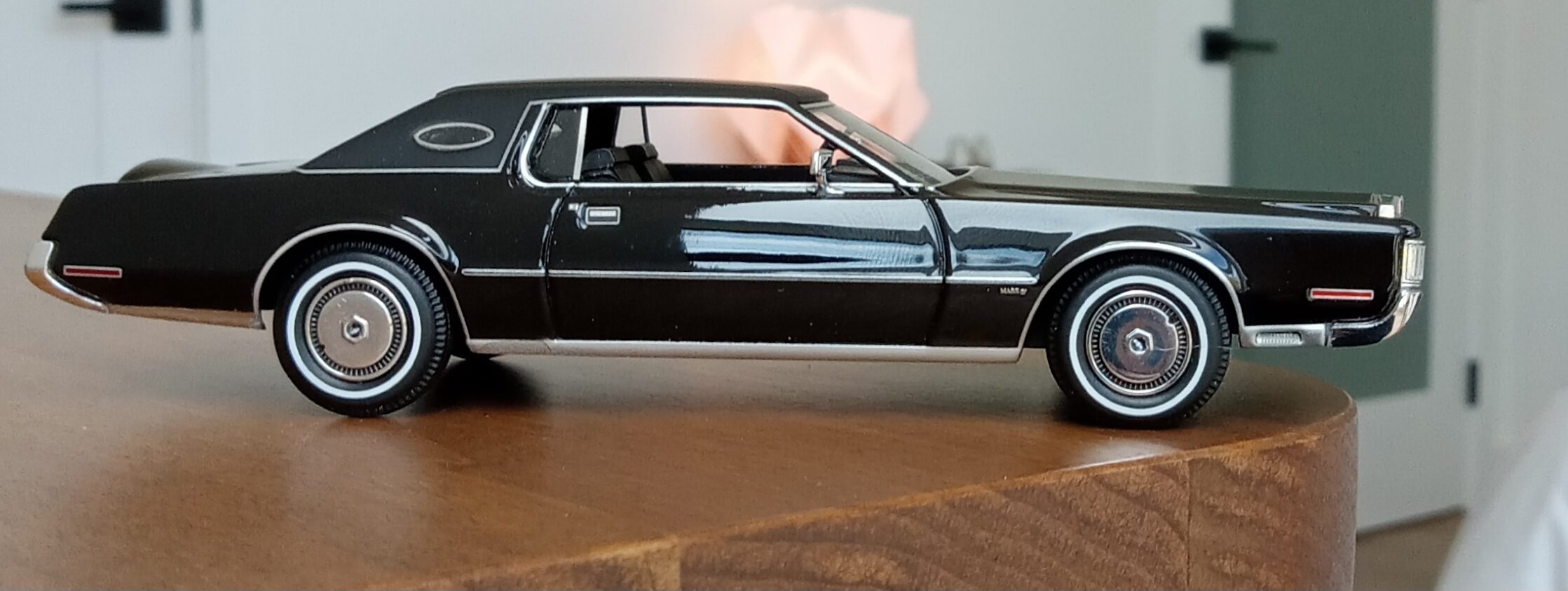
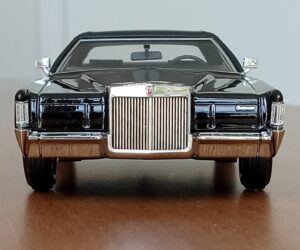
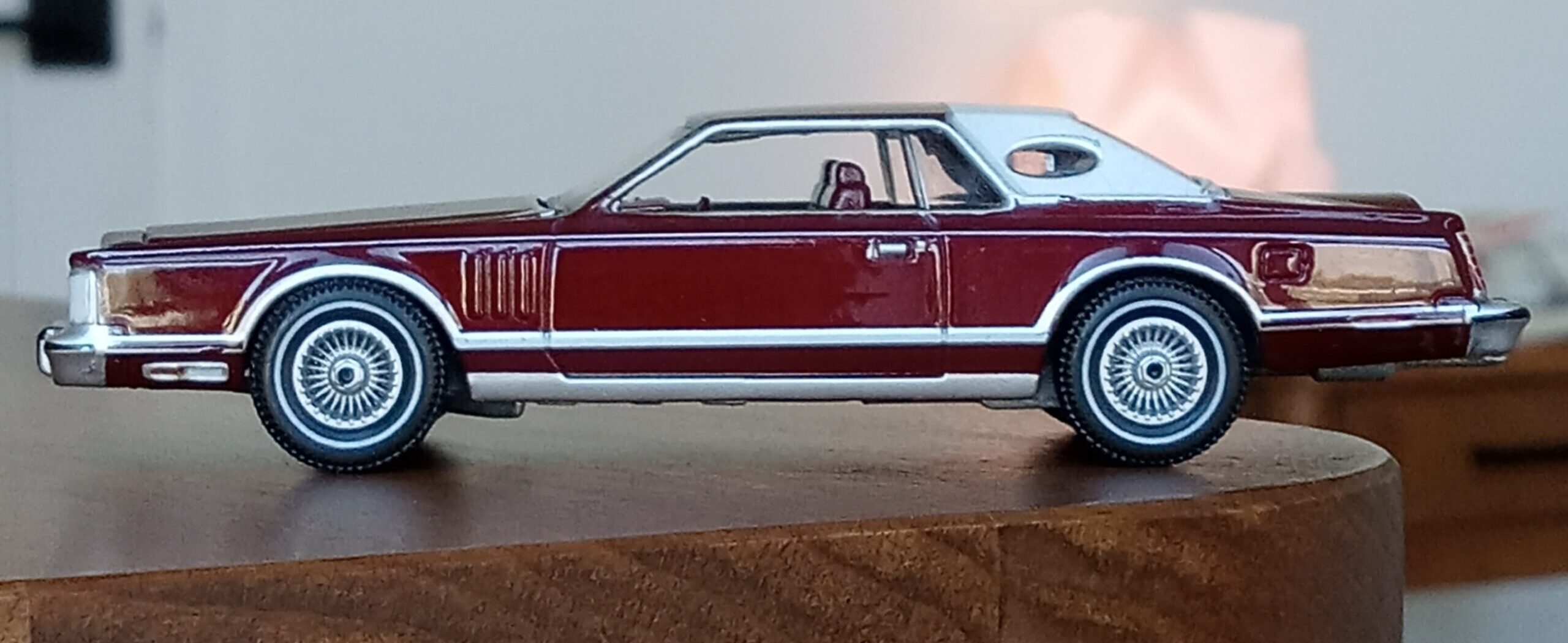
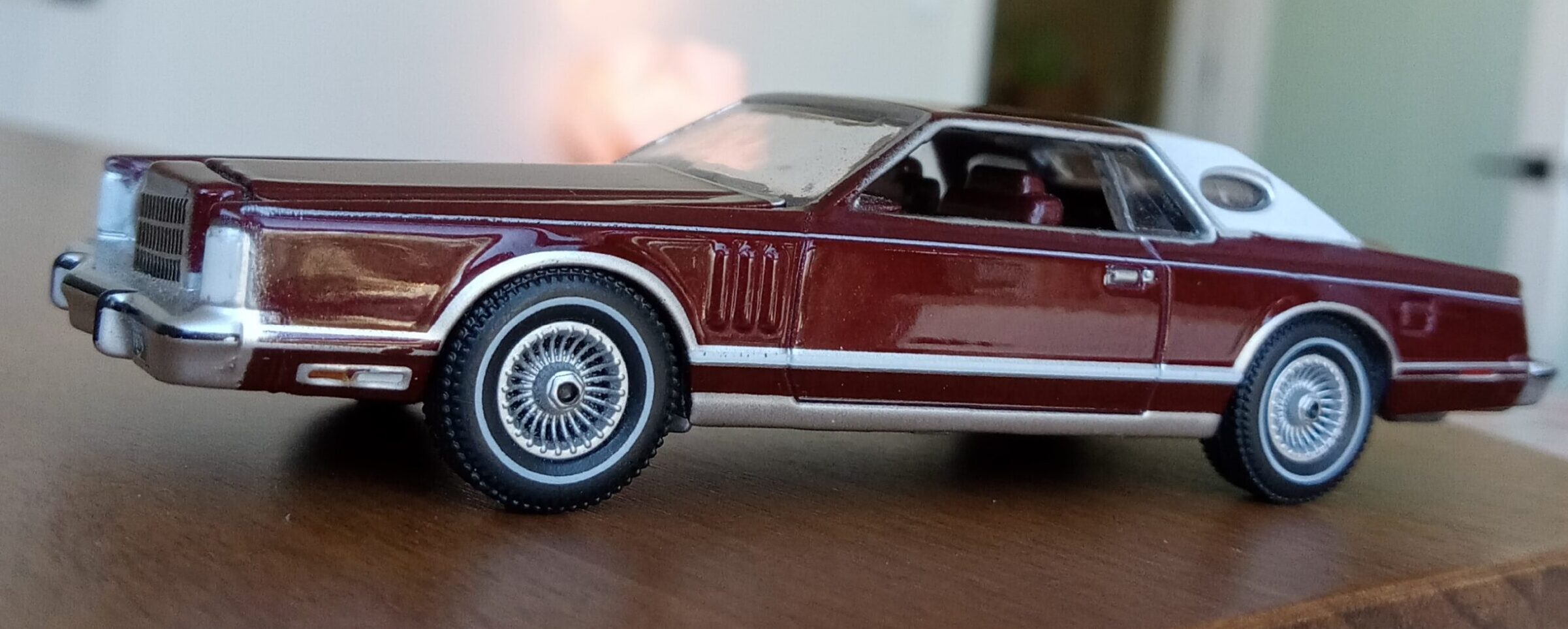
(リンカーン・コンチネンタルMK4【写真上】で完成された『ナイフブレード・フェンダー」がさらに大型化され、普遍化されて、コンチネンタルMK5【写真下】にも採用され、史上最大の2ドア車(6メートル弱)として、大成功を収めました。)
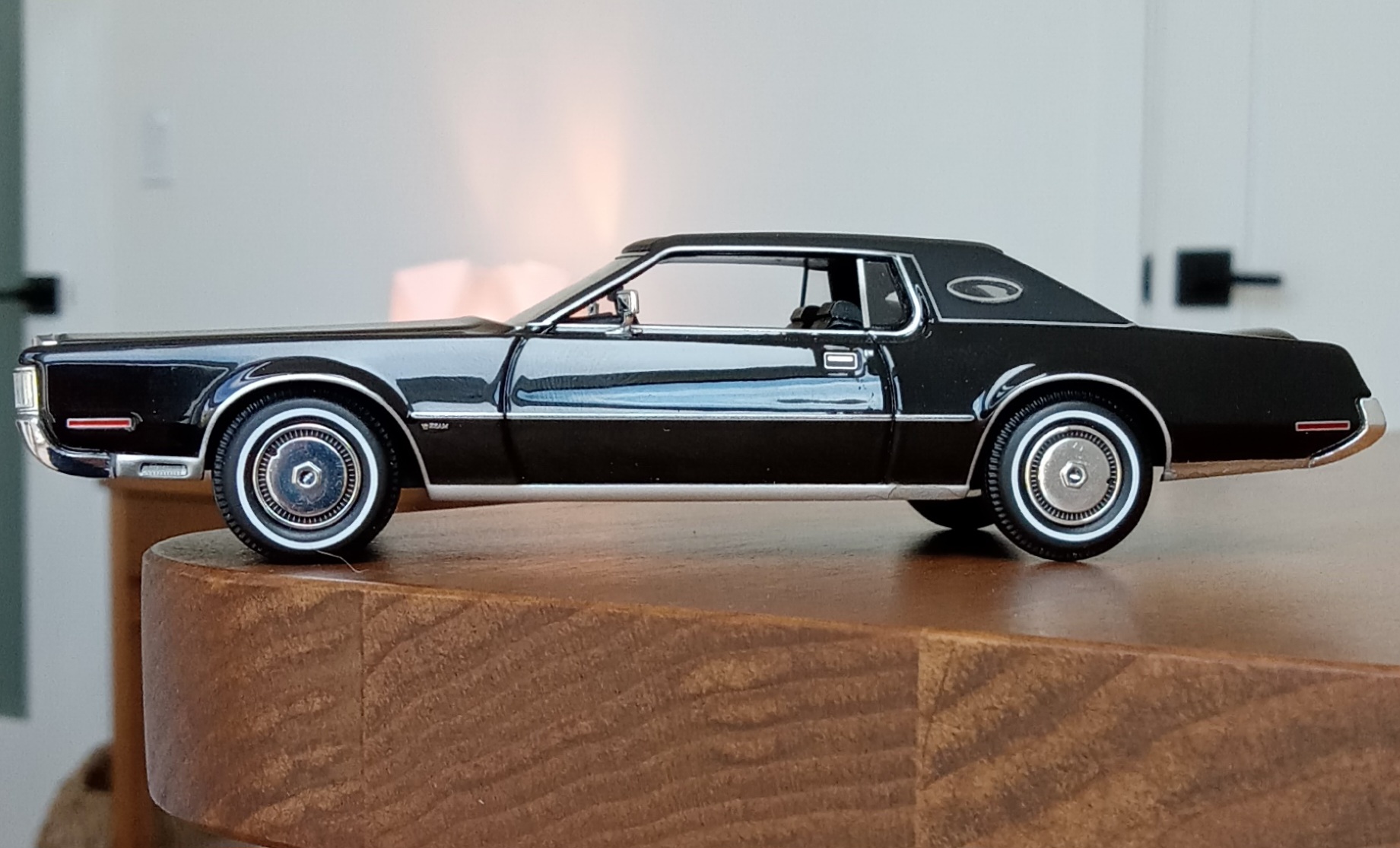
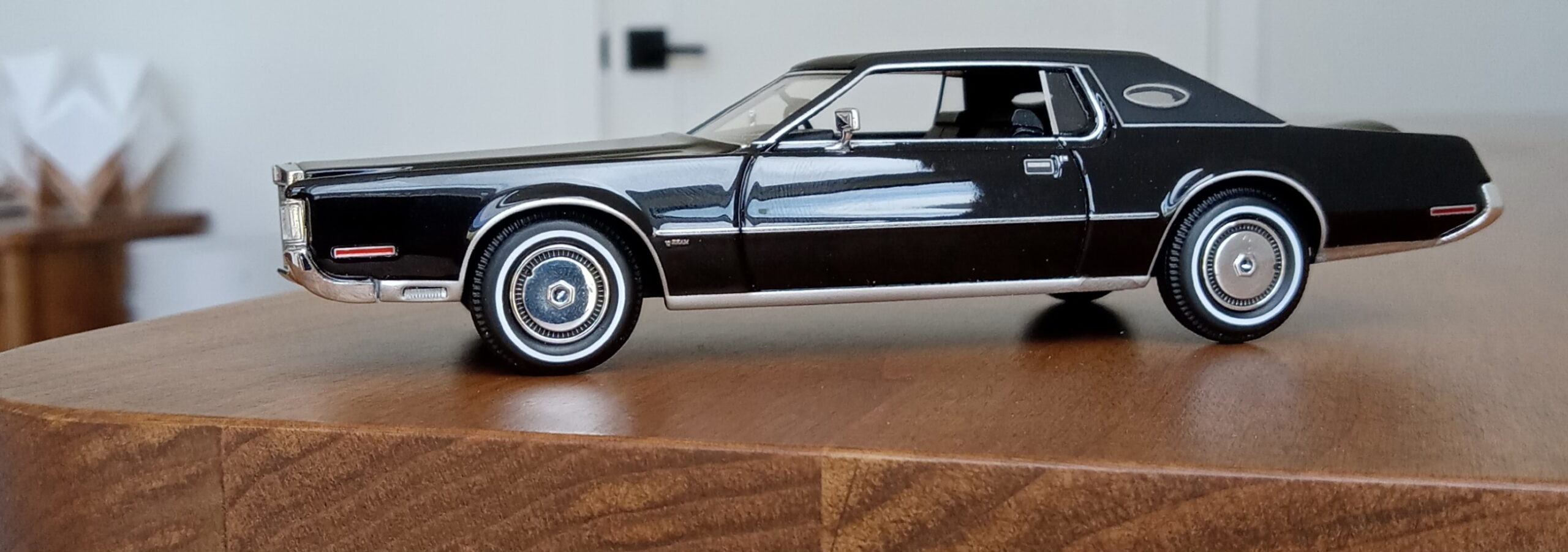
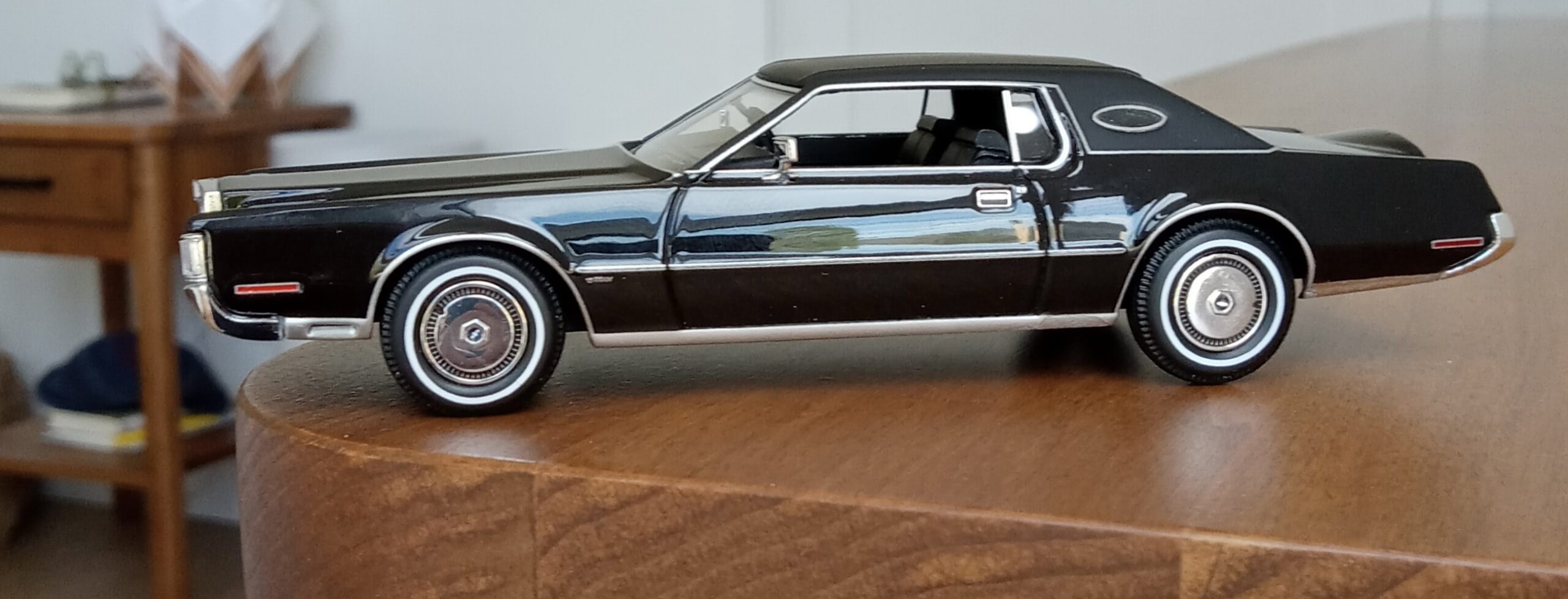
*第20回ーー2ドア・クーペの系譜: 第2回【米国編】リンカーン・コンチネンタル Mk4、1972(外装色:ブラック)
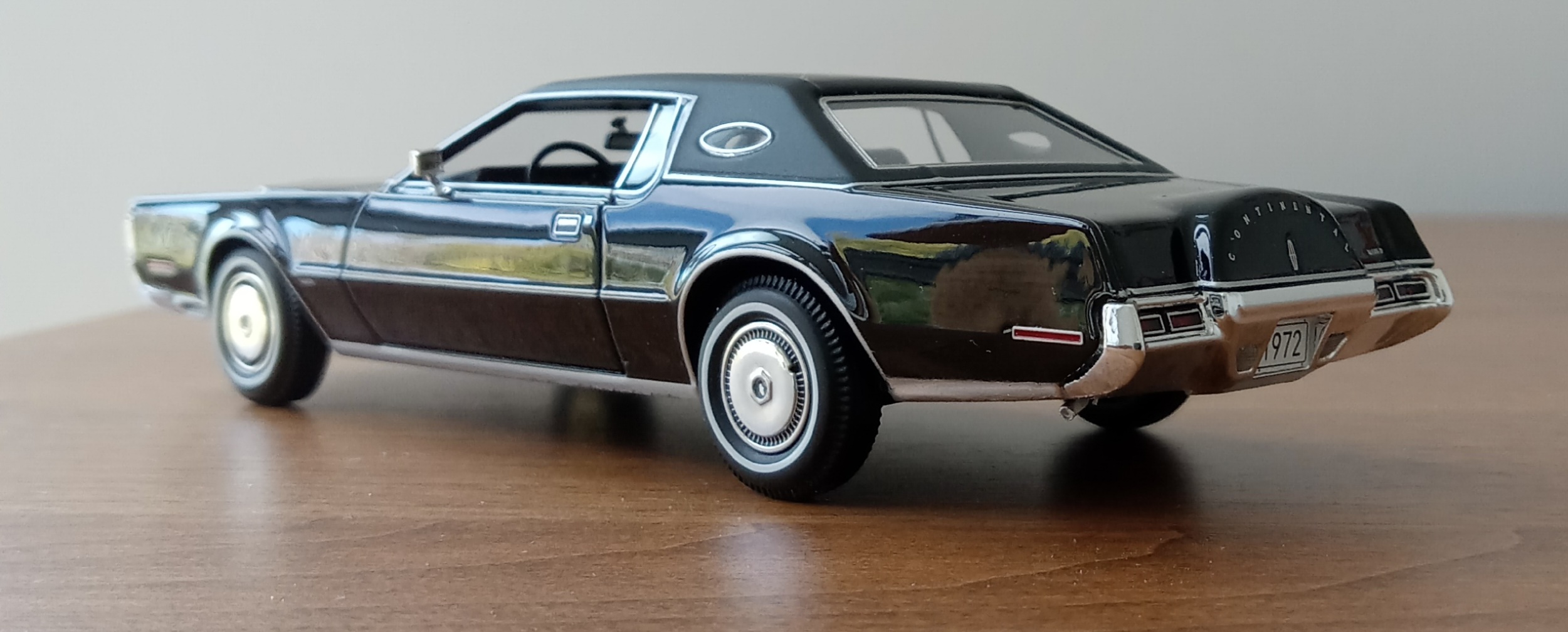
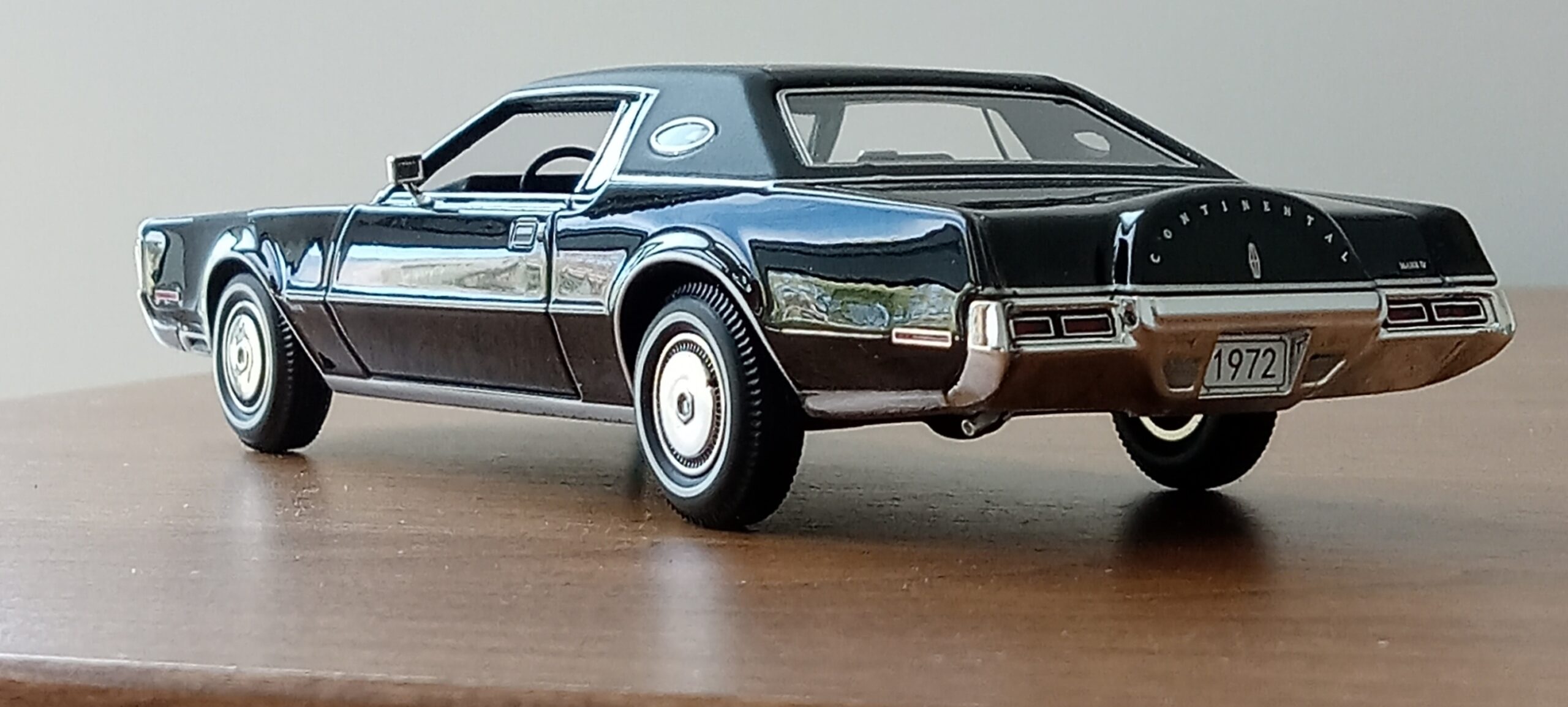
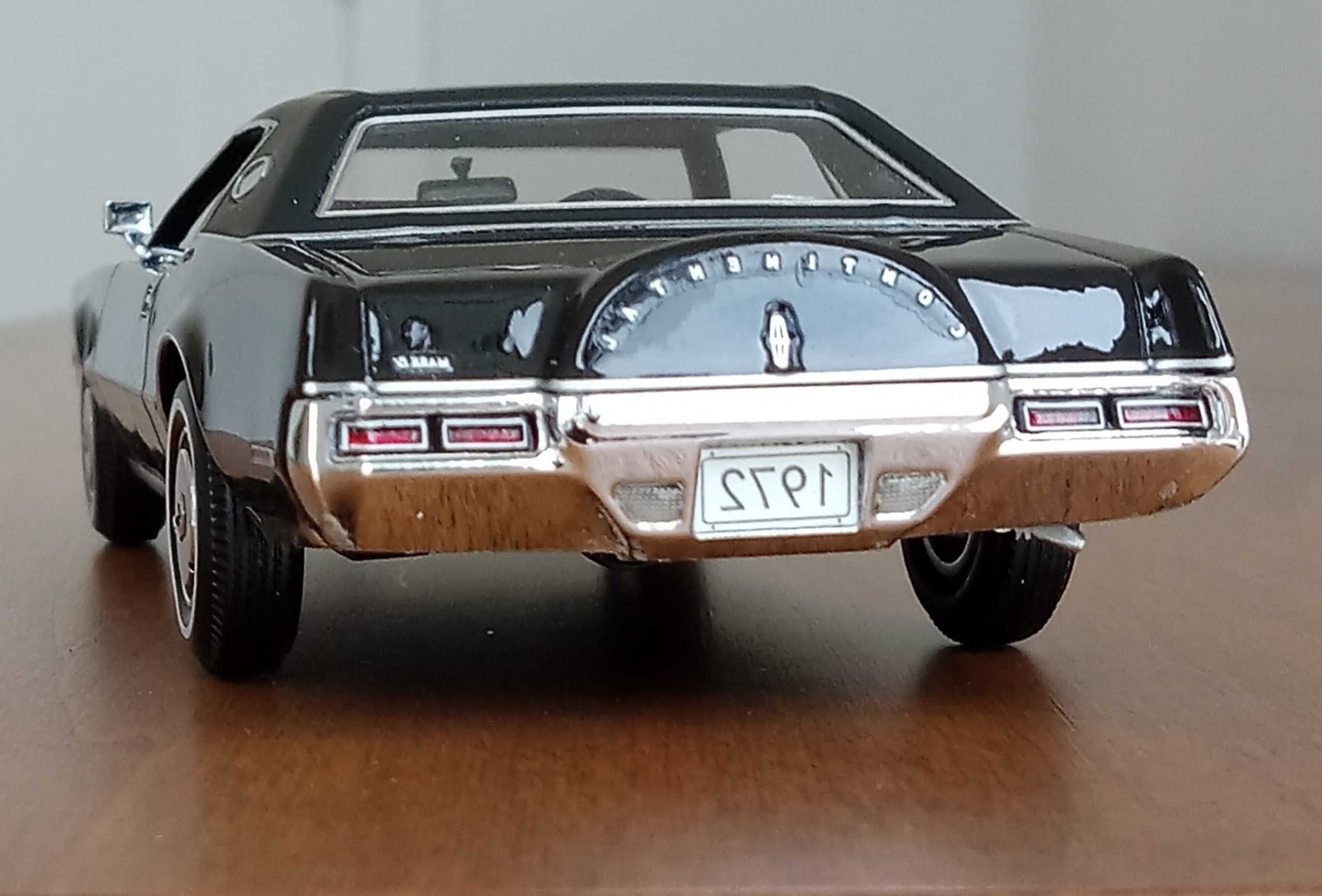
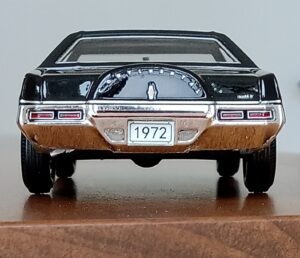
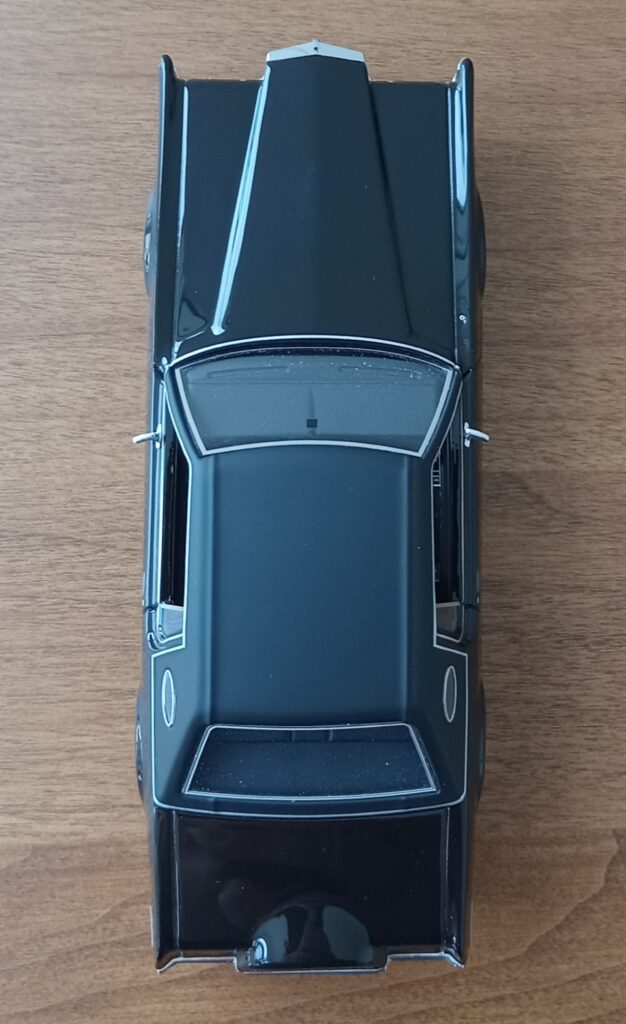
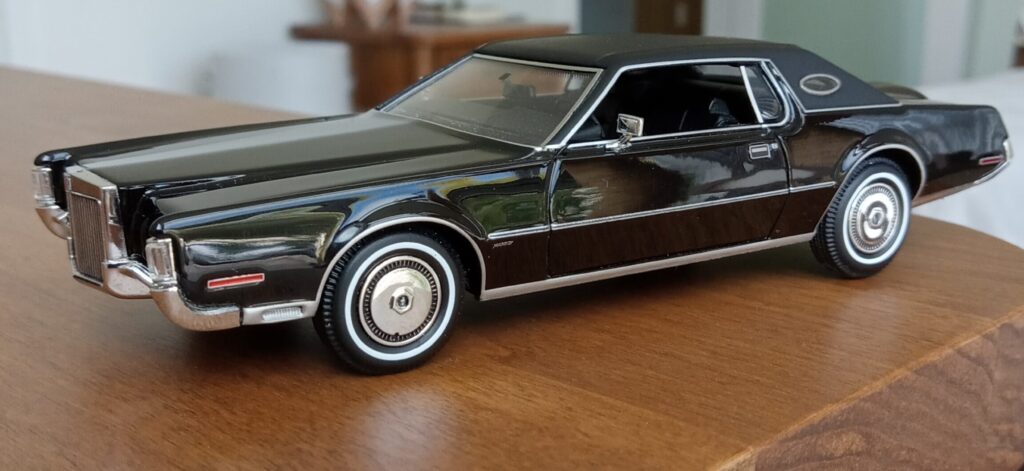
(GLM Models製, 1/43 リンカーン・コンチネンタル MK4, 1972 (ブラック)改造箇所:車軸微調整、ドア下ロッカー部からリア・オーバーハング部分下を薄々攻撃+銀で再塗装)
#好みの自動車デザインーー2ドアクーペの系譜:
第20回目の今回は、『2ドアクーペの系譜』と題しまして、各国のお国柄や、外観デザインの個性が強く表れる、高級2ドア(GT)クーペについてお話ししてみたいです。
以下の要領で進めていきます。
第2回の今回は【米国車編】
1972年型、
リンカーン・コンチネンタル MK4についてのお話です。
【2ドア・クーペの系譜・今後の予定】
【米国車編】
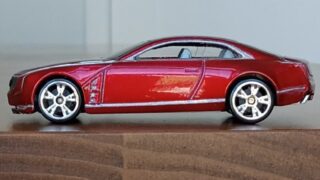
第1回:キャデラック・エルミラージュ、2013(メタリック・レッド)
第2回:リンカーン・コンチネンタル MK4、1972(ブラック)
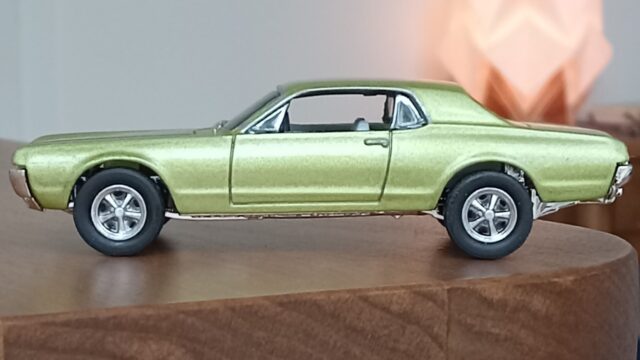
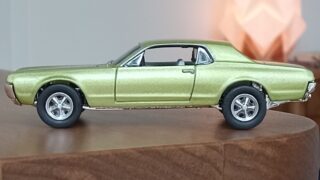
第3回:マーキュリー・クーガー, 1967(メタリック・グリーン)
【ドイツ車編】
第4回:MB 540K スペシャル・ロードスター、1936(ブラック)
第5回:MB 300SL ロードスター、1957(シルバー)
第6回:MB SLS AMR ガルウイング、2010(ブラック)
【英国車編】
第7回:ジャガーXKR, 1996(ダークメタリック・グリーン)
第8回:アストン・マーチン One-77(メタリック・ブルー)
【日本車・日産編】
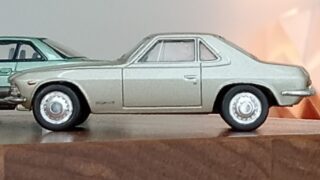
第9回:ニッサン 初代シルビア、1965(メタリック・ゴールド)
第10回:ニッサン 5代目シルビア、1988(メタリックグリーン)
【日本車・マツダ編】
第11回:マツダ コスモ・スポーツ、1967(シルバー)
第12回:マツダ ユーノス・コスモ(2トン:黒&グレー)
【日本車・トヨタ編】
第13回:トヨタ/ヤマハ・2000GT、1967(アイボリー・ホワイト)
第14回:トヨタ・2代目ソアラ, 1986 (2トン:黒&グレー)
第15回:レクサス LC【GWZ100型】、2017(メタリック・レッド)
*1972年型、一年だけの奇跡!…完璧なナイフ-ブレード-フェンダー
n
n
n
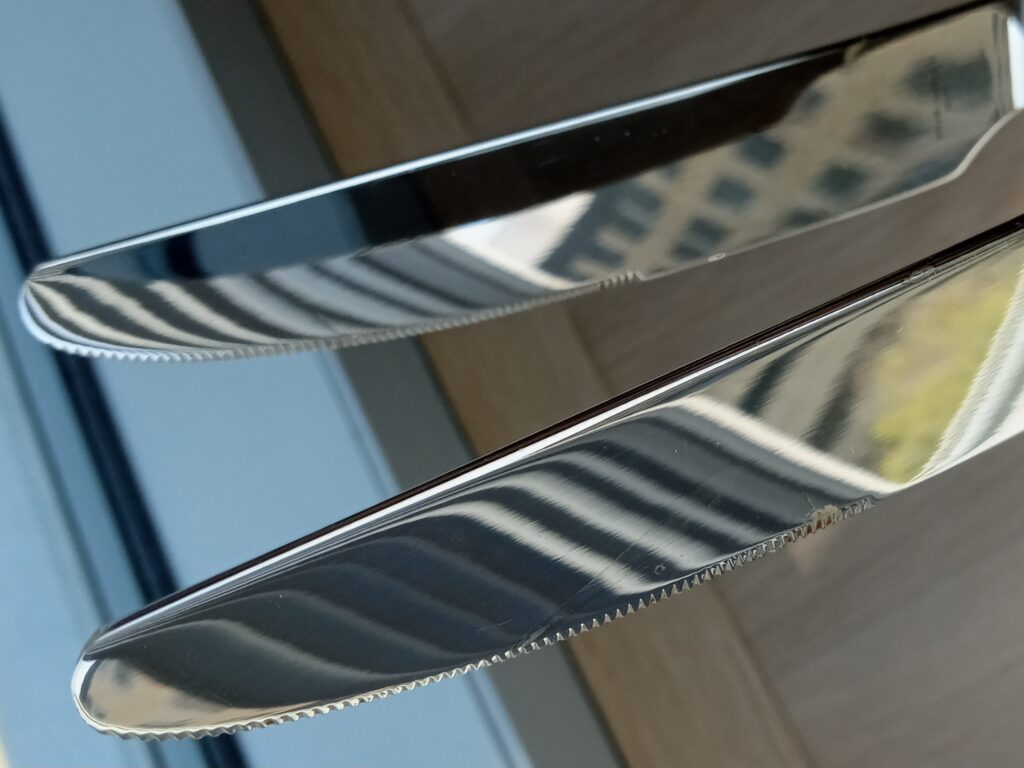
先端のナイフ
じゃないですよ!!
n
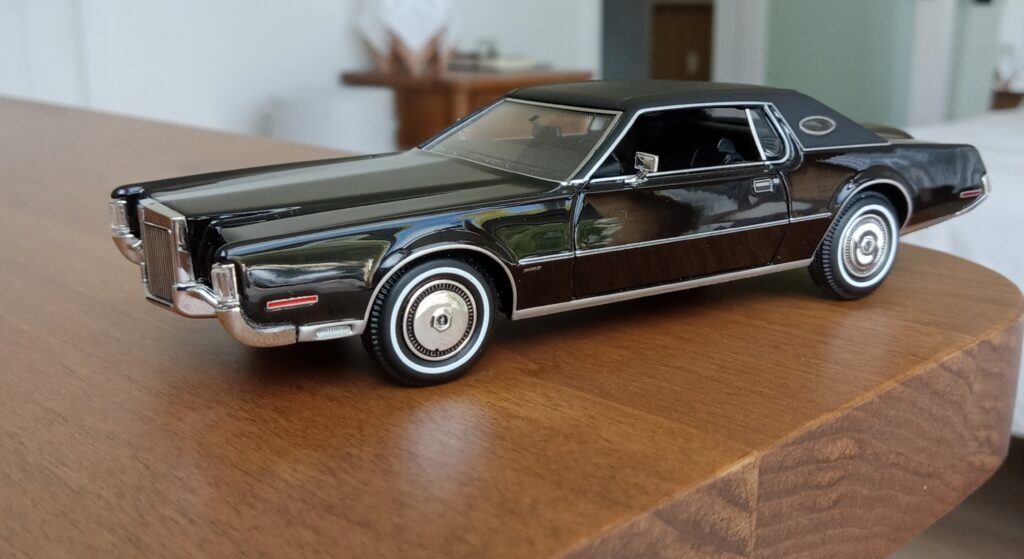
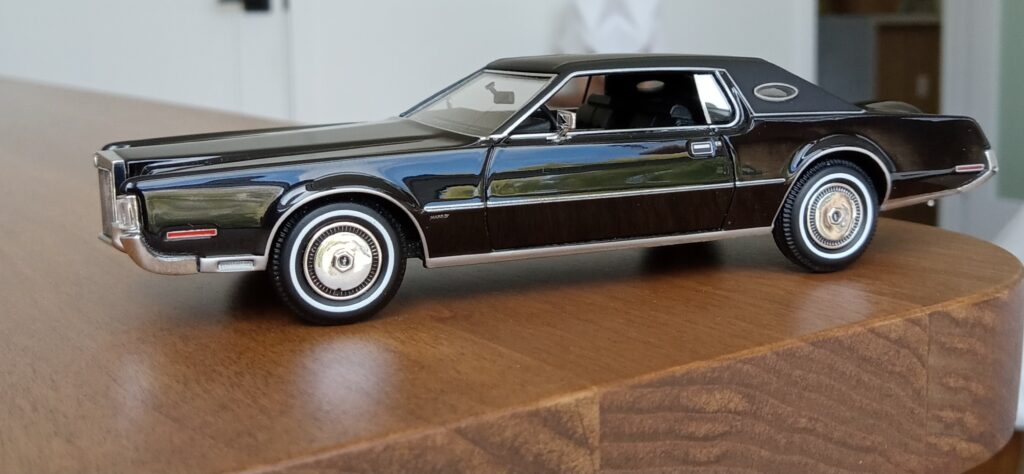 2本の巨大なナイフが
こちらに向かって迫り来るようなフロントデザインが特徴的な、
n
n
n
n
n
n
リンカーン・コンチネンタル MK4ですが、
n
n
フェンダーラインの変遷ですが、
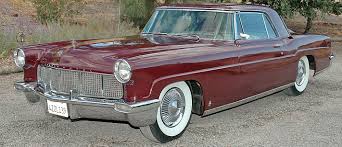 1956年型のMK2では、ボディーの伸びやかさは既に顕著ですが、いまだ丸型ヘッドライトを収めるために、ナイフのエッジのようなフェンダーラインは不在でしたが、
n
n
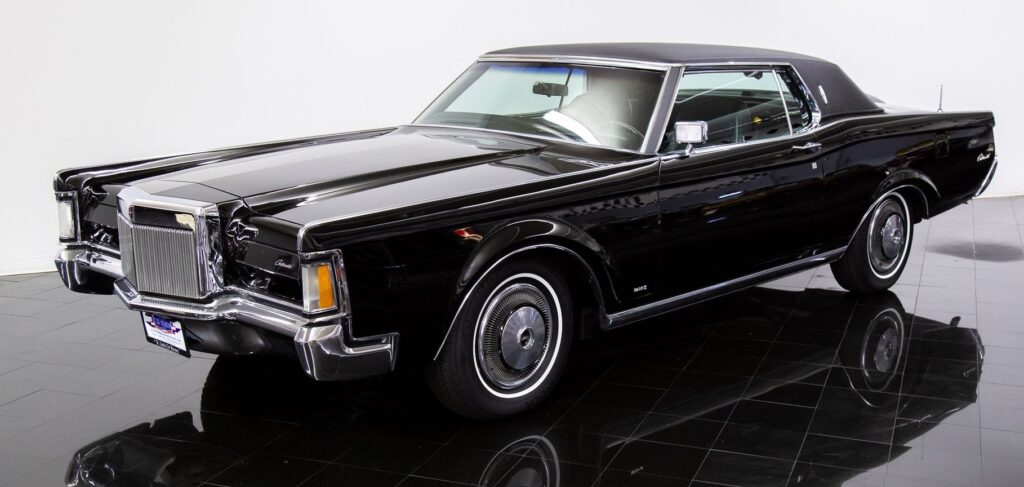 その後1969年に復活したMK3では、ナイフ・エッジ型のフェンダーラインが現れ、
n
n
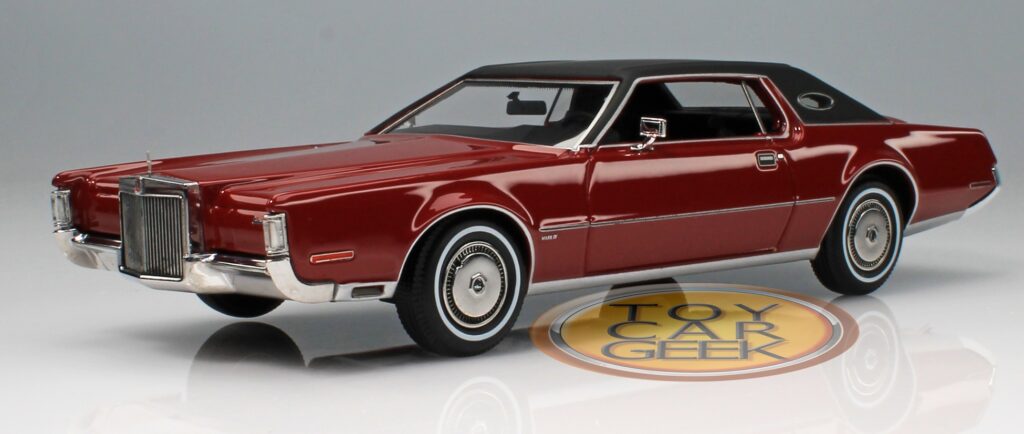 遂に1972年、新型シャーシの上に、ライバルのキャデラック・エルドラドに並ぶため、8インチ大型化されたボディーをのせてあらわれたMK4には、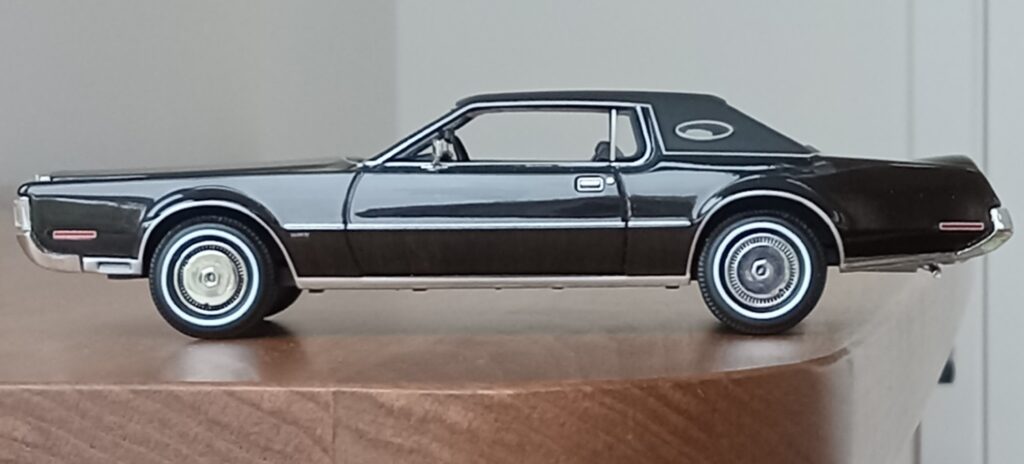
『フロントフェンダーの下面が丸くえぐれた』完璧なナイフブレード・フェンダーが輝いていました!!
n
n
n
n
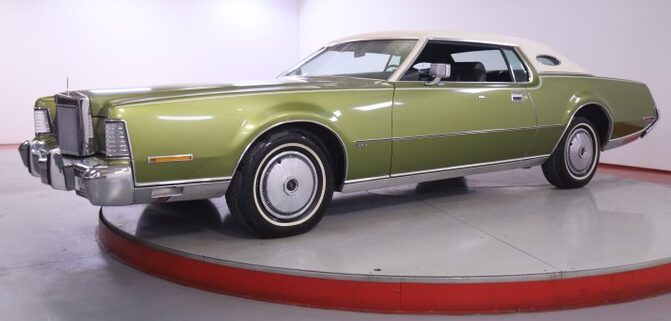 しかしながら、
1973年型には、安全基準の見直しから、5マイル衝撃吸収バンパーがフロントのみに装着され、理想のナイフブレードフェンダーはわずか一年で姿を消しました。
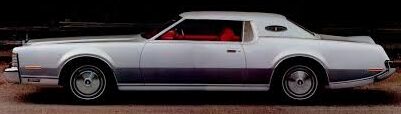 リアバンパーは72年型と同じきれいなテーパーが付いたものが付いていました、、、、
n
n
n
n
n
n
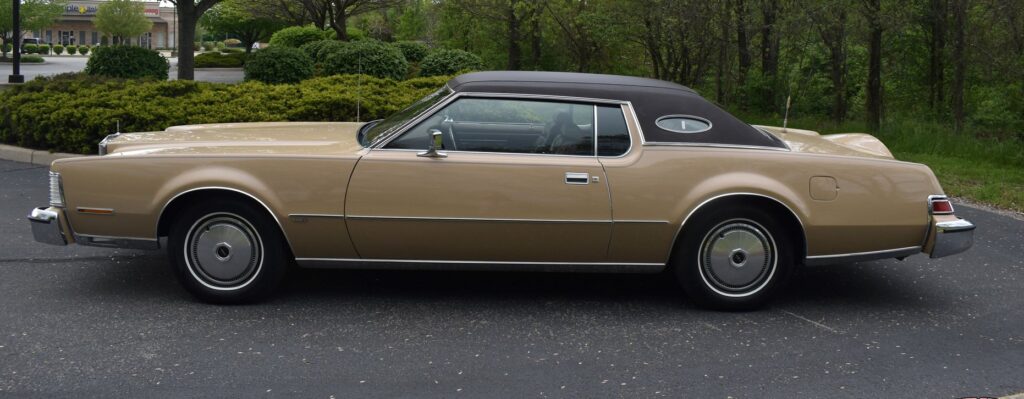 そして最終的に、1974年型では後部にも不格好な衝撃吸収の5マイル、リア・バンパーが搭載され、刃先が美しい弧を描くナイフブレードフェンダーの形状は【丸から角へ】崩れていきました。泣
n
N
N
N
N
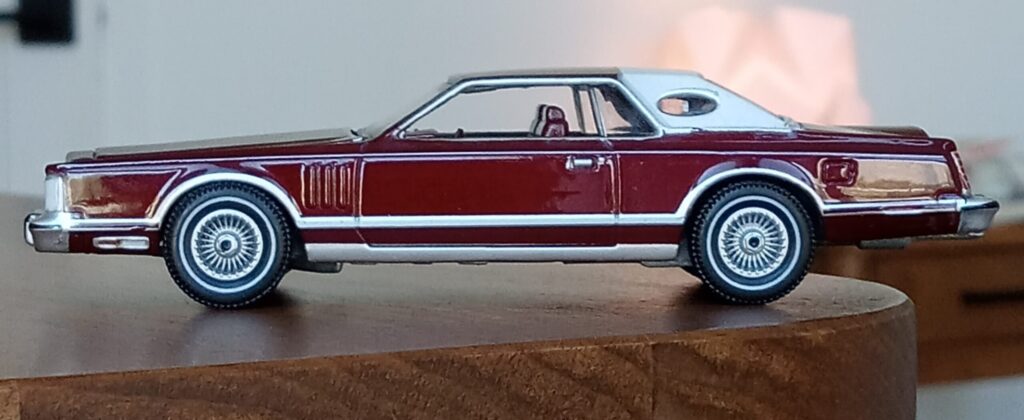 1977年登場の、MK5では、更に全長が伸び、ボディー断面も角基調なものに変更され、鋭いナイフブレードフェンダーラインは抑え気味になりましたが、市場ではその巨大さと全体のバランス感が受け、パーソナル感が薄れかけたライバル、エルドラドをよそ眼に大ヒットを記録しました。
n
n
n
n
n
n
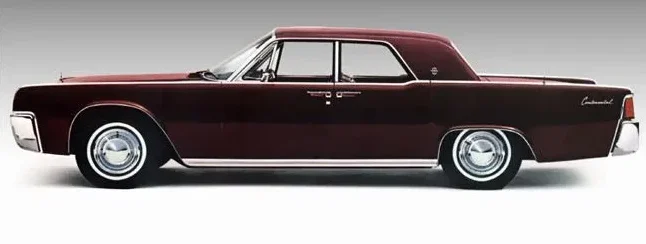
- 1961年 リンカーン・コンチネンタル (Lincoln Continental)
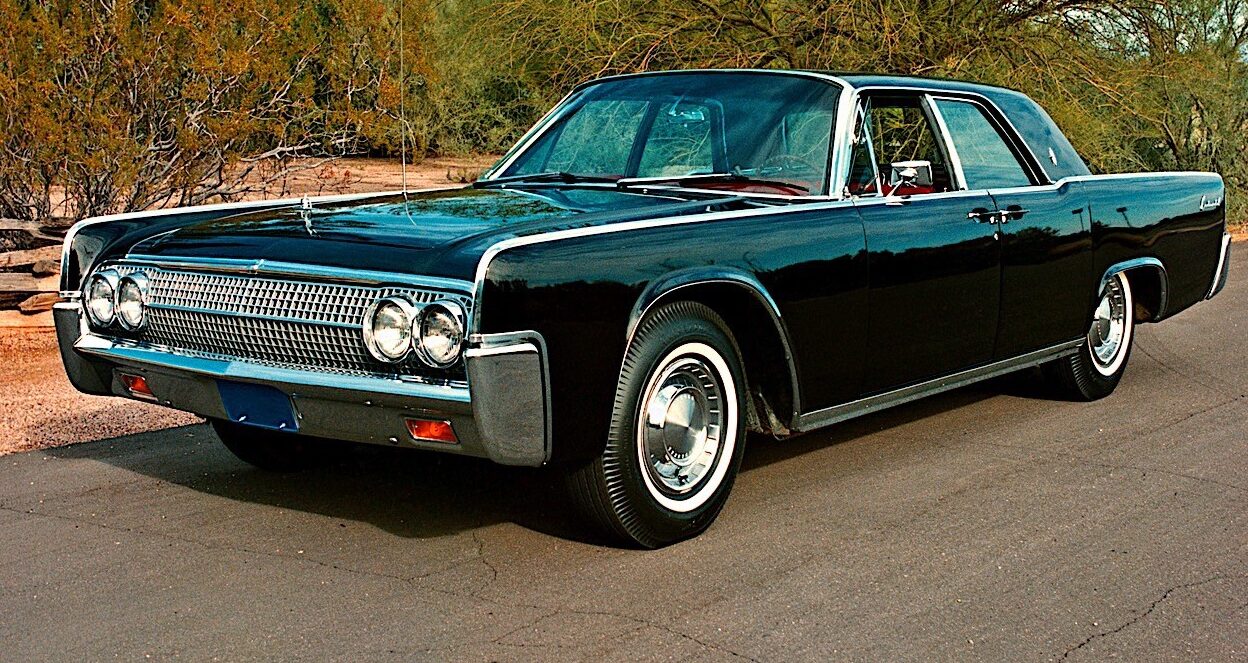
- このモデルは、クリーンでエレガントな直線的なスタイリングで知られており、その「平板な側面」(slab-sided)のデザインは、明確でシャープなフェンダーラインを特徴としています。このデザインは、当時のアメリカの高級車市場における新しい方向性を示し、多くのデザイナーに影響を与えました。観音開きの「スーサイド・ドア」も特徴的です。
- 1964年 クライスラー・インペリアル (Chrysler Imperial)
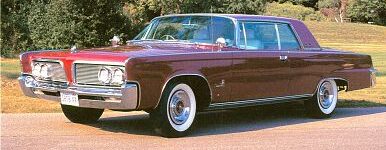
- エルウッド・エンゲルがリンカーンからクライスラーに移籍した後、彼はインペリアルに同様のシャープなデザインを導入しました。1964年モデルは完全に再設計され、フロントからリアまで伸びる「ナイフブレード」フェンダーが特徴で、リンカーン・コンチネンタルとの類似性が見られます。1967年型クライスラー・インペリアルも、この特徴的なデザイン要素を備えています。
- スチュードベーカー・アヴァンティ (Studebaker Avanti)
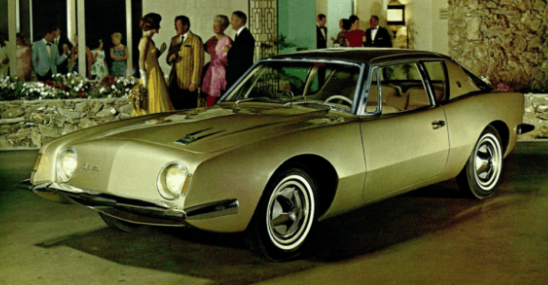
1963年モデルのアヴァンティは、現代的なリンカーン・コンチネンタルにインスパイアされた「ナイフブレード」フェンダーを備えていましたが、そのグリルレスのノーズデザインは物議を醸しました。
n
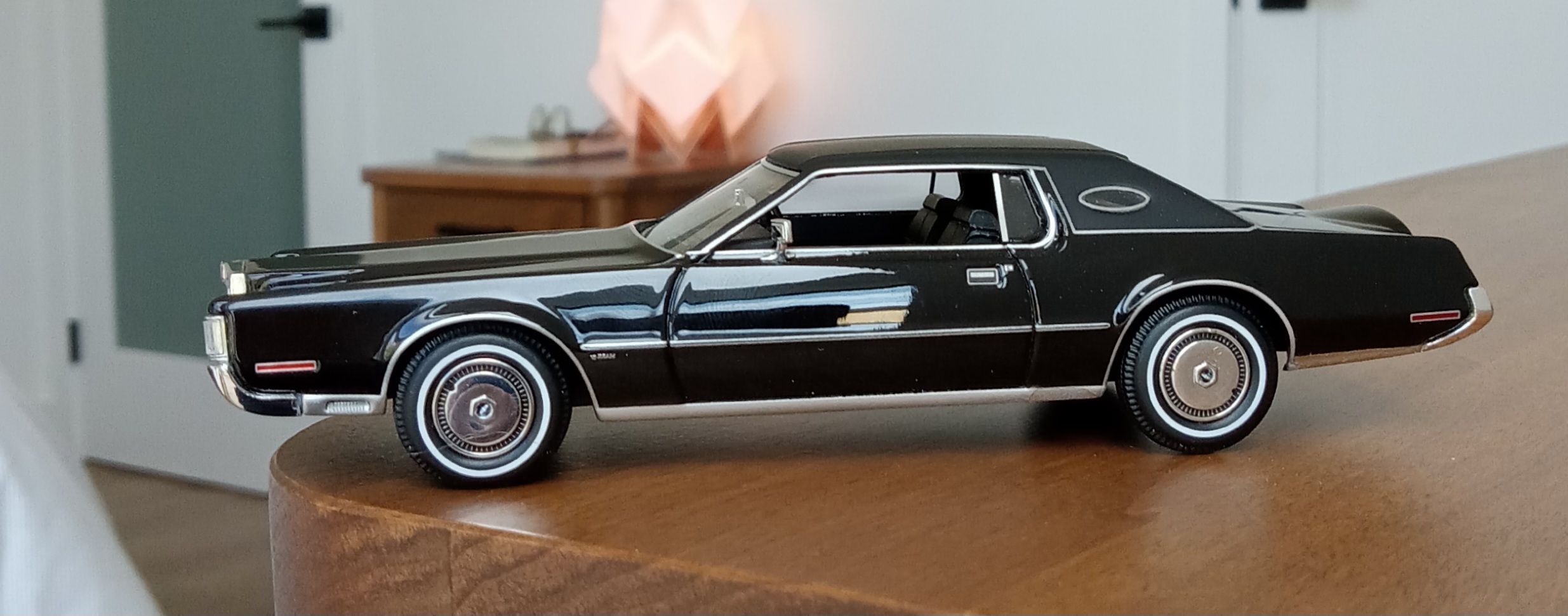
それでは、
リンカーン・コンチネンタルMK4, 1972年型について、
こんな感じで進めていきます。
*客観解説:対キャデラック・エルドラドの本命
*デザイン的特徴:「2本のナイフ・ブレード」
*『私』と1972年型、MK4 : ナイフ好きのアメリカ人
*三題噺:エルウッド・エンゲル、一年だけの奇跡、クルエラ
*その他の『ナイフ・ブレードな』アメ車たち
*実車解説:フォードの対キャデラック・エルドラドの本命?
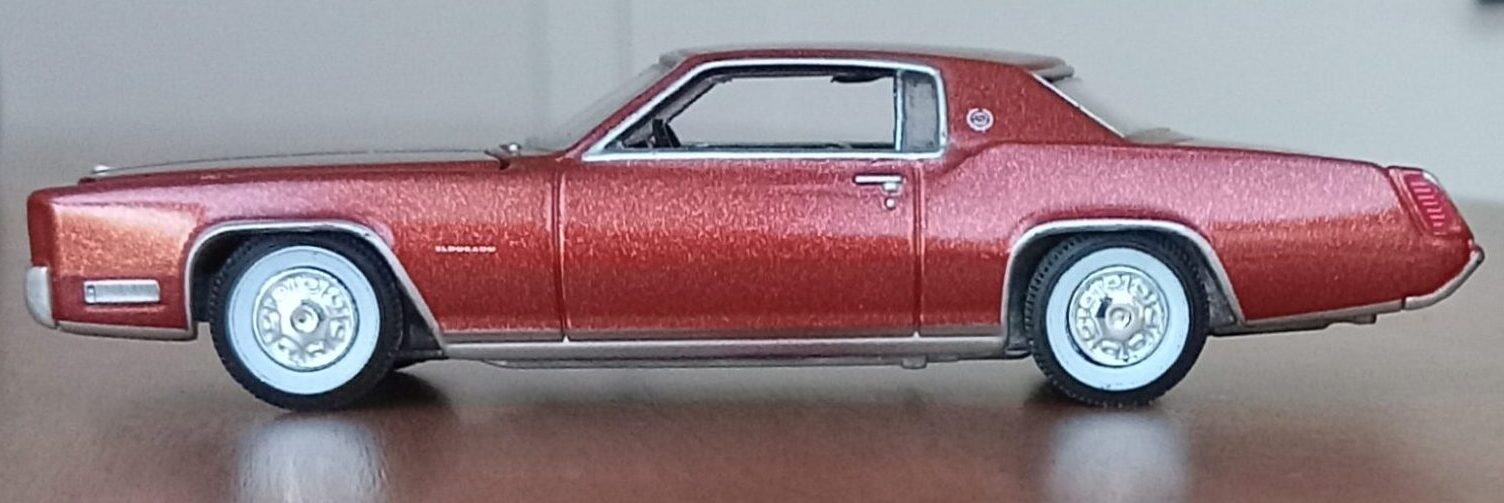
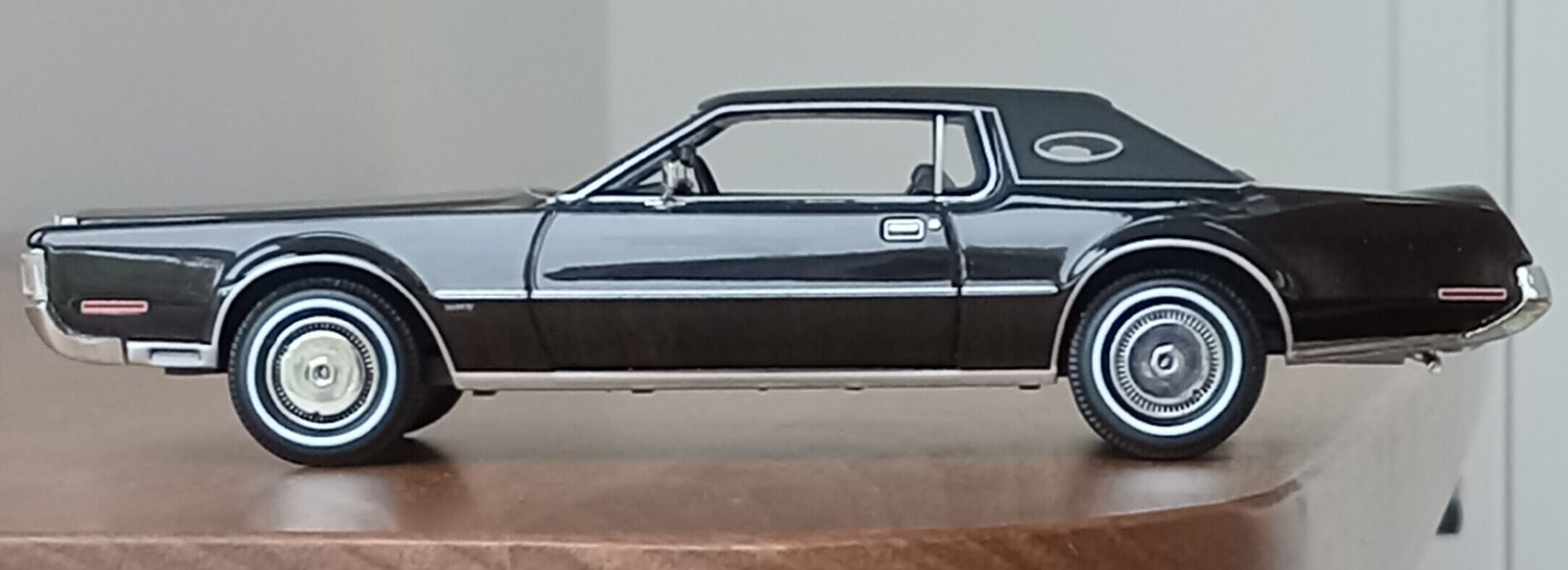
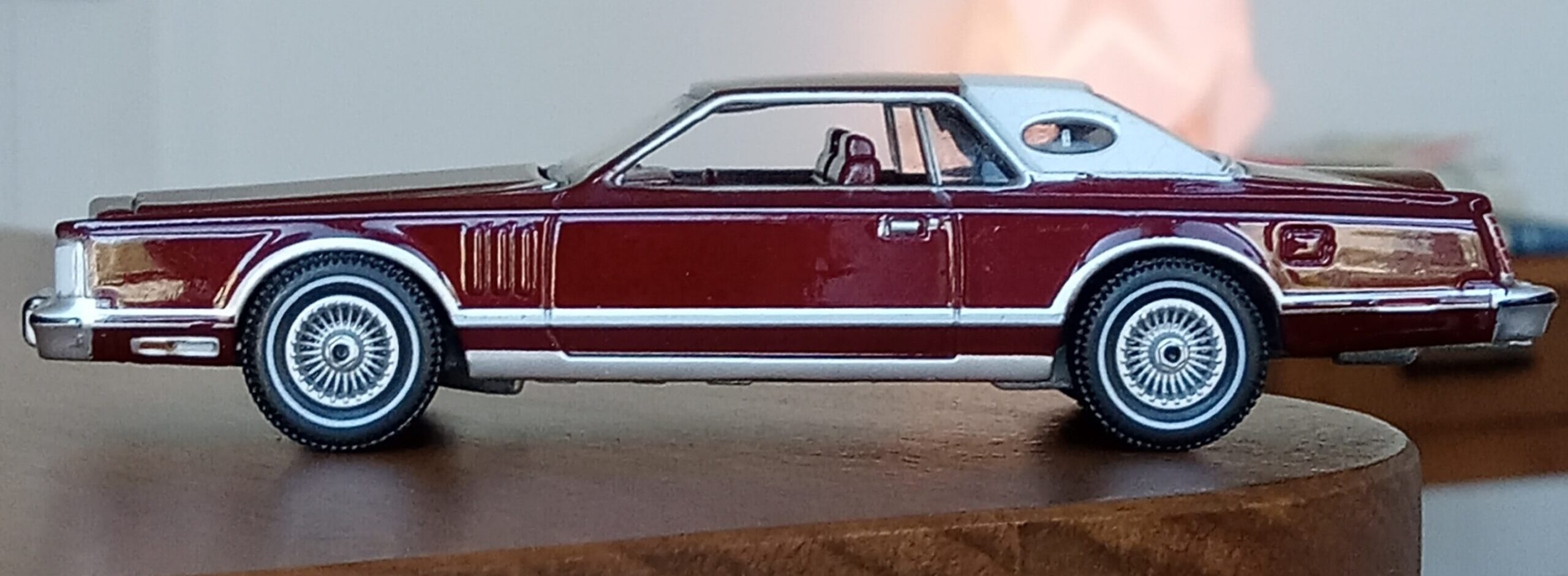 (三台のナイフブレード・デザイン【上から、1967年のエルドラド、1972年Mk4、1977年Mk5】の成功例:サイドビュープロファイルはかなり似ていますね。ーーーー>FF車のエルドラドが一番FR車的なプロポーションなのが興味深いです。)
n
n
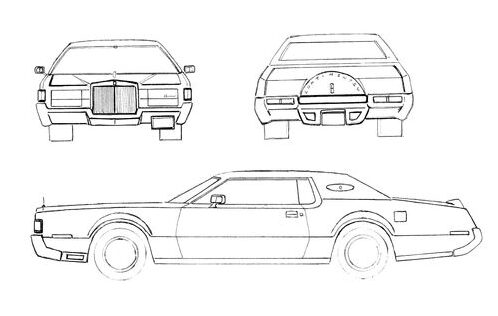
プロポーション: 「ロングノーズ・ショートデッキ」の伝統的なFRクーペ・スタイルを継承して、前代のMK3よりも低く、長く、ワイドなボディを持ち、全長は約5.8mに及び、圧倒的なサイズ感を誇ります。
フロントマスク: 垂直基調の大型グリル(ロールス・ロイス・スタイルとも評される)と、点灯時以外は隠されている「リトラクタブル・ヘッドライト」が、重厚かつ洗練された表情を作り出しています。
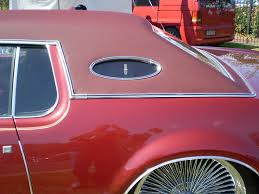
オペラ・ウィンドウ: Cピラーに設けられた楕円形の小さな窓「オペラウィンドウ」がこのモデルで初めて導入され、当初はオプションでしたが、非常に人気が高かったため、後に標準装備となりました。
コンチネンタル・スペア: トランクフード中央にあるスペアタイヤの膨らみを模したデザイン(フェイク・スペアタイヤ・ハンプ)は、コンチネンタル・シリーズのアイデンティティとして受け継がれています。
ボディライン: 先代のマークIIIよりも丸みを帯びたボディサイドと、切り立ったフェンダーラインが特徴で、より現代的で優雅な印象を与えます。
エンジン: 巨体を動かすために 7.5リッター (460 cubic inch) V8エンジン を搭載していました。
n
n
n
n
n
n
n
n
n
至高の素材: 厚手のカーペットやウッド調パネルに加え、高級なレザーやベロア素材を用いた「ツイン・コンフォート・ラウンジ・シート」が採用され、リビングのような快適さを提供します。
カルティエ・クロック: ダッシュボードには高級宝飾ブランド「カルティエ(Cartier)」のサインが入ったアナログ時計が標準装備されており、ステータスの高さを強調しています。
快適装備: オートエアコン(Automatic Temperature Control)や6ウェイ・パワーシート、パワーウィンドウなど、当時の最新かつ最高級の快適装備が標準またはオプションで用意されていました。
#主要諸元:
- 型式:2Y89A…
- 総排気量: 7,538 cc | 460.0 立方インチ| 7.5 L.
- 最高出力 : 224 PS @ 4,400 rpm
- 最大トルク:47,3 kg-m
- 駆動方式:FR(フロントエンジン、リアドライブ)
- 定員:5又は6名
- 車体形式:2ドア、5-6シート、ハードトップ・クーペ
- ホイールベース:3,058 mm
- 全長:5,591 mm
- 全幅:2,027 mm
- 全高:1,359mm
- 車両重量:
2,174kg
*デザイン的特徴:『2本の鋭いナイフ・ブレード』
それでは私が考える、1972年型コンチネンタルMK4の
外観的特徴を並べます。
1、動的ニュアンスに欠けるエルウッド・エンゲルの平面的なナイフブレード・フェンダー+側面の出っ張り「ボリューム」& ボディー下面のスイープ・カーブを加えることで、ナイフブレード・フェンダーが完成しました。
2、ギリシャのパルテノン神殿のような『ロールスロイス・フロントグリル』に象徴される、建築のネオ・クラッシックの流れを自動車デザインに持ち込みました。
3、低い全高、極端に削り取られた、フロント・リアのオーバハング下部の面、意図的に履かせた14インチの小さ目のタイヤホイールサイズ等のすべての細かい要素が集積して、実際以上の巨大感を演出しています。
4、オペラ・ウインドウ、フェイク・スペアタイヤ・ハンプなどの小道具による「これでもか!」な、クラッシック演出の徹底化
5、GMデザインの大胆であっぱれ(でも少し雑)な、ところはないものの、フォードデザインの「小技の集積」作戦が理想的に転んだ一例でしょうか?
ーーーーー>実際、MK4で布石を打ったフォードは、キープコンセプトのMK5でエルドラドに水をあける販売成績を収めました。)
では詳しく見て行きましょう!
1、動的ニュアンスに欠けるエルウッド・エンゲルの平面的なナイフブレード・フェンダーに側面の出っ張り「ボリューム」& 前後オーバハング部の厚みを薄く削ることでボディー下面のスイープ・カーブを加えることで、
(前に突き進みたい動的衝動が加わり、30年代の有機的な丸みのあるフェンダーを持ったレースカーの咆哮がよみがえりました。)
ーーーーー>『幅広く、低く、長く』を突き詰め、そこに強力な方向性が加わり、ナイフブレードフェンダーが完成しました。
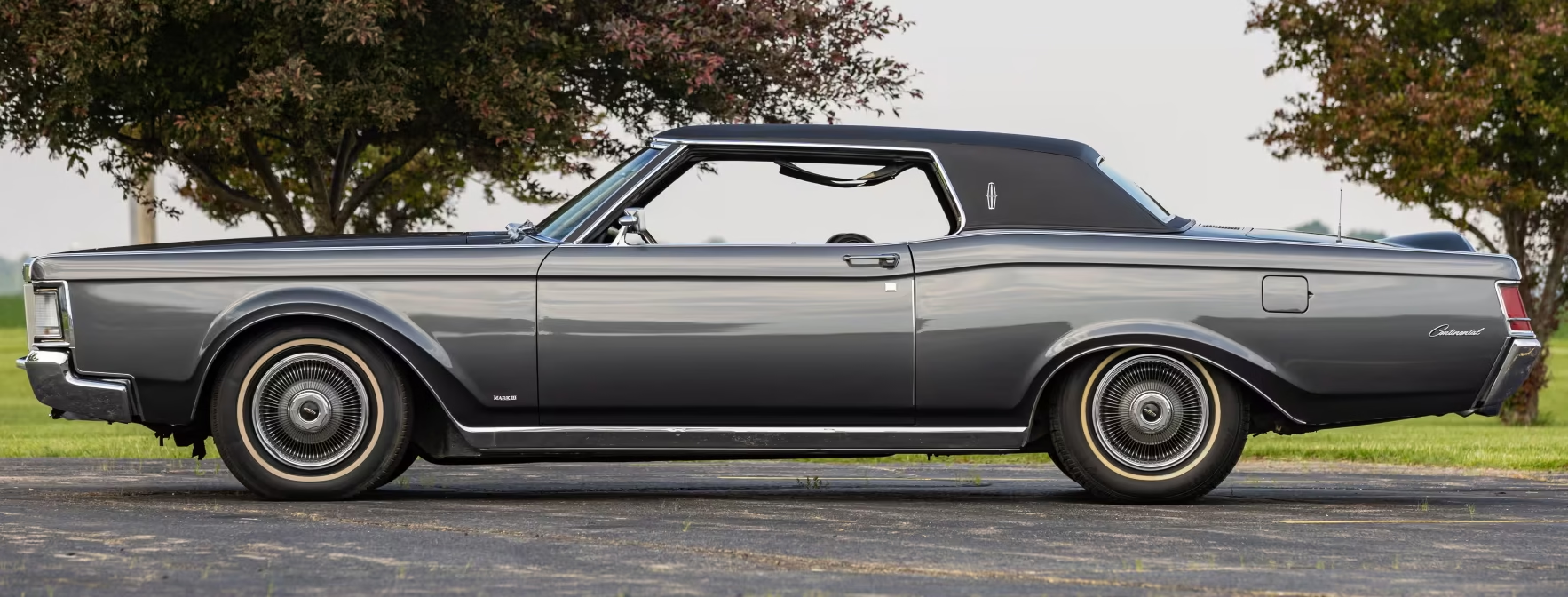
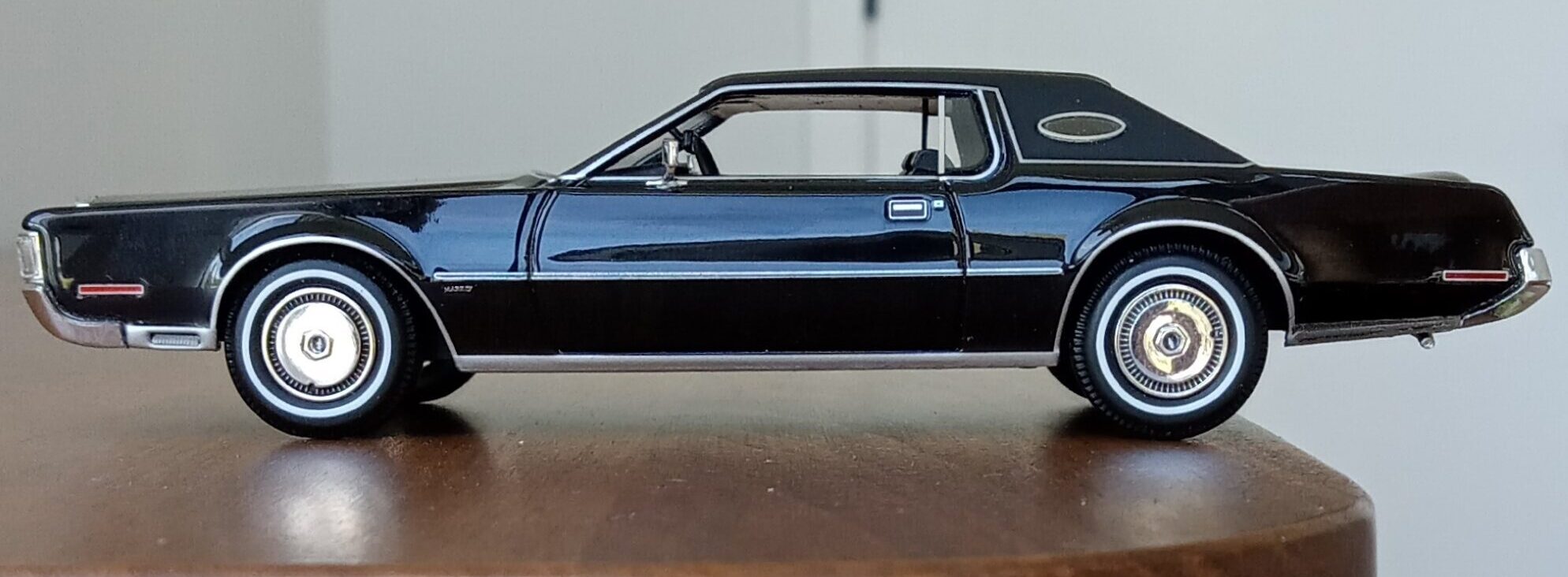
(追記:改めて観察してみますと、MK3からの4インチの全長増加のうち、ホイールベースの3.2インチ増加に対して、オーバーハングの増加分のほぼすべてをフロントに付け足したため、FR独特の『弓矢を後ろに引き絞ったような』方向性はほとんどないのが残念な点です。泣)
2、ギリシャのパルテノン神殿のような『ロールスロイス・フロントグリル』に象徴される、建築のネオ・クラッシックの流れを自動車デザインに持ち込みました。
(既にこの流れはMK3の頃から始まっていましたが、この点でMK4の徹底ぶりはインテリアにまで徹底的に及んでました。)
ーーーー>当時は、懐古的悪趣味の象徴のように批評されていたようですが、、、)
ーーーー>この辺りは、アメリカの住宅建築にも見られる、アメリカ大衆特有の、いざとなると、落ち着いた安定(グレコ/ローマ・スタイルに対する根源的なあこがれ、、)を求める気質があるのでしょうか? 自国の建築家が提案した、モダン住宅を本格的に受け入れるのに、70-80年もかかりました。)
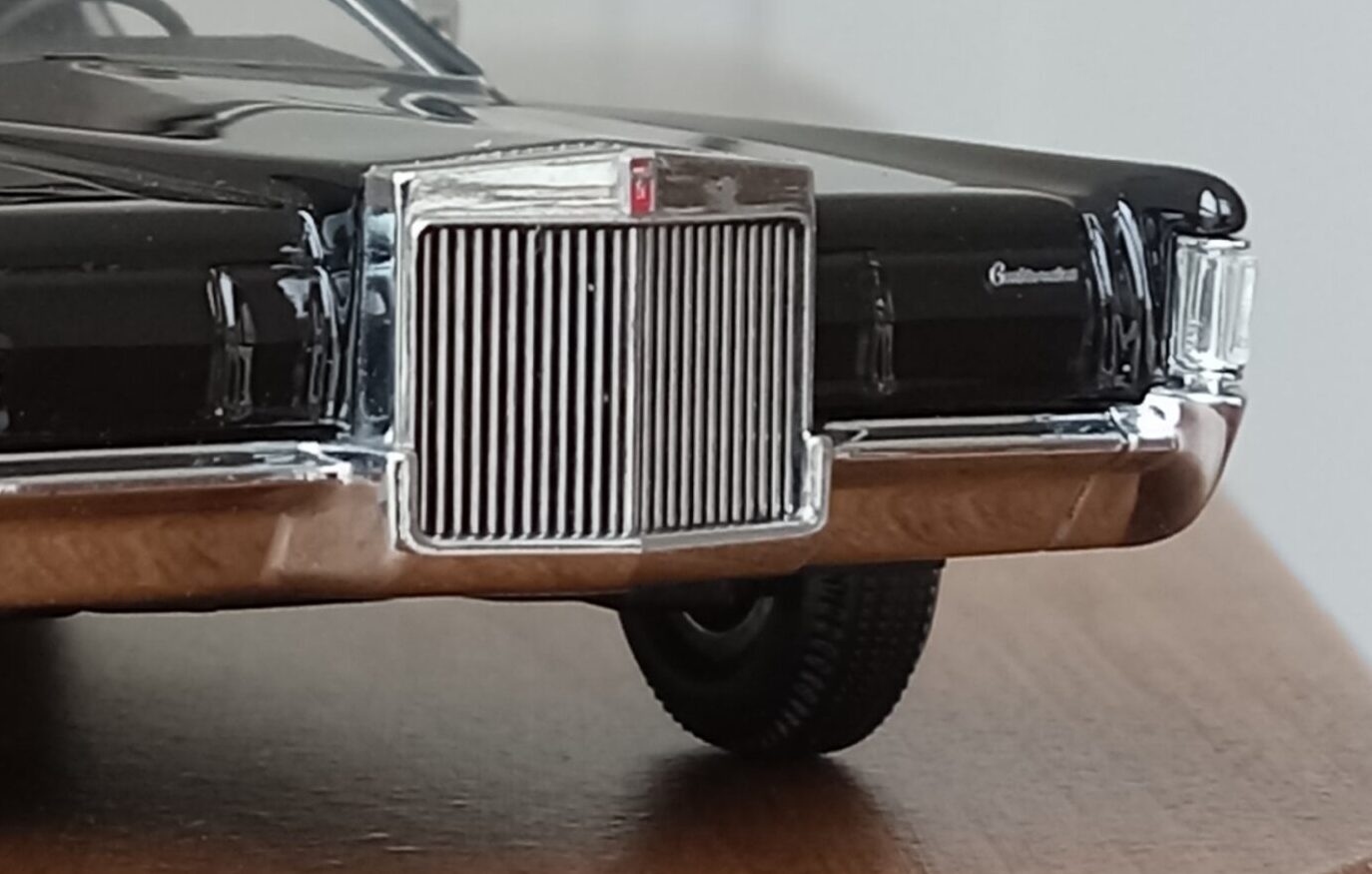

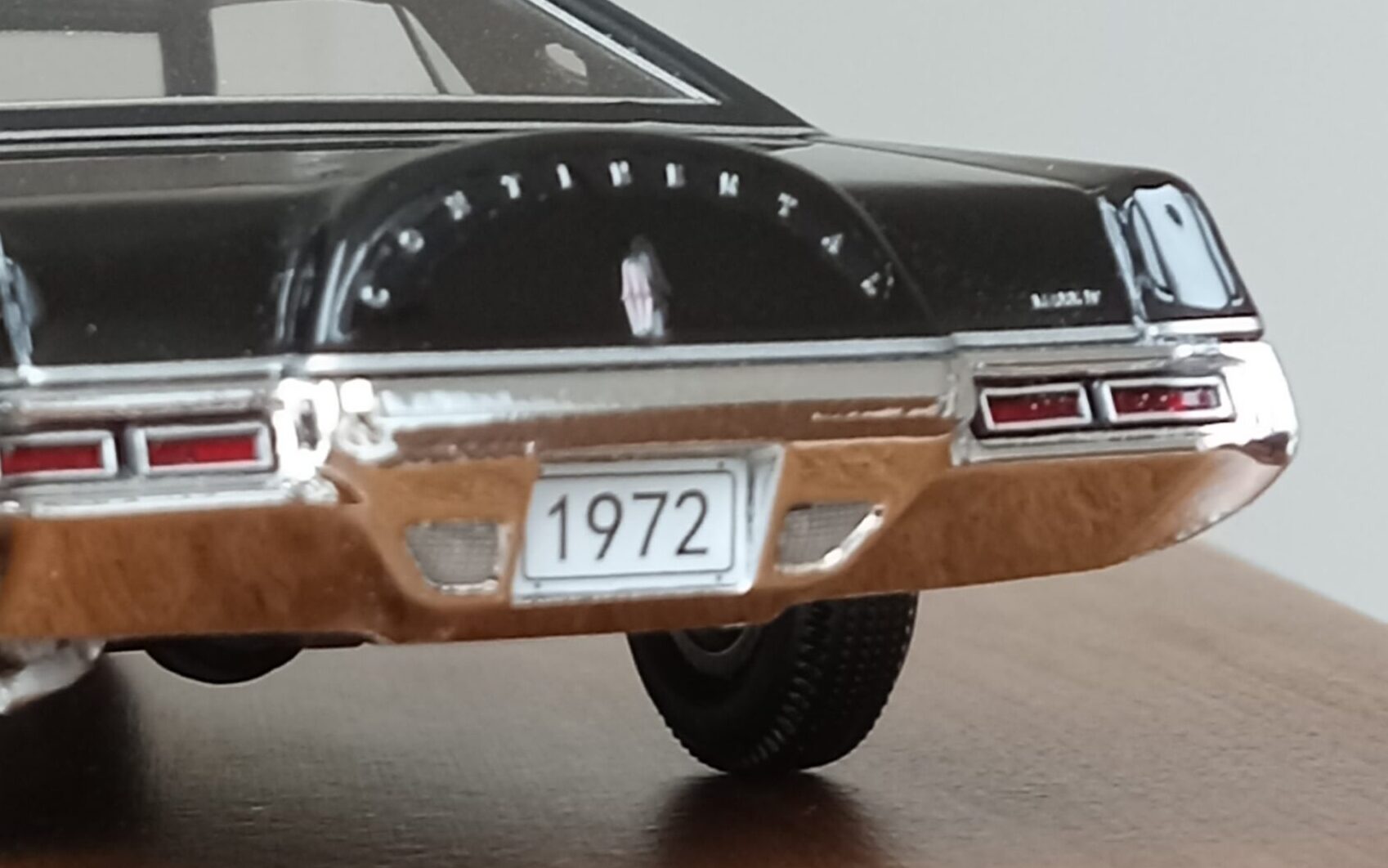
3、低い全高、極端に削り取られた、フロント・リアのオーバハング下部の面、意図的に履かせた14インチの小さ目のタイヤホイールサイズ等のすべての細かい要素が集積して、実際以上の巨大感を演出しています。
ーーーーー>MK3からほとんど全長が伸びてないのが驚きです。
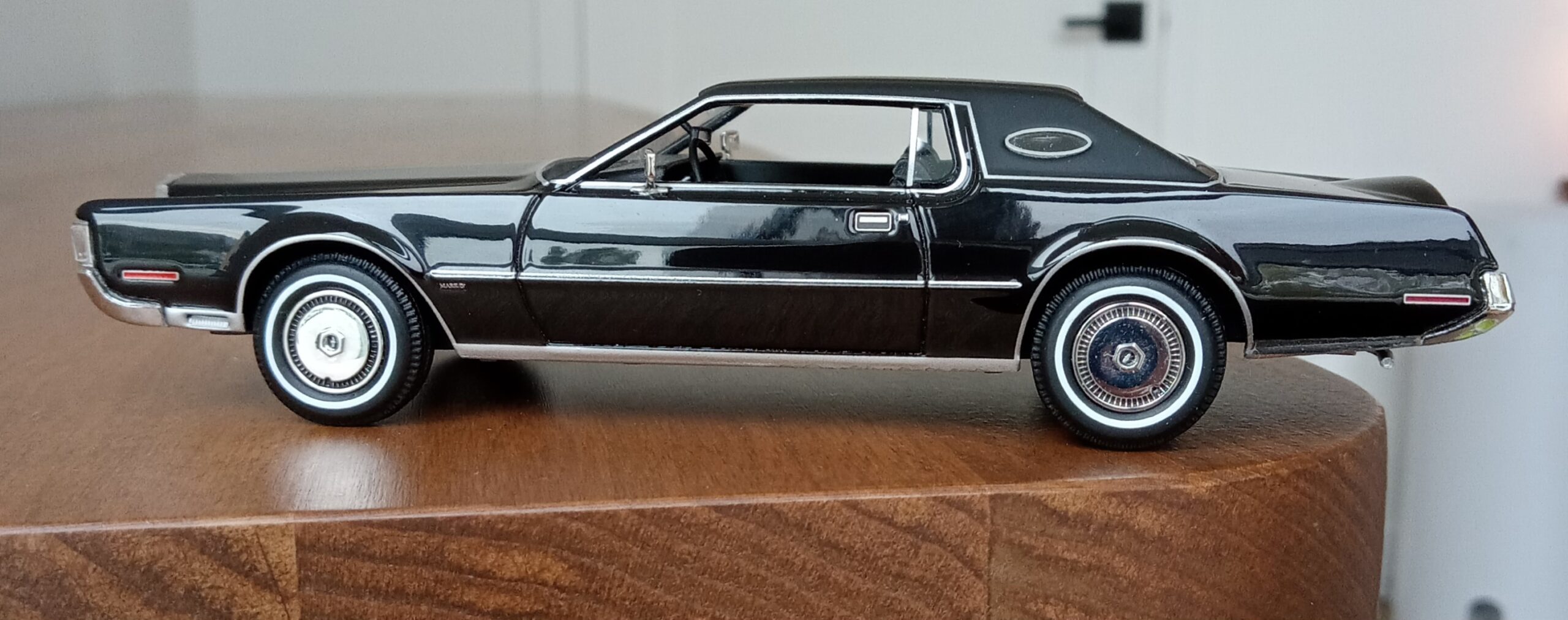
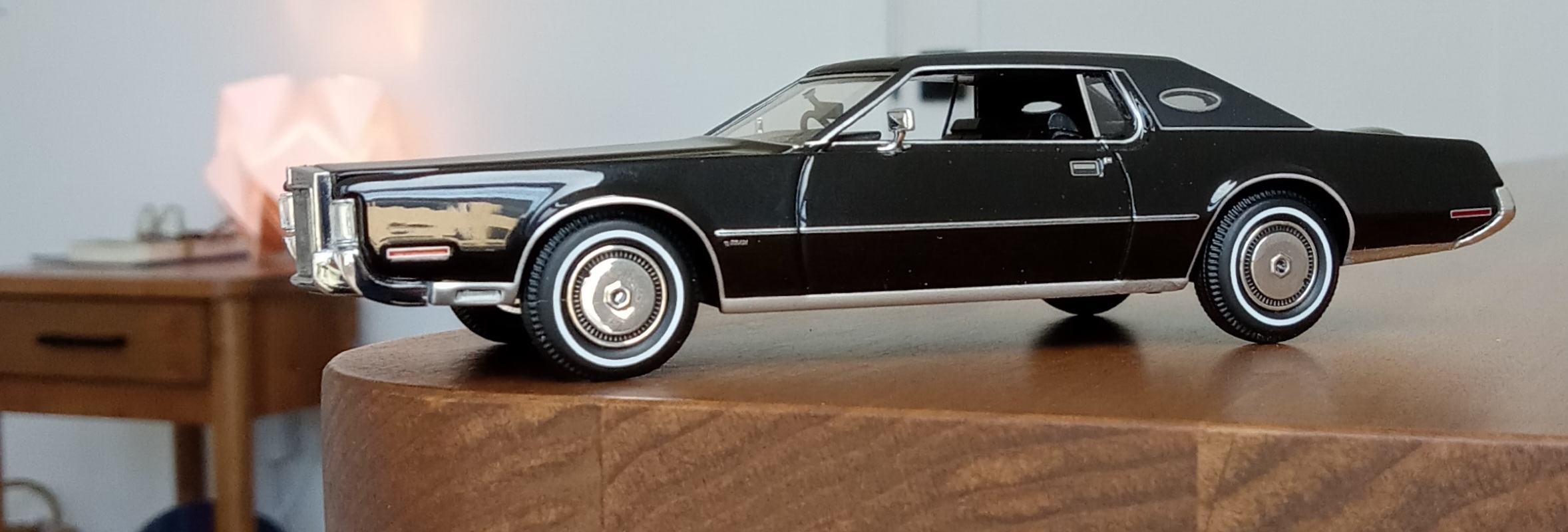
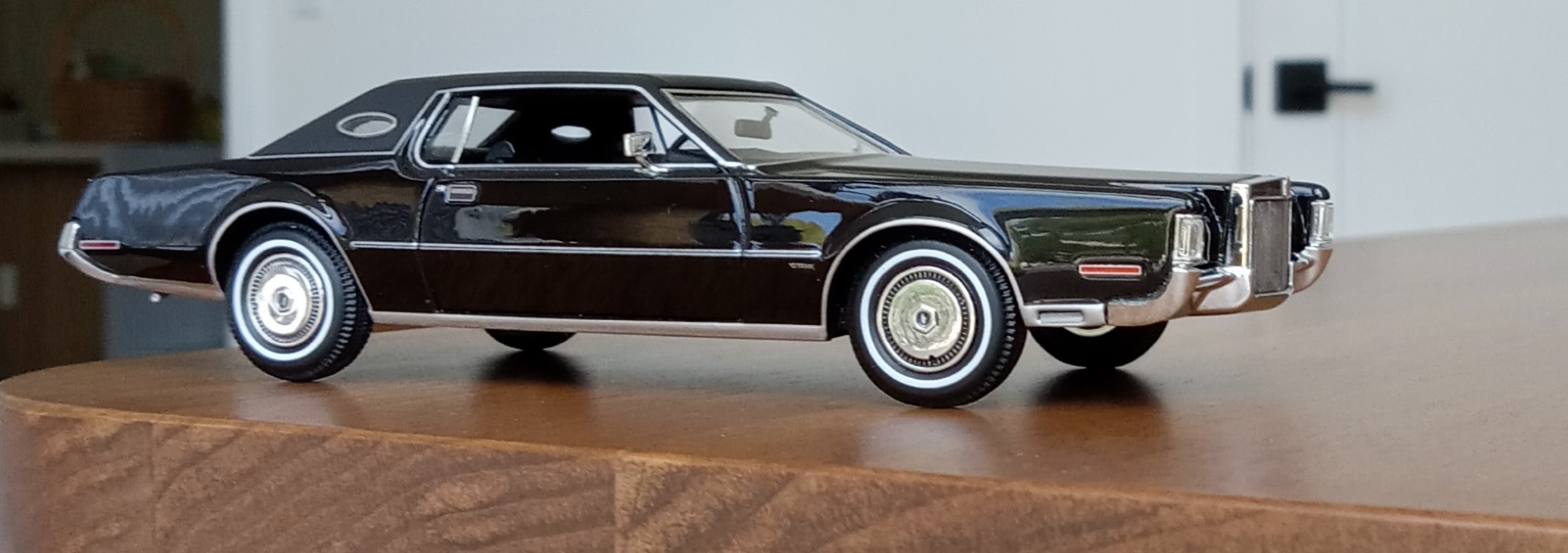
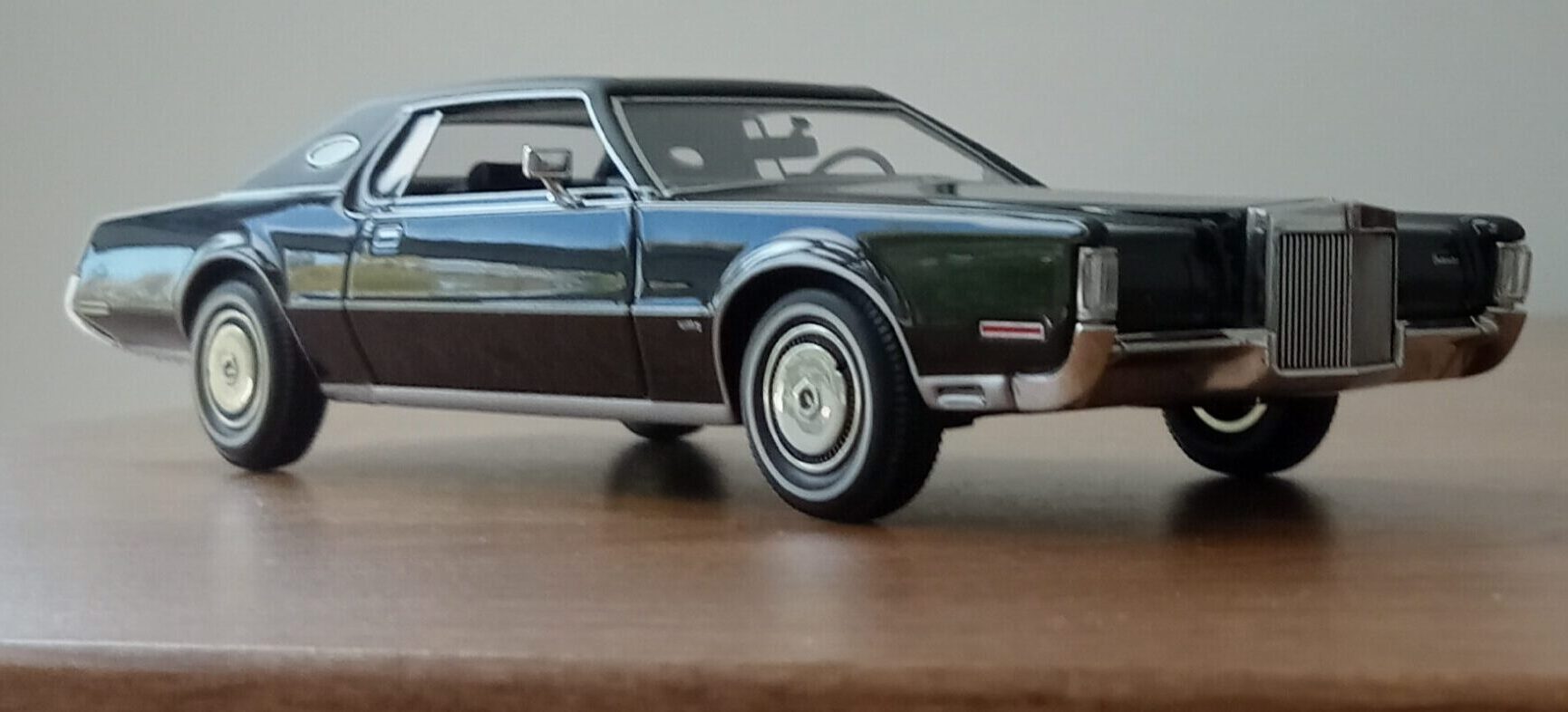
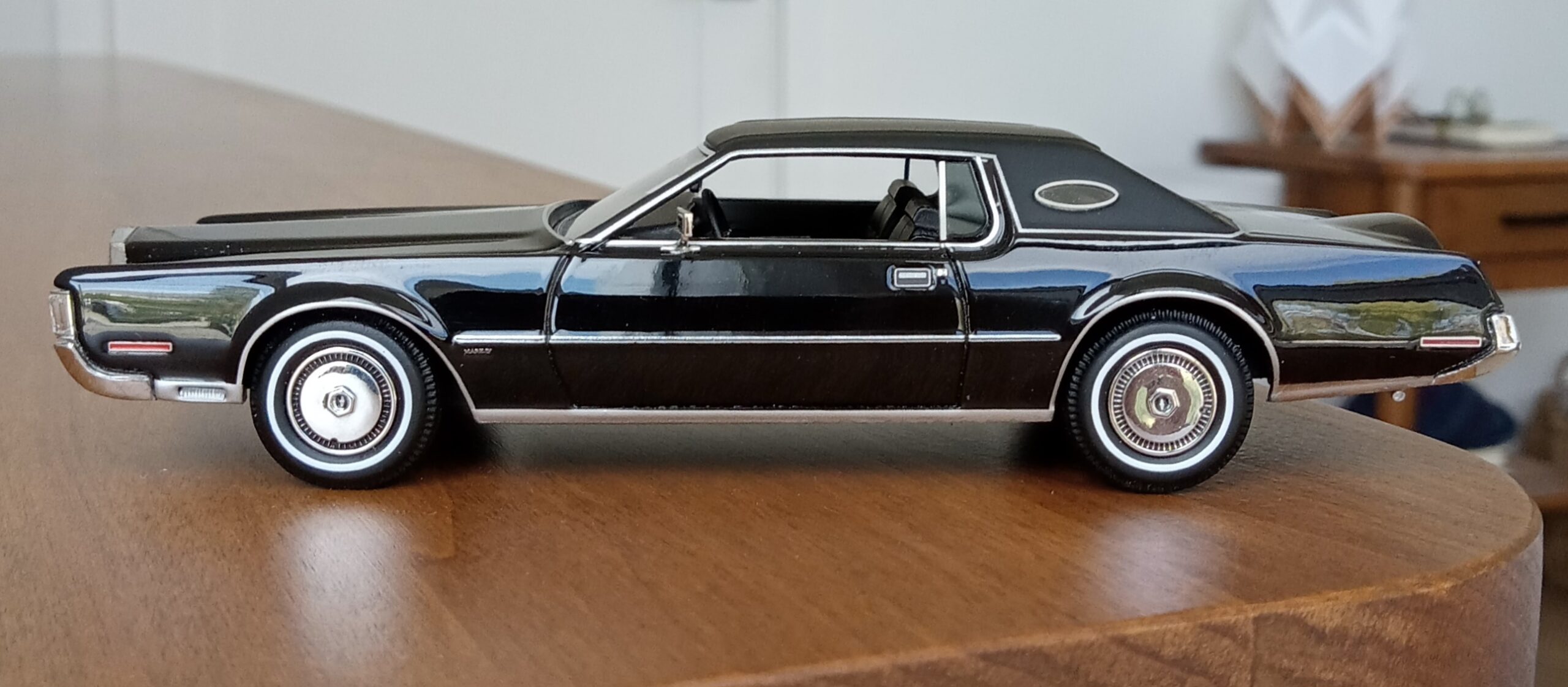
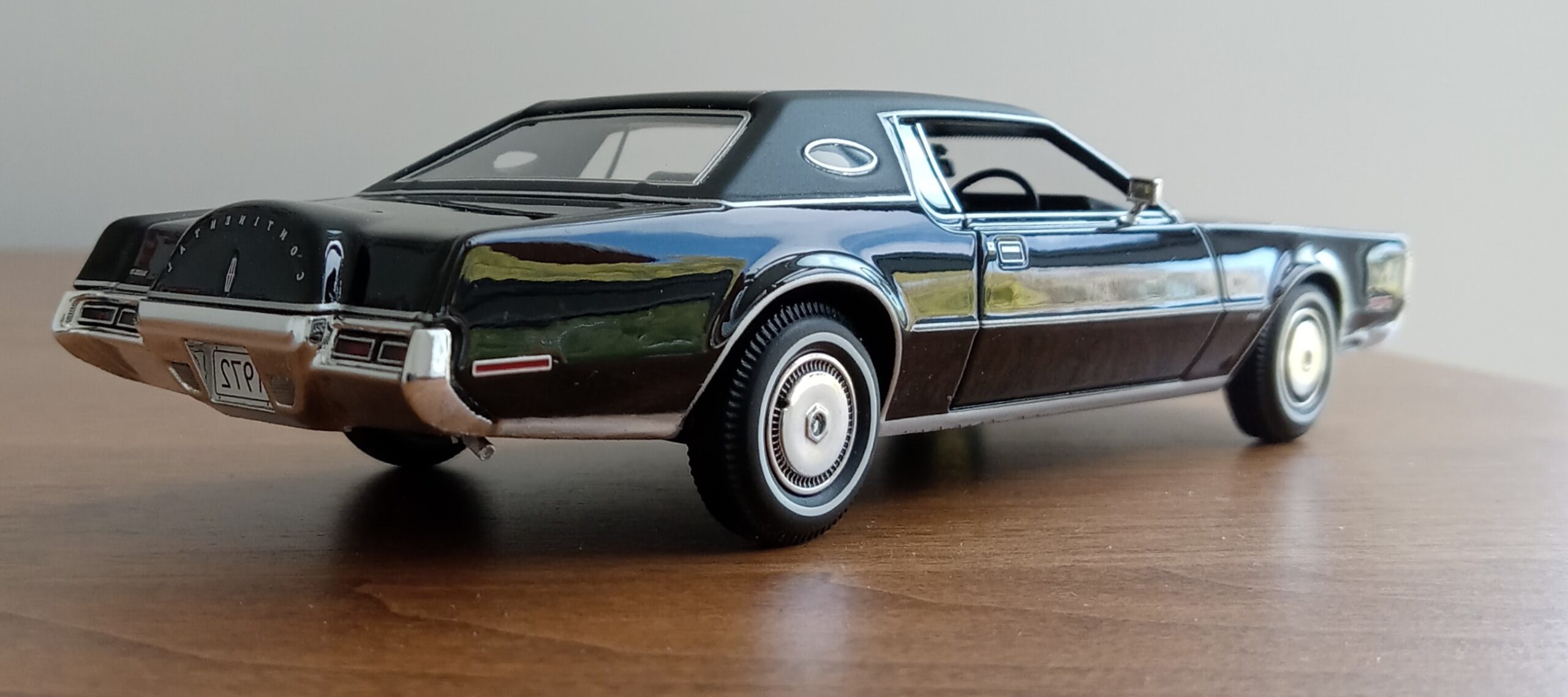
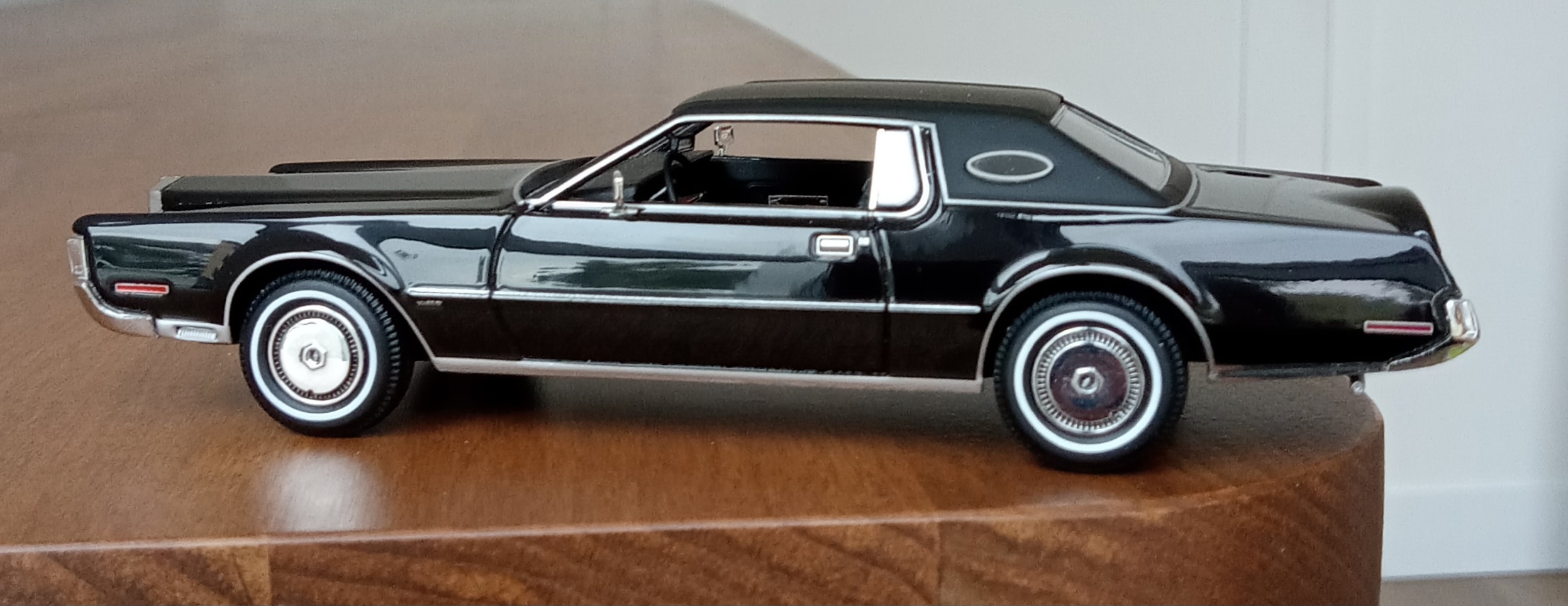
4、オペラ・ウインドウ、フェイク・スペアタイヤ・ハンプなどの小道具による「これでもか!」な、クラッシック演出の徹底化
(保守化傾向のあった当時のアメリカ大衆にはたまらないディテールの洪水でした)
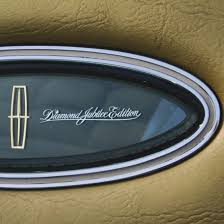
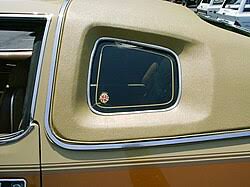
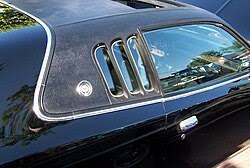
5、GMデザインの大胆であっぱれ(でも少し雑)な、ところはないものの、フォードデザインの「小技の集積」作戦が理想的に転んだ一例でしょうか?
ーーーーー>実際、MK4で布石を打ったフォードは、キープコンセプトの1977年型MK5で永遠のライバル:エルドラドに水をあける販売成績を収めました。)
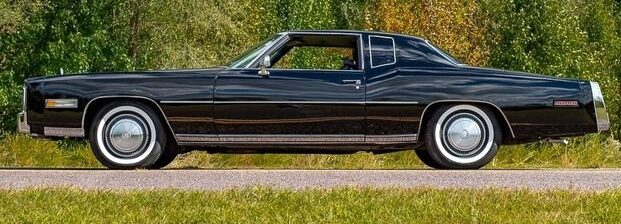
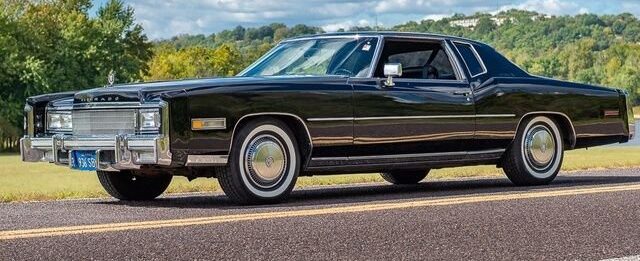
(1977年型、キャデラックエルドラド、既にフルモデルチェン時から6年経過して少し古びてました。)
【1977年度の販売台数=エルドラド:47,352台、コンチネンタル:80,321台】
*『私』と1972年型 コンチネンタルMK4:『ナイフ好き』のアメリカ人
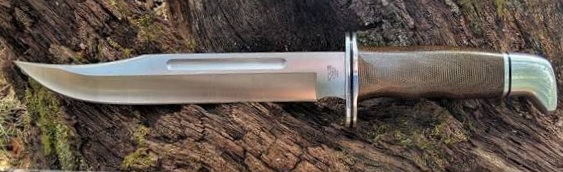
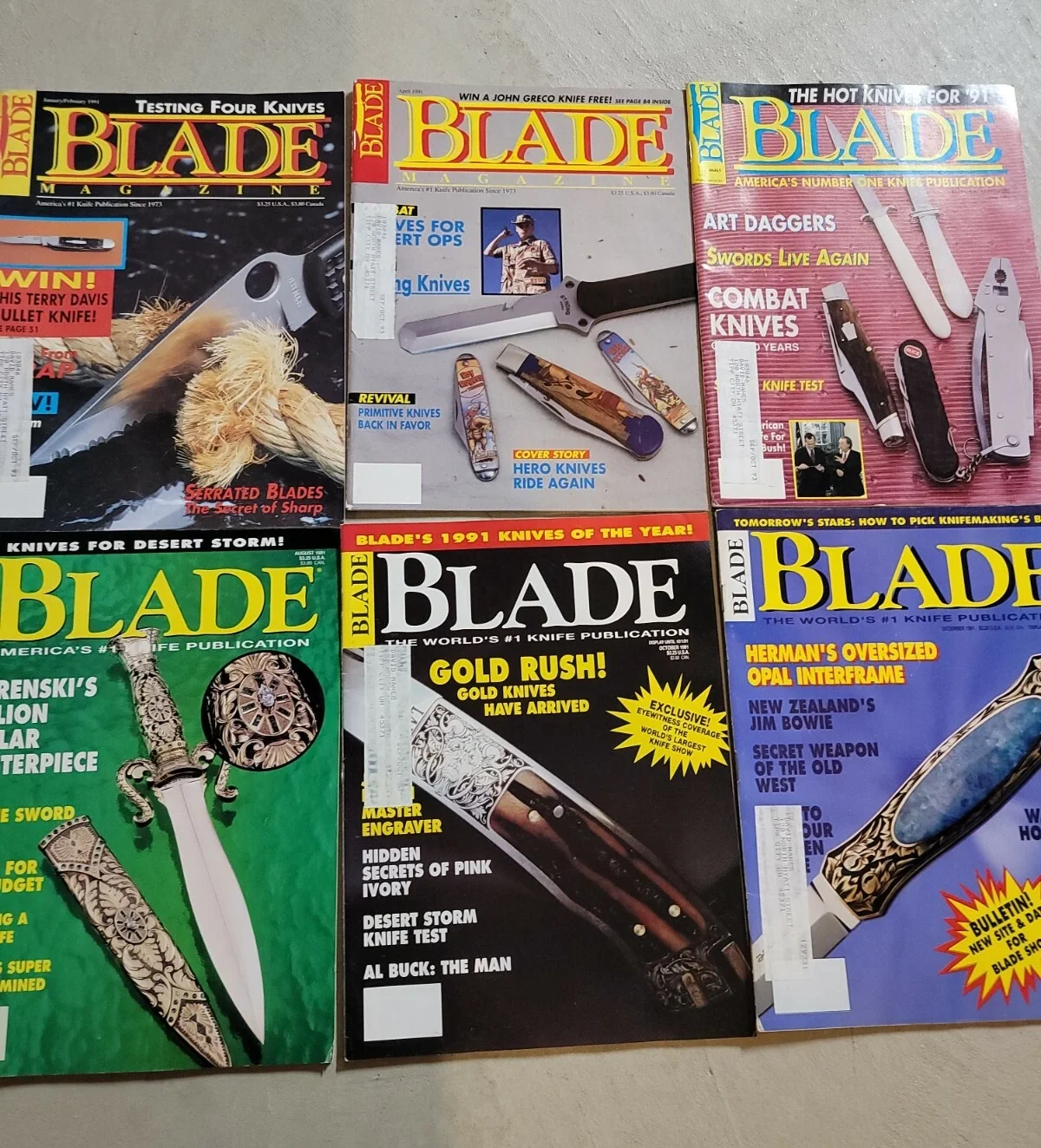
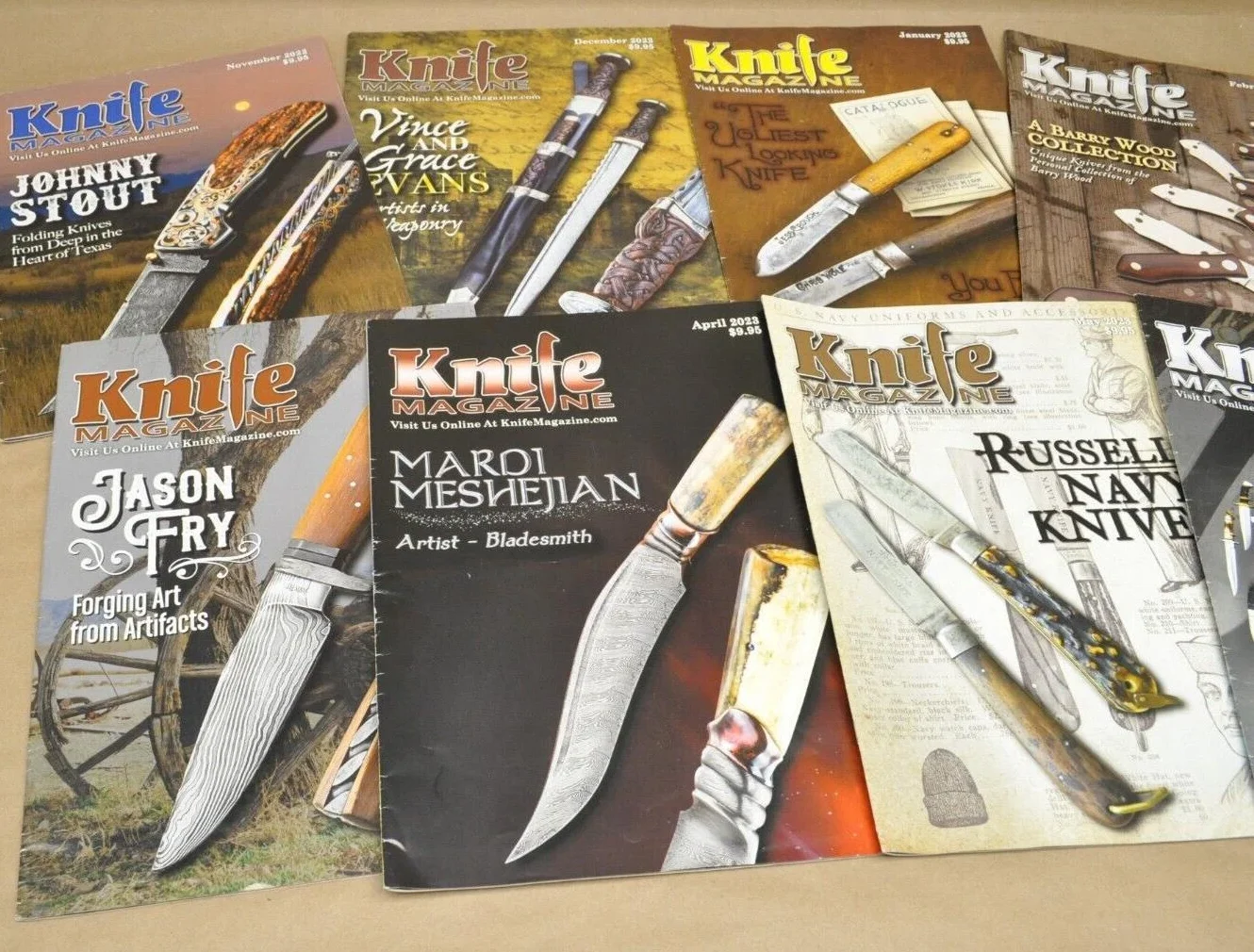
(数種類のナイフ雑誌が刊行されています。)
#マッチョと刃物の蜜月:
日本にも刀剣コレクターの方がいらっしゃり、
凄く奥が深い世界だと聞いていますが、
ここアメリカのナイフコレクターの世界も
すさまじいものがあります。
*毎月何種類もの月刊雑誌が刊行され、
*あちこちのスワップミートや、骨董屋さんはインテージナイフであふれ、
*マッチョな男性のポケットには、2つ折れナイフが、、、、、
私自身ナイフには興味はありませんが、
こだわりのある人を観察するのが好きなので、
いわゆる
『マニア観察マニア』
とでも言いましょうか、、、?
そんなナイフ好きなアメリカ人にぴったりなのが、
今回の主役、『リンカーン・コンチネンタルMK4』だと感じます。
#自分自身、立体マニアとして、、、
私がこの
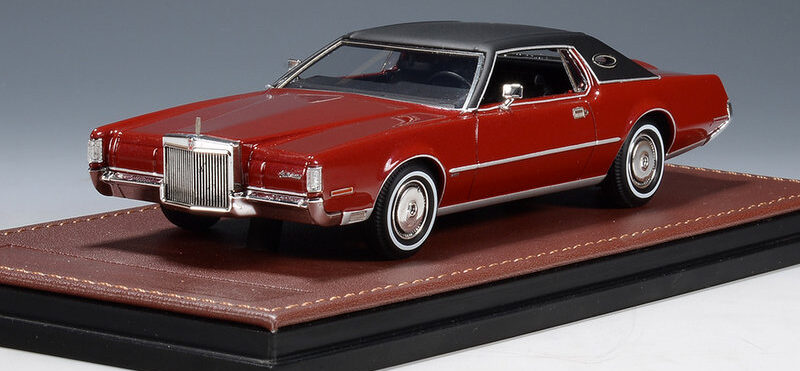
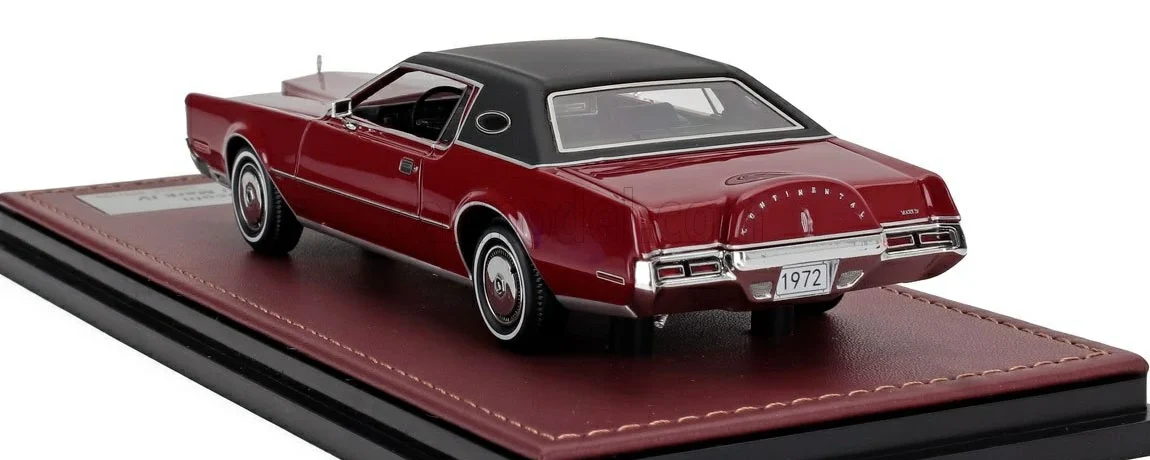
『1972年型独特のフロントバンパー形状』
に気付いたのはかなり最近のことで、
5‐6年前にキャデラック・エルドラドの検索作業がらみで、
偶然発見して、それ以来ズーと気になっていました。
どーしても立体模型が欲しくなり、
NEO社製の1/43のレジン製ミニカーを発見しましたが、惜しくも、73年型、
フロントバンパーが既に大型の角形5マイルバンパーに変わってました。
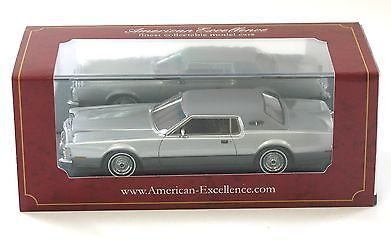
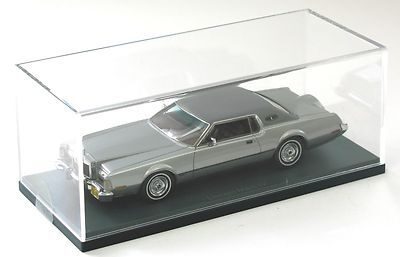
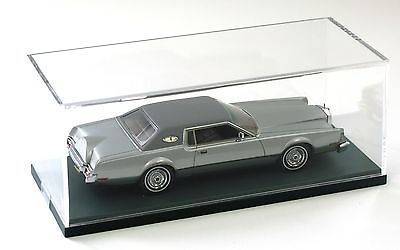
そんな中NEO社に一縷の望みをかけ、
ここ4‐5年イーベイからに毎日送られてクリ神経最頻リストとにらめっこ状態、
遂に昨年の秋口に、遂に
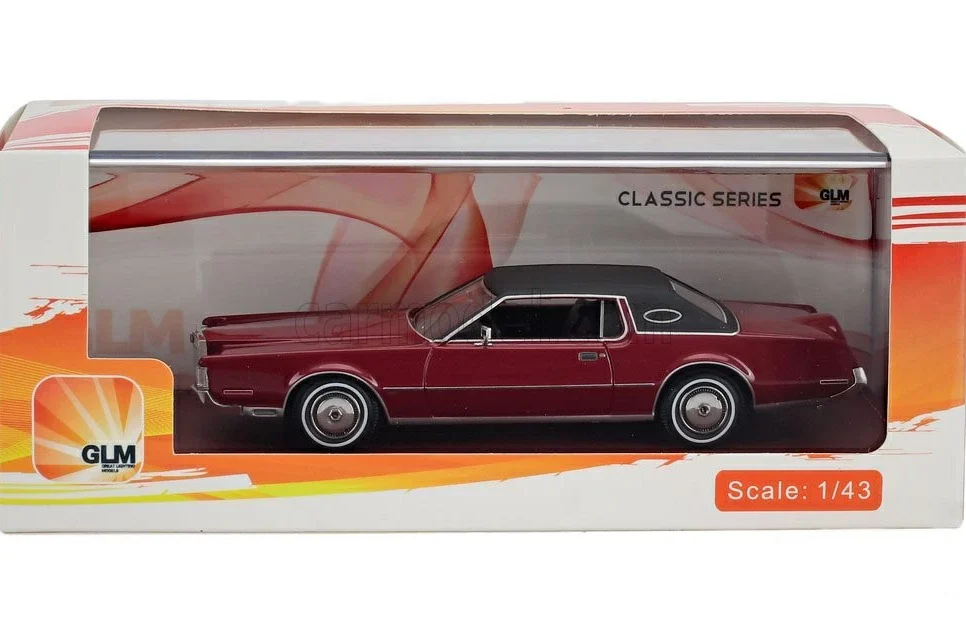
GLM社から, 1/43レジン性の完成品が発売となりまして、
この記事を書くことになりました。
#新たな発見:FR駆動車+矢じり型スタイルの矛盾?
今回写真撮影する中で、
この’72型マーク4のサイドビューをじっくりと観察する機会に恵まれたじっくりと
その中で、『ちょっと待てよ?』と感じる場面に遭遇して、記事の執筆がストップしてしまいました。
矛盾点と言いましょうか?
弱点発見?と言いましょうか、
それは
*サイドビューそんなにかっこよくないぞ!
*よく見ると、なんか、しもぶくれ気味で、
*『スッと』前に突き進むスピード感が思ったより無いし、
*『101匹ワンちゃん』のクルエラ的な退廃した「悪女」キャラ?
*FR駆動の『力いっぱい後方へ引き絞られた弓』の感じも希薄で
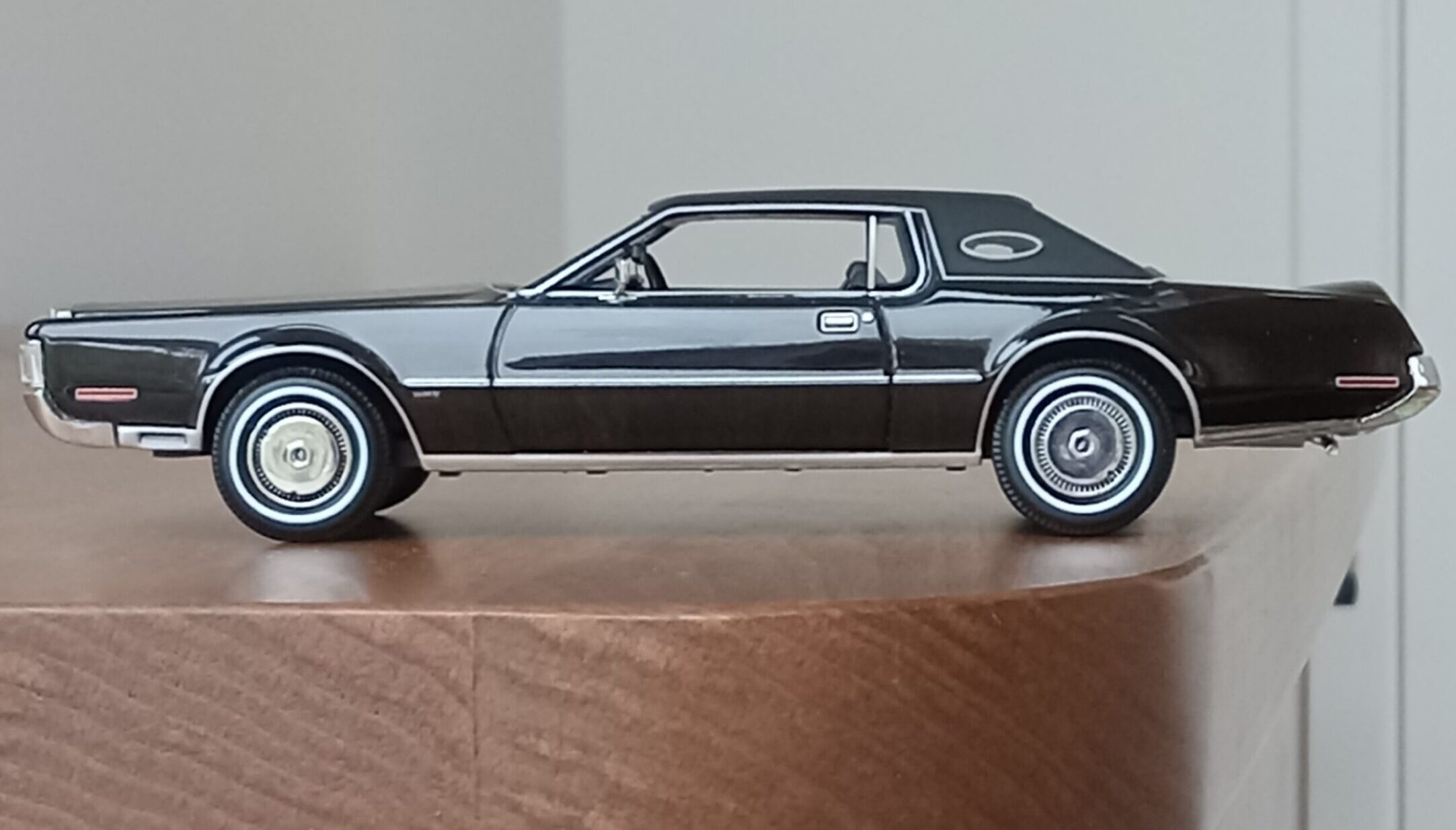
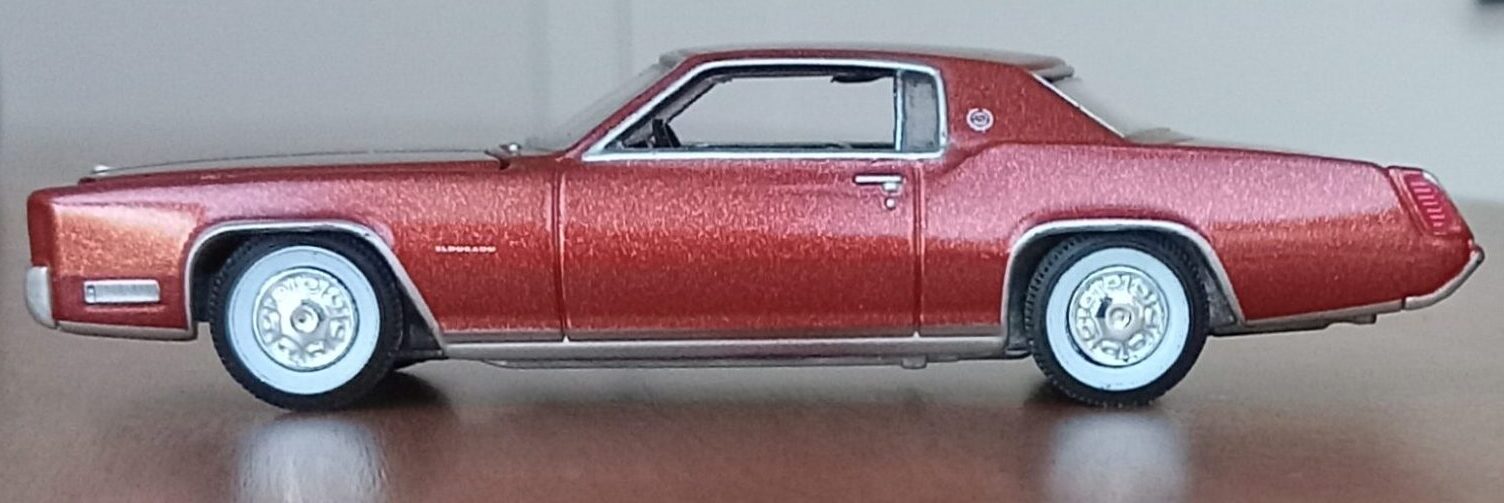
(’67年型エルドラドと比較して、フロントオーバーハングが長く、リアオーオーバーハングが短くなっており、それに加え、フロントオーバーハング下を削りすすぎたため、リアホイール・アーチからリアピラー周辺が「もっさりと重たく」感じてしまいました。結果として72MK4が前に引っ張られた『ウエッジ(楔)』、67エルドラドが後ろに引っ張られた『ウエッジ』になり、FR的プロポーションと合わさって、エルドラドのほうが、数倍『体重の乗りの良い』今にも走り出しそうなデザインとなっております。)
自分の中で培われた「陽」のイメージが見る見るうちに、崩れ落ちていきました。泣
しかしながら、
今回のテーマであります、『ナイフブレード・フェンダー』の
完成形を見事に表しているのは事実ですし、
未だに、73年型以降の5マイルバンパー版に比べて
すっきりして美しいシルエットは
愛でるにふさわしいデザインだと思います。
*三題噺:『そこまで言って委員会?』
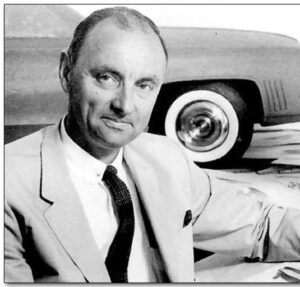


今回も三題噺で
締めてみましょう。
お題:
*エルウッド・エンゲル
*一年だけの奇跡
*クルエラ
エ~一席おつきあいのほどを願っておきますが、、、
昔から「三つ子の魂百まで」
などと言いまして、
慣れ親しんだ習慣や、決まり事を
変えたくてもなかな変えられない時がありますねー、
ここアメリカの建築業界や自動車業界でも、
同じようなことが起こりました。
自動車の外観デザインのお話ですが、
自動車発祥のこの方、
1930年台から40年代にかけて
自動車のタイヤを覆うフェンダーは、
ーーーーー>丸みを帯びた貝殻のような形をしていました。
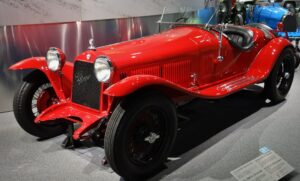
(1929年型、アルファロメオ 6C1750)
大戦後、
フェンダー部分はボディーと一体化され、
ーーーーーー>フェンダーの抑揚はなくなり、キャラクターラインなどに名残を残しました。
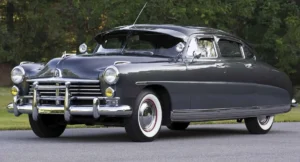
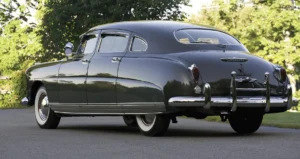
(1949年型、ハドソン・コモドア―4ドアセダン)
その後60年代に入り、
ボディー構造のユニボディー化が進み、
フェンダーのふくらみ自体もなくなり、ヨーロッパ車、日本車を中心にボディーが単純な四角形に変化し始めました。
ーーーー>方向性を持たせるために、四角いウエッジシェイプがはやり始めました。
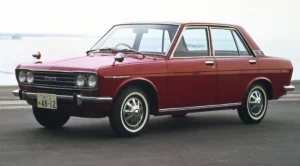
(1967年型日産ブルーバード510)
その大きな変化にあらがうことになったのが、
アメリカ大衆の、ノスタルジー趣味と言いましょうか、
優雅なフェンダーアーチに別れを告げたくない!!といった願望の表れとして、
当時フォードのデザイナーだった、
エルウッド・エンゲルさんは、
ナイフブレードフェンダーという折衷型のデザイントレンドを編み出しました。
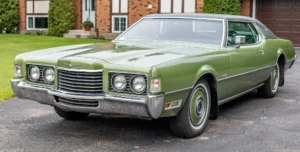
(72年型フォード・サンダーバード)
アメリカ市場独特の性格として、
*未だ、低燃費や効率性は要求されなかったこともあり、
*ボディーの構成容積に余裕があったこともあり、
彼のダイナミックで額縁的付加価値に富んだフェンダーデザインは、大好評となり、
その後のオイルショックで姿を消すまで、アメリカの中・高級車を大きく立派に見せるための代名詞的デザインの流れとして、フォードだけにとどまらず、GM, クライスラー社、終いには日本車にまでも大いに受け入れられ一世を風靡しました。
更には、
第一次オイルショック後の、
1980年代にも、もう一度、リバイバル・ネオ・クラシックデザインとして復活し、
当時のGM車、特にエルドラドなどのダウンサイジング後の高級車に採用され、大ヒットを記録しました。
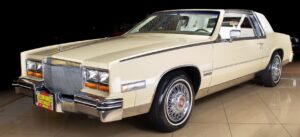
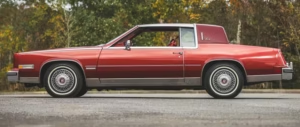
(1985年型、キャデラック・エルドラド ビアリッツ仕様)
数あるナイフブレードフェンダーを採用したラグジュアリークーペの中でもそのナイフ・ブレードが最も強烈に表れているのが、
1972年型に登場したリンカーン・コンチネンタルMK4で、
その「日本刀の刃先」のようなフロントバンパー回りのデザインなこの年の年次モデルにだけ搭載されており、
個人的に、
『一年間だけの奇跡』と呼んでおります。
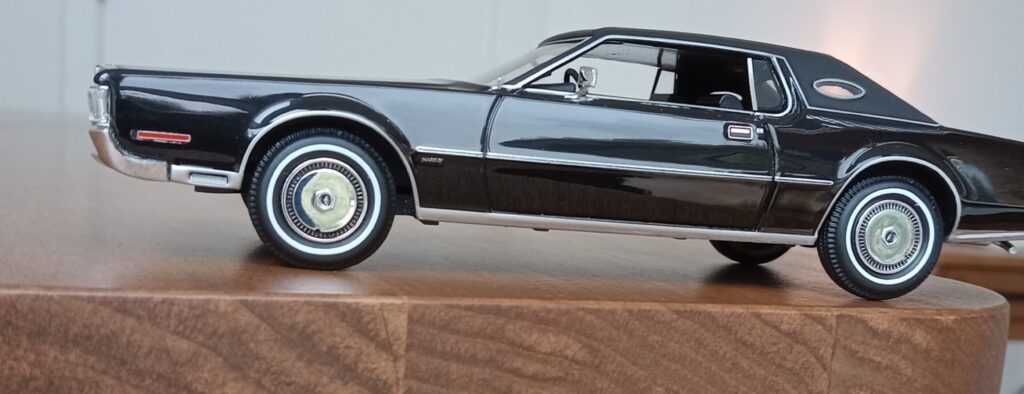
ところがこの’72のMK4は
よくよく観察するに、
『刃先のシャープさ』に注力するあまり、
全体のプロポーション・バランスを欠くに至り、

ディズニー映画:『101匹わんちゃん』の
悪女:クルエラさんに
見えてしまいました、、、、泣き
勿論これは勧善懲悪好きの、
「三つ子の魂百まで」的な固定観念からきている
私のものの味方なのですが、
ここからさらに展開するならば、
クルエラさんは、初めてこのアニメ映画を見た時から、
*その恐ろしい顔の表情や、
*仰々しく無駄の多い、大げさな動き、
*そして肝心なところで失敗する憎めない感じ、
等が子供心に、
*個性に乏しい101匹わんちゃんや、
*紋切り型のモダニスト的主人公夫婦などの
登場人物中、
最も個性的で、印象に残ったキャラだったのは否めません!
物事の好き嫌いは、
*遺伝的なものや、
*生理的なものがあり、
自分の力で変えたりできないもののように思われがちですが、
その壁を思い切って飛び越えると、
意外と素晴らしい、彼方の世界が見つかるかも、、、、
といった、
「望むと、望まざるとにかかわらず
避けがたい変化のあちら側
=意外と極楽かも?」の一席、

お後がよろしいようで。
(ぺんぺん)
*その他の『ナイフ・ブレード』なアメ車たち
60年代以降の長い『ナイフブレード・フェンダー・デザインの歴史』の中から、
私が選んだナイフ・コレクションをご紹介します。
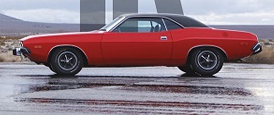
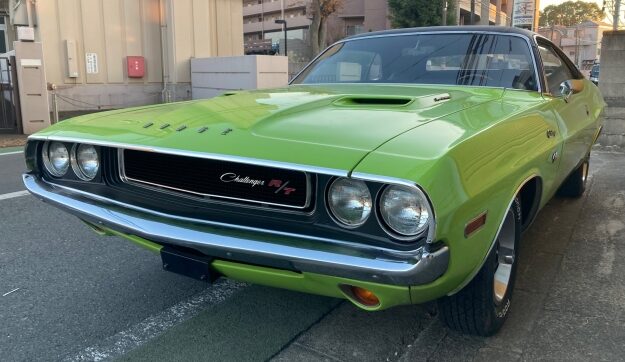
*ダッジ・チャレンジャー、1971(オレンジ&ブラックトップ)
(日本でもおなじみの、アメリカン・マッスルカー世界のナンバー1のハンサム男、
モノグラムの1/24スケールのプラモデルでその全幅の大きさを知り、びっくり仰天でした。クリーズ(ひだ)状の繊細なナイフ・ブレードが魅力)
ーーーーー>初代トヨタ・セリカお兄さん的な、美しいプロポーション
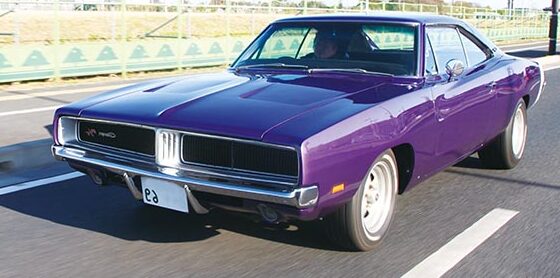
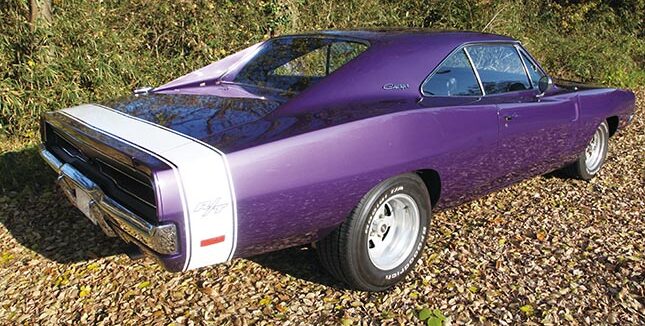
*ダッジチャージャー、1968(メタリック・紫&黒のストライプ)
(第2世代に入りグッと、マッスル度が増したチャージャーにもフェンダーの端にクリーズ的なひだが付いています、リアウインドウ周りのくぼみディテールも、マーキュリー・クーガー以上に深く、触ってみたいです。大味でともすれば、乱暴なデザインが逆に魅力です。)
ーーーーーーーー>大きなリアタイヤと、前傾姿勢がめちゃくちゃに合う車です!
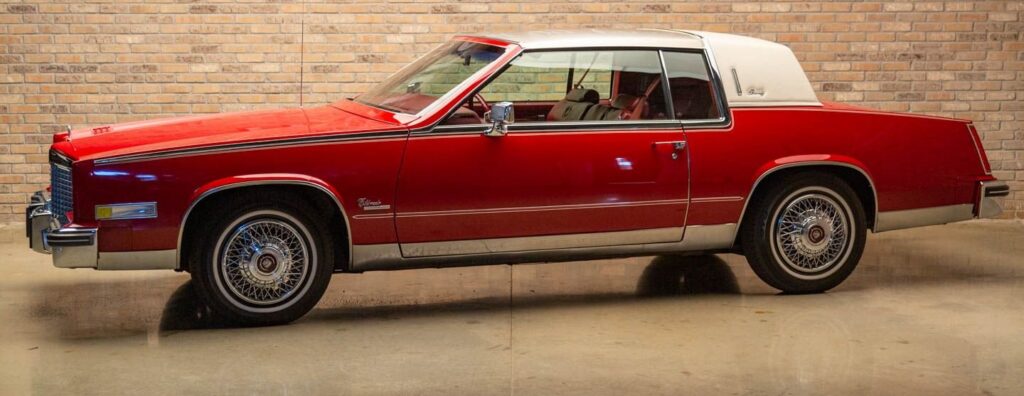
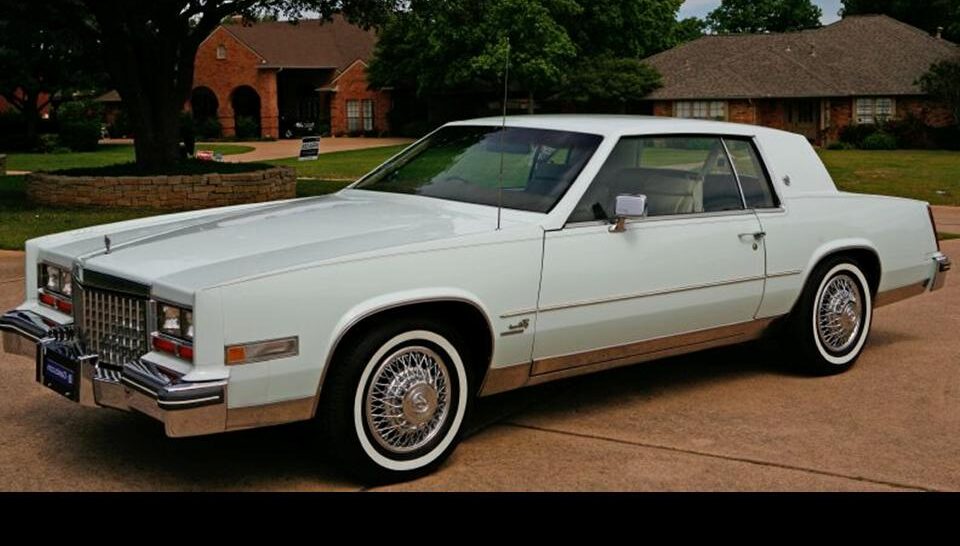
*キャデラック・エルドラド、1979(メタリック・レッド&白のトップ)
(オイルショック後のダウンサイジングを経ても、しっかり残った全後フェンダーのナイフ・ブレード付きの懐古調ななエルドラドは、またしても大ヒットして、この形のまま85年まで延命されました。)
ーーーーー>内装の角基調の豪華さも特筆ものです。
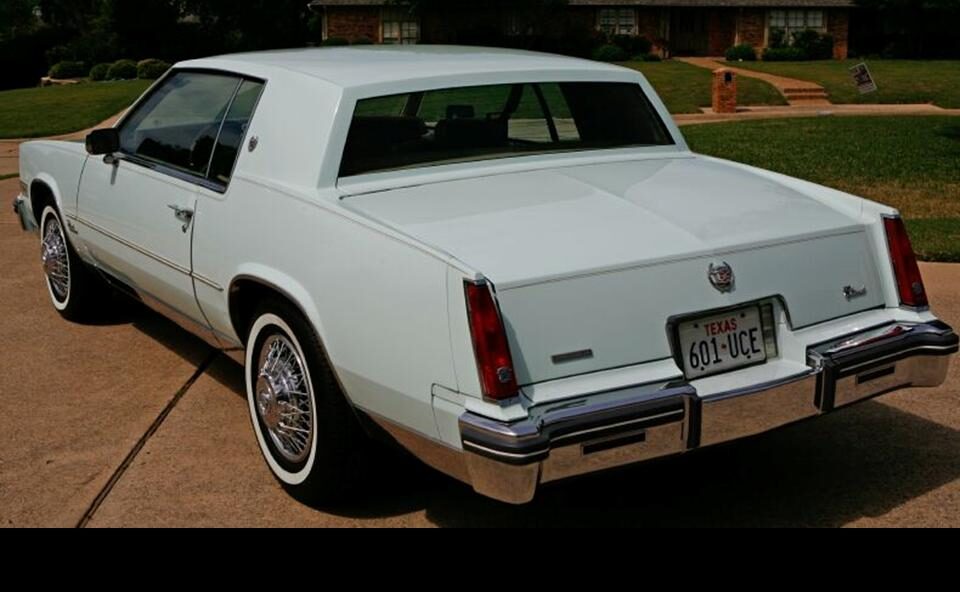
ナイフブレードの残り香的デザインは、
今も続いて、そこかしこに見つけられる、
自動車デザインの
定番の手癖となっております。
今後も、粘土モデルを作っていく限り、
頻出は確実です、、、、
『ナイフブレード・フェンダーよ』
永遠なれ‼
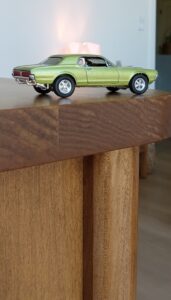
次回は、
アメリカの2ドア・クーペの第3回:
『マーキュリー・クーガー、1967年型』
につてお話ししたいです。
お楽しみに――
本ブログと記事内容につきまして:
ブログ記事を書くにあたり私の目標は、立体造形(料理も含めて)とのかかわりを通じて、私個人の特徴的(ネジ曲がり方も含めて)な評価軸を解明することで、「美しさ・美味しさ」に対する好奇心や、探求心を、どのように満足・充足させてきたのかを明記しておくことです。
従いまして、記事の中に出てくる、数字や年号、微細なデータなどには細心の注意を払っておりますが、時に大きな間違いや勘違いを犯していることも考えられます。特に自動車記事における主要諸元や、年号などには紛らわしいものも多く、あくまで参考程度に考えていただければ幸いです。
私としては、記事の中で個人的な外観デザインや味覚の評価、そこから広がる後半部分につなげるための、『流れ』を作るための客観的材料として年号やデータを挿入している感じです。あくまで重視したいのは、私個人の頭の中で起こる、記憶の錯そう的混沌から生まれる新たな『見方』や『情報の予想外のつながり』です。その勢いを作り出す、『流れ』の一環として、諸データが副次的に必要となるわけです。
話がそれますが、大好きな落語の世界に「三題噺」という、その場て会場から募った3つのお題を使って1つのお話に仕立てるといったお遊びがございますが、私はそれに近いことを立体造形の特徴や(料理のお味)をお題にして行っている感じがします。その中で頭の中に去来する数々の着想が、全く予想外で楽しく、次回からの記事内容を大幅に変えたり、新展開につながっています。
当ブロブの仕組み:
『好奇心の点と線 x 気まぐれ脳内回路=予想外の新展開』
こんな自分勝手なブログですが、今後ともよろしくお願いいたします。
追記:上記の『流れ』を作る為に必要な写真はできる限り、個人所有のミニカー・自前の料理などを使い撮影しておりますが、その他の必要最小限の図版や写真を他のブログ主様の記事や諸会社ホームページなどからお借りしております。(記事内容に合うよう加工させていただき、使用時は最小の解像度で載せております。)問題がある場合、ご連絡いただければ直ちに降ろさせていただきます。
追記2:当ブログ記事に掲載のミニカー写真等(個人撮影)は許可なしで、どのようにお使いいただいても結構です。私個人の創造性はこの世のもの、と言う認識の上で記事を製作しています。
!!!!!!!!!!!!!!!!!!!!!!!!!!!!!!!!!!! Translated in English !!!!!!!!!!!!!!!!!!!!!!!!!!!!!!!!!!!
#The Final Form of the ‘Knife Blade’ Design:
(The ‘Knife Blade Fender’ perfected on the Lincoln Continental MK4 [top photo] was further enlarged and universalized, adopted on the Continental MK5 [bottom photo], achieving great success as the largest two-door car in history (nearly 6 meters).)
*Part 20 – The Lineage of the 2-Door Coupe: Part 2 [US Edition] Lincoln Continental Mk4, 1972 (Exterior Color: Black)
(GLM Models, 1/43 Lincoln Continental MK4, 1972 (Black) Modifications: Minor axle adjustments, thinning and repainting in silver from the lower door rocker panel to the lower rear overhang area)
#Favorite Automotive Designs – The Lineage of 2-Door Coupes:
For this 20th installment, titled ‘The Lineage of 2-Door Coupes,’ I’d like to discuss luxury 2-door (GT) coupes, where each nation’s character and distinctive exterior design language are strongly expressed.
We’ll proceed as follows.
This second installment is the [American Cars Edition]
Featuring the 1972
Lincoln Continental MK4.
[Lineage of 2-Door Coupes / Future Schedule]
[American Cars]
Part 1: Cadillac Elmirage, 2013 (Metallic Red)
Part 2: Lincoln Continental MK4, 1972 (Black)
Part 3: Mercury Cougar, 1967 (Metallic Green)
[German Cars]
Part 4: MB 540K Special Roadster, 1936 (Black)
Part 5: MB 300SL Roadster, 1957 (Silver)
Part 6: MB SLS AMR Gullwing, 2010 (Black)
[British Cars]
Part 7: Jaguar XKR, 1996 (Dark Metallic Green)
Part 8: Aston Martin One-77 (Metallic Blue)
[Japanese Cars: Nissan Edition]
Part 9: Nissan First Generation Silvia, 1965 (Metallic Gold)
Part 10: Nissan Fifth Generation Silvia, 1988 (Metallic Green)
[Japanese Cars: Mazda Edition]
11th: Mazda Cosmo Sport, 1967 (Silver)
12th: Mazda Eunos Cosmo (2-ton: Black & Gray)
[Japanese Cars: Toyota Edition]
13th: Toyota/Yamaha 2000GT, 1967 (Ivory White)
Part 14: Toyota 2nd Generation Soarer, 1986 (Two-Tone: Black & Gray)
Part 15: Lexus LC [GWZ100], 2017 (Metallic Red)
*1972 model, a one-year miracle!… The perfect knife-blade fender
Movie version,
n
n
n
n
It’s not the
knife at the bow
of the Arcadia!!
n
n
n
Characterized by a front design where two massive knives
seem to lunge toward you,
n
n
n
n
n
n
n
n
The ‘1972 model’,
Lincoln Continental MK4,
The crucial point here is this 1972 model designation.
n
n
n
n
n
n
n
n
Regarding the evolution of these knife-edge fender lines,
n
n
The 1956 MK2 already displayed a notable body elegance, but to accommodate its round headlights, the knife-edge fender lines were absent.
n
n
N
n
n
n
n
Then, in the MK3 revived in 1969, the knife-edge fender line appeared.
After the 1971 model, it departed from the previous chassis,
n
n
n
n
n
n
n
n
Finally, in 1972, the MK4 appeared. Built on a new chassis and featuring an enlarged 8-inch body to rival the Cadillac Eldorado, it boasted
perfect knife-blade fenders where the underside of the front fenders was perfectly rounded and scooped out!!
n
n
n
n
n
n
n
n
However,
for the 1973 model year, revised safety standards mandated the installation of 5-mile impact-absorbing bumpers only on the front, causing the ideal knife-blade fenders to vanish after just one year.
The rear bumper retained the clean tapered design from the ’72 model…
n
n
n
n
n
n
Finally, the 1974 model saw the addition of an awkward 5-mile rear impact-absorbing bumper, causing the beautiful curved blade-like shape of the knife-blade fenders to collapse from round to square. Cry
n
N
N
N
N
The MK5, introduced in 1977, saw further lengthening and a shift to a more angular body profile. While the sharp knife-blade fender lines were somewhat toned down, its sheer size and overall balance resonated with the market. Ignoring its rival Eldorado, whose personal appeal was fading, the MK5 became a massive hit.
n
n
n
N
n
n
n
n
*What are Knife-Blade Fenders?:
n
n
n
American cars featuring the “knife-blade fender” or “laser-edge fender” design include the Lincoln Continental and Chrysler Imperial. These designs were particularly popular from the 1960s through the 1970s.
Key American Cars:
The terms “knife blade” or “laser edge” refer to the sharp, angular edge treatment along the car’s body side, reflecting the design philosophy of Elwood Engel in the 1960s.
1961 Lincoln Continental
This model is known for its clean, elegant linear styling, featuring a “slab-sided” design with distinct, sharp fender lines. This design signaled a new direction in the American luxury car market of the time and influenced many designers. Its distinctive “suicide doors” (rear-hinged doors opening in the opposite direction) are also notable.
1964 Chrysler Imperial
After Elwood Engel moved from Lincoln to Chrysler, he introduced a similar sharp design to the Imperial. The 1964 model was completely redesigned and featured “knife-blade” fenders that extended from front to rear, showing similarities to the Lincoln Continental. The 1967 Chrysler Imperial also featured this distinctive design element.
Studebaker Avanti
The 1963 Avanti featured “knife-blade” fenders inspired by the contemporary Lincoln Continental, but its grill-less nose design was controversial.
These vehicles symbolize the transition from the flashy tail fins of the 1950s to more restrained but impressive sharp lines, and occupy an important place in the design history of American cars.
n
n
n
n
n
n
n
n
n
n
Now then,
let’s proceed with the Lincoln Continental MK4, 1972 model.
Here’s how we’ll do it.
* Objective commentary: The favorite against the Cadillac Eldorado
* Design features: “Two knife blades”
* “Me” and the 1972 MK4: Americans who love knives
*Three-Theme Story: Elwood Engel, A One-Year Miracle, Cruella
*Other ‘Knife-Blade’ American Cars
*Real Car Commentary: Ford’s Contender Against the Cadillac Eldorado?
(Three successful examples of knife-blade design [from top: 1967 Eldorado, 1972 Mk4, 1977 Mk5]: The side profiles are quite similar. ーーーー> Interestingly, the front-engine, front-wheel-drive Eldorado has the most rear-engine, rear-wheel-drive-like proportions.)
n
n
n
n
n
n
n
n
The Lincoln Continental Mark IV, introduced in 1972 targeting GM’s popular competitor, the Cadillac Eldorado, was a model radiating overwhelming presence that symbolized the golden age of the “Personal Luxury Coupe” in the early 1970s. It featured the following unique, luxurious design characteristics.
n
n
n
n
Exterior Design Theme: Fusion of Overwhelming Presence and Tradition
Proportions: Inheriting the traditional FR coupe style of “long nose, short deck,” it featured a lower, longer, and wider body than its predecessor, the MK3. With an overall length of approximately 5.8 meters, it boasted an imposing sense of scale.
Front Mask: A large vertical-grille design (often compared to Rolls-Royce styling) and retractable headlights—hidden when not in use—create a dignified and refined expression.
Opera Window: The small, elliptical “Opera Window” in the C-pillar was introduced for the first time on this model. Initially an option, it became so popular that it was later made standard equipment.
Continental Spare: The design mimicking a spare tire bulge (fake spare tire hump) at the center of the trunk lid has been carried forward as an identity of the Continental series.
Body Lines: Characterized by more rounded body sides compared to the preceding Mark III and steeply cut fender lines, it conveys a more modern and elegant impression.
Engine: To power its substantial size, it was equipped with a 7.5-liter (460 cubic inch) V8 engine.
n
n
n
n
n
n
n
n
n
n
n
n
n
n
Interior: A relaxing personal space, a luxurious and splendid cabin
n
n
n
Supreme Materials: In addition to thick carpeting and wood-grain panels, the “Twin Comfort Lounge Seats” utilize premium leather and velour materials, providing living room-like comfort.
Cartier Clock: An analog clock bearing the signature of luxury jewelry brand “Cartier” is standard on the dashboard, emphasizing its high status.
Comfort Features: Automatic Temperature Control (Automatic Climate Control), 6-way power seats, power windows, and other cutting-edge, top-tier comfort features were available as standard or optional equipment at the time.
Additionally, the Mark IV’s high fashion appeal was a major feature, later expanded with special edition models like the Designer Series.
n
n
n
n
#Key Specifications:
Model: 2Y89A…
Total Displacement: 7,538 cc | 460.0 cu in | 7.5 L
Maximum Power: 224 PS @ 4,400 rpm
Maximum Torque: 47.3 kg-m
Drivetrain: FR (Front Engine, Rear Drive)
Seating Capacity: 5 or 6 passengers
Body Style: 2-door, 5-6 seats, hardtop coupe
Wheelbase: 3,058 mm
Overall Length: 5,591 mm
Overall width: 2,027 mm
Overall height: 1,359 mm
Curb weight:2,174 kg
*Design feature: ‘Two sharp knife blades’
Now, I will list the exterior features of the 1972 Continental MK4 as I perceive them.
1. The flat knife-blade fenders by Elwood Engel, lacking dynamic nuance, were completed by adding the protruding “volume” on the sides and the sweeping curve along the lower body.
2. It brought the architectural neo-classical trend, symbolized by the ‘Rolls-Royce front grille’ reminiscent of Greece’s Parthenon, into automotive design.
3. All the fine details—low overall height, extremely sculpted surfaces on the lower front and rear overhangs, intentionally fitted smaller 14-inch tire/wheel size—combine to create a sense of grandeur beyond its actual size.
4. The use of props like opera windows and a fake spare tire hump takes the classic styling to an “over-the-top!” level of thoroughness.
5. While lacking the bold, impressive (though slightly rough) elements of GM design, is this perhaps an ideal example of Ford’s “accumulation of small tricks” strategy?
————> Indeed, Ford, having laid the groundwork with the MK4, achieved sales performance that outpaced the Eldorado with the concept-retaining MK5.
Now, let’s examine it in detail!
1. By adding side protrusions (“volume”) to Elwood Engel’s flat knife-blade fenders—which lacked dynamic nuance—and thinning the front/rear overhang thickness to introduce a sweeping curve beneath the body,
(a forward-thrusting dynamic impulse was added, reviving the roar of 1930s race cars with their organic, rounded fenders.)
ーーーーー> Pursuing ‘wide, low, and long’ to its extreme, combined with a powerful directional force, culminated in the completion of the knife-blade fenders.
(Postscript: Upon closer inspection, it’s regrettable that of the 4-inch overall length increase from the MK3, while the wheelbase grew by 3.2 inches, nearly all the added overhang was placed at the front. This leaves little of the FR-specific ‘bow drawn taut’ directionality. Tears)
2. It brought the architectural neo-classical trend, symbolized by the ‘Rolls-Royce front grille’ reminiscent of Greece’s Parthenon, into automotive design.
(This trend had already begun with the MK3, but the MK4’s thoroughness extended this principle all the way to the interior.)
——> At the time, it seemed criticized as a symbol of nostalgic bad taste…
——> Could this reflect a uniquely American mass-market temperament, seen also in American residential architecture? A tendency to seek calm stability when push comes to shove (a fundamental yearning for the Greco-Roman style…)? It took 70-80 years for the country to fully embrace the modern homes proposed by its own architects.
3. The low overall height, the extremely trimmed lower surfaces of the front and rear overhangs, the deliberately fitted smaller 14-inch tire/wheel size, and all these minute details combine to create a sense of grandeur beyond its actual size.
ーーーーー>It’s surprising how little the overall length has increased since the MK3.
4. The relentless pursuit of classic styling through props like opera windows and fake spare tire humps.
(This deluge of details was irresistible to the conservative American masses of the time.)
5. While GM’s design isn’t bold or spectacular (though a bit rough around the edges), is this perhaps an ideal example of Ford’s “accumulation of small tricks” strategy?
ーーーーー>Indeed, Ford, having laid the groundwork with the MK4, achieved sales performance that outpaced its eternal rival, the Eldorado, with the concept-retaining 1977 MK5.
(The 1977 Cadillac Eldorado was already looking a bit dated, having been on the market for six years since its full model change.)
[1977 Sales Figures = Eldorado: 47,352 units, Continental: 80,321 units]
*‘Me’ and a 1972 Continental MK4: An American ‘Knife Enthusiast’
(Several types of knife magazines are published.)
#The Honeymoon Between Macho Culture and Bladed Weapons:
I hear Japan has sword collectors too,
and it’s a world of incredible depth,
but the world of knife collectors here in America
is also something else.
* Several monthly magazines are published every month,
* Swap meets and antique shops everywhere overflow with vintage knives,
* And in the pockets of macho men, you’ll find folding knives…
I myself have no interest in knives,
but I enjoy observing people with strong passions,
so let’s call it
‘Observing Maniacs Maniac’
or something like that…?
I feel the perfect match for such knife-loving Americans
is this month’s star, the ‘Lincoln Continental MK4’.
#As a 3D model enthusiast myself…
It was only fairly recently that I noticed this
‘unique front bumper shape of the 1972 model’.
I stumbled upon it about 5-6 years ago while researching the Cadillac Eldorado,
and it’s been on my mind ever since.
I desperately wanted a 3D model,
and found a 1/43 resin mini-car made by NEO. Unfortunately, it was a ’73 model,
already featuring the larger, angular 5-mile-per-hour bumper.
Holding onto a sliver of hope for NEO,
I spent the last 4-5 years staring at eBay’s daily alerts,
staring at my most frequently viewed list,
until finally, last fall,
GLM released a 1/43 resin finished model,
prompting me to write this article.
#New Discovery: The contradiction of rear-wheel drive + arrowhead styling?
While photographing this model,
I had the chance to really study the side view of this ’72 Mark IV.
That’s when I encountered a moment that made me think, ‘Wait a minute…’ and halted my writing.
A contradiction, perhaps?
Or a flaw discovered?
It was this:
* The side view isn’t that cool!
* Upon closer look, it seems kinda… puffy-cheeked?
* It lacks the ‘smooth, forward-thrusting’ sense of speed I expected.
* Does it have a Cruella-esque, decadent ‘villainess’ vibe?
* The FR-drive ‘bow-drawn-back-with-all-your-might’ feel is also weak.
(Compared to the ’67 Eldorado, the front overhang is longer and the rear overhang shorter. Furthermore, because the area under the front overhang was shaved down, the rear wheel arches and rear pillar area feel “bulky and heavy.” As a result, the ‘72 MK4 became a ‘wedge’ pulled forward, while the ‘67 Eldorado became a ‘wedge’ pulled backward. Combined with the FR proportions, the Eldorado’s design feels several times more ‘weight-bearing’ and ready to take off at any moment.)
The “yang” image cultivated within me crumbled before my eyes. Cry
However,
it’s true that this perfectly embodies the completed form of the theme for this project, the ‘knife-blade fender’.
Even now, compared to the 5-mile bumper versions from the ’73 model year onward,
its clean, beautiful silhouette
remains a design worthy of admiration.
*Three-Word Story: ‘Say It All Committee?’
Let’s wrap up this time with another three-word story.
Themes:
*Elwood Engel
*A Miracle Lasting Only One Year
*Cruella
Well… I hope you’ll indulge me for a moment…
As the old saying goes, “Three-year-old habits last a lifetime,”
and sometimes, even when we want to change
familiar habits or established rules,
it’s surprisingly difficult to do so.
Something similar happened
in the American construction and automotive industries.
This concerns automotive exterior design.
This man, the originator of the automobile,
From the 1930s through the 1940s,
the fenders covering automobile tires
ーーーーー> had a rounded, shell-like shape.
(1929 model, Alfa Romeo 6C1750)
After the war,
the fender sections became integrated into the body,
ーーーーーー> losing their curvature, with only traces remaining in character lines.
(1949 Hudson Commodore 4-door sedan)
Then, entering the 1960s,
monocoque body construction advanced,
and the fender bulges themselves disappeared. Starting mainly with European and Japanese cars, bodies began changing into simple rectangular shapes.
→ To impart directionality, the square wedge shape became popular.
(1967 Nissan Bluebird 510)
Resisting this major shift was
the American public’s nostalgia, if you will,
or rather, their desire to not say goodbye to elegant fender arches!!
Elwood Engel, then a Ford designer,
developed the compromise design trend known as the knife-blade fender.
(1972 Ford Thunderbird)
Reflecting the unique character of the American market,
* Fuel economy and efficiency were not yet demanded,
* and ample body volume allowed,
his dynamic, frame-like fender design, rich in added value, became hugely popular.
Until its disappearance during the subsequent oil crisis, it became a signature design trend for making American mid-to-luxury cars look large and impressive. It was widely adopted not only by Ford, but also by GM, Chrysler, and eventually even Japanese cars, dominating the era.
Furthermore,
after the first oil crisis,
it was revived once more in the 1980s as a neo-classic design revival,
adopted on GM vehicles of the era, particularly downsized luxury models like the Eldorado, where it became a huge hit.
(1985 Cadillac Eldorado Biarritz)
Among the many luxury coupes featuring knife-blade fenders, the design most intensely embodying this blade-like quality appeared on the
1972 Lincoln Continental MK4.
This annual model featured a front bumper design resembling the “tip of a Japanese sword,” a feature exclusive to that year’s model.
Personally,
I call it a ‘miracle that lasted only one year’.
However, upon closer inspection,
this ’72 MK4
seems to have prioritized
‘blade-like sharpness’ so much
that it ended up sacrificing
overall proportion and balance,
making it look like
the villainess Cruella from Disney’s
101 Dalmatians… sob
Of course, this stems from my own bias,
rooted in a love for moral tales where good triumphs over evil,
and the old saying “the apple doesn’t fall far from the tree.”
Taking this further,
Cruella, from the first time I saw this animated film,
* her terrifying facial expressions,
*her exaggerated, wasteful, over-the-top movements,
*and that endearingly clumsy tendency to fail at crucial moments,
all struck my childish heart.
Among the characters—
*the rather bland 101 Dalmatians,
*and the stereotypical modernist couple protagonists—
she was undeniably the most distinctive and memorable!
Our likes and dislikes
*can be genetic,
*or physiological,
and often seem like things we can’t change on our own.
But if you take a leap and boldly jump over that wall,
you might just find a surprisingly wonderful world beyond…
Like,
“Whether you want it or not,
on the other side of inevitable change
= Might be surprisingly heavenly?”
That’s all for now.
(Pen-pen)
* Other ‘Knife Blade’ American Cars
From the long history of ‘Knife Blade Fender Design’ since the 60s,
here’s my chosen knife collection.
*Dodge Challenger, 1971 (Orange & Black Top)
(America’s number one handsome muscle car, familiar even in Japan.
I was utterly stunned by its sheer width when I saw it in Monogram’s 1/24 scale plastic model. Its delicate, creased knife-blade fenders are captivating.)
ーーーーー> The beautiful proportions of the first-generation Toyota Celica, like an older brother
*Dodge Charger, 1968 (Metallic Purple & Black Stripes)
(Even the second-generation Charger, with its significantly beefed-up muscle, features crease-like folds at the fender edges. The recessed detailing around the rear window is deeper than even the Mercury Cougar’s—I want to touch it. Its bold, sometimes even rough design is part of its charm.)
————————> This car absolutely nails the look with its massive rear tires and aggressive stance!
*Cadillac Eldorado, 1979 (Metallic Red & White Top)
(Even after downsizing following the oil crisis, the Eldorado retained its full rear fenders with knife-blade accents, evoking a nostalgic feel. It became another huge hit, prolonging its life in this form until 1985.)
————————> The luxurious, angular-based interior is also noteworthy.
The lingering echo of that knife-blade design
continues to this day, appearing everywhere,
a classic habit
in automotive design.
As long as clay models continue to be made,
its frequent appearance is guaranteed…
‘O knife-blade fenders!’
May you live forever!!
Next time,
I’d like to discuss the third installment of American 2-door coupes:
‘The 1967 Mercury Cougar’.
Stay tuned――
Translated by DeepL

これはCTAサンプルです。
内容を編集するか削除してください。