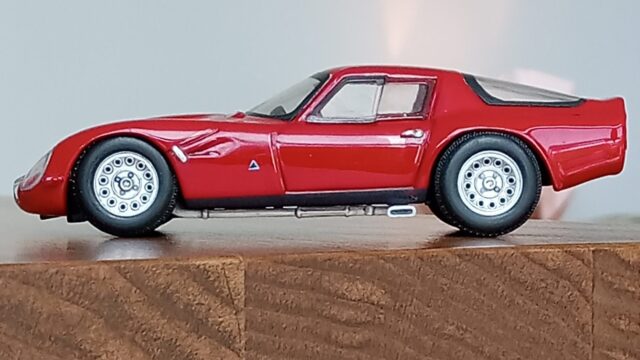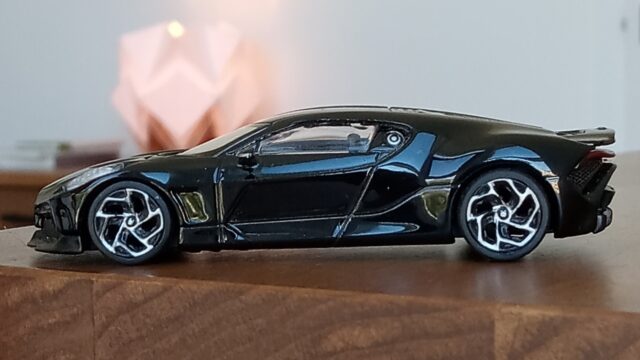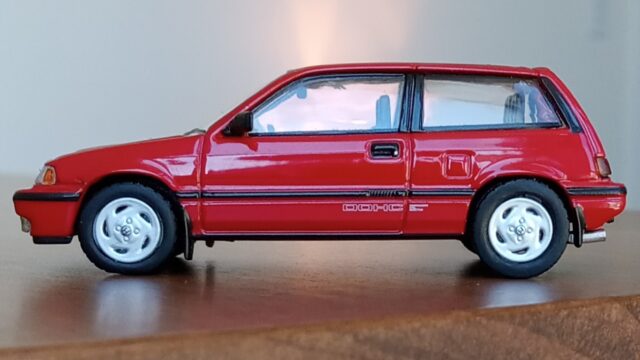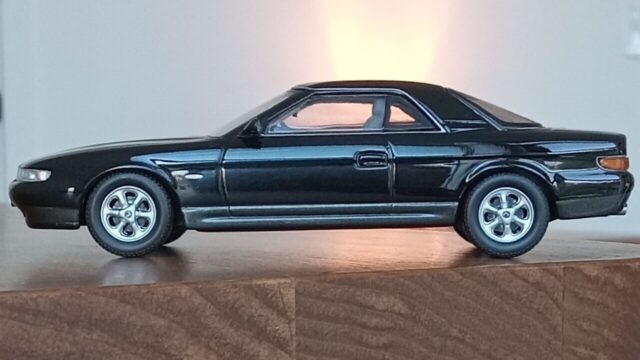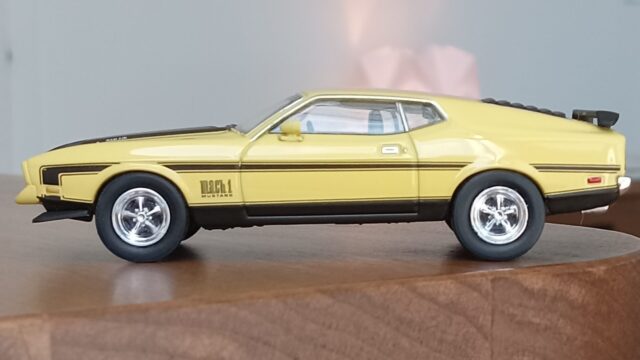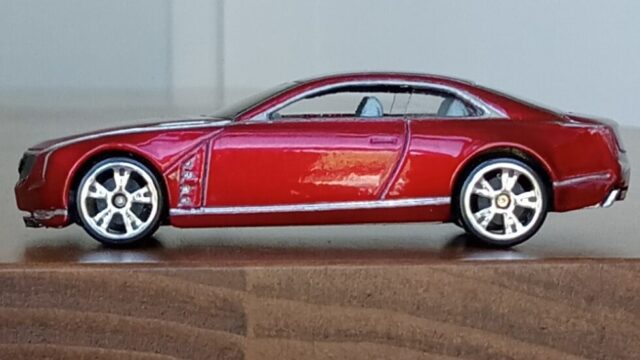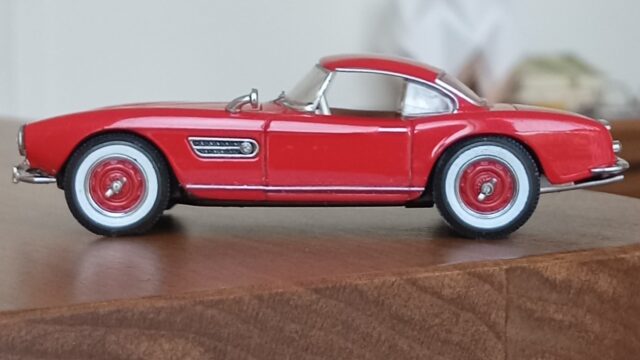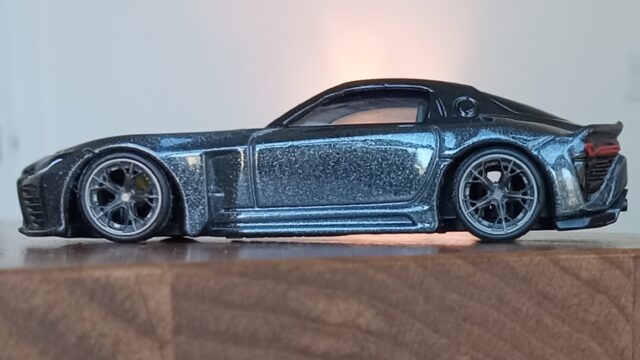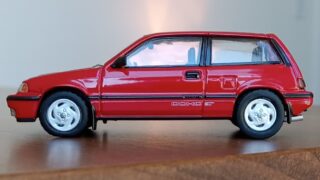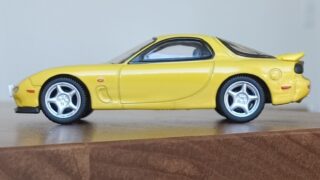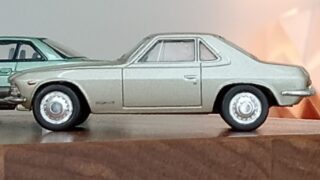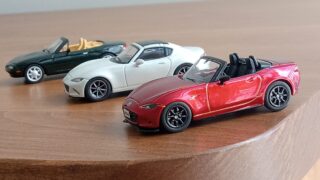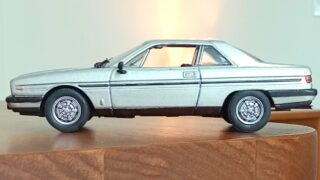
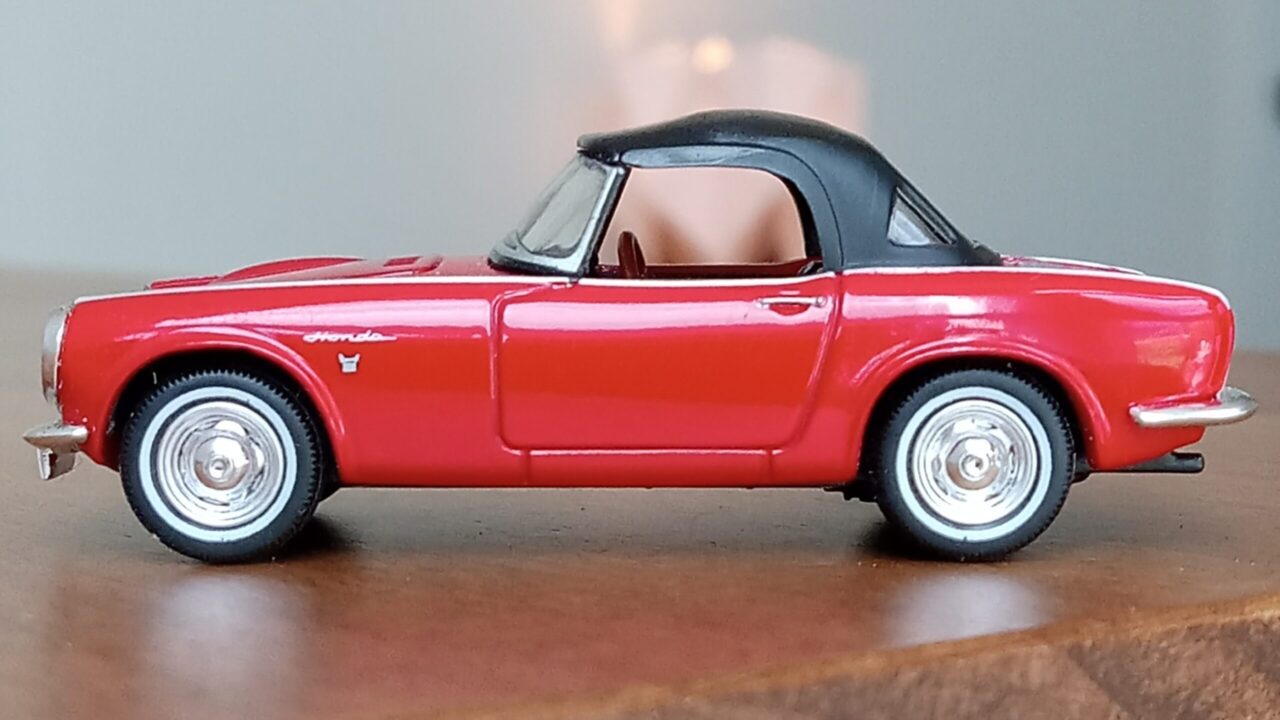

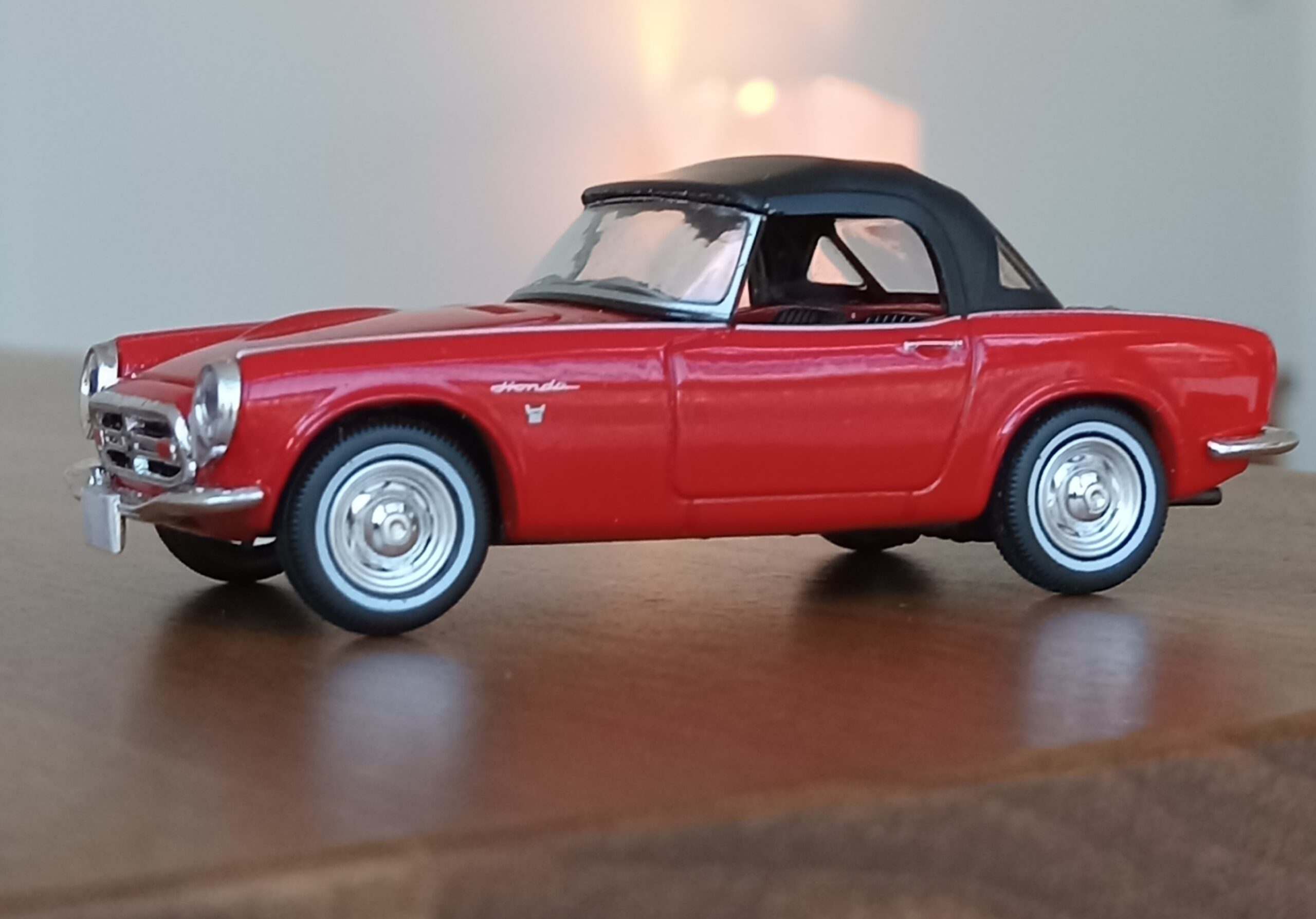
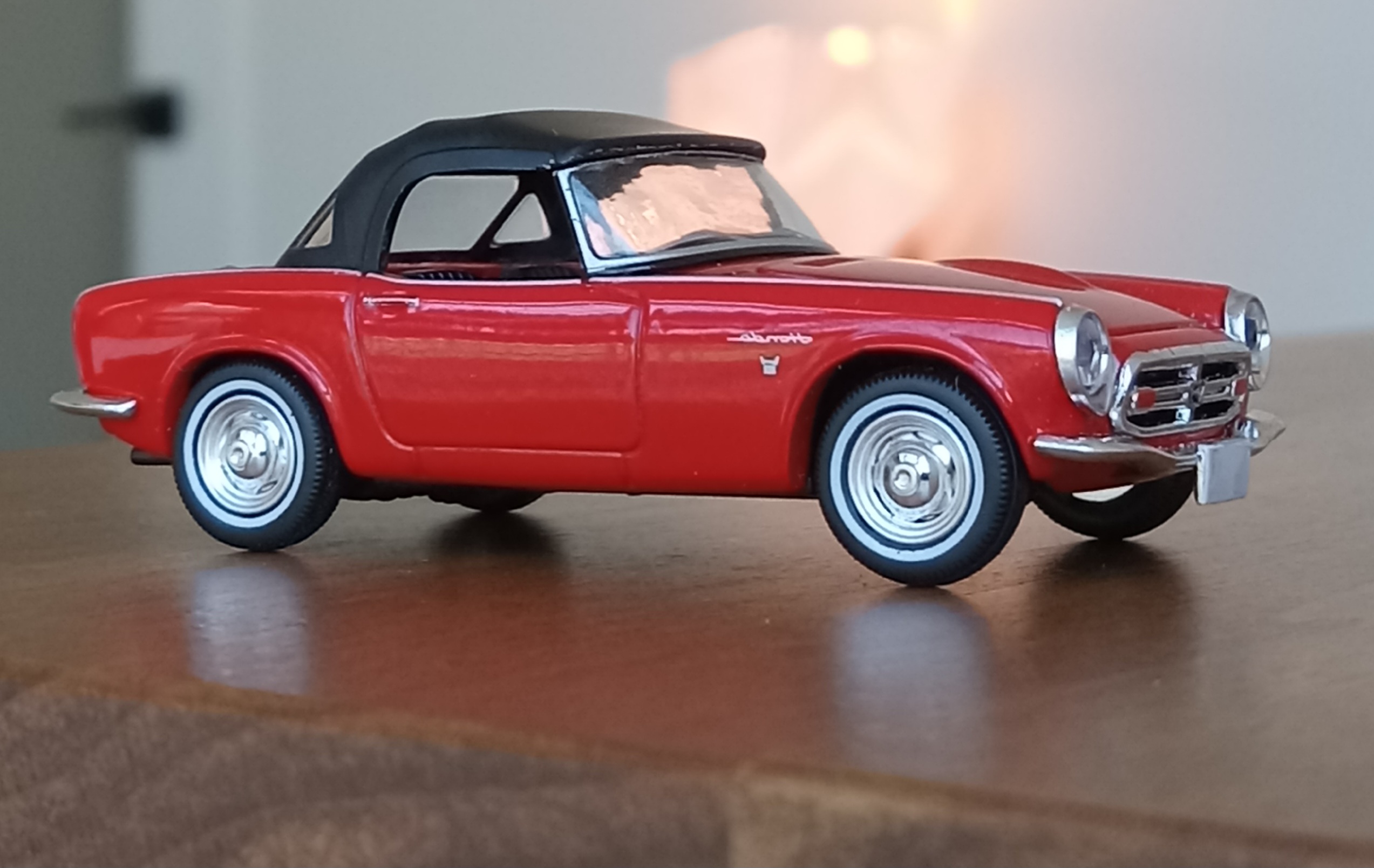
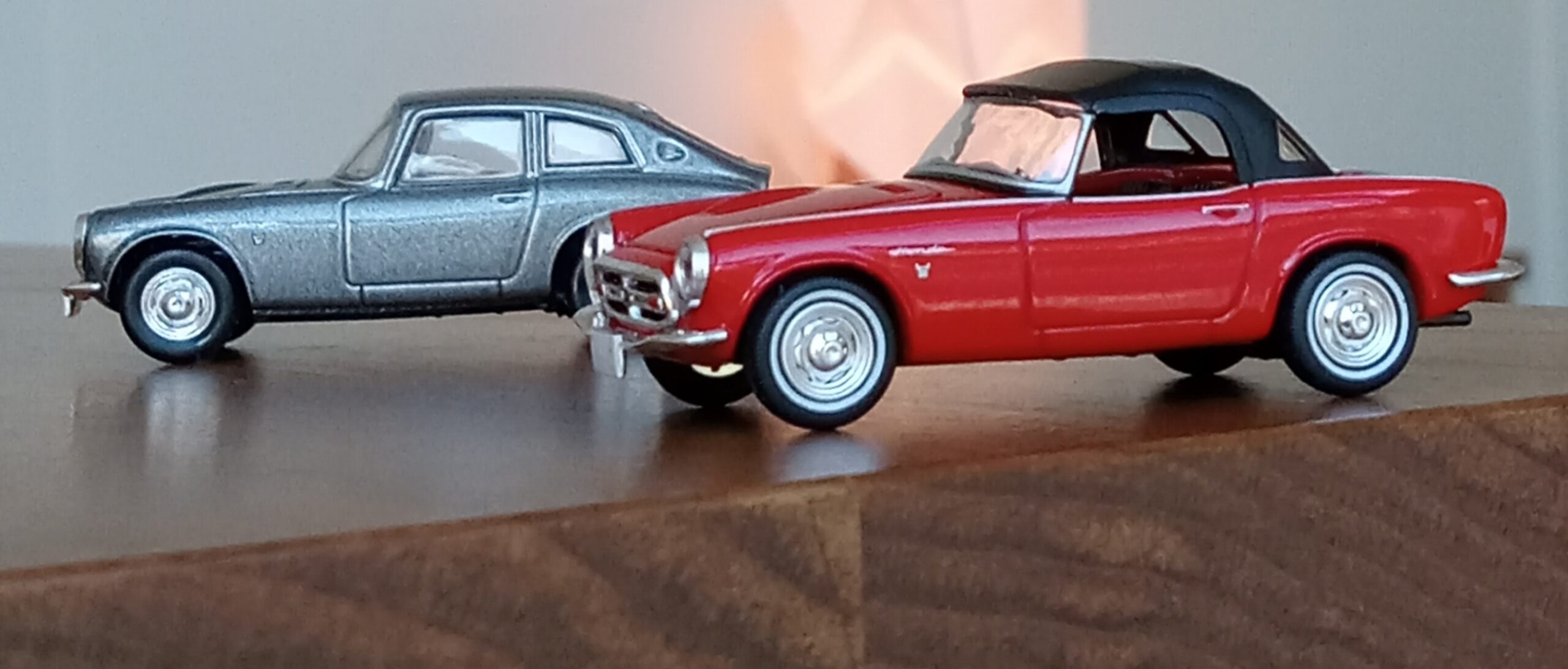
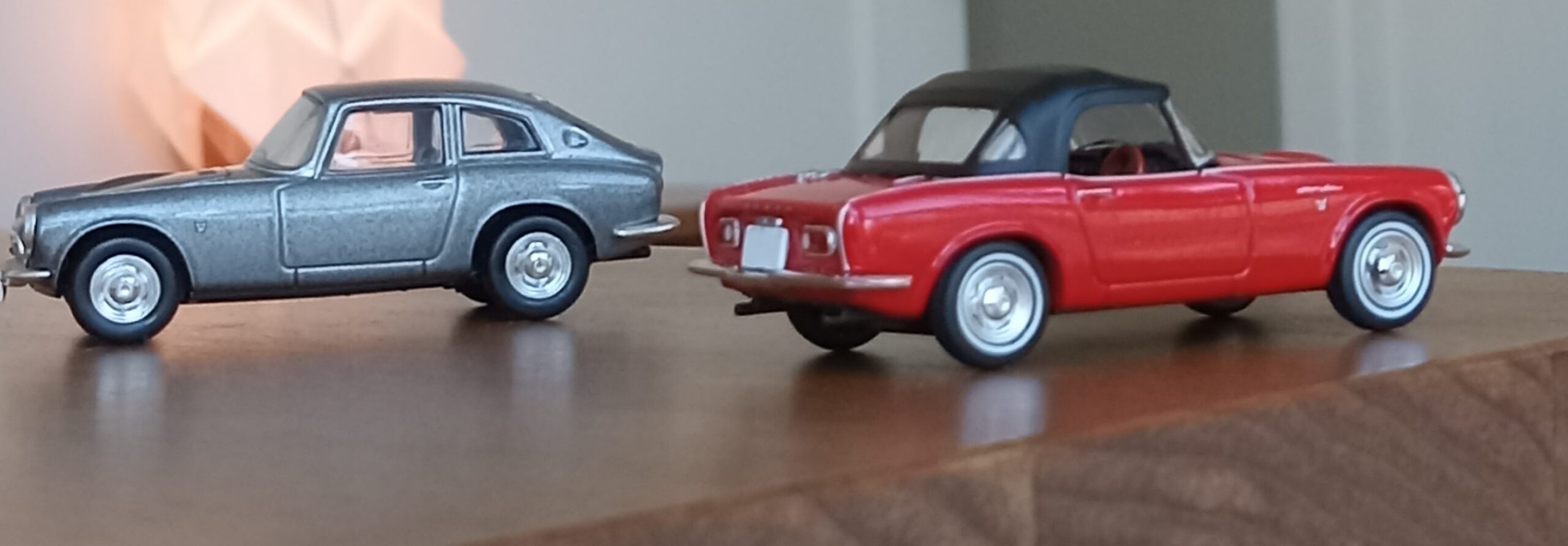
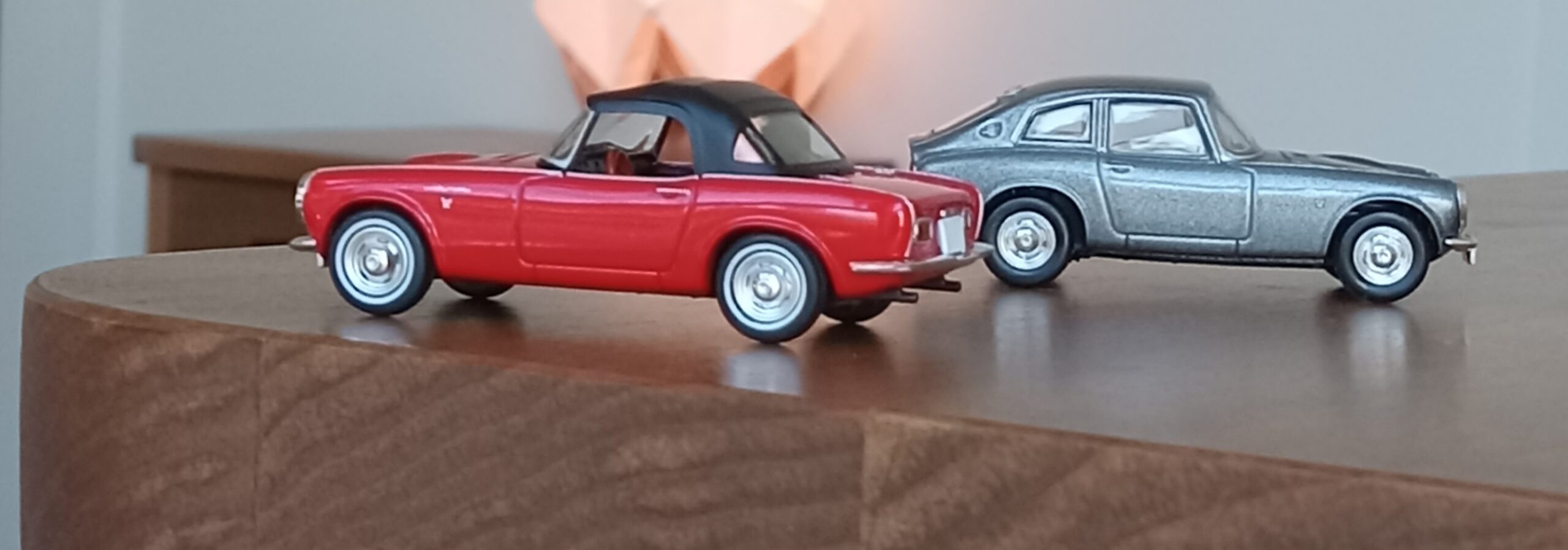
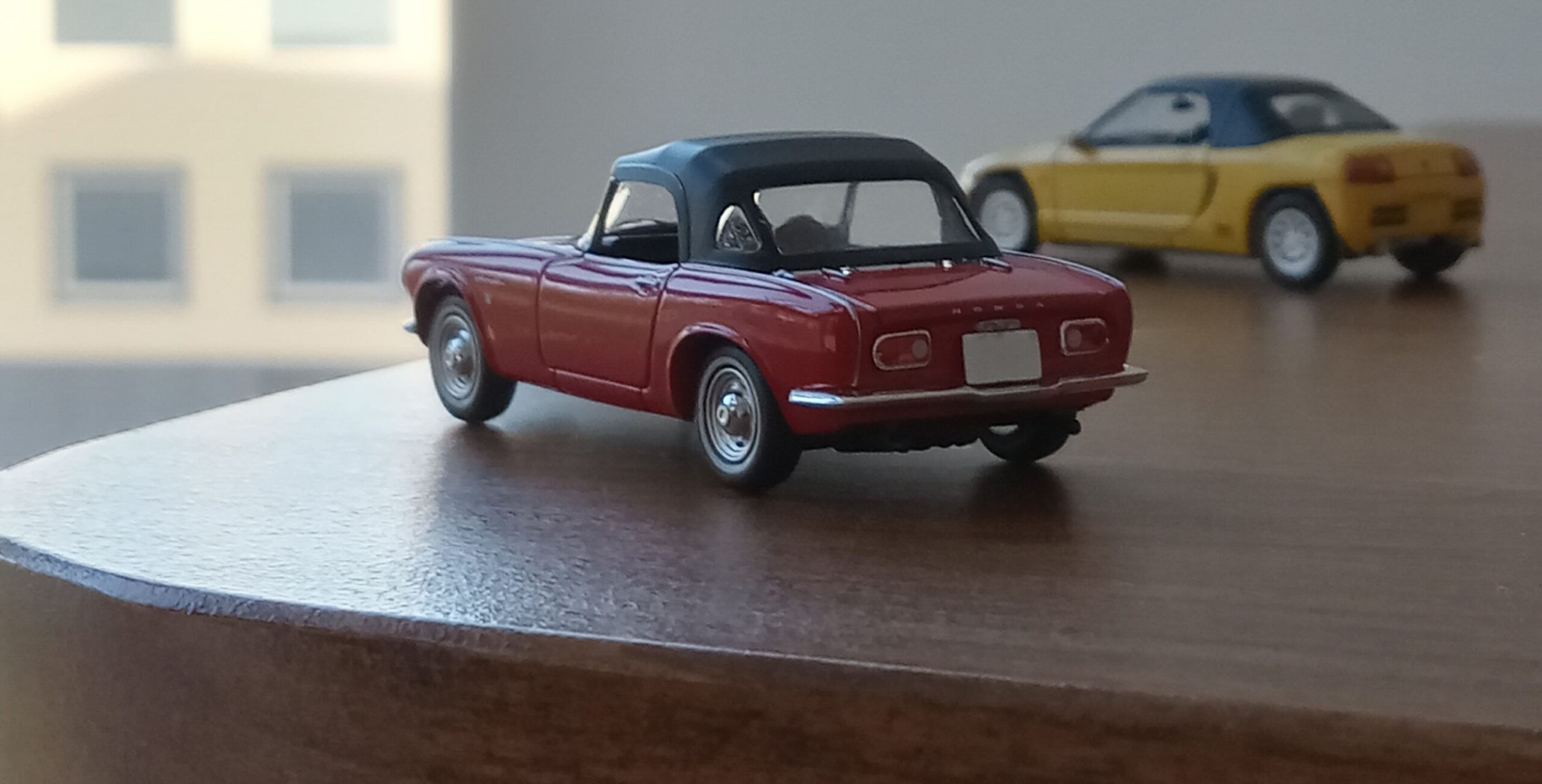
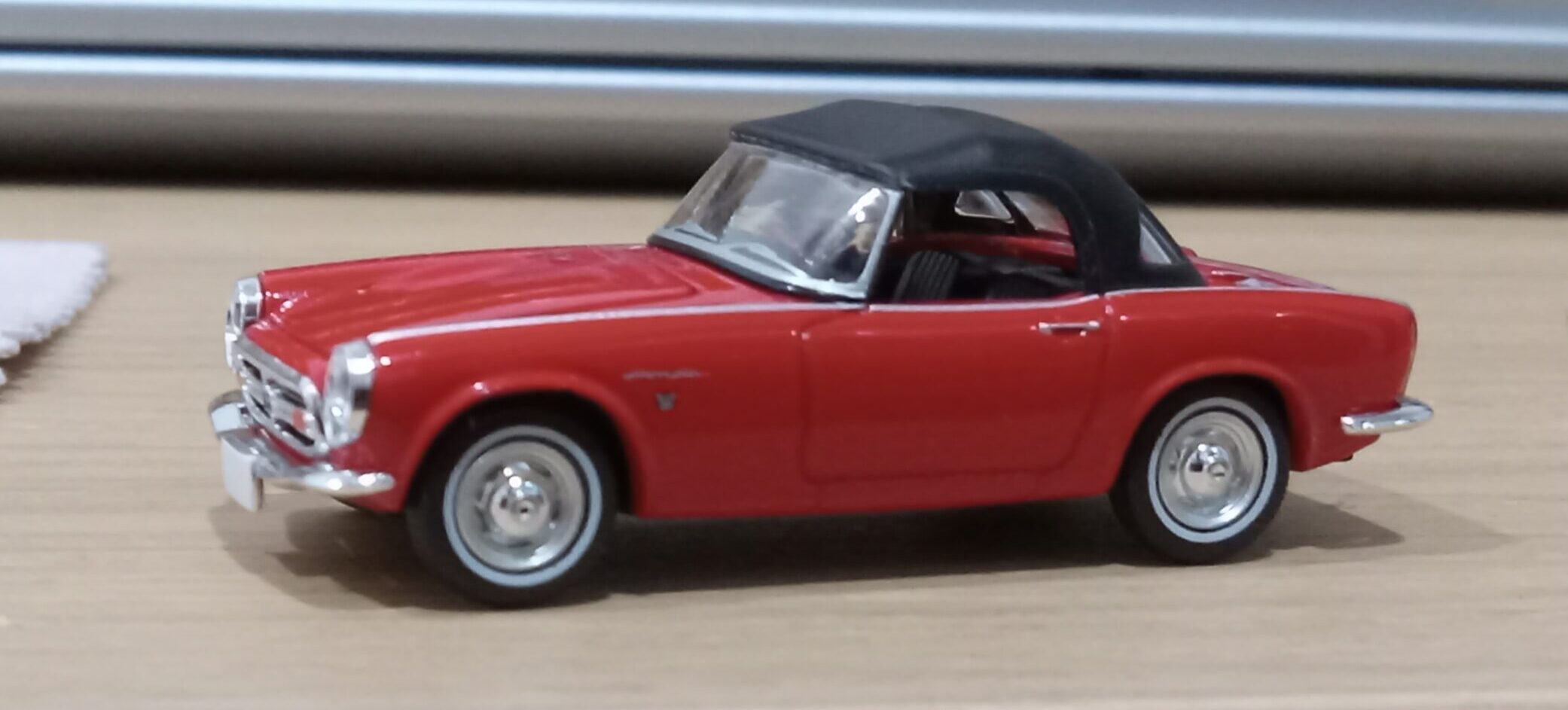
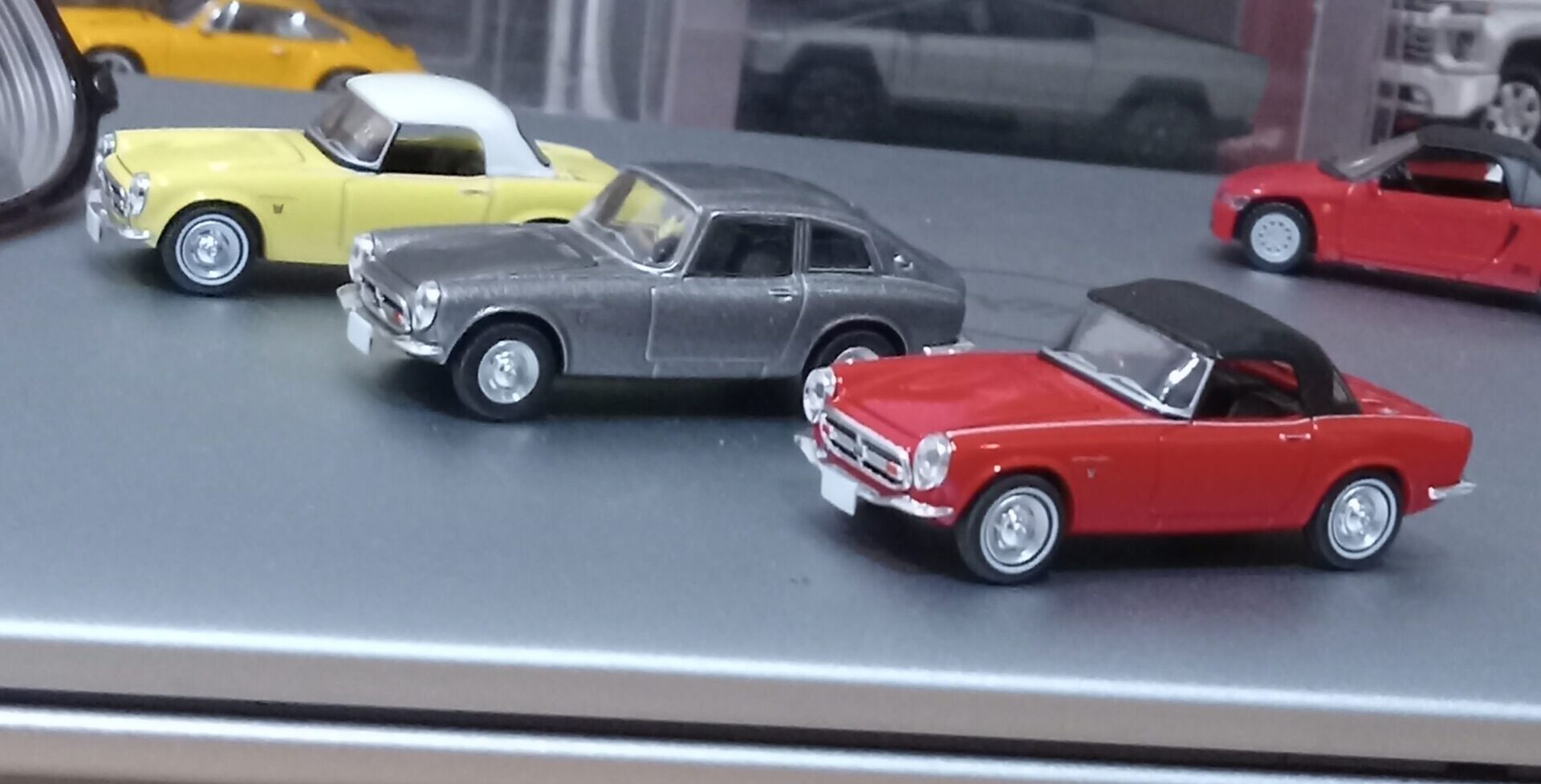
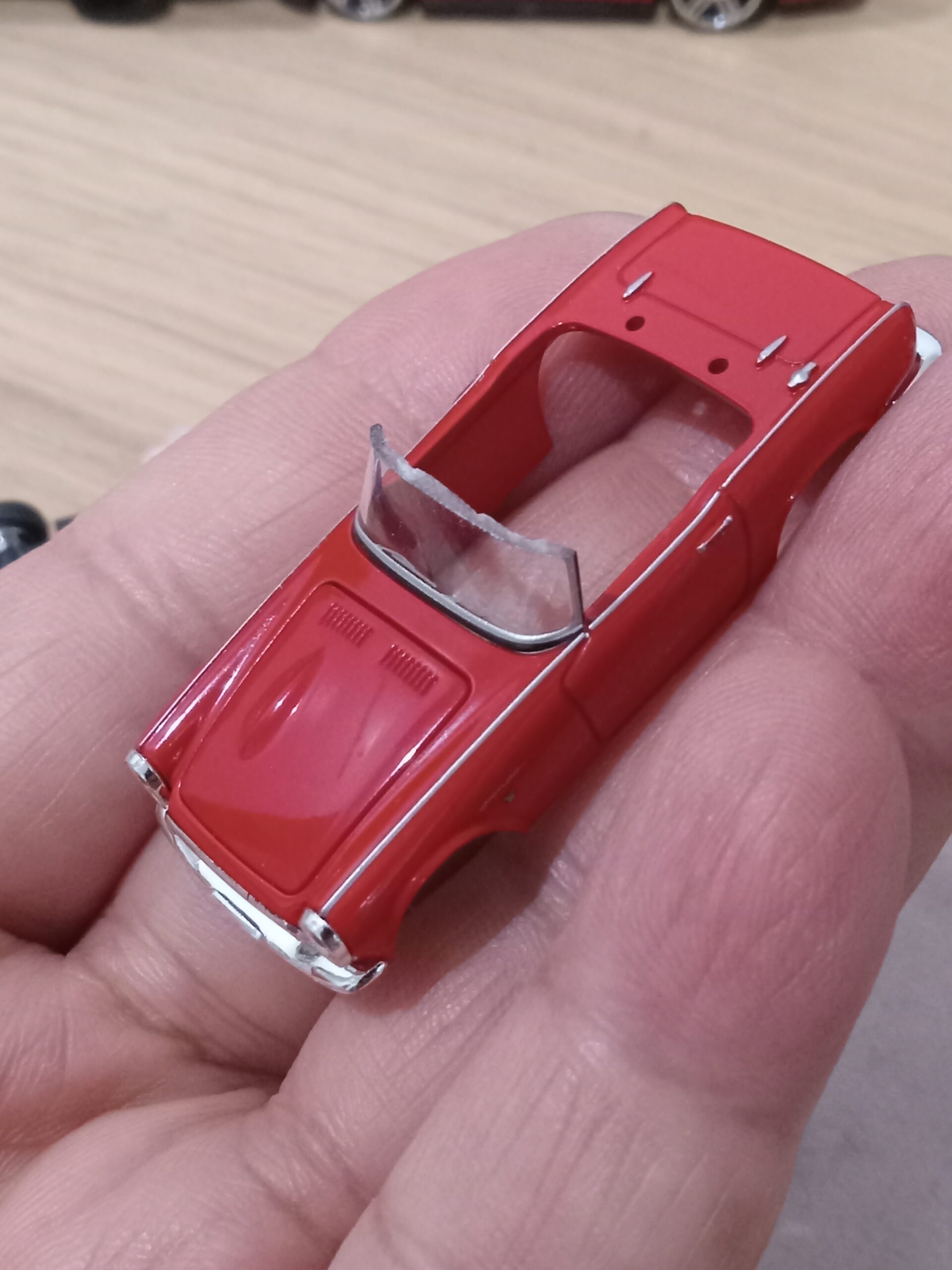
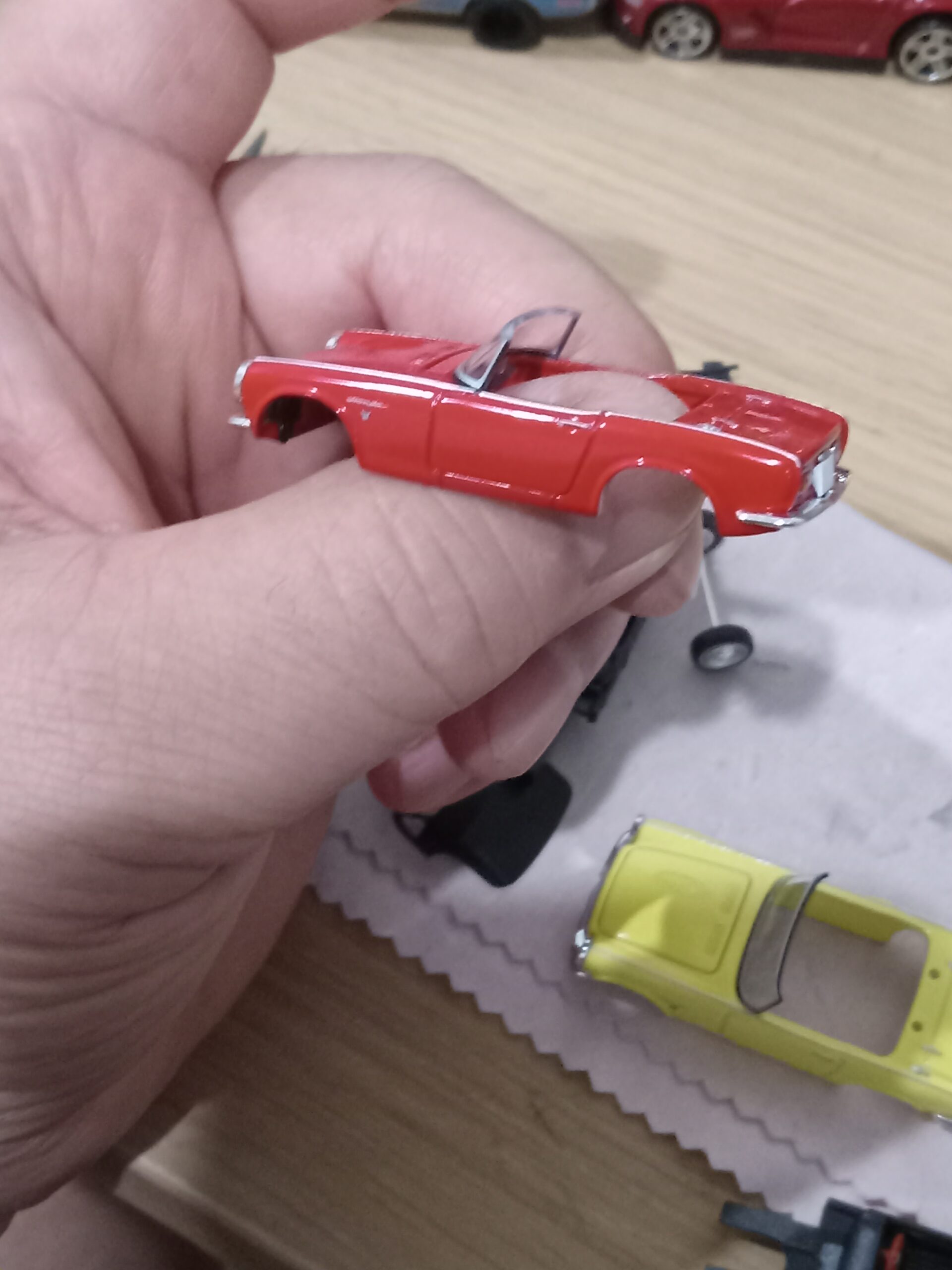
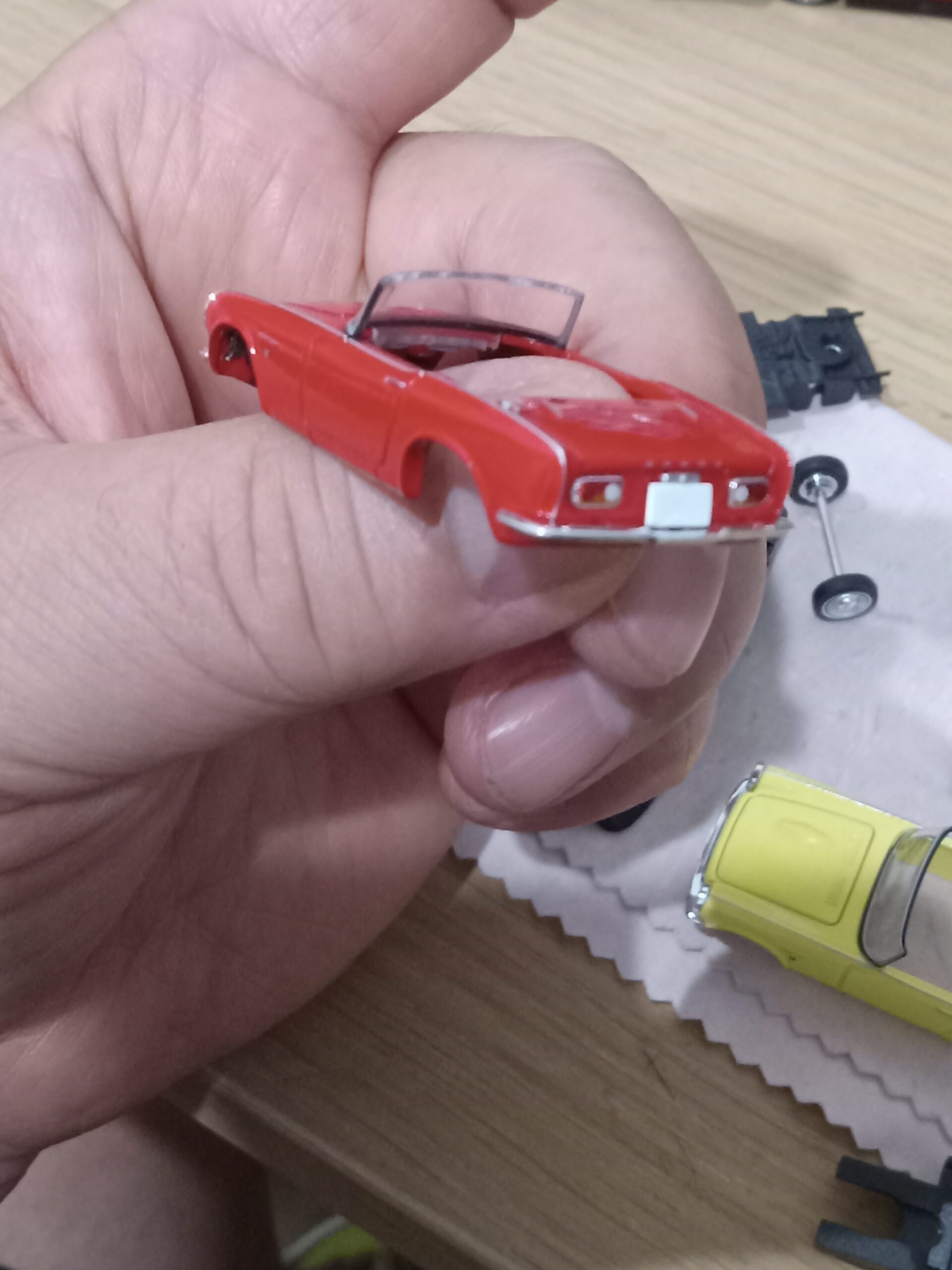
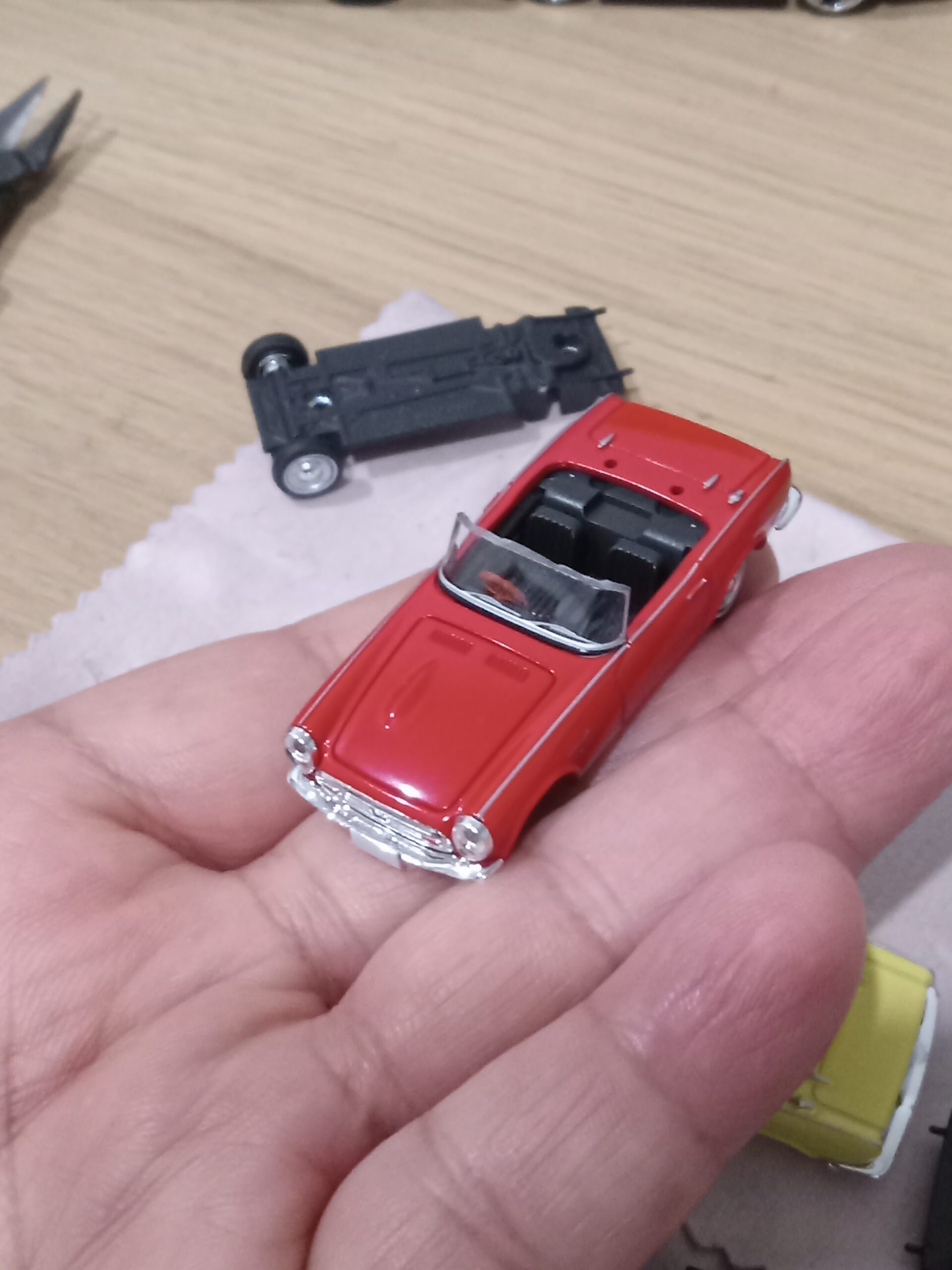
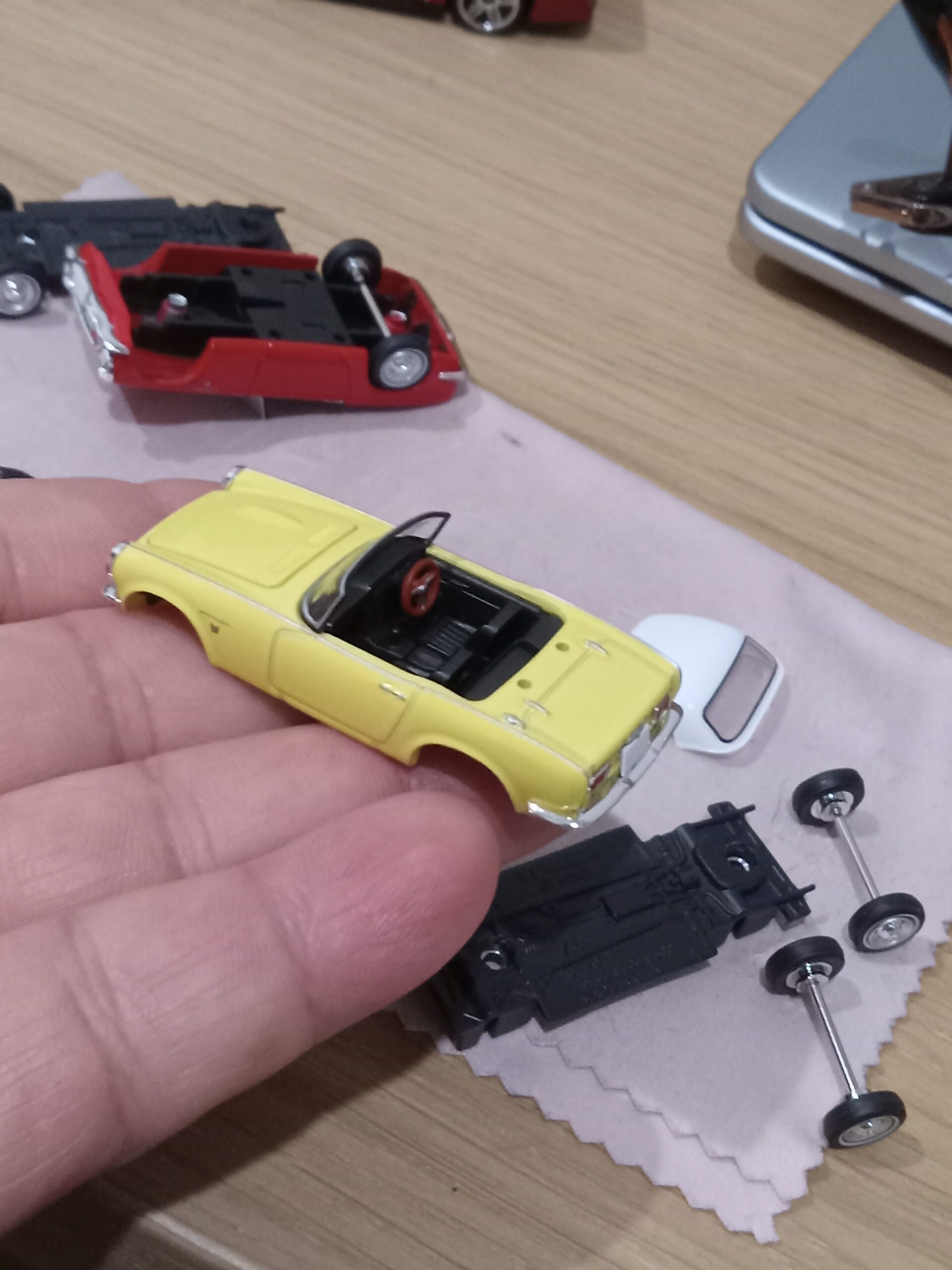
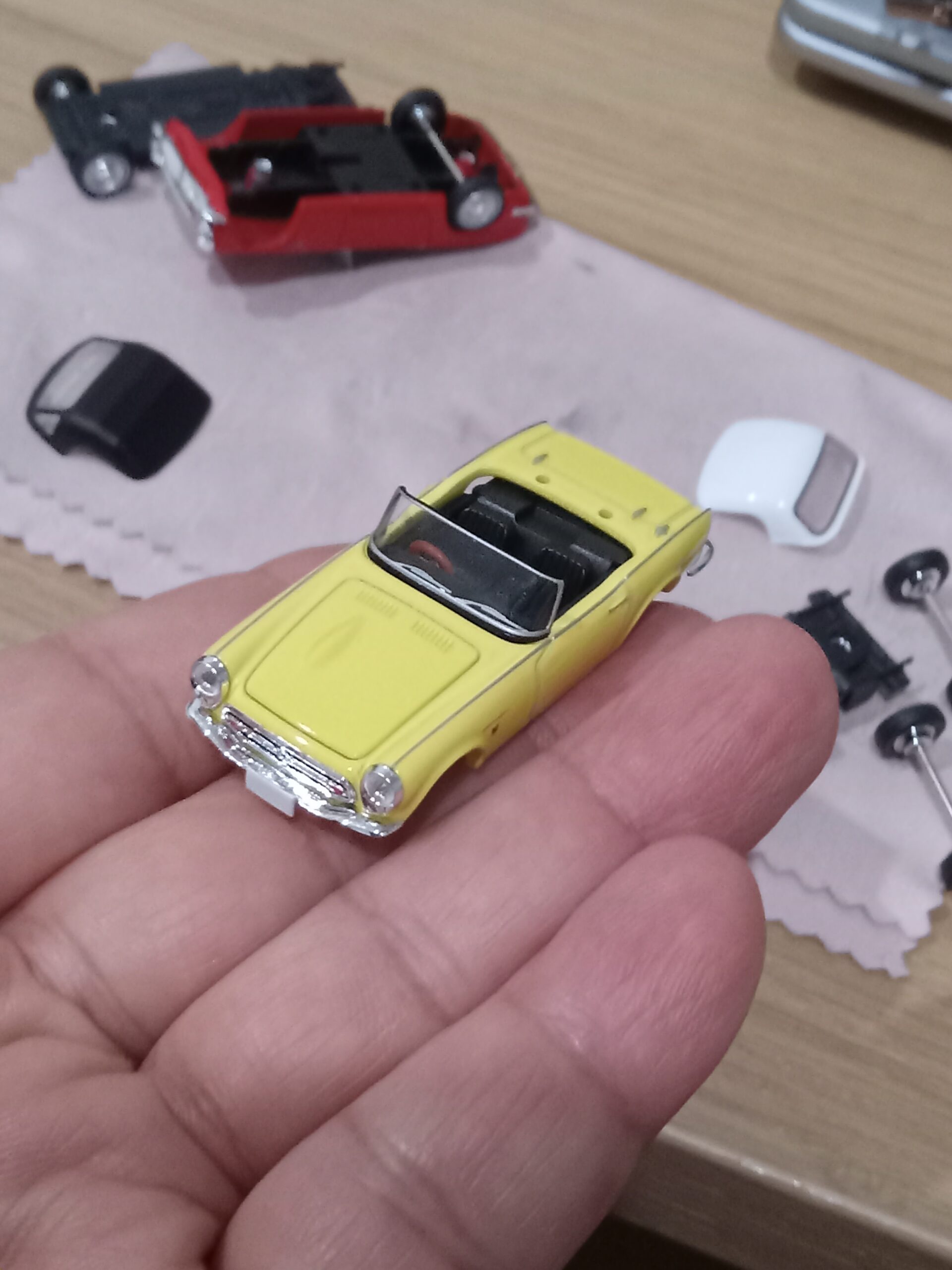
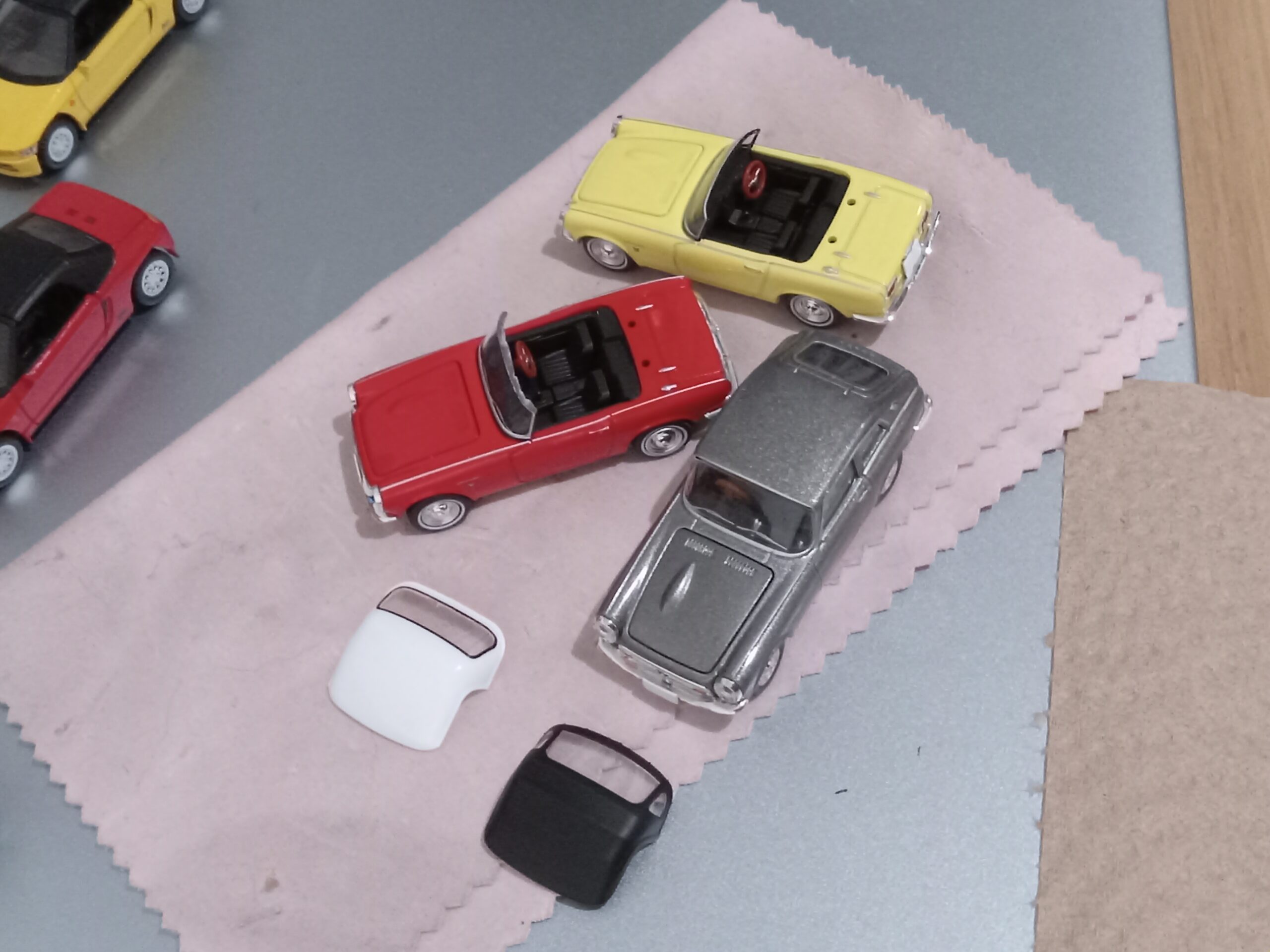
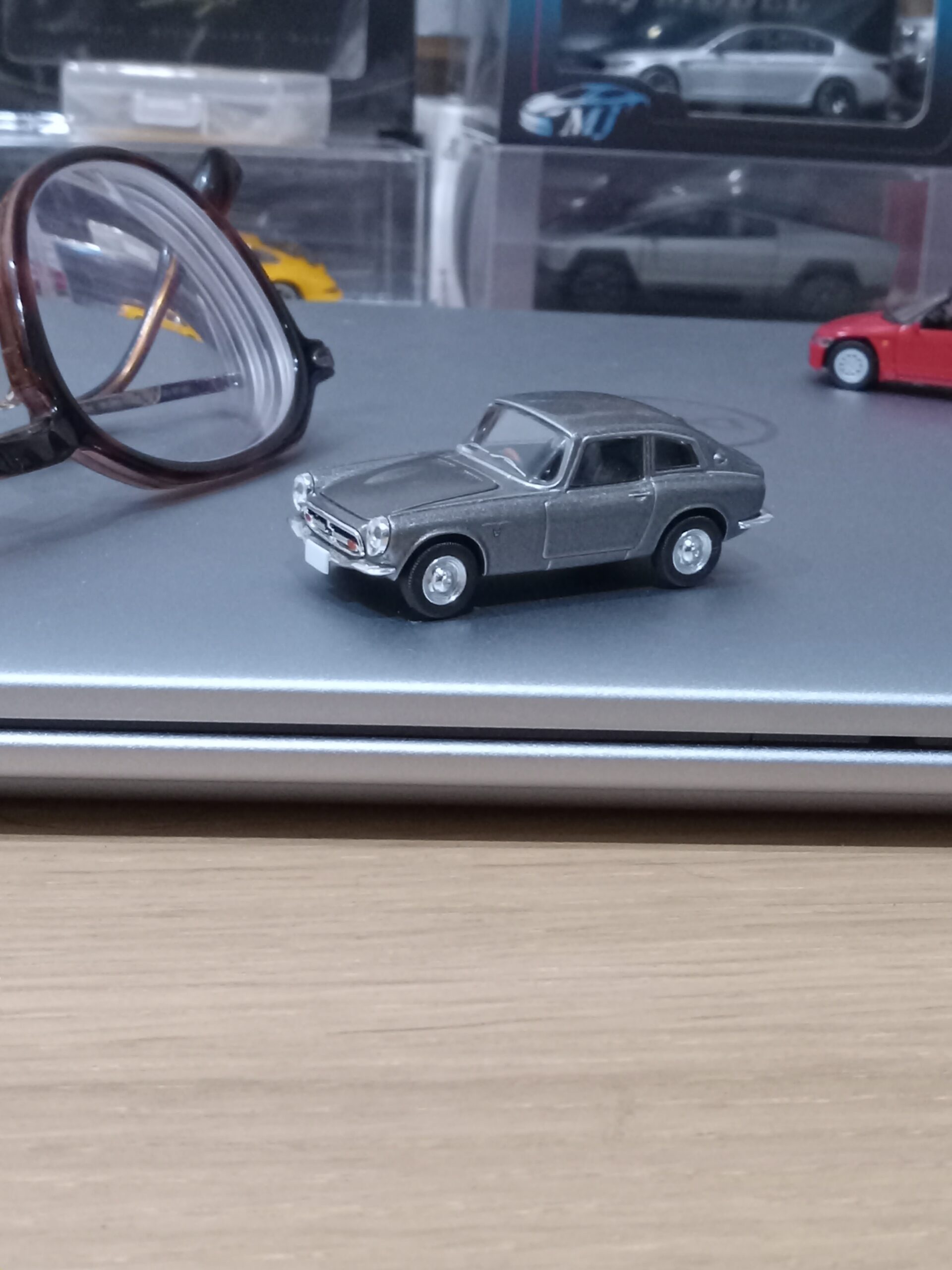
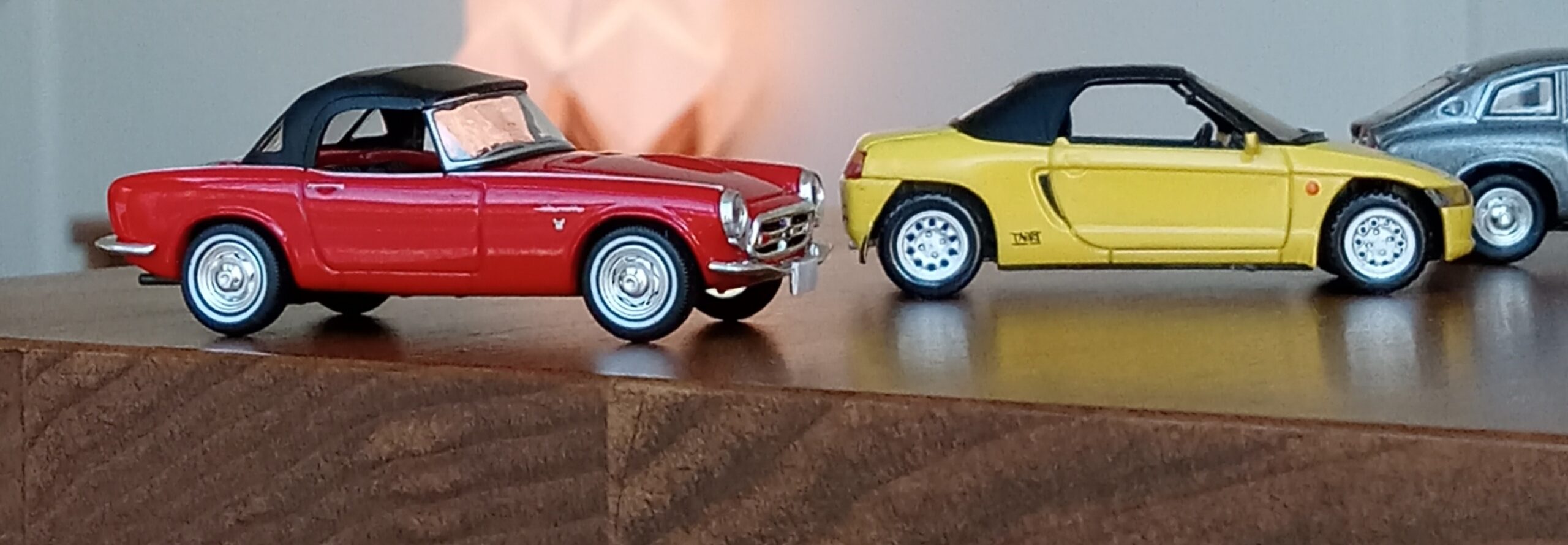
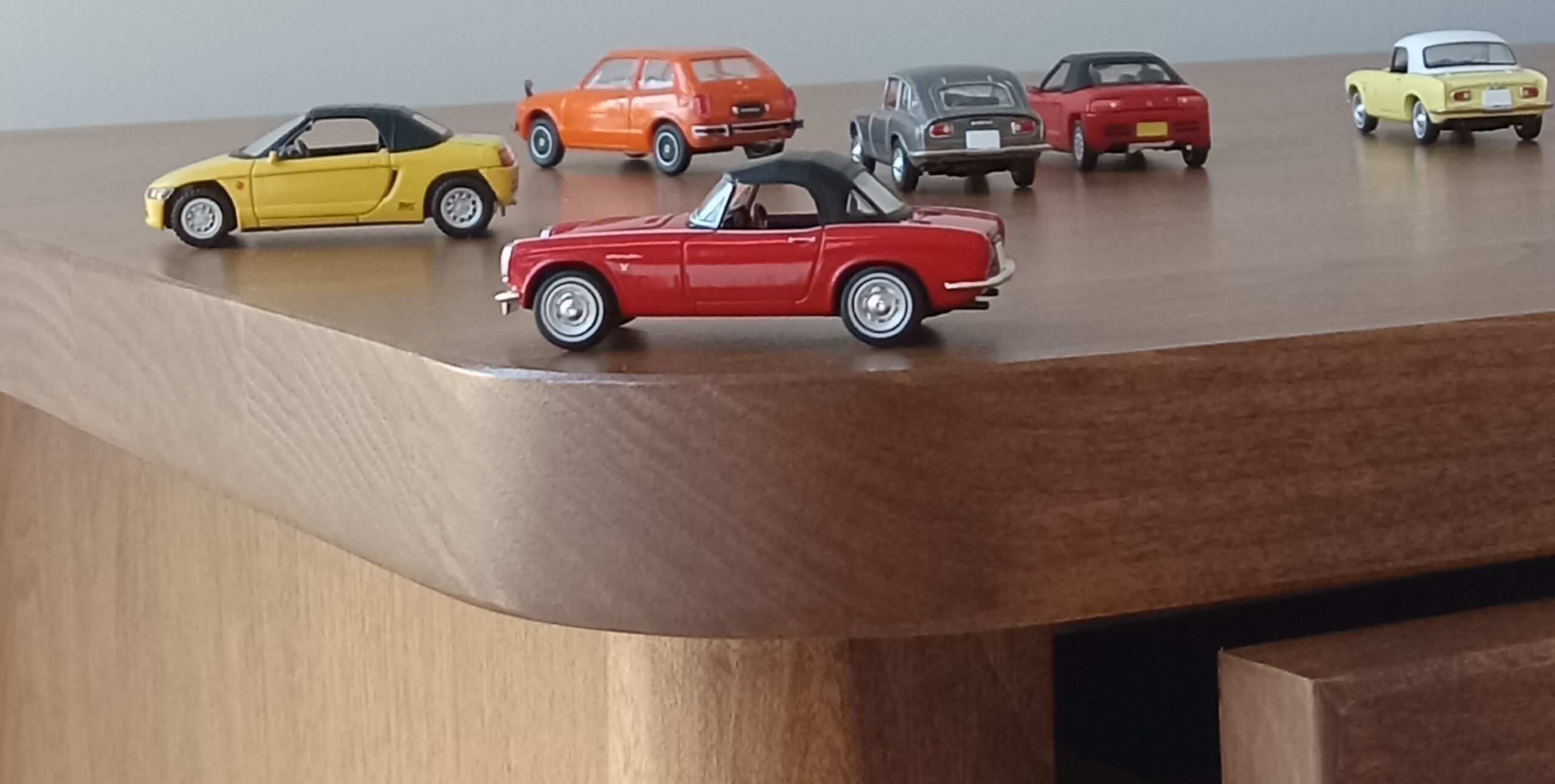
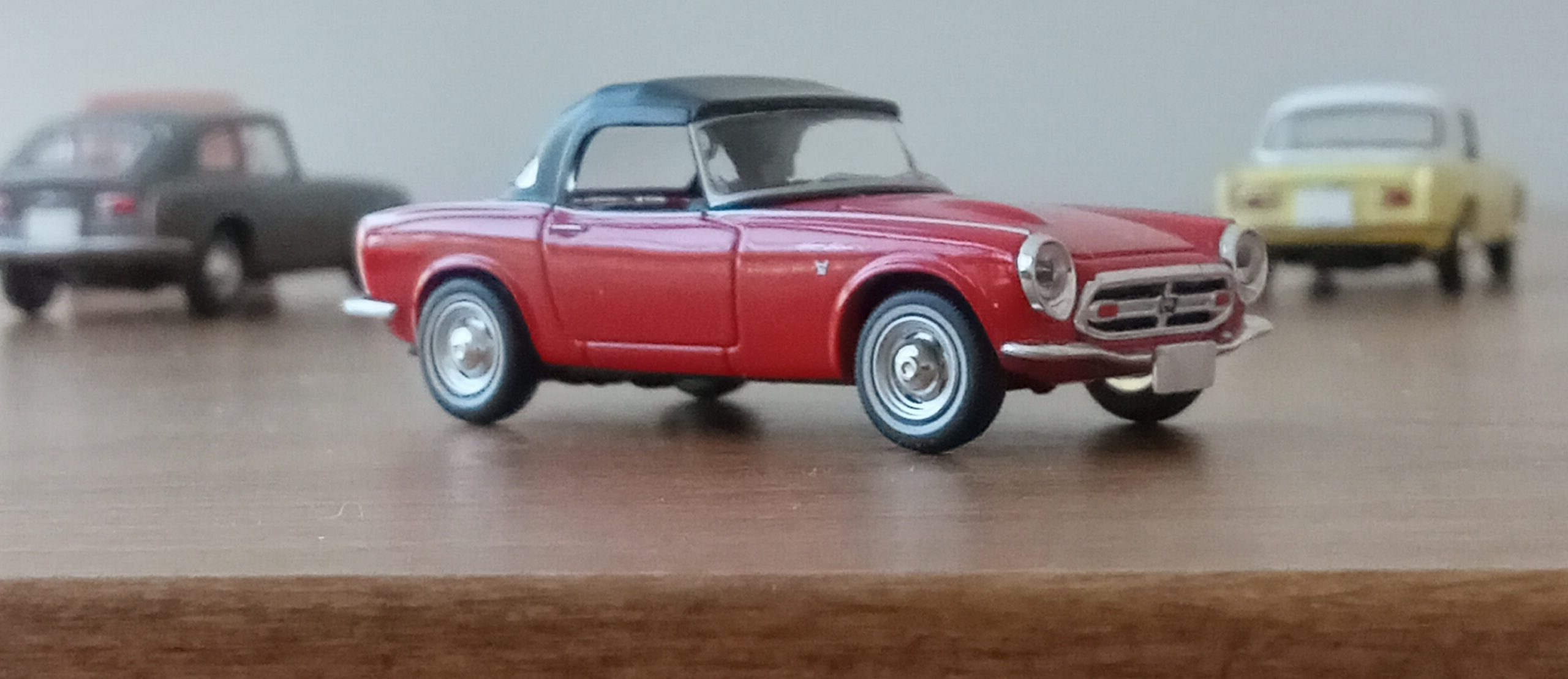
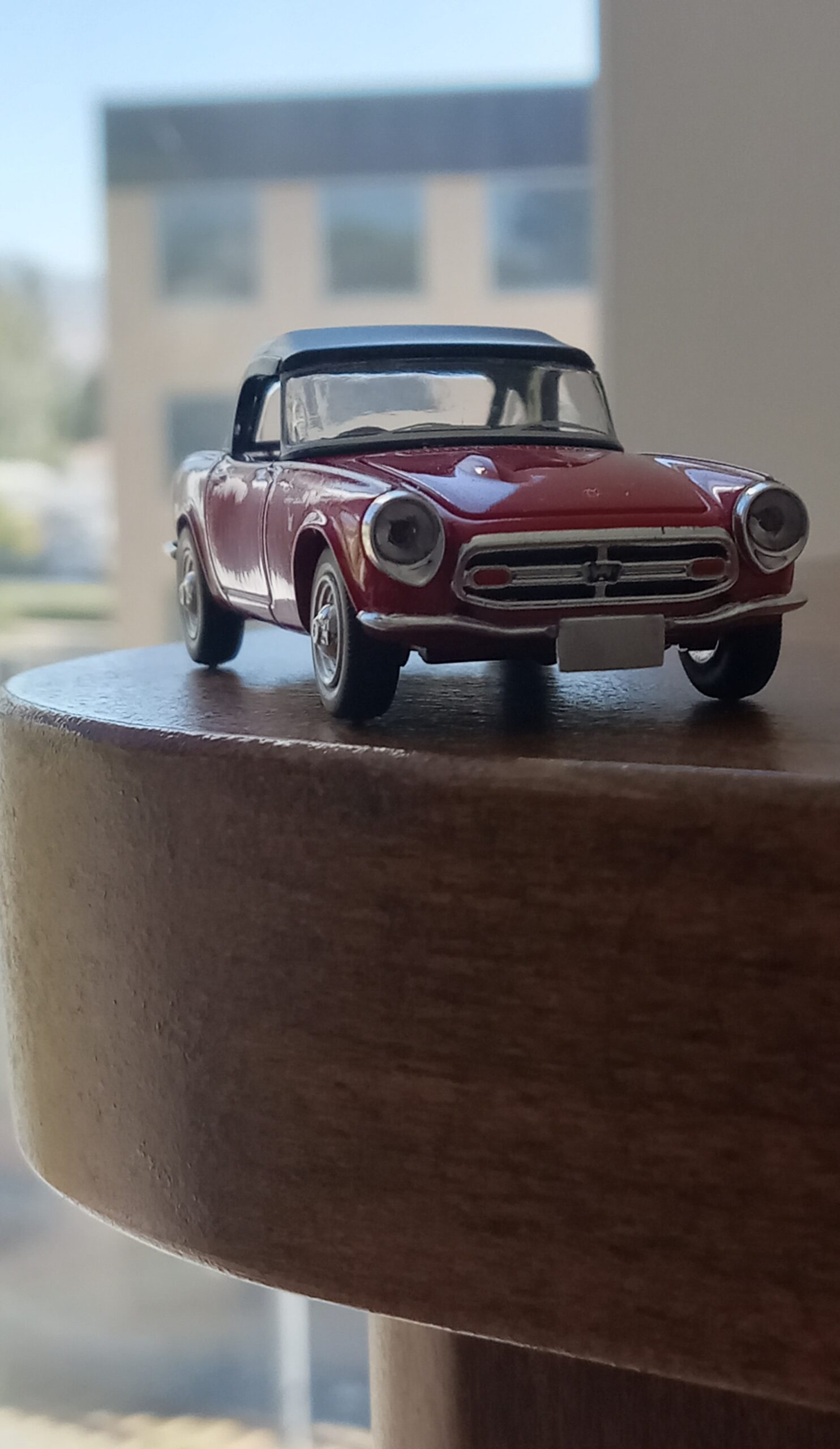
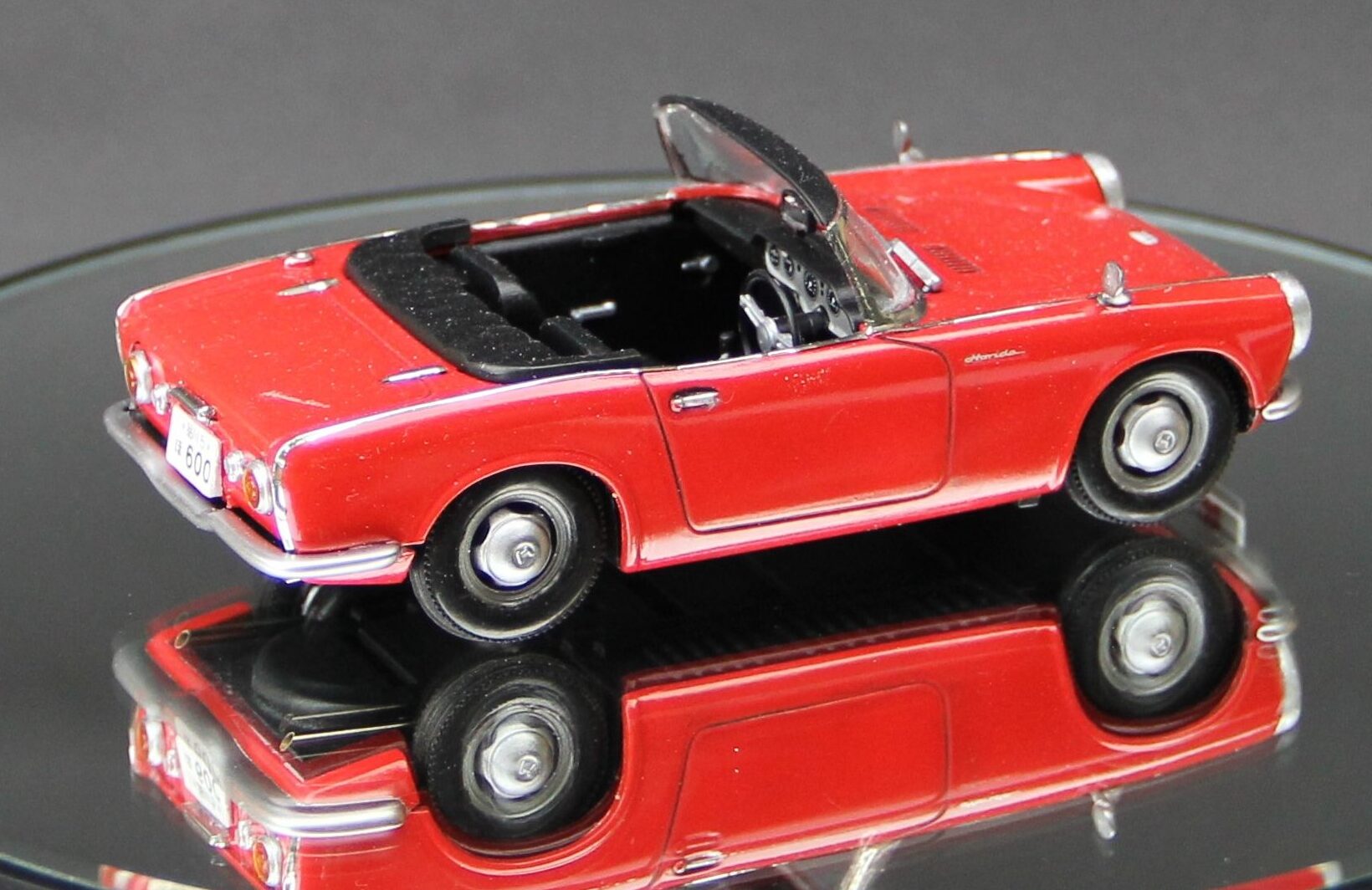
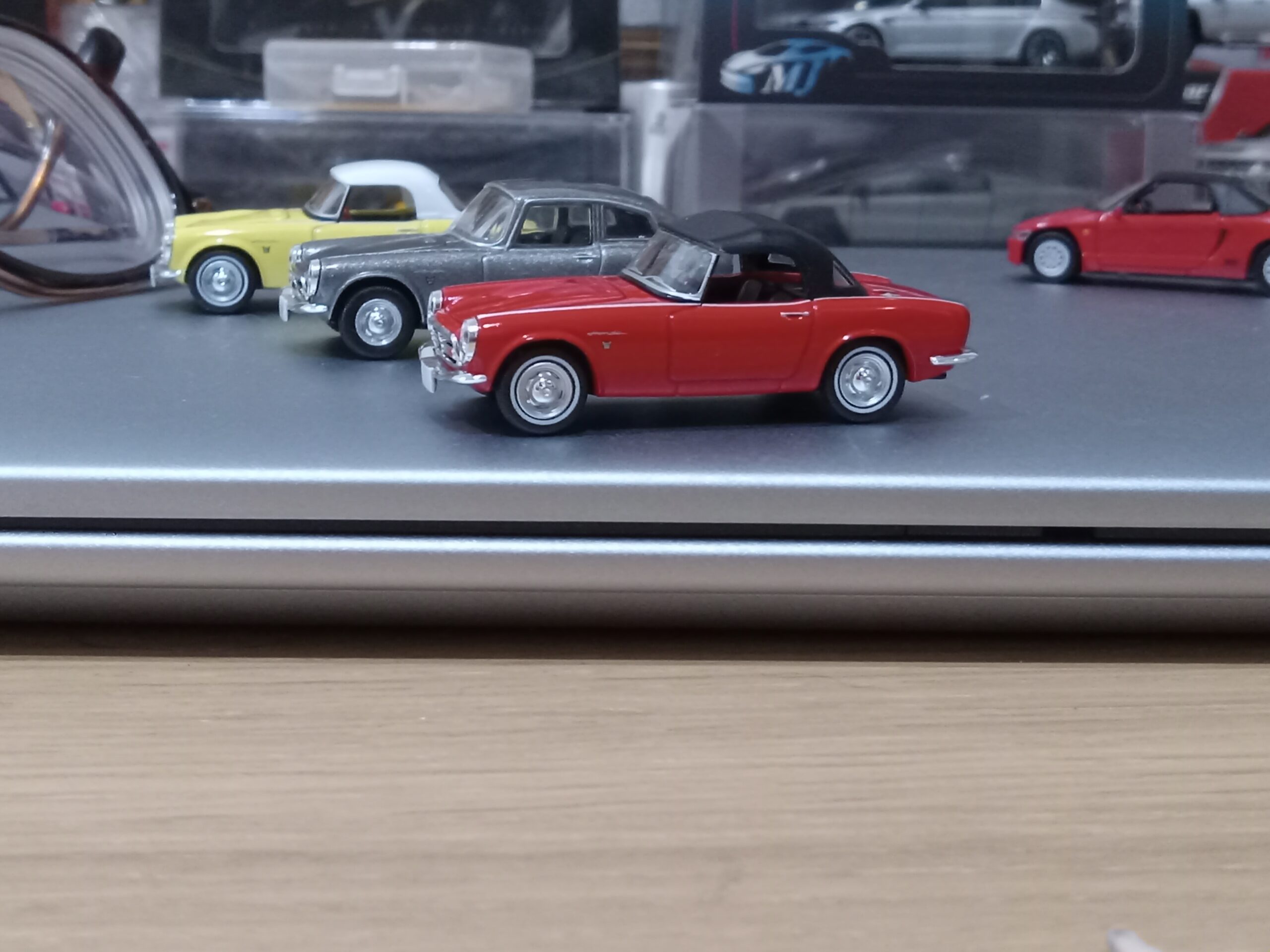
(撮影に使用したミニカー:トミーテック社製、トミカ・ビンテージ【LV-200a】ホンダ S800 オープントップ、1966(スカーレット)---改造箇所:カシメ止めを外して、車軸位置と車幅を最適化+風防上部を削り、【LV-200b】ホンダ S800 ハードトップ、の黒い幌パーツの内側も削り、現物合わせでピッタリ合わせる。)
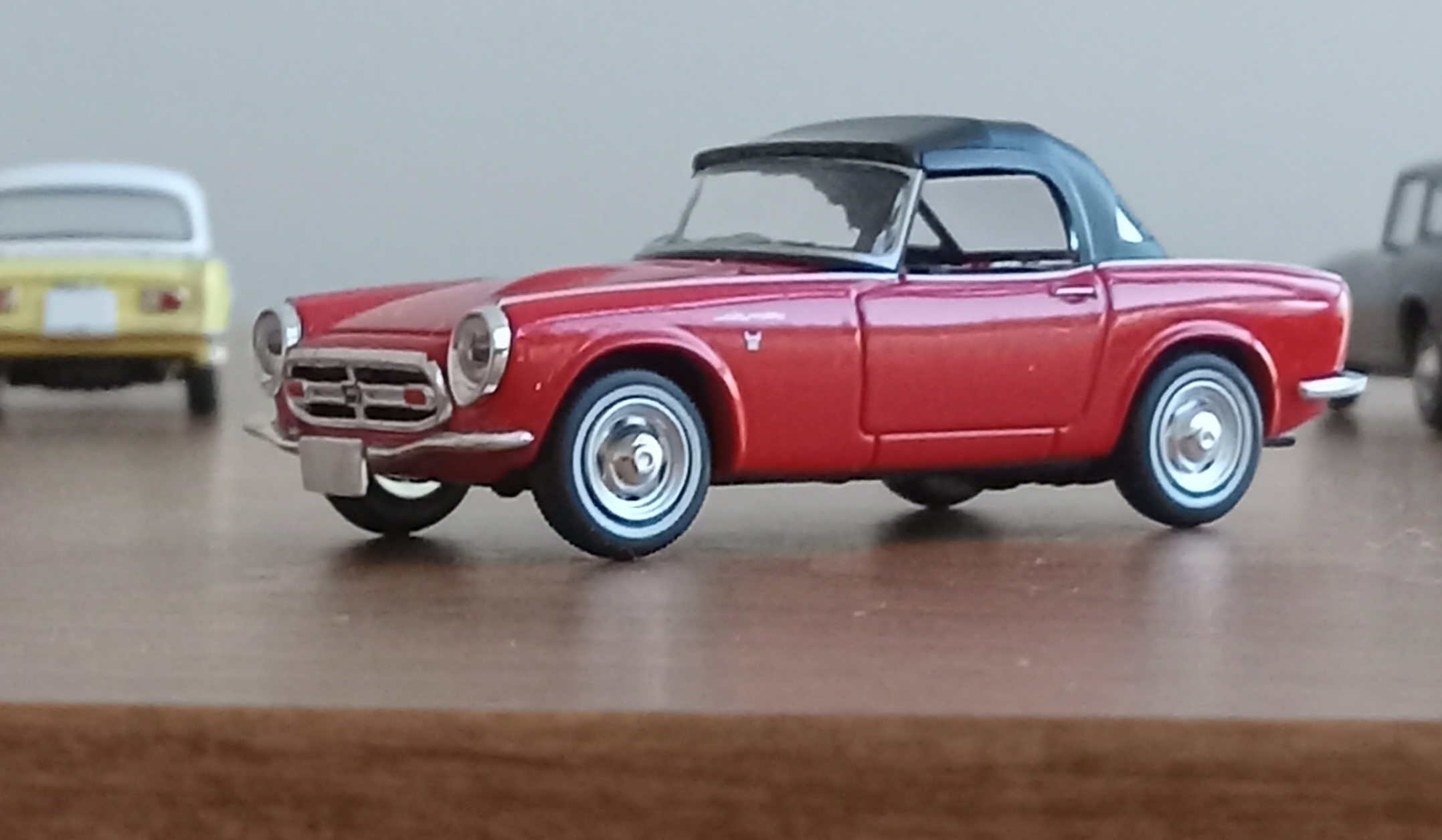
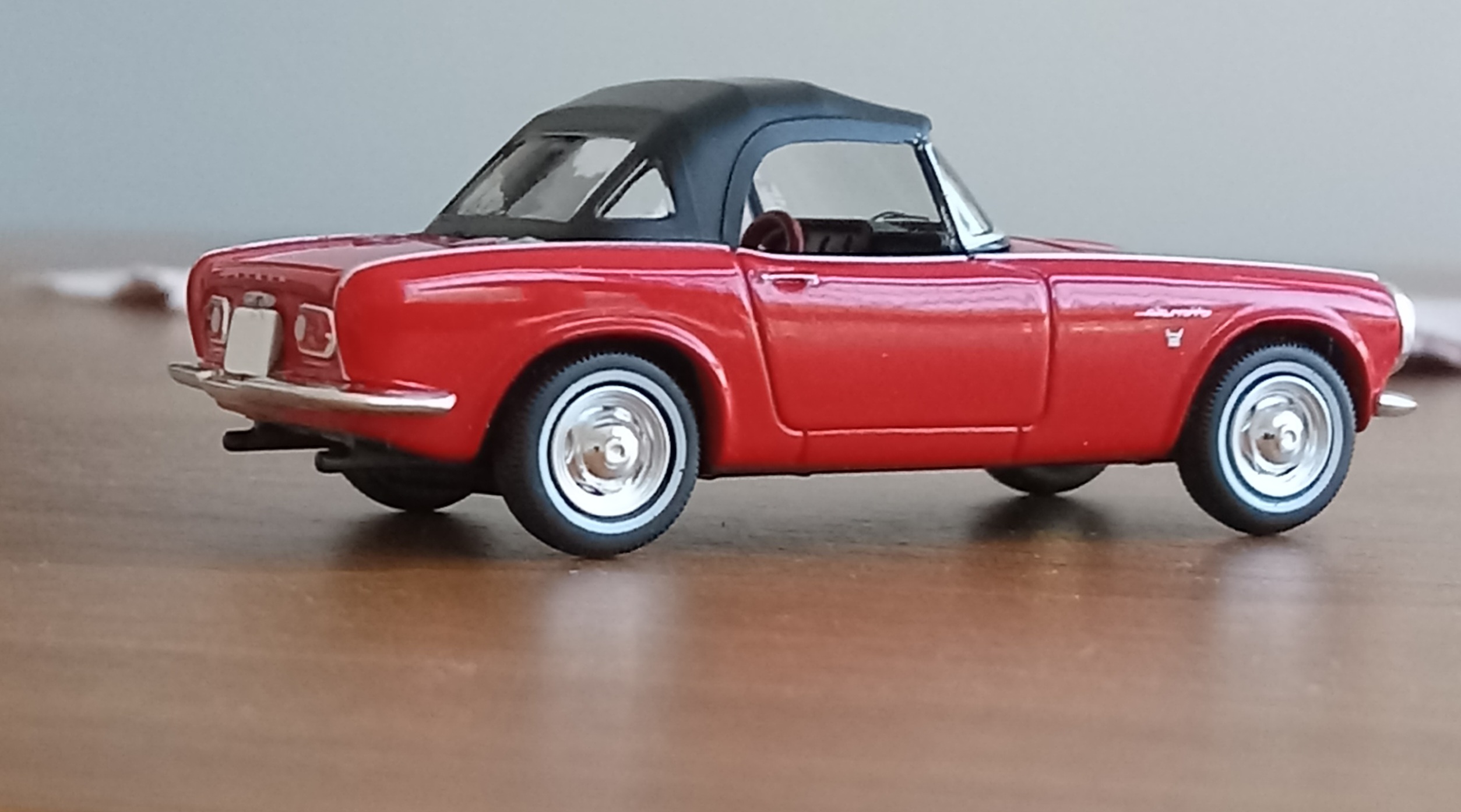
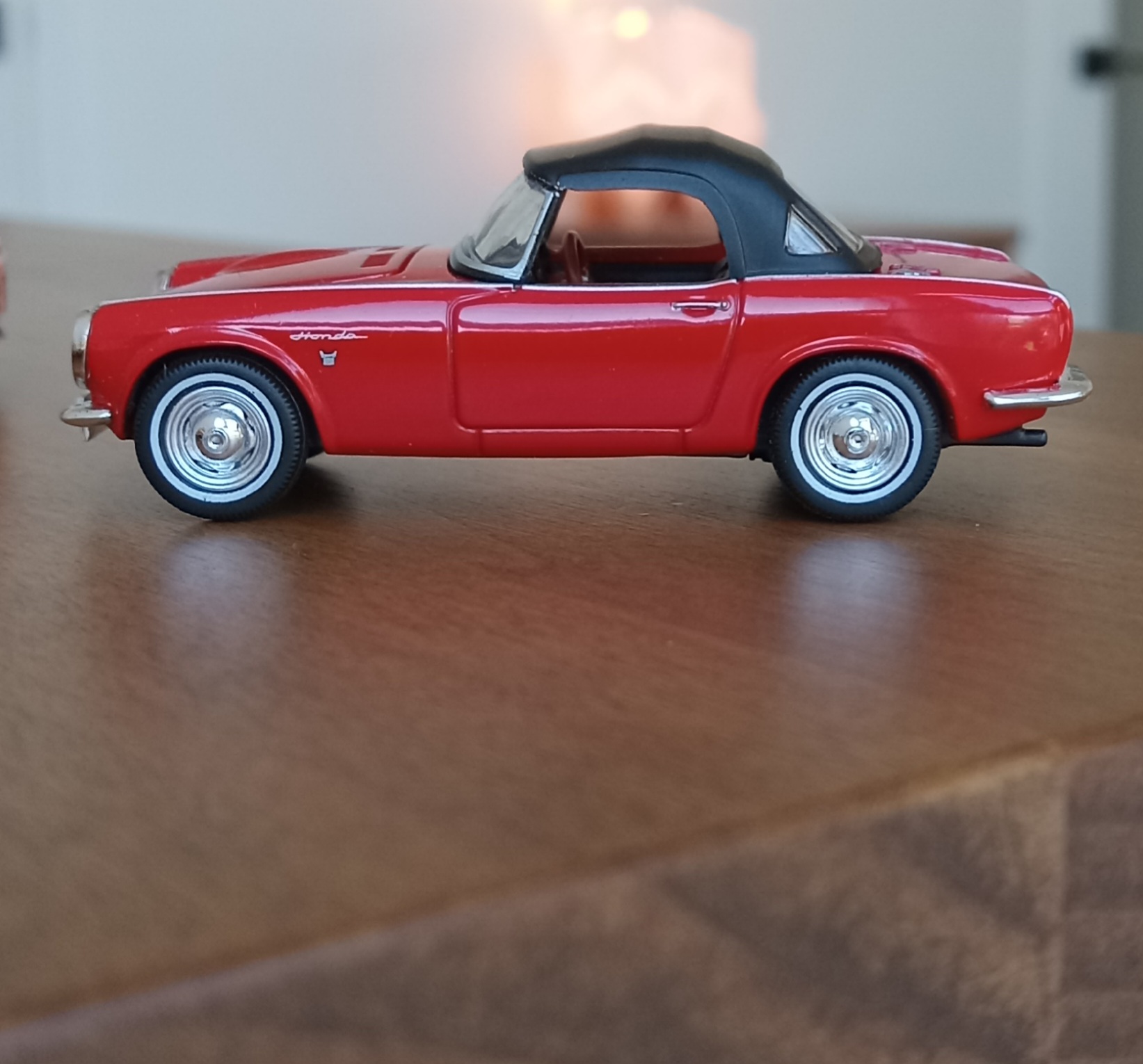
好みの自動車デザイン:第57回ーー2ドア・クーペの系譜: 第36回【ホンダ編】 ホンダ S800、1966(スカーレット)『本田宗一郎の夢』Honda S800 Coupe、1966(Scarlet)『Souichiro Honda’s Dream Came True!』
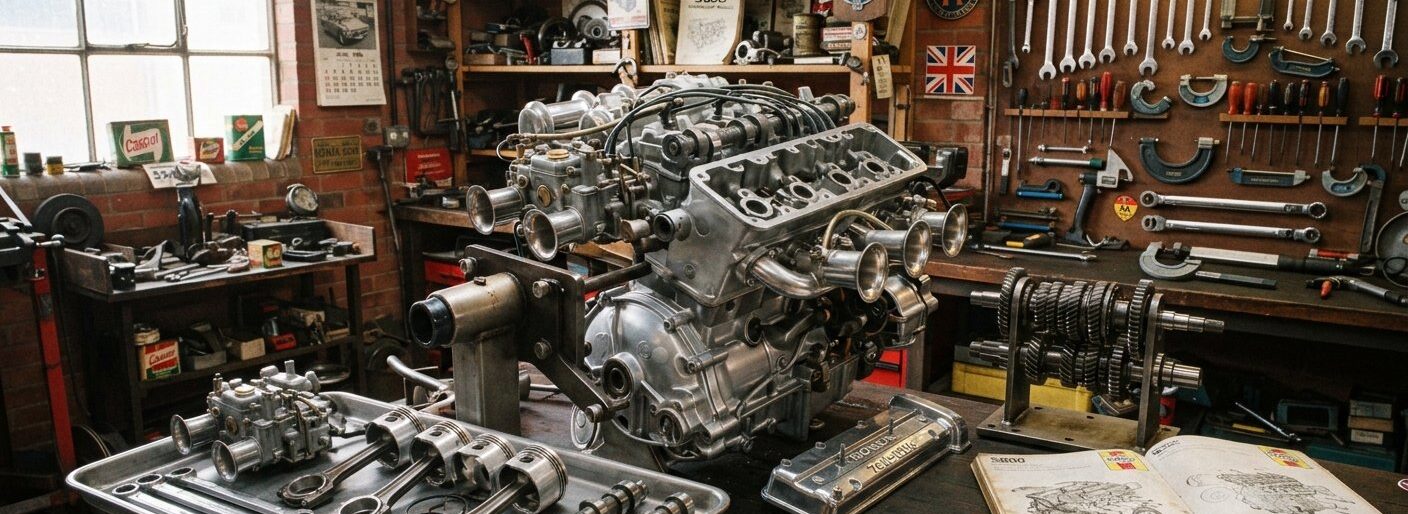
n
#改造プロジェクト:
『このミニカーは、車高が若干低すぎなので今回はいつもと反対に、車高を2㎜程度上げて、この時代のクラシックな味わいを加えてみたいです,もう一つ、ソフトトップを装着するため、ウインドシールドの上端を削り丁寧に成型⁺塗装して、ビンテージ【LV-200ⓑ】からソフト・トップパーツを移植したいです。』
n
n
n
 n
改造行程:
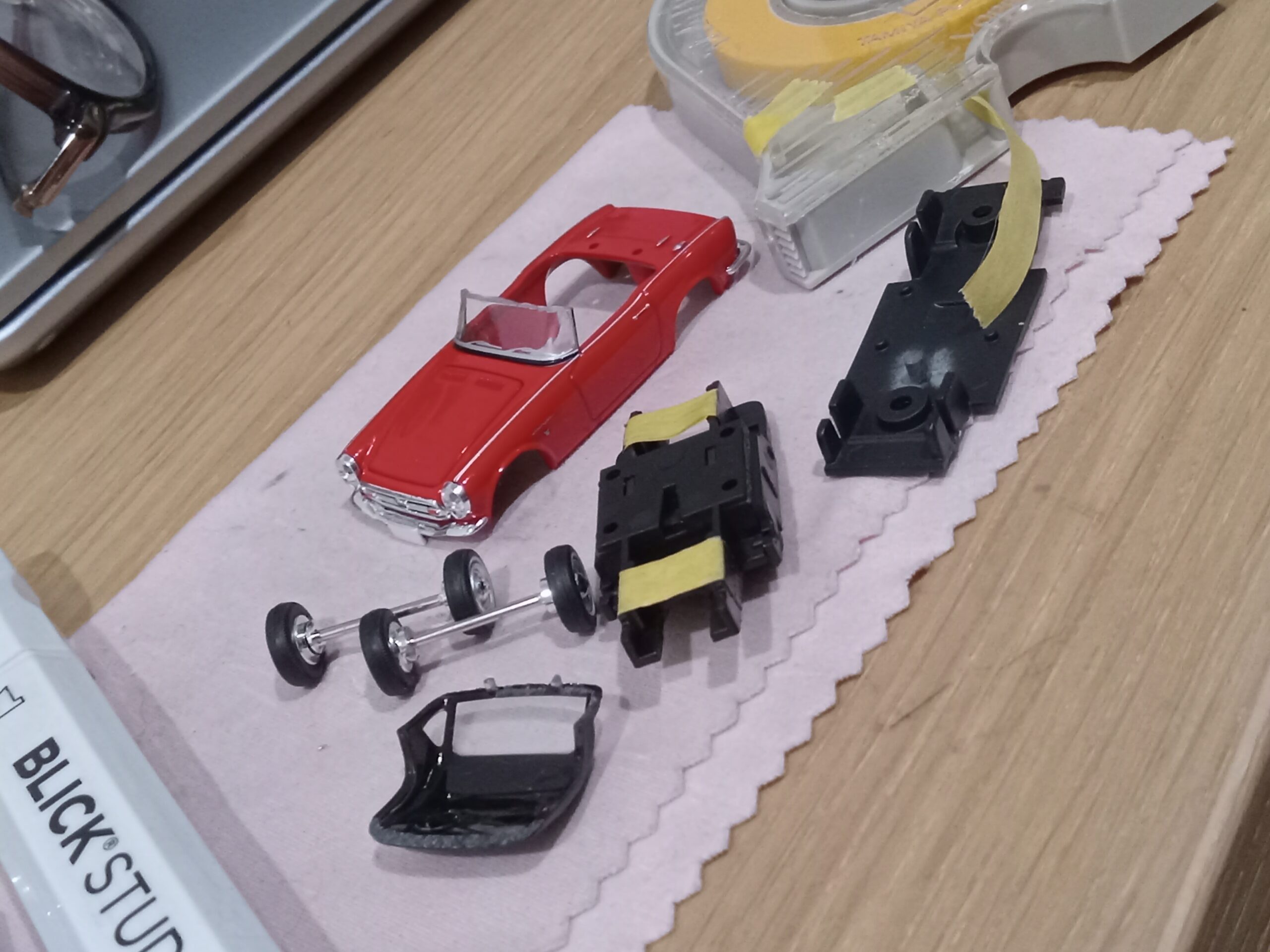
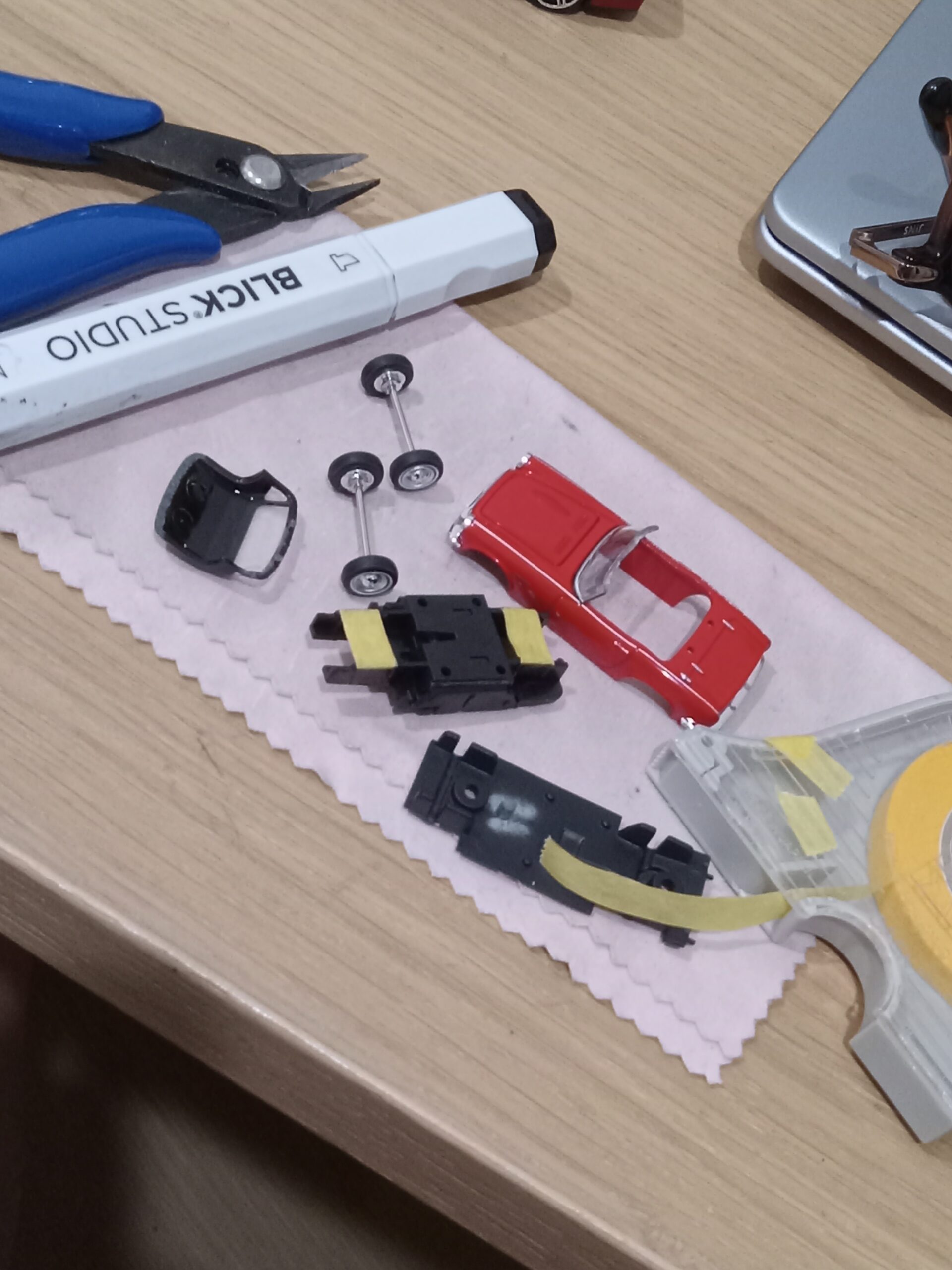
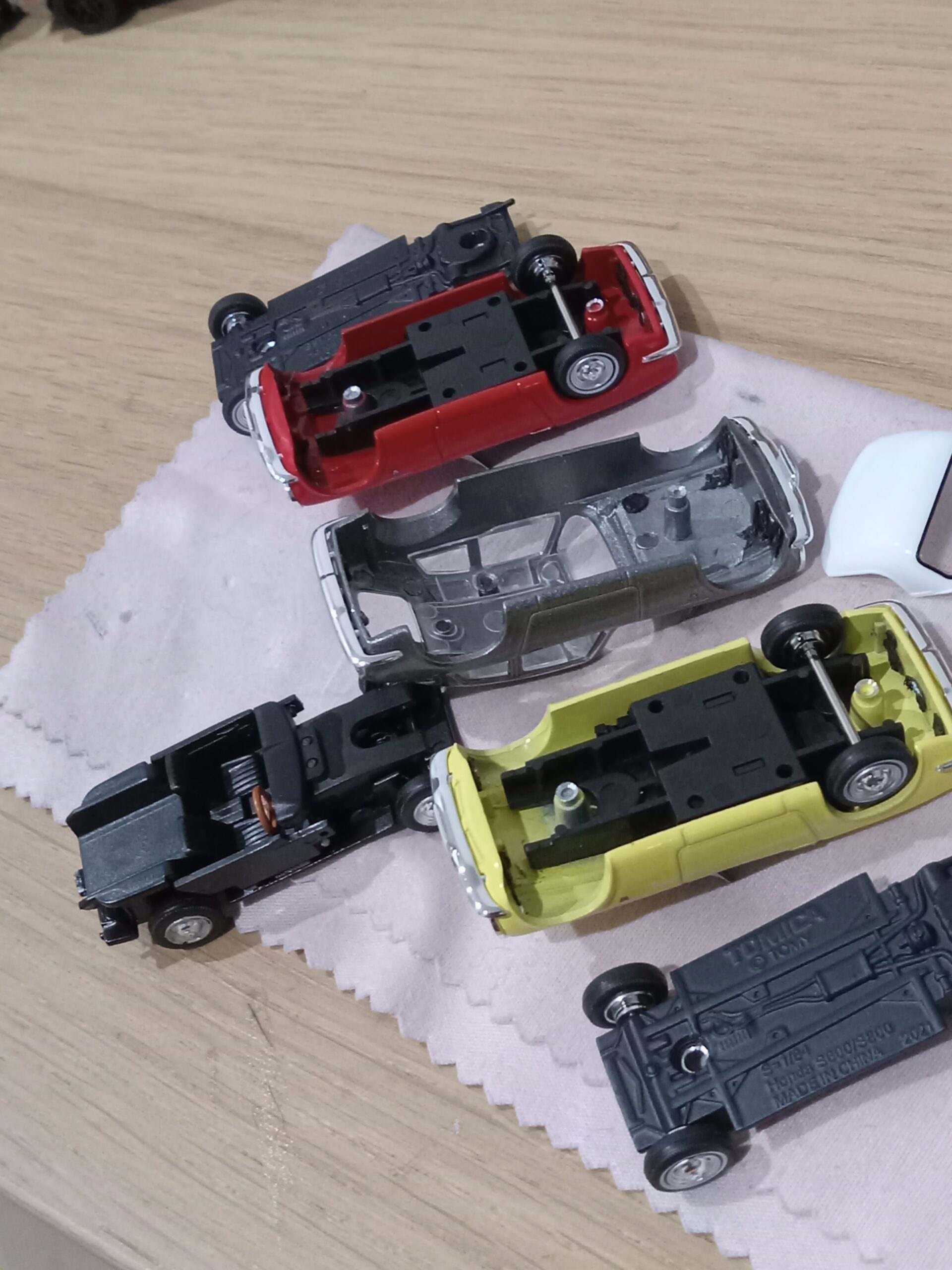
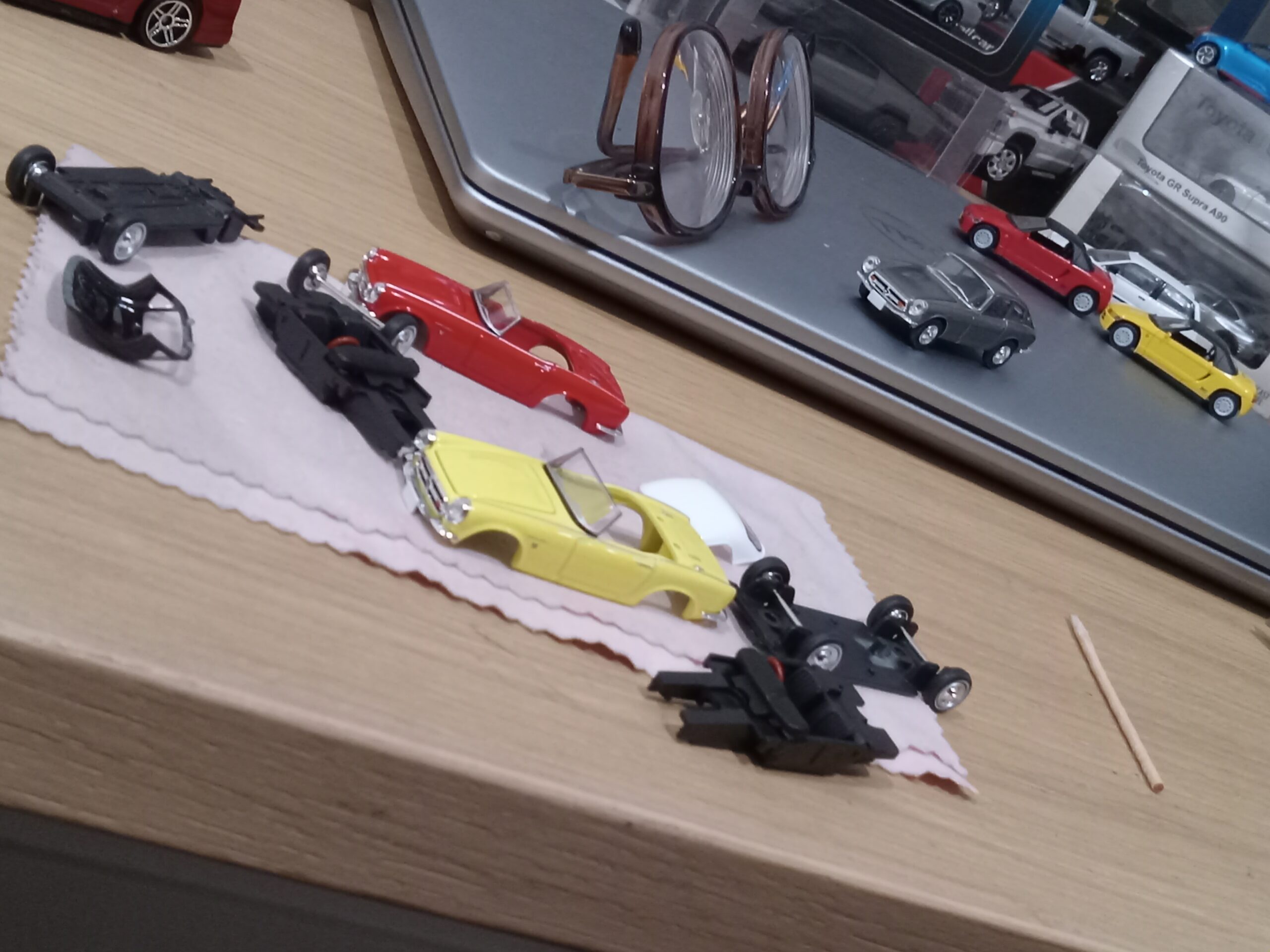
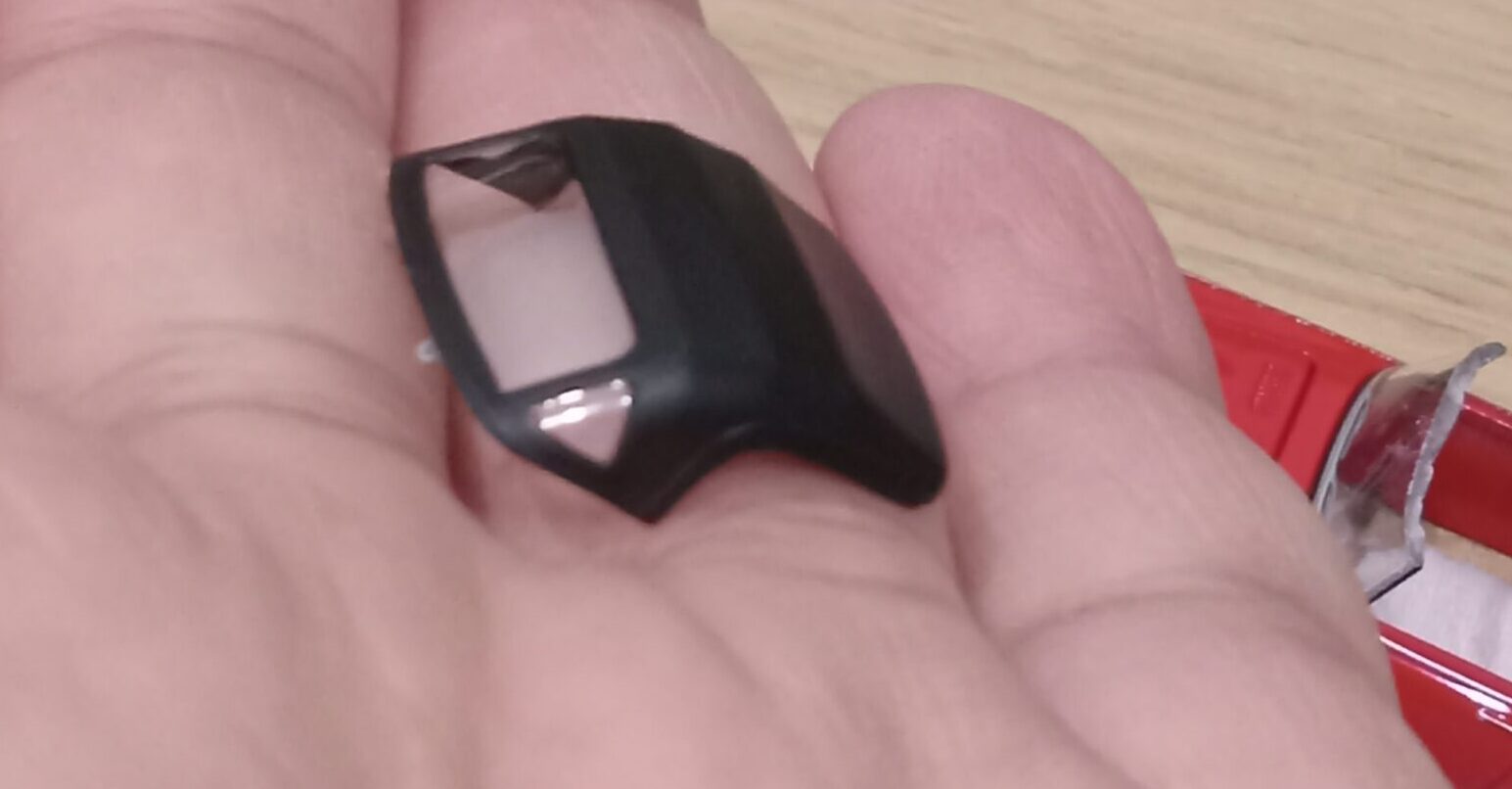
1:ドリルを使いカシメ止めを壊し、慎重にボディーとシャーシを分割、
2:軸受け部分に2枚重ねにしたマスキングテープを張り高さを稼ぎ、
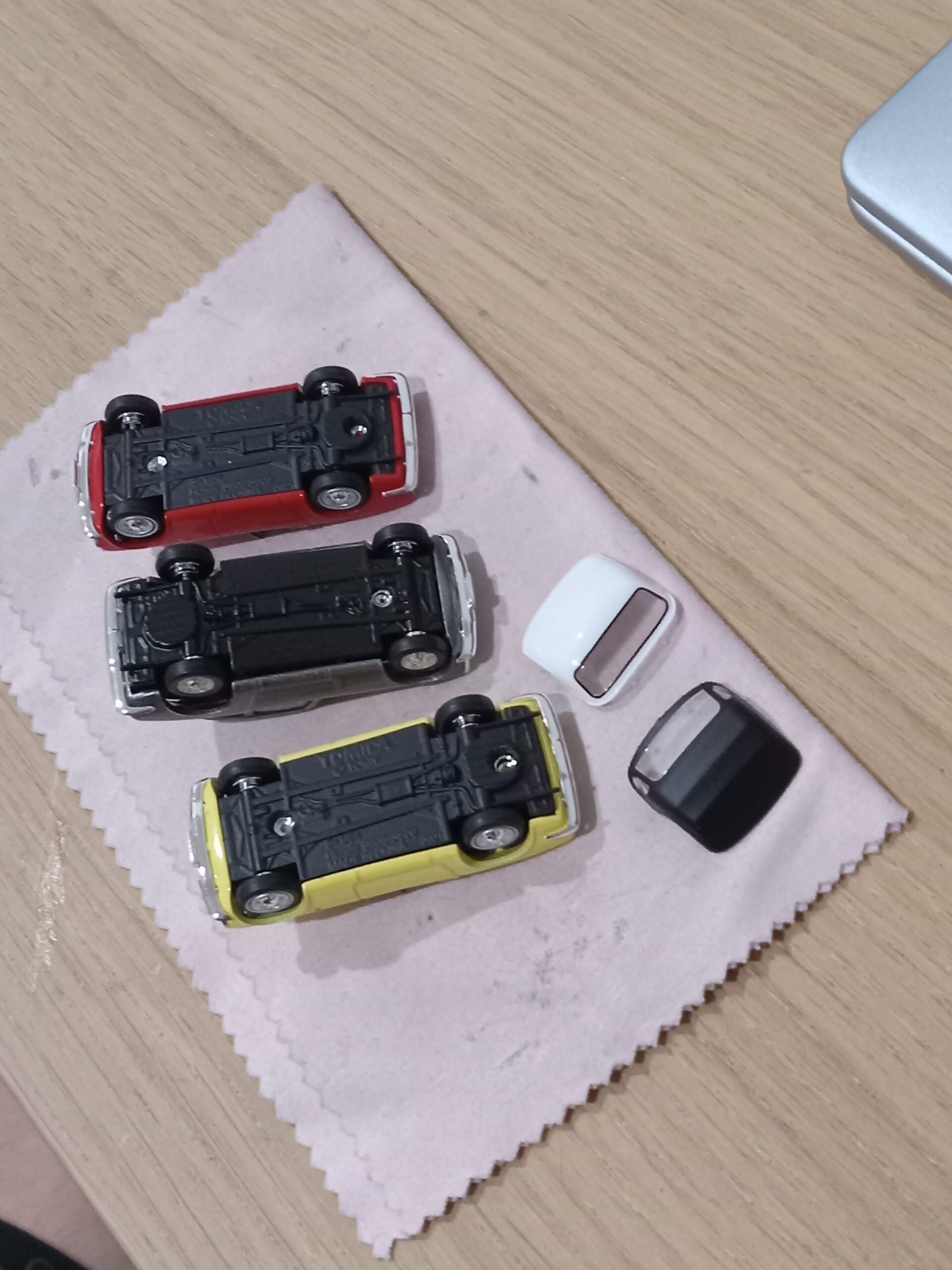
3:車幅を最大化した軸を戻して上下を再接着。
4:ウインドシールドと、【LV-200ⓑ】から持ってきたソフトトップを、現物合わせでやすりとファイルを使い慎重にすり合わせ、
5:最後にホイール内、グリル、バンパー、テールランプ回り、ボディー下回りに、暖色グレーのアルコール性マーカーにて、墨入れ+汚しを行い完成。
n
工程写真:
n
n
n
n
n
n
n
n
n
n
n
n
n
n
n
n
n
n
n
n
n
n
n
n
n
n
n
n
n
n
n
n
n
n
n
n
n
n
n
n
n
n
n
n
n
n
n
n
n
n
n
n
n
n
n
n
n
n
n
n
n
n
n
n
n
n
n
n
n
n
n
n
n
n
n
n
n
n
n
n
n
n
n
n
n
n
n
n
n
n
n
n
n
n
n
n
n
n
n
n
n
n

第57回目の今回は、『2ドアクーペの系譜、第36回』と題しまして、各国のお国柄や、外観デザインの個性が強く表れる、高級2ドア(GT)クーペ / ロードスターについてお話ししてみたいです。【注意:オープンカーを含む】
以下の要領で進めていきます。
第36回の今回はいよいよ
【日本車:ホンダ(軽量スポーツ編 001)】
1966年発表の
ホンダ S800、1966(スカーレット)
についてのお話です。
【2ドア・クーペの系譜:目次】
【米国車編】
第1回:キャデラック・エルミラージュ、2013(メタリック・レッド)
第2回:リンカーン・コンチネンタル MK4、1972(ブラック)
第3回:マーキュリー・クーガー, 1967(LTメタリック・グリーン)
【ドイツ車編】
第4回:MB 500K スペシャル・ロードスター、1936(ブラック)
第5回:MB 300SL ロードスター、1957(シルバー)
第6回:MB SLS AMR ガルウイング、2010(ブラック)
【英国車編】
第7回:マクラーレン・F1、1992(メタリック・オレンジ)
第8回:ジャガー・XKSS ロードスター、1957(ロイヤル・ブルー)
第9回:ジャガー XKR クーペ、1996(ダークメタリック・グリーン)
【日本車・ニッサン編】
第10回:ニッサン 初代シルビア、1965(シャンペン・ゴールド)
第11回:ニッサン 5代目シルビア、1988(LTメタリック・グリーン)
【イタリア車編】
第12回:フェラーリ 250TR ポンツーンフェンダー、1958(赤)
第13回:フェラーリ 250GTO、1962(イタリアン・レッド)
第14回:ランボルギーニ・コンセプトS、2005(パール・ホワイト)
【日本車・マツダ編】
第15回:マツダ コスモ・スポーツ、1968(レーシング・ホワイト)
第16回:マツダ ユーノス・コスモ、タイプ‐S(2トン:黒&グレー)
【フランス車編】
第17回:ブガッティ・タイプ59、1935(フレンチ・ブルー)
第18回:シトロエン・SM、1970(シャンペーン・ゴールド)
第19回:ブガッティ・ラ・ヴォワチュール・ノワール、2019(黒)
【日本車・トヨタ編】
第20回:トヨタ/ヤマハ・2000GT、1967(アイボリー・ホワイト)
第21回:トヨタ・2代目ソアラ、1986 (クリスタル・ホワイトⅡ)
第22回:レクサス LC500【GWZ100型】、2017(MT・レッド)
【米国車編②】
第23回:ダッジ・チャレンジャー、1970&プリムス・バラクーダ、1971
第24回:ダッジ・ヴァイパー SRT‐10 ACR、 2008(ブラック)
第25回:フォード・シェルビーGR-1 コンセプト、2004(クローム)
【日本車・ミツビシ編】
第26回:ミツビシ・ギャラン λ、1976(ブラウン・メタリック)
第27回:ミツビシ・エクリプス【北米仕様】、2006(オレンジ・メタ)
【ドイツ車編②】
第28回:BMW M635CSi、1984 (ダーク・メタリックブルー)
第29回:MB 560SEC AMG 6.0 ワイドボディー、1989(ブラック)
第30回:BMW M2 純正パフォーマンス・パーツ仕様、2025(ネオン・ライム)
第31回:初代アウディー・TT、1998(レイク・シルバー・メタリック)
【日本車・スバル編】
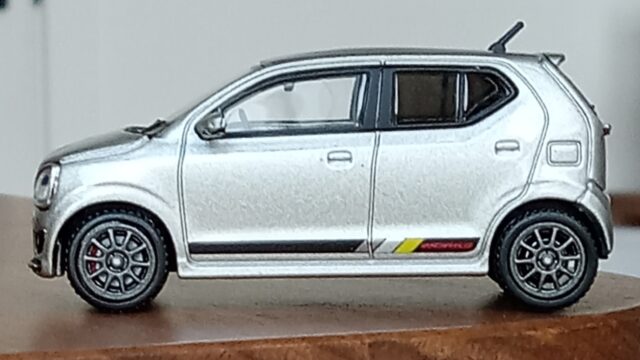
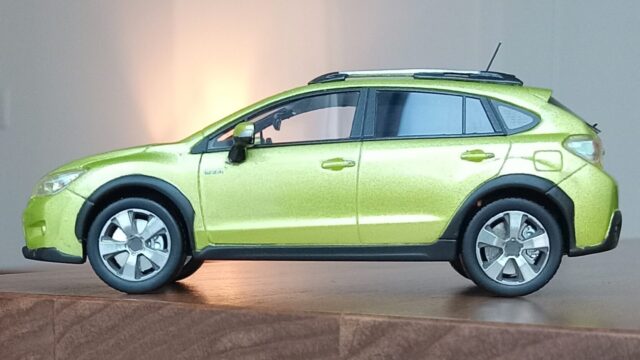
第32回:スバル・クロストレック XV, 2012(ライムグリーン・メタリック】
【英国車編②】
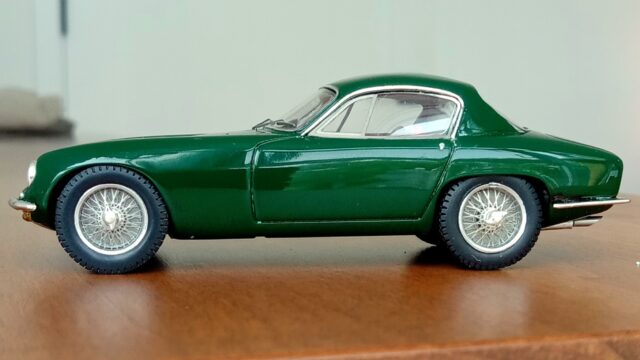
第33回:ロータス・初代エリート, 1959(ブリティシュ・グリーン)
第34回:ロータス・エラン S4 スプリント(3トーン:メタブルー、白&金)
第35回:ジャガー・Eタイプ ロードスター(ライトブルー・メタリック)
【日本車:ホンダ(軽量スポーツ編)】
第36回:ホンダ S800、1966(スカーレット)
第37回:ホンダ 【ワンダー】シビック Si、198 (スーパーレッド)
第38回:ホンダ ビート、1991(サンバ・イエロー)
【イタリア車編➁】
第39回:ランチア ガンマ・クーペ、1976(グリジオ・アージェント(銀))
【日本車:トヨタ編②】
第40回:トヨタ コロナ・ハードトップ 1800GT-TR、1982 (ブレージングレッド(赤))
第41回:トヨタ GRスープラ、2019 【DB型・A90/A91】 (ボルカニックアッシュグレーメタリック(銀))
第42回:トヨタ GR GT、 2027【予定】(ガンメタル系)
【イタリア車編③番外編】:スーパーカーの系譜
第1回:マセラティ― メラク SS、1975(ブルー・セーラ・メタリック)
第2回:ランチア・ストラトス HF、1973(ロッソ・ストラトス)
第3回:ランボルギーニ・ミウラ SV、1971(ロッソ&オロ/赤&金)
第4回:フェラーリ・ディノ 206 コンペティツィオーネ プロトティーポ(ジアッロ・フライ/黄色)
第5回:デ・トマソ パンテーラGTS、1971(ロッソ/赤&マットブラック)
第6回:フェラーリ ラ・フェラーリ、2013(ロッソ・コルサ(赤))
【米国車③番外編】:コルベットの系譜
第1回:1967年型 スティングレー【C2】コンバーチブル(ハードトップ・メタ青)
第2回:1972年型 コルベット 【C3】コンバーチブル(メタリック・ブルー)
第3回:1984年型 コルベット 【C4】クーペ(ブライト・レッド)
第4回:コルベット・インディー、1986【ミッド・シップの先行開発車】(シルバー)
第5回:スティングレー・コンセプト、2009【FRスポーツ・先行開発車】(ライトプルー・メタリック)

#本田宗一郎の夢:実現ストーリー!
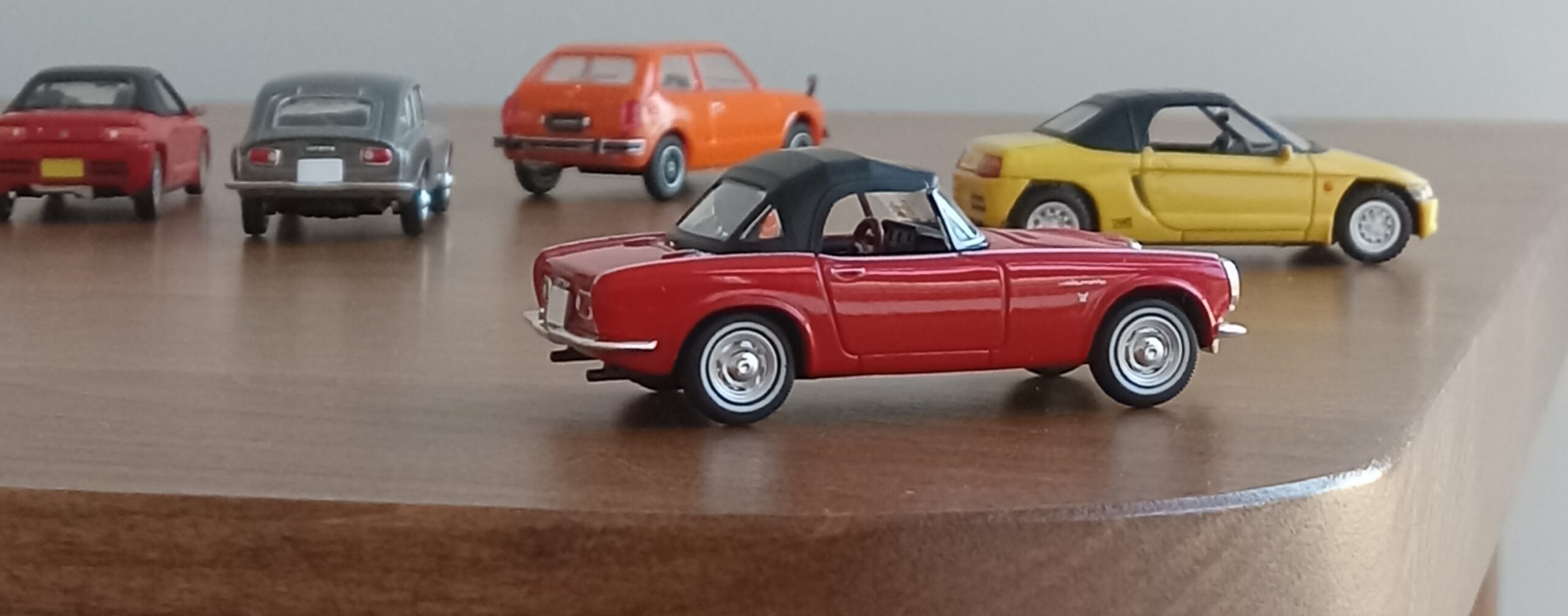
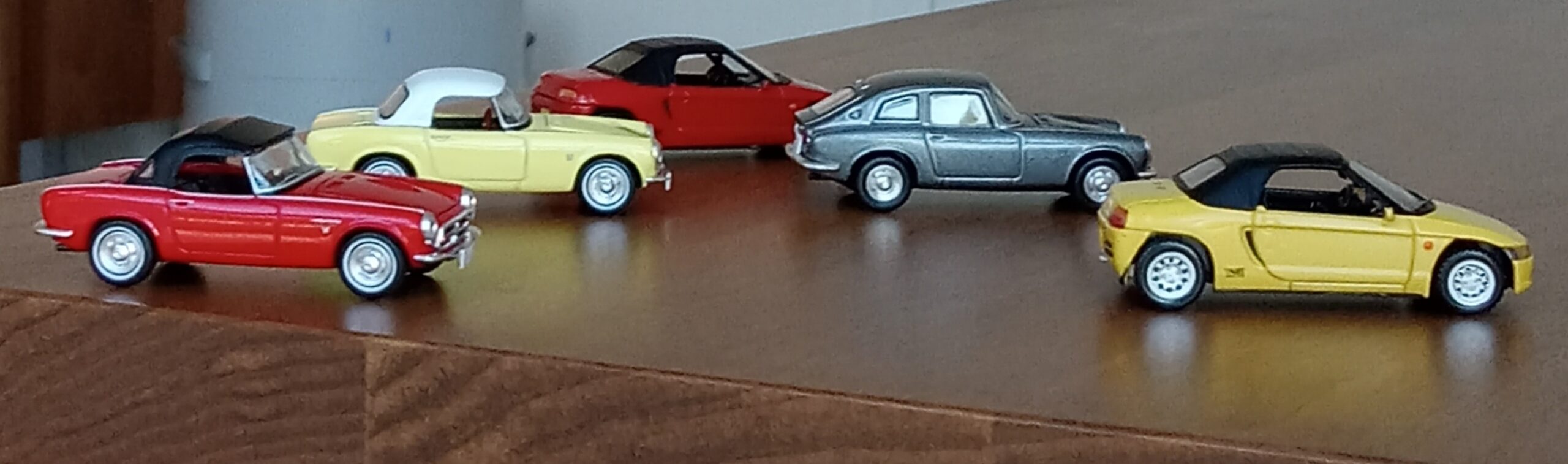
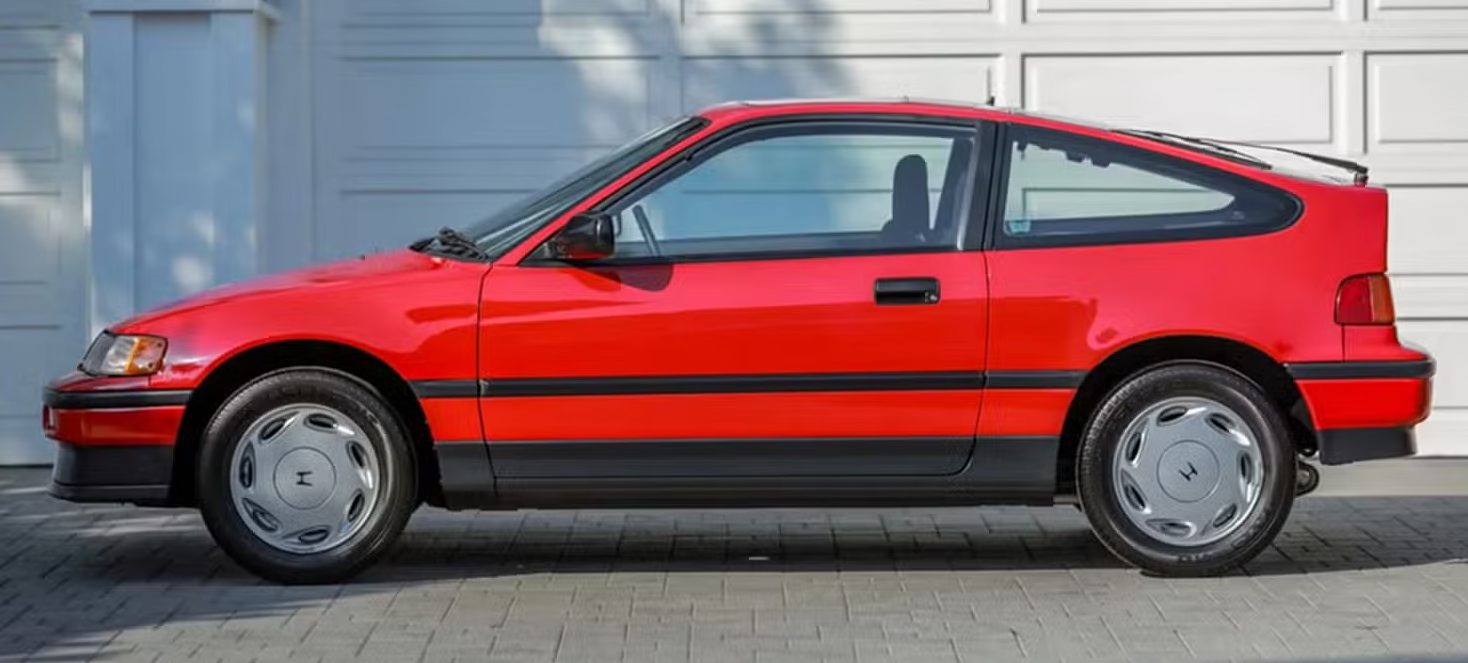
大学時代のっていたホンダCR-X、
その小型スポーツの元祖に当たる、
『S800 』は、
雑誌の記事や日東模型の1/24プラ・キットなどを通じて、
ラブコールを送っていた存在でした、、、(笑)
そんな折、
名古屋の実家の近くにあった、
ホンダ、S5、S6, S8の殿堂=
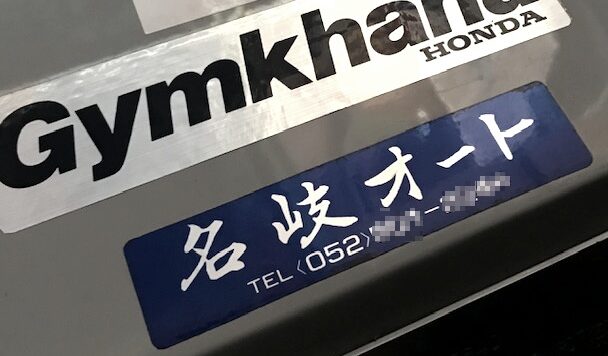 『名岐オート』さんを
見つけてしまい、買え(わ)ないのに、ちょくちょく通っていました、、、
(近隣のトヨタディーラーかホームセンタに行った時、発見しました!)
名岐オートさんのショップ前の駐車スペースには、
本田初期の名車たち、
【S6,S8,そのクーぺ、Nコロや360Zなど】が
所狭しと並んでいて、
毎回、銀色と黄色のS6クーペの座席に座らせていただきました。
会釈をしましたがあまり会話はせず、『やっぱ、いいですねぇー』と言ってにこにこしてました。嬉
その当時から、
全【ホンダ Sシリーズ】に通ずる、
*神がかった外観デザインの均整の取れた、まとまり感に心酔して、
*当時乗っていたCR-Xよりさらにタイトなパッケージ感、
*クラシック・カー独特の手造り感一杯の外観と
*その匂いにやられてました。
ーーー>因みに、渡米後2台目に乗ったのは、73年型『MG ミジェット』でした!
具体的には、自分の好みの外国の名車4台、
を合わせて、いいとこどりして、軽自動車枠+アルファの中で成立させた、、、
*MB 280SL(パゴダルーフ)
【大胆かつ均整の取れた美しいプロポーションを、、、】
*BMW 507 ロードスター(ハードトップ付き)
【抑揚のあるボディー造形とフロントフェイシアの立体的なデザインを、、、】
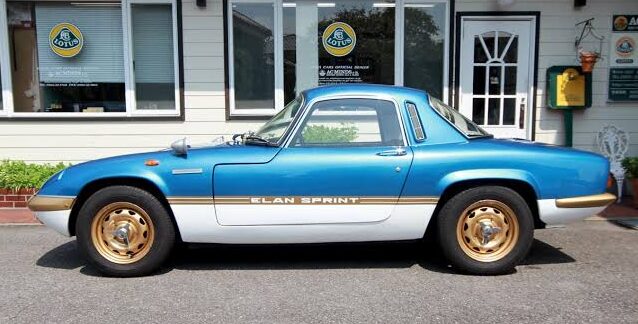
*MG-B ロードスター(又は、MG-GT クーペ)
【ウインドシールドの形状と幌のマトマリ感を、、、】
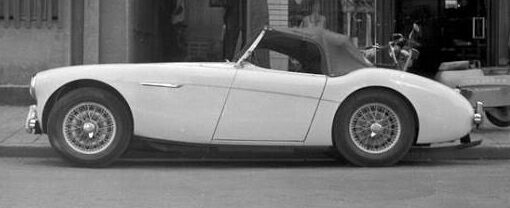
*オースチンヒーレー 100/4 BN1
【フェンダー側とボンネット側のボディーの継ぎ目のカシメ止め処理を】
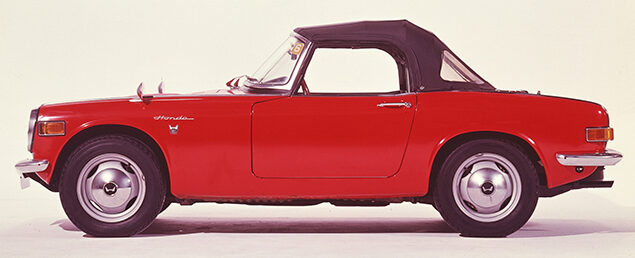
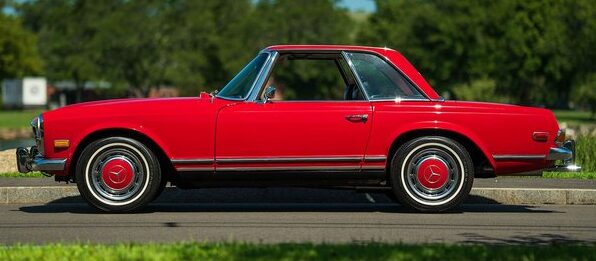
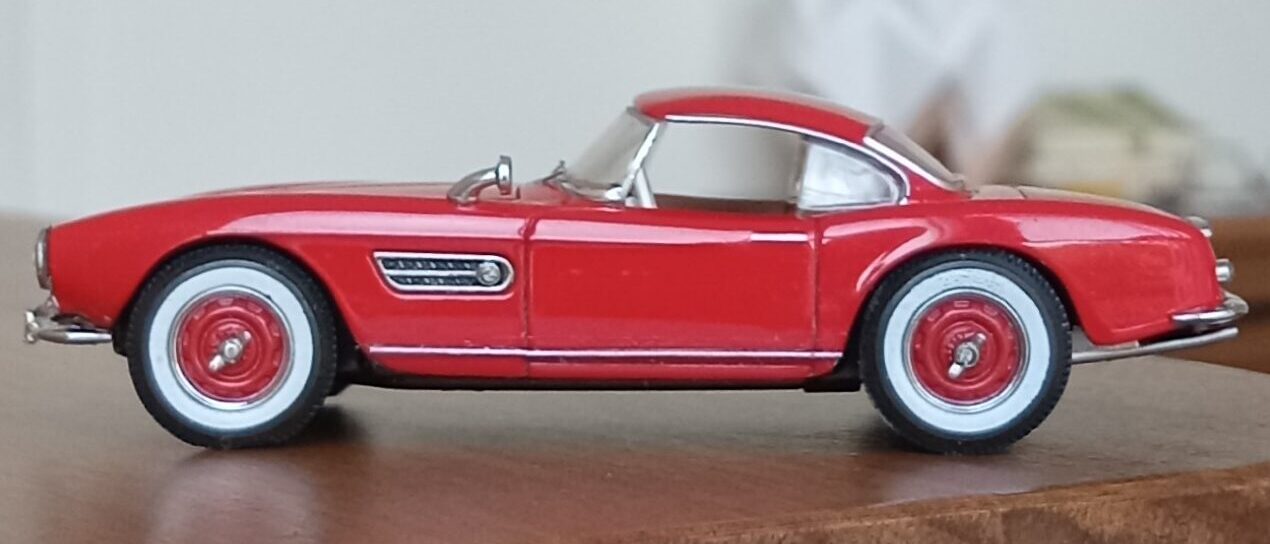
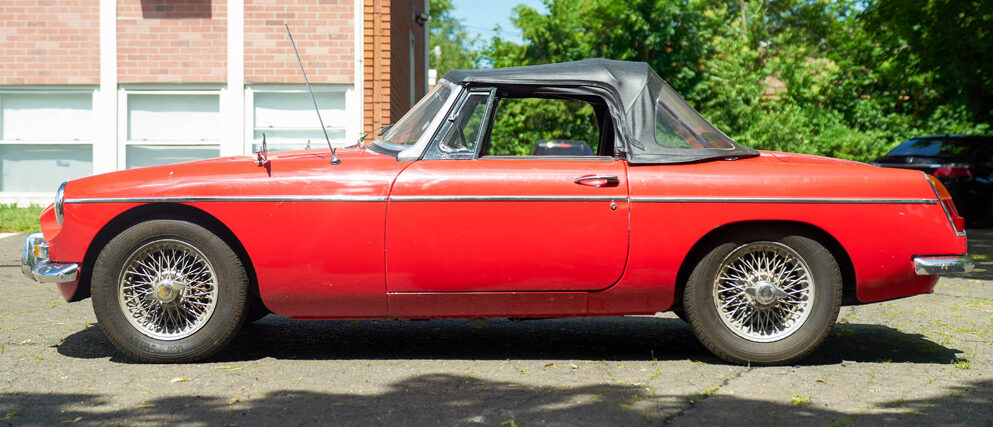
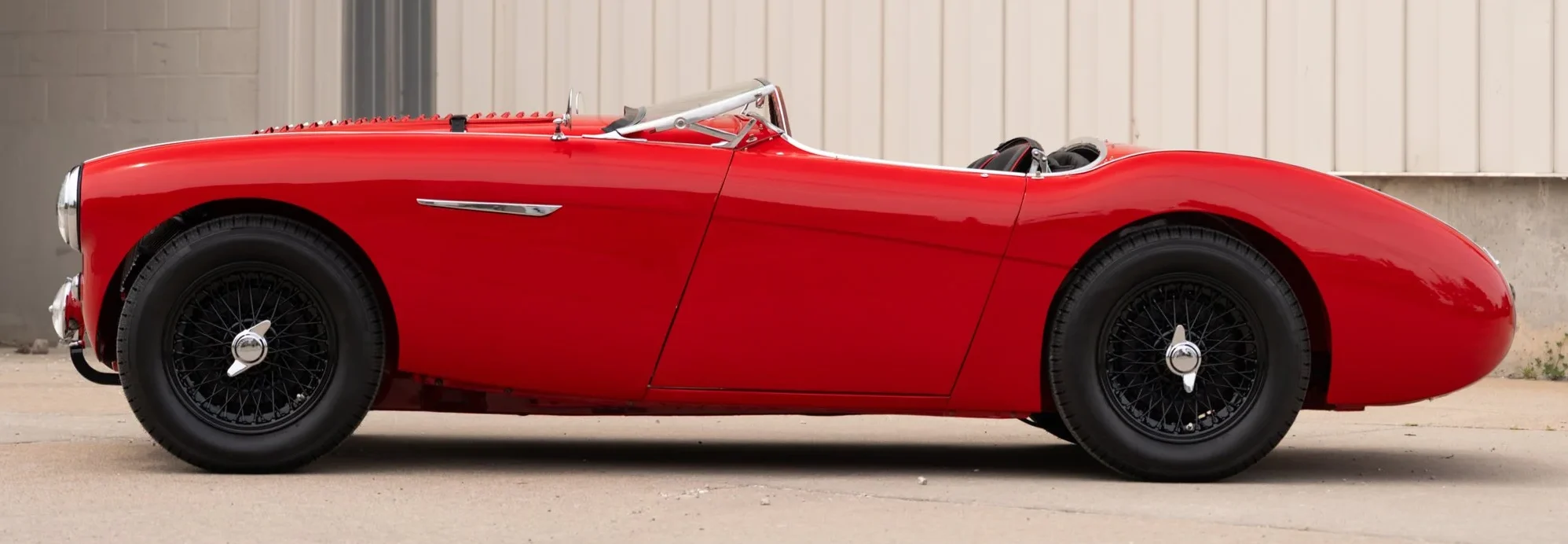
4台の良いとこどり
+チビチビ攻撃!ーーーーー>
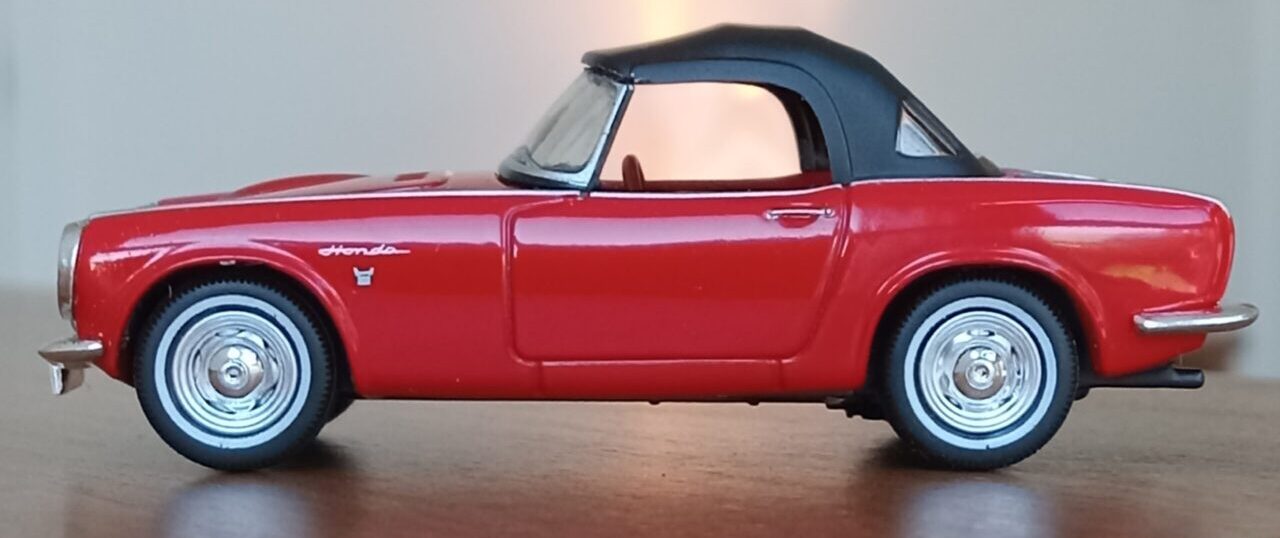
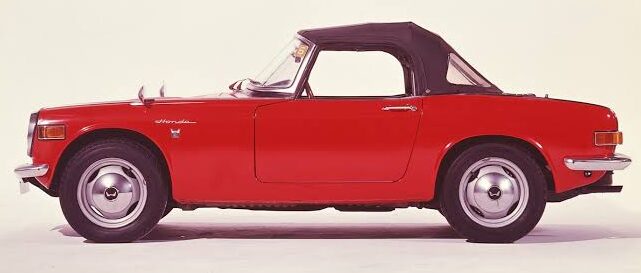
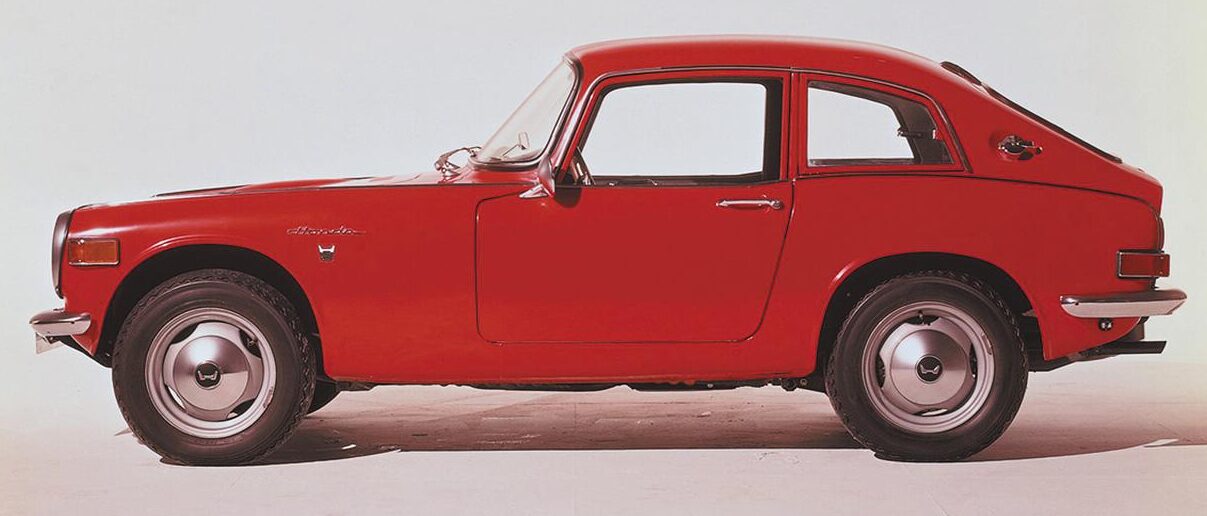
n
n
それでは、稀代の名車『ホンダS8』に付いて、
以下の要領で語ってみたいです!
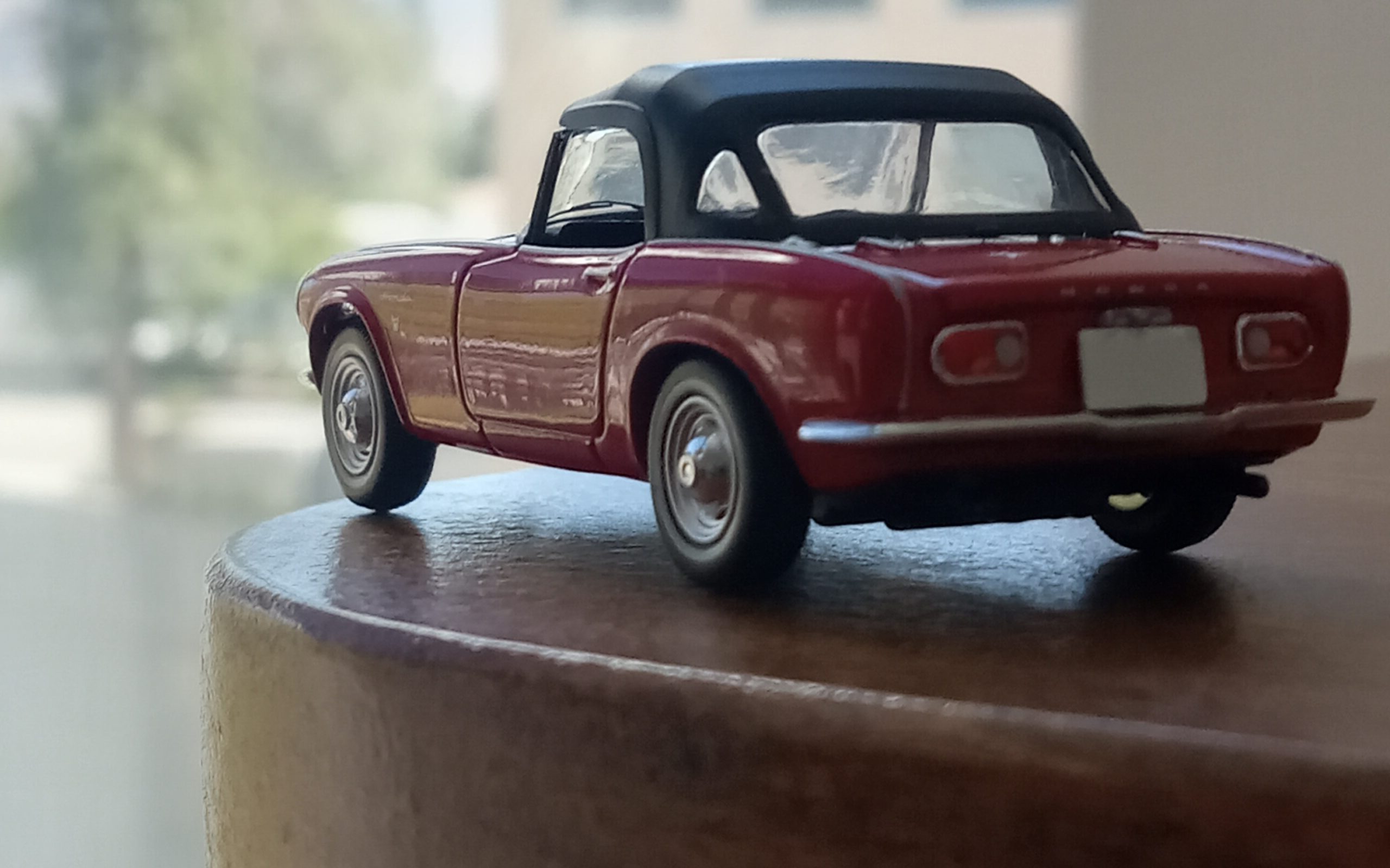 *実車解説: 機能美の極致
*外観デザインの特徴:
*『私』とホンダS800: 永遠の憧憬
*三題噺:凝縮感・精密機械・機能美の極致
*その他の『小さな美形車』たち、、、
*実車解説:『凝縮された機能美』
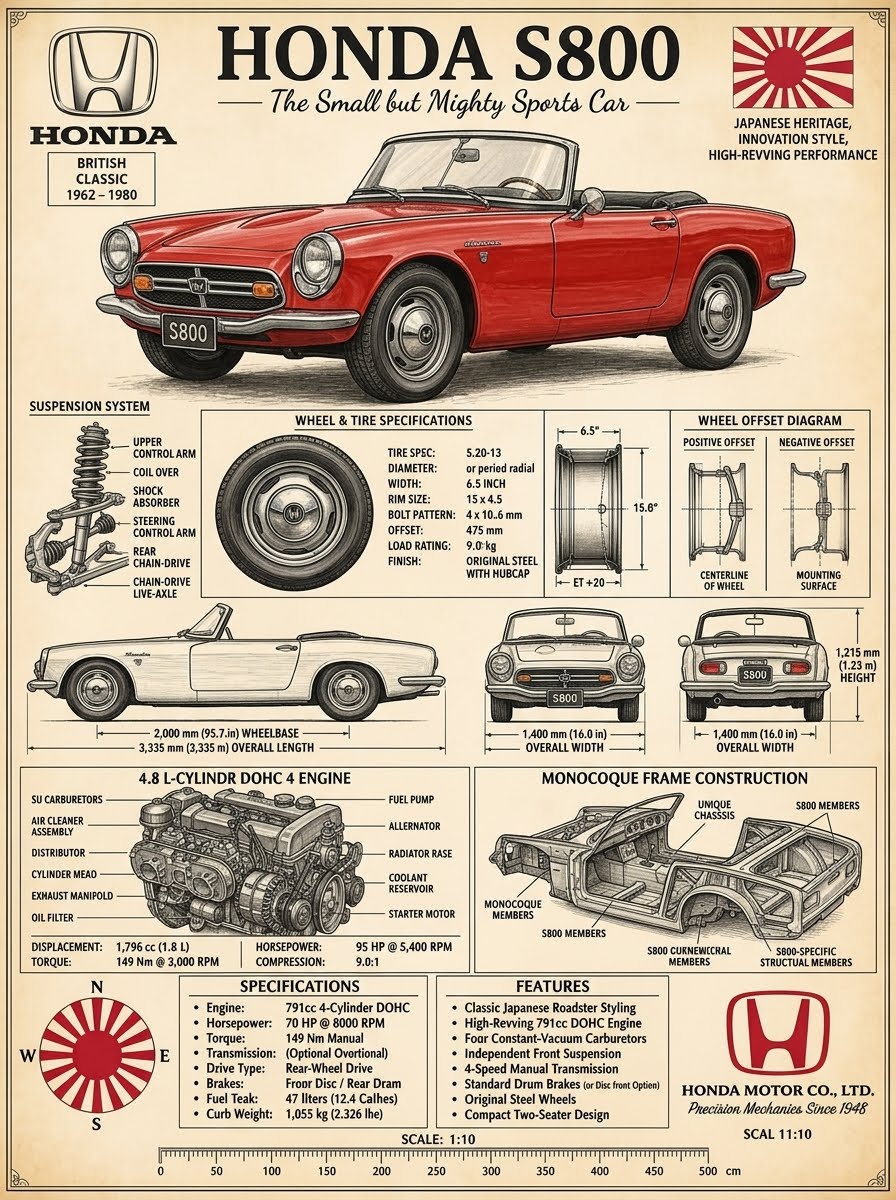

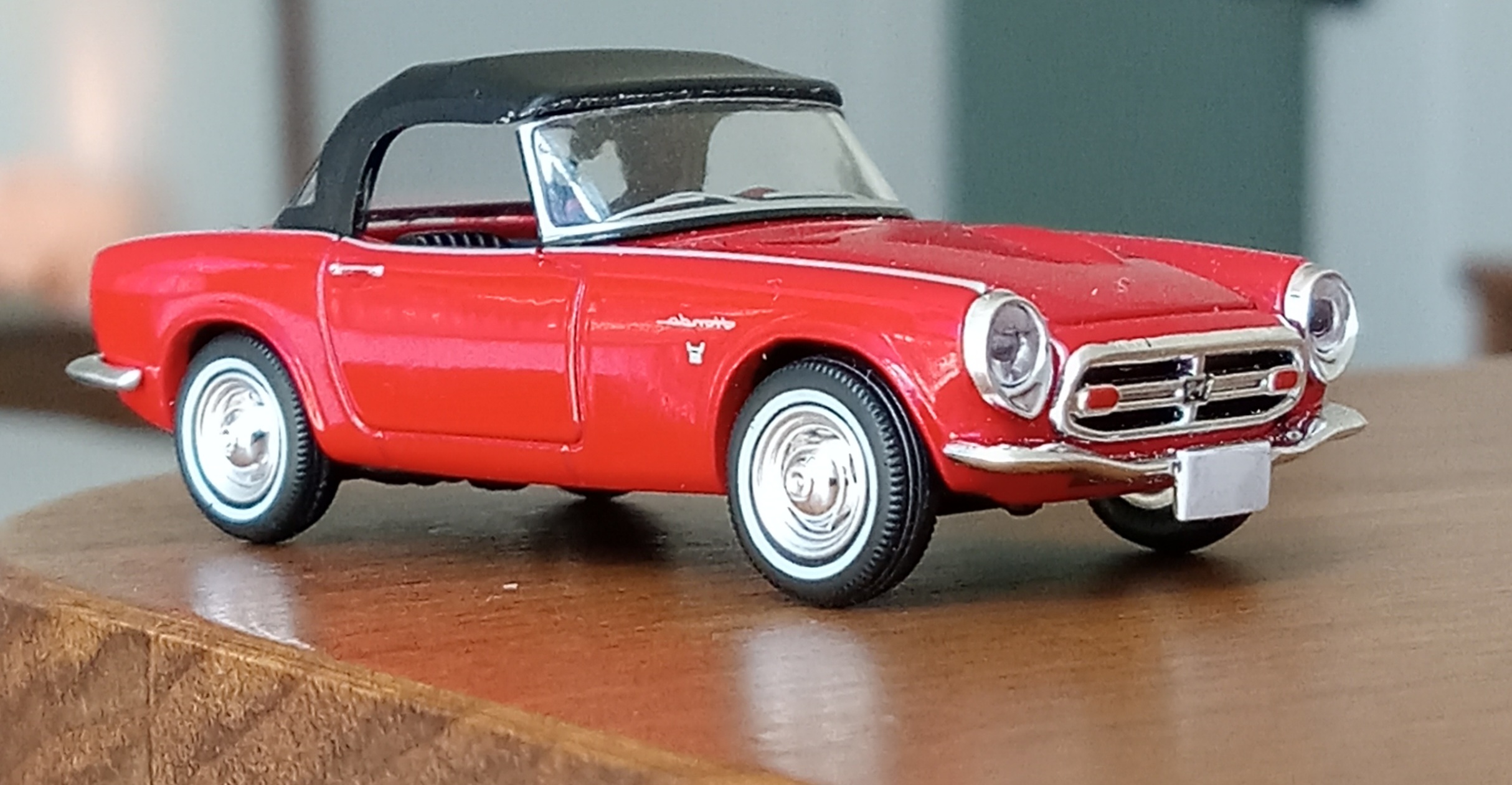
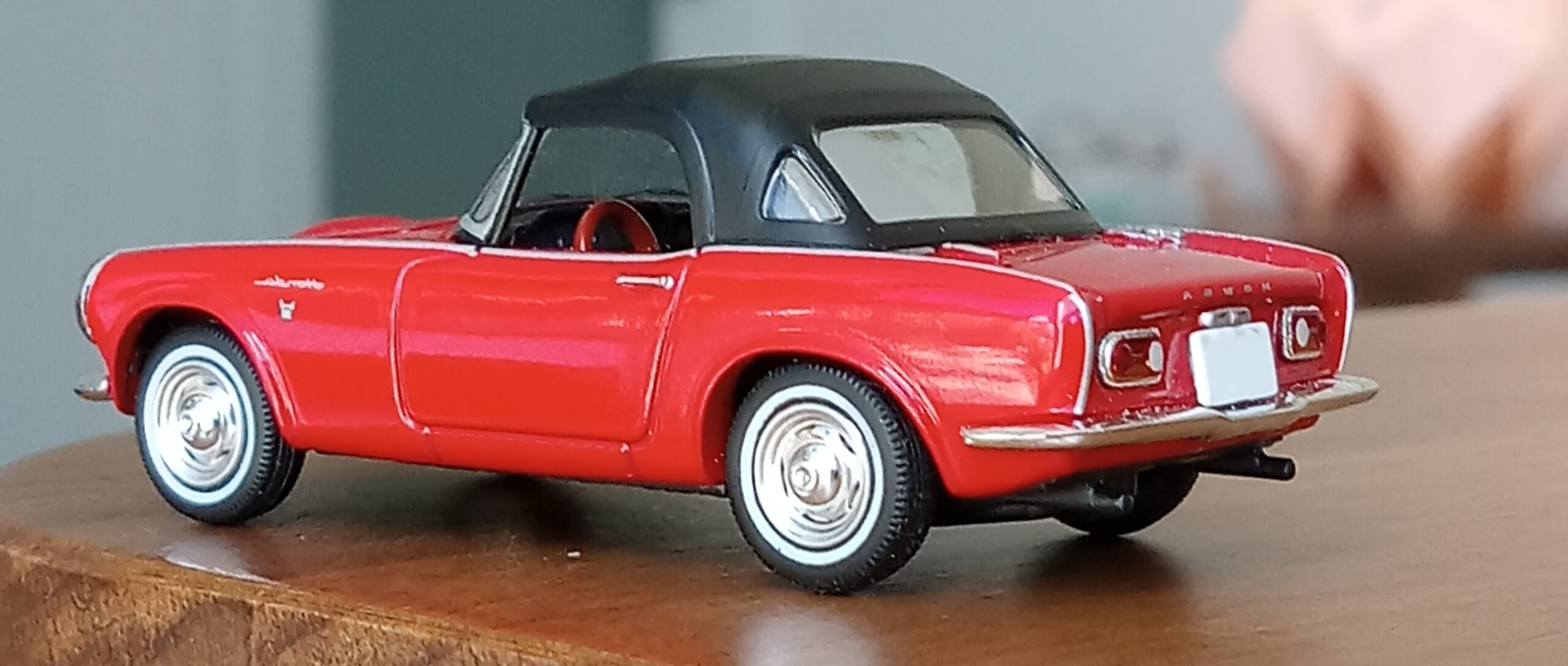
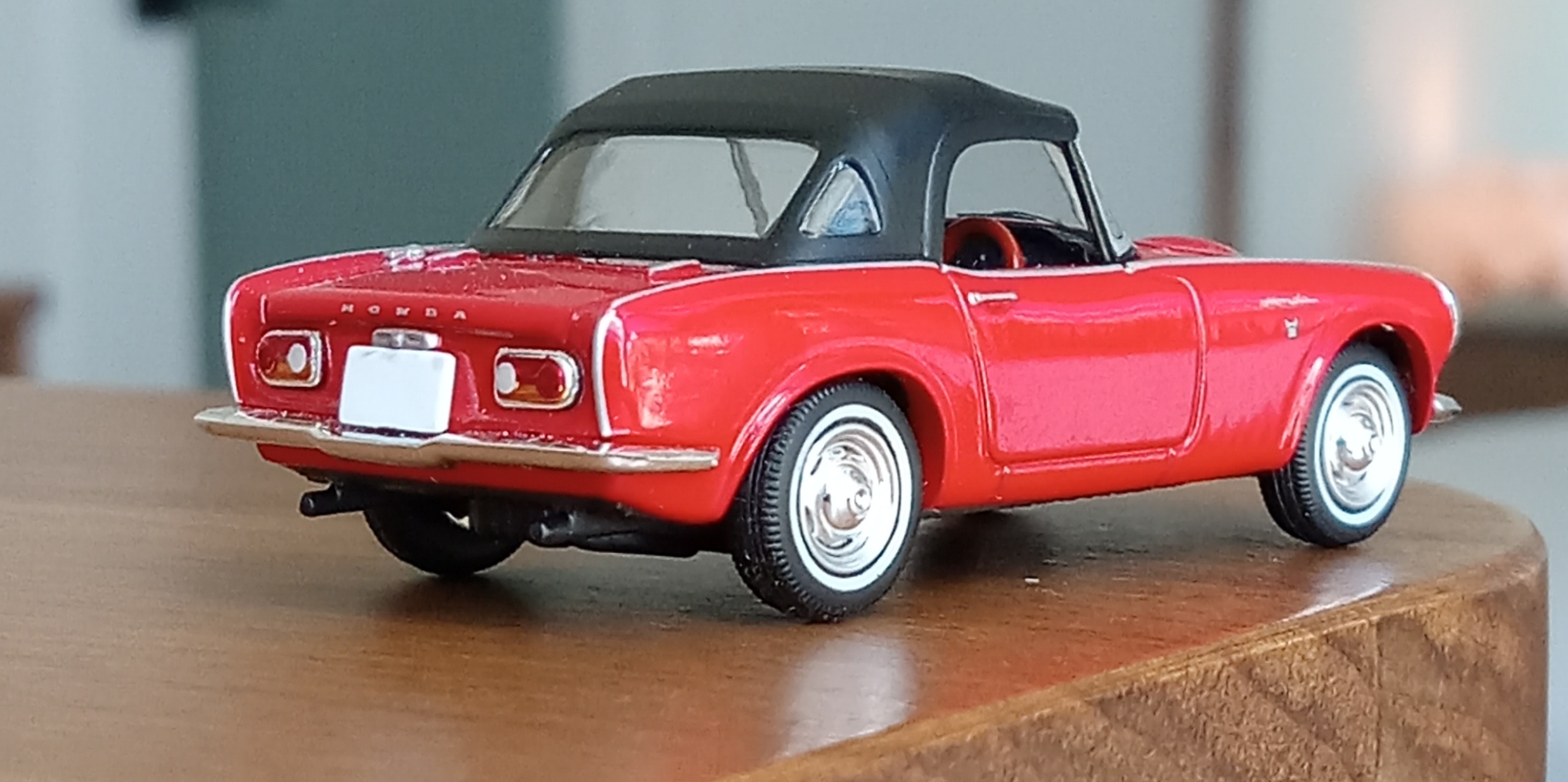
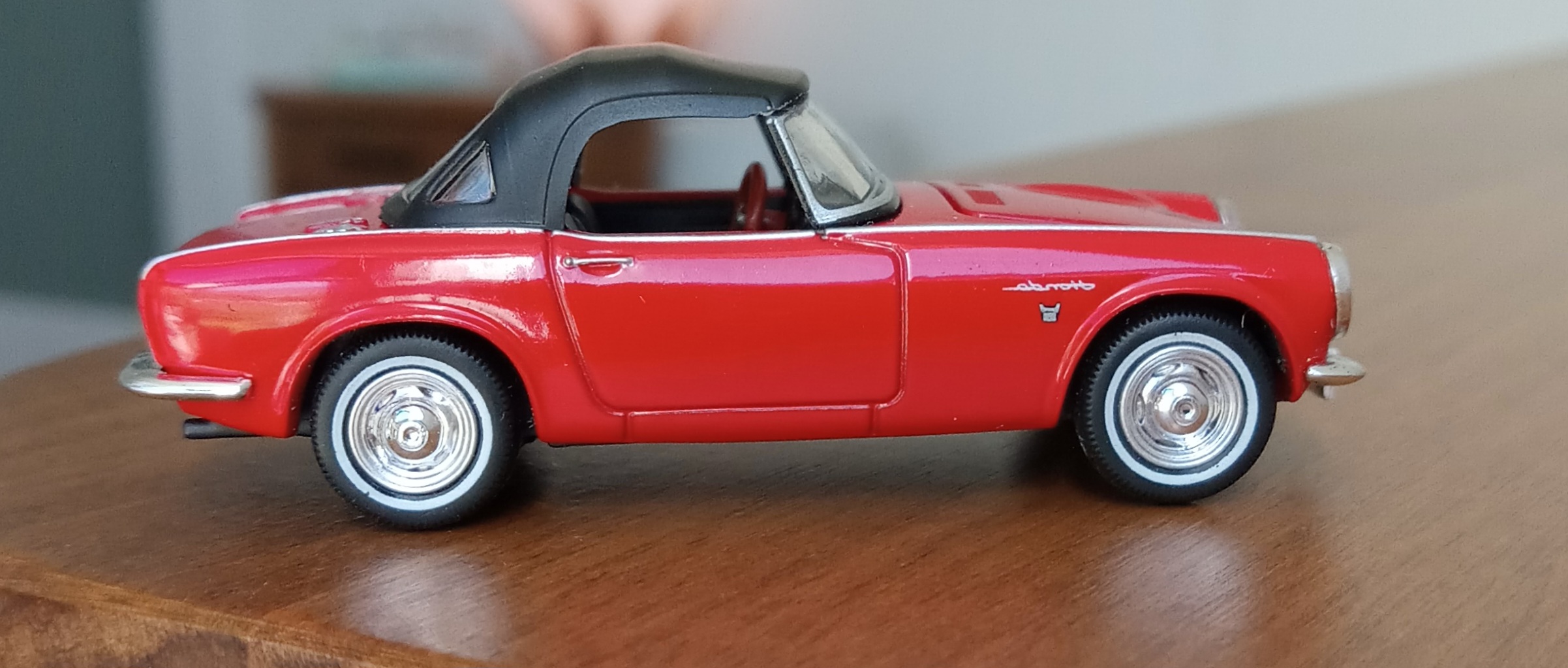
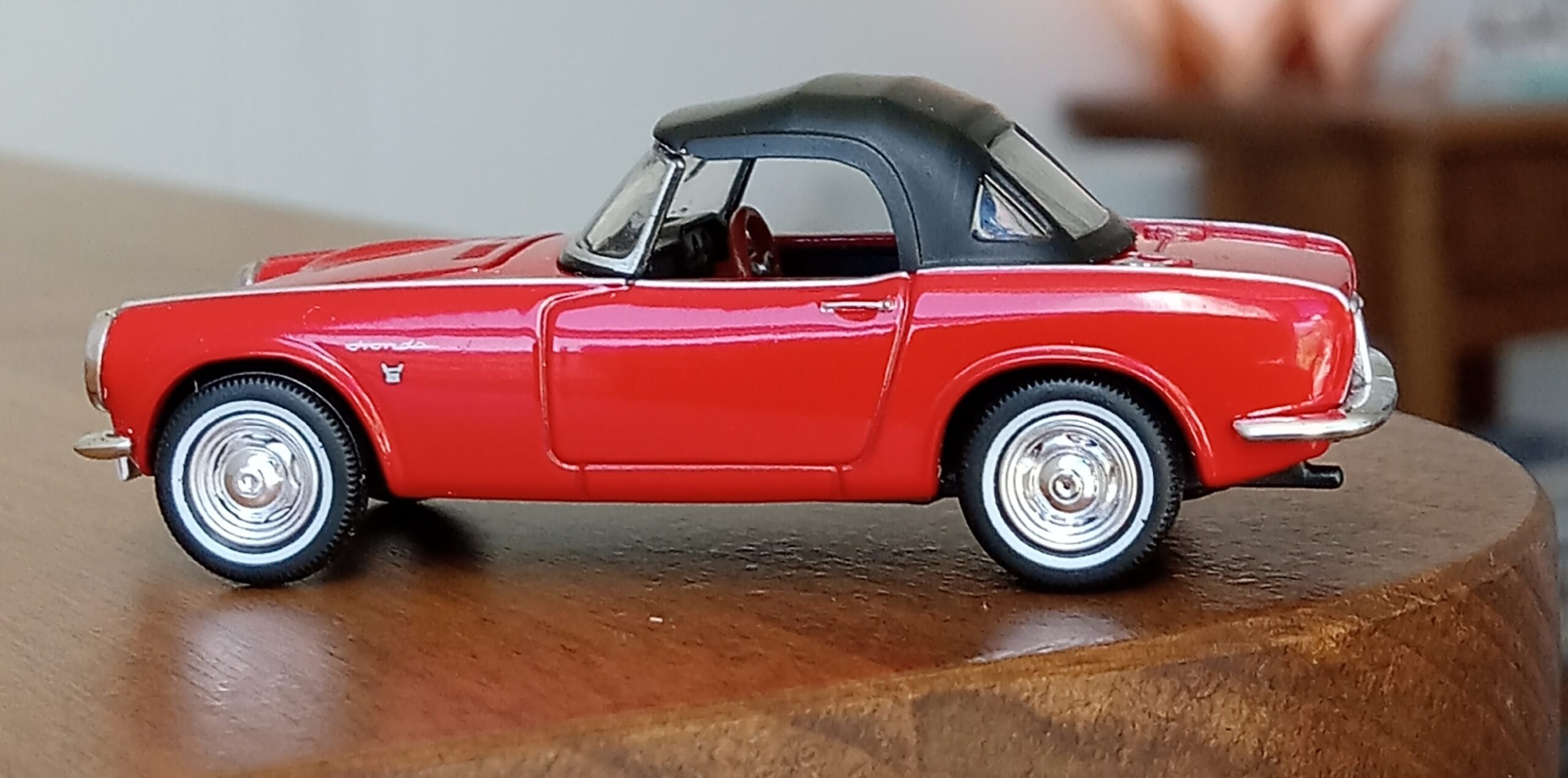
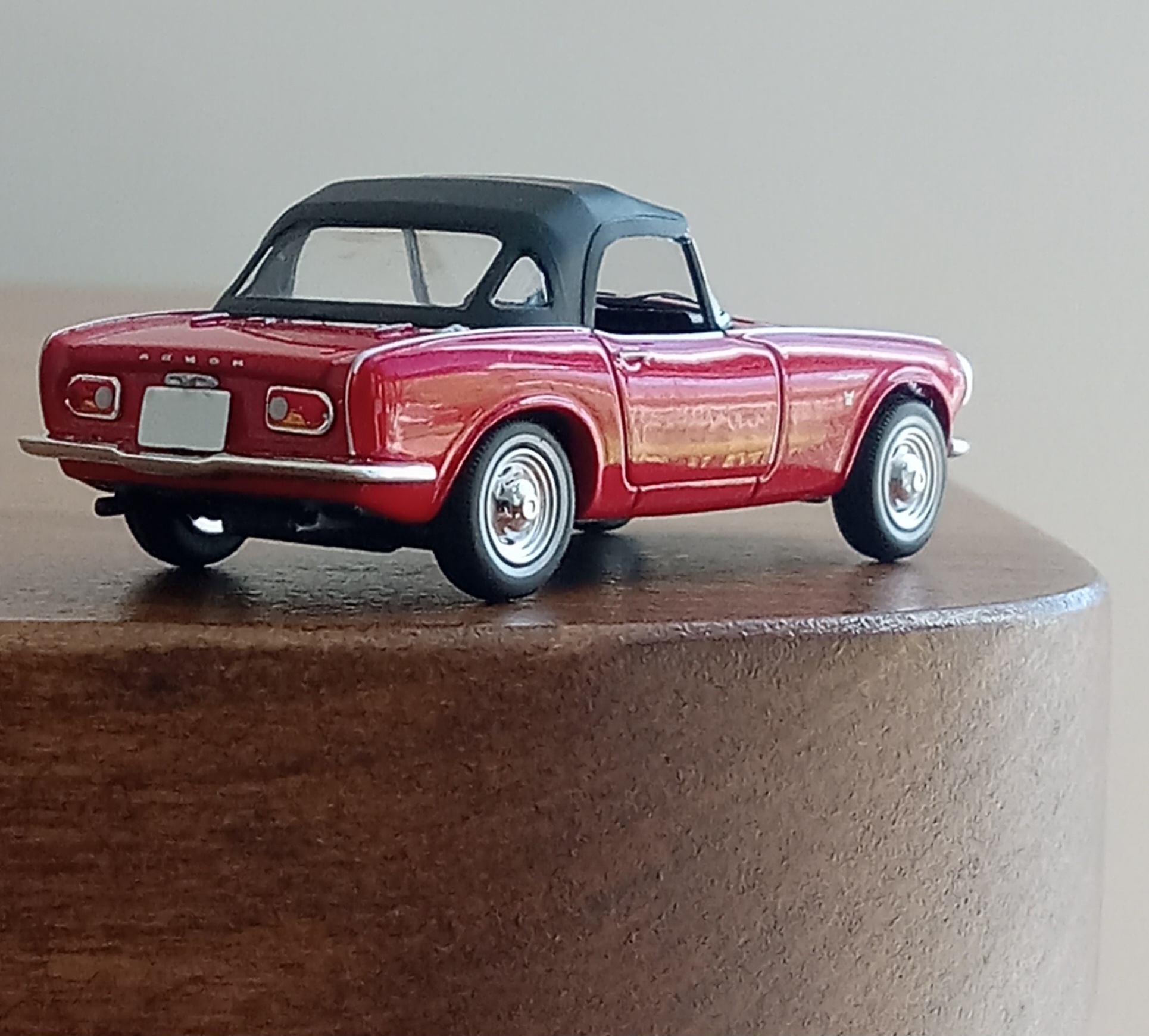
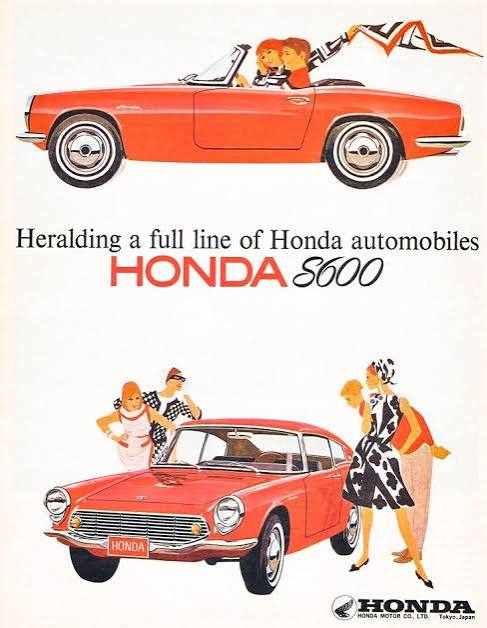
概要:
n
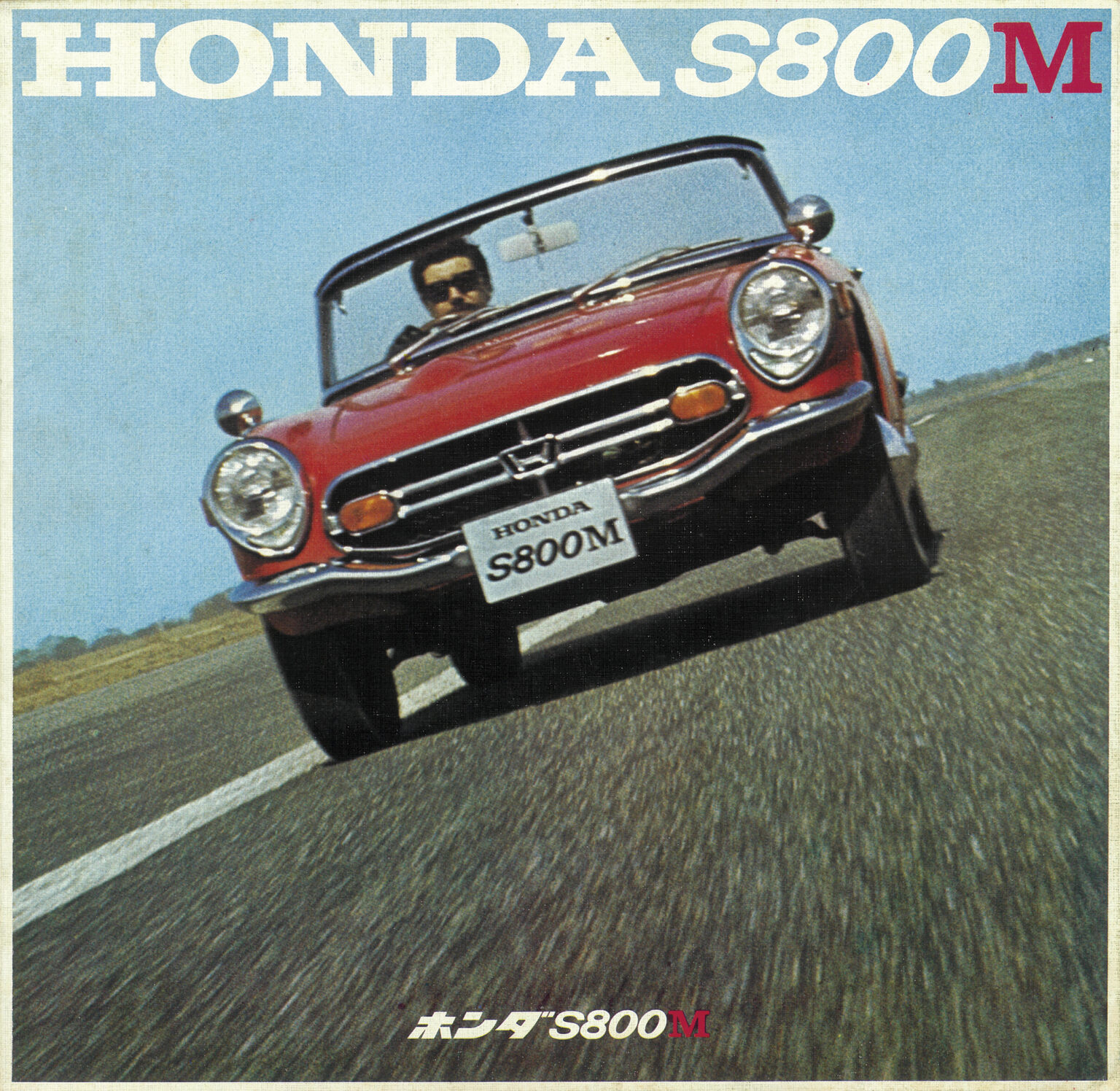
制作・企画者の思想と本田宗一郎の執念が宿る1966年式「ホンダ S800」
n
n
n
 n
n
n
n
n
n
n
n
 N
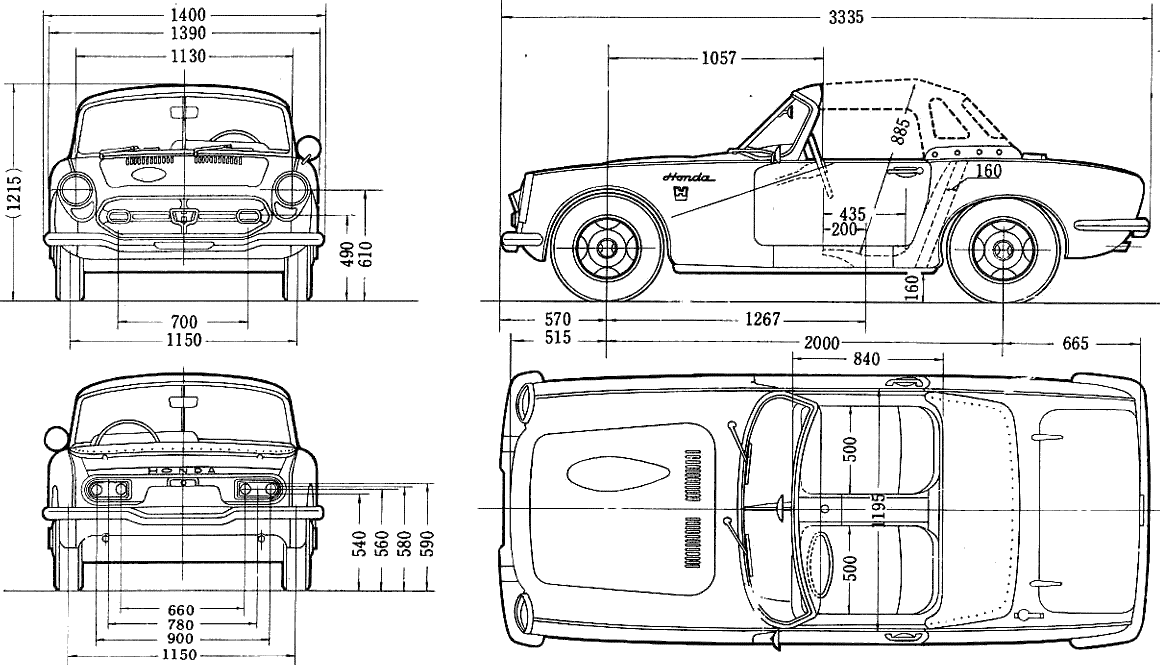
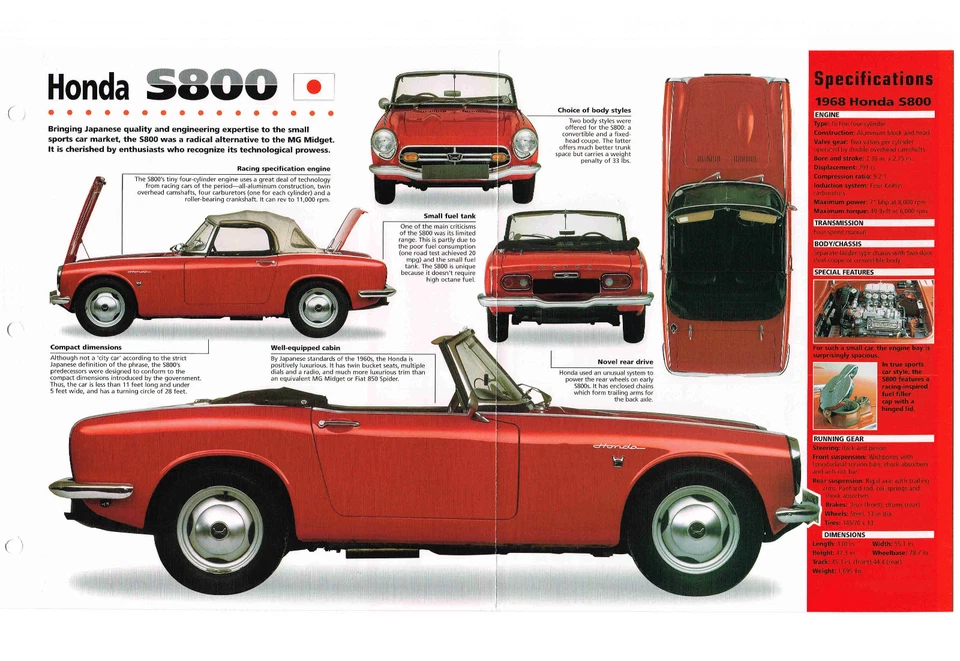
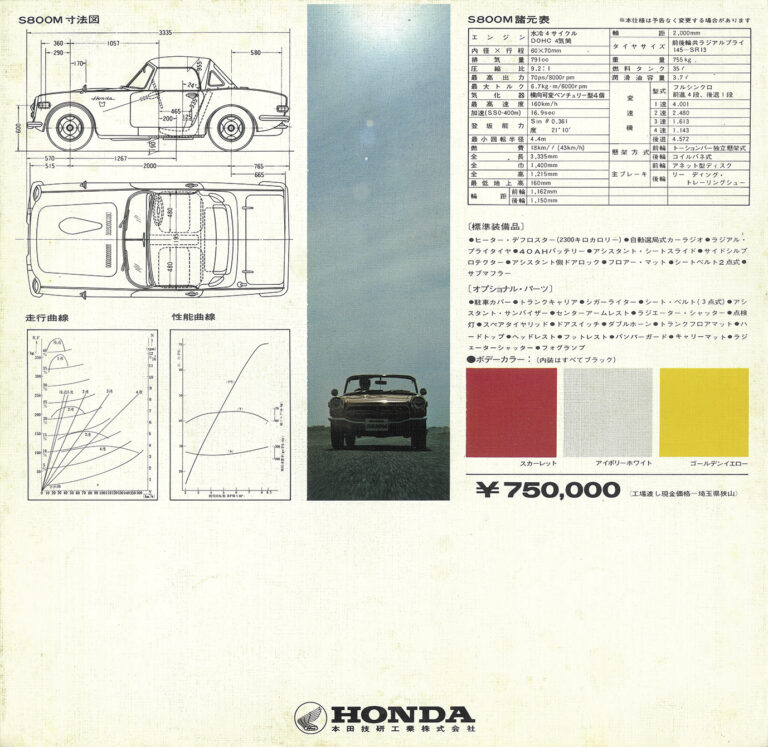
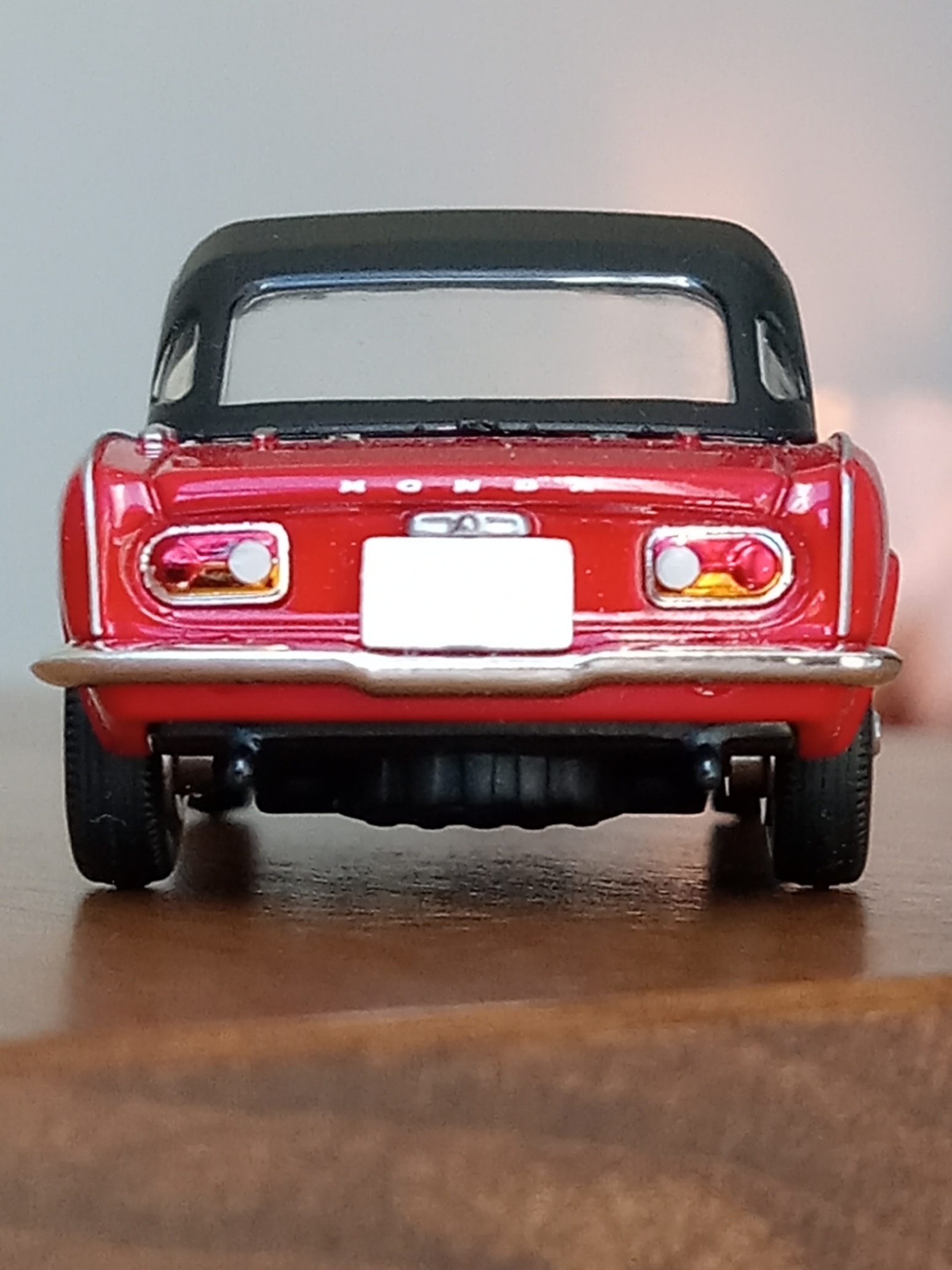
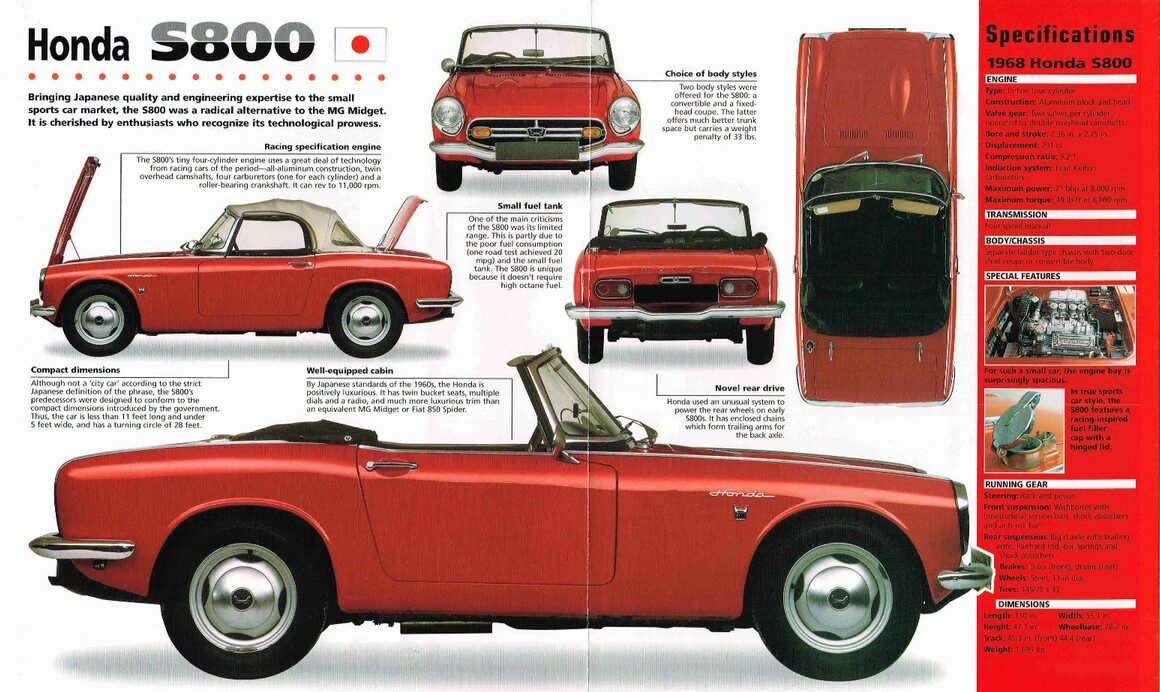
全長3,335mm、全幅1,400mmという現代の軽自動車よりもナローなサイズの中に、ロングノーズ・ショートデッキの古典的スポーツカーの黄金比を構築することは、極めて困難なパズルでした。しかし彼らは、フェンダーの抑揚やキャビンの位置をミリ単位でコントロールし、凝縮された塊感(ソリッドさ)を持つ独自のシルエットを作り上げました。
n
n
n
n
n
n
*象徴としての「パワーバルジ」:失敗をストーリーに変えた意匠
n
n
n
n
n
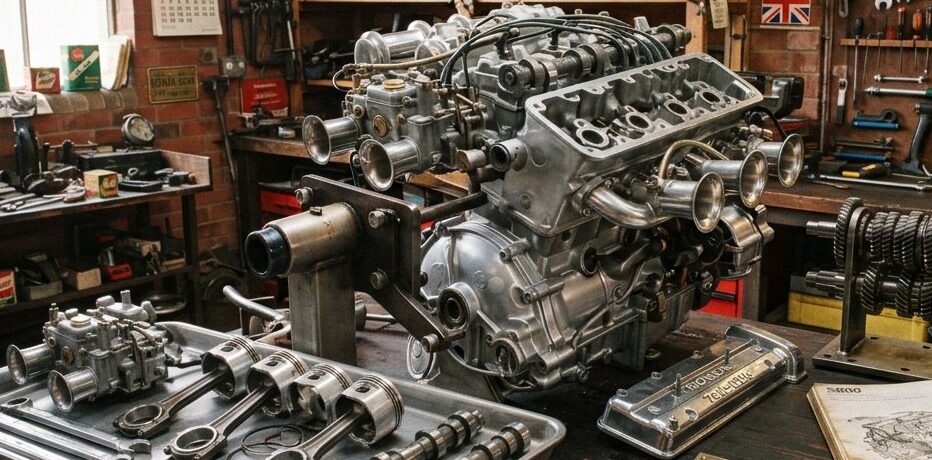
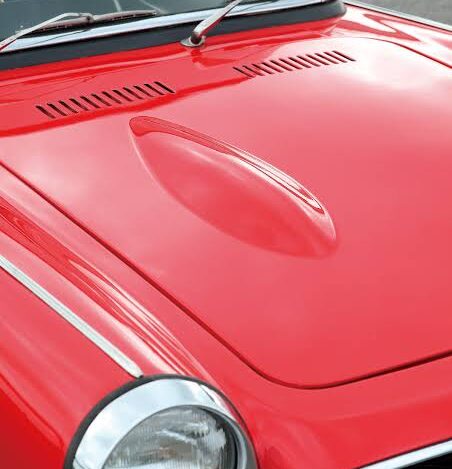
最終的に市販仕様では4連キャブレターへと変更されたため、このバルジは「中身が空っぽの膨らみ」として残ることになります。通常のメーカーであれば「形状をフラットに戻せ」となるところですが、宗一郎や企画陣はこれにゴーサインを出しました。なぜなら、この非対称の隆起こそが、内部に「凄まじい心臓部(AS800E型・DOHCエンジン)が潜んでいる」という事実を、何よりも雄弁に物語る「技術の記号」として機能することを見抜いていたからです。
n
n
n
n
n
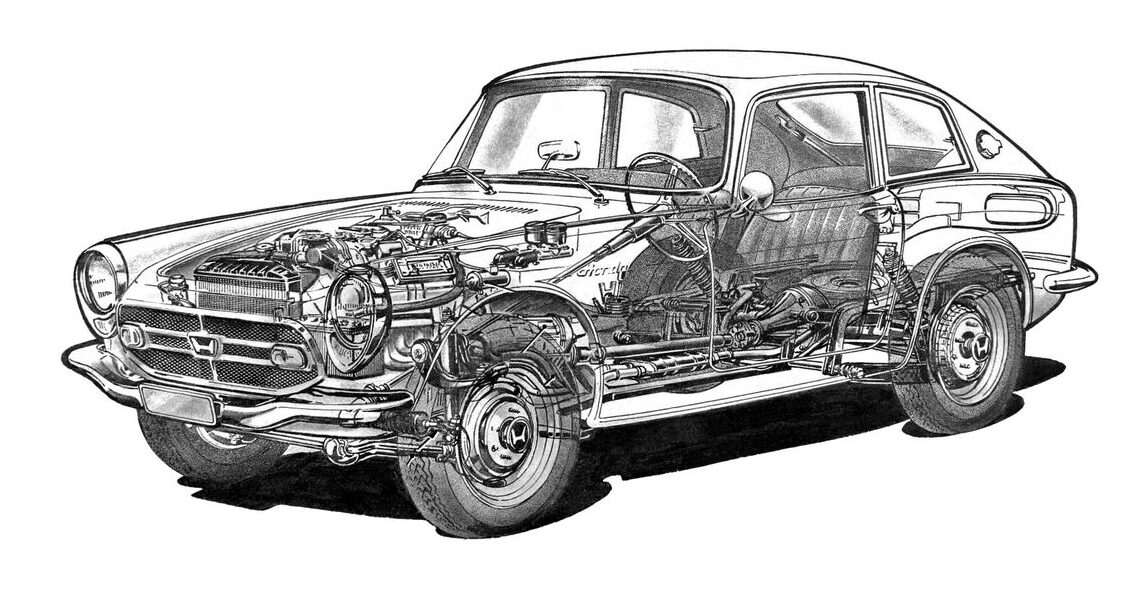
後に一般的なライブアクスル(リジッドサスペンション)方式へと変更されますが、この初期のチェーンドライブがもたらした「コンパクトに、かつ強靭にリヤ周りを仕立てる」というパッケージング思想は、スタイリングの自由度を高め、あのタイトで美しいリヤフェンダーの絞り込みを可能にしました。
ウッドステアリングの奥に整然と並ぶメーター群、カチッと精緻に決まるショートストロークのシフトレバー。装飾を徹底的に削ぎ落とし、ドライバーと機械のインターフェース(接触面)の品質を高めることにリソースを集中させています。これは、現代のUI/UXデザインに通じる「情報の整理とユーザー体験の最適化」そのものです。
n
n
nn
1966年式ホンダS800は、「本田宗一郎という稀代の技術者が求めた機能の絶対性」と、「岩倉信弥氏ら若きデザイナーが追い求めた国際基準のエレガンス」が、高次元で妥協なく融合したプロダクトです。
n
n
 n
m
n
n
n
こぼれ話:S800のクーペモデルのパッケージングの秘密
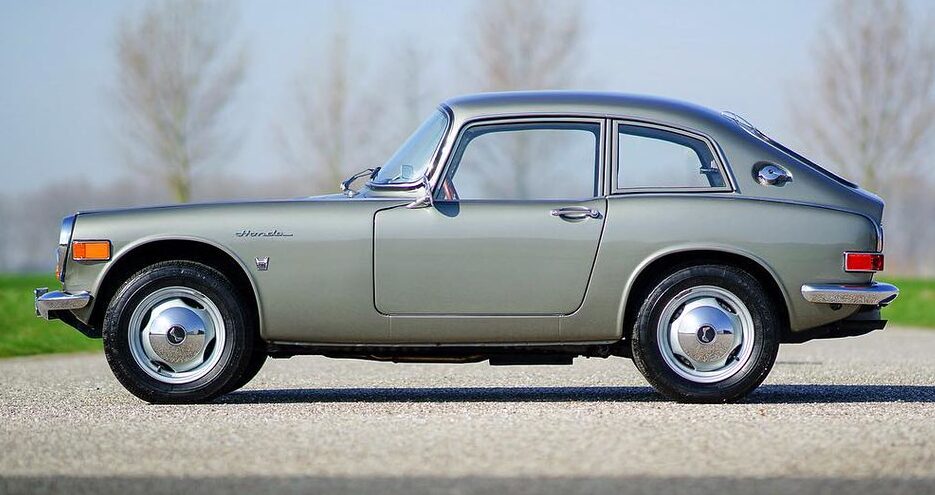
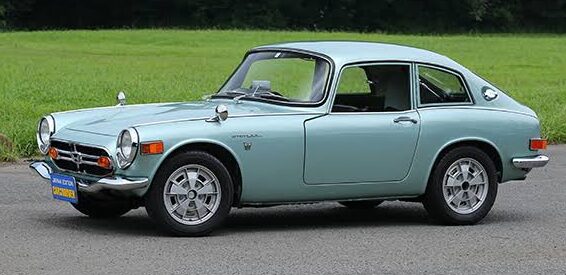
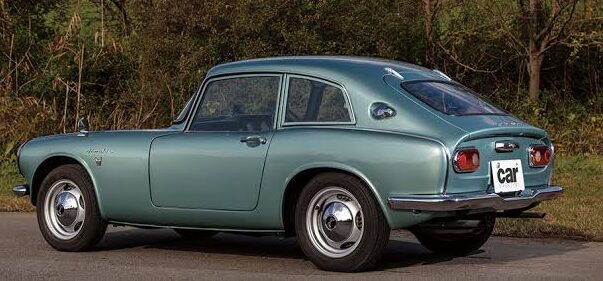
ホンダS800(エスハチ)の「クーペモデル」は、1960年代のライトウェイトスポーツ界において、パッケージングの常識を覆した記念碑的なモデルです。
n
n
 n
n
n
これは、現代では当たり前となった「3ドア・ハッチバック」の先駆けとなる、当時としては極めて先進的で大胆なパッケージングでした。英国の高級車「アストンマーティン・DB6」など一部の例外を除き、この小さなライトウェイトスポーツのクラスで実用的なバックドアを設けたのは、ホンダの企画力による大金星でした。
n
n
しかし、この広さを実現するために、岩倉氏らデザイナーと設計陣は血の滲むようなミリ単位の削り出しを行いました。
n
- 燃料タンクの平滑化:
荷室をフラットにするため、通常は立体的に配置される燃料タンクを、床下に極限まで薄く、平らにしてレイアウトしました。
n - スペアタイヤの「斜め」配置:
小さなボディで荷室の深さを稼ぐため、スペアタイヤは床下に斜めに滑り込ませるように収納。外観からは全く見えない位置に隠し、ラゲッジの床面を限界まで下げました。
- 燃料タンクの平滑化:
n
n
n
n
n
- 鋭角なクォーターガラス:
サイドウインドウの後ろ(Cピラー部分)に、三角形の小さなクォーターガラスを配置しました。これが視線を後ろへと滑らかに誘導し、ルーフの「高さ」を目立たなくさせる視覚効果(錯視)を生んでいます。
n - 計算されたリヤフェンダーのボリューム:
ルーフに視線がいかないよう、あえてリヤフェンダーの「腰高な膨らみ」を強調。下半身にどっしりとした重心を置くことで、ルーフがキャビンを優しく包み込むような、低く引き締まったファストバックの黄金比を作り出しました。
n
N
n
- 鋭角なクォーターガラス:
n
n
n
n
#三面写真:
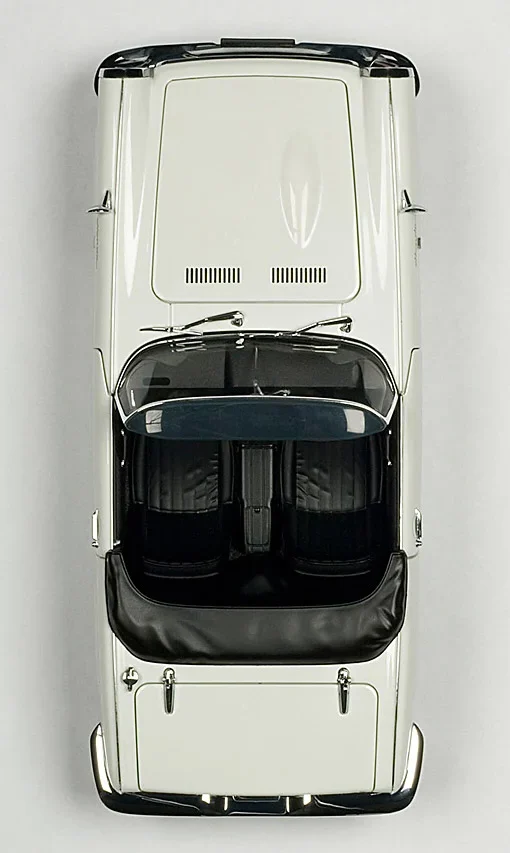
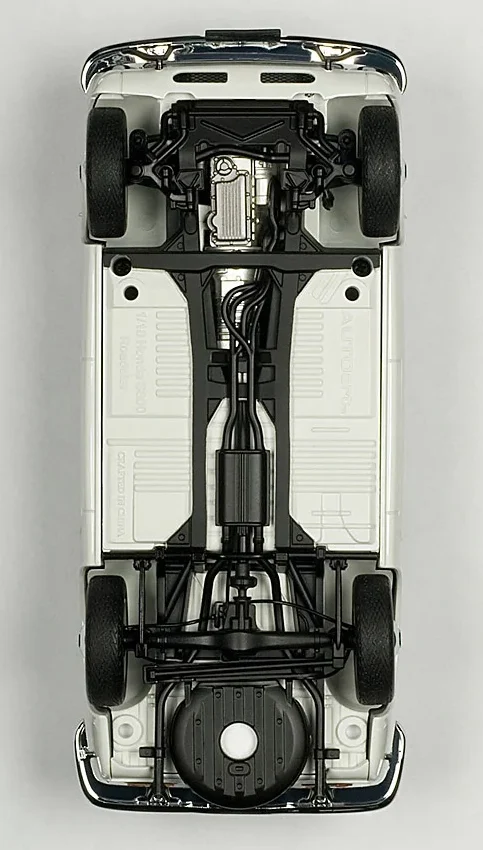
n
n
n
n
n
n
n
n
n
n
n
n
n
n
n
n
n
n
n
n
n
n
n
n
n
n
n
n
n
n
n
n
n
n
n
n
n
n
n
n
n
n
n
n
N
#主要諸元:
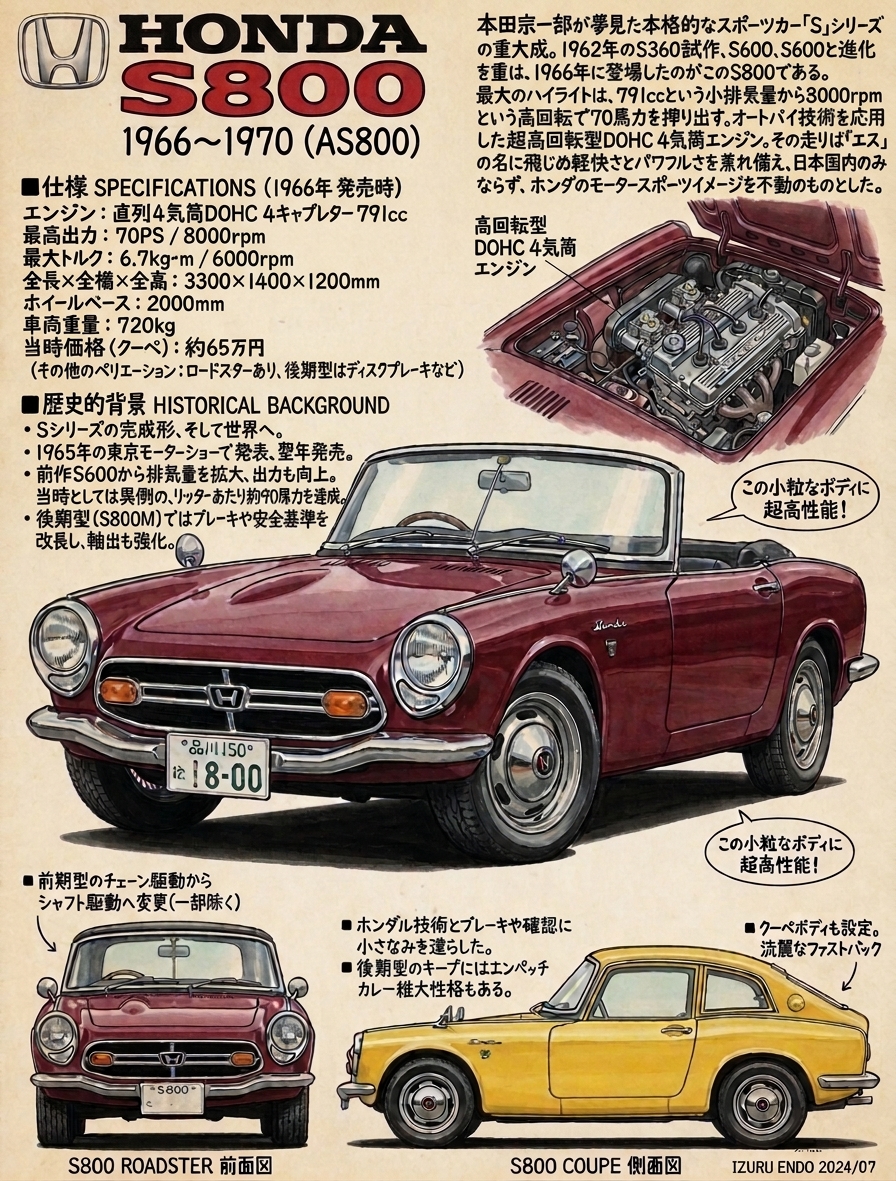
- エンジン型式:AS800E型
- 総排気量:791 cc
- エンジン型式: 水冷4サイクル直列4気筒DOHC
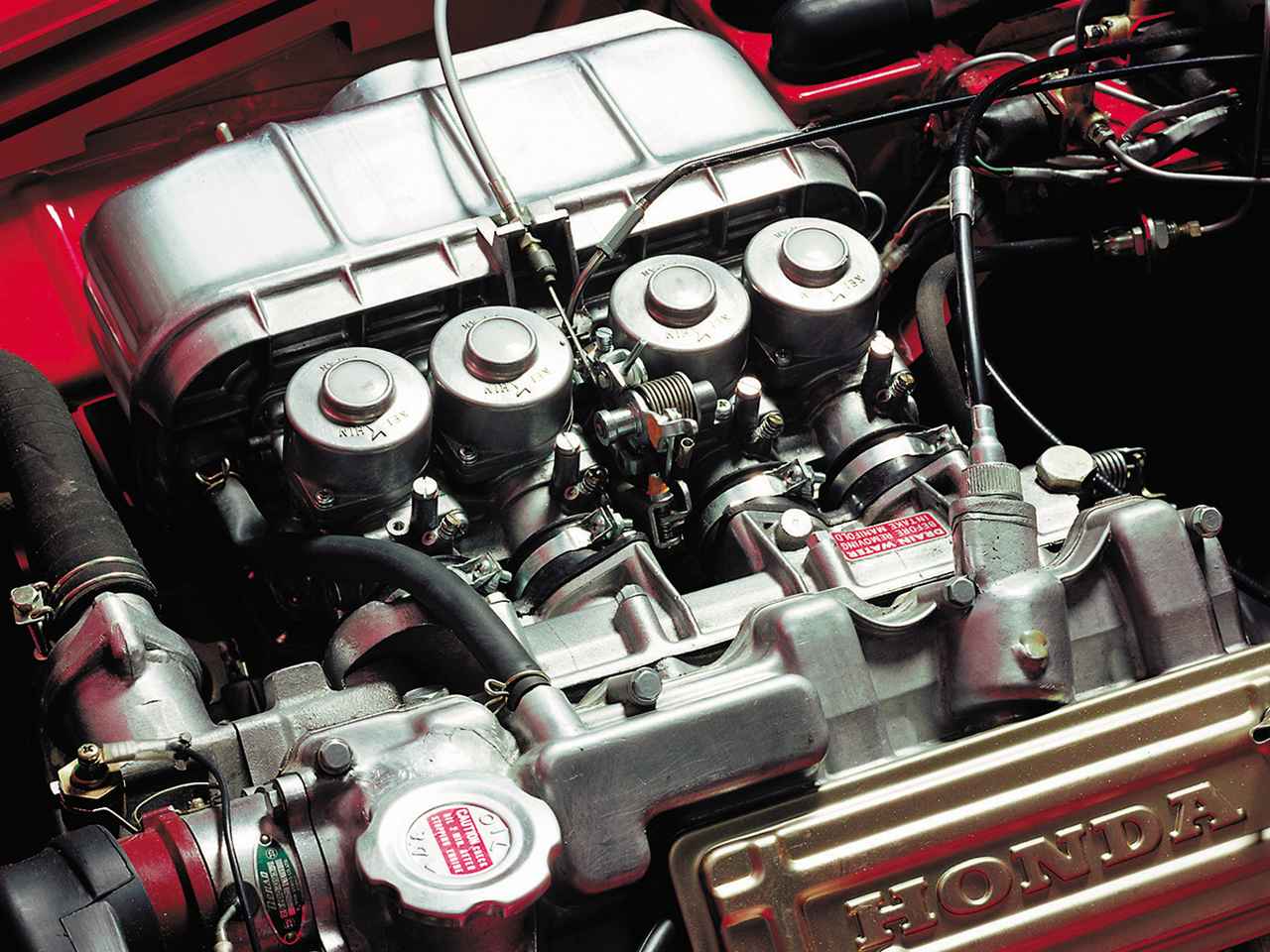
- 燃料供給装置:京浜製 横向可変ベンチュリー型(4連キャブレター)
- 最高出力 : 70 PS / 8,000 rpm
- 最大トルク:6.7 kg·m / 6,000 rpm
- 最高速度:160 km/h
- 駆動方式:FR(フロントエンジン・後輪駆動)
- 定員:2名
- 車体形式:2ドア・ロードスター
- ホイールベース:2,000 mm
- 全長:3,335 mm
- 全幅:1,400 mm
- 全高:1,215 mm(S800M)
- 車両重量:
755 kg(S800M)
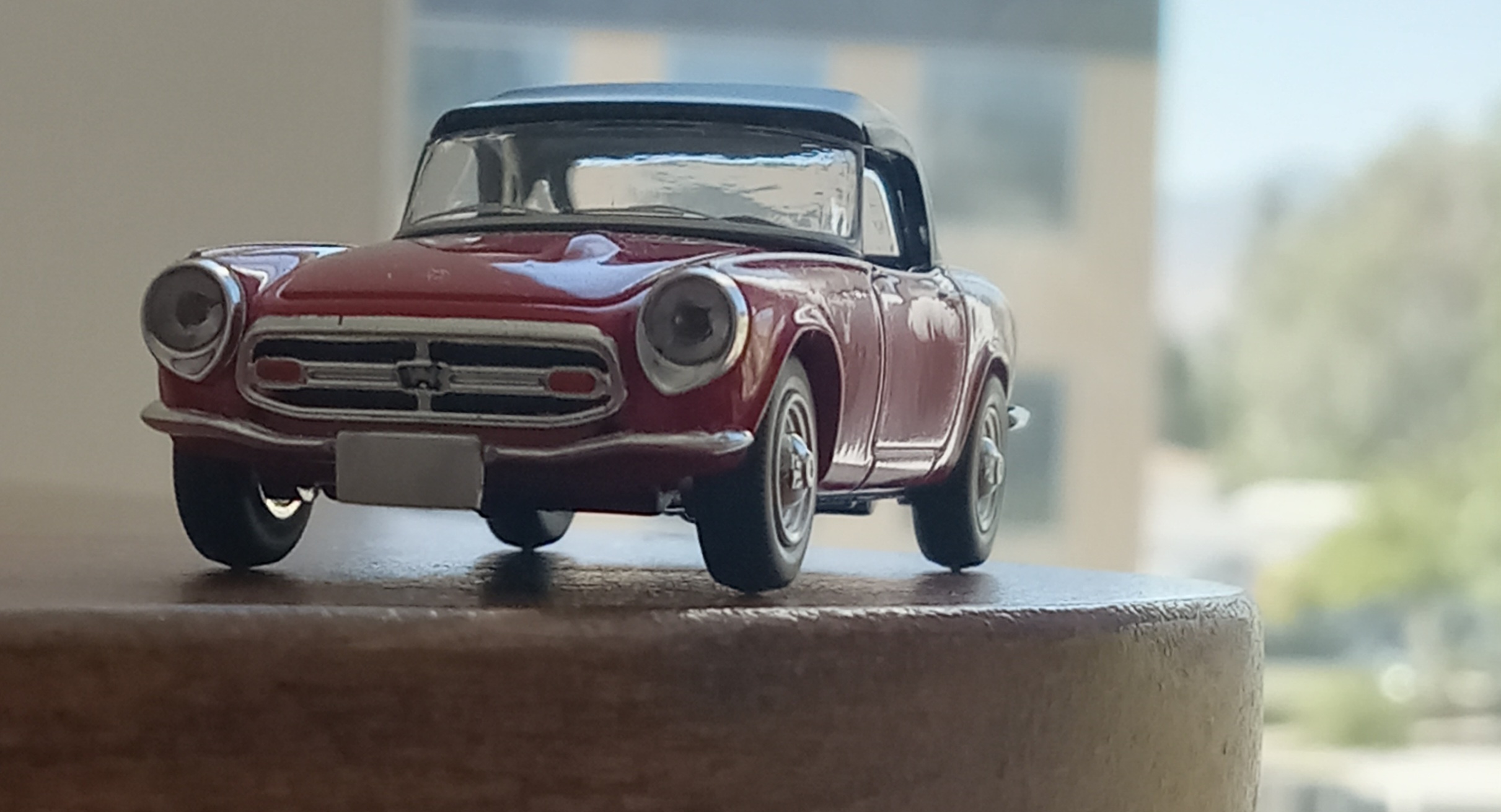
*外観デザインの特徴:『凝縮感と均衡の極致』
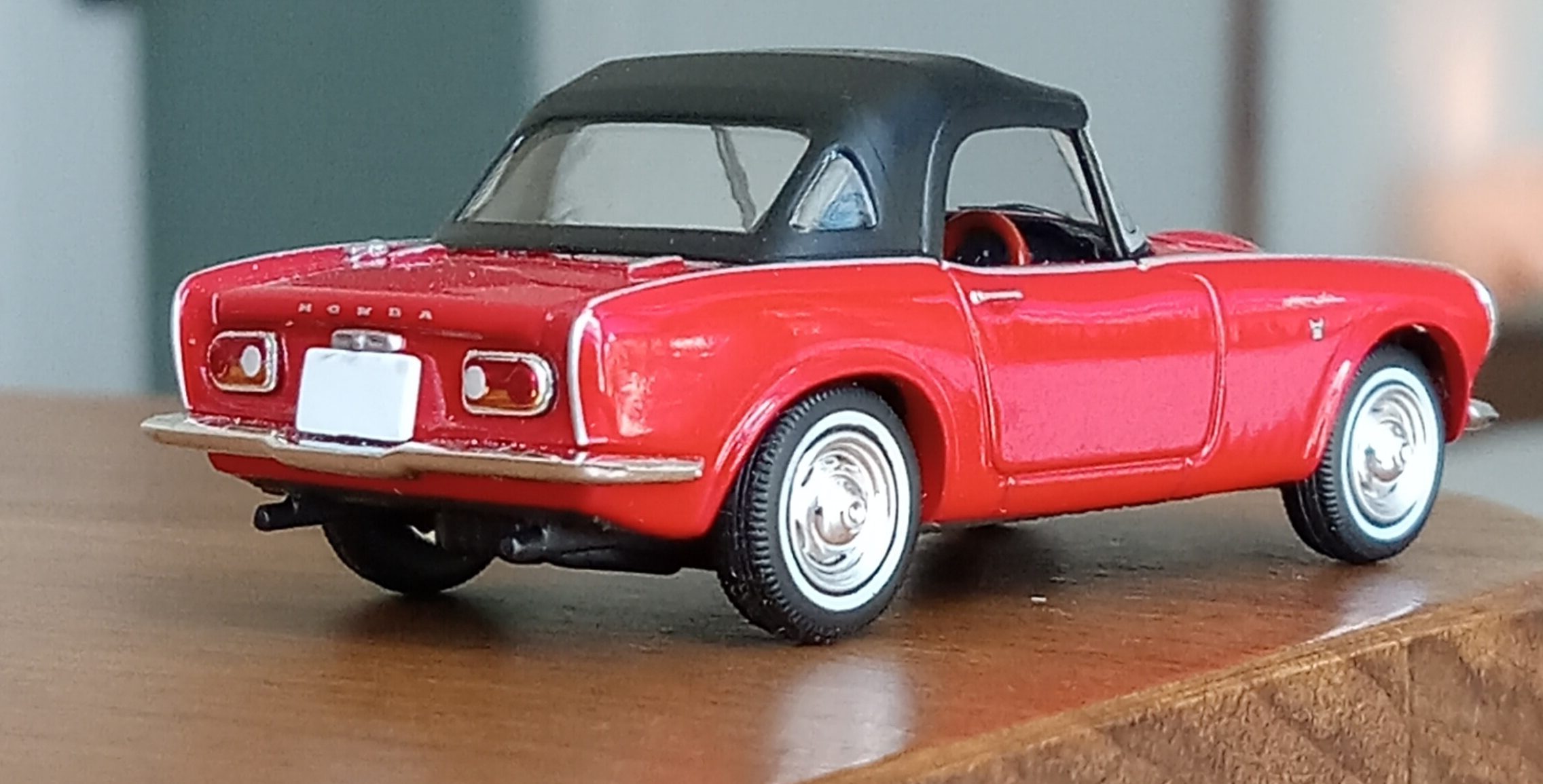
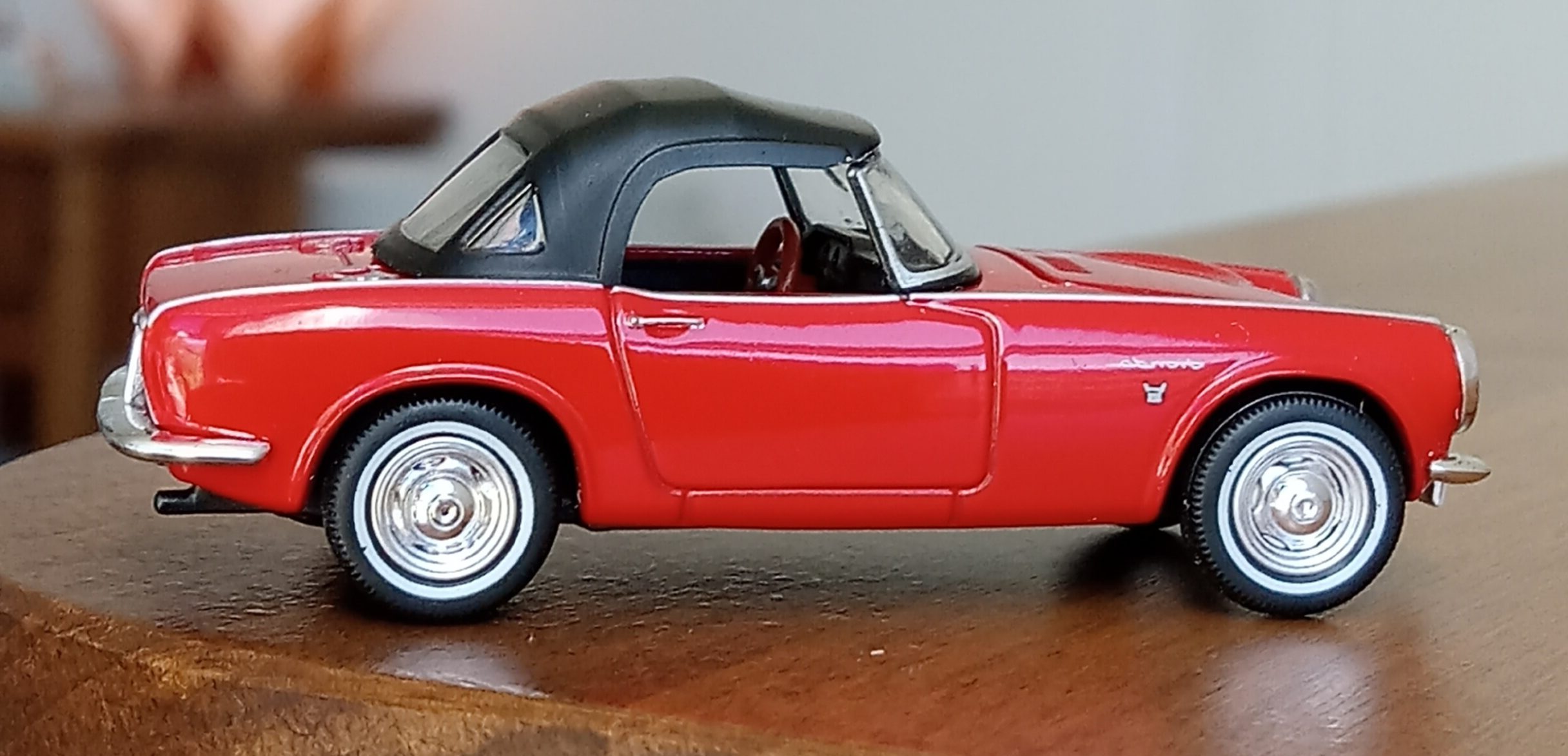
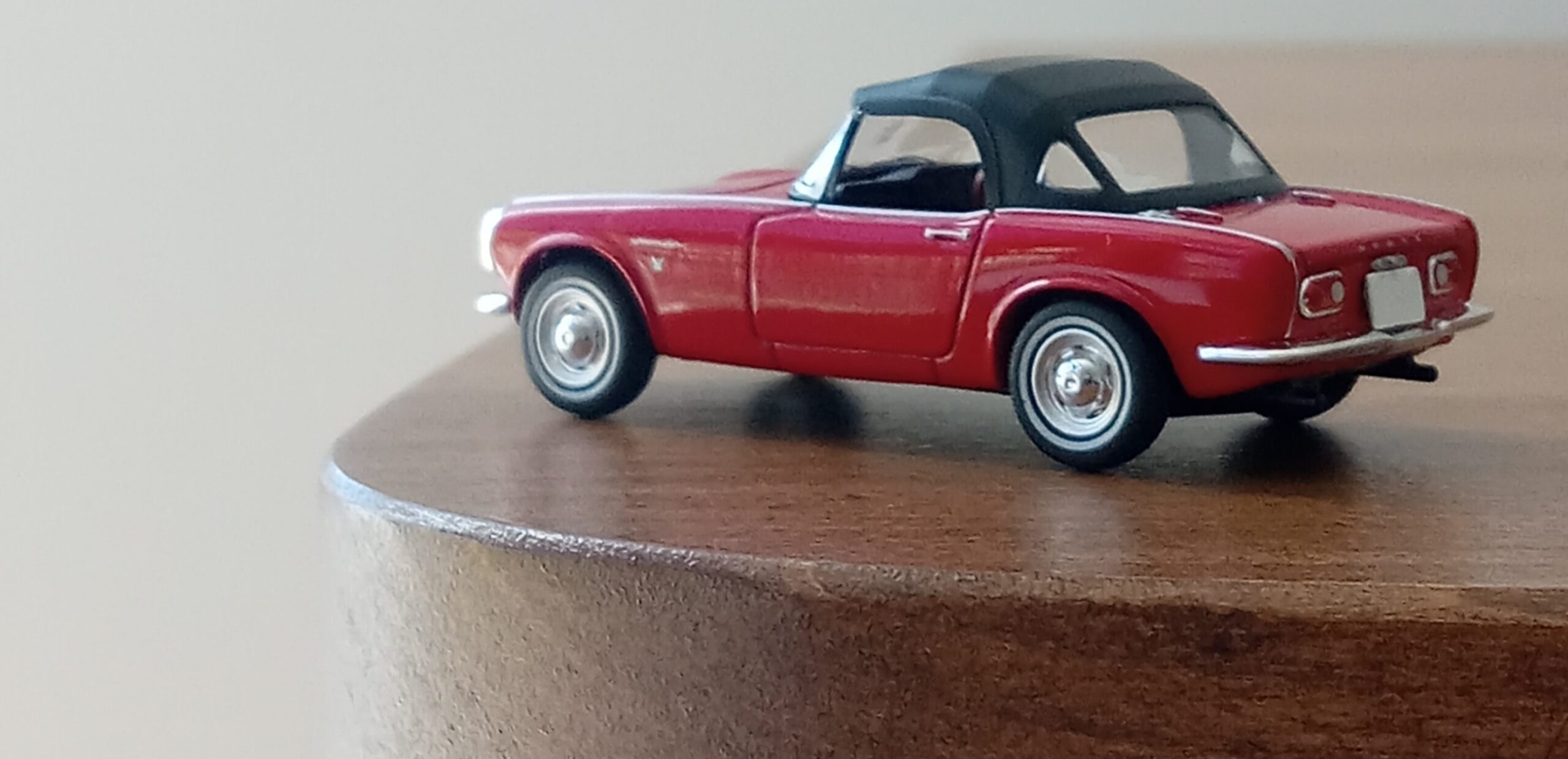
私たち、模型好きの常套句:
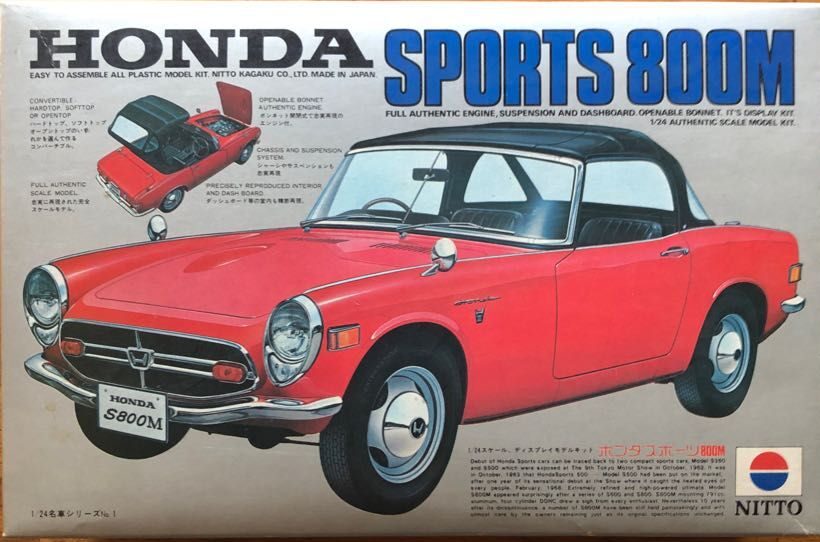
【小さいのに精密!】
私から、
この褒め言葉を一身に集める名車こそ、
【エスハチ】です。
そんな精密模型のような傑作車、
エスハチの外観デザインの特徴を、
独断と偏見で、5点あげて
詳しく見て行きましょう!
n
1:大きさを抜きにしても、稀に見ぬほど完璧な均衡を保つ、立体造形としての全体像、そのしなやかさと、力強さの同居。ーーーー>突き抜けた派手なグラフィック、抑揚ある面構成、視覚的マジックなどを駆使することなく、この類まれな均整バランス感を達成
2:【1】で説明された、安定感に全振りした立体造形にスポーツカーの動き、方向性を与える、完璧な『ロングノーズ&ショートデッキ』の引き絞られた弓矢状態のFRプロポーションーーー>フロント車軸はエンジン先端よりかなり前にあります、それにもかかわらず、リアのオーバーハングはかなり大きいです。
3:小さいサイズにもかかわらず、実際以上のスタンス感や、安心感を生む、ヘッドライトの断面からリアフェンダーまで続くナイフエッジ的突起(独立フェンダー時代の名残?)ーーー>あらゆる角度からの見た目の安定感と、威厳を作り出しています。
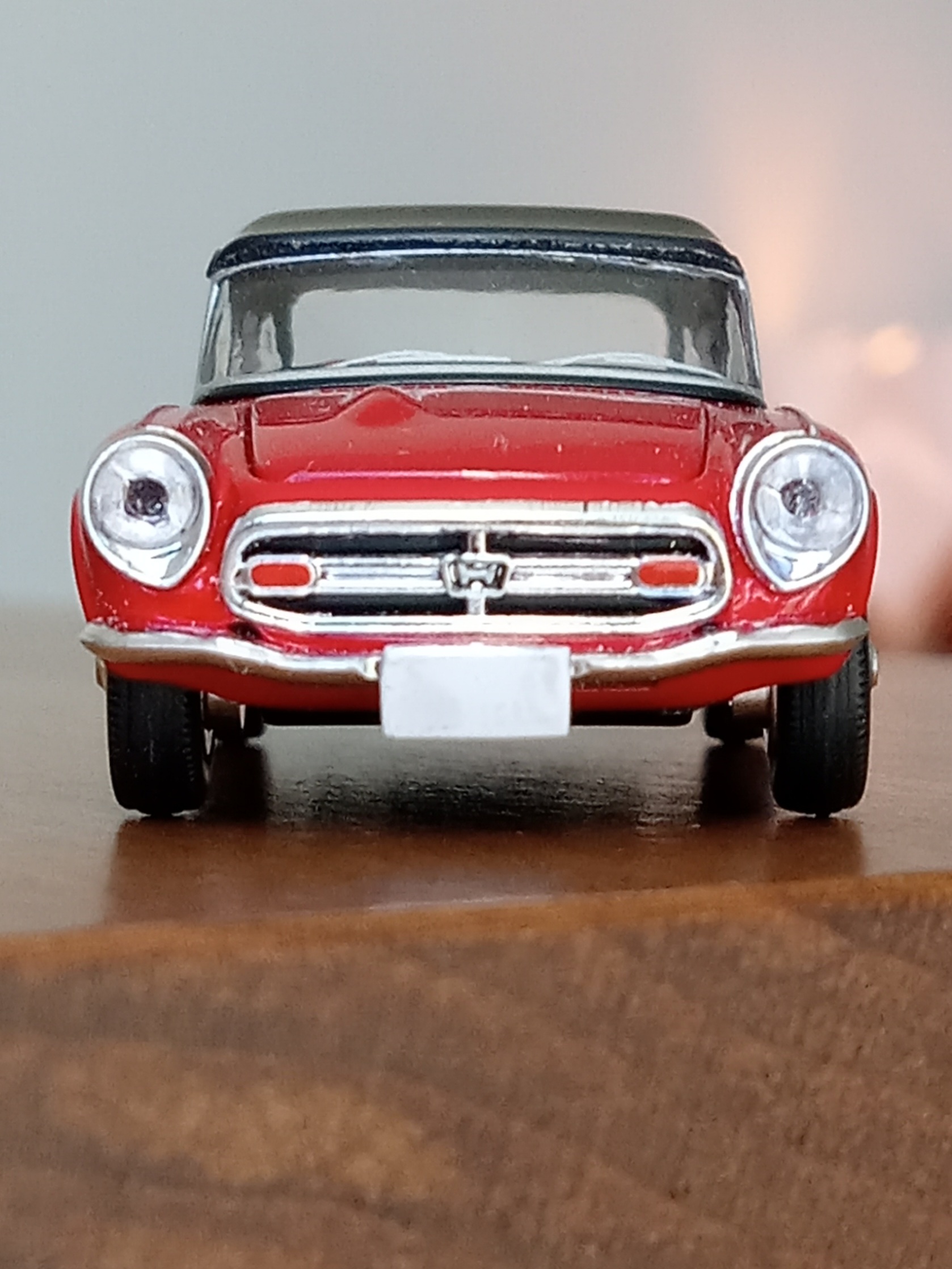
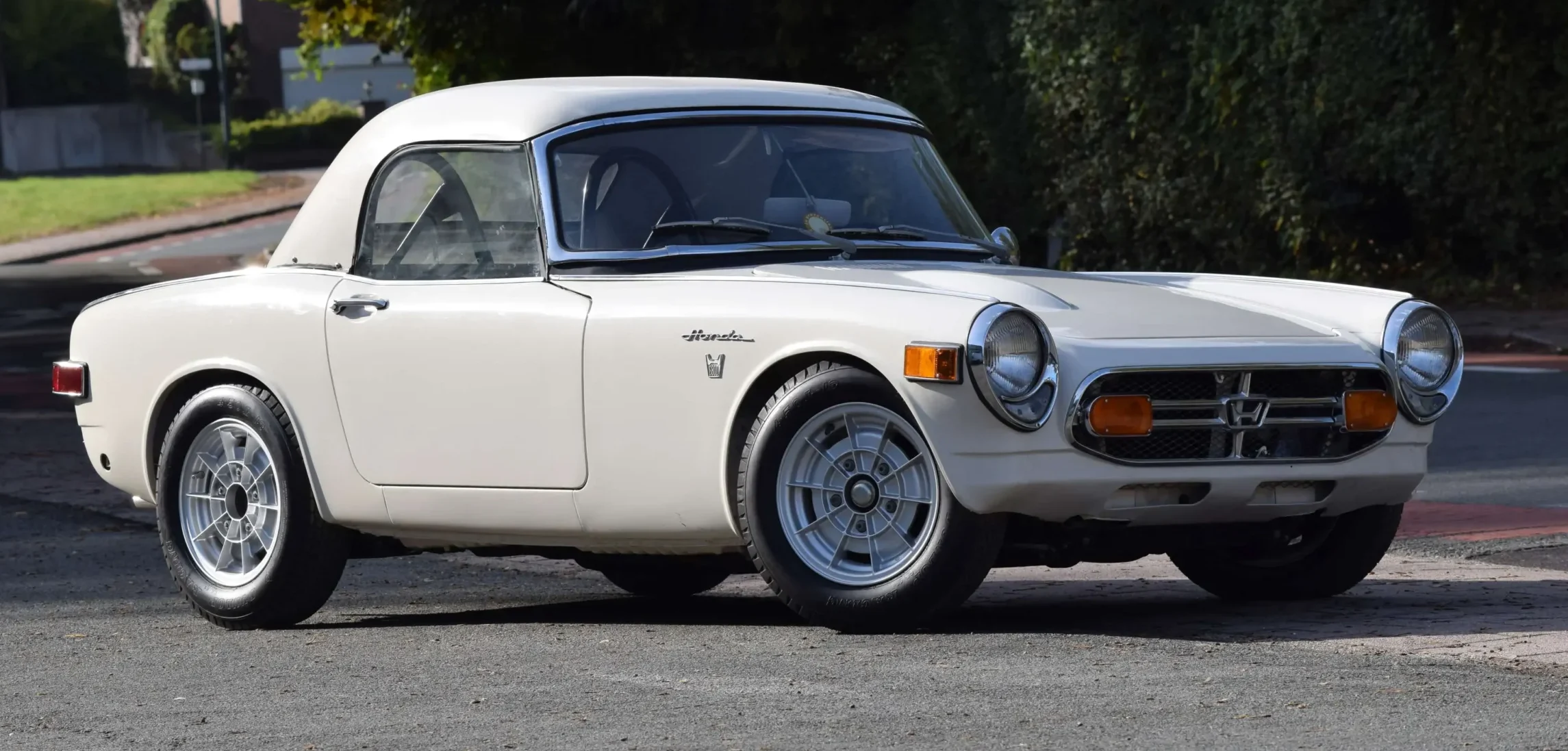
4:他の部分と違い、少し怒っているような『吠える柴犬』の顔みたいなフロントフェイシアのデザインーーー>S6からの移行時にさらに威厳を加えた「S8の怒りんぼ顔」
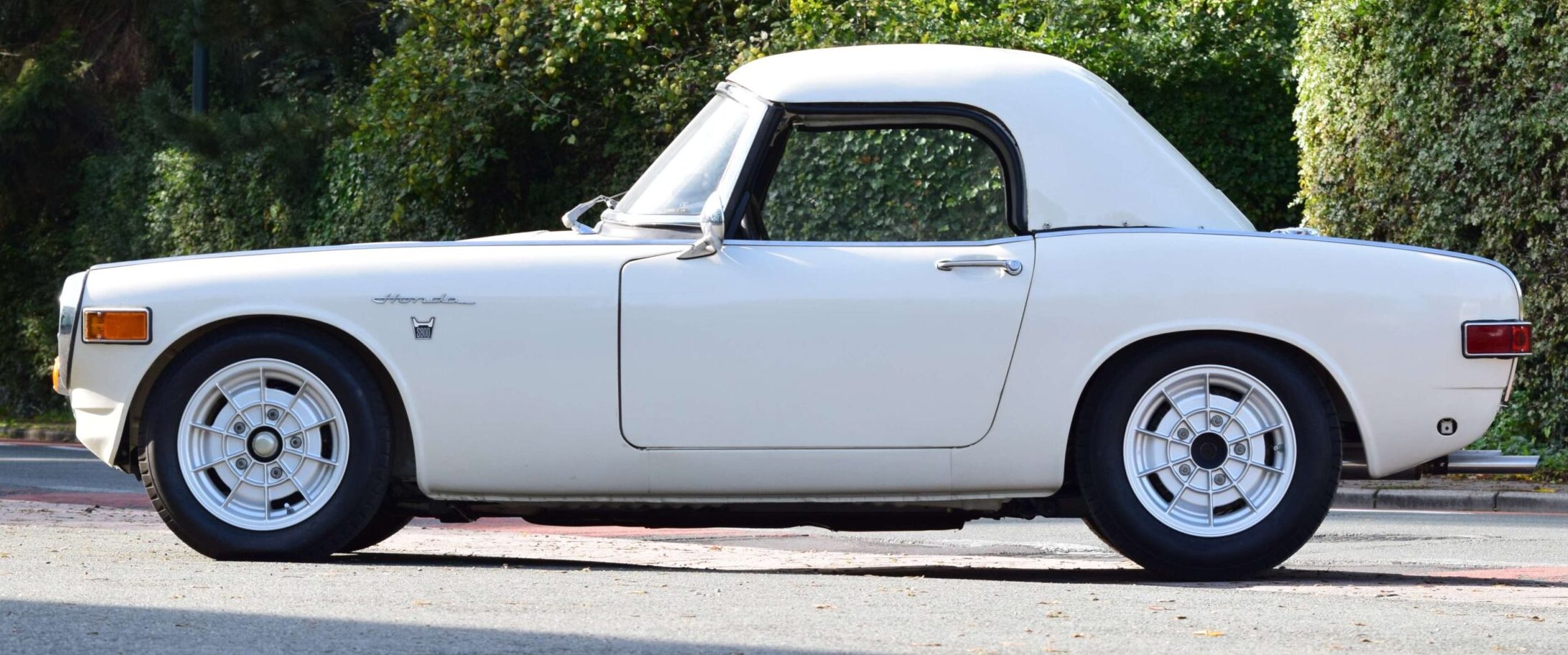
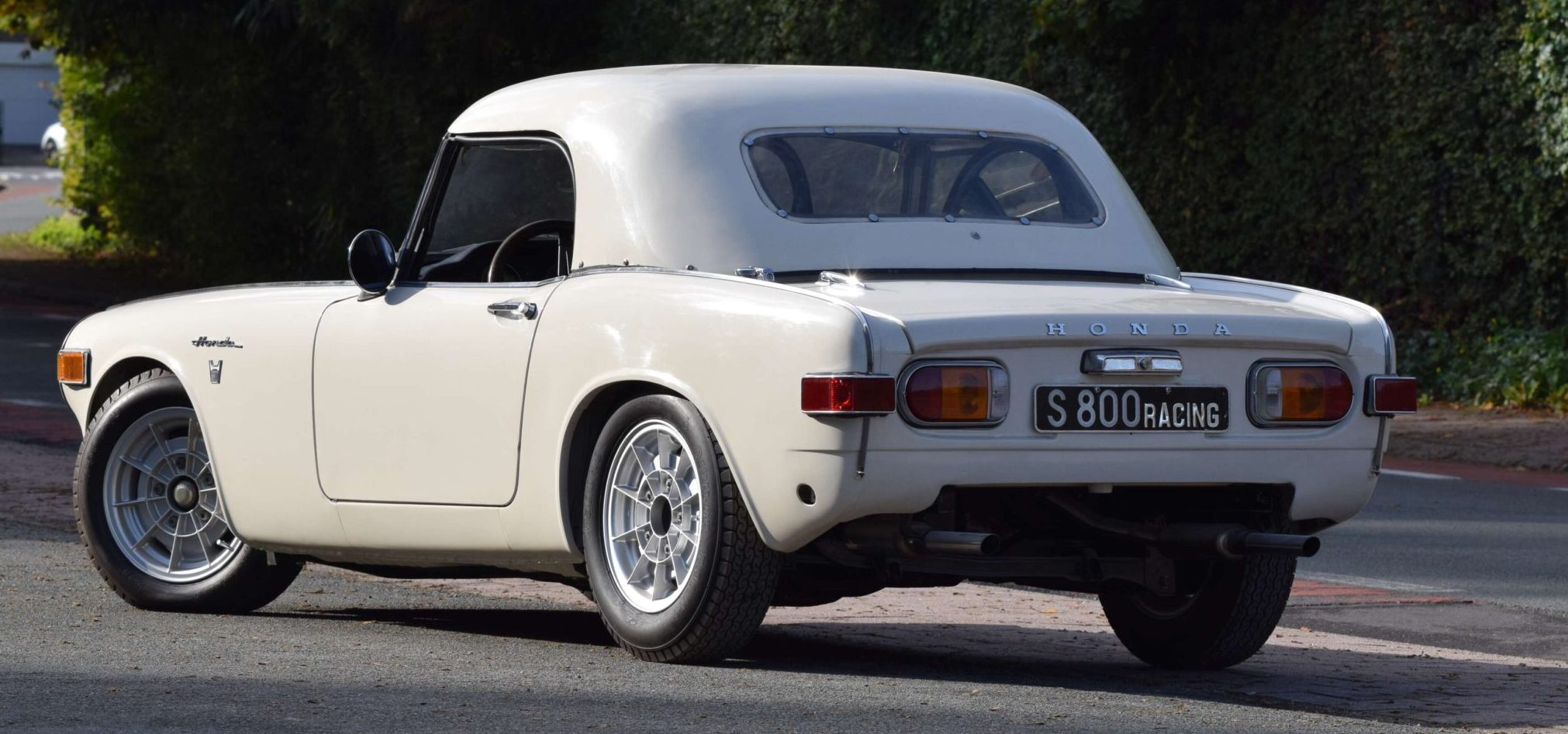
5:『幌を上げた状態の方がかえって、スピード感がみなぎる』英国ロードスターの定石をまもった幌のサイズ、形状に対するこだわりーーー>レースバージョンの丸みを持ったハードトップの造形も秀逸です。
はっきりとした5点んがあがりました!!
張り切って、
写真入りで解説します。
1:大きさを抜きにしても、稀に見ぬほど完璧な均衡を保つ、立体造形としての全体像、そのしなやかさと、力強さの同居。
(初代MX-5のような磨き上げられた「一分の隙も無い」程の永続性を持った立体=S800の時代を超えた定番的傑作感はー歌謡曲などの名曲が出た時、まるで『古くからあった名曲じゃないか?』と耳を疑う感じが蘇りますー)
ーーーー>突き抜けた派手なグラフィック、抑揚ある面構成、視覚的マジックなどを駆使することなく、この類まれな均整バランス感を達成
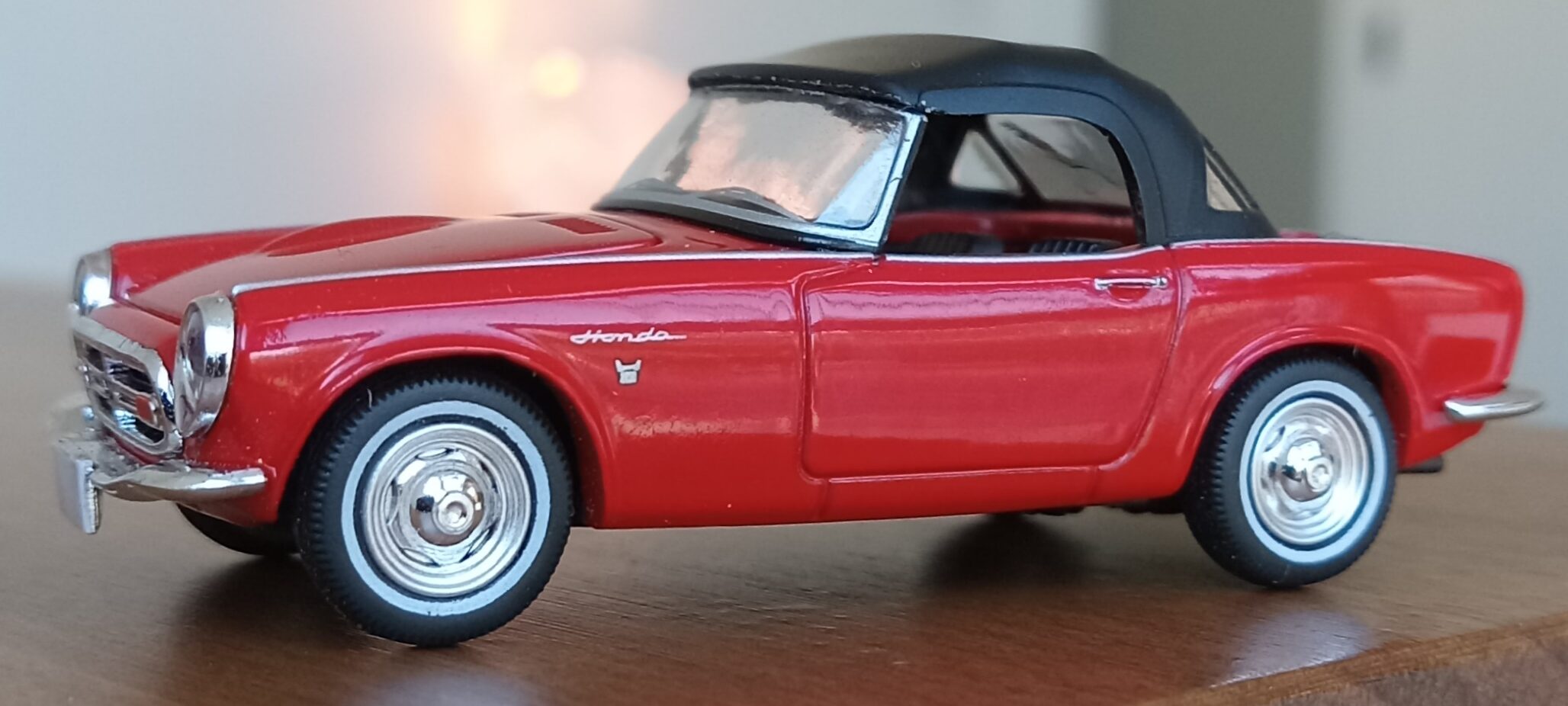
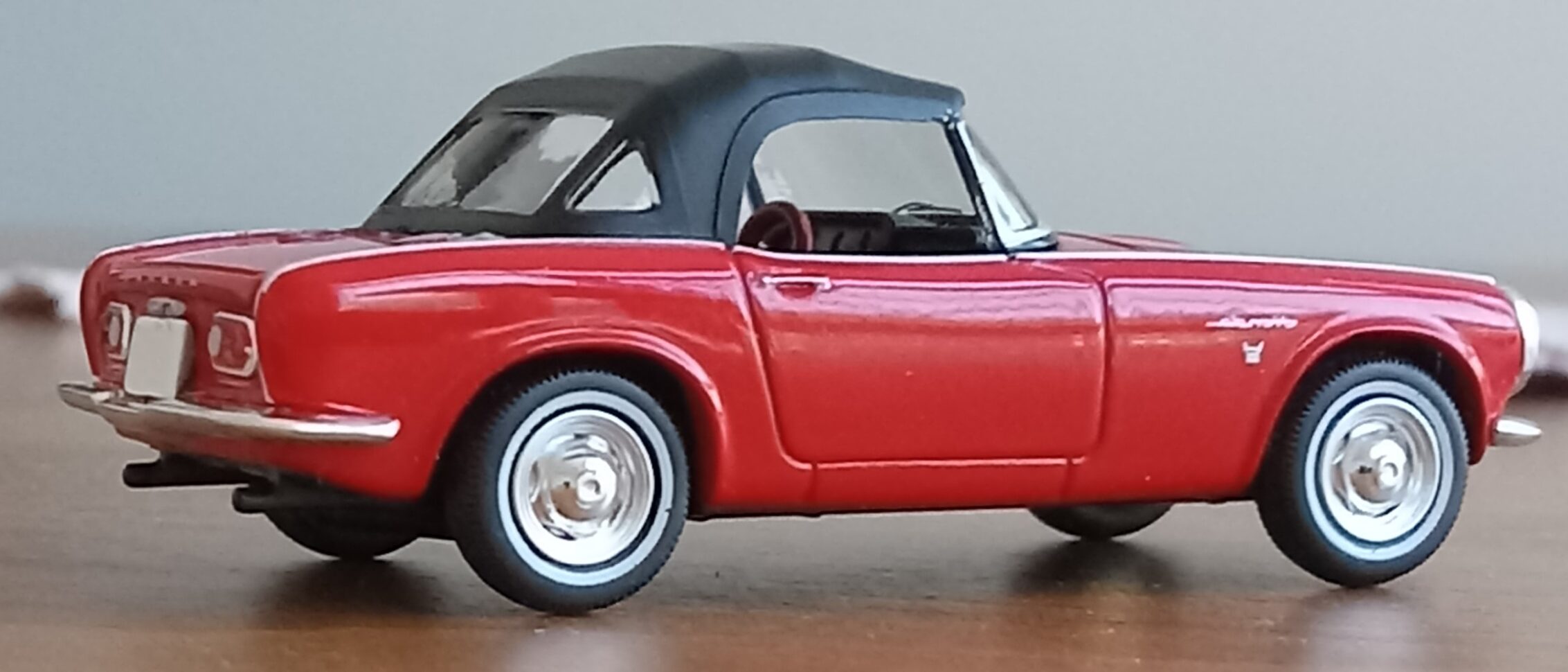
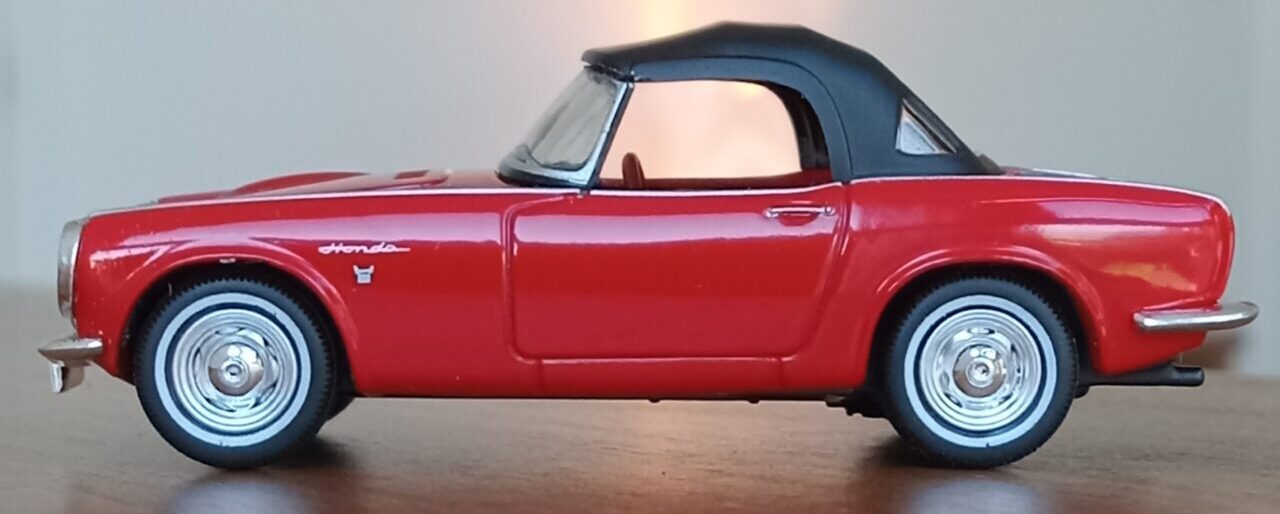
2:【1】で説明された、安定感に全振りした立体造形にスポーツカーの動き、方向性を与える、完璧な『ロングノーズ&ショートデッキ』の引き絞られた弓矢状態のFRプロポーション
ーーー>フロント車軸はエンジン先端よりかなり前にあります、それにもかかわらず、リアのオーバーハングはかなり大きいです。
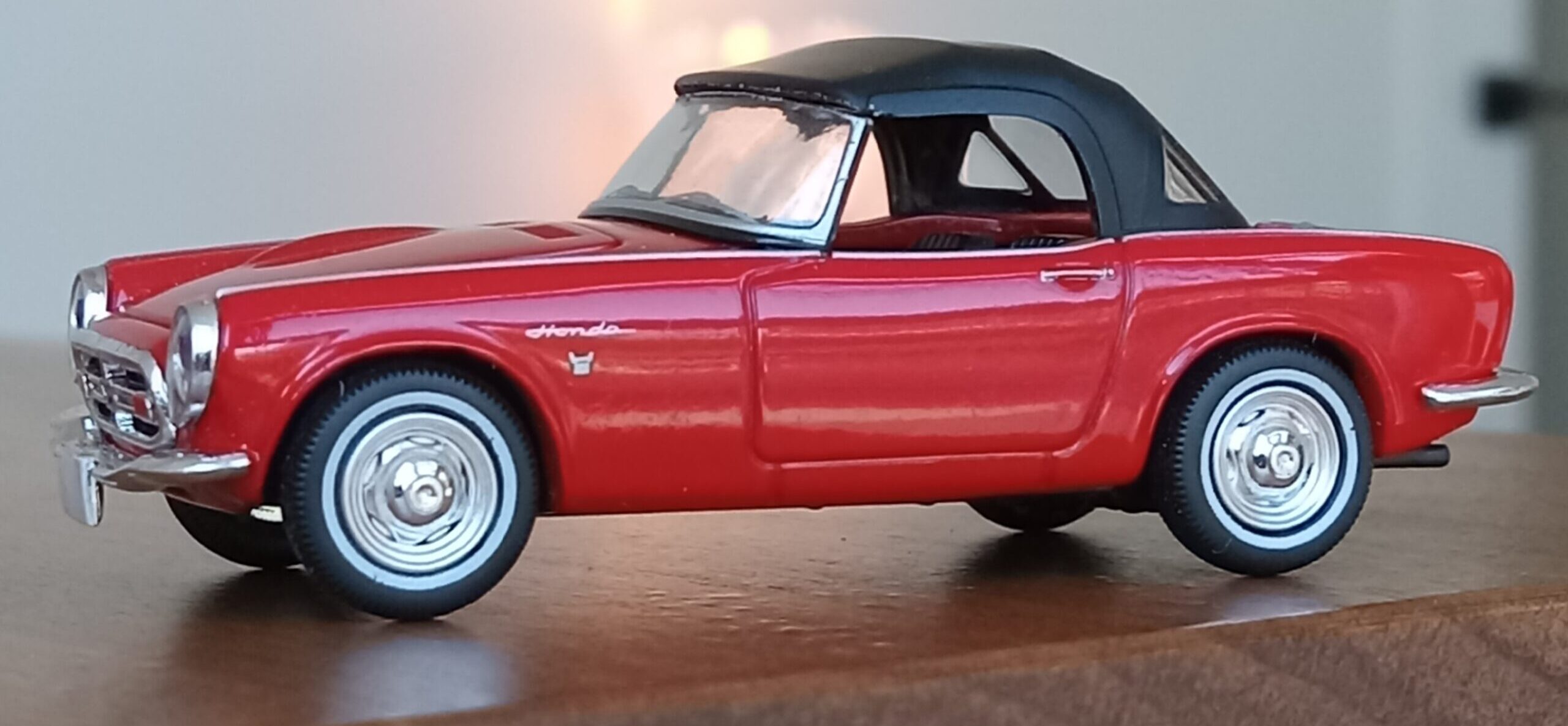
3:小さいサイズにもかかわらず、実際以上のスタンス感や、安心感を生む、ヘッドライトの断面からリアフェンダーまで続くナイフエッジ的突起(独立フェンダー時代の名残?)
ーーー>あらゆる角度からの見た目の安定感と、威厳を作り出しています。
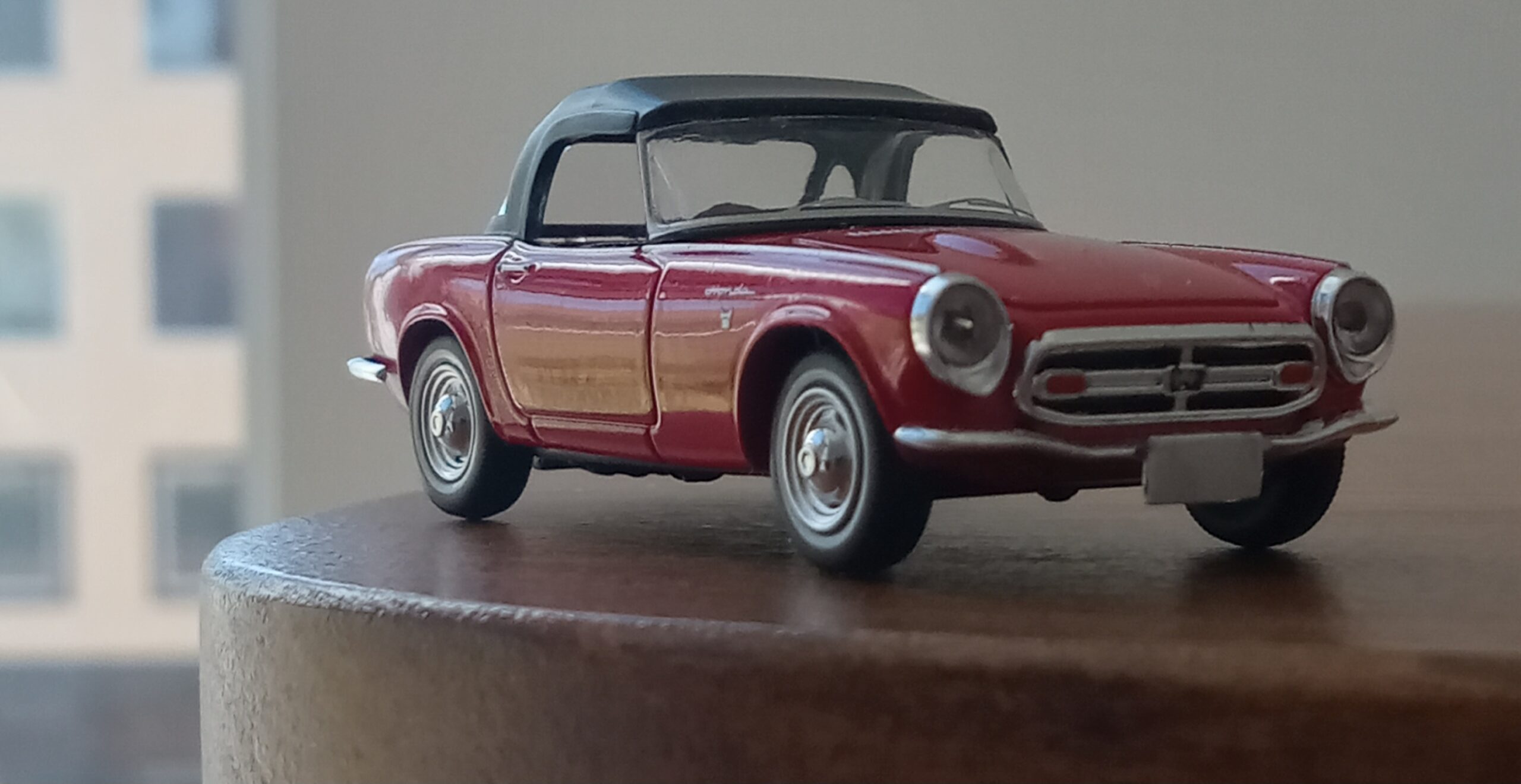
4:他の部分と違い、少し怒っているような『吠える柴犬』の顔みたいなフロントフェイシアのデザイン
ーーー>S6からの移行時にさらに威厳を加えた「S8の怒りんぼ顔」
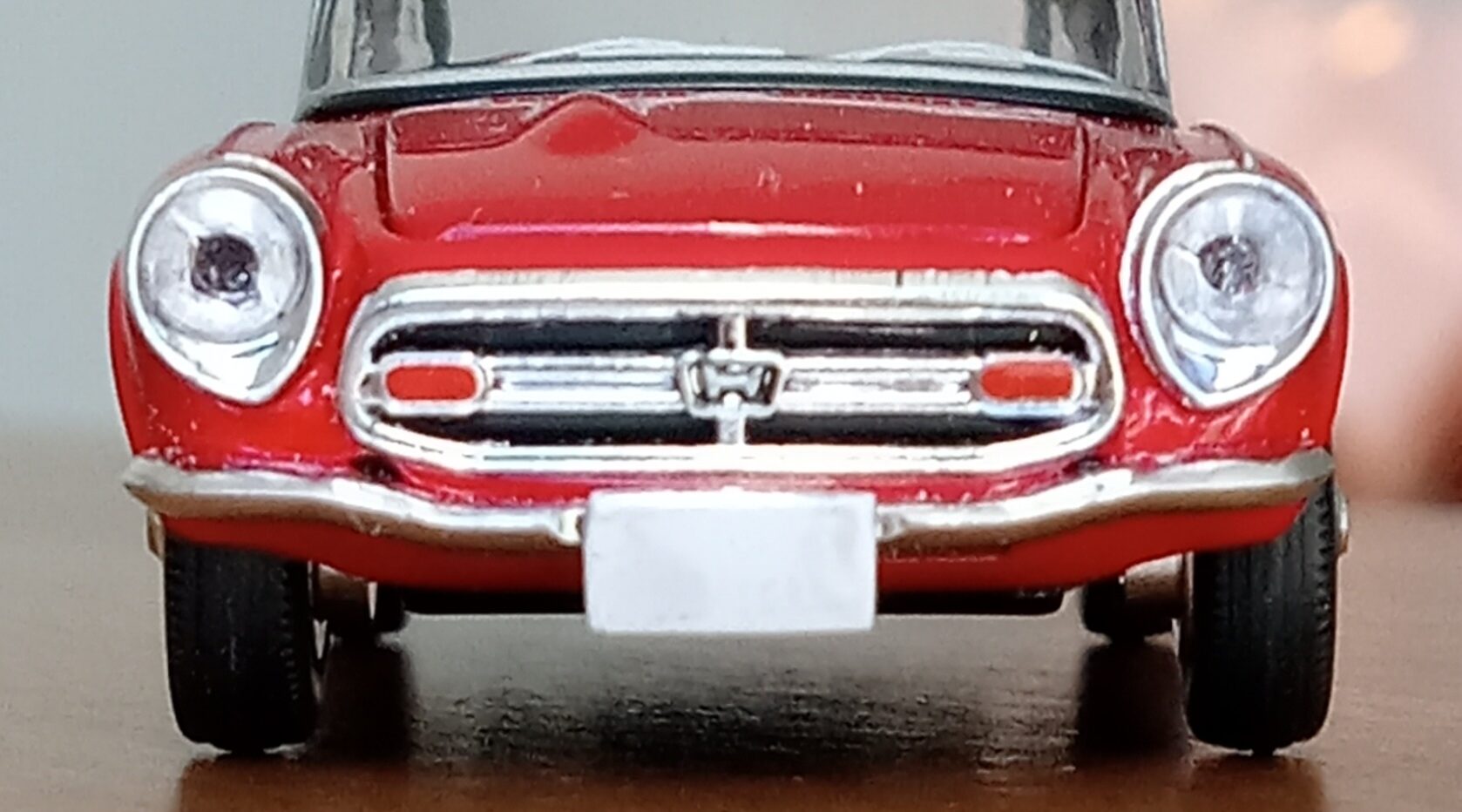
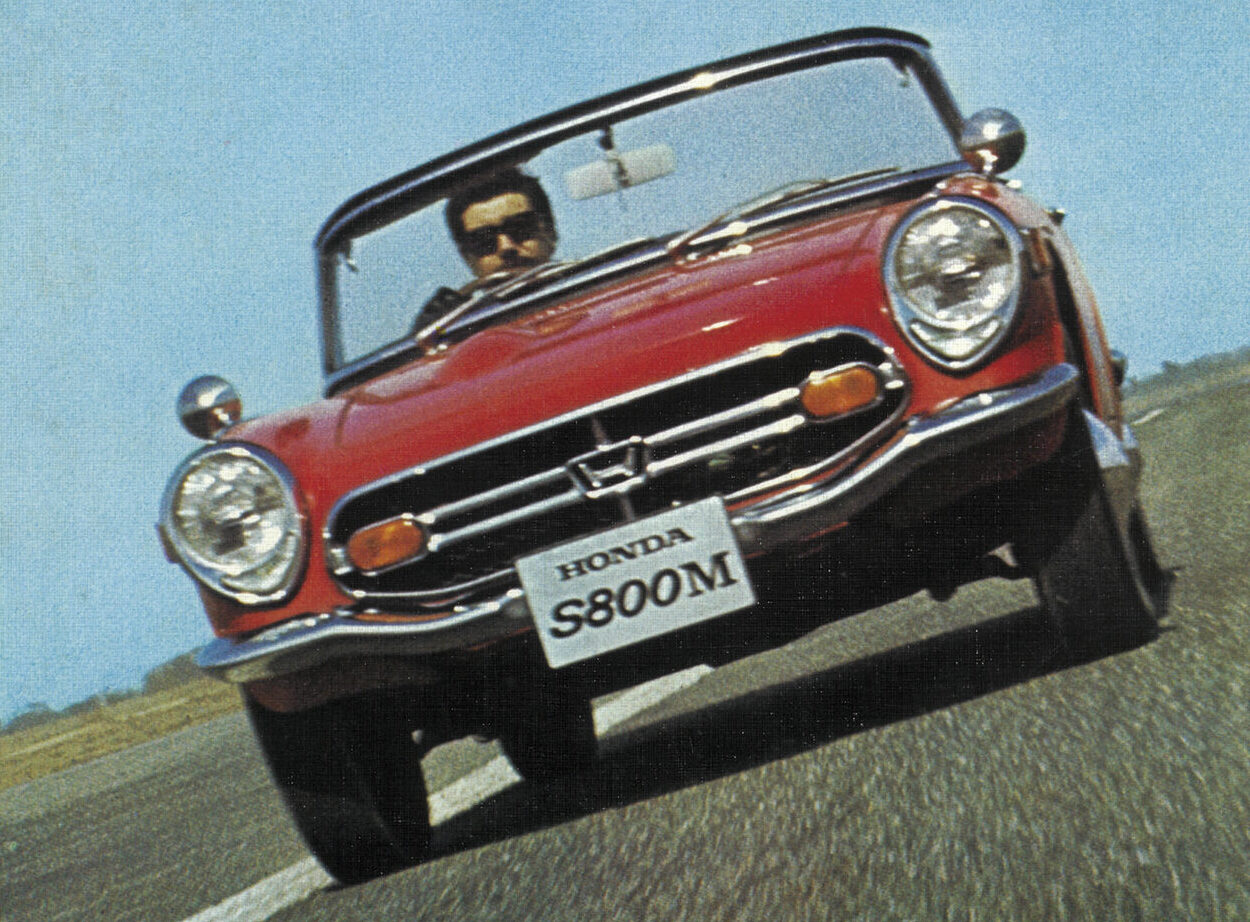

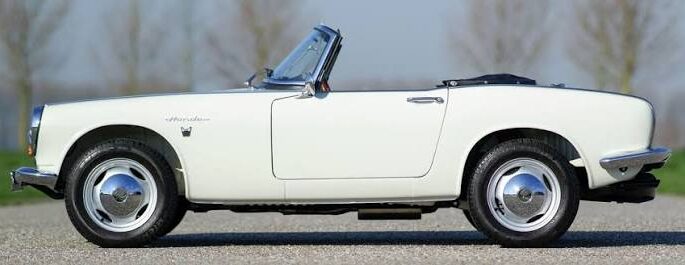
5:『幌を上げた状態の方がかえって、スピード感がみなぎる』英国ロードスターの定石をまもった幌のサイズ、形状に対するこだわり
ーーー>レースバージョンの丸みを持ったハードトップの造形も秀逸です。
次は、
個人体験をお話ししたいです。
*『私』とホンダS800:永遠の憧憬
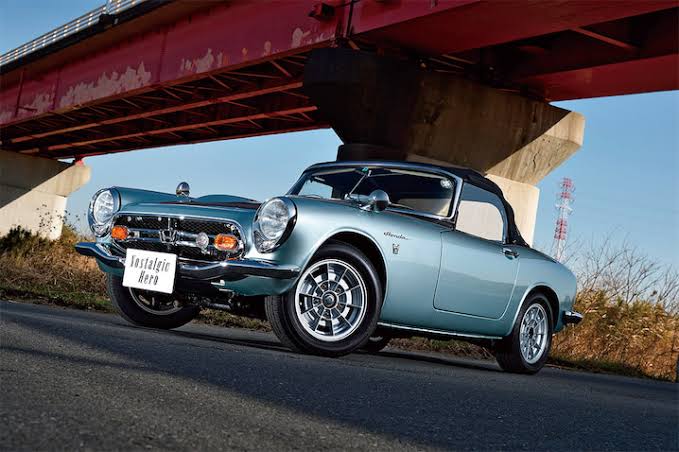
本当に、エス8はどこから見ても、
*均整がとれて美しく、
*走り屋イメージ、
*エンスージアストのイメージ、
*張り切った、怒り顔、
等など、、
眼の中に入れても痛くないほど、
愛しています!
渡米後、
2番目に乗った車も、
MG ミジェットだったのも、
こちらで気軽に乗れる、
エスハチの代替車だったからです。
立体模型との付き合いも
かなり深いものがあります。
こんな感じです。
#プラモデルキット:
*日東模型社製、1/24プラモデルキット、ホンダ S800(成形色:赤)
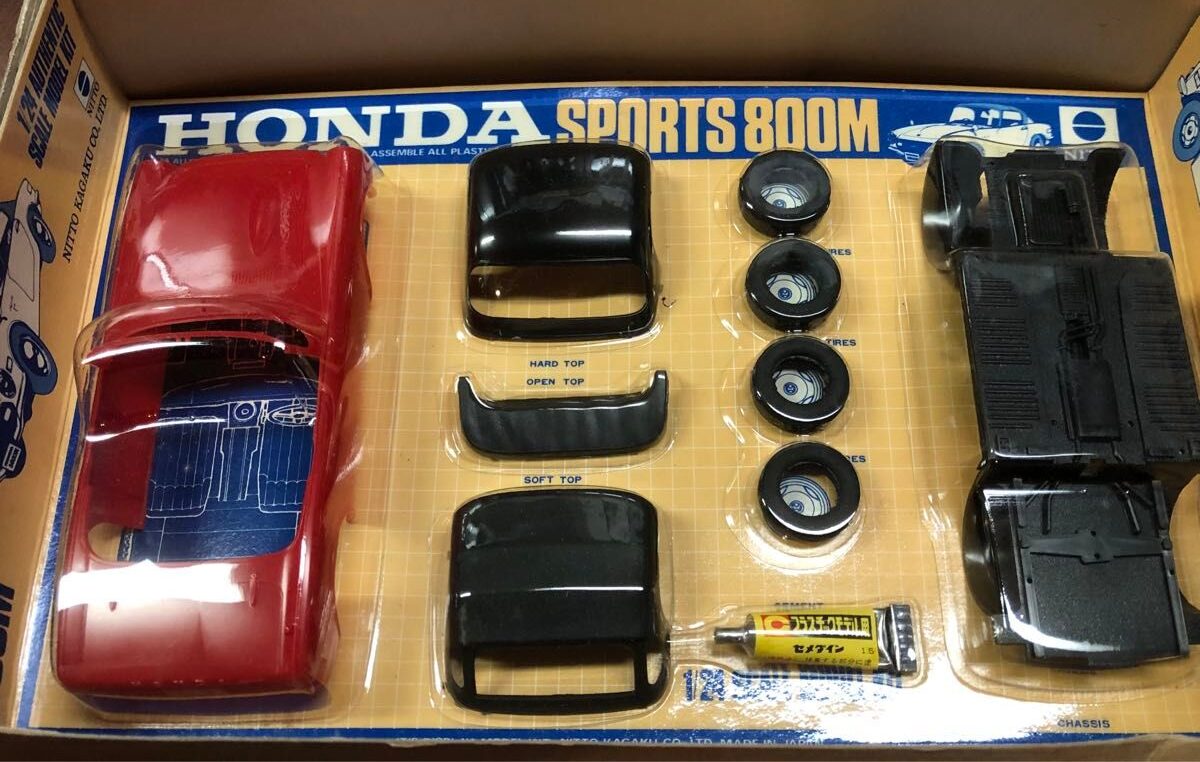
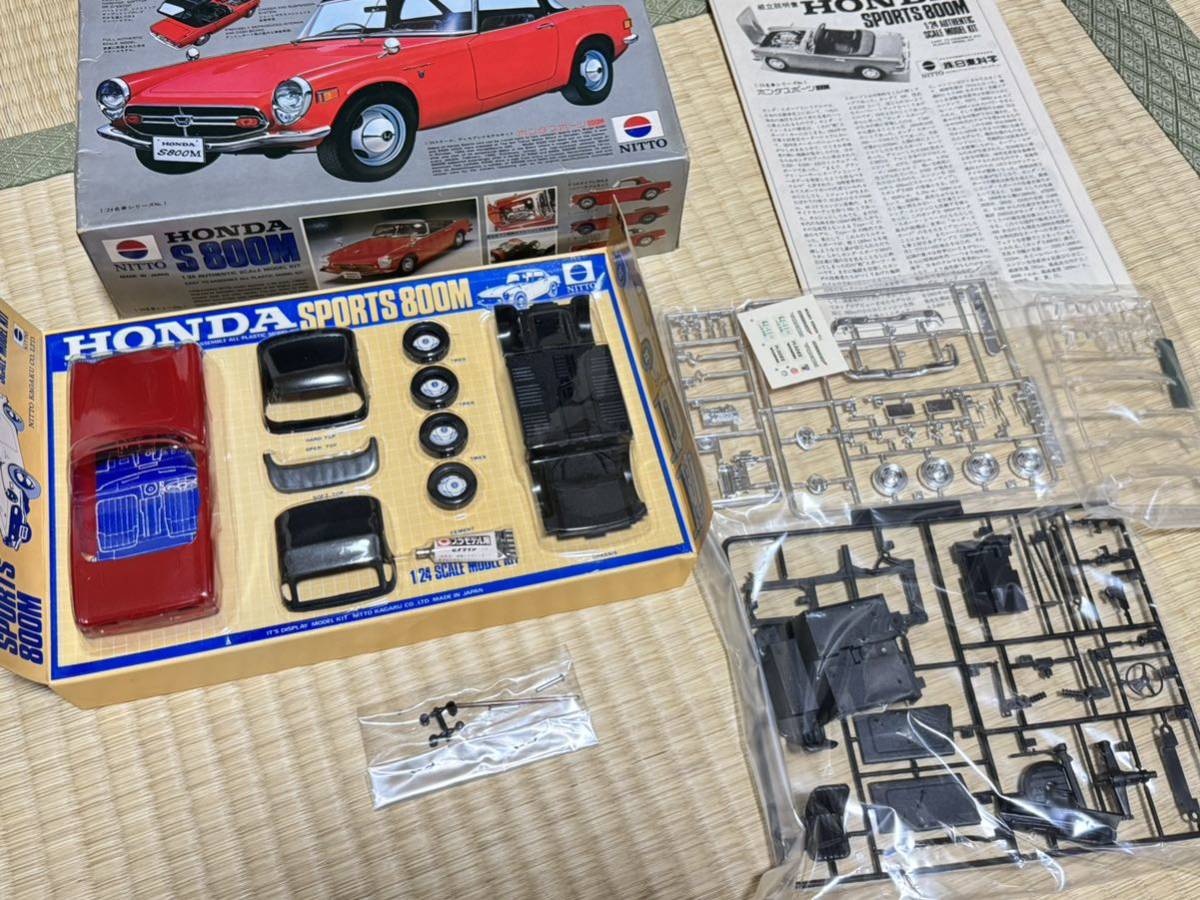
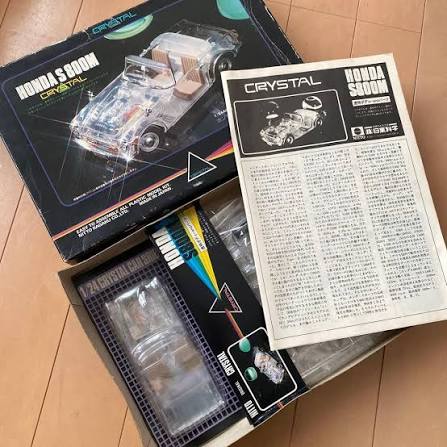 (日東のデラックスな1/24プラモデルキット、箱絵、パーツのパッケージ方法など兎に角所有欲を掻き立てられる構成、都合、3台(ノーマルⅩ2、透明版Ⅹ1)持ってました
ーーー>ボディーの再現が若干丸味を欠き、味わいにかけるものでした。)
*タミヤ製、1/24プラモデルキット、ホンダ S800(成形色:赤)
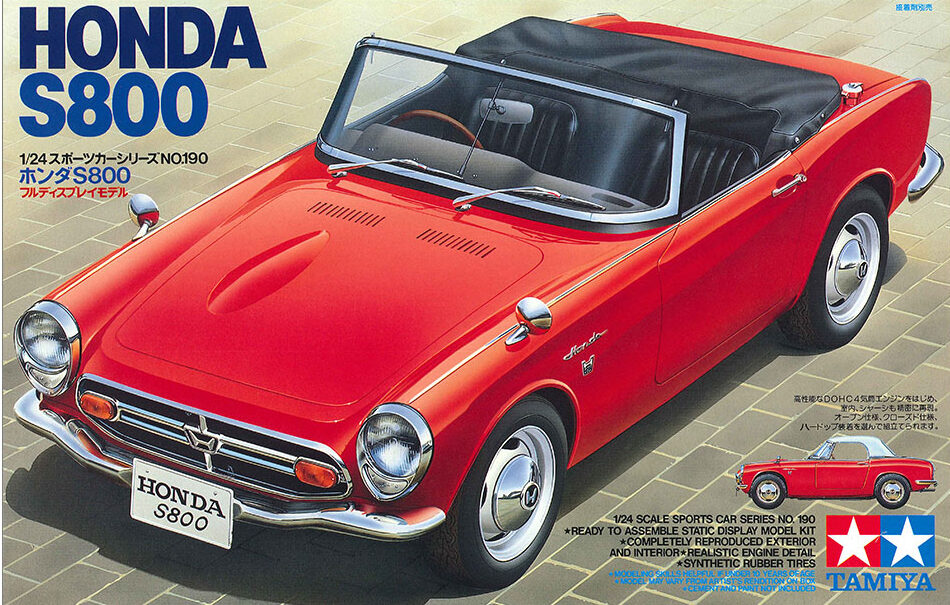
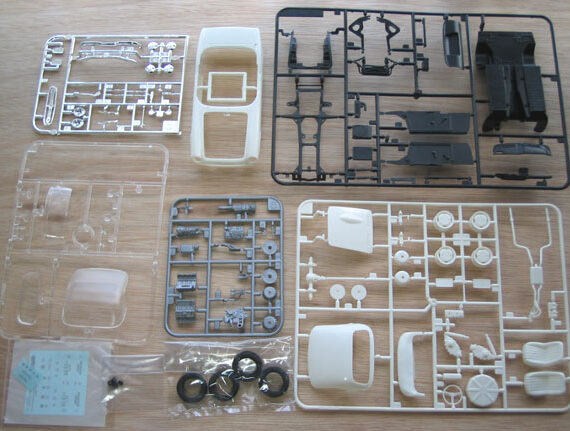
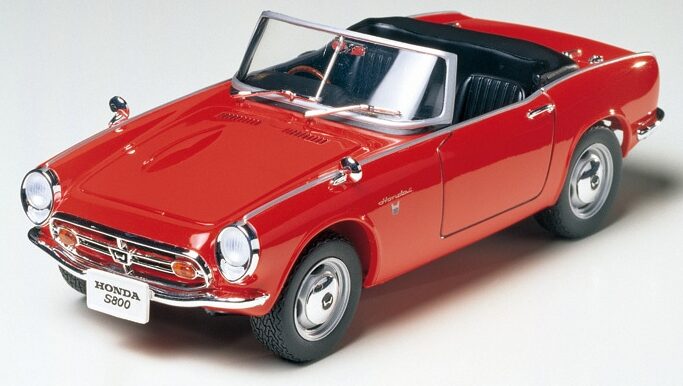 (ヴィンテージ系クルマキットのタミヤスタンダードな内容で、丁度良いディフォルメ、シャーシエンジン再現付きのエブロの社長:木谷真人さんの監修ゴリゴリの内容です。
ーーー>レース仕様や、S600版、黄色成型版などが出ていました。)
*オオタキ製、1/1プラモデルキット、ホンダ S800 (オープン /クーペ)
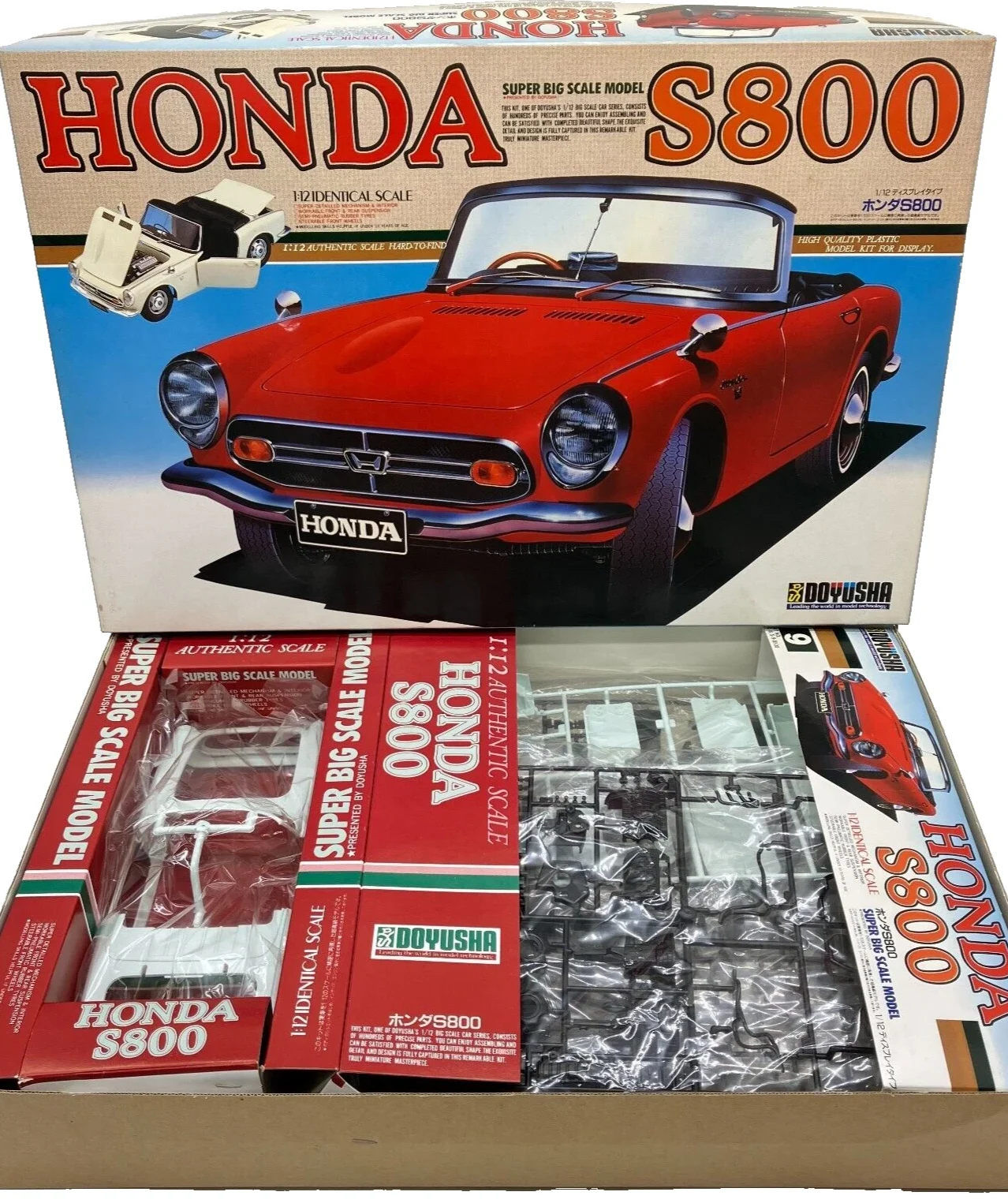
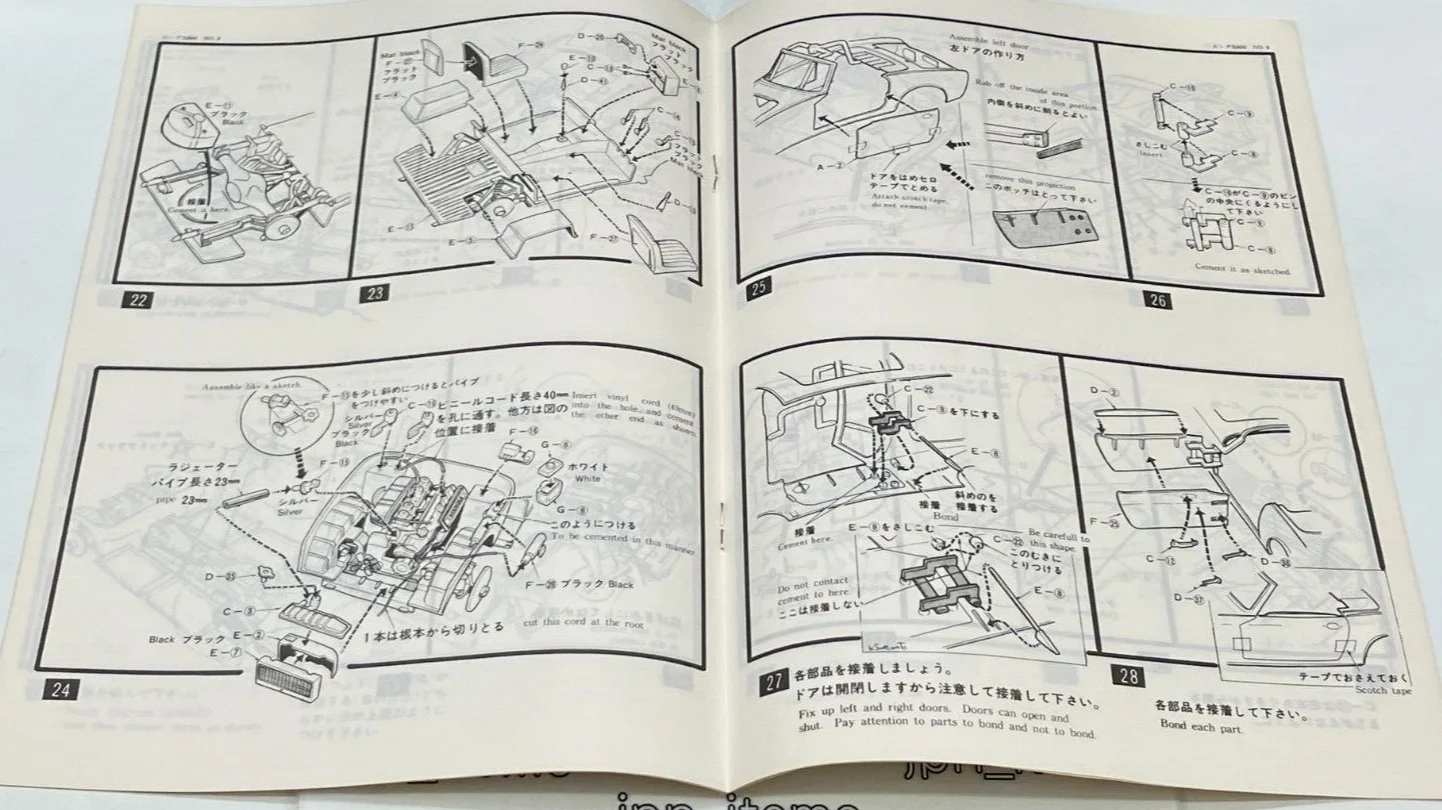
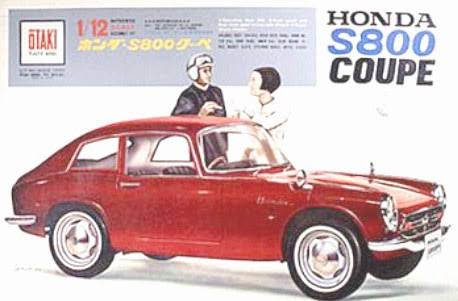 (一度おもちゃ屋さんの棚の上からおろしてもらい、中をのぞいただけでしたが、当時のオオタキの1/12キットに比べて随分小さいな、、、と思ったのを覚えています。
ーーー>クーペバージョンは実物をいたことはありませんが、すごいレアキットみたいです。)
*LS社製、1/32プラモデルキット、ホンダ S600 (成形色:白)
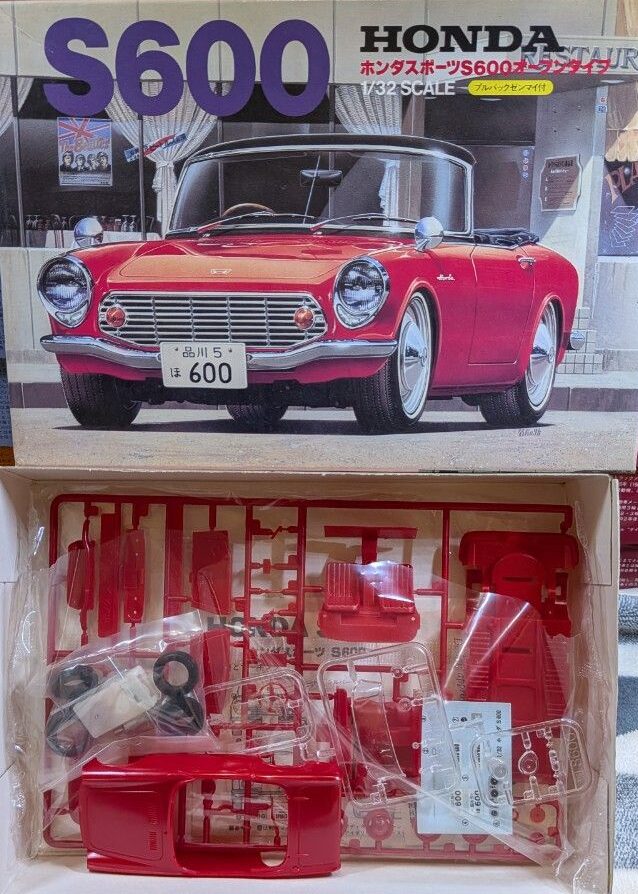
(気軽に組めて、意外に出来がいい、LSの1/32キットですが、S6は結構パーツが細かく分けられて、精密な出来でした。
ーーー>S500版も出てましたね。)
#ミニカー:
*エブロ社製、1/43ダイキャスト完成品、ホンダ S800(白)
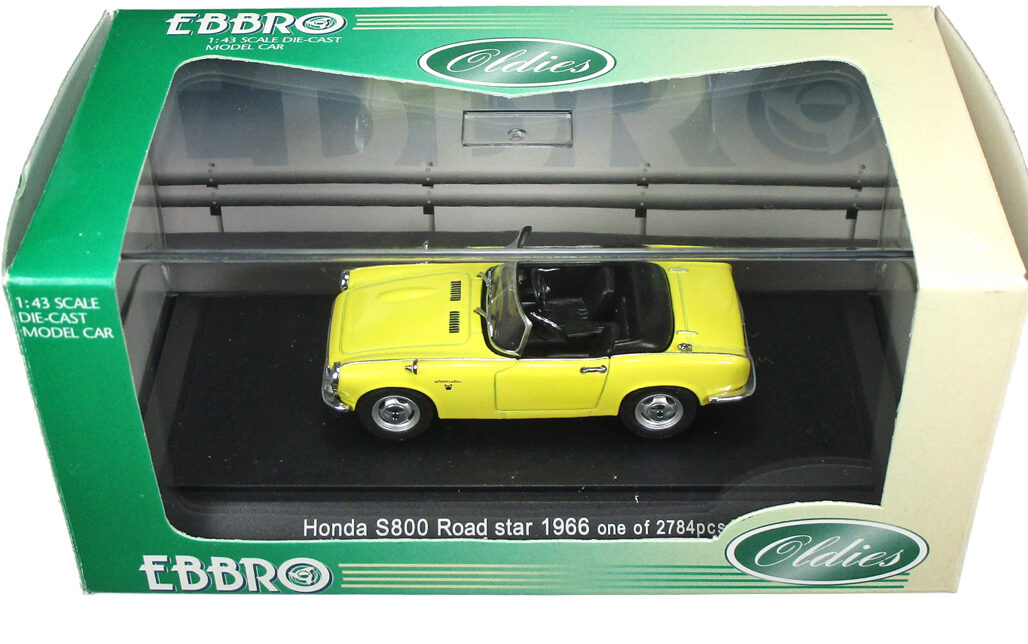
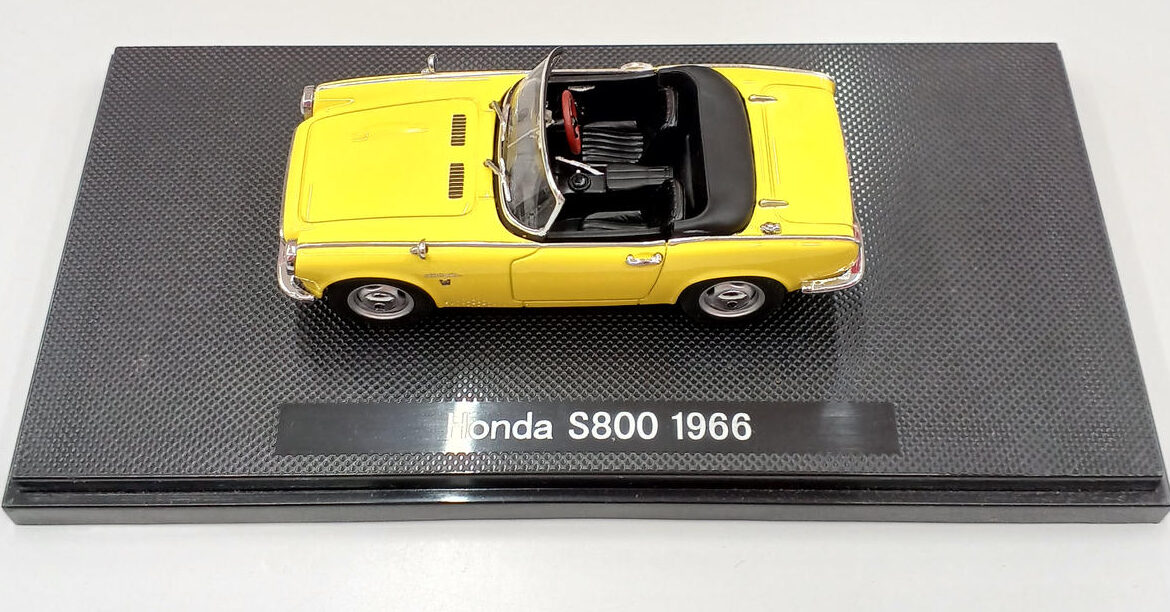 (最初に手に入れたリアルなダイキャストで、造形レベルが高く、実車の可愛い・カッコイイ姿が手に入りました。
ーーー>色違い、S6、レースバージョンなど色々出てます。)
*エブロ社製、1/24ダイキャスト完成品、ホンダ S800(白)
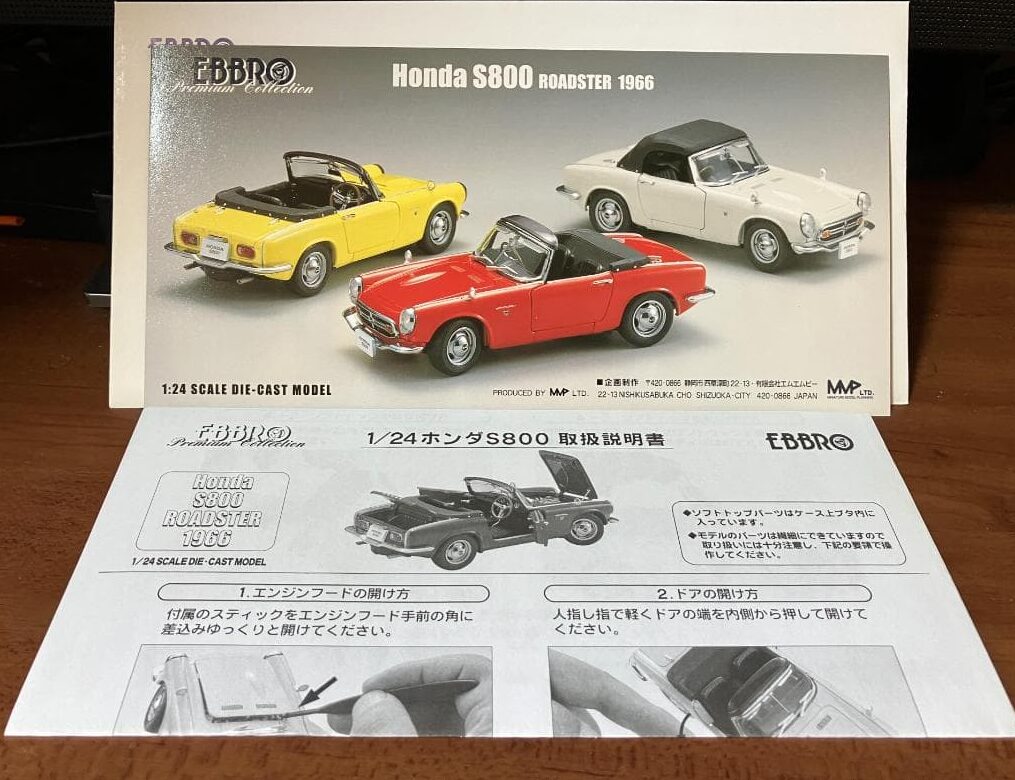
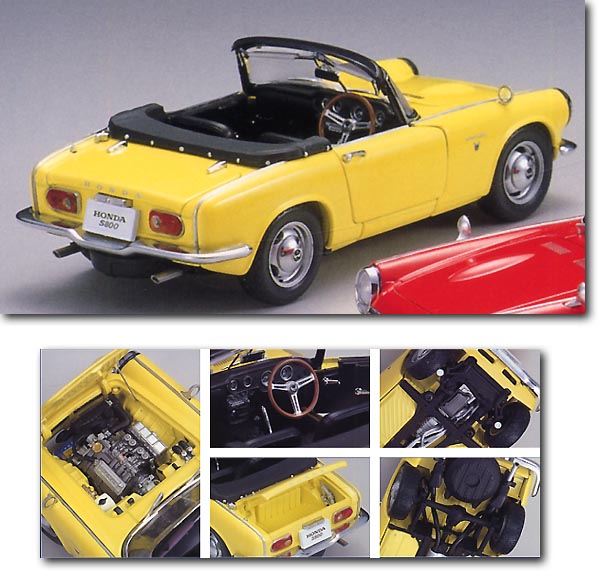 (安定した品質に定評がある、エブロ製の完成品、田宮の1/24プラモデルキットのダイキャスト完成品な仕上がりで、
ーーーー>何とか手に入れたいモデルです。)
その他、
大きなミニカーはかなりたくさん出てますので、
リストで示します。
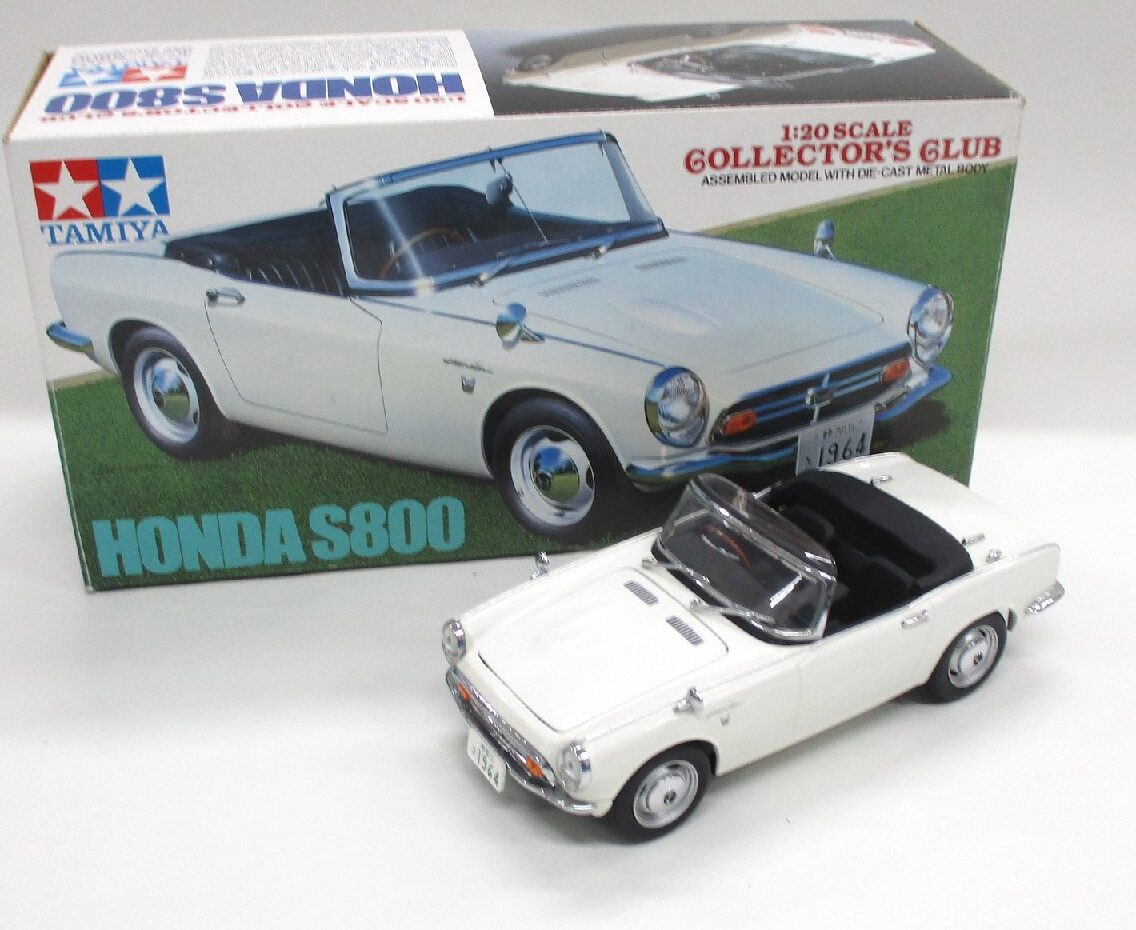
*タミヤ製、1/20ダイキャスト完成品、ホンダ S800 (白)
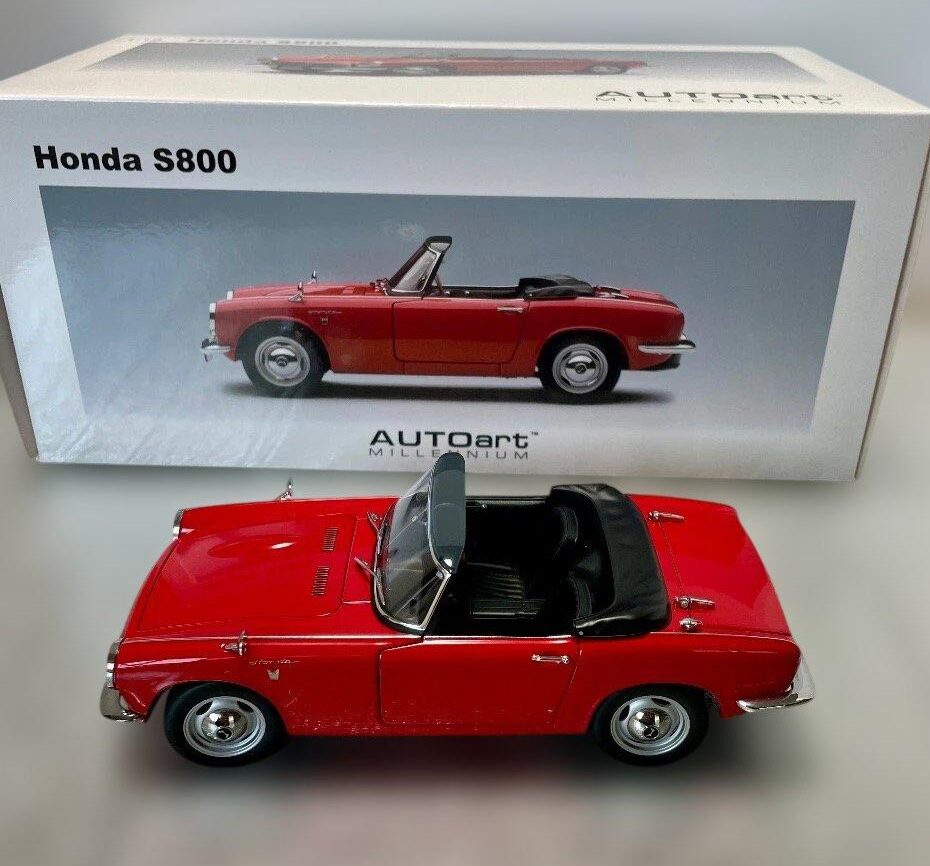
*オートアート社製、1/18ダイキャスト完成品、ホンダ S800(各色あり)
*ホビージャパン社製、MARK43、1/43ダイキャスト完成品ホンダ S800(各色あり)
*NOREV社製、1/43ダイキャスト完成品ホンダ S800(各色あり)
*VITESSE社製、1/43ダイキャスト完成品ホンダ S800(各色あり)
#1/64ホットホイールサイズのミニカー:
こちらも、レーシング、カスタム版など、滅茶苦茶出ています!
*京商製、1/64ダイキャスト完成品、ホンダ S800(赤・白・黄色)
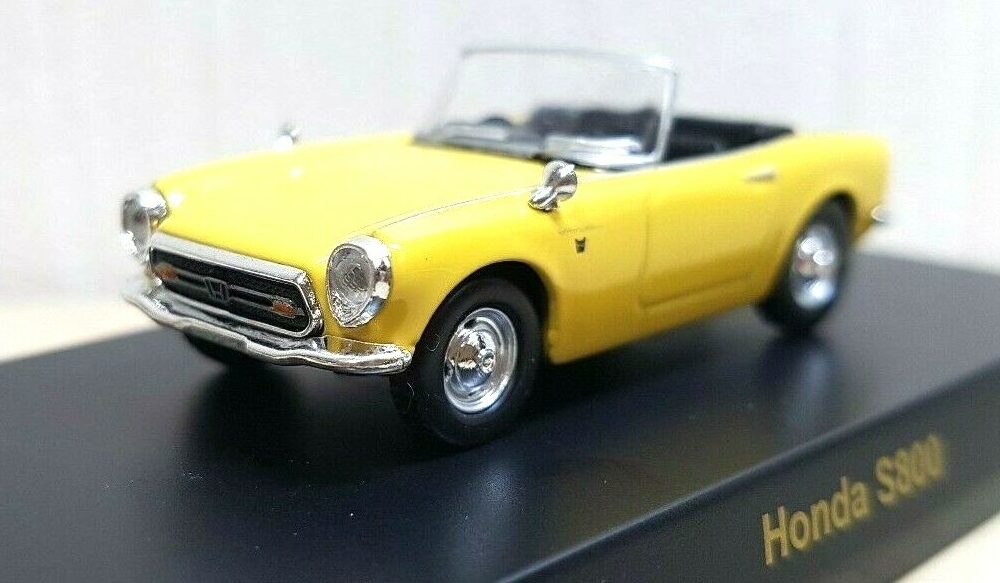
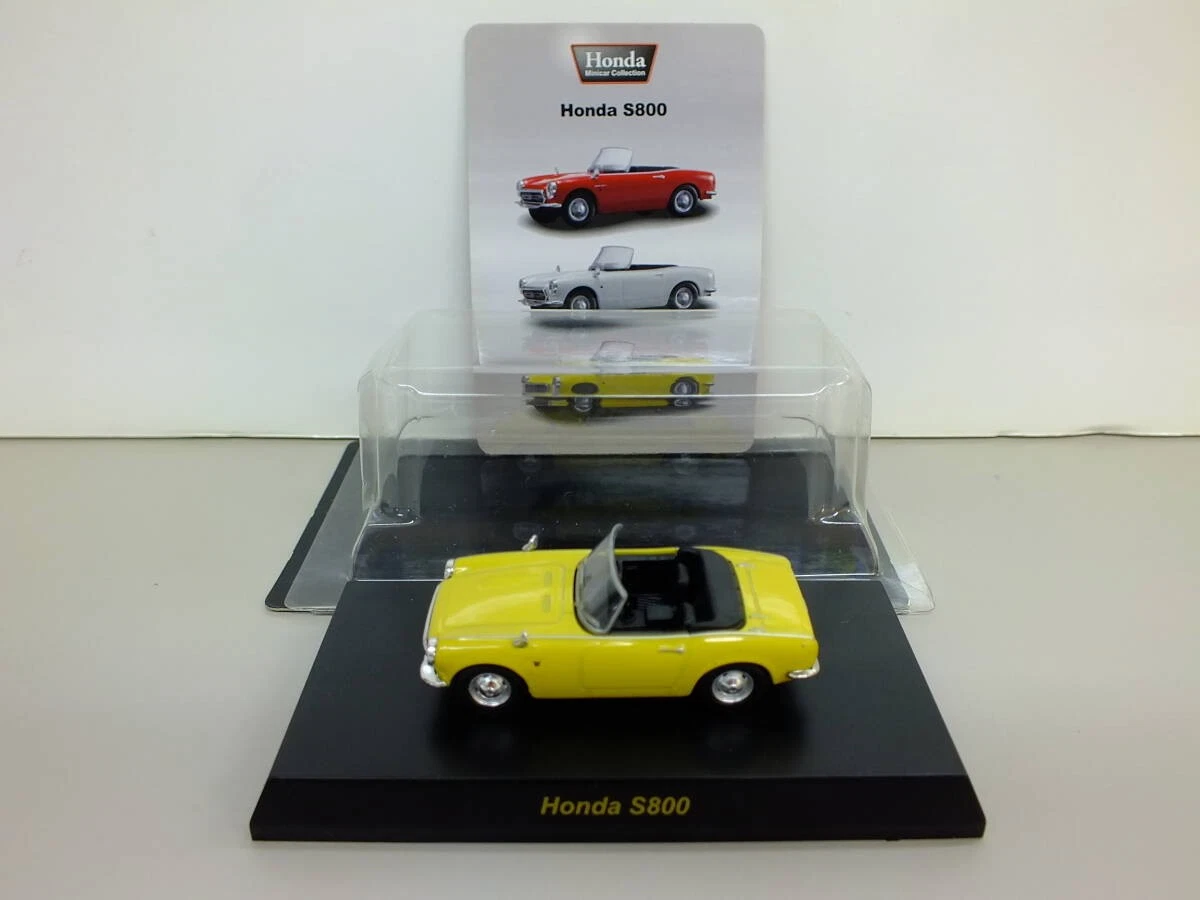
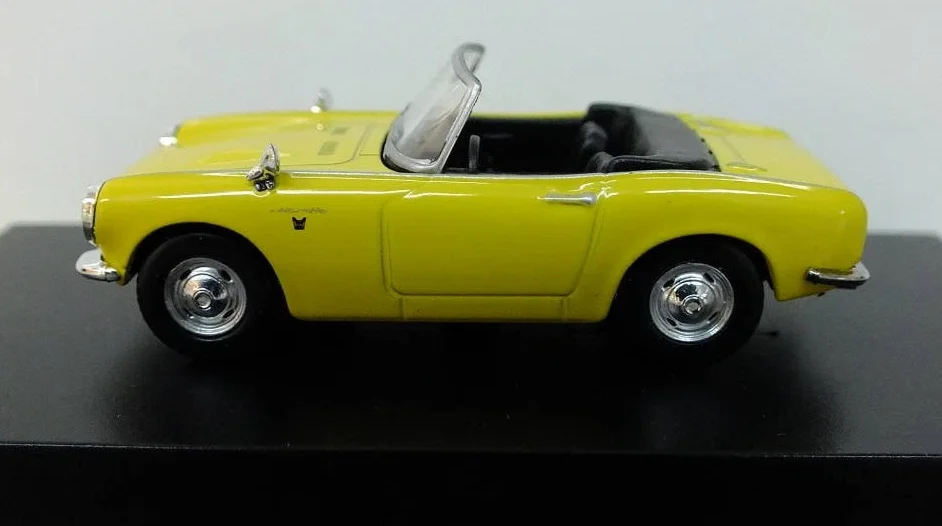 (かなり古いコンビニミニカーですが、全体的な印象、塗装、デテールともに居間にても良い出来です。
--→少し車高が高めですが、車軸を上げれば解消できます。)
*ディアゴスティーニ社製、1/64ダイキャスト完成品、ホンダ S800(レッド)
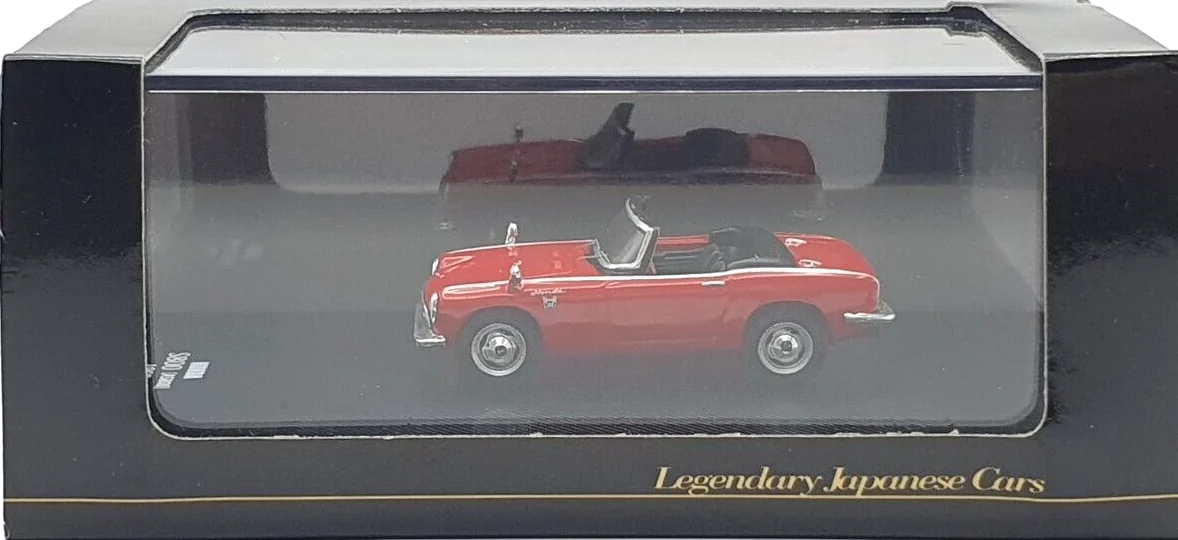
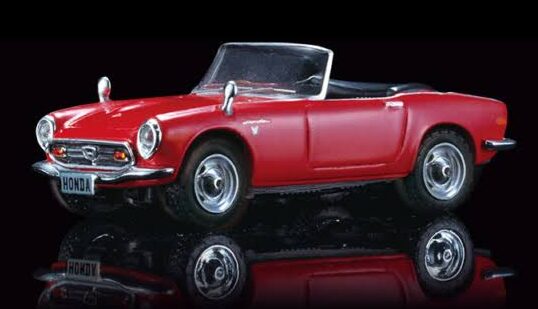
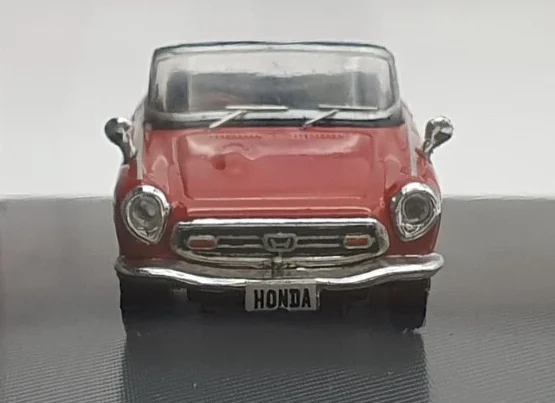
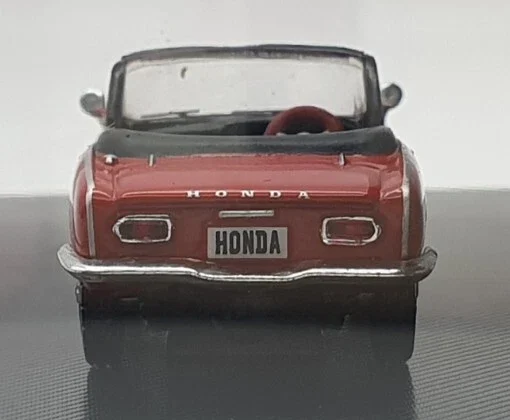 (フロント&リアデザインの細かさは驚愕的ですが、風防の高さや、タイヤの大きさ太さなど問題点も多いです。ーーー>トミーテック製との2個一の改造パーツとしてストックしてあります。)
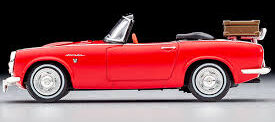
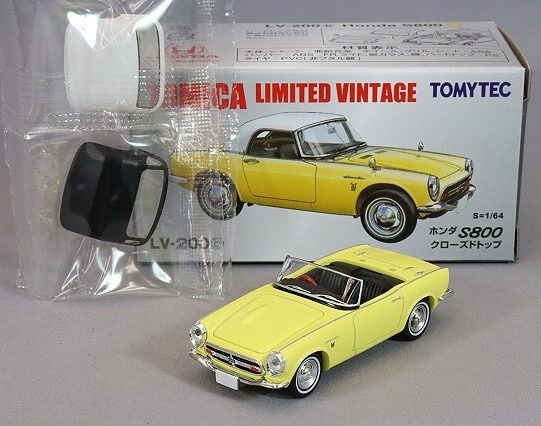
*トミーテック社製、トミカリミテッドビンテージ・シリーズ【LV-200 a、b、c、】1/64ダイキャスト完成品、ホンダ S800 (赤・黄・白)
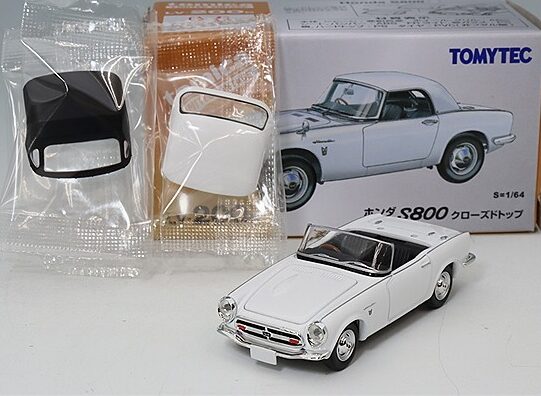
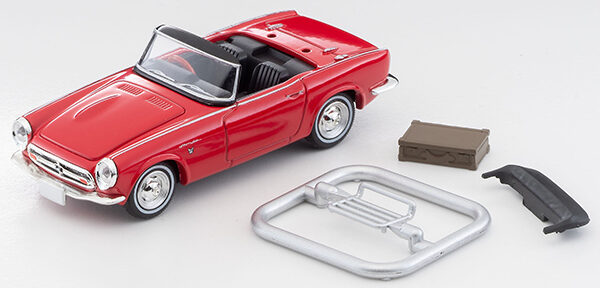
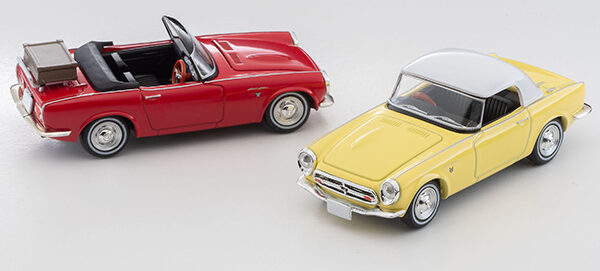 (かなり最近の商品のため、繊細な造形、ディテール、塗装、組付け、強度などすべての面で強力な商品です。
--→黄色版【LV-b】に付属する、ハードトップと、ソフトトップが重宝しました!!)
その他レトロモッド・カスタム版や、レーシングバージョンが、
中国の新興各社や、米国ホットホイールから出ています。
ではお待ちかね!?
三大噺のお時間です、、、
*三題噺:凝縮感・精密機械・機能美の極致


今回はかなり関連性が見て取れる
お題が出ました、、、
却って難しいかも?
#お題:
*凝縮感
*精密機械
*機能美の極致
#通底テーマ:『本田宗一郎のDNA』
プロンプト:
1966年発売のホンダS800につての意向と外観デザインにつての解説を会話調(江戸時代末期、新米ながら天才的ひらめきを魅せる芸術肌のすし職人と番頭的立ち位置で50年職場を眺めてきた、飯炊きの天才、かつ口やかましい女将との間でのべらんめー調子の会話劇)三題噺の落語形式で2000字以内で制作してください。サゲは、テーマをもう一度おさらいして、さりげなく、知的に落としてください。通底するテーマは=『本田宗一郎のDNA』。お題は:凝縮感・精密機械・機能美の極致です。
追加プロンプト①:中盤で、ロボット製造過程に前時代的なハンダを使う工程を無理に入れて、落ちで、ハンダ付け{ホンダ付け}で何とかなりませんか?
追加プロンプト②:場所を青森の恐山近くの先端工場にして、人物名を変えて、青森弁でお願いします。
追加プロンプト③:ズーズー弁も決めで使ってもいいですよ。「ハンダを落とした時の工藤技師のうろたえ方」をもう一段派手に盛り上げる。
『神業の有機回路と電子の塵:マン島を駆けた鬼の遺伝子、二零四六年に響く精密機能美の凝縮極致』
n

n
n
n
n
n
n
n
n
n
n
【登場人物】
- 工藤(くどう):有機機械式指先設計部の若手天才技師。集中が極限に達すると、地元の濃いズーズー弁が炸裂する。
- 掃ノ進(そうのしん):工場に配備された床・壁用AI清掃ロボット。50年前の旧式江戸っ子プログラムをあえて愛用する、おしゃべりな「AI界の番頭」。
n
n
「ウィーーーーン……。これこれこれ! これこれこれこれ、工藤技師! ちょっとそのピンセットを止めなせえ! 私の最新型センサーがさっきから『過密です!過密です!』って真っ赤になって大音量で警告を鳴らしっぱなしですよ! 電子顕微鏡を覗かなきゃ見えねえミクロの世界だってのに、まるでお天道様の光も通さない、ものすげえ『凝縮感』じゃないですか! そんなにギチギチに回路を詰め込んじまったら、流れる電子だって満員電車みたいで息が詰まっちまいますよ!」
n
n
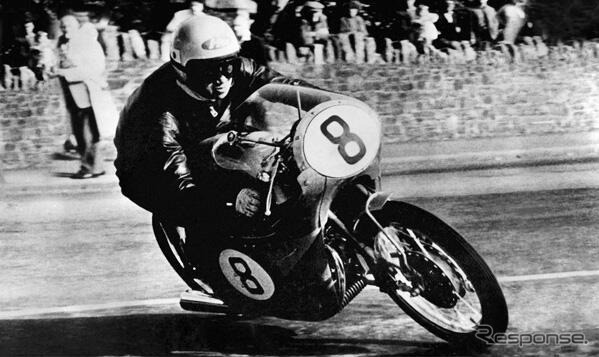
n
n

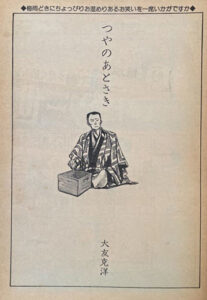
掃ノ進:「『ホンダ(ハンダ)付け』で何とかなりませんか?」
お後がよろしいようで――チャンちゃん!
 n
n
n
N
n
n
n
n
n
n
n
くだらない
サゲが見つかりました!
*その他の小さな【美形車】たち、、、、
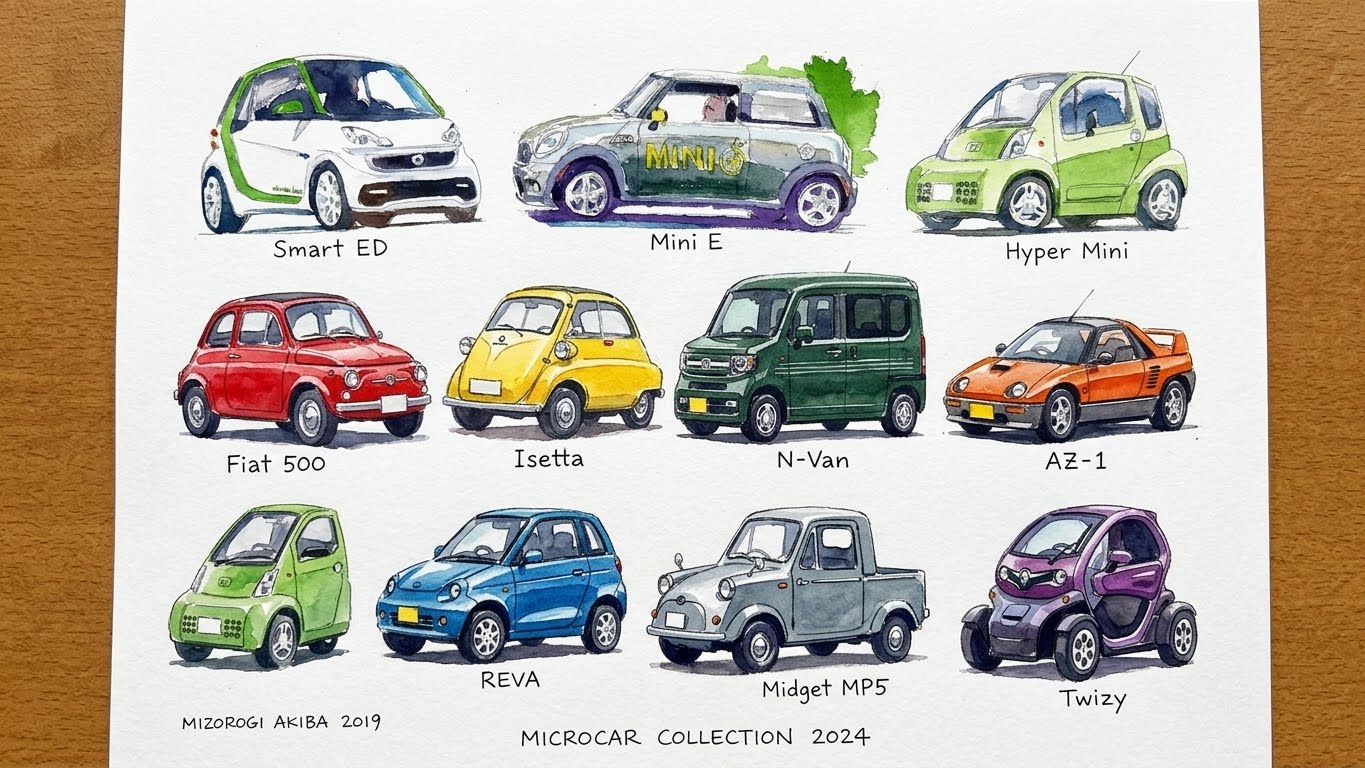
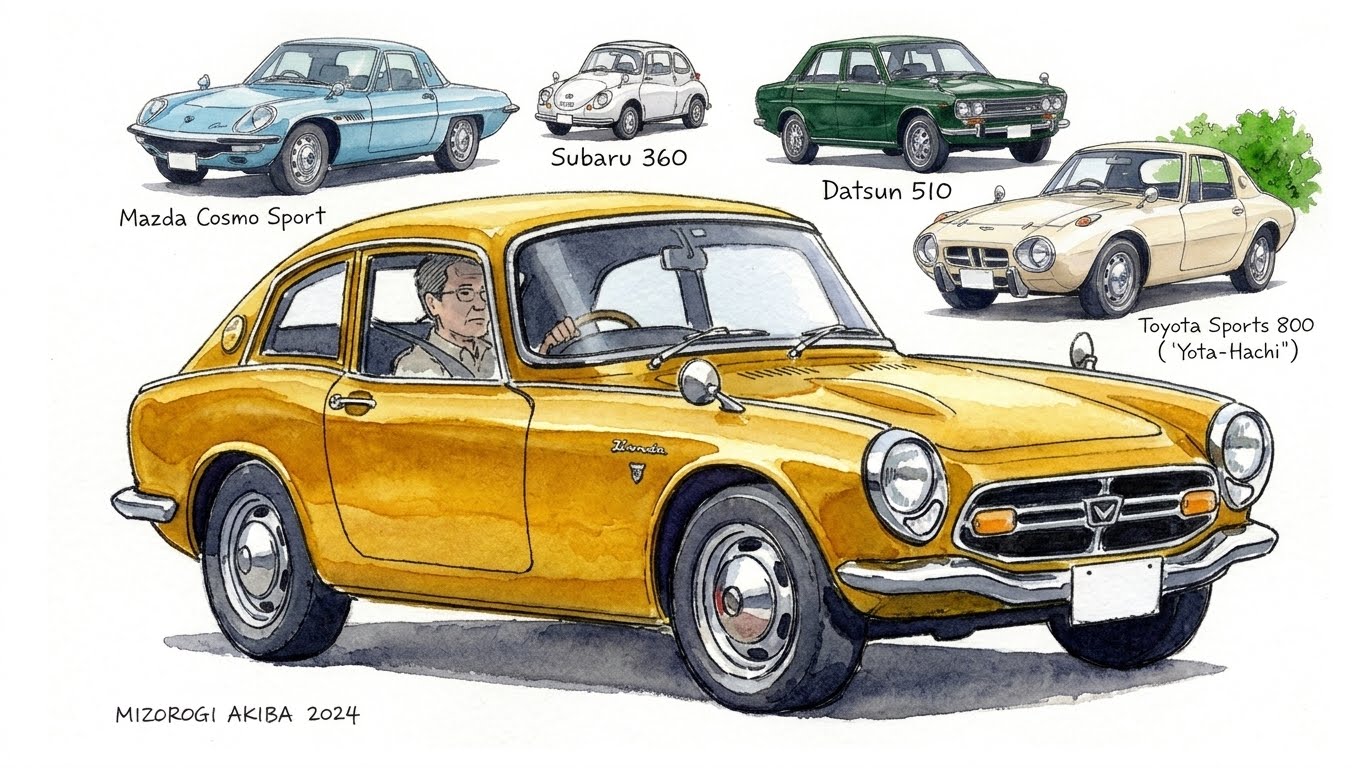
世界には、S800意外にも素晴らしい、
『小さな、美形車』が沢山ありますが、
個人的には、
こんなところが好みです、、、
*トヨタ・スポーツ800,1965(シルバー)
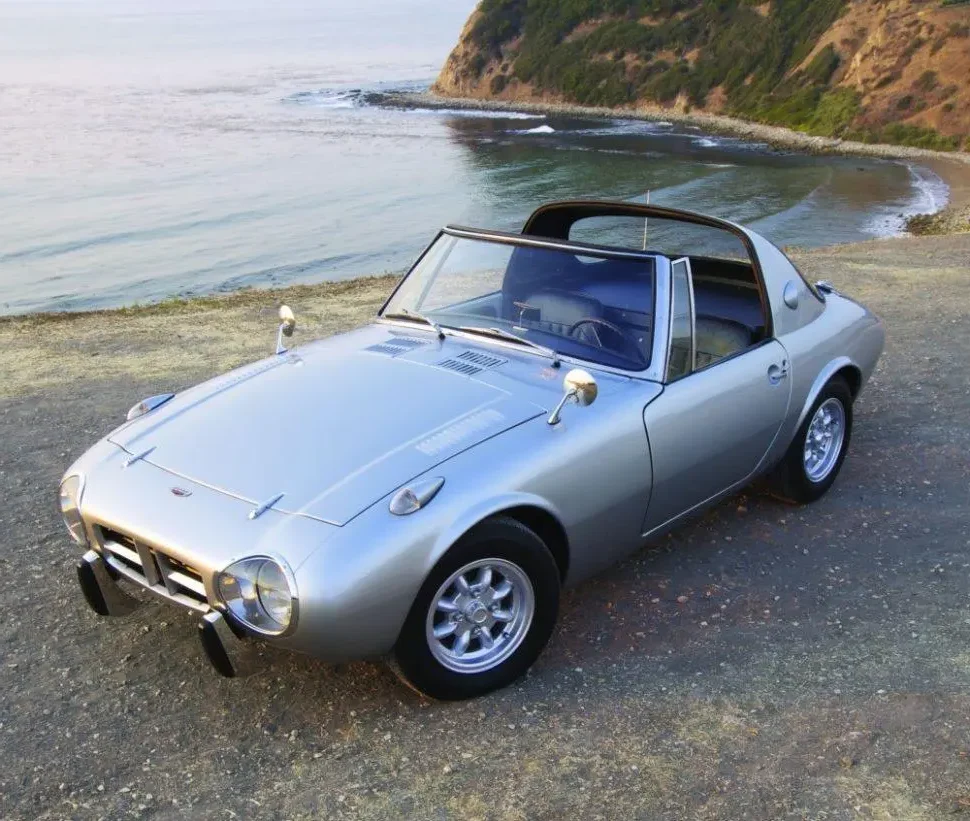
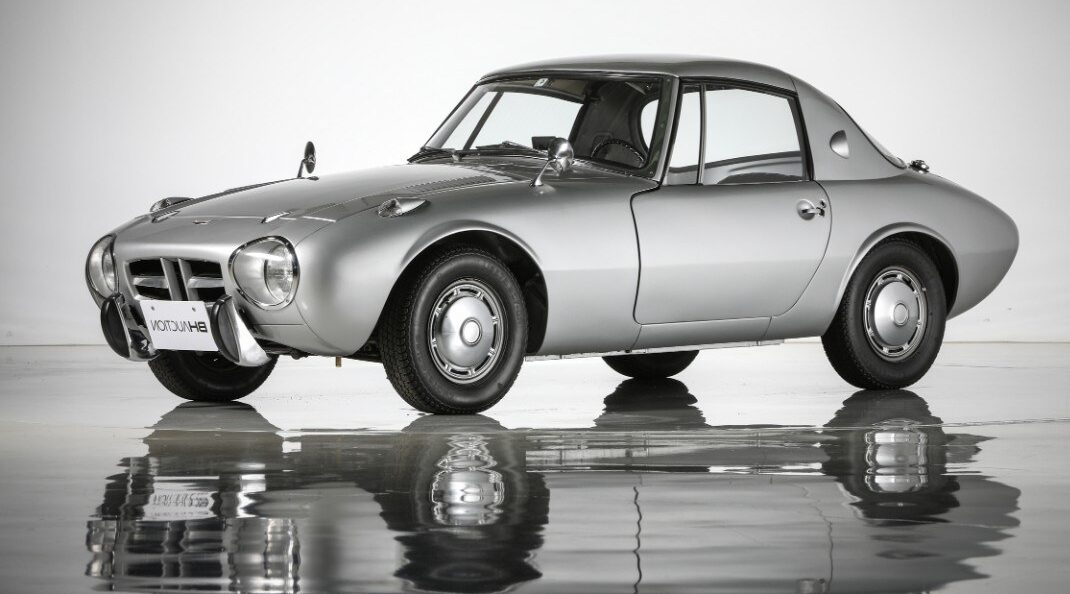
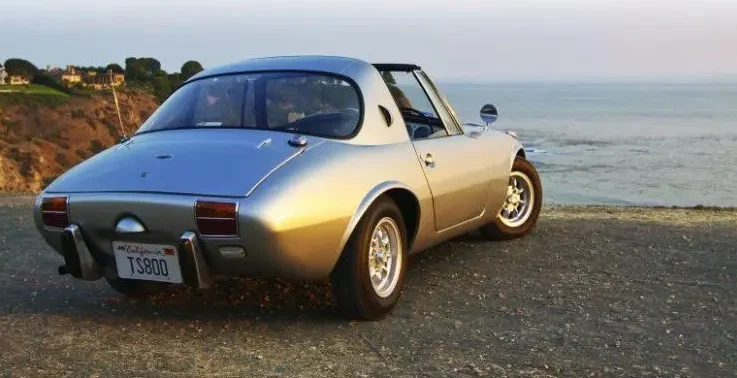
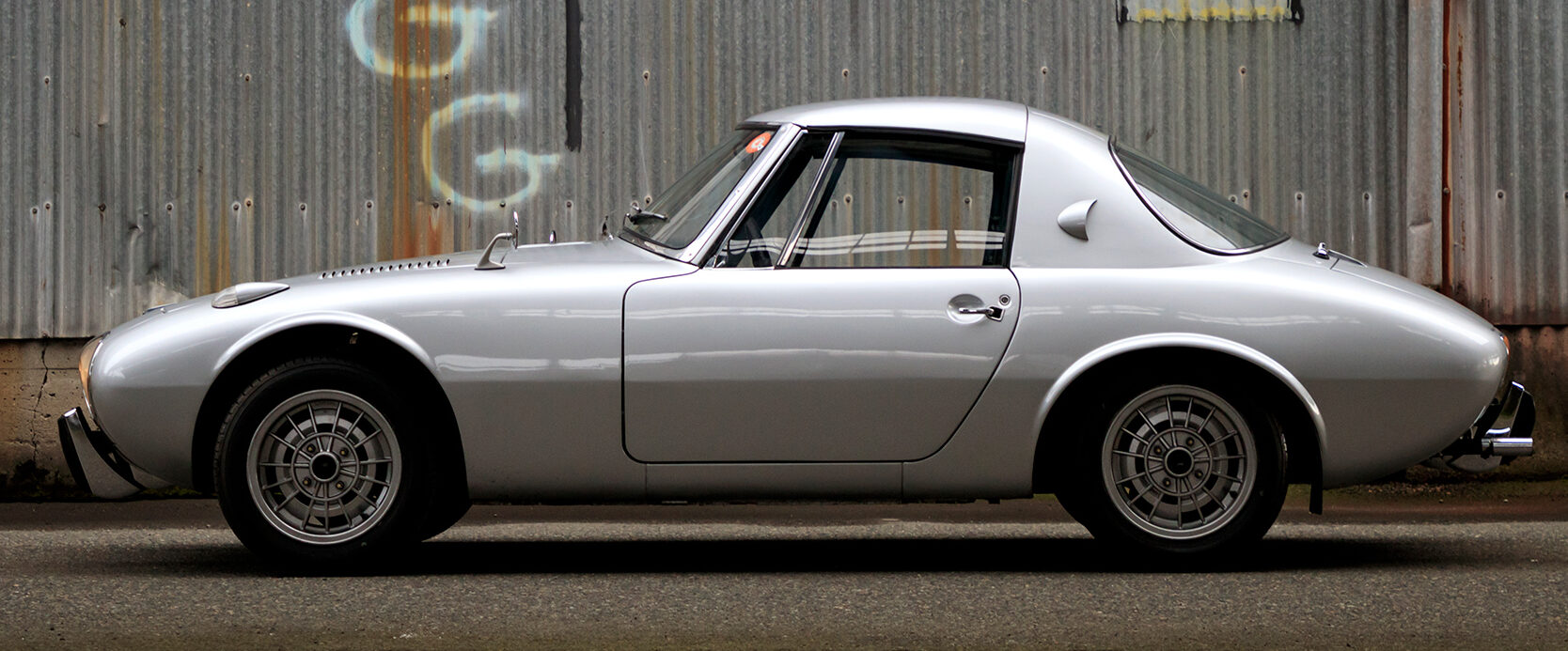
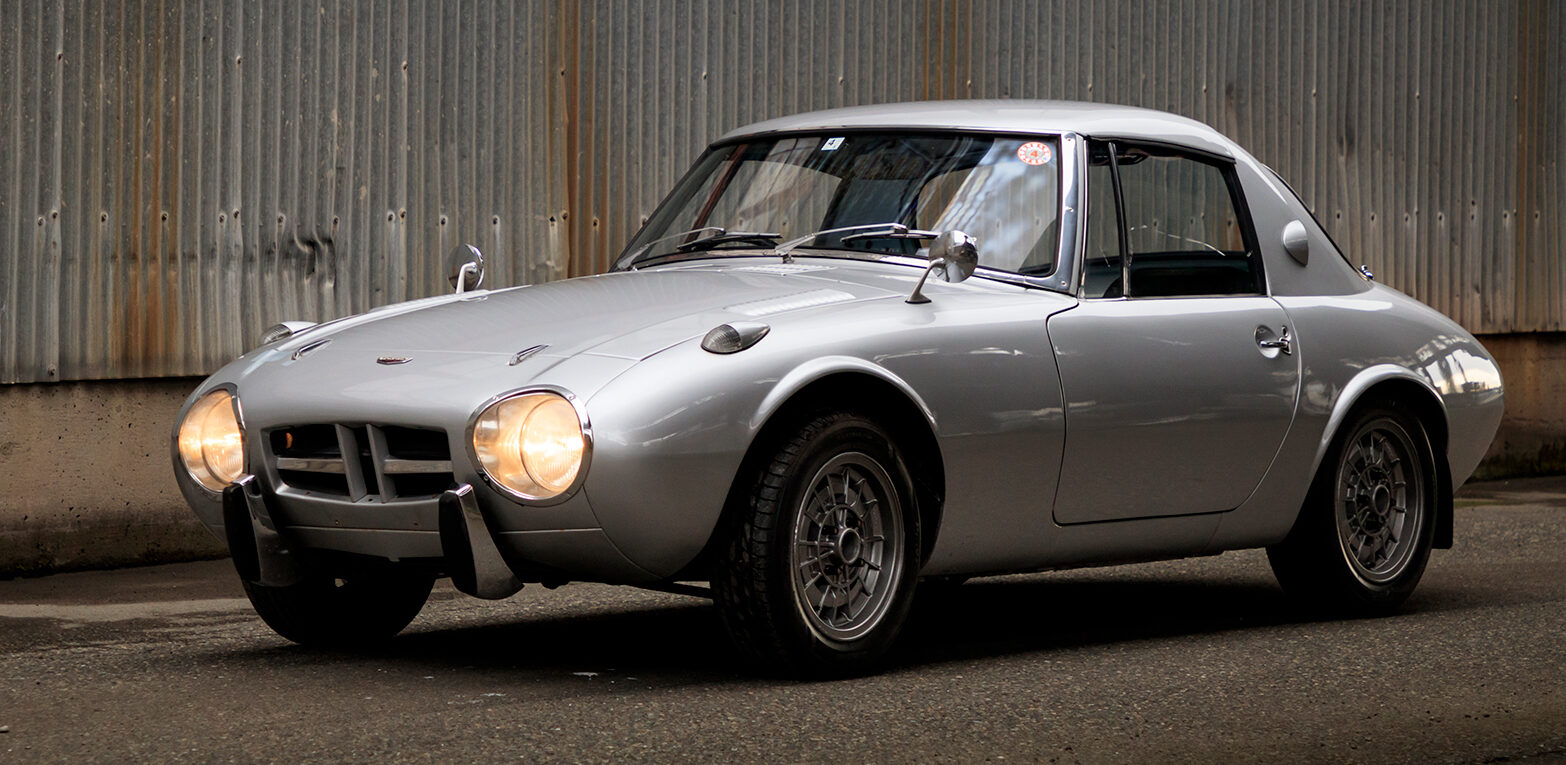 (2気筒エンジン等云うこともあって軽企画と思いがちですが、ホンダのS8に比べて少し大きなボディー枠を存分に使った、フットボールスタイルが魅力的です。
--→ボディーサイドのスイープ感は相当なもので他に比べる対象がない程です。)
*マツダ・オートザムAZ-1、1993(レッド)
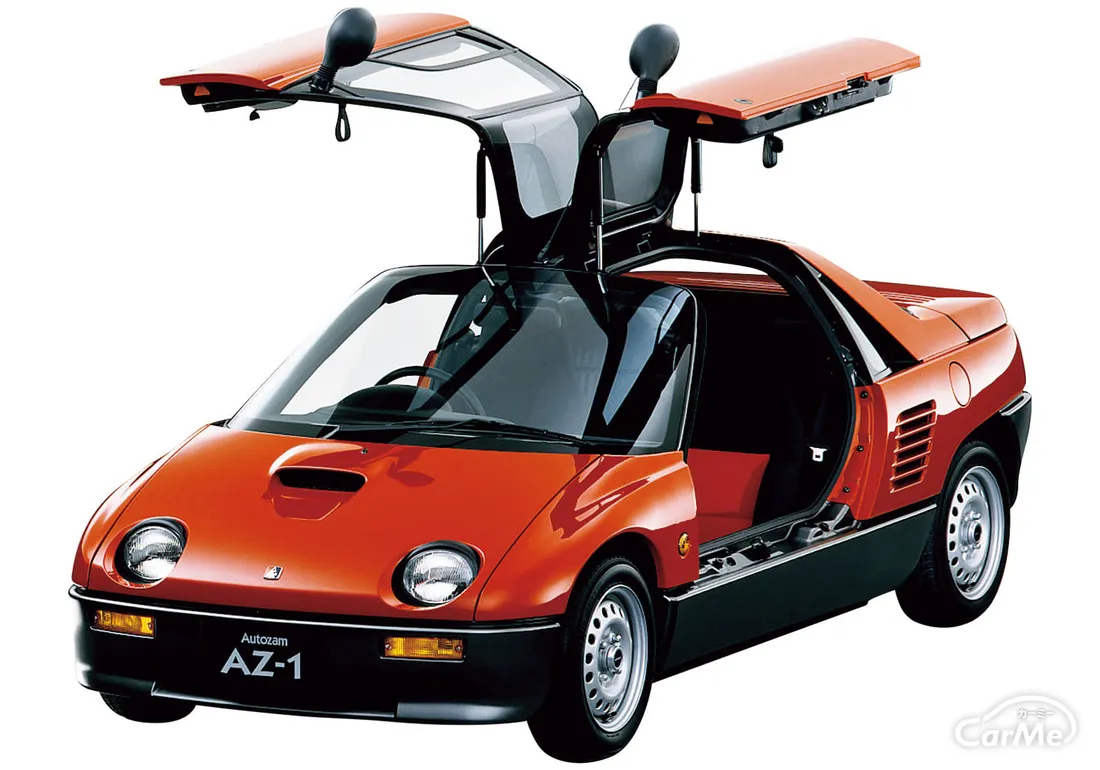
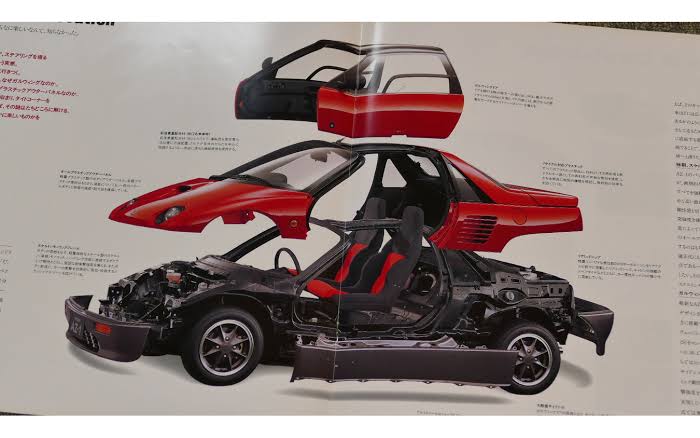 (バブル期のどさくさにまぎれた感もありましたが、軽自動車枠の、ミッドシップ、ガルウイングというすさまじい『色もの感』あふれる名車です。
ーーー>スズキにOEM供給され、『CARA』として販売されました。
*ダイハツ・コペン、2002 (シルバー)
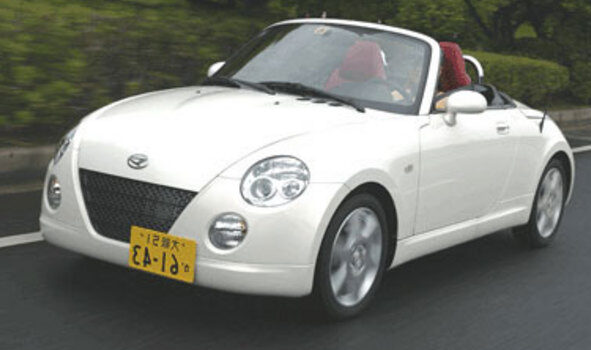
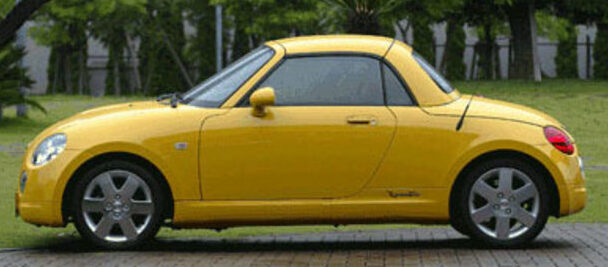
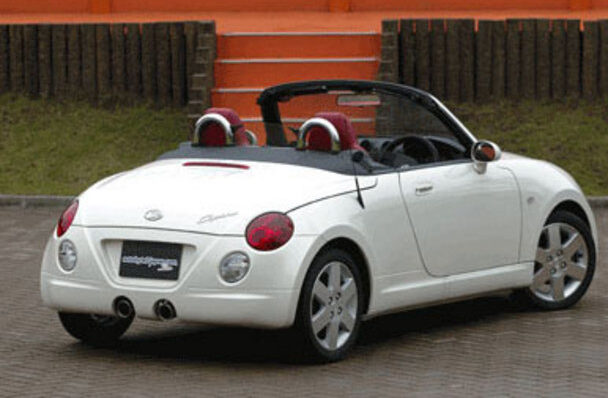
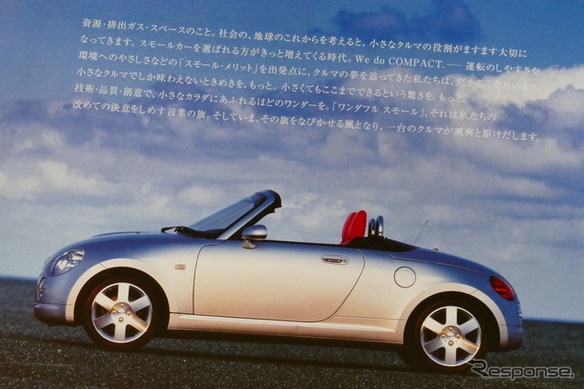
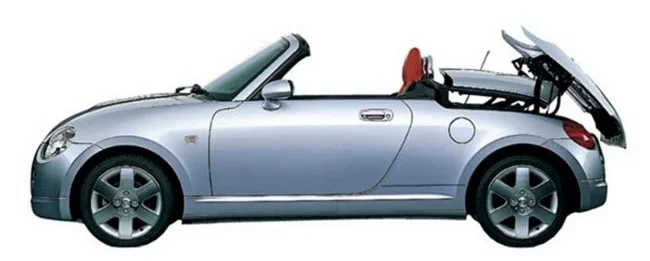 (ただのアウディーTTの縮小版と思いきや、実物は、小さいだけでなく、後ろに向かっての絞り込みが激しく、相当にカタマリ感がある『走る立体造形』です。
--→自動開閉式のハードトップをかけた姿も絶品です!)
*3代目ダイハツ・コペン、2027?(DKシルバー)
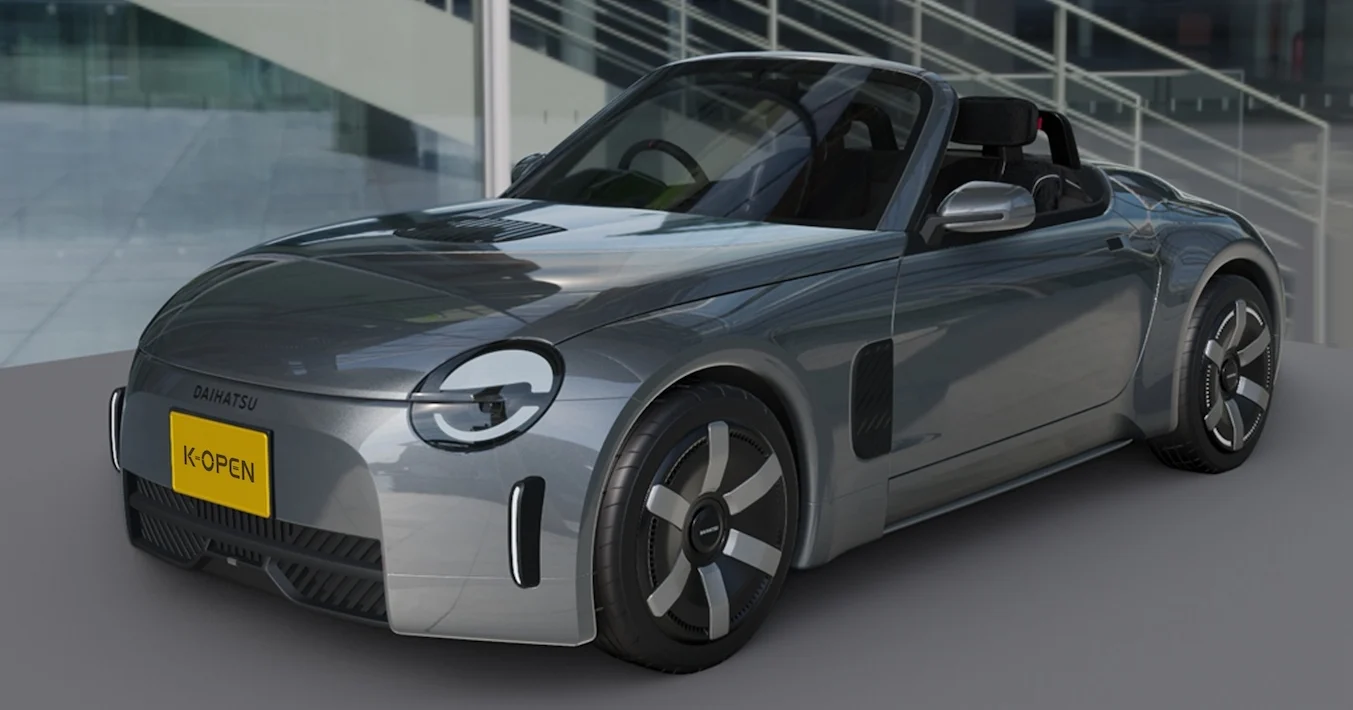
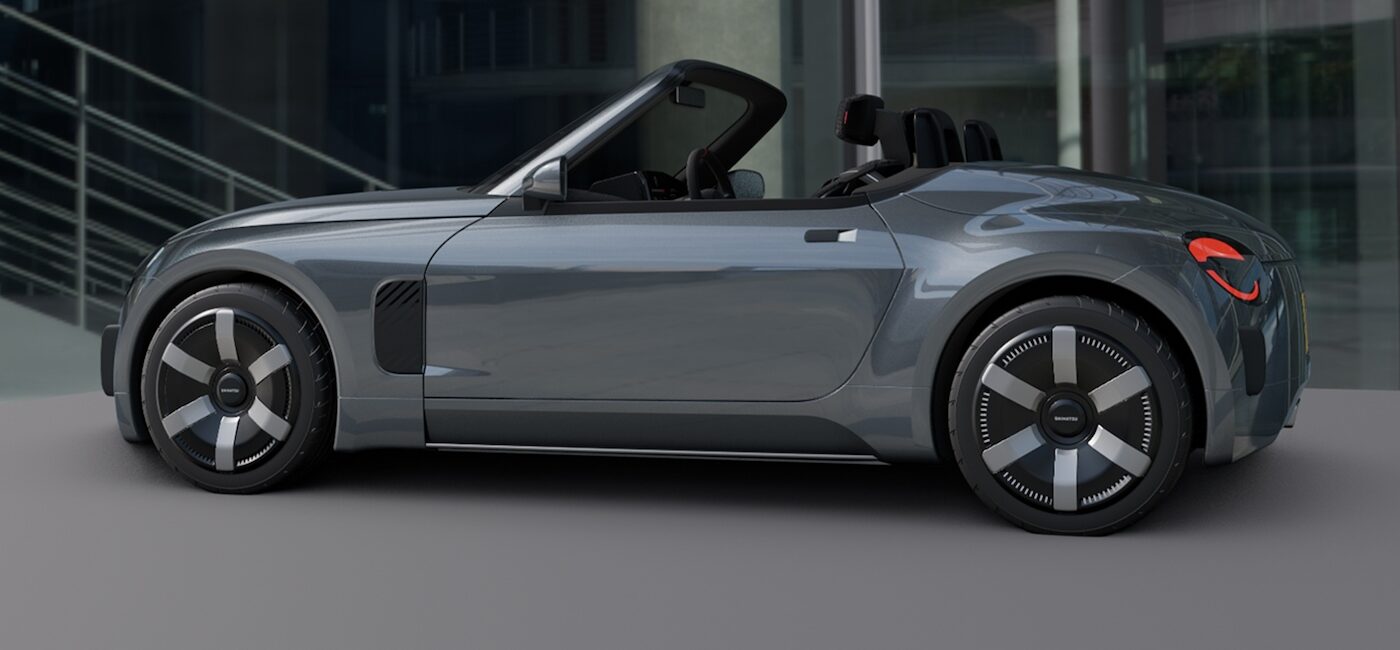
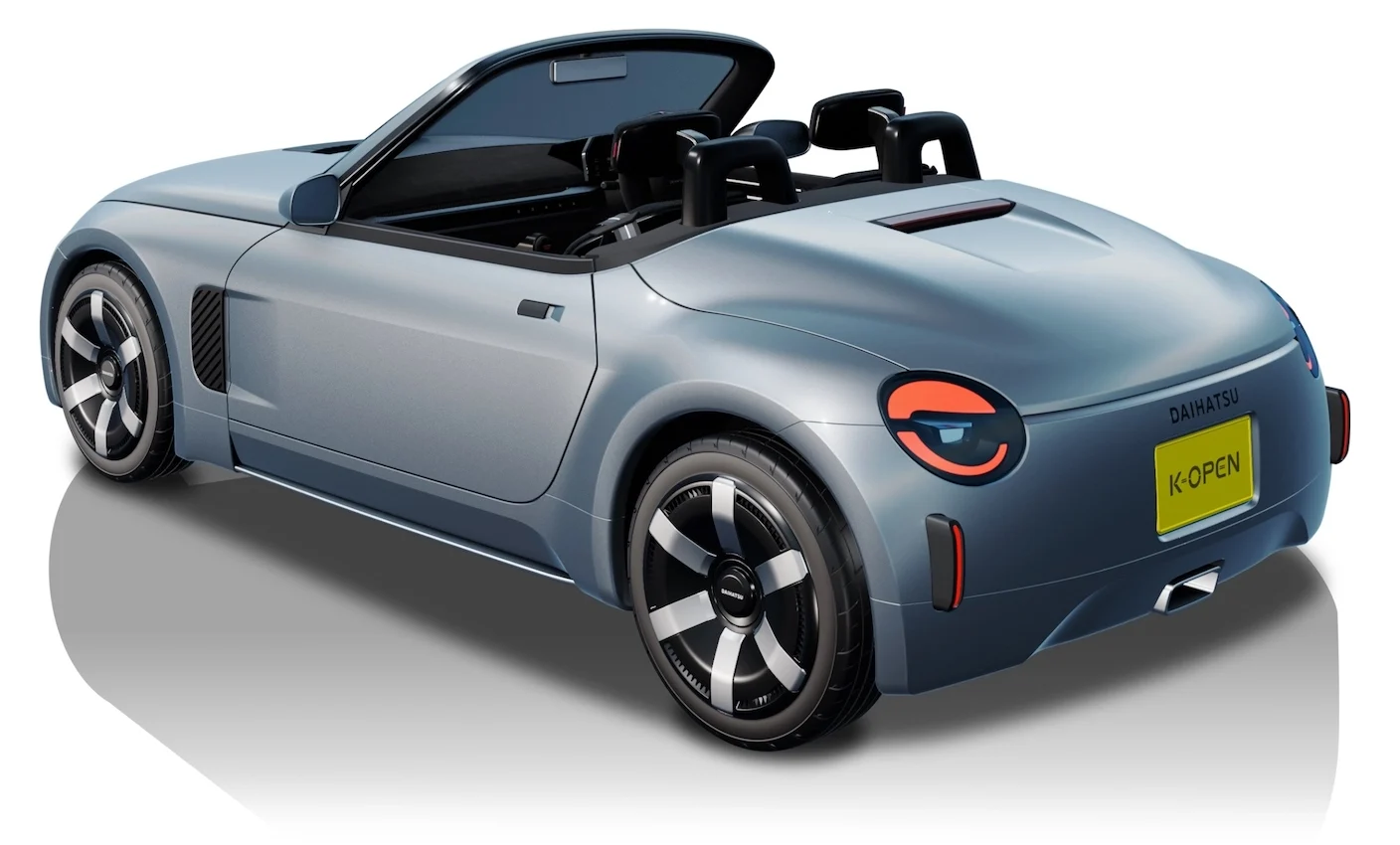
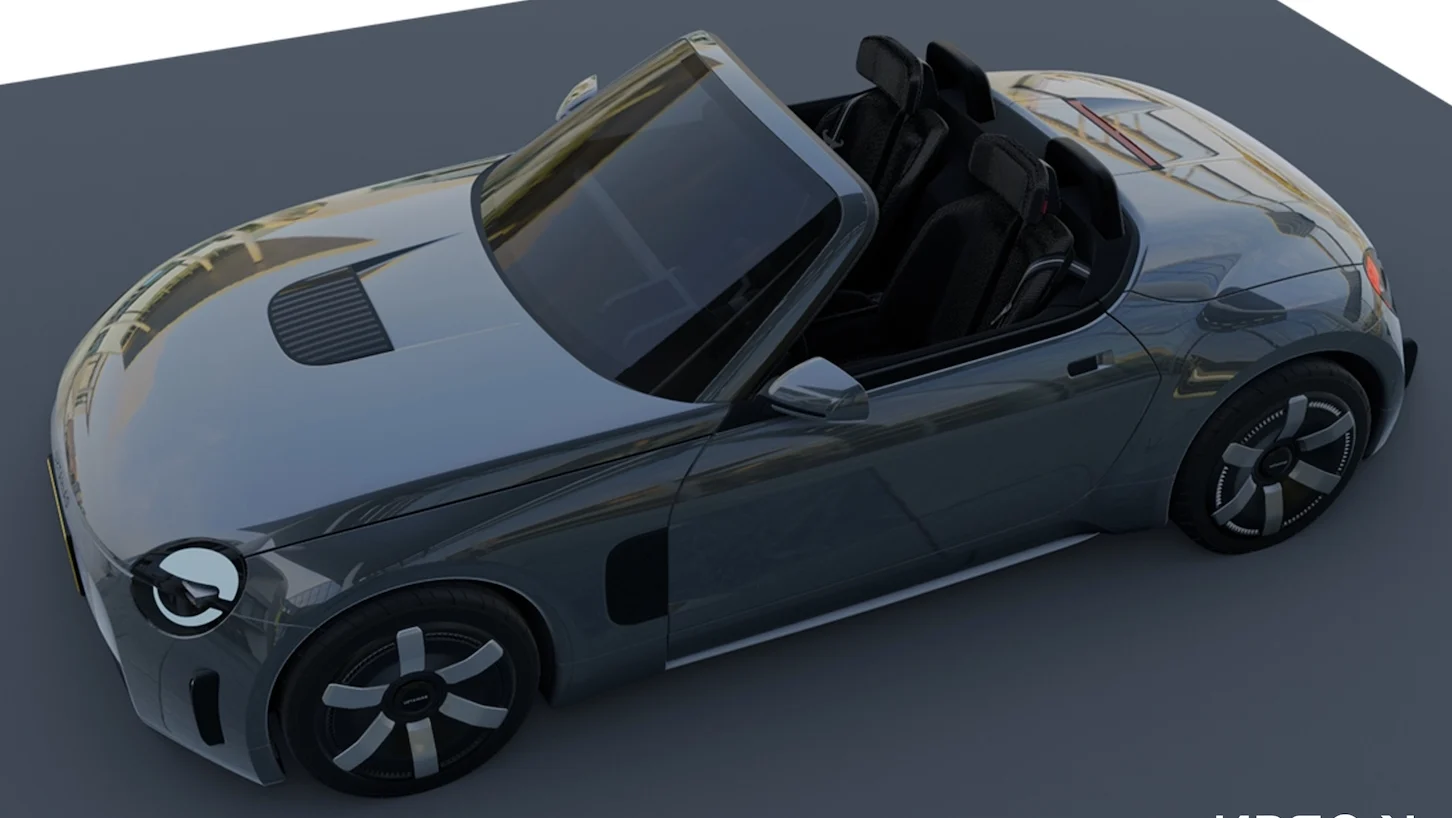 (軽企画を脱皮、FR1.3リッターへとアップグレード、ボディーサイズもマツダのMX-5に近い3.8m程度となり、よりスパルタンなロードスターへ変身、
--→より直線的に張ったサイドビューと初代オマージュな、真ん丸ヘッドライトが絶妙なバランスです!)
この分野は、
『実際に乗りたいクルマだらけ』なため、
まだまだ、出てくると思いますが、
キリがないので、
また別の機会に、、、
 エスハチよ!永遠に、、、
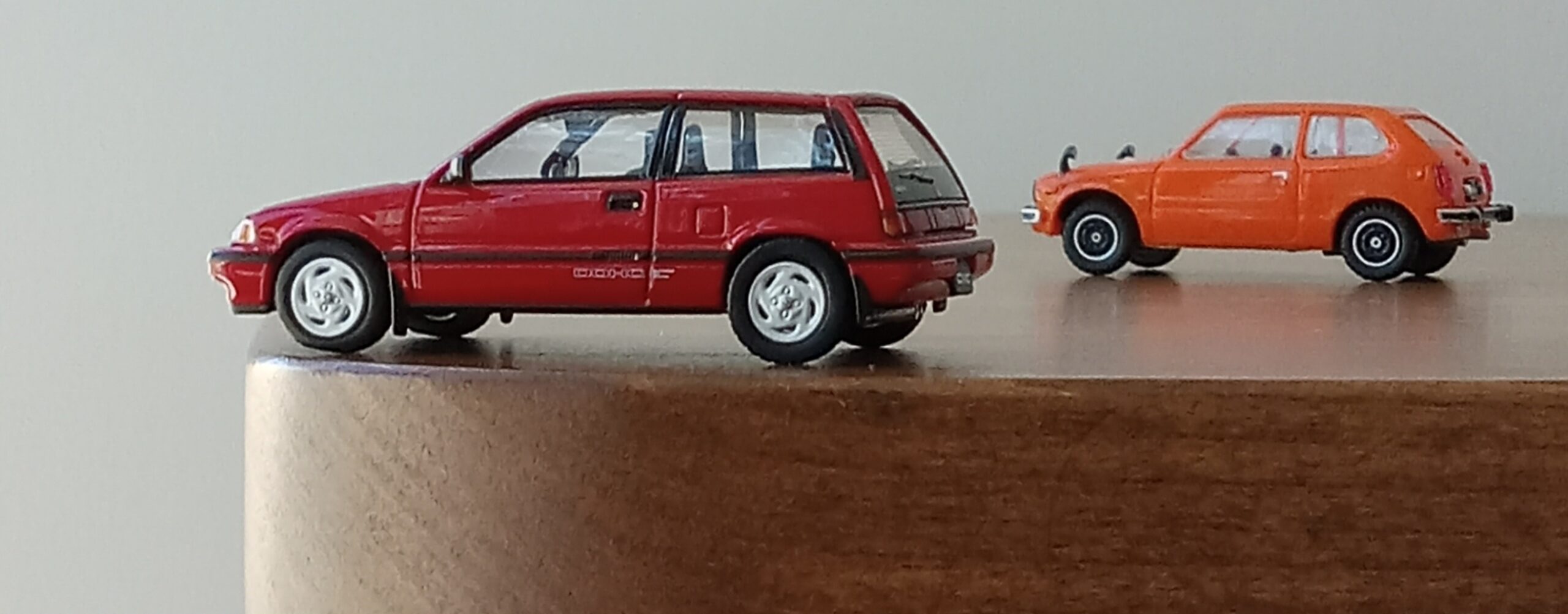 次回は、
ホンダの弾丸トリオの若頭:
ワンダー・シビックの登場です。
お楽しみに――
本ブログと記事内容につきまして:
ブログ記事を書くにあたり私の目標は、立体造形(料理も含めて)とのかかわりを通じて、私個人の特徴的(ネジ曲がり方も含めて)な評価軸を解明することで、「美しさ・美味しさ」に対する好奇心や、探求心を、どのように満足・充足させてきたのかを明記しておくことです。
従いまして、記事の中に出てくる、数字や年号、微細なデータなどには細心の注意を払っておりますが、時に大きな間違いや勘違いを犯していることも考えられます。特に自動車記事における主要諸元や、年号などには紛らわしいものも多く、あくまで参考程度に考えていただければ幸いです。
私としては、記事の中で個人的な外観デザインや味覚の評価、そこから広がる後半部分につなげるための、『流れ』を作るための客観的材料として年号やデータを挿入している感じです。あくまで重視したいのは、私個人の頭の中で起こる、記憶の錯そう的混沌から生まれる新たな『見方』や『情報の予想外のつながり』です。その勢いを作り出す、『流れ』の一環として、諸データが副次的に必要となるわけです。
話がそれますが、大好きな落語の世界に「三題噺」という、その場て会場から募った3つのお題を使って1つのお話に仕立てるといったお遊びがございますが、私はそれに近いことを立体造形の特徴や(料理のお味)をお題にして行っている感じがします。その中で頭の中に去来する数々の着想が、全く予想外で楽しく、次回からの記事内容を大幅に変えたり、新展開につながっています。
当ブロブの仕組み:
『好奇心の点と線 x 気まぐれ脳内回路=予想外の新展開』
こんな自分勝手なブログですが、今後ともよろしくお願いいたします。
追記:上記の『流れ』を作る為に必要な写真はできる限り、個人所有のミニカー・自前の料理などを使い撮影しておりますが、その他の必要最小限の図版や写真を他のブログ主様の記事や諸会社ホームページなどからお借りしております。(記事内容に合うよう加工させていただき、使用時は最小の解像度で載せております。)問題がある場合、ご連絡いただければ直ちに降ろさせていただきます。
追記2:当ブログ記事に掲載のミニカー写真等(個人撮影)は許可なしで、どのようにお使いいただいても結構です。私個人の創造性はこの世のもの、と言う認識の上で記事を製作しています。
!!!!!!!!!!!!!!!!!!!!!!!!!!!!!!!!!!!! Translated in English !!!!!!!!!!!!!!!!!!!!!!!!!!!!!!!!!!!!
(Miniature car used in the photoshoot: Tomytec, Tomica Vintage [LV-200a] Honda S800 Open-Top, 1966 (Scarlet) —— —Modifications: Removed the rivets to optimize the axle position and vehicle width; shaved down the top of the windshield; and also shaved the inside of the black roof panel from the [LV-200b] Honda S800 Hardtop to ensure a perfect fit by matching it to the actual vehicle.)
Favorite Car Designs: Part 57—The Lineage of 2-Door Coupes: Part 36 [Honda Edition] Honda S800, 1966 (Scarlet) “Souichiro Honda’s Dream” Honda S800 Coupe, 1966 (Scarlet) “Souichiro Honda’s Dream Came True!”
n
#Modification Project:
“Since this die-cast model is slightly too low, I’d like to do the opposite of what I usually do this time and raise the ride height by about 2 mm to add a classic feel from that era. Also, to install a soft top, I’ll trim the top edge of the windshield, carefully reshape and paint it, and transplant the soft top parts from the vintage [LV-200ⓑ].”
n
n
n
n
Modification Process:
1: Use a drill to break the rivets, then carefully separate the body from the chassis.
2: Apply two layers of masking tape to the bearing area to add height.
3: Reinstall the axle—adjusted to its maximum width—and re-glue the top and bottom sections.
4: Carefully sand and file the windshield and the soft top taken from the 【LV-200ⓑ】 to fit the actual parts,
5: Finally, use a warm-toned gray alcohol-based marker to apply wash and weathering to the inside of the wheels, the grille, the bumper, around the taillights, and the underside of the body to complete the model.
n
Process Photos:
n
n
n
n
n
n
n
n
n
n
n
n
n
n
n
n
n
n
n
n
n
n
n
n
n
n
n
n
n
n
n
n
n
n
n
n
n
n
n
n
n
n
n
n
n
n
n
n
n
n
n
n
n
n
n
n
n
n
n
n
n
n
n
n
n
n
n
n
n
n
n
n
n
n
n
n
n
n
n
n
n
n
n
n
n
n
n
n
n
n
n
n
n
n
n
n
n
n
n
n
n
n
n
n
n
n
n
n
n
n
n
n
n
n
n
n
n
n
n
n
n
n
n
n
n
n
n
n
For this 57th installment, titled “The Lineage of 2-Door Coupes, Part 36,” I’d like to discuss luxury 2-door (GT) coupes and roadsters, which strongly reflect the national characteristics and unique exterior design styles of various countries. [Note: Includes convertibles]
We’ll proceed as follows.
In this 36th installment, we’ll finally cover
[Japanese Cars: Honda (Lightweight Sports Cars, Part 001)]
We’ll be discussing the
Honda S800, introduced in 1966 (Scarlet),
which was released in 1966.
[The Lineage of 2-Door Coupes: Table of Contents]
[American Cars]
Part 1: Cadillac El Mirage, 2013 (Metallic Red)
Part 2: Lincoln Continental MK4, 1972 (Black)
Part 3: Mercury Cougar, 1967 (LT Metallic Green)
[German Cars]
Part 4: MB 500K Special Roadster, 1936 (Black)
Part 5: MB 300SL Roadster, 1957 (Silver)
Part 6: MB SLS AMR Gullwing, 2010 (Black)
[British Cars]
Part 7: McLaren F1, 1992 (Metallic Orange)
Part 8: Jaguar XKSS Roadster, 1957 (Royal Blue)
Part 9: Jaguar XKR Coupe, 1996 (Dark Metallic Green)
[Japanese Cars / Nissan Edition]
Episode 10: Nissan First-Generation Silvia, 1965 (Champagne Gold)
Episode 11: Nissan Fifth-Generation Silvia, 1988 (LT Metallic Green)
[Italian Cars Edition]
Episode 12: Ferrari 250TR Pontoon Fender, 1958 (Red)
Episode 13: Ferrari 250 GTO, 1962 (Italian Red)
Episode 14: Lamborghini Concept S, 2005 (Pearl White)
[Japanese Cars: Mazda Edition]
Episode 15: Mazda Cosmo Sport, 1968 (Racing White)
Episode 16: Mazda Eunos Cosmo, Type-S (2-Tone: Black & Gray)
[French Cars]
Episode 17: Bugatti Type 59, 1935 (French Blue)
Episode 18: Citroën SM, 1970 (Champagne Gold)
Episode 19: Bugatti La Voiture Noire, 2019 (Black)
[Japanese Cars: Toyota Edition]
Episode 20: Toyota/Yamaha 2000GT, 1967 (Ivory White)
Episode 21: Toyota 2nd-Generation Soarer, 1986 (Crystal White II)
Episode 22: Lexus LC500 [GWZ100], 2017 (Manual Transmission, Red)
[American Cars Part 2]
Episode 23: Dodge Challenger, 1970 & Plymouth Barracuda, 1971
Episode 24: Dodge Viper SRT-10 ACR, 2008 (Black)
Episode 25: Ford Shelby GR-1 Concept, 2004 (Chrome)
[Japanese Cars: Mitsubishi Edition]
Episode 26: Mitsubishi Galant λ, 1976 (Brown Metallic)
Episode 27: Mitsubishi Eclipse [North American Spec], 2006 (Orange Metallic)
[German Cars Part 2]
Episode 28: BMW M635CSi, 1984 (Dark Metallic Blue)
Episode 29: Mercedes-Benz 560SEC AMG 6.0 Widebody, 1989 (Black)
Episode 30: BMW M2 with Genuine Performance Parts, 2025 (Neon Lime)
Episode 31: First-Generation Audi TT, 1998 (Lake Silver Metallic)
[Japanese Cars: Subaru Edition]
Episode 32: Subaru Crosstrek XV, 2012 (Lime Green Metallic)
[British Cars Part 2]
Episode 33: Lotus First-Generation Elite, 1959 (British Green)
Episode 34: Lotus Elan S4 Sprint (3-tone: Meta Blue, White & Gold)
Episode 35: Jaguar E-Type Roadster (Light Blue Metallic)
[Japanese Cars: Honda (Lightweight Sports Cars)]
Episode 36: Honda S800, 1966 (Scarlet)
Episode 37: Honda “Wonder” Civic Si, 198 (Super Red)
Episode 38: Honda Beat, 1991 (Samba Yellow)
[Italian Cars Part 2]
Episode 39: Lancia Gamma Coupe, 1976 (Grigio Argento (Silver))
[Japanese Cars: Toyota Part 2]
Episode 40: Toyota Corona Hardtop 1800GT-TR, 1982 (Blazing Red)
Episode 41: Toyota GR Supra, 2019 [DB Series · A90/A91] (Volcanic Ash Gray Metallic)
Episode 42: Toyota GR GT, 2027 [Planned] (Gunmetal)
[Italian Cars Part 3: Special Edition]: The Lineage of Supercars
Episode 1: Maserati Merak SS, 1975 (Blue Sera Metallic)
Episode 2: Lancia Stratos HF, 1973 (Rosso Stratos)
Episode 3: Lamborghini Miura SV, 1971 (Rosso & Oro / Red & Gold)
Part 4: Ferrari Dino 206 Competizione Prototipo (Giallo Frai / Yellow)
Part 5: De Tomaso Pantera GTS, 1971 (Rosso / Red & Matte Black)
Part 6: Ferrari LaFerrari, 2013 (Rosso Corsa (Red))
[American Cars #3: Special Edition]: The Corvette Lineage
Part 1: 1967 Stingray [C2] Convertible (Hardtop, Metallic Blue)
Part 2: 1972 Corvette [C3] Convertible (Metallic Blue)
Part 3: 1984 Corvette [C4] Coupe (Bright Red)
Part 4: Corvette Indy, 1986 [Mid-ship Prototype] (Silver)
Part 5: Stingray Concept, 2009 [FR Sports Prototype] (Light Blue Metallic)
#Soichiro Honda’s Dream: The Story of Its Realization!
The Honda CR-X I drove in college—
the original of that compact sports car—
the “S800,”
was a car I’d been sending love calls to
through magazine articles and Nitto Model’s 1/24 scale plastic kits… (laughs)
Just then,
I stumbled upon
a Honda S5, S6, and S8 hall of fame—
“Meiki Auto”—
located near my parents’ home in Nagoya. Even though I couldn’t afford to buy anything, I found myself stopping by there quite often…
(I discovered it while visiting a nearby Toyota dealership or home improvement store!)
In the parking lot in front of Meiki Auto,
Honda’s early classic cars—
[the S6, S8, their coupes, the N-Col, the 360Z, and others]—
were packed tightly together,
and every time I visited, they let me sit in the driver’s seat of the silver and yellow S6 coupe.
I’d nod in greeting, but we didn’t talk much; I’d just say, “It really is great, isn’t it?” with a big smile. So happy
Even back then,
I was captivated by the qualities shared by the entire 【Honda S Series】:
* The divine exterior design—its balanced, cohesive look,
* The even tighter, more compact feel compared to the CR-X I was driving at the time,
* The exterior brimming with that unique, handcrafted feel of classic cars, and
* I was completely smitten by its scent.
――> By the way, the second car I drove after moving to the U.S. was a ’73 “MG Midget”!
Specifically, I took the best features from four of my favorite foreign classic cars,
combined them, and created a car that fit within the kei car class—and then some…
* Mercedes-Benz 280SL (Pagoda Roof)
[Its bold, well-balanced, and beautiful proportions…]
* BMW 507 Roadster (with hardtop)
[The dynamic body lines and the three-dimensional design of the front fascia…]
* MG-B Roadster (or MG-GT Coupe)
[The shape of the windshield and the compact feel of the soft top…]
* Austin-Healey 100/4 BN1
[The riveted joints between the fenders and the hood…]
The best of all four cars
+ Little by little! ーーーーー>
n
n
n
n
n
n
n
n
n
n
n
n
n
n
n
n
n
n
n
n
Now then, regarding the legendary “Honda S8,”
I’d like to discuss it as follows!
* Real-Car Analysis: The Pinnacle of Functional Beauty
* Exterior Design Features:
* “Me” and the Honda S800: An Eternal Longing
* Three-Theme Story: Sense of Condensation, Precision Machinery, and the Pinnacle of Functional Beauty
* Other “Small, Beautiful Cars”…
* Vehicle Overview: “Condensed Functional Beauty”
n
When we examine this work from the perspective of Soichiro Honda—who was both the company’s top executive at the time and the very embodiment of technology—as well as from the viewpoint of the designers who actually put pen to paper and the planners involved in its creation, we can see a “fierce battle between function and emotion” that goes beyond superficial styling.
n
n
n
n
n
n
n
n
n
n
n
n
n
n
n
n
n
n
n
n
n
n
n
n
n
n
n
n
n
n
n
n
n
n
n
n
n
n
n
n
n
n
n
n
n
n
n
n
n
n
n
n
n
n
n
n
1. Behind the Scenes of Planning and Design: Shinya Iwakura and His Team Take on the Challenge of Embodying “The Honda Spirit”
n
At the time, Honda’s automotive design was in its infancy and was supported by a team of young designers led by Shinya Iwakura, who would later become Honda’s first Managing Director and Chief Designer. Their mission was to create a “lightweight sports car that would serve as Honda’s calling card” as the motorcycle giant ventured into the automotive world.
n
n
n
*Reinterpreting the Golden Ratio and the Challenge of Compactness:
n
The design team aimed to adapt the beautiful proportions of British-style lightweight sports cars—such as Lotus and Austin-Healey, which were the global standard at the time—to Japanese, and by extension, Honda’s technical specifications.
n
N
Constructing the golden ratio of a classic “long-nose, short-deck” sports car within dimensions—3,335 mm in length and 1,400 mm in width—that were narrower than those of modern kei cars was an extremely difficult puzzle to solve. However, by controlling the contours of the fenders and the position of the cabin down to the millimeter, they created a unique silhouette with a condensed, solid presence.
n
n
n
2. Soichiro Honda’s Perspective: “If the mechanism isn’t beautiful, it isn’t a genuine product.”
n
n
On the planning and development front lines, the presence of President Soichiro Honda was both the greatest source of inspiration and the greatest “obstacle” for designers and engineers. Soichiro detested designs that merely wrapped a stylish shell around the mechanism, and and held the unwavering belief that “the mechanism itself must be beautiful and functional.”
n
n
n
n
n
n
n
n
n
n
n
n
n
n
n
n
n
n
*The “Power Bulge” as a Symbol: A Design That Turned Failure into a Story
n
The “power bulge” on the right side of the S800’s hood is an iconic feature. In reality, however, it was not designed purely for aesthetic purposes. It was a necessary compromise created because the mechanism for the electronically controlled fuel injection system—which had been originally planned—interfered with the hood.
n
n
n
n
n
n
n
n
n
n
n
n
n
n
n
n
n
n
n
n
n
n
n
n
n
n
n
n
Ultimately, the production model was changed to a four-barrel carburetor, so this bulge remained as an “empty bulge.” While a typical manufacturer would have insisted on “flattening the shape back out,” Soichiro and the planning team gave it the green light. This was because they recognized that this asymmetrical bulge would function as a “symbol of technology” that, more eloquently than anything else, conveyed the fact that a “formidable powerplant (the AS800E DOHC engine)” lay hidden within.
n
n
*The Evolution to a Chrome Grille and Brand Identity
n
As the model evolved through the S500 and S600, the front fascia became increasingly refined, reflecting Soichiro’s vision. In the S800, it evolved from the simple openings of previous models to a three-dimensional grille dominated by horizontal chrome-plated bars. The design, which proudly accentuated the “H” emblem at its center, was a manifestation of Honda’s confidence after earning the right to compete on the world stage, and it brilliantly embodied the “dignity that makes Honda instantly recognizable” that Soichiro had sought.
n
n
n
3. The Fusion of Mechanics and Form: Packaging That Translates Motorcycle DNA to Four Wheels:
n
From a production and planning perspective, the most exciting aspect of the S800 is the component layout that translates motorcycle drivetrain logic into a four-wheeled framework.
n
* The “Aesthetics of Subtraction” in Chain Drive:
n
The “rear chain drive system” adopted in the early models was a concept that only Honda, as a motorcycle manufacturer, could have conceived. This structure—in which the die-cast aluminum chain case doubles as a suspension arm (trailing arm)—represents the “ultimate in rationalization,” designed to minimize the number of parts to the absolute minimum and reduce unsprung weight.
Although the design was later changed to the more common live axle (rigid suspension) system, the packaging philosophy brought about by this early chain drive—to “construct the rear end to be both compact and robust”—increased the freedom of styling and made possible the tight, beautiful taper of the rear fender.
n
*The Cockpit as a Work of Art:
The interior, designed by Mr. Iwakura and his team, was also a embodiment of Soichiro’s philosophy: “Focus on driving.”
The instrument cluster neatly arranged behind the wood-trimmed steering wheel; the short-stroke shift lever that clicks into place with precision. Decoration was ruthlessly stripped away, and resources were concentrated on enhancing the quality of the interface between the driver and the machine. This is the very essence of “organizing information and optimizing the user experience”—a concept that resonates with modern UI/UX design.
n
n
n
Conclusion: Where the passion of the top leadership and the designers’ ambition sparked a flame “A Miracle in the Making”
n
nn
nn
n¥
The 1966 Honda S800 is a product that represents a high-level, uncompromising fusion of “the absolute pursuit of function by the extraordinary engineer Soichiro Honda” and “the international standard of elegance sought by young designers like Shinya Iwakura.”
There is a saying, “Form follows function,” but the S800 went even further, embodying the concept that “Form expresses passion.” That is precisely why, even today—nearly 60 years after its debut—its concentrated functional beauty has not faded and continues to captivate our hearts.
n
n
n
m
n
n
n
Side Note: The Secret Behind the S800 Coupe’s Packaging
n
The “coupe model” of the Honda S800 was a landmark vehicle that overturned conventional wisdom regarding packaging in the lightweight sports car world of the 1960s.
It wasn’t simply a matter of adding a roof to the open-top model (roadster); rather, it hides the secret of a “refined subtraction and addition”—the result of the design and planning team’s relentless pursuit of “ensuring overwhelming practicality without compromising the purity of the driving experience.”
n
n
n
n
Drawing on the philosophies of designers such as Shinya Iwakura and Soichiro Honda, we’ll unravel the secrets of its packaging through three key points.
n
n
1. A “World’s First” Challenge: The Boldness of Incorporating a Hatchgate into a Fastback
n
At the time, most coupe models were either “notchback (three-box)” designs or “fastbacks” with fixed rear windows, even if they were streamlined. To load luggage, passengers had no choice but to force it in from behind the narrow seats.
So Honda’s planning and design team came up with the idea of creating a “hatchgate” that would open wide—along with the rear glass—while maintaining the fastback’s beautiful slope.
n
This was an extremely advanced and bold packaging concept for its time—a precursor to the “three-door hatchback,” which is now commonplace. With a few exceptions, such as the British luxury car “Aston Martin DB6,” Honda’s ability to incorporate a practical rear door into this class of small, lightweight sports cars was a major triumph of its planning capabilities.
n
n
2. Soichiro Honda’s Strict Order: A Sense of Density That Leaves Not a Single Millimeter of “Waste Space”
n
When you open the hatchgate, you’re greeted by a surprisingly flat and expansive luggage compartment.
However, to achieve this spaciousness, Mr. Iwakura and the team of designers and engineers carried out painstaking, millimeter-by-millimeter refinements.
n
This was because President Soichiro Honda adhered to the philosophy: “Don’t create wasted space (dead space) in a sports car! If there’s even a 1-millimeter gap, either make the machinery smaller or trim down the body!”
n
Flattening the Fuel Tank:
To ensure a flat cargo area, the fuel tank—which is typically arranged in a three-dimensional configuration—was laid out under the floor, made as thin and flat as possible.
n
“Diagonal” Spare Tire Placement:
To maximize cargo depth within the compact body, the spare tire was stored by sliding it diagonally under the floor. It was hidden in a position completely invisible from the exterior, allowing the luggage floor to be lowered to the absolute limit.
n
The origins of this packaging philosophy—“Compact on the outside, spacious on the inside,” which would later evolve into Honda’s MM philosophy (Man Maximum/Machine Minimum)—had already been realized beneath the floor of this Es-Hachi.
n
n
3. The Secret of the Design: “The Magic of Optical Illusion” That Eliminates the Cabin’s Height
n
When converting a vehicle into a coupe to expand the cargo area, the roof inevitably becomes longer, causing the cabin (passenger compartment) to bulge upward in a “rice-ball” shape—a silhouette that tends to look clunky and unwieldy. This is especially true for the S800, with its total length of just 3,335 mm.
n
Mr. Iwakura and his team of designers overcame this challenge with the “magic of beautiful lines.”
n
Angular Quarter Windows:
Small, triangular quarter windows were positioned behind the side windows (at the C-pillars). These smoothly guide the viewer’s gaze toward the rear, creating a visual effect (an optical illusion) that minimizes the perceived “height” of the roof.
n
Carefully Calculated Rear Fender Volume:
To prevent the eye from being drawn to the roof, the designers deliberately emphasized the “high-waisted bulge” of the rear fenders. By placing a solid center of gravity in the lower body, they created the golden ratio of a low, taut fastback—one in which the roof gently envelops the cabin.
n
N
n
Conclusion: The Coupe Model Embodies the True Essence of “Honda-ness”
n
n
n
n
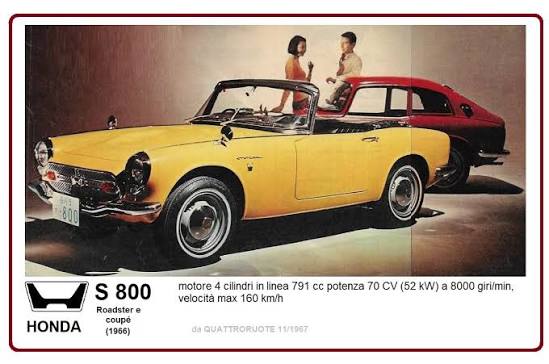
As a result, 7,749 units of this coupe model were produced—far exceeding the 3,640 units of the convertible model—and it became a massive hit, particularly in the European market.
While offering high practicality with a “spacious cargo area” capable of handling long-distance grand touring, the DOHC engine bares its fangs the moment you press the accelerator, unleashing 70 horsepower at 8,000 rpm.
n
Honda’s “magic of packaging”—the concept of a “practical car with fangs” that would be passed down through the generations all the way to the later TYPE R—was fully established in this S800 Coupe thanks to Soichiro Honda’s uncompromising engineering and the young designers’ relentless pursuit of space.
n
n
#Three-view photos:
n
n
n
n
n
n
n
n
n
n
n
n
n
n
n
N
n
n
n
n
n
n
n
n
n
n
n
n
n
n
N
n
n
n
n
n
n
n
n
n
n
n
n
n
n
N
n
n
n
n
n
n
n
n
n
n
n
n
n
n
N
n
n
n
n
n
n
n
n
n
n
n
n
n
n
N
n
n
n
n
n
n
n
n
n
n
n
n
n
n
N
n
n
n
n
n
n
n
n
n
n
n
n
n
n
n
n
n
n
N
n
n
n
n
n
n
n
n
n
n
n
n
n
n
N
n
n
N
# Key Specifications:
Engine Model: AS800E
Total Displacement: 791 cc
Engine Type: Water-cooled, 4-stroke, inline 4-cylinder DOHC
Fuel System: Keihin horizontal variable venturi type (4-barrel carburetor)
Maximum Power: 70 PS / 8,000 rpm
Maximum Torque: 6.7 kg·m / 6,000 rpm
Top Speed: 160 km/h
Drivetrain
Translated with DeepL.com (free version)
Overview:
n
Packaging with Soul:
The 1966 “Honda S800”
n
n
Launched in 1966, the [Honda S800] transcended the boundaries of a mere mass-produced sports car; it is a pinnacle of industrial design born from the collision of Honda’s “insane obsession with technology” and the “ambition of up-and-coming designers.”
n
When we examine this masterpiece from the perspective of Soichiro Honda—the company’s top executive at the time and the very embodiment of technology—as well as from the viewpoint of the designers who actually put pen to paper and the planners who conceived the project, we see beyond the superficial sta
Engine Model: AS800E
Total Displacement: 791 cc
Engine Type: Water-cooled, 4-stroke, inline-4, DOHC
Fuel System: Keihin horizontal variable venturi type (quad carburetor)
Maximum Power: 70 PS / 8,000 rpm
Maximum Torque: 6.7 kg·m / 6,000 rpm
Top Speed: 160 km/h
Drivetrain: FR (Front-engine, Rear-wheel drive)
Seating Capacity: 2 passengers
Body Style: 2-door roadster
Wheelbase: 2,000 mm
Overall Length: 3,335 mm
Overall Width: 1,400 mm
Overall height: 1,215 mm (S800M)
Curb weight:
755 kg (S800M)
*Exterior Design Features: “The Ultimate in Compactness and Balance”
A common refrain among us model enthusiasts:
[Small yet precise!]
In my opinion,
the legendary car that deserves all this praise
is the [S-Hachi].
Let’s take a closer look at the exterior design features of the S-Hachi—
a masterpiece that resembles a precision model—
by highlighting five points based on my own subjective judgment and bias!
n
1: Setting size aside, the overall three-dimensional form maintains a rare, perfect balance—a harmonious coexistence of suppleness and power. ———> This exceptional sense of balance is achieved without resorting to flashy graphics, dramatic surface contours, or visual tricks.
2: The perfect “long-nose, short-deck” FR proportions—tapered like a drawn bow—that give the three-dimensional form described in  , which is entirely focused on stability, the movement and directionality of a sports car. ———> The front axle is positioned well ahead of the engine’s front edge; nevertheless, the rear overhang is quite large.
3: Despite its small size, a knife-edge protrusion extending from the cross-section of the headlights to the rear fenders (a remnant of the era of independent fenders?) creates a sense of stance and reassurance beyond its actual dimensions—> This generates a sense of stability and dignity when viewed from any angle.
4: Unlike the rest of the car, the front fascia design resembles the face of a “barking Shiba Inu” that looks slightly angry—> The “S8’s angry face,” which added even more dignity during the transition from the S6.
5: A commitment to the size and shape of the soft top that adheres to the classic British roadster principle that “the car actually exudes a greater sense of speed with the top up”—> The design of the race version’s rounded hardtop is also outstanding.
Five clear points have emerged!!
I’m excited to
explain them with photos.
1: Setting size aside, the overall three-dimensional form maintains a rare, perfect balance—a harmonious coexistence of suppleness and power.
(The S800’s timeless, classic masterpiece quality—a three-dimensional form with the polished, “flawless” permanence of the first-generation MX-5—brings back that feeling you get when a classic song comes on the radio and you can’t believe your ears, thinking, “Hasn’t this been a classic for ages?”)
ーーーー>Achieving this rare sense of balanced harmony without resorting to over-the-top flashy graphics, dramatic surface contours, or visual tricks
2: The perfect “long-nose, short-deck” FR proportions—taut as a drawn bow—which imbue the three-dimensional form described in , focused entirely on stability, with the dynamism and directionality of a sports car.
——> The front axle is positioned well ahead of the engine’s front edge; nevertheless, the rear overhang is quite substantial.
3: Despite its small size, a knife-edge protrusion extending from the headlight cutouts to the rear fenders (a remnant of the era of independent fenders?) creates a stance and sense of security that exceed its actual dimensions.
—> This creates a sense of stability and dignity when viewed from any angle.
4: Unlike the rest of the car, the front fascia features a design reminiscent of a “barking Shiba Inu” with a slightly angry expression.
――> The “S8’s angry face,” which added even more dignity during the transition from the S6.
5: A commitment to the size and shape of the soft top that adheres to the classic British roadster principle: “The car actually exudes a greater sense of speed with the top up.”
――> The design of the race version’s rounded hardtop is also superb.
Next,
I’d like to share my personal experience.
* “Me” and the Honda S800: An Eternal Longing
Truly, no matter how you look at it, the S8 is
* well-proportioned and beautiful,
* embodies the image of a street racer,
* embodies the image of an enthusiast,
* has a spirited, angry-looking face,
and so on…
I love it so much
I could look at it all day without getting tired of it!
After moving to the U.S.,
the second car I owned
was also an MG Midget,
because it was a convenient alternative
to the S800 that I could drive here.
I also have
a very deep connection with scale models.
It’s something like this.
#Plastic Model Kit:
* Nitto Model Co., Ltd., 1/24 scale plastic model kit, Honda S800 (molded color: red)
(Nitto’s deluxe 1/24 scale plastic model kit—from the box art to the way the parts are packaged—everything about it stirs up a desire to own it. I happened to own three of them (two standard versions and one clear version).
——> The body reproduction lacked a bit of roundness and didn’t quite have that certain charm.)
* Tamiya, 1/24 scale plastic model kit, Honda S800 (molded color: red)
(This is a standard Tamiya vintage car kit, featuring just the right amount of stylization and a detailed reproduction of the chassis and engine—a solid kit supervised by Mr. Masato Kitani, president of Eburo.
—> Race-spec versions, an S600 version, and a yellow-molded version were also released.)
* Otaki, 1/1 scale plastic model kit, Honda S800 (Convertible / Coupe)
(I once had a store clerk take one down from the top shelf at a toy store so I could peek inside, and I remember thinking, “This is much smaller than Otaki’s 1/12 scale kits from back then…”
――> I’ve never seen the coupe version in person, but it seems to be an incredibly rare kit.)
* LS, 1/32 scale plastic model kit, Honda S600 (Molded color: white)
(LS’s 1/32 kits are easy to assemble and surprisingly well-made; the S600 had quite a few finely detailed parts and was very precise.
――> They also released an S500 version, didn’t they?)
#Miniature Cars:
*Ebro, 1/43 die-cast ready-to-display model, Honda S800 (White)
(This was the first realistic die-cast model I ever got. It features high-quality sculpting and captures the cute yet cool look of the real car.
――> Various versions are available, including different colors, the S6, and race versions.)
* Ebro, 1/24 die-cast ready-to-display model, Honda S800 (White)
(A ready-to-display model from Ebro, renowned for its consistent quality; it has the same finish as a die-cast version of Tamiya’s 1/24 scale plastic model kit,
ーーーー>This is a model I’d really like to get my hands on.)
In addition,
there are quite a few large die-cast models available,
so I’ll list them below.
* Tamiya, 1/20 die-cast model, Honda S800 (White)
* AutoArt, 1/18 die-cast model, Honda S800 (various colors available)
* Hobby Japan, MARK43, 1/43 die-cast ready-to-display model, Honda S800 (various colors available)
* NOREV, 1/43 die-cast ready-to-display model, Honda S800 (various colors available)
* VITESSE, 1/43 die-cast ready-to-display model, Honda S800 (various colors available)
#1/64 Hot Wheels-sized die-cast models:
There are also an insane number of these available, including racing and custom versions!
* Kyosho, 1/64 die-cast model, Honda S800 (red, white, yellow)
(These are fairly old convenience store die-cast models, but their overall appearance, paint job, and detailing are well-done enough to display in your living room.
–> The ride height is a bit high, but this can be fixed by raising the axles.)
* Diagostini, 1/64 die-cast ready-to-display model, Honda S800 (Red)
(The level of detail in the front and rear designs is astonishing, but there are also many issues, such as the height of the windshield and the size and width of the tires. ——> I keep this in stock as a modification part to combine with the Tommytec model.)
* Tomytec, Tomica Limited Vintage Series [LV-200 a, b, c], 1/64 die-cast ready-to-display model, Honda S800 (Red, Yellow, White)
(Since this is a fairly recent release, it’s an outstanding product in every aspect—from its delicate sculpting and detailing to its paintwork, assembly, and durability.
--→ The hardtop and soft top included with the yellow version [LV-b] came in very handy!!)
Other Retro-Mod and custom versions, as well as racing versions,
are being released by emerging Chinese manufacturers and Hot Wheels in the U.S.
So, have you been waiting for this!?
It’s time for the “Three-Theme Story”…
*Three-Theme Story: Sense of Condensation, Precision Machinery, and the Pinnacle of Functional Beauty
This time, we’ve been given topics
that are quite clearly related…
Maybe that makes it even harder?
#Topics:
* Sense of Condensation
* Precision Machinery
* The Ultimate in Functional Beauty
#Underlying Theme: “Soichiro Honda’s DNA”
Prompt:
Write a conversational-style explanation of the vision and exterior design of the Honda S800, released in 1966. (Set in the late Edo period, this is a lively, rough-and-tumble dialogue between a young, artistic sushi chef—who, despite his inexperience, displays genius-level flashes of inspiration—and a genius rice cook who has spent 50 years observing the workplace from a manager’s perspective, alongside a nagging landlady.) Please create this in the “san-da-banashi” rakugo format, within 2,000 characters. For the punchline, briefly recap the theme and wrap it up casually yet intelligently. The underlying theme is “Soichiro Honda’s DNA.” The key elements are: a sense of compactness, precision machinery, and the pinnacle of functional beauty.
Additional Prompt 1: In the middle of the story, forcefully insert a step using old-fashioned solder into the robot manufacturing process, and in the punchline, ask, “Can’t we just make do with soldering—or should I say, ‘Honda-ing’?”
Additional Prompt 2: Set the location at a state-of-the-art factory near Osorezan in Aomori, change the characters’ names, and use the Aomori dialect.
Additional Prompt 3: Feel free to use the “Zuzu” dialect for the punchline. Make “Engineer Kudo’s flustered reaction when he drops the solder” even more dramatic
“Divine Organic Circuits and Electronic Dust: The Demon’s Genes That Raced Across the Isle of Man—The Ultimate Condensation of Precision and Functional Beauty Resonating in 2046”
—In the year 2046 A.D., nestled quietly in the shadow of Mount Osore on the Shimokita Peninsula, shrouded in its spiritual aura, stands a state-of-the-art robot manufacturing plant. The setting is the “Organic Mechanical Fingertip Design Department,” which, much like a medium’s spirit possession, summons the souls of the past into modern mechanisms—
n
n
n
n
n
n
n
n
n
n
n
n
n
n
n
[Characters]
Kudo: A young genius engineer in the Organic-Mechanical Fingertip Design Department. When his concentration reaches its limit, he bursts into a thick local dialect.
Sōno Shin: An AI cleaning robot deployed in the factory to clean floors and walls. A chatty “head clerk of the AI world” who deliberately sticks to an outdated Edo-era program from 50 years ago.
n
n
Sōno Shin:
“Wiiiiiiin… This, this, this! This, this, this, this, Engineer Kudo! Stop using those tweezers for a second! My state-of-the-art sensor has been glowing bright red and blaring a warning nonstop, shouting ‘Overcrowded! Overcrowded!’ for ages now! Even though this is a microscopic world you can’t see without peering through an electron microscope, it’s like an incredibly ‘condensed’ space that doesn’t even let the sun’s light through! If you cram the circuits in that tightly, even the flowing electrons will feel like they’re on a packed commuter train—they’ll suffocate!”
n
Kudo: “Hey! Shut up, Sōno Shin! For an AI, don’t you dare criticize my art. This isn’t just cramming things in. Inside this artificial fingertip—which is only a few millimeters long, about the size of a flea couple’s tears—I’ve tightly packed an ultra-high-speed circuit that perfectly synchronizes everything: the raw sensation of human skin, the tactile ability to distinguish between silk threads, and thermal conductivity that instantly conveys cold and warmth. There isn’t a single molecule of wasted space! It’s only by condensing the elements to the absolute limit that this cold, artificial object can truly be imbued with the genuine ‘warmth of life’!”
n
Sōnoshin: “Wow, I’m impressed! So this is in a completely different league from those cheap, mass-produced androids that are just dressed up with holographic skin on the outside but are hollow inside, huh? But you know, Engineer Kudo. Watching your hands as you maneuver the tweezers and laser cutter, it looks less like cutting-edge biotechnology and more like a mad 18th-century clockmaker meshing the gears of an invisible ‘precision machine.’ It’s chillingly cold-blooded, yet breathtakingly beautiful.”
n
Kudo: “Hah! That’s the most intelligent compliment I’ve ever heard, Sōnoshin. The ideal I use for my designs—no, the textbook for my life—is Honda’s historic masterpiece, born nearly 80 years ago in 1966: that legendary ‘S800’! Take a look at its heart (the engine). Into a tiny displacement of less than 800cc, they crammed in a quadruple carburetor and DOHC—the cutting edge of the time—as much as they possibly could. Parts as precise as the hands of a clock were assembled without a single flaw, and it roared “Wheeeen!” at ultra-high RPMs approaching 10,000 per minute! That embodiment of perfect precision engineering is the ultimate form I strive for. My nano-design operates at the same speed as that engine’s pistons. It drives electrons with a perfect rhythm that allows for neither a moment’s delay nor a single micron of deviation!”
n
Sō no Susumu: “I see. So you’ve layered 2046 organic engineering onto a Shōwa-era hunk of metal. But Engineer Kudo, after sweeping the floors and walls of this lab tens of thousands of times and reviewing design data from around the world, what do you think is the most important metric (parameter) I prioritize? Designs that merely boast a flashy appearance but can’t keep up with system updates after a few years are second-rate. Can your fingertips truly embody that ‘ultimate functional beauty’—stripped of all excess—that the S-8 possessed, a beauty that won’t fade even after 100 years?”
m
Kudo: “Of course I can! I’d love to project a hologram of the S-800’s ‘exterior design’ right from my brain chip just to show you! Can you see that beautiful, plump bulge (power bulge) on the hood? That’s not just for show! To perfectly house that exceptionally precise engine—which defies standard specifications—within that low, sleek nose, we had no choice but to bulge it out there due to physical necessity and structural limitations! From the front grille to the taut lines of the fenders, all the way to the coupe’s rear end—stripped of every ounce of excess—everything is the very embodiment of the function: “to run fast and beautifully.” This is the pinnacle of functional beauty. True beauty can only dwell where decoration has been rejected. It’s just like how my design fingers eliminate every single unnecessary curve!”
Sō no Susumu: “Beep… I see! Your logic is certainly flawless. And that fierce determination—charging at full throttle toward your ideal without listening to anyone else’s opinion—is the very DNA of Soichiro Honda, who, at the pinnacle of motorcycle racing, the ‘Isle of Man TT,’ faced the world’s elite and, with the motto ‘I’ll never give up until I win!,’ literally became a demon to reach the very top of the world!”
n
n
n
n
Kudo: “You know your stuff, Sōnoshin! The essence of that great man’s DNA is ‘shattering preconceived notions and challenging the limits.’ He ignored the conventions of the four-wheeled world and directly applied high-revving motorcycle technology to cars. He charged head-on into that high wall everyone said was insurmountable and stunned the world! I, too, will turn the conventional wisdom of the future android industry upside down from this cutting-edge factory near Mount Osore. That’s why I won’t tolerate even the slightest compromise—not even in my tools. …All right, all the design data is in. From here on out, it’s my personal touch—the final stage of tradition.”
n
Sō no Susumu: “Oh? You stopped the laser bonding—what did you pull out? Um, according to my classical database… that can’t be—it’s the 20th-century relic ‘soldering iron and solder’ billowing smoke, is it?! Why on earth would you try to join cutting-edge artificial organic circuits with such an outdated, down-to-earth material as a lead-tin alloy?”
n
n
Kudo: “Hah! You just don’t get it! Lasers and nano-adhesives are certainly convenient. But you see, to hold together a hot soul spinning at ultra-high speeds, electronic bonds alone are just too cold! Even Soichiro Honda started out in a small town workshop, covered in mud, filing parts by hand, melting solder—literally soaking the iron with his blood and sweat—until he became the best in the world. I, too, will use this hot soldering tip to directly imprint the heat of my soul onto the circuit. This is the very DNA of that “Demon” who raced on the Isle of Man—the spirit of down-to-earth craftsmanship!”
m
Sōnoshin: “Whoa! That’s intense! Going out of your way to melt solder with a sizzle and fix it by hand right into the heart of the latest organic robot! This is truly the pinnacle of romance that transcends mere function! All right, I’ll crank my purification intake duct to max and suck up all that solder fume for you! Wiiiiiiin!!!”
n
Kudo: “Whoa, that was close! Sōnoshin, don’t suddenly bring the duct so close! …Aaah!!! Damn it!!! Because of the air pressure from your vacuum, the tip of my soldering iron slipped, and a massive amount of solder dripped—drip, drip, drip—right into the very center of that 1 billion gigabit ultra-precise, ultra-high-density circuit!!!”
n
Sōnoshin: “Gah!! Beep-beep-beep!! This is terrible—every single gap in the circuit is completely buried in a sea of solder and has hardened rock-solid! Engineer, is there any way you can fix this!?”
n
Kudo: “(The extreme ‘Zuu-zuu’ valve explodes from the shock)…… Ah, ah, my head’s getting so messed up I won’t even be able to walk anymore! Repair? There’s no way, no way, no way that’s possible!! The functional beauty of this precision machinery—condensed to 0.01 microns—has all short-circuited into a total mess because of that solidified solder!! Ah… even my brain, running at full speed, is completely stumped now. For “Honda’s DNA”—which was supposed to amaze the world—to end with such a ridiculous conclusion… it’s really, really over!!”
n
Sō no Susumu: “Now, now, don’t get all teary-eyed and depressed, Engineer Kudo. In this desperate situation, I, an AI, have a great idea. Since it’s all clumped together so solidly like this, why not just treat it as a machined part as is…”
n
Kudo: “And what are we supposed to do with that!?”
n
Sōnoshin: “Couldn’t we make it work with some ‘Honda (soldering)’?”
And that’s all for now—ta-da!
n
n
n
N
n
n
n
n
n
n
n
A ridiculous
cliffhanger has been found!
*Other small “beautiful cars”…
There are plenty of wonderful,
“small, good-looking cars” in the world besides the S800,
but personally,
this is the kind I like…
*Toyota Sports 800, 1965 (Silver)
(People tend to think of it as a kei car because of its 2-cylinder engine, but its “football-style” design—which makes full use of a body frame slightly larger than that of the Honda S8—is truly captivating.
—→ The sweeping lines along the sides of the body are so striking that there’s simply nothing else quite like it.)
*Mazda Autozam AZ-1, 1993 (Red)
(Although it felt like it was released amid the chaos of the bubble economy, it’s a legendary car that exudes an incredible “eccentric” vibe—a mid-engine, gull-wing model within the kei car category.
――>It was supplied to Suzuki as an OEM and sold as the “CARA.”
* Daihatsu Copen, 2002 (Silver)
(You might think it’s just a scaled-down version of the Audi TT, but in person, it’s not just small—it tapers sharply toward the rear, creating a “moving three-dimensional sculpture” with a substantial sense of solidity.
--→ It looks absolutely stunning with its automatic hardtop in place!)
* 3rd-generation Daihatsu Copen, 2027? (DK Silver)
(It has shed its kei car roots, upgrading to a rear-wheel-drive 1.3-liter engine. With a body length of about 3.8 meters—close to that of the Mazda MX-5—it has transformed into an even more Spartan roadster.
--→The more linear side profile and the perfectly round headlights—a homage to the first generation—create an exquisite balance!)
In this category,
since it’s “full of cars I actually want to drive,”
I’m sure there are still more to come,
but since there’s no end to it,
I’ll save the rest for another time…
Es-Hachi! Forever…
Next time,
the second-in-command of Honda’s “Bullet Trio”:
the Wonder Civic makes its appearance.
Stay tuned――
Regarding this blog and its content:
My goal in writing these blog posts is to clarify my personal, distinctive criteria for evaluation—including my somewhat unconventional perspectives—through my involvement with three-dimensional art (including cooking), and to document how I have satisfied and fulfilled my curiosity and spirit of inquiry regarding “beauty” and “deliciousness.”
Consequently, while I pay the utmost attention to the numbers, dates, and detailed data that appear in my articles, it is possible that I may occasionally make significant errors or misunderstandings. In particular, key specifications and dates in automotive articles can often be confusing, so I would appreciate it if you treated them as general references only.
For my part, I feel as though I’m inserting dates and data into the articles as objective material to create a “flow” that connects my personal assessments of exterior design and taste to the broader themes explored in the latter half of the piece. What I ultimately prioritize are the new “perspectives” and “unexpected connections between pieces of information” that emerge from the chaotic jumble of memories in my own mind. The various data points are needed secondarily as part of that “flow” to generate that momentum.
As a slight digression, in the world of rakugo—which I love—there’s a playful format called “sandaibana,” where a performer weaves a single story using three topics solicited on the spot from the audience. I feel like I’m doing something similar here, using the characteristics of three-dimensional sculptures and (the flavors of dishes) as my prompts. The countless ideas that flit through my mind during this process are completely unexpected and delightful; they often drastically change the content of future articles or lead to new developments.
How This Blog Works:
“Spots and Lines of Curiosity x Whimsical Mental Circuits = Unexpected New Developments”
This blog may be a bit self-indulgent, but I hope you’ll continue to follow along.
Note: To create the “flow” described above, I take as many of the necessary photos as possible using my own miniature cars and home-cooked meals. However, I do borrow the absolute minimum of other illustrations and photos from other bloggers’ posts and company websites. (I edit them to fit the article’s content and post them at the lowest possible resolution.) If there are any issues, please contact me, and I will remove them immediately.
Addendum 2: You are free to use the photos of die-cast cars and other images (taken by me) featured in this blog’s posts in any way you like without permission. I create these posts with the understanding that my personal creativity is my own.
Translated with DeepL.com

これはCTAサンプルです。
内容を編集するか削除してください。