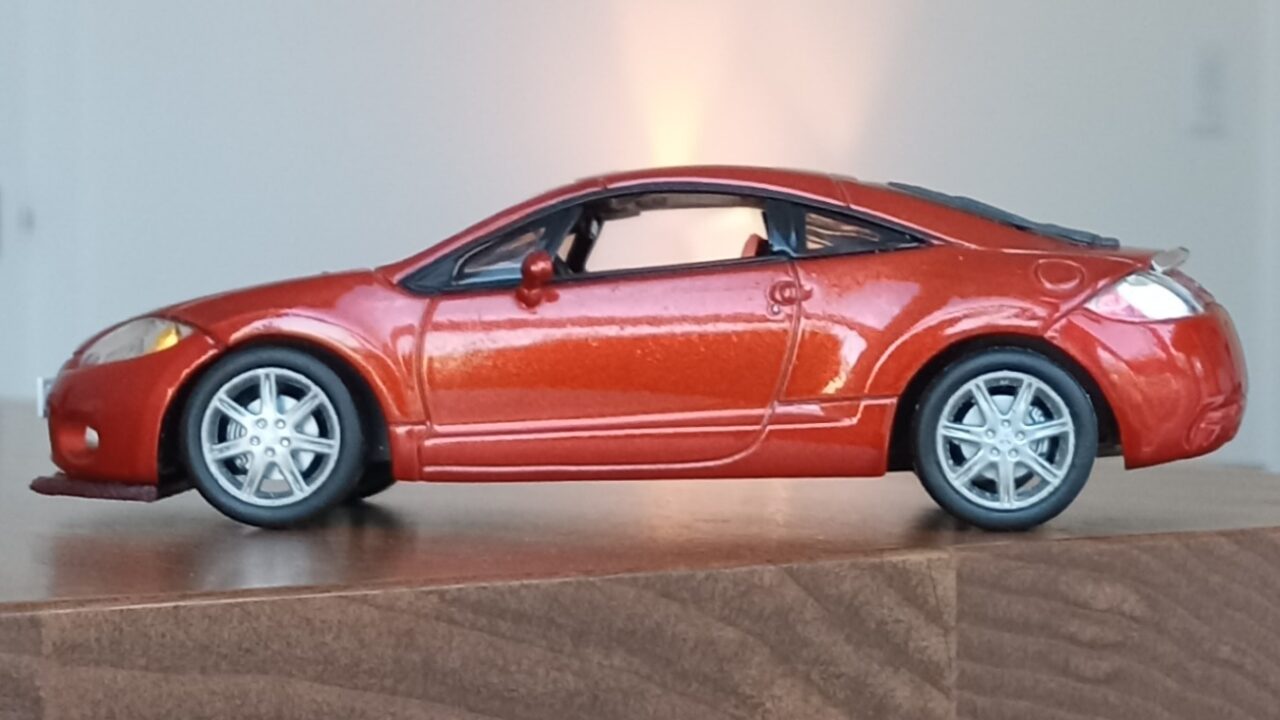
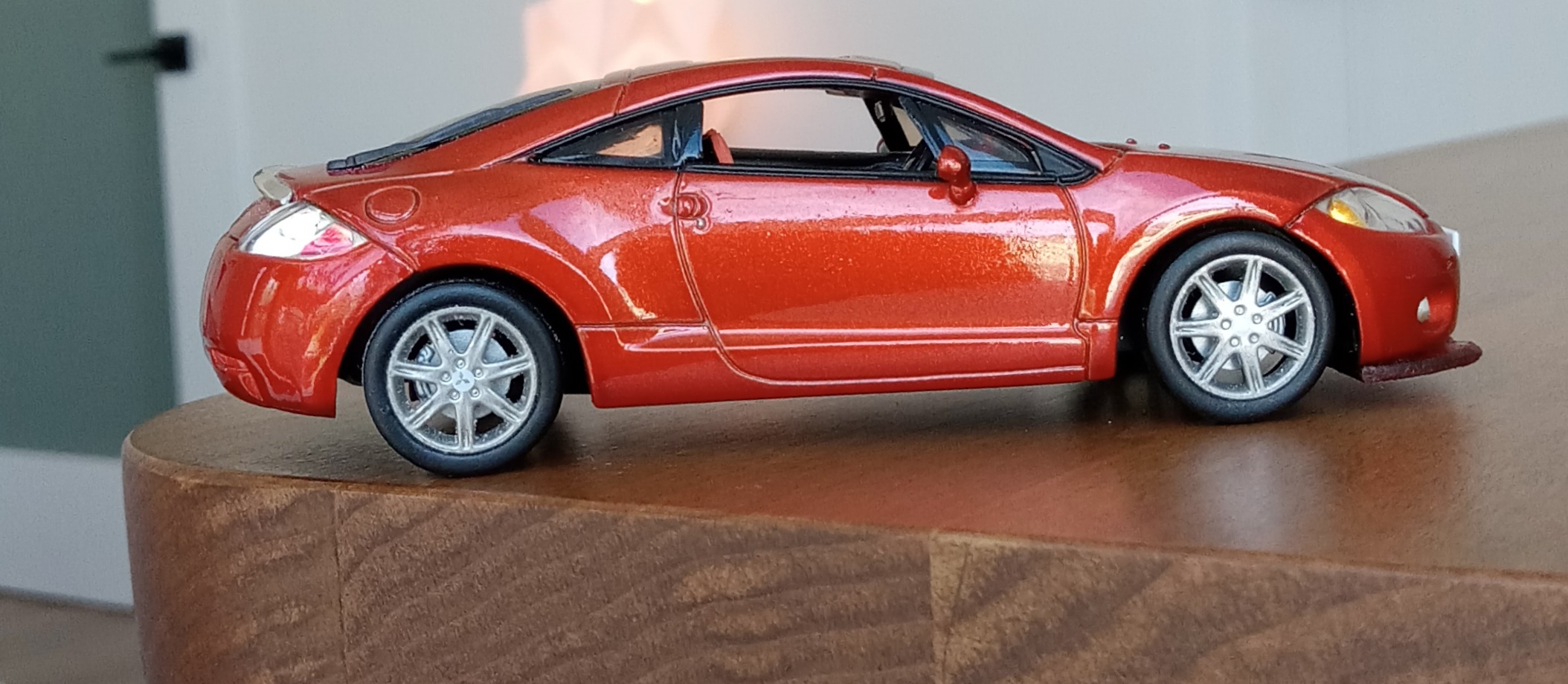
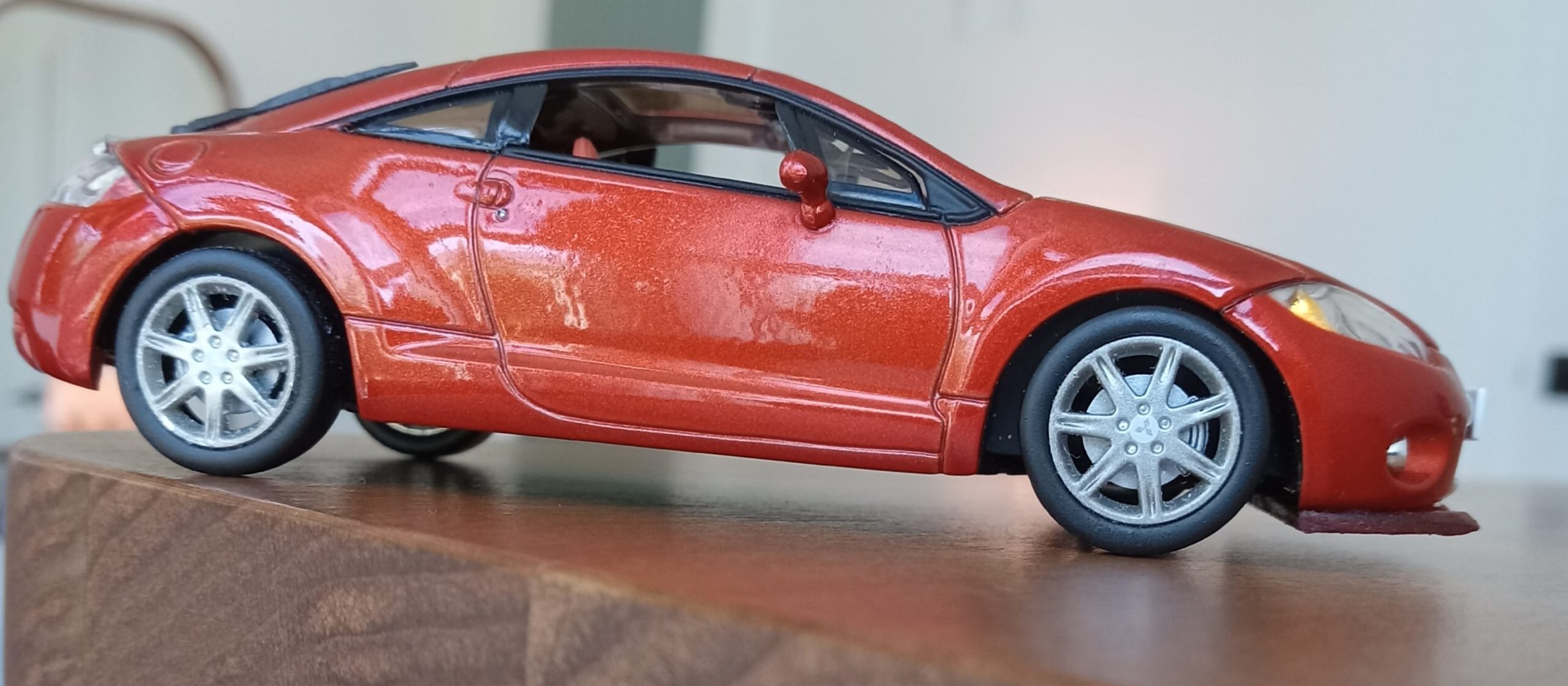
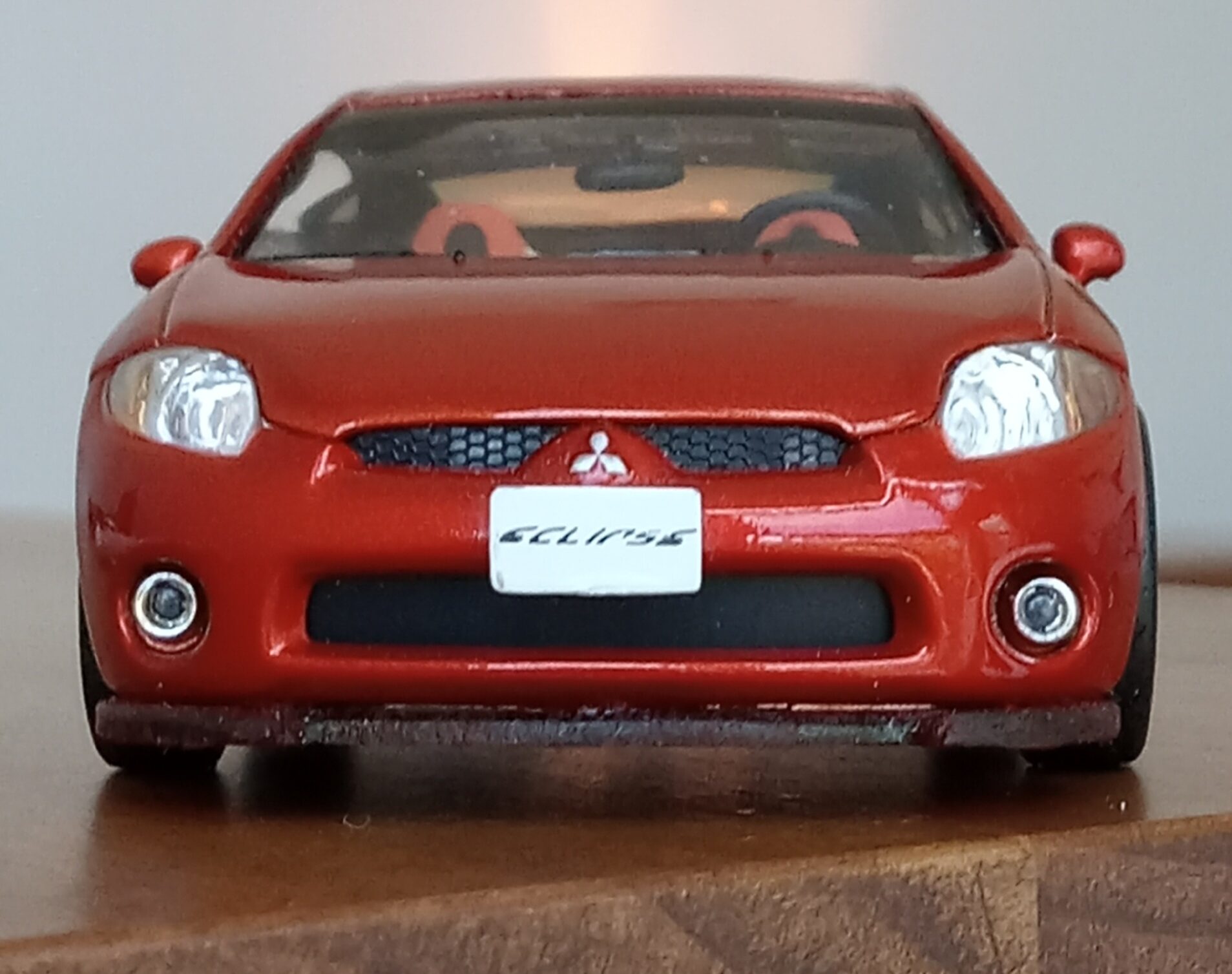
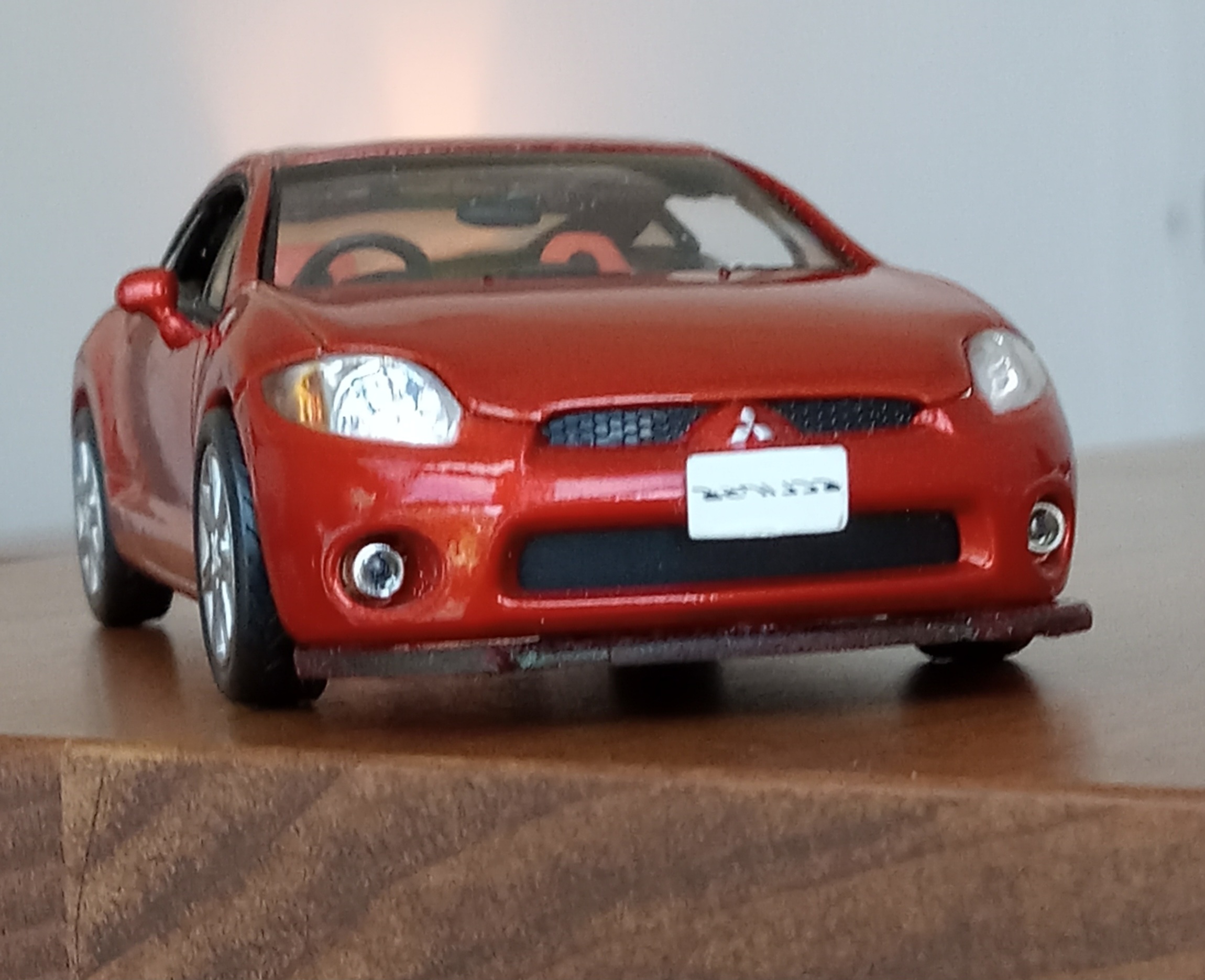
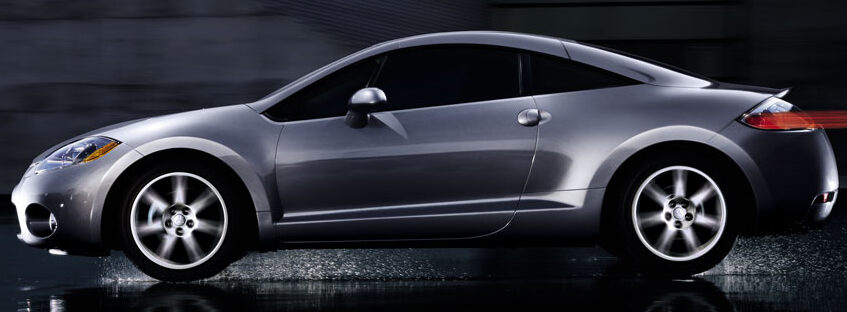
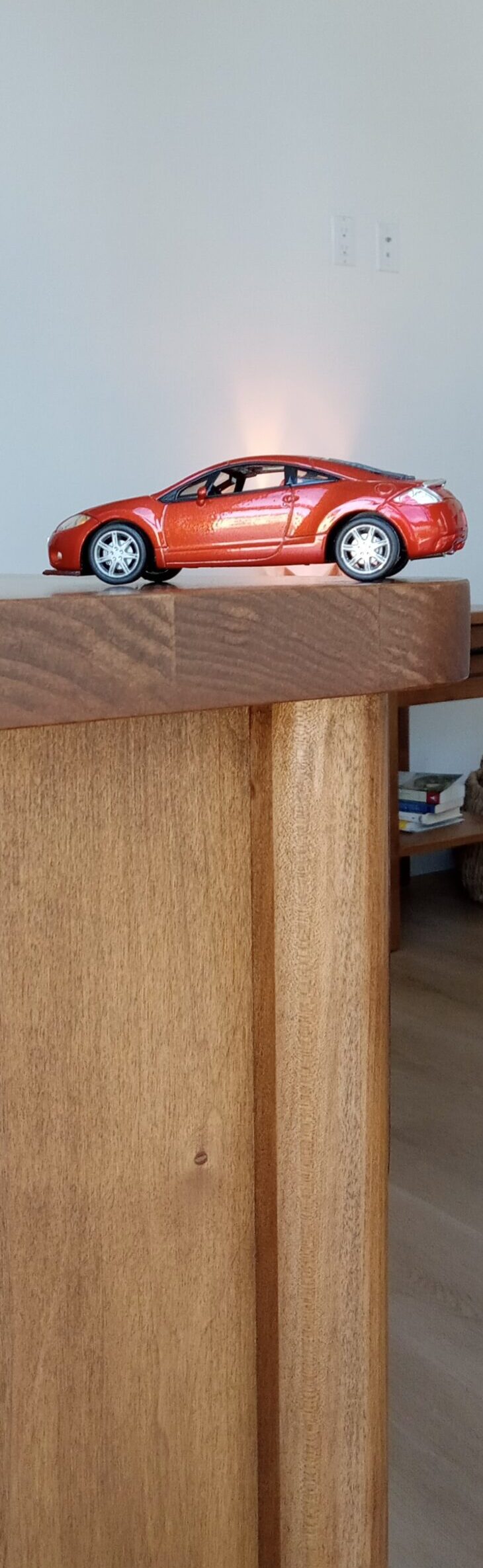
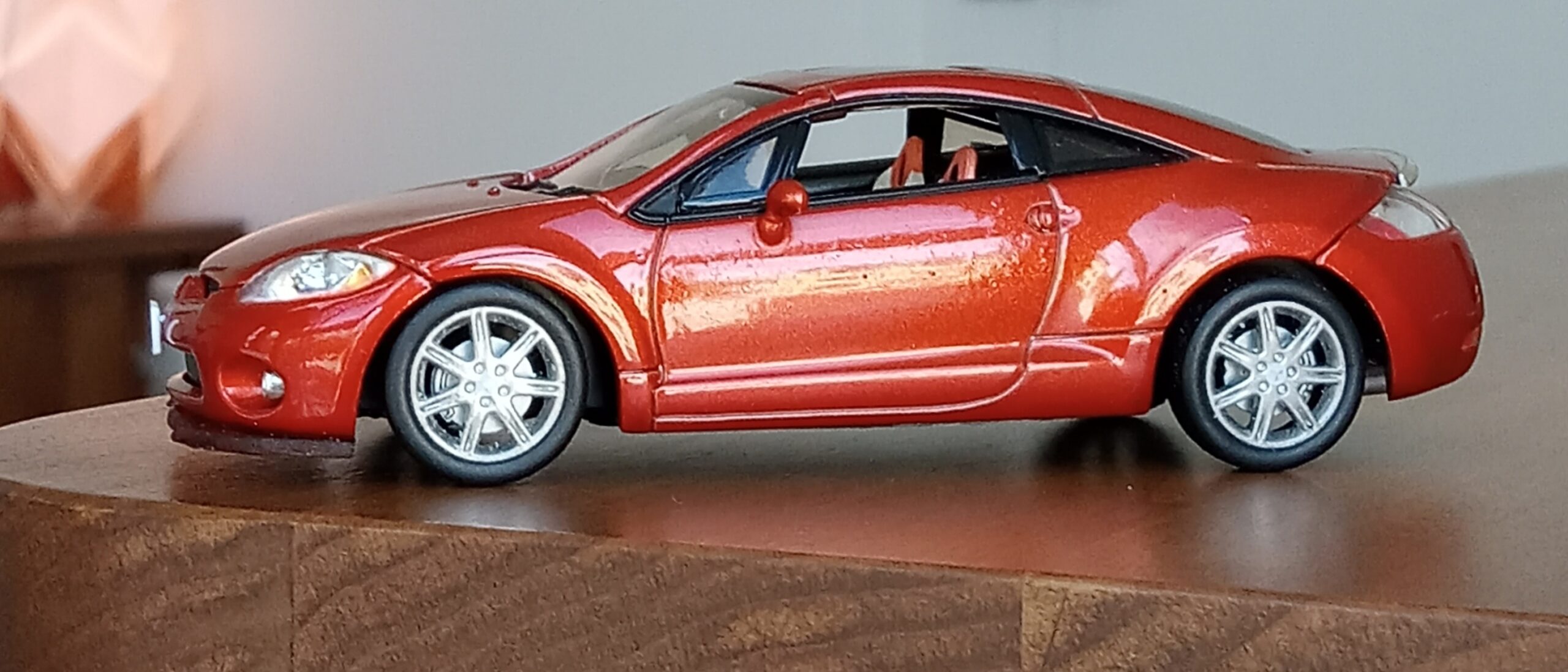
(写真撮影に使用したミニカー:NOREV社製、1/43ダイキャスト完成品、ミツビシ 第4世代エクリプス、2006(サンセット・オレンジ)---改造箇所:上下をバラして、車軸タイヤをやや前傾姿勢に微調整+プラバンにてフロントスポイラーをスクラッチ)
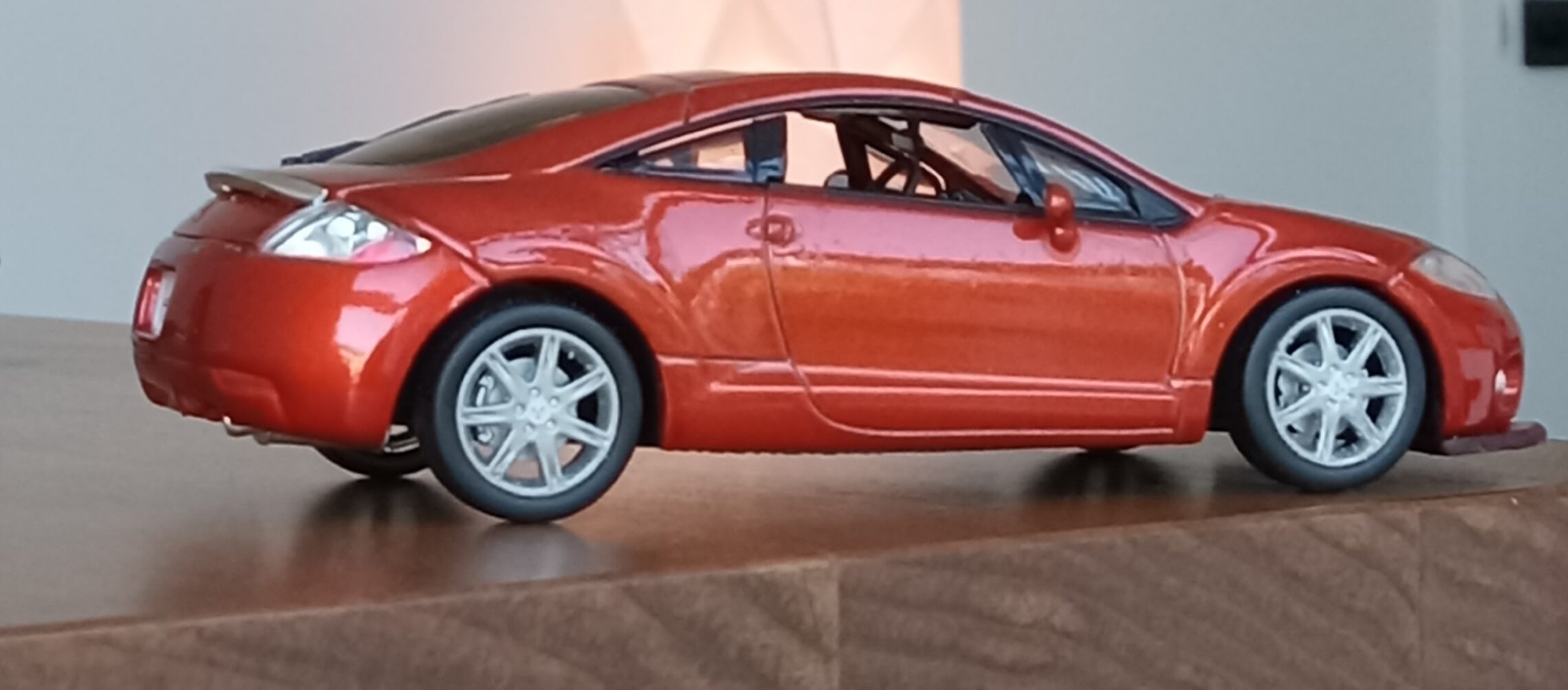
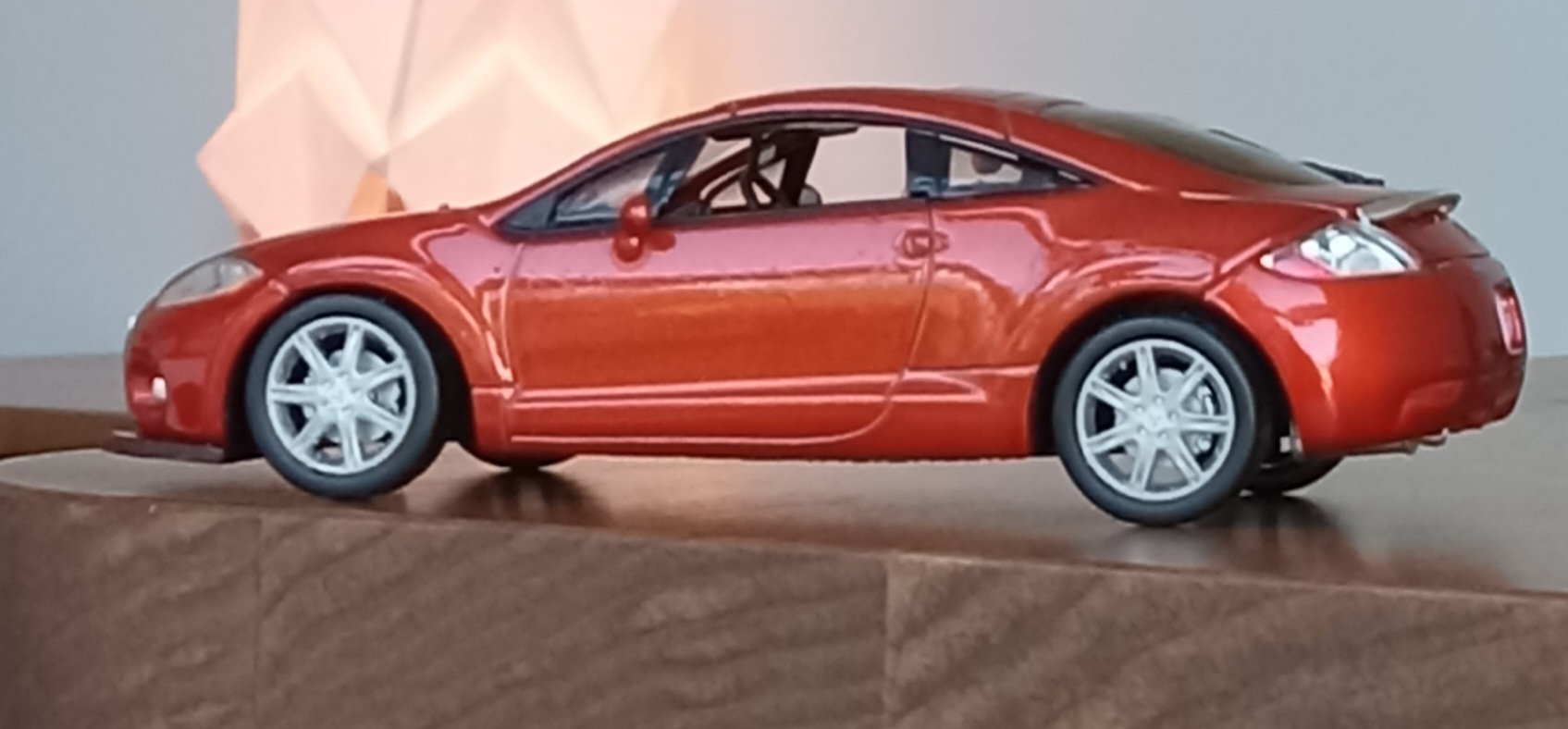
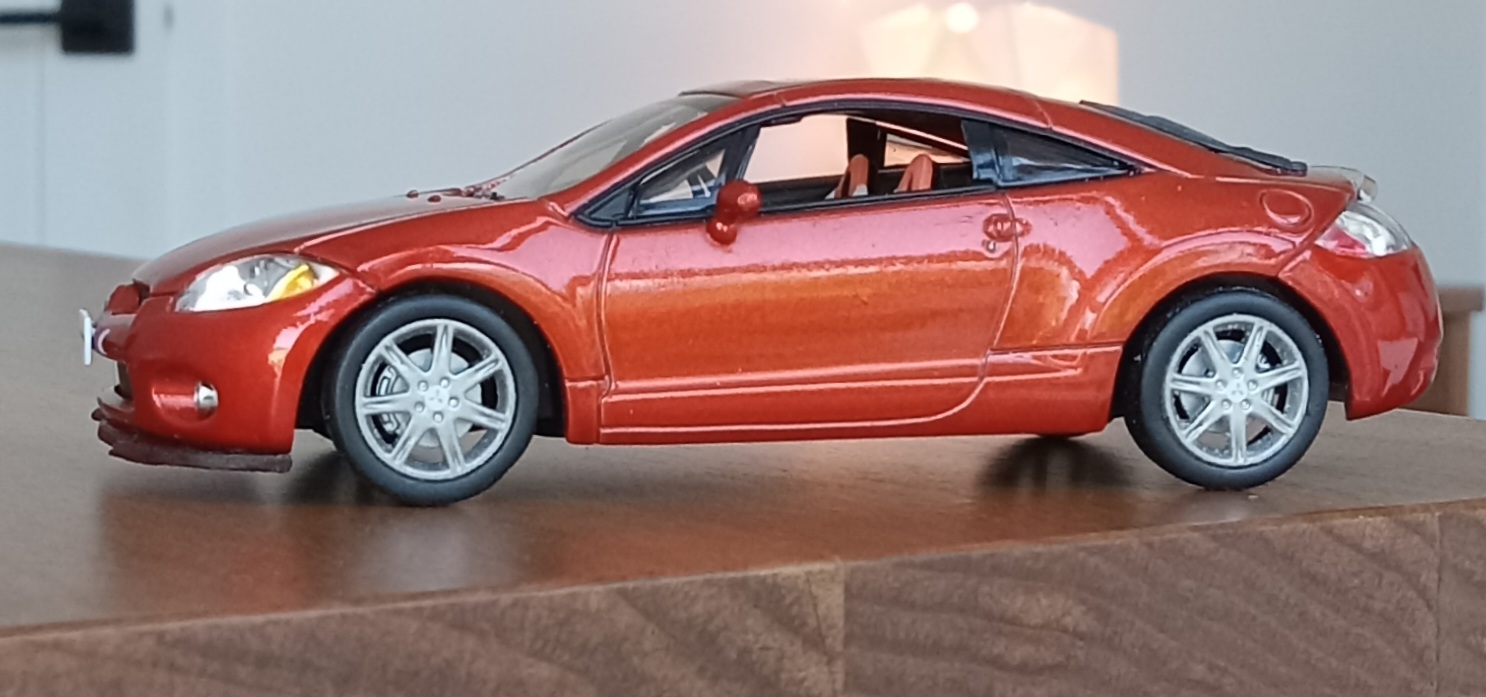
好みの自動車デザイン:第47回ーー2ドア・クーペの系譜: 第27回【日本車・三菱編】 ミツビシ・第4世代エクリプス【北米仕様】、2006(サンセット・オレンジ) 『和製ニューエイジ・マッスル誕生?』Mitsubishi Eclipse【4th Gen.】2006 『New Age Muscle』
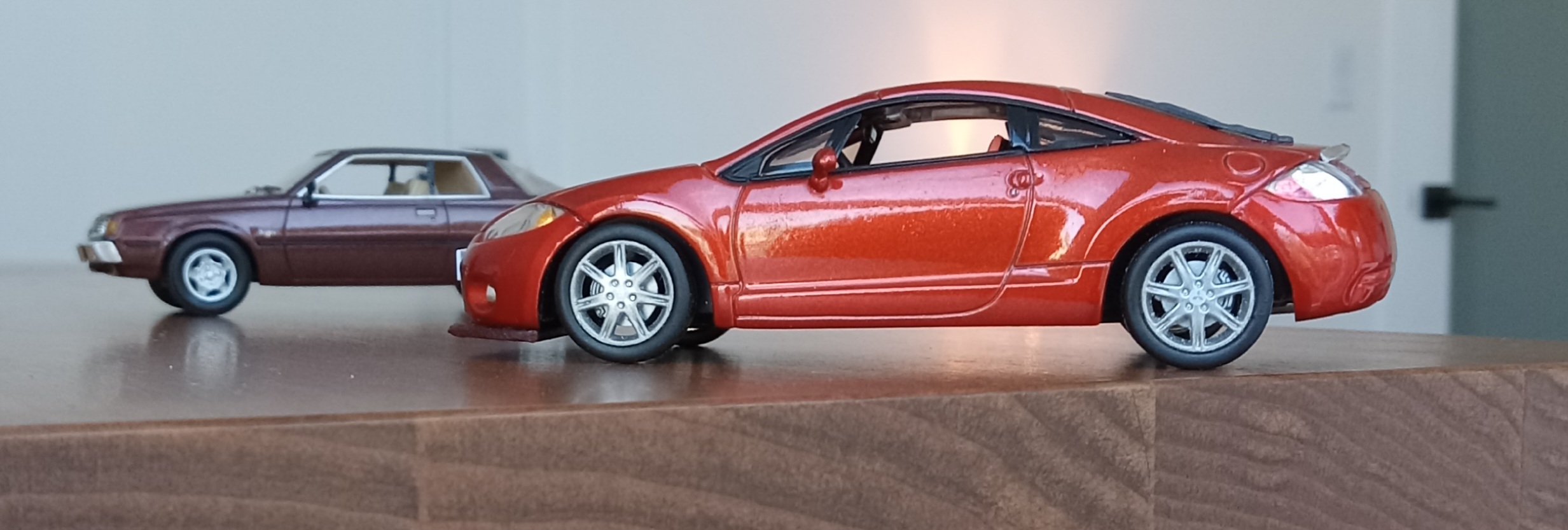
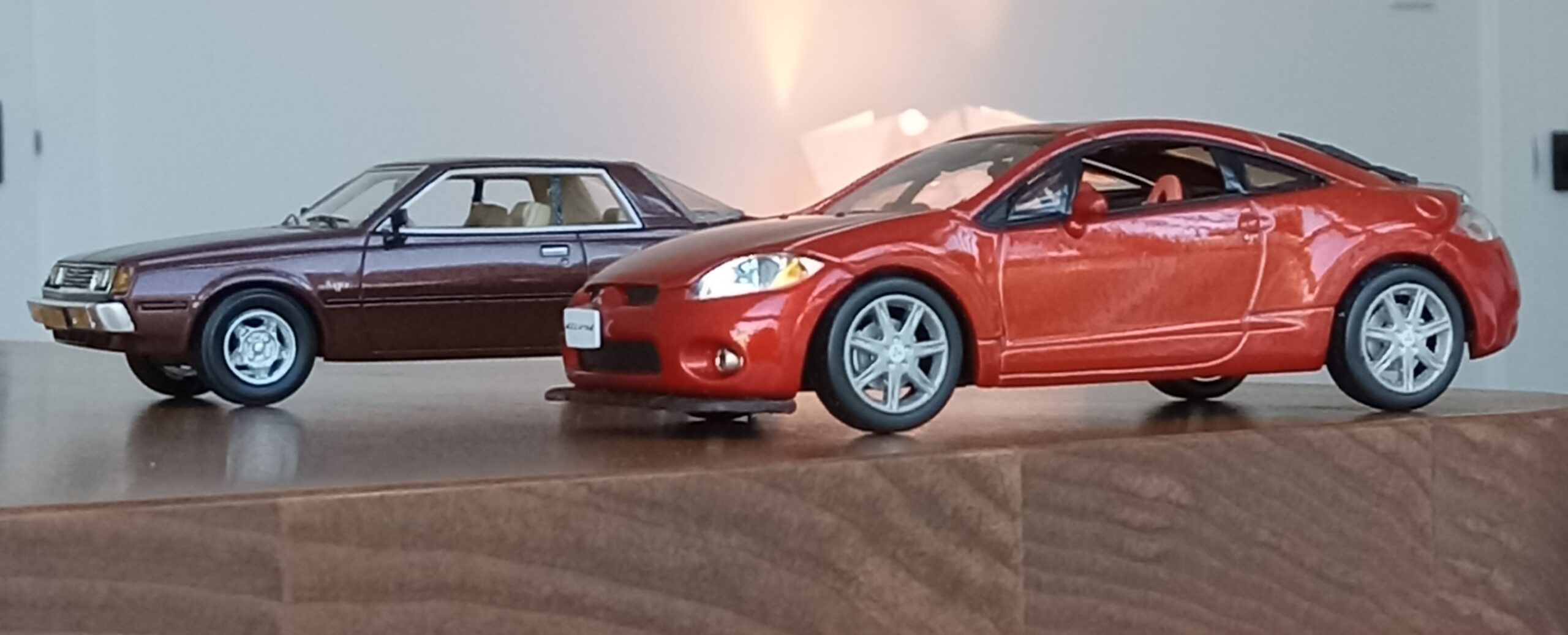
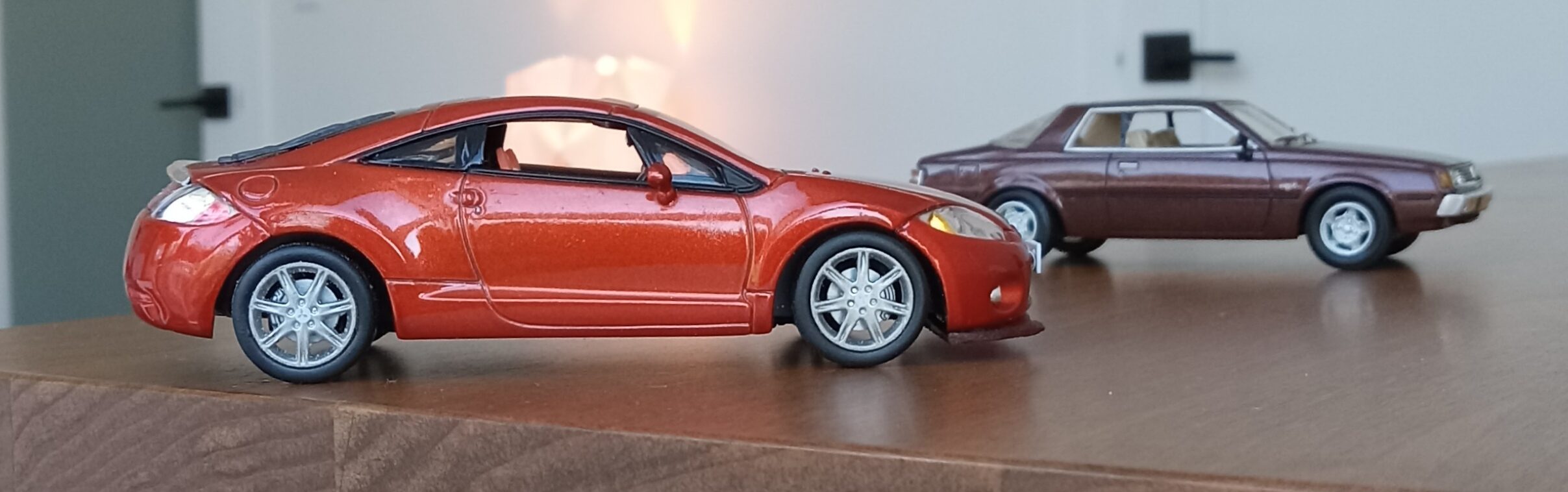
#好みの自動車デザインーー2ドア・クーペの系譜:
第47回目の今回は、『2ドアクーペの系譜、第27回』と題しまして、各国のお国柄や、外観デザインの個性が強く表れる、高級2ドア(GT)クーペ / ロードスターについてお話ししてみたいです。【注意:オープンカーを含む】
以下の要領で進めていきます。
第27回の今回はいよいよ
【日本車・三菱編】としまして、
2006年発表の
ミツビシ・第4世代エクリプス【北米仕様】(オレンジ・メタリック)
についてのお話です。
【2ドア・クーペの系譜:目次】
【米国車編】
第1回:キャデラック・エルミラージュ、2013(メタリック・レッド)
第2回:リンカーン・コンチネンタル MK4、1972(ブラック)
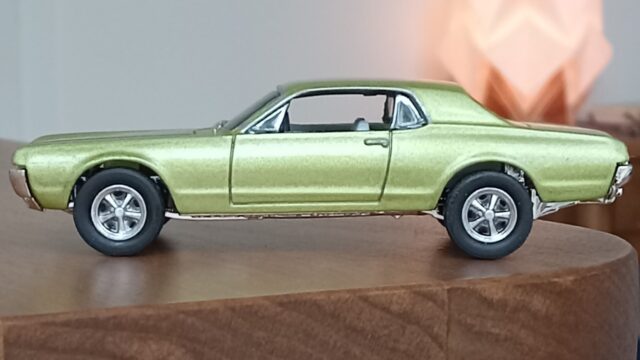
第3回:マーキュリー・クーガー, 1967(LTメタリック・グリーン)
【ドイツ車編】
第4回:MB 500K スペシャル・ロードスター、1936(ブラック)
第5回:MB 300SL ロードスター、1957(シルバー)
第6回:MB SLS AMR ガルウイング、2010(ブラック)
【英国車編】
第7回:マクラーレン・F1、1992(メタリック・オレンジ)
第8回:ジャガー・XKSS ロードスター、1957(ロイヤル・ブルー)
第9回:ジャガー XKR クーペ、1996(ダークメタリック・グリーン)
【日本車・ニッサン編】
第10回:ニッサン 初代シルビア、1965(シャンペン・ゴールド)
第11回:ニッサン 5代目シルビア、1988(LTメタリック・グリーン)
【イタリア車編】
第12回:フェラーリ 250TR ポンツーンフェンダー、1958(赤)
第13回:フェラーリ 250GTO、1962(イタリアン・レッド)
第14回:ランボルギーニ・コンセプトS、2005(パール・ホワイト)
【日本車・マツダ編】
第15回:マツダ コスモ・スポーツ、1968(レーシング・ホワイト)
第16回:マツダ ユーノス・コスモ、タイプ‐S(2トン:黒&グレー)
【フランス車編】
第17回:ブガッティ・タイプ59、1935(フレンチ・ブルー)
第18回:シトロエン・SM、1970(シャンペーン・ゴールド)
第19回:ブガッティ・ラ・ヴォワチュール・ノワール、2019(黒)
【日本車・トヨタ編】
第20回:トヨタ/ヤマハ・2000GT、1967(アイボリー・ホワイト)
第21回:トヨタ・2代目ソアラ、1986 (クリスタル・ホワイトⅡ)
第22回:レクサス LC500【GWZ100型】、2017(MT・レッド)
【米国車編②】
第23回:ダッジ・チャレンジャー、1970&プリムス・バラクーダ、1971
第24回:ダッジ・ヴァイパー SRT‐10 ACR、 2008(ブラック)
第25回:フォード・シェルビーGR-1 コンセプト、2004(クローム)
【日本車・ミツビシ編】
第26回:ミツビシ・ギャラン λ、1976(ブラウン・メタリック)
第27回:ミツビシ・エクリプス【北米仕様】、2006(オレンジ・メタ)
【ドイツ車編②】
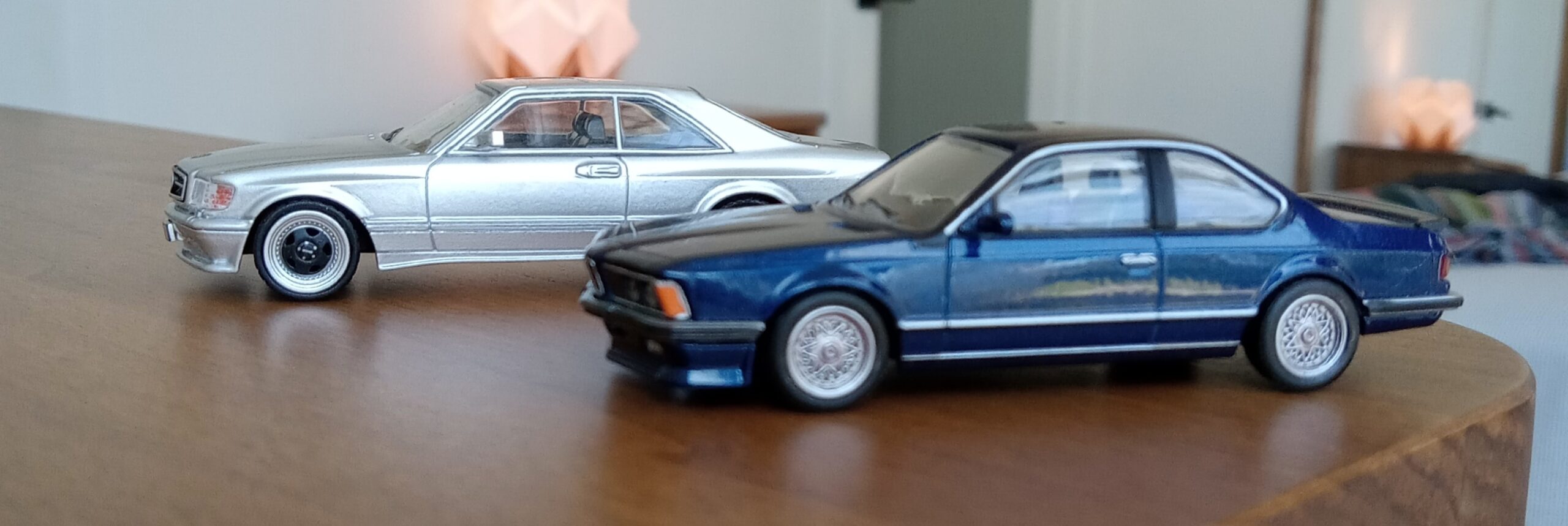
第28回:BMW M635CSi、1984 (ダーク・メタリックブルー)
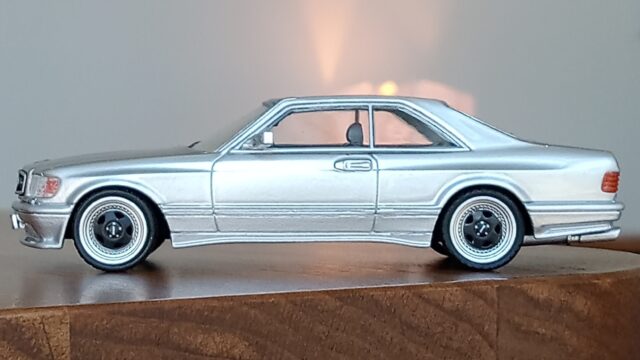
第29回:MB 560SEC AMG 6.0 ワイドボディー、1989(ブラック)
第30回:BMW M2 純正パフォーマンス・パーツ仕様、2025(ネオン・ライム)
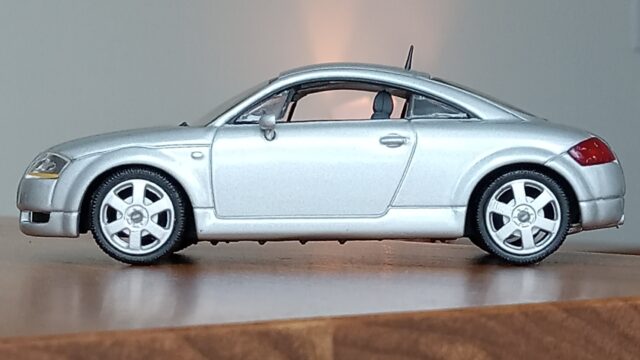
第31回:初代アウディー・TT、1998(レイク・シルバー・メタリック)
【日本車・スバル編】
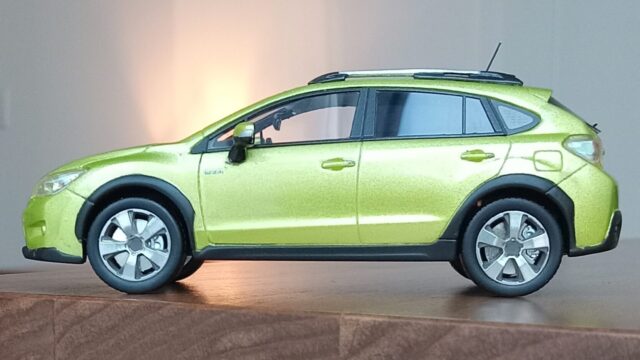
第32回:スバル・クロストレック XV, 2012(ライムグリーン・メタリック】
【英国車編②】
第33回:ロータス・初代エリート, 1959(ブリティシュ・グリーン)
第34回:ロータス・エラン S4 スプリント(2トン:ブルー、ホワイト&金)
第35回:ジャガー・Eタイプ ロードスター(ライトブルー・メタリック)
【日本車:ホンダ(軽量スポーツ編)】
第36回:ホンダ S800、1966(レッド)
第37回:ホンダ 初代CR-X 1.5i、1983(ブルー&シルバー2トン)
第38回:ホンダ ビート、1991(サンバ・イエロー)
【日本車:トヨタ編②】
第39回:トヨタ コロナ・ハードトップ 1800GT-TR、1982 (レッド)
第40回:トヨタ GRスープラ 【DB型・A90/A91】 (シルバー)
第41回:トヨタ GR GT, 2027【予定】(ガンメタル系)
【米国車③番外編】:コルベットの系譜
第1回:1967年型 スティングレー【C2】コンバーチブル(ハードトップ・メタ青)
第2回:1972年型 コルベット 【C3】コンバーチブル(メタリック・ブルー)
第3回:1984年型 コルベット クーペ【C4】(ブライト・レッド)
第4回:コルベット・インディー【ミッド・シップの先行開発車】(シルバー)
第5回:スティングレー・コンセプト【先行開発車】、2009(プルー・メタリック)
#ミツビシXクライスラー≒ニュー・マッスルの誕生
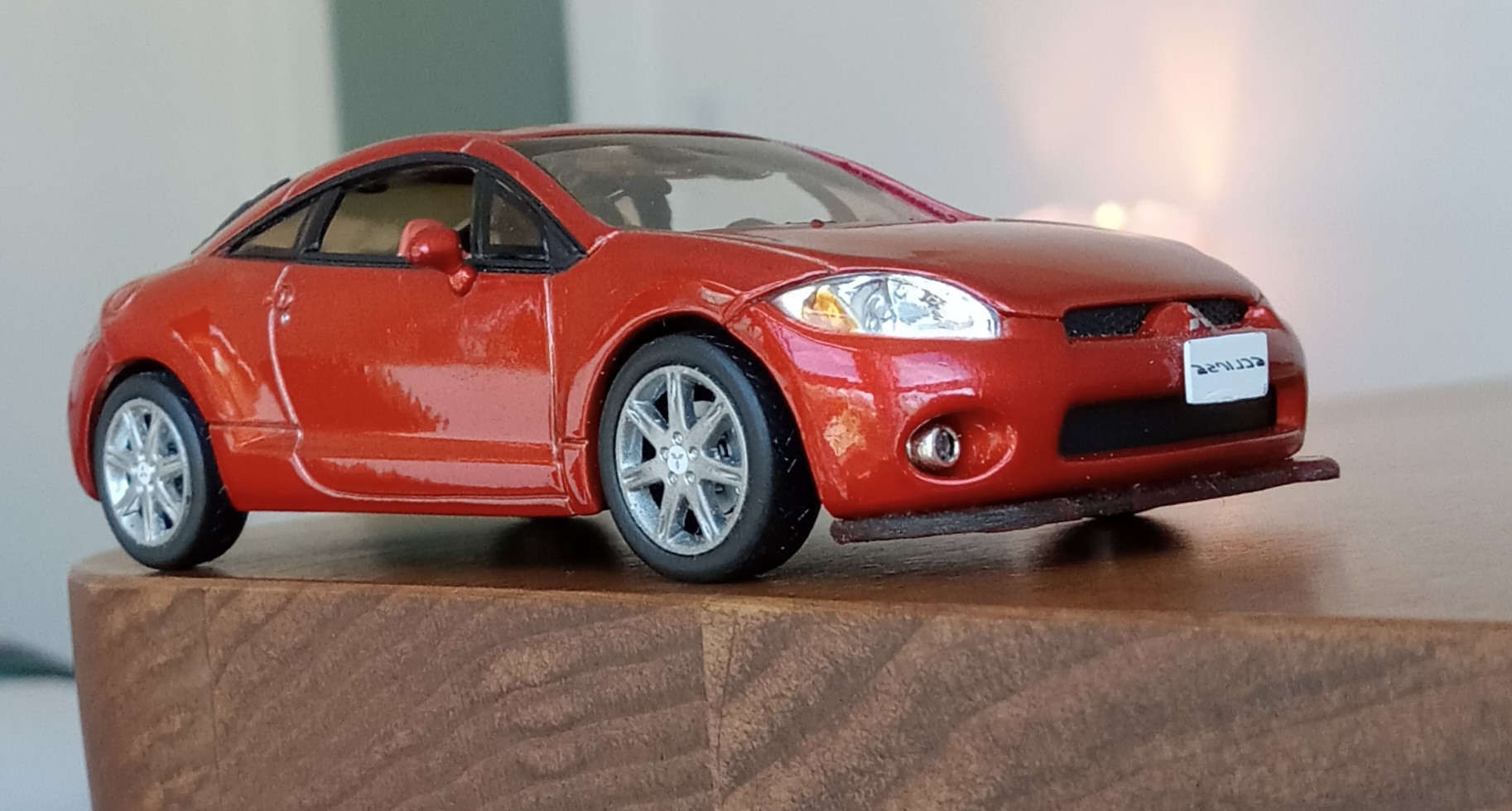
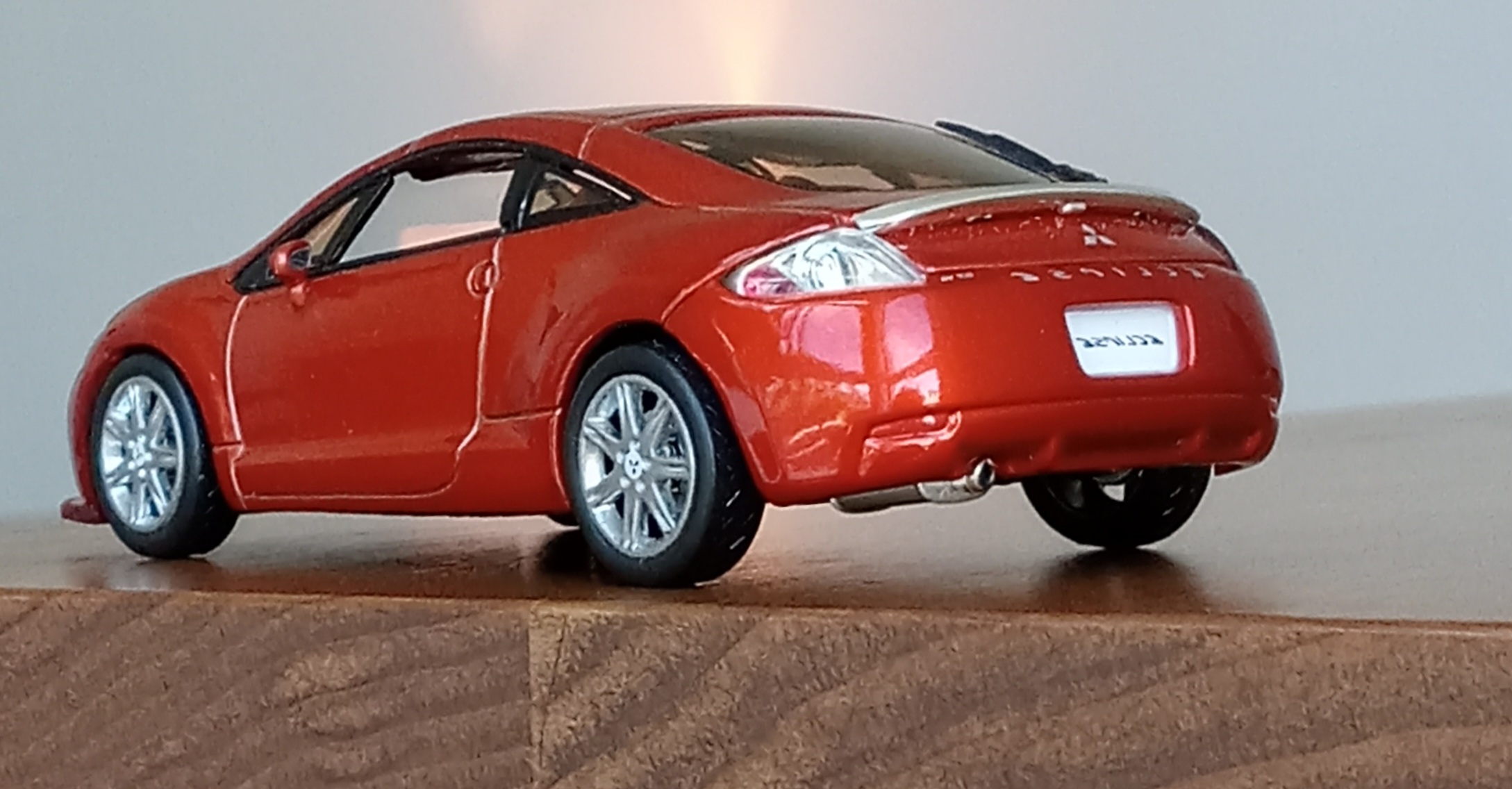
@『キャブ・フォアワード・マッスル誕生!!』
この当時【2000年代前半】の
自動車デザイン世界の趨勢は、
クライスラーX三菱連合がかなりパワフルに盛り上げていました。
コンセプトの内訳は≒
*FFシャーシに強力なエンジンを搭載、
*ボディーのプロポーションは『キャブ・フォアワード』
*結果として、室内ボリュームの最大化!
n
キャブフォワード(Cab-forward)とは、
車の居住空間(キャビン)を前方に大きく突き出させ、ノーズ(ボンネット)を短く、テールをスリムにした自動車のデザイン手法です。1990年代に米クライスラーがセダンへ大規模に導入して有名になりましたが、元々はミッドシップスポーツカーのレイアウトや空力追求から生まれた合理的なスタイルです。
n
n
n
n
n
n
N
N
N
n
N
N
*広い室内空間:タイヤを四隅に近づけ、キャビンを前に出すことで、車体サイズのわりに広い足元や居住スペースを確保できます。
*優れた空力性能:フロントガラス(Aピラー)の傾斜を強め、ノーズからルーフへ滑らかに風を流すことで空気抵抗を減らします。
*視覚的な特徴:前方に重心があるワンモーション(一続きの滑らかな曲線)に近いシルエットになります。
n
n
この方程式を、
4人乗りの2ドア・クーぺに見事に当てはめたのが、
2006年発表の、
『4代目、三菱エクリプス』です。
この車が現わしている、
『キャブフォアワード・プロポーション』を4ドアや2ドアのスポーツセダン/クーペに当てはめるという命題を解く事=私の学生時代の最大のテーマ
だったこともあり、
この車を見るたびに
自分たちが作ったデザイン言語の実現!
といった感慨に浸ることが出来ます。
今回は、
自動車史上もっとも、FRミッドシップ・プロポーションから外れたトレンド
を見事に生かし切った、
【ニューエイジ・マッスル・カー】につて
深堀してみたいです。
こんな感じで
進めて行きます。
*実車解説:日米協業の奇跡?
*外観デザインの特徴:キャブ・フォアワード・マッスル
*『私』と4代目エクリプス:
*三題噺:カタマリ感・『キャブ・フォアワード』・アウディーTT
*その他の【キャブ・フォア】の傑作車たち、、、
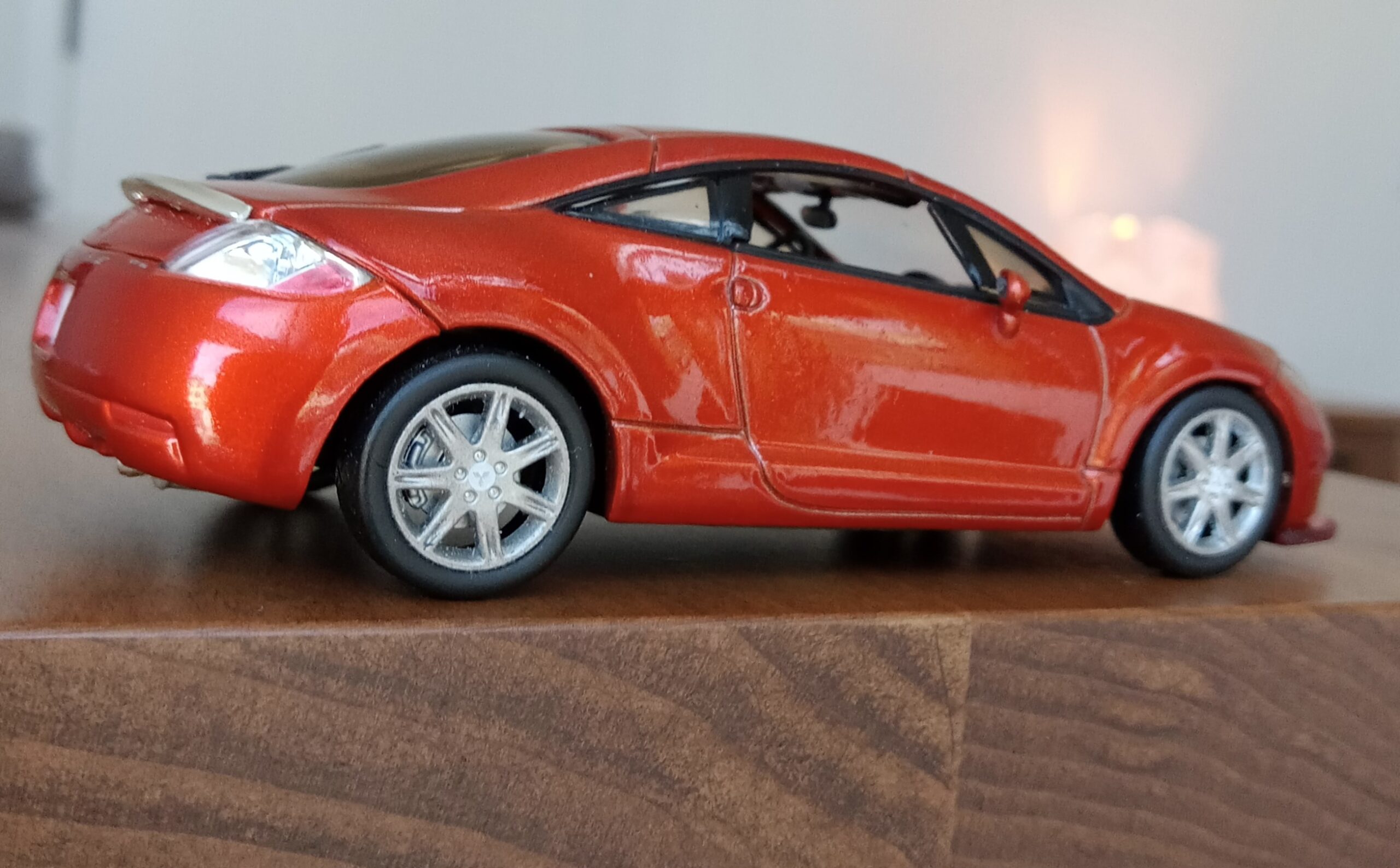
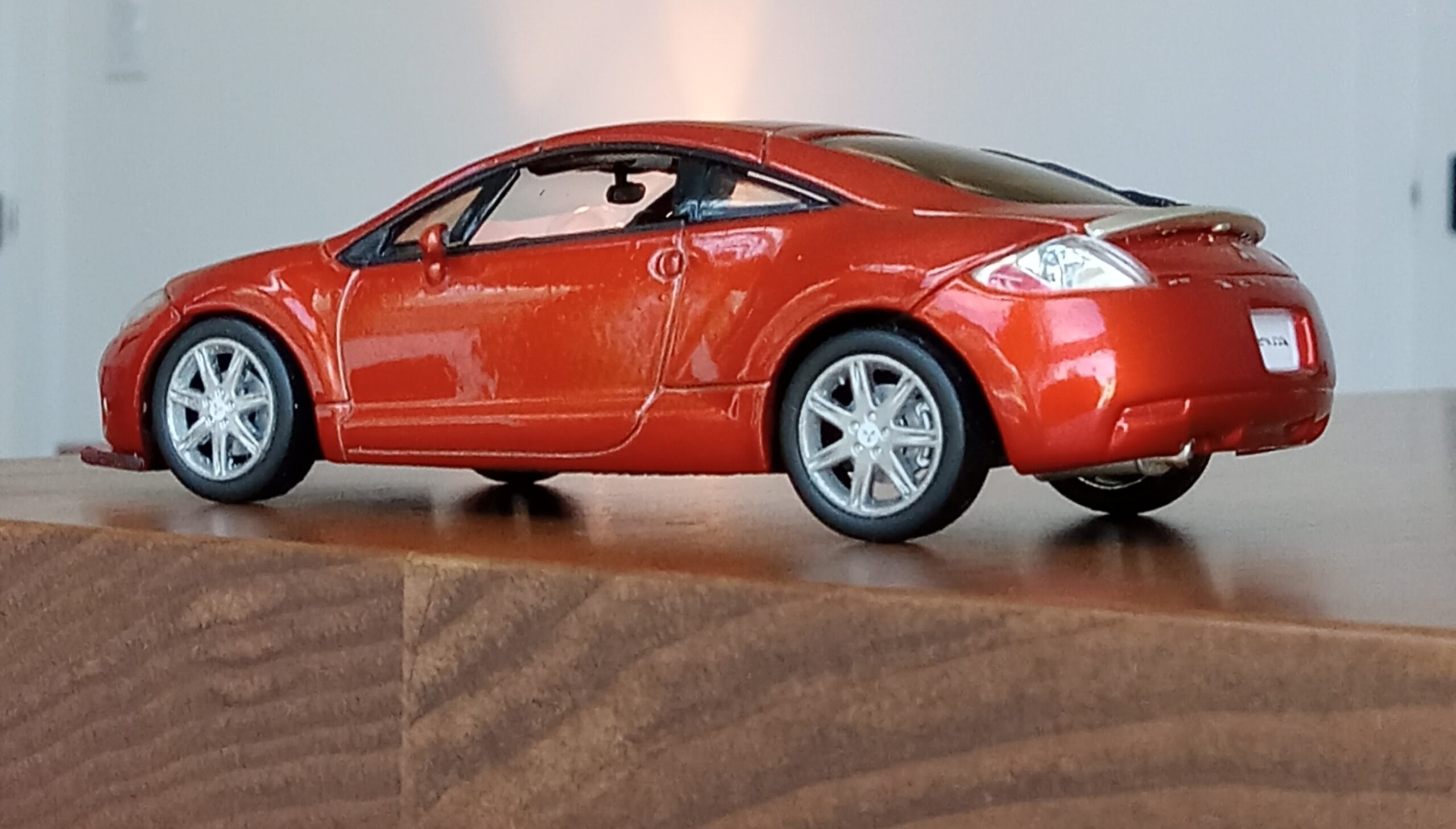
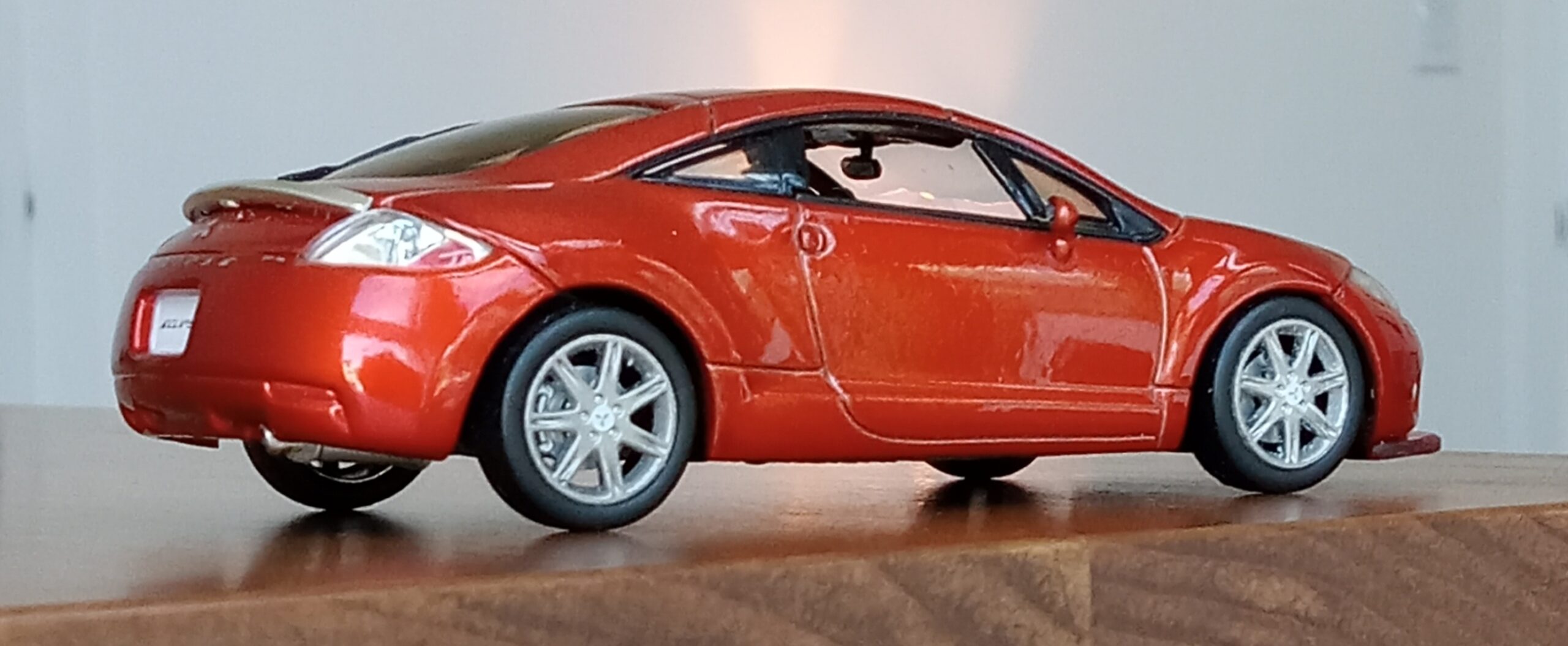
*実車解説:日米協業の奇跡?
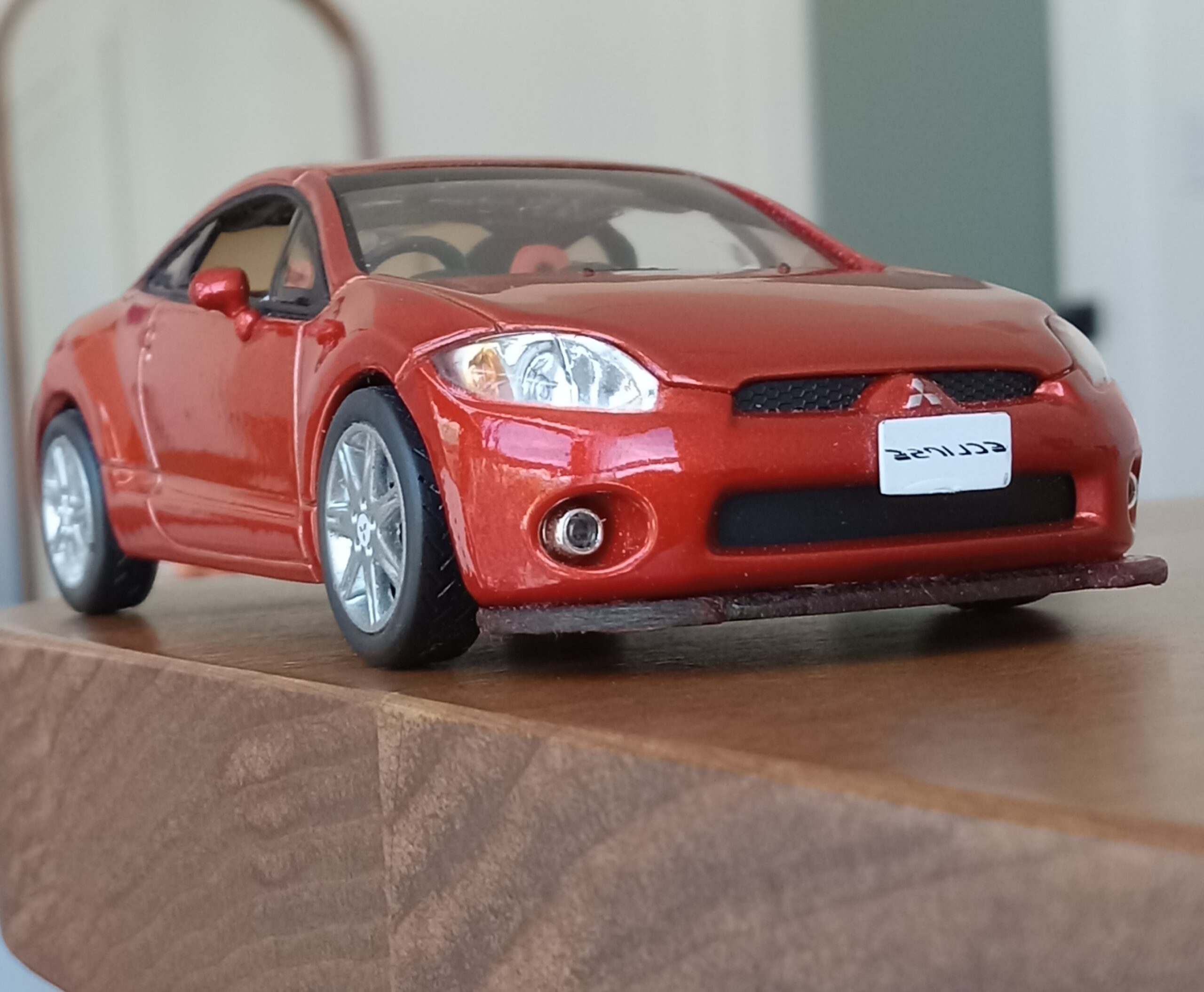
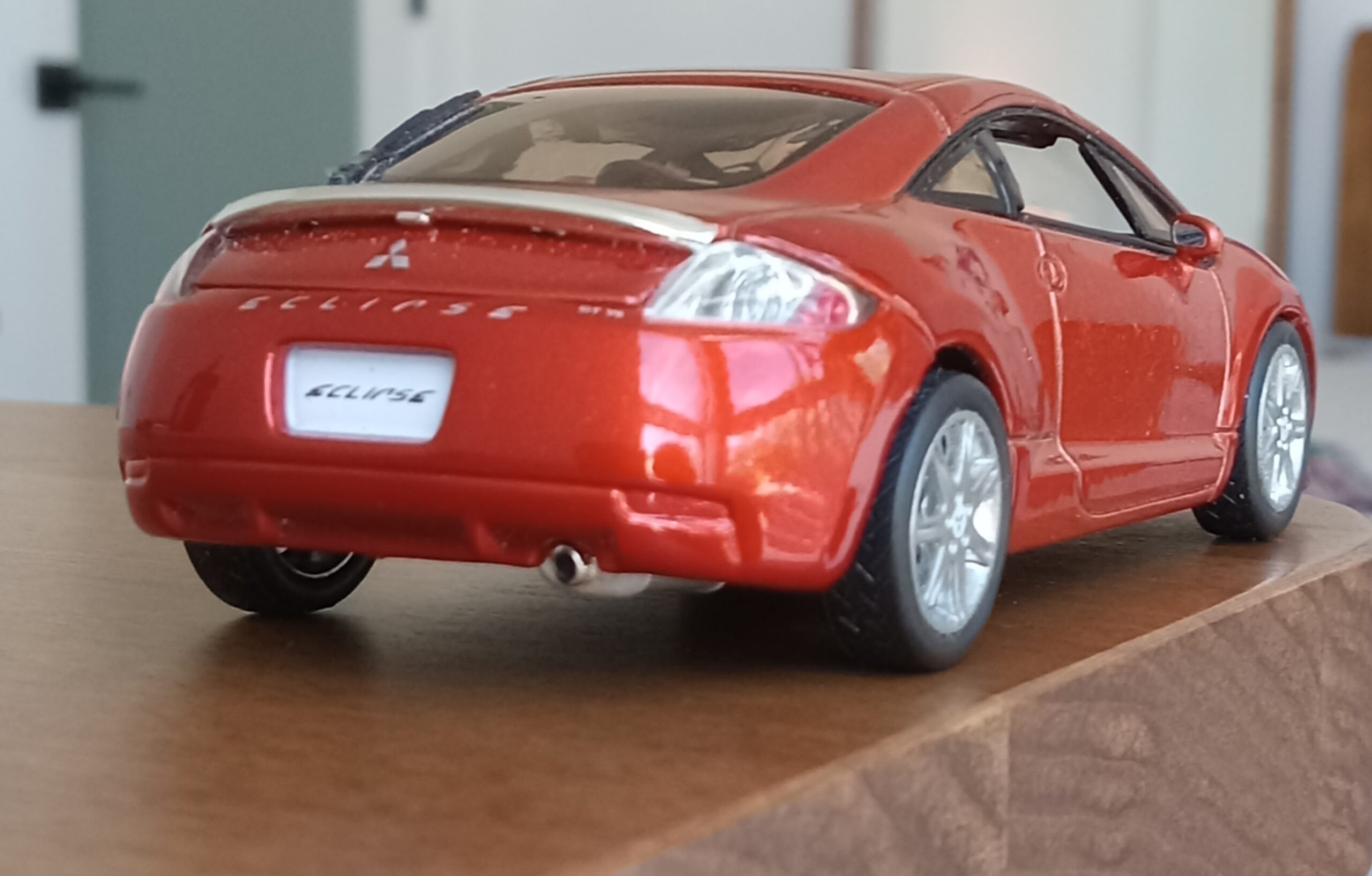
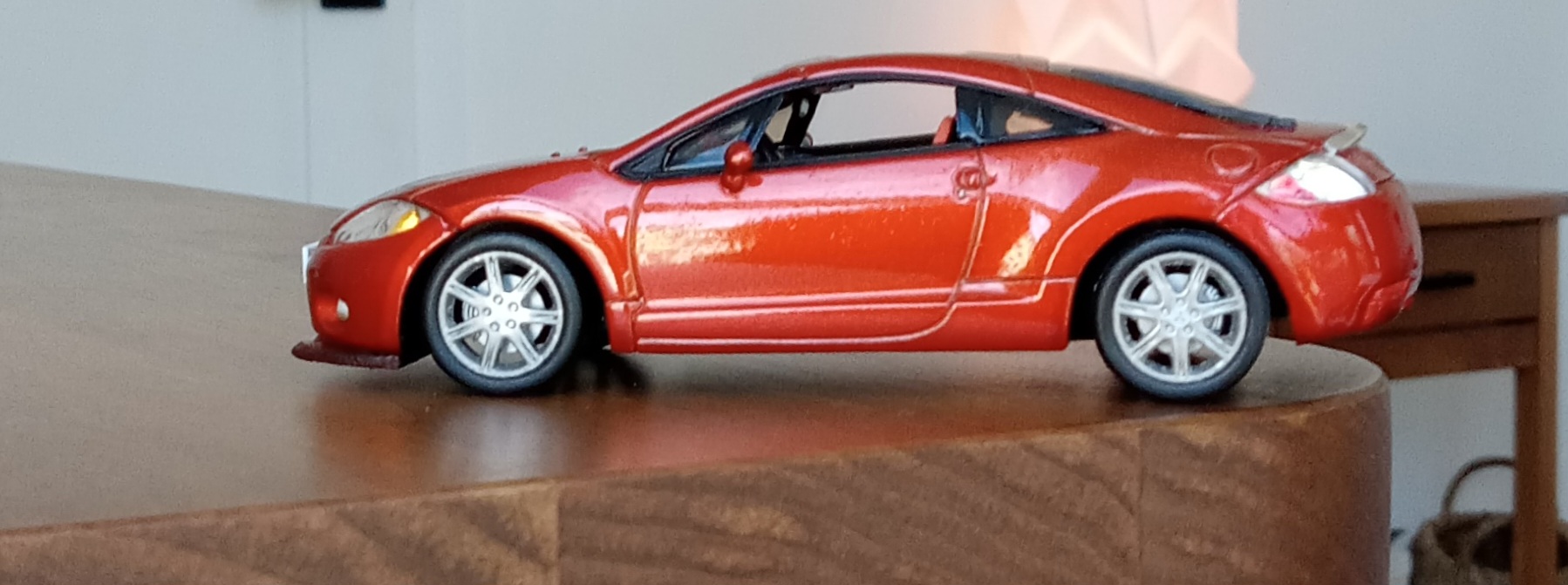
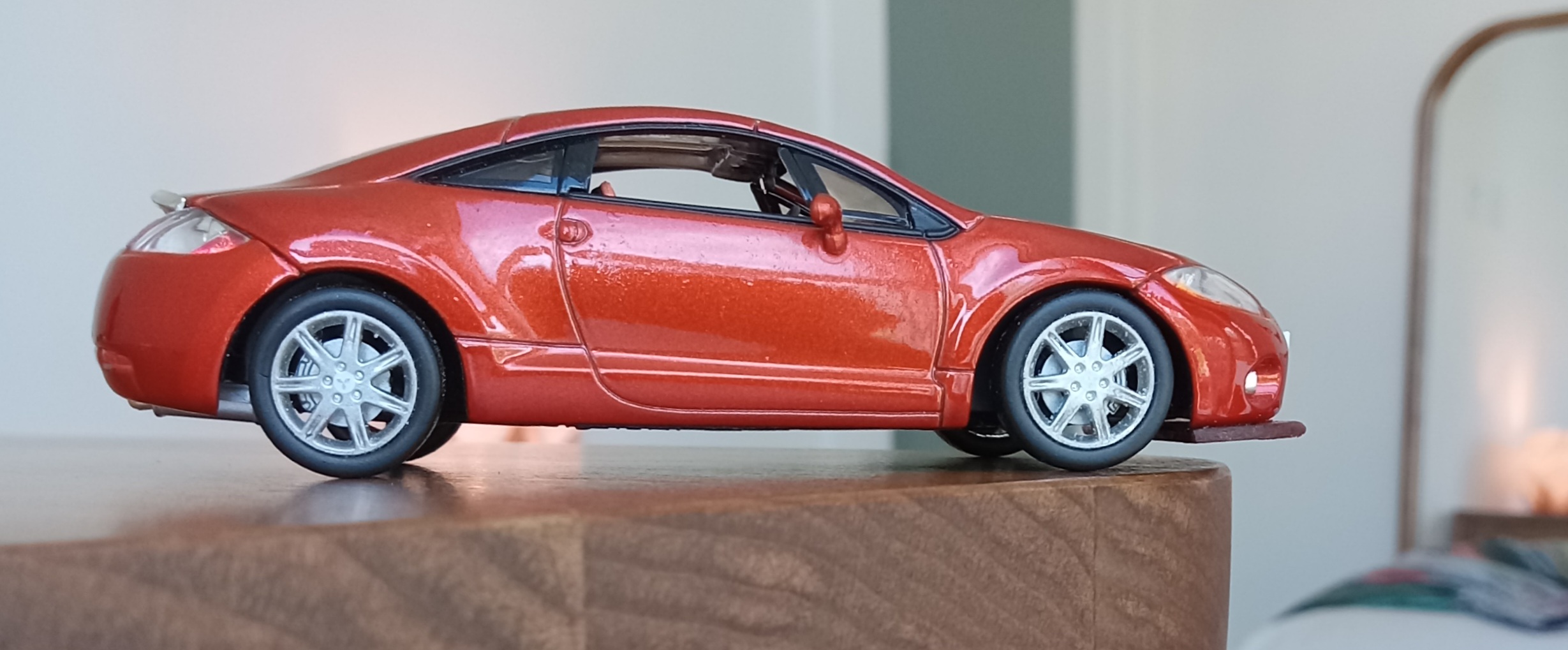
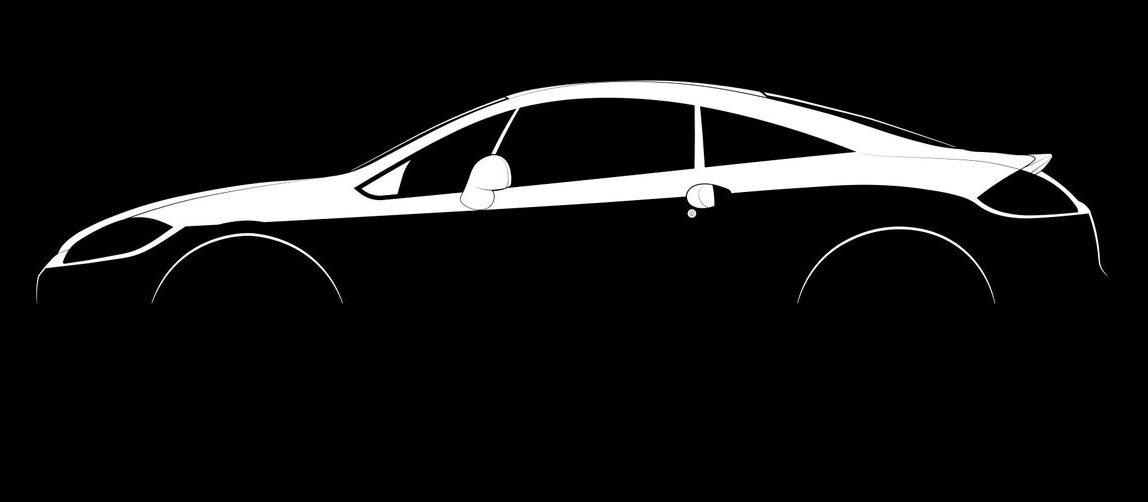
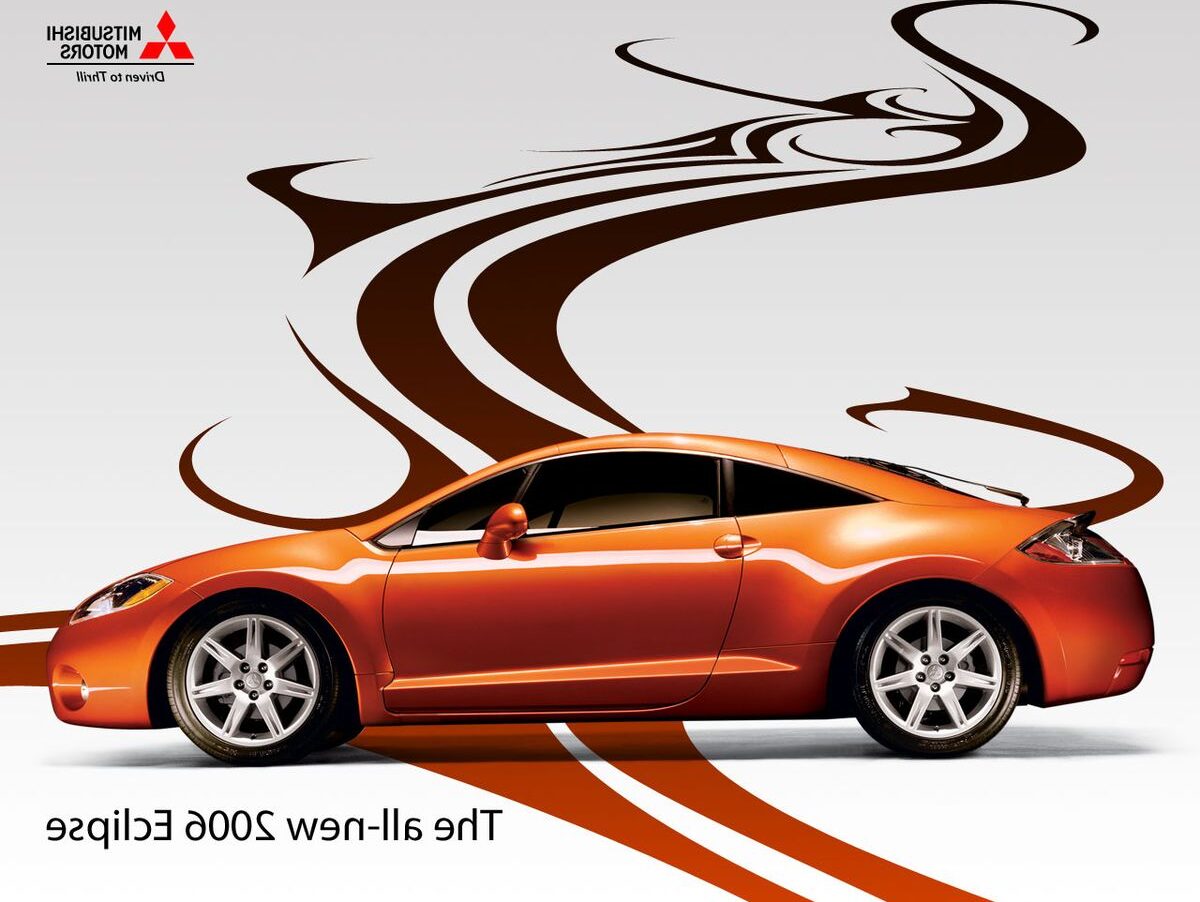
三菱・第4世代エクリプス(北米仕様)は、
n
n
n
n
n
n
n
n
n
デザインの特徴:
*グラマラスなキャビンロケット形状:
4代目エクリプス発表に先駆けて企画された選考試作車『エクリプス コンセプトE(Eclipse Concept-E)』から続く流れの中で、(1〜2代目の雰囲気を思い起こさせる)、大きく弧を描くルーフラインと筋肉質なフェンダー周りが特徴。
*フロントマスクの変遷:
初期型は当時の三菱アイデンティティである中央にシャークノーズを持つ「ブーレイ顔」を採用しましたが、2009年以降のモデルではすっきりとした水平基調のグリルへと変更されました。
*インテリア:
ドライバーを包み込むような丸みを帯びたインパネや、特徴的な2連メーター、オプションのロックフォード・フォズゲート(Rockford Fosgate)製オーディオなど、アメリカ市場好みの華やかな空間。
n
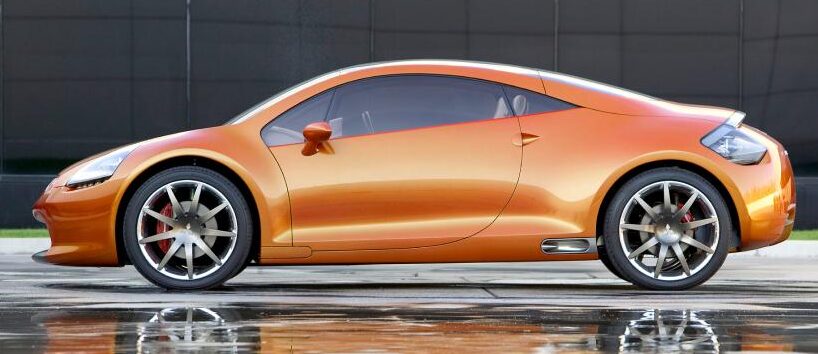
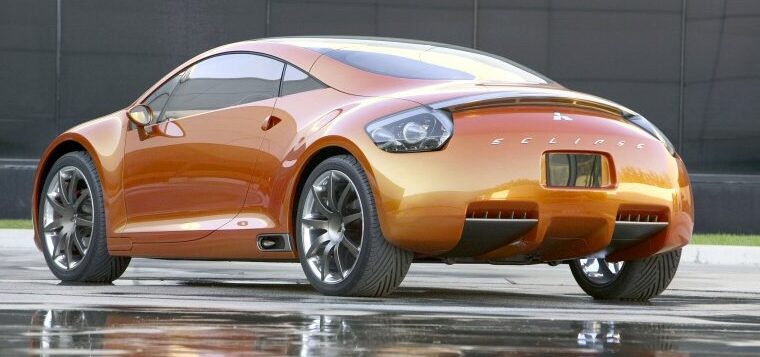
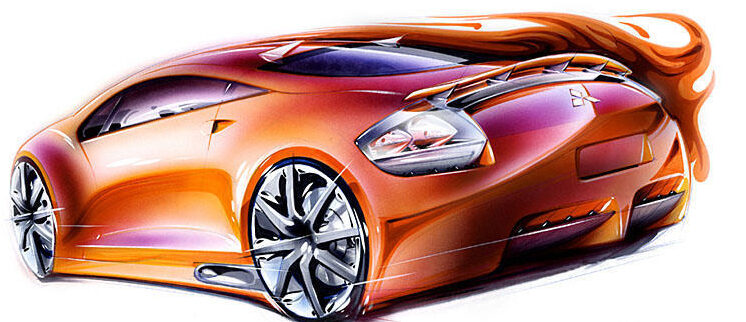
「エクリプス コンセプトE、2004(Eclipse Concept-E)」
第4世代(4代目)三菱・エクリプスの誕生に先駆け、そのデザインスタディおよび次期型プレビューとして2004年の北米国際オートショー(デトロイトモーターショー)で発表されたコンセプトカーが「エクリプス コンセプトE(Eclipse Concept-E)」です。
n
n
n
N
n
n
n
このコンセプトカーのデザイン開発を牽引したキーパーソンと、その革新的なデザイン的特徴は以下の通りです。
担当したデザイナーと主導者:
n
*マイク・デスモンド(Mike Desmond)氏
北米の三菱自動車開発センター(MRDA)に所属し、「エクリプス コンセプトE」の実質的なエクステリアデザインを手がけたメインデザイナーです。
n
*オリビエ・ブーレイ(Olivier Boulay)氏
当時、三菱自動車の常務執行役員デザイン本部長を務めていた人物です。彼はプロジェクト全体の総指揮を執り、コンセプトEに込められた「一見シンプルでありながら、実は極めて複雑な要素を調和させる」という日本の伝統美に通じるデザインロジックを提唱しました。
n
| デザイン部位 | 特徴と意図 |
|---|---|
| 戦闘機をモチーフにしたフロントフェイス | スリーダイヤを中心に据えた当時の三菱の新しいコーポレートアイデンティティ(いわゆるブーレイ顔)を取り入れ、フロントグリルと一体型スポイラーによって「ジェット戦闘機」を想起させるアグレッシブな表情を作りました。 |
| ティアドロップ(しずく型)のサイドウィンドウ | サイドガラスからリアにかけて「雨のしずく」のような美しい曲線を描くグラフィックを採用。これは、歴代モデルの中でも特にデザイン人気の高かった「第2世代(2代目)エクリプス」へのオマージュ(敬意)でもあります。 |
| 獲物を狙うかのようなプロポーション | ロングホイールベース、ショートオーバーハング、そしてキャビンを前方に配置した「キャブフォワード」レイアウトにより、今にも飛びかかりそうな躍動感のあるシルエットを生み出しました。 |
| 機能と融合したサイドエキゾースト | デザイナーのデスモンド氏自身が語っているこだわりとして、サイドに楕円形のエキゾーストポート(排気口)が配置されています。これはハイブリッド用の駆動バッテリーを車体中央の床下に配置するために生まれた必然的な機能美です。 |
| ドアカットラインのトリック | ドアのフロントラインを極限まで斜めに傾斜させることで、フロントフェンダーの力強さを視覚的に強調しています。この開閉を実現するために特殊な隠しヒンジと、ドア開放時に連動して開くトラップドア(フラップ)という複雑な機構が仕込まれました。 |
n
n
インテリア(内装)のデザイン的特徴:
*「ウェーブライン」デザインテーマ:
ダッシュボードやドアトリムにかけて、波打つような流麗なラインが採用され、インパネ自体がまるで空中に浮いているかのようなフローティング構造が取られました。
*多層レイヤーのデジタルメーター:
「Deep Video Imaging」と呼ばれる3Dマルチレイヤーディスプレイ(MLD)技術を搭載し、立体的なグラフィックで計器類や診断情報、インタラクティブなデータを浮かび上がらせる未来的なコックピットを実現しました。
*調和されたしずく型のモチーフ:
外観のサイドウィンドウやドアミラーの形状に合わせ、内側のドアパネルにも「しずく型(ティアドロップ)」の意匠が反復され、内外装で統一されたデザイン言語が使われています。
*サイドヒンジ式リアハッチ:
後席のヘッドルーム(頭上空間)を約5cm(2インチ)拡大するため、ハッチバックのヒンジをルーフ後端ではなく、あえて「サイド(側方)」に配置するというユニークな設計が施されました。
n
n
n
機能・メカニズムの特徴:
*プラットフォームとパワートレイン:
当時の「ギャラン」や「デリカD:5」等とも通じるPSプラットフォームをベースに、FF(前輪駆動)を採用。
*エンジン設定:
GS:2.4L 直列4気筒エンジン(4G69型、約162hp)
GT:3.8L V型6気筒エンジン(6G75型、約263hp)を搭載し、力強い加速を実現。
*スパイダー(オープンモデル):2007年には電動ソフトトップを備えた開放的な「スパイダー」も追加され、北米で人気を博しました。
n
nn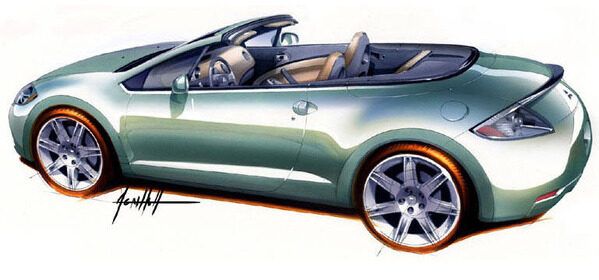
n
n
n
n
n
n
n
n
n
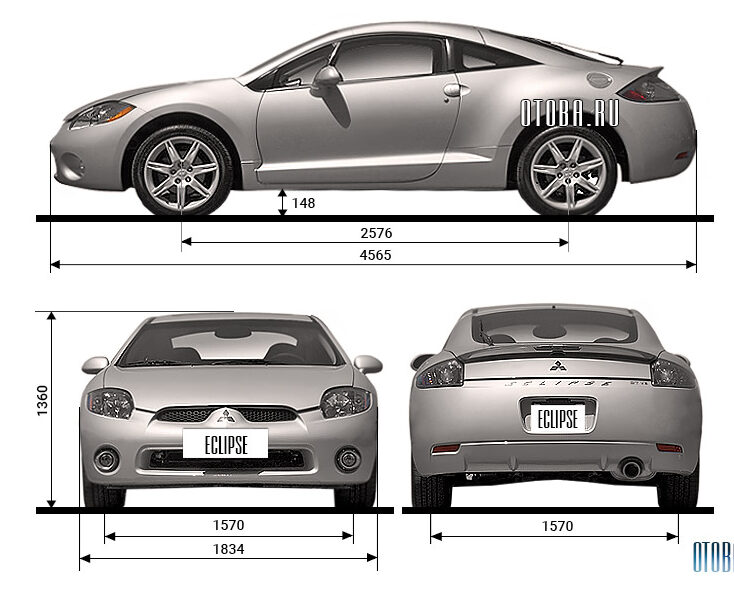
#三面写真:
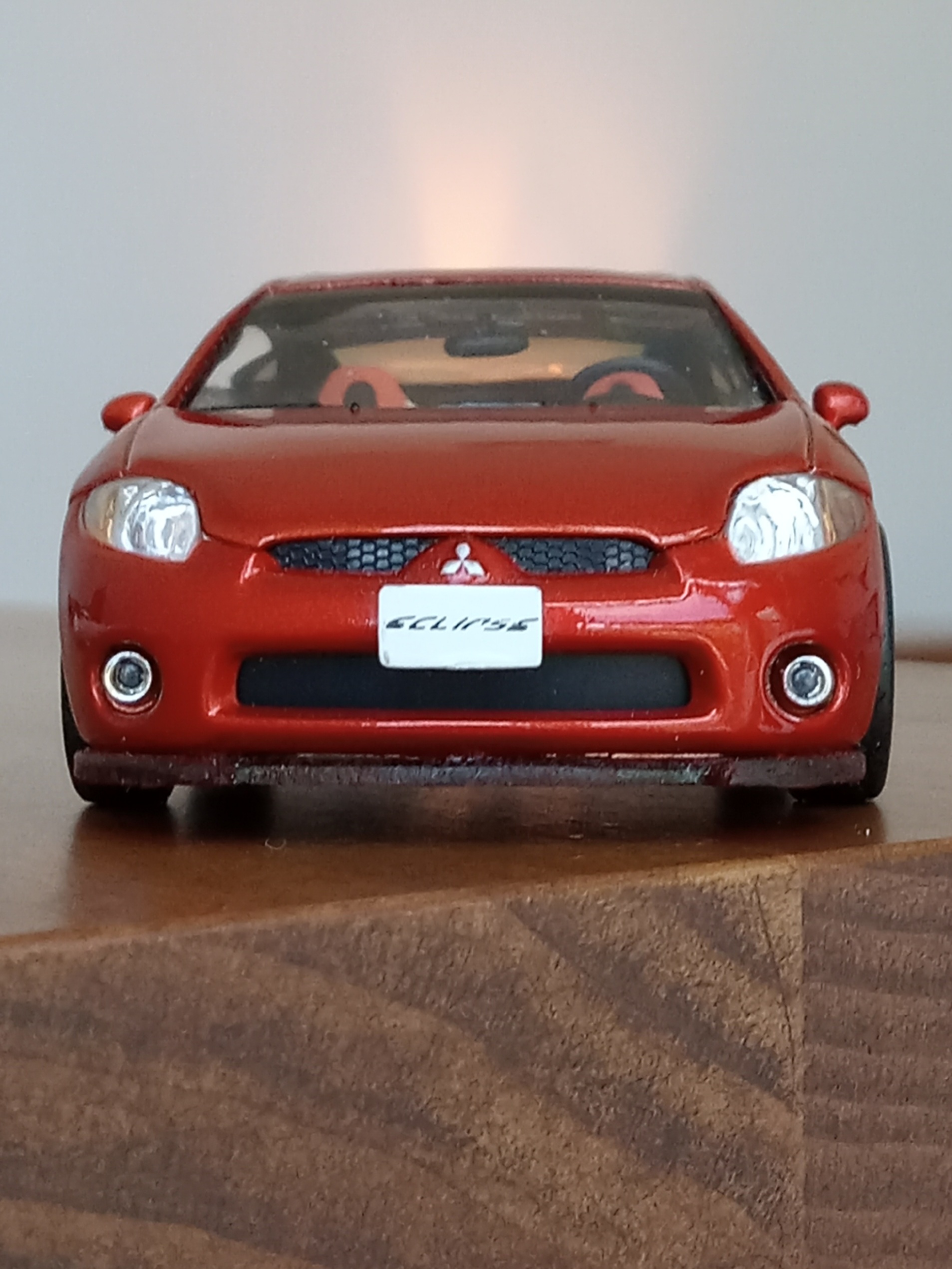
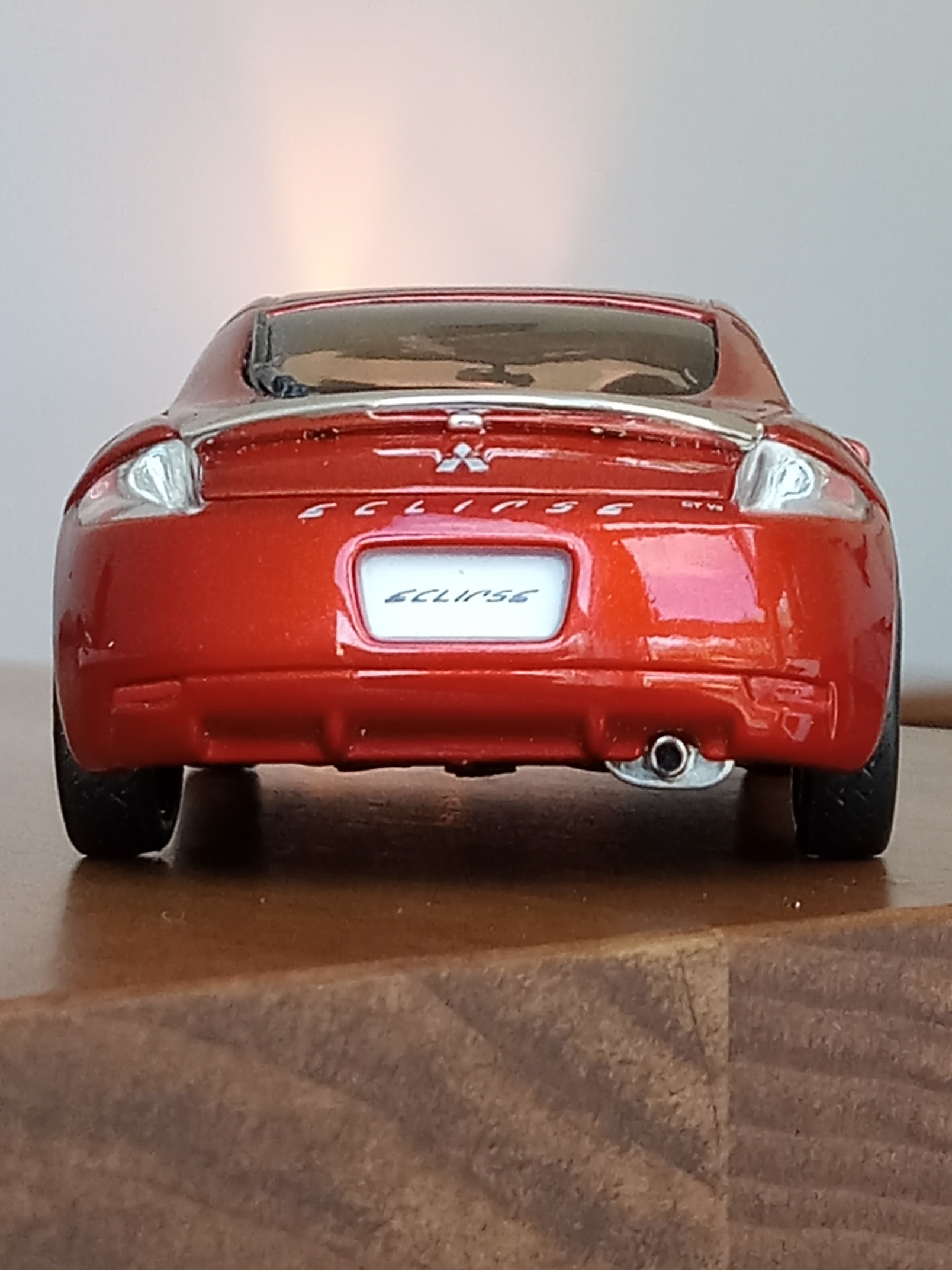
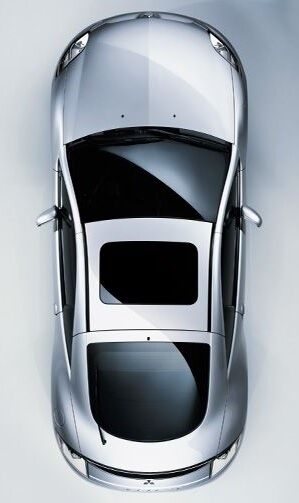
- エンジン型式:6G75型
- 総排気量:V型6気筒SOHC MIVEC
- 最高出力 : 265〜267PS / 5,750rpm
- 最大トルク:36.0kgfm / 4,500rpm
- 駆動方式:FF(フロントエンジン、フロントドライブ)
- 定員:4名
- 車体形式:2ドア(4人乗り)クーペ
- ホイールベース:2,575 mm
- 全長:4,565 mm
- 全幅:1,835 mm
- 全高:1,360 〜 1,390 mm
- 重量:1,534kg〜1,543kg(3,382〜3,400 lbs)
*外観デザインの特徴:『キャブフォアワード・マッスル』
この記事を書いている途中で、
当ブロブ内の【好奇心レポート】の記事として、
自動車外観デザインの【カナメ的】要因、
*分厚い胸と
*水滴型を有した、
*美的平衡-→『動的立体物としての自動車』
こんな感じで、気づきの内容を記事として書きました。
<https://yisell7777.com/archives/16768>
その気づきは当記事の『3代目エクリプス』の写真撮影中に
ひらめいたものでした。
#三菱・第四世代エクリプス:
キャブフォアワード+鳩胸の秘密?
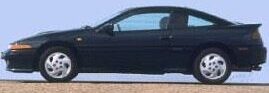

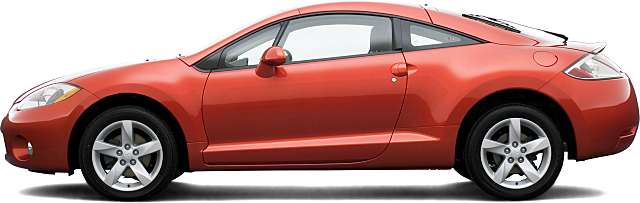
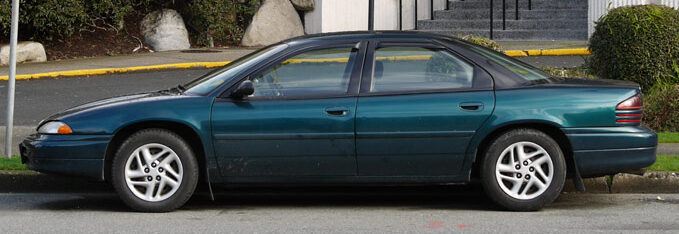
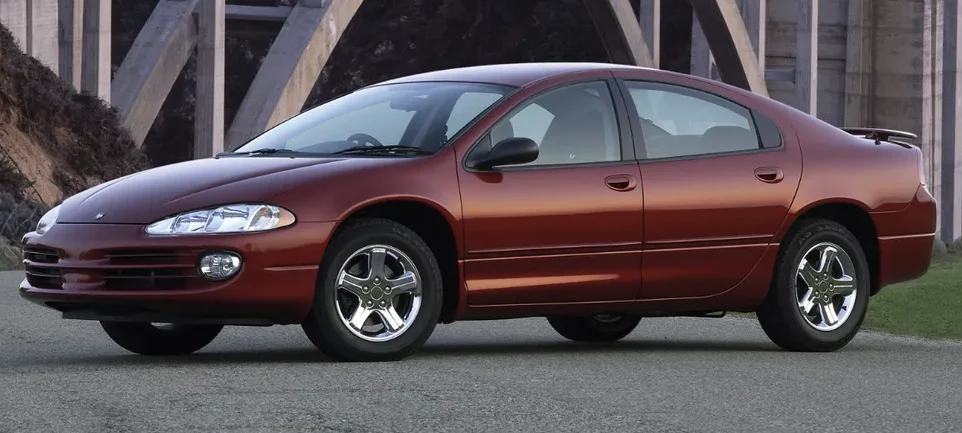
(初代エクリス,1989)
(2代目ダッジ・イントレピッド,1998)
(4代目エクリプス、1999)
当時のミツビシの協業先だったクライスラーが先陣を切って推し進めていた、デザイントの流れ『キャブフォワード戦略』と、当時の三菱デザイン言語(オリビエ・ブーレイ流?)が合わさって素晴らしい新時代のマッスルカーが誕生しました。
それでは
デザイン上の特徴を以下の5点に絞って、
見て行きましょう。
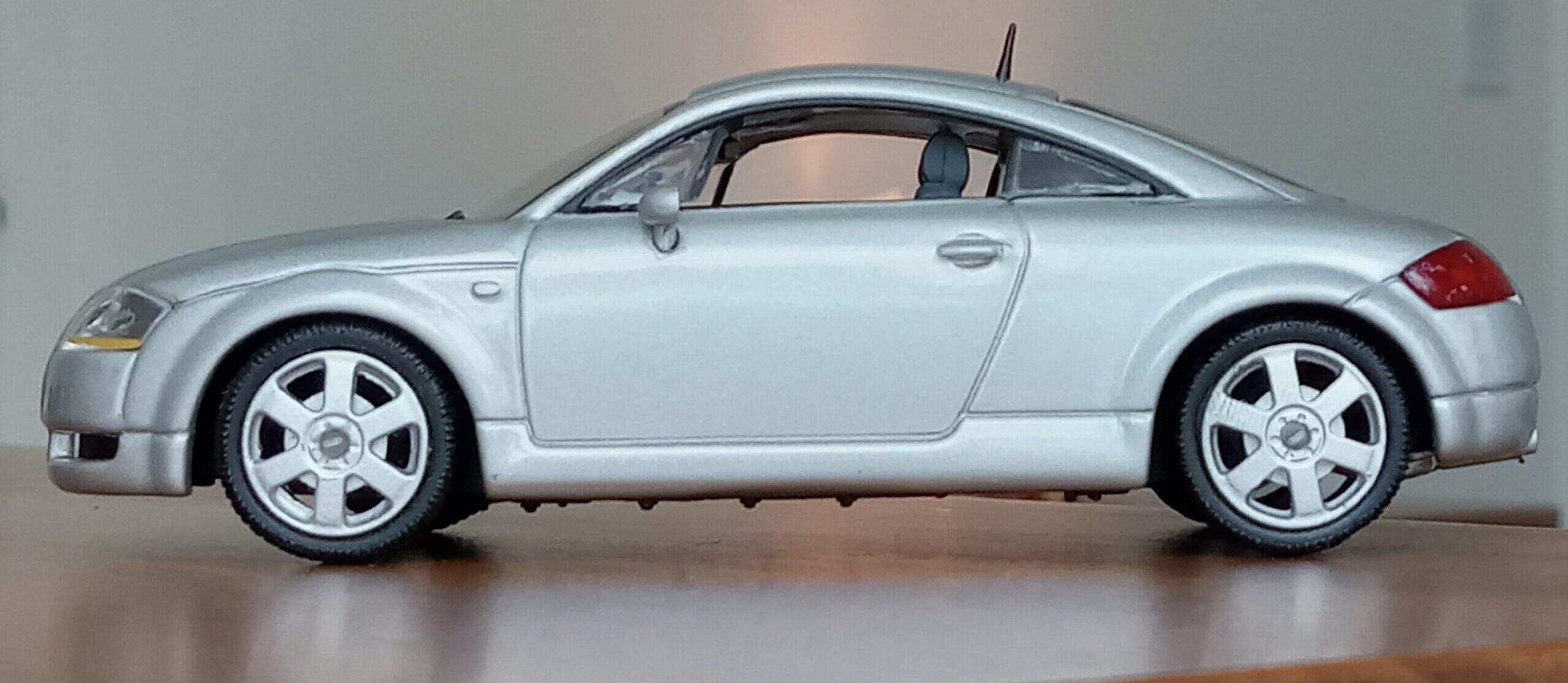
1:当時のデザイントレンドの牽引車、アウディーTTとキャブ・フォアワードの流れを統合する形で出現したニューエイジ・マッスルデザインの力強さ
ーーーー>細かディテールを無視しても、『骨格と肉好き』だけでご飯3杯食べられます!!(笑)
2:殆ど、ワンモーションに近い一筆書きのルーフラインと、厚い胸部分とリアに向かって立ち上がる水滴型のボディー後半部の描く美しく華麗な軌跡ーーー>ボディー全体のカタマリ感と方向性がすさまじいです。
3:フロントの陳スポイラーからドア下、リアフェンダー越しに上に向かい最後はダックテール気味のリアスポイラーへ抜けるダイナミックな勢い+立体グラフィックの妙味
4:アウディーTTに情緒を2杯増しにした感じのリアフェイシアの抑揚溢れる造形
5:ロングホイールベース+wideトラックから導かれた抜群なスタンス感ーーーー>FFベースのシャーシのハンデを感じさせません!
弱点:
#フロントフェイシアのデザインが今一つはっきりせず、この車の性格がつかみきれません。
それでは、
ひとつづつ見て行きましょう!
1:当時のデザイントレンドの牽引車、アウディーTTとキャブ・フォアワードの流れを統合する形で出現したニューエイジ・マッスルデザインの力強さ
(それまで主流だった『ロングフッド・ショートデッキ』のFRプロポーションに代わるべきスポーツカーの新定義を作りだすための努力と気迫が伝わってきます。)
ーーーー>細かディテールを無視しても、『骨格と肉付き』だけでご飯3杯食べられます!!(笑)
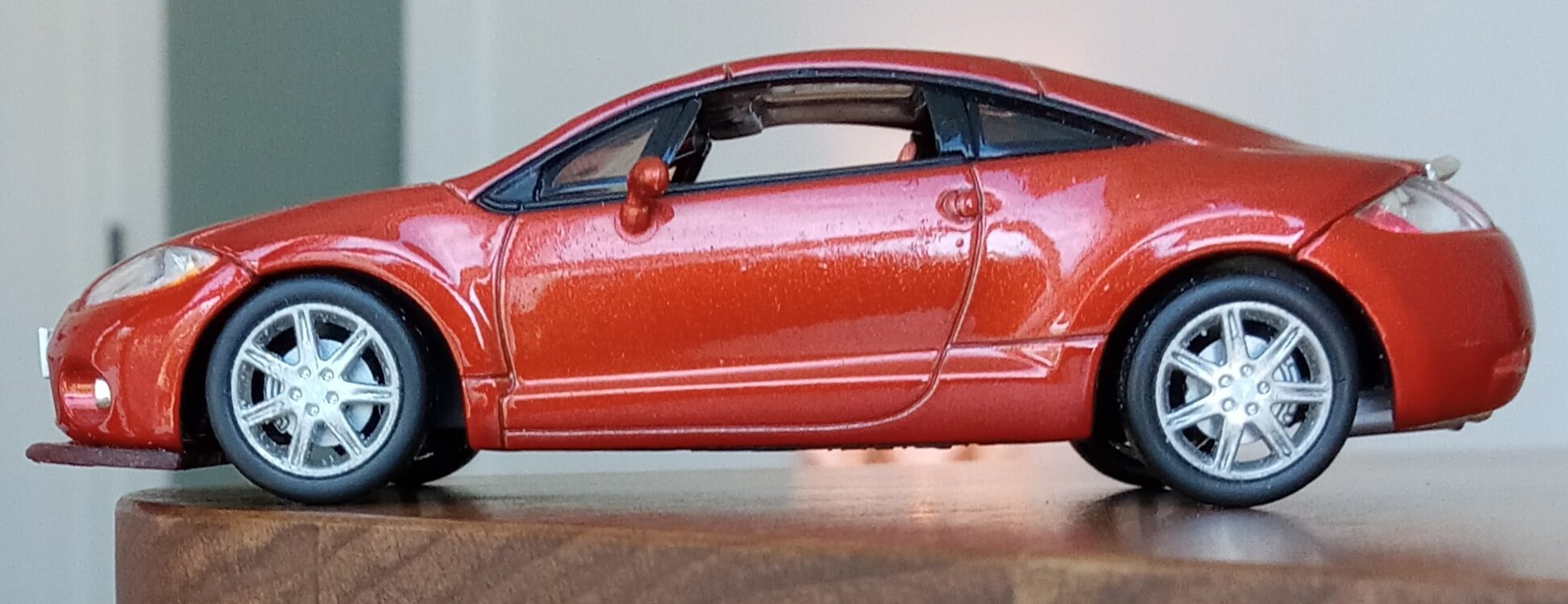
2:殆ど、ワンモーションに近い一筆書きのルーフラインと、厚い胸部分とリアに向かって立ち上がる水滴型のボディー後半部の描く美しく華麗な軌跡
ーーー>ボディー全体のカタマリ感と方向性がすさまじいです。
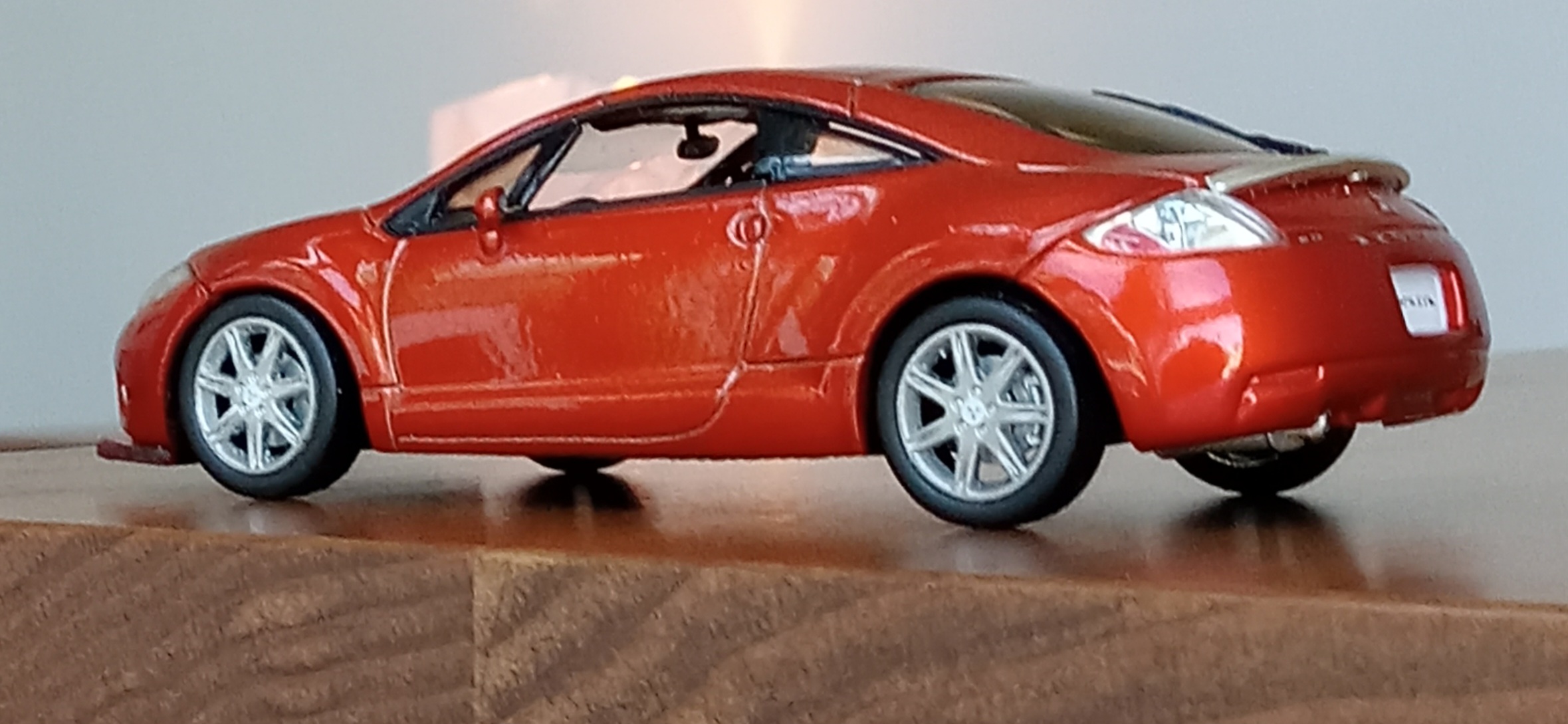
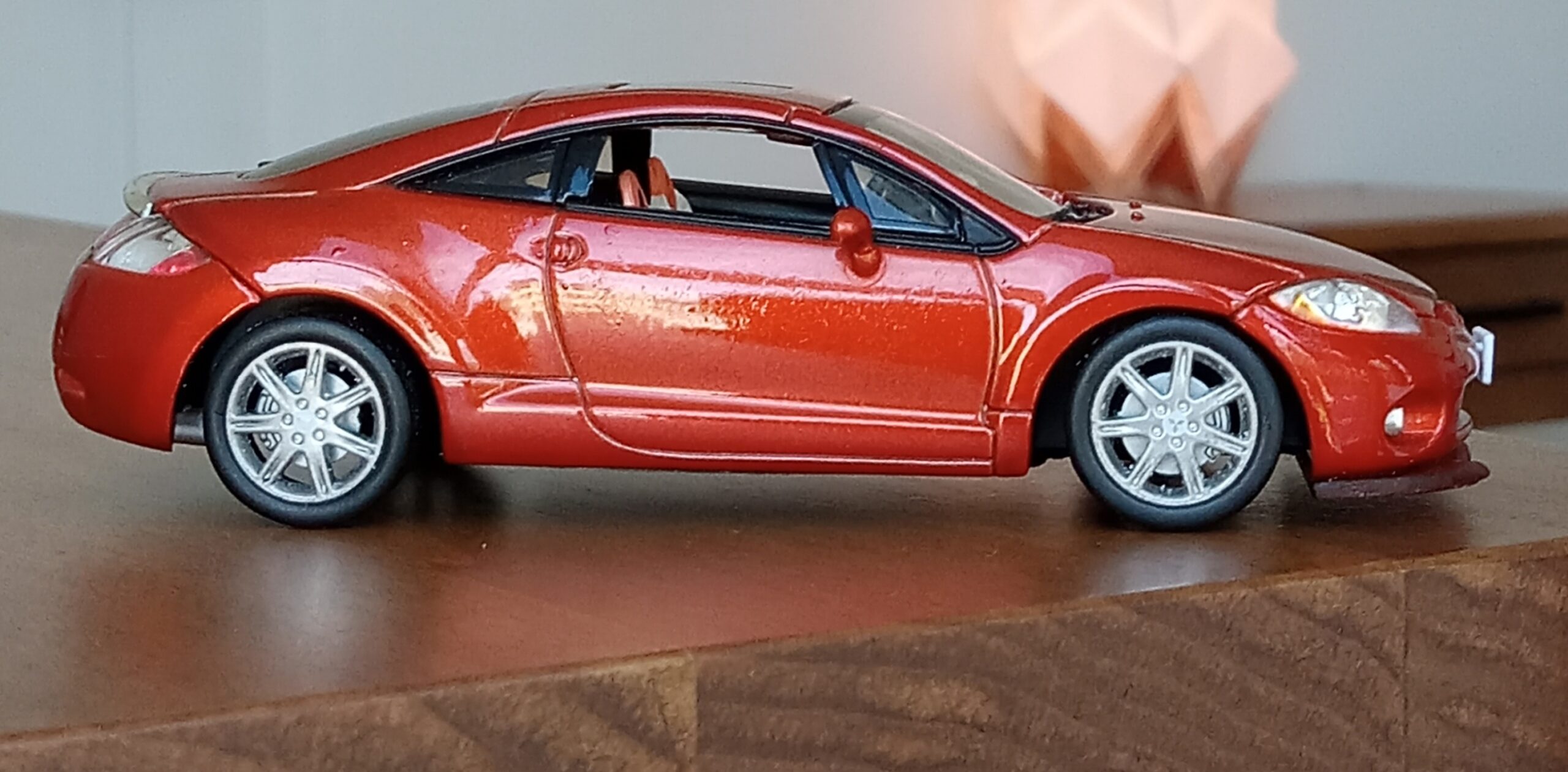
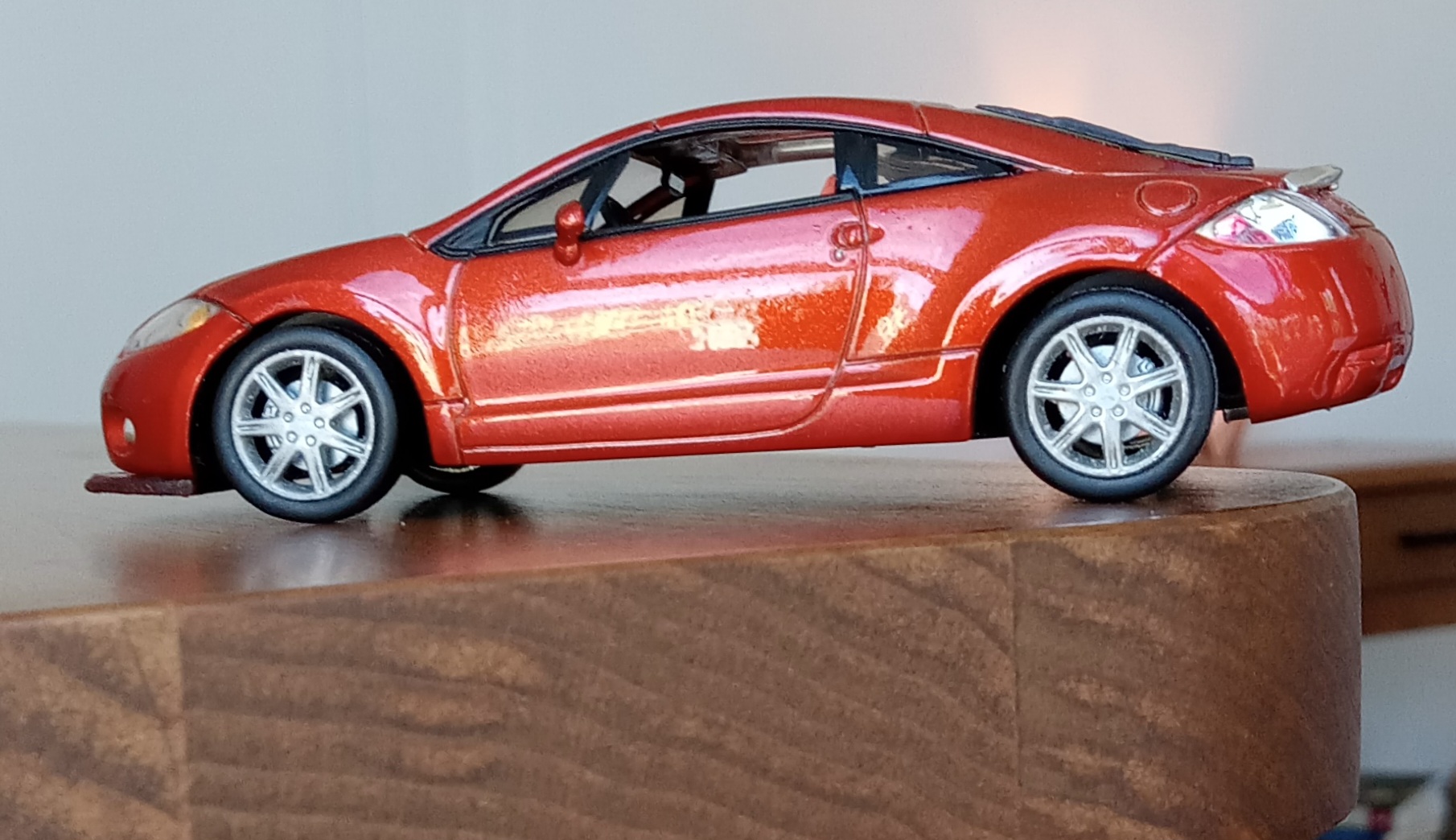
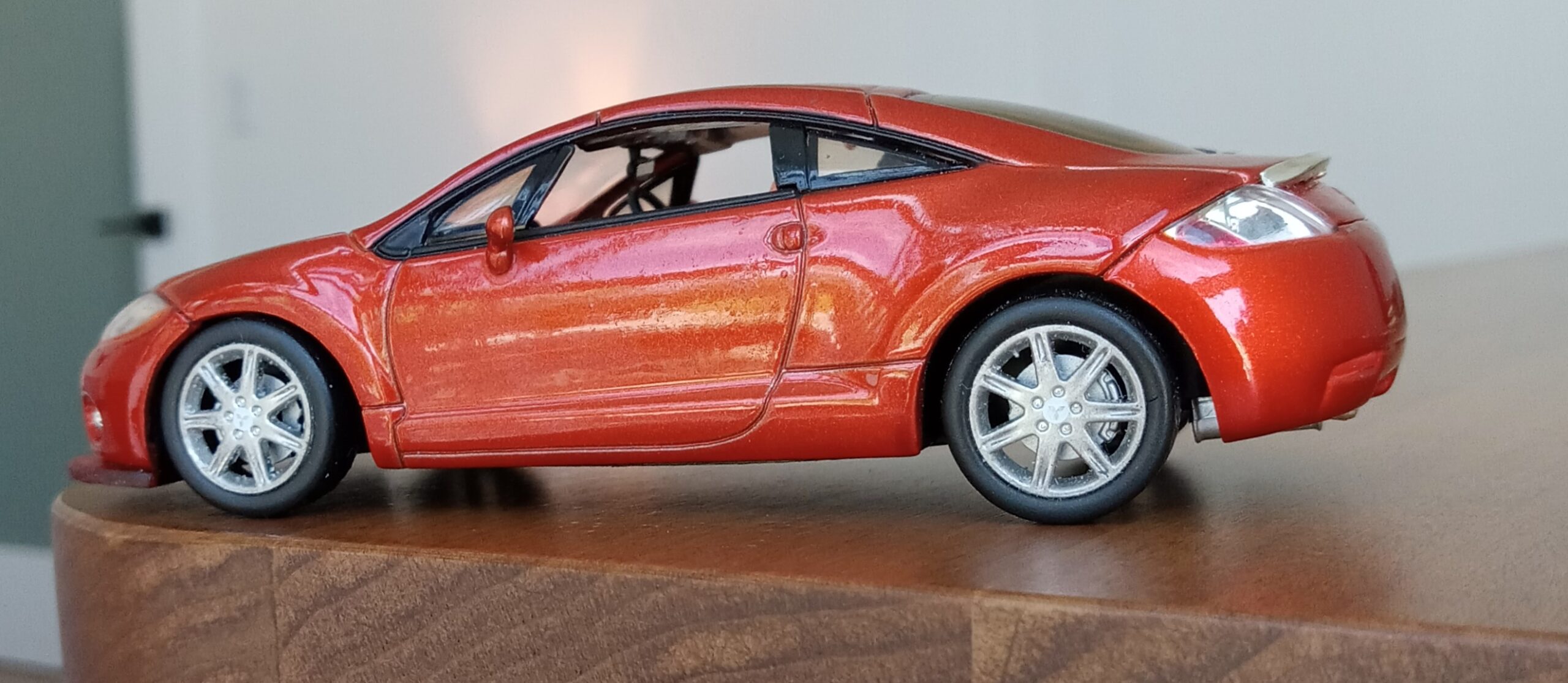
3:フロントのチン(リップ)スポイラーからドア下、リアフェンダー越しに上に向かい最後はダックテール気味のリアスポイラーへ抜けるダイナミックな勢い+立体グラフィックの妙味
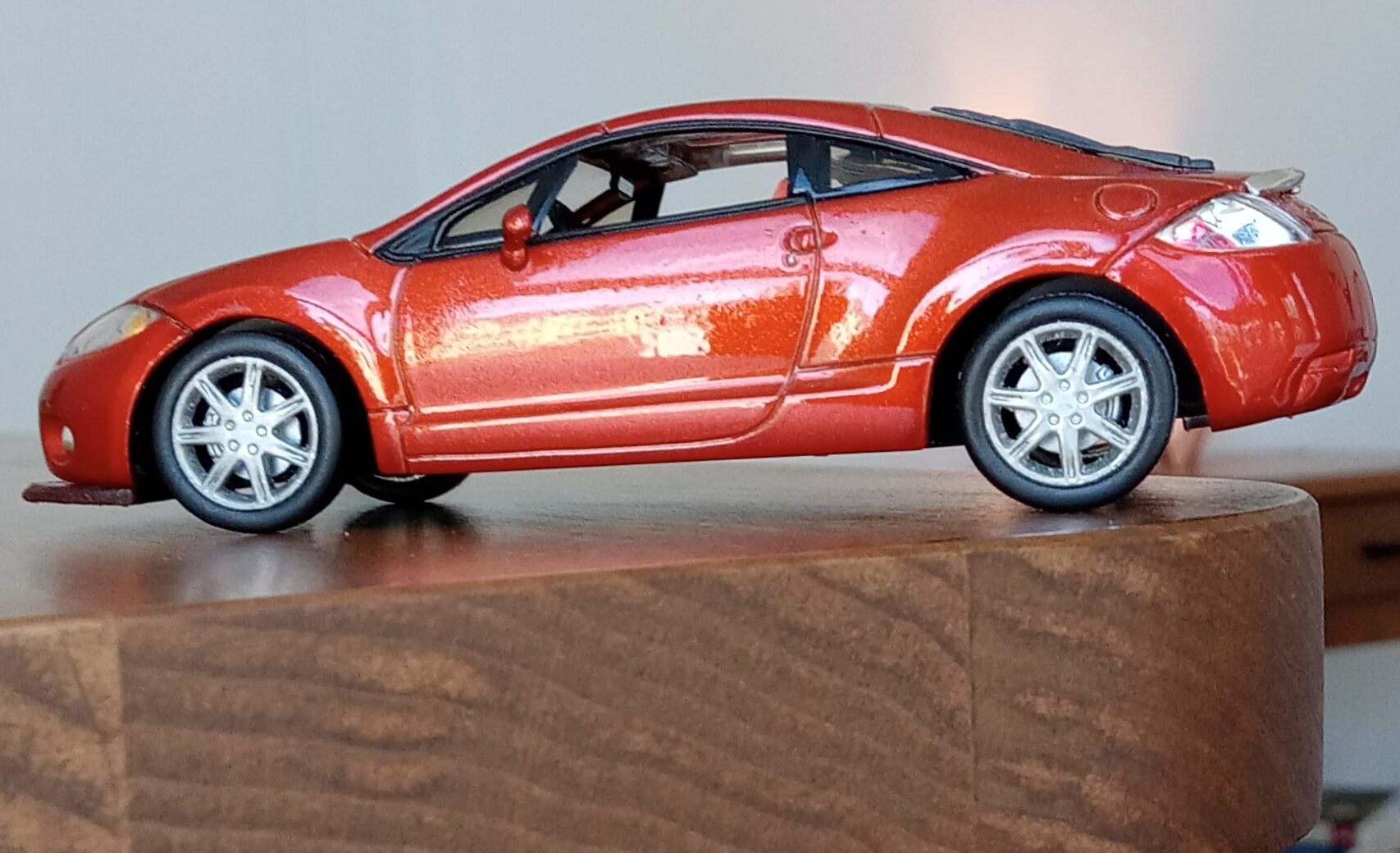
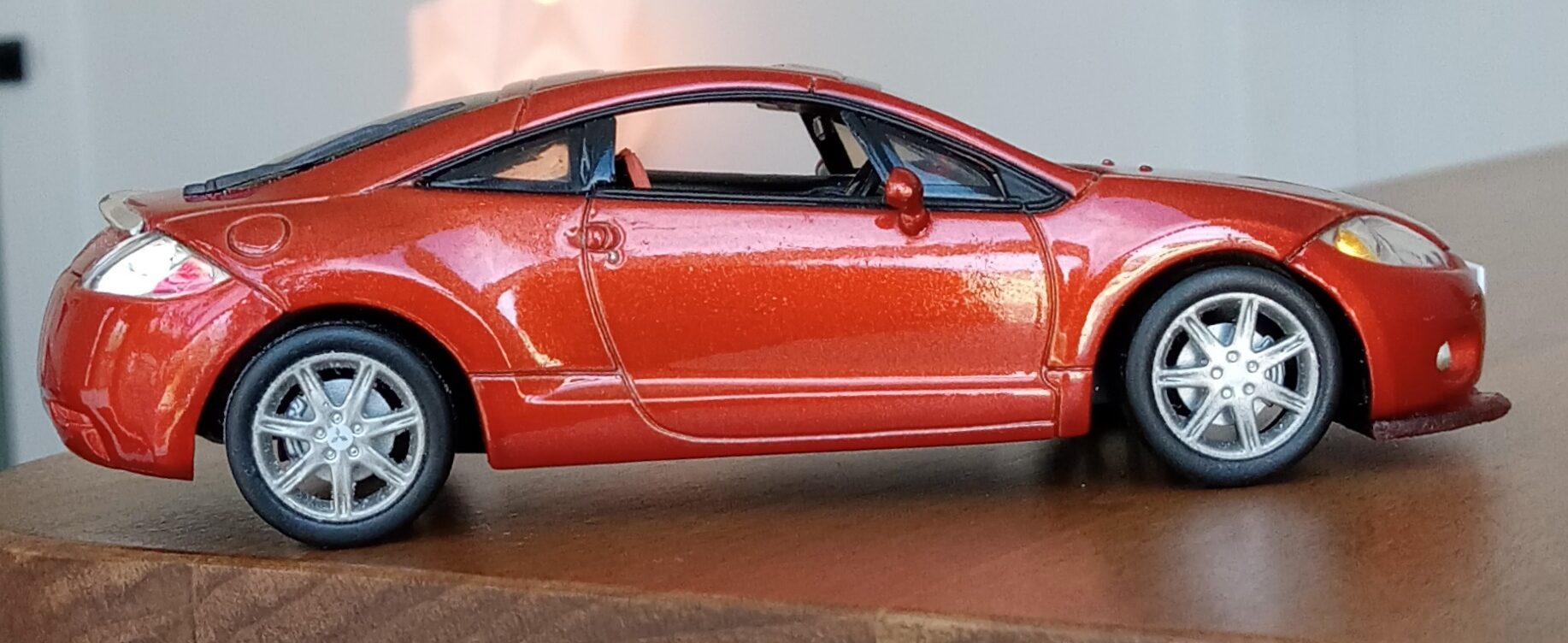
4:アウディーTTに情緒を2杯増しにした感じのリアフェイシアの抑揚溢れる造形
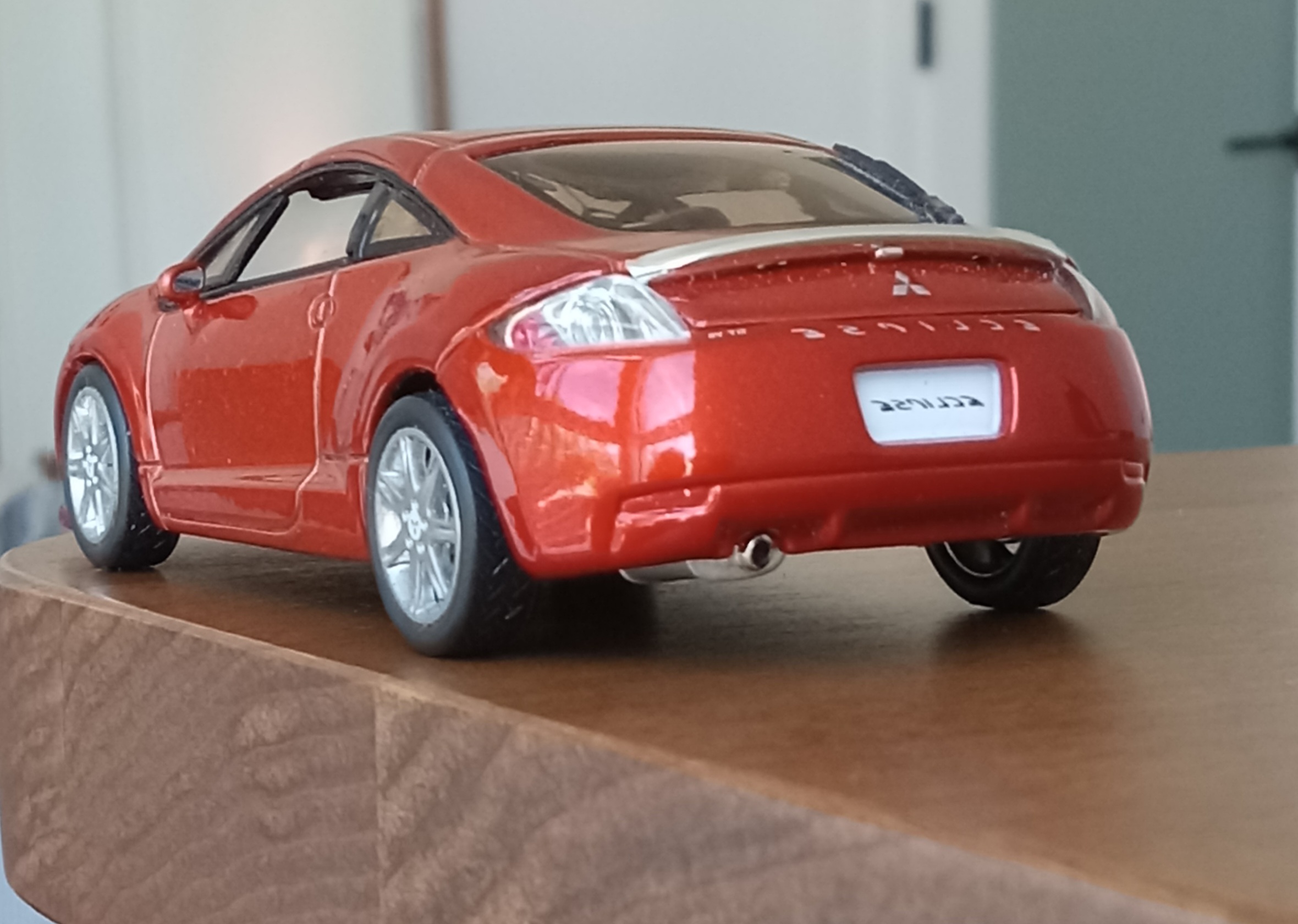
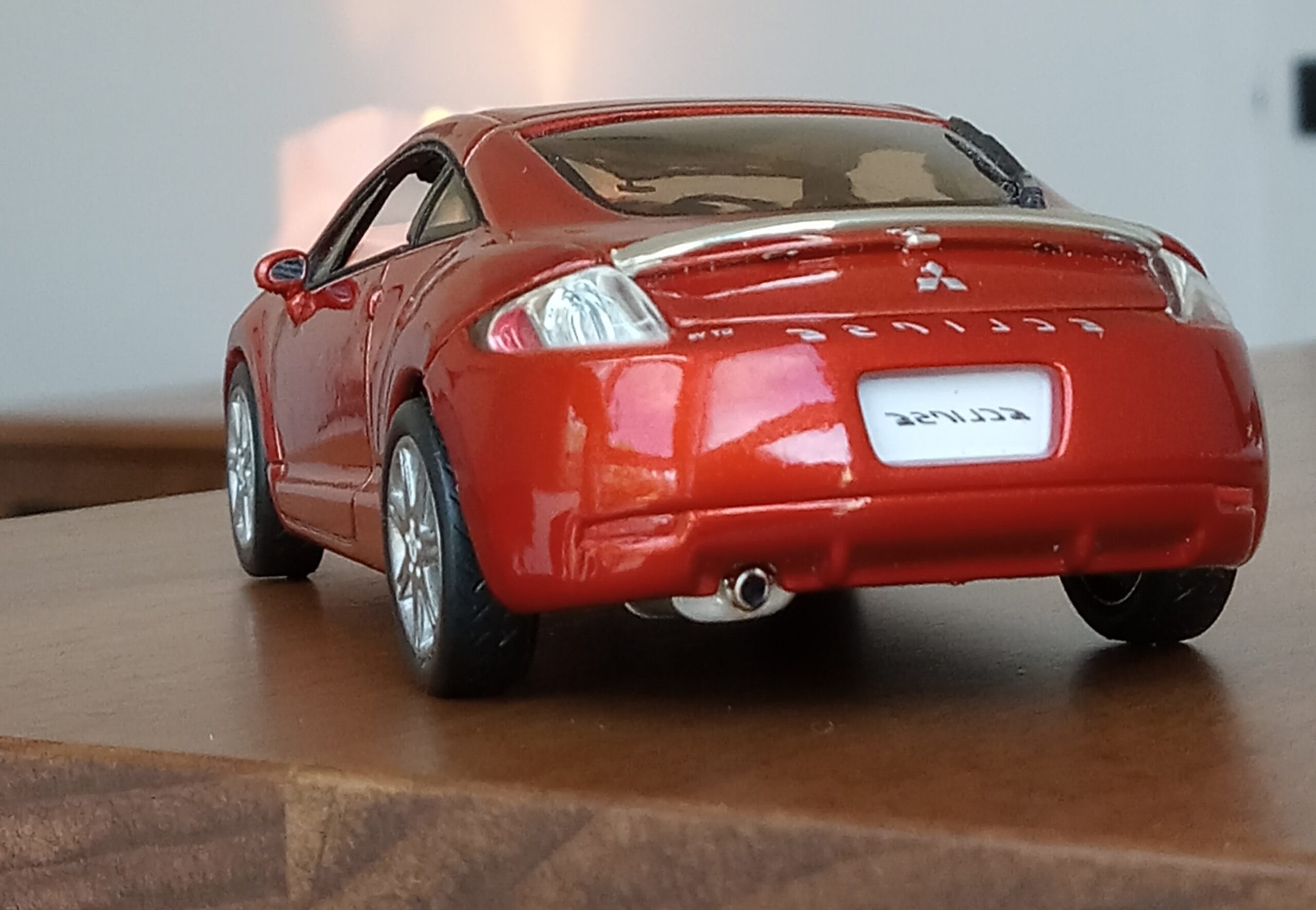
5:ロングホイールベース+wideトラックから導かれた抜群なスタンス感
ーーーー>FFベースのシャーシのハンデを感じさせません!
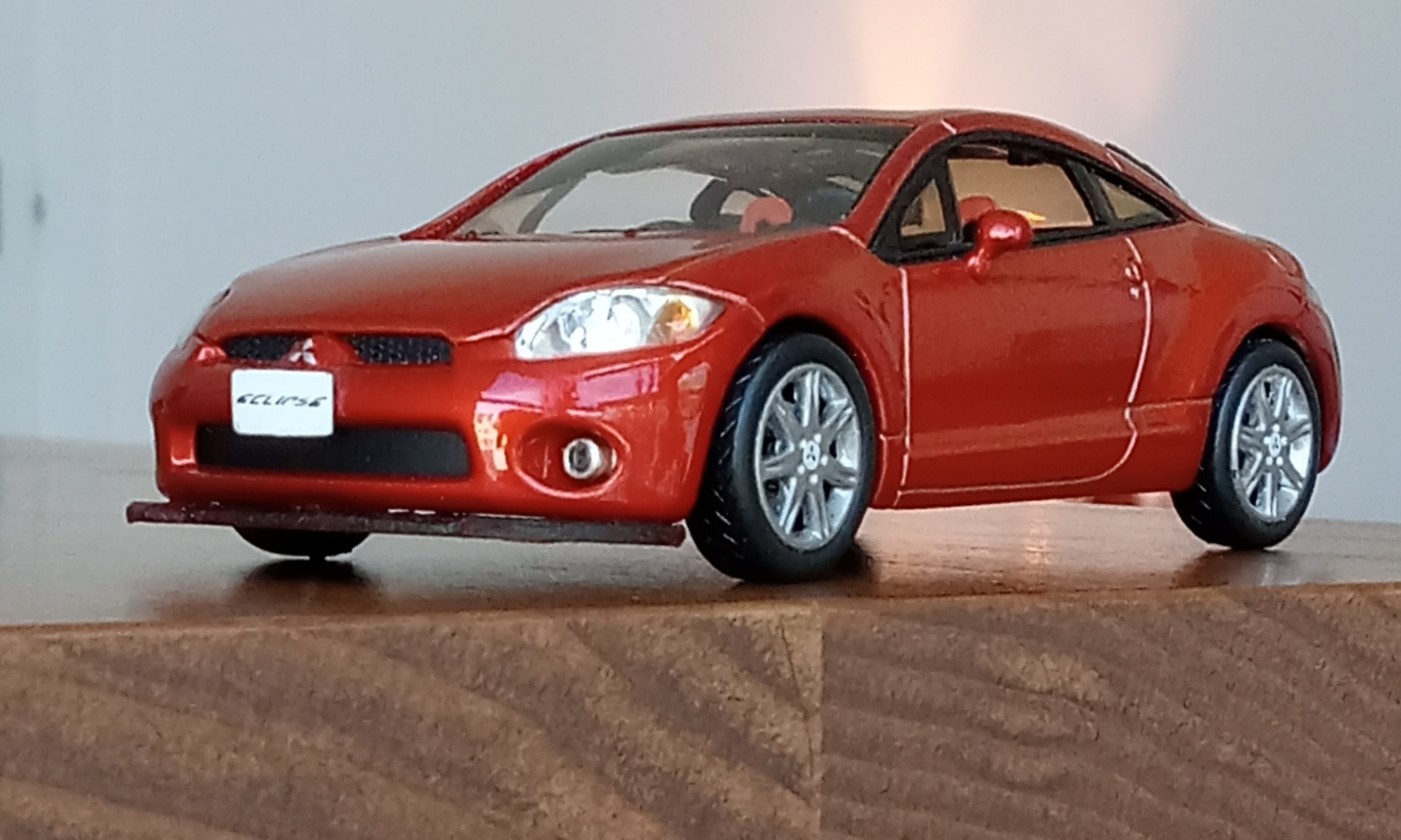
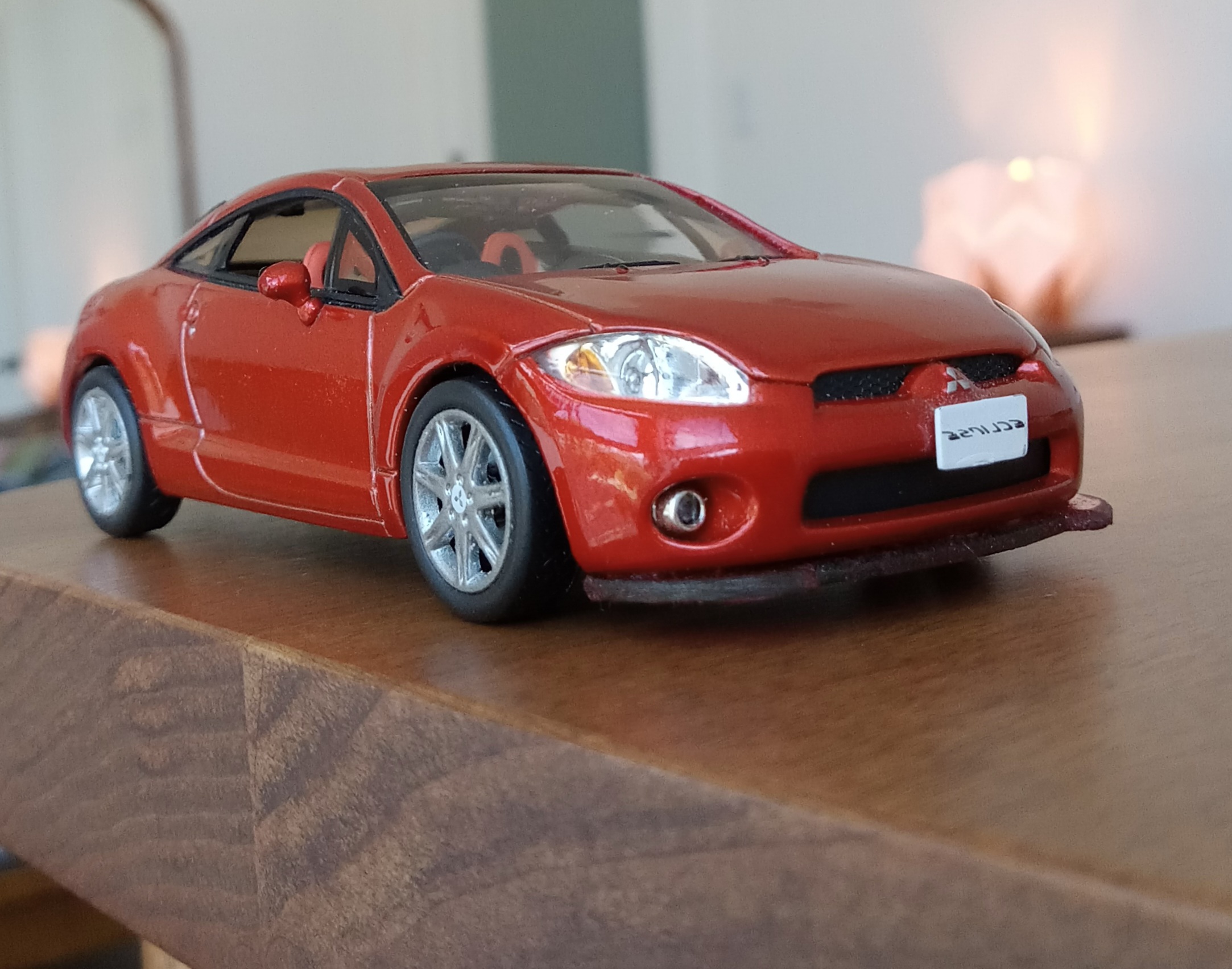
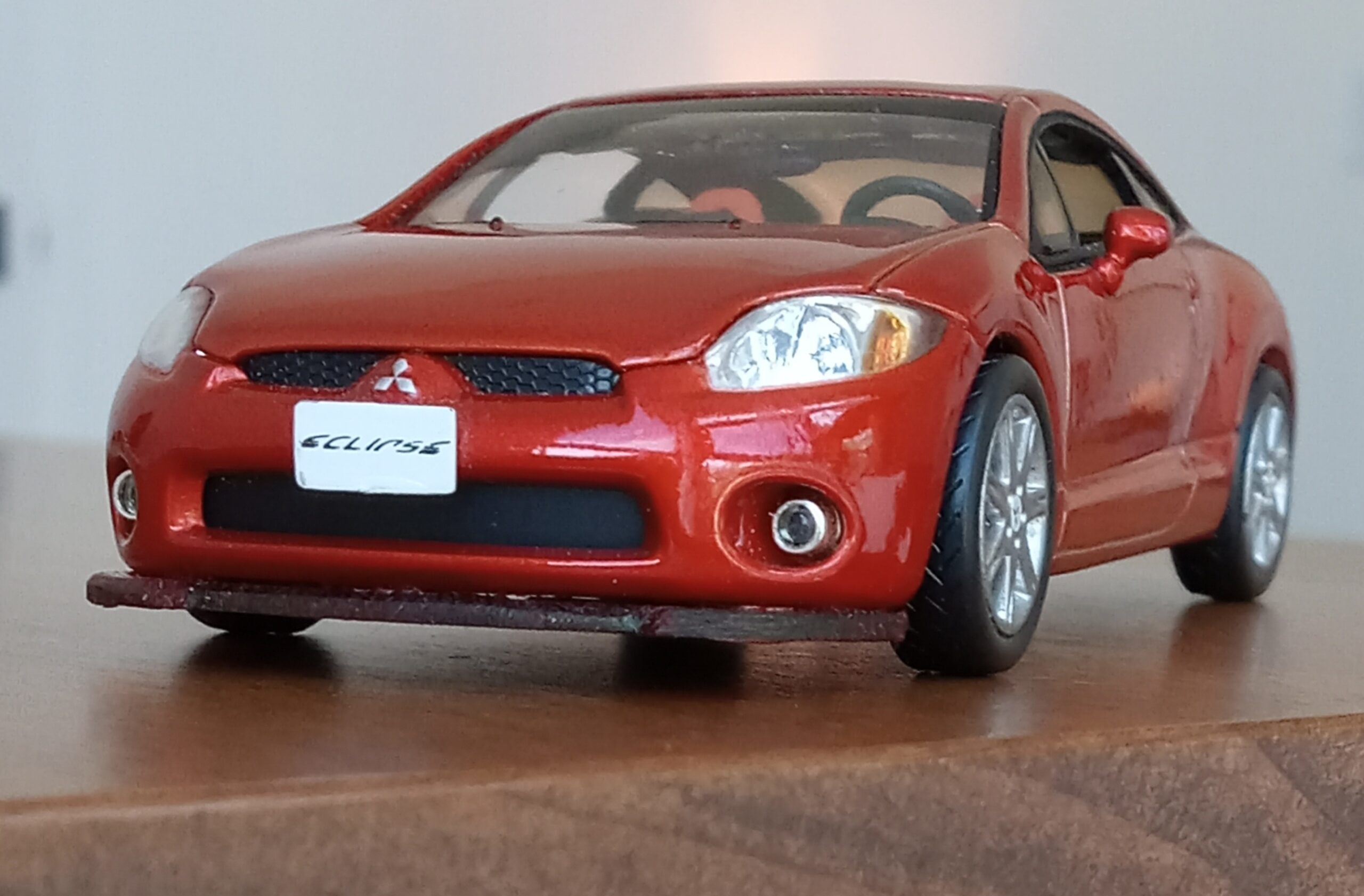
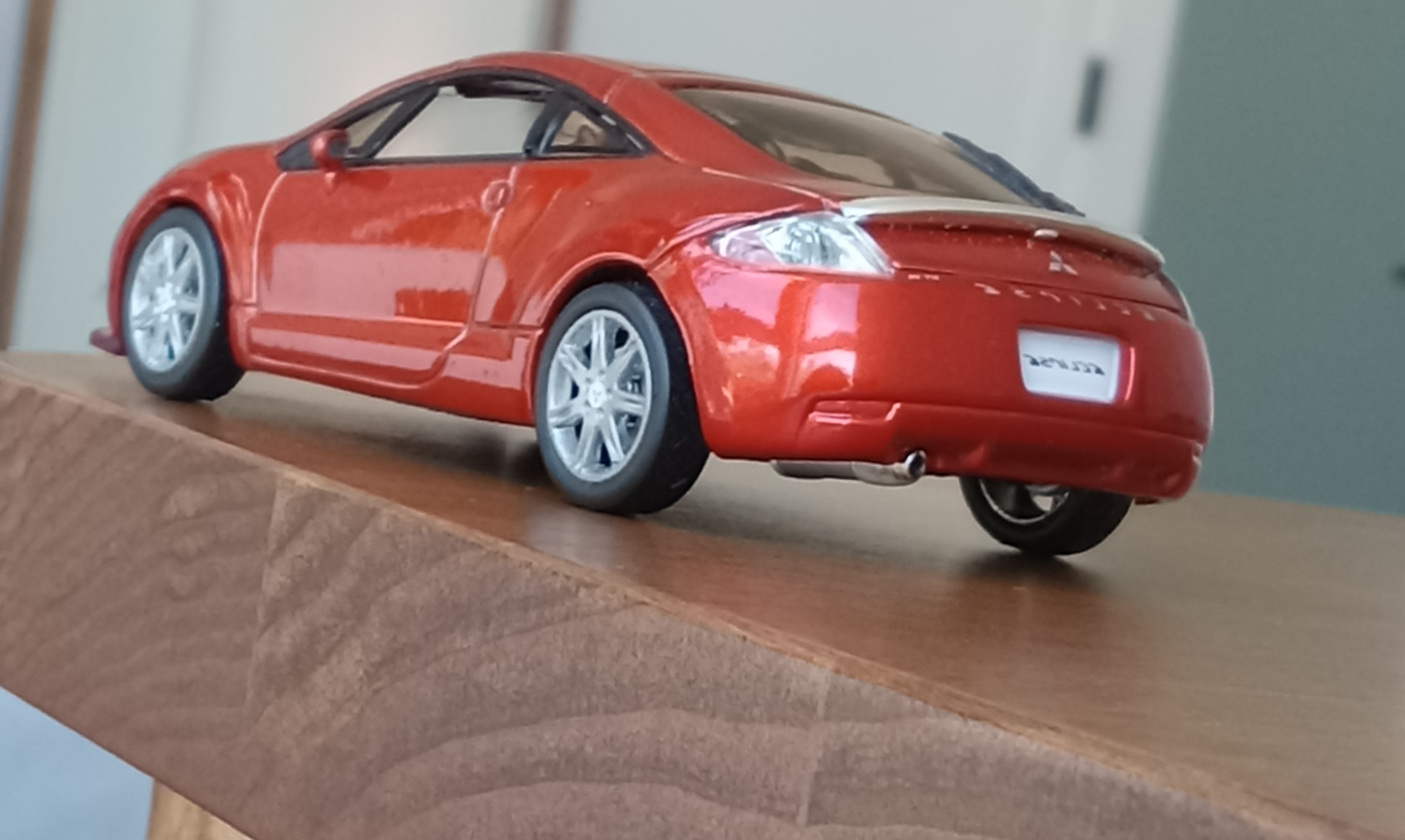
弱点:
#フロントフェイシアのデザインが今一つはっきりせず、この車の性格がつかみきれません。
*『私』と4代目エクリプス:
#とにかく『強い』デザイン、、、
今回の写真撮影中に、
*近景からの魚眼的な画角より
*かなりの遠景からのロングショット、
の方がすさまじく魅力的だったのが気にかかり、
よくよく調べてみてビックリ!
Aピラー窓の付け根部分の高さからか、
*FF車にもかかわらずかなり存在感のあるボンネットの厚み+
*その厚い胸から始まる水滴型に尾を引く、後半部分の勢いーー>
この2点が、
私にとってのデザインの『カナメ』なんだと気付かされ、
【好奇心レポート】に一つとして記事にすることが出来ました!!
<https://yisell7777.com/archives/16768>
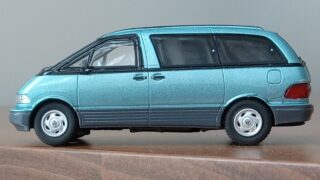
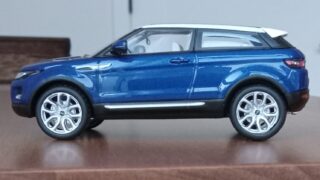
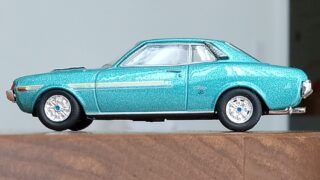
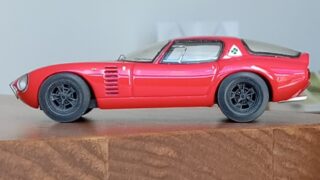
*NOREV社製、1/43ダイキャスト製完成品、4代目エクリプス、2009(メタリック・オレンジ)
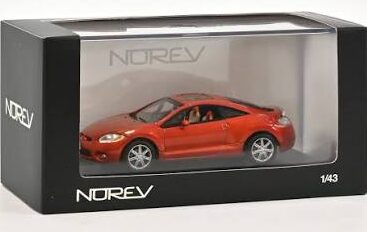
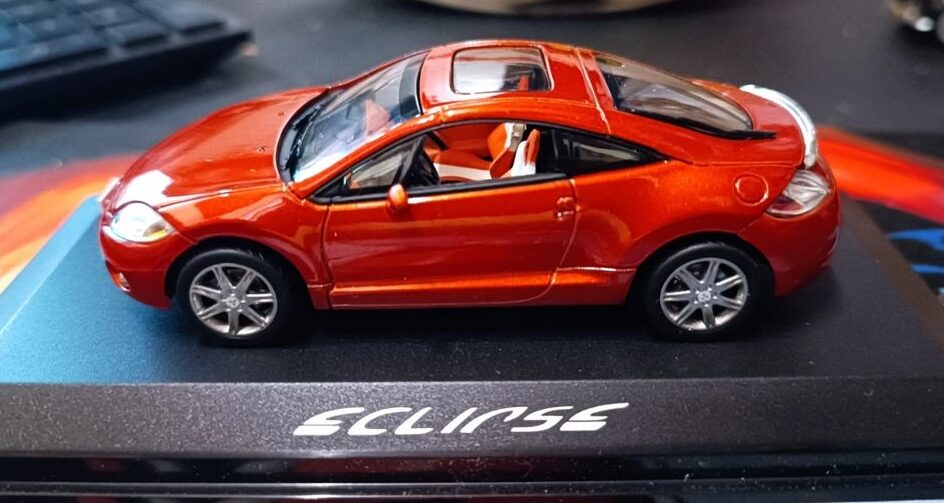 (非常に珍しい車種のモデル化、それもフランスメーカーからの逸品です。恐らくは、日本の名車シリーズで使用された金型を流用したNOREV正規品だと思いますが、立体化され本当にうれしいです。ーーーー>フロントのチン・スポイラーをプラバンから切り出して付け加えました。)
ではいよいよ
三題噺の時間です!
*三題噺:カタマリ感・『キャブ・フォアワード』・アウディーTT
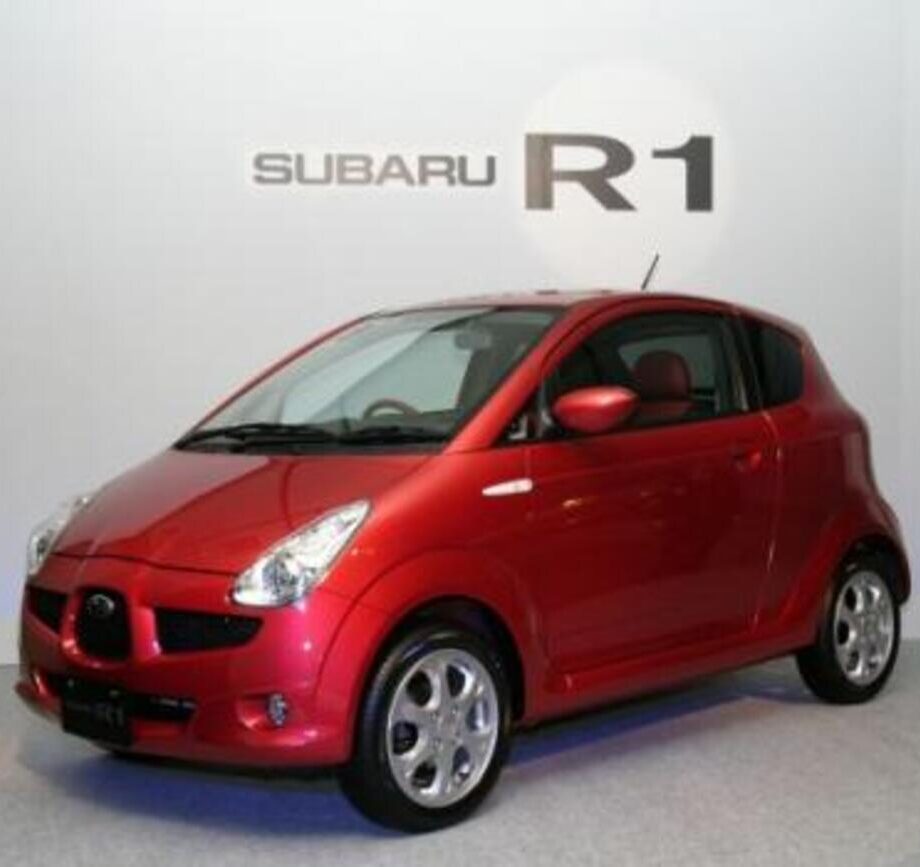
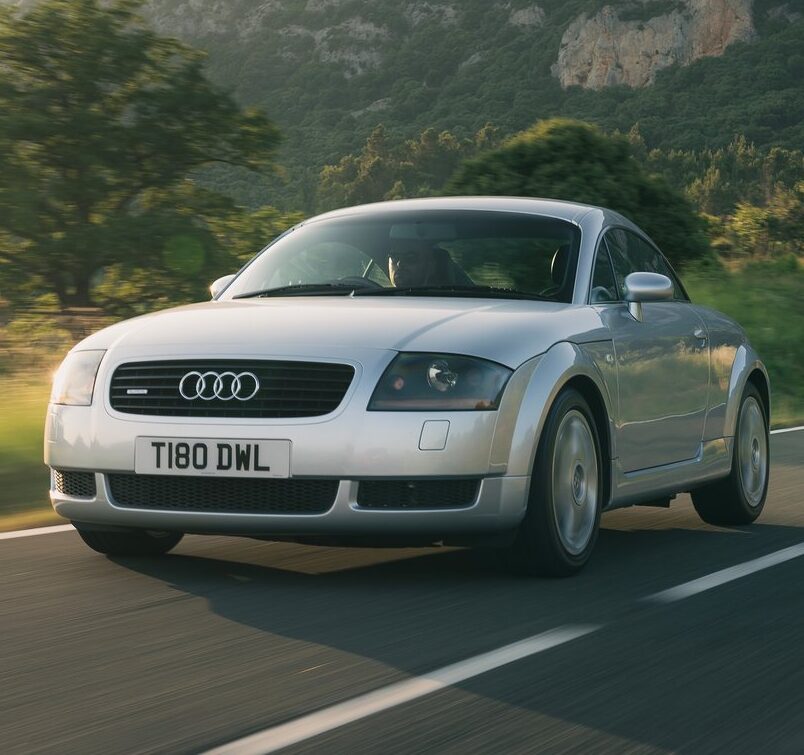
今回のお題は
割合、正統派な3台となりました、、、
【ジェミニ君】と協業して
事に当たらせていただきます。
「反骨の塊(カタマリ)」
n
N
m
n
〇…お粗末さまでございました。
n
 n
n
n
n
n
n
n
n
n
n
n
n
N
N
*その他の『キャブ・フォアワード』な名車たち、、、
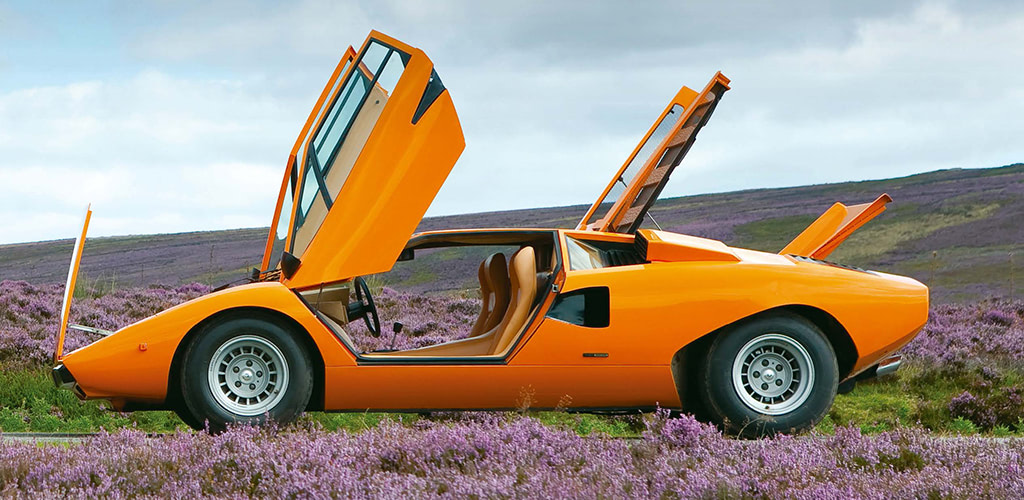
キャブフォアワードの傑作デザインと言えば、
この車を忘れることはできません!
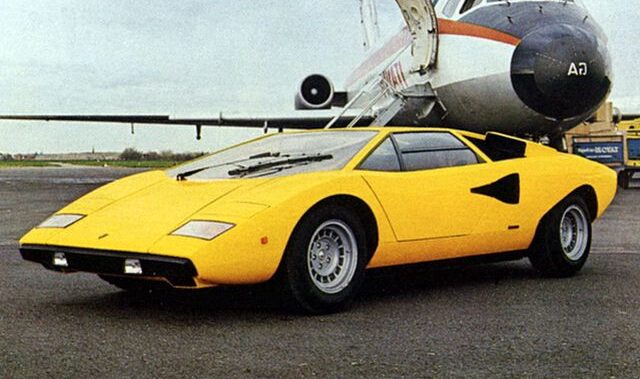
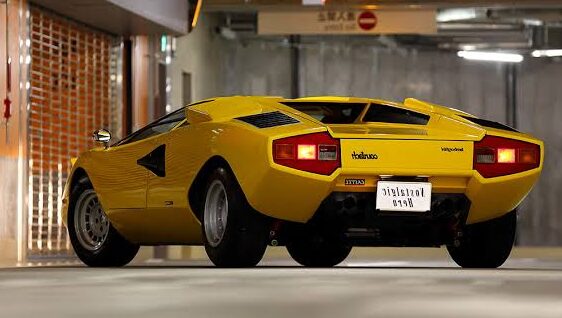
*ランボルギーニ・カウンタック LP400、1974(イエロー)
(元祖キャブ・フォアワードのスーパーカー:ガンディー二とスタンティー二の傑作デザインは40年も時代を先取りしていました。
ーーー>強烈なカタマリ感と矢じりのような方向性が全てを肯定)
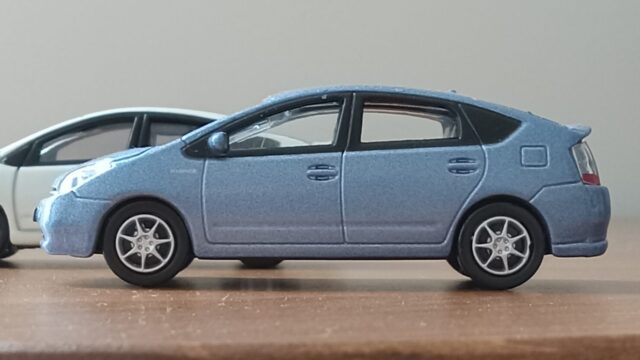
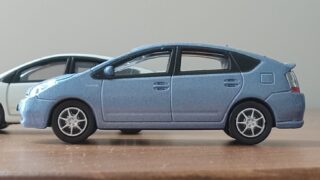
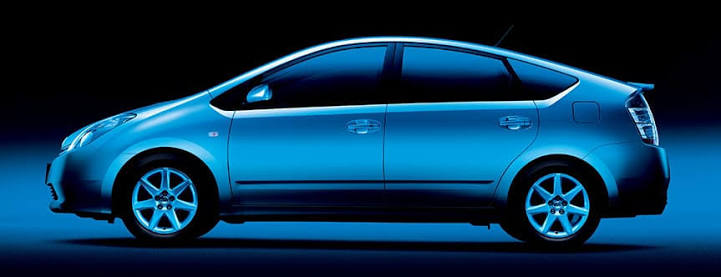
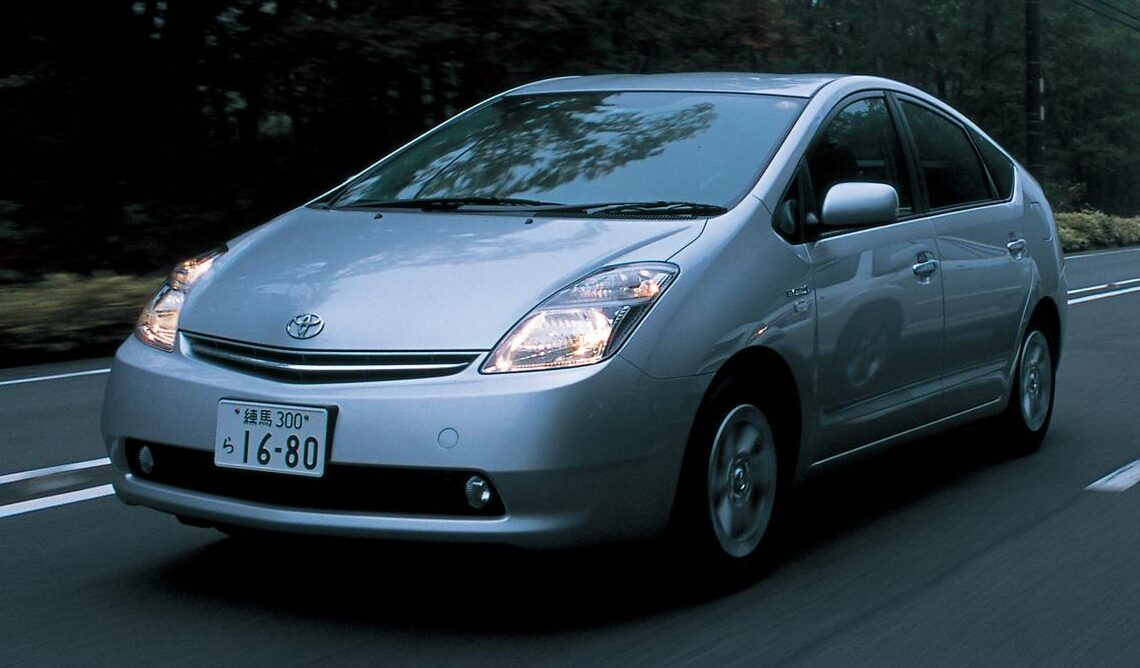
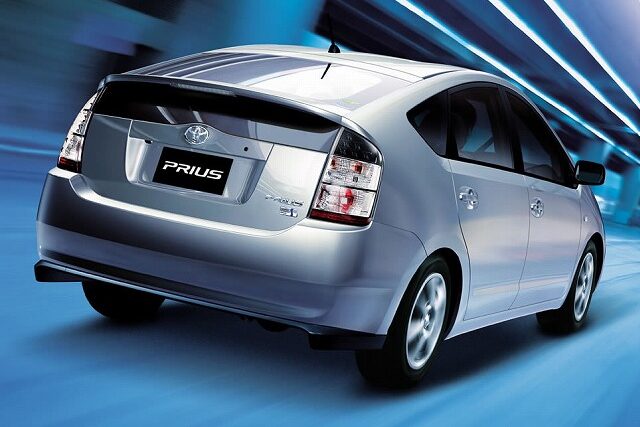
*2代目トヨタ・プリウス、2005(LTブルー・メタリック)
(いわずと知れたプリウスの名前を世界的なブランドに押し上げた立役者、今見てもよだれが出そうな、三角=おにぎり型のサイドビューはまごうかたなき「キャブフォア」プロポーションを体現!
ーーー>もう一度所有したい自動車です!)
*4代目、エクリプス
*ランボルギーニ・カウンタック LP400
*2代目、プリウス
この3台すべてが
*分厚い胸部と
*水滴型のボディー後半を見った、
*美学に
あふれた名車でした。
今回の記事を書くことで、
この3車と3つのポイントが私にとって
本当に大切なものなのがはっきりしました!!
非常に有意義な
執筆経験となりました。
次回からの2回は、
美しきドイツ・クーペ2台に付き
書いてみたいです!
本ブログと記事内容につきまして:
ブログ記事を書くにあたり私の目標は、立体造形(料理も含めて)とのかかわりを通じて、私個人の特徴的(ネジ曲がり方も含めて)な評価軸を解明することで、「美しさ・美味しさ」に対する好奇心や、探求心を、どのように満足・充足させてきたのかを明記しておくことです。
従いまして、記事の中に出てくる、数字や年号、微細なデータなどには細心の注意を払っておりますが、時に大きな間違いや勘違いを犯していることも考えられます。特に自動車記事における主要諸元や、年号などには紛らわしいものも多く、あくまで参考程度に考えていただければ幸いです。
私としては、記事の中で個人的な外観デザインや味覚の評価、そこから広がる後半部分につなげるための、『流れ』を作るための客観的材料として年号やデータを挿入している感じです。あくまで重視したいのは、私個人の頭の中で起こる、記憶の錯そう的混沌から生まれる新たな『見方』や『情報の予想外のつながり』です。その勢いを作り出す、『流れ』の一環として、諸データが副次的に必要となるわけです。
話がそれますが、大好きな落語の世界に「三題噺」という、その場て会場から募った3つのお題を使って1つのお話に仕立てるといったお遊びがございますが、私はそれに近いことを立体造形の特徴や(料理のお味)をお題にして行っている感じがします。その中で頭の中に去来する数々の着想が、全く予想外で楽しく、次回からの記事内容を大幅に変えたり、新展開につながっています。
当ブロブの仕組み:
『好奇心の点と線 x 気まぐれ脳内回路=予想外の新展開』
こんな自分勝手なブログですが、今後ともよろしくお願いいたします。
追記:上記の『流れ』を作る為に必要な写真はできる限り、個人所有のミニカー・自前の料理などを使い撮影しておりますが、その他の必要最小限の図版や写真を他のブログ主様の記事や諸会社ホームページなどからお借りしております。(記事内容に合うよう加工させていただき、使用時は最小の解像度で載せております。)問題がある場合、ご連絡いただければ直ちに降ろさせていただきます。
追記2:当ブログ記事に掲載のミニカー写真等(個人撮影)は許可なしで、どのようにお使いいただいても結構です。私個人の創造性はこの世のもの、と言う認識の上で記事を製作しています。
!!!!!!!!!!!!!!!!!!!!!!!!!!!!!!!!!!!! Translated in English !!!!!!!!!!!!!!!!!!!!!!!!!!!!!!!!!!!!
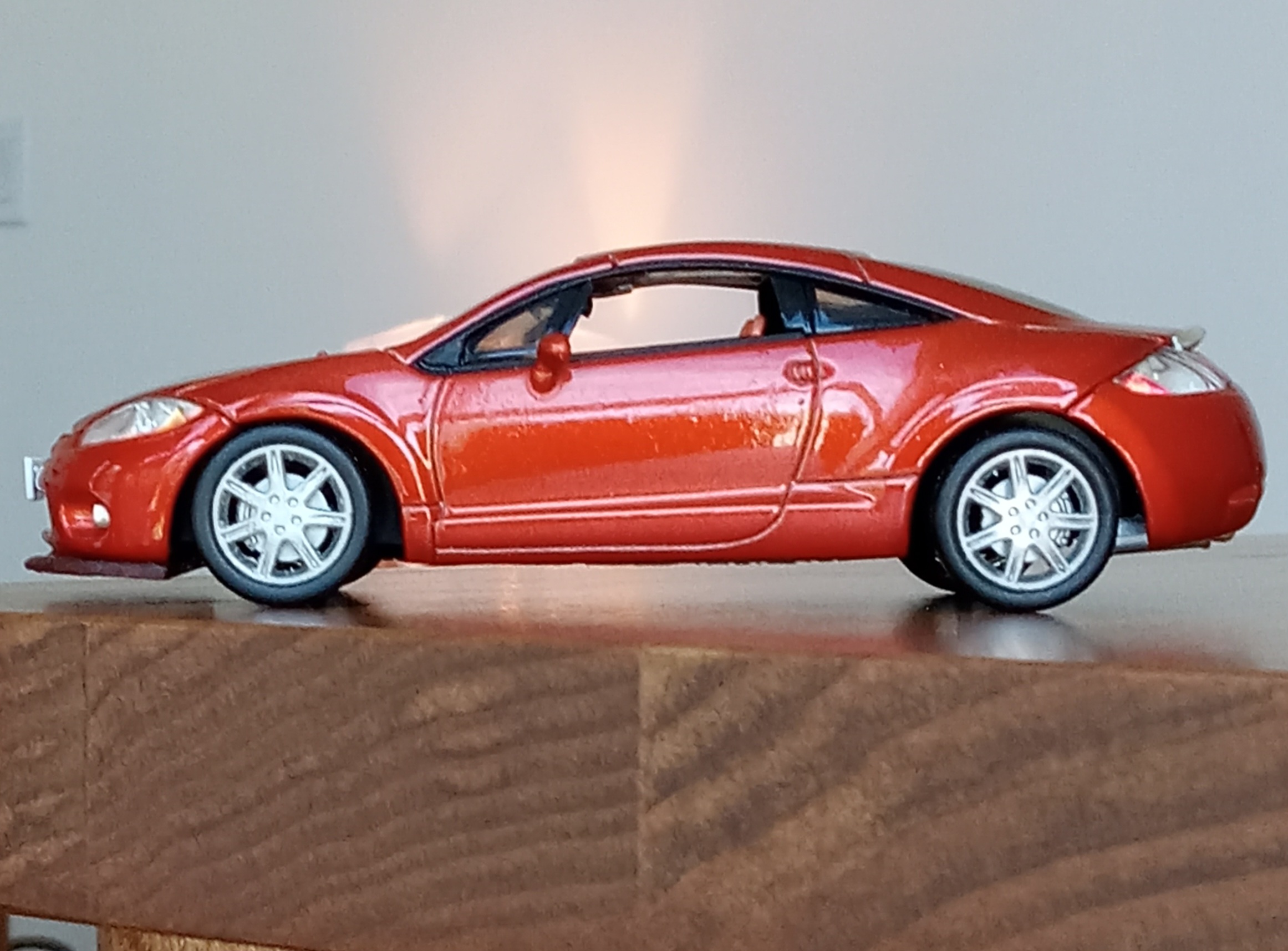
(Miniature car used for photography: NOREV, 1/43 scale die-cast model, Mitsubishi 4th-generation Eclipse, 2006 (Sunset Orange) —— Modifications: Disassembled the upper and lower sections; fine-tuned the axle and tires to a slightly forward-leaning angle; scratch-built the front spoiler using plastic sheet)
Favorite Car Designs: Part 47—The Lineage of 2-Door Coupes: Part 27 [Japanese Cars: Mitsubishi Edition] Mitsubishi 4th-Generation Eclipse [North American Spec], 2006 (Sunset Orange) “The Birth of a Japanese ‘New Age Muscle’?” Mitsubishi Eclipse [4th Gen.] 2006 “New Age Muscle”
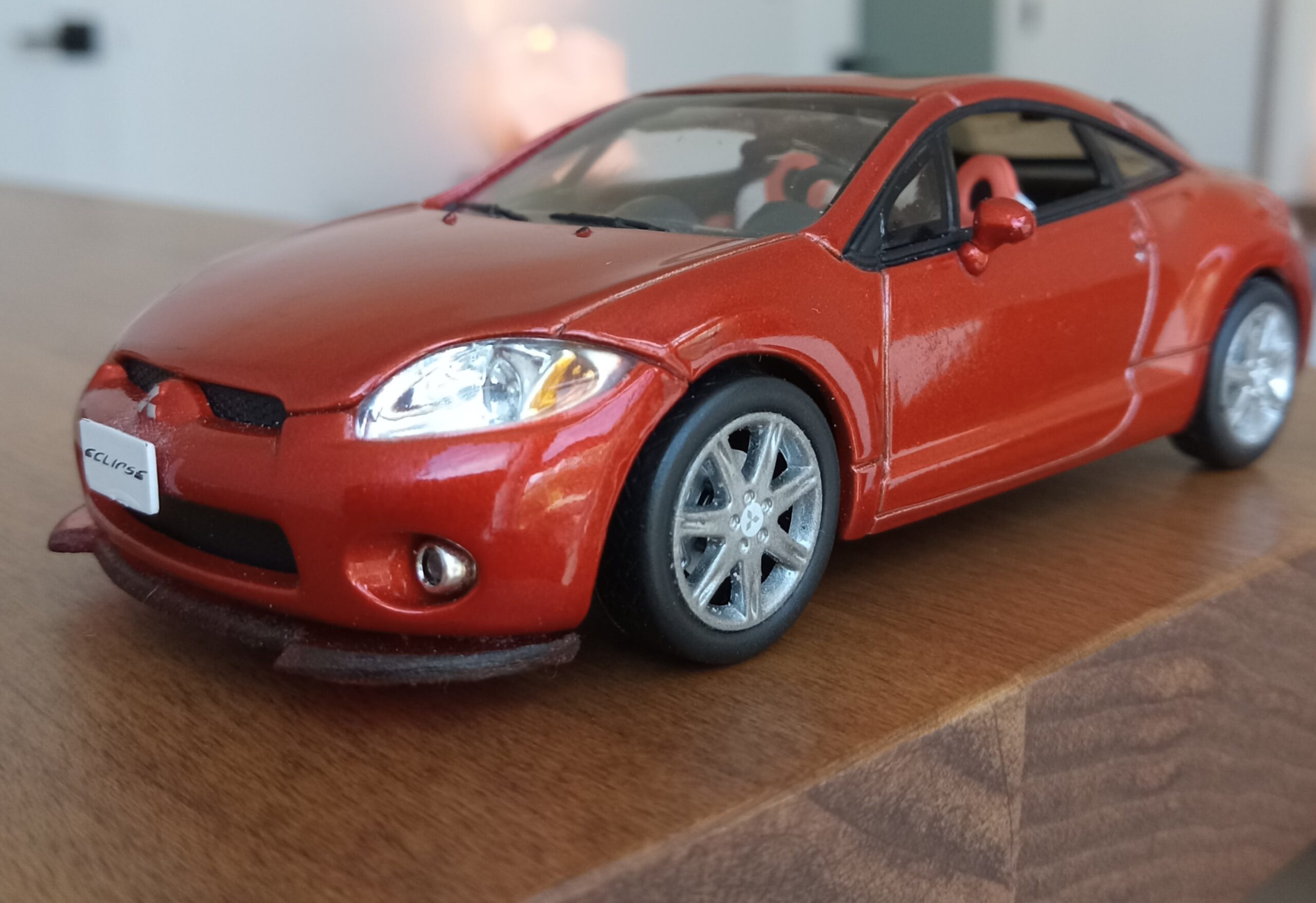
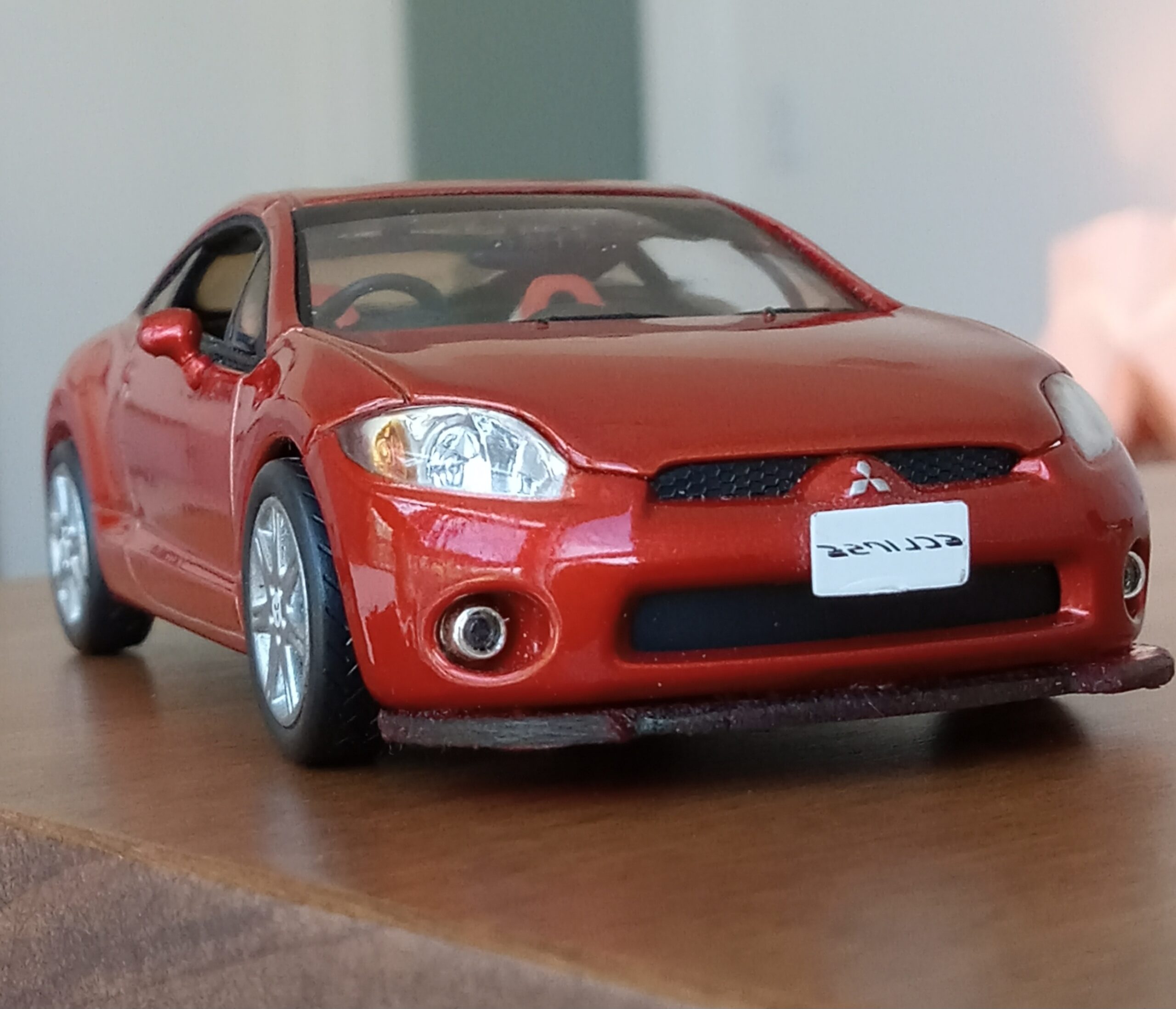
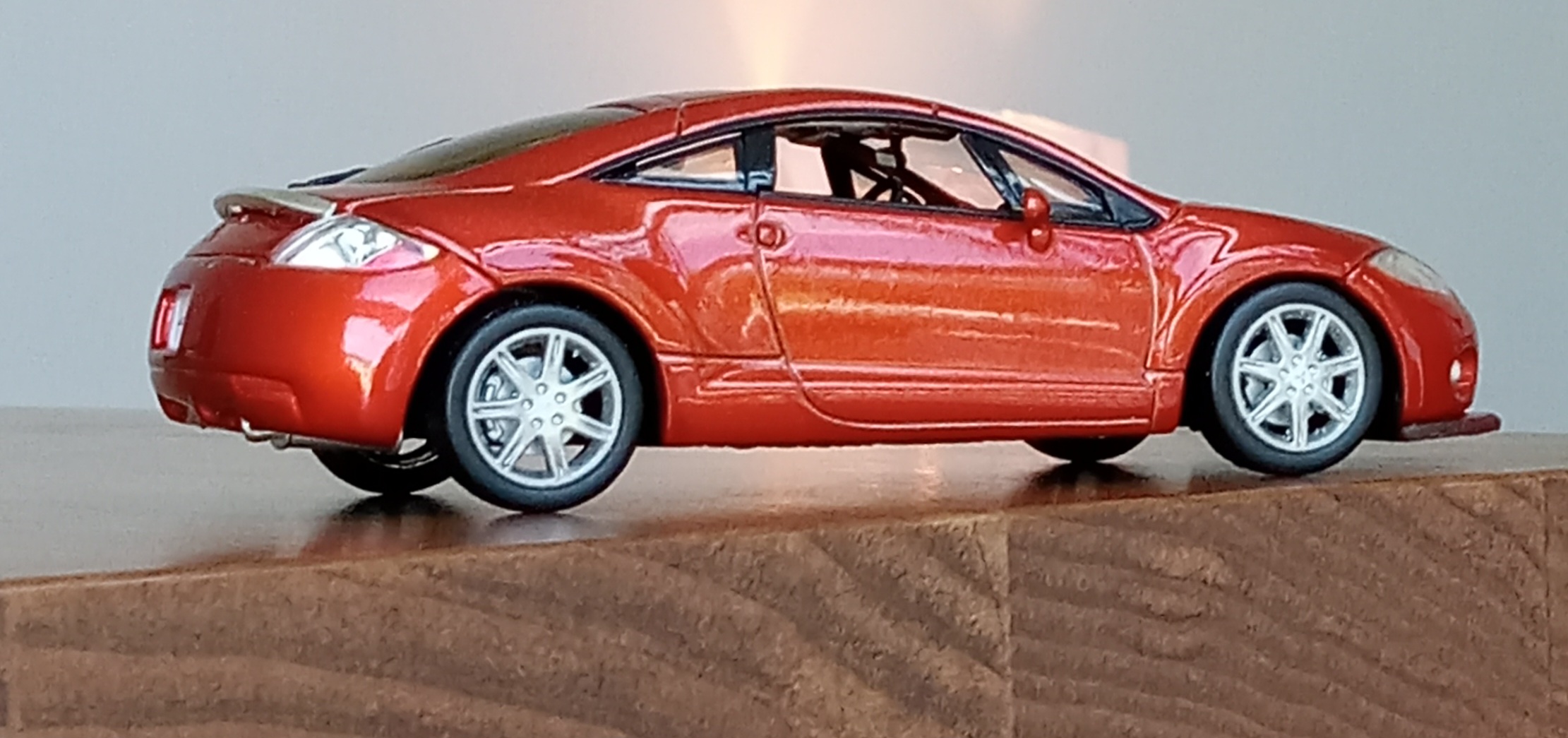
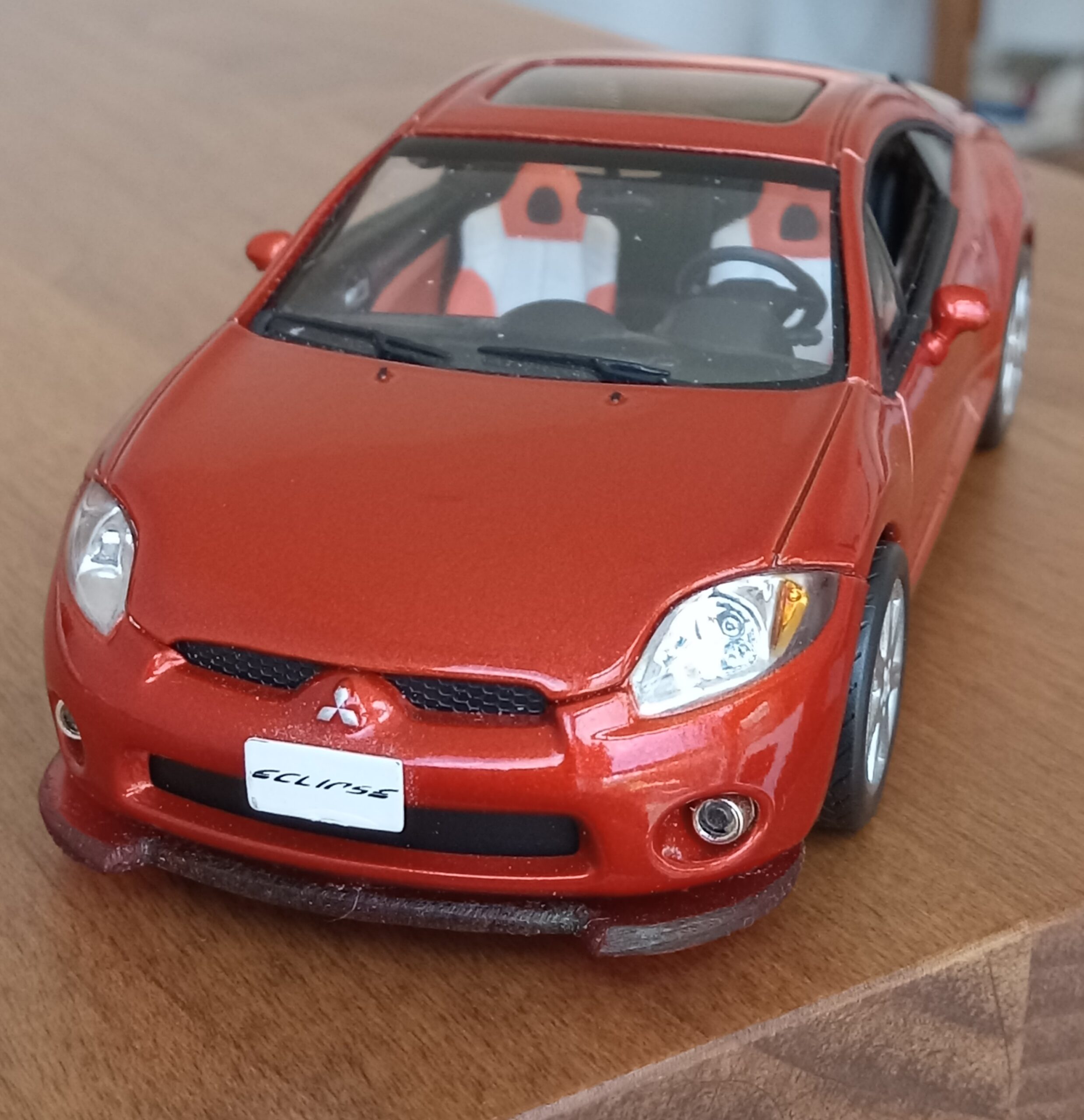
#Favorite Car Designs—The Lineage of 2-Door Coupes:
For this 47th installment, titled “The Lineage of 2-Door Coupes, Part 27,” I’d like to discuss luxury 2-door (GT) coupes and roadsters, which strongly reflect the national character and unique exterior design styles of various countries. [Note: Includes convertibles]
We’ll proceed as follows.
For this 27th installment, we’ll finally move on to
[Japanese Cars: Mitsubishi Edition],
featuring the
Mitsubishi 4th-generation Eclipse [North American Spec] (Metallic Orange),
released in 2006.
[The Lineage of 2-Door Coupes: Table of Contents]
[American Cars]
Episode 1: Cadillac El Mirage, 2013 (Metallic Red)
Episode 2: Lincoln Continental MK4, 1972 (Black)
Episode 3: Mercury Cougar, 1967 (LT Metallic Green)
[German Cars]
Part 4: MB 500K Special Roadster, 1936 (Black)
Part 5: MB 300SL Roadster, 1957 (Silver)
Part 6: MB SLS AMR Gullwing, 2010 (Black)
[British Cars]
Part 7: McLaren F1, 1992 (Metallic Orange)
Part 8: Jaguar XKSS Roadster, 1957 (Royal Blue)
Part 9: Jaguar XKR Coupe, 1996 (Dark Metallic Green)
[Japanese Cars / Nissan Edition]
Episode 10: Nissan First-Generation Silvia, 1965 (Champagne Gold)
Episode 11: Nissan Fifth-Generation Silvia, 1988 (LT Metallic Green)
[Italian Cars Edition]
Episode 12: Ferrari 250TR Pontoon Fender, 1958 (Red)
Episode 13: Ferrari 250 GTO, 1962 (Italian Red)
Episode 14: Lamborghini Concept S, 2005 (Pearl White)
[Japanese Cars: Mazda Edition]
Episode 15: Mazda Cosmo Sport, 1968 (Racing White)
Episode 16: Mazda Eunos Cosmo, Type-S (2-ton: Black & Gray)
[French Cars]
Episode 17: Bugatti Type 59, 1935 (French Blue)
Episode 18: Citroën SM, 1970 (Champagne Gold)
Episode 19: Bugatti La Voiture Noire, 2019 (Black)
[Japanese Cars: Toyota Edition]
Episode 20: Toyota/Yamaha 2000GT, 1967 (Ivory White)
Episode 21: Toyota 2nd-Generation Soarer, 1986 (Crystal White II)
Episode 22: Lexus LC500 [GWZ100], 2017 (Manual Transmission, Red)
[American Cars Part 2]
Episode 23: Dodge Challenger, 1970 & Plymouth Barracuda, 1971
Episode 24: Dodge Viper SRT-10 ACR, 2008 (Black)
Episode 25: Ford Shelby GR-1 Concept, 2004 (Chrome)
[Japanese Cars: Mitsubishi Edition]
Episode 26: Mitsubishi Galant λ, 1976 (Brown Metallic)
Episode 27: Mitsubishi Eclipse [North American Spec], 2006 (Orange Metallic)
[German Cars Part 2]
Episode 28: BMW M635CSi, 1984 (Dark Metallic Blue)
Episode 29: Mercedes-Benz 560SEC AMG 6.0 Widebody, 1989 (Black)
Episode 30: BMW M2 with Genuine Performance Parts, 2025 (Neon Lime)
Episode 31: First-Generation Audi TT, 1998 (Lake Silver Metallic)
[Japanese Cars: Subaru Edition]
Episode 32: Subaru Crosstrek XV, 2012 (Lime Green Metallic)
[British Cars Part 2]
Episode 33: Lotus First-Generation Elite, 1959 (British Green)
Episode 34: Lotus Elan S4 Sprint (2-Tone: Blue, White & Gold)
Episode 35: Jaguar E-Type Roadster (Light Blue Metallic)
[Japanese Cars: Honda (Lightweight Sports Cars)]
Episode 36: Honda S800, 1966 (Red)
Episode 37: Honda First-Generation CR-X 1.5i, 1983 (Blue & Silver Two-Tone)
Episode 38: Honda Beat, 1991 (Samba Yellow)
[Japanese Cars: Toyota Part 2]
Episode 39: Toyota Corona Hardtop 1800GT-TR, 1982 (Red)
Episode 40: Toyota GR Supra [DB Series, A90/A91] (Silver)
Episode 41: Toyota GR GT, 2027 [Planned] (Gunmetal)
[American Cars Part 3: Special Edition]: The Corvette Lineage
Episode 1: 1967 Stingray [C2] Convertible (Hardtop, Metallic Blue)
Episode 2: 1972 Corvette [C3] Convertible (Metallic Blue)
Episode 3: 1984 Corvette Coupe [C4] (Bright Red)
Part 4: Corvette Indy [Mid-Ship Prototype] (Silver)
Part 5: Stingray Concept [Prototype], 2009 (Metallic Blue)
#Mitsubishi x Chrysler ≈ The Birth of the New Muscle Car
@“The Birth of the Cab-Forward Muscle Car!!”
Back then [in the early 2000s],
the trend in the world of automotive design
was being driven quite powerfully by the Chrysler-Mitsubishi alliance.
The concept’s key features were ≈
* A powerful engine mounted on a front-wheel-drive (FF) chassis,
* “Cab-forward” body proportions,
* Resulting in maximized interior space!
n
“Cab-forward” refers to
a automotive design approach in which the vehicle’s passenger compartment (cabin) is positioned far forward, resulting in a short nose (hood) and a slim rear end. It became famous in the 1990s when Chrysler in the U.S. widely adopted it for sedans, but it is essentially a rational style that originated from the layout of mid-engine sports cars and the pursuit of aerodynamic efficiency.
n
n
n
n
n
n
N
N
N
n
n
n
n
N
N
N
n
n
n
Key Features and Benefits
n
* Spacious interior: By positioning the tires closer to the four corners and moving the cabin forward, the design ensures ample legroom and passenger space relative to the vehicle’s overall size.
* Excellent aerodynamic performance: The steep angle of the windshield (A-pillar) and the smooth flow of air from the nose to the roof reduce air resistance.
* Visual Characteristics: The silhouette resembles a “one-motion” design—a single, continuous, smooth curve—with the center of gravity positioned toward the front.
n
n
This equation was
masterfully applied to a
four-passenger, two-door coupe:
the “4th-generation Mitsubishi Eclipse,”
unveiled in 2006.
The “cab-forward proportions” embodied by this car—
applying them to 4-door and 2-door sports sedans and coupes—was the central challenge I sought to solve during my student days.
Because of this,
every time I see this car,
I’m overcome with the feeling that
we’ve brought our design language to life!
This time,
I’d like to take a deeper look at the
[New Age Muscle Car],
which masterfully capitalized on
the trend that deviated the most from the traditional FR mid-ship proportions in automotive history.
I’ll be proceeding
along these lines.
* Real-Car Analysis: A Miracle of Japan-U.S. Collaboration?
* Exterior Design Features: Cab-Forward Muscle
* “Me” and the 4th-Generation Eclipse:
* Three-Theme Story: Sense of Solidity, “Cab-Forward,” Audi TT
* Other Masterpieces of the “Cab-Forward” Design…
* Real Car Review: A Miracle of Japan-U.S. Collaboration?
The Mitsubishi 4th-generation Eclipse (North American spec) is,
n
n
a specialty coupe announced in 2005 exclusively for the North American market. Like its predecessors, it was produced in the U.S. (by Sigma) and marketed as an affordable sports model for young North Americans, featuring a sleek roofline and a powerful V6 engine.
n
n
n
n
n
nNn
n
n
n
n
n
n
nNn
n
n
n
n
n
n
n
n
n
nNn
n
n
n
n
n
n
n
N
n
n
n
n
n
n
n
n
n
N
n
n
n
n
n
n
n
n
Design Features:
n
* Glamorous “Cabin Rocket” Shape:
Continuing the lineage of the “Eclipse Concept-E”—a pre-production prototype conceived prior to the announcement of the fourth-generation Eclipse—this model features a sweeping roofline and muscular fender design (reminiscent of the first and second generations).
* Evolution of the Front End:
Early models adopted the “Bouley-style” front end—a hallmark of Mitsubishi’s identity at the time, featuring a central shark nose—but models from 2009 onward were updated with a cleaner, horizontally oriented grille.
* Interior:
The interior features a rounded dashboard that envelops the driver, distinctive dual gauges, and an optional Rockford Fosgate (Rockford Fosgate) audio system—all contribute to a glamorous interior tailored to the American market.
n
n
“Eclipse Concept-E, 2004”
The “Eclipse Concept-E” was a concept car unveiled at the 2004 North American International Auto Show (Detroit Auto Show) as a design study and preview of the next-generation model, preceding the launch of the fourth-generation Mitsubishi Eclipse.
n
n
n
N
n
n
n
The key figures who led the design development of this concept car and its innovative design features are as follows.
n
n
Designers and Project Leaders:
n
* Mike Desmond
A member of the Mitsubishi Motors North America Development Center (MRDA), he was the lead designer responsible for the actual exterior design of the “Eclipse Concept-E.”
n
* Olivier Boulay
At the time, he served as Managing Executive Officer and Head of the Design Division at Mitsubishi Motors. He oversaw the entire project and advocated for a design logic rooted in traditional Japanese aesthetics—one that “harmonizes elements that appear simple at first glance but are actually extremely complex”—which was embodied in the Concept E.
Design Features of the Exterior:
n
Mike Desmond and his team aimed to fuse the cutting-edge technology of a hybrid sports coupe with the heritage of previous Eclipse models.
n
Design Elements Features and Intent
Fighter jet-inspired front fascia By incorporating Mitsubishi’s new corporate identity at the time—centered on the Three Diamonds (the so-called “Boulay face”)—and using a front grille integrated with a spoiler, they created an aggressive look reminiscent of a “jet fighter.”
Teardrop-shaped side windows A design featuring beautiful curves resembling “raindrops” was adopted from the side windows to the rear. This also serves as a tribute to the “second-generation Eclipse,” which was particularly popular among Eclipse models for its design.
Proportions that seem to be targeting its prey The long wheelbase, short overhangs, and “cab-forward” layout—with the cabin positioned toward the front—create a dynamic silhouette that looks as if it’s about to pounce.
Side exhausts fused with function As a point of pride mentioned by designer Desmond himself, elliptical exhaust ports are positioned on the sides. This is a functional beauty born out of necessity—it was required to accommodate the hybrid drive battery, which is located under the floor in the center of the vehicle.
The trick of the door cutline By slanting the front edge of the door to the absolute limit, the design visually emphasizes the powerful presence of the front fenders. To enable this opening and closing mechanism, a special hidden hinge and a trap door (flap) that opens in tandem with the door.
n
n
Interior Design Features:
As Olivier Boulay explained, “combining light and shadow, the rigidity of straight lines with the softness of curves,” an advanced yet relaxing cockpit has been created.
n
* “Wave Line” Design Theme:
Smooth, undulating lines were adopted across the dashboard and door trim, creating a floating structure that makes the instrument panel itself appear as if it were suspended in midair.
* Multi-Layer Digital Gauges:
Equipped with a 3D multi-layer display (MLD) technology, creating a futuristic cockpit where instruments, diagnostic information, and interactive data appear to float in three-dimensional graphics.
* Harmonized teardrop-shaped motif:
Matching the shape of the exterior side windows and door mirrors, the “teardrop” design motif is repeated on the interior door panels, creating a unified design language between the interior and exterior.
* Side-hinged rear hatch:
To increase rear-seat headroom by approximately 5 cm (2 inches), a unique design was implemented in which the hatchback hinges are deliberately positioned on the “side” rather than at the rear edge of the roof.
n
Summary: Impact on the Production Model (4th-Generation Eclipse):
n
The “richly curved fender design” and “teardrop-shaped cabin graphics” and “sculptural design around the rear taillights” presented in this Concept E were brilliantly carried over to the production model (4th-generation Eclipse) launched in North America in 2005. Although complex elements typical of concept cars—such as the door hinges—were simplified, the framework of the “muscular yet somehow humorous and beautiful coupe style” envisioned by Mike Desmond and his team has become the defining characteristic of the 4th-generation Eclipse.
n
n
n
Features and Mechanisms:
* Platform and Powertrain:
Based on the PS platform—shared with models of the time such as the “Galant” and “Delica D:5”—it adopted a front-wheel-drive (FF) layout.
* Engine Specifications:
GS: 2.4L inline-4 engine (Type 4G69, approx. 162 hp)
GT: Equipped with a 3.8L V6 engine (6G75, approx. 263 hp), delivering powerful acceleration.
* Spider (Convertible): In 2007, the open-air “Spider” model, featuring an electric soft top, was added and became popular in North America.
n
n n
n
n
n
n
n
n
n
n
n
#Three-view photos:
#Key Specifications:
Engine Type: 6G75
Total Displacement: V6 SOHC MIVEC
Maximum Power: 265–267 PS / 5,750 rpm
Maximum Torque: 36.0 kgfm / 4,500 rpm
Drivetrain: FF (front-engine, front-wheel drive)
Seating Capacity: 4 passengers
Body Style: 2-door (4-passenger) coupe
Wheelbase: 2,575 mm
Overall Length: 4,565 mm
Overall Width: 1,835 mm
Overall Height: 1,360–1,390 mm
Weight: 1,534–1,543 kg (3,382–3,400 lbs)
* Exterior Design Features: “Cab-Forward Muscle”
While writing this article,
as part of the [Curiosity Report] series on this blog,
I wrote an article about the [Kaname-style] factors in automotive exterior design:
* A broad chest and
* A teardrop shape,
* Aesthetic balance → “The Car as a Dynamic Three-Dimensional Object”
I wrote an article based on these insights.
<https://yisell7777.com/archives/16768>
That insight struck me while I was taking photos of the “3rd-generation Eclipse”
for this article.
#Mitsubishi 4th-Generation Eclipse:
The Secret Behind “Cab-Forward” + the “Pigeon Chest”?
(1st-Generation Eclipse, 1989)
(2nd-Generation Dodge Intrepid, 1998)
(4th-Generation Eclipse, 1999)
The “cab-forward strategy”—a design trend spearheaded by Chrysler, Mitsubishi’s partner at the time—combined with Mitsubishi’s design language of the era (à la Olivier Boulay?) to give birth to a magnificent new-era muscle car.
Now then,
let’s focus on the following five design features
and take a closer look.
1: The power of this new-age muscle car design, which emerged by integrating the “cab-forward” trend—led by the Audi TT, the trendsetter of its time—with the “Cab-Forward Strategy”
ーーーー>Even if you ignore the fine details, the “skeleton and muscle” alone are enough to make you eat three bowls of rice!! (lol)
2: The beautiful, elegant trajectory drawn by the roofline—almost a single, continuous stroke—the thick chest section, and the teardrop-shaped rear half of the body that rises toward the back—> The sense of solidity and directionality of the entire body is simply staggering.
3: The dynamic momentum—flowing from the front spoiler, down along the bottom of the doors, up over the rear fenders, and finally culminating in a ducktail-style rear spoiler—combined with the subtle artistry of the three-dimensional graphics
4: The rear fascia’s richly sculpted form, which feels like an Audi TT with two extra doses of character
5: An outstanding stance derived from the long wheelbase and wide track—> It doesn’t make you feel the limitations of a front-wheel-drive chassis at all!
Weaknesses:
# The front fascia design isn’t quite distinct enough, making it hard to fully grasp this car’s character.
Now then,
let’s take a look at each point one by one!
1: The power of this new-age muscle design, which emerged by integrating the trends set by the Audi TT—a pioneer of its era—and the cab-forward style
(You can really feel the effort and determination behind creating a new definition for sports cars to replace the “long hood, short deck” FR proportions that had been the mainstream up until then.)
ーーーー>Even if you ignore the fine details, the “skeleton and musculature” alone are enough to make you eat three bowls of rice!! (lol)
2: The roofline, drawn in a single stroke that’s almost a single motion, and the beautiful, elegant trajectory traced by the thick chest section and the teardrop-shaped rear half of the body that rises toward the back
――> The sense of solidity and directionality of the entire body is incredible.
3: The dynamic momentum—flowing from the front spoiler, down along the bottom of the doors, up over the rear fenders, and finally culminating in a ducktail-style rear spoiler—combined with the subtle artistry of the three-dimensional graphics
4: The rear fascia’s sculpted form, brimming with dynamic contours, feels like an Audi TT with two extra doses of character
5: An outstanding stance derived from the long wheelbase and wide track
——> It doesn’t feel like it’s hampered by its front-wheel-drive chassis!
Weaknesses:
# The front fascia design lacks clarity, making it hard to fully grasp the car’s character.
*“Me” and the 4th-generation Eclipse:
#Simply put, it’s a “powerful” design…
During this photo shoot,
*Compared to the fisheye-like angle from close-up shots,
*the long shots taken from quite a distance
were far more captivating, which caught my attention,
and when I looked into it more closely, I was surprised!
Perhaps due to the height at the base of the A-pillar window,
*the thickness of the hood—which has a significant presence despite being a front-wheel-drive car—plus
* the momentum of the rear section, which starts from that thick “chest” and trails off in a teardrop shape—>
These two points
made me realize they are the “core” of the design for me,
and I was able to feature it as an article in my 【Curiosity Report】!!
<https://yisell7777.com/archives/16768>
* Manufactured by NOREV, 1/43 scale die-cast ready-to-display model, 4th-generation Eclipse, 2009 (Metallic Orange)
(This is a model of an extremely rare car model—and a masterpiece from a French manufacturer, no less. I believe it’s an official NOREV product that likely repurposed molds used in Japan’s “Famous Cars” series, but I’m truly delighted to see it brought to life in 3D. ——> I cut out the front chin spoiler from plastic sheet and added it.)
Now, it’s finally
time for the “Three-Theme Story”!
*Three-Theme Story: Solid Presence · “Cab-Forward” · Audi TT
This time’s themes
ended up being three relatively “orthodox” cars…
I’ll be collaborating with
【Gemini-kun】
to tackle this project.
n
“A Clump of Rebellious Spirit”
n
N
〇…Well, please bear with me for a moment. Traditions and conventions are indeed very important in this world and should be cherished, but sometimes that “spirit of rebellion”—the refusal to settle for the status quo and the bold attempt to break down entrenched barriers—becomes the driving force behind creating a new era. The same goes for the automotive world, and today I’d like to share a little story about the essence of a car’s structure and appearance—the “mechanics” and “exterior design.”
m
m
●…Oh my, isn’t that Mr. Bear? What have you been doing, walking with your head down, staring intently at some car blueprints or photos with such a serious look on your face? You almost fell into the gutter.
n
〇…Ah, Old Man. Well, I was looking at a photo of this American-born sports car called the “4th-generation Mitsubishi Eclipse,” and it’s just so mysterious—the design radiates such incredible energy. The more I look at it, the more I feel a warmth welling up deep inside my chest.
n
●…Oh, the Eclipse, huh? You’ve hit on another niche topic there. When you say “fourth generation,” you’re referring to that muscular, beefy coupe that came out in the mid-2000s, essentially as a North American exclusive. In Japan, you only ever see it through parallel imports—it’s a true cult classic known only to connoisseurs, isn’t it?
n
〇…That’s exactly it! You really know your stuff. Usually, when people talk about “classy sports cars,” there’s that so-called “golden ratio” that everyone pictures, right? It’s what’s known as the “FR (rear-wheel-drive) long-nose, short-deck proportions.” The hood (nose) stretches out long, the driver’s seat is set toward the rear, and the rear end is nice and short. The engine is mounted longitudinally to drive the rear wheels. This is the “absolute truth” of the automotive world, and the 8-head-height body that results from it has long been considered the traditional standard of beauty.
n
●…That’s right. All the noble European sports cars are built on that framework. Back then, cars like the Mercedes-Benz SL and the Aston Martin DB series were masterpieces that perfectly encapsulated that refined beauty in a modern, rounded form—designers around the world revered them as “the ultimate proportions.” It’s a radiant, undisputed classic, like the sun itself.
n
〇…Wow, everyone was bowing down to that “sun” and trying to make cars that all looked the same. But, Retired Guy, it was the designers at Mitsubishi who flat-out said “no” to that. Now that’s a dynamic spirit of defiance! Mitsubishi deliberately chose to base the car on a front-wheel-drive (FF) sedan platform (the PS platform) rather than the traditional rear-wheel-drive (FR) layout. With FF, the engine, gearbox, and everything else are all packed in side-by-side up front, you see. So, structurally, the front inevitably gets heavier, and there’s no need to make the nose look unnecessarily long.
n
●…I see. Normally, a layout like that would be seen as a disadvantage—“it doesn’t have the sports car-like chassis of a FR”—so how did they pull it off?
n
〇…That’s the point! Retired Guy. The designers pulled off a masterstroke called “Cab Forward,” which could be called a declaration of war against tradition.
n
●…Cab Forward. So, it’s a chassis layout where the passenger compartment (cabin) is positioned way up front.
n
〇…That’s right. They made the windshield slope extremely flat and extended it nearly all the way to the front of the front wheels. Then they moved the apex of the roof way forward. From the perspective of classic sports car design theory, this is a major “rebellion” and a complete departure from convention. But you know, when you actually visualize this in three dimensions, a dynamic, wedge-shaped line runs from the front wheels toward the rear fenders, shooting upward in one swift motion. It creates a sense of dynamism, like a sprinter in a crouching start who has tensed their muscles to the absolute limit, poised to pounce on their prey at any moment.
n
●…I see. So you decisively gave up on pursuing the classic elegance of FR and instead boldly amplified the characteristics of the FF layout to create an entirely new set of proportions.
n
〇…Exactly! What’s more, the exterior isn’t just sharp—the overall “sense of mass” is off the charts. The front, rear, and side fenders are plump to the point of excess, swelling out like living creatures. It looks a bit like a teardrop, yet also like a mass of taut muscles—so taut that if you touched it, it would push right back.
n
●…Rather than hiding the mechanical constraints, they condensed them within that mass and elevated them into a unique aesthetic. In contrast to the “light of tradition” symbolized by the refined Mercedes-Benz SL, this was Mitsubishi’s defiance—a true embodiment of their rebellious spirit.
n
〇…Yes. I hear stubborn critics used to say, “If it doesn’t adhere to the golden ratio of rear-wheel drive, it’s not a sports car,” but Mitsubishi silenced those voices with its overwhelming presence and cutting-edge sense of mass. It truly leaped beyond the confines of tradition to forge its own path. The pride and passion of the Mitsubishi designers who achieved this “innovation of tradition” never fail to captivate me, no matter how many times I look at it.
n
●…Well, listening to you talk, Mr. Kuma, I’ve actually started to picture that fourth-generation Eclipse in my mind. The image of it daring to stand up to the blinding sun called “tradition” and trying to completely overshadow it with its own massive, solid presence.
n
〇…Hehehe, that’s exactly right, Retired One. That’s precisely the emotion I felt when I saw that photo. This is the magnificent spirit of defiance, the destruction of established conventions, and the innovation that will go down in automotive history.
n
●…That’s a nice way of putting it. But Mr. Kuma, the way it completely obscures existing aesthetics—that “dazzling sun” known as the golden ratio—with its own massive form… doesn’t that make it perfectly fitting for this car’s name?
n
n
〇…Yes, you’re absolutely right.
n
“Yes. Leaping beyond the confines of tradition to forge its own path. Just like a solar eclipse, obscuring preconceived notions (the shining sun)… This is the ‘shadow’ of this car.”
n
〇…My apologies for the poor performance.
n
n
n
n
n
n
n
n
n
n
n
n
n
N
N
*Other legendary “cab-forward” cars…
When it comes to masterful “cab-forward” designs,
we simply cannot forget this car!
* Lamborghini Countach LP400, 1974 (Yellow)
(The original “cab-forward” supercar: Gandini and Stantini’s masterpiece was 40 years ahead of its time.
——> Its intense sense of solidity and arrowhead-like directionality affirm everything)
* Second-generation Toyota Prius, 2005 (LT Blue Metallic)
(The undisputed driving force behind elevating the Prius—a name that needs no introduction—to a global brand; even today, its triangular, “rice-ball”-shaped side view is enough to make your mouth water, embodying unmistakable “cab-forward” proportions!
――> This is a car I’d love to own again!)
* 4th-generation Eclipse
* Lamborghini Countach LP400
* 2nd-generation Prius
All three of these cars were
* iconic vehicles brimming with
* aesthetics,
* featuring a thick front end and
* a teardrop-shaped rear section.
Writing this article has made it
crystal clear to me just how
truly important these three cars and these three design elements are to me!!
It was a very meaningful
writing experience.
 In the next two posts,
I’d like to write about
two beautiful German coupes!
Regarding this blog and its content:
My goal in writing these blog posts is to clarify my personal, distinctive criteria for evaluation—including my somewhat unconventional perspectives—through my involvement with three-dimensional art (including cooking), and to document how I have satisfied and fulfilled my curiosity and desire to explore “beauty and deliciousness.”
Consequently, while I pay the utmost attention to the numbers, model years, and detailed data that appear in my articles, it’s possible that I may occasionally make significant errors or misunderstandings. In particular, key specifications and model years in automotive articles can often be confusing, so I would appreciate it if you treated them as general references only.
For my part, I feel as though I’m inserting dates and data into the articles as objective material to create a “flow” that connects my personal assessments of exterior design and taste to the broader themes explored in the latter half of the piece. What I ultimately prioritize are the new “perspectives” and “unexpected connections between pieces of information” that emerge from the chaotic jumble of memories in my own mind. The various data points are needed secondarily as part of that “flow” to generate that momentum.
As a slight digression, in the world of rakugo—which I love—there’s a playful format called “san-dai-banashi,” where a performer weaves a single story using three topics solicited on the spot from the audience. I feel like I’m doing something similar, using the characteristics of three-dimensional sculptures and (the taste of food) as my prompts. The countless ideas that flit through my mind during this process are completely unexpected and delightful; they often drastically change the content of future articles or lead to new developments.
How This Blog Works:
“Spots and Lines of Curiosity x Whimsical Mental Circuits = Unexpected New Developments”
This blog may be a bit self-indulgent, but I hope you’ll continue to follow along.
P.S.: To create the “flow” described above, I take as many photos as possible using my own die-cast cars and home-cooked meals. However, I do borrow the absolute minimum necessary illustrations and photos from other bloggers’ posts and company websites. (I edit them to fit the article’s content and post them at the lowest possible resolution.) If there are any issues, please contact me, and I will remove them immediately.
Addendum 2: You are free to use the photos of die-cast cars and other images (taken by me) featured in this blog’s posts in any way you like without permission. I create these posts with the understanding that my personal creativity belongs to me alone.
Translated by DeepL.com

これはCTAサンプルです。
内容を編集するか削除してください。