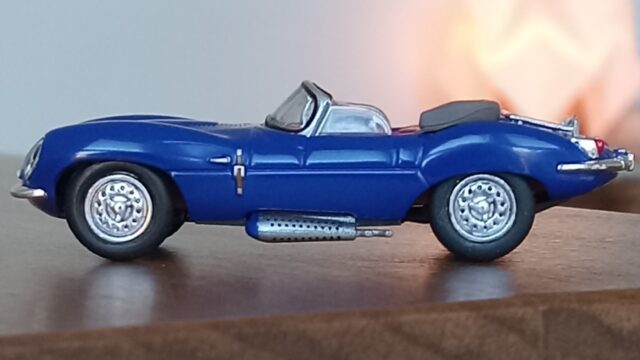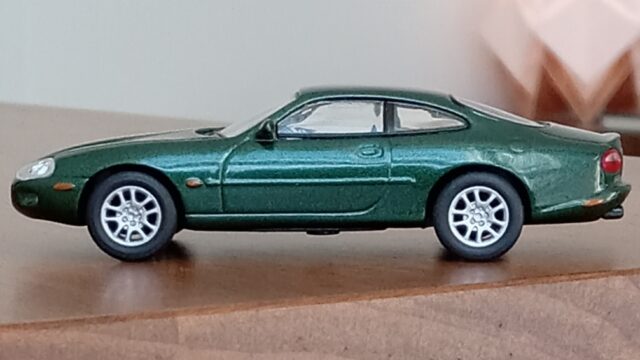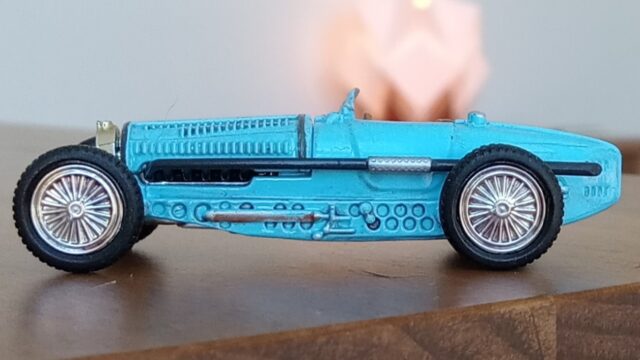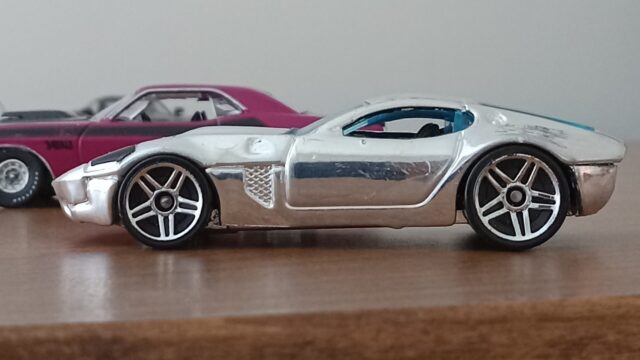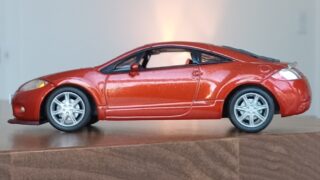
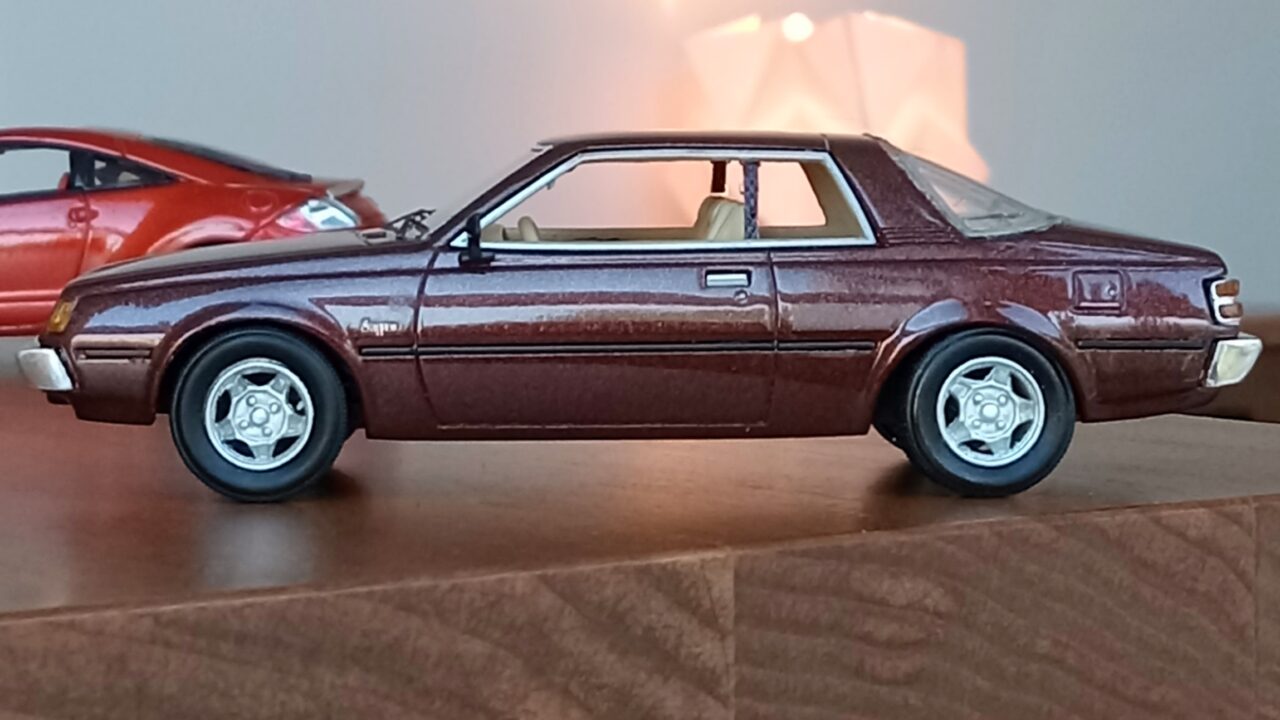
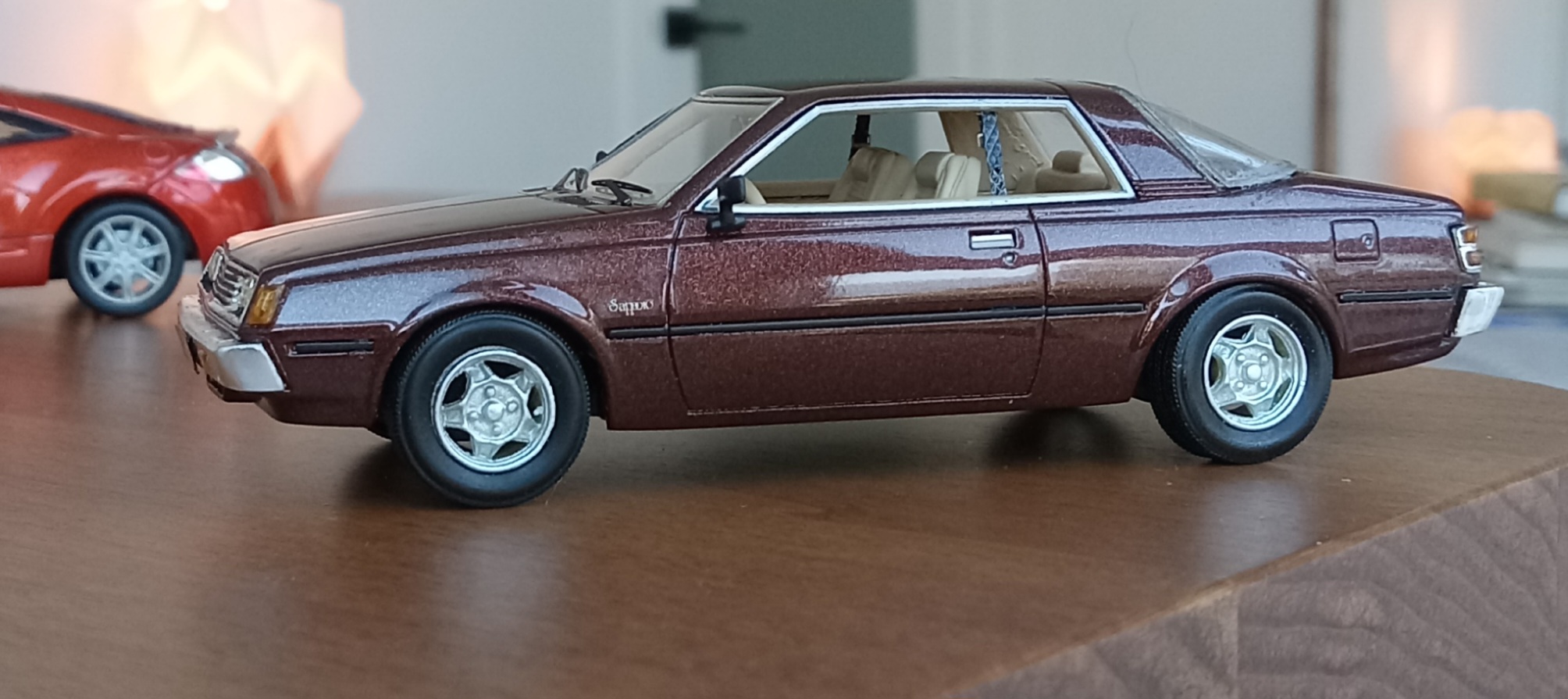
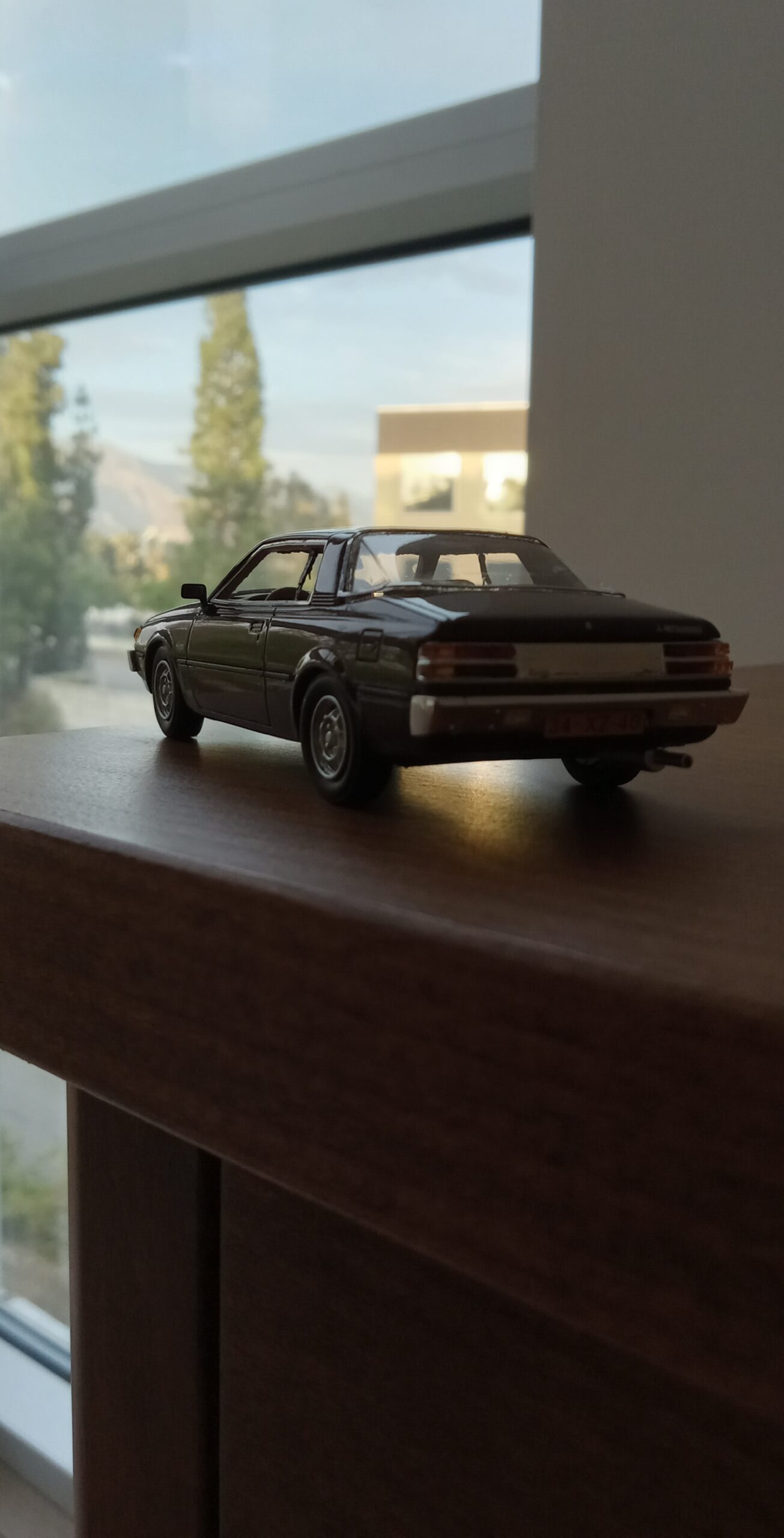
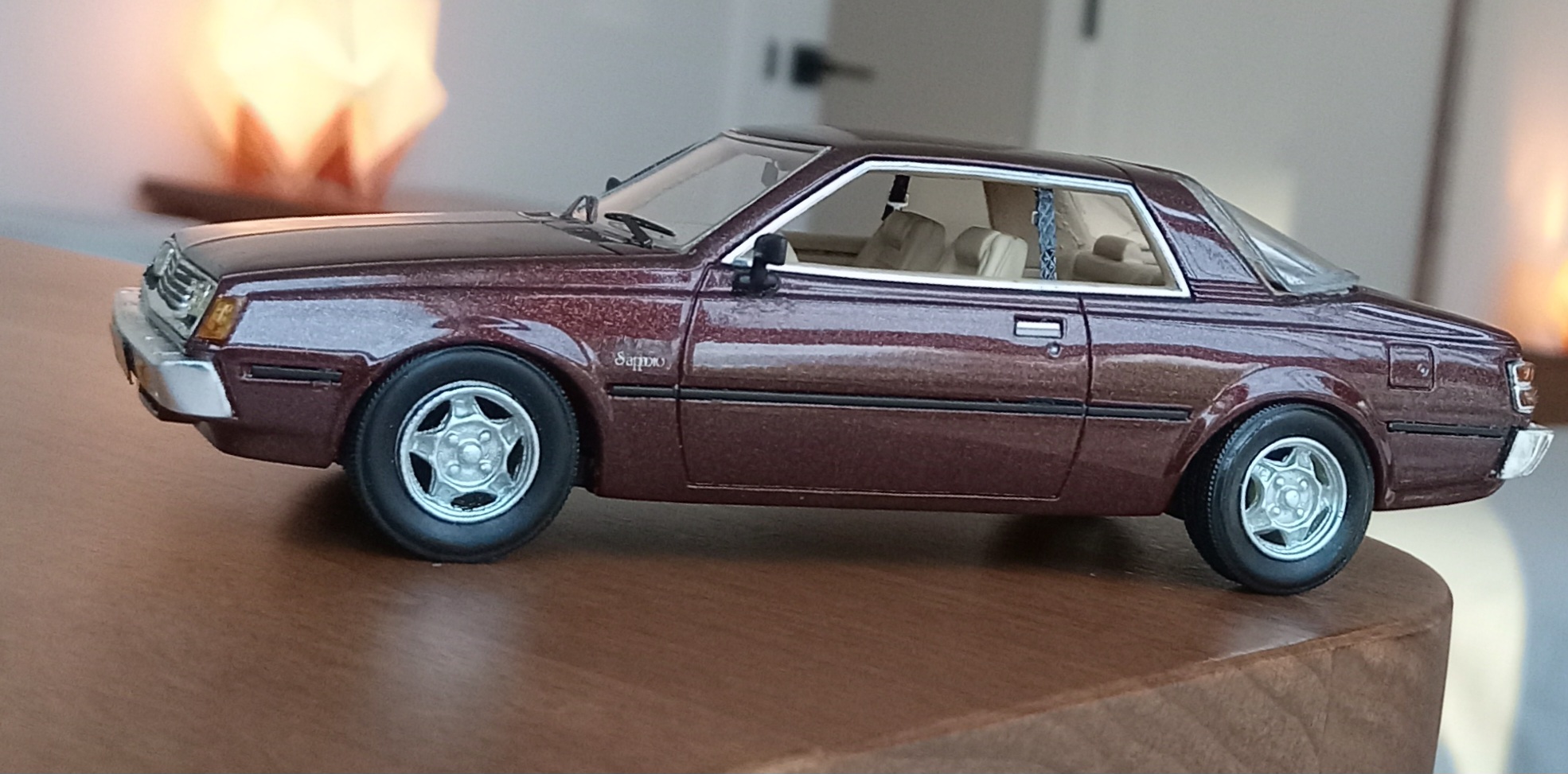
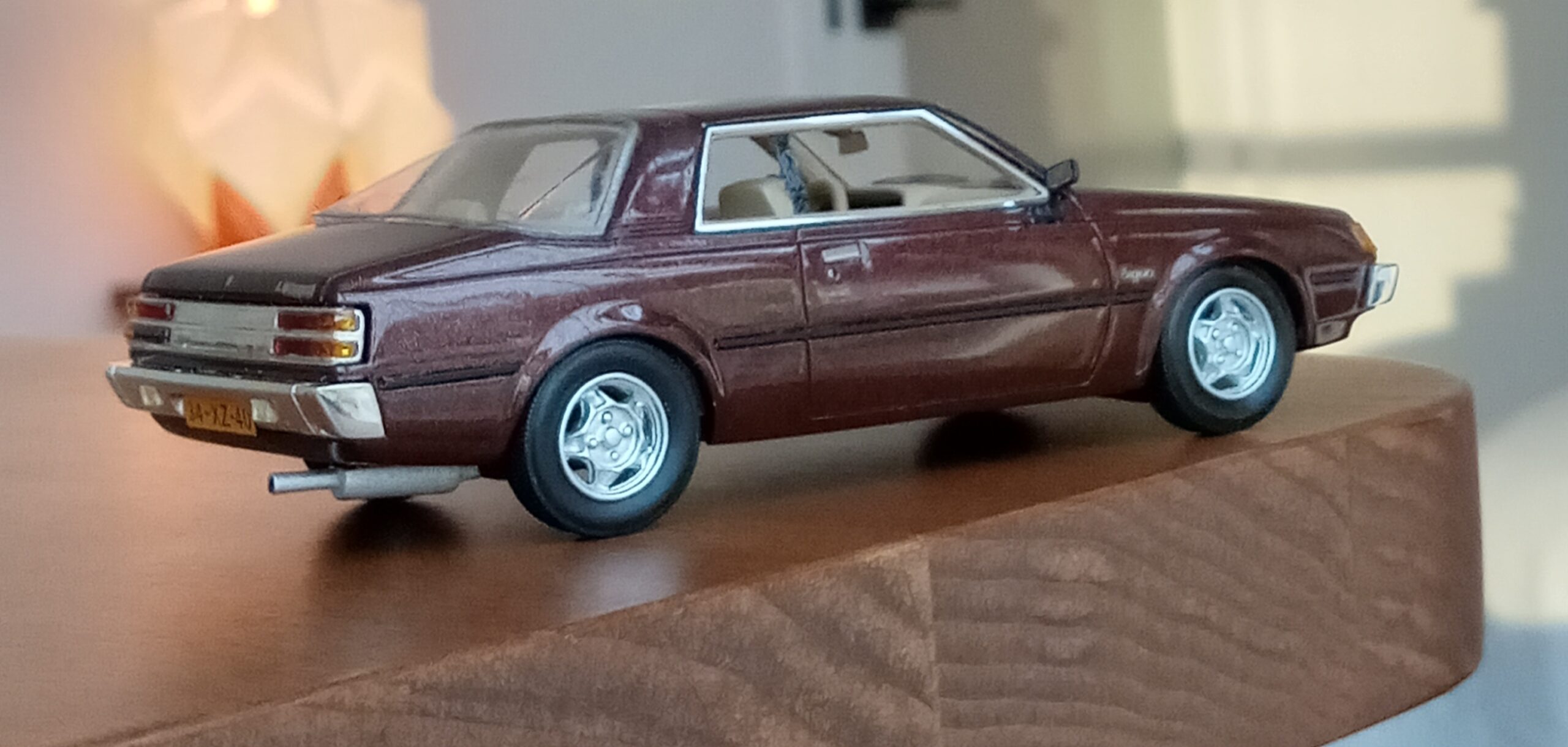
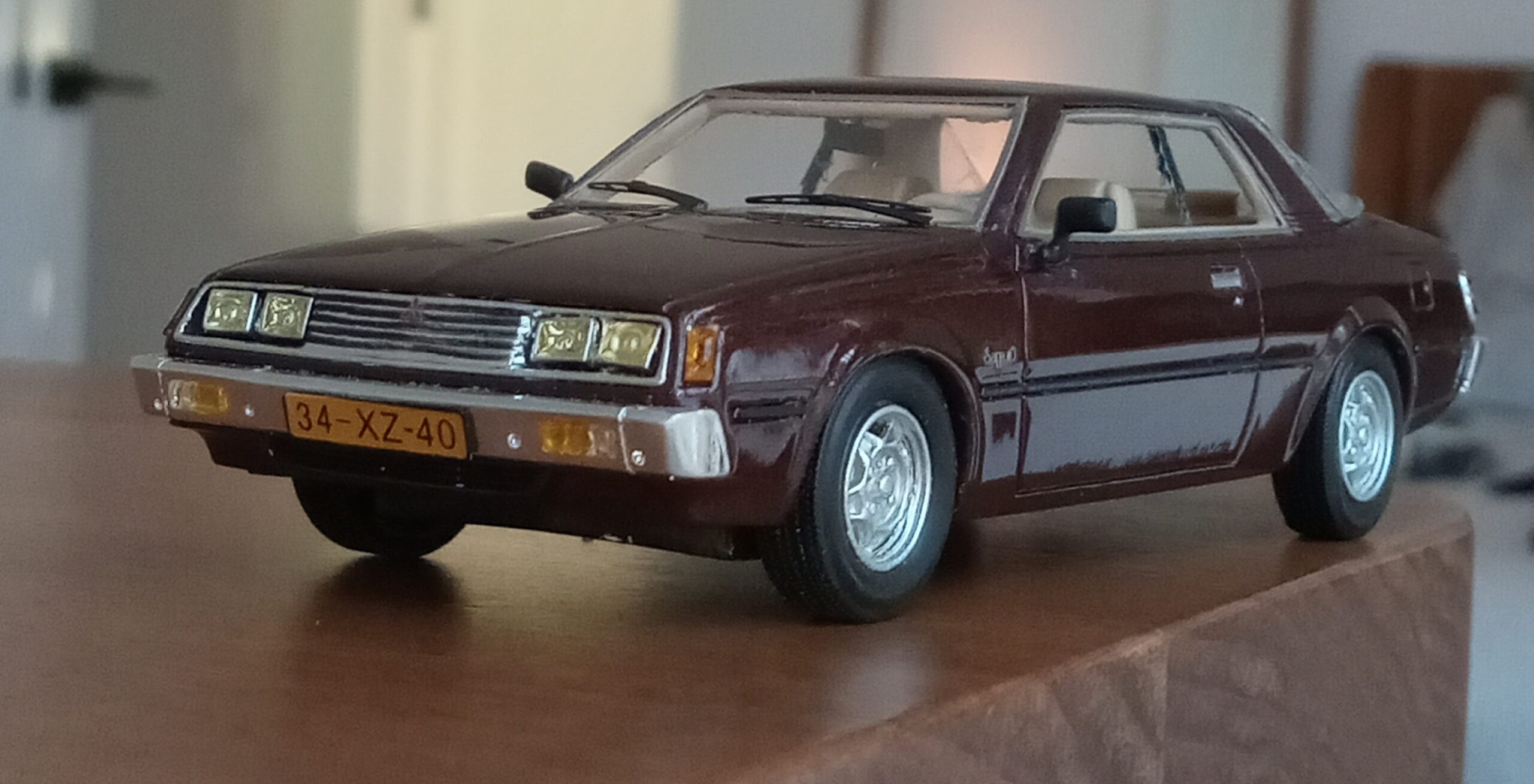
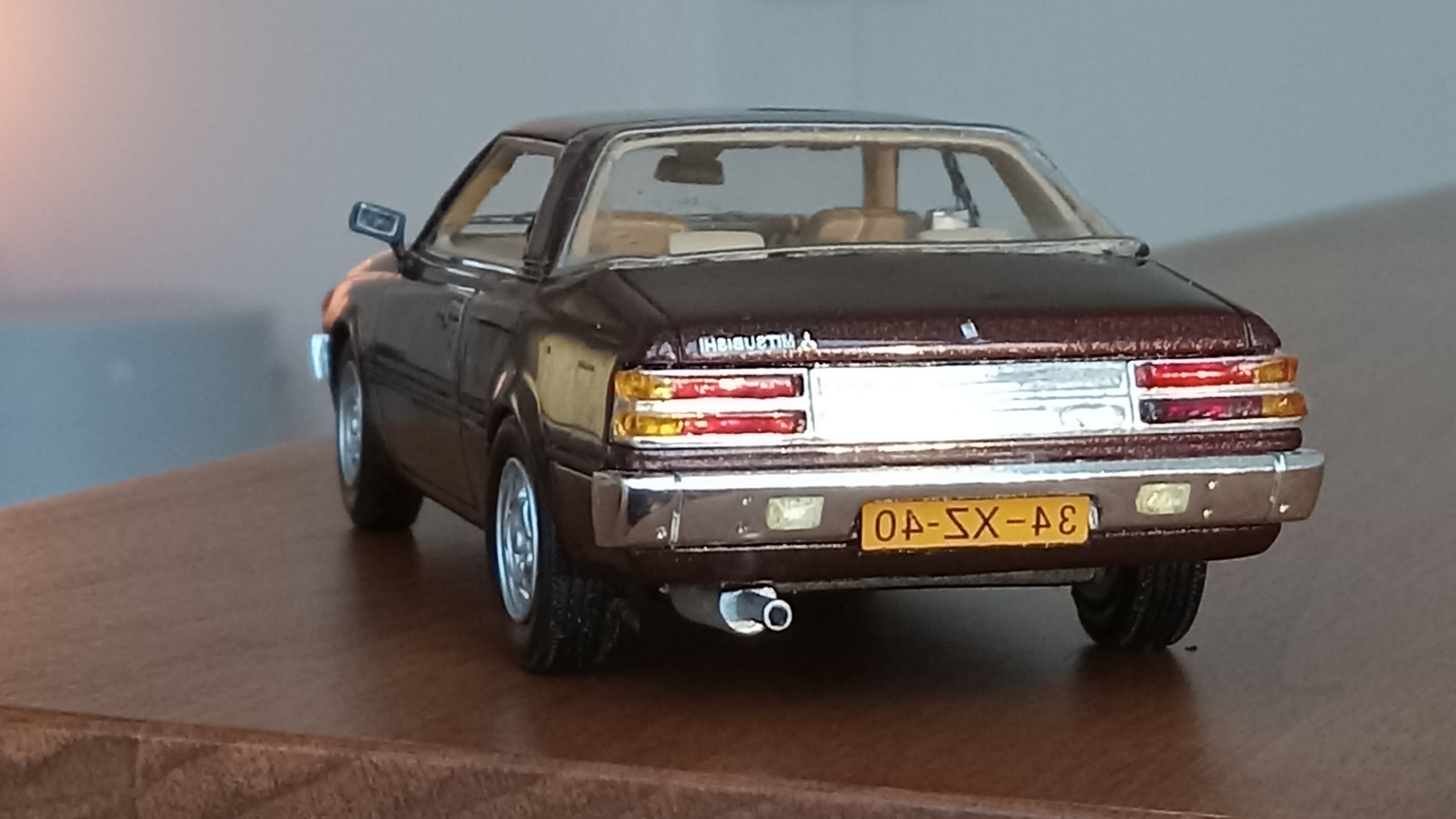
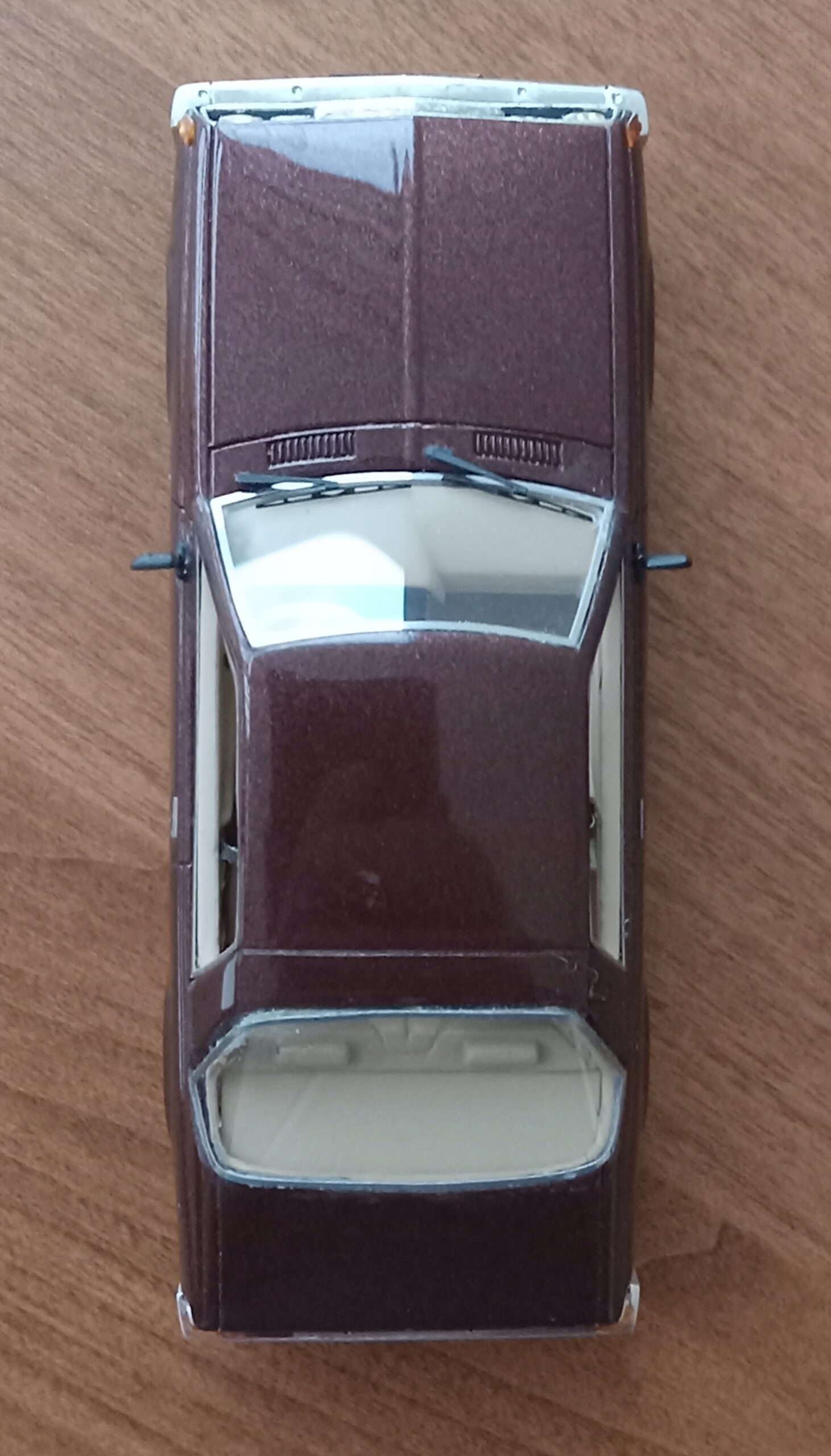
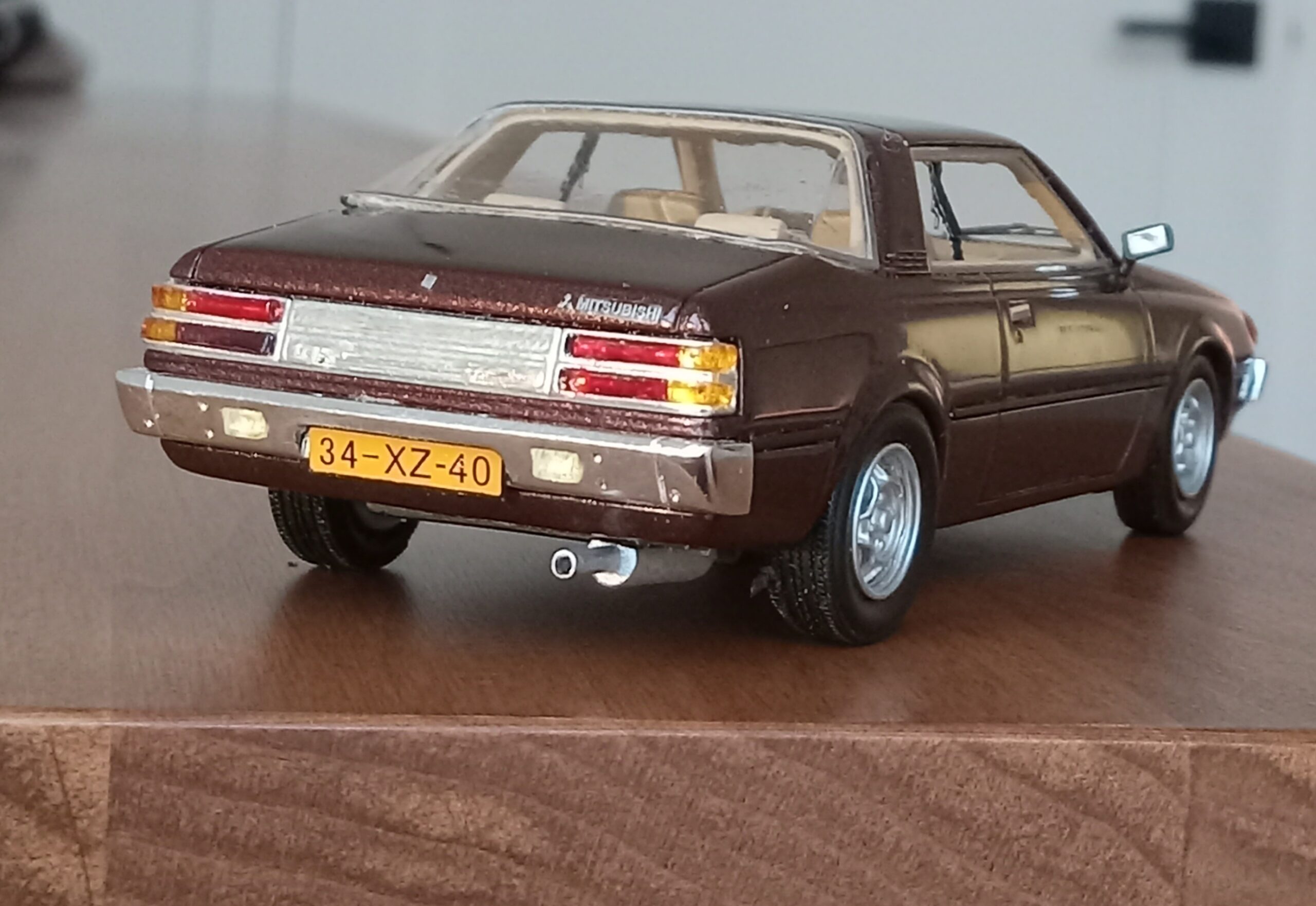
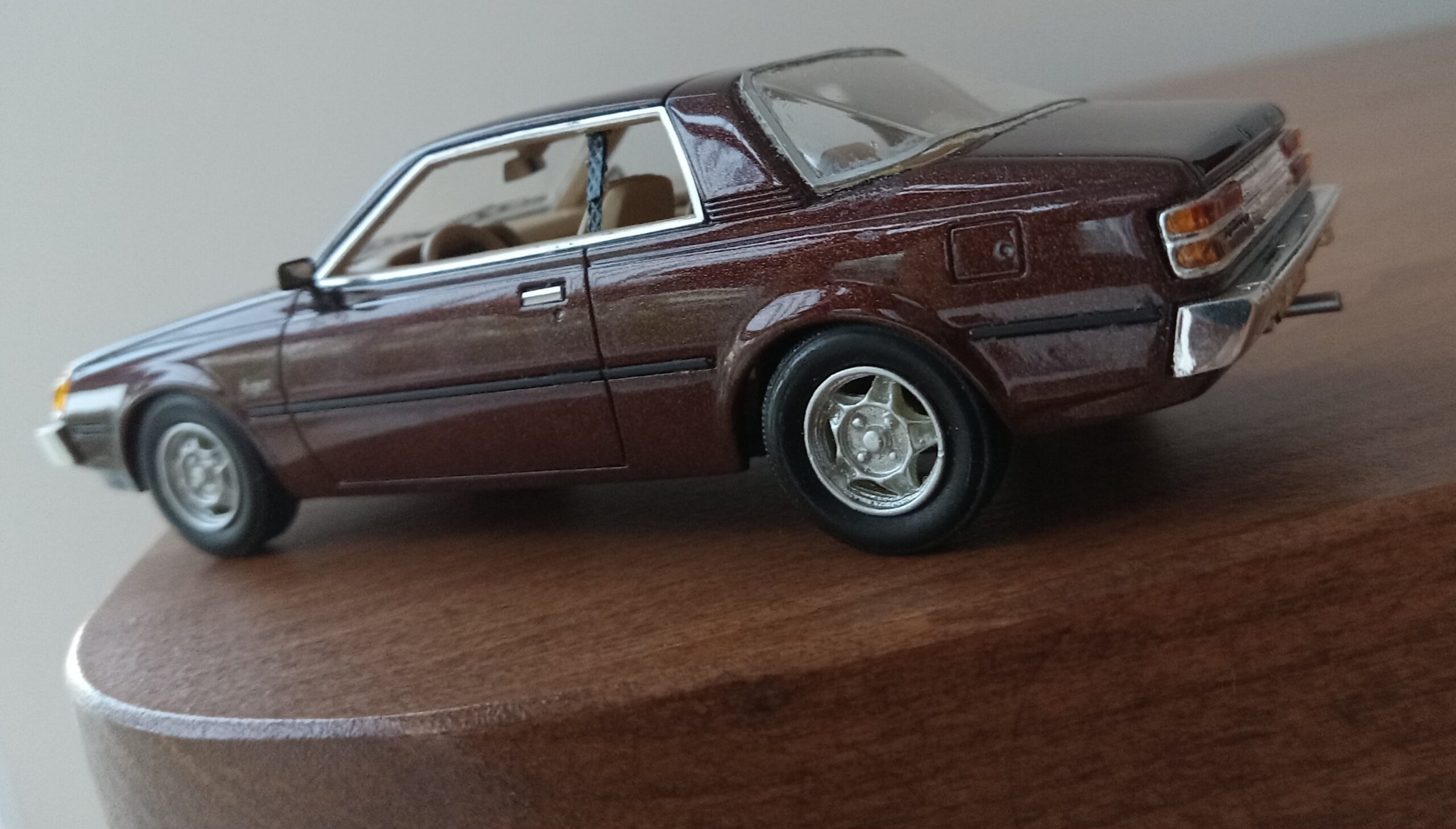
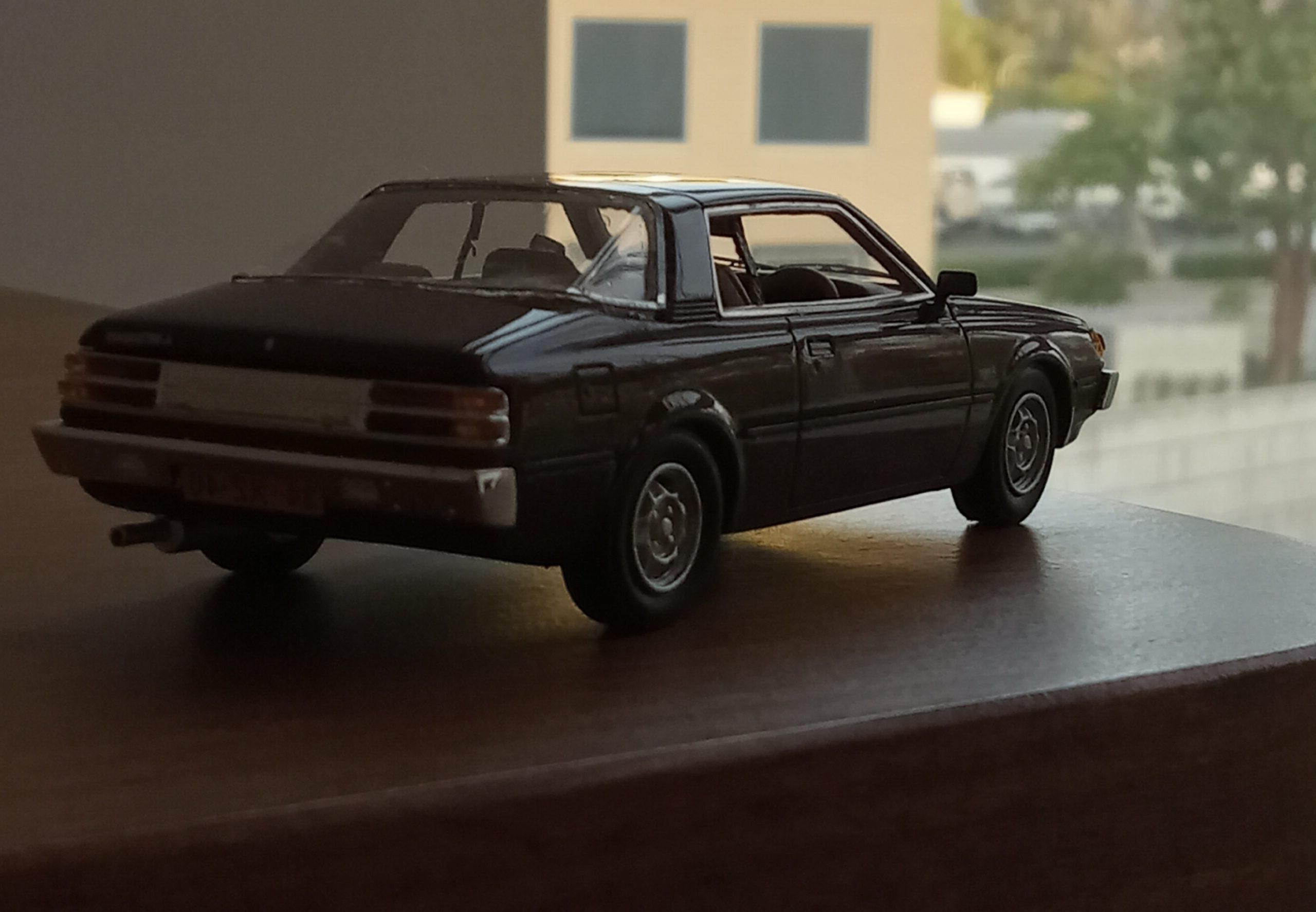
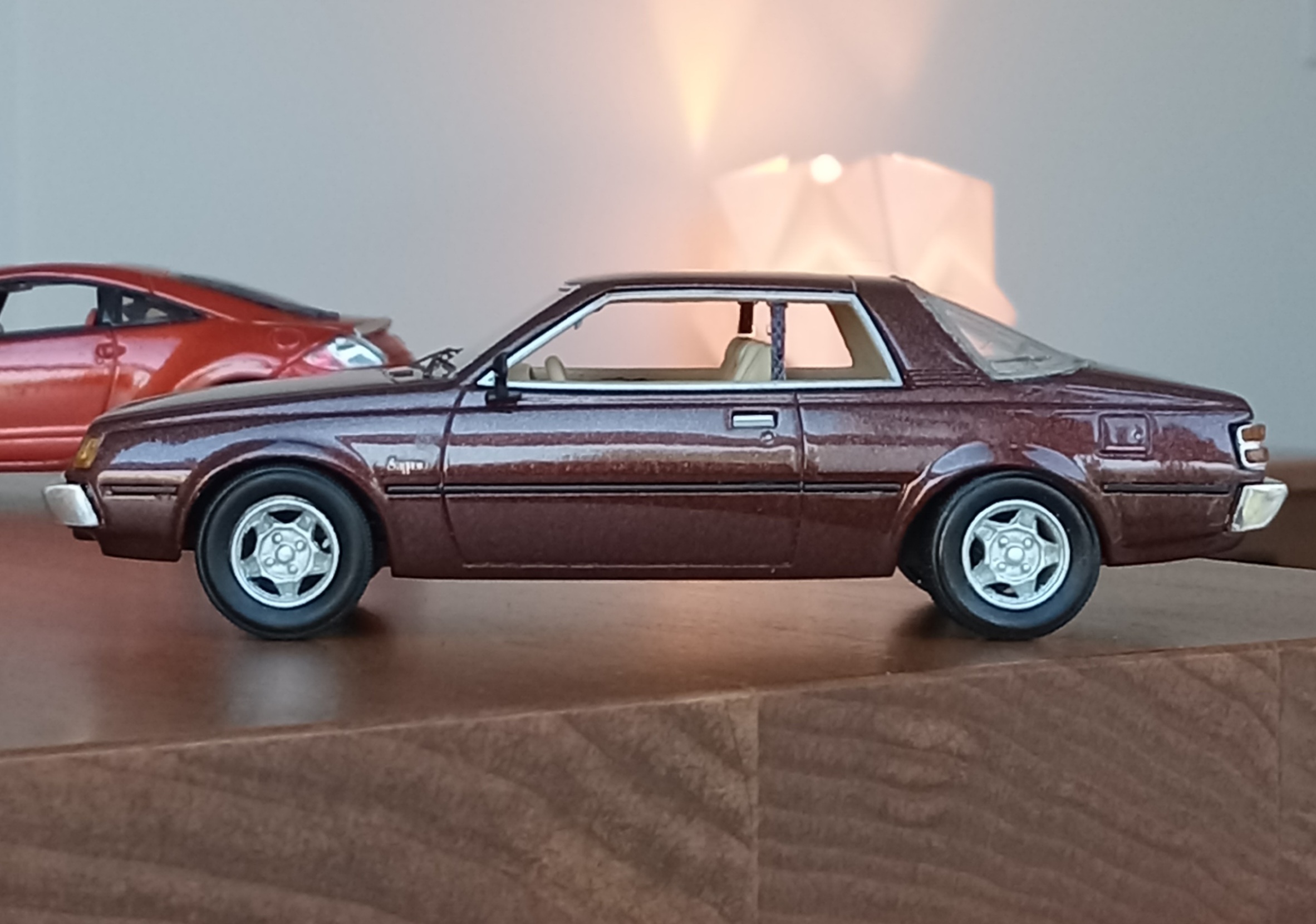
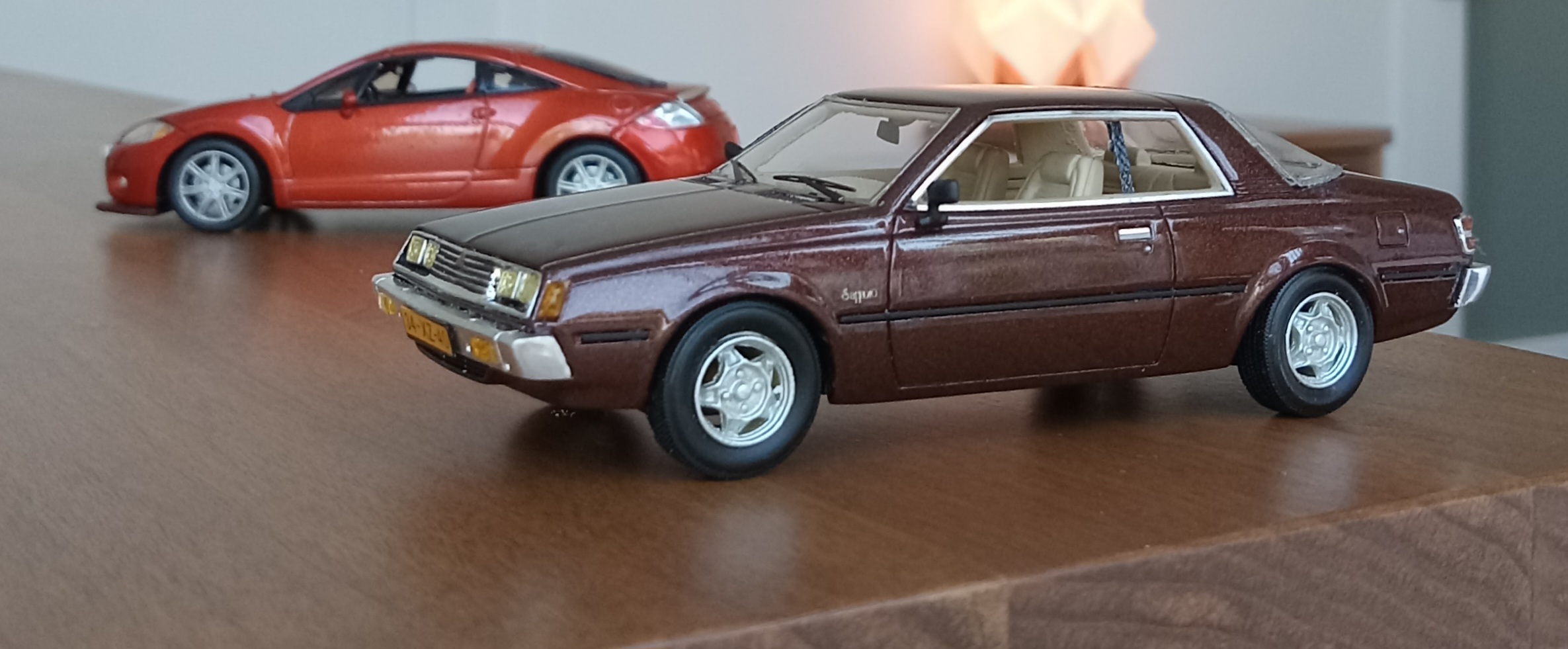
(写真撮影用模型:NEO社製、1/43レジン完成品、ミツビシ サッポロ【ギャラン・ラムダ】(ドミニカ・ブラウン)ーーー>改造箇所:一度シャーシを分割して車軸、タイヤ位置を最適化)
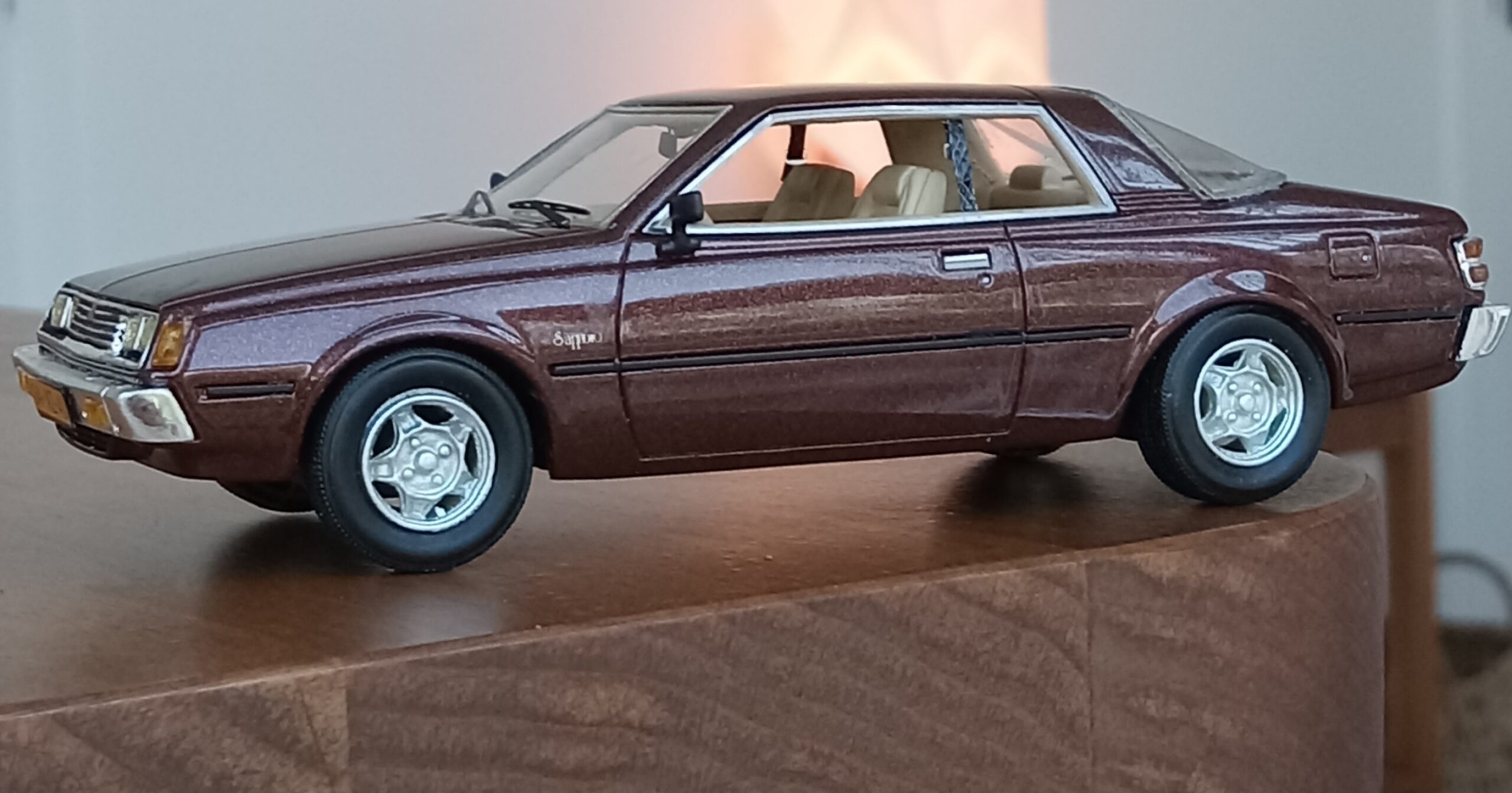
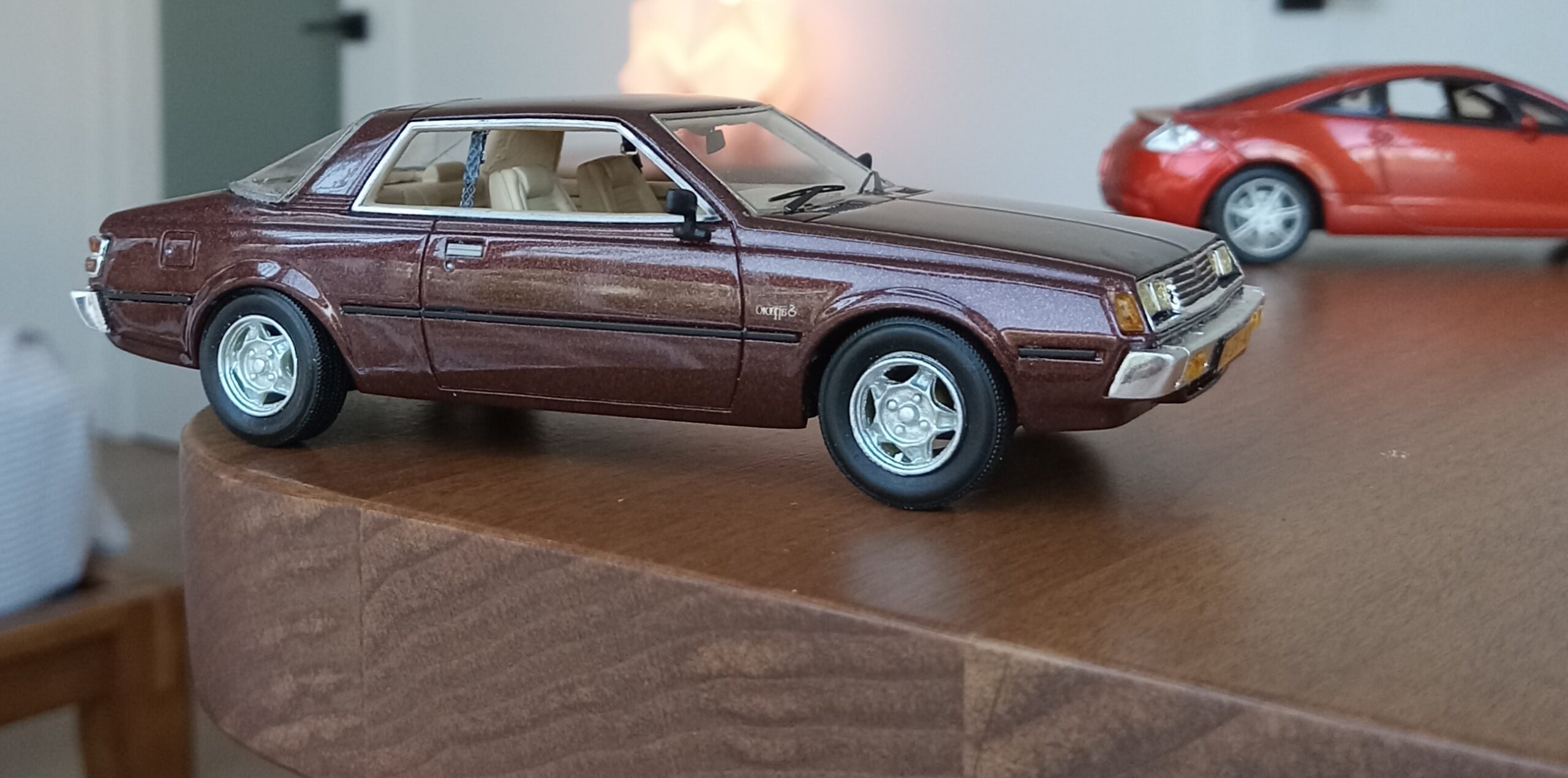
好みの自動車デザイン:第46回ーー2ドア・クーペの系譜: 第26回【日本車・三菱編】 ミツビシ・ギャラン λ【ラムダ】、1976(ドミニカ・ブラウン・メタリック) 『北米名:ミツビシ・サッポロ?』Mitsubishi Garant λ【Lambda】 『Called Mitsubishi Sapporo!in the U.S.』
#好みの自動車デザインーー2ドア・クーペの系譜:
第46回目の今回は、『2ドアクーペの系譜、第26回』と題しまして、各国のお国柄や、外観デザインの個性が強く表れる、高級2ドア(GT)クーペ / ロードスターについてお話ししてみたいです。【注意:オープンカーを含む】
以下の要領で進めていきます。
第26回の今回はいよいよ
【日本車・三菱編】としまして、
1976年発表の
ミツビシ・ギャラン λ(ドミニカ・ブラウン・メタリック)
についてのお話です。
【2ドア・クーペの系譜:目次】
【米国車編】
第1回:キャデラック・エルミラージュ、2013(メタリック・レッド)
第2回:リンカーン・コンチネンタル MK4、1972(ブラック)
第3回:マーキュリー・クーガー, 1967(LTメタリック・グリーン)
【ドイツ車編】
第4回:MB 500K スペシャル・ロードスター、1936(ブラック)
第5回:MB 300SL ロードスター、1957(シルバー)
第6回:MB SLS AMR ガルウイング、2010(ブラック)
【英国車編】
第7回:マクラーレン・F1、1992(メタリック・オレンジ)
第8回:ジャガー・XKSS ロードスター、1957(ロイヤル・ブルー)
第9回:ジャガー XKR クーペ、1996(ダークメタリック・グリーン)
【日本車・ニッサン編】
第10回:ニッサン 初代シルビア、1965(シャンペン・ゴールド)
第11回:ニッサン 5代目シルビア、1988(LTメタリック・グリーン)
【イタリア車編】
第12回:フェラーリ 250TR ポンツーンフェンダー、1958(赤)
第13回:フェラーリ 250GTO、1962(イタリアン・レッド)
第14回:ランボルギーニ・コンセプトS、2005(パール・ホワイト)
【日本車・マツダ編】
第15回:マツダ コスモ・スポーツ、1968(レーシング・ホワイト)
第16回:マツダ ユーノス・コスモ、タイプ‐S(2トン:黒&グレー)
【フランス車編】
第17回:ブガッティ・タイプ59、1935(フレンチ・ブルー)
第18回:シトロエン・SM、1970(シャンペーン・ゴールド)
第19回:ブガッティ・ラ・ヴォワチュール・ノワール、2019(黒)
【日本車・トヨタ編】
第20回:トヨタ/ヤマハ・2000GT、1967(アイボリー・ホワイト)
第21回:トヨタ・2代目ソアラ、1986 (クリスタル・ホワイトⅡ)
第22回:レクサス LC500【GWZ100型】、2017(MT・レッド)
【米国車編②】
第23回:ダッジ・チャレンジャー、1970&プリムス・バラクーダ、1971
第24回:ダッジ・ヴァイパー SRT‐10 ACR、 2008(ブラック)
第25回:フォード・シェルビーGR-1 コンセプト、2004(クローム)
【日本車・ミツビシ編】
第26回:ミツビシ・ギャラン λ、1976(ブラウン・メタリック)
第27回:ミツビシ・エクリプス【北米仕様】、2006(オレンジ・メタ)
【ドイツ車編②】
第28回:BMW M635CSi、1984 (ダーク・メタリックブルー))
第29回:MB 560SEC AMG 6.0 ワイドボディー、1989(ブラック)
第30回:BMW M2 純正パフォーマンス・パーツ仕様、2025(ネオン・ライム)
第31回:初代アウディー・TT、1998(レイク・シルバー・メタリック)
【日本車・スバル編】
第32回:スバル・クロストレック XV, 2012(ライムグリーン・メタリック】
【英国車編②】
第33回:ロータス・初代エリート, 1959(ブリティシュ・グリーン)
第34回:ロータス・エラン S4 スプリント(2トン:ブルー、ホワイト&金)
第35回:ジャガー・Eタイプ ロードスター(ライトブルー・メタリック)
【日本車:ホンダ(軽量スポーツ編)】
第36回:ホンダ S800、1966(レッド)
第37回:ホンダ 初代CR-X 1.5i、1983(ブルー&シルバー2トン)
第38回:ホンダ ビート、1991(サンバ・イエロー)
【番外編】:コルベットの系譜
第1回:1967年型 スティングレー【C2】コンバーチブル(ハードトップ・メタ青)
第2回:1972年型 コルベット 【C3】コンバーチブル(メタリック・ブルー)
第3回:1984年型 コルベット クーペ【C4】(ブライト・レッド)
第4回:コルベット・インディー【ミッド・シップの先行開発車】(シルバー)
第5回:スティングレー・コンセプト【先行開発車】、2009(プルー・メタリック)
#ミツビシXクライスラー:日米協業が産んだ駿馬!
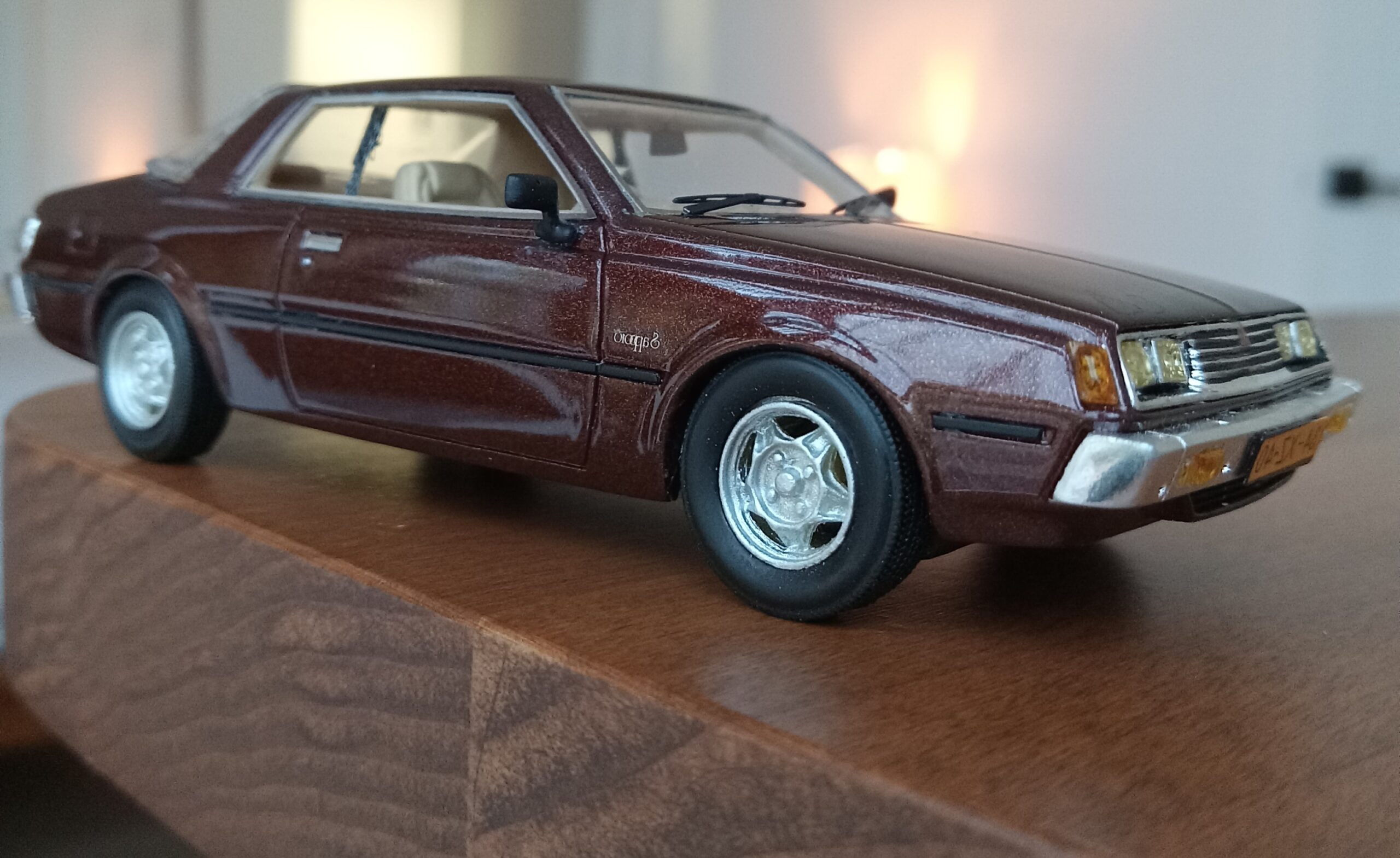
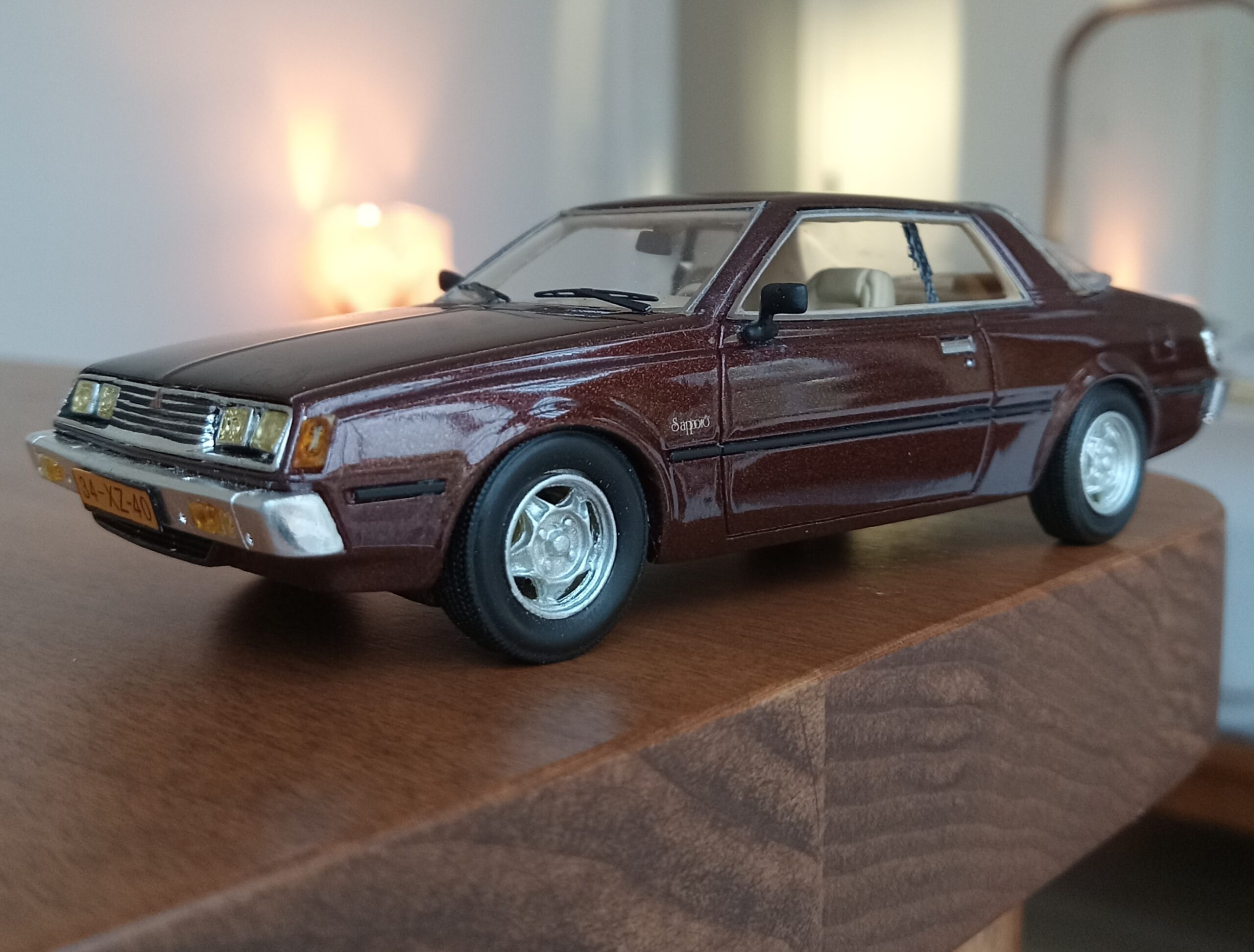
いよいよ始まりました、
三菱とクライスラーの協業・蜜月時代の奇跡の名車コーナーです。
今回と次回の2回連続でお送りします!
第001回:ミツビシ ギャラン・ラムダ、1984(ブラウン・メタリック)
第002回:ミツビシ エクリプス【4代目】、2007(オレンジ・メタリック)
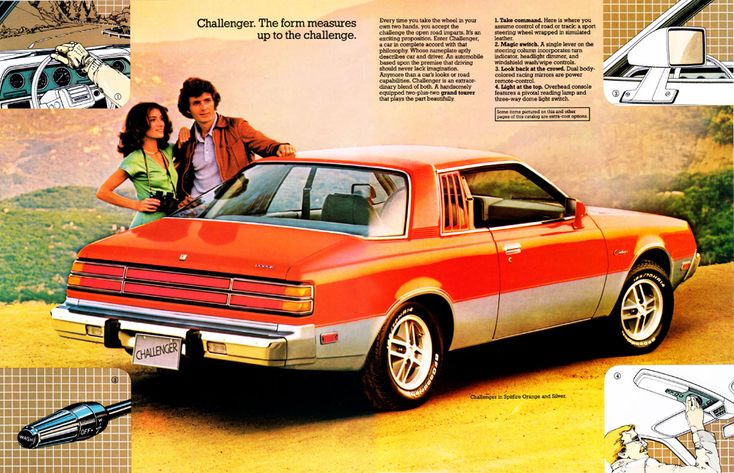
1980年代初めから強化された三菱Ⅹクライスラーの協業関係が産んだ、小型2ドア・クーペとして生まれた、三菱ギャラン・ラムダは、クライスラーの北米販売網を通じて、
*ダッジ・チャレンジャー
*プリムス・サッポロ、
として大人気を博し、その後のエクリプスなどの
三菱のアメリカ市場におけるブランドの確立に大いに貢献しました。
個人的に
三菱 ギャラン・ラムダはTVCMや自動車雑誌を見て、
大興奮!
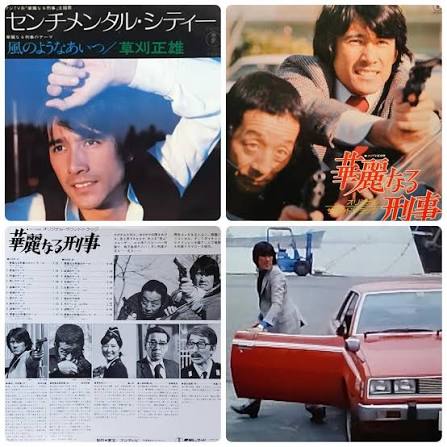

大のクルマ好きの父、弟と結託して、
*市場イベントに行ったり、
*カタログを穴のあくほど研究したりで、
大騒ぎしていました。
結局、イメージが少し派手すぎなことがあったり、
マツダに努める、叔父の顔を立てたりで、
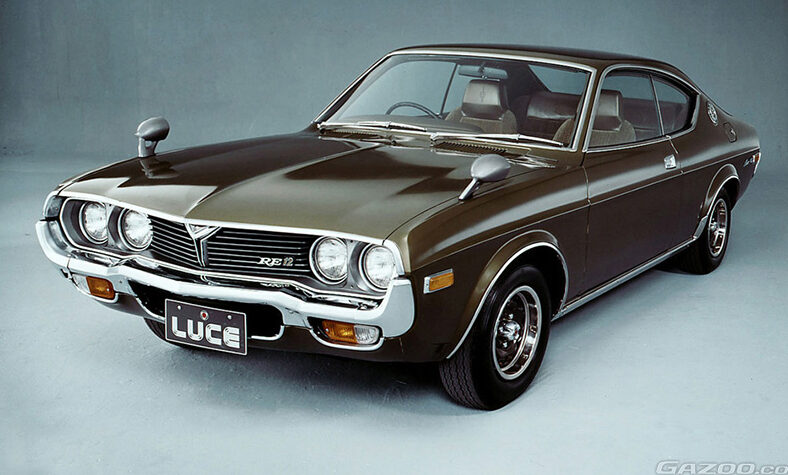 中古の、マツダ・ルーチェを買う事になりました。泣(燃費が最悪で、半年で売り飛ばしました!)
ギャラン・ラムダには、
*それまでの歴代ギャランの台形断面や、
*デザイン世界トレンド最先端の面構成とプロポーションが
 日本的な繊細さとアメリカンな大胆さが絶妙にバランスして、
なんとも言えない深い味わいを醸し出していました。
それではこんな感じで、
進めて行きます。
*実車解説:独特なバター臭さが決め手、、、
*外観デザインの特徴:
*『私』とギャラン・ラムダ
*三題噺:三代目ムスタング1979・札幌・アートセンター【ACCD】
*その他のハンサムな協業車たち、、、
*実車解説:独特なバター臭さが決め手!
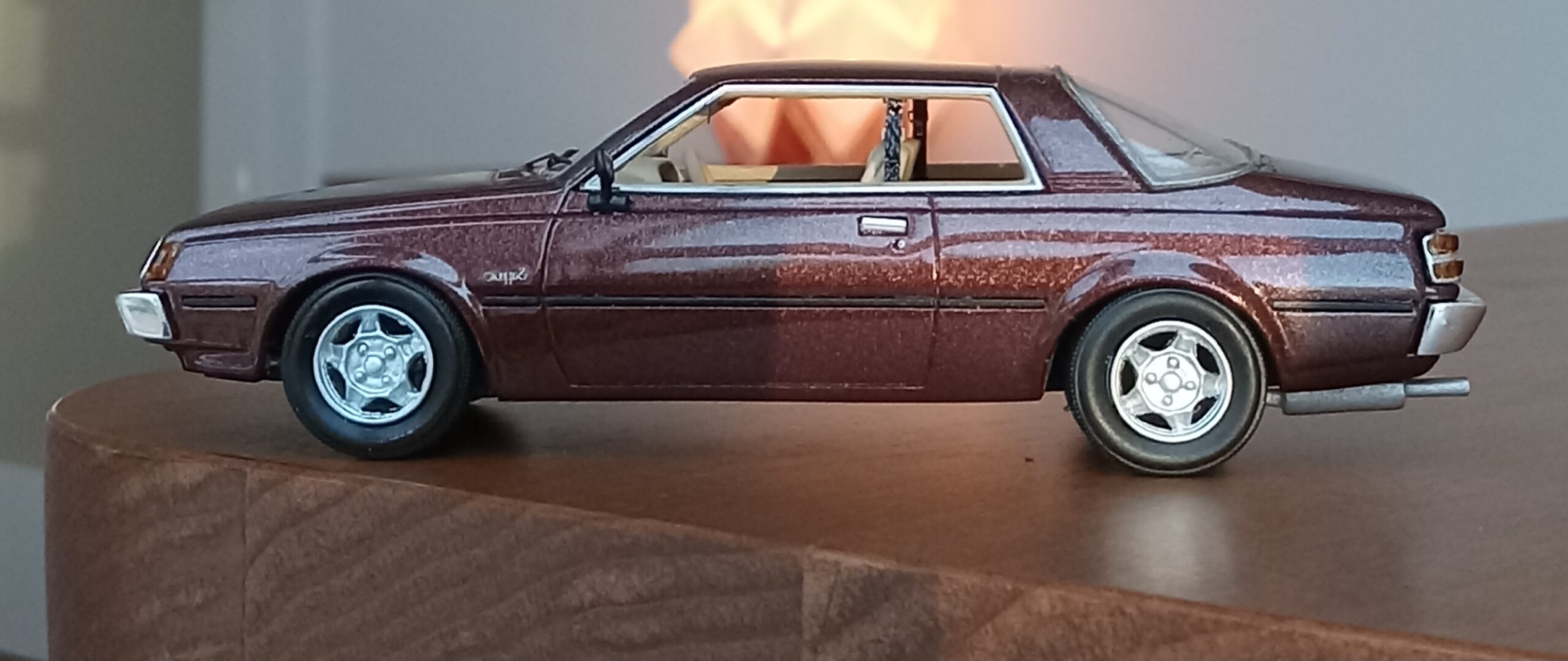
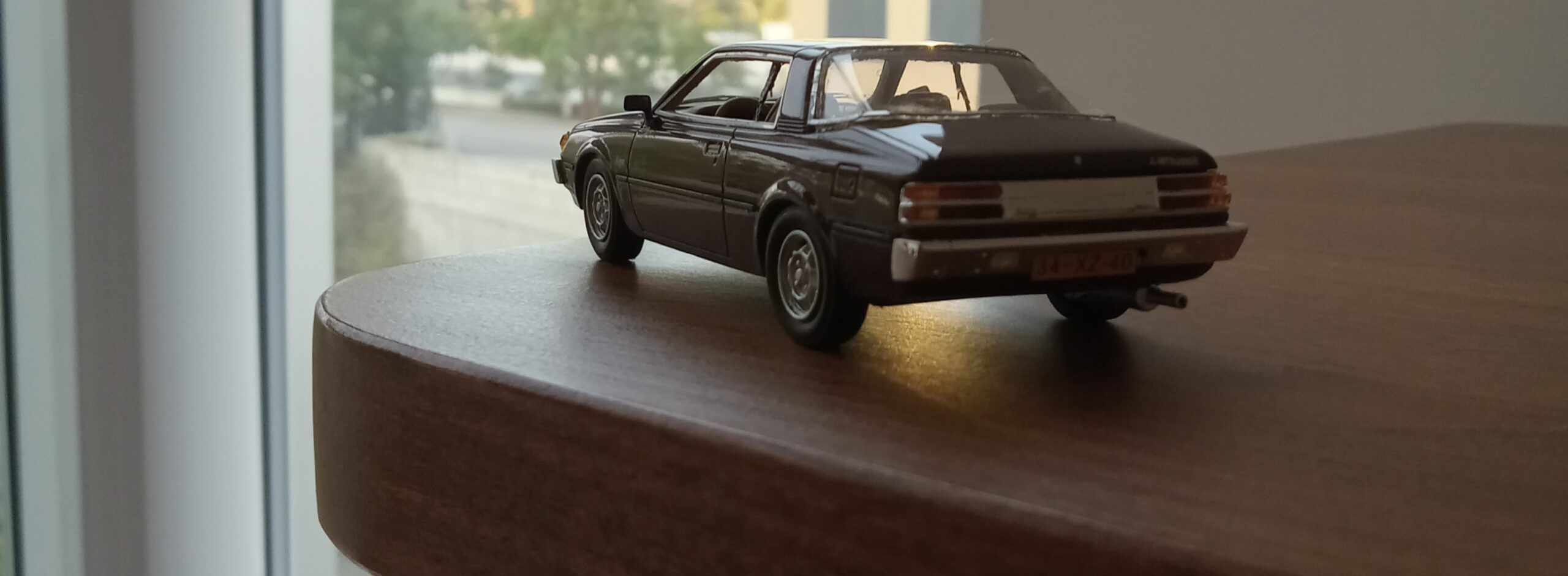
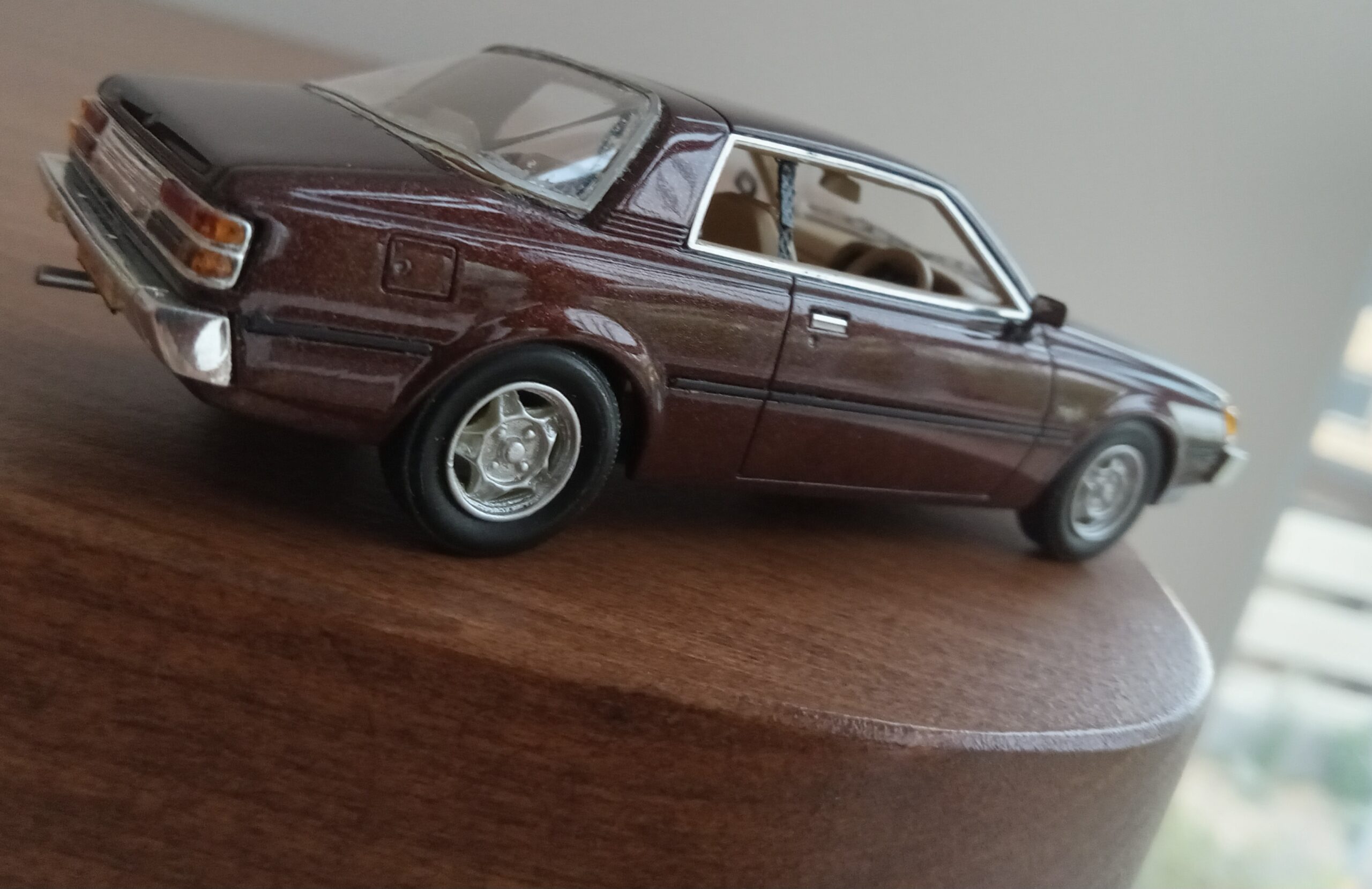
三菱・ギャランΛ(ラムダ)は、
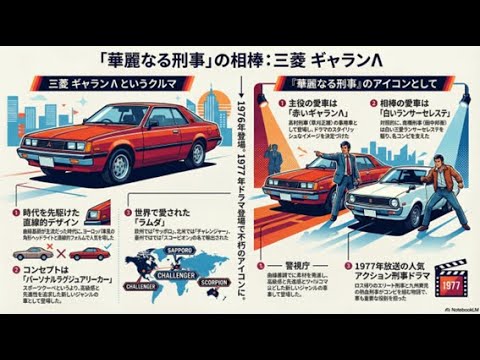
三菱自動車工業が1976年から1984年まで製造・販売していた、日本車離れした斬新なデザインが特徴の2ドア高級スペシャリティクーペです。同時期に発売された4ドアセダン「ギャランΣ(シグマ)」のクーペバージョンにあたり、「ギャランGTO」や「ギャランハードトップ」の後継車として登場しました。
当時の国産車にはない直線基調のスタイリングと豪華な内装で若者を中心に大きな人気を博し、北米を中心とした海外市場へもOEM供給などを通じて広く輸出されました。
n
n
n
n
n
n
n
n
n
n
n
n
n
n
n
n
n
n
n
n
n
n
n
n
n
n
n
n
n
n
n
n
n
丸型ライトや曲線基調のコークボトルラインが主流だった当時、日本車で初めて「角型4灯ヘッドライト」と傾斜したスラントノーズを採用し、先進的な表情を作り出しまし
*個性的なクォーターピラーとリアウインドウ
太いロールバーをイメージさせるアルミ風のCピラーガーニッシュと、ガラスの角を強引に折り曲げたような「ラップアラウンド・リアウインドウ(3次曲面ガラス)」を組み合わせたキャノピー風のデザインが最大の特徴です。
n
ギャランΛは、三菱と提携関係にあった米クライスラー社を通じて海外へ積極的に輸出され、現地でも高い人気を誇りました。
*北米市場: 「ダッジ・チャレンジャー」(2代目) / 「プリムス・サッポロ」
*欧州・南米市場: 「三菱・サッポロ」(1972年札幌オリンピックから命名)
*豪州市場: 「クライスラー・シグマ スコーピオン」
n
1978年に新設されたカープラザ店向けの販売モデルである「エテルナΛ(ラムダ)」も存在します。
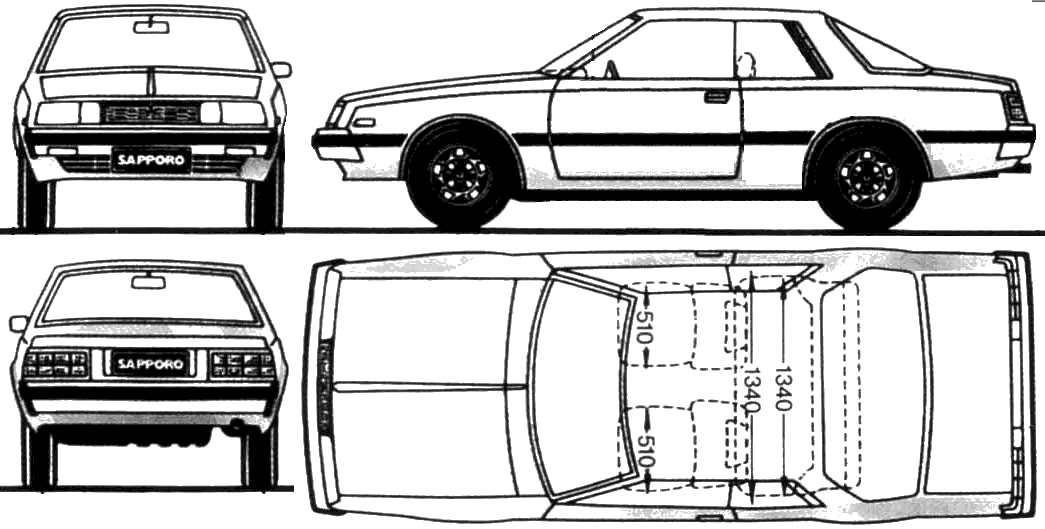
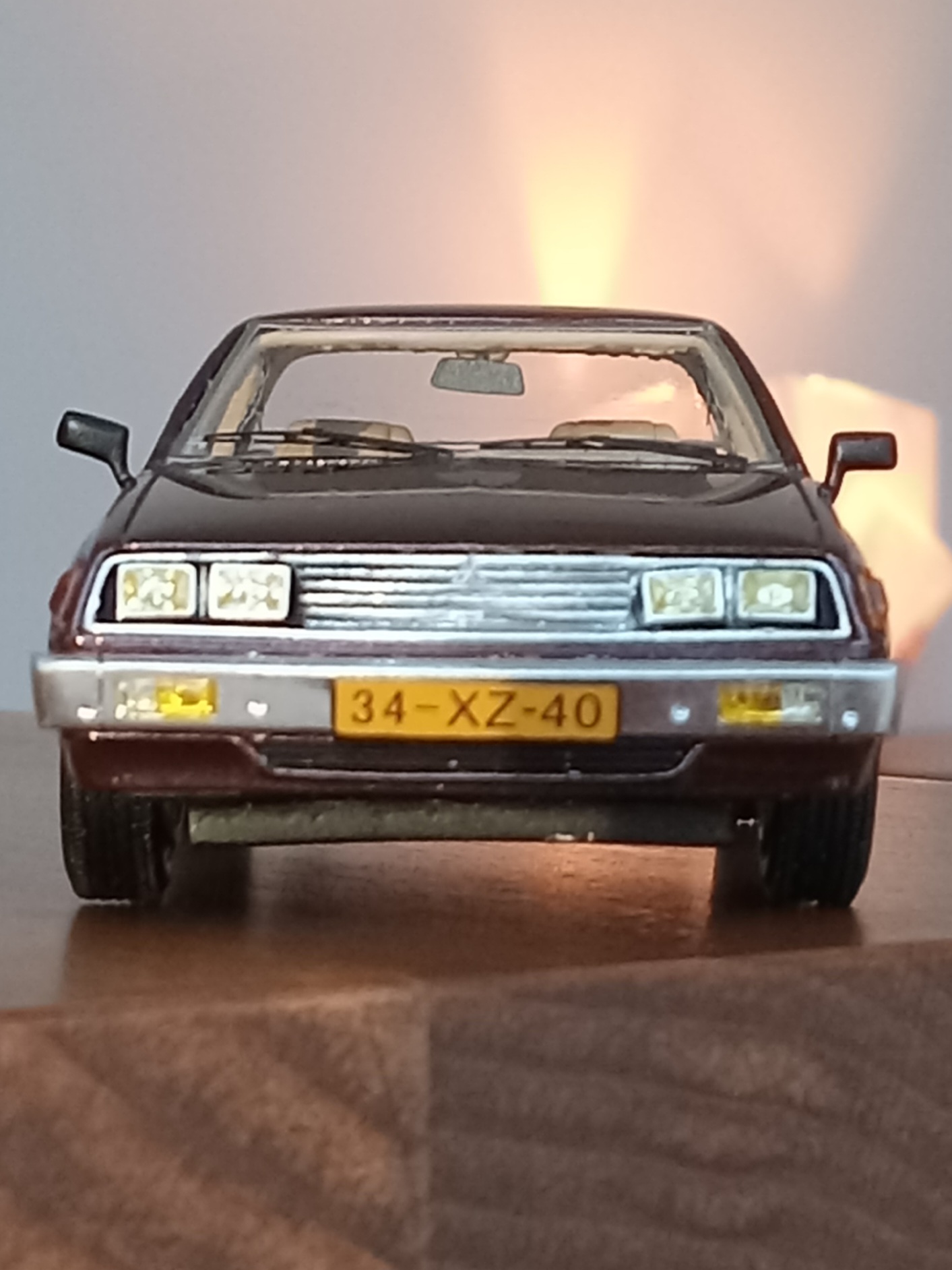
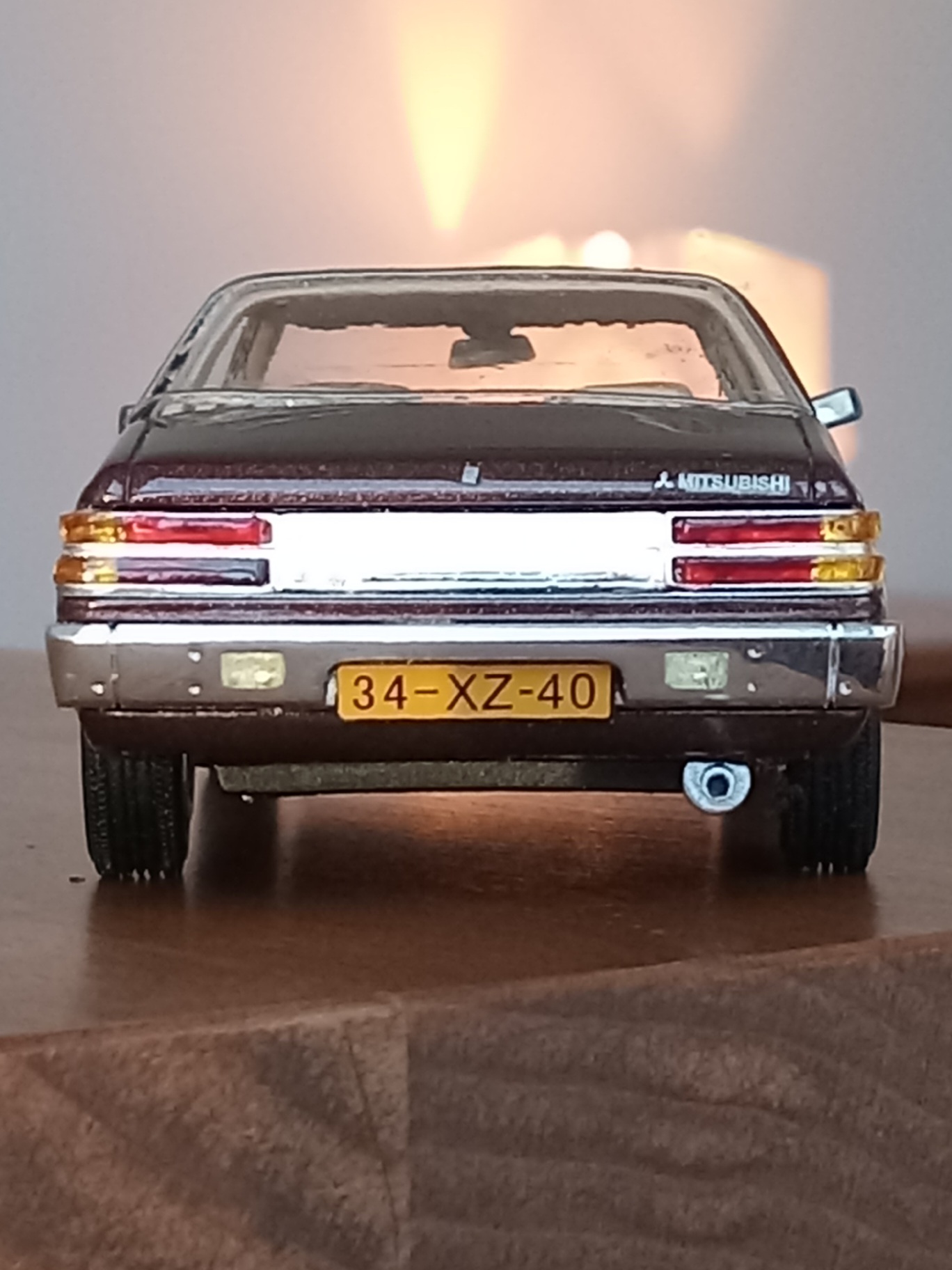
三面写真:
#主要諸元:
ん
n
n
- エンジン型式:4G52型(アストロン)
- 総排気量:1,995 cc 水冷直列4気筒SOHC
- 最高出力 : 115 ps / 6,000 rpm
- 最大トルク:16.5 kg・m / 4,000 rpm
- 駆動方式:FR(フロントエンジン、リアドライブ)
- 定員:4名
- 車体形式:2ドア(4人乗り)クーペ
- ホイールベース:2,515 mm
- 全長:4,510 mm
- 全幅:1,675 mm
- 全高:1,310 mm
重量:約 1,120 kg
参考資料:
nn
蜜月時代を象徴する、両社のプラットフォームやエンジンを共有した代表的なモデルの対比表です。
| 三菱ブランド名(日本/北米) | クライスラー傘下でのブランド名 | 特徴・解説 |
|---|---|---|
| コルトギャラン | ダッジ・コルト (Dodge Colt) | 協業の第1弾モデル。北米で三菱の信頼性を決定づけた低燃費車。 |
| ギャランラムダ | ダッジ・チャレンジャー / プリムス・サッポロ | スタイリッシュな2ドアハードトップ。アメ車風のデザインで若者に人気。 |
| スタリオン | クライスラー・コンクエスト (Conquest) | 80年代を代表するターボスポーツ。ブリスターフェンダーのワイドボディが共通。 |
| エクリプス (Eclipse) | イーグル・タロン / プリムス・レーザー | DSMの象徴。4G63エンジン+AWDの組み合わせで米国のレース界を席巻。 |
| GTO (北米名: 3000GT) | ダッジ・ステルス (Dodge Stealth) | 三菱のハイテックスポーツ。ステルスは外装をアメ車風に大きくアレンジ。 |
| ギャラン / エクリプス系 | クライスラー・セブリング / ダッジ・アベンジャー | 90年代後半のFFクーペ。中身は三菱製ながら、エレガントな米国産クーペとして販売。 |
*外観デザインの特徴:端正な和製ネオ・クラッシックの魅力!
世界中に輸出され、
大成功を収めた三菱自動車の
傑作インターナショナル・デザイン、
『ギャラン・シグマ/ラムダ』兄妹、
その中でより、アバンギャルドな妹分に当たります、
我らが:ラムダ『λ』
そんな、『ラムダ』の外観デザインの特徴を
5個、独断と偏見で選んでみまし
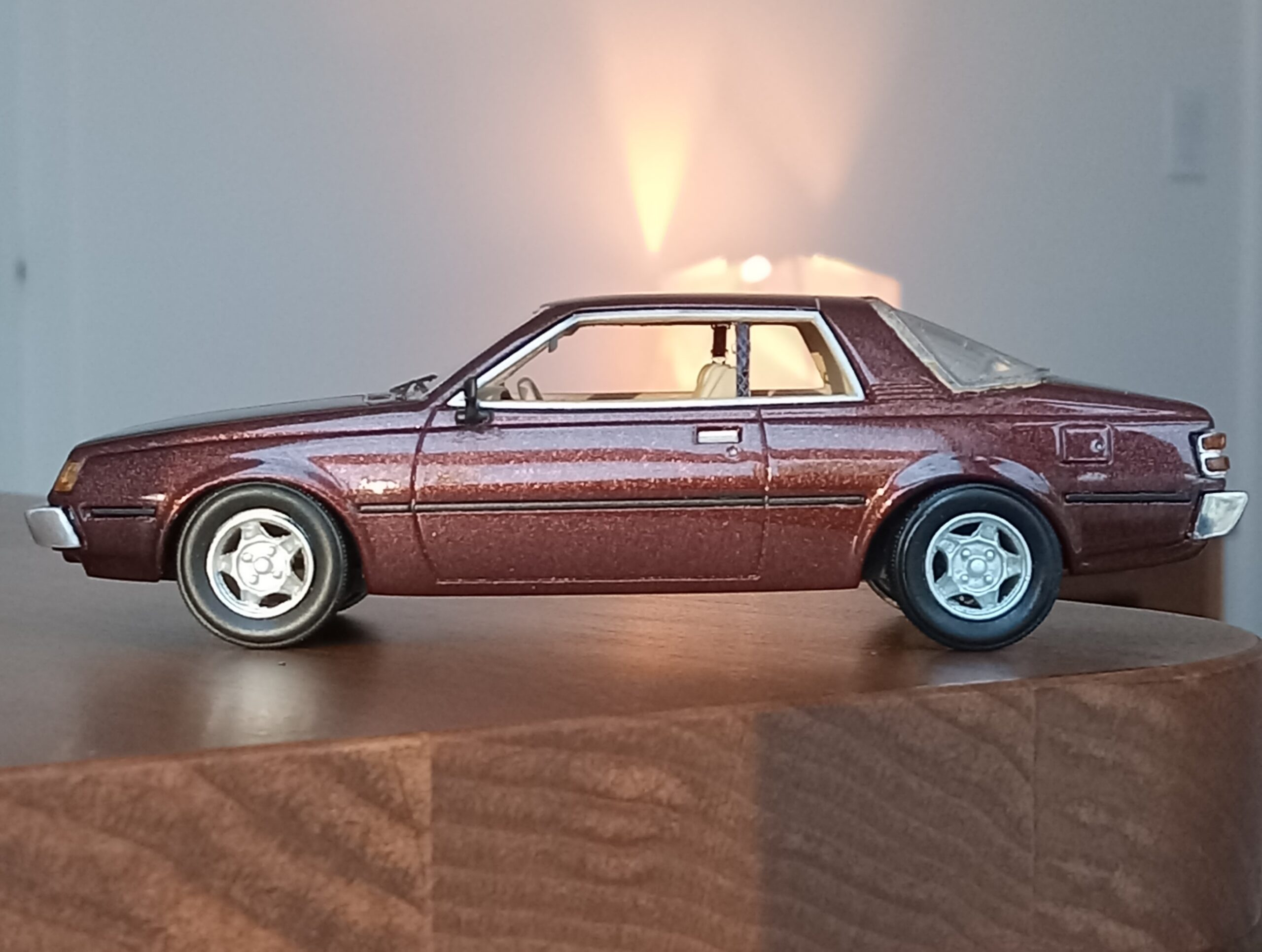
1:当時の世界最先端のデザイン潮流を他社に先んじて取り入れた、全身にみなぎる力強い、スラント面を強調した『ダイヤモンドカット』の直線基調のボディーランゲージの斬新さ
ーーー>ダウンサイジング後のアメ車に比べても伸びやかさやプロポーションの生きの良さで負けてません!!
2:落ち着いて低く流れるルーフラインをタルガルーフ的に切り取るCピラーとそれを包み込むラップアラウンド・リアウィンドウの作り出すハーモニーの斬新さ
――ーー>今見てもため息が出るほど美しくまとまっています。
3:カッチリとした日本初の角形4灯のヘッドライトと、その周りの額縁グリル・デザインのおさまりの良さ。
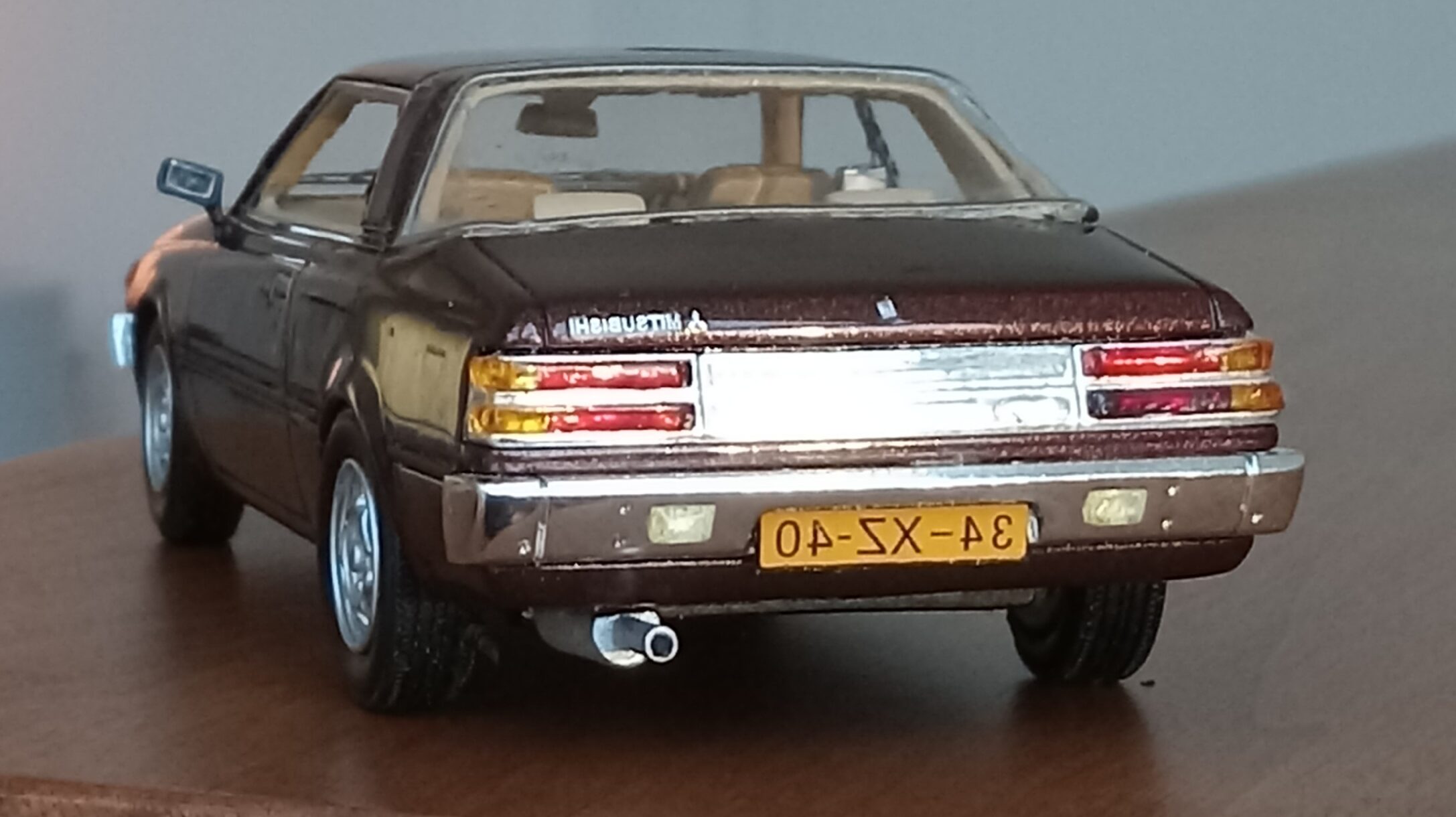
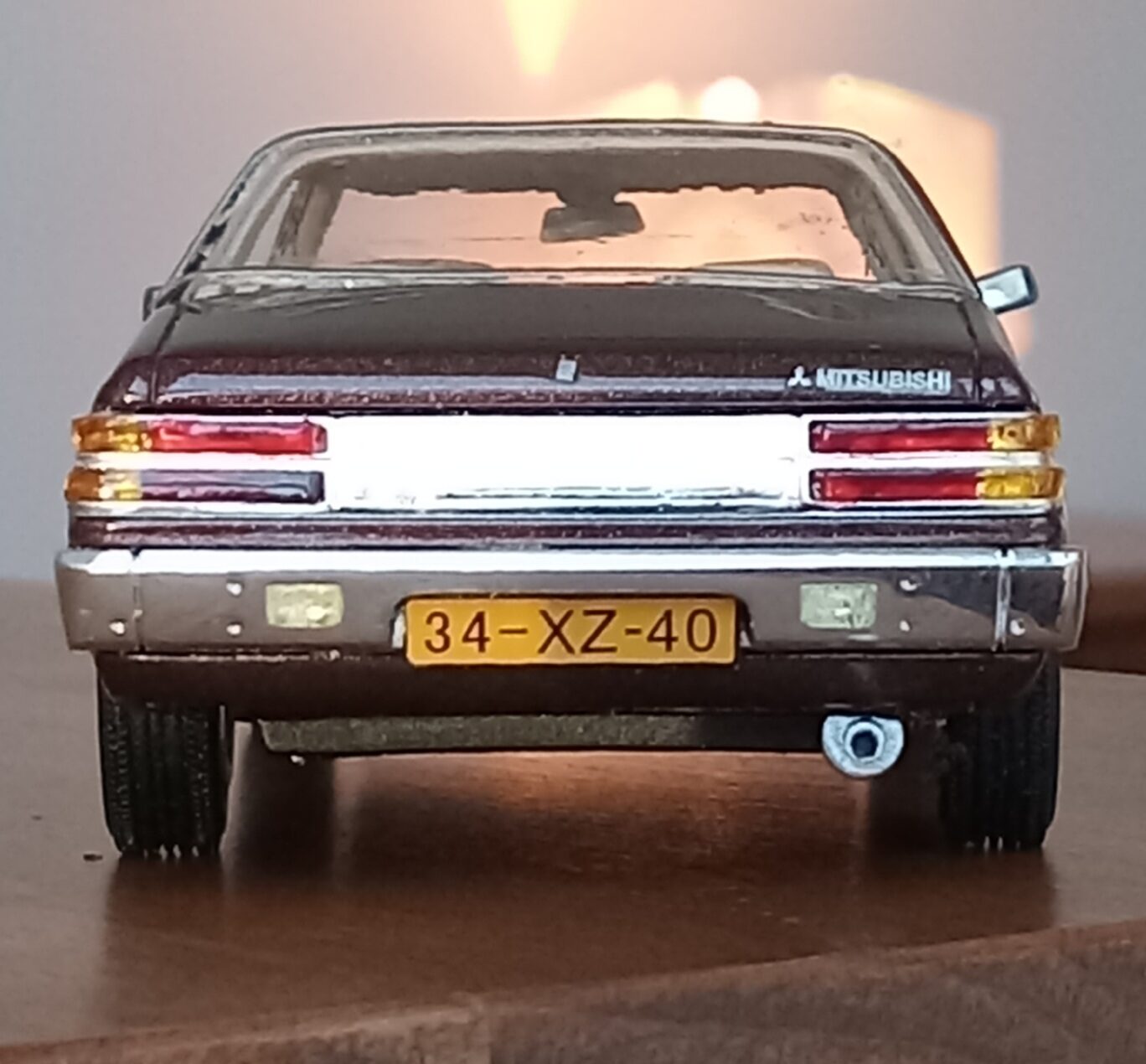
4:格調と落ち着きに満ちたテイルライトライト周りのデザインーーー>高級感の演出に一役買ってます。
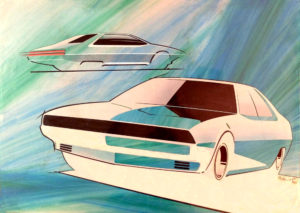
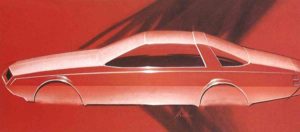
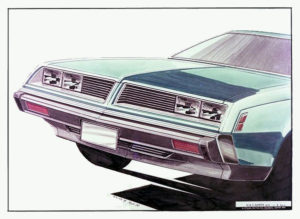
5:今に残るデザイン画稿や宣伝・広告素材を見るたびに感じるーーーー>みなぎ溢れる、当時の三菱デザインの勢い
それでは1つづつ
写真入りで解説します。
1:当時の世界最先端のデザイン潮流を他社に先んじて取り入れた、全身にみなぎる力強い、スラント面を強調した『ダイヤモンドカット』の直線基調のボディーランゲージの斬新さ
(ボディー造形を構成するすべての線に無駄がなく、それぞれが一糸乱れず、FRプロポーションの『動と静』のバランスを楽しく陽気なものにしています。具体的には、【分厚い胸+水滴の流れ】がボディ下面の絶妙なスイープによって、さりげなく成り立っています。)
ーーー>ダウンサイジング後のアメ車に比べても伸びやかさやプロポーションの生きの良さで負けてません!!
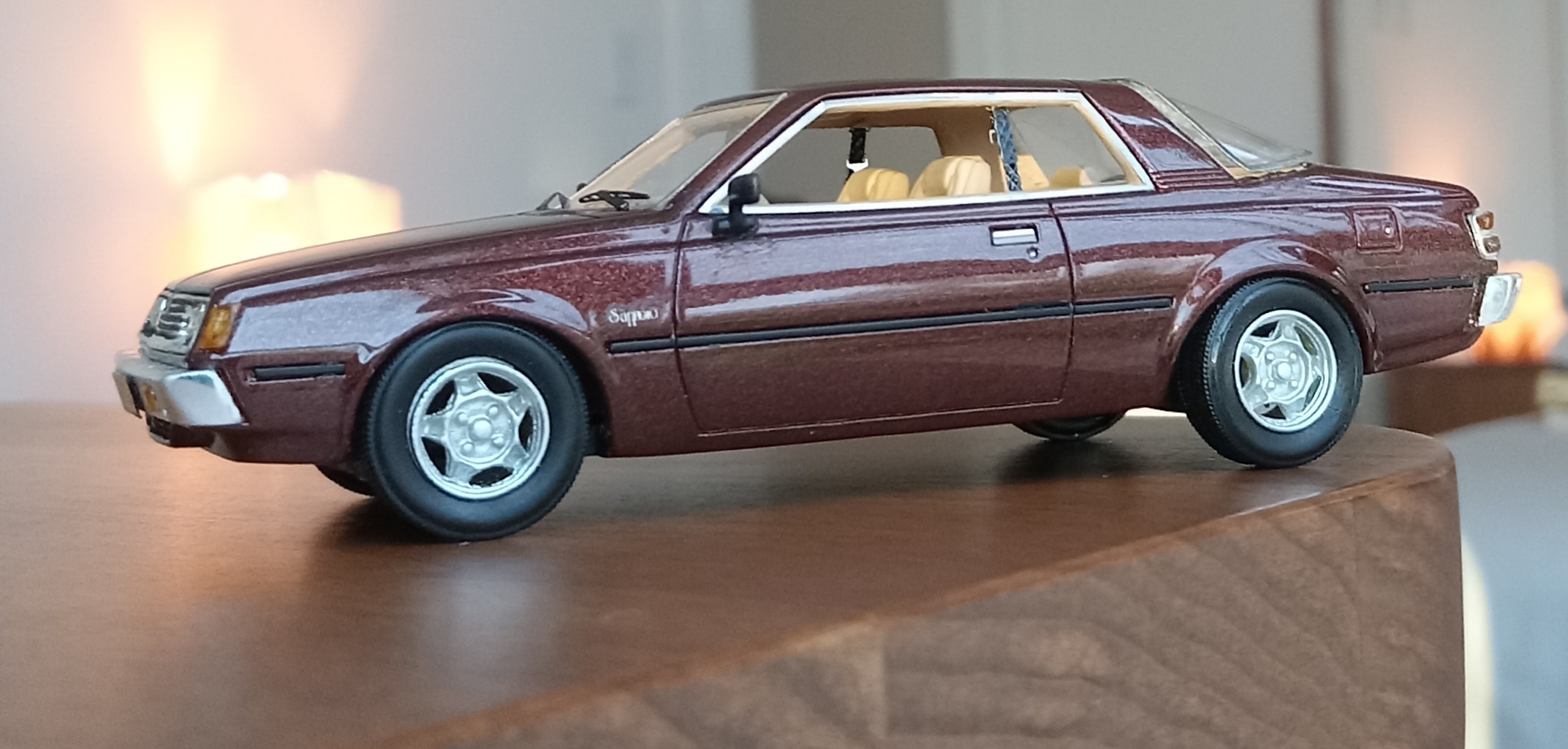
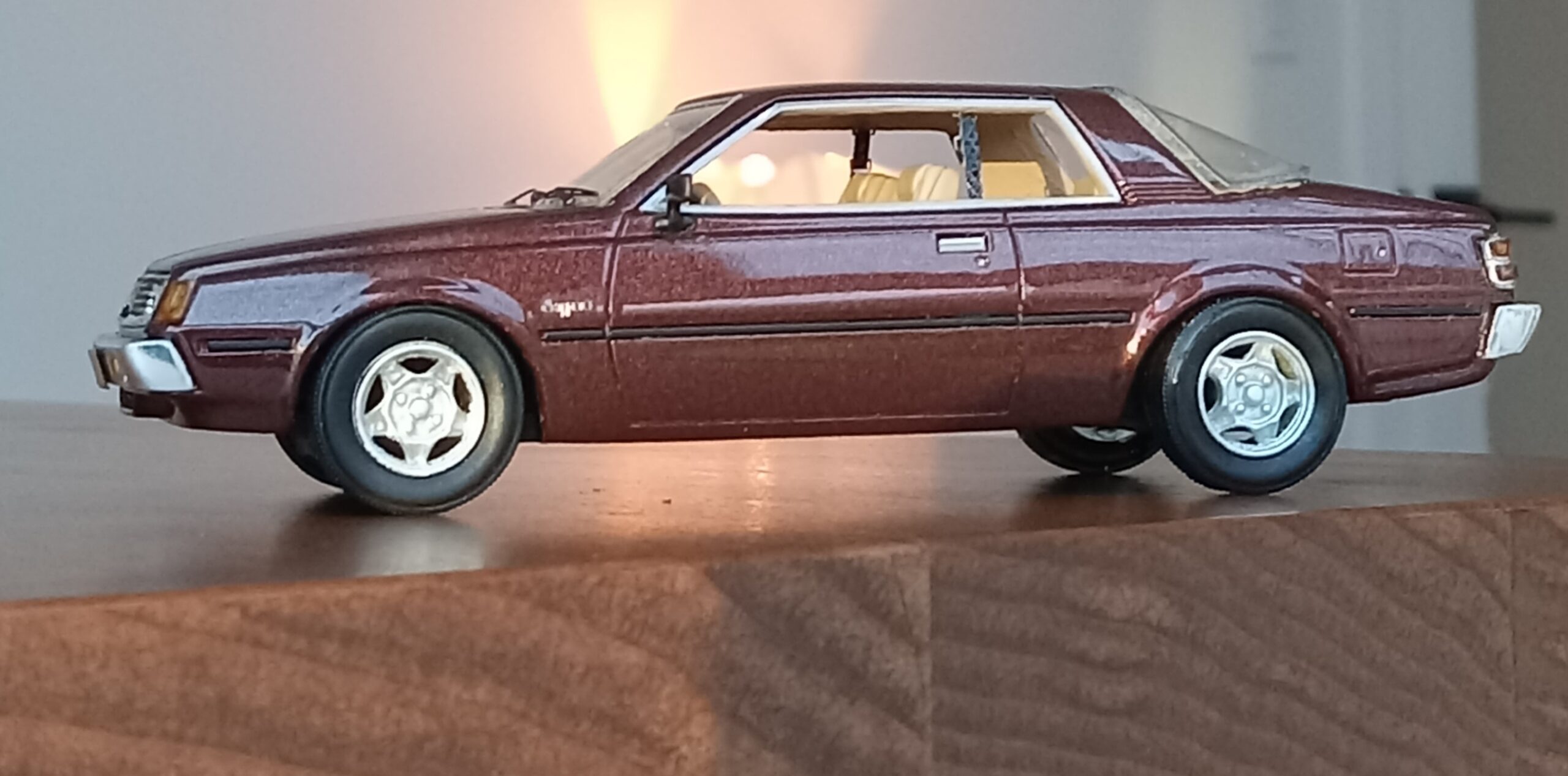
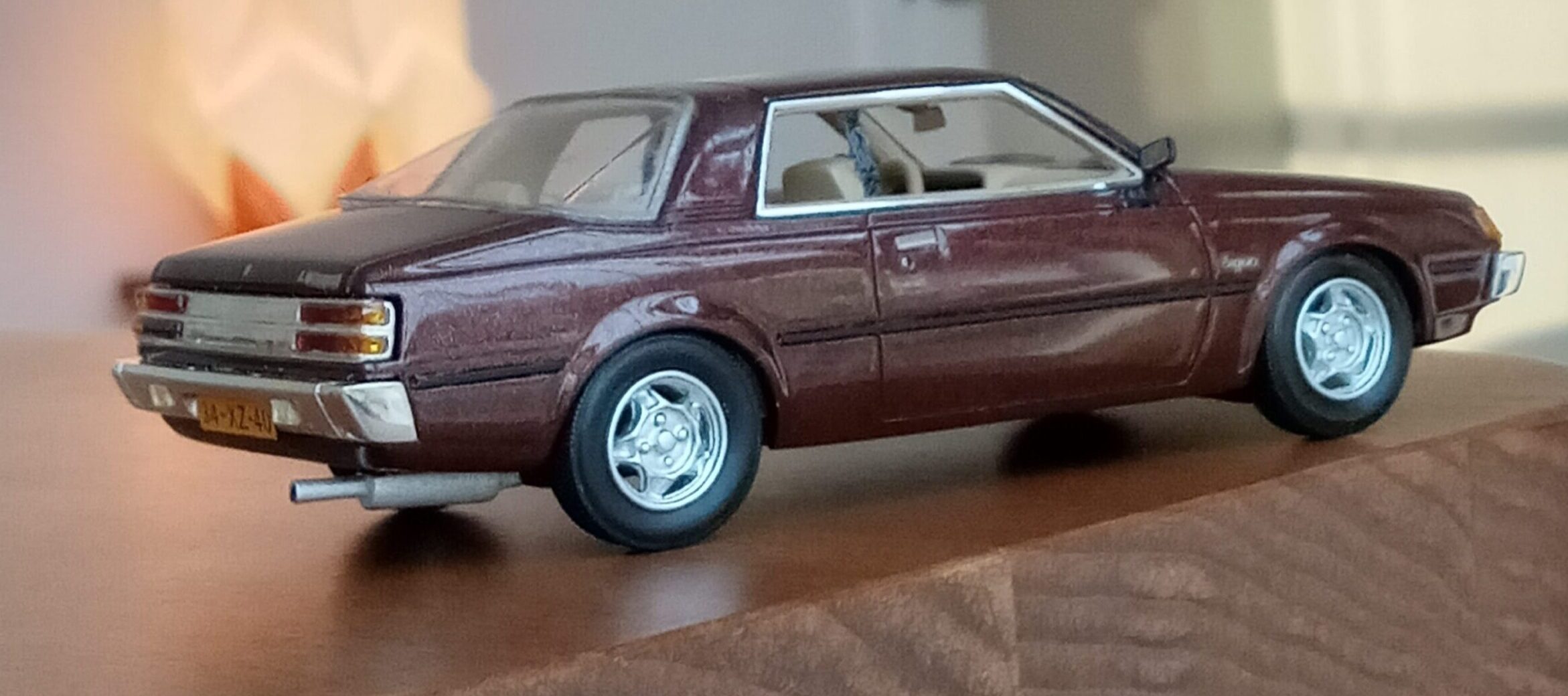
2:落ち着いて低く流れるルーフラインをタルガルーフ的に切り取るCピラーとそれを包み込むラップアラウンド・リアウィンドウの作り出すハーモニーの斬新さ
(当時のアメ車にありがちな、ゴチャッとしたCピラー回りの造作を、極めてシンプルかつ効果的に演出、後の豪華版(2600㏄版)ではこの部分をレザー仕様にして、高級感を更に上げてました)
――ーー>今見てもため息が出るほど美しくまとまっています。
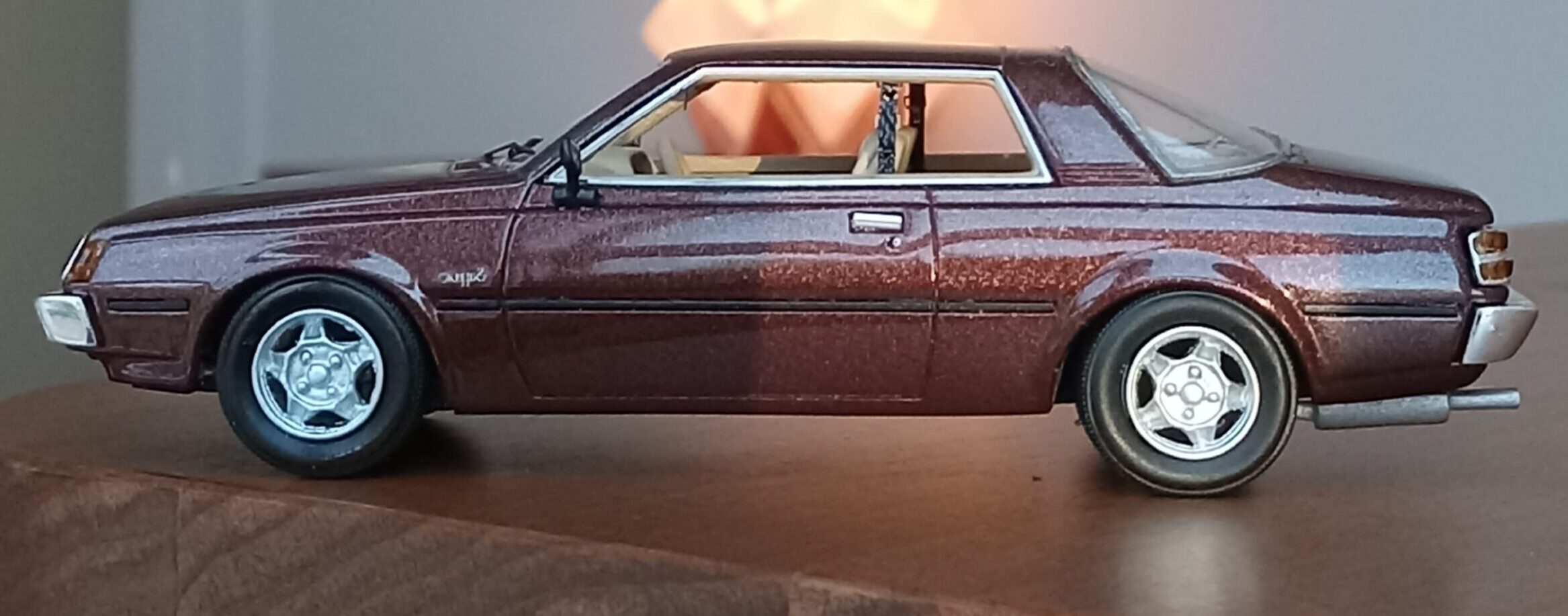
3:カッチリとした日本初の角形4灯のヘッドライトと、その周りの額縁グリル・デザインのおさまりの良さ。
(日本のラムダ、プリムス、ダッジ、オーストラリア版など各国版のフロントグリル周りのデザインに個性が出ています。)
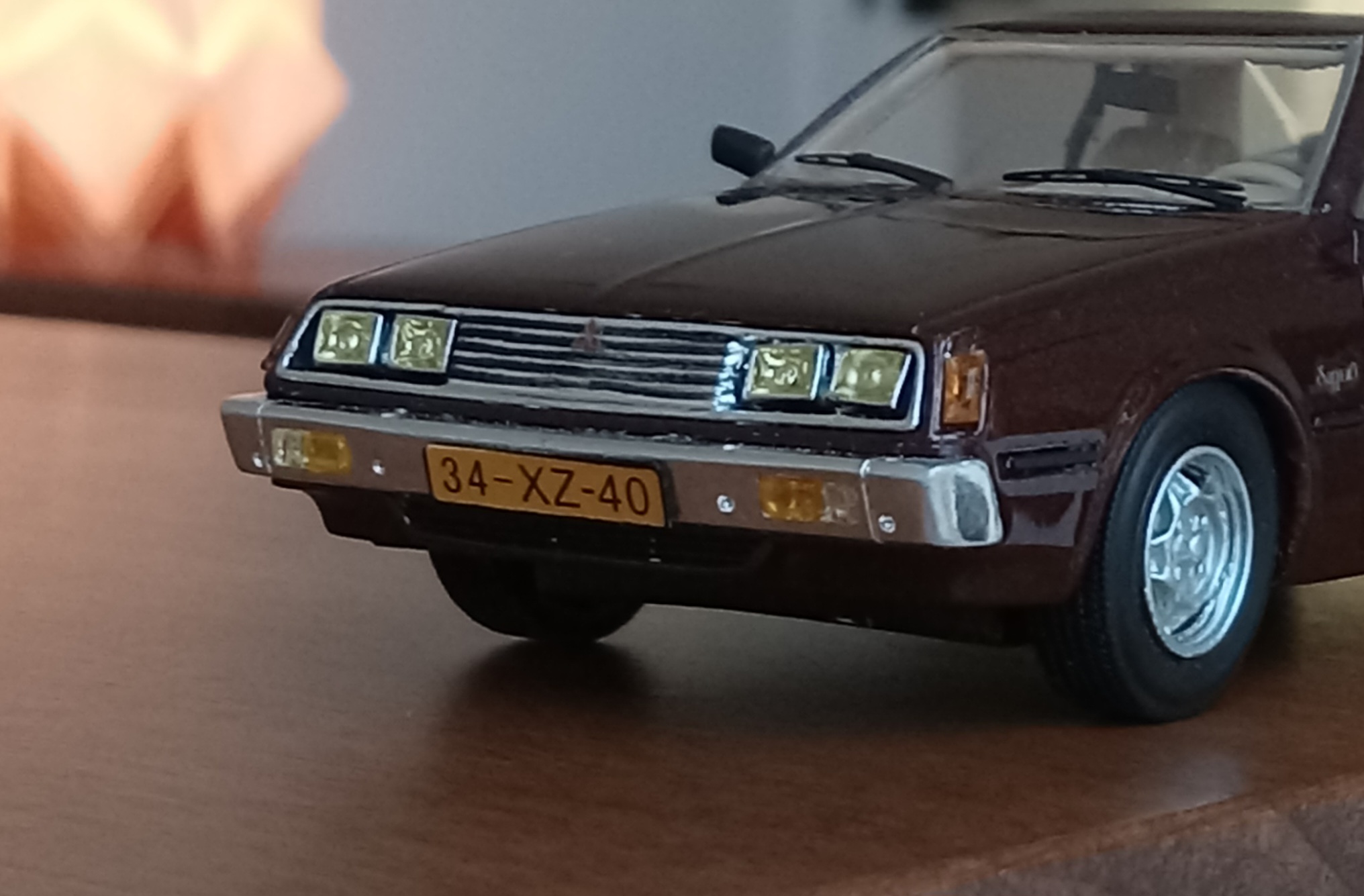
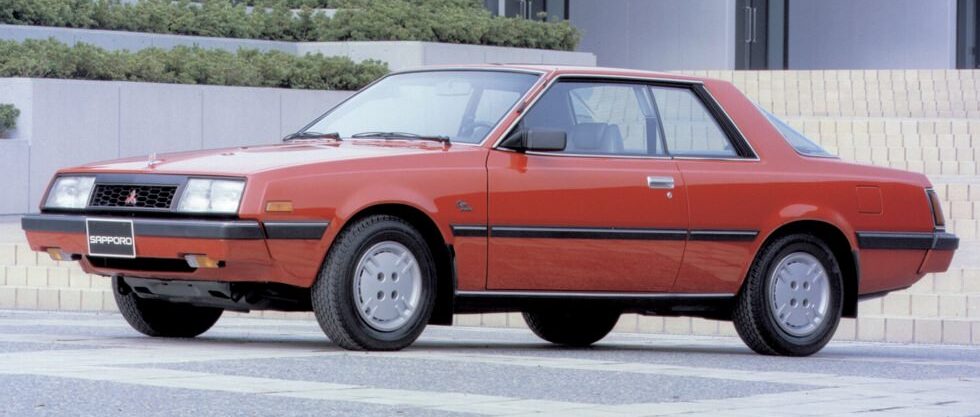
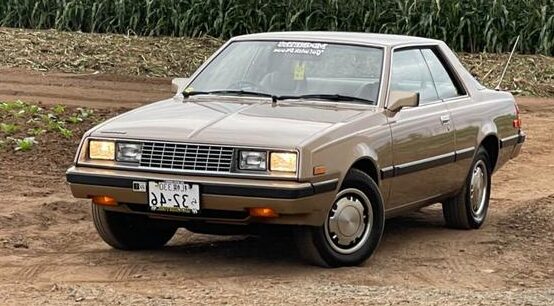
4:格調と落ち着きに満ちたテイルライトライト周りのデザイン
ーーー>高級感の演出に一役買ってます。
5:今に残るデザイン画稿や宣伝・広告素材を見るたびに感じる
ーーーー>みなぎ溢れる、当時の三菱デザインの勢い
*『私』とギャラン・ラムダ:2度惚れの秘密とは?
小学生の頃、
家族で訪れた新車発表会で見た、
衝撃的な日本車!!
【ギャラン・λ】
結局父の心変わりから、
我が家にやってくることはありませんでしたが、、、
その後、月日がたち遠くアメリカ、ロサンゼルスの地で再開した、
ギャランラムダはかなり年季の入った出で立ちで、
名前も、【プリムス・サッポロ】と変化してました。
しかしながらその美しく引き締まった体躯に現われた艶やかさは健在で、
私の友が購入したラムダは、ベースモデルだったということもあり、
モ余分な脂肪がそぎ落とされ、
却って、
その素性の良さがはっきりわかりました。
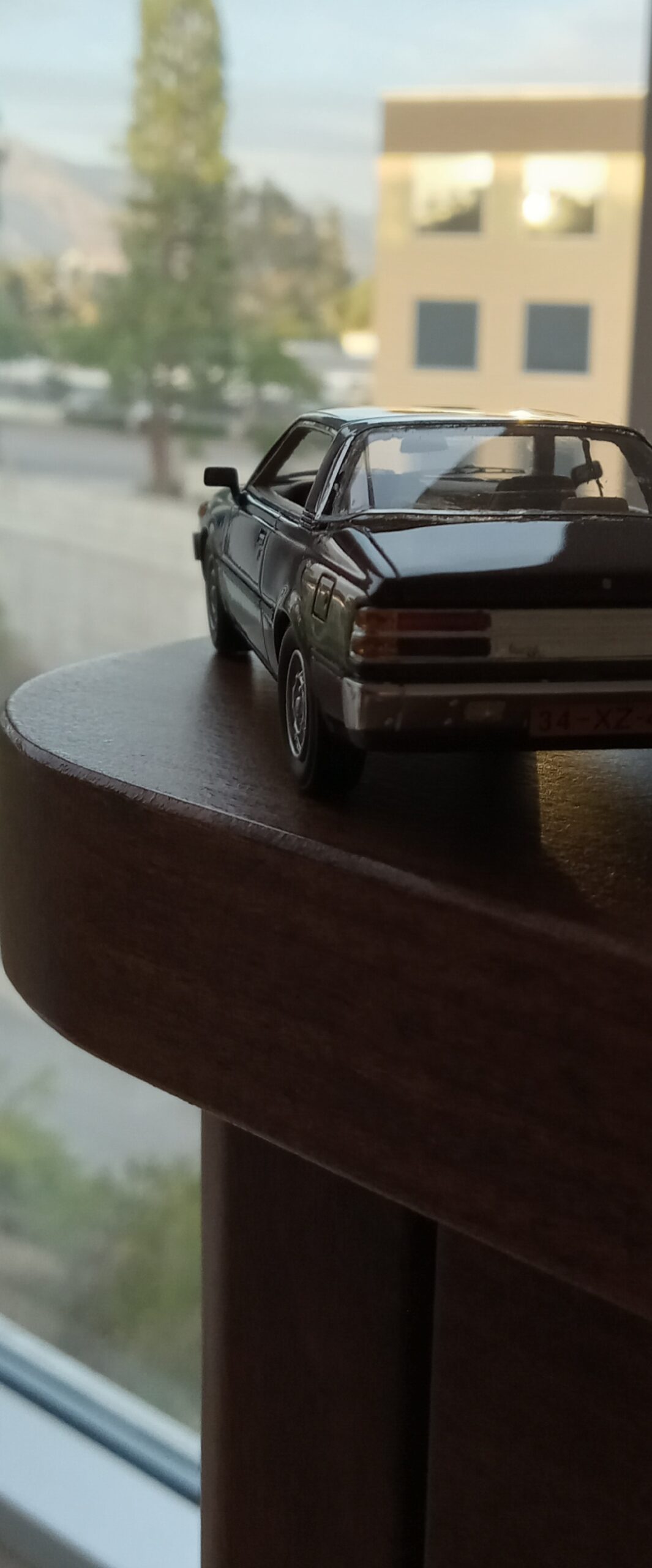
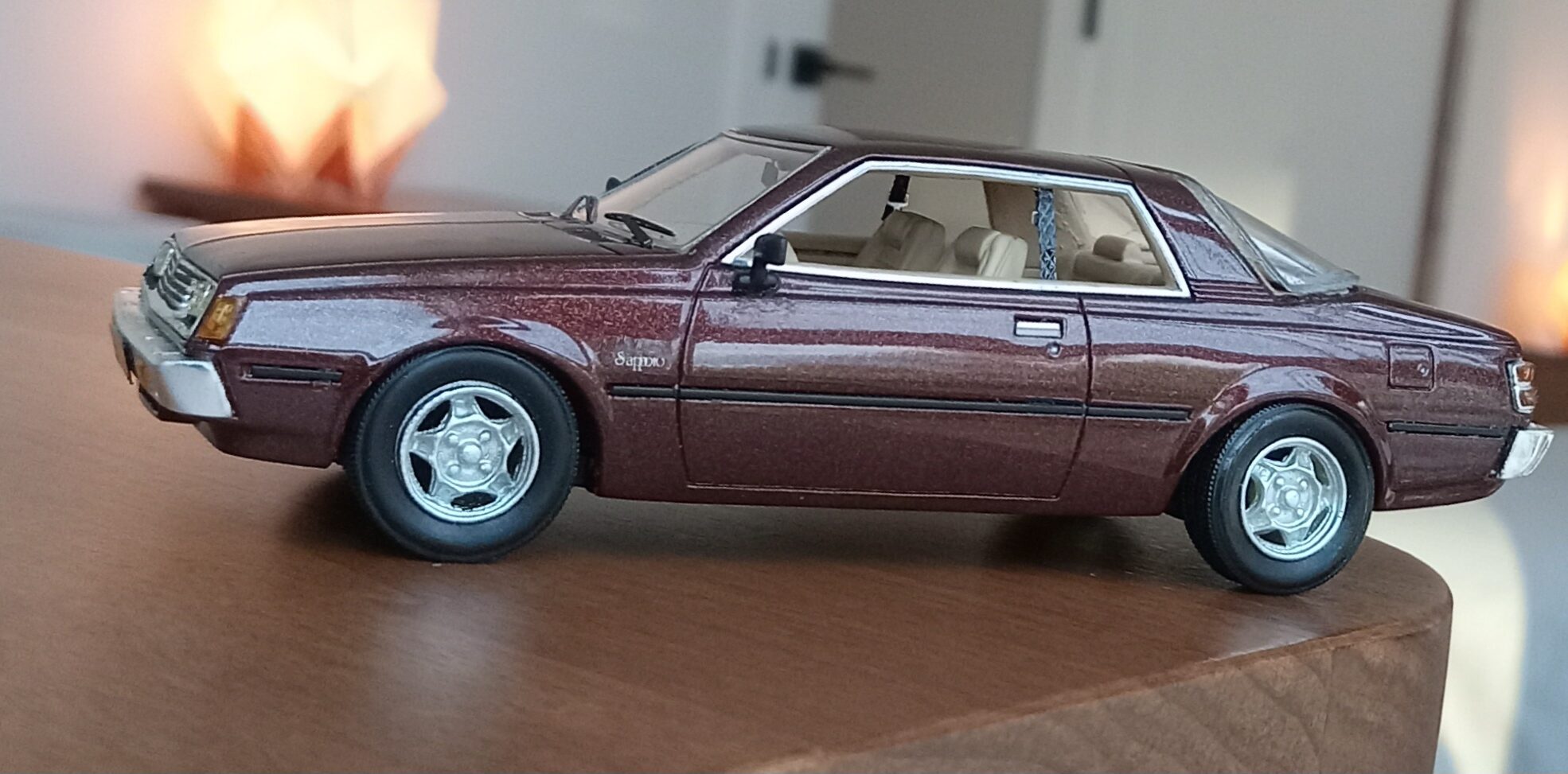
そして今回の記事を書くにあたり見つけたのが、ネオ社の初期の傑作、1/43レジン完成品の『三菱・サッポロ』です。
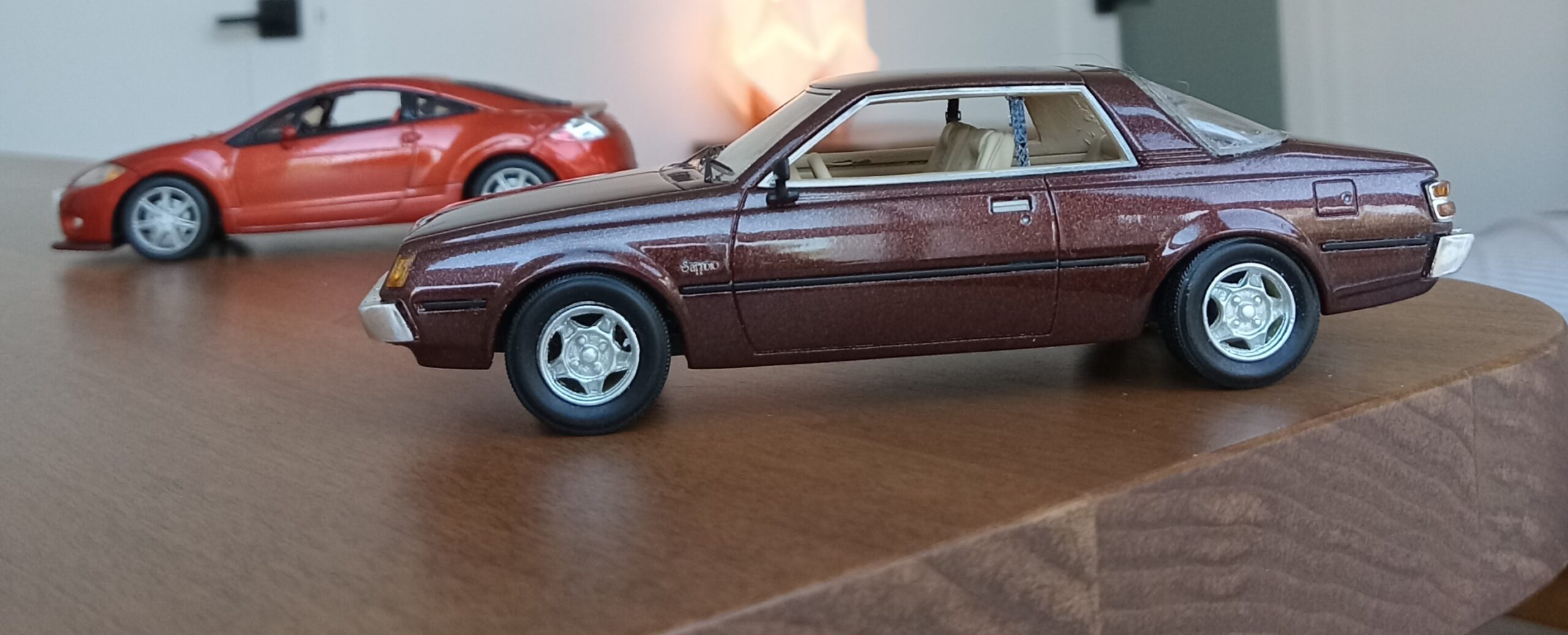
*NEO社製、1/43レジン完成品、三菱・ラムダ・sapporo(ブラウン・メタリック)
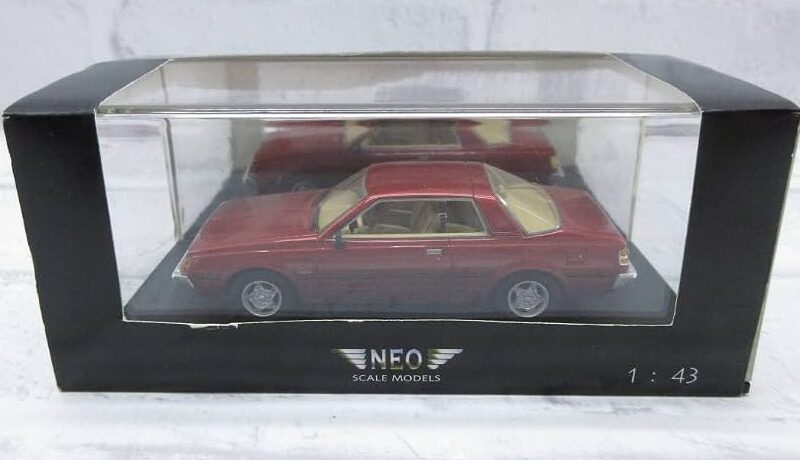
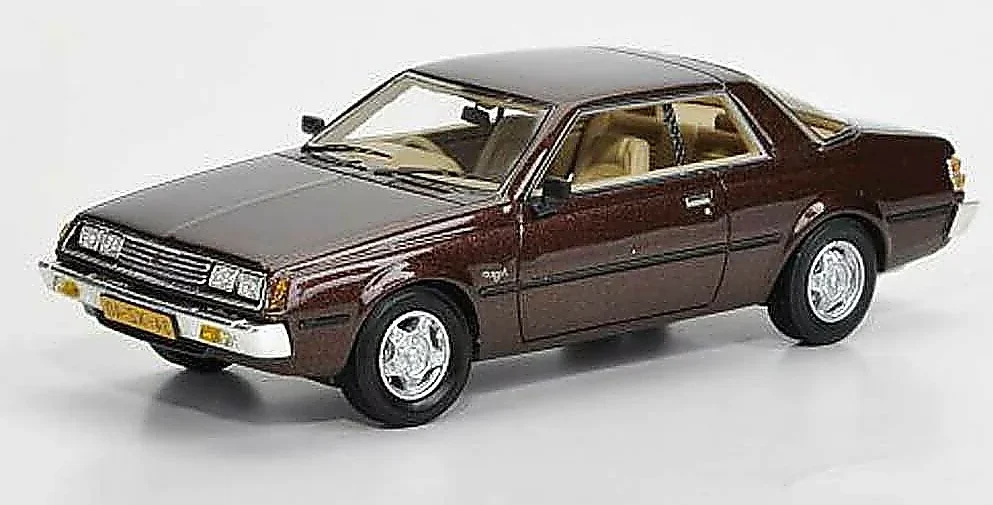
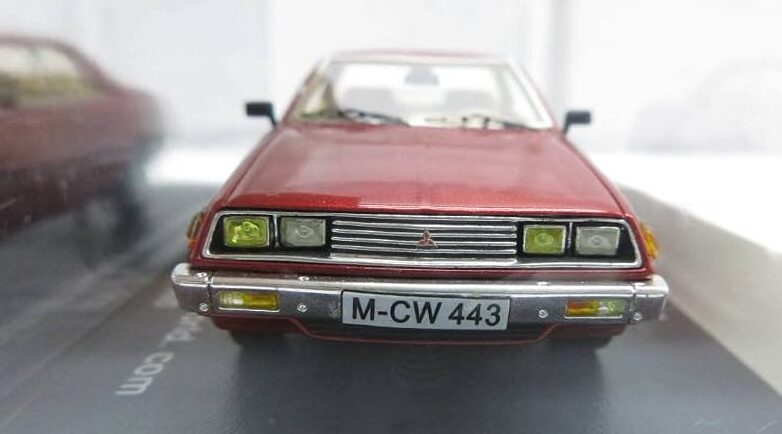 (NEO社創設から日の浅い2000年代の前半ごろ、初代ホンダ・プレリュードなどど同じ時期に発売になり、興味を持って観察していました、ドアの内張部分や『ピラーの裏側の厚み』も表現された、レジンボディーの成形が素晴らしく、今回入手後、経年変化で捲れかけた窓枠を修理し、車高を微調整したら、
---→長年探し続けた恋人と再開したようで、涙が出そうに嬉しかったです。)
それでは、
恒例になりました、
三題噺行ってみましょう!
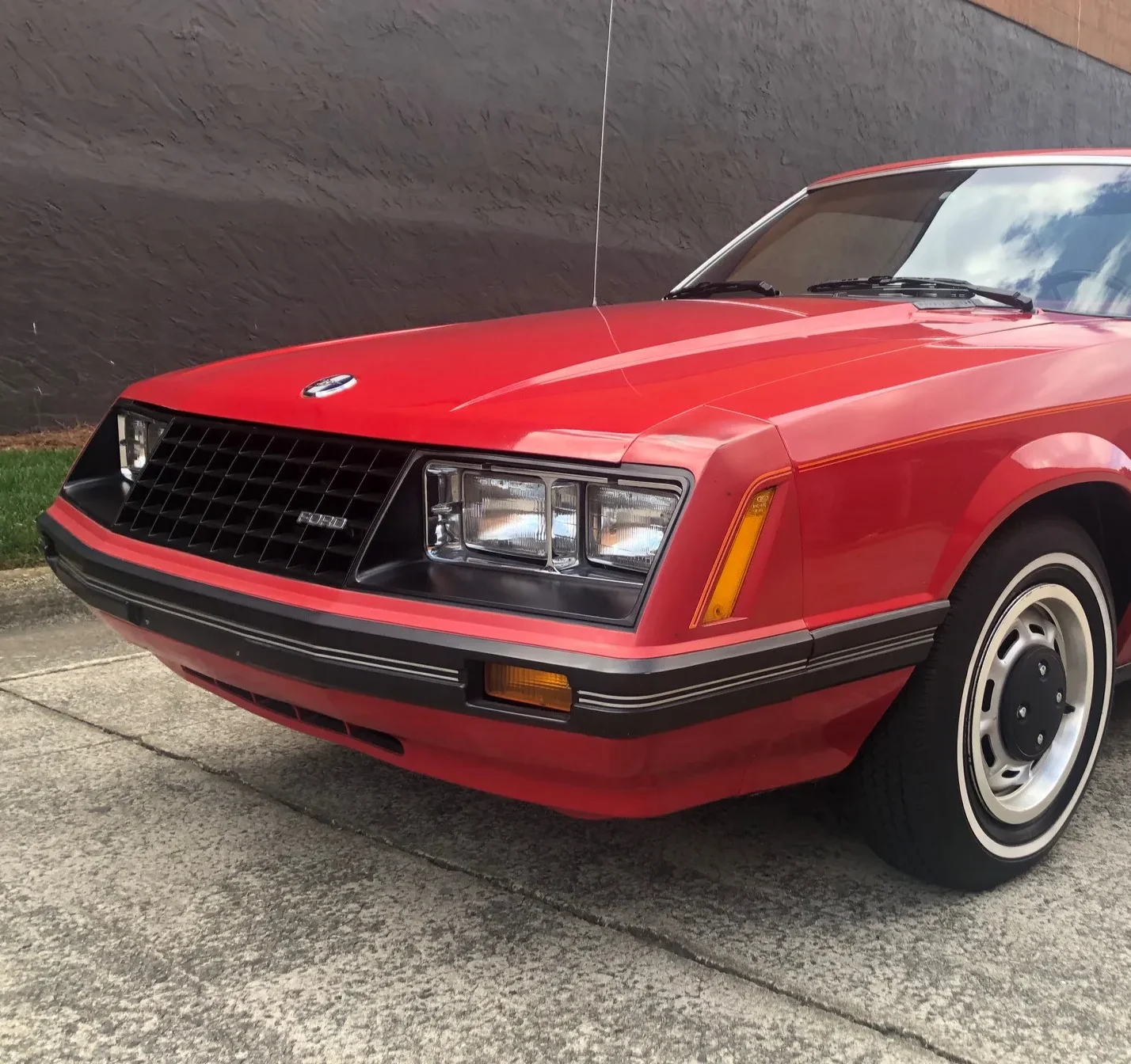
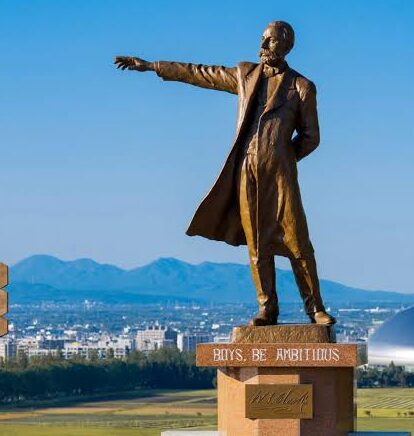
*三題噺:ムスタング1979・札幌・アートセンター【ACCD】
それでは今回も会場のお客様から頂きました、
難題を三つ
お題:
*79年型、ムスタング
*サッポロ
*アートセンター【ACCD】
『AI;ジェミニ君』とのタッグにて、
何とか見事に、
落として見せましょう!
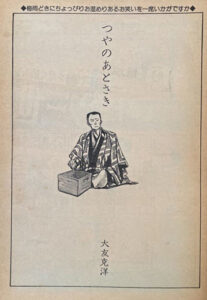
むかしむかし、あるところに……なんてぇお決まりのト書きはいりません。ここはひとつ、『昭和カーデザイン寄席』にお付き合いを願います。
n
N
n
n
n
n
n
n
*その他のハンサムな協業車たち、、、、
今回のラムダのように大成功した協業車を、
独断と偏見で揚げてみたいです。
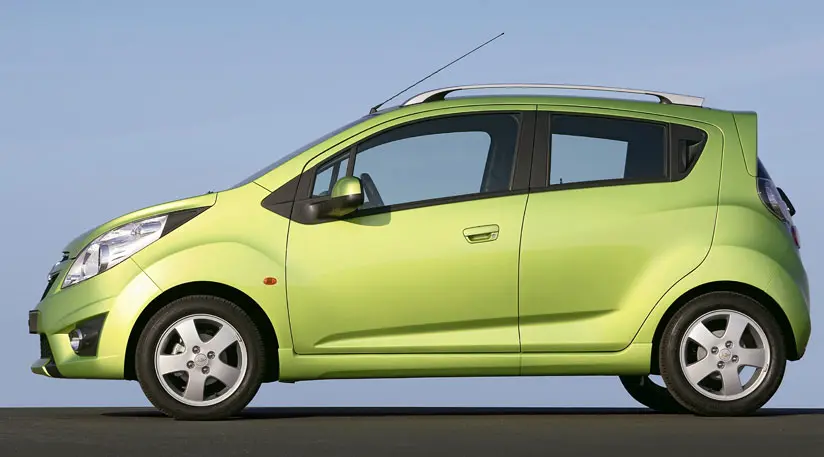
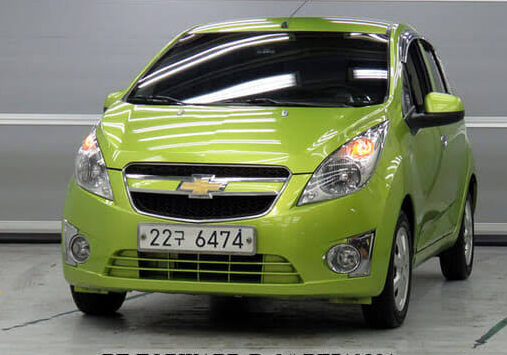
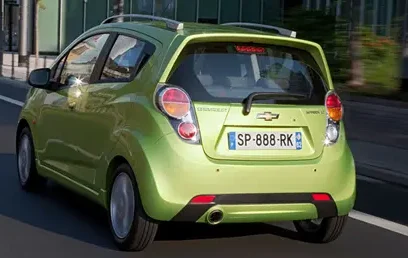
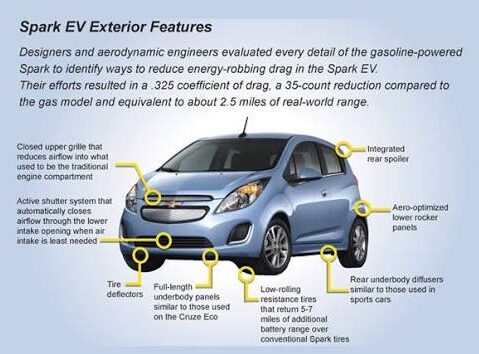
*シボレー・スパーク、2009=大宇・マティス
(GM/大宇の協業車台三代目、大宇がGM傘下に入った後2950億ウォンを投じて開発され、全世界で大ヒット、後半に追加されたEV版の速さは、スパークの名に恥じないものだったそうです!
ーーー>個人的にEV版をあと少しで買いそうになりました。笑)
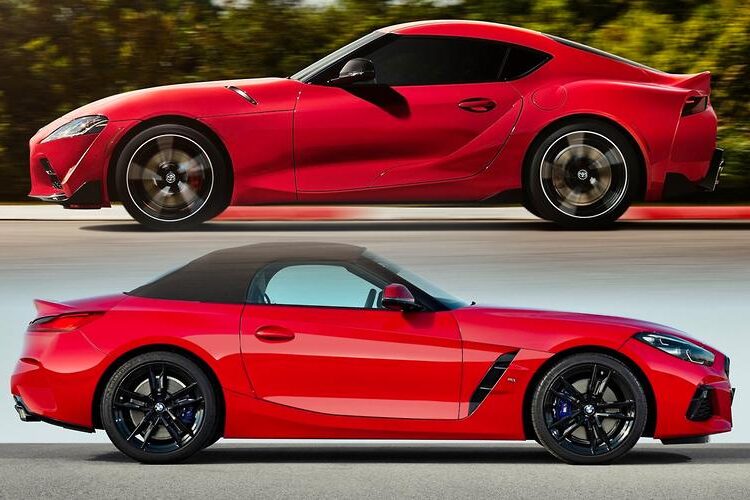
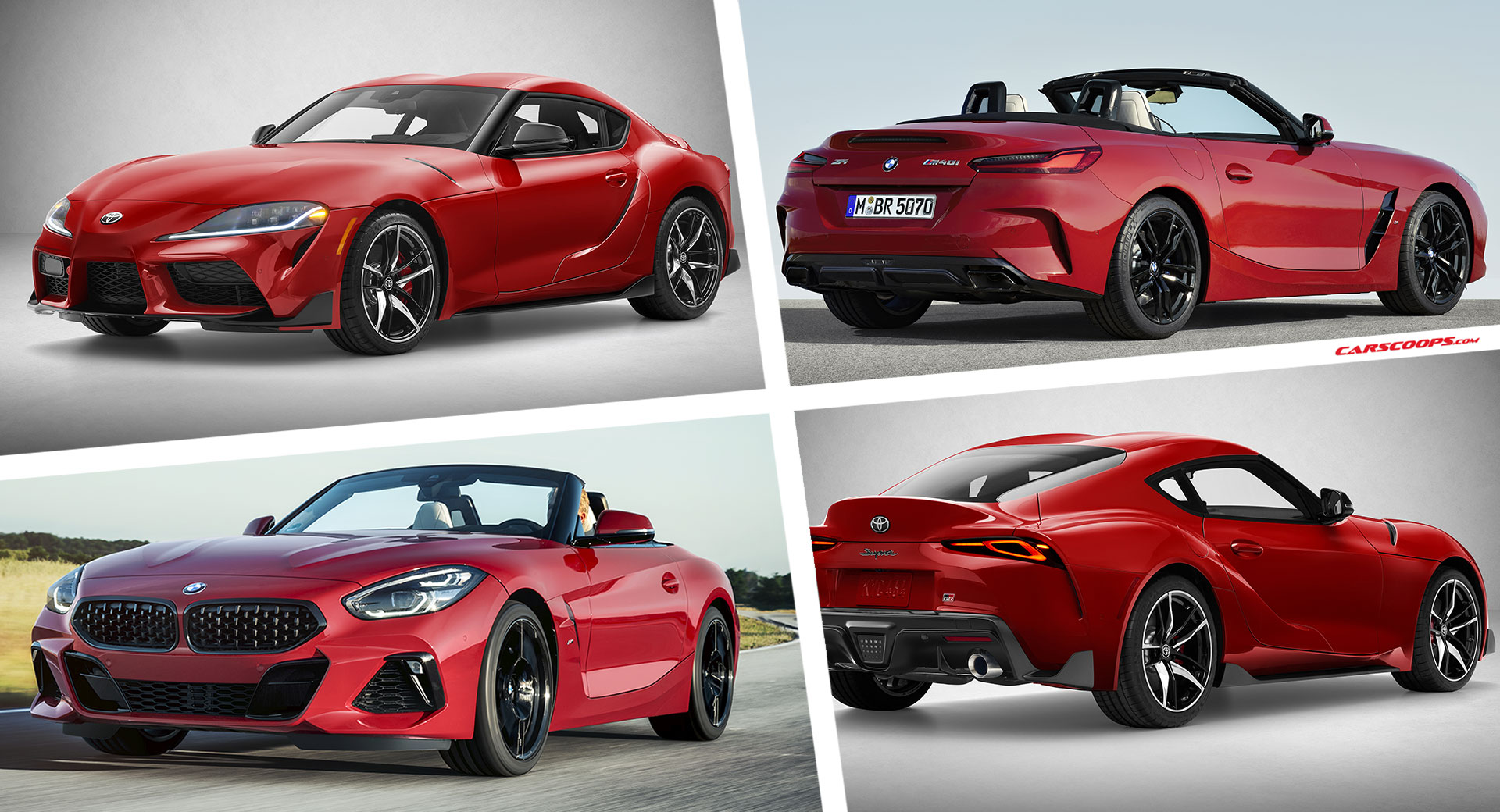
*BMW Z4, 2019=Toyota GR Supra, 2019
(同じシャーシを使いながら全く違った外見デザインを持った2車、かなりコンパクトで濃厚なデザイン=スープラ、のびやかに大柄な+Z4,
ーーー>短命に終わった協業体制が残念です。)
人間社会の異人種間の国際結婚のような、協業車、
私自身も国際結婚をしていることもあってか、
いつも興味津々で見ております。
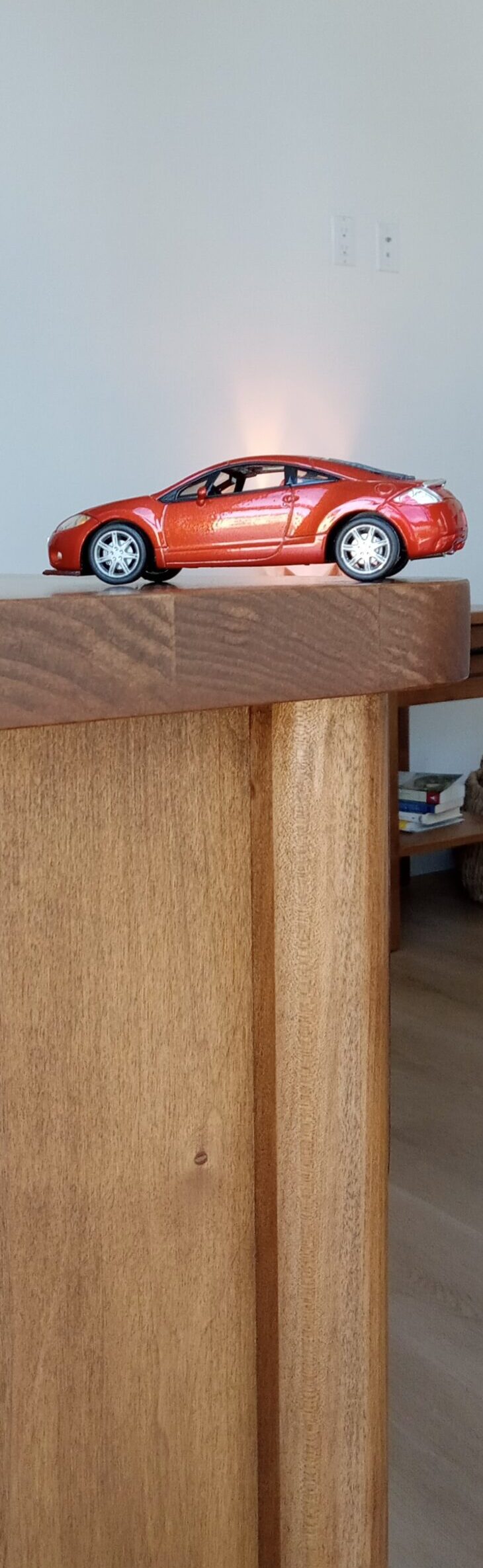
次回は三菱クーペ第2回、
4代目エクリプスに付いてお送りいたします。
お楽しみにーー
本ブログと記事内容につきまして:
ブログ記事を書くにあたり私の目標は、立体造形(料理も含めて)とのかかわりを通じて、私個人の特徴的(ネジ曲がり方も含めて)な評価軸を解明することで、「美しさ・美味しさ」に対する好奇心や、探求心を、どのように満足・充足させてきたのかを明記しておくことです。
従いまして、記事の中に出てくる、数字や年号、微細なデータなどには細心の注意を払っておりますが、時に大きな間違いや勘違いを犯していることも考えられます。特に自動車記事における主要諸元や、年号などには紛らわしいものも多く、あくまで参考程度に考えていただければ幸いです。
私としては、記事の中で個人的な外観デザインや味覚の評価、そこから広がる後半部分につなげるための、『流れ』を作るための客観的材料として年号やデータを挿入している感じです。あくまで重視したいのは、私個人の頭の中で起こる、記憶の錯そう的混沌から生まれる新たな『見方』や『情報の予想外のつながり』です。その勢いを作り出す、『流れ』の一環として、諸データが副次的に必要となるわけです。
話がそれますが、大好きな落語の世界に「三題噺」という、その場て会場から募った3つのお題を使って1つのお話に仕立てるといったお遊びがございますが、私はそれに近いことを立体造形の特徴や(料理のお味)をお題にして行っている感じがします。その中で頭の中に去来する数々の着想が、全く予想外で楽しく、次回からの記事内容を大幅に変えたり、新展開につながっています。
当ブロブの仕組み:
『好奇心の点と線 x 気まぐれ脳内回路=予想外の新展開』
こんな自分勝手なブログですが、今後ともよろしくお願いいたします。
追記:上記の『流れ』を作る為に必要な写真はできる限り、個人所有のミニカー・自前の料理などを使い撮影しておりますが、その他の必要最小限の図版や写真を他のブログ主様の記事や諸会社ホームページなどからお借りしております。(記事内容に合うよう加工させていただき、使用時は最小の解像度で載せております。)問題がある場合、ご連絡いただければ直ちに降ろさせていただきます。
追記2:当ブログ記事に掲載のミニカー写真等(個人撮影)は許可なしで、どのようにお使いいただいても結構です。私個人の創造性はこの世のもの、と言う認識の上で記事を製作しています。
!!!!!!!!!!!!!!!!!!!!!!!!!!!!!!!!!!!! Translated in English !!!!!!!!!!!!!!!!!!!!!!!!!!!!!!!!!!!!
(Photographic model: Manufactured by NEO, 1/43 scale resin ready-to-display model, Mitsubishi Sapporo [Galant Lambda] (Dominica Brown) ——> Modifications: The chassis was disassembled to optimize the axle and tire positions)
Favorite Car Designs: Part 46—The Lineage of 2-Door Coupes: Part 26 [Japanese Cars: Mitsubishi Edition] Mitsubishi Galant λ [Lambda], 1976 (Dominica Brown Metallic) “North American Name: Mitsubishi Sapporo?” Mitsubishi Galant λ [Lambda] “Called Mitsubishi Sapporo! in the U.S.”
#Favorite Car Designs—The Lineage of 2-Door Coupes:
For this 46th installment, titled “The Lineage of 2-Door Coupes, Part 26,” I’d like to discuss luxury 2-door (GT) coupes and roadsters, which strongly reflect the national character and unique exterior design styles of various countries. [Note: Includes convertibles]
We’ll proceed as follows.
In this 26th installment, we’ll finally move on to
[Japanese Cars: Mitsubishi Edition],
featuring the
Mitsubishi Galant λ (Dominica Brown Metallic),
released in 1976.
[The Lineage of 2-Door Coupes: Table of Contents]
[American Cars]
Episode 1: Cadillac El Mirage, 2013 (Metallic Red)
Episode 2: Lincoln Continental MK4, 1972 (Black)
Part 3: Mercury Cougar, 1967 (LT Metallic Green)
[German Cars]
Part 4: MB 500K Special Roadster, 1936 (Black)
Part 5: MB 300SL Roadster, 1957 (Silver)
Part 6: MB SLS AMR Gullwing, 2010 (Black)
[British Cars]
Part 7: McLaren F1, 1992 (Metallic Orange)
Part 8: Jaguar XKSS Roadster, 1957 (Royal Blue)
Part 9: Jaguar XKR Coupe, 1996 (Dark Metallic Green)
[Japanese Cars / Nissan Edition]
Part 10: Nissan First-Generation Silvia, 1965 (Champagne Gold)
Part 11: Nissan Fifth-Generation Silvia, 1988 (LT Metallic Green)
[Italian Cars Edition]
Part 12: Ferrari 250TR Pontoon Fender, 1958 (Red)
Episode 13: Ferrari 250 GTO, 1962 (Italian Red)
Episode 14: Lamborghini Concept S, 2005 (Pearl White)
[Japanese Cars: Mazda Edition]
Episode 15: Mazda Cosmo Sport, 1968 (Racing White)
Episode 16: Mazda Eunos Cosmo, Type-S (2-ton: Black & Gray)
[French Cars]
Episode 17: Bugatti Type 59, 1935 (French Blue)
Episode 18: Citroën SM, 1970 (Champagne Gold)
Episode 19: Bugatti La Voiture Noire, 2019 (Black)
[Japanese Cars: Toyota Edition]
Episode 20: Toyota/Yamaha 2000GT, 1967 (Ivory White)
Episode 21: Toyota 2nd-Generation Soarer, 1986 (Crystal White II)
Episode 22: Lexus LC500 [GWZ100], 2017 (Manual Transmission, Red)
[American Cars Part 2]
Episode 23: Dodge Challenger, 1970 & Plymouth Barracuda, 1971
Episode 24: Dodge Viper SRT-10 ACR, 2008 (Black)
Episode 25: Ford Shelby GR-1 Concept, 2004 (Chrome)
[Japanese Cars: Mitsubishi Edition]
Episode 26: Mitsubishi Galant λ, 1976 (Brown Metallic)
Episode 27: Mitsubishi Eclipse [North American Spec], 2006 (Orange Metallic)
[German Cars Part 2]
Episode 28: BMW M635CSi, 1984 (Dark Metallic Blue)
Episode 29: Mercedes-Benz 560SEC AMG 6.0 Widebody, 1989 (Black)
Episode 30: BMW M2 with Genuine Performance Parts, 2025 (Neon Lime)
Episode 31: First-Generation Audi TT, 1998 (Lake Silver Metallic)
[Japanese Cars: Subaru Edition]
Episode 32: Subaru Crosstrek XV, 2012 (Lime Green Metallic)
[British Cars Part 2]
Episode 33: Lotus First-Generation Elite, 1959 (British Green)
Episode 34: Lotus Elan S4 Sprint (2-Tone: Blue, White & Gold)
Episode 35: Jaguar E-Type Roadster (Light Blue Metallic)
[Japanese Cars: Honda (Lightweight Sports Cars)]
Episode 36: Honda S800, 1966 (Red)
Episode 37: Honda First-Generation CR-X 1.5i, 1983 (Blue & Silver Two-Tone)
Episode 38: Honda Beat, 1991 (Samba Yellow)
[Special Edition]: The Corvette Lineage
Episode 1: 1967 Stingray [C2] Convertible (Hardtop, Metallic Blue)
Episode 2: 1972 Corvette [C3] Convertible (Metallic Blue)
Episode 3: 1984 Corvette Coupe [C4] (Bright Red)
Episode 4: Corvette Indy [Mid-Ship Prototype] (Silver)
Episode 5: Stingray Concept [Prototype], 2009 (Blue Metallic)
#Mitsubishi x Chrysler: A Powerhouse Born from a Japan-U.S. Partnership!
It’s finally here—
our feature on the legendary cars born from the golden age of collaboration between Mitsubishi and Chrysler.
We’ll be bringing you this feature in two consecutive installments: this one and the next!
Episode 001: Mitsubishi Galant Lambda, 1984 (Brown Metallic)
Episode 002: Mitsubishi Eclipse [4th Generation], 2007 (Orange Metallic)
Born as a compact two-door coupe from the strengthened Mitsubishi-Chrysler partnership that began in the early 1980s, the Mitsubishi Galant Lambda became a massive hit through Chrysler’s North American sales network as:
* Dodge Challenger
* Plymouth Sapporo,
and greatly contributed to establishing the Mitsubishi brand in the U.S. market, paving the way for subsequent models like the Eclipse.
Personally,
seeing the Mitsubishi Galant Lambda in TV commercials and car magazines
got me really excited!
I teamed up with my dad and younger brother—both huge car enthusiasts—
*to go to car shows,
*and to study the catalogs until we knew them by heart,
and we were absolutely wild about it.
In the end, though, the image was a bit too flashy for my taste,
and I also wanted to save face for my uncle who worked at Mazda,
so we ended up buying a used Mazda Luce. T_T (The gas mileage was terrible, so we sold it off after just half a year!)
The Galant Lambda featured
* the trapezoidal cross-sections of previous Galant models, and
* a body structure and proportions at the cutting edge of global design trends,
which struck an exquisite balance between Japanese delicacy and American boldness,
creating an indescribably deep charm.
So, with that in mind,
let’s move forward.
* Real-Car Review: That Unique “Buttery” Scent Is the Key…
* Exterior Design Features:
* “Me” and the Galant Lambda
* Three-Theme Story: 1979 Third-Generation Mustang, Sapporo, Art Center [ACCD]
* Other Handsome Collaborative Models…
* Real Car Review: That Unique “Buttery” Scent Is the Deciding Factor!
The Mitsubishi Galant Λ (Lambda) is
n
a two-door luxury specialty coupe characterized by a bold, innovative design that stood out from typical Japanese cars, manufactured and sold by Mitsubishi Motors from 1976 to 1984. It was the coupe version of the four-door sedan “Galant Σ (Sigma),” which was released during the same period, and debuted as the successor to the “Galant GTO” and “Galant Hardtop.”
With its straight-line styling—unseen in Japanese cars at the time—and luxurious interior, it gained immense popularity, particularly among young people, and was widely exported to overseas markets, primarily North America, through OEM supply agreements.
n
n
n
n
n
n
n
n
n
n
n
n
n
n
n
n
n
n
n
n
n
n
n
n
n
n
n
n
n
n
n
n
n
n
n
n
n
n
n
n
n
n
n
n
n
n
n
* Adoption of Square Four-Light Headlights
At a time when round headlights and curved “Coke bottle” lines were the norm, this was the first Japanese car to feature “square four-light headlights” and a slanted nose, creating a cutting-edge appearance
* Distinctive Quarter Pillars and Rear Window
Its most distinctive feature is the canopy-style design, which combines an aluminum-look C-pillar garnish—reminiscent of a thick roll bar—with a “wrap-around rear window” (third-order curved glass) that appears as if the corners of the glass have been forcefully bent.
* An Ultra-Innovative, Futuristic Interior
The interior featured a “single-spoke steering wheel,” a first for a Japanese car. Furthermore, with elements like the “overhead console” (ceiling-mounted clock and switches) reminiscent of an aircraft, the cockpit was finished with a highly futuristic and distinctive feel.
History and Mechanics by Generation:
* First Generation (1976–1980)
It shared a platform with the four-door Galant Σ sedan and utilized a FR (rear-wheel-drive) layout. The engine lineup began with the inline-four “Astron” engine (2.0L), equipped with the groundbreaking “Silent Shaft” balancer shaft technology designed to cancel out unpleasant vibrations. Later, a 1.6L “Saturn” engine was added, as well as models equipped with the “MCA-JET” system—which met the strict emissions regulations of the time—and a more powerful 2.6L engine (2600 Super Touring).
n
n
Global Expansion (Overseas Model Names):
n
The Galant Λ was actively exported overseas through Chrysler Corporation in the U.S., with which Mitsubishi had a partnership, and enjoyed great popularity in those markets as well.
* North American market: “Dodge Challenger” (2nd generation) / “Plymouth Sapporo”
* European and South American markets: “Mitsubishi Sapporo” (named after the 1972 Sapporo Winter Olympics)
* Australian market: “Chrysler Sigma Scorpion”
n
n
Additionally, as a sister model in the Japanese domestic market,
there was the “Eterna Λ (Lambda),” a model sold exclusively at the newly established Car Plaza dealerships in 1978.
Three-view photos:
#Key Specifications:
n
n
n
n
Engine Model: 4G52 (Astron)
Total Displacement: 1,995 cc, water-cooled inline-4 SOHC
Maximum Power: 115 ps / 6,000 rpm
Maximum Torque: 16.5 kg·m / 4,000 rpm
Drivetrain: FR (front-engine, rear-wheel drive)
Seating Capacity: 4 passengers
Body Style: 2-door (4-passenger) coupe
Wheelbase: 2,515 mm
Overall Length: 4,510 mm
Overall Width: 1,675 mm
Overall Height: 1,310 mm
Weight: Approx. 1,120 kg
Reference Materials:
List of “Japanese-U.S. Twin and Sister Cars” Born from the Era of Collaboration and Close Partnership
nn
This is a comparison table of representative models that shared platforms and engines between the two companies, symbolizing the era of close partnership.
n
Mitsubishi Brand Name (Japan/North America) Brand Name Under Chrysler Features/Explanation
Colt Galant Dodge Colt The first model resulting from the collaboration. A fuel-efficient car that cemented Mitsubishi’s reputation for reliability in North America.
Galant Lambda Dodge Challenger / Plymouth Sapporo A stylish two-door hardtop. Popular among young people for its American-style design.
Stallion Chrysler Conquest A turbo sports car emblematic of the 1980s. Both shared a wide-body design with flared fenders.
Eclipse Eagle Talon / Plymouth Laser The symbol of DSM. It dominated the U.S. racing scene with the combination of the 4G63 engine and AWD.
GTO (North American name: 3000GT) Dodge Stealth Mitsubishi’s high-tech sports car. The Stealth features a significantly redesigned exterior in the American car style.
Galant / Eclipse Series Chrysler Sebring / Dodge Avenger Front-wheel-drive coupes from the late 1990s. Although built by Mitsubishi, they were marketed as elegant American-made coupes.
* Exterior Design Features: The charm of refined Japanese neo-classical styling!
Exported worldwide and
a huge success, Mitsubishi Motors’
masterpiece of international design,
the “Galant Sigma/Lambda” siblings,
and among them, the more avant-garde younger sister,
our very own: Lambda “λ”
So, based on my own subjective judgment and bias,
I’ve selected 5 key features of the “Lambda’s” exterior design
1: The novelty of its “diamond-cut” body language—characterized by strong, straight lines that emphasize slanted surfaces—which incorporated the world’s most cutting-edge design trends of the time ahead of other manufacturers, radiating power throughout the entire vehicle
――> It holds its own against even downsized American cars in terms of its fluidity and the vitality of its proportions!!
2: The innovative harmony created by the C-pillar—which cuts into the calm, low-slung roofline in a Targa-style—and the wraparound rear window that envelops it.
――ーー>Even today, it’s so beautifully put together that it takes your breath away.
3: The crisp, square four-headlight setup—a first for Japan—and how well it integrates with the surrounding frame-style grille design.
4: The design around the taillights, full of elegance and composure――>It plays a key role in creating a sense of luxury.
5: Something I feel every time I look at the design sketches and promotional materials that have survived to this day――>The overflowing energy of Mitsubishi’s design at that time
Now, let’s go through them one by one
with photos.
1: The novelty of the “Diamond Cut” body language—a straight-line design emphasizing slanted surfaces—that radiates power throughout the entire vehicle, having adopted the world’s most cutting-edge design trends of the time ahead of other manufacturers
(Every line that makes up the body’s form is precise and free of excess; each aligns perfectly, creating a playful and cheerful balance between “motion and stillness” in the FR proportions. Specifically, the combination of a “broad chest” and “flowing water droplets” is subtly achieved through the exquisite sweep of the lower body.)
—> It holds its own against even downsized American cars in terms of its fluidity and the vitality of its proportions!!
2: The innovative harmony created by the C-pillar—which cuts through the calm, low-sweeping roofline in a Targa-style—and the wraparound rear window that envelops it
(It presents the cluttered C-pillar area—common in American cars of that era—in an extremely simple yet effective way. In the later luxury version (2600 cc model), this section was finished in leather, further enhancing the sense of luxury.)
――ーー>Even today, it’s so beautifully put together that it takes your breath away.
3: The crisp, square four-headlight setup—a first for Japan—and how well it integrates with the surrounding frame-style grille design.
(The designs around the front grille vary by country—such as the Japanese Lambda, Plymouth, Dodge, and Australian versions—each showcasing its own unique character.)
4: The design around the taillights, which exudes elegance and sophistication.
―――> It plays a key role in creating a sense of luxury.
5: What I feel every time I look at the design sketches and promotional materials that have survived to this day
ーーーー>The overflowing energy of Mitsubishi’s design at the time
*“Me” and the Galant Lambda: What’s the secret behind falling in love with it twice?
Back when I was in elementary school,
at a new car launch event I attended with my family,
I saw a Japanese car that left a lasting impression!!
[Galant Lambda]
In the end, due to my father changing his mind,
it never made it to our home…
Years later, I reunited with it in faraway Los Angeles, USA.
The Galant Lambda had a well-worn appearance,
and its name had changed to [Plymouth Sapporo].
However, the lustrous beauty evident in its sleek, well-defined body remained intact,
and since the Lambda my friend purchased was the base model,
all the excess “fat” had been stripped away,
which, in fact,
made its excellent pedigree all the more apparent.
And while writing this article, I came across an early masterpiece from NEO: the 1/43 resin ready-to-display model, the “Mitsubishi Sapporo.”
*NEO, 1/43 resin ready-to-display model, Mitsubishi Lambda “Sapporo” (Brown Metallic)
(Released in the early 2000s, shortly after NEO was founded—around the same time as the first-generation Honda Prelude—I’d been observing it with interest. The resin body molding is superb, capturing even the door trim and the “thickness behind the pillars.” After acquiring it this time, I repaired the window frames that had started to peel due to aging and made minor adjustments to the ride height, and
---→ It felt like reuniting with a lover I’d been searching for all these years; I was so happy I almost cried.)
Now then,
as has become our tradition,
let’s get started with the “Three-Theme Story”!
*Three-Theme Story: 1979 Mustang, Sapporo, Art Center [ACCD]
So, once again, here are three
challenging prompts
from the audience at the venue:
* 1979 Mustang
* Sapporo
* Art Center [ACCD]
Teaming up with “AI: Gemini-kun,”
we’ll somehow manage to
pull it off in spectacular fashion!
n
“Once upon a time, in a certain place…”—we don’t need that kind of clichéd stage direction here. Instead, please join us for the “Showa Car Design Variety Show.”
n
N
Today’s feature is the first-generation “Mitsubishi Galant Lambda,” which appeared like a comet in 1976. Let’s delve deeply into this legendary car from the perspective of its designers at the time. I’ve been given three topics in advance: the “1979 (3rd-generation) Mustang,” the “Plymouth Sapporo,” and the prestigious “Art Center College of Design.” While incorporating these elements, I’d like to share the story of the beautiful success of this Japan-U.S. collaboration.
First, please bear with me for a moment.
***
n
n
“Hey, Kuma-san, come on in. Why are you staring so intently at my Lambda parked out front?”
n
“Well, Hachisan, I’m always in awe of your car, no matter how many times I see it. Especially that rear window. The way it wraps all the way around, with those slender pillars—it’s just like the canopy of a spaceship, isn’t it?”
n
“Whoa, to notice that, Mr. Kuma—you’re quite the connoisseur yourself! That ‘wrap-around rear window’ is the very heart and soul of this Lambda’s exterior design. It uses glass with a smooth curve that was almost unbelievable for its time, and by making the C-pillar (the rear pillar) look slender, it completely eliminates the heaviness typical of coupes. That’s not just glass—it’s a work of art born from Japanese glass-molding technology of the era and the designer’s sheer determination.”
n
“Huh, sheer determination, huh? But you know, the overall silhouette feels somehow unlike a typical Japanese car—or maybe a bit too ‘American’… It reeks of America.”
n
“Well, of course. This first-generation Lambda was designed with the American market firmly in mind from the very beginning. Among the Japanese designers at Mitsubishi back then were several elites who had studied cutting-edge car design at the prestigious Art Center College of Design in California. That place is the Mecca of automotive design worldwide. It’s based on straight lines, but it captivates with the tension in its surfaces and the sharpness of its edges. The very essence of ‘International Modernism’—honed at Art Center—runs through the very bones of this Lambda.”
n
“I see. That’s why it looks so sophisticated. Those square quad headlights up front are sharp and handsome, too.”
n
“Exactly! The combination of those square quad headlights and the slanted nose is irresistible, isn’t it? It’s a world apart from the ‘over-the-top Japanese-style American’ cars that were common back then, with their excessive chrome plating. It’s the aesthetics of subtraction. That single, sharp character line running along the side flows beautifully all the way to the taillights at the rear. It strips away all the unnecessary frills and relies solely on the beauty of its proportions.”
n
“But Hachisan, the interior is amazing, too. I caught a quick glimpse earlier—the steering wheel is a single-spoke design, isn’t it? With that, I’d be at a loss as to where to grip it while driving.”
n
“Hahaha, there’s no need to worry about that! That single-spoke steering wheel is the crowning glory of the Lambda—a perfect fusion of mechanics and design. It’s a rational design meant to maximize the visibility of the gauges to the absolute limit. Plus, the switches on the dashboard are arranged to surround the driver, just like in an airplane cockpit. If the exterior looks futuristic, the interior is futuristic luxury. This is the kind of sophistication you’d expect from a sophisticated personal coupe.”
n
“Speaking of mechanics, I hear it’s not just about the looks—it’s also known for being quiet to drive, right?”
n
“You really know your stuff! The inner workings are packed with Mitsubishi’s proudest inventions. The inline-four ‘Astron Engine’ incorporates two balance shafts called ‘Silent Shafts.’ When these rotate, they cancel out the unpleasant vibrations typical of a four-cylinder engine. As a result, it achieves a level of quietness and smoothness on par with a V8 engine. Japan’s meticulous engineering brilliantly supported the ‘smooth and quiet cruising’ that Americans love.”
n
“Wow! The design and driving performance are American-inspired, but the craftsmanship is quintessentially Japanese. It truly takes the best of both Japan and the U.S.”
n
“Exactly! That’s precisely why this car crossed the ocean and was highly acclaimed in the U.S. as well. Through Chrysler, it was sold over there under the incredibly stylish name ‘Plymouth Sapporo.’ At a time when memories of the Sapporo Olympics—a symbol of Japan’s period of rapid economic growth—were still fresh, it captivated American youth and the intellectual class as a cool Japanese coupe. Chrysler in the U.S. handled marketing and sales, while Mitsubishi in Japan perfected the design and manufacturing. That’s exactly what you’d call a ‘beautiful success story of Japan-U.S. collaboration.’”
n
“The Plymouth Sapporo, huh? Just hearing the name makes me think of a car that’s—not cold and delicious, but—cool. But hey, Hachisan, didn’t that sleek, modern design from that era influence the American originals as well?”
n
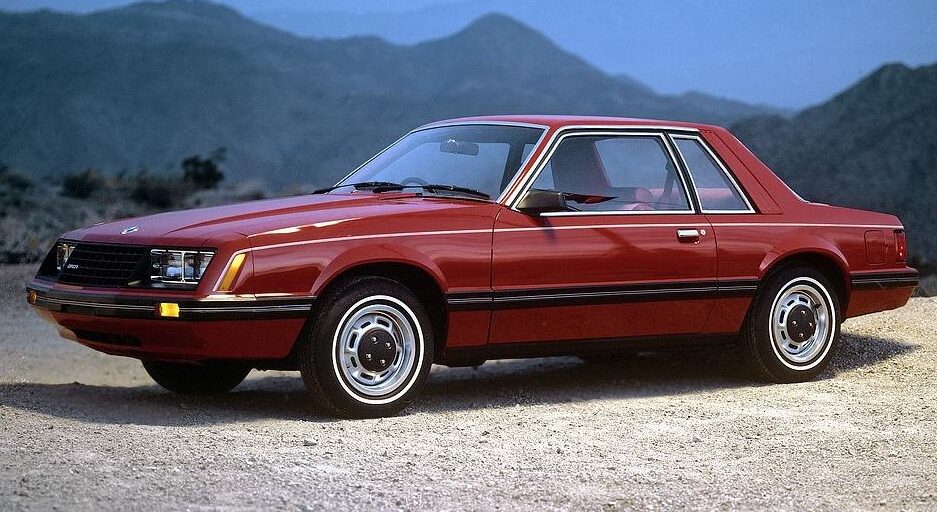
“Whoa, Kuma-san, you’re on a roll today! You’re absolutely right. The ‘clean, compact coupe concept based on straight lines’ that Lambda proposed made a huge impact on the Detroit giants, who were tired of big, heavy American cars. As proof, let’s fast-forward the clock about three years. Take a look at the ‘1979 third-generation Mustang’ (commonly known as the Mustang Fox Body), that iconic American symbol that debuted in 1979. It was a complete departure from the rugged, muscle-car look of the past, reborn with a clean, European-style, straight-line-based, sleek design—just like the Lambda and the Sapporo, right?”
n
“Ah! You’re right—that third-generation Mustang, with its square headlights and sleek lines, does remind me a bit of the Lambda!”
n
“See? Japan learned the fundamentals of design from America’s ‘Art Center,’ refined them with its own technology, and gave back to America in the form of the ‘Plymouth Sapporo.’ Then, in turn, the time-honored American ‘Mustang’ evolved by incorporating that clean aesthetic. This is the very essence of a joyful back-and-forth between Japan and the U.S. through design—a hugely successful story of collaboration. The Lambda isn’t just some old Japanese car. It was a bridge of passion built by designers across the Pacific!”
n
“Wow, that’s deep… Hearing about the history of design has really made my heart swell. Hachisan, let me drive the Lambda—the culmination of that Japan-U.S. collaboration—at least once! ”
n
“No problem at all, Kuma-san. Here’s the key. But you know, this car is magical—it makes everyone break into a smile the moment they get in, whether in the U.S. or Japan—so please be mindful when you drive it, okay?”
n
“Wow, it makes everyone smile just by getting in? Why’s that?”
n
“Well, duh—it’s a car built through a rock-solid partnership between Japan and the U.S. No matter how much you’re ‘crying’ (Chrysler) on American roads, if you ‘meet’ (Meets/Mitsubishi) this legendary Japanese car, the road will open up and every day will be ‘sharp’ (Mitsubishi) and happy!”
n
“I see! Just by ‘meeting’ it, every day turns out sharp and perfect. That’s truly a huge success for Japan-U.S. collaboration!”
***
That seems to wrap things up nicely.
n
n
n
n
n
n
n
n
n
n
n
n
m
n
n
n
*Other handsome collaborative cars…
I’d like to highlight some joint-venture cars that were as huge a success as the Lambda this time around,
based purely on my own subjective opinions.
* Chevrolet Spark, 2009 = Daewoo Matiz
(The third generation of GM/Daewoo joint-venture vehicles; developed with an investment of 295 billion won after Daewoo joined the GM umbrella, it became a global hit. I hear the EV version, added later on, was just as fast as the Spark’s name suggests!
——> Personally, I almost bought the EV version myself. Haha)
*BMW Z4, 2019 = Toyota GR Supra, 2019
(Two cars that share the same chassis but have completely different exterior designs: the Supra, with its compact and bold styling, and the Z4, with its sleek and spacious silhouette.
――> It’s a shame that this collaboration ended so quickly.)
Collaborative cars are like interracial international marriages in human society.
Perhaps because I’m in an international marriage myself,
I’m always fascinated by them.
Next time, in Part 2 of the Mitsubishi Coupe series,
I’ll be covering the 4th-generation Eclipse.
Stay tuned—
Regarding this blog and its content:
My goal in writing these blog posts is to clarify my personal, distinctive criteria for evaluation—including my own quirks—through my involvement with three-dimensional design (including cooking), and to document how I have satisfied and fulfilled my curiosity and desire to explore “beauty and deliciousness.”
Therefore, while I pay the utmost attention to the numbers, model years, and detailed data that appear in my articles, it’s possible that I may occasionally make significant errors or misunderstandings. In particular, key specifications and model years in automotive articles can often be confusing, so I would appreciate it if you treated them as general references only.
For my part, I feel as though I’m inserting dates and data into the articles as objective material to create a “flow” that connects my personal assessments of exterior design and taste to the broader themes explored in the latter half of the piece. What I ultimately prioritize are the new “perspectives” and “unexpected connections between pieces of information” that emerge from the chaotic jumble of memories in my own mind. The various data points are needed secondarily as part of that “flow” to generate that momentum.
As a slight digression, in the world of rakugo—which I love—there’s a playful format called “san-dai-banashi,” where a performer weaves a single story using three topics solicited on the spot from the audience. I feel like I’m doing something similar here, using the characteristics of three-dimensional sculptures and (the taste of food) as my prompts. The countless ideas that flit through my mind during this process are completely unexpected and delightful; they often drastically change the content of future articles or lead to new developments.
How This Blog Works:
“Spots and Lines of Curiosity x Whimsical Mental Circuits = Unexpected New Developments”
This blog may be a bit self-indulgent, but I hope you’ll continue to follow along.
P.S.: To create the “flow” described above, I take as many photos as possible using my own die-cast cars and home-cooked meals. However, I do borrow the bare minimum of other illustrations and photos from other bloggers’ posts and company websites. (I edit them to fit the article’s content and post them at the lowest possible resolution.) If there are any issues, please contact me, and I will remove them immediately.
Addendum 2: You are free to use the photos of die-cast cars and other images (taken by me) featured in this blog’s posts in any way you like without permission. I create these posts with the understanding that my personal creativity belongs to me alone.
Translated with DeepL.com

これはCTAサンプルです。
内容を編集するか削除してください。