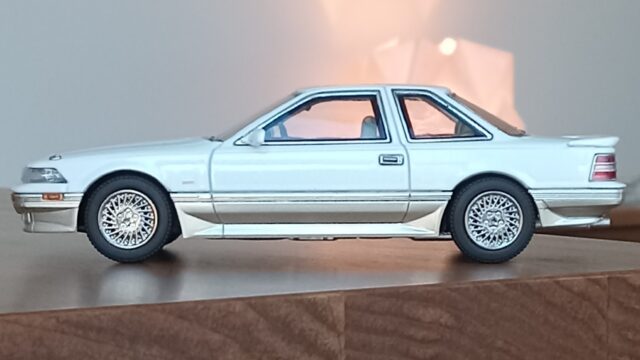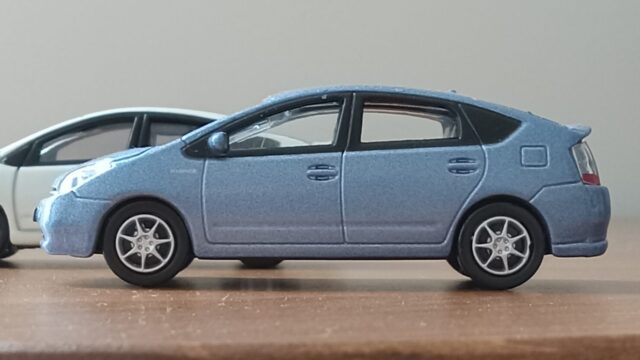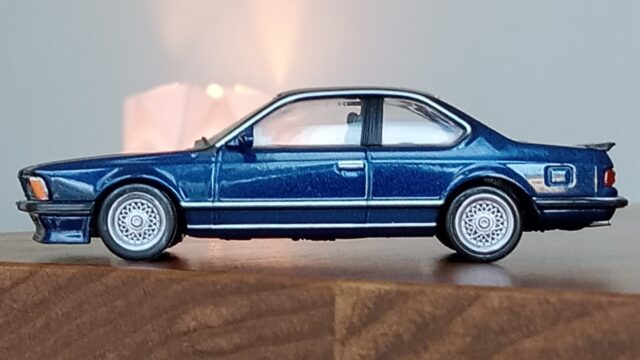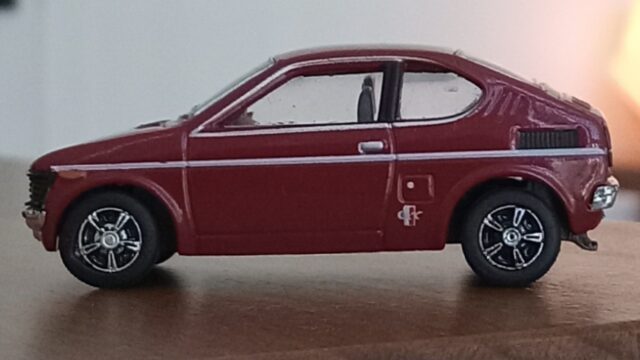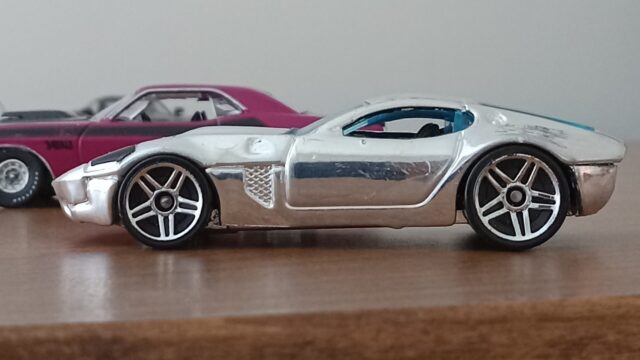
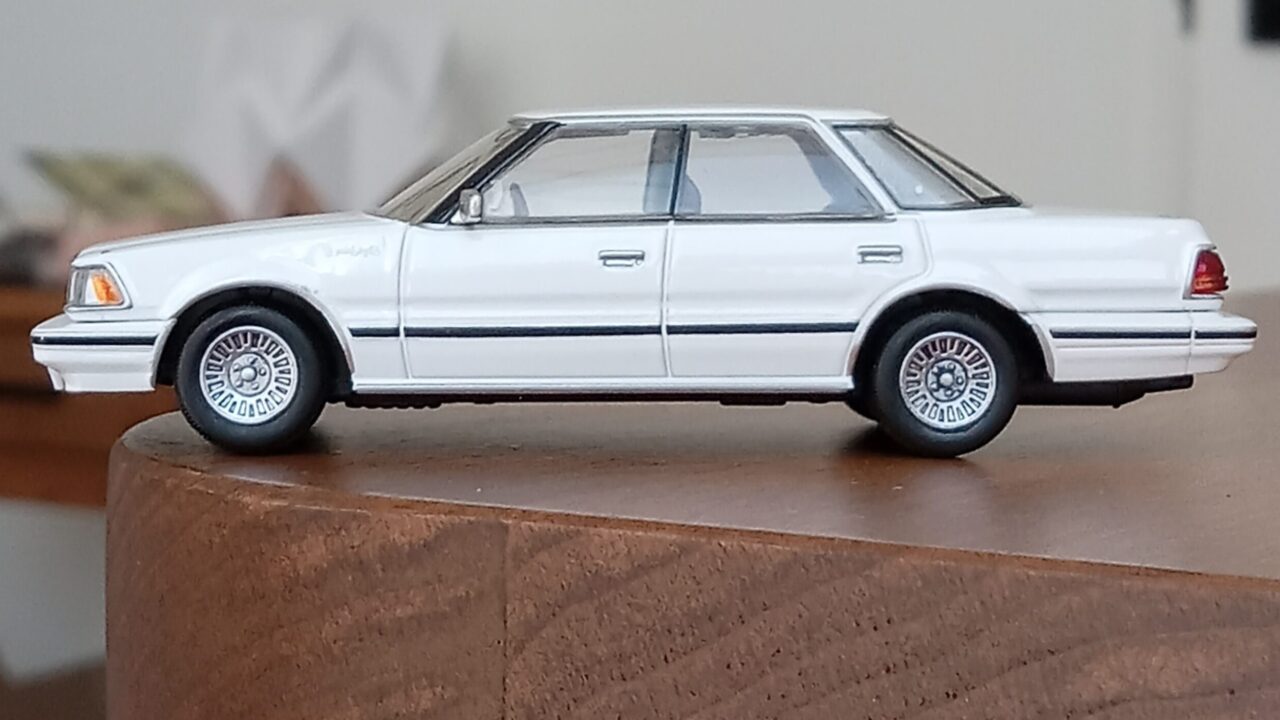
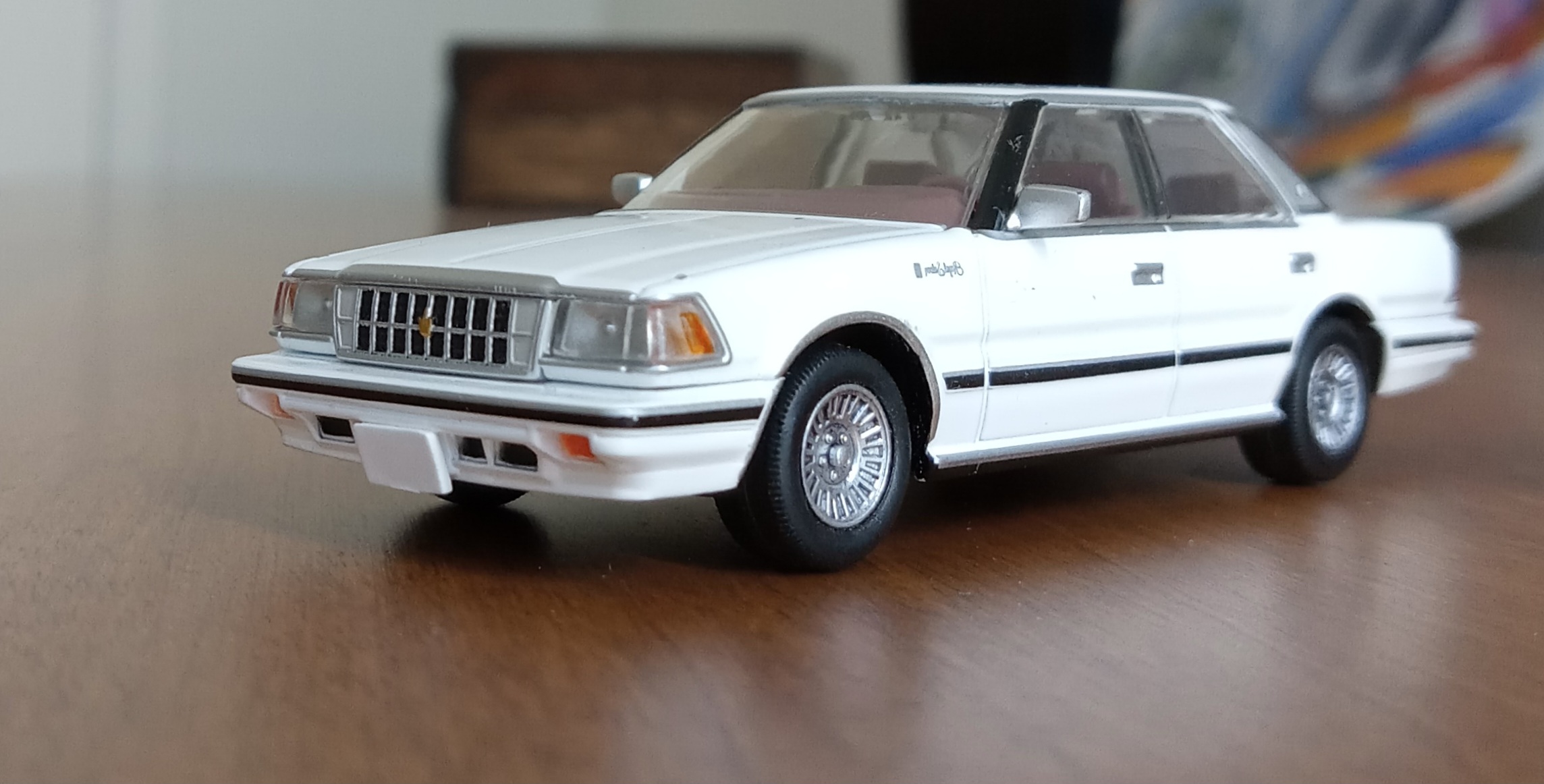
第16回:トヨタ・クラウン 3,0 ロイヤルサルーンG、1985(外装色:スーパーホワイト)
(トミーテック社製, 1/64 トミカリミテッド、ヴィンテージ・ネオ【195b】トヨタクラウン3.0ロイヤルサルーンG (スーパー・ホワイト)前後の車軸の微調整で、理想的な、『若干の前傾姿勢』を達成)
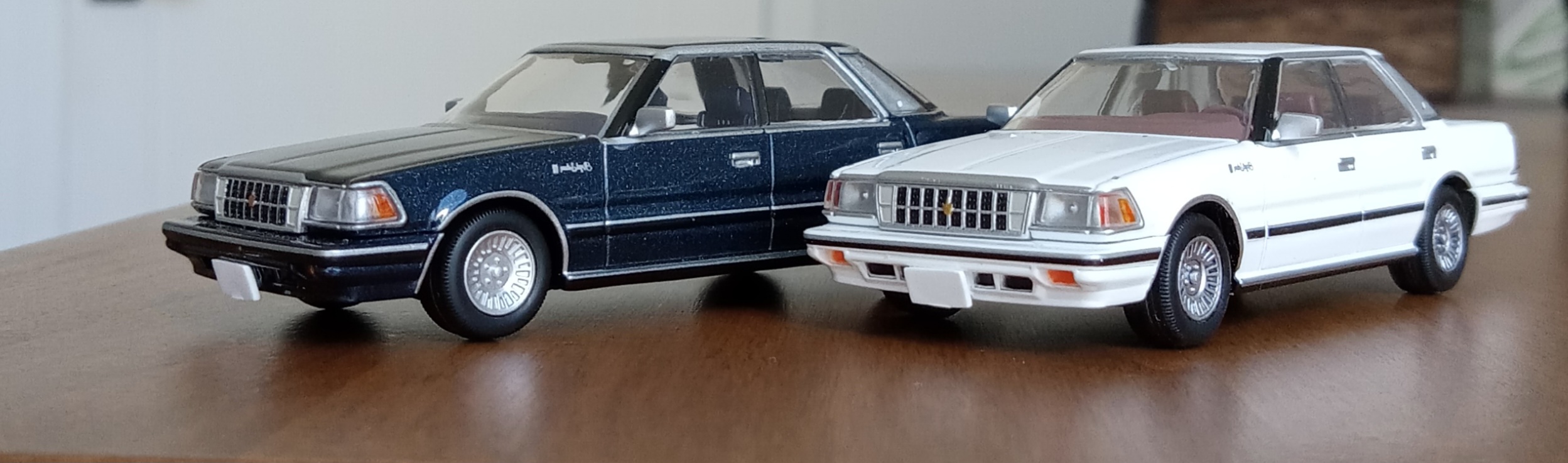
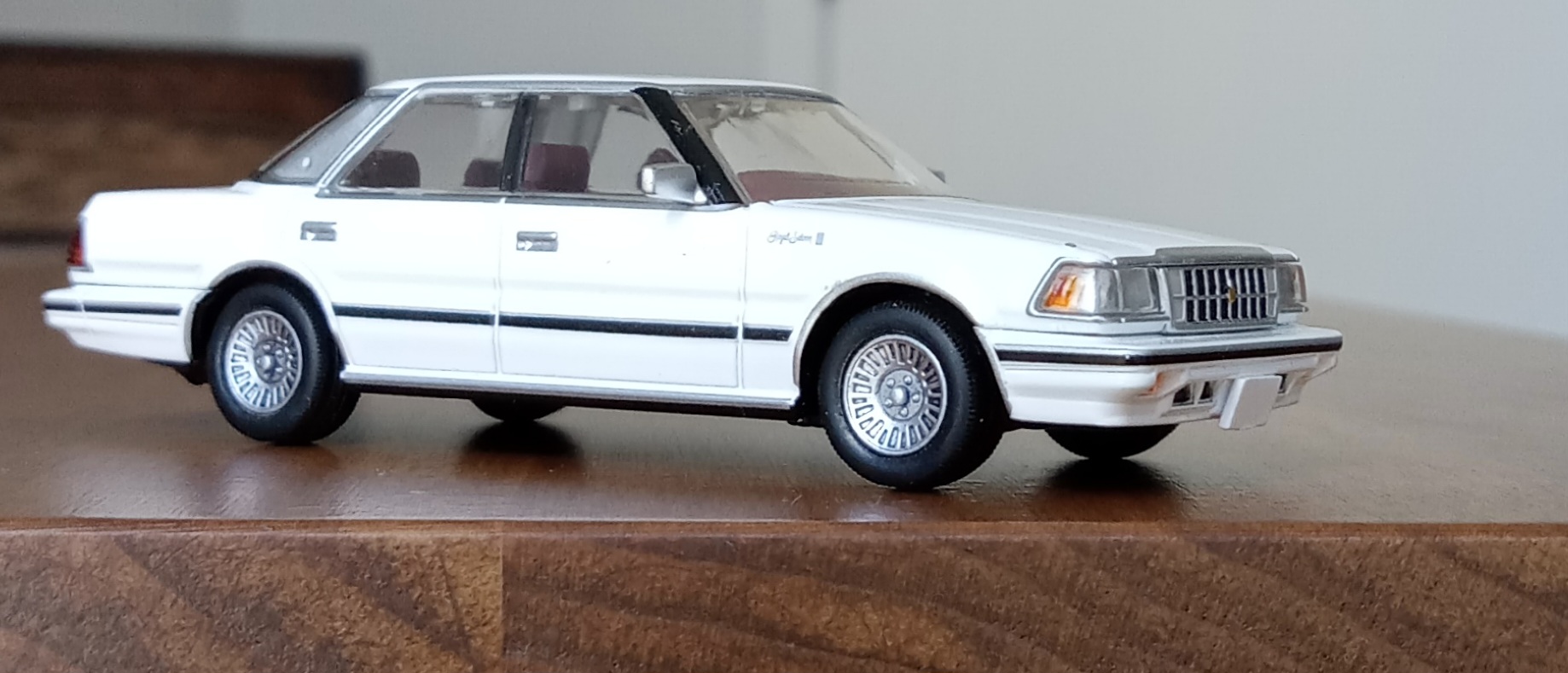
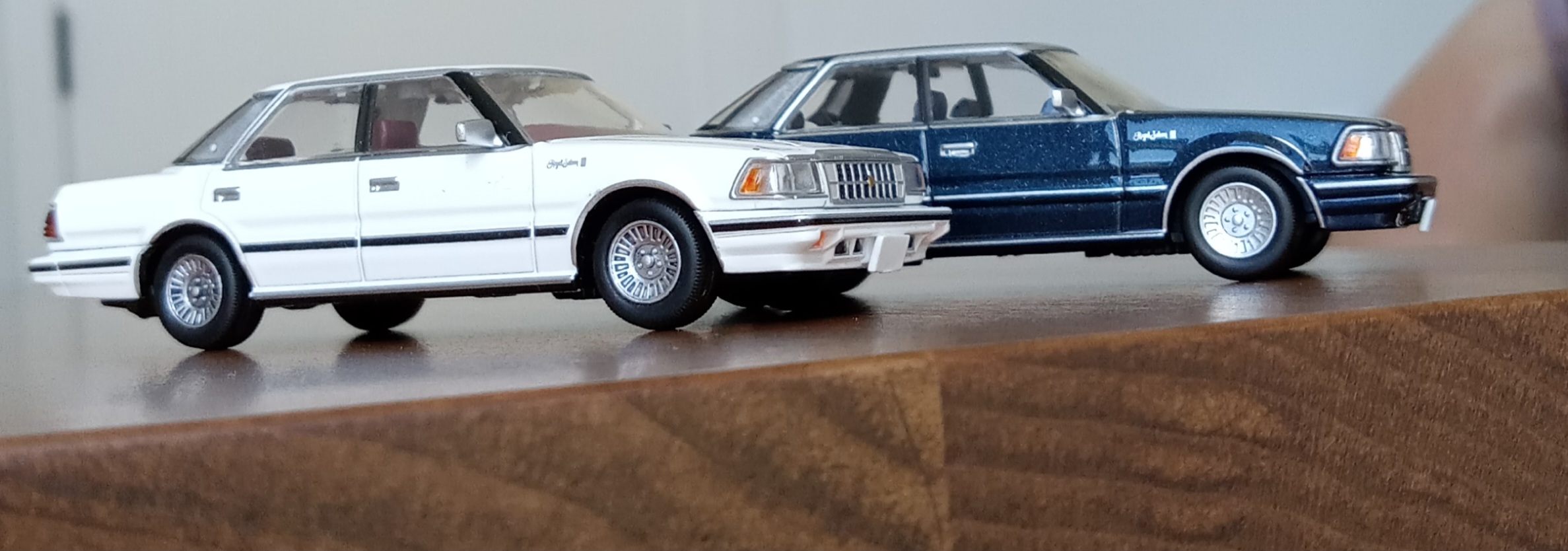
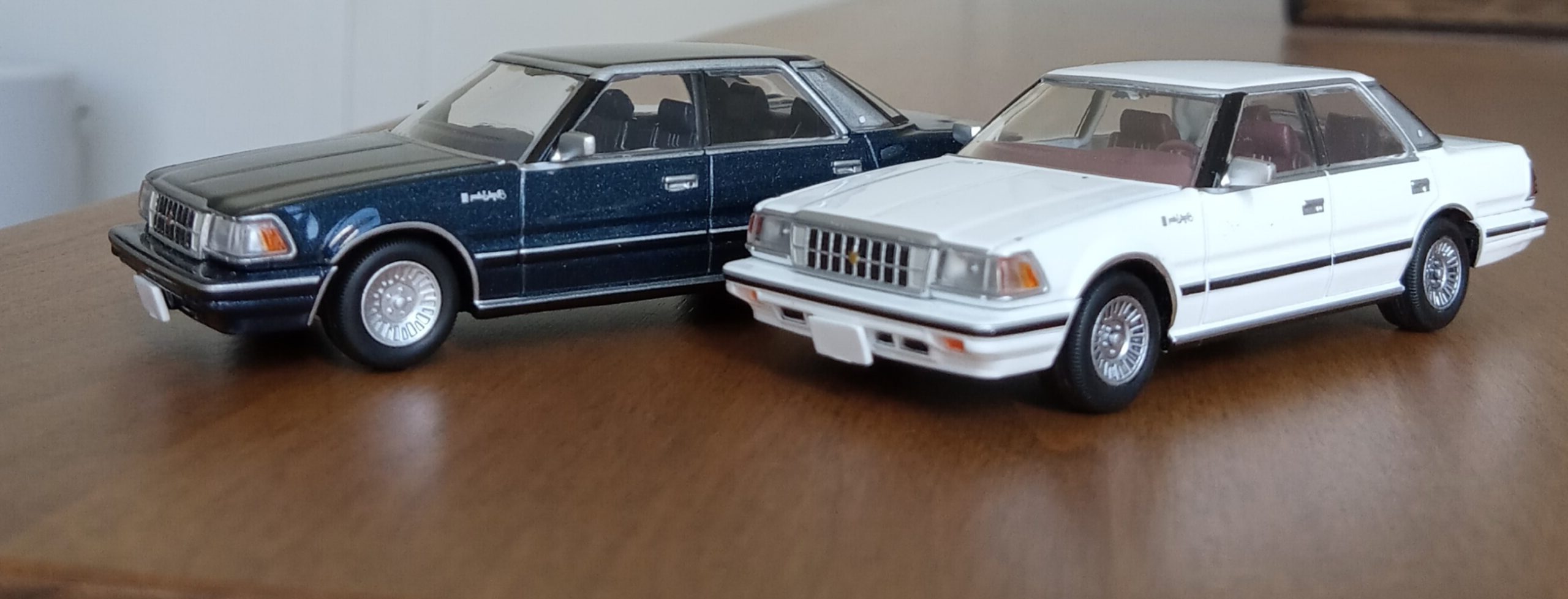
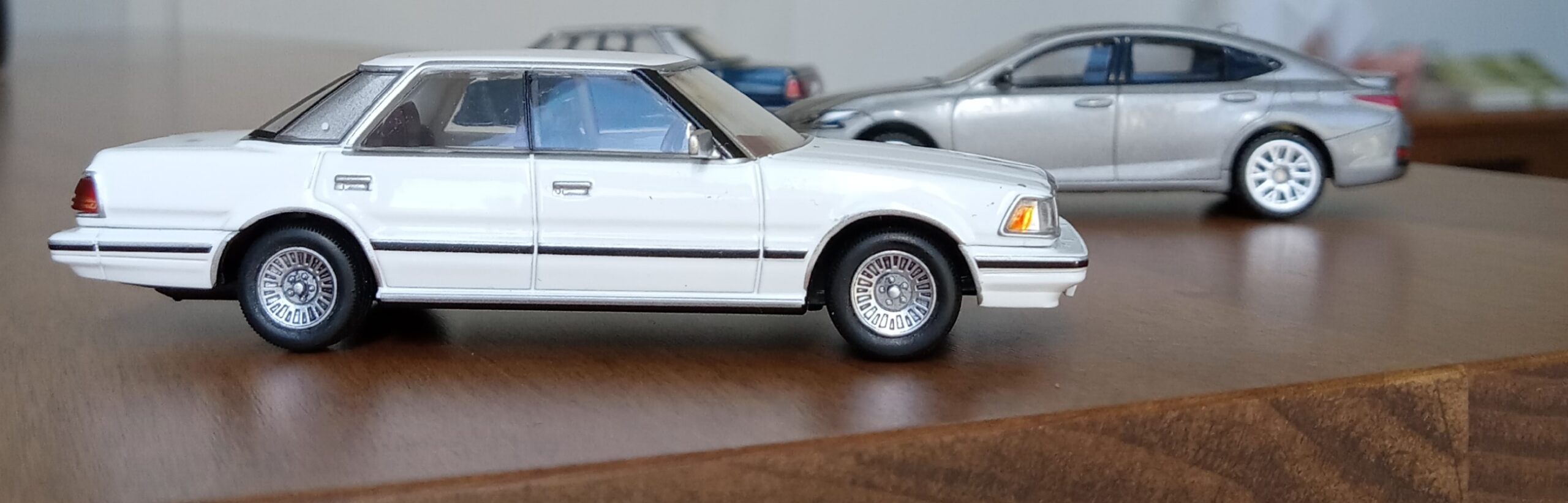
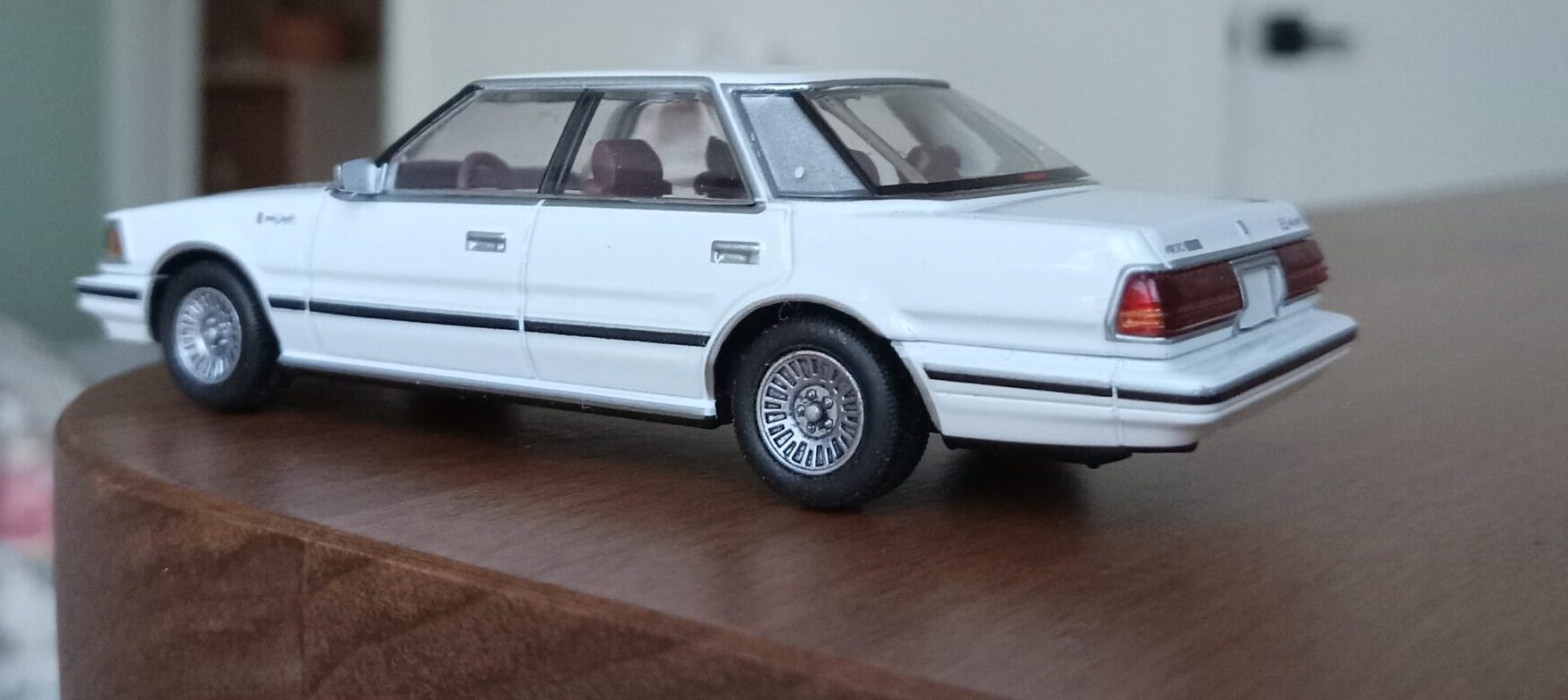
テレビや新聞雑誌広告で
知的なナイス・ミドル:石坂浩二さんを起用、
『いつかはクラウン』
と歌い上げられた、
7代目、クラウンの最上級グレード:
3.0 ロイヤル・サルーンGは
バブル以前のトヨタで盛んだった
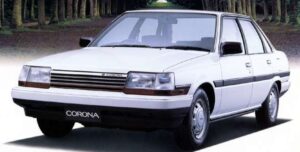
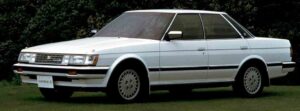
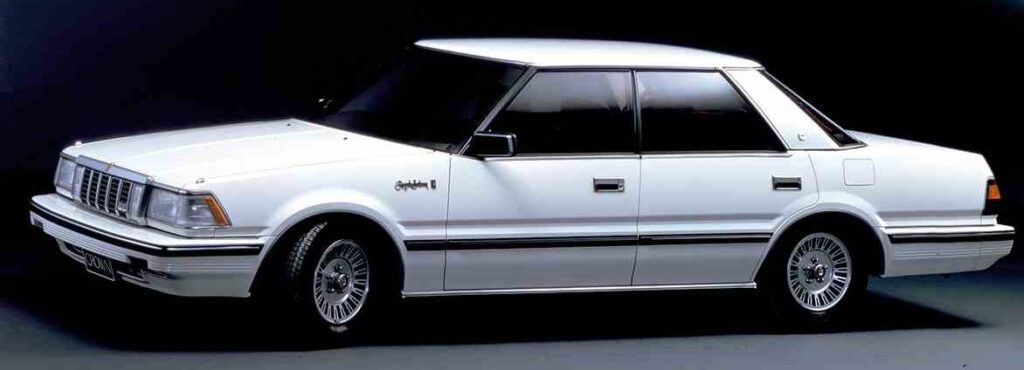
『金太郎飴』マーケティングと揶揄された、(二玄社の雑誌『NAVI』誌上等で)カローラ、カムリ、マーク2、クラウンと言った主要車種を大きさ以外は、ほとんど同じイメージのもと下から上に向かって細部を少しづつ豪華にしていく戦略の
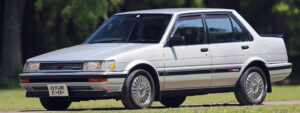
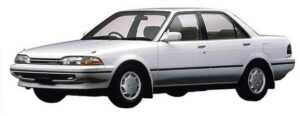
文字通り、
頂点に立つ『王冠』的な存在でした。
そんな7代目クラウンをこよなく愛し、
『生涯で一番好きな乗用車』と言い切った、私の父。
(実際に父が乗っていたのは2.0ロイヤルサルーンでした)
当時は若気の至りか?
雑誌『NAVI』の読み過ぎか、そんな父の意見など、気にも留めていませんでしたが、
父の亡くなった年齢に近づいている今現在、こんな形で自分の好きな自動車デザインについての記事を書く段になり、なぜかこの形が気になり始めています。(笑)
*6代目クラウンの角々な面構成を、洗練させ、磨きぬいた直線的デザイン
*クリスタルピラーを始めとする、バブルに向かう日本を象徴するかのような装飾性
*ホイールベース延長による、スタンスの改善とFRプロポーションの熟成
等など、新たな発見が続いた上、
記事の流れが、4ドアセダンにフォーカスしていることもあり、
このタイミングで、なんと記事にすることになりました、、、
意外な選択ですが、
どうなりますやら、私自身も行く先がわかりません、、、、
最後までお付き合いのほどを、
よろしくお願いしますーー
それではいつのように、こんな感じで
進めていきたいです。
*実車解説:バブル前夜に間に合った?,,,『日本の至宝』
*デザイン的特徴:国内市場にピッタリな立体構成
*『私』とクラウン ロイヤル・サルーン:父の笑顔
*敬愛する国産セダンたち:
*実車解説:バブル前夜に間に合った『日本の至宝』?
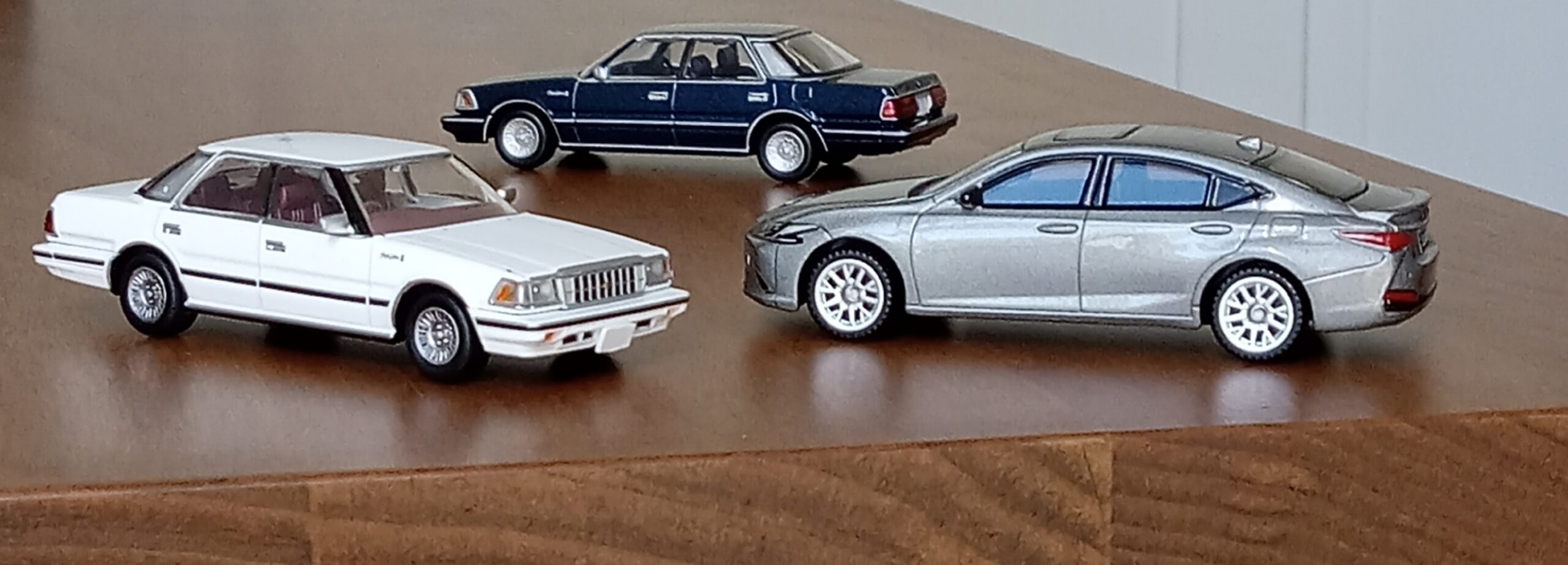
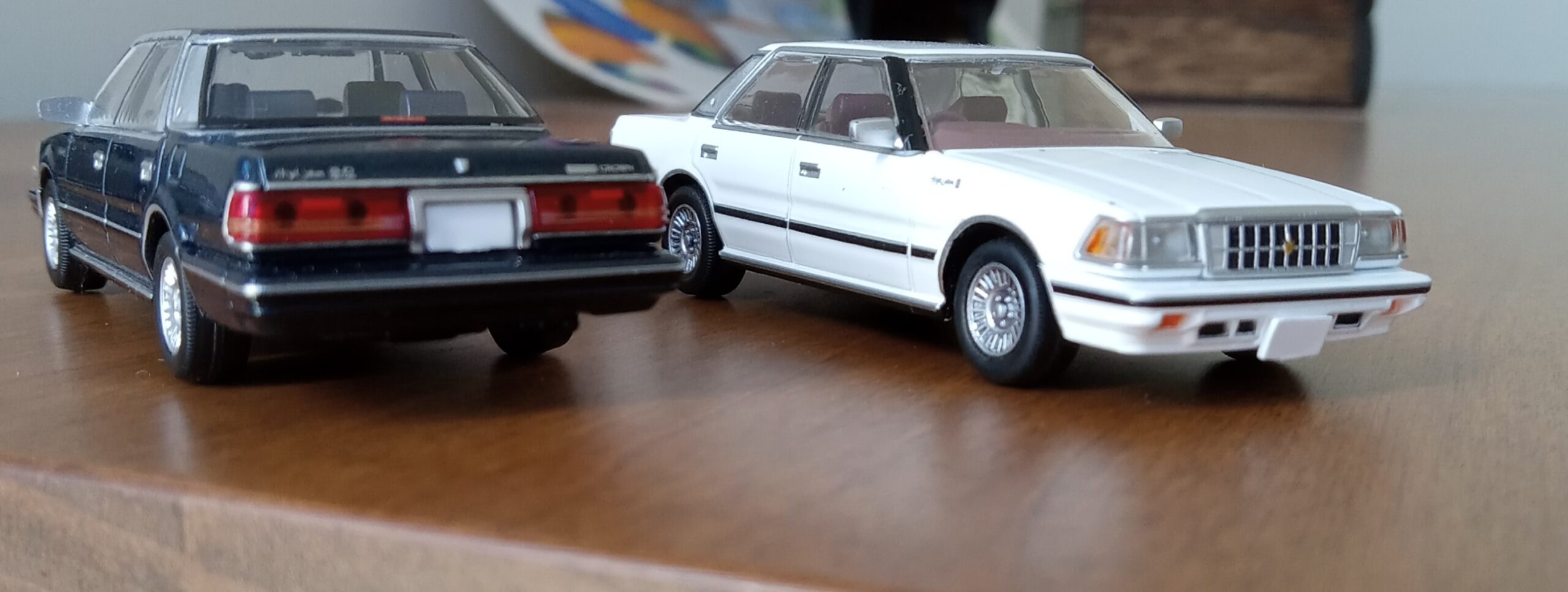
バブル時代が押し寄せる直前の1980年代の半ば頃、
世間をにぎわした『ハイソカー』の最終兵器的な立ち位置で登場した
『7代目トヨタクラウンロイヤルサルーンG』は
どのような商品として企画されたのでしょうか?
セダン、4ドアハードトップ共に、先代のS11#型をより洗練させ、直線基調プラス曲線を取り入れたデザインと「クリスタル・ピラー」と呼ばれるCピラー周りの樹脂処理が外観デザイン上の特徴となりました。
垂直基調のスタイリング:
全体的に直線的なラインを強調したデザインで、クラシックカーを愛する人々からも高く評価されています。このデザインは、当時のバブル経済期の豪華志向とも合致し、風格と威厳を感じさせるものとして大好評を博し、大量販売につながりました。
石坂浩二のCMナレーションによる「いつかはクラウン」のキャッチフレーズは、このモデルで使用され、その後のクラウンのイメージ『日本の至宝』を決定付けました。ボディバリエーションは2ドアハードトップが廃止され、4ドアハードトップ、4ドアセダン、ワゴン/バンの3種類となりました。
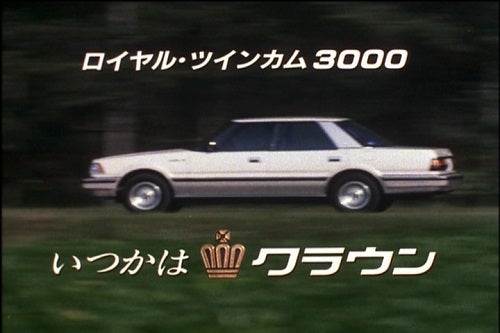
小型自動車の寸法要件が改正されたため、このモデルよりホイールベースが延長され、4ドアハードトップ・セダン共に、最上級グレードとして「ロイヤルサルーンG」が設定され、また5ナンバー車にも、2.0 Lの1G-1GUを搭載した「ロイヤルサルーン」が設定され、この3グレードには、リヤサスペンションに独立式のセミトレーリングアーム式が採用されました。
1983年9月から1987年9月まで販売された、7代目クラウンは折からの『ハイソカー』ブームの象徴的な存在として絶好調な販売を続け、最終的に販売終了前月までの新車登録台数の累計は53万9485台にのぼり、歴代クラウン史上最多販売記録を樹立しました。結果として、7代目クラウンは、単なる高級セダンのモデルチェンジではなく、「クリスタルピラー」に象徴されるデザインの革新と並行して、スーパーチャージャーや電子制御サスペンションといった、その後のトヨタの技術開発の方向性を決定づける重要な先進技術を多数投入した、エポックメイキングなモデルとなりました。
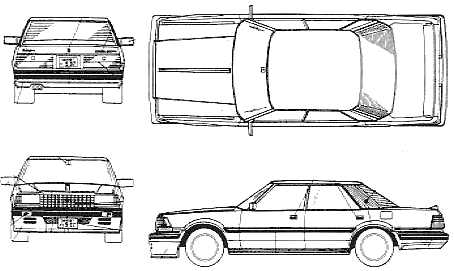
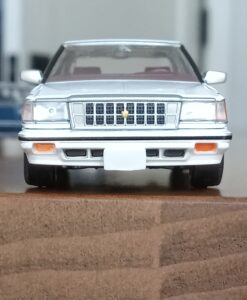
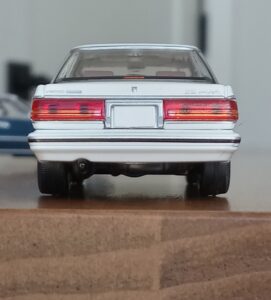
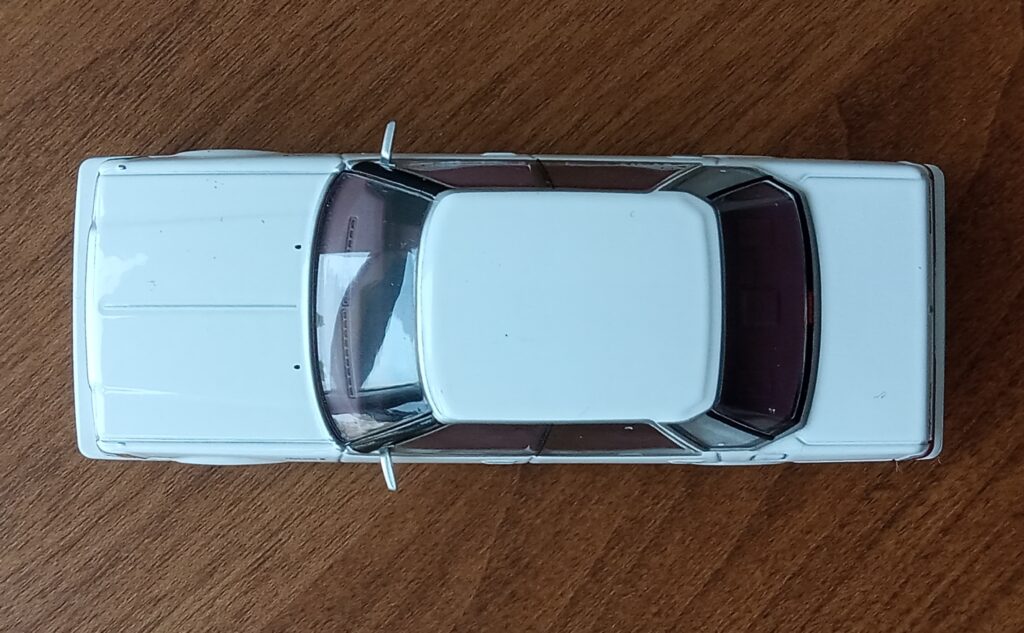
*主要諸元:
- 型式:MS125・エンジン形式:6M-GEU型
- 総排気量: 2,954㏄ 直列6気筒 DOHC24バルブ
- 最高出力 : 190bhp/ 5600rpm
- 最大トルク:26.5kg-m/4400rpm
- 駆動方式:FR(フロントエンジン・リアドライブ)
- 定員:5名
- 車体サイズ: (4ドアハードトップ 3,0 ロイヤルサルーンG)
- ホイールベース:2,720 mm
- 全長:4,860 mm
- 全幅:1,745 mm
- 全高:1,400 mm
- 車両重量:
1,670kg (4ドアハードトップ 3,0 ロイヤルサルーンG)
*デザイン的特徴:国内市場にピッタリな『角基調な』立体構成
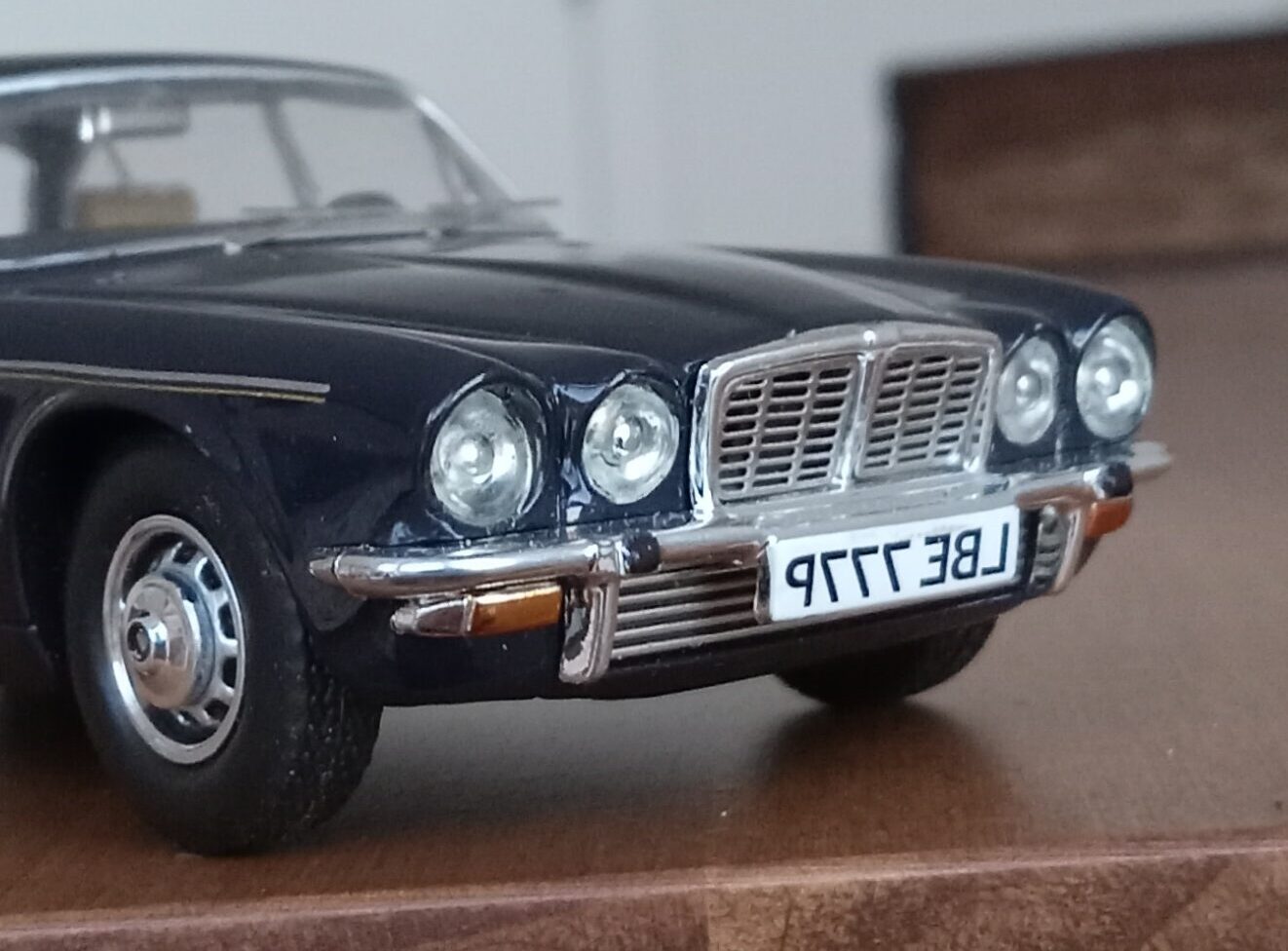
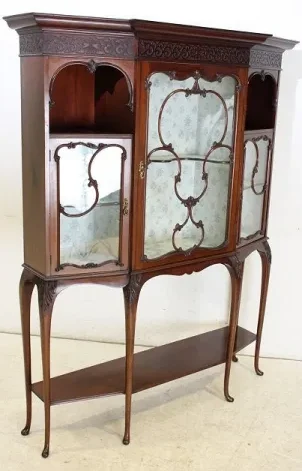
前回ご紹介しました
英国産のジャガーXJ12が
*曲線基調で
*極めて技巧的、
*軽やかな上
*優雅で耽美的な
『ビクトリア朝様式の家具』
だとすれば、
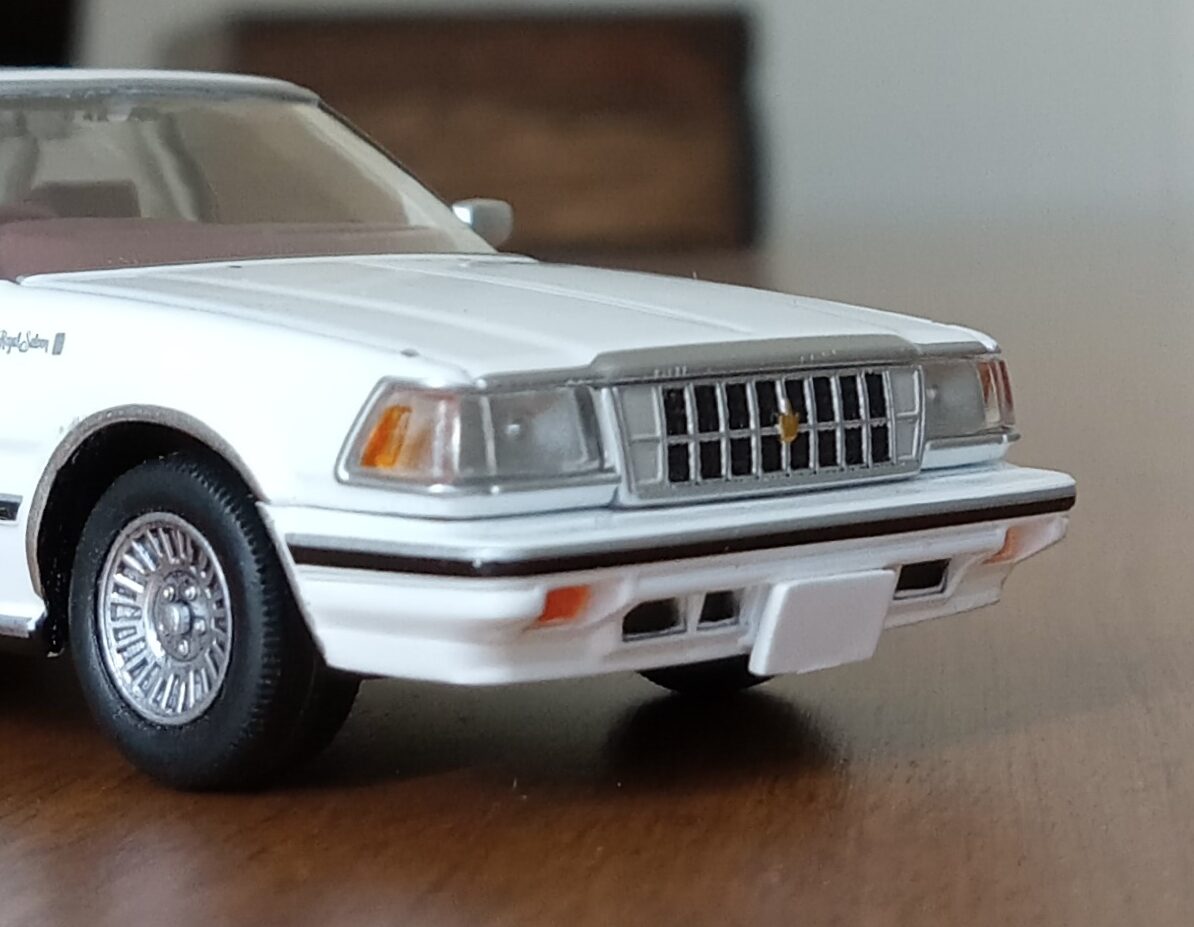
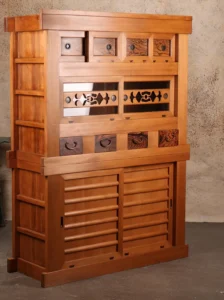
今回のトヨタクラウン 3,0ロイヤルサルーンGは
*直線基調で
*建築的、構築的、
*どっしりとして、
*風格と威厳を醸す
京都産の『水屋ダンス』
といった感じです。
ある意味:日本の4ドアセダン・デザインの頂点
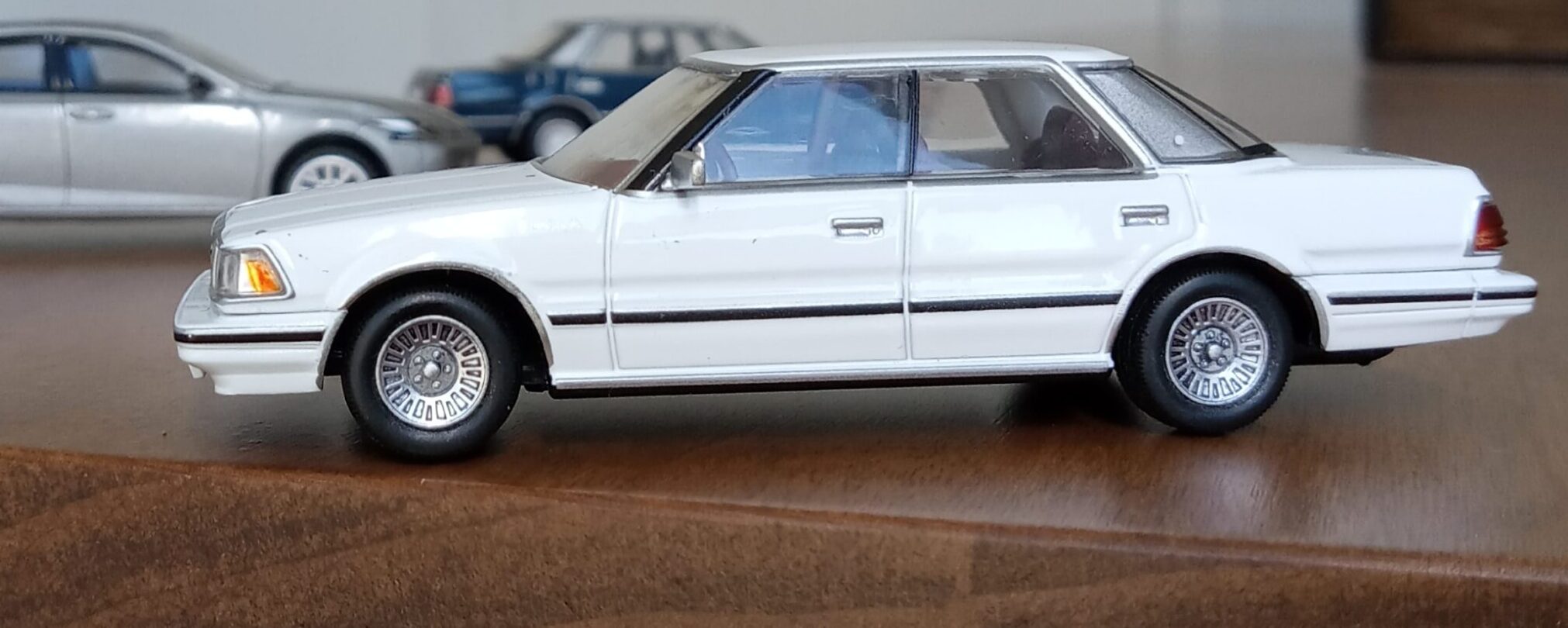
もちろん、
*角基調でボディーサイドを上下に2分する点や、
*懐古調・クラッシックなテイスト自体は
当時の全世界の自動車デザインのトレンドに
ある程度乗っ取ったものでしたが、
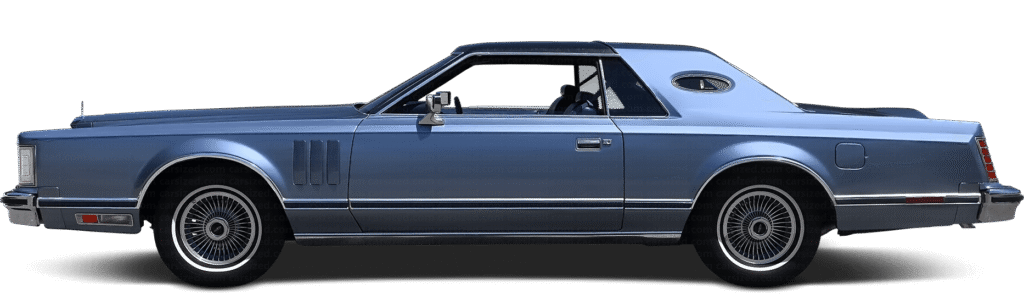
其の後のクラウンのデザイン史を概観した時、
車幅の増加に従い、
ボディーサイドのボリューム感やサイド面のテーパーに気を取られるあまり、
ベンツなどのヨーロッパ車の『二番煎じ』的なイメージが
付きまとう事になったのとは対照的に、
7代目クラウンは、
純日本的な大工さんや、指物師が切り出した材木をくみ上げた様な、
*独特な『カクカク』した素材感と、
*あえてテーパしたり角を丸めないことによる
*潔さや清潔感あふれる職人気質【鉋掛け感】と、
*伸びやかでおおらかな風格を作り出している事を
今回写真撮影している間中、感じていました。
6つのデザイン的特徴:
1: 日本の普通乗用車規格(1700㎜x4800㎜)に収まる範囲内で、最大限の大きさを再現するためにあえて選んだ、鉋掛けで削り出したような、直線、平面、垂直、平行基調のボディー造形
2:細部までぬかりなく計算されつくした、荘厳で風格溢れる繊細極まりない日本人好みな、ディテールとその『作り込み感』
3:ロングホイールベース化に伴う、規格内での、立派なFRプロポーションとスタンスの追求
4:仏壇や神社の社殿の様式美を連想させる、直線的な威厳と、調和に富むフロントフェイシアデザイン
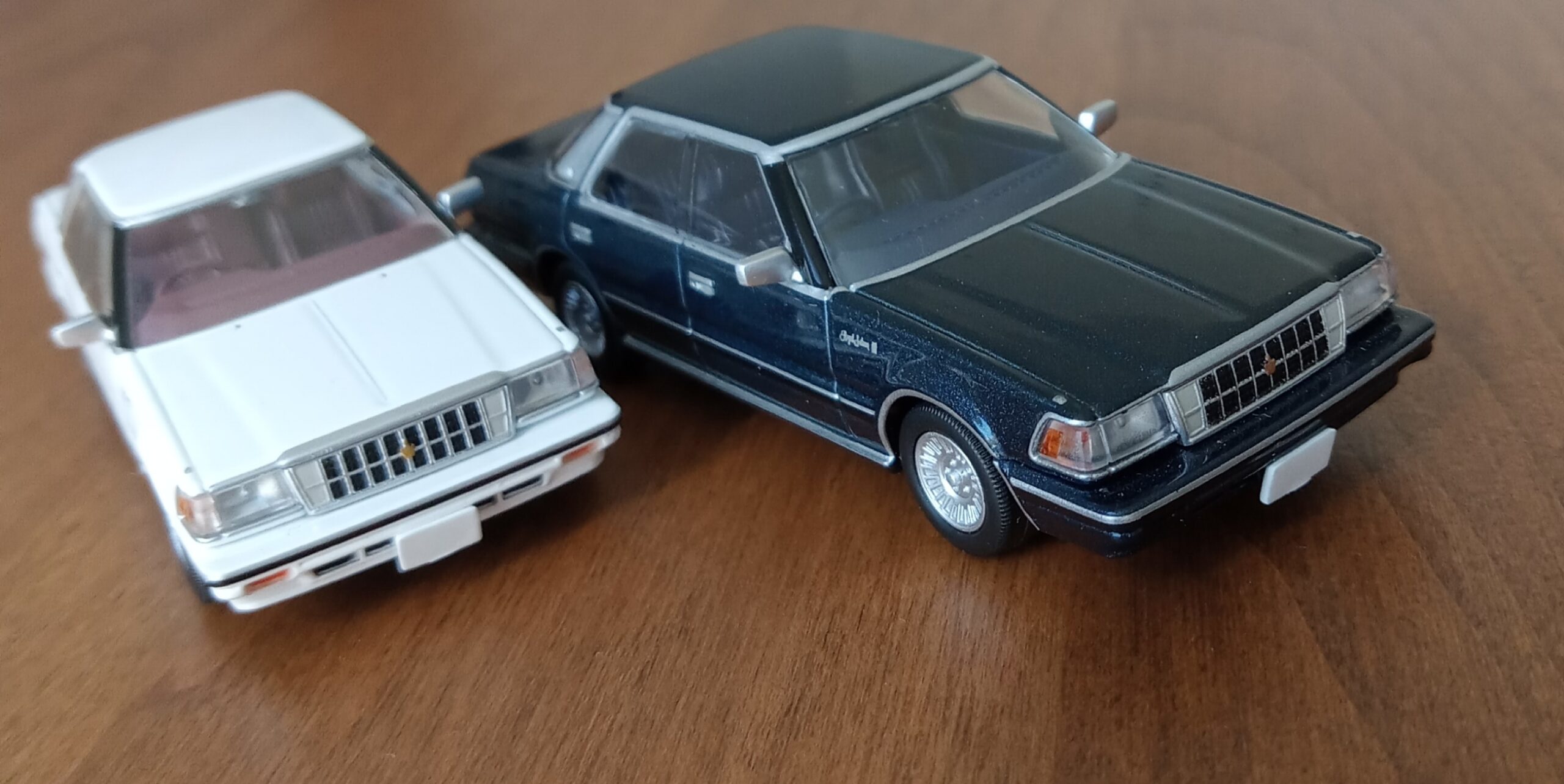
5:普通車企画から初めての逸脱を達成した『3ナンバー専用』の前後バンパー、フロントグリル及びサイドモールディングデザイン&その巧妙な商品企画力
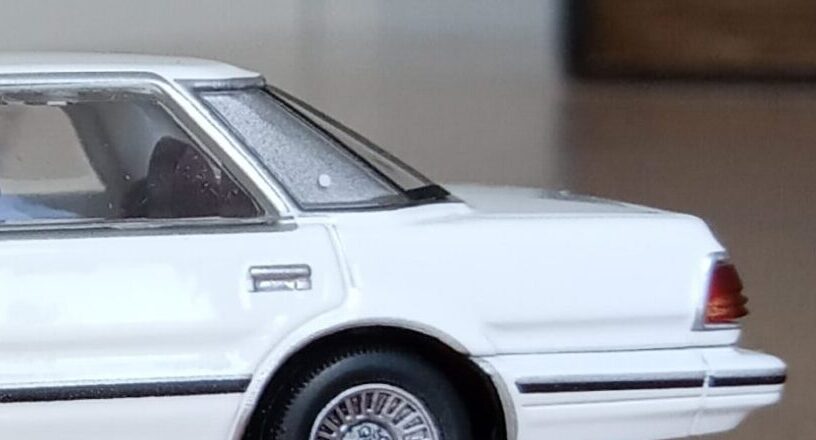
6:改めて云うまでもなく、後のセリカの流面形デザインにつながる、『クリスタル・ピラー』(透明樹脂でおおわれて、窓部分と一体感を保ってキラキラ反射するC-ピラーのデザイン)
それでは、
1つづつ見て行きましょう。
1: 日本の普通乗用車規格(1700㎜x4800㎜)に収まる範囲内(2.0リットル)版で、最大限の大きさを再現するためにあえて選んだ、鉋掛けで削り出したような、直線、平面、垂直、平行基調のボディー造形
(6代目の実直な直線基調デザインを全ての面で洗練化してそこかしこに色気をちりばめた憎いデザインです)
ーーーーーーーー>バブル時代を予見した、後のレクサスの対極に位置する、バノキュラーな『トヨタ、金太郎あめ作戦』の頂点に君臨する、モニュメント的デザインとなりました。
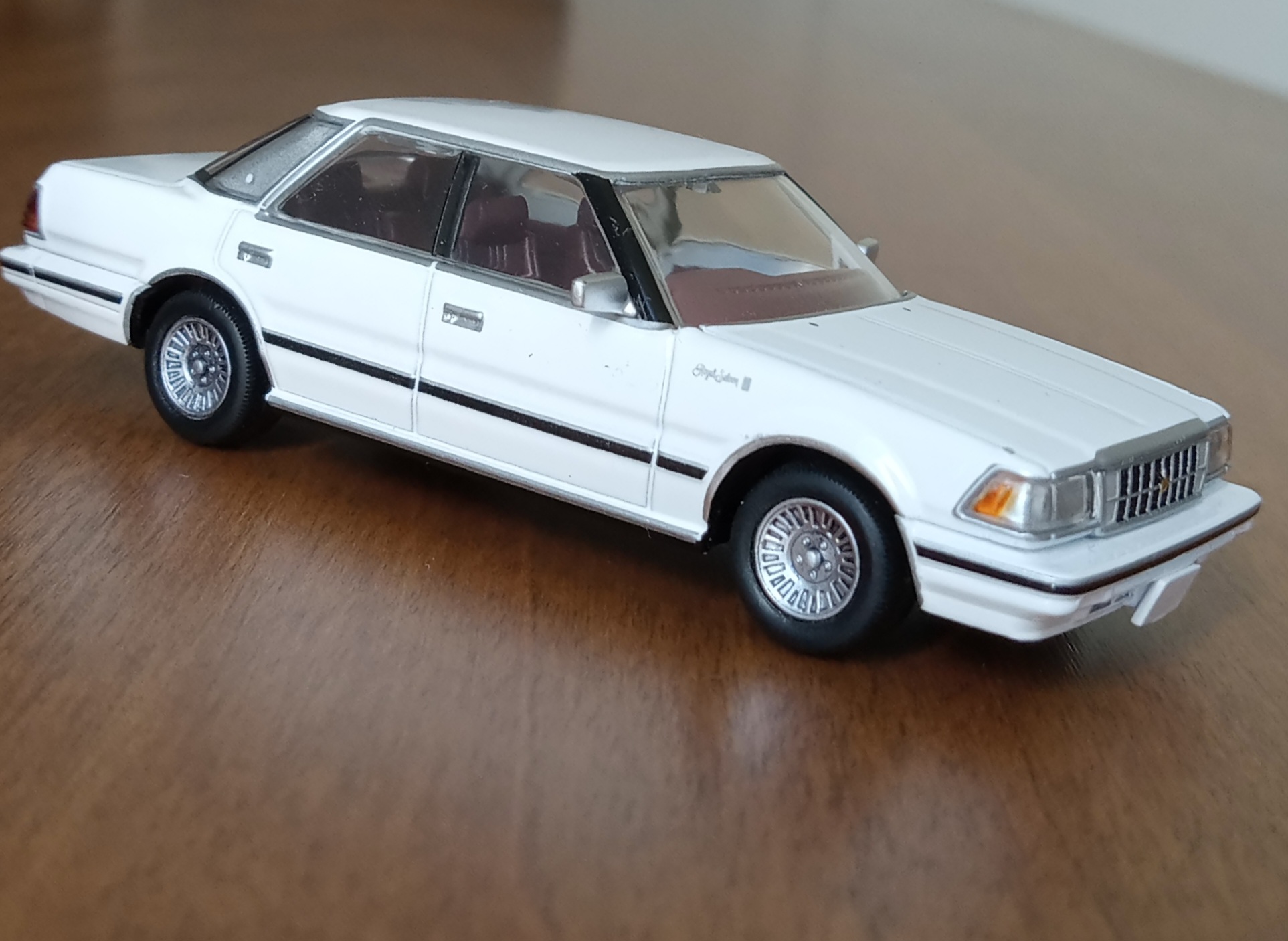
2:細部までぬかりなく計算されつくした、荘厳で風格溢れる繊細極まりない日本人好みな、ディテールとその『作り込み感』
(ほとんど気づかないほどに僅かな前傾姿勢や、マーク2などに比べてスラントせずに切り立ったフロント・フェイシア、『切り小細工的』なホイールデザインなど注目ポイント満載です)
ーーーーーー>全身全霊をかけトヨタの最上級車の魂を叫んでいます!!
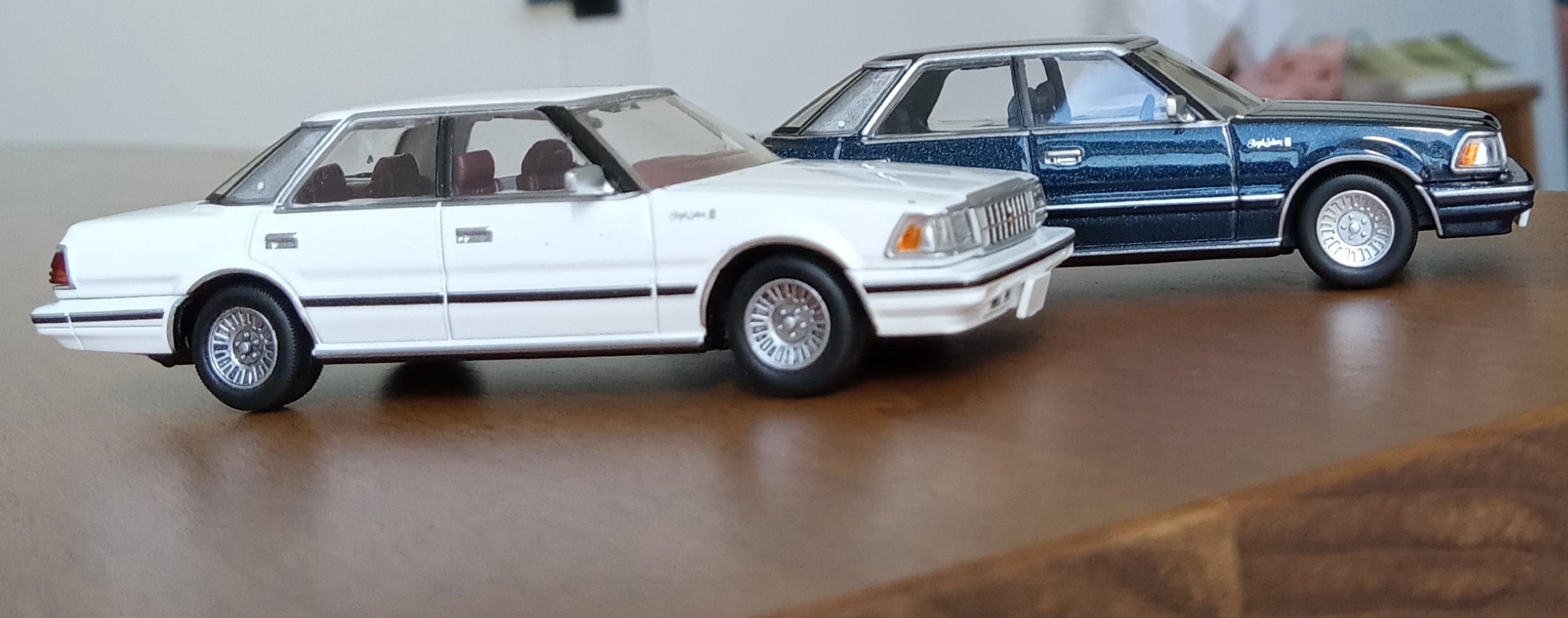
3:ロングホイールベース化に伴う、規格内での、立派なFRプロポーションとスタンスの追求
ーーーーーー>歴代のクラウンの中でも飛びぬけて、自信に満ちたスタンスの持ち主です。
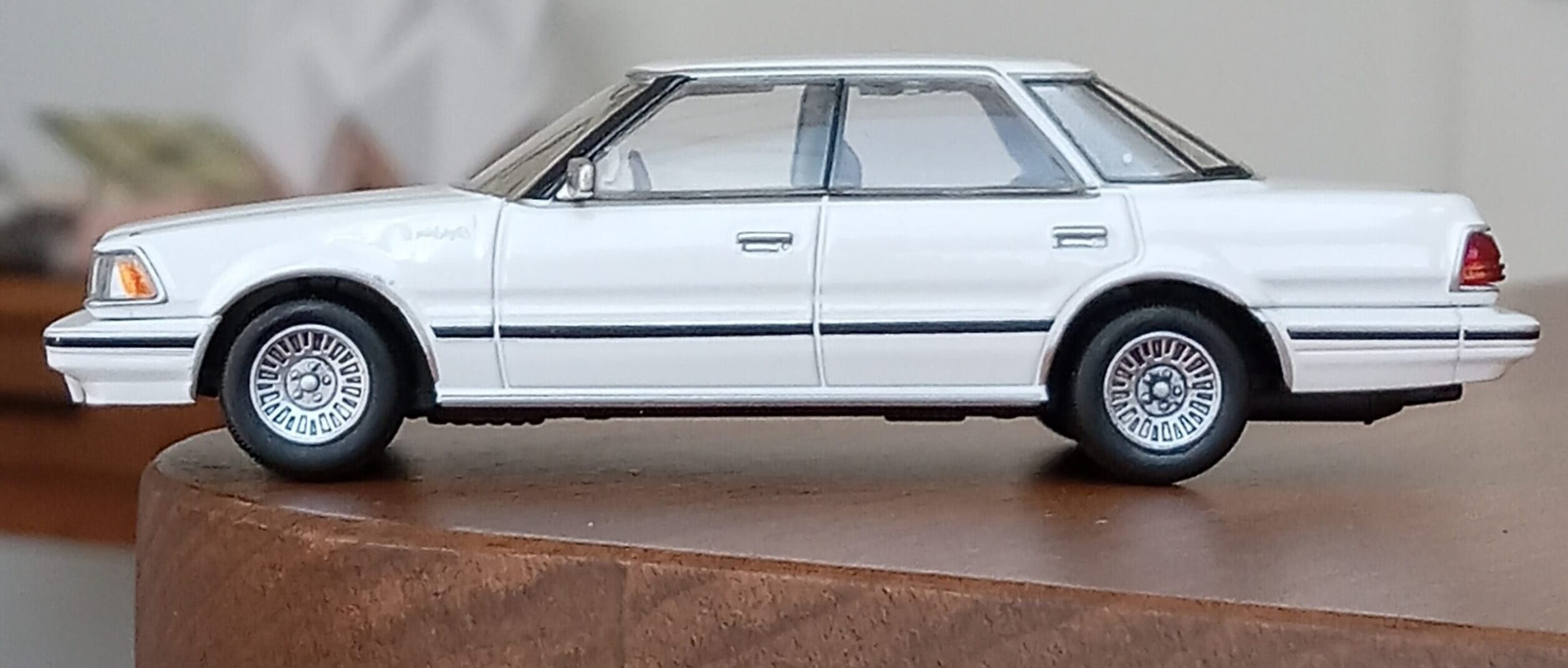
4:仏壇や神社の社殿の様式美を連想させる、直線的な威厳と、調和に富むフロントフェイシアデザイン
(厳かで実直、ゆったりとクルーズする姿が似合います)
ーーーーーー>ハイソカーの夢、現実に至りけり、、、、的な
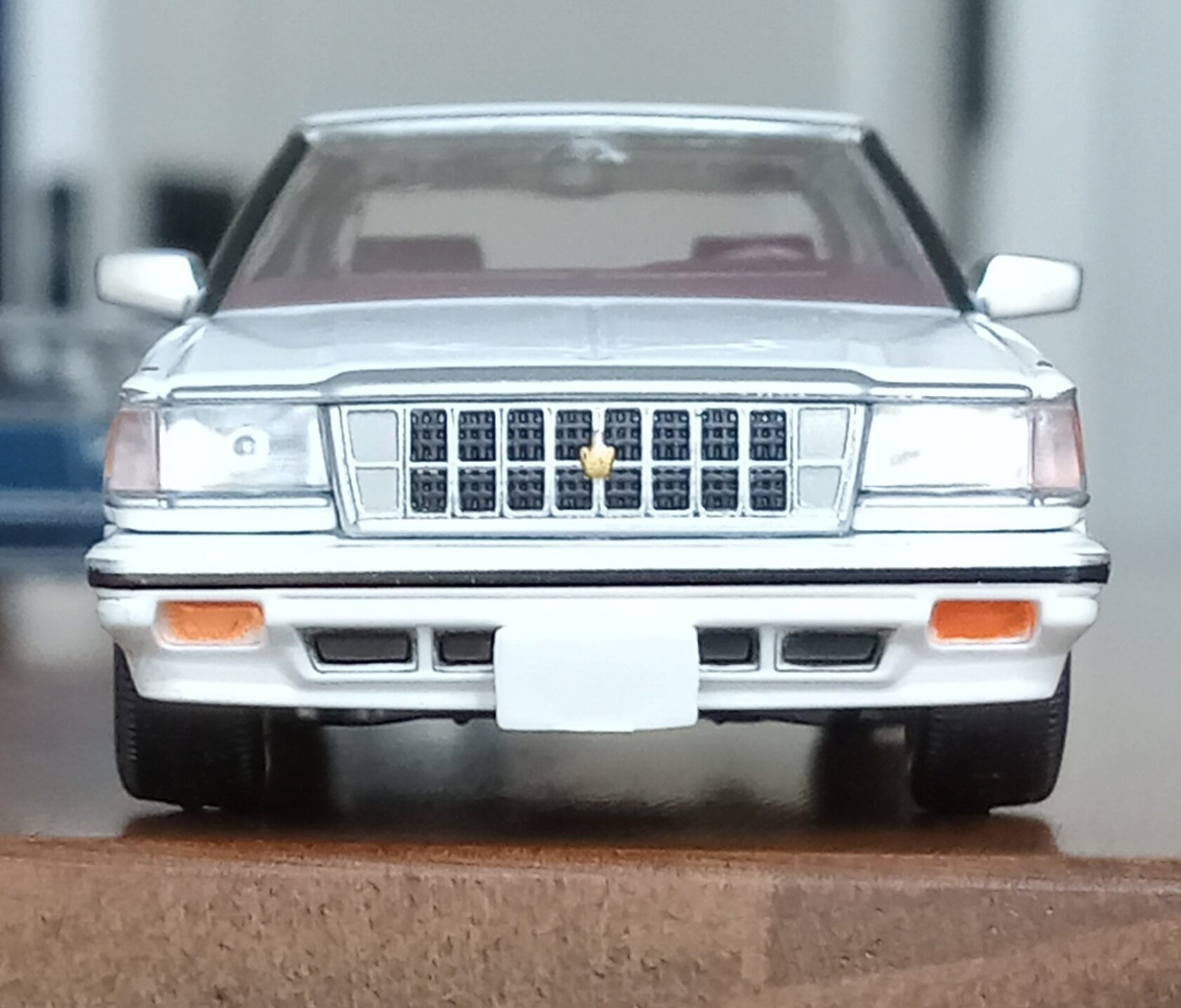
5:普通車企画から初めての逸脱を達成した『3ナンバー専用』の前後バンパー、フロントグリル及びサイドモールディングデザイン&その巧妙な商品企画力
ーーーーーーーーー>前後へのバンパーの飛び出し方か当時の『3ナンバー車』人気の『尋常でなさ』を表しています。
6:改めて云うまでもなく、後のセリカの流面形デザインにつながる、『クリスタル・ピラー』(透明樹脂でおおわれて、窓部分と一体感を保ってキラキラ反射するC-ピラーのデザイン)
ーーーーーーー>当時の『ハイソカー人気の勢い』を感じざるを得ません。
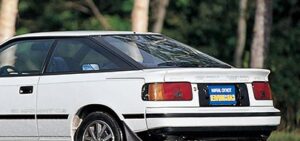 (ピラーをガラスで完全に隠した流面型デザインのセリカ)
次は、私の個人的体験をお話ししたいです。
*『私』とクラウン・ロイヤルサルーン:父の車歴と共に
繊維の卸売業者から脱サラ後、
注文寝具店を経営していた父は、
文字通り日本の自動車産業の興成に身を任せた、
『自動車大好き世代』の一員でした。
父の車歴はこんな感じで、
*初代パブリカ
*トヨペット・コロナ 1600 4セダン(?)
*ハコスカ・4ドア1800(PC10)(白)
*ルーチェ・4ドアセダン(2代目)(メタリック・グリーン)
*コロナ・マークII 2000グランデ(マルーン)
*クラウン 2,0 ロイヤル・サルーン(7代目)(スーパー・ホワイト)
*クラウン・2.0アスリート(スーパー・ホワイトII)
*スープラ(ブラック)---次男(私の弟)と共同所有
*ソアラ2.0GT(スーパー・ホワイトII)---次男と共同所有
*アリスト(シルバー)
*クラウン・ロイヤルサルーン(10代目)(スーパー・ホワイト)
この中で父が最も愛したのは、
今回取り上げています、
『7代目クラウン』で、
その2.0ロイヤルサルーンに乗っていました。
十台以上に及ぶ車歴の中で、
このクラウンを語る時はいつも非常にうれしそうで、
『自分が乗った中で一番のクルマだった』
と語っておりました。
#ミニカー入手後、見方が180度展開!!
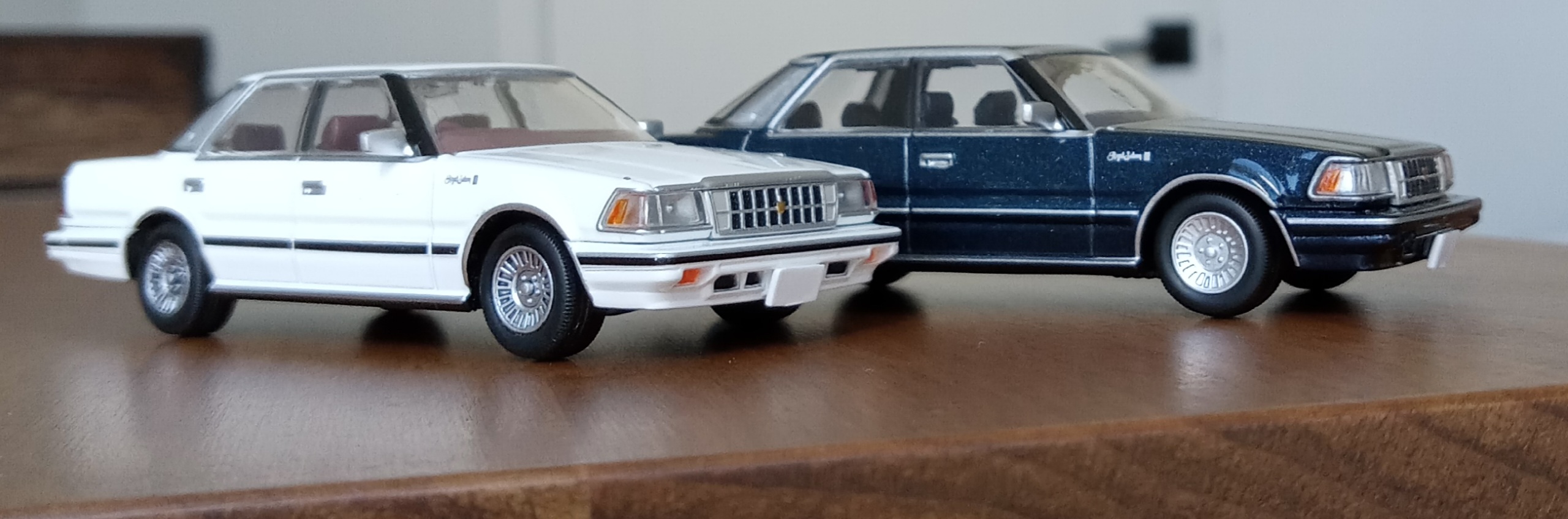
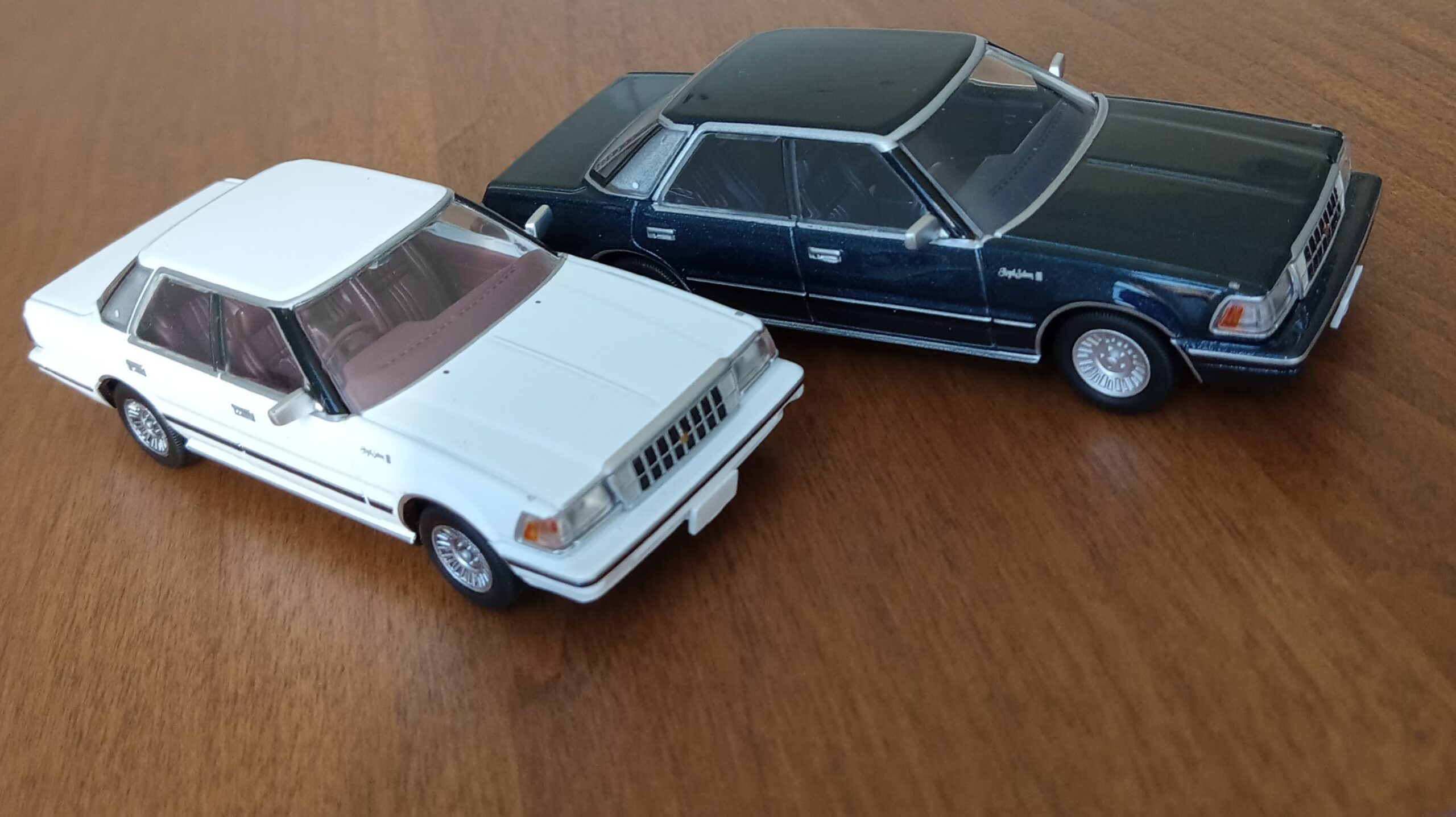
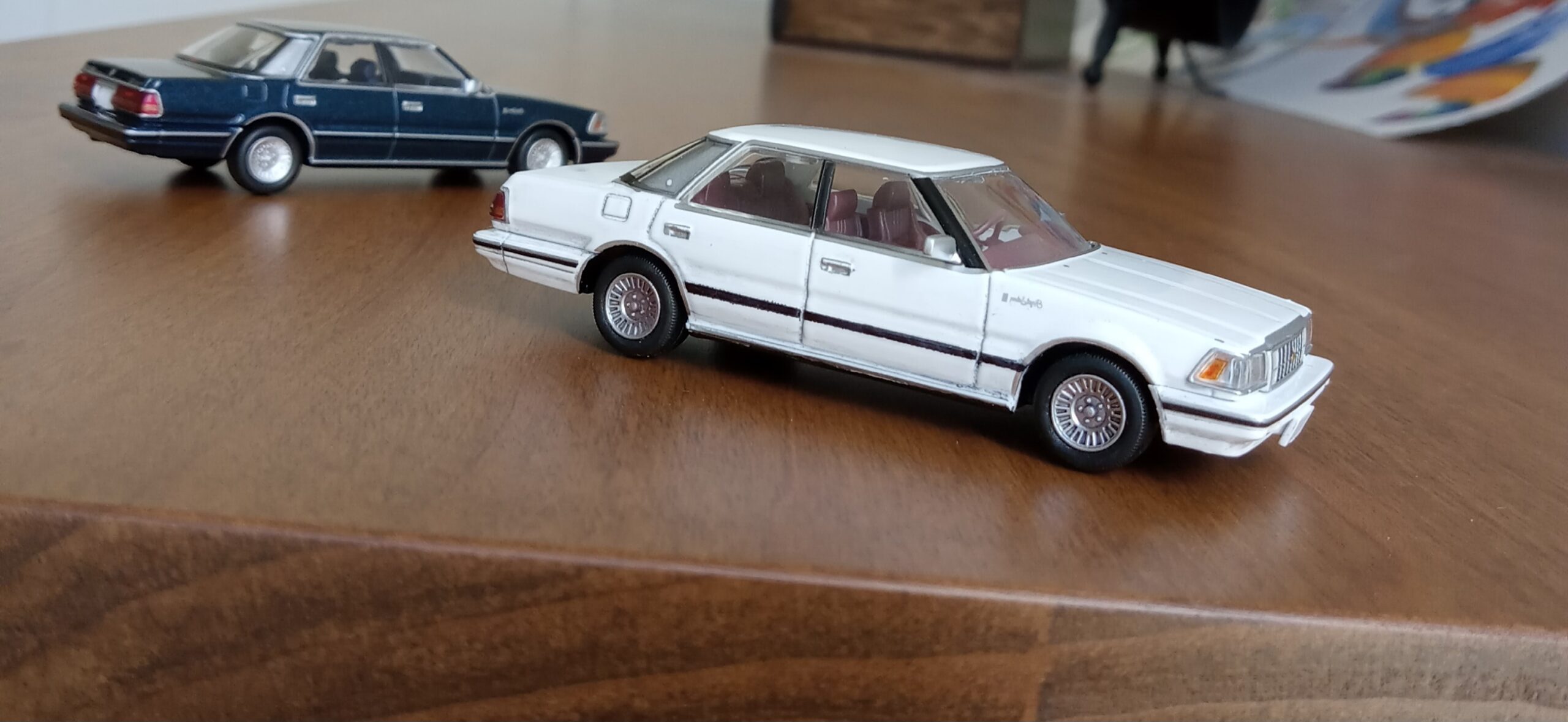
そんな中、今回トミーテックのヴィンテージネオシリーズの1/64ミニカー(白&藍色)を(懐かしさのあまり)、メルカリにて入手しました。
その出来の良さに驚きまくり、写真を撮っていたところ、
父に借りて、乗り回していた時や洗車やコーティングを手伝ったときの記憶がよみがえり、
逆に、其の後のクラウンの印象のなさに驚き、
この7代目のクラウンの特殊性に気付き始めました。
その特殊性とはつまり、
*スーパーホワイトの外装色:バブルを象徴する、直線的で、清楚カツ豪華なイメージ
*普通車の規格内で、全長&車幅を端から端まで全て使うことで得られた、
*テンション溢れる伸びやかさと「ピンと張りつめた緊張感」の共存
*当時の外国車にもあまりない、独特な建築デザインのようなキレの良さ
等に気付いてしまい、
新規に惚れ直した次第です!!
結果として、
私の中で、この7代目クラウンロイヤルサルーンは、
日本規格の中で生まれた、
正真正銘の『日本車の至宝』
に認定したいです。
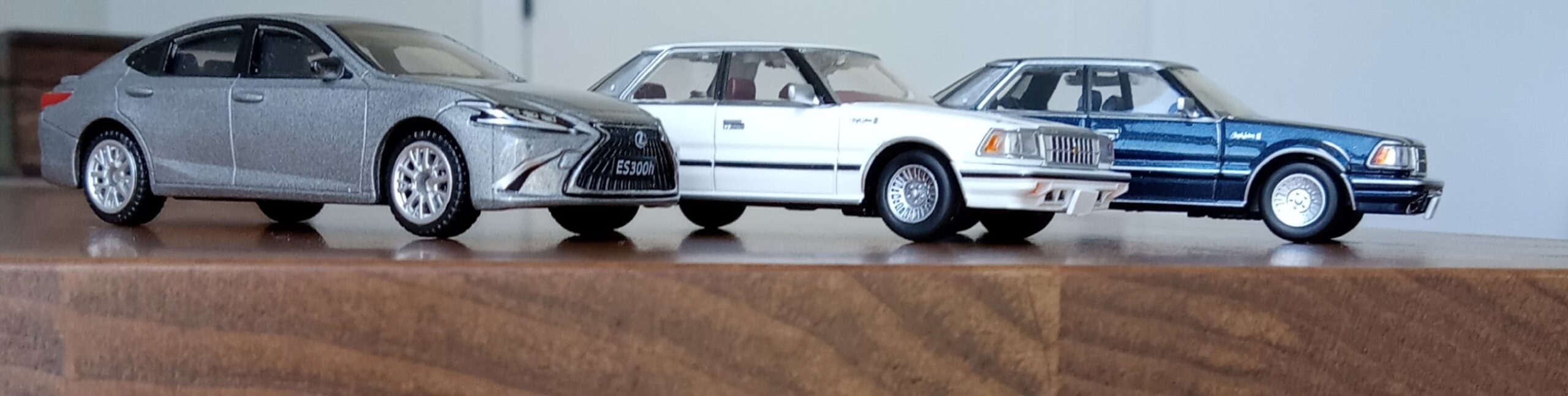
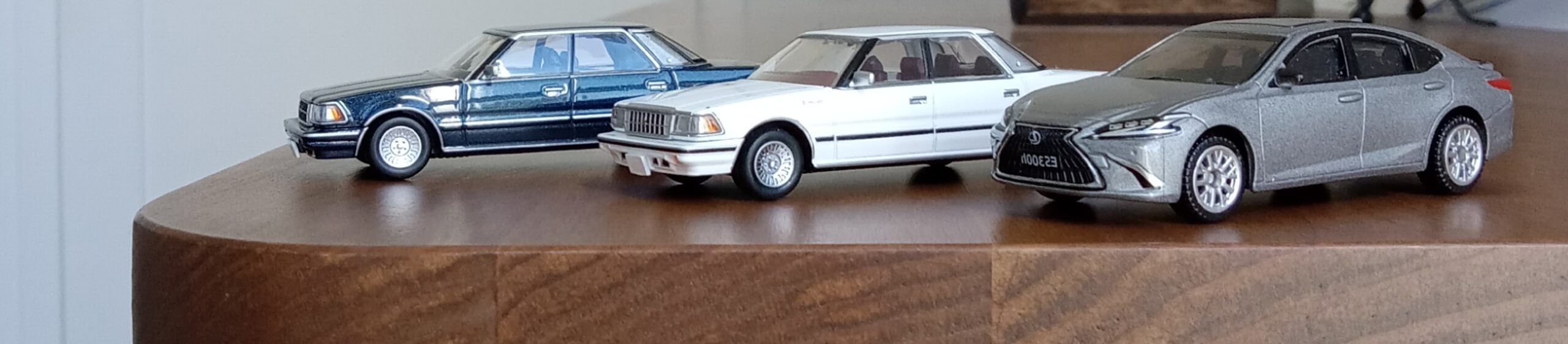
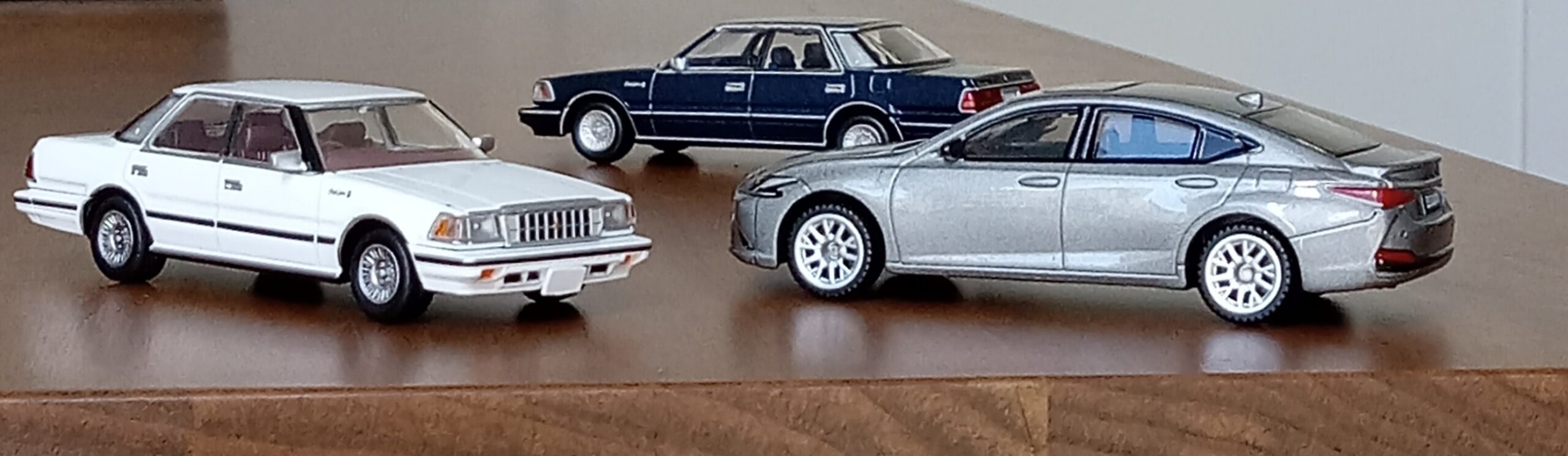
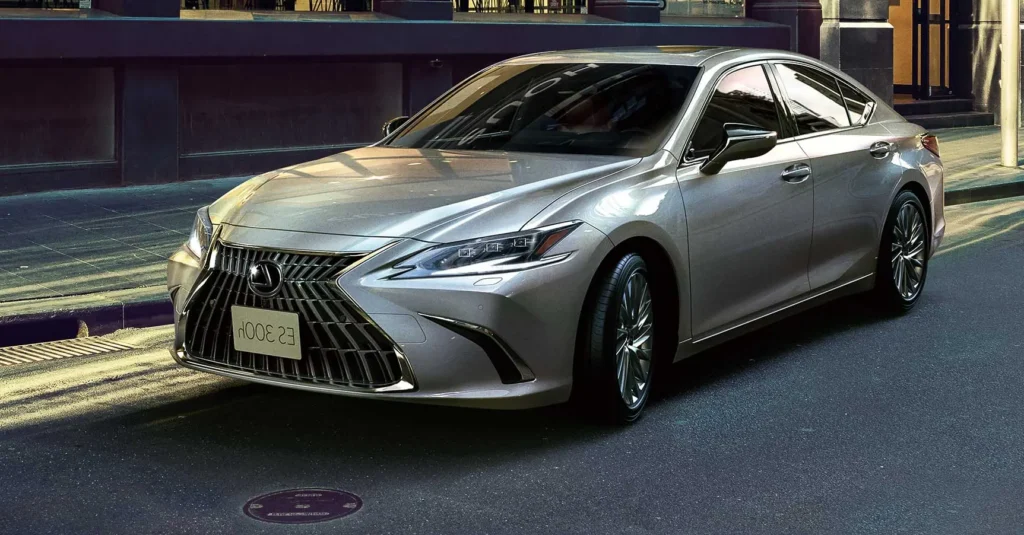
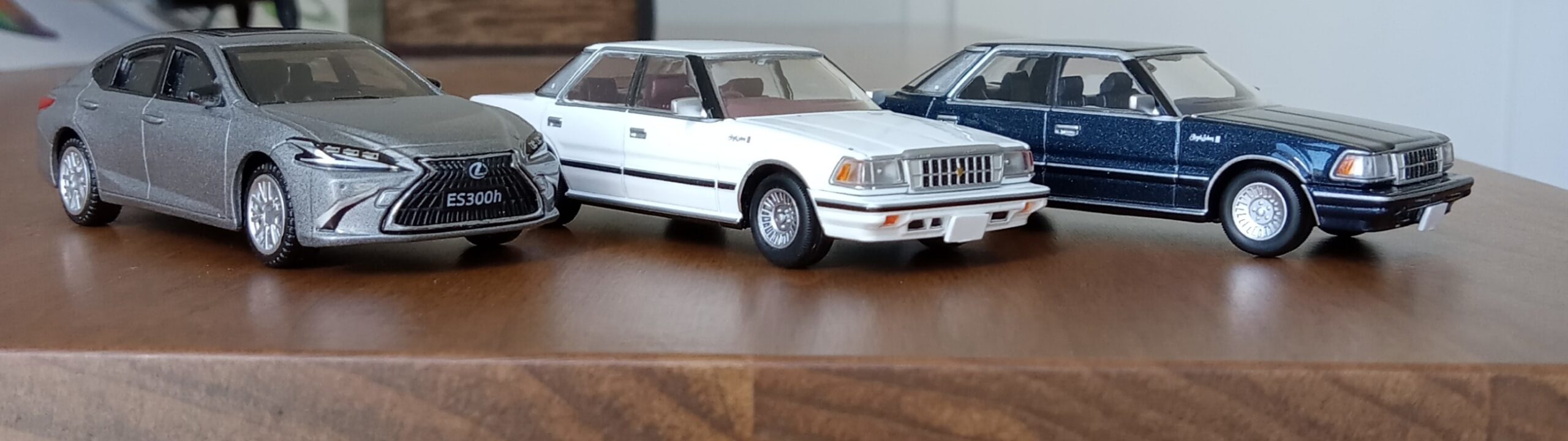 (北米における、現在のベストセラーセダン、レクサスESとともに、、、こちらも『伸びやかさ』では負けてません)
*敬愛する国産高級セダンたち:
その他の国産上級セダンの中で、
7代目クラウンと並び称されるべき
私の考えるリストはこんな感じです。
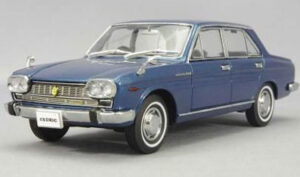
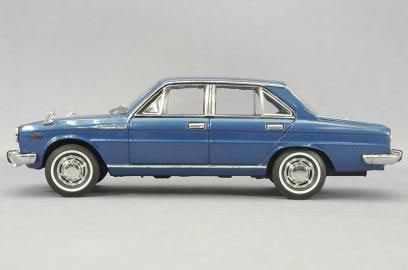
*日産セドリック スペシャル6(グレイ・メタリック)
(ピニンファリーナデザインのビッグマイナー前の、武骨さの残るフロントフェイシアと、FRセダンのお手本のようなサイドビュー・プロポーションが秀逸、下すぼまりのC-ピラーや後ろに向かってわずかに下降するフローイング・ラインもチャーミング。)
ーーーーーーー>古き良き時代、多売型以前のガツガツしてないの日本のセダンです。
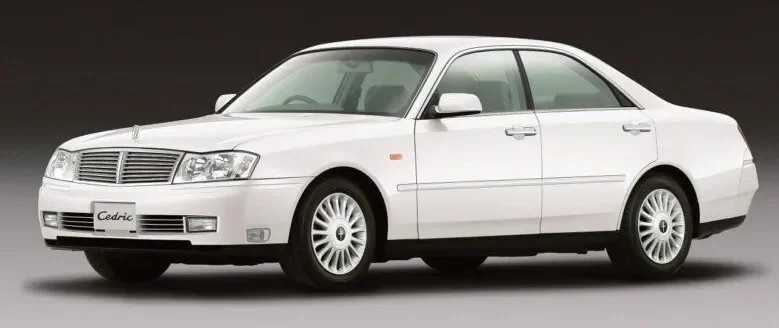
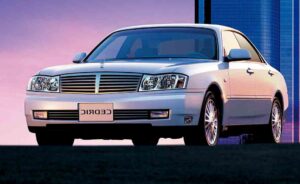
*10代目(Y-34型)セドリック(パールホワイト・マイカ)
(発売当時、ポルシェデザインが絡んでいるといううわさが流れた流麗な外観デザインが、日産の新シャーシを包みます。ユニークかつ独特な美しさに包まれたデザインはヨーロッパ車にも、アメ車にも似たものを探すことは不可能)
ーーーーーー>残念ながら、最後のセドリックとなってしまいました。

*レクサス ES ,2025年最終型(ソニック・チタニューム)
(カムリからアバロンにシャーシを大型化して、ホイールベースやトラックに余裕ができ、日本的な『鮎のようにしなやかで、伸びやかな美しさ』がようやく追求出来た感じです。リアフェンダー周りの出っ張り感と若干尻下がりなプロ―ポーションには見るたびにドキッとさせられます。北米レクサスのベストセラーなため、ほぼ毎日目にします。)
ーーーーー>次期型がEVバージョンを加えるためか、LSの役も担うためか?超巨大化するため、「トヨタの最後のアユ型」になるかも?)
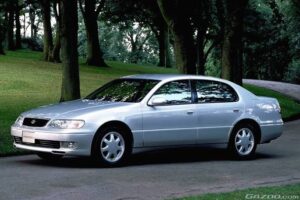
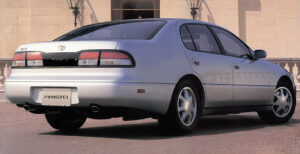
*トヨタ 初代アリスト、(シルバー)
(こちらも父が乗っていたため、いつも目にして、これと言って目立つところはないのですが、さすがジウジアーロ、端々まで丁寧に均整を取って彫刻された全体のカタマリ感、最後にリアデッキの高さなどで、『えぐ味や苦味』を注入するのも忘れてません。)
ーーーーーー>アメリカでは初代レクサスGSとして発売されました。
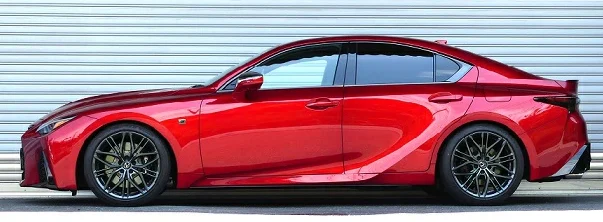
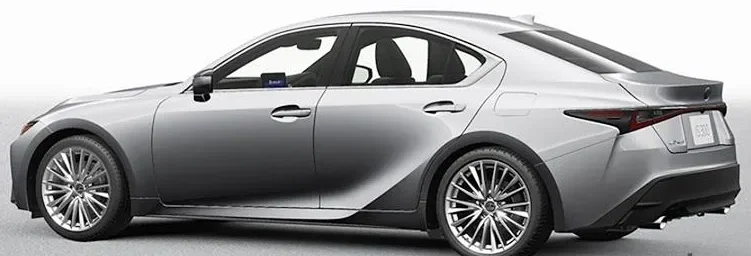
*レクサスIS、2025年最新型(ガンメタル・シルバー)
(初代のアルテッツァから出発してほぼ同じ路線の、パッケージングが難しいFR中型セダン:外観デザインの「試行錯誤」を繰り返して到達した最終形態は至高の到達点となりました!!毎回見るたびにトヨタ/LEXUデザインチームの奮闘努力(果てしない破壊と洗練の繰り返し)に頭が下がります。)
ーーーーー>性能・デザイン共にBMWの3クラスや、アルファの1750などと並びうる、このクラスのスポーツセダンの傑作です。
楽しんでいただけましたでしょうか、
今回も長文・駄文、失礼しました。
次回はいよいよ、
日本のモータリゼーションの出発点、
 スバル360を
お送りします。
お楽しみに―
本ブログと記事内容につきまして:
ブログ記事を書くにあたり私の目標は、立体造形(料理も含めて)とのかかわりを通じて、私個人の特徴的(ネジ曲がり方も含めて)な評価軸を解明することで、「美しさ・美味しさ」に対する好奇心や、探求心を、どのように満足・充足させてきたのかを明記しておくことです。
従いまして、記事の中に出てくる、数字や年号、微細なデータなどには細心の注意を払っておりますが、時に大きな間違いや勘違いを犯していることも考えられます。特に自動車記事における主要諸元や、年号などには紛らわしいものも多く、あくまで参考程度に考えていただければ幸いです。
私としては、記事の中で個人的な外観デザインや味覚の評価、そこから広がる後半部分につなげるための、『流れ』を作るための客観的材料として年号やデータを挿入している感じです。あくまで重視したいのは、私個人の頭の中で起こる、記憶の錯そう的混沌から生まれる新たな『見方』や『情報の予想外のつながり』です。その勢いを作り出す、『流れ』の一環として、諸データが副次的に必要となるわけです。
話がそれますが、大好きな落語の世界に「三題噺」という、その場て会場から募った3つのお題を使って1つのお話に仕立てるといったお遊びがございますが、私はそれに近いことを立体造形の特徴や(料理のお味)をお題にして行っている感じがします。その中で頭の中に去来する数々の着想が、全く予想外で楽しく、次回からの記事内容を大幅に変えたり、新展開につながっています。
当ブロブの仕組み:
『好奇心の点と線 x 気まぐれ脳内回路=予想外の新展開』
こんな自分勝手なブログですが、今後ともよろしくお願いいたします。
追記:上記の『流れ』を作る為に必要な写真はできる限り、個人所有のミニカー・自前の料理などを使い撮影しておりますが、その他の必要最小限の図版や写真を他のブログ主様の記事や諸会社ホームページなどからお借りしております。(記事内容に合うよう加工させていただき、使用時は最小の解像度で載せております。)問題がある場合、ご連絡いただければ直ちに降ろさせていただきます。
追記2:当ブログ記事に掲載のミニカー写真等(個人撮影)は許可なしで、どのようにお使いいただいても結構です。私個人の創造性はこの世のもの、と言う認識の上で記事を製作しています。
!!!!!!!!!!!!!!!!!!!!!!!!!!!!!!!!!!! Translation in English !!!!!!!!!!!!!!!!!!!!!!!!!!!!!!!!!!!!
Episode 16: Toyota Crown 3.0 Royal Saloon G, 1985 (Exterior Color: Super White)
(Manufactured by Tomytec, 1/64 Tomica Limited, Vintage Neo [195b] Toyota Crown 3.0 Royal Saloon G (Super White) – Achieved the ideal ‘slightly forward-leaning posture’ through fine-tuning the front and rear axles)
Featuring the intelligent, nice middle-aged man Koji Ishizaka in TV and newspaper/magazine ads,
singing “Someday, a Crown,”
the 7th generation Crown’s top grade:
3.0 Royal Saloon G
was part of Toyota’s pre-bubble era
a strategy mocked as “Kintaro candy” marketing (in magazines like Nihon Gensha’s ‘NAVI’), where major models like the Corolla, Camry, Mark II, and Crown shared nearly identical designs except for size, with details becoming slightly more luxurious from the bottom to the top.
literally stood at the pinnacle as the ‘crown’ of this approach.
My father adored that 7th-generation Crown,
declaring it “the car I loved most in my life.”
(He actually drove a 2.0 Royal Saloon.)
Was it youthful exuberance back then?
or perhaps from reading too much of the magazine ‘NAVI’? I never paid much attention to his opinion back then.
But now, as I approach the age at which my father passed away, and find myself writing an article about my favorite automotive designs in this very format, I’ve started to wonder about this shape for some reason. (laugh)
* The refined, polished linear design that evolved from the angular surfaces of the sixth-generation Crown
* The ornamental elements, starting with the crystal pillars, that seemed to symbolize Japan heading into the bubble era
* Improved stance and refined FR proportions achieved through wheelbase extension
And so on—new discoveries kept coming.
Plus, since the article’s flow focuses on 4-door sedans,
I ended up writing about it at this very moment…
It’s an unexpected choice,
and honestly, I have no idea where this is going myself…
Thank you for sticking with me to the end—
I truly appreciate it.
So, as always, I’d like to proceed like this.
*Real Car Commentary: Made it just before the bubble?,,, ‘Japan’s Treasure’
*Design Features: Three-dimensional composition perfect for the domestic market
*‘Me’ and the Crown Royal Saloon: My father’s smile
*Beloved Domestic Sedans:
* Real Car Commentary: Did it make it just before the bubble era? ‘Japan’s Treasure’?
Around the mid-1980s, just before the bubble era swept in,
the ‘7th Generation Toyota Crown Royal Saloon G’ appeared,
positioned as the ultimate weapon among the ‘high-society cars’ that were all the rage.
What kind of product was it planned to be?
Both the sedan and 4-door hardtop models refined the previous S11# generation, featuring a design characterized by straight lines complemented by curves and the “Crystal Pillar” resin treatment around the C-pillar.
Vertical-based styling:
Its design emphasized overall straight lines, earning high praise even from classic car enthusiasts. This styling aligned perfectly with the luxury-oriented tastes of the bubble economy era, conveying a sense of dignity and prestige. It was extremely well-received and led to massive sales.
The catchphrase “Someday, a Crown,” narrated by Koji Ishizaka in commercials, was used for this model and cemented the Crown’s subsequent image as ‘Japan’s Treasure’. Body variations were reduced to three types: 4-door hardtop, 4-door sedan, and wagon/van, with the 2-door hardtop discontinued.
Due to revisions in compact car dimensional requirements, the wheelbase was extended starting with this model. Both the 4-door hardtop and sedan featured the top-tier “Royal Saloon G” grade. Additionally, a 5-number plate version, the “Royal Saloon,” equipped with a 2.0 L 1G-1GU engine, was introduced. These three grades adopted an independent semi-trailing arm rear suspension.
Sold from September 1983 to September 1987, the seventh-generation Crown enjoyed exceptionally strong sales as a symbol of the prevailing ‘high-society car’ boom. Cumulative new registrations reached 539,485 units by the month before production ended, setting the highest sales record in Crown history. Consequently, the seventh-generation Crown became an epoch-making model. It was not merely a model change for a luxury sedan; alongside design innovations symbolized by the “Crystal Pillar,” it introduced numerous crucial advanced technologies—such as superchargers and electronically controlled suspension—that defined the direction of Toyota’s subsequent technological development.
*Key Specifications:
Model: MS125・Engine Type: 6M-GEU
Total Displacement: 2,954 cc Inline 6-cylinder DOHC 24-valve
Maximum Power: 190 bhp / 5,600 rpm
Maximum Torque: 26.5 kg-m / 4,400 rpm
Drive System: FR (Front Engine, Rear Drive)
Seating Capacity: 5 passengers
Body Dimensions: (4-door hardtop 3.0 Royal Saloon G)
Wheelbase: 2,720 mm
Overall length: 4,860 mm
Overall width: 1,745 mm
Overall height: 1,400 mm
Curb weight:
1,670 kg (4-door hardtop 3.0 Royal Saloon G)
*Design characteristics: A ‘square-based’ three-dimensional structure perfectly suited for the domestic market
If the previously introduced
British-made Jaguar XJ12
*Curve-based
*Extremely sophisticated,
*Lightweight yet
*Elegant and decadent
resembles ‘Victorian-style furniture’,
then this Toyota Crown 3.0 Royal Saloon G
*features straight lines
*is architectural and structural
*is solid and substantial
*exudes dignity and authority
is like a Kyoto-made ‘suiya dance’ cabinet.
In a sense: the pinnacle of Japanese four-door sedan design.
Of course,
* The angular division splitting the body sides vertically,
* And the nostalgic, classic taste itself
were to some extent riding the wave
of global automotive design trends at the time.
yet when surveying the subsequent Crown design history,
as the vehicle width increased,
designers became overly preoccupied with the body side’s volume and tapered surfaces,
resulting in an image of being a ‘second-rate imitation’ of European cars like Mercedes-Benz.
In stark contrast,
Throughout the photo shoot, I felt that the 7th-generation Crown
achieved a unique, angular materiality reminiscent of Japanese carpenters or joiners assembling cut timber,
along with a clean, uncompromising craftsmanship [a sense of precision]
from deliberately avoiding tapers or rounded corners,
and an expansive, generous presence.
Six Design Characteristics:
Six Design Characteristics:
1: Body sculpting dominated by straight lines, flat planes, verticals, and parallels—deliberately chosen to achieve maximum size within Japan’s standard passenger car dimensions (1700mm x 4800mm), as if carved by a plane.
2: Meticulously calculated down to the finest detail, exuding a solemn, dignified, and exquisitely refined Japanese aesthetic, along with its sense of craftsmanship.
3: Pursuit of a splendid FR proportion and stance within the standard specifications, achieved through the adoption of a long wheelbase.
4: A front fascia design evoking the stylistic beauty of Buddhist altars and Shinto shrines, featuring linear dignity and rich harmony.
5: The ‘3-number plate exclusive’ front and rear bumpers, front grille, and side molding design—achieving the first departure from standard passenger car specifications—and its ingenious product planning
6: Needless to say, the ‘Crystal Pillar’ (a C-pillar design covered in transparent resin, maintaining a sense of unity with the window area and sparkling with reflections) that would later lead to the Celica’s streamlined design
Now,
let’s examine each point in turn.
1: Within the confines of Japan’s standard passenger car dimensions (1700mm x 4800mm) and 2.0-liter engine capacity, the deliberately chosen body sculpting—featuring straight lines, flat planes, vertical and parallel elements—achieved a maximally large appearance, as if carved by a plane.
(A clever design that refines the sixth-generation’s straightforward linear theme across all surfaces while subtly sprinkling allure throughout)
————————> It became a monumental design, reigning supreme at the pinnacle of Toyota’s ‘Kintaro Candy Strategy’—a vernacular approach positioned diametrically opposite the later Lexus, foreshadowing the bubble era.
2: Meticulously calculated down to the finest detail, exuding solemn dignity and refined elegance—a Japanese-preferred aesthetic of exquisite detail and ‘craftsmanship feel’
(Notable points abound: a barely perceptible forward lean, a front fascia that’s sharply cut without the slant seen in models like the Mark II, and ‘intricately carved’ wheel designs)
────────> It pours its entire soul into proclaiming the spirit of Toyota’s flagship vehicle!!
3: Pursuit of a magnificent FR proportion and stance within specifications, achieved through the long wheelbase.
————————> It possesses a stance brimming with confidence, standing out even among past Crown generations.
4: A front fascia design evoking the formal beauty of Buddhist altars and Shinto shrines, with linear dignity and rich harmony
(It suits a solemn, upright, and leisurely cruising presence)
────────> The dream of a high-society car has become reality…
5: Achieved the first departure from standard passenger car planning with its ‘3-number plate exclusive’ front and rear bumpers, front grille, and side molding design & its ingenious product planning.
————————> The way the bumpers protrude front and rear reflects the extraordinary popularity of ‘3-number plate cars’ at the time.
6: Needless to say, the ‘Crystal Pillar’ (a C-pillar design covered in transparent resin, maintaining a seamless look with the window section and sparkling with reflections) that later led to the Celica’s streamlined design.
────────> One can’t help but feel the momentum of the ‘high-society car craze’ at the time.
(The Celica with its streamlined design, completely hiding the pillar with glass)
Next, I’d like to share my personal experience.
*‘Me’ and the Crown Royal Saloon: Alongside my father’s car history
After leaving his job as a textile wholesaler,
my father ran a custom bedding shop.
He was literally part of the generation that rode the wave of Japan’s automotive industry boom,
a member of the ‘car-loving generation’.
My father’s car history is as follows:
* First generation Publica
* Toyopet Corona 1600 4 Sedan (?)
* Hakosuka 4-door 1800 (PC10) (White)
* Luce 4-door Sedan (2nd generation) (Metallic Green)
* Corona Mark II 2000 Grande (Maroon)
* Crown 2.0 Royal Saloon (7th generation) (Super White)
* Crown 2.0 Athlete (Super White II)
* Supra (Black) – Jointly owned with my younger brother
* Soarer 2.0GT (Super White II) – Jointly owned with my younger brother
* Aristo (Silver)
*Crown Royal Saloon (10th generation) (Super White)
Among these, the one my father loved most was
the one featured here,
the ‘7th generation Crown’.
He drove that 2.0 Royal Saloon.
Throughout his history of owning over ten cars,
he always seemed incredibly happy when talking about this Crown,
saying, ‘It was the best car I ever drove’.
He would say.
#After getting the mini car, my perspective did a complete 180!!
Amidst this, I recently acquired (out of sheer nostalgia) a 1/64 scale mini car (white & indigo blue) from Tomytec’s Vintage Neo series on Mercari.
I was utterly amazed by its quality. While taking photos of it,
memories came flooding back—borrowing it from my dad, driving it around, helping wash and coat it.
Conversely, I was shocked by how unimpressive later Crowns seemed,
and began to realize the uniqueness of this 7th-generation Crown.
That uniqueness lies in:
* The Super White exterior color: Symbolizing the bubble era, with its straight lines and clean yet luxurious image
* Achieving maximum length and width within standard passenger car specifications
* The coexistence of tension-filled expansiveness and a “pin-tight sense of tension”
* A sharpness reminiscent of unique architectural design, rarely seen even in foreign cars of the time
and more.
I’ve fallen in love with it all over again!!
As a result,
in my mind, this 7th-generation Crown Royal Saloon,
born within Japanese specifications,
is certified as the genuine article:
the ‘jewel in the crown of Japanese cars’.
(Alongside the current best-selling sedan in North America, the Lexus ES… this one also holds its own in terms of ‘graceful elegance’)
*My beloved domestic luxury sedans:
Among other domestic premium sedans,
those I believe should be mentioned alongside the 7th-generation Crown
My personal list looks like this:
*Nissan Cedric Special 6 (Gray Metallic)
(The pre-big-facelift front fascia, designed by Pininfarina, retains a rugged charm. Its side view proportions are textbook for a rear-wheel-drive sedan, with an excellent tapered C-pillar and a flowing line that dips slightly toward the rear – utterly charming.)
ーーーーーーー> This is a Japanese sedan from the good old days, before mass-market models, with a less aggressive stance.
*10th Generation (Y-34) Cedric (Pearl White Mica)
(Its sleek exterior design, rumored at launch to involve Porsche Design, envelops Nissan’s new chassis. This uniquely beautiful design defies comparison with either European or American cars.)
ーーーーーー>Sadly, it became the final Cedric.
*Lexus ES, 2025 Final Model (Sonic Titanium)
(By scaling up the chassis from the Camry to the Avalon, it gained ample wheelbase and track width, finally allowing the pursuit of that quintessentially Japanese ‘beauty as supple and graceful as an ayu fish’. The pronounced flares around the rear fenders and the slightly rear-sloping proportions still make my heart skip a beat every time I see it. As North America’s best-selling Lexus, I see it almost daily.)
————> Will the next generation become “Toyota’s last ayu-shaped model” due to adding an EV version, taking on the LS’s role, or becoming super-sized?
*Toyota First-Generation Aristo (Silver)
(My father drove this one too, so I saw it constantly. While it doesn’t have any particularly striking features, it’s classic Giugiaro—meticulously sculpted with balanced proportions throughout, yet it doesn’t forget to inject a bit of ‘edge and bitterness’ with details like the rear deck height.)
ーーーーーー>In the US, it was launched as the first-generation Lexus GS.
*Lexus IS, 2025 latest model (Gunmetal Silver)
(Starting from the first-generation Altezza, it followed a nearly identical path as a challenging FR midsize sedan to package: The final form reached through repeated “trial and error” in exterior design became the ultimate pinnacle!! Every time I see it, I’m humbled by the relentless efforts of the Toyota/Lexus design team—endless cycles of destruction and refinement.)
────────> In both performance and design, it stands alongside the BMW 3 Series and Alfa Romeo 1750 as a masterpiece among sports sedans in its class.
I hope you enjoyed it.
Apologies again for the lengthy ramblings.
Next time, we finally bring you the
starting point of Japan’s motorization:
the Subaru 360.
Stay tuned―
Translated with DeepL.com

これはCTAサンプルです。
内容を編集するか削除してください。