
第14回:『雑記ブログ、3個のカテゴリーの秘密』設計奮闘編
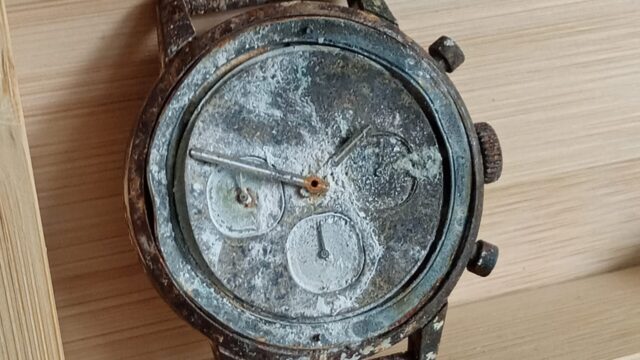
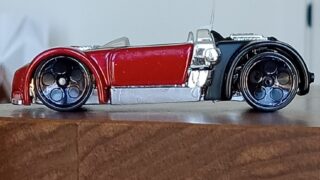
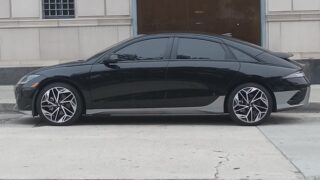
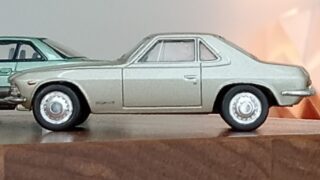
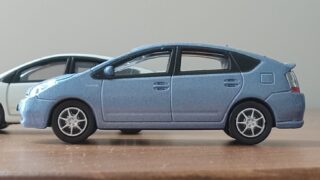
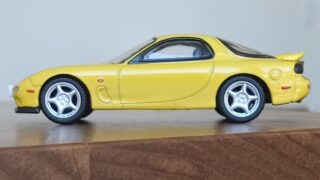
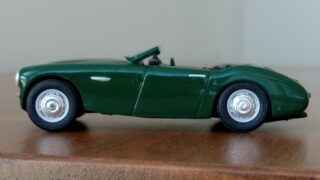
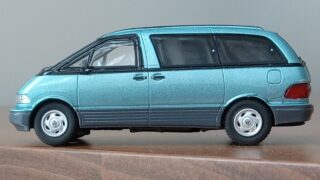
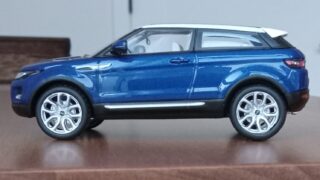
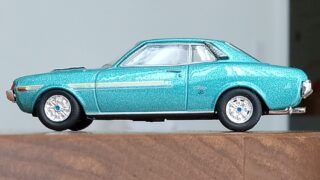
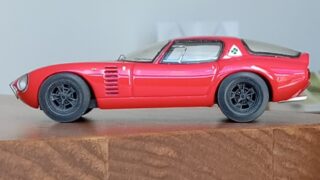
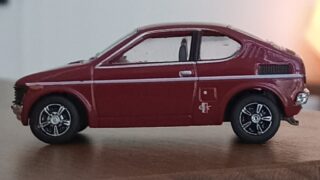
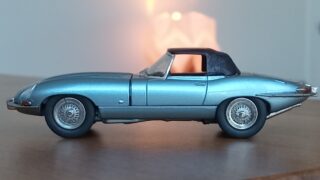
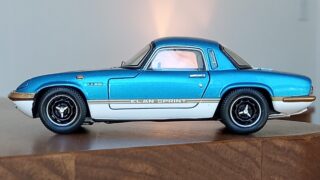
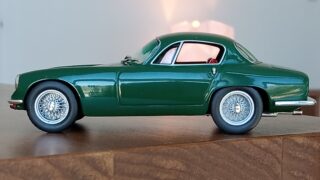
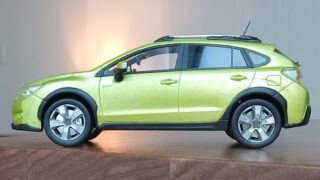
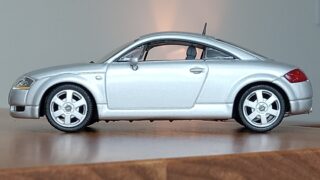
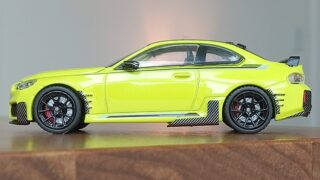
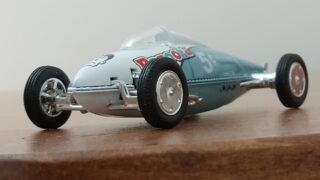
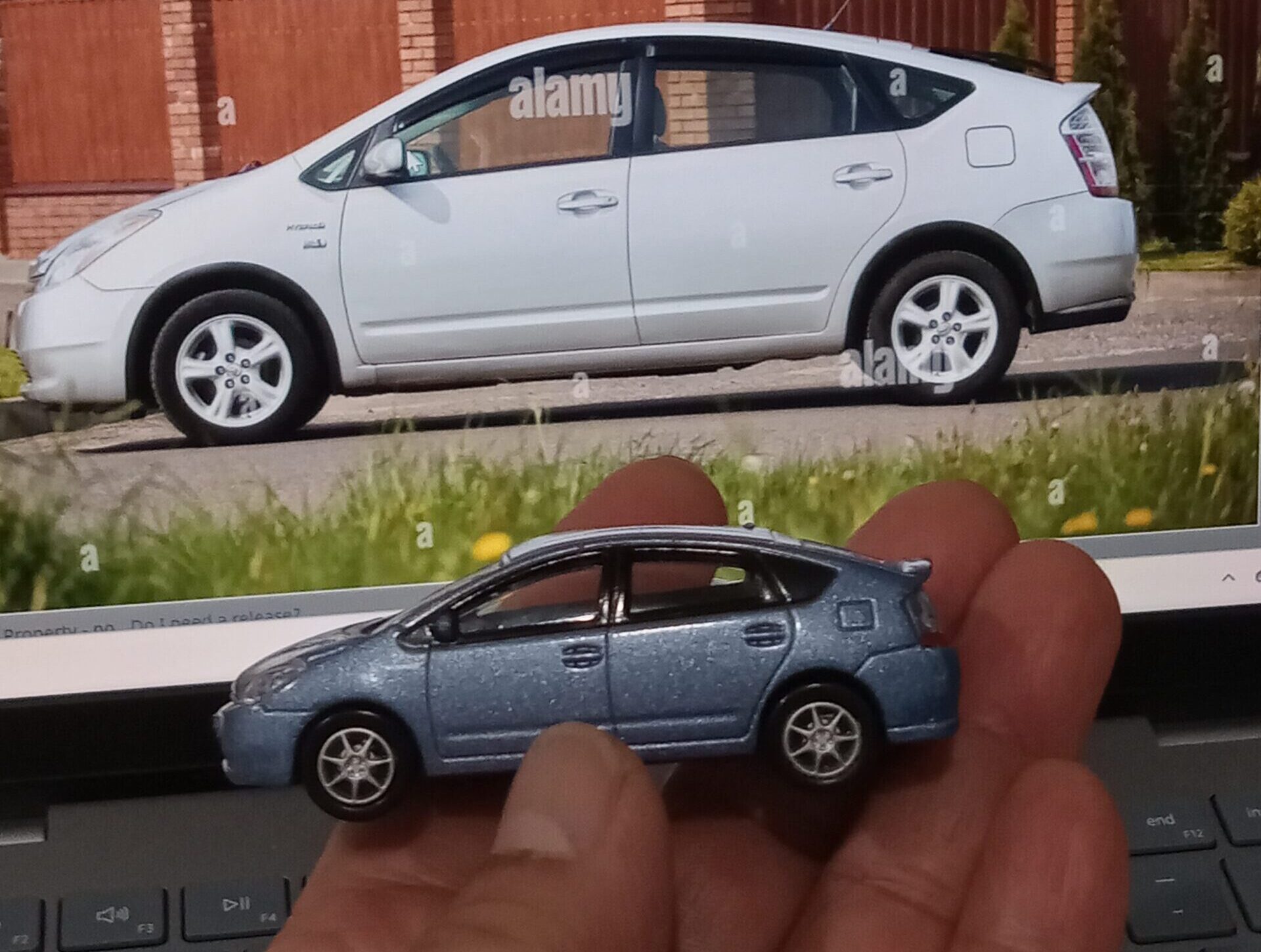 (実車の写真と比較することで、ミニカーの正確さを検証してから写真撮影を始めます。時にはプライヤーでダイキャスト製ボディーをへし曲げることも、、、)
第14回の今回は『雑記ブログの3個のカテゴリー & 再建資金の調達の苦労 Part2』と題しまして、2025年6月、7月中の『泣き笑い』を中心にお話ししてみたいです。
以下の要領で進めていきます。
今回は真ん中の3項目についてのお話です。
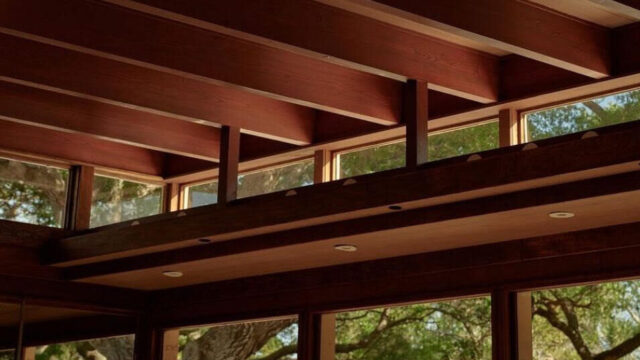
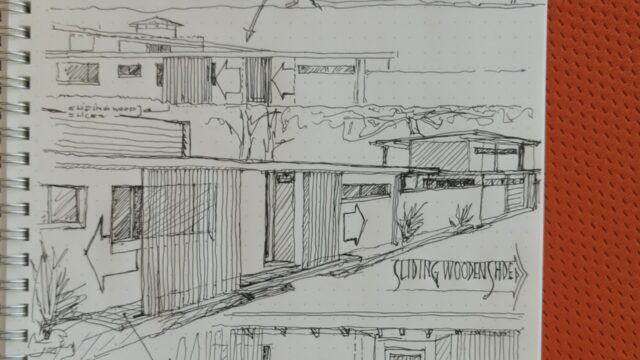
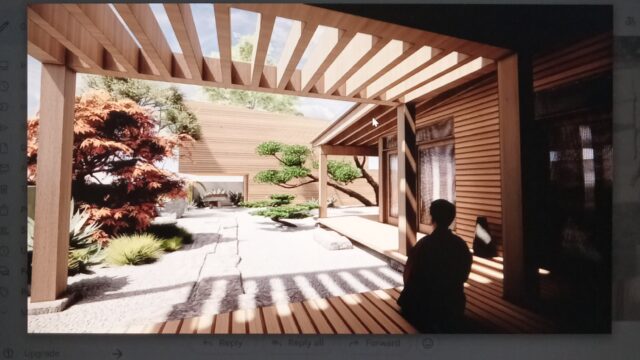
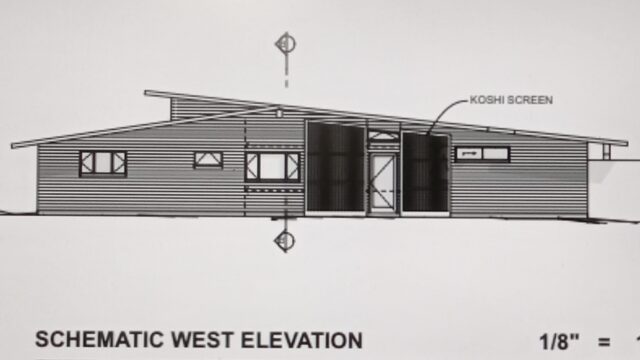
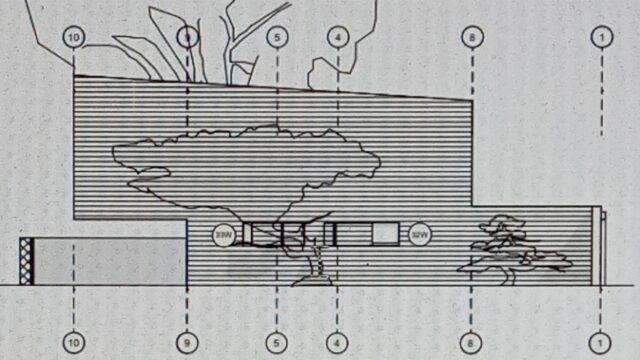
*新居のデザイン:『桂離宮の濡れ縁コンセプト』の謎?
*ブログのカテゴリーを作る?
*『自宅再建』:自宅焼失 / 再建にまつわる苦労や喜びの記録
*『立体造形』:自動車デザイン、好きな造形を紹介
*『食事レポート』:レストラン・レポート&自作レシピ、、、
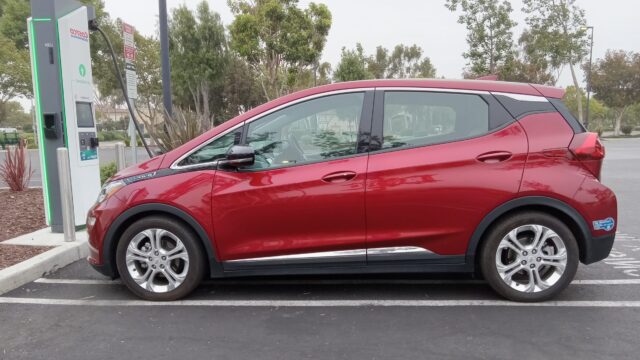
*自家用、電気自動車の充電騒動、再発!!
*自宅再建資金の捻出、、、無理かも?
*ブログのカテゴリーを作る?


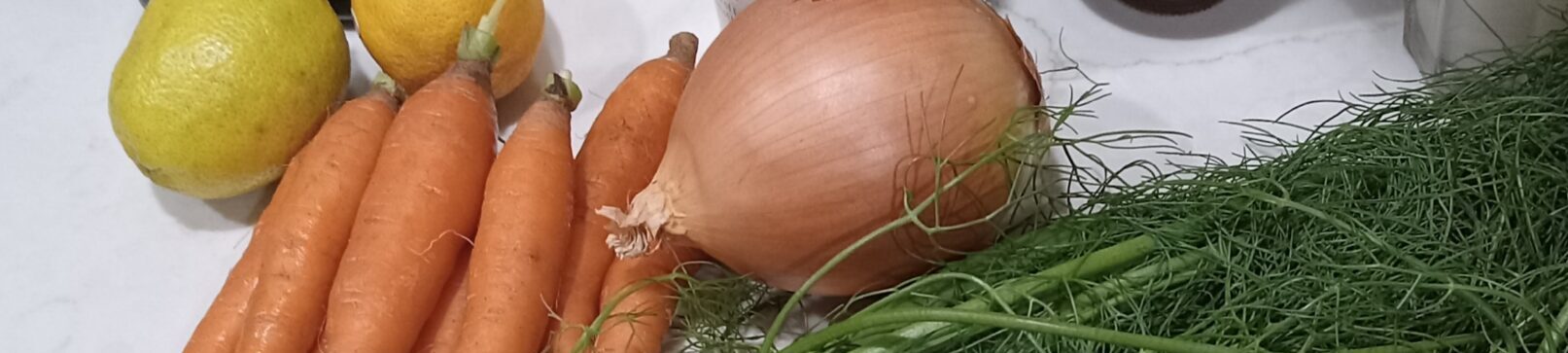
ブログの開設時にいろいろな設定や外観デザインを決めていく時に、
カテゴリーを決めることになり、
以前から考えていたように、
メモ帳を確認して、以下の3つが出てきました。
*全焼した自宅をどう再建していくか?の記録と、トラウマ克服日記
*消え去った立体模型のコレクションの買戻し、と自己作品の新作発表
*被災中に食べた食事(外食、自炊)を報告&レシピの公開
この3つのカテゴリーを階層化もできることを知り、
(例えば『立体造形』の下層に、ミニカー、デザイン、折り紙、書道などのサブカテゴリーを設定可能)
以下のような、
あえて大きな範囲を占めるような包括的なカテゴリー名を付けました。
1、自宅再建
2、立体造形
3、食事レポート
それではそれぞれのカテゴリーに付き
詳しく見て行きましょう。
*自宅再建:自宅焼失/再建にまつわる苦労や喜びの記録
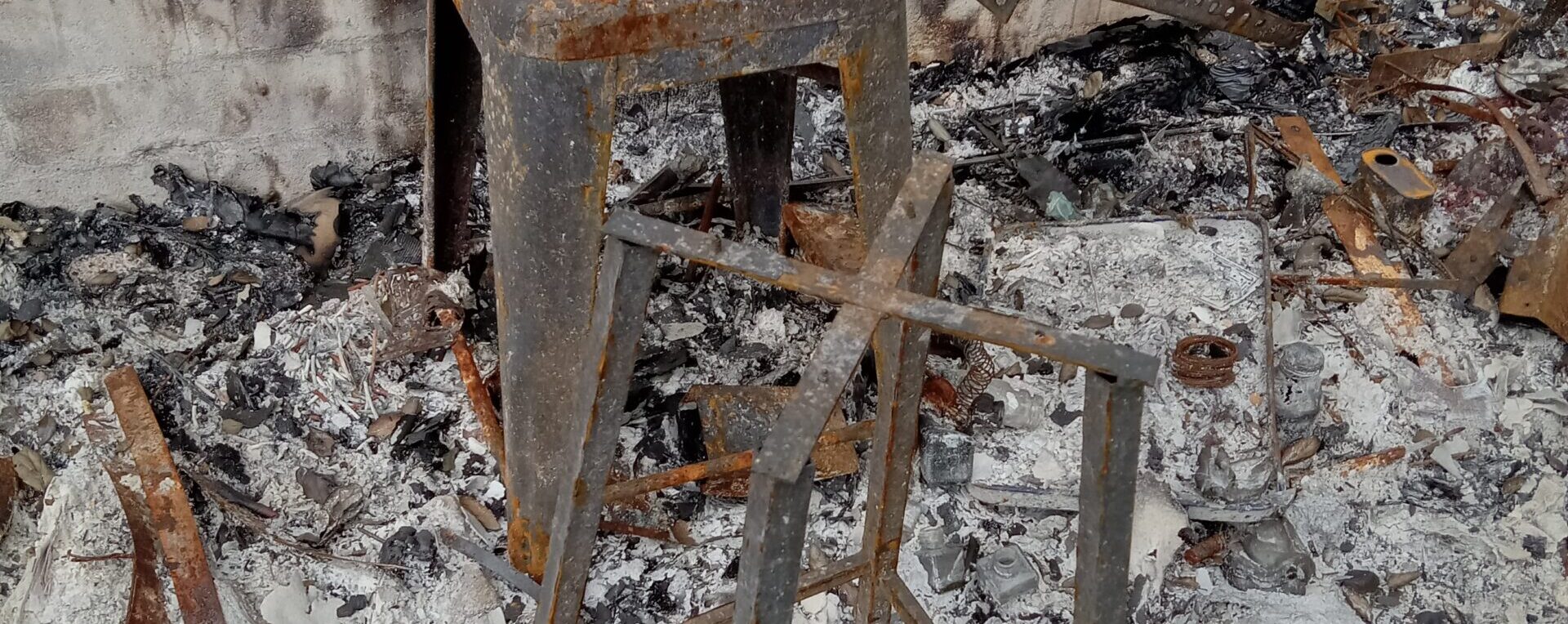
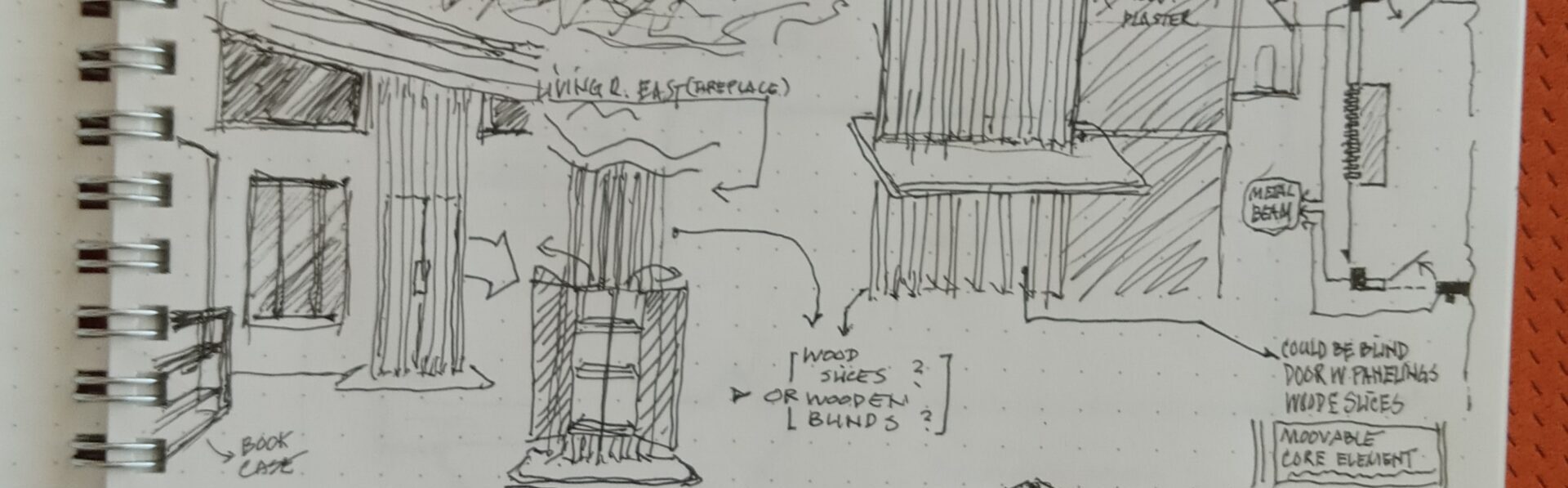
まず最初のカテゴリー、
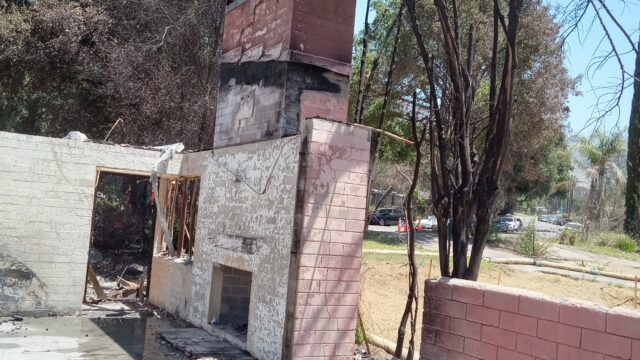
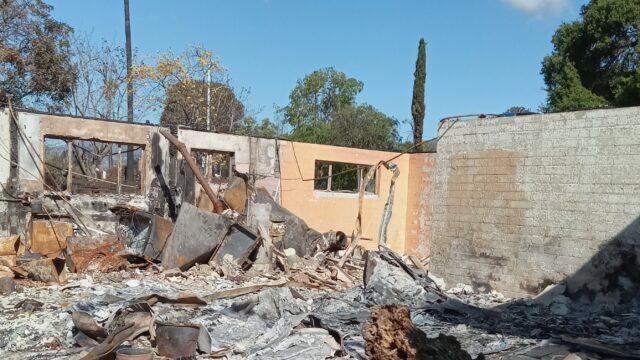
『自宅再建』の中では、新居の設計や瓦礫撤去の前に、今後再建までの間の住処を見つける必要がありそこから始まり、以下のような道筋を想定して進めていくことになりました。
フェーズ0
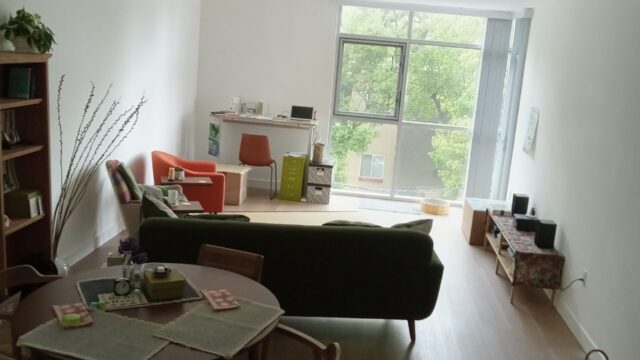
*当面の住処探し(アパート、バックハウス、借家?)
*家具、家財の調達ーーー>まずはリースで解決
フェーズ1
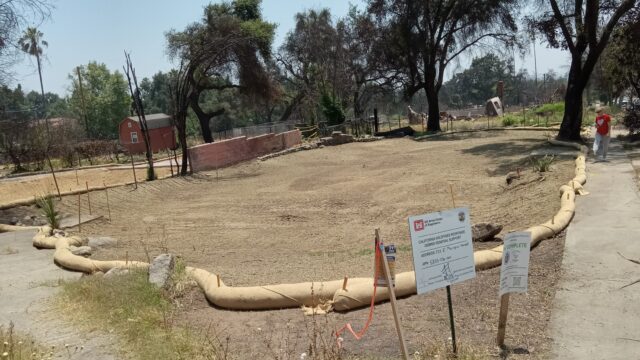
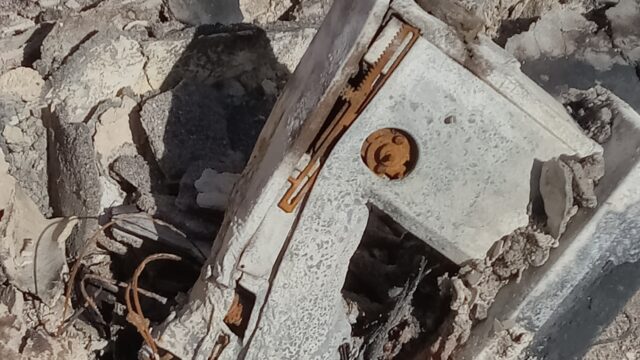
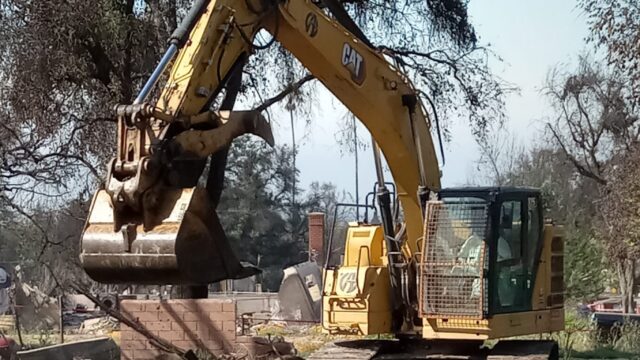
*全焼した自宅周りの安全確保
*米連邦政府から派遣された陸軍特殊チーム(危険物処理班?)による瓦礫撤去
*自宅再建に踏み切る過程(保険会社、連邦災害救済基金【FIMA】などとの折衝)
*建築家の選定
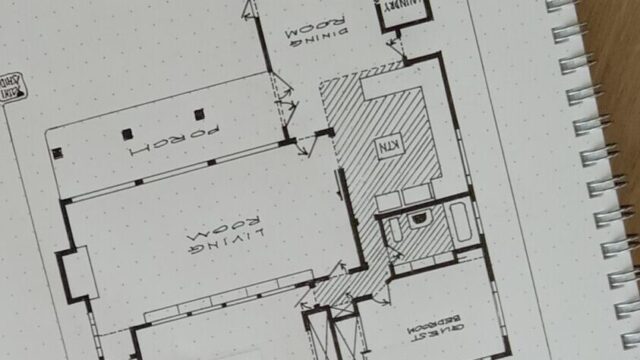
*旧自宅の平面図の作成(建築家と共同制作)
*新築計画(建築家とのやり取り)
*建築家との正式契約
フェーズ2
*新築内容の概略をロサンゼルス群に提出して認可を取る
*新たに付け加える部分も含めて詳細を詰める(11/6/2025時点で、このあたりです)
*専門家による土地の適正調査
*建築家と工学技士により最終的な青写真の作成
*3社の入札制で工務店を選定
フェーズ3
*上棟式から建築工程開始
*その後、9か月から1年で完成
現地のアメリカ人もあまり経験することのない、
注文住宅を一から新築する経験を、
*お金の工面の難しさや、
*アメリカ政府や地方政府、公益団体からのお金の融資、友人、親戚からのカンパ等々、
*建築費、工賃の高騰、+不透明なトランプ政権の経済政策、
*工務店選びのコツや、建築業界の内情など、
バラエティーに富んだ内容になりそうな予感を感じながら
始めました。
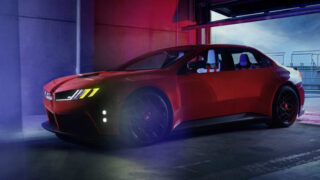
*立体造形:自動車デザインや好みの造形を紹介

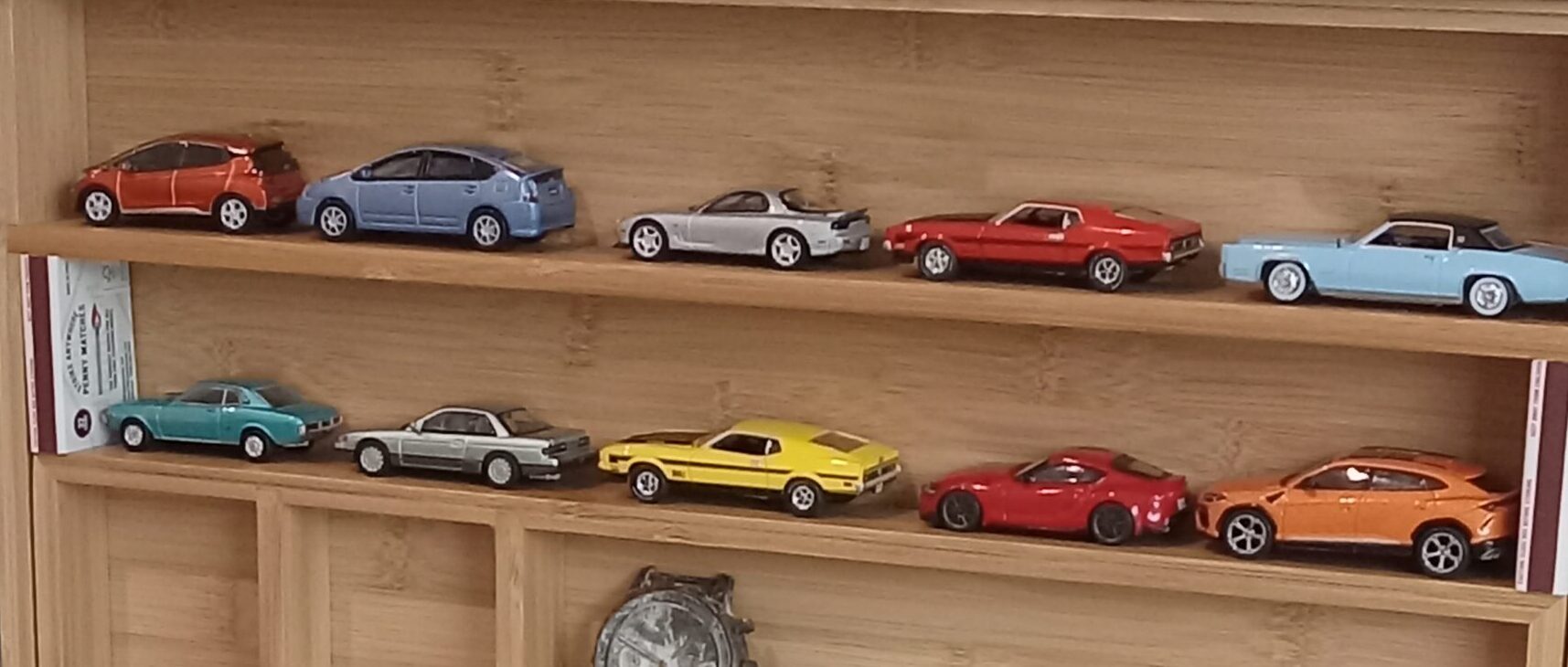
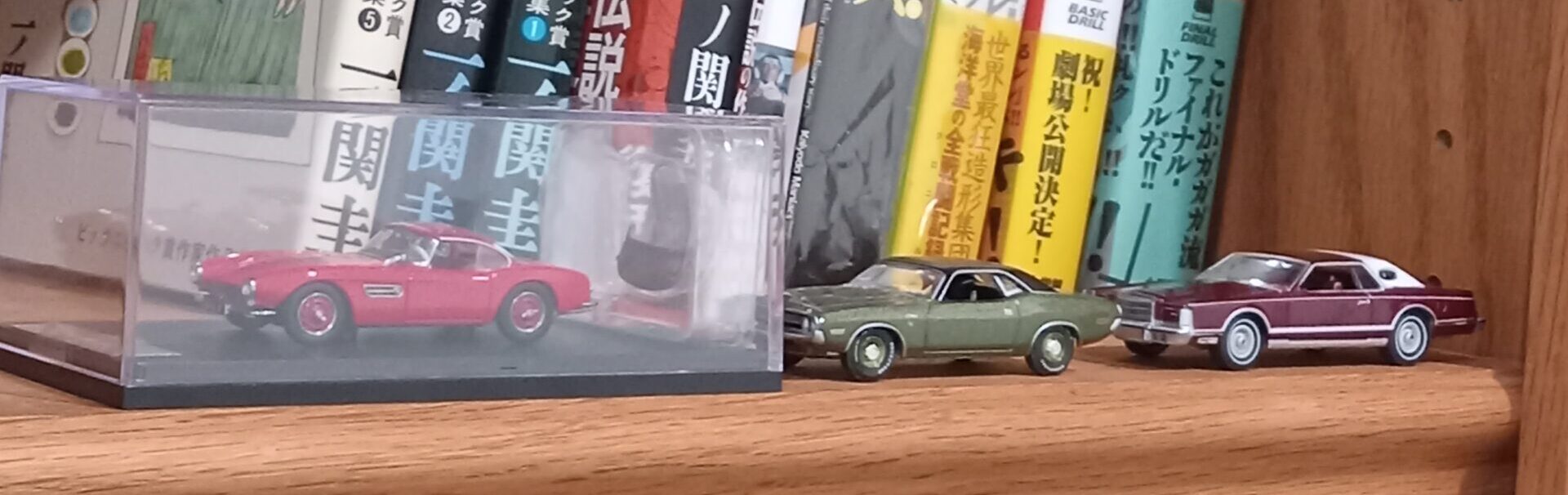
被災後の1月中、
友人宅にお世話になっていた時一番つらかったのが、
何も手で触るものが無くて、
(面白い立体物を常に掌に置いて触っていたい自分としては)
手持無沙汰、、、、
ということでした、
一月半ばに堪えられなくなり、
最初にイーベイで注文したミニカーが、
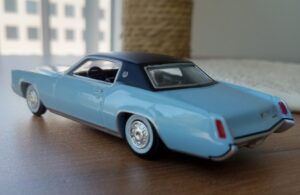 この 、
この 、
*AUTOWORLD・ダイキャスト製、1/64 キャデラック・エルドラド,1967(アイスブルー&黒の2トン)
 それ以降も、アリ・エクスプレスさんで、
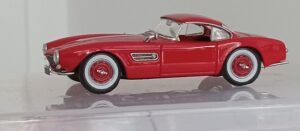
*GFCC製・ダイキャスト製、1/64 BMW 507 (赤のハードトップ版)
 メルカリさんで、
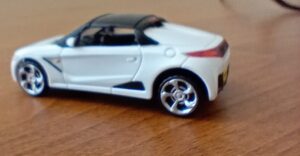
*IP4製、KOROKORO,プラ製ガチャポン、ホンダ S660 (5台フルコンプ版)
を注文したところで、
アパートに引っ越すこととなりました。
*『自動車デザインベスト10』登場!!
そして迎えた5月、
ブログ開設にあたり、どんな感じで立体模型関係の記事を書こうか?
とその時、
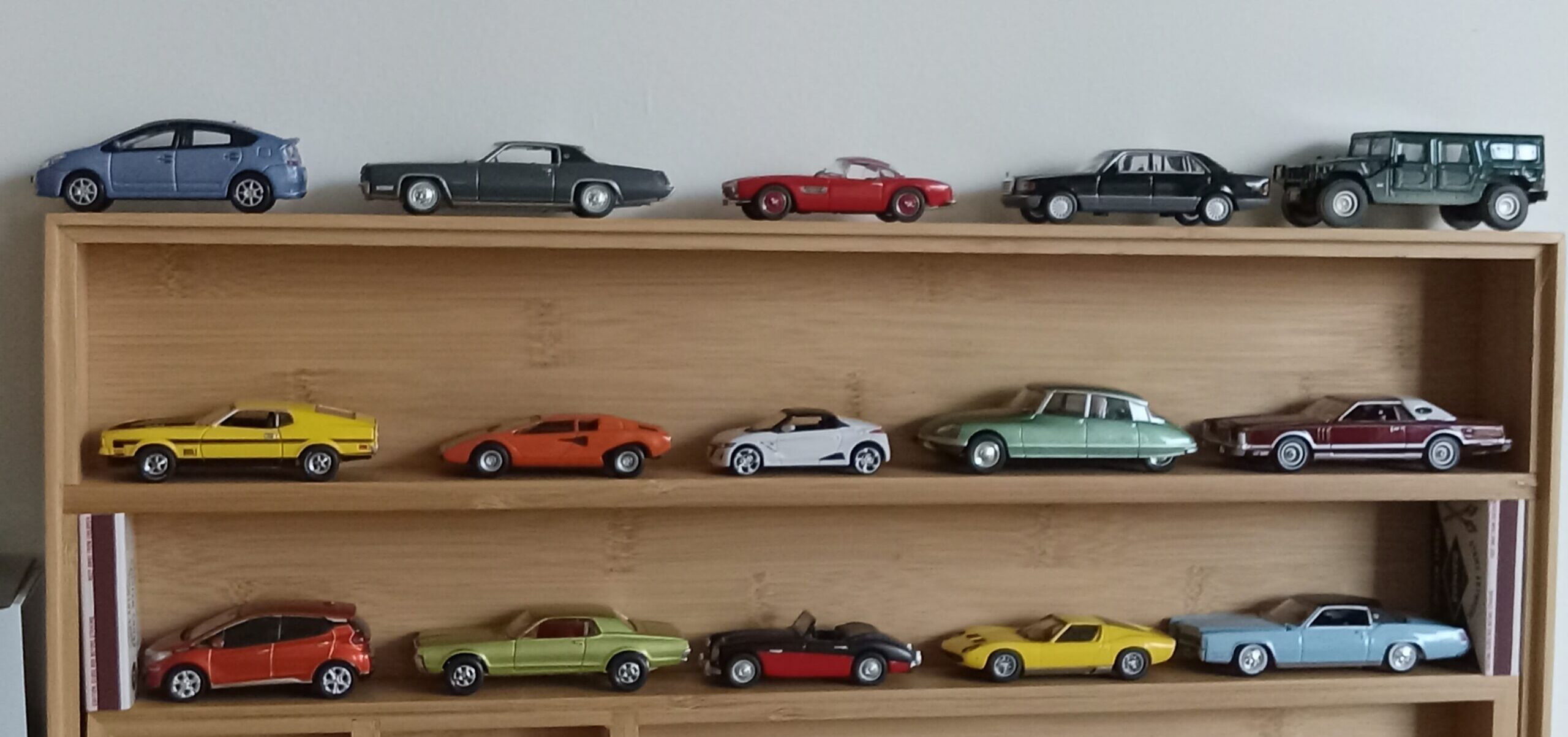
ふと目前の竹製の飾り棚に陳列された1/64のミニカーを眺めていた時、
『自動車デザインベスト10』
といった言葉が思い浮かびました。
今まで、「一番美しい自動車ベスト10」とか「カッコいい車ベスト10」とかいろいろなベスト10ものをネットや雑誌の特集記事などで見た気がしますが、デザイン目線での「ベスト10」は見たことがなかったので、あくまで私の独断と偏見を含んだ「デザインベスト10」をやってみたく思いました。
其の後は、とんとん拍子に話が進み、
*ベスト10リストを作り、
*自分流にそれぞれのクルマにニックネームをつけ、
*メモ帳に記事内容を書き連ね、
*足りないミニカーを探し出し何とか注文、
第一回の『BMW 507』についての記事を
6月9日にブログ上で公開できました。
追伸:この時期に友人あてのメールの中で、こんな感じで
『自動車デザインベスト10』について説明してました。
n
n
*『自動車デザインベスト10』記事の書き方、、、、
まず記事を書くにあたり、
1:こんな感じでベスト10リストを作り、それぞれを簡潔、キャッチ―にとらえたニックネームをつけ、
第10位:BMW 507, 1956 ————映画スターみたいに、実車は小さい!!
第9位:AMゼネラル ハマーH1, 1992 ——ー超高機動型ランボー
第8位:MB 560 SEL, W126型, 1979 ———忠実で賢いシェパード犬
第7位:キャデラック・エルドラド,1967 --知性あふれるセックスアピール
第6位:トヨタ プリウス, 2003 (2代目)——未来の三角おにぎり
第5位:ホンダ S660, 2015 ——————よく吠える柴犬
第4位:ポルシェ 928,1978 ———異世界から来た妖艶なエイリアン
第3位:シトロエン DS23 Pallas, 1973 ——七変化のフランス猫:シャリュトリュー
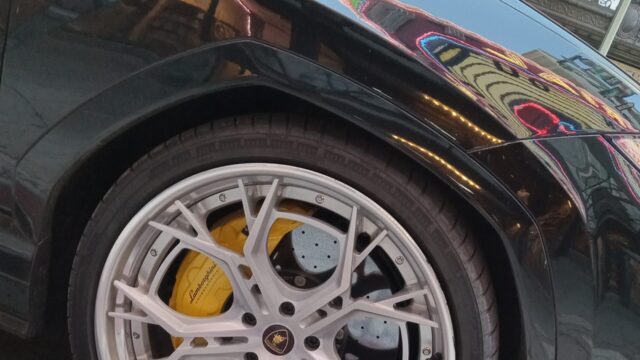
第2位:ランボルギーニ・カウンタック LP400, 1974 ——超高速ダイヤモンド
第1位:オースチン・ヒーレー 100/4 (BN/1), 1953 –1頭立て韋駄天・馬車
2:ある程度正確かつ私好みな『カタチ』が出ている1/64のミニカーを見つけて、ライティングなどにこだわりながら、その車種にあった写真を撮りまくり編集します。
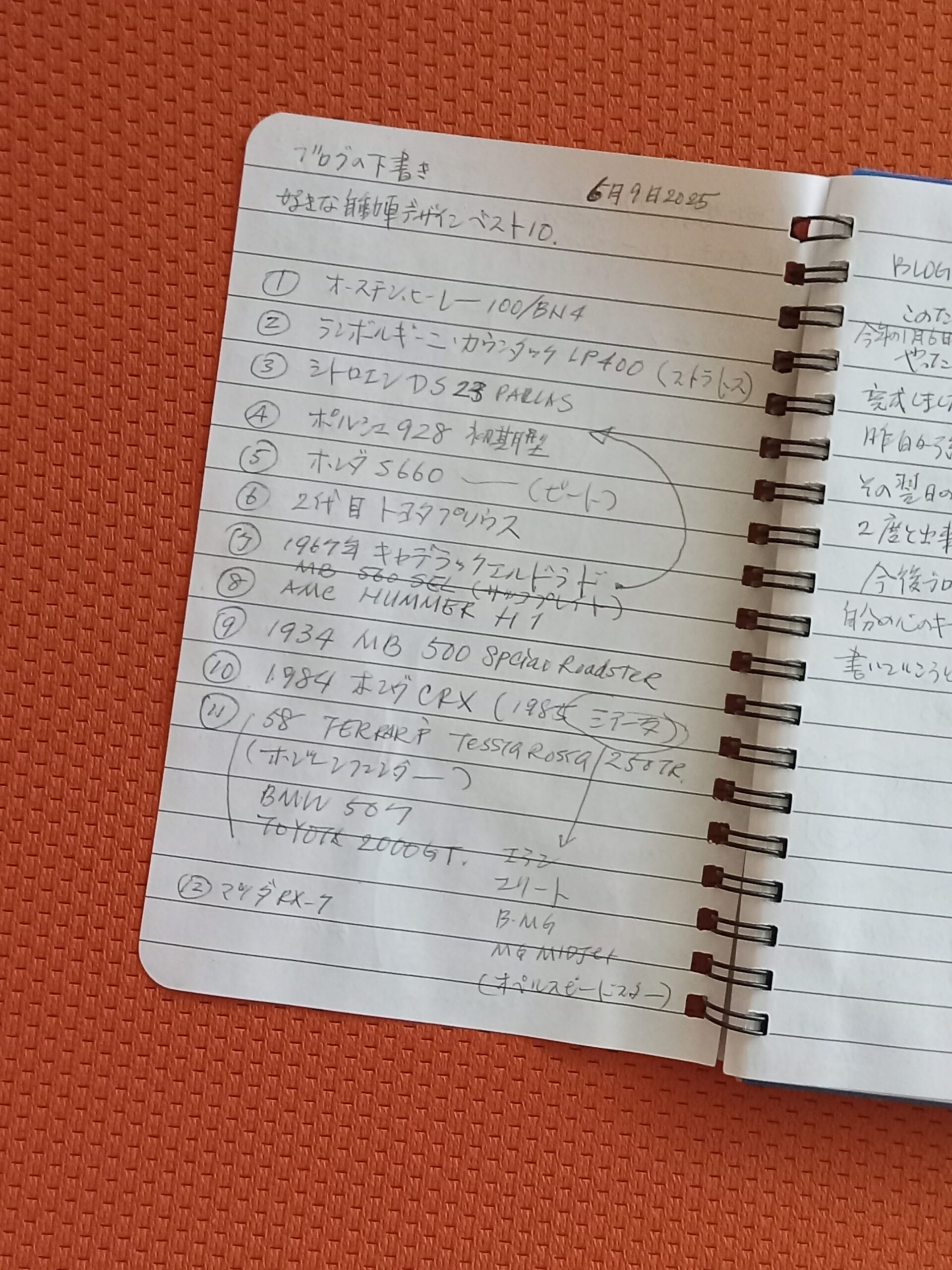
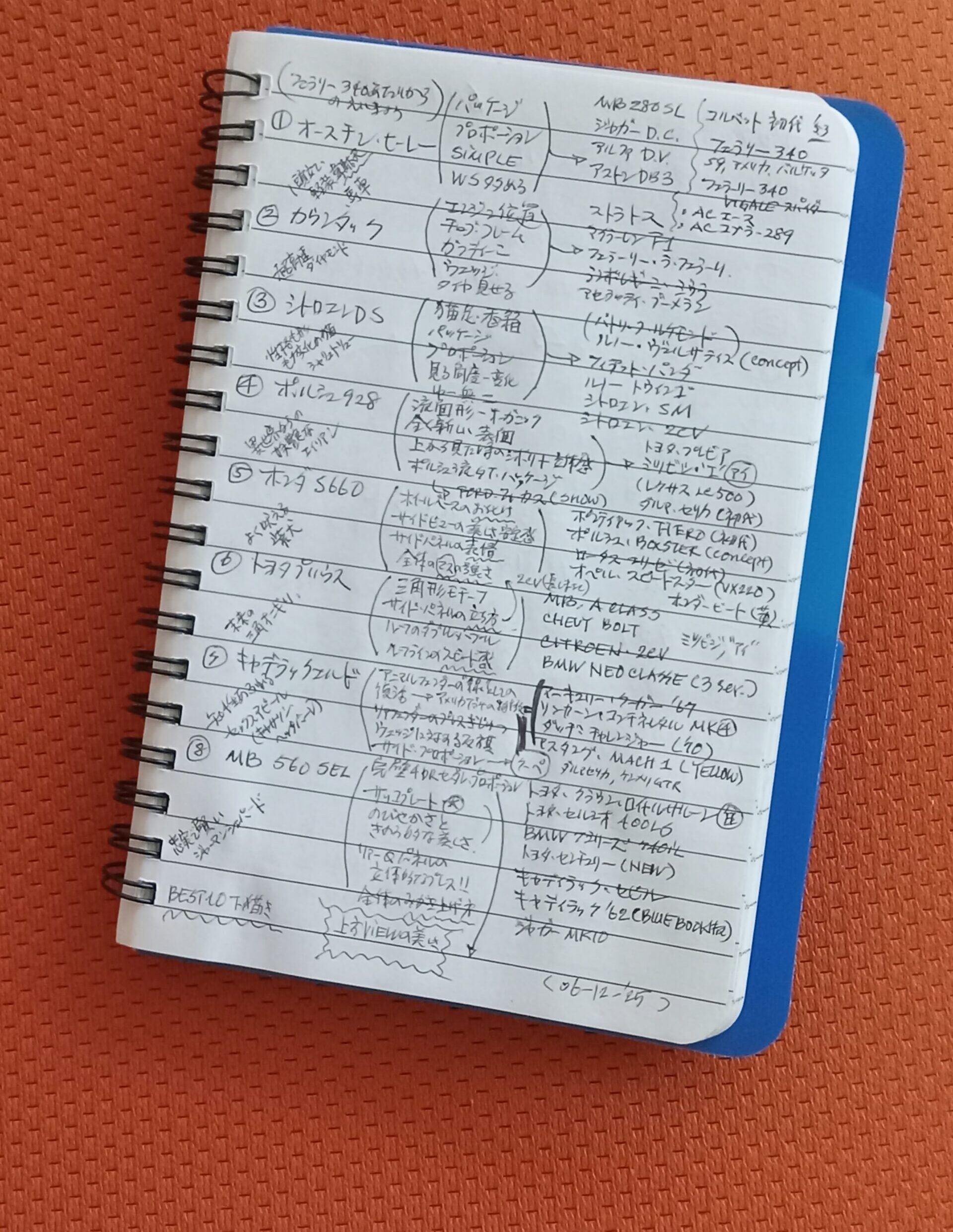
3:いよいよメモ帳に書きだめてあった記事の下書きを参考にして、なるべく平たんにならないよう自分らしい個性を注入しながら、行き当たりばったりで清書していきます。(こんな感じでそれぞれのクルマに付き下書きを用意しました。)
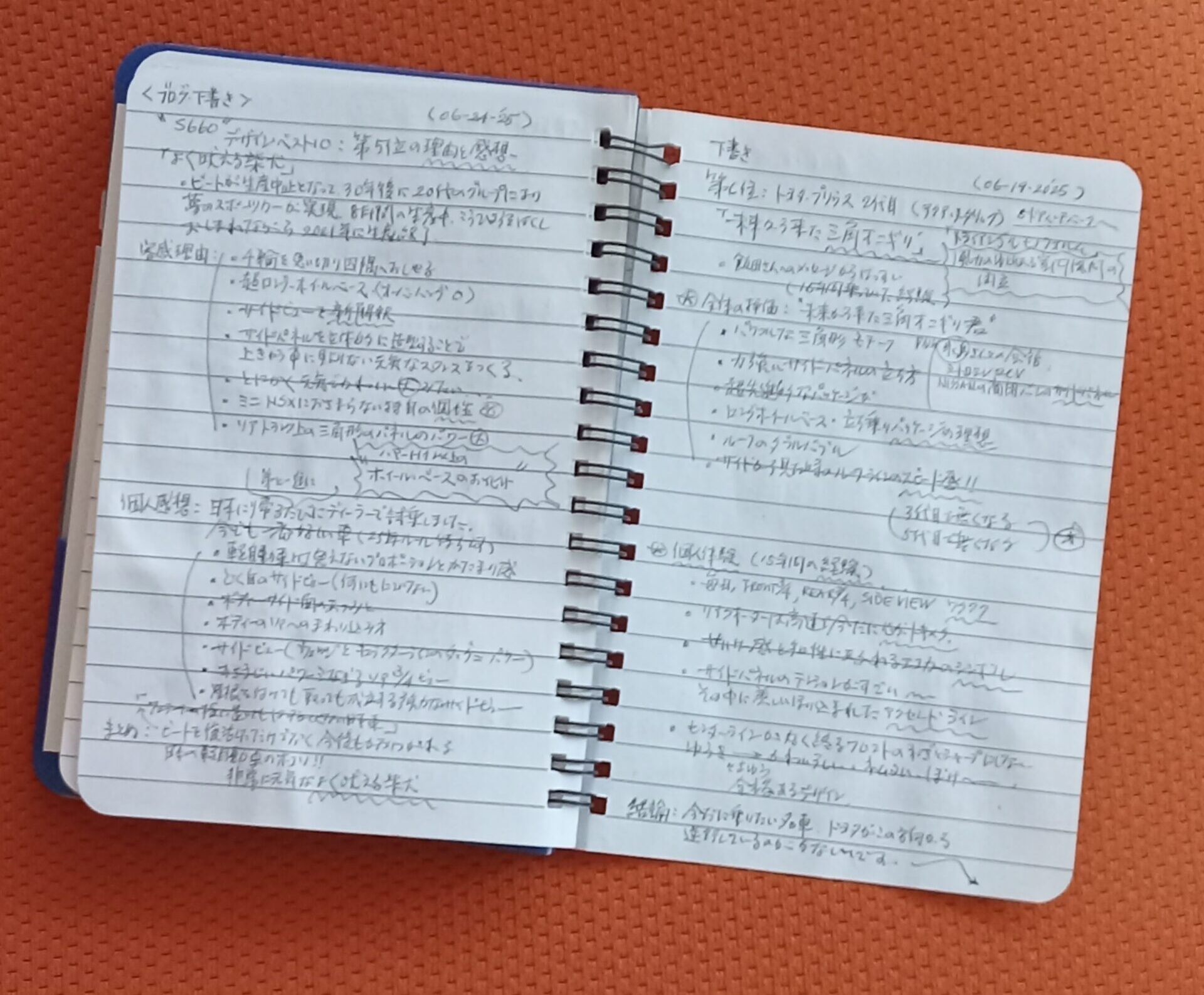
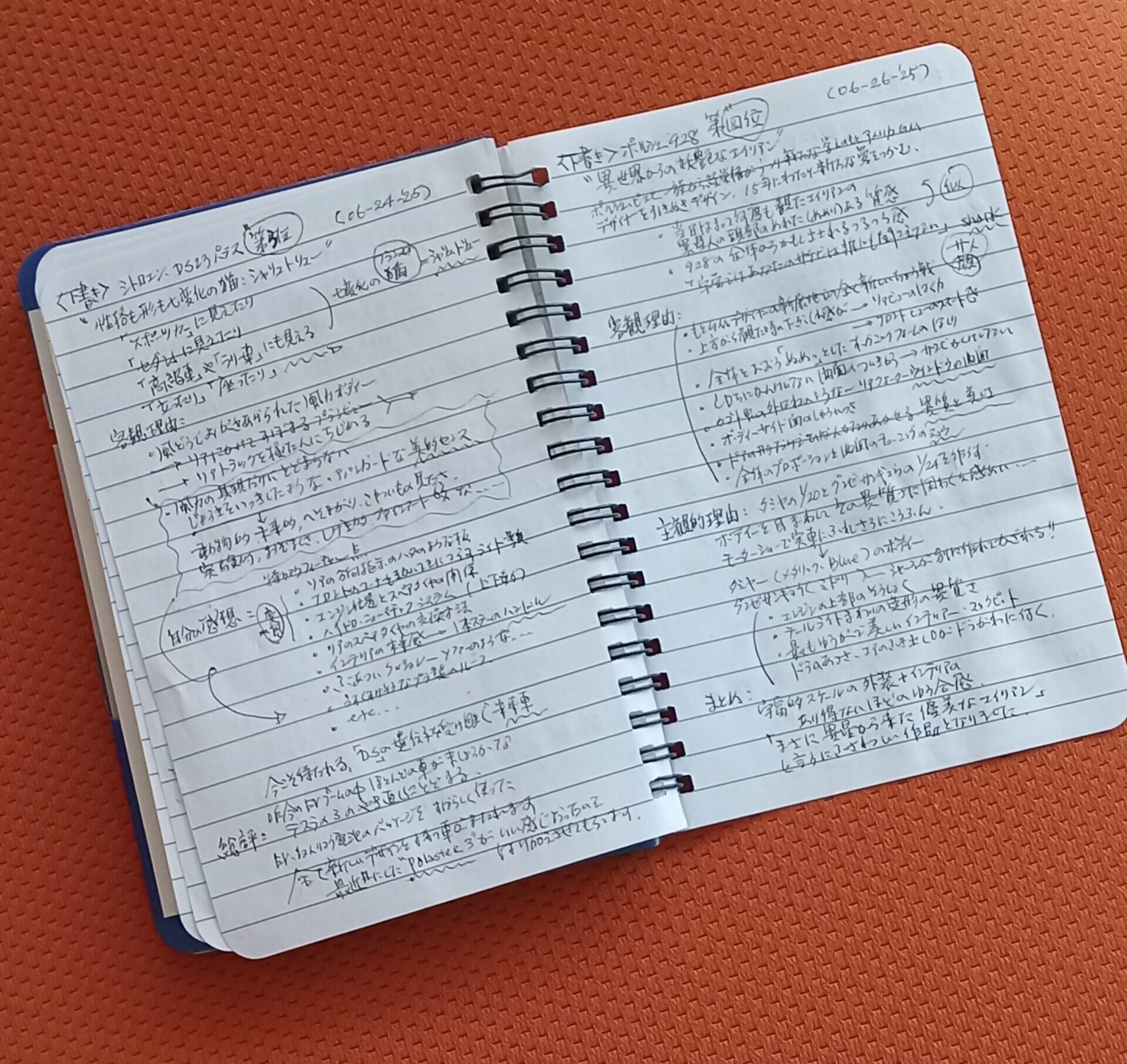
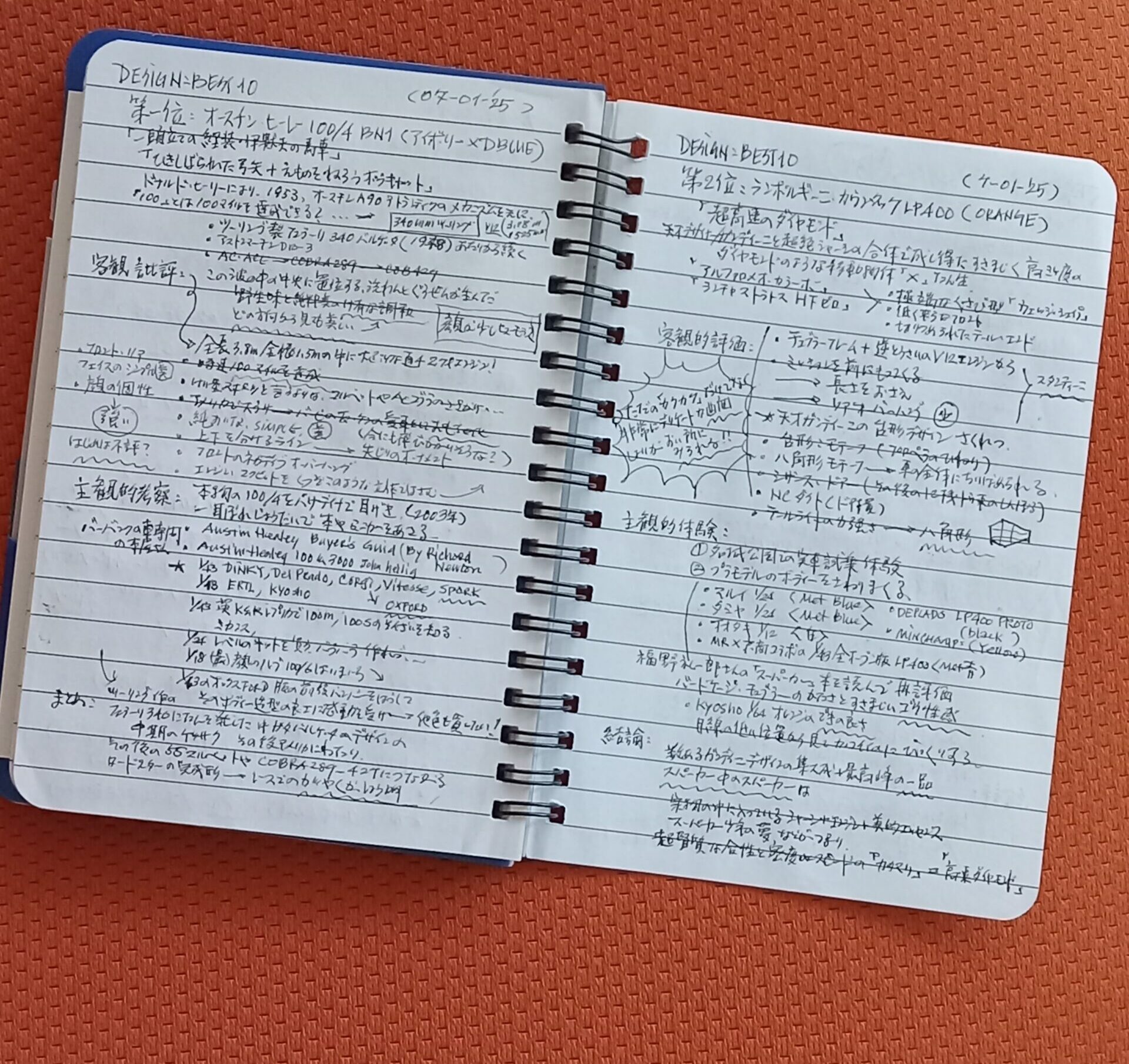
回を追うごとに定着化してきた
記事のフォーマットはこんな感じです。
* 最初に、その車のキャラクターにちなんだ、ニックネームをつける、
* 実車の解説をできるだけ客観目線で構成、
* デザイン的特徴を今度は主観目線で構成、
* 『私』と該当デザインとの馴れ初めと、付き合い方、、、、
* まとめ+デザイン的意義を総括ーーー>ニックネームの正統性の検証?
* その他の同系統のデザインを持った車を総括
記事を書く上でもう一つの重要なポイント、
それは、
*出来のいいミニカーを入手して、
*出来るだけリアルな写真を自前で用意すること、その為には
*なるべく小さいミニカー(1/64)を遠くから撮影する事で、
*玩具っぽさをなくすことが重要です。
いったいそんな条件を満たす
ミニカーがあるのでしょうか?
*記事を書く上での苦労噺:救世主=中国産の精密ミニカー群
ご心配なく、めちゃくちゃ出来のいいミニカーがどんどん発売されています。
日本メーカーから出ている、
*1/64ミニカーの大御所である、京商と、
*独自のカッチリしたフォーマットが魅力的なトミーテックのビンテージ・ネオシリーズ
これらは別格として、
それに倣って、どんどんクオリティーを上げてきている、中国メーカー勢がすごいことになっています。
最近の中国産1/64スケールミニカー市場の拡大ですが、
n
n
n
あくまでじっくりと実物を観察して、
n
n
n
n
n
第9位:AMゼネラル ハマーH1, 1992 ——ー京商製(日本)
第8位:MB 560 SEL, W126型, 1979 ———京商製(日本)
第7位:キャデラック・エルドラド,1967 --AUTO WORLD製(アメリカ)
第6位:トヨタ プリウス, 2003 (2代目)——トヨタ販売店 ノベルティ(日本)
第5位:ホンダ S660, 2015 ——————京商製(日本)
第4位:ポルシェ 928,1978 ———NEO製(アメリカ)
第3位:シトロエン DS23 Pallas, 1973 ——NOREV製(フランス)
第2位:ランボルギーニ・カウンタック LP400, 1974 ——トミーテック製(日本)
第1位:オースチン・ヒーレー 100/4 (BN/1), 1953 –京商製(日本)
n
なんといっても注目は、
n
n
完璧にモデル化したGFCC社です。
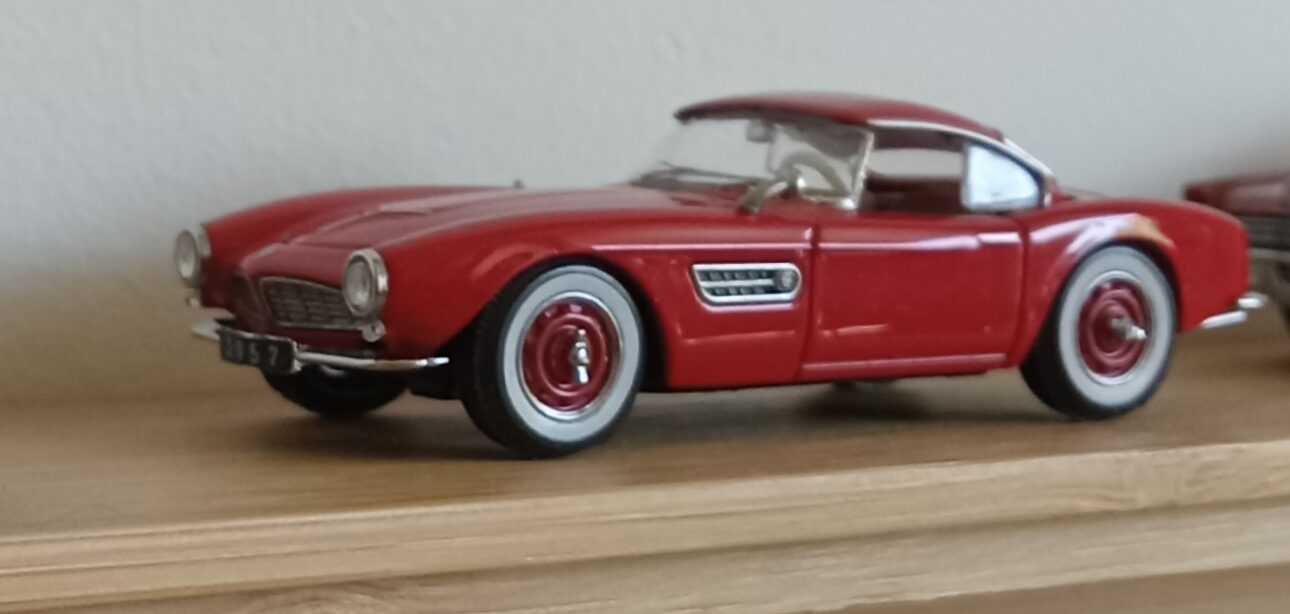
中国メーカーからのミニカーはそれぞれ個性的で、競争が激しいこともあり、
今後も目が離せません。
n
n
n
n
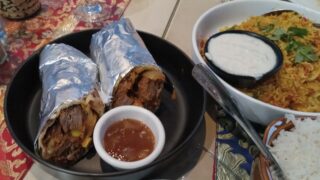
食レポの裏話に花を咲かせたいです。
n
n
Episode 14: ‘The Secret of Three Categories in a Miscellaneous Blog’ – The Design Struggle
(I verify the accuracy of the diecast model by comparing it to photos of the actual car before starting the photo shoot. Sometimes I even bend the diecast body with pliers…)
This 14th installment is titled ‘The 3 Categories of My Miscellaneous Blog & The Struggle to Raise Reconstruction Funds Part 2’. I’d like to focus on the ‘tears and laughter’ experienced during June and July 2025.
I’ll proceed as follows.
This time covers the middle three items.
* New Home Design: The Mystery of the ‘Katsura Imperial Villa Veranda Concept’?
* Should I Create Blog Categories?
* ‘Home Rebuilding’: A Record of the Hardships and Joys Surrounding My Home’s Destruction and Reconstruction
* ‘Sculptural Design’: Introducing Automotive Design and Favorite Sculptures
* ‘Food Reports’: Restaurant Reviews & My Own Recipes…
* The Electric Vehicle Charging Drama at Home, Recurring!!
*Funding the Home Rebuild… Might Be Impossible?
*Create Blog Categories?
When setting up the blog and deciding on various configurations and visual designs,
it came time to define the categories.
As I’d been contemplating before,
I checked my notes and came up with the following three:
*Records of rebuilding my completely burned-down home & trauma recovery diary
* Buying back my lost 3D model collection & announcing new personal creations
* Reporting meals eaten during the disaster (restaurants, home cooking) & sharing recipes
Learning these three categories could be organized hierarchically
(e.g., setting subcategories like mini cars, design, origami, calligraphy under ‘3D Modeling’)
I deliberately chose broad, inclusive category names like these:
1. Home Reconstruction
2. Three-Dimensional Art
3. Meal Reports
Now, let’s look at each category in detail.
*Home Rebuilding: A record of the struggles and joys surrounding the loss and rebuilding of my home
*Finding temporary housing (apartment, backpacker hostel, rental house?)
*Procuring furniture and household goods → Initially solved through leasing
Phase 1
*Ensuring safety around the completely burned-down home
*Debris removal by a U.S. Army special team (hazardous materials disposal unit?) dispatched by the federal government
*The process of committing to rebuilding the home (negotiations with the insurance company, Federal Interagency Mitigation Assistance [FIMA], etc.)
* Selecting an architect
* Creating floor plans of the former home (collaborative effort with architect)
* New construction planning (exchanges with architect)
* Formal contract with architect
Phase 2
* Submitting new construction outline to Los Angeles County for approval
* Finalizing details, including new additions (as of 11/6/2025, this is the stage)
*Professional site suitability survey
*Final blueprint creation by architect and engineer
*Selecting a contractor through a 3-company bidding process
Phase 3
*Commencing construction from the topping-out ceremony
*Completion thereafter within 9 months to 1 year
The experience of building a custom home from scratch—
something even many Americans locally rarely experience—
* The difficulty of securing financing,
* Funding from the U.S. federal government, local governments, public interest groups, contributions from friends and relatives, etc.,
* Soaring construction costs and labor fees, plus the uncertain economic policies of the Trump administration,
* Tips for selecting a contractor and insights into the construction industry’s inner workings,
I began with a sense that this would be a richly varied experience.
*Sculpture: Introducing automotive designs and favorite forms
During January after the disaster,
while staying at a friend’s house, the hardest part was
having nothing to touch with my hands.
(For someone like me who always wants an interesting object in my palm to feel)
It was sheer boredom…
By mid-January, I couldn’t take it anymore.
The first mini car I ordered on eBay was this:
*AUTOWORLD Diecast, 1/64 Cadillac Eldorado, 1967 (Ice Blue & Black Two-Tone)
After that, I also got from AliExpress:
*GFCC Diecast, 1/64 BMW 507 (Red Hardtop Version)
On Mercari,
*IP4-made, KOROKORO, Plastic Gachapon, Honda S660 (Full 5-Car Set)
Just as I placed these orders,
I had to move apartments.
*Introducing the ‘Top 10 Automotive Designs’!!
Then came May.
As I prepared to launch my blog, I wondered: What kind of articles should I write about scale models?
At that moment,
while casually gazing at the 1/64 scale mini cars displayed on the bamboo decorative shelf right before me,
the phrase
‘Top 10 Automotive Designs’
popped into my head.
I’d seen various “Top 10” lists before—like “The 10 Most Beautiful Cars” or “The 10 Coolest Cars”—in online articles and magazine features. But I’d never seen a “Top 10” focused purely on design. So I decided to create my own “Design Top 10,” entirely based on my own subjective opinions and biases.
After that, things progressed smoothly:
* I created the top 10 list,
* gave each car a nickname in my own style,
* jotted down article content in my notebook,
* tracked down the missing mini cars and managed to order them,
and finally published the first article about the ‘BMW 507’
on my blog on June 9th.
P.S.: Around this time, in an email to a friend, I explained the ‘Top 10 Auto Designs’ like this:
n
n
I’ve been arranging the 1/64 scale mini cars I’ve bought over the last two or three months on my display shelf,
gazing at them absentmindedly.
(Compared to the 1/43 scale models I collected before, they take up less space,
and I can admire each car from a considerable distance in side view,
which opens up all sorts of ‘imaginary possibilities’ I never considered before. lol)
N
Since the types of mini cars cover quite a broad range of categories,
I realized I might finally be able to compile my long-cherished ‘Personal Top 10 Automotive Designs’ list,
and I’m smiling to myself about it. Happy
n
Over the past century and more,
the automobile and its design—creations packed full of every ambition, passion, madness, transcendent aesthetic, and rising momentum from around the world—
overflow with tales and minor episodes worthy of telling.
n
Starting from this list, I feel I could eventually write about
my personal views, critiques, and relationships with each car design
in an entertaining and amusing way.
n
By settling my own accounts with the past 100 years of automotive history,
I feel I can envision my personal means of transportation for decades to come
and conceptualize what they might look like.
*How to write the ‘Top 10 Automobile Designs’ article…
First, when writing the article:
1: Create a Top 10 list like this, giving each a concise, catchy nickname:
10th Place: BMW 507, 1956 ———— Like a movie star, the actual car is tiny!!
9th Place: AM General Hummer H1, 1992 ————High-mobility Rambo
8th Place: MB 560 SEL, W126 model, 1979 ————Loyal and intelligent German Shepherd
7th Place: Cadillac Eldorado, 1967 ————Intelligent sex appeal
6th Place: Toyota Prius, 2003 (2nd Generation) ———— Future triangular rice ball
5th Place: Honda S660, 2015 —————— The barking Shiba Inu
4th Place: Porsche 928, 1978 ———— An enchanting alien from another world
3rd Place: Citroën DS23 Pallas, 1973 ——The Seven-Shaped French Cat: Châtelet
2nd Place: Lamborghini Countach LP400, 1974 ——A Super-Fast Diamond
1st Place: Austin-Healey 100/4 (BN/1), 1953 –A Single-Horse Chariot of the God of Speed
2: Find a 1/64 scale mini car that captures the ‘form’ fairly accurately and to my taste. Then, obsessing over lighting and such, I take tons of photos suited to that model and edit them.
3: Finally, referencing the article drafts I’d jotted down in my notebook, I write the final version spontaneously, injecting my own personality to avoid flatness. (I prepared drafts like this for each car.)
The article format, which has solidified over time, looks like this:
* First, give the car a nickname based on its character.
* Structure the real car’s description from an objective perspective.
* Structure the design features from a subjective perspective.
* How I first encountered this design and how I interact with it…
* Summary + Overall design significance → Verifying the nickname’s legitimacy?
* Summarize other cars with similar design elements.
Another crucial point when writing the article:
It’s essential to
* Obtain a high-quality mini car,
* Prepare as realistic photos as possible yourself. To achieve this,
* Shoot the mini car (1/64 scale) from a distance,
* To eliminate its toy-like appearance.
Is there even a mini car that meets all these conditions?
*The Struggle of Writing Articles: The Savior = China’s Precision Miniature Car Lineup
No need to worry—incredibly well-made miniature cars are being released constantly.
From Japanese manufacturers,
*Kyosho, the grand master of 1/64 miniature cars, and
*Tomytec’s Vintage Neo Series, appealing for its unique, crisp format
These are in a league of their own,
but following their lead, Chinese manufacturers are rapidly raising their quality standards and making remarkable strides.
Regarding the recent expansion of the Chinese-made 1/64 scale mini car market,
Over 100 companies have already entered the fray. Just counting the officially licensed companies featured in Japanese magazines exceeds 70, and including unlicensed companies, the number easily surpasses 150.
Originally, the ambiguity surrounding three-dimensional design registrations meant licensing wasn’t required for car models.
(Though there were precedents like Tamiya receiving friendly (free) data provision from British Lotus…)
n
In the 2000s, Italian brands like Ferrari began asserting design patents on 3D modeling, creating a bad habit of long-term exclusive contracts with massive companies like Mattel in the US, involving huge licensing fees.
(As a result, Ferrari miniatures were only available as (poorly made) Mattel products until quite recently…)
n
n
What’s fascinating in the current 1/64 mini car boom is that
‘Products from unlicensed companies tend to be more distinctive and better made.’
n
n
n
GFCC, the company releasing the BMW 507w that brought me to tears with its emotion, also specializes in vintage cars like Rolls-Royce and Mercedes-Benz, primarily from before the 70s. They seem to meticulously carve out models that look even more authentic than the real thing. Rather than simply modeling the 3D CAD-CAM data provided by the automakers, they take a hands-on approach.
They carefully observe the actual vehicles themselves,
then have the artists create the models.
They seem to meticulously observe the actual vehicles themselves,
and then have their artists craft the models.
In spirit, it feels like they redirect the money that would go to the automakers into production costs, driven by a desire to ‘make the best product possible.’ It truly feels like passionate car owners are putting their hearts into creating exceptional pieces for the world.
(My absolute favorite scenario. lol)
n
As a result, depending on the model maker, masterpieces emerge that surpass the real thing—like my beloved GFCC BMW 507 series—and even transcend legendary masterpieces like those by AMR (André Marie Rouff).
(Could ‘ignoring CAD-CAM data’ be a prerequisite for masterpiece models?)
n
n
n
n
n
n
I’ve digressed quite a bit, but
n
looking at the list of mini cars I used in my Top 10 Designs,
it looks like this:
n
n
10th Place: BMW 507, 1956 ————GFCC (China)
9th Place: AM General Hummer H1, 1992 ———Kyosho (Japan)
8th Place: MB 560 SEL, W126, 1979 ———Kyosho (Japan)
7th Place: Cadillac Eldorado, 1967 ————AUTO WORLD (USA)
6th Place: Toyota Prius, 2003 (2nd Generation) ——Toyota dealership novelty (Japan)
5th Place: Honda S660, 2015 ——————Kyosho (Japan)
4th Place: Porsche 928, 1978 ———NEO (USA)
3rd Place: Citroën DS23 Pallas, 1973 ——NOREV (France)
2nd Place: Lamborghini Countach LP400, 1974 ——Tomytec (Japan)
1st Place: Austin-Healey 100/4 (BN/1), 1953 – Kyosho (Japan)
Remarkably, the top four are from Japan’s long-established Kyosho,
while the others are quite diverse.
The real standout, however, is GFCC,
which perfectly modeled the 10th-place BMW with opening hood and trunk.
GFCC’s perfect model of the 10th-ranked BMW,
complete with opening hood and trunk.
(The Ferrari 250TR Testa Rossa is scheduled for release in November.)
n
Miniature cars from Chinese manufacturers each have their own distinct character, and with competition being fierce,
they’ll definitely be worth keeping an eye on going forward.
n
n
n
n
n
n
n
n
m
m
I plan to write more about mini cars in the future,
including product reviews and articles,
n
so stay tuned for those too―
n
n
n
n
n
Next time,
I want to share some behind-the-scenes stories from my food reviews.
Translated with DeepL.com
n
n

これはCTAサンプルです。
内容を編集するか削除してください。