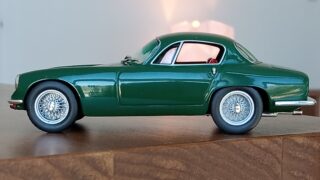
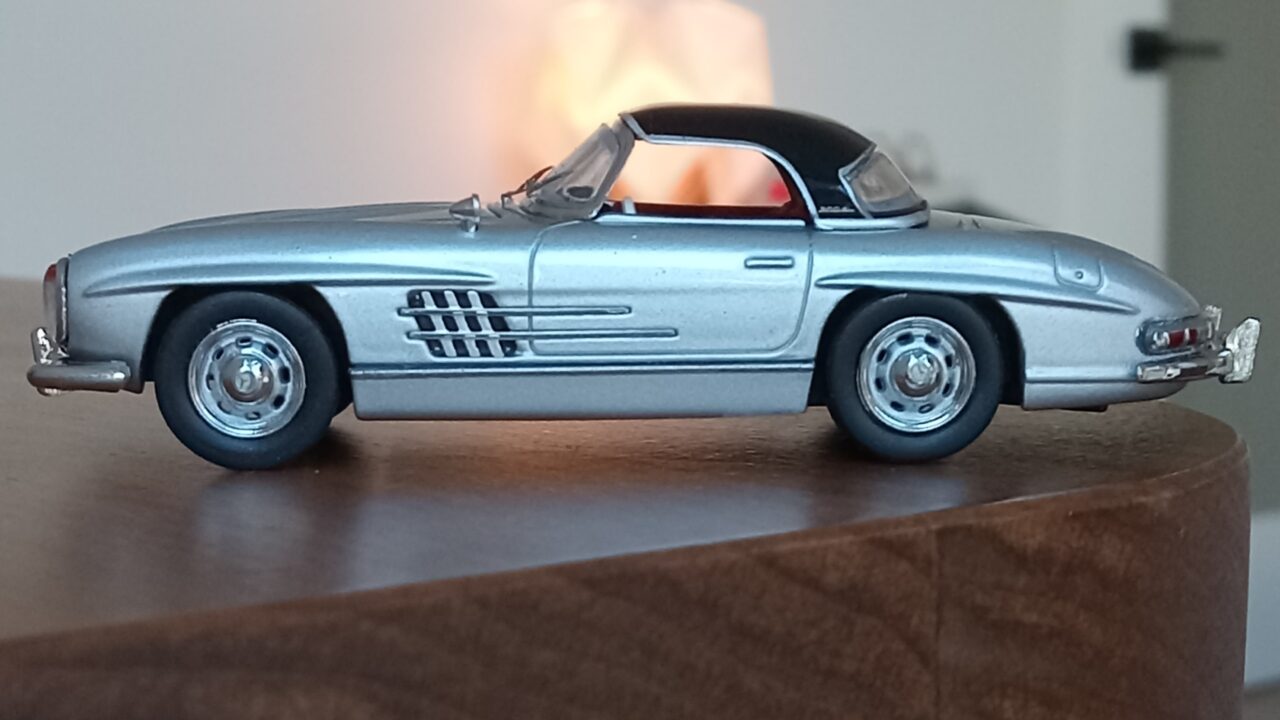
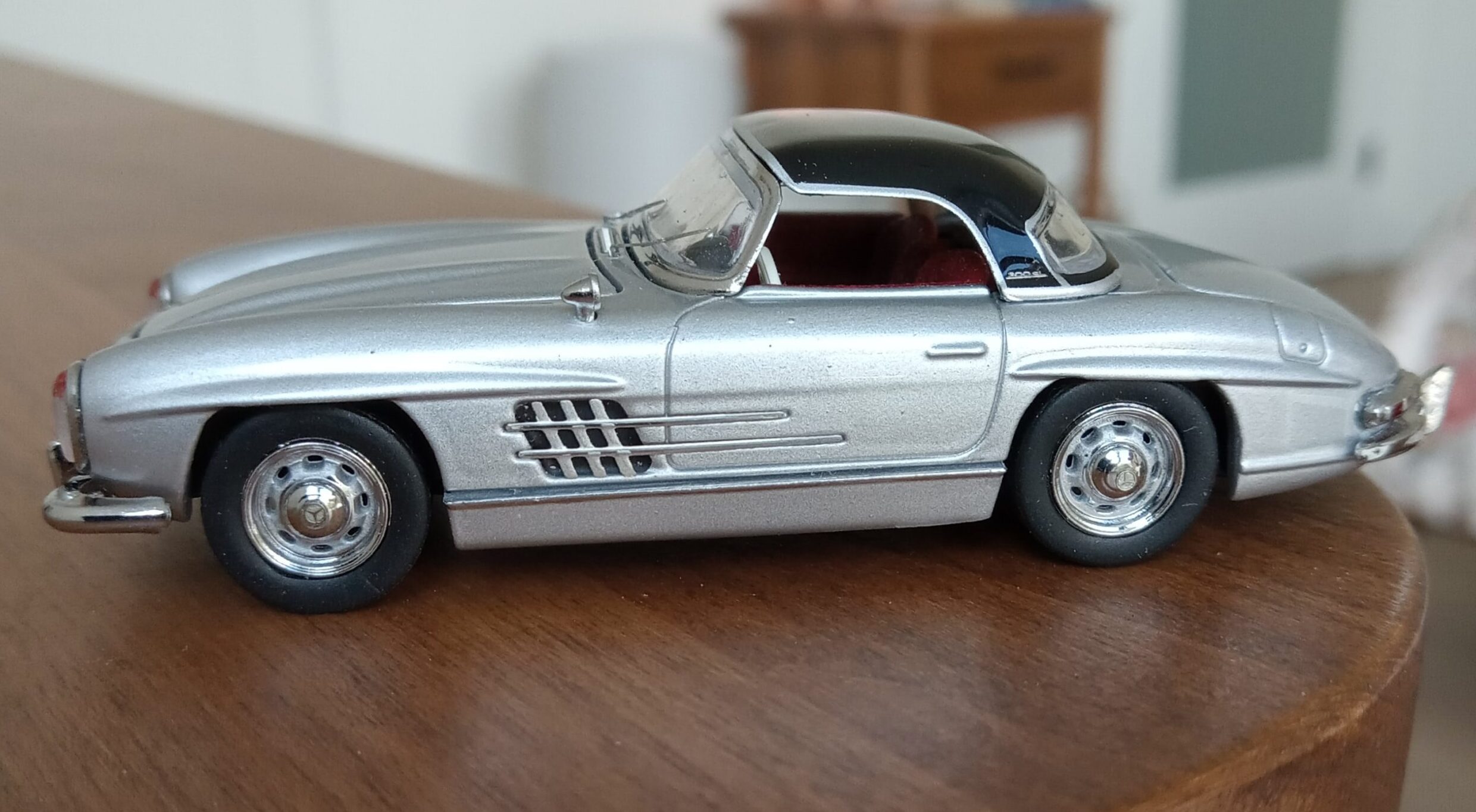
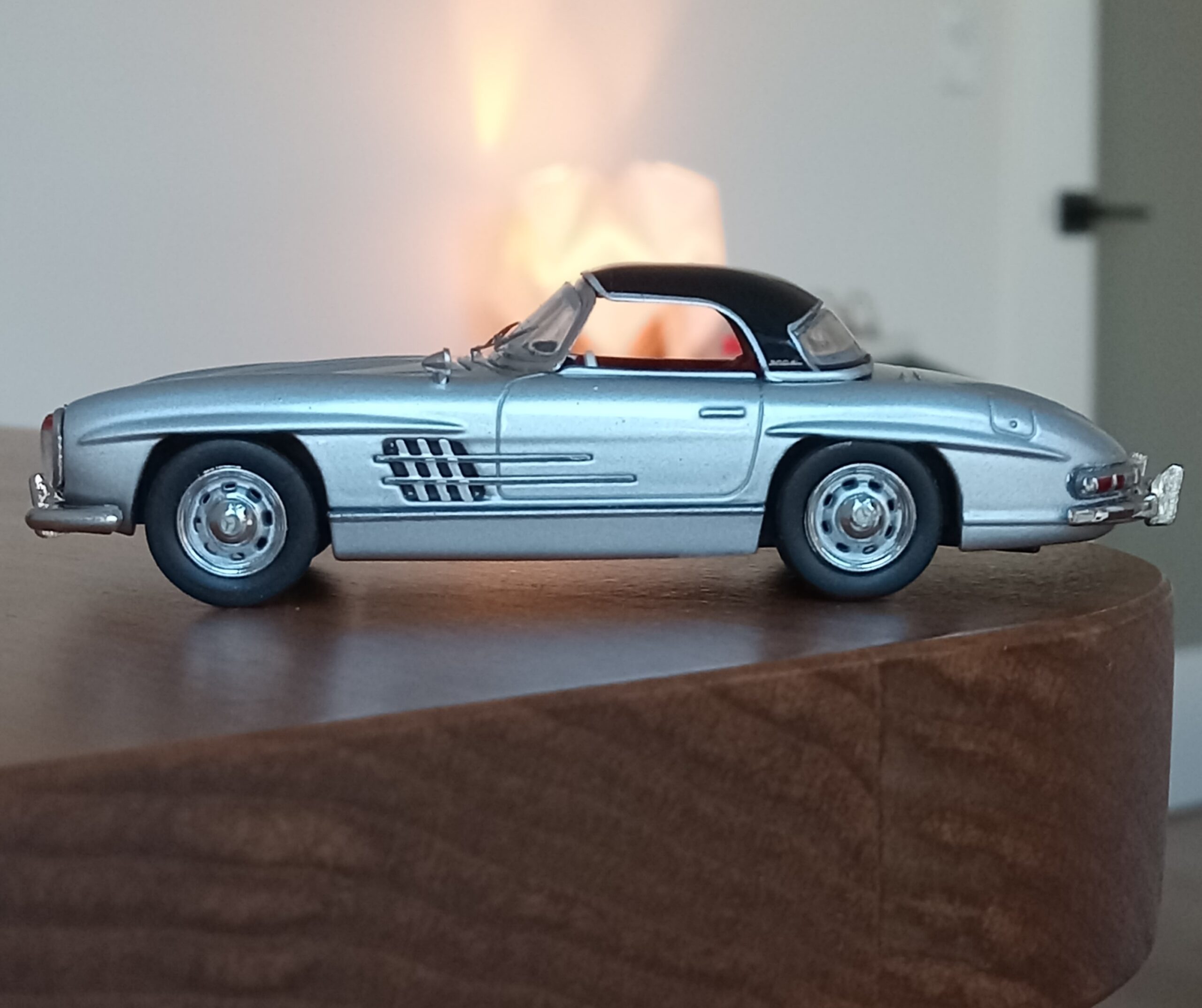
第23回ーー2ドア・クーペの系譜: 第5回【ドイツ編】ダイムラー・ベンツ 300SL ロードスター、 1957(外装色:銀に黒ハードトップ)
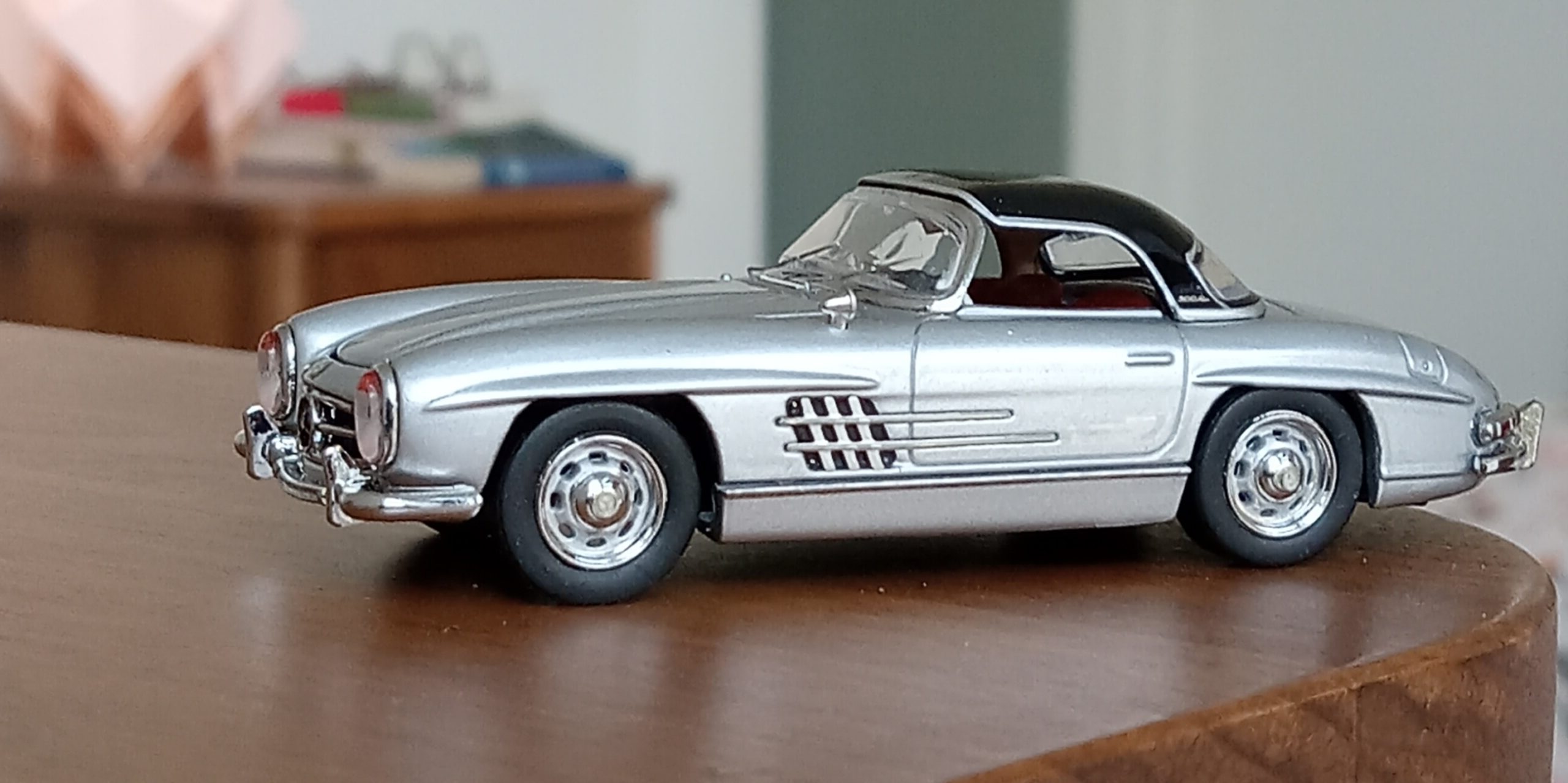
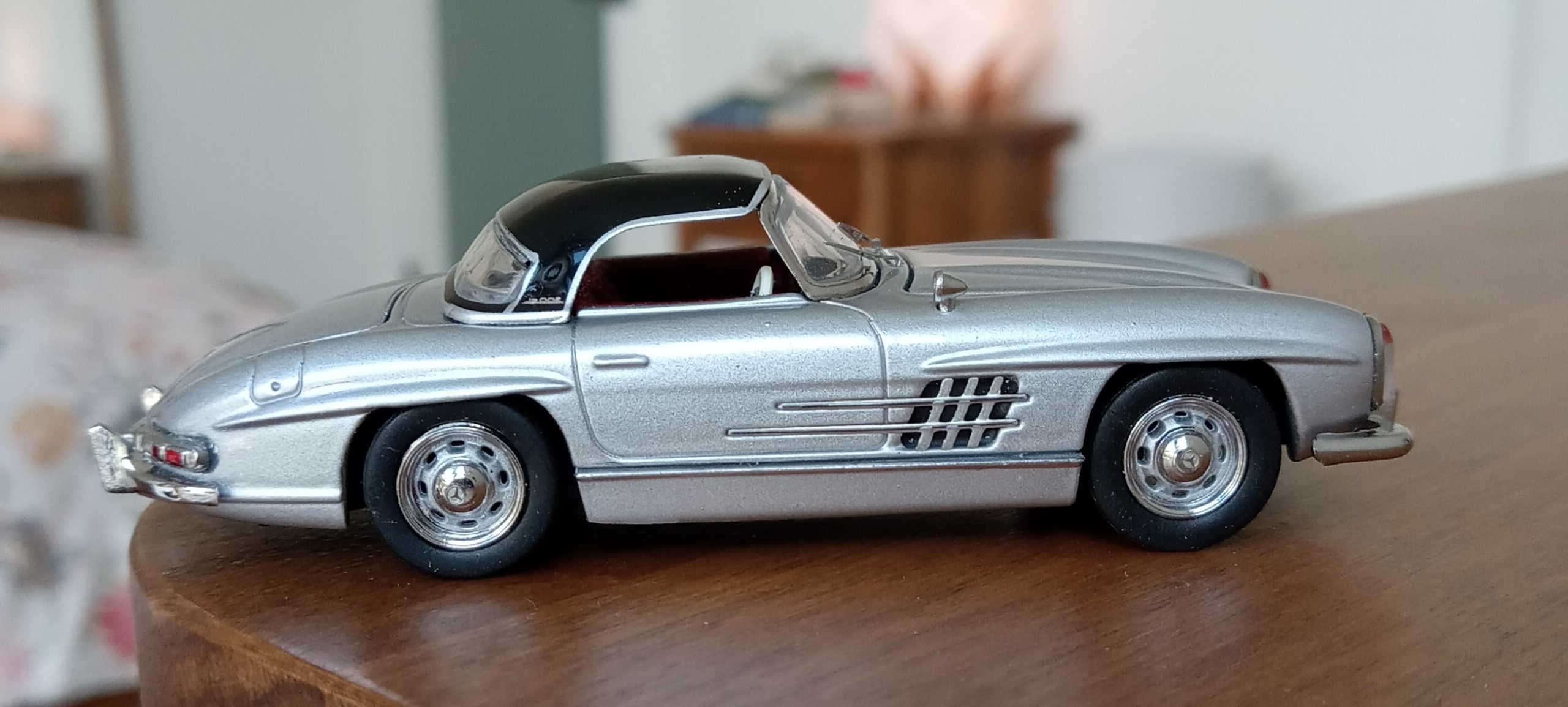
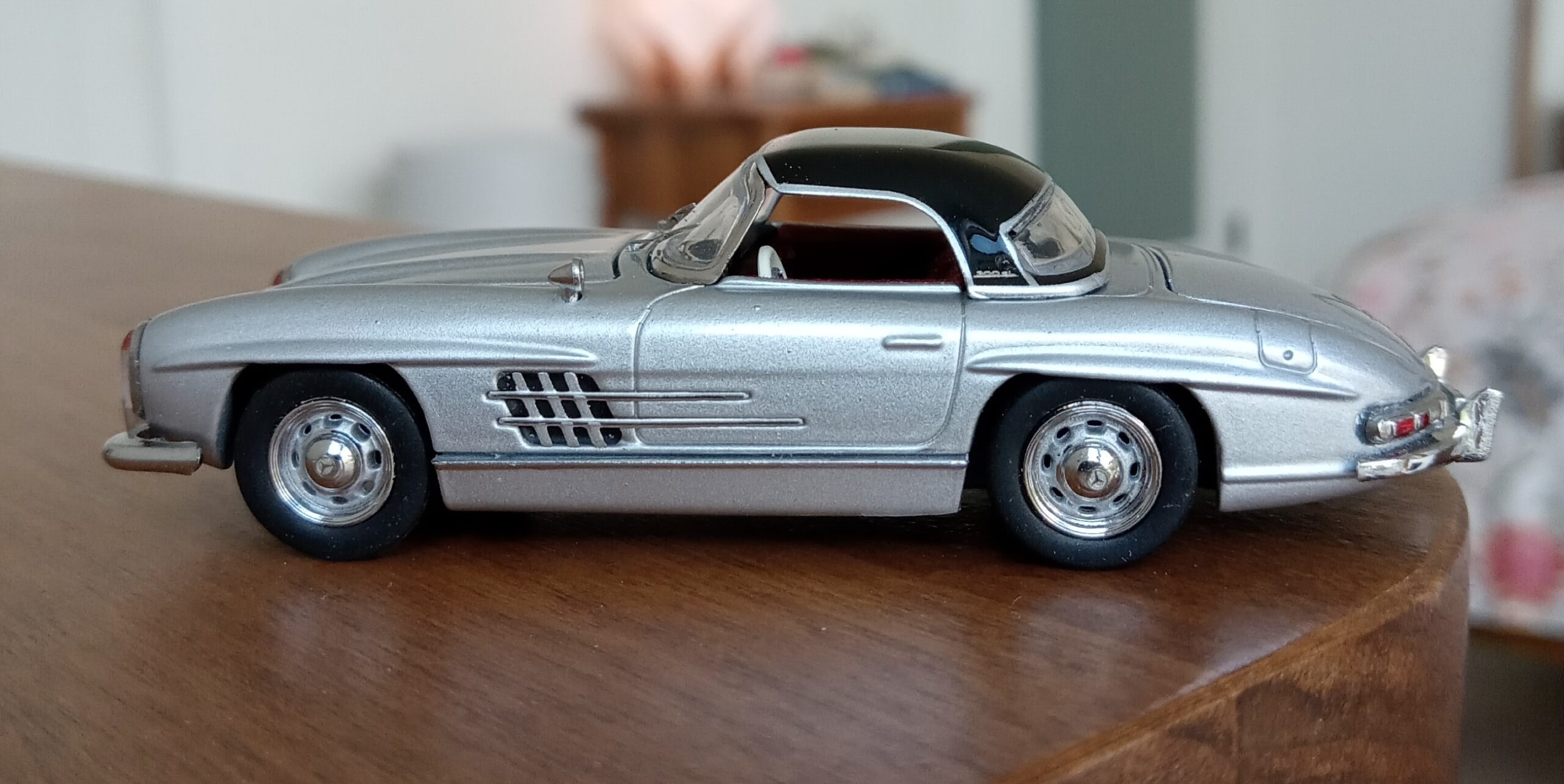
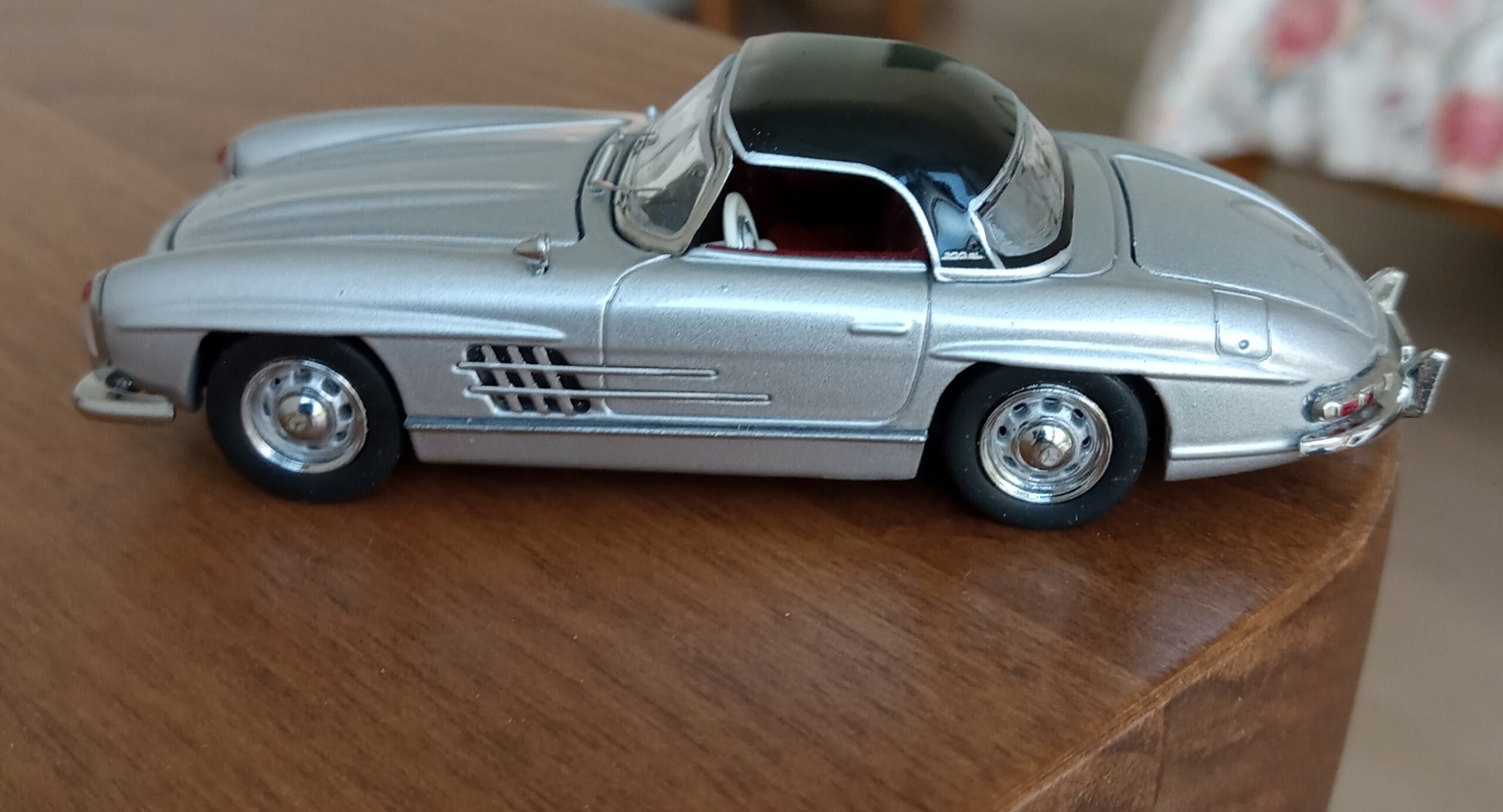
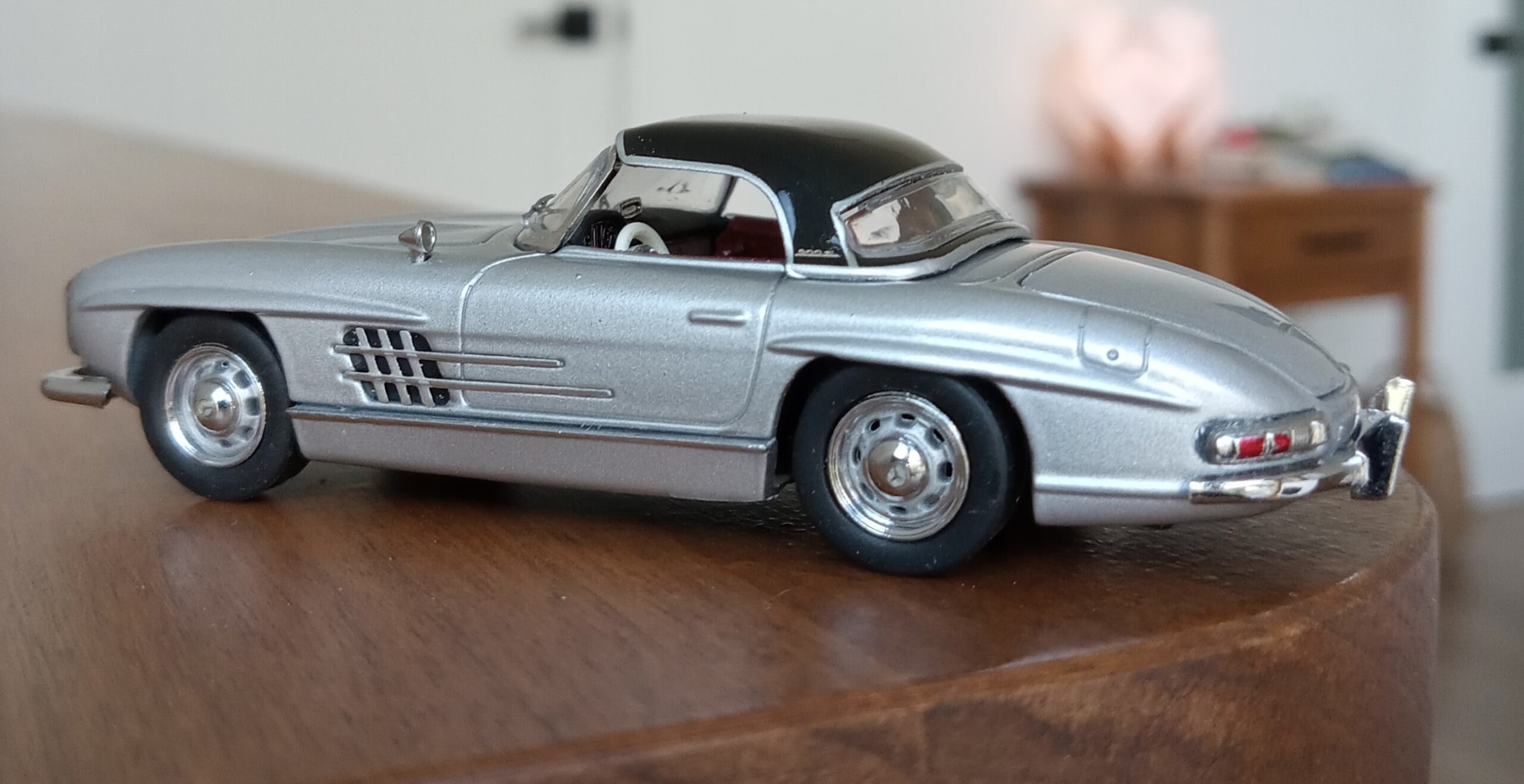
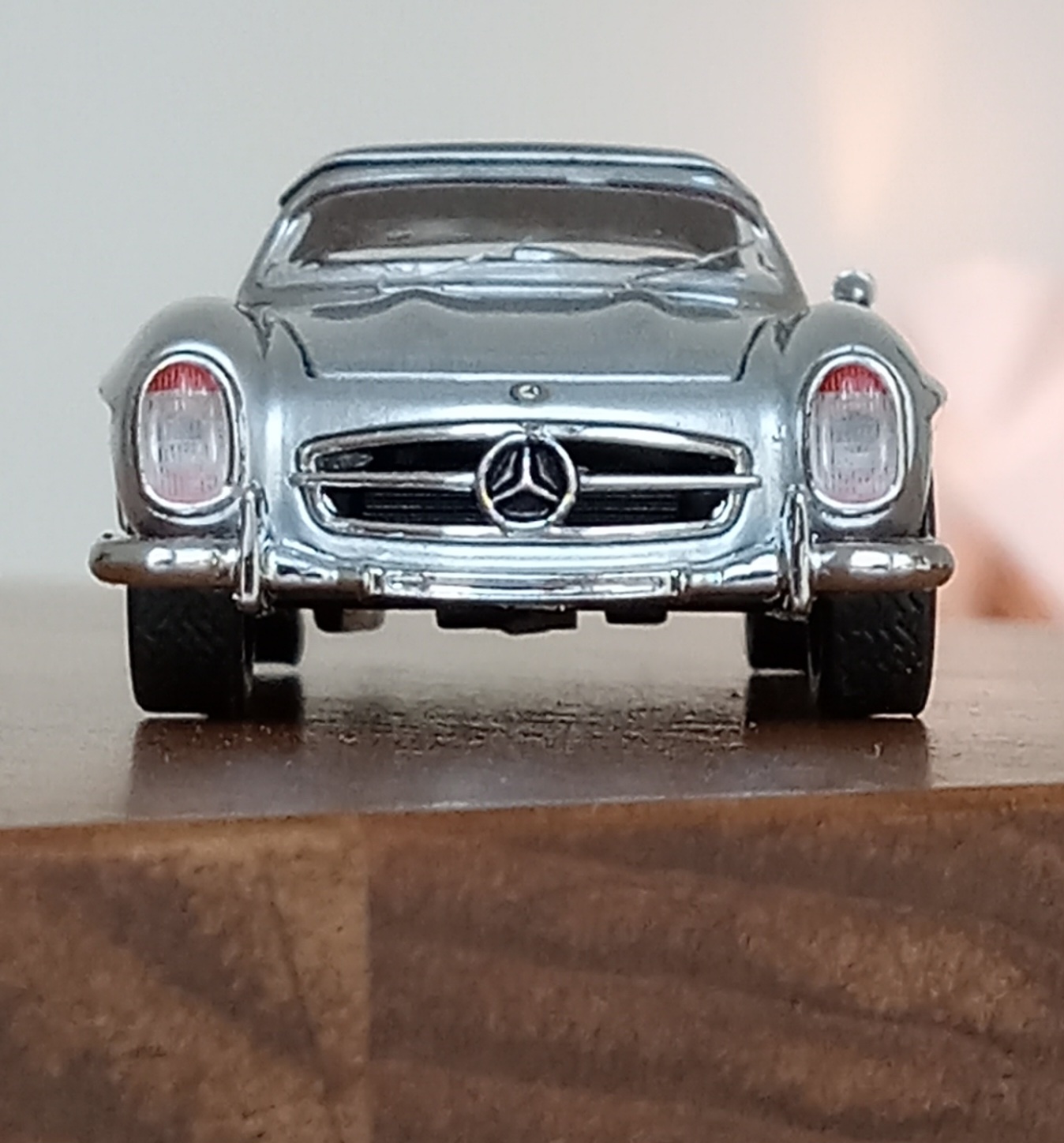
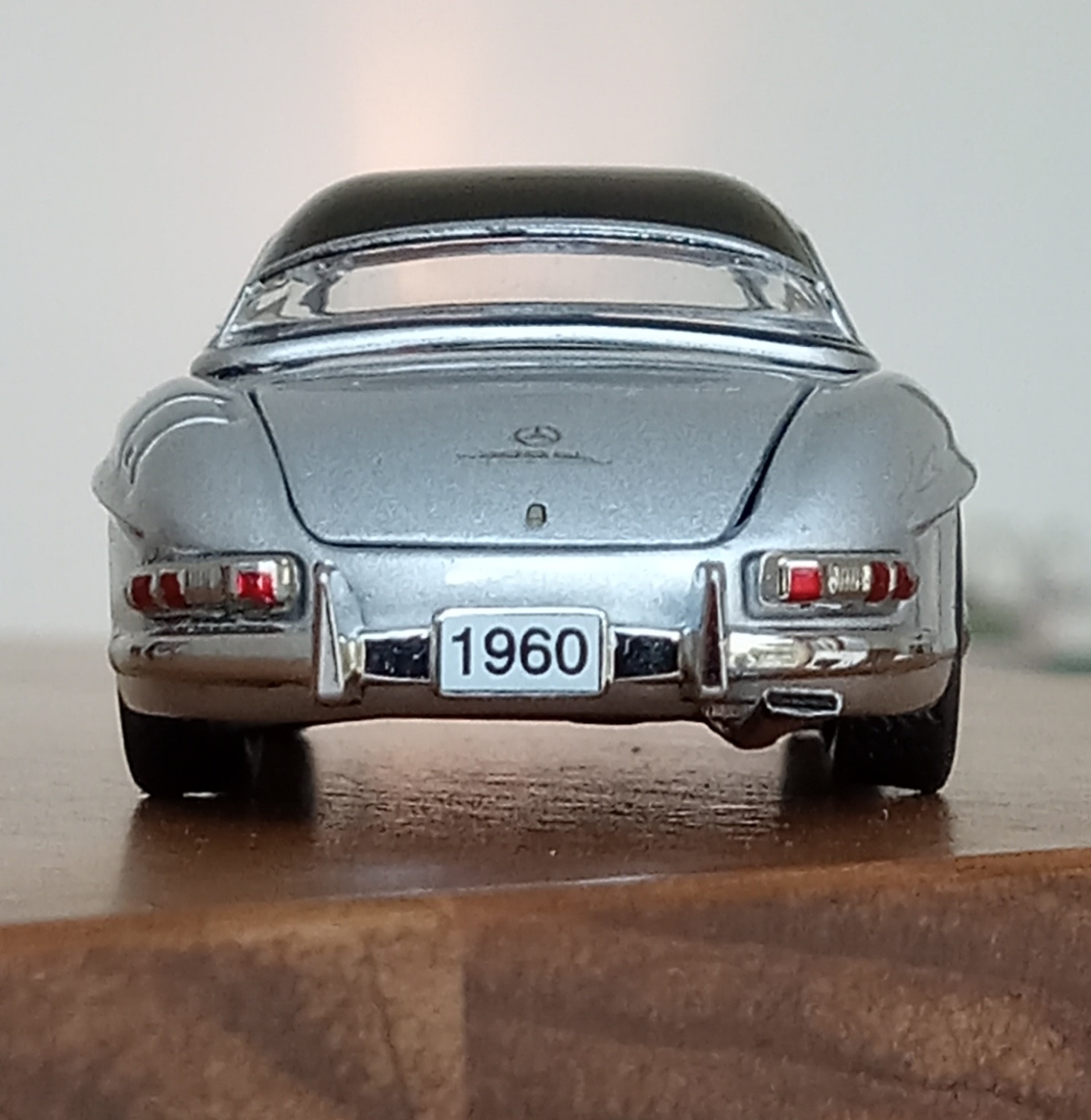
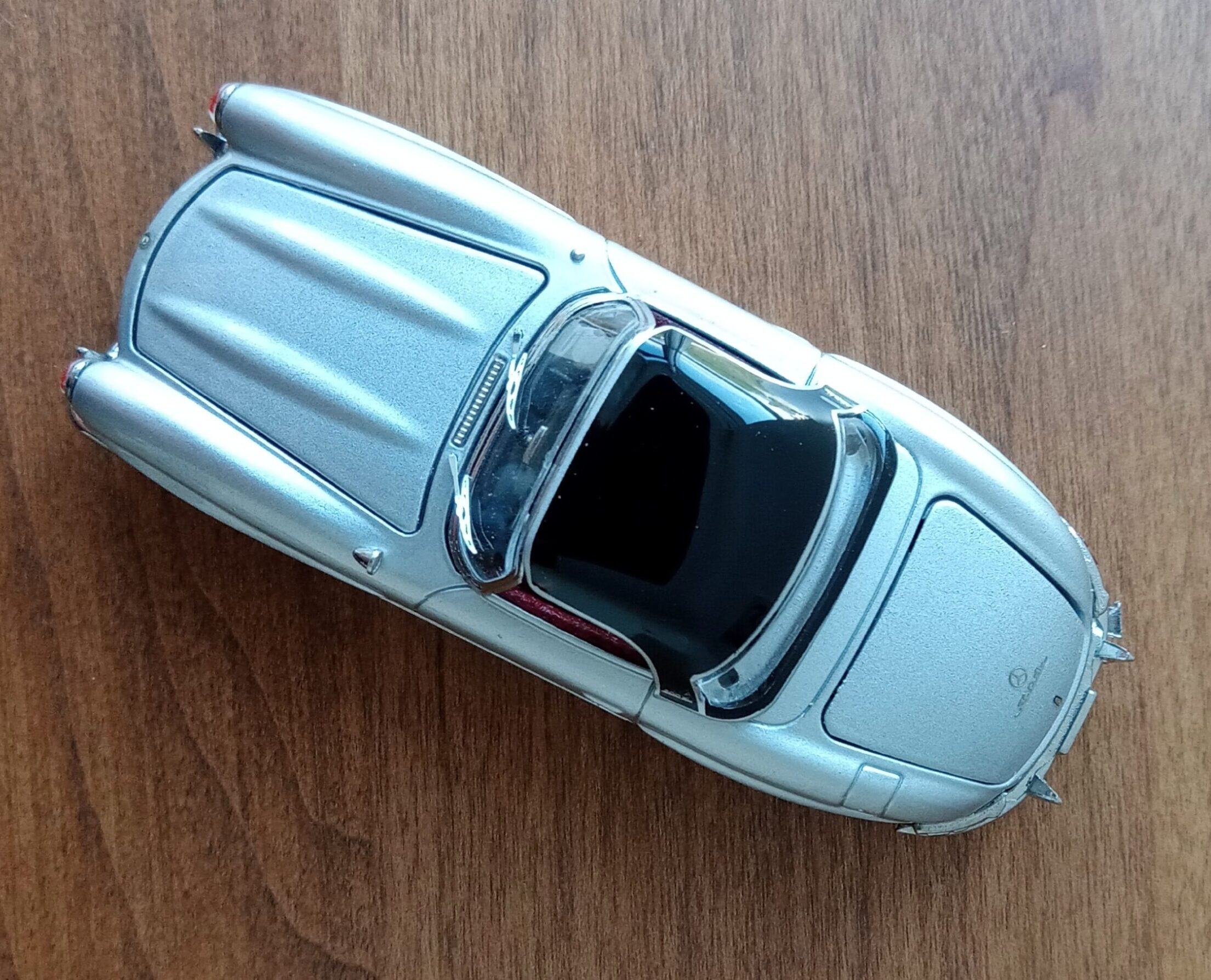
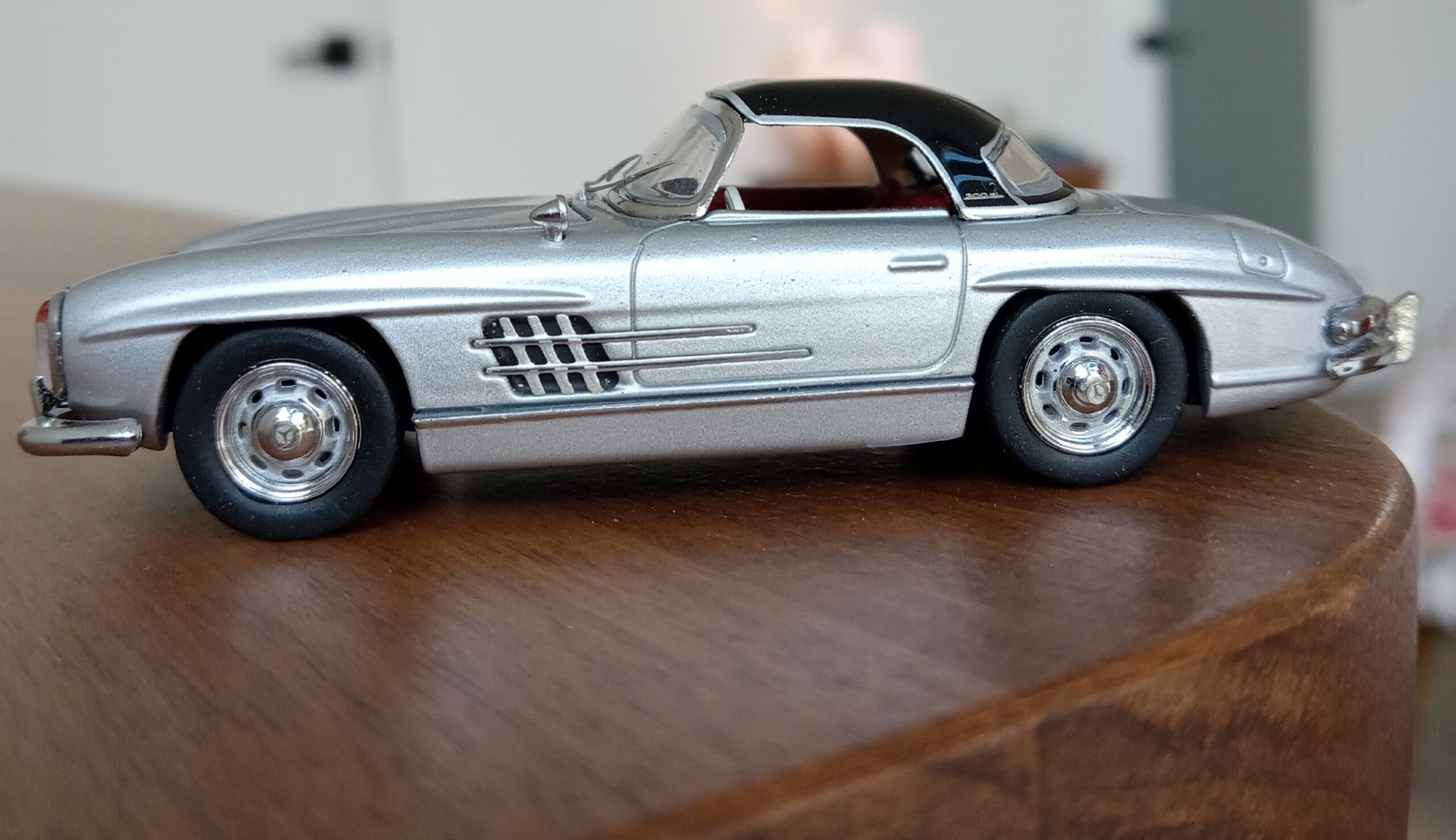
(撮影に使用したミニカー:GFCC社製、1/64 ダイムラー・ベンツ 300SL ロードスター(銀外装にバーガンディー内装))
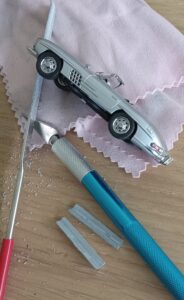
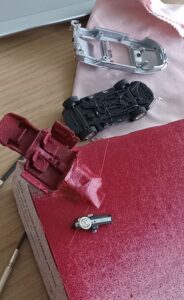
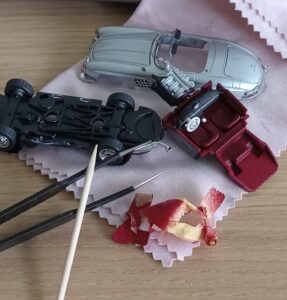
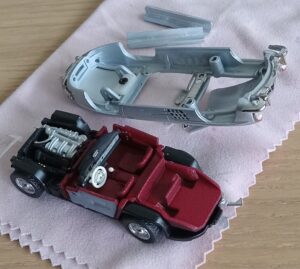
改造箇所:
*ドア下(ロッカーパネル下)の後半部を削り、ボディー全体の『逆ウエッジ的な流れ』を強調
*ダッシュパネル&内装をマスキングして、シートとドア内張部分をバーガンディーに再塗装
*バンパーやモール部分をクロームメッキ・ペンで細部補正
#好みの自動車デザインーー2ドアクーペの系譜:
第23回目の今回は、『2ドアクーペの系譜』と題しまして、各国のお国柄や、外観デザインの個性が強く表れる、高級2ドア(GT)クーペ / ロードスターについてお話ししてみたいです。
【注意:オープンカーを含む】
以下の要領で進めていきます。
第5回の今回は【ドイツ車編】
1957年型
ダイムラー・ベンツ 300SL
ロードスター仕様についてのお話です。
【2ドア・クーペの系譜:目次】
【米国車編】
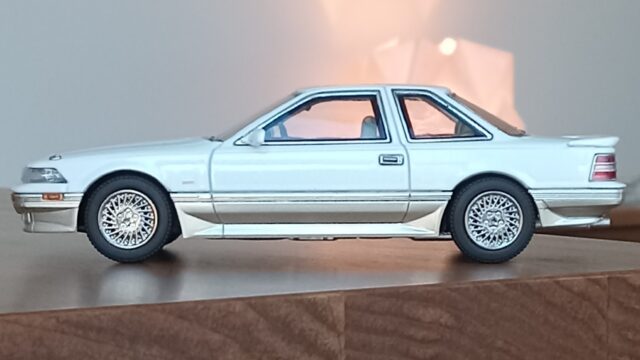
第1回:キャデラック・エルミラージュ、2013(メタリック・レッド)
第2回:リンカーン・コンチネンタル MK4、1972(ブラック)
第3回:マーキュリー・クーガー, 1967(LTメタリック・グリーン)
【ドイツ車編】
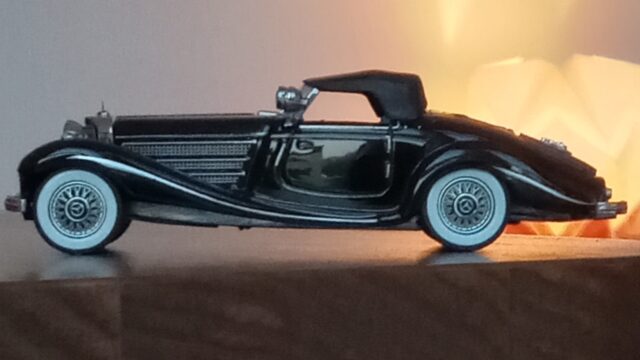
第4回:MB 500K スペシャル・ロードスター、1936(ブラック)
第5回:MB 300SL ロードスター、1957(銀に黒トップ)
第6回:MB SLS AMR ガルウイング、2010(ブラック)
【英国車編】
第7回:ジャガーXKR, 1996(ダークメタリック・グリーン)
第8回:アストン・マーチン One-77(LTメタリック・ブルー)
【日本車・日産編】
第9回:ニッサン 初代シルビア、1965(シャンペン・ゴールド)
第10回:ニッサン 5代目シルビア、1988(LTメタリック・グリーン)
【日本車・マツダ編】
第11回:マツダ コスモ・スポーツ、1967(シルバー)
第12回:マツダ ユーノス・コスモ、タイプ‐S(2トン:黒&グレー)
【日本車・トヨタ編】
第13回:トヨタ/ヤマハ・2000GT、1967(アイボリー・ホワイト)
第14回:トヨタ・2代目ソアラ, 1986 (2トン:黒&グレー)
第15回:レクサス LC【GWZ100型】、2017(メタリック・レッド)
#史上最も美しいクルマベスト10:常連上位の『300SL・ガルウイング』のオープン・バージョン(私はこちらが好みです)
私にとっての、
MB 300SL ロードスターとは、
『一日に服装を3度着替える、
最速スプリンター』です。
ドイツが国策として戦前から
国威発動のショウケースとして追求してきた、
*流体力学を応用した外観+
*最新テクノロジー:スーパーチャージャー又は燃料噴射装置付エンジンを搭載した、
*超高速耐久走行実験車の
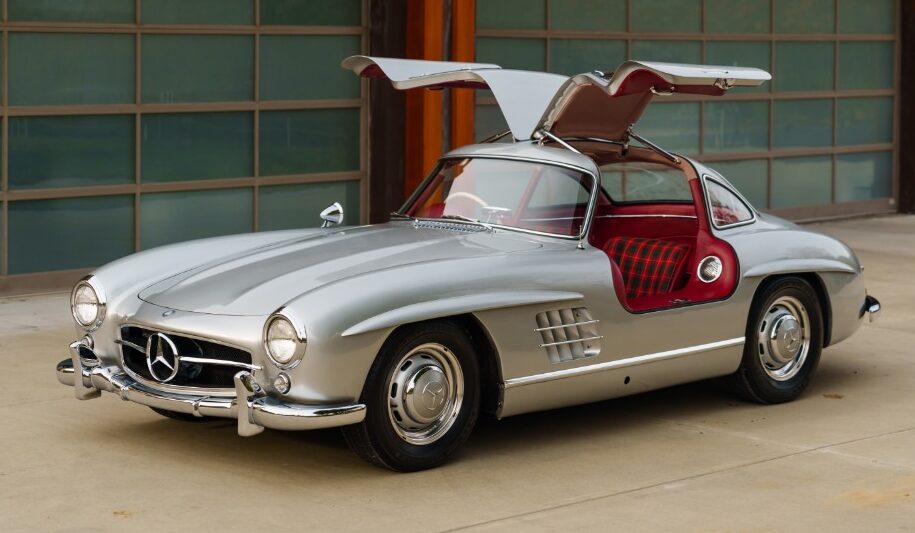
最終到達点としての
1955年発表の
『MB 300SL ガルウイング・バージョン』で終わったかに見えたましたが、ダイムラーベンツの開発陣は、
そのさらに先を見据えて、300SLをアメリカなどの富裕層へ商品として売ることを考へ、
1957年に
『MB 300SL ロードスター・バージョン』
を販売開始しました。
一粒で3度おいしい、グリコ・キャラメルのような
『3 in 1』の屋部分を始めて提案しました。
つまりは、
*晴れの日には、日差しを浴びてオープンカーとして、
*天候次第では、幌付きのクローズド・ボディーのスポーツカーとして、
*オプションのFRP製ハードトップをつけて、美しいクーペとして、
ハリウッドの映画スターや大金持ちの嗜好に合った、
このマーケティングは大成功をおさめ、
その後の、
*190SL (R121:1957)
*230SL (W113:1963)
*350SL(R107:1971)
*500SL (R129 : 1989)
を始めとして、歴代の『MB SLシリーズ』の代名詞として
もてはやされるに至り、現在も「バリオルーフ」(電動格納式ハードトップ)としてその
メルセデスの最高級モデルの象徴的遺産は継承されています。
つまり、
300SLの完成形・流線形高速対応ボディー+
3種類に使える、トップ(屋根)部分を持った、
『その後の高級2ドアロードスターの原型を作った』
300SL・ロードスターが
大の好みです!!
では以下の要領で見て行きたいです。
* 実車解説:
* 外観デザイン的特徴:
*『私』とMB 300SL ロードスター
* 三題噺:流線形・『3in1』・国威発揚
* 『MB 300SL』に至る道:ダイムラーベンツ社の超高速・空力実験車の歴史
*実車解説:
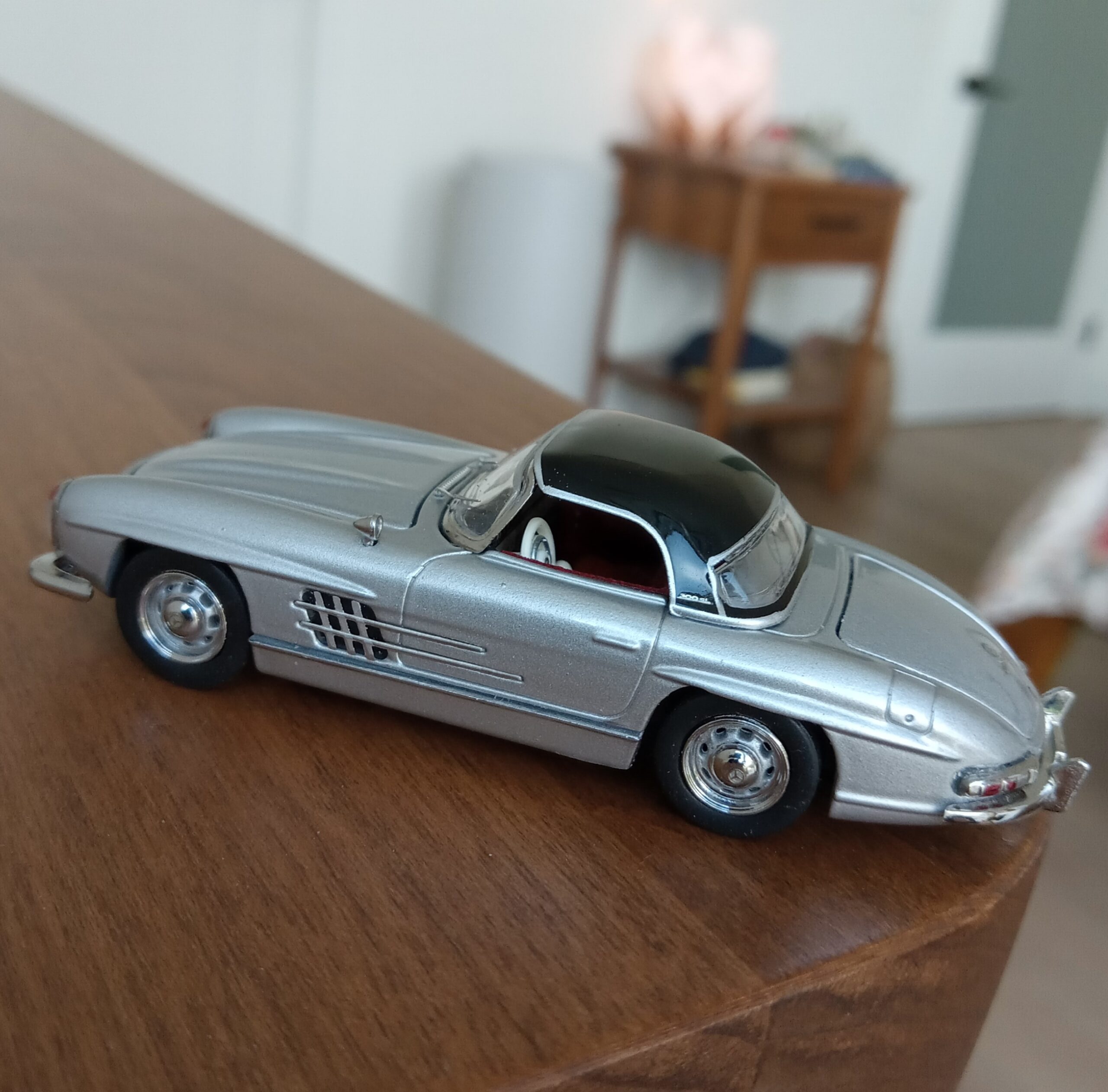
デザインと利便性:
該当車の原型となっています『メルセデス・ベンツ300SL』は、1954年にデビューしたガルウイングドアが特徴の伝説的なスポーツカーです。レース用マシンをベースに開発され、軽量化と強度確保を両立させる目的で、細い鋼管を組み合わせたマルチ・チュブラー・スペースフレームを採用、さらには世界初のガソリン直噴エンジンを搭載、最高速度260km/h超を誇りました。その美しさと技術力から、現代でも最も価値のあるクラシックカーの1つとされています。
戦後景気に沸く北米マーケット中心に輸出された300SLでしたが、エアコン装備のない時代、室内の高温化が問題となっており、特徴的だったガルウィングドアから一般的な横開きドアのロードスターに仕様変更する事で、風通しの良い快適な室内が実現、更に乗り降りが容易になりました。また、巻き上げ式のサイドウィンドウや、ソフトトップ(またはオプションのハードトップ)が採用されました。
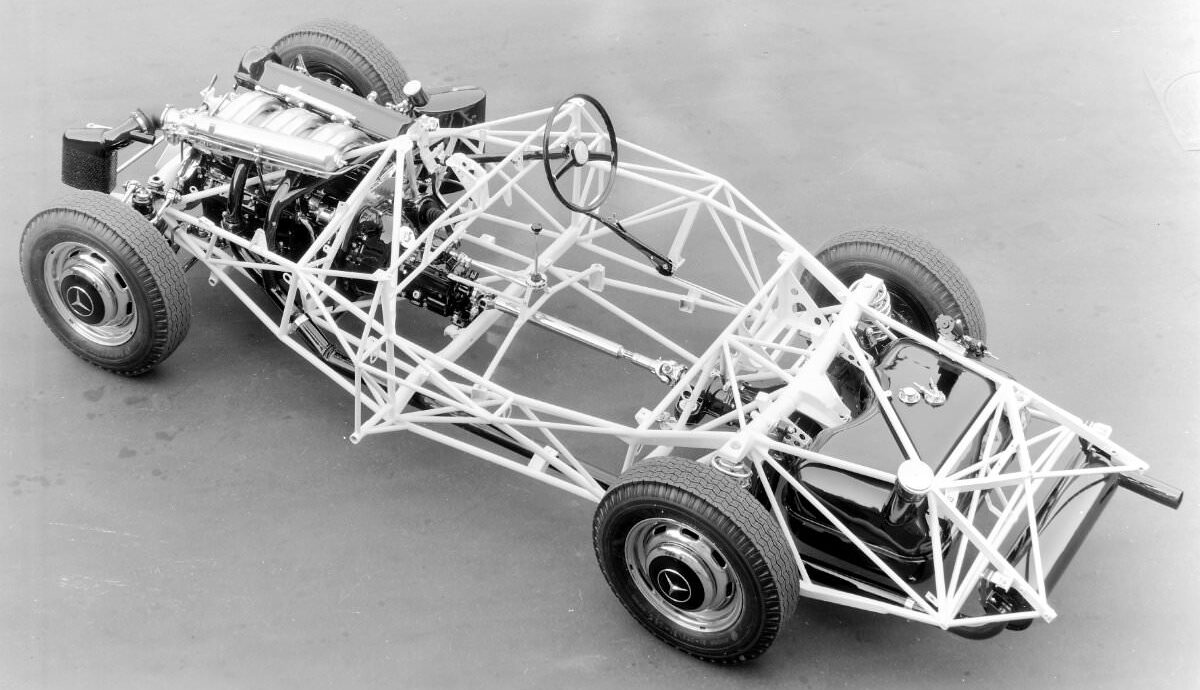
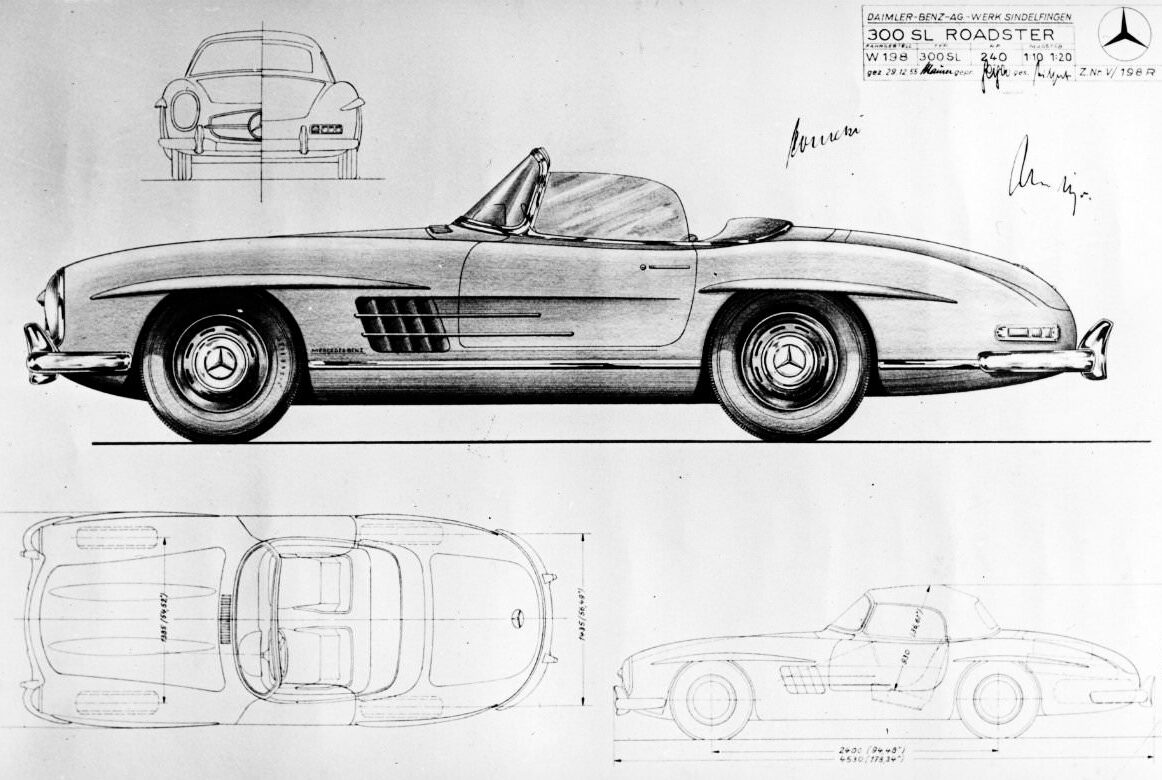
走行性能: 直列6気筒3.0Lの燃料噴射エンジン(約240馬力)を搭載。ロードスター化に伴いリアサスペンションが改良され、クーペよりも操縦安定性が向上しています。
希少性と価値: 1957年から1963年までに1,858台が生産されました。現在では世界屈指のコレクターズアイテムとなっており、オークションでは1.5億円から2億円を超える価格で取引されることも珍しくありません。
#主要諸元:
- 型式:W198 II
- 総排気量: 2,996cc 直列6気筒 OHC 燃料噴射
- 最高出力 : 215hp @ 5,800 rpm
- 最大トルク:28.0 kgm / 4,600 rpm
- 駆動方式:FR(フロントエンジン、リアドライブ)
- 定員:2名
- 車体形式:2ドア、コンバーチブル / クーペ (ハードトップ装着時)
- ホイールベース:2,400 mm
- 全長:4,520 mm
- 全幅:1,790 mm
- 全高:1,300 mm
- 車両重量:
1,295 kg
*外観デザイン上の特徴:チュブラーフレームと40度左に傾斜したエンジン搭載方法がもたらす超低重心
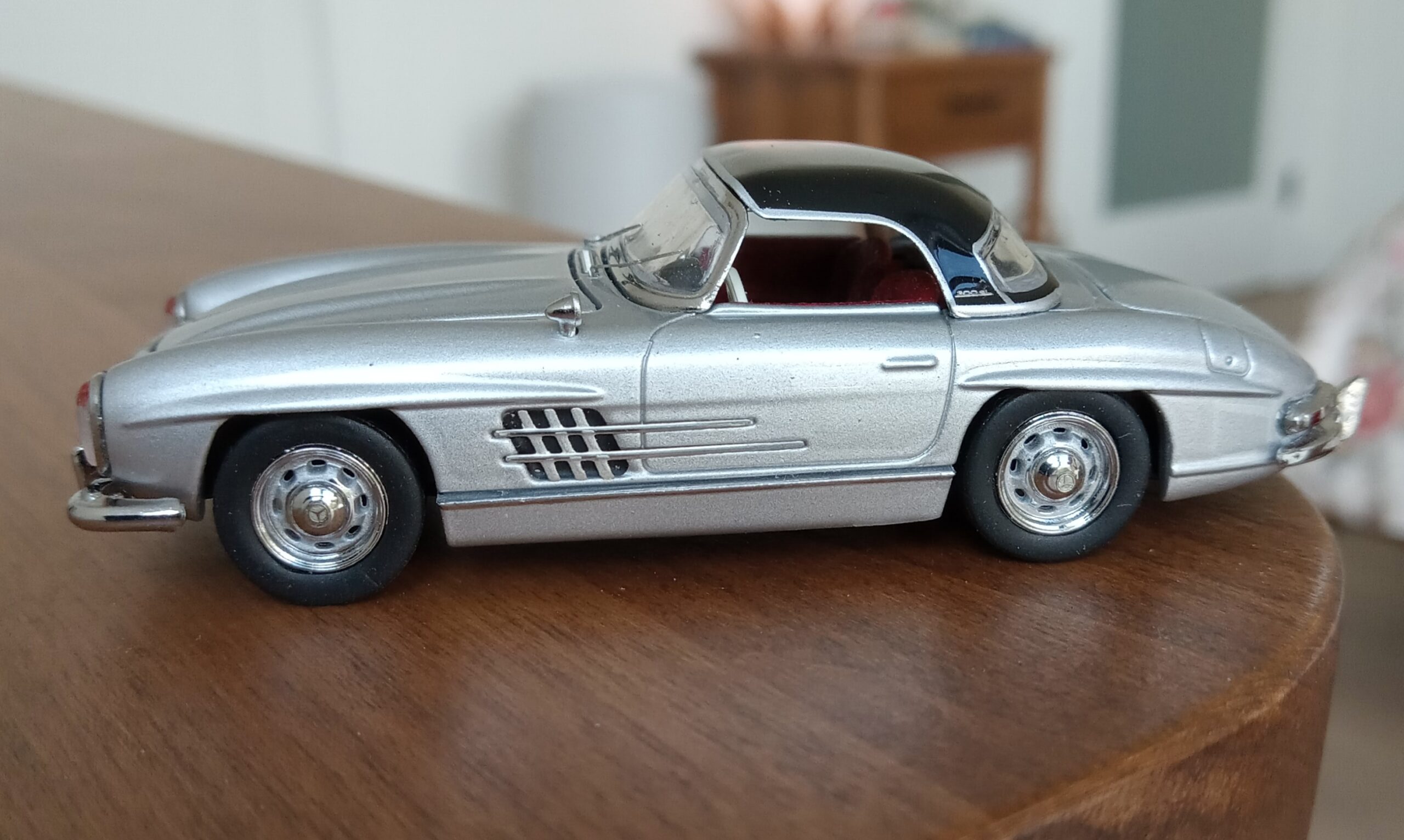
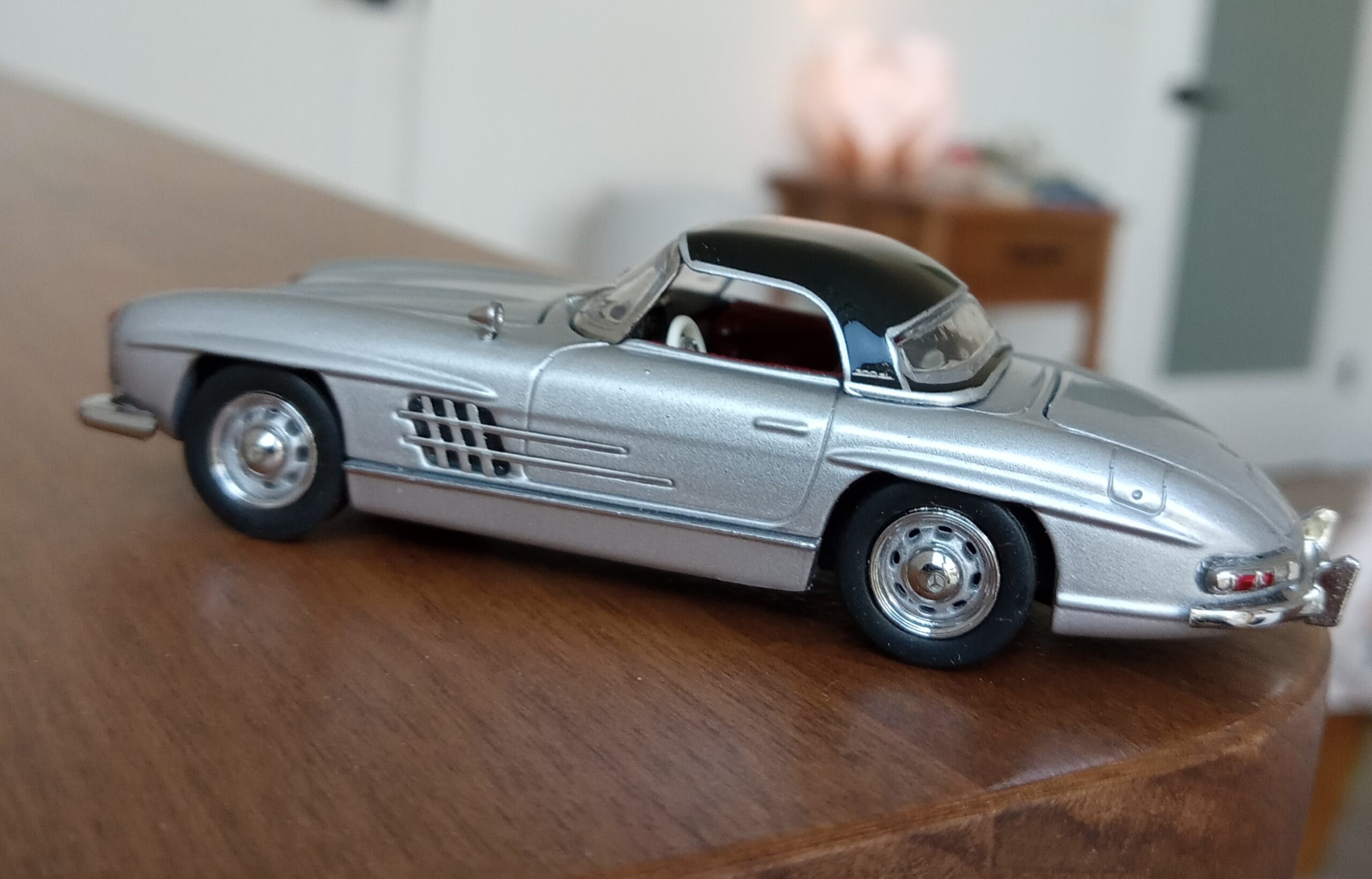
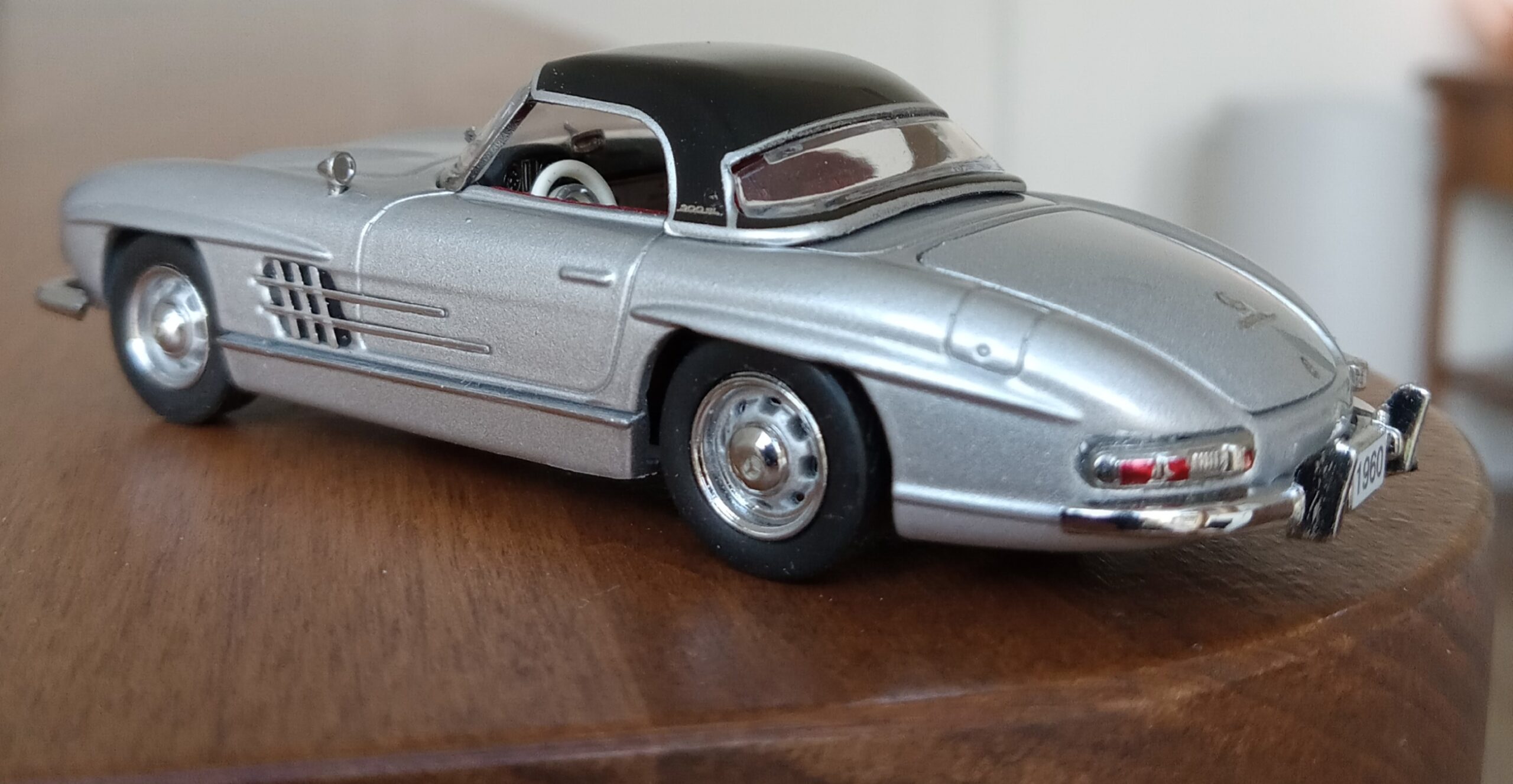
チュブラーフレーム採用の超低重心シャーシによる、
本格高速走行を可能にした300SL・ロードスターですが、
外観デザイン上の特徴は以下の6ポイントとなります。
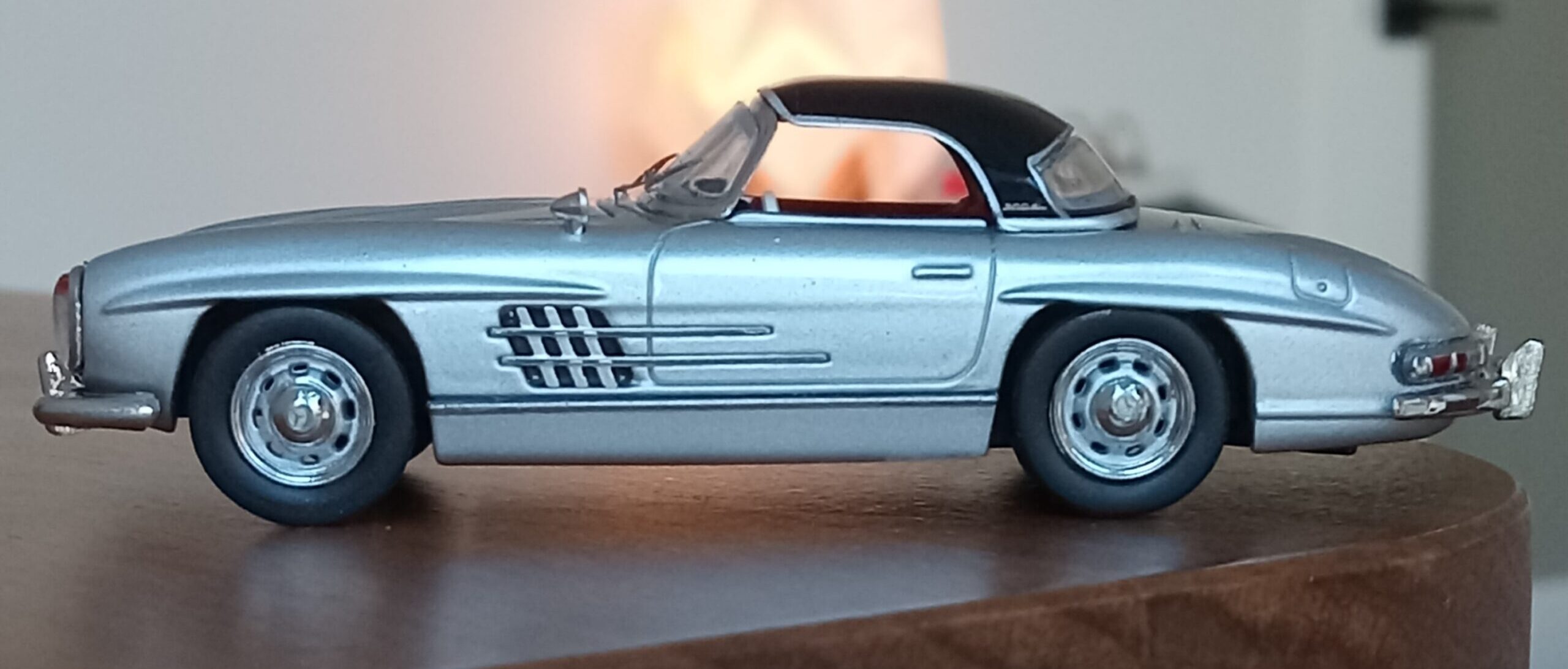
1、300SL ガルウイングで既に達成したフロントからリアにかけて細長く尾を引く当時最先端の流体力学から導き出された流線型ボディー
2、1、の流線型ボディーに『チョコん』とかぶせたお猪口のような可愛らしいハードトップの小気味よさと妖艶さの共存
3.チュブラーフレームが成し得た、当時あり得ないほどに低い最低地上高からくる『走る前からすでに速そう』なアスリートの体躯
4.フェンダーアーチ上の『眉毛』のような眉毛のようなプレスライン(通称:アイブロー)
ーーーーーー>これはタイヤが巻き上げる風を整える空力効果も兼ね備えていました。
5.戦前の500K スペシャルロードスターからの影響が強いリアデッキから流れるように加工するボディー後端部の処理の美しさ
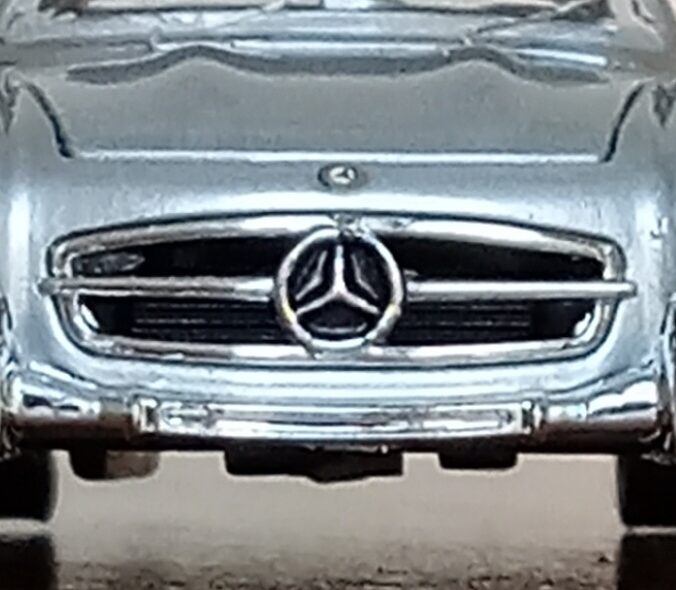
6.その後何代にもわたり、MB SLシリーズを象徴する自信に満ち溢れたフロントグリルの意匠
ーーーーーー>中央に配されたプロペラを模したMBのロゴの美しさ・力強さは格別です。
それでは1つづつ見て行きましょう。
1、300SL ガルウイングで既に達成したフロントからリアにかけて細長く尾を引く当時最先端の流体力学から導き出された流線型ボディー
(500Kスペシャルロードスターからの「逆ウエッジ」とサイクルフェンダー
を見事に新解釈したボディー造形がオープンボディー化によってさらに引き立ちます。)
ーーーーー>W196、SLRなどのレース活動で培った超高速レーサー・イメージの到達点です。
2、1、の流線型ボディーに『チョコん』とかぶせたお猪口のような可愛らしいハードトップの小気味よさと妖艶さの共存
(スポーツ感あふれるオープンカーにキャンバス性の幌をかけるそれまでのコンバーチブルトップに加えて、剛性、遮音性や快適性に富んだハードトップが装備されました。)
ーーーーー>独特のカッチリ間、高級感、ドレッシーなイメージが加わりました!!
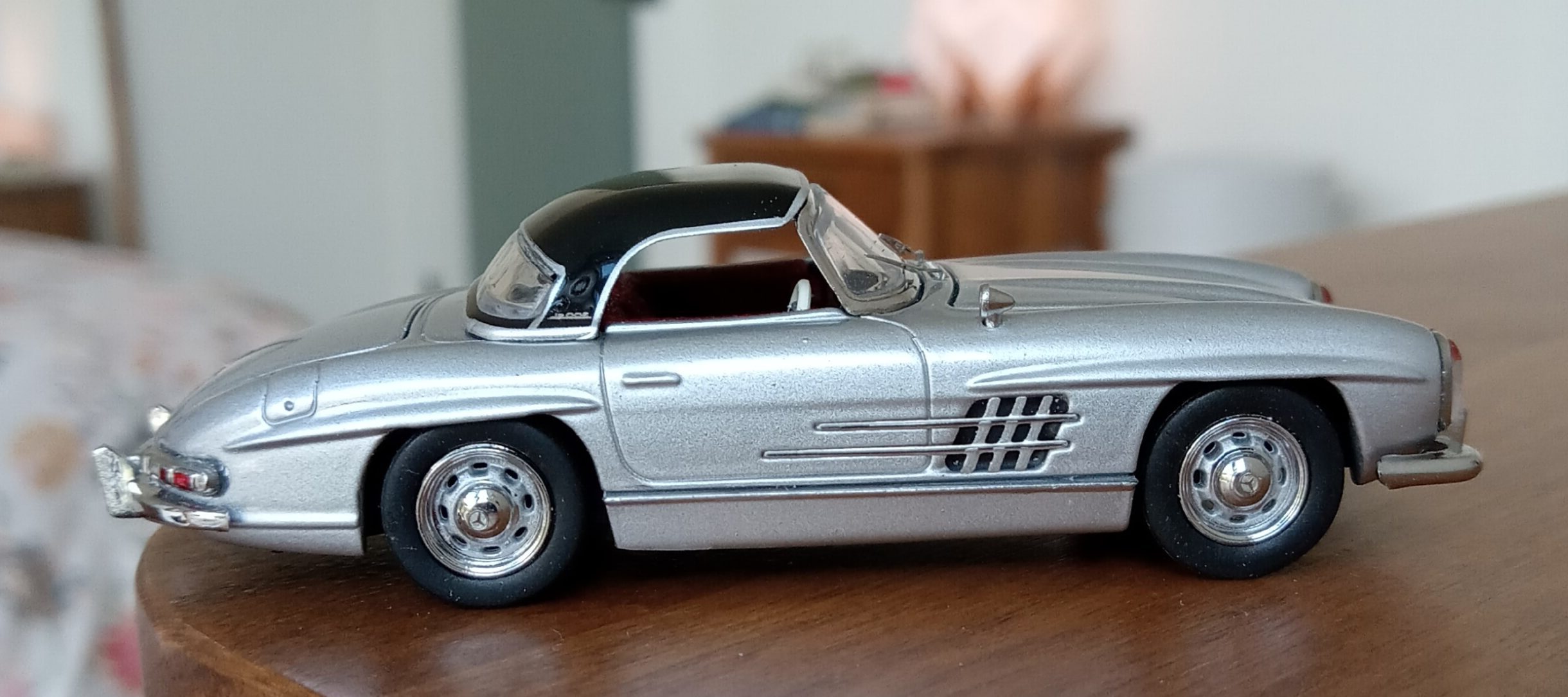
3.チュブラーフレームが成し得た、当時あり得ないほどに低い最低地上高からくる『走る前からすでに速そう』なアスリートの体躯
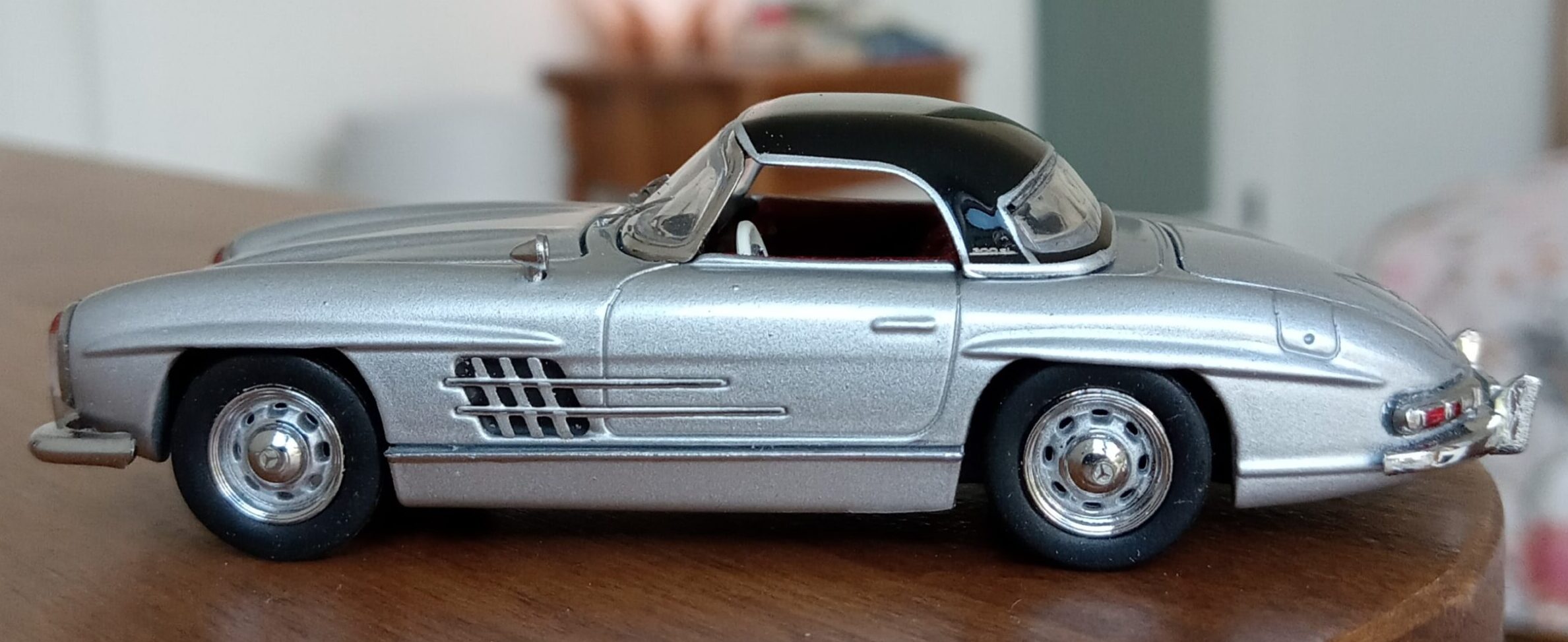
4.フェンダーアーチ上の『眉毛』のような眉毛のようなプレスライン(通称:アイブロー)
ーーーーーー>これはタイヤが巻き上げる風を整える空力効果も兼ね備えていました。


5.戦前の500K スペシャルロードスターからの影響が強いリアデッキから流れるように下降するボディー後端部の処理の美しさ
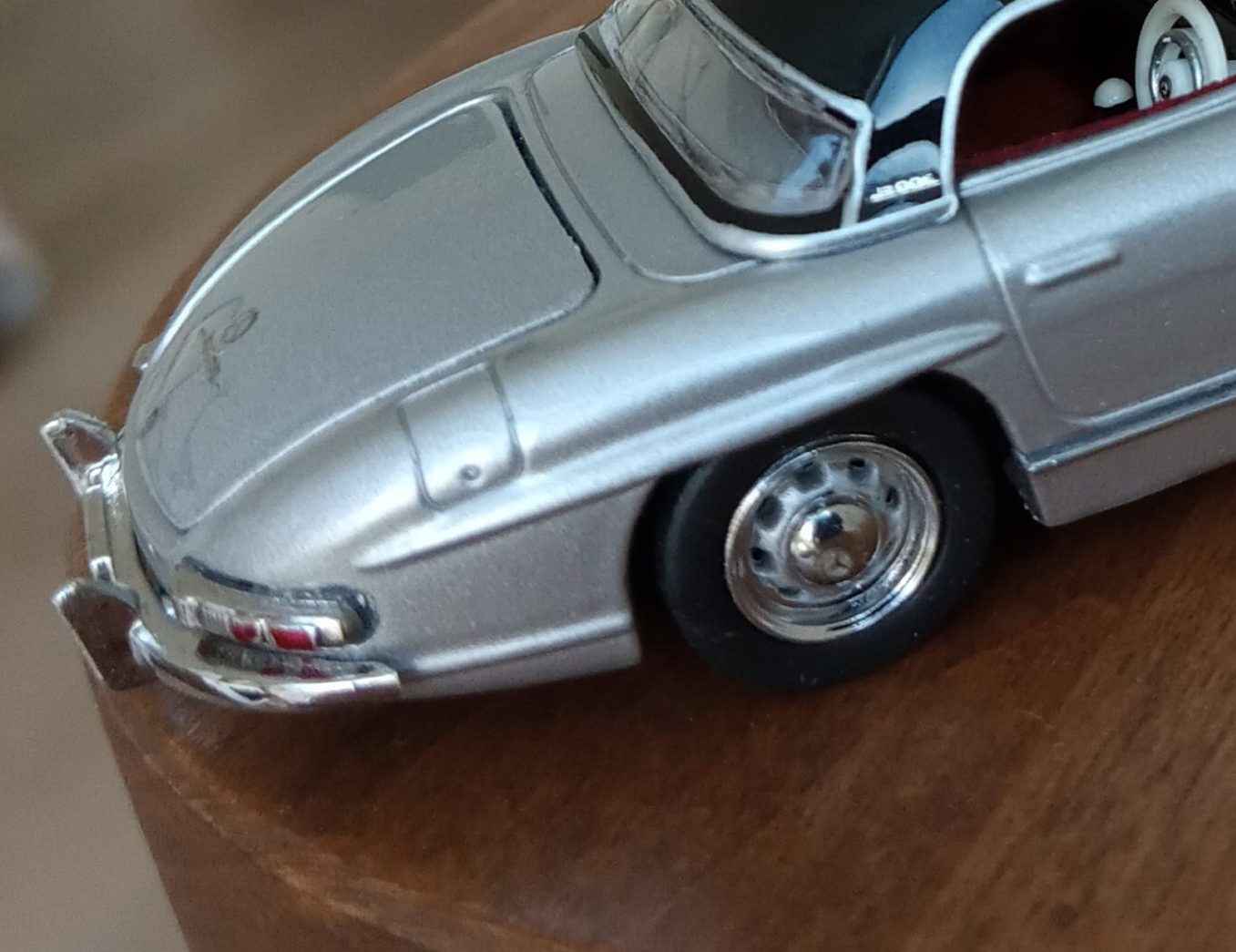
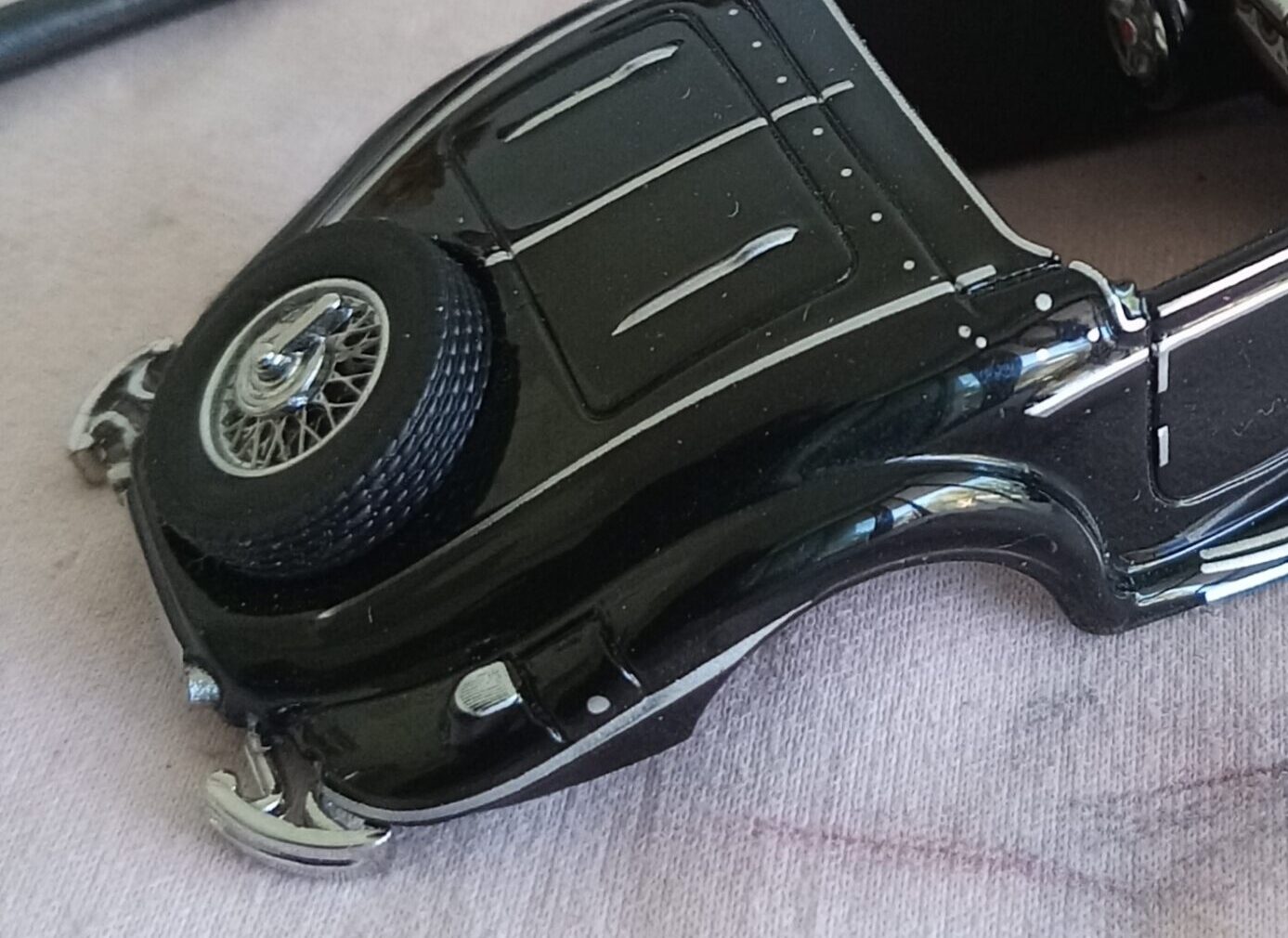
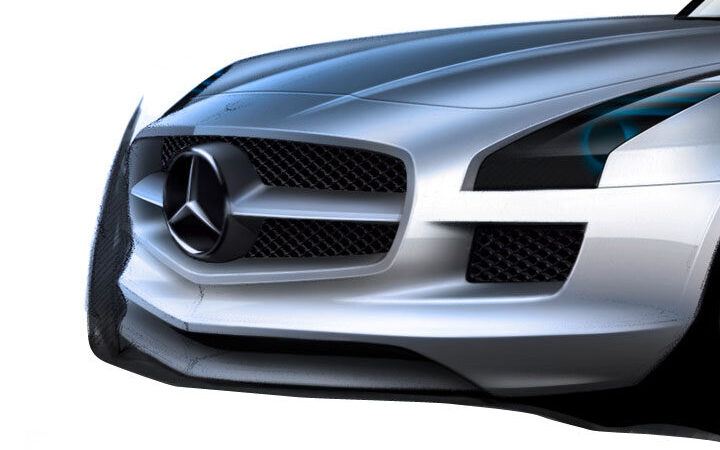
6.その後何代にもわたり、MB SLシリーズを象徴する自信に満ち溢れたスリーポインテッド・スターを中央へ配置するフロントグリルの発明!!
ーーーーーー>中央に配されたプロペラを模したMBのロゴの美しさ・力強さは格別です。
*『私』とメルセデス・ベンツ 300SL ロードスター
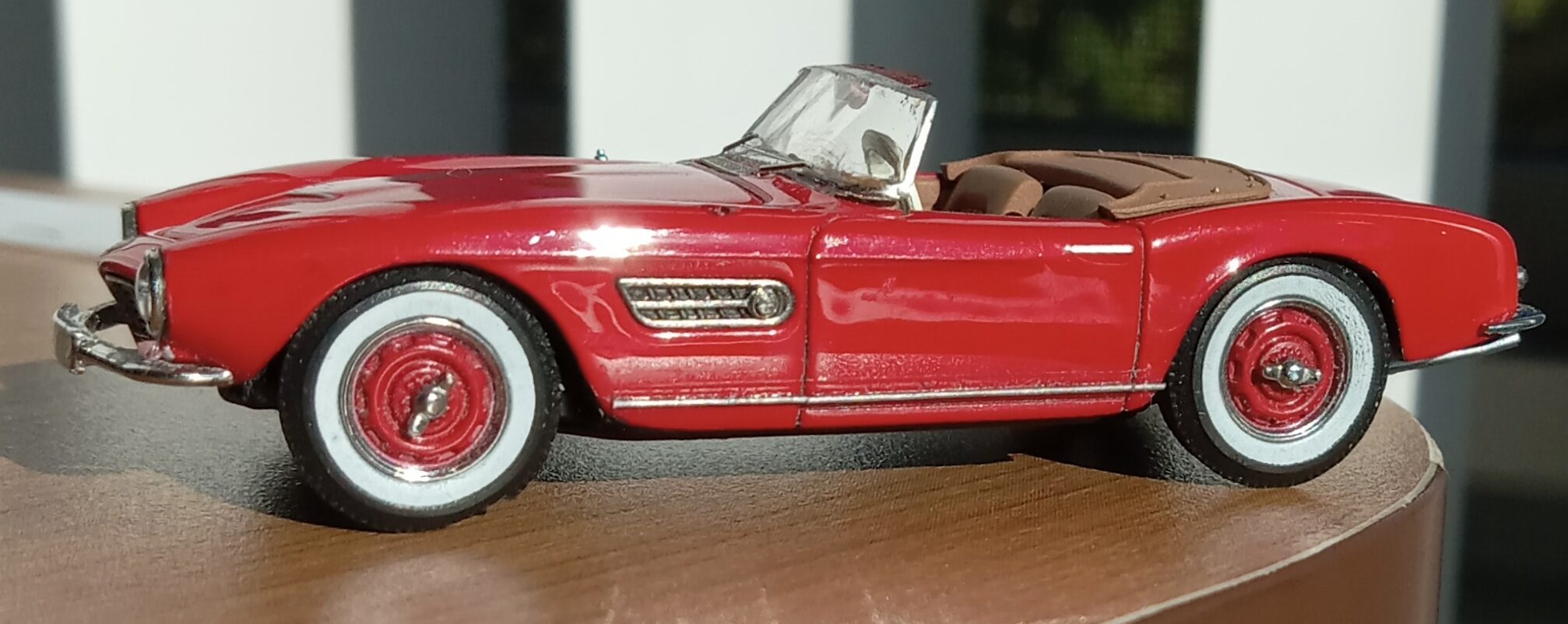 (GFCC社製、1/64 BMW 507 ロードスター:以前の改造記事でご紹介した傑作ミニカーです。https://yisell7777.com/archives/5600)
私がメルセデスベンツ 300SL・ロードスターに興味を持ち始めたのは、
BMW 507に入れ込んで、
あらゆる媒体でその優雅なロードスターを追い回していた頃で、
丁度2000年前後だったと記憶しています。
ウイキペディアか何かのネットの記事で、戦後の経営難のなか、BMW507の制作コストがかさみ、当初中価格帯を狙っていたにもかかわらず、結局当時のスーパーカー、300SL・ロードスターと同価格帯になってしまい、結局257台しか売れなかったという記述がきっかけとなり、
当時ライバル関係にあった
300SL・ロードスターに
一気にほれ込んだ記憶があります。
(300SL・ガルウイング版自体には、63年型コルベット・スプリットウインドウ版を思い出し、なんだか触手が動きませんでしたが、、、)
しかしながら立体模型となりますと、
300SL・ロードスターは 300SLと違い出来のいい立体に恵まれず、
ご紹介できるのは以下の3台のみです。
*シューコ社製、1/43 メルセデスベンツ 300SL・ロードスター(シルバー&紺幌)
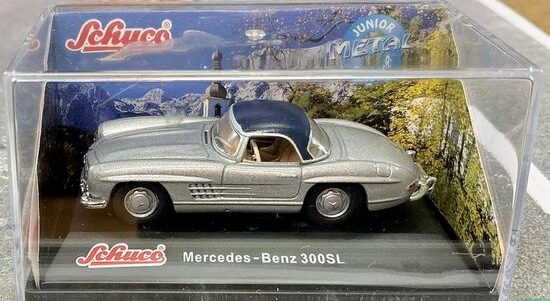 (その後に発売されたシューコのものと比べてかなり、チープなつくりですが(NEW RAYっぽい?)当時貴重なハードトップを再現していたのと、全体的なすらっとした気品が表現されていたので、かなり愛でました。)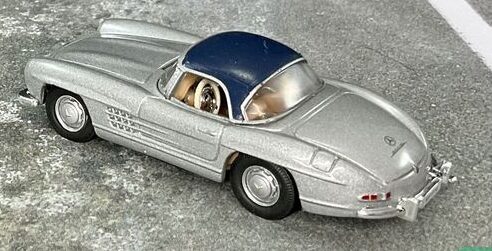
*DCM社製、1/64 ダイキャスト・モデル メルセデスベンツ 300SL・ロードスター、(シルバー&黒の幌)
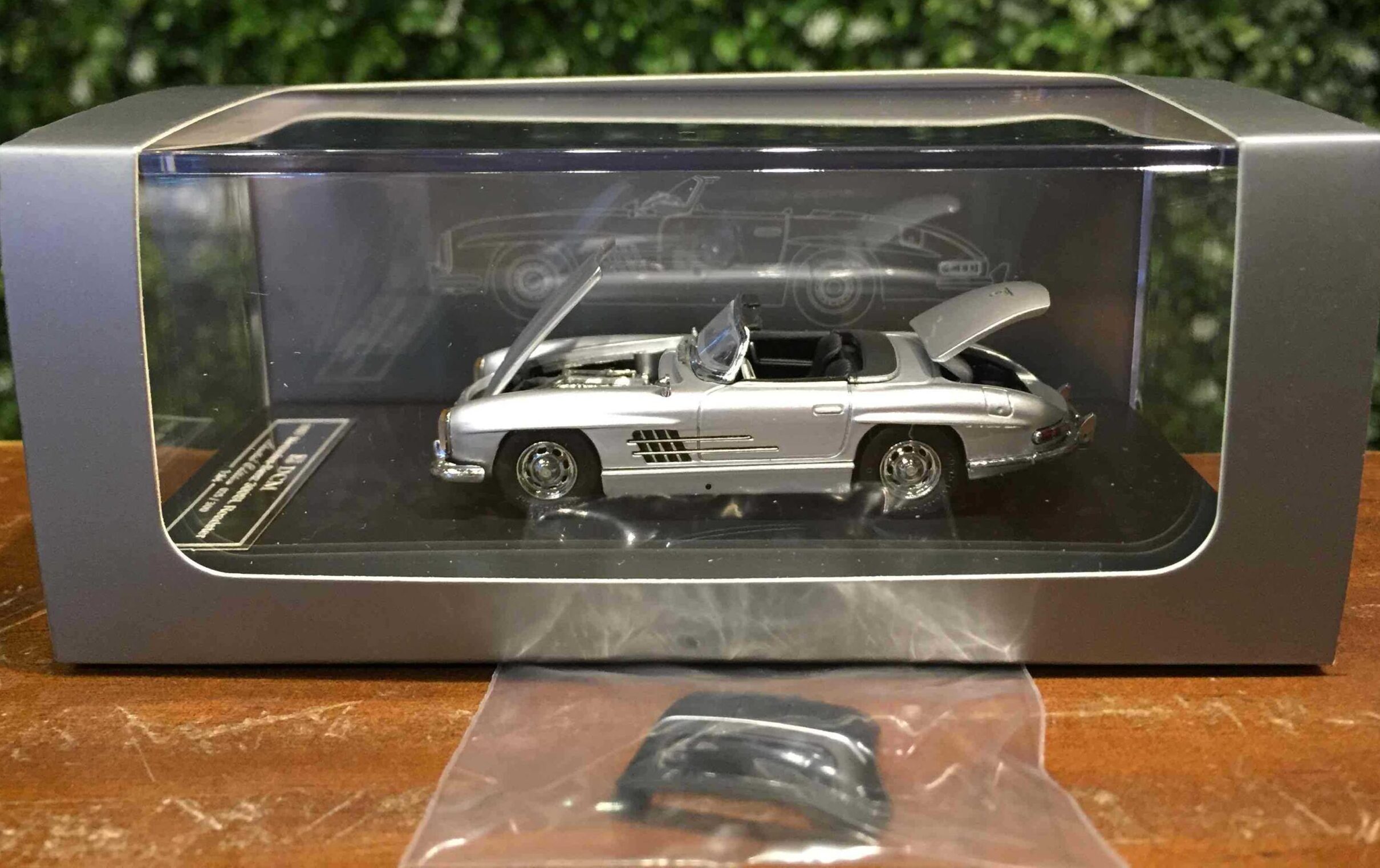
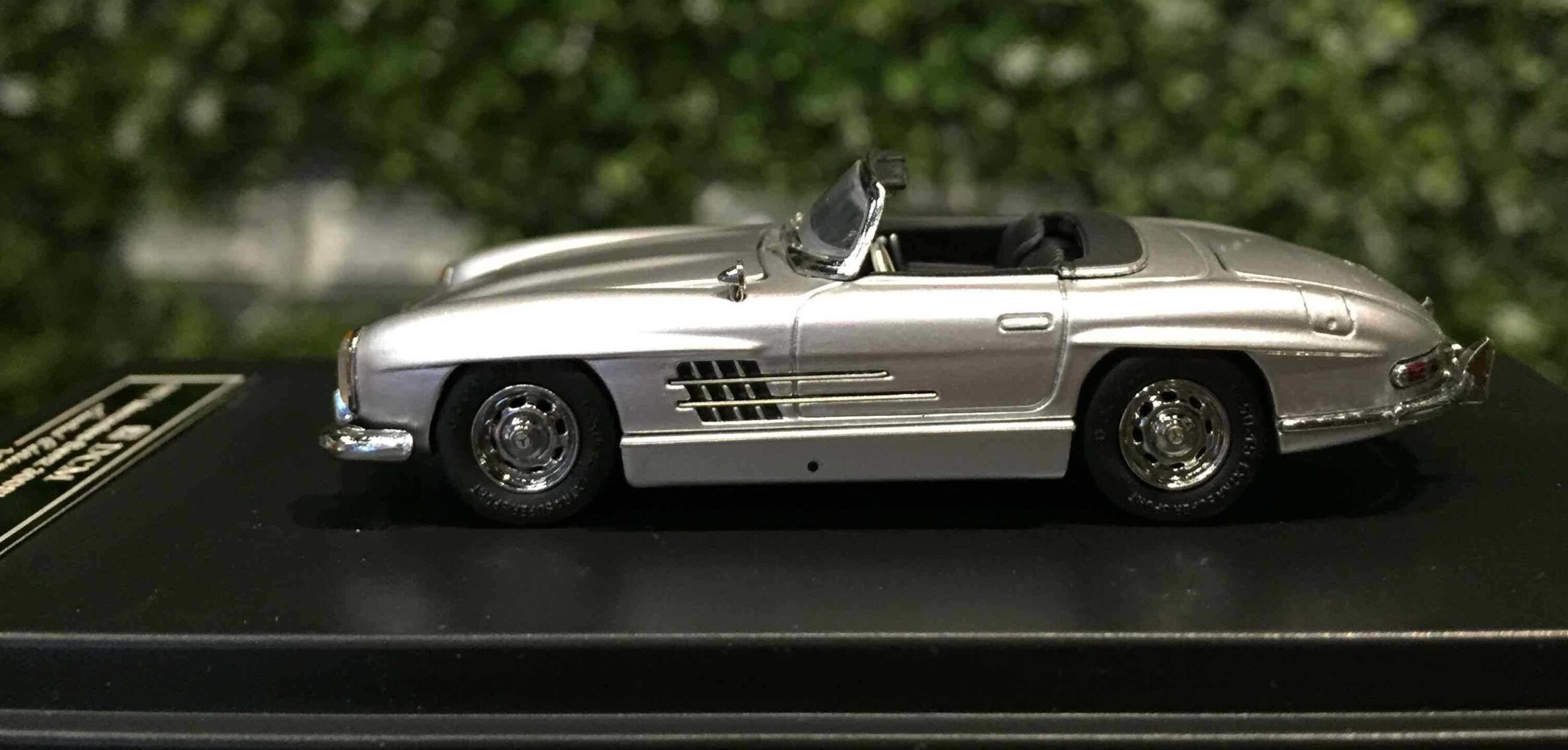
(1/18と言われても信じてしまうぐらいの作り込み!!最近の中国企画の1/64クラッシックカーの出来の良さを象徴するミニカーです。GFCC社製と比べてみますと、全くの別物で、ドア下のカウル部の表現や、モールの位置なども違っています。中国ではよほどの人気車なのか、1/64の300SLは更にもう2社から発売されています!!)
*GFCC社製、1/64 ダイキャスト、メルセデスベンツ 300SL・ロードスター(シルバー&黒のハードトップ)
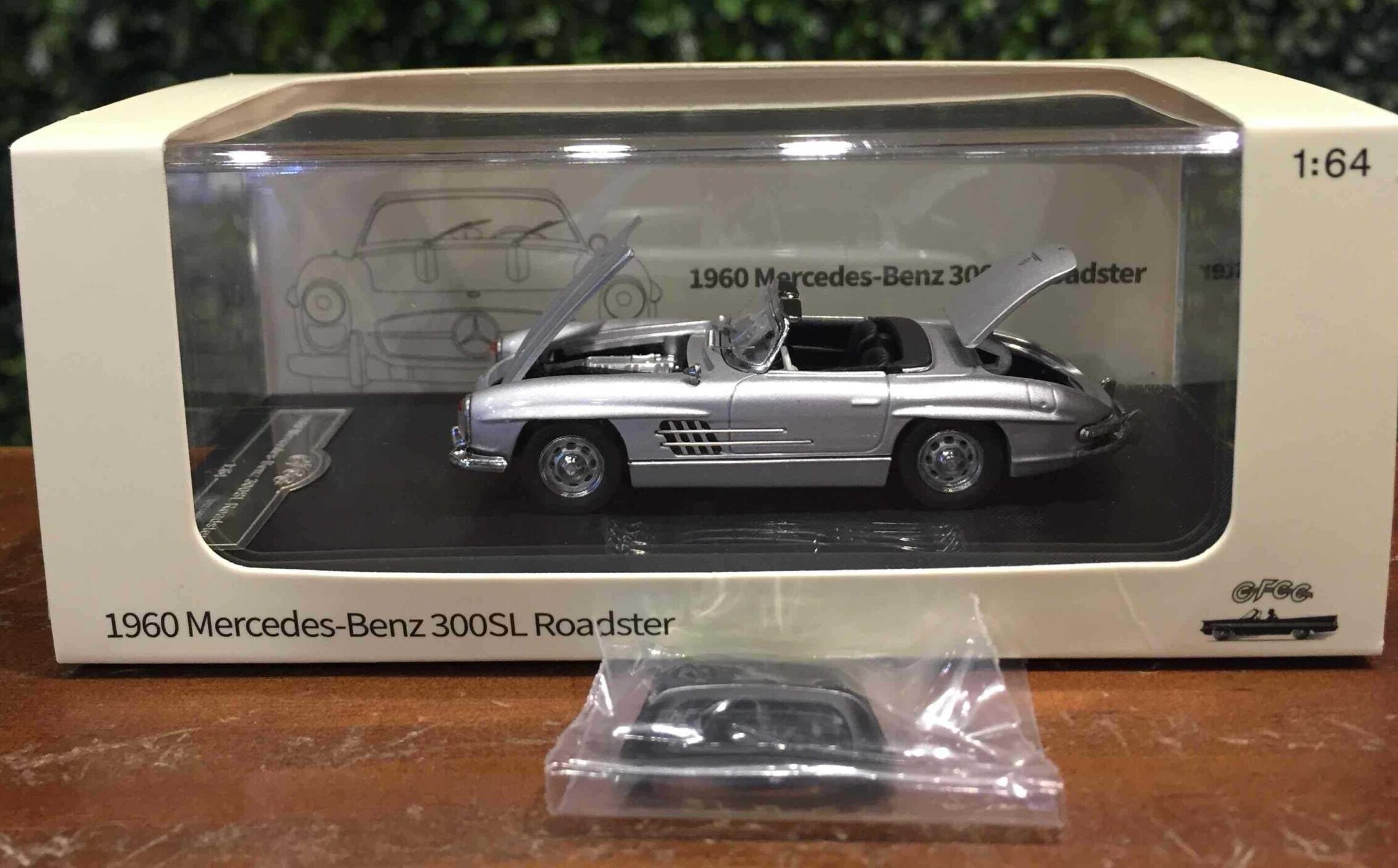
(DCM社版同様、1/64とは思えないディーテールの作り込みはもちろんですが、それ以上に、優雅な実物をとらえる感覚が他社と段違いなメーカーです。写真で見ると1/18位に見えます。)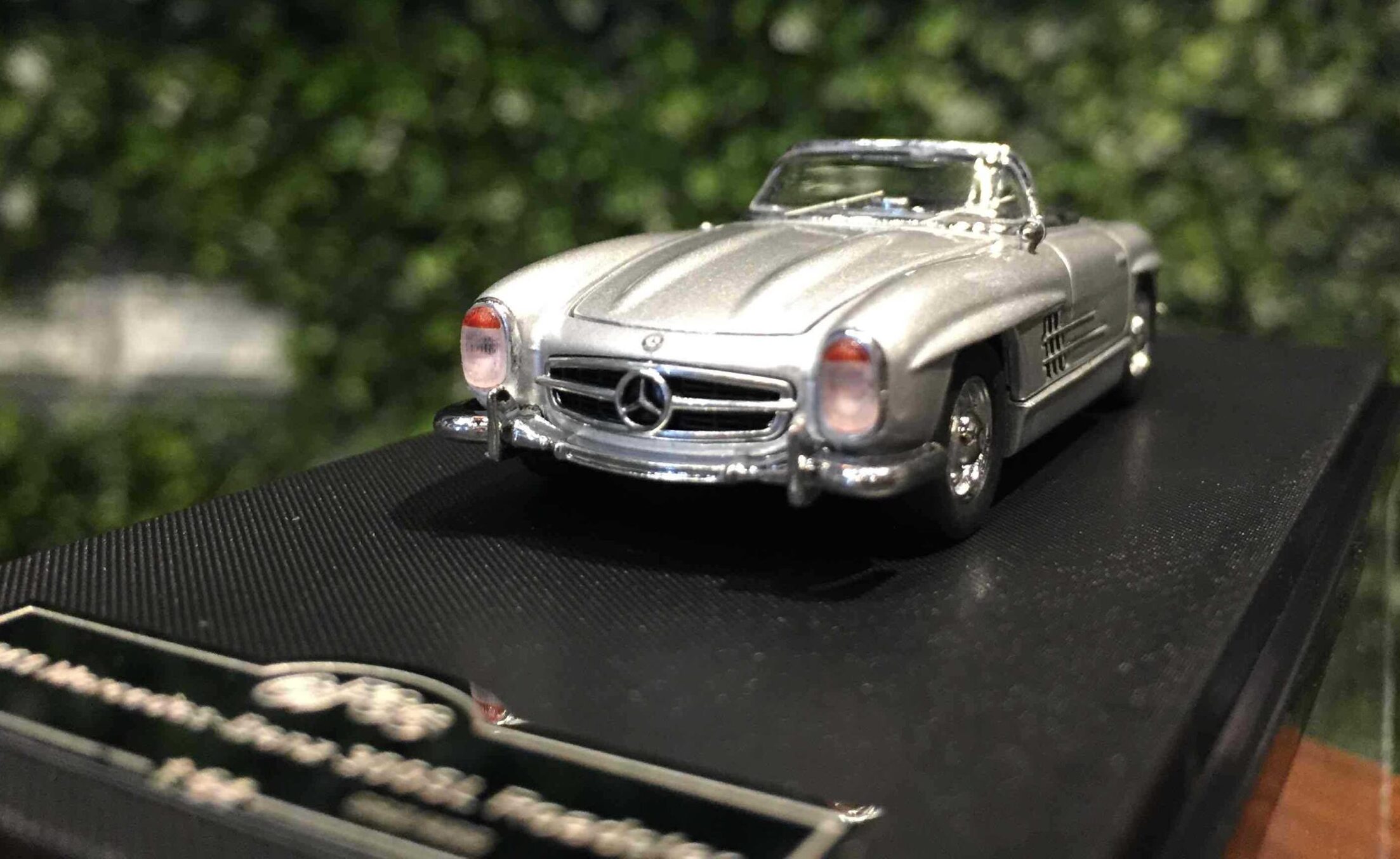
*三題噺:流線形・『3 IN 1』・国威発揚

今回の記事、MB300SL ロードスターについて、
こんな感じでお題をいただきました。
*流線形:
*『3 in1』:
*国威発揚:
さてどうまとまるかは全く予想が付きませんが、
いつも通り、
行き当たりばったりでいってみましょう!
エーー!
一席おつきあいのほどを願っておきますが、、、
私たちが格闘していました、
1990年台前半の自動車デザインの教育の現場では、
来る日も来る日も、
*『CD値』(空気抵抗の少ない滑らかさを表す係数)と
*オーガニック・デザイン(有機曲面を多用したデザイン様式)とが
幅を利かせていました。
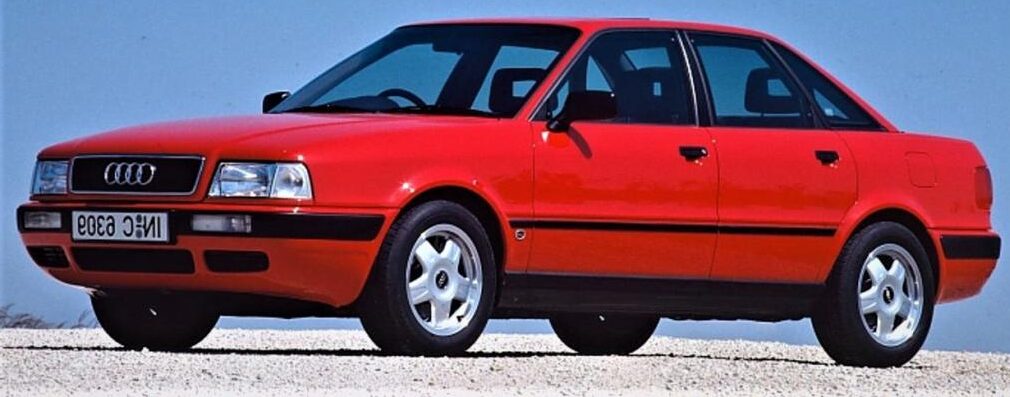
(3代目:アウディー80)
アウディーが先陣を切って、
*空気の流れをコントロールすることで、
*空気抵抗を減らして、
*少ない燃料で高速走行が出来る
高効率な自動車設計・デザインが求められた時代でした。
そんな中、自動車史を顧みますと、
折も折、1930年代半ばごろ戦前のナチス台頭前後のドイツで、
*当時最先端の科学分野であった『流体力学』と
*自動車エンジンへの過給装置(スーパーチャージャー)が合体することで、
*自動車の耐久性や高速走行性能を競う機運が立ち上がっていました。
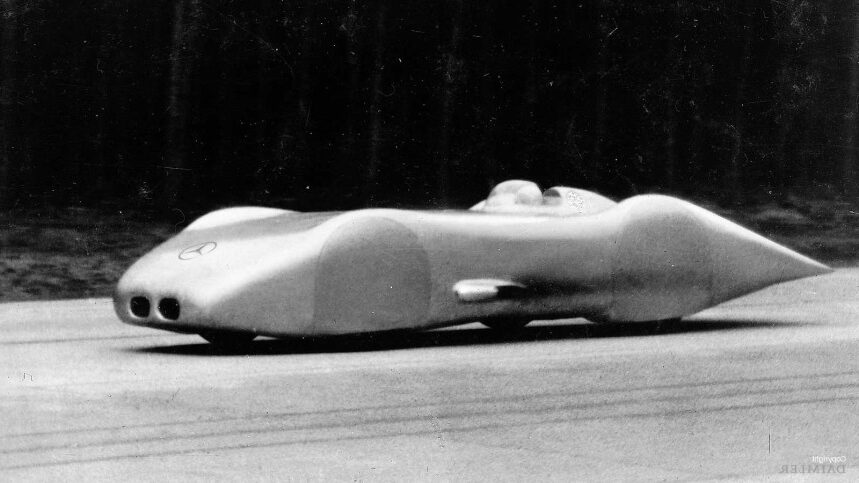
ドイツ国内ではアウトウニオン(現アウディー)とダイムラーベンツ社が社運をかけて戦っており、それがそのまま、
ドイツの国威発揚キャンペーンとして、
ヒットラーのナチス党に利用されました。
その結果生まれた、芸術、デザインのトレンドが、『流線形』というもので、
*蒸気機関車や自動車、
*航空機・気球や飛行船などに
物理的影響を与え、更には広告や、ポスターなどの印刷物や店の看板や標識のデザインにも影響を与えました。
戦後まもなく世界自動車選手権に鬱気を果たしたダイムラーベンツは、
同じく空力特性に優れたW196型でF1グランプリを席捲し、更にはW198型で、ミレミリアやパンアメリカ・ラリー選手権で優秀な成績を収め、
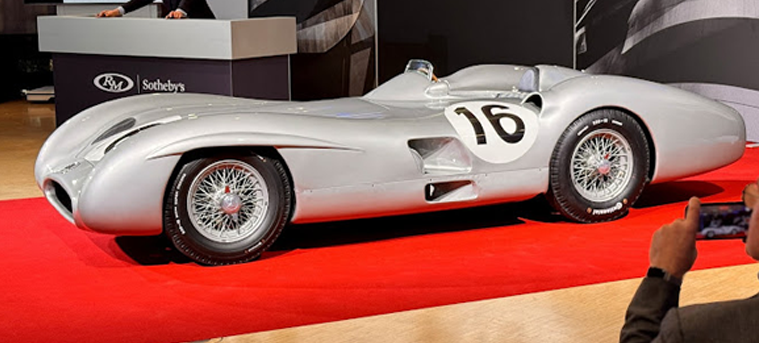
(W196型F1:高速サーキット型)
北米市場からの熱いエールに答え、
満を持して発売されたのが、
ダイムラーベンツ
300SL/ガルウイング です。
その後継者に当たるのが、
1957年発売の
300SL・ロードスターとなります。
北米からのコクピットの発熱問題解決のためにオープン化したボディーに快適装備やしっかりとしたハードトップを与えたことで、365日いつでも気持ち良く乗れる高級ロードスターの市場が一気に生み出されました。
『3in1』3種のルーフ状態が選べるメルセデスベンツ SLの歴史の始まりです!!
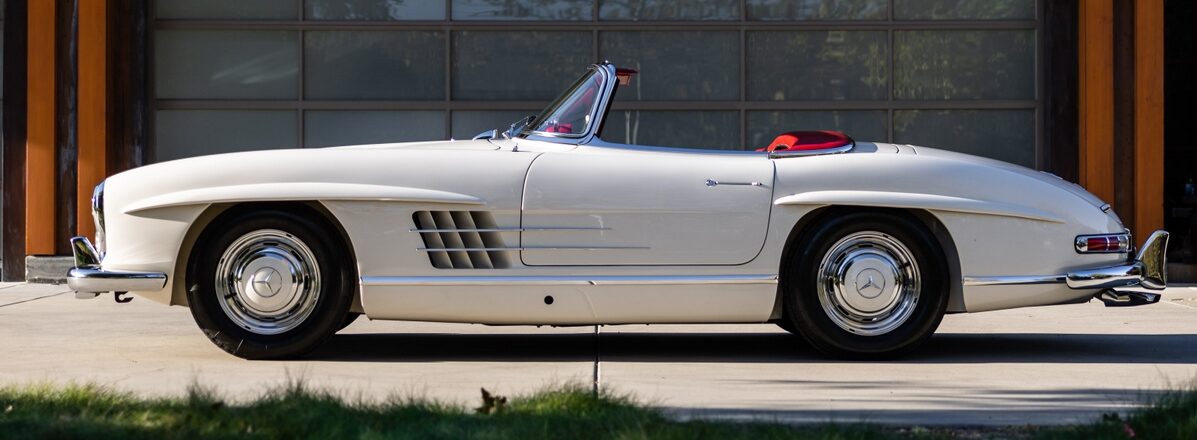
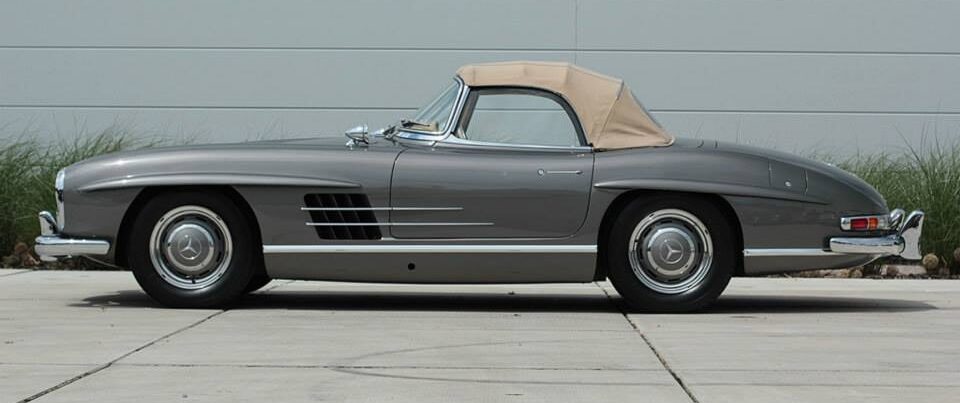
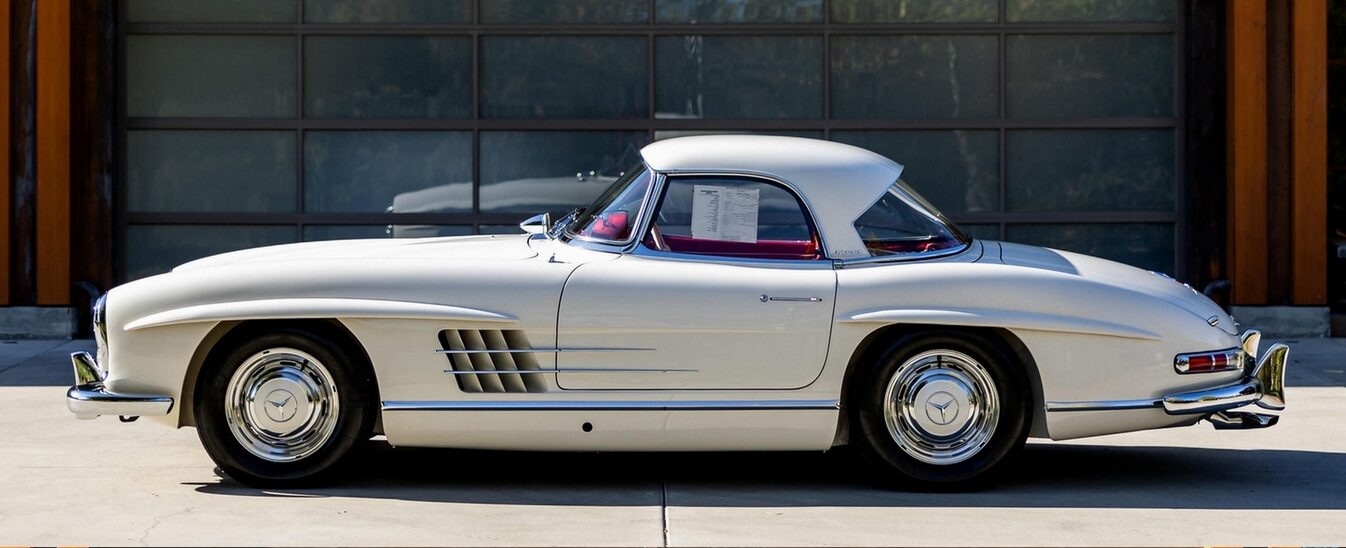
(オープン時)
(幌をかけた時)
(ハードトップ装着時)
科学的効率性を追求した時のドイツ人が設計したプロダクトには、
すさまじい執念が宿ります。
更にその効率の結晶に、一息ついた小さな余裕が乗っかると、えも言われない美しさが生まれます。
丁度この300SL・ロードスターの流れるような前後ボディーに、
お猪口を裏返したような可愛らしいハードトップが乗っかっているように、、、、
そういえば以前、何事にも、
極度の緊張と、一時の緩和、
これが大切だ、
と言っておられた先達がおみえです、
その方こそ、
天才落語家:『故・桂枝雀』師匠です。
お後がよろしいようで、、、、
* 『MB 300SL』に至る道 : ダイムラーベンツ社の超高速・空力実験車の歴史
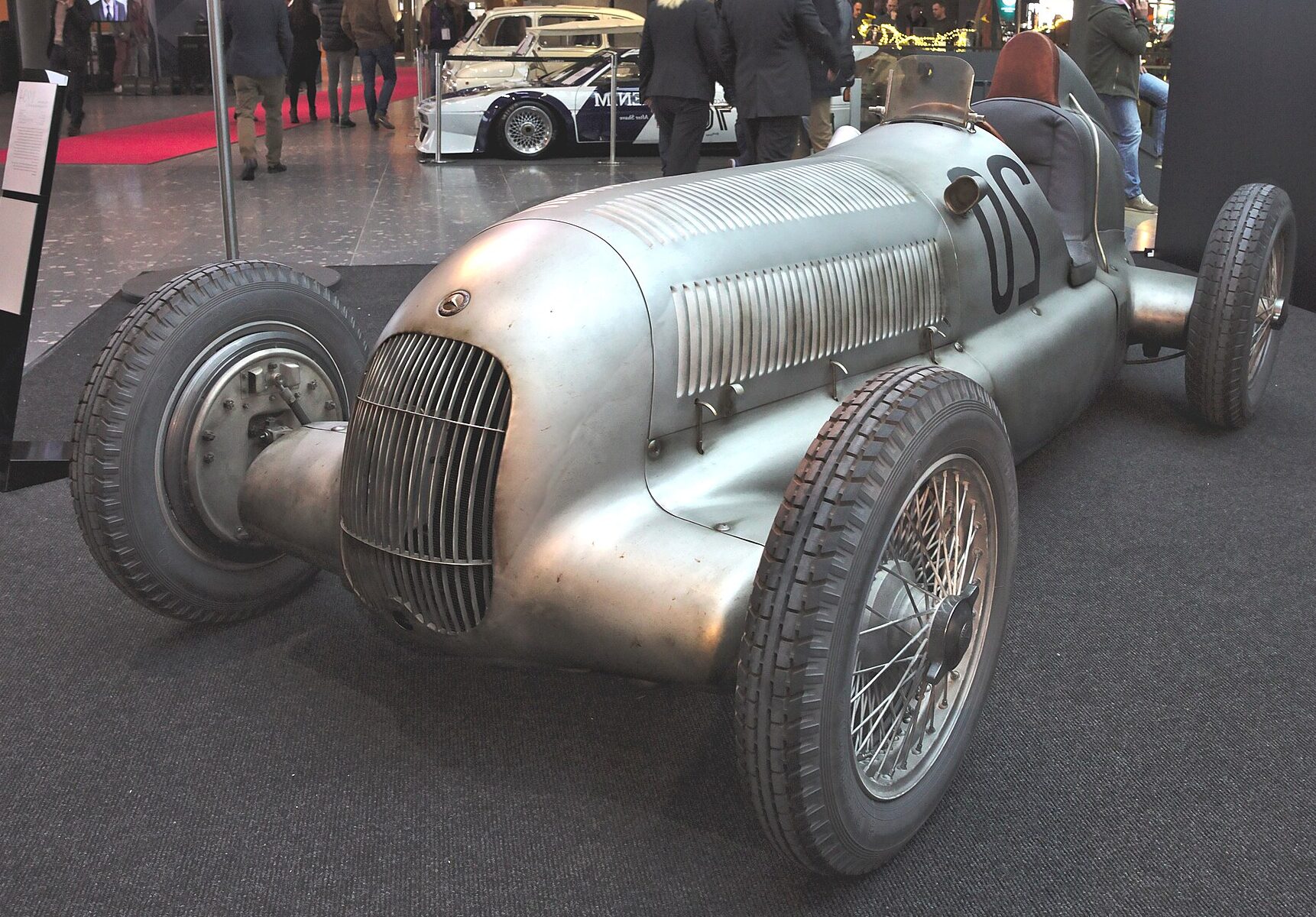
(戦前のF1, W25、1934)
最後にダイムラーベンツ社が
幾多の苦労を重ねて、
超傑作生産車『300SL』に至った
長い道のりを、
ざっと見ておきたいです。
*ベンツ・トロップフェンワーゲン、1923
(ハンス・二ベル設計の流線形をレーシングカーに取り入れた最初期の例で、後のベンツ社との統合の引き金になったことでも知られています。更には戦後のF1設計の主流となる、リア・ミッドシップのエンジン配置もすでに実用化していたのには『2度驚き』ました!!)
ーーーーーー>リアタイヤの上のウイング状の物体がなぜだか今日のF1に搭載された、リアエンジン上部の空気吸入口の直前にあるカメラにそっくりです(笑)
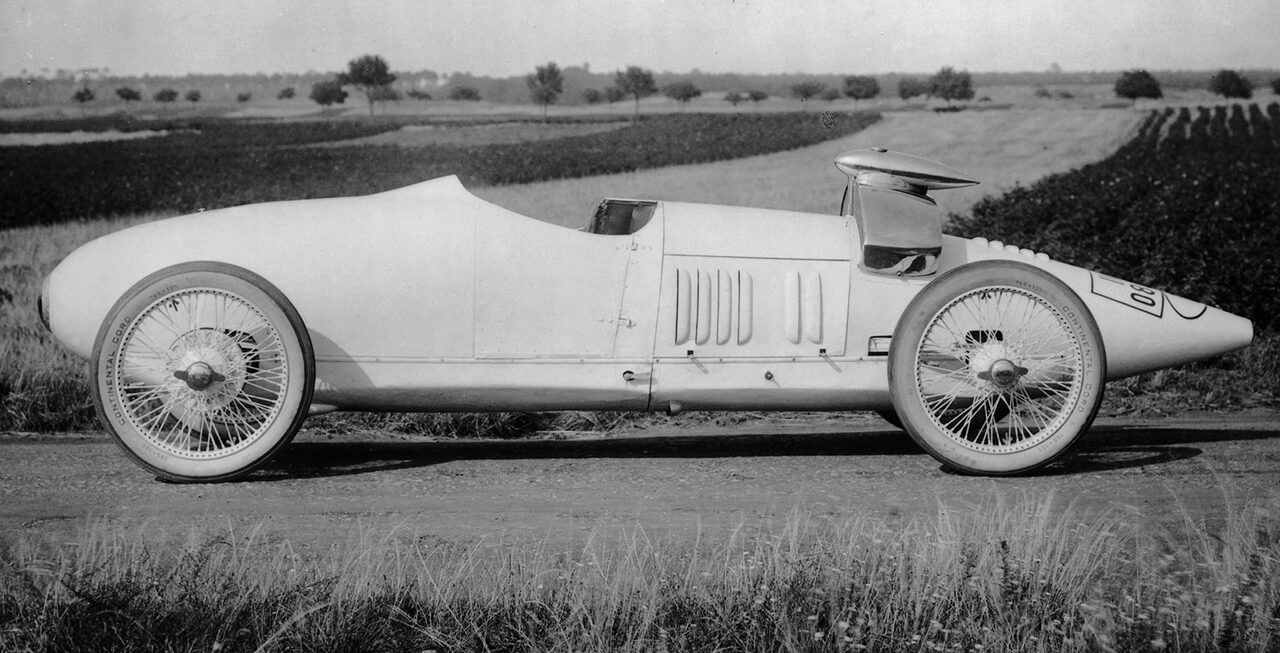
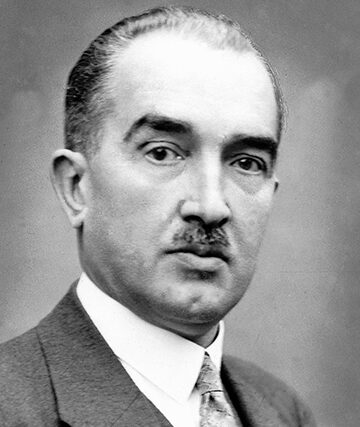
(ベンツ・トロップフェンワーゲン、1923)
(ハンス・二ベル)
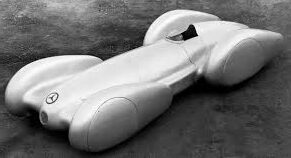
*メルセデスベンツ W125 レコルトワーゲン(1938年)
(ナチスによって作られたアウトバーンを使った432.69 km/hという高速記録を打ち立て、その後80年近くも破られることはありませんでした。)
ーーーーー>個人的にはホイールカバーが独立したタイプ(写真下)が好みです。
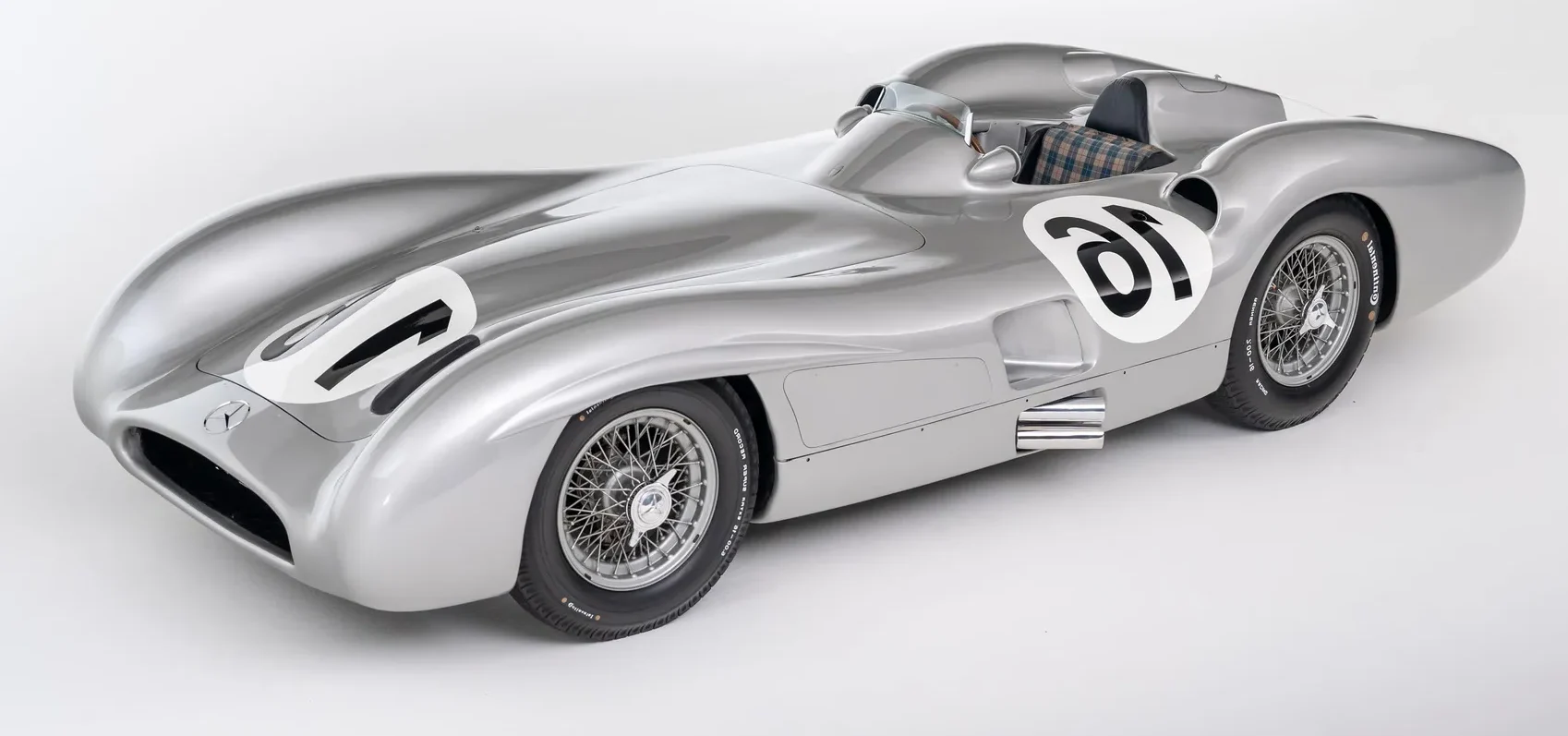
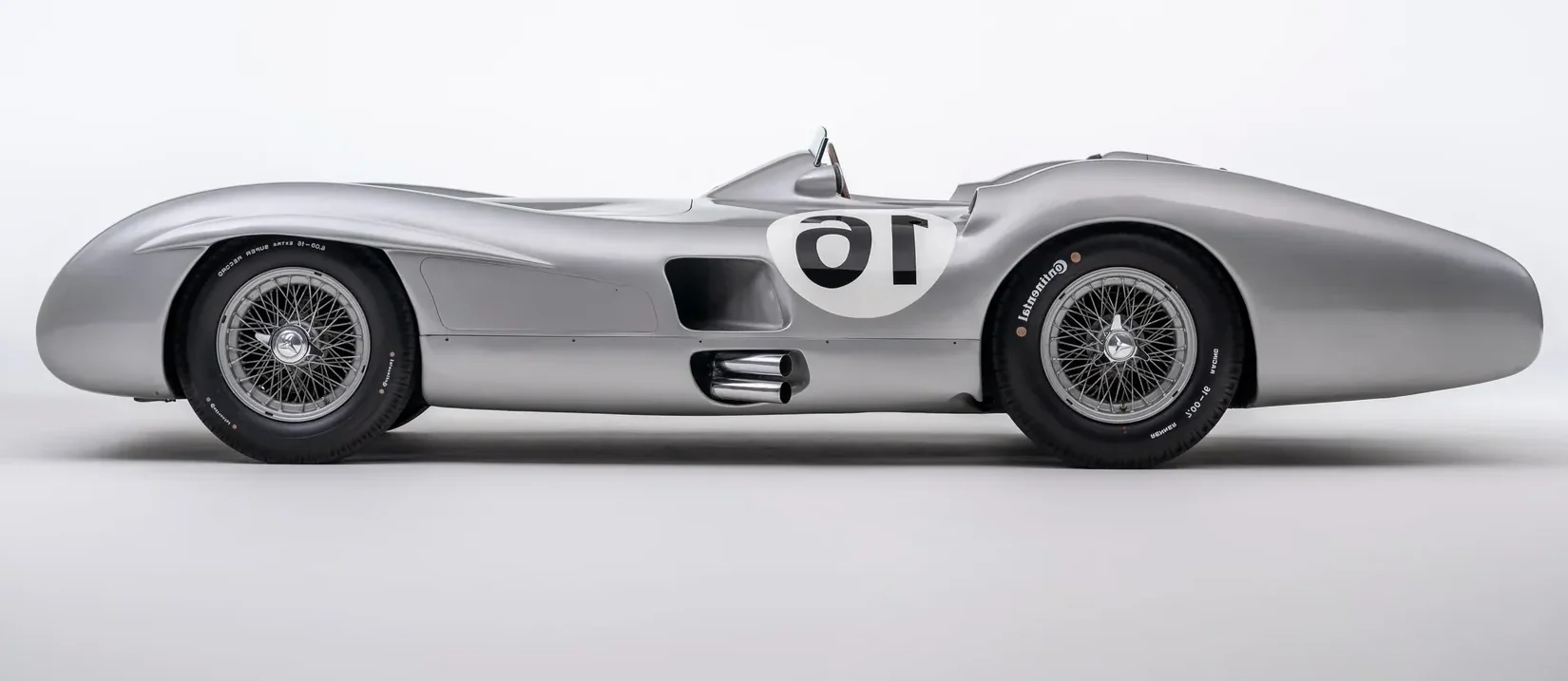
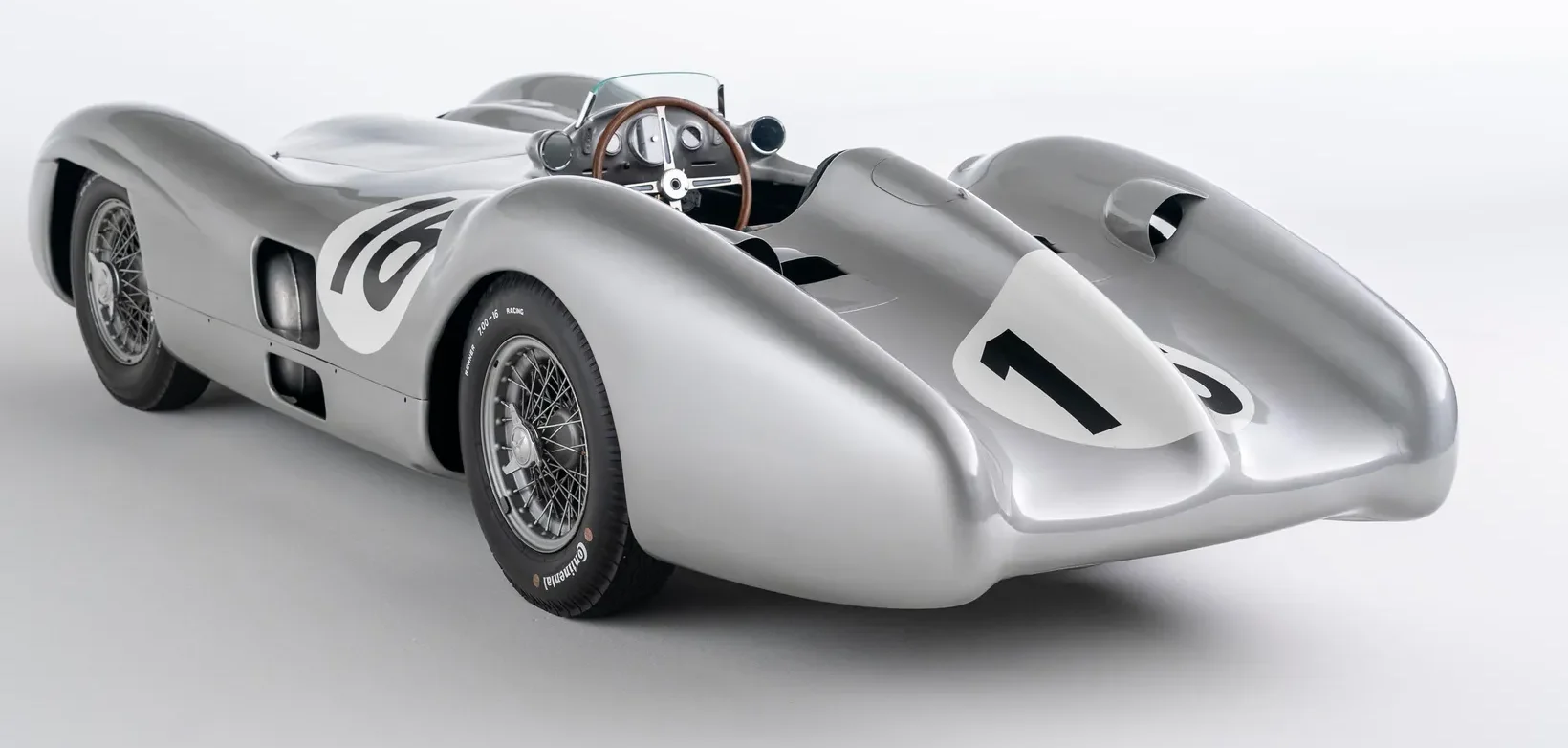
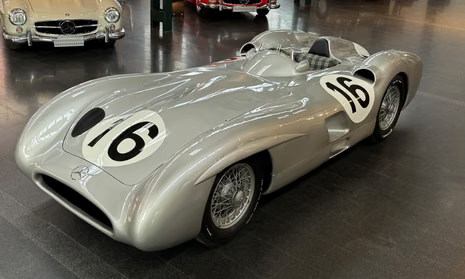
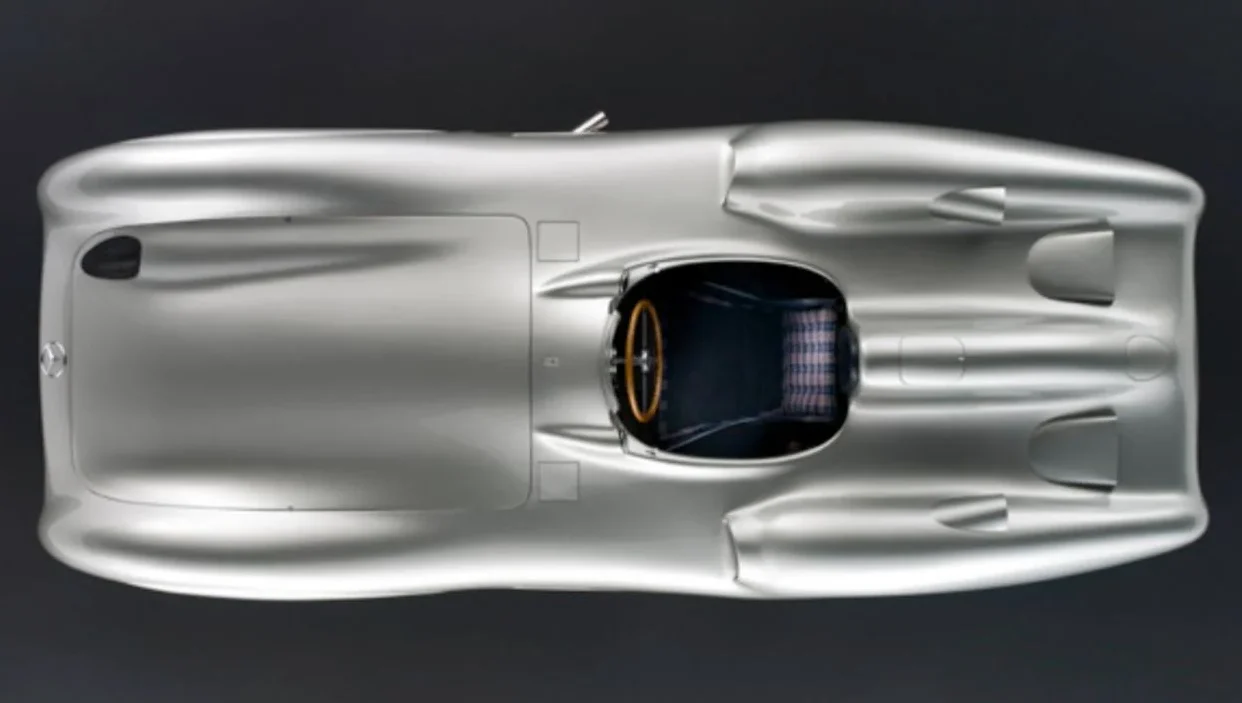
*メルセデスベンツ W196R ストリームライナー、1954
(1954年度のF1レーサー:高速サーキット用に流線型のボディーが与えられたバージョンです。ファンジオやスターリング・モスによりどらいぶされました。すぐ後の市販車300SLやスポーツカー・レーサー300SLRへの影響は計り知れません。)
ーーーーー>個人的にはフェラーリ250TR (ポンツーン・フェンダー)と並び、『史上最も美しいレーシングカー』の1つです!!
*メルセデスベンツ 300SLR, (スポーツカー選手権用・レーサー)
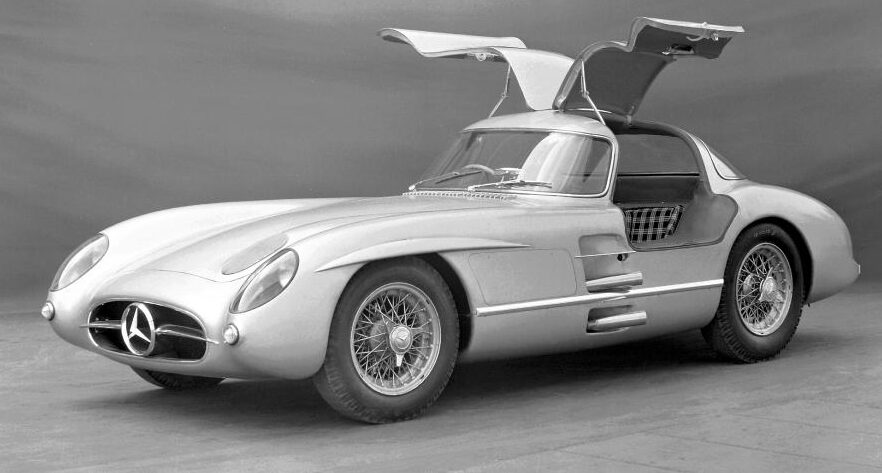
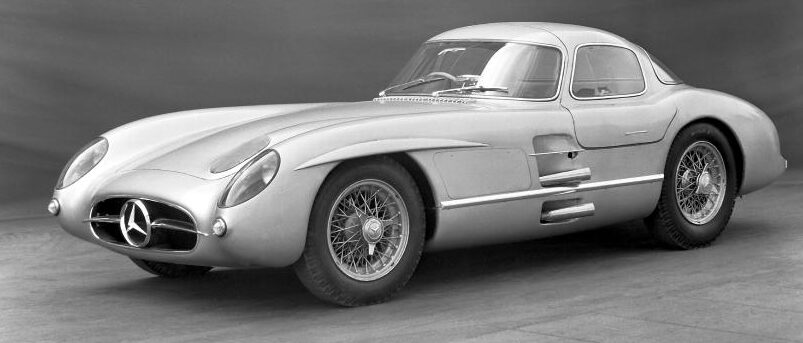
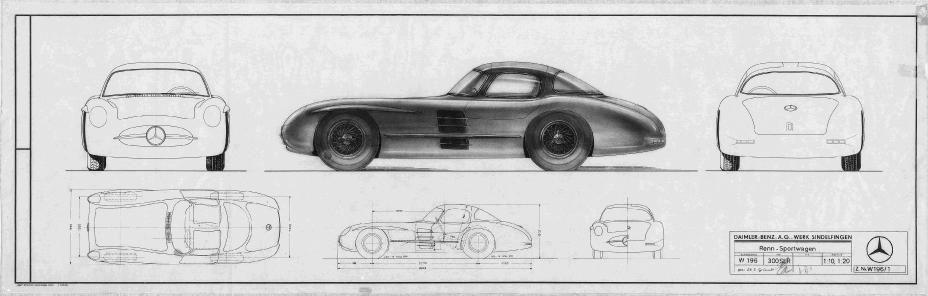
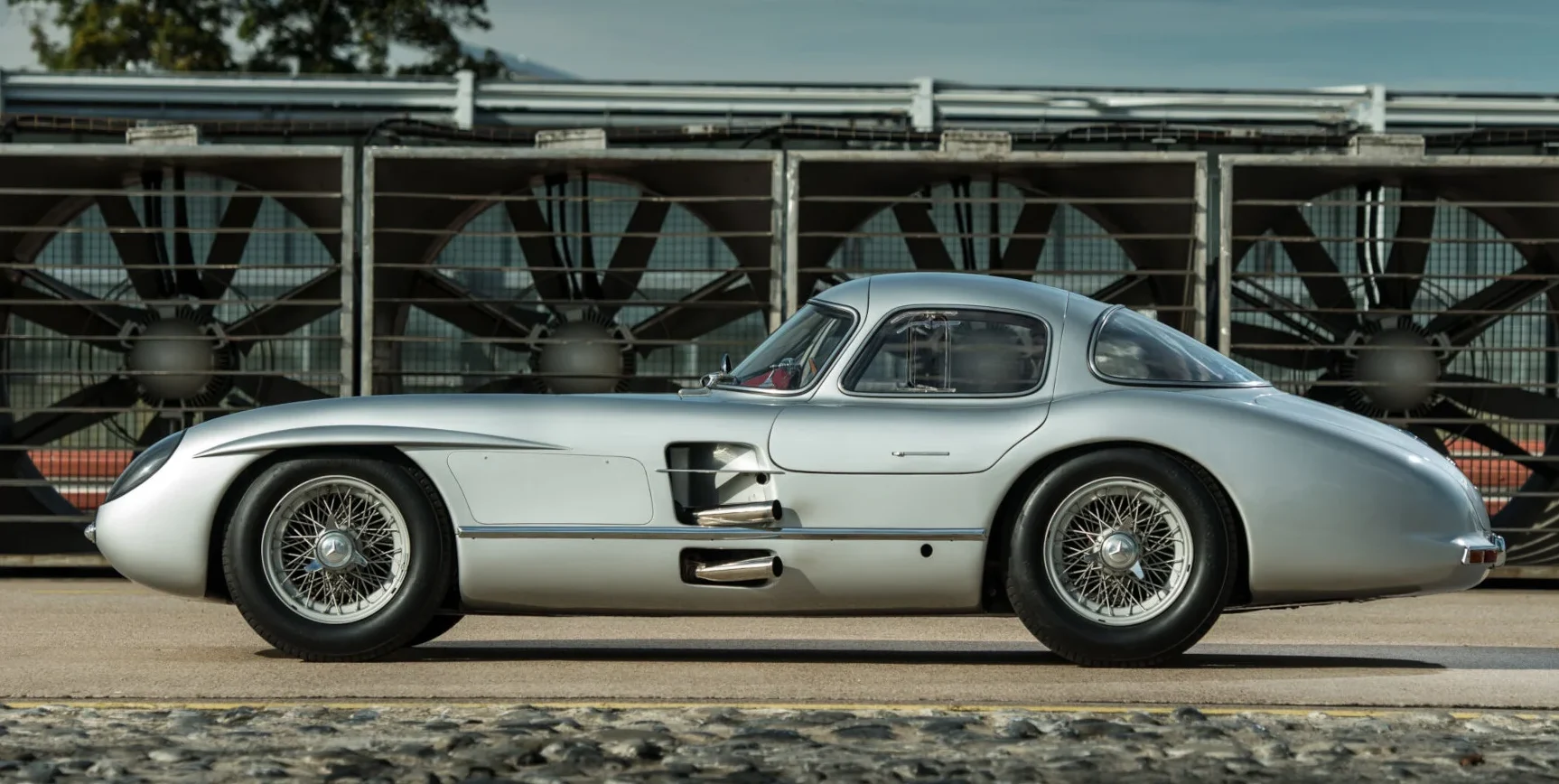
(市販用の300SLのレーシングバージョンと勘違いされがちですが、設計は全くの別物で、F1のW196のスポーツ課選手権仕様というのが正しいようです。しかしながら、ガルウイングバージョンは、300SLの上位機的な外見も手伝ってか、最近のオークションで史上最高値を付けたそうです。)
ーーーーー>ダイムラーベンツ社の空力実験車の最終到達点的な逸品です!!
どのクルマにも、ドイツ車独自の
『緊張と緩和』が見とれてほれぼれします。
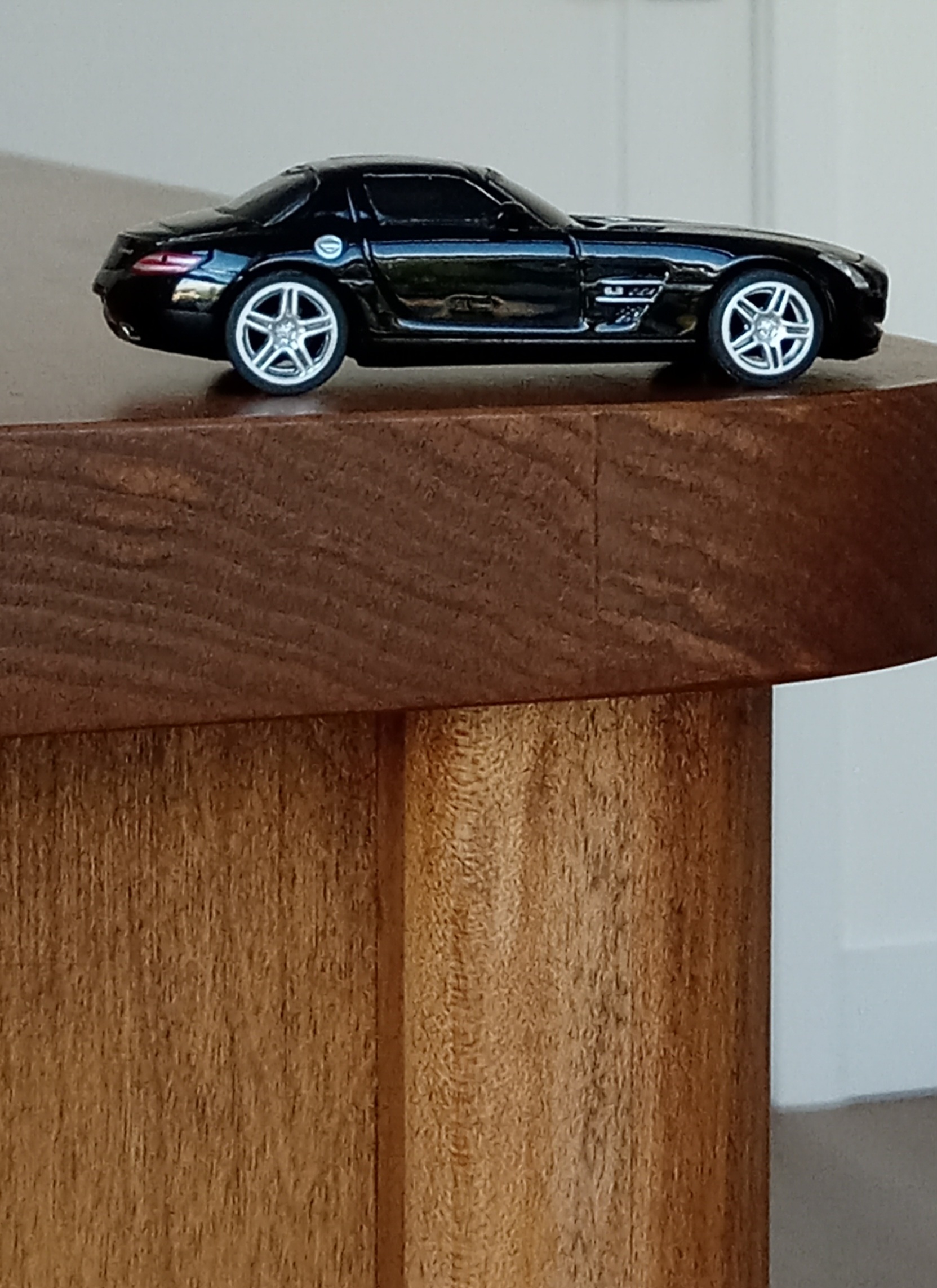
次回はいよいよ、ドイツ産クーペの最後を飾ります、
『メルセデスベンツ SLS AMG』
について語ってみたいです。
本ブログと記事内容につきまして:
ブログ記事を書くにあたり私の目標は、立体造形(料理も含めて)とのかかわりを通じて、私個人の特徴的(ネジ曲がり方も含めて)な評価軸を解明することで、「美しさ・美味しさ」に対する好奇心や、探求心を、どのように満足・充足させてきたのかを明記しておくことです。
従いまして、記事の中に出てくる、数字や年号、微細なデータなどには細心の注意を払っておりますが、時に大きな間違いや勘違いを犯していることも考えられます。特に自動車記事における主要諸元や、年号などには紛らわしいものも多く、あくまで参考程度に考えていただければ幸いです。
私としては、記事の中で個人的な外観デザインや味覚の評価、そこから広がる後半部分につなげるための、『流れ』を作るための客観的材料として年号やデータを挿入している感じです。あくまで重視したいのは、私個人の頭の中で起こる、記憶の錯そう的混沌から生まれる新たな『見方』や『情報の予想外のつながり』です。その勢いを作り出す、『流れ』の一環として、諸データが副次的に必要となるわけです。
話がそれますが、大好きな落語の世界に「三題噺」という、その場て会場から募った3つのお題を使って1つのお話に仕立てるといったお遊びがございますが、私はそれに近いことを立体造形の特徴や(料理のお味)をお題にして行っている感じがします。その中で頭の中に去来する数々の着想が、全く予想外で楽しく、次回からの記事内容を大幅に変えたり、新展開につながっています。
当ブロブの仕組み:
『好奇心の点と線 x 気まぐれ脳内回路=予想外の新展開』
こんな自分勝手なブログですが、今後ともよろしくお願いいたします。
追記:上記の『流れ』を作る為に必要な写真はできる限り、個人所有のミニカー・自前の料理などを使い撮影しておりますが、その他の必要最小限の図版や写真を他のブログ主様の記事や諸会社ホームページなどからお借りしております。(記事内容に合うよう加工させていただき、使用時は最小の解像度で載せております。)問題がある場合、ご連絡いただければ直ちに降ろさせていただきます。
追記2:当ブログ記事に掲載のミニカー写真等(個人撮影)は許可なしで、どのようにお使いいただいても結構です。私個人の創造性はこの世のもの、と言う認識の上で記事を製作しています。
!!!!!!!!!!!!!!!!!!!!!!!!!!!!!!!!!!! Translated in English !!!!!!!!!!!!!!!!!!!!!!!!!!!!!!!!!!!
Part 23—The Lineage of Two-Door Coupes: Part 5 [Germany] Daimler-Benz 300SL Roadster, 1957 (Exterior Color: Silver with Black Hardtop)
(Die-cast model used for photography: GFCC, 1/64 scale Daimler-Benz 300SL Roadster (silver exterior with burgundy interior))
Modifications:
* Shaved down the rear section of the lower door area (below the rocker panel) to emphasize the overall “reverse wedge-like flow” of the body
* Masked the dashboard and interior, then repainted the seats and door panels burgundy
* Used a chrome-plating pen to touch up details on the bumpers and moldings
#Favorite Car Designs—The Lineage of 2-Door Coupes:
For this 23rd installment, titled “The Lineage of 2-Door Coupes,” I’d like to discuss luxury 2-door (GT) coupes and roadsters, which strongly reflect the national characteristics and unique exterior design styles of various countries.
[Note: Includes convertibles]
We will proceed as follows.
This 5th installment focuses on [German Cars]
1957
Daimler-Benz 300SL
This installment focuses on the roadster version.
[The Lineage of 2-Door Coupes: Table of Contents]
[American Cars]
Part 1: Cadillac El Mirage, 2013 (Metallic Red)
Part 2: Lincoln Continental MK4, 1972 (Black)
Part 3: Mercury Cougar, 1967 (Light Metallic Green)
【German Cars】
Part 4: MB 500K Special Roadster, 1936 (Black)
Part 5: MB 300SL Roadster, 1957 (Silver with Black Top)
Part 6: MB SLS AMR Gullwing, 2010 (Black)
[British Cars]
Part 7: Jaguar XKR, 1996 (Dark Metallic Green)
Part 8: Aston Martin One-77 (Light Metallic Blue)
[Japanese Cars: Nissan]
Part 9: Nissan First-Generation Silvia, 1965 (Champagne Gold)
Episode 10: Nissan 5th-generation Silvia, 1988 (Light Metallic Green)
[Japanese Cars: Mazda Edition]
Episode 11: Mazda Cosmo Sport, 1967 (Silver)
Episode 12: Mazda Eunos Cosmo, Type-S (Two-tone: Black & Gray)
[Japanese Cars: Toyota Edition]
Episode 13: Toyota/Yamaha 2000GT, 1967 (Ivory White)
Episode 14: Toyota 2nd-generation Soarer, 1986 (Two-tone: Black & Gray)
Episode 15: Lexus LC [GWZ100], 2017 (Metallic Red)
#Top 10 Most Beautiful Cars of All Time: The open-top version of the “300SL Gullwing,” a regular in the top ranks (this is my personal favorite)
For me,
the MB 300SL Roadster is
“the fastest sprinter
who changes outfits three times a day.”
Pursued by Germany as a national policy since before the war
as a showcase of national prestige,
* An exterior applying fluid dynamics +
* The latest technology: equipped with a supercharged or fuel-injected engine,
* A super-high-speed endurance test vehicle
seemed to have culminated in
the 1955 release of
the “MB 300SL Gullwing Version.” However, the Daimler-Benz development team
looked even further ahead, envisioning the 300SL as a product to be sold to the wealthy in the United States and elsewhere,
and in 1957,
they launched the
“MB 300SL Roadster Version.”
They pioneered a “3-in-1” concept,
much like Glico caramel—
three pleasures in one.
In other words,
* On sunny days, enjoy the sunshine as an open-top car,
* * Depending on the weather, as a sports car with a soft top,
* With the optional FRP hardtop, as a beautiful coupe,
This marketing strategy, tailored to the tastes of Hollywood movie stars and the ultra-wealthy,
was a resounding success,
and subsequently,
* 190SL (R121: 1957)
* 230SL (W113: 1963)
*350SL (R107: 1971)
*500SL (R129: 1989)
and beyond, it came to be celebrated as the epitome of the successive “MB SL Series,”
and even today, as the “Vario Roof” (power-retractable hardtop),
this symbolic legacy of Mercedes-Benz’s top-of-the-line models continues.
In other words,
the 300SL—the perfected form with its streamlined, high-speed-capable body
and a top (roof) section that could be used in three different ways—
the 300SL Roadster, which
“created the prototype for all subsequent luxury two-door roadsters,”
is my absolute favorite!!
So, let’s take a look at it according to the following outline.
* Real-car commentary:
* Exterior design features:
* “Me” and the MB 300SL Roadster
* Three-point discussion: Streamlined design, “3-in-1,” and national prestige
* The path to the “MB 300SL”: The history of Daimler-Benz’s ultra-high-speed aerodynamic test cars
* Car Overview:
# Features and Evolution from the ‘300SL’
Design and Practicality:
The ‘Mercedes-Benz 300SL,’ which served as the prototype for this model, is a legendary sports car that debuted in 1954 and is characterized by its gullwing doors. Developed based on a race car, it adopted a multi-tubular space frame made of thin steel tubes to achieve both lightweight construction and structural rigidity. Furthermore, it was equipped with the world’s first gasoline direct-injection engine and boasted a top speed of over 260 km/h. Due to its beauty and technological prowess, it is still considered one of the most valuable classic cars today.
While the 300SL was primarily exported to the booming post-war North American market, the lack of air conditioning in those days led to overheating inside the cabin. By changing the specification from the distinctive gull-wing doors to a roadster with conventional side-opening doors, a well-ventilated and comfortable interior was achieved, and getting in and out of the car became much easier. Additionally, roll-up side windows and a soft top (or optional hardtop) were adopted.
Performance: It was equipped with a 3.0L inline-6 fuel-injected engine (approximately 240 hp). With the transition to a roadster, the rear suspension was improved, resulting in better handling stability than the coupe.
Rarity and Value: A total of 1,858 units were produced between 1957 and 1963. Today, it is considered one of the world’s premier collector’s items, and it is not uncommon for them to fetch prices ranging from 150 million to over 200 million yen at auction.
# Key Specifications:
Model: W198 II
Total Displacement: 2,996 cc Inline-6 OHC Fuel Injection
Maximum Power: 215 hp @ 5,800 rpm
Maximum Torque: 28.0 kgm / 4,600 rpm
Drivetrain: FR (Front-engine, Rear-wheel drive)
Seating Capacity: 2
Body Style: 2-door, Convertible / Coupe (with hardtop)
Wheelbase: 2,400 mm
Overall Length: 4,520 mm
Overall Width: 1,790 mm
Overall Height: 1,300 mm
Curb Weight:
1,295 kg
*Exterior Design Features: Ultra-low center of gravity achieved through the tubular frame and engine mounting angled 40 degrees to the left
The 300SL Roadster, equipped with an ultra-low center of gravity chassis utilizing a tubular frame,
enabled genuine high-speed driving.
The exterior design features can be summarized in the following six points:
1. A streamlined body derived from cutting-edge aerodynamics of the time, featuring a slender, tapering profile from front to rear—a design already achieved in the 300SL Gullwing
2. The coexistence of playfulness and allure in the cute, sake-cup-like hardtop that sits “perfectly” atop the streamlined body described in point 1
3. The athletic physique that gives the impression of “speed even before it starts moving,” achieved by the tubular frame’s ground clearance—unprecedentedly low for its time.
4. The “eyebrow”-like crease (commonly known as the “eyebrow”) on the fender arches.
ーーーーーー> This also served an aerodynamic function by smoothing the airflow created by the tires.
5. The beauty of the rear body treatment, which flows seamlessly from the rear deck—strongly influenced by the pre-war 500K Special Roadster
6. The design of the front grille, brimming with confidence and emblematic of the MB SL series across subsequent generations
ーーーーーー> The beauty and power of the MB logo, modeled after a propeller and positioned at the center, are exceptional.
Let’s take a look at each one in turn.
1. The streamlined body, derived from cutting-edge fluid dynamics of the time, featuring a slender, tapering line extending from front to rear—a design already achieved in the 300SL Gullwing.
(The body styling, which brilliantly reinterprets the “reverse wedge” and cycle fenders from the 500K Special Roadster, is further accentuated by the open-top configuration.)
ーーーーー>This represents the pinnacle of the ultra-high-speed racer image cultivated through racing activities in models like the W196 and SLR.
2. The coexistence of playfulness and allure in the cute, sake-cup-like hardtop that sits “snugly” atop the streamlined body described in points 1 and 2
(In addition to the canvas soft tops used on previous convertibles—which were designed for sporty open-top driving—a hardtop was introduced that offered superior rigidity, sound insulation, and comfort.)
ーーーーー>This added a unique sense of solidity, luxury, and a dressy image!!
3. The athletic physique that gives the impression of “looking fast even before it starts moving,” achieved by the tubular frame’s ground clearance—unprecedentedly low for its time
4. The “eyebrow”-like crease on the fender arches (commonly known as the “eyebrow”)
ーーーーーー>This also served an aerodynamic purpose by smoothing the airflow created by the tires.
5. The beauty of the rear body section, which flows down from the rear deck—strongly influenced by the pre-war 500K Special Roadster
6. The invention of the front grille, featuring the confident Three-Pointed Star—a symbol of the MB SL series for generations to come—positioned right in the center!!
ーーーーーー> The beauty and power of the MB logo, modeled after a propeller and placed in the center, are truly exceptional.
*“Me” and the Mercedes-Benz 300SL Roadster
(Manufactured by GFCC, 1/64 BMW 507 Roadster: A masterpiece die-cast model I introduced in a previous modification article. https://yisell7777.com/archives/5600)
I first became interested in the Mercedes-Benz 300SL Roadster
after becoming obsessed with the BMW 507,
and seeing that elegant roadster in every possible medium
Back when I was chasing that elegant roadster across every media outlet,
I recall it was around the year 2000.
I recall reading an article online—perhaps on Wikipedia or somewhere similar—that mentioned how, amidst post-war financial difficulties, the production costs of the BMW 507 had ballooned. Despite initially targeting the mid-price range, it ended up competing in the same price bracket as the supercar of the era, the 300SL Roadster, and ultimately only 257 units were sold. That account was the catalyst that made me
instantly fall in love with the
300SL Roadster,
which was a rival at the time.
(As for the 300SL Gullwing itself, it reminded me of the 1963 Corvette Split Window, so I just couldn’t bring myself to buy one…)
However, when it comes to scale models,
unlike the 300SL, the 300SL Roadster hasn’t been blessed with many well-made models,
so I can only introduce the following three.
* Schuco, 1/43 Mercedes-Benz 300SL Roadster (Silver & Navy Blue Soft Top)
(Compared to the Schuco models released later, the construction is quite cheap (it has a “NEW RAY” vibe?), but since it reproduced the hardtop—which was rare at the time—and captured the car’s overall sleek elegance, I really loved it.)
* DCM 1/64 Die-Cast Model Mercedes-Benz 300SL Roadster (Silver & Black Soft Top)
(The level of detail is so impressive, you’d believe it was 1/18 scale!! This model epitomizes the high quality of recent Chinese-produced 1/64 classic cars. When compared to the GFCC version, it’s a completely different beast—the rendering of the cowl area below the doors and the placement of the moldings are all different. It must be a hugely popular car in China, as the 1/64 300SL is available from two other manufacturers as well!!)
*GFCC, 1/64 Diecast, Mercedes-Benz 300SL Roadster (Silver & Black Hardtop)
(Just like the DCM version, the level of detail is incredible for a 1/64 scale model, but more than that, this manufacturer’s ability to capture the elegance of the real thing is in a league of its own compared to other companies. In photos, it looks like it’s 1/18 scale.)
*Three Themes: Streamlined Design, “3-in-1,” National Pride
For this article on the MB 300SL Roadster,
I was given these themes:
*Streamlined Design:
*‘3 in 1’:
*National Pride:
I have absolutely no idea how this will all come together,
but as usual,
let’s just wing it!
Whoa!
I hope you’ll bear with me for a moment, but…
Back in the early 1990s,
when we were grappling with automotive design education,
day in and day out,
* “Cd value” (a coefficient representing smoothness and low air resistance) and
* organic design (a design style that makes extensive use of organic curves)
were all the rage.
(3rd generation: Audi 80)
With Audi leading the way,
* by controlling airflow,
* reducing air resistance,
* and enabling high-speed driving with minimal fuel consumption,
it was an era that demanded highly efficient automotive design.
Looking back at automotive history during this period,
coincidentally, in Germany around the mid-1930s—just before the rise of the Nazis—
*the fusion of “fluid dynamics,”
*which was the cutting-edge field of science at the time,
*with superchargers for automobile engines
*sparked a trend of competing for automotive durability and high-speed performance.
Within Germany, Auto Union (now Audi) and Daimler-Benz were locked in a fierce battle for their very survival, and this competition was directly
exploited by Hitler’s Nazi Party
as a campaign to promote Germany’s national prestige.
The resulting trend in art and design was known as “streamlining,”
*which had a physical impact on steam locomotives and automobiles,
*as well as aircraft, balloons, and airships,
and further influenced the design of printed materials such as advertisements and posters, as well as store signs and road signs.
Shortly after the war, Daimler-Benz made a triumphant return to the World Motor Racing Championship.
It dominated the F1 Grand Prix with the W196, which also boasted excellent aerodynamic characteristics, and went on to achieve outstanding results in the Mille Miglia and Pan-American Rally Championship with the W198.
(W196 F1: High-speed circuit model)
In response to enthusiastic support from the North American market,
the long-awaited model was finally released:
the Daimler-Benz
300SL Gullwing.
Its successor was the
300SL Roadster,
released in 1957.
By converting the body to an open-top design to address cockpit overheating issues in North America, and equipping it with comfort features and a sturdy hardtop, a market for luxury roadsters that could be enjoyed comfortably 365 days a year was instantly created.
This marks the beginning of the history of the Mercedes-Benz SL, featuring a “3-in-1” system that allows you to choose from three roof configurations!!
(Open)
(With soft top)
(With hardtop installed)
Products designed by Germans in pursuit of scientific efficiency
embody a tremendous sense of determination.
Furthermore, when a touch of relaxed elegance is added to this crystallization of efficiency, an indescribable beauty is born.
Just as this 300SL Roadster’s flowing front and rear bodywork
is topped by a charming hardtop that looks like an upside-down sake cup…
Come to think of it, there was once a mentor who used to say
that in everything,
extreme tension and a momentary release
are what truly matter.
That person was none other than
the genius rakugo storyteller: the late Master Katsura Shijaku.
I’ll leave it at that for now…
* The Road to the ‘MB 300SL’: The History of Daimler-Benz’s Ultra-High-Speed Aerodynamic Test Cars
(Pre-war F1, W25, 1934)
Finally, I would like to briefly review
the long journey that Daimler-Benz
undertook through countless hardships
to arrive at the
masterpiece production car, the ‘300SL’.
* Mercedes-Benz Tropfenwagen, 1923
(This is one of the earliest examples of incorporating Hans Niebel’s streamlined design into a racing car, and it is also known for triggering the subsequent merger with Mercedes-Benz. Furthermore, I was “doubly surprised” to learn that they had already put into practical use the rear-mid-engine layout, which would later become the mainstream in post-war F1 design!!)
ーーーーーー>For some reason, the wing-like object above the rear tire looks exactly like the camera mounted just in front of the air intake on top of the rear engine in today’s F1 cars (lol)
(Benz Tropfenwagen, 1923)
(Hans Niebel)
*Mercedes-Benz W125 Rekordwagen (1938)
(It set a speed record of 432.69 km/h on the Autobahn built by the Nazis, a record that remained unbroken for nearly 80 years.)
ーーーーー>Personally, I prefer the type with separate wheel covers (photo below).
* Mercedes-Benz W196R Streamliner, 1954
(1954 Formula 1 racer: This version was equipped with a streamlined body designed for high-speed circuits. It was driven by Fangio and Stirling Moss. Its influence on the subsequent production 300SL and the 300SLR sports car racer was immeasurable.)
ーーーーー>Personally, along with the Ferrari 250TR (pontoon fenders), I consider it one of the “most beautiful racing cars in history”!!
*Mercedes-Benz 300SLR (Sports Car Championship Racer)
(It is often mistaken for a racing version of the production 300SL, but the design is entirely different; it appears to be the Sports Car Championship specification of the F1 W196. However, the Gullwing version—perhaps aided by its appearance as a high-end variant of the 300SL—reportedly fetched the highest price ever at a recent auction.)
ーーーーー>This is a masterpiece that represents the pinnacle of Daimler-Benz’s aerodynamic test cars!!
In every car, I find myself captivated by the unique German
“tension and release” that makes them so enchanting.
Next time, I’d like to talk about the
“Mercedes-Benz SLS AMG,”
which finally brings the German coupe era to a close.
About this blog and its content:
My goal in writing these blog posts is to document how I have satisfied and fulfilled my curiosity and desire to explore “beauty and deliciousness” by clarifying my own unique (and somewhat eccentric) criteria for evaluation, shaped through my involvement with three-dimensional forms (including cooking).
Consequently, while I pay close attention to the numbers, dates, and detailed data appearing in the articles, it is possible that I may occasionally make significant errors or misunderstandings. In particular, key specifications and dates in automotive articles can often be confusing, so I would appreciate it if you could consider them merely as a reference.
For my part, I feel that I insert dates and data into the articles as objective material to create a “flow” that connects my personal evaluations of exterior design and taste to the broader discussion that follows. What I ultimately prioritize are the new “perspectives” and “unexpected connections between information” that emerge from the chaotic jumble of memories in my own mind. The various data points are needed secondarily as part of that “flow” to generate that momentum.
This is a bit of a tangent, but in the world of rakugo—a form of traditional Japanese storytelling I love—there’s a playful format called “sandaibana,” where the performer weaves a single story using three topics solicited from the audience on the spot. I feel like I’m doing something similar, using the characteristics of three-dimensional forms and (the taste of food) as my prompts. The countless ideas that flit through my mind during this process are completely unexpected and delightful, often drastically altering the content of future articles or leading to new developments.
How This Blog Works:
“Spots and Lines of Curiosity x Whimsical Mental Circuits = Unexpected New Developments”
This blog may be a bit self-indulgent, but I hope you’ll continue to follow along.
Note: To create the “flow” described above, I use my own miniature cars and home-cooked meals for photos whenever possible. However, I do borrow the absolute minimum necessary illustrations and photos from other bloggers’ posts and company websites. (I edit them to fit the article’s content and post them at the lowest possible resolution.) If there are any issues, please contact me and I will remove them immediately.
Update 2: Regarding the photos of die-cast cars and other images (taken by me) featured in this blog’s posts, please do not use them in any way without permission.
Translated with DeepL.com

これはCTAサンプルです。
内容を編集するか削除してください。