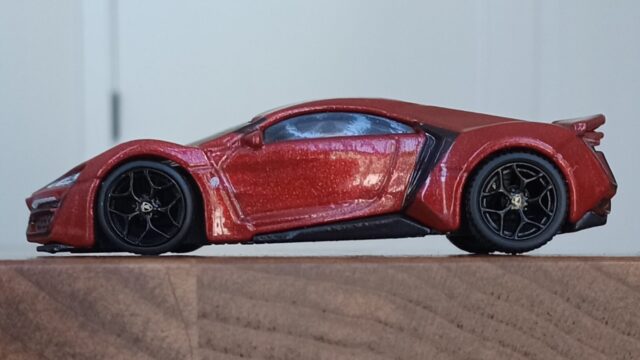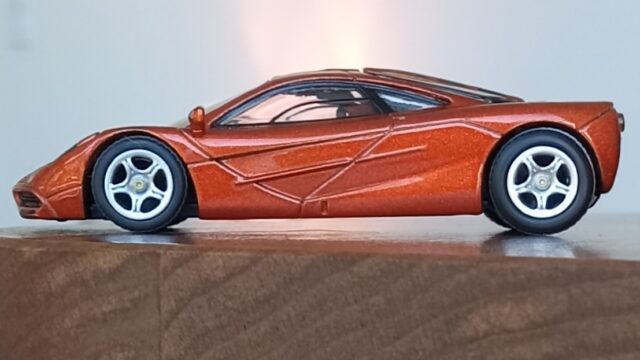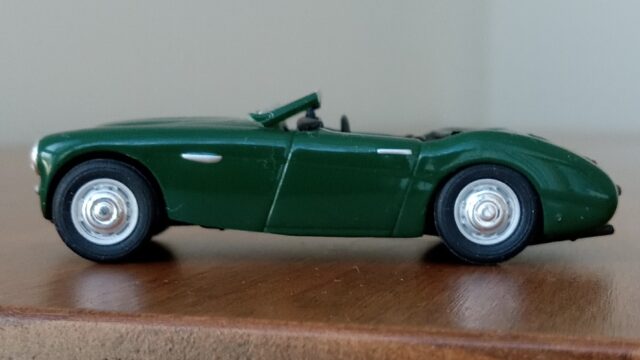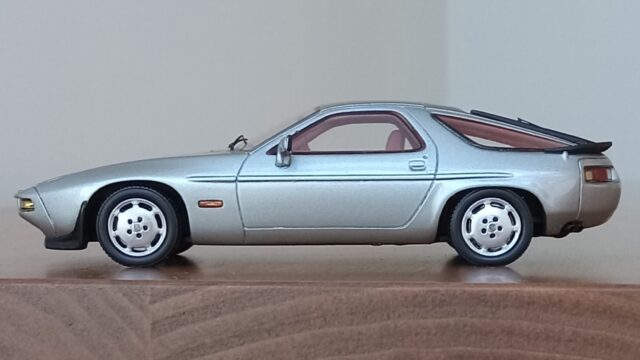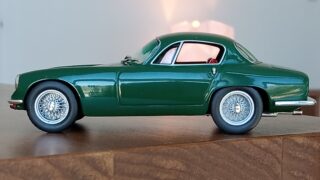
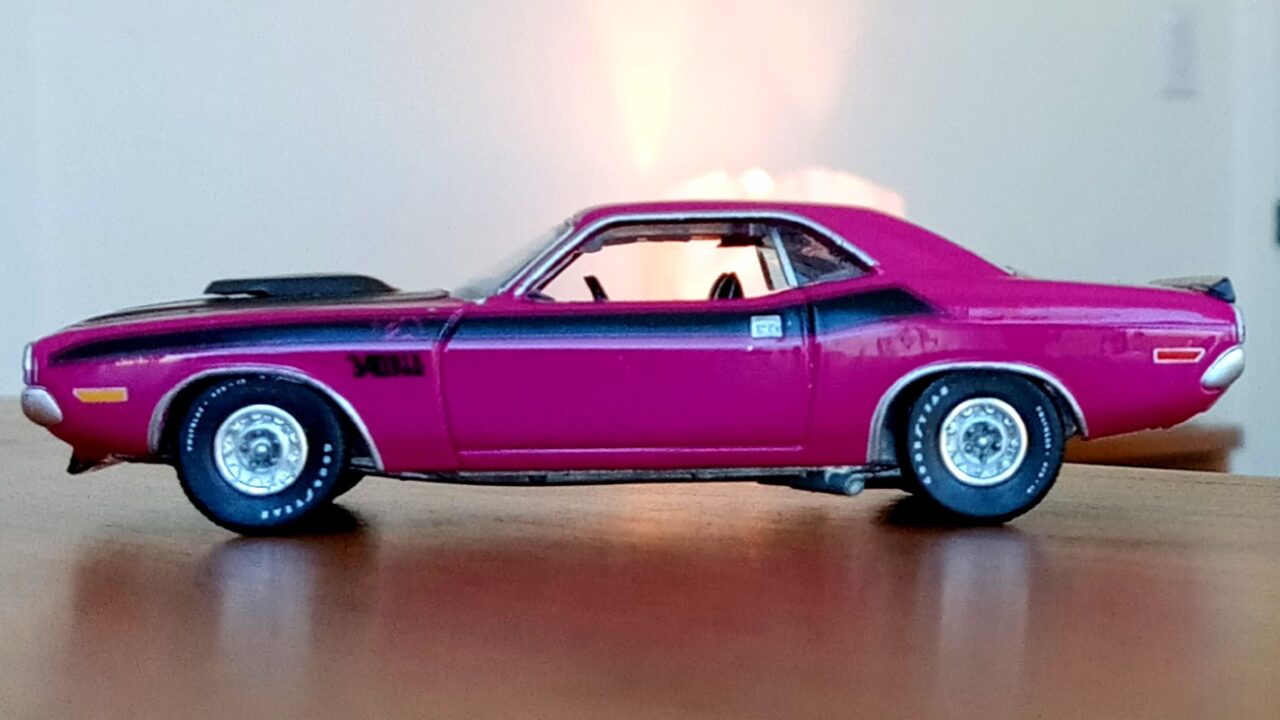
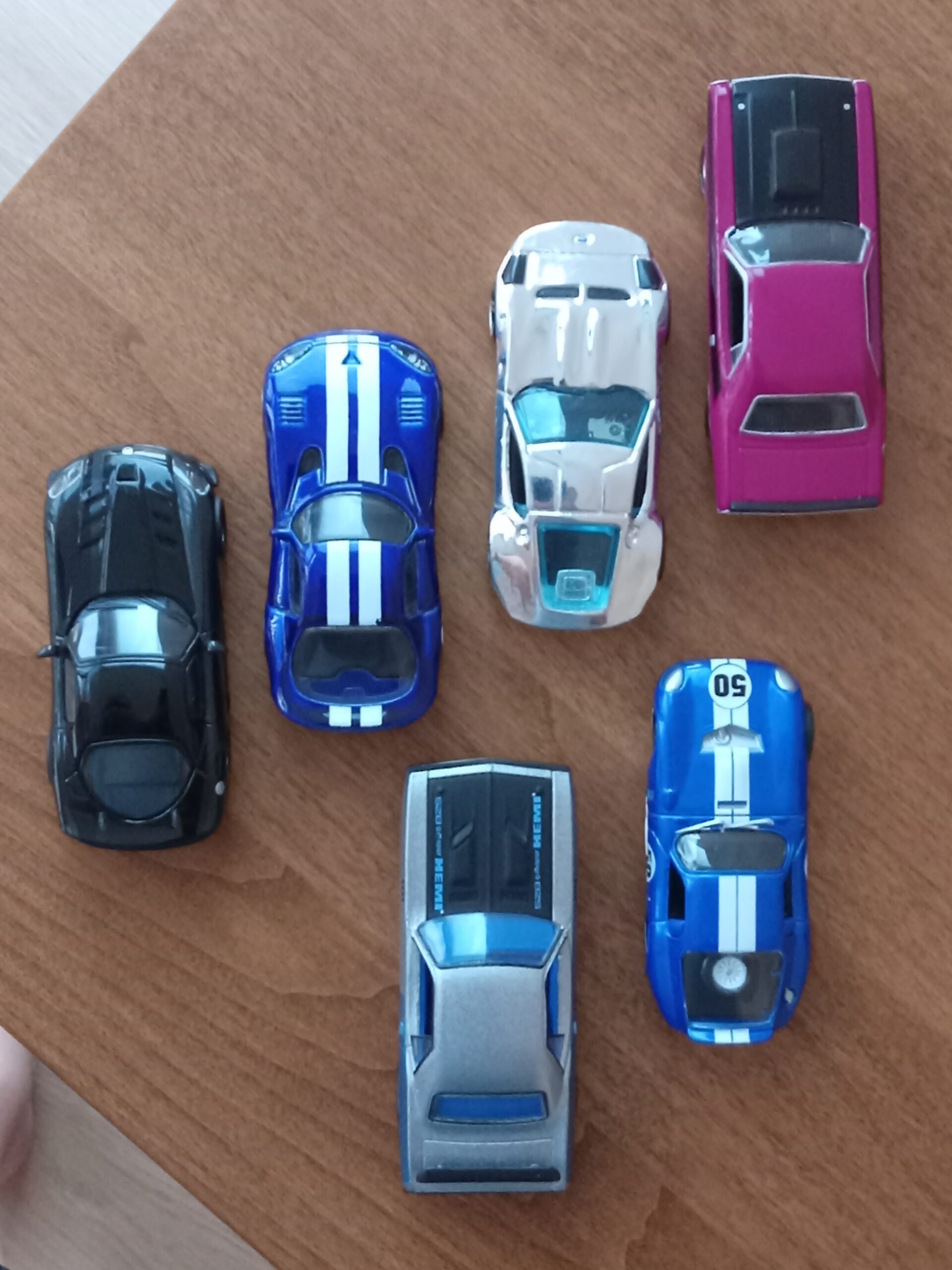
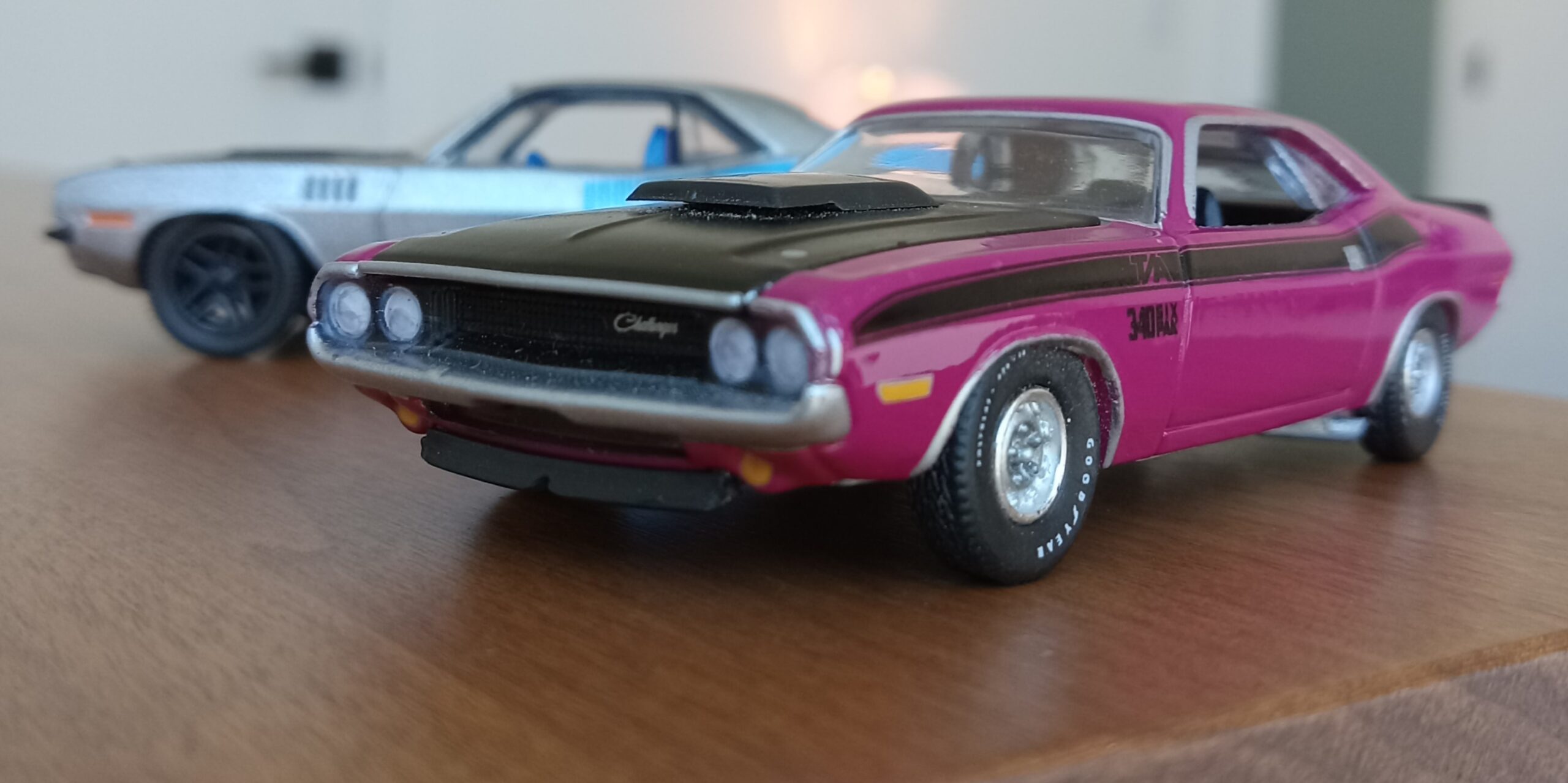
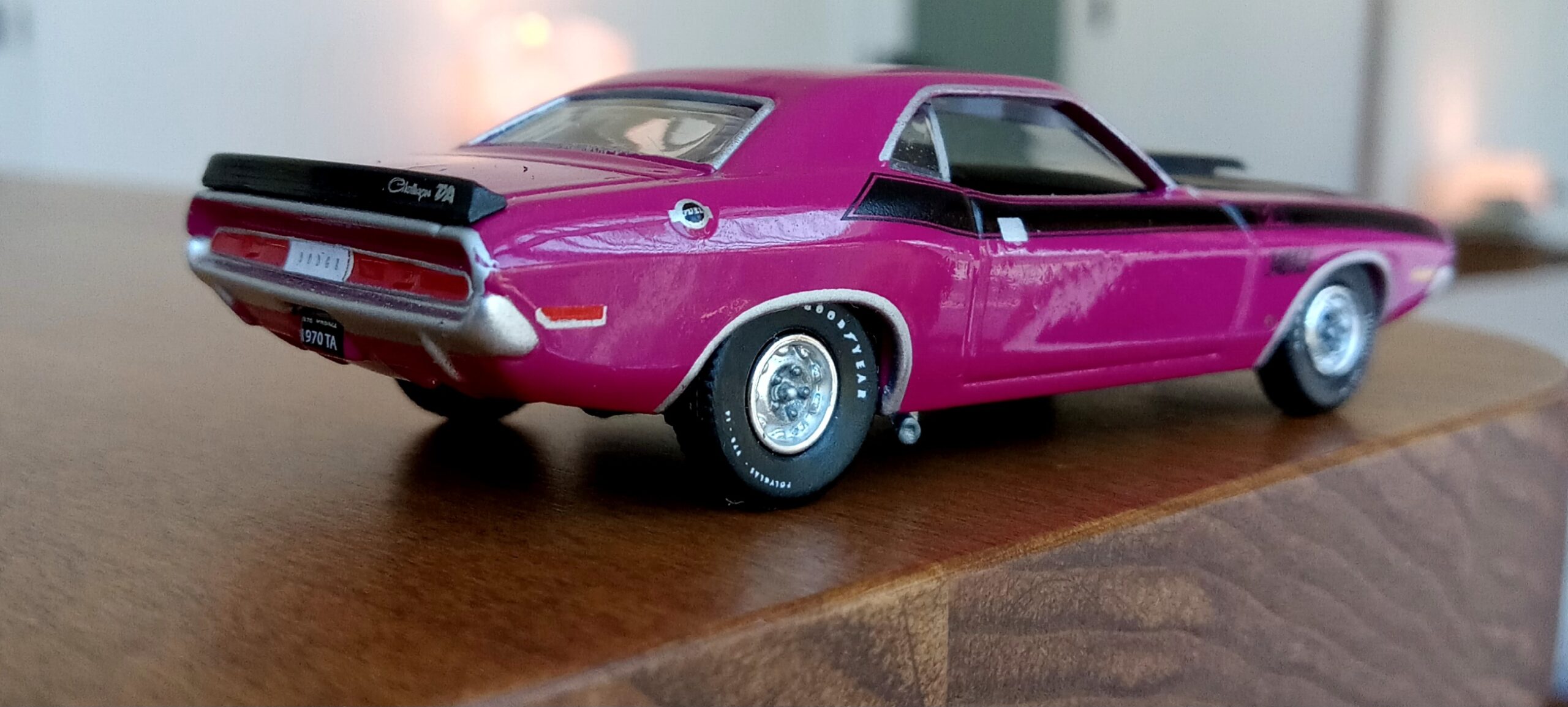
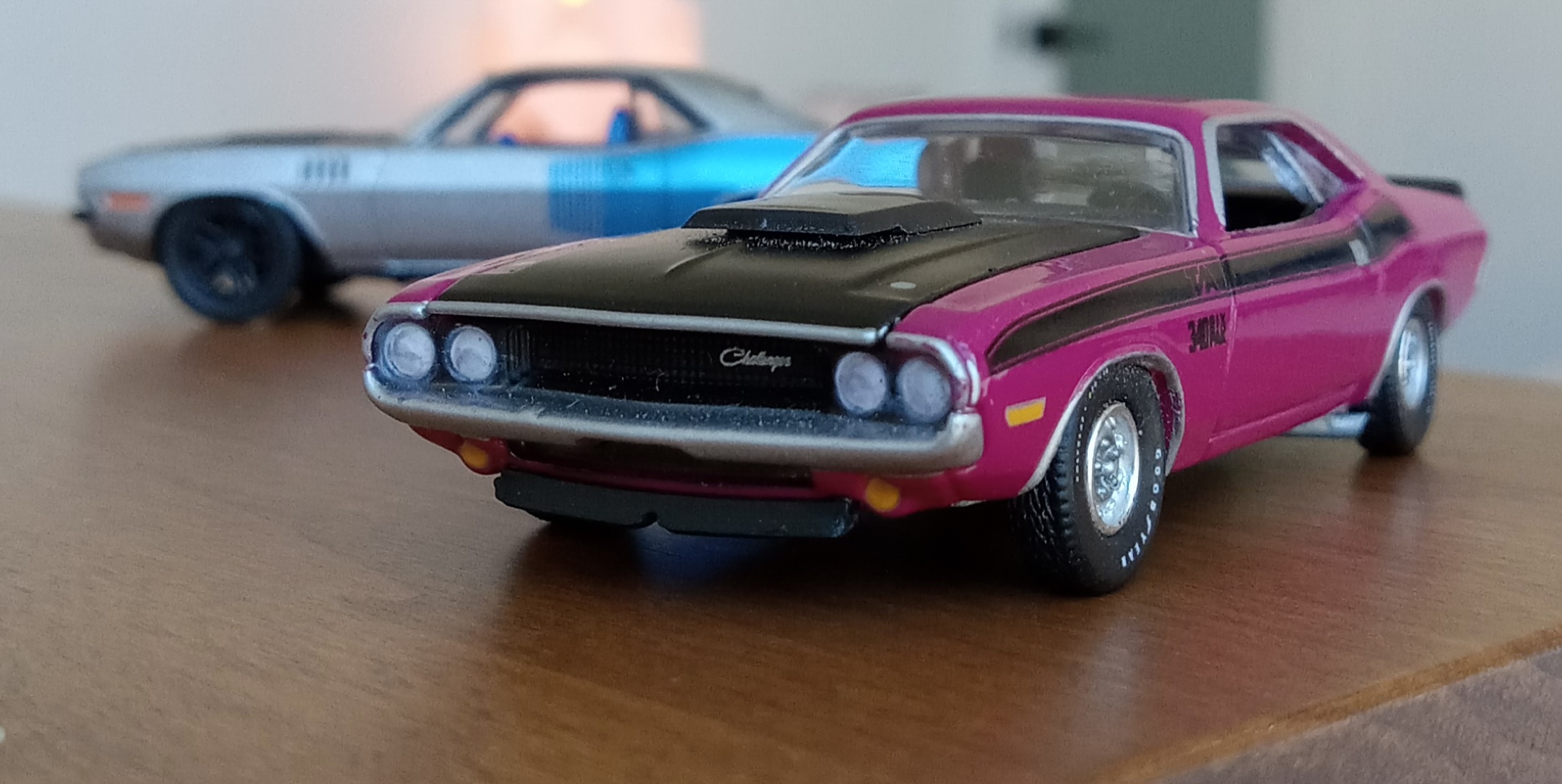
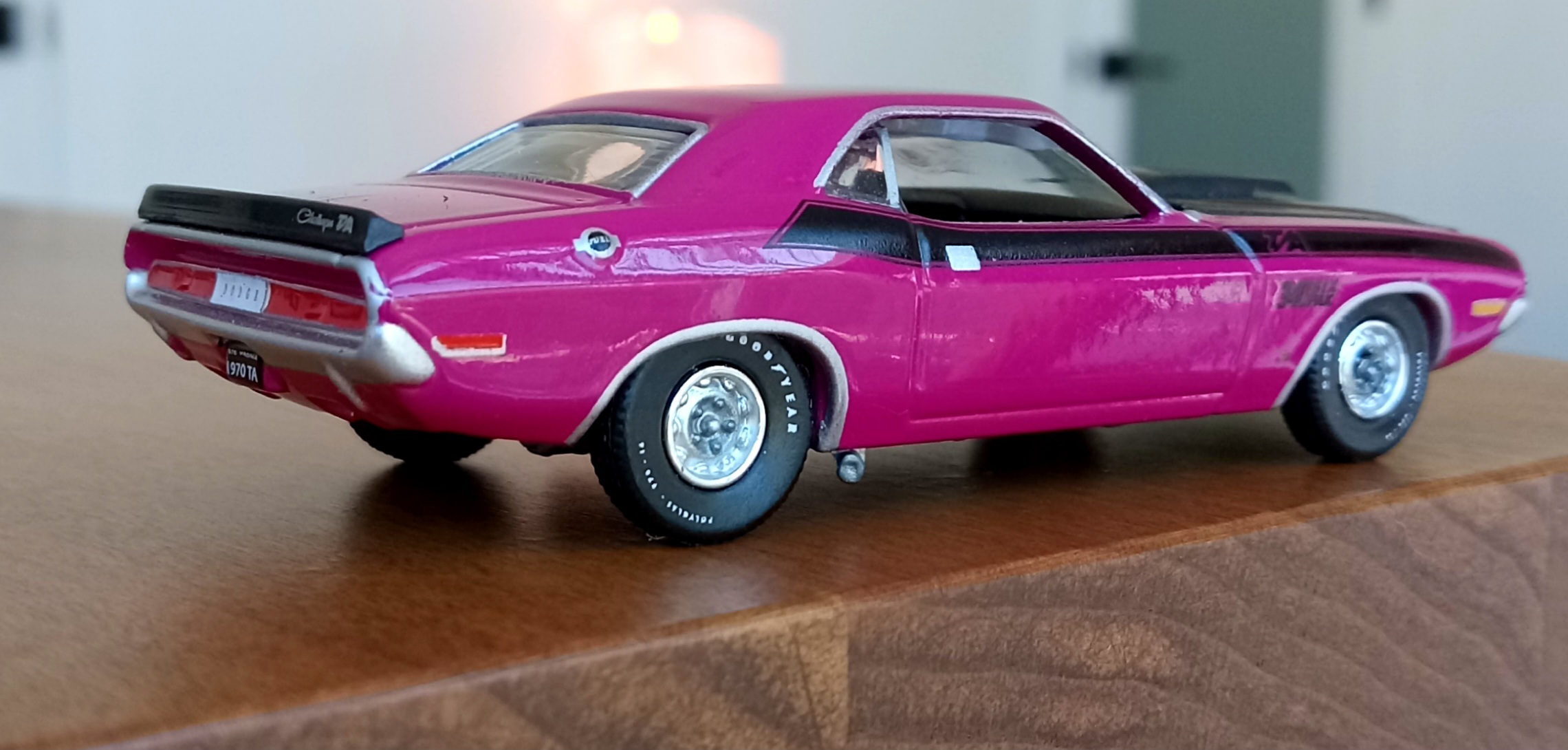
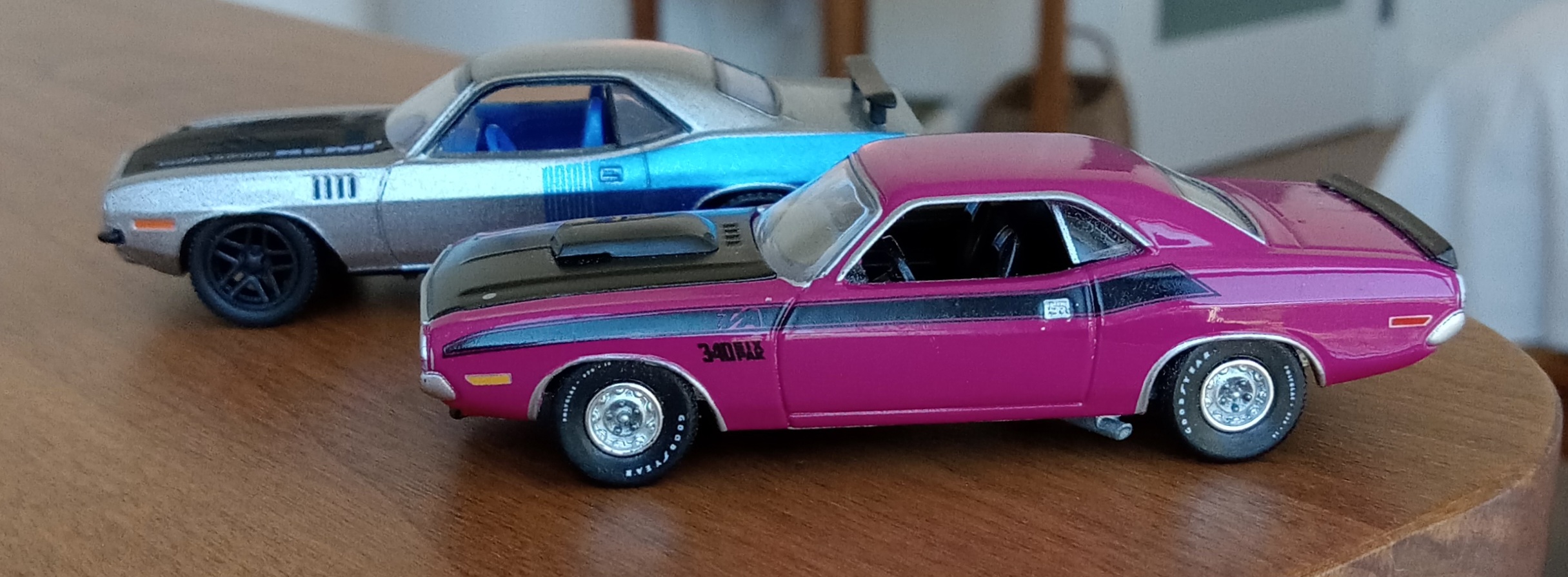
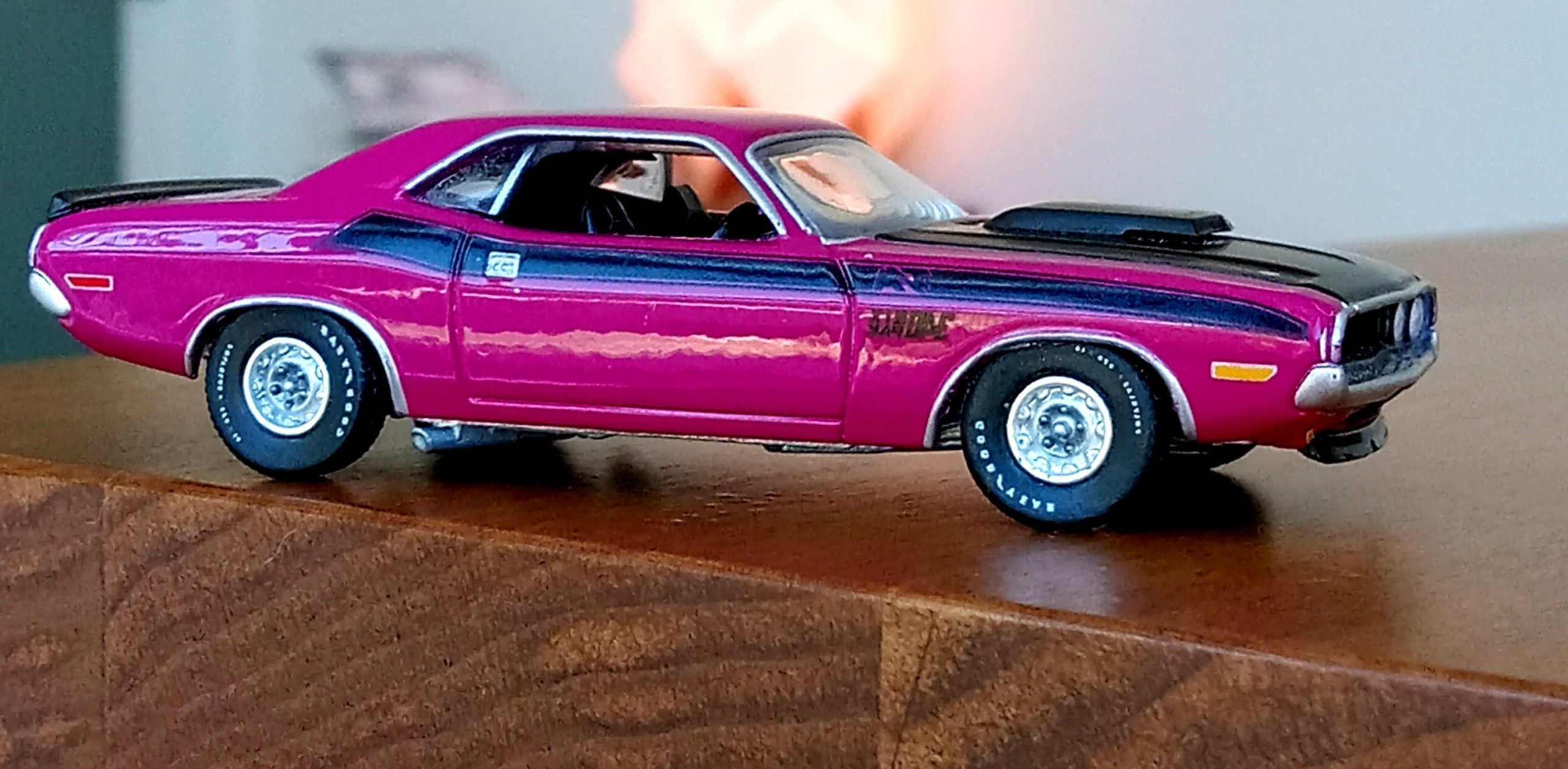
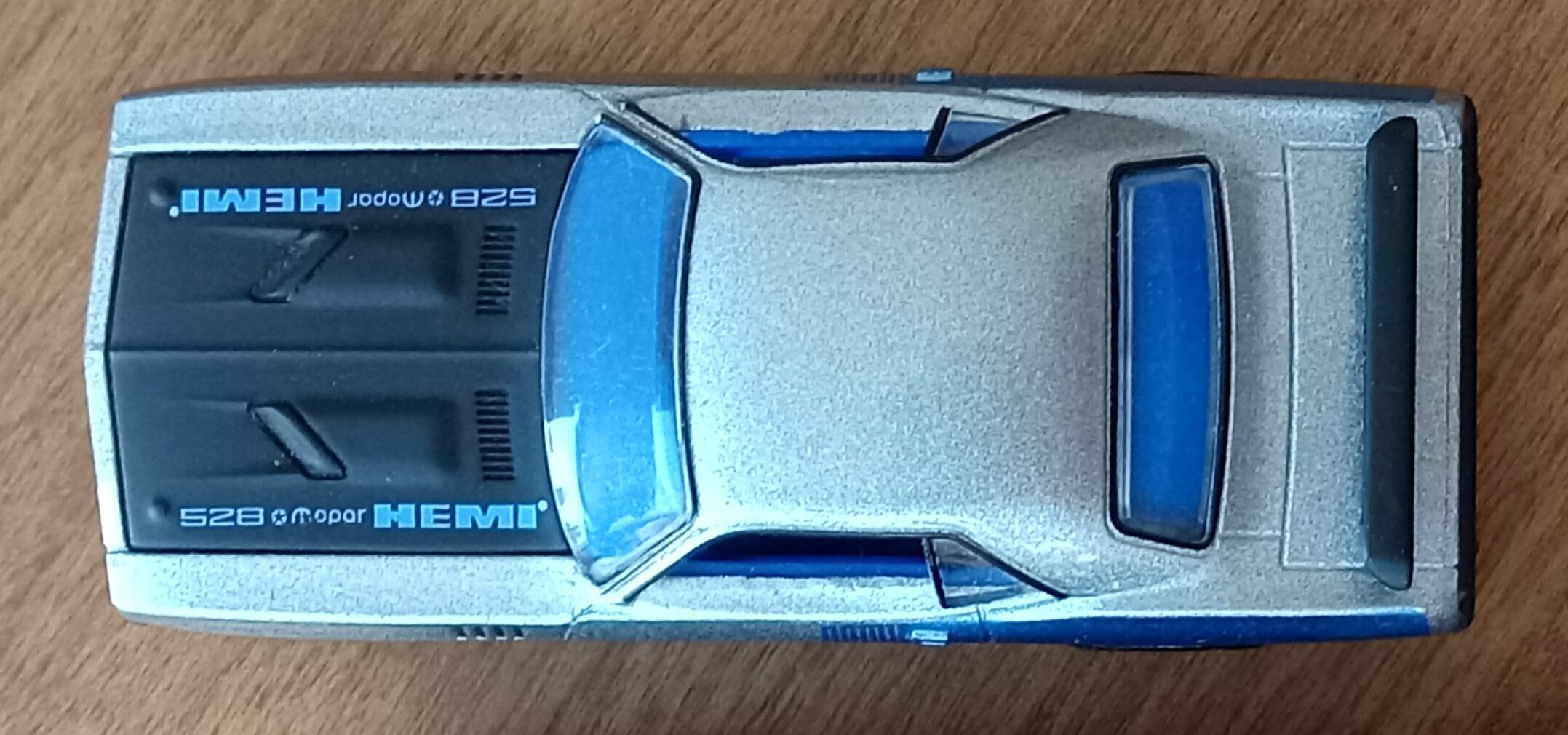
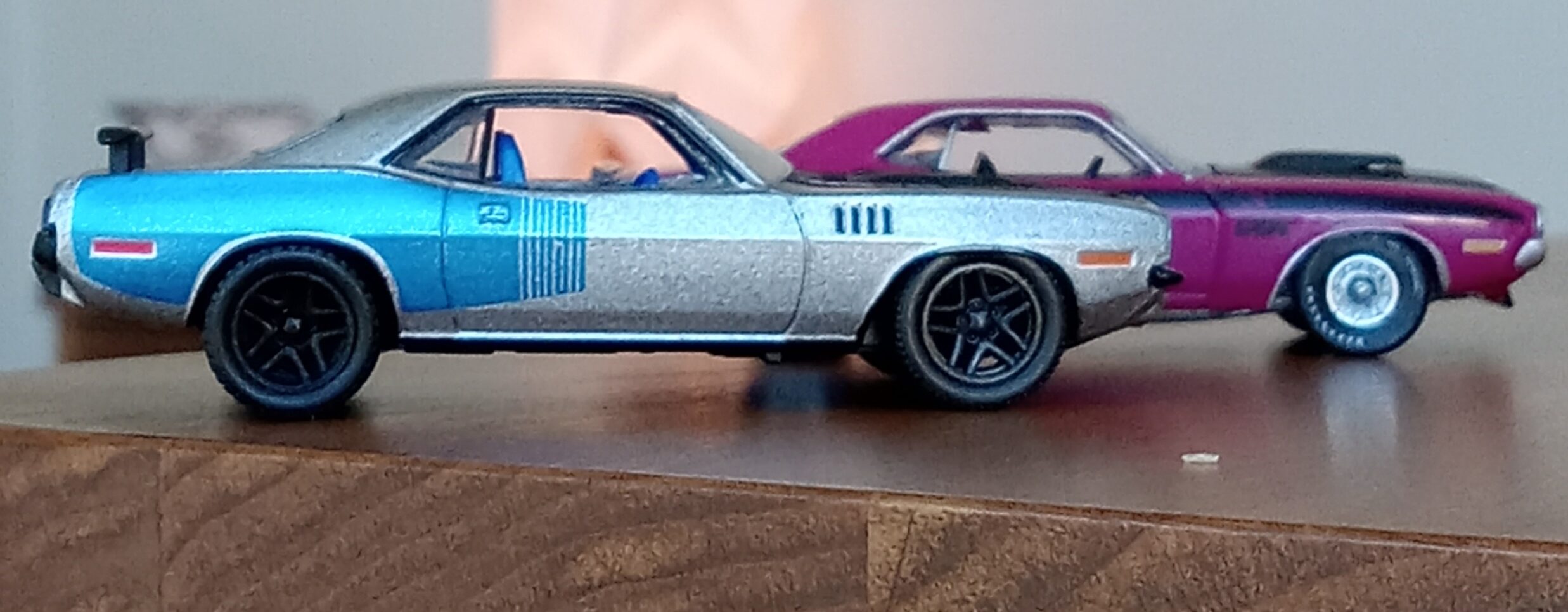
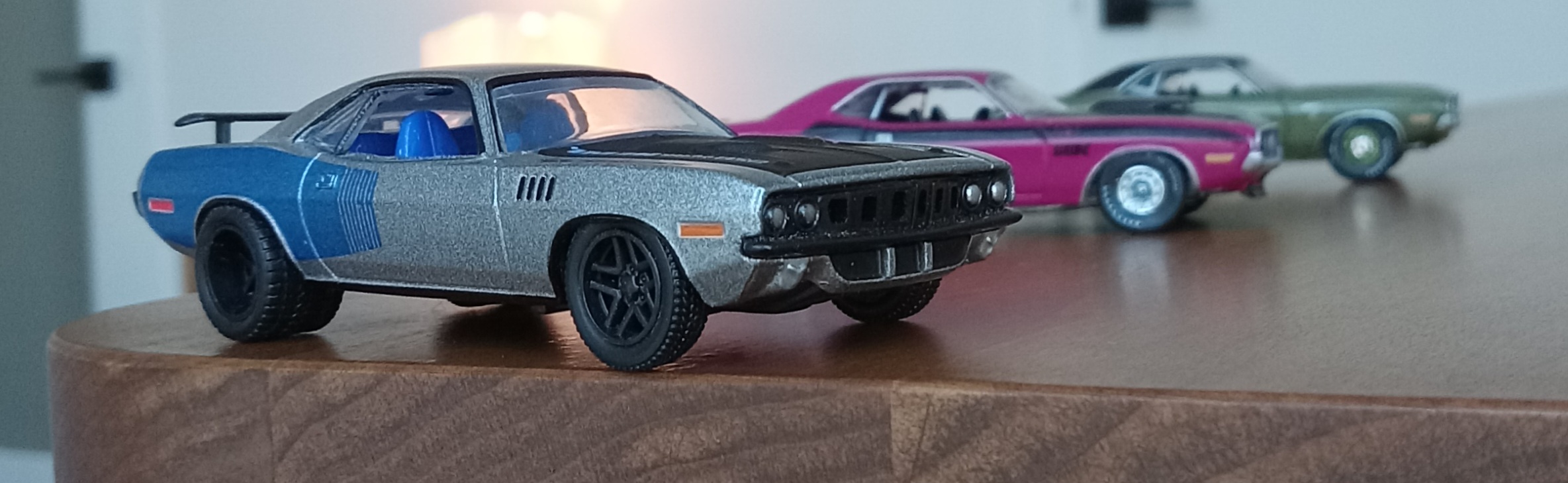
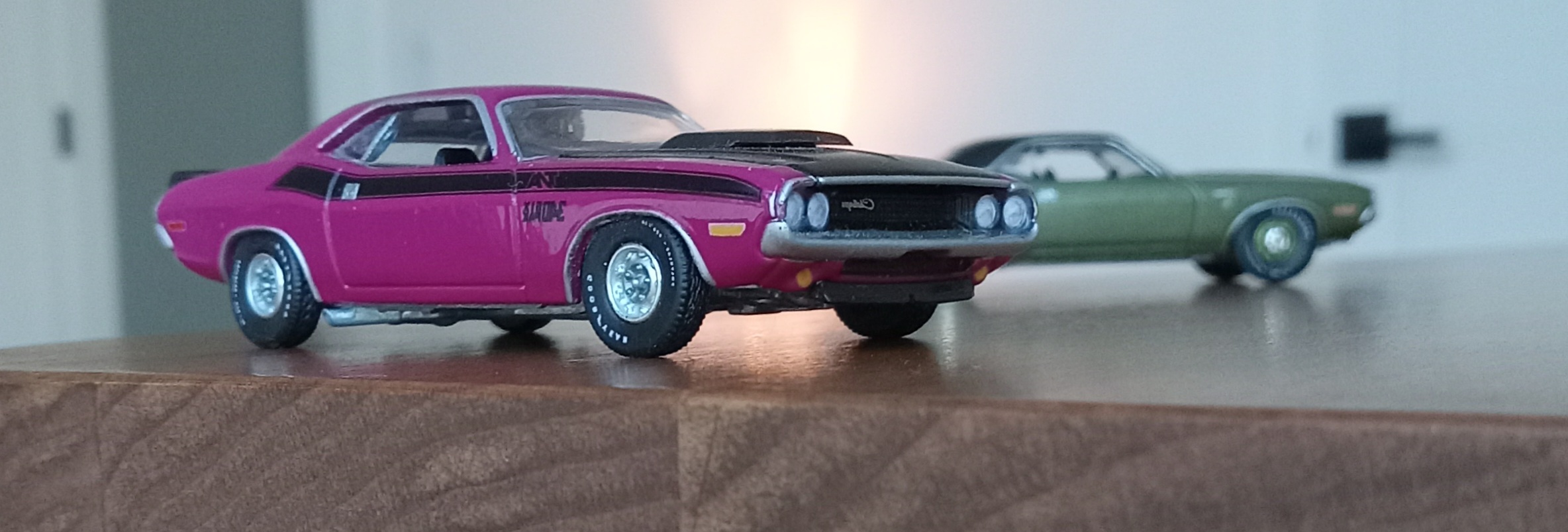
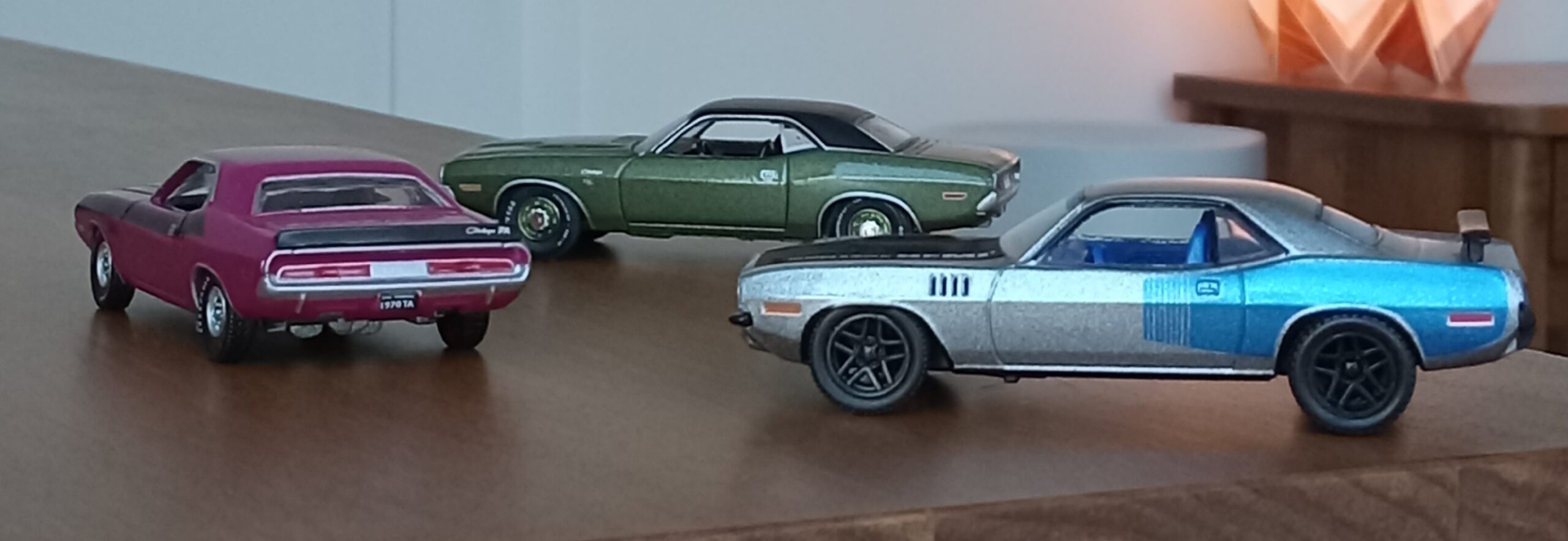
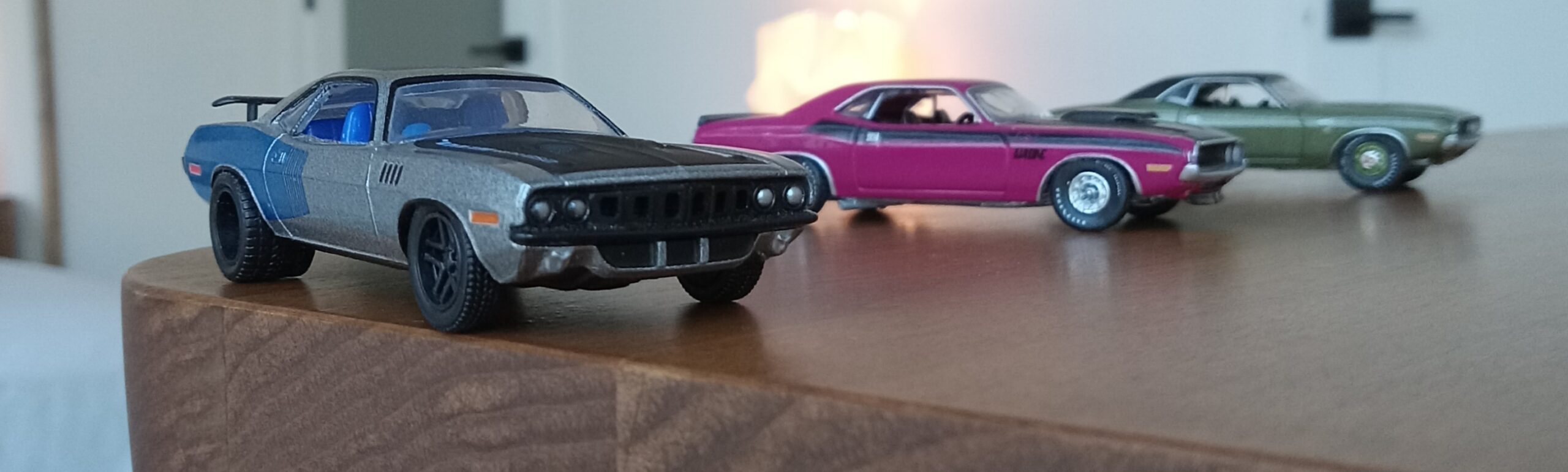
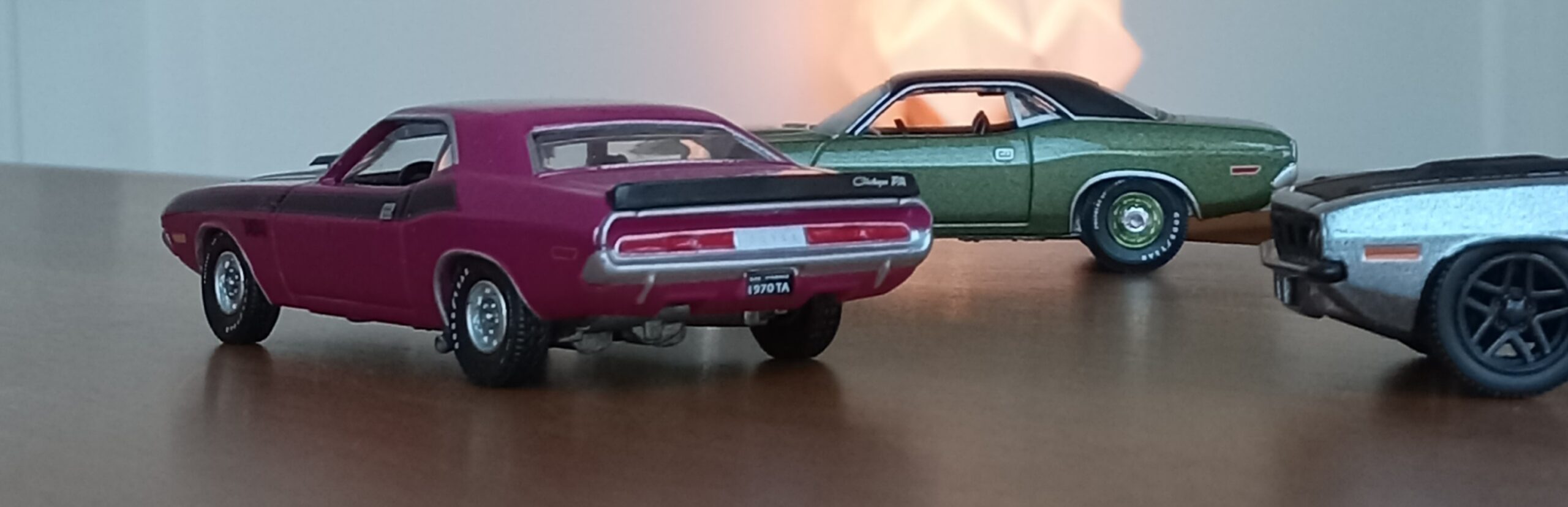
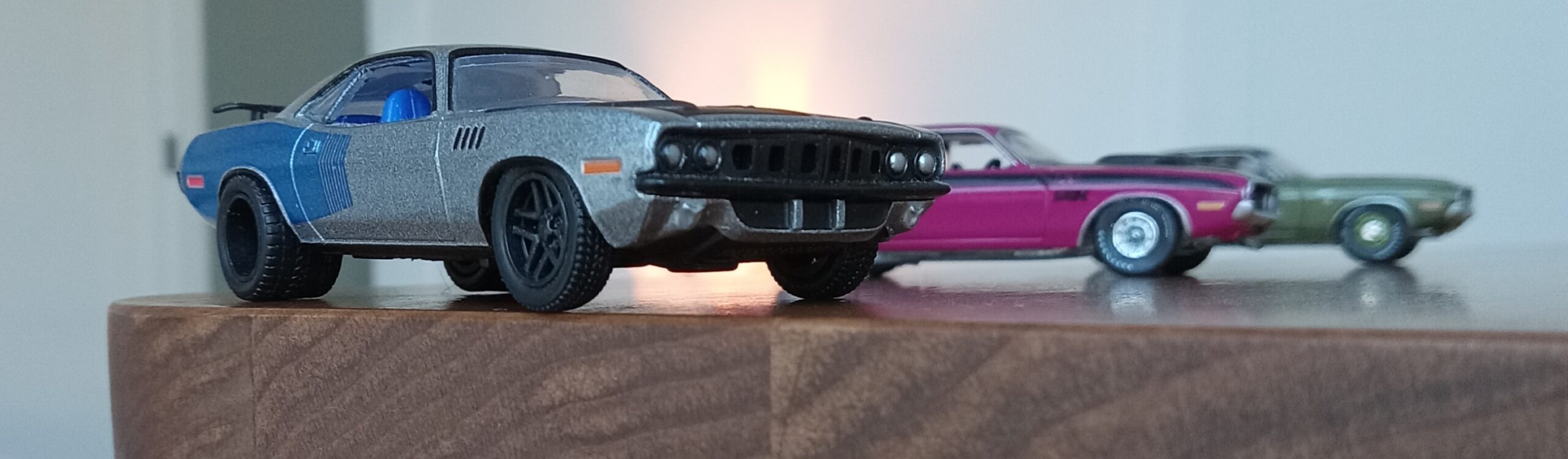
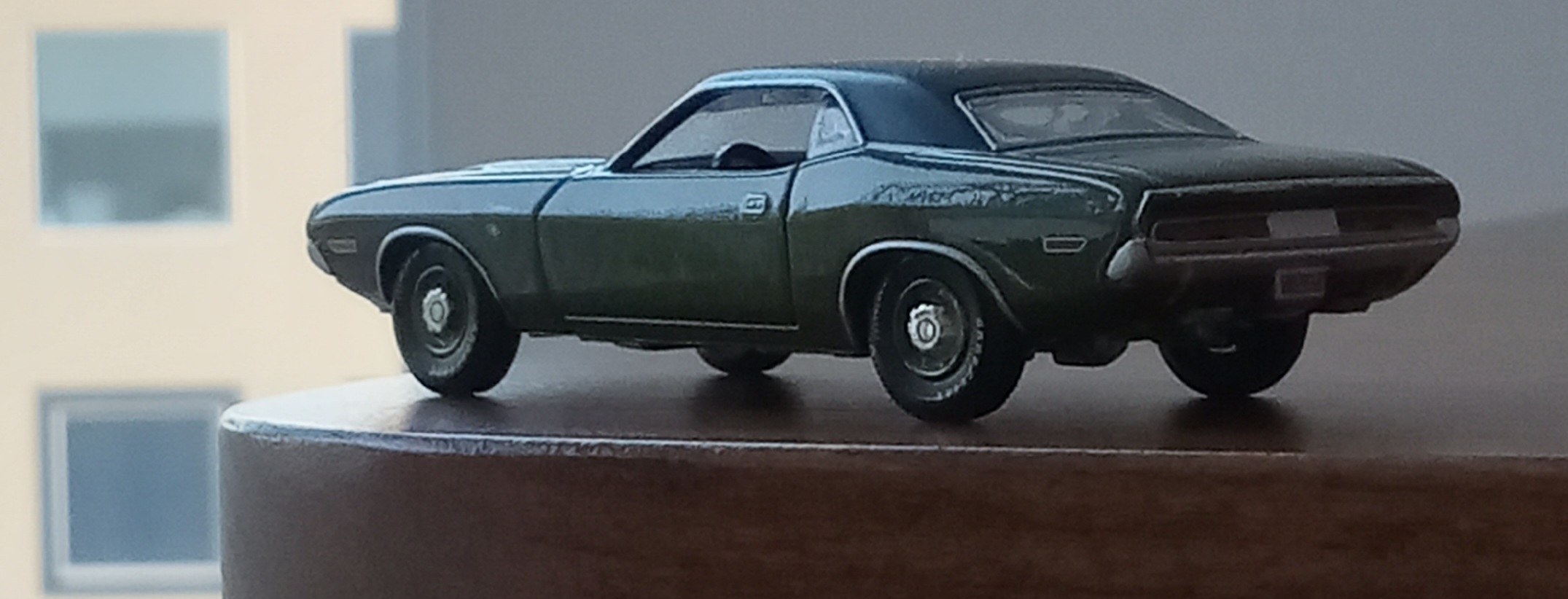
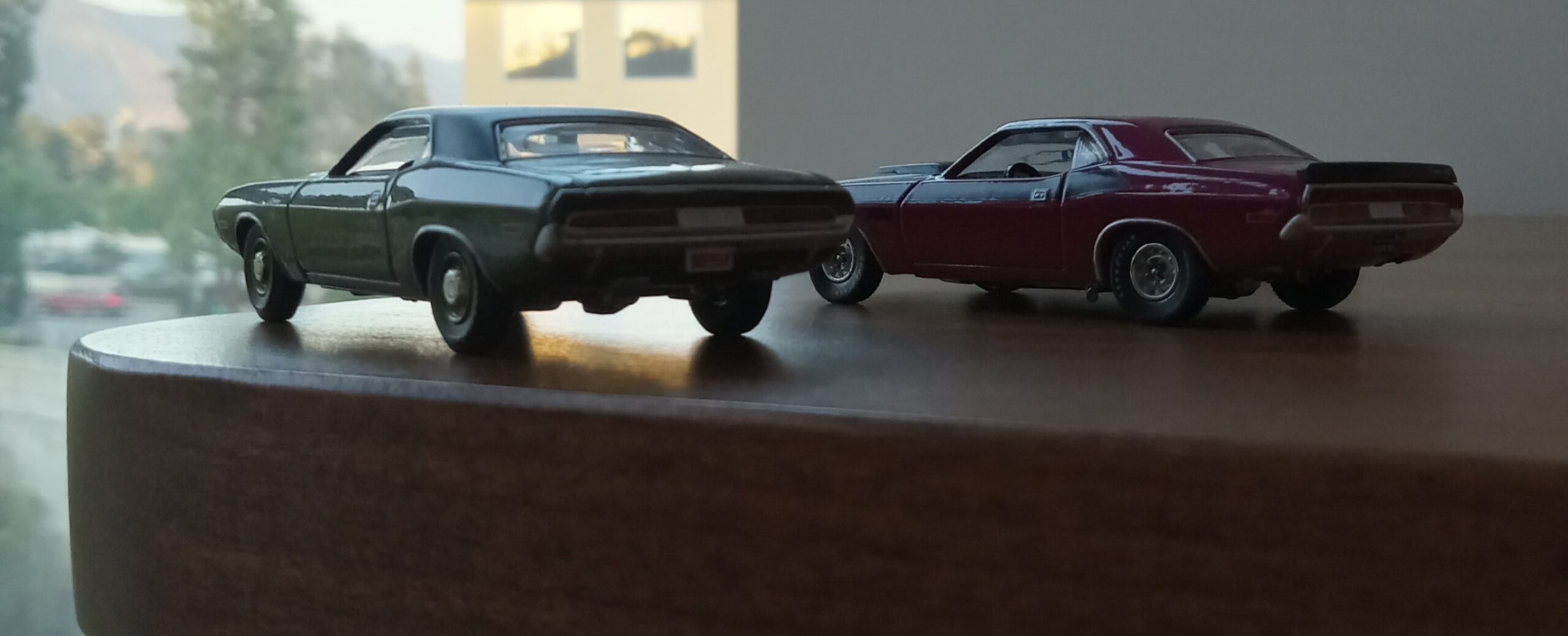
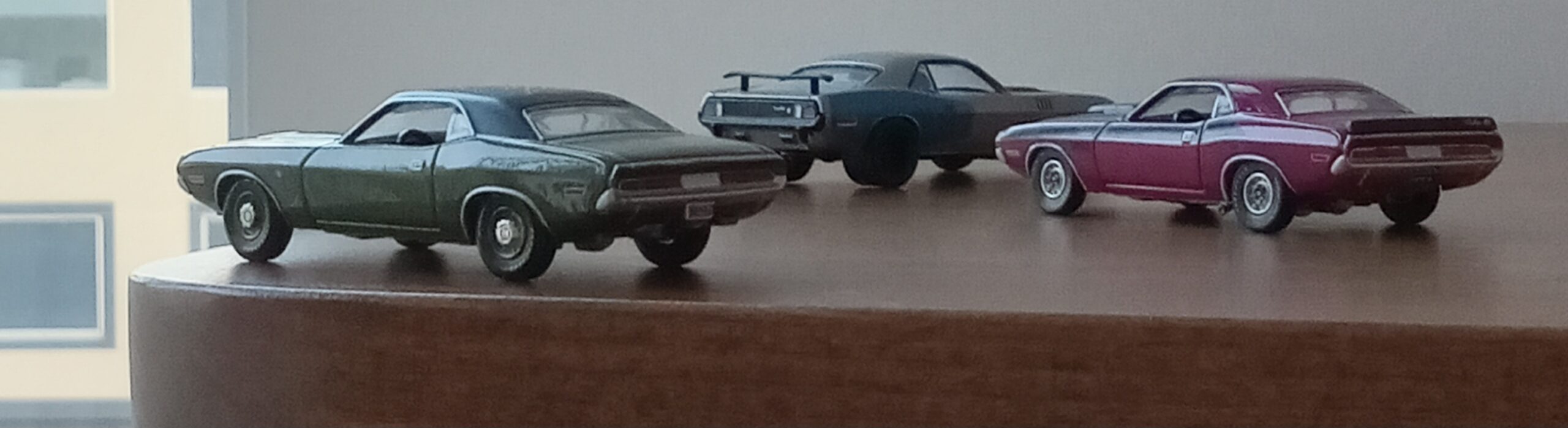
(写真撮影に使用したミニカー:オートワールド社製、1/64 ダイキャスト完成品、ダッジ・チャレンジャー, 1970 & M2社製, 1/64 ダイキャスト完成品、プリムス・バラクーダ, 1971----改造箇所:それぞれのタイヤ・ホイール・車軸位置を微調整&最適化)
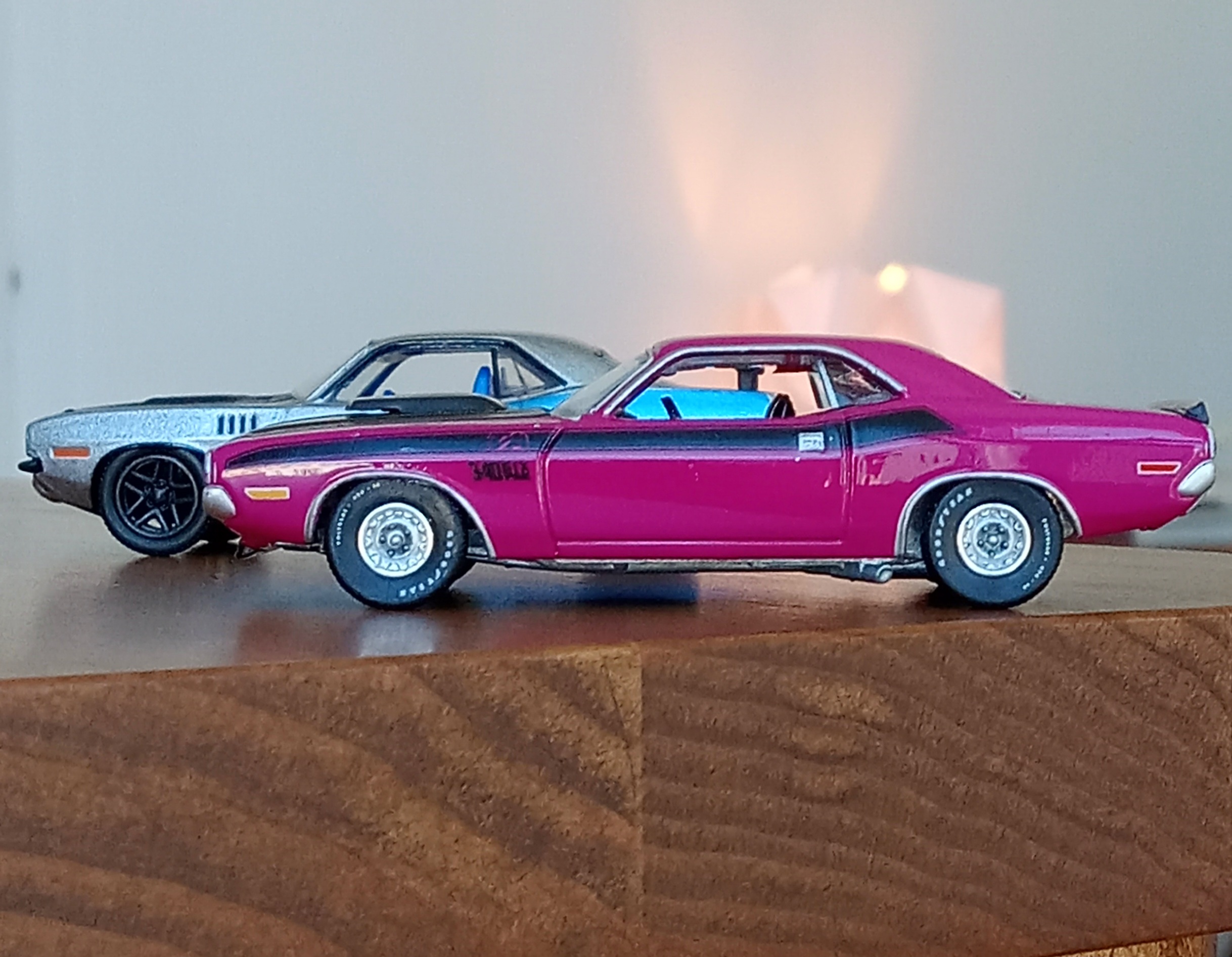
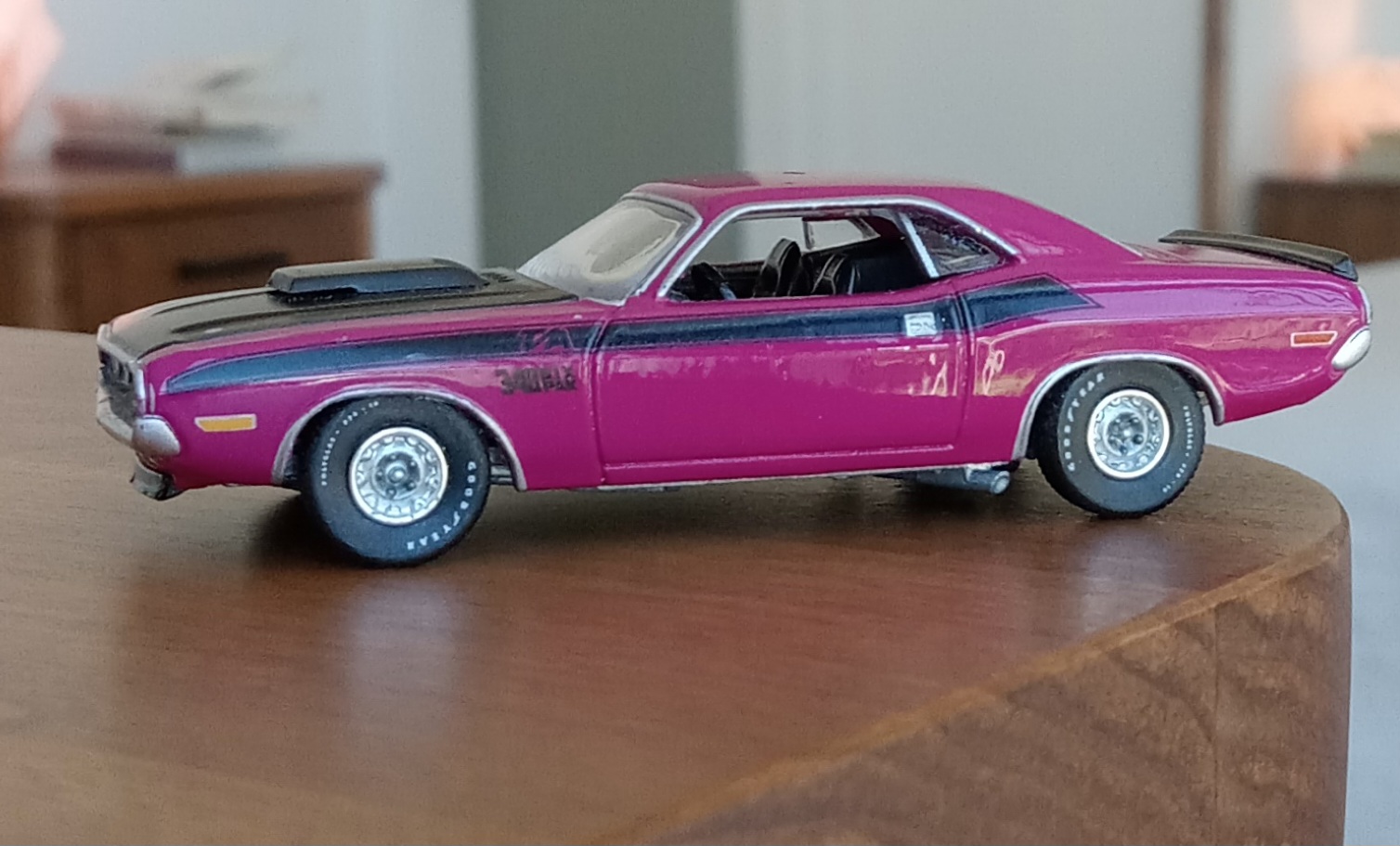
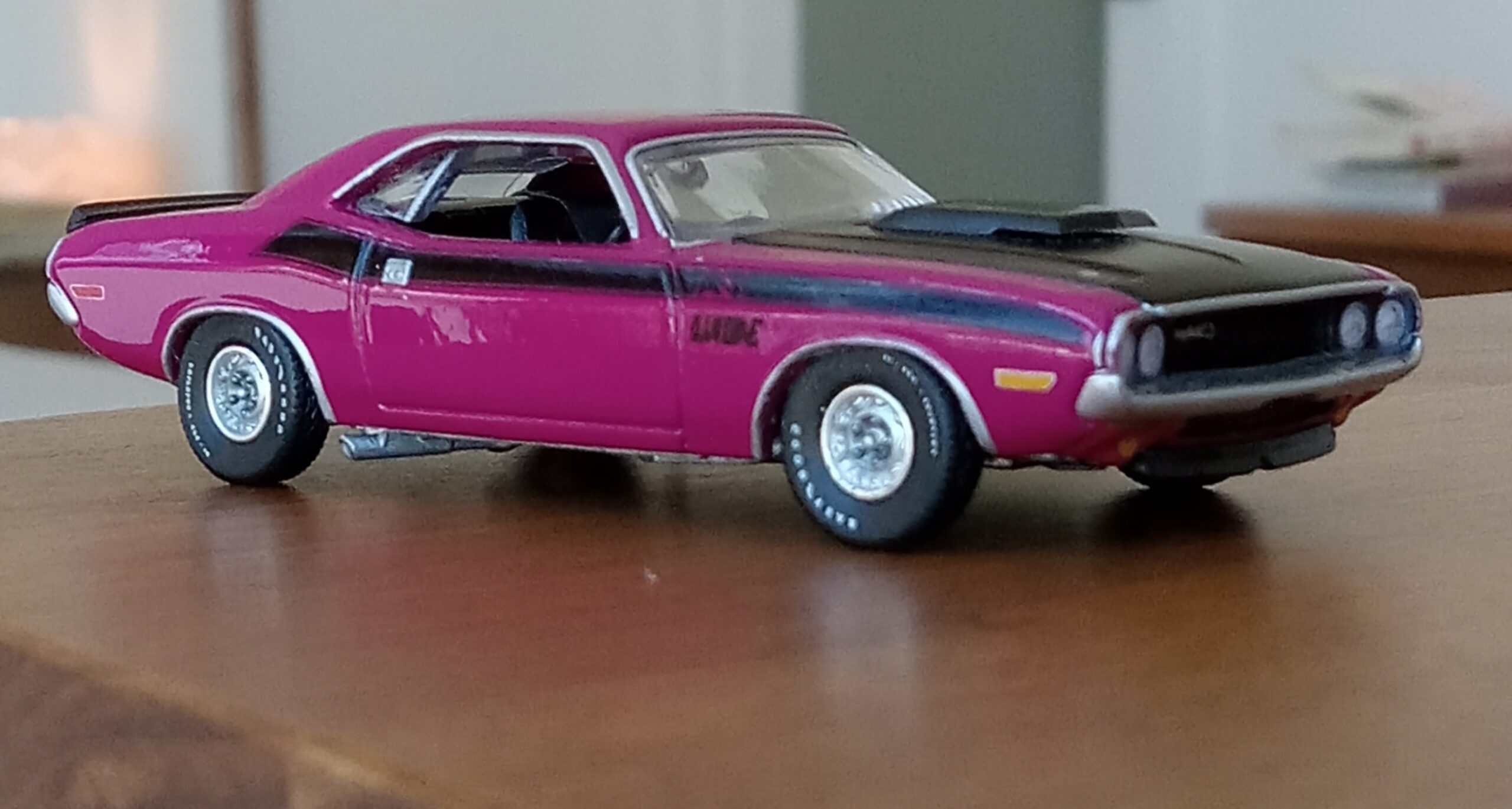
第43回ーー2ドア・クーペの系譜: 第23回【米国車編②】 ダッジ・チャレンジャー / プリムス・バラクーダ、1970-71 『クライスラー・マッスル兄弟の契り』 Dodge Challenger / Plymouth Barracuda『Chrysler’s Muscle Brothers!』
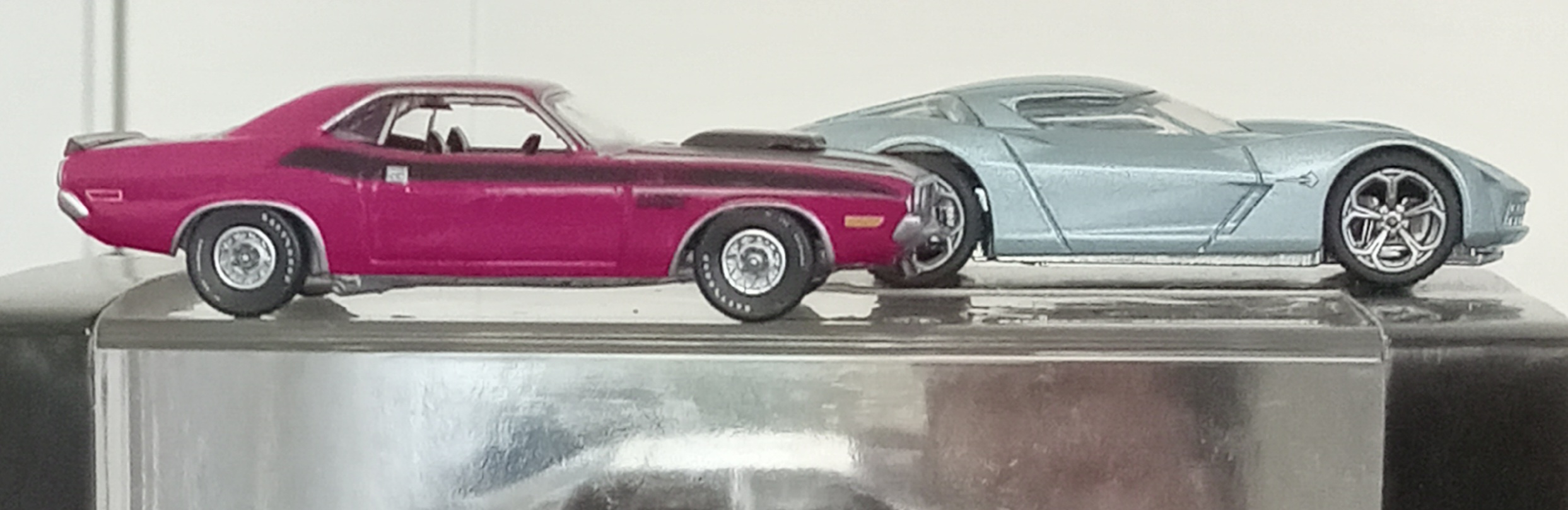
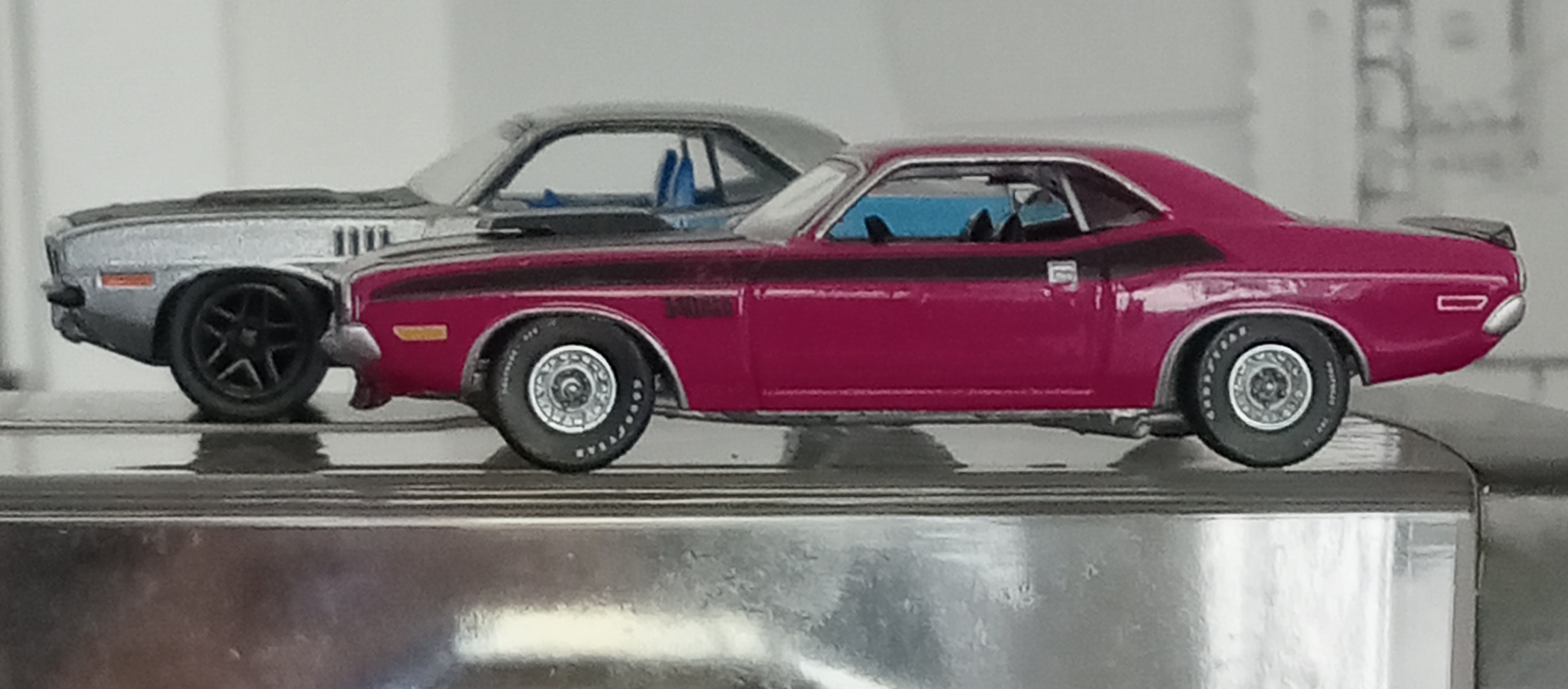
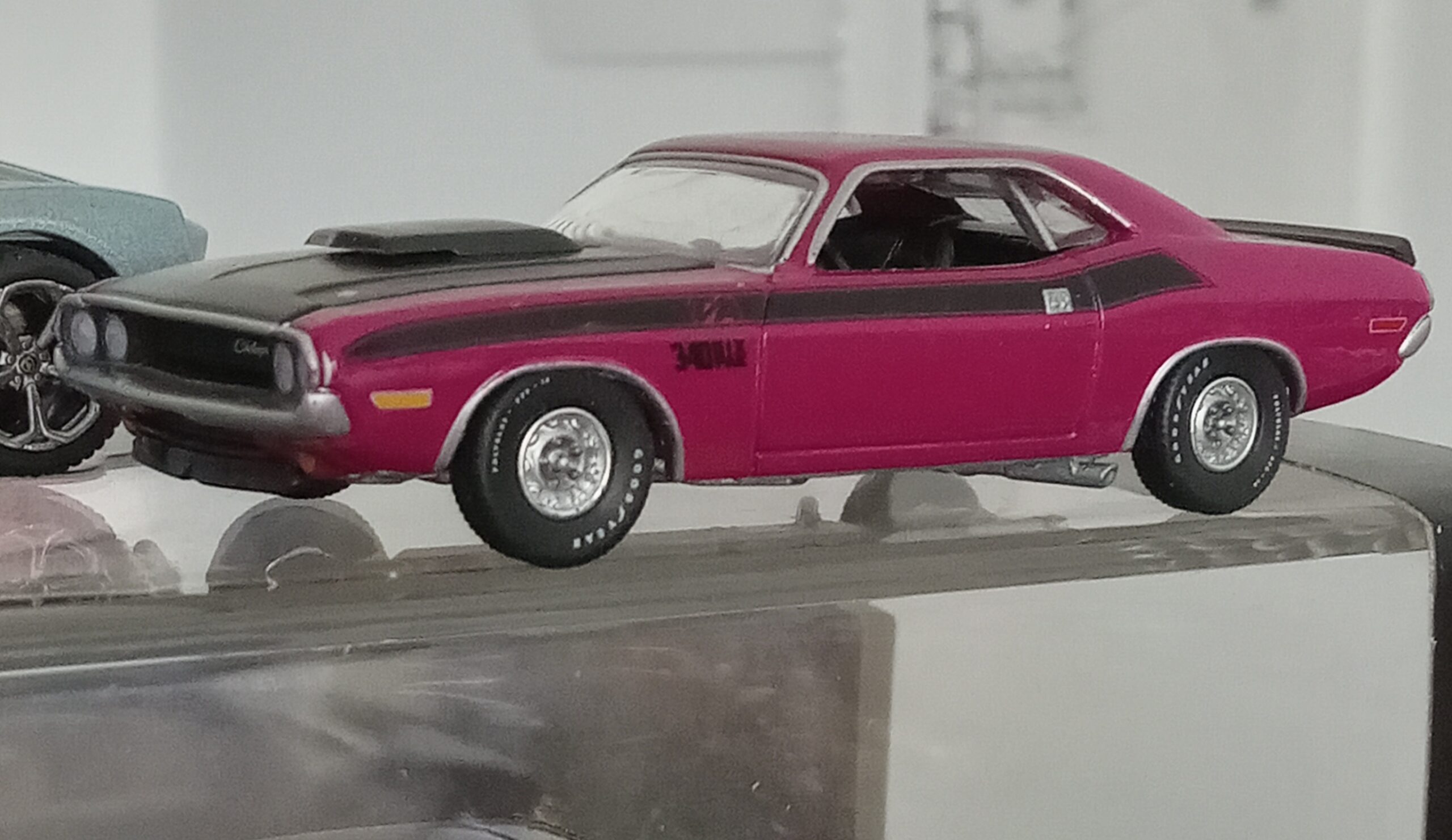
#好みの自動車デザインーー2ドア・クーペの系譜:
第43回目の今回は、『2ドアクーペの系譜、第23回』と題しまして、各国のお国柄や、外観デザインの個性が強く表れる、高級2ドア(GT)クーペ / ロードスターについてお話ししてみたいです。【注意:オープンカーを含む】
以下の要領で進めていきます。
第23回の今回はいよいよ
【米国車編②】としまして、
1970年型の
ダッジ・チャレンジャー、1970&
プリムス・バラクーダ、1971
についてのお話です。
【2ドア・クーペの系譜:目次】
【米国車編】
第1回:キャデラック・エルミラージュ、2013(メタリック・レッド)
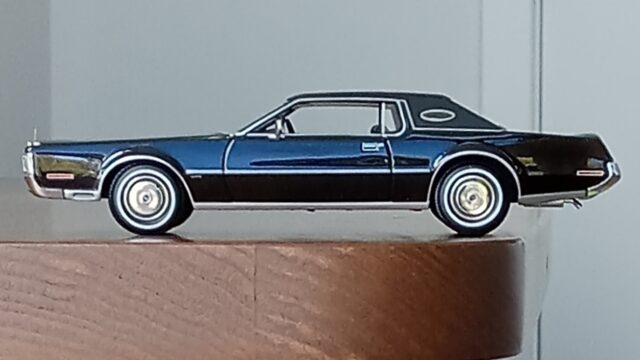
第2回:リンカーン・コンチネンタル MK4、1972(ブラック)
第3回:マーキュリー・クーガー, 1967(LTメタリック・グリーン)
【ドイツ車編】
第4回:MB 500K スペシャル・ロードスター、1936(ブラック)
第5回:MB 300SL ロードスター、1957(シルバー)
第6回:MB SLS AMR ガルウイング、2010(ブラック)
【英国車編】
第7回:マクラーレン・F1、1992(メタリック・オレンジ)
第8回:ジャガー・XKSS ロードスター、1957(ロイヤル・ブルー)
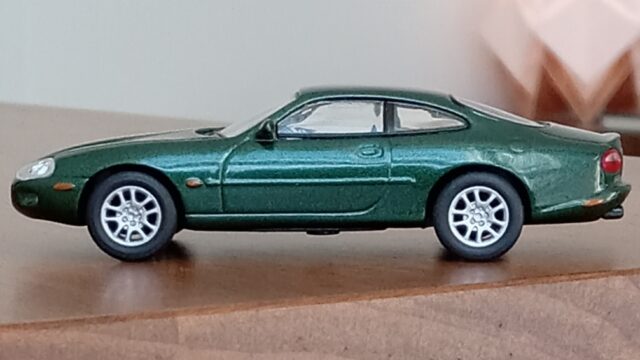
第9回:ジャガー XKR クーペ、1996(ダークメタリック・グリーン)
【日本車・ニッサン編】
第10回:ニッサン 初代シルビア、1965(シャンペン・ゴールド)
第11回:ニッサン 5代目シルビア、1988(LTメタリック・グリーン)
【イタリア車編】
第12回:フェラーリ 250TR ポンツーンフェンダー、1958(赤)
第13回:フェラーリ 250GTO、1962(イタリアン・レッド)
第14回:ランボルギーニ・コンセプトS、2005(パール・ホワイト)
【日本車・マツダ編】
第15回:マツダ コスモ・スポーツ、1968(レーシング・ホワイト)
第16回:マツダ ユーノス・コスモ、タイプ‐S(2トン:黒&グレー)
【フランス車編】
第17回:ブガッティ・タイプ59、1935(フレンチ・ブルー)
第18回:シトロエン・SM、1970(シャンペーン・ゴールド)
第19回:ブガッティ・ラ・ヴォワチュール・ノワール、2019(黒)
【日本車・トヨタ編】
第20回:トヨタ/ヤマハ・2000GT、1967(アイボリー・ホワイト)
第21回:トヨタ・2代目ソアラ、1986 (クリスタル・ホワイトⅡ)
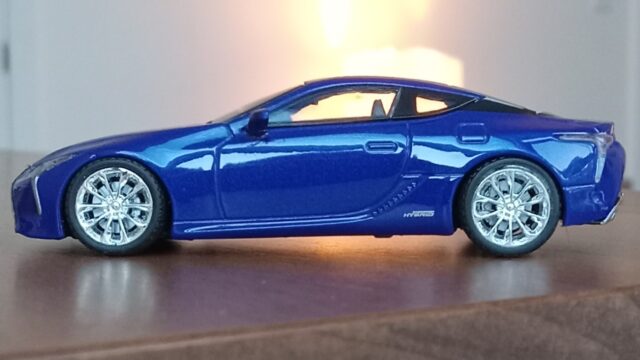
第22回:レクサス LC500【GWZ100型】、2017(MT・レッド)
【米国車編②】
第23回:ダッジ・チャレンジャー、1970&プリムス・バラクーダ、1971
第24回:ダッジ・ヴァイパー SRT‐10 ACR、 2008(ブラック)
第25回:フォード・シェルビーGR-1 コンセプト、2004(クローム)
【日本車・ミツビシ編】
第26回:ミツビシ・ギャラン λ、1976(ブラウン・メタリック)
第27回:ミツビシ・エクリプス【北米仕様】、2006(オレンジ・メタ)
【ドイツ車編②】
第28回:BMW M635CSi、1984 (ダーク・メタリックブルー))
第29回:MB 560SEC AMG 6.0 ワイドボディー、1989(ブラック)
第30回:BMW M2 純正パフォーマンス・パーツ仕様、2025(ネオン・ライム)
第31回:初代アウディー・TT、1998(レイク・シルバー・メタリック)
【日本車・スバル編】
第32回:スバル・クロストレック XV, 2012(ライムグリーン・メタリック】
【英国車編②】
第33回:ロータス・初代エリート, 1959(ブリティシュ・グリーン)
第34回:ロータス・エラン S4 スプリント(2トン:ブルー、ホワイト&金)
第35回:ジャガー・Eタイプ ロードスター(ライトブルー・メタリック)
【日本車:ホンダ(軽量スポーツ編)】
第36回:ホンダ S800、1966(レッド)
第37回:ホンダ 初代CR-X 1.5i、1983(ブルー&シルバー2トン)
第38回:ホンダ ビート、1991(サンバ・イエロー)
【番外編】:コルベットの系譜
第1回:1967年型 スティングレー【C2】コンバーチブル(ハードトップ・メタ青)
第2回:1972年型 コルベット 【C3】コンバーチブル(メタリック・ブルー)
第3回:1984年型 コルベット クーペ【C4】(ブライト・レッド)
第4回:コルベット・インディー【ミッド・シップの先行開発車】(シルバー)
第5回:スティングレー・コンセプト【先行開発車】、2009(プルー・メタリック)
#クライスラー・マッスル兄弟の契り
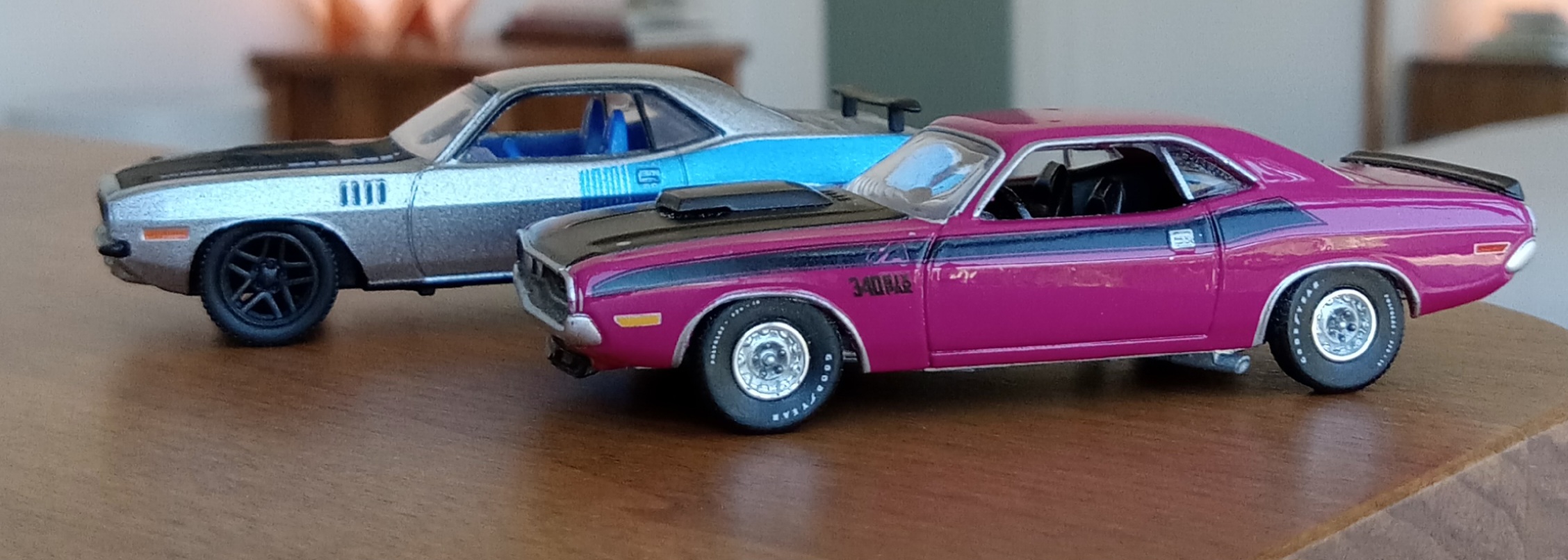
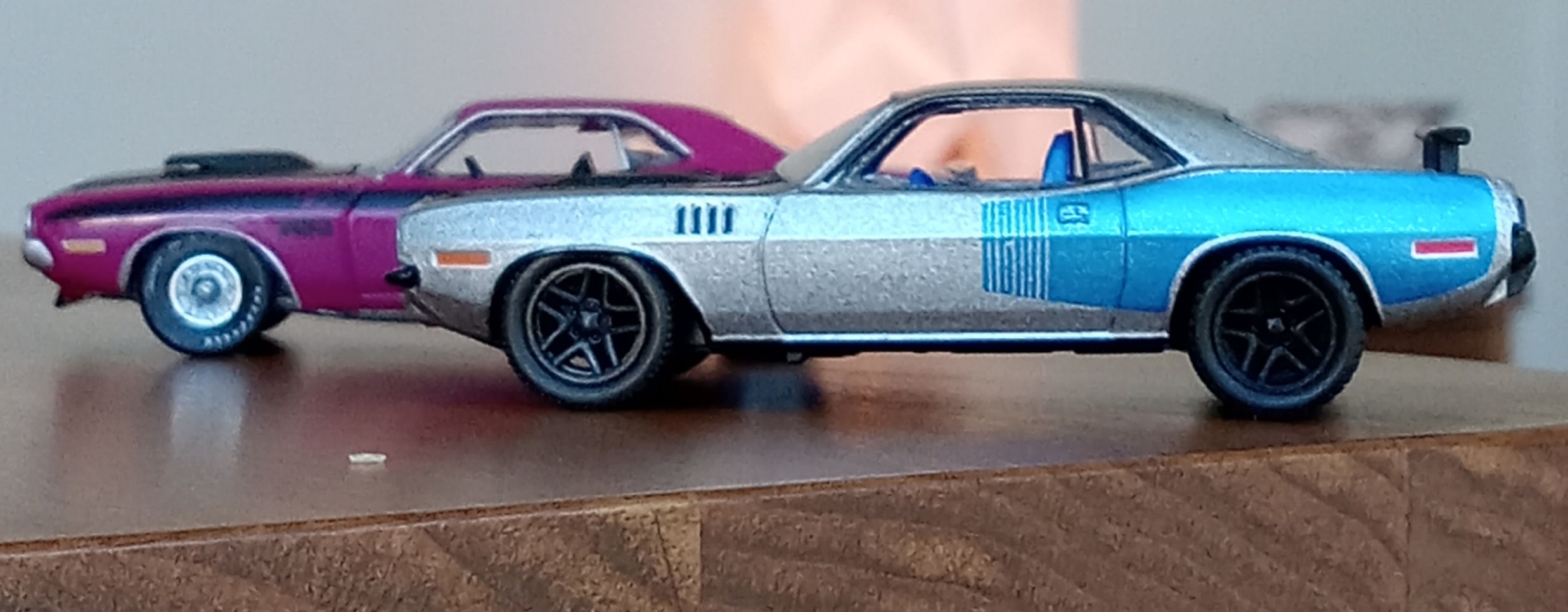
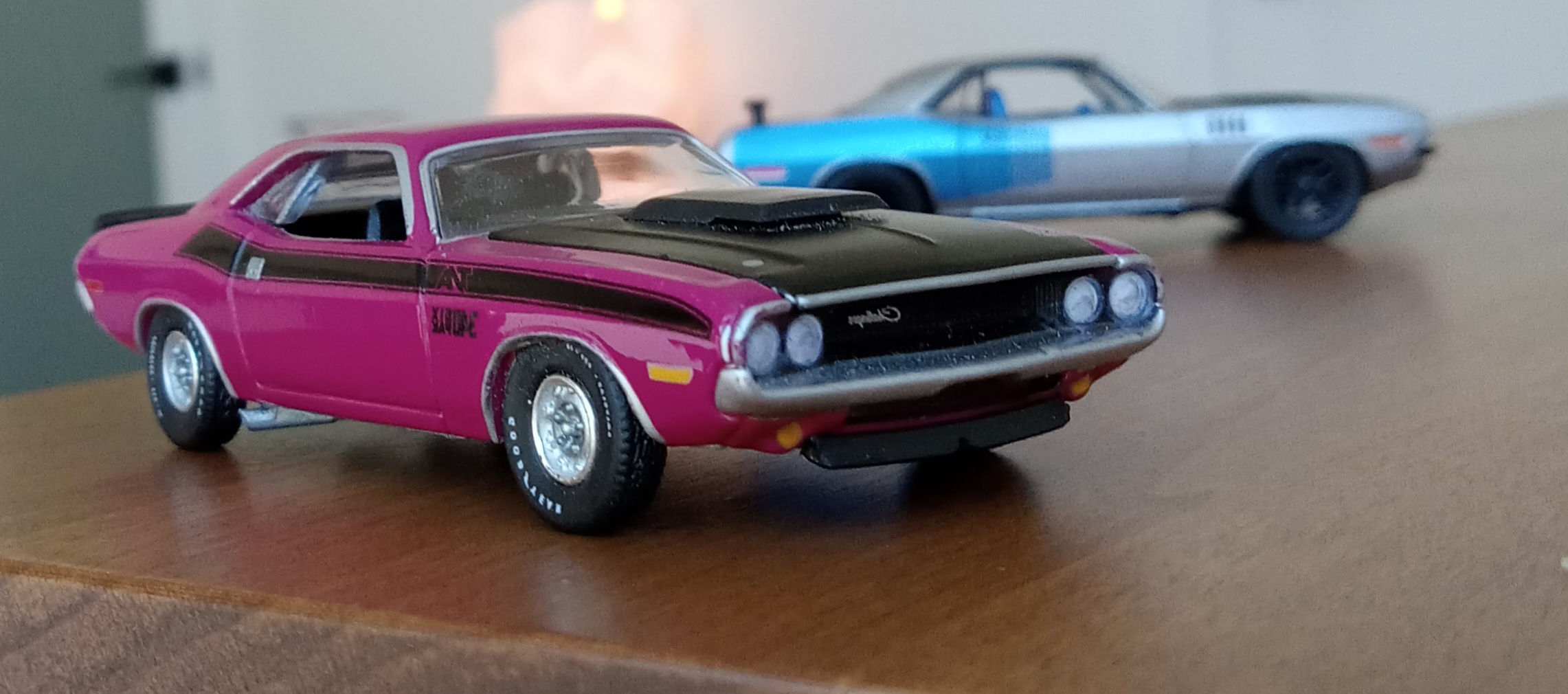
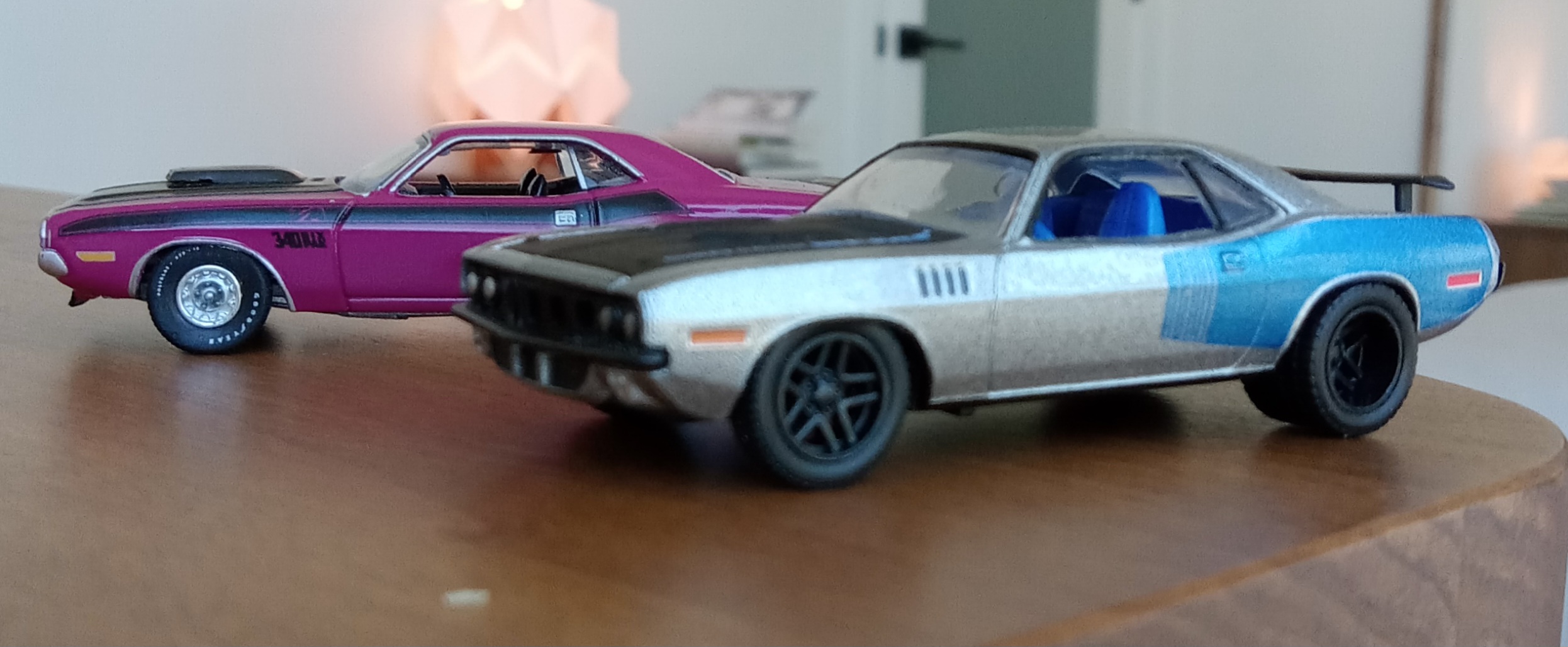
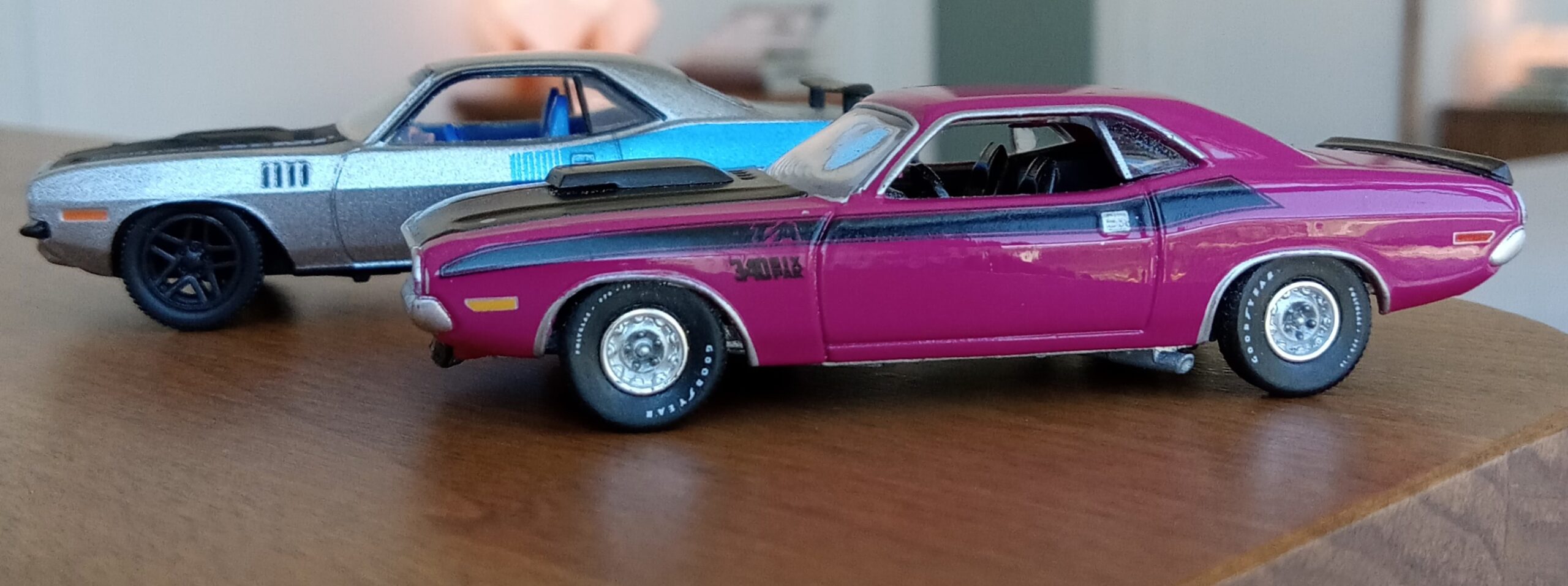
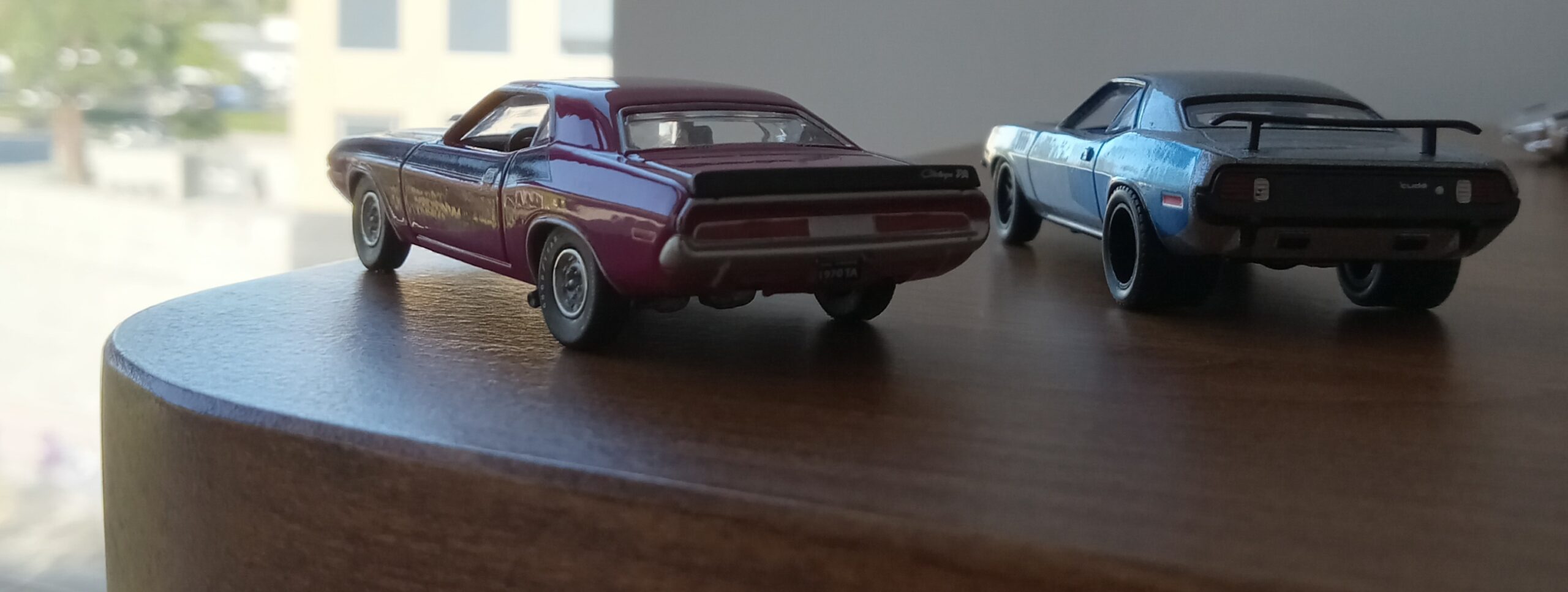
『ダッジ・チャレンジャー』と
『プリムス・バラクーダ』は
クライスラー版の、
マスタングとマーキュリークーガーのコンビと
紹介されがちですが、
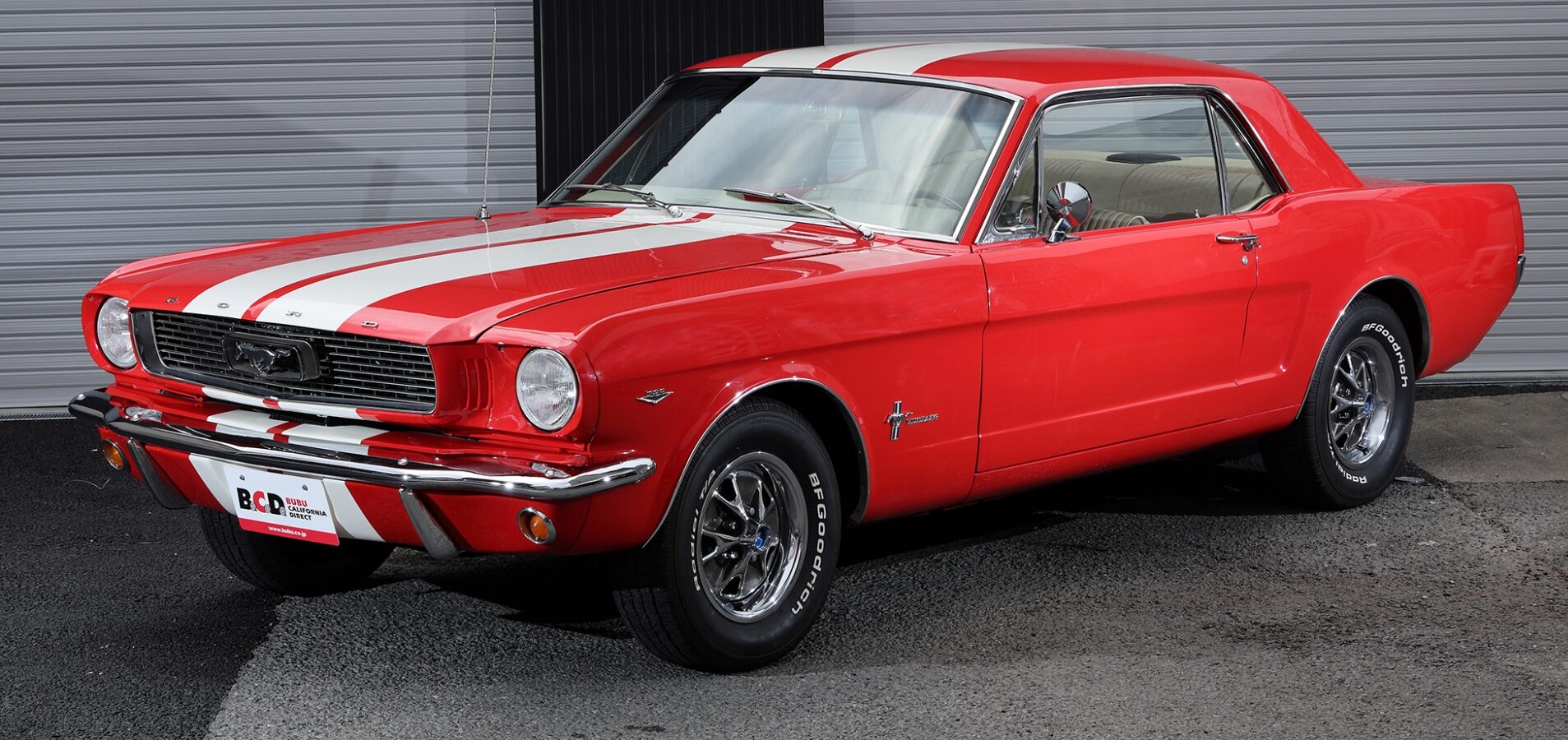
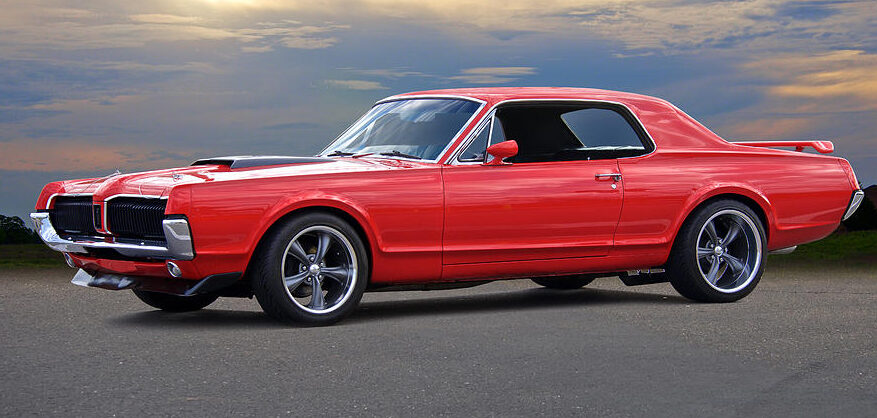
私の中でこの2組は全くの
『似て非なるもの』です。
アメ車の本筋、
*フォードのポニーカー戦略の一環として大成功を狙った賢い姉妹車
アメ車の傍系、
日本ではさらにマニアックな希少車、
*クライスラーのマッスルカー戦略初期の
外観おとなしめなハンサム兄弟車
この『外観大人しめ』+『マッスルカー』というところが
この2台の独特なところで、
外観デザイン的には、一見、
*非常に均整の取れた、
*美しいプロポーションを持った、
*大型で上質な高級クーペ的な、
印象です。
よくよく観察してみますと、
*とんでもなく広い全幅、など、
普通でない部分が続々出てきますが、、、、
その辺はまた後程。
同じクライスラー車でも、
ダッジ・チャージャーやプリムス・ロードランナーなんかですと、
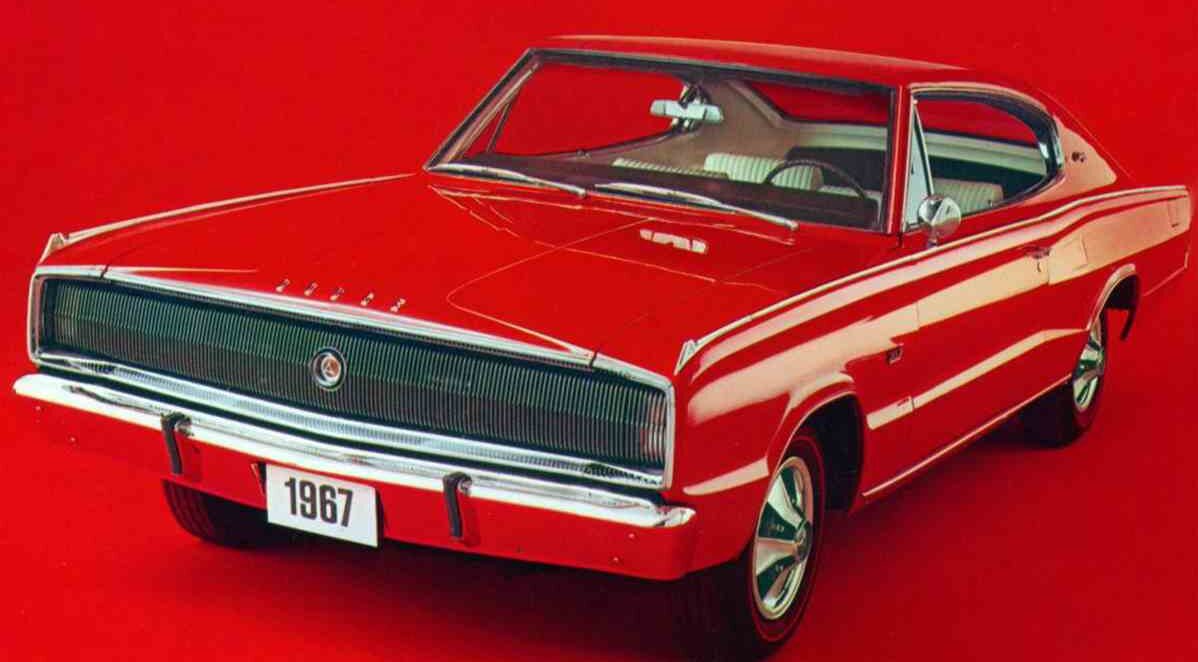
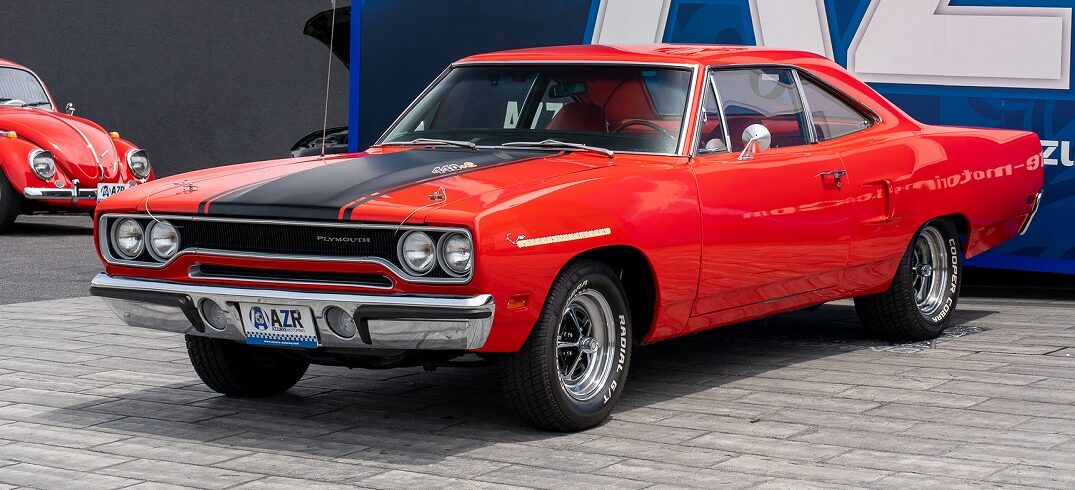
*なりふり構わぬ、ただの筋肉馬鹿な従弟たち、、、
といった感じです。
今回はそんな、
美しくハンサム、かつ、
とんでもない性格を内に隠した
兄弟車2台についての
お話を一席、、、
こんな感じで進めていきます。
*実車解説:
*外観デザインの特徴:
*『私』とチャレンジャー&バラクーダ
*三題噺:モーパー・野性味・均整
*その他のマッスルカーたち、、、
*実車解説 : クライスラーのハンサム・マッスル兄弟
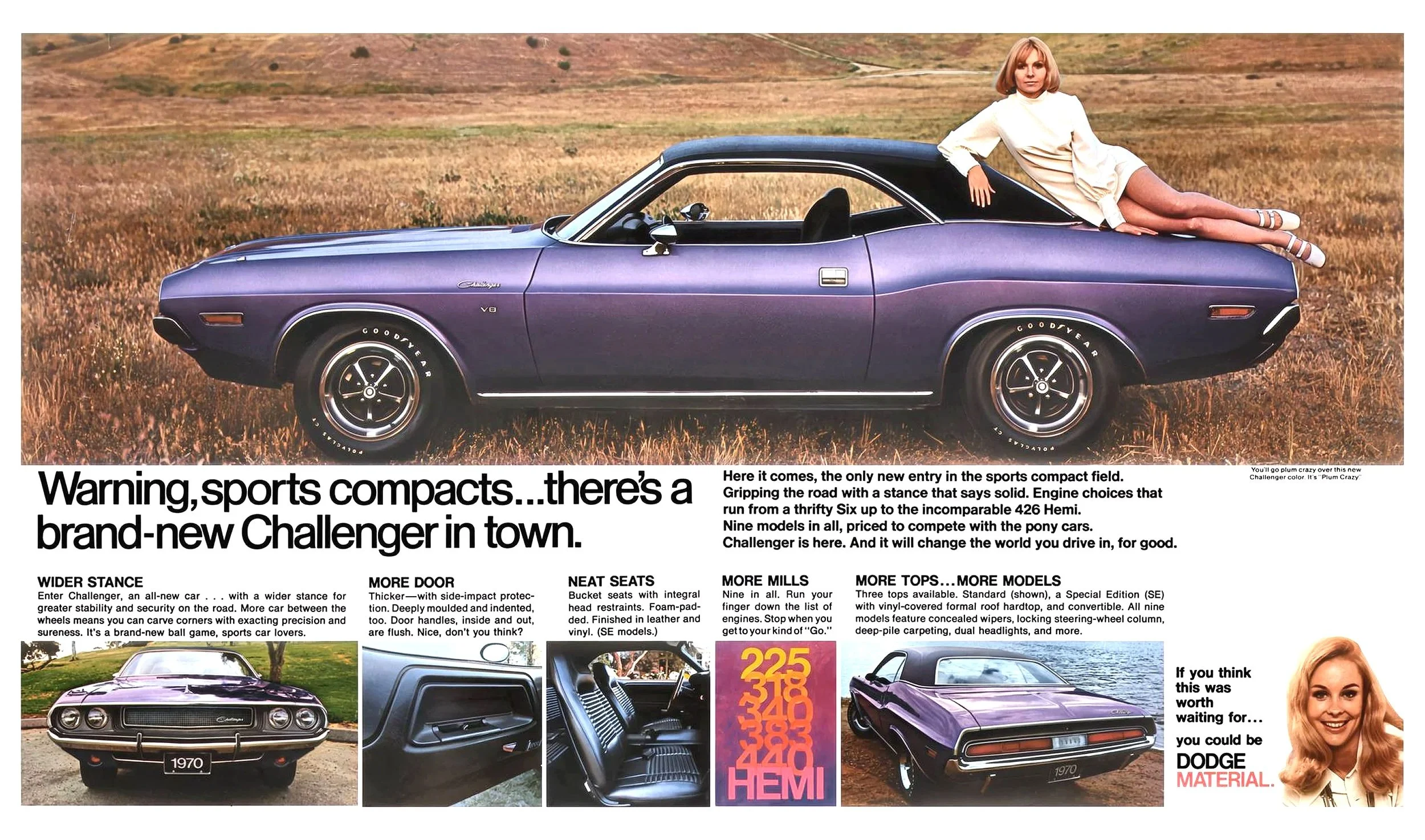
概説:
n
n
n
n
n
n
n
n
n
n
n
n
n
n
n
n
n
n
n
n
n
n
n
n
n
n
デザインとプラットフォーム:
1970年式ダッジ・チャレンジャーの外観デザインは、ロングノーズ&ショートデッキの黄金比、奥まったインセット式のフロントグリルと4灯ヘッドライト、そしてシャープなプレスラインによるロー&ワイドなシルエットが特徴です。
*ロングノーズ&ショートデッキ: 前方を長く、後方を短くした典型的なマッスルカーの王道スタイル
*コークボトル・ライン: カール・キャメロンが手掛けた、優美さと力強さを兼ね備えたロー&ワイドなシルエット。
*Eボディの採用: プリマス・バラクーダと基本骨格(Eボディ)を共有しながらも、ホイールベースを2インチ延長しラグジュアリーで伸びやかなスタイリングを実現。
*シャープなエッジ: サイドに走る鋭いプレスラインが、力強さと洗練された美しさを演出。
フロントとリアのデザイン:
*ディープインセット・グリル: フロントノーズの奥に配置されたブラックアウトされたグリル。
*4灯ヘッドライト: グリルと一体化した丸目4灯の迫力ある目元。
*横一文字テールランプ: リア全体を横断するシンプルなテールランプでワイド感を強調。
*ベース / スタンダード: 直列6気筒からエントリーする手頃なポニーカー仕様
*R/T(Road/Track): ハイパフォーマンスモデルの代名詞。専用バッジやヘビーデューティーな足回りを装備。
*T/A(Trans Am): SCCAトランザムレース参戦のためのホモロゲーションモデル。専用エアロやサイドマフラーを装備した超希少車。
*ボディ形状: ピラーレスの2ドアハードトップに加え、極めて生産数の少ないコンバーチブルも設定。
*多彩なエンジン: 直6の小排気量から、伝説的な「426HEMI」(最高出力425馬力)や「440マグナム/シックスパック」に至るまで、圧倒的な選択肢を用意。
*トランスミッション: 3速/4速マニュアルおよび3速オートマチック(TorqueFlite)を選択可能。
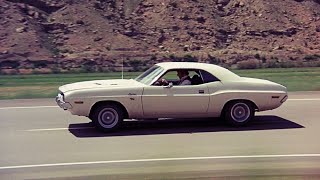
*映画『バニシング・ポイント』: 映画の劇用車として純白の1970年型R/Tが登場し、自由の象徴として世界中の車好きの心に強烈な印象を刻みました。
n
n
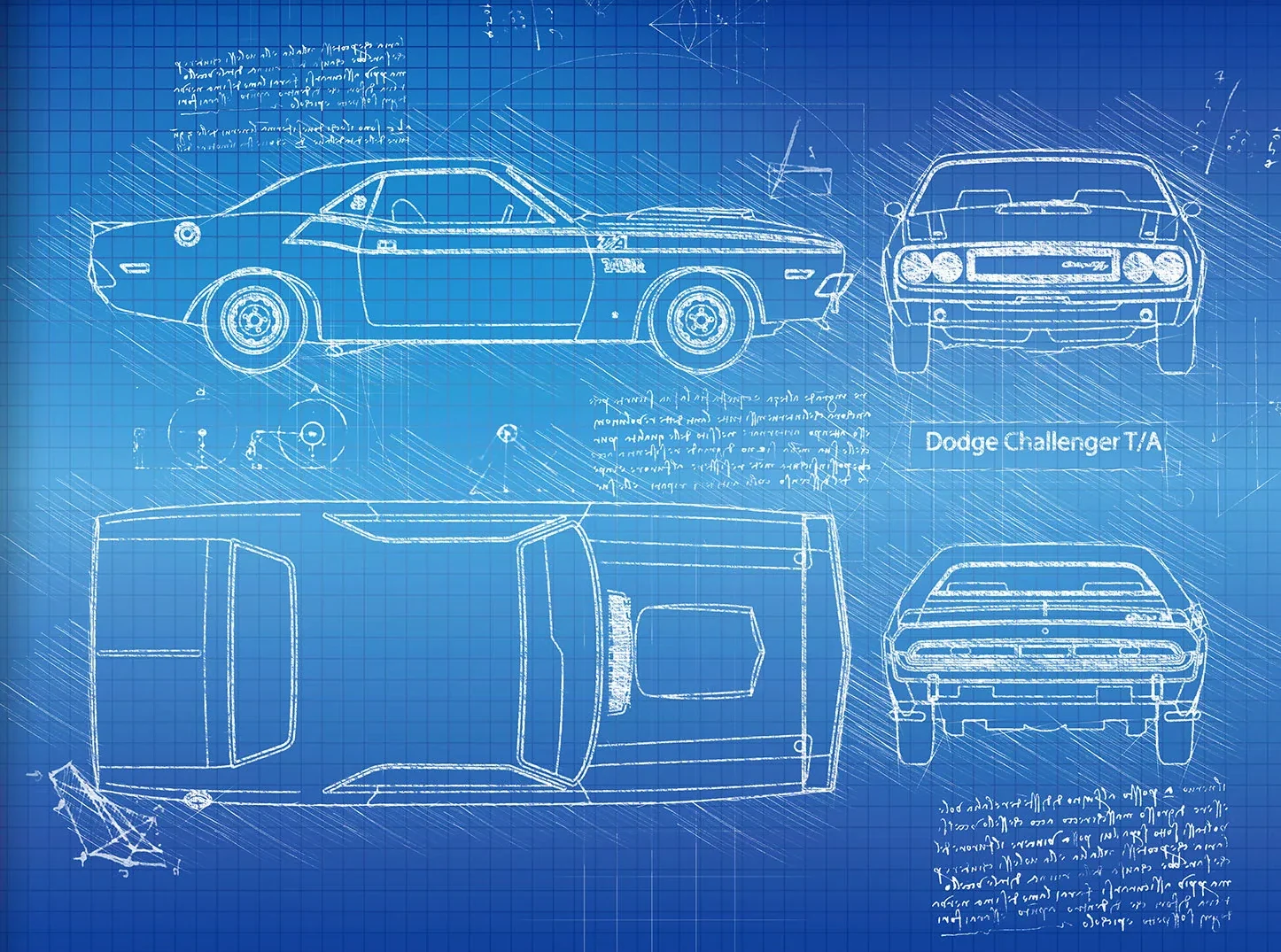
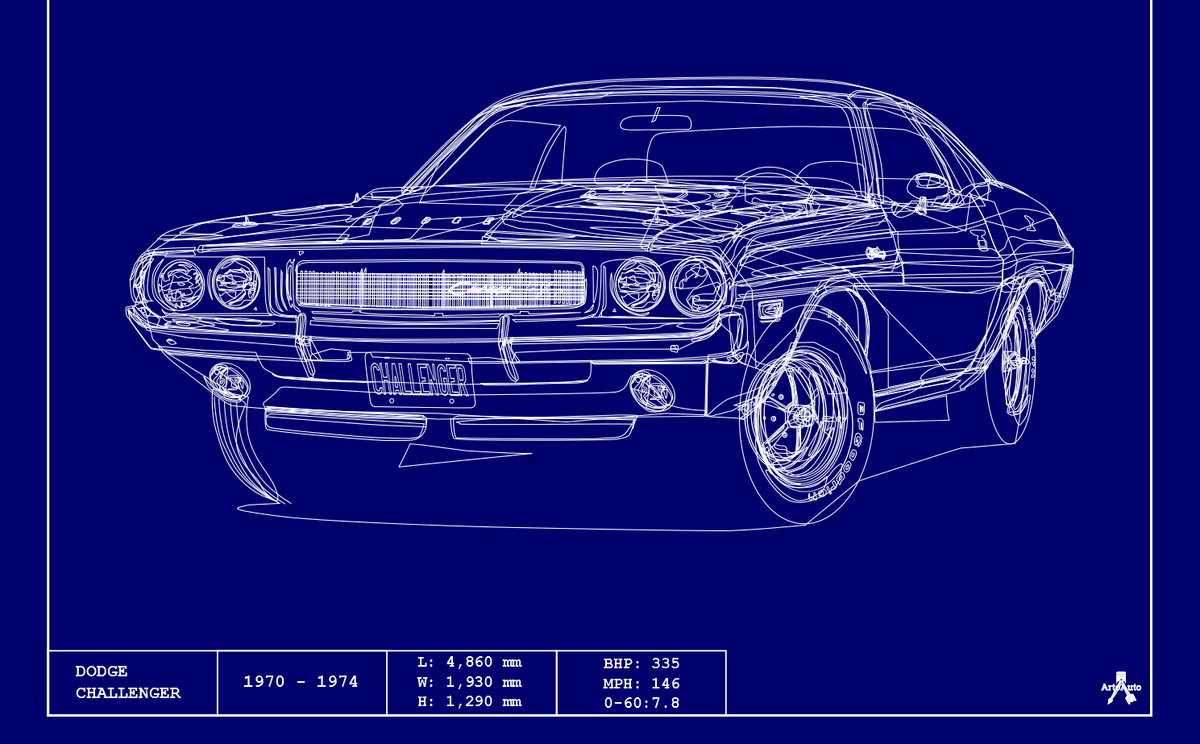
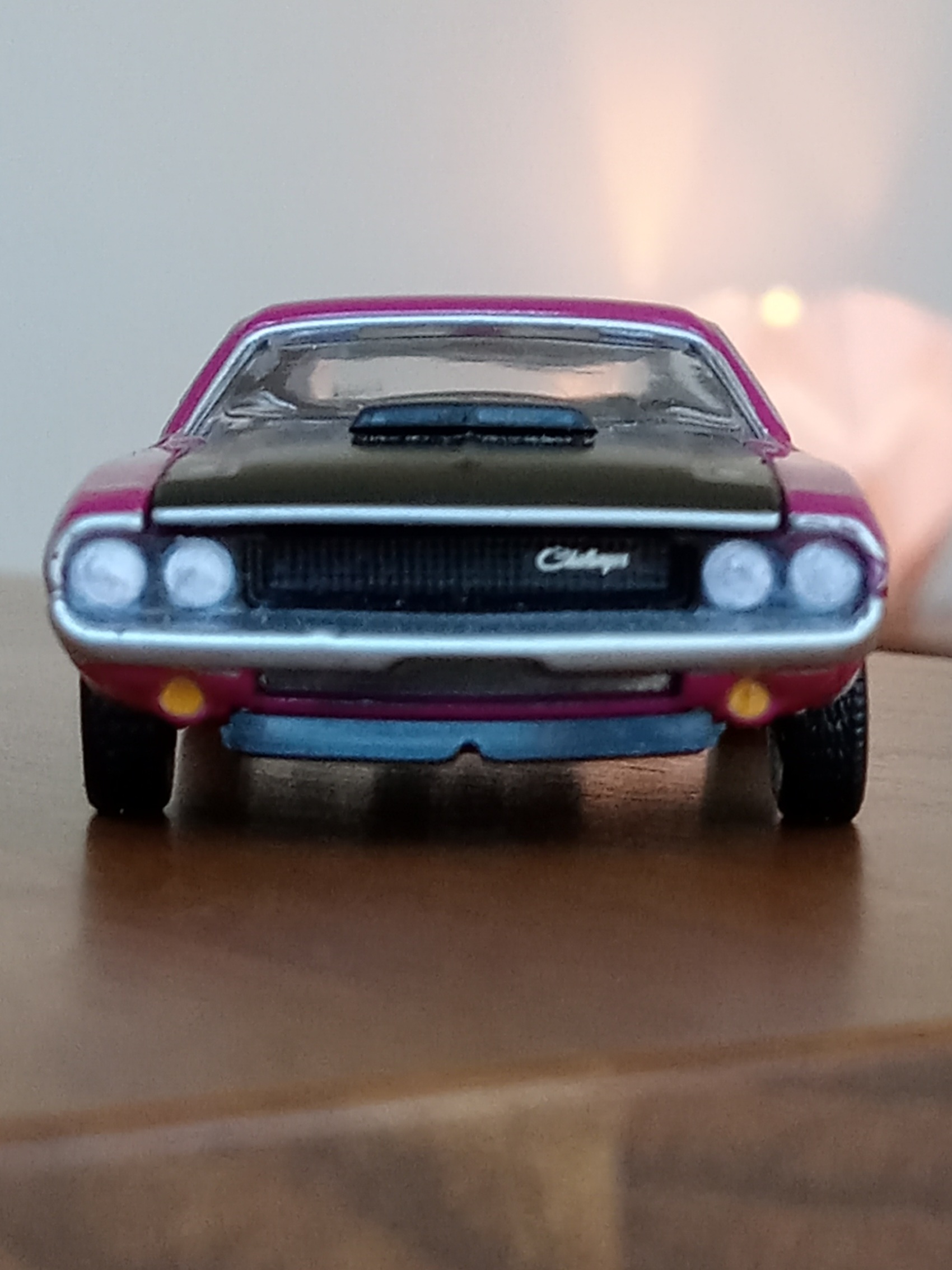
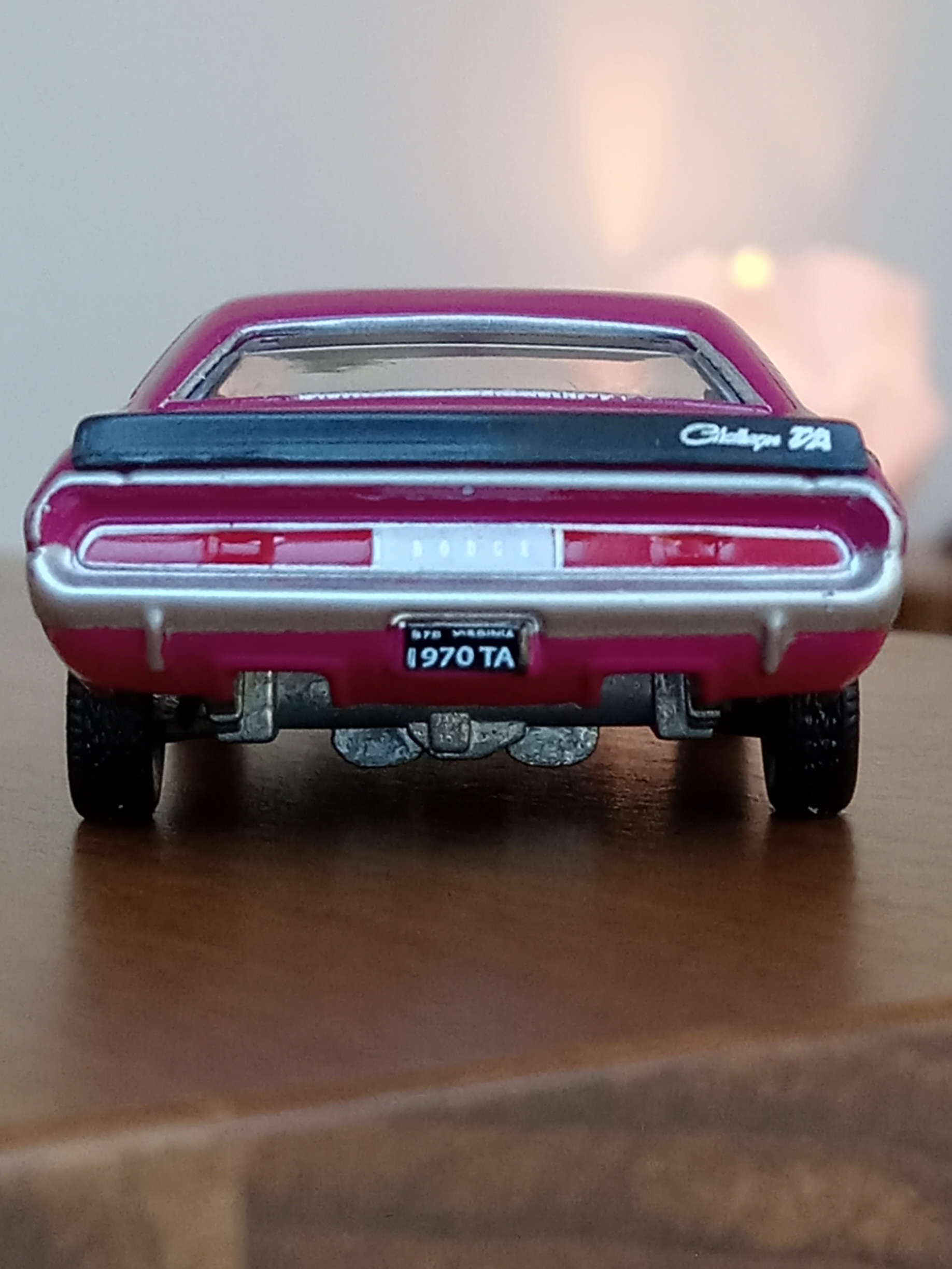
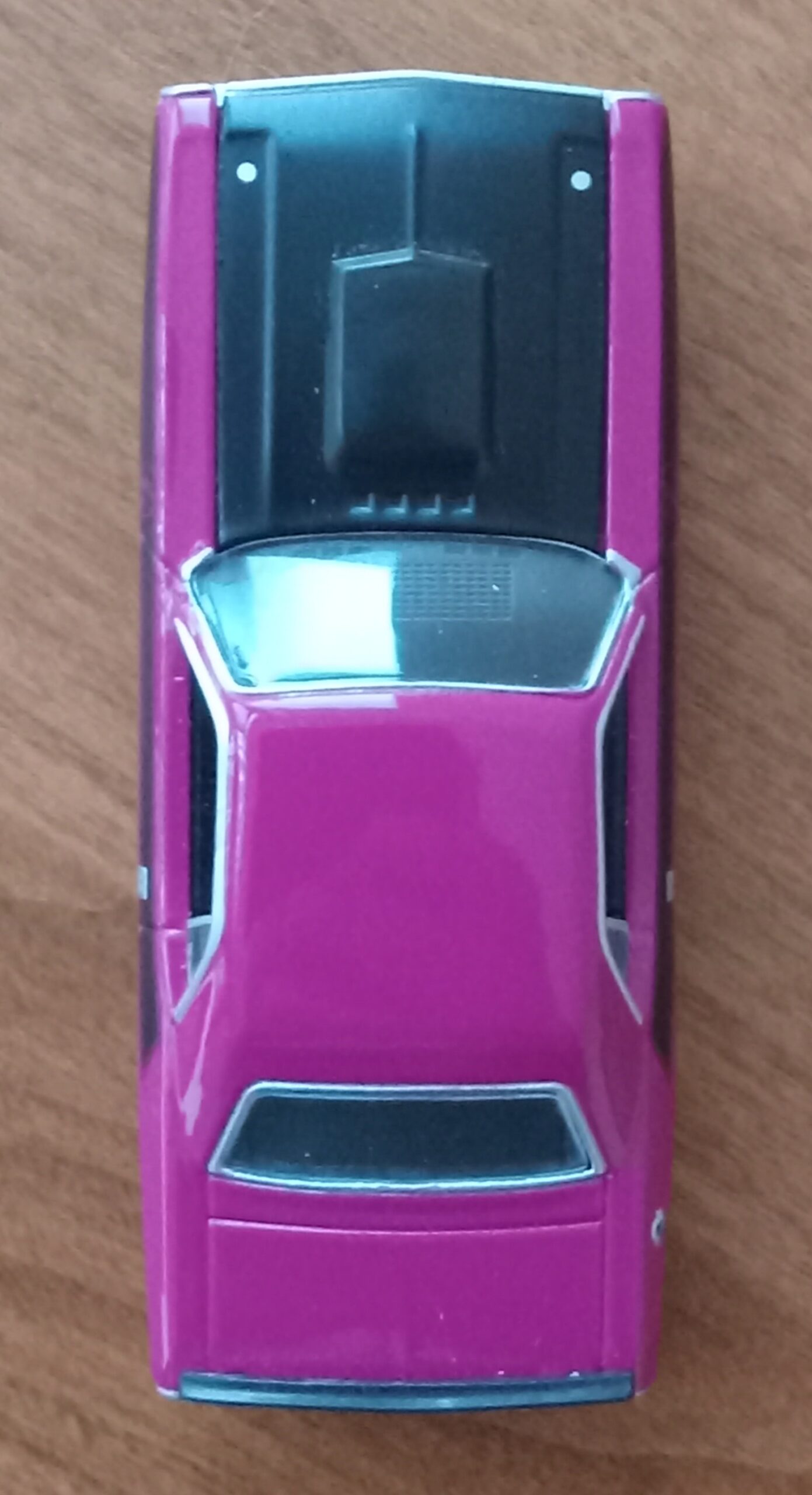
#三面図【写真】
#主要諸元:
- 型式:426 HEMI
- 総排気量: 7.0 L(426 cu-in、V型8気筒)
- 最高出力 : 425 hp @ 5,000 rpm
- 最大トルク:67.8 kg・m(490 lb-ft)
- 駆動方式:FR(フロントエンジン、リアドライブ)
- 定員:4名(2+2)
- 車体形式:2ドア・クーペ
- ホイールベース:2,794 mm
- 全長:4,859 mm
- 全幅:1,932 mm 〜 1,943 mm
- 全高:1,292 mm 〜 1,308 mm
- 車両重量:
1,363 kg 〜 1,660 kg(エンジンや装備による)
#実車解説2:1971年型、プリムス・バラクーダ
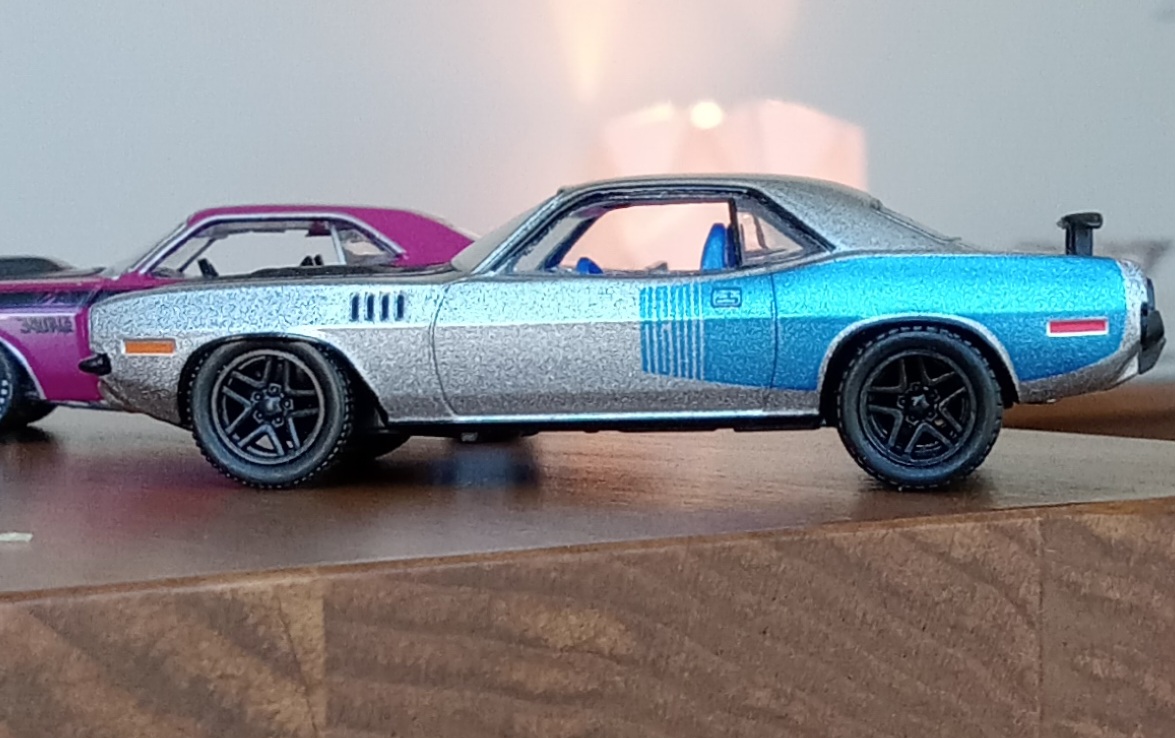
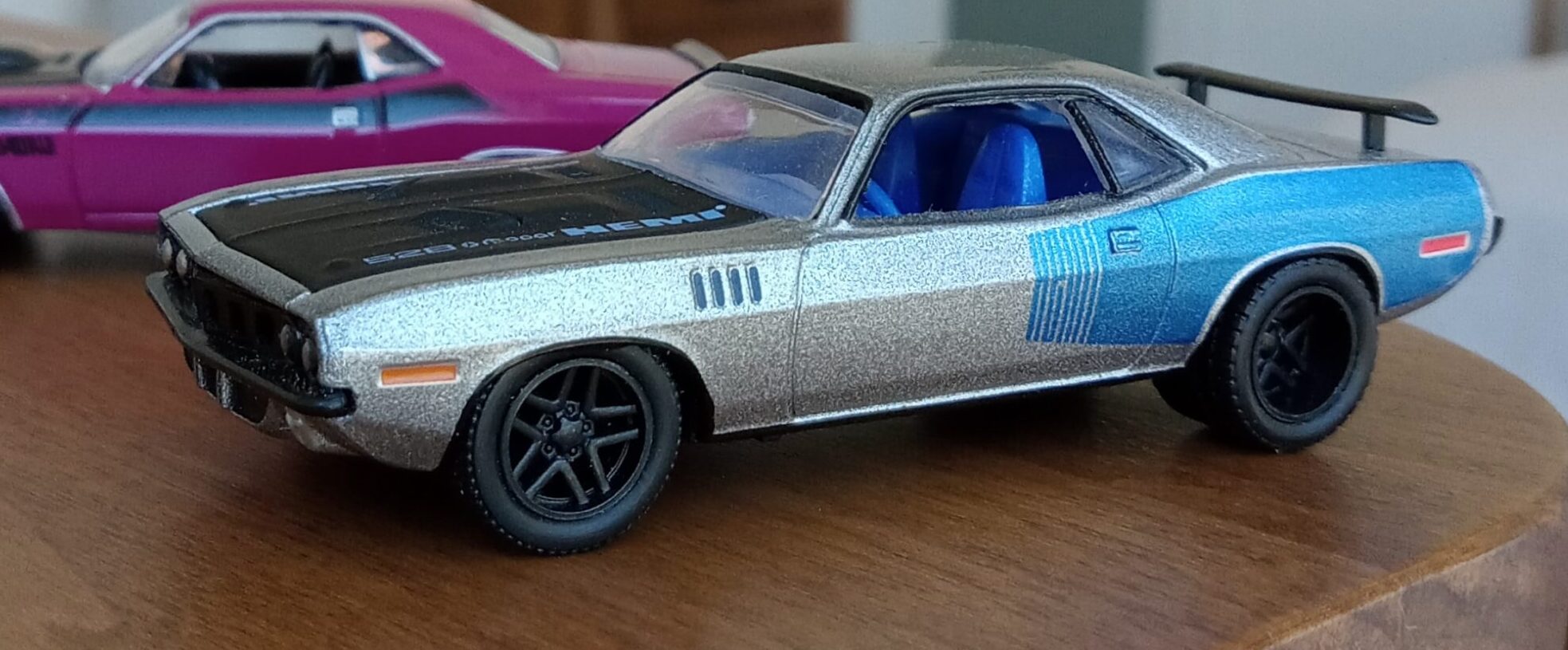
1971年型プリムス・バラクーダ(Plymouth Barracuda)は、
アメリカのクライスラー社(プリムス部門)が製造した、アメリカン・マッスルカーおよびポニーカーの黄金期を象徴する伝説的な名車です。
n
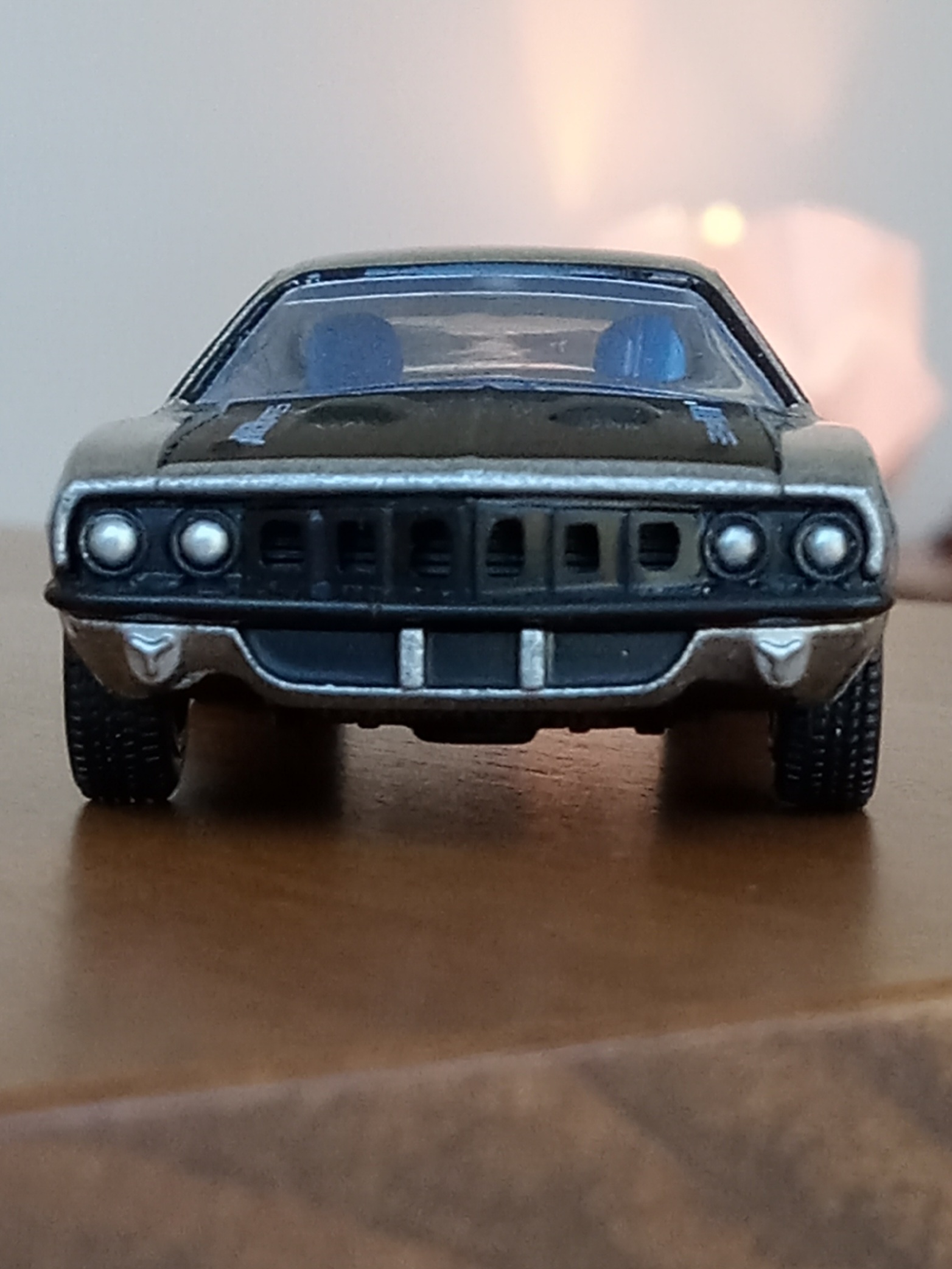
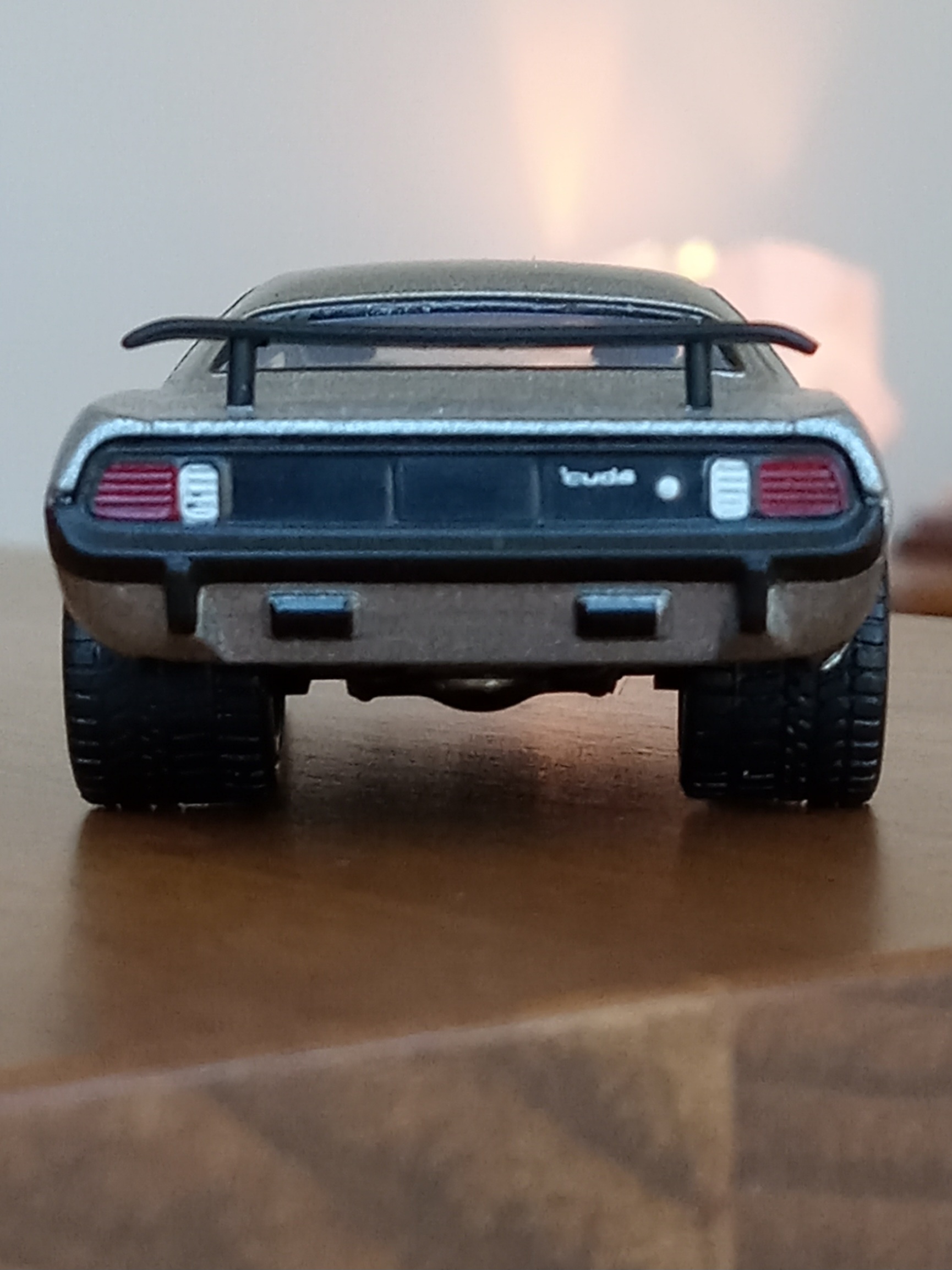
n
n
m
N
N
N
n
n
N
n
n
m
N
N
N
n
n
N
n
n
m
N
N
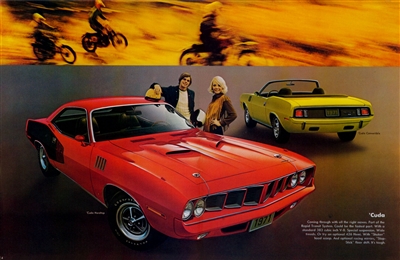
*フェンダー・ギル(鰓): 上位パフォーマンスモデル「クーダ(’Cuda)」のフロントフェンダーに、魚のウロコや鰓を思わせる4連のダミーダクトが配置されました。
*ビルボード・デカール: リアフェンダーに巨大な排気量を描いた、ド派手なサイドストライプ(Billboard Stripe)がオプションとして選べた唯一の年です。
*分割式テールランプ: リアのテールライトが片側3分割(計6灯)のデザインに変更されました。
大きく分けて、標準モデルと高性能モデルに分かれていました。
*バラクーダ(Barracuda): スタンダードなモデル。おとなしい直列6気筒やマイルドなV8エンジンを搭載していました。
*クーダ(’Cuda): 走りを追求した尖った高性能モデル。ボンネットに2つのダクト(ツインスクープ)が備わり、強力なV8ビッグブロックエンジンを選択できました。
*グラン・クーペ(Gran Coupe): 豪華な内装やレザートップなどを備えたラグジュアリー仕様です。
1971年は、クライスラーの伝説的な最強レース用エンジン「426 Hemi(7.0リッター V8 / 425馬力)」を搭載できた最後の年でした。翌1972年以降は排ガス規制によりパワーダウンを余儀なくされたため、この1971年型がマッスルカー純粋時代の頂点とされています。
特に「1971年型 ヘミ・クーダ・コンバーチブル」は、世界にわずか10数台しか存在しないと言われており、オークションでは数億円〜数十億円(過去には約350万ドルなど)で取引される、世界で最も高価なマッスルカーの筆頭となっています。
#主要諸元:
- 型式: HEMI V8(最高峰:ヘミ・クーダ)
- 総排気量: 7.0L (426 ci、V型8気筒)
- 最高出力 : 425 hp @ 5,000 rpm
- 最大トルク:67.8 kg・m(490 lb-ft)
- 駆動方式:FR(フロントエンジン、リアドライブ)
- 定員:4名(2+2)
- 車体形式:2ドア・クーペ
- ホイールベース:2,743 mm (108.0インチ)
- 全長:4,740 mm (186.6インチ)
- 全幅:1,902 mm (74.9インチ)
- 全高:1,293 mm (50.9インチ)
- 車両重量:
1,406 kg ~ 1,650 kg (搭載エンジンや装備により異なる)
n
n
*外観デザインの特徴:
『米国マッスルカー』の本陣へようこそ、、、
60年代の後半から狂ったようなパワー競争とともに訪れ、
70年代初頭のオイルショックの波にのまれ、
瞬く間に消え去った、
アメリカ、
マッスルカードリーム
その中でも、
個人的に最もマッスルカーらしい2台が
*ダッジ・チャレンジャーと、
*プリムス、バラクーダです。
ではまず、
ハンサムでクール、
時にワイルドなお兄さん的立ち位置の、
『チャレンジャー』の
外観デザイン的特徴から進めていきます。
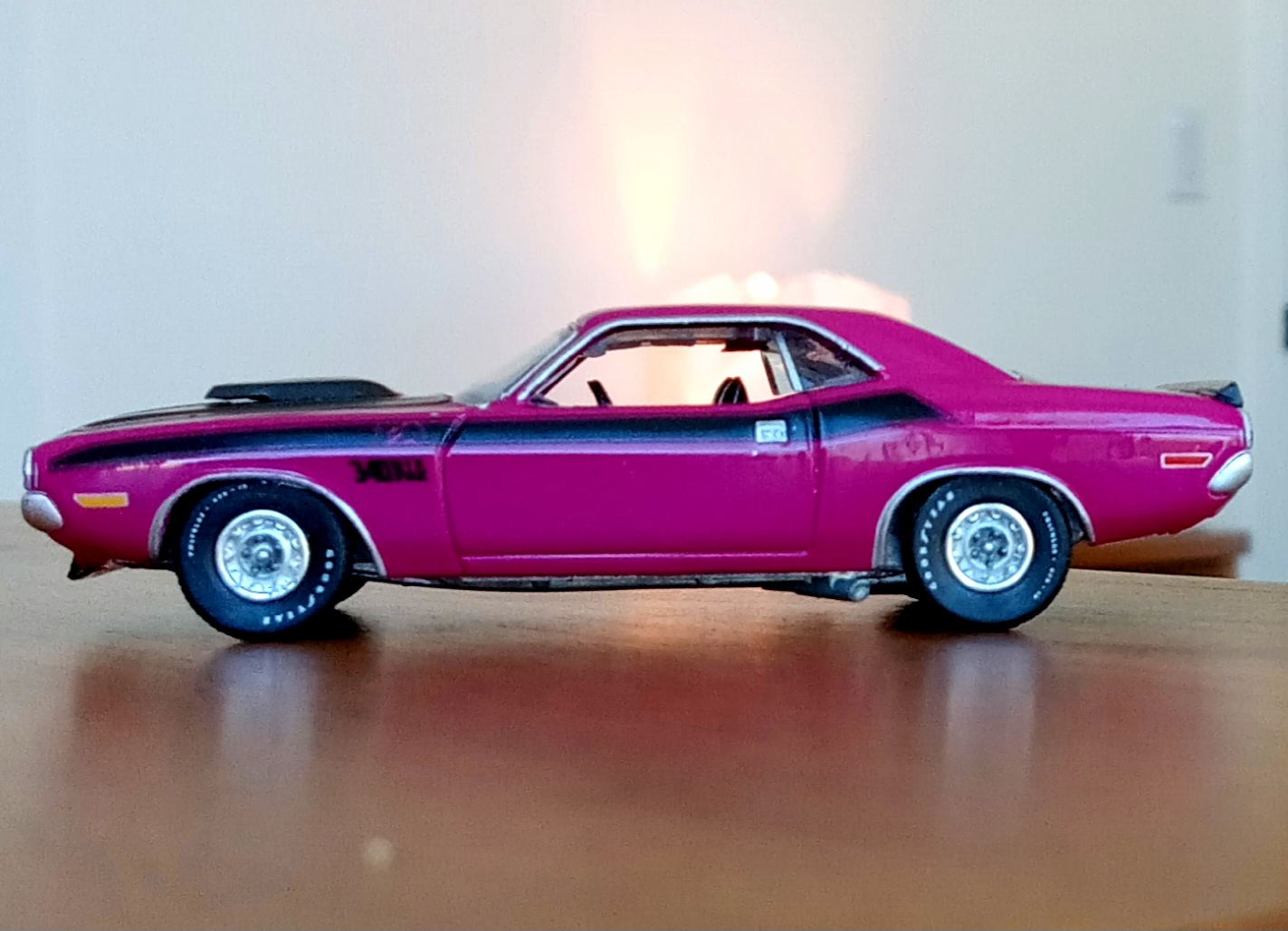
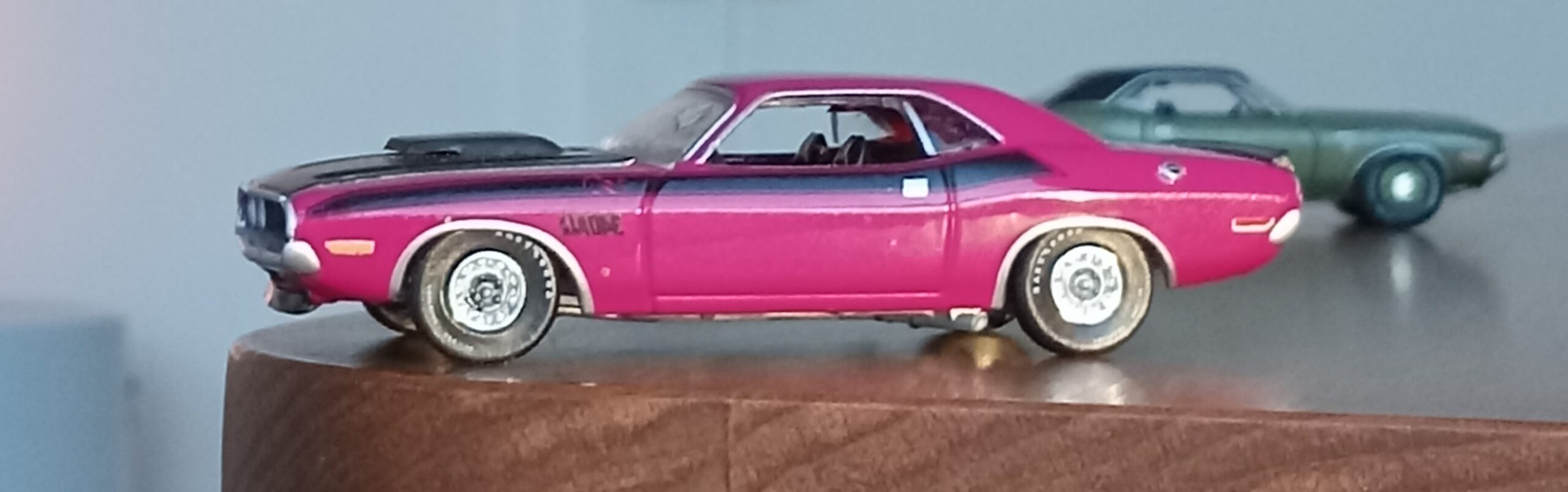
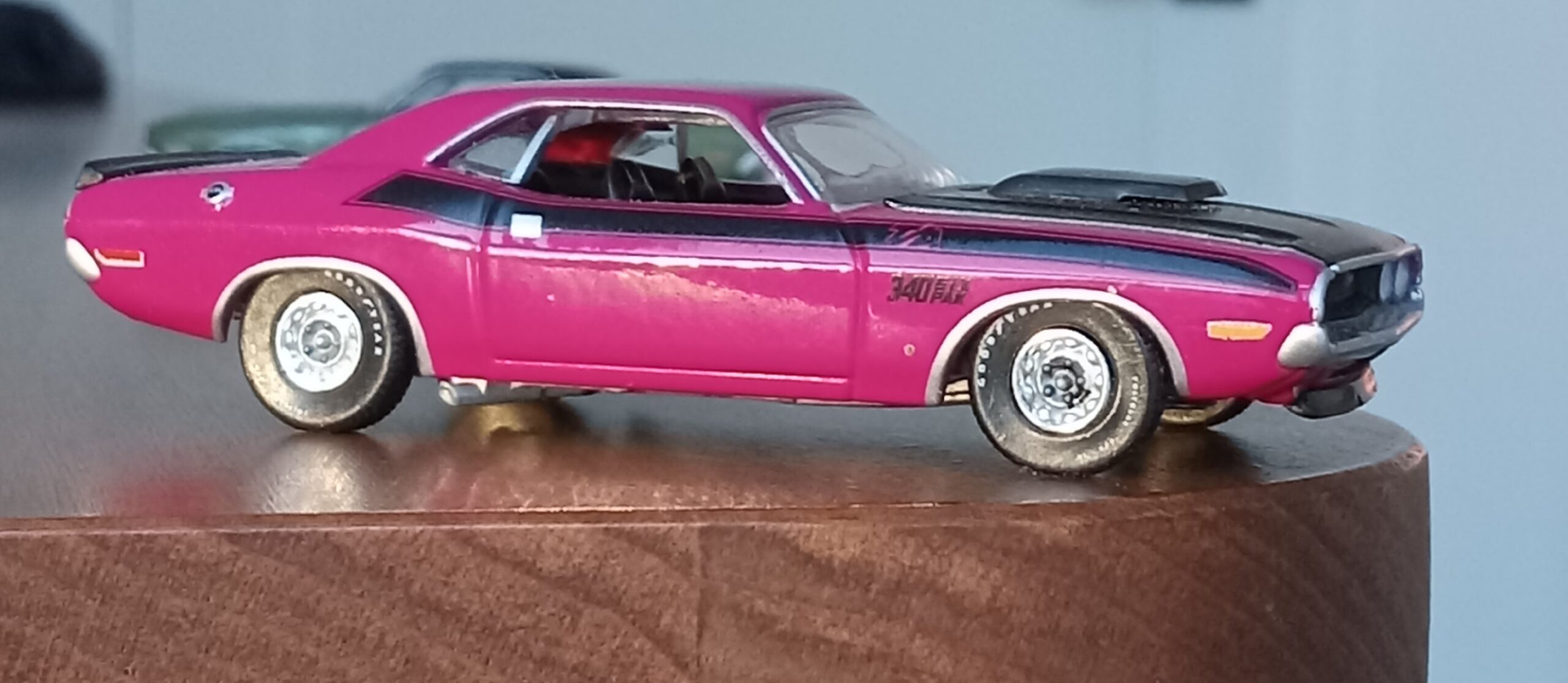
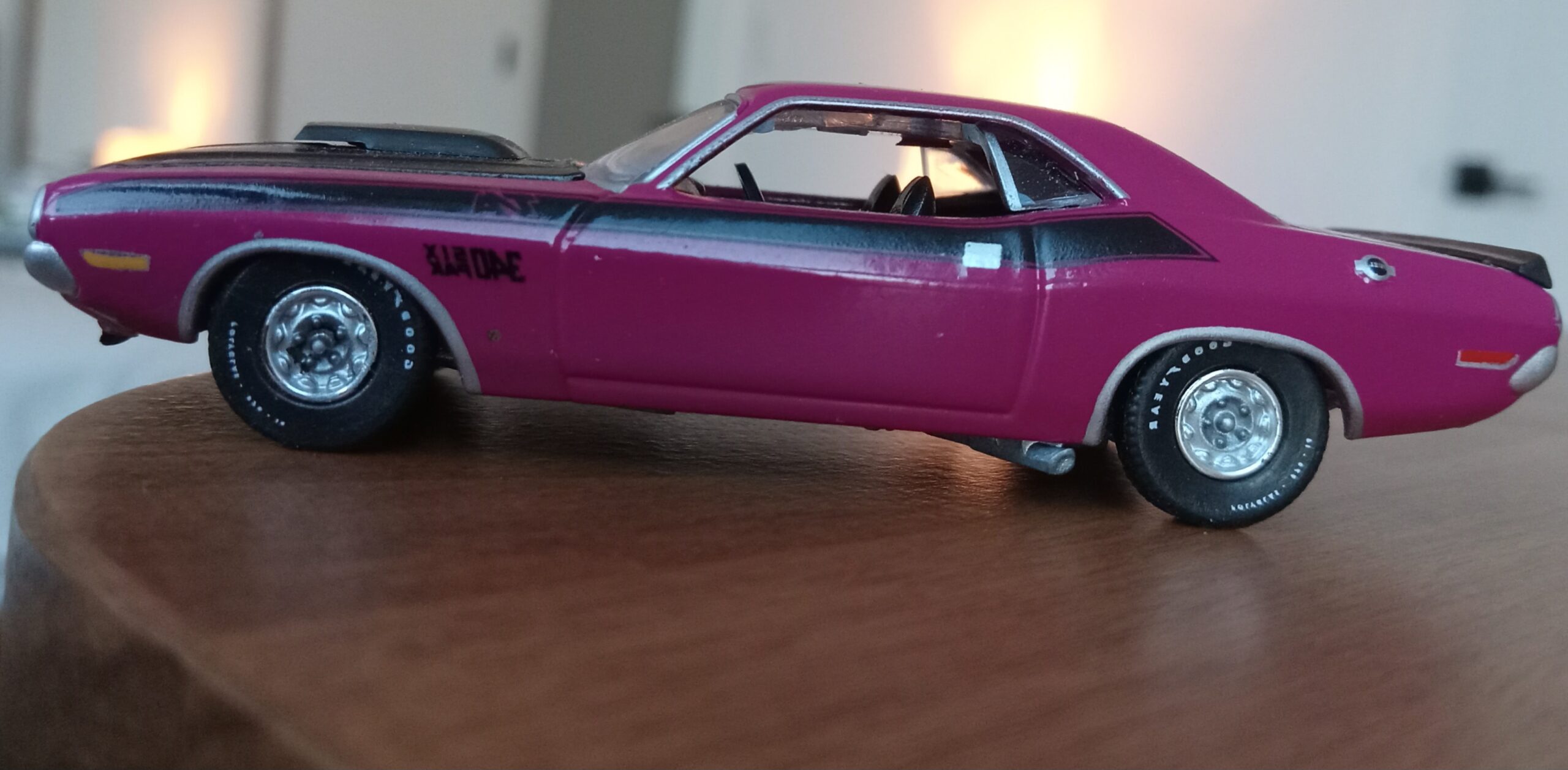
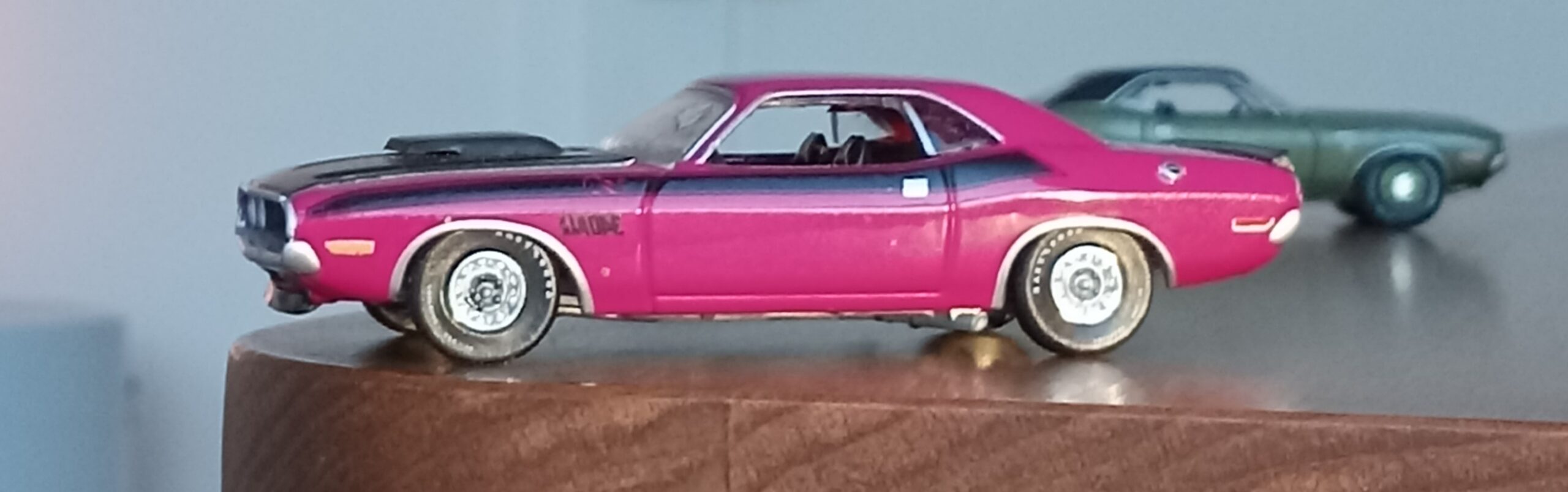
1:極めて美しく均整の取れたクーペ・プロポーション+異常にに幅広い全幅が生み出す、クール&ワイルドな相反する方向性が織りなす『ただ物でなさ』の演出
ーーーー>タイヤサイズをカスタムすることで前傾させることで、ワイルド性が爆上がり!
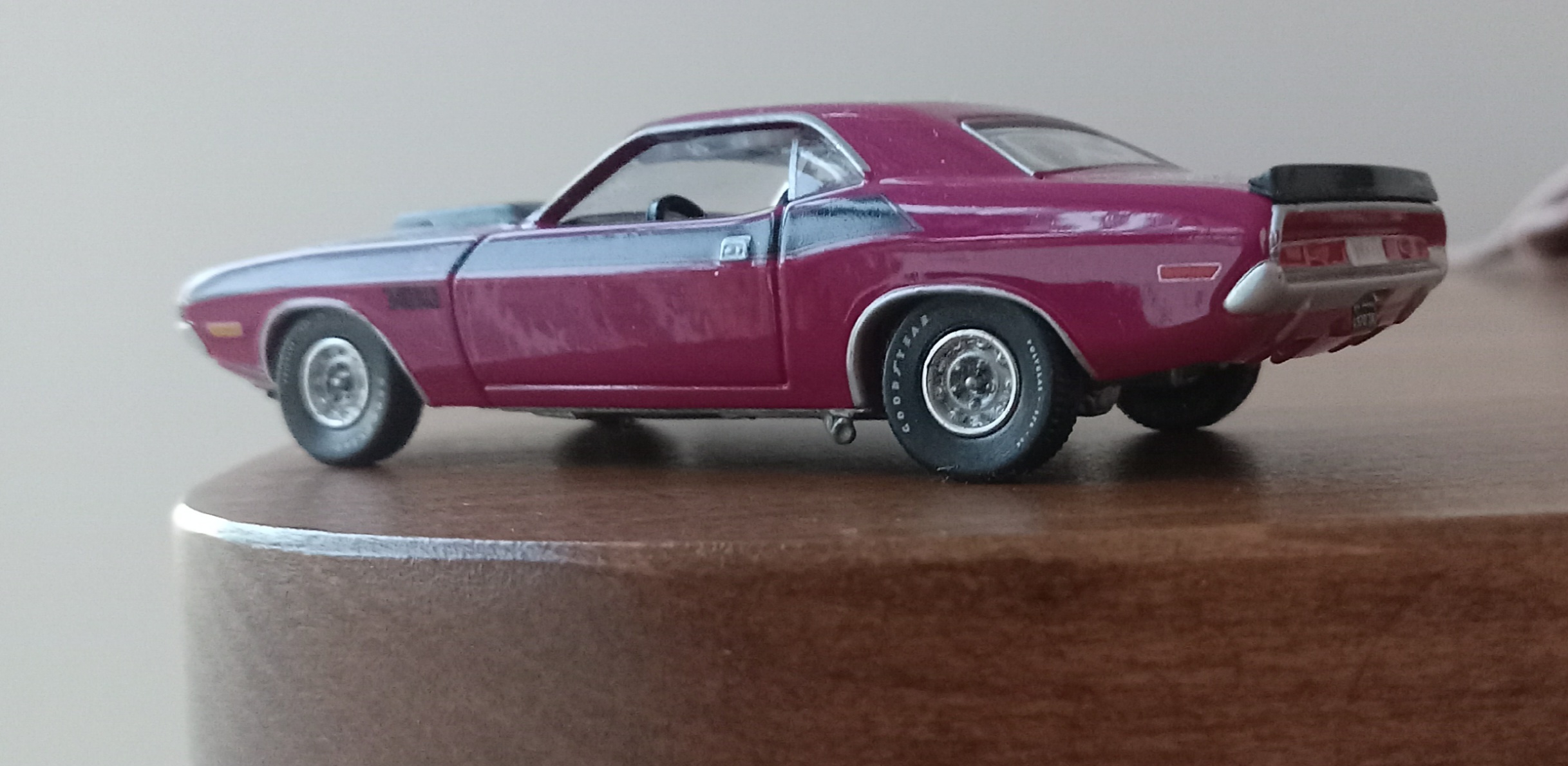
2:広い全幅であるからこそ可能な、ドア面からキャビンへのタンブルフォームの凄まじいまでの内側への傾斜角ーーーーー>低く小さなキャビンをさらに強調
3:8頭身的体躯をいっそう強調する上下に細長く伸びたフロント、リアのライト&グリルデザインの妙味
4:サイドビューから明らかな、バラクーダに比べて上下に圧縮された前後のオーバー・ハング部分ーーーー>巨大感を強調!!
5:ヘミ・エンジン搭載モデルのボンネット・スクープやボンネット、ボディーサイドに繰り広げられるグラフィック処理の時代感&結果としての永遠のシンボルの創設
1つづつ写真入りで見て行きましょう。
1:極めて美しく均整の取れたクーペ・プロポーション+異常にに幅広い全幅が生み出す、クール&ワイルドな相反する方向性が織りなす『ただ物でなさ』の演出
(トップビューから見て、ドア横あたりで絞り込まず、むしろ逆にそこを最大全幅部分に持ち込み、前後にテーパーさせることで、嫌が上でも動的迫力を演出)
ーーーー>タイヤサイズをカスタム=前傾させることで、ワイルド性が爆上がり!
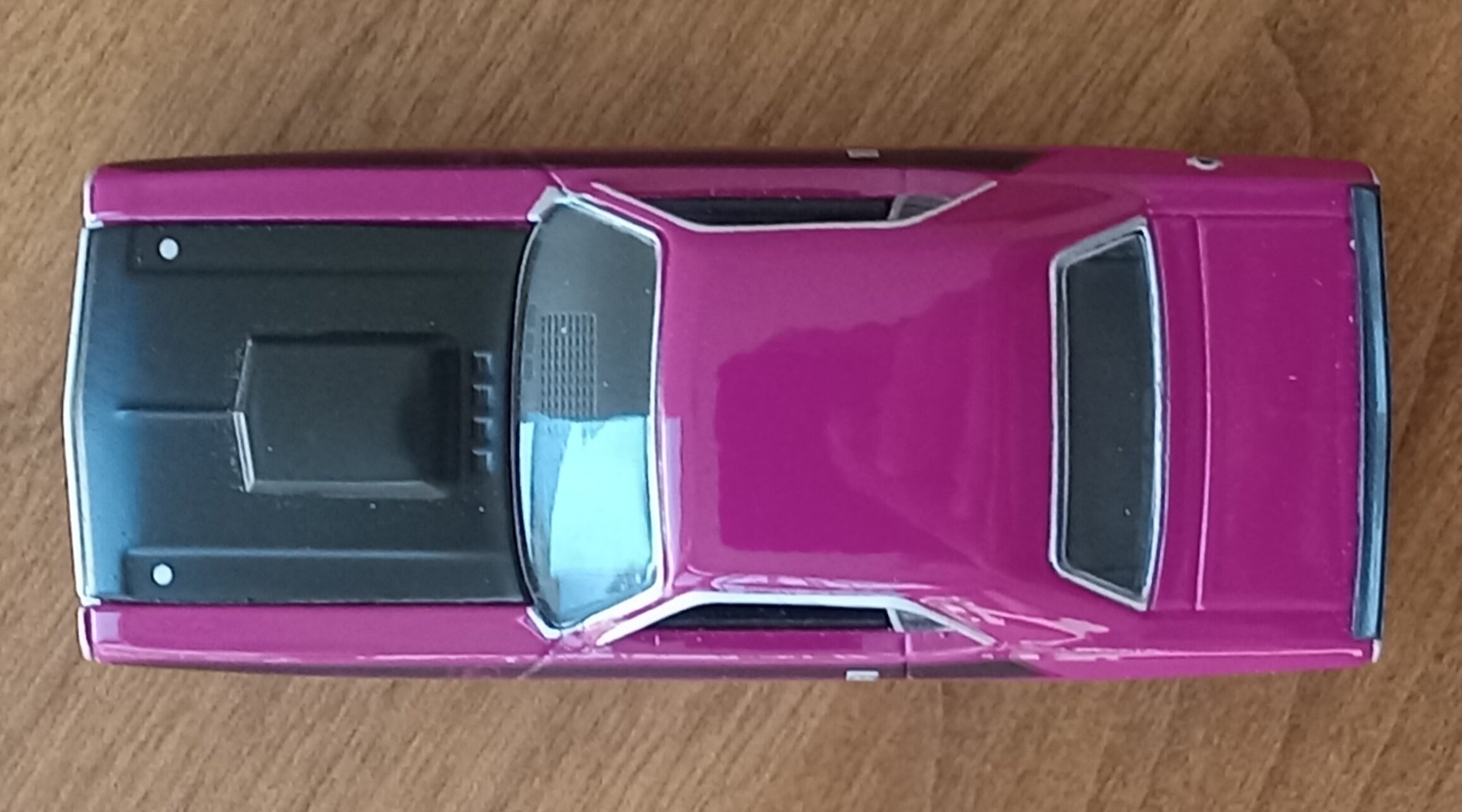
2:広い全幅であるからこそ可能な、ドア面からキャビンへのタンブルフォーム(サイドウインドウ断面)の凄まじいまでの内側への傾斜角
(アメ車は通常この角度がきついですが、この世代のチャレンジャーとバラクーダは特にきついです)
ーーーーー>低く小さなキャビンをさらに強調
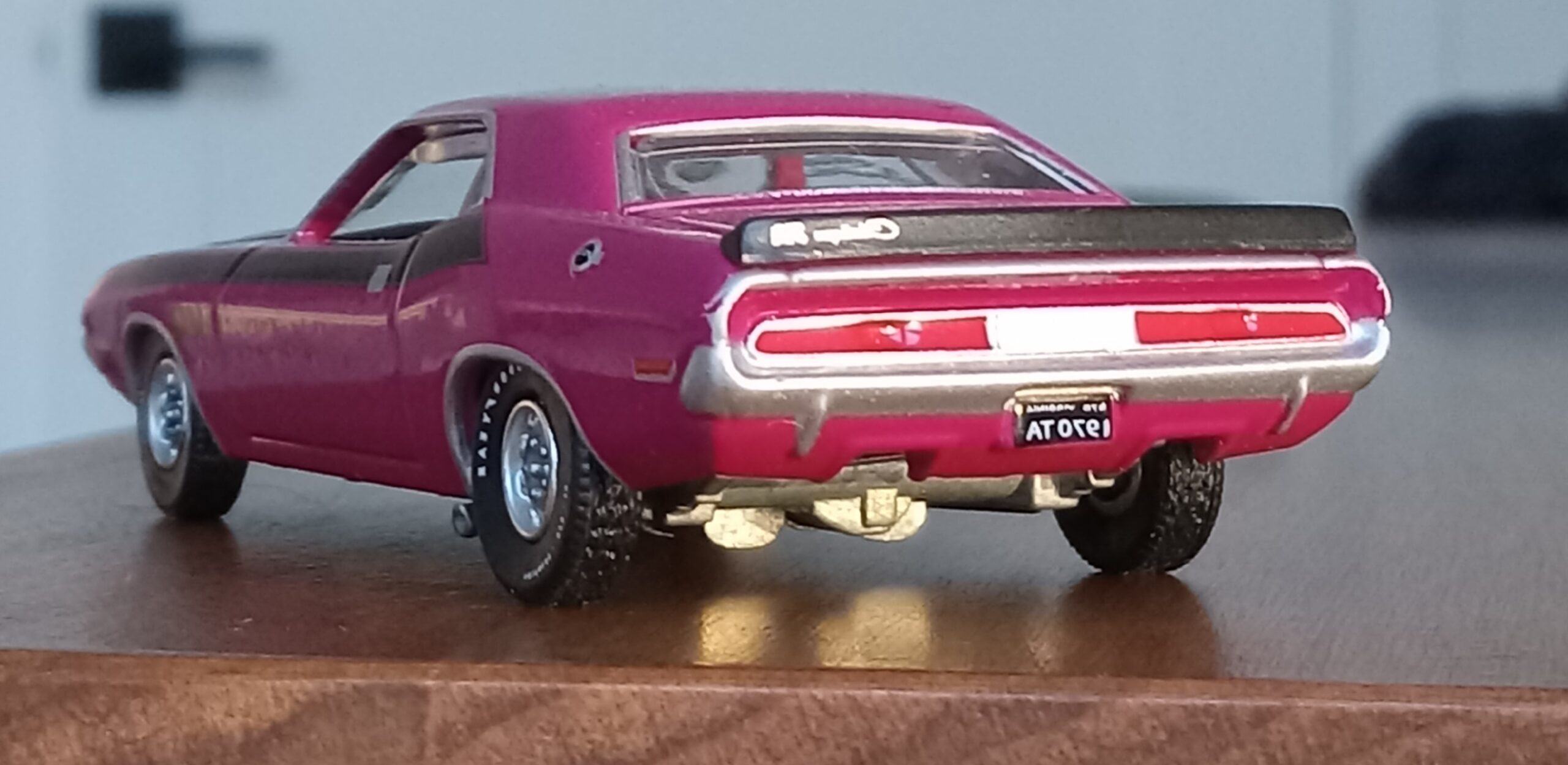
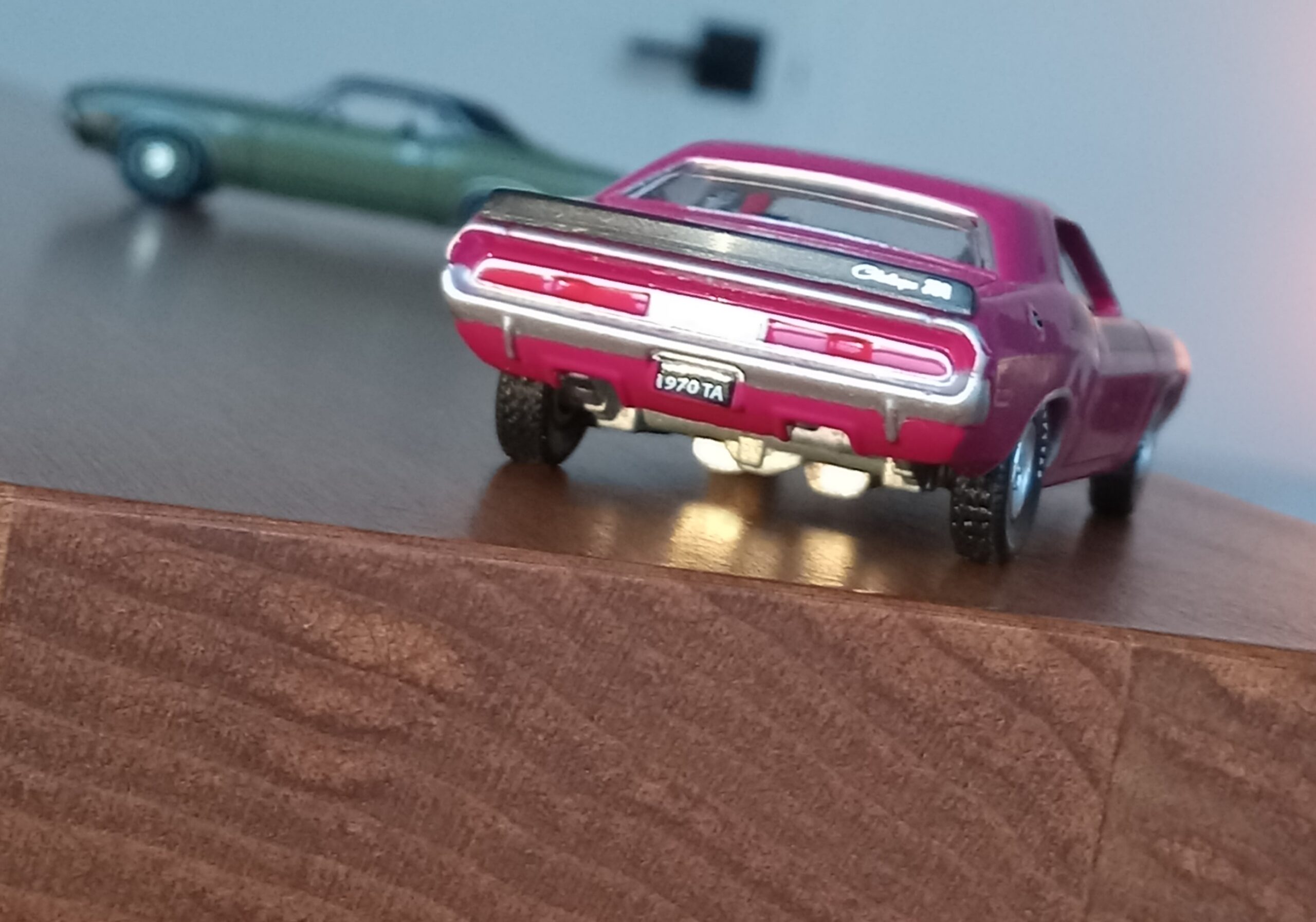
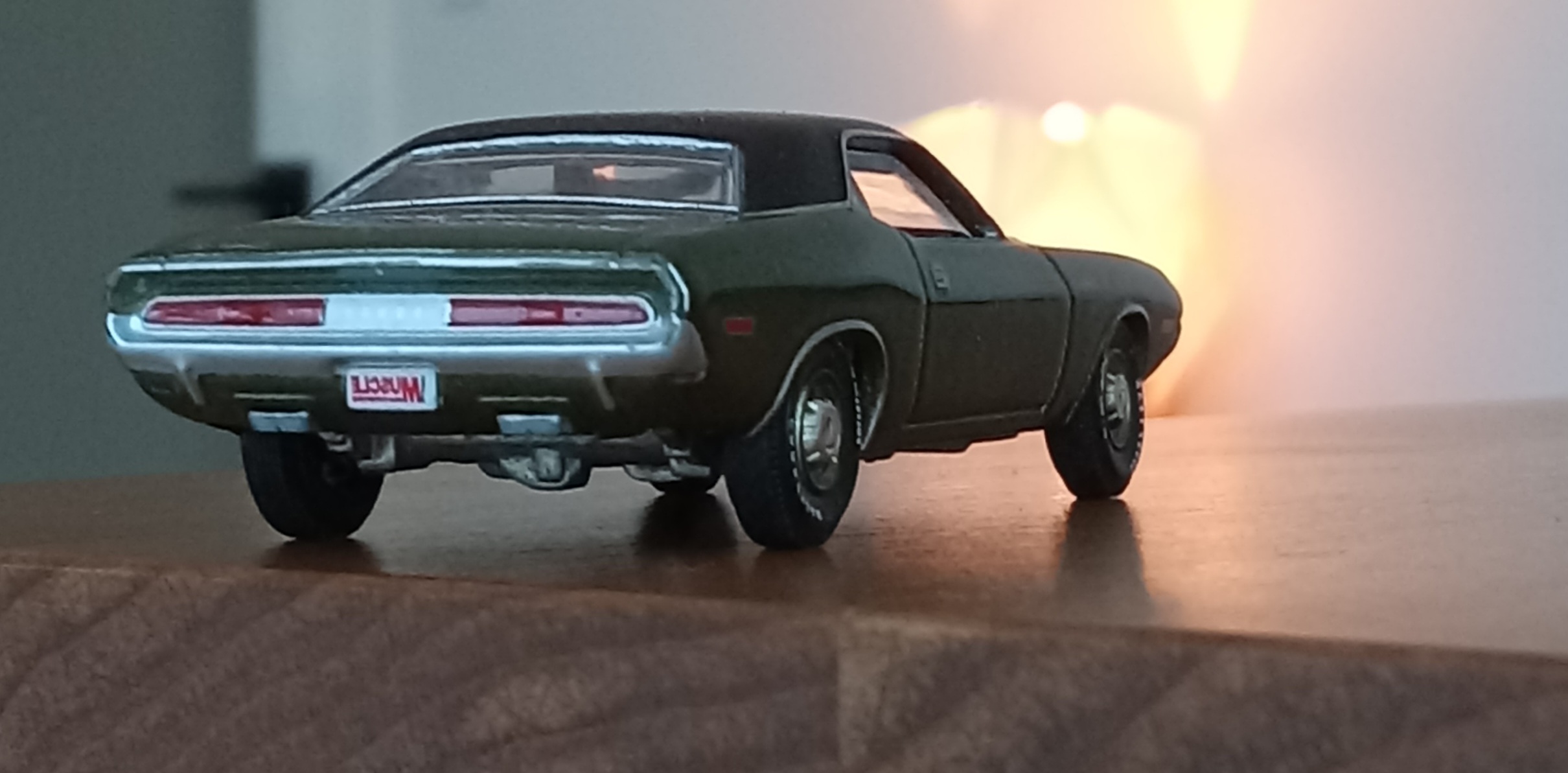
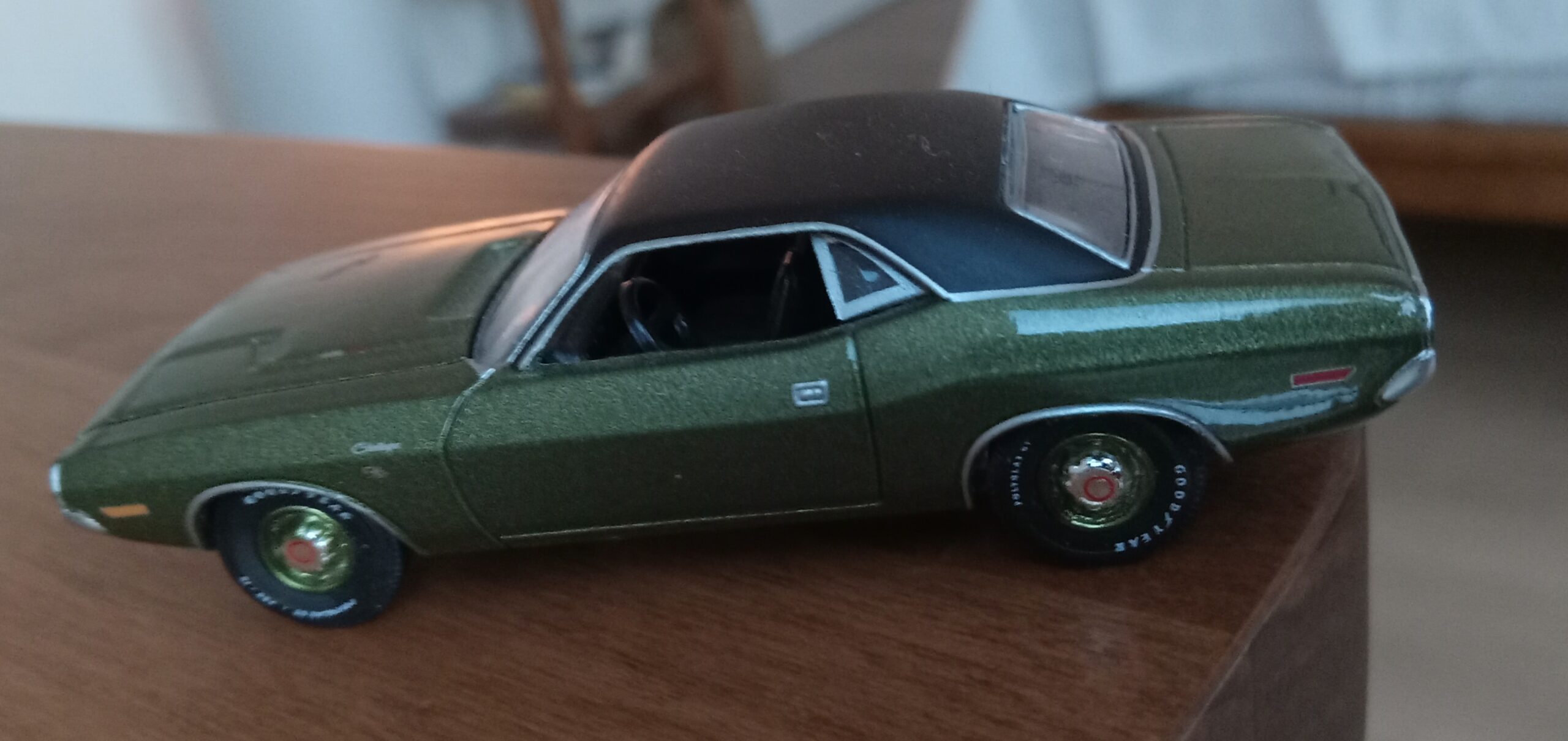
3:8頭身的体躯をいっそう強調する上下に細長く伸びたフロント、リアのライト&グリルデザインの妙味
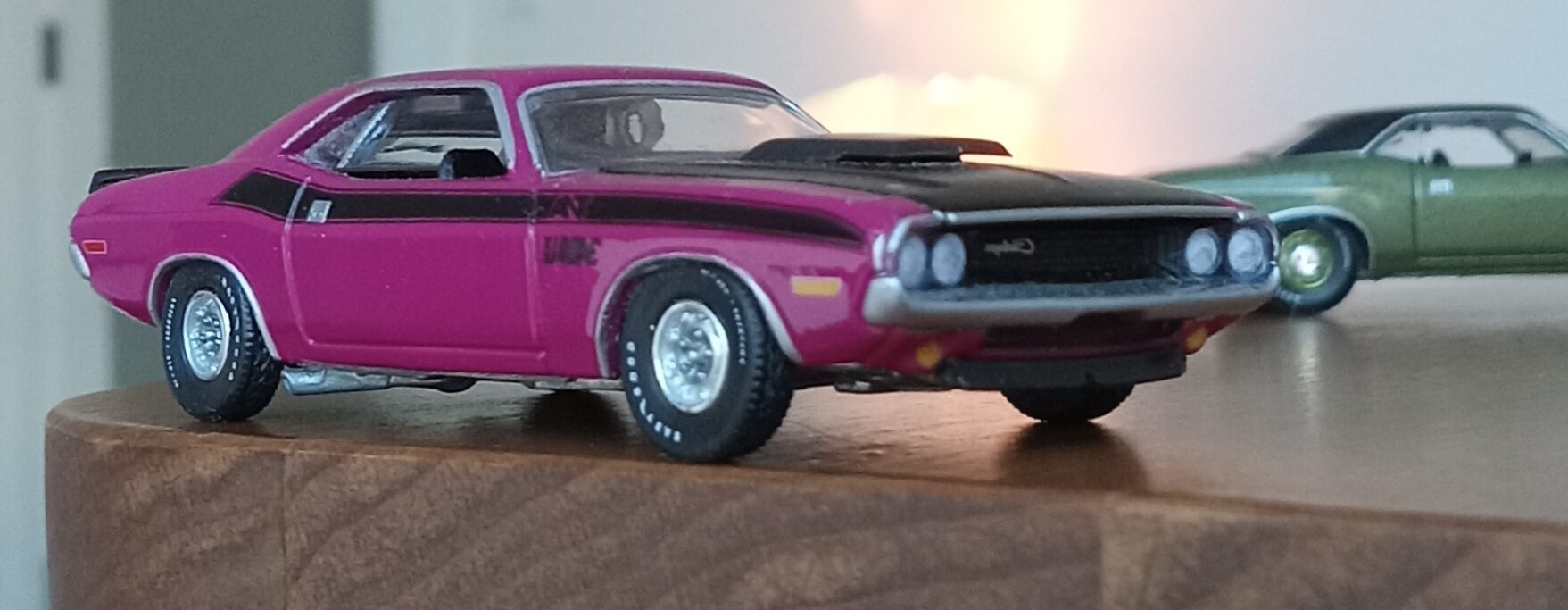
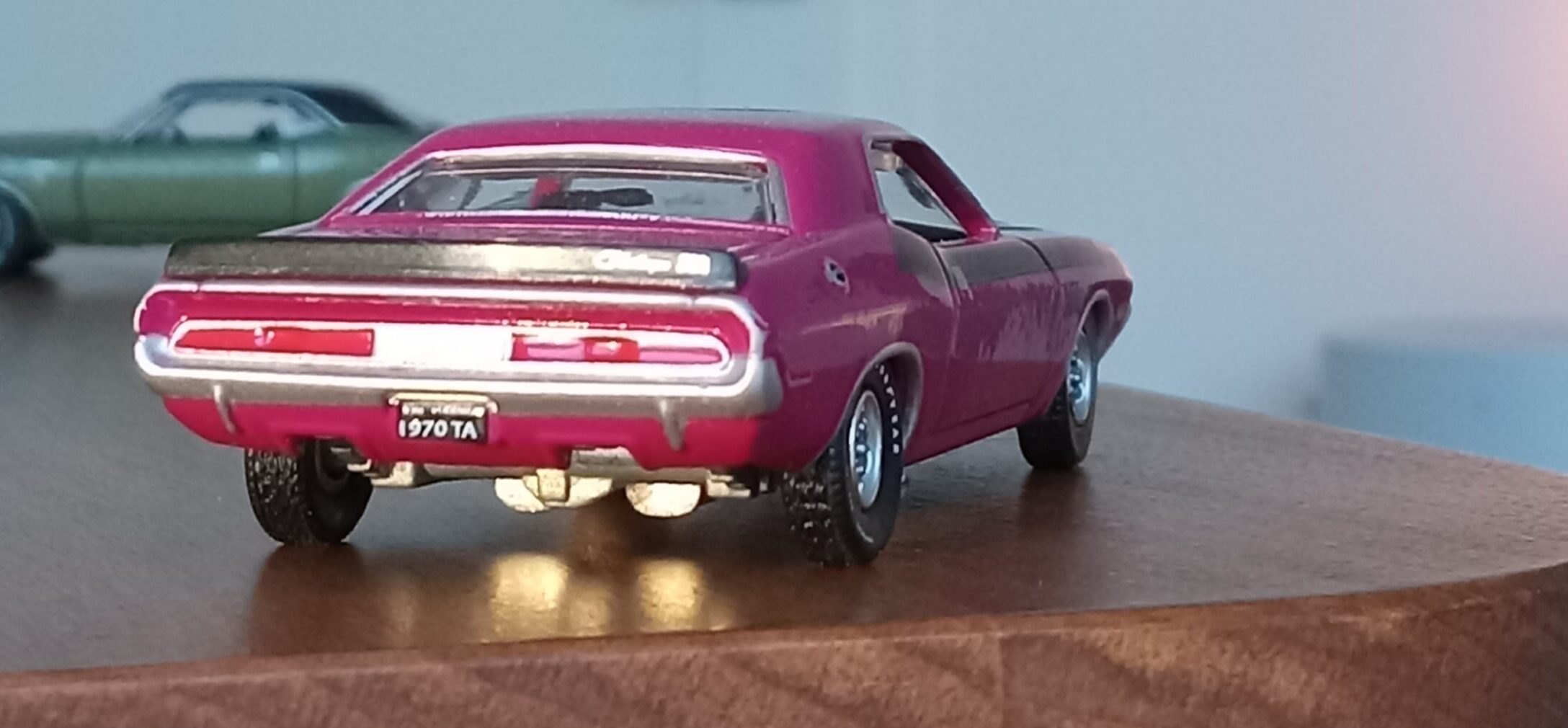
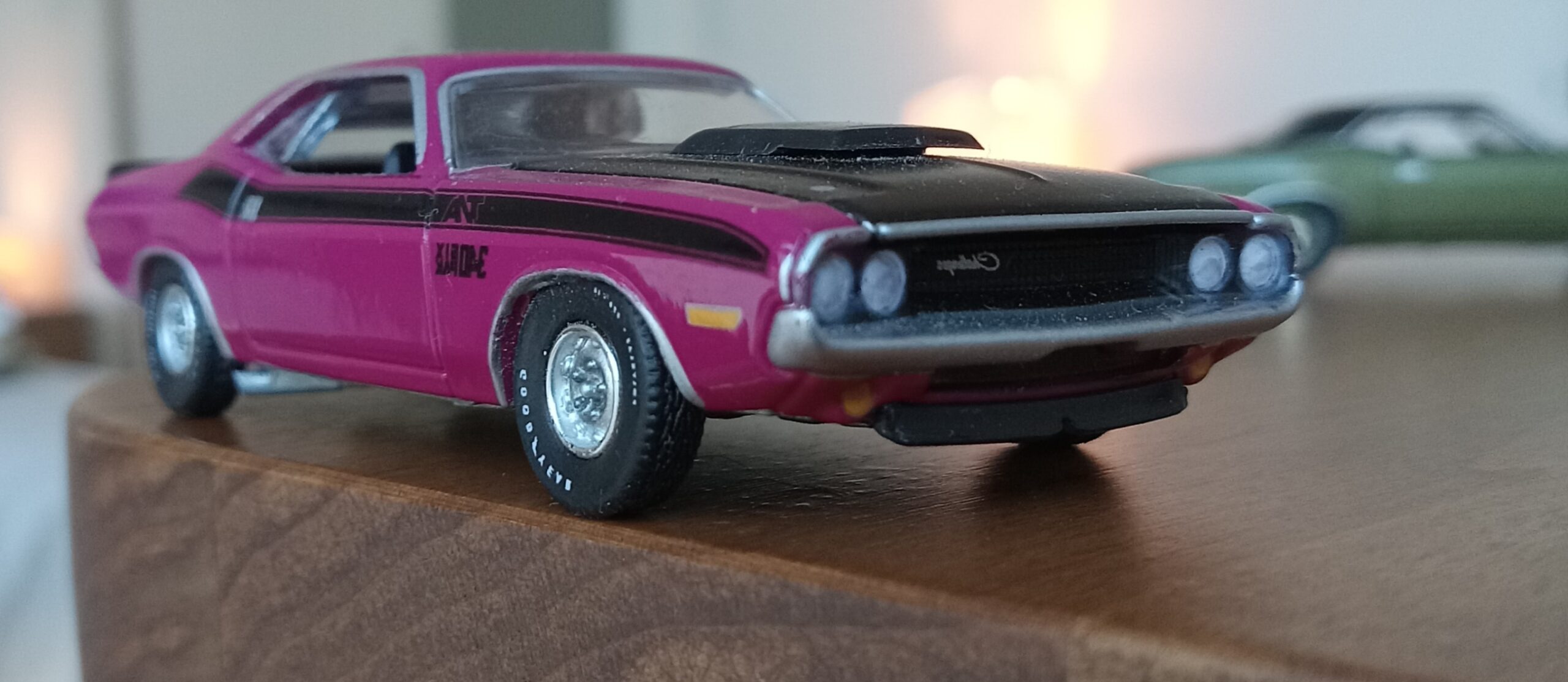
4:サイドビューから明らかな、バラクーダに比べて上下に圧縮された前後のオーバー・ハング部分
ーーーー>巨大感を強調!!
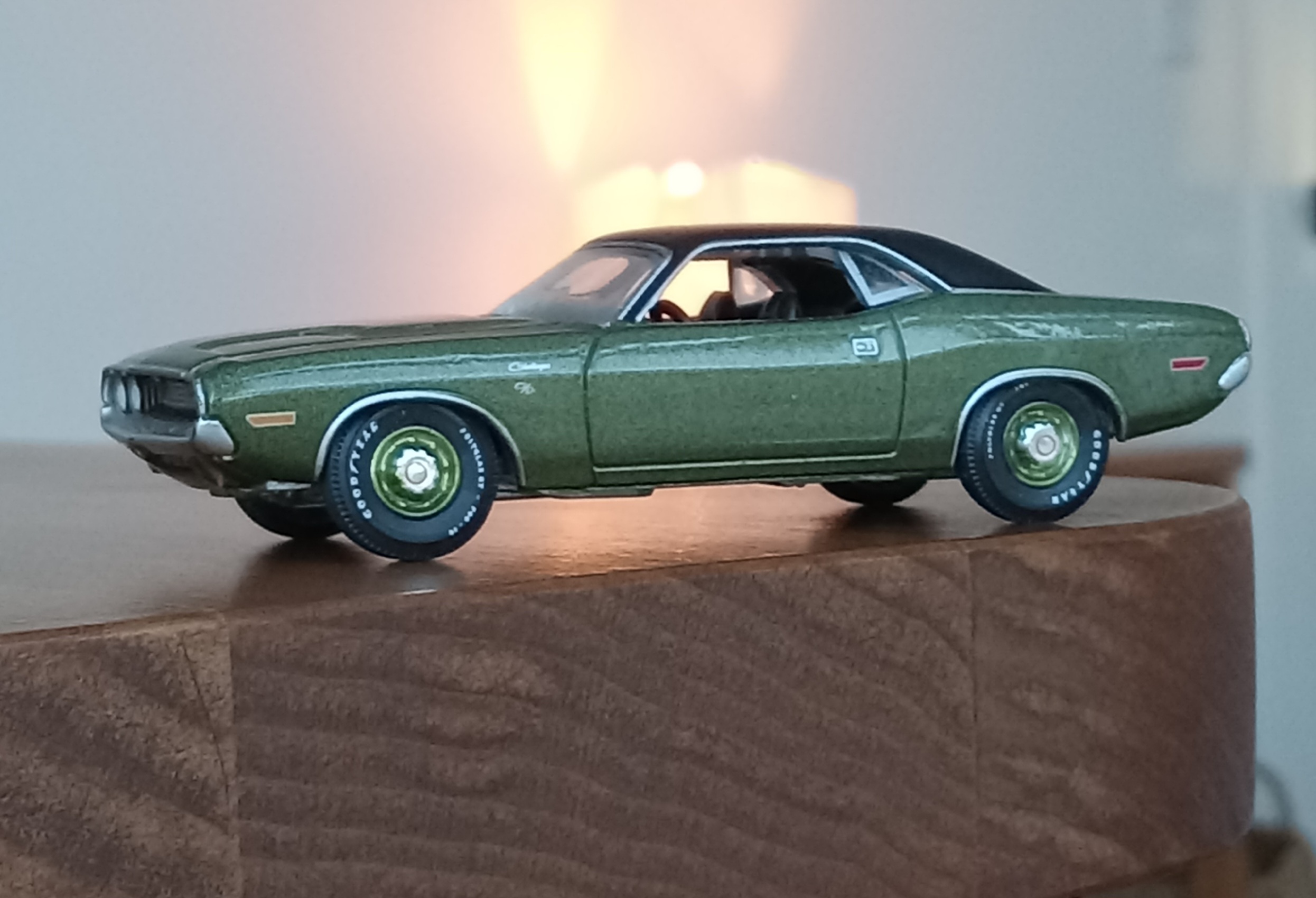
5:ヘミ・エンジン搭載モデルのボンネット・スクープやボンネット、ボディーサイドに繰り広げられるグラフィック処理の時代感&結果としての永遠のシンボルの創設
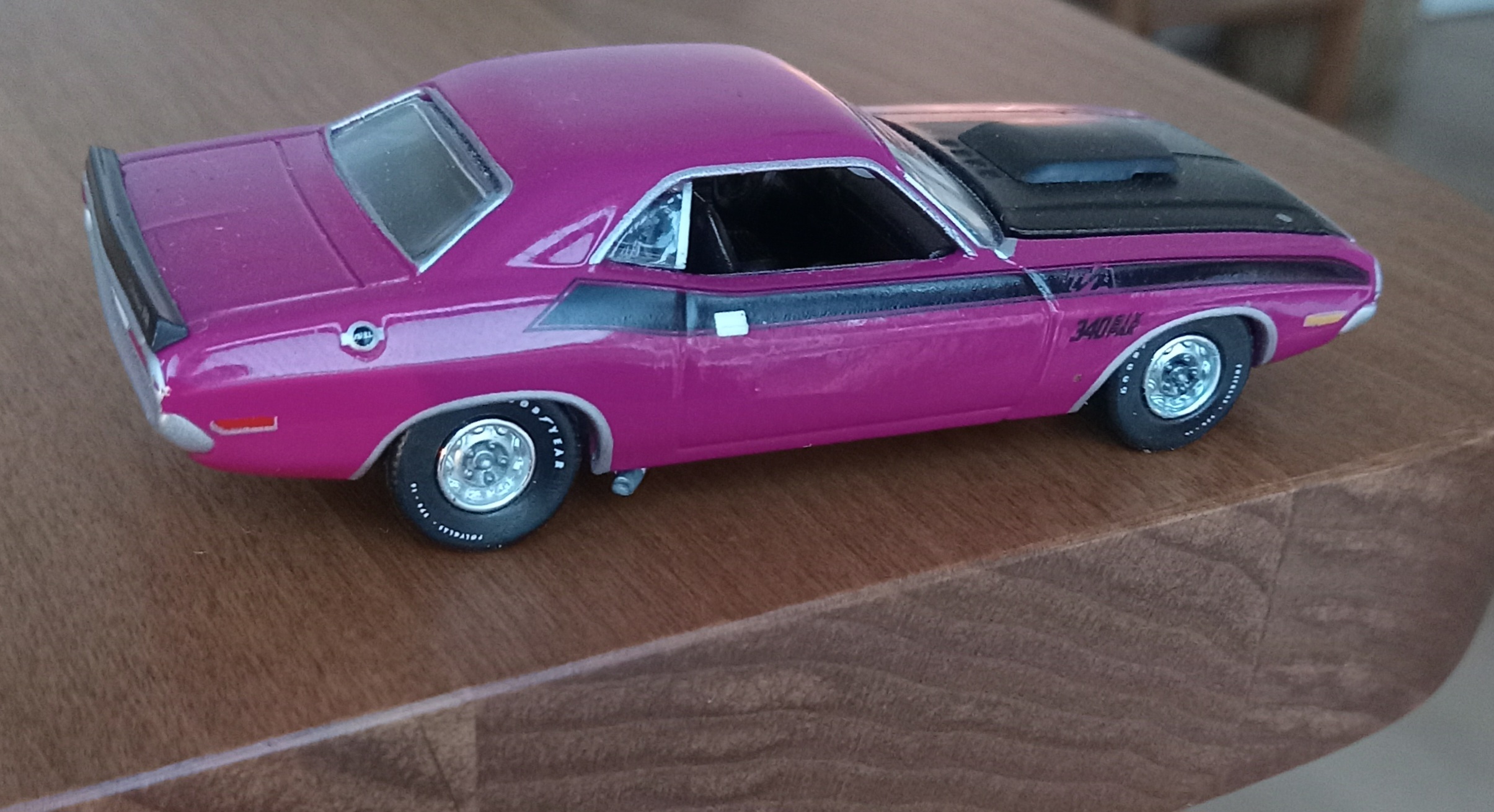
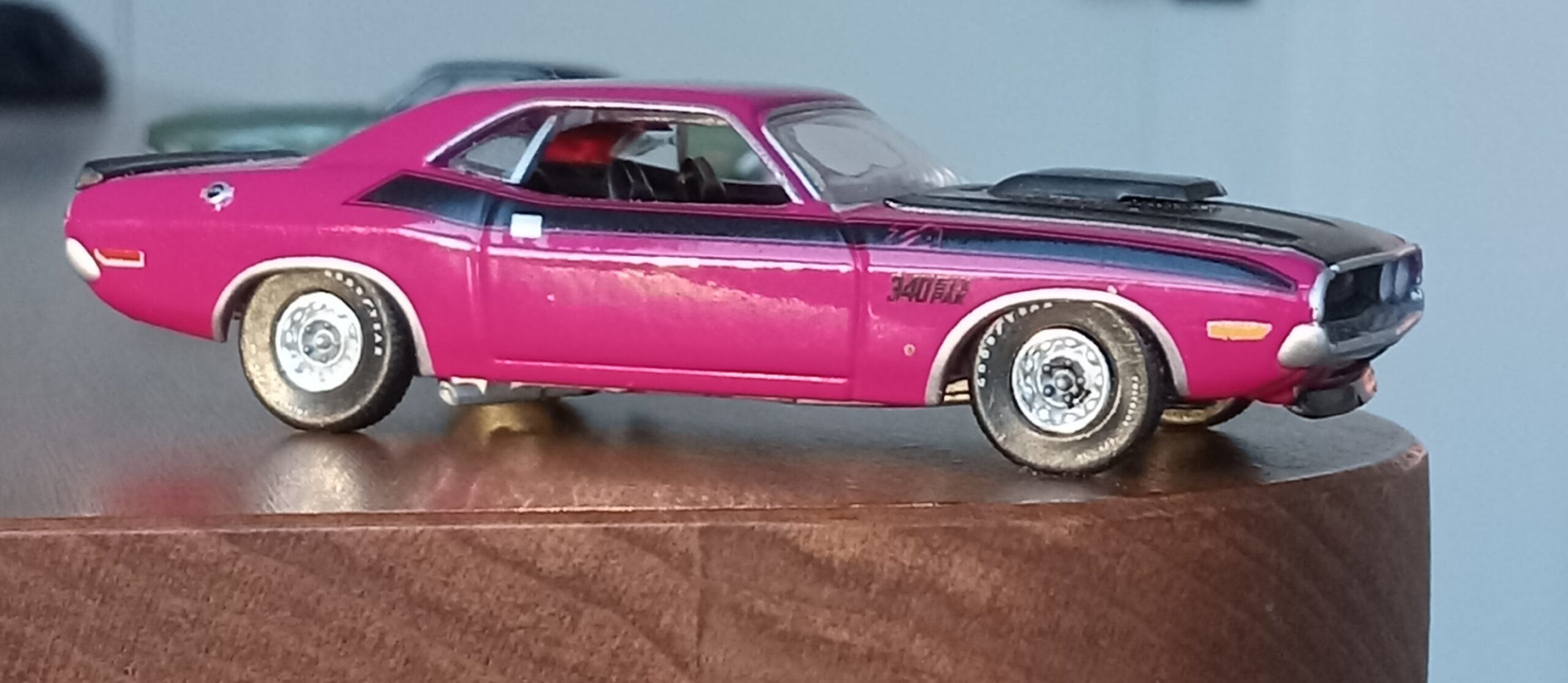
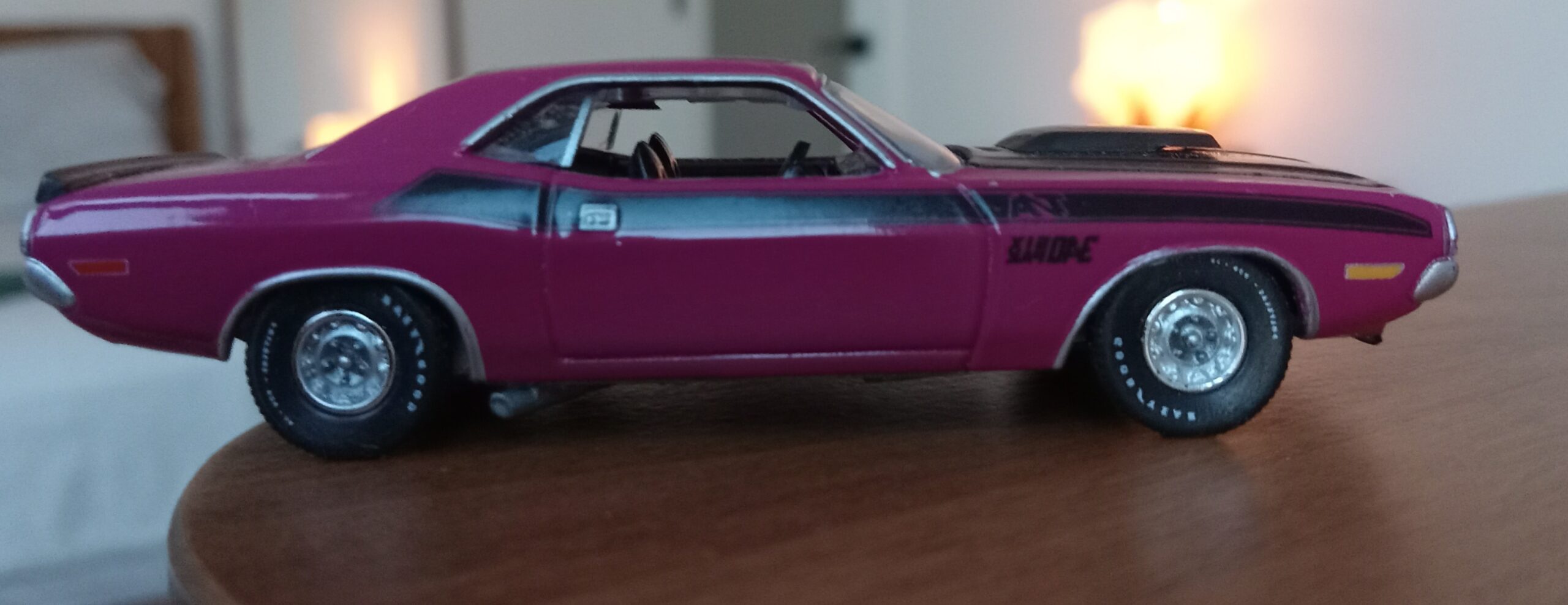
次はプリムス・バラクーダの
デザイン的特徴です。
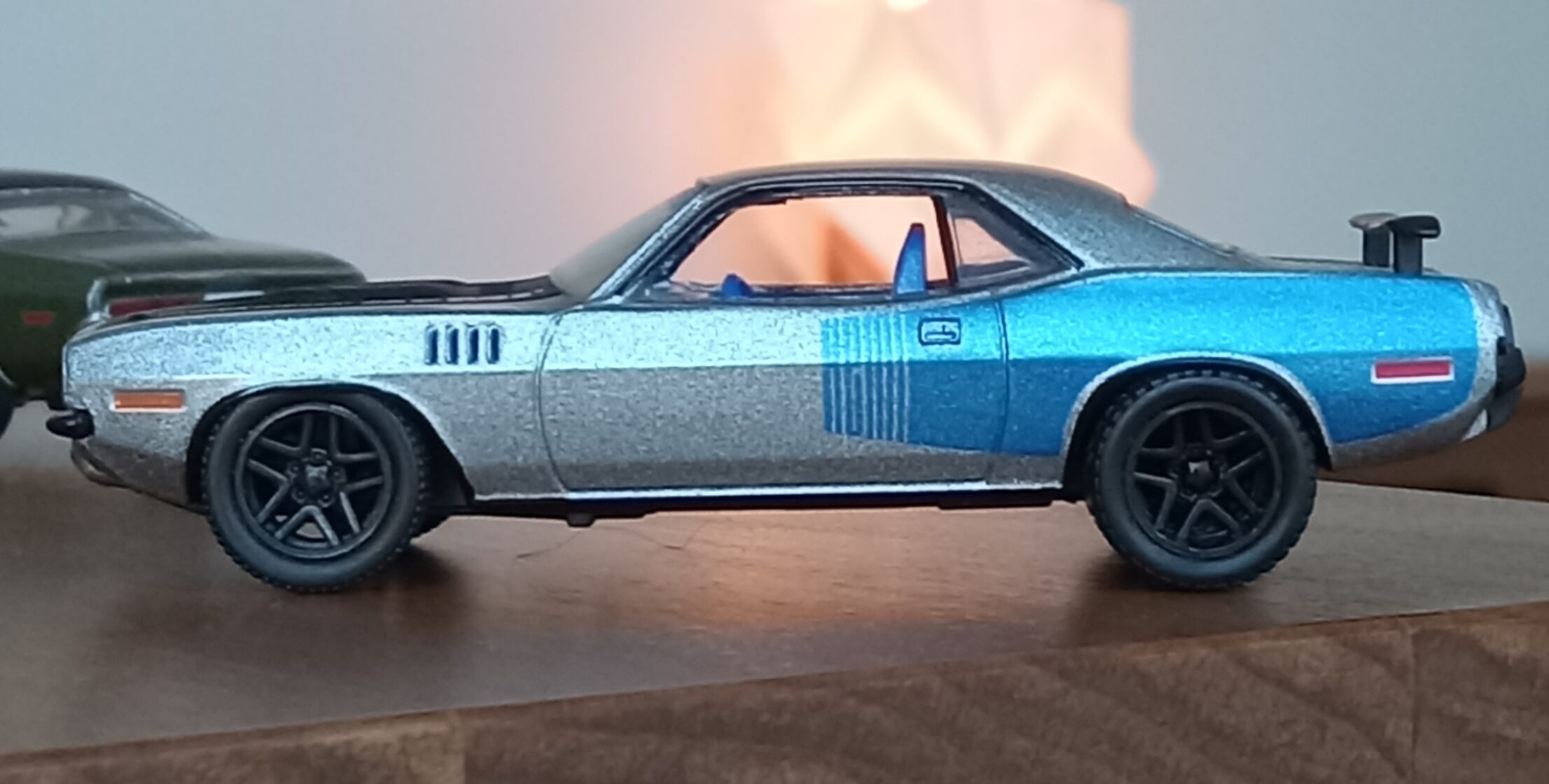
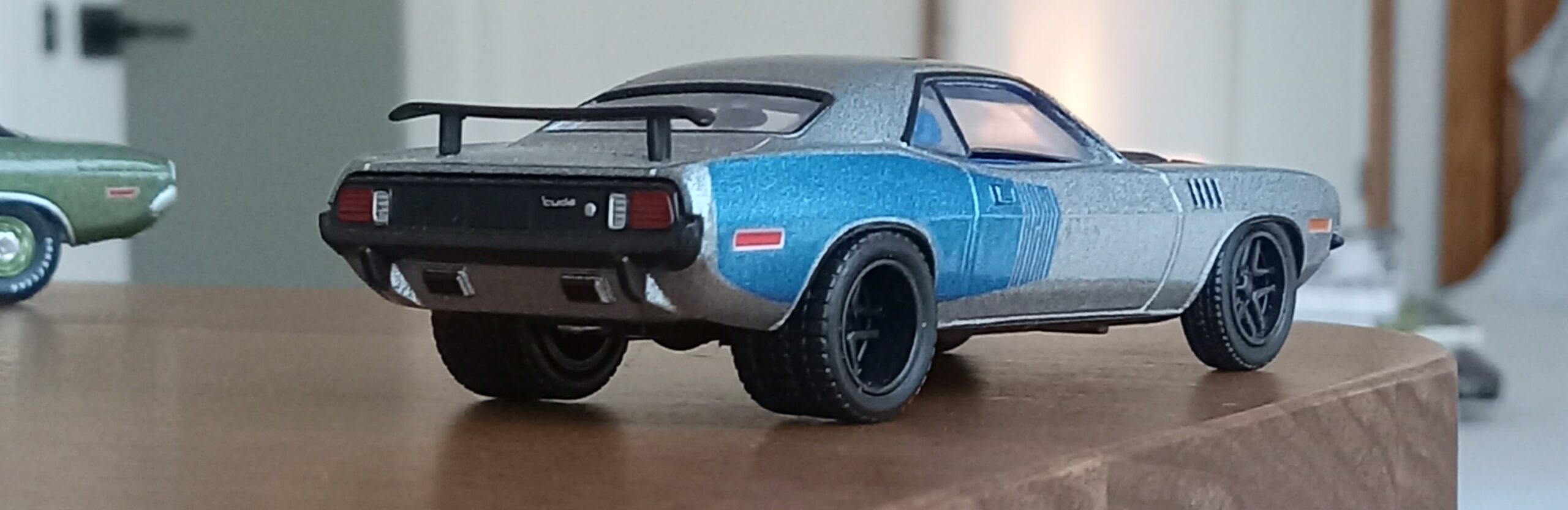
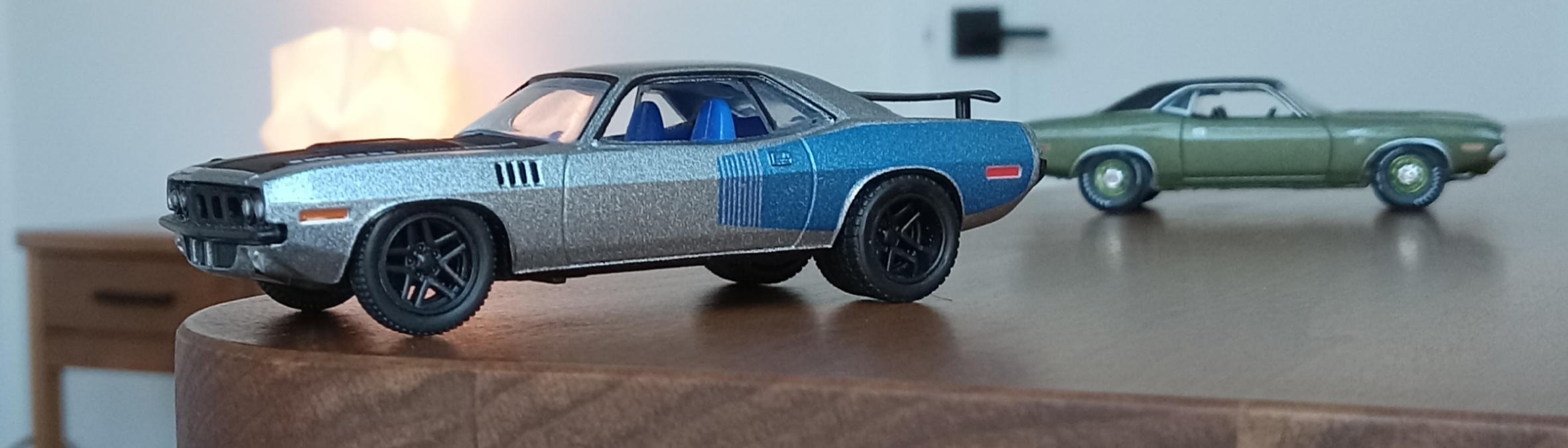
1:チャレンジャーに比べて短い全長とホイールベースが産む、軽快感に満ちたスタンス感
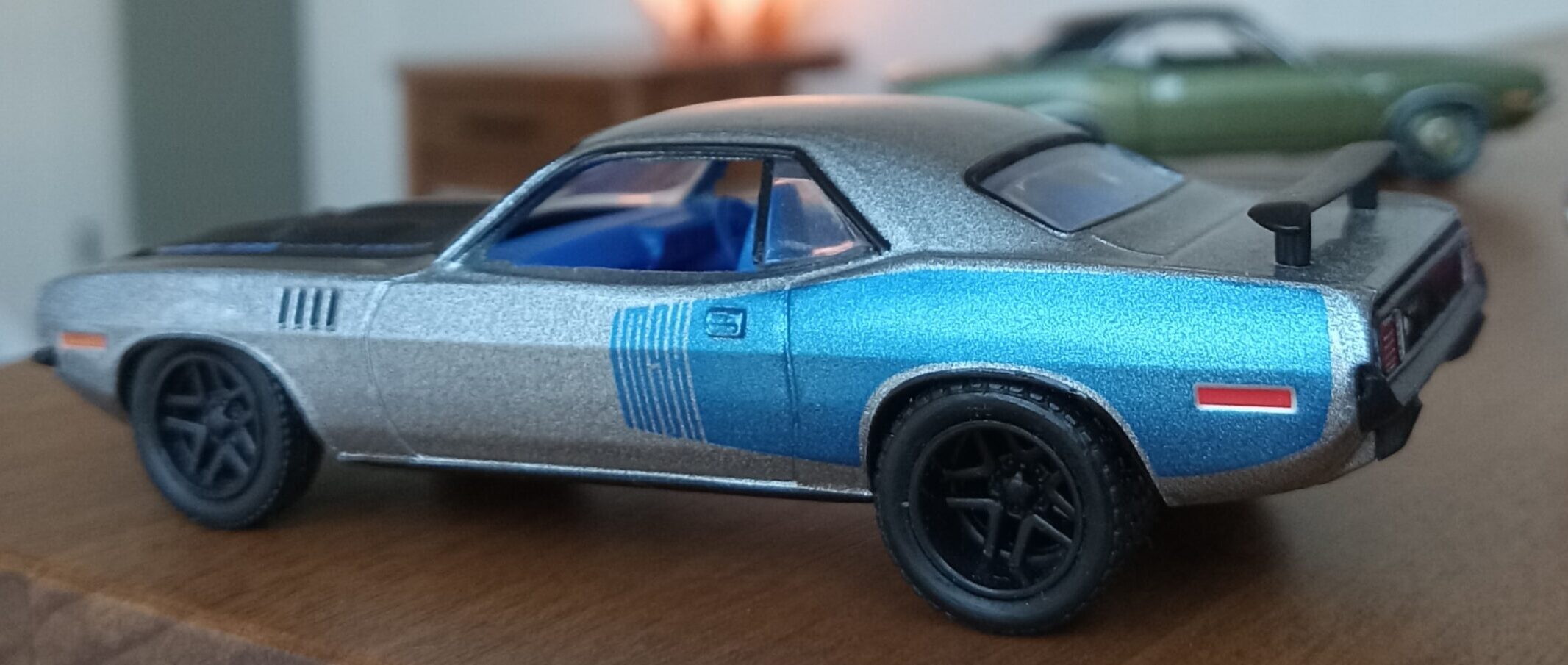
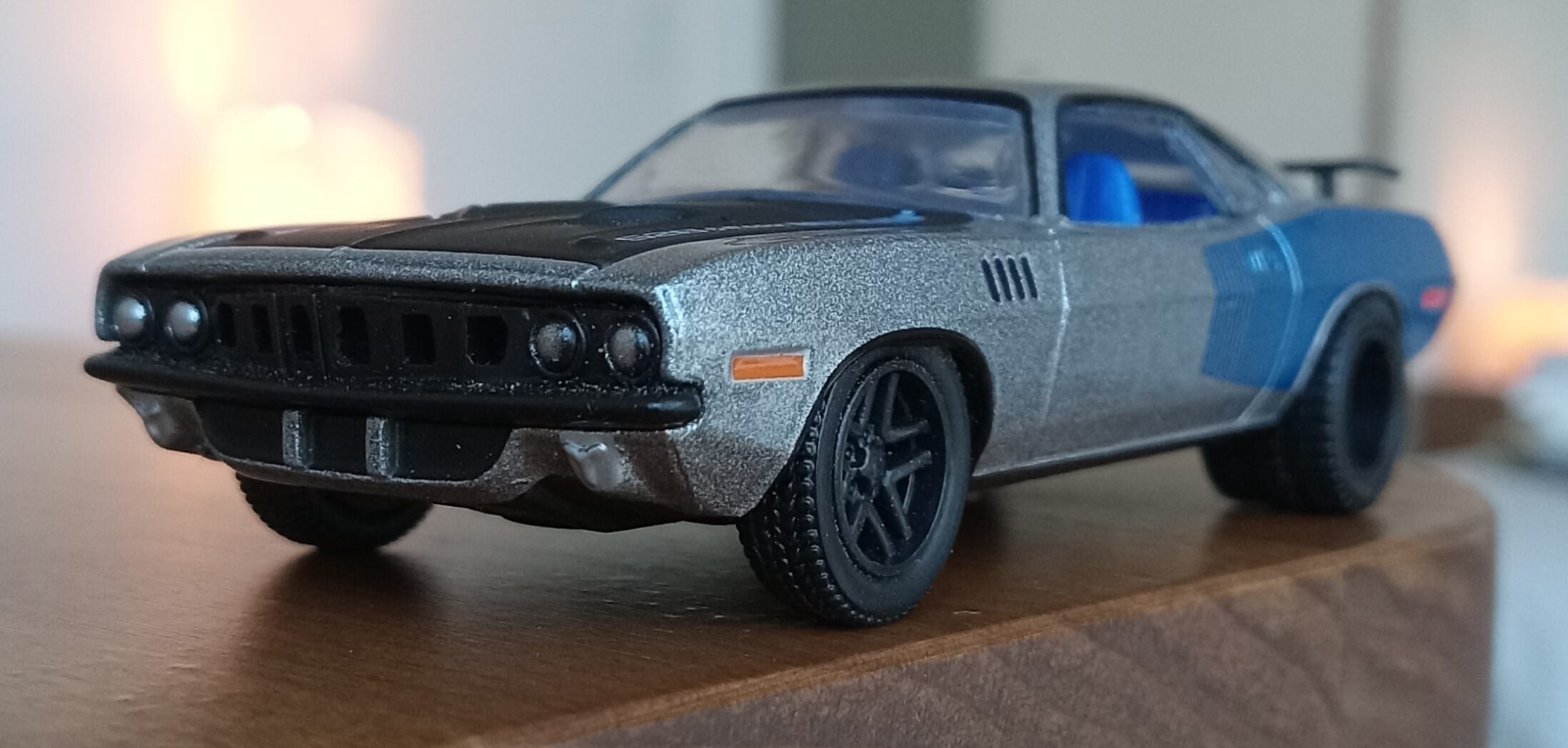
2:より強烈なボンネットとリアボディーサイドのグラフィック処理
それでは写真入りで解説です。
1:チャレンジャーに比べて短い全長とホイールベースが産む、軽快感に満ちたスタンス感
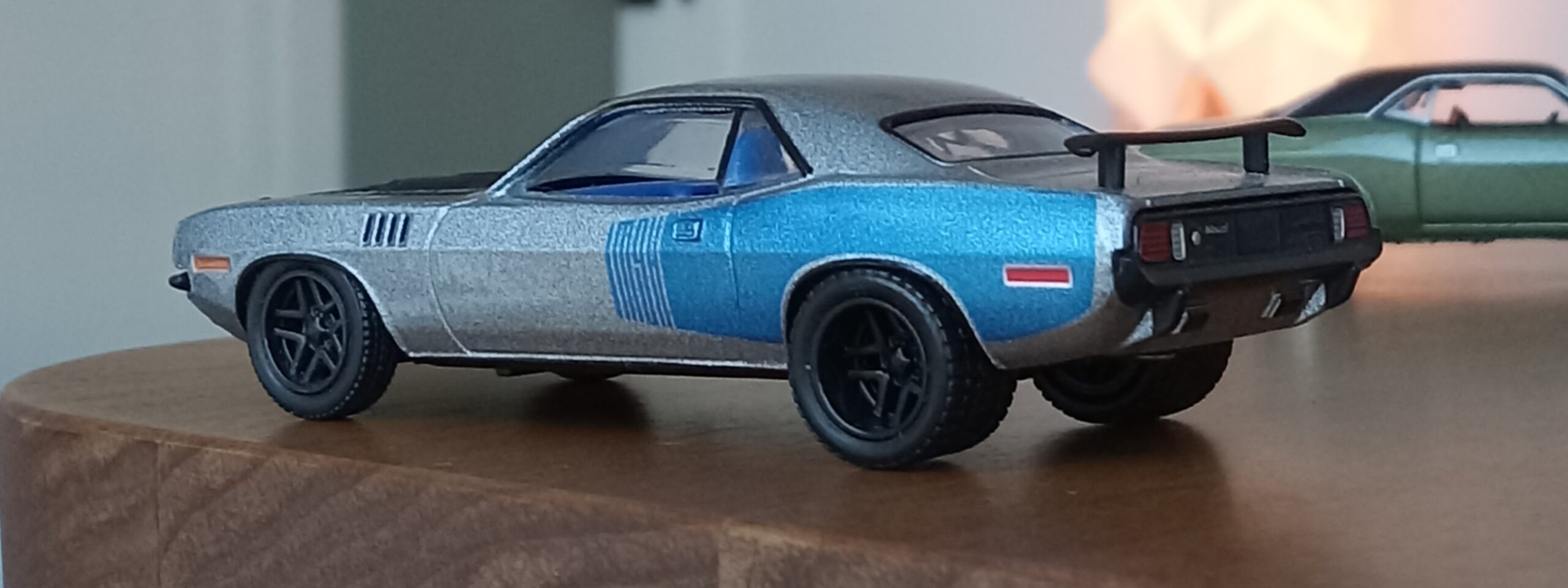
2:より強烈なボンネットとリアボディーサイドのグラフィック処理
ーーーーー>フロントフェンダーの後ろのエアダクト処理もパワフルです
クライスラーのハンサムな兄弟の
外観デザインの優秀性をご紹介しました。
次は私個人の体験談です、
*『私』とチャレンジャーとバラクーダ
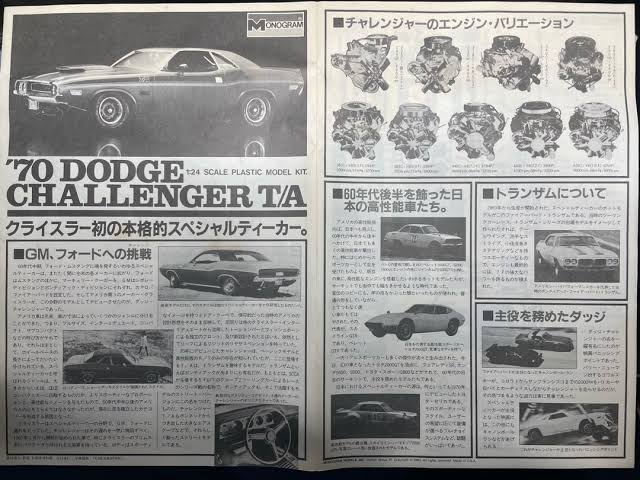
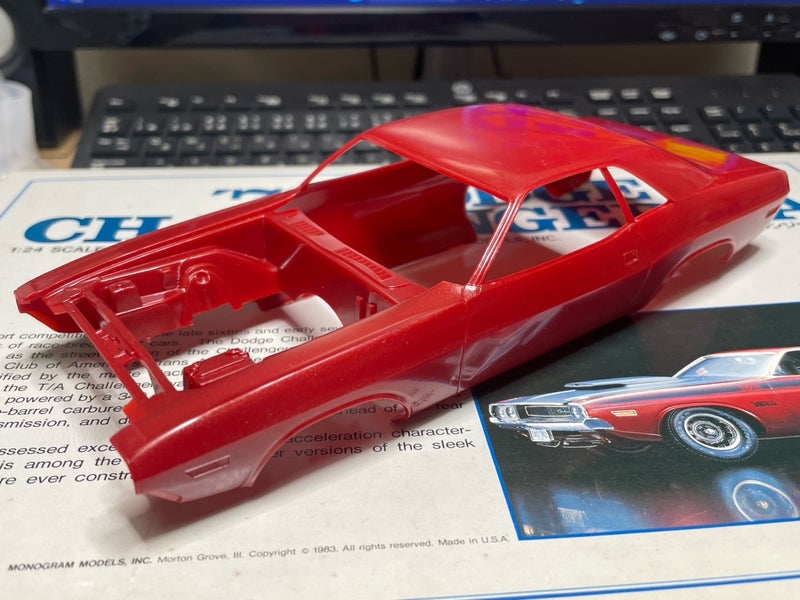
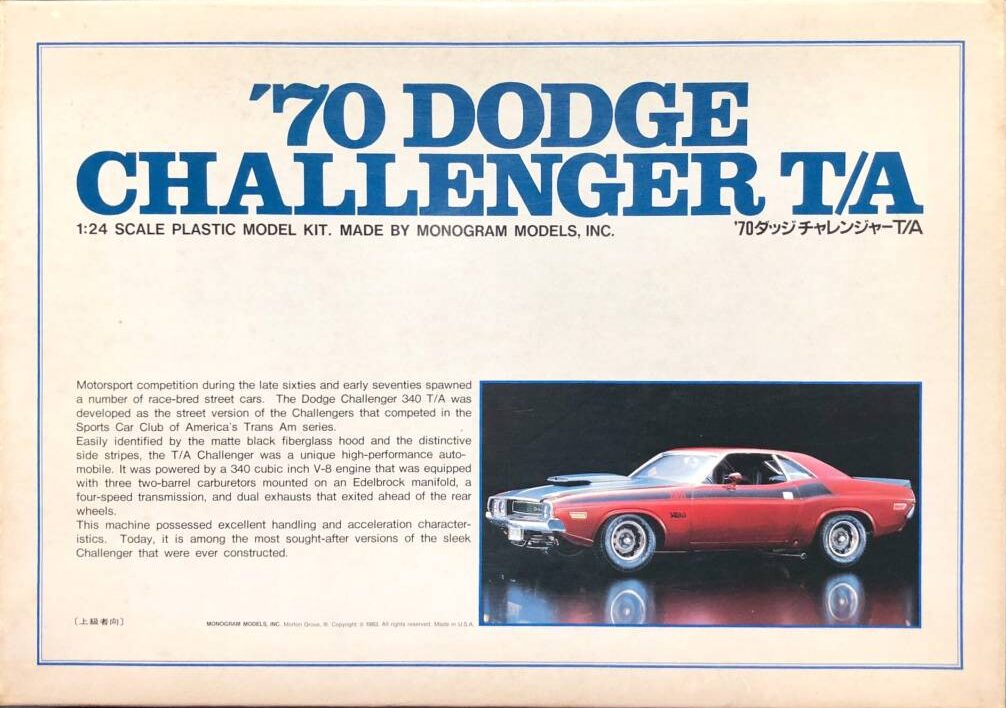
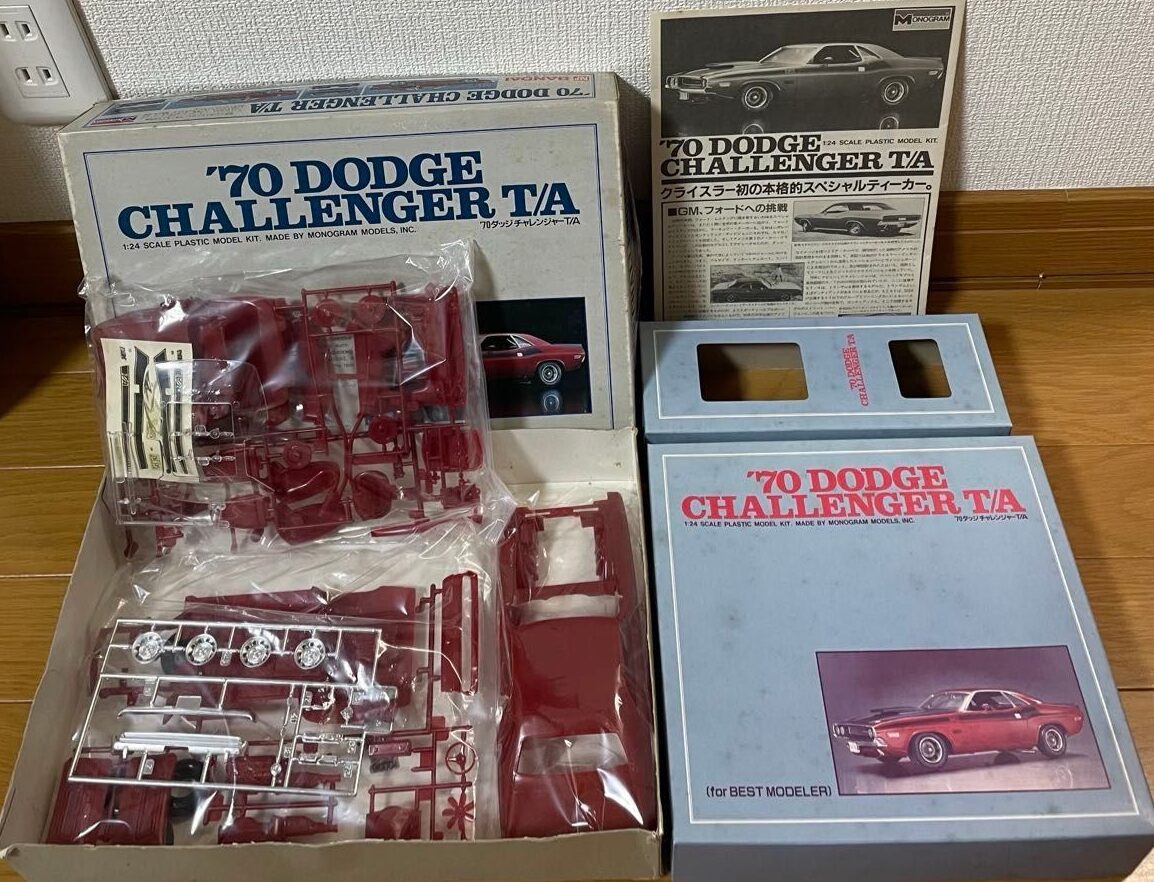
#バンダイ版、モノグラム製, 1/24 ダッジ・チャレンジャー 1970年型(バーガンディー)
高校2-3年の時、
モノグラム社製のダッジチャレンジャーに巡り合いました。
当時のモノグラムの製品は、
バンダイ箱入りでバンダイが制作した説明書/設計図が付いていまして、
その中の解説部分のエンジンオプションの写真と
バーガンディーの幅広ボディーが
いまだに強烈な印象として脳裏に残ってます。
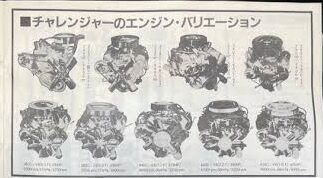
*まず最初に、一車種のクルマに
こんなにもたくさんのエンジン・バリエーションがあるのに驚き、
*更にはそのボディーの
とんでもなく薄っぺらで、幅広な車幅との比率が初体現レベルでした!!
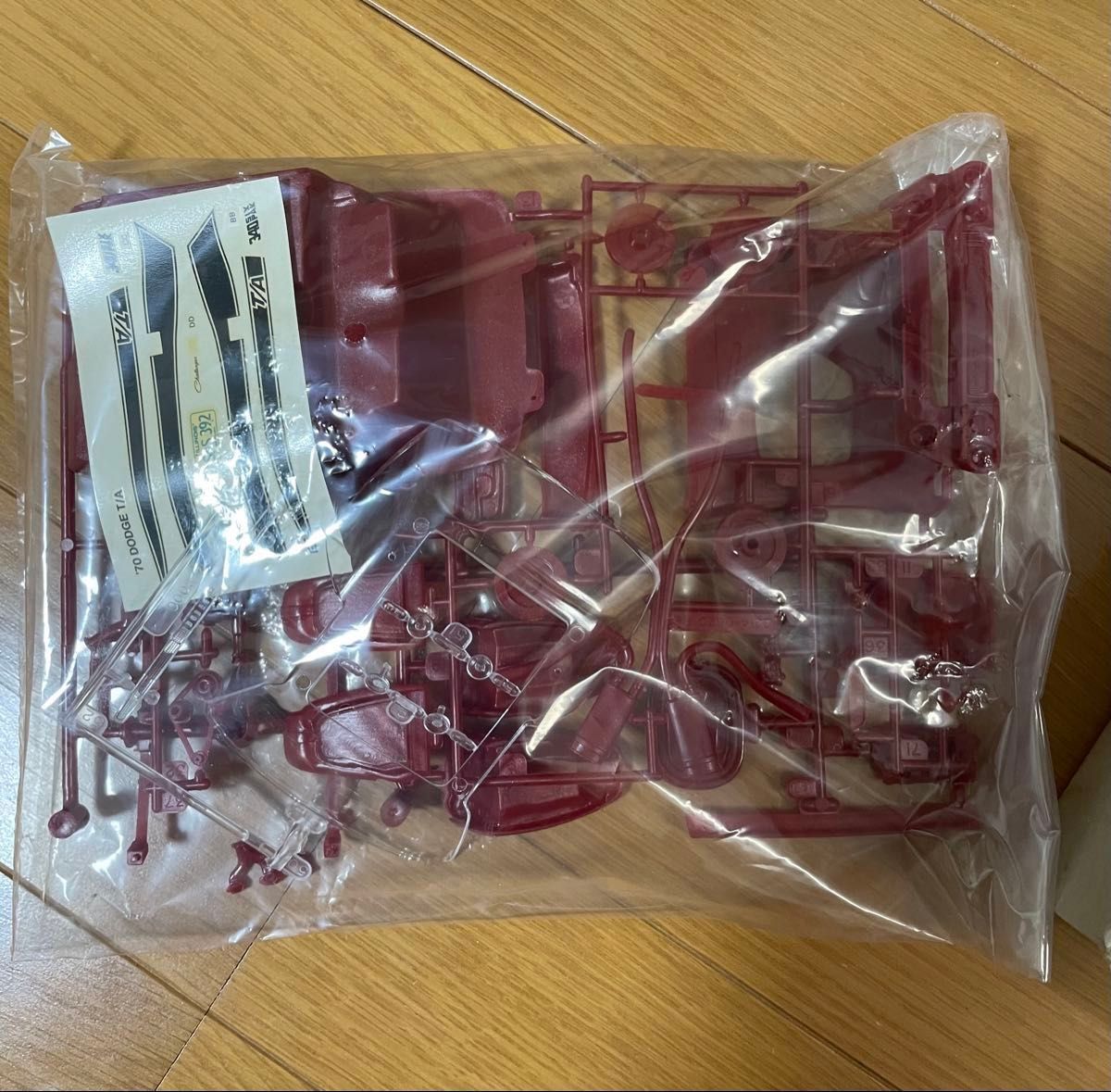
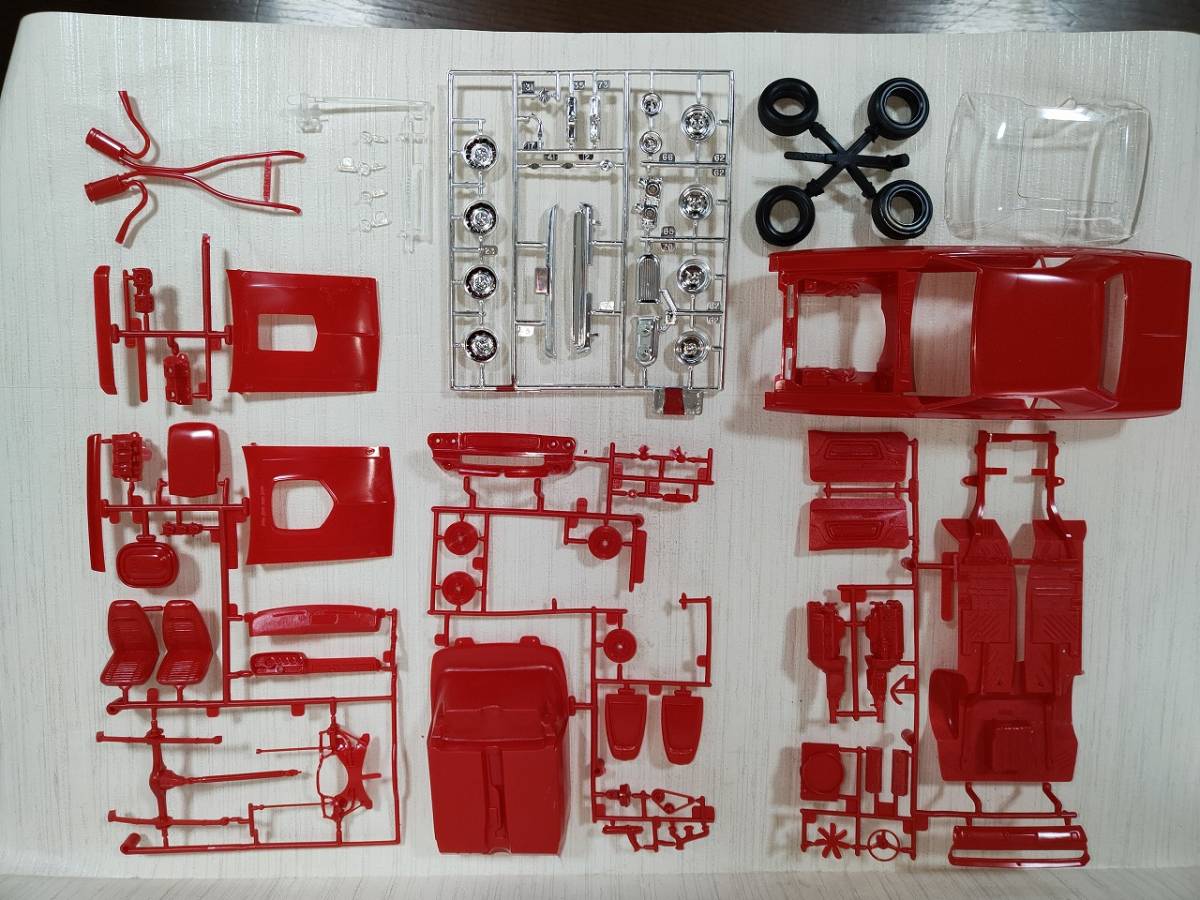
*更にパーツを細かく見て行き気付いたのは、
この車のドアの分厚さとその立体的な造形の面白さでした。
このキットは結局作らずじまいでしたが、
次の、オオタキ製のキットは組んだ記憶があります。
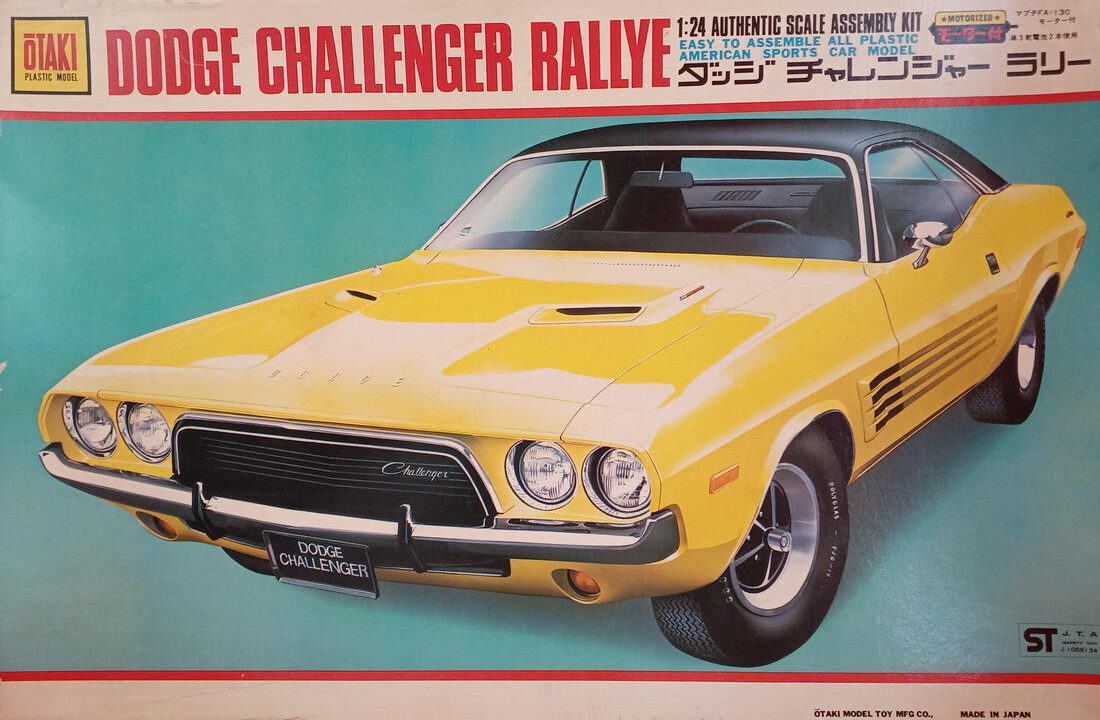
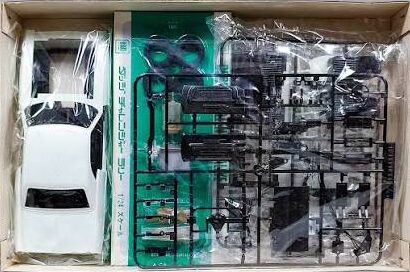
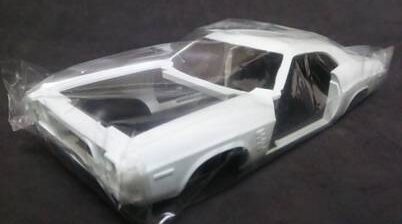
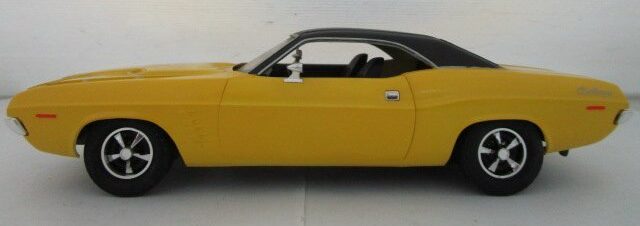
#オオタキ製、1973年型、1/24 ダッジ・チャレンジャー・ラリー(成形色:白)
(こちらはモータライズ商品、ドアも開閉可能でした、ボディーの造形も素直できれいなもので、モノグラム製に比べて、落ち着いた端正な感じでした。)
ーーーーー>残念ながら、ドアの断面のデザインは実感のないもので、
続きまして、
日本設計の傑作ミニカーがこちらです。
*グッドスマイルカンパニー製、1/43 ダイキャスト完成品、ダッジ・チャレンジャーRT(メタリック・パープル)
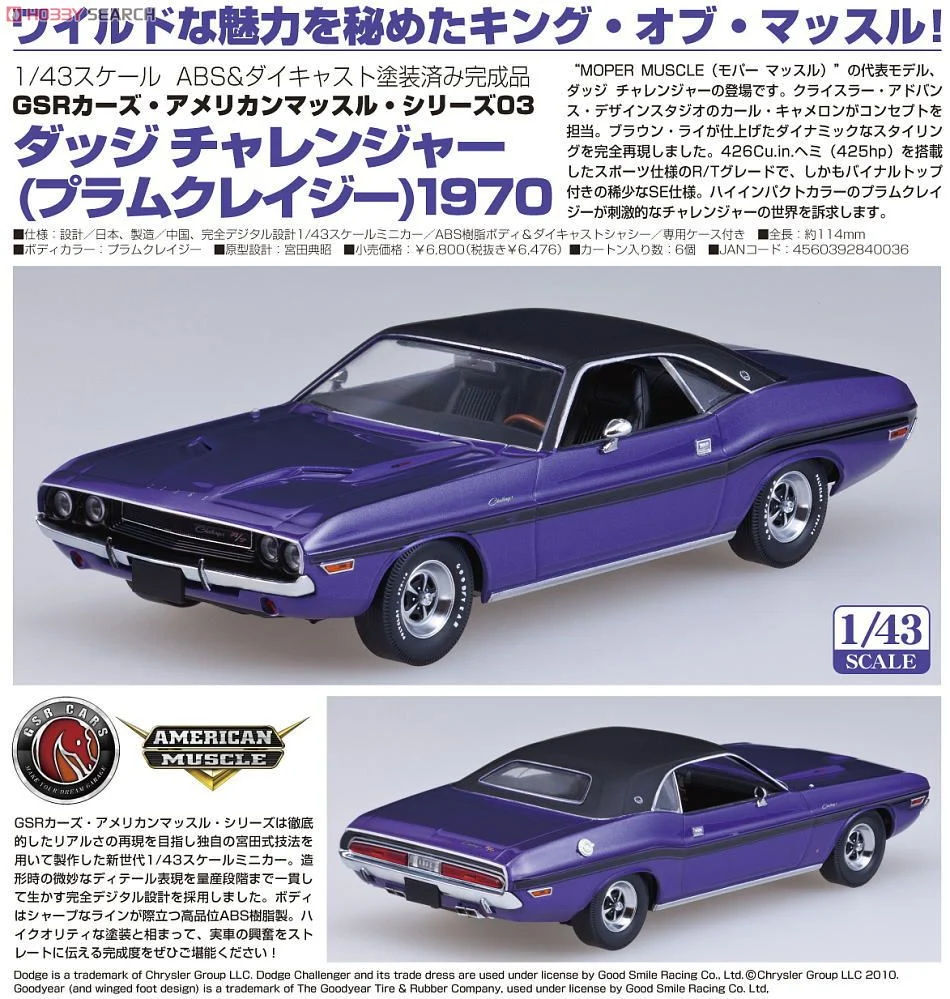
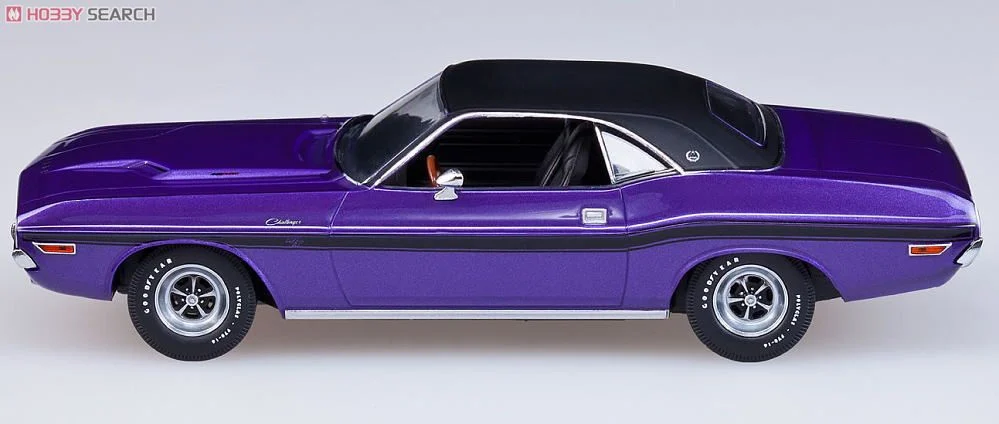
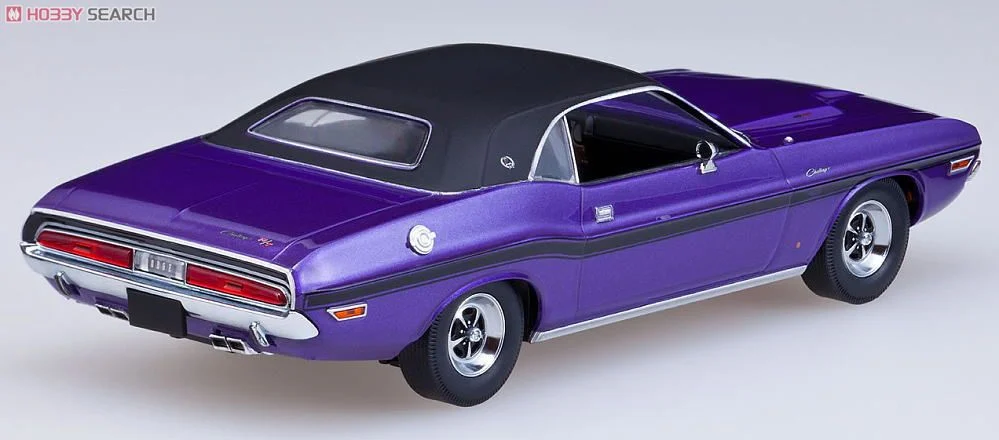
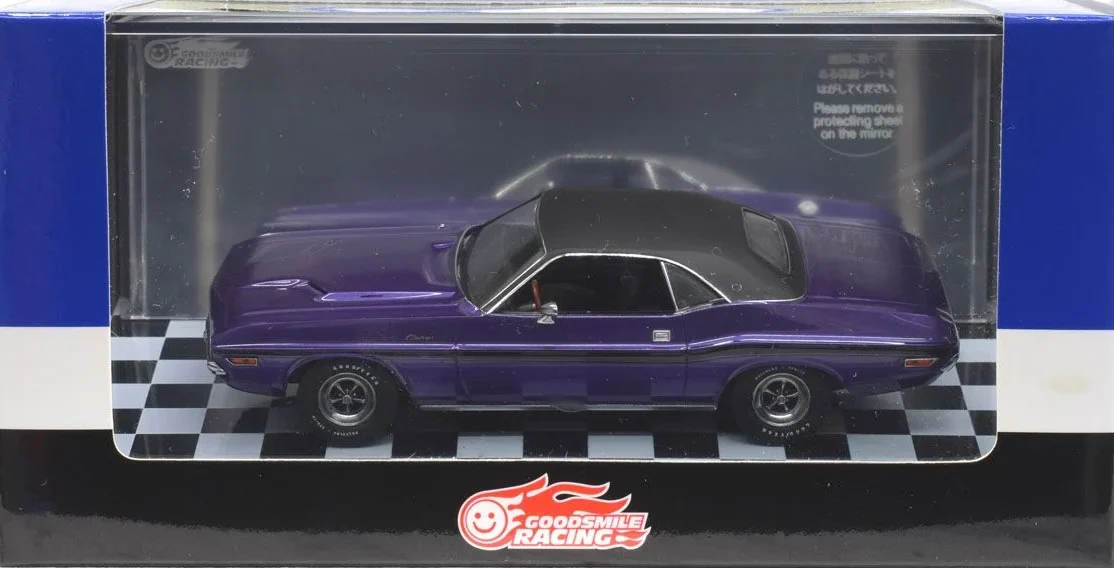 (少し古い商品ですが、最初に写真を見た時、その出来の良さに驚愕しました。
---→全体の造形の力ず良さと、細部の出来のバランスが光ってます。何とか入手したいミニカーです。)
更に被災後、
この一年で集めたミニカーがこんな感じです。
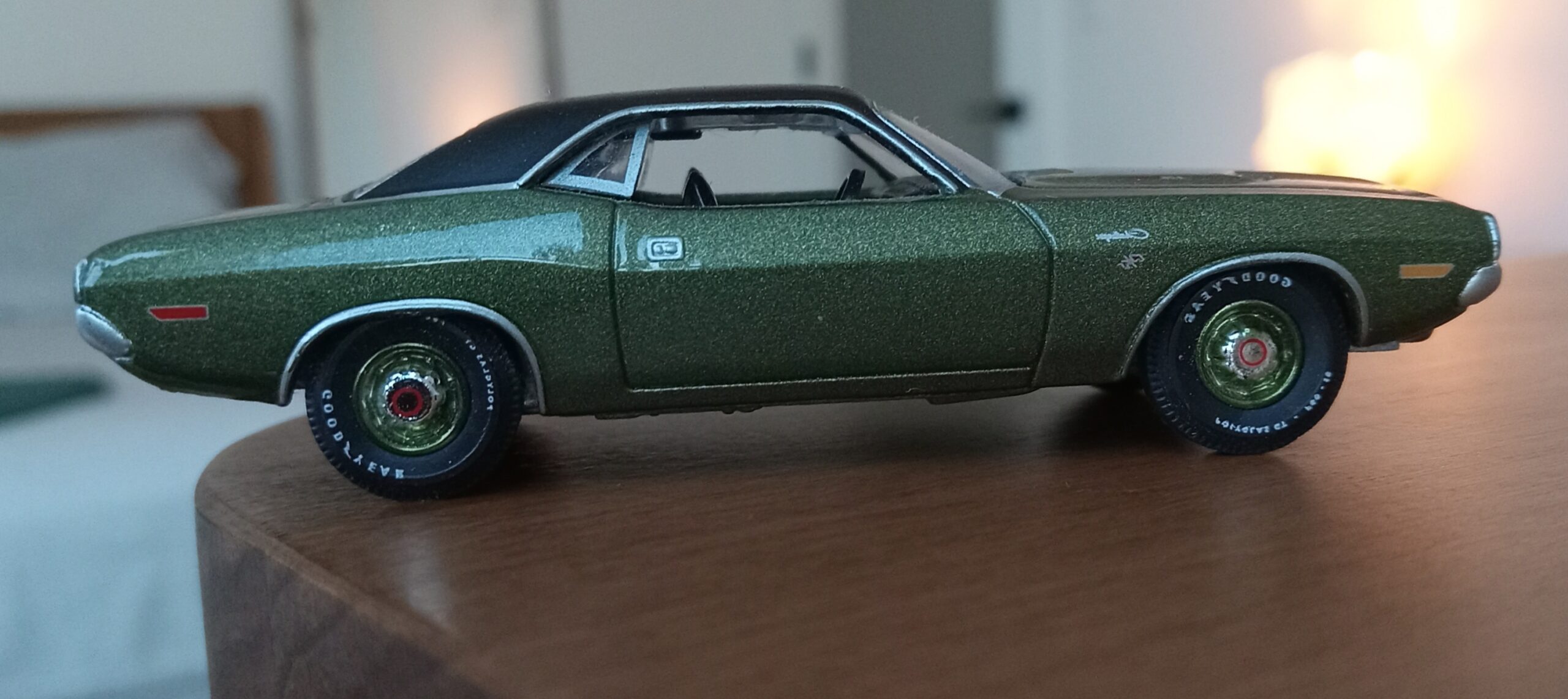
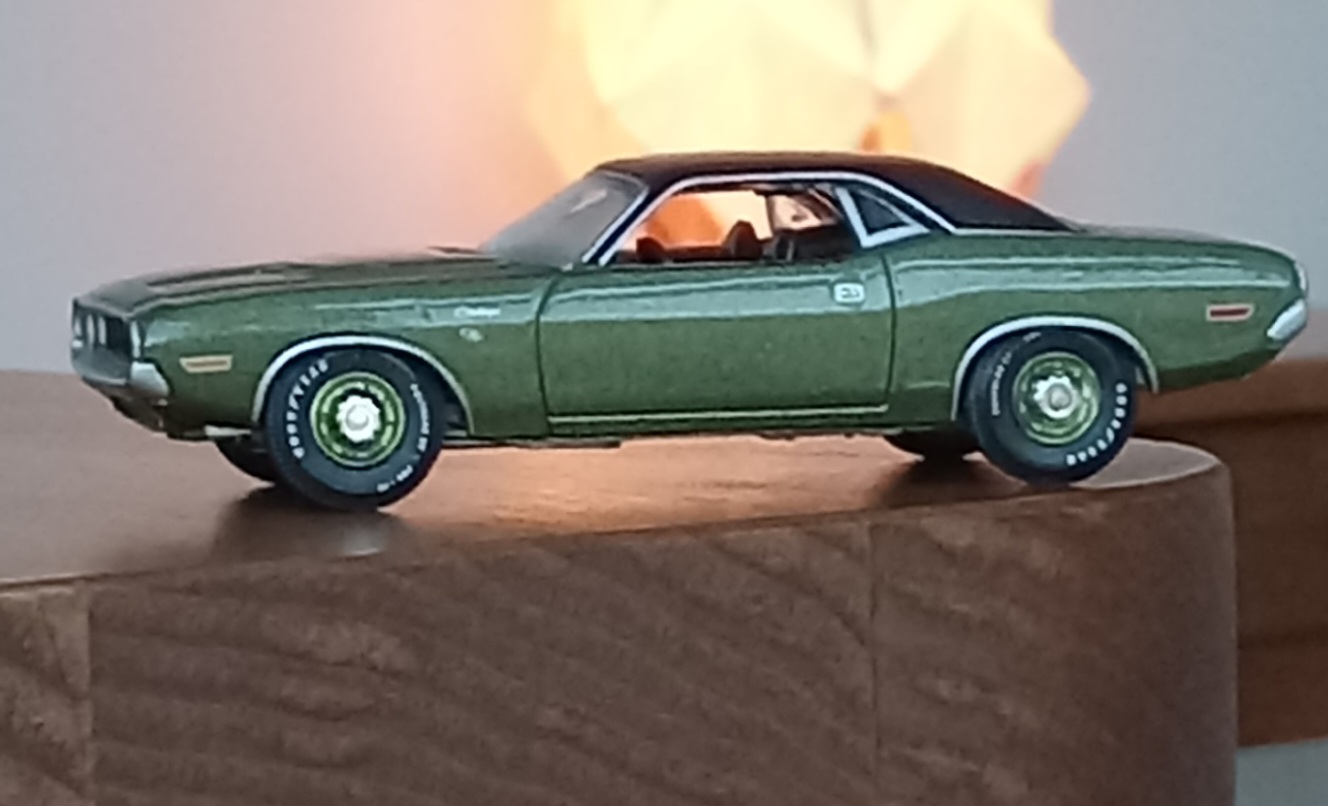
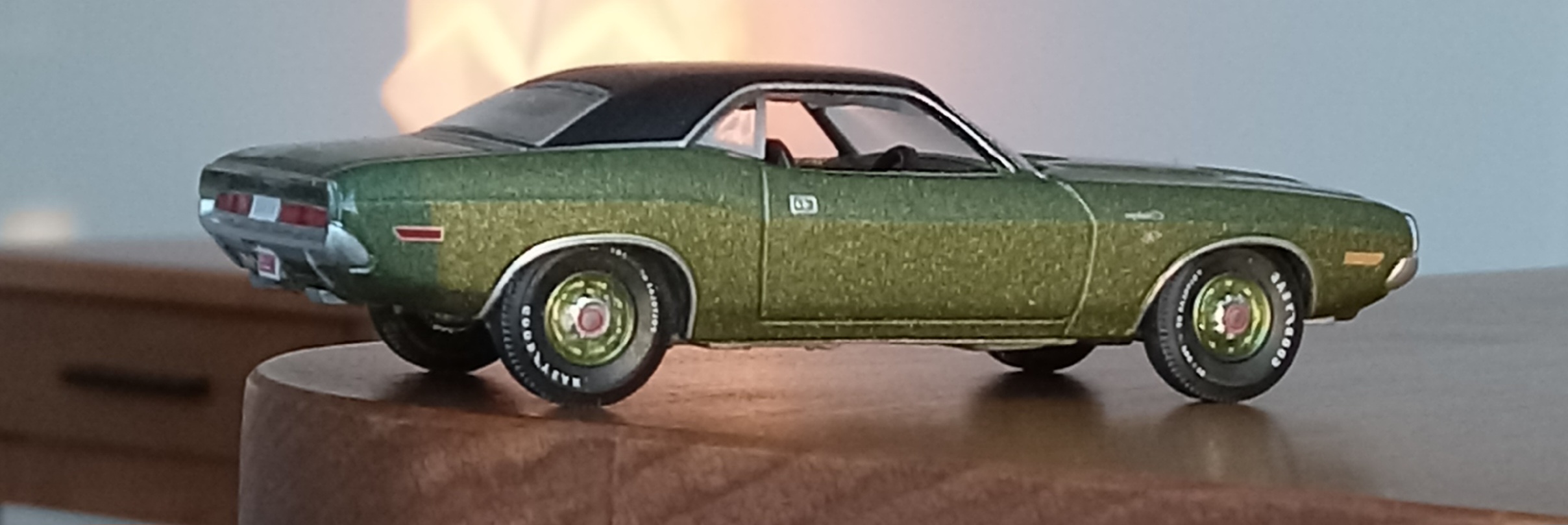
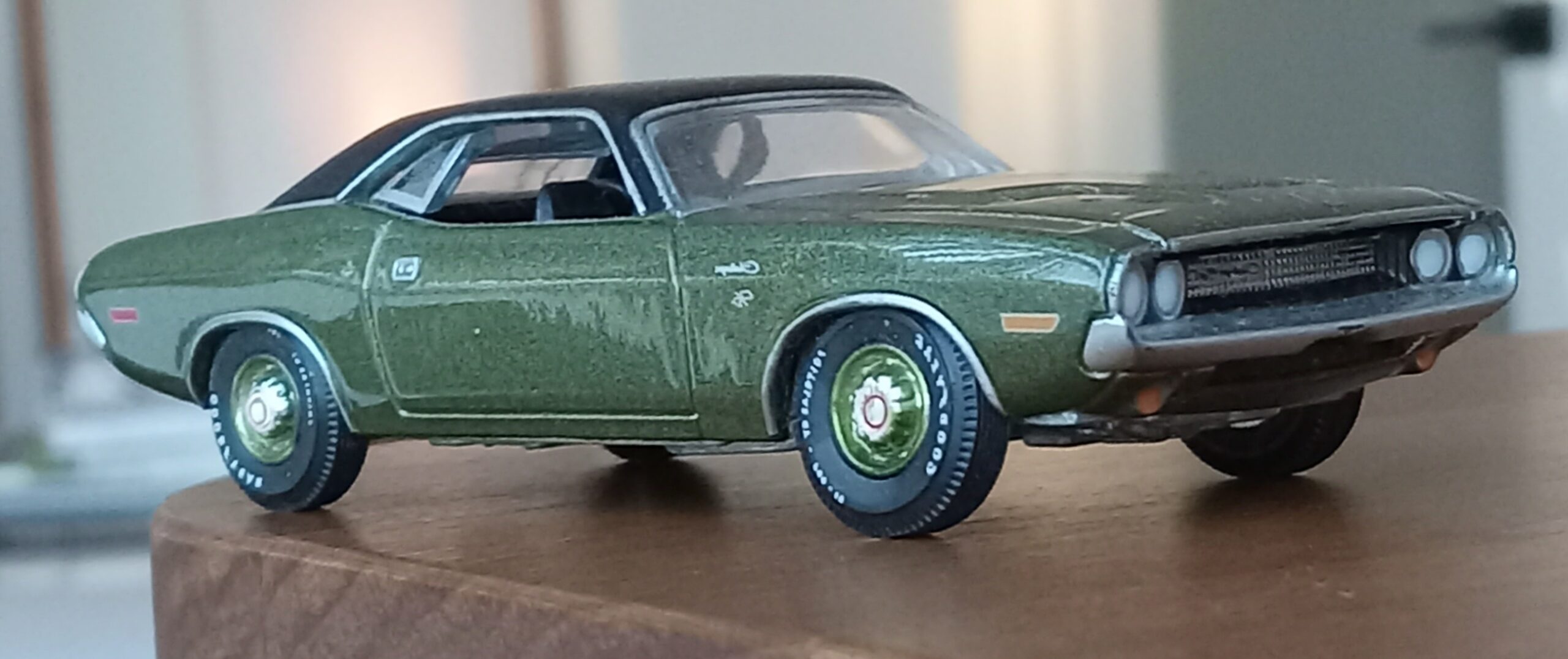
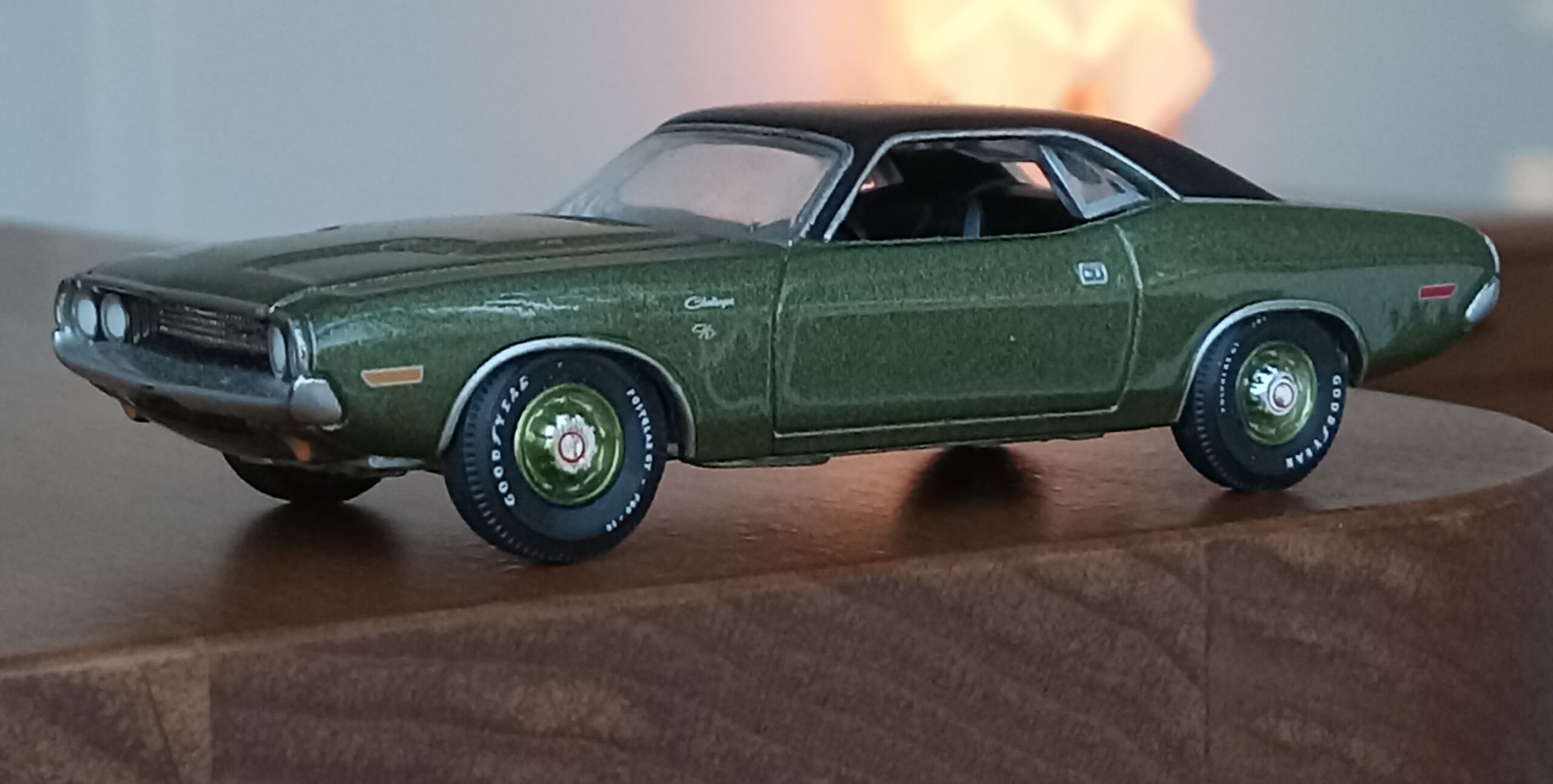
*オート・ワールド社製、1/64ダイキャスト完成品、1970 ダッジ・チャレンジャー R/T(ダーク・グリーン)
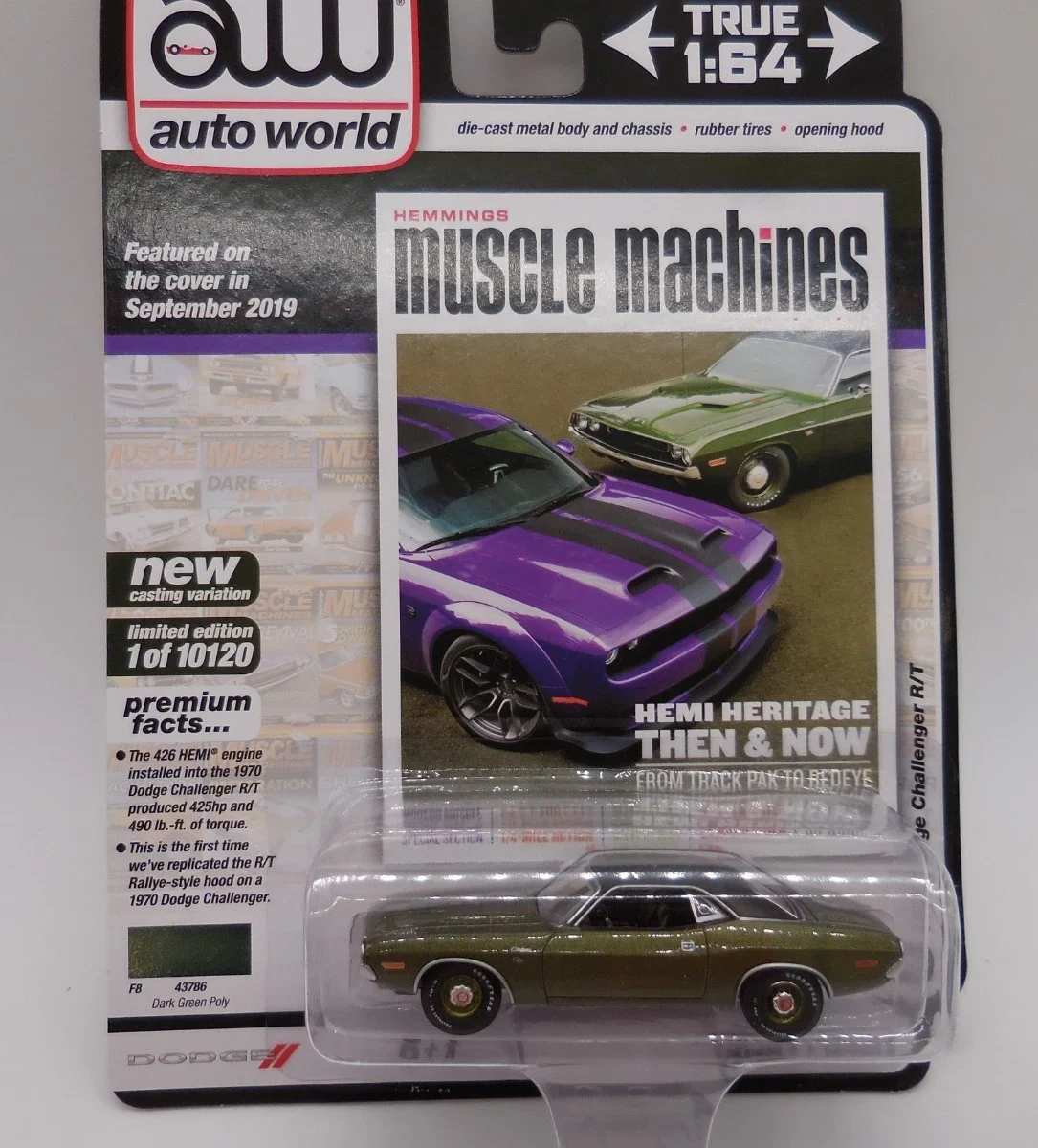
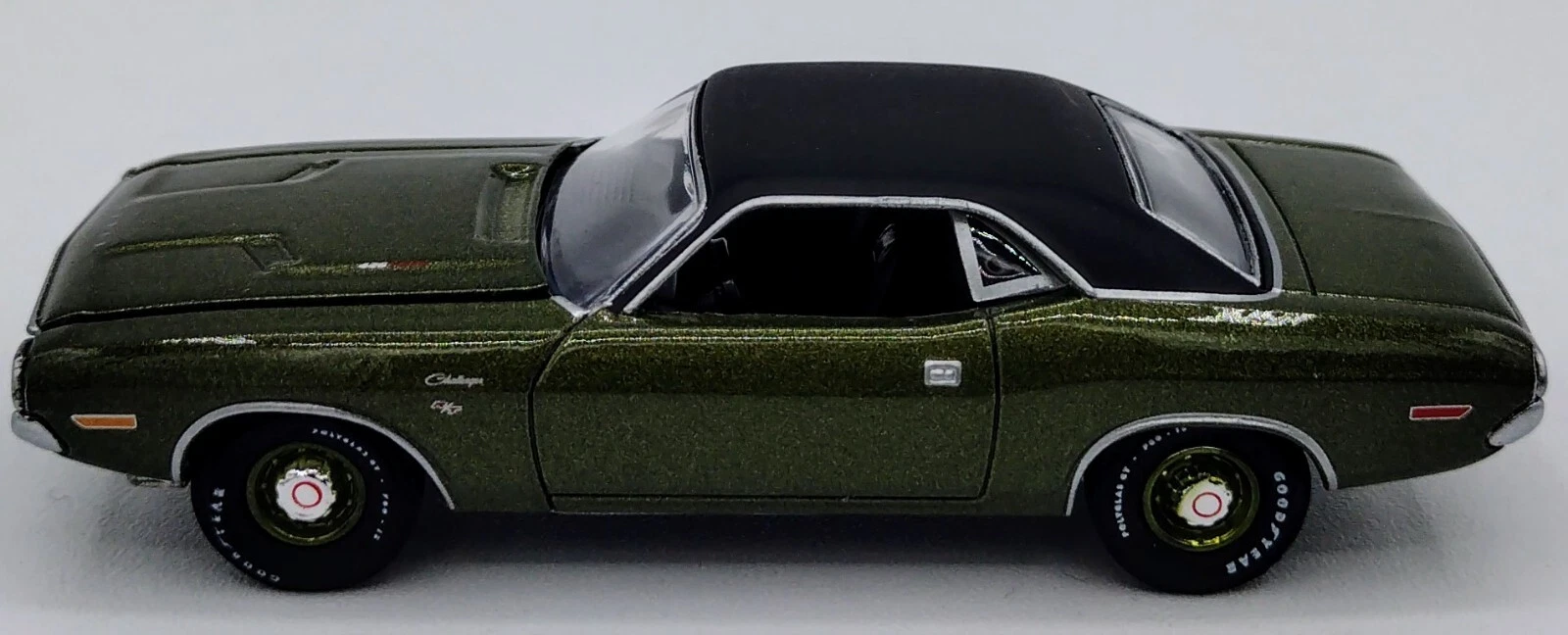
(こちら落ち着いた高級クーペ【マーキュリークーガー似】的なイメージの車種・外装色ですが、トヨタ初代だるまセリカのお兄さん的な美しく落ち着いたデザインにほれ込みました。
ーーーー>このミニカーでオートワールドの出来の良さを初体験!)
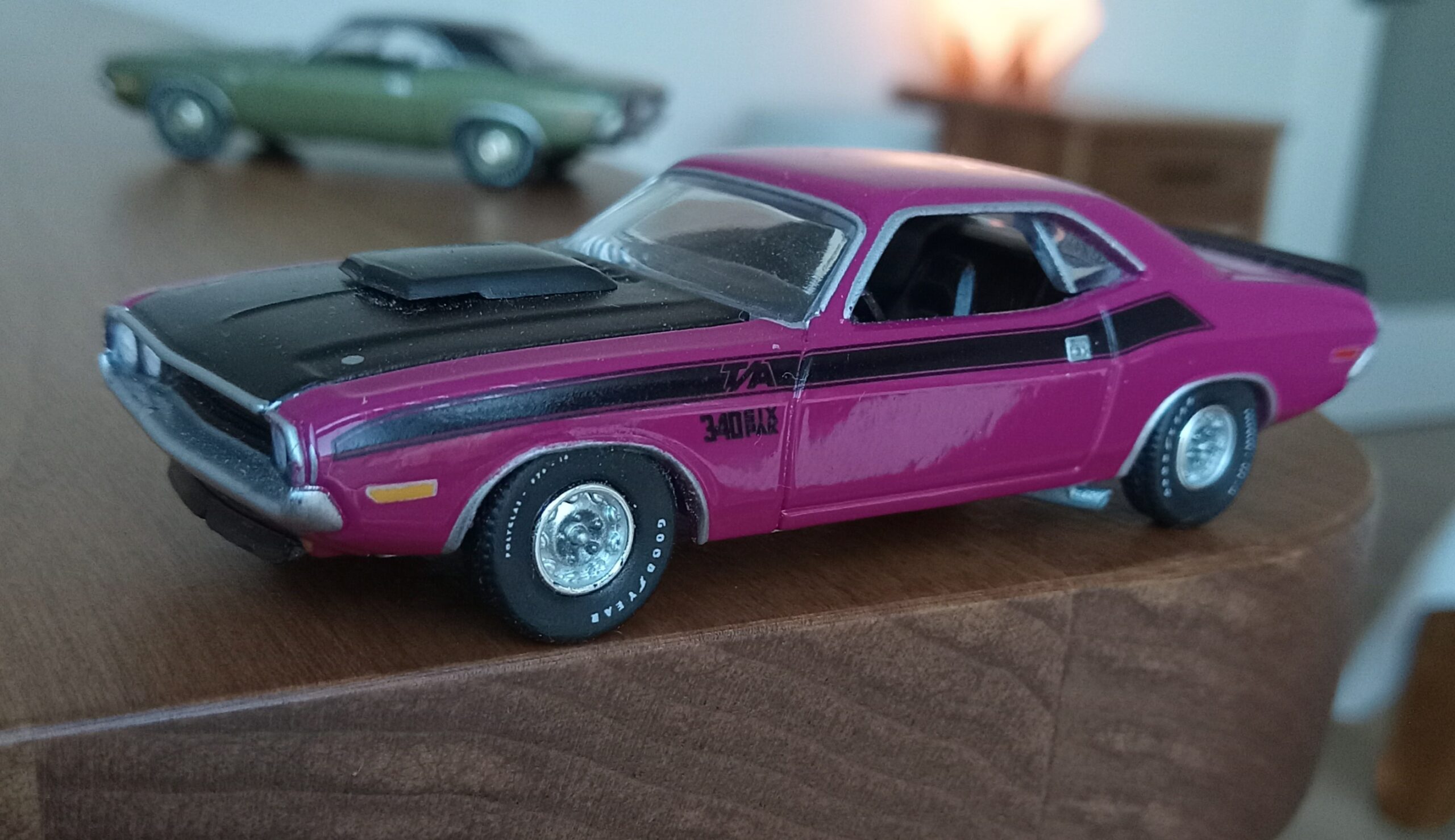
*オート・ワールド社製、1/64ダイキャスト完成品、1970 ダッジ・チャレンジャー T/A(プラム・クレージー【ピンク・紫系】)
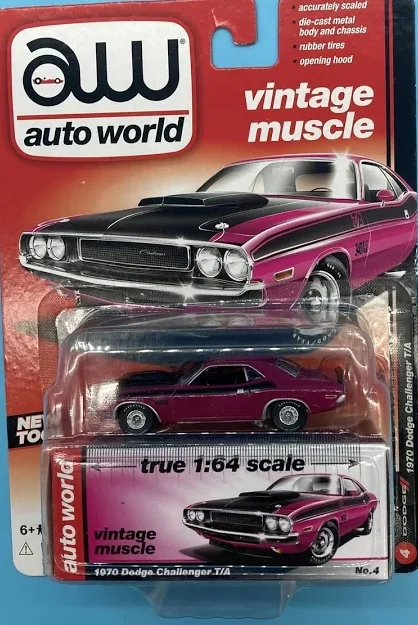
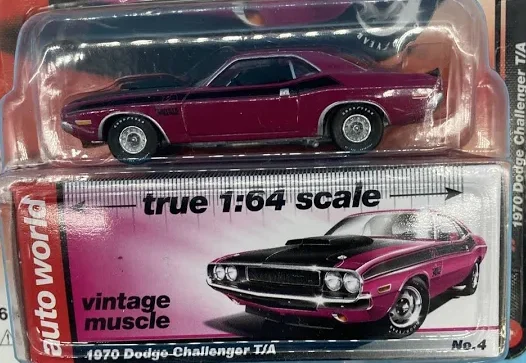 (こちらがマッスルカーの魂のような『外観、カラー、グラフィック』の3拍子が全てそろった、典型的なミニカーです。
ーーー>ピンクと紫の中間的=プラム・カラーです!!
*M2・ミニアチュア―社製、1/64ダイキャスト完成品、ダッジチャレンジャー T/A (プラム・クレージー)
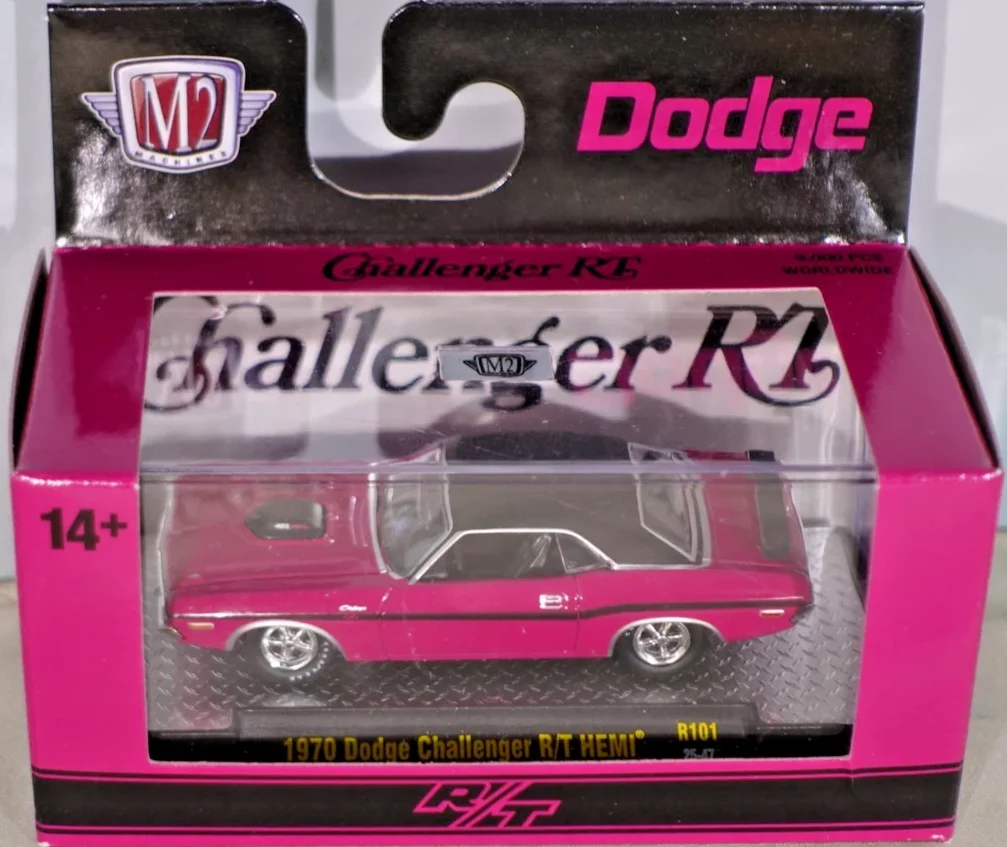
(M2社製のため、1/62位と少し大きめ、全体イメージがも大味で、色目も派手すぎな感じです。
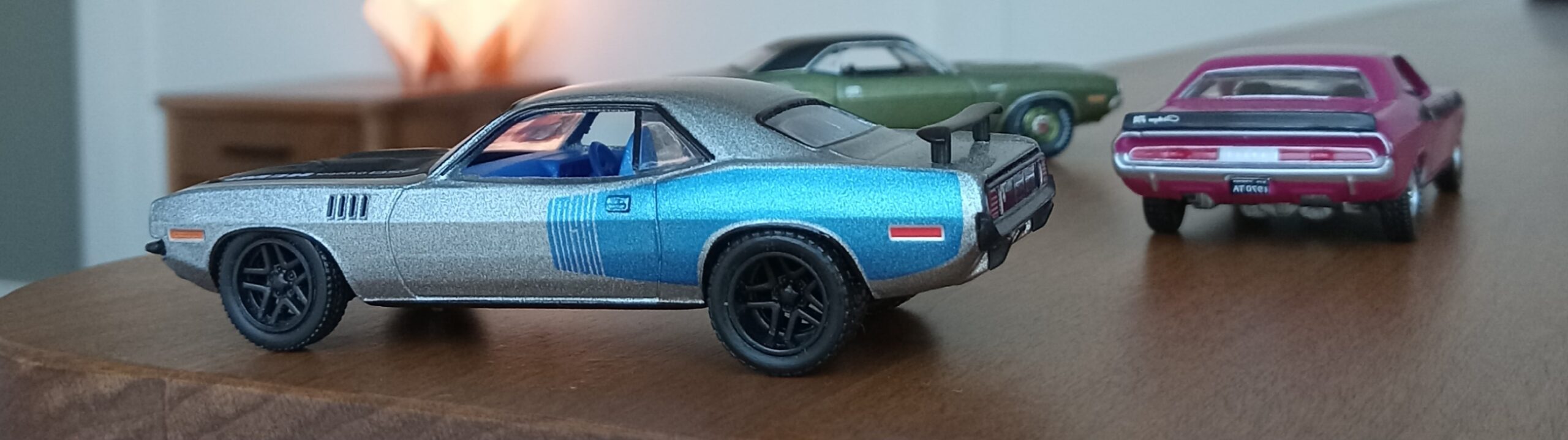
*M2社製、1/64ダイキャスト完成品、プリムス・バラクーダ (銀、青メタリック)
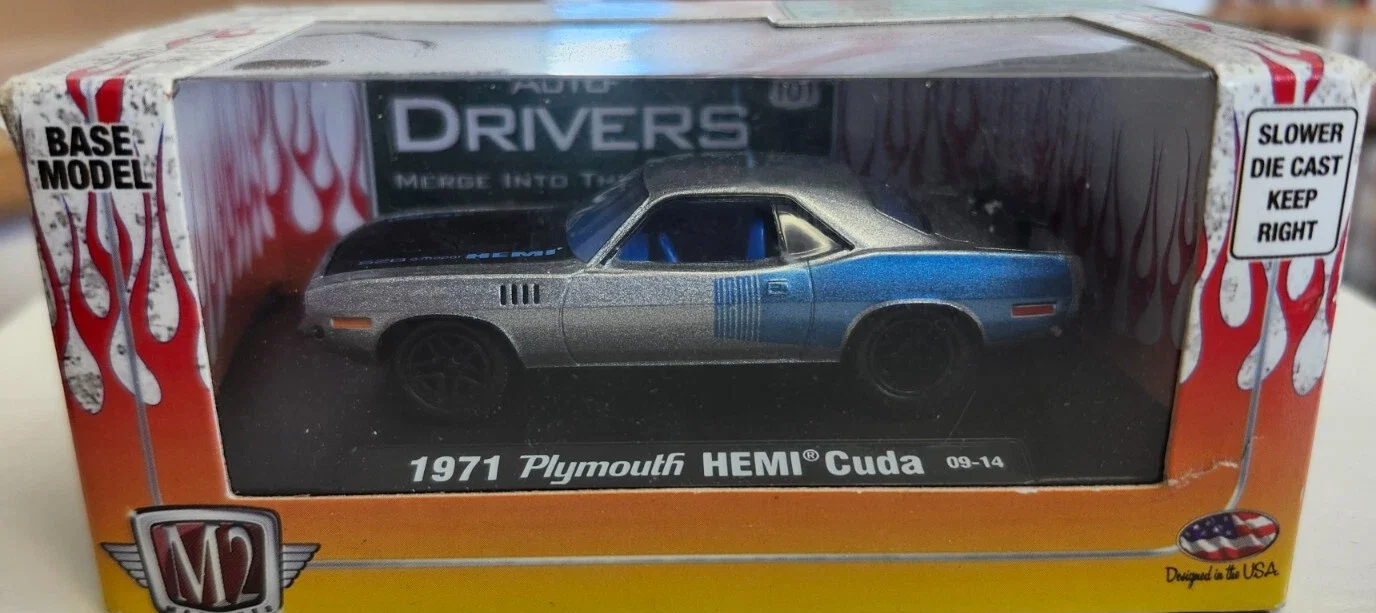
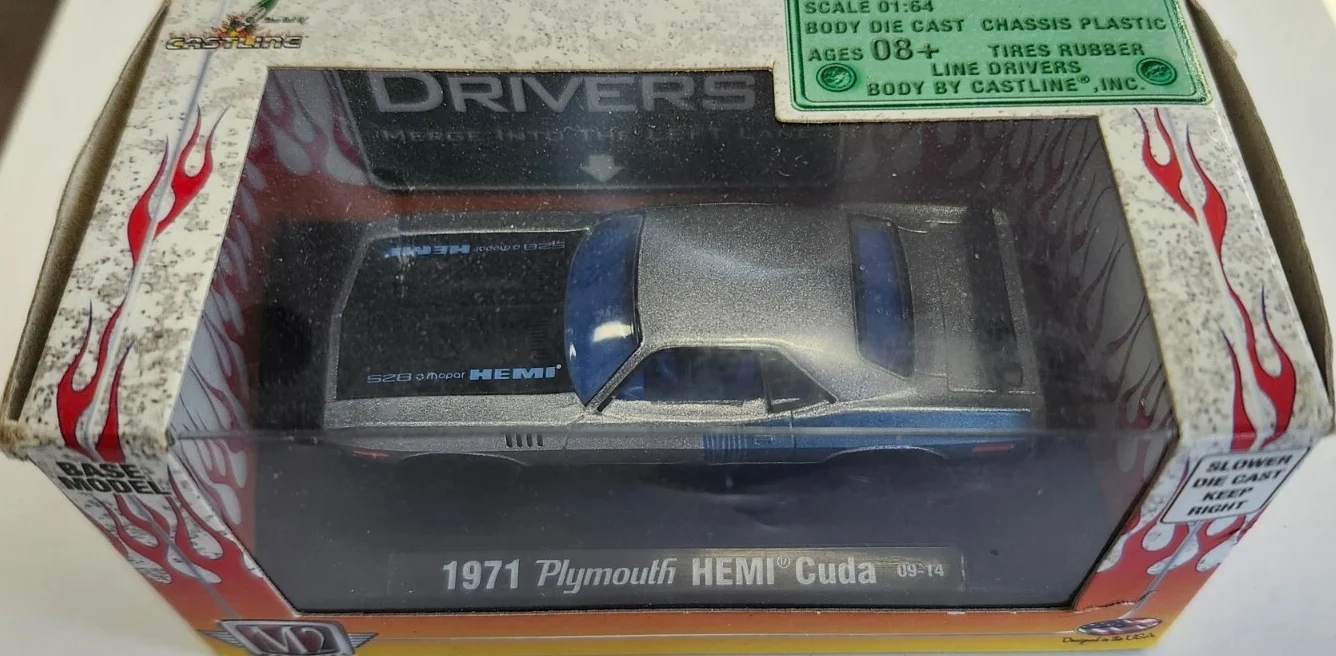
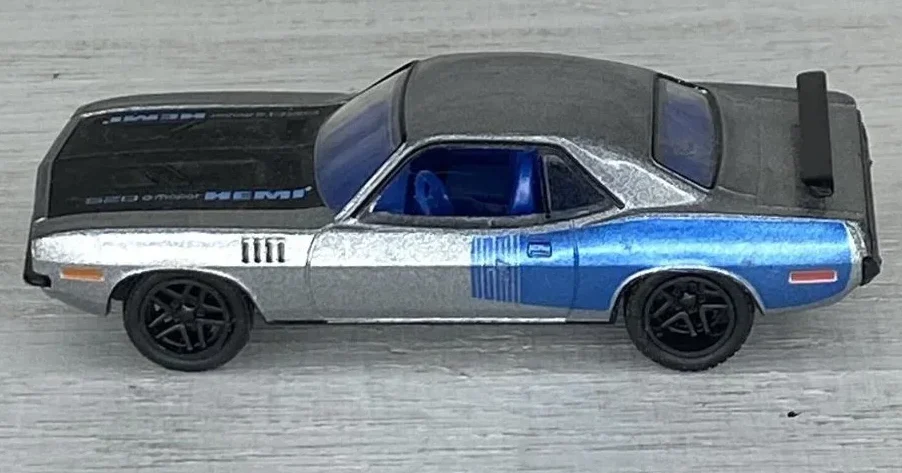 (こちらも少し大きめですが、キャストがすごくシャープで、ボディーのデザインにも針があり何種類も欲しくなりました。
---→タイヤが少し大き過ぎなのが残念です)
次は、いよいよ
三題噺です。
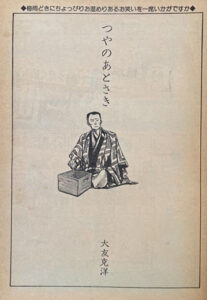
*三題噺:モーパー・野性味・均整



今回は、
「1970年型ダッジ・チャレンジャー」について、
以下の3題を使って
落語を作ってみたいです。
*モーパー
*野性味
*均整
それでは、
AIとすったもんだしながら、
くだらなく滑稽な落ちを目指します。
n
【登場人物】
*ハッチ(八五郎):テキサス流れの、お調子者のカウボーイ。
*マーク(幕五郎):町一番の馬喰(ばくろう)。車の目利き。
n
n
ハチ「決まってるだろ!傷つかないように、そりゃあもう、一生『ダッジ(大事)』にするよ!」
くだらないね、、、
お後がよろしいようで
、、、ペンペン
N
N
N
B
N
N
N
B
N
N
N
B
n
n
n
n
m
n
n
n
n
m
*その他のクライスラー・マッスルカ一座のメンバーたち、、、
1960年後半から70年代初めのクライスラーの
マッスルカー兄弟たちです。
*ダッジ・ダート、1968【ファイヤー・レッド】
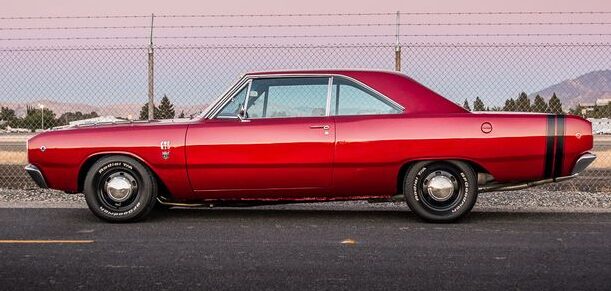
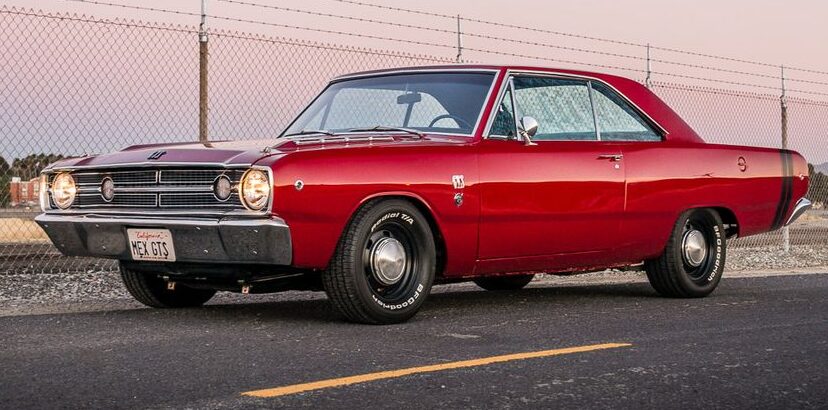
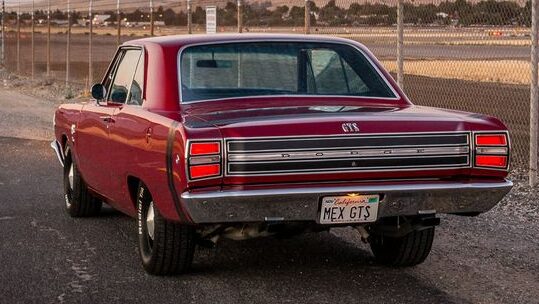 (小型セダンに大型のV8エンジンを押し込んだ無理矢理感がたまりません!
ーーーー>全体の落ち着いた均整とのアンバランス感が絶妙です。)
*ダッジ・チャージャー, 1968(グリーン&ホワイト)
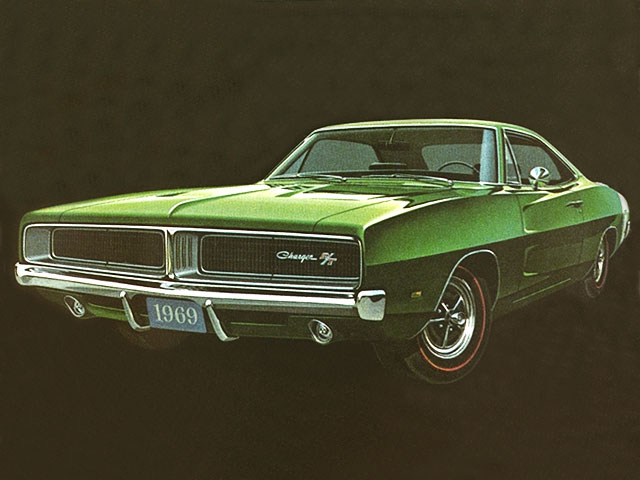
(5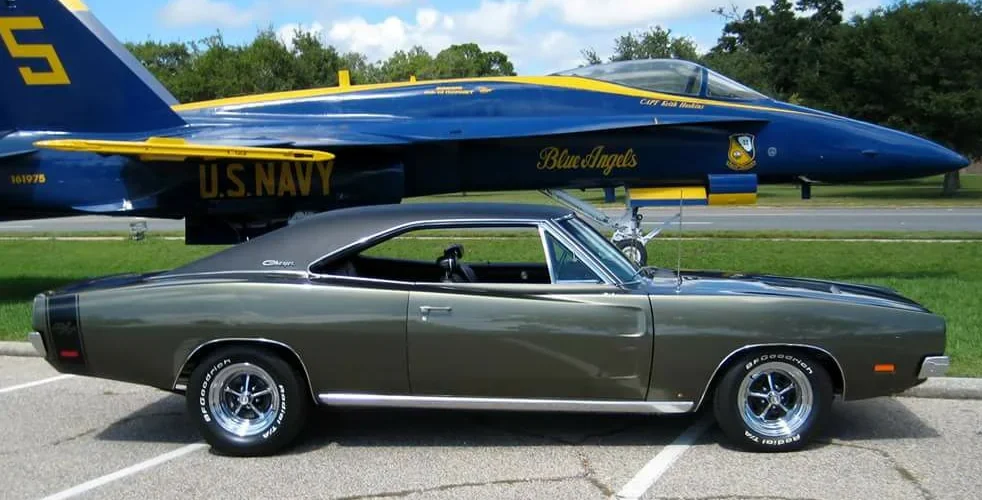 m30cm近くの大柄なコークボトルシェイプの怪物です。
--→スパー・バードのばかばかしさに比べるとずいぶん均整が取れた美しい体躯です。)
クライスラーの破天荒な会社の履歴にもぴったりな、
マッスルカーのレジェンドたち、
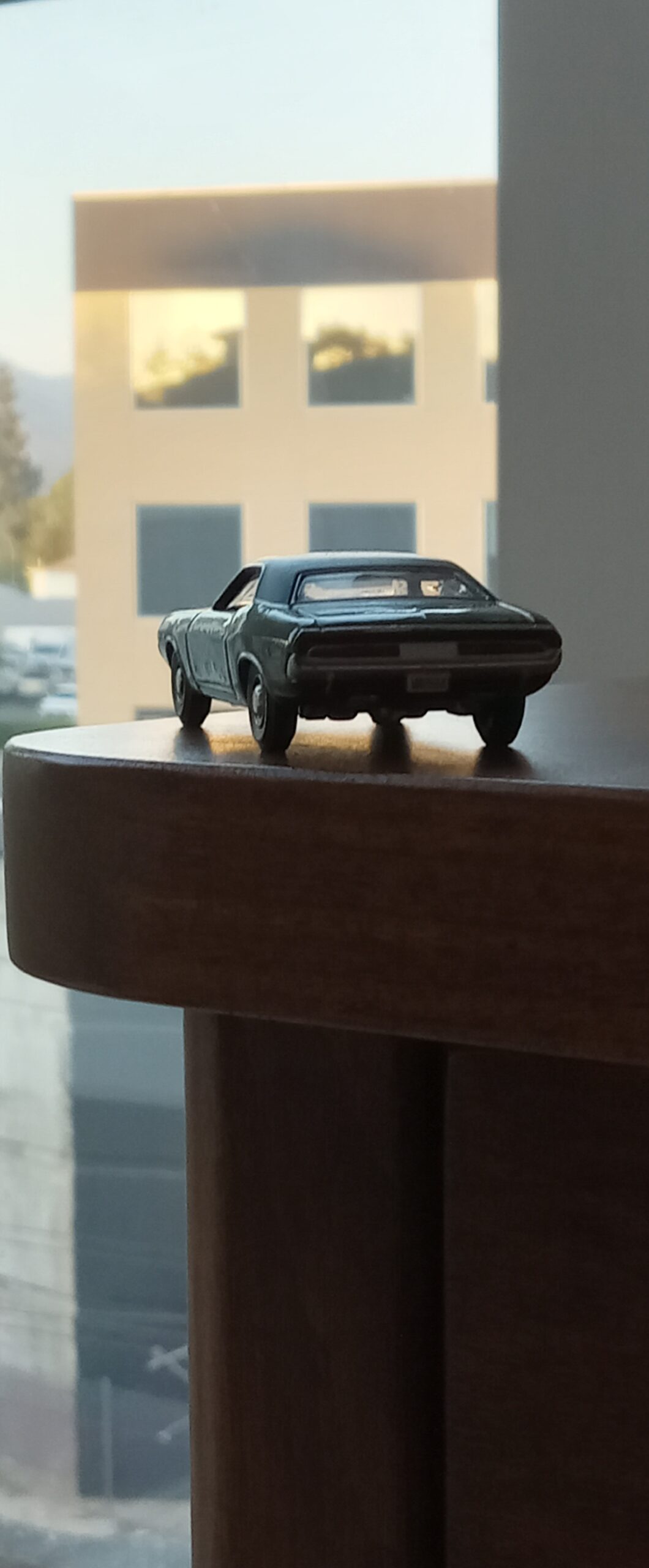
ある意味、
GM,フォード以上にアメリカ的な
『夢と冒険心に富んだ商品群』でしたね。
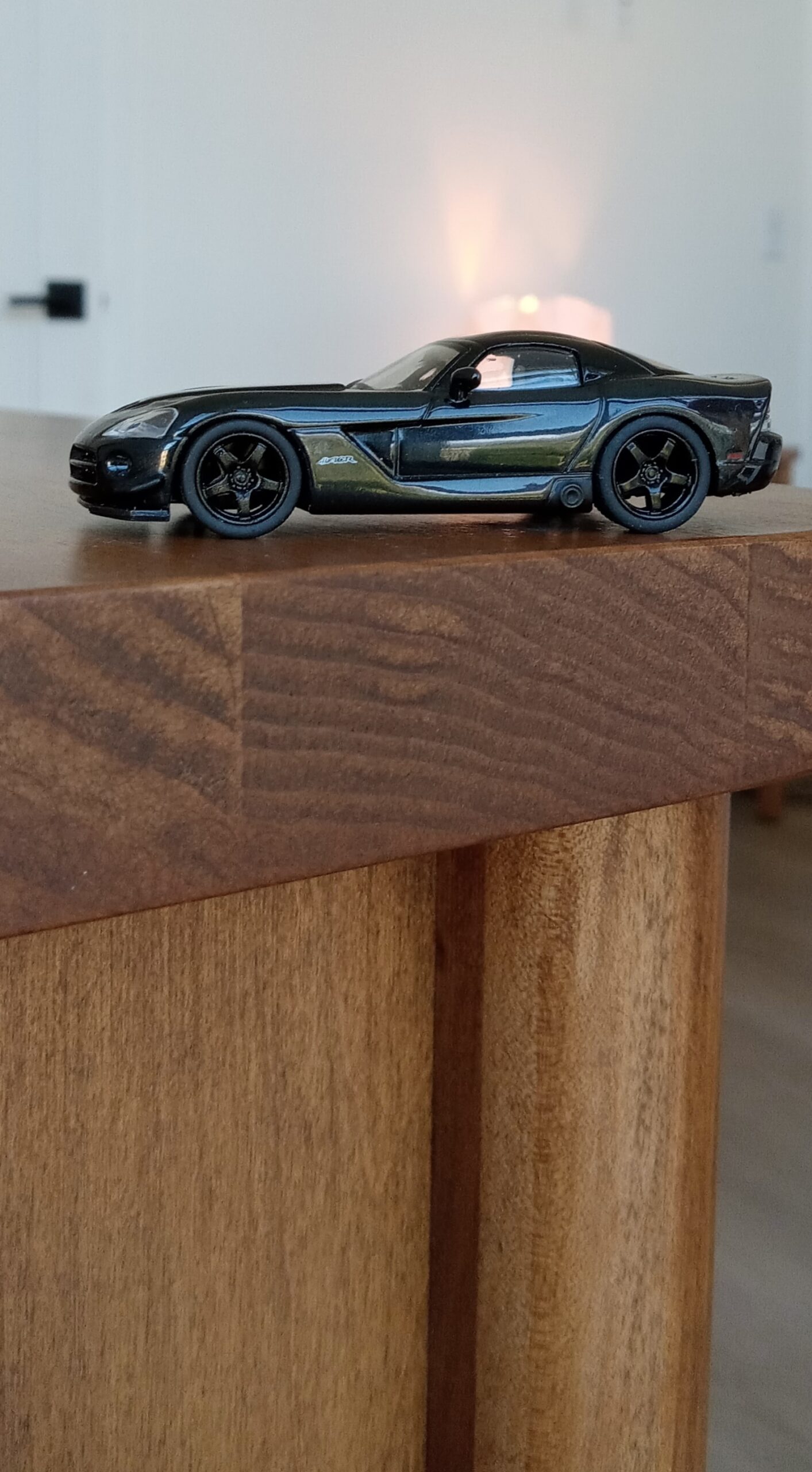 次回はアメ車編002として、
『ダッジ・バイパーSRT10 ACR』につて
お話ししたいです。
お楽しみに――
本ブログと記事内容につきまして:
ブログ記事を書くにあたり私の目標は、立体造形(料理も含めて)とのかかわりを通じて、私個人の特徴的(ネジ曲がり方も含めて)な評価軸を解明することで、「美しさ・美味しさ」に対する好奇心や、探求心を、どのように満足・充足させてきたのかを明記しておくことです。
従いまして、記事の中に出てくる、数字や年号、微細なデータなどには細心の注意を払っておりますが、時に大きな間違いや勘違いを犯していることも考えられます。特に自動車記事における主要諸元や、年号などには紛らわしいものも多く、あくまで参考程度に考えていただければ幸いです。
私としては、記事の中で個人的な外観デザインや味覚の評価、そこから広がる後半部分につなげるための、『流れ』を作るための客観的材料として年号やデータを挿入している感じです。あくまで重視したいのは、私個人の頭の中で起こる、記憶の錯そう的混沌から生まれる新たな『見方』や『情報の予想外のつながり』です。その勢いを作り出す、『流れ』の一環として、諸データが副次的に必要となるわけです。
話がそれますが、大好きな落語の世界に「三題噺」という、その場て会場から募った3つのお題を使って1つのお話に仕立てるといったお遊びがございますが、私はそれに近いことを立体造形の特徴や(料理のお味)をお題にして行っている感じがします。その中で頭の中に去来する数々の着想が、全く予想外で楽しく、次回からの記事内容を大幅に変えたり、新展開につながっています。
当ブロブの仕組み:
『好奇心の点と線 x 気まぐれ脳内回路=予想外の新展開』
こんな自分勝手なブログですが、今後ともよろしくお願いいたします。
追記:上記の『流れ』を作る為に必要な写真はできる限り、個人所有のミニカー・自前の料理などを使い撮影しておりますが、その他の必要最小限の図版や写真を他のブログ主様の記事や諸会社ホームページなどからお借りしております。(記事内容に合うよう加工させていただき、使用時は最小の解像度で載せております。)問題がある場合、ご連絡いただければ直ちに降ろさせていただきます。
追記2:当ブログ記事に掲載のミニカー写真等(個人撮影)は許可なしで、どのようにお使いいただいても結構です。私個人の創造性はこの世のもの、と言う認識の上で記事を製作しています。
!!!!!!!!!!!!!!!!!!!!!!!!!!!!!!!!!! Translated in English !!!!!!!!!!!!!!!!!!!!!!!!!!!!!!!!!!
(Miniature cars used for photography: Auto World, 1/64 die-cast ready-to-display model, Dodge Challenger, 1970; and M2, 1/64 die-cast ready-to-display model, Plymouth Barracuda, 1971—Modifications: Slight adjustments and optimization of the tire, wheel, and axle positions on each model)
Episode 43—The Lineage of 2-Door Coupes: Episode 23 [American Cars Part 2] Dodge Challenger / Plymouth Barracuda, 1970–71 “The Bond Between Chrysler’s Muscle Brothers” Dodge Challenger / Plymouth Barracuda “Chrysler’s Muscle Brothers!”
#Favorite Car Designs—The Lineage of 2-Door Coupes:
For this 43rd installment, titled “The Lineage of 2-Door Coupes, Part 23,” I’d like to discuss luxury 2-door (GT) coupes and roadsters, which strongly reflect the national characteristics and unique exterior designs of various countries. [Note: Includes convertibles]
I’ll proceed as follows.
In this 23rd installment, we’ll finally move on to
[U.S. Cars Part 2],
covering the 1970
Dodge Challenger, the 1970 &
Plymouth Barracuda, and the 1971
models.
[The Lineage of 2-Door Coupes: Table of Contents]
[American Cars]
Part 1: Cadillac El Mirage, 2013 (Metallic Red)
Part 2: Lincoln Continental MK4, 1972 (Black)
Part 3: Mercury Cougar, 1967 (LT Metallic Green)
[German Cars]
Part 4: MB 500K Special Roadster, 1936 (Black)
Part 5: MB 300SL Roadster, 1957 (Silver)
Part 6: MB SLS AMR Gullwing, 2010 (Black)
[British Cars]
Part 7: McLaren F1, 1992 (Metallic Orange)
Episode 8: Jaguar XKSS Roadster, 1957 (Royal Blue)
Episode 9: Jaguar XKR Coupe, 1996 (Dark Metallic Green)
[Japanese Cars / Nissan Edition]
Episode 10: Nissan First-Generation Silvia, 1965 (Champagne Gold)
Episode 11: Nissan 5th-Generation Silvia, 1988 (LT Metallic Green)
[Italian Cars]
Episode 12: Ferrari 250TR Pontoon Fender, 1958 (Red)
Episode 13: Ferrari 250GTO, 1962 (Italian Red)
Episode 14: Lamborghini Concept S, 2005 (Pearl White)
[Japanese Cars: Mazda Edition]
Episode 15: Mazda Cosmo Sport, 1968 (Racing White)
Episode 16: Mazda Eunos Cosmo, Type-S (Two-Tone: Black & Gray)
[French Cars]
Episode 17: Bugatti Type 59, 1935 (French Blue)
Episode 18: Citroën SM, 1970 (Champagne Gold)
Episode 19: Bugatti La Voiture Noire, 2019 (Black)
[Japanese Cars: Toyota Edition]
Episode 20: Toyota/Yamaha 2000GT, 1967 (Ivory White)
Episode 21: Toyota 2nd-Generation Soarer, 1986 (Crystal White II)
Episode 22: Lexus LC500 [GWZ100], 2017 (MT Red)
[American Cars, Part 2]
Episode 23: Dodge Challenger, 1970 & Plymouth Barracuda, 1971
Episode 24: Dodge Viper SRT-10 ACR, 2008 (Black)
Episode 25: Ford Shelby GR-1 Concept, 2004 (Chrome)
[Japanese Cars: Mitsubishi Edition]
Episode 26: Mitsubishi Galant λ, 1976 (Brown Metallic)
Episode 27: Mitsubishi Eclipse [North American Spec], 2006 (Orange Metallic)
[German Cars Part 2]
Episode 28: BMW M635CSi, 1984 (Dark Metallic Blue)
Episode 29: Mercedes-Benz 560SEC AMG 6.0 Widebody, 1989 (Black)
Episode 30: BMW M2 with Genuine Performance Parts, 2025 (Neon Lime)
Episode 31: First-Generation Audi TT, 1998 (Lake Silver Metallic)
[Japanese Cars: Subaru Edition]
Episode 32: Subaru Crosstrek XV, 2012 (Lime Green Metallic)
[British Cars Part 2]
Episode 33: Lotus First-Generation Elite, 1959 (British Green)
Episode 34: Lotus Elan S4 Sprint (Two-Tone: Blue, White & Gold)
Episode 35: Jaguar E-Type Roadster (Light Blue Metallic)
[Japanese Cars: Honda (Lightweight Sports Cars)]
Episode 36: Honda S800, 1966 (Red)
Episode 37: Honda First-Generation CR-X 1.5i, 1983 (Blue & Silver Two-Tone)
Episode 38: Honda Beat, 1991 (Samba Yellow)
[Special Edition]: The Corvette Lineage
Episode 1: 1967 Stingray [C2] Convertible (Hardtop, Metallic Blue)
Episode 2: 1972 Corvette [C3] Convertible (Metallic Blue)
Episode 3: 1984 Corvette Coupe [C4] (Bright Red)
Episode 4: Corvette Indy [Mid-Ship Prototype] (Silver)
Episode 5: Stingray Concept [Prototype], 2009 (Blue Metallic)
#The Bond Between Chrysler’s Muscle Car Brothers
The ‘Dodge Challenger’ and
the ‘Plymouth Barracuda’ are
often introduced as Chrysler’s version of
the Mustang and Mercury Cougar duo,
but
but in my view, these two pairs are completely
“similar yet different.”
The mainline of American cars:
*Clever sister models aimed for massive success as part of Ford’s pony car strategy
The offshoot of American cars:
Even rarer, more niche models in Japan,
*Chrysler’s early muscle car strategy—
handsome sibling models with a subdued exterior
This combination of “subdued exterior” and “muscle car”
is what makes these two models so unique.
In terms of exterior design, at first glance,
* they appear very well-balanced,
* with beautiful proportions,
* like large, high-quality luxury coupes.
That’s the impression.
But upon closer inspection,
*an absurdly wide overall width, and other
unconventional features start to emerge one after another…
But I’ll get to that later.
Even among other Chrysler models,
cars like the Dodge Charger or the Plymouth Road Runner feel like
*they’re like reckless, muscle-brained cousins…
that’s the vibe.
This time, I’d like to share a few thoughts
on these two sibling models—
beautiful and handsome, yet
hiding an outrageous personality beneath the surface.
Here’s how I’ll proceed.
* Real-Car Breakdown:
* Exterior Design Features:
* “Me” and the Challenger & Barracuda
* Three-Theme Story: Mooper, Wildness, Proportions
* Other Muscle Cars…
* Real-Car Breakdown: Chrysler’s Handsome Muscle Brothers
Overview:
The 1970 Dodge Challenger is a historic icon of American muscle cars. It entered the pony car market late, following in the footsteps of GM’s Chevrolet Camaro and Ford Mustang. Its defining features include the E-body platform, a wide variety of engine options, and a distinctive exterior design.
n
n
n
n
n
n
n
n
n
n
n
n
n
n
n
n
n
n
n
n
n
n
n
n
n
n
n
n
n
n
n
n
n
n
n
n
n
n
n
n
n
n
n
n
n
n
n
n
n
n
n
n
n
n
n
n
n
n
n
n
n
n
n
Design and Platform:
The exterior design of the 1970 Dodge Challenger is characterized by the golden ratio of a long nose and short deck, a recessed front grille with four-headlight setup, and a low and wide silhouette created by sharp character lines.
Proportions and Body Lines:
* Long Nose & Short Deck: The quintessential muscle car style with a long front end and short rear end.
*Coke Bottle Line: A low and wide silhouette designed by Carl Cameron that combines elegance and power.
*E-Body Platform: While sharing the basic chassis (E-body) with the Plymouth Barracuda, the wheelbase was extended by 2 inches to achieve a luxurious and sleek styling.
* Sharp Edges: Sharp crease lines running along the sides convey both power and refined beauty.
Front and Rear Design:
* Deep-Insets Grill: A blacked-out grill positioned deep within the front nose.
* Four-Headlight Setup: An imposing front end featuring four round headlights integrated into the grill.
* Horizontal Taillights: Simple taillights spanning the entire width of the rear emphasize the car’s wide stance.
Trim Levels and Models:
* Base / Standard: An affordable pony car entry-level model powered by an inline-6 engine.
* R/T (Road/Track): The epitome of high-performance models. Equipped with exclusive badges and heavy-duty suspension.
* T/A (Trans Am): A homologation model built to compete in SCCA Trans-Am races. An extremely rare vehicle equipped with exclusive aerodynamic components and side exhausts.
* Body Styles: In addition to the pillarless 2-door hardtop, a convertible—produced in extremely limited numbers—is also available.
Powertrain:
* Diverse Engine Lineup: An overwhelming range of options, from small-displacement inline-6 engines to the legendary “426 HEMI” (425 horsepower) and “440 Magnum/Six-Pack.”
* Transmission: Choose from 3-speed or 4-speed manual transmissions, or a 3-speed automatic (TorqueFlite).
Cultural Impact:
* The movie *Vanishing Point*: A pure white 1970 R/T appeared as a prop car in the film, leaving a powerful impression on car enthusiasts worldwide as a symbol of freedom.
n
n
#Three-View Diagram [Photo]
#Key Specifications:
Model: 426 HEMI
Total Displacement: 7.0 L (426 cu-in, V8)
Maximum Power: 425 hp @ 5,000 rpm
Maximum Torque: 67.8 kg·m (490 lb-ft)
Drivetrain: FR (Front-engine, Rear-wheel drive)
Seating Capacity: 4 (2+2)
Body Style: 2-door coupe
Wheelbase: 2,794 mm
Overall Length: 4,859 mm
Overall Width: 1,932 mm – 1,943 mm
Overall Height: 1,292 mm – 1,308 mm
Curb Weight:
1,363 kg – 1,660 kg (depending on engine and equipment)
#Car Review 2: 1971 Plymouth Barracuda
The 1971 Plymouth Barracuda is
a legendary car manufactured by Chrysler (Plymouth division) in the United States, symbolizing the golden age of American muscle cars and pony cars.
The model from that year shared the “E-Body” platform with its sister car, the Dodge Challenger, and is regarded as the pinnacle of the Barracuda’s history in terms of both design and rarity.
n
n
n
m
N
N
N
n
n
N
n
n
m
N
N
Distinctive design unique to the 1971 model:
b
Based on the third-generation model introduced in 1970, a facelift was performed, resulting in unique details exclusive to the 1971 model.
* Round quad-headlight setup: The 1971 model is the only one in the Barracuda’s history to feature a quad-headlight setup (other years used a dual-headlight setup).
* Fender gills: The front fenders of the high-performance “’Cuda” model featured four dummy ducts arranged in a row, reminiscent of fish scales or gills.
* Billboard decal: This was the only year when a flashy side stripe (Billboard Stripe) depicting a massive engine displacement was available as an option on the rear fenders.
* Split Taillights: The rear taillights were redesigned with three sections per side (six lights total).
Trim Levels (Differences Between “Barracuda” and “’Cuda”):
Broadly speaking, the lineup was divided into standard and high-performance models.
* Barracuda: The standard model. It was equipped with a mild-mannered inline-six or a mild V8 engine.
* ‘Cuda: A high-performance model designed for driving excitement. It featured two ducts (twin scoops) on the hood and offered the option of a powerful big-block V8 engine.
* Gran Coupe: A luxury variant featuring a lavish interior and a leather-trimmed top.
The Legendary “Hemi ’Cuda” and Its Rarity:
The primary reason the 1971 model is considered the ultimate prize by collectors worldwide lies in its overwhelming rarity and high market price.
1971 was the last year in which the car could be equipped with Chrysler’s legendary, most powerful racing engine, the “426 Hemi” (7.0-liter V8 / 425 horsepower). Starting in 1972, emissions regulations forced a reduction in power output, which is why the 1971 model is considered the pinnacle of the pure muscle car era.
In particular, the “1971 Hemi Cuda Convertible” is said to exist in only a little over 10 units worldwide. It is traded at auctions for between several hundred million and several billion yen (including approximately $3.5 million in the past), making it the world’s most expensive muscle car.
#Key Specifications:
Model: HEMI V8 (Top-of-the-line: Hemi Cuda)
Total Displacement: 7.0 L (426 ci, V8)
Maximum Power: 425 hp @ 5,000 rpm
Maximum Torque: 67.8 kg·m (490 lb-ft)
Drivetrain: FR (Front-engine, rear-wheel drive)
Seating Capacity: 4 (2+2)
Body Style: 2-door coupe
Wheelbase: 2,743 mm (108.0 inches)
Overall Length: 4,740 mm (186.6 inches)
Overall Width: 1,902 mm (74.9 inches)
Overall Height: 1,293 mm (50.9 inches)
Curb Weight:
1,406 kg – 1,650 kg (varies depending on engine and equipment)
n
n
*Exterior Design Features:
Welcome to the heartland of “American Muscle Cars”…
Arriving in the late ’60s amid a frenzied power race,
swept away by the oil crisis of the early ’70s,
and vanishing in the blink of an eye—
the American
muscle car dream
Among them,
the two models I personally consider the most quintessentially “muscle car” are
* the Dodge Challenger and
* the Plymouth Barracuda.
So first,
let’s start with the exterior design features of the
“Challenger”—
that handsome, cool,
and at times wild “big brother” figure.
1: The “extraordinary” aesthetic created by the interplay of cool and wild—contrasting directions born from its exceptionally beautiful, well-balanced coupe proportions combined with an unusually wide overall width
——> Customizing the tire size to give it a raked stance skyrockets its wildness!
2: The incredibly steep inward angle of the tumble form from the door surface to the cabin—made possible precisely by the wide overall width——> Further emphasizes the low, compact cabin
3: The subtle beauty of the front and rear light and grille designs, which stretch tall and narrow to further accentuate the 8-head-body-ratio silhouette
4: The front and rear overhangs, which are compressed vertically compared to the Barracuda—evident from the side view—→ Emphasizes its massive presence!!
5: The period-appropriate graphic treatments on the hood scoop, hood, and body sides of the Hemi-engine models—and the creation of a timeless symbol as a result
Let’s take a look at each point one by one with photos.
1: The “extraordinary” aesthetic created by the interplay of cool and wild—contrasting directions—born from the extremely beautiful, well-balanced coupe proportions combined with an unusually wide overall width
(Viewed from above, the body doesn’t taper in around the doors; instead, that area is made the widest point, with the front and rear tapering outward, creating a dynamic presence whether you like it or not)
ーーーー>Customizing the tire size—and setting them at a forward angle—skyrockets the “wild” factor!
2: The tumble form from the door surface to the cabin, made possible precisely because of the wide overall width (Side window cross-section) The incredibly steep inward angle
(American cars typically have a steep angle like this, but this generation of Challengers and Barracudas is particularly steep)
ーーーーー> Further emphasizes the low, compact cabin
3: The ingenuity of the front and rear light and grille designs, which stretch vertically to further emphasize the 8-head-body proportion
4: The front and rear overhangs, which are compressed vertically compared to the Barracuda—evident from the side view
ーーーー>Emphasizes the sense of massive size!!
5: The period-specific aesthetic of the hood scoop and graphics on the hood and body sides of Hemi-powered models—and the creation of timeless symbols as a result
Next are the design features of the
Plymouth Barracuda.
1: A light and agile stance created by its shorter overall length and wheelbase compared to the Challenger
2: More striking graphics on the hood and rear body sides
Now, let’s take a look at the explanation with photos.
1: A light and agile stance created by its shorter overall length and wheelbase compared to the Challenger
2: More striking graphics on the hood and rear body sides
————> The air ducts behind the front fenders also look powerful
I’ve introduced the excellence of the exterior design
of Chrysler’s handsome siblings.
Next is my personal story:
*“Me,” the Challenger, and the Barracuda
#Bandai Edition, Monogram, 1/24 Scale 1970 Dodge Challenger (Burgundy)
When I was in my second and third years of high school,
I came across a Monogram-manufactured Dodge Challenger.
Back then, Monogram products
came in Bandai boxes and included instruction manuals and blueprints produced by Bandai.
The photos of the engine options in the explanatory section
and the wide-body Burgundy model
still remain etched in my mind as a powerful impression.
*First of all, I was surprised that a single car model
had so many engine variations,
*and furthermore, the ratio of that body’s
incredibly thin profile to its wide width was something I’d never seen before!!
* As I examined the parts more closely, I noticed
how thick the doors were and how interesting their three-dimensional design was.
I never actually ended up building this kit,
but I do remember assembling the next one, made by Otaki.
#Otaki, 1973 Model, 1/24 Dodge Challenger Rally (Pre-painted: White)
(This was a Motorize product; the doors opened and closed, and the body’s sculpting was clean and straightforward, giving it a more refined and understated look compared to the Monogram version.)
ーーーーー>Unfortunately, the design of the door cross-sections lacked realism,
Next up,
here is a masterpiece mini-car from Nihon Sekkei.
* Good Smile Company, 1/43 die-cast ready-to-display model, Dodge Challenger RT (Metallic Purple)
(It’s a slightly older product, but when I first saw the photo, I was stunned by the quality of the craftsmanship.
---→ The powerful overall design and the balance of detail really shine. This is a die-cast model I’d love to get my hands on.)
Furthermore, since the disaster,
here’s a look at the die-cast models I’ve collected over the past year.
* Manufactured by Auto World, 1/64 die-cast ready-to-display model, 1970 Dodge Challenger R/T (Dark Green)
(While this model has the image of a sophisticated, upscale coupe [reminiscent of the Mercury Cougar] in terms of both body style and exterior color, I fell in love with its beautiful, refined design—it’s like the “big brother” to Toyota’s first-generation Daruma Celica.
ーーーー>This was my first experience with Auto World’s high-quality craftsmanship!)
* Manufactured by Auto World, 1/64 scale die-cast ready-to-display model, 1970 Dodge Challenger T/A (Plum Crazy [pink-purple tones])
(This is a quintessential die-cast model that perfectly captures the “soul of a muscle car” with its perfect trifecta of ‘exterior, color, and graphics.’
――>It’s a plum color—right in between pink and purple!!
* Manufactured by M2 Miniatures, 1/64 die-cast ready-to-display model, Dodge Challenger T/A (Plum Crazy)
(Since it’s made by M2, it’s a bit larger—about 1/62 scale—and the overall look feels a bit rough, with colors that seem a bit too flashy.)
*Manufactured by M2, 1/64 scale die-cast ready-to-display model, Plymouth Barracuda (Silver, Metallic Blue)
(This one is also a bit on the large side, but the casting is incredibly sharp, and the body design is so detailed that I found myself wanting to collect several different versions.
---→It’s a shame the tires are a bit too big.)
Next up, finally,
it’s time for the “Three-Theme Story.”
*Three-Theme Story: Mooper, Wildness, Proportions
This time,
I’d like to try creating a rakugo story
about the “1970 Dodge Challenger”
using the following three themes:
* Mopar
* Wildness
* Proportions
So,
while going back and forth with the AI,
I’ll aim for a silly and comical punchline.
n
“1970 Dodge Challenger T/A: Mopar’s Wildness and Proportions”
n
[Characters]
* Hatch (Hachigoro): A cocky cowboy from Texas.
* Mark (Makugoro): The town’s top horse dealer. A car connoisseur.
n
Hatch: “Hey, Mark! There’s an insane ‘iron horse’ tied up behind the saloon! That black hood looks like it’s baring its fangs—that’s no ordinary car. It’s a monster possessed by the spirit of ‘Mopar’!”
n
Mark: “Whoa, Hachi, you’re getting a little too excited. That’s a 1970 Dodge Challenger T/A (Trans-America). It’s the ultimate muscle car—the kind that stirs a man’s fighting spirit.”
n
Hatch: “Wow! And that V8 exhaust note—it’s like the earth rumbling! The way it kicks up dust—it’s pure ‘wildness.’ It’s like a wild buffalo charging in a rage—just watching it makes my mouth water. Its performance must be wild, too, right?”
n
Mark: “Oh yeah, at its heart is a 340 cubic inch ‘Six-Pack.’ It’s got three carburetors, and while the official rating is 290 horsepower, it actually puts out over 320. On top of that, it roars with a rough, deep bass from those side-exit exhausts—it’s pure wildness.”
n
Hatch: “Wow, that’s wild! But hey, boss. When you look at it from the side, it’s not just some jagged, rowdy car. The overall silhouette is clean and beautifully put together. What’s the secret to that exquisite balance?”
n
Mark: “You’ve really developed a keen eye to notice that. That body is perfectly proportioned. It’s the golden ratio of a long nose and short deck. Even though it’s rugged, the design is in perfect harmony.”
n
Hutch: “Wow! Who was the master craftsman who carved out that ‘harmony’?”
n
Mark: “Not a carpenter—a designer. A genius named Carl Cameron redrew those beautiful lines.”
n
Hatch: “I see. So it’s because Carl thought that ‘balance’ through so thoroughly that this wild, monster of a muscle car was born. …Hey, man, I’ve fallen head over heels for that thing. I just have to get my hands on that Challenger T/A and tear up the wilderness of the West! How can I get one?”
n
n
Mark: “Forget it. That’s a legendary limited-edition car—only about 2,400 were made back then. These days, no amount of gold coins will get you one. And there’s no way I’d let someone like you—who’s rough on his rides and wrecks ’em in no time—get behind the wheel.”
n
Hatch: “That’s harsh, boss! If I got my hands on that cool car, I’d polish it until it shone every day and treat it like a treasure! I’d never put a single scratch on it!”
n
Kuma: “Huh, you’re really going that far? Well, let me ask you this: if you did get that car, how exactly do you plan to drive it?”
n
n
Hachi: “It’s obvious! To keep it from getting scratched, I’d treat it like a ‘Dodge’—treasuring it—for the rest of my life!”
That’s so lame…
Well, that’s all for now.
…Pen-pen
N
N
N
B
N
N
N
B
N
N
N
B
n
n
n
n
N
n
m
n
n
n
n
N
n
m
*Other members of the Chrysler Muscle Car Troupe…
These are Chrysler’s
muscle car siblings from the late 1960s to the early 1970s.
* Dodge Dart, 1968 [Fire Red]
(I just can’t get enough of that forced-in feel of cramming a massive V8 engine into a compact sedan!
ーーーー> The sense of imbalance against the car’s overall calm, balanced proportions is exquisite.)
* Dodge Charger, 1968 (Green & White)
(It’s a massive, Coke-bottle-shaped monster measuring nearly 5
m30cm.
--→Compared to the absurdity of the Superbird, this is a much more well-proportioned and beautiful design.)
Perfectly fitting Chrysler’s unconventional corporate history,
these muscle car legends—
in a sense,
they were a “lineup rich in dreams and a spirit of adventure”
that was even more quintessentially American than GM or Ford.
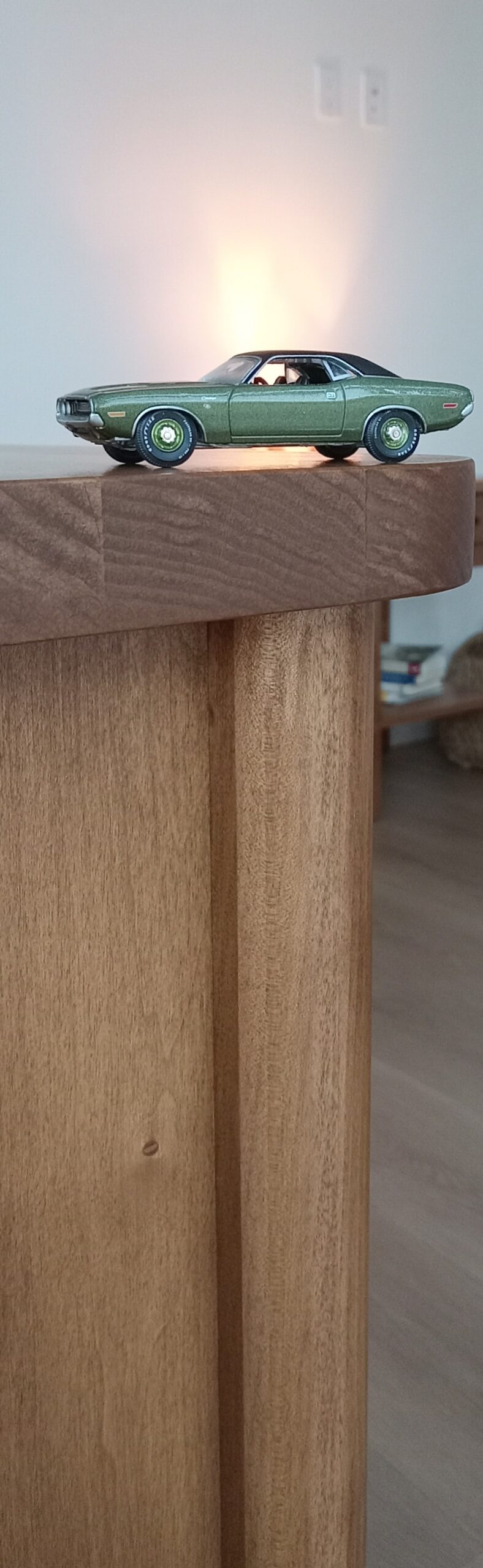
Next time, in “American Cars Part 002,”
I’d like to talk about
the “Dodge Viper SRT10 ACR.”
Stay tuned――
Regarding this blog and its content:
My goal in writing these blog posts is to clarify my personal, distinctive criteria for evaluation—including my quirky perspectives—through my involvement with three-dimensional art (including cooking), and to document how I’ve satisfied and fulfilled my curiosity and desire to explore “beauty and deliciousness.”
Consequently, while I pay the utmost attention to the numbers, years, and detailed data that appear in my articles, it’s possible that I may occasionally make significant errors or misunderstandings. In particular, key specifications and model years in automotive articles can often be confusing, so I would appreciate it if you treated them as general references only.
For my part, I feel that I’m inserting dates and data into the articles as objective material to create a “flow” that connects my personal assessments of exterior design and taste to the broader themes explored in the latter half of the piece. What I ultimately prioritize are the new “perspectives” and “unexpected connections between pieces of information” that emerge from the chaotic jumble of memories in my own mind. The various data points are needed secondarily as part of that “flow” to generate that momentum.
As a slight digression, in the world of rakugo—which I love—there’s a playful format called “san-dai-banashi,” where a performer weaves a single story using three topics solicited on the spot from the audience. I feel like I’m doing something similar here, using the characteristics of three-dimensional sculptures and (the flavors of dishes) as my prompts. The countless ideas that flit through my mind during this process are completely unexpected and delightful; they often drastically change the content of future articles or lead to new developments.
How This Blog Works:
“Spots and Lines of Curiosity x Whimsical Mental Circuits = Unexpected New Developments”
This blog may be a bit self-indulgent, but I hope you’ll continue to follow along.
Note: To create the “flow” described above, I take as many photos as possible using my own die-cast cars and home-cooked meals. However, I do borrow the absolute minimum necessary illustrations and photos from other bloggers’ posts and company websites. (I edit them to fit the article’s content and post them at the lowest possible resolution.) If there are any issues, please contact me and I will remove them immediately.
Addendum 2: You are free to use the photos of die-cast cars and other images (taken by me) featured in this blog’s posts in any way you like without permission. I create these posts with the understanding that my personal creativity belongs to me alone.
Translated with DeepL.com (free version)
Translated with DeepL.com

これはCTAサンプルです。
内容を編集するか削除してください。