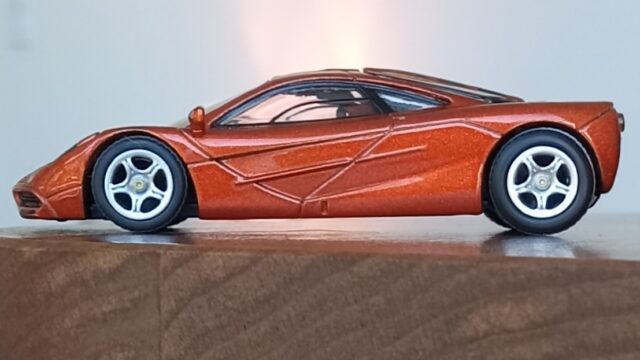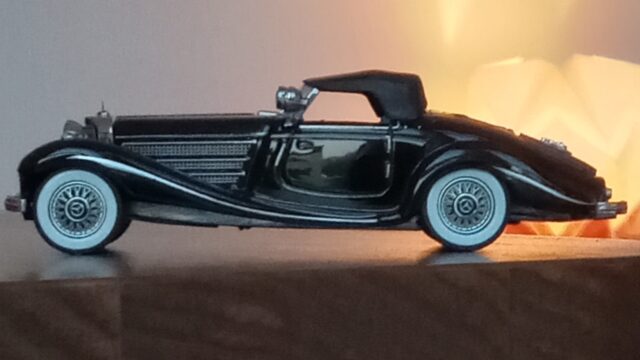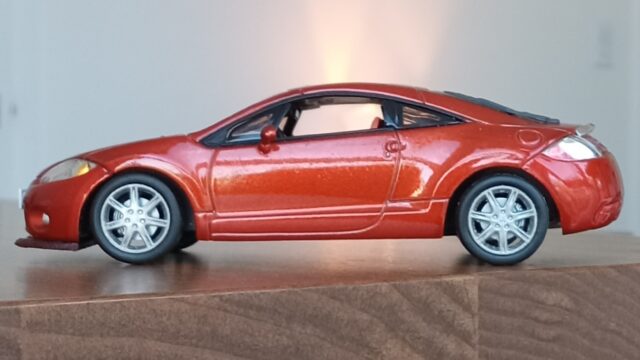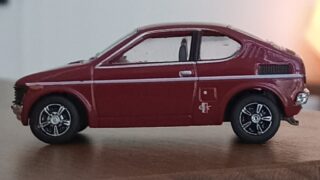
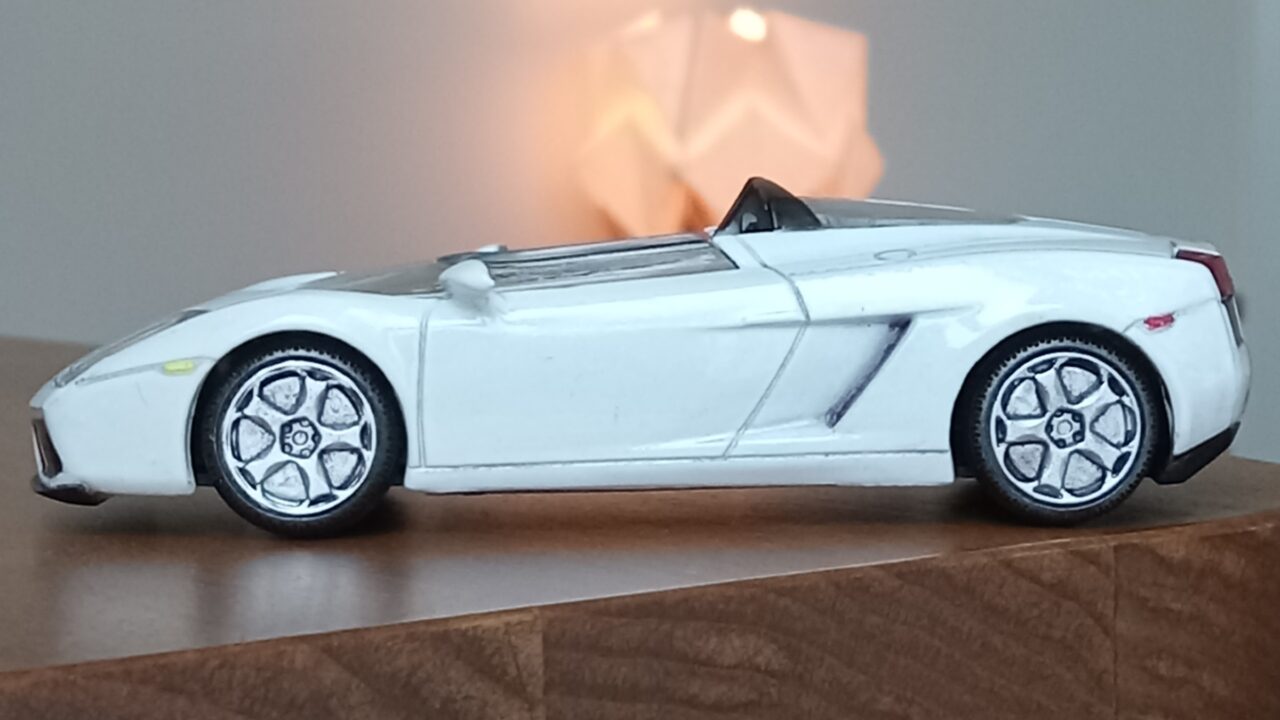
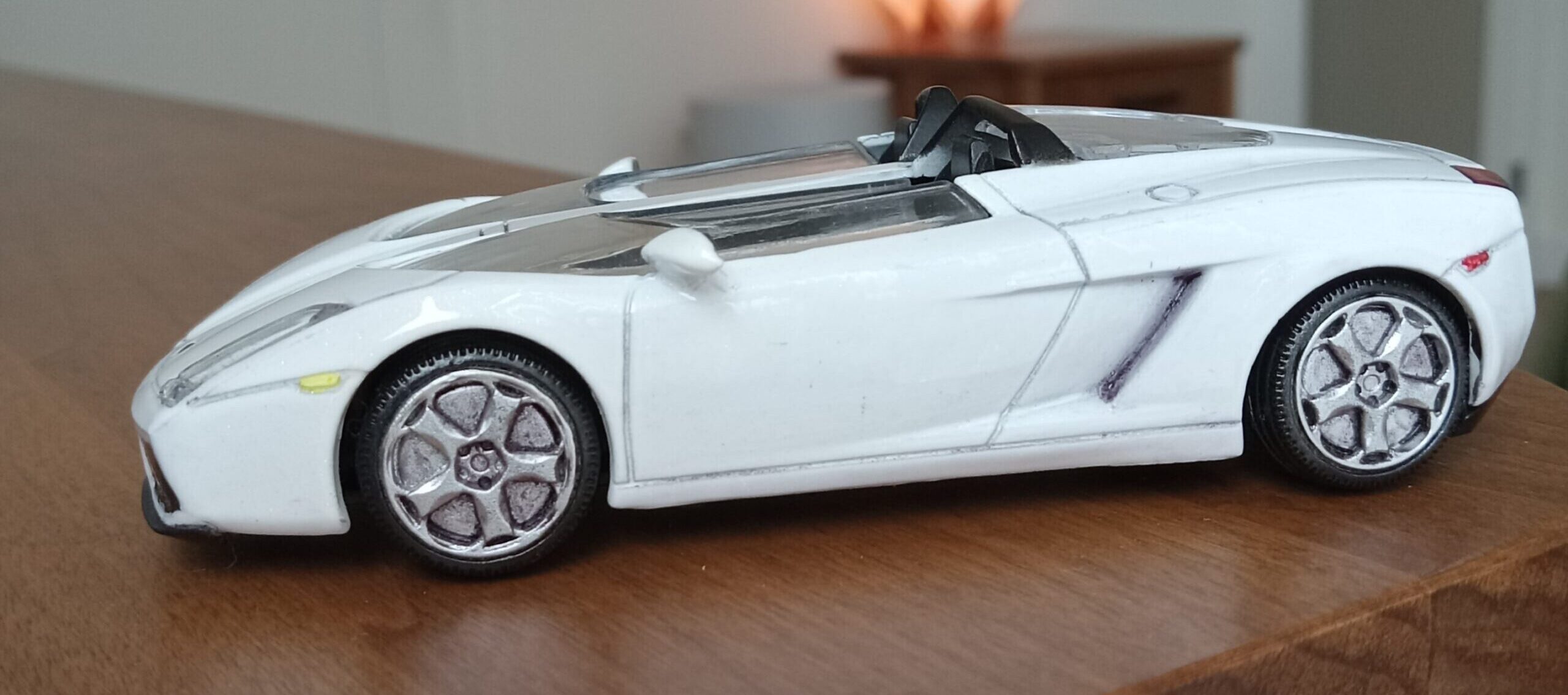
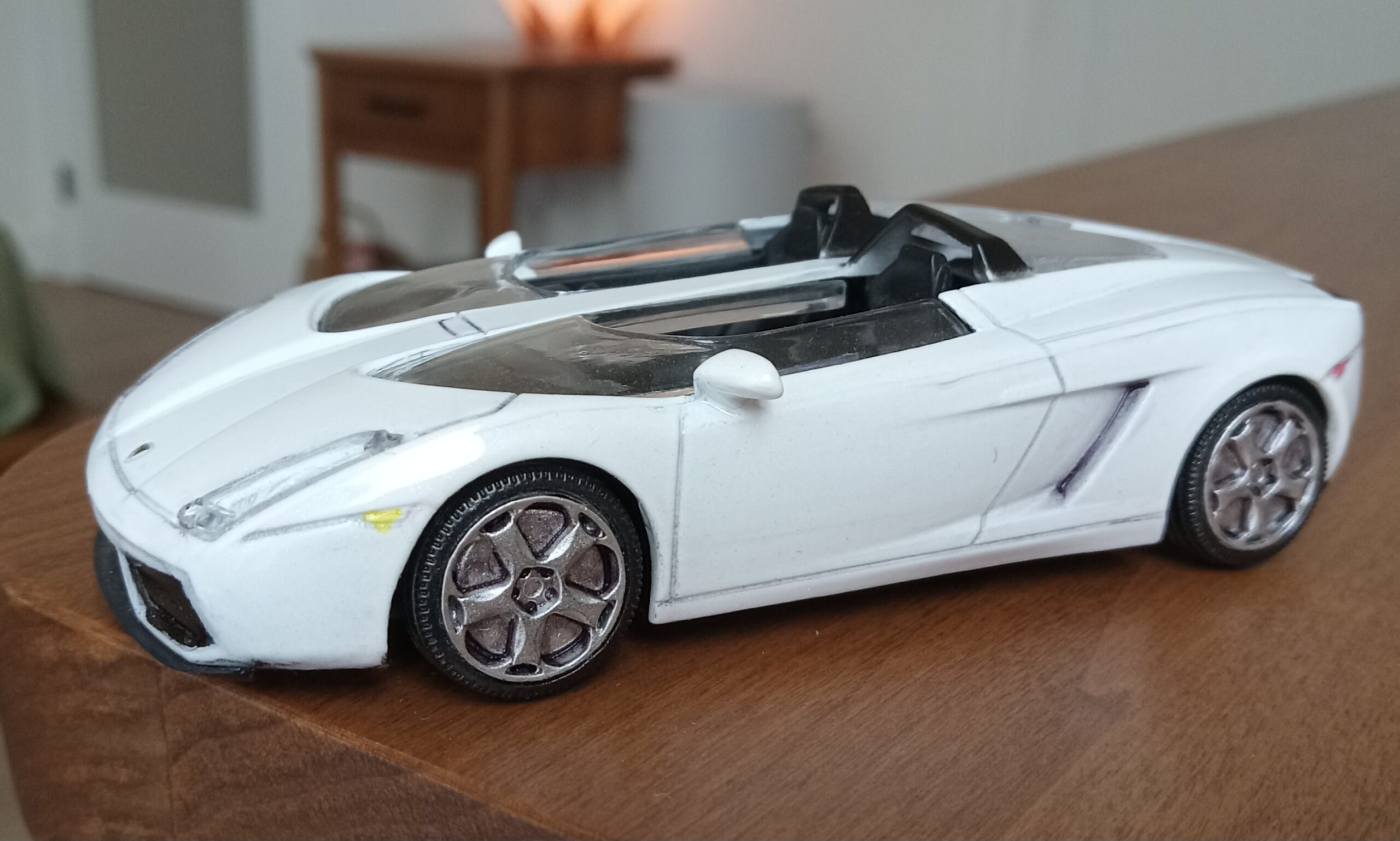
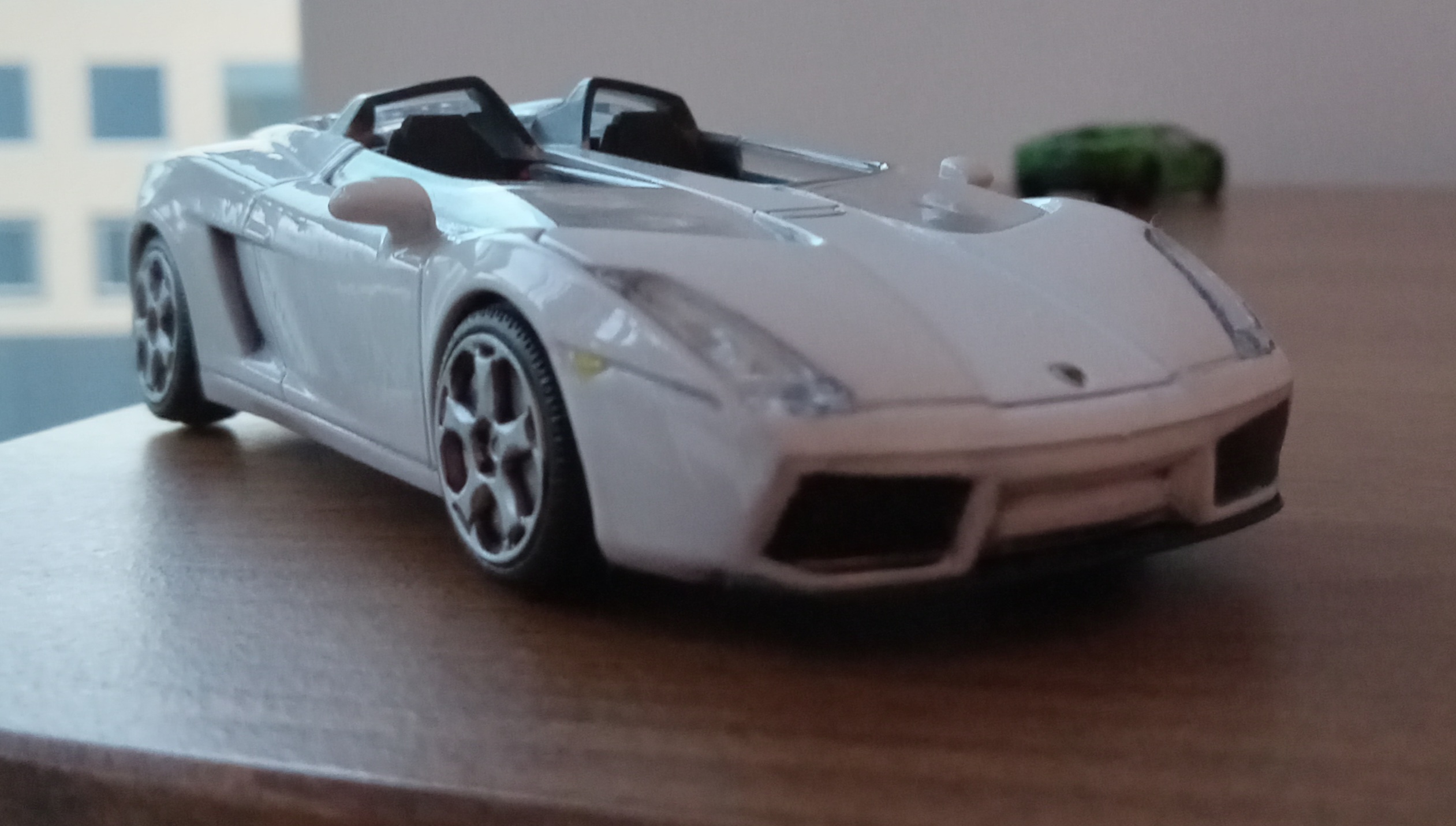
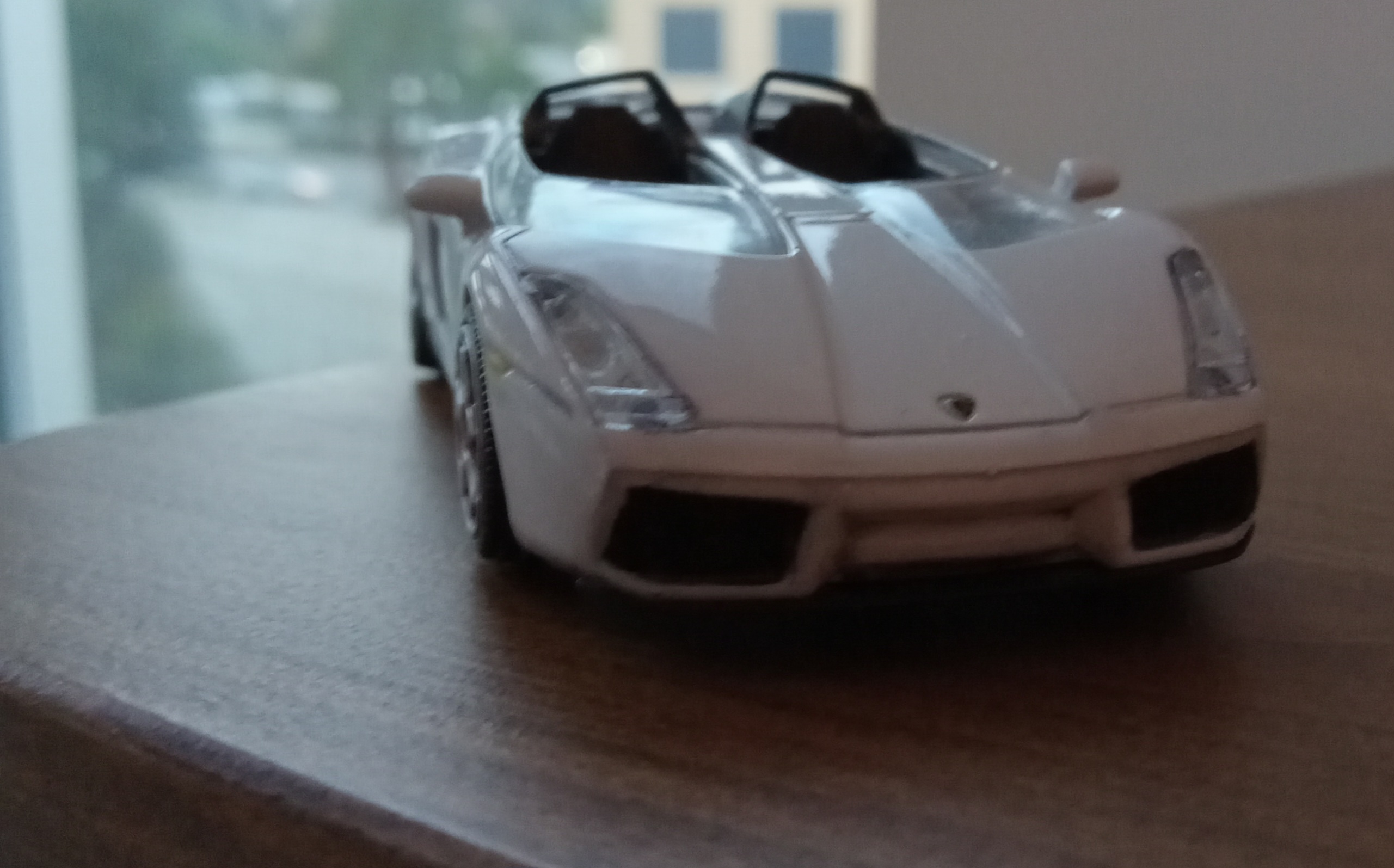
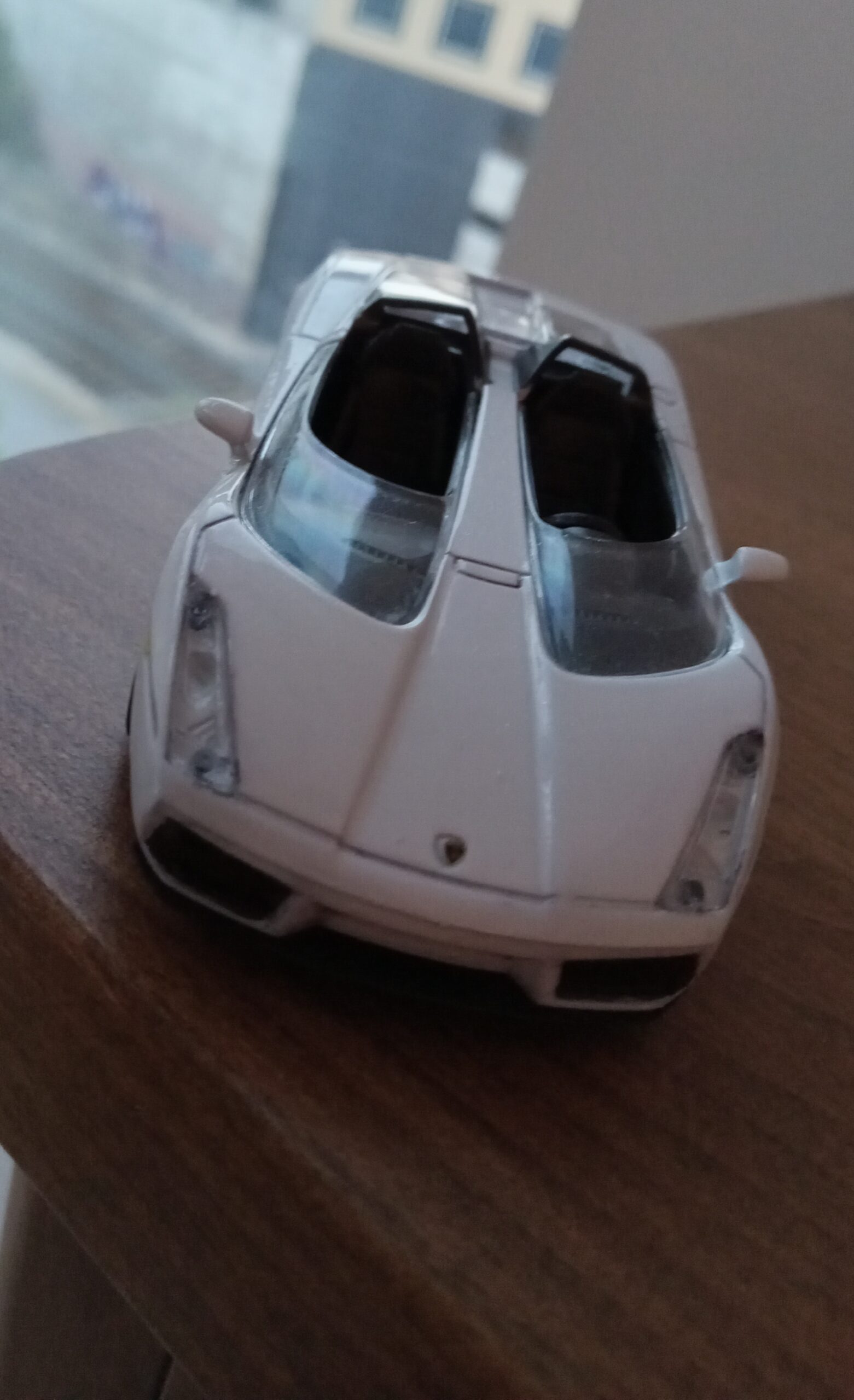
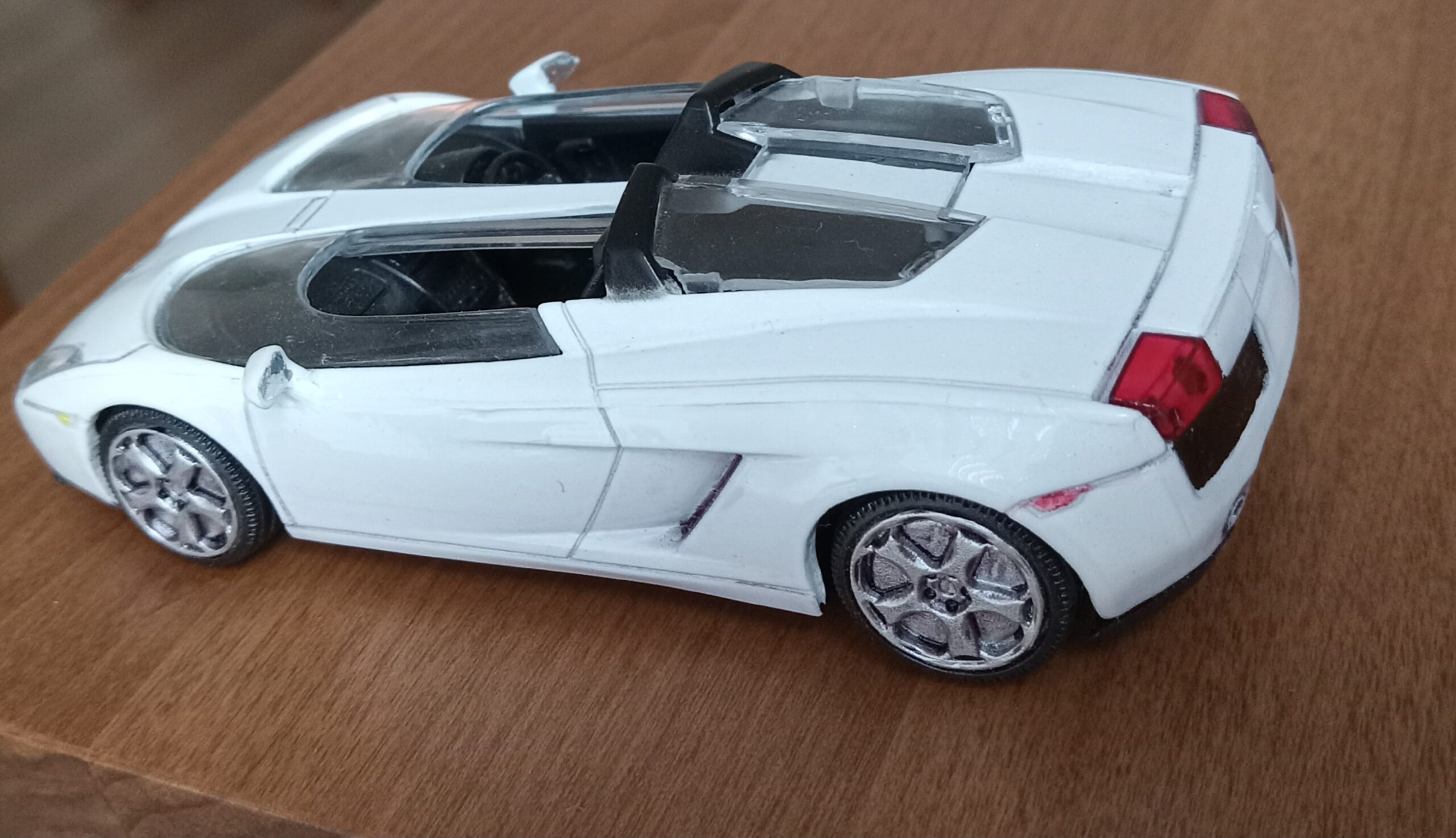
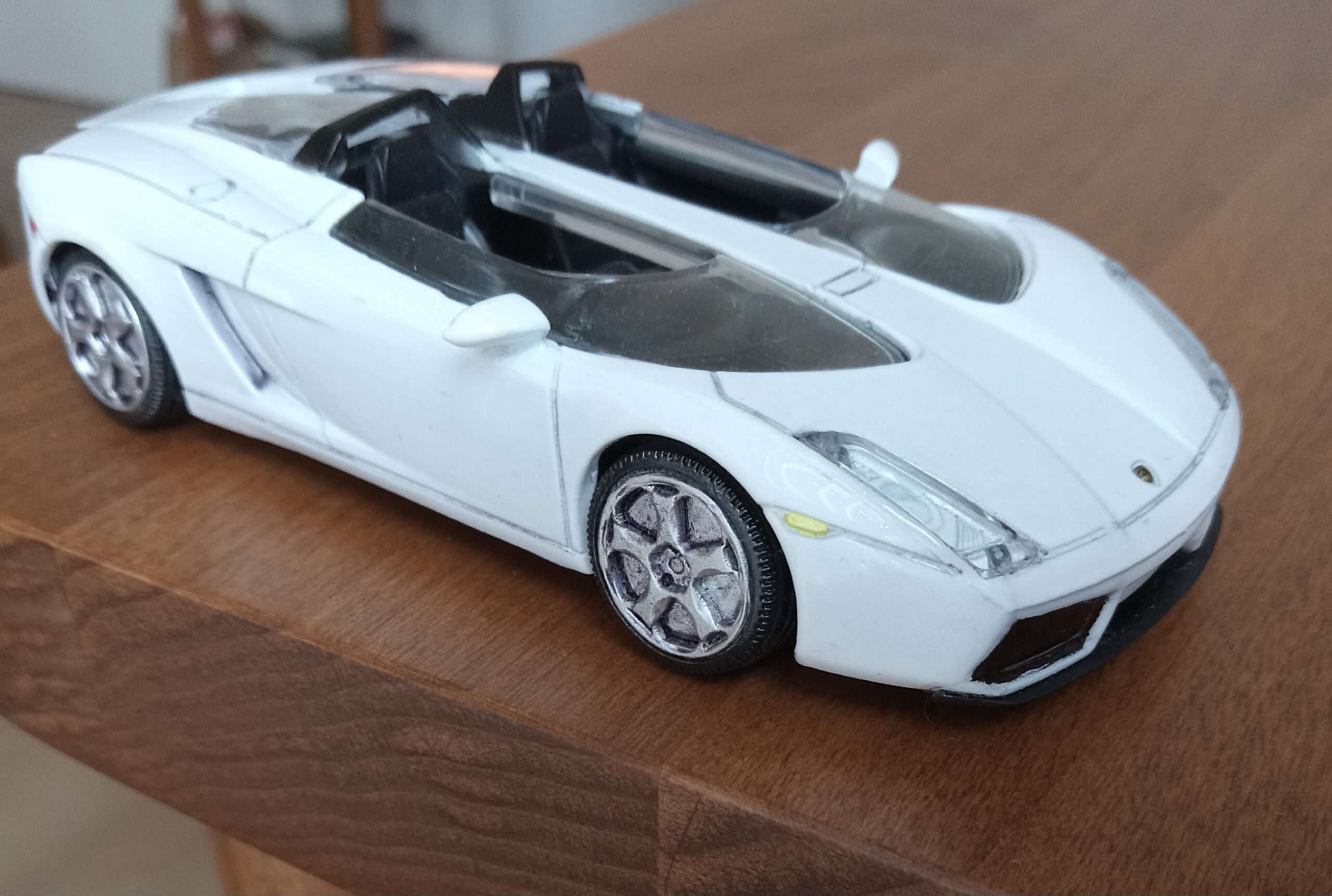
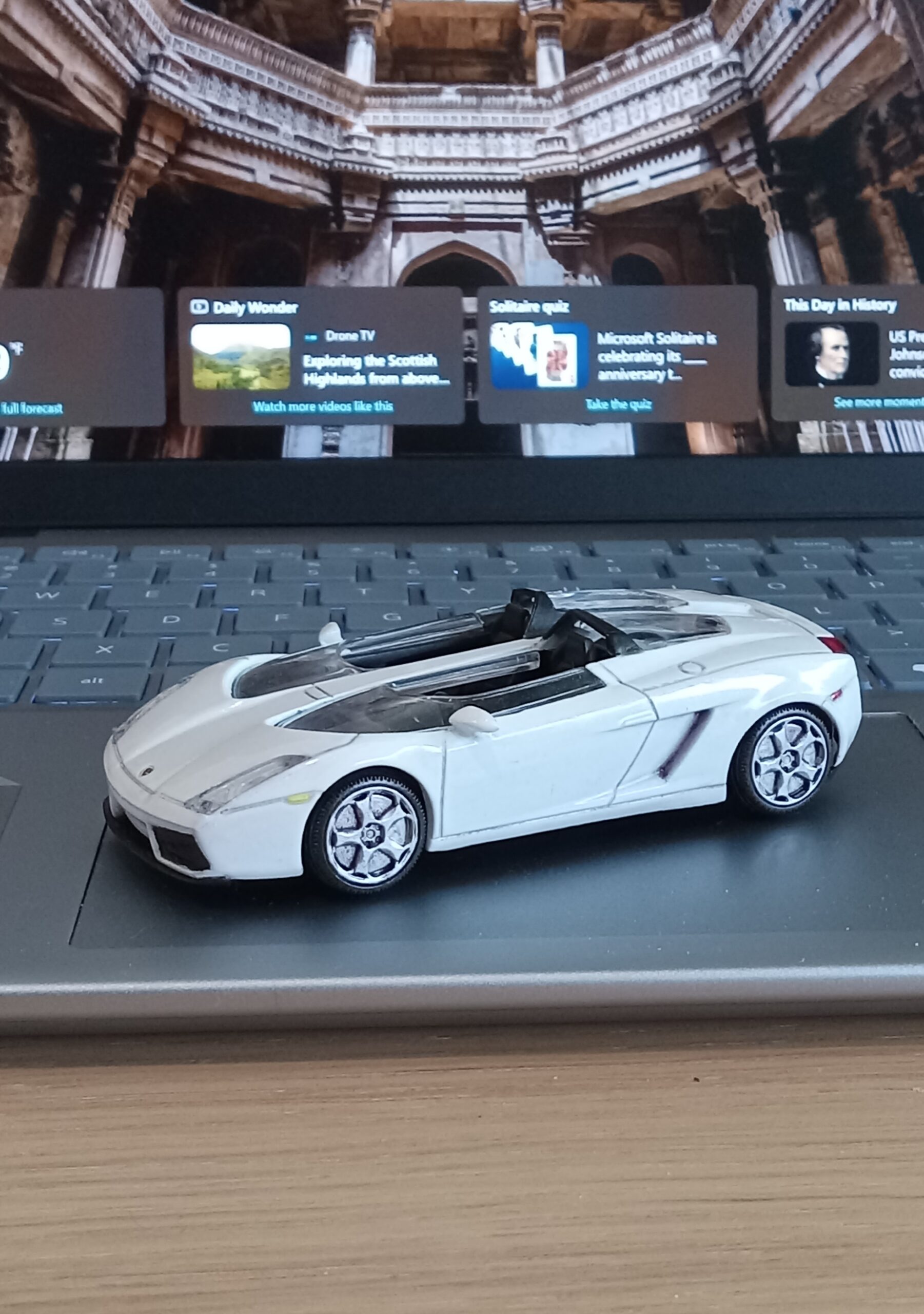
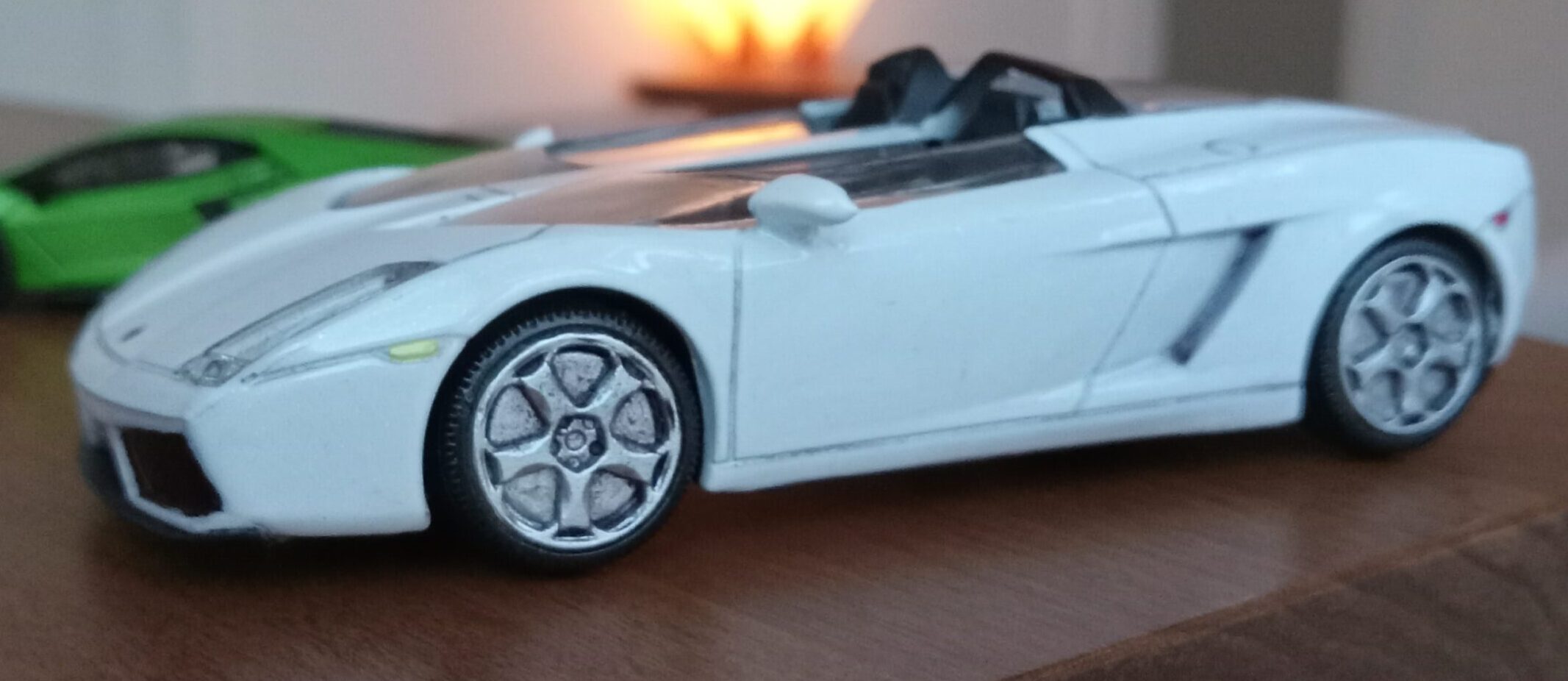
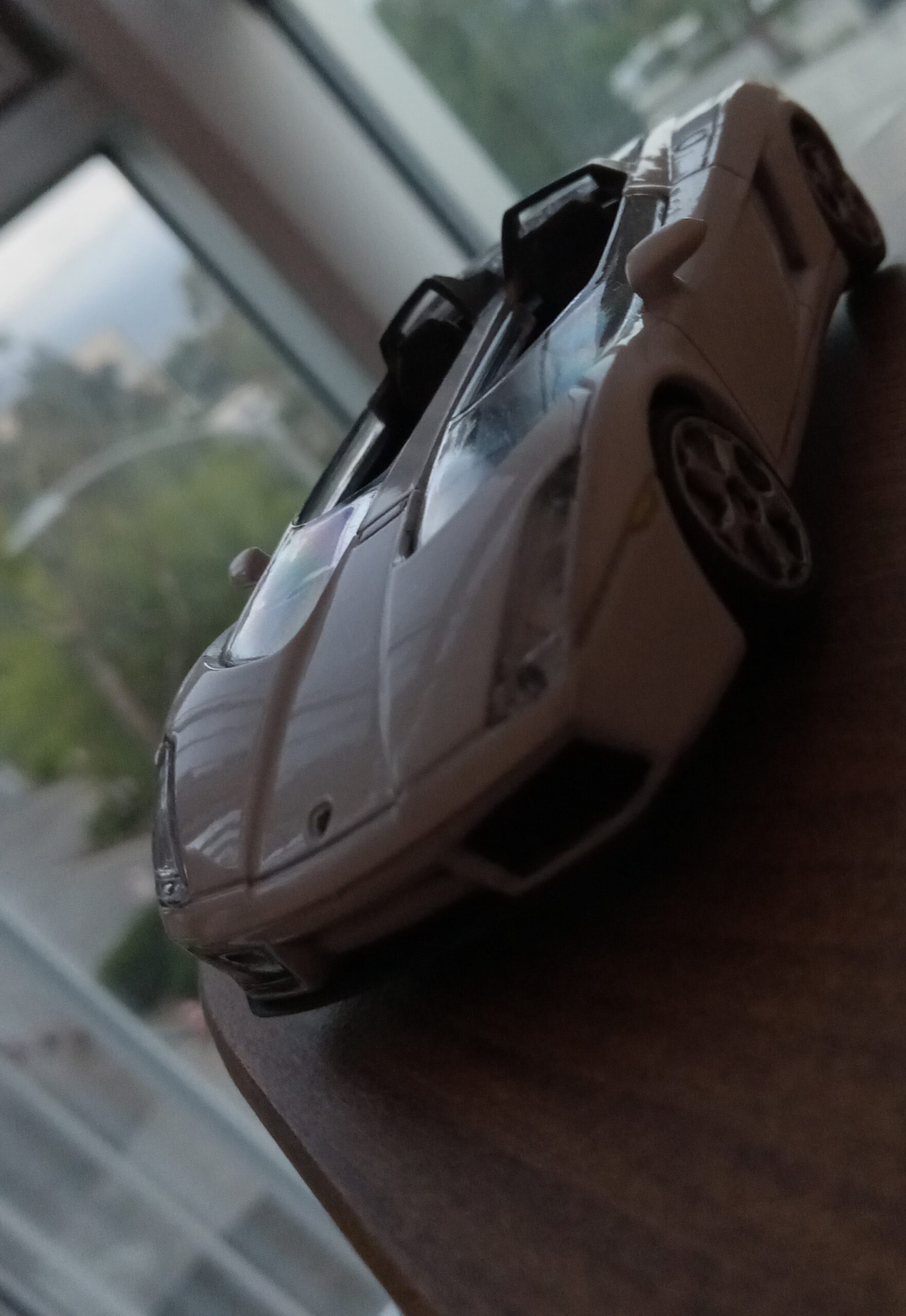
(写真撮影用ミニカー:モンド―・モータース社製、1/43 ランボルギーニ・コンセプト S、2005(パール・ホワイトーーー改造箇所:ホイール、スジボリ、グリルの暖色系グレーにて墨入れ、サイドインテーク、リア・アウトレットを黒で塗装、リアビューミラーをクローム塗装)
第14回【イタリア車編】 ランボルギーニ・コンセプトS, 2005『先行企画車』 Lamborghini Concept S、 2005 『The Show Car』
#好みの自動車デザインーー2ドアクーペの系譜:
第34回目の今回は、『2ドアクーペの系譜、第14回』と題しまして、各国のお国柄や、外観デザインの個性が強く表れる、高級2ドア(GT)クーペ / ロードスターについてお話ししてみたいです。【注意:オープンカーを含む】
以下の要領で進めていきます。
第14回の今回は【イタリア車編】
2005年発表の
ランボルギーニ・コンセプトS
(パール・スノーホワイト:先行企画車)
についてのお話です。
【2ドア・クーペの系譜:目次】
【米国車編】
第1回:キャデラック・エルミラージュ、2013(メタリック・レッド)
第2回:リンカーン・コンチネンタル MK4、1972(ブラック)
第3回:マーキュリー・クーガー, 1967(LTメタリック・グリーン)
【ドイツ車編】
第4回:MB 500K スペシャル・ロードスター、1936(ブラック)
第5回:MB 300SL ロードスター、1957(シルバー)
第6回:MB SLS AMR ガルウイング、2010(ブラック)
【英国車編】
第7回:マクラーレン・F1、1992(メタリック・オレンジ)
第8回:ジャガー・XKSS ロードスター、1957(ロイヤル・ブルー)
第9回:ジャガー XKR クーペ、1996(ダークメタリック・グリーン)
【日本車・ニッサン編】
第10回:ニッサン 初代シルビア、1965(シャンペン・ゴールド)
第11回:ニッサン 5代目シルビア、1988(LTメタリック・グリーン)
【イタリア車編】
第12回:フェラーリ 250TR ポンツーンフェンダー、1958(赤)
第13回:フェラーリ 250GTO、1962(イタリアン・レッド)
第14回:ランボルギーニ・コンセプトS、2005(パール・ホワイト)
【日本車・マツダ編】
第15回:マツダ コスモ・スポーツ、1967(シルバー)
第16回:マツダ ユーノス・コスモ、タイプ‐S(2トン:黒&グレー)
【フランス車編】
第17回:ブガッティ・タイプ59、1935(フレンチ・ブルー)
第18回:シトロエン・SM、1970(シャンペーン・ゴールド)
第19回:ブガッティ・ラ・ヴォワチュール・ノワール、2019(黒)
【日本車・トヨタ編】
第20回:トヨタ/ヤマハ・2000GT、1967(アイボリー・ホワイト)
第21回:トヨタ・2代目ソアラ、1986 (2トン:黒&グレー)
第22回:レクサス LC【GWZ100型】、2017(メタリック・レッド)
【米国車編②】
第23回:ダッジ・チャレンジャー&プリムス・バラクーダ、1971
第24回:ダッジ・ヴァイパー SRT‐10 ACR、 2008(ブラック)
第25回:フォード・シェルビーGR-1 コンセプト、2004(クローム)
【日本車・ミツビシ編】
第26回:ミツビシ・ギャラン λ、1976(ブラウン・メタリック)
第27回:ミツビシ・エクリプス【北米仕様】、2006(オレンジ・メタ)
【ドイツ車編②】
第28回:BMW M635CSi、1984 (ダーク・メタリックブルー))
第29回:MB 560SEC AMG 6.0 ワイドボディー、1989(黒)
第30回:BMW M2 純正パフォーマンス・パーツ仕様、2025(ネオン・ライム)
【日本車・スバル編】
第31回:スバル・クロストレック XV, 2012(ライムグリーン・メタリック)
コルベットの系譜:(番外編)
第1回:1967年型 スティングレー【C2】コンバーチブル(ハードトップ・メタ青)
第2回:1972年型 コルベット 【C3】コンバーチブル(メタリック・ブルー)
第3回:1990年型 コルベット ZR-1【C4】クーペ(レッド)
第4回:スティングレー・コンセプト【先行開発車】、2009(プルー・メタリック)
#全身すべてに鎧のように、『デザイン的面白味』をまとった:端から端まで全部美味しい、「強固なデザイン」
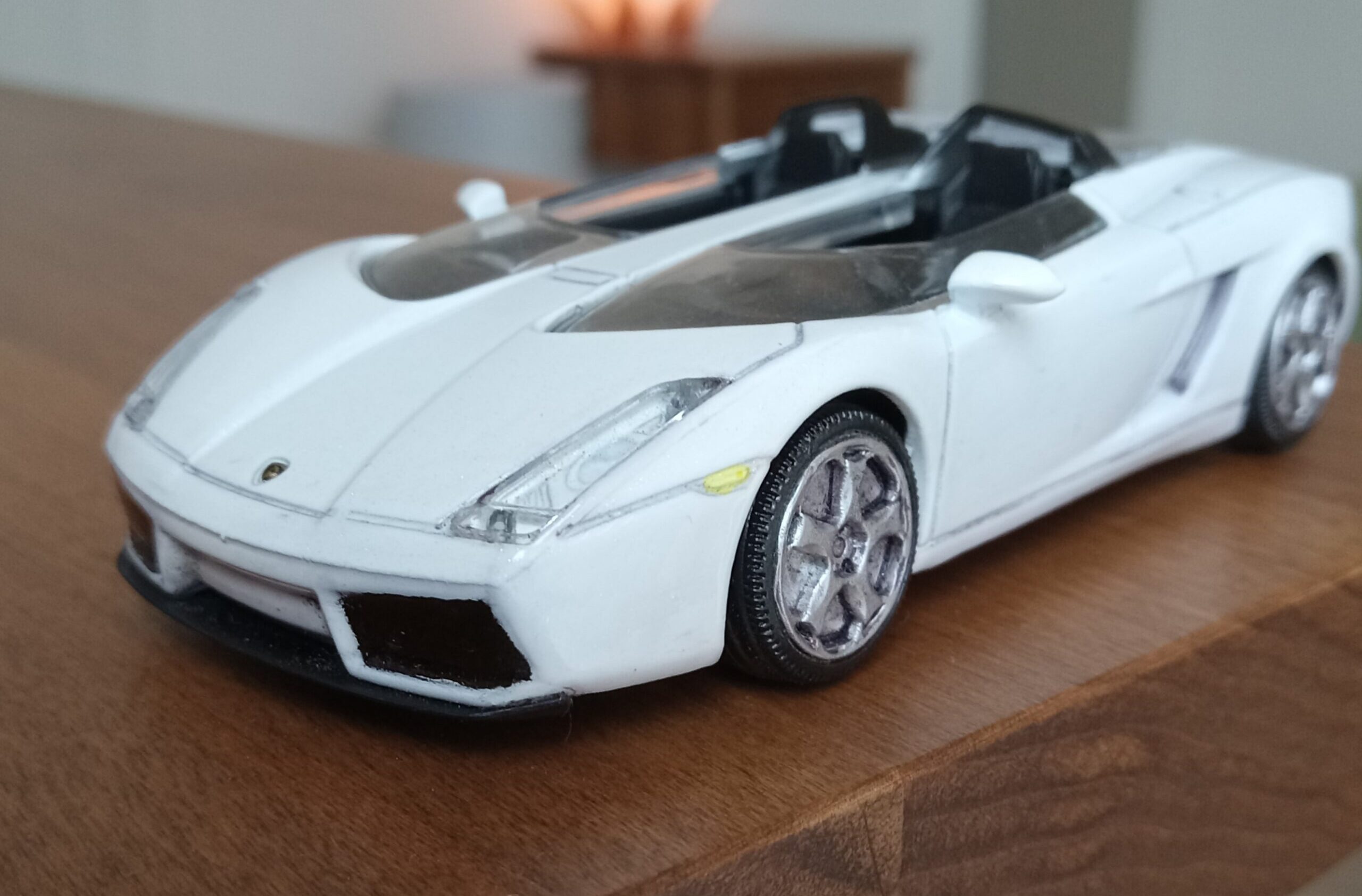
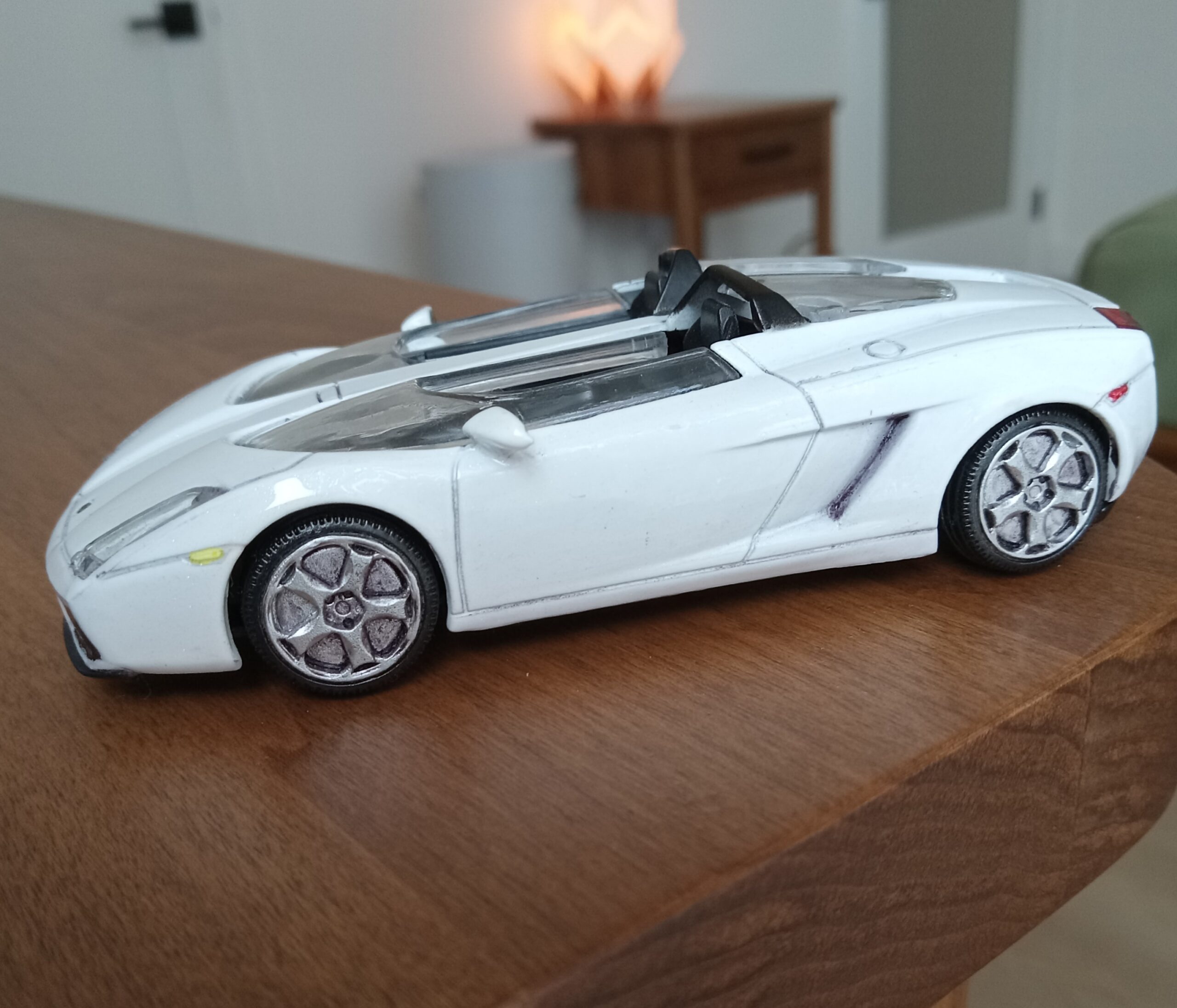
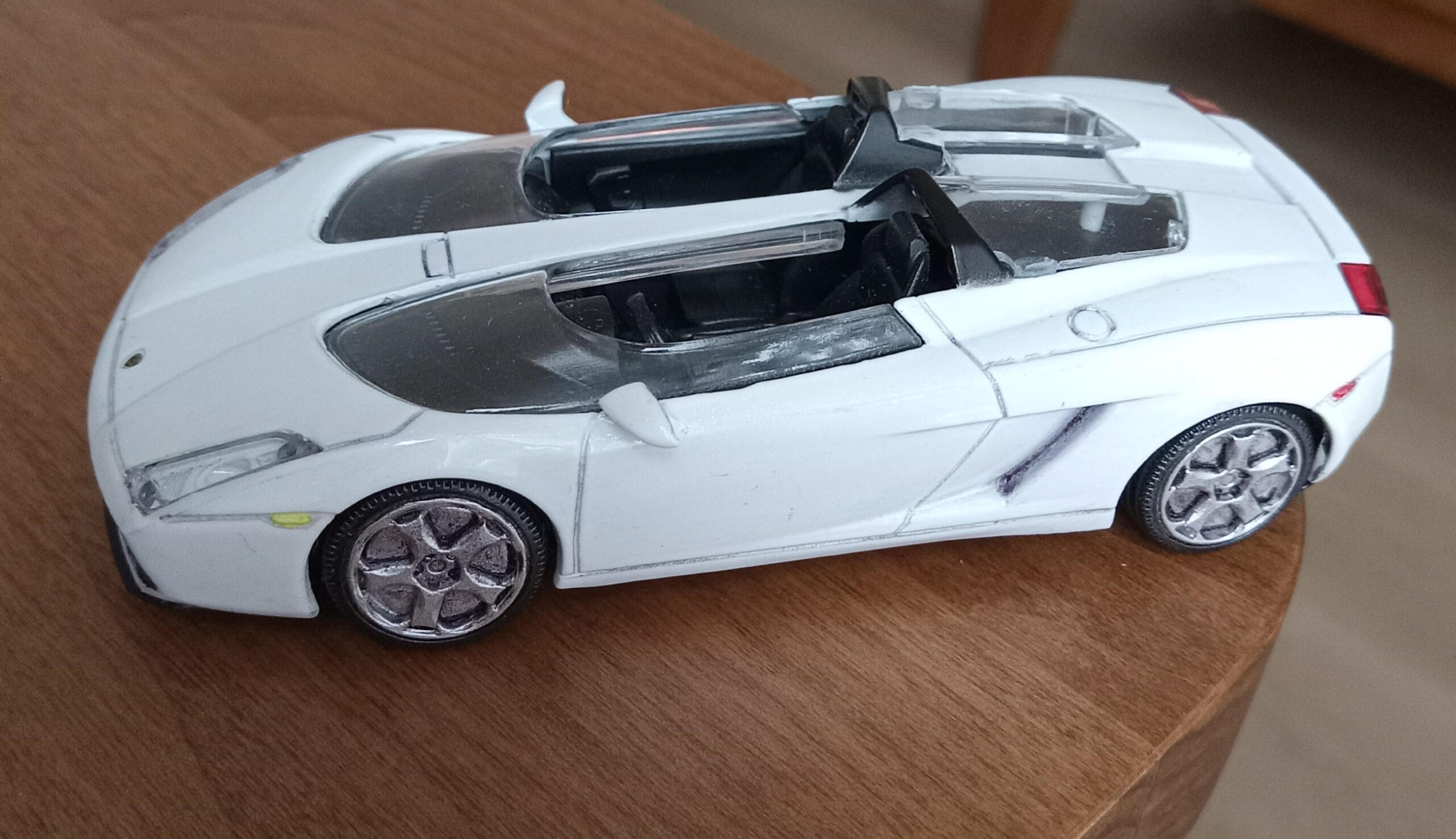
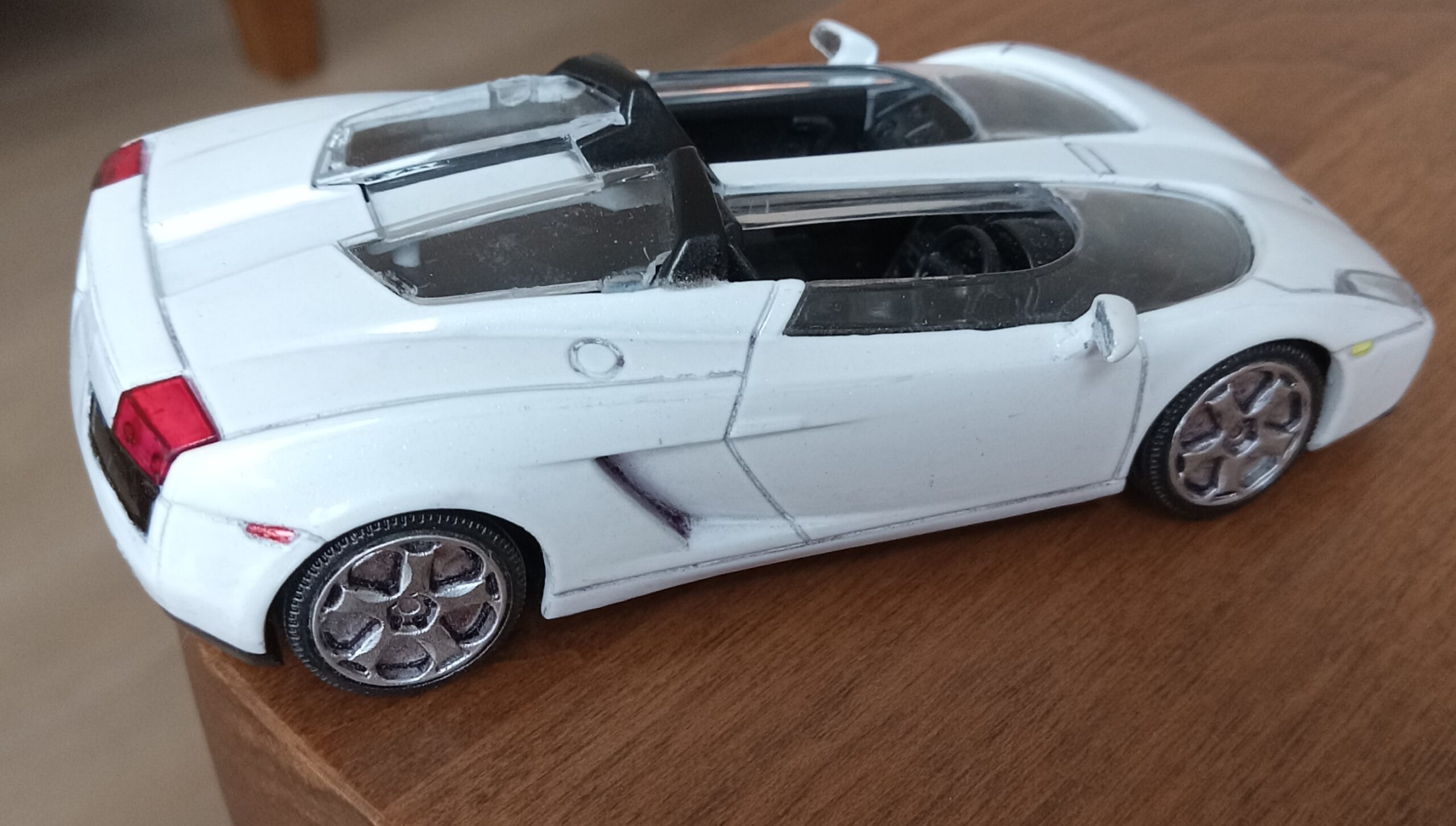
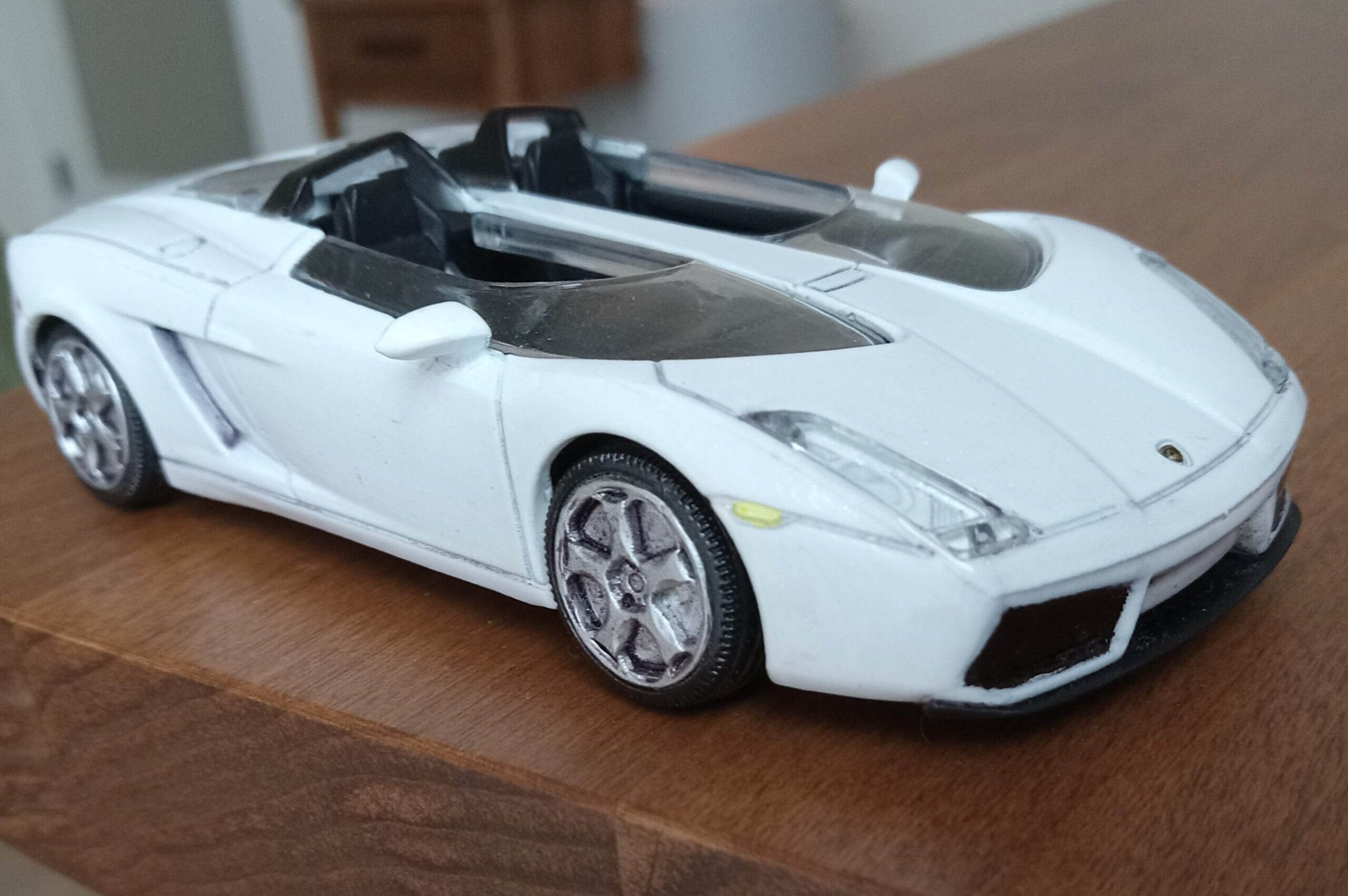
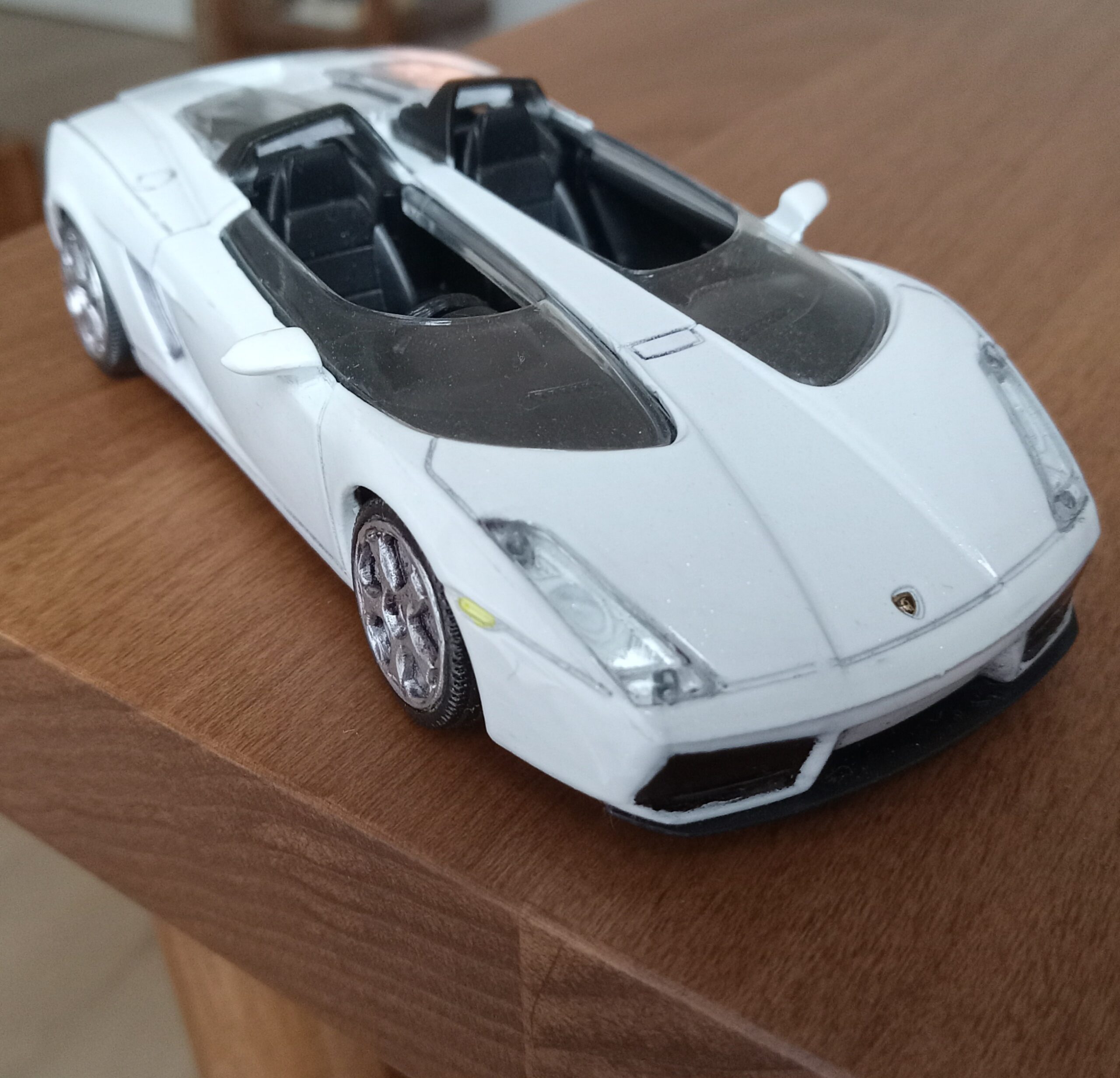
初めて『コンセプトS』の写真を見た時、
何故か、これがいかに強固なデザインなのかを、
[直感的に理解した](何か電気的なショック、、オーラに直撃されたような?)
感覚を記憶しています。
その後今回使用した、
(こちらも「頑丈」に作られた、)
モンド―・モータース社製の1/43のダイキャスト・ミニカーを10年ほど前に手に入れ、
*あらゆる角度から嘗め回すように鑑賞して、
*その『力の漲ったデザイン』を心底愛でてきました。
すべてのアングルがベストアングルと言って過言でないほどの、
『立体造形のモンスター』です!!
(強い言えば、リア3/4ビューが若干弱いですが、、、、)
個人的には、
出会ったときのインパクトが
同レベル=最大値だった繋がりで、
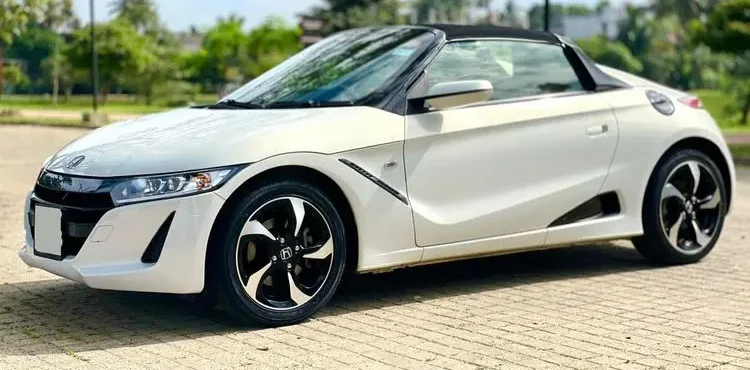
『ホンダS660の師匠筋』と
呼びたいです!!
それでは、
こんな感じで、進めていきたいです。
*実車解説 : 筋金入りのスーパーカー
*外観デザインの特徴:ダブルキャノピーの再構成
*『私』と【コンセプトS】
*三題噺:藍より青し・S660・師匠
*その他の『強固なデザイン』を持った車たち、、、
*実車解説:世界に一台の筋金入りのスーパーカー
概要:
n
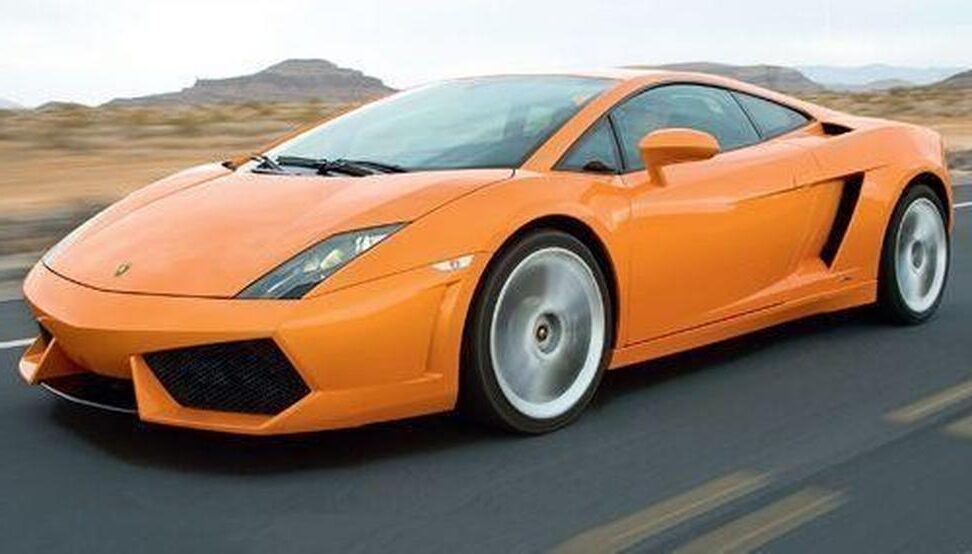
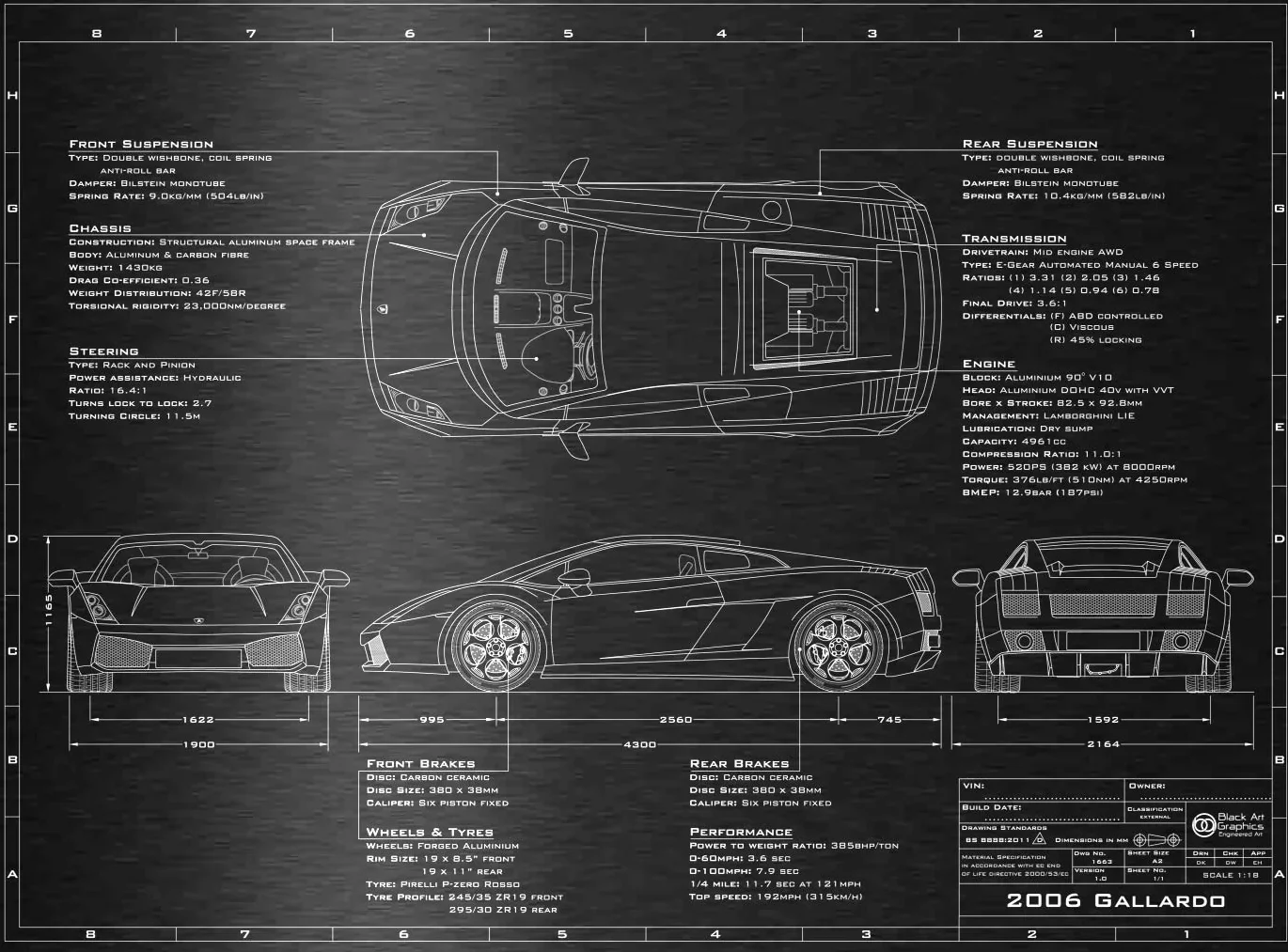
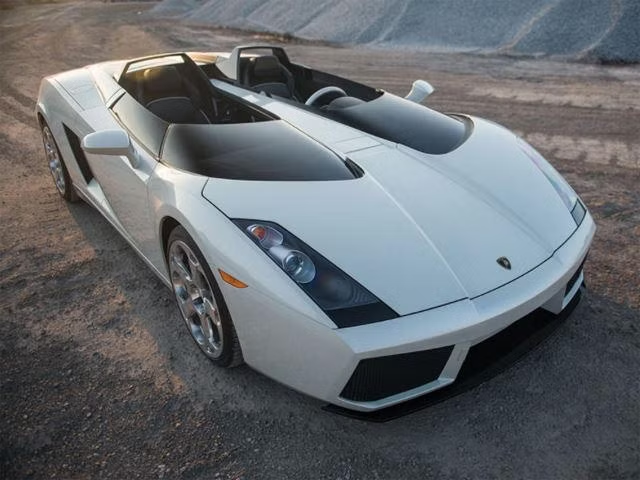
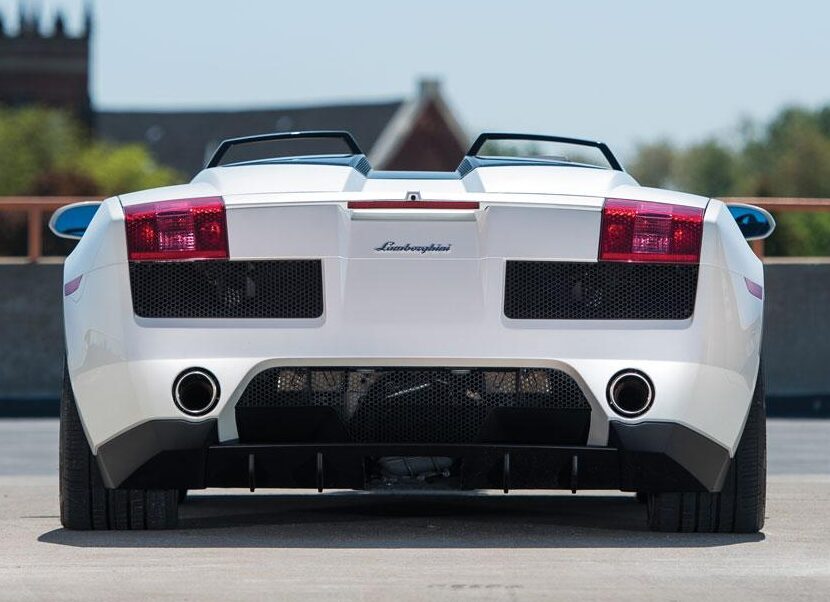
V10搭載のスーパーカー「ガヤルド」をベースに作られた、一人乗りのレーシングカーを彷彿とさせる過激なオープンスポーツカーです。完全なワンオフ(世界に1台)モデルであり、ランボルギーニの究極のスタイリングを表現した幻のコンセプトカーとして知られています。
n
設計内容とデザイン:
n
N
n
n
m
*独立したデュアルコックピット:
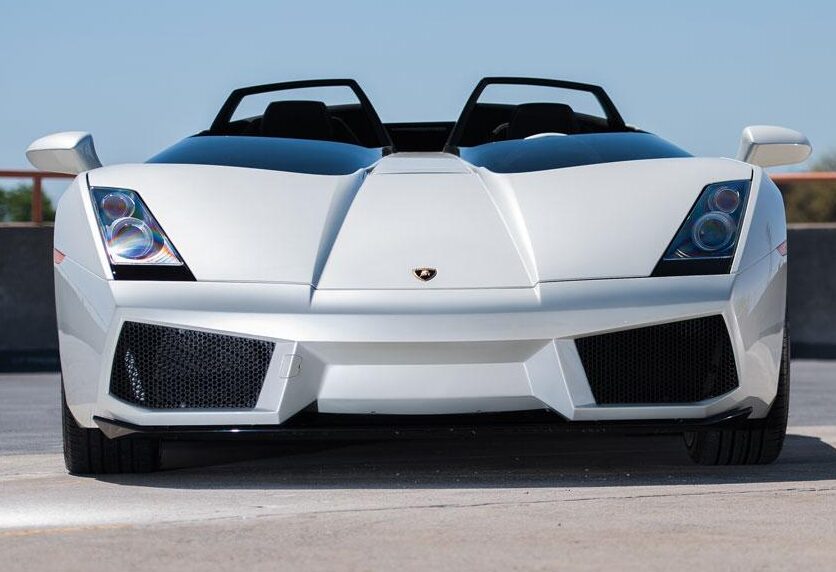
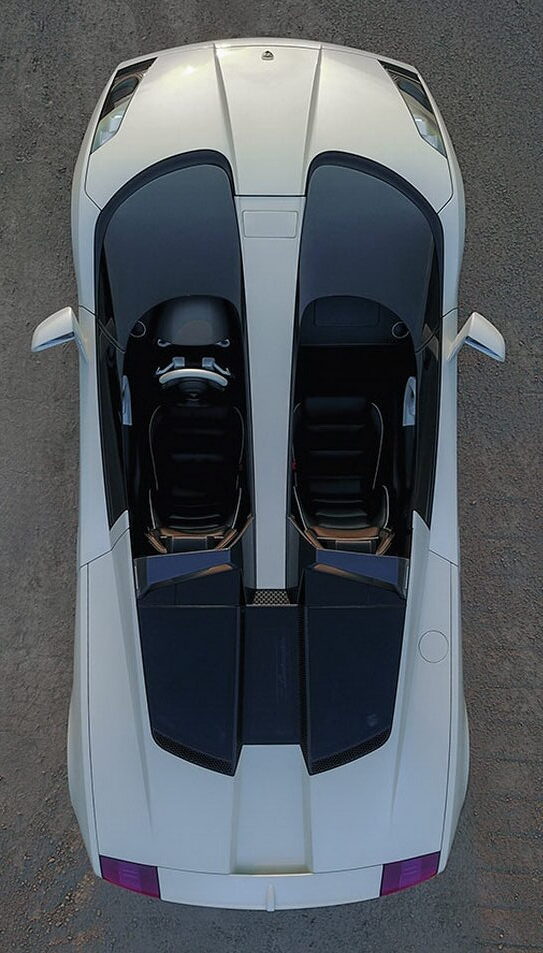
伝統的な一枚のフロントガラスの代わりに、左右が完全に分割されたラップアラウンド・ウインドスクリーンを採用しています。
n
*セントラルエアインテーク:
左右のコックピットの中央部分がそのままミッドシップマウントのエンジンへの空気取り入れ口(エアインテーク)として機能する、非常に特徴的なエアロダイナミクス構造を持っています。
*アグレッシブな空力パーツ:
専用のフロントおよびリアスポイラー、大型のリアディフューザーを備え、サーキット志向のスタイルを強調しています。
*エンジン: 5.0リッター V型10気筒自然吸気エンジン
*最高出力: 520馬力
*トランスミッション: 6速MT
*駆動方式: 四輪駆動(AWD)
#主要諸元:
- 型式:CA18DET
- 総排気量:4,961 cc(5.0L)V型10気筒 DOHC 40バルブ 自然吸気エンジン
- 最高出力 : 520 PS(520 BHP) @ 7,800 rpm
- 最大トルク:510 Nm(376 ft·lbf) @ 4,500 rpm
- 駆動方式:恒久的4輪駆動(AWD / 4WD)
- 定員:2名(運転席と助手席が縦方向に独立したコックピット)
- 車体形式:2ドア スピードスター(完全オープントップ)
- ホイールベース:2,560 mm
- 全長:4,345 mm
- 全幅:1,900 mm
- 全高:1,000 mm(※キャビン分割部を除いた高さ)
約 1,450 kg
*外観デザインの特徴:独立コクピットの美しい造形!
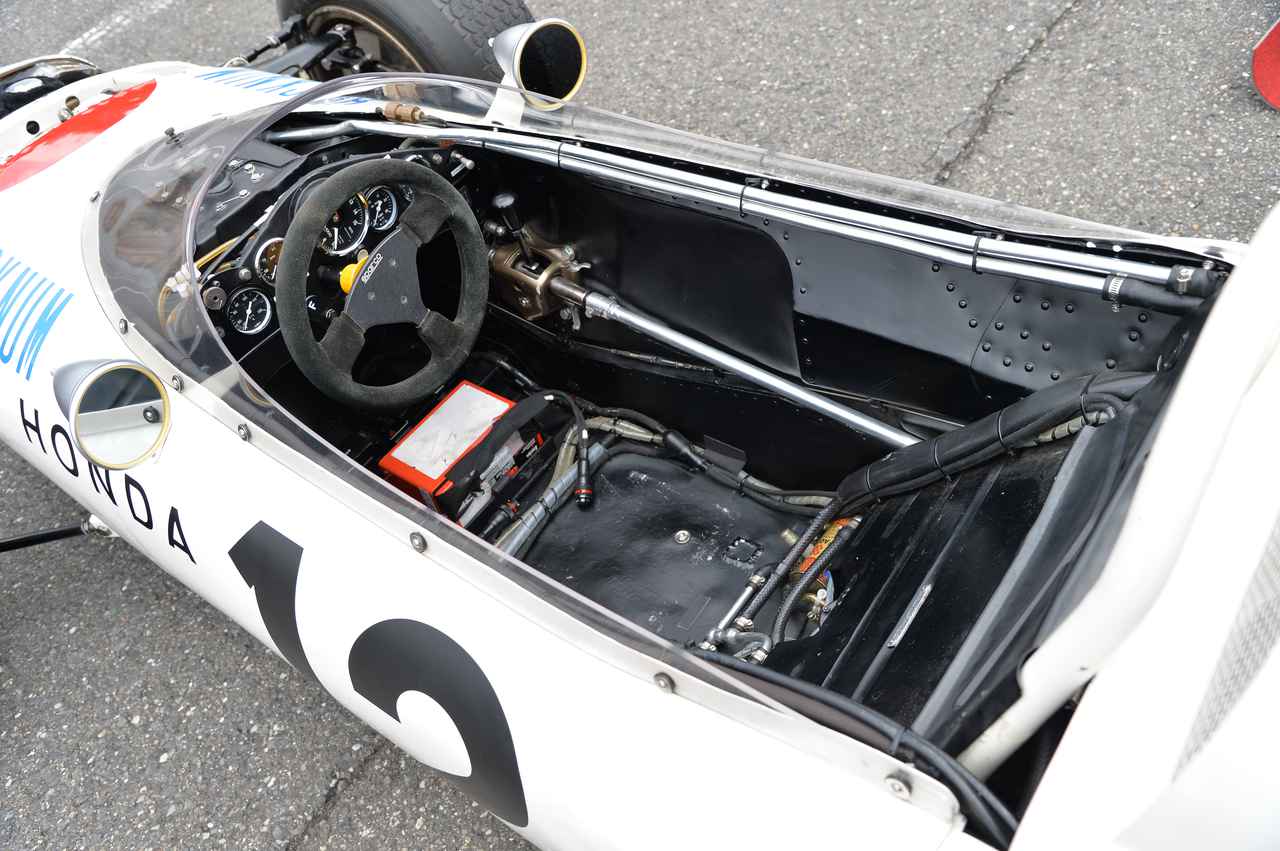
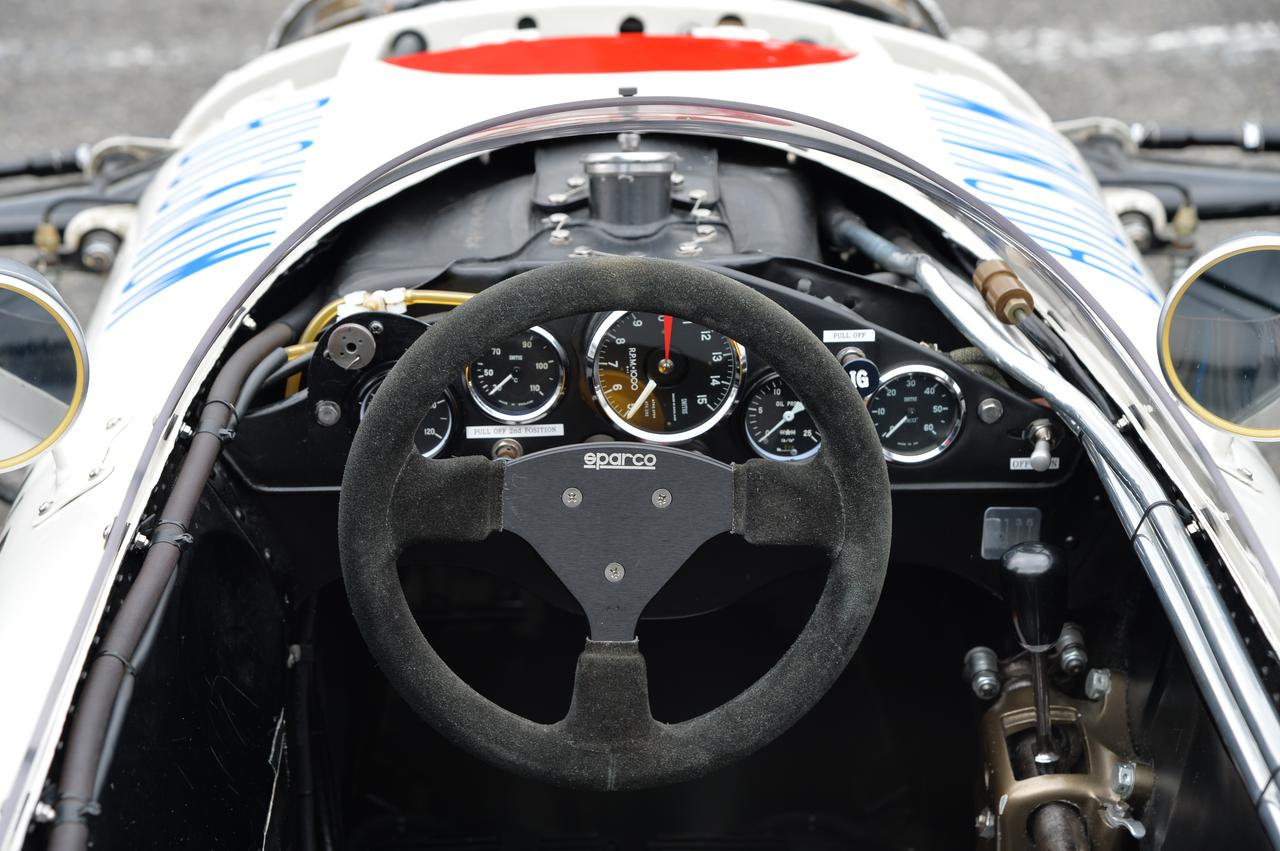
(1960年代のホンダF1 のコクピット)
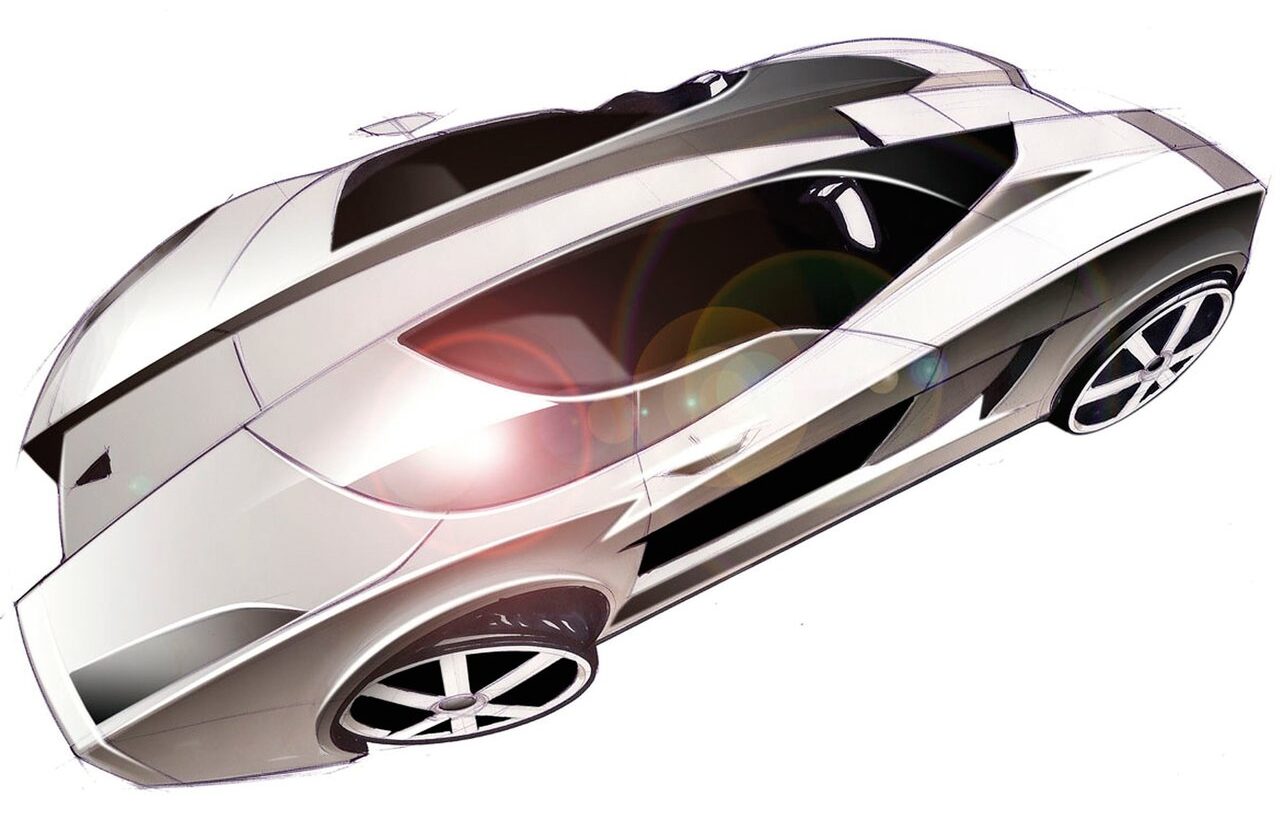
史上まれに見ぬほどの力強い外観を持った、
『ランボルギーニ・コンセプトS』に付いて
以下の5点について
お話ししたいです。
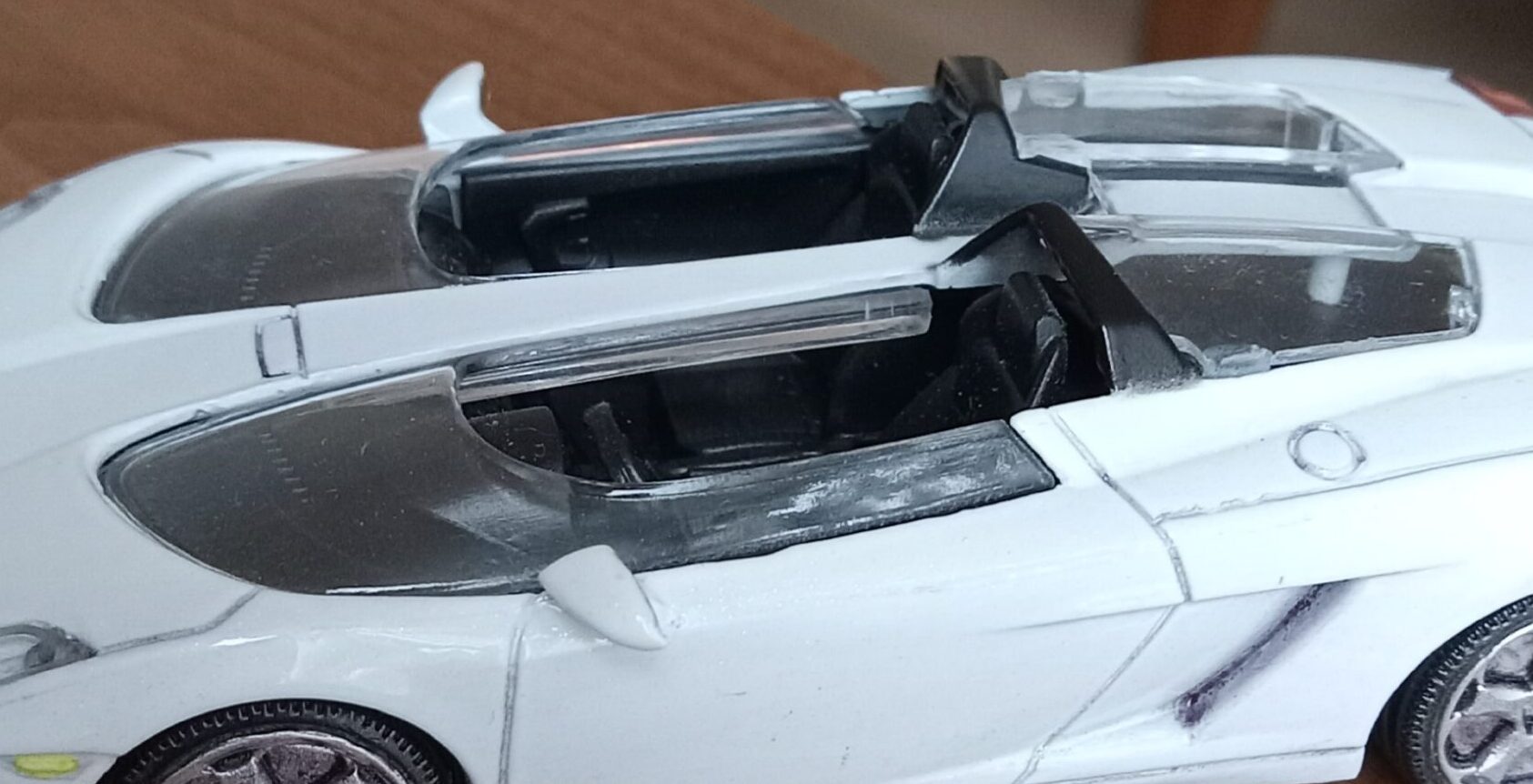
1:『サイド・バイ・サイド』に配置されたF1型のコクピットから生まれた(元になったガヤルドとは似ても似つかぬ)強烈なボディー上面の造形の超絶さ
ーーーーーー>100台限定で発売予定だそうですが、実現してほしかったです!!
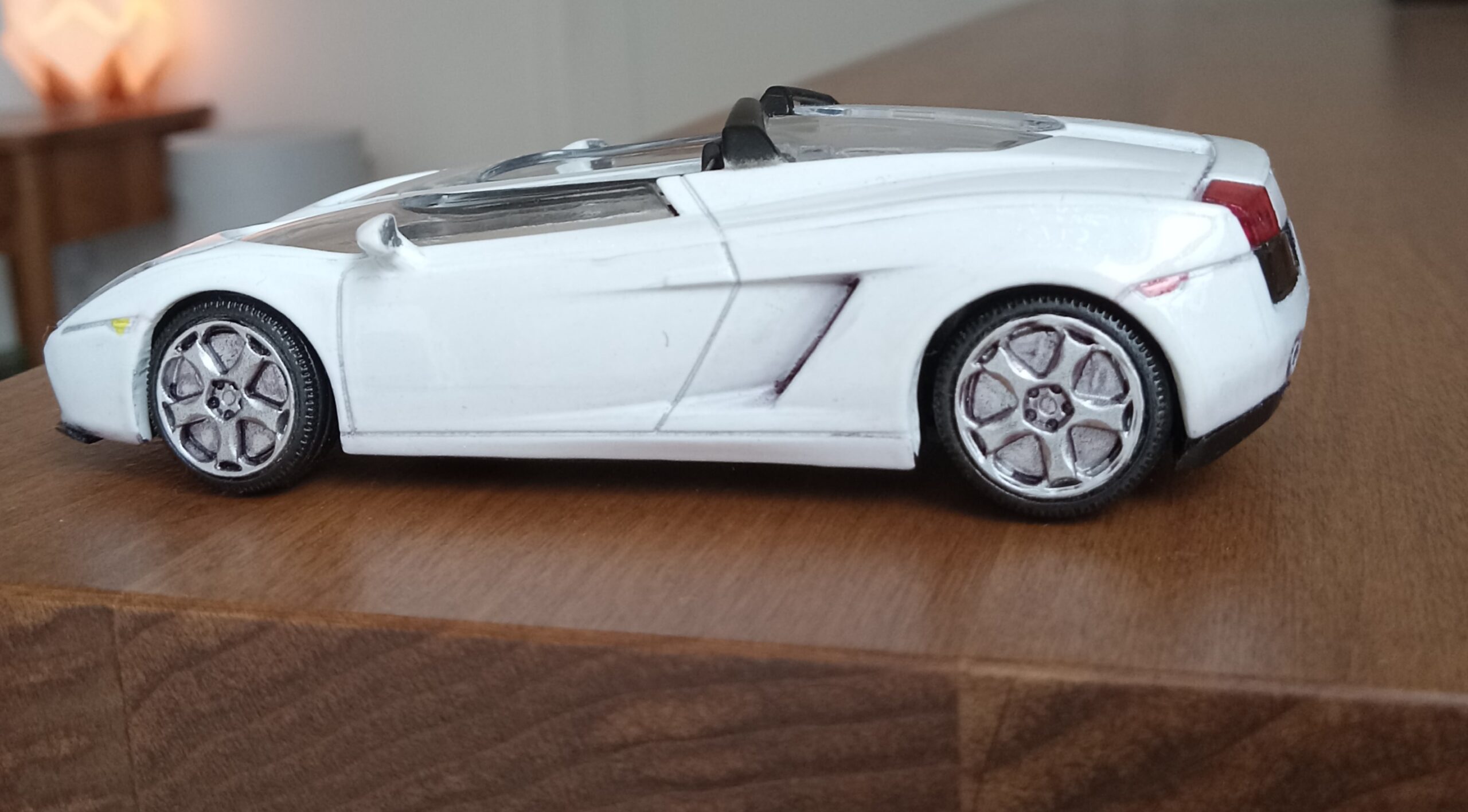
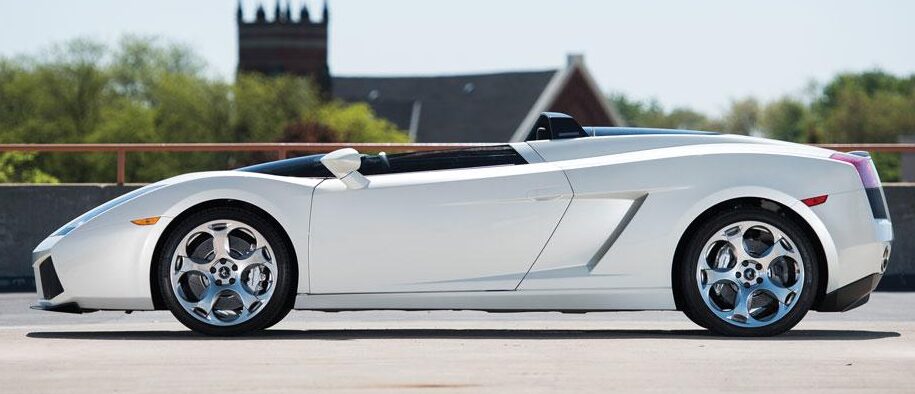
2:ガヤルドの時点でデザインされていた、サイドビューのフロントフェンダー直後の落ち込み部分が、ルーフが低くなる事で、大幅に強調され、四方八方から『力強い肩幅の張り』の様に観測できます。
ーーーーーーー>この「強固なデザイン」要【かなめ】となっているディテールですね!
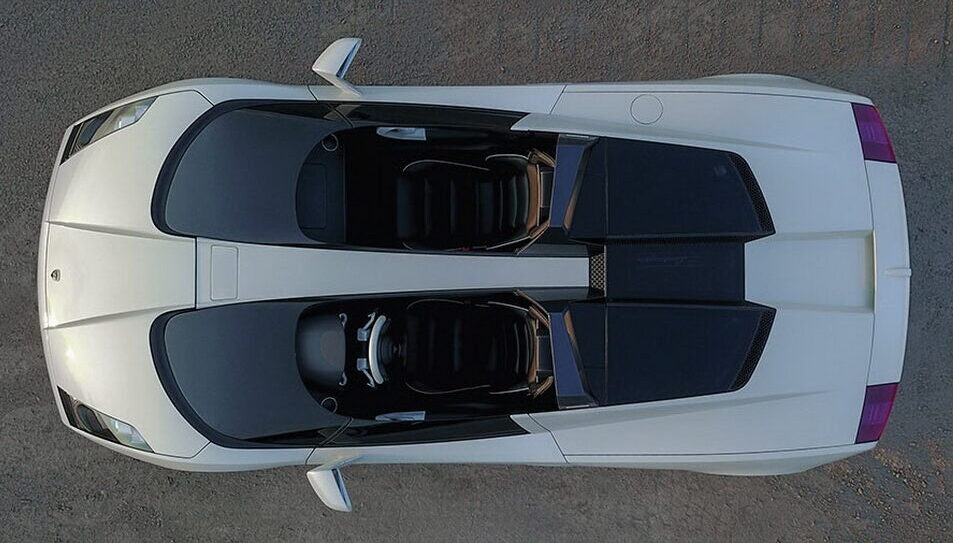
3:真上から見た時の『粗密感』あふれる立体グラフィック・デザインの魅力
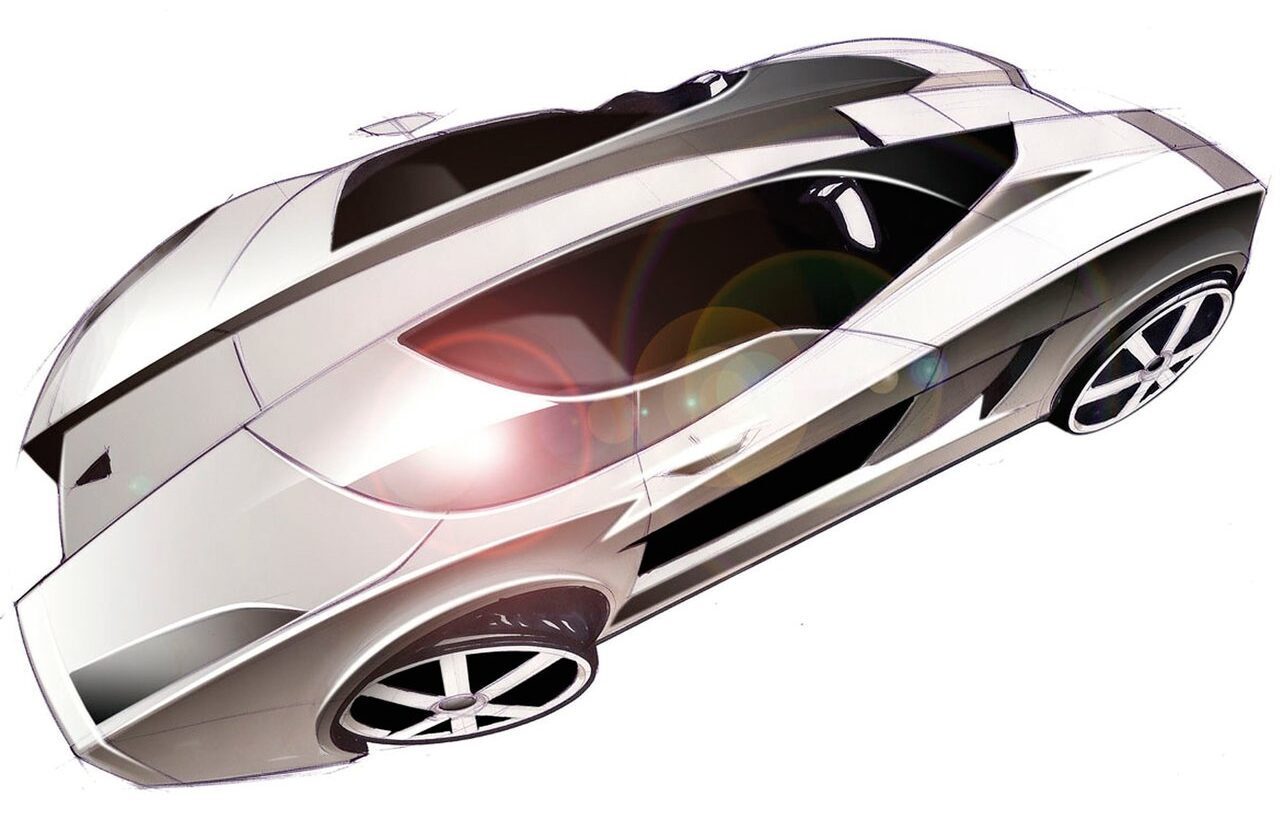
4:幅広感とパースペクティブ感の迫力を、これ以上ない程強調させる、フロントエンド、ボンネットからリアエンドに向けて収束する彫刻の力
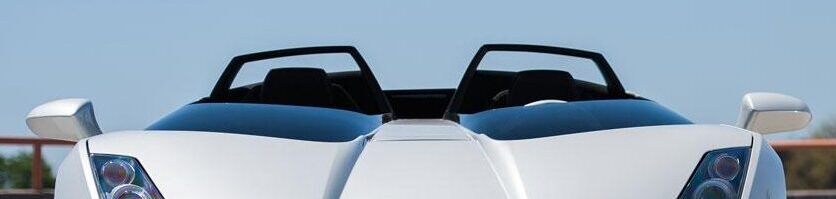
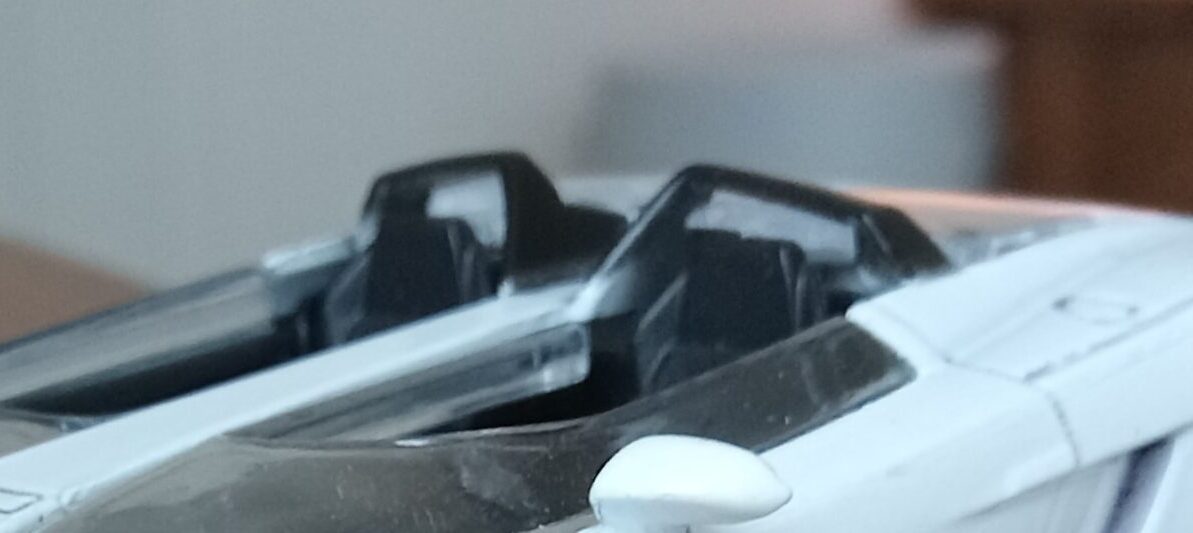
5:すべてのアングルに置ける『見え方の頂点』を引き締める、『鷲の広げた羽』のようなヘッドレストのデザイン
ではそれぞれ詳しく
見て行きましょう。
1:『サイド・バイ・サイド』に配置されたF1型のコクピットから生まれた(元になったガヤルドとは似ても似つかぬ)強烈なボディー上面の造形の超絶さ
(ボンネット中央のくぼみがそのままコックピットを2つに分かち、更にリアのエンジンへの吸気ベントへの空気の流れを制御する機能を負わされています。)
ーーーーーー>100台限定での発売は予算の問題で実現しませんでしたが、実現してほしかったです!!
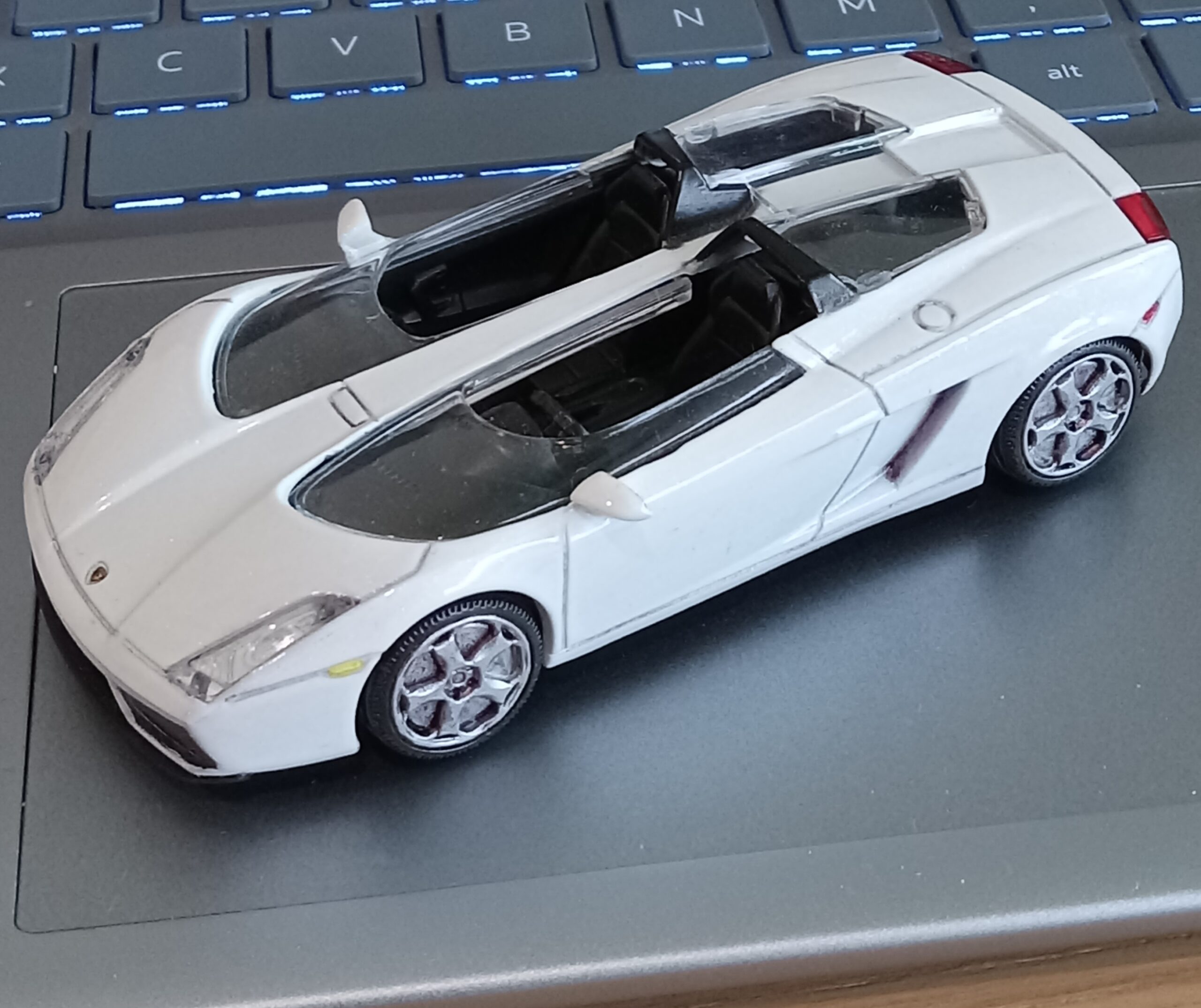
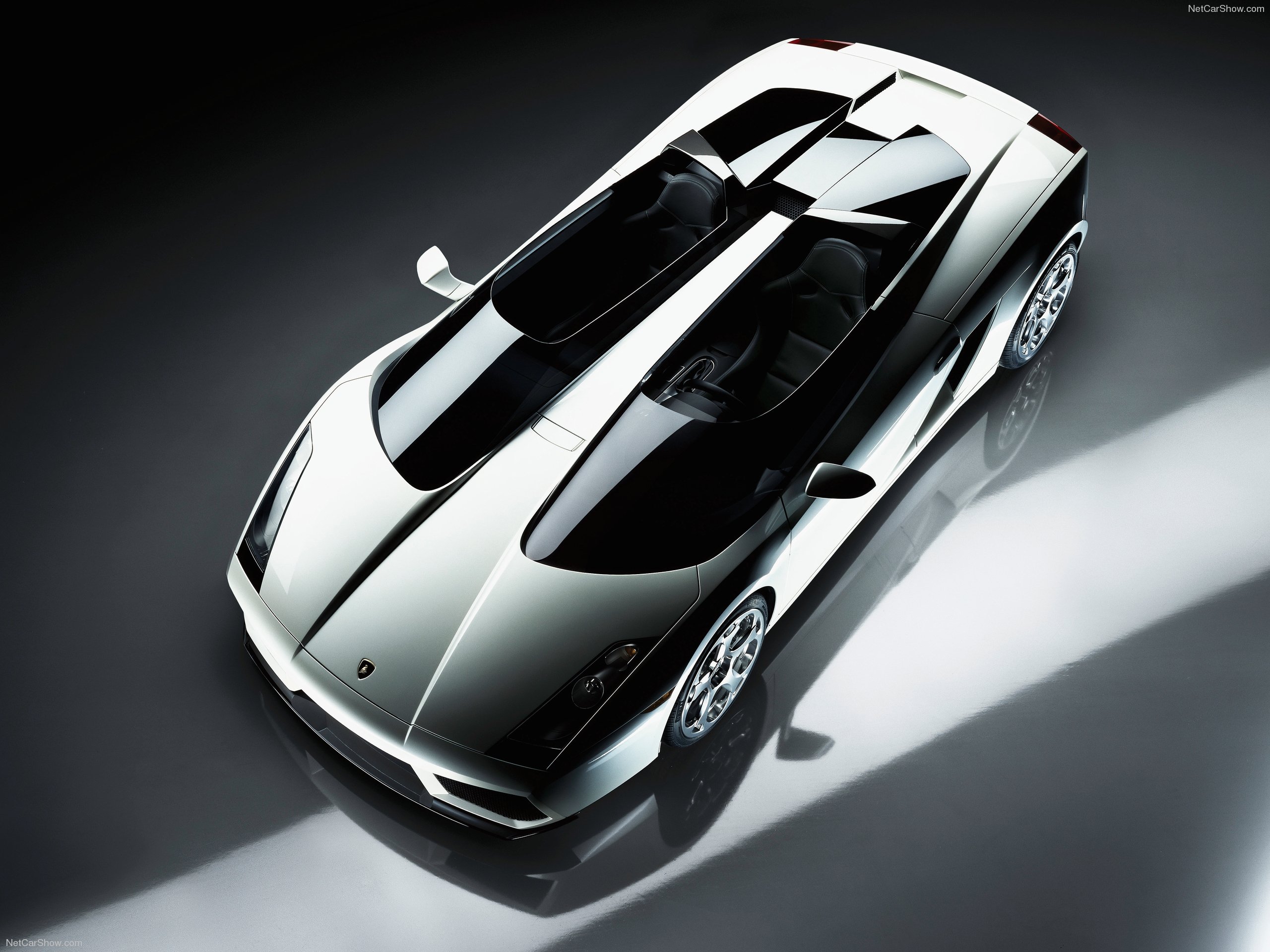
2:ガヤルドの時点でデザインされていた、サイドビューのフロントフェンダー直後の落ち込み部分が、ルーフが低くなる事で、大幅に強調され、四方八方から『力強い肩幅の張り』の様に観測できます。
ーーーーーーー>この「強固なデザイン」要【かなめ】となっているディテールですね!
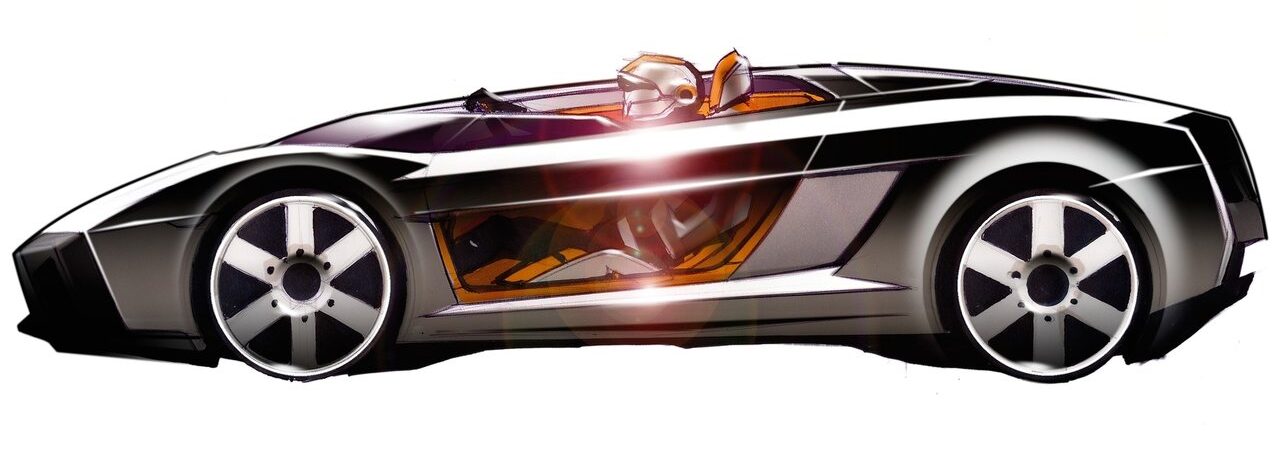
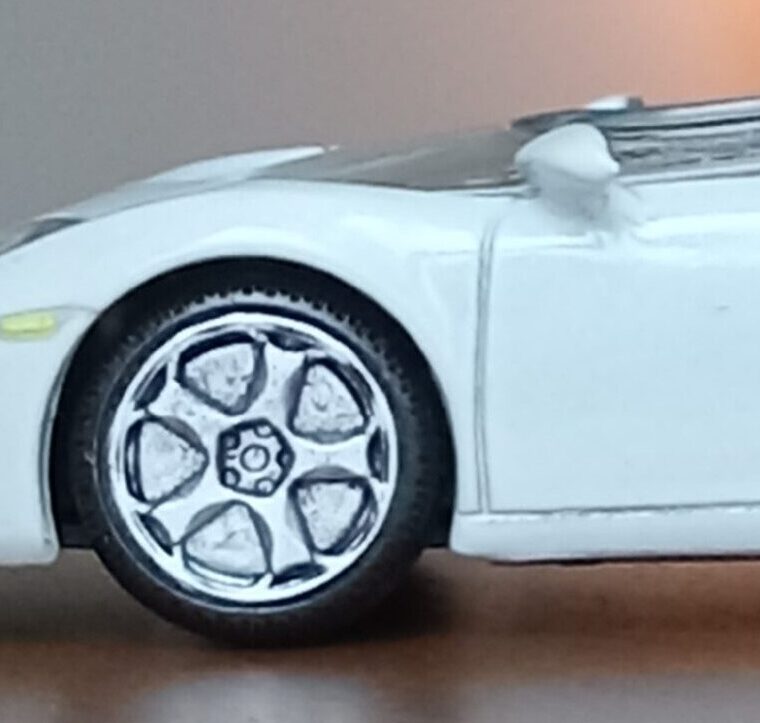
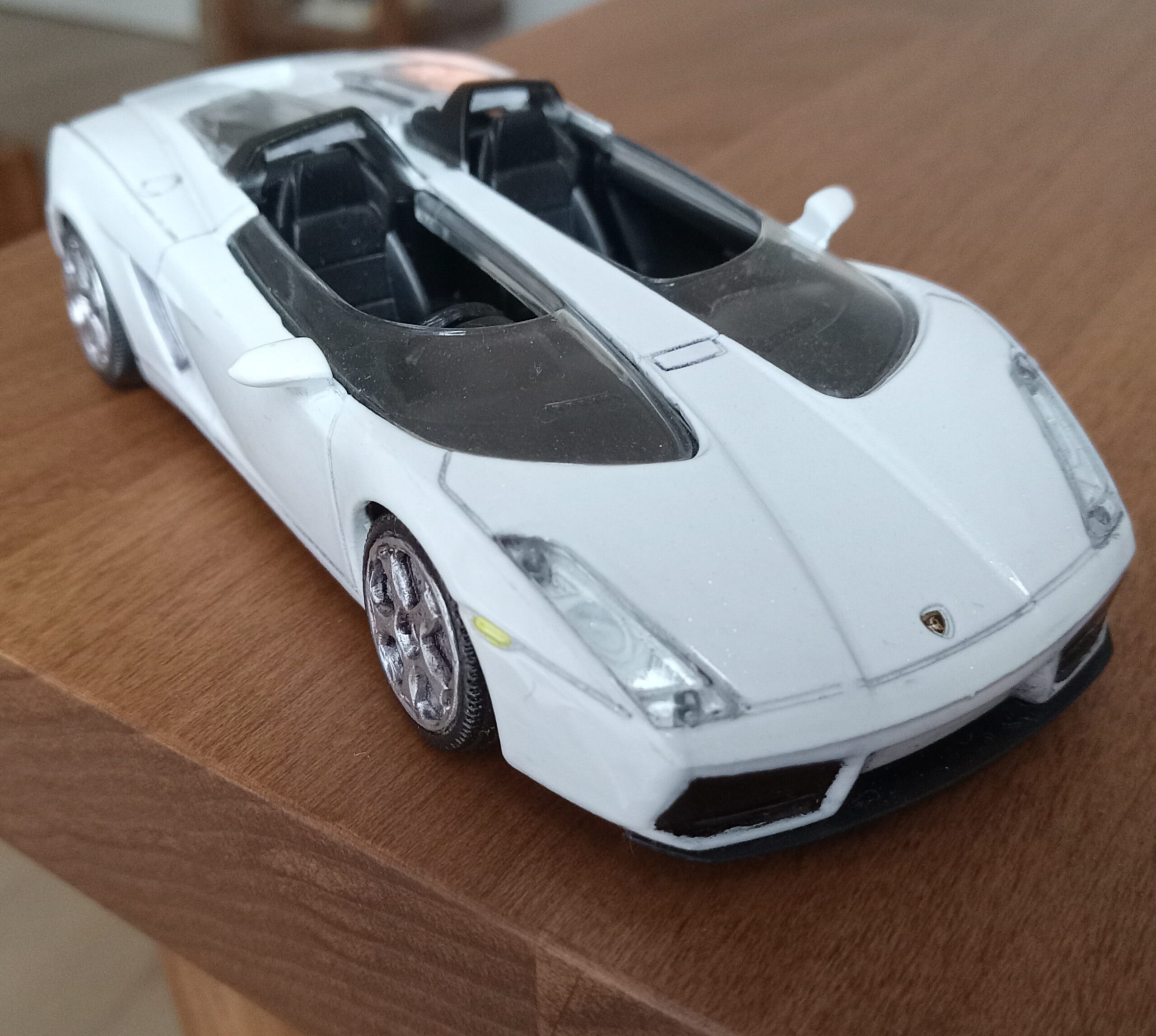
3:真上から見た時の『粗密感』あふれる立体グラフィック・デザインの魅力
4:幅広感とパースペクティブ感の迫力を、これ以上ない程強調させる、フロントエンド、ボンネットからリアエンドに向けて収束する彫刻の力
5:すべてのアングルに置ける『見え方の頂点』を引き締める、『鷲の広げた羽』のようなヘッドレストのデザイン
*『私』とランボルギーニ・コンセプトS
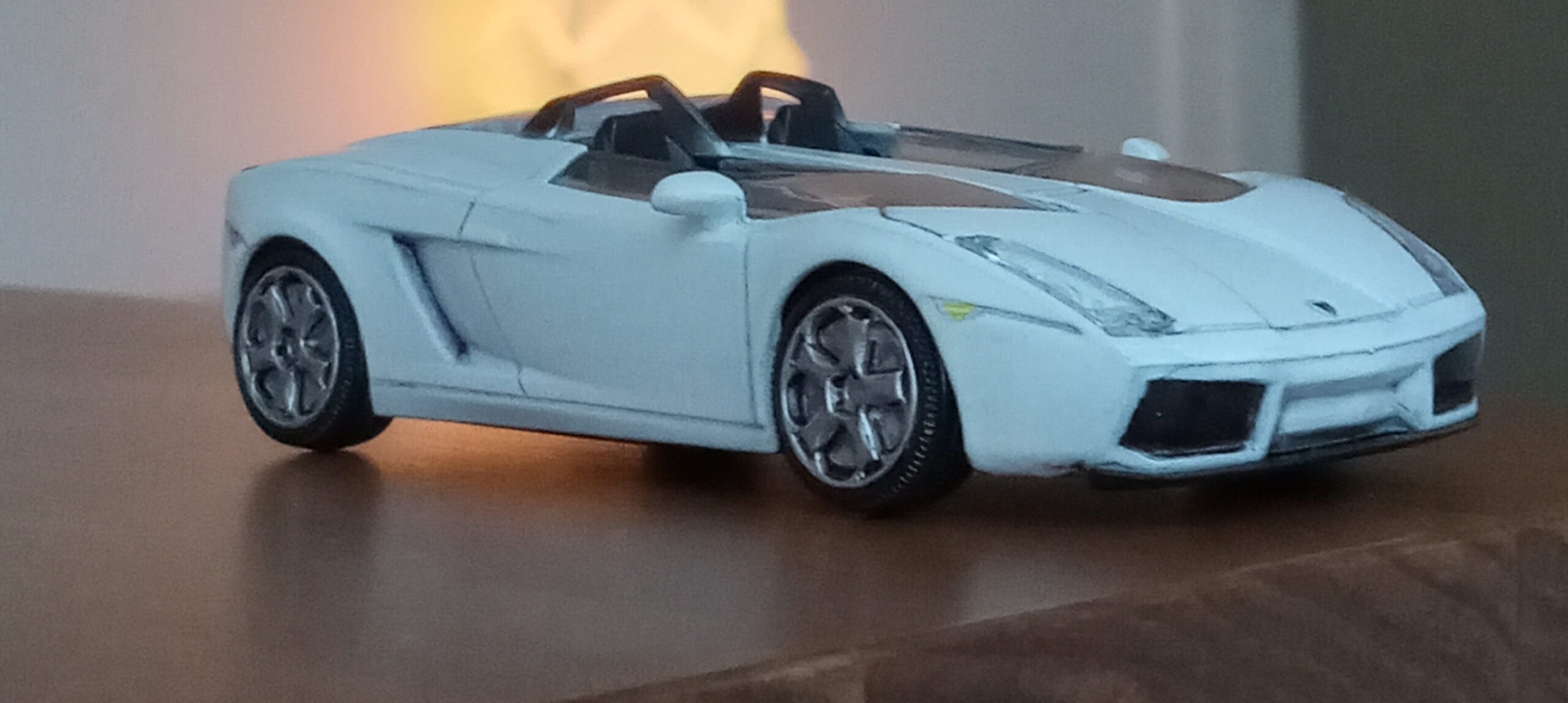
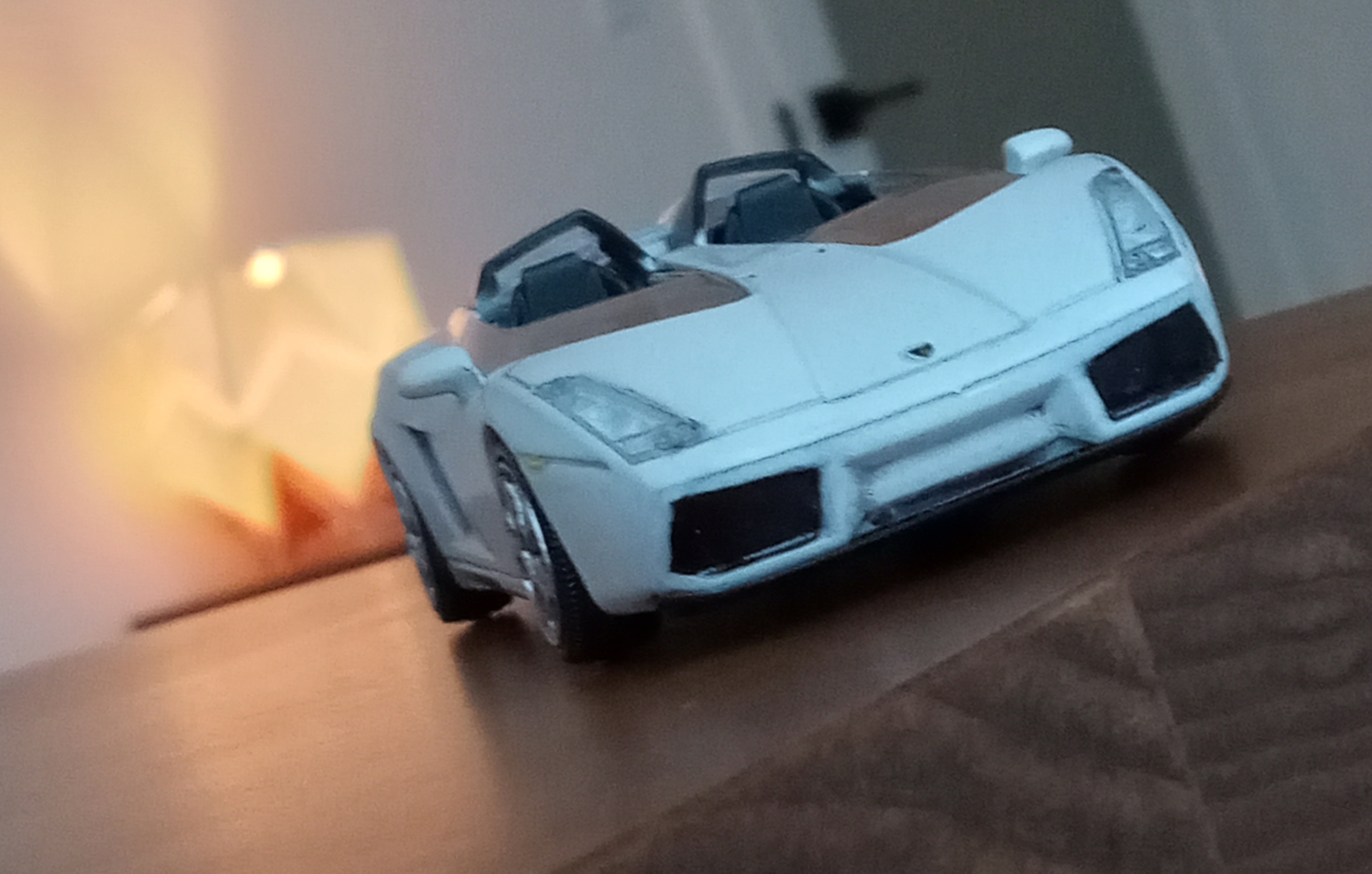
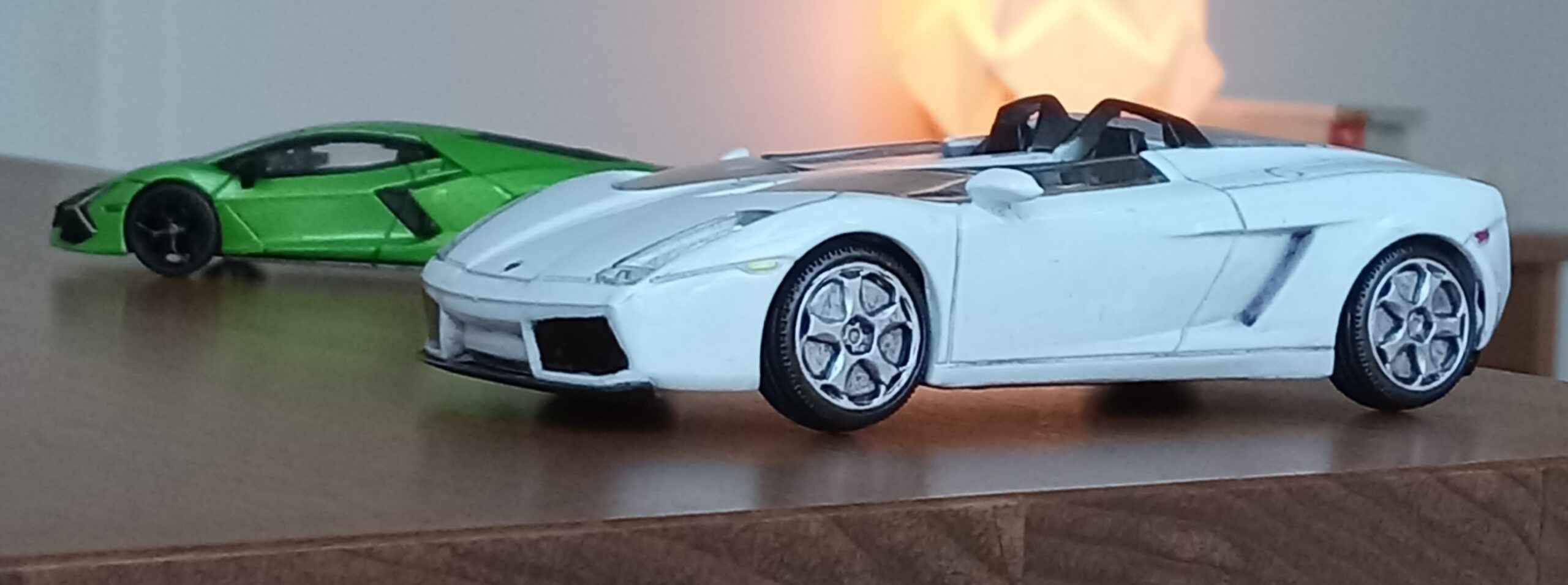
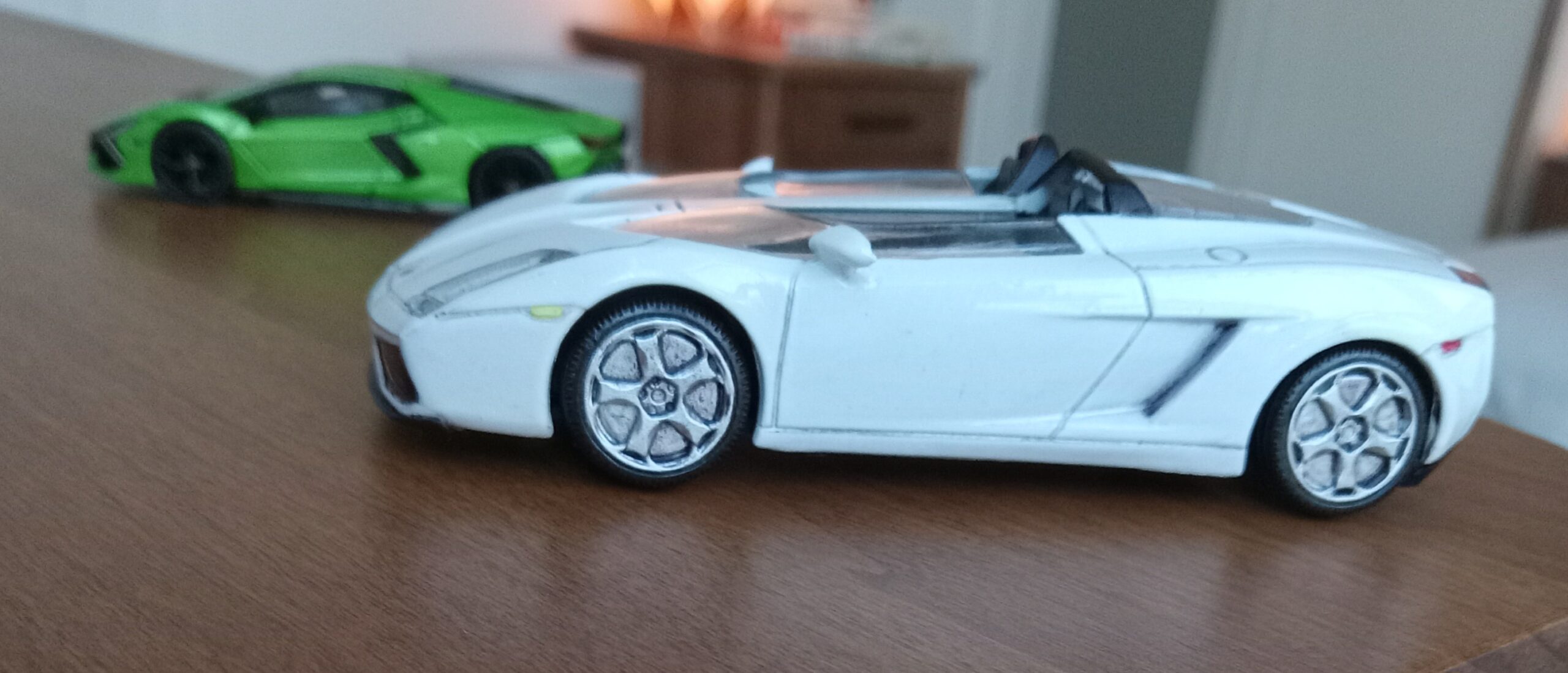
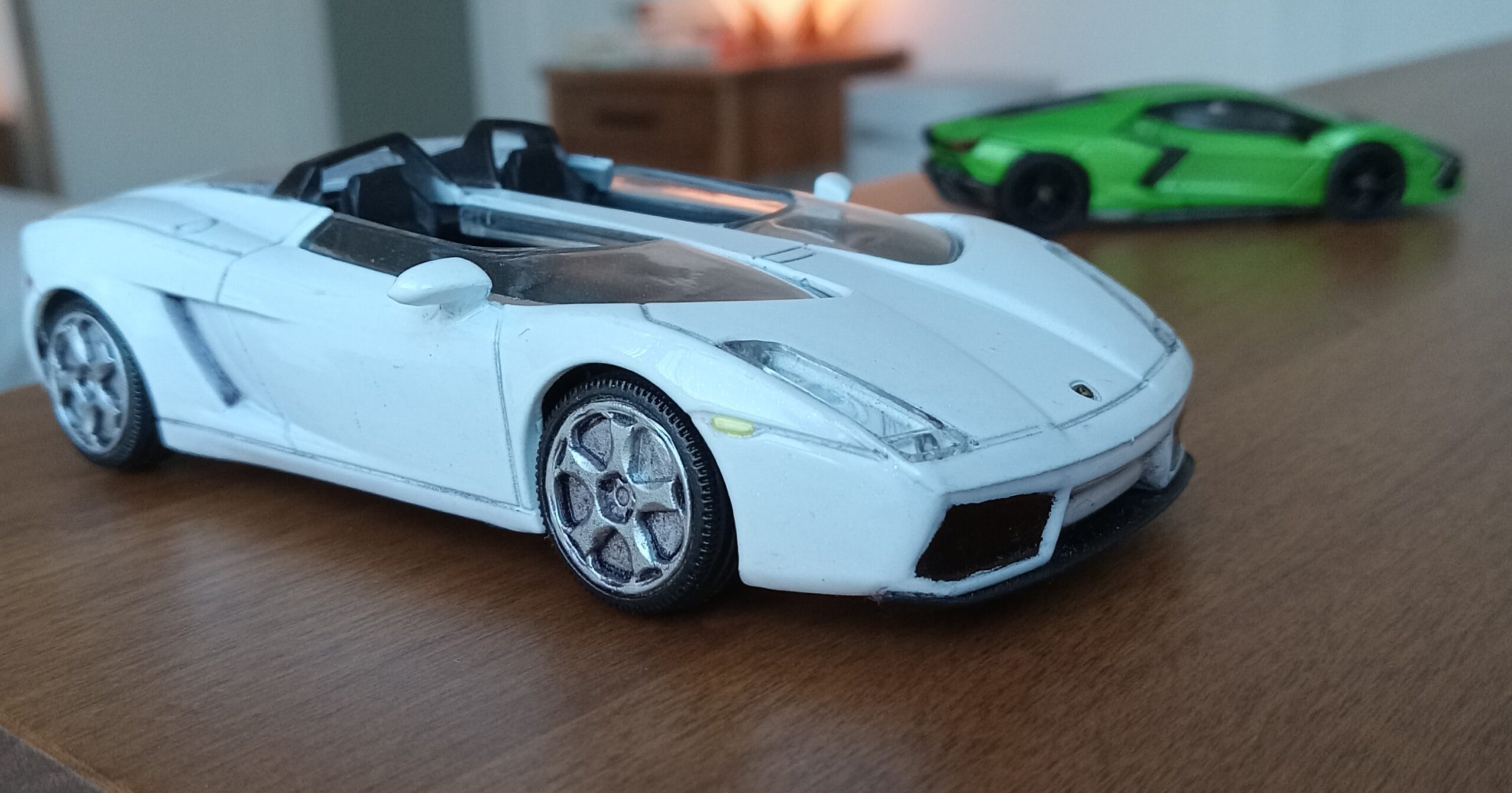
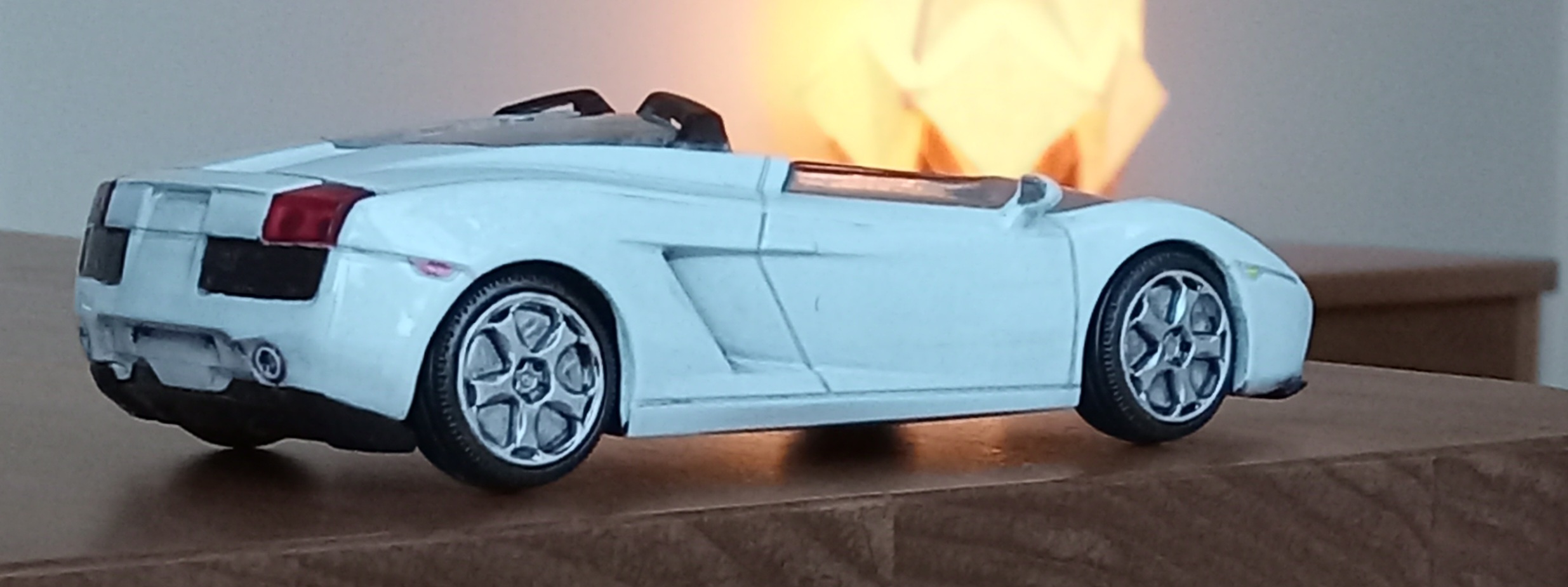
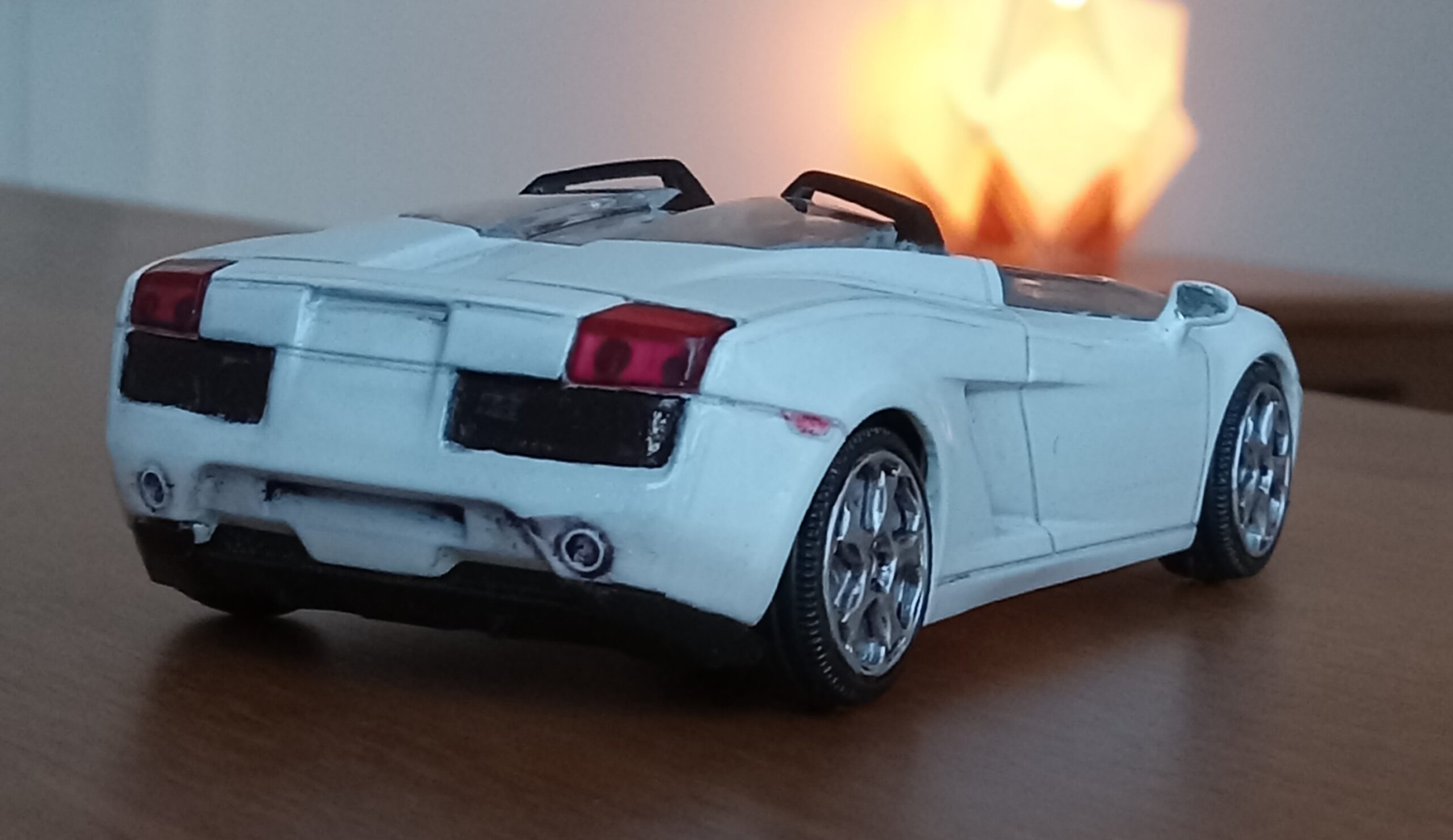
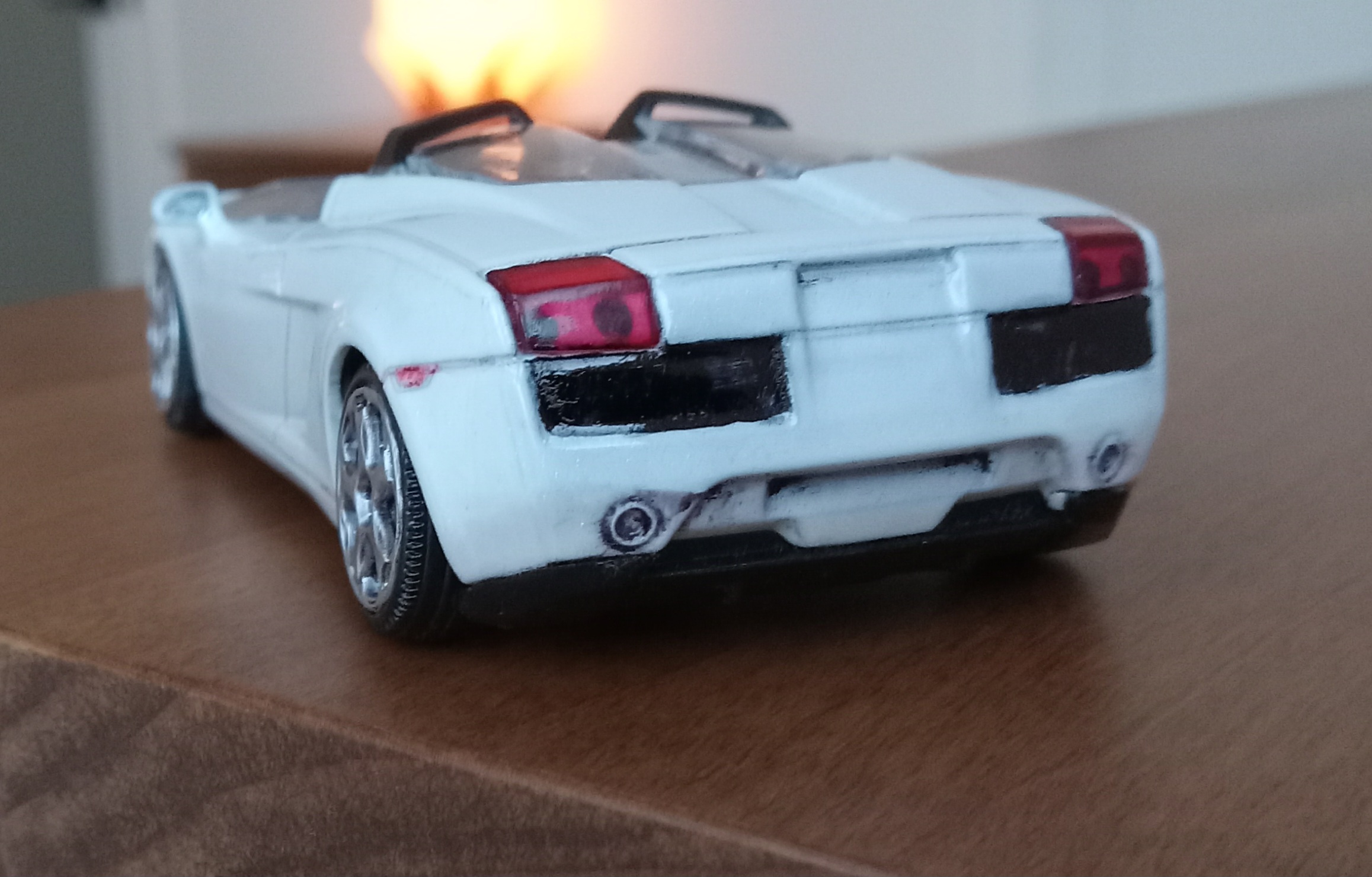
最初に「AUTO WEEK」か何かの自動車ショーの紹介記事で見かけ、
一目でその強力なデザインにやられてしまい、
立体模型を求めて、ネットを彷徨い
『モンド―・モータース』の
1/43ダイキャスト製ミニカーを見つけ即買いました。
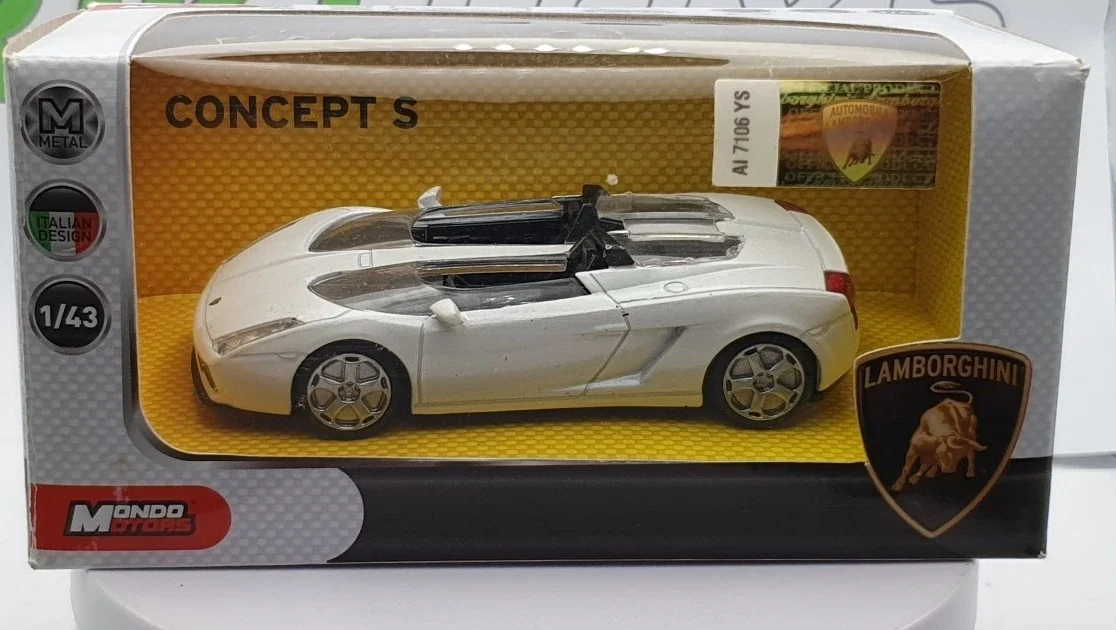
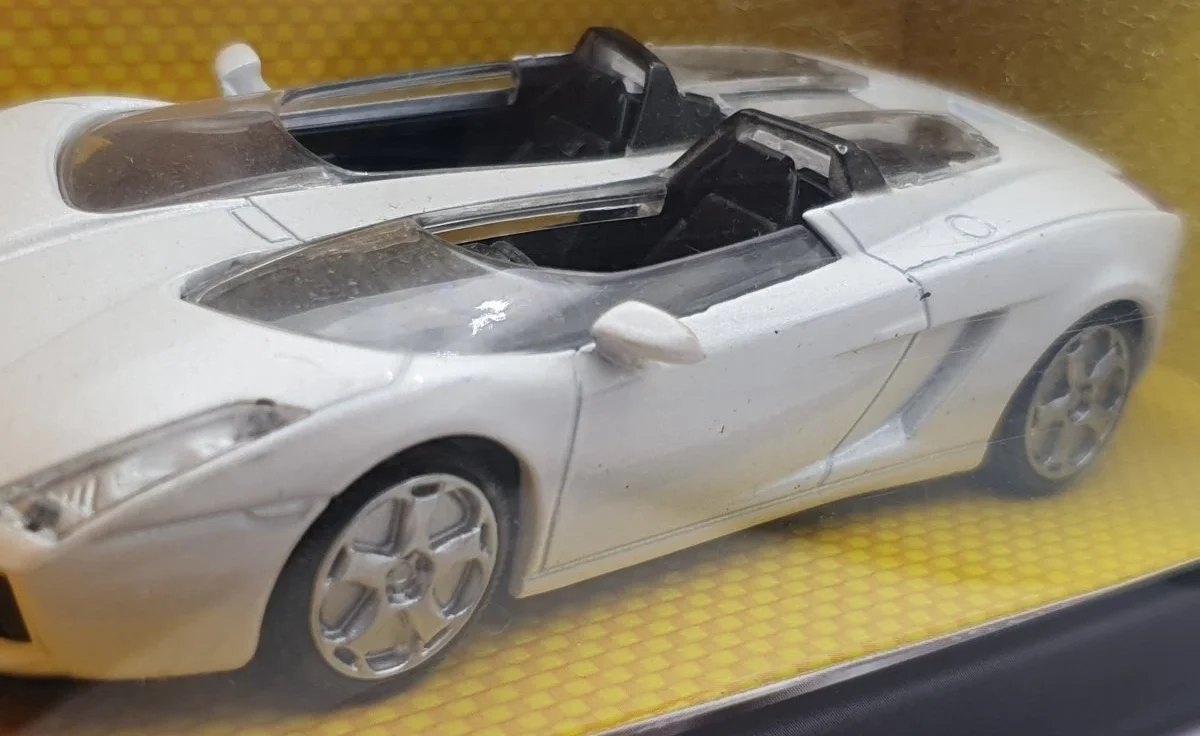
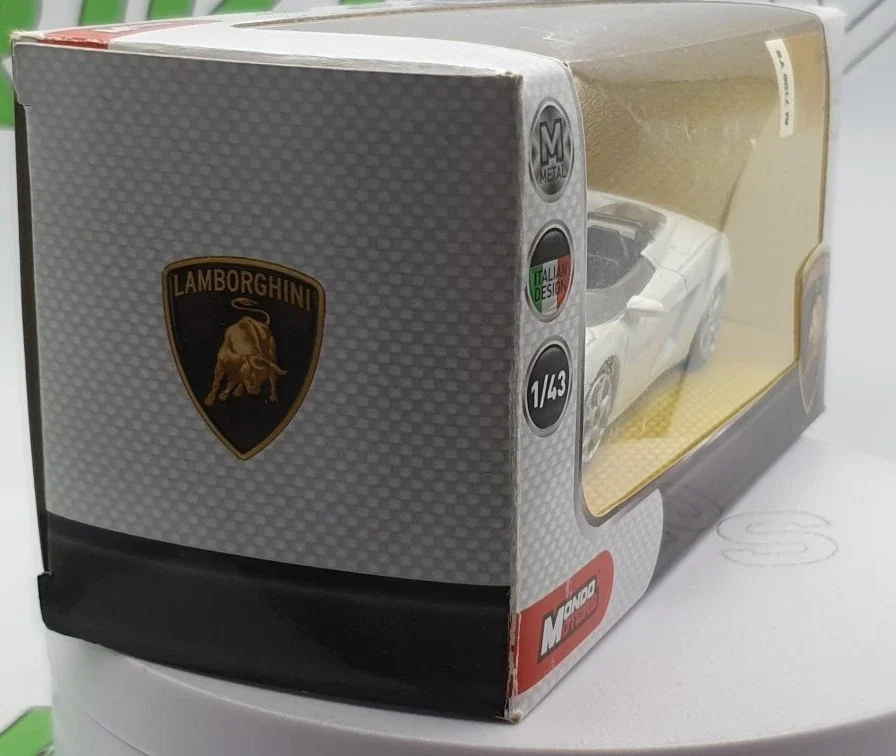
確か本国のイタリアのディーラーからイーベイを通じて購入、
*一見、『BBURAGO』のパチモンぽいんですが、
*ランボルギーニにの正規ライセンスを受けた商品です。
*外観の大雑把なとらえ方が優秀で、
*ディーテールはそれなりに、、、、的なこともあり、(笑)
非常に掌になじむ立体物として
常に手元に置いてきました。
火災で焼失後、昨年の夏に再度購入し、
再び『掌の友』となってます!!
この車に関しましては、
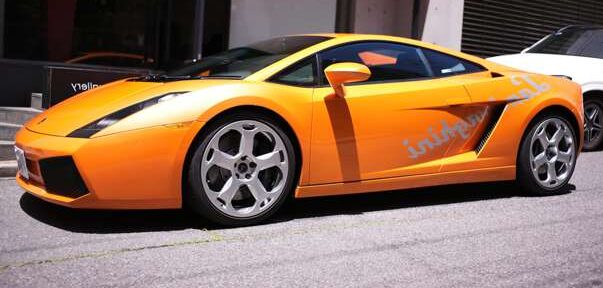
もとになったランボルギー二・ガヤルドとの差が違いすぎて、
私の中では、コンセプトSの形を導くためだけに、
ガヤルドが存在したような感じです!
その後発見したミニカーも、
こんな感じであるにはあるのですが、
どれも一長一短な出来で、
未だに私の中では、
『モンロー・モータース』版が最高です。
*IXO/アシェット社版、1/43ダイキャスト製 ランボルギーニ・コンセプトS、(ホワイト・パール?)
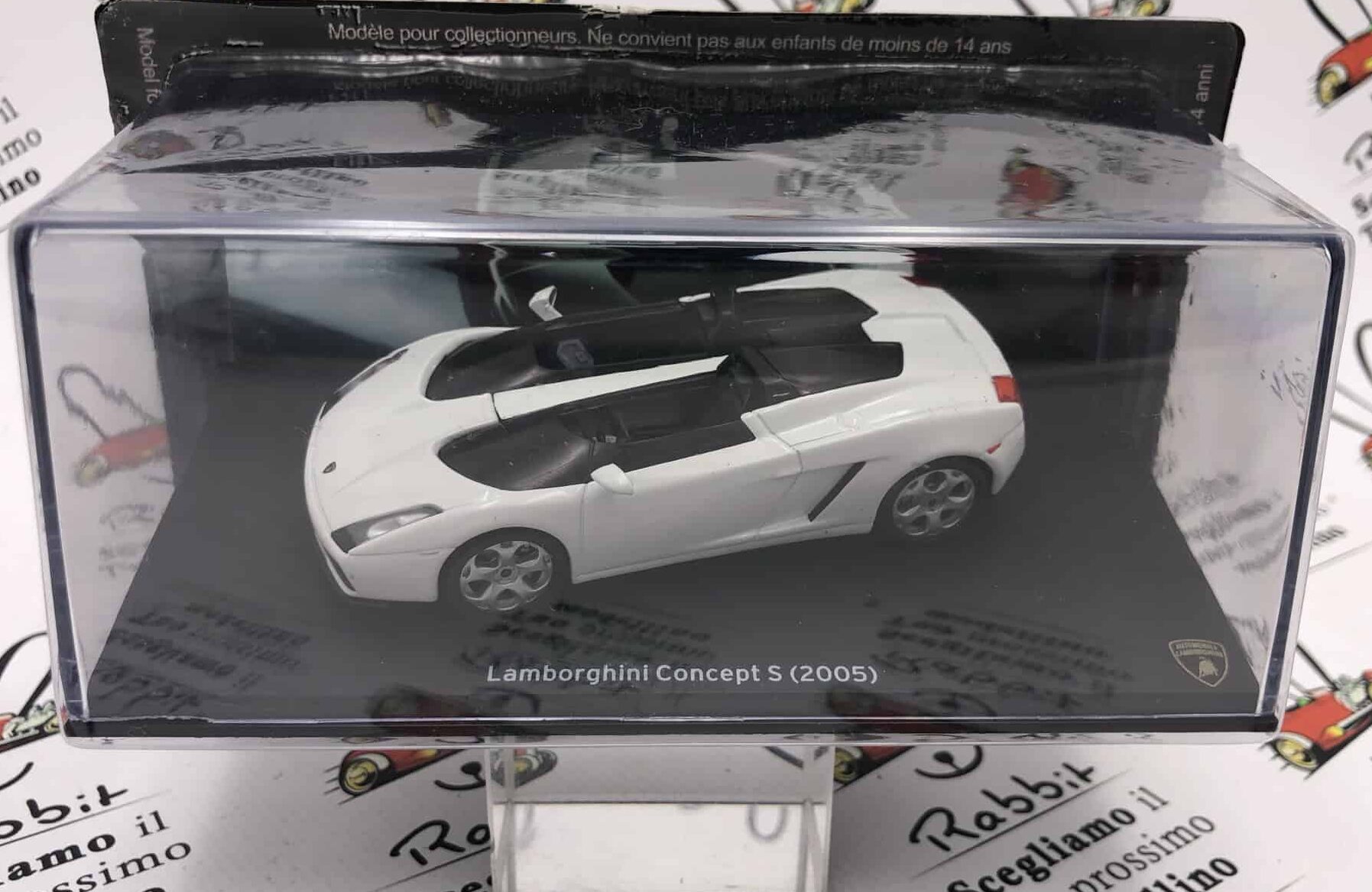
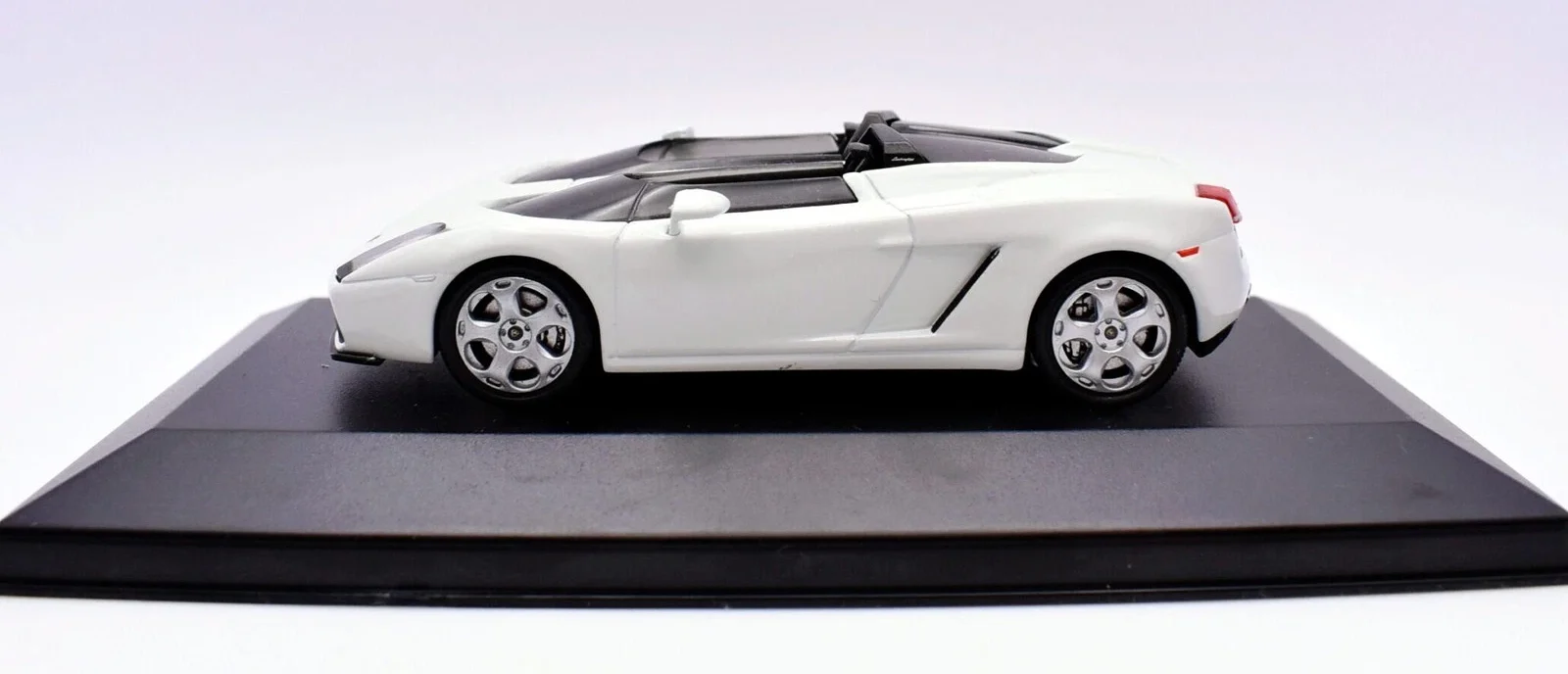
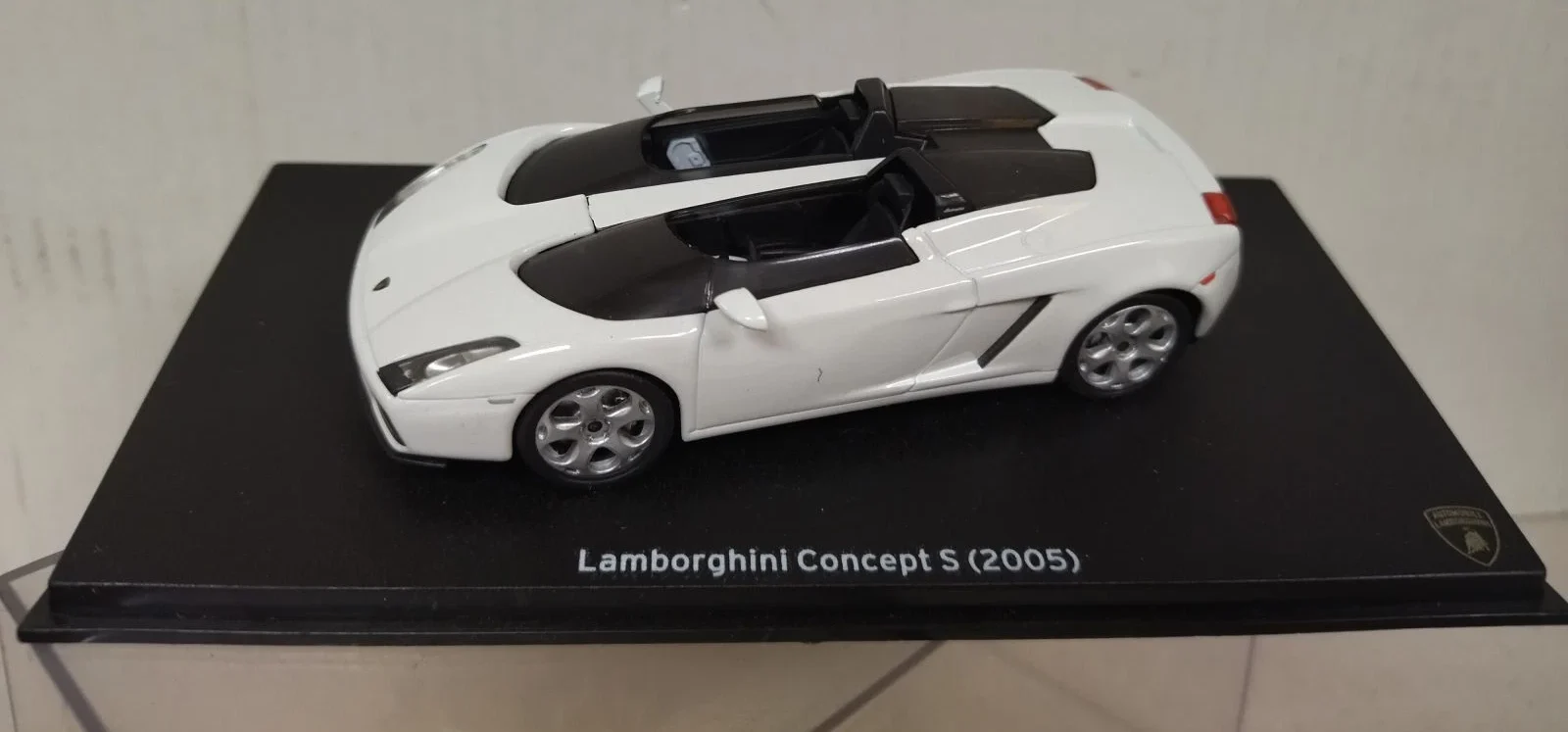 (こちらはサブスク・スタイルで発売されたもののようで、ヘッドライトやテール部分の塗装がきれいなのですが、全体的にボディーが少しのっぺりとして、シャープさがモンロー版に劣る感じです。)
*スモール・ホイール社版、1/43レジン完成品 ランボルギーニ コンセプトS
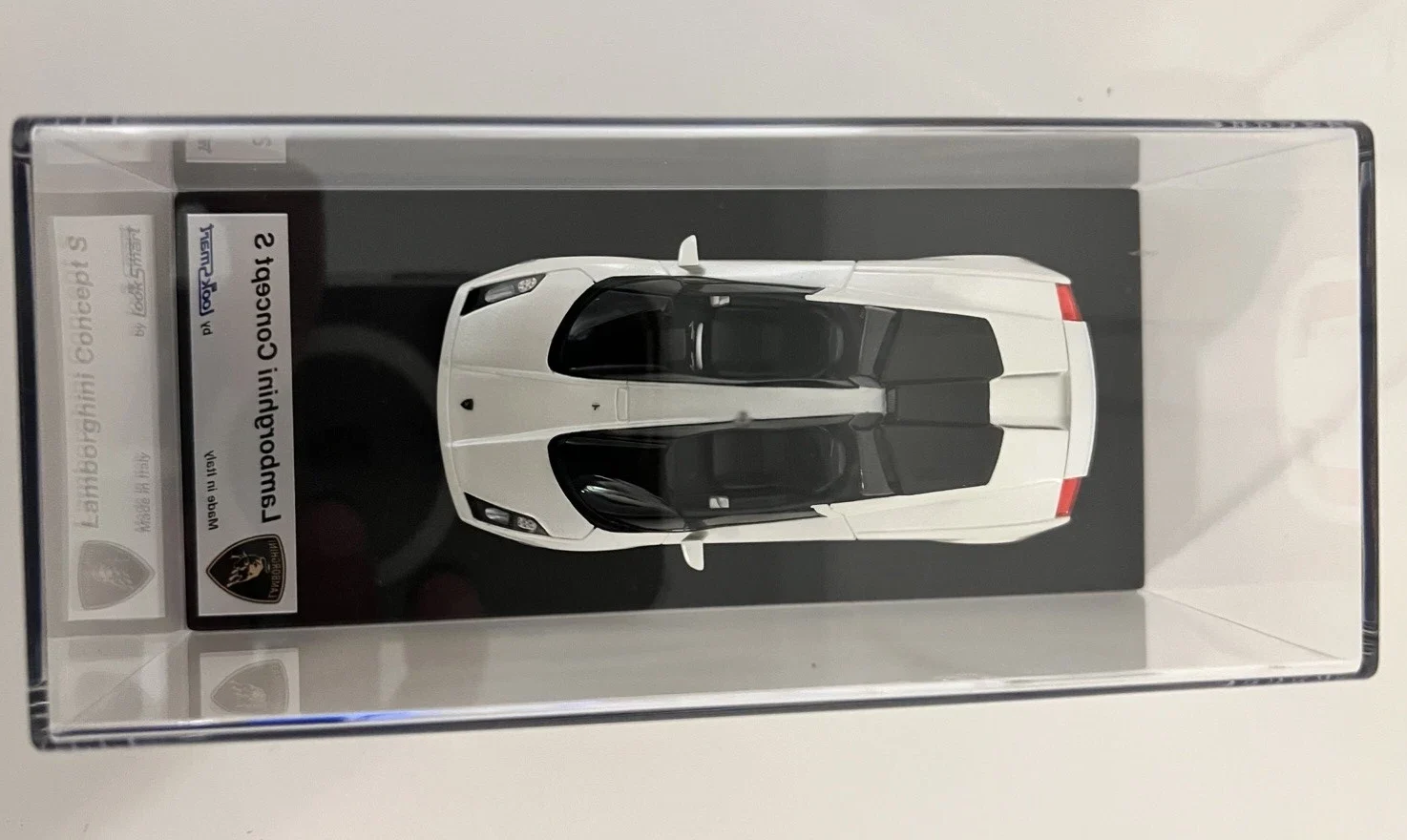
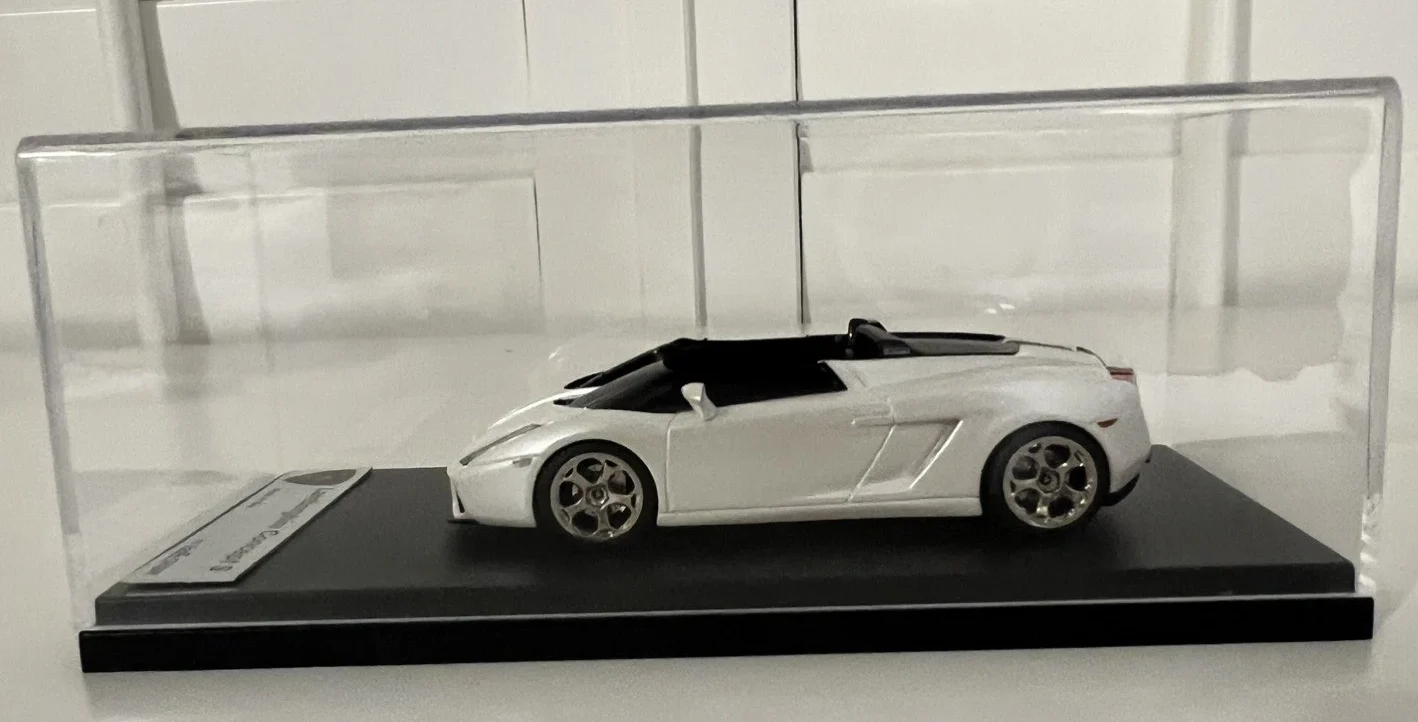 (カッチリとしたレジン性ですが、ウインドシールドの捉え方が大ぶり過ぎて、バキュームフォームパーツのへたりとともに、全体の雰囲気を台無しにしています。
ーーーー>別型番で改修版も出ているようで、そちらは風防が低くかっこよかったです。)
*フジミ製、1/43 レジン完成品 ランボルギーニ コンセプトS
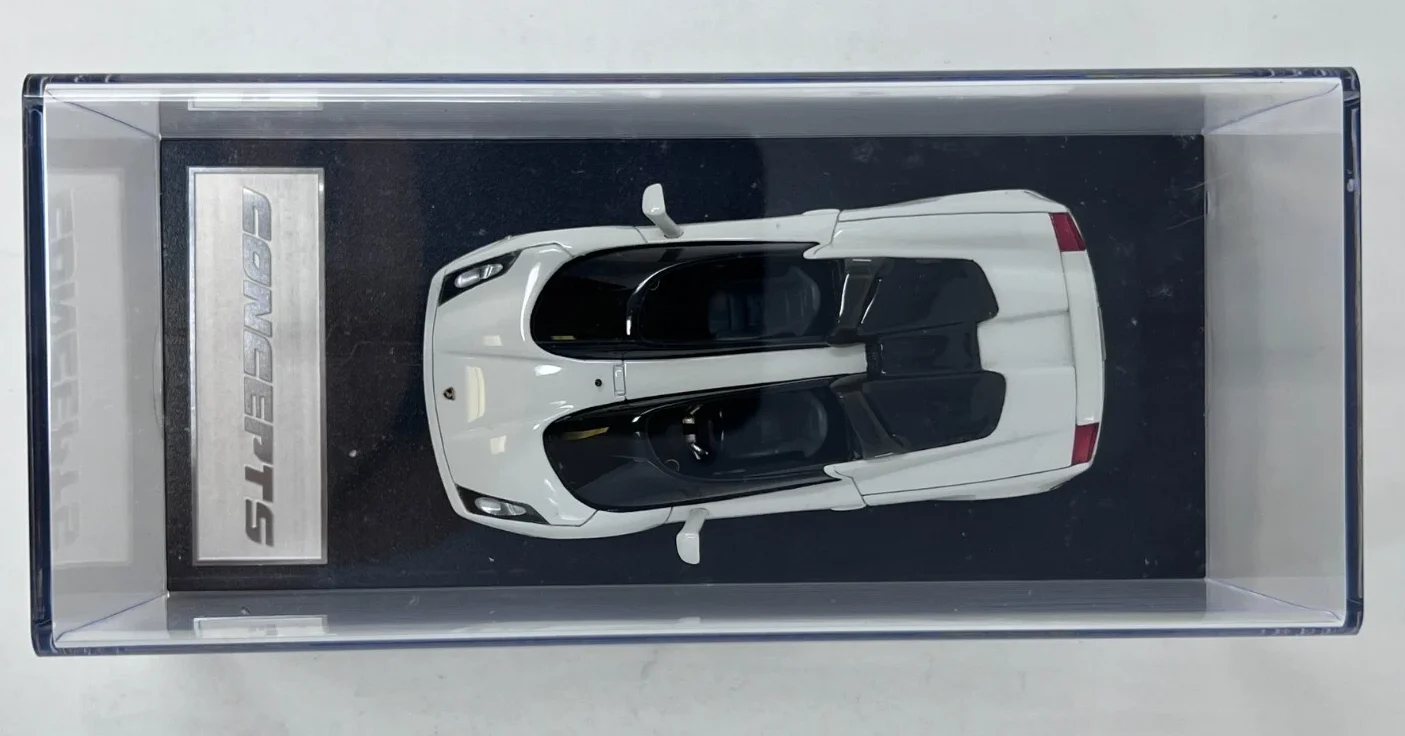
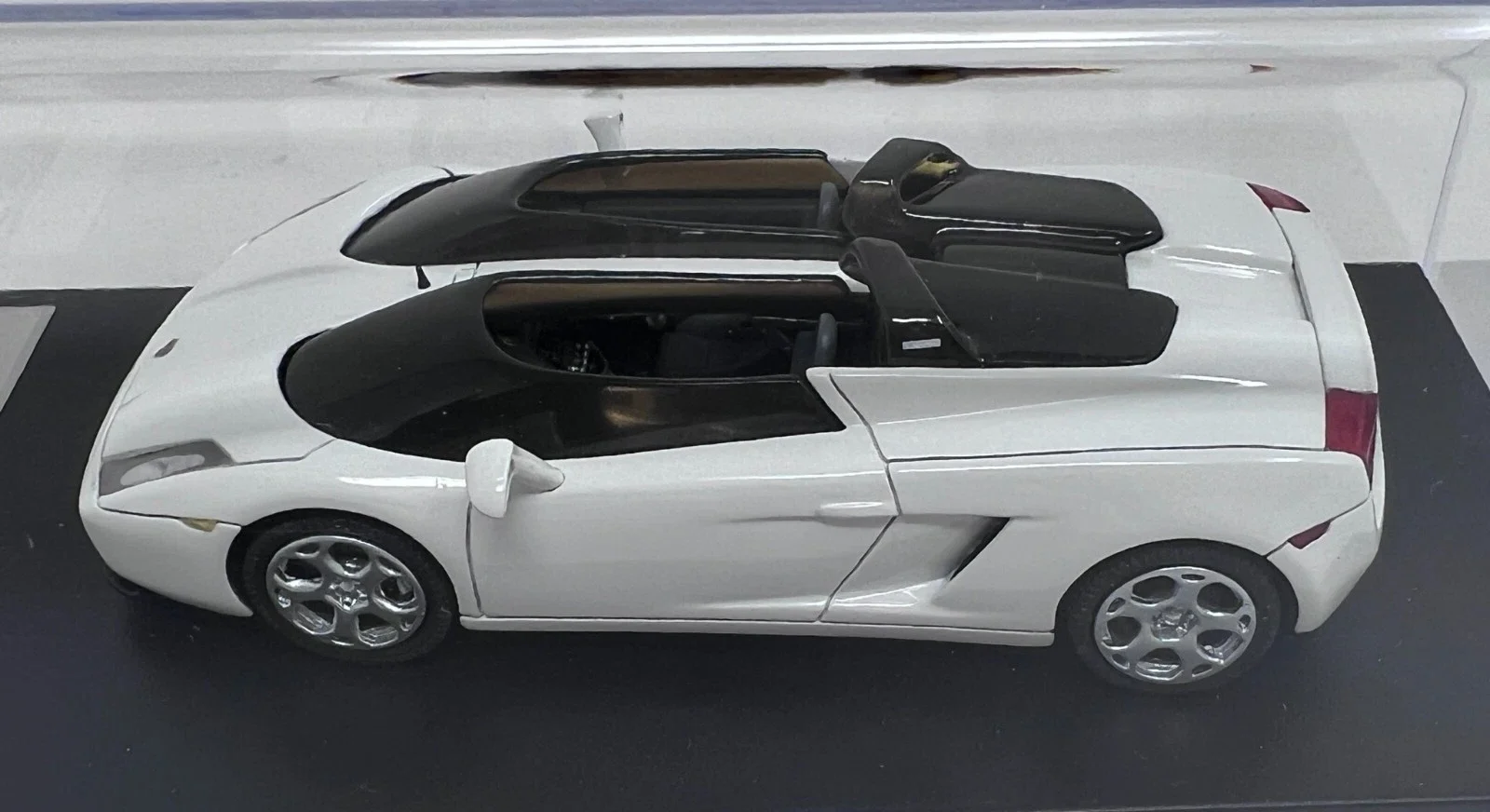
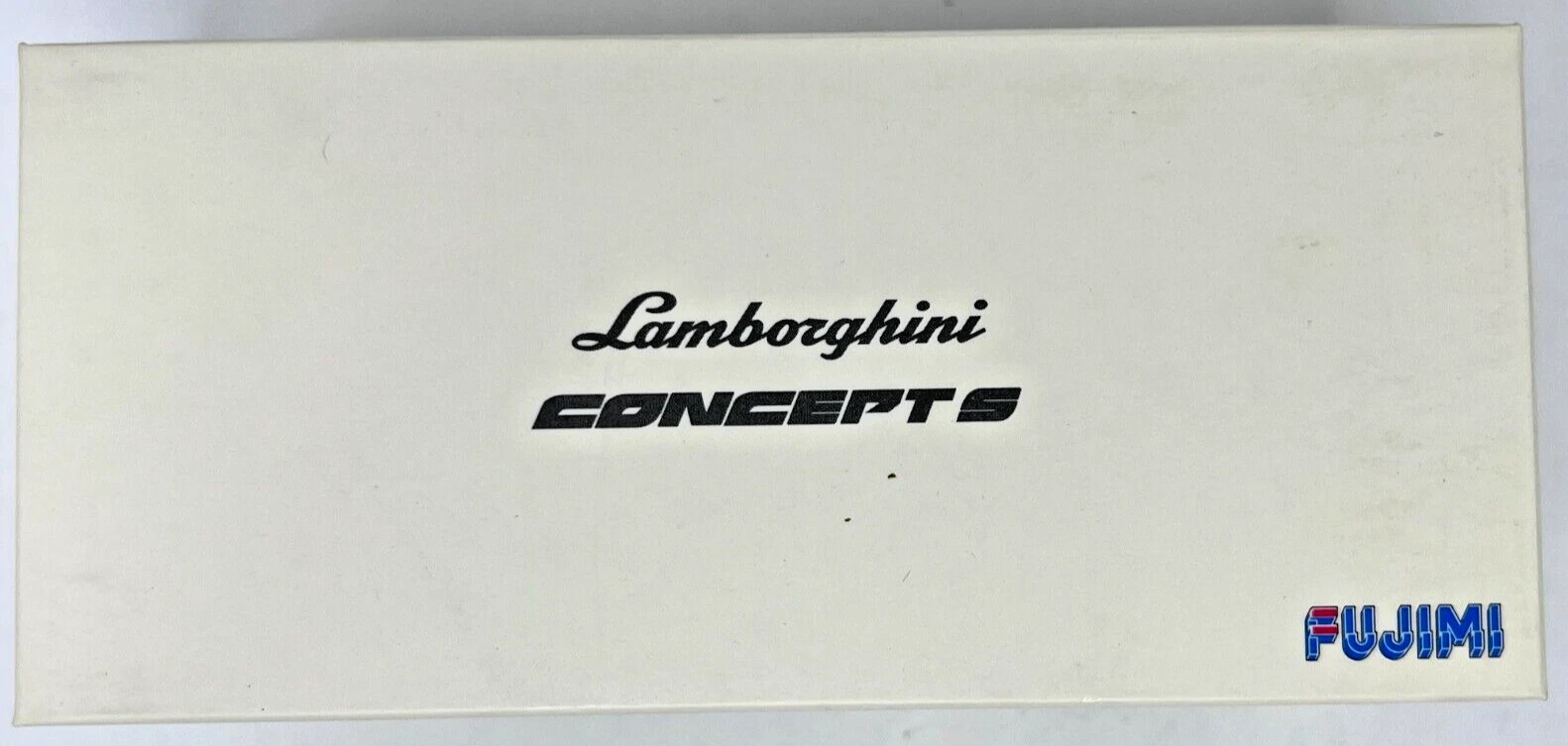
(日本メーカーのレジンモデルということで期待したのですが、こちらもウインドシールドの高さとふにゃっとした質感にがっかり。一度も実物は見たことがありません。)
ここまで見てきて感じますのは、
この『コンセプトS』のデザインの
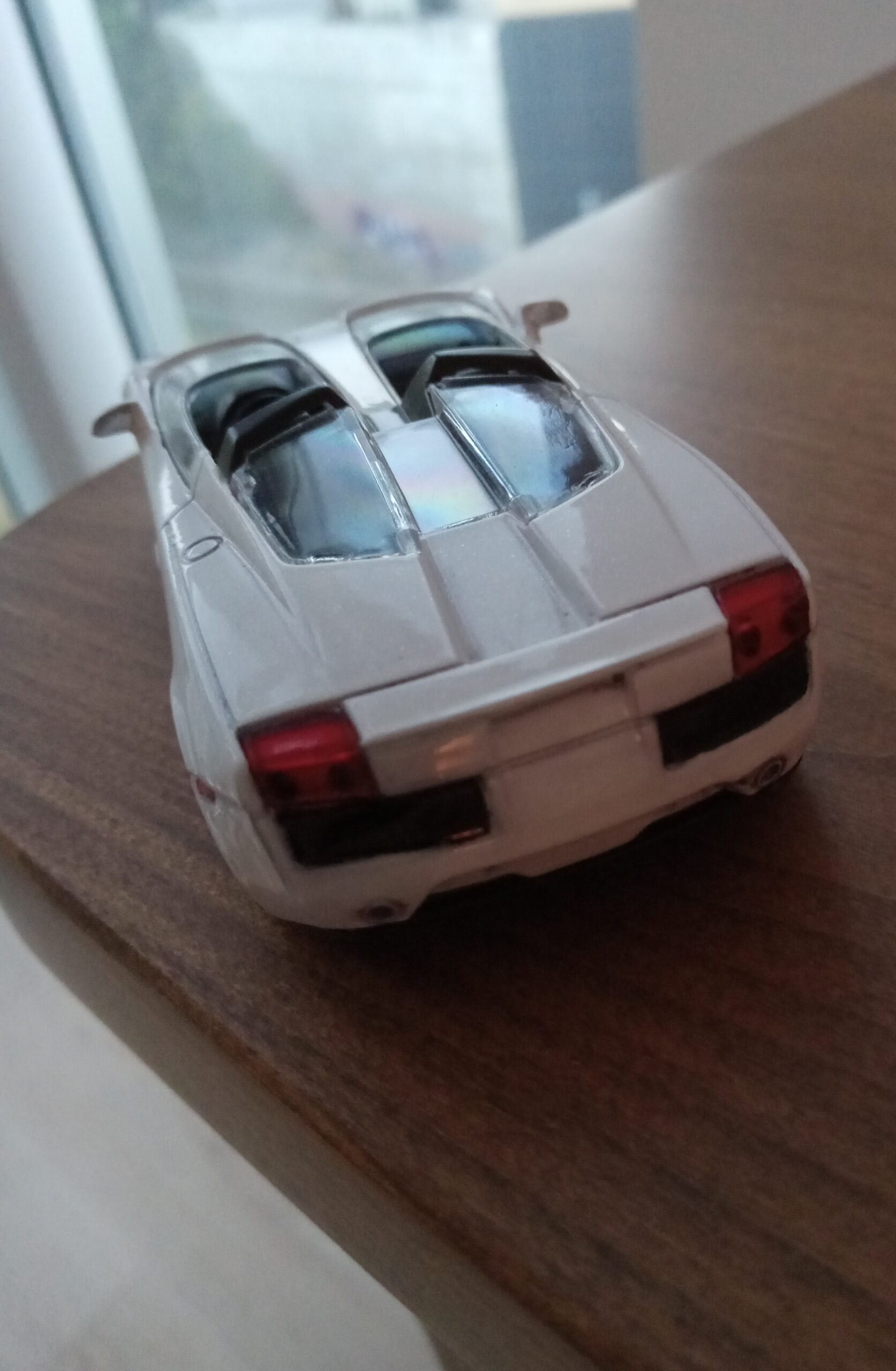 *凶悪なまでの頑強さ
*発売されなかった残念さを
ひしひしと感じています。
では気持ちをお改めまして、
三題噺を進めて行きましょう!
*三題噺:藍より青し・S660・師匠


今回会場から頂きましたお題は、(笑)
*藍より青し
*S660
*師匠
の3題です、
『では、一席おつきあいのほどを願っておきますが、、、
昔から『出藍の誉れ』、『藍より青し』などと申しまして、
先人や名人から教えを乞いながらも、
それを超える事例が時々起こるものでございます。
逆に言いますと、
なかなか先人の「高み」を超えられない、情けなさを現わしてもいるようで、、、
私の中で、今回お話ししております、
「ランボルギーニ・コンセプトS」の到達した『高み』も
そう簡単に超えられるものではございません。
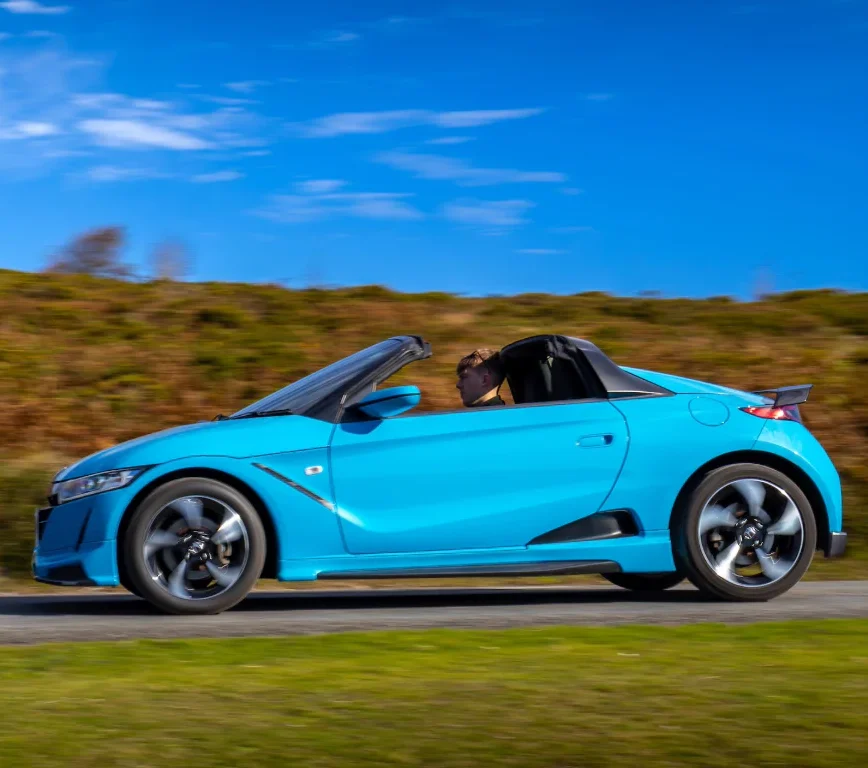
唯一其れを超えているのは、日本のホンダが生産車として2012年に世の中に送り出しまし
た、【ホンダ・S660】 が挙げられます。
この車は
コンセプトSと同様に、
*スポーツカーとして理想的なエンジン搭載位置である、ミッドシップ構成であるうえに、*屋根部分を取り払いオープンエアドライブも楽しめる、オープン・カーでもあります。
更に、
その時点で先端的で意欲的なデザイン言語を体現した外見を有しています。
こんな感じで、
師匠筋に当たる、コンセプトSと並ぶほどの強烈な個性を持ちつつ、
さらに、
ホンダの企業努力もあってか、
この類まれな車は、市販車として7年間にわたり、
40,000台近くもこの世に送り出されたのです。
素晴らしい考えや、アイデアが生まれますと、
それが世の中に静かに、でも確実に浸透して、時に、思いもよらぬ時期に、
思いもよらぬ方向から商品としてこの世に現われたりします。
そんな意味で、
ランボルギーニ・コンセプトSは生産車として世には出ませんでしたが、
その力強い外観とそこに現れたオーラが、時代を超え、他の自動車デザインに確実に影響を与えています。
一度造られ、発表された強い意志によって支えられた創造物は
それ自体に強い「オーラ=(見えない力)」が宿り、
世界を覆い、構成する地場を震撼させ、持続的な振動を作り、その時代のビートとも取れる振動が、(たとえ一時的に否定的な「揺れ』であったとしても、、、)
*他の創造者の心を動かしたり、
*激励して、鼓舞させ、
いずれ同時代の多くの制作者の意思や目的をまとめ、
実現化へ向かうものだと感じます。
更には、製品の受け手側に対しても、内側から動かす衝動を促すことで、
商品として受け入れやすい素地を作る方向にも影響を与えるのではないでしょうか?
最後に、
始めに上げました、
「藍より青し」という諺に付いて
『先人を超えることの難しさ』といった観点を加えたいと申しましたが、
今回「コンセプトS」と「S660」 と寝起きを共にしたことで、
今後の未来に対する希望をもらうこととなりました、
つまり、
先代の偉大さは、偉大であればあるほど、十分に大きな影響を次世代に与え、次に現出する創造物は、必然的にそれを超えることとなるといったものです。
『青は藍より出でて、藍より青し』というのを、
『青の強い意志が藍をより青くせざるを得ない』と
捉えたいです。
こんな、勝手な読み替えをしながら、
来たり来る『AI』による人類の家畜化を恐怖している自分を鼓舞させる今日この頃、、
(AIを内包する人類として、AIに従属しない道を模索)
私にもコンセプトSのような立派な師匠がいたなら、、、と
煩悶しています。(泣笑)

お後がよろしいようで、、
*その他の『強固なデザイン』を持った【青い】クルマたち
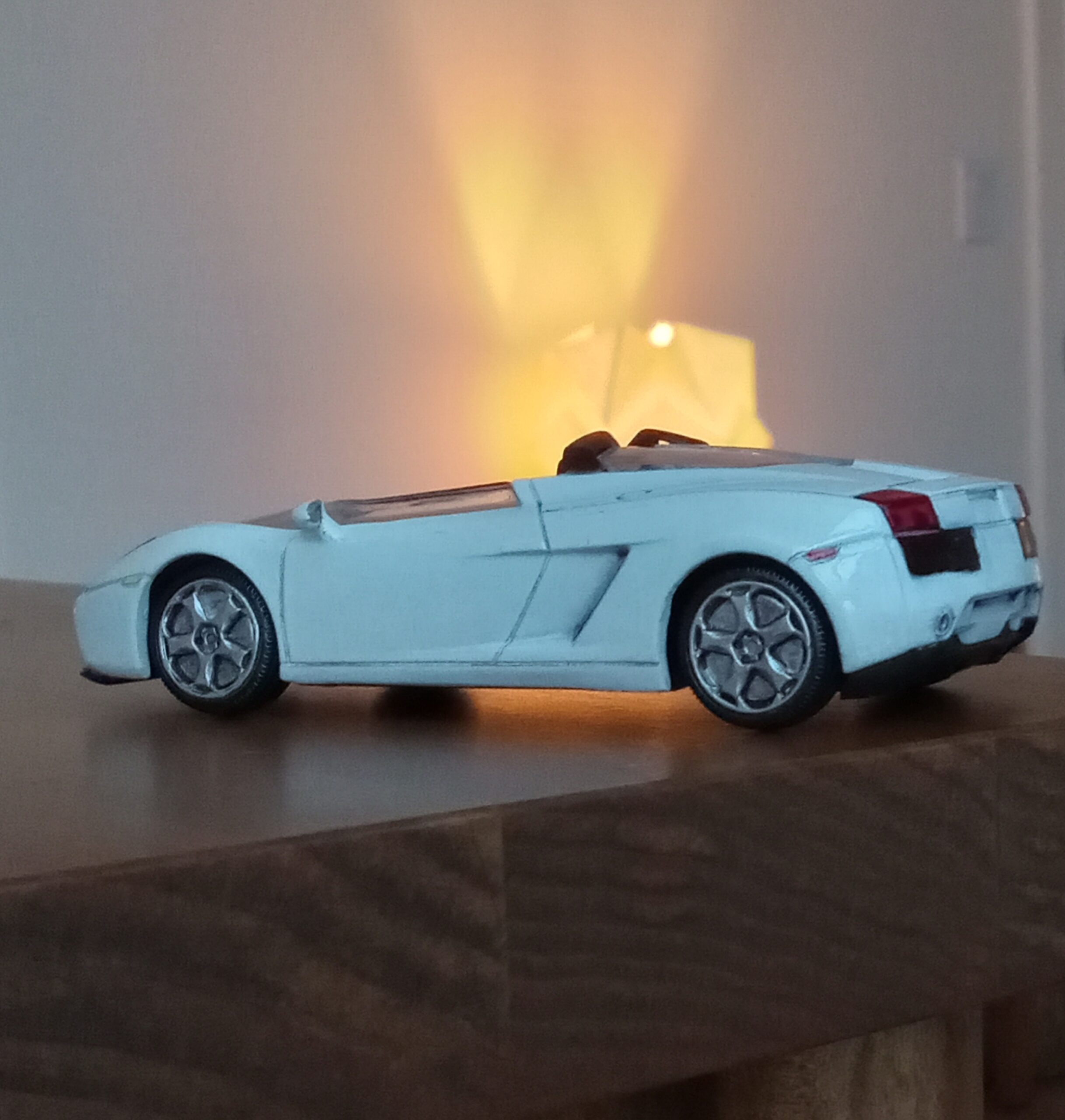
後の世に、
無言の呪いに近いほどの影響を与えた様なデザインはあるのでしょうか?
私的にはこんな感じでしょうか?
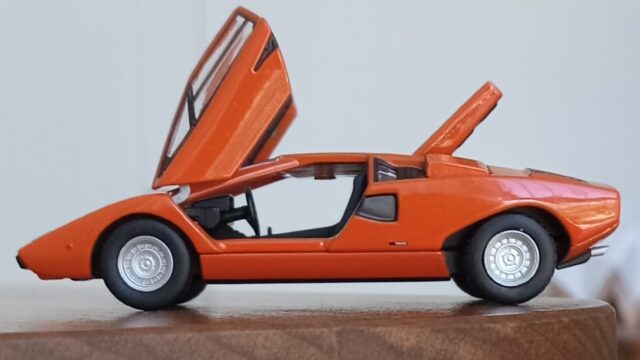
*ランボルギーニ・カウンタック LP400、1974
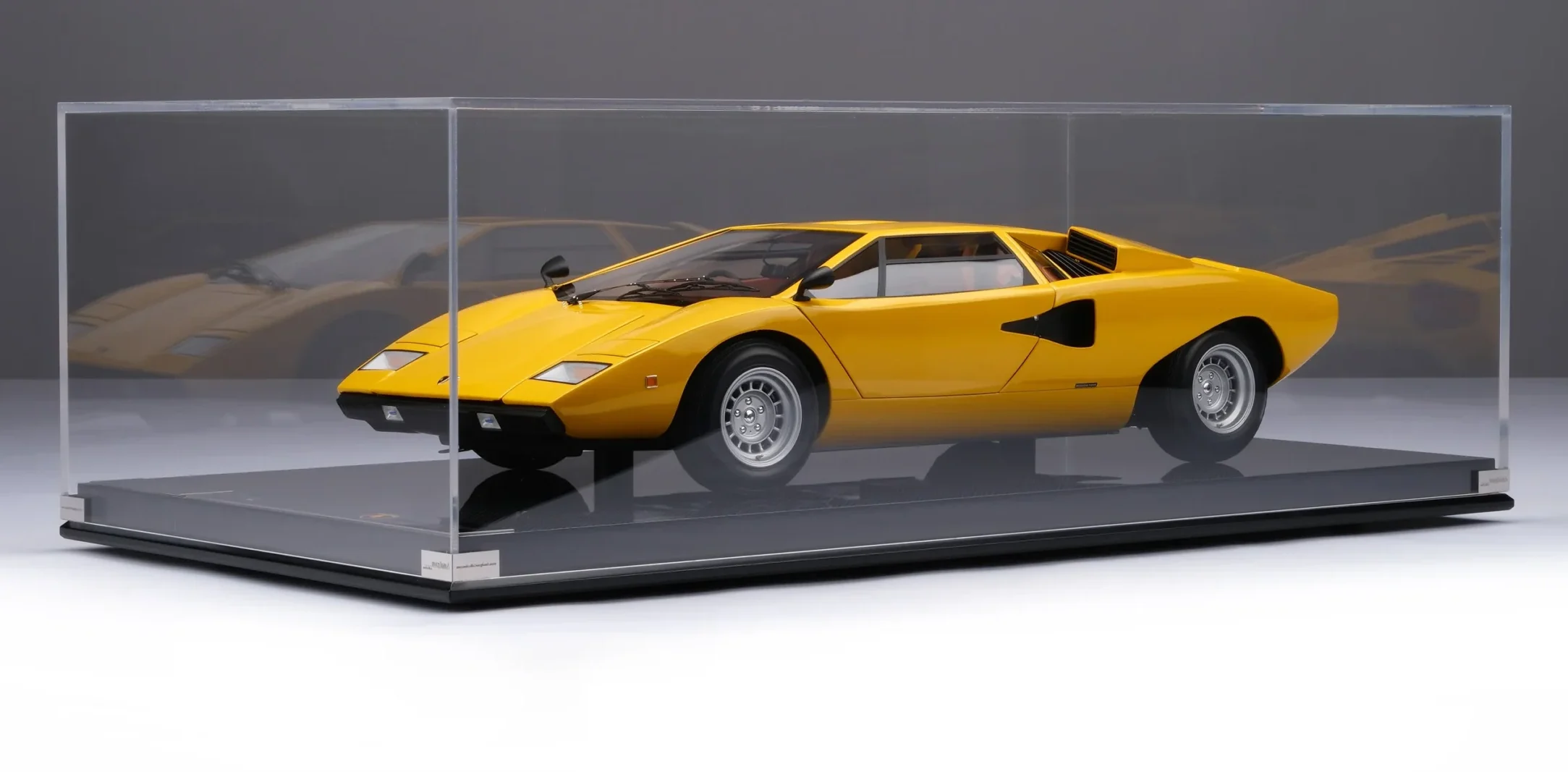
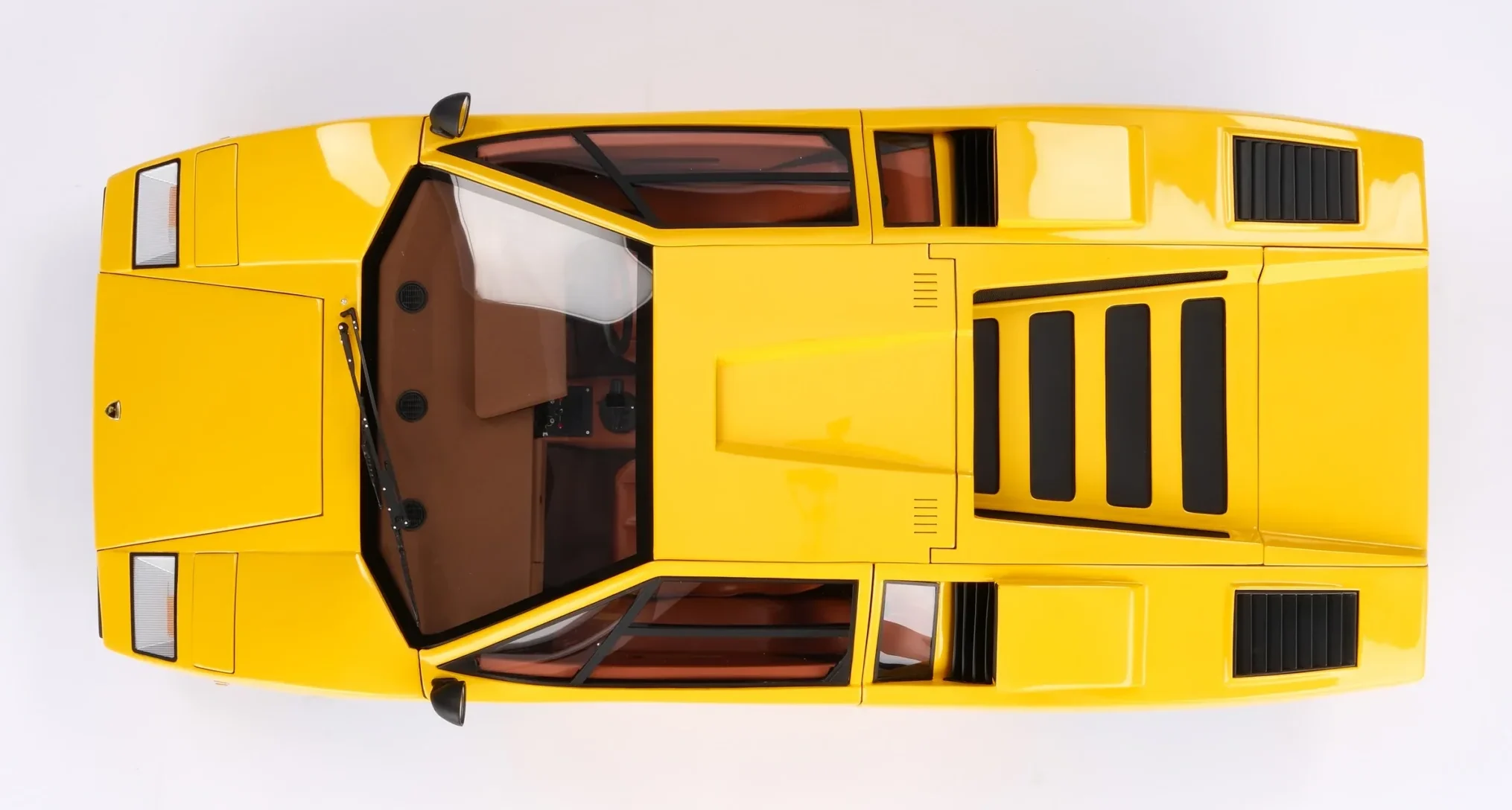 (この力強い骨格は、その後のウエッジシェイプを持つすべてのスポーツカーの原型として燦然と輝いています。)
ーーー>極めて彫刻的、非装飾的な外観は、マルチェロ・ガンディー二の専売特許
*トヨタ・三代目プリウス、2012
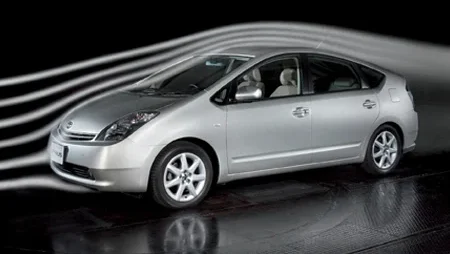
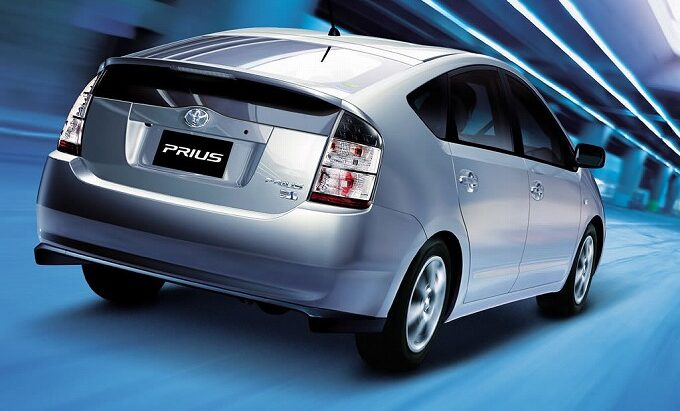 (ハイブリッド・システムの仕様で小さくなったエンジンルームによって実現した背の高い三角フォルムの立体造形は、現在のすべての電気自動車に示唆的影響を与えています。)
ーーーーー>TNGAシャーシの『低車高化』により逆行したのが残念でしょうがありません。
*BMW 初代X5【E53型】, 1999
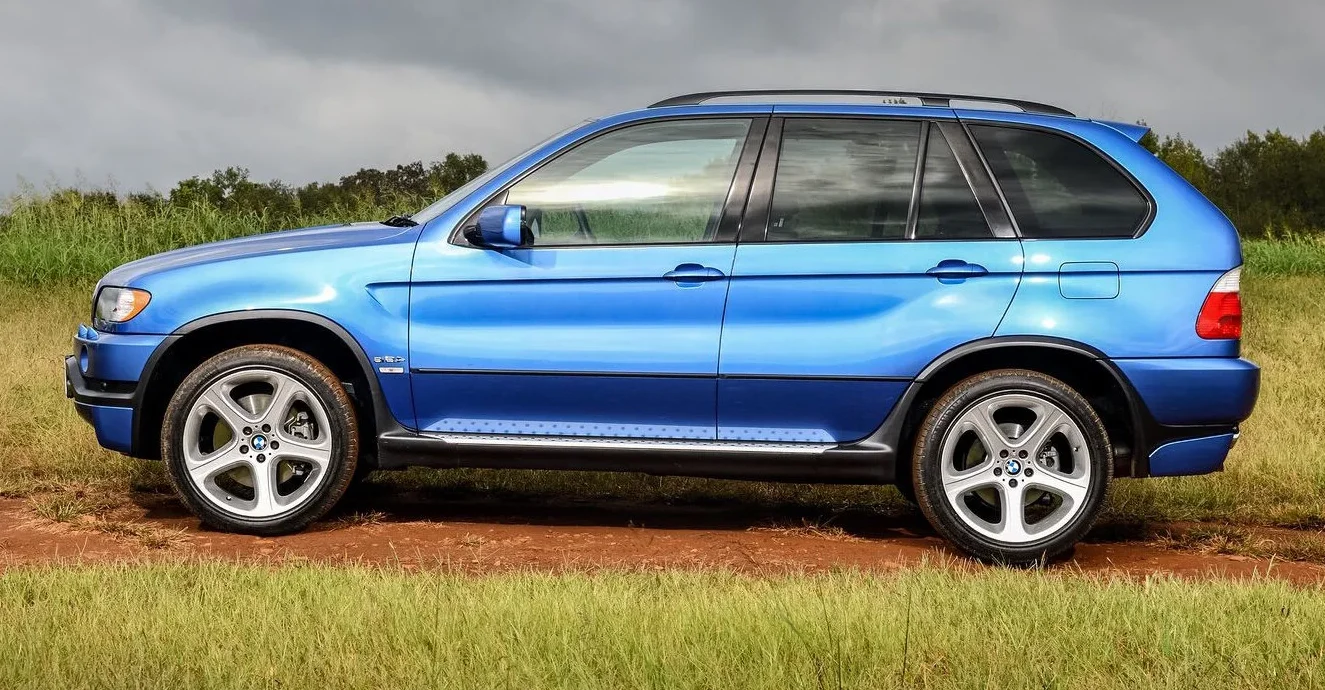
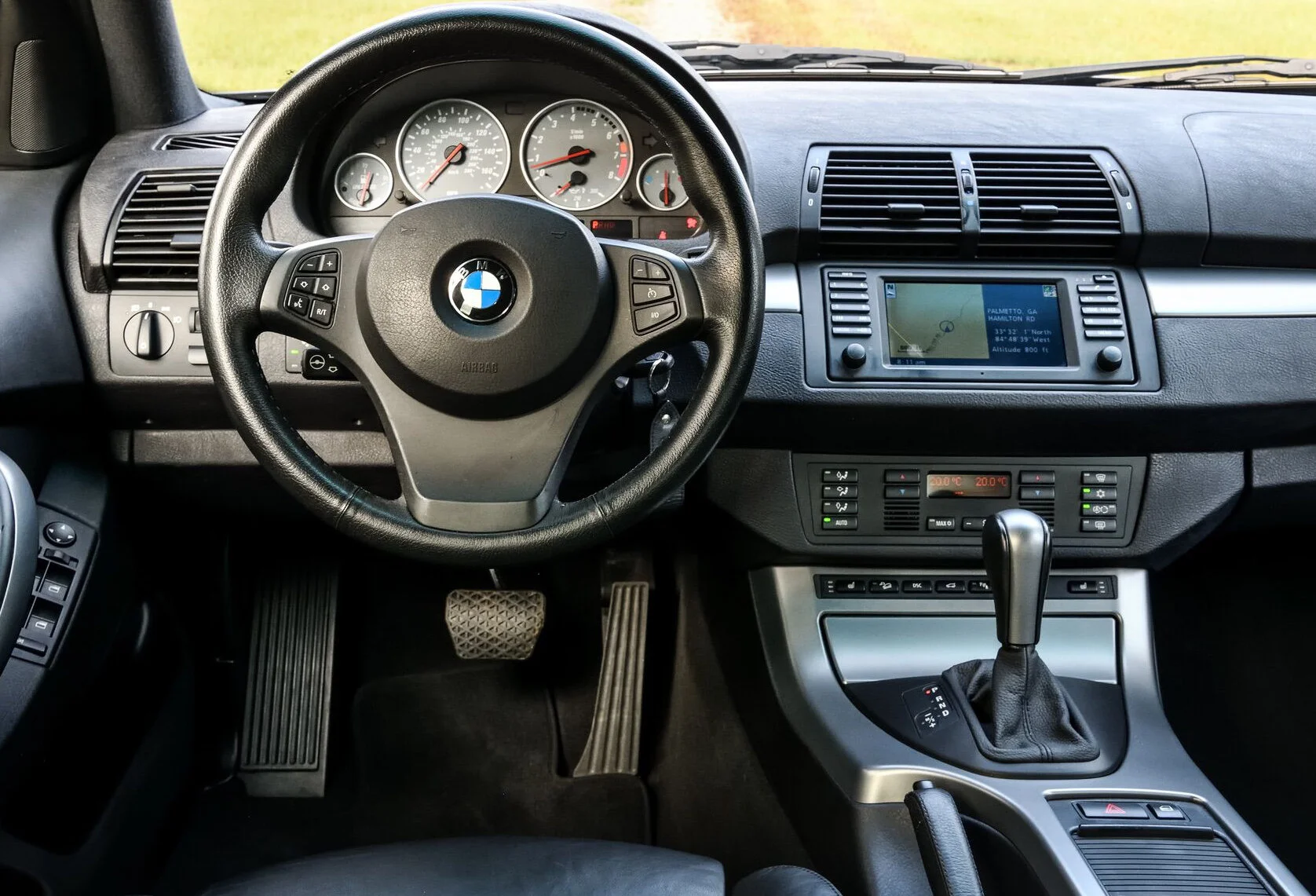 (エンジンを極力低く搭載することで、それまでのセダンの操縦性に近い低重心のまま、街乗りに向いたSUVを世の中に知らしめた功績は無限大)
ーーーーーー>外見の落ち着きだけでは語れない奥深いコンセプトです。
 こんな感じで、
現在に通じるデザインというのは、
美しく輝いています。
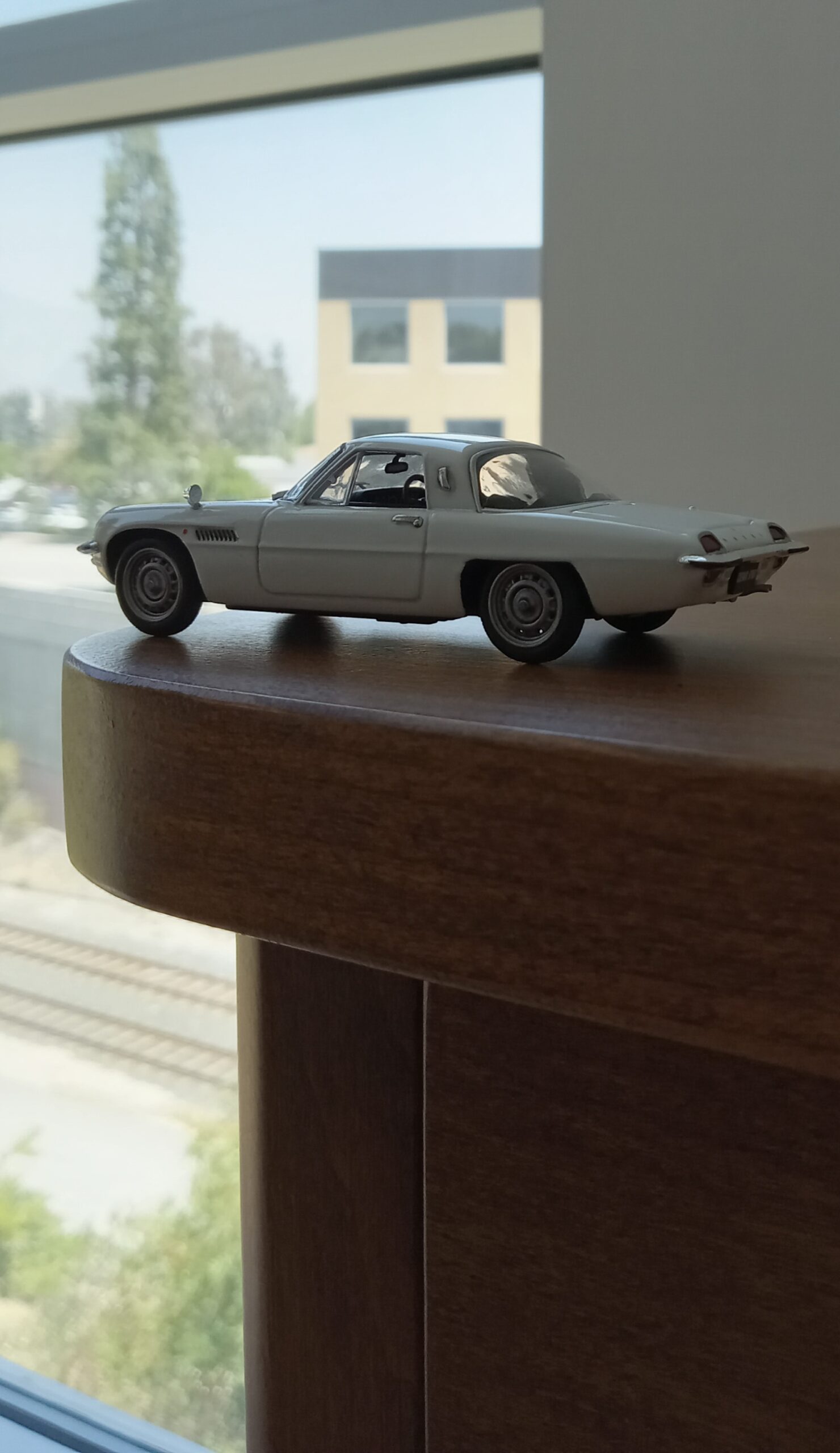 次回は、日本車、
マツダ・コスモスポーツに付いて
お話ししてみます。
お楽しみに――
本ブログと記事内容につきまして:
ブログ記事を書くにあたり私の目標は、立体造形(料理も含めて)とのかかわりを通じて、私個人の特徴的(ネジ曲がり方も含めて)な評価軸を解明することで、「美しさ・美味しさ」に対する好奇心や、探求心を、どのように満足・充足させてきたのかを明記しておくことです。
従いまして、記事の中に出てくる、数字や年号、微細なデータなどには細心の注意を払っておりますが、時に大きな間違いや勘違いを犯していることも考えられます。特に自動車記事における主要諸元や、年号などには紛らわしいものも多く、あくまで参考程度に考えていただければ幸いです。
私としては、記事の中で個人的な外観デザインや味覚の評価、そこから広がる後半部分につなげるための、『流れ』を作るための客観的材料として年号やデータを挿入している感じです。あくまで重視したいのは、私個人の頭の中で起こる、記憶の錯そう的混沌から生まれる新たな『見方』や『情報の予想外のつながり』です。その勢いを作り出す、『流れ』の一環として、諸データが副次的に必要となるわけです。
話がそれますが、大好きな落語の世界に「三題噺」という、その場て会場から募った3つのお題を使って1つのお話に仕立てるといったお遊びがございますが、私はそれに近いことを立体造形の特徴や(料理のお味)をお題にして行っている感じがします。その中で頭の中に去来する数々の着想が、全く予想外で楽しく、次回からの記事内容を大幅に変えたり、新展開につながっています。
当ブロブの仕組み:
『好奇心の点と線 x 気まぐれ脳内回路=予想外の新展開』
こんな自分勝手なブログですが、今後ともよろしくお願いいたします。
追記:上記の『流れ』を作る為に必要な写真はできる限り、個人所有のミニカー・自前の料理などを使い撮影しておりますが、その他の必要最小限の図版や写真を他のブログ主様の記事や諸会社ホームページなどからお借りしております。(記事内容に合うよう加工させていただき、使用時は最小の解像度で載せております。)問題がある場合、ご連絡いただければ直ちに降ろさせていただきます。
追記2:当ブログ記事に掲載のミニカー写真等(個人撮影)は許可なしで、どのようにお使いいただいても結構です。私個人の創造性はこの世のもの、と言う認識の上で記事を製作しています。
!!!!!!!!!!!!!!!!!!!!!!!!!!!!!!!!!!! Translated in English !!!!!!!!!!!!!!!!!!!!!!!!!!!!!!!!!!!
(Miniature car for photography: Mondo Motors, 1/43 scale Lamborghini Concept S, 2005 (Pearl White—Modifications: Wheels, panel lines, grating highlighted with warm-toned gray, side intakes and rear outlets painted black, rearview mirrors painted chrome))
Part 14 [Italian Cars] Lamborghini Concept S, 2005 “Pre-Production Concept Car” Lamborghini Concept S, 2005 “The Show Car”
#Favorite Automotive Designs—The Lineage of 2-Door Coupes:
For this 34th installment, titled “The Lineage of 2-Door Coupes, Part 14,” I’d like to discuss luxury 2-door (GT) coupes and roadsters, which strongly reflect the national characteristics and unique exterior design styles of various countries. [Note: Includes convertibles]
I’ll proceed as follows.
This 14th installment is the [Italian Cars Edition]
We’ll be discussing the
Lamborghini Concept S
(Pearl Snow White: pre-production concept car),
unveiled in 2005.
[The Lineage of 2-Door Coupes: Table of Contents]
[American Cars Edition]
Part 1: Cadillac El Mirage, 2013 (Metallic Red)
Part 2: Lincoln Continental MK4, 1972 (Black)
Part 3: Mercury Cougar, 1967 (LT Metallic Green)
[German Cars]
Part 4: MB 500K Special Roadster, 1936 (Black)
Part 5: MB 300SL Roadster, 1957 (Silver)
Part 6: MB SLS AMR Gullwing, 2010 (Black)
[British Cars]
Part 7: McLaren F1, 1992 (Metallic Orange)
Part 8: Jaguar XKSS Roadster, 1957 (Royal Blue)
Part 9: Jaguar XKR Coupe, 1996 (Dark Metallic Green)
[Japanese Cars / Nissan Edition]
Episode 10: Nissan First-Generation Silvia, 1965 (Champagne Gold)
Episode 11: Nissan Fifth-Generation Silvia, 1988 (LT Metallic Green)
[Italian Cars Edition]
Episode 12: Ferrari 250TR Pontoon Fender, 1958 (Red)
Episode 13: Ferrari 250 GTO, 1962 (Italian Red)
Episode 14: Lamborghini Concept S, 2005 (Pearl White)
[Japanese Cars: Mazda Edition]
Episode 15: Mazda Cosmo Sport, 1967 (Silver)
Episode 16: Mazda Eunos Cosmo, Type-S (2-Ton: Black & Gray)
[French Cars]
Episode 17: Bugatti Type 59, 1935 (French Blue)
Episode 18: Citroën SM, 1970 (Champagne Gold)
Episode 19: Bugatti La Voiture Noire, 2019 (Black)
[Japanese Cars: Toyota Edition]
Episode 20: Toyota/Yamaha 2000GT, 1967 (Ivory White)
Episode 21: Toyota 2nd-Generation Soarer, 1986 (Two-Tone: Black & Gray)
Episode 22: Lexus LC [GWZ100], 2017 (Metallic Red)
[American Cars Part 2]
Episode 23: Dodge Challenger & Plymouth Barracuda, 1971
Episode 24: Dodge Viper SRT-10 ACR, 2008 (Black)
Episode 25: Ford Shelby GR-1 Concept, 2004 (Chrome)
[Japanese Cars: Mitsubishi Edition]
Episode 26: Mitsubishi Galant λ, 1976 (Brown Metallic)
Episode 27: Mitsubishi Eclipse [North American Spec], 2006 (Orange Metallic)
[German Cars Part 2]
Episode 28: BMW M635CSi, 1984 (Dark Metallic Blue)
Episode 29: Mercedes-Benz 560SEC AMG 6.0 Widebody, 1989 (Black)
Episode 30: BMW M2 with Genuine Performance Parts, 2025 (Neon Lime)
[Japanese Cars: Subaru Edition]
Episode 31: Subaru Crosstrek XV, 2012 (Lime Green Metallic)
The Corvette Lineage: (Special Edition)
Episode 1: 1967 Stingray [C2] Convertible (Hardtop, Metallic Blue)
Episode 2: 1972 Corvette [C3] Convertible (Metallic Blue)
Episode 3: 1990 Corvette ZR-1 [C4] Coupe (Red)
Episode 4: Stingray Concept [Pre-production Prototype], 2009 (Metallic Blue)
# Clad in “design intrigue” like armor from head to toe: A “robust design” that’s delightful from start to finish
When I first saw a photo of the “Concept S,”
for some reason, I
[instinctively understood] just how robust its design was (was it some kind of electric shock… or like being struck by an aura?)
I still remember that sensation.
Later, about 10 years ago, I acquired
the 1/43-scale die-cast mini car from Mondo Motors
(which is also “sturdy” in construction) that I used this time,
*I’ve admired it from every angle, scrutinizing it closely,
*and have truly cherished its “power-packed design” from the bottom of my heart.
It’s a “monster of three-dimensional design”
where it’s no exaggeration to say every angle is the best angle!!
(To be honest, the rear three-quarter view is a bit weak, though…)
Personally,
since the impact I felt when I first encountered it
was on the same level—the absolute maximum—
I’d like to call it
the “spiritual predecessor of the Honda S660”!!
So,
that’s the direction I’d like to take this.
* Real-Car Analysis: A Die-Hard Supercar
* Exterior Design Features: The Reconfiguration of the Double Canopy
* “Me” and the [Concept S]
* Three-Theme Story: Bluer Than Indigo · S660 · Mentor
* Other cars with “robust designs”…
* Real Car Review: A One-of-a-Kind, Die-Hard Supercar
Overview:
n
n
The Lamborghini Concept S (2005) is
an extreme open-top sports car reminiscent of a single-seater race car, built based on the V10-powered supercar “Gallardo.” It is a completely one-off (the only one in the world) model and is known as a legendary concept car that embodies Lamborghini’s ultimate styling.
n
n
n
(2008 model?, Ganga Gallardo)
n
n
a n
n
n
n
n
a n
n
n
n
n
a n
n
a n
n
n
Design Specifications and Concept:
n
N
The Concept S was unveiled at the 2005 Geneva Motor Show. Designed by Luc Donckerwolke, who was head of Lamborghini’s design department at the time, the design was inspired by 1950s single-seater racing cars.
n
n
n
m
The most distinctive features of this model are as follows:
* Separate dual cockpits:
Instead of a traditional single windshield, it features a wrap-around windscreen that is completely divided into left and right sections.
n
* Central air intake:
It features a highly distinctive aerodynamic structure in which the central section between the left and right cockpits functions as an air intake for the mid-ship engine.
* Aggressive aerodynamic components:
It is equipped with dedicated front and rear spoilers and a large rear diffuser, emphasizing its track-oriented style.
n
n
a n
n
n
Powertrain
It is equipped with the powerful powertrain inherited from the Gallardo, on which it is based.
n
* Engine: 5.0-liter naturally aspirated V10 engine
* Maximum output: 520 horsepower
* Transmission: 6-speed manual
* Drive system: All-wheel drive (AWD)
n
n
an
n
n
Commercial Release and Auction
n
At the time of its announcement, limited production was planned, and a single drivable prototype was actually built. However, due to high manufacturing costs and difficulties in meeting safety regulations, plans for a commercial release were shelved.
n
Since only one drivable prototype exists in the world, it has become an extremely rare collector’s item. It has been offered at auction in the past, attracting attention for fetching astonishingly high prices as a “phantom model.”
n
n
#Key Specifications:
Model: CA18DET
Total Displacement: 4,961 cc (5.0L) V10 DOHC 40-valve naturally aspirated engine
Maximum Power: 520 PS (520 BHP) @ 7,800 rpm
Maximum Torque: 510 Nm (376 ft·lbf) @ 4,500 rpm
Drivetrain: Permanent all-wheel drive (AWD / 4WD)
Seating Capacity: 2 passengers (cockpit with longitudinally separated driver and passenger seats)
Body Style: 2-door Speedster (fully open-top)
Wheelbase: 2,560 mm
Overall Length: 4,345 mm
Overall Width: 1,900 mm
Overall Height: 1,000 mm (*Height excluding the cabin partition)
Approx. 1,450 kg
*Exterior Design Features: The beautiful form of the independent cockpit!
(The cockpit of a 1960s Honda F1 car)
Regarding the “Lamborghini Concept S,”
which boasts an exterior design of unprecedented power,
I’d like to discuss
the following five points:
1: The sheer brilliance of the striking upper body design (which bears no resemblance to the Gallardo it was based on), born from the “side-by-side” arrangement of F1-style cockpits
ーーーーーー>I heard it was planned for a limited release of 100 units—I really wish they had made it happen!!
2: The dip in the side profile just behind the front fender—a design element present since the Gallardo—is significantly emphasized by the lower roofline, creating the appearance of “powerful, broad shoulders” when viewed from all angles.
ーーーーーーー>This detail is the very [cornerstone] of this “robust design”!
3: The appeal of the three-dimensional graphic design, brimming with a “sense of texture and depth” when viewed from directly above
4: The sculptural power that converges from the front end and hood toward the rear end, emphasizing the sense of width and perspective with unparalleled intensity
5: The headrest design, resembling “an eagle’s outspread wings,” which brings together the “visual pinnacle” from every angle
Now, let’s take a closer look
at each one.
1: The sheer brilliance of the striking upper body design—born from the “side-by-side” arrangement of F1-style cockpits (bearing no resemblance whatsoever to the Gallardo it was based on)
(The recess in the center of the hood divides the cockpit into two sections and also serves to control the airflow to the rear engine intake vents.)
—————> Although the limited release of 100 units didn’t happen due to budget constraints, I really wish it had come to fruition!!
2: The indentation just behind the front fender in the side view—which was already part of the design for the Gallardo—is significantly accentuated by the lower roofline, creating the impression of “powerful, broad shoulders” when viewed from all angles.
—————> This detail is the very [cornerstone] of this “robust design”!
3: The appeal of the three-dimensional graphic design, brimming with a sense of “texture and depth” when viewed from directly above
4: The sculptural power that converges from the front end and hood toward the rear end, emphasizing the sense of width and perspective with unparalleled intensity
5: The headrest design, resembling “an eagle’s outspread wings,” which refines the “visual pinnacle” from every angle
*“Me” and the Lamborghini Concept S
I first saw it in a feature article about an auto show in “AUTO WEEK” or something similar,
and was instantly captivated by its powerful design,
so I wandered the internet in search of a 3D model
and found this
1/43 die-cast mini car from “Mondo Motors,” which I bought immediately.
I believe I purchased it from a dealer in Italy via eBay,
*At first glance, it looks like a “BBURAGO” knockoff,
*but it’s an officially licensed Lamborghini product.
*The overall shape captures the car’s appearance brilliantly,
*though the details are… well, let’s just say they’re decent (lol).
As a model that fits perfectly in the palm of my hand,
I’ve always kept it close by.
After it was destroyed in a fire, I bought it again last summer,
and it’s once again become my “palm-sized companion”!!
As for this car,
the difference between it and the Lamborghini Gallardo it’s based on is so vast
that, in my mind, it feels like the Gallardo existed
solely to lead to the design of the Concept S!
The die-cast models I’ve discovered since then
do have a similar vibe,
but they all have their pros and cons,
so in my opinion,
the “Monroe Motors” version is still the best.
*IXO/Hachette version, 1/43 die-cast Lamborghini Concept S (White Pearl?)
(This appears to have been released as part of a subscription series; while the paintwork on the headlights and taillights is beautiful, the body as a whole feels a bit flat, and it lacks the sharpness of the Monroe version.)
* Small Wheel version, 1/43 resin ready-to-display model: Lamborghini Concept S
(It has a solid resin feel, but the windshield is rendered too large, and combined with the sagging of the vacuum-formed parts, it ruins the overall look.
——> It seems a revised version has been released under a different part number, and that one had a lower windshield that looked much cooler.)
* Fujimi, 1/43 Resin Ready-to-Display Model: Lamborghini Concept S
(I had high hopes for this as a resin model from a Japanese manufacturer, but I was disappointed by the height of the windshield and its flimsy texture. I’ve never seen the real thing.)
Looking at all this, what I feel is
the design of this “Concept S”—
* Its almost menacing sturdiness
* The deep regret that it was never released
I feel these things very keenly.
Now, let’s put that aside for a moment
and move on to the “Three-Theme Story”!
* Three-Theme Story: Bluer Than Indigo, S660, Master
The themes I received from the audience this time are (lol)
* Bluer Than Indigo
* S660
* Master
These are the three topics,
“Well then, I hope you’ll bear with me for a little while…
Since ancient times, we’ve had sayings like ‘the pupil surpassing the master’ and ‘bluer than indigo,’
and while we seek guidance from our predecessors and masters,
there are times when someone actually surpasses them.
To put it another way,
it also seems to reflect the frustration of being unable to easily surpass the “great heights” achieved by those who came before us…
In my view, the “great heights” reached by the
“Lamborghini Concept S,” which I’m discussing today,
are not something that can be easily surpassed.
The only vehicle that has surpassed it is the [Honda S660],
which Honda of Japan released as a production model in 2012.
Like the Concept S,
this car
* features a mid-ship layout—the ideal engine placement for a sports car—and * is also a convertible that allows you to enjoy open-air driving by removing the roof.
Furthermore,
it boasts an exterior that embodied a cutting-edge and ambitious design language at the time.
In this way,
while possessing a striking personality on par with its spiritual predecessor, the Concept S,
and furthermore,
perhaps thanks to Honda’s corporate efforts,
this extraordinary car was produced as a mass-market model for seven years,
with nearly 40,000 units delivered to the world.
When brilliant concepts and ideas are born,
they quietly but surely permeate society, and sometimes—at unexpected moments
and from unexpected directions—they emerge into the world as products.
In that sense,
although the Lamborghini Concept S never made it to production,
its powerful appearance and the aura it exuded have transcended time and undeniably influenced other automotive designs.
A creation born of strong will—once built and unveiled—
possesses a powerful “aura” (an invisible force) of its own,
which shakes the geomagnetic field that envelops and constitutes the world, creating sustained vibrations. These vibrations—which can be interpreted as the beat of that era (even if they are, for a time, negative “shocks”)—
* moves the hearts of other creators,
* encourages and inspires them,
and eventually unites the will and purpose of many creators of that era,
leading them toward realization.
Furthermore, by prompting an impulse that moves the recipient from within,
doesn’t it also influence the creation of a foundation that makes the product more readily accepted?
Finally,
Regarding the proverb I mentioned at the beginning,
“Bluer than indigo,”
I had said I wanted to add the perspective of
“the difficulty of surpassing one’s predecessors,”
but having spent time with the “Concept S” and the “S660” this time,
I’ve gained hope for the future.
In other words,
the greater the greatness of a predecessor, the greater the influence it exerts on the next generation, and the creations that emerge next will inevitably surpass it.
I’d like to interpret the saying,
“Blue comes from indigo, yet is bluer than indigo,”
as meaning, “Blue’s strong will inevitably makes indigo bluer.”
While indulging in this kind of arbitrary reinterpretation,
I’ve been trying to inspire myself these days—as I fear the “AI” that’s coming will turn humanity into livestock…
(As a human who embodies AI, I’m searching for a path that doesn’t involve becoming subordinate to AI)
I find myself agonizing over the thought:
“If only I had a magnificent mentor like Concept S…” (laughs through tears)
Well then, that’s all for now…
* Other [blue] cars with “robust designs”
Are there any designs that have had an influence on future generations
that borders on a silent curse?
Personally, I’d say something like this:
* Lamborghini Countach LP400, 1974
(This powerful skeletal structure shines brilliantly as the prototype for all subsequent wedge-shaped sports cars.)
――> Its extremely sculptural, non-ornamental exterior is the trademark of Marcello Gandini
* Toyota Third-Generation Prius, 2012
(The tall, triangular three-dimensional form—made possible by the smaller engine compartment resulting from the hybrid system’s specifications—has had a profound influence on all current electric vehicles.)
ーーーーー>It’s truly a shame that the “lowered ride height” of the TNGA chassis went against this trend.
*BMW First-Generation X5 [E53], 1999
(By mounting the engine as low as possible, it introduced the world to an SUV suited for city driving while maintaining a low center of gravity—close to that of a sedan—and its contribution to this achievement is immeasurable.)
ーーーーーー>It’s a profound concept that cannot be summed up by its calm exterior alone.
In this way,
designs that resonate even today
shine with beauty.
Next time, I’ll talk about
a Japanese car:
the Mazda Cosmo Sport.
Stay tuned――
Regarding this blog and its content:
My goal in writing these blog posts is to clarify my personal, distinctive criteria for evaluation—including my own quirks—through my involvement with three-dimensional art (including cooking), and to document how I’ve satisfied and fulfilled my curiosity and desire to explore “beauty and deliciousness.”
Consequently, while I pay the utmost attention to the numbers, model years, and detailed data that appear in my articles, it’s possible that I may occasionally make significant errors or misunderstandings. In particular, key specifications and model years in automotive articles can often be confusing, so I would appreciate it if you treated them as general references only.
For my part, I feel that I’m inserting dates and data into the articles as objective material to create a “flow” that connects my personal assessments of exterior design and taste to the broader themes explored in the latter half of the piece. What I ultimately prioritize are the new “perspectives” and “unexpected connections between pieces of information” that emerge from the chaotic jumble of memories in my own mind. The various data points are needed secondarily as part of that “flow” to generate that momentum.
As a slight digression, in the world of rakugo—which I love—there’s a playful format called “san-dai-banashi,” where a performer weaves a single story using three topics solicited on the spot from the audience. I feel like I’m doing something similar here, using the characteristics of three-dimensional sculptures and (the taste of food) as my prompts. The countless ideas that flit through my mind during this process are completely unexpected and delightful; they often drastically change the content of future articles or lead to new developments.
How This Blog Works:
“Spots and Lines of Curiosity x Whimsical Mental Circuits = Unexpected New Developments”
This blog may be a bit self-indulgent, but I hope you’ll continue to follow along.
Note: To create the “flow” described above, I take as many photos as possible using my own die-cast cars and home-cooked meals. However, I do borrow the bare minimum of other illustrations and photos from other bloggers’ posts and company websites. (I edit them to fit the article’s content and post them at the lowest possible resolution.) If there are any issues, please contact me and I will remove them immediately.
Addendum 2: You are free to use the photos of die-cast cars and other images (taken by me) featured in this blog’s posts in any way you like without permission. I create these posts with the understanding that my personal creativity belongs to me alone.
Translated with DeepL.com

これはCTAサンプルです。
内容を編集するか削除してください。