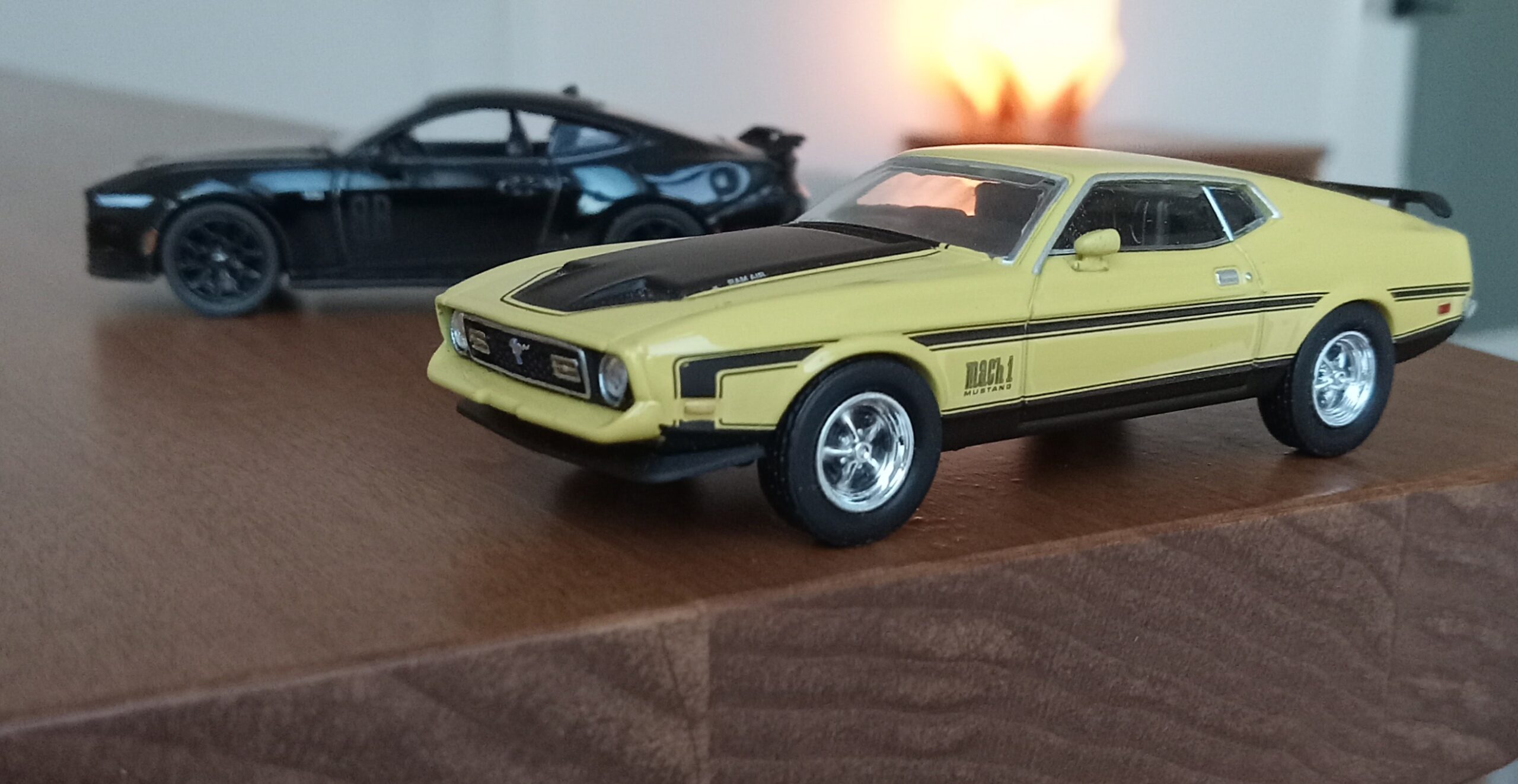
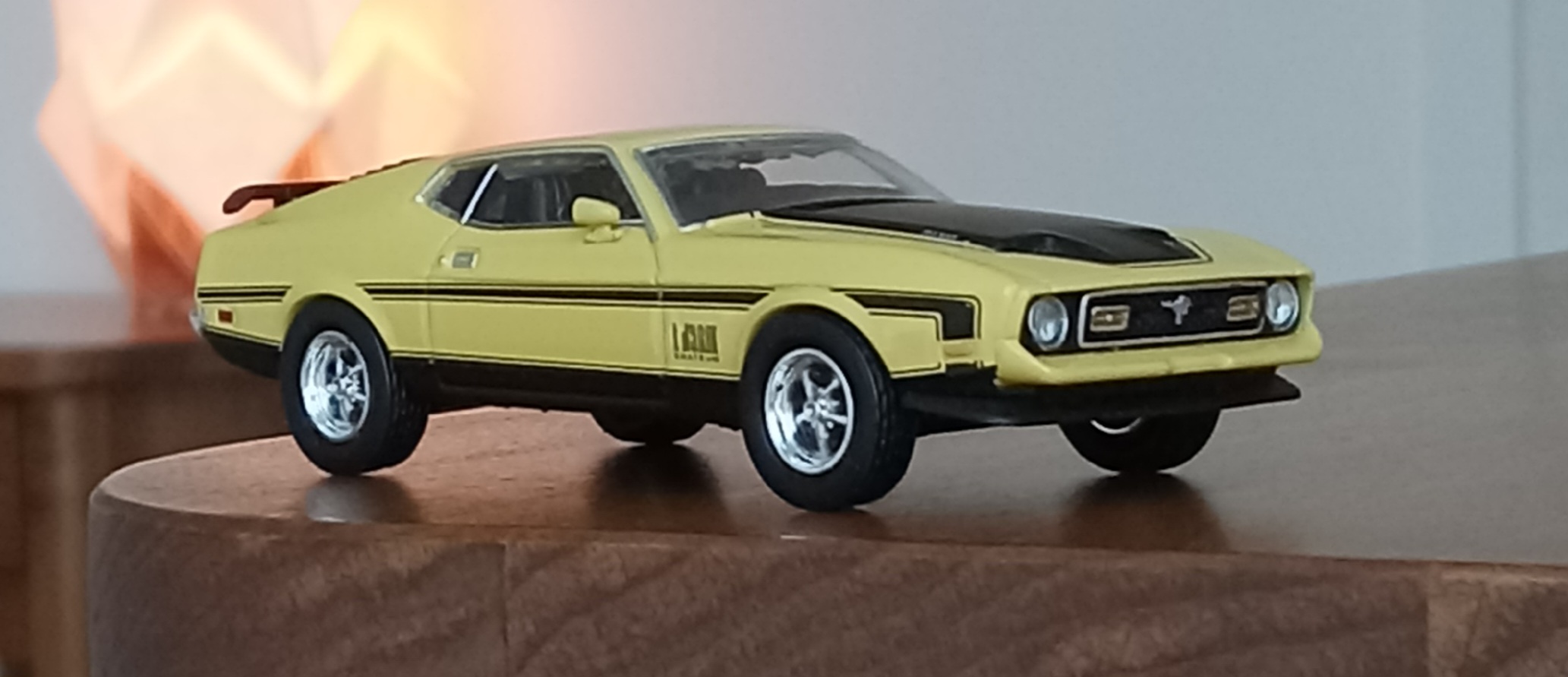
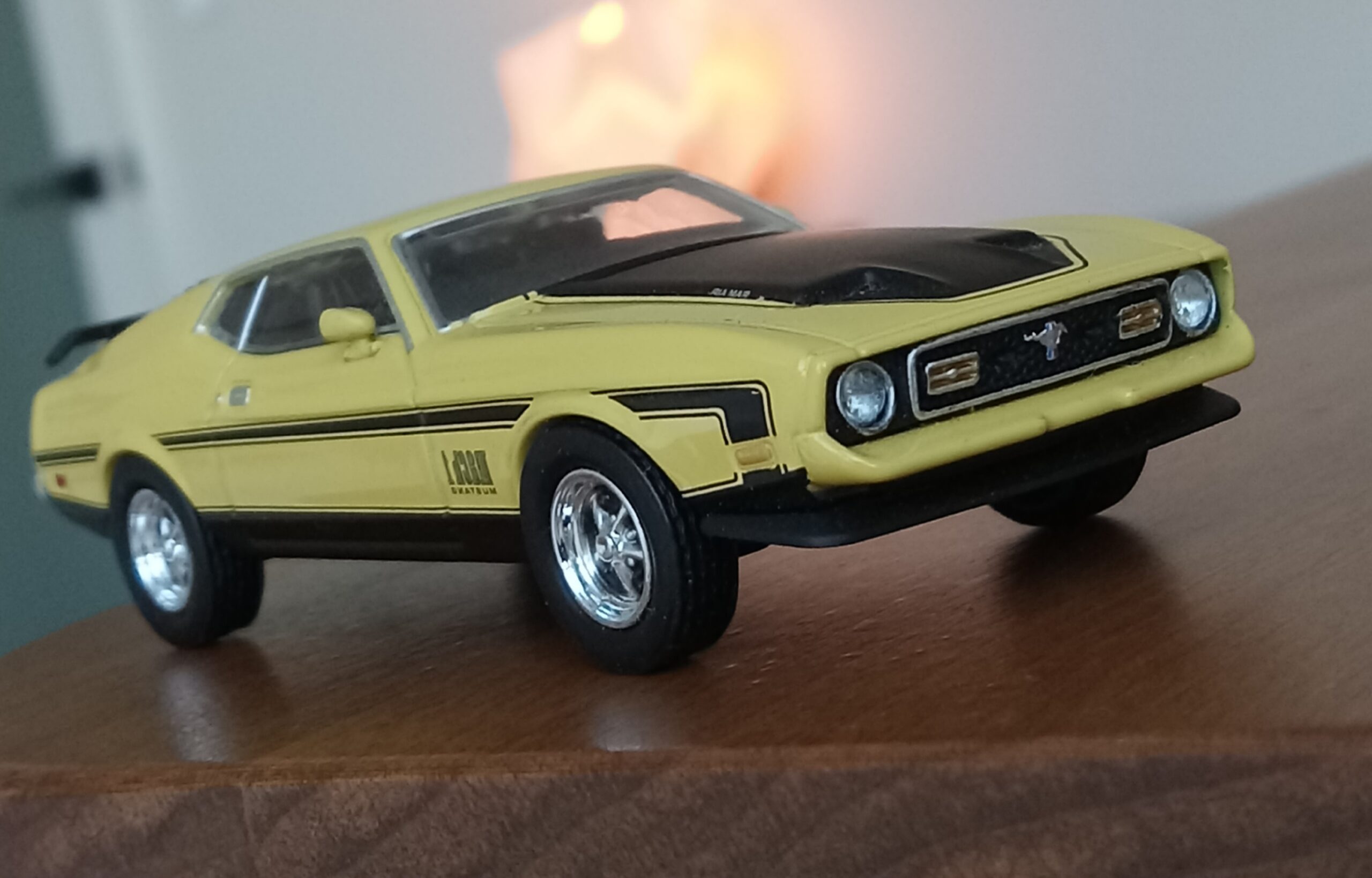
第28回ーーアメ車、原体験! フォード ムスタング・マッハ1、1971(イエロー)Ford Mustang Mach1、1971(Yellow)
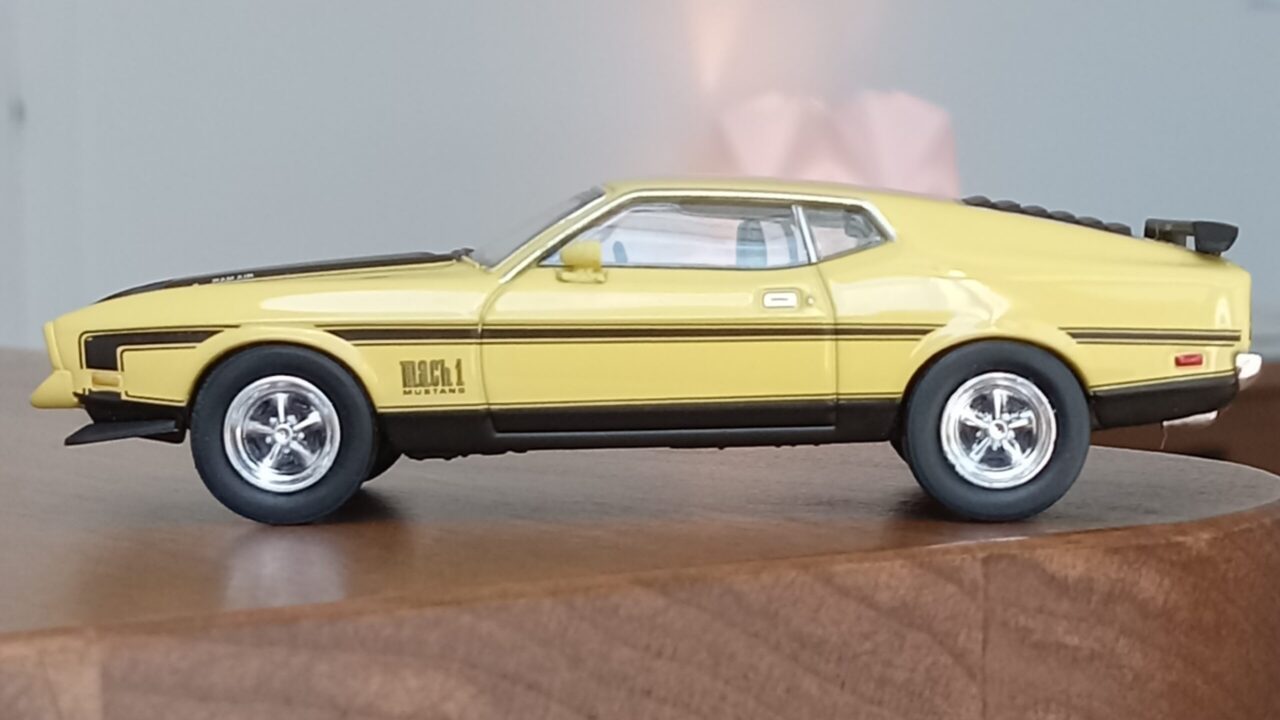
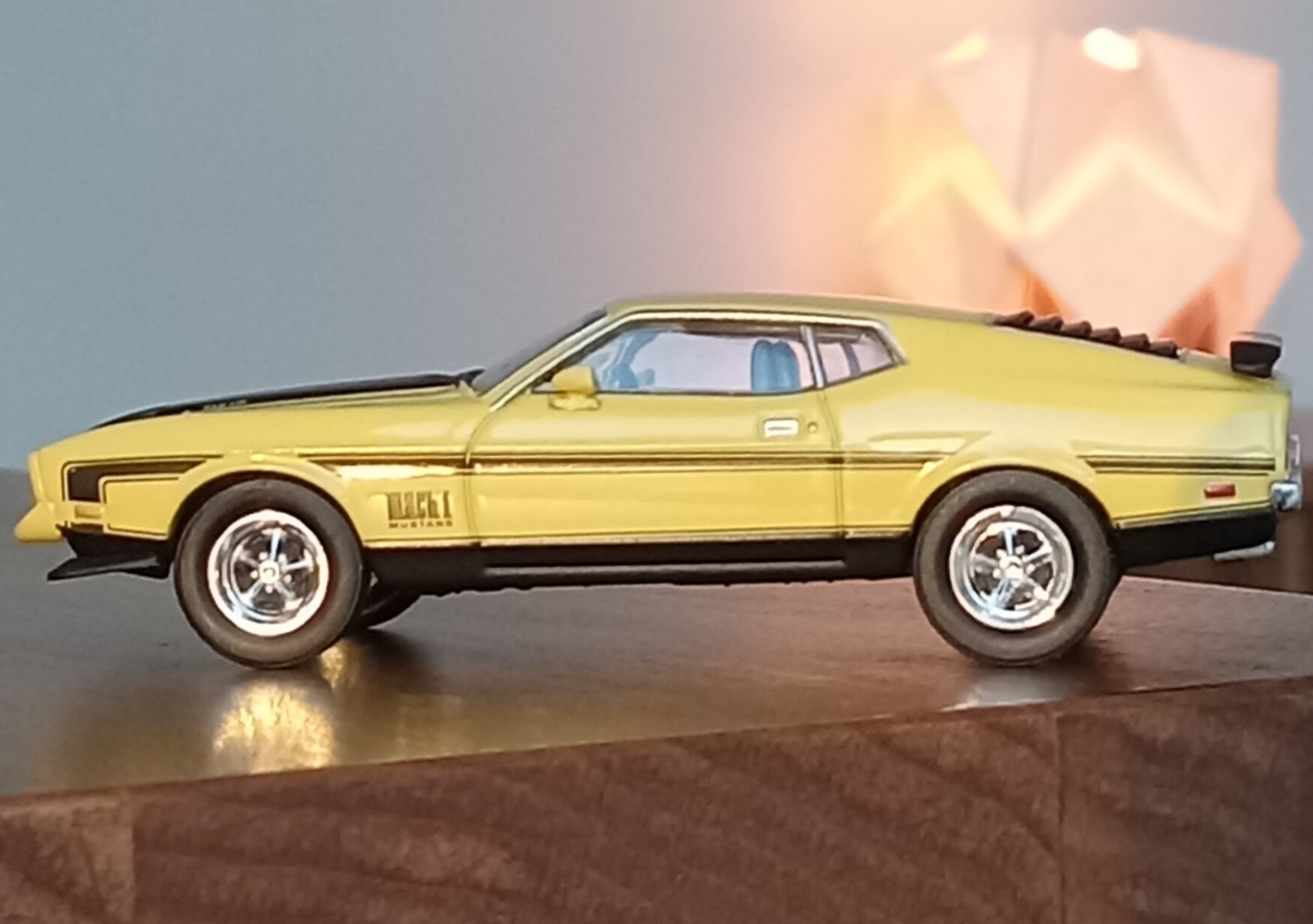
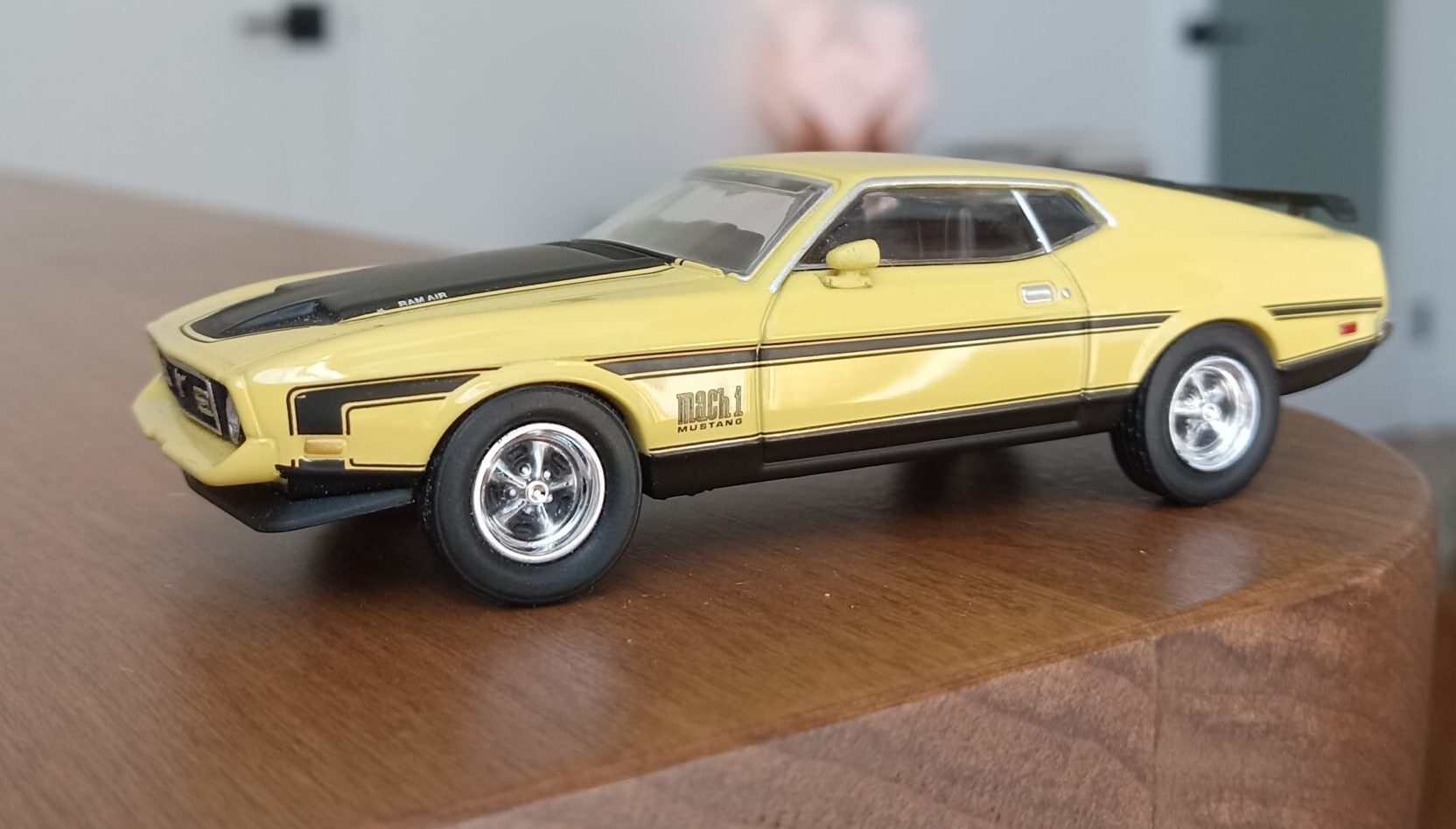
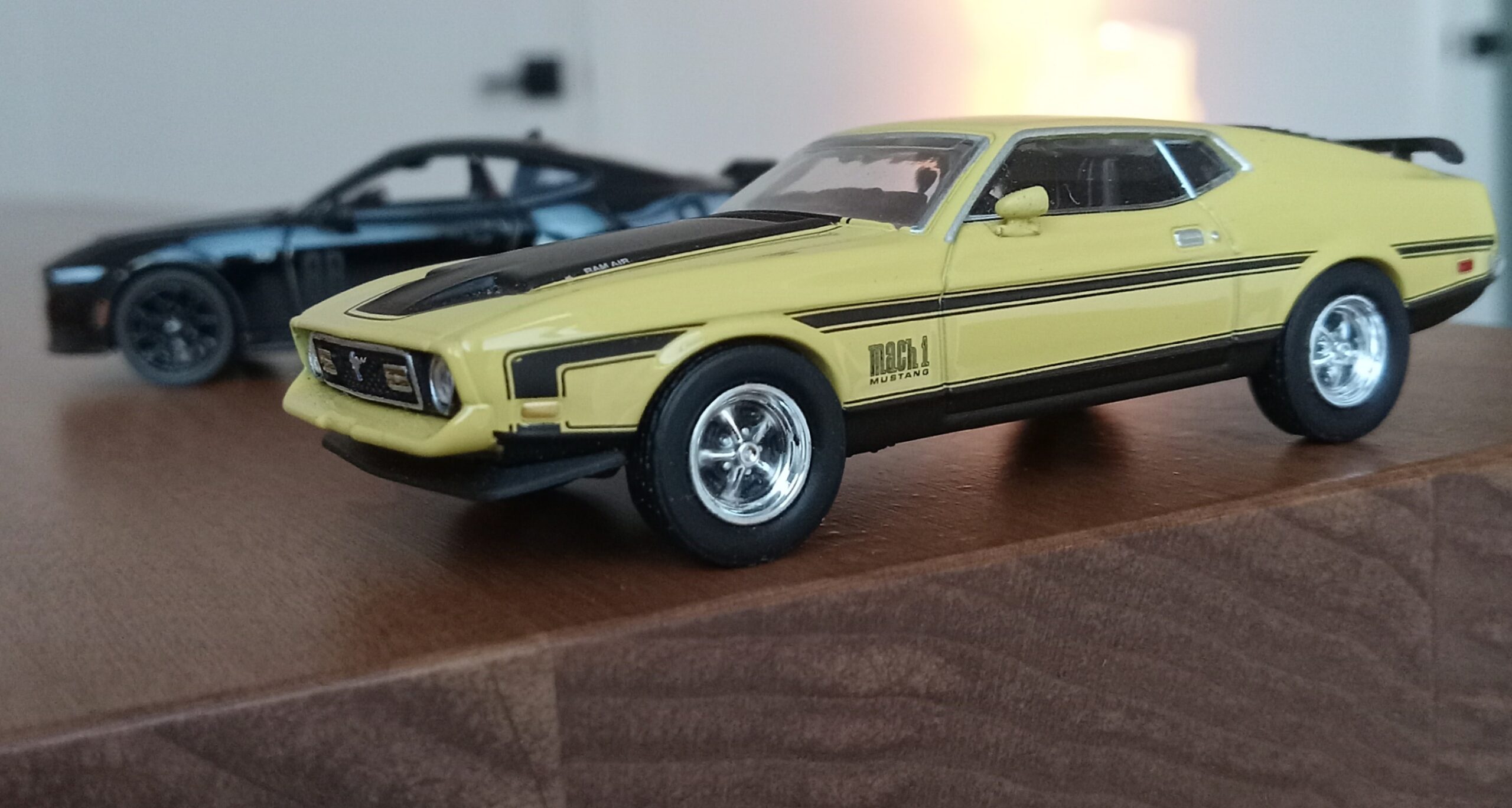
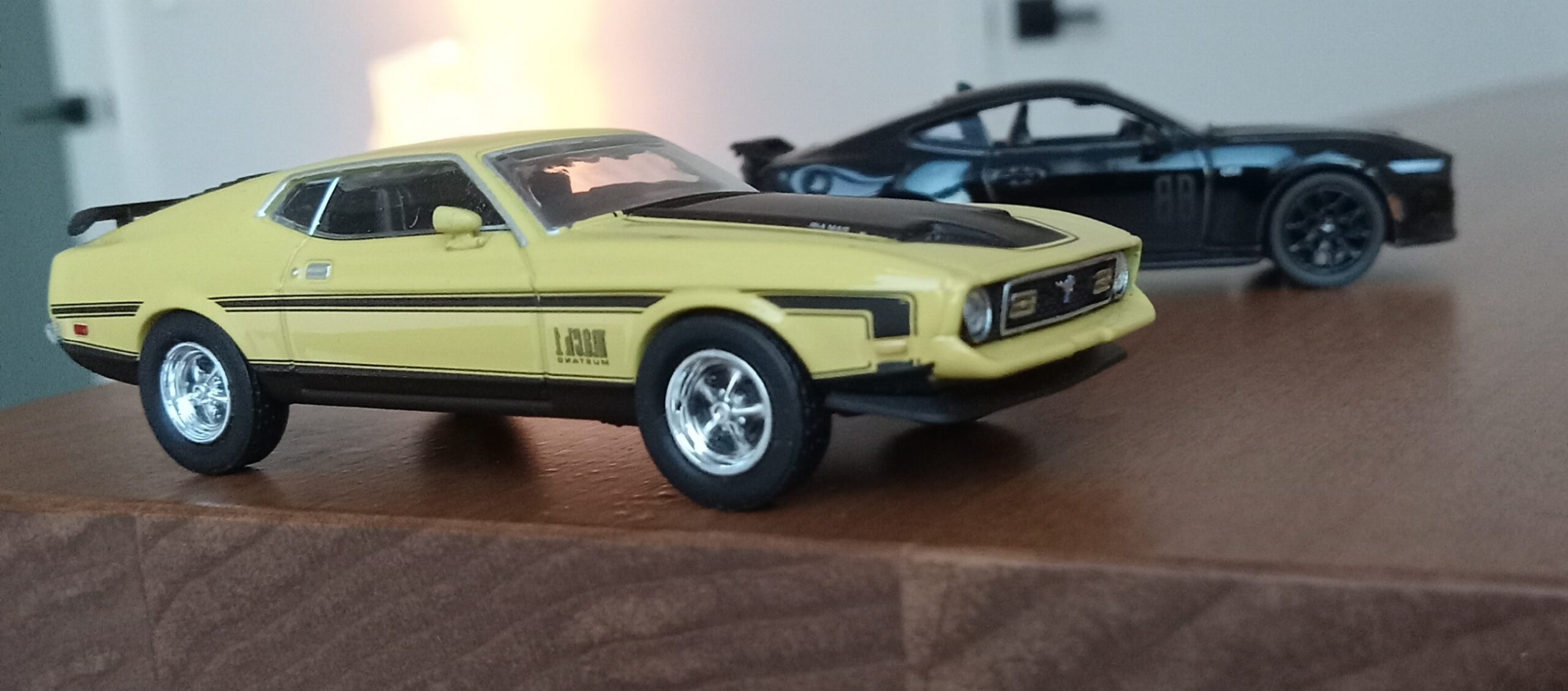
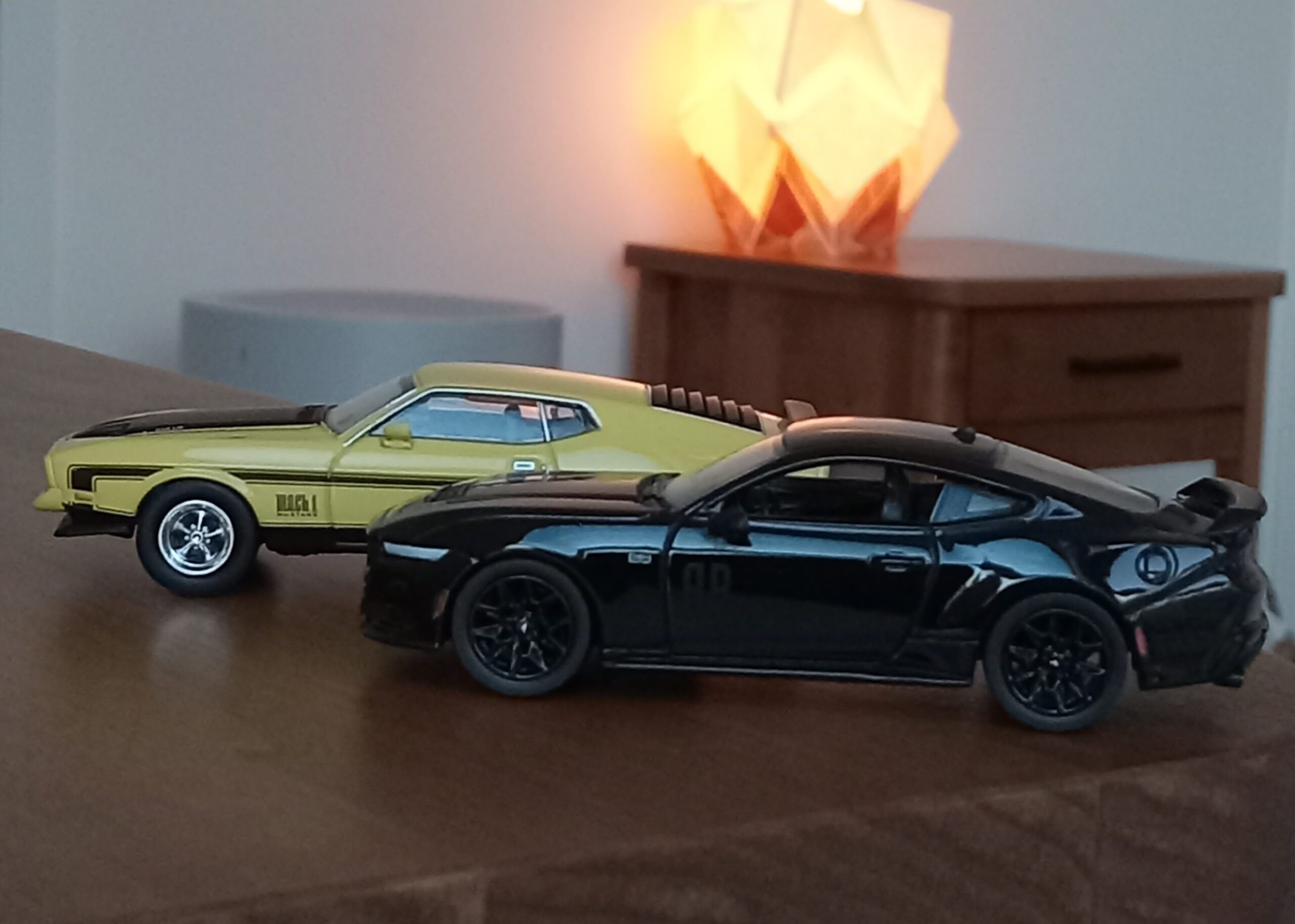
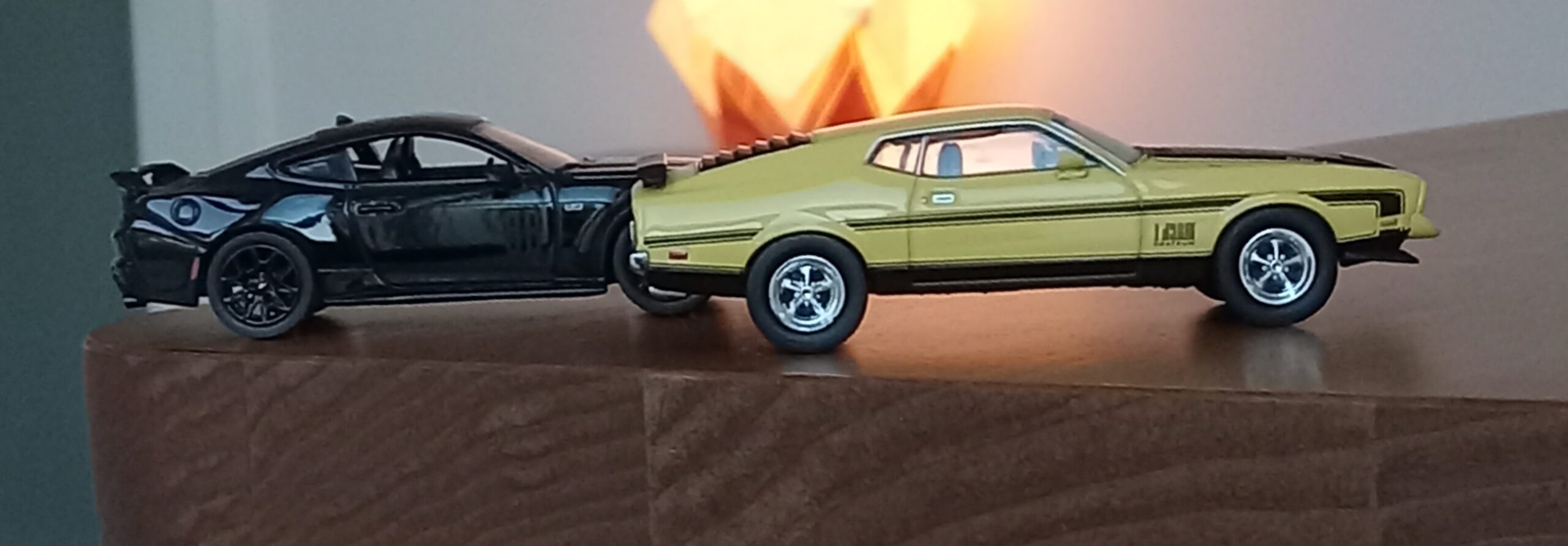
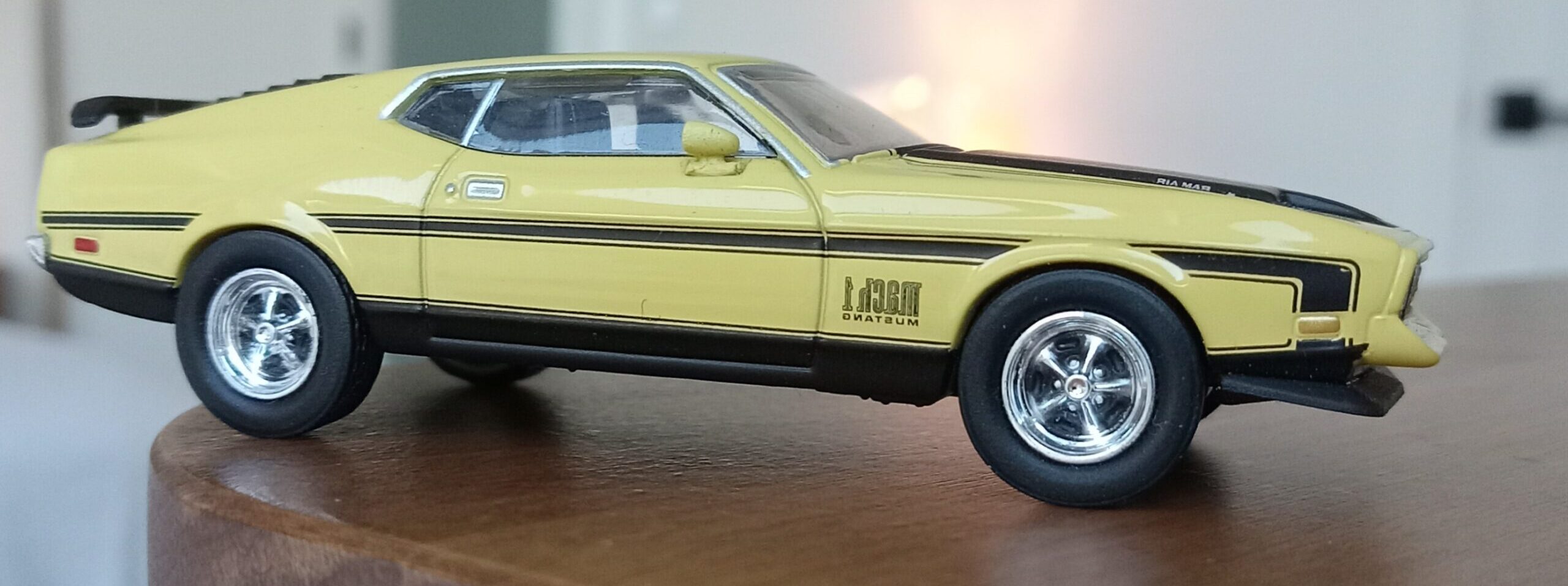
(写真撮影に使用したミニカー:MINI GT製、1/64 フォード ムスタング・マッハ1、1971年型‐--最新型のミニカーで、ヘッドライトや、テールランプにも透明部品を使うなど、このスケールでは完璧な出来です。オススメ)
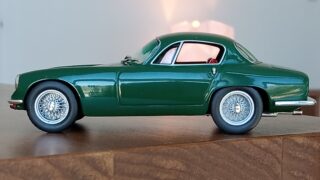
(もう一台の皮革用ミニカー:グリーンライト社製、1/64 ブラックシリーズ/2024年型ムスタング)
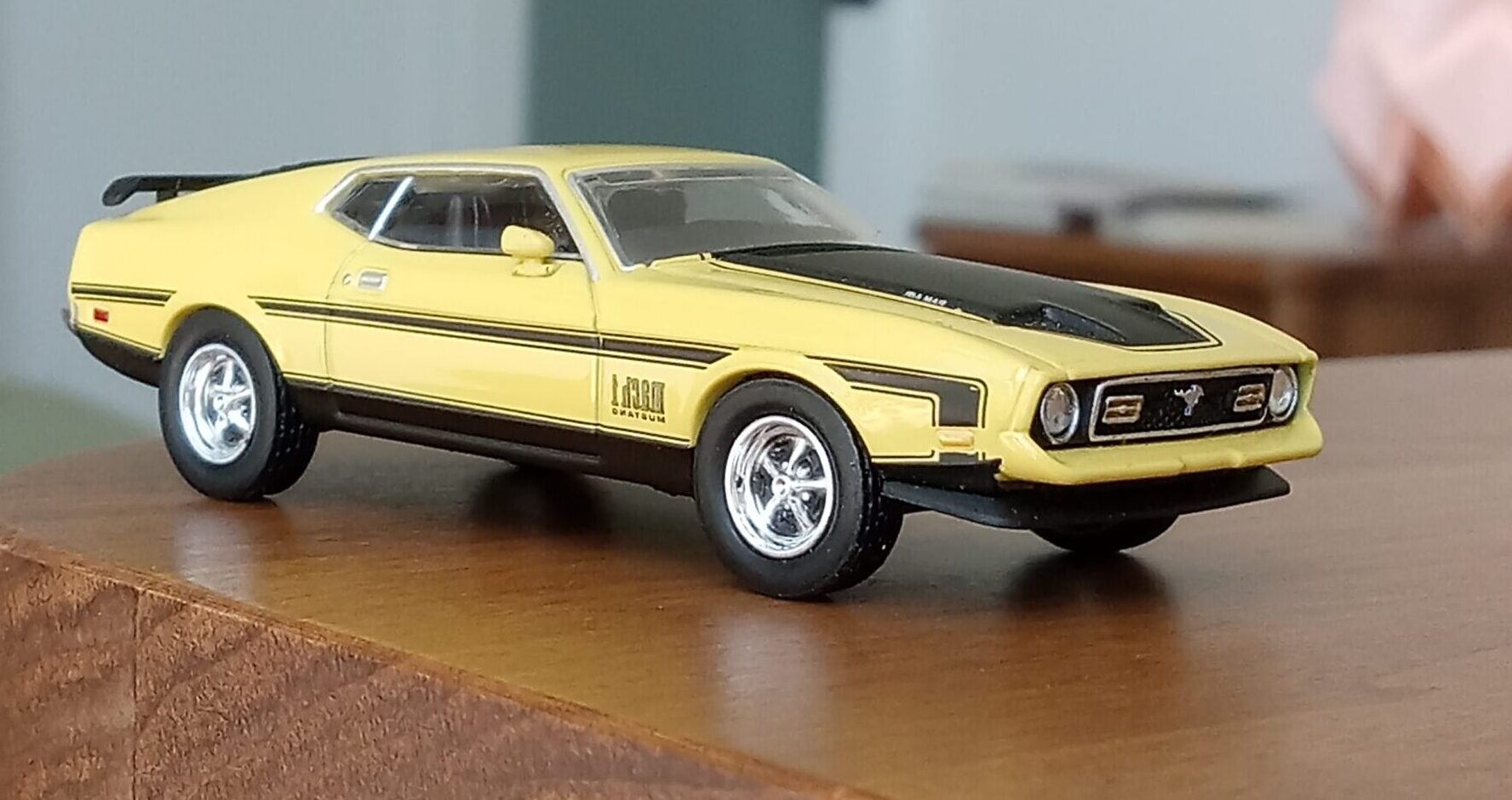
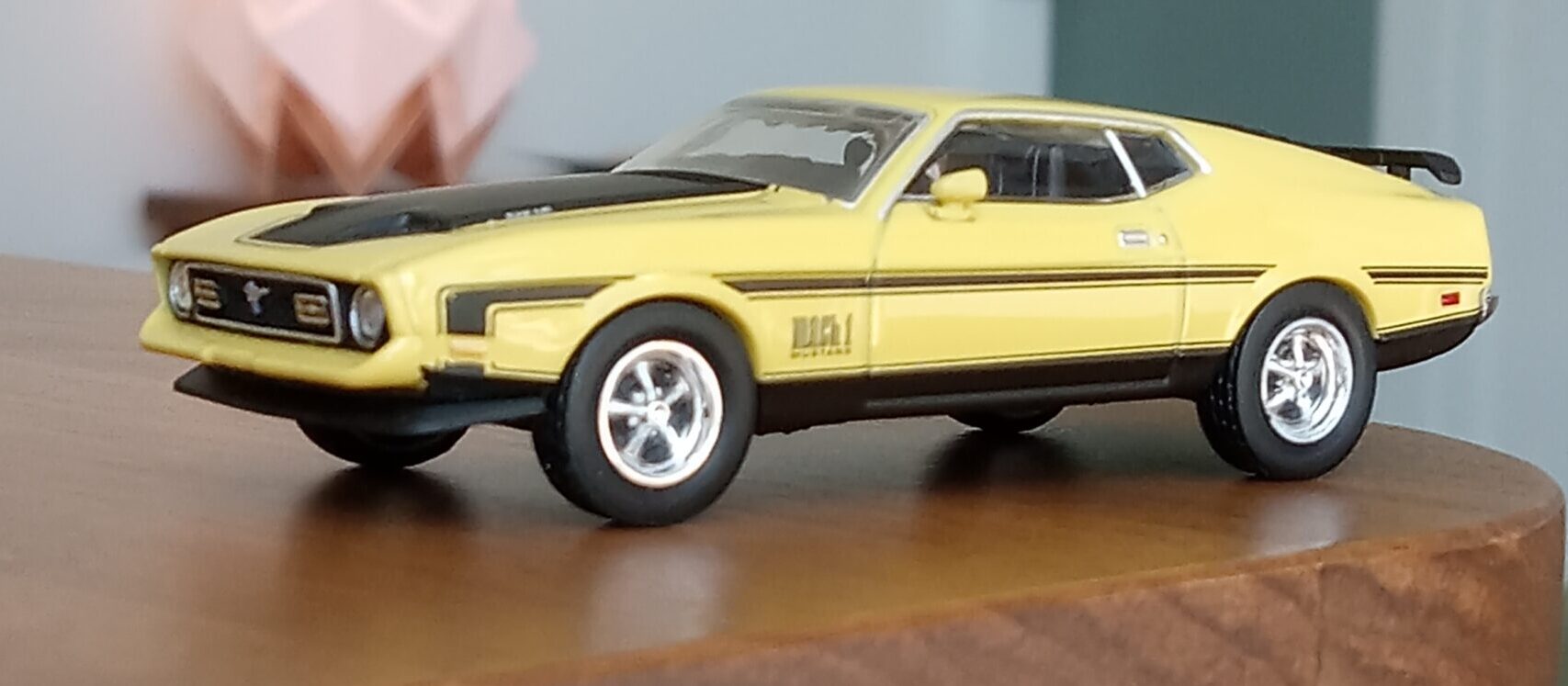
第28回目の今回は、『2ドアクーペの系譜』を一回お休みしまして、最近MINI GT社から素晴らしい1/64ミニカーが発売された、1971年型の『フォード マスタング・マッハ1』についてお話ししてみたいです。
この車、
私の父の大好物で、私が小学生の時父の友人の実車に載せてもらったり、オオタキ製1/12の巨大なプラモデルを買ってもらい、一緒に作ったりした思い出があります。
父の大好物2台:
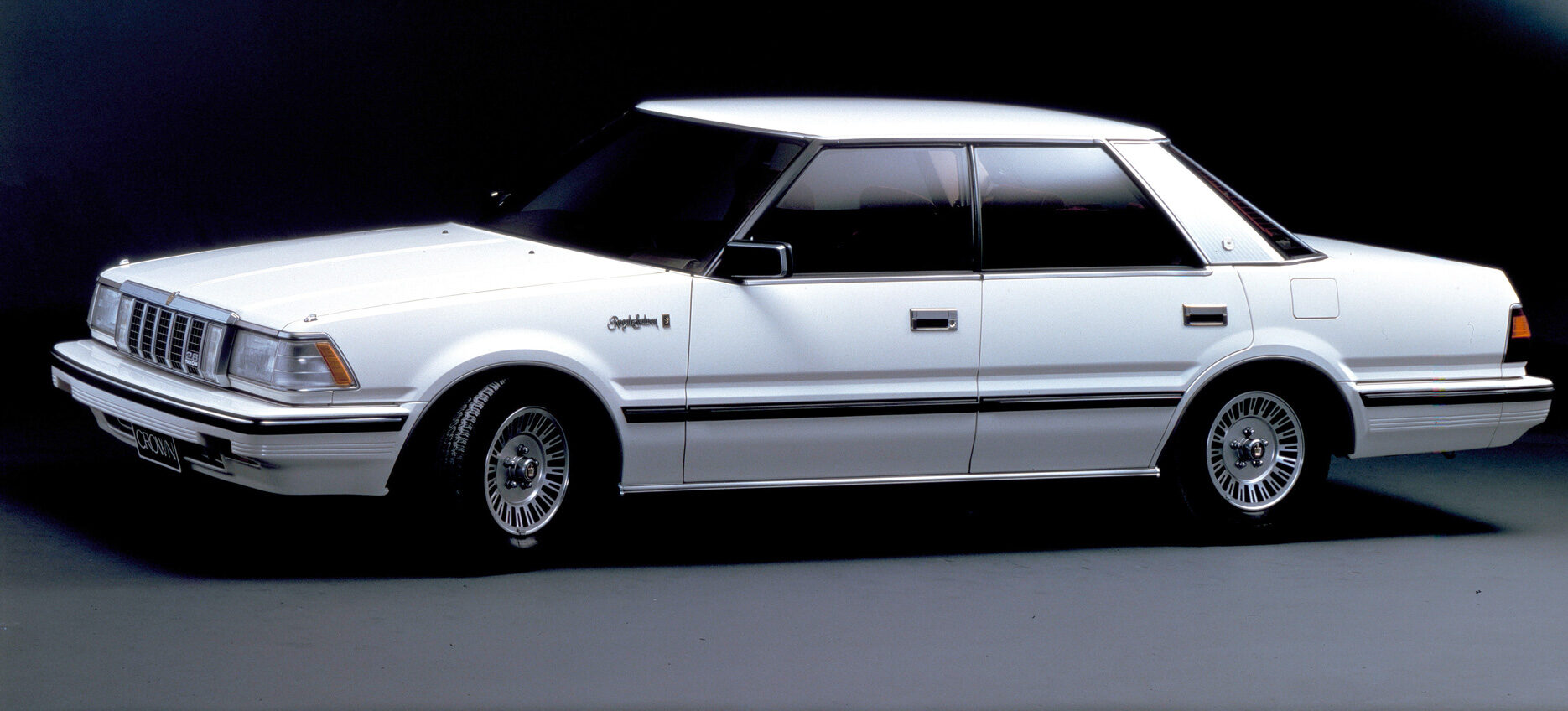 *トヨタ・クラウン ロイヤルサルーンG, 1983(スーパーホワイト)
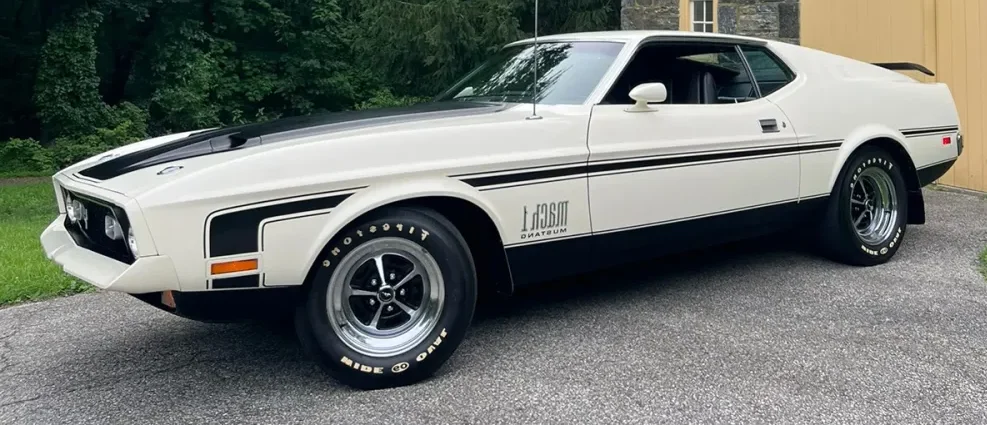
*フォードマスタング・マッハ1,1971(ホワイト)
当時はまだ子供だったこともあってか、
超巨大なアメ車!
として
*その大きさと
*ルーフからリアにつながる『まっすぐなライン』のみが
印象に残っていましたが、
今回、非常に出来のいい、MINI GT社製のホットホイールサイズのミニカーを入手して、掌の中で躍らせてみた結果、『なんだかイメージよりも小さいなーと感じて』、調べてみてビックリ、
実際の全長は4m80cmしかなく、
5mを軽く超える、同時期のダッジ・チャージャーなどと比べてかなり小さいことが判明して、当時のフォードデザインの優秀さ=
『実際より巨大に見せる手腕』
(全幅は逆に1m90cmもあったり、ホイールサイズは小さめの14インチだったり、、、芸細)
に感動を覚え、
私も父の気持ちがわかり始めました、、、、
以前から【こちらも出来がいい、AUTO WORLD社製のミニカーなどに触発され】気になっていたアメ車ではあったのですが、
ここ最近、信仰告白的に、思いが高まり、
ここで
『大好きです、と告白したくなり』
筆を進めています。
以下の要領で進めていきます。
*実車解説:ポニーカー筋肉化計画
*外観デザインの特徴:
*『私』と【マッハ1】
*三題噺:
*同時期の後期マッスルカー達:
*実車解説:ポニーカー筋肉化計画のゆくへ
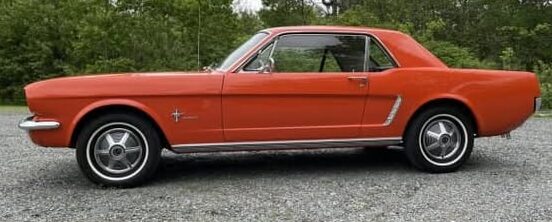
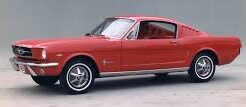
(初代19641/2型)
(ファストバックバージョン)
#『白馬の筋肉化』は如何に成し遂げられたか?
n
n
n
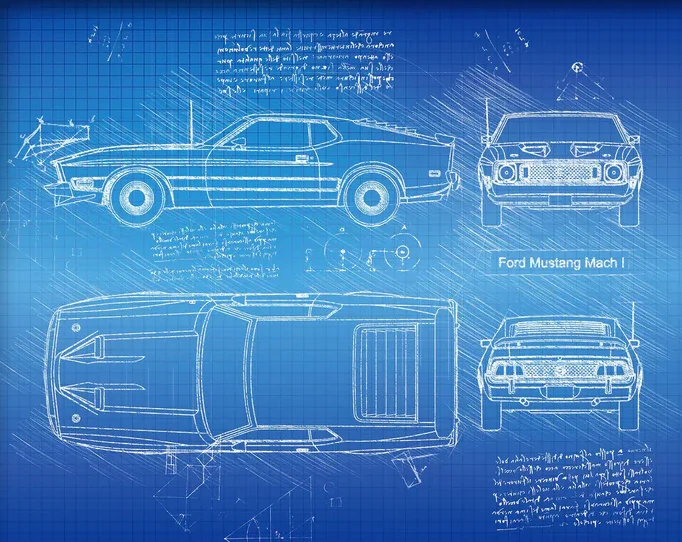
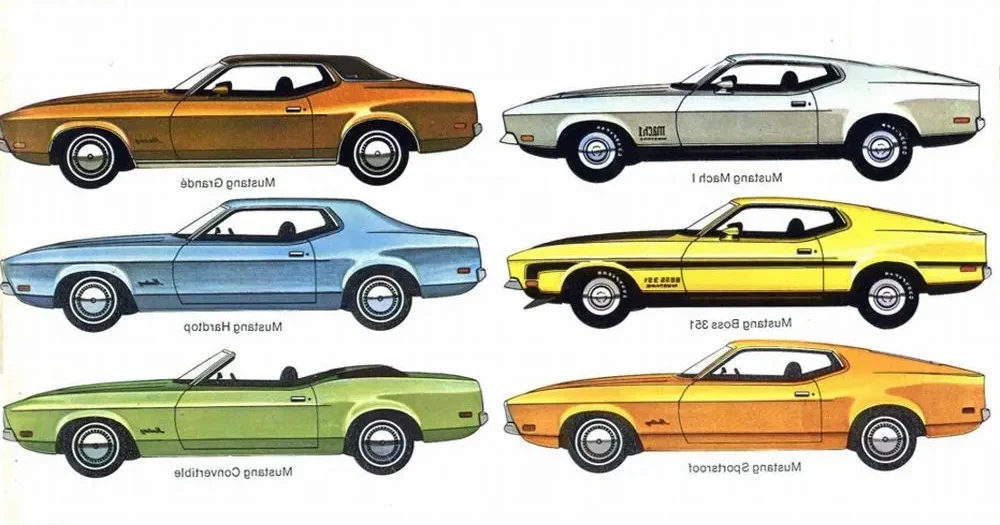
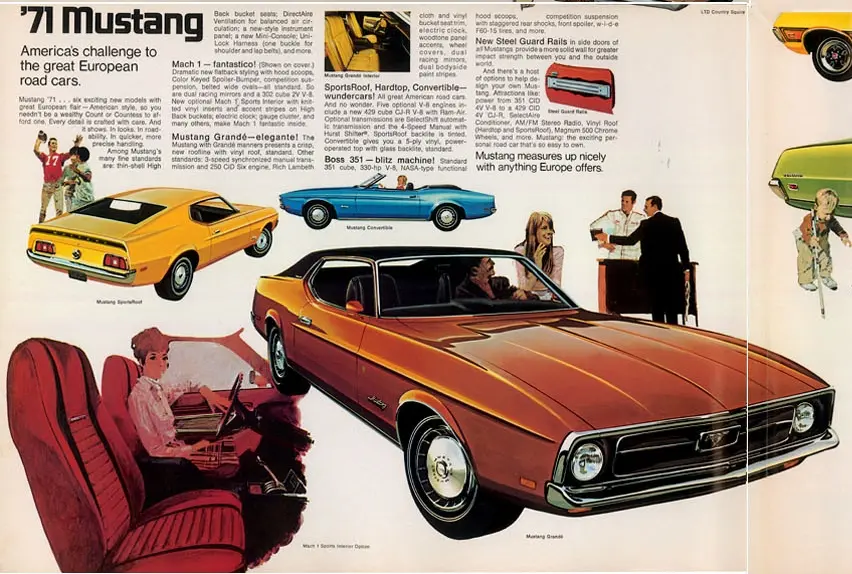
1971年型フォード・マスタング・マッハ1(Mustang Mach 1)は、マスタングの歴史の中で最もボディが大きく、かつ強力なパフォーマンスを誇った「ビッグ・マスタング」時代の象徴的なモデルです。1970年型と比較してボディサイズが拡大され、より地を這うような筋肉質な外観が特徴です。
n
n
n
1971年モデルは大幅なフルモデルチェンジが行われ、歴代の第一世代マスタングの中で最も長く、低く、幅広なボディとなりました。サイズ拡大の詳細: ホイールベースが1インチ、全長が約2.1インチ、全幅が2.4インチ拡大され、より大きく、幅広く、堂々とした佇まいになりました。
m
n
n
n
n
n
n
n
n
n
n
n
n
n
n
n
n
n
N
n
n
n
n
n
n
n
n
n
n
n
n
n
n
N
n
mn
#主要諸元:
- 型式:Cコード (429 CJ – Cobra Jet)
- 総排気量: 7.0リットル SOHCV型8気筒(429 cid 4V V8)
- 最高出力 : 370 hp(コブラ・ジェット)
- 最大トルク:610 Nm (450 lb-ft) / 3,400 rpm
- 駆動方式:FR(フロントエンジン、リアドライブ)
- 定員:4名(2+2)
- 車体形式:2ドア・クーペ
- ホイールベース:2,590 mm
- 全長:4,813 mm (189.5インチ)
- 全幅:1,882 mm (74.1インチ)
- 全高:1,273 mm 〜 1,290 mm (50.1 〜 50.8インチ)
- 車両重量:
1,497 kg 〜 1,654 kg
*外観デザインの特徴:地を這うような筋肉質のアスリート
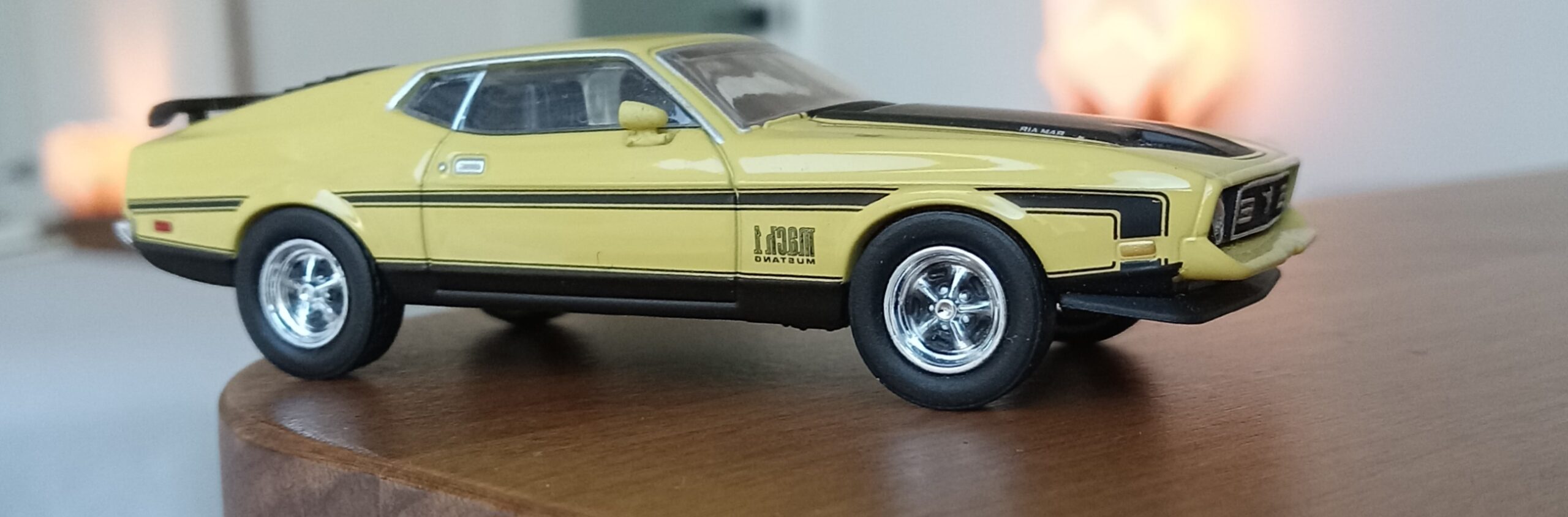
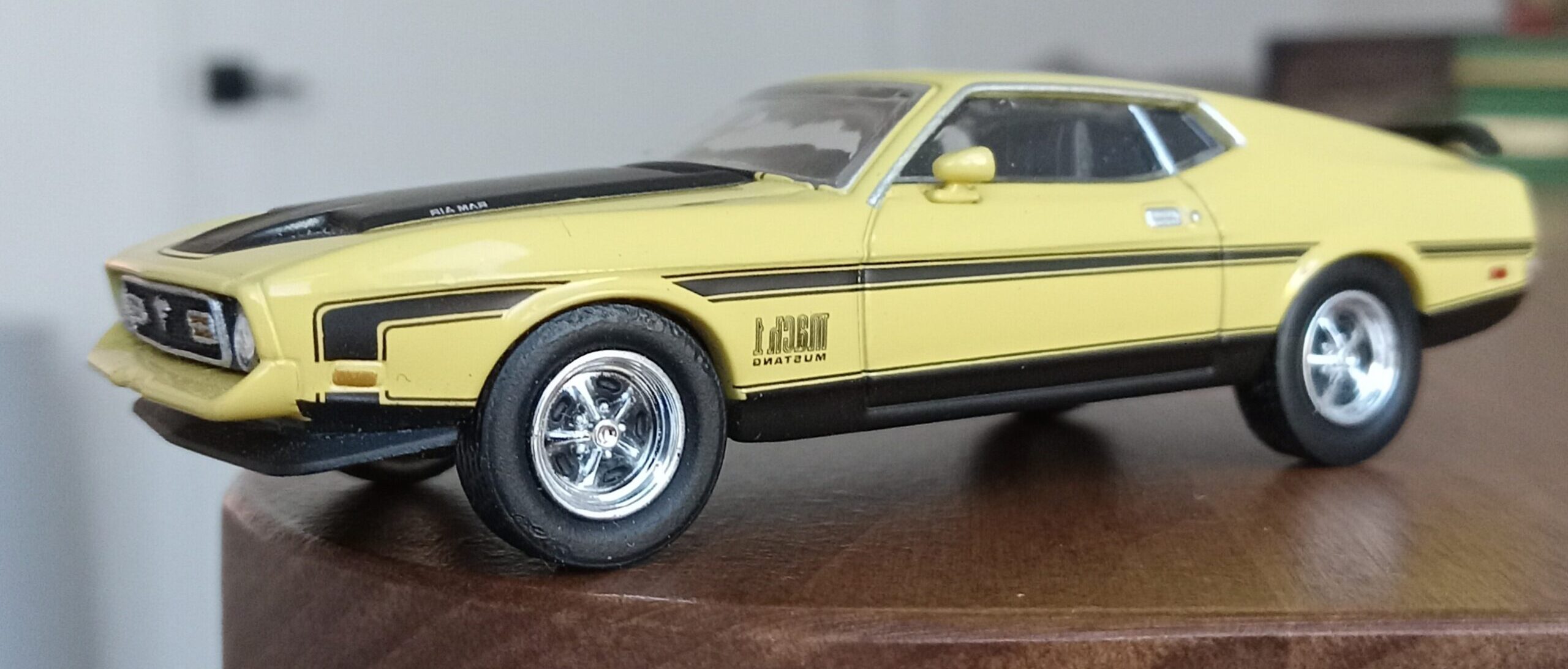
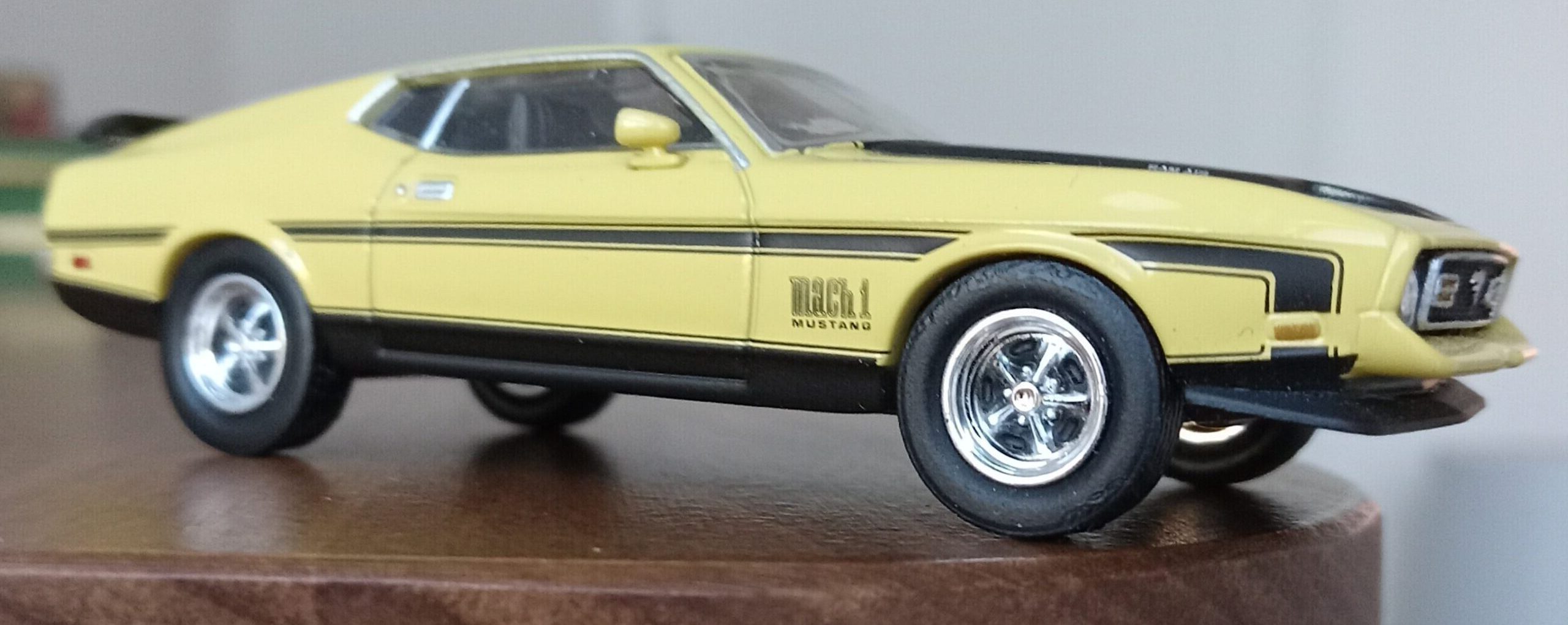
それでは、
1971年型『ムスタング・マッハ1』の外観デザインの特徴について、
以上の5点から考察してみます。
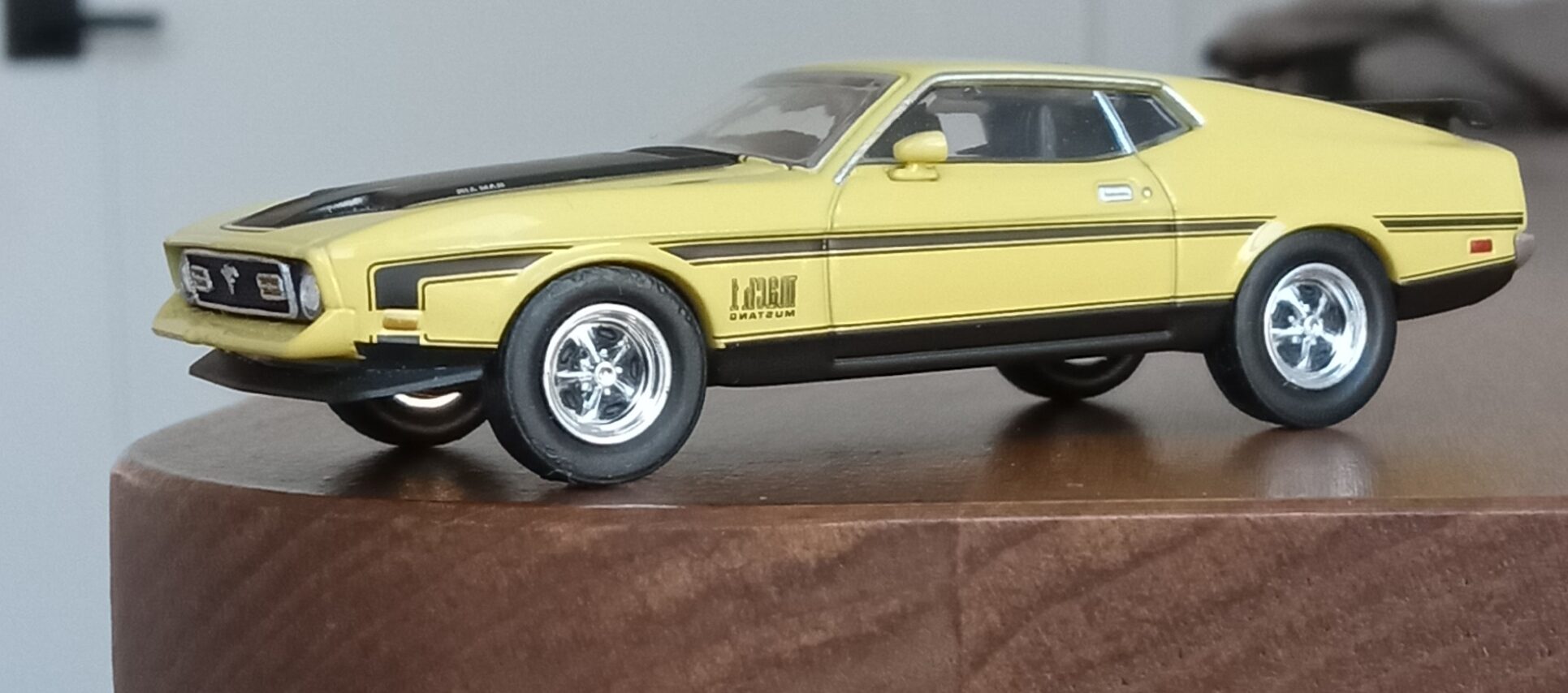
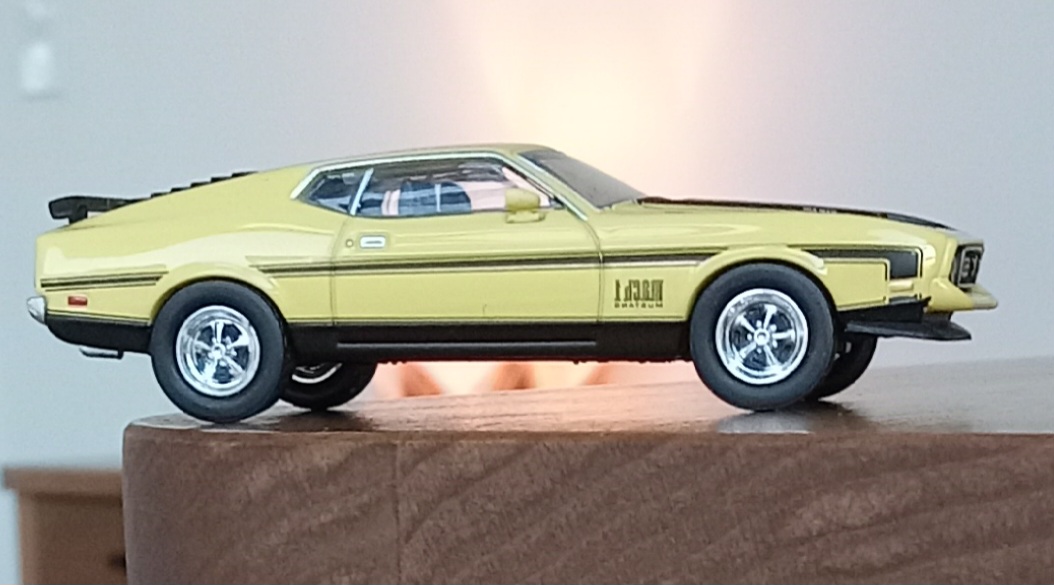
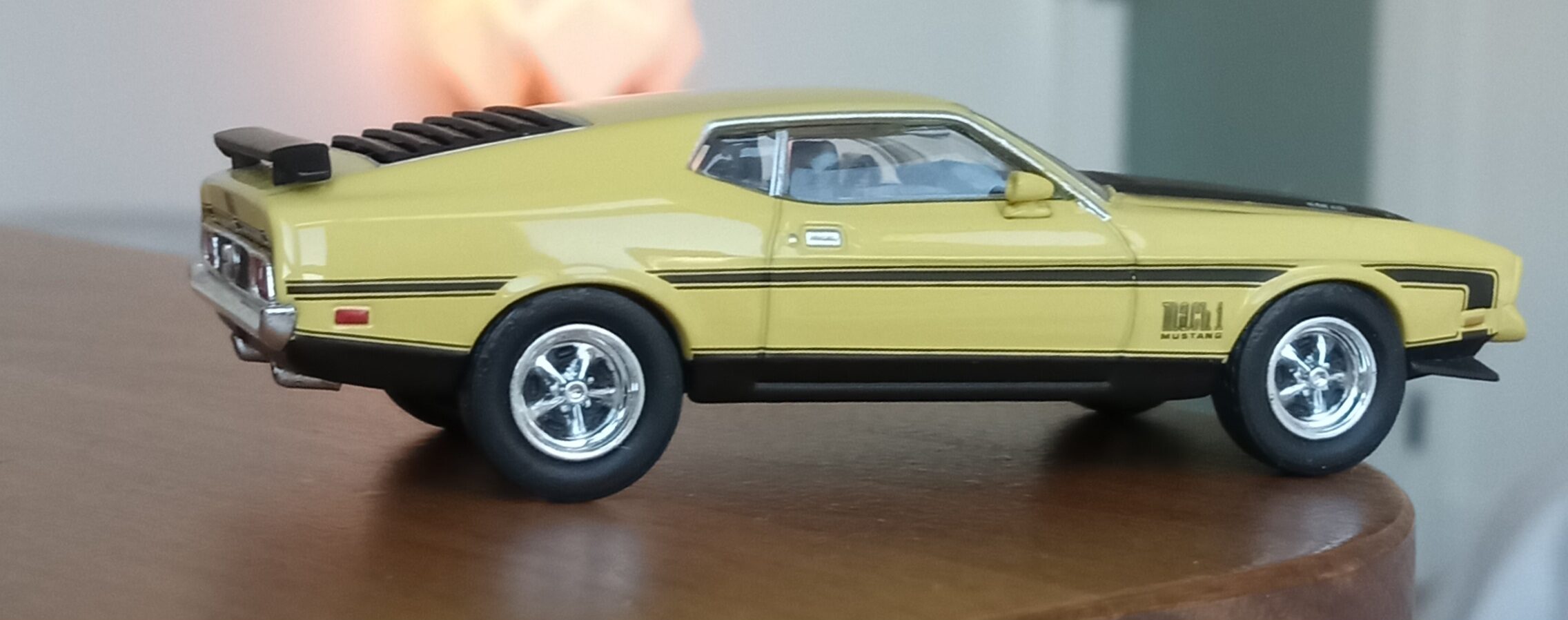
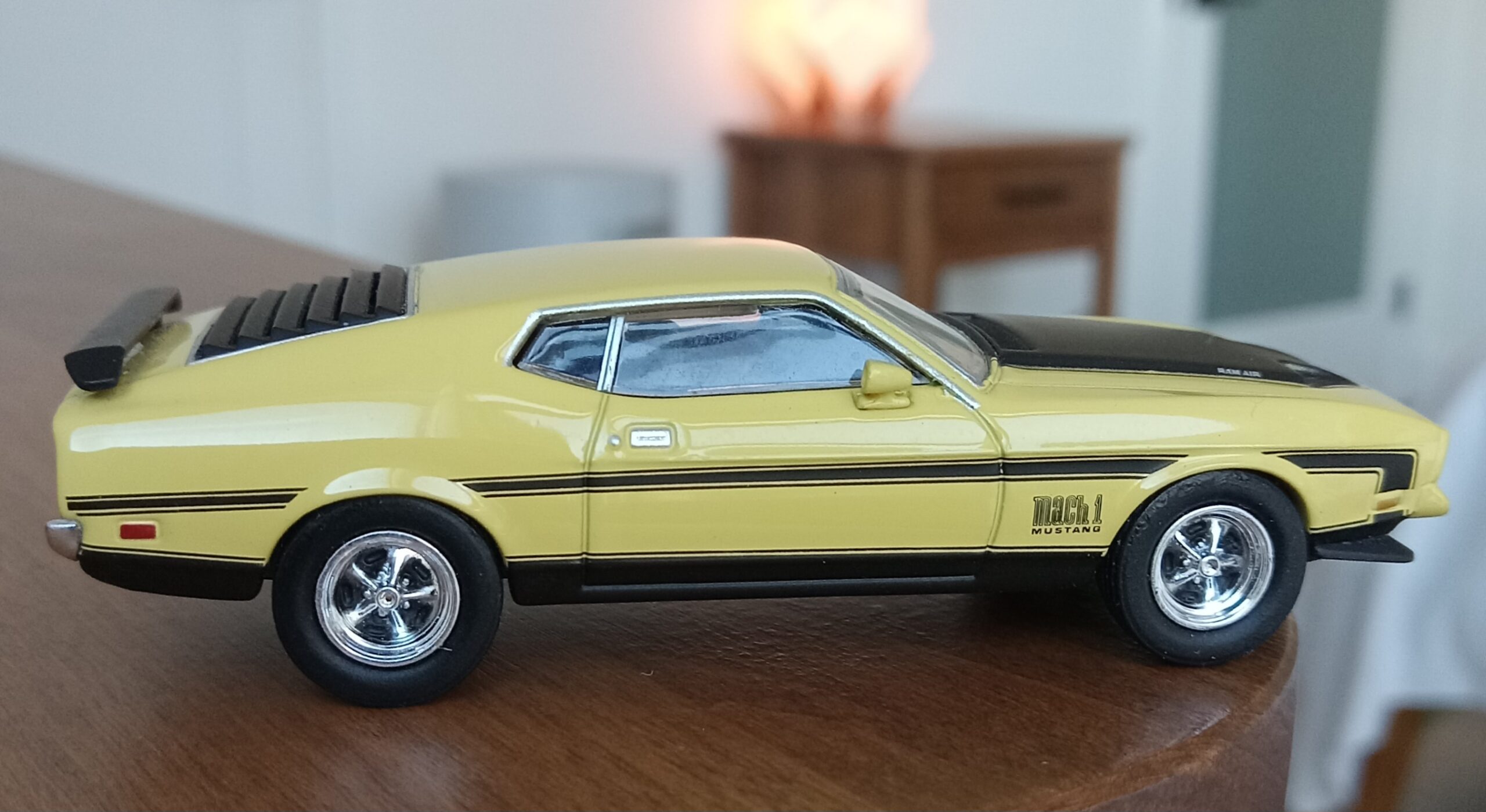
1:全長、全幅、全高すべて絶妙にファインチューニングされた、伸びやかで大胆なファストバック・デザインの完成度
2:あらゆる手段を巧妙に使ってその長大・巨大さを演出したデザイン陣の手腕
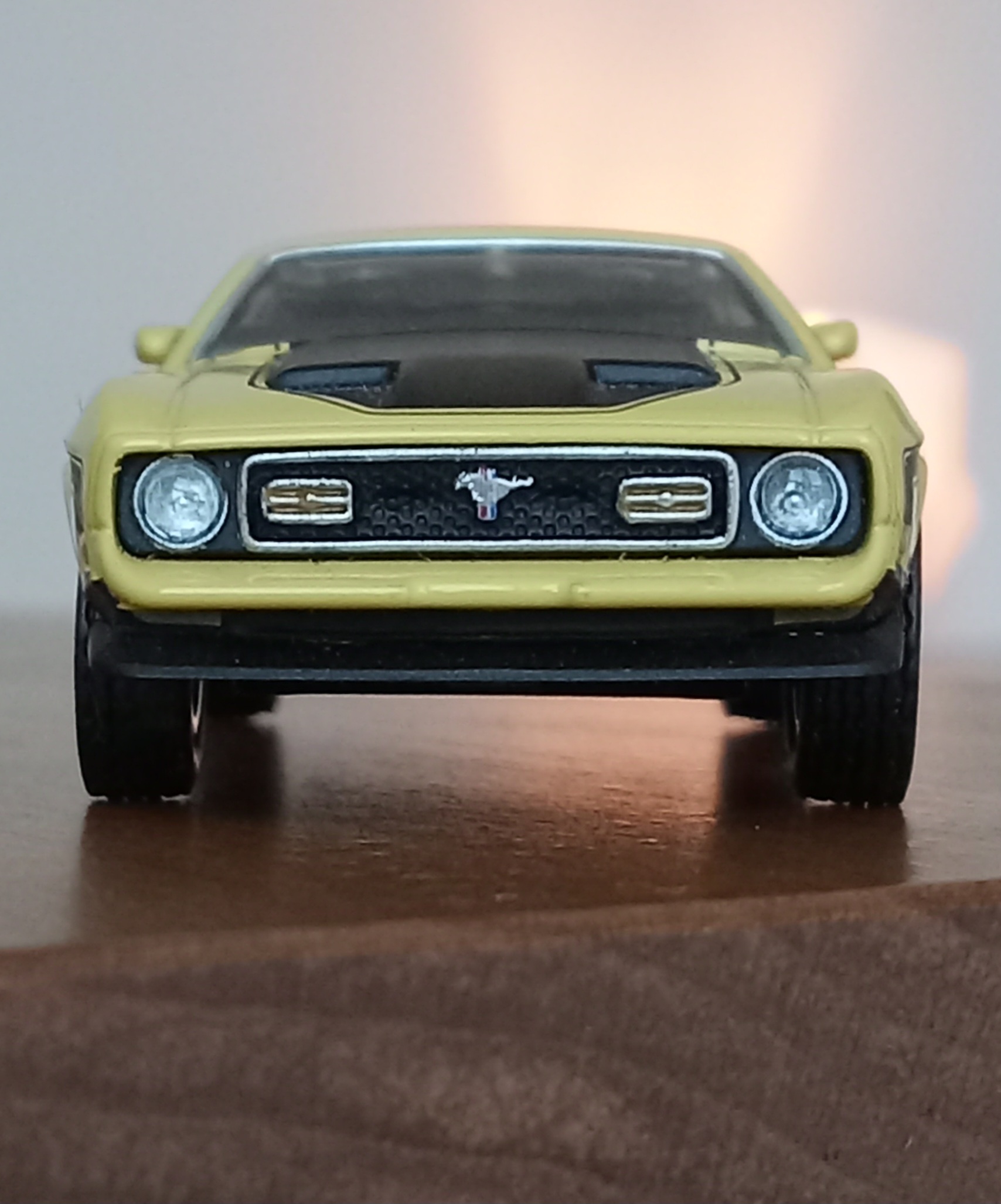
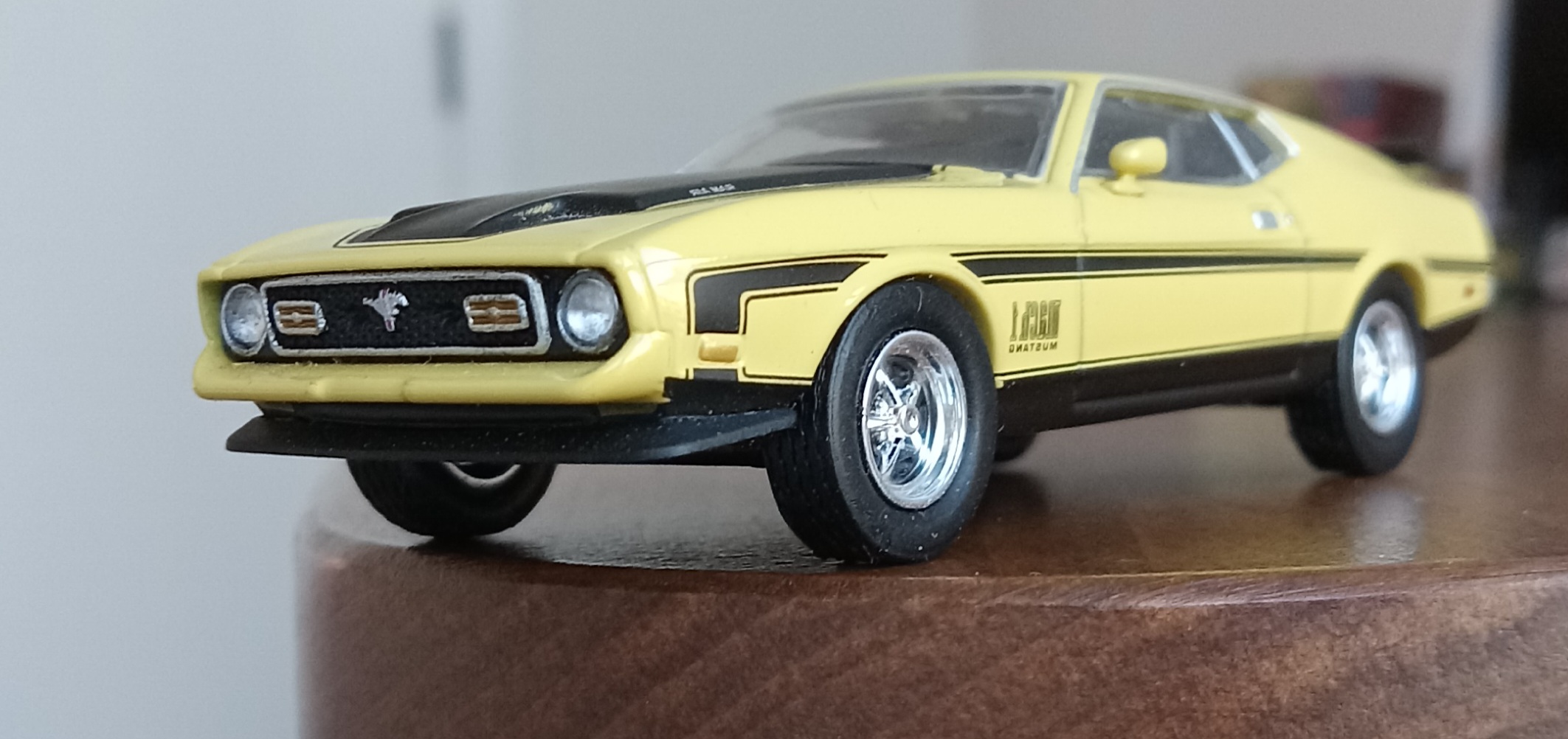
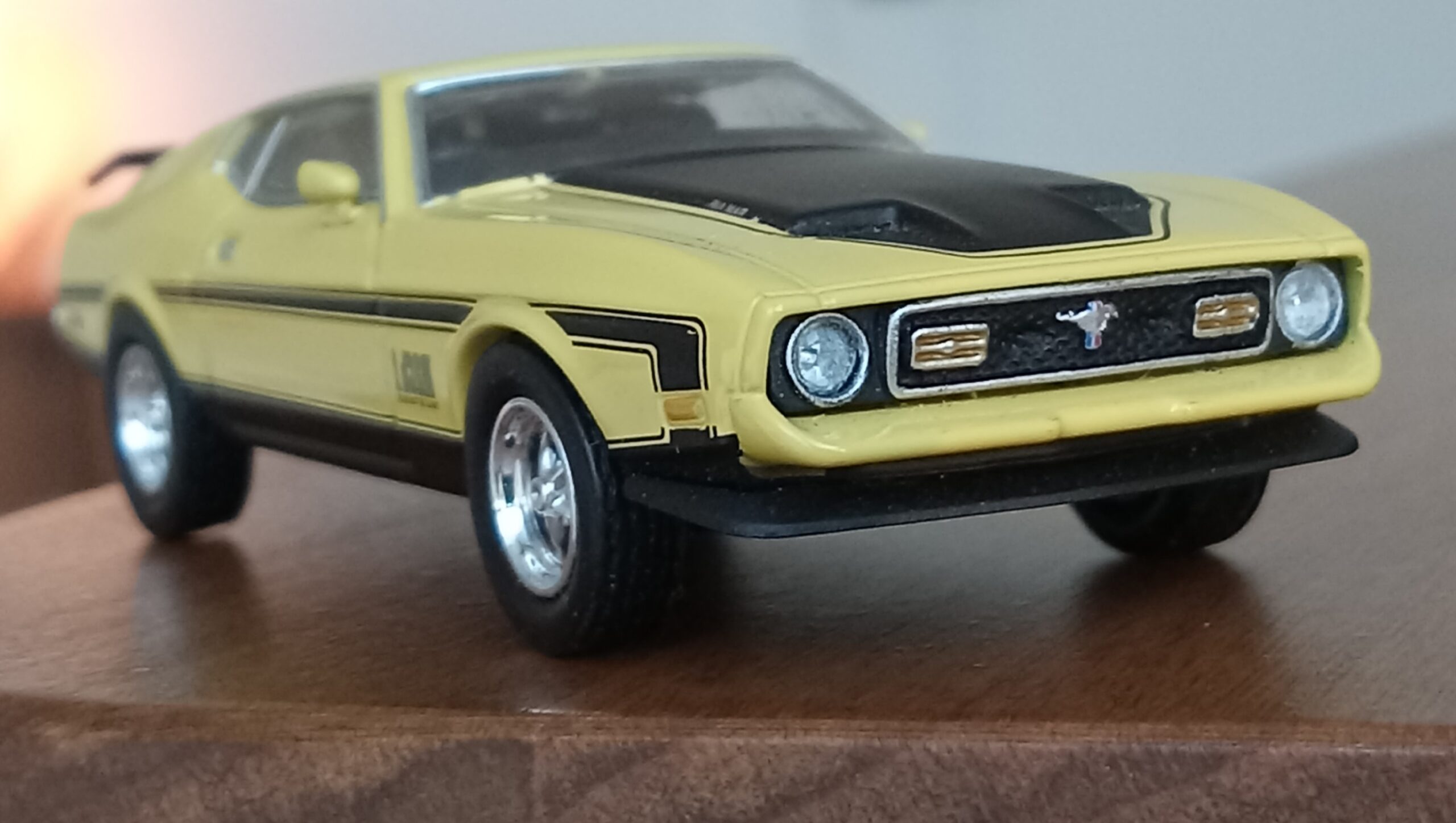
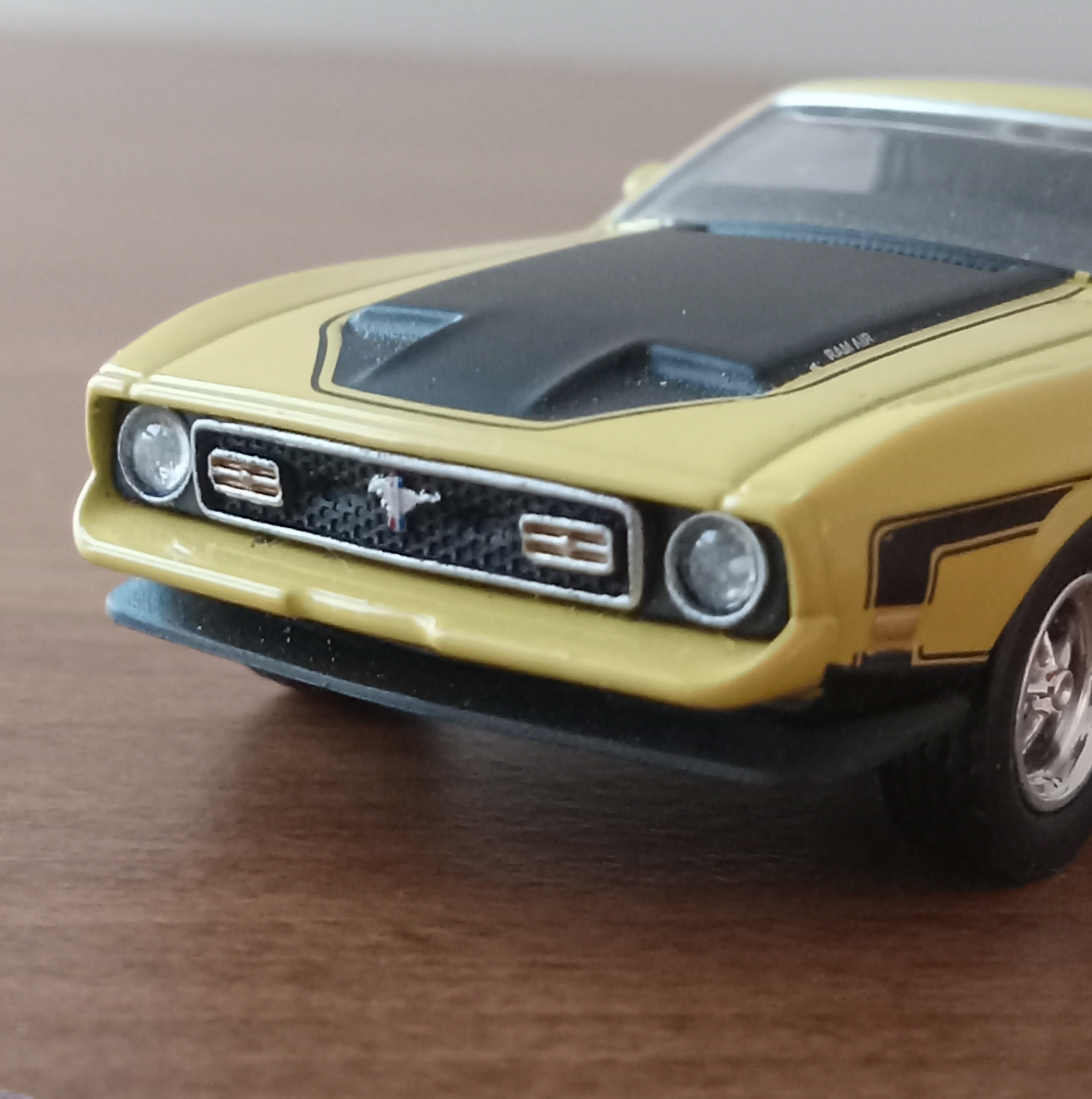
3:フロントフェイスと、バンパー回りの鋭い『猛禽類の顔』の演出
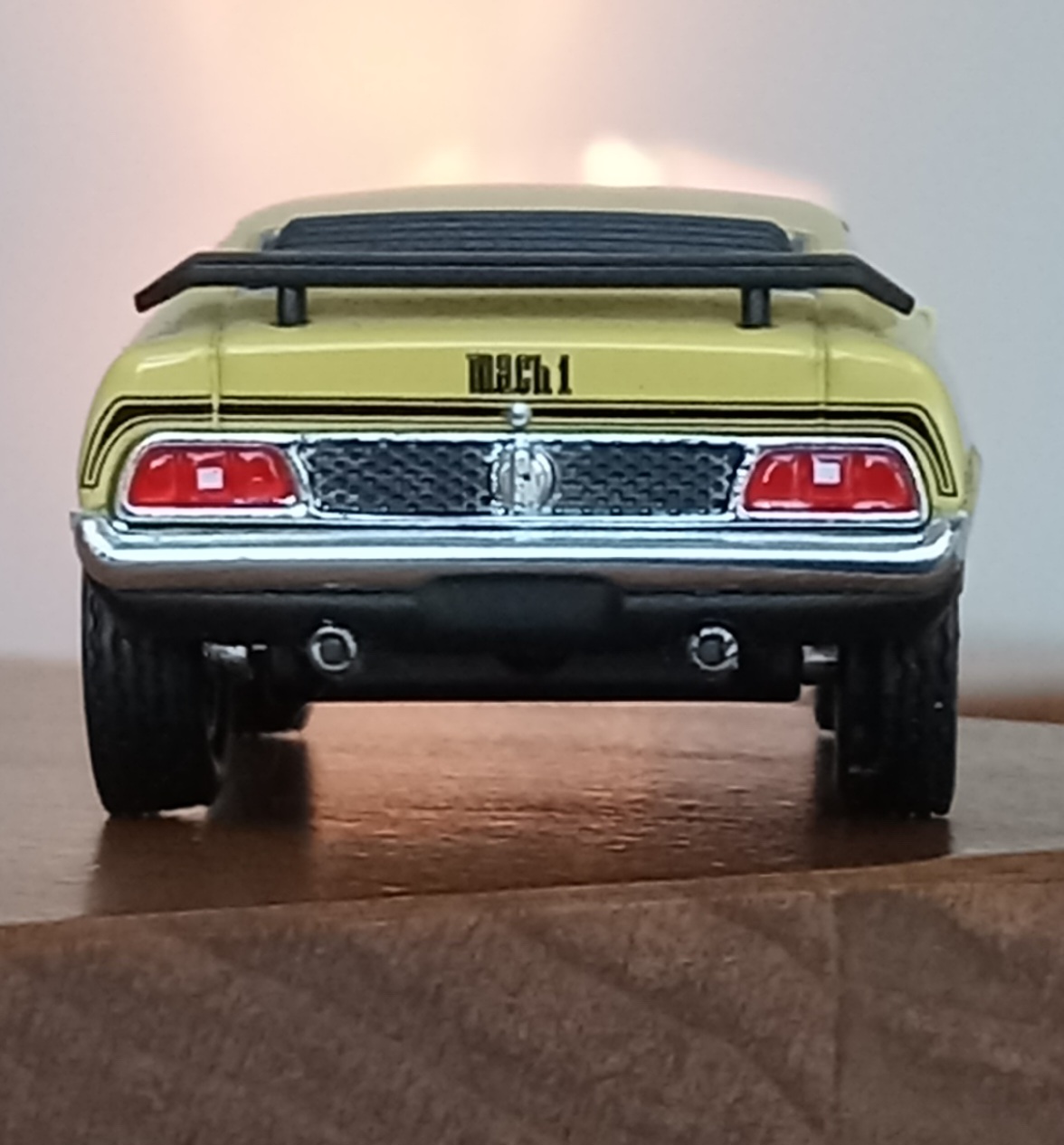
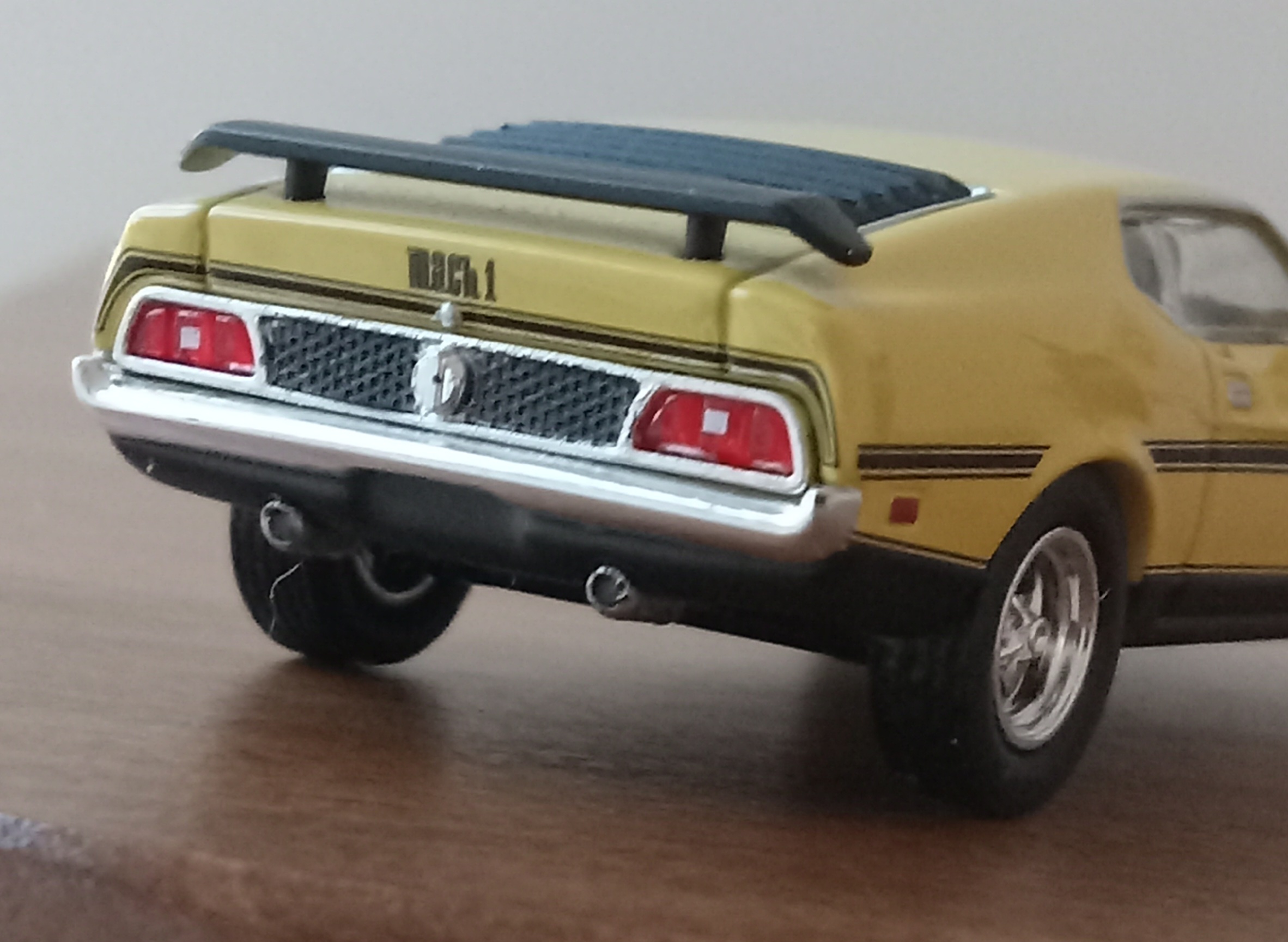
4:スピード感と鋭い方向性をたたき出す、ボディーサイドストライプ、フロント・スポイラー、ボンネットのスクープと黒塗装、リアルーバー&リアウイングのデザインの秀逸さ
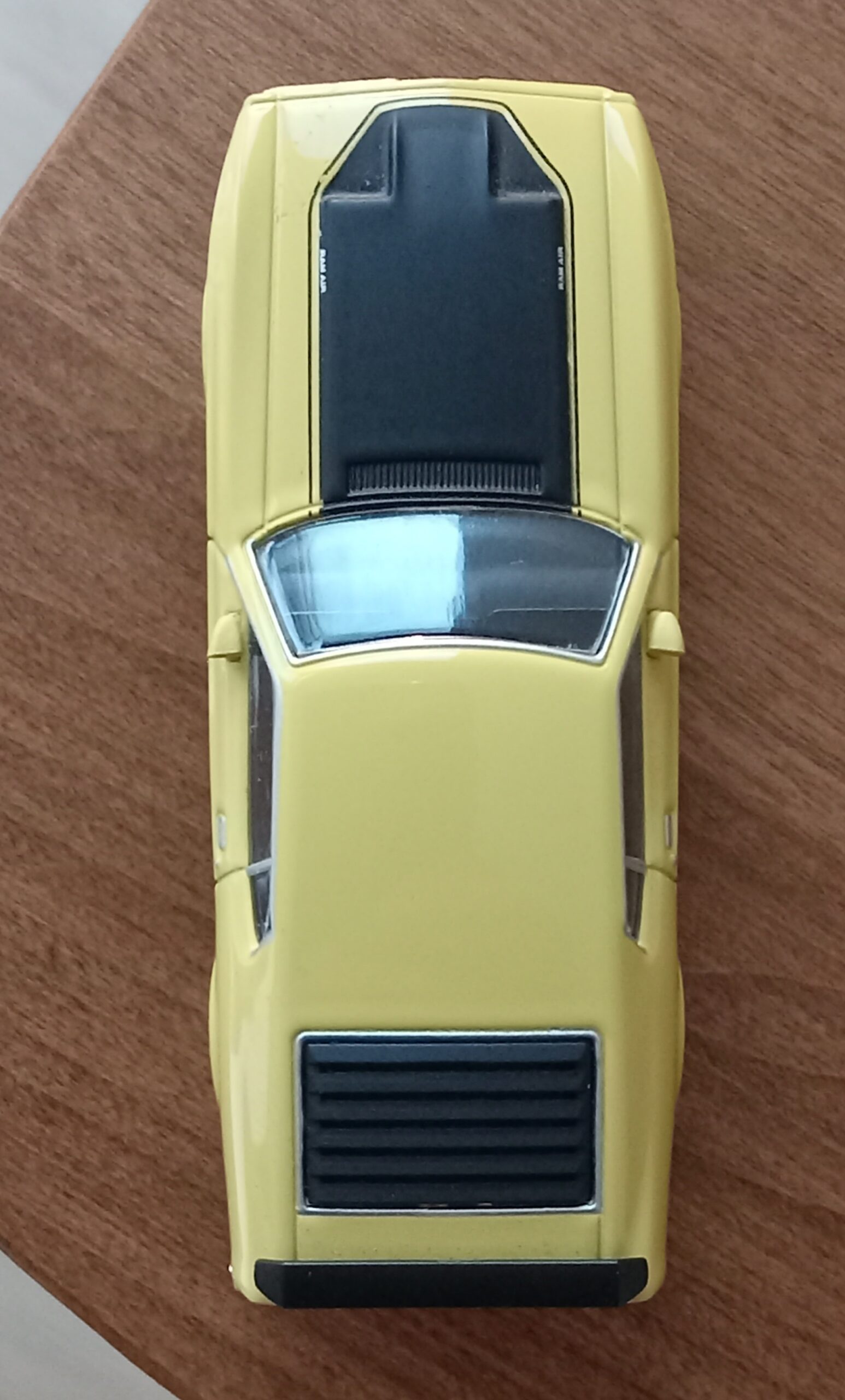
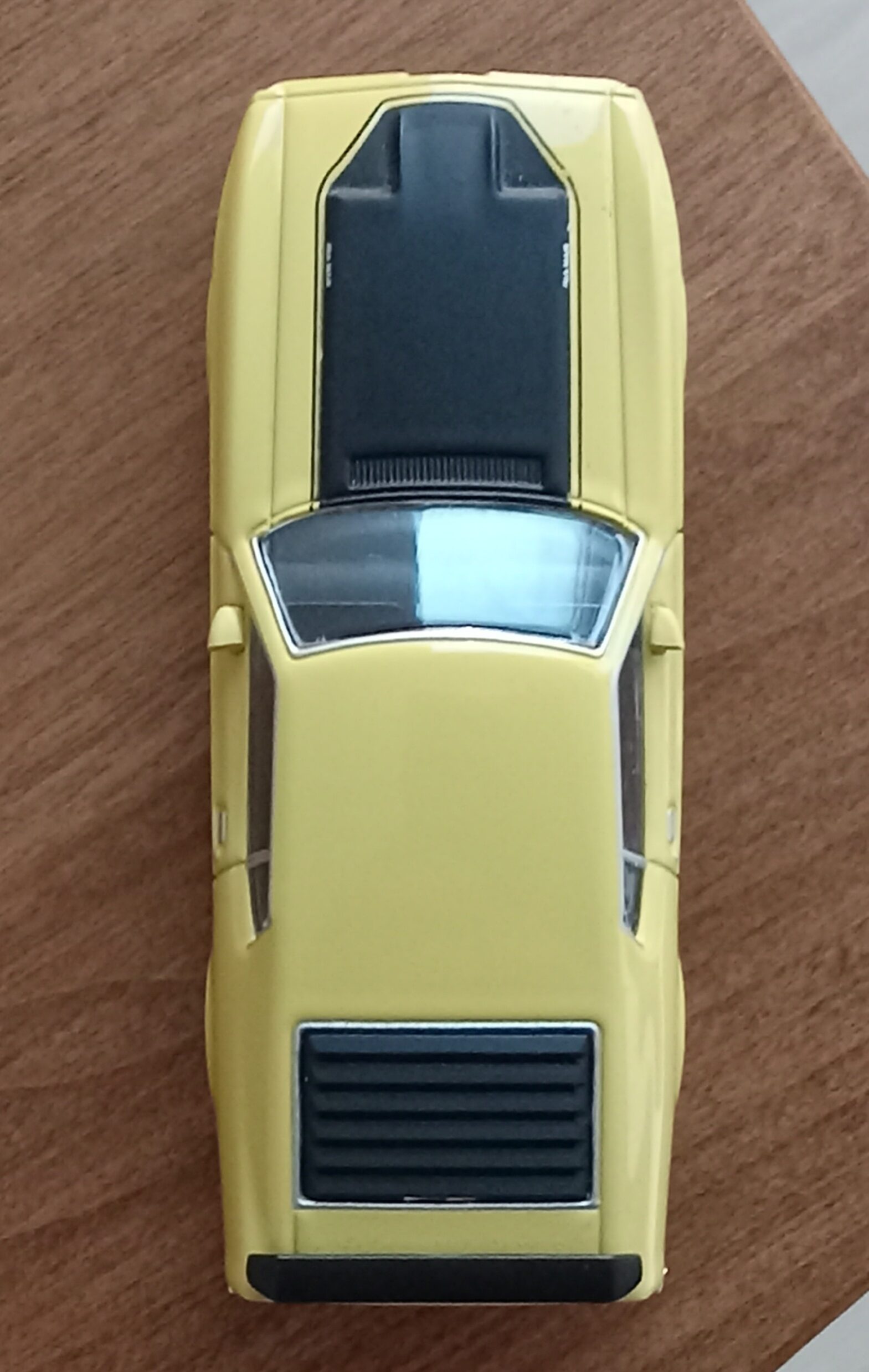
5:真上から見た時顕著な、強靭なボディーの横断面造形の粘り強い造形と、遊び心の同居
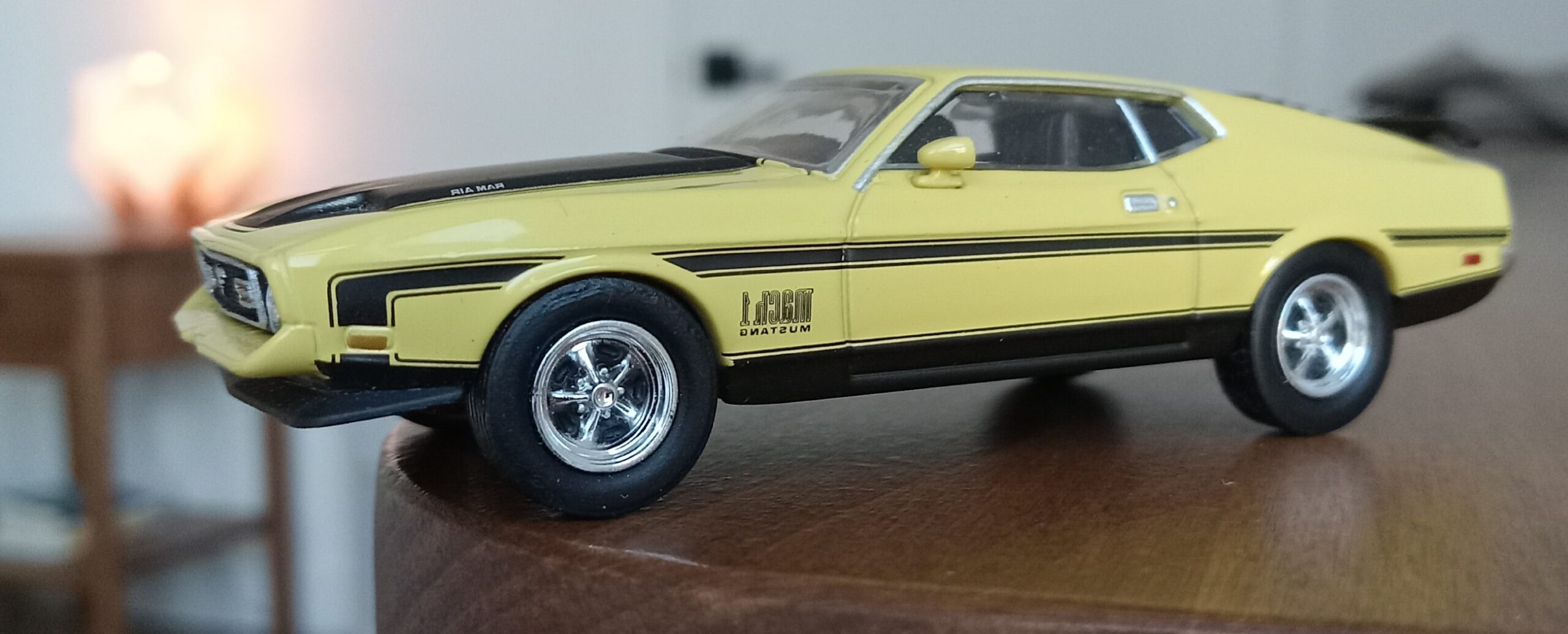
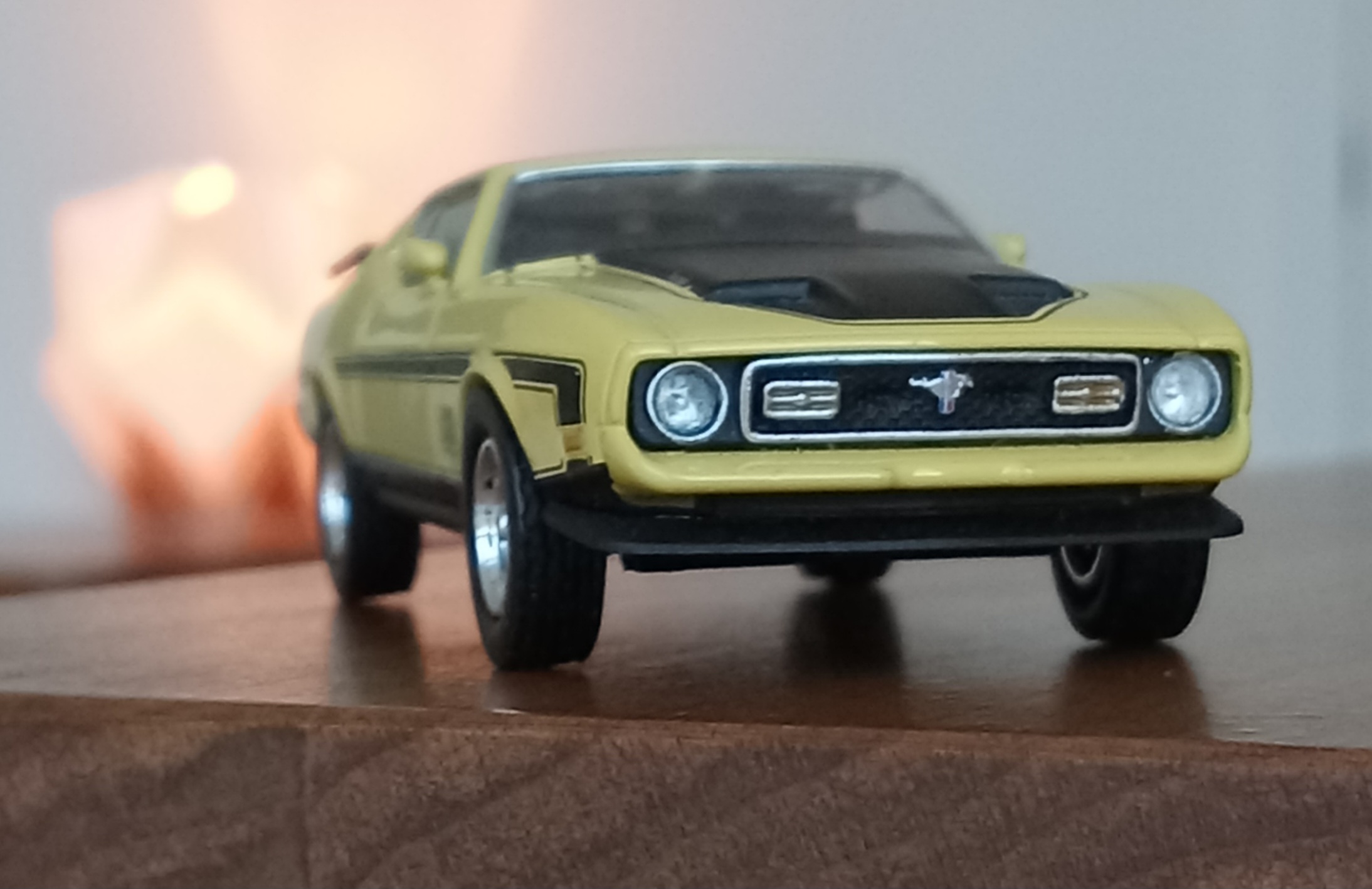
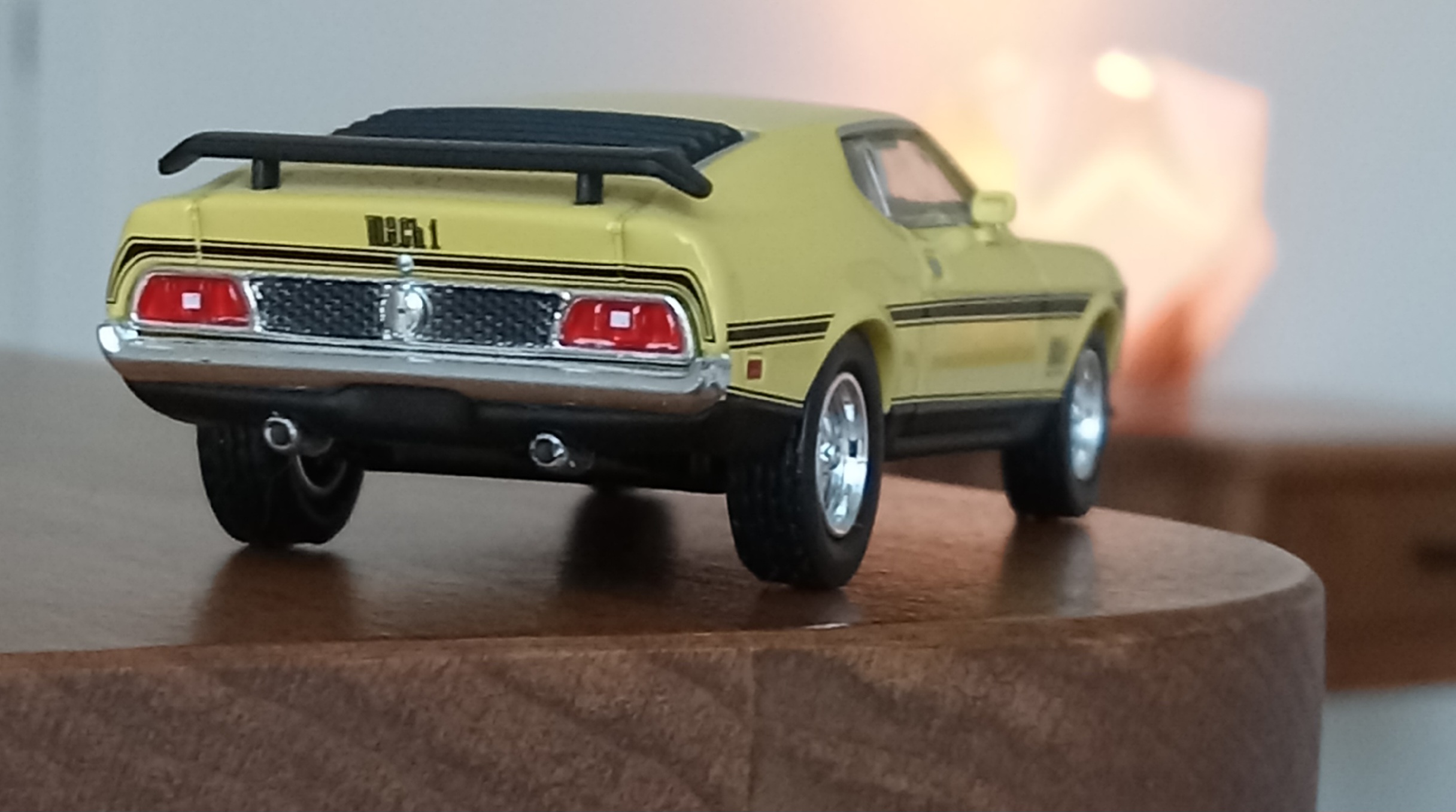
1:全長、全幅、全高すべて絶妙にファインチューニングされた、伸びやかで大胆なファストバック・デザインの完成度
(自由でおおらか、且つ研ぎ澄まされた「きれそうなエッジ感」がこの時代のアメ車を代表しています)
ーーーー>ファイヤーバード・トランザムの「柔」に対するマスタングの『硬』
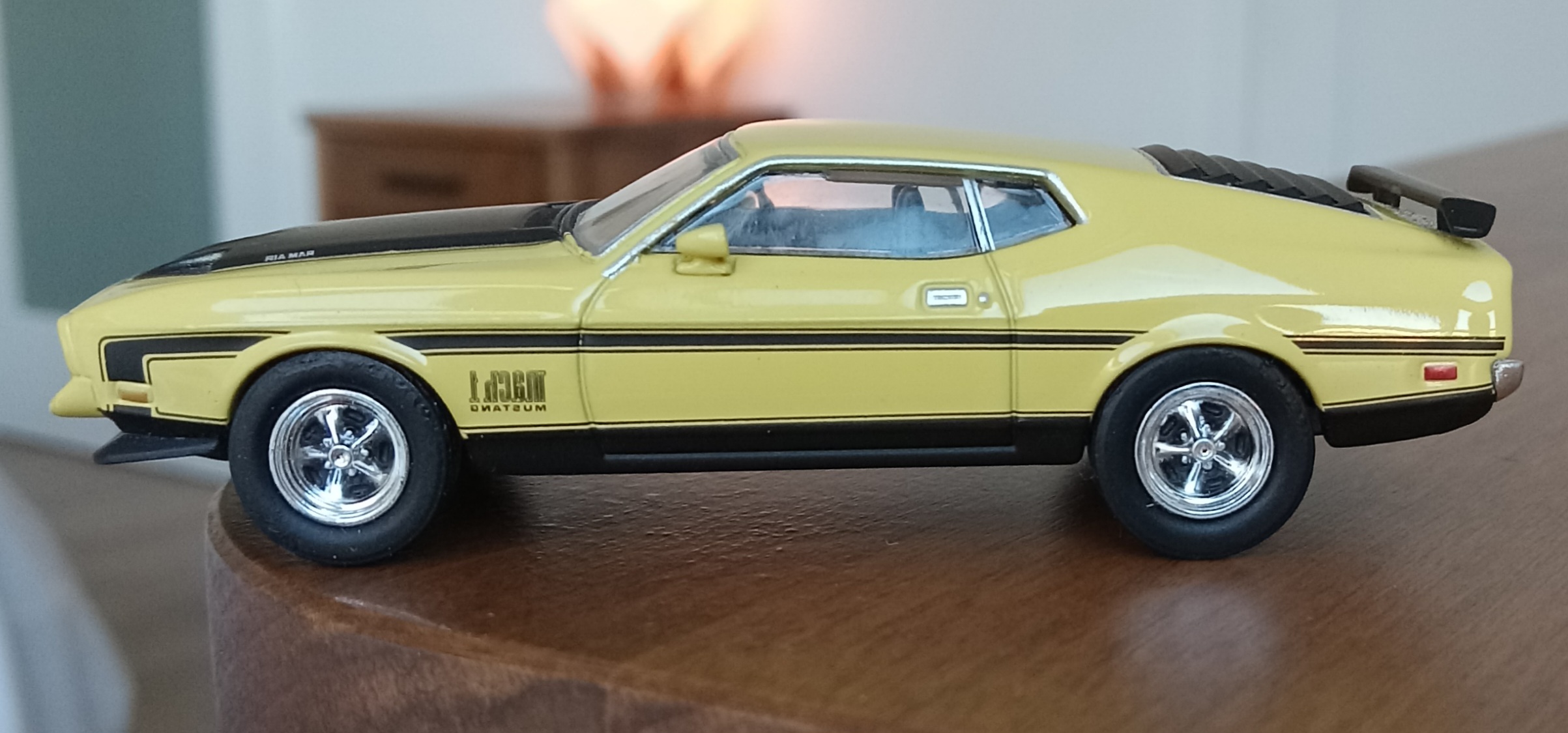
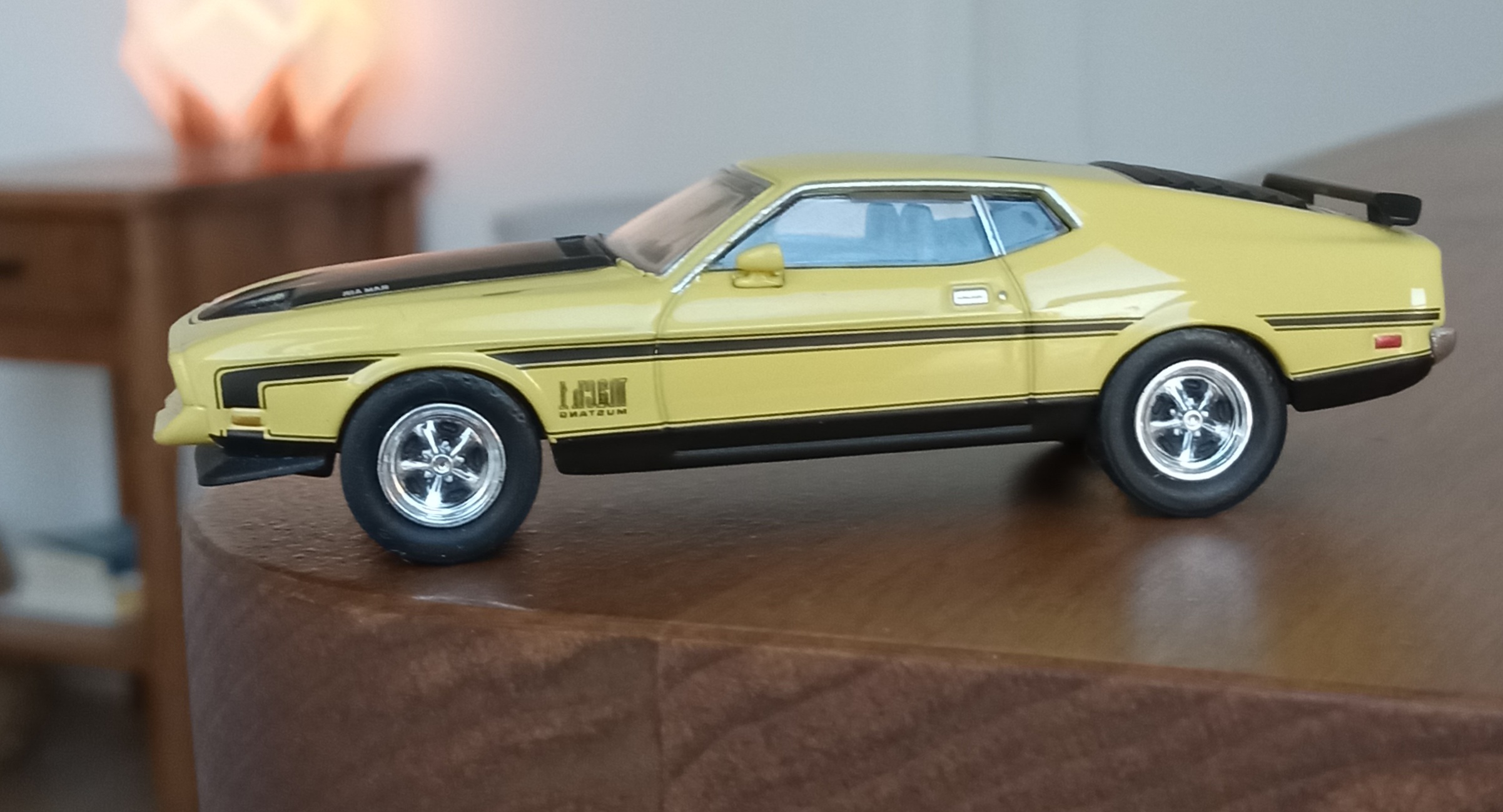
2:あらゆる手段を巧妙に使ってその長大・巨大さを演出したデザイン陣の手腕
(全高を低く、幅を広く、あえて14インチタイヤを採用して、ディズニーランドの建築群のように、目の錯覚を利用して、5メートル越えの全長に見えるように設計されてます。)
ーーーーー>実際の全長は4m80cmで、当時のカマロや、クーガーと変わりません。
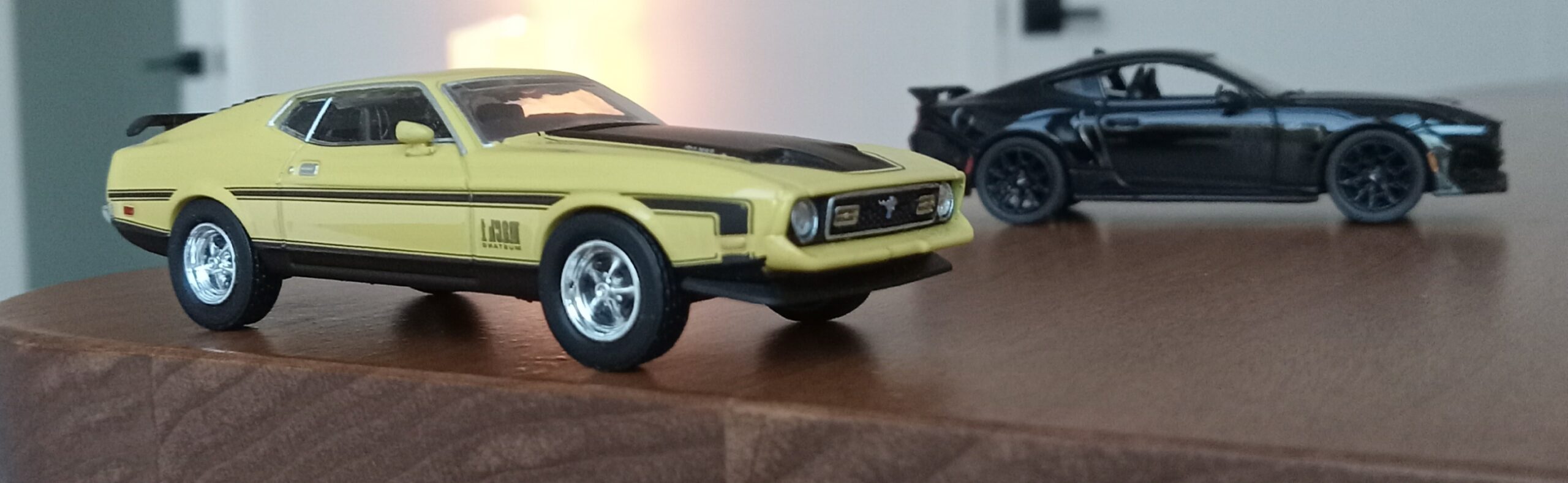
3:フロントフェイスと、バンパー回りの鋭い『猛禽類の顔』の演出
ーーーーー>マッハ1専用の、大胆極まりない「板状」のフロント・エアダムも良い仕事をしています。
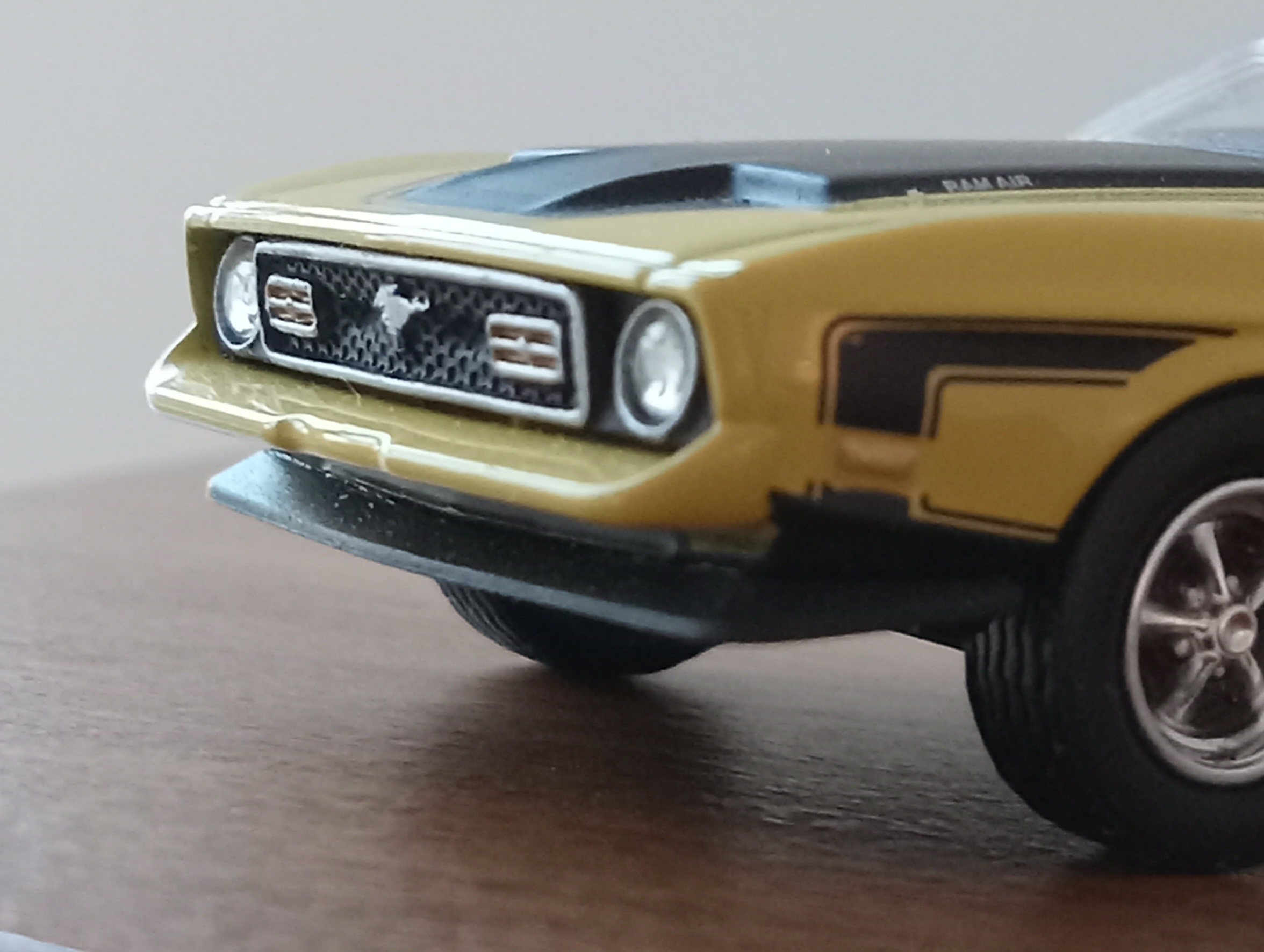
4:スピード感と鋭い方向性をたたき出す、ボディーサイドストライプ、フロント・スポイラー、ボンネットのスクープと黒塗装、リアルーバー&リアウイングのデザインの秀逸さ
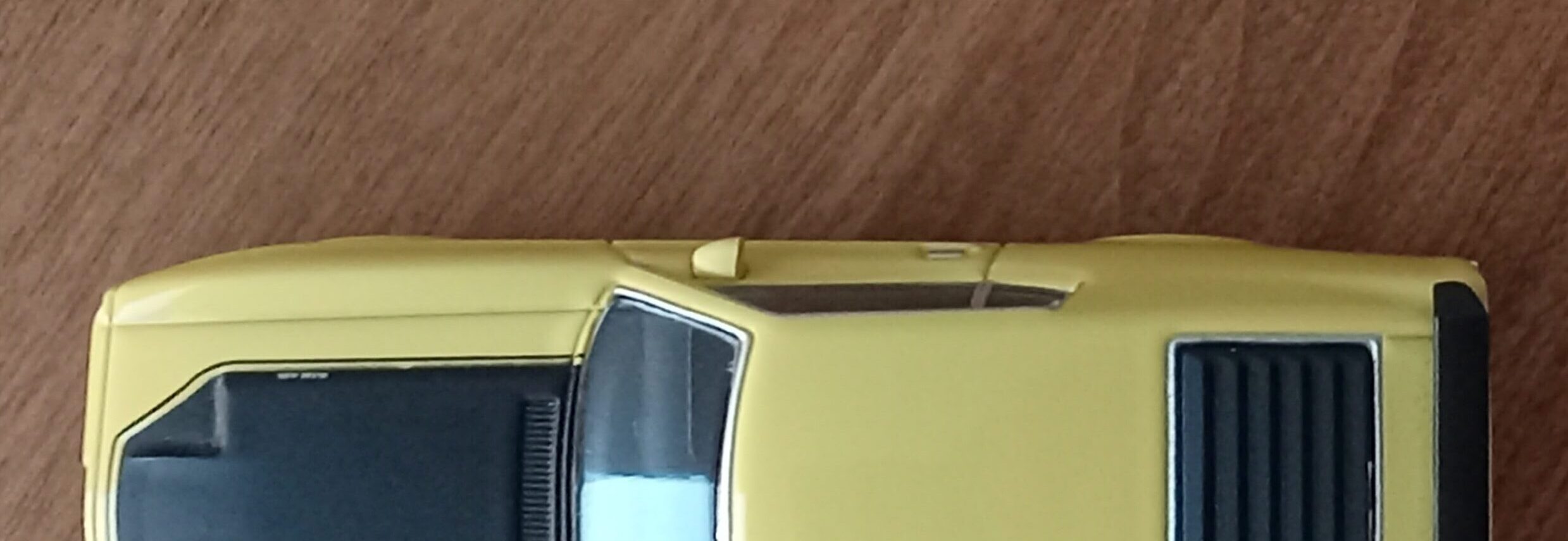
5:真上から見た時顕著な、強靭なボディーの横断面造形の粘り強い造形と、遊び心の同居
ーーーーーー>190cmの全幅を生かし切った、ボリューミーなボディーサイドの『スイープ感」がえも言えないほど感動的です。
続いては、
私の個人的な【マッハ1】体験です。
*『私』と【ムスタング・マッハ1】:地響きとともにやって来た怪物?
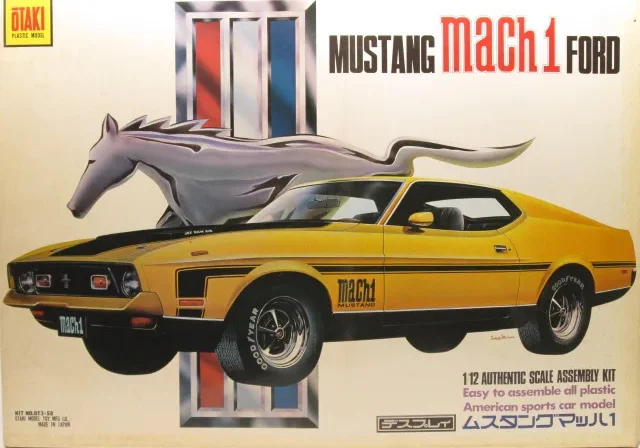
(オオタキ社製、1/12 1971年型 ムスタング・マッハ1 組み立てキット)
『ドドドドドドドドド、、、
(V8エンジンの轟です) DODODO,,,』
両親の友人、
『Tさん』の自宅前に停まった巨大な真っ白で、
地を這うような「アメ車」を目撃した記憶は忘れることはできません。
【忘却不可能物件】デス!!
トニカクその地響きのようなv8エンジンの轟とともにそこに横たわった、
*真っ白な『カクカク』した物体、
*まっすぐに地を這うように6メートル(そんなはずはありませんが)はあろうかというボディー、
*後ろにまっすぐ流れるルーフラインを持つ猛獣、
を恐る恐る見た記憶はトラウマとなり、
現在の「巨大なもの好き」な自分につながっています。
その直後、
おもちゃ屋で発見して即買いして、
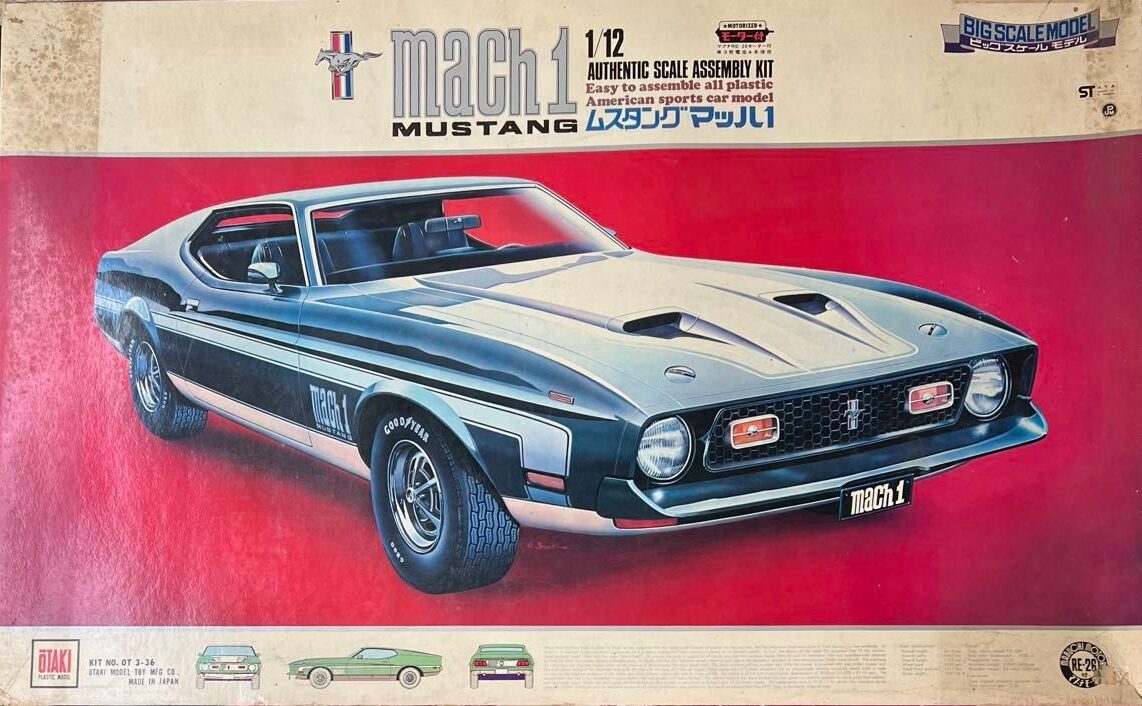
父と一緒に組み立てたのが、オオタキから出ていた1/12の大型プラモデルです。
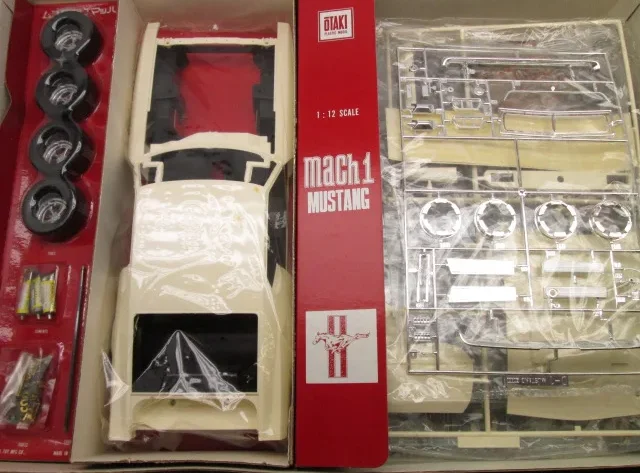
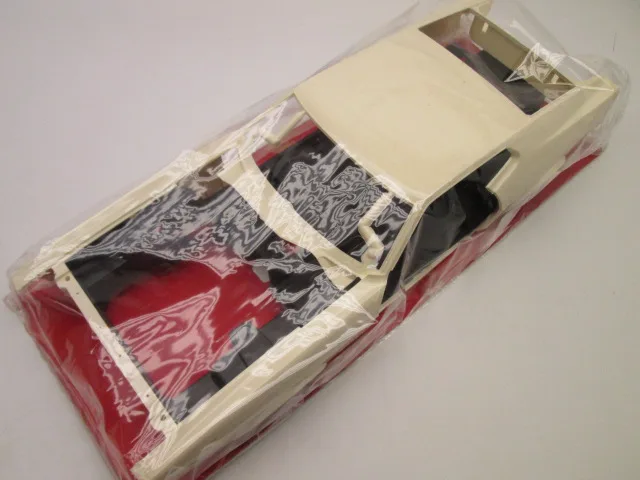
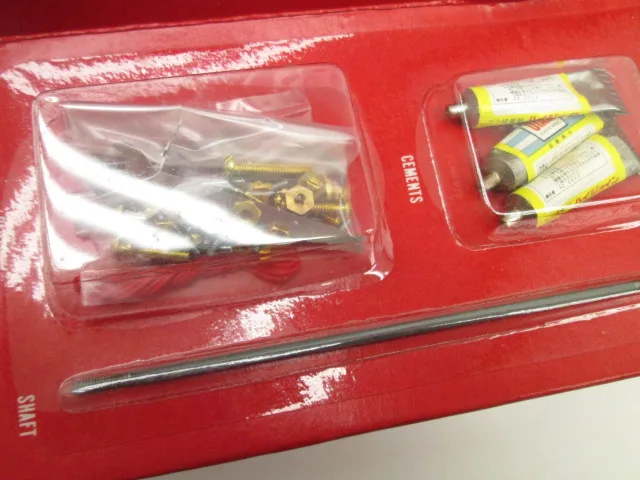
3本もつていたセメダインの接着剤でも全然足りないほどのパーツとの格闘は、
親子で手分けして土・日2日間で一応の完成を見ましたが、、、
肝心のドライブ・シャフト部分と後輪をつなぐ
ユニバーサル・ジョイント部分に接着剤をつけすぎ、
どうしても後輪まで動力が伝わらない、
故障物件となってしまいました。泣
(この部分は、その後再び父と一緒に制作した、オオタキ製1/12ファイヤーバード・トランザムでは、慎重に接着することで何とかタイヤの回転を再現できました!!)
こちらのキット、非常に息の長いモノでして、現在でも童友社さんから時々再版されているようです。
---→パッケージ・デザインだけでも5-6種類あるみたいですね。
特徴としましては、
*真っ白な直線基調の美しいボディー造形を8割必要最低限、再現
*ボンネット、ドア、トランクが開閉式で、エンジンや内装を見ることが出来ます。
*精密なエンジンの中には、モータが仕込まれてドライブシャフトとを介して後輪を回し走行が可能なはずでした、、、、、実際には負荷が大き過ぎて動きませんでしたが。(笑)
とにかくこの1/12シリーズは私にとっての大好物になり、
その後も、
*ポンティアック ファイヤー・バード トランザム
*ランボルギーニ・カウンタック LP500S
等を組んだ記憶があります。
(どれも走行はできませんでしたが、、、、)
こんな感じで、
71年型マスタング・マッハ1にはその後の自身の立体好きのきっかけをもらい、
非常に大事な自動車経験となりました。
では、続きましては、
三題噺の時間です!
*三題噺:忘却不可能・超巨大・セメンダイン


エ~一席おつきあいのほどを、
毎度ばかばかしいところをお聞きいただきますが、、、
今回会場からいただいたお題はこんな感じで、
*忘却不可能、
*超巨大、
*セメンダイン、
ということで頑張ってみたいと思います、、、、
セメ「ン」ダインと、このー、間に
「ン」の文字が入っているところに、昭和の時代を感じますが、(笑)
『六つ子の魂、百までも』なんてことを言いまして、
昔からこの—、子供の時に見たものはいつまでも、大げさに記憶しているもので、、
私の経験からも、
子供のころ一緒に寝起きしていた飼い猫の「たま」なんてのは、
大きくて、大きくて、現在でいえばライオン・クラスの印象で、
其れこそ、よく引っかかれたりして、
猛獣に噛まれた、状態でした。
ウルトラマンに出てきた怪獣なんかも、
作り物と、半分知って言いながらも、
なるべく知らないふりをして、その大きな体躯に恐怖した物です。
そんな私の
忘却不可能案件の代表が、
フォードマスタング・マッハ1
との出会いでした、
*とにかく超巨大で、
*後にも先にもあんなに『まっすぐに』かっこよく、
*『恐ろしく』大きな車を見た記憶はありません。
確かにそれ以前にも、ロールスロイスやキャデラック、リンカーンなどの大型の4ドアセダンは何度も路上で見かけたはずですが、あのムスタング・マッハ1ほどの
地を這うような長さや幅広さには
お目にかかった記憶がありません。
やはりそんな、私にトラウマ級の印象を植え付けた車:ムスタング・マッハ1の裏側には、類まれな名車に恥じないような、
ーーーーー>製作者たちの出生への努力が隠されていました。
*60年代後半から70年代にかけてのフォードデザインスタジオの【自動車を大きく見せるテクニック】に磨きがかかったころ合いで、
*比較的小さくおとなしかったムスタングに、
*折からの競合他社とのパワーウオーズ真っ盛りの時代に、
フォードの専売特許:【ポニー・カー】をエンジン度外観でパワーアップして、
ーーーーーー>クライスラーの得意とする、【マッスルカー】路線に参戦するため、
伸びやかでクレージーなほどに極端な性格付けは必須事項で、
折からのアメリカ空軍やNASAでの超音速実験機にあやかった
【マッハ1】という称号を
あたえられた
我らがムスタングの登場と相成りました!
(ここまで息をつかず、一息でもう一度言えますか?)
私の中で、
この【マッハ1】と相棒になっている、同じくこの時代的なアイコン・アイテム
【セメンダイン】はその匂いとともに、
忘れ得ぬ思い出となっております。
まさに忘却不可能案件です。
今年62歳を迎える私としましては、
お恥ずかしながら、近頃増えつつあります、
忘却可能案件の多さに、
苦笑いするしかございません、、、、
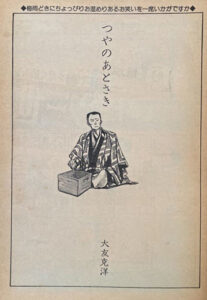
御後がよろしいようで、、、
ペンペン
*その他、私好みの『マッスルカー』達、、、
1968年頃から、72年にかけてのアメリカのマッスルカーウオーズは
とんでもない盛り上がりを見せていました、
個人的には、
バンダイが翻訳していた、アメリカモノグラム社製の、プラモデルの設計図に入っていた、マッスルカーのエンジン解説部分に乗っていたエンジンの写真の「おどろおどろしさ」に心躍らせた記憶があります。
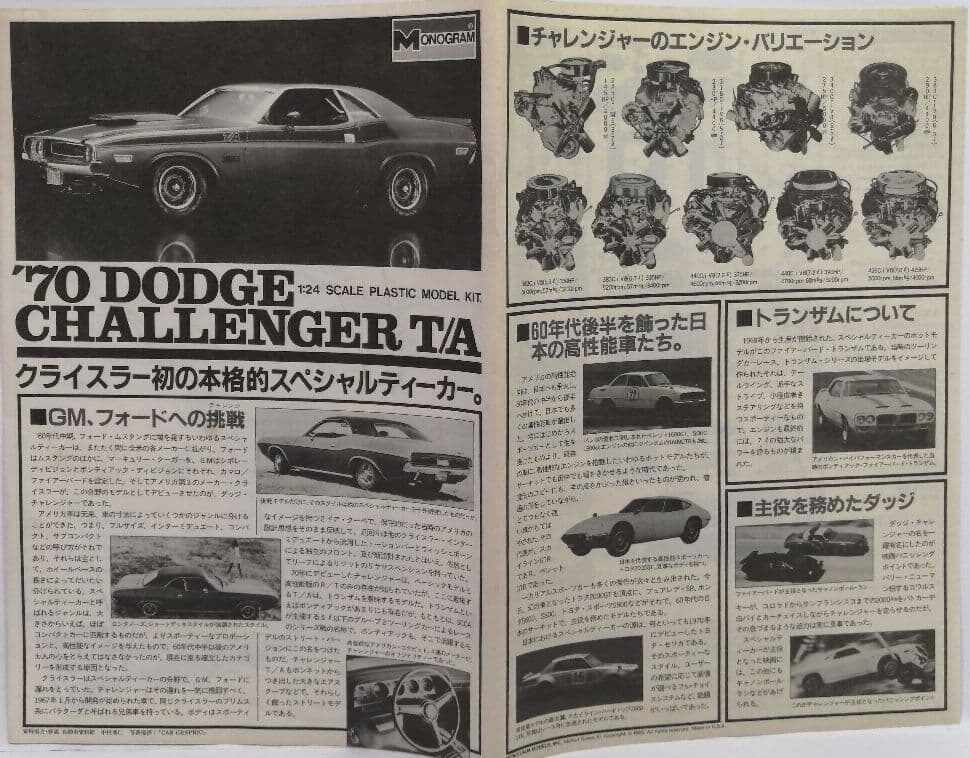
そこにはそれまでよく知っていた、イタリアを中心とした「スーパーカー」のエンジンにはない乱暴な野性味を感じまして、(宮藤官九郎さん脚本の「タイガー&ドラゴンの2話後半から登場する【ジャンプ亭ジャンプさん】に近い)『ただ物ではなさそうな感じ』にやられました。(笑)
それではマッハ1以外の、
私の好みのマッスルカーを上げていきます。
*ダッジ・チャレンジャー
*プリムス・バラクーダ
*ダッジチャージャー
*ポンティアック・ファイヤーバード トランザム
*AC/コブラ289
それでは、
*1970年型、ダッジ・チャレンジャー(パープル)
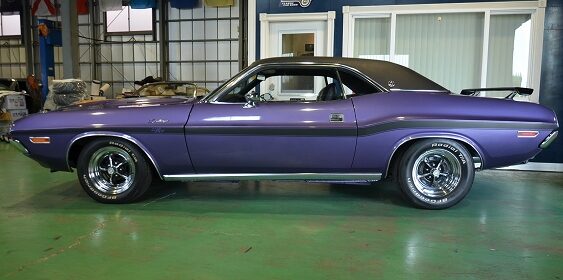
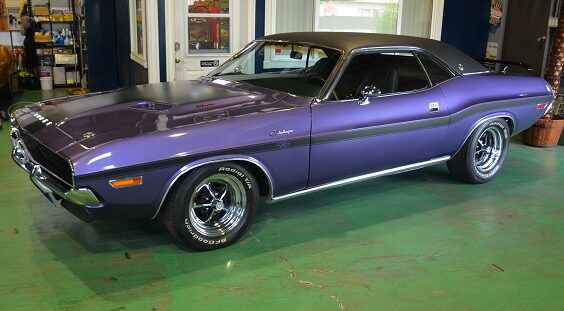
(遅れてきた、クライスラー版ポニーカーは、マッスルカーとして大化け、トヨタセリカが肉食獣化し、縦、横に大型化した感じなボディーポロポーションは、今回の主題:マッハ1以上に大型に見えます。
ーーー>私的に、最もハンサムなマッスルカーです。)
*1970年型、プリムス・バラクーダ(オレンジ)
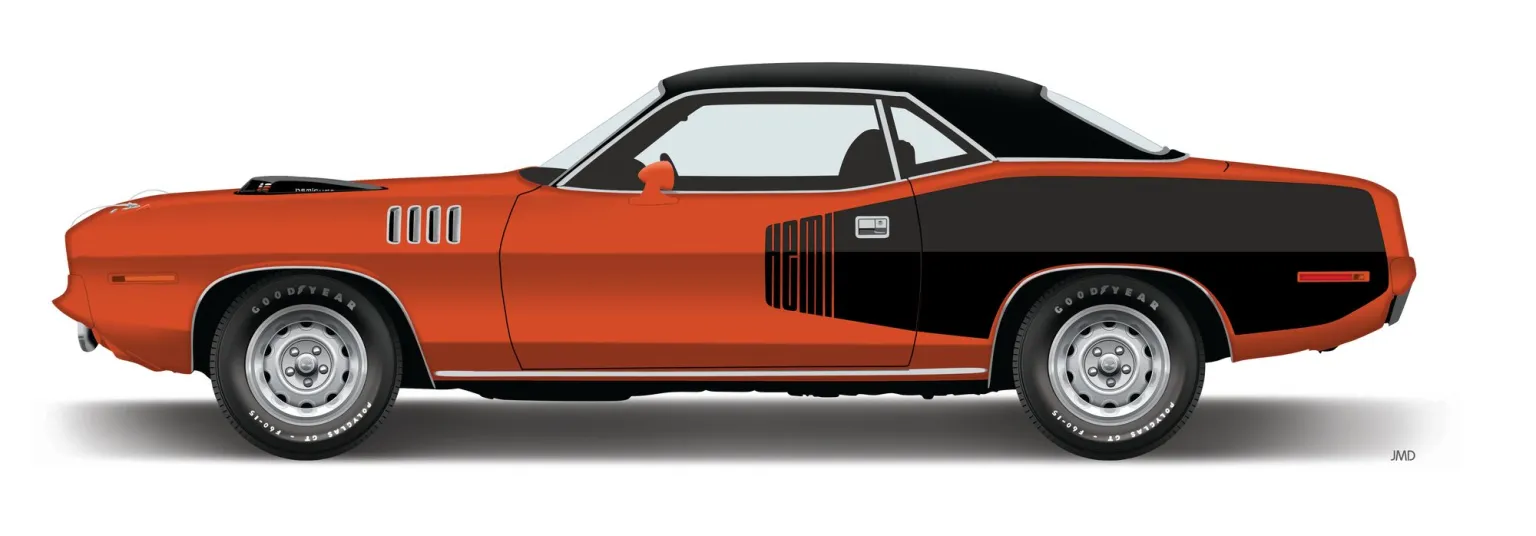
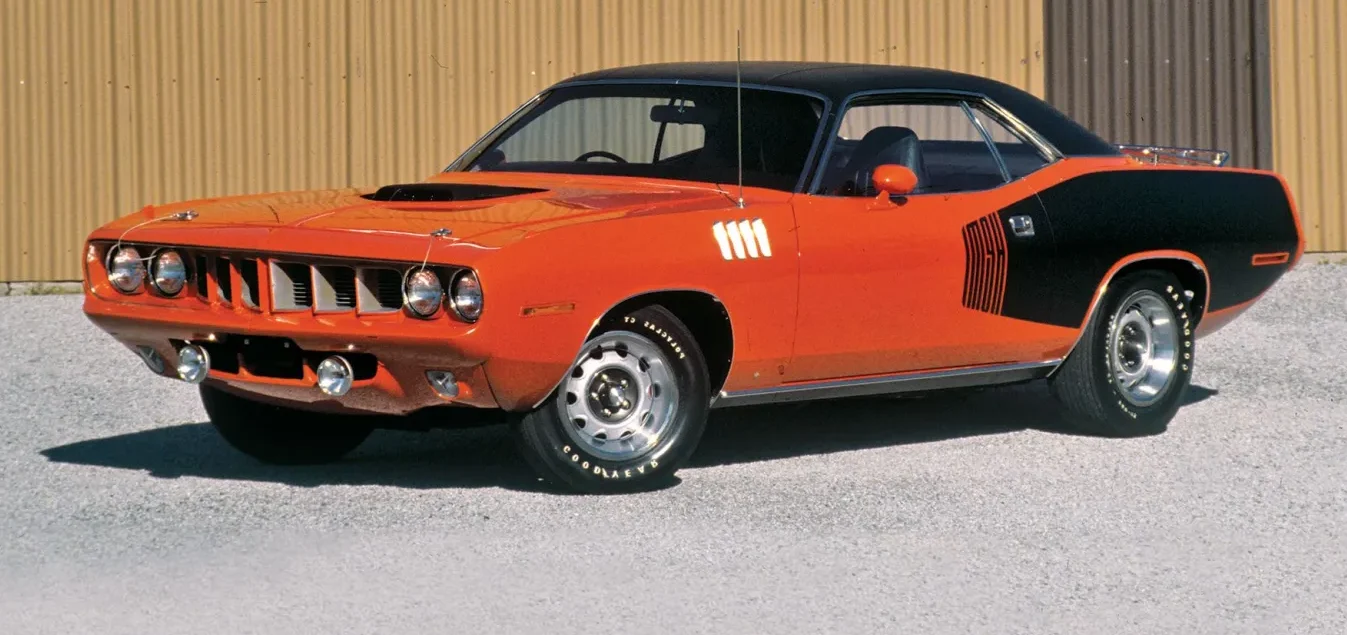 (チャレンジャーの弟分として登場しましたが、チャレンジャーより少し小さいため、巨大なエンジンを積んだイメージはかえって『えぐい』ものがあり、アメリカでの人気は絶大です。
ーーー>マーキュリー・クーガーに対してのムスタングの立ち位置です。)
*1970年型、ダッジ・チャージャー(メタリック・オレンジ)
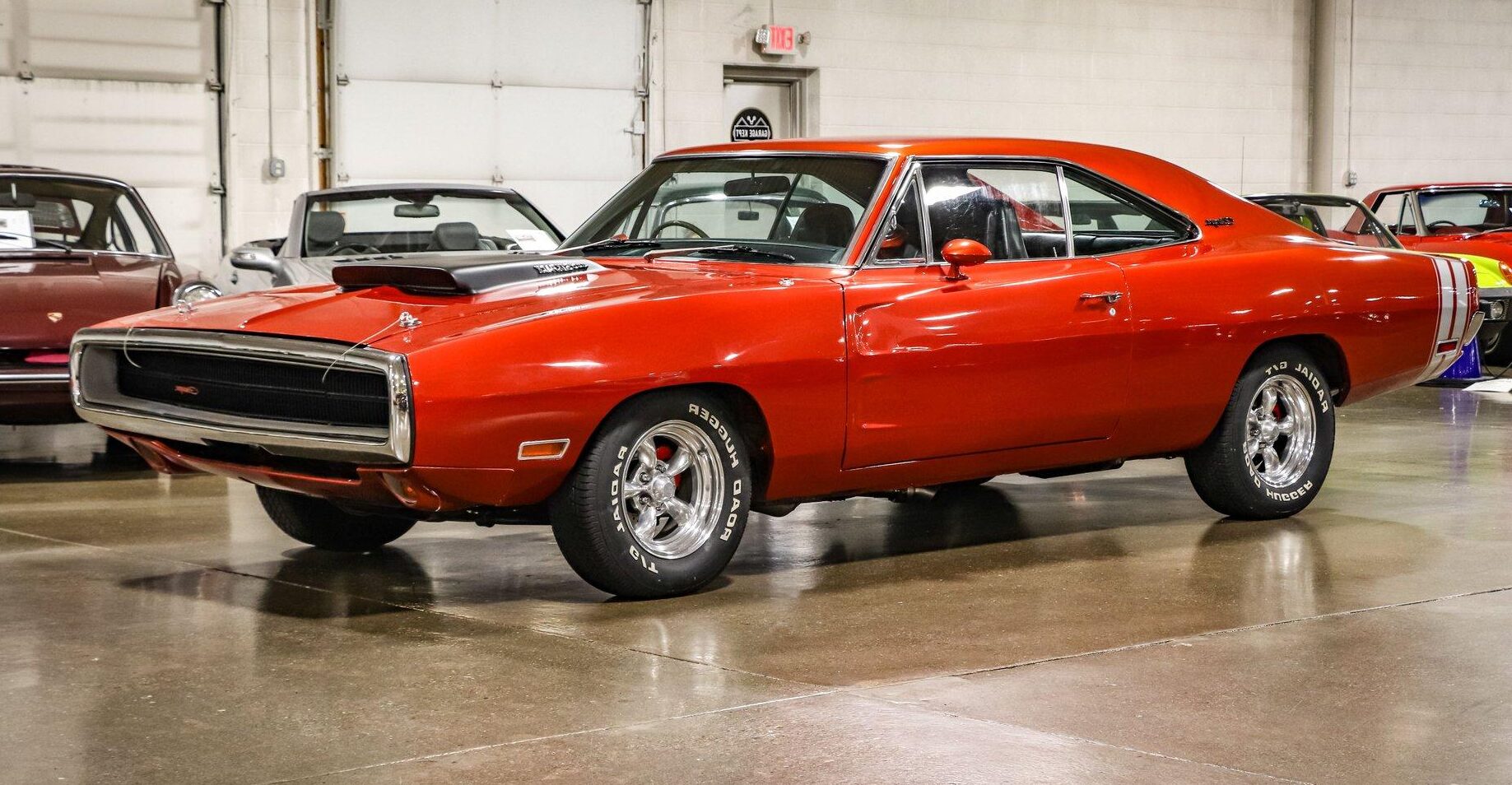 (かなりの大型ボディにフェンダーフレアーがさりげなくついてます。この車ほど、前に細い小さめのタイヤ、後ろに太く背の高いタイヤをはくのが似合うの車はありません。
ーーーーー>前のめりスタンス、万歳!!
*1972年型、ポンティアック・ファイヤーバード トランザム
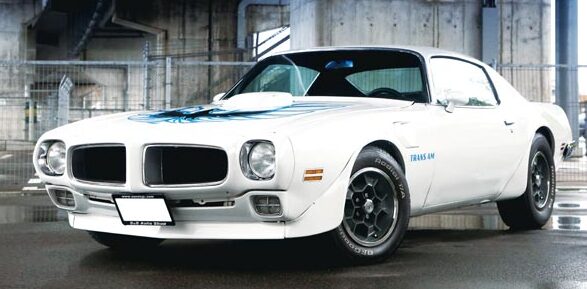
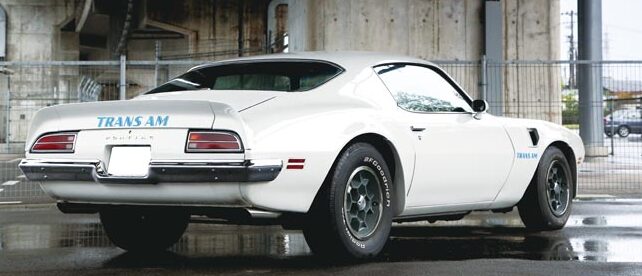 (こちらも『T』さんがムスタングマッハ1の次に買ったアメ車で、マジかで何度も見る機会があったんですが、今回調べていて、あのマグネシウム製っぽかったホイールはただのホイールキャップだったのには驚かされました!!
ーーーーーーー>恩師ストラザー・マクミン氏の傑作カマロ譲りの見事なプロポーションとボンネットの『火の鳥のステッカー』は圧巻!!)
*AC/コブラ289 (メタリック・ブルー&白のストライプ)
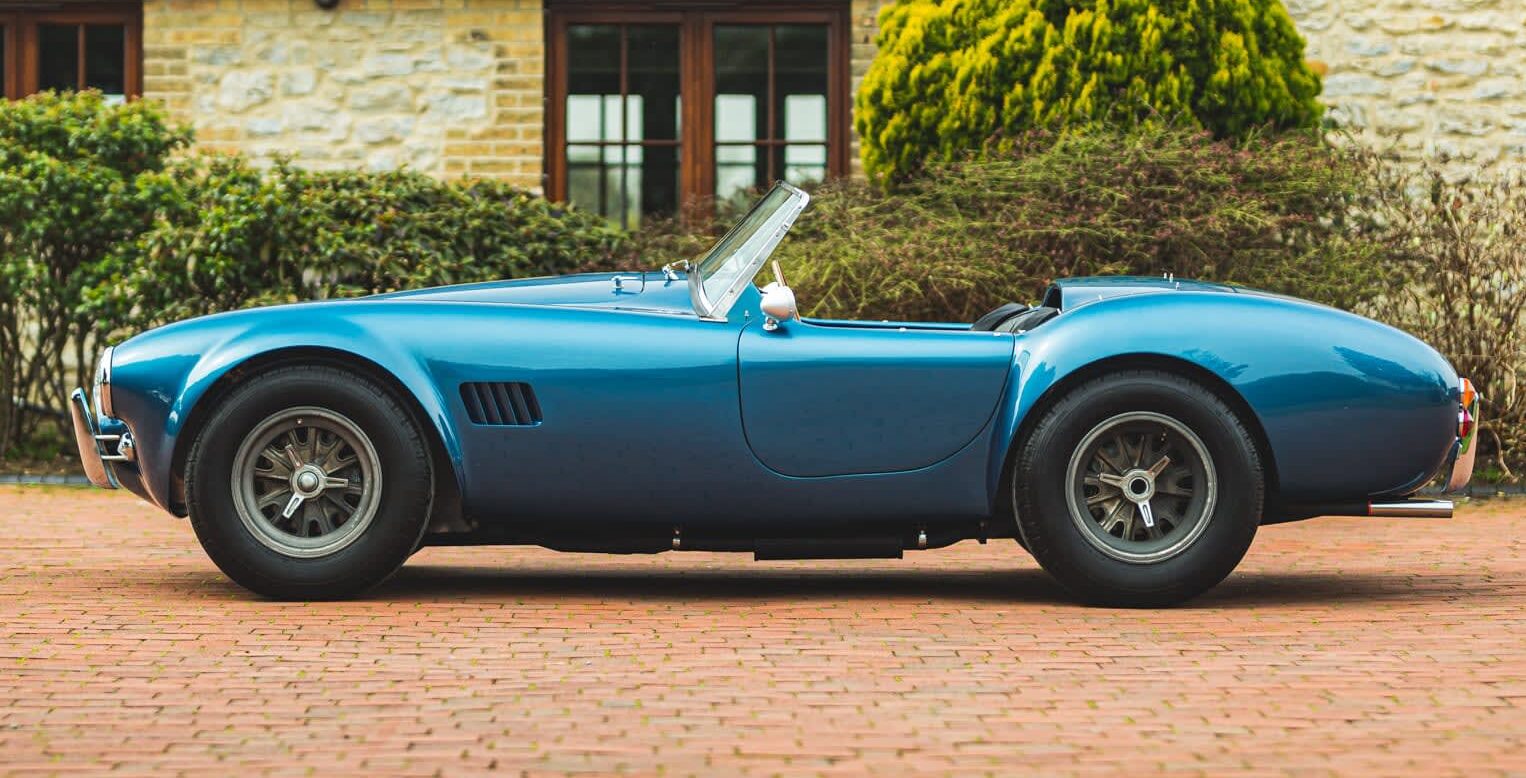
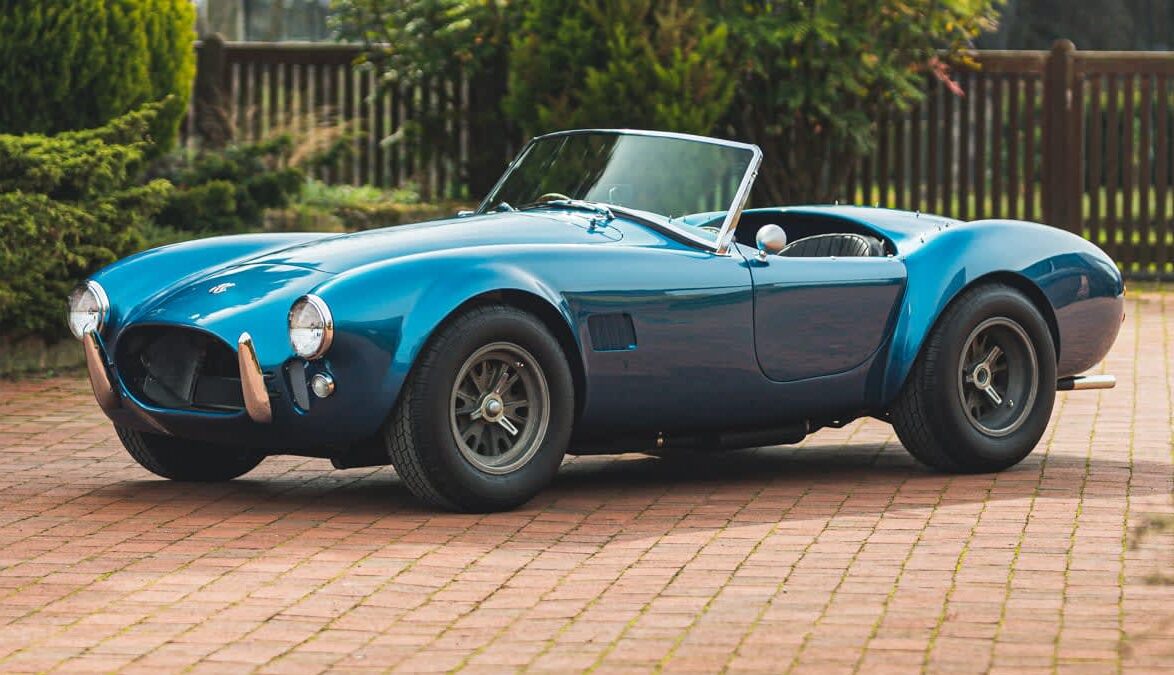 (あまりに抑揚が強すぎる427版に比べて、AC社の祖国、英国のロードスターの風情が残る、この『289版』のほうが好みです。1930年代にツーリングから始まった、ロードスター型スポーツカーの歴史の終着点的な完成度のボディー造形はどこから見ても迫力と美しさのバランスが秀逸。
ーーーー>大好きな、オースチンヒーレー(4気筒版)と双璧な、「動く立体造形」の極致
今後自動車のEV化、AI化が進む中、
ムスタング・マッハ1のようなエンジンの轟は、
昔話になって行くのでしょうか?
残念なような、
少し悲しいような、、、、
本ブログと記事内容につきまして:
ブログ記事を書くにあたり私の目標は、立体造形(料理も含めて)とのかかわりを通じて、私個人の特徴的(ネジ曲がり方も含めて)な評価軸を解明することで、「美しさ・美味しさ」に対する好奇心や、探求心を、どのように満足・充足させてきたのかを明記しておくことです。
従いまして、記事の中に出てくる、数字や年号、微細なデータなどには細心の注意を払っておりますが、時に大きな間違いや勘違いを犯していることも考えられます。特に自動車記事における主要諸元や、年号などには紛らわしいものも多く、あくまで参考程度に考えていただければ幸いです。
私としては、記事の中で個人的な外観デザインや味覚の評価、そこから広がる後半部分につなげるための、『流れ』を作るための客観的材料として年号やデータを挿入している感じです。あくまで重視したいのは、私個人の頭の中で起こる、記憶の錯そう的混沌から生まれる新たな『見方』や『情報の予想外のつながり』です。その勢いを作り出す、『流れ』の一環として、諸データが副次的に必要となるわけです。
話がそれますが、大好きな落語の世界に「三題噺」という、その場て会場から募った3つのお題を使って1つのお話に仕立てるといったお遊びがございますが、私はそれに近いことを立体造形の特徴や(料理のお味)をお題にして行っている感じがします。その中で頭の中に去来する数々の着想が、全く予想外で楽しく、次回からの記事内容を大幅に変えたり、新展開につながっています。
当ブロブの仕組み:
『好奇心の点と線 x 気まぐれ脳内回路=予想外の新展開』
こんな自分勝手なブログですが、今後ともよろしくお願いいたします。
追記:上記の『流れ』を作る為に必要な写真はできる限り、個人所有のミニカー・自前の料理などを使い撮影しておりますが、その他の必要最小限の図版や写真を他のブログ主様の記事や諸会社ホームページなどからお借りしております。(記事内容に合うよう加工させていただき、使用時は最小の解像度で載せております。)問題がある場合、ご連絡いただければ直ちに降ろさせていただきます。
追記2:当ブログ記事に掲載のミニカー写真等(個人撮影)は許可なしで、どのようにお使いいただいても結構です。私個人の創造性はこの世のもの、と言う認識の上で記事を製作しています。
!!!!!!!!!!!!!!!!!!!!!!!!!!!!!!!!!!! Translated in English !!!!!!!!!!!!!!!!!!!!!!!!!!!!!!!!!!!
Part 28—My First American Car! Ford Mustang Mach 1, 1971 (Yellow)
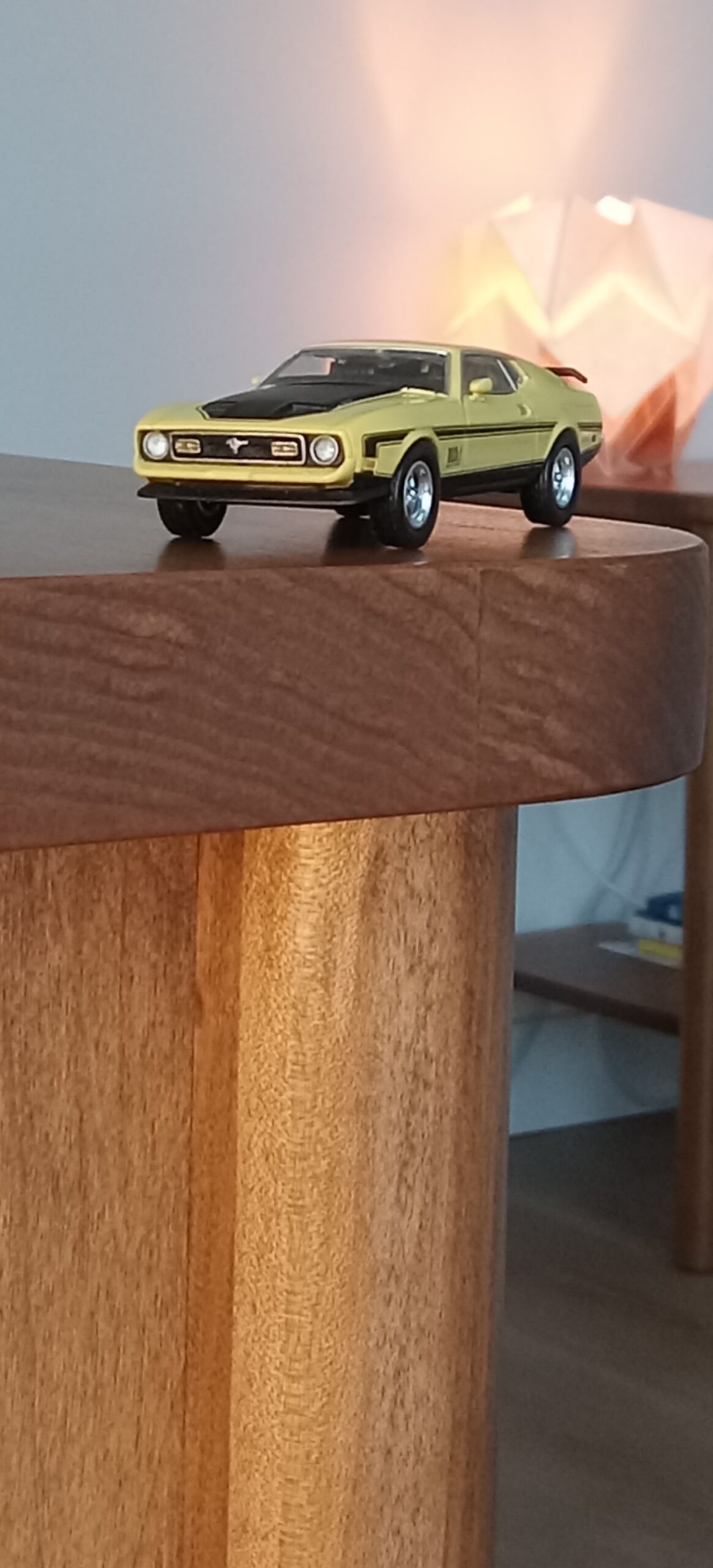
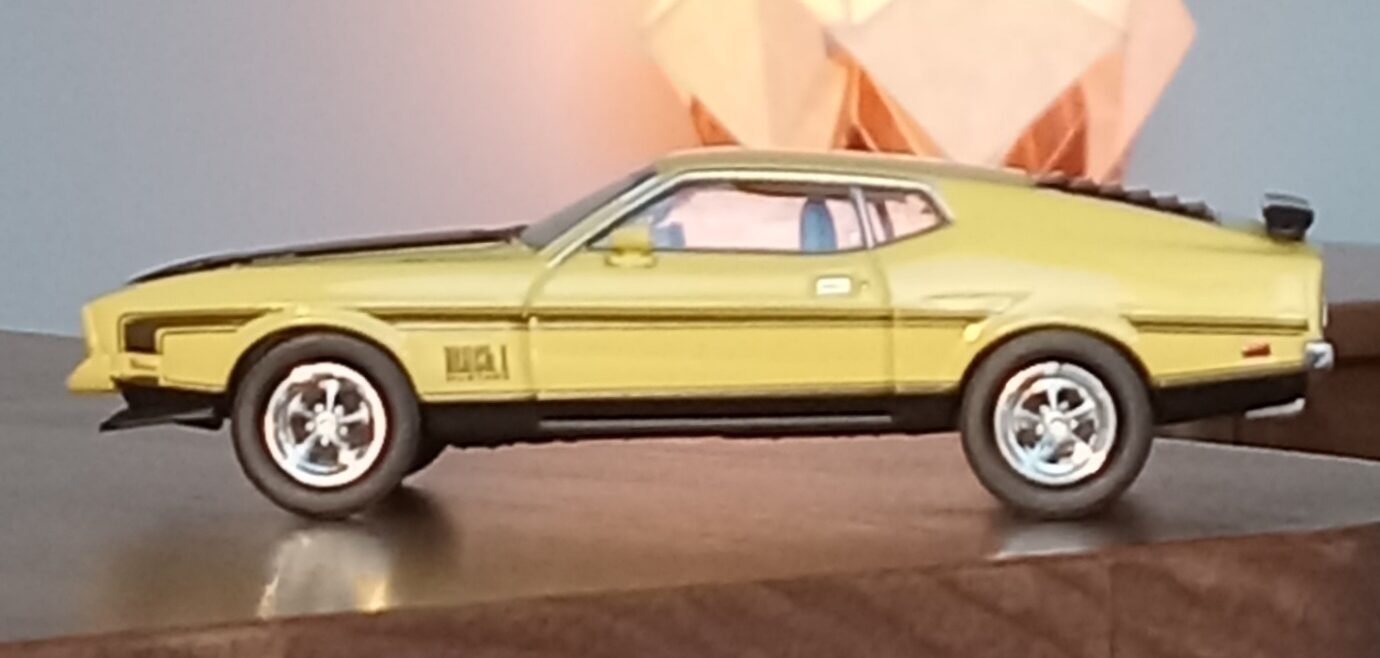
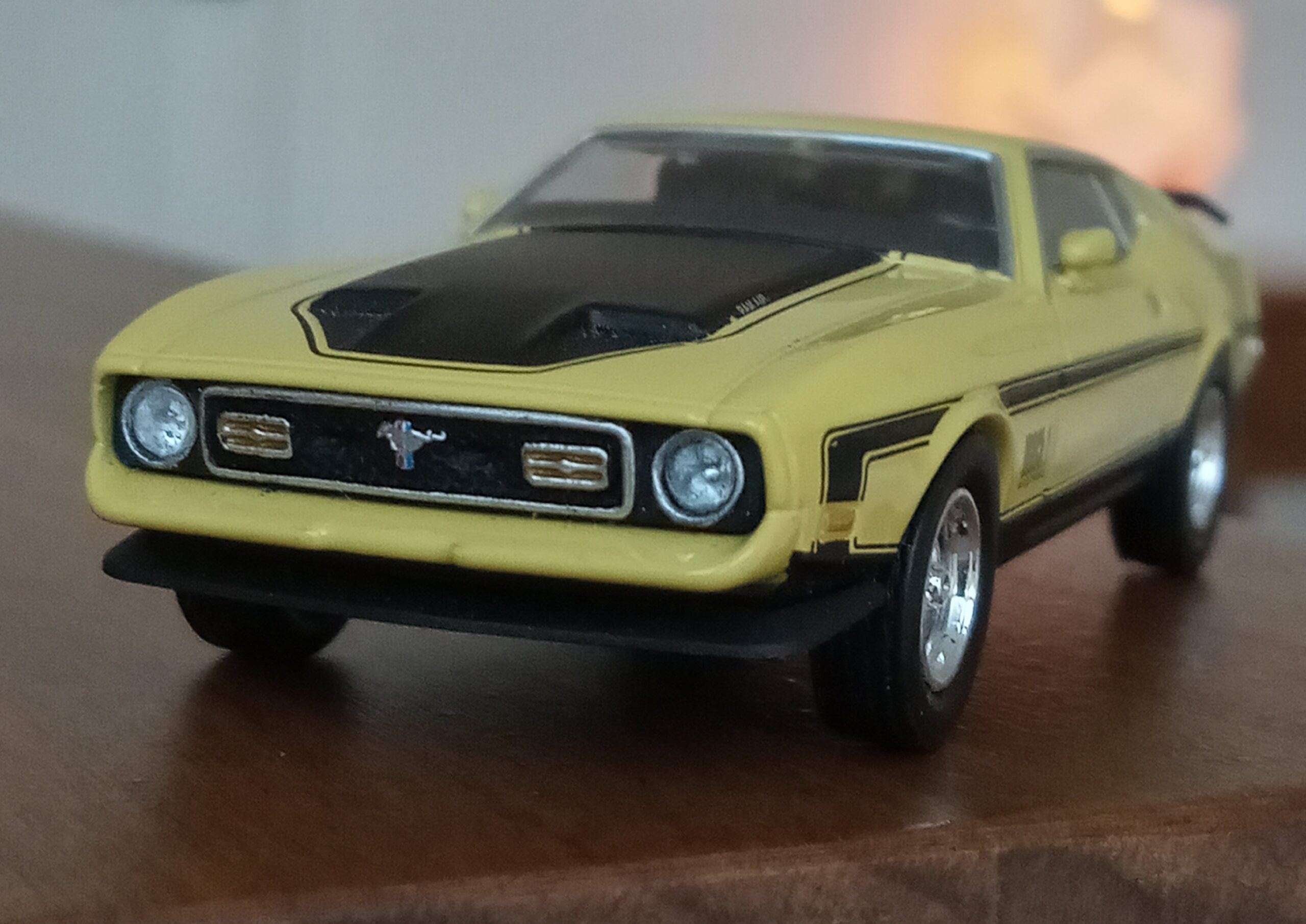
(Die-cast model used for photography: MINI GT, 1/64 Ford Mustang Mach 1, 1971 model—This is the latest model, featuring transparent parts for the headlights and taillights, making it a perfect build for this scale. Highly recommended.)
(Another model car for the collection: Greenlight, 1/64 Black Series / 2024 Mustang)
For this 28th installment, I’d like to take a break from the “Lineage of 2-Door Coupes” series to talk about the 1971 “Ford Mustang Mach 1,” a fantastic 1/64 scale model recently released by MINI GT.
This car
was my father’s absolute favorite. I have fond memories from when I was in elementary school of riding in the actual car owned by one of his friends, and of him buying me a huge 1/12 scale plastic model kit from Otaki that we built together.
My father’s two favorites:
* Toyota Crown Royal Saloon G, 1983 (Super White)
* Ford Mustang Mach 1, 1971 (White)
Maybe because I was still a kid back then,
I remember them as
*super-huge American cars!
Specifically,
*their sheer size and
*the “straight line” running from the roof to the rear
were the only things that stuck with me.
But this time, after getting my hands on a very well-made, Hot Wheels-sized die-cast model from MINI GT and playing with it in the palm of my hand, I thought, “Huh, it feels smaller than I imagined.” So I looked it up and was surprised to find that
the actual overall length is only 4.8 meters,
and it turns out it’s quite small compared to cars from the same era like the Dodge Charger, which easily exceeds 5 meters. This made me realize the excellence of Ford’s design back then—
“the skill to make it look bigger than it actually is”
(Conversely, the width was actually 1.9 meters, and the wheel size was a relatively small 14 inches… such attention to detail)
and I was truly moved,
and I began to understand my father’s feelings…
I’d been interested in American cars for a while—[inspired by the high-quality die-cast models from AUTO WORLD and others]—but
lately, my passion has grown to the point of a confession of faith,
so here,
“I feel compelled to confess, ‘I love it,’”
and I’m putting pen to paper.
I’ll proceed as follows.
* Real Car Overview: The Pony Car Muscle-Up Project
* Exterior Design Features:
* “Me” and the [Mach 1]
* Three-Topic Story:
* Contemporary Late-Model Muscle Cars:
* Real-Car Analysis: The Fate of the Pony Car Muscle-Up Project
(First-generation 1964 1/2 model)
(Fastback version)
# How was the “White Horse Muscle-Up” achieved?
n
n
n
The 1971 Ford Mustang Mach 1 is an iconic model of the “Big Mustang” era, boasting the largest body and most powerful performance in Mustang history. Compared to the 1970 model, its body size was enlarged, characterized by a more low-slung, muscular appearance.
n
n
n
1. Evolved Design and Body
The 1971 model underwent a major full redesign, resulting in the longest, lowest, and widest body of any first-generation Mustang. Details of the size increase: The wheelbase was extended by 1 inch, the overall length by approximately 2.1 inches, and the overall width by 2.4 inches, giving it a larger, wider, and more imposing stance.
n
* Long Nose, Short Deck: The 1971 model embodies this iconic muscle car style, with the long hood emphasized by the front wheels being moved 1 inch forward relative to the passenger compartment.
m
* Sports Roof (Fastback): The Mach 1 is based on this sports roof style with its flowing roofline.
n
* Other exterior features: Features include a honeycomb-pattern front grille, sports lamps, urethane-molded color bumpers, flashy decals exclusive to the Mach 1, and an optional rear deck lid spoiler.
n
*NASA Ducts: The hood was standard-equipped with two scoops (air intakes) known as “NASA-type,” which could be activated by selecting the optional “Ram Air” system.
n
*Distinctive Colors: Many vivid body colors were adopted, such as “Glover Color,” reflecting the trends of the time.
n
*Increased Weight: The car was approximately 180 kg (400 lbs) heavier than previous models, bringing the curb weight to about 1,500 kg (3,300 lbs).
n
n
n
n
n
n
n
n
n
n
n
n
n
n
n
n
n
n
n
n
n
n
n
2. Diverse Engine Lineup
1971 was just before emissions regulations and soaring insurance premiums took full effect, so a range of extremely powerful engine options were available.
n
* 429 Super Cobra Jet (SCJ): A 7.0-liter V8 engine, this was the most powerful option, producing 370 horsepower and approximately 610 N·m (450 lb-ft) of torque.
* 351 Cleveland: The 5.7-liter “Cleveland” engine was also popular and was considered to offer a good balance between performance and maintainability.
* Standard Engine: A 302 cubic inch (approx. 4.9-liter) V8 was installed in the base model.
n
n
n
n
n
N
n
n
n
n
n
n
n
n
n
n
n
n
n
3. Historical Background and Evaluation
This large body style was used for three years, from 1971 to 1973.
n
* Final Glory: Since engine output was significantly reduced due to regulations starting in 1972, the 1971 model is regarded as the performance car that marked the end of the Mach 1’s golden age.
* Rarity: Exceptional examples with low mileage can sometimes fetch prices exceeding $200,000 at overseas auctions (such as Bring a Trailer).
n
n
n
n
n
n
n
N
n
mn
#Key Specifications:
Model Code: C-Code (429 CJ – Cobra Jet)
Total Displacement: 7.0 liters SOHC V8 (429 cid 4V V8)
Maximum Power: 370 hp (Cobra Jet)
Maximum Torque: 610 Nm (450 lb-ft) / 3,400 rpm
Drivetrain: FR (Front-engine, rear-wheel drive)
Seating Capacity: 4 (2+2)
Body Style: 2-door coupe
Wheelbase: 2,590 mm
Overall Length: 4,813 mm (189.5 inches)
Overall Width: 1,882 mm (74.1 inches)
Overall height: 1,273 mm – 1,290 mm (50.1 – 50.8 inches)
Curb weight:
1,497 kg – 1,654 kg
*Exterior Design Features: A muscular athlete that seems to hug the ground
Now,
let’s examine the exterior design features of the 1971 “Mustang Mach 1”
based on the five points above.
1: The perfection of the sleek and bold fastback design, with its overall length, width, and height all exquisitely fine-tuned
2: The design team’s skill in using every means at their disposal to emphasize its length and massive presence
3: The sharp “bird of prey” styling of the front fascia and the area around the bumper
4: The excellence of the body side stripes, front spoiler, hood scoop and black paint, and the design of the rear louvers and rear wing, which convey a sense of speed and sharp directionality
5: The tenacious sculpting of the robust body’s cross-section—most evident when viewed from directly above—and the coexistence of playfulness
1: The perfection of the sleek and bold fastback design, with its overall length, width, and height all exquisitely fine-tuned
(A free-spirited, expansive yet razor-sharp “edginess” epitomizes American cars of this era)
ーーーー> The Mustang’s “hardness” versus the Firebird Trans Am’s “softness”
2: The design team’s skill in using every possible means to create an illusion of immense size
(With a low height, wide stance, and the deliberate use of 14-inch tires, it was designed to utilize optical illusions—much like the architecture at Disneyland—to make the car appear over 5 meters long.)
ーーーーー>The actual length is 4.8 meters, which is no different from the Camaro or Cougar of that era.
3: The sharp, “bird-of-prey” styling of the front fascia and bumper area
ーーーーー>The bold, “slab-like” front air dam, exclusive to the Mach 1, also does a great job.
4: The body side stripes, front spoiler, hood scoop and black paint, along with the superb design of the rear louvers and rear wing, all convey a sense of speed and sharp directionality
5: The tenacious sculpting of the robust body’s cross-section—most evident when viewed from directly above—and the coexistence of playfulness
ーーーーーー>The voluminous “sweep” of the body sides, which fully utilizes the 190cm overall width, is indescribably moving.
Next up is
my personal “Mach 1” experience.
* “Me” and the [Mustang Mach 1]: A monster that arrived with a rumble?
(Ootaki Co., Ltd., 1/12 scale 1971 Mustang Mach 1 assembly kit)
“DODODODODODODO…
(The roar of the V8 engine) DODODO…”
I can never forget the memory of witnessing that massive, pure-white,
“American car”—which seemed to crawl along the ground—
parked in front of the home of my parents’ friend,
“Mr. T.”
[An Unforgettable Sight]!!
In any case, there it lay, accompanied by the earth-shaking roar of that V8 engine,
* A pure white, “angular” object,
* A body that seemed to crawl straight along the ground, perhaps 6 meters long (though that can’t be right),
* A beast with a roofline flowing straight back,
The memory of timidly gazing at it became a trauma,
and it’s what led to my current love for “giant things.”
Right after that,
I found it at a toy store, bought it on the spot,
and assembled it with my father—it was a 1/12-scale large plastic model kit from Otaki.
The struggle with the parts—so many that even three tubes of Cemedine glue weren’t nearly enough—
led us to divide the work between father and son, and we managed to get it more or less finished over two days on Saturday and Sunday, but…
I applied too much glue to the crucial universal joint
connecting the driveshaft to the rear wheels,
and no matter what I did, the rear wheels…
For some reason, power just wouldn’t reach the rear wheels,
so it ended up being a total bust. T_T
(With the 1/12-scale Firebird Trans Am by Otaki that I later built with my dad, I managed to get the tires to turn by being extra careful with the gluing!!)
This kit has had a very long run, and it seems Doyusha still reissues it from time to time.
---→ It looks like there are 5 or 6 different package designs alone.
Its features include:
* Beautiful, pure white body design with clean, straight lines, reproduced to about 80% of the necessary minimum detail
* The hood, doors, and trunk open, allowing you to see the engine and interior.
* A motor was built into the detailed engine, and it was supposed to drive the rear wheels via a driveshaft, allowing it to move… but in reality, the load was too heavy and it wouldn’t move. (lol)
Anyway, this 1/12 series became a real favorite of mine,
and after that,
* Pontiac Firebird Trans Am
*Lamborghini Countach LP500S
and others.
(None of them could actually drive, though…)
In this way,
the 1971 Mustang Mach 1 sparked my lifelong love of 3D models
and became a very important part of my automotive experience.
Now, moving on,
it’s time for a three-topic story!
*Three-Word Story: Unforgettable, Super-Giant, Cementine
Well, please bear with me for a moment.
I know I always end up telling ridiculous stories, but…
The topics we received from the audience this time are as follows:
* Impossible to Forget,
* Super Giant,
* Cementine,
So, I’ll do my best to come up with something…
The fact that there’s an “n” in “Cementine”—
right there in the middle—really makes me feel the Showa era, (laughs)
There’s a saying, “The soul of a six-year-old lasts a hundred years,”
and it’s true that things we saw as children tend to stick in our memories forever, often exaggerated…
Speaking from my own experience,
“Tama,” the pet cat I used to sleep with as a child,
seemed huge—so huge that, by today’s standards, she’d be lion-sized.
And sure enough, she’d scratch me all the time,
leaving me feeling like I’d been bitten by a wild beast.
Even the monsters that appeared in Ultraman—
even though I knew half-way that they were just props,
I’d pretend not to know and was terrified by their massive bodies.
For someone like me,
the prime example of something I’ll never forget
was my encounter with
the Ford Mustang Mach 1.
* It was simply enormous,
* and I have no memory of ever seeing a car that was so “straightforwardly” cool,
* or so “terrifyingly” huge, before or since.
Sure, I’m sure I’d seen large four-door sedans like Rolls-Royces, Cadillacs, and Lincolns on the road many times before, but I don’t recall ever seeing one with
a length and width that seemed to crawl along the ground quite like that Mustang Mach 1.
Indeed, behind the Mustang Mach 1—the car that left such a traumatic impression on me—lay
ーーーーー>the tireless efforts of its creators, worthy of such a rare masterpiece.
*This coincided with the period from the late ’60s through the ’70s when Ford Design Studio’s [techniques for making cars look bigger] were being refined,
*and they applied them to the relatively small and unassuming Mustang,
* Amid a fierce power war with competitors at the time,
Ford decided to boost the engine power and exterior of its trademark “Pony Car”
ーーーーーー>to compete in the “Muscle Car” category, a specialty of Chrysler,
a bold and almost crazily extreme character was essential,
drawing inspiration from the supersonic test aircraft then being developed by the U.S. Air Force and NASA,
it was given
the title
[Mach 1],
and thus our beloved Mustang made its debut!
(Did you manage to say all that without taking a breath? Can you say it again in one breath?)
For me,
this “Mach 1” is paired with another iconic item of that era,
“Cementine,” which, along with its scent,
has become an unforgettable memory.
It’s truly something impossible to forget.
As someone turning 62 this year,
I’m a bit embarrassed to admit it, but with the increasing number of
the sheer number of things I can actually forget,
and I can’t help but give a wry smile…
Well, I suppose that’s all for now…
Penpen
*Other “muscle cars” that suit my taste…
From around 1968 through 1972, the American “Muscle Car Wars”
were at an incredible fever pitch.
Personally,
I remember my heart racing at the “gruesome” photos of engines featured in the engine explanation sections of the plastic model blueprints—produced by the American company Monogram and translated by Bandai.
I sensed a raw, wild energy there that was absent from the engines of the “supercars”—primarily Italian—that I was familiar with at the time. I was completely captivated by that “feeling that this was no ordinary machine” (similar to “Jump-tei Jump-san,” who appears in the second half of Episode 2 of “Tiger & Dragon,” written by Kankuro Kudo). (lol)
So, aside from the Mach 1,
here are some of my favorite muscle cars.
* Dodge Challenger
* Plymouth Barracuda
* Dodge Charger
* Pontiac Firebird Trans Am
* AC/Cobra 289
Now then,
* 1970 Dodge Challenger (Purple)
(This latecomer to the Chrysler pony car lineup turned out to be a massive hit as a muscle car. Its body proportions—which feel like a Toyota Celica that’s gone feral and grown larger in both length and width—make it look even bigger than the Mach 1, which is the focus of this post.
——> Personally, this is the most handsome muscle car.)
*1970 Dodge Challenger (Purple)
(It debuted as the Challenger’s little brother, but because it’s slightly smaller than the Challenger, the image of it packing a massive engine actually gives it a “brutal” edge, making it incredibly popular in the U.S.
—> It’s in the same position as the Mustang is relative to the Mercury Cougar.)
* 1970 Dodge Charger (Metallic Orange)
(It features a fairly large body with subtle fender flares. No other car suits the look of narrow, small tires up front and wide, tall tires in the back quite like this one.
ーーーーー>Long-nose stance, hurray!!
*1972 Pontiac Firebird Trans Am
(This was also the American car that “T” bought after the Mustang Mach 1. I’ve had the chance to see it up close many times, but while researching it this time, I was surprised to find out that those wheels, which looked like they were made of magnesium, were actually just wheel covers!!
ーーーーーーー>The stunning proportions inherited from the Camaro—a masterpiece by my mentor, Strather McMin—and the “Firebird sticker” on the hood are simply breathtaking!!)
*AC Cobra 289 (Metallic Blue & White Stripes)
(Compared to the 427 version, which is far too flashy, I prefer this “289 version,” which retains the charm of a British roadster—AC’s homeland. The body design, representing the culmination of the roadster sports car’s history that began with touring cars in the 1930s, strikes an exquisite balance of power and beauty from every angle.
ーーーー>The pinnacle of “moving three-dimensional sculpture,” on par with my beloved Austin-Healey (4-cylinder version)
As the automotive industry moves toward EVs and AI,
will the roar of engines like the Mustang Mach 1
become a thing of the past?
It feels a bit of a shame,
and a little sad…
Regarding this blog and its content:
My goal in writing these blog posts is to document how I have satisfied and fulfilled my curiosity and desire to explore “beauty and deliciousness” by elucidating my own unique (and somewhat eccentric) criteria for evaluation through my engagement with three-dimensional art (including cooking).
Consequently, while I pay the utmost attention to the numbers, dates, and detailed data that appear in my articles, it is possible that I may occasionally make significant errors or misunderstandings. In particular, there are many confusing details regarding key specifications and dates in automotive articles, so I would appreciate it if you could consider them merely as a reference.
For my part, I feel that I insert dates and data into the articles as objective material to create a “flow” that connects my personal evaluations of exterior design and taste to the broader themes explored in the latter half. What I ultimately prioritize are the new “perspectives” and “unexpected connections between information” that emerge from the chaotic jumble of memories in my own mind. The various data points are needed secondarily as part of that “flow” to generate that momentum.
As a slight digression, in the world of rakugo—a form of storytelling I love—there is a playful tradition called “sandaibana,” where a performer weaves a single story using three topics solicited from the audience on the spot. I feel like I’m doing something similar here, using the characteristics of three-dimensional forms and (the taste of food) as my prompts. The countless ideas that flit through my mind during this process are completely unexpected and delightful, often leading me to drastically change the content of future articles or sparking new developments.
How this blog works:
“Spots and lines of curiosity x whimsical mental circuits = unexpected new developments”
This blog may be a bit self-indulgent, but I hope you’ll continue to follow along.
Note: To create the “flow” described above, I use my own miniature cars and home-cooked meals for photos whenever possible. However, I do borrow the absolute minimum necessary illustrations and photos from other bloggers’ articles and company websites. (I edit them to fit the article’s content and post them at the lowest possible resolution.) If there are any issues, please contact me and I will remove them immediately.
Update 2: You are free to use the photos of die-cast cars and other images (taken by me) featured in this blog’s posts in any way you like without permission. I create these posts with the understanding that my personal creativity belongs to me alone.
Translated by DeepL.com

これはCTAサンプルです。
内容を編集するか削除してください。