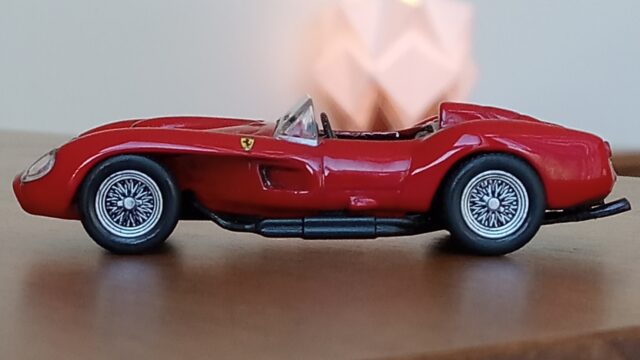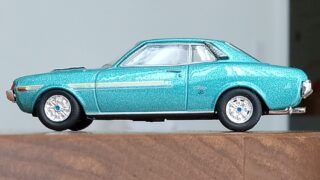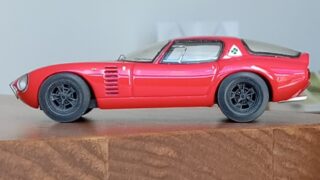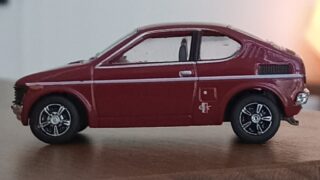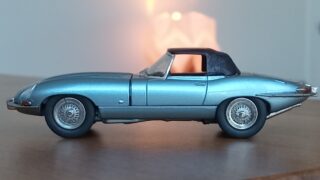
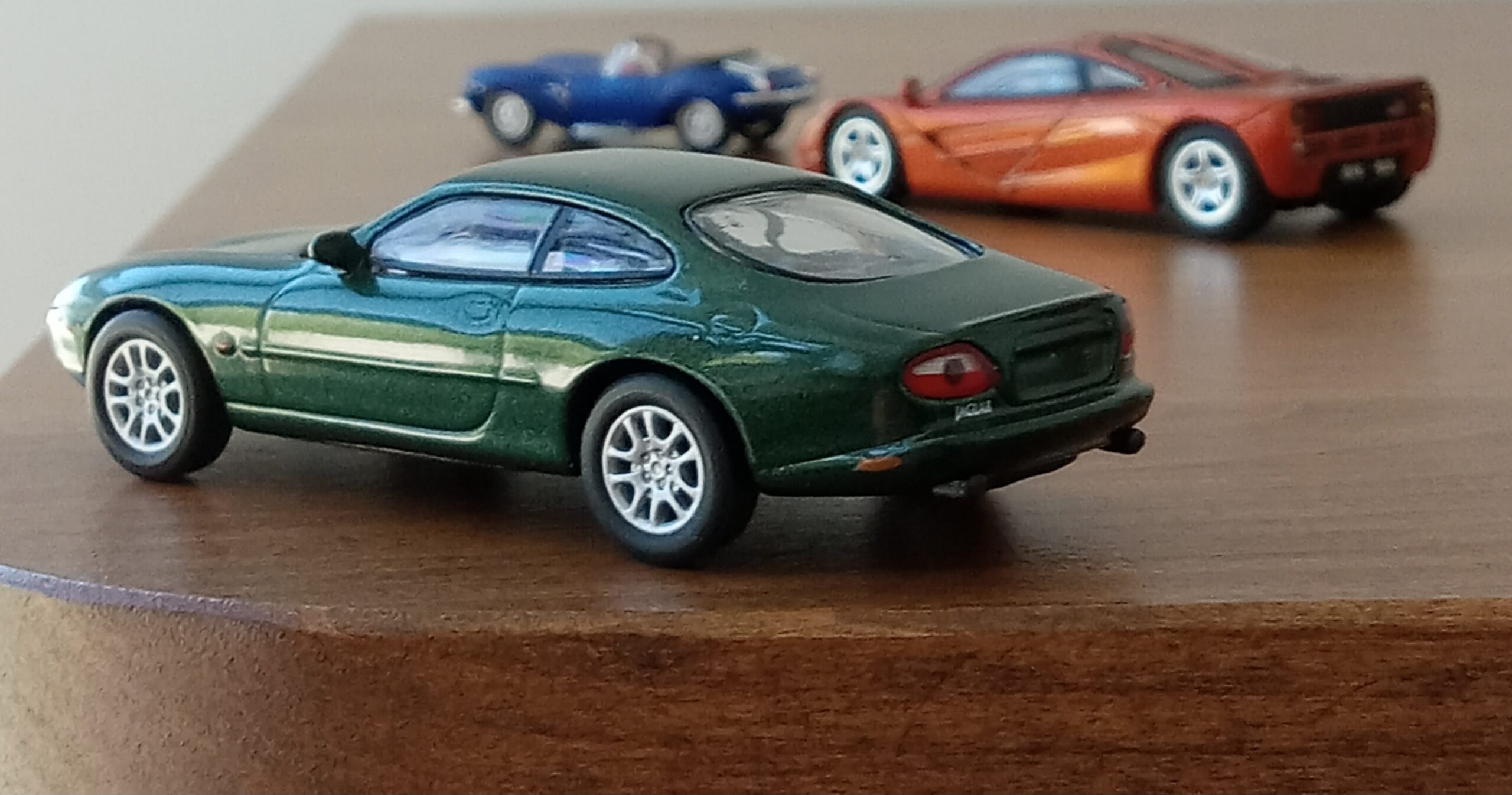
第27回ーー2ドア・クーペの系譜: 第9回【英国編】ジャガー・XKR クーペ、1996(ダークメタリック・グリーン) Jaguar・XKR、1996
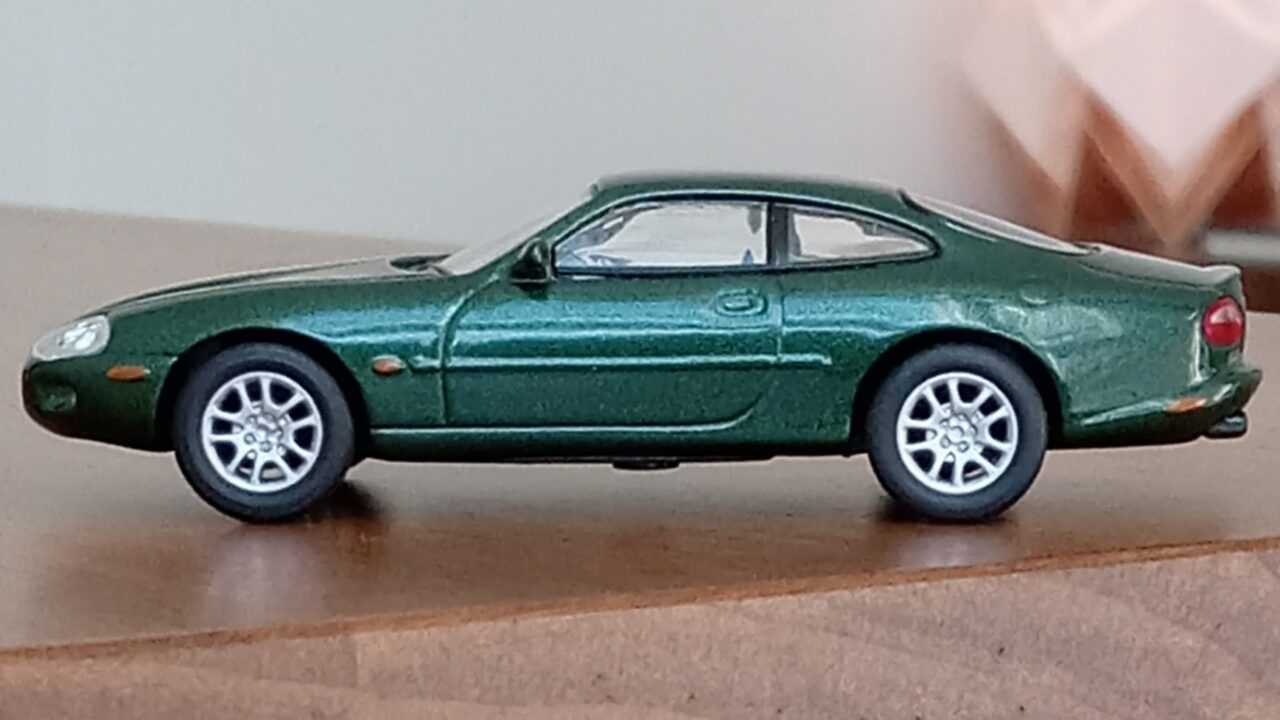
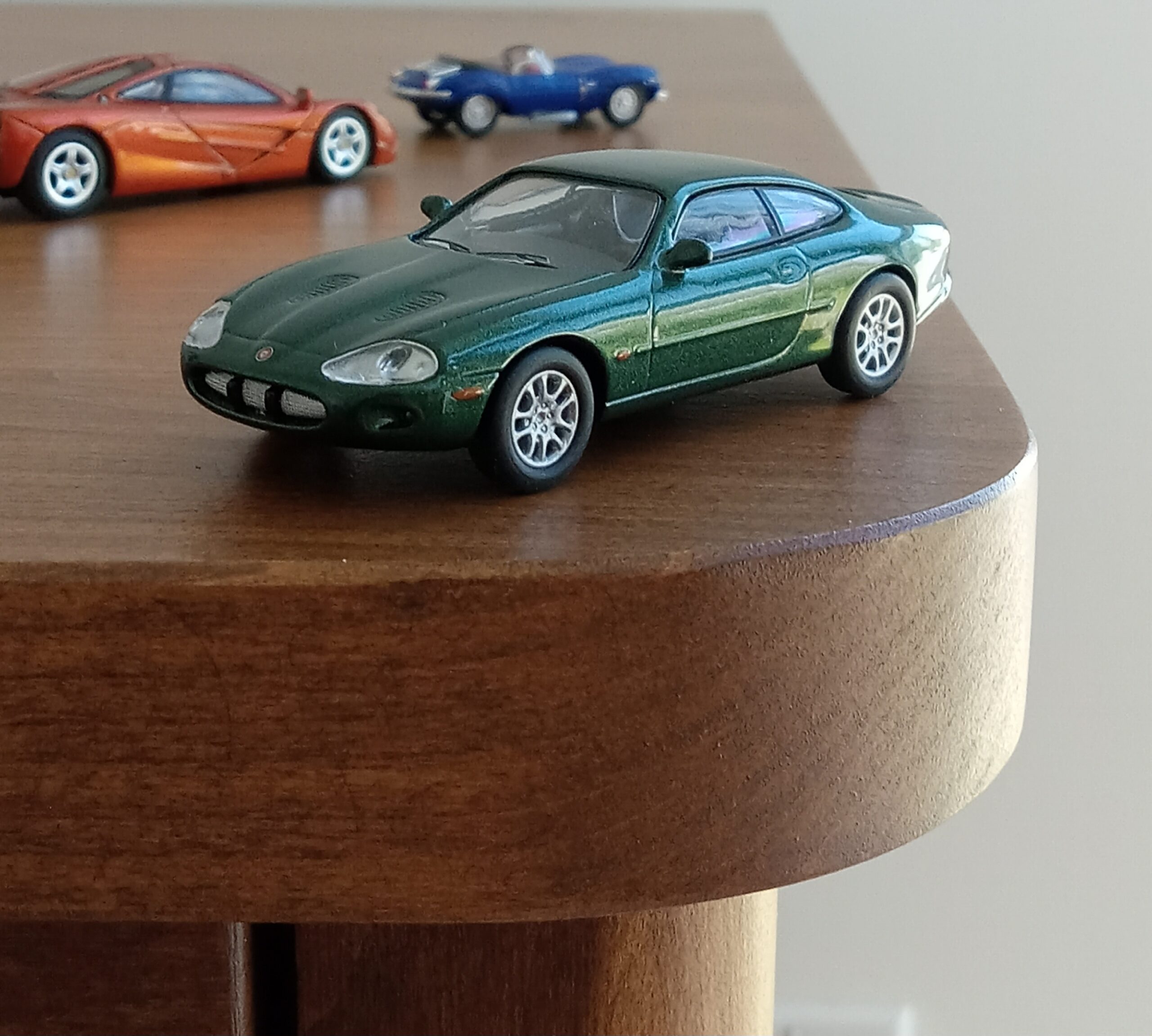
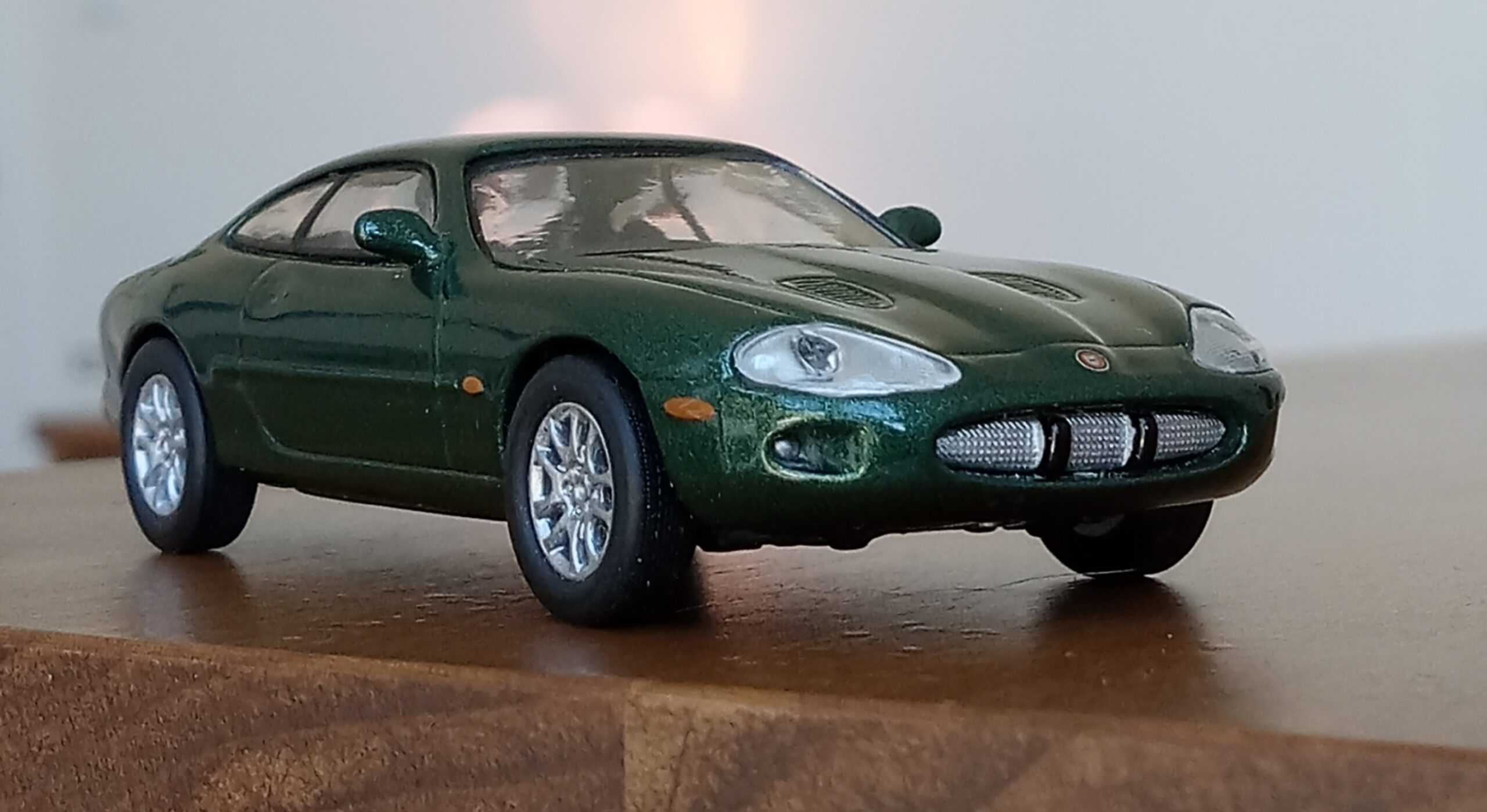
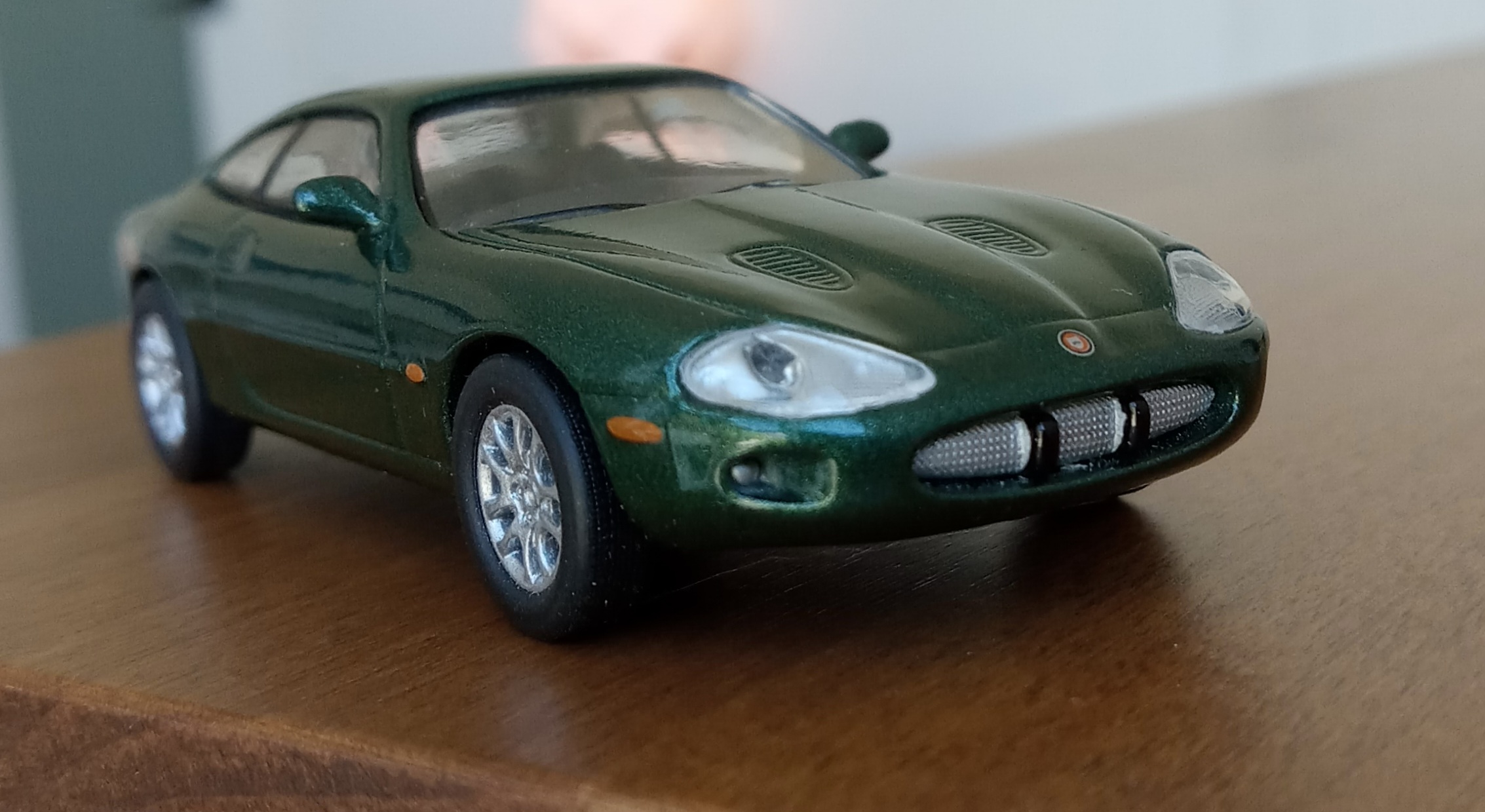
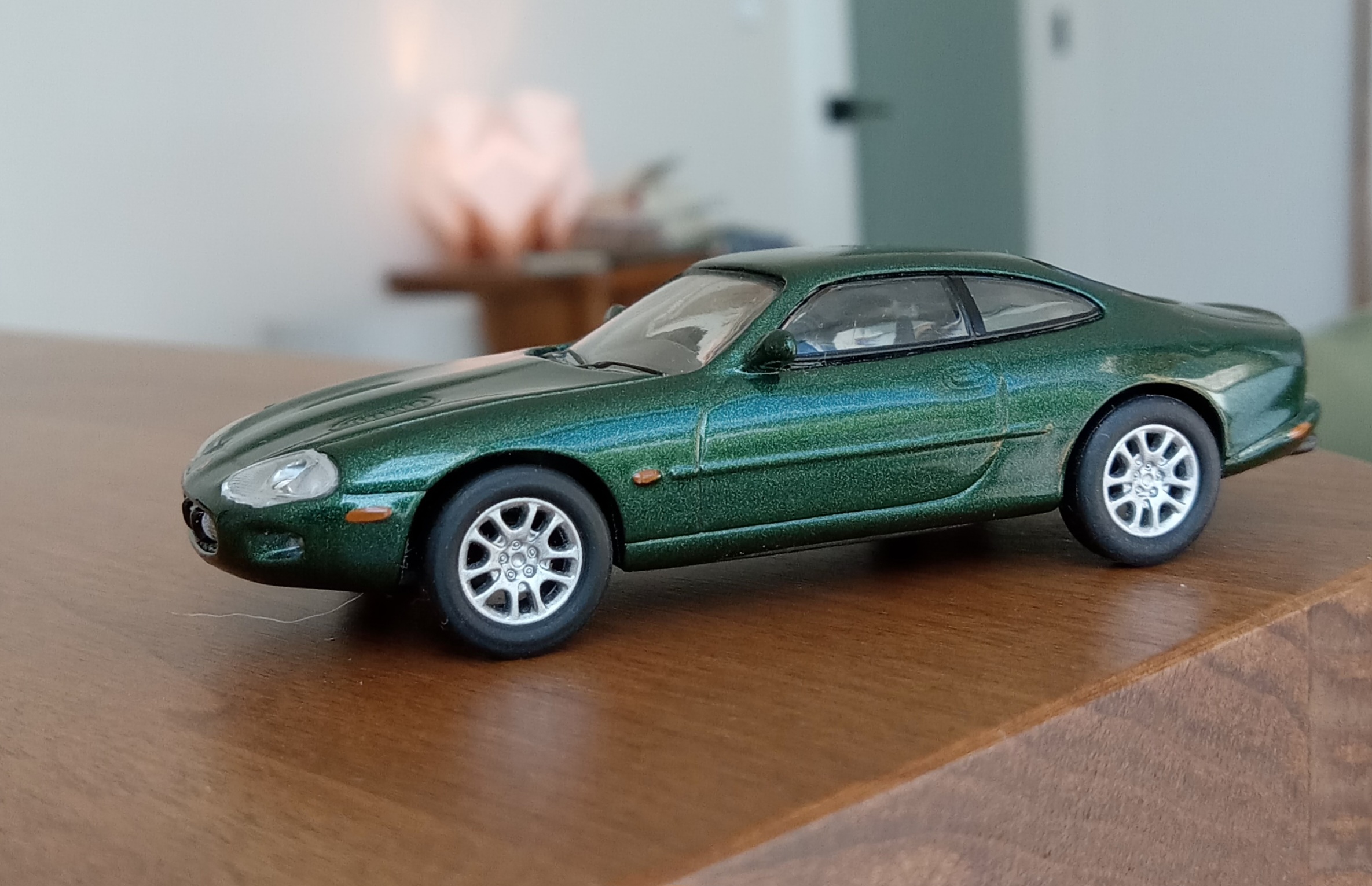
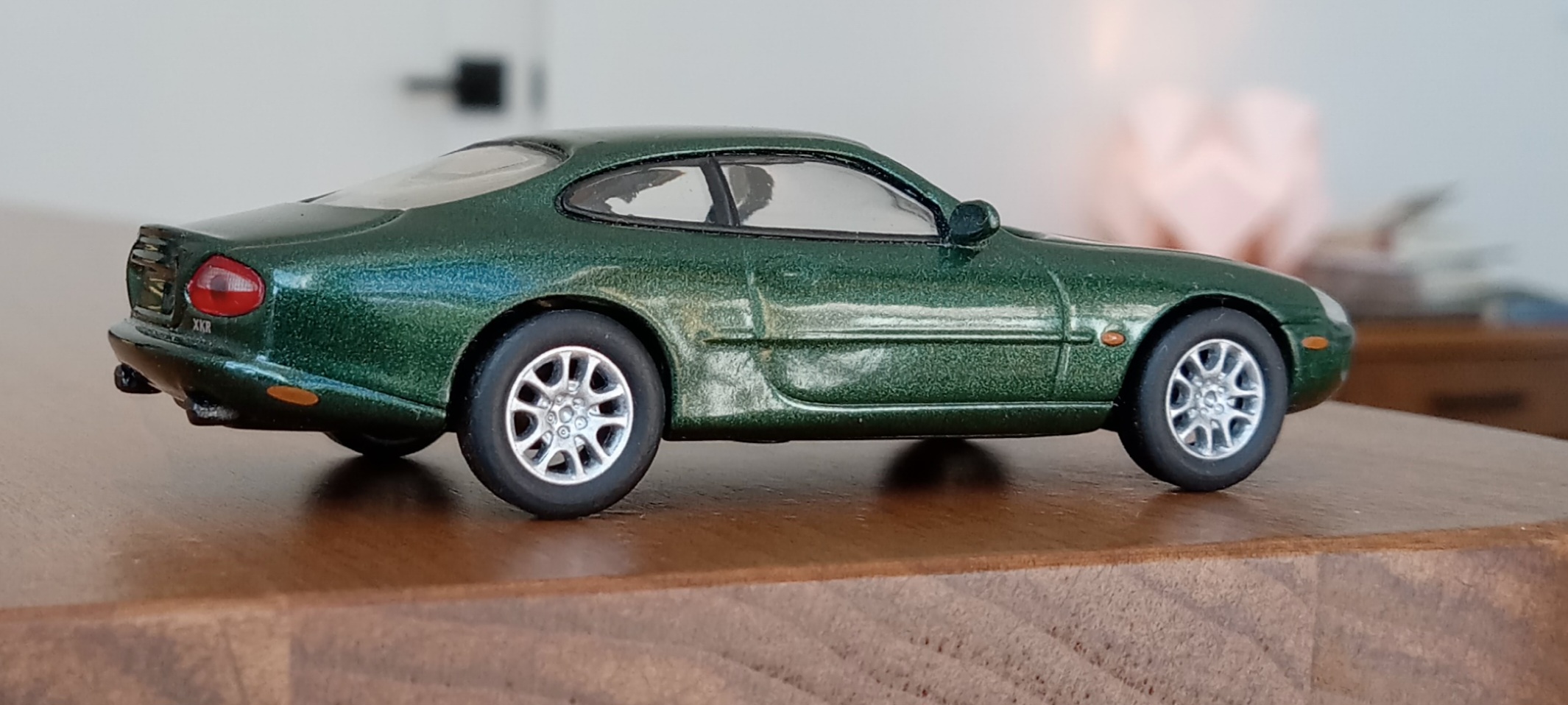
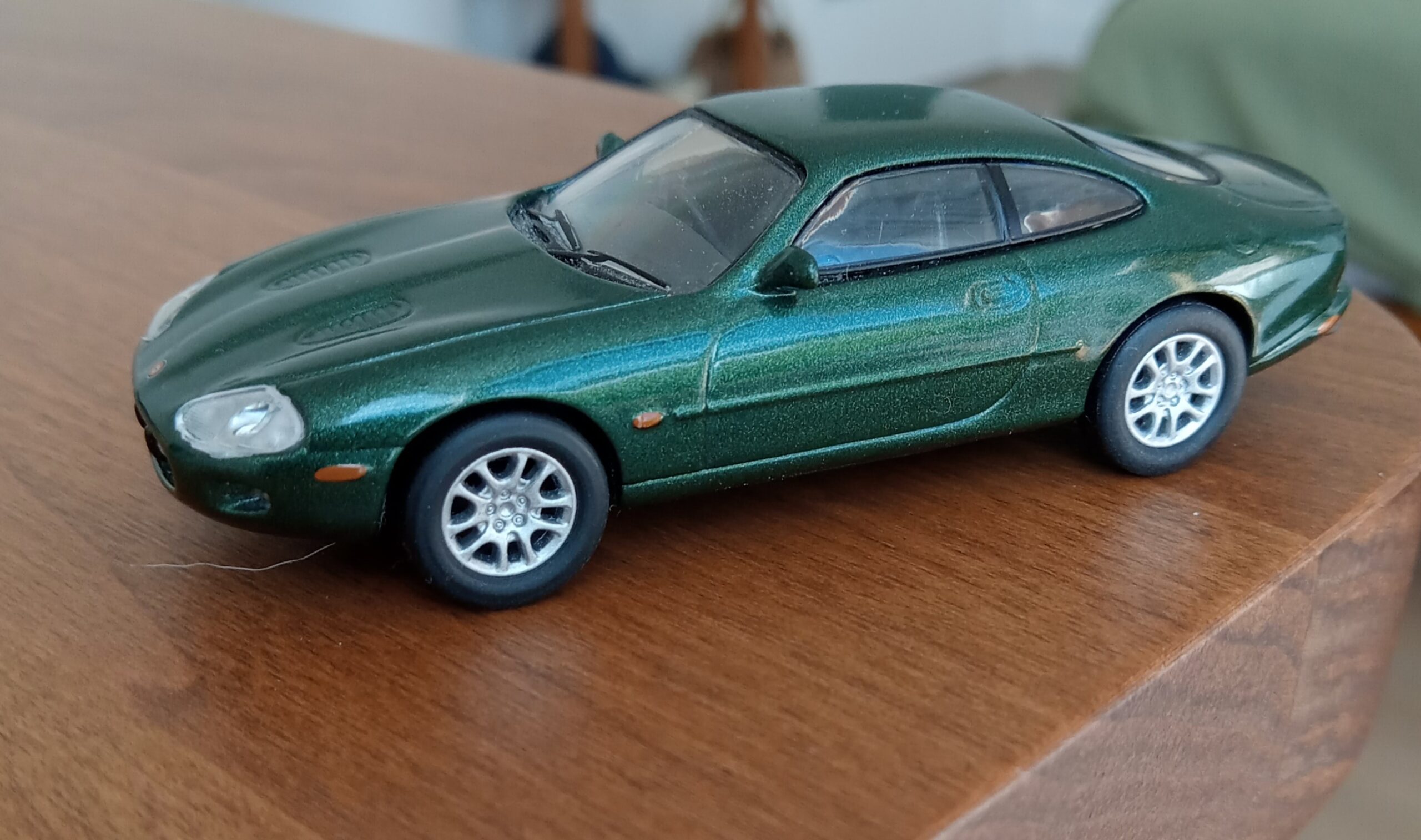
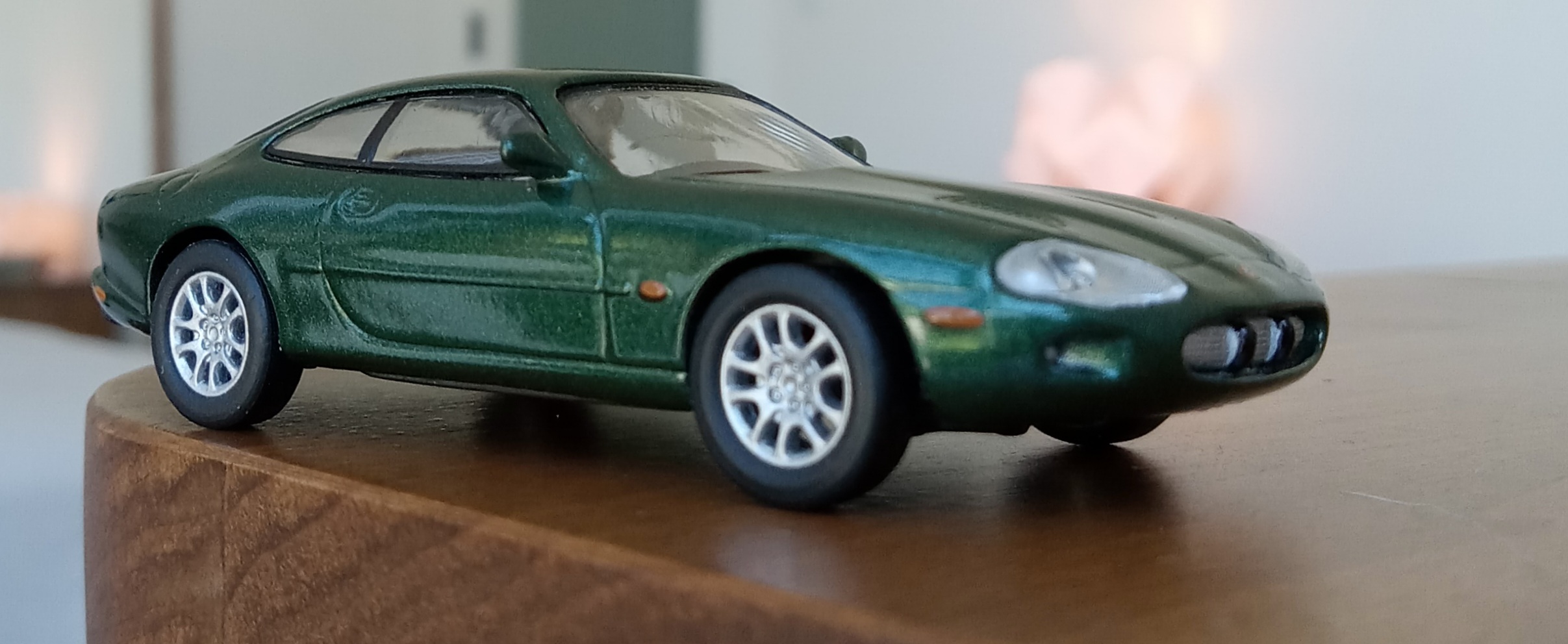
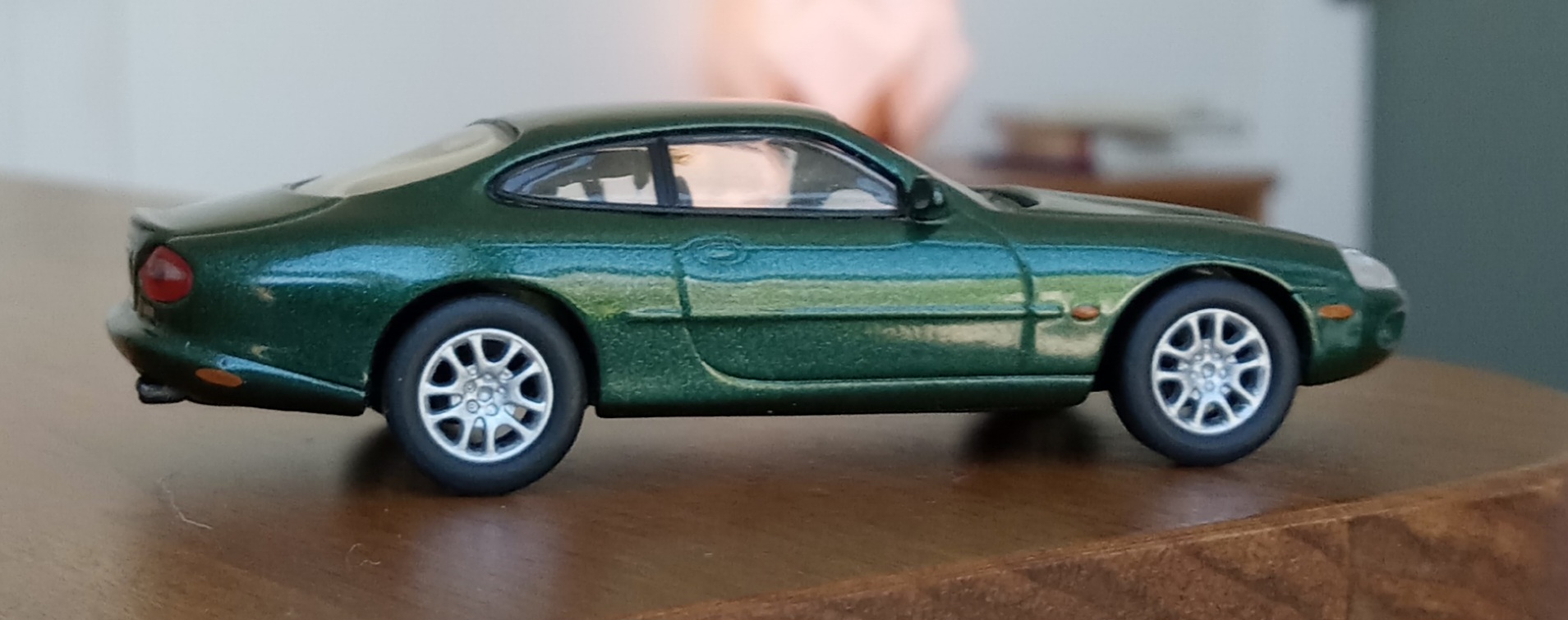
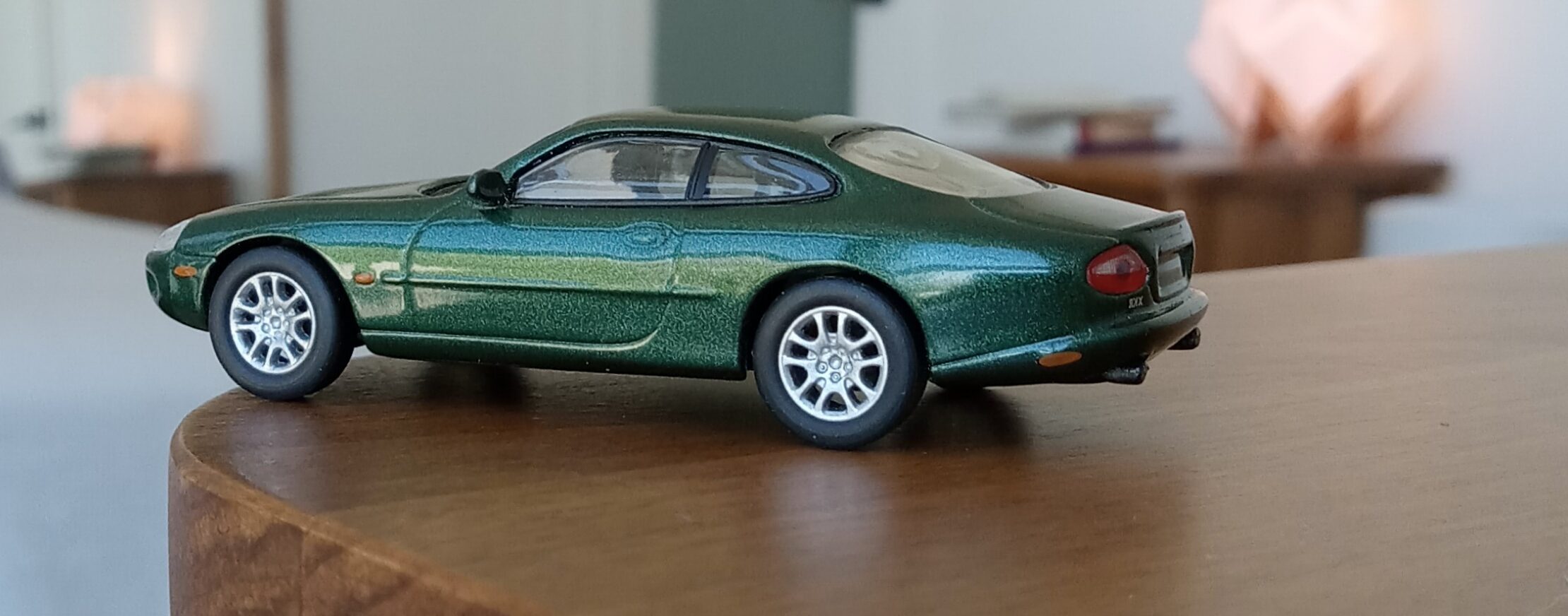
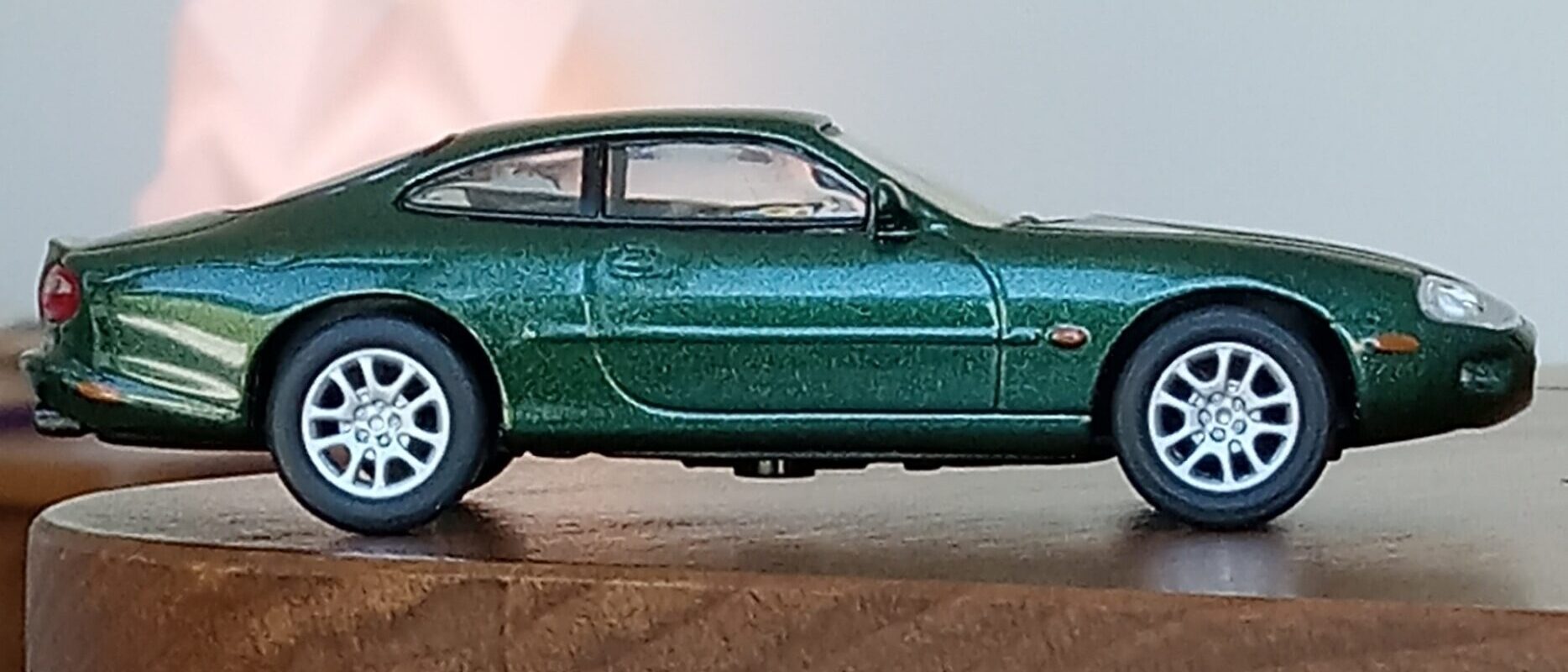
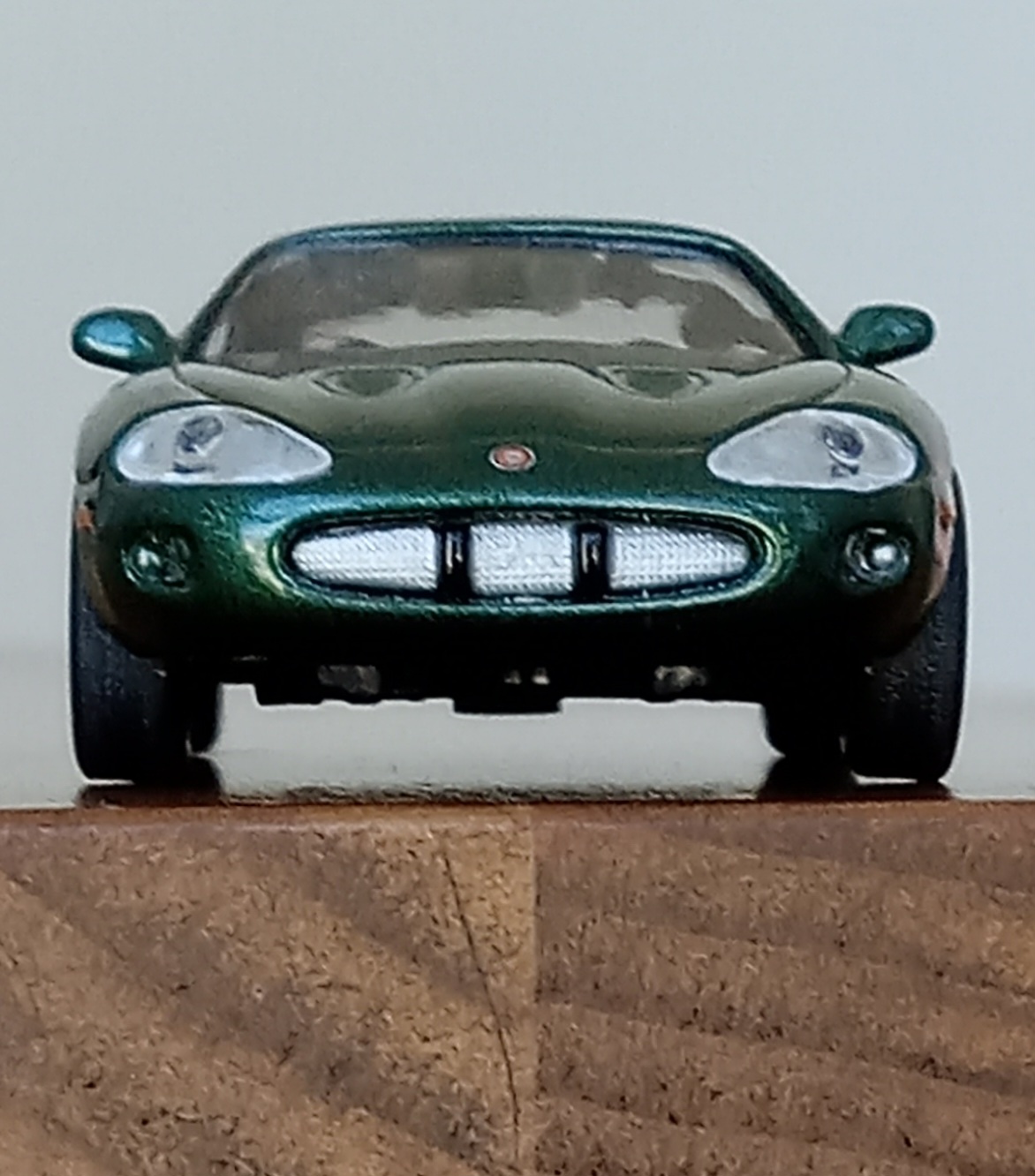
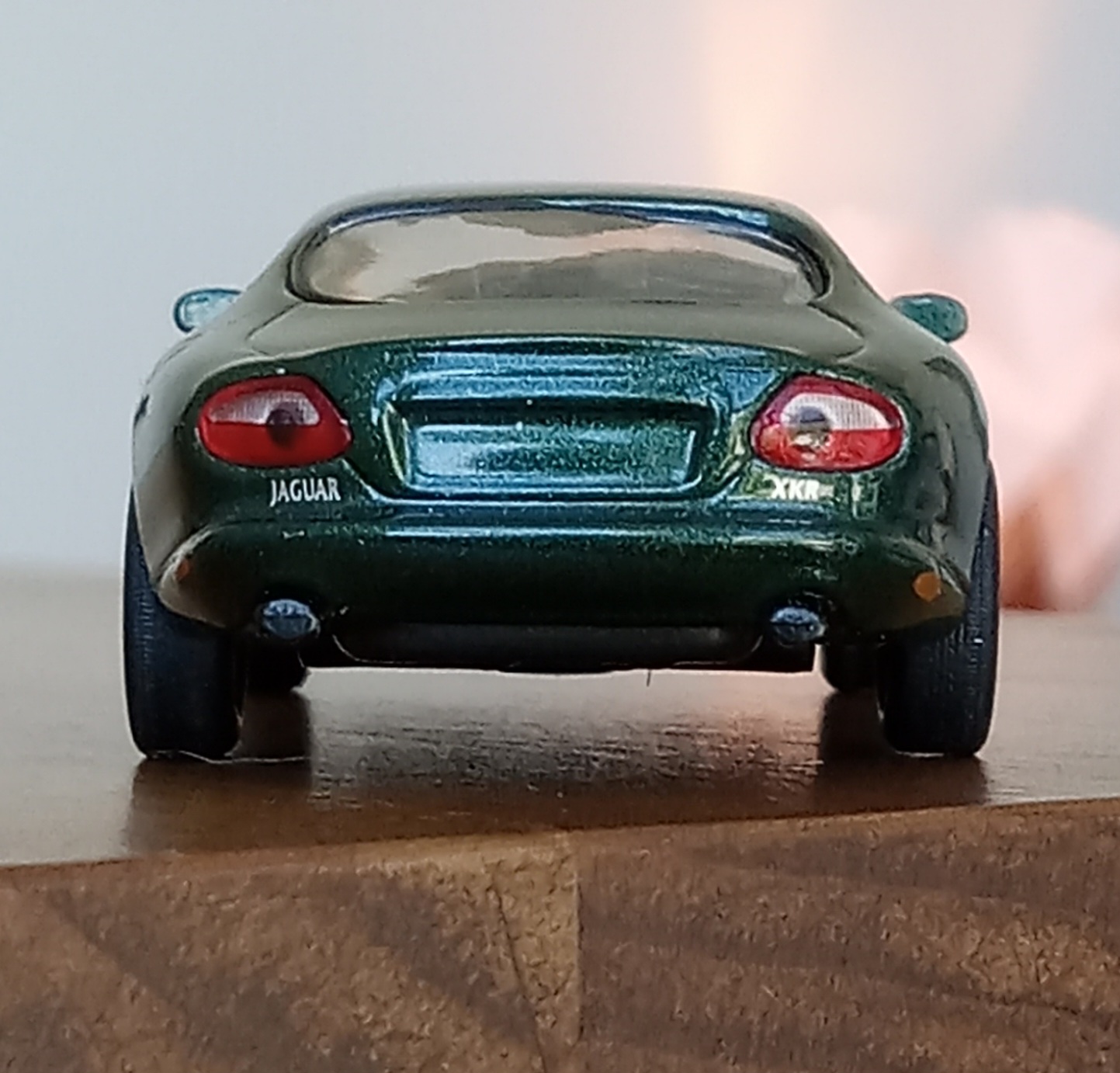
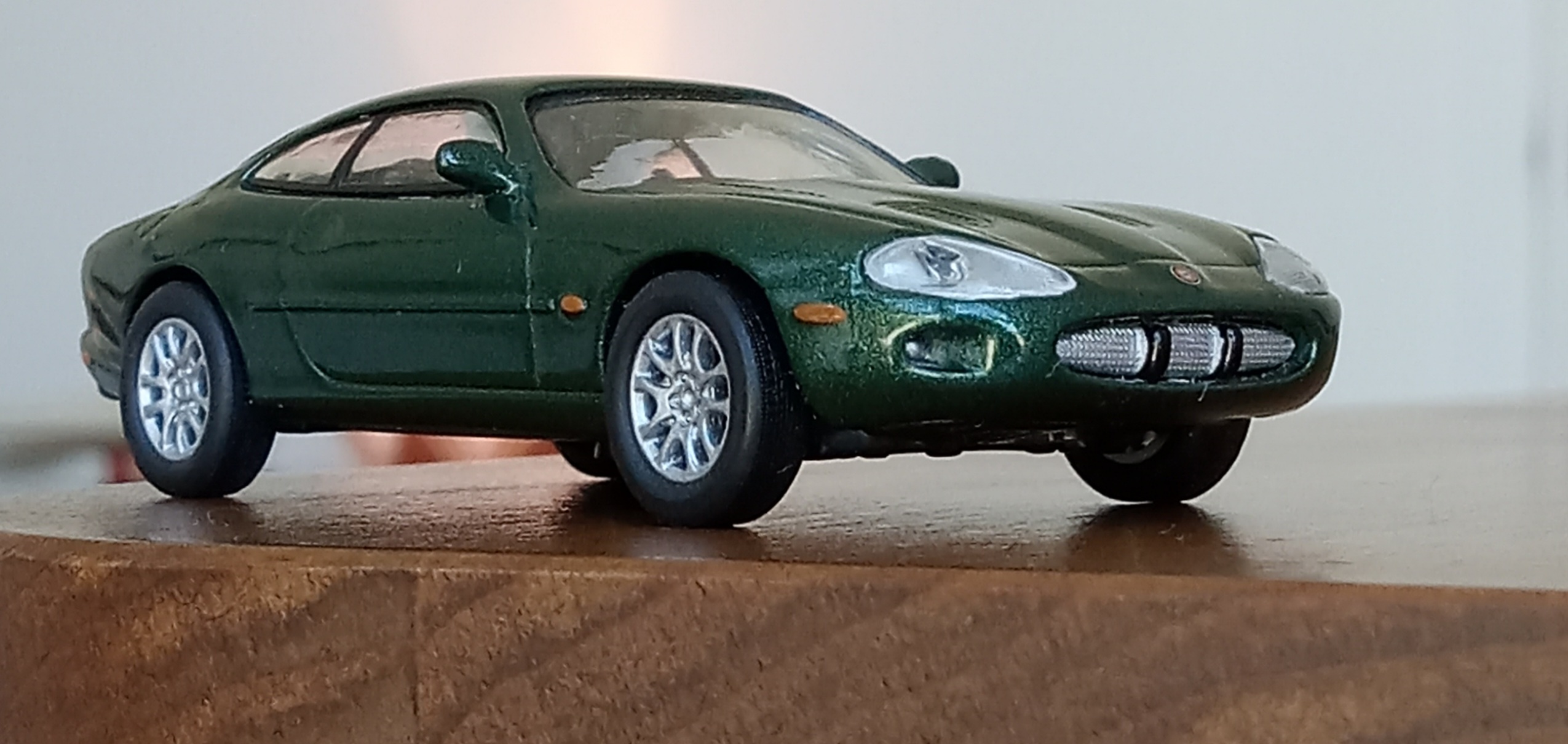
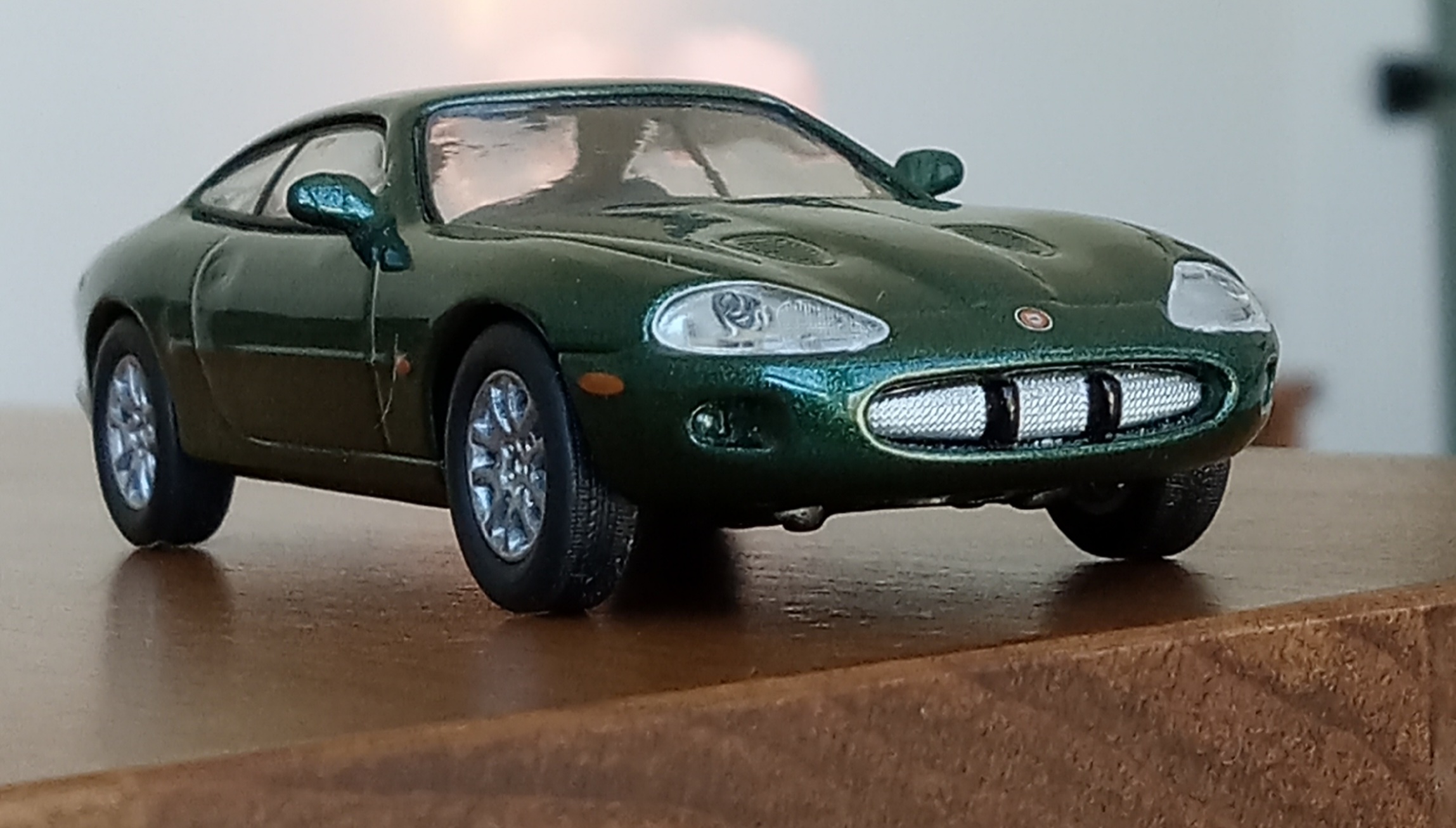
(写真撮影に使用した模型:京商製、1/64 ジャガー・XKR クーペ(メタリック・グリーン))
#好みの自動車デザインーー2ドアクーペの系譜:
第27回目の今回は、『2ドアクーペの系譜』と題しまして、各国のお国柄や、外観デザインの個性が強く表れる、高級2ドア(GT)クーペ / ロードスターについてお話ししてみたいです。【注意:オープンカーを含む】
以下の要領で進めていきます。
第9回の今回は【英国車編】
1996年型
ジャガー・XKR クーペ についてのお話です。
【2ドア・クーペの系譜:目次】
【米国車編】
第1回:キャデラック・エルミラージュ、2013(メタリック・レッド)
第2回:リンカーン・コンチネンタル MK4、1972(ブラック)
第3回:マーキュリー・クーガー, 1967(LTメタリック・グリーン)
【ドイツ車編】
第4回:MB 500K スペシャル・ロードスター、1936(ブラック)
第5回:MB 300SL ロードスター、1957(シルバー)
第6回:MB SLS AMR ガルウイング、2010(ブラック)
【英国車編】
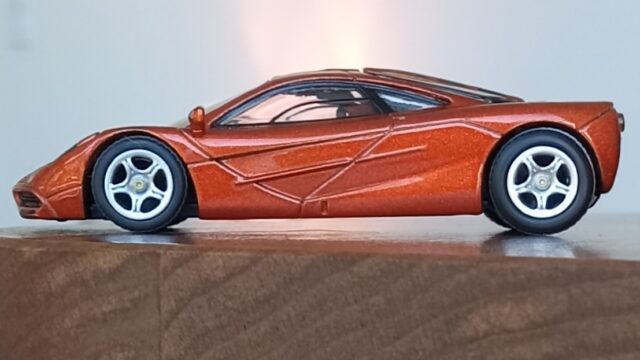
第7回:マクラーレン・F1、1992(メタリック・オレンジ)
第8回:ジャガー・XKSS ロードスター、1957(ロイヤル・ブルー)
第9回:ジャガー XKR クーペ、1996(ダークメタリック・グリーン)
【日本車・ニッサン編】
第10回:ニッサン 初代シルビア、1965(シャンペン・ゴールド)
第11回:ニッサン 5代目シルビア、1988(LTメタリック・グリーン)
【イタリア車編】
第12回:フェラーリ 250TR ポンツーンフェンダー、1958(赤)
第13回:フェラーリ 250GTO、1962(イタリアン・レッド)
第14回:ランボルギーニ・コンセプトS、2005(パール・ホワイト)
【日本車・マツダ編】
第15回:マツダ コスモ・スポーツ、1967(シルバー)
第16回:マツダ ユーノス・コスモ、タイプ‐S(2トン:黒&グレー)
【フランス車編】
第17回:ブガッティ・タイプ59、1935(フレンチ・ブルー)
第18回:シトロエン・SM、1970(シャンペーン・ゴールド)
第19回:ブガッティ・ラ・ヴォワチュール・ノワール、2019(黒)
【日本車・トヨタ編】
第20回:トヨタ/ヤマハ・2000GT、1967(アイボリー・ホワイト)
第21回:トヨタ・2代目ソアラ、1986 (2トン:黒&グレー)
第22回:レクサス LC【GWZ100型】、2017(メタリック・レッド)
【米国車編②】
第23回:ダッジ・チャレンジャー&プリムス・バラクーダ、1971
第24回:ダッジ・ヴァイパー SRT‐10 ACR、 2008(ブラック)
第25回:フォード・シェルビーGR-1 コンセプト、2004(クローム)
コルベットの系譜:(番外編)
第1回:1967年型 スティングレー【C2】コンバーチブル(ハードトップ・メタ青)
第2回:1972年型 コルベット 【C3】コンバーチブル(メタリック・ブルー)
第3回:1990年型 コルベット ZR-1【C4】クーペ(レッド)
第4回:スティングレー・コンセプト【先行開発車】、2009(プルー・メタリック)
#歴史的名車、Eタイプ・ジャガーの復活?それとも、、、
私にとって英国車と言えば、
*合理性(常識)の追求と、時々訪れる
*そこからの大幅な逸脱の面白さが
興味の中心です。
今回注目する、
【ジャガーXKR】もそんな逸脱感
が産んだ稀有な存在です。
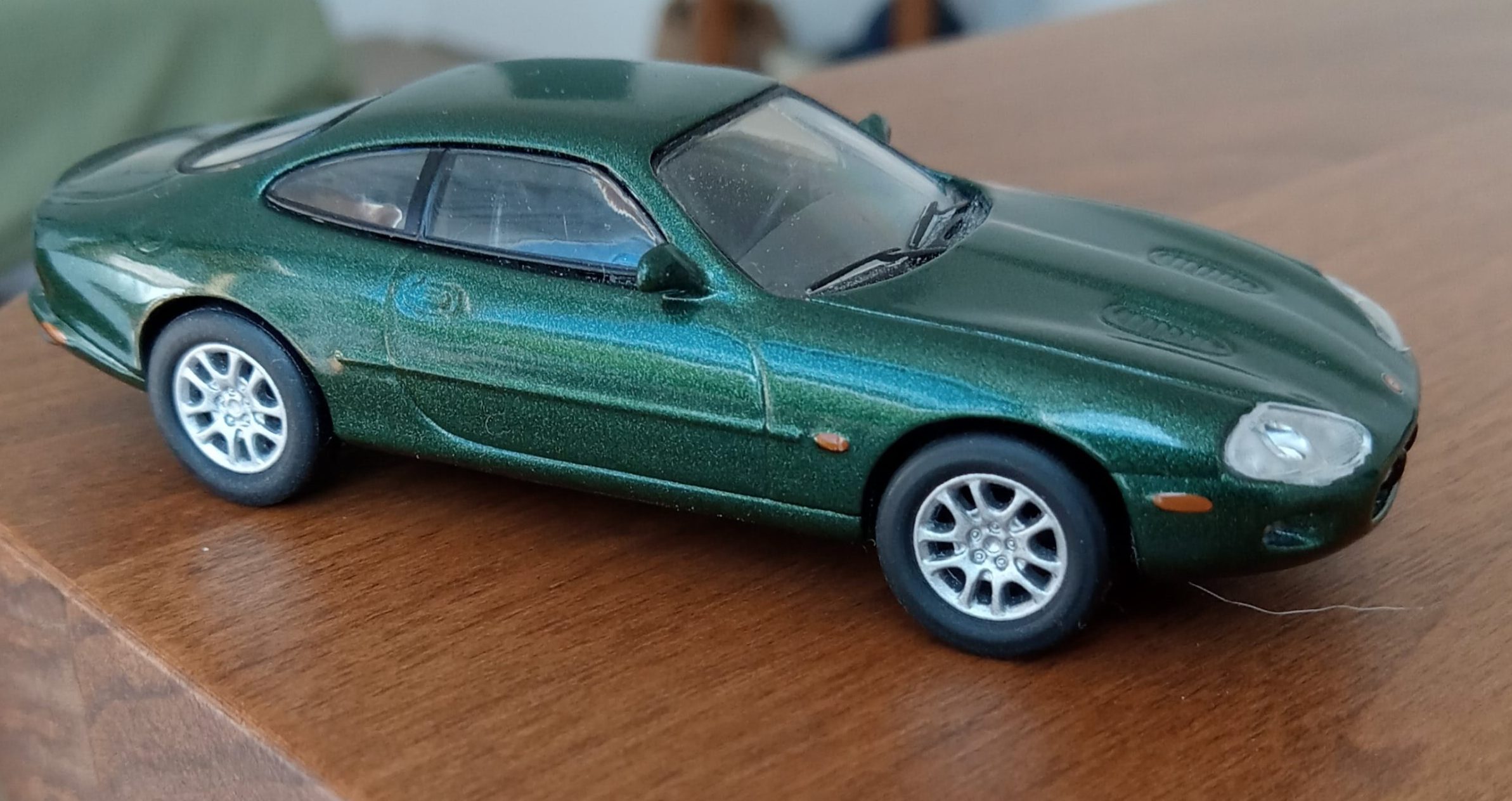
私にとってジャガーXKRは、
使い古した
石鹸にスプーンの丸いところを被せた
様な感じです。
使用前の直線部分が全くなくなるほど
擦られ、磨かれ
出来上がったナチュラルな曲面のカタマリです。

更に、英国の道路事情からか、
抑制気味になりがちな自動車の全幅を
この車の場合は大幅に広げ、デザイナーの自由に任せた感じ、
その逸脱感が結果的に、
ーーーー>いい塩梅に、立体としての
カタマリ感
を生んでいます。
*横幅
*長さ
*高さ
の全方位への、
贅沢な空間使用感がみなぎっています。)
(この逸脱した大柄パケージは、ジャガーMK10なんかにも顕著ですね。)
それではこんな感じで、
進めて行きましょう。
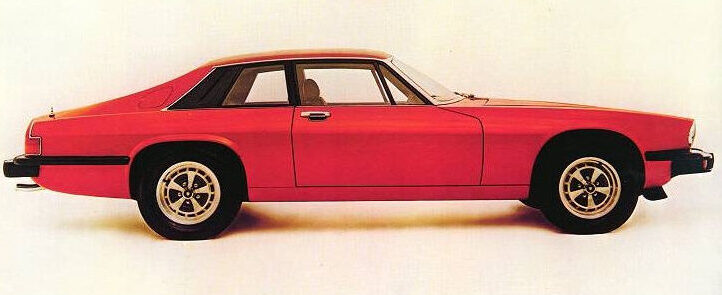
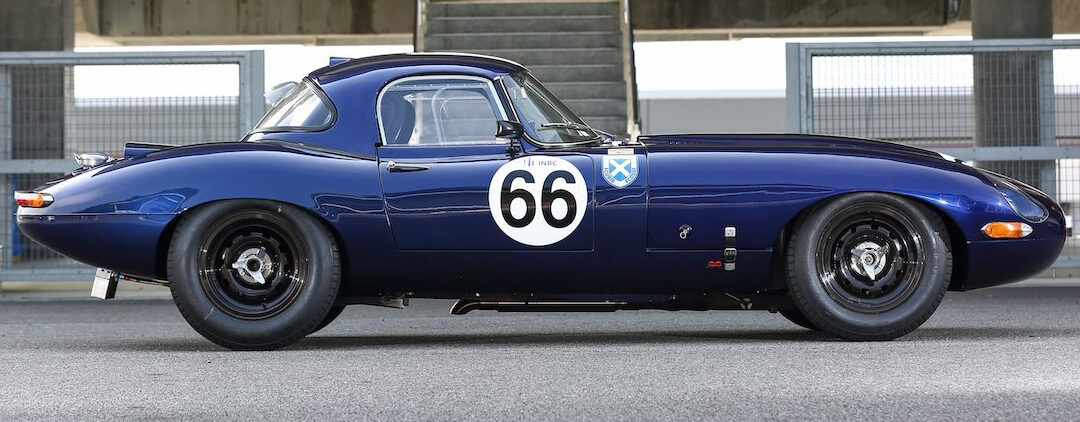
*実車解説:Eタイプ+XJS÷2=?
*外観デザインの特徴:
*『私』と XKR:リアバンパー以外は完璧?、、、、
*三題噺:近鉄『いてまえ』打線・XJS・固形石鹸
*その他の愛すべき『逸脱デザイン』達
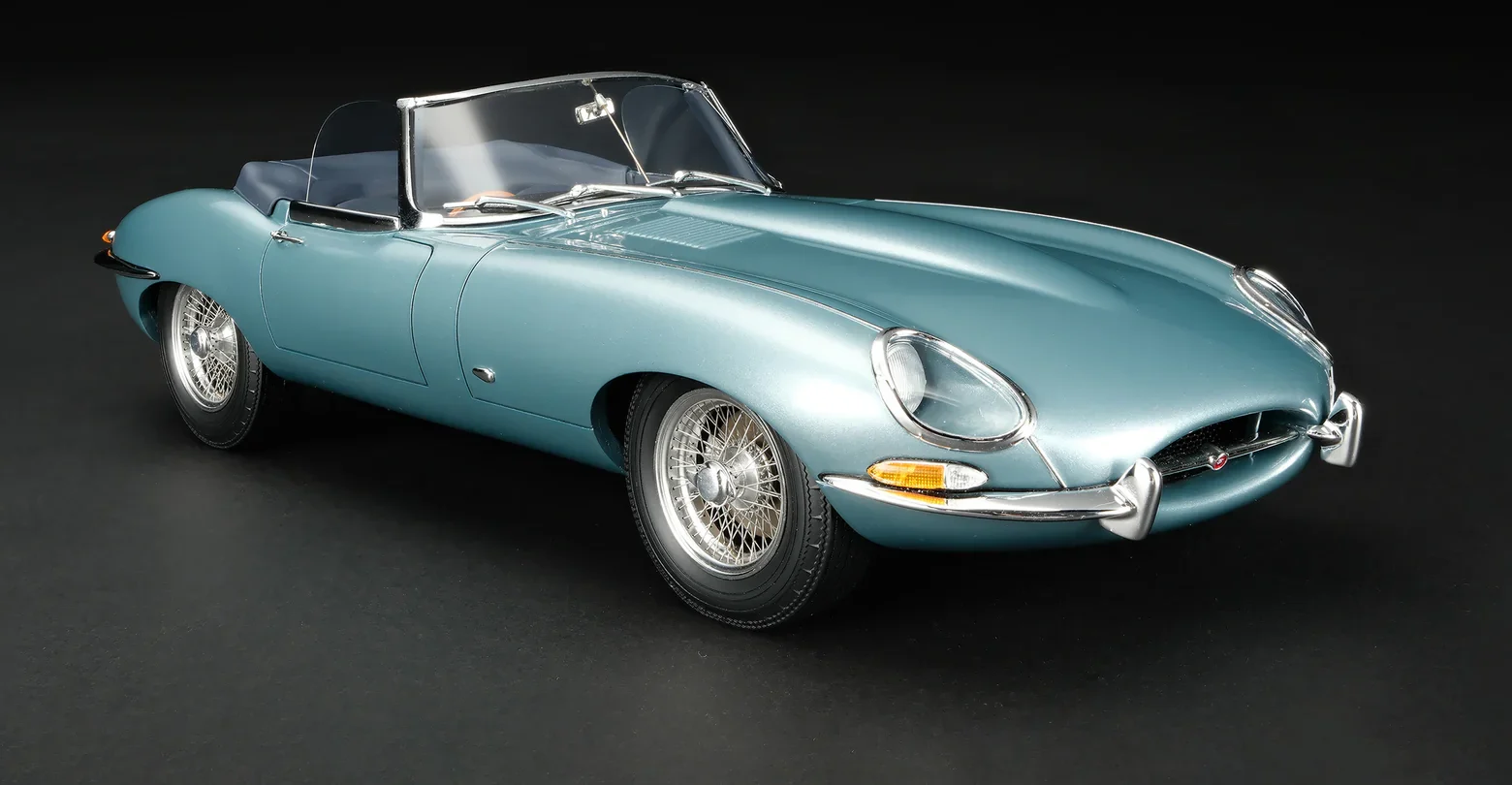
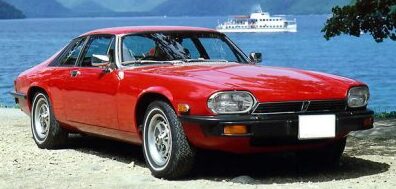
*実車解説: E‐タイプ+XJ‐S÷2=?
n
n
n
n
n
n
n
n
n
n
n
n
N
n
n
n
n
n
n
n
n
n
n
n
n
n
n
n
n
n
n
n
n
n
n
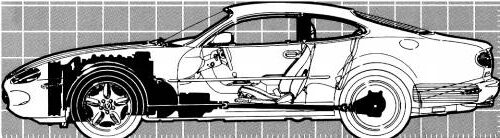
*エンジン: 新開発の4.0L V8 DOHCエンジン(AJ-V8型)を搭載。
*トランスミッション: Jゲート式と呼ばれる独自のシフトパターンを持つZF社製5速AT(のちに6速化)を採用。
*駆動方式: 正統派のFR(後輪駆動)
*定員: 2+2の4人乗りですが、後席は非常にコンパクトな設計です。
n
n
n
n
この初代XKは、フォード傘下で培われた信頼性と、ジャガー本来の華麗なスタイルを高い次元で両立させたモデルとして、その高性能と美しいデザインから人気を博し、初代モデルは10年間で9万台以上を売りあげるという、ジャガーのスポーツカー史上最も成功したモデルとなり、現在でも「ネオクラシック」として根強い人気があります。
n
n
n
n
n
n
n
n
n
n
n
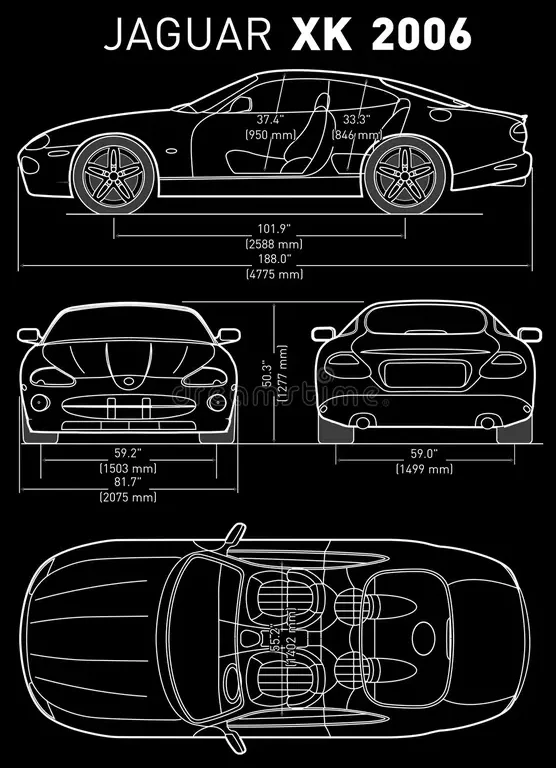
#主要諸元:
- 型式:AJ26型
- 総排気量: 3,996㏄ V型8気筒(イートン社製スーパーチャージャー付き)
- 最高出力 : 375ps
- 最大トルク:約 525 Nm以上
- 駆動方式:FR(フロントエンジン、リアドライブ)
- 定員:4名(2+2)
- 車体形式:2ドア・クーペ
- ホイールベース:2,590 mm
- 全長:4,770 mm
- 全幅:1,830 mm
- 全高:1,300 mm
- 車両重量:
約1,600kg〜1,700kg前後
*外観デザインの特徴:自由に空間を使って、E-タイプを再構成?
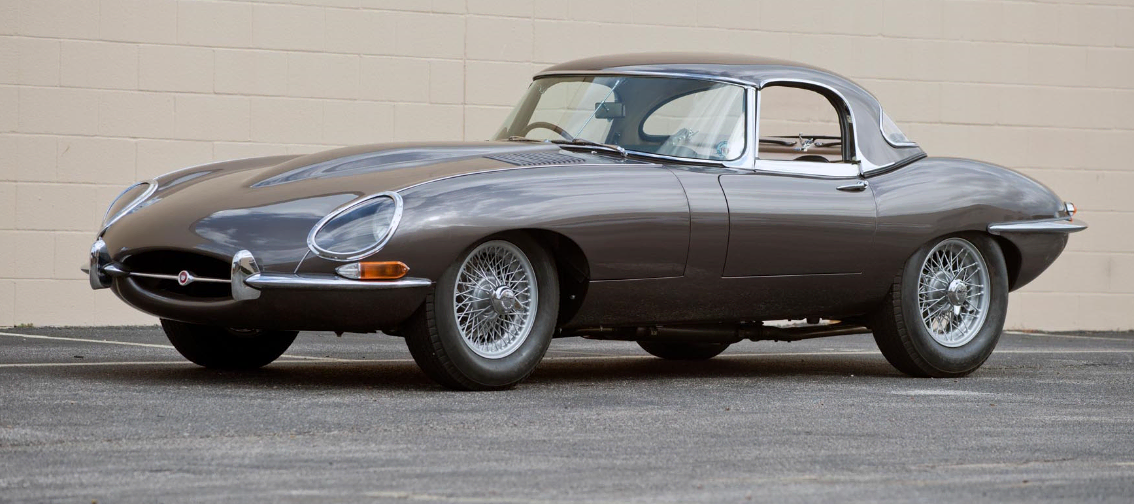
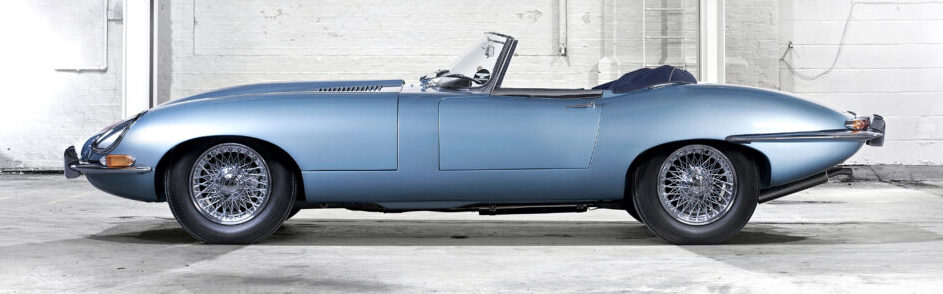
私がEタイプを『デザインベスト10』に
入れなかった理由ですが、
実際に本物を見た時に、
*全幅がかなり狭いのと、
*タイヤがホイールハウス内に入るデザインのため、
私の自動車デザインにとって、
最重要項目に当たります、
『スタンス感』
が全くなく、レールの上に乗る電車の車輪ような、
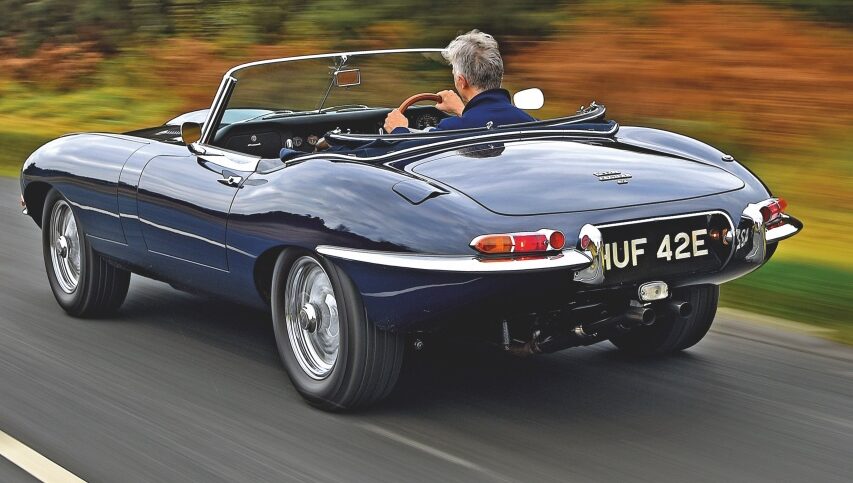
人間でいうと『内また歩き』のような、ひ弱な
イメージが付きまとい、今一触手が動きません。
そんな理由がありました、、、、
E-タイプの中では、
むしろ、
*車幅が増して、
*オーバー・フェンダー気味のフレアーも付き、
*スタンスが改善された、
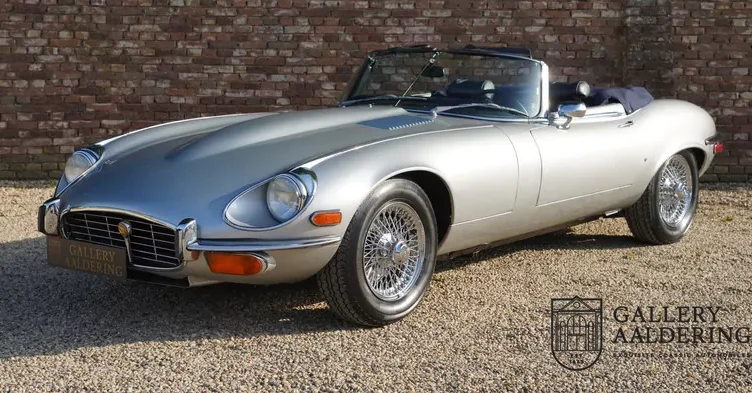
最終型のMK3のコンバーチブルが好みです。
それでは、
『ジャガーXKR』の
デザイン的特徴を5つ上げてみましょう。
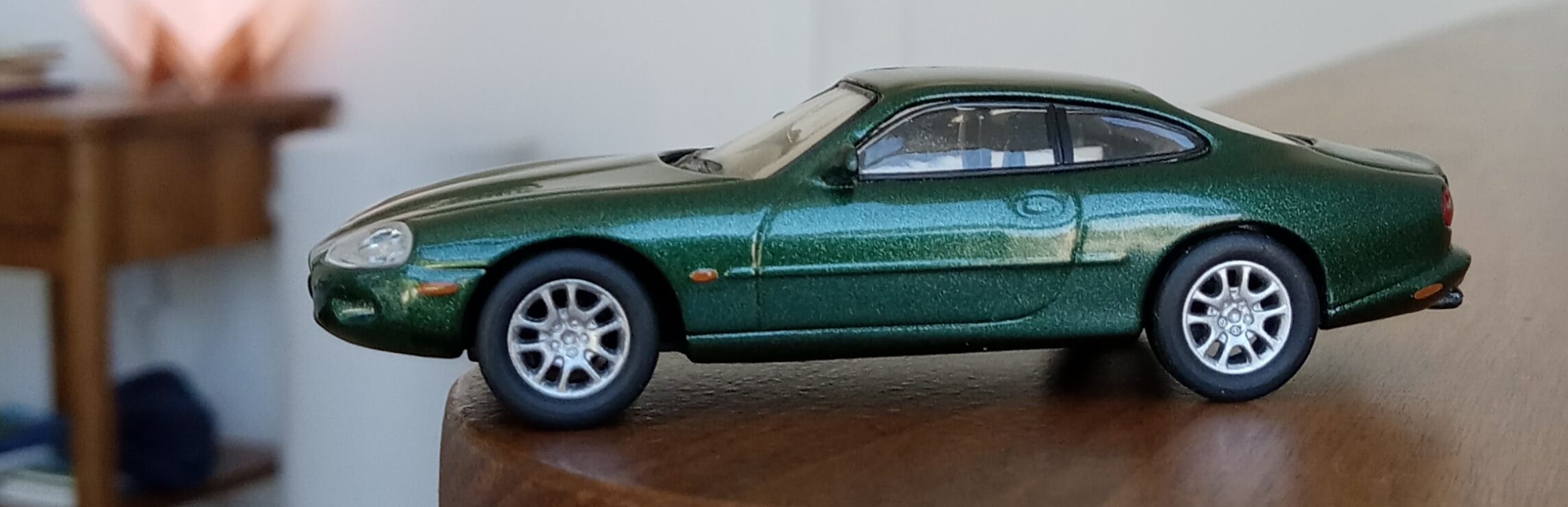
1、パンパンに張った、健康的な表面張力満点のボディーが横に回った瞬間、スレンダーなモデル体型に変身する不思議な全体像
ーーーーー>まさに『XJ-S+Eタイプ÷2』の傑作デザイン
2、手で粘度の高い素材をシッカリこね回して最終的に、『ハイ!こんなん出ましたけど?』的な芸術肌のモデラーがひねり出した【手ひねり】の逸品
ーーーーー>洗練より、「勢い=純粋さから湧き出るパワー」が漲っています。
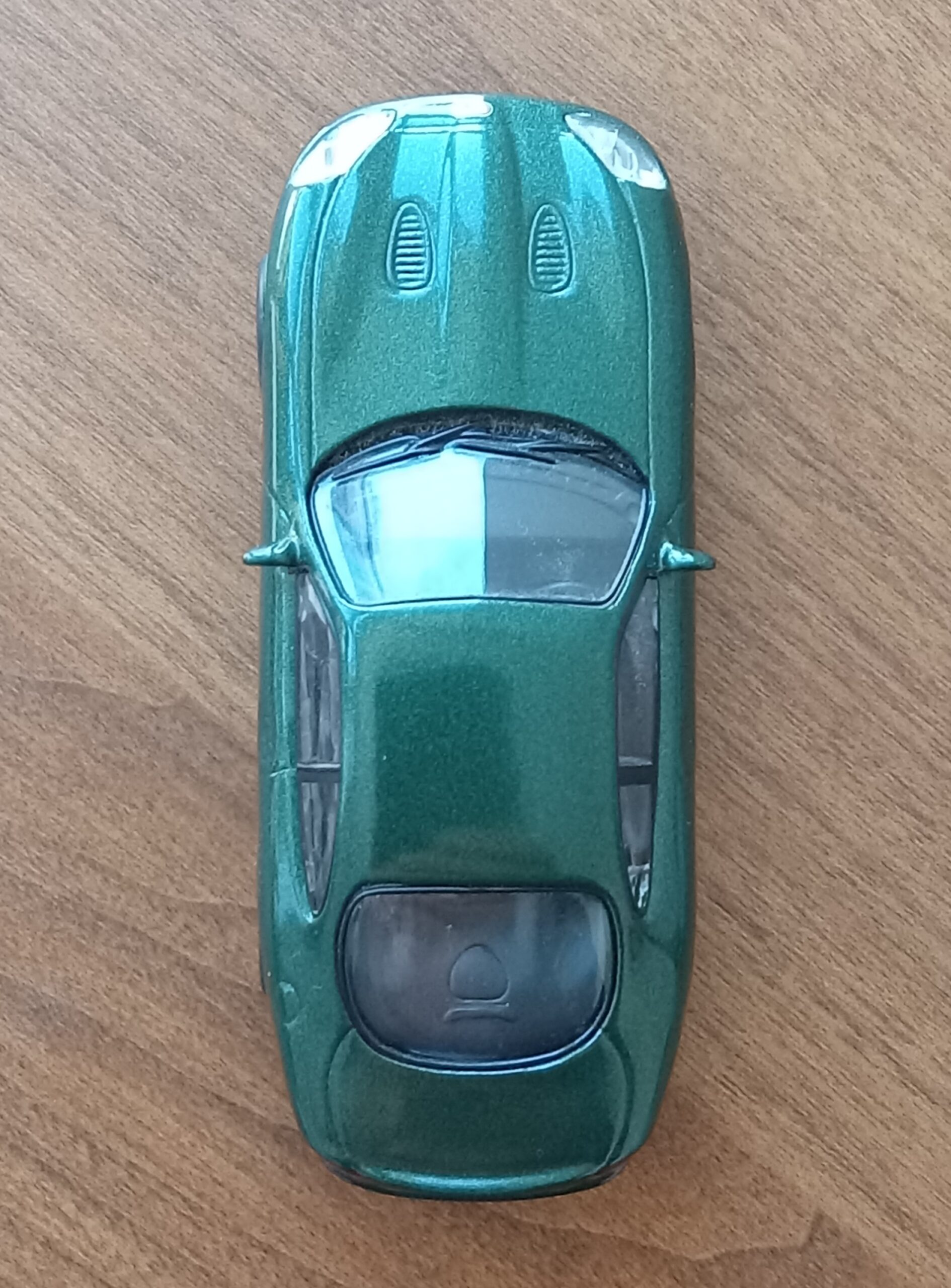
3、真上から見た時のサイドの「お腹」部分の張り出しの凄さ
ーーーーー>道の狭い英国向けではないですが、E-タイプにない自由さが持ち味です。
4、E-タイプのフロントエンドへのオマージュを、『面影程度』で留めたフェイシア・デザインの奥ゆかしさ
5、リアシートに大人がぎりぎり乗車可能ながらも、美しいクーペ・スタイルのルーフラインを実現
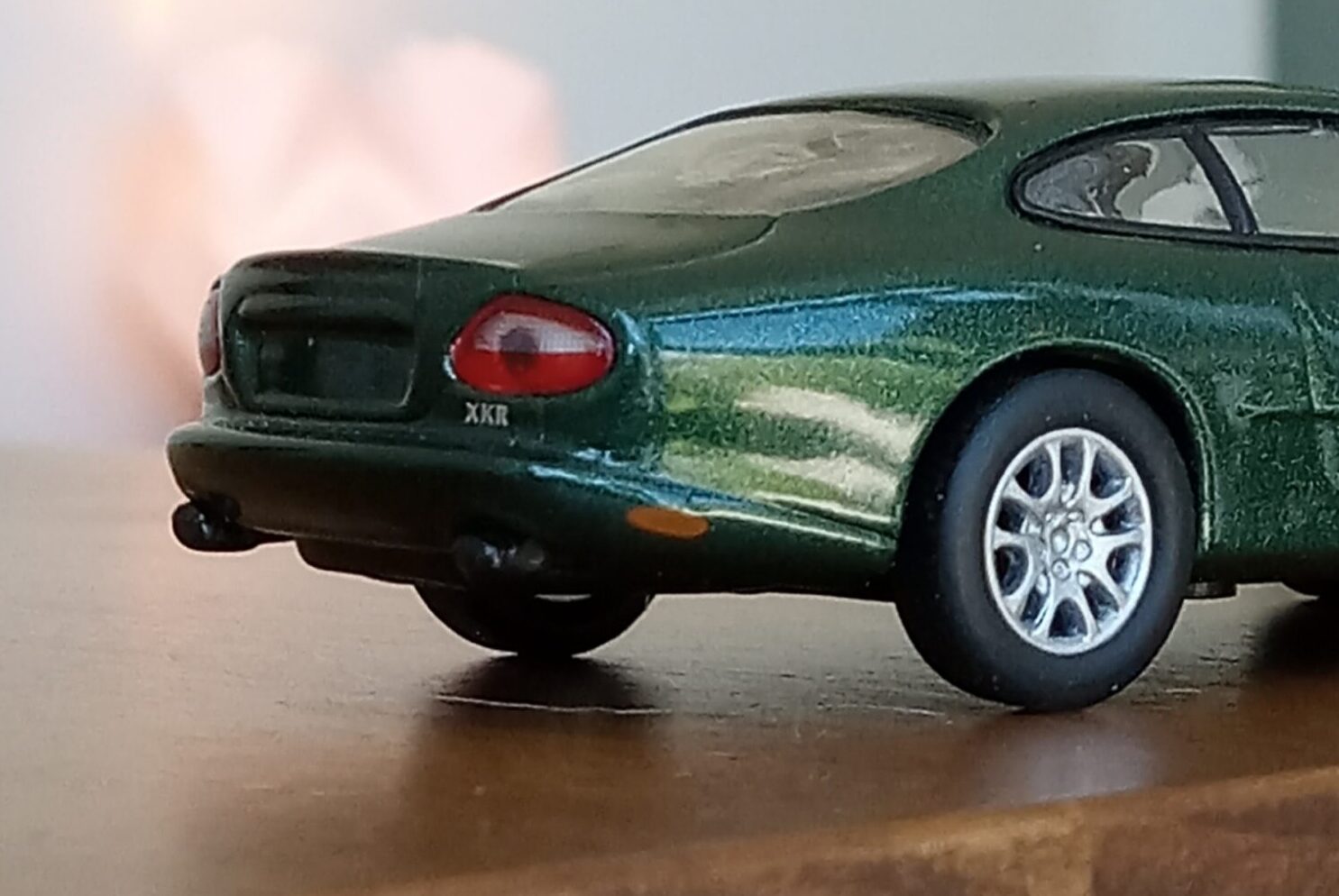
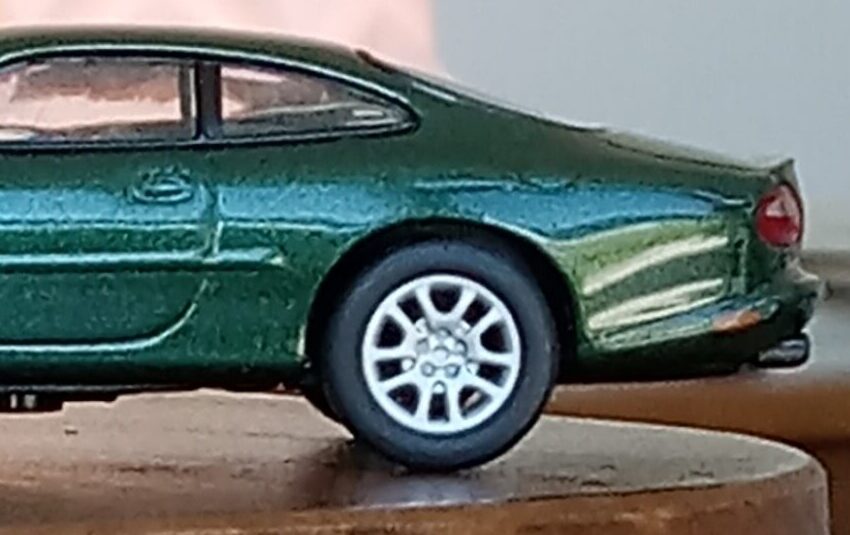
@1、唯一のマイナスポイントは、リアバンパー部分の脈略がなく、掴みどころもない『とってつけた感』満点の【ひょっとこ顔】造形
1、パンパンに張った、健康的な表面張力満点のボディーが横に回った瞬間、スレンダーなモデル体型に変身する不思議な全体像
(パケージをよくよく観察しますと、70年型ムスタングマッハ1や70年型ダッジ・チャレンジャーなどのアメリカ産、中型マッスルカーとほぼ同じエンジン位置、大きさで、明らかに米国市場を意識して、英国の狭い道幅における便宜は捨てています。)
ーーーーー>ジャガーMK10譲りの逸脱感満点の振り切れたデザインが最高です!!
ーーーーー>まさに『XJ-S+Eタイプ÷2』の傑作デザイン
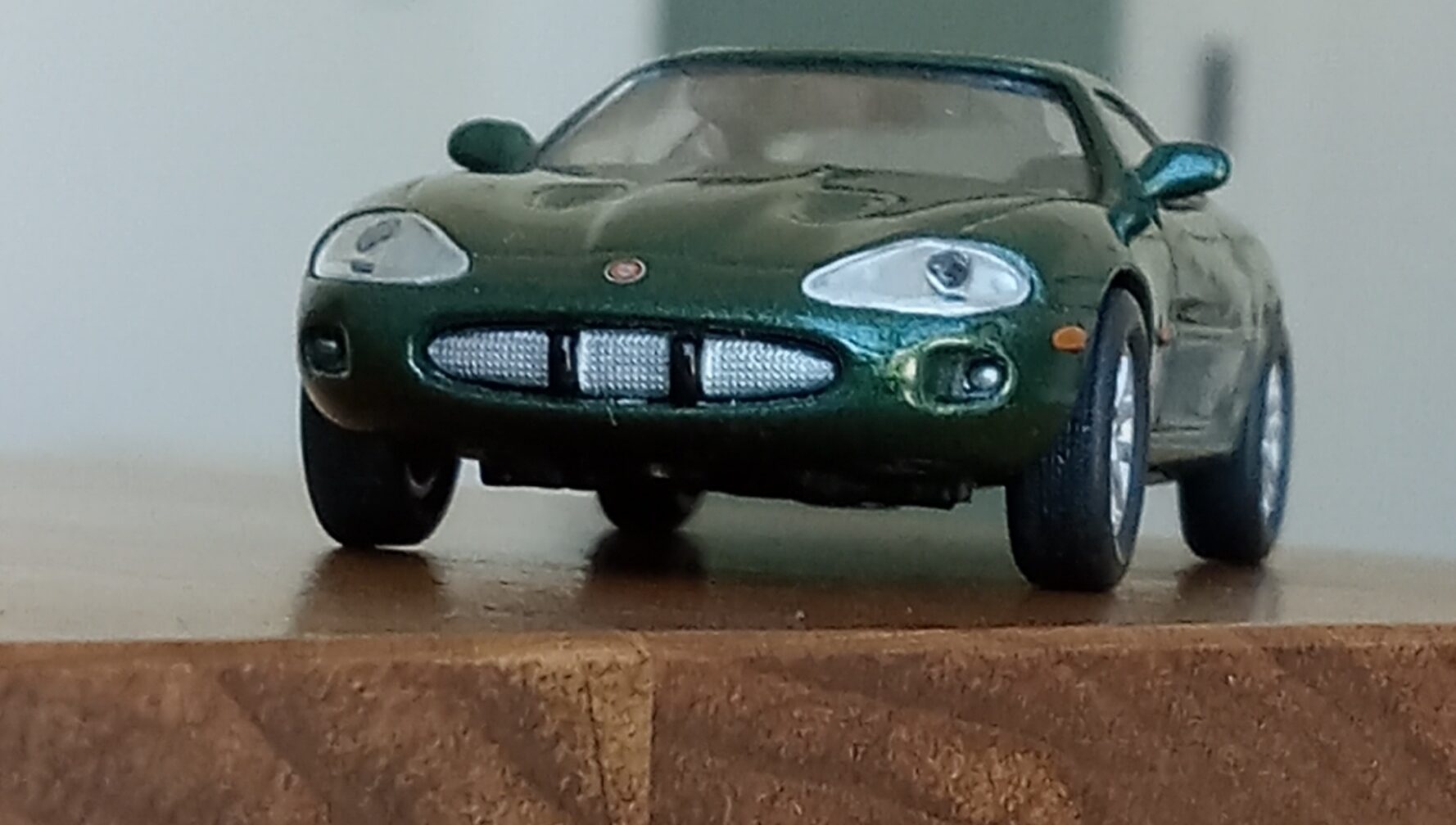
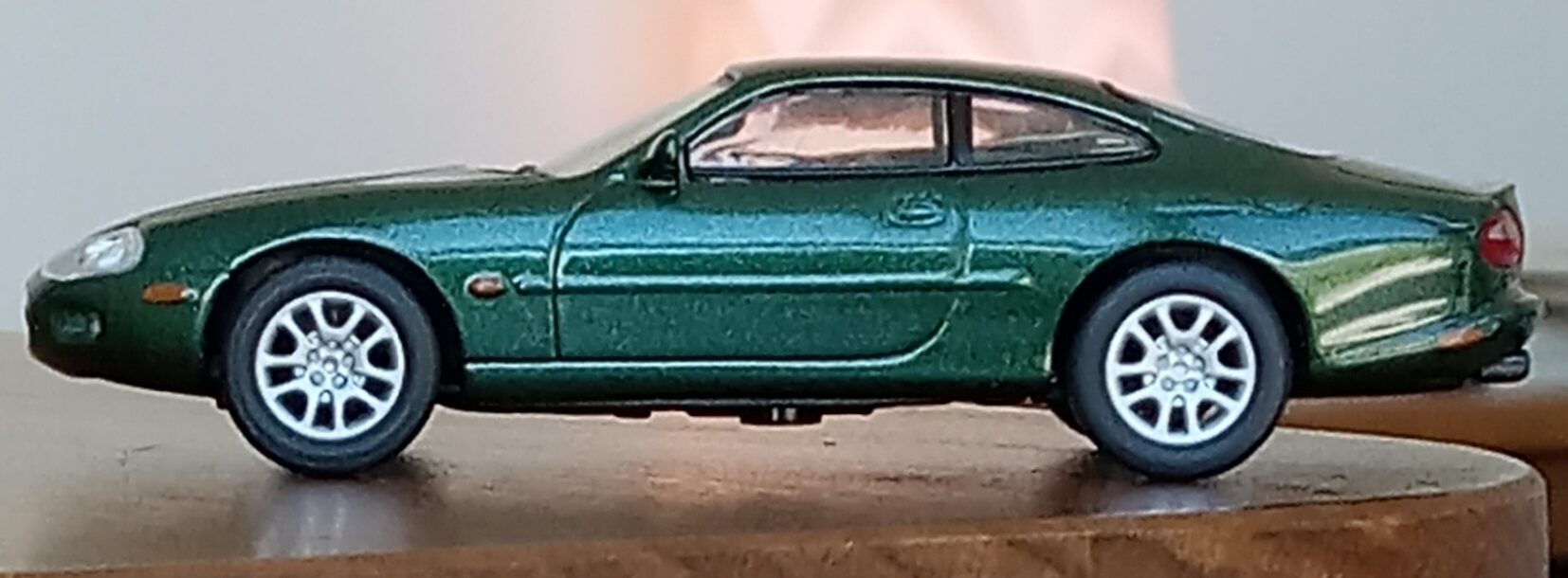
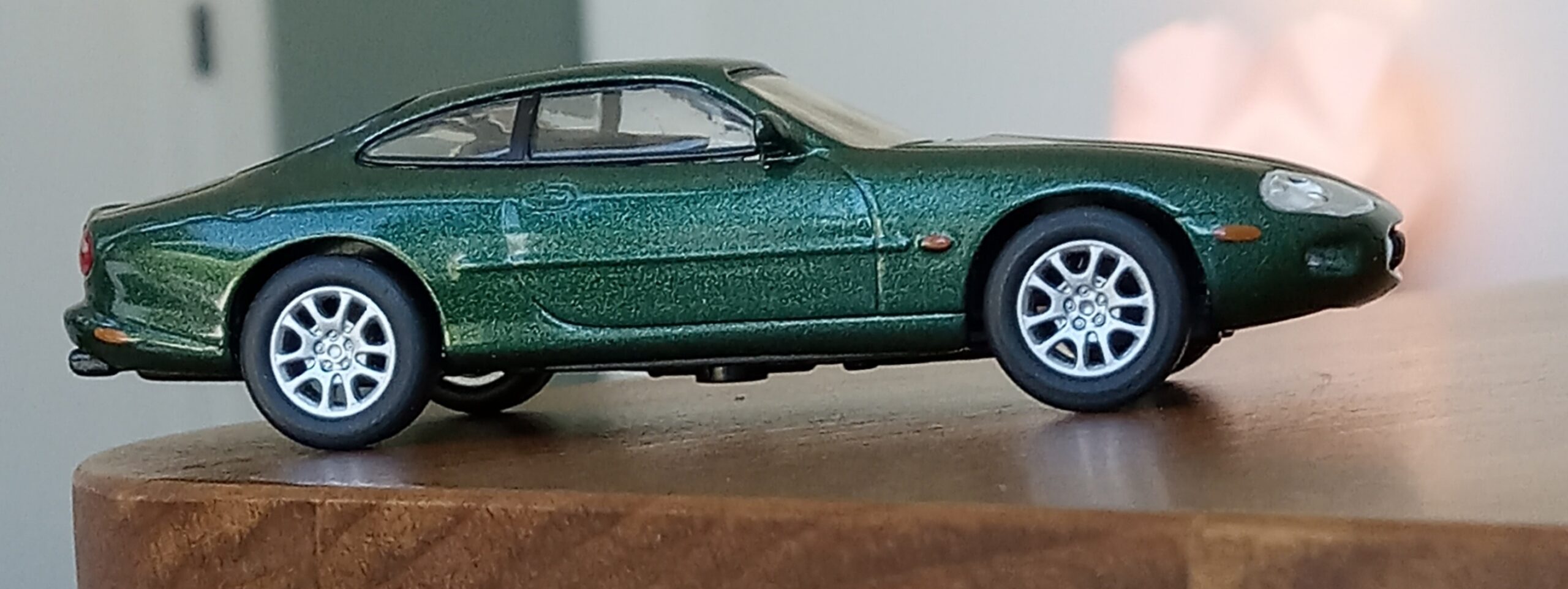
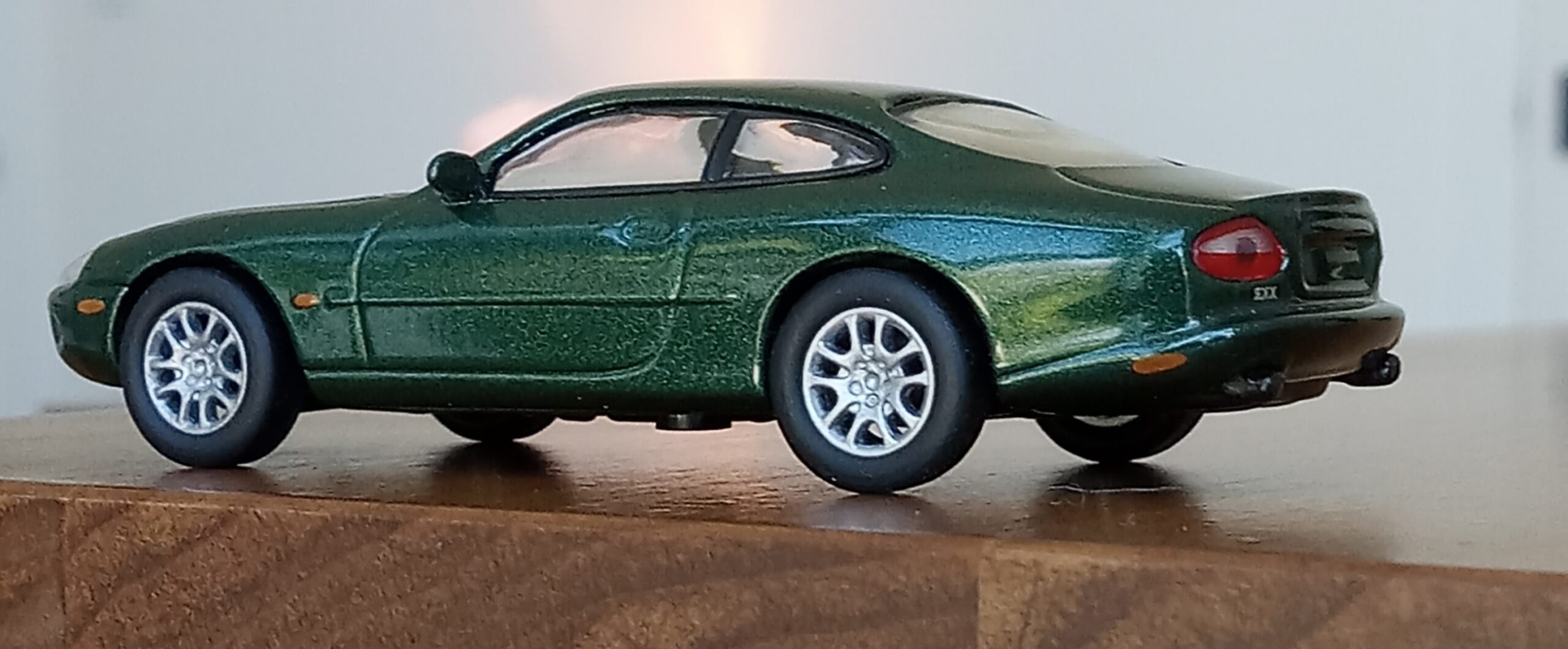
2、手で粘度の高い素材をシッカリこね回して最終的に、『ハイ!こんなん出ましたけど?』的な芸術肌のモデラーがひねり出した【手ひねり】の逸品
ーーーーー>洗練より、「勢い=純粋さから湧き出るパワー」が漲っています。

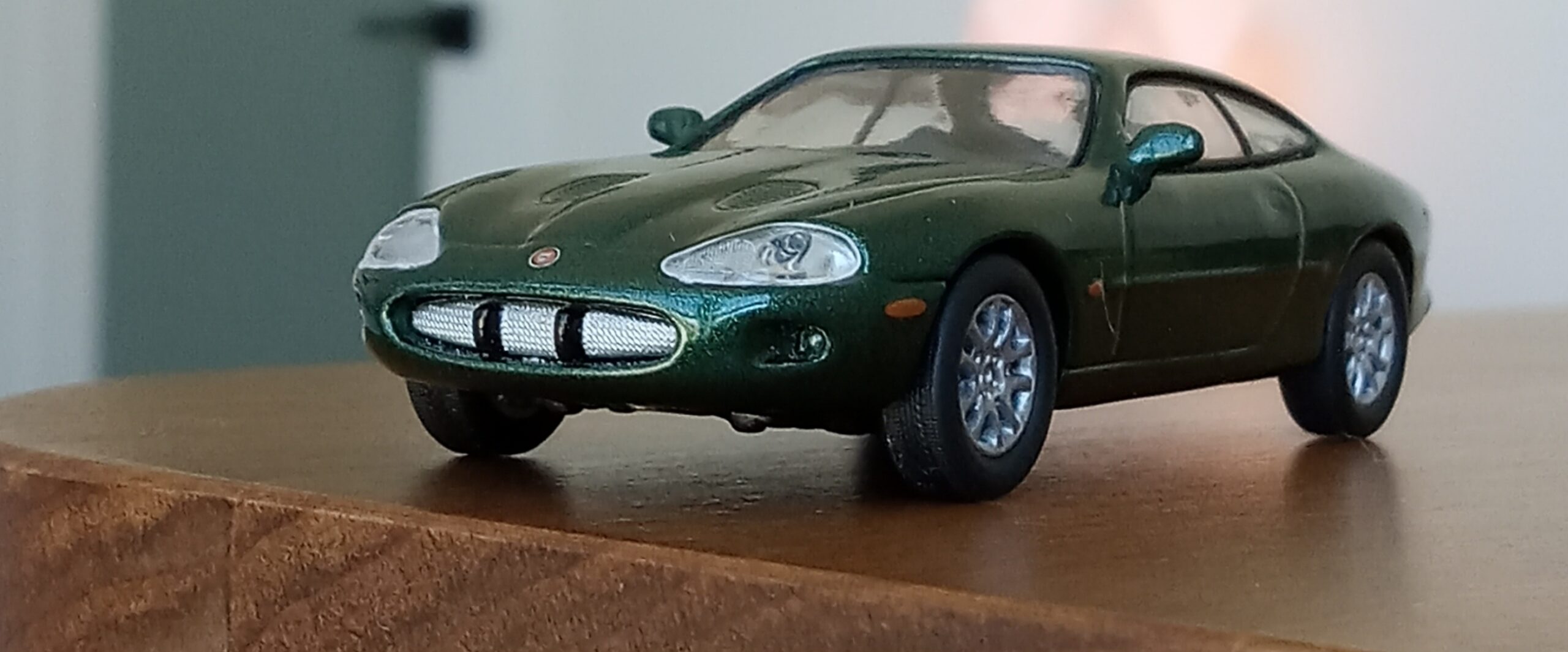
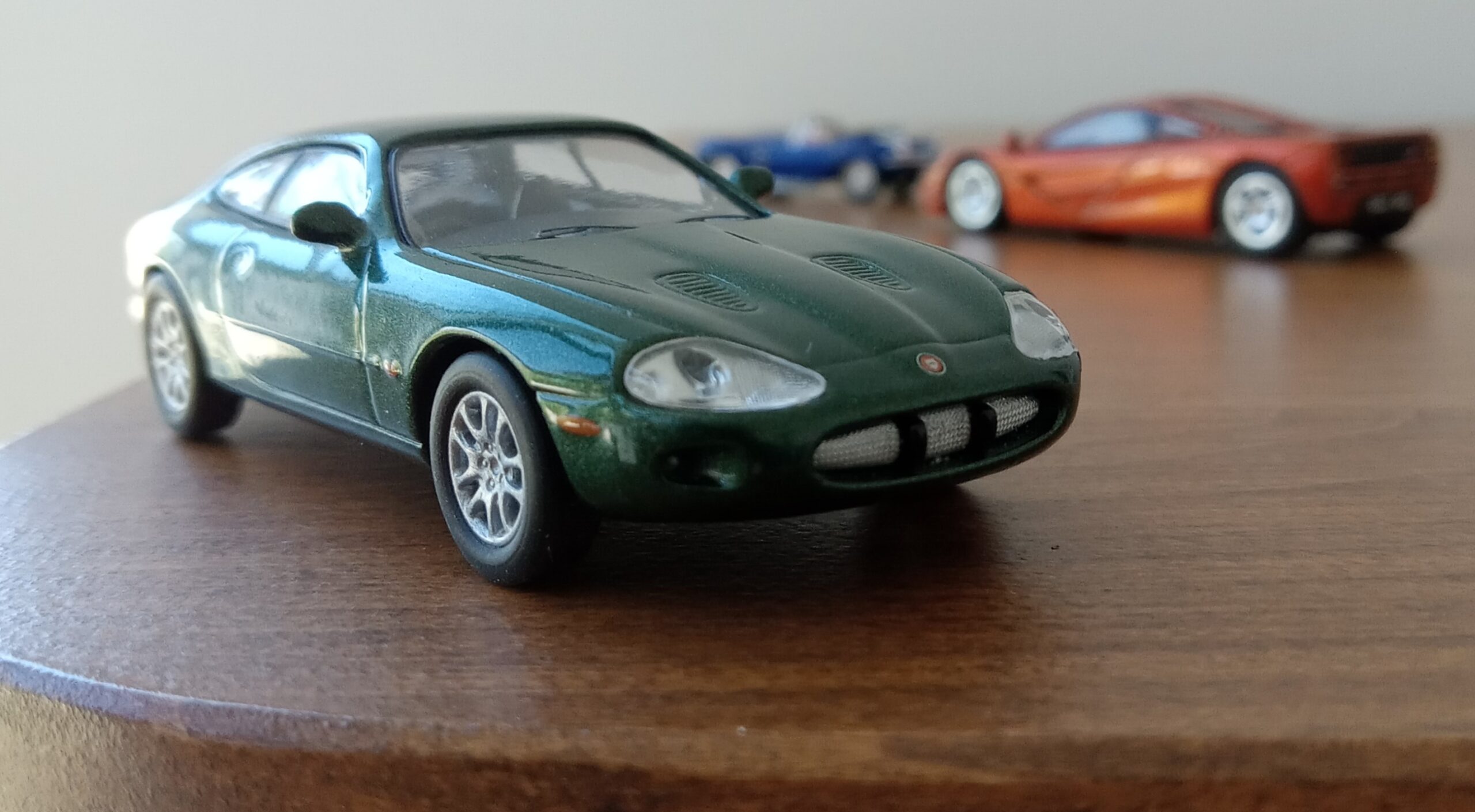
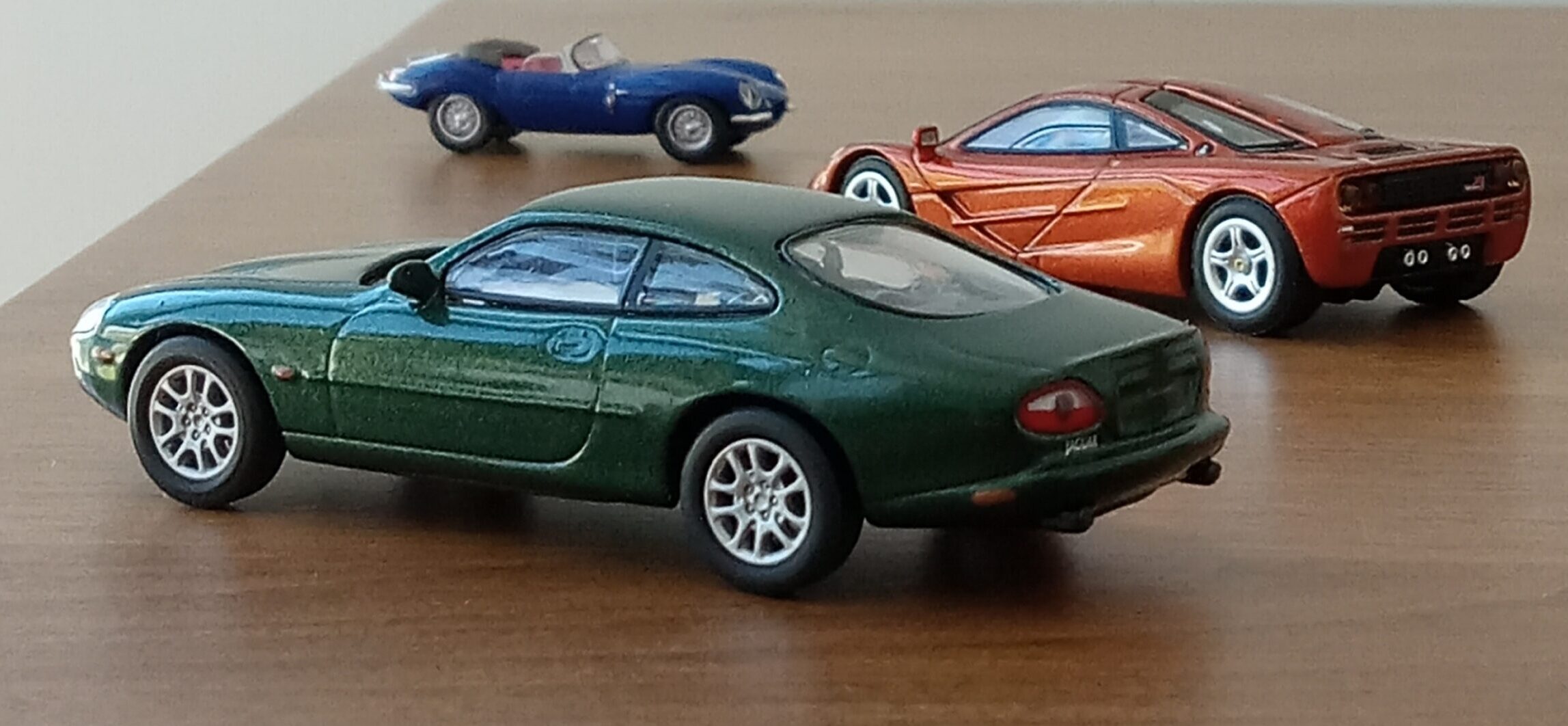
3、真上から見た時のサイドの「お腹」部分の張り出しの凄さ
(この部分の張り出しは、パッと見た時の、芳醇さや、安心感、充実感を演出しています。)
ーーーーー>道の狭い英国向けではないですが、E-タイプにない自由さが持ち味です。
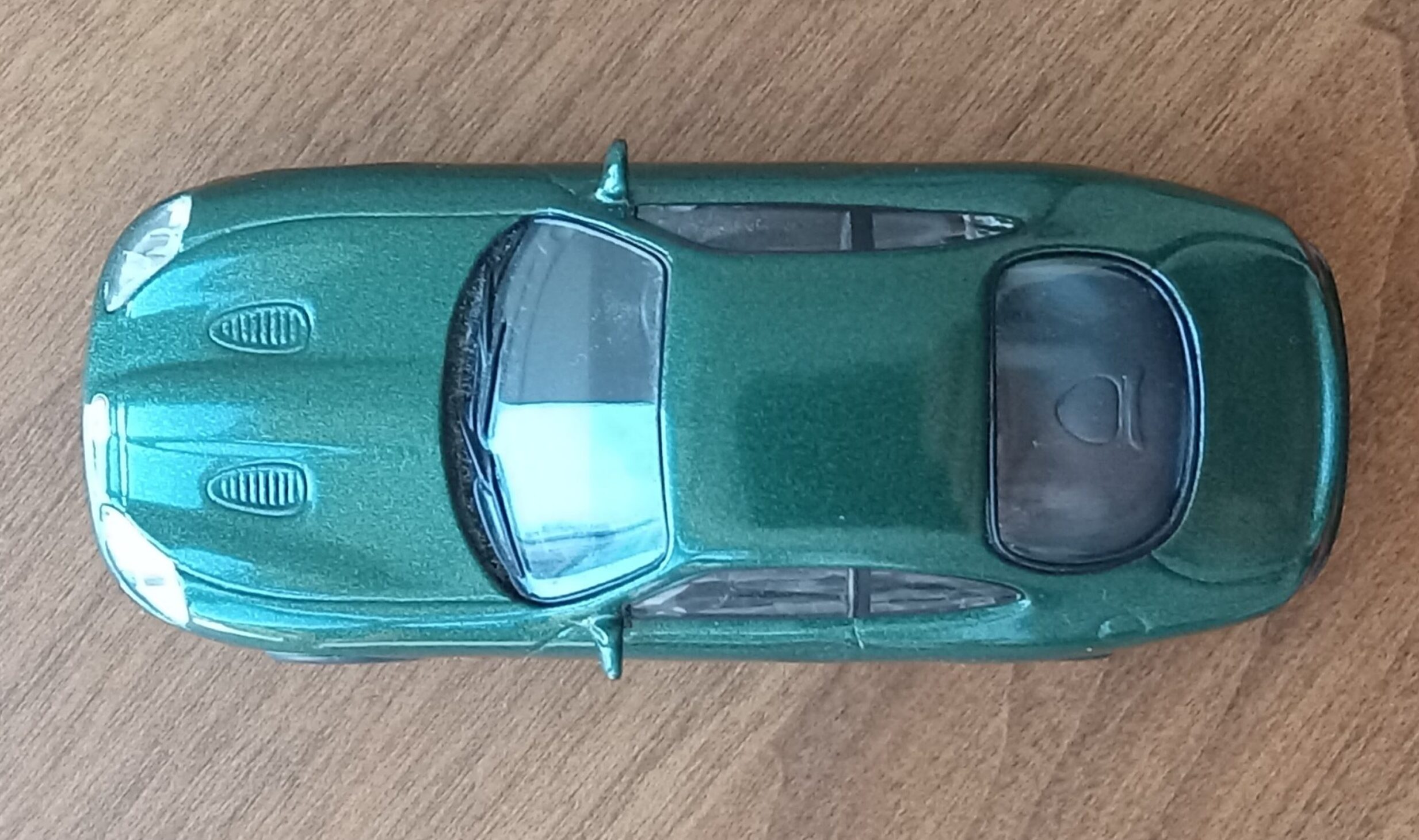
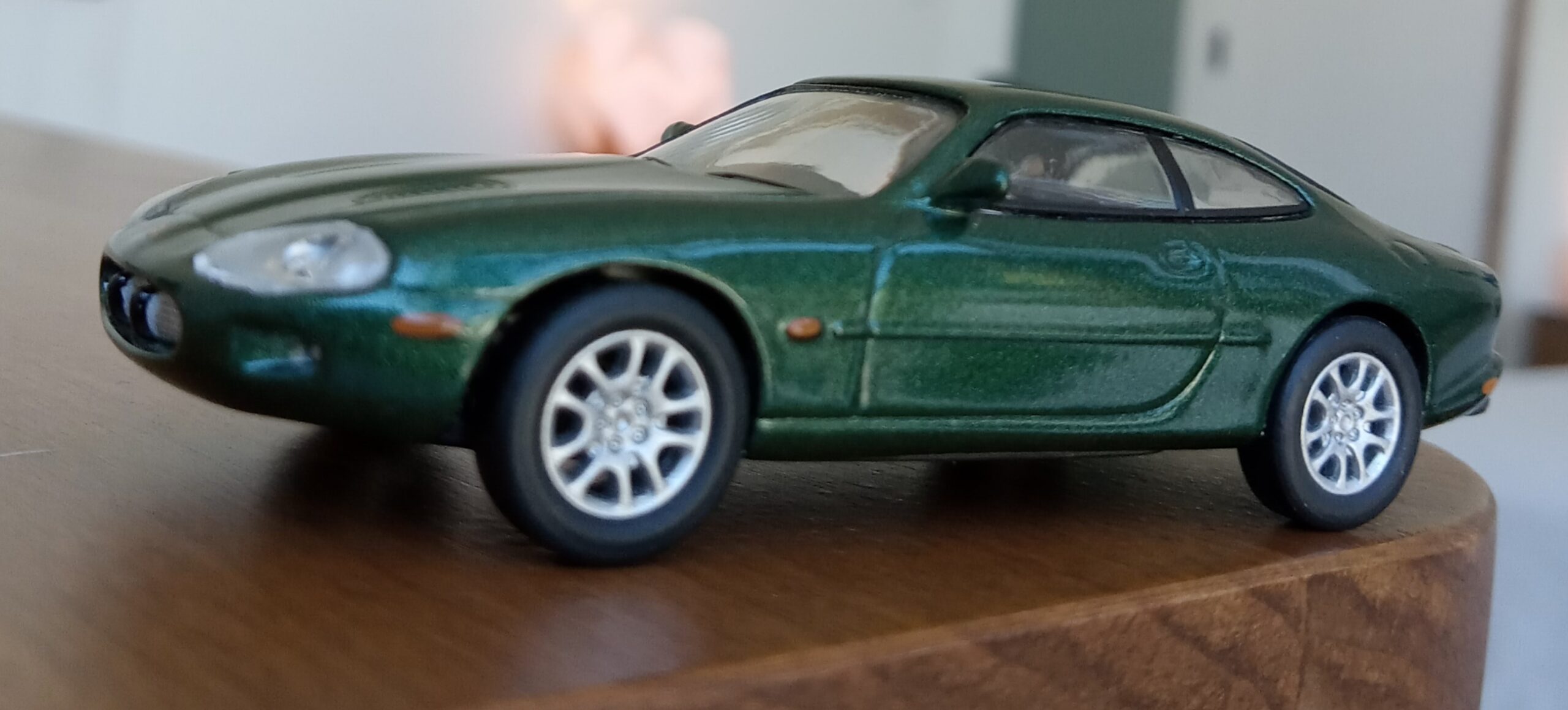
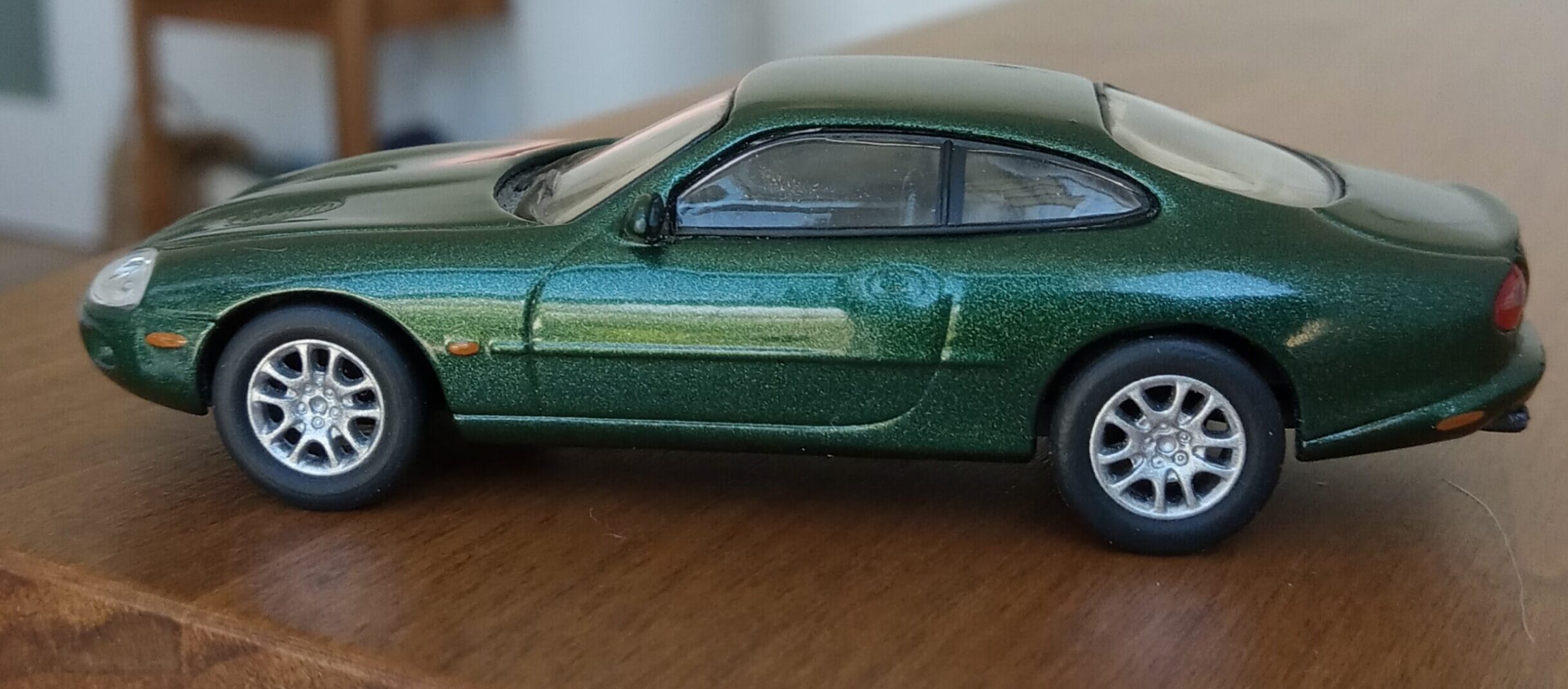
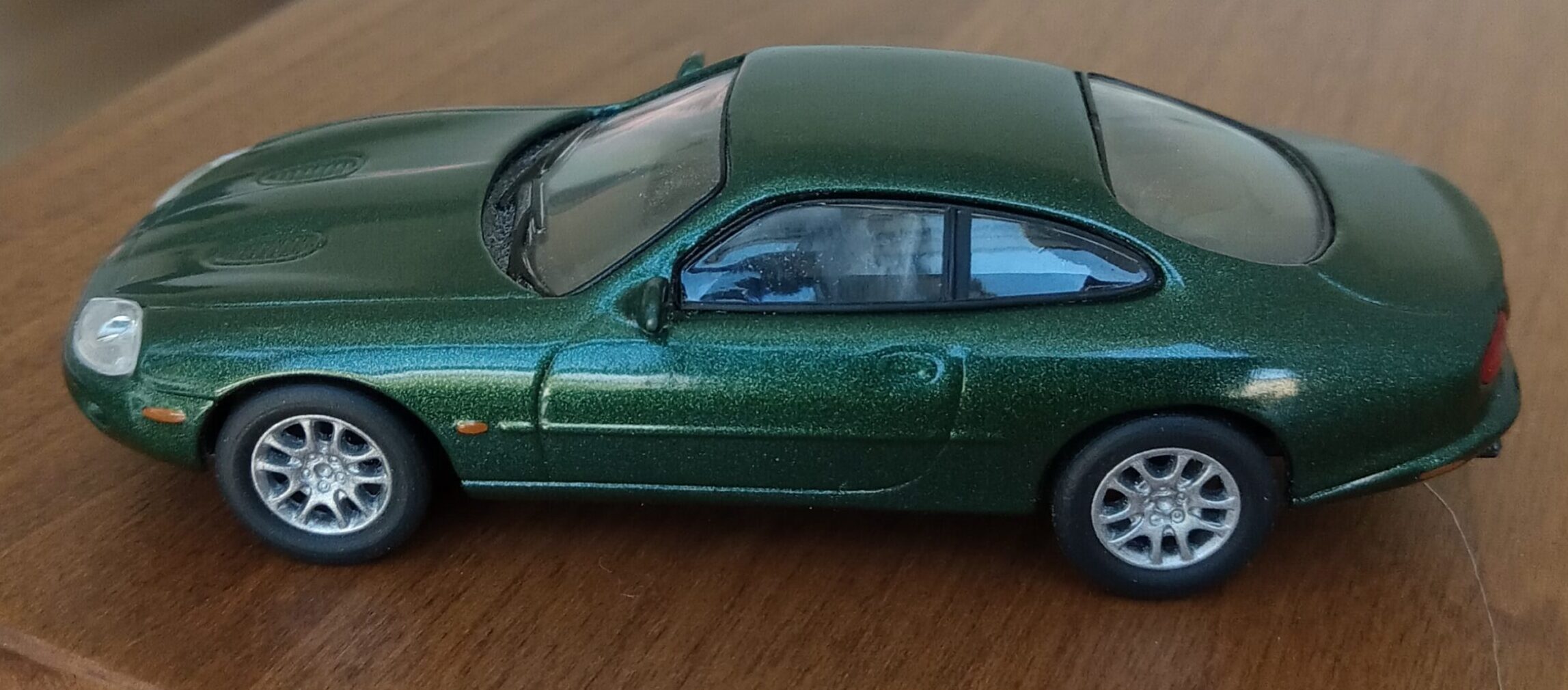
4、E-タイプのフロント・エンドへのオマージュを、『面影程度』で留めたフェイシア・デザインの奥ゆかしさ
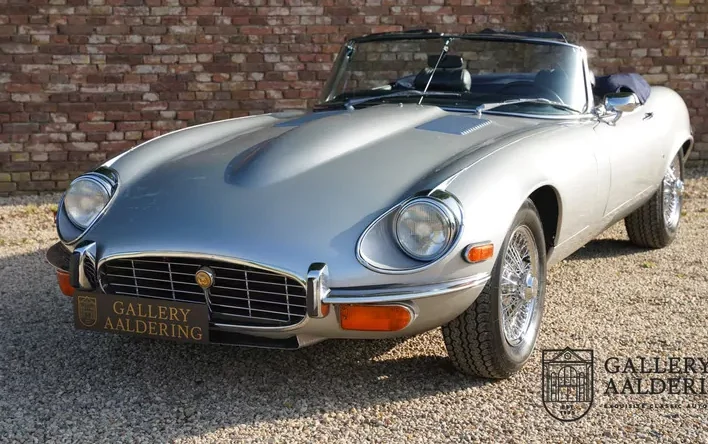
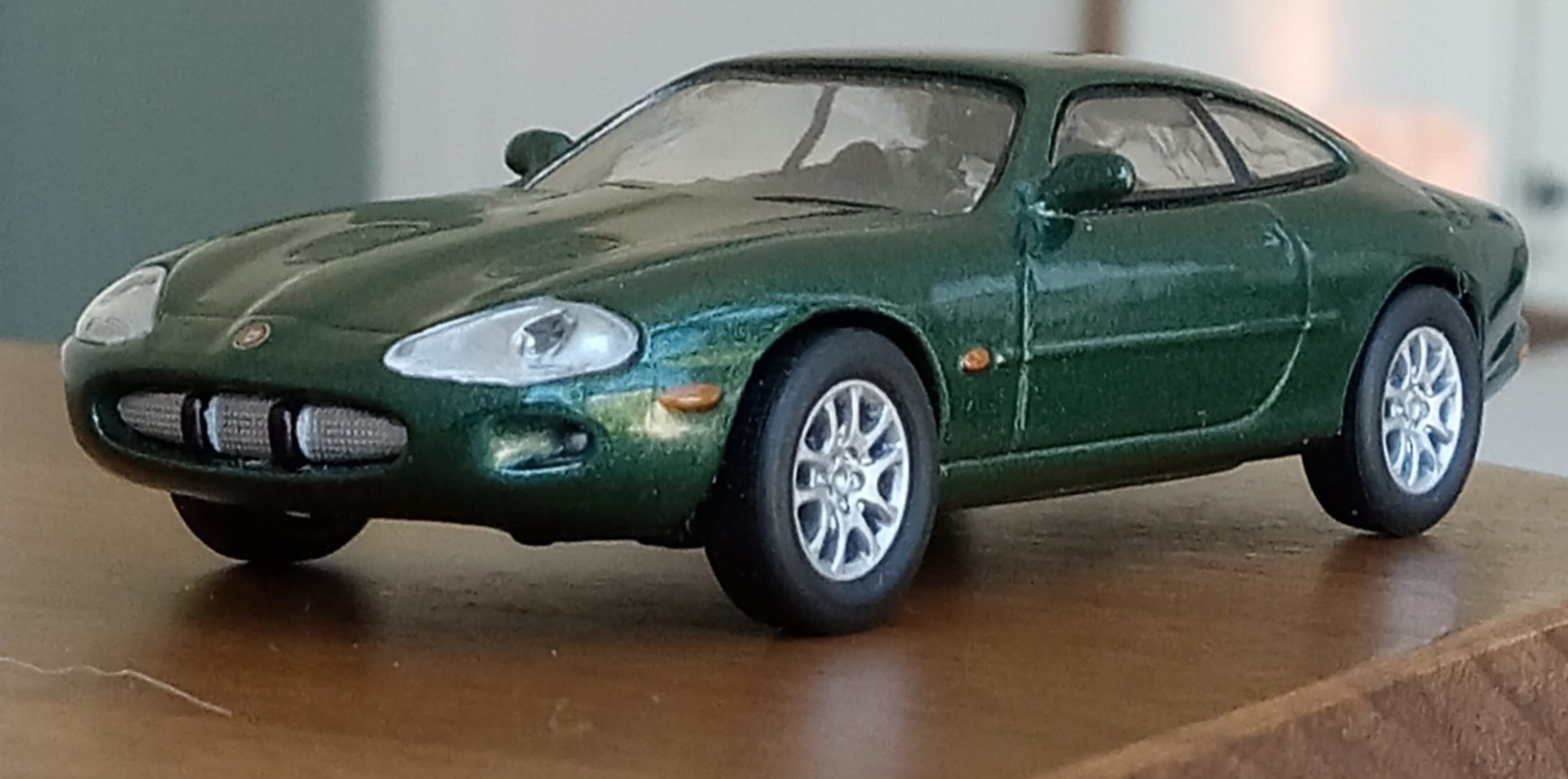
5、リアシートに大人がぎりぎり乗車可能ながらも、美しいクーペ・スタイルのルーフラインを実現
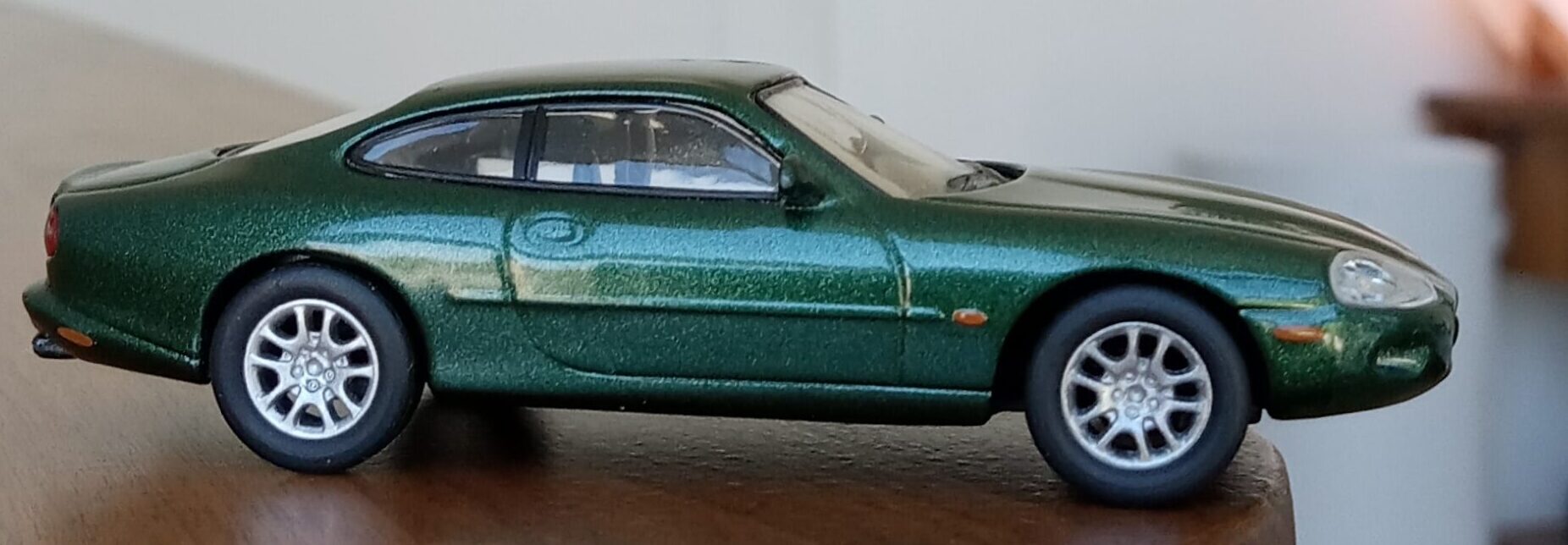
@1、唯一のマイナスポイントは、リアバンパー部分の脈略がなく、掴みどころもない『とってつけた感』満点の「受け口」造形
ーーーー>この部分もフロントフェイシアのようにバンパーを一体化して凸面で通したほうが美しいのでは?(バンパーを独立させたことで、上下のリフレクションがしぼんだ感じに折れ曲がり、見苦しいのでは?)
*『私』とジャガーXKR:リア・バンパー以外は完璧
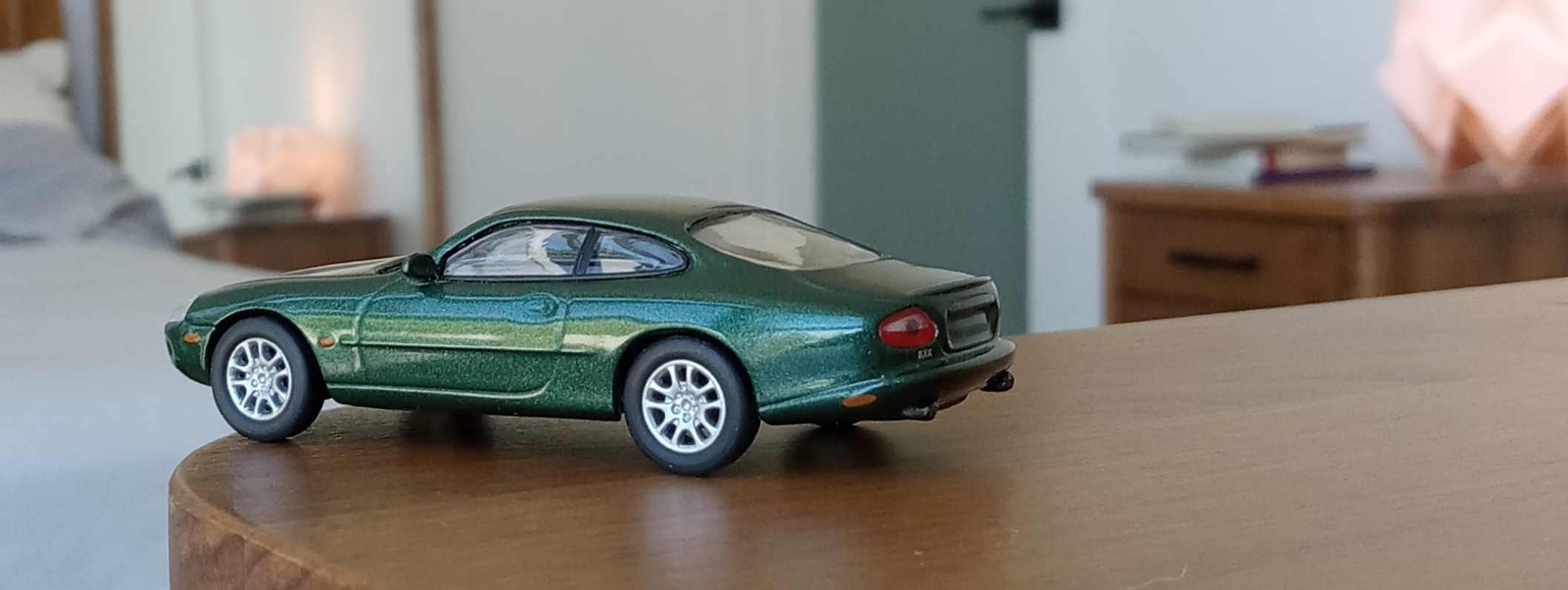
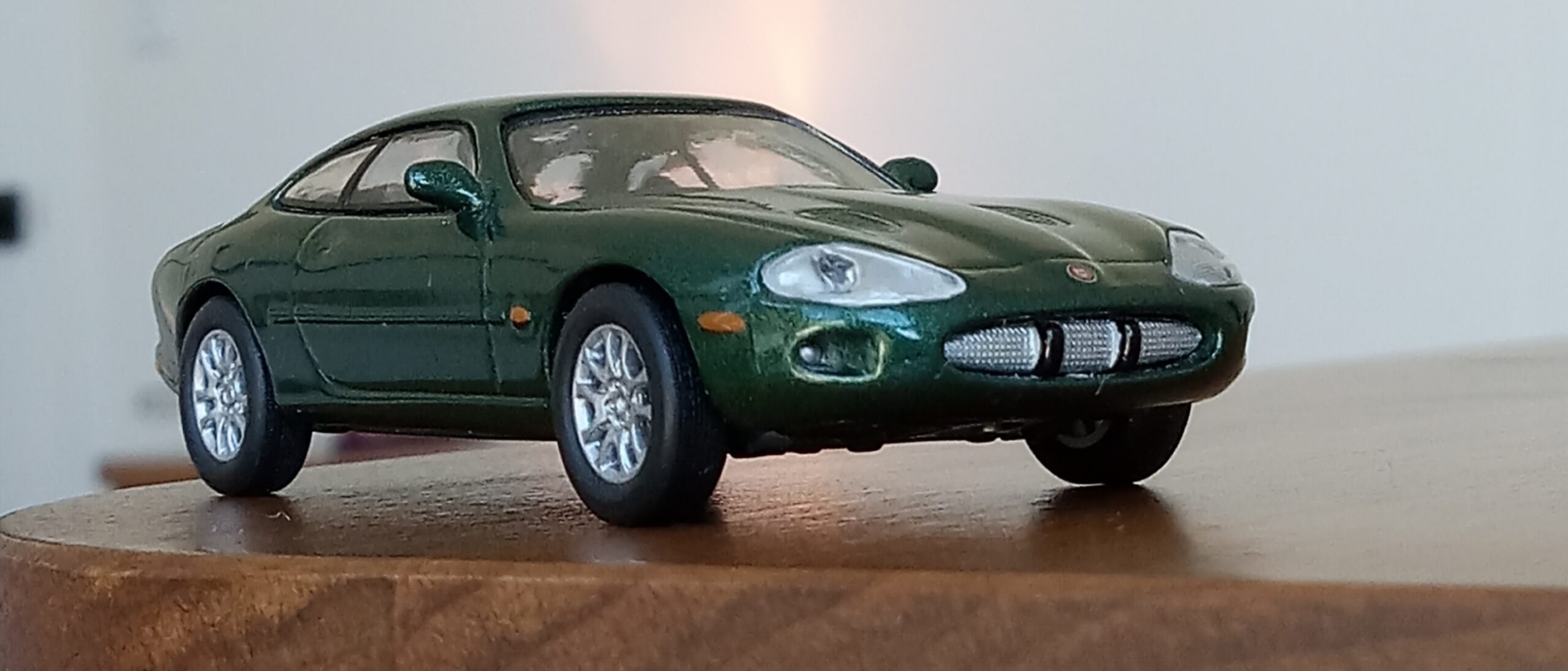
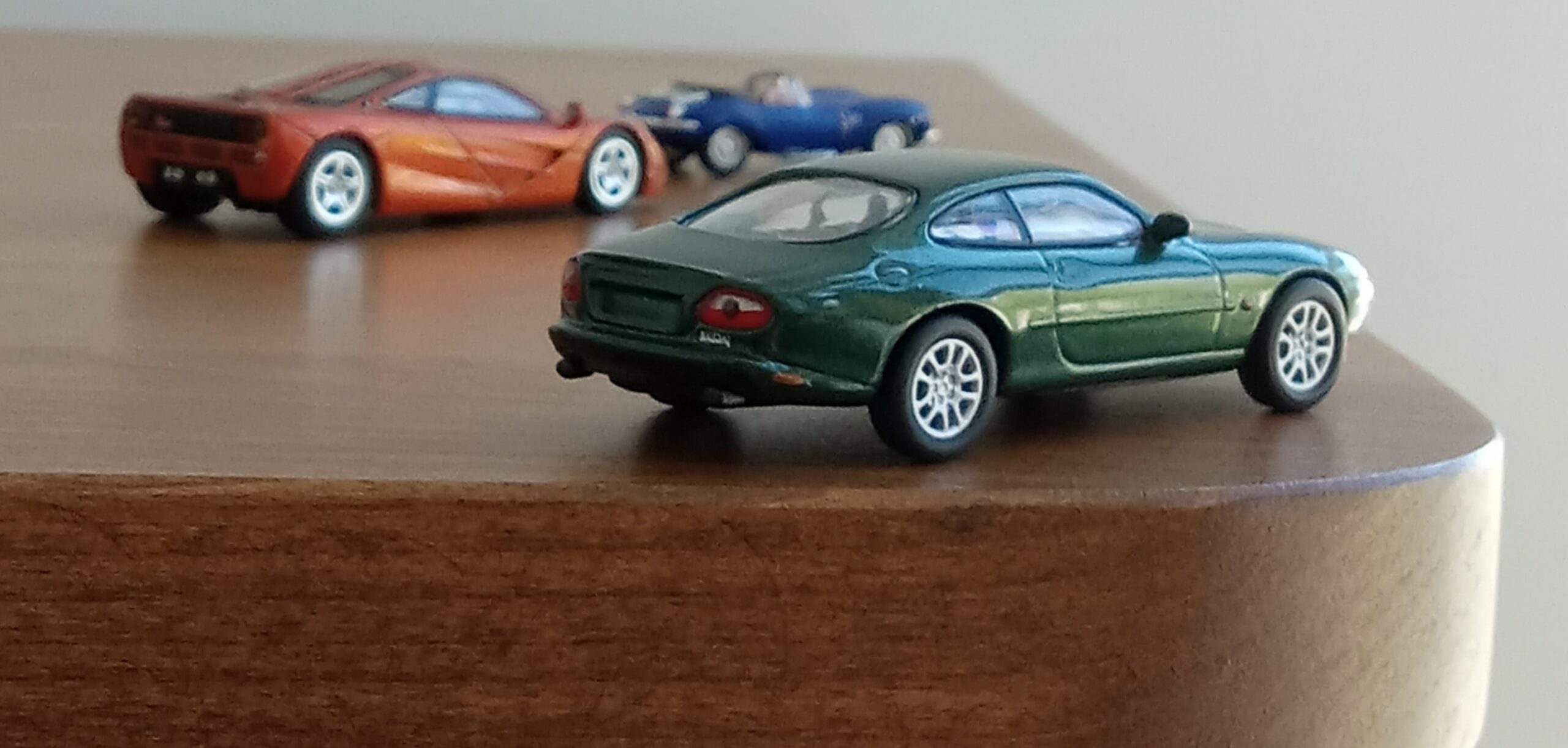
10年程前、
アルタディナの家(今回の火事で焼失)に引っ越したころ、
散歩の途中、近所で偶然発見した、
『ジャガーXKR』!
写真から想像していたのと全く違う、
*凄まじい量感と
*カタマリ感のある
フロント部分に心を躍らせ、
横に回って更にビックリ、
そこには、
『しなやかで伸びやかな
美しいサイドビュー』
が横たわっていました。
この予想外の相反するイメージの同居が、
私の好奇心を引き付け、今回のウエブ記事執筆に結び付いています。
しかしながら、
リアバンパーの面造りの稚拙さだけはどうしても理解できません。
もちろん、
このバンパーを、
素晴らしい芸術作品にみられる、
『えぐ味』や「不可解さ」と捉えれば、
*工業製品というより、
*芸術作品と
捉えるべきなのかもしれませんね、、、、
立体模型につきましては、
今回写真撮影に使った、
*京商社製、1/64 ダイキャスト、ジャガーXKR(メタリック・ダークグリーン)
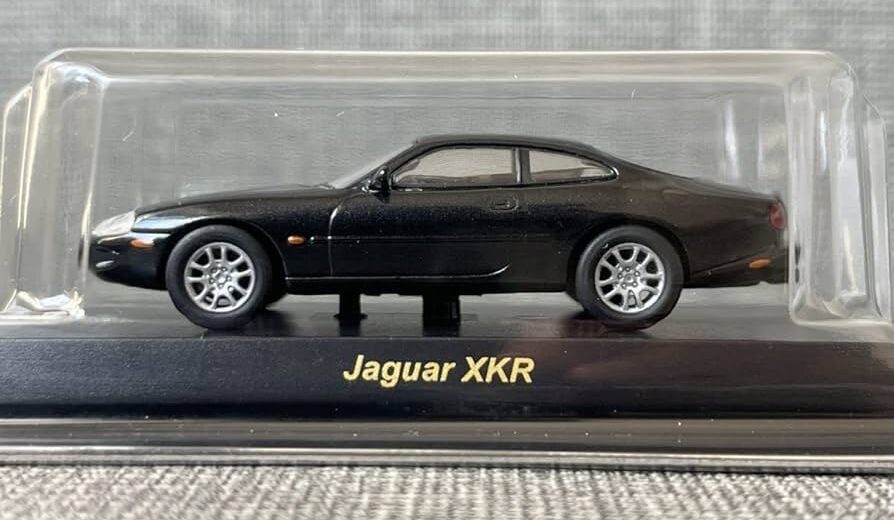
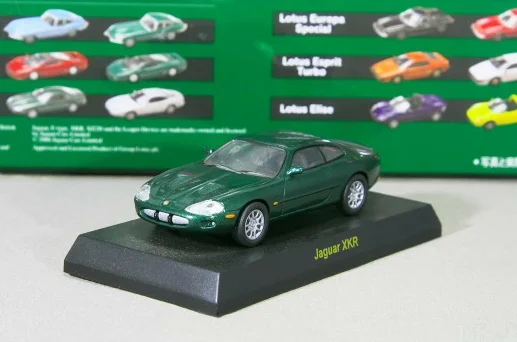
(もうかなり前に発売された景品モデルですが、そのデザインの正確さは、ただ寸法を正確に入力しただけのミニカーとは異なり、芸術肌の職人の手で、しっかり磨き上げられた『オーラ』があふれています。
ーーー>緑・銀・黒の全色持ってます)
*三題噺:近鉄『いてまえ打線』・ジャガーXJ-S・固形石鹸


規格外の車体空間をもって生まれた
『ジャガーXK8・XKR』ですが、
こんな感じで、
三題噺、いってみましょう、
今回会場お皆様から頂きましたのお題は、
*近鉄『いてまえ打線』
*ジャガーXJ-S
*固形石鹸
『それでは、
毎度ばかばかしいところを、
一席おつきあいのほどを願っておきますが、、、
洋の東西を問わず、
どこの世界に行きましても、その国や、コニュニティーには、
それぞれ、【常識】
というものがございます。
日本の常識と言いますと、
良く知っている知人とか、親戚の人に往来で偶然会ったときには、
かなり丁寧に挨拶や会釈をします。
またここアメリカでは、
スーパーマーケットや、小売店で、
お店の人とたわいもない会話をしたりする習慣=常識があったりします。
【このちょっとした会話が非常に重要な意味を持っていたりします、、、】
その昔、
1980年代ごろまでのイギリスでは、
乗用車の全幅が大体1メートル70cm以内に統一されていました。
この数字はお隣の、ドイツや、フランス、イタリアなどに比べて、
5cmから10cmほど狭くて、
*理由は、英国の街中や田舎道は舗装はされてましたが、かなり狭く、
*これ以上幅が広い車は、運転が非常に大変になるための、
英国自動車業界の『暗黙の常識』というやつでした。
しかしながら、
常識のある所には、その逆の、
非常識、常識からの逸脱もある物で、
パンクロックやニューウエーブを生んだお国柄のイギリスでは、
常識<--->非常識
の間の綱引きから、
興味深い文化や、発明、発見などが生まれてきました。
日本でいえば、
それまでのプロ野球のイメージ
=スポーツ界の優等生
を塗り替えた、
2001年の近鉄バッファローズ、
*『いてまえ打線』のお祭り野球、
*タフィー・ローズと中村紀洋の最強クリーンナップに、
*プロ野球史上、これ以上のドラマはあり得ない:
*2001年9月26日対オリックス戦、北川博敏の代打逆転サヨナラ満塁お釣りなし優勝決定本塁打!!
こんな感じの逸脱感が
全身を覆ているのが、
ジャガーデザインが時々見せる、イギリス車なのに、こんなのアリ?的な
愛すべき、自動車たちです。
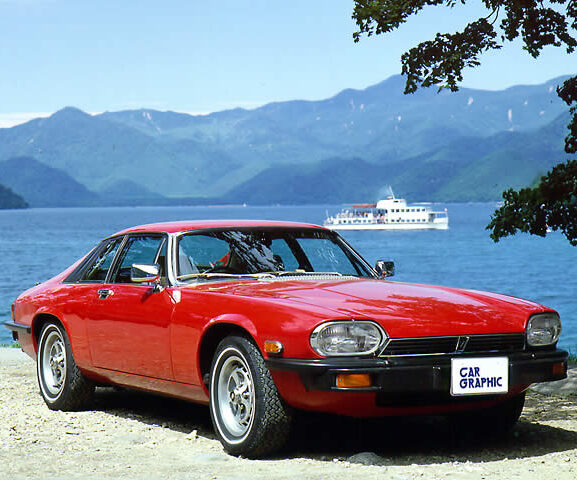
*全長:5m10cmの怪物、ジャガー・マーク10(1961)や、
*全高:1m27cmの美形、ジャガーXJ-S
*全幅:2m22cmの魔物、ジャガーXJ220 など、
普段の常識厳守の抑圧をかなぐり捨てた時に見せる
逸脱パワーから生まれる、自由奔放なデザインには、凄まじい魅力が満載されてます。
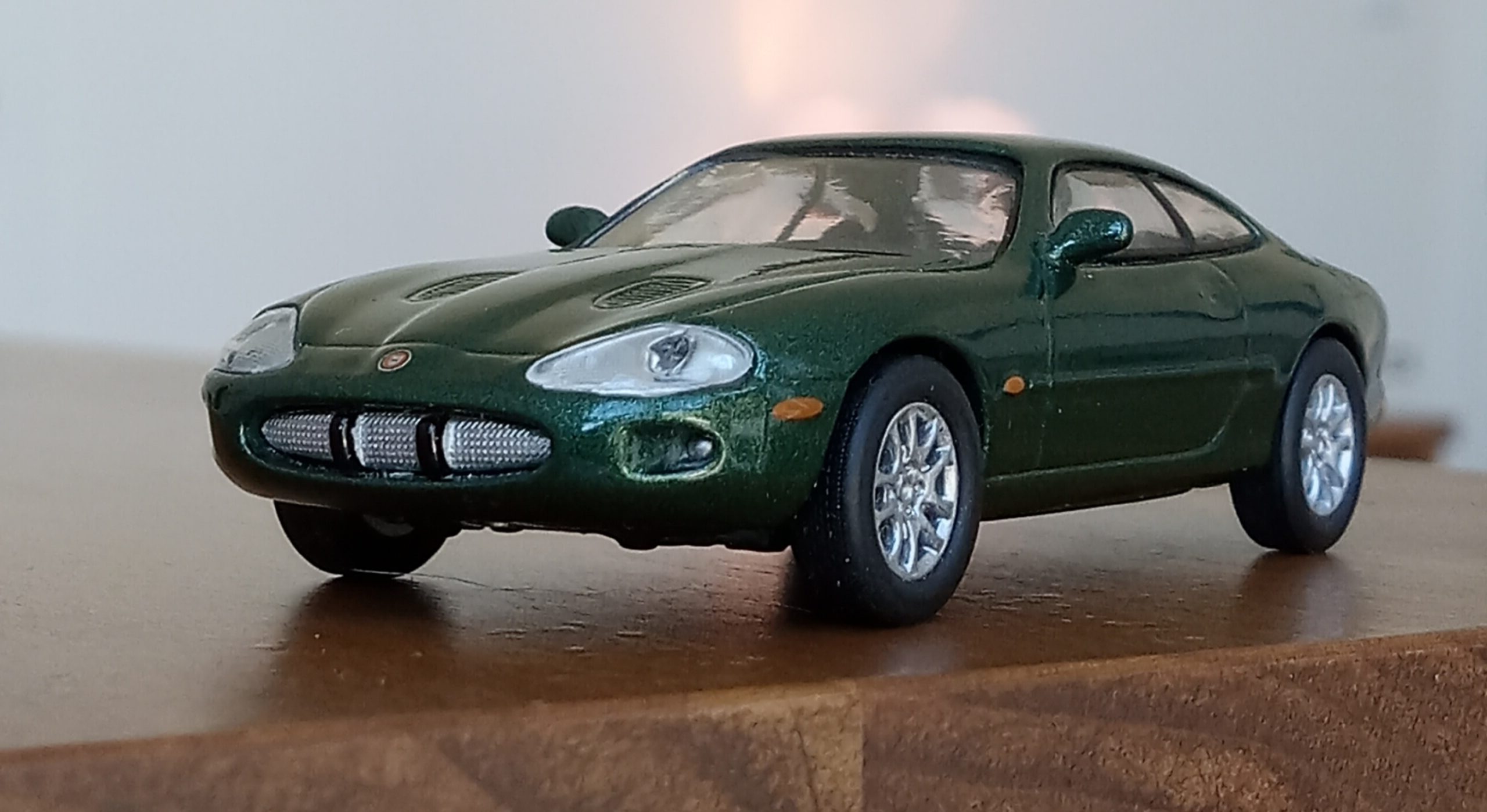
今回の主役のジャガーXK8/XKRも、
そんな逸脱感満点の
*アメ車並みの車体サイズを与えられ、
*デザイナーの自由な創造性がみなぎった力作です。
お餅をこねて、
いい具合に硬くなったところで、
*陶芸の『手ひねり』感覚で、ぎゅ!っと手のひらでひねりだしたような、、、
*又は、つるつるの固形石鹸を掌と、指先、熱湯
を器用に使って、磨きだしたような、、、
即興性あふれる、
『ぬるっと、しっとり』とした、
パン生地のように美味しそうな立体構成が自慢です。
この際、個人的には、
名作:タイプEからの影響は、フロントのラジエーターグリルの意匠や、ボディーのサイド断面に、オマージュ的に取り入れるにとどまり、
全体的にはむしろ、
ジャガーXJSと同等のボディ空間の中で、作者が自由に遊んでいる感じが、
ひしひしと伝わってくるーーーー>本物の立体です。
リア・バンパー周りの『』不気味な面造りだけは納得できませんが、
今回記事を書いている内に、其れすらも、
「痘痕も靨
(あばたもえくぼ)」的に
愛せる自分がいます。(笑)
ジャガーを愛するあまり、
私の見解も
『豹変』してしまいました、、、、』

お後がよろしようで、、、
*その他の愛すべき『逸脱』デザインたち:
ここでは、
そのほかの車体サイズの上で、
『常識』を大きく凌駕した「曲者たち」に付き
お話しさせていただきます。
*ジャガー・MK10、1961(シャンペン・ゴールド)
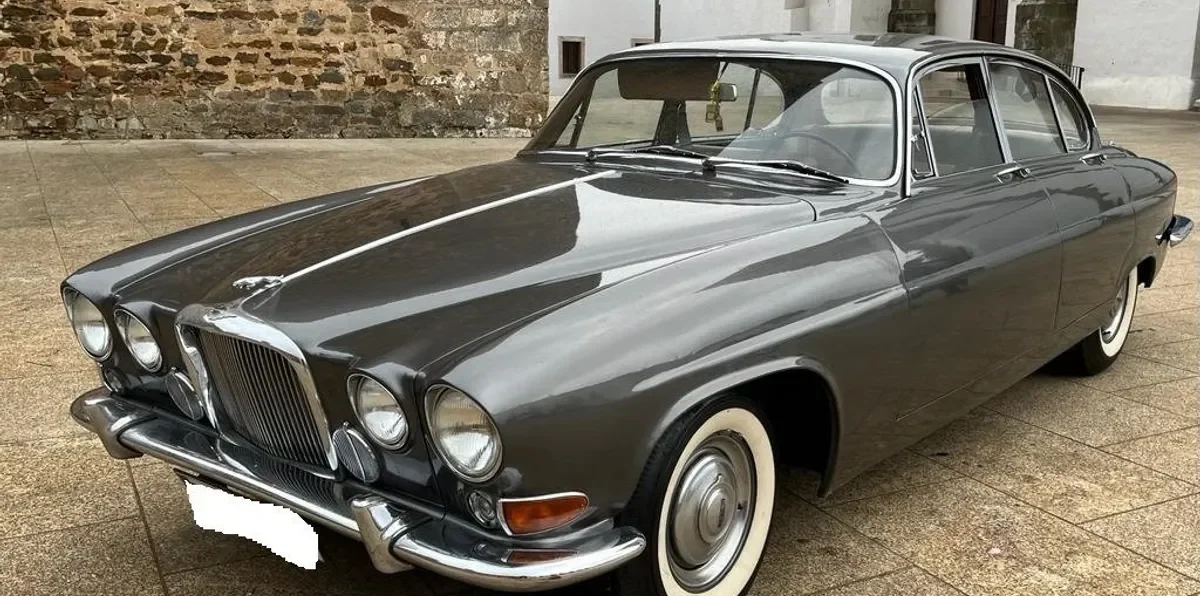
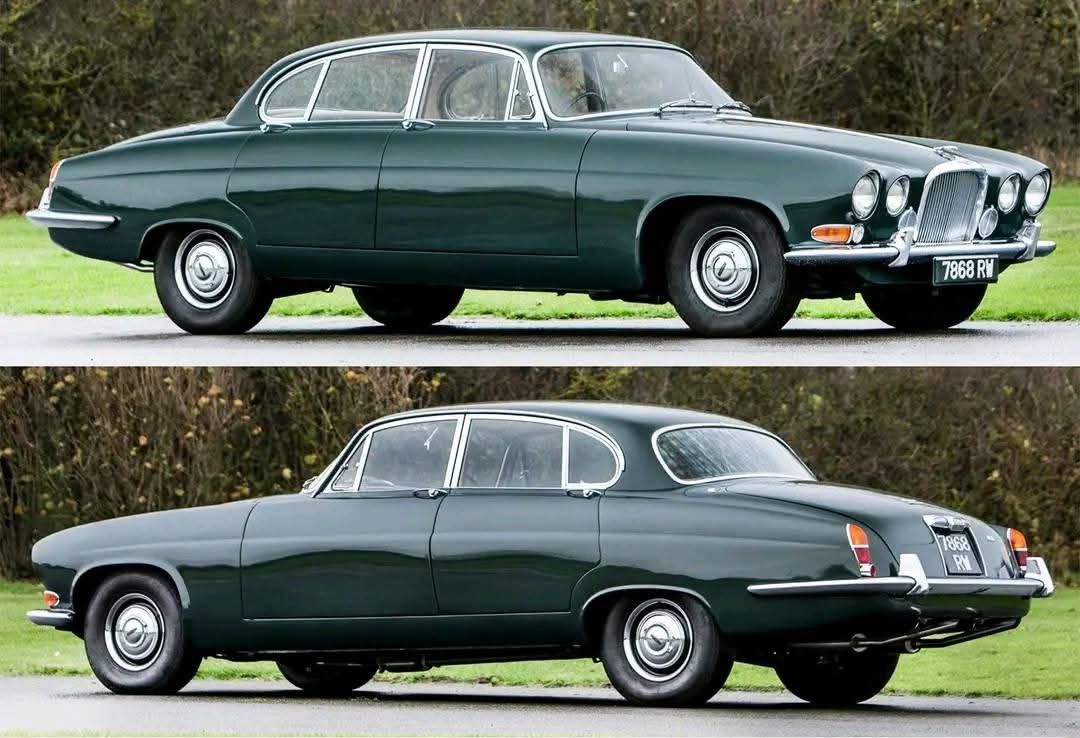
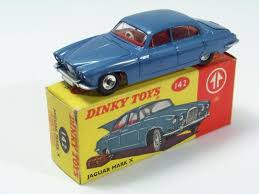
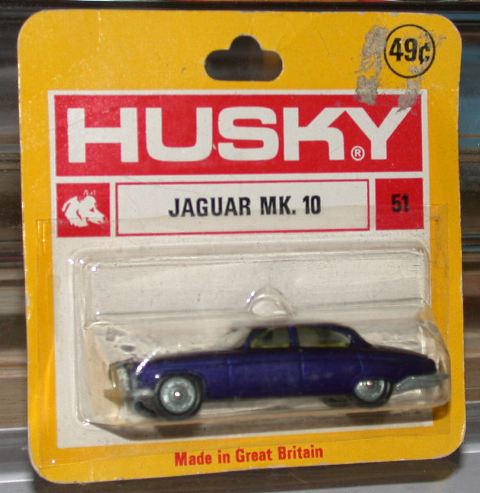
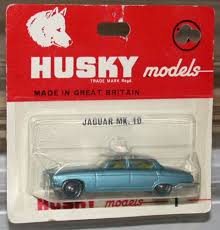
(全長5m10cm、全幅1m84cmといった規格外のボディーサイズから削り出された?というよりは、フットボールのように膨らまされたといったほうが的確?、な逸脱・外観デザイン:完璧なFRプロ―ポーションと、素晴らしいスタンスが決め手です。当時最大の英国車ということで、4ドア車にもかかわらず、コーギーやディンキーなどから各種のスケールで、ミニカーが発売されてました。)
ーーー>最近マテルのホットホイールからもミニカーが発売されました。
*マツダ・ユーノス コスモ、1991 (黒・ガンメタの2トーン)
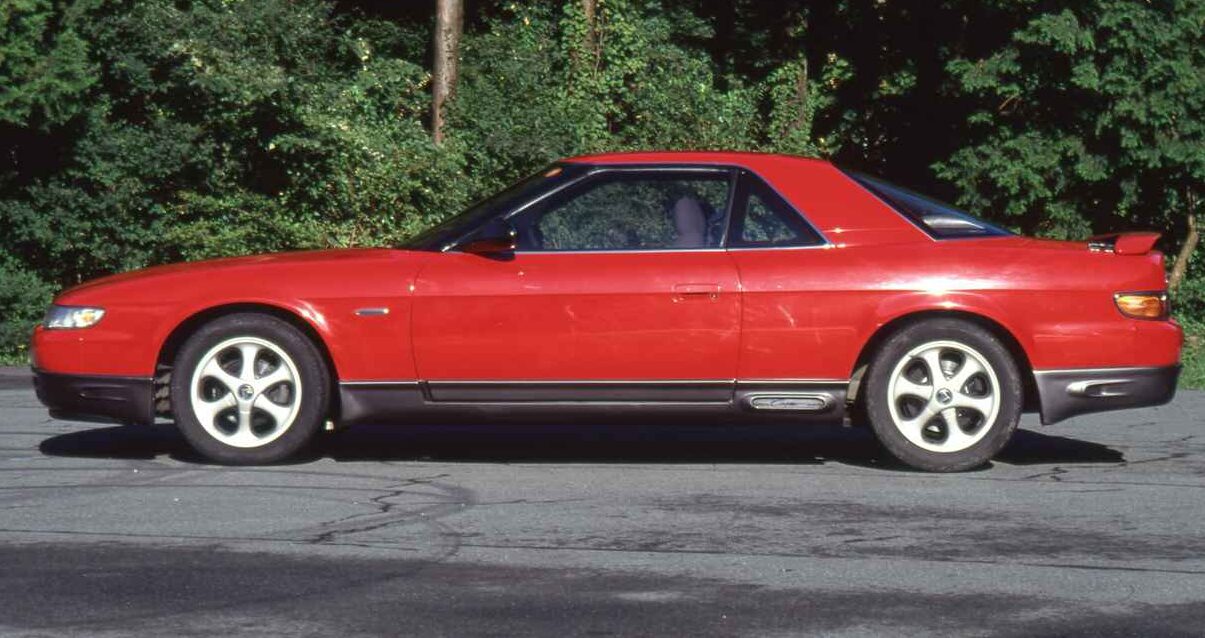
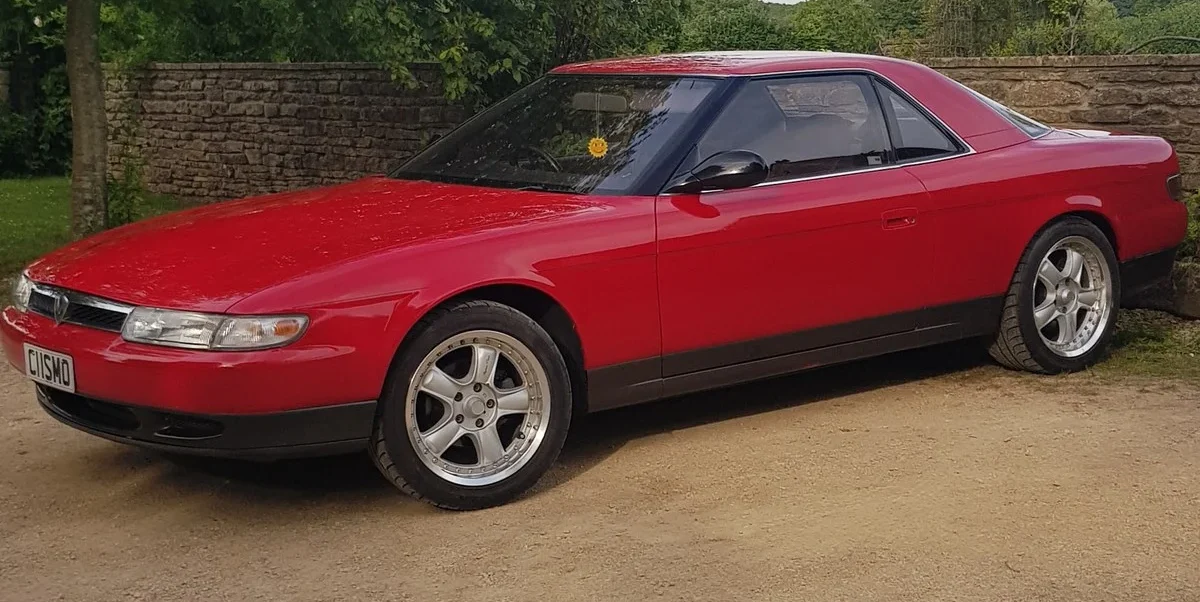
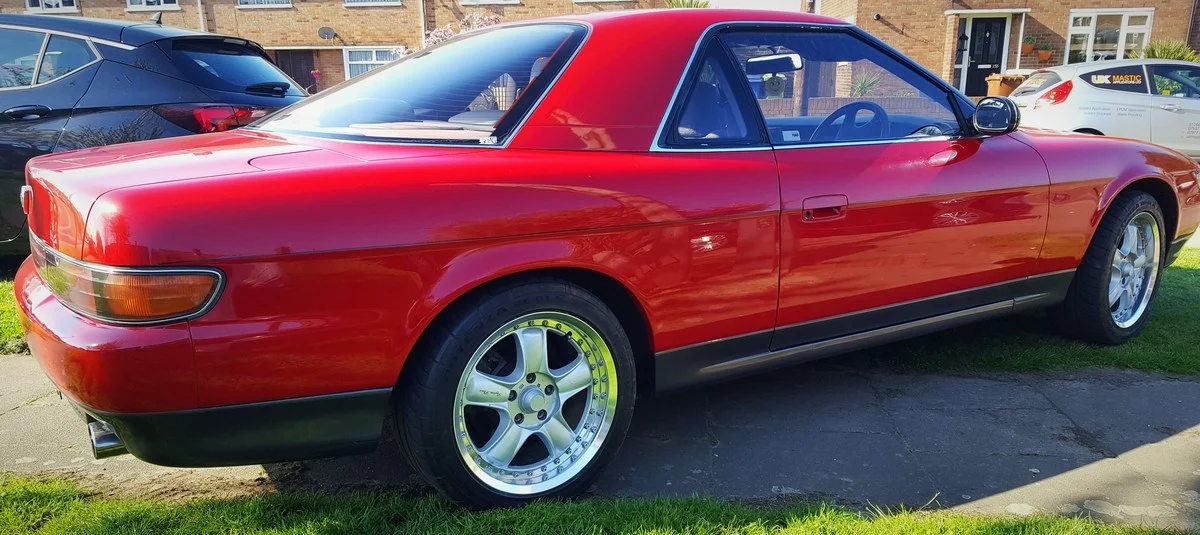
(全長4m82cm、全幅1m79cmという、国産2ドアクーペ最大のサイズが示す以上に巨大に見える、伸びやかで自由かつ、初代コスモスポーツからのオーラ感あふれる引用など小技も決まった、唯一無二の存在、リッター3キロの燃費が災いしてか、、、生産数は少なく、多くの状態のいい車体が大型クーペ好きの英国の好事家の元へ流出中。 泣)
ーーーーー>内装のバブル期独特の逸脱感は一見の価値あり!!
*フィアット・マルティプラ、2004 (メタリック・レッドオレンジ)
(全長4m、全幅1m88cmという小型車にしてはあり得ないほどの全幅を使い、フロント3人、リアにも3人の6人乗りの変体パケージを実現!!デザイン自体もオリジナルの1956年型マルティプラ譲りの、唯我独尊状態。)
ーーーーーー>好きな人・所有者でも、年に2-3回は冷静になった時などに、気が狂いそうになる?禁断症状・中毒性のある外観です!
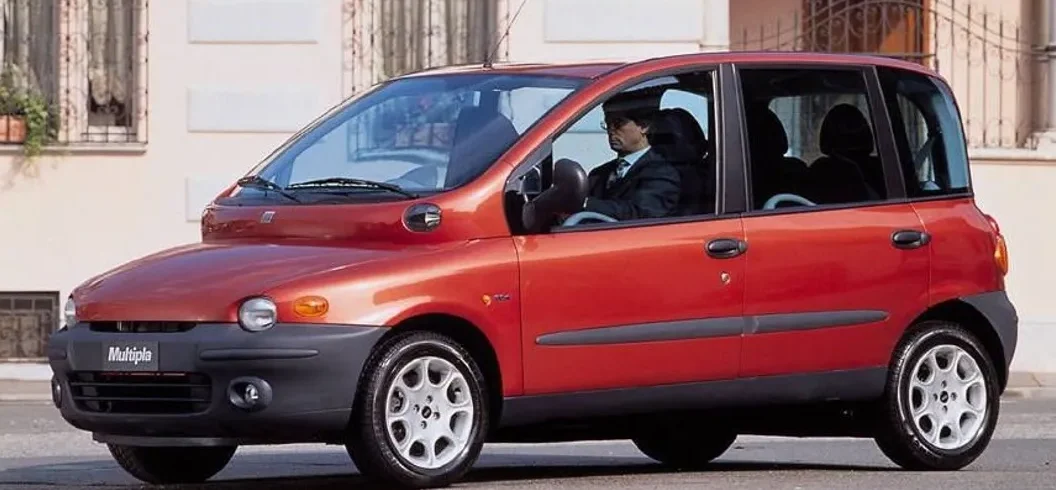
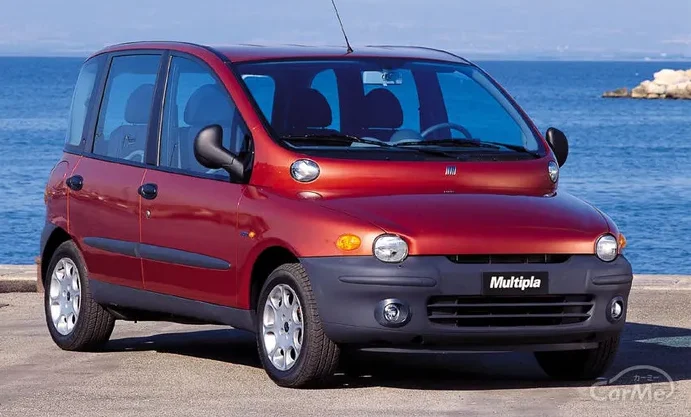
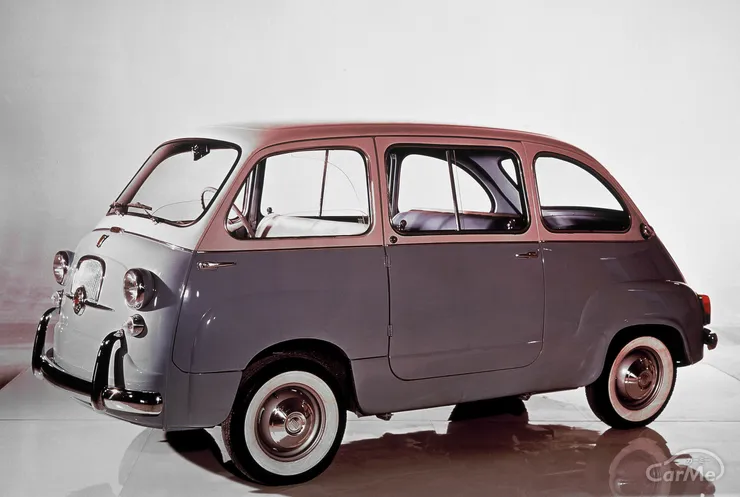
(1954年型フィアット・マルティプラ、どっちが前だかわかりません。)
自動車好き、
規律・常識好きな英国人が、
思いきりは目を外した、
傑作/逸脱スポーツカーを3台見てきました、
*マクラーレン・F1、1992
*ジャガー・XKSS ロードスター、1957
*ジャガー XKR クーペ、1996
どれも愛すべき、英国車でした。
そろそろこのへんで、
長くなってしまいました、
「逸脱ジャガー、XKR」についての記事を
終えたいと思います。
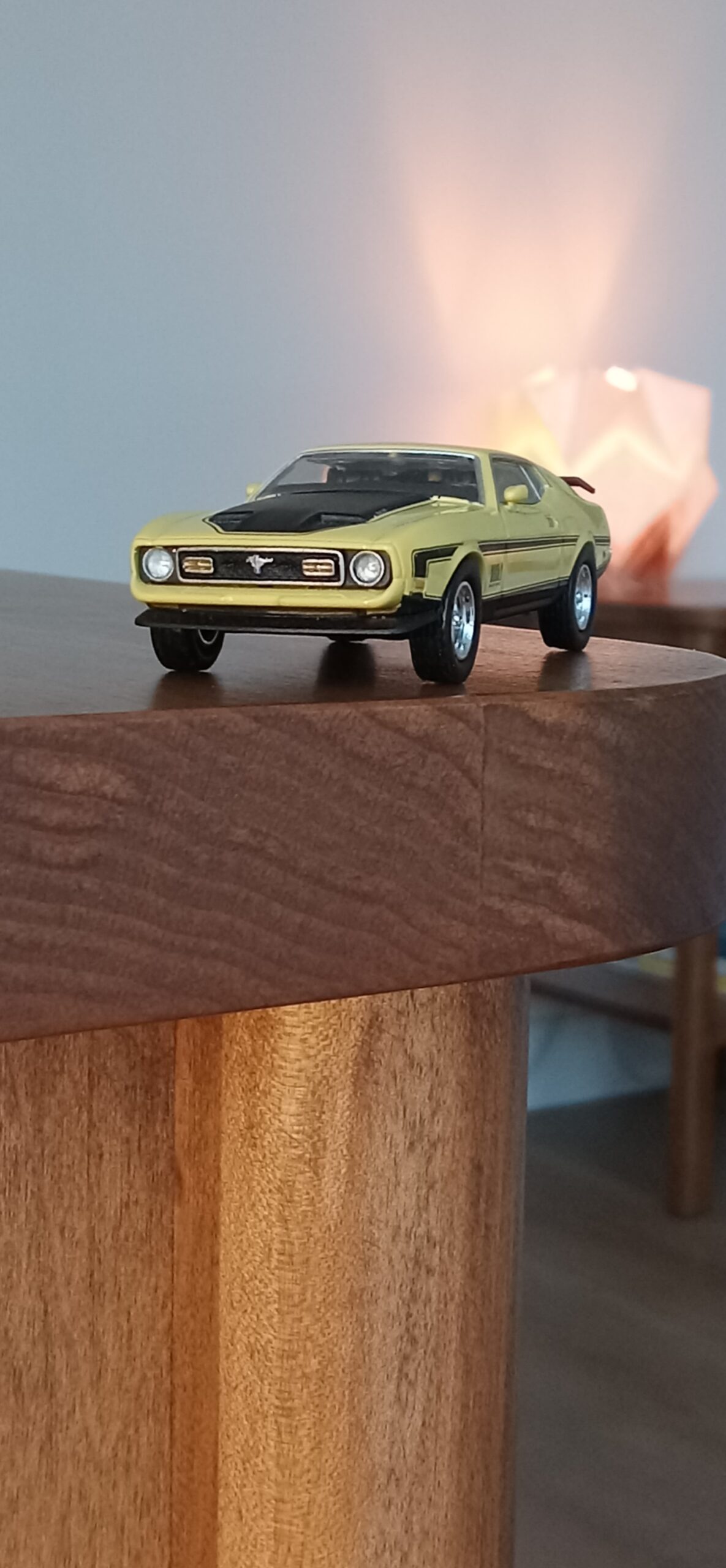
次回は、趣向を変えまして、
アメ車中のアメ車、
マッスル化したポニー?、
1970年型ムスタング・マッハ1(ファーストバック)
につてお話しさせていただきます。
本ブログと記事内容につきまして:
ブログ記事を書くにあたり私の目標は、立体造形(料理も含めて)とのかかわりを通じて、私個人の特徴的(ネジ曲がり方も含めて)な評価軸を解明することで、「美しさ・美味しさ」に対する好奇心や、探求心を、どのように満足・充足させてきたのかを明記しておくことです。
従いまして、記事の中に出てくる、数字や年号、微細なデータなどには細心の注意を払っておりますが、時に大きな間違いや勘違いを犯していることも考えられます。特に自動車記事における主要諸元や、年号などには紛らわしいものも多く、あくまで参考程度に考えていただければ幸いです。
私としては、記事の中で個人的な外観デザインや味覚の評価、そこから広がる後半部分につなげるための、『流れ』を作るための客観的材料として年号やデータを挿入している感じです。あくまで重視したいのは、私個人の頭の中で起こる、記憶の錯そう的混沌から生まれる新たな『見方』や『情報の予想外のつながり』です。その勢いを作り出す、『流れ』の一環として、諸データが副次的に必要となるわけです。
話がそれますが、大好きな落語の世界に「三題噺」という、その場て会場から募った3つのお題を使って1つのお話に仕立てるといったお遊びがございますが、私はそれに近いことを立体造形の特徴や(料理のお味)をお題にして行っている感じがします。その中で頭の中に去来する数々の着想が、全く予想外で楽しく、次回からの記事内容を大幅に変えたり、新展開につながっています。
当ブロブの仕組み:
『好奇心の点と線 x 気まぐれ脳内回路=予想外の新展開』
こんな自分勝手なブログですが、今後ともよろしくお願いいたします。
追記:上記の『流れ』を作る為に必要な写真はできる限り、個人所有のミニカー・自前の料理などを使い撮影しておりますが、その他の必要最小限の図版や写真を他のブログ主様の記事や諸会社ホームページなどからお借りしております。(記事内容に合うよう加工させていただき、使用時は最小の解像度で載せております。)問題がある場合、ご連絡いただければ直ちに降ろさせていただきます。
追記2:当ブログ記事に掲載のミニカー写真等(個人撮影)は許可なしで、どのようにお使いいただいても結構です。私個人の創造性はこの世のもの、と言う認識の上で記事を製作しています。
!!!!!!!!!!!!!!!!!!!!!!!!!!!!!!!!!!! Translated in English !!!!!!!!!!!!!!!!!!!!!!!!!!!!!!!!!!!
Part 27—The Lineage of Two-Door Coupes: Part 9 [UK Edition] Jaguar XKR Coupe, 1996 (Dark Metallic Green) Jaguar XKR, 1996
(Model used for photography: Kyosho, 1/64 Jaguar XKR Coupe (Metallic Green))
#Favorite Car Designs—The Lineage of 2-Door Coupes:
For this 27th installment, titled “The Lineage of 2-Door Coupes,” I’d like to discuss luxury 2-door (GT) coupes and roadsters, which strongly reflect the national character and unique exterior design of their respective countries. [Note: Includes convertibles]
We will proceed as follows.
For this 9th installment, we focus on [British Cars]
We will be discussing the
1996
Jaguar XKR Coupe.
[The Lineage of 2-Door Coupes: Table of Contents]
[American Cars Edition]
Part 1: Cadillac El Mirage, 2013 (Metallic Red)
Part 2: Lincoln Continental MK4, 1972 (Black)
Part 3: Mercury Cougar, 1967 (LT Metallic Green)
【German Cars】
Part 4: MB 500K Special Roadster, 1936 (Black)
Part 5: MB 300SL Roadster, 1957 (Silver)
Part 6: MB SLS AMR Gullwing, 2010 (Black)
[British Cars]
Episode 7: McLaren F1, 1992 (Metallic Orange)
Episode 8: Jaguar XKSS Roadster, 1957 (Royal Blue)
Episode 9: Jaguar XKR Coupe, 1996 (Dark Metallic Green)
[Japanese Cars / Nissan Edition]
Episode 10: Nissan First-Generation Silvia, 1965 (Champagne Gold)
Episode 11: Nissan Fifth-Generation Silvia, 1988 (LT Metallic Green)
[Italian Cars]
Episode 12: Ferrari 250TR Pontoon Fender, 1958 (Red)
Episode 13: Ferrari 250GTO, 1962 (Italian Red)
Episode 14: Lamborghini Concept S, 2005 (Pearl White)
[Japanese Cars: Mazda Edition]
Episode 15: Mazda Cosmo Sport, 1967 (Silver)
Episode 16: Mazda Eunos Cosmo, Type-S (Two-Tone: Black & Gray)
[French Cars]
Episode 17: Bugatti Type 59, 1935 (French Blue)
Episode 18: Citroën SM, 1970 (Champagne Gold)
Episode 19: Bugatti La Voiture Noire, 2019 (Black)
[Japanese Cars: Toyota]
Episode 20: Toyota/Yamaha 2000GT, 1967 (Ivory White)
Episode 21: Toyota 2nd-generation Soarer, 1986 (Two-tone: Black & Gray)
Episode 22: Lexus LC [GWZ100], 2017 (Metallic Red)
[American Cars Part 2]
Episode 23: Dodge Challenger & Plymouth Barracuda, 1971
Episode 24: Dodge Viper SRT-10 ACR, 2008 (Black)
Episode 25: Ford Shelby GR-1 Concept, 2004 (Chrome)
Corvette Lineage: (Special Edition)
Episode 1: 1967 Stingray [C2] Convertible (Hardtop, Metallic Blue)
Episode 2: 1972 Corvette [C3] Convertible (Metallic Blue)
Episode 3: 1990 Corvette ZR-1 [C4] Coupe (Red)
Episode 4: Stingray Concept [Pre-production Prototype], 2009 (Blue Metallic)
#A Historic Classic, the Return of the Jaguar E-Type? Or…
For me, when it comes to British cars,
* The pursuit of rationality (common sense) and the occasional
* Fun of drastically deviating from it
are the core of my interest.
The car I’m focusing on this time,
the [Jaguar XKR], is also a rare existence
born from that sense of deviation.
To me, the Jaguar XKR feels
like a worn-out
bar of soap with the rounded part of a spoon
slipped over it.
It’s a mass of natural curves
formed by being rubbed and polished
until every straight edge from its original state has completely vanished.
Furthermore, perhaps due to British road conditions,
the overall width of the car—which tends to be restrained—
has been significantly widened in this model, giving the impression that the designers were given free rein;
that sense of deviation ultimately
ーーーー> creates, in just the right measure, a
sense of solidity
as a three-dimensional object.
*Width
*Length
*Height
In every direction,
it exudes a luxurious sense of space.)
(This bold, unconventional package is also evident in cars like the Jaguar MK10.)
So, with that in mind,
let’s move forward.
* Real Car Analysis: E-Type + XJS ÷ 2 = ?
* Exterior Design Features:
* “Me” and the XKR: Perfect except for the rear bumper?……
* Three-Topic Story: Kintetsu “Ite-mae” Batting Lineup, XJS, Bar Soap
* Other Beloved “Unconventional Designs”
* Real Car Analysis: E-Type + XJS ÷ 2 = ?
n
n
n
n
n
n
n
n
n
n
n
n
n
n
# The Return of the ‘E-Type’?
N
n
n
The Jaguar XK (first generation, X100 model), introduced in 1996, is a luxury sports car that debuted with a sleek design reminiscent of the legendary “E-Type.” While modern, its exterior—which evokes Jaguar’s traditional “feline agility,” was designed by Ian Callum and is a masterpiece that blends traditional elegance with the atmosphere of a modern sports GT.
n
n
n
n
n
n
N
n
n
n
n
n
n
n
n
n
n
n
n
n
n
n
n
n
n
n
n
n
n
n
n
n
n
n
n
n
n
n
n
n
n
n
n
n
n
n
n
n
n
n
n
n
n
n
n
n
n
n
n
m
Model Overview:
N
n
Developed as the successor to the “XJS,” which was produced for 21 years, this is a landmark model featuring Jaguar’s first V8 engine. It is available in two body styles—coupe and convertible—both of which feature the beautiful, traditional “long-nose, short-deck” styling.
n
n
* Engine: Equipped with a newly developed 4.0L V8 DOHC engine (AJ-V8).
* Transmission: Features a ZF-manufactured 5-speed automatic transmission (later upgraded to 6-speed) with a unique shift pattern known as the “J-gate.”
* Drive Configuration: Traditional FR (rear-wheel drive)
* Seating Capacity: A 2+2 four-seater, though the rear seats are very compact.
n
n
n
n
This first-generation XK achieved a high-level balance between the reliability cultivated under Ford’s ownership and Jaguar’s signature elegant style. It gained popularity for its high performance and beautiful design, becoming the most successful model in Jaguar’s sports car history with over 90,000 units sold over a 10-year period. It continues to enjoy enduring popularity today as a “neo-classic.”
n
n
n
n
n
n
n
n
n
n
n
n
n
n
n
n
n
n
n
n
n
n
n
n
n
n
n
n
n
n
n
n
n
#Key Specifications:
Model: AJ26
Total Displacement: 3,996 cc V8 (with Eaton supercharger)
Maximum Power: 375 hp
Maximum Torque: Approx. 525 Nm or more
Drivetrain: FR (Front-engine, Rear-wheel drive)
Seating Capacity: 4 passengers (2+2)
Body Style: 2-door coupe
Wheelbase: 2,590 mm
Overall Length: 4,770 mm
Overall Width: 1,830 mm
Overall Height: 1,300 mm
Curb Weight:
Approx. 1,600 kg to 1,700 kg
* Exterior Design Features: Freely utilizing space to reinterpret the E-Type?
The reason I didn’t include the E-Type in my “Top 10 Designs”
is that,
when I actually saw the real thing,
* The overall width is quite narrow, and
* Because the tires are designed to fit inside the wheel wells,
For my automotive design philosophy,
this is the most important factor:
“Stance”
It completely lacks this, giving it a frail image,
like the wheels of a train riding on rails,
or, to put it in human terms, like someone walking with their feet turned inward—
an image that just doesn’t quite grab me.
Among the E-Types,
I actually prefer
*the wider body,
*the slightly flared fenders,
*and the improved stance
of the final-generation MK3 convertible.
So,
let’s list five
design features of the ‘Jaguar XKR’.
1. A mysterious overall silhouette where the taut, healthy body—full of surface tension—transforms into a slender, model-like figure the moment it turns sideways
ーーーーー>Truly a masterpiece design: ‘XJ-S + E-Type ÷ 2’
2. A masterpiece of “hand-sculpted” craftsmanship, as if an artistic modeler had thoroughly kneaded a highly viscous material by hand and finally declared, “Hey! Look what I came up with!”
ーーーーー> It radiates the “power of pure momentum” rather than mere refinement.
3. The incredible protrusion of the “belly” section on the sides when viewed from directly above
ーーーーー> While not designed for the narrow roads of Britain, its defining feature is a freedom not found in the E-Type.
4. The understated elegance of the fascia design, which pays homage to the E-Type’s front end with just a hint of its silhouette
5. Achieves a beautiful coupe-style roofline while still allowing adults to barely fit in the rear seats
@1. The only downside is the rear bumper, which feels completely out of place and lacks any sense of cohesion—it looks like it was tacked on.
1. The mysterious overall appearance: the body, taut and full of healthy surface tension, transforms into a slender, model-like silhouette the moment you view it from the side.
(Upon close inspection of the package, the engine placement and size are identical to those of American mid-size muscle cars like the 1970 Mustang Mach 1 and the 1970 Dodge Challenger. It’s clear that the design was made with the U.S. market in mind, sacrificing practicality for Britain’s narrow roads.)
ーーーーー> The bold, unconventional design inherited from the Jaguar MK10 is absolutely fantastic!!
ーーーーー>Truly a masterpiece design that’s “XJ-S + E-Type ÷ 2”
2. A masterpiece of “hand-sculpted” artistry, crafted by a modeler with an artistic flair who thoroughly kneads high-viscosity material by hand, ultimately producing a piece that says, “Hey! Look what I came up with!”
ーーーーー>It’s brimming with “pure momentum” rather than refinement.
3. The striking protrusion of the “belly” section on the side when viewed from directly above
(This protrusion creates a sense of richness, reassurance, and substance at first glance.)
ーーーーー>While not designed for the narrow roads of the UK, its defining feature is a sense of freedom not found in the E-Type.
4. The understated elegance of the fascia design, which pays homage to the E-Type’s front end while keeping it to a “slight resemblance”
5. Achieving a beautiful coupe-style roofline while still allowing adults to barely fit in the rear seats
@1. The only downside is the rear bumper, which feels completely out of place and lacks any sense of cohesion—it looks like it was tacked on.
ーーーー>Wouldn’t this area look better if it had the same sense of unity as the front fascia? (Is the bumper’s independence really necessary?)
*“Me” and the Jaguar XKR: Perfect except for the rear bumper
About 10 years ago,
around the time I moved into a house that had been damaged in the Altadina fire,
I stumbled upon a “Jaguar XKR” while out for a walk!
It was completely different from what I had imagined from photos—
* With a tremendous sense of volume and
* a solid, substantial presence
of the front end made my heart race,
and when I walked around to the side, I was even more surprised—
there lay
a “graceful, flowing,
beautiful side view.”
This coexistence of unexpected, contrasting images
captured my curiosity and led me to write this web article.
However,
I simply cannot understand the crude finish of the rear bumper.
Of course,
if I were to view this bumper
as the “edginess” or “enigmatic quality”
found in magnificent works of art,
*rather than an industrial product,
*perhaps I should view it
as a work of art…
Regarding the scale model,
the one used for this photo shoot:
* Kyosho, 1/64 die-cast Jaguar XKR (Metallic Dark Green)
(Although this is a promotional model released quite some time ago, its design accuracy differs from that of a standard die-cast car where dimensions are simply inputted; it exudes an “aura” of having been meticulously polished by the hands of an artisan with an artistic sensibility.
ーーー> I own all three colors: green, silver, and black)
*Three-topic story: Kintetsu “Ite-mae Batting Lineup” · Jaguar XJ-S · Bar soap
Born with an unconventional body design,
the “Jaguar XK8/XKR,”
so,
let’s try a three-topic story like this:
The topics I received from everyone here today are:
*Kintetsu’s “Ite-mae Batting Lineup”
*Jaguar XJ-S
*Bar soap
“Now then,
I know this is going to be a bit silly as usual,
but I hope you’ll bear with me for a moment…
Whether East or West,
no matter where in the world you go, every country and community
has its own set of
“common sense”
When it comes to Japanese common sense,
if you happen to run into a close acquaintance or relative on the street,
you’ll greet them or nod quite politely.
Also, here in the United States,
it’s customary—or considered common sense—
to engage in small talk with store clerks
at supermarkets and retail shops.
[This little bit of conversation can actually hold significant meaning…]
Back in the day,
in Britain up until around the 1980s,
the width of passenger cars was standardized to be within about 170 cm.
Compared to neighboring countries like Germany, France, and Italy,
this figure was about 5 to 10 centimeters narrower,
*because while British city streets and country roads were paved, they were quite narrow,
*and because driving a car any wider than that would be extremely difficult,
it was considered an “unspoken rule” within the British automotive industry.
However,
where there is common sense, there is also its opposite—
the unconventional, a deviation from the norm—
In Britain, the country that gave birth to punk rock and new wave,
Common Sense <---> Unconventional
From this tug-of-war between the two,
interesting cultures, inventions, and discoveries have emerged.
In Japan,
the image of professional baseball up until then
= the “model student” of the sports world
was completely overturned by
the 2001 Kintetsu Buffaloes,
* The festive baseball of the “Ite-mae Batting Lineup,”
* The unbeatable cleanup duo of Tuffy Rhodes and Norihiro Nakamura,
* The most dramatic moment in professional baseball history:
* September 26, 2001, vs. Orix: Hirotoshi Kitagawa’s pinch-hit, game-winning, walk-off, grand slam home run that clinched the championship!!
It’s this sense of defiance
that envelops the entire body—
that’s what you’ll find in the lovable cars
that Jaguar Design occasionally unveils,
making you wonder, “Is this even allowed for a British car?”
* The 5.10-meter-long monster, the Jaguar Mark 10 (1961),
* The 1.27-meter-tall beauty, the Jaguar XJ-S,
* The 2.22-meter-wide beast, the Jaguar XJ220, and others—
These free-spirited designs, born from the power of deviation that emerges when the usual constraints of common sense are cast aside, are brimming with incredible charm.
The stars of this feature, the Jaguar XK8 and XKR,
are also masterpieces overflowing with that same sense of deviation:
*Endowed with a body size rivaling American cars,
*and bursting with the designers’ unfettered creativity.
It’s as if someone kneaded mochi,
and just when it reached the perfect consistency,
*using the “hand-forming” technique of pottery, squeezed it firmly in the palm of their hand…
*or, using a smooth bar of soap, their palm, fingertips, and hot water
skillfully to polish it…
Brimming with improvisation,
it boasts a “smooth and moist”
three-dimensional form that looks as delicious as bread dough.
Personally, I feel that
the influence of the classic Type E is limited to homage-like elements in the front radiator grille design and the side profile of the body,
while overall,
it strongly conveys the sense that the creator is freely playing within a body space comparable to that of the Jaguar XJS—
it truly feels like a genuine three-dimensional creation.
I can’t quite get on board with the “eerie” surface treatment around the rear bumper,
but as I was writing this article, I found myself
able to love even that,
in the spirit of “every scar is a dimple.”
(Laughs)
My love for the Jaguar is so strong
that even my perspective
has undergone a ‘sudden transformation’……
I’ll leave it at that for now……
*Other lovable “eccentric” designs:
Here,
I’d like to talk about
the “eccentrics” that far surpass
“common sense” in terms of body size.
*Jaguar MK10, 1961 (Champagne Gold)
(An unconventional exterior design that seems to have been carved out of its oversized body dimensions—5.10 meters long and 1.84 meters wide—or perhaps it’s more accurate to say it was inflated like a football? The perfect FR proportions and superb stance are the key features. As the largest British car of its time, despite being a four-door model, it was released as a die-cast model in various scales by companies like Corgi and Dinky.)
ーーーーー>Recently, a die-cast model was also released by Mattel’s Hot Wheels.
* Mazda Eunos Cosmo, 1991 (Black/Gunmetal two-tone)
(Measuring 4.82 meters long and 1.79 meters wide—the largest dimensions of any Japanese-made two-door coupe—it looks even more massive than its specs suggest. With its sleek, free-spirited lines and subtle nods to the aura of the first-generation Cosmo Sport, it’s a truly one-of-a-kind presence. Perhaps its 3 km/L fuel economy was its downfall… Production numbers were low, and many well-preserved examples are currently finding their way into the hands of British enthusiasts who love large coupes. Tears)
ーーーーー>The interior’s uniquely “bubble era” sense of excess is definitely worth a look!!
*Fiat Multipla, 2004 (Metallic Red-Orange)
(With a length of 4 meters and a width of 1.88 meters—an impossibly wide stance for a compact car—it achieves a unique 6-seater layout with three in the front and three in the rear!! The design itself, inherited from the original 1956 Multipla, exudes an air of absolute self-importance.)
ーーーーーー>Even if you love it, there are probably 2–3 times a year when you come to your senses and feel like you’re going crazy? It’s an addictive exterior!
(1954 Fiat Multipla—I can’t even tell which end is the front.)
I think it’s about time I wrapped up this article
on the “Deviant Jaguar.”
Next time, I’ll switch things up a bit
and talk about the 1967 Corvette Convertible C2 (with hardtop).
Regarding this blog and its content:
My goal in writing these blog posts is to document how I have satisfied and fulfilled my curiosity and desire to explore “beauty and deliciousness” by elucidating my own unique (and somewhat quirky) criteria for evaluation, shaped through my involvement with three-dimensional forms (including cooking).
Consequently, while I pay meticulous attention to the numbers, dates, and detailed data appearing in the articles, it is possible that I may occasionally make significant errors or misunderstandings. In particular, key specifications and dates in automotive articles can often be confusing, so I would appreciate it if you could consider them merely as a reference.
Personally, I feel that I insert dates and data into the articles as objective material to create a “flow” that connects my personal evaluations of exterior design and taste to the broader discussion that follows. What I ultimately prioritize are the new “perspectives” and “unexpected connections between information” that emerge from the chaotic jumble of memories in my own mind. The various data points are needed secondarily as part of that “flow” to generate that momentum.
This is a bit of a tangent, but in the world of rakugo—a form of traditional Japanese storytelling I love—there’s a playful format called “sandaibana,” where the performer weaves a single story using three topics solicited from the audience on the spot. I feel like I’m doing something similar, using the characteristics of three-dimensional forms and (the taste of food) as my prompts. The countless ideas that flit through my mind during this process are completely unexpected and delightful, often leading me to drastically change the content of future articles or sparking new developments.
How This Blog Works:
“Spots and Lines of Curiosity x Whimsical Mental Circuits = Unexpected New Developments”
This blog may be a bit self-indulgent, but I hope you’ll continue to follow along.
Note: To create the “flow” described above, I use my own miniature cars and homemade dishes for photos whenever possible. However, I do borrow the absolute minimum necessary illustrations and photos from other bloggers’ posts and company websites. (I edit them to fit the article’s content and post them at the lowest possible resolution.) If there are any issues, please contact me and I will remove them immediately.
Note 2: You are free to use the photos of die-cast cars and other images (taken by me) featured in this blog post in any way you like without seeking permission. I create these posts with the understanding that my personal creativity belongs to the public domain.
Translated with DeepL.com

これはCTAサンプルです。
内容を編集するか削除してください。